3D Bioprinting for Cell Culture: Techniques, Applications, and Future Directions in Biomedical Research
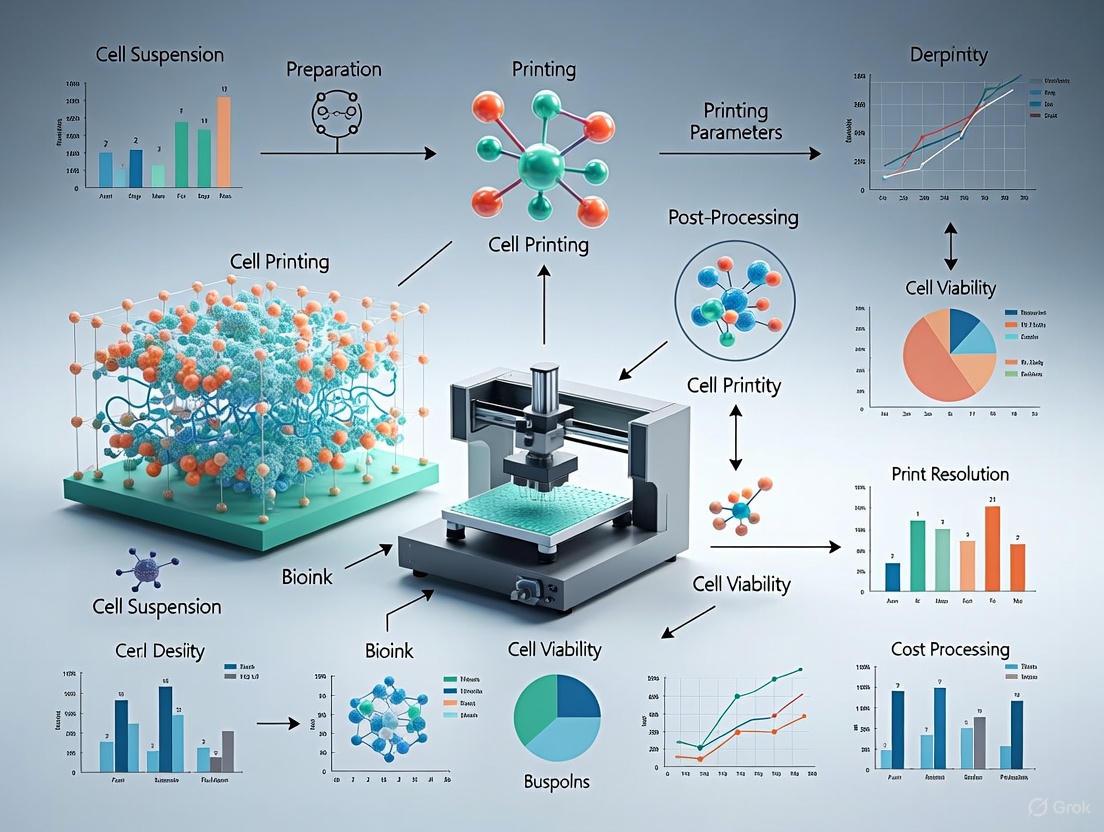
This comprehensive review explores the transformative impact of 3D bioprinting on cell culture applications, addressing the limitations of traditional 2D models.
3D Bioprinting for Cell Culture: Techniques, Applications, and Future Directions in Biomedical Research
Abstract
This comprehensive review explores the transformative impact of 3D bioprinting on cell culture applications, addressing the limitations of traditional 2D models. We examine foundational principles, methodological approaches across key techniques (extrusion, inkjet, laser-assisted, stereolithography), and practical troubleshooting for optimizing cell viability and construct fidelity. The article provides validation frameworks for assessing bioprinted tissues and comparative analysis of biomaterials, with specific applications in cancer research, drug discovery, tissue engineering, and personalized medicine. Targeted to researchers, scientists, and drug development professionals, this synthesis of current advancements and challenges aims to accelerate the adoption of 3D bioprinting in preclinical research and regenerative medicine.
Beyond 2D Cultures: Understanding the Fundamentals and Market Landscape of 3D Bioprinting
The Limitations of Traditional 2D Cell Culture and the Need for Physiologically Relevant Models
For decades, two-dimensional (2D) cell culture has served as a fundamental tool in biological research and drug discovery, providing a simple, inexpensive, and easily reproducible model system [1] [2]. However, growing scientific evidence reveals that cells cultured on flat, rigid plastic surfaces fail to accurately mimic the complex architecture and microenvironment of living tissues [1] [3]. This recognition has driven the development of three-dimensional (3D) culture systems that bridge the critical gap between conventional 2D cultures and in vivo physiology, offering more predictive models for studying human biology and disease [1] [3].
The limitations of 2D models have profound implications for biomedical research, particularly in drug development where at least 75% of novel drugs that demonstrate efficacy in preclinical testing fail in clinical trials due to insufficient efficacy or safety concerns [3]. A primary factor contributing to this high attrition rate is the poor predictivity of traditional 2D cell cultures, which cannot replicate the intricate cell-cell and cell-matrix interactions that govern cellular behavior in living organisms [3] [2]. This article examines the technical limitations of 2D culture systems and introduces advanced 3D models that offer more physiologically relevant alternatives for research and drug discovery.
Fundamental Limitations of 2D Cell Culture Systems
Architectural and Microenvironmental Disparities
Traditional 2D cultures grow cells as a single layer on flat surfaces, creating an artificial environment that fundamentally differs from natural tissue architecture [3] [2]. In living tissues, cells reside within a three-dimensional extracellular matrix (ECM) that provides structural support and biochemical signals essential for normal cellular function [1]. The ECM is a dynamic network that regulates numerous cellular processes through mechanical and chemical signaling, influencing cell differentiation, proliferation, and survival [1]. In 2D cultures, the absence of this three-dimensional context results in:
- Abnormal cell morphology and flattened cellular architecture
- Compromised cell polarity and disrupted intracellular organization
- Reduced cell-ECM interactions that regulate gene expression and cell behavior
- Limited cell-cell contacts that mediate tissue-specific functions [3] [2]
Altered Physiological Responses and Gene Expression
Cells cultured in 2D exhibit significant differences in gene expression profiles compared to their in vivo counterparts or 3D cultures [1]. These molecular differences translate to functionally relevant discrepancies in cellular behavior, including:
- Overestimated drug efficacy due to enhanced compound accessibility
- Altered metabolic activity and nutrient processing
- Impaired differentiation capacity and stem cell maintenance
- Aberrant signaling pathway activation that does not reflect physiological responses [1] [2]
Table 1: Comparative Analysis of 2D vs 3D Cell Culture Models
| Parameter | 2D Culture | 3D Culture |
|---|---|---|
| Growth Pattern | Monolayer on flat surface | Multilayered, spatial organization |
| Cell-Matrix Interactions | Limited to basal surface | Omnidirectional, biomimetic |
| Nutrient/Gradient Formation | Uniform distribution | Physiological gradients (O₂, pH, metabolites) |
| Gene Expression Profile | Artificial, non-physiological | In vivo-like expression patterns |
| Drug Response | Typically overestimated | Physiologically relevant resistance |
| Cellular Heterogeneity | Limited | Represents tissue complexity |
| Mechanical Cues | Rigid, uniform substrate | Compliant, tissue-like mechanics |
| Tissue-specific Functions | Often compromised | Enhanced functionality and maturation |
Clinical Translation Challenges in Drug Discovery
The pharmaceutical industry faces substantial challenges in translating drug efficacy from laboratory models to human patients, with 2D culture systems being a significant contributor to this translational gap [3]. Specific limitations include:
- Poor prediction of drug penetration through tissue barriers
- Inadequate modeling of tumor microenvironments and drug resistance mechanisms
- Failure to replicate hypoxic regions that influence therapeutic efficacy
- Limited representation of metabolic heterogeneity within tissues [1] [2]
A prominent example comes from cancer research, where promising therapies that eliminate tumor cells in 2D culture often fail in human trials because they cannot effectively penetrate the three-dimensional architecture of solid tumors or target resistant cell populations within specific microenvironmental niches [2].
Advanced 3D Models: Bridging the Gap Between in Vitro and in Vivo
Spheroid Models: Recapitulating Tissue-like Complexity
Three-dimensional spheroids represent one of the most accessible yet powerful 3D culture models, offering significant advantages over traditional 2D systems [1]. These self-assembled cellular aggregates replicate key aspects of tissue microstructure and function, including:
- Spatial organization into proliferative, quiescent, and necrotic zones
- Physiological gradient formation of oxygen, nutrients, and metabolic waste
- Enhanced cell-ECM interactions and deposition of native matrix components
- Barrier properties that mimic tissue penetration challenges [1]
In cancer research, multicellular tumor spheroids (MCTS) have become invaluable tools for studying drug penetration, hypoxic responses, and microenvironment-mediated resistance mechanisms that cannot be adequately modeled in 2D systems [1] [2]. The spatial organization of spheroids creates distinct microenvironments that influence therapeutic outcomes, with an outer layer of proliferating cells, an intermediate zone of quiescent cells, and an inner core characterized by hypoxic and acidic conditions that promote treatment resistance [1].
Methodological Approaches for 3D Model Generation
Multiple technical approaches have been developed to generate robust 3D culture models, each offering distinct advantages for specific research applications:
Table 2: Comparison of 3D Culture Generation Techniques
| Method | Principle | Advantages | Limitations |
|---|---|---|---|
| Scaffold-based Hydrogels | Cells embedded in ECM-mimetic materials (e.g., Matrigel, collagen, alginate) | Tunable mechanical properties, biocompatibility, support tissue maturation | Batch variability, potential immunogenicity, composition complexity |
| Scaffold-free (Spheroids) | Self-assembly promoted by preventing substrate adhesion (hanging drop, ULA plates) | Simple, cost-effective, high reproducibility, cell-driven organization | Size variability, challenging retrieval for analysis, limited structural control |
| Bioprinting | Automated deposition of cell-laden bioinks in predefined architectures | High precision, spatial patterning, multi-cellular complexity, scalability | Specialized equipment required, optimization intensive, potential shear stress on cells |
| Microfluidic Systems | Culture within perfusable chips with continuous nutrient supply | Vascular perfusion, mechanical stimulation, multi-tissue integration | Technical complexity, small scale, specialized equipment required |
Protocol: Generation of Tumor Spheroids Using Ultra-Low Attachment (ULA) Plates
This protocol establishes a straightforward method for generating uniform multicellular tumor spheroids using commercially available ULA plates, suitable for drug screening applications [1].
Materials:
- Ultra-low attachment (ULA) round-bottom plates (96-well)
- Complete cell culture medium
- Trypsin-EDTA solution
- Phosphate buffered saline (PBS)
- Centrifuge
- Hemocytometer or automated cell counter
- Cancer cell line of interest (e.g., MDA-MB-231 for breast cancer)
Procedure:
- Cell Preparation: Harvest exponentially growing cells using standard trypsinization procedures. Terminate trypsin activity with complete medium and collect cells by centrifugation (300 × g for 5 minutes).
- Cell Counting and Suspension: Resuspend cell pellet in complete medium and determine cell concentration using a hemocytometer or automated cell counter. Adjust cell density to 1 × 10⁴ to 5 × 10⁴ cells/mL, optimizing for specific cell line requirements.
- Plate Seeding: Dispense 200 μL of cell suspension into each well of the ULA plate (final density: 2,000-10,000 cells/well based on experimental requirements).
- Spheroid Formation: Centrifuge the plate at 200 × g for 3 minutes to aggregate cells at the bottom of each well. Incubate at 37°C with 5% CO₂ for 24-72 hours to allow spheroid self-assembly.
- Quality Assessment: Monitor spheroid formation daily using brightfield microscopy. Well-formed spheroids should exhibit compact, spherical morphology with smooth, defined edges.
- Experimental Applications: After spheroid maturation (typically 3-5 days), proceed with drug treatment studies, viability assays, or other experimental endpoints.
Technical Notes:
- Optimal cell seeding density varies significantly between cell lines and should be determined empirically.
- Media exchange should be performed carefully (approximately 50% volume replacement every 2-3 days) for long-term cultures to minimize spheroid disruption.
- For co-culture spheroids, adjust the ratio of different cell types according to experimental design while maintaining total cell number.
Protocol: Bioprinting of 3D Tissue Constructs Using Extrusion-Based Systems
Bioprinting enables the fabrication of complex, spatially organized tissue constructs with precise control over cellular composition and architecture [4] [5]. This protocol outlines the fundamental workflow for creating 3D-bioprinted tissue models using extrusion-based bioprinting technology.
Materials:
- Extrusion-based bioprinter (e.g., BIO X series)
- Bioink (e.g., CELLINK products, GelMA, or custom formulations)
- Cell culture reagents and growth factors
- Sterile cultureware and bioprinting accessories
- Crosslinking solution (UV light, ionic solution, or thermal system)
- CAD software for model design
Procedure:
- Pre-bioprinting Phase:
- Bioink Preparation: Select appropriate bioink based on target tissue properties. For cell-laden constructs, mix cells with bioink at optimal density (typically 1-20 × 10⁶ cells/mL), maintaining temperature control for thermosensitive materials.
- Model Design: Create or select a 3D digital model of the desired tissue construct using CAD software or built-in design tools. Export as STL file format compatible with bioprinter software.
- Parameter Optimization: Establish printing parameters (pressure, speed, temperature) using material-specific protocols, conducting test prints without cells for initial optimization.
Bioprinting Phase:
- System Setup: Load cell-laden bioink into sterile cartridges and install into temperature-controlled printheads. Preheat print bed if required.
- Calibration: Calibrate printing platform and nozzle height according to manufacturer specifications.
- Print Execution: Initiate printing process following predefined toolpaths. Monitor initial layers to ensure proper adhesion and filament formation.
- Crosslinking: Apply appropriate crosslinking method during or immediately after printing (photocuring for UV-sensitive bioinks, ionic crosslinking for alginate-based systems, or thermal gelation for temperature-responsive materials).
Post-bioprinting Phase:
- Construct Transfer: Carefully transfer printed constructs to culture vessels using sterile implements.
- Culture Initiation: Submerge constructs in appropriate culture medium and transfer to incubator (37°C, 5% CO₂) as quickly as possible to maintain cell viability.
- Long-term Maintenance: Culture constructs with regular medium changes (every 2-3 days) for tissue maturation, typically requiring 1-4 weeks depending on application.
- Functional Assessment: Evaluate construct properties through histological analysis, immunostaining, gene expression profiling, or functional assays.
Technical Notes:
- Maintain sterility throughout the process, particularly during bioink preparation and printing.
- Optimize bioink viscosity to balance printability and cell viability, minimizing shear stress during extrusion.
- For complex multi-tissue constructs, consider sequential printing of different cell types or incorporation of vascular channels using sacrificial bioinks [5].
The Scientist's Toolkit: Essential Reagents for 3D Culture Applications
Table 3: Key Research Reagent Solutions for 3D Cell Culture
| Product/Technology | Composition | Primary Applications | Key Advantages |
|---|---|---|---|
| Ultra-Low Attachment (ULA) Plates | Polymer-coated surfaces that inhibit cell attachment | Spheroid formation, scaffold-free 3D culture | Simple workflow, high reproducibility, compatible with high-throughput screening |
| Matrigel | Basement membrane extract from Engelbreth-Holm-Swarm mouse sarcoma | Organoid culture, tumor models, differentiation studies | Rich in ECM proteins and growth factors, supports complex tissue morphogenesis |
| CELLINK Bioinks | Alginate-based with RGD peptides or other functional groups | Bioprinting applications, cartilage, bone, mesenchymal stem cell research | Tunable properties, excellent printability, support cell differentiation |
| GelMA (Gelatin Methacrylate) | Modified gelatin with photopolymerizable methacrylate groups | Bioprinting, neural, cardiac, and skeletal muscle tissue engineering | Photocrosslinkable, tunable mechanical properties, high cell compatibility |
| Hanging Drop Plates | Specialized plates for gravity-enforced spheroid assembly | Tumor spheroids, developmental models, toxicity testing | Uniform spheroid size, minimal reagent consumption, straightforward imaging |
| Viscoll | Type I collagen-based bioink | 3D bioprinting with growth factor supplementation | Biocompatible, rapid polymerization, supports cell printing and viability |
| PhotoHA | Methacrylated hyaluronic acid | Cartilage tissue engineering, wound healing models | Photocrosslinkable, biomimetic for cartilage ECM, tunable degradation |
The limitations of traditional 2D cell culture systems have become increasingly apparent as research questions grow more complex and the need for clinically relevant models intensifies. The transition to three-dimensional culture platforms represents not merely a technical enhancement but a fundamental paradigm shift in how we model human biology and disease [1] [3]. These advanced systems better replicate the tissue microenvironment, incorporating critical elements such as spatial organization, biochemical gradients, and mechanophysical cues that direct cellular behavior and therapeutic responses [1] [2].
The integration of 3D models, particularly through emerging technologies like 3D bioprinting, holds tremendous potential to transform biomedical research and drug development [4] [5]. By providing more physiologically relevant contexts for studying disease mechanisms and screening therapeutic candidates, these approaches can significantly improve the predictivity of preclinical studies and reduce the high attrition rates that plague drug development [3]. As the field continues to evolve, combining 3D culture systems with advanced engineering approaches and computational methods will further enhance their capabilities, ultimately accelerating the development of more effective therapies and advancing our fundamental understanding of human biology.
The pharmaceutical industry is undergoing a significant transformation in its approach to preclinical research, driven by a convergence of technological innovation and regulatory evolution. A primary catalyst for this change is the recognized limitation of traditional animal models, which fail to predict human responses with high accuracy, contributing to drug failure rates exceeding 90% in clinical trials [6]. This translational gap has accelerated the adoption of human-relevant technologies, with 3D bioprinting emerging as a cornerstone solution. By enabling the creation of complex, patient-specific tissue models that closely mimic native human physiology, 3D bioprinting addresses critical unmet needs in drug development, including more predictive efficacy and toxicity screening [7] [8]. This document details the quantitative market drivers behind this adoption and provides standardized protocols for implementing 3D bioprinted models in pharmaceutical R&D workflows.
Market Context and Quantitative Drivers
The global 3D bioprinting market is experiencing robust growth, propelled by its increasing application in pharmaceutical research. The table below summarizes key market metrics and primary growth drivers.
Table 1: 3D Bioprinting Market Overview and Key Drivers
| Metric | Value | Source/Context |
|---|---|---|
| Market Size (2024) | USD 2.58 Billion | [9] |
| Projected Market Size (2034) | USD 8.42 - 8.57 Billion | [10] [9] |
| CAGR (2025-2034) | 12.54% - 12.7% | [10] [9] |
| Leading Application Segment (2024) | Medical | [10] [9] |
| Fastest-Growing Application | Tissue & Organ Generation | [10] [9] |
| Dominant Technology (2024) | Inkjet-Based Bioprinting | [10] [9] |
| Key Driver 1 | High failure rate of drugs in clinical trials (>90%) linked to species differences with animal models [6]. | |
| Key Driver 2 | Urgent need for more predictive, human-relevant models for drug efficacy and toxicity testing [7] [8]. | |
| Key Driver 3 | Regulatory shifts, such as the FDA Modernization Act 3.0, phasing out certain animal testing requirements [6]. | |
| Key Driver 4 | Severe global shortage of donor organs for transplantation, fueling research in tissue engineering [10]. |
The demand is particularly strong in cancer research, where 3D-bioprinted tumor models provide a platform to study cancer growth and test novel therapies with a fidelity that 2D cultures and animal models cannot match [7] [9]. Furthermore, the industry is leveraging 3D bioprinting for tissue engineering to fabricate complex 3D tissue structures crucial for drug testing, disease modeling, and the long-term goal of developing artificial tissues for transplantation [10] [9].
Application Note: Protocol for a Bioprinted Breast Tumor Model for Drug Screening
Background and Principle
Breast cancer is a highly heterogeneous disease, and existing preclinical models often fail to accurately simulate its complex tumor microenvironment (TME) [7]. This protocol describes the methodology for generating a 3D-bioprinted breast cancer tissue (BCT) model using a GelMA-based bioink. The model recapitulates key aspects of the native TME, including cell-cell and cell-extracellular matrix (ECM) interactions, providing a more physiologically relevant platform for evaluating drug efficacy and toxicity [7] [11] [12].
Experimental Workflow
The following diagram illustrates the end-to-end workflow for creating and utilizing the bioprinted tumor model.
Materials and Reagent Solutions
Table 2: Essential Research Reagents for 3D Bioprinting a Breast Tumor Model
| Reagent/Material | Function | Example & Notes |
|---|---|---|
| GelMA Lyophilizate | Primary bioink component; provides a biocompatible, tunable hydrogel scaffold that supports cell growth and proliferation. | Sourced from suppliers like CELLINK; concentration typically 5-10% [11]. |
| LAP Photoinitiator | Initiates cross-linking of methacrylated bioinks (e.g., GelMA, ColMA) upon exposure to UV light, solidifying the printed structure. | Lithium phenyl-2,4,6-trimethylbenzoylphosphinate; use at 0.25% w/v [11]. |
| Reconstitution Agent P | Dissolves and dilutes lyophilized bioinks like GelMA to achieve the target working concentration; maintains physiological pH and isotonicity. | Phosphate-buffered saline (PBS) and HEPES-based solution [11]. |
| CELLINK Start | A sacrificial support hydrogel used for printing complex, porous structures; printed at room temperature and removed post-printing. | Ensures structural integrity during printing of overhanging features [11]. |
| Breast Cancer Cells | The core cellular component of the model. Can be established cell lines or patient-derived cells for personalized medicine applications. | MCF-7, MDA-MB-231; culture in appropriate medium before mixing with bioink [7]. |
| Cell Culture Medium | Provides essential nutrients to maintain cell viability and function during the printing process and subsequent culture. | DMEM/F12 supplemented with FBS, growth factors, and antibiotics. |
Step-by-Step Protocol
Pre-Bioprinting: Design and Bioink Preparation
- Digital Model Design: Utilize medical imaging data (e.g., MRI of a tumor) or computer-aided design (CAD) software to create a 3D model of the desired tissue construct. Export the model as an STL (Standard Triangle Language) file compatible with the bioprinter [10].
- Bioink Reconstitution: a. Thaw Reconstitution Agent P and LAP photoinitiator on ice. b. Add the required volume of Reconstitution Agent P to the GelMA lyophilizate vial to achieve the target concentration (e.g., 5% w/v) [11]. c. Add LAP photoinitiator to a final concentration of 0.25% (w/v). d. Gently mix the solution overnight at 4°C using a sterile stir bar, avoiding bubble formation.
- Cell-Bioink Mixture Preparation: a. Harvest breast cancer cells via trypsinization and centrifuge to form a pellet. b. Resuspend the cell pellet in the prepared GelMA-LAP bioink to a final density of 5-10 million cells/mL [7] [12]. c. Keep the cell-laden bioink on ice and protected from light to prevent premature crosslinking.
Bioprinting Process
- Printer Setup: Load the cell-laden bioink into a sterile printing cartridge. Install the cartridge into a temperature-controlled printhead (maintained at 15-20°C). Load the support material (CELLINK Start) into a separate cartridge.
- Printing Execution: Initiate the printing process based on the pre-loaded STL file. The following parameters are recommended for an extrusion-based bioprinter:
- Nozzle Diameter: 22G-27G
- Printing Pressure: 20-40 kPa (optimize for consistent filament formation)
- Printing Speed: 5-10 mm/s
- Platform Temperature: 15-20°C
- UV Crosslinking: Apply 365 nm UV light at 5-10 mW/cm² during the deposition of each layer.
Post-Bioprinting Maturation
- Final Crosslinking: After printing, expose the entire construct to UV light (365 nm, 10 mW/cm²) for 60-120 seconds to ensure complete crosslinking.
- Support Removal: Carefully wash away the sacrificial support material (CELLINK Start) using a sterile buffer or cell culture medium.
- Culture: Transfer the bioprinted construct to a multi-well plate and submerge in pre-warmed cell culture medium.
- Maturation: Maintain the constructs in an incubator (37°C, 5% CO₂) for 7-14 days, changing the medium every 2-3 days, to allow for tissue maturation and ECM deposition.
Drug Screening Application
- Compound Treatment: After the maturation period, treat the bioprinted tissues with the drug candidate of interest across a range of physiologically relevant concentrations. Include positive (e.g., a known chemotherapeutic) and negative (vehicle control) controls.
- Endpoint Analysis: Assess drug response after 72-96 hours using a combination of assays:
- Cell Viability: Quantify using assays like AlamarBlue or Calcein-AM/propidium iodide live/dead staining [7].
- Morphological Analysis: Use histology (H&E staining) and immunohistochemistry (IHC) to examine tissue integrity and protein marker expression (e.g., Ki-67 for proliferation, cleaved caspase-3 for apoptosis) [7].
- Functional Assays: Measure cytokine secretion, gene expression (qRT-PCR), or metabolic activity to gain mechanistic insights.
The Scientist's Toolkit: Key Reagent Solutions
Table 3: Expanded Toolkit of Reagents for 3D Bioprinting Applications
| Reagent Category | Specific Examples | Primary Function in 3D Bioprinting |
|---|---|---|
| Natural Polymer Bioinks | GelMA, ColMA, Hyaluronic Acid Methacrylate (HAMA), Alginate | Form the foundational, cell-supportive hydrogel matrix; provide biological cues [11] [12]. |
| Synthetic Polymer Bioinks | Polycaprolactone (PCL) | Provide mechanical reinforcement and structural integrity to load-bearing constructs [11]. |
| Composite & Specialty Bioinks | Matrigel, Decellularized ECM (dECM) Bioinks | Enhance biological complexity and mimic the native tissue microenvironment more accurately [7] [11]. |
| Crosslinking Agents | LAP Photoinitiator, Calcium Chloride (for Alginate) | Trigger hydrogel solidification via photopolymerization or ionic crosslinking [11]. |
| Support Materials | CELLINK Start, Pluronic F-127 | Act as temporary, removable supports for printing complex and hollow structures [11]. |
| Buffer & Reconstitution Agents | Reconstitution Agent A (for collagen), Reconstitution Agent P (for GelMA/HAMA), Collagen Buffer | Adjust pH and osmolarity to create a cell-friendly environment for the bioink [11]. |
Application Note: Cancer Research – Modeling the Breast Cancer Tumor Microenvironment (TME)
Background and Significance
Breast cancer (BC) is a globally prevalent and heterogeneous disease, for which conventional two-dimensional (2D) culture models and animal models have significant limitations [13]. These existing preclinical models often fail to predict clinical outcomes, contributing to high failure rates in anticancer drug development [13]. The tumor microenvironment (TME) plays a crucial role in cancer progression, treatment response, and metastasis, comprising various cellular components including cancer-associated fibroblasts (CAFs), cancer-associated adipocytes (CAAs), tumor-associated macrophages (TAMs), and endothelial cells, all embedded in a complex extracellular matrix (ECM) [13]. Three-dimensional (3D) bioprinting enables the precise deposition of living cells and ECM components into predefined architectures, generating breast cancer tissue models that closely simulate in vivo conditions and cellular activities [14] [13]. This application note details a protocol for creating a bioprinted breast cancer model to study tumor-stroma interactions and drug screening.
Key Reagent Solutions
Table 1: Essential Research Reagents for Bioprinting a Breast Cancer Model
| Reagent Category | Specific Examples | Function in the Model |
|---|---|---|
| Base Bioink Materials | Gelatin methacrylate (GelMA), Alginate, Hyaluronic acid, Decellularized ECM (dECM) | Provides structural scaffold mimicking the native extracellular matrix; supports cell viability and organization. |
| Cells | Breast cancer cell lines (e.g., TNBC lines), Cancer-associated fibroblasts (CAFs), Human umbilical vein endothelial cells (HUVECs) | Recapitulates the cellular heterogeneity of the tumor, including malignant, stromal, and vascular components. |
| Bioactive Factors | Transforming Growth Factor-β (TGF-β), Vascular Endothelial Growth Factor (VEGF), Epidermal Growth Factor (EGF) | Modulates cell signaling to drive processes like epithelial-mesenchymal transition (EMT) and angiogenesis. |
| Crosslinkers | Calcium Chloride (for alginate), UV Light (for GelMA) | Induces hydrogel solidification to stabilize the printed 3D structure. |
Quantitative Data on Bioprinting Techniques for Cancer Modeling
Table 2: Comparison of Bioprinting Technologies for Cancer Model Fabrication
| Bioprinting Technology | Typical Resolution | Cell Density | Average Cell Viability | Key Advantages for Cancer Research |
|---|---|---|---|---|
| Extrusion-Based | ~100 μm [14] | High (≥10 million/mL) [14] | Medium/High [14] | Wide bioink compatibility; multi-material printing for complex TME [14] [15]. |
| Droplet-Based (Inkjet) | ~50 μm [14] | Low (<10 million/mL) [14] | High (>85-90%) [14] [15] | High precision for patterning different cell types; suitable for gradient formation [14] [15]. |
| Laser-Assisted | Single-cell deposition [14] | Low [14] | Very High [14] | Extremely high resolution for studying rare cells or precise initial niches [14]. |
| Stereolithography (DLP/SLA) | ~25 μm [14] | High [14] | High [14] | Fast printing of large, complex volumes with high architectural fidelity [14]. |
Experimental Protocol: Bioprinting a Heterogeneous Breast Cancer-Stroma Model
Objective: To fabricate a 3D bioprinted construct containing breast cancer cells and stromal cells (CAFs) to investigate paracrine interactions and drug response.
Materials:
- Bioink A: 3% (w/v) Alginate and 5% (w/v) Gelatin in culture medium.
- Bioink B: 5% (w/v) GelMA in culture medium.
- Cells: Triple-negative breast cancer cells (e.g., MDA-MB-231) and patient-derived CAFs.
- Bioprinter: Extrusion-based bioprinter equipped with multiple printheads and a UV light source (for GelMA crosslinking).
- Crosslinking Solution: 100 mM Calcium Chloride (CaCl₂) in PBS.
Methodology:
- Pre-Bioprinting:
- Cell Culture and Harvest: Culture MDA-MB-231 cells and CAFs in standard conditions. Harvest cells at 80-90% confluency and centrifuge to form pellets.
- Bioink Preparation:
- Bioink A (Stroma/CAF bioink): Mix CAF pellet with Alginate-Gelatin bioink to a final density of 10 × 10^6 cells/mL. Keep on ice.
- Bioink B (Cancer cell bioink): Mix MDA-MB-231 pellet with GelMA bioink to a final density of 15 × 10^6 cells/mL. Keep in the dark on ice.
- CAD Model Design: Design a concentric circle model where Bioink A (CAFs) forms an outer ring and Bioink B (cancer cells) forms an inner core.
Bioprinting Process:
- Load Bioink A and Bioink B into separate syringes fitted to the bioprinter.
- Set the printing parameters:
- Nozzle Diameter: 25G (250 μm).
- Printing Pressure: 20-25 kPa (optimize for consistent filament formation).
- Printing Speed: 8 mm/s.
- Print Bed Temperature: 18-20°C.
- Print the structure layer-by-layer according to the CAD design.
- Immediately after printing, expose the construct to UV light (365 nm, 5 mW/cm² for 60 seconds) to crosslink the GelMA core.
- Immerse the entire construct in the CaCl₂ solution for 5 minutes to ionically crosslink the Alginate in the stromal compartment.
Post-Bioprinting Culture and Analysis:
- Transfer the crosslinked construct to a 6-well plate with fresh culture medium.
- Culture for up to 21 days, changing the medium every 2-3 days.
- Viability Assessment: At day 7, assess cell viability using a Live/Dead assay. Expect viability >85-90% [14] [16].
- Immunofluorescence Staining: At day 14, fix constructs and stain for:
- Cancer cell markers (e.g., Cytokeratin).
- CAF activation markers (e.g., α-Smooth Muscle Actin, αSMA).
- ECM components (e.g., Collagen I).
- Drug Screening: After 7 days of culture, treat constructs with a chemotherapeutic agent (e.g., Doxorubicin) for 72-96 hours. Assess efficacy via ATP-based cell viability assays and confocal microscopy of apoptotic markers.
Application Note: Stem Cell Studies – Guiding Differentiation in Bioprinted Constructs
Background and Significance
Stem cells, particularly mesenchymal stromal cells (MSCs), are a cornerstone of regenerative medicine due to their multipotent differentiation potential and paracrine signaling capabilities [17]. In 3D bioprinting, MSCs are the most commonly used cell type across various tissue engineering applications, including bone, cartilage, and vascularized composites [17]. A significant challenge is directing stem cell fate towards specific lineages (osteogenic, chondrogenic, etc.) within the 3D bioprinted construct. This protocol outlines a methodology for bioprinting an MSC-laden scaffold and subsequently inducing osteogenic differentiation, creating a model for bone tissue engineering.
Experimental Protocol: Bioprinting an MSC-Laden Scaffold for Bone Tissue Engineering
Objective: To fabricate a 3D bioprinted bone marrow-derived MSC construct and promote its osteogenic differentiation for bone regeneration studies.
Materials:
- Bioink: 3% (w/v) Alginate, 7.5% (w/v) Gelatin, and 2% (w/v) nanocrystalline hydroxyapatite (nHA) in culture medium.
- Cells: Human bone marrow-derived MSCs.
- Bioprinter: Extrusion-based bioprinter with a temperature-controlled printhead and stage.
- Crosslinking Solution: 100 mM CaCl₂ in PBS.
- Osteogenic Induction Medium: Containing Dexamethasone, β-glycerophosphate, and Ascorbic acid.
Methodology:
- Pre-Bioprinting:
- Culture MSCs and harvest at 80% confluency.
- Mix the MSC pellet with the Alginate-Gelatin-nHA bioink to a final density of 8 × 10^6 cells/mL. The nHA acts as an osteoinductive nanofiller [16].
- Load the cell-laden bioink into a printing syringe and incubate at 4°C for 30 minutes to ensure homogeneity.
Bioprinting Process:
- Set the bioprinter parameters:
- Nozzle Diameter: 27G (200 μm).
- Printing Temperature: 18-20°C (stage), 12-15°C (printhead).
- Printing Pressure: 15-20 kPa.
- Printing Speed: 10 mm/s.
- Print a porous grid structure (e.g., 10 mm x 10 mm x 2 mm) to facilitate nutrient diffusion.
- Crosslink the printed structure by spraying with or immersing in CaCl₂ solution for 5 minutes.
- Set the bioprinter parameters:
Post-Bioprinting Culture and Differentiation:
- Transfer constructs to 12-well plates.
- Divide into two groups:
- Control Group: Culture in standard growth medium.
- Induction Group: Culture in osteogenic induction medium.
- Culture for 28 days, with medium changes twice a week.
- Analysis:
- Alizarin Red S Staining: At day 28, fix constructs and stain to detect calcium deposits, a hallmark of osteogenic differentiation.
- Quantitative PCR (qPCR): Analyze the expression of osteogenic genes (e.g., Runx2, Osteocalcin, Alkaline Phosphatase) at different time points (e.g., days 7, 14, 21).
- Mechanical Testing: Perform unconfined compression tests to evaluate the increase in elastic modulus of the constructs over the culture period, correlating with matrix mineralization [16].
The workflow for this protocol is outlined in the diagram below.
Application Note: Tissue Engineering – Fabrication of an Osteochondral Graft
Background and Significance
Orthoregeneration, particularly for complex composite tissues like the osteochondral unit (articular cartilage and underlying bone), represents a major challenge in clinical practice [17]. Current treatments for critical-sized bone defects and joint degeneration, such as autografts and prosthetic implants, are limited by donor site morbidity, limited durability, and inability to integrate fully with host tissue [17]. 3D bioprinting offers a promising strategy by enabling the fabrication of patient-specific, bioactive scaffolds with high geometric control on both macro- and micro-scales [17]. This application note details a protocol for creating a biphasic (two-layer) osteochondral construct designed to mimic the native interface between cartilage and bone.
Quantitative Data on Materials for Orthoregeneration
Table 3: Common Biomaterials Used in 3D Bioprinted Orthoregenerative Constructs
| Material | Type | Key Properties | Common Application in Construct |
|---|---|---|---|
| Alginate | Natural Polysaccharide [14] | Excellent biocompatibility, rapid ionic crosslinking, low cost [14] [17] | Cartilage layer, often blended with other materials [17] |
| Gelatin/GelMA | Natural Protein [14] | Contains cell-adhesive motifs, tunable mechanical properties (via methacrylation) [14] [16] | Both cartilage and bone layers, promotes cell adhesion [17] |
| Hyaluronic Acid | Natural Glycosaminoglycan [17] | Native component of cartilage ECM, supports chondrogenesis [17] | Cartilage layer [17] |
| Poly(ethylene glycol) (PEG) | Synthetic Polymer [17] | Highly tunable mechanical strength, bio-inert baseline [17] | Bone layer, provides structural integrity [17] |
| Poly(ε-caprolactone) (PCL) | Synthetic Polymer [17] | High mechanical strength, slow degradation, provides structural support [17] | Often used as a thermoplastic network to reinforce the bone layer [17] |
| nano-Hydroxyapatite (nHA) | Ceramic [17] [16] | Osteoinductive, mimics mineral component of bone, enhances compressive strength [16] | Bone layer, to promote osteogenesis [17] |
Experimental Protocol: Bioprinting a Biphasic Osteochondral Construct
Objective: To fabricate an integrated two-layer construct comprising a chondrogenic top layer and an osteogenic bottom layer using a multi-material bioprinting approach.
Materials:
- Bioink for Cartilage Layer (Chondral Phase): 5% (w/v) Alginate and 5% (w/v) Gelatin, supplemented with hyaluronic acid.
- Bioink for Bone Layer (Osseous Phase): 5% (w/v) Alginate, 5% (w/v) Gelatin, and 3% (w/v) nHA.
- Cells: Chondrocytes for the cartilage layer; MSCs or pre-osteoblasts for the bone layer.
- Bioprinter: Dual-head extrusion bioprinter.
- Support Material: A gelatin-based support bath (e.g., FRESH protocol) or a PCL framework for printing the soft hydrogels.
Methodology:
- Pre-Bioprinting:
- Cell Preparation: Harvest and concentrate chondrocytes and MSCs.
- Bioink Preparation:
- Cartilage Bioink: Mix chondrocytes with the Alginate-Gelatin-HA bioink.
- Bone Bioink: Mix MSCs with the Alginate-Gelatin-nHA bioink.
Bioprinting Process:
- Load the two bioinks into separate syringes on the bioprinter.
- Strategy 1: Embedded Printing: Print both bioink phases directly into a gelatin slurry support bath, which maintains the shape of the soft hydrogels during printing. The support bath is later melted away at 37°C [18].
- Strategy 2: Hybrid Printing: First, print a microporous PCL scaffold to define the bone layer's macro-architecture and provide mechanical strength. Subsequently, infill the PCL scaffold with the osteogenic bioink (MSC-laden), and then print the chondrogenic bioink on top to form the cartilage layer.
- Crosslink the entire construct by immersion in CaCl₂ solution.
Post-Bioprinting Culture and Maturation:
- Culture the constructs in a dual-flow bioreactor system if available, or in a mixed medium promoting both chondrogenesis and osteogenesis.
- Histological Analysis: After 4-6 weeks, perform Safranin O staining for proteoglycans in the cartilage layer and Alizarin Red or Von Kossa staining for mineralization in the bone layer.
- Mechanical Assessment: Conduct indentation testing on the cartilaginous region and compression testing on the entire osteochondral construct to evaluate its biomechanical functionality [17].
The logical relationship and workflow for fabricating this composite tissue are visualized below.
The Scientist's Toolkit: Key Reagent Solutions for 3D Bioprinting
Table 4: Essential Materials and Their Functions in 3D Bioprinting Workflows
| Toolkit Item | Specific Examples | Critical Function | Application Context |
|---|---|---|---|
| Natural Polymer Bioinks | Alginate, Gelatin, Collagen, Hyaluronic Acid [14] [17] | Provide biocompatible, ECM-mimetic environments that support cell adhesion and function. | Universal base materials for most cell-laden constructs. |
| Synthetic Polymer Bioinks | Poly(ethylene glycol) (PEG), GelMA [14] [17] | Offer tunable and consistent mechanical properties; GelMA combines biocompatibility with photopolymerizability. | Creating stiff environments (bone) or precise photopatterned structures. |
| Structural Thermoplastics | Poly(ε-caprolactone) (PCL) [17] | Provides long-term mechanical integrity and structural support to soft hydrogel constructs. | Reinforcing bone layers in osteochondral grafts or vascular conduits. |
| Osteoinductive Additives | nano-Hydroxyapatite (nHA), Tricalcium Phosphate [17] [16] | Enhance mechanical strength of the scaffold and actively promote osteogenic differentiation of MSCs. | Bone tissue engineering and the osseous phase of composites. |
| Crosslinking Agents | Calcium Chloride (CaCl₂), UV Light [14] | Solidify liquid bioinks into stable 3D structures post-printing, ensuring shape fidelity. | Essential post-processing step for most hydrogel-based bioprinting. |
| Support Baths | Gelatin slurry, Carbopol [18] | A yield-stress fluid that temporarily supports soft bioinks during printing, enabling freeform fabrication. | Printing complex and delicate structures with low-viscosity bioinks. |
Market Growth Projections and Regional Adoption Patterns (2025-2035 Forecasts)
The global 3D cell culture market is experiencing robust growth, driven by its enhanced physiological relevance over traditional 2D models for drug discovery, cancer research, and regenerative medicine [19] [20]. Market projections across multiple analyst firms consistently forecast significant expansion from 2025 to 2035.
Table 1: Global 3D Cell Culture Market Size Projections (2024-2035)
| Source | Market Size (2024/2025) | Projected Market Size (2035) | Forecast Period CAGR | Notes |
|---|---|---|---|---|
| Spherical Insights [21] | USD 2.20 Billion (2024) | USD 6.92 Billion | 10.98% (2025-2035) | |
| Future Market Insights [19] | USD 1,494.2 Million (2025) | USD 3,805.7 Million | 9.8% (2025-2035) | |
| Precedence Research [22] | USD 1.86 Billion (2024) | USD 7.06 Billion | 14.3% (2025-2034) | |
| Vantage Market Research [23] | USD 1.70 Billion (2024) | USD 5.64 Billion | 11.55% (2025-2035) | |
| Strategic Market Research [20] | USD 1.93 Billion (2022) | USD 6.46 Billion | 16.3% (2022-2030) |
Table 2: Regional Market Analysis and Growth Forecasts
| Region | Market Dominance (2024/2025) | Projected CAGR | Key Growth Drivers |
|---|---|---|---|
| North America [19] [20] [22] | Largest market share (43%-45%) | ~14.4% (U.S., 2025-2034) [22] | High R&D spending, presence of key players (Thermo Fisher, Corning), advanced research infrastructure, FDA encouragement of alternative testing models [19] [24] [22]. |
| Europe [19] [24] | Significant market share | ~3.9% (Germany, 2025-2035) [19] | Robust pharmaceutical industry, strong academic research, EU push for animal testing alternatives, leadership in regenerative medicine [19] [24]. |
| Asia-Pacific [19] [24] [21] | Fastest-growing region | Fastest CAGR (e.g., 19.8% 2021-2030 [20]) | Expanding healthcare infrastructure, government support for life sciences, rising biotech investment, growing focus on precision medicine [24] [21] [22]. |
The following diagram illustrates the logical relationship between key market drivers, the resulting technological trends, and the primary applications fueling the growth of the 3D cell culture market.
Diagram 1: 3D Cell Culture Market Growth Drivers and Applications. This map shows the primary factors, technological advancements, and end-use applications creating market growth from 2025 to 2035.
Application Notes: Dominant Segments and Protocols
Scaffold-Based 3D Cell Culture
The scaffold-based segment dominates the technology landscape, accounting for approximately 68-80% of the market [19] [20]. This dominance is attributed to the versatility of scaffold materials—including hydrogels, polymer matrices, and biocompatible composites—which provide critical structural support that mimics the native extracellular matrix (ECM) [19] [25]. These scaffolds support cell proliferation, differentiation, and ECM formation, making them highly reproducible and scalable for automated screening pipelines [19].
Cancer Research Application
Cancer research is the leading application segment, contributing over 32% of market revenue [19]. The urgent need for predictive tumor models that replicate microenvironmental complexity drives this segment. Scaffold-based and organoid platforms are widely adopted to study cancer stem cell behavior, metastatic processes, and therapeutic resistance mechanisms, with growing investments in 3D co-culture systems and tumor-on-a-chip technologies [19].
Key End-User: Biotechnology and Pharmaceutical Industries
Biotechnology and pharmaceutical companies are the primary end-users, contributing 44.9% of revenue share [19]. These industries prioritize integrating 3D models into discovery and preclinical pipelines to enhance target validation, toxicity assessment, and ultimately reduce late-stage drug attrition rates [19] [22].
Experimental Protocol: 3D Bioprinting of a Co-culture Skin Model
This protocol details the methodology for creating a physiologically relevant 3D skin model for studying host-microbe interactions, adapted from a peer-reviewed publication [26]. The model incorporates human keratinocytes and dermal fibroblasts in a fibrin-based bioink, co-infected with bacteria to mimic skin disease.
The following workflow outlines the major stages for the 3D bioprinting of a co-culture skin model.
Diagram 2: 3D Bioprinted Skin Model Workflow. The process involves pre-bioprinting preparation, the printing process itself, post-printing stabilization, and final infection and analysis phases.
Detailed Methodology
Pre-Bioprinting: Cell Culture and Bioink Preparation
- Cell Culture: Culture primary human epidermal keratinocytes (HEKa) and human dermal fibroblasts (HDFs) in their respective media [26].
- Harvesting: At ~80% confluence, dissociate cells using trypsin-EDTA, neutralize, and centrifuge. Resuspend pellets in appropriate medium and perform a cell count using Trypan Blue exclusion.
- Bioink Preparation: Prepare a high-viscosity, fibrin-based bioink (e.g., TissuePrint). Centrifuge the required number of HDFs and resuspend them in the bioink at a density of 10 x 10^6 cells/mL. Keep on ice until printing. Note: Keratinocytes will be incorporated in a subsequent step.
Bioprinting: Extrusion-Based Printing of Dermal and Epidermal Layers
- Bioprinter Setup: Use a sterile, temperature-controlled extrusion bioprinter. Load the HDF-laden bioink into a printing cartridge fitted with a suitable nozzle (e.g., 22-27G).
- Printing the Dermal Layer: Using a pre-designed model (e.g., a grid structure), deposit the bioink layer-by-layer onto a substrate within a bioprinting dish. Maintain a constant pressure and speed to ensure consistent filament diameter.
- Incorporating Keratinocytes: After printing the dermal layer, centrifuge keratinocytes and resuspend in the same bioink. Use this keratinocyte-laden bioink to print a subsequent layer, representing the epidermis.
- Cross-linking: Following the deposition of each layer, apply a chemical crosslinker (e.g., thrombin) according to the bioink manufacturer's instructions to stabilize the structure.
Post-Bioprinting: Maturation and Co-infection
- Culture: Transfer the bioprinted construct to an incubator (37°C, 5% CO2). Culture using an air-liquid interface medium to promote epidermal stratification and maturation over 1-2 weeks.
- Bacterial Preparation: Grow Staphylococcus epidermidis and Staphylococcus aureus to mid-log phase. Centrifuge, wash, and resuspend in PBS to the desired infectious dose (e.g., 10^7 CFU/mL).
- Co-infection: Inoculate the mature 3D bioprinted skin model with the bacterial suspension. Monitor the construct for 72 hours.
Analysis: Assessing Bacterial Survival and Host Response
- CFU Enumeration: At designated time points (e.g., 24, 48, 72 hours), homogenize the bioprinted constructs. Serially dilute the homogenate, plate on agar, and incubate overnight. Count the resulting colonies to quantify bacterial survival [26].
- Additional Assays:
- Cytotoxicity: Measure Lactate Dehydrogenase (LDH) release into the culture medium to assess keratinocyte cell death.
- Histology: Fix constructs for histological analysis (H&E staining) to evaluate tissue architecture and cell morphology.
- Immunofluorescence: Stain for specific markers (e.g., keratin-10 for differentiation) to confirm skin model validity.
The Scientist's Toolkit: Essential Research Reagent Solutions
Table 3: Key Reagents and Materials for 3D Cell Culture and Bioprinting
| Item Category | Specific Examples | Function & Application Note |
|---|---|---|
| Cells [26] | Primary Epidermal Keratinocytes (HEKa), Human Dermal Fibroblasts (HDFs) | Provide the living cellular component for constructing physiologically relevant tissue models. Patient-derived cells enable personalized medicine applications. |
| Bioinks/Scaffolds [25] [26] | Fibrin-based Bioinks (e.g., TissuePrint), GelMA, PEG, Collagen, Hyaluronic Acid, Matrigel | Function as the 3D scaffold or "ink," providing structural support and biochemical cues that mimic the native extracellular matrix (ECM). |
| Growth Media & Supplements [26] | Dermal Cell Basal Media, Keratinocyte Growth Kit (BPE, TGF-α, Hydrocortisone, Insulin), Fibroblast Growth Media | Provide essential nutrients, hormones, and growth factors required for specific cell type survival, proliferation, and differentiation within the 3D construct. |
| Crosslinkers & Enzymes [26] | Thrombin | Used to induce gelation and stabilize the printed bioink structure, crucial for maintaining the shape and integrity of the 3D model post-printing. |
| Assessment Kits & Reagents [26] | Trypan Blue, LDH Cytotoxicity Assay, Triton X-100 | Enable critical downstream analyses including cell viability counting (Trypan Blue), quantification of cell death (LDH assay), and cell lysis. |
In the field of 3D bioprinting and tissue engineering, the choice between scaffold-based and scaffold-free approaches represents a fundamental methodological divergence. Scaffold-based strategies utilize exogenous materials to provide a supportive three-dimensional structure for cells, while scaffold-free methods rely on cells' innate ability to self-assemble into tissue-like constructs [27]. This distinction is crucial for researchers and drug development professionals seeking to select the most appropriate platform for specific applications, from regenerative medicine to disease modeling and drug screening.
The evolution of these technologies has been driven by the limitations of traditional two-dimensional (2D) cell culture systems, which fail to accurately mimic the intricate tumor microenvironment, cell-cell interactions, and cell-matrix interactions found in living tissues [28] [29]. As the field advances toward more physiologically relevant models, understanding the comparative advantages, limitations, and optimal use cases for each approach becomes essential for experimental success and translational potential.
Fundamental principles and key characteristics
Scaffold-based approaches
Scaffold-based 3D cell culture provides cells with a structured environment that closely resembles the extracellular matrix (ECM) found in natural tissues [27]. This approach utilizes a biomaterial framework that guides cell organization, growth, and function in three dimensions, yielding more accurate research outcomes compared to traditional 2D cultures.
Key Components and Materials:
- Natural Materials: Collagen, gelatin, and other biologically active substances that enable cells to interact with components similar to those in native tissues [27]
- Synthetic Materials: Polylactic acid (PLA), polyglycolic acid (PGA), and other synthetic options that offer structural stability and allow for customized scaffold properties like stiffness and degradability [27]
- Composite Materials: Combinations of natural and synthetic materials that leverage the advantages of both systems [29]
Fabrication Techniques:
- 3D Bioprinting: Allows precise control over scaffold architecture, ideal for designing patient-specific scaffolds [30] [27]
- Electrospinning: Produces fibrous structures similar to ECM, aiding in cell attachment and nutrient exchange [30] [27]
- Freeze-Drying: Creates porous structures that facilitate cell growth and nutrient flow [27]
Scaffold-free approaches
Scaffold-free 3D cell culture techniques generate heterogeneous-sized spheres called spheroids or organoids without using exogenous supporting materials [29]. These systems rely on cells' innate ability to self-assemble and create their own extracellular matrix, potentially offering more biologically relevant microenvironments for certain applications.
Key Techniques:
- Forced-floating: Uses low-adhesion polymer-coated well plates where spheroids are generated by filling well plates with a cell suspension after centrifugation [29]
- Hanging drop: Allows cell suspension aliquots inside micro trays to aggregate and fabricate spheroids in the form of droplets, with control over spheroid size by adjusting volume or cell density [29]
- Agitation-based approaches: Reconstructs microgravity using constantly rotating bioreactors where cell suspensions gradually form aggregates that cannot adhere to container walls [29]
- Magnetic levitation: Uses nanoparticles and magnetic fields to induce cellular clustering [28]
Table 1: Comparative analysis of scaffold-based and scaffold-free 3D cell culture approaches
| Aspect | Scaffold-Based 3D Cell Culture | Scaffold-Free 3D Cell Culture |
|---|---|---|
| Structural Foundation | Physical framework mimicking ECM guides cell organization [27] | Cells self-assemble into clusters or spheroids without structural support [27] |
| Impact on Cell Behavior | Promotes cell adhesion, organized growth, tissue-like arrangement [27] | Encourages natural cell-cell interactions, authentic cellular behaviors [27] |
| Ideal Cell Types | Bone, cartilage, skin cells requiring support [27] | Cancer cells, stem cells that self-organize effectively [27] |
| Tissue Applications | Engineering structured tissues requiring specific shapes [27] | Generating organoids, studying tumor models, cellular interactions [27] |
| Use in Regenerative Medicine | Supports tissue repair via scaffold for cell growth and integration [27] | Effective for self-organizing tissues, drug testing, cancer research [27] |
| Key Advantages | Mechanical robustness, control over architecture, suitable for large constructs [30] [27] | High cell density, enhanced cell-cell interactions, biocompatibility [30] [31] |
| Primary Limitations | Potential immunogenicity, mechanical mismatch, interference with native ECM deposition [30] [32] | Limited mechanical support, challenges with size control, standardization difficulties [30] [33] |
Comparative advantages and limitations
Advantages of scaffold-based approaches
Scaffold-based systems offer several significant advantages for tissue engineering and 3D bioprinting applications. They provide mechanical robustness essential for engineering large, complex tissue structures such as bone, where structural integrity is paramount [30] [27]. The ability to precisely control scaffold architecture including pore size, geometry, and porosity enables researchers to create optimized environments for specific cell types and applications [30] [34]. This approach allows for customizable biodegradation rates that can be tuned to match tissue regeneration timelines, potentially enhancing integration with host tissues [27]. Additionally, scaffold-based systems facilitate the incorporation of bioactive molecules such as growth factors, drugs, or signaling molecules that can be released in a controlled manner to guide cellular behavior and tissue development [30] [34].
Advantages of scaffold-free approaches
Scaffold-free methodologies offer distinct benefits that make them particularly valuable for certain applications. They provide a high cell density environment that closely mimics native tissues, potentially enhancing physiological relevance [31]. These systems facilitate superior cell-cell interactions and direct cell communication, which are crucial for proper tissue development and function [31]. Scaffold-free approaches eliminate concerns about biomaterial compatibility and potential immune responses since they do not introduce exogenous materials [32] [31]. They demonstrate exceptional capability for rapid tissue maturation and differentiation, as the absence of biomaterials removes barriers to natural ECM production and tissue organization [31]. Furthermore, scaffold-free systems are invaluable for cancer research and drug screening, as they can better replicate the tumor microenvironment and drug penetration challenges observed in vivo [28] [33].
Limitations and challenges
Both approaches face significant challenges that must be considered when selecting a methodology. Scaffold-based systems risk immunogenic responses to biomaterials, potential mechanical mismatch with native tissues, and possible interference with native ECM deposition and organization [30] [32]. There are also challenges with achieving vascularization in larger constructs and ensuring complete biodegradation without harmful byproducts [30] [34]. Scaffold-free approaches struggle with limited mechanical stability, making them less suitable for load-bearing tissues [33]. They face challenges in controlling size and shape of constructs, particularly for larger tissues, and difficulties with standardization and reproducibility across experiments and laboratories [35] [33]. There are also limitations in scalability for high-throughput applications and handling complexities due to the fragile nature of the constructs [35].
Use cases and applications
Optimal applications for scaffold-based approaches
Scaffold-based approaches excel in specific tissue engineering applications where structural support and defined architecture are critical:
- Bone Tissue Engineering: Scaffolds made from materials like hydroxyapatite, bioceramics, or synthetic polymers provide the necessary mechanical strength and support for osteoblast adhesion and mineralization, crucial for bone regeneration in fractures or defects [30] [27]
- Cartilage Tissue Engineering: Flexible yet resilient scaffolds composed of hydrogels or collagen provide a supportive environment that helps chondrocytes grow and produce extracellular matrix, aiding in the repair of damaged cartilage in joints [30] [27]
- Skin Tissue Engineering: Collagen-based and synthetic polymer scaffolds create a temporary matrix that supports the formation of new skin cells, useful in wound healing and burn treatment [27]
- Large, Complex Tissue Constructs: Applications requiring mechanical robustness and specific geometries, where 3D printing technologies enable creation of patient-specific scaffolds with intricate architectures [30]
Optimal applications for scaffold-free approaches
Scaffold-free methodologies are particularly advantageous for applications where biological fidelity and cellular self-organization are prioritized:
- Cancer Research and Drug Screening: Spheroid models of cancers such as osteosarcoma provide superior platforms for studying tumor-stroma interactions, drug responses, and chemoresistance compared to 2D models [28]
- Stem Cell Research and Organoid Development: Systems that support the self-organizing capacity of stem cells to form complex, organ-like structures for disease modeling and developmental biology [36] [35]
- Vascular Tissue Engineering: Small-diameter vascular reconstruction using self-assembly approaches that avoid scaffold-related complications such as residual polymer fragments disrupting normal vascular wall organization [32]
- High-Throughput Screening: Uniform spheroid formation in specialized plates enables drug discovery and toxicology testing with enhanced physiological relevance [35] [33]
Market adoption and future trends
The growing recognition of the respective advantages of both approaches is reflected in market trends and research directions. The global scaffold-free 3D cell culture market is projected to grow from USD 534.7 million in 2025 to USD 1.85 billion by 2035, rising at a compound annual growth rate (CAGR) of 14.8% [33]. This growth is driven by rising demand for physiologically relevant models in drug discovery, increasing regulatory pressure to reduce animal testing, and continuous advancements in cell culture technologies [33].
Future trends point toward increased adoption of combinatorial approaches that leverage the strengths of both methodologies, such as creating decellularized scaffolds from scaffold-free constructs or using temporary support structures that are subsequently removed [30]. The development of 4D bioprinting with stimuli-responsive materials and the integration of artificial intelligence for scaffold design and optimization represent additional emerging frontiers [34].
Table 2: Application-specific recommendations for scaffold-based vs. scaffold-free approaches
| Application Area | Recommended Approach | Rationale | Specific Examples |
|---|---|---|---|
| Bone Regeneration | Scaffold-based | Requires mechanical strength and structural support [30] [27] | Hydroxyapatite scaffolds for bone defects [27] |
| Cartilage Repair | Scaffold-based | Needs flexible yet resilient support structure [30] [27] | Collagen or hydrogel-based scaffolds for joint cartilage [27] |
| Cancer Drug Screening | Scaffold-free | Better replicates tumor microenvironment and drug penetration [28] | Osteosarcoma spheroids for chemoresistance studies [28] |
| Vascular Grafts | Scaffold-free | Avoids scaffold-related complications in vascular wall organization [32] | Small-diameter blood vessels using self-assembly [32] |
| High-Throughput Screening | Scaffold-free | Enables uniform spheroid production for drug discovery [35] [33] | 96-well platforms for toxicology testing [35] |
| Skin Regeneration | Both | Scaffold-based for wound closure; scaffold-free for stem cell potential [27] [35] | Collagen scaffolds for burns; spheroids for epithelial regeneration [27] [35] |
| Patient-Specific Implants | Scaffold-based | Enables customization of architecture for individual patients [30] [34] | 3D-printed scaffolds based on medical imaging [34] |
Experimental protocols
Protocol: Scaffold-based bioink preparation and 3D bioprinting
This protocol outlines the methodology for creating cell-laden scaffolds using extrusion-based bioprinting, adapted from recent literature [30] [34]:
Materials Required:
- Biomaterial (e.g., alginate, gelatin methacryloyl (GelMA), collagen, hyaluronic acid)
- Crosslinking agent (e.g., calcium chloride for alginate, photoinitiator for UV-crosslinkable materials)
- Cell culture medium appropriate for cell type
- Sterile reagents and equipment
- 3D bioprinter with temperature-controlled printheads and UV crosslinking capability
Step-by-Step Procedure:
Bioink Formulation:
- Prepare a sterile biomaterial solution at an appropriate concentration (typically 3-10% w/v depending on material)
- Mix with cells at a density of 1-10 million cells/mL, maintaining temperature and handling conditions that preserve cell viability
- Centrifuge the bioink mixture at 300 x g for 3 minutes to remove air bubbles that could compromise print fidelity
Printer Setup:
- Load bioink into sterile printing cartridges, avoiding bubble formation
- Install appropriate nozzle size (typically 200-400 μm diameter for cell-laden bioinks)
- Set print temperature according to bioink requirements (often 18-22°C for thermoresponsive materials)
- Calibrate printing platform and nozzle height
Printing Parameters:
- Set extrusion pressure (typically 20-80 kPa) and printing speed (5-15 mm/s) based on bioink viscosity and desired structure
- For multilayer constructs, program layer height at 70-90% of nozzle diameter
- Implement crosslinking strategy during or immediately after deposition:
- For ionic crosslinking: Use misting system for crosslinker application
- For photocurring: Program UV exposure (typically 365 nm at 5-15 mW/cm² for 10-30 seconds per layer)
Post-processing:
- Transfer printed constructs to cell culture medium
- Maintain in appropriate culture conditions (37°C, 5% CO₂) with regular medium changes
- Monitor cell viability and construct stability over time
Quality Control Measures:
- Assess cell viability pre- and post-printing using trypan blue exclusion or live/dead staining
- Verify print fidelity through microscopic examination and comparison to digital design
- Test mechanical properties if relevant to application
Protocol: Scaffold-free spheroid formation using hanging drop and low-attachment surfaces
This protocol describes established methods for generating uniform spheroids without exogenous materials, compiled from multiple sources [35] [29]:
Materials Required:
- Ultra-low attachment (ULA) plates (6-well, 24-well, or 96-well format)
- Hanging drop plates or traditional plates for manual hanging drop method
- Cell culture medium, potentially supplemented with methylcellulose for hanging drop method
- Centrifuge with plate adapters
- Inverted microscope for quality assessment
Step-by-Step Procedure:
Method A: Hanging Drop Technique
Cell Preparation:
- Harvest cells using standard trypsinization procedure
- Centrifuge at 300 x g for 5 minutes and resuspend in appropriate medium
- Adjust cell density to 10,000-100,000 cells/mL depending on desired spheroid size
Drop Formation:
- For traditional hanging drop: Pipette 20-30 μL drops of cell suspension onto the inner surface of a culture dish lid
- Carefully invert lid and place over bottom chamber containing PBS to maintain humidity
- For commercial hanging drop plates: Pipette recommended volume into each well
Incubation and Harvest:
- Incubate plates for 48-72 hours at 37°C, 5% CO₂ without disturbance
- Carefully collect formed spheroids by pipetting with widened orifice tips to avoid damage
- Transfer to ULA plates for long-term culture or experimental use
Method B: Ultra-Low Attachment Plates
Plate Preparation:
- Pre-incubate ULA plates with culture medium for 30 minutes at 37°C to equilibrate
- Prepare cell suspension at appropriate density:
- 1,000-5,000 cells/well for 96-well plates
- 10,000-50,000 cells/well for 24-well plates
- 100,000-500,000 cells/well for 6-well plates
Spheroid Formation:
- Seed cell suspension into prepared ULA plates
- Centrifuge plates at 100-200 x g for 3-5 minutes to enhance cell aggregation
- Incubate at 37°C, 5% CO₂ for 48-96 hours without disturbance
Maintenance and Monitoring:
- After 48 hours, examine spheroid formation under microscope
- Partial medium changes (50-80%) can be performed carefully without disrupting spheroids
- Culture for desired duration based on experimental needs
Quality Assessment:
- Monitor spheroid formation daily using brightfield microscopy
- Assess spheroid circularity and size distribution using image analysis software
- Evaluate viability using fluorescent markers if needed (e.g., calcein AM/ethidium homodimer)
- For screening applications, ensure size uniformity with coefficient of variation <20%
The scientist's toolkit: Essential research reagents and materials
Table 3: Essential research reagents and materials for scaffold-based and scaffold-free 3D culture
| Category | Specific Reagents/Materials | Function/Application | Notes/Considerations |
|---|---|---|---|
| Scaffold Biomaterials (Natural) | Collagen, fibrin, alginate, hyaluronic acid, gelatin | Provide biologically active support structure mimicking native ECM [27] [29] | Variable batch-to-batch consistency; excellent biocompatibility [29] |
| Scaffold Biomaterials (Synthetic) | PLA, PGA, PEG, PCL, Pluronic F-127 | Offer controlled mechanical properties and degradation rates [27] [29] | Tunable properties but may lack cell adhesion motifs [29] |
| Scaffold-Free Platforms | Ultra-low attachment plates, hanging drop plates, magnetic levitation systems | Enable spheroid formation through minimized cell-substrate adhesion [35] [29] | Different platforms yield different spheroid sizes and uniformity [35] |
| Bioink Additives | Photoinitiators (LAP, Irgacure 2959), crosslinkers (CaCl₂, genipin) | Facilitate bioink solidification and structural integrity post-printing [34] | Cytotoxicity must be evaluated for each cell type [34] |
| Specialized Media Supplements | Methylcellulose, Matrigel, growth factors, ROCK inhibitor (Y-27632) | Enhance spheroid formation stability and cell viability [35] [31] | ROCK inhibitor particularly valuable for sensitive cell types [35] |
| Characterization Tools | Live/dead assays, histology reagents, mechanical testing equipment | Assess cell viability, tissue organization, and functional properties [35] [34] | Standard protocols may require adaptation for 3D cultures [35] |
Workflow visualization
3D Bioprinting Approach Selection Workflow
The choice between scaffold-based and scaffold-free approaches in 3D bioprinting and tissue engineering is not a matter of superiority but rather application-specific suitability. Scaffold-based systems offer unparalleled control over structural architecture and mechanical properties, making them indispensable for engineering load-bearing tissues and creating patient-specific implants. Conversely, scaffold-free approaches excel in reproducing native tissue microenvironments through enhanced cell-cell interactions and self-organization capabilities, proving particularly valuable for disease modeling and drug screening applications.
The future of 3D bioprinting lies not in the exclusivity of either approach but in their strategic integration. Emerging combinatorial methods that leverage the strengths of both paradigms show significant promise for addressing complex tissue engineering challenges. Furthermore, advancements in bioink development, 4D bioprinting, and AI-assisted design will continue to blur the distinctions between these approaches, enabling more sophisticated and physiologically relevant tissue models that accelerate both basic research and clinical translation.
Bioprinting Techniques and Biomaterials: From Laboratory to Clinical Applications
Extrusion-based bioprinting (EBB) has emerged as a dominant technology in the field of biofabrication, representing over half of all bioprinting publications [37]. As an additive manufacturing approach, EBB enables the layer-by-layer deposition of cell-laden biomaterials (bioinks) to create three-dimensional biological constructs [38] [39]. This technology has gained significant traction in tissue engineering and regenerative medicine due to its accessibility, cost-effectiveness, and capability to process high cell densities and a wide range of biomaterials [38] [39]. For researchers in cell culture applications and drug development, EBB presents unique opportunities to create physiologically relevant tissue models that better mimic the native cellular microenvironment compared to traditional two-dimensional cultures [40] [41]. The technology is particularly valuable for working with high-viscosity bioinks, which offer enhanced structural integrity but present distinct processing challenges. This application note examines the core principles, advantages, and limitations of extrusion-based bioprinting with a specific focus on high-viscosity bioinks, providing detailed protocols and analytical frameworks for researchers implementing this technology in their workflows.
Operational Mechanisms
Extrusion-based bioprinting functions on the principle of continuous deposition of bioinks through a nozzle under controlled mechanical or pneumatic pressure [42] [38]. The fundamental process involves the displacement of bioink from a reservoir through a deposition nozzle that moves along a computer-defined path to create three-dimensional structures layer by layer [38] [39]. The technology encompasses several actuation mechanisms, each with distinct characteristics and suitability for different bioink formulations:
- Pneumatic systems: Utilize compressed air to generate pressure for material extrusion, offering simplicity and ease of use for low to moderate viscosity materials [42].
- Piston-driven systems: Employ mechanical pistons to apply direct force on the bioink, providing superior control over extrusion flow rates particularly beneficial for high-viscosity materials [42].
- Screw-based systems: Use rotating screw mechanisms to convey and extrude materials, offering the greatest capability for handling very high-viscosity bioinks (above 30 mPa·s) [42].
Advanced Extrusion Modalities
Beyond conventional single-nozzle extrusion, several advanced EBB modalities have been developed to address specific biofabrication challenges:
- Coaxial bioprinting: Utilizes concentric nozzles to simultaneously deposit multiple materials, enabling fabrication of hollow tubular structures such as vascular networks [38] [39].
- FRESH bioprinting: Freeform Reversible Embedding of Suspended Hydrogels involves deposition into a supportive sacrificial bath, counteracting gravitational effects on low-viscosity bioinks [38] [39].
- Microfluidic bioprinting: Integrates microfluidic devices to enhance deposition control and enable rapid switching between different bioinks during fabrication [38] [39].
Table 1: Comparative Analysis of Extrusion Bioprinting Technologies
| Technology | Resolution Range | Cell Viability | Printing Speed | Key Applications |
|---|---|---|---|---|
| Pneumatic EBB | 100-500 μm | 40-90% [40] | 0.00785-62.83 mm³/s [40] | Soft tissue constructs, cellularized hydrogels |
| Piston-driven EBB | 100-500 μm | 40-90% [40] | 0.00785-62.83 mm³/s [40] | High-viscosity bioinks, composite tissues |
| Screw-based EBB | 200-1000 μm | 40-80% [42] | Varies with material viscosity | High-density polymers, cartilage, bone tissues |
| Coaxial EBB | 150-500 μm | 70-85% | Moderate | Vascular structures, tubular tissues |
| FRESH EBB | 50-200 μm | 70-90% | Slow to moderate | Complex anatomical shapes, delicate tissues |
Advantages of High-Viscosity Bioinks in Extrusion Bioprinting
Enhanced Structural Integrity and Shape Fidelity
High-viscosity bioinks demonstrate superior mechanical properties that enable the fabrication of complex three-dimensional structures with excellent shape fidelity [42] [43]. The inherent viscoelasticity of these materials allows for the maintenance of structural integrity during and after the printing process, minimizing deformation and collapse that commonly afflicts low-viscosity alternatives [43]. This characteristic is particularly valuable for creating constructs with overhanging features, microchannels, and tall structures exceeding one centimeter in height [43]. The enhanced shape retention reduces the dependency on immediate crosslinking, providing a broader processing window for complex architectural fabrication.
Reduced Dependency on Support Systems
The self-supporting nature of high-viscosity bioinks decreases reliance on secondary support materials such as sacrificial baths or supplemental polymers [43] [38]. While FRESH bioprinting and similar support-based techniques have advanced the field, they introduce additional complexity, material costs, and potential contamination risks [38]. High-viscosity bioinks can be deposited directly onto standard substrates, streamlining the printing process and reducing post-processing requirements. This simplification enhances workflow efficiency while maintaining architectural precision in the manufactured constructs.
Broad Biomaterial Compatibility
Extrusion-based systems equipped with appropriate dispensing mechanisms (particularly screw-based systems) can process an exceptionally wide range of high-viscosity biomaterials [42]. This includes natural polymers such as high-concentration alginate, gelatin, collagen, and hyaluronic acid, as well as synthetic polymers and composite materials [42] [43]. The versatility in material selection enables researchers to tailor the biochemical and mechanical properties of bioinks to specific tissue engineering applications, better mimicking the native extracellular matrix environment of target tissues [43].
Table 2: Performance Metrics of Extrusion Bioprinting with High-Viscosity Bioinks
| Performance Parameter | Typical Range for High-Viscosity Bioinks | Influencing Factors | Optimization Strategies |
|---|---|---|---|
| Printing Resolution | 100-500 μm [40] | Nozzle diameter, material viscosity, extrusion pressure | Nozzle diameter optimization, pressure calibration, temperature control |
| Printing Speed | 0.00785-62.83 mm³/s [40] | Material flow properties, nozzle geometry, structural complexity | Rheological tuning, print path optimization |
| Cell Viability Post-Printing | 40-90% [40] | Shear stress, extrusion pressure, nozzle dwell time | Bioink formulation optimization, pressure minimization, nozzle geometry |
| Shape Fidelity | Variable based on material and crosslinking | Viscoelastic properties, gelation kinetics, crosslinking method | Multi-material approaches, controlled crosslinking, support baths |
| Mechanical Strength | Wide range tunable via composition | Polymer concentration, crosslinking density, composite reinforcement | Polymer blending, crosslinking optimization, nanomaterial incorporation |
Limitations and Technical Challenges
Cell Viability Concerns
The primary limitation of high-viscosity bioinks in extrusion bioprinting is the significant reduction in cell viability due to elevated shear stresses experienced during extrusion [42] [40] [38]. As bioinks are forced through narrow nozzles, cells within the matrix are subjected to substantial mechanical forces that can compromise membrane integrity and function [40]. Studies have demonstrated that cell viability decreases proportionally with increasing extrusion pressure and material viscosity, with reported viability ranges between 40-90% depending on specific processing parameters [40]. The relationship between shear stress and cell damage has been quantitatively modeled, with some studies correlating wall shear stress with viability prediction errors as low as 9.2% [40]. This fundamental trade-off between structural integrity and cell survival represents one of the most significant challenges in high-viscosity bioink applications.
Resolution Limitations
Extrusion-based bioprinting faces inherent resolution constraints compared to other bioprinting technologies [40] [38]. The minimum achievable feature size is typically limited to approximately 100 micrometers, which is insufficient for replicating many critical tissue microarchitectures such as capillary networks or specialized cellular arrangements [40] [38]. This resolution limitation stems from multiple factors including nozzle diameter constraints (smaller nozzles dramatically increase shear stress), material spreading after deposition, and the viscoelastic properties of high-viscosity bioinks that resist fine feature formation [40] [43]. While emerging technologies like volumetric bioprinting and two-photon polymerization offer superior resolution, they currently lack compatibility with high-viscosity, cell-laden materials [40].
Technological Complexity and Optimization Requirements
Successful implementation of high-viscosity bioinks requires sophisticated optimization of numerous interconnected parameters including printing pressure, speed, temperature, nozzle geometry, and crosslinking conditions [42] [43]. This multivariate optimization process demands significant expertise, time, and resource investment. Additionally, the printing hardware must generate sufficient extrusion forces while maintaining precise control, often requiring specialized equipment such as screw-based extruders or high-pressure pneumatic systems [42]. The complexity of these systems can present barriers to adoption for research groups without specialized engineering support.
Experimental Protocols and Methodologies
Protocol: Quantitative Assessment of Bioink Printability
Objective: Standardized evaluation of bioink printability encompassing extrudability, shape fidelity, and printing accuracy [43] [44].
Materials and Equipment:
- Extrusion bioprinter with pressure control capability
- Rotational rheometer
- Imaging system (high-resolution camera or microscope)
- Image analysis software (ImageJ or equivalent)
- Test bioink formulations
Procedure:
Rheological Characterization:
- Perform rotational rheometry to determine viscosity-shear rate profile
- Conduct oscillatory measurements to determine viscoelastic properties (G', G")
- Fit data to appropriate rheological models (e.g., power law, Herschel-Bulkley)
Flow Rate Calibration:
- Establish relationship between applied pressure and flow rate for each bioink
- Calculate volumetric flow rate using predetermined nozzle diameter and extrusion speed
- Generate pressure-flow rate curves to standardize extrusion parameters [44]
Printability Assessment:
- Print standardized structures including straight lines, circles, and grids
- Maintain constant flow rate across all bioink formulations
- Allow printed structures to stabilize under appropriate crosslinking conditions
Shape Fidelity Quantification:
- Acquire high-resolution images of printed structures
- Implement automated image analysis to extract geometrical features [44]
- Calculate shape fidelity parameters:
- Filament diameter consistency
- Pore size accuracy compared to digital design
- Line straightness or circularity
Data Analysis:
- Compare dimensional accuracy across different bioink formulations
- Correlate rheological properties with printing performance
- Establish printability index for quantitative comparison
Protocol: Cell Viability Assessment in High-Viscosity Bioinks
Objective: Comprehensive evaluation of cell viability and functionality throughout the bioprinting process [40] [44].
Materials and Equipment:
- Fluorescent live/dead staining kit (calcein AM/ethidium homodimer)
- Flow cytometer or confocal microscope
- Cell counting equipment
- Sterile bioprinting system
Procedure:
Bioink Preparation:
- Prepare bioink according to standardized protocol
- Incorporate cells at target density (typically 1-10×10^6 cells/mL)
- Ensure homogeneous cell distribution through gentle mixing
Control Sample Collection:
- Extract sample of cell-laden bioink before printing
- Assess initial cell viability using standardized methods
Bioprinting Process:
- Print constructs using optimized parameters
- Collect samples during extrusion for immediate analysis
Viability Assessment:
- Method 1 - Flow Cytometry:
- Dissociate cells from printed constructs at designated time points
- Stain with live/dead fluorescence markers
- Analyze using flow cytometry (minimum 10,000 events per sample) [44]
- Method 2 - Confocal Microscopy:
- Stain intact constructs with live/dead markers
- Image using confocal microscopy (multiple regions of interest)
- Perform z-stack imaging for three-dimensional viability assessment
- Method 3 - Metabolic Assays:
- Conduct AlamarBlue, MTT, or PrestoBlue assays at scheduled intervals
- Measure metabolic activity relative to non-printed controls
- Method 1 - Flow Cytometry:
Data Interpretation:
- Calculate percentage viability for each processing stage
- Compare post-printing viability to initial values
- Perform statistical analysis to determine significance of viability changes
- Correlate processing parameters with viability outcomes
The Scientist's Toolkit: Essential Research Reagents and Materials
Table 3: Key Research Reagent Solutions for Extrusion Bioprinting
| Category | Specific Materials | Function/Application | Considerations for High-Viscosity Bioinks |
|---|---|---|---|
| Natural Polymers | Alginate, Gelatin, Collagen, Hyaluronic Acid, Fibrin | Base biomaterial providing biochemical cues and structural support | Viscosity increases with concentration and molecular weight; requires balancing with cell viability |
| Synthetic Polymers | PEG, PLA, PCL, Pluronics | Tunable mechanical properties, reproducible composition | Offer consistent rheology but may lack bioactivity; often modified with bioactive motifs |
| Crosslinking Agents | CaCl₂ (for alginate), UV photoinitiators (LAP, Irgacure), Enzymatic (MTG, HRP) | Induce gelation and structural stabilization | Crosslinking kinetics significantly affect printability and cell encapsulation efficiency |
| Rheology Modifiers | Nanoclay, Nanocellulose, Carbon nanotubes | Enhance shear-thinning behavior and shape fidelity | Can significantly increase viscosity; potential effects on degradation and cell behavior require assessment |
| Cell Viability Assays | Live/Dead staining, AlamarBlue, MTT, Flow cytometry reagents | Quantify cellular survival and function throughout bioprinting process | Essential for optimizing printing parameters with high-viscosity bioinks |
| Characterization Tools | Rotational rheometer, FTIR, SEM, Mechanical testers | Analyze material properties and structural features | Rheological characterization is particularly critical for high-viscosity formulations |
Future Perspectives and Concluding Remarks
Extrusion-based bioprinting with high-viscosity bioinks represents a powerful platform for creating functional tissue constructs, though significant challenges remain in balancing structural requirements with cell compatibility. The technology continues to evolve through innovations in bioprinter design, bioink formulation, and process optimization. Emerging strategies such as multi-material printing, gradient architectures, and dynamic crosslinking approaches show promise for addressing current limitations in resolution and viability [38] [39]. For the drug development community, EBB offers increasingly sophisticated human-relevant tissue models that can enhance preclinical screening accuracy and reduce developmental costs [41]. As standardized assessment methodologies become more widely adopted [43] [44], comparison and validation of new bioinks and printing protocols will accelerate technology advancement. The ongoing convergence of material science, cell biology, and engineering approaches positions extrusion bioprinting as a cornerstone technology in the progression toward clinically impactful tissue engineering and regenerative medicine applications.
Inkjet-based bioprinting has emerged as a pivotal technology within the broader field of 3D bioprinting for cell culture applications, enabling the precise, layer-by-layer deposition of cellular and biomaterial components to create complex biological constructs. This Application Note delineates the core operational principles, performance boundaries, and practical implementation protocols for inkjet bioprinting, with a specific focus on its exceptional cell viability and fine resolution capabilities. As a non-contact, droplet-based printing modality, inkjet bioprinting operates through thermal or piezoelectric mechanisms to eject picoliter volumes of bioinks, achieving high-resolution patterning ideal for generating intricate tissue architectures. Framed within a research thesis on 3D bioprinting, this document provides researchers, scientists, and drug development professionals with standardized methodologies and critical performance data to facilitate the adoption of inkjet bioprinting in advanced cell culture systems, personalized medicine platforms, and high-throughput drug screening applications.
Performance Characteristics and Technology Positioning
Inkjet bioprinting occupies a distinct niche within the bioprinting technology landscape, characterized by its superior resolution and efficiency with low-viscosity bioinks. The table below summarizes its key performance metrics alongside other prominent bioprinting modalities to contextualize its capabilities and optimal application domains.
Table 1: Comparative Analysis of Key Bioprinting Technologies
| Bioprinting Technology | Printing Mechanism | Resolution | Cell Viability | Printing Efficiency | Ideal Bioink Viscosity |
|---|---|---|---|---|---|
| Inkjet-based | Droplet ejection (thermal or piezoelectric) [34] | 10 - 100 μm [40] [45] | 74% - 85% [40] | 1.67×10⁻⁷ to 0.036 mm³/s [40] | Low viscosity [34] |
| Extrusion-based | Continuous filament extrusion [40] | ~100 μm [40] | 40% - 90% [40] | 0.00785–62.83 mm³/s [40] | Medium to High viscosity [40] |
| DLP-based | Digital light projection for photopolymerization [40] | ~2 μm [40] | Varies with photoinitiator toxicity [40] | 0.648–840 mm³/s [40] | Photocrosslinkable (moderate viscosity) [40] |
The defining characteristic of inkjet bioprinting is its high resolution, enabling the fabrication of constructs with fine feature sizes critical for mimicking the native cellular microenvironment [40] [45]. This comes with the trade-off of requiring low-viscosity bioinks to allow for successful droplet formation, which can limit the choice of biomaterials and the ability to print high cell-density suspensions [40] [34]. Consequently, its optimal use cases involve creating thin tissues, precise cellular patterning, and applications where maximizing cell viability with minimal shear stress is paramount.
Experimental Protocols for High-Viability Applications
Protocol 1: Bioprinting a Biomimetic Skin Model for Drug Permeability Studies
This protocol details the creation of a layered skin model for pharmaceutical research, leveraging inkjet bioprinting's precision to pattern keratinocytes and fibroblasts.
- Primary Objective: To fabricate a stratified, multi-cellular skin equivalent for in vitro transdermal drug permeability and toxicity screening.
Bioink Formulation:
- Base Hydrogel: Prepare a sterile 3% (w/v) sodium alginate solution in Dulbecco's Phosphate Buffered Saline (DPBS).
- Cell-Laden Inks:
- Dermal Layer Bioink: Mix human dermal fibroblasts at a concentration of 5-10 million cells/mL with the sodium alginate solution.
- Epidermal Layer Bioink: Mix human keratinocytes at a concentration of 5-10 million cells/mL with the sodium alginate solution.
- Cross-linking Solution: Prepare a 100 mM calcium chloride (CaCl₂) solution.
Bioprinting Workflow:
- Design: Create a digital model with a 2 mm thick dermal layer topped by a 100 μm thick epidermal layer.
- Printer Setup: Load the fibroblast-laden and keratinocyte-laden bioinks into separate print cartridges. Use a piezoelectric printhead with a 60 μm nozzle diameter.
- Parameter Calibration: Optimize waveform, voltage, and pulse frequency to achieve consistent droplet ejection without satellite droplets.
- Printing: a. Print the dermal fibroblast layer directly into a sterile petri dish. b. Mist with CaCl₂ solution for partial cross-linking. c. Print the epidermal keratinocyte layer atop the stabilized dermal layer.
- Post-processing: Immerse the entire construct in CaCl₂ solution for 10 minutes for complete ionic cross-linking.
- Maturation: Culture the bioprinted skin model at the air-liquid interface for 10-14 days to promote stratum corneum formation.
The following workflow diagram illustrates the key stages of this skin model bioprinting protocol:
Protocol 2: Generating a 3D Breast Cancer Model for Drug Screening
This protocol applies inkjet bioprinting to create a spatially organized tumor microenvironment, a significant advancement over traditional 2D cultures for oncology research and drug development [7].
- Primary Objective: To engineer a 3D breast cancer model that recapitulates tumor-stroma interactions for evaluating chemotherapeutic efficacy and toxicity.
Bioink Formulation:
- Tumor Bioink: Suspend MCF-7 or MDA-MB-231 breast cancer cells at 8 million cells/mL in a 3% (w/v) gelatin-based bioink.
- Stromal Bioink: Suspend human fibroblasts at 5 million cells/mL in a similar gelatin-based bioink.
Bioprinting Workflow:
- Design: Model a core of tumor bioink (approximately 500 μm diameter) surrounded by a stromal bioink shell.
- Printer Setup: Load tumor and stromal bioinks into separate reservoirs. A thermal inkjet printhead is suitable for this application, given the low exposure time to thermal stress preserves high cell viability [34].
- Parameter Calibration: Adjust temperature and pulse duration to optimize droplet formation for the gelatin-based material.
- Printing: Precisely deposit the core tumor region followed by the surrounding stromal layer into a temperature-controlled (20-22°C) petri dish to maintain bioink integrity.
- Cross-linking: Transfer the construct to an incubator (37°C) for 30 minutes, allowing the gelatin to physically cross-link.
- Culture and Assay: Culture the model for 3-5 days to permit cell-cell interaction and ECM deposition before initiating drug treatment studies.
The Scientist's Toolkit: Essential Research Reagents and Materials
Successful implementation of inkjet bioprinting protocols requires careful selection of materials and reagents. The following table details key components and their functions in the bioprinting process.
Table 2: Key Research Reagent Solutions for Inkjet Bioprinting
| Reagent/Material | Function/Application | Key Characteristics & Notes |
|---|---|---|
| Sodium Alginate | Natural polymer for hydrogel formation; used in skin and soft tissue models [16]. | Ionic cross-linking (e.g., with CaCl₂); good biocompatibility; requires blending for cell adhesion motifs. |
| Gelatin | Denatured collagen; used as a base for tumor models and other soft tissues [40]. | Thermo-reversible (gels at low T); excellent for cell adhesion; often modified with methacrylate groups for stability. |
| Hyaluronic Acid | Glycosaminoglycan native to ECM; used in cartilage and neural models [40]. | High water retention; can be chemically modified (e.g., methacrylation) for photopolymerization. |
| Calcium Chloride (CaCl₂) | Cross-linking agent for ionic hydrogels like alginate [16]. | Concentration and exposure time must be optimized to balance structural integrity and cell viability. |
| Piezoelectric Printhead | Hardware component for droplet ejection without thermal stress [34]. | Preferred for sensitive cells; limited to low-viscosity bioinks to avoid dampening acoustic waves. |
| Thermal Inkjet Printhead | Hardware component using vapor bubble pressure for droplet ejection [34]. | High speed; concerns about thermal stress are mitigated by brief, localized exposure [34]. |
Technology Selection and Workflow Integration
Integrating inkjet bioprinting into a research workflow requires a strategic understanding of its strengths and limitations. The following decision diagram outlines the process for determining when inkjet bioprinting is the most suitable technology for a given cell culture application.
Inkjet-based bioprinting stands as a powerful and versatile tool for researchers developing advanced 3D cell culture models. Its defining advantages of high resolution and consistently high cell viability make it particularly suited for fabricating intricate tissue architectures for applications in disease modeling [7], drug screening [46], and regenerative medicine [47]. While constraints in bioink viscosity and structural scalability for large organs exist, the technology's precision is unmatched for specific applications. Adherence to the detailed protocols and selection guidelines provided in this Application Note will enable scientists to effectively leverage inkjet bioprinting to create more physiologically relevant in vitro models, thereby accelerating research in cell culture applications and therapeutic development.
Comparative Technical Analysis of Non-Contact Printing Methods
Laser-assisted bioprinting and stereolithography represent two advanced non-contact precision printing methods enabling high-resolution fabrication of complex structures for biomedical research. While both utilize light energy for additive manufacturing, they differ significantly in their mechanisms, resolution, and primary applications within cell culture and tissue engineering.
Table 1: Technical Comparison of Laser-assisted Bioprinting and Stereolithography
| Characteristic | Laser-assisted Bioprinting | Stereolithography (SLA) |
|---|---|---|
| Fundamental Mechanism | Laser-induced forward transfer (LIFT) of bioinks [48] | Vat photopolymerization using UV laser [49] |
| Typical Resolution | Sub-micron to cellular scale (<100 μm) [48] | 20-100 microns layer thickness [50] |
| Cell Viability | High viability maintained [48] | Limited by resin cytotoxicity (requires biocompatible resins) [51] |
| Key Strengths | High precision for delicate cell structures; multi-material capability [48] | Excellent surface finish; high accuracy; watertight parts [49] |
| Primary Biomaterials | Bioinks (hydrogels with cells) [48] | Photopolymerizable resins (standard, engineering, dental) [52] |
| Scalability Challenge | Lower throughput for larger structures [48] | Limited by vat size; peeling forces [49] |
Table 2: Market Characteristics and Application Focus (2024-2034 Projections)
| Aspect | Laser-assisted Bioprinting Market | Stereolithography (SLA) Market |
|---|---|---|
| 2024 Market Size | $1.54 billion [48] | ~$2.5 billion [52] |
| Projected CAGR | 16.53% (2025-2034) [48] | 15-21.79% (2025-2030) [51] |
| Dominant Application | Tissue engineering & regenerative medicine [48] | Prototyping & healthcare devices [51] |
| Key Growth Driver | Addressing organ shortage; drug discovery [48] | Customized medical solutions; dental applications [51] |
Detailed Experimental Protocols
Protocol 1: Laser-Assisted Bioprinting of Cell-Laden Constructs
Principle: Laser-induced forward transfer (LIFT) uses a pulsed laser beam focused on a donor slide coated with a bioink layer, causing the formation of a jet that transfers microdroplets containing cells onto a collector substrate [48].
Materials:
- Pulsed ultraviolet laser source (e.g., Nd:YAG)
- Bioink solution (e.g., alginate, gelatin methacryloyl with suspended cells)
- "Ribbon" donor slide (energy-absorbing layer, often titanium)
- Sterile collector substrate (e.g., agarose-coated dish)
- Cell culture reagents
Procedure:
- Bioink Preparation: Prepare a sterile bioink solution by mixing hydrogel precursors (e.g., 3% alginate) with a concentrated cell suspension (e.g., 5-10 million cells/mL). Maintain bioink viscosity between 1-25 mPa·s for optimal jet formation.
- Donor Slide Coating: Apply the cell-laden bioink as a thin, uniform layer (50-200 μm thick) onto the ribbon donor slide. Keep slides at 4°C until use to prevent premature crosslinking.
- Laser System Setup: Configure the laser with the following typical parameters [48]:
- Wavelength: 1064 nm (near-IR) or 355 nm (UV)
- Pulse duration: Nanosecond range (1-20 ns)
- Spot size: 20-100 μm
- Laser fluence: 0.1-1 J/cm² (optimize for specific bioink)
- Printing Process:
- Position the donor slide facing the collector substrate with a 500-1000 μm gap.
- Focus the laser pulse through the transparent donor slide onto the energy-absorbing layer.
- The laser energy vaporizes a small volume, generating a bubble that propels a bioink microdroplet toward the collector.
- Move the laser focus or stage to deposit droplets in the desired 2D pattern.
- Post-Printing Processing:
- Crosslink the bioprinted structure using appropriate methods (e.g., calcium chloride for alginate).
- Transfer constructs to cell culture medium and maintain under standard culture conditions (37°C, 5% CO₂).
- Assess cell viability at 24 hours post-printing (target >85% viability).
Quality Control:
- Verify droplet consistency by measuring diameter (typically 20-100 μm)
- Confirm cell density per droplet via microscopy
- Test printed structure fidelity against CAD model (achievable accuracy ±0.2 mm)
Protocol 2: Stereolithography for Microphysiological Systems
Principle: A UV laser beam selectively polymerizes a liquid photopolymer resin layer-by-layer to create 3D structures with high resolution and smooth surface finish [49].
Materials:
- Stereolithography apparatus (SLA printer)
- Biocompatible, photocurable resin (e.g., polyethylene glycol diacrylate-based)
- Supporting software for 3D model slicing
- Isopropyl alcohol (≥99%) for post-processing
- UV post-curing station
Procedure:
- Design and Preparation:
- Create a 3D CAD model of the desired microphysiological system (e.g., organ-on-chip, tissue scaffold).
- Apply design rules for SLA: minimum feature size 0.2 mm, minimum wall thickness 0.4-0.6 mm, and adequate drainage holes for hollow structures [50].
- Orient the model at a 30-45° angle to minimize support structures and reduce peeling forces [50].
- Resin Selection and Preparation:
- Select a biomedical-grade resin with appropriate properties (e.g., transparent for imaging, flexible for membranes, rigid for structural elements).
- For cell culture applications, use specifically formulated biocompatible resins.
- Degas resin if necessary to remove air bubbles.
- Printing Process:
- Import the sliced file into the SLA printer software.
- Set layer thickness according to resolution requirements (typically 25-100 μm).
- Initiate printing; the UV laser traces each layer cross-section, curing the resin.
- The build platform lifts after each layer to allow fresh resin to flow.
- Post-Processing:
- Carefully remove the printed part from the build platform.
- Wash parts in isopropyl alcohol using an ultrasonic bath or Form Wash station for 5-10 minutes to remove uncured resin [49].
- Air dry parts completely.
- Post-cure under UV light for 30-60 minutes to achieve final mechanical properties.
- Sterilization and Cell Seeding:
- Sterilize SLA-printed devices using ethylene oxide gas or gamma irradiation.
- For direct cell encapsulation, use specialized bioprinting approaches rather than standard SLA.
- Seed cells into the fabricated devices under sterile conditions.
Quality Control:
- Measure critical dimensions against design specifications (typical tolerance ±0.5%) [50]
- Verify surface roughness meets requirements (<10 μm achievable)
- Confirm sterility through microbiological testing
The Scientist's Toolkit: Essential Research Reagents and Materials
Table 3: Key Research Reagent Solutions for Non-Contact Precision Printing
| Reagent/Material | Function | Example Applications |
|---|---|---|
| Bioinks (Alginate, GelMA, Collagen) | Cell-laden hydrogels for laser-assisted printing | Tissue constructs, 3D cell culture models [48] |
| Photopolymerizable Resins (PEGDA, PLGA) | Liquid polymers that cure under light | Microfluidic devices, tissue scaffolds [49] |
| Biocompatible Photoinitiators | Initiate polymerization reaction when exposed to light | Creating cytocompatible structures [51] |
| Support Materials (Water-soluble) | Temporary structures for overhangs | Complex geometries in SLA printing [50] |
| Crosslinking Agents (CaCl₂, APS) | Stabilize printed hydrogel structures | Post-printing reinforcement of bioinks |
Workflow Visualization
Figure 1: Workflow comparison between laser-assisted bioprinting and stereolithography methods for cell culture applications.
Figure 2: Core system components for laser-assisted bioprinting (LAB) and stereolithography (SLA) processes.
Bioinks are advanced biomaterial formulations encompassing living cells, biological molecules, and scaffold materials, designed for fabricating complex tissue constructs through 3D bioprinting technologies [53] [54]. They serve as the foundational cornerstone in tissue engineering and regenerative medicine, providing both structural support and biological cues necessary for cell proliferation, differentiation, and tissue maturation [53] [34]. The composition of bioinks critically determines their functionality, with natural biomaterials offering superior biocompatibility and synthetic alternatives providing enhanced mechanical tunability [53] [54]. This application note provides a systematic comparison of natural versus synthetic biomaterials for bioink development, along with detailed protocols for formulation and characterization, specifically tailored for research scientists and drug development professionals working in 3D bioprinting for cell culture applications.
Material Properties: Comparative Analysis
The selection between natural and synthetic biomaterials represents a fundamental trade-off in bioink design, balancing biological recognition against mechanical control [53] [54].
Table 1: Comparative Properties of Natural and Synthetic Biomaterials for Bioinks
| Property | Natural Biomaterials | Synthetic Biomaterials |
|---|---|---|
| Biocompatibility & Bioactivity | Excellent; contain natural cell adhesion motifs (e.g., RGD) and support high cell viability [54] [55] | Variable; often requires functionalization with bioactive peptides to support cell adhesion [53] [54] |
| Mechanical Properties & Tunability | Limited and often unpredictable; weak mechanical strength, degradation difficult to control [53] [56] | Highly tunable; predictable and reproducible mechanical properties (e.g., stiffness, degradation) [53] [54] |
| Printability & Structural Fidelity | Generally good shear-thinning; but may lack shape fidelity due to slow gelation or weak mechanics [53] [57] | Can be engineered for excellent printability and high shape fidelity; suitable for complex architectures [53] |
| Immunogenic Response | Potential risk of immunogenicity or pathogen transmission if not highly purified [55] | Low immunogenicity due to controlled synthesis and purity [53] |
| Key Examples | Alginate, Collagen, Gelatin/GelMA, Hyaluronic Acid, Fibrin [58] [54] [55] | Polyethylene Glycol (PEG), Polycaprolactone (PCL), Polyvinyl Alcohol (PVA) [53] [54] |
The Rise of Composite and Hybrid Bioinks
To overcome the inherent limitations of single-component systems, composite or hybrid bioinks that combine natural and synthetic polymers are increasingly being developed [53]. These advanced formulations aim to synergize the advantages of both material classes. For instance, a natural-synthetic interpenetrating network (IPN) can be created, where a stiff but brittle synthetic network (like polyacrylamide) is interpenetrated with a soft and ductile natural network (like alginate) [56]. The resulting double-network hydrogel exhibits mechanical properties that are orders of magnitude greater than those of its individual components, as the alginate network distributes stress while the polyacrylamide network dissipates energy through bond breakage [56]. This strategy effectively decouples the bioink's mechanical robustness from its biological functionality.
Experimental Protocols for Bioink Formulation and Evaluation
Protocol 1: Formulation of an Alginate-CMC-GelMA Composite Bioink
This protocol outlines the synthesis and characterization of a robust composite bioink, combining the ionic crosslinking of alginate, the structural reinforcement of carboxymethyl cellulose (CMC), and the photocrosslinkable, cell-adhesive properties of gelatin methacryloyl (GelMA) [54].
Step 1: Solution Preparation
- Prepare a 3-4% (w/v) sodium alginate solution in deionized water. Use a magnetic stirrer with a hot plate to create a vortex and gradually add the alginate powder to avoid clumping. Stir until completely dissolved [59] [54].
- Prepare a 10% (w/v) CMC solution in deionized water by slow addition and vigorous stirring.
- Synthesize or obtain GelMA and prepare solutions at varying concentrations (e.g., 8%, 12%, 16% w/v) in PBS or culture media [54].
Step 2: Bioink Formulation
- Combine the solutions to achieve the desired final concentrations. An optimized formulation is 4% Alginate, 10% CMC, and 16% GelMA [54].
- Manually mix the components thoroughly using a spatula or by transferring between two Luer-Lock syringes connected via a connector for 10 minutes until homogenous [54] [57].
- Confirm the absence of phase separation and clumping using brightfield microscopy at 10x magnification [57].
Step 3: Crosslinking
- Ionic Crosslinking: Extrude the bioink into a 100 mM calcium chloride (CaCl₂) solution. Submerge for 10 minutes to initiate gelation of the alginate component [59] [54].
- Photocrosslinking: For the GelMA component, add a photoinitiator (e.g., LAP) to the bioink formulation at 0.1-0.5% (w/v) prior to mixing. After ionic crosslinking and printing, expose the construct to near-UV light (e.g., 365 nm) for 15-30 seconds to achieve covalent crosslinking, enhancing long-term stability [54] [60].
Diagram 1: Workflow for composite bioink formulation and dual crosslinking.
Protocol 2: Systematic Optimization of Bioink Formulation using Design of Experiment (DoE)
A systematic DoE approach efficiently optimizes bioink composition by minimizing experimental runs while maximizing information gain [57].
Step 1: Factor Selection and Screening
- Select key biomaterial components as factors (e.g., Hyaluronic Acid, Sodium Alginate, Dextran-40).
- Define realistic lower and upper concentration limits for each factor based on literature [57].
- Employ a full factorial DoE to screen which factors most significantly impact critical responses like viscosity.
Step 2: Mixture Optimization
- Use a mixture DoE (e.g., extreme vertices design) to model the response surface within the defined concentration boundaries.
- Prepare the DoE-generated sample combinations and measure the viscosity of each using a rheometer with an isothermal temperature test at 25°C or 37°C [57].
Step 3: Response Optimization and Validation
- Input the mixture DoE data into a response optimizer, setting a target viscosity (e.g., 3.275 Pa·s, based on a commercial benchmark) with acceptable boundaries (e.g., ±10%) [57].
- The software will identify the optimal component concentrations.
- Prepare the optimized bioink in multiple batches (n=10) and perform capability analysis to ensure the process reliably produces bioink within the specified viscosity range [57].
Protocol 3: Rheological and Mechanical Characterization
Comprehensive characterization is vital for correlating bioink properties with printability and performance.
Step 1: Rheological Analysis
- Flow Curve/Sweep: Perform a rotational test with a shear rate ramp from 1 to 100 s⁻¹ to characterize shear-thinning behavior and fit data to a power-law model [53] [54] [57].
- Amplitude Sweep: Perform an oscillatory test at a fixed frequency (e.g., 1 Hz) while increasing strain to determine the linear viscoelastic region and yield stress [54].
- Frequency Sweep: Perform an oscillatory test at a fixed strain within the linear region while varying frequency to probe the material's structural relaxation time and viscoelastic nature [54].
- Thixotropy Test: Subject the bioink to alternating low and high shear strains to simulate the resting, extrusion, and recovery phases of printing, quantifying its self-healing capability [54].
Step 2: Post-Printing Mechanical Characterization
- Nanoindentation: Use a high-throughput nanoindenter to map the Young's modulus (stiffness) of printed constructs across different locations, providing spatial resolution of mechanical properties [60].
- Dynamic Mechanical Analysis (DMA): Use the nanoindenter or a rheometer to perform DMA on crosslinked samples, measuring the complex modulus and loss tangent across a frequency range to understand viscoelastic energy dissipation [60].
Table 2: Target Rheological and Mechanical Properties for Functional Bioinks
| Parameter | Target Value/Range | Significance for Bioprinting |
|---|---|---|
| Viscosity (at printing shear) | 3 - 4 Pa·s [57] | Lowers extrusion pressure and cell damage during printing [53] |
| Flow Behavior Index (n) | < 1 (Pseudoplastic) | Indicates degree of shear-thinning [53] |
| Storage Modulus (G') | > Loss Modulus (G") | Ensures shape fidelity and filament stability post-deposition [54] |
| Young's Modulus (Stiffness) | Tunable (e.g., 0.3 - 4 kPa for GelMA) [60] | Mimics target tissue mechanics and directs cell behavior [60] |
| Tan δ (Loss Tangent) | Varies with crosslinking (e.g., 0.05-0.25) [60] | Lower values indicate more elastic, solid-like behavior [60] |
Diagram 2: Characterization workflow linking rheology to printability and final scaffold mechanics.
The Scientist's Toolkit: Essential Research Reagents and Materials
Table 3: Key Research Reagent Solutions for Bioink Development
| Reagent/Material | Function | Example Application |
|---|---|---|
| Sodium Alginate | Natural polymer for ionic gelation; provides shear-thinning and initial structural support [59] [56] | Base component in composite bioinks; crosslinked with CaCl₂ [59] [54] |
| Gelatin Methacryloyl (GelMA) | Photocrosslinkable natural polymer; provides cell-adhesive motifs (RGD) and tunable mechanics [54] [60] | Key component for enhancing biocompatibility and long-term scaffold stability via UV curing [54] [60] |
| Lithium Phenyl-2,4,6-trimethylbenzoylphosphinate (LAP) | Cytocompatible photoinitiator | Initiates radical polymerization of GelMA and other methacrylated polymers under UV light [60] |
| Calcium Chloride (CaCl₂) | Ionic crosslinker | Provides divalent cations (Ca²⁺) to instantaneously crosslink alginate, enabling filament solidification [59] |
| Carboxymethyl Cellulose (CMC) | Rheology modifier; thickener | Enhances viscosity and structural integrity of bioinks for better printability and stacking [59] [54] |
| Hyaluronic Acid (HA) | Natural glycosaminoglycan; influences cell signaling and hydration [57] | Component in bioinks designed to mimic the native extracellular matrix [57] |
The strategic selection and formulation of bioinks are paramount for advancing 3D bioprinting applications in cell culture and drug development. Natural biomaterials offer an unparalleled bioactive environment, while synthetic polymers provide precise mechanical control. The emerging paradigm focuses on sophisticated composite systems that leverage the advantages of both. The protocols detailed herein—for formulating a dual-crosslinked Alginate-CMC-GelMA bioink, for its systematic optimization via DoE, and for its comprehensive rheological and mechanical characterization—provide a robust framework for researchers. Adhering to these structured methodologies enables the rational design of advanced, application-specific bioinks, accelerating progress towards the fabrication of functional tissues for regenerative medicine and more physiologically relevant models for drug screening.
Application Note: Cardiac Tissue Engineering
Ischemic heart disease remains the leading cause of death worldwide, largely due to the limited regenerative capacity of adult myocardium following infarction [61]. Conventional treatments primarily alleviate symptoms but fail to restore functional cardiac tissue, creating an urgent need for advanced regenerative strategies [61]. Recent breakthroughs in 3D bioprinting have enabled the fabrication of sophisticated cardiac patches that replicate the native myocardial microarchitecture, offering transformative potential for treating cardiovascular diseases [61] [62]. In a landmark achievement, researchers at IDIBELL have successfully generated a functional myocardial patch via 3D bioprinting that survived and beat correctly for at least one month after implantation in an animal model—a significant improvement over previous attempts where tissues died within two weeks due to insufficient vascularization [62].
Key Parameters and Performance Metrics
Table 1: Key performance metrics for 3D bioprinted cardiac tissue
| Parameter | Target Value | Achieved Performance | Significance |
|---|---|---|---|
| Post-implantation Survival | >1 month | ≥1 month [62] | Ensures therapeutic durability and functional stability. |
| Vascular Network Integration | Full host integration | Successful connection to host circulatory system [62] | Prevents necrosis and supports long-term viability. |
| Contractile Function | Synchronous, rhythmic beating | Correct beating pattern confirmed [62] | Indicates electromechanical functionality and therapeutic potential. |
| Structural Composition | Multi-layered, anisotropic | 3 muscle layers between 2 vascular layers [62] | Replicates native myocardial anisotropy and complexity. |
Detailed Experimental Protocol
Protocol: Bioprinting a Vascularized Cardiac Patch
Bioink Formulation: The protocol utilizes a multi-component bioink system. The base recipe includes four ingredients: gelatin (provides consistency and plasticity), fibrinogen and hyaluronic acid (mimic the extracellular matrix by providing structure and cell attachment), and microbial transglutaminase (mTG, an enzyme that creates bonds between layers for stability) [62]. This base is then divided to create two specialized bioinks:
- Muscle Bioink: The base is supplemented with cardiomyocytes derived from induced pluripotent stem cells (iPSCs) [62].
- Vascular Bioink: The base is loaded with vascular microfragments isolated from the host's adipose tissue via liposuction [62].
Bioprinting Process:
- Design and Preparation: Model the construct as a patch with precise spatial arrangement for the different bioinks.
- Layer-by-Layer Deposition: Using an extrusion-based bioprinter, deposit the bioinks in a specific sequence: two layers of vascular bioink, three layers of muscle bioink, and a final two layers of vascular bioink [62].
- Cross-linking: Stabilize the printed structure by leveraging the mTG enzyme in the bioink to form covalent bonds between the layers, ensuring mechanical integrity.
Implantation and Maturation:
- Surgical Implantation: Carefully implant the bioprinted patch onto the infarcted area of the host heart.
- In Vivo Maturation: Monitor the patch for integration with the host's circulatory system. The pre-formed vascular layers facilitate the creation of new blood vessels, guaranteeing nutrient supply and long-term survival [62].
Pathway to Cardiac Tissue Maturation
The following diagram illustrates the key signaling pathways and processes involved in the development and maturation of functional bioprinted cardiac tissue.
The Scientist's Toolkit: Research Reagent Solutions
Table 2: Essential reagents for 3D cardiac tissue bioprinting
| Reagent/Material | Function | Application Note |
|---|---|---|
| Induced Pluripotent Stem Cells (iPSCs) | Source for patient-specific cardiomyocytes. | Enables autologous grafts, minimizing immune rejection [62]. |
| Gelatin-Fibrinogen-Hyaluronic Acid Bioink | Provides printable scaffold mimicking native ECM. | Offers structural support, flexibility, and cell attachment sites [62]. |
| Microbial Transglutaminase (mTG) | Enzyme crosslinker for bioink stabilization. | Creates strong bonds between layers post-printing, crucial for structural integrity [62]. |
| Vascular Microfragments | Pre-formed microvascular components. | Isolated from host adipose tissue; key to achieving rapid perfusion and long-term viability [62]. |
Application Note: Cancer Modeling
The high failure rate of oncology clinical trials, which remains below 10%, underscores the critical limitation of existing preclinical models [63] [64]. Traditional two-dimensional (2D) cell cultures and animal models often fail to replicate the complex human tumor microenvironment (TME), leading to inaccurate predictions of drug efficacy [63] [13]. 3D bioprinting has emerged as a powerful alternative, enabling the creation of patient-specific tumor models that recapitulate the heterogeneity, cell-cell interactions, and spatial architecture of in vivo tumors [63] [64]. This technology is proving to be a game-changer in drug discovery and development, particularly for complex cancers like breast, colorectal, and glioma [63] [13].
Key Parameters and Performance Metrics
Table 3: Key parameters for 3D bioprinted cancer models in selected cancer types
| Cancer Type | Key Bioprinted TME Components | Application in Drug Discovery | Model Advantages |
|---|---|---|---|
| Breast Cancer | Cancer-associated fibroblasts (CAFs), adipocytes, endothelial cells [13]. | Studying stroma-mediated drug resistance and tumor-stroma paracrine signaling [13]. | Replicates molecular subtypes and heterogeneous cell populations. |
| Colorectal Cancer (CRC) | Tumor and stromal cells in a defined spatial arrangement [63]. | High-throughput screening of chemotherapeutic agents and targeted therapies [63] [64]. | Reproduces in vivo-like gene expression and drug resistance profiles. |
| Glioma/Glioblastoma | Brain-mimetic extracellular matrix, patient-derived glioma cells [63]. | Testing efficacy of drugs against blood-brain barrier and invasive tumor growth [63]. | Models the aggressive and therapy-resistant nature of brain tumors. |
Detailed Experimental Protocol
Protocol: Bioprinting a Heterogeneous Breast Cancer Model for Drug Screening
This protocol outlines the creation of a complex breast cancer model incorporating tumor-stroma interactions.
Bioink and Cell Preparation:
- Prepare Decellularized ECM (dECM) Bioink: Isolve the ECM from breast tissue to obtain a tissue-specific hydrogel. Alternatively, use a blend of gelatin methacrylate (GelMA) and alginate to create a tunable scaffold [13].
- Expand Cell Populations: Culture the following cell types:
- Breast cancer cells (e.g., from a triple-negative breast cancer (TNBC) cell line or patient-derived cells).
- Cancer-associated fibroblasts (CAFs).
- Human umbilical vein endothelial cells (HUVECs) to model vasculature.
Bioprinting and Post-Printing Culture:
- Multi-Nozzle Bioprinting: Using an extrusion-based bioprinter, load different bioink-cell mixtures into separate nozzles.
- Print a base layer of bioink containing CAFs.
- Print a subsequent layer containing the breast cancer cells, creating a spatially distinct but interacting tumor-stroma region.
- Optionally, print a third channel with HUVEC-laden bioink to model vascular components [13].
- Cross-linking and Maturation: Expose the construct to UV light (for GelMA) or a calcium chloride solution (for alginate) to induce gelation. Transfer the bioprinted construct to a bioreactor for dynamic culture, which enhances nutrient perfusion and tissue maturity.
Application in Drug Testing:
- Drug Exposure: After a maturation period (e.g., 7-10 days), treat the model with a chemotherapeutic agent such as Doxorubicin (DOX) or a targeted therapy.
- Viability and Efficacy Analysis: Assess drug response using assays like:
- Cell Viability: AlamarBlue or Calcein-AM staining.
- Apoptosis: Caspase-3/7 activity or TUNEL assay.
- Invasion/Migration: Monitor the extent of cancer cell invasion into the stromal compartment over time [13].
Pathway in the Tumor Microenvironment
The diagram below illustrates the critical cellular interactions and signaling pathways within a bioprinted breast cancer tumor microenvironment.
The Scientist's Toolkit: Research Reagent Solutions
Table 4: Essential reagents for 3D bioprinted cancer modeling
| Reagent/Material | Function | Application Note |
|---|---|---|
| Gelatin Methacrylate (GelMA) | Photocrosslinkable hydrogel for cell encapsulation. | Offers excellent biocompatibility and tunable mechanical properties [13]. |
| Decellularized ECM (dECM) | Tissue-specific scaffold material. | Preserves native biochemical cues of the TME for enhanced physiological relevance [13]. |
| Cancer-Associated Fibroblasts (CAFs) | Key stromal component of the TME. | Crucial for modeling stroma-mediated drug resistance and paracrine signaling [13]. |
| Triple-Negative Breast Cancer (TNBC) Cells | Represents an aggressive cancer subtype. | Patient-derived cells enable personalized drug screening and therapy development [13]. |
Application Note: Skin Regeneration
Skin injuries, particularly chronic wounds and extensive burns, present a major clinical challenge as current treatments like skin grafting are often limited by donor site availability, graft contraction, and hypertrophic scarring [65]. Three-dimensional bioprinting offers a transformative solution by enabling the precise, layer-by-layer fabrication of multi-layered skin substitutes that closely mimic native anatomy [65] [66]. These bioengineered constructs can be customized for each patient and enhanced with bioactive components, such as exosomes, to accelerate healing and regenerate functional skin, including appendages [65].
Key Parameters and Performance Metrics
Table 5: Key performance metrics for 3D bioprinted skin models
| Parameter | Target Native Skin Feature | Bioprinting Achievement | Clinical Significance |
|---|---|---|---|
| Multi-layered Structure | Distinct epidermis, dermis, hypodermis. | Co-culture of keratinocytes (epidermis) and fibroblasts (dermis) in spatially separated layers [65] [67]. | Restores barrier function and foundational structure. |
| Biocompatibility & Cell Viability | Supports resident cell populations. | High cell viability (>90%) demonstrated in alginate-gelatin scaffolds [16]. | Ensures graft integration and long-term survival. |
| Antimicrobial Function | Native skin microbiome and defense. | Bioinks functionalized with antimicrobial plant extracts (e.g., Satureja cuneifolia) [65]. | Reduces infection risk in wound healing. |
| Host-Microbe Interaction | Complex skin microbiome. | Successful co-culture of skin cells with commensal (S. epidermidis) and pathogenic (S. aureus) bacteria [67]. | Provides a platform for studying infections and therapies. |
Detailed Experimental Protocol
Protocol: 3D Bioprinting a Co-culture Skin Model as a Bacterial Infection Model
This peer-reviewed protocol details the creation of a full-thickness skin model to study host-microbe interactions [67].
Bioink and Crosslinker Preparation:
- Prepare High-Viscosity Fibrin Bioink (TissuePrint): Thaw the fibrinogen-based bioink components on ice.
- Prepare Chemical Crosslinker Solution: Prepare a solution containing thrombin and calcium chloride to initiate fibrin polymerization.
Cell Culture and Bioink Loading:
- Expand Cell Cultures: Culture primary human epidermal keratinocytes (HEKa) and human dermal fibroblasts (HDFs) separately in their specific growth media.
- Harvest and Concentrate Cells: Trypsinize the cells, neutralize the trypsin, and centrifuge to form pellets. Resuspend the cells to achieve high concentrations.
- Prepare Cell-Laden Bioinks:
- Dermal Bioink: Mix the concentrated fibroblast suspension with the fibrinogen bioink.
- Epidermal Bioink: Mix the concentrated keratinocyte suspension with the fibrinogen bioink. Keep all bioinks on ice until printing.
Bioprinting Process:
- Extrusion-Based Bioprinting: Using a bioprinter equipped with a temperature-controlled stage (set to 15°C), deposit the bioinks layer-by-layer.
- First, print the dermal layer using the fibroblast-laden bioink.
- Then, print the epidermal layer on top using the keratinocyte-laden bioink.
- Gelation: After printing, incubate the construct with the crosslinker solution to form a stable fibrin hydrogel. Then, transfer the structure to cell culture media.
Infection and Analysis:
- Bacterial Inoculation: Co-infect the mature bioprinted skin model with both Staphylococcus epidermidis and Staphylococcus aureus to mimic a polymicrobial disease state [67].
- Assessment: Analyze bacterial survival and dynamics over time (e.g., 72 hours) by homogenizing the construct and performing colony-forming unit (CFU) enumeration on agar plates [67].
Workflow for Skin Model Bioprinting
The following diagram outlines the key stages in the bioprinting and application of a 3D skin model.
The Scientist's Toolkit: Research Reagent Solutions
Table 6: Essential reagents for 3D bioprinted skin models
| Reagent/Material | Function | Application Note |
|---|---|---|
| Fibrin-Based Bioink | Natural hydrogel scaffold for cell support. | Provides excellent biocompatibility and promotes high cell viability and structural integrity [67]. |
| Primary Human Keratinocytes (HEKa) | Forms the epidermal layer of the skin. | Differentiates to form a stratified, keratinizing epithelium that mimics the outer barrier of the skin [67]. |
| Primary Human Dermal Fibroblasts (HDFs) | Populates the dermal layer. | Produces collagen and other ECM components, providing structural support to the construct [67]. |
| Exosome-Loaded Bioinks | Enhances regenerative potential. | Derived from stem cells; can be incorporated into bioinks to modulate immune response and promote healing [65]. |
Three-dimensional (3D) bioprinting is an advanced additive manufacturing technology that enables the precise, layer-by-layer deposition of living cells and biomaterials to create complex, functional tissue constructs [12] [68]. This transformative approach has emerged as a powerful tool in biomedical research, particularly for cell culture applications where traditional two-dimensional (2D) models fail to recapitulate the structural and functional complexity of native tissues [69] [7]. Unlike conventional 3D printing that utilizes plastics or metals, bioprinting employs specialized bioinks-composite materials consisting of living cells and biocompatible substrates-to fabricate tissue architectures that closely mimic in vivo environments [68].
The significance of 3D bioprinting in modern pharmacological and basic research is substantial. Current drug development faces high attrition rates, partly because conventional 2D cell cultures and animal models poorly predict human physiological responses [69]. Bioprinted 3D tissue models offer more physiologically relevant platforms for drug screening, toxicity assessment, and disease modeling, potentially accelerating the drug discovery pipeline and reducing reliance on animal testing [69] [7]. The global 3D bioprinting market, valued at approximately USD 3 billion in 2024 and projected to reach USD 13.05 billion by 2034, reflects the growing adoption of this technology across pharmaceutical, biotechnology, and academic research sectors [70].
The complete bioprinting workflow encompasses three critical phases: pre-bioprinting (design and bioink preparation), actual printing (construct fabrication), and post-bioprinting maturation (tissue development). Each phase requires careful optimization to ensure the generation of functional tissue models with appropriate biological characteristics [68]. This protocol details standardized methodologies for implementing these phases in a research setting, with particular emphasis on applications for cell culture research and drug development.
Pre-bioprinting Phase
Design and Imaging
The bioprinting process initiates with the creation of a digital blueprint of the desired tissue or organ [68]. This digital model is typically derived from high-resolution medical imaging data such as Magnetic Resonance Imaging (MRI) or Computed Tomography (CT) scans, which provide detailed, three-dimensional representations of native tissue geometry [68]. These images undergo processing through specialized software that converts them into a format suitable for bioprinting, often involving segmentation to distinguish different tissue types and the creation of a precise deposition map for the bioprinter [68].
For research applications not based on specific patient anatomy, computer-aided design (CAD) models can be generated to create standardized tissue constructs. The design process must consider the structural requirements of the target tissue, including porosity, channel architecture for nutrient diffusion, and mechanical properties [12]. Advanced approaches increasingly incorporate machine learning algorithms to optimize design parameters based on predicted biological performance and printability [69].
Bioink Preparation and Characterization
Bioinks represent a critical component in the bioprinting process, typically consisting of living cells suspended within a biocompatible hydrogel base that mimics the natural extracellular matrix (ECM) [12] [68]. The selection and formulation of bioinks depend on the specific tissue application and required biological functionality.
Natural polymers commonly used in bioink formulation include alginate, gelatin, chitosan, collagen, silk, hyaluronic acid (HA), fibrinogen, and agar, employed either individually or in composite formulations [12]. These materials provide biological recognition sites that support cell adhesion, proliferation, and differentiation. Synthetic polymers offer enhanced control over mechanical properties and degradation kinetics but may lack inherent bioactivity [12].
Table 1: Common Bioink Formulations and Their Applications in Cell Culture Research
| Bioink Base Material | Cell Types | Crosslinking Method | Key Applications | Advantages | Limitations |
|---|---|---|---|---|---|
| Alginate | Chondrocytes, Hepatocytes | Ionic (CaCl₂) | Cartilage engineering, Drug screening | Rapid gelation, Good printability | Limited cell adhesion without modification |
| Gelatin Methacryloyl (GelMA) | Fibroblasts, Endothelial cells | Photo-crosslinking | Vascularized tissues, Skin models | Excellent cell adhesion, Tunable mechanics | Temperature-sensitive |
| Collagen | Epithelial cells, Mesenchymal stem cells | Thermal, pH-driven | Epithelial tissues, Cancer models | Native ECM composition, Excellent biocompatibility | Low mechanical strength |
| Hyaluronic Acid (HA) | Chondrocytes, Neural cells | Photo-crosslinking | Cartilage, Neural models | Native tissue component, Injectable | Rapid degradation |
| Fibrinogen | Cardiomyocytes, Endothelial cells | Enzymatic (Thrombin) | Cardiac patches, Angiogenesis models | Excellent biological activity, Natural clotting | Fast degradation, Weak mechanics |
Bioink preparation involves the meticulous mixing of cells with the hydrogel base material at appropriate concentrations, typically ranging from 1-20 million cells/mL depending on the application [12]. The preparation process must maintain cell viability while achieving rheological properties suitable for printing, including appropriate viscosity, shear-thinning behavior, and crosslinking kinetics [12] [68]. Bioink characterization should include assessment of rheological properties, gelation kinetics, cell viability, and biological functionality.
Experimental Protocol 1: Standard Bioink Preparation and Characterization
Cell Culture and Expansion
- Culture appropriate cell lines (e.g., HepG2 for liver models, MCF-7 for breast cancer models) in standard 2D conditions until 80-90% confluence [7].
- Detach cells using standard trypsinization procedures and count using a hemocytometer or automated cell counter.
- Centrifuge at 300 × g for 5 minutes and resuspend in appropriate culture medium at a concentration of 10-50 × 10^6 cells/mL for bioink preparation.
Hydrogel Preparation
- Prepare sterile hydrogel solution according to manufacturer specifications. For alginate-based bioinks, dissolve ultrapure alginate powder in physiological buffer (e.g., PBS) at 3-5% (w/v) concentration.
- Filter-sterilize hydrogel solution through 0.22 μm filters if not prepared aseptically.
Bioink Formulation
- Mix cell suspension with hydrogel solution at appropriate ratio (typically 1:1 to 1:3 volume ratio) to achieve final cell density of 5-20 × 10^6 cells/mL.
- Gently mix using wide-bore pipette tips to minimize shear stress on cells.
- Maintain bioink on ice or at appropriate temperature to prevent premature crosslinking.
Quality Control Assessment
- Rheological Analysis: Measure viscosity versus shear rate using cone-and-plate rheometer to confirm shear-thinning behavior.
- Cell Viability: Assess initial cell viability using trypan blue exclusion or live/dead staining, with acceptable thresholds >90%.
- Sterility Testing: Plate aliquot of bioink on agar plates and incubate for 48 hours to confirm sterility.
- Printability Assessment: Perform test extrusion to evaluate filament formation and stability.
Actual Bioprinting Phase
Bioprinting Technologies and Methodologies
The actual bioprinting phase involves the layer-by-layer deposition of bioinks according to the predefined digital blueprint to create 3D tissue constructs [68]. Several bioprinting technologies are available, each with distinct mechanisms, advantages, and limitations suitable for different research applications.
Inkjet-based bioprinting employs thermal or piezoelectric actuators to generate droplets of bioink that are deposited onto a substrate [70]. This approach offers high printing speeds and good cell viability but provides limited control over droplet placement and is suitable primarily for low-viscosity bioinks [70]. Extrusion-based bioprinting, the most widely used technology, utilizes pneumatic or mechanical (piston or screw-driven) systems to continuously deposit bioink filaments [68]. This method accommodates higher viscosity bioinks and cell densities but subjects cells to higher shear stresses. Laser-assisted bioprinting uses laser pulses to transfer bioink from a donor layer to a substrate, offering high resolution and excellent cell viability but with more complex instrumentation and lower throughput [68].
Table 2: Comparison of Bioprinting Technologies for Research Applications
| Parameter | Inkjet Bioprinting | Extrusion Bioprinting | Laser-Assisted Bioprinting |
|---|---|---|---|
| Resolution | 50-100 μm | 100-500 μm | 10-50 μm |
| Viscosity Range | 3.5-12 mPa·s | 30-6×10^7 mPa·s | 1-300 mPa·s |
| Cell Density | Low (<10^6 cells/mL) | Medium-High (10^6-10^8 cells/mL) | Medium (up to 10^8 cells/mL) |
| Cell Viability | >85% | 40-95% (process-dependent) | >95% |
| Print Speed | High (1-10,000 droplets/sec) | Medium (10-50 mm/s) | Low (200-1,600 droplets/sec) |
| Key Advantages | High speed, Low cost | Wide material compatibility, Structural integrity | High resolution, Excellent viability |
| Key Limitations | Nozzle clogging, Low viscosity | Shear stress on cells, Lower resolution | Complex setup, Low throughput |
| Ideal Applications | High-throughput screening, Thin tissues | Organoids, Tissue constructs, Vascular networks | High-precision patterns, Co-culture systems |
Process Optimization and Quality Control
Successful bioprinting requires careful optimization of process parameters to maintain cell viability while achieving structural fidelity. Key parameters include extrusion pressure or voltage, printing speed, nozzle diameter, and printing temperature [69]. These parameters are interdependent and must be optimized for specific bioink formulations.
Emerging approaches incorporate machine learning (ML) to optimize bioprinting processes by analyzing complex, multi-modal data including process parameters, material properties, and biological outcomes [69]. ML algorithms can predict printability based on bioink properties, identify optimal parameter combinations, and even enable real-time process adjustments during printing [69].
Experimental Protocol 2: Extrusion Bioprinting of Tissue Constructs for Drug Screening Applications
Bioprinter Setup
- Sterilize bioprinter components (print head, stage, nozzles) using 70% ethanol and UV irradiation for 30 minutes.
- Install appropriate nozzle (typically 20G-27G for extrusion printing) according to desired resolution.
- Calibrate printing platform to ensure proper nozzle height (typically 0.1-0.3 mm above build surface).
- Set environmental controls to maintain temperature (typically 18-22°C for thermosensitive bioinks) and sterility.
Parameter Optimization
- Conduct test prints with target bioink to determine optimal parameters:
- Extrusion Pressure: Test range of 10-80 kPa for pneumatic systems
- Print Speed: Test range of 5-20 mm/s
- Layer Height: Typically 70-90% of nozzle diameter
- Infill Pattern and Density: Adjust according to mechanical requirements
- Use machine learning approaches where available to identify parameter combinations that maximize both structural fidelity and cell viability [69].
- Conduct test prints with target bioink to determine optimal parameters:
Construct Printing
- Load prepared bioink into sterile printing cartridges, avoiding bubble formation.
- Execute printing according to digital blueprint, monitoring filament consistency and deposition accuracy.
- For multi-material constructs, implement appropriate cleaning procedures between material switches.
Real-time Quality Assessment
- Monitor printing process for consistent filament formation, diameter stability, and adhesion between layers.
- Document any deviations from expected printing behavior for post-print analysis.
- Collect samples for immediate cell viability assessment if required.
Post-bioprinting Maturation Phase
Crosslinking and Bioreactor Culture
Following printing, bioprinted constructs typically require additional crosslinking to achieve structural stability and mechanical integrity before transfer to maturation conditions [68]. Crosslinking methods must be compatible with maintaining cell viability while providing appropriate structural support.
After initial stabilization, bioprinted constructs undergo a critical maturation phase in specialized bioreactors that provide a controlled environment supporting tissue development [68]. Bioreactors supply essential nutrients, oxygen, and mechanical stimuli that promote cell proliferation, differentiation, and organization into functional tissue [68].
Table 3: Post-bioprinting Processing and Maturation Parameters
| Parameter | Immediate Post-printing | Short-term Maturation (1-7 days) | Long-term Maturation (1-8 weeks) |
|---|---|---|---|
| Crosslinking Methods | Ionic (CaCl₂ for alginate), Photo-crosslinking (UV for GelMA) | N/A | N/A |
| Culture Medium | Basic nutrient medium | Tissue-specific differentiation medium | Functional maturation medium |
| Bioreactor Type | Static culture | Perfusion, Compression (for cartilage/bone) | Multi-parameter stimulation systems |
| Critical Nutrients | Glucose, Glutamine, Serum | Growth factors, Differentiation factors | Hormones, Tissue-specific factors |
| Environmental Controls | 37°C, 5% CO₂ | 37°C, 5% CO₂, Oxygen tension control | Physiological gradients (O₂, nutrients) |
| Mechanical Stimulation | None | Cyclic strain (1-10%, 0.5-2 Hz) | Physiological loading regimes |
| Assessment Timeline | 1, 4, 24 hours | Daily for first week, then every 2-3 days | Weekly comprehensive analysis |
| Key Metrics | Cell viability, Structural integrity | Metabolic activity, ECM production, Early markers | Functional assessment, Tissue-specific markers |
Functional Maturation and Characterization
The maturation phase enables bioprinted constructs to develop functional properties resembling native tissues through cellular reorganization and extracellular matrix (ECM) deposition [68]. This process requires careful optimization of culture conditions over extended periods, from several days for simple tissues to multiple weeks for complex organoids [68].
Advanced maturation protocols incorporate multiple stimulation modalities, including mechanical conditioning (cyclic strain, compression), electrical stimulation (for cardiac and neural tissues), and biochemical gradient establishment [12]. These stimuli promote tissue-specific differentiation and functional maturation beyond what is achievable with static culture conditions.
Experimental Protocol 3: Maturation and Functional Characterization of Bioprinted Constructs
Immediate Post-printing Processing
- Apply appropriate crosslinking method:
- For ionic crosslinking (e.g., alginate): Immerse in sterile crosslinking solution (e.g., 100 mM CaCl₂) for 5-10 minutes.
- For photo-crosslinking (e.g., GelMA): Expose to UV light (365 nm, 5-10 mW/cm²) for 30-120 seconds with appropriate photoinitiator.
- Rinse crosslinked constructs with sterile culture medium to remove excess crosslinker.
- Apply appropriate crosslinking method:
Bioreactor Loading and Culture
- Aseptically transfer constructs to appropriate bioreactor system:
- Perfusion bioreactors for most tissue types to enhance nutrient/waste exchange
- Compression bioreactors for cartilage and bone tissues
- Strain bioreactors for muscle and cardiac tissues
- Establish culture parameters:
- Flow rate: 0.1-1 mL/min for perfusion systems
- Compression: 5-15% strain, 0.5-1 Hz for cartilage
- Stimulation regimen: Tissue-specific protocols
- Aseptically transfer constructs to appropriate bioreactor system:
Monitoring and Maintenance
- Replace 50-70% of culture medium every 2-3 days, monitoring glucose consumption and lactate production.
- Adjust bioreactor parameters based on construct development and metabolic activity.
- Document morphological changes through regular microscopy.
Functional Characterization
- Structural Analysis: Histology (H&E, tissue-specific stains), immunohistochemistry, SEM for ultrastructure.
- Mechanical Testing: Compression testing for cartilage/bone, tensile testing for soft tissues, dynamic mechanical analysis.
- Metabolic Assessment: Glucose consumption, lactate production, oxygen consumption rate.
- Functional Assays: Contractile force measurement for cardiac/muscle tissues, albumin production for liver models, neurotransmitter release for neural tissues.
- Molecular Analysis: qRT-PCR for tissue-specific markers, proteomics for ECM composition, transcriptomics for global profiling.
The Scientist's Toolkit: Essential Research Reagents and Materials
Table 4: Essential Research Reagents and Materials for 3D Bioprinting Applications
| Category | Specific Materials/Reagents | Function | Example Suppliers/Products |
|---|---|---|---|
| Hydrogel Polymers | Alginate, Gelatin Methacryloyl (GelMA), Collagen Type I, Hyaluronic Acid, Fibrin | Provide 3D scaffold mimicking native ECM, support cell attachment and growth | Sigma-Aldrich, Cellink, Advanced BioMatrix |
| Crosslinking Agents | Calcium chloride (CaCl₂), Photo-initiators (LAP, Irgacure 2959), Transglutaminase | Stabilize printed constructs, provide mechanical integrity | Sigma-Aldrich, Allevi, Aspect Biosystems |
| Cell Culture Supplements | Fetal Bovine Serum (FBS), Growth factors (VEGF, TGF-β, FGF), Differentiation cocktails | Support cell viability, proliferation, and tissue-specific differentiation | Thermo Fisher, R&D Systems, PeproTech |
| Characterization Reagents | Live/Dead viability assay, AlamarBlue, Phalloidin (F-actin stain), DAPI (nuclear stain) | Assess cell viability, distribution, and morphology in 3D constructs | Thermo Fisher, Abcam, Bio-Rad |
| Specialized Media | Endothelial cell media, Chondrogenic differentiation media, Hepatocyte culture media | Support tissue-specific maturation and function | Lonza, Thermo Fisher, STEMCELL Technologies |
| Bioreactor Systems | Perfusion bioreactors, Compression systems, Strain devices | Provide physiological cues during maturation, enhance tissue functionality | Synthecon, BISS, ElectroForce Systems |
Troubleshooting and Technical Considerations
Despite standardized protocols, researchers may encounter challenges during bioprinting processes. Common issues include inconsistent filament formation (often due to improper bioink viscosity or printing parameters), poor cell viability (typically resulting from excessive shear stress or improper crosslinking), and structural collapse (frequently caused by insufficient mechanical support or crosslinking).
To address inconsistent filament formation, systematically optimize bioink concentration and printing parameters. Conduct rheological characterization to ensure appropriate viscoelastic properties. For poor cell viability, consider reducing extrusion pressure, increasing nozzle diameter, using bioinks with better cytocompatibility, or modifying crosslinking methods to reduce toxicity. When facing structural collapse, increase polymer concentration, optimize crosslinking parameters, incorporate support structures, or modify design to reduce overhang angles.
Emerging solutions include machine learning-assisted parameter optimization [69], development of novel composite bioinks with enhanced properties [12], and implementation of real-time monitoring systems for process control. Additionally, researchers can access increasingly sophisticated commercial bioink formulations specifically engineered for different tissue types and bioprinting technologies.
The standardized protocols presented herein for the pre-bioprinting, actual printing, and post-bioprinting maturation phases provide a comprehensive framework for implementing 3D bioprinting technologies in cell culture research. When properly executed, this integrated approach enables the fabrication of sophisticated tissue models that more accurately recapitulate native tissue complexity compared to conventional 2D culture systems [12] [69].
The implementation of these protocols supports critical research applications including drug screening, disease modeling, and fundamental investigations of tissue development and function [69] [7]. As the field advances, integration of machine learning approaches [69], development of increasingly sophisticated bioinks [12], and refinement of maturation protocols will further enhance the physiological relevance and utility of bioprinted tissue models. These advancements promise to accelerate drug discovery, reduce reliance on animal models, and ultimately contribute to the development of personalized medicine approaches based on patient-specific tissue constructs.
Optimizing Bioprinted Constructs: Addressing Viability, Resolution, and Reproducibility Challenges
In the field of 3D bioprinting, the ultimate success of fabricated tissues and organs for research, drug development, and regenerative medicine hinges on one critical outcome: the maintenance of high cell viability and functionality post-printing [71]. Achieving this requires navigating a complex interplay of variables, as cells endure various stresses throughout the bioprinting process [71]. This document delineates the critical variables affecting cell viability into three primary categories: material toxicity, crosslinking methods, and printing parameters. It further provides detailed, actionable protocols to aid researchers in systematically optimizing these variables, thereby ensuring the production of robust and physiologically relevant 3D bioprinted cultures.
Critical Variable Analysis and Experimental Optimization
The "biofabrication window" represents a core concept, describing the essential compromise between printability (the ability to form and maintain a reproducible 3D structure) and biocompatibility (the ability to support cell viability and function) [72]. The following sections break down the key variables within this paradigm.
Material Toxicity and Biocompatibility
The bioink forms the foundational microenvironment for the cells and must be rigorously assessed for biocompatibility, which encompasses not only biosafety (the absence of adverse effects) but also biofunctionality (the active promotion of desired cellular activities) [72].
- Material Selection: Bioinks are typically composed of natural (e.g., alginate, collagen, gelatin) or synthetic (e.g., PEG, PVA) hydrogels [71]. While natural hydrogels are generally more biocompatible, synthetic hydrogels offer tunable mechanical properties [71]. A critical step is to screen for material-induced toxicity through pipetted controls.
- Degradation Products: Consider not only the base polymer but also the biocompatibility of its degradation products [72].
- Cell Density: Cell concentration within the bioink significantly influences viability and function. Both high and low cell densities can lead to apoptosis or low proliferation; therefore, the optimal density must be determined empirically for each cell type and bioink combination [73]. Table 1 outlines a protocol for this essential optimization.
Table 1: Protocol for Optimizing Cell Density and Assessing Material Toxicity
| Step | Parameter | Action | Outcome Measurement |
|---|---|---|---|
| 1. Bioink Preparation | Material Formulation | Prepare bioinks (with & without cells) using aseptic technique. Filter sterilize if possible [74]. | Sterility, viscosity. |
| 2. Cell Encapsulation | Cell Density | Encapsulate cells at varying densities (e.g., 5, 10, 20, 40 × 10⁶ cells/mL) via pipetting to create thin films (~0.2 mm thick) [74] [73]. | Homogeneous cell distribution. |
| 3. Crosslinking | Crosslinking Method | Apply a standardized, gentle crosslinking method (e.g., ionic with CaCl₂). | Gelation stability. |
| 4. Culture & Analysis | Viability & Metabolism | Culture samples and assess cell viability (e.g., live/dead staining) and metabolic activity (e.g., AlamarBlue assay) at 24h, 48h, and 72h [75]. | Percentage of live cells, metabolic rate. |
Crosslinking Methods and Ionic Environment
Crosslinking stabilizes the bioink post-printing, but the process itself can expose cells to harsh chemicals or physical changes [73]. The choice of crosslinking ion and the environmental pH are critical determinants of both hydrogel stability and cell fate.
- Crosslinking Ions: The type of crosslinking ion can drastically alter cellular response. For example, in alginate-based systems, calcium (Ca²⁺) is widely used, but barium (Ba²⁺) provides stronger mechanical properties due to higher affinity [75]. However, Ba²⁺ has been shown to increase cell death in certain cell types (e.g., NIH/3T3 fibroblasts) while having no effect on others (e.g., U2OS osteosarcoma cells) [75]. This underscores the need for cell-type-specific validation.
- pH Impact: The pH of the bioink buffer system influences hydrogel kinetics, mechanical properties, and degradation [75]. Studies show that cell metabolism can vary significantly with pH; for instance, U2OS cells exhibited a 2.25-fold increase in metabolism on prints at pH 8.0 compared to pH 5.5 [75]. Table 2 provides a protocol for testing these parameters.
Table 2: Protocol for Evaluating Crosslinking Ions and Buffer pH
| Step | Parameter | Action | Outcome Measurement |
|---|---|---|---|
| 1. Hydrogel Formulation | Buffer pH | Prepare alginate-gelatin hydrogels (e.g., 6% alginate, 2% gelatin) using buffers at different pH levels (e.g., 5.5, 6.5, 7.0, 8.0) [75]. | Initial hydrogel viscosity and homogeneity. |
| 2. Sample Fabrication | Crosslinking Ion | Mold hydrogel discs (e.g., 10 mm diameter) and crosslink in either 100 mM CaCl₂ or 100 mM BaCl₂ for a standardized time [75]. | Gelation time, initial mechanical integrity. |
| 3. Stability Test | Swelling & Degradation | Incubate crosslinked discs under cell culture conditions (e.g., in DMEM or RPMI) for up to 25 days, monitoring weight periodically [75]. | Swelling rate (% weight gain) and degradation rate (% weight loss). |
| 4. Biocompatibility Test | Cell Response | Seed relevant cell lines onto the crosslinked discs or mix cells during hydrogel preparation. Measure viability and metabolism after 24-72 hours [75]. | Cell viability (%), metabolic activity, and cell arrangement. |
Printing Parameters and Shear Stress
During extrusion-based bioprinting, cells are subjected to shear stress, which is a major contributor to cell damage and death [71] [76]. The magnitude of this stress is controlled by several printing parameters.
- Nozzle Geometry: Smaller nozzle diameters and the use of cylindrical (as opposed to tapered) tips increase shear stress [76] [73].
- Print Pressure and Feedrate: Increased print pressure directly increases shear stress. The ratio of flowrate (mm³/s) to feedrate (mm/s), known as the speed ratio (mm²), is a critical variable that dominates printing outcomes, controlling filament diameter, pore size, and structural integrity [74]. Table 3 details a protocol for a print parameter viability screen.
Table 3: Protocol for Print Parameter Viability Screening
| Step | Parameter | Action | Outcome Measurement |
|---|---|---|---|
| 1. Bioink Loading | Bioink Temperature | Equilibrate cell-laden bioink in the printing syringe at a consistent, cell-friendly temperature (e.g., 19°C) [74]. | Bioink rheology consistency. |
| 2. Printer Setup | Nozzle Type & Size | Fit the printer with different nozzles (e.g., tapered vs. cylindrical, 0.2 mm vs. 0.4 mm diameter) [73]. | N/A |
| 3. Parameter Matrix | Pressure & Speed | Print a standard structure (e.g., a crosshatch or single-layer grid) using a matrix of print pressures and feedrates. Calculate the resulting speed ratios [74]. | Printability (filament continuity, accuracy). |
| 4. Viability Assay | Post-Print Viability | Print thin-film controls for each parameter set directly into a culture plate. After 24 hours, perform a live/dead assay to quantify viability [73]. | Post-printing cell viability (%) for each parameter combination. |
The following workflow diagram summarizes the experimental approach to optimizing these critical variables:
The Scientist's Toolkit: Essential Research Reagents and Materials
Table 4: Key Research Reagent Solutions for 3D Bioprinting Viability Studies
| Reagent/Material | Function & Rationale | Example Applications |
|---|---|---|
| Gelatin Methacrylate (GelMA) | A widely used, photocrosslinkable hydrogel providing good biological properties and tunable mechanical integrity [74]. | Cartilage and bone tissue engineering; often combined with other polymers like gellan gum [74]. |
| Alginate-Gelatin Hydrogel | A composite bioink: alginate provides printability and ionic crosslinking, while gelatin improves biomimicry and elasticity [75]. | A model system for studying effects of pH and crosslinking ions (Ca²⁺, Ba²⁺) on cell behavior [75]. |
| Gellan Gum (GG) | A thermos-responsive polysaccharide that acts as a viscosity enhancer, improving printability and reducing construct shrinkage [74]. | Used in combination with GelMA to form stable, biocompatible composite bioinks [74]. |
| Calcium Chloride (CaCl₂) | The most common ionic crosslinker for alginate-based bioinks, offering a balance of biocompatibility and gelation [75]. | Standard crosslinking bath for alginate and alginate-gelatin hydrogels [75]. |
| Barium Chloride (BaCl₂) | An alternative ionic crosslinker for alginate with higher affinity, yielding hydrogels with stronger mechanical properties [75]. | Used for applications requiring enhanced mechanical strength; requires cell-type-specific viability testing [75]. |
| MES Buffer | A buffering agent used to maintain specific pH levels in hydrogel preparations during pre-printing and printing phases [75]. | Studying the effect of substrate pH (5.5-8.0) on hydrogel stability and cell response [75]. |
Mastering cell viability in 3D bioprinting demands a systematic and iterative approach to optimizing material toxicity, crosslinking methods, and print parameters. The protocols and data-driven strategies outlined in this document provide a framework for researchers to efficiently navigate the "biofabrication window." By rigorously employing the recommended controls and validation assays, scientists can de-risk the development of 3D bioprinted cultures, thereby accelerating progress in drug development, disease modeling, and the ultimate goal of creating functional engineered tissues.
In extrusion-based 3D bioprinting, the synergistic relationship between needle selection and applied print pressure is a critical determinant of success. These parameters are locked in a delicate balance: they directly control the competing demands of printing resolution and the shear stress imposed on bioinks. Excessive shear stress can severely compromise cell viability and long-term functionality, while inadequate control limits the minimum achievable feature size, thereby restricting the biological relevance of printed constructs [77] [78]. This application note provides a structured framework for researchers to systematically optimize these parameters, enabling the fabrication of high-resolution, cell-laden constructs with high post-printing viability for advanced cell culture and drug discovery applications.
Key Parameter Interdependence
The core challenge in extrusion bioprinting lies in managing the inverse relationship between resolution and cell viability. Higher printing resolution necessitates the use of finer needles, which in turn increases fluidic resistance and requires higher extrusion pressures. This combination dramatically elevates the shear stress experienced by cells, leading to reduced viability [79]. Understanding the specific impact of each hardware parameter is the first step toward optimization.
Table 1: The Influence of Bioprinting Parameters on Resolution and Cell Viability
| Parameter | Effect on Resolution | Effect on Shear Stress & Cell Viability | Primary Trade-off |
|---|---|---|---|
| Needle Gauge (Inner Diameter) | Higher gauge (smaller diameter) → Finer resolution [79] | Higher gauge → Increased shear stress, lower cell viability [79] | Resolution vs. Viability |
| Needle Profile/Geometry | Minimal direct effect | Tapered nozzles significantly reduce pressure and shear stress vs. straight needles/cylindrical needles [78] [79] | Clogging reduction vs. FRESH compatibility |
| Needle Length | Minimal direct effect | Longer needles require more pressure, increasing shear stress [79] | Access to deep wells vs. Viability |
| Applied Print Pressure | Enables extrusion through a given needle | Higher pressure → Exponentially higher shear stress and lower viability [77] [78] | Extrusion feasibility vs. Cell damage |
The following workflow diagrams a logical, step-by-step process for parameter optimization, from defining biological objectives to a final validation of the printed construct.
Figure 1: A sequential workflow for optimizing bioprinting parameters to balance resolution and cell viability.
Experimental Protocols for Optimization
Protocol: Determining Minimum Extrusion Pressure
Purpose: To establish the lowest possible print pressure that ensures consistent, uninterrupted bioink flow, thereby minimizing shear stress.
- Preparation: Load a syringe with the chosen cell-laden bioink, avoiding bubbles. Attach the selected needle and install it into the bioprinter.
- Initial Setting: Set the extrusion pressure to a very low value (e.g., 0.5 - 1.0 kPa for soft hydrogels).
- Extrusion Test: Initiate extrusion and observe the bioink flow from the needle.
- Pressure Ramp: If no flow occurs, increase the pressure in small increments (e.g., 0.2 - 0.5 kPa) until a continuous, smooth filament is extruded without buckling.
- Documentation: Record this value as the minimum extrusion pressure (Pmin) for this specific bioink-needle combination. The target operating pressure will be 5-15% above Pmin to ensure reliability.
Protocol: Assessing Post-Printing Cell Viability
Purpose: To quantitatively evaluate the impact of the chosen printing parameters on short-term cell health.
- Bioprinting: Print a standard 3D construct (e.g., a simple grid or layered cube) using the optimized parameters.
- Incubation: Transfer the construct to culture medium and incubate for a standard period (e.g., 1-3 hours) to allow membrane recovery.
- Live/Dead Staining: Prepare a working solution of fluorescent dyes (e.g., 2 µM Calcein-AM and 4 µM Propidium Iodide in PBS). Incubate the printed construct in the staining solution for 30-45 minutes at 37°C, protected from light [80].
- Imaging and Analysis: Image multiple regions of the construct using a confocal microscope. Calculate the percentage of live cells: % Viability = (Number of Live Cells / Total Number of Cells) × 100. A viability of >85-90% is typically considered acceptable for most applications [80].
Protocol: Shear Stress Preconditioning of Cells
Purpose: To enhance cell resilience to printing-induced shear stress by mechanical preconditioning, a strategy shown to improve post-printing viability [78].
- Cell Culture: Expand the target cells (e.g., C2C12 myoblasts or HUVECs) in standard 2D culture until 70-80% confluent.
- Preconditioning Setup: Trypsinize cells and seed them into a parallel plate flow chamber. Alternatively, a customized system that subjects the cell-laden bioink to a controlled, low shear stress prior to printing can be used.
- Stress Application: Expose the cells to a constant, moderate shear stress (e.g., 5 - 15 dynes/cm²) for a defined period (e.g., 30-60 minutes). This upregulates protective stress-response proteins like HSP70 [78].
- Harvest and Bioprint: Following preconditioning, harvest the cells, encapsulate them in the bioink, and proceed with bioprinting.
- Validation: Compare the viability and functionality of preconditioned cells against non-preconditioned controls to validate efficacy.
The Scientist's Toolkit
Table 2: Essential Research Reagents and Materials for Bioprinting Optimization
| Category/Item | Specific Examples | Function & Application Note |
|---|---|---|
| Bioink Hydrogels | Alginate, Gelatin Methacryloyl (GelMA), Agarose, κ-Carrageenan-Alginate-Methylcellulose (κ-CAM) [81] | Provides the 3D scaffold for cells. Note: Shear-thinning properties are critical to reduce viscosity during extrusion and promote recovery afterward [78] [81]. |
| Cell Viability Assays | Live/Dead Staining (Calcein-AM / Propidium Iodide) | Fluorescent-based quantification of cell survival post-printing. Essential for validating any parameter set [80]. |
| Bioprinting Needles | Tapered Metal Nozzles (e.g., 25G-34G), Straight Plastic Needles | Defines extrusion geometry. Tapered metal nozzles are preferred for most high-viscosity bioinks to reduce clogging and shear stress [78] [79]. |
| Support Baths | FRESH (Gelatin-based), Carbomer | A sacrificial gel that supports low-viscosity bioinks during printing, enabling complex structures. Requires longer, straight needles for access [79]. |
| Preconditioning Reagents | Custom Flow Chamber, HSP70 Antibodies for Validation | Equipment and reagents for applying mechanical preconditioning to cells, enhancing their tolerance to subsequent printing stress [78]. |
Advanced Considerations and Long-Term Functional Outcomes
Parameter optimization must extend beyond immediate viability. Recent studies demonstrate that sub-lethal shear stress can have long-term detrimental effects on critical cellular functions. For instance, HUVECs printed at high pressure (3 bar) showed not only a 20% short-term viability loss but also a complete failure to form tubular networks in 3D culture over 14 days, despite forming networks in 2D. This indicates that bioprinting-associated stress can impair complex, physiologically relevant functionality without immediately killing the cells [77] [82].
The following diagram summarizes the cascading effects of shear stress, from immediate physical forces to long-term functional consequences for the engineered tissue.
Figure 2: The pathway from bioprinting parameters to long-term functional outcomes of bioprinted tissues, highlighting the risk of sub-lethal cell damage.
Achieving high-fidelity, biologically relevant tissues through 3D bioprinting is contingent upon a meticulous and informed balancing of needle geometry and print pressure. There is no universal setting; the optimal parameters are a function of the specific bioink, cell type, and desired structural outcome. By adopting the systematic, iterative approach outlined in this application note—starting with conservative parameters, employing shear stress mitigation strategies like tapered nozzles and preconditioning, and rigorously validating outcomes through both viability and functional assays—researchers can significantly enhance the reproducibility and physiological relevance of their bioprinted models for advanced cell culture and drug discovery.
Optimizing Cell Concentration and Scaffold Thickness for Nutrient Diffusion
Within the broader scope of 3D bioprinting for cell culture applications, a fundamental challenge is ensuring the survival and function of encapsulated cells. The three-dimensional environment of a bioprinted construct introduces significant diffusion limitations for oxygen and nutrients, which are not present in conventional two-dimensional cultures. The core parameters of cell concentration and scaffold thickness are critically linked to these mass transport dynamics [83]. Insufficient nutrient supply leads to necrotic cores and failed tissue models, particularly in dense, thick constructs [84] [83]. This Application Note provides a structured framework and detailed protocols for researchers and drug development professionals to systematically optimize these parameters, thereby enhancing the physiological relevance and experimental reliability of 3D-bioprinted tissues.
Core Challenge: The Diffusion Limitation
In static culture conditions, oxygen and nutrients diffuse into the scaffold from the surrounding medium, while waste products diffuse out. The rate of cellular consumption often outstrips the rate of inward diffusion, creating a concentration gradient. This can lead to a necrotic core in the scaffold's center if the diffusion distance (largely determined by scaffold thickness and pore architecture) is too great for the metabolic demand (determined by cell concentration and type) [83]. The primary goal of optimization is to balance these factors to maintain cell viability throughout the entire construct volume. Computational modeling has shown that parameters such as inlet flow rate in perfusion systems, geometric feature size, and cell concentration significantly impact the internal oxygen concentration and consequent cell growth [83].
Table 1: Key Parameters Influencing Nutrient Diffusion in 3D Scaffolds
| Parameter | Description | Impact on Nutrient Diffusion |
|---|---|---|
| Scaffold Thickness | The distance from the construct surface to its most internal point. | Directly determines the maximum diffusion distance; thicker scaffolds impede core nutrient supply [83]. |
| Cell Concentration | The number of cells per unit volume of bioink. | Drives metabolic consumption rate; higher concentrations deplete nutrients more rapidly [85]. |
| Pore Architecture | Size, geometry, and interconnectivity of pores within the scaffold. | Governs permeability and convective flow; highly interconnected networks enhance mass transport [84] [86]. |
| Material Permeability | The inherent property of the hydrogel that affects molecule diffusion. | Influences the diffusion coefficient of oxygen/nutrients within the scaffold material [83]. |
Diagram 1: The core challenge of nutrient limitation in thick, cell-dense constructs.
Optimization Workflow: An Integrated Approach
A systematic, two-step strategy combining computational prediction and experimental validation is highly effective for overcoming diffusion limitations. This integrated approach minimizes resource-intensive trial-and-error.
Computational Modeling for Predictive Optimization
Computational models provide a powerful tool to simulate cell growth and nutrient profiles before physical printing. A multi-physics model integrating fluid dynamics, oxygen mass transfer, and cell consumption can predict how inlet flow rate, scaffold geometry, and cell parameters affect internal oxygen concentration [83]. For instance, a two-step optimization strategy can be applied: first, a global sensitivity analysis identifies the most influential parameters (e.g., channel diameter, wall thickness); second, an optimization algorithm is used to find the geometric parameter set that maximizes predicted cell growth [83]. These models can be adapted for various scaffold shapes and materials, providing a robust theoretical foundation.
Table 2: Two-Step Computational Optimization Strategy
| Step | Action | Outcome |
|---|---|---|
| 1. Global Sensitivity Analysis | Use the computational model to perform a parameter sweep for key variables (e.g., channel diameter, wall thickness, inlet flow rate, cell concentration). | Identifies which parameters have the most significant impact on oxygen concentration and cell growth within the scaffold, guiding focused experimental efforts [83]. |
| 2. Parameter Optimization | Apply an optimization algorithm (e.g., gradient descent, genetic algorithm) to the model to find the parameter set that maximizes a target output, such as total cell number or minimum oxygen level. | Yields an optimal scaffold design and culture condition tailored to the specific cell type and bioink, minimizing the risk of core necrosis [83]. |
Machine Learning for High-Throughput Parameter Screening
Machine learning (ML) offers a data-driven approach to optimize the complex, multi-parameter space of bioprinting. A high-throughput bioprinting platform can generate large datasets by printing thousands of cellular droplets under varying parameters [85]. Key parameters for optimization include bioink viscosity, nozzle size, printing time, printing pressure, and cell concentration [85]. Among evaluated algorithms, the multilayer perceptron model has demonstrated high prediction accuracy for outcomes like droplet size, while the decision tree model offers faster computation times [85]. These trained ML models can be integrated into user-friendly interfaces, allowing scientists to input desired outcomes and receive optimized printing parameters, drastically reducing time and material costs.
Diagram 2: Machine learning workflow for predicting bioprinting outcomes.
Detailed Experimental Protocols
Protocol 1: Designing and Printing a Multi-layered Construct
This protocol details the creation of a 3D model with multiple cell layers, a common scenario where diffusion between layers is critical [87].
Major Step 1: 3D Model Design (Timing: ~10 min)
- Use TinkerCAD software to create basic shapes (e.g., cylinders). Design two layers, each with a height of 1.0 mm.
- Align one object on top of the other and use the vertical translation tool to lift the top object 1.0 mm above the bottom one.
- Export the bottom and top objects as separate
.STLfiles.
Major Step 2: Slicing Setup (Timing: ~20 min)
- Use PrusaSlicer software in "Expert" mode.
- In "Print settings," configure "Layers and perimeters":
- Layer height: 0.2 mm
- First layer height: 0.2 mm
- Vertical shells: 0
- Solid layers (Top and Bottom): 0
- Set "Infill" to 50% with a "Rectilinear" pattern.
- These settings create a porous, grid-like internal structure that enhances nutrient diffusion [87].
Major Step 3: Bioprinting Setup and Execution
- Bioink Preparation: Prepare a blend of Gelatin Methacrylate (GelMA) and Geltrex. GelMA provides adjustable mechanical properties and RGD sites for cell adhesion, while Geltrex enhances biocompatibility [87].
- Cell Encapsulation: Mix the bioink with alveolar epithelial (A549) cells for the bottom layer and human umbilical vein endothelial cells (HUVEC) for the top layer. Centrifuge the cell-bioink mixture gently to remove air bubbles.
- Printing: Load the prepared bioinks into separate printing cartridges. Use a RepRap-based bioprinter (e.g., Model Octopus). Execute the print using the G-code generated from the slicing software. Maintain sterility throughout the process.
Protocol 2: Bioprinting Mesenchymal Stem Cell-Derived Tissues with a Fibrin-based Bioink
This protocol emphasizes the handling of robust mesenchymal stem cells (MSCs) for neural tissue engineering, where post-printing viability is paramount [88].
Pre-bioprinting: Cell Culture and Bioink Preparation
- Culture human adipose-derived MSCs in a complete growth medium on fibronectin-coated plates until 80-90% confluent.
- Prepare the fibrin-based bioink. For the BIO X bioprinter, use the High-Viscosity (HV) TissuePrint kit. Thaw the components on ice and mix the fibrinogen and hydrogel solutions.
- Critical Step: Harvest MSCs using trypsin-EDTA, count them, and pellet the required number of cells via centrifugation. Resuspend the cell pellet in the bioink to achieve the target cell concentration. For initial optimization, test a range from 5x10^6 to 30x10^6 cells/mL [88].
Bioprinting and Post-Printing Culture
- Load the cell-laden bioink into a sterile cartridge and mount it on the bioprinter.
- Use a 22-27G nozzle and set the printing pressure between 20-60 kPa, optimizing for consistent, smooth extrusion.
- Crosslink the printed construct immediately after deposition by applying the provided crosslinker solution.
- Transfer the bioprinted constructs to a culture plate and immerse in differentiation media to drive MSCs toward a dopaminergic neuronal lineage post-printing [88].
The Scientist's Toolkit: Research Reagent Solutions
Table 3: Essential Materials for Bioprinting and Diffusion Optimization
| Reagent/Material | Function | Example Use Case |
|---|---|---|
| GelMA (Gelatin Methacrylate) | A versatile, photocrosslinkable hydrogel that provides a biocompatible matrix with tunable mechanical and rheological properties [87]. | Serves as the primary scaffold material for various tissues, including adipose and cartilage models; allows control over stiffness and porosity to influence diffusion [87]. |
| Geltrex | A basement membrane extract containing laminin, collagen IV, and proteoglycans. | Added to GelMA to improve biocompatibility and provide a more native-like microenvironment for epithelial and endothelial cells [87]. |
| Fibrin-based Bioink | A natural polymer hydrogel (e.g., TissuePrint-HV/LV) that forms a fibrous network upon crosslinking, promoting excellent cell adhesion and viability [88]. | Ideal for bioprinting sensitive cell types like mesenchymal stem cells (MSCs) and for creating neural tissue models [88]. |
| Sodium Alginate | A natural polymer used for its rapid ionic crosslinking with divalent cations (e.g., Ca²⁺). | Used in diffusion-based gelation strategies, where bioinks are printed into a calcium-containing support bath to induce instantaneous stabilization [89]. |
| Photoinitiator | A chemical compound (e.g., LAP) that generates free radicals upon light exposure to initiate hydrogel crosslinking. | Essential for the UV or visible light-mediated crosslinking of GelMA and other photopolymerizable bioinks, determining crosslinking kinetics and cell safety [87]. |
Achieving optimal cell concentration and scaffold thickness is not a one-time calculation but an iterative process integral to the success of 3D bioprinting in drug development and disease modeling. The interplay between these parameters dictates the nutrient diffusion profile, which in turn controls cell viability, functionality, and ultimate tissue maturation. By adopting the integrated approach outlined in this Application Note—leveraging computational models for predictive design, utilizing machine learning for parameter screening, and executing detailed, controlled experimental protocols—researchers can efficiently navigate this complex optimization landscape. This systematic methodology enables the creation of more physiologically relevant and reproducible 3D tissue models, accelerating their application in preclinical research and personalized medicine.
In the rapidly advancing field of 3D bioprinting for cell culture applications, the implementation of appropriate experimental controls is paramount for validating biological relevance, assessing technological performance, and ensuring data reliability. As researchers transition from traditional two-dimensional (2D) culture systems to more physiologically relevant three-dimensional (3D) models, a systematic approach to control experiments becomes essential for meaningful data interpretation [90] [29]. This application note establishes a comprehensive framework for three critical control types: 2D controls, 3D pipetted controls, and printed controls, providing detailed protocols and analytical methodologies tailored for research scientists and drug development professionals.
The fundamental limitation of 2D culture systems lies in their inability to accurately recapitulate the complex cellular microenvironment found in living tissues, where cell-cell and cell-matrix interactions occur in three dimensions and significantly influence cellular behavior [90] [91]. Cells cultured in 3D exhibit dramatically different morphological characteristics, migration patterns, gene expression profiles, and drug responses compared to their 2D counterparts [90] [29]. For example, studies have demonstrated that cancer cells in 3D cultures show distinct metabolic profiles, including elevated glutamine consumption under glucose restriction and higher lactate production, indicating an enhanced Warburg effect not observed in 2D systems [91]. These differences underscore the critical importance of implementing appropriate 3D control systems when evaluating bioprinted tissue constructs.
The Critical Role of Experimental Controls
Scientific Rationale for Control Selection
Well-designed controls serve as benchmarks that enable researchers to dissect the specific contributions of bioprinting processes to observed biological outcomes. The three-tiered control system outlined in this document allows for the systematic evaluation of multiple variables: 2D controls establish baseline cellular behavior; 3D pipetted controls reveal effects of 3D microenvironment alone; and printed controls isolate impacts of the printing process itself [92] [29]. This approach is particularly valuable in drug discovery applications, where 3D models have demonstrated superior predictive power for in vivo responses compared to traditional 2D systems [90] [91].
The transition to 3D models is driven by compelling evidence showing that cells in 3D environments more accurately mimic in vivo behavior. Research has confirmed that cells in 3D cultures adopt morphologies and migration modes similar to those found in vivo, establish more natural cell-cell and cell-matrix interactions, and exhibit gene expression profiles that more closely resemble native tissue [90] [29] [91]. Furthermore, drug response studies have revealed significant differences between 2D and 3D cultures, with 3D models often demonstrating resistance patterns observed in clinical settings but not predicted by 2D screens [90].
Decision Framework for Control Implementation
The following diagram illustrates the strategic selection process for implementing appropriate controls based on research objectives and experimental design:
Control Methodologies and Protocols
2D Control Protocol
Purpose: To establish baseline cellular behavior under traditional monolayer conditions, providing a reference point for assessing the effects of 3D culture and bioprinting processes.
Materials:
- Cell culture-treated plasticware (dishes, multi-well plates)
- Complete cell culture medium
- Trypsin-EDTA or appropriate dissociation reagent
- Phosphate-buffered saline (PBS)
- Hemocytometer or automated cell counter
Procedure:
- Surface Preparation: Use standard tissue culture-treated polystyrene surfaces without additional coating unless specific extracellular matrix proteins are required for cell attachment.
- Cell Seeding: Harvest cells from maintenance cultures and prepare a single-cell suspension. Seed cells at appropriate densities based on cell type and experimental duration (typically 5,000-50,000 cells/cm²).
- Culture Maintenance: Incubate at 37°C with 5% CO₂. Change medium every 2-3 days or as required for specific cell types.
- Endpoint Analysis: Harvest cells at predetermined time points for assessment of viability, proliferation, gene expression, protein production, or drug response.
Technical Considerations:
- Cell Density Optimization: Conduct preliminary experiments to determine optimal seeding densities that prevent premature confluence while maintaining sufficient cell-cell interactions [92].
- Microenvironment: 2D cultures provide uniform exposure to nutrients, gases, and soluble factors, but lack the gradient conditions found in 3D systems and in vivo [91].
- Limitations: Recognize that 2D controls may not accurately predict in vivo responses, as evidenced by the high failure rate of drugs that show efficacy in 2D models but fail in clinical trials [90].
3D Pipetted Control Protocol
Purpose: To generate 3D cellular structures without the influence of bioprinting processes, enabling isolation of effects attributable specifically to the 3D microenvironment.
Materials:
- Low attachment U-bottom or round-bottom plates [93]
- Appropriate hydrogel matrix (e.g., Matrigel, collagen, synthetic hydrogels) [93] [29]
- Cell culture medium optimized for 3D culture
- Centrifuge with plate adapters
Procedure:
- Hydrogel Preparation: Prepare hydrogel solution according to manufacturer specifications, maintaining sterility and temperature control to prevent premature gelling.
- Cell Encapsulation: Resuspend cell pellet in hydrogel solution at desired density (typically 1,000-10,000 cells per spheroid). Gently mix to ensure uniform distribution without introducing bubbles.
- Spheroid Formation: Pipet 50-200 μL of cell-hydrogel suspension into wells of low-attachment plates. Centrifuge plates at 200-500 × g for 5 minutes to promote cell aggregation [93].
- Gel Polymerization: Incubate plates at 37°C for 15-45 minutes to allow complete hydrogel polymerization.
- Culture Maintenance: Carefully overlay polymerized gels with appropriate culture medium. Change medium every 2-3 days, taking care not to disrupt the 3D structures.
- Endpoint Analysis: Process spheroids for histological analysis, viability assays, or molecular biology endpoints.
Technical Considerations:
- Hydrogel Selection: Choose hydrogels based on biological relevance (e.g., Matrigel for epithelial cells) or defined composition (e.g., synthetic PEG-based hydrogels) depending on research requirements [29].
- Size Control: Spheroid size significantly influences nutrient diffusion, oxygen availability, and cellular organization. Standardize initial cell numbers and aggregation methods to ensure consistency [93].
- Methodology Options: Alternative 3D pipetted control methods include hanging drop technique, liquid overlay on agarose, or agitation-based approaches in spinner flasks [93] [29].
Printed Control Protocol
Purpose: To assess the specific effects of the bioprinting process on cell viability, function, and construct architecture, independent of bioink composition or 3D environment.
Materials:
- Bioprinter with appropriate printing head (extrusion, inkjet, or laser-assisted)
- Bioink materials (hydrogels with tailored rheological properties)
- Sterile printing substrates or chambers
- Crosslinking system (photoinitiator and light source for photopolymerizable inks)
Procedure:
- Bioink Formulation: Prepare bioink according to established protocols, ensuring uniform cell distribution at the target density.
- Printing Parameter Optimization: Conduct test prints to determine optimal parameters: nozzle diameter (typically 100-500 μm), printing pressure (15-100 kPa), printing speed (5-20 mm/s), and layer height.
- Control Structure Design: Create simple geometric structures (e.g., single-layer grids, multi-layer cubes) that facilitate subsequent analysis while representing key aspects of the printing process.
- Printing Execution: Maintain sterility throughout the printing process. Control environmental conditions (temperature, humidity) to ensure print fidelity and cell viability.
- Post-processing: Apply appropriate crosslinking mechanisms (UV exposure, ionic crosslinking, thermal gelation) according to bioink specifications.
- Culture and Analysis: Transfer printed constructs to culture conditions identical to those used for experimental groups and 3D pipetted controls.
Technical Considerations:
- Viability Assessment: Evaluate printing-induced cell damage immediately after printing using live/dead assays. Acceptable viability thresholds are typically >80% for most applications.
- Architectural Fidelity: Quantify dimensional accuracy of printed structures compared to digital designs using microscopic analysis.
- Process Isolation: Ensure that printed controls differ from experimental bioprinted constructs only in architectural complexity or bioink composition, not in printing parameters or post-processing.
Quantitative Comparison of Control Systems
The following tables summarize key experimental parameters and expected outcomes across the three control types, enabling researchers to select appropriate metrics for their specific applications.
Table 1: Experimental Parameters and Culture Conditions for Control Systems
| Parameter | 2D Control | 3D Pipetted Control | Printed Control |
|---|---|---|---|
| Cell Seeding Density | 5,000-50,000 cells/cm² | 1,000-10,000 cells/spheroid | 1-30 million cells/mL bioink |
| Culture Duration | 3-7 days | 7-28 days | 7-28 days |
| Medium Refresh Frequency | Every 2-3 days | Every 2-3 days | Every 2-3 days |
| Oxygen/Nutrient Gradients | Minimal [91] | Significant [91] | Significant, design-dependent |
| Cell-Matrix Interactions | Limited to basal surface | Extensive, 3D | Extensive, 3D, architecture-dependent |
| Typical Analysis Timepoints | Days 1, 3, 5, 7 | Days 1, 3, 7, 14, 21 | Days 1, 3, 7, 14, 21 |
Table 2: Expected Biological Outcomes Across Control Systems
| Biological Measure | 2D Control | 3D Pipetted Control | Printed Control |
|---|---|---|---|
| Proliferation Rate | High, exponential growth [91] | Reduced, contact-inhibited [91] | Variable, architecture-dependent |
| Glucose Consumption (per cell) | Lower [91] | Higher [91] | Similar to 3D pipetted |
| Lactate Production | Lower [91] | Higher (enhanced Warburg effect) [91] | Similar to 3D pipetted |
| Gene Expression Profile | Dedifferentiated, proliferative | More physiologically relevant [90] | Similar to 3D pipetted |
| Drug Sensitivity | Typically higher [90] | More physiologically resistant [90] | Similar to 3D pipetted |
| Cellular Organization | Monolayer, uniform | Self-organized, spherical | Defined by printed architecture |
The Scientist's Toolkit: Essential Research Reagents and Materials
Successful implementation of control systems requires careful selection of reagents and materials. The following table outlines essential components for establishing robust control experiments in 3D bioprinting research.
Table 3: Essential Research Reagents and Materials for Control Experiments
| Category | Specific Examples | Function and Application Notes |
|---|---|---|
| Culture Surfaces | Tissue culture-treated polystyrene [92], Low-attachment U-bottom plates [93], Poly-HEMA coated plates | Surface modification to either promote (2D) or prevent (3D) cell attachment |
| Hydrogel Systems | Matrigel, Collagen type I, Fibrin, Alginate, PEG-based hydrogels [93] [29] | Provide 3D extracellular matrix environment with varying biological activity and mechanical properties |
| Cell Sources | Primary cells, Immortalized cell lines, iPSC-derived cells [92] | Selection based on research question, with primary and iPSC-derived cells offering greater physiological relevance |
| Culture Media | Standard growth medium, Stem cell maintenance medium, Differentiation medium | Formulation specific to cell type and culture duration; 3D cultures may require specialized formulations |
| Assessment Reagents | Alamar Blue, MTT, Calcein-AM/EthD-1, ATP assays, Molecular biology reagents | Viability, proliferation, and metabolic assessment tools optimized for 2D vs. 3D formats |
Analytical Workflow for Control Assessment
The comprehensive evaluation of control systems requires a multi-faceted analytical approach. The following diagram outlines an integrated workflow for assessing control constructs across multiple dimensions:
Implementation Guidelines:
- Morphological Analysis: Utilize brightfield and fluorescence microscopy to assess cellular organization and structure formation. For 3D constructs, employ confocal microscopy and histological sectioning.
- Viability and Proliferation: Apply metabolic assays (Alamar Blue, MTT) and direct viability stains (calcein-AM/EthD-1). Normalize data to DNA content or cell number for accurate comparisons between 2D and 3D systems.
- Metabolic Profiling: Monitor nutrient consumption (glucose, glutamine) and waste product accumulation (lactate) over time [91]. 3D systems typically show distinct metabolic profiles compared to 2D cultures.
- Molecular Characterization: Analyze gene expression (RNA sequencing, qPCR) and protein production (immunofluorescence, Western blot) of key markers relevant to the tissue type being modeled.
- Functional Assessment: Evaluate tissue-specific functions, such as albumin production for hepatic models, contractile ability for cardiac tissues, or barrier function for epithelial constructs.
Troubleshooting and Quality Control
Common Challenges and Solutions:
- Poor 3D Formation: If cells fail to form cohesive 3D structures in pipetted controls, optimize cell seeding density, centrifugation parameters, and hydrogel concentration. Test alternative extracellular matrix components.
- Low Printed Construct Viability: For printed controls with unacceptable viability, modify printing parameters (pressure, speed, nozzle diameter), bioink composition, or crosslinking conditions to reduce shear stress.
- High Variability: Implement strict standardization protocols for cell preparation, hydrogel handling, and culture conditions. Use automated systems where possible to improve reproducibility [94].
- Inconsistent Data: Ensure appropriate normalization methods account for differences in cell number and distribution between 2D and 3D systems. Use multiple complementary assessment techniques.
Quality Control Metrics:
- Establish acceptance criteria for each control type based on historical data and literature values.
- Document all protocol deviations and their potential impacts on experimental outcomes.
- Maintain comprehensive records of cell source, passage number, reagent lots, and equipment calibration.
The systematic implementation of 2D controls, 3D pipetted controls, and printed controls provides an essential framework for validating 3D bioprinting research outcomes. By isolating the specific contributions of culture dimensionality and printing processes, researchers can more accurately interpret data from complex bioprinted constructs. The protocols and analytical approaches outlined in this application note offer a standardized methodology for establishing these critical controls, enabling more reliable and reproducible research in the rapidly advancing field of 3D bioprinting for cell culture applications.
In the field of 3D bioprinting, reproducibility is a fundamental requirement for the advancement of both basic research and clinical applications. Despite significant technological progress, the generation of consistent, high-fidelity constructs remains challenged by two interconnected issues: a lack of standardized methodologies and inherent batch-to-batch variability in key biological materials. The absence of standardized protocols makes it difficult to compare results across different laboratories or even between experiments within the same lab [95]. Concurrently, bioinks, particularly those derived from natural sources, often exhibit variations in their physical and biochemical properties between production batches [95]. These inconsistencies can significantly alter printing performance, post-printing cellular behavior, and ultimately, the outcome of experiments. This Application Note provides a detailed framework of standardized protocols and analytical methods designed to systematically address these challenges, thereby enhancing the reliability and reproducibility of 3D bioprinted cell culture models.
Quantitative Analysis of Reproducibility Challenges
The following tables summarize key quantitative data related to bioink properties, their impact on cell viability, and the corresponding challenges for reproducibility.
Table 1: Impact of Bioink Formulation and Process Parameters on Key Outputs
| Parameter Category | Specific Parameter | Impact on Viability/Printability | Quantitative Effect | Source |
|---|---|---|---|---|
| Bioink Rheology | Alginate Concentration (Increase from 3% to 4%) | Cell Viability | "Considerable strong effect on cell viability" after mixing and extrusion | [96] |
| Bioink Rheology | Alginate Concentration (Increase from 3% to 4%) | Consistency Index (K) | Increased from 146.39 Pa·sn to 284.09 Pa·sn | [96] |
| Printing Parameters | Optimal Pressure (GelMA-Egg White Ink) | Extrusion Flow | Reliable flow achieved at 70-80 kPa | [95] |
| Printing Parameters | Optimal Speed (GelMA-Egg White Ink) | Structural Accuracy | Optimal speed between 300-900 mm/min | [95] |
| Tissue Mechanics | Lung Tissue Stiffness (Healthy vs. Diseased) | Cellular Function | ~2.0 kPa (Healthy) vs. up to ~17 kPa (Idiopathic Pulmonary Fibrosis) | [97] |
Table 2: Sources and Impact of Batch-to-Batch Variability in Natural Polymer Bioinks
| Source Material | Variable Factor | Impact on Bioink Properties | Reproducibility Challenge |
|---|---|---|---|
| Animal-Derived Materials | Source and Animal Age [95] | Biochemical composition, polymerization kinetics | Altered mechanical properties and cell-matrix interactions |
| Gelatin/GelMA | Bloom Number [95] | Gel strength and viscosity | Inconsistent extrusion behavior and structural fidelity |
| GelMA | Synthesis Method [95] | Degree of functionalization | Variable crosslinking density and scaffold stability |
Standardized Experimental Protocols
Protocol 1: Systematic Workflow for Bioprinting Optimization
This integrated protocol provides a step-by-step methodology for standardizing the evaluation of a new bioink or optimizing parameters for an existing one, focusing on extrudability, deposition, and printability [95].
1. Aim: To establish a standardized workflow for evaluating and optimizing bioprinting parameters to ensure replicable results. 2. Materials:
- Bioink of interest (e.g., custom-made GelMA-Egg white protein ink [95]).
- Extrusion-based 3D bioprinter.
- USB microscope with a custom 3D-printed lens support [95] or similar imaging setup.
- Image analysis software (e.g., custom Python script [95]).
- Analytical balance. 3. Procedure:
- Step 1: Extrudability Test. This test quantifies the bioink's flow at the nozzle outlet to identify pressure parameters that ensure consistent extrusion.
- Load the bioink into a printer cartridge equipped with a standard nozzle (e.g., 27G).
- Program the printer to extrude a straight filament for a fixed duration (e.g., 30 seconds) at a constant speed while systematically varying the pneumatic pressure.
- Collect the extruded filament and measure its mass using an analytical balance.
- Calculate the mass deposition rate (mg/s) for each pressure. The optimal pressure range is identified where the mass deposition rate is stable and reproducible.
- Step 2: Filament Deposition Test. This test aims to achieve a printed filament diameter that closely matches the nozzle's inner diameter, ensuring high printing fidelity.
- Using the optimal pressure range identified in Step 1, print a single-layer lattice structure (e.g., a 10 mm x 10 mm grid) while varying the printing speed.
- Image the entire printed structure using the standardized microscope setup.
- Use an automated image analysis script to measure the diameter of the filaments at multiple points across the construct.
- The optimal printing speed is identified where the average measured filament diameter is closest to the nozzle's inner diameter, with low coefficient of variation.
- Step 3: Printability Test. This test evaluates the structural fidelity of a 3D multilayer construct.
- Using the optimal pressure and speed parameters, print a multilayer construct (e.g., a 10 mm x 10 mm two-layer grid).
- Image the top-down view of the printed construct.
- Analyze the image to calculate the Printability Index (P) [95], defined as: ( P = \frac{(A{pore})}{(A{filament})} ), where ( A{pore} ) is the area of the pores and ( A{filament} ) is the area of the filaments in the design. A value closer to the theoretical design indicates higher shape fidelity. 4. Data Analysis: The optimal printing parameters are the combination that yields a stable mass deposition rate, a consistent filament diameter matching the nozzle size, and a Printability Index near the theoretical value.
Protocol 2: Viability and Functionality Assessment Post-Bioprinting
Moving beyond basic live/dead staining, this protocol outlines a more robust characterization of the bioprinted construct to ensure cellular health and functionality.
1. Aim: To comprehensively assess cell viability, apoptosis, and proliferation in 3D-bioprinted constructs. 2. Materials:
- Bioprinted construct.
- Calcein AM and Ethidium homodimer-1 (EthD-1) working solution.
- Annexin V binding buffer and Annexin V conjugate (e.g., FITC).
- Propidium Iodide (PI) solution.
- Cell culture-grade Phosphate Buffered Saline (PBS).
- 4% Paraformaldehyde (PFA).
- Permeabilization buffer (e.g., 0.1% Triton X-100 in PBS).
- Blocking buffer (e.g., 1% BSA in PBS).
- Primary antibody against Ki67.
- Fluorescently-labeled secondary antibody.
- Hoechst or DAPI nuclear stain.
- Confocal or high-content microscope.
- Flow cytometer (optional, for high-throughput analysis) [96]. 3. Procedure:
- Step 1: Multi-Timepoint Viability and Apoptosis Staining.
- At designated time points post-printing (e.g., 1, 3, and 7 days), gently wash the constructs with PBS.
- Incubate constructs with a working solution containing Calcein AM (2 µM), EthD-1 (4 µM), Annexin V-FITC (as per manufacturer's instructions), and PI (1 µg/mL) for 30-45 minutes at 37°C protected from light [98] [71].
- Wash constructs twice with PBS and image immediately using confocal microscopy. Image multiple z-stacks throughout the construct depth.
- Step 2: Immunofluorescence for Proliferation.
- At the endpoint, wash constructs and fix with 4% PFA for 30 minutes.
- Permeabilize and block with blocking buffer for 1-2 hours.
- Incubate with primary anti-Ki67 antibody overnight at 4°C.
- Wash and incubate with secondary antibody for 2 hours at room temperature.
- Counterstain nuclei with Hoechst, perform final washes, and image. 4. Data Analysis:
- Viability/Live-Dead Assay: Calculate viability as ( \frac{\text{Number of Calcein AM positive cells}}{\text{Total number of nuclei}} \times 100 ).
- Apoptosis/Necrosis Assay: Differentiate cell states:
- Viable: Annexin V-/PI-
- Early Apoptotic: Annexin V+/PI-
- Late Apoptotic/Necrotic: Annexin V+/PI+ [98].
- Proliferation Assay: Report the percentage of Ki67-positive nuclei relative to the total number of nuclei.
Workflow and Relationship Diagrams
The following diagram illustrates the logical workflow integrating the protocols described above to systematically address reproducibility challenges.
The Scientist's Toolkit: Key Research Reagent Solutions
Table 3: Essential Materials and Their Functions in Standardized 3D Bioprinting
| Item | Category | Function in Addressing Reproducibility | Key Considerations |
|---|---|---|---|
| Gelatin Methacryloyl (GelMA) | Natural Bioink Polymer | Versatile, photocrosslinkable hydrogel that mimics the extracellular matrix. | Monitor degree of functionalization and bloom number batch-to-batch [96] [95]. |
| Alginate | Natural Bioink Polymer | Ionic-crosslinkable polymer used for its rapid gelation and tunable viscosity. | Viscosity and purity can vary; rigorous rheological characterization is required [96]. |
| Decellularized ECM (dECM) | Native-Derived Bioink | Provides tissue-specific biochemical cues for enhanced cell differentiation and function. | High batch-to-batch variability; requires extensive biochemical lot characterization [25]. |
| Polyethylene Glycol (PEG) | Synthetic Bioink Polymer | Offers highly tunable mechanical properties and low batch-to-batch variability. | Lacks cell-adhesive motifs; often requires functionalization (e.g., with RGD peptide) [25]. |
| Calcein AM / EthD-1 | Viability Assay Kit | Standard fluorescent stains for simultaneous quantification of live (green) and dead (red) cells. | Penetration can be slow in dense constructs; background signal from bioink may occur [98]. |
| Annexin V / PI | Apoptosis Assay Kit | Differentiates between viable, early apoptotic, and late apoptotic/necrotic cell populations. | Critical for understanding cell death pathways triggered by printing stress [98] [71]. |
| Anti-Ki67 Antibody | Proliferation Marker | Immunofluorescence marker to identify and quantify proliferating cells within the 3D construct. | Confirms that cells are not just viable but also functionally active post-printing [98]. |
In the field of 3D bioprinting for cell culture applications, structural integrity and shape fidelity are paramount for generating biologically functional products. Structural integrity refers to the ability of a 3D-bioprinted construct to maintain its intended architecture, mechanical stability, and dimensional accuracy during the printing process and throughout subsequent maturation and application [99]. For researchers, scientists, and drug development professionals, achieving high fidelity is essential for creating reliable in vitro models that accurately mimic native tissue microenvironments, enabling more predictive studies in drug screening, disease modeling, and tissue engineering [25] [16]. The fundamental challenge lies in balancing the often conflicting requirements of printability—needing bioinks with specific rheological properties for accurate deposition—and creating a cell-friendly microenvironment that supports viability and function [99]. This application note details established and emerging strategies to overcome this challenge, ensuring the fabrication of complex, stable, and functional tissue constructs.
Foundational Principles of Structural Integrity
The structural integrity of a bioprinted construct is governed by a complex interplay of material properties, printing parameters, and crosslinking strategies. The core challenge, conceptualized by Malda et al. as the "biofabrication window," involves optimizing polymer concentration and cross-linking density to achieve both high shape fidelity and cell compatibility [99].
Shape fidelity is the degree to which a printed construct matches its original computer-aided design, a crucial metric for assessing printability [99]. It is primarily influenced by the rheological properties of the bioink. Key among these is shear-thinning behavior, where the bioink's viscosity decreases under the shear stress of extrusion, facilitating smooth flow through the nozzle, and subsequently recovers immediately after deposition to retain the printed shape [99]. Following deposition, rapid and effective crosslinking—via physical (e.g., temperature, ionic) or chemical (e.g., light, enzymatic) mechanisms—is essential to lock the structure in place and provide mechanical robustness [99] [16].
Table 1: Key Properties Influencing Bioink Printability and Structural Integrity.
| Property | Description | Impact on Structural Integrity |
|---|---|---|
| Viscosity | Resistance of a fluid to flow | High viscosity aids shape retention but requires higher extrusion pressure, potentially damaging cells [99]. |
| Shear-Thinning | Decrease in viscosity under shear stress | Enables extrusion and rapid shape recovery post-deposition, crucial for filament definition [99]. |
| Gelation Kinetics | Speed and mechanism of hydrogel solidification | Rapid gelation (e.g., via UV or ionic crosslinking) prevents filament collapse and improves resolution [99] [100]. |
| Elastic Modulus | Stiffness of the gelled construct | A higher modulus provides better mechanical stability to support subsequent layers and cell growth [25] [16]. |
| Swelling Ratio | Ability to absorb water post-gelation | Excessive swelling can distort the printed geometry and reduce shape fidelity [99]. |
Core Strategies for Enhanced Structural Integrity
Advanced Bioink Formulation
The choice and formulation of bioink are the first and most critical steps in ensuring structural integrity. Bioinks are typically hydrogel-based and can be derived from natural sources (e.g., alginate, collagen, fibrin), synthetic polymers (e.g., PEG), or hybrid composites [25] [99] [101].
A prominent strategy is the use of composite bioinks, which blend multiple materials to synergize their advantages. For instance, a blend of sodium alginate, carboxymethyl cellulose (CMC), and gelatin has been successfully used for FRESH bioprinting. In this system, alginate provides rapid ionic crosslinking, CMC enhances printability and creates a fibrous ECM-like structure, and gelatin offers thermal gelation and cell-adhesive motifs [100]. Another composite, a high-viscosity fibrin-based bioink, has been employed for printing a co-culture skin model, providing excellent biocompatibility while maintaining structural form during and after printing [26].
For synthetic or semi-synthetic systems, functionalization with bioactive motifs is crucial. Materials like polyethylene glycol (PEG), while offering tunable mechanics, lack inherent bioactivity. Functionalizing them with peptides (e.g., RGD for cell adhesion) or matrix molecules (e.g., collagen, fibronectin) makes them conducive to cell proliferation and remodeling, which indirectly supports long-term structural stability by enabling cell-mediated matrix deposition [25] [99].
Innovative Bioprinting Modalities
The printing technique itself plays a decisive role in achieving complex architectures with high fidelity.
Embedded 3D Bioprinting, also known as Freeform Reversible Embedding of Suspended Hydrogels (FRESH), has emerged as a powerful strategy for printing with low-viscosity bioinks that would otherwise collapse under gravity [100] [102]. In this approach, the bioink is extruded directly into a support bath—typically a slurry of microgels (e.g., gelatin, Pluronic F127)—which acts as a temporary, self-healing solid. The support bath holds the soft bioink in place until it is crosslinked, after which the entire construct is released by melting or dissolving the support bath. This method has enabled the fabrication of complex structures like vascular networks and cardiac patches with resolutions down to 20 μm [100] [103].
Coaxial Extrusion is another advanced technique used for creating hollow, tubular structures such as blood vessels. It utilizes a concentric nozzle to simultaneously print a core sacrificial material and an outer shell of cell-laden bioink, allowing for the direct fabrication of perfusable channels in a single step [103].
Optimization of Printing and Post-Printing Parameters
Precise control over the printing process is essential. Key parameters that require optimization include:
- Print Speed and Pressure: These must be balanced to ensure continuous, smooth filament flow without undue shear stress on cells [99] [104].
- Nozzle Diameter: Smaller nozzles enable higher resolution but generate higher shear stress and are more prone to clogging [99].
- Printhead and Platform Temperature: Controlling temperature is critical for bioinks that undergo thermal gelation (e.g., gelatin, agarose) [100].
Post-printing processes are equally important. Chemical or Physical Crosslinking (e.g., using CaCl₂ for alginate or UV light for methacrylated gels) is often employed post-printing to further strengthen the construct [100]. Subsequently, maturation in a Bioreactor provides mechanical and chemical stimulation (e.g., perfusion, stretching) that enhances tissue development and functional maturation, leading to a more stable and robust final construct [101].
Detailed Experimental Protocol: FRESH Bioprinting of a Soft Tissue Construct
The following protocol details the optimized procedure for fabricating a 3D soft tissue construct with high structural integrity using the FRESH method, based on the work by [100].
Objective: To bioprint a stable, soft (Young's Modulus ~8-10 kPa) construct using a low-viscosity composite bioink with high shape fidelity and integrated stromal cells.
Materials:
- Bioink Components: Sodium alginate (low viscosity), Carboxymethyl cellulose (NaCMC, Mw = 250 kDa), Gelatin Type A from porcine skin.
- Crosslinker: Calcium Chloride (CaCl₂) solution.
- Support Bath Material: Gelatin powder.
- Cells: Stromal cells (e.g., MS5 bone marrow stromal cells).
- Equipment: Extrusion-based bioprinter (pneumatic or piston-driven) equipped with a temperature-controlled printhead and stage.
Part A: Preparation of FRESH Support Bath
- Prepare a 7.5% w/v gelatin solution in Milli-Q water.
- Add CaCl₂ to a final concentration of 30 mM to the gelatin solution. This provides ions for the initial crosslinking of the alginate bioink upon deposition.
- Autoclave the bath solution at 121°C for 30 min for sterilization. Post-autoclaving, the viscosity of the bath should be approximately 1660 ± 83 mPa·s [100].
- Pour the sterile, warm gelatin solution into the printing petri dish and allow it to set at 4°C to form a solid-like support bath.
Part B: Bioink Formulation and Cell Preparation
- Prepare Bioink Solution: Dissolve 1.5% w/v sodium alginate, 1.0% or 2.5% w/v CMC, and 1.0% w/v gelatin in Iscove's Modified Dulbecco's Medium (IMDM). Sterilize the mixture by autoclaving at 121°C for 30 min [100].
- Prepare Cell Suspension: Culture and expand MS5 stromal cells. Trypsinize, count, and centrifuge the cells to form a pellet.
- Create Cell-Laden Bioink: Gently resuspend the cell pellet in the sterile, cool bioink solution to a final density of 5 × 10⁵ cells/mL. Keep the cell-laden bioink on ice to prevent premature gelation.
Part C: Bioprinting Process
- Printer Setup: Load the cell-laden bioink into a sterile printing cartridge. Equip a 25G nozzle. Set the printing platform temperature to 5°C to aid the physical gelation of gelatin in the bioink.
Optimized Printing Parameters: The following parameters were identified as optimal through a Design of Experiment (DOE) approach [100]:
- Printing Pressure (p): 15–18 kPa
- Printing Speed (s): 4–6 mm/s
Nozzle Height: Adjusted to be embedded within the support bath surface.
Table 2: Optimized Printing Parameters for FRESH Bioprinting [100].
Parameter Value Rationale Pressure 15-18 kPa Ensures consistent extrusion of low-viscosity ink with minimal cell shear. Speed 4-6 mm/s Balances deposition rate with filament definition and integrity. Nozzle Temp. 4-10°C Prevents clogging by keeping bioink in a liquid state. Platform Temp. 5°C Initiates physical gelation of gelatin upon deposition.
- Execute Print: Begin the layer-by-layer printing of the desired 3D structure (e.g., a multi-layered grid) within the FRESH support bath.
Part D: Post-Printing Processing and Analysis
- Dual Crosslinking: After printing, transfer the entire support bath containing the construct to an incubator at 37°C for 15-30 minutes. This melts the gelatin support bath and simultaneously initiates the thermal gelation of the gelatin within the bioink.
- Ionic Crosslinking: Retrieve the released construct and immerse it in a 100 mM CaCl₂ solution for 5-10 minutes to fully crosslink the alginate component.
- Maturation: Transfer the crosslinked construct to cell culture media and maintain it under standard culture conditions for up to 21 days, with media changes every 2-3 days.
- Quality Control:
- Shape Fidelity: Capture images of the printed construct and compare them to the digital model. Calculate a Printability Index (Pr) based on filament diameter and pore size consistency [100].
- Mechanical Properties: Perform uniaxial compression testing to confirm a Young's Modulus in the range of 7.8–9.5 kPa.
- Cell Viability: Assess using a live/dead assay at day 1 and day 7. The protocol aims for viability close to 100% of control cultures at day 7 [100].
Diagram 1: FRESH Bioprinting Workflow. This flowchart outlines the key stages for fabricating a soft tissue construct with high structural integrity, from material preparation to final analysis.
The Scientist's Toolkit: Essential Reagents and Materials
Table 3: Key Research Reagent Solutions for Maintaining Structural Integrity.
| Reagent/Material | Function/Benefit | Example Application |
|---|---|---|
| Sodium Alginate | Natural polymer; provides rapid ionic crosslinking with divalent cations like Ca²⁺, enabling good shape fidelity [100]. | Base polymer in composite bioinks for soft tissue engineering [100]. |
| Gelatin (Type A) | Denatured collagen; provides thermal gelation and RGD cell-adhesion motifs, improving cell interaction and temporary support [100]. | Component of composite bioinks and as a material for FRESH support baths [100] [26]. |
| Carboxymethyl Cellulose (CMC) | Cellulose derivative; increases bioink viscosity and printability, and contributes a fibrous structure to the ECM [100]. | Additive in alginate-gelatin bioinks to enhance filament integrity and reduce degradation [100]. |
| Fibrinogen | Precursor to fibrin; forms a fibrous hydrogel upon enzymatic conversion by thrombin, offering excellent biocompatibility and cell responsiveness [26]. | Base for high-viscosity bioinks in 3D-bioprinted skin and neural tissue models [26]. |
| Calcium Chloride (CaCl₂) | Source of Ca²⁺ ions; used as a crosslinking agent for anionic polymers like alginate, crucial for post-printing structural stabilization [100]. | Ionic crosslinker in baths (e.g., FRESH) or as a post-printing immersion solution [100]. |
| Polyethylene Glycol (PEG) | Synthetic polymer; offers highly tunable mechanical properties and functionalization potential (e.g., PEGDA for photocrosslinking) [25] [99]. | Backbone for synthetic bioinks, often functionalized with bioactive peptides (e.g., RGD) [99]. |
Achieving and maintaining structural integrity in 3D-bioprinted constructs is a multifaceted challenge that requires a holistic strategy. There is no single solution; success hinges on the informed integration of material science (through advanced composite and functionalized bioinks), engineering innovation (via techniques like embedded and coaxial bioprinting), and process optimization (of printing and post-printing parameters). The detailed protocol for FRESH bioprinting provided here serves as a robust template for researchers aiming to fabricate soft, complex tissue constructs with high shape fidelity and biological performance. By systematically applying these strategies, the field moves closer to the reliable fabrication of physiologically relevant in vitro models for advanced drug development and regenerative medicine applications.
Assessing Bioprinted Constructs: Validation Methods and Comparative Analysis Across Technologies
Within the rapidly advancing field of 3D bioprinting for cell culture applications, the functional assessment of manufactured constructs is paramount. The transition from traditional two-dimensional (2D) cultures to complex three-dimensional (3D) models introduces new challenges for evaluating cellular health and function [105]. Unlike 2D environments, 3D bioprinted tissues more closely mimic the native cellular architecture and physiological complexity of in vivo tissues, making standard assessment techniques insufficient [26]. Consequently, accurate and reliable assays for quantifying cell viability, proliferation, and metabolic activity are critical for validating the success of bioprinting processes, optimizing bioink formulations, and ensuring that these engineered tissues are fit for purpose in drug development, disease modeling, and regenerative medicine [106] [16]. This document provides a detailed overview of key assays, structured protocols, and specific considerations for their application in 3D bioprinting research.
Core Assay Principles and Selection
Assays for functional assessment can be broadly categorized based on the specific cellular parameter they measure. Selecting the appropriate assay depends on the research question, the nature of the 3D construct, and the required throughput.
Table 1: Comparison of Key Cell Viability and Proliferation Assays
| Assay Category | Assay Name | Measured Parameter | Detection Method | Key Advantages | Key Disadvantages | Primary Readout |
|---|---|---|---|---|---|---|
| Metabolic Activity | MTT | Dehydrogenase enzyme activity | Absorbance (570 nm) [107] | Simple, widely used [108] | Insoluble formazan requires solubilization step; cytotoxic [108] | Endpoint |
| MTS/XTT/WST-1 | Dehydrogenase enzyme activity | Absorbance (450-490 nm) [107] | Water-soluble formazan; no solubilization step [107] [108] | Requires intermediate electron acceptor; higher background [108] | Multiple reads possible | |
| Resazurin | Overall metabolic activity | Fluorescence/ Absorbance [108] | Relatively inexpensive; highly sensitive [108] | Risk of fluorescence interference [108] | Multiple reads possible | |
| ATP Content | Luminescent ATP | ATP concentration (metabolically active cells) | Luminescence [107] | Highly sensitive; broad linear range [107] | Requires cell lysis; costly | Endpoint |
| Membrane Integrity | Trypan Blue | Dye exclusion by intact membrane | Bright-field microscopy [107] | Direct cell count; simple | Cannot distinguish between apoptotic and necrotic cells; manual counting | Endpoint |
| Live/Dead (Calcein-AM/PI) | Esterase activity (live) & membrane integrity (dead) | Fluorescence microscopy/Flow Cytometry [107] | Simultaneous detection of live and dead cells; spatially resolved | Qualitative to semi-quantitative; photo-bleaching | Endpoint | |
| DNA Synthesis | BrdU/EdU | Incorporation into nascent DNA | Absorbance/Fluorescence [107] [109] | Direct measure of cell proliferation | Requires DNA denaturation (BrdU) or click chemistry (EdU) [107] | Endpoint |
| Cell Division Tracking | CFSE | Cytoplasmic dye dilution upon division | Flow Cytometry [107] | Measures number of divisions a cell has undergone | Requires pre-labeling of cells | Longitudinal |
The following diagram illustrates the decision-making workflow for selecting an appropriate functional assay based on the primary research objective and the nature of the 3D-bioprinted sample.
Detailed Experimental Protocols
MTT Metabolic Activity Assay for 3D Constructs
The MTT assay is a colorimetric method that measures the metabolic activity of cells based on the reduction of a yellow tetrazolium salt (MTT) to purple formazan crystals by active mitochondrial dehydrogenases [107] [110].
Protocol:
- Sample Preparation: After the bioprinting process and a designated culture period, transfer the 3D-bioprinted constructs to a multi-well plate. Ensure constructs are cultured under standard conditions (37°C, 5% CO₂) until ready for assay [110].
- MTT Solution Preparation: Prepare a 12 mM MTT stock solution by dissolving Component A (MTT salt) in phosphate-buffered saline (PBS). Vortex or sonicate until completely dissolved [110].
- Solubilization Solution Preparation: Dissolve SDS (Component B) in a 0.01 M HCl solution to create the SDS-HCl solubilization buffer. Mix by inversion or sonication until dissolved. Use promptly after preparation [110].
- MTT Incubation: Carefully remove the culture medium from the wells containing the constructs and replace it with a fresh medium. Add the prepared MTT stock solution to each well to achieve a final concentration of approximately 1 mM. Incubate the plate for 2–4 hours at 37°C in a CO₂ incubator. Note: For porous 3D constructs, incubation times may need optimization to ensure sufficient MTT penetration and formazan formation.
- Formazan Solubilization: After incubation, remove the MTT-containing medium. Add the SDS-HCl solution to each well/construct. Return the plate to the CO₂ incubator for a further 4 hours or overnight to fully dissolve the formazan crystals.
- Absorbance Measurement: Pipette the dissolved formazan solution up and down to ensure homogeneity. Transfer 100 µL of the solution to a new 96-well plate if necessary. Measure the absorbance at 570 nm using a microplate reader. A reference wavelength of 690 nm can be used to subtract background [110].
Live/Dead Cell Staining for 3D-Bioprinted Constructs
This fluorescence-based assay provides spatially resolved information on cell viability within a 3D construct by simultaneously staining live and dead cells [107].
Protocol:
- Staining Solution Preparation: Prepare a working solution containing 2 µM Calcein-AM and 4 µM Propidium Iodide (PI) in an appropriate buffer such as Dulbecco's Phosphate-Buffered Saline (DPBS) or culture medium without serum. Protect the solution from light.
- Staining Incubation: Carefully wash the 3D-bioprinted constructs with DPBS to remove residual culture medium. Submerge the constructs in the prepared Calcein-AM/PI working solution. Incubate for 30-45 minutes at 37°C, protected from light.
- Washing: After incubation, remove the staining solution and gently wash the constructs with DPBS to remove excess, non-specific dye.
- Imaging: Image the constructs using a confocal or fluorescence microscope. Use filter sets appropriate for Fluorescein (Calcein: Ex/Em ~490/515 nm, green) and Texas Red (PI: Ex/Em ~535/617 nm, red). For thicker constructs, perform z-stack imaging to visualize viability throughout the depth of the construct.
- Analysis: Viable cells will display green fluorescence, while dead cells with compromised plasma membranes will display red nuclear fluorescence. Viability can be quantified by analyzing the fluorescence images using image analysis software (e.g., ImageJ) to count the live and dead cells.
Resazurin (Alamar Blue) Metabolic Assay
The resazurin assay offers a sensitive, fluorescent, and non-destructive method to monitor metabolic activity over time, as the reagent is non-toxic to cells [108].
Protocol:
- Solution Preparation: Prepare a 10% (v/v) resazurin solution in pre-warmed culture medium. Note: Resazurin is light-sensitive; prepare and use in low light conditions.
- Assay Execution: Remove the culture medium from the 3D-bioprinted constructs and replace it with the 10% resazurin working solution. Incubate for 1-4 hours at 37°C, protected from light. The incubation time may require optimization based on cell density and metabolic rate.
- Measurement: After incubation, transfer 100 µL of the resazurin-containing medium from each sample to a black-walled, clear-bottom 96-well plate. Measure fluorescence using a microplate reader with excitation at 530–560 nm and emission at 580–615 nm [108].
- Continuous Monitoring (Optional): For time-course studies, the resazurin solution can be removed after reading, and the constructs can be returned to fresh culture medium for continued cultivation, as the assay is largely non-cytotoxic.
The Scientist's Toolkit: Research Reagent Solutions
Table 2: Essential Reagents and Kits for Functional Assessment
| Item | Function/Description | Example Application in 3D Bioprinting |
|---|---|---|
| Tetrazolium Salts (MTT, MTS, XTT, WST-1) | Substrates reduced by metabolically active cells to colored formazan products [107] [111]. | Quantifying overall metabolic activity of cells within a bioprinted scaffold. |
| Resazurin Sodium Salt | Blue, non-fluorescent dye reduced to pink, fluorescent resorufin in viable cells [108]. | Non-endpoint, kinetic monitoring of metabolic health in 3D cultures. |
| ATP Assay Kits (Luciferase-based) | Quantifies ATP concentration, a direct indicator of metabolically active cells, via bioluminescence [107]. | Highly sensitive, endpoint measurement of viable cell number in lysed 3D constructs. |
| Calcein-AM | Cell-permeant dye converted to green-fluorescent calcein by intracellular esterases in live cells [107]. | Component of live/dead staining for spatial visualization of viable cells in 3D. |
| Propidium Iodide (PI) | Cell-impermeant DNA intercalator that fluoresces red upon binding DNA in dead cells [107]. | Component of live/dead staining for spatial visualization of dead cells in 3D. |
| Hoechst 33342 | Cell-permeant blue-fluorescent DNA stain that labels all nuclei [107]. | Counterstain in live/dead assays to visualize total cell number and distribution. |
| BrdU/EdU Kits | Detect incorporation of synthetic nucleotides into DNA during synthesis, marking proliferating cells [107] [109]. | Identifying and quantifying the proportion of cells actively cycling in a 3D construct. |
| CFSE | Fluorescent cell tracer that dilutes by half with each cell division, tracking proliferation history [107]. | Monitoring the number of divisions a population of cells has undergone post-bioprinting. |
| Trypan Blue Solution | Azo dye excluded by viable cells but taken up by cells with compromised membranes [107] [26]. | Rapid viability assessment of cells recovered from dissociated 3D constructs. |
Special Considerations for 3D Bioprinting Research
The transition from 2D to 3D cell culture models, particularly in bioprinting, necessitates careful consideration when applying standard assays.
- Diffusion Limitations: The 3D architecture of bioprinted constructs can hinder the uniform penetration of assay reagents like MTT or staining dyes, potentially leading to underestimation of viability or metabolic activity in the core of the construct [26]. Incubation times may need to be extended, and results should be interpreted with an understanding of this limitation.
- Non-Destructive Analysis: Assays like live/dead staining and resazurin reduction are advantageous because they are non-cytotoxic and allow for longitudinal monitoring of the same construct over time, providing kinetic data on tissue maturation or degradation [108].
- Scaffold Interference: The biomaterials used in bioinks (e.g., alginate, gelatin, fibrin) can sometimes autofluoresce or absorb light at wavelengths used for detection, interfering with spectrophotometric and fluorometric readings [16]. It is critical to include scaffold-only controls to account for this background signal.
- Data Normalization: Normalizing data (e.g., metabolic activity, ATP content) to the total DNA content or protein content of the construct can provide a more accurate picture of cellular health per unit of tissue, mitigating variability due to differences in initial cell seeding density within the bioink [16].
Robust assessment of cell viability, proliferation, and metabolic activity is a critical pillar in the development and validation of 3D-bioprinted tissues. While classic assays provide a strong foundation, their application must be carefully adapted to account for the unique complexities of 3D microenvironments. By selecting assays aligned with specific research goals—whether for high-throughput screening, spatial analysis, or longitudinal monitoring—and by acknowledging the limitations imposed by diffusion and scaffold properties, researchers can generate reliable and meaningful data. This rigorous functional assessment is indispensable for advancing the field of 3D bioprinting toward its ultimate goals in regenerative medicine, personalized drug screening, and disease modeling.
In the field of 3D bioprinting for cell culture and tissue engineering, the mechanical properties of fabricated scaffolds are not merely structural concerns; they are active regulators of cell behavior. The mechanical microenvironment, defined by properties such as stiffness and elastic modulus, directly influences critical cellular processes including proliferation, differentiation, and migration [112]. Consequently, rigorous mechanical characterization is indispensable for developing scaffolds that are not only biocompatible but also mechanically competent for specific tissue applications. This application note provides detailed protocols for the compression testing and elastic modulus evaluation of 3D-bioprinted porous scaffolds, framing these methods within the broader objective of creating biologically functional tissue constructs for research and drug development.
Theoretical Foundations: The Cell Mechanical Microenvironment
The mechanical properties of a scaffold constitute a key component of the cell's mechanical microenvironment. Cells perceive and respond to mechanical cues through a process called mechanotransduction, where external mechanical signals are converted into biochemical activity [112]. Key mechanical cues include:
- Stiffness/Elastic Modulus: This is the most studied mechanical cue, representing a material's resistance to elastic deformation. Different tissues possess vastly different stiffness values, and cells differentiate accordingly; for instance, softer matrices tend to promote neurogenic differentiation, while stiffer matrices encourage osteogenic outcomes [112].
- Viscoelasticity: Unlike purely elastic materials, biological tissues and many hydrogels exhibit time-dependent mechanical behavior, meaning their response to force depends on the rate of application. This property is crucial for mimicking dynamic in vivo environments [112] [113].
- Porosity and Architecture: The spatial distribution of material, defined by pore size, geometry, and interconnectivity, directly affects nutrient diffusion, cell migration, and the overall mechanical performance of the scaffold. Porosity must be optimized to balance biological needs with structural integrity [114].
The following diagram illustrates the logical relationship between scaffold design, its resulting mechanical properties, and the subsequent biological response.
Experimental Protocols
Protocol 1: Uniaxial Quasi-Static Compression Test
This protocol outlines the standard procedure for determining the compressive mechanical properties of 3D-bioprinted scaffolds, providing essential data for calculating the elastic modulus.
1. Equipment and Reagents
- Universal Testing Machine (UTM) equipped with a load cell (e.g., 50 kN or lower capacity for soft biomaterials) and two flat, parallel plates [115] [116].
- Calibrated Calipers or non-contact method for dimensional measurement.
- 3D-Bioprinted Scaffolds of defined geometry (e.g., cylindrical or cubic).
2. Sample Preparation
- Design and Fabrication: Fabricate scaffolds with a defined and reproducible geometry using 3D bioprinting. Common infill patterns include lattice, hexagonal, or wavy structures to induce specific mechanical behaviors [117]. The sample cross-section should be less than the plate diameter to avoid confinement effects [115].
- Conditioning: Condition scaffolds in the intended culture medium or buffer at 37°C for at least 1 hour prior to testing to simulate physiological conditions and achieve hydration equilibrium.
- Measurement: Precisely measure the initial cross-sectional dimensions (diameter for cylinders, width and length for cubes) and height of each scaffold using calipers.
3. Test Procedure
- Setup: Place the scaffold on the center of the lower plate of the UTM, ensuring its top and bottom surfaces are parallel to the plates. No lubricant is typically used [115].
- Test Parameters:
- Crosshead Speed: Set to a constant quasi-static speed. Commonly used speeds range from 1 mm/min [116] to 2 mm/min [115] or 6 mm/min [118], depending on material stiffness. A lower speed is recommended for soft, hydrated biomaterials.
- Strain Endpoint: Compress the scaffold to a predetermined strain level, typically 50%, unless studying the densification phase [115].
- Environmental Conditions: Perform tests at ambient temperature (e.g., 21°C) or within a climate-controlled chamber at 37°C [116].
- Data Recording: Initiate the test and record the force (N) and displacement (mm) data at a high acquisition rate (e.g., 10-100 Hz).
4. Data Analysis
- Stress-Strain Curve: Convert raw force-displacement data to engineering stress (σ = Force / Initial Area) and engineering strain (ε = Displacement / Initial Height).
- Elastic Modulus: Calculate the Young's Modulus (E) as the slope of the initial linear elastic region of the stress-strain curve.
- Plateau Stress: For porous materials, determine the plateau stress as the arithmetic mean of the stress values at 20% and 40% nominal strain [115].
- Energy Absorption: Calculate the energy absorption by integrating the area under the stress-strain curve up to a specific strain (e.g., 50%).
Table 1: Key Parameters for Compression Testing of Different Scaffold Types
| Scaffold Material | Recommended Crosshead Speed | Typical Strain Endpoint | Applicable Standard |
|---|---|---|---|
| Soft Hydrogels (e.g., GelMA) | 1 mm/min | 50% | N/A (Custom) |
| Rig Polymer (e.g., PCL) | 2 - 6 mm/min | 50% - 60% | ASTM D1621 [115] |
| Metal Alloy Foams (e.g., Al) | 6 mm/min | Until Densification | ISO 13314 [115] |
Protocol 2: Non-Destructive Viscoelastic Assessment
For soft, hydrogel-based scaffolds, non-destructive methods are superior for monitoring mechanical evolution over time.
1. Equipment
- ElastoSens Bio or similar instrument utilizing contactless, vibration-based technology [113].
2. Sample Preparation
- Prepare hydrogel scaffolds directly in the instrument's dedicated measurement cells to allow in-situ gelation and testing.
3. Test Procedure
- Measurement: The instrument induces small-amplitude vibrations in the sample and analyzes its resonant frequency and damping to calculate the viscoelastic properties (Storage and Loss Moduli) without physical contact [113].
- Longitudinal Studies: The same sample can be measured repeatedly over hours, days, or weeks to monitor dynamic processes like gelation kinetics, polymer degradation, or cell-mediated matrix stiffening [113].
- Stimulation: Optional photostimulation (UV light) or thermal control can be applied to study stimuli-responsive materials in real-time [113].
4. Data Analysis
- The instrument's software directly provides the complex shear modulus, typically reported as the storage modulus G' (elastic component) and loss modulus G" (viscous component).
The Scientist's Toolkit: Research Reagent Solutions
Successful mechanical characterization relies on a foundation of high-quality materials and tools. The following table details essential components for fabricating and testing 3D-bioprinted scaffolds.
Table 2: Essential Materials for Scaffold Fabrication and Mechanical Testing
| Item | Function / Description | Example Use-Case |
|---|---|---|
| Gelatin Methacrylate (GelMA) | A versatile bioink; its mechanical properties can be tuned via methacrylation degree and crosslinking, making it suitable for soft tissues like cartilage [87] [112]. | Epithelial-endothelial 3D models [87]. |
| Geltrex | A basement membrane extract added to bioinks to enhance biocompatibility and provide natural bioactive cues [87]. | Improving cell viability in complex constructs [87]. |
| Poly(ε-caprolactone) (PCL) | A biodegradable polyester with high printability; used for creating more rigid scaffolds to broaden the range of obtainable mechanical properties [117]. | Bone tissue engineering applications [117]. |
| Photoinitiator | A chemical compound (e.g., LAP) that initiates crosslinking of hydrogels like GelMA upon exposure to UV or visible light [87]. | Solidifying extruded bioinks during the bioprinting process. |
| Universal Testing Machine | A mechanical tester used to apply compressive (or tensile) loads and precisely measure the resulting force and displacement [115] [116]. | Conducting uniaxial compression tests to obtain stress-strain data. |
| ElastoSens Bio | A specialized instrument for non-destructive, contactless measurement of the viscoelastic properties of soft hydrogels and biomaterials [113]. | Long-term study of hydrogel scaffold softening during degradation. |
Data Interpretation and Integration with FEM Analysis
Interpreting compression data goes beyond extracting a single modulus value. The entire stress-strain profile offers insights into the scaffold's performance, revealing linear elastic regions, yield points, plateau stresses (indicative of pore collapse), and densification [118].
To accelerate design iteration, Finite Element Method (FEM) analysis can be employed to predict mechanical behavior before fabrication. Studies have shown excellent agreement between FEM-predicted and experimentally measured compressive properties for scaffolds with various inner geometries (lattice, wavy, hexagonal) [117]. This CATE approach allows researchers to virtually screen and optimize scaffold architectures for desired mechanical properties, saving significant time and resources.
The experimental workflow, from digital design to mechanical validation, is summarized below.
Within the framework of 3D bioprinting research for cell culture applications, biological validation is a critical step that confirms the successful recapitulation of native tissue-like phenotypes. This process verifies that bioprinted constructs not only possess the correct molecular signature but also exhibit the complex functions of the target tissue. For researchers and drug development professionals, this involves a two-pronged approach: 1) identifying tissue-specific markers to confirm cellular identity and differentiation status, and 2) conducting functional assays, such as contractile force measurements for muscle tissues, to quantify physiological performance. This Application Note details standardized protocols for these essential validation procedures, enabling robust assessment of engineered tissue models.
Tissue-Specific Molecular Markers
The identification of tissue-specific markers is fundamental for confirming the phenotypic success of a bioprinting process. These markers, which can be proteins or epigenetic signatures, provide a snapshot of the construct's molecular identity.
Protein Markers via Immunohistochemistry (IHC)
Immunohistochemistry is a cornerstone technique for visualizing protein expression and localization within bioprinted constructs. Key considerations for reliable IHC are outlined in the table below.
Table 1: Key Pre-analytical Variables for Immunohistochemistry on Engineered Tissues [119]
| Variable | Impact on Assay | Recommended Practice |
|---|---|---|
| Fixation Delay | Can lead to RNA degradation and antigen loss; cold ischemia up to 12 hours may be acceptable for some proteins. | Minimize delay; for optimal results, fix tissues within 2 hours of devascularization or printing. |
| Fixation Time | Under-fixation can cause loss of immunoreactivity; over-fixation can mask epitopes. | Fix in 10% neutral buffered formalin for 24-48 hours. Avoid fixation periods exceeding 4 days for sensitive antigens like Estrogen Receptor (ER). |
| Tissue Processing | Duration and temperature of dehydration and clearing can variably affect immunoreactivity. | Standardize processing protocols across samples to ensure comparability. |
| Storage of FFPE Blocks | Immunoreactivity for some analytes may decrease after 2 years. | Store blocks in a cool, dry place. For long-term studies, validate storage conditions for your target antigen. |
Epigenetic Markers: DNA Methylation Assays
DNA methylation provides a stable, tissue-specific signature that is highly suitable for identifying the cellular composition of complex bioprinted constructs or forensic samples. Unlike RNA, DNA is more stable and can be co-extracted for parallel DNA profiling.
Table 2: Advantages of DNA Methylation Assays for Tissue Identification [120]
| Feature | Advantage |
|---|---|
| Analyte Stability | DNA is more stable than RNA, allowing identification in degraded or aged samples. |
| Assay Compatibility | Compatible with standard forensic and research workflows (DNA extraction, PCR). |
| Multiplexing Capability | Enables simultaneous identification of multiple body fluids (e.g., venous blood, saliva, semen, menstrual blood) in a single assay. |
| Post-Hoc Analysis | Allows for tissue identification to be performed after standard DNA profiling, without consuming the sample for preliminary presumptive tests. |
The following workflow diagram illustrates the process for validating tissue identity using molecular markers, integrating both protein and epigenetic analysis.
Functional Validation: Contractile Force Measurement
For engineered muscle tissues, the ultimate validation of functionality is the measurement of contractile force (CF). This section details methods for inducing and quantifying CF in 3D bioprinted constructs.
Contractile Force Induction
Muscle contraction can be induced through various stimuli to mimic natural neuromuscular activity.
Table 3: Methods for Inducing Contraction in Engineered Muscle Tissues [121]
| Stimulation Method | Mechanism | Key Considerations |
|---|---|---|
| Electrical Stimulation | Mimics motoneuron activity by depolarizing the muscle cell membrane, triggering excitation-contraction coupling. | Most common method. Parameters (voltage, frequency, pulse duration) must be optimized to avoid culture damage, fatigue, or electroporation. |
| Optical Stimulation (Optogenetics) | Incorporates light-sensitive proteins (e.g., Channelrhodopsin-2) via gene delivery; blue light triggers depolarization. | High spatiotemporal control without electrodes. Requires genetic modification of cells. |
| Chemical Stimulation | Uses neurotransmitters (e.g., Acetylcholine) or other agonists to activate receptors and initiate signaling. | Physiologically relevant but offers less precise temporal control than electrical or optical methods. |
Contractile Force Measurement Platforms
Several experimental platforms are used to transduce tissue contraction into a quantifiable force signal.
Table 4: Common Platforms for Measuring Contractile Force [121]
| Platform | Principle of Operation | Typical Use Case |
|---|---|---|
| Post Deflection | Tissue is anchored between two flexible posts. Contractile force is calculated from the displacement (bending) of the posts, whose spring constant is known. | Widely used for 3D engineered muscle tissues (e.g., bundles anchored between PDMS pillars) [122]. |
| Cantilever Deflection | Similar to post deflection, but the tissue is attached to one or more cantilevers that bend in response to force. | Used for 2D cultures and smaller 3D constructs. |
| Force Transducer | The construct is attached directly to a sensitive force transducer on one end, while the other end is fixed or moved. | Provides direct and highly sensitive force measurements, often used for single myofibril studies [123]. |
Protocol: Measuring Contractile Force in a 3D Bioprinted Muscle Bundle
This protocol describes a method for assessing the contractile function of a 3D bioprinted skeletal muscle construct using a post deflection system.
Title: Measurement of Active Contractile Force in 3D Bioprinted Muscle Bundles via Post Deflection.
Background: This protocol quantifies the specific force (sF) generated by a 3D bioprinted muscle tissue in response to electrical stimulation, providing a key metric of functional maturity [122] [121].
Materials:
- Bioprinted Muscle Construct: Differentiated from C2C12 myoblasts in a bioink composed of nanofiber cellulose and fibrinogen for optimal growth and differentiation [122].
- Post Deflection System: A bioreactor or custom chamber with two parallel, flexible PDMS pillars of known dimensions and spring constant (k).
- Electrical Stimulation System: Equipped with electrodes and a controller to deliver calibrated field stimulation pulses.
- Imaging System: High-speed camera mounted on a microscope to capture post displacement.
Procedure:
- Construct Mounting: Anchor the ends of the bioprinted muscle bundle to the two PDMS pillars in the chamber filled with maintenance culture medium (e.g., DMEM) at 37°C.
- Stimulation Parameter Calibration:
- Apply a series of electrical stimuli (e.g., 1-20 V, 1-100 Hz, 2-10 ms pulse width) to determine the parameters that yield a maximal, twitch and tetanic response without causing damage.
- A typical tetanic stimulation might be 20 V, 40 Hz, 5 ms pulse width for a duration of 500-1000 ms.
- Force Measurement:
- Deliver the optimized tetanic stimulus.
- Simultaneously, use the high-speed camera to record the maximum displacement (Δx) of the posts during the contraction.
- Calculate the contractile force (F) using Hooke's Law: F = k * Δx, where k is the combined spring constant of the two posts in series.
- Data Normalization:
- To enable cross-study comparisons, normalize the absolute force to the calculated cross-sectional area (CSA) of the muscle bundle to obtain the specific force (sF).
- Measure the bundle diameter (d) assuming a cylindrical geometry.
- Calculate CSA: CSA = π * (d/2)².
- Calculate specific force: sF = F / CSA (reported in kPa or kN/m²).
Troubleshooting:
- No Contraction: Verify cell viability and differentiation status (check for myotube formation). Confirm stimulation circuit and electrode contact.
- Unsynchronized Contraction: Optimize stimulation parameters; ensure uniform electric field across the tissue.
- Low Specific Force: Review bioink composition and differentiation protocol to improve tissue maturity and sarcomeric organization.
The diagram below summarizes the core components and workflow of the contractile force measurement protocol.
The Scientist's Toolkit: Essential Research Reagents and Materials
Successful biological validation relies on a suite of specialized reagents and materials. The following table catalogs key solutions for the experiments described in this note.
Table 5: Essential Research Reagent Solutions for Tissue Validation [122] [119] [121]
| Category | Item | Function/Application |
|---|---|---|
| Bioink Components | Nanofiber Cellulose (NFC) | Provides a supportive 3D scaffold with improved printability; enhances myoblast growth and differentiation compared to alginate-based inks [122]. |
| Fibrinogen | Upon conversion to fibrin, promotes robust cell growth, differentiation, and formation of mature, contractile myotubes in bioprinted constructs [122]. | |
| Tissue Fixation & Staining | 10% Neutral Buffered Formalin | Standard fixative for preserving tissue architecture and antigen integrity for subsequent IHC analysis [119]. |
| Primary Antibodies (e.g., vs. α-smooth muscle actin, myosin heavy chain) | Bind specifically to target proteins to confirm muscle phenotype and differentiation status via IHC. | |
| Contractility Assay | PDMS Pillars | Serve as flexible anchors in post deflection systems; their known spring constant allows force calculation from displacement [122]. |
| Electrophysiology System | Delivers precise electrical pulses to induce synchronous muscle contraction by mimicking neuronal input [121]. | |
| Advanced Measurement | Glass Microneedles / AFM Cantilevers | Highly sensitive force probes used for measuring contractility at the single myofibril or single cell level [124] [123]. |
| Microfabricated Polymer Fiber Scaffolds | Enable precise measurement of contractile forces generated by individual cells via quantification of fiber buckling [124]. |
Three-dimensional (3D) bioprinting has emerged as a transformative technology in tissue engineering and regenerative medicine, enabling the precise fabrication of complex biological structures [125]. This Application Note provides a comparative analysis of major bioprinting technologies, focusing on the critical parameters of resolution, speed, and cell density capabilities. As the field advances toward clinical applications, understanding the inherent trade-offs between these parameters becomes essential for researchers, scientists, and drug development professionals to select appropriate technologies for specific cell culture applications [40]. The content is framed within a broader thesis on 3D bioprinting for cell culture applications research, providing both quantitative comparisons and detailed experimental protocols to facilitate implementation in research settings.
Fundamental Bioprinting Principles
Bioprinting technologies operate on the "discrete-stacking" principle, where cell-containing bioink is precisely stacked layer-by-layer to form predetermined 3D structures [40]. These technologies are broadly categorized according to their basic patterning units: points (inkjet), lines (extrusion), and surfaces (vat photopolymerization) [40]. Each approach employs different energy mechanisms—including mechanical, thermal, light, and chemical—to drive bioink transitions from discrete to stacked states or from liquid to solid phases, determining structural stability and precision [40].
Quantitative Technology Comparison
The table below summarizes the key performance metrics for major bioprinting technologies, highlighting the inherent compromises between resolution, speed, and cell viability.
Table 1: Comparative Analysis of Major Bioprinting Technologies
| Bioprinting Technology | Printing Efficiency (mm³/s) | Minimum Resolution | Cell Viability | Cell Density Capability | Key Limitations |
|---|---|---|---|---|---|
| Inkjet-Based (Dot Printing) | 1.67×10⁻⁷ to 0.036 [40] | 10 μm [40] | 74-85% [40] | Low to Moderate (restricted by nozzle clogging) [40] | Limited capacity for high cell-density or high-viscosity bioinks [40] |
| Extrusion-Based (Line Printing) | 0.00785 to 62.83 [40] | 100 μm [40] | 40-90% [40] | High (suitable for high cell-density tissues) [126] | High shear stress limits cell viability [40] |
| Vat Photopolymerization (Surface Printing) | 0.648 to 840 [40] | 2 μm [40] | Varies with photoinitiator toxicity [40] | Moderate (constrained by light penetration) [40] | Limited printable layer thickness; potential chemical toxicity [40] |
| Laser-Induced Forward Transfer | Not specified in data | 10-100 μm [125] | >90% reported [127] | Moderate | Complex setup; higher equipment costs |
| Two-Photon Polymerization | Not specified in data | Sub-micron [125] | High for specialized applications | Low | Very slow for macroscopic constructs |
Critical Parameter Trade-Offs
A fundamental challenge in 3D bioprinting involves the inherent trade-offs among printing efficiency, precision, and cell viability [40]. Improving efficiency through higher printing speeds or larger nozzles typically reduces resolution and structural accuracy. Conversely, achieving high precision using smaller nozzles or maintaining cell viability by minimizing shear stress generally requires slower printing speeds, consequently reducing efficiency [40]. In extrusion-based bioprinting specifically, there is a direct compromise between bioink viscosity and printing resolution, with high-viscosity bioinks enabling structurally stable constructs but often resulting in significant cell damage [40].
Emerging Bioprinting Technologies
Volumetric Bioprinting
Volumetric bioprinting represents a paradigm shift from traditional layer-by-layer approaches. This technology spins a container of photopolymerizable hydrogel while projecting laser light from multiple angles [128]. Locations receiving sufficient collective intensities of light solidify, creating complete 3D objects in seconds rather than hours [128]. This approach enables exceptionally fast printing (4 cm³ structures in <25 seconds) with high resolution and the ability to generate complex vascular networks without supports [128].
FRESH Bioprinting
Freeform Reversible Embedding of Suspended Hydrogels (FRESH) technology addresses the challenge of printing soft biomaterials by printing inside a temporary support hydrogel [128]. This approach enables fabrication of complex anatomical structures like full-size human heart models using alginate or collagen-based bioinks [128]. The support hydrogel, typically a gelatin microparticle slurry, provides structural support during printing and can be liquified at body temperature for gentle recovery of the printed construct [128].
High-Speed Spheroid Printing
The HITS-Bio platform developed at Penn State enables printing of functional cell spheroids at speeds 10 times faster than existing methods while maintaining >90% cell viability [127]. This technology has demonstrated therapeutic efficacy in living organisms, with cartilage and bone repair constructs achieving 91-96% wound healing in rat calvarial defects within 3-6 weeks [127].
Experimental Protocols
Protocol: Creating Cell Density Gradients Using Drop-on-Demand Bioprinting
Background: This protocol details the methodology for creating controlled cell density gradients using drop-on-demand bioprinting, adapted from research investigating nanoparticle uptake across bioprinted A549 cell gradients [129]. Creating reproducible cell density variations within a single culture platform enables more physiologically relevant in vitro models that better mimic tissue heterogeneity.
Materials:
- 3DDiscovery Biosafety Bioprinter (regenHU Ltd.) or comparable system [129]
- CF300N valve-based print heads [129]
- A549 lung epithelial cell line (or other relevant cell type) [129]
- RPMI-1640 complete growth medium [129]
- BioCAD software (version 1.1) [129]
Methodology:
- Cell Preparation: Culture A549 cells following standard protocols. Harvest cells at 80-90% confluency using 0.25% Trypsin-EDTA. Prepare cell suspension at appropriate concentration in culture medium [129].
- Bioprinter Setup: Load cell suspension into cartridges connected to print heads via Luer-Lock adapter. Implement continuous agitation using a propeller to prevent cell sedimentation [129].
- Parameter Optimization: Adjust key printing parameters to achieve desired density gradient:
- Air pressure: Optimize for consistent droplet formation (varies by bioink viscosity) [129]
- Valve opening time: Control droplet volume [129]
- Inter-droplet distance: Primary parameter for density control (typically 0.1-0.6 mm) [129]
- Feed rate: Coordinate with other parameters for consistent deposition [129]
- Gradient Design: Create linear patterns in BioCAD software. Convert designs to g-code for execution [129].
- Printing Execution: Execute printing protocol with optimized parameters. Maintain sterile conditions throughout the process [129].
- Post-Printing Culture: Transfer printed constructs to incubator (37°C, 5% CO₂, 95% humidity). Culture for 2 days to allow cell attachment and stabilization before experimental use [129].
Applications: This protocol enables systematic investigation of cell density effects on various cellular processes, including nanoparticle uptake, drug response, and cell-cell communication studies [129].
Protocol: FRESH Bioprinting of Collagen-Based Constructs
Background: FRESH bioprinting enables fabrication of complex structures using soft biomaterials like collagen that would normally collapse during traditional 3D printing [128]. This protocol outlines the methodology for creating vascularized tissue models using FRESH approach.
Materials:
- FRESH bioprinter or modified 3D bioprinter with FRESH capability
- LifeSupport hydrogel (commercial FRESH support bath) or custom gelatin microparticle slurry [128]
- Collagen-based bioink (typically type I collagen, 5-15 mg/mL) [127]
- Primary cells or cell lines relevant to target tissue
- Phosphate-buffered saline (PBS)
- Culture medium appropriate for cell type
Methodology:
- Support Bath Preparation: Prepare gelatin microparticle slurry by blending gelatin in specific buffer solution. For commercial systems, follow manufacturer instructions for LifeSupport hydrogel preparation [128].
- Bioink Formulation: Mix collagen solution with cells at appropriate density (typically 1-10 million cells/mL). Maintain bioink on ice to prevent premature gelation [128].
- Printing Parameters: Set extrusion pressure and speed according to nozzle diameter and bioink viscosity. Use nozzle diameters typically ranging from 100-400 μm [128].
- Printing Execution: Print constructs directly into support bath maintained at room temperature. The support bath provides temporary structural integrity during printing process [128].
- Crosslinking: Induce collagen gelation by raising temperature to 37°C following printing. Maintain constructs in support bath during initial crosslinking phase [128].
- Support Removal: After complete crosslinking (typically 30-60 minutes), liquify support bath by raising temperature to 37°C. Gently wash away liquified support material to recover printed constructs [128].
- Culture and Maturation: Transfer constructs to culture conditions appropriate for target tissue. For vascularized tissues, consider perfusion bioreactor systems to enhance nutrient transport and tissue maturation [128].
Applications: FRESH bioprinting is particularly suitable for creating soft tissue constructs with intricate vascular networks, including cardiac patches, pancreatic models, and other complex tissue architectures [127] [128].
Workflow Visualization
Bioprinting Experimental Workflow: This diagram outlines the systematic process from technology selection through post-processing, highlighting critical decision points in bioprinting experimental design.
Research Reagent Solutions
Table 2: Essential Research Reagents for Bioprinting Applications
| Reagent Category | Specific Examples | Function and Application |
|---|---|---|
| Natural Polymer Bioinks | Alginate, Gelatin, Hyaluronic Acid, Chitosan, Collagen [40] [12] | Provide biocompatible scaffolding with cellular recognition motifs; suitable for various bioprinting technologies. |
| Synthetic Polymer Bioinks | PEG, PLA, PCL [40] [25] | Offer tunable mechanical properties and structural uniformity; often require functionalization for cell adhesion. |
| Crosslinking Agents | Calcium chloride (for alginate), Photoinitiators (e.g., LAP for light-based printing) [40] | Enable bioink solidification and structural stability through ionic, chemical, or photochemical mechanisms. |
| Support Materials | Gelatin microparticle slurries (FRESH), Carbopol [128] | Provide temporary support during printing of complex structures; removed post-printing. |
| Cell Culture Supplements | Growth factors, RGD peptides, ECM proteins [25] | Enhance cell viability, differentiation, and tissue maturation post-printing. |
| Specialized Bioinks | Electrospun fiber inks, Aptamer-programmable materials [127] | Address specific challenges like vascularization or dynamic control of tissue properties. |
This comparative analysis demonstrates that bioprinting technology selection requires careful consideration of the application-specific balance between resolution, speed, and cell density capabilities. While extrusion bioprinting offers the greatest flexibility for high cell density applications, emerging technologies like volumetric and FRESH bioprinting provide unprecedented speed and resolution for complex tissue architectures. The provided protocols and workflows offer practical guidance for implementing these technologies in research settings, with the ultimate goal of advancing toward more physiologically relevant in vitro models and functional tissue constructs for regenerative medicine applications. As the field continues to evolve, ongoing developments in bioink design and printing technologies promise to further bridge the gap between engineered constructs and native tissues.
In the field of 3D bioprinting for cell culture applications, the selection of biomaterials is paramount to successfully fabricating constructs that mimic native tissues. The ideal biomaterial must provide a supportive structure while also fostering a conducive biological environment for cell viability, proliferation, and function. Among the available options, hydrogels and thermoplastics represent two fundamentally different classes, each with distinct advantages and limitations concerning structural fidelity (the accuracy in maintaining the designed 3D architecture) and biological fidelity (the capacity to support physiological cell activities). This application note provides a comparative analysis of these materials, supplemented with structured data, detailed protocols, and key resource guidelines to inform researchers and drug development professionals.
Comparative Analysis of Biomaterial Performance
The core of the material selection dilemma lies in the inherent trade-off between the excellent biological compatibility of hydrogels and the superior mechanical strength of thermoplastics. The table below summarizes the fundamental characteristics of both material classes.
Table 1: Fundamental characteristics of hydrogels and thermoplastics in bioprinting.
| Characteristic | Hydrogels | Thermoplastics |
|---|---|---|
| Primary Material Function | Cell-laden bioink for direct cell encapsulation [130] [131] | Structural scaffold or sacrificial mold [132] |
| Typical Cell Assocation | Encapsulated within the matrix (Cell-laden) [130] | Seeded onto the surface post-printing (Cell-seeded) |
| Mechanical Properties | Soft, elastic, tissue-like (kPa to low MPa) [16] | Stiff, strong, high modulus (tens to hundreds of MPa) [132] |
| Key Bioprinting Techniques | Extrusion, Inkjet, Stereolithography [130] [131] | Fused Filament Fabrication (FFF) [132] |
| Degradability | Tunable, often enzymatic or hydrolytic [16] | Typically non-degradable or slow hydrolytic degradation (e.g., PLA, PCL) [130] |
| Biocompatibility & Bioactivity | High; can mimic the native extracellular matrix (ECM) [130] [16] | Variable; often inert and may require surface modification for cell adhesion [130] |
A more granular comparison of their performance against the critical fidelities is presented in the following table.
Table 2: Performance comparison of hydrogels and thermoplastics for structural and biological fidelity.
| Fidelity Metric | Hydrogels | Thermoplastics |
|---|---|---|
| Structural Fidelity | ||
| Printability/Shape Retention | Moderate to Good; requires rapid crosslinking, prone to swelling/collapse [133] | Excellent; high mechanical strength and stability post-printing [132] |
| Resolution | ~50 - 500 μm, depending on technique and crosslinking [131] | ~100 - 500 μm, dependent on nozzle size and thermal properties |
| Self-Supporting Ability | Low for soft hydrogels; often requires support baths or composites [134] | High; can create free-standing, complex architectures [132] |
| Biological Fidelity | ||
| Cell Viability Post-Printing | 40% - 95%, highly dependent on hydrogel and printing stress [130] [131] | Not applicable for direct printing |
| Support for 3D Cell Culture | Excellent; allows for 3D cell migration, proliferation, and tissue formation [135] [16] | Limited to 2D surface growth unless functionalized |
| Biomimicry of ECM | High; tunable biochemical and mechanical cues [135] [131] | Low; does not recapitulate native ECM environment |
Experimental Protocols for Fidelity Assessment
To standardize the evaluation of these biomaterials in a research setting, the following detailed protocols are provided.
Protocol 1: Assessing Structural Fidelity of a Printed Construct
This protocol outlines a quantitative method for evaluating the match between a designed 3D model and the final printed structure, using Optical Coherence Tomography (OCT) for hydrogel scaffolds [133].
I. Materials and Equipment
- 3D Bioprinter (e.g., extrusion-based)
- Hydrogel bioink (e.g., Gelatin/Alginate blend) or Thermoplastic filament (e.g., PLA)
- Computer-Aided Design (CAD) software
- Swept-Source Optical Coherence Tomography (SS-OCT) system or high-resolution micro-CT scanner
- Image analysis software (e.g., ImageJ, MATLAB)
II. Methodology
- Design and Printing:
- Design a 3D grid scaffold with defined parameters, including strut size (StS), pore size (PS), and volume porosity (VP) in CAD software [133].
- Print the scaffold using optimized parameters for the respective material.
- For hydrogels: Use a gelatin/alginate bioink (e.g., 8-10% gelatin, 2-4% alginate). Crosslink the alginate post-printing by immersing in a calcium chloride (e.g., 100-200 mM) solution for 5-10 minutes [133].
- For thermoplastics: Print with PLA using a standard FFF 3D printer with a nozzle temperature of ~200°C and a build plate temperature of ~60°C [132].
Imaging and 3D Reconstruction:
- Image the printed construct nondestructively.
- For hydrogel scaffolds, use the SS-OCT system to acquire 3D images of the hydrated construct under culture conditions [133].
- For thermoplastic scaffolds, use micro-CT to scan the dry scaffold.
Quantitative Analysis:
- Reconstruct the 3D model from the acquired image stacks.
- Use custom algorithms or image analysis software to quantify the as-printed morphological parameters: PS, StS, VP, Surface Area (SA), and Pore Volume (PV).
- Calculate the percentage mismatch for each parameter using the formula: Mismatch (%) = | (Designed Value - Printed Value) / Designed Value | × 100 [133].
III. Data Interpretation
- A lower percentage mismatch indicates higher structural fidelity. This quantitative feedback is crucial for refining printing parameters (e.g., pressure, speed, crosslinking time) to improve print accuracy.
Protocol 2: Evaluating Biological Fidelity via Cell Viability and Function
This protocol assesses the ability of a cell-laden hydrogel construct to support cell life and function, which is the hallmark of biological fidelity.
I. Materials and Equipment
- Cell-laden hydrogel bioink (e.g., GelMA, collagen, alginate-Gelatin blend)
- Sterile 3D bioprinter and crosslinking setup
- Cell culture incubator (37°C, 5% CO₂)
- Live/Dead Viability/Cytotoxicity Kit (e.g., calcein AM/ethidium homodimer-1)
- Cell culture reagents (medium, PBS, etc.)
- Confocal microscope
- reagents for functional assays (e.g., ELISA for albumin, qPCR for tissue-specific markers)
II. Methodology
- Bioprinting of Cell-Laden Constructs:
- Mix cells (e.g., C3A hepatocytes, fibroblasts) with the hydrogel precursor solution to create a bioink at a concentration of ~5-10 million cells/mL [133].
- Print the bioink into a 3D grid structure under sterile conditions using pre-optimized parameters to minimize shear stress.
- Apply the appropriate crosslinking mechanism immediately after printing (e.g., UV light for GelMA, ionic solution for alginate).
Post-Printing Cell Viability Assay (Live/Dead Staining):
- At designated time points (e.g., day 1, 3, and 7), incubate the printed constructs in a solution of calcein AM (2 µM) and ethidium homodimer-1 (4 µM) for 30-45 minutes at 37°C [133].
- Rinse the constructs gently with PBS.
- Image multiple, random fields within the construct using a confocal microscope. Capture Z-stacks to assess viability in 3D.
Functional Assessment:
- Cell Proliferation: Use assays like AlamarBlue or DNA quantification at multiple time points to track cell growth within the hydrogel.
- Cell Morphology: Use phalloidin staining for F-actin and DAPI for nuclei to visualize cell spreading and morphology in 3D.
- Tissue-Specific Function: For liver models, measure albumin and urea secretion via ELISA. For other tissues, analyze the gene expression of key markers (e.g., CYP3A4 for liver, collagen type II for cartilage) using qPCR [133].
III. Data Interpretation
- High cell viability (>80-90%) indicates that the bioprinting process and hydrogel environment are cytocompatible.
- Progressive cell proliferation and the development of spread-out, 3D morphologies signify a healthy, bioactive environment.
- The expression of tissue-specific functions confirms high biological fidelity, showing the construct supports differentiated cell states.
The Scientist's Toolkit: Essential Research Reagents and Materials
Table 3: Key research reagents and materials for hydrogel and thermoplastic bioprinting.
| Item Name | Function/Application | Example Materials |
|---|---|---|
| Natural Hydrogels | Provide high bioactivity and biocompatibility for cell encapsulation; mimic the native ECM. | Alginate, Gelatin, Collagen, Hyaluronic Acid, Fibrin [130] [136] |
| Synthetic Hydrogels | Offer tunable and consistent mechanical properties; allow for precise incorporation of bioactive cues. | Polyethylene Glycol (PEG), GelMA, Pluronic F127 [130] [131] |
| Crosslinking Agents | Induce gelation of hydrogels to stabilize the printed structure post-deposition. | Calcium Chloride (for alginate), UV Light (for GelMA, PEGDA), Enzymes (e.g., Transglutaminase) [130] [131] |
| Thermoplastics | Create high-strength, durable structural scaffolds or sacrificial molds. | Polylactic Acid (PLA), Polycaprolactone (PCL), Polyvinyl Alcohol (PVA) [132] |
| Photoinitiators | Generate free radicals upon light exposure to initiate polymerization in vat-based bioprinting. | Lithium phenyl-2,4,6-trimethylbenzoylphosphinate (LAP), Irgacure 2959 [131] |
| Support Bath Materials | Act as a temporary suspension medium for printing low-viscosity hydrogels, enabling complex 3D structures. | Carbomer, Pluronic F127, Gelatin microparticles [134] |
Workflow and Decision Pathways
The following diagram illustrates the key decision-making process for selecting and applying hydrogels and thermoplastics in 3D bioprinting projects.
Decision pathway for biomaterial selection in 3D bioprinting.
Hydrogels and thermoplastics serve distinct yet sometimes complementary roles in 3D bioprinting. Hydrogels are unparalleled for biological fidelity, providing a hydrated, bioactive 3D milieu that is essential for advanced cell culture applications, drug screening, and tissue engineering. Their limitations in structural fidelity can be mitigated through advanced printing strategies and material innovations like self-healing chemistries. Thermoplastics excel in providing robust structural fidelity, making them ideal for creating mechanically stable scaffolds or tooling. The emerging paradigm of hybrid approaches, where a thermoplastic skeleton is combined with a cell-laden hydrogel, promises to bridge the fidelity gap, offering a path toward fabricating complex, functional, and mechanically robust tissue constructs for research and therapeutic applications.
Three-dimensional (3D) bioprinting has emerged as a transformative technology in regenerative medicine, enabling the fabrication of complex, cell-laden constructs for tissue engineering and drug development. However, the transition from laboratory research to clinical application requires navigation through complex regulatory landscapes designed to ensure product safety, efficacy, and quality. Bioprinted products are classified as Tissue Engineered Medical Products (TEMPs) or Advanced Therapy Medicinal Products (ATMPs) in many jurisdictions, placing them under stringent regulatory oversight [137]. These frameworks address the unique challenges posed by bioprinting, which combines living cells, biomaterials, and sophisticated manufacturing processes to create biological constructs [138] [137].
The regulatory pathway for these products is inherently complex due to their multicomponent nature, often comprising viable cells, bioactive molecules, and scaffold materials. In the United States, the Food and Drug Administration (FDA) regulates bioprinted products through multiple centers: the Center for Devices and Radiological Health (CDRH) for medical devices, the Center for Biologics Evaluation and Research (CBER) for biological applications, and the Center for Drug Evaluation and Research (CDER) for drug-related aspects [139]. Similarly, the European Union identifies 3D printers as harmonized products requiring adherence to specific directives, including the Machinery Directive 2006/42/EC for equipment safety [139]. Understanding these frameworks is essential for researchers aiming to translate bioprinting technologies from bench to bedside.
Regulatory Pathways and Classification
Product Classification and Regulatory Strategy
Bioprinted products are categorized based on their composition, intended use, and risk profile, which determines their regulatory pathway. In the United States, the FDA classifies medical devices into three categories:
- Class I: Devices presenting minimal risk, generally exempt from Premarket Notification [139].
- Class II: Devices requiring Premarket Notification through the 510(k) pathway, demonstrating substantial equivalence to an existing legally marketed device [139].
- Class III: Devices posing significant risk, requiring stringent Premarket Approval with clinical trial evidence to support safety and efficacy [139].
For products incorporating biological materials, such as cells and growth factors, regulation as Human Cells, Tissues, and Cellular and Tissue-based Products (HCT/Ps) or combination products may apply. The regulatory strategy must be established early in development, considering whether the product will be regulated as a device, biologic, or combination product [137]. This decision impacts all subsequent development stages, from preclinical testing to clinical trial design and manufacturing quality control.
Table 1: Global Regulatory Classification of Bioprinted Products
| Region | Regulatory Body | Product Category | Key Governing Regulations |
|---|---|---|---|
| United States | Food and Drug Administration (FDA) | Medical Devices (Class I, II, III), Biologics, HCT/Ps | 21 CFR Parts 812, 814, 1271; FD&C Act [139] [137] |
| European Union | European Medicines Agency (EMA) | Advanced Therapy Medicinal Products (ATMPs) | Regulation (EC) No 1394/2007; Machinery Directive 2006/42/EC [139] [137] |
| International | Various National Authorities | Tissue Engineered Medical Products (TEMPs) | ISO/ASTM Standards for Additive Manufacturing [139] [137] |
Clinical Translation Pathway
The journey from concept to clinically available bioprinted product involves multiple defined stages, each with specific regulatory requirements. The process typically follows a structured pathway:
- Preclinical Development: This stage involves in vitro and in vivo testing to demonstrate proof-of-concept, biocompatibility, and initial safety profiles. Studies must be conducted following Good Laboratory Practice (GLP) to ensure data quality and integrity [137].
- Investigational Application: Before initiating clinical trials, sponsors must submit an investigational application to the relevant regulatory body (e.g., an Investigational Device Exemption to the FDA). This submission includes comprehensive manufacturing information, preclinical data, and the proposed clinical trial protocol [137].
- Clinical Trials: Human studies are conducted in phases to establish safety and efficacy. Good Clinical Practice (GCP) guidelines govern the design, conduct, and reporting of these trials [137].
- Market Authorization: Following successful clinical trials, a comprehensive marketing application is submitted for review. This includes all data supporting the product's safety, efficacy, and quality, along with detailed manufacturing and quality control information [139] [137].
- Post-Market Surveillance: After approval, ongoing monitoring is required to detect any long-term or rare adverse events, requiring robust tracking systems [139].
Quality Control Systems and Requirements
Comprehensive Quality Management
A robust Quality Management System (QMS) is fundamental to the successful clinical translation of bioprinted products. The QMS must encompass all aspects of production, from raw material control to final product release, ensuring consistency, safety, and efficacy. Adherence to Good Manufacturing Practice (GMP) is mandatory for products intended for clinical use [139] [137]. The QMS should be based on established standards such as ISO 13485 for medical devices and include documented procedures for all critical processes [139].
Process validation is a cornerstone of the QMS, confirming that the manufacturing process consistently produces product meeting its predetermined specifications and quality attributes. Validation activities should occur at multiple stages:
- Pre-process optimization: Establishing and optimizing critical process parameters [139].
- In-process monitoring: Real-time monitoring of key parameters during the printing process [139].
- Post-process assessment: Comprehensive testing of the final construct to verify quality [139].
Advanced technologies are increasingly employed for quality control. Machine learning algorithms are being implemented to enhance quality assessment by reducing inter-batch variability, while neural networks can detect and correct diverse errors across various geometries and materials in real-time [139].
Critical Quality Attributes and Testing Protocols
Quality control for bioprinted constructs involves testing across three primary domains: mechanical, biological, and physicochemical properties [139]. Each bioprinted construct must undergo structural fidelity tests, mechanical stability checks, and cell viability assessments to ensure it meets predefined specifications [139].
Table 2: Essential Quality Control Tests for Bioprinted Constructs
| Test Category | Specific Parameters | Standard Methods | Acceptance Criteria |
|---|---|---|---|
| Mechanical Testing | Tensile strength, Compressive strength, Elasticity, Structural fidelity | ASTM F2150, ISO 21535 | Match target tissue properties; Maintain structural integrity under physiological loads [139] |
| Biological Assessment | Cell viability, Proliferation, Metabolic activity, Sterility, Endotoxin levels | Live/Dead assay (Calcein AM/EthD-1), MTT assay, Mycoplasma testing, LAL test | >70-80% viability; Sterile; Endotoxin levels <0.5 EU/mL [139] [140] [141] |
| Physicochemical Analysis | pH, Osmolality, Viscosity, Degradation rate, Biomaterial composition | pH meter, Osmometer, Rheometry, Mass loss analysis, FTIR | pH 6.5-7.4; Osmolality 280-320 mOsm/kg; Consistent viscosity [139] |
Documentation is a critical component of quality control. Manufacturers must maintain detailed records covering quality management system certification, process parameters monitoring, material certificates of analysis, and sterilization validation studies [139]. For material traceability, documentation must include the chemical name, supplier information, and material certificates for each raw material used [139].
Application Note: Protocol for Quality Assessment of Bioprinted Constructs
Experimental Protocol for Viability and Functionality Assessment
This protocol provides a detailed methodology for assessing the quality of bioprinted constructs, focusing on cell viability, metabolic activity, and structural integrity—critical parameters for regulatory submissions.
Objective: To evaluate the short-term and long-term viability, metabolic activity, and structural features of 3D bioprinted constructs.
Materials and Reagents:
- Bioprinted constructs (e.g., based on GelMA/Geltrex bioink) [87]
- Live/Dead Viability/Cytotoxicity Kit (e.g., Calcein AM/EthD-1) [140]
- Phalloidin-rhodamine (for F-actin staining)
- Cell culture medium appropriate for the cell type
- Phosphate Buffered Saline (PBS)
- 4% Paraformaldehyde solution
- Permeabilization buffer (e.g., 0.1% Triton X-100 in PBS)
- Blocking buffer (e.g., 1% BSA in PBS)
- Mounting medium with DAPI
Equipment:
- Confocal microscope (e.g., Leica TCS SP8) [87]
- CO₂ incubator
- Sterile cell culture hood
- 12-well cell culture plates
- Forceps and microspatula
Procedure:
- Post-bioprinting maturation: Culture the bioprinted constructs in appropriate medium for predetermined durations (e.g., 1, 7, 14, 21 days) in a CO₂ incubator at 37°C, changing medium every 2-3 days [87].
- Sample preparation for imaging: a. Gently rinse constructs with pre-warmed PBS. b. For live/dead staining: Prepare working solution per manufacturer's instructions (typically 2µM Calcein AM and 4µM EthD-1 in PBS). c. Incubate constructs with live/dead solution for 30-45 minutes at 37°C protected from light [140]. d. For fixed staining: Fix constructs with 4% PFA for 15-20 minutes at room temperature. Permeabilize with 0.1% Triton X-100 for 10 minutes, then block with 1% BSA for 30 minutes. Incubate with phalloidin-rhodamine (1:40 dilution) for 60 minutes, followed by DAPI counterstaining if needed [140].
- Image acquisition: a. Transfer stained constructs to glass-bottom dishes or mount on slides. b. Using a confocal microscope, acquire z-stack images throughout the construct thickness with appropriate laser lines and emission filters for each fluorophore. c. Maintain consistent imaging parameters across all samples for quantitative comparison [140].
- Image analysis: a. Viability quantification: Use image analysis software (e.g., ImageJ) to count Calcein AM-positive (live) and EthD-1-positive (dead) cells. Calculate percentage viability as (live cells / total cells) × 100%. b. Morphological analysis: Measure cell spreading area, aspect ratio, and process length from phalloidin-stained images to assess cellular integration within the construct [140]. c. Distribution analysis: Assess cell distribution throughout the construct by analyzing cell density in different regions (periphery vs. core) from z-stack images.
The Scientist's Toolkit: Essential Research Reagents and Materials
Table 3: Key Research Reagent Solutions for 3D Bioprinting Quality Control
| Reagent/Material | Function | Example Applications |
|---|---|---|
| Gelatin Methacryloyl (GelMA) | Photocrosslinkable bioink providing biocompatibility and tunable mechanical properties [142] [87] | Cartilage models, epithelial tissues, vascularized constructs [87] |
| Calcein AM/EthD-1 | Live/dead viability assay; Calcein AM stains live cells green, EthD-1 stains dead cells red [140] | Quantifying cell viability post-printing; assessing long-term construct health [140] |
| Phalloidin Conjugates | Stains F-actin filaments to visualize cytoskeleton and cell morphology within constructs [140] | Assessing cell spreading, integration, and morphology in 3D environment [140] |
| CELLINK Vivoink | Medical-grade bioink designed for translational research and in vivo applications [143] | Printing resorbable bone implants and tissue models for preclinical studies [143] |
| Geltrex/Matrigel | Basement membrane extract providing complex extracellular matrix proteins [87] | Enhancing cell adhesion and function in epithelial and endothelial models [87] |
| Annexin V Assays | Detects phosphatidylserine externalization for identifying apoptotic cells [140] | Differentiating mechanisms of cell death (apoptosis vs. necrosis) post-printing [140] |
Navigating the regulatory landscape for 3D bioprinted products requires a systematic approach to quality control and comprehensive understanding of regulatory pathways from early development through post-market surveillance. By implementing robust quality management systems, adhering to GMP standards, and employing rigorous characterization protocols, researchers can generate the necessary data to support regulatory submissions. The integration of advanced analytical methods, including automated imaging and machine learning, further enhances the ability to ensure product quality and consistency. As the field evolves, ongoing dialogue between researchers and regulatory bodies will be essential to establish standards that foster innovation while ensuring patient safety.
Conclusion
3D bioprinting represents a paradigm shift in cell culture, offering unprecedented capabilities to create physiologically relevant tissue models that bridge the gap between conventional 2D cultures and in vivo environments. The integration of advanced bioprinting techniques with innovative biomaterials has enabled significant progress in drug discovery, disease modeling, and tissue engineering. However, challenges remain in standardization, scalability, and vascularization of complex tissues. Future directions will likely focus on multi-material bioprinting, integration of vascular networks, improved bioink formulations, and the application of artificial intelligence for optimized printing parameters. As the field advances toward clinical translation, 3D bioprinting holds immense potential to revolutionize personalized medicine, reduce pharmaceutical attrition rates, and ultimately address the critical shortage of transplantable organs through biofabrication. The continued collaboration between researchers, industry partners, and regulatory bodies will be essential to fully realize the transformative potential of this technology in biomedical research and clinical practice.
References
- 1. Mimicking the Complexity of Solid Tumors: How Spheroids ... [https://pmc.ncbi.nlm.nih.gov/articles/PMC11987746/]
- 2. 3D vs 2D Cell Culture: Which Model Suits Your Lab in 2025? [https://www.pharmanow.live/knowledge-hub/research/3d-vs-2d-cell-culture-comparison]
- 3. A comprehensive review on 3D tissue models [https://www.sciencedirect.com/science/article/abs/pii/S0142961223004167]
- 4. What is 3D Bioprinting? [https://www.cellink.com/3d-bioprinting/]
- 5. 3D bioprinting strategy for engineering vascularized tissue ... [https://pmc.ncbi.nlm.nih.gov/articles/PMC10370342/]
- 6. Beyond animal testing: How human data trials are ... [https://pharmaphorum.com/rd/beyond-animal-testing-how-human-data-trials-are-reshaping-drug-development]
- 7. 3D bioprinting innovations: a new frontier in breast cancer ... [https://pubmed.ncbi.nlm.nih.gov/41249752/]
- 8. Bioprinting for drug screening: A path toward reducing ... [https://www.sciencedirect.com/science/article/pii/S2452199X25002993]
- 9. 3D Bioprinting Market Set to Reach USD 8.42 Billion by ... [https://www.biospace.com/press-releases/3d-bioprinting-market-set-to-reach-usd-8-42-billion-by-2034-driven-by-12-54-cagr]
- 10. 3D Bioprinting Market Size to Surpass USD 8.57 Billion by ... [https://finance.yahoo.com/news/3d-bioprinting-market-size-surpass-110300791.html]
- 11. Comparison of the potential for bioprinting of different 3D ... [https://pmc.ncbi.nlm.nih.gov/articles/PMC10236351/]
- 12. Current Standing and Future Potential of 3D Bioprinting ... [https://scifiniti.com/3105-0387/2/2025.0015]
- 13. 3D bioprinting innovations: a new frontier in breast cancer ... [https://link.springer.com/article/10.1007/s12032-025-03069-6]
- 14. Current Advances in 3D Bioprinting for Cancer Modeling and ... [https://pmc.ncbi.nlm.nih.gov/articles/PMC8998835/]
- 15. Advances in 3D Bioprinting: Techniques, Applications, and ... [https://pmc.ncbi.nlm.nih.gov/articles/PMC10376421/]
- 16. Applications and Recent Advances in 3D Bioprinting ... [https://www.mdpi.com/1420-3049/30/14/3027]
- 17. Systematic review on the application of 3D-bioprinting ... [https://pmc.ncbi.nlm.nih.gov/articles/PMC9485345/]
- 18. New 3D bioprinting technique may improve production of ... [https://news.mit.edu/2025/new-3d-bioprinting-technique-may-improve-production-engineered-tissue-0917]
- 19. 3D Cell Culture Market Size, Share & Growth 2025 to 2035 [https://www.futuremarketinsights.com/reports/3d-cell-culture-market]
- 20. 3D Cell Culture Market Trends, Global Size | Forecast 2030 [https://www.strategicmarketresearch.com/market-report/3d-cell-culture-market]
- 21. Top 30 Global 3D Cell Culture Market Analysis and ... [https://www.sphericalinsights.com/blogs/top-30-companies-in-global-3d-cell-culture-market-2025-2035-competitive-analysis-and-forecast]
- 22. 3D Cell Culture Market Size to Reach USD 7.06 Bn by 2034 [https://www.precedenceresearch.com/3d-cell-culture-market]
- 23. Key Drivers Of The 3D Cell Culture Market [https://www.pharmiweb.com/press-release/2025-04-16/key-drivers-of-the-3d-cell-culture-market-trends-shaping-the-future]
- 24. 3D Cell Culture Market on a Rapid Growth Path to 2030 [https://www.marketsandmarkets.com/ResearchInsight/3d-cell-culture-market-regional-insights.asp]
- 25. Design approaches for 3D cell culture and 3D bioprinting ... [https://pmc.ncbi.nlm.nih.gov/articles/PMC11101206/]
- 26. Protocol for 3D Bioprinting a Co-culture Skin Model Using ... [https://pmc.ncbi.nlm.nih.gov/articles/PMC12304462/]
- 27. What Is Scaffold-Based 3D Culture? Techniques And ... [https://cellculturecollective.com/blog/what-is-scaffold-based-3d-culture-techniques-and-applications/?srsltid=AfmBOopwjMdybcz24ZNADe2zfKGFZ_8ZszHF0SuQALB3LHjJqxI4YvIF]
- 28. Advancement in Scaffold-Based 3D Cell Culture Models for ... [https://pmc.ncbi.nlm.nih.gov/articles/PMC12606569/]
- 29. 3D Cell Culture Methods and Applications [https://elveflow.com/microfluidic-reviews/3d-cell-culture-methods-and-applications-a-short-review/]
- 30. Advanced Scaffolds for Tissue Engineering [https://www.regmednet.com/cm_tespt_three-key-advanced-scaffold-fabrication-methods-for-tissue-engineering/]
- 31. A comprehensive review on scaffold-free bioinks for ... [https://www.sciencedirect.com/science/article/abs/pii/S2405886620300154]
- 32. Scaffold-Free Vascular Tissue Engineering Using Bioprinting [https://pmc.ncbi.nlm.nih.gov/articles/PMC2748110/]
- 33. Scaffold Free 3D Cell Culture Market Size - Growth Report ... [https://www.researchnester.com/reports/scaffold-free-3d-cell-culture-market/3934]
- 34. Bioprinted Scaffolds for Biomimetic Applications: A State-of ... [https://pmc.ncbi.nlm.nih.gov/articles/PMC12467169/]
- 35. Standardized Methodology of Scaffold-Free ... - PubMed Central [https://pmc.ncbi.nlm.nih.gov/articles/PMC12566299/]
- 36. Scaffold Free 3D Cell Culture Future-proof Strategies [https://www.archivemarketresearch.com/reports/scaffold-free-3d-cell-culture-145711]
- 37. Extrusion bioprinting: meeting the promise of human tissue ... [https://pmc.ncbi.nlm.nih.gov/articles/PMC11894458/]
- 38. Biomaterials for extrusion-based bioprinting and biomedical ... [https://pmc.ncbi.nlm.nih.gov/articles/PMC11225062/]
- 39. Biomaterials for extrusion-based bioprinting and ... [https://www.frontiersin.org/journals/bioengineering-and-biotechnology/articles/10.3389/fbioe.2024.1393641/full]
- 40. A comprehensive review on the printing efficiency ... [https://www.sciencedirect.com/science/article/abs/pii/S1350453325001675]
- 41. 3D Bioprinting for Next-Generation Personalized Medicine [https://pmc.ncbi.nlm.nih.gov/articles/PMC10094501/]
- 42. Key parameters and applications of extrusion-based ... [https://www.sciencedirect.com/science/article/abs/pii/S2405886621000294]
- 43. Assessment Methodologies for Extrusion-Based Bioink ... [https://pmc.ncbi.nlm.nih.gov/articles/PMC7039534/]
- 44. Analytics in Extrusion-Based Bioprinting [https://www.mdpi.com/2073-4360/15/8/1829]
- 45. 3D Bioprinting of Cellular Therapeutic Systems in ... [https://pmc.ncbi.nlm.nih.gov/articles/PMC12474738/]
- 46. Inkjet 3D Bioprinter CAGR Trends: Growth Outlook 2025- ... [https://www.datainsightsmarket.com/reports/inkjet-3d-bioprinter-1753084]
- 47. Advances in In Situ Bioprinting: A Focus on Extrusion and ... [https://link.springer.com/article/10.1007/s40883-025-00420-1]
- 48. Laser-Based 3D Bioprinting Market Size to Hit USD 7.11 ... [https://www.precedenceresearch.com/laser-based-3d-bioprinting-market]
- 49. Guide to Stereolithography (SLA) 3D Printing [https://formlabs.com/blog/ultimate-guide-to-stereolithography-sla-3d-printing/?srsltid=AfmBOorYxnzCIBOEvgMRkX6lzHwZkP6R1n886VQolXum9F668svWyw9z]
- 50. SLA 3D Printing Design Guidelines: 8 Essential Tips [https://xometry.pro/en-eu/articles/3d-printing-sla-design-tips/]
- 51. Stereolithography (SLA) Technology 3D Printing Market ... [https://www.mordorintelligence.com/industry-reports/stereolithography-sla-technology-3d-printing-market]
- 52. Consumer Trends in Stereolithography 3D Printing ... [https://www.marketreportanalytics.com/reports/stereolithography-3d-printing-21228]
- 53. Rheological, Structural, and Biological Trade-Offs in Bioink ... [https://pmc.ncbi.nlm.nih.gov/articles/PMC12385449/]
- 54. A comprehensive protocol for hydrogel-based bioink design [https://pubs.rsc.org/en/content/articlehtml/2025/tb/d5tb00737b]
- 55. Scaffolds Bioink for Three-Dimensional (3D) Bioprinting [https://pmc.ncbi.nlm.nih.gov/articles/PMC11743847/]
- 56. Exploring the Rheological Properties of 3D Bioprinted ... [https://www.mdpi.com/2313-7673/10/8/491]
- 57. Utilising design of experiment to design an optimised ... [https://link.springer.com/article/10.1007/s10853-025-11076-1]
- 58. Natural macromolecule-based bioinks for 3D bioprinting [https://www.sciencedirect.com/science/article/pii/S2405886625000235]
- 59. Bioink: Composition Testing - 2025 UBC iGEM Wiki [https://2025.igem.wiki/ubc-vancouver/bioprinter/bioink-composition-testing]
- 60. Mechanical properties of bioprinted hydrogels [https://www.optics11life.com/resources/mechanical-properties-of-bioprinted-hydrogels/]
- 61. Nanotechnology-Driven Cardiac Tissue Engineering and ... [https://www.sciencedirect.com/science/article/pii/S2666978125000844]
- 62. IDIBELL researchers generate heart tissue by 3D ... [https://idibell.cat/en/2025/06/idibell-researchers-generate-heart-tissue-by-3d-bioprinting-for-the-first-time/]
- 63. 3D Bioprinting and Artificial Intelligence for Tumor ... [https://pmc.ncbi.nlm.nih.gov/articles/PMC12505267/]
- 64. 3D bioprinting of cancer models: A game-changer in drug ... [https://www.sciencedirect.com/science/article/abs/pii/S0378517325007525]
- 65. Three-Dimensional Bioprinting Techniques in Skin ... [https://pmc.ncbi.nlm.nih.gov/articles/PMC12113422/]
- 66. 3D bioprinting in regenerative medicine: From skin to ... [https://www.sciencedirect.com/science/article/abs/pii/S0294126025001128]
- 67. Protocol for 3D Bioprinting a Co-culture Skin Model Using ... [https://en.bio-protocol.org/en/bpdetail?id=5380&type=0]
- 68. The Future of Tissue Engineering With Bioprinting [https://nota3d.com/2025/02/07/the-future-of-tissue-engineering-with-bioprinting/]
- 69. Artificial intelligence-augmented bioprinting systems: Data -driven... [https://accscience.com/journal/IJB/articles/online_first/5676]
- 70. 3D Bioprinting Market Size to Hit USD 13.05 Billion by 2034 [https://www.precedenceresearch.com/3d-bioprinting-market]
- 71. A review on cell damage, viability, and functionality during 3D ... [https://pmc.ncbi.nlm.nih.gov/articles/PMC9756521/]
- 72. Characterization of Biocompatibility of Functional Bioinks ... [https://www.mdpi.com/2306-5354/10/4/457]
- 73. Troubleshooting Guide: 3D Bioprinted Culture Viability - Allevi [https://www.allevi3d.com/troubleshooting-issues-with-3d-viability/]
- 74. The Influence of Printing Parameters and Cell Density on ... [https://pmc.ncbi.nlm.nih.gov/articles/PMC7780841/]
- 75. Role of pH and Crosslinking Ions on Cell Viability and ... [https://pmc.ncbi.nlm.nih.gov/articles/PMC10670374/]
- 76. Printability and Cell Viability in Extrusion-Based Bioprinting ... [https://pmc.ncbi.nlm.nih.gov/articles/PMC9036289/]
- 77. Bioprinting-Associated Shear Stress and Hydrostatic ... [https://pmc.ncbi.nlm.nih.gov/articles/PMC9668580/]
- 78. Harnessing shear stress preconditioning to improve cell ... [https://www.sciencedirect.com/science/article/pii/S2405886621000579]
- 79. Guide to Picking Your Bioprinting Needle | Support - Allevi [https://www.allevi3d.com/guide-to-picking-your-needle/]
- 80. High-Resolution Patterned Cellular Constructs by Droplet- ... [https://www.nature.com/articles/s41598-017-06358-x]
- 81. Microalgae-enriched (bio)inks for 3D bioprinting of cultured ... [https://www.nature.com/articles/s41538-025-00386-y]
- 82. Bioprinting-Associated Shear Stress and Hydrostatic ... [https://accscience.com/journal/IJB/8/4/10.18063/ijb.v8i4.606]
- 83. Design and optimization of 3D-bioprinted cell-laden ... [https://accscience.com/journal/IJB/10/3/10.36922/ijb.1838]
- 84. 3D Printing of Scaffolds for Tissue Regeneration Applications [https://pmc.ncbi.nlm.nih.gov/articles/PMC4597933/]
- 85. Machine Learning‐Enhanced Optimization for High ... [https://pmc.ncbi.nlm.nih.gov/articles/PMC12120697/]
- 86. Challenges on optimization of 3D-printed bone scaffolds [https://biomedical-engineering-online.biomedcentral.com/articles/10.1186/s12938-020-00810-2]
- 87. Protocol for designing and bioprinting multi-layered ... [https://pmc.ncbi.nlm.nih.gov/articles/PMC10436237/]
- 88. Protocol for 3D Bioprinting Mesenchymal Stem Cell– ... [https://en.bio-protocol.org/en/bpdetail?id=4663&type=0]
- 89. Diffusion‐Based 3D Bioprinting Strategies - PMC [https://pmc.ncbi.nlm.nih.gov/articles/PMC10885663/]
- 90. 3D cell culture: market and industrial needs [https://elveflow.com/microfluidic-reviews/3d-cell-culture-market-industrial-needs/]
- 91. 2D versus 3D tumor-on-chip models to study the impact of ... [https://www.nature.com/articles/s41598-025-03504-8]
- 92. 2D vs 3D Cell Culture: Choosing the Right Model [https://www.tempobioscience.com/2d-vs-3d-cell-culture-choosing-the-right-model-by-tempo-bioscience/]
- 93. Comparative analysis of 3D-culture techniques for ... [https://www.nature.com/articles/s41598-025-13588-x]
- 94. CellXpress.ai Automated Cell Culture System [https://www.moleculardevices.com/products/3d-biology/cellxpress-ai-automated-cell-culture-system]
- 95. An experimental workflow for bioprinting optimization [https://accscience.com/journal/IJB/articles/online_first/4815]
- 96. Analytics in Extrusion-Based Bioprinting [https://pmc.ncbi.nlm.nih.gov/articles/PMC10144221/]
- 97. 3D Bioprinting Strategies, Challenges, and Opportunities to ... [https://pmc.ncbi.nlm.nih.gov/articles/PMC8653950/]
- 98. advances in imaging and analysis for 3D-bioprinted tissues [https://www.frontiersin.org/journals/bioengineering-and-biotechnology/articles/10.3389/fbioe.2025.1600077/full]
- 99. Printability and Shape Fidelity of Bioinks in 3D Bioprinting - PMC [https://pmc.ncbi.nlm.nih.gov/articles/PMC7564085/]
- 100. Fabrication of 3D soft polymeric constructs at high ... [https://www.sciencedirect.com/science/article/abs/pii/S2405886625000193]
- 101. 3D Bioprinting Technologies for Tissue Engineering: A Mini ... [https://www.heraldopenaccess.us/openaccess/3d-bioprinting-technologies-for-tissue-engineering-a-mini-review]
- 102. Embedded 3D bioprinting – An emerging strategy to ... [https://www.sciencedirect.com/science/article/pii/S2452199X23003171]
- 103. Three-Dimensional Printing and Bioprinting Strategies for ... [https://www.mdpi.com/2073-4360/17/17/2337]
- 104. A review on cell damage, viability, and functionality during 3D ... [https://mmrjournal.biomedcentral.com/articles/10.1186/s40779-022-00429-5]
- 105. Current Developments in 3D Bioprinting for Tissue and ... [https://www.frontiersin.org/journals/mechanical-engineering/articles/10.3389/fmech.2020.589171/full]
- 106. 3D Bioprinting: A Systematic Review for Future Research ... [https://pmc.ncbi.nlm.nih.gov/articles/PMC10673757/]
- 107. and Cell Viability Proliferation Assays [https://www.sigmaaldrich.com/RU/en/technical-documents/technical-article/cell-culture-and-cell-culture-analysis/imaging-analysis-and-live-cell-imaging/cell-viability-and-proliferation]
- 108. | Abcam Cell viability assays [https://www.abcam.com/en-us/technical-resources/guides/cell-health-guide/cell-viability-assays]
- 109. and Cell | PPTX viability proliferation assays [https://www.slideshare.net/slideshow/cell-viability-and-proliferation-assays/244869877]
- 110. CyQUANT MTT Cell Kit Protocol Proliferation Assay [https://www.thermofisher.com/ru/ru/home/references/protocols/cell-and-tissue-analysis/protocols/vybrant-mtt-cell-proliferation-assay-protocol.html]
- 111. Basic Colorimetric Proliferation : MTT, WST, and Resazurin Assays [https://pubmed.ncbi.nlm.nih.gov/28470513/]
- 112. Engineering bio-inks for 3D bioprinting cell mechanical ... [https://pmc.ncbi.nlm.nih.gov/articles/PMC9947384/]
- 113. ElastoSens™ Bio and Compression Testers: Innovations in ... [https://rheolution.com/technical-note/elastosensbio-and-compression-testers/]
- 114. Recent Advances in 3D Bioprinting of Porous Scaffolds for ... [https://pmc.ncbi.nlm.nih.gov/articles/PMC12470888/]
- 115. 2.3. Compression Tests [https://bio-protocol.org/exchange/minidetail?id=9261494&type=30]
- 116. 2.2.2. Compression Testing [https://bio-protocol.org/exchange/minidetail?id=9264593&type=30]
- 117. Prediction of mechanical behavior of 3D bioprinted tissue ... [https://www.sciencedirect.com/science/article/abs/pii/S2214860420305534]
- 118. Production and Mechanical Characterization by ... [https://www.mdpi.com/1996-1944/18/6/1261]
- 119. Methodological requirements for valid tissue-based ... [https://pmc.ncbi.nlm.nih.gov/articles/PMC4009398/]
- 120. Independent validation of body fluid-specific CpG markers ... [https://www.sciencedirect.com/science/article/abs/pii/S1872497317301096]
- 121. Contractile force assessment methods for in vitro skeletal ... [https://pmc.ncbi.nlm.nih.gov/articles/PMC9126583/]
- 122. Development and characterization of bioinks for 3D ... [https://www.sciencedirect.com/science/article/pii/S2405886625000120]
- 123. Force Measurements From Myofibril to Filament [https://www.frontiersin.org/journals/physiology/articles/10.3389/fphys.2021.817036/full]
- 124. Measurement of contractile forces generated by individual ... [https://pmc.ncbi.nlm.nih.gov/articles/PMC3028113/]
- 125. Advancements in high-resolution 3D bioprinting [https://www.sciencedirect.com/science/article/pii/S2405886624000484]
- 126. Top 3D Bioprinting Companies & How to Compare Them ... [https://www.linkedin.com/pulse/top-3d-bioprinting-companies-how-compare-them-2025-ayevc/]
- 127. What are the recent bioprinting breakthroughs? (July 2025) [https://quickmarketpitch.com/blogs/news/bioprinting-news]
- 128. Bioprinting Marches Forward With New Technology [https://www.embs.org/pulse/articles/bioprinting-marches-forward-with-new-technology/]
- 129. The impact of cell density variations on nanoparticle uptake ... [https://www.frontiersin.org/journals/bioengineering-and-biotechnology/articles/10.3389/fbioe.2025.1584635/full]
- 130. 3D Bioprinting Using Hydrogels: Cell Inks and Tissue ... [https://pmc.ncbi.nlm.nih.gov/articles/PMC9784738/]
- 131. Hydrogel-based 3D bioprinting: A comprehensive review ... [https://pmc.ncbi.nlm.nih.gov/articles/PMC7414424/]
- 132. An Investigation into Mechanical Properties of 3D Printed ... [https://www.mdpi.com/1996-1944/17/17/4426]
- 133. Iterative feedback bio-printing-derived cell-laden hydrogel ... [https://www.nature.com/articles/s41598-018-21274-4]
- 134. 3D-bioprinting of self-healing hydrogels [https://www.sciencedirect.com/science/article/pii/S0014305724001253]
- 135. Advanced cell-adaptable hydrogels for bioprinting [https://www.sciencedirect.com/science/article/pii/S2452199X25003378]
- 136. Hydrogels for Bioprinting: A Systematic Review of ... [https://pmc.ncbi.nlm.nih.gov/articles/PMC7424022/]
- 137. Current standards and ethical landscape of engineered ... [https://pmc.ncbi.nlm.nih.gov/articles/PMC8330463/]
- 138. 3D Bioprinting in Tissue Engineering: Advancements, ... [https://www.jscimedcentral.com/jounal-article-info/JSM-Regenerative-Medicine-and-Bioengineering/3D-Bioprinting-in-Tissue-Engineering:-Advancements,-Challenges,-and-Pathways-to-Clinical-Translation-12103]
- 139. 3D Bioprinting in 2025: What Medical Device Makers Need to ... [https://diasurgemed.com/ng/3d-bioprinting-in-2025-what-medical-device-makers-need-to-know-now/]
- 140. advances in imaging and analysis for 3D-bioprinted tissues [https://pmc.ncbi.nlm.nih.gov/articles/PMC12187805/]
- 141. Safety Considerations in 3D Bioprinting Using ... [https://www.frontiersin.org/journals/bioengineering-and-biotechnology/articles/10.3389/fbioe.2020.00924/full]
- 142. Bioprinting revolution: Innovative design of 3D bioactive ... [https://pmc.ncbi.nlm.nih.gov/articles/PMC12617564/]
- 143. Application notes - 3D Bioprinting [https://www.cellink.com/application-notes/]