A Comprehensive Guide to Selecting Transfected Mammalian Cells: From Foundational Principles to Advanced Protocols
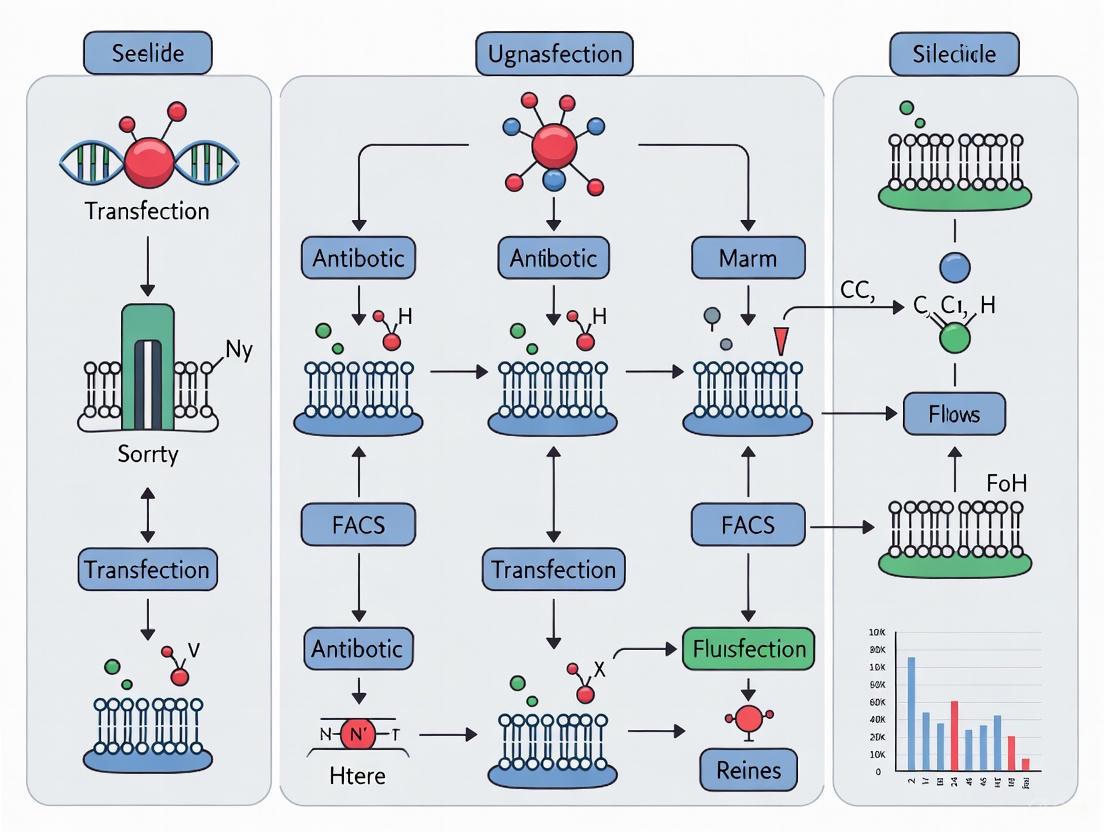
This article provides a systematic guide for researchers and drug development professionals on selecting transfected mammalian cells, a critical step in generating stable cell lines for gene function studies and...
A Comprehensive Guide to Selecting Transfected Mammalian Cells: From Foundational Principles to Advanced Protocols
Abstract
This article provides a systematic guide for researchers and drug development professionals on selecting transfected mammalian cells, a critical step in generating stable cell lines for gene function studies and recombinant protein production. It covers foundational concepts of stable versus transient transfection, details the mechanisms of common selection markers (antibiotic-based and novel toxin-based systems like selecDT), and offers step-by-step protocols for method implementation. The content further delves into advanced optimization strategies for challenging cell types, comparative analysis of selection techniques, and robust methods for validation. By synthesizing current methodologies and emerging technologies, this guide aims to enhance experimental efficiency and success rates in molecular biology and biopharmaceutical development.
Understanding Transfection Selection: Core Principles and Marker Systems
In the field of genetic engineering and recombinant protein production, the introduction of foreign nucleic acids into mammalian cells—a process known as transfection—is a fundamental technique [1]. Two principal methodologies have been established: transient transfection and stable transfection [2] [3]. The strategic decision between these approaches significantly influences experimental timelines, resource allocation, and project outcomes in both basic research and biopharmaceutical development [1] [4]. This application note delineates the core objectives, mechanistic workflows, and appropriate applications for each method, providing a structured framework for researchers to select the optimal transfection strategy for their specific goals.
Core Definitions and Strategic Objectives
Transient Transfection
Transient transfection involves the introduction of genetic material (DNA or RNA) into host cells without integration into the host genome [1] [5]. The transfected nucleic acids remain in the nucleus for a limited period, leading to temporary gene expression that typically lasts from 24 to 96 hours, after which the genetic material is diluted and degraded through cell division [3] [5].
Primary Objective: To achieve rapid, high-level expression of recombinant proteins or to study short-term gene effects without the need for long-term maintenance of the genetic modification [6]. It is ideally suited for rapid protein production, functional genomics studies, and high-throughput screening where speed and flexibility are paramount [3] [6].
Stable Transfection
Stable transfection entails the integration of the foreign DNA into the host cell's genome, resulting in a permanent genetic alteration that is passed on to all subsequent generations of cells [1] [5]. This process requires a selective screening process to isolate and propagate those cells that have successfully incorporated the genetic material [3].
Primary Objective: To generate clonal cell lines that provide consistent, long-term expression of the transgene for applications such as large-scale bioproduction of therapeutic proteins, long-term pharmacology studies, functional genomics, and disease modeling [1] [3] [5].
Table 1: Comparative Analysis of Transient vs. Stable Transfection
| Parameter | Transient Transfection | Stable Transfection |
|---|---|---|
| Genetic Alteration | Temporary, no genomic integration [1] [3] | Permanent, genomic integration [1] [3] |
| Duration of Expression | Short-term (typically 1-7 days) [1] [3] | Long-term, sustained over many generations [1] [3] |
| Workflow & Timeline | Simple, quick (harvest in 24-96 hours) [1] [4] | Complex, time-consuming (requires 2-3 weeks of selection) [1] [3] |
| Protein Expression Level | High, due to high copy number of transfected DNA [3] [5] | Lower, due to single or low copy number of integrated DNA [3] [5] |
| Key Applications | Rapid protein production, gene function studies, siRNA gene silencing, vaccine development [1] [3] [6] | Large-scale protein production, generation of cell lines for drug discovery, long-term disease modeling, gene therapy [1] [3] [5] |
Workflow and Experimental Protocols
Workflow for Transient Transfection
The following diagram outlines the generalized workflow for a transient transfection experiment:
Protocol 1: Standard Transient Transfection Using Chemical Reagents
This protocol is optimized for adherent HEK293 or CHO cells and can be adapted for other mammalian cell lines.
Day 1: Cell Seeding
- Harvest and count cells from a maintenance culture.
- Seed an appropriate number of cells into multi-well plates or flasks to achieve 70-90% confluence at the time of transfection (typically 18-24 hours later). Use standard growth medium without antibiotics [6].
Day 2: Transfection Complex Preparation
- Dilution Step: Dilute 1-2 µg of high-quality, supercoiled plasmid DNA in a sterile, reduced-serum medium (e.g., Opti-MEM) to a total volume of 50-100 µL. Mix gently.
- Reagent Preparation: In a separate tube, dilute the recommended volume of cationic lipid (e.g., Lipofectamine) or polymer (e.g., Polyethylenimine, PEI) transfection reagent in an equal volume of the same reduced-serum medium. Mix gently and incubate for 2-5 minutes at room temperature.
- Complex Formation: Combine the diluted DNA with the diluted transfection reagent. Mix immediately by vortexing or pipetting. Incubate the complex at room temperature for 15-30 minutes to allow for the formation of stable lipid-DNA or polymer-DNA nanoparticles [6] [7].
Transfection
- After the incubation period, add the DNA-transfection reagent complex dropwise onto the cells in the plate/flask. Gently swirl the vessel to ensure even distribution.
- Return the cells to the 37°C, 5% CO₂ incubator.
Post-Transfection Incubation and Harvest
- Incubate the cells for 24 to 96 hours. The optimal harvest time depends on the protein being expressed and the research goals [3].
- If analyzing secreted proteins, harvest the cell culture supernatant. If analyzing intracellular proteins, lyse the cells directly in the culture vessel.
- Proceed with downstream analyses such as SDS-PAGE, Western Blot, ELISA, or functional assays to evaluate transfection efficiency and protein yield [3].
Workflow for Stable Cell Line Development
The process of generating a stable cell line is more involved, as illustrated in the following workflow:
Protocol 2: Generation of Stable Cell Pools via Antibiotic Selection
This protocol describes the generation of stable pools using a plasmid containing an antibiotic resistance gene.
Vector Design and Preparation
- Use an expression vector that contains both the gene of interest (GOI) and a selectable marker, such as a gene conferring resistance to neomycin, puromycin, or hygromycin [3] [5]. The GOI and marker can be on the same plasmid or on two separate plasmids that are co-transfected at a ratio of 5:1 to 10:1 (GOI:Marker) [3].
- Prepare high-purity, endotoxin-free plasmid DNA.
Day 1-3: Transfection and Recovery
- Transfect the target cells (e.g., CHO or HEK293) following the steps outlined in Protocol 1.
- 24-48 hours post-transfection, passage the transfected cells at an appropriate density. This is the "recovery period" that allows cells to express the resistance gene before selection is applied.
Day 4 Onwards: Selection and Expansion
- Begin selection by adding the corresponding antibiotic to the culture medium. The minimum lethal concentration of the antibiotic for the specific cell line must be predetermined in a kill-curve experiment [5].
- Change the selection medium every 2-3 days. Non-transfected cells and cells that did not stably integrate the plasmid will begin to die off over 5-14 days [3].
- Once the majority of non-transfected cells have died, continue to culture the resistant cell population as a "stable pool." Expand these cells for further analysis or proceed to monoclonal isolation.
Protocol 3: Advanced Rapid Selection Using Diphtheria Toxin (selecDT)
Recent advancements offer faster alternatives to antibiotic selection. The selecDT method uses a fusion protein that confers resistance to diphtheria toxin (DT) [8] [9].
- Transfection: Co-transfect cells with the GOI and the
selecDTmarker. - Rapid Selection: Within 24-48 hours post-transfection, apply diphtheria toxin to the culture medium. Only cells expressing the
selecDTprotector protein, and by extension the linked GOI, will survive [8]. - Isolation: Surviving cells can be expanded directly. This method significantly condenses the selection timeline from weeks to just a few days and demonstrates high selection efficiency [9].
The Scientist's Toolkit: Essential Reagents and Materials
Successful transfection requires careful selection of reagents and materials. The following table details key solutions and their functions.
Table 2: Key Research Reagent Solutions for Transfection
| Reagent / Material | Function and Importance |
|---|---|
| Expression Vector | A plasmid DNA containing the gene of interest and necessary regulatory elements (e.g., strong promoter, polyA signal). For stable transfection, it must also carry a selectable marker [3] [5]. |
| Cationic Lipids / Polymers | Chemical reagents (e.g., Lipofectamine, PEI) that complex with nucleic acids, neutralizing their charge and facilitating cellular uptake through endocytosis or membrane fusion [7]. |
| Selection Antibiotics | Agents (e.g., Geneticin/G418, Puromycin) used to kill non-transfected cells and apply continuous pressure to maintain the integrated transgene in stable cell lines [3] [5]. |
| Optimized Cell Culture Medium | Formulations tailored for specific cell lines (e.g., HEK293, CHO) that support high cell viability and density, which are critical for achieving high transfection efficiency and recombinant protein yields [6]. |
| Engineered Selection Markers | Novel markers, such as the selecDT protein, that provide an orthogonal and rapid alternative to traditional antibiotic-based selection, reducing timeline and improving efficiency [8] [9]. |
The choice between transient and stable transfection is a fundamental strategic decision in molecular and cell biology. Transient transfection offers a fast and flexible route for short-term protein production and gene analysis, while stable transfection provides a foundation for long-term, consistent expression required for industrial protein production and advanced cellular models. By understanding the distinct objectives, workflows, and tools associated with each method, as detailed in this application note, researchers can effectively align their experimental design with their scientific and developmental goals.
The Critical Role of Selectable Markers in Isoclonal Cell Line Development
In the field of mammalian cell biology, the development of isoclonal cell lines—populations derived from a single genetically modified progenitor—is a cornerstone for biomedical research, therapeutic protein production, and drug discovery. The success of this process critically depends on the efficient selection and isolation of cells that have stably incorporated the transgene of interest. Selectable markers are the indispensable tools that enable this precise selection by conferring a survival advantage to successfully transfected cells under specific culture conditions [10] [11].
These markers, typically genes conferring resistance to antibiotics or other toxic compounds, are co-introduced with the gene of interest. They facilitate the selective elimination of non-transfected cells, allowing only the genetically modified population to proliferate [12]. The choice of selector agent and its corresponding marker is not merely a technical detail; it profoundly influences the efficiency of selection, the stability of transgene expression, and the overall quality and reproducibility of the resulting cell line [12]. This application note details the critical protocols and considerations for employing selectable markers to develop high-quality, isoclonal mammalian cell lines, framed within the broader context of optimizing transfection and selection methodologies.
Key Selectable Markers and Their Mechanisms
A variety of dominant selectable markers are routinely used in mammalian cell culture systems. These markers function by inactivating the selection agent or by expressing a mutant version of the cellular target that is insensitive to the inhibitor.
Table 1: Common Selectable Markers for Mammalian Cell Line Development
| Selectable Marker | Common Selection Agent | Mechanism of Action | Typical Working Concentration Range |
|---|---|---|---|
| Neomycin Resistance (NeoR) | G418 (Geneticin) | Inhibits protein synthesis; NeoR is an aminoglycoside phosphotransferase that inactivates G418 [10]. | 100–800 µg/mL [10] |
| Puromycin Resistance (PuroR) | Puromycin | Causes premature chain termination during protein synthesis; PuroR is a puromycin-N-acetyl-transferase that acetylates and inactivates puromycin [10] [12]. | 0.5–10 µg/mL [10] |
| Hygromycin B Resistance (HygR) | Hygromycin B | Inhibits protein synthesis; HygR is a hygromycin-B-phosphotransferase that phosphorylates and inactivates the antibiotic [10] [12]. | 50–400 µg/mL [10] |
| Blasticidin Resistance (BlastR or BsdR) | Blasticidin S | Inhibits protein synthesis; BlastR is a blasticidin S deaminase that deaminates the antibiotic [10] [12]. | 1–50 µg/mL [10] |
| Zeocin Resistance (BleoR) | Zeocin | Induces DNA strand breaks; BleoR is a binding protein that sequesters the antibiotic [12]. | 50–1000 µg/mL |
The choice of marker significantly impacts the outcome of cell line development. Recent quantitative studies have demonstrated that the selection system can influence both the level of recombinant protein expression and the heterogeneity within the selected polyclonal population. For instance, cell lines selected using NeoR/G418 or BlastR/Blasticidin often display the lowest average transgene expression and the highest cell-to-cell variability [12]. In contrast, cell lines developed with BleoR/Zeocin selection consistently show the highest and most uniform transgene expression, while HygR and PuroR-based systems yield intermediate but high-level expression [12]. These findings underscore that the selection marker establishes a survival threshold that can indirectly select for specific expression levels of the linked gene of interest.
Establishing Selective Conditions: The Antibiotic Kill Curve
A fundamental prerequisite for successful stable transfection is determining the optimal concentration of the selection agent that effectively kills non-transfected (wild-type) cells within 1-2 weeks. This critical concentration is identified through a kill curve experiment, which must be performed for each cell type and whenever a new batch of antibiotic is used [10].
Experimental Protocol: Determining the Minimum Lethal Concentration
Objective: To establish the minimum concentration of a selection antibiotic required to kill 100% of non-transfected cells over a 10–14 day period.
Materials:
- Mammalian cell line of interest (e.g., HEK293, CHO)
- Complete growth medium
- Selection antibiotic stock solution (e.g., G418, Puromycin, Hygromycin B)
- Sterile phosphate-buffered saline (PBS)
- Trypsin-EDTA solution
- Tissue culture-treated dishes (e.g., 6-well plates)
- Hemocytometer or automated cell counter
Workflow:
Method:
- Cell Seeding: Split a confluent culture of the non-transfected cell line and seed cells into a multi-well plate (e.g., a 6-well plate) at a density of approximately 1:5 to 1:10 of their confluent density. The cells should be sub-confluent to ensure they are actively dividing, as confluent, non-growing cells are often resistant to antibiotics like G418 [10]. Incubate the cells overnight to allow for attachment.
- Antibiotic Dilution: Prepare a series of antibiotic concentrations in complete growth medium. A broad range is recommended for the initial experiment. For example:
- G418 (Geneticin): 0, 100, 200, 400, 600, 800 µg/mL
- Puromycin: 0, 0.5, 1.0, 2.0, 4.0, 8.0 µg/mL
- Hygromycin B: 0, 50, 100, 200, 300, 400 µg/mL
- Application of Selection Medium: Aspirate the standard growth medium from the pre-seeded cells and replace it with the antibiotic-containing medium. Include a negative control well (0 µg/mL antibiotic) to monitor normal cell growth.
- Maintenance and Monitoring: Incubate the cells for 10–14 days, replacing the selective medium every 3–4 days to maintain active antibiotic pressure. Monitor the plates regularly for signs of cell death, which typically begins after 3–5 days [10].
- Viability Assessment: After 10–14 days, examine all wells for viable cells. The desired endpoint is the complete absence of viable cells. Quantify the results using a method such as trypan blue exclusion with a hemocytometer or an automated cell counter [10].
- Data Analysis and Interpretation: Plot the number of viable cells (or the percentage of viability) against the antibiotic concentration. The optimal selective concentration is the lowest concentration that results in 100% cell death within the selection period. This concentration should be used for all subsequent stable transfection experiments with that specific cell line and antibiotic batch.
Core Protocol for Stable Isoclonal Cell Line Development
The following protocol outlines the standard workflow for generating stable, isoclonal cell lines, from transfection to the isolation of single-cell clones.
Experimental Workflow for Stable Cell Line Generation
Method:
- Transfection: Transfect the cells using a method suitable for your cell type (e.g., lipofection, electroporation, calcium phosphate) with a plasmid containing both your gene of interest (GOI) and the selectable marker. If the two are on separate vectors, use a 5:1 to 10:1 molar ratio of the GOI plasmid to the marker plasmid [10]. Always include control transfections: a) a vector containing the selectable marker but not the GOI, and b) a mock transfection with no DNA.
- Initiation of Selection: Approximately 48 hours after transfection, passage the cells at several different dilutions (e.g., 1:100, 1:500) into fresh culture medium containing the pre-determined optimal concentration of the selection antibiotic [10]. Using different dilutions increases the chance of obtaining well-isolated colonies later.
- Maintenance Under Selection: Culture the cells under selection for a minimum of two weeks, replacing the drug-containing medium every 3 to 4 days. Non-transfected cells will begin to die off after 3–9 days [10].
- Colony Monitoring: During the second week and beyond, monitor the culture for the appearance of distinct "islands" or foci of healthy, resistant cells. The time for visible colonies to form is cell type-dependent and can range from 2 to 5 weeks [10].
- Isolation of Clones: Once colonies have expanded to a sufficient size (500–1,000 cells), they can be isolated. For adherent cells, this is commonly done using cloning cylinders or sterile toothpicks to physically separate and trypsinize individual colonies [10]. For suspension cells, single-cell cloning can be performed by limiting dilution in 96-well plates.
- Expansion and Screening: Transfer the isolated single cells or clones into the wells of a 96-well plate. Once established, continue to maintain the cultures in medium containing the selection antibiotic. Expand the clones and screen them for the desired expression and functional characteristics of your GOI. This is a critical step in identifying the lead isoclonal line for your application.
Advanced Strategies and Emerging Technologies
Split Selectable Markers for Multiplexed Engineering
A significant innovation in the field is the development of split selectable markers, which address the limitation of having a finite number of conventional markers. This system allows for the co-selection of multiple unlinked transgenes using a single antibiotic resistance marker [13].
The technology involves splitting a gene encoding an antibiotic resistance protein (e.g., for Hygromycin, Puromycin, Neomycin, or Blasticidin) into two or more segments. Each segment is fused to a protein splicing element called an intein (forming a "markertron") and is placed on a separate transgenic vector. When a cell receives all vectors containing the complete set of markertrons, the inteins mediate a protein trans-splicing reaction that reconstitutes the full-length, functional resistance protein. Cells that receive only a partial set of vectors cannot reconstitute the marker and are eliminated by the antibiotic [13]. This approach has been successfully implemented for 2-, 3-, and even 6-way transgenesis, dramatically expanding the complexity of genetic engineering possible with a limited palette of selection agents.
Novel Selection Systems
Beyond traditional antibiotics, novel selection systems are being developed to improve speed and efficiency. One example is diphtheria toxin (DT) resistance-based selection (selecDT). This system uses an engineered fusion protein that protects cells from DT by inactivating its uptake receptor [8]. This method has been shown to enable rapid selection of transgene-positive human cells (e.g., HEK293, CHO) in an overnight procedure, compared to the weeks required for antibiotic selection. It is orthogonal to existing antibiotic methods, offering a valuable alternative or complementary tool [8].
Data-Driven Cell Line Development
Next-generation methodologies are leveraging advanced data analytics to improve clone selection. The CLD4 methodology, for instance, involves creating a structured data lake of all development data and calculating a Cell Line Manufacturability Index (MICL) that quantifies clone performance based on productivity, growth, and product quality criteria [14]. Machine learning models can then identify potential risks related to process operation and critical quality attributes, enabling a more holistic and data-driven selection of the lead isoclonal line for bioproduction [14].
The Scientist's Toolkit: Essential Reagents for Selection
Table 2: Key Research Reagent Solutions for Stable Cell Line Development
| Reagent / Material | Function / Application | Examples / Notes |
|---|---|---|
| Cationic Lipid Reagents | Forms complexes with nucleic acids for efficient delivery into a wide range of cell types; suitable for both transient and stable transfection [7]. | Lipofectamine, ViaFect |
| Selection Antibiotics | Applied post-transfection to select for cells that have stably incorporated the resistance marker. | Geneticin (G418), Puromycin, Hygromycin B, Blasticidin, Zeocin [10] [12] |
| Cloning Cylinders | Physical tools for isolating individual adherent cell colonies from a mixed culture for clonal expansion. | Typically made of sterile glass or PTFE; used with sterile silicone grease to create a seal. |
| Gateway-Compatible Vectors | Facilitates rapid and efficient recombination-based cloning of transgenes into lentiviral or other expression vectors, streamlining vector construction [13]. | Available with various selectable markers (e.g., Intres vectors) [13]. |
| Lentiviral Preps | Viral transduction offers high efficiency, especially in hard-to-transfect cells. Can be used for both stable and transient expression [11]. | Ensure biosafety protocols are followed. |
| Conditioned Medium | Spent medium from a healthy culture containing growth factors and metabolites; can support the growth of low-density or difficult-to-clone cells [10]. | Prepared by filtering medium from a confluent, actively growing culture. |
Within mammalian cell engineering, the selection of successfully transfected cells is a critical step in generating stable, high-expressing cell lines for research and biopharmaceutical production. This process universally relies on antibiotic selection using resistance genes such as neo (neomycin resistance), pac (puromycin resistance), hygB (hygromycin B resistance), and bsd (blasticidin resistance) [10]. The choice of selectable marker is not arbitrary; each antibiotic resistance protein establishes a distinct threshold of transgene expression below which no cell can survive antibiotic challenge [15]. Understanding the comparative mechanisms of these genes is therefore fundamental to designing effective selection protocols, predicting transgene expression levels, and ultimately engineering superior cell lines, particularly for demanding applications like recombinant protein production and exosome engineering [15]. This application note details the mechanisms, quantitative performance, and practical protocols for utilizing these four common antibiotic resistance genes.
Comparative Mechanisms and Quantitative Performance
The efficacy of a selection marker is determined by the biochemical function of its encoded protein and the resulting selective pressure it imposes on a polyclonal cell population.
Biochemical Mechanisms of Action
| Antibiotic Resistance Gene | Common Antibiotic(s) Used | Mechanism of Antibiotic Action | Mechanism of Resistance |
|---|---|---|---|
| neo (NeoR) | Geneticin (G418) | Binds to the 30S ribosomal subunit, inhibiting protein synthesis and causing misreading of mRNA [16]. | Aminoglycoside 3'-phosphotransferase catalyzes the ATP-dependent phosphorylation of the antibiotic, preventing its binding to the ribosome [16] [17]. |
| pac (PuroR) | Puromycin | Mimics aminoacyl-tRNA, causing premature chain termination during protein synthesis [18]. | Puromycin N-acetyltransferase acetylates puromycin using acetyl-CoA, thereby inactivating the molecule [17]. |
| hygB (HygR) | Hygromycin B | Binds to the 30S ribosomal subunit, inhibiting protein translocation and causing misreading [16]. | Hygromycin B phosphotransferase catalyzes the ATP-dependent phosphorylation of hygromycin B, inactivating it [16]. |
| bsd (BsdR) | Blasticidin S | Inhibits protein synthesis by blocking the peptide bond formation step on the ribosome [15]. | Blasticidin S deaminase catalyzes the deamination of blasticidin S to a non-toxic derivative [15]. |
Quantitative Performance in Mammalian Cell Selection
The selection pressure exerted by each system directly impacts the expression level of the co-transfected gene of interest. Quantitative flow cytometry data of mCherry fluorescence in polyclonal 293F cell lines demonstrates these differences [15].
Table 2: Transgene Expression Levels Driven by Different Selection Markers
| Antibiotic Resistance Protein | Mean mCherry Fluorescence (A.U.) | Increase in Mean vs. WT | Coefficient of Variation (%) |
|---|---|---|---|
| BsdR | 1,308 | (Baseline) | 370 |
| ER50BsdR | 6,646 | 5.1x | 140 |
| BleoR | 16,025 | (Baseline) | 84 |
| ER50BleoR | 37,141 | 2.3x | 48 |
| PuroR | 6,539 | (Baseline) | 107 |
| ER50PuroR | 10,808 | 1.7x | 77 |
| HygR | 6,807 | (Baseline) | 125 |
| ecDHFRHygR | 8,455 | 1.2x | 99 |
| NeoR | 4,498 | (Baseline) | 126 |
Key observations from this data include:
- BsdR selects for cell populations with the lowest baseline transgene expression and the highest heterogeneity (CV=370%), making it the least stringent marker [15].
- BleoR (Zeocin resistance) selects for the highest baseline transgene expression, nearly 10-fold higher than NeoR or BsdR [15].
- Degron-tagged variants (e.g., ER50BleoR, ER50BsdR) select for significantly higher transgene expression than their wild-type counterparts by destabilizing the resistance protein, thereby requiring higher expression for survival [15].
Experimental Protocols
Antibiotic Kill Curve Assay
A kill curve is essential to determine the optimal antibiotic concentration for eliminating untransfected cells while allowing growth of resistant clones. This must be performed for each cell type and upon receipt of a new antibiotic lot [10].
Protocol:
- Seed cells at a low density (e.g., 1:5 to 1:10 split from a confluent dish) into multiple culture vessels.
- Apply antibiotic in a range of concentrations. A suggested starting range is:
- Geneticin (G418): 0–1,500 µg/mL
- Puromycin: 0–10 µg/mL
- Hygromycin B: 0–500 µg/mL
- Blasticidin S: 0–30 µg/mL
- Incubate and maintain cells for 10–14 days, replacing the drug-containing medium every 3–4 days.
- Assay for viability after 10 days using a method like trypan blue staining with a hemocytometer or an automated cell counter.
- Plot results and determine the minimal concentration that kills 100% of cells within 5-7 days. This is the optimal concentration for selection [10].
Stable Cell Line Generation Workflow
The following diagram illustrates the complete workflow for generating a stable cell line using antibiotic selection.
Detailed Protocol:
- Transfection: Transfect cells with your vector of interest containing the antibiotic resistance gene. A 5:1 to 10:1 molar ratio of gene-of-interest vector to selection marker vector is recommended if they are on separate plasmids [10]. Include a negative control (vector without the marker).
- Initiation of Selection: Approximately 48 hours post-transfection, passage the cells at several dilutions (e.g., 1:100, 1:500) into medium containing the pre-determined optimal antibiotic concentration [10].
- Maintenance and Monitoring: Replace the drug-containing medium every 3–4 days. Non-transfected control cells should begin dying after 3–9 days. Over the next 1–3 weeks, monitor for the appearance of distinct, healthy "islands" of resistant cells [10].
- Isolation and Expansion: Once colonies reach a sufficient size (500–1,000 cells), isolate them using cloning cylinders or by picking with a sterile tip. Transfer the clones to a multi-well plate to expand.
- Validation: Continue to maintain clones in antibiotic-containing medium and validate transgene expression and stability through appropriate assays (e.g., flow cytometry, Western blot, qPCR).
Advanced Application: Degron Tagging for Enhanced Selection
A powerful advanced strategy involves fusing resistance proteins to proteasome-targeting degron tags (e.g., ER50, ecDHFR). This destabilizes the protein, lowering its intracellular abundance and net activity. To survive, cells must express higher levels of the transgene, selecting for clones with stronger transgene expression [15].
Protocol for Implementing Degron-Tagged Markers:
- Vector Construction: Clone the coding sequence for a degron tag (e.g., ER50) N- or C-terminal to your antibiotic resistance gene in your bicistronic or co-expression vector.
- Stable Cell Line Generation: Follow the standard stable cell line generation protocol (Section 3.2) using the degron-tagged construct.
- Optional Stabilizer Use: For degrons like ER50 (stabilized by 4-hydroxytamoxifen) or ecDHFR (stabilized by trimethoprim), the stabilizer can be added to the culture medium to fine-tune the stringency of selection if needed [15].
- Validation: As demonstrated in [15], expect a significant increase (e.g., 2.3x for ER50BleoR) in the expression of your linked gene of interest compared to selection with the wild-type resistance marker.
The Scientist's Toolkit
Table 3: Essential Research Reagents for Antibiotic Selection
| Reagent / Material | Function & Application Notes |
|---|---|
| Selection Antibiotics | Geneticin (G418), Puromycin, Hygromycin B, Blasticidin S. Liquid formulations are recommended for consistent concentration in media [10]. |
| Eukaryotic Expression Vectors | Plasmids containing resistance genes (neo, pac, hygB, bsd), often in bicistronic configurations (e.g., with a 2a peptide) for linked expression with the gene of interest [15]. |
| Appropriate Cell Line | A mammalian cell line that is susceptible to the antibiotics and capable of clonal growth (e.g., HEK293, CHO). Test adherence to kill curve protocol [10]. |
| Transfection Reagent | Chemical (e.g., lipofectamine), physical (e.g., electroporation), or viral method suitable for your cell type to deliver the plasmid DNA. |
| Tissue Culture Supplies | Cloning cylinders or 96-well plates for single-cell cloning; conditioned medium may be needed for fastidious cells [10]. |
The selection of an antibiotic resistance gene is a critical determinant in the success of generating a stable mammalian cell line. While all four genes discussed function by inducing their respective antibiotics, they differ significantly in the stringency of selection and the resulting expression level of the co-transfected transgene. Researchers can make an informed choice based on the requirements of their project: BsdR for lower-stringency selection, BleoR for the highest baseline expression, or advanced degron-tagged systems for superior, high-level transgene expression. The protocols outlined herein provide a robust framework for the effective application of these powerful tools in cell engineering.
The development of stable mammalian cell lines is a cornerstone of biologics and therapeutic protein production [19]. A critical step in this process is the selection of transfected cells, a procedure where only a small fraction (approximately 1 in 10,000 cells) successfully stably integrates the foreign DNA [20]. Dominant selectable markers are therefore essential to isolate these rare stable transfectants from the bulk population [20].
While traditional antibiotic resistance markers are widely used, emerging alternative systems like Diphtheria Toxin Resistance (selecDT) offer distinct advantages for specific applications. This document details the protocol for utilizing selecDT and positions it within the broader context of mammalian cell selection, providing researchers with a powerful tool for advanced cell line development. The global cell line development market, propelled by rising demand for biologics and biosimilars, underscores the continuous need for refined and efficient selection methodologies [19].
The Scientist's Toolkit: Research Reagent Solutions
The following table catalogues essential materials required for the successful selection of transfected cells using the selecDT system and other common methods.
Table 1: Essential Research Reagents for Transfected Cell Selection
| Reagent/Material | Function/Description |
|---|---|
| Selection Plasmid | A vector expressing both the gene of interest and the selectable marker gene (e.g., DT resistance gene for selecDT). |
| Diphtheria Toxin (DT) | The cytotoxic agent for selection. Only cells expressing the resistance gene survive exposure [20]. |
| Transfection Reagent | Facilitates the introduction of plasmid DNA into mammalian cells (e.g., lipofectamines, polymers). |
| Complete Cell Culture Media | Growth medium appropriate for the host cell line, supplemented with serum or defined replacements. |
| Mammalian Host Cells | The cell line to be transfected (e.g., CHO, HEK293) [21]. |
| Serum-Free Media | Chemically defined media used to improve scalability and reduce contamination risk in bioproduction [21]. |
| Antibiotics (for other systems) | For alternative selection systems, e.g., Geneticin (G418) for neo resistance, Hygromycin B, Puromycin. |
Comparative Analysis of Selection Systems
Selection systems are characterized by their mode of action, efficiency, and suitability for different applications. The following table provides a quantitative and qualitative comparison of selecDT against other established and emerging systems.
Table 2: Quantitative Comparison of Mammalian Cell Selection Systems
| Selection System | Selection Agent | Working Concentration | Time to Selection | Key Advantages | Key Limitations |
|---|---|---|---|---|---|
| selecDT (Diphtheria Toxin R.) | Diphtheria Toxin | 1-100 ng/mL (requires titration) | 7-14 days | High stringency; low false-positive background; no need for continuous antibiotic. | Requires careful dose optimization; cytotoxicity of the agent. |
| Antibiotic Resistance (e.g., neo) | Geneticin (G418) | 100-1000 µg/mL | 10-14 days | Well-established; broad host range; many available vectors. | Cost of antibiotic for large-scale culture; potential for slow-killing effects. |
| Fluorescent/Marker-Based | N/A (FACS Sorting) | N/A | 3-5 days | Enables single-cell cloning and high purity; visual confirmation. | Requires access to a flow cytometer/sorter; potential for phototoxicity. |
| Metabolic (e.g., GS System) | Methionine Sulphoximine (MSX) | 25-500 µM | 14-21 days | Can be used for gene amplification; high yields. | Longer timeline; more complex process development. |
The data from the market analysis indicates that mammalian cells, particularly CHO and HEK-293, dominate the bioproduction sector due to their superior ability to perform human-like post-translational modifications [21]. Technological progress in gene editing tools, such as CRISPR-Cas9, is further enhancing the speed and stability of mammalian cell line development [19] [21].
Detailed Experimental Protocol: selecDT System
The following diagram outlines the complete experimental workflow for selecting transfected cells using the selecDT system.
Methodologies for Key Experiments
Title: Establishment of Stable Cell Lines Using Diphtheria Toxin Selection
1. Pre-Selection: Determination of Optimal Diphtheria Toxin Concentration
- Objective: To identify the minimal concentration of Diphtheria Toxin (DT) that kills 100% of non-transfected parental cells within 5-7 days (kill curve).
- Procedure:
- Plate untransfected parental cells in a 24-well plate at a density of 2-5 x 10^4 cells per well. Allow cells to adhere overnight.
- Prepare a serial dilution of Diphtheria Toxin in complete culture medium. A typical range is 0.1 ng/mL to 100 ng/mL.
- Aspirate the medium from the plated cells and add the toxin-containing medium. Include a control well with toxin-free medium.
- Incubate the cells for 5-7 days, replacing the toxin-containing medium every 2-3 days.
- Monitor cell viability daily using a microscope. Score cell death (rounded, detached cells) and confirm by trypan blue exclusion assay or similar viability stain.
- The optimal selection concentration is the lowest toxin concentration that results in 100% cell death in the control parental population by day 5.
2. Transfection and Selection
- Objective: To introduce the selecDT plasmid and isolate stably resistant clones.
- Procedure:
- Plate the mammalian host cells (e.g., CHO-S) one day prior to transfection to achieve 50-70% confluence at the time of transfection.
- Transfect the cells with the plasmid containing your gene of interest and the DT resistance gene, using a standard method (e.g., lipofection, electroporation). Include a mock-transfected control (no DNA).
- Allow the cells to recover for 24-48 hours in complete medium without selection to permit expression of the resistance gene.
- After recovery, trypsinize and re-plate the transfected cells at various densities (e.g., 1:10, 1:20, 1:50) into fresh selection medium containing the pre-determined optimal concentration of DT.
- Culture the cells, changing the selection medium every 3-4 days. Observe for the appearance of resistant foci, which typically become visible after 7-14 days.
3. Clone Isolation and Expansion
- Objective: To isolate single-cell clones and establish stable polyclonal or monoclonal cell lines.
- Procedure:
- Once resistant foci are sufficiently large (~500-1000 cells), isolate them using cloning rings or by harvesting via limited dilution cloning.
- For limited dilution, trypsinize the pooled resistant population and seed cells into 96-well plates at a statistical density of 0.5-1 cell per well to ensure clonality.
- Expand the isolated clones in selection medium to establish stable cell lines.
- Screen the expanded clones for the expression and functionality of the gene of interest using appropriate assays (e.g., ELISA, Western Blot, functional activity assays).
Selection System Decision Framework
Choosing the right selection system depends on multiple factors related to the project's goals and constraints. The logic below visualizes the key decision-making process.
The Diphtheria Toxin Resistance (selecDT) system represents a powerful, high-stringency alternative to traditional antibiotic-based selection for mammalian cells. Its primary strength lies in its ability to minimize false positives, making it particularly valuable for applications where background is a major concern. As the field of cell line development advances, driven by innovations in gene editing like CRISPR and the growing demand for complex biologics, the availability of diverse and robust selection systems will be paramount [19] [21]. The choice of system—whether selecDT, antibiotic, or others—should be guided by the specific experimental needs, timeline, and end-goal of the research or bioproduction campaign.
The success of mammalian cell transfection, a cornerstone of genetic engineering and therapeutic drug development, often hinges on the efficient selection of successfully modified cells. For stable expression studies or the generation of engineered cell lines, simply introducing a gene of interest (GOI) is insufficient; researchers must be able to identify and isolate the minority of cells that have stably integrated the foreign nucleic acid. Co-transfection, the simultaneous delivery of a GOI and a selection marker, addresses this challenge by enabling the selective proliferation of transfected cells while eliminating non-transfected ones [22] [23]. This application note details the strategic design of vectors and optimized protocols for effective co-transfection, framed within the broader context of developing robust protocols for selecting transfected mammalian cells. We provide detailed methodologies and data-driven recommendations to aid researchers, scientists, and drug development professionals in achieving high-efficiency, reproducible outcomes.
Strategic Vector Design and Selection Principles
The foundational step in a successful selection protocol is the thoughtful design of the genetic material to be delivered. The two primary strategies involve the format of the CRISPR components and the configuration of the selection cassette.
CRISPR Component Delivery Formats
The CRISPR-Cas9 system can be delivered in multiple formats, each with distinct implications for timing, efficiency, and off-target effects. The choice of format influences the optimal transfection method. Ribonucleoprotein (RNP) complexes, consisting of pre-complexed Cas9 protein and guide RNA, offer the fastest editing activity as they require no transcription or translation, and their transient nature minimizes off-target effects [24]. Delivery methods that target the nucleus, such as nucleofection, are favorable for RNPs. Alternatively, DNA plasmids encoding Cas9 and the gRNA require nuclear import for transcription, followed by cytoplasmic translation of the Cas9 mRNA. Finally, RNA (Cas9 mRNA and gRNA) is translated in the cytoplasm before RNP complex formation [24]. The table below summarizes the key characteristics of each format.
Table 1: Comparison of CRISPR-Cas9 Delivery Formats
| Format | Components | Mechanism of Action | Key Advantages | Key Considerations |
|---|---|---|---|---|
| Ribonucleoprotein (RNP) | Pre-formed Cas9 protein + gRNA complex | Direct cleavage after delivery; no transcription/translation needed. | Fastest editing action; reduced off-target effects; high specificity [24]. | Requires delivery to nucleus for optimal efficiency. |
| DNA | Plasmid(s) encoding Cas9 and gRNA | Requires transcription and translation; nuclear import needed. | Cost-effective; stable for long-term storage. | Longer time to editing; increased risk of off-target effects and immune responses. |
| RNA | Cas9 mRNA + gRNA | Requires translation in the cytoplasm. | Avoids risk of genomic integration of Cas9 DNA. | mRNA can be unstable and may trigger innate immune responses. |
Selection Marker Integration Strategies
Selection markers, such as antibiotic resistance genes, provide a powerful means to enrich for successfully transfected cells. The FAB-CRISPR (Fast Antibiotic Resistance-based CRISPR) protocol exemplifies this, using an antibiotic resistance cassette for rapid selection and enrichment of gene-edited cells [25]. There are two primary strategic approaches to linking the GOI with the selection marker:
- Single-Vector Co-expression: The GOI and the selection marker are cloned into a single vector, often under the control of different promoters. This strategy ensures that any cell acquiring the plasmid will contain both elements, guaranteeing that all selected cells also express the GOI.
- Dual-Vector Co-transfection: The GOI and the selection marker are carried on two separate plasmids that are mixed and delivered simultaneously [22]. While more flexible, this approach relies on a high probability that a cell taking up one plasmid will also take up the other. The use of antibiotic selection (e.g., puromycin, blasticidin, neomycin) eliminates cells that failed to integrate the resistance gene, thereby enriching the population for those that also likely incorporated the GOI. It is critical to determine the Minimum Inhibitory Concentration (MIC) of the antibiotic for each specific cell line prior to the experiment. For instance, one study established that the MIC for puromycin was 10 μg/mL for HEK293T cells and 7 μg/mL for cardiac-derived c-kit expressing cells [26].
Experimental Protocols
Protocol 1: Co-transfection Using Cationic Lipids
This protocol is optimized for co-transfecting plasmid DNA using advanced cationic lipid reagents like Lipofectamine 3000, which has demonstrated superior transfection efficiency and lower cytotoxicity compared to older generations in various cell types, including difficult-to-transfect cells [26] [27].
Day 0: Cell Seeding
- Seed cells: Harvest and count adherent cells. Seed cells in an appropriate culture vessel (e.g., 6-well plate) to reach 70-90% confluency at the time of transfection. The optimal density is cell-type dependent and requires empirical determination [27].
- Incubate: Incubate cells overnight at 37°C and 5% CO₂.
Day 1: Transfection
- Reagent Dilution: For each transfection sample, prepare two sterile tubes:
- Tube A (DNA Mixture): Dilute a total of 1-2 μg of DNA (comprising a mix of your GOI plasmid and selection marker plasmid, typically at a 1:1 to 5:1 mass ratio) in a specified volume of Opti-MEM or other serum-free medium. Add the recommended volume of P3000 Enhancer Reagent.
- Tube B (Lipid Mixture): Dilute the appropriate volume of Lipofectamine 3000 Reagent in an equal volume of Opti-MEM.
- Complex Formation: Combine the contents of Tube A and Tube B. Mix gently and incubate at room temperature for 10-15 minutes to allow lipid-DNA complex formation.
- Add Complexes: Add the complexes drop-wise to the cells containing complete growth medium.
- Incubate: Return cells to the incubator for 24-72 hours.
Day 2-4: Antibiotic Selection
- Start selection: Based on your pre-determined MIC, replace the culture medium with fresh medium containing the appropriate concentration of selection antibiotic (e.g., Puromycin at 1-10 μg/mL).
- Maintain selection: Change the selection medium every 2-3 days. Non-transfected cells will begin to die off within 1-3 days.
- Enrich and verify: After 5-7 days (or once all control, non-transfected cells have died), harvest the resistant cell pool. Verify successful integration and expression of the GOI via PCR, Western blot, or fluorescence microscopy.
Protocol 2: Stable Cell Line Generation via Lentiviral Transduction
For hard-to-transfect cells like primary cells or stem cells, viral vectors, particularly lentiviruses, offer high transduction efficiency and stable integration [23] [26]. This protocol outlines the production of lentiviral particles and subsequent transduction.
Part A: Lentiviral Production in HEK293T Cells
- Seed packaging cells: Seed HEK293T cells in a 10 cm dish to reach 70-80% confluency for transfection.
- Co-transfect packaging plasmids: Using a method like the Lipofectamine 3000 protocol above, co-transfect HEK293T cells with the following plasmid combination:
- Transfer Plasmid: Contains your GOI and selection marker, flanked by lentiviral LTRs and ψ packaging signal.
- Packaging Plasmid(s): e.g., psPAX2 or pCMV-dR8.2 dvpr (providing Gag, Pol, Rev, Tat).
- Envelope Plasmid: e.g., pMD2.G (providing VSV-G glycoprotein for broad tropism).
- Collect viral supernatant: At 48 and 72 hours post-transfection, collect the culture supernatant containing viral particles. Centrifuge to remove cell debris and filter through a 0.45 μm filter.
- Concentrate virus (Optional): Concentrate the viral supernatant using ultracentrifugation or commercial concentrators (e.g., Lenti-X Concentrator). Ultracentrifugation has been shown to yield higher viral titers and transduction efficiency [26].
Part B: Transduction of Target Cells
- Seed target cells: Seed the target cells (e.g., MSCs, primary cells) in a 24-well plate.
- Transduce: Add the concentrated lentiviral supernatant to the target cells in the presence of a transduction enhancer like polybrene (e.g., 8 μg/mL).
- Start selection: 24 hours post-transduction, replace the medium with fresh growth medium. After another 24 hours, begin selection with the appropriate antibiotic.
- Validate and clone: Maintain selection for 1-2 weeks until resistant pools or colonies form. These can be pooled or picked as individual clones for further expansion and validation.
The following workflow diagram illustrates the key decision points and steps in the co-transfection and selection process.
The Scientist's Toolkit: Essential Reagents and Materials
Successful co-transfection and selection rely on a suite of specialized reagents and equipment. The table below catalogs key solutions for your experimental workflow.
Table 2: Essential Research Reagent Solutions for Co-transfection and Selection
| Item | Function/Description | Example Products / Notes |
|---|---|---|
| Cationic Lipid Transfection Reagents | Form complexes with nucleic acids, facilitating cellular uptake by fusing with or being endocytosed by the cell membrane [11] [7]. | Lipofectamine 3000 (for DNA/RNA, high efficiency), Lipofectamine 2000 (for DNA/siRNA), FuGENE lines (e.g., HD, 4K) [22] [26] [27]. |
| Selection Antibiotics | Kill non-transfected cells, enriching for those that have stably integrated the resistance marker. | Puromycin, Blasticidin, G418 (Geneticin). Critical: Determine Minimum Inhibitory Concentration (MIC) for each cell line [25] [26]. |
| Viral Packaging Systems | Set of plasmids required to produce replication-incompetent viral particles for transduction. | 2nd or 3rd Generation Lentiviral Packaging Systems (e.g., psPAX2, pMD2.G). 2nd generation systems can offer higher titers [26]. |
| Optimized Culture Medium | Serum-free medium used to dilute transfection reagents and DNA, as serum can interfere with complex formation. | Opti-MEM I Reduced-Serum Medium [27]. |
| Reporter Genes | Visual or assayable markers (e.g., fluorescent proteins, luciferase) used to optimize and monitor transfection efficiency transiently. | Green Fluorescent Protein (GFP) [28] [26]. |
| Electroporation / Nucleofection Systems | Physical method using electrical pulses to create pores in cell membranes, ideal for hard-to-transfect cells like primary cells and stem cells [24] [11]. | Neon Transfection System, Nucleofector System [27]. |
The integration of selection markers with the gene of interest via co-transfection is a powerful and essential methodology for advancing mammalian cell biology research and therapeutic development. The strategic choice between vector design, delivery methods (non-viral vs. viral), and the implementation of a rigorous, optimized selection protocol are critical determinants of success. By adhering to the detailed protocols and strategic considerations outlined in this application note, researchers can significantly enhance the efficiency of generating stably transfected cell pools, thereby improving the reliability and throughput of their experiments within the broader framework of selecting transfected mammalian cells.
Practical Protocols: Implementing Antibiotic and Novel Selection Methods
The generation of stable cell lines is a cornerstone technique in biomedical research, enabling long-term studies of gene function, large-scale production of recombinant proteins, and the development of cell models for drug discovery [10]. This process relies on the introduction and stable integration of foreign genetic material—comprising the gene of interest and a selectable marker, typically an antibiotic resistance gene—into the host cell's genome. In contrast to transient transfection, where gene expression is lost over time, stable transfection allows the genetic modification to be passed on during cell division, providing a consistent and uniform model for research [29] [10].
Antibiotic-based selection is the most common method for isolating these stably transfected cells. By applying constant selection pressure, non-transfected cells are eliminated, and only those that have successfully integrated the resistance gene can survive and proliferate, forming distinct, resistant colonies [10]. This application note provides a detailed, step-by-step protocol for antibiotic-based selection, from initial transfection to the isolation of resistant colonies, framed within the context of protocol development for selecting transfected mammalian cells.
Principles of Antibiotic Selection
The fundamental principle behind this technique is the use of a selectable marker. When a plasmid vector is transfected into a population of mammalian cells, only a small fraction will successfully integrate the foreign DNA into their genome. To isolate these rare cells, the vector also carries a gene conferring resistance to a specific antibiotic. By cultivating the cells in medium containing that antibiotic, a powerful selection pressure is created. Untransfected cells, which lack the resistance gene, are killed, while stably transfected cells can continue to grow and multiply, eventually forming clonal colonies [10].
A critical pre-experimental step is the determination of the minimum inhibitory concentration—often called a "kill curve"—which is the lowest concentration of an antibiotic that kills 100% of non-transfected cells over a 10-14 day period. This concentration is cell line-specific and must be determined empirically for each new cell type and whenever a new lot of antibiotic is used [10]. Using an incorrect concentration can lead to incomplete selection or excessive toxicity, even to resistant cells.
The Importance of a Kill Curve
Creating a kill curve is an essential first step that should not be overlooked. The appropriate selective concentration varies significantly between cell lines due to differences in metabolism, growth rate, and intrinsic resilience. Supplier-recommended concentrations are merely starting points for this optimization [30].
Kill Curve Protocol [10]:
- Seed cells in a multi-well plate at a density that will reach 20-30% confluence after 24 hours.
- The next day, apply culture medium containing a range of antibiotic concentrations (e.g., 0.5, 1, 2, 5, 10 µg/mL for puromycin).
- Include a negative control well with no antibiotic.
- Change the drug-containing medium every 3-4 days for 10-14 days.
- Monitor the cells daily. The optimal selective concentration is the lowest at which all cells in the well are dead within 10-14 days, while cells in the negative control remain healthy.
Materials and Reagents
Research Reagent Solutions
The table below summarizes common antibiotics used for selection in mammalian cell culture.
Table 1: Common Eukaryotic Selective Antibiotics and Their Applications [30]
| Selective Antibiotic | Common Working Concentration Range | Common Selection Use |
|---|---|---|
| Puromycin | 0.2 - 5 µg/mL | Rapid selection in eukaryotic cells and bacteria; effective quickly. |
| Geneticin (G418) | 200 - 500 µg/mL | Standard selection for mammalian cells using the neomycin resistance gene. |
| Hygromycin B | 200 - 500 µg/mL | Used in dual selection experiments and for eukaryotic cells. |
| Blasticidin | 1 - 20 µg/mL | Selection for both eukaryotic and bacterial cells. |
| Zeocin | 50 - 400 µg/mL | Selection for mammalian, insect, yeast, bacterial, and plant cells. |
Essential Materials
- Cell Line: A mammalian cell line known to be susceptible to transfection (e.g., HEK293, CHO).
- Plasmid DNA: Containing your gene of interest and an appropriate antibiotic resistance gene.
- Transfection Reagent: Such as polyethyleneimine (PEI) or liposomal reagents.
- Appropriate Selective Antibiotic: See Table 1.
- Complete Cell Culture Medium: Optimized for your cell line.
- Tissue Culture Vessels: 6-well plates, 100 mm dishes, 96-well plates.
- Cloning Cylinders or sterile toothpicks for colony isolation.
- PBS and Trypsin-EDTA solutions for cell passaging.
Step-by-Step Protocol
Part 1: Transfection of Cells
- Seed Cells: One day before transfection, seed cells into a 6-well plate so they will be 70-80% confluent at the time of transfection. It is critical that the cells are healthy and in the exponential growth phase [31] [10].
- Transfect: Transfert the cells using your method of choice (e.g., lipofection, PEI transfection). Use a 5:1 to 10:1 molar ratio if the selectable marker is on a separate vector from the gene of interest [10].
- Include Controls: Always perform control transfections.
- Positive Control: A vector containing a well-expressed fluorescent protein (e.g., GFP) to visually assess transfection efficiency.
- Negative Control: A vector containing the selectable marker but not the gene of interest (or an "empty" vector). This control verifies that the selection process itself is working and helps identify if the gene of interest is toxic to the cells [10].
Part 2: Antibiotic Selection and Colony Formation
- Initiate Selection: Approximately 48 hours post-transfection, trypsinize the cells and re-seed them into multiple 100 mm culture dishes at various dilutions (e.g., 1:100, 1:500) in medium containing the pre-determined optimal concentration of the selective antibiotic [10]. Using different dilutions increases the chance of obtaining well-isolated colonies.
- Maintain Selection Pressure: Incubate the cells, replacing the drug-containing medium every 3-4 days for the next 2-3 weeks. Cell death of non-resistant cells should be visible 3-5 days after selection begins [29] [10].
- Monitor Colony Growth: During the second week, distinct "islands" or colonies of surviving, resistant cells will become visible. Allow these colonies to grow until they contain 500-1,000 cells, but before they begin to merge with neighboring colonies [10].
The workflow below summarizes the key steps from transfection to the isolation of a stable cell line.
Part 3: Isolation and Expansion of Resistant Colonies
- Isolate Colonies:
- Aspirate the medium from the dish.
- Using sterile forceps, place a cloning cylinder dipped in silicone grease around a well-isolated colony to create a physical barrier.
- Gently wash the interior of the cylinder with PBS, then add a few drops of trypsin-EDTA.
- After the cells detach, transfer the cell suspension to a well of a 96-well plate containing fresh selective medium [29] [10].
- Expand Clones: Once the cells in the 96-well plate grow to confluence, they can be progressively transferred to 24-well plates, then to 6-well plates, and finally to T25 flasks, all while maintaining antibiotic selection to preserve the integrated transgene [29].
- Validate Clones: It is essential to confirm the successful integration and expression of the transgene. Common validation methods include:
Advanced Applications and Considerations
Alternative Selection Systems
While antibiotic selection is the most widespread method, other technologies offer valuable advantages for specific applications.
- Fluorescence/Marker-Based Selection: Co-expression of a fluorescent protein (e.g., GFP) or a cell surface antigen allows for the enrichment of transfected cells using fluorescence-activated cell sorting (FACS). This method is faster than antibiotic selection but requires specialized equipment [8].
- Non-Antibiotic Selection (selecDT): Novel systems like selecDT use an engineered diphtheria toxin (DT) resistance-based selection. This system is orthogonal to traditional antibiotics, enables very rapid selection (overnight), and can be more efficient, minimizing the consumables needed for cell line creation [8].
Advanced Gene Editing
The combination of CRISPR-Cas9 gene editing with antibiotic selection has streamlined the generation of precisely engineered cell models. Protocols for Fast Antibiotic Based CRISPR (FAB-CRISPR) use an antibiotic resistance cassette within the homology-directed repair (HDR) donor template to rapidly select and enrich for successfully edited cells, overcoming the limitation of low HDR efficiency [25].
Troubleshooting Common Issues
Table 2: Common Problems and Solutions in Antibiotic-Based Selection
| Problem | Potential Cause | Solution |
|---|---|---|
| No colonies form | Antibiotic concentration too high; low transfection efficiency; toxic transgene. | Re-optimize kill curve; check transfection efficiency with a positive control; test for toxicity with a negative control. |
| Excessive cell death in all conditions | Antibiotic concentration is too high. | Re-determine the kill curve with a wider range of concentrations. |
| Too many colonies | Antibiotic concentration too low; cells were too dense during selection. | Increase antibiotic concentration; lower the cell density when passaging into selective medium. |
| Colonies form in negative control | Antibiotic has degraded or is ineffective; concentration is too low. | Prepare fresh antibiotic stock; re-test the kill curve with the current antibiotic batch. |
| Transgene expression is lost over time | Selection pressure was removed, leading to potential silencing or outgrowth of non-expressing cells. | Maintain antibiotic selection in the culture medium at all times during expansion and cryopreservation. |
Antibiotic-based selection is a powerful and reliable method for generating stable, genetically modified mammalian cell lines. The success of this protocol hinges on careful optimization, particularly in determining the correct selective antibiotic concentration via a kill curve, and on rigorous validation of the resulting clones. By following this detailed guide, researchers can effectively create high-quality, stable cell lines to serve as robust tools for a wide array of biological and drug discovery applications.
Within the broader framework of establishing stable transfected mammalian cell lines, the selection of successfully engineered cells is a critical step. Following the introduction of foreign genetic material using methods such as cationic lipid-based transfection or electroporation [7], a robust selection strategy is required to eliminate untransfected cells and enrich for those expressing the transgene. While novel selection systems, such as diphtheria toxin resistance (selecDT), are emerging [8], antibiotic selection remains the most widespread method. Its efficacy is entirely dependent on using a precise, pre-determined antibiotic concentration that is both necessary and sufficient to kill all nontransfected cells. This application note details the methodology for establishing a "kill curve"—a dose-response experiment that is fundamental to any protocol for selecting transfected mammalian cells.
The Role of Kill Curves in Stable Cell Line Development
A kill curve is a dose-response experiment in which mammalian cells are cultured in the presence of a gradient of a selection antibiotic for a defined period, typically 7 to 15 days [33] [34]. The primary objective is to identify the minimum antibiotic concentration that kills 100% of the cells within this timeframe. This concentration becomes the working concentration for subsequent selection experiments to isolate stable transfecants.
The necessity of this optimization stems from the considerable variability in how different cell lines respond to antibiotics. Factors such as cell metabolism, growth rate, and innate resistance can dramatically alter a cell's sensitivity [34]. Using an arbitrary concentration can lead to two undesirable outcomes: incomplete death of untransfected cells, resulting in high background, or the use of excessively high concentrations that may be toxic even to transfected cells or place undue selective pressure on them. Therefore, performing a kill curve is an indispensable first step in the stable transfection workflow, ensuring efficient and clean selection.
Essential Reagents and Materials
Table 1: Research Reagent Solutions for Kill Curve Experiments
| Item | Function | Considerations |
|---|---|---|
| Selection Antibiotic | Selects for cells that have integrated a resistance gene into their genome. | Choose based on the resistance marker on your vector (e.g., Puromycin, G418, Hygromycin B). Always use a fresh, high-quality preparation [34]. |
| Appropriate Cell Line | The host cells to be transfected and selected. | The kill curve must be performed for each unique cell line due to varying sensitivities [34]. |
| Complete Growth Medium | Supports cell growth and viability during the extended selection period. | Must be appropriate for the cell line (e.g., DMEM, RPMI-1640) and supplemented with serum and other necessary additives [33]. |
| Multi-well Plates (e.g., 24 or 96) | Provides a platform for testing multiple antibiotic concentrations in replicates. | 96-well plates are suitable for a high-resolution gradient, while 24-well plates provide more medium volume [33] [34]. |
| Cell Viability Assay | Quantifies the percentage of live and dead cells at the endpoint. | Trypan Blue exclusion with an automated cell counter or MTT assays are commonly used for accurate determination [33] [34]. |
Recommended Antibiotic Concentration Ranges
The optimal killing concentration varies by antibiotic and cell line. The table below provides standard starting ranges for common selection antibiotics, which should be refined through a kill curve experiment.
Table 2: Typical Antibiotic Concentration Ranges for Kill Curves
| Antibiotic | Common Working Concentration Range | Mode of Action |
|---|---|---|
| Puromycin | 0.25 - 10 µg/mL [33] | Inhibits protein synthesis by binding to ribosomes. |
| G418 (Geneticin) | 0.1 - 2.0 mg/mL [33] | Aminoglycoside that disrupts protein synthesis. |
| Hygromycin B | 100 - 500 µg/mL [33] | Inhibits protein synthesis by causing mistranslation. |
Step-by-Step Kill Curve Protocol
Experimental Workflow
The following diagram outlines the key stages of the kill curve experiment, from initial plating to data analysis.
Detailed Protocol Steps
Cell Plating:
- Harvest healthy, actively dividing cells. The cells should be in their logarithmic growth phase for optimal results.
- Plate the cells in a multi-well plate (e.g., 24-well or 96-well) using the appropriate complete growth medium. The seeding density is critical; plate at a density that will allow the cells to reach approximately 30-50% confluency after 24 hours [33]. For a 96-well plate, a final volume of 100 µL per well is typical [34].
- Include control wells containing:
- Cells without antibiotic: To monitor normal cell growth.
- Medium with antibiotic, without cells: To check for contamination.
Application of Antibiotic:
- After 24 hours of incubation, or once the cells have properly adhered and are healthy, replace the medium with fresh complete medium containing a gradient of the selection antibiotic [33] [34].
- Test a wide range of concentrations (refer to Table 2) in duplicate or, preferably, triplicate to ensure reproducibility.
Maintenance and Monitoring:
- Incubate the plates under standard culture conditions (e.g., 37°C, 5% CO₂) for a period of 7 to 10 days. Slow-growing cell lines may require an extended period of up to 15 days [33].
- Replace the culture medium with fresh antibiotic-containing medium every 3-4 days to maintain a consistent antibiotic concentration, as some antibiotics degrade in solution [33] [34].
- Examine the cells daily using a microscope for visual signs of cell death, such as rounding, detachment, and membrane blebbing.
Viability Assessment:
Data Analysis and Interpretation:
- Calculate the percentage of viable cells for each antibiotic concentration relative to the non-treated control.
- Plot the data with antibiotic concentration on the x-axis and percent cell viability on the y-axis to generate the kill curve.
- The optimal selection concentration is the lowest concentration that results in 100% cell death (0% viability) after the 7-10 day period [33] [34].
Critical Factors for Success
- Cell Density and Health: Antibiotics are most effective against actively dividing cells. Using an optimal cell density at the start of the experiment is crucial for an accurate dose-response [34].
- Antibiotic Stability: The schedule for medium changes must be adjusted based on the stability of the specific antibiotic in solution. Refer to the manufacturer's documentation for stability information [33].
- Sequential Selection: If engineering a cell line with multiple genetic modifications, the kill curve for a second or third antibiotic must be performed on cells that are already growing under the selection pressure of the first antibiotic [33]. This accounts for any potential changes in cell physiology or metabolism due to prior engineering.
- Sterile Technique and Evaporation: Maintain strict aseptic technique throughout the long culture period. Ensure the incubator is properly humidified to prevent medium evaporation, which can artificially increase antibiotic concentration and lead to erroneous results [34].
Rapid Selection Protocol Using Engineered Diphtheria Toxin Resistance (selecDT)
The generation of stable transgenic mammalian cell lines is a cornerstone of biomedical research, enabling the study of gene function and the production of recombinant proteins for therapeutic and industrial applications [8] [35]. Traditional methods for selecting transfected cells predominantly rely on antibiotic resistance markers, such as NeoR (conferring resistance to G418) or BsdR (conferring resistance to blasticidin) [12]. These methods, while widely used, present significant limitations, including extended selection timelines (often 2–3 weeks), heterogeneous transgene expression within selected polyclonal populations, and a high proportion of low-expressing or non-expressing cell clones [12] [8]. For instance, cell lines selected with NeoR or BsdR markers have been shown to display the lowest average recombinant protein expression and the greatest cell-to-cell variability [12]. These inefficiencies necessitate the laborious isolation, expansion, and screening of numerous single-cell clones to identify lines with the desired transgene expression levels, a process that consumes substantial time and resources.
To address these challenges, we have developed a novel selection system, selecDT, which utilizes an engineered diphtheria toxin (DT) resistance-based selection. This approach leverages a fundamental survival threshold; only cells expressing the protective selecDT transgene can survive exposure to diphtheria toxin [8]. This protocol details the implementation of selecDT for the rapid and efficient selection of stably transfected human cells, demonstrating its superiority in both selection speed and the quality of the resulting polyclonal cell lines compared to conventional antibiotic-based methods. The system is orthogonal to existing antibiotics and has been validated in common producer cells like HEK293 and CHO, making it a versatile tool for cell line engineering [8].
Principle of the selecDT Method
The selecDT system is founded on a engineered fusion protein that is expressed on the cell surface and efficiently protects cells from diphtheria toxin by inactivating its uptake receptor [8]. Diphtheria toxin normally exerts its lethal effect by binding to the heparin-binding epidermal growth factor-like growth factor (HB-EGF) receptor, leading to its internalization and subsequent inhibition of protein synthesis in susceptible mammalian cells.
In this system, the expression construct carries the gene of interest and the gene encoding the selecDT fusion protein. Following transfection, only cells that have successfully integrated and express the selecDT construct can survive when the culture is treated with diphtheria toxin. The protective mechanism, specifically the inactivation of the toxin's uptake receptor, creates a stringent and rapid selection pressure that enriches for high-expressing transgene integrants. This is in contrast to some antibiotic selection methods, which can yield polyclonal populations with highly variable and often low levels of recombinant protein expression [12]. The high stringency and different mechanism of action are key to the system's performance, enabling efficient selection of transfected cells in an overnight process as opposed to the weeks required by traditional methods [8].
The following diagram illustrates the logical workflow and decisive outcome of the selecDT selection process.
Comparative Advantages of selecDT
The selecDT system offers several distinct advantages over traditional antibiotic-based selection methods, as summarized in the table below.
Table 1: Comparison of selecDT with Conventional Antibiotic Selection Methods
| Feature | selecDT | Traditional Antibiotics (e.g., NeoR, BsdR) |
|---|---|---|
| Selection Timeline | Overnight (approx. 24 hours) [8] | 2–3 weeks [8] |
| Transgene Expression in Polyclonal Pools | High-level, homogeneous expression promoted by stringent selection [8] | Low-level, highly heterogeneous expression; many non-expressing cells [12] |
| Selection Stringency | High; survival is directly linked to functional receptor inactivation. | Variable; can permit survival of low-expressing cells [12]. |
| Cytotoxicity | Low cytotoxicity associated with the selection process itself. | Can be cytotoxic, affecting cell health and outgrowth [36]. |
| Orthogonality | Yes; can be used in combination with or as an alternative to antibiotic selection [8]. | Limited; antibiotics are not always compatible with each other or with certain cell types. |
| Optimization Required | Minimal; broad selection window for many common cell lines [8]. | Often requires optimization of antibiotic concentration and duration for each cell line. |
The dramatic reduction in selection time from weeks to a single day significantly accelerates research and development timelines, reducing consumable use and overall costs for cell line creation [8]. Furthermore, the quality of the resulting polyclonal cell population is superior, often reducing or eliminating the need for laborious single-cell cloning to obtain high-expressing cell lines.
Materials and Reagents
Research Reagent Solutions
The following table lists the essential materials required for implementing the selecDT protocol.
Table 2: Key Research Reagents and Materials for selecDT Protocol
| Item | Function/Description | Notes |
|---|---|---|
| selecDT Expression Construct | Plasmid or viral vector carrying the gene of interest and the engineered diphtheria toxin resistance gene (selecDT). | The transgene and selecDT marker can be on a single bicistronic construct or co-transfected. |
| Cell Line of Interest | The mammalian host cell to be engineered. | Validated in HEK293 and CHO cells [8]. The system is expected to work in other DT-sensitive lines. |
| Diphtheria Toxin (DT) | The selective agent. Kills cells that do not express the selecDT transgene. | Concentration may require minimal titration for new cell lines, but a broad window exists [8]. |
| Cell Culture Medium | Standard growth medium for the specific cell line. | Use serum-free medium during transfection if using lipid-based reagents to avoid interference [37]. |
| Transfection Reagent | Facilitates nucleic acid delivery into cells. | Choice depends on cell type (e.g., Lipofectamine 3000 for HEK 293, ViaFect for CHO) [38]. |
| Antibiotic-Free Medium | For post-transfection recovery and selection. | Antibiotics can be cytotoxic during transfection; their absence maintains cell health [37]. |
Experimental Protocol
Pre-Transfection Preparation
- Cell Culture: Maintain the parental cell line (e.g., HEK293 or CHO) in appropriate culture medium under standard conditions (37°C, 5% CO₂). For transfection, cells should be healthy and actively dividing.
- Cell Plating: On the day before transfection, plate cells to achieve 70–90% confluency for adherent cells or a density of 5 × 10⁵ to 2 × 10⁶ cells/mL for suspension cells at the time of transfection [37]. Ensure cells are in optimal physiological condition by passaging them at least 24 hours prior and using low-passage number stocks [37].
- Nucleic Acid Preparation: Prepare the selecDT expression construct using a high-quality plasmid purification kit. Dilute the DNA to a working concentration in a sterile, low-osmolarity buffer (e.g., TE buffer).
Transfection and Selection Workflow
The entire process from transfection to a selected population of stable transfectants is completed within four days. The workflow is depicted in the following diagram.
Day 1: Transfection
- Complex Formation: Form transfection complexes according to the manufacturer's instructions for your chosen transfection reagent. For lipid-based reagents, this typically involves diluting the DNA and reagent separately in serum-free medium, then combining them and incubating for 15–30 minutes to allow complex formation.
- Transfection: Add the DNA-reagent complexes dropwise to the cells. Gently swirl the plate to ensure even distribution.
- Incubation: Return cells to the 37°C, 5% CO₂ incubator for 4–24 hours.
- Medium Exchange (Optional): After 4–24 hours, replace the transfection mixture with fresh, complete culture medium to reduce cytotoxicity. Continue incubating the cells.
Day 2: Selection Initiation
- Add Diphtheria Toxin: Approximately 24 hours post-transfection, add diphtheria toxin directly to the culture medium. The optimal working concentration should be determined empirically for each cell line, but the wide selection window of selecDT minimizes extensive optimization [8].
Day 3: Post-Selection Analysis
- Harvest Cells: By 24 hours of toxin exposure, non-transfected cells will be non-viable. The remaining adherent cells should be detached using a standard method (e.g., trypsin-EDTA).
- Establish Polyclonal Pool: Collect the viable cells, which constitute the selected polyclonal pool of stable transfectants. This population can be expanded for immediate use in experiments or for downstream single-cell cloning if required.
- Validation: Validate transgene expression and functionality in the polyclonal pool using appropriate assays (e.g., flow cytometry, Western blot, functional activity assays).
Troubleshooting and Optimization
- Low Selection Efficiency: If a high proportion of cells die, leaving very few survivors, confirm the functionality of the diphtheria toxin and ensure the parental cell line is susceptible to it. Verify the integrity and concentration of the transfected selecDT construct.
- High Background (Non-Transfected Cells Survive): If non-specific survival is observed, consider increasing the concentration of diphtheria toxin. Ensure that the transfection efficiency was sufficient to produce a reasonable number of protected cells.
- Poor Cell Health Post-Transfection: Optimize transfection conditions to minimize toxicity. This includes testing different reagent:DNA ratios, using fresh, high-quality nucleic acids, and ensuring cells are not over-confluent at the time of transfection [37] [38]. Always use healthy, low-passage cells.
The generation of stable cell lines is a cornerstone of biomedical research and biopharmaceutical development, enabling the study of gene function and the production of recombinant therapeutic proteins [39]. Among the most widely used host cells are Human Embryonic Kidney 293 (HEK293) and Chinese Hamster Ovary (CHO) cells, which together account for the majority of recombinant protein production in mammalian systems [40]. These cells are preferred due to their ability to perform complex post-translational modifications, susceptibility to genetic manipulation, and scalability in suspension culture [40]. However, a critical challenge persists: the inherent inefficiency of stable transfection, where approximately only 1 in 10,000 cells successfully integrates foreign DNA into its genome [39]. This technical bottleneck necessitates robust selection workflows to isolate rare stably transfected clones from a background of predominantly transiently expressing or non-expressing cells.
This application note details standardized protocols for selecting transfected HEK293 and CHO cells, framing these methodologies within the broader context of mammalian cell selection research. We provide comparative quantitative data, detailed experimental procedures, and visual workflows to assist researchers and drug development professionals in implementing efficient selection strategies for both cell lines.
Selection Principle and Method Comparison
Fundamental Principles of Selection
The isolation of stably transfected mammalian cells requires a dominant selectable marker that confers a survival advantage under specific culture conditions [39]. Following transfection, a heterogenous population of cells is obtained, comprising untransfected cells, transiently transfected cells, and a small fraction of stably transfected cells. The selection process applies continuous pharmacological pressure using antibiotics or other toxic agents, leading to the death of non-expressing cells while permitting the survival and expansion of cells that have stably integrated and express the resistance gene.
Comparison of Selection Methods
Table 1: Overview of Common Selection Methods for HEK293 and CHO Cells
| Selection Method | Common Agents & Concentrations | Mechanism of Action | Typical Selection Timeline | Key Applications |
|---|---|---|---|---|
| Antibiotic Selection | ||||
| Puromycin | 1-10 µg/mL [41] | Inhibits protein synthesis | 2-14 days [41] [42] | HEK293 CRISPR/Cas9 KO [41] |
| G418/Geneticin | 100-1000 µg/mL [42] | Disrupts protein synthesis | 7-14 days [42] | HEK293 stable line gen [42] |
| Blasticidin | 5-15 µg/mL [42] | Inhibits protein synthesis | 7-14 days [42] | HEK293 stable line gen [42] |
| Alternative Selection | ||||
| selecDT (Diphtheria Toxin) | Varies by cell line [8] | Engineered DT resistance | Overnight-3 days [8] | Orthogonal to antibiotics [8] |
| Fluorescence/Marker-Based | Fluorescent Proteins (GFP, RFP) | Expression of visible marker | N/A (for sorting) | Often coupled with FACS |
Antibiotic selection remains the most widely adopted method due to its reliability and ease of use. The choice of antibiotic and its optimal concentration, however, is highly cell line-dependent and must be determined empirically through a kill curve assay prior to selection experiments [43]. Recent advancements include novel selection systems like selecDT, an engineered diphtheria toxin resistance-based method that allows for rapid selection (overnight to 3 days) and is orthogonal to traditional antibiotics, providing a valuable alternative for specialized applications [8].
The Scientist's Toolkit: Essential Reagents and Materials
Table 2: Key Research Reagent Solutions for Transfection and Selection
| Reagent/Material | Function/Purpose | Example Products/Catalog Numbers |
|---|---|---|
| Transfection Reagents | ||
| PEI MAX | Polycationic polymer that complexes with DNA for efficient delivery [41]. | Polyciences #24765 [41] |
| Lipofectamine 2000 | Lipid-based reagent for transient and stable transfection [42]. | Thermo Fisher Scientific [42] |
| LipoD293 | Specifically optimized for high-efficiency transfection of HEK293 cells [44]. | SignaGen Laboratories #SL100668 [44] |
| Selection Antibiotics | ||
| Puromycin | Selective agent for cells expressing puromycin N-acetyl-transferase [41]. | Thermo Fisher Scientific [41] |
| G418 (Geneticin) | Selective agent for cells expressing neomycin resistance gene [42]. | Thermo Fisher Scientific [42] |
| Blasticidin | Selective agent for cells expressing blasticidin S deaminase [42]. | Thermo Fisher Scientific [42] |
| Critical Culture Supplements | ||
| Opti-MEM | Reduced-serum medium used for forming DNA-transfection reagent complexes [41]. | Thermo Fisher Scientific #31985062 [41] |
| Serum-Free Medium (SFM) | Eliminates serum variability, simplifies downstream purification [40]. | CHOgro Expression Medium [43] |
| Fetal Bovine Serum (FBS) | Provides essential growth factors and nutrients for cell growth [45]. | Gibco #A5256801 [44] |
Detailed Experimental Protocols
Protocol 1: Generation of HEK293 Knock-out Cell Lines via CRISPR/Cas9 and Puromycin Selection
This protocol is adapted from a method used to generate TMEM55A/TMEM55B double knock-out HEK293 cells [41].
Key Steps and Workflow:
Materials:
- Cell Line: Wild-type HEK293 cells [41].
- Plasmids: CRISPR/Cas9 plasmids (e.g., pX459, pX335) encoding guide RNAs and puromycin resistance [41].
- Transfection Reagent: PEI MAX (1 mg/mL stock) [41].
- Culture Medium: DMEM + 10% FBS + 1% Pen/Strep + 1% L-Glutamine [41].
- Selection Agent: Puromycin (e.g., 3 µg/mL working concentration) [41].
- Key Equipment: 6-well plates, 10 cm dishes, 96-well plates for sorting, cell culture incubator.
Procedure:
- Day 0 - Seeding: Seed HEK293 cells at 60-70% confluency in 6-well plates (3 mL media/well). Incubate for 16-20 hours [41].
- Day 1 - Transfection: For each well, prepare transfection complex:
- Dilute 1 µg total DNA (e.g., 0.5 µg sense guide + 0.5 µg antisense guide plasmid) in 200 µL Opti-MEM.
- Dilute 3.5 µL PEI (1 mg/mL stock) in 200 µL Opti-MEM.
- Combine diluted DNA and PEI, incubate at room temperature for 20-30 minutes.
- Add the mixture dropwise to the cells [41].
- Day 2 - Selection Start: Aspirate old media and add fresh media containing puromycin at the pre-determined lethal concentration (e.g., 3 µg/mL). Maintain this selection pressure for 2 days [41].
- Troubleshooting: Include an untransfected control well. The control cells should die, confirming the selection is working [41].
- Day 4 - Post-selection Recovery: Replace puromycin-containing media with standard fresh media. Allow the surviving, resistant cells to grow to confluency [41].
- Expansion and Validation: Split cells from the 6-well plate into a 10 cm dish. Once confluent, harvest cells for validation (e.g., Western blot for target protein knockout) and for cryopreservation [41].
- Single-Cell Cloning:
- One day before sorting, add preconditioned media (filtered media from wild-type HEK293 cultures supplemented with 20% FBS) to a 96-well plate [41].
- On the day of sorting, prepare a single-cell suspension of the validated pool. Use a cell sorter to deposit one cell per well of the 96-well plate [41].
- Expand individual clones and validate the knockout through sequencing and functional assays [41].
Protocol 2: Stable Cell Line Generation in CHO Cells Using the CHOgro System
This protocol outlines a systematic approach for generating high-yielding recombinant protein-producing CHO cell lines [43] [46].
Key Steps and Workflow:
Materials:
- Cell Line: CHO cells (e.g., CHO-S, CHO-DG44) [43] [46].
- Plasmids: Expression vector containing the Gene of Interest (GOI) and a selectable marker (e.g., for neomycin, puromycin, or blasticidin resistance).
- Culture Medium: CHOgro Expression Medium or other serum-free, specialized medium [43].
- Selection Agents: As determined by the kill curve.
- Key Equipment: Cell culture flasks/dishes, CellCelector or similar automated cloner, Ambr 15 or other micro-bioreactor systems, bioreactors [46].
Procedure:
- Kill Curve Assay: Prior to transfection, determine the optimal antibiotic concentration for selection. Seed CHO cells at a standard density in a multi-well plate. Apply a range of antibiotic concentrations (e.g., 0-2000 µg/mL for G418). Monitor cell death over 7-14 days. The optimal concentration is the lowest dose that kills 100% of untransfected cells within 7-10 days [43].
- Transfection and Mini-Pool Generation: Transfect CHO cells in suspension with the plasmid construct using a suitable method (e.g., electroporation, lipid-based transfection). 24-48 hours post-transfection, initiate selection by adding the pre-determined optimal antibiotic concentration. Culture the cells for 10-14 days, replacing the selection media every 3-4 days, to establish a polyclonal pool of resistant cells [43] [46].
- Mini-Pool Screening: Screen these "mini-pools" in small-scale fed-batch cultures to assess productivity (titer) and product quality. Select the top-performing mini-pools for the next stage [46].
- Single-Cell Cloning:
- Use an automated cell printer like the CellCelector to isolate and transfer single cells into 96-well plates.
- Expand the clones for approximately 14 days [46].
- Clone Screening and Evaluation:
- Transfer clones to 384-well plates for high-throughput screening using robotic systems (e.g., Tecan robot) [46].
- Top-performing clones are then evaluated in advanced, small-scale fed-batch systems like the Ambr 15 to analyze cell growth, viability, titer, and critical product quality attributes [46].
- Process Optimization and Scale-Up:
- Cell Banking: Once the lead clone is identified and scaled up, create a Research Cell Bank (RCB) for long-term storage and future use. The entire process from DNA to RCB can be completed in approximately 28 weeks [46].
Discussion and Concluding Remarks
The selection workflows for HEK293 and CHO cells, while sharing the core principle of selective pressure, are often optimized for different primary outcomes. HEK293 protocols are frequently designed for speed and efficiency in generating research cell lines, often for functional gene studies, whereas CHO cell workflows are heavily optimized for maximizing recombinant protein yield and scalability for bioproduction [41] [46].
A critical consideration in any stable cell line development project is the move towards serum-free media (SFM). SFM eliminates batch-to-batch variability of serum, reduces the risk of contamination, and significantly simplifies downstream purification processes [40]. Furthermore, innovation in selection technology continues, with methods like selecDT offering a rapid, orthogonal system that can reduce selection timelines from weeks to days [8].
In conclusion, the successful application of these protocols requires careful pre-planning, including kill curve assays and the use of high-quality reagents. By following these detailed application notes, researchers can systematically isolate high-quality, stably transfected HEK293 and CHO cell lines to advance both basic research and biopharmaceutical development.
The generation of stable transgenic mammalian cell lines is a cornerstone of biological research and biopharmaceutical production. For decades, this process has relied on antibiotic-based selection methods, which are often protracted and inefficient. This application note provides a detailed comparison between these conventional protocols and a novel, rapid selection method utilizing engineered diphtheria toxin resistance. We present quantitative data, standardized protocols, and essential reagent information to guide researchers in implementing these techniques, underscoring the significant temporal and efficiency advantages of toxin-based selection for accelerating cell line development.
The selection of successfully transfected cells is a critical step in generating stable mammalian cell lines for investigating gene function and producing recombinant therapeutic proteins. While transfection methods themselves have advanced, the subsequent selection of stably transfected cells has remained a bottleneck. Traditional approaches primarily use antibiotics that require extended periods of cell division to confer resistance, a process that can take weeks. Recent breakthroughs have introduced novel selection markers based on engineered resistance to bacterial toxins, such as diphtheria toxin (DT), which enable rapid and highly efficient enrichment of transgenic cells. This document details and contrasts the methodologies, timelines, and practical considerations for both conventional antibiotic and modern toxin-based selection systems.
Quantitative Timeline Comparison
The following table summarizes the key differences in time and efficiency between the two selection paradigms.
Table 1: Direct Comparison of Selection Method Timelines and Efficiencies
| Parameter | Conventional Antibiotic Selection | Rapid Toxin-Based (selecDT) Selection |
|---|---|---|
| Core Mechanism | Expression of an enzyme that inactivates a toxic antibiotic [47]. | Expression of a fusion protein (selecDT) that blocks the toxin uptake receptor, preventing cell entry [8] [9]. |
| Time to Stable Pool | 10–28 days [33] | Overnight to a few days [8] |
| Selection Agent | e.g., Geneticin (G418), Puromycin, Hygromycin B [47] | Diphtheria Toxin (DT) [8] |
| Selection Window | Narrow, requires pre-optimization via kill curve [33] | Broad for many common cell lines, minimizing optimization [8] |
| Key Advantage | Well-established, wide range of available reagents. | Dramatically reduced timeline and increased efficiency. |
| Key Disadvantage | Lengthy process, can be inefficient, requires kill curves. | Requires engineering cells to express the DT-resistant marker. |
| Technology Readiness | Industry standard for decades. | Technology Readiness Level (TRL) 6-7, proven in HEK293 and CHO cells [8]. |
Experimental Protocols
Protocol for Conventional Antibiotic Selection
This protocol is adapted from established kill-curve methodologies [33].
I. Kill Curve Determination (Prerequisite)
- Plate cells: Seed cells in a 24-well plate in complete growth medium to reach 30-50% confluency after 24 hours.
- Apply antibiotic: The next day, add a range of antibiotic concentrations to the wells. For example:
- Geneticin (G418): 0.1 to 2.0 mg/mL
- Puromycin: 0.25 to 10 µg/mL
- Hygromycin B: 100 to 500 µg/mL
- Include a medium-only (no antibiotic) control.
- Maintain selection: Replace the culture medium with fresh antibiotic every 3-4 days for up to 10-15 days, accounting for antibiotic stability.
- Monitor and assess: Examine cells daily for mortality. After 10 days, determine viability using Trypan Blue staining or a cell counter.
- Determine optimal concentration: The minimum concentration that kills all cells within 10 days is used for subsequent selection experiments.
II. Stable Cell Line Selection
- Transfect cells with your plasmid of interest containing the corresponding antibiotic resistance gene.
- Begin selection: 24-48 hours post-transfection, replace medium with complete growth medium containing the pre-determined optimal antibiotic concentration.
- Maintain culture: Continue culture for 10-28 days, replenishing the selection medium every 3-4 days as cells divide and resistant pools emerge.
- Isolate clones: Once resistant colonies are visible, they can be isolated using cloning rings or through limited dilution in multi-well plates for clonal expansion.
Protocol for Rapid Toxin-Based Selection (selecDT)
This protocol is based on the recently published selecDT method [8] [9].
- Engineer the selection marker: A fusion protein (selecDT) that confers diphtheria toxin resistance is engineered. This marker can be efficiently integrated alongside large transgenes.
- Cell transfection: Perform a simple non-viral transfection of your mammalian cells (e.g., HEK293, CHO) with the vector containing your transgene and the selecDT marker.
- Initiate toxin selection: Following transfection, add diphtheria toxin (DT) to the culture medium. The effective DT concentration must be predetermined for the specific cell line.
- Rapid enrichment: Incubate cells overnight. Non-transfected cells, which lack the selecDT protector, will be rapidly killed by the toxin.
- Recover stable pool: After the brief selection period, a homogeneous population of transgene-positive cells remains and can be directly used or expanded. The entire process from transfection to a stable pool can be completed in a matter of days.
Workflow and Mechanism Visualization
The fundamental mechanisms of the two selection methods are distinct, as illustrated in the following workflow diagrams.
Diagram 1: Mechanism of antibiotic vs. toxin-based selection.
The Scientist's Toolkit: Essential Research Reagents
Table 2: Key Reagent Solutions for Cell Selection Protocols
| Reagent | Function & Application | Notes |
|---|---|---|
| Geneticin (G418) | Aminoglycoside antibiotic for eukaryotic selection. Interferes with 80S ribosome function [47]. | Common working concentration: 200–500 µg/mL for mammalian cells. Requires kill curve optimization [47] [33]. |
| Puromycin | Aminonucleoside antibiotic that inhibits protein synthesis in prokaryotes and eukaryotes [47]. | Fast-acting. Common working concentration: 0.2–5 µg/mL. Often used for dual-selection experiments [47]. |
| Hygromycin B | Aminoglycoside antibiotic that inhibits protein synthesis [47]. | Common working concentration: 200–500 µg/mL. Frequently used in dual-selection strategies [47]. |
| Diphtheria Toxin (DT) | Bacterial toxin used for positive selection with the selecDT system. Kills cells by inactivating elongation factor 2 (EF2) [8] [48]. | The key reagent for the novel selecDT method. Requires determination of an effective dose for the cell line of interest. |
| selecDT Expression Construct | Plasmid encoding the engineered fusion protein that confers resistance to diphtheria toxin [8] [9]. | The core of the rapid selection system. Can be co-integrated with large transgenes. |
| Base Editors (CBE, ABE) | CRISPR-based editors used to introduce point mutations in the native HBEGF gene to confer DT resistance for enrichment of edited cells [48]. | Used in an alternative toxin-selection strategy to enrich for cells with precise genome edits at a second locus. |
The data and protocols presented herein clearly demonstrate the transformative potential of rapid toxin-based selection methods. The selecDT system reduces the timeline for generating stable transgenic pools from several weeks to a matter of days, offering a profound increase in efficiency for research and development workflows [8]. This method is orthogonal to traditional antibiotics, providing a valuable alternative and expanding the toolkit for complex genetic engineering, including the generation of double-knock-in cell lines.
While conventional antibiotics remain a reliable and well-understood workhorse for many labs, their lengthy and inefficient selection process represents a significant bottleneck. The rapid action of toxin-based selection, which leverages a positive selection mechanism (survival based on receptor blockade) rather than a slow-growth inhibition mechanism, is a key differentiator. For researchers in academia and industry focused on accelerating the pace of cell line development for recombinant protein production, gene function studies, and therapeutic applications, the adoption of toxin-based selection methods like selecDT represents a significant step forward in protocol optimization and efficiency.
Troubleshooting Transfection Selection: Optimization Strategies for Challenging Scenarios
Transfection, the process of introducing foreign nucleic acids into eukaryotic cells, is a foundational technique in molecular biology, critical for studying gene function, protein expression, and for the development of novel therapies [49]. However, researchers frequently encounter the challenge of low transfection efficiency, which can compromise experimental results and lead to inconclusive data. Achieving high efficiency is a delicate balance, profoundly influenced by two cornerstone factors: the health and handling of the cell culture, and the meticulous optimization of the transfection reagent and its conditions [27] [50]. This application note, framed within broader research on selecting transfected mammalian cells, provides detailed protocols and structured data to systematically address these variables, enabling researchers to significantly improve their transfection outcomes.
Foundational Concepts and Optimization Workflow
The journey to high-efficiency transfection begins with understanding the fundamental requirements of the process. The goal is to introduce negatively charged molecules (like DNA or RNA) into a cell that also possesses a negatively charged membrane [7]. Transfection reagents, often cationic lipids or polymers, facilitate this by neutralizing the charge and forming complexes with the nucleic acids, allowing for cellular uptake primarily through endocytosis [7] [51]. For DNA transfection, the genetic material must ultimately reach the nucleus to be expressed, a process that is most effective in actively dividing cells [27] [35].
A systematic approach is paramount for troubleshooting and optimization. The following diagram outlines a logical, step-by-step workflow to diagnose and address the most common causes of low transfection efficiency.
Critical Factor 1: Ensuring Robust Cell Health
The single most important prerequisite for successful transfection is starting with a healthy, actively dividing culture [27]. Cells that are stressed, over-confluent, or at a high passage number are inherently refractory to transfection.
Key Guidelines for Cell Maintenance
- Cell Recovery and Viability: Always passage cells 3–4 times after thawing before using them in transfection experiments. Only use cells with >90% viability, as determined by trypan blue exclusion [27].
- Passaging Regimen: Passage cells on a regular basis, preventing them from becoming over-confluent, which alters growth and morphology. A general guideline is to split fast-growing cells (e.g., HEK-293) at a 1:10 ratio and slower-growing cells (e.g., primary cells) at a 1:5 ratio [27].
- Passage Number: Maintain frozen stocks and avoid using cells at high passage numbers (>30–40), as their growth rate and transfection efficiency can decline significantly. Restart cultures from frozen stocks if performance wanes [27] [52].
- Optimal Seeding Density: For adherent cells, the best efficiency is typically achieved at a confluency between 70% and 90% at the time of transfection [27] [50] [52]. For suspension cells, split cultures the day before transfection to ensure they are in an optimal physiological state [27].
Critical Factor 2: Systematic Reagent and Protocol Optimization
Once cell health is confirmed, the next step is to empirically optimize the transfection conditions. The optimal parameters vary significantly between cell types and reagent formulations [27].
Optimization of Cationic Lipid Transfection
For lipid-based transfection, four primary parameters require systematic examination [27]. The table below summarizes the key variables and their recommended testing ranges.
Table 1: Key Parameters for Optimizing Cationic Lipid Transfection
| Parameter | Description | Recommended Optimization Range |
|---|---|---|
| Reagent:DNA Ratio | The charge balance affecting complex formation and cellular uptake. | Test ratios from 1:1 to 5:1 (volume:mass) while keeping DNA constant [27] [50]. |
| DNA Amount | The quantity of nucleic acid delivered; too much can be inhibitory or cytotoxic. | Vary according to vessel size; typically 0.5–1.0 µg/µL purity and concentration is required [27] [52]. |
| Cell Density | The confluency of cells at the time of complex addition. | For adherent cells, test between 40% and 90% confluency [27]. |
| Incubation Time | The duration cells are exposed to the lipid-DNA complexes. | Vary from 30 minutes to 4 hours, or even overnight; monitor for cytotoxicity [27]. |
Experimental Protocol: Transfection Optimization
The following protocol provides a detailed methodology for a multi-well optimization experiment, as conceptually outlined in Section 2.
Aim: To determine the optimal transfection reagent:DNA ratio and complex incubation time for a specific cell line. Key Materials:
- Healthy, low-passage cells (e.g., HEK-293, HeLa, or CHO)
- High-quality, endotoxin-free plasmid DNA (e.g., encoding EGFP for easy visualization)
- Commercial cationic lipid transfection reagent (e.g., Lipofectamine 3000)
- Opti-MEM or other serum-free medium
- Standard cell culture equipment and reagents
Procedure:
- Day 1: Cell Seeding
- Trypsinize a culture of healthy, logarithmically-growing cells.
- Prepare a cell suspension and seed multiple wells of a 24-well plate with an equal number of cells, sufficient to achieve 70-90% confluency at the time of transfection (24 hours post-seeding). Include enough replicates for all test conditions.
Day 2: Complex Preparation and Transfection
- For each test condition, prepare two sterile tubes.
- Tube A: Dilute 0.5 - 1.0 µg of plasmid DNA in 50 µL of Opti-MEM serum-free medium.
- Tube B: Dilute the transfection reagent in 50 µL of Opti-MEM serum-free medium. The volume of reagent should vary to create the desired gradient of ratios (e.g., 1:1, 2:1, 3:1 ratio of reagent(µL):DNA(µg)) [50].
- Combine the contents of Tube A and Tube B, mix gently by pipetting or inverting, and incubate at room temperature for 15-20 minutes to allow complex formation.
- Add the 100 µL of complexes drop-wise to the respective wells containing cells and fresh culture medium. Gently rock the plate to ensure even distribution.
Incubation Time Optimization
- For the optimal reagent:DNA ratio identified in the first experiment, repeat the transfection and then replace the medium at multiple time points post-transfection (e.g., 6 h, 12 h, 24 h) to assess the impact on efficiency and cytotoxicity [50].
Day 3/4: Efficiency Analysis
- If using a fluorescent reporter (e.g., EGFP): Visualize transfection efficiency at 24-48 hours using fluorescence microscopy or quantify the percentage of fluorescent cells using flow cytometry.
- For other genes: Assess efficiency at 48-72 hours via qRT-PCR for mRNA levels or Western blot for protein expression [53] [51].
Quantitative Data and Research Reagent Solutions
Performance of Specific Transfection Reagents
Different reagents are optimized for various nucleic acid types and cell lines. The following table compiles quantitative data from the literature demonstrating the performance of optimized reagents in specific cell lines.
Table 2: Transfection Efficiency of Optimized Reagents in Various Cell Lines
| Cell Line | Cell Type | Nucleic Acid | Transfection Efficiency | Validation Method | Citation |
|---|---|---|---|---|---|
| Expi293F | Suspension Human Embryonic Kidney | Plasmid DNA | 84.5% | Not Specified | [54] |
| HepG2 | Hepatocellular Carcinoma | siRNA | >90% | qRT-PCR | [51] |
| MCF-7 | Breast Cancer | siRNA | >85% | qRT-PCR | [51] |
| A549 | Lung Carcinoma | siRNA | >80% | qRT-PCR | [51] |
| DU145 | Prostate Carcinoma | siRNA | >75% | qRT-PCR | [51] |
The Scientist's Toolkit: Essential Research Reagents
A successful transfection experiment relies on a suite of key materials. The following table details essential reagent solutions and their functions.
Table 3: Key Research Reagent Solutions for Transfection Experiments
| Item | Function | Considerations |
|---|---|---|
| Cationic Lipid Reagents (e.g., Lipofectamine 3000, RNAiMAX) | Form positively charged complexes with nucleic acids for cellular delivery via endocytosis. | Lipofectamine 3000 is versatile for DNA/RNA; RNAiMAX is specialized for siRNA/miRNA [27] [52]. |
| High-Quality Plasmid DNA | The vector for gene expression. Must be pure and intact. | Prepare using endotoxin-free kits. Purity (A260/A280) should be 1.7-1.9. Higher or lower indicates impurities [27]. |
| Opti-MEM Medium | A low-serum medium used for diluting nucleic acids and reagents during complex formation. | Critical for proper complex formation, as serum proteins can interfere [27] [52]. |
| TrypLE Reagent | A recombinant enzyme for gentle cell detachment and passaging. | Helps maintain cell health and viability compared to traditional trypsin [27]. |
| Fluorescent Reporter Plasmid (e.g., EGFP) | Enables rapid, visual assessment of transfection efficiency. | Ideal for initial protocol optimization and troubleshooting [50]. |
| Selection Antibiotics (e.g., G418, Puromycin) | For selecting and maintaining stably transfected cell pools. | A kill-curve experiment must be performed to determine the optimal concentration for each cell line [52]. |
Advanced Methods: Electroporation Optimization
For cell types that are refractory to lipid-based methods, such as certain primary cells or suspension cells, electroporation is a highly effective physical alternative. This technique uses an electrical pulse to create transient pores in the cell membrane. The objective is to find a pulse that maintains 40–80% cell survival [27]. Key parameters to optimize are pulse voltage, pulse width, and pulse number. Modern systems like the Neon Transfection System come with pre-programmed optimization protocols for many common cell lines [27]. A critical best practice is to perform electroporation with cells and DNA kept on ice to improve viability, unless specified otherwise for a specific cell line [27].
The experimental workflow for this physical method can be visualized as follows:
Achieving consistently high transfection efficiency is not a matter of chance but the result of a disciplined, systematic approach. As detailed in these application notes, this process rests on two pillars: scrupulous attention to cell health and culture conditions, and the empirical, data-driven optimization of transfection parameters for the specific cell line and reagent in use. By adhering to the protocols and guidelines outlined herein—from ensuring high cell viability and correct confluency to meticulously testing reagent:DNA ratios and incubation times—researchers can effectively troubleshoot the common problem of low efficiency. This systematic optimization is a critical component in the broader protocol for selecting transfected mammalian cells, ensuring that subsequent experimental results are both reliable and reproducible.
Optimizing Cell Density and Transfection Complex Formation for Maximum Efficiency
Within the broader scope of developing robust protocols for selecting transfected mammalian cells, the optimization of transfection conditions is a critical foundational step. The successful introduction of foreign nucleic acids into eukaryotic cells hinges on two pivotal, interconnected parameters: the physiological state of the host cells at the time of transfection, dictated by cell density, and the precise physicochemical formation of the transfection complexes themselves [27] [55]. These factors exhibit significant variability across different cell types and transfection methods, making systematic optimization essential for achieving high efficiency, reproducibility, and viability in downstream applications such as protein production and functional gene studies [56] [57]. This application note provides a detailed, evidence-based framework for researchers and drug development professionals to optimize these key parameters, thereby enhancing the reliability of their transient and stable transfection workflows.
The Critical Role of Cell Density and Confluency
Actively dividing cells are most receptive to foreign nucleic acid uptake, largely because nuclear deposition of DNA—required for transcription and protein production—is dependent on membrane dissolution and reformation during mitosis [27]. Cell density directly influences this mitotic activity and overall cellular health.
- Optimal Confluency Range: For most adherent cell lines, transfection should be performed when cells are between 40% and 80% confluent [27] [55]. Transfecting cells that are too sparse (<40%) can lead to poor growth due to a lack of cell-to-cell contact. Conversely, transfecting cells that are too confluent (>80%) often results in contact inhibition, making the cells resistant to nucleic acid uptake and potentially altering their metabolic and growth characteristics [55].
- Targeting the Sweet Spot: A confluency of approximately 80% is often ideal for many adherent cell lines when using cationic lipid-based methods [27]. However, the optimal density is highly cell-type dependent. For instance, some sensitive primary cells may require lower confluency to maintain viability during the transfection process.
- Suspension Cell Considerations: For cells in suspension, it is recommended to split the culture the day before transfection to ensure the cells are in an optimal, log-phase growth state at the time of the experiment [27]. The cell concentration must be optimized empirically for each suspension cell line and transfection reagent.
Table 1: Guidelines for Cell Preparation Based on Doubling Time
| Cell Growth Rate | Example Cell Lines | Recommended Split Ratio | Key Consideration |
|---|---|---|---|
| Fast-Growing (Doubling time ~16 hr) | HEK-293 [27] | 1:10 | Ensures cells remain in log-phase growth and do not become over-confluent. |
| Slow-Growing (Doubling time ~36 hr) | Primary Cells [27] | 1:5 | Prevents cultures from becoming too sparse, which can compromise health. |
The Science and Optimization of Transfection Complexes
Transfection complexes are nano-sized structures formed through electrostatic and other noncovalent interactions between cationic transfection reagents (lipids or polymers) and the anionic phosphate backbone of nucleic acids [58]. These complexes protect the nucleic acid cargo and facilitate its delivery into cells via endocytosis. The physical properties of these complexes—primarily their size and net surface charge (zeta potential)—are critical determinants of transfection success and are influenced by several controllable factors [58].
Key Factors Influencing Complex Formation and Properties
- Reagent-to-Nucleic Acid Ratio: The ratio of transfection reagent to DNA (e.g., µL to µg) or RNA determines the charge balance of the final complex [27] [58]. An optimal ratio produces a complex with a slight net positive charge, which enables efficient interaction with the negatively charged cell membrane. Deviations from this optimal ratio can lead to overly large, ineffective complexes or complexes that are not sufficiently charged for cellular attachment [27]. A typical starting point is to test ratios of 1:1, 3:1, and 5:1 (volume:mass) [27].
- Complex Formation Time: Transfection complexes are dynamic and grow in size over time [58]. The incubation period allowed after mixing the reagent and nucleic acid is crucial for achieving a complex size that is optimal for cellular uptake. This optimal size typically falls within a radius of 200–400 nm [58]. Different reagents have different optimal formation times; for example, TransIT-mRNA requires <5 minutes, while TransIT-X2 requires 15-30 minutes [58]. Following the manufacturer's recommended incubation time is critical.
- Complex Formation Solution: The complexes must be formed in an appropriate buffer. Serum-free, low-salt buffers like Opti-MEM are most commonly recommended [27] [58]. Serum contains negatively charged proteins and nucleases that can inhibit proper complex formation or degrade the nucleic acid cargo before it is protected [58] [55]. The pH of the solution can also dramatically affect complex growth dynamics [58].
- Reagent and Nucleic Acid Concentration: The absolute concentrations of the reagent and nucleic acid, in addition to their ratio, can accelerate or decelerate the growth of complexes. Higher concentrations often lead to faster aggregation [58]. Manufacturer protocols provide recommended concentrations as a starting point for optimization.
Table 2: Optimization Parameters for Transfection Complex Formation
| Parameter | Impact on Complex | Optimal Range/Value | Consequence of Deviation |
|---|---|---|---|
| Reagent:DNA Ratio | Determines net surface charge (zeta potential) | Cell-type dependent; often 1:1 to 5:1 (µL:µg) [27] | Low ratio: Inefficient complexation, poor uptake. High ratio: Increased cytotoxicity [27]. |
| Formation Time | Controls complex size/aggregation [58] | Reagent-dependent; 5–30 min [55] (e.g., 15 min for Lipofectamine 2000 [59]) | Too short: Small, incomplete complexes. Too long: Overly large, less infectious complexes [58]. |
| Formation Solution | Influences complex growth & stability [58] | Serum-free buffers (e.g., Opti-MEM) [27] | Serum presence: Inhibits formation, degrades nucleic acids [58] [55]. |
| DNA Quality & Purity | Affects complexation & cell health | OD 260/280 ratio of 1.7–1.9 [27] | Impure DNA: Reduced efficiency, increased toxicity. |
The following diagram illustrates the key parameters that influence transfection complex formation and how they interconnect to determine the final transfection outcome.
Integrated Experimental Protocols
Protocol: Systematic Optimization of Transfection Parameters
This protocol provides a methodology for empirically determining the optimal cell density and transfection complex conditions for a novel cell line or new transfection reagent.
Materials:
- Mammalian cell line of interest
- Complete cell culture medium
- Opti-MEM I Reduced Serum Medium (Thermo Fisher, cat. no. 31985070) or equivalent
- High-quality, endotoxin-free plasmid DNA (e.g., encoding a fluorescent reporter like GFP), OD 260/280 = 1.7-1.9 [27]
- Transfection reagent (e.g., Lipofectamine 3000, TurboFect, or PEI MAX)
- 24-well cell culture plates
- Hemocytometer or automated cell counter
Method:
- Cell Seeding (Day 1):
- Trypsinize and count a healthy, log-phase culture of your cells. Ensure cell viability is >90% [27].
- Prepare a dilution series to seed 24-well plates at varying densities. A recommended range is 30%, 50%, 70%, and 90% confluency at the time of transfection (typically 18-24 hours post-seeding). Seed multiple plates for replicates and for analyzing results at different time points.
Transfection Complex Preparation (Day 2):
- Confirm that cells have reached the target confluencies.
- For each cell density condition, prepare transfection complexes using a matrix of variables. A standard approach is to test two factors: DNA amount (e.g., 0.5 µg, 1.0 µg) and reagent:DNA ratio (e.g., 2:1, 3:1, 4:1 (µL:µg)).
- Complex Formation: For each condition in the matrix:
- Dilute the appropriate amount of DNA in 50 µL of Opti-MEM.
- Dilute the appropriate amount of transfection reagent in a separate 50 µL aliquot of Opti-MEM.
- Incubate both for 5 minutes at room temperature.
- Combine the diluted DNA with the diluted transfection reagent. Mix gently by pipetting. Do not vortex.
- Incubate at room temperature for the manufacturer's recommended time (e.g., 15 minutes for many lipid-based reagents) [59].
Transfection:
- Add the 100 µL of complex mixture dropwise to the corresponding well containing cells and culture medium.
- Gently rock the plate to ensure even distribution.
Post-Transfection Incubation and Analysis:
- Incubate cells at 37°C, 5% CO2 for 24-72 hours.
- Depending on the transfection reagent's cytotoxicity, replace the medium with fresh complete medium after 4-6 hours, or leave it on for the duration [27].
- Efficiency Assessment: After 24-48 hours, quantify transfection efficiency using flow cytometry for a fluorescent reporter (e.g., percentage of GFP-positive cells) [57].
- Viability Assessment: In parallel, assess cell viability using a luminescence-based assay (e.g., CellTiter-Glo) or a live/dead stain [56].
Protocol: Standardized Transient Transfection for Live Cell Imaging
This specific protocol, adapted from a published methodology, has been optimized for transfecting U2OS cells for subsequent live-cell fluorescence microscopy [59].
Materials:
- U2OS cells (or other adherent cell line)
- Complete DMEM medium (with FBS, L-Glutamine, Penicillin-Streptomycin)
- Opti-MEM I Reduced Serum Medium
- Lipofectamine 2000 Transfection Reagent
- Plasmid DNA(s) (e.g., mCherry-TOMM20 for mitochondrial labeling)
- 35-mm glass-bottom dishes (MatTek)
Method:
- Day 0: Cell Seeding. Seed U2OS cells onto glass-bottom dishes at ~20-30% confluency in complete DMEM. The goal is to reach ~80% confluency at the time of transfection.
- Day 1: Transfection.
- Thaw plasmid(s) and dilute to working concentrations (e.g., 500 ng total DNA per dish).
- Warm an aliquot of Opti-MEM to room temperature.
- Complex Formation: For each transfection, prepare two tubes:
- Tube A: Dilute 4 µL of Lipofectamine 2000 in 100 µL Opti-MEM. Mix gently.
- Tube B: Dilute 500 ng of plasmid DNA in 100 µL Opti-MEM. Mix gently.
- Combine the contents of Tube A and Tube B. Mix gently by pipetting.
- Incubate the mixture at room temperature for 15 minutes.
- Remove the culture dish from the incubator and add the 200 µL transfection complex dropwise to the cells.
- Gently rock the dish and return to the incubator.
- Medium Replacement (5 hours post-transfection): Replace the medium with fresh, pre-warmed complete DMEM to minimize reagent toxicity.
- Imaging (Day 2): Perform live-cell fluorescence microscopy 24 hours post-transfection [59].
The Scientist's Toolkit: Essential Reagents and Materials
Table 3: Key Research Reagent Solutions for Transfection Optimization
| Item | Function/Application | Example Products |
|---|---|---|
| Cationic Lipid Reagents | Form lipoplexes with nucleic acids for efficient delivery; versatile for DNA, RNA, and co-transfection [27]. | Lipofectamine 3000 [27], Lipofectamine 2000 [59], FuGENE HD [7], TurboFect [57] |
| Cationic Polymer Reagents | Form polyplexes with nucleic acids; often a cost-effective alternative, especially for in-house preparation [56]. | Linear PEI (e.g., PEI MAX) [57], Dendrimers (e.g., SuperFect) |
| Serum-Free Medium | Critical solution for forming transfection complexes without serum interference [27] [58]. | Opti-MEM I Reduced Serum Medium [27] [59] |
| Fluorescent Reporter Plasmids | Enable rapid visual assessment and quantitative measurement of transfection efficiency [27] [57]. | Plasmids encoding GFP, mCherry, or other fluorescent proteins [59] [57] |
| Viability Assay Kits | Quantify cytotoxicity associated with transfection reagents and complexes to balance efficiency and cell health [56]. | Luminescence-based assays (e.g., CellTiter-Glo), Trypan Blue stain [27] |
The path to achieving maximal transfection efficiency is iterative and requires careful attention to both biological and physicochemical parameters. As demonstrated, cell density and the precise formation of transfection complexes are not independent variables but are deeply intertwined in determining experimental success. By adopting the systematic optimization strategies and detailed protocols outlined in this application note—ranging from seeding density gradients to fine-tuning reagent:DNA ratios and incubation times—researchers can establish robust, reproducible transfection protocols. This foundational work is essential for generating high-quality data in subsequent applications, including stable cell line selection, functional genomics, and bioproduction, thereby accelerating the pace of discovery and therapeutic development.
The transfection of primary cells and suspension cultures remains a significant technical challenge in molecular biology, directly impacting the depth and breadth of gene function analysis, disease model construction, and gene therapy development [60]. These cell types exhibit inherent biological characteristics that create multiple barriers to the efficient delivery and expression of exogenous nucleic acids. Understanding these fundamental physiological obstacles is crucial for developing effective transfection strategies for these valuable but recalcitrant cell systems.
Primary cells, directly isolated from living tissue, preserve their physiological state to the greatest extent possible but present substantial transfection hurdles due to their limited proliferative capacity in vitro and sensitivity to culture conditions [60]. Their membrane structures are often denser and more stable, with charge characteristics unfavorable for the effective attachment and internalization of positively charged transfection complexes. Furthermore, physical or chemical stimuli introduced during transfection can easily trigger stress responses or apoptosis in these sensitive cells [60].
Suspension cells, including various immune cells and hematological cancer cell lines, lack the stable attachment substrate present in adherent cells, rendering traditional transfection methods dependent on cell adhesion significantly less efficient [60]. Their free-floating nature results in lower contact probability and effective contact time with transfection complexes, while their unique membrane composition and mobility affect binding and endocytosis efficiency. Additionally, many suspension cells demonstrate heightened sensitivity to the inherent cytotoxicity of transfection reagents, limiting the safe concentration that can be applied [60].
Optimization Strategies and Parameters
Strategic Approaches for Enhanced Transfection
Faced with the multiple barriers posed by difficult-to-transfect cells, researchers have developed targeted optimization strategies that significantly enhance the delivery and expression efficiency of exogenous genes through fine-tuned transfection conditions, novel auxiliary technologies, and specialized reagent systems [60].
Table 1: Optimization Strategies for Difficult-to-Transfect Cells
| Strategy | Mechanism of Action | Target Cell Types | Key Considerations |
|---|---|---|---|
| Serum-Compatible Formulations | Maintains stability and dispersion of transfection complexes in serum-containing media [60] | Primary cells, Stem cells | Reduces serum-deprivation-induced cytotoxicity; provides more physiological transfection microenvironment |
| Lipid:Nucleic Acid Ratio Optimization | Determines physicochemical properties (size, charge) of transfection complexes [60] | All difficult cell types | Requires titration experiments; affects cellular uptake and cytotoxicity |
| Reduced Exposure Time | Limits prolonged contact with cytotoxic reagents [60] | Sensitive primary cells | Balance between nucleic acid uptake and toxicity reduction (typically 1-4 hours) |
| Endosomal Escape Enhancers | Promotes release of nucleic acids from endosomal vesicles [60] | Cells with efficient uptake but low expression | Chloroquine or novel ionizable lipids; crucial for mRNA/siRNA delivery |
| Electroporation Assistance | Creates transient pores via electrical pulses for direct cytoplasmic delivery [60] | Primary immune cells, Neurons, Stem cells | Requires parameter optimization (voltage, pulse duration); equipment-dependent |
| Delivery Formulation Screening | Identifies cell-specific optimal reagent formulations [60] | All difficult cell types | Systematic comparison of multiple reagents specifically designed for difficult cells |
| Targeting Ligands | Enhances specificity through receptor-mediated endocytosis [60] | Specific cell subpopulations | Antibodies, aptamers, peptides; increases complexity but reduces off-target effects |
Critical Transfection Parameters
Successful transfection depends on numerous interdependent factors beyond the choice of method. Cell health and viability should exceed 90% prior to transfection, with cells allowed sufficient time to recover from passaging—typically at least 24 hours [37]. Excessive passaging detrimentally affects transfection efficiency, recommending less than 30 passages after thawing of stock cultures for optimal reproducibility [37].
Cell confluency at transfection significantly impacts outcomes. For cationic lipid-mediated transfection, 70–90% confluency for adherent cells or 5×10⁵ to 2×10⁶ cells/mL for suspension cells generally provides good results [37]. Actively dividing cells take up foreign nucleic acids more efficiently than quiescent cells, but excessive density can cause contact inhibition, while insufficient density may impair growth without adequate cell-to-cell contact [37].
The presence of serum during transfection requires careful consideration. While serum generally enhances transfection with DNA, cationic lipid-mediated transfection typically requires complex formation in serum-free conditions due to interference by serum proteins [37]. For RNA transfection, serum-free conditions are recommended to avoid possible RNase contamination [37].
Comparative Analysis of Transfection Methods
Method Selection Framework
Transfection technologies are broadly classified into chemical, physical, and biological approaches, with no single method applicable to all cell types and experimental needs [61]. The ideal transfection method should be selected based on cell type, experimental application, and required balance between efficiency, viability, and practicality [61].
Table 2: Transfection Method Comparison for Difficult Cells
| Method | Mechanism | Efficiency (Difficult Cells) | Cell Viability | Throughput | Key Advantages | Significant Limitations |
|---|---|---|---|---|---|---|
| Cationic Lipid-Based [61] | Chemical complex formation and endocytosis [61] | Moderate (++) [61] | Good (+++) [61] | High | Broad applicability; easy use [61] | Variable efficiency; serum interference [60] |
| Electroporation [61] | Electrical pore formation [61] | High (+++) [61] | Moderate (++) [61] | Moderate | Bypasses endocytosis; direct delivery [60] | Equipment requirement; parameter optimization [60] |
| Viral Transduction [61] | Viral vector infection [61] | High (+++) [61] | Good (+++) [61] | High | Natural efficiency; stable expression [49] | Safety concerns; immunogenicity; complex production [49] |
| Cationic Polymer [62] | Polymer-nucleic acid complex endocytosis [62] | Moderate to High | Low to Moderate | High | Cost-effective; scalable [62] | Higher cytotoxicity [62] |
| Nucleofection [24] | Electroporation optimized for nuclear delivery [24] | High | Moderate | Moderate | Direct nuclear delivery; pre-optimized | Specialized equipment; cell-type specific kits |
Decision Workflow for Method Selection
The following workflow diagram illustrates the logical decision process for selecting the appropriate transfection method based on key experimental parameters:
Detailed Experimental Protocols
Lipid-Based Transfection Protocol for Sensitive Primary Cells
This protocol is optimized for transfecting sensitive primary cells such as neurons, hepatocytes, and stem cells using next-generation lipid-based reagents with enhanced serum compatibility [60].
Day 1: Cell Plating
- Plate healthy, early-passage primary cells in complete medium containing serum and appropriate growth factors.
- Seed cells at optimized density to achieve 70-80% confluency at time of transfection. For most primary cells, this ranges from 1×10⁵ to 3×10⁵ cells/cm².
- Incubate cells for 24 hours at 37°C, 5% CO₂ to allow proper attachment and recovery.
Day 2: Transfection Complex Preparation and Delivery
- Complex Formation (Serum-Compatible Protocol):
- Dilute 1 µg of nucleic acid (DNA, mRNA, or siRNA) in 50 µL of serum-free basal medium.
- Dilute 2-3 µL of specialized transfection reagent (e.g., Lipofectamine Primary Cell reagents or equivalent) in separate 50 µL of serum-free basal medium.
- Combine diluted nucleic acid and transfection reagent solutions. Mix gently by pipetting.
- Incubate at room temperature for 15-20 minutes to allow complex formation.
Transfection:
- Add the 100 µL transfection complex dropwise to cells in complete medium containing serum.
- Gently swirl the culture vessel to ensure even distribution.
- Incubate cells at 37°C, 5% CO₂ for 3-4 hours.
Medium Exchange:
- After 4 hours, carefully remove transfection medium and replace with fresh pre-warmed complete medium.
- This reduced exposure time minimizes cytotoxicity while maintaining transfection efficiency [60].
Day 3-5: Analysis
- Assess transfection efficiency 24-72 hours post-transfection using appropriate methods:
- Fluorescent reporters (GFP, RFP) via microscopy or flow cytometry
- qPCR for mRNA expression changes
- Western blot for protein expression
- Functional assays for gene-specific effects
Electroporation Protocol for Suspension Cells
This protocol is optimized for difficult-to-transfect suspension cells such as primary lymphocytes, Jurkat cells, and other hematopoietic lineages using the Neon Transfection System or similar electroporation devices [60] [63].
Pre-Electroporation Preparation
- Cell Preparation:
- Culture suspension cells to mid-log phase growth (5×10⁵ to 1×10⁶ cells/mL).
- Harvest cells by gentle centrifugation at 300 × g for 5 minutes.
- Wash cells once with 1× PBS or appropriate electroporation buffer.
- Resuspend cells in specialized electroporation buffer at high density (1×10⁷ to 5×10⁷ cells/mL).
- Nucleic Acid Preparation:
- Prepare CRISPR RNP complexes, DNA plasmids, or RNA at optimal concentrations.
- For RNP delivery: pre-complex Cas9 protein with sgRNA at molar ratio of 1:2.5 (Cas9:sgRNA) and incubate at room temperature for 15 minutes.
Electroporation Procedure
- Parameter Optimization:
- Use cell-type specific pre-set programs when available.
- For custom optimization, test voltages from 1300-1700 V with pulse widths of 10-30 ms and 1-3 pulses.
- For primary T cells: Typical parameters include 1600 V, 10 ms, 3 pulses.
- Electroporation Execution:
- Combine 10 µL cell suspension (containing 1×10⁵ to 5×10⁵ cells) with nucleic acids or RNPs.
- Aspirate cell-nucleic acid mixture into electroporation tip.
- Apply electrical pulse using optimized parameters.
- Immediately transfer electroporated cells to pre-warmed complete medium in a 24-well plate.
Post-Electroporation Recovery
- Immediate Care:
- Allow cells to recover for 10-15 minutes at room temperature.
- Transfer to 37°C, 5% CO₂ incubator.
Medium Enhancement:
- Consider adding cytoprotective agents (e.g., ROCK inhibitor Y-27632 at 10 µM) for sensitive primary cells.
- 24 hours post-electroporation, replace with fresh complete medium without additives.
Analysis Timeline:
- Assess viability and early expression at 24 hours.
- Evaluate functional outcomes (gene editing, protein expression) at 48-72 hours.
Essential Reagents and Materials
Table 3: Research Reagent Solutions for Difficult-to-Transfect Cells
| Reagent Category | Specific Examples | Function | Application Notes |
|---|---|---|---|
| Serum-CompatibleLipid Reagents | Lipofectamine 3000,FuGENE HD,Specialized primary cell reagents [60] [62] | Form stable nucleic acidcomplexes in serumconditions | Essential for maintainingprimary cell viability; reduces stress |
| Cationic Polymers | Polyethylenimine (PEI),JetPEI [62] | Condense nucleic acidsvia charge interaction | Cost-effective forsuspension cultures; requires toxicity optimization |
| ElectroporationSystems | Neon NxT,Lonza Nucleofector [63] [24] | Physical delivery viaelectrical pulses | Bypasses endocyticpathways; high efficiencyfor immune cells |
| Endosomal EscapeEnhancers | Chloroquine,IONizable lipids [60] | Disrupt endosomalmembranes for nucleicacid release | Critical for mRNA/siRNAdelivery; enhancesfunctional expression |
| Cell-Type SpecificMedia | Primary cell media withoptimized iron/calcium [64] | Maintain cell healthduring transfection | Balanced iron fortransfection efficiency;controlled calcium forreduced aggregation |
| Viability Enhancers | ROCK inhibitors,Antioxidants [62] | Reduce apoptosispost-transfection | Particularly important forstem cells and primaryneurons |
Troubleshooting and Efficiency Assessment
Common Problems and Solutions
Low Transfection Efficiency:
- Cause: Poor cell health, incorrect reagent:nucleic acid ratio, inappropriate cell confluency [62].
- Solution: Use freshly passaged cells with >90% viability; perform ratio titration experiments; optimize cell density specifically for each cell type [62].
High Cytotoxicity:
- Cause: Reagent toxicity, excessive nucleic acid concentration, harsh transfection conditions [62].
- Solution: Reduce reagent amount or exposure time (4-6 hours for sensitive cells); lower nucleic acid dose; use serum-compatible formulations to minimize stress [60] [62].
Variable Results Between Experiments:
- Cause: Inconsistent cell passaging, serum lot variations, contamination [37].
- Solution: Use low-passage cells (<30 passages after thawing); test and qualify serum lots; routinely test for mycoplasma and other contaminants [37].
Transfection Efficiency Assessment Methods
- Fluorescent Reporters: GFP, RFP, or other fluorescent proteins assessed via fluorescence microscopy or flow cytometry 24-48 hours post-transfection [62].
- qPCR Analysis: Quantify expression changes of target genes 24-72 hours post-transfection depending on application [62].
- Western Blot: Assess protein expression or knockdown efficiency 48-72 hours post-transfection [62].
- Functional Assays: Measure downstream biological effects specific to the transfected gene (e.g., apoptosis assays, differentiation markers, metabolic activity) [62].
For siRNA transfections, optimal knockdown assessment occurs at 24-48 hours for mRNA and 48-72 hours for protein analysis [62]. For CRISPR editing applications, assess editing efficiency 48-72 hours post-transfection using T7E1 assay, digital droplet PCR, or sequencing methods [24].
The selection of successfully transfected mammalian cells is a critical step in molecular biology and therapeutic development, yet it is frequently hampered by three persistent challenges: cytotoxicity, insufficient kill (low selection efficiency), and contamination. These issues can compromise experimental integrity, reduce yield, and increase resource consumption. This application note details the underlying mechanisms of these pitfalls and provides standardized protocols to overcome them, framed within the broader context of optimizing selection protocols for transfected mammalian cells. The guidance is designed for researchers, scientists, and drug development professionals seeking to enhance the reliability and efficiency of their cell selection processes.
Understanding the Pitfalls and Their Mechanisms
Cytotoxicity in Transfection and Selection
Cytotoxicity during transfection can arise from both the method itself and the cellular innate immune response. Physical transfection methods like electroporation can cause significant cell death by disrupting the cell membrane [35]. Furthermore, the introduction of foreign DNA is sensed by the cyclic GMP-AMP synthase (cGAS)-stimulator of interferon genes (STING) pathway, triggering a potent innate immune response that suppresses transgene expression and can lead to cell death [65]. The subsequent application of selection antibiotics, while necessary to isolate transfected cells, adds another layer of cytotoxic stress, further reducing the population of viable, transgene-expressing cells.
Insufficient Kill (Low Selection Efficiency)
"Insufficient kill" refers to the failure to effectively eliminate non-transfected cells, leading to impure populations and low yields of the desired engineered cells. This can result from several factors:
- Resource Competition: During co-transfection, competition for finite cellular resources (e.g., RNA polymerases, ribosomes, nucleotides) can lead to coupling between the expression of independent genetic constructs [66]. This means high expression of a transgene can suppress the expression of a co-transfected selection marker, making successfully transfected cells appear negative and vulnerable to being killed by the selection agent.
- Sub-optimal Transduction: In viral transduction, low transduction efficiency directly limits the pool of cells that can survive selection. Efficiency is influenced by cell quality, viral vector tropism and titer, and process parameters like incubation time and the use of enhancers [67].
- Innate Immune Activation: The cGAS-STING pathway, upon sensing transfected DNA, initiates a cascade that suppresses global transgene expression. This repression involves RNA-sensing genes (MDA5, RIG-I), RNA degradation pathways (OAS family), and translation inhibition (IFIT family) [65], thereby reducing the expression of the selection marker and allowing non-transfected cells to persist.
Contamination
Contamination represents a catastrophic failure in cell culture and can be biological or chemical.
- Biological Contaminants: These include mycoplasmas, bacteria, viruses, and cross-contamination with other cell lines. Mycoplasmas are particularly problematic as they are difficult to detect, alter cellular physiology, and can spread quickly, often originating from laboratory personnel [68].
- Chemical Contaminants: Residues from disinfectants, detergents, or impurities in media and sera can adversely affect cell health and transfection efficiency [68]. The consequences of contamination are severe, leading to financial losses, project delays, and unreliable data.
Experimental Protocols and Solutions
Protocol: Enhancing Transgene Expression and Viability via Innate Immune Pathway Modulation
This protocol is based on research demonstrating that suppressing the cGAS-STING and RNA-sensing pathways can significantly boost transfection efficiency and transgene expression [65].
Principle: Knocking down key sensors in the innate immune pathway (cGAS, STING, MDA5) reduces the interferon-related suppression of transfected DNA, leading to higher expression of the transgene and selection marker.
Materials:
- Mammalian cells (e.g., HEK293T, HCT116, HeLa)
- Appropriate cell culture medium and reagents
- jetPRIME transfection reagent (Polyplus) or Lipomaster 3000 (Vazyme)
- Plasmids: pcDNA3.1-EGFP (Addgene, 129020) or similar fluorescent reporter plasmid
- siRNAs: sicGAS, siSTING, siMDA5, siRIGI, siIRF3, siIRF7 (or pooled combinations)
- Standard equipment: flow cytometer, qPCR machine, Western blot apparatus
Procedure:
- Cell Seeding: Seed cells in an appropriate culture vessel to reach 60-80% confluence at the time of transfection.
- Co-transfection: Co-transfect cells with your transgene/selection marker plasmid and the chosen siRNA(s) targeting innate immune genes (e.g., siSTING and siMDA5) using a transfection reagent like jetPRIME, following the manufacturer's protocol.
- Incubation: Incubate the cells for 24-48 hours post-transfection under standard conditions (37°C, 5% CO2).
- Analysis:
- Flow Cytometry: Analyze the percentage of GFP-positive cells to quantify transfection efficiency.
- qPCR/Western Blot: Validate the knockdown efficiency of target genes (STING, MDA5) and measure the expression of interferon-stimulated genes (ISGs) to confirm pathway suppression.
Troubleshooting: Optimize the ratio of siRNA to plasmid DNA. The most pronounced effects on transfection efficiency were observed in a STING and MDA5 double-knockdown group [65].
Protocol: A Fluorescence-Based Cytotoxicity Assay
This method provides a high-throughput, operator-insensitive way to quantify cell death, which is crucial for optimizing transfection and selection conditions to minimize cytotoxicity [69].
Principle: Cell lines are stably modified to express fluorescent proteins (e.g., GFP, RFP). Upon cell death, the fluorescent protein is released into the culture medium, where its concentration can be measured fluorometrically, correlating with the level of cytotoxicity.
Materials:
- Genetically modified cell line stably expressing a fluorescent protein (e.g., Huh7-GFP, NCI-H1299-RFP) generated via lentiviral transduction.
- Phenol red-free culture medium (e.g., Phenol red-free F12)
- 96-well or 48-well culture plates
- Test compounds (e.g., transfection reagents, selection antibiotics)
- Triton X-100 (1% solution)
- Plate centrifuge and fluorescence plate reader
Procedure:
- Cell Seeding: Seed stably modified cells into a 96-well plate at a density of 20,000 cells per well. Include wells for intact control (high viability) and negative control (0.5-1% Triton X-100 for full lysis).
- Treatment: After 24 hours, expose cells to the test compounds (e.g., different concentrations of a selection antibiotic).
- Incubation: Incubate for the desired period (e.g., 48 hours).
- Lysis and Measurement:
- Add 10 μL of 1% Triton X-100 to the negative control and experimental wells. Add 10 μL of medium to the intact control wells.
- Incubate for 20 minutes to lyse cells.
- Centrifuge the plate at 1000 x g for 10 minutes to sediment cell debris.
- Transfer a sample (e.g., 50 μL) of the supernatant to a new plate.
- Measure fluorescence in the plate reader (e.g., for GFP: excitation 488 nm, emission 516 nm).
- Calculation: Cytotoxicity is proportional to the fluorescence in the sample well relative to the negative control (100% death) and intact control (0% death).
Advantages: This method is easily scalable, applicable to 3D cultures and co-cultures, and minimizes operator-derived variability [69].
Strategy: Controlling Contamination in Recombinant Cell Line Generation
A robust contamination control strategy is essential, particularly when generating stable cell lines for selection experiments [68].
Key Measures:
- Aseptic Technique: Strict adherence to aseptic technique is paramount. This includes effective use of face masks, proper gowning, and no simultaneous handling of other living materials in the same area [68].
- Source Material Validation: Select and rigorously test all source materials (e.g., cell lines, viral vectors) for the absence of viruses and mycoplasma.
- Mycoplasma Screening: Implement regular screening using highly sensitive PCR assays targeting 16S and 23S rRNA of common mycoplasma species, as cultural methods are often insufficient [68].
- Process Control: Define Critical Process Parameters (CPPs) and use risk assessment frameworks like HACCP to guide testing at critical stages of the manufacturing process to inactivate or remove potential contaminants.
Data Presentation and Analysis
Quantitative Data on Transfection Enhancement
Table 1: Impact of Innate Immune Gene Knockdown on Transfection Efficiency. Data adapted from [65].
| Gene(s) Knocked Down | Reported Effect on Transfection Efficiency | Key Pathways Affected |
|---|---|---|
| IRF3/7 | Significant increase | Suppression of downstream interferon response |
| cGAS or STING | Significant increase | Inhibition of cytosolic DNA-sensing pathway |
| MDA5 or RIGI | Significant increase | Inhibition of RNA-sensing pathways |
| STING + MDA5 | Most pronounced increase | Concurrent inhibition of DNA and RNA sensing |
Research Reagent Solutions
Table 2: Essential Reagents for Transfected Cell Selection and Analysis.
| Reagent / Material | Function / Application | Examples / Notes |
|---|---|---|
| siRNA (sicGAS, siSTING, etc.) | Knocks down innate immune genes to enhance transgene expression. | Critical for modulating host cell response to transfected DNA [65]. |
| Lentiviral Vectors | Generates stable cell lines expressing fluorescent proteins or transgenes. | Used for creating cell lines for cytotoxicity assays [69] and immune cell engineering [67]. |
| Recombinant Factor C (rFC) | Detects bacterial endotoxins to ensure sterility of reagents and cell culture media. | Non-animal-derived alternative to traditional LAL tests [68]. |
| Phenol Red-Free Medium | Used in fluorescence-based assays to prevent interference with optical readings. | Essential for the fluorescence-based cytotoxicity assay [69]. |
| Transfection Reagents (Cationic Lipids/Polymers) | Forms complexes with nucleic acids for delivery into cells. | jetPRIME, Lipofectamine; chemical method with low cytotoxicity and no size limit [65] [35]. |
| Flow Cytometer | Quantifies transfection efficiency and analyzes cell surface markers. | Used to measure percentage of GFP-positive cells post-transfection [65] [67]. |
Visualization of Pathways and Workflows
Innate Immune Suppression of Transgene Expression
Experimental Workflow for Selection Optimization
Successfully selecting transfected mammalian cells requires a holistic strategy that addresses the interconnected challenges of cytotoxicity, insufficient kill, and contamination. By understanding the mechanistic role of the cGAS-STING pathway and resource competition, researchers can proactively implement targeted solutions, such as innate immune gene knockdown and careful experimental design. Coupling these strategies with robust, high-throughput cytotoxicity assays and stringent contamination control protocols provides a comprehensive framework for significantly improving the yield, purity, and reliability of engineered cell populations. The protocols and data presented herein offer a actionable roadmap for optimizing selection protocols within the broader context of mammalian cell research and therapeutic development.
Transfection, the process of introducing exogenous nucleic acids into mammalian cells, is a cornerstone technique in molecular biology, gene function research, and therapeutic development [50]. However, achieving consistent, high efficiency remains a significant challenge due to the vast differences in physiological characteristics across cell types [50]. A systematic approach to optimization is not merely beneficial but essential for generating reliable and reproducible data, particularly in critical applications like drug discovery and the development of cell and gene therapies [70] [71]. This application note details a proven four-step framework to methodically optimize transfection conditions, thereby enhancing efficiency and viability while reducing experimental variability.
The Four-Step Optimization Framework
The following sequential framework ensures that critical parameters are systematically evaluated and refined. The relationship between these steps is outlined in the workflow below.
Step 1: Select the Appropriate Transfection Method
The foundation of a successful transfection experiment is choosing a delivery method compatible with your cell type and experimental goals. The primary methods fall into three categories: chemical, physical, and viral.
- Chemical Methods (e.g., Lipofection): These methods use cationic lipids or polymers to form complexes with nucleic acids, which enter cells via endocytosis. They are simple, broadly applicable, and have low cytotoxicity with modern reagents, making them suitable for a wide range of common cell lines [50] [70].
- Physical Methods (e.g., Electroporation, Nucleofection): These methods use electrical pulses to create transient pores in the cell membrane. Electroporation is highly efficient for many cell types, including suspension cells, while nucleofection is a specialized form optimized for direct delivery to the nucleus, making it ideal for primary cells and hard-to-transfect cells [50] [24].
- Viral Vector Methods (e.g., Lentivirus, AAV): Viral transduction offers high efficiency and is often the only viable method for certain primary cells. It enables stable genomic integration but poses potential biosafety risks and requires more stringent operational protocols [50] [72].
Selection Guide: The choice of method is heavily influenced by the target cell type. The table below summarizes the optimal applications and key considerations for each method.
Table 1: Transfection Method Selection Guide
| Method | Principle | Ideal Cell Types | Advantages | Limitations |
|---|---|---|---|---|
| Lipofection [50] [70] | Lipid-nucleic acid complexes fuse with cell membrane | Common adherent lines (e.g., HEK293, HeLa), high-throughput screening | Low cytotoxicity, simple protocol, cost-effective | Lower efficiency in sensitive/suspension cells |
| Electroporation [50] [24] | Electric pulses create membrane pores | Suspension cells, immortalized lines | High efficiency, versatile for nucleic acid types | High cell death, requires parameter optimization |
| Nucleofection [24] | Electroporation optimized for nuclear delivery | Primary cells, stem cells, hard-to-transfect cells | High efficiency with nuclear delivery | Requires specific reagents and equipment |
| Viral Transduction [50] [72] | Virus delivers genetic material | Hard-to-transfect, primary cells, in vivo models | Very high efficiency, stable expression possible | Biosafety concerns, immunogenicity, complex production |
Step 2: Optimize Cell Seeding Density
Cell density at the time of transfection is a critical factor for nuclear uptake of DNA, as this process is most efficient during mitosis [70] [27]. An incorrect density can lead to poor efficiency or excessive cytotoxicity.
Experimental Protocol:
- Day 1: Seed adherent cells in a multi-well plate (e.g., 24-well or 96-well) at a range of densities. A typical range is 3–10 x 10⁴ cells per well for a 24-well plate, aiming for different confluencies at the time of transfection [70].
- Day 2: Transfert cells when they reach various confluencies (e.g., 40%, 60%, 80%, 90%), using a constant, pre-optimized amount of DNA and transfection reagent [50] [27].
- Day 3/4: Assay for transfection efficiency and cell viability 24-48 hours post-transfection. The optimal density is the one that yields the highest reporter activity while maintaining >80% cell viability [70].
Step 3: Optimize the Ratio of Transfection Reagent to DNA
The charge balance between cationic transfection reagents and anionic nucleic acids determines the formation, stability, and cellular uptake of the transfection complexes. This ratio is highly specific to each cell type and reagent [70] [27].
Experimental Protocol:
- In a 96-well plate, seed cells at the optimal density determined in Step 2.
- Prepare transfection complexes using a constant mass of DNA (e.g., 0.2 µg per well for a 96-well plate) but vary the volume of the transfection reagent to create a range of ratio gradients (e.g., 1:1, 2:1, 3:1, 4:1, 5:1 [µL:µg]) [50] [70].
- Add complexes to the cells and incubate for the manufacturer's recommended time.
- After 24-48 hours, measure transfection efficiency and cell viability. The optimal ratio provides the highest efficiency with minimal impact on cell health.
Table 2: Example Optimization Data for HEK293 Cells using Lipofection
| Reagent:DNA Ratio (µL:µg) | Volume of Complex per Well (µL) | Relative Reporter Activity (%) | Relative Cell Viability (%) | Recommended |
|---|---|---|---|---|
| 1:1 | 2 | 45 | 98 | |
| 1:1 | 5 | 60 | 95 | |
| 2:1 | 2 | 75 | 92 | |
| 2:1 | 5 | 100 | 90 | Yes |
| 3:1 | 2 | 85 | 88 | |
| 3:1 | 5 | 95 | 75 | |
| 4:1 | 5 | 90 | 65 |
Note: Data is illustrative, based on optimization principles from [70].
Step 4: Optimize Complex Incubation Time
The duration that cells are exposed to transfection complexes must balance sufficient uptake against reagent-induced cytotoxicity. Insufficient time results in low efficiency, while prolonged exposure can severely impact cell health [50].
Experimental Protocol:
- Transfert cells using the optimal parameters from Steps 1-3.
- At multiple time points post-transfection (e.g., 6 h, 8 h, 12 h, 24 h), replace the medium containing complexes with fresh complete medium [50].
- Assay for efficiency and viability 24-48 hours after the initial transfection. For sensitive cells, a shorter incubation (6-8 hours) may be optimal, while robust cell lines may tolerate 24-hour incubations [50] [27].
Validation and Analysis of Transfection Efficiency
Accurately measuring the outcome of optimization is crucial. The following methods, used in combination, provide a comprehensive view of success.
Table 3: Methods for Assessing Transfection Efficiency and Cell Health
| Method | Target Molecule | Information Provided | Throughput |
|---|---|---|---|
| Flow Cytometry [53] | Fluorescent protein (e.g., GFP) | Percentage of transfected cells, quantitative protein expression level | High |
| Microplate Luminescence [70] | Luciferase reporter enzyme | Quantitative measurement of protein expression activity | High |
| Droplet Digital PCR (ddPCR) [53] | DNA sequence | Absolute copy number of integrated transgenes | Medium |
| Western Blot [53] | Target protein | Confirmation of protein expression and expected size | Low |
| Multiplexed Viability Assays [70] | Metabolic markers | Cell health and viability from the same well as reporter assay | High |
A key best practice is to multiplex the transfection reporter assay with a cell viability assay in the same sample. This allows for direct correlation of high efficiency with minimal cytotoxicity, ensuring that the optimized conditions preserve the underlying biology of the cells [70].
The Scientist's Toolkit: Essential Reagents and Materials
Successful transfection relies on high-quality starting materials and appropriate reagents. The following table lists essential components for a successful transfection workflow.
Table 4: Essential Materials for Transfection Optimization
| Reagent / Material | Function / Description | Key Considerations |
|---|---|---|
| Lipofectamine 3000 [27] | Cationic lipid-based transfection reagent | High efficiency for a wide range of cell lines, including difficult-to-transfect cells. |
| FuGENE HD Transfection Reagent [70] | Non-liposomal lipid formulation | Simple-to-use with minimal cytotoxicity, excellent for many adherent cells. |
| PEI (Polyethylenimine) [73] [71] | Cationic polymer transfection reagent | Cost-effective for large-scale transfections (e.g., protein production). |
| Neon Transfection System [27] | Electroporation device | Effective for primary cells, stem cells, and suspension cells like Jurkat T-cells. |
| Opti-MEM Medium [27] | Serum-free reduction medium | Used for diluting lipids and DNA to form complexes without interference from serum. |
| High-Quality Plasmid DNA [70] [27] | Nucleic acid cargo | Must have high purity (A260/A280 ratio of 1.7-1.9) and be endotoxin-free. |
| Cell Viability Assay (e.g., CellTiter-Fluor) [70] | Measures metabolic activity | Used in multiplex with reporter assays to monitor cell health during optimization. |
| Reporter Plasmid (e.g., GFP, Luciferase) [70] | Visualizes and quantifies efficiency | Enables rapid screening of conditions via fluorescence or luminescence. |
Optimizing transfection is not an art but a systematic science. By rigorously applying this four-step framework—selecting the correct method, and then optimizing cell density, reagent:DNA ratio, and incubation time—researchers can consistently achieve high transfection efficiency with excellent cell viability. This structured approach saves time and resources in the long run and ensures that subsequent experimental data is robust, reproducible, and biologically relevant. As transfection technologies continue to evolve, driven by advances in non-viral systems like lipid nanoparticles (LNPs) for next-generation therapies [71], these foundational optimization principles will remain critical for success in basic research and clinical applications.
Validation and Comparative Analysis: Ensuring Successful Selection and Transgene Expression
The selection and maintenance of successfully transfected mammalian cells is a cornerstone of molecular biology, enabling the study of gene function and production of recombinant proteins. As only approximately one in 10^4 cells spontaneously stably integrates foreign DNA, rigorous validation of transfection efficiency is critical for experimental success [39]. This application note provides detailed methodologies for three powerful techniques used to assess transfection outcomes: flow cytometry for cellular-level protein expression analysis, droplet digital PCR (ddPCR) for precise vector copy number quantification, and Western blot for protein expression confirmation. Within the broader context of selecting transfected mammalian cells, these protocols provide researchers with a comprehensive toolkit for verifying and quantifying transfection success, ensuring reliable downstream results in both basic research and drug development applications.
Transfection, the process of introducing exogenous nucleic acids into eukaryotic cells, is a fundamental technique for probing gene function and protein expression. However, a major limitation is that stable integration of DNA into the host genome occurs infrequently, with only about 1 in 10,000 cells successfully incorporating the transfected DNA without selection pressure [39]. This inefficiency necessitates both selective methods to isolate rare stably-transfected cells and robust techniques to validate transfection efficiency across experimental conditions.
The choice of validation method depends on several factors, including the nucleic acid delivered (DNA vs. RNA), the experimental endpoint (nucleic acid integration vs. protein expression), and required quantification precision. This article details three complementary methodologies: flow cytometry for single-cell resolution of protein expression, droplet digital PCR for absolute quantification of vector integration, and Western blot for confirming protein size and expression. Used individually or in combination, these techniques enable researchers to accurately quantify transfection efficiency, optimize protocols for specific cell lines, and validate the success of mammalian cell selection protocols.
Flow Cytometry for Transfection Efficiency
Principle and Applications
Flow cytometry offers a powerful approach for quantifying transfection efficiency at the single-cell level by measuring the proportion of cells expressing a fluorescent reporter protein (e.g., GFP, mCherry) or a cell surface antigen detected via fluorescent antibodies [74] [75]. This method simultaneously provides data on the percentage of transfected cells within a population and the relative level of transgene expression per cell (Mean Fluorescence Intensity, MFI). A significant advantage is the ability to co-stain for viability markers (e.g., Ghost Violet 450) [74], enabling researchers to gate on live cells and directly assess the cytotoxicity of the transfection protocol—a critical parameter during optimization.
Key Workflow and Technical Considerations
The general workflow involves transfecting cells with a plasmid encoding a fluorescent protein, harvesting cells after an appropriate expression period (e.g., 24-48 hours), and analyzing them using a flow cytometer. To ensure accurate quantification, untransfected control cells must be analyzed to establish the autofluorescence baseline, and any shifts in autofluorescence due to the transfection reagent itself should be accounted for, for instance by using a non-fluorescent control plasmid [75]. The percentage of cells displaying fluorescence above the defined autofluorescence threshold is reported as the transfection efficiency [75].
This method is particularly valuable for rapid optimization of transfection conditions, such as comparing different reagents (e.g., TransIT-X2, Lipofectamine 2000, Jet Prime, Fugene HD) [74] or their ratios to DNA, across diverse cell types.
Table 1: Key Reagents for Flow Cytometry-based Transfection Assessment
| Reagent Category | Specific Examples | Function in Protocol |
|---|---|---|
| Reporter Plasmid | gWIZ-GFP, pUltraHot mCherry [74] [75] | Encodes a fluorescent protein for direct detection of transfected cells. |
| Viability Dye | Ghost Violet 450, 7-AAD [74] [76] | Distinguishes live from dead cells, enabling analysis of transfection-related toxicity. |
| Antibody for Detection | Anti-p24 antibody conjugated to CF647 [74] | Used when the transgene is not fluorescent; allows detection via immunostaining. |
| Transfection Reagents | TransIT-X2, Lipofectamine 2000, Fugene HD [74] [56] | Chemical agents that form complexes with nucleic acids for delivery into cells. |
| Fixative | 4% Paraformaldehyde (PFA) [74] | Preserves cellular state at the time of harvest for later analysis. |
Figure 1: Generalized workflow for assessing transfection efficiency via flow cytometry, including optional steps for immunostaining.
Detailed Protocol: Transfection Efficiency in 293T Cells
This protocol is adapted from a study using FITC-labeled DNA and subsequent antibody staining [74].
- Cell Seeding: Plate 3 x 10^5 293T cells (under 20 passages) in a 12-well plate. Incubate for 24 hours to reach 70-80% confluency.
- Transfection Complex Formation: The next day, transfect cells using 1 µg of plasmid DNA (e.g., pNL4-3) complexed with 3 µL of TransIT-X2 reagent in serum-free media, following the manufacturer's instructions.
- Post-Transfection Culture: After 6 hours of incubation with the transfection complexes, replace the medium with fresh 10% FBS complete culture medium.
- Cell Harvest: At 24 hours post-transfection (or other desired timepoints), wash the cells once with PBS and detach them using trypsin.
- Fixation and Permeabilization: Resuspend the cell pellet in 4% Paraformaldehyde (PFA) and incubate for 15 minutes at room temperature for fixation. Then, permeabilize the cells by incubating in 0.2% Tween/PBS for 15 minutes.
- Intracellular Staining: Stain the cells with a target-specific primary antibody (e.g., 1 µg of anti-HIV-1 p24 antibody conjugated to CF647) in 100 µL of PBS/2% BSA for 30 minutes at 4°C.
- Wash and Analyze: Wash the cells once with PBS to remove unbound antibody. Resuspend in PBS and analyze on a flow cytometer (e.g., BD LSRII Fortessa). Use untransfected controls to set fluorescence gates.
Droplet Digital PCR (ddPCR) for Vector Copy Number
Principle and Applications
Droplet digital PCR (ddPCR) is a highly precise method for absolute quantification of nucleic acids, and it is exceptionally well-suited for determining the average number of viral vector copies integrated into a host cell's genome [76]. This is a critical safety and potency assay for genetically engineered cell therapies, such as Chimeric Antigen Receptor (CAR) T cells and TCR-engineered T cells [76]. Unlike quantitative PCR (qPCR), ddPCR does not rely on standard curves; instead, it partitions a sample into thousands of nanoliter-sized droplets and uses Poisson statistics to provide an absolute count of target molecules. This makes it significantly more precise, with studies showing up to a seven-fold reduction in measurement variation compared to qPCR [76].
Key Workflow and Technical Considerations
The ddPCR workflow involves extracting genomic DNA from transfected cells, partitioning the DNA with fluorescent probes specific to both the vector and a reference gene into droplets, performing PCR amplification, and then analyzing each droplet individually in a binary fashion (positive or negative for fluorescence) [76]. The ratio of droplets positive for both the vector and reference probe to those positive only for the reference probe is used to calculate the average vector copy number per cell.
A key step in assay development is determining the limits of detection. One study established a linear relationship (R² = 0.9907) between input and observed copy number for a lentiviral vector (VSVG) across a wide dynamic range, from approximately 10,000 down to about 10 copies per microliter [76]. This high sensitivity and precision make ddPCR a robust tool for quality control in cellular therapy manufacturing.
Table 2: Performance Characteristics of Transfection Validation Methods
| Method | Measured Parameter | Key Quantitative Output | Dynamic Range / Key Metric |
|---|---|---|---|
| Flow Cytometry | Protein expression or presence in individual cells. | Percentage of transfected cells; Mean Fluorescence Intensity (MFI). | Resolution: Single-cell. Co-measures: Cell viability. |
| Droplet Digital PCR | Absolute number of integrated vector copies per cell. | Average Vector Copy Number (VCN) in the cell population. | Linear Range: Wide dynamic range (e.g., 10-10,000 copies/µL input) [76]. Precision: Up to 7x more precise than qPCR [76]. |
| Western Blot | Presence and relative amount of a specific protein. | Relative protein expression level (e.g., via densitometry). | Linear Range: Varies by antibody; typically 8- to 64-fold [77]. Key Consideration: Requires antibody validation for quantification. |
Figure 2: Workflow for determining average vector copy number in transfected cells using droplet digital PCR.
Detailed Protocol: Vector Copy Number in Engineered T Cells
This protocol is adapted from a validated method for CAR-T and TCR-engineered T cells [76].
- DNA Isolation: Extract high-quality genomic DNA from the genetically engineered T cell product (and an untransduced control) using a commercial kit (e.g., Qiagen DNeasy Blood and Tissue Kit). Quantify the DNA concentration and assess purity using a spectrophotometer (e.g., Nanodrop).
- ddPCR Reaction Setup: Prepare the ddPCR reaction mix using a supermix suitable for residual DNA quantification. Include two sets of primers and TaqMan probes: one targeting the integrated vector transgene and another targeting a single-copy reference gene in the host genome (e.g., RPP30).
- Droplet Generation: Transfer the reaction mixture to a droplet generator (e.g., Bio-Rad Auto DG QX200) to create thousands of individual nanoliter-sized droplets.
- PCR Amplification: Carefully transfer the generated droplets to a 96-well PCR plate. Seal the plate and perform PCR amplification in a thermal cycler using optimized cycling conditions for the specific assays.
- Droplet Reading and Analysis: After amplification, place the plate in a droplet reader (e.g., QX200 Droplet Reader). The reader will count the droplets and classify each as positive or negative for the vector and reference signals.
- Data Analysis: Use the associated software (e.g., QuantaSoft) to apply Poisson statistics to the raw counts. The software will calculate the average vector copy number per cell based on the ratio of vector-positive to reference-positive droplets.
Western Blot for Protein Expression Analysis
Principle and Applications
Western blotting is a widely used technique to confirm the expression of a specific protein following transfection, providing information about both the presence and the approximate molecular weight of the transgenic protein [78] [53]. It is particularly useful for assessing the success of siRNA-mediated gene silencing, where the efficiency of a delivery system is evaluated by the reduction in the target protein level [78]. While often considered semi-quantitative, fluorescence-based western blotting can yield quantitative data, provided that the linear range of detection for the specific antibody is determined and respected [77].
Key Workflow and Technical Considerations
The standard workflow involves lysing transfected cells, separating the proteins by size using SDS-PAGE, transferring them to a membrane, and probing with a target-specific primary antibody followed by a labeled secondary antibody. Detection is achieved using chemiluminescent or fluorescent substrates.
A critical, often overlooked, step is the validation of antibodies for quantitative use. Studies using microwestern arrays have shown that while many antibodies (17 out of 24 in one sample) are suitable for quantification, their linear dynamic range must be empirically determined, which can vary from 8-fold to over 64-fold [77]. Furthermore, the optimal primary antibody dilution can differ significantly depending on the cell context and epitope abundance, underscoring the need for careful optimization rather than relying solely on manufacturer recommendations [77].
Detailed Protocol: Evaluating siRNA Silencing Efficiency
This protocol outlines the use of Western blot to assess the knockdown of a housekeeping gene like GAPDH by siRNA delivered via a pH-responsive peptide [78].
Complex Formation and Transfection:
- Complex the siRNA (e.g., Silencer Select GAPDH siRNA) with the delivery vehicle (e.g., LAH4-L1 peptide) in a reduced serum medium like Opti-MEM.
- Transfect the complexes into cultured cells (e.g., A549 cells). Include controls: non-targeting siRNA (negative control) and untreated cells.
Cell Lysis and Protein Quantification:
- After an appropriate incubation period (e.g., 48-72 hours), lyse the cells in a suitable lysis buffer (e.g., Tris-based buffer with NaCl, Triton X-100, and protease inhibitors).
- Clarify the lysate by centrifugation and determine the protein concentration of the supernatant using an assay like the Bradford protein assay.
SDS-PAGE and Transfer:
- Dilute normalized protein samples with SDS sample buffer, denature by heating, and load onto an SDS-polyacrylamide gel.
- Perform electrophoresis to separate proteins by molecular weight.
- Transfer the proteins from the gel to a nitrocellulose membrane using a wet or semi-dry transfer system.
Immunoblotting:
- Block the membrane with 5% non-fat dry milk in TBS to prevent non-specific antibody binding.
- Incubate the membrane with the primary antibody (e.g., monoclonal anti-GAPDH antibody) diluted in blocking solution or TBST.
- Wash the membrane to remove unbound primary antibody.
- Incubate with an enzyme-conjugated secondary antibody (e.g., HRP-conjugated anti-mouse IgG).
Detection and Densitometry:
- Incubate the membrane with an enhanced chemiluminescence (ECL) substrate and expose to film or a digital imaging system.
- Capture the image and use densitometry software to quantify the band intensities.
- Normalize the target protein (GAPDH) signal to a loading control (e.g., β-actin). Compare the relative protein expression in the GAPDH siRNA-treated sample to the negative controls to calculate the gene silencing efficiency.
Research Reagent Solutions
The following table summarizes essential reagents and their functions for the transfection validation methods discussed.
Table 3: Essential Research Reagents for Transfection Validation
| Reagent / Tool | Specific Example | Primary Function in Validation |
|---|---|---|
| Fluorescent Reporter Plasmid | pUltraHot mCherry, gWIZ-GFP [74] [75] | Serves as a visual and quantifiable marker for successful transfection in flow cytometry. |
| Viability Stain | Ghost Violet 450, 7-AAD [74] [76] | Allows for the discrimination of live/dead cells, correlating transfection efficiency with toxicity. |
| DNA Labeling Kit | Label IT Tracker (FITC) [74] | Chemically labels plasmid DNA to track its cellular uptake directly via flow cytometry. |
| ddPCR System | Bio-Rad QX200 Auto DG System [76] | Partitions samples for absolute quantification of integrated vector copies without a standard curve. |
| Validated Primary Antibodies | Anti-GAPDH, Anti-β-actin [78] [77] | Key for Western blot; specificity and defined linear range are prerequisites for quantitative data. |
| Cationic Transfection Reagents | Lipofectamine 2000, linear PEI (25kDa), DOTAP/DOPE [74] [56] | Form complexes with nucleic acids for cellular delivery; efficiency and cytotoxicity are cell-type dependent. |
The rigorous validation of transfection efficiency is an indispensable step in experiments involving genetically modified mammalian cells. Flow cytometry, ddPCR, and Western blotting provide complementary information, from the percentage of cells taking up and expressing a transgene to the absolute number of vector integrations and confirmation of functional protein output. The choice of method should be guided by the specific research question, whether it's rapid optimization of delivery conditions, precise quantification required for therapeutic cell products, or confirmation of target protein knockdown. By applying these detailed protocols and considering their respective strengths, researchers can robustly validate their transfection and selection processes, thereby ensuring the reliability and reproducibility of their findings in both basic research and applied drug development.
The genetic modification of mammalian cells is a cornerstone of modern biological research, therapeutic development, and biopharmaceutical manufacturing. Transfection—the process of introducing foreign nucleic acids into cells—enables scientists to study gene function, produce recombinant proteins, and engineer cells for therapeutic purposes [35]. The selection of an appropriate transfection method is a critical decision point in experimental design, influencing outcomes through its impact on efficiency, cell viability, and biological relevance [35]. Within the broader context of developing robust protocols for selecting transfected mammalian cells, this application note provides a comparative analysis of the three principal transfection methodologies: chemical-based transfection, electroporation, and viral transduction. Each technique employs distinct mechanisms to overcome the cell membrane barrier and possesses unique advantages, limitations, and optimal application domains [35]. Here, we present a structured comparison of these methods, summarize key quantitative data for informed decision-making, and provide detailed protocols to support researchers in selecting and implementing the most appropriate technique for their specific experimental needs, with a particular focus on selecting successfully transfected cells.
Transfection methods are broadly classified into chemical, physical, and biological categories [35]. Chemical methods utilize cationic lipids or polymers to complex nucleic acids and facilitate cellular uptake. Physical methods, such as electroporation, employ electrical pulses to create transient pores in the cell membrane. Biological methods, primarily viral transduction, use engineered viruses to deliver genetic material with high efficiency [35]. The table below provides a high-level comparison of these three core techniques.
Table 1: Core Characteristics of Major Transfection Techniques
| Feature | Chemical Transfection | Electroporation | Viral Transduction |
|---|---|---|---|
| Mechanism | Formation of cationic molecule-DNA complexes that enter via endocytosis [35] | Electrical pulses create transient pores in the cell membrane [79] | Engineered virus delivers genetic material via natural infection machinery [35] |
| Key Advantage(s) | Easy to use; low cost; minimal equipment needed [35] | Works with a wide variety of cell types, including those hard-to-transfect; no vector needed [80] [35] | Very high efficiency; effective in primary and non-dividing cells [35] [67] |
| Primary Disadvantage(s) | Variable efficiency dependent on cell type; can be cytotoxic [35] | Can cause significant cell death/damage; requires specialized instrument [35] [79] | Complex and costly vector production; safety concerns (immunogenicity, mutagenesis) [35] [67] |
| Typical Applications | Routine transient and stable transfection of adherent cell lines [35] | Transfection of cell lines refractory to chemical methods, primary cells, and difficult-to-transfect cells [80] [81] | Clinical therapies (e.g., CAR-T cells), gene therapy, transduction of hard-to-transfect cells [82] [67] |
Quantitative Comparison and Selection Criteria
The choice of a transfection method is multi-factorial, requiring researchers to balance efficiency, viability, and experimental goals. The following table synthesizes key performance metrics and critical selection criteria for the three techniques, drawing from current literature and application notes.
Table 2: Performance Metrics and Selection Criteria for Transfection Methods
| Parameter | Chemical Transfection | Electroporation | Viral Transduction |
|---|---|---|---|
| Typical Efficiency Range | Variable; low to high depending on cell line and reagent [35] | Can be very high (>90% reported with optimized systems) [83] [79] | Typically high (e.g., 30-70% for clinical CAR-T cells; can be higher) [82] [67] |
| Typical Cell Viability | Low to high (reagent and cell-type dependent) [35] | Can be low, but modern systems report >95% viability post-transfection [79] | Variable; can be impacted by viral toxicity and cell stress [67] |
| Stable Transfection | Supported [35] | Well-suited for both transient and stable transfection [81] | Excellent for stable expression (e.g., with Lentivirus, Retrovirus) [35] [67] |
| Nucleic Acid Type | DNA, RNA, siRNA [35] | DNA, RNA, mRNA, RNPs, proteins [79] | Primarily DNA (size-limited by viral capsid) [35] [67] |
| Throughput & Scalability | High-throughput screening possible in multi-well plates | Rapid transfection of large cell numbers once optimized [35] [79]; scalable systems available for therapy manufacturing [79] | Scalable but complex; requires optimization of MOI, enhancers, etc. [67] |
| Cost & Time Considerations | Low cost; fast protocol setup | Requires capital investment for instrumentation; fast procedure | Very high cost and time for vector production and safety testing [35] [67] |
| Key Optimization Parameters | Nucleic acid/reagent ratio, incubation time, cell confluence [35] | Voltage, pulse length, number of pulses, buffer composition [81] [79] | Multiplicity of Infection (MOI), cell activation state, enhancers (e.g., spinoculation) [67] |
Guide to Method Selection
The following diagram outlines a logical decision workflow for selecting the most appropriate transfection method based on key experimental requirements.
Detailed Experimental Protocols
Protocol: Chemical Transfection using Cationic Lipids
This is a generalized protocol for transfecting adherent mammalian cells using cationic lipid reagents. The optimal conditions (e.g., reagent:DNA ratio, cell confluence) must be determined empirically for each cell line [35].
Materials:
- Opti-MEM I Reduced Serum Medium (or other serum-free medium)
- Cationic lipid transfection reagent (e.g., Lipofectamine, DOTAP, lipofectin) [35]
- Purified plasmid DNA (prepared using a standard midi- or maxi-prep kit)
- Adherent mammalian cells in log-phase growth
- Complete growth medium (with serum and antibiotics)
Procedure:
- Day 1: Seed Cells. Trypsinize and seed cells into a multi-well plate or culture dish so that they will be 70-90% confluent at the time of transfection (typically 18-24 hours later). Incubate the cells at 37°C, 5% CO₂.
- Day 2: Prepare Complexes.
- A. Dilute DNA: Dilute 0.5-1 µg of plasmid DNA per well of a 24-well plate in 50 µL of Opti-MEM I medium. Mix gently.
- B. Dilute Reagent: Dilute an appropriate volume of cationic lipid reagent (volume determined by optimization) in a separate 50 µL aliquot of Opti-MEM I medium. Mix gently and incubate for 5 minutes at room temperature.
- C. Combine: Combine the diluted DNA with the diluted transfection reagent (total volume = 100 µL). Mix gently by pipetting or inverting the tube. Incubate the mixture for 15-20 minutes at room temperature to allow DNA-lipid complexes to form.
- Transfect Cells.
- After the complex formation, add the 100 µL mixture drop-wise to the cells in the well containing the complete growth medium.
- Gently swirl the plate to ensure even distribution of the complexes.
- Incubate and Assay.
- Incubate the cells for 24-48 hours at 37°C, 5% CO₂.
- For stable transfection: After 24-48 hours, replace the medium with fresh complete growth medium containing the appropriate selection antibiotic (e.g., G418, puromycin). Change the selection medium every 2-3 days until resistant foci appear [81].
- For transient expression: Assay for gene expression 48-72 hours post-transfection.
Protocol: Electroporation of Mammalian Cells
This protocol describes the general workflow for electroporating mammalian cells using a standard cuvette-based system, such as those from Bio-Rad [80] [81]. Parameters must be optimized for each cell type.
Materials:
- Mammalian cells in log-phase growth
- Ice-cold electroporation buffer (e.g., phosphate-buffered saline or specialized in-house buffers like "Chicabuffers") [83] [81]
- Electroporation cuvettes (e.g., Bio-Rad #165-2088) [81]
- Electroporator with square-wave pulse capability (e.g., Lonza Nucleofector, Bio-Rad Gene Pulser) [83]
- Purified DNA (linearized for stable transfection; supercoiled for transient) [81]
- Complete growth medium (without and with selective agents)
Procedure:
- Prepare Cells. Harvest cells by gentle centrifugation (e.g., 5 min at 640 × g, 4°C). For adherent cells, trypsinize first and inactivate trypsin with serum [81].
- Wash and Resuspend. Wash the cell pellet by resuspending it in half the original volume of ice-cold electroporation buffer and centrifuging again. Carefully decant the supernatant.
- Final Suspension. Resuspend the cell pellet in ice-cold electroporation buffer at a high concentration (e.g., 1 × 10⁷ cells/mL for stable transfection; higher for transient) [81].
- Add DNA and Electroporate.
- Transfer a 0.5 mL aliquot of the cell suspension to an electroporation cuvette on ice.
- Add DNA (1-10 µg for stable transformation; 10-40 µg for transient expression) to the cuvette [81].
- Mix the DNA/cell suspension by flicking the cuvette and incubate on ice for 5 minutes.
- Place the cuvette in the electroporation holder and deliver one or more electrical pulses at the pre-optimized voltage and capacitance settings. These settings are cell-type specific (e.g., for many mammalian cells, a single pulse of 250-350 V with a capacitance of 500-950 µF is a starting point) [81].
- Recover and Culture.
- Immediately return the cuvette to ice for 10 minutes.
- Dilute the transfected cells 20-fold in pre-warmed, non-selective complete medium and transfer to a culture vessel.
- For stable transformation: Incubate cells for 48 hours in non-selective medium, then transfer to antibiotic-containing selective medium. Selection conditions (e.g., 400 µg/mL G418 for neo selection) must be optimized [81].
- For transient expression: Incubate cells for 50-60 hours before assaying for gene expression.
Protocol: Viral Transduction of T Cells
This protocol outlines the process for transducing human T cells using lentiviral vectors, a key step in the manufacturing of CAR-T cell therapies [82] [67].
Materials:
- Activated human T cells (e.g., from PBMCs, activated with CD3/CD28 and IL-2) [82] [67]
- Lentiviral vector supernatant, concentrated and titrated
- Retronectin or other transduction enhancers (optional)
- Complete T cell medium (e.g., RPMI-1640 + 10% FBS + IL-2)
- 24-well non-tissue culture treated plates (for spinoculation) or specialized systems (e.g., TransB) [82]
Procedure:
- Cell Preparation. Isolate and activate T cells from a donor source (e.g., PBMCs). Culture the cells for 2-3 days with CD3/CD28 T cell activator and IL-2 (e.g., 50 IU/mL) to promote proliferation and upregulation of viral receptors [82] [67].
- Pre-loading (Optional but Recommended). To enhance transduction, pre-coat a 24-well plate with Retronectin (10-20 µg/mL) for 2-4 hours at room temperature or overnight at 4°C. Block with 2% Bovine Serum Albumin (BSA) in PBS, then wash. Pre-load the coated wells with the lentiviral vector supernatant and centrifuge (2000 × g, 2 hours, 4°C) [67].
- Transduction.
- Resuspend activated T cells at a concentration of 1-2 × 10⁶ cells/mL in complete medium containing IL-2 and a transduction enhancer like protamine sulfate (4-8 µg/mL).
- Add the cell suspension to the virus-pre-loaded wells. A common Multiplicity of Infection (MOI) range is 5-20, but this requires titration [67].
- Spinoculation: Centrifuge the plate at 800-1200 × g for 60-90 minutes at 32-37°C to facilitate cell-virus contact [67].
- Incubate the plate for a further 6-24 hours at 37°C, 5% CO₂.
- Post-Transduction Culture.
- After transduction, carefully collect the cells and wash them with fresh medium to remove residual virus.
- Resuspend the transduced T cells in fresh complete medium supplemented with IL-2 and continue culture for expansion.
- Analysis. Assess transduction efficiency by flow cytometry (for surface markers like a CAR) or other methods 72-96 hours post-transduction. Monitor cell viability and phenotype [67].
The Scientist's Toolkit: Essential Reagents and Materials
The following table lists key reagents, materials, and instruments essential for executing the transfection protocols described in this note.
Table 3: Essential Research Reagents and Solutions for Transfection
| Item | Function/Description | Example Protocols |
|---|---|---|
| Cationic Lipid Reagents | Positively charged lipids form complexes with nucleic acids for delivery via endocytosis [35]. | Chemical Transfection (4.1) |
| Opti-MEM I Medium | Serum-free medium used for diluting DNA and transfection reagents to prevent interference with complex formation. | Chemical Transfection (4.1) |
| Electroporation Buffer | Conductive, low-ion solution that maintains cell viability during electrical pulse. Can be commercial or in-house (e.g., "Chicabuffers") [83]. | Electroporation (4.2) |
| Electroporation Cuvettes & Apparatus | Cuvettes with electrodes deliver the electrical pulse. Square-wave generators (e.g., Nucleofector) are widely used [83] [79]. | Electroporation (4.2) |
| Lentiviral Vectors (VSV-G pseudotyped) | Engineered viral particles for efficient gene delivery to dividing and non-dividing cells; broad tropism [67]. | Viral Transduction (4.3) |
| Retronectin | A recombinant fibronectin fragment used to co-localize target cells and viral vectors via co-stimulation of cell surface receptors, significantly enhancing transduction efficiency [67]. | Viral Transduction (4.3) |
| Selection Antibiotics | Chemicals (e.g., G418, puromycin) added to culture medium to select for stably transfected/transduced cells that express a resistance gene [81]. | All Stable Selection Protocols |
| IL-2 (Interleukin-2) | A critical cytokine that promotes T-cell survival, growth, and proliferation during and after the activation and transduction process [82] [67]. | Viral Transduction (4.3) |
The overall process from transfection to the selection of genetically modified cells involves a series of critical steps, visualized in the workflow below.
The selection of an optimal transfection technique is a foundational decision in mammalian cell engineering. Chemical transfection offers simplicity and cost-effectiveness for routine applications. Electroporation provides versatility and high efficiency across diverse cell types, including those resistant to chemical methods. Viral transduction remains the gold standard for achieving high-efficiency gene delivery in challenging primary cells, such as those used in therapeutic applications. This comparative analysis and the accompanying detailed protocols provide a framework for researchers to make informed decisions, balancing efficiency, viability, cost, and experimental goals to successfully select transfected mammalian cells for their specific research and development needs.
Evaluating Efficiency, Cytotoxicity, and Timeline Across Different Methods
The selection of an optimal transfection method is a critical step in mammalian cell research and bioprocess development. The ideal technique achieves a balance between high transfection efficiency and low cytotoxicity, all within a practical timeline suitable for the experimental goal, be it transient protein production or the generation of stable cell lines [56] [35]. No single method is universally superior; instead, the choice depends on a complex interplay of factors including cell type, nucleic acid (DNA or RNA), and desired expression duration [11].
This application note provides a structured framework for the systematic evaluation of transfection methods. It consolidates current data and standardized protocols to guide researchers in making informed decisions, thereby enhancing experimental reproducibility and success.
Transfection methods are broadly classified into chemical, physical, and biological categories [35] [11]. Chemical methods, such as lipofection and polymer-based transfection, use positively charged reagents to complex and deliver nucleic acids. Physical methods, including electroporation and microinjection, create transient pores in the cell membrane. Biological methods primarily involve viral vectors (transduction) for highly efficient delivery [11].
The table below provides a quantitative comparison of common methods, summarizing key performance metrics to guide initial selection.
Table 1: Comprehensive Comparison of Transfection Methods
| Method | Mechanism | Typical Efficiency Range | Cytotoxicity | Timeline for Stable Line Generation | Key Advantages | Key Disadvantages |
|---|---|---|---|---|---|---|
| Lipofection [84] [11] | Cationic lipids form lipoplexes with nucleic acids for uptake via endocytosis. | Variable; highly cell-type dependent [56]. | Low to moderate; can be dose-dependent [56]. | 3-6 weeks | Easy to use, scalable, suitable for various nucleic acids. | Cost of commercial reagents, requires optimization for cell type. |
| Cationic Polymers (e.g., PEI) [56] [11] | Cationic polymers (e.g., PEI) form polyplexes with nucleic acids. | Can be very high for DNA [56]. | Moderate to high; associated with polymer molecular weight [56]. | 3-6 weeks | Cost-effective, high DNA transfection efficiency, good complex stability. | Can be cytotoxic, requires optimization. |
| Electroporation [35] [11] | Electrical pulses create transient pores in the cell membrane. | High for many cell types, including some hard-to-transfect cells. | Can be high due to cell damage; requires careful optimization [11]. | 2-5 weeks | High efficiency, applicable to a wide range of cell types. | Requires specialized equipment, can cause significant cell death. |
| Viral Transduction [35] [11] | Viral vectors (e.g., lentivirus, adenovirus) deliver genetic material. | Very high, often >80% in permissive cells. | Low (e.g., AAV) to Moderate (e.g., Adenovirus); immunogenicity concerns [11]. | 2-4 weeks (depending on vector) | Very high efficiency, effective in hard-to-transfect and primary cells. | Safety concerns, insertional mutagenesis risk, limited cargo size, complex production. |
| Calcium Phosphate [84] [11] | Chemical co-precipitation of DNA with calcium phosphate. | Variable; highly sensitive to protocol parameters. | Low to moderate [35]. | 3-6 weeks | Low cost, simple setup. | Sensitive to pH and buffer conditions, can be inconsistent. |
| selecDT [8] | Non-viral delivery followed by selection with diphtheria toxin. | High efficiency of selection post-transfection. | Low (for selected cells). | ~1 week | Rapid selection, orthogonal to antibiotic methods, simplified workflow. | Requires engineering and delivery of the selecDT fusion protein. |
A systematic evaluation of in-house prepared versus commercial transfection reagents reveals critical performance trade-offs. Key findings include:
- Cationic Lipid (DOTAP/DOTMA):DOPE Formulations: These in-house lipids, particularly at optimized molar ratios, demonstrated high mRNA transfection efficiency coupled with low cytotoxicity, making them a cost-effective alternative for RNA-based applications [56].
- Linear PEI (40 kDa): Showed high DNA transfection efficiency and formed the most stable DNA complexes during storage. However, this was associated with higher cytotoxicity compared to some lipid formulations [56].
- Lipofectamine 2000: A widely used commercial reagent, also formed stable DNA complexes but exhibited higher cytotoxicity, consistent with its known profile [56].
- Performance Variability: All reagents showed cell line-dependent differences in both efficiency and cytotoxicity, underscoring the necessity for cell-specific optimization [56].
Experimental Protocols
Protocol A: Transient Transfection for Live-Cell Imaging
This protocol is adapted for transfecting cells plated on imaging dishes, suitable for subsequent fluorescence microscopy analysis [59].
Table 2: Reagent Setup for One Transfection in a 35 mm Dish
| Component | Amount | Notes |
|---|---|---|
| Opti-MEM Medium | 100 µL | Pre-warmed to room temperature. |
| Lipofectamine 2000 | 4 µL | Mix gently by inverting tube. |
| Opti-MEM Medium | 100 µL | For diluting DNA. |
| Plasmid DNA | 500-750 ng | e.g., 500 ng mCherry-TOMM20 + 250 ng ATP5F1B-GFP [59]. |
Procedure:
- Day 0: Seed Cells. Seed adherent cells (e.g., U2OS) onto 35 mm glass-bottom imaging dishes at a density of 20-30% confluency. Incubate at 37°C, 5% CO₂ for approximately 24 hours until cells are ~80% confluent [59].
- Day 1: Prepare Complexes.
- For each transfection, dilute 4 µL of Lipofectamine 2000 in 100 µL of Opti-MEM (Tube A). Mix gently.
- Dilute the total plasmid DNA (500-750 ng) in a separate 100 µL aliquot of Opti-MEM (Tube B). Mix gently.
- Combine the contents of Tube A and Tube B (total volume ~204 µL). Mix gently and incubate at room temperature for 15 minutes to allow lipid-DNA complex formation.
- Transfect Cells. Take cells from the incubator. Add the ~200 µL transfection mixture dropwise to the cells. Gently swirl the dish to distribute evenly. Return cells to the incubator for 5 hours.
- Change Media. After 5 hours, replace the transfection media with fresh, pre-warmed complete DMEM media.
- Day 2: Perform Experiment. Analyze transfected cells via live-cell fluorescence microscopy approximately 24 hours post-transfection.
Protocol B: Assessing Transfection Efficiency and Cytotoxicity
This protocol describes a co-assay to simultaneously determine the percentage of transfected cells and cell viability.
Part 1: Transfection and Staining
- Transfert cells in a multi-well plate (e.g., 24-well or 96-well format) with a plasmid encoding a fluorescent reporter protein (e.g., eGFP or mCherry) using your optimized method and a non-transfected control [85].
- 24-48 hours post-transfection, prepare a LIVE/DEAD staining solution by adding 5 µL of calcein AM (Component A) and 20 µL of ethidium homodimer-1 (Component B) to 10 mL of Dulbecco's Phosphate Buffered Saline (DPBS) [86].
- Remove culture media from cells and add 100-200 µL of the staining solution directly to the wells.
- Incubate for 30 minutes at room temperature (20-25°C), protected from light.
- Image cells using a fluorescence microscope with standard FITC/GFP and RFP filter sets [86].
Part 2: Analysis and Calculation
- Transfection Efficiency: Count the total number of cells (brightfield) and the number of GFP-positive cells in several representative fields of view.
- Transfection Efficiency (%) = (Number of GFP-positive cells / Total number of cells) x 100
- Cytotoxicity/Viability: Count the number of live cells (green fluorescence from calcein AM, indicating intracellular esterase activity) and dead cells (red fluorescence from ethidium homodimer-1, which enters cells with compromised membranes) [86] [87].
- Viability (%) = (Number of live cells / Total number of cells) x 100
Protocol C: Rapid Selection of Stable Cells Using selecDT
This protocol leverages a novel diphtheria toxin (DT) resistance-based system for the rapid generation of stable pools.
Procedure:
- Engineer Construct: Clone your gene of interest (GOI) alongside the engineered selecDT fusion protein gene, which inactivates the diphtheria toxin uptake receptor [8].
- Transfect Cells: Perform a simple non-viral transfection (e.g., lipofection) of the construct into the target mammalian cells (e.g., HEK293 or CHO) [8].
- Apply Selection Pressure: ~24-48 hours post-transfection, add diphtheria toxin (DT) to the culture medium. Untransfected cells and cells not expressing the selecDT marker will be killed.
- Harvest Stable Pools: The selection process is rapid, often requiring only overnight exposure to the toxin. Stable, transgenic cells can be harvested and used for experiments within approximately one week post-transfection [8].
The Scientist's Toolkit: Essential Reagents and Materials
Table 3: Key Research Reagent Solutions for Transfection Evaluation
| Item | Function/Description | Example Catalog Numbers |
|---|---|---|
| Lipofectamine 2000 | A widely used cationic lipid-based reagent for transient transfection of DNA and RNA into a variety of cell lines. | Thermo Fisher Scientific, #11668030 [59] |
| Linear Polyethylenimine (PEI) | A cost-effective cationic polymer for forming polyplexes with DNA, often used for large-scale transfections. | N/A (Various molecular weights available) [56] |
| FuGENE HD | A proprietary, multi-component reagent known for high efficiency and low cytotoxicity. | Promega (Precise # varies) [56] |
| LIVE/DEAD Viability/Cytotoxicity Kit | A two-color assay using calcein AM (live cells) and ethidium homodimer-1 (dead cells) to quantify viability. | Thermo Fisher Scientific, L3224 (Kit for mammalian cells) [86] |
| Opti-MEM I Reduced Serum Medium | A low-serum medium used for diluting transfection reagents and DNA, minimizing complex instability. | Thermo Fisher Scientific, #31985070 [59] |
| selecDT System Components | Includes plasmids for expressing the selecDT fusion marker and diphtheria toxin for selection. | N/A (Research reagent) [8] |
| SYTOX Green Nucleic Acid Stain | A high-affinity, green-fluorescent DNA stain that is impermeable to live cells, used to quantify dead cells. | Thermo Fisher Scientific, #S7020 [87] |
The evaluation of transfection methods is a cornerstone of successful mammalian cell biotechnology. As demonstrated, the choice between high-efficiency methods like PEI or viral vectors and lower-toxicity options like certain lipid formulations involves a direct trade-off [56]. The emergence of new technologies, such as the selecDT system, demonstrates a clear trend toward simplifying and accelerating workflows, in this case by drastically reducing the timeline for stable cell line selection [8].
There is no universal "best" method. A rigorous, systematic evaluation that considers the specific experimental needs for efficiency, cytotoxicity, and timeline is paramount. By applying the structured protocols and comparison frameworks outlined here, researchers can make data-driven decisions to optimize their transfection strategies, ultimately saving time and resources while improving experimental outcomes.
Transfection, the process of introducing exogenous nucleic acids into cells, is a foundational technique for studying gene function and product expression in a cellular context [88]. The success of transfection is governed by the need to overcome several cellular barriers, including the plasma membrane, endosomal compartmentalization, autophagy, immune sensing pathways, and the nuclear envelope [88]. The Vero cell line, derived from the kidney epithelial cells of the African green monkey, is a continuous cell line particularly significant for virology research and viral vaccine production, being the first continuous cell line approved by the WHO for human vaccine manufacture [88] [57]. Its susceptibility to various viruses and lack of an interferon response pathway makes it an invaluable model system [57]. However, achieving high transfection efficiency in Vero cells can be challenging, necessitating a systematic comparison of methods to establish an optimal protocol. This case study, framed within a broader thesis on selecting transfected mammalian cells, provides a direct comparative analysis of three common transfection techniques—chemical transfection (TurboFect), electroporation, and lentiviral vector transduction—in Vero cells, presenting definitive quantitative data and detailed protocols for researchers and drug development professionals.
Results
Comparative Transfection Efficiency and Cell Viability
The transfection efficiency and cell viability of the three methods were quantitatively assessed using flow cytometry and fluorescence microscopy to detect GFP-positive cells 72 hours post-transfection [88] [57]. The results are summarized in Table 1.
Table 1: Comparative performance of transfection methods in Vero cells.
| Transfection Method | Specific Condition | Transfection Efficiency | Cell Viability | Key Advantages | Key Limitations |
|---|---|---|---|---|---|
| Chemical Transfection (TurboFect) | 1 µg DNA, 4 µL reagent, 6x10⁴ cells | Highest [88] [57] | Minimal cytotoxicity [57] [89] | High efficiency, protocol simplicity, excellent serum compatibility [89] | Potential endosomal entrapment |
| Electroporation | 300 V, Ebuffer 1 (140 mM NaCl) | Moderate [88] [57] | Variable (process-dependent) [90] | Direct delivery, applicable to various macromolecules [57] | Requires optimization, can cause significant cell death [88] |
| Lentiviral Transduction | HIV-1-based lentivectors | Lowest [88] [57] | Risk of cytotoxicity & viral infection [57] | Stable genomic integration, broad tropism (e.g., with VSV-G) [67] | Complex production, safety concerns, insertional mutagenesis risk [67] |
Among the tested methods, TurboFect, a cationic polymer-based reagent, demonstrated superior transfection efficiency. The optimal condition was determined to be 1 µg of DNA complexed with 4 µL of TurboFect reagent when used to transfect 6 × 10⁴ Vero cells [88] [57]. TurboFect forms small, stable complexes with DNA that are readily endocytosed and subsequently released into the cytoplasm via a "proton-sponge" effect that disrupts the endosome [89]. Electroporation, while a powerful physical method, yielded moderate efficiency and its success was highly dependent on the buffer composition and electrical parameters, with excessive voltage leading to poor cell viability [88] [57]. Lentiviral transduction resulted in the lowest efficiency in this comparative study, though it is noted that viral vectors are generally valued for their ability to achieve stable integration in difficult-to-transfect cells [88] [67].
Optimization of Electroporation Parameters
Given the variable performance of electroporation, a sub-analysis was conducted to evaluate different buffers and voltages. The results, detailed in Table 2, highlight the critical nature of parameter optimization for this method.
Table 2: Optimization of electroporation parameters for Vero cells.
| Parameter | Condition | Performance Outcome |
|---|---|---|
| Buffer 1 | 140 mM NaCl, disodium hydrogen phosphate (pH ~7.3) | Optimal buffer for Vero cells under tested conditions [57] |
| Buffer 2 | OptiMEM + 10 mM HEPES, 272 mM sucrose (pH ~7.3) | Alternative buffer formulation [57] |
| Buffer 3 | RPMI 1640, 10 mM dipotassium phosphate, 1 mM MgCl₂, 250 mM sucrose (pH ~7.3) | Alternative buffer formulation [57] |
| Voltage | 200 V, 300 V, 400 V | 300 V was identified as a viable parameter; 400 V often causes severe cell death [88] [57] |
| Other Settings | Capacitance: 850 µF; Resistance: 100 Ω; Pulse time: ~20 ms [57] | Standard square-wave pulse parameters used |
Discussion
The findings of this case study clearly indicate that for routine, high-efficiency transient transfection of Vero cells, TurboFect is the optimal choice. Its superior performance, combined with minimal cytotoxicity and a straightforward protocol that requires little optimization, makes it highly suitable for rapid gene expression studies [88] [89]. The reagent's efficiency in the presence of serum also simplifies the transfection workflow [89].
Electroporation remains a valuable tool for delivering large genetic constructs or other macromolecules that are not amenable to chemical complexation, but its utility is contingent upon significant optimization of buffer and pulse conditions to balance efficiency and cell survival [57] [90]. The relatively poor performance of lentiviral vectors in this specific context may be attributable to factors such as the innate immunity of Vero cells or suboptimal viral receptor expression [88] [67]. It is important to note that lentiviral transduction is a distinct process from transfection, often yielding stable transgene integration, and may be the preferred method for long-term expression studies or for transducing hard-to-transfect primary cells, despite a potentially lower initial efficiency in certain cell lines [67].
The selection of a transfection method should be guided by the experimental objectives. For high-throughput screening or transient protein production where efficiency and speed are paramount, TurboFect is strongly recommended. For studies requiring stable genomic integration, lentiviral vectors, despite their complexity, are indispensable. Electroporation offers a versatile physical alternative when chemical-based methods fail.
Methods
Research Reagent Solutions
Table 3: Essential materials and reagents for the featured experiments.
| Item | Function/Description | Source/Example |
|---|---|---|
| Vero Cell Line | Continuous adherent cell line derived from African green monkey kidney; used for virology and vaccine production. | National Cell Bank of Iran [57] |
| TurboFect | Cationic polymer reagent forming stable complexes with DNA for efficient delivery via endocytosis. | Thermo Fisher Scientific (Cat. No. R0531, etc.) [89] [91] |
| pCDH-CMV-MCS-EF1-CopGFP | Plasmid vector expressing CopGFP reporter gene; used to assess transfection efficiency. | System Bioscience [57] |
| Electroporator | Instrument for applying controlled electrical pulses to create pores in cell membranes. | Gene Pulser Xcell (Bio-Rad) [57] |
| Lentiviral Vectors | HIV-1-based, VSV-G-pseudotyped vectors for stable gene delivery via transduction. | Produced in-house [57] |
| Flow Cytometer | Analytical instrument for quantifying the percentage of GFP-positive cells. | Partec Particle Analysis System [57] |
Protocol 1: Chemical Transfection with TurboFect
This protocol is optimized for a 24-well plate format [57].
Day 1: Cell Seeding
- Seed Vero cells at a density of 6 × 10⁴ cells/well in a 24-well plate containing 500 µL of complete growth medium (e.g., DMEM with 10% FBS). Incubate the cells overnight at 37°C in a 5% CO₂ incubator to allow them to reach ~70-90% confluency.
Day 2: Transfection Complex Formation
- Dilute DNA: In a sterile microcentrifuge tube, dilute 1 µg of plasmid DNA (e.g., pCDH-CMV-MCS-EF1-CopGFP) in 50 µL of Opti-MEM I Reduced Serum Medium. Mix gently.
- Dilute TurboFect: In a separate tube, add 4 µL of TurboFect Transfection Reagent directly to 50 µL of Opti-MEM. Mix by pipetting up and down. Note: Do not vortex the reagent.
- Form complexes: Combine the diluted TurboFect with the diluted DNA solution (total volume ~100 µL). Mix immediately by pipetting gently or flicking the tube.
- Incubate: Allow the transfection mixture to incubate at room temperature for 30 minutes to form stable DNA-reagent complexes.
Transfection
- Add complexes: After the incubation, add the 100 µL transfection mixture dropwise onto the cells in each well. Gently rock the plate to ensure even distribution.
- Incubate cells: Return the plate to the 37°C CO₂ incubator and incubate for 24-48 hours before assaying for transgene expression. The medium can be replaced with fresh complete medium 4-6 hours post-transfection, though this is not always necessary with TurboFect [89].
Protocol 2: Electroporation of Vero Cells
This protocol uses a square-wave electroporator and is optimized for a 4-mm cuvette [57].
Pre-electroporation
- Harvest cells: Wash a confluent T-flask of Vero cells three times with ice-cold PBS. Trypsinize the cells, resuspend in complete medium, and count them.
- Prepare cell suspension: Pellet the required number of cells (e.g., 1-4 million cells per transfection) by centrifugation. Resuspend the cell pellet thoroughly in 300 µL of pre-chilled electroporation buffer (e.g., Ebuffer 1: 140 mM NaCl, disodium hydrogen phosphate, pH ~7.3).
- Add DNA: Add 5 µg of plasmid DNA to the cell suspension and transfer the entire mixture to a pre-chilled 4-mm electroporation cuvette.
Electroporation
- Apply pulse: Place the cuvette in the electroporator and deliver a single square-wave pulse with the following parameters:
- Voltage: 300 V
- Capacitance: 850 µF
- Pulse time: ~20 ms
- Immediate recovery: Immediately after the pulse, carefully transfer the cells from the cuvette into a well of a 6-well plate containing 2-3 mL of pre-warmed complete medium supplemented with 10-12% FBS.
- Incubate: Culture the cells at 37°C in a 5% CO₂ incubator for 48-72 hours before analysis, allowing for recovery and transgene expression.
Protocol 3: Lentiviral Vector Transduction
This protocol outlines the transduction of Vero cells using pre-produced lentiviral vectors [57].
Day 1: Cell Seeding
- Seed target cells: Plate Vero cells in a 24-well plate at a density of 6 × 10⁴ cells/well in complete growth medium. Incubate overnight to allow cell attachment.
Day 2: Transduction
- Prepare viral mixture: Thaw the lentiviral vector stock on ice. In a tube, dilute the required volume of viral supernatant (the volume depends on the viral titer and the desired Multiplicity of Infection - MOI) in fresh complete medium. Optionally, add a transduction enhancer like Polybrene (to a final concentration of 4-8 µg/mL) to increase transduction efficiency.
- Remove medium: Aspirate the growth medium from the plated Vero cells.
- Add virus: Carefully add the diluted viral mixture to the cells.
- Centrifuge (Spinoculation): To enhance cell-virus contact, seal the plate and centrifuge at approximately 800-1000 × g for 30-60 minutes at 32°C. This step is highly recommended for increasing transduction efficiency [67].
- Incubate: Following spinoculation, return the plate to the CO₂ incubator and incubate for 4-24 hours.
Post-transduction
- Refresh medium: After the incubation period, carefully remove the viral-containing medium and replace it with fresh, pre-warmed complete growth medium to remove any residual virus and reduce cytotoxicity.
- Assay expression: Analyze the cells for transgene expression (e.g., GFP) after 48-96 hours using fluorescence microscopy or flow cytometry.
The ability to ensure stable genomic integration and consistent long-term transgene expression is a cornerstone of advanced cell and gene therapies. Traditional semi-random integration methods, such as those facilitated by viral vectors, are marred by the risk of transgene silencing, insertional mutagenesis, and malignant transformation [92] [49]. The concept of Genomic Safe Harbors (GSHs) has therefore emerged to address these critical safety and efficacy concerns. A GSH is defined as a specific locus in the human genome that allows for the predictable, durable, and safe expression of integrated transgenes without detrimentally altering cellular functions [92] [93]. This application note provides a detailed framework for the selection, validation, and long-term assessment of GSH sites, providing researchers with a robust protocol to enhance the safety and efficacy of their genomic engineering efforts in mammalian cells.
Computational Identification of Genomic Safe Harbors
The first step in ensuring stable expression is the rational selection of integration sites based on a stringent set of bioinformatic criteria. These criteria are designed to minimize the risk of oncogenesis and disruptive genotypic or phenotypic changes.
- Core Safety Criteria: A multi-tiered filtering approach should be employed to identify candidate GSHs. This involves scanning the genome for regions that are located at a safe distance (e.g., >50 kb) from any coding or non-coding genes to avoid disrupting functional genetic elements [92] [93]. An even larger exclusion zone (e.g., 300 kb or more) should be applied to known oncogenes and tumor suppressor genes to prevent insertional oncogenesis [92]. Furthermore, candidate sites must not overlap with transcriptional units, ultra-conserved regions, or DNase I hypersensitivity sites, which are indicative of regulatory elements [93].
- Additional Criteria for Stability: To promote consistent transgene expression across diverse cell types and differentiation states, candidate loci should reside in active chromosomal compartments (as determined by Hi-C data) and should not be adjacent to the borders of topologically associated domains (TADs), as this could lead to positional effect variegation [93].
Table 1: Experimentally Validated Genomic Safe Harbor (GSH) Loci
| GSH Name | Genomic Location | Nearest Gene | Key Validation Findings | Reported Applications |
|---|---|---|---|---|
| Rogi1 | Not Specified | Not Specified | Stable reporter/therapeutic gene expression; minimal transcriptome disruption [92]. | Engineered T cells, engineered skin, biomanufacturing [92]. |
| Rogi2 | Not Specified | Not Specified | Stable reporter/therapeutic gene expression; minimal transcriptome disruption [92]. | Engineered T cells, engineered skin, biomanufacturing [92]. |
| Pansio-1 | Chromosome 1 | MAGI3 | Minimal change in nearest gene expression; few differentially expressed genes (DEGs) in RNA-seq [93]. | Human embryonic stem cells (hESCs) and differentiated progeny [93]. |
| Olônne-18 | Chromosome 18 | TXNL1 | Minimal change in nearest gene expression; few DEGs in RNA-seq [93]. | Human embryonic stem cells (hESCs) and differentiated progeny [93]. |
| Keppel-19 | Chromosome 19 | ZNRF4 | Minimal change in nearest gene expression; few DEGs in RNA-seq [93]. | Human embryonic stem cells (hESCs) and differentiated progeny [93]. |
Figure 1: A computational pipeline for identifying putative Genomic Safe Harbor (GSH) loci through sequential bioinformatic filtering.
Experimental Workflow for GSH Validation
Once candidate GSH loci have been identified computationally, they must be rigorously validated experimentally. The following workflow outlines the key steps from targeted integration to long-term assessment.
Figure 2: An experimental workflow for the validation of putative GSH loci, from integration to long-term safety and function checks.
Protocol: Targeted Knock-in and Initial Clonal Screening
This protocol details the process of integrating a transgene into a candidate GSH and confirming its precise insertion.
- GSH Targeting Construct Design: Design a donor vector containing your transgene of interest (e.g., a reporter like GFP or a therapeutic gene). The construct should be flanked by homology arms (typically 800-1000 bp) specific to the candidate GSH locus. Include a selectable marker (e.g., puromycin resistance) for enrichment [93].
- CRISPR/Cas9 RNP Transfection: To maximize specificity, use a Cas9 variant with enhanced fidelity. Complex a synthetic sgRNA (designed to cut within the GSH) with the Cas9 protein to form a ribonucleoprotein (RNP). Transfect the RNP complex along with the donor vector into the target cell line (e.g., HEK293T, Jurkat, or human embryonic stem cells). For difficult-to-transfect cells, high-efficiency electroporation systems such as the Neon Transfection System are recommended [27].
- Selection and Clonal Expansion: 48-72 hours post-transfection, begin antibiotic selection to enrich for successfully transfected cells. Maintain selection for 7-10 days, then isolate single cells into a multi-well plate to establish clonal populations. Expand these clones for screening [93].
- Genotypic Validation:
- Junction PCR: Design one primer pair that binds within the integrated transgene and another that binds in the genomic sequence outside the homology arm. Successful, precise integration will yield a specific PCR product of expected size.
- Digital PCR (dPCR): Use dPCR for absolute quantification of transgene copy number to confirm heterozygous or homozygous integration and rule off-target, multi-copy integration events [93].
Protocol: Assessing Long-Term Transgene Expression Stability
Stable expression over time and through cell divisions is the defining characteristic of a successful GSH.
- Experimental Setup: Maintain multiple replicate cultures of the validated clonal lines over an extended period, typically 2-3 months or more, corresponding to numerous cell population doublings. Passage the cells regularly, ensuring they do not become over-confluent, which can alter growth and morphology [27].
- Monitoring Expression: At regular intervals (e.g., every 10 passages), sample cells and quantify transgene expression.
- For Reporter Genes (e.g., GFP): Use flow cytometry to determine the percentage of cells expressing the reporter and the mean fluorescence intensity (MFI). A stable GSH will show a consistently high percentage of positive cells with little variation in MFI over time.
- For Therapeutic/Non-Fluorescent Genes: Use RT-qPCR to measure transcript levels at different time points, normalizing to stable reference genes (see Section 4.1) [94].
- Data Interpretation: Plot the expression data (e.g., % GFP+ cells or relative mRNA expression) against time or passage number. A locus supporting stable expression will show a flat, non-declining trend line, indicating a lack of transgene silencing.
Quantitative and Safety Assessment
Quantitative RT-qPCR for Expression Analysis
RT-qPCR is a sensitive method for validating both transgene expression and the safety profile of the GSH by assessing the expression of neighboring genes.
- RNA Extraction and cDNA Synthesis: Extract high-quality total RNA from test and control cells. Reverse transcribe equal amounts of RNA into cDNA using a high-fidelity reverse transcriptase kit.
- qPCR Setup and Efficiency Calculation: Perform qPCR reactions in technical triplicates for both the transgene/target genes and stable reference genes (e.g., ACTB, GAPDH). It is critical to determine that the PCR amplification efficiency for all assays is between 90% and 110% [94]. Efficiency (E) can be calculated using the formula from a standard curve: ( E = (10^{-1/slope} - 1) \times 100 ).
- Relative Quantification (ΔΔCt Method): This method is used to calculate fold-change in gene expression [94].
- Calculate ΔCt for each sample: ( ΔCt = Ct(\text{target gene}) - Ct(\text{reference gene}) )
- Calculate ΔΔCt: ( ΔΔCt = ΔCt(\text{test sample}) - ΔCt(\text{control sample}) )
- Calculate the fold change: ( \text{Fold Change} = 2^{-\Delta\Delta Ct} ) For GSH validation, analyze the expression of the ~5-10 genes nearest to the integration site. A safe harbor should show no significant fold-change (a value close to 1.0) compared to wild-type cells.
Table 2: Key Reagents for GSH Validation Experiments
| Reagent / Tool | Function | Example Products / Notes |
|---|---|---|
| CRISPR/Cas9 System | Precision genome editing for targeted integration. | High-fidelity Cas9; synthetic sgRNA. |
| Donor Vector | Template for homology-directed repair (HDR). | Contains transgene, promoter, and GSH-specific homology arms. |
| Transfection Reagent | Delivery of RNP and DNA into cells. | Lipofectamine 3000 (adherent cells), Neon Transfection System (suspension/primary cells) [27]. |
| Selection Antibiotic | Enrichment of successfully transfected cells. | Puromycin, G418; concentration must be pre-determined for each cell line. |
| qPCR Master Mix | Quantitative measurement of gene expression. | SYBR Green or TaqMan probes; must provide high efficiency and reproducibility [94]. |
Global Transcriptome and Karyotypic Safety Profiling
To comprehensively rule out unintended consequences of integration, global analyses are required.
- Bulk RNA Sequencing (RNA-seq): This is the gold standard for safety assessment. Perform RNA-seq on the GSH-engineered clones and compare their transcriptomes to unengineered, wild-type controls.
- Analysis: The number of differentially expressed genes (DEGs) in the engineered cells should be very low. As demonstrated in validated GSHs, the number of DEGs is often similar to the variation observed between different wild-type samples of the same cell line [93]. The most significantly upregulated gene is often the transgene itself (e.g., CASP9 in the landing pad construct), which is expected and confirms specific expression [93].
- Functional Enrichment: Perform Gene Ontology (GO) and pathway enrichment analysis on the short list of DEGs. The results should not show enrichment for terms related to cancer, cell proliferation, or stress responses [93].
- Karyotyping: At the conclusion of the long-term culture period, perform karyotypic analysis (G-banding) on the engineered clones to confirm that the genetic manipulation and prolonged culture have not induced chromosomal abnormalities or aneuploidy [93].
The Scientist's Toolkit: Essential Reagent Solutions
Successful validation of GSH loci is dependent on using high-quality, reliable reagents. The table below outlines key solutions for critical steps in the workflow.
Table 3: Essential Research Reagent Solutions for GSH Validation
| Experimental Step | Recommended Reagent Solutions | Critical Function & Notes |
|---|---|---|
| Cell Culture | Gibco TrypLE Detachment Reagent; Gibco Opti-MEM Medium (for lipid complex formation) [27]. | Ensures high cell viability and consistent growth; Opti-MEM is essential for forming lipid-DNA/RNP complexes with low toxicity. |
| Nucleic Acid Delivery | Lipofectamine 3000 (cationic lipid); Lipofectamine Stem (for pluripotent stem cells); Neon Transfection System (electroporation) [27]. | Enables high-efficiency delivery with low cytotoxicity. The choice depends on cell type; electroporation is often best for primary and suspension cells. |
| Quality DNA Preparation | Endotoxin-free plasmid purification kits [27]. | High-purity DNA (A260/280 ratio of 1.7-1.9) is critical for high transfection efficiency and low cell death. |
| Gene Expression Analysis | TaqMan or SYBR Green RT-qPCR assays; High-Capacity cDNA Reverse Transcription Kit [94]. | Provides sensitive and accurate quantification of mRNA levels for both safety and stability assessments. |
Conclusion
Selecting successfully transfected mammalian cells is a multifaceted process that hinges on choosing the appropriate method—be it traditional antibiotics or innovative systems like selecDT—based on experimental goals, cell type, and timeline. A thorough understanding of foundational principles, coupled with meticulous protocol implementation and systematic optimization, is paramount for isolating high-quality stable cell lines. The future of transfection selection is moving towards faster, more efficient systems with reduced cytotoxicity, as exemplified by orthogonal methods like selecDT. As gene function analysis and biotherapeutic production continue to advance, mastering these selection techniques will remain a cornerstone of progress in biomedical research and clinical application, enabling more reliable and scalable outcomes.
References
- 1. Transient transfection vs. stable transfection [https://www.evitria.com/journal/antibodies/transient-transfection-vs-stable-transfection/]
- 2. Stable vs transient expression: Which to use and when? [https://www.eppendorf.com/us-en/lab-academy/life-science/cell-biology/stable-vs-transient-expression/]
- 3. Types of Transfection [https://www.thermofisher.com/us/en/home/references/gibco-cell-culture-basics/transfection-basics/types-of-transfection.html]
- 4. Transient vs Stable Cell Line: Weighing the Pros and Cons [https://cellculturecompany.com/transient-vs-stable-cell-line-weighing-the-pros-and-cons/]
- 5. Stable vs. Transient Transfection: Techniques for Gene ... [https://www.sinobiological.com/resource/protein-review/stable-transient-transfection]
- 6. Transient Transfection of Mammalian Cells: A Powerful ... [https://cellculturecompany.com/transient-transfection-of-mammalian-cells-a-powerful-tool-for-rapid-protein-production/]
- 7. Overview of Transfection Methods [https://www.promega.com/resources/guides/cell-biology/transfection/]
- 8. Rapid selection of transgenic mammalian cells via ... [https://www.sciencedirect.com/science/article/pii/S0167779925001763]
- 9. Rapid selection of transgenic mammalian cells via ... [https://pubmed.ncbi.nlm.nih.gov/40533368/]
- 10. Stable Cell Line Generation | Thermo Fisher Scientific - US [https://www.thermofisher.com/us/en/home/references/gibco-cell-culture-basics/transfection-basics/applications/stable-transfection.html]
- 11. Cell transfection: Methods, emerging applications, and ... [https://www.abcam.com/en-us/knowledge-center/cell-biology/cell-transfection]
- 12. Choice of selectable marker affects recombinant protein ... [https://pmc.ncbi.nlm.nih.gov/articles/PMC8258971/]
- 13. Split selectable markers [https://www.nature.com/articles/s41467-019-12891-2]
- 14. Next-generation cell line selection methodology leveraging ... [https://www.frontiersin.org/journals/bioengineering-and-biotechnology/articles/10.3389/fbioe.2023.1160223/full]
- 15. Degron tagging of BleoR and other antibiotic-resistance ... [https://pmc.ncbi.nlm.nih.gov/articles/PMC9111990/]
- 16. Comparison of Antibiotic Resistance Mechanisms in ... [https://pmc.ncbi.nlm.nih.gov/articles/PMC6804068/]
- 17. Genetics of Antimicrobial Resistance - NCBI - NIH [https://www.ncbi.nlm.nih.gov/books/NBK216503/]
- 18. Antibiotic Resistance: A Genetic and Physiological Perspective [https://pmc.ncbi.nlm.nih.gov/articles/PMC12579171/]
- 19. Cell Line Development Market Grows to USD 6.44 Billion ... [https://www.biospace.com/press-releases/cell-line-development-market-grows-to-usd-6-44-billion-in-2025-amid-crispr-ai-and-biosimilar-expansion]
- 20. Selection of transfected mammalian cells [https://pubmed.ncbi.nlm.nih.gov/18265335/]
- 21. Cell Line Development Market Outlook Report 2025-2034 [https://finance.yahoo.com/news/cell-line-development-market-outlook-163000931.html]
- 22. Co-Transfection | Thermo Fisher Scientific - US [https://www.thermofisher.com/us/en/home/references/gibco-cell-culture-basics/transfection-basics/applications/cotransfection.html]
- 23. Possibilities and efficiency of MSC co-transfection for gene ... [https://stemcellres.biomedcentral.com/articles/10.1186/s13287-024-03757-6]
- 24. CRISPR Transfection Protocols Guide: How To Select The ... [https://www.synthego.com/guide/how-to-use-crispr/transfection-protocols/]
- 25. Protocol for fast antibiotic resistance-based gene editing of ... [https://pubmed.ncbi.nlm.nih.gov/40768339/]
- 26. A guide in lentiviral vector production for hard-to-transfect ... [https://www.nature.com/articles/s41598-021-98657-7]
- 27. Optimization of Plasmid DNA Transfection Protocol [https://www.thermofisher.com/us/en/home/references/gibco-cell-culture-basics/transfection-basics/applications/plasmid-transfection/optimizing-plasmid-dna-transfection.html]
- 28. Protocol to rapidly screen CRISPR-Cas9 gene editing ... [https://www.sciencedirect.com/science/article/pii/S2666166725003569]
- 29. 稳定转染黑色素瘤细胞克隆的分离 [https://www.jove.com/cn/t/63371/isolation-of-stably-transfected-melanoma-cell-clones]
- 30. 真核选择性抗生素 - 赛默飞 [https://www.thermofisher.cn/cn/zh/home/life-science/cell-culture/transfection/transfection-reagents/selection-antibiotics.html]
- 31. 慢病毒转导实验方案 [https://www.sigmaaldrich.com/SG/zh/technical-documents/protocol/genomics/advanced-gene-editing/lentiviral-transduction?srsltid=AfmBOoq-3uVdwQnAjlNUOkzdYCVWqX8UwSbLpgLHiLY-cAgs8LxG5q33]
- 32. 基因工程类器官和细胞系的应用- Crown Bioscience [https://www.crownbio.cn/2022-11-30/]
- 33. Kill Curve Protocol [https://bpsbioscience.com/kill-curve-protocol]
- 34. 抗生素杀灭曲线 [https://www.sigmaaldrich.com/HK/zh/technical-documents/technical-article/cell-culture-and-cell-culture-analysis/mammalian-cell-culture/antibiotic-kill-curve?srsltid=AfmBOor8XAqwPi6DUEX-Gq52phag0bP0GVjquta9tNEibHjeCLt2SJsO]
- 35. Mammalian cell transfection: the present and the future [https://pmc.ncbi.nlm.nih.gov/articles/PMC2911531/]
- 36. Cell Line Engineering [https://www.atcc.org/the-science/genetic-engineering/cell-line-engineering]
- 37. Factors Influencing Transfection Efficiency [https://www.thermofisher.com/us/en/home/references/gibco-cell-culture-basics/transfection-basics/factors-influencing-transfection-efficiency.html]
- 38. Choosing the Right Transfection Reagent for Optimal ... [https://www.promega.com/resources/pubhub/tpub-205-choosing-the-right-transfection-reagent-for-optimal-efficiency/]
- 39. Selection of transfected mammalian cells [https://pubmed.ncbi.nlm.nih.gov/18428489/]
- 40. Improvement strategies for transient gene expression in ... [https://link.springer.com/article/10.1007/s00253-024-13315-y]
- 41. Generation of HEK293 TMEM55B and TMEM55A CRISPR ... [https://www.protocols.io/view/generation-of-hek293-tmem55b-and-tmem55a-crispr-ca-g6xpbzfmp.html]
- 42. Transfection and generation of stable HEK293 cell lines [https://bio-protocol.org/exchange/minidetail?id=6113029&type=30]
- 43. Generation Of Stable CHO Cell Lines For Protein Production [https://www.bioprocessonline.com/doc/generation-of-stable-cho-cell-lines-for-protein-production-0001]
- 44. Experiments in HEK-293 cells [https://www.protocols.io/view/experiments-in-hek-293-cells-g2twbyepf.html]
- 45. Practical HEK293 Cell Culture & Gene-Editing Protocols [https://www.ubigene.us/application/hek293-cell-culture.html]
- 46. Customized CHO Cell Line Development Solutions for ... [https://www.sartorius.com/en/knowledge/science-snippets/success-in-cho-cell-line-development-1740240]
- 47. Selection Antibiotics | Thermo Fisher Scientific - US [https://www.thermofisher.com/us/en/home/life-science/cell-culture/transfection/transfection-reagents/selection-antibiotics.html]
- 48. Universal toxin-based selection for precise genome ... [https://www.nature.com/articles/s41467-020-20810-z]
- 49. Transfection types, methods and strategies: a technical review [https://pmc.ncbi.nlm.nih.gov/articles/PMC8067914/]
- 50. Optimizing Cell Transfection Conditions in "Four Steps" [https://www.linkedin.com/pulse/optimizing-cell-transfection-conditions-four-steps-say-goodbye-07mqc]
- 51. Comparison of Transfection Reagents: siRNA and DNA [https://altogen.com/transfection-resource/comparison-transfection-reagents-sirna-dna/]
- 52. Transfection Basics Support—Getting Started [https://www.thermofisher.com/us/en/home/technical-resources/technical-reference-library/transfection-support-center/transfection-basics-support/transfection-basics-support-getting-started.html]
- 53. Tips and Tools for Tracking Transfection Efficiency [https://www.the-scientist.com/tips-and-tools-for-tracking-transfection-efficiency-73445]
- 54. Ultra-high gene transfection efficiency in suspension cells ... [https://www.sciencedirect.com/science/article/abs/pii/S0168365925002883]
- 55. General guidelines for successful transfection [https://www.qiagen.com/us/knowledge-and-support/knowledge-hub/bench-guide/transfection/critical-parameters-for-successful-transfection/general-guidelines-for-successful-transfection]
- 56. A systematic comparison of in-house prepared transfection ... [https://pmc.ncbi.nlm.nih.gov/articles/PMC12603952/]
- 57. Comparing chemical transfection, electroporation, and ... [https://bmcmolcellbiol.biomedcentral.com/articles/10.1186/s12860-024-00511-x]
- 58. Deliverance: understanding transfection complexes [https://www.mirusbio.com/deliverance/?srsltid=AfmBOoqpQUqFb3khw_ksTByt-Bkx5nKFX6cAaZOcJ1srC5TDbrNV1U5k]
- 59. Transient Transfection of Cultured Mammalian Cells for ... [https://www.protocols.io/view/transient-transfection-of-cultured-mammalian-cells-d4nz8vf6.html]
- 60. Improve Transfection in Difficult Cell Lines [https://www.bocsci.com/resources/proven-strategies-to-improve-transfection-efficiency-in-difficult-cell-lines.html?srsltid=AfmBOopVehRl-mB2FJ6XSXXydrUgu4G4ze_JIslCU-x_Dw6xD5Mw7qd4]
- 61. Overview of Transfection Methods [https://www.thermofisher.com/us/en/home/life-science/cell-culture/transfection/methods.html]
- 62. Troubleshooting Transfection: Common Problems and Solutions [https://www.yeasenbio.com/blogs/cell/troubleshooting-transfection-common-problems-and-solutions]
- 63. Cell Transfection: High Efficiency Solutions [https://www.thermofisher.com/us/en/home/life-science/cell-culture/transfection.html]
- 64. Development of an HEK293 Suspension Cell Culture Medium ... [https://pmc.ncbi.nlm.nih.gov/articles/PMC12152525/]
- 65. Unlocking the Puzzle of Mammalian Transfection [https://pmc.ncbi.nlm.nih.gov/articles/PMC12210383/]
- 66. A call for caution in analysing mammalian co-transfection ... [https://www.nature.com/articles/s41467-021-22795-9]
- 67. Optimizing viral transduction in immune cell therapy ... [https://translational-medicine.biomedcentral.com/articles/10.1186/s12967-025-06524-0]
- 68. Recombinant Lysate Manufacture: Considerations for ... [https://www.americanpharmaceuticalreview.com/Featured-Articles/620798-Recombinant-Lysate-Manufacture-Considerations-for-Contamination-Control/]
- 69. Method for determining of cytotoxicity based on the release of ... [https://bmcmolcellbiol.biomedcentral.com/articles/10.1186/s12860-025-00532-0]
- 70. Optimize Transfection of Cultured Cells [https://www.promega.com/resources/pubhub/optimize-transfection-of-cultured-cells/]
- 71. Transfection Technologies for Next-Generation Therapies [https://www.mdpi.com/2077-0383/14/15/5515]
- 72. The Optimization of a Protocol for the Directed ... [https://pmc.ncbi.nlm.nih.gov/articles/PMC12189164/]
- 73. Cell Transfection Solutions - Yeasen [https://www.yeasenbio.com/blogs/cell/cell-transfection-solutions]
- 74. A Flow Cytometric Method to Determine Transfection ... [https://pmc.ncbi.nlm.nih.gov/articles/PMC7449265/]
- 75. 2.4 Flow cytometry and transfection efficiency [https://bio-protocol.org/exchange/minidetail?id=3560609&type=30]
- 76. Application of droplet digital PCR for the detection of vector ... [https://pmc.ncbi.nlm.nih.gov/articles/PMC7206671/]
- 77. Validating Antibodies for Quantitative Western Blot ... [https://www.nature.com/articles/s41598-018-29436-0]
- 78. Western Blot Evaluation of siRNA Delivery by pH ... [https://pmc.ncbi.nlm.nih.gov/articles/PMC3631761/]
- 79. Electroporation | Thermo Fisher Scientific - US [https://www.thermofisher.com/us/en/home/references/gibco-cell-culture-basics/transfection-basics/methods/electroporation.html]
- 80. Transfection of mammalian cells by electroporation [https://www.nature.com/articles/nmeth0106-67]
- 81. Transfection by Electroporation - PMC [https://pmc.ncbi.nlm.nih.gov/articles/PMC2975437/]
- 82. Optimizing T cell transduction - PubMed Central [https://pmc.ncbi.nlm.nih.gov/articles/PMC12341239/]
- 83. An Efficient Electroporation Protocol for the Genetic ... [https://www.frontiersin.org/journals/bioengineering-and-biotechnology/articles/10.3389/fbioe.2016.00099/full]
- 84. Transfection Toolkit [https://bitesizebio.com/33957/transfection-toolkit/]
- 85. Results | Warsaw - iGEM 2025 [https://2025.igem.wiki/warsaw/results]
- 86. LIVE/DEAD Viability/Cytotoxicity Kit for mammalian cells [https://www.thermofisher.com/us/en/home/references/protocols/cell-and-tissue-analysis/protocols/live-dead-viability-cytotoxicity-kit-for-mammalian-cells.html]
- 87. Cytotoxicity Assays: In Vitro Methods to Measure Dead Cells [https://www.ncbi.nlm.nih.gov/books/NBK540958/]
- 88. chemical Comparing , transfection , and electroporation ... lentiviral [https://pubmed.ncbi.nlm.nih.gov/38741034/]
- 89. Reagent 1 mL | Contact Us TurboFect ™ Transfection [https://www.thermofisher.com/order/catalog/product/R0531]
- 90. An Efficient Electroporation Protocol Supporting In Vitro ... [https://pmc.ncbi.nlm.nih.gov/articles/PMC12195875/]
- 91. reagent, by Thermo Fisher... - Pubcompare Turbofect transfection [https://www.pubcompare.ai/product/d5oPdZQB1-hLfrUPvHti/]
- 92. Discovery and validation of human genomic safe harbor ... [https://pmc.ncbi.nlm.nih.gov/articles/PMC9017210/]
- 93. Computationally defined and in vitro validated putative ... [https://elifesciences.org/articles/79592]
- 94. How To Interpret RT-qPCR Results [https://www.goldbio.com/blogs/articles/how-to-interpret-rt-qpcr-results?srsltid=AfmBOoohbVLAvvCKTkB15HyCA7nxO3z9z998nsNjcxqu2dYaCm1ip3f8]