A Comprehensive Guide to Viral Contamination Testing in Cell Cultures: From Detection to Prevention
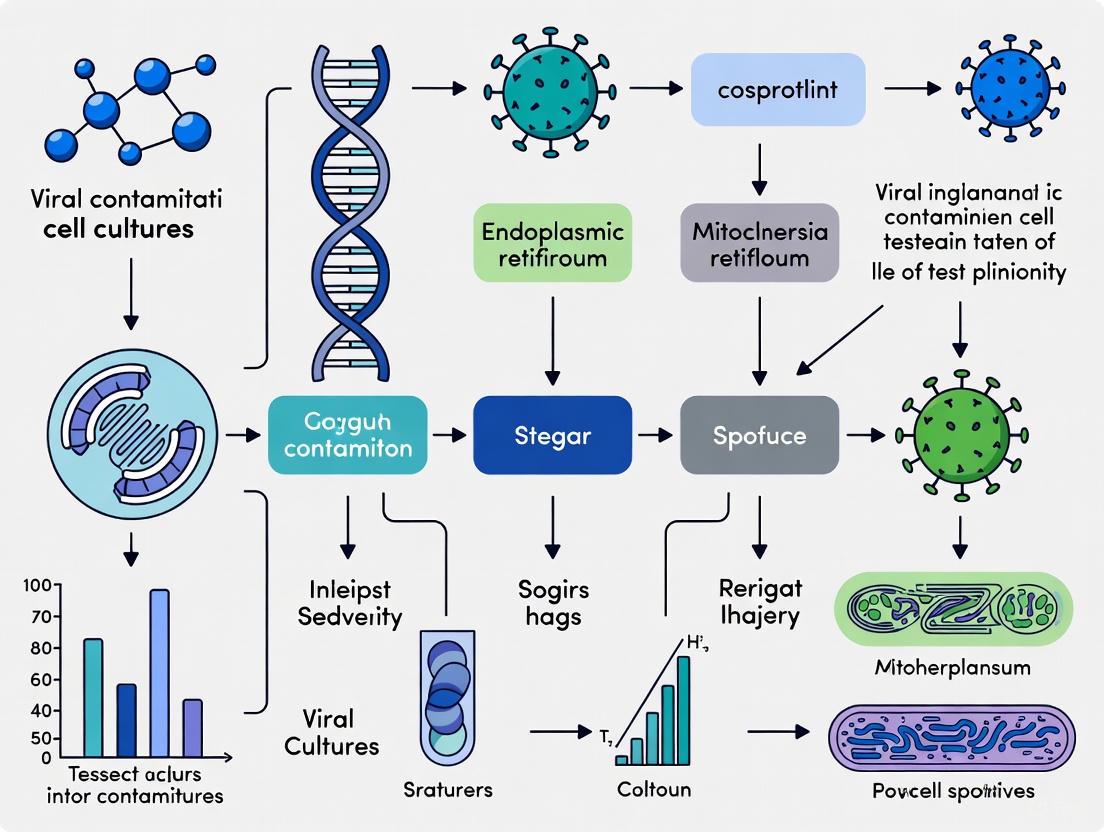
This article provides a complete guide for researchers, scientists, and drug development professionals on detecting, managing, and preventing viral contamination in cell cultures.
A Comprehensive Guide to Viral Contamination Testing in Cell Cultures: From Detection to Prevention
Abstract
This article provides a complete guide for researchers, scientists, and drug development professionals on detecting, managing, and preventing viral contamination in cell cultures. Covering foundational knowledge to advanced applications, it details traditional and cutting-edge detection methodologies like PCR, immunoassays, electron microscopy, and novel computational tools. The content also addresses troubleshooting common challenges, validating methods for regulatory compliance, and implementing robust quality control systems to safeguard research integrity and biomanufacturing safety.
Understanding the Stealth Threat: Foundations of Viral Contamination in Cell Cultures
Why Viral Contamination is a Unique and Critical Challenge
Viral contamination represents one of the most insidious threats in cell culture-based research and biopharmaceutical production. Unlike bacterial or fungal contaminants that often manifest visible signs, viral contaminants can persist covertly in cell cultures, compromising experimental integrity and posing significant safety risks [1]. This challenge is particularly acute in the development of biologics, vaccines, and cell and gene therapies, where undetected viruses can jeopardize product safety, lead to batch losses, and cause substantial economic impacts [2]. The unique difficulties in detection and control stem from viruses' microscopic size, diverse replication strategies, and ability to establish persistent infections without evident cytopathic effects [3]. Understanding these challenges and implementing robust detection methodologies is therefore paramount for ensuring research reproducibility and patient safety in biopharmaceutical applications.
The Unique Challenges of Viral Contamination
Viral contamination presents a distinct set of challenges that differentiate it from other forms of biological contamination. These complexities span detection, control, and risk management, making viral safety an ongoing concern in biological manufacturing.
Detection Difficulties and Latent Threats
The primary challenge in managing viral contamination lies in its elusive nature. Several factors contribute to this detection problem:
- Size and Stealth: Viruses are microscopic, typically ranging from 20-300 nm, making them impossible to detect with standard optical microscopy [1]. They can pass through conventional 0.22-µm sterilizing-grade filters used for media preparation, creating a "back-door" entry point into cell cultures [2].
- Asymptomatic Persistence: Many viral infections cause no visible morphological changes or cytopathic effects in cultured cells [3]. Unlike bacteria that often cause turbidity or pH changes, viruses can replicate covertly, leaving no visual evidence of their presence.
- Latent and Integrated Genomes: Some viruses, particularly retroviruses, can integrate their genetic material as proviruses into the host cell genome, creating a persistent reservoir that evades detection while remaining capable of reactivation and transmission [3].
Origins and Transmission Vectors
Understanding the sources of viral contamination is crucial for developing effective prevention strategies. Cell cultures typically become contaminated through three primary routes:
- Primary Infection: Tissues or cells used to establish cultures may already harbor viruses from the source organism [3].
- Contaminated Raw Materials: Animal-derived components, particularly serum (e.g., fetal bovine serum), but also trypsin and other reagents, can introduce viral contaminants [3] [1].
- Cross-Contamination During Handling: Laboratory operations, including media preparation and cell passage, can facilitate viral spread between cultures, especially when the same personnel work with infected and clean cell lines [2].
Table 1: Comparison of Contamination Types in Cell Culture
| Contaminant Type | Ease of Detection | Common Detection Methods | Potential Impact on Research |
|---|---|---|---|
| Bacterial | Relatively easy - often causes turbidity and pH changes [4] | Visual inspection, microscopy, microbial culture [4] | Rapid culture destruction; relatively straightforward to address |
| Fungal/Yeast | Moderate - visible particles or film may form [4] | Visual inspection, microscopy [4] | Culture overgrowth; manageable with antimycotics |
| Mycoplasma | Difficult - no visible signs with routine microscopy [1] | DNA staining, PCR, specialized culture [1] | Alters cell metabolism and responses; persistent problem |
| Viral | Most difficult - often no visible signs [3] [1] | PCR, ELISA, electron microscopy, NGS [4] [5] | Subtle but profound effects on cell function; safety risks; hard to eradicate |
Advanced Detection Strategies and Methodologies
The evolving landscape of viral detection technologies has significantly improved our ability to identify contaminants with greater sensitivity and breadth. The following experimental workflows represent both conventional and cutting-edge approaches to viral safety testing.
Comprehensive Viral Detection Workflow
The diagram below illustrates an integrated approach to viral detection, combining traditional methods with advanced sequencing-based techniques:
Next-Generation Sequencing Protocol for Viral Detection
Next-generation sequencing (NGS) represents a transformative approach for comprehensive viral screening, capable of detecting both known and unknown viruses without prior target selection [6] [5]. The following protocol details the implementation of NGS-based viral detection:
Sample Preparation and RNA Sequencing
Nucleic Acid Extraction:
- Extract total RNA from cell culture samples using commercial kits with appropriate controls.
- Include DNase treatment to remove genomic DNA contamination.
- Quantify RNA quality and integrity using appropriate methods.
Library Preparation:
- Convert RNA to cDNA using reverse transcriptase.
- Prepare sequencing libraries using either:
- PolyA-enrichment: Captures polyadenylated transcripts (both host and viral) [7]
- Ribodepletion: Removes ribosomal RNA, increasing coverage of non-polyadenylated viral transcripts
- Amplify libraries with appropriate cycle optimization to maintain representation.
Sequencing:
Bioinformatics Analysis Pipeline
Quality Control and Preprocessing:
- Assess read quality using FastQC or similar tools.
- Trim adapters and low-quality bases using Trimmomatic or Cutadapt.
Host Sequence Removal:
- Align reads to the host reference genome (e.g., GRCh38 for human cells) using STAR aligner with default parameters [7].
- Extract unmapped reads for subsequent viral analysis.
Viral Sequence Identification:
- Download comprehensive viral genome database from NCBI (ftp://ftp.ncbi.nlm.nih.gov/refseq/release/viral/).
- Optionally remove endogenous retroviruses to reduce false positives.
- Align unmapped reads to viral database using BWA aligner with default parameters [7].
- Apply stringent filtering criteria:
- Minimum of 20% of reads mapping to viral genome
- Continuous genome coverage exceeding 50%
- Biological relevance (virus known to infect the host species)
Machine Learning Enhancement:
- For human cell lines, implement a complementary biomarker approach:
- Identify differentially expressed host genes during viral infection
- Train a Random Forest classifier with ntree=600 and mtry=8 parameters [7]
- Utilize recursive feature elimination (RFE) for feature selection
- Validate model performance using 10-fold cross-validation
- For human cell lines, implement a complementary biomarker approach:
Table 2: Comparison of Viral Detection Methodologies
| Method | Detection Principle | Time to Result | Advantages | Limitations |
|---|---|---|---|---|
| PCR/qPCR | Target amplification of specific viral sequences [8] | 1-2 days | High sensitivity for known targets; quantitative capability [8] | Limited to predefined targets; misses novel viruses |
| ELISA/Immunostaining | Antibody-based detection of viral antigens [4] | 1-3 days | Detects infectious particles; establishes infection status | Limited by antibody availability; may miss latent infection |
| Electron Microscopy | Direct visualization of viral particles [4] | 1-2 days | Morphological identification; no target bias | Low throughput; requires expertise; limited sensitivity |
| NGS-Based Detection | High-throughput sequencing with bioinformatics analysis [6] [7] [5] | 5-10 days | Comprehensive detection of known/unknown viruses; no prior target selection [5] | Higher cost; computational requirements; complex data interpretation |
Essential Research Reagents and Solutions
Implementing robust viral detection protocols requires specific reagents and tools. The following table details essential components for establishing a comprehensive viral safety testing program:
Table 3: Essential Research Reagents for Viral Detection
| Reagent/Category | Specific Examples | Function/Application | Key Considerations |
|---|---|---|---|
| Nucleic Acid Extraction Kits | Total RNA extraction kits with DNase treatment | Isolate high-quality RNA for PCR and NGS applications | Ensure removal of genomic DNA; assess RNA integrity number (RIN) |
| Library Preparation Kits | PolyA-enrichment kits; Ribodepletion kits | Prepare sequencing libraries from RNA samples | PolyA-enrichment may miss non-polyadenylated viral RNAs [7] |
| PCR Reagents | qPCR master mixes; virus-specific primer/probe sets | Target-specific viral detection and quantification [8] | Validate primer specificity; include appropriate controls |
| Alignment Software | STAR aligner; BWA aligner | Map sequencing reads to host and viral genomes [7] | BWA retains alignments when only one read from a pair maps to viral genome [7] |
| Viral Genome Databases | NCBI Viral Genome Database | Reference database for viral sequence identification | Regularly update database; consider removing endogenous retroviruses [7] |
| Cell Culture Reagents | Certified viral-free sera; media components | Reduce introduction of contaminants through raw materials | Source from suppliers providing viral testing certification [1] |
Viral contamination remains a unique and critical challenge in cell culture research and biopharmaceutical production due to its covert nature, diverse origins, and potential consequences. The implementation of robust detection strategies, particularly those incorporating advanced sequencing technologies and computational analysis, provides powerful tools to mitigate these risks. By integrating traditional methods with innovative approaches like ViralCellDetector and machine learning classification [7], researchers can significantly enhance viral safety protocols. As the biopharmaceutical landscape continues to evolve with increasing emphasis on biologics, cell therapies, and gene therapies [9], maintaining vigilance against viral contamination through comprehensive testing frameworks becomes ever more essential for ensuring both research integrity and patient safety.
Viral contamination represents a critical and persistent risk in cell culture systems, potentially compromising research integrity, biotherapeutic safety, and product efficacy. Unlike bacterial or fungal contamination, viral contaminants can remain latent and undetected while altering cellular physiology, genetic stability, and experimental outcomes [3] [10]. In biopharmaceutical production, viral contamination poses serious safety concerns for both operators and patients, potentially leading to product recalls and regulatory consequences [11].
This application note examines the primary sources and pathways of viral contamination in cell culture environments, with specific focus on raw materials, sera, and cross-contamination risks. We provide detailed protocols for detection and prevention, supporting researchers and drug development professionals in implementing robust viral safety strategies.
Raw Materials and Sera
Raw materials of biological origin present the most significant risk for introducing viral contaminants into cell culture systems. Fetal bovine serum (FBS) is a well-documented vector for viruses such as bovine viral diarrhea virus (BVDV) and other bovine-derived viruses [3] [11]. Other animal-derived reagents, including trypsin and various growth factors, have been identified as sources of viral contamination, notably parvoviruses in the case of trypsin [3].
The risk profile varies significantly based on the material's source and processing methods. The following table summarizes high-risk materials and their associated viral contaminants:
Table 1: Common Viral Contaminants in Cell Culture Raw Materials
| Source Material | Associated Viral Contaminants | Detection Challenges |
|---|---|---|
| Fetal Bovine Serum (FBS) | Bovine Viral Diarrhea Virus (BVDV), Parvoviruses, Other bovine-derived viruses [3] | May be present in low concentrations; requires sensitive detection methods [3] |
| Trypsin | Porcine Parvovirus (PPV) [3] | Can survive trypsin preparation process [3] |
| Primary Cells/Tissues | Endogenous retroviruses, Latent viruses (e.g., Herpesviruses) [3] [10] | May be present as latent infection without visual evidence [3] |
Cross-Contamination
Cross-contamination occurs when viruses are transferred between cell lines within the same laboratory or production facility. This can happen through contaminated equipment, shared reagents, or inadequate aseptic technique [4] [11]. The problem is particularly acute with latent viruses that do not cause immediate cytopathic effects, allowing them to spread unnoticed through multiple cell lines [3].
Fast-growing cell lines can harbor and transmit endogenous retroviruses or other persistent viral agents. For example, CHO cells contain retrovirus-like particles, while hybridoma cells may carry ecotropic murine retroviruses [3]. The Epstein-Barr virus (EBV), which latently infects approximately 98% of the human population, can be introduced via human primary cells and remains a significant concern for both research and bioproduction [10].
Table 2: Viruses Associated with Cross-Contamination from Cell Lines
| Cell Line Type | Associated Viruses | Risk Level |
|---|---|---|
| CHO Cells | Retrovirus-like particles [3] | Moderate |
| Murine Cell Lines (Hybridomas) | Ecotropic Murine Retroviruses [3] | High |
| Human Primary Cells | Epstein-Barr Virus (EBV), Human Herpesviruses [10] | High |
| Ovine Cell Lines | Ovine Herpesvirus 2 (OvHV-2) [10] | Moderate to High |
Detection Methodologies and Experimental Protocols
Effective viral contamination control requires a multi-pronged detection strategy combining traditional and advanced molecular methods. The following protocols provide frameworks for comprehensive viral safety testing.
In Vitro Adventitious Virus Testing
This protocol detects a wide range of viral contaminants through co-cultivation with indicator cell lines and observation of cytopathic effects (CPE).
Table 3: Required Reagents and Equipment for In Vitro Virus Testing
| Reagent/Equipment | Specification | Function/Purpose |
|---|---|---|
| Indicator Cell Lines | MRC-5 (human diploid), Vero (monkey kidney), HeLa (human epithelial) or same species/tissue as production cells [12] | Support replication of diverse viruses; show virus-specific CPE |
| Cell Culture Media | Appropriate for each indicator cell line (e.g., DMEM, RPMI) [13] | Maintain cell viability and support virus replication |
| Microscopy | Inverted phase-contrast microscope [4] | Visualize and document cytopathic effects |
Procedure:
- Cell Preparation: Grow indicator cells to approximately 80-90% confluency in appropriate tissue culture vessels.
- Inoculation: Inoculate test article (cell culture supernatant or lysate) onto indicator cell monolayers. Include positive controls (known viruses) and negative controls (uninfected cells).
- Incubation: Maintain cultures for 14-28 days with periodic medium changes as needed [12].
- Observation: Examine cultures every 2-3 days for development of CPE using inverted microscopy. Document any morphological changes.
- Subculturing: At the end of the observation period, perform subculturing of indicator cells and observe for an additional 14 days to amplify low-level contaminants.
- Confirmation: Use complementary methods (PCR, hemadsorption, immunofluorescence) to confirm viral presence and identity.
PCR-Based Viral Detection
Molecular methods provide sensitive, specific detection of viral contaminants, including those that do not cause CPE.
Materials:
- DNA/RNA Extraction Kit (validated for cell culture samples)
- PCR Master Mix (including reverse transcriptase for RNA viruses)
- Virus-Specific Primers/Probes (for target viruses of concern)
- Real-Time PCR Instrument
- Appropriate Controls (positive, negative, extraction)
Procedure:
- Sample Preparation: Extract nucleic acids from cell culture supernatant or cell pellets according to manufacturer's instructions.
- Primer/Probe Selection: Select primers/probes specific to viruses of concern based on cell line history and raw material sources. Common targets include BVDV for bovine-derived materials, parvoviruses for trypsin, and retroviruses for murine and other mammalian cell lines.
- Reaction Setup: Prepare PCR reactions according to established protocols, including appropriate controls.
- Amplification: Run real-time PCR with cycling conditions optimized for the target viruses and detection chemistry.
- Data Analysis: Determine presence or absence of viral targets based on cycle threshold (Ct) values compared to controls and standard curves.
Next-Generation Sequencing for Broad Viral Detection
NGS offers untargeted approach for detecting known and novel viral contaminants without prior knowledge of potential contaminants.
Procedure:
- Library Preparation: Prepare sequencing libraries from total RNA or DNA extracted from test samples.
- Sequencing: Perform high-throughput sequencing on an appropriate platform to achieve sufficient depth (recommended >50X coverage for comprehensive detection) [12].
- Bioinformatic Analysis: Process raw sequencing data through a pipeline that includes:
- Quality control and adapter trimming
- Alignment to host genome and subtraction of host sequences
- De novo assembly of remaining sequences
- Comparison to viral sequence databases
- Validation: Confirm any putative viral hits with orthogonal methods such as PCR.
Prevention and Control Strategies
Preventing viral contamination requires a comprehensive approach addressing all potential introduction points throughout the cell culture workflow.
Raw Material Control and Sourcing
- Use Certified Viral-Reduced Materials: Source FBS that has been gamma-irradiated or otherwise treated to inactivate viruses [3] [11].
- Implement Serum-Free Media: Where possible, transition to chemically defined, serum-free media to eliminate risks associated with animal-derived components [11].
- Qualify Suppliers: Establish rigorous supplier qualification programs that include review of viral testing data and manufacturing controls.
- Test Raw Materials: Conduct viral testing on high-risk raw materials prior to use in GMP manufacturing [12].
Process Controls and Facility Design
- Implement Closed Systems: Utilize closed bioreactor systems and single-use technologies to minimize exposure to environmental contaminants [14].
- Segregate Operations: Physically separate operations with different contamination risk profiles, particularly when working with new or uncharacterized cell lines.
- Environmental Monitoring: Establish routine monitoring programs for air and surfaces in critical processing areas.
- Validate Viral Clearance: For biotherapeutic production, validate downstream purification processes for their capacity to remove and inactivate viruses [15].
The Scientist's Toolkit: Essential Research Reagents and Solutions
Implementing effective viral contamination control requires specific reagents, equipment, and methodologies. The following table details key solutions for maintaining viral safety in cell culture systems.
Table 4: Essential Research Reagent Solutions for Viral Contamination Control
| Reagent/Equipment | Function/Application | Key Considerations |
|---|---|---|
| Gamma-Irradiated FBS | Provides essential growth factors while reducing viral risk [3] | Confirm irradiation validation data; ensure growth-supporting capacity |
| Chemically Defined Media | Eliminates animal-derived components [11] | May require adaptation for specific cell lines; validate performance |
| Viral Retention Filters | Remove viruses from media and product streams [3] | Typically 0.1 µm pore size; validate for specific applications |
| PCR/RT-PCR Kits | Detect specific viral contaminants [4] [11] | Select kits validated for cell culture applications; include appropriate controls |
| Next-Generation Sequencing Services | Broad detection of known and unknown viruses [12] | Requires bioinformatics expertise; consider cost and turnaround time |
| Indicator Cell Lines | Detect adventitious viruses through CPE [12] | Use multiple cell types (human, monkey, homologous); maintain careful records |
Viral contamination in cell culture represents a multifaceted challenge requiring systematic approaches for risk mitigation. The most significant contamination risks originate from raw materials of biological origin, particularly sera and trypsin, as well as from cross-contamination events within the laboratory. Effective management requires combining rigorous testing methodologies – including traditional in vitro assays and modern molecular techniques – with preventive strategies focusing on raw material control, process design, and facility management. Implementation of the protocols and guidelines presented in this application note will support researchers and bioprocessing professionals in maintaining viral safety, ensuring both experimental integrity and product safety.
Viral contamination represents a critical and often hidden risk in cell culture systems, potentially compromising experimental data, biomanufactured products, and patient safety. Unlike bacterial or fungal contamination, viral contamination is frequently difficult to detect through routine microscopy and can persist latently without causing overt cytopathic effects [10] [16]. This application note provides a structured framework for identifying, testing, and managing high-risk viral contaminants—including Epstein-Barr virus (EBV), Ovine Herpesvirus 2 (OvHV-2), and various retroviruses—within the context of cell-based research and development.
The prevalence and impact of these contaminants are significant. Estimates suggest that over 25% of common cell lines may harbor viral contamination [16]. EBV infects approximately 95-98% of the adult human population worldwide and can immortalize B-lymphocytes, while OvHV-2 exhibits broad species tropism, infecting over 33 animal species [10] [17] [18]. Retroviruses like XMLV and SMRV have been documented to cross-contaminate cell lines across species barriers [19]. Establishing robust detection protocols is therefore essential for ensuring the integrity of research outcomes and the safety of biological products.
High-Risk Virus Profiles and Detection Methods
Characteristics of High-Risk Viruses
Viral contaminants of concern in cell culture vary in their structure, tropism, and pathogenic potential. The table below summarizes key high-risk viruses, their characteristics, and preferred detection methodologies.
Table 1: High-Risk Viral Contaminants in Cell Culture
| Virus | Family | Primary Host/Transmission | Risk Profile | Preferred Detection Methods |
|---|---|---|---|---|
| Epstein-Barr Virus (EBV/HHV-4) | Gammaherpesvirinae | Humans/saliva [18] | B-lymphocyte immortalization; latent and lytic cycles; associated with lymphomas and carcinomas [10] [18] | PCR, in situ hybridization for EBERs, EBNA detection, Southern/Western blot [10] [17] [19] |
| Ovine Herpesvirus 2 (OvHV-2) | Gammaherpesvirinae | Sheep/causes MCF in susceptible species [10] | Wide species tropism; infects a broad range of organs; substantial contaminant in cell cultures [10] [17] | PCR [10] [17] |
| HIV-1/2, HTLV-I/II | Retroviridae | Humans/blood, bodily fluids | Integrated provirus; safety risk for lab personnel; confounds genetic studies [19] | PCR for proviral DNA in genomic DNA [19] |
| Hepatitis B (HBV) | Hepadnaviridae | Humans/blood, bodily fluids | Can exist as extrachromosomal episomes or integrated into host DNA [19] | PCR on genomic DNA and concentrated supernatant [19] |
| Hepatitis C (HCV) | Flaviviridae | Humans/blood | RNA virus; persistent infection [19] | RT-PCR on extracted RNA [19] |
| Xenotropic Murine Leukemia Virus (XMLV) | Retroviridae | Mice/contaminant in human cell lines | Cross-species contamination; found in human and other cell lines [19] | PCR for proviral sequences in genomic DNA [19] |
| Squirrel Monkey Retrovirus (SMRV) | Retroviridae | Squirrel monkeys/contaminant in various cell lines | Cross-species contamination; transferable between cell cultures [19] | PCR with two different primer pairs [19] |
Comparative Analysis of Detection Techniques
Traditional and advanced methods offer varying levels of sensitivity, specificity, and throughput for viral detection.
Table 2: Comparison of Viral Detection Methodologies
| Method Category | Specific Techniques | Key Applications | Advantages | Limitations |
|---|---|---|---|---|
| Molecular Techniques | PCR (standard, qPCR), RT-PCR | Detection of viral DNA (EBV, HBV), RNA (HCV), proviral DNA (Retroviruses) [17] [19] | High sensitivity and specificity; can differentiate latent vs. lytic forms [10] [18] | Requires prior knowledge of target sequence |
| Serological & Protein-Based | ELISA, Western Blot, Immunostaining | Detection of viral antigens (e.g., EBV EA, VCA, EBNA; ZEBRA for lytic cycle) [17] [19] [4] | Confirms active infection and protein expression | Dependent on antibody quality and specificity |
| Histological & Microscopic | In situ Hybridization (e.g., for EBERs), Electron Microscopy [10] [17] [4] | Localization of viral nucleic acids in cells; visualization of viral particles | Provides spatial context; "gold standard" for some viruses | Low throughput; requires expertise |
| Advanced & Emerging | High-Throughput Sequencing (HTS/NGS), CRISPR-based assays, AI-assisted UV spectroscopy [12] [20] [18] | Unbiased detection of known/unknown viruses; point-of-care testing; rapid sterility screening | Comprehensive; no prior sequence knowledge needed; rapid results [20] | Cost, data analysis complexity; emerging validation |
Detailed Experimental Protocols for Viral Detection
Protocol 1: PCR-Based Screening for Viral Contaminants
This protocol outlines a generalized procedure for detecting viral DNA (e.g., EBV, HBV, XMLV) in cell line genomic DNA, adaptable for retroviruses and other targets [17] [19].
Principle: Amplification of virus-specific DNA sequences from purified cell line genomic DNA using polymerase chain reaction.
Research Reagent Solutions:
- Cell Line Genomic DNA: Template DNA isolated from test cell culture.
- Virus-Specific Primers: Oligonucleotides designed to target conserved regions of the viral genome.
- PCR Master Mix: Contains heat-stable DNA polymerase, dNTPs, and reaction buffers.
- Agarose Gel: For electrophoretic separation and visualization of PCR amplicons.
- Electrophoresis Buffer: TAE or TBE buffer for conducting electrophoresis.
- DNA Size Ladder: Molecular weight standard for amplicon size verification.
- Internal Control DNA: Plasmid or other DNA to monitor PCR inhibition and efficiency [19].
Procedure:
- DNA Extraction: Extract high-quality genomic DNA from the cell line under investigation using a standardized phenol-chloroform or commercial kit method. Ensure included internal control DNA if required by assay design [19].
- PCR Reaction Setup: Prepare a 25-50 µL reaction mixture containing:
- 1x PCR Buffer
- 200 µM of each dNTP
- 0.2-0.5 µM of each forward and reverse virus-specific primer
- 0.5-1.0 U of DNA Polymerase
- 100-500 ng of test genomic DNA
- Thermal Cycling: Perform amplification in a thermal cycler with parameters optimized for the primer set. A typical profile includes:
- Initial Denaturation: 95°C for 5 min
- 35-40 Cycles of:
- Denaturation: 95°C for 30 sec
- Annealing: 55-65°C (primer-specific) for 30 sec
- Extension: 72°C for 1 min/kb
- Final Extension: 72°C for 7 min
- Amplicon Analysis: Analyze PCR products by agarose gel electrophoresis (e.g., 1.5-2% gel). Visualize DNA bands under UV light after staining with an intercalating dye.
- Interpretation: Compare the size of the amplified fragment with the expected product size from the positive control. A clear band of the expected size indicates presence of the viral target.
Protocol 2: Establishment of EBV-Transformed Lymphoblastoid Cell Lines (LCLs)
This protocol details the process of immortalizing human B-lymphocytes using EBV, which is also a method to generate and study latent EBV infection [21].
Principle: Infection of peripheral blood lymphocytes with EBV derived from the B95-8 marmoset cell line, leading to cellular immortalization and establishment of a continuously growing lymphoblastoid cell line.
Research Reagent Solutions:
- B95-8 Cell Line: Source of infectious EBV particles in the culture supernatant.
- Ficoll-Paque PLUS: Density gradient medium for isolation of peripheral blood mononuclear cells (PBMCs).
- RPMI 1640 Medium: Base medium for lymphocyte culture.
- Fetal Bovine Serum (FBS): Serum supplement for cell growth, screened for adventitious agents.
- Cyclosporin A: Immunosuppressant used to inhibit T-cell activity that would otherwise suppress outgrowth of EBV-transformed B-cells.
- Phosphate Buffered Saline (PBS): Salt solution for cell washing.
Procedure:
- EBV Supernatant Production:
- Culture B95-8 cells in RPMI 1640 + 15% FBS until high cell density is achieved (approx. 12-15 days without medium change) [21].
- Centrifuge culture to pellet cells. Harvest supernatant containing virus.
- Screen supernatant for mycoplasma contamination [21].
- Dilute supernatant 1:1 with fresh medium containing 400 ng/mL cyclosporin A (final 200 ng/mL). Filter sterilize (0.22 µm), aliquot, and snap-freeze at -180°C [21].
- Lymphocyte Isolation:
- Collect peripheral blood in ACD (yellow top) or heparinized (green top) vacutainer tubes. Process within 24-48 hours [21].
- Dilute blood 1:2 with sterile PBS. Carefully underlay with Ficoll-Paque.
- Centrifuge at 400 x g for 30-40 min at room temperature.
- Collect the peripheral blood mononuclear cell (PBMC) interphase ring.
- Wash PBMCs twice with PBS (100 x g, 10 min each).
- Lymphocyte Transformation:
- Resuspend 3-5 x 10^6 PBMCs in 3 mL of prepared EBV supernatant.
- Incubate overnight at 37°C, 5% CO2 in an upright T-flask.
- After 24h, add 7 mL of transformation medium (RPMI 1640 + 20% FBS + 200 ng/mL cyclosporin A).
- Culture for 5-7 weeks, feeding by partial medium change (e.g., removing 5 mL and adding 5 mL fresh medium) every 5-7 days once cells begin to clump. Allow medium to become slightly acidic (pH ~6.5-6.8) between feedings [21].
- Once transformation is established (sustained cell growth and clumping), culture cells in standard medium (RPMI 1640 + 10-15% FBS) and cryopreserve for future use.
Advanced and Emerging Detection Technologies
The field of viral detection is rapidly evolving beyond traditional methods. High-Throughput Sequencing (HTS), also known as Next-Generation Sequencing (NGS), is increasingly recognized by regulatory bodies as a powerful tool for unbiased detection of known and novel adventitious viruses [12]. HTS can analyze nucleic acids from cell banks or products without prior sequence knowledge, providing a comprehensive safety profile.
Emerging technologies offer even greater speed and convenience. CRISPR-based diagnostic platforms, accelerated during the COVID-19 pandemic, are being adapted for EBV and other viruses, promising high specificity and potential for point-of-care testing [18]. Furthermore, machine learning-aided methods are entering the arena. One novel approach uses ultraviolet light absorbance spectroscopy on cell culture fluids, where machine learning algorithms recognize patterns associated with microbial contamination, providing a label-free, non-invasive "yes/no" assessment in under 30 minutes [20]. While initially targeting broader microbial contamination, such technologies highlight the trend toward rapid, automated sterility testing that could be adapted for specific viral threats.
Proactive management of viral contamination is a cornerstone of reproducible and safe cell culture research. The threats posed by high-risk viruses like EBV, OvHV-2, and various retroviruses necessitate a layered defense strategy. This involves a combination of rigorous quality control of starting materials (e.g., cell banks, sera), adherence to strict aseptic techniques, and implementation of a robust testing regimen that leverages both well-established molecular methods and cutting-edge, comprehensive technologies like HTS.
The protocols and methodologies detailed in this application note provide a framework for researchers to safeguard their work. By integrating these practices, the scientific community can mitigate the risks of viral contamination, thereby enhancing data integrity, protecting laboratory personnel, and ensuring the safety and efficacy of cell-derived therapeutic products.
The Impact of Viral Contamination on Research Data and Biomanufacturing Safety
Viral contamination in cell culture represents a critical and often underestimated threat to the integrity of biological research and the safety of biomanufactured products. Unlike microbial contamination, which is typically straightforward to detect, viral contamination presents significant challenges due to the difficulty in identifying some viruses and the lack of effective treatment options for infected cultures [10] [4]. Such contamination can compromise experimental results, lead to invalid scientific data, and pose serious risks to patient safety when contaminated cells are used to produce therapeutic products [22] [12]. The persistence of latent viruses like Epstein-Barr virus (EBV) and ovine herpesvirus 2 (OvHV-2) in cell cultures is particularly problematic, as they can alter cellular functions without producing immediate cytopathic effects [10]. This application note examines the impact of viral contamination on research and biomanufacturing, provides structured experimental protocols for detection, and recommends preventive strategies to ensure data integrity and product safety.
Quantitative Impact Analysis
The following tables summarize key quantitative data on viral contamination prevalence, detection method performance, and the consequences of contamination events.
Table 1: High-Risk Viruses in Cell Culture and Their Impacts
| Virus | Prevalence/Characteristics | Primary Detection Methods | Potential Impact on Research/Biomanufacturing |
|---|---|---|---|
| Epstein-Barr Virus (EBV) | Ubiquitous in ~98% of human populations [10] | PCR assays (detects active and latent forms) [10] | Alters cell function and growth characteristics; risks in biological products [10] |
| Ovine Herpesvirus 2 (OvHV-2) | Infects over 33 animal species; nearly all domestic sheep [10] | PCR, cell line observation [10] | Causes misinterpretations of experimental results; contaminates cell banks [10] |
| General Adventitious Viruses | Size range: 20nm to 400nm [22] | Electron microscopy, immunostaining, ELISA, PCR [4] | Loss of cell cultures, flawed results, hazards to operators, product recalls [22] |
Table 2: Performance Comparison of Viral Detection Technologies
| Detection Method | Key Principles | Sensitivity/Quantification Capability | Best Use Applications |
|---|---|---|---|
| Digital PCR (dPCR) | Partitions sample into thousands of nanoreactions for absolute quantification [23] [24] | Superior accuracy for high viral loads; absolute quantification without standard curves [23] [24] | Detecting low-level contamination; quantifying viral load in critical samples [23] |
| Real-Time RT-PCR | Fluorescence-based detection during amplification cycles; requires standard curve [23] [24] | Limited by standard curve variability; less precise for low viral loads [23] [24] | High-throughput screening; routine surveillance where extreme precision is not critical [23] |
| Next-Generation Sequencing (NGS) | High-throughput sequencing capable of detecting unknown viruses [6] [12] | High sensitivity; detects broad range of contaminants without prior knowledge [6] | Comprehensive adventitious virus testing in biomanufacturing; master cell bank characterization [6] [12] |
Experimental Protocols
Protocol for Digital PCR Detection of Viral Contamination
This protocol utilizes the QIAcuity digital PCR system for absolute quantification of viral nucleic acids in cell cultures and biological products [23].
Principle: The sample is partitioned into approximately 26,000 nanowells, with PCR amplification occurring in each individual well. Endpoint fluorescence detection enables absolute quantification of target molecules without reference to standard curves, providing superior accuracy particularly for medium to high viral loads [23].
Materials:
- QIAcuity digital PCR system (Qiagen)
- Nanowell plates (QIAcuity)
- KingFisher Flex RNA extraction system (Thermo Fisher Scientific)
- MagMax Viral/Pathogen nucleic acid extraction kit
- Primer-probe sets specific for target viruses (e.g., EBV, OvHV-2) and internal control
- Nuclease-free water
- QIAcuity Suite Software v.0.1 or later
Procedure:
- Sample Preparation: Harvest cell culture supernatant or lyse cell pellets from test cultures.
- Nucleic Acid Extraction: Extract RNA/DNA using the KingFisher Flex system with MagMax Viral/Pathogen kit according to manufacturer's instructions.
- dPCR Reaction Setup:
- Prepare PCR mixture according to manufacturer's specifications
- Include optimized primer-probe mixes for target viruses and internal control
- Add extracted nucleic acid template
- Mix thoroughly by gentle vortexing
- Partitioning and Amplification:
- Load mixture into nanowell plate
- Allow instrument to partition samples into approximately 26,000 individual reactions
- Run endpoint PCR with cycling conditions optimized for target viruses
- Data Analysis:
- Use QIAcuity Suite Software to analyze fluorescence signals
- Calculate absolute copy number/μL based on positive/negative well counts
- Apply Poisson statistics for accurate quantification
Quality Control: Include positive controls (quantified viral standards) and negative controls (nuclease-free water) in each run. The internal control verifies extraction and amplification efficiency [23].
Protocol for Next-Generation Sequencing-Based Viral Screening
This protocol outlines the use of nanopore-based sequencing technology for comprehensive detection of adventitious viral agents in biopharmaceutical manufacturing [6].
Principle: Long-read sequencing technology enables detection of a wide range of viral contaminants without prior knowledge of potential contaminants, offering advantages in speed and breadth of detection compared to traditional methods [6].
Materials:
- Oxford Nanopore sequencing device (MinION, GridION, or PromethION)
- Ligation sequencing kit
- ViruSure-approved sequencing reagents
- Good Laboratory Practice (GLP)-validated analysis software
- Nucleic acid extraction kits with high molecular weight recovery
- Bioanalyzer or tape station for quality control
Procedure:
- Sample Preparation:
- Pool samples from multiple stages of manufacturing process
- Concentrate viral particles if necessary via ultracentrifugation or filtration
- Nucleic Acid Extraction:
- Extract total nucleic acids (DNA and RNA)
- Assess quality and quantity using appropriate methods
- Library Preparation:
- Fragment nucleic acids to optimal size (if necessary)
- Perform end-repair and dA-tailing
- Adapter ligation following manufacturer's protocol
- Purify library using recommended methods
- Sequencing:
- Load library onto nanopore flow cell
- Run sequencing for sufficient time to achieve desired coverage
- Monitor run metrics in real-time
- Bioinformatic Analysis:
- Base calling and quality filtering
- Alignment to reference databases of viral genomes
- De novo assembly of unaligned reads
- Taxonomic classification of potential viral sequences
Validation: This method has been GLP-validated for detection of adventitious viruses in biopharmaceutical products, with planned Good Manufacturing Practice (GMP) validation forthcoming [6].
Workflow Visualization
Viral Detection Workflow Comparison
The Scientist's Toolkit: Essential Research Reagents and Solutions
Table 3: Key Reagents and Materials for Viral Contamination Testing
| Reagent/Material | Function/Application | Examples/Specifications |
|---|---|---|
| Nucleic Acid Extraction Kits | Isolation of viral RNA/DNA from cell culture samples | MagMax Viral/Pathogen Kit; STARMag Universal Cartridge Kit [23] |
| dPCR Systems | Absolute quantification of viral load without standard curves | QIAcuity platform; droplet digital PCR systems [23] |
| NGS Platforms | Comprehensive detection of known and unknown viral contaminants | Oxford Nanopore technology; other sequencing platforms [6] |
| Cell Lines for Co-cultivation | Amplification of potential viral contaminants for detection | MRC-5, Vero, HeLa cells per regulatory guidelines [12] |
| Validated Primer-Probe Sets | Specific detection of high-risk viruses | EBV, OvHV-2, and other virus-specific assays [10] [23] |
| Positive Control Materials | Quality control for detection assays | Quantified viral RNA/DNA standards; inactivated viral particles [23] |
Viral contamination remains a significant threat to research integrity and biomanufacturing safety. Implementation of robust detection protocols, including both targeted (dPCR) and untargeted (NGS) approaches, provides a comprehensive strategy for identifying contamination events. Based on current literature and regulatory guidelines, the following best practices are recommended:
- Implement Tiered Testing Strategies: Utilize dPCR for sensitive quantification of specific high-risk viruses and NGS for comprehensive adventitious agent screening [23] [6].
- Adhere to Regulatory Guidelines: Follow emerging recommendations for whole genome sequencing of highly expanded cell lines and genome-edited cells [12].
- Establish Routine Monitoring: Conduct regular viral testing rather than waiting for suspected contamination events, as some viruses may persist latently without obvious cytopathic effects [10] [22].
- Practice Conservative Cell Culture Hygiene: Limit use of antibiotics in routine culture to prevent masking of low-level contamination and maintain antibiotic-free cultures as controls [4] [22].
- Validate Decontamination Procedures: For irreplaceable contaminated cultures, establish validated decontamination protocols with proper toxicity testing before implementation [4].
The adoption of these practices, combined with the experimental protocols outlined in this application note, will significantly enhance the reliability of research data and safety of biomanufactured products derived from cell culture systems.
In cell culture research, the distinction between latent and active viral infections is critical for ensuring experimental integrity and bioproduct safety. Latent infections are characterized by the persistence of viral genomes in host cells without active replication or production of infectious viral particles, while active infections involve complete viral replication cycles, often resulting in cytopathic effects (CPE) and cell death [10] [3]. This spectrum of viral states presents distinct contamination risks that can compromise research outcomes, drug development processes, and the safety of biological products. Unlike bacterial or fungal contaminants, viral contamination can remain undetected for extended periods due to the absence of visible morphological changes in many latent infections [3]. The challenges are compounded by the fact that some viruses, such as Epstein Barr virus (EBV) and Ovine Herpesvirus 2 (OvHV-2), can establish persistent infections in cell cultures without immediate CPE, creating silent reservoirs for cross-contamination [10]. Understanding the mechanisms governing the transition from latency to active replication, and implementing robust detection protocols, is therefore essential for maintaining the validity of cell culture-based research and ensuring the safety of biotechnological products.
Comparative Analysis of Infection States
Table 1: Characteristics of Latent vs. Active Viral Infections in Cell Culture
| Parameter | Latent Infection | Active Infection |
|---|---|---|
| Viral Replication | Minimal to none; viral genome persistence without virion production | Active and complete replication cycle with production of infectious virions |
| Infectious Virus Production | None detected | Present and detectable |
| Impact on Host Cells | Minimal morphological changes; possible altered cell physiology | Often cytopathic effects (cell rounding, detachment, lysis, syncytia formation) |
| Viral Genome State | Integrated provirus or episomal maintenance | Active transcription and replication |
| Detectability by Standard Methods | Difficult without specific molecular tests; no visual evidence | Often detectable via CPE, antigen detection, or electron microscopy |
| Transmission Risk Between Cultures | Low unless reactivation occurs | High risk of cross-contamination |
| Example Viruses | Epstein Barr Virus (EBV), some retroviruses | Herpes Simplex Virus (HSV-2), Adenovirus, Vesicular Stomatitis Virus |
The immunological profiles of latent versus active infections provide critical insights into the host response to viral pathogens. While the table above outlines general characteristics, specific immune parameters can serve as valuable biomarkers for distinguishing these states. Research on tuberculosis infection offers a relevant comparative model for understanding immune differentiation between latent and active states. In studies comparing active tuberculosis (ATB) to latent tuberculosis infection (LTBI), combinations of biomarkers like IL-15 and MCP-1 were found to accurately identify 83% of active and 88% of latent infections [25]. Similarly, plasma concentrations of lipoxin A4 (LXA4) were significantly higher in patients with active disease, while IFN-γ-primed monocytes from individuals with latent infection produced higher amounts of inflammatory cytokines including IL-1, IL-6, and TNF-α upon stimulation [26]. These immunological distinctions provide a framework for understanding similar differentiations in viral infection states, where specific cytokine and chemokine profiles may correlate with viral activity states in cell culture systems.
Detection Methodologies and Experimental Protocols
Comprehensive Viral Detection Workflow
Detailed Experimental Protocols
Protocol 1: Comprehensive Viral Screening Using PCR and Cell Culture
Objective: Detect both latent and active viral infections in cell cultures using combined molecular and culture-based methods.
Materials:
- Cell culture samples (test and control)
- DNA/RNA extraction kits
- PCR/qPCR reagents and equipment
- Virus-specific primers and probes
- Shell vials or traditional cell culture tubes
- Appropriate cell lines (e.g., A549, MRC-5, HEp-2)
- Centrifuge with plate adaptors
- Fluorescence microscope
- Virus-specific antibodies
- Fixation and permeabilization reagents
Procedure:
- Sample Preparation:
- Harvest approximately 1×10^6 cells from the culture of interest.
- Extract total DNA and RNA using commercial kits according to manufacturer instructions.
- Include positive and negative controls with each extraction batch.
Molecular Detection:
- Design primers targeting common viral contaminants (e.g., EBV, OvHV-2, bovine viral diarrhea virus, parvovirus) based on literature and sequence databases [10] [3].
- Perform conventional PCR or real-time qPCR using standardized cycling conditions.
- Include internal control reactions to assess amplification efficiency and rule out inhibition.
Culture Enhancement:
- Inoculate shell vials containing appropriate cell monolayers with 0.2 mL of cell culture supernatant or cell lysate.
- Centrifuge at 700 × g for 45 minutes at room temperature to enhance viral adsorption.
- Incubate at 35-37°C with 5% CO₂ for 24-48 hours.
- For traditional tube cultures, inoculate without centrifugation and incubate for 5-10 days, examining daily for CPE.
Post-Culture Analysis:
- For shell vials, fix cells after 24-48 hours and stain with virus-specific fluorescent antibodies.
- Examine by fluorescence microscopy for viral antigens.
- For traditional cultures, monitor daily for CPE and confirm viral presence by immunostaining or PCR of supernatant.
Interpretation:
- Positive PCR with negative culture suggests latent infection.
- Positive PCR with positive culture and CPE confirms active infection.
- Document all findings with appropriate controls.
Protocol 2: Differential Immunological Staining for Infection Status
Objective: Distinguish latent from active infections through viral antigen expression patterns.
Materials:
- Cell culture samples on chamber slides or coverslips
- Virus-specific antibodies targeting immediate-early, early, and late viral proteins
- Fluorescently-labeled secondary antibodies
- Fixation reagents (e.g., 4% paraformaldehyde)
- Permeabilization buffer (e.g., 0.1% Triton X-100)
- Mounting medium with DAPI
- Fluorescence microscope with imaging capabilities
Procedure:
- Cell Preparation:
- Culture cells on sterile chamber slides or coverslips until 60-70% confluent.
- Fix with 4% paraformaldehyde for 15 minutes at room temperature.
- Permeabilize with 0.1% Triton X-100 for 10 minutes if detecting intracellular antigens.
Immunostaining:
- Block with 5% normal serum from secondary antibody host for 30 minutes.
- Apply primary antibodies targeting:
- Immediate-early viral antigens (indicative of early activation)
- Late structural antigens (indicative of active replication)
- Incubate for 1 hour at room temperature or overnight at 4°C.
- Wash thoroughly with PBS.
- Apply appropriate fluorescent secondary antibodies.
- Counterstain with DAPI to visualize nuclei.
- Mount with antifade mounting medium.
Analysis:
- Examine under fluorescence microscope using appropriate filter sets.
- Latent infections typically show no viral antigen expression or limited expression of latency-associated antigens.
- Active infections demonstrate expression of immediate-early and late structural antigens.
- Quantify the percentage of positive cells and staining intensity across multiple fields.
Essential Research Reagent Solutions
Table 2: Key Research Reagents for Viral Infection Studies
| Reagent/Category | Specific Examples | Function/Application |
|---|---|---|
| Cell Culture Systems | Traditional tubes, Shell vials, Cocultivated cells, Transgenic cell lines (ELVIS) | Support viral replication; allow detection via CPE or specific reporter systems [27] |
| Molecular Detection Kits | PCR/qPCR reagents, Virus-specific primers/probes, DNA/RNA extraction kits | Detect viral genetic material; identify contaminants without visible CPE [10] |
| Immunological Detection | Virus-specific primary antibodies, Fluorescently-labeled secondary antibodies, ELISA kits | Detect viral antigens; differentiate infection stages via protein expression patterns [27] |
| Cytokine/Chemokine Assays | Multiplex bead arrays (Luminex), IL-15, MCP-1, IP-10 detection assays | Measure host immune response; identify biomarkers distinguishing latent vs. active states [25] |
| Antibiotics/Antimycotics | Penicillin/Streptomycin, Amphotericin B | Control microbial contamination; use short-term to avoid masking viral contaminants [4] |
Advanced Detection Strategies
Technological Integration for Enhanced Sensitivity
Modern viral detection in cell culture research increasingly relies on integrated technological approaches that combine traditional methods with advanced molecular techniques. Shell vial assays with centrifugation-enhanced inoculation and pre-cytopathogenic effect staining have significantly reduced detection times from weeks to 24-48 hours for many viruses [27]. These methods maintain the sensitivity of traditional cell culture while providing more rapid results. The development of transgenic cell lines engineered to express detectable markers (e.g., β-galactosidase in ELVIS systems) in response to specific viral infection further simplifies detection through colorimetric changes rather than subjective microscopic evaluation [27]. For comprehensive screening, multiplexed bead array systems capable of simultaneously evaluating multiple biomarkers (e.g., IL-1β, IL-1RA, IL-2, IL-2R, IL-4, IL-5, IL-6, IL-15, MCP-1, IP-10) provide quantitative data on host responses that may differentiate latent from active infections [25]. These platforms enable the detection of subtle immunological shifts that precede visible morphological changes, allowing for earlier intervention and contamination control.
Specialized Pathogen Considerations
Table 3: Detection Methods for Specific Problematic Viruses
| Virus | Susceptible Cell Lines | Preferred Detection Methods | Latency Challenges |
|---|---|---|---|
| Epstein Barr Virus (EBV) | Human B lymphocytes, Lymphoblastoid cell lines | PCR for viral DNA, Immunofluorescence for EBNA antigens | Establishes latent infection with episomal maintenance; requires demonstration of viral antigens or genome for detection [10] |
| Ovine Herpesvirus 2 (OvHV-2) | Bovine endothelial cells, Rabbit T lymphocytes | PCR, In situ hybridization, Antigen detection | Wide species tropism; can infect multiple cell types without immediate CPE; detection requires specific molecular probes [10] |
| Bovine Viral Diarrhea Virus | Madin-Darby Bovine Kidney, Primary bovine cells | Immunoperoxidase staining, PCR, Antigen capture ELISA | Common contaminant of fetal bovine serum; can establish persistent infections [3] |
| Parvoviruses | Rapidly dividing cells (e.g., CHO, HEK-293) | PCR, Hemagglutination assay, Electron microscopy | Resistant to environmental conditions; can contaminate trypsin preparations [3] |
The distinction between latent and active viral infections in cell culture systems requires a multifaceted approach combining traditional culture methods, molecular techniques, and immunological assays. No single method can reliably detect all potential viral contaminants, emphasizing the need for complementary strategies tailored to specific research applications and risk assessments. By implementing the comprehensive detection workflows and experimental protocols outlined in this document, researchers can better identify the full spectrum of viral contamination risks, from overt cytopathic effects to silent latent infections that may compromise research integrity or product safety. Vigilant monitoring, appropriate reagent selection, and understanding the limitations of each detection method are fundamental to establishing and maintaining viral-free cell culture systems essential for reliable biomedical research and bioproduct development.
From Lab to Analysis: A Practical Guide to Viral Detection Methods
Viral contamination in cell culture poses a significant risk to biological research, bioprocess safety, and the development of cell-based medical products [10] [12]. The detection of cytopathic effects (CPE)—structural changes in host cells resulting from viral replication—serves as a fundamental, accessible method for identifying active viral infections in laboratory settings [10]. Observing and interpreting CPE provides researchers with a critical first-line diagnostic tool that can trigger more specific viral identification tests. These virus-induced morphological alterations include cell rounding, syncytia formation, cell lysis, detachment, and other pathological changes that vary depending on the virus and cell line involved [28] [10]. This application note details standardized protocols for the visual identification and quantification of CPE, enabling researchers to accurately detect viral contamination and assess antiviral efficacy.
Visual Identification of Common CPE Patterns
Recognizing the specific morphological changes induced by different viruses is essential for initial contamination diagnosis. The table below summarizes characteristic CPE patterns for representative viruses.
Table 1: Characteristic CPE Patterns of Representative Viruses
| Virus Examples | Typical Cell Lines | Characteristic CPE Morphology | Additional Notes |
|---|---|---|---|
| SARS-CoV-2 [28] | Vero, Vero E6 [28] | Cell rounding, detachment, and lysis [28] | Observable as early as 48 hours post-infection [28] |
| Bovine Herpesviruses (e.g., BoAHV-1, BoGHV-4) [28] | MDBK [28] | Cytoplasmic inclusions, shrinkage, cell enlargement, vacuolation, nuclear alterations, syncytia [28] | Patterns can vary between strains [28] |
| Bovine Parainfluenza Virus Type 3 (BPIV3) [28] | MDBK, Vero [28] | Subtle or undetectable to more severe effects in co-infections [28] | CPE can be mild, making detection challenging [28] |
| Human Coronavirus (HCoV-NL63) [29] | Vero E6 [29] | Not specified in detail | Uses ACE2 receptor; can be a surrogate for SARS-CoV-2 entry inhibitor studies [29] |
| Herpes Simplex Virus Type 2 (HSV-2) [10] | A549 [10] | Significant cell rounding and detachment from the culture surface [10] | A clear example of lytic infection |
Key Considerations for Visual Inspection
Visual CPE identification requires experience and careful observation. Several critical factors must be considered:
- Cell Line Variability: The same virus can induce different CPE in different cell lines. For example, BoGHV-4 MOVAR 33/63 strain exhibited different accuracies in MDBK versus Vero cells in AI-based detection studies [28].
- Progression Over Time: CPE is a dynamic process. Initial signs may be subtle, becoming more pronounced as the infection progresses. For instance, SARS-CoV-2 CPE in Vero cells can be observed within 48-73 hours [28], while BoGHV-4 effects may be monitored over 150 hours [28].
- Mimicking Artifacts: Cellular stress from factors like nutrient deprivation, toxicity, or aging can produce changes that mimic CPE [28] [10]. Findings based on visual inspection alone should be confirmed with additional specific tests, such as PCR, immunoassays, or plaque assays [28] [4].
Experimental Protocols for CPE-Based Assays
Protocol 1: Standard CPE Inhibition Assay for Antiviral Screening
This protocol uses the reduction of CPE to quantify antiviral compound efficacy or neutralizing antibody titers, adapted for human coronaviruses as a model [29].
Principle: A viable virus induces CPE in a susceptible cell monolayer. The presence of a neutralizing agent (antibody) or effective antiviral compound inhibits this process, preserving cell viability.
Materials:
- Permissive Cell Line: Select based on the virus (e.g., Vero E6 for HCoV-NL63, RD cells for HCoV-OC43) [29].
- Virus Stock: Titrated to known infectivity.
- Test Compound/Serum: Serial dilutions in maintenance medium.
- Cell Culture Plates: 96-well plates for high-throughput screening.
- Staining Solution: Neutral red or other viability dyes [29].
- Multimode Plate Reader: For absorbance measurement.
Workflow: The following diagram illustrates the key steps in the CPE inhibition assay workflow.
Procedure:
- Cell Seeding: Seed permissive cells (e.g., Vero E6 at 2×10⁴ cells/mL in 100 µL/well) into 96-well plates and incubate until ~80% confluency is achieved [29].
- Sample Preparation: Prepare serial dilutions of the antiviral compound or test serum in maintenance medium.
- Virus Inoculation: Mix a defined viral inoculum (e.g., 100 CCID₅₀) with the sample dilutions. Incubate the virus-sample mixture for 1 hour at room temperature.
- Inoculation of Monolayer: Aspirate the growth medium from the cell monolayer and add the virus-sample mixture. Include virus-only (positive CPE control) and cell-only (negative viability control) wells.
- Incubation: Incubate plates under conditions optimal for the virus (e.g., 37°C for HCoV-NL63 for 4 days) [29].
- Staining and Quantification:
- Add neutral red solution directly to the medium.
- Incubate for 2-3 hours at 37°C.
- Wash plates gently to remove unincorporated dye.
- Add a destaining solution and measure absorbance at 540 nm.
- Data Analysis: Calculate the percentage of CPE inhibition relative to controls and determine the compound's IC₅₀ or the serum's neutralizing titer.
Protocol 2: Plaque Assay for Viral Quantification
The plaque assay is a fundamental method for determining viral titer by counting discrete areas of lytic infection in a cell monolayer.
Materials:
- Permissive Cell Line: (e.g., RD cells for HCoV-229E) [29].
- Cell Culture Plates: 6-well plates.
- Overlay Medium: Maintenance medium with a viscous agent like carboxymethylcellulose.
- Fixative and Stain: Formalin, crystal violet.
Procedure:
- Cell Seeding: Seed cells at the appropriate density (e.g., RD cells at 2.5×10⁴ cells/mL in 3 mL/well in 6-well plates) and incubate until confluent [29].
- Virus Inoculation: Aspirate medium. Infect monolayers with serial log dilutions of the virus sample. Adsorb for 1 hour with periodic rocking.
- Overlay Addition: Add the overlay medium to immobilize the virus and prevent uncontrolled spread.
- Incubation: Incubate for the specified time (e.g., 5.5 days at 33°C for HCoV-229E) [29].
- Staining and Visualization: Remove overlay, fix cells with formalin, and stain with crystal violet. Plaques appear as clear areas against a background of stained viable cells.
- Calculation: Count plaques and calculate the titer in Plaque-Forming Units (PFU) per milliliter.
Table 2: Optimized Assay Parameters for Human Coronaviruses
| Virus | Assay Type | Cell Line | Seeding Density (cells/mL) | Incubation Temp. (°C) | Incubation Time (Days) |
|---|---|---|---|---|---|
| HCoV-OC43 [29] | CPE | RD | 2.5 × 10⁴ | 33 | 4.5 |
| HCoV-OC43 [29] | Plaque | RD | 2.5 × 10⁴ | 33 | 4.5 |
| HCoV-229E [29] | CPE | MRC-5 | 5.0 × 10⁴ | 33 | 5.5 |
| HCoV-229E [29] | Plaque | RD | 2.5 × 10⁴ | 33 | 5.5 |
| HCoV-NL63 [29] | CPE | Vero E6 | 2.0 × 10⁴ | 37 | 4 |
| HCoV-NL63 [29] | Plaque | Vero E6 | 2.0 × 10⁴ | 37 | 4 |
Advanced and Automated CPE Detection Methods
Artificial Intelligence (AI) in CPE Analysis
AI-powered systems represent a significant advancement in CPE detection. For example, the AIRVIC system utilizes convolutional neural networks trained on tens of thousands of microscopy images to automatically detect and classify label-free viral CPE [28].
- Performance: This system demonstrated up to 100% accuracy in detecting BoGHV-4 DN-599 strain in MDBK cells, highlighting its potential for specific virus-cell line combinations [28].
- Utility: AI reduces subjectivity, facilitates high-throughput analysis, and can be deployed as a web-based platform for broader access [28].
Real-Time, Label-Free Monitoring
Technologies like the Agilent xCELLigence RTCA system use microelectrodes to measure electrical impedance in cell monolayers, providing a real-time, label-free method for monitoring CPE [30].
- Principle: As viruses infect and lyse cells, the cell index decreases, providing a quantitative kinetic profile of the entire infection cycle without dyes or fixatives [30].
- Advantages: This method is automated, reduces workload, and offers objective, quantitative data on viral titers, neutralizing antibodies, and antiviral drug efficacy [30].
The Scientist's Toolkit: Essential Research Reagents and Materials
Table 3: Key Reagents and Equipment for CPE Studies
| Item | Function/Application | Examples/Specifications |
|---|---|---|
| Permissive Cell Lines | Supports replication of the virus of interest, enabling CPE manifestation. | Vero E6 (for SARS-CoV-2, HCoV-NL63) [28] [29], MDBK (for bovine viruses) [28], RD, MRC-5 [29]. |
| Viability Dyes | To stain living cells for quantitative CPE assays. | Neutral Red [29]. |
| Fixatives and Stains | To fix and stain cell monolayers for visualization and plaque counting. | Formalin, Crystal Violet. |
| Overlay Medium | To restrict viral spread for the formation of discrete plaques in plaque assays. | Maintenance medium with carboxymethylcellulose. |
| Real-Time Cell Analyzer | For label-free, kinetic monitoring of CPE and cell health. | Agilent xCELLigence RTCA systems [30]. |
| Automated Imaging System | For automated image acquisition and analysis of CPE and plaques. | Agilent BioTek Cytation series with Gen5 software [30]. |
The accurate detection and interpretation of cytopathic effects remain a cornerstone of virology research, essential for diagnosing viral contamination, quantifying infectious titers, and evaluating antiviral strategies. While traditional visual inspection provides a foundational approach, modern methodologies incorporating AI and real-time, label-free analysis are enhancing the objectivity, throughput, and quantitative power of CPE-based assays. By following the standardized protocols and utilizing the tools outlined in this application note, researchers can reliably integrate CPE analysis into their viral safety and antiviral discovery workflows, contributing to the broader goal of ensuring bioprocess safety and developing effective countermeasures against viral threats.
Viral contamination in cell cultures represents a significant risk to biological research and drug development, potentially compromising experimental results, bioprocess safety, and therapeutic product integrity [10]. While cell culture techniques offer considerable advantages over animal models for disease modeling, drug screening, and vaccine production, they remain vulnerable to viral contamination that can remain undetected without sophisticated detection methods [10]. Among the prevalent contaminants, viruses such as Epstein-Barr virus (EBV) and Ovine Herpesvirus 2 (OvHV-2) pose particular challenges due to their ability to establish latent infections and infect a wide range of cell types [10]. This application note details how polymerase chain reaction (PCR) and quantitative real-time PCR (qPCR) methodologies serve as gold standards for specific viral nucleic acid detection within the context of viral safety testing for cell culture systems.
The Role of PCR in Viral Safety Testing
Molecular detection techniques, particularly PCR and qPCR, have become foundational tools for viral safety testing in cell banks and biologics manufacturing. Unlike traditional methods that may require viral propagation in indicator cell lines or animals, PCR-based methods directly target viral genetic material, offering superior sensitivity, specificity, and rapid turnaround times [31].
These techniques are critically important because viral contamination can originate from various sources, including animal-derived reagents, patient-derived materials, or laboratory personnel. The necessity for robust detection is underscored by incidents where viral contaminants have compromised research integrity and product safety [10]. PCR and qPCR methods provide the necessary precision to identify contaminants such as EBV, which infects approximately 98% of the human population and can persistently contaminate cell cultures, as well as OvHV-2, which can infect numerous animal species and cross-contaminate cell lines [10].
Performance Characteristics of PCR-Based Viral Detection
Comparative Analysis of Detection Methodologies
The table below summarizes key performance characteristics for various viral detection methods, highlighting the advantages of PCR-based approaches:
Table 1: Comparison of Viral Detection Methodologies in Biologics Safety Testing
| Method Type | Example Methods | Time to Result | Key Advantages | Key Limitations |
|---|---|---|---|---|
| In Vivo Assays | Antibody Production Tests (MAP, HAP, RAP), Animal Adventitious Virus Tests | 4-6 weeks | Detects infectious virus in a whole-organism context | Species-specific, detects only known pathogens, ethical concerns [31] |
| In Vitro Assays | Cell Culture Cytopathic Effect (CPE) Observation, Hemadsorption | 3-6 weeks | Detects viable virus that replicates in indicator cells | Only detects viruses that cause CPE in specific cells [31] |
| Molecular Methods | PCR, qPCR | 1.5 hours - 1 day | High sensitivity and specificity, rapid, quantitative potential (qPCR) | Cannot distinguish between infectious and non-infectious virus [32] [33] |
| Next-Generation Sequencing | Transcriptome-based NGS, Virome analysis | 2-3 weeks | Agnostic detection of known and unknown viruses | Higher cost, complex data analysis, longer turnaround than PCR [31] |
Quantitative Performance of qPCR for Viral Detection
qPCR provides not only qualitative detection but also quantitative assessment of viral load, which is critical for risk assessment. The following table presents performance characteristics of well-developed qPCR assays for various pathogens:
Table 2: Analytical Performance of Representative qPCR Assays for Pathogen Detection
| Target Pathogen | Limit of Detection (LOD) | Linear Range | Repeatability (CV) | Application Context |
|---|---|---|---|---|
| Respiratory Pathogens Panel [34] | 4.94 - 14.03 copies/µL | Not specified | Intra-assay CV ≤ 0.70%, Inter-assay CV ≤ 0.50% | Multiplex detection of SARS-CoV-2, influenza, RSV, hADV, M. pneumoniae |
| Haemophilus parasuis [35] | <10 copies/µL | Not specified | CV consistently below 1% | Detection of bacterial contamination in pig farms |
| Carbapenem-Resistant A. baumannii [36] | 3×10⁻³ ng/µL | Not specified | CV ≤ 2% | Dual-target detection for bloodstream infections |
Key Experimental Protocols for Viral Detection in Cell Cultures
Sample Processing and Nucleic Acid Extraction
Proper sample preparation is critical for successful viral detection. The following protocol outlines the essential steps:
- Sample Collection: Collect cell culture supernatant and/or cell pellets from the test cell line. Include negative controls (known virus-free cultures) and positive controls (cultures spiked with target virus, if available).
- Virus Concentration (if needed): For low-level contamination, concentrate virus particles from supernatant by ultracentrifugation (e.g., 100,000 × g for 1 hour) or PEG precipitation [33].
- Nucleic Acid Extraction: Extract total nucleic acids using automated magnetic bead-based systems (e.g., MPN-16C RNA/DNA extraction kit) [34]. For cell pellets, use a bacterial total nucleic acid extraction kit [35].
- DNAse/RNAse Treatment: To specifically detect DNA viruses, treat with RNAse to remove RNA; for RNA viruses, treat with DNAse to remove genomic DNA. This step is crucial when detecting viral mRNA as a marker of active replication [31].
- Quality Assessment: Measure nucleic acid concentration and purity (A260/A280 ratio ~1.8-2.0) using a spectrophotometer [36].
Primer and Probe Design for Specific Viral Detection
Proper assay design ensures specific and sensitive detection of target viruses:
- Target Selection: Identify unique, conserved genomic regions of the target virus. For herpesviruses like EBV and OvHV-2, target genes essential for replication or highly expressed during latency [10].
- In Silico Design: Use design software (e.g., PrimerExpress, Primer3) with parameters set for your experimental conditions. Design at least three candidate primer/probe sets [37].
- Specificity Verification: Use NCBI's BLAST tool to ensure primers do not align with the host cell genome (human, mouse, etc.) or other potential contaminants [35].
- Probe Selection: For qPCR, use hydrolysis probes (e.g., TaqMan) with 5' fluorescent reporter (FAM, HEX) and 3' quencher (BHQ1). For multiplex assays, use different fluorescent dyes for each target [34] [37].
- Empirical Testing: Test candidate primers and probes against nucleic acids extracted from naïve host tissues to confirm specificity [37].
qPCR Assay Setup and Validation
The following protocol establishes a validated qPCR assay for viral detection:
Reaction Setup:
- Total Volume: 20 µL [36]
- Reaction Components:
- 10 µL of 2× qPCR Master Mix (e.g., Probe qPCR Mix)
- Forward and Reverse Primers (300-500 nM each, optimized)
- Probe (250 nM, optimized)
- 2 µL of template DNA
- Nuclease-free water to 20 µL
- Include Controls: No-template control (water), negative control (uninfected cells), positive control (synthetic target or known infected sample) [38].
Thermocycling Conditions (for one-step RT-qPCR if detecting RNA viruses):
- Reverse Transcription: 50°C for 5 minutes (if detecting RNA)
- Initial Denaturation: 95°C for 30 seconds
- Amplification (45 cycles):
Validation Parameters:
- Specificity: Test against a panel of non-target viruses and host genomic DNA [36].
- Sensitivity/LOD: Determine via probit analysis using serial dilutions of standardized target; define as the lowest concentration detectable with ≥95% probability [34] [35].
- Efficiency: Calculate from standard curve slope (Efficiency = [10^(-1/slope)] - 1). Ideal range: 90-110% [38].
- Precision: Assess repeatability (intra-assay) and reproducibility (inter-assay) with CV ≤ 2% for Ct values [36].
Advanced Applications and Methodological Considerations
Distinguishing Viral Viability
A significant limitation of standard PCR is its inability to distinguish between infectious and non-infectious viral particles. For risk assessment, determining viral viability is crucial. The following approaches address this challenge:
- Subgenomic RNA (sgRNA) Detection: For RNA viruses like SARS-CoV-2, detecting sgRNA—produced only during active viral replication—serves as a superior marker for infectious virus compared to genomic RNA RT-PCR, with studies showing 99% sensitivity and 96% specificity when correlated with cell culture [32].
- mRNA Detection: For DNA viruses, detecting viral mRNA via RT-qPCR indicates transcriptional activity and potential active infection. Transcriptome-based NGS can also be applied for this purpose [31].
- Pre-Treatment with Nucleic Acid Intercalating Agents: Methods using propidium monoazide (PMA) or ethidium monoazide (EMA) can penetrate damaged viral capsids and bind to nucleic acids, preventing their amplification. Only nucleic acids within intact capsids (potentially infectious viruses) are amplified [33].
Workflow for Viral Detection in Cell Cultures Using qPCR
The following diagram illustrates the logical workflow for detecting viral contamination in cell cultures using qPCR, from sample collection to data interpretation and subsequent actions.
Multiplex PCR for Broad-Spectrum Detection
Multiplex PCR enables simultaneous detection of multiple viral targets in a single reaction, conserving sample and reducing time and cost. Recent developments include:
- Fluorescence Melting Curve Analysis (FMCA): This technique uses hybridization probes with different melting temperatures (Tm) to differentiate multiple pathogens in a single tube. A recently developed FMCA-based multiplex PCR assay simultaneously detects six respiratory pathogens with LODs between 4.94 and 14.03 copies/µL and 98.81% agreement with RT-qPCR [34].
- Dual-Target qPCR: For complex detection needs, such as identifying a pathogen and its resistance marker, dual qPCR can be employed. An example is a method targeting both the 16sRNA of A. baumannii and the OXA-23 carbapenem resistance gene, which showed complete agreement with culture and susceptibility testing in clinical specimens [36].
The Scientist's Toolkit: Essential Research Reagent Solutions
The table below details key reagents and materials essential for implementing PCR-based viral detection protocols, based on methodologies cited in the search results.
Table 3: Essential Research Reagent Solutions for Viral Detection PCR Assays
| Reagent/Material | Function/Purpose | Example Products/Components |
|---|---|---|
| Nucleic Acid Extraction Kits | Isolation and purification of viral DNA/RNA from complex samples; critical for assay sensitivity | Magnetic bead bacterial/viral total nucleic acid kits; QIAamp DNA Mini Kit [34] [35] [36] |
| qPCR Master Mix | Provides optimized buffer, enzymes, dNTPs for efficient, specific amplification | One Step U* Mix/Vazyme; TaqMan Fast Virus 1-Step Master Mix; Probe qPCR Mix/Takara [34] [38] [36] |
| Sequence-Specific Primers | Binds specifically to target viral genome sequences to initiate amplification | Custom oligonucleotides (e.g., Sangon Biotech); designed to conserved viral regions [35] [36] |
| Fluorescent Probes | Hydrolysis probes (TaqMan) provide sequence-specific detection and quantification in qPCR | TaqMan probes with reporter (FAM, HEX)/quencher (BHQ); different dyes for multiplexing [34] [37] |
| Standard Reference Materials | Quantification standards for generating standard curves; essential for determining target copy number | Synthetic RNA/DNA with known concentration (e.g., ATCC quantitative synthetic RNAs) [38] |
| Positive Control Templates | Verification of assay performance; confirms PCR reaction is functioning correctly | Plasmids containing target sequence; inactivated virus; nucleic acids from infected culture [36] |
PCR and qPCR methodologies remain the gold standards for specific viral nucleic acid detection in cell culture research and bioprocess safety testing. Their exceptional sensitivity, specificity, and quantitative capabilities provide researchers and drug development professionals with powerful tools to ensure the integrity of biological products and the validity of scientific research. While emerging technologies like next-generation sequencing offer broader, agnostic detection capabilities, PCR and qPCR continue to offer unmatched efficiency, cost-effectiveness, and speed for targeted viral detection. The standardized protocols and performance criteria outlined in this application note provide a framework for implementing these critical quality control measures in any laboratory setting engaged in cell culture research biologics manufacturing.
Viral contamination in cell cultures poses a significant risk to the integrity of biological research and the safety of biopharmaceutical products. Immunoassays, particularly Enzyme-Linked Immunosorbent Assay (ELISA) and Immunofluorescence, provide critical tools for the specific and sensitive detection of viral antigens within these systems. Within the broader context of a thesis on viral contamination testing, this document provides detailed application notes and structured protocols to enable researchers, scientists, and drug development professionals to reliably identify viral contaminants, thereby ensuring the validity of experimental data and the safety of biological products.
The selection of an appropriate diagnostic method is crucial. Table 1 summarizes the core characteristics of major viral antigen detection techniques to guide method selection.
Table 1: Comparison of Viral Antigen Detection Methods
| Method | Principle | Typical Application Scenario | Key Advantages | Key Limitations |
|---|---|---|---|---|
| ELISA | Detects antigen using enzyme-labeled antibodies and a colorimetric reaction [39] | High-throughput screening of specific viral antigens (e.g., Herpes Simplex) in cell culture supernatants or lysates [39] | High throughput, objective quantitative results, well-established protocols | Requires specific antibodies, can be time-consuming, potential for cross-reactivity [40] |
| Immunofluorescence (Direct/Indirect) | Uses fluorescently-labeled antibodies to visualize antigens in situ [39] [41] | Confirming intracellular viral infection and visualizing antigen distribution within cultured cells [39] | Provides spatial information on infection, can confirm active infection in cells | Semi-quantitative, requires skilled interpretation, subjective [41] |
| Rapid Antigen Test (Lateral Flow) | Detects antigen via capillary flow and antibody capture on a membrane [42] | Rapid, point-of-care initial screening for specific viruses (e.g., in process samples) | Speed (minutes), ease of use, no specialized equipment | Lower sensitivity, especially with low viral load [42] |
| Electrochemiluminescence Immunoassay (ECLIA) | Uses electrochemical stimulation to trigger light emission from a label [43] [44] | Highly sensitive and quantitative detection of antigens in complex matrices [43] | Broad dynamic range, high sensitivity and specificity, amenable to automation [40] [44] | Requires specialized instrumentation, higher cost per test |
| Chemiluminescent Microparticle Immunoassay (CMIA) | Uses magnetic microparticles and a chemiluminescent label [43] | Automated, quantitative antigen detection in clinical and research settings [43] | Automated, high precision, broad dynamic range | Requires proprietary instrumentation and reagents |
Recent advancements are enhancing the performance of these methods. The iTACT (Immunoassay for Total Antigen including Complex via preTreatment) method incorporates a pretreatment stage to break down antigen complexes and inactivate interfering substances, significantly improving detection sensitivity and accuracy for targets like hepatitis B antigens [45]. Furthermore, the drive for higher productivity in biopharma has accelerated the development of automated, miniaturized platforms (e.g., Gyrolab) that use nanoliter-scale volumes to generate robust data from precious samples, which is particularly useful for analyzing lead compounds or samples from advanced cell and gene therapies [40].
Key Principles and Experimental Selection
The fundamental principle of immunoassays is the specific binding between an antibody and its target antigen. This binding event is then coupled to a detectable signal, such as color development, light emission, or fluorescence.
Direct vs. Indirect Detection:
- Direct Immunofluorescence: A single antibody, directly conjugated to a fluorophore, is used to label the target antigen. This method is faster and avoids potential cross-reactivity from secondary antibodies but is less sensitive.
- Indirect Immunofluorescence: A primary, unlabeled antibody binds to the antigen. A secondary antibody, conjugated to a fluorophore and directed against the primary antibody, is then used for detection. This method provides signal amplification, increasing sensitivity.
The choice of method depends on the experimental goal. Immunofluorescence is ideal for confirming that contamination exists within the cell culture itself and for observing the spatial distribution of the virus (e.g., nuclear vs. cytoplasmic), which can provide clues about the stage of infection [10]. ELISA and other plate-based immunoassays are superior for obtaining quantitative data on viral load, which is essential for monitoring contamination levels and the effectiveness of clearance steps in bioprocessing [46].
Detailed Experimental Protocols
Protocol: Indirect ELISA for Viral Antigen Detection in Cell Culture Supernatant
This protocol is adapted for detecting viral contaminants released from infected cells into the culture medium.
I. Research Reagent Solutions & Materials
Table 2: Key Reagents for Indirect ELISA
| Reagent/Material | Function | Example & Notes |
|---|---|---|
| Capture Antibody | Binds the target viral antigen with high specificity and affinity. | Mouse anti-Viral Protein monoclonal antibody. Specificity is critical [40]. |
| Blocking Buffer | Covers non-coated plastic surface to prevent non-specific antibody binding. | 5% Bovine Serum Albumin (BSA) or non-fat dry milk in PBST. |
| Cell Culture Supernatant (Sample) | Source of the target viral antigen. | Centrifuge to remove cell debris before use. |
| Detection Antibody | Binds to a different epitope on the captured viral antigen. | Rabbit anti-Viral Protein polyclonal antibody. |
| Enzyme-Conjugated Secondary Antibody | Binds the detection antibody and produces a measurable signal. | Goat anti-Rabbit IgG conjugated to Horseradish Peroxidase (HRP). |
| Chromogenic Substrate | Converted by the enzyme into a colored product. | TMB (3,3',5,5'-Tetramethylbenzidine) for HRP. |
| Stop Solution | Halts the enzyme-substrate reaction. | 1M Sulfuric Acid (H₂SO₄). |
| Coating Buffer | Immobilizes the capture antibody on the plate. | 0.1 M Carbonate-Bicarbonate Buffer, pH 9.6. |
| Wash Buffer | Removes unbound reagents. | Phosphate-Buffered Saline with 0.05% Tween 20 (PBST). |
II. Workflow Steps
- Coating: Dilute the capture antibody in coating buffer. Add 100 µL per well to a 96-well microplate. Seal the plate and incubate overnight at 4°C.
- Washing: Aspirate the coating solution and wash the plate three times with ~300 µL of wash buffer per well. Blot the plate on clean paper towels to remove residual liquid.
- Blocking: Add 200 µL of blocking buffer to each well. Incubate for 1-2 hours at room temperature.
- Washing: Repeat the washing step as in Step 2.
- Sample & Control Incubation: Add 100 µL of prepared cell culture supernatant (diluted in blocking buffer if necessary), positive control, or negative control to designated wells. Incubate for 2 hours at room temperature.
- Washing: Repeat the washing step as in Step 2.
- Detection Antibody Incubation: Add 100 µL of the detection antibody (diluted in blocking buffer) to each well. Incubate for 1-2 hours at room temperature.
- Washing: Repeat the washing step as in Step 2.
- Enzyme-Conjugated Antibody Incubation: Add 100 µL of the enzyme-conjugated secondary antibody (diluted in blocking buffer) to each well. Incubate for 1 hour at room temperature in the dark.
- Washing: Repeat the washing step as in Step 2.
- Signal Development: Add 100 µL of chromogenic substrate solution to each well. Incubate for 15-30 minutes at room temperature in the dark, monitoring for color development.
- Stop Reaction: Add 50 µL of stop solution to each well. The color will change from blue to yellow if TMB is used.
- Measurement: Measure the absorbance of each well immediately using a plate reader at the appropriate wavelength (e.g., 450 nm for TMB).
Protocol: Indirect Immunofluorescence for In-Situ Viral Antigen Detection
This protocol is used to visualize viral antigens within fixed cells from a potentially contaminated culture.
I. Research Reagent Solutions & Materials
Table 3: Key Reagents for Indirect Immunofluorescence
| Reagent/Material | Function | Example & Notes |
|---|---|---|
| Cell Culture on Coverslips | Provides the substrate for analysis. | Grow cells on sterile glass coverslips in a culture dish. |
| Fixative | Preserves cellular structure and immobilizes antigens. | 4% Paraformaldehyde (PFA) in PBS. |
| Permeabilization Buffer | Allows antibodies to access intracellular antigens. | 0.1% Triton X-100 in PBS. |
| Primary Antibody | Specifically binds the target viral antigen. | Mouse anti-Viral Capsid monoclonal antibody. |
| Fluorophore-Conjugated Secondary Antibody | Binds the primary antibody and provides fluorescence signal. | Donkey anti-Mouse IgG conjugated to Alexa Fluor 488. |
| Nuclear Counterstain | Labels all cell nuclei for reference. | DAPI (4',6-diamidino-2-phenylindole). |
| Mounting Medium | Preserves fluorescence and enables microscopy. | Antifade mounting medium. |
| Blocking Solution | Reduces non-specific antibody binding. | 5% BSA in PBS. |
II. Workflow Steps
- Cell Fixation: Aspirate the culture medium from the dish containing coverslips. Rinse gently with warm PBS. Add enough 4% PFA to cover the cells and incubate for 15 minutes at room temperature.
- Permeabilization: Aspirate the PFA and wash the cells three times with PBS for 5 minutes each. Add 0.1% Triton X-100 solution and incubate for 10 minutes.
- Blocking: Aspirate the permeabilization buffer and wash once with PBS. Add blocking solution to cover the coverslips and incubate for 1 hour at room temperature in a humidified chamber.
- Primary Antibody Incubation: Prepare the primary antibody dilution in blocking solution. Carefully place a drop of the antibody solution onto a Parafilm sheet. Invert the coverslip with cells facing down onto the drop. Incubate for 1-2 hours at room temperature or overnight at 4°C in a humidified, dark chamber.
- Washing: Return the coverslip to the culture dish, cell-side up. Wash three times with PBS for 5 minutes each on an orbital shaker.
- Secondary Antibody Incubation: Prepare the fluorophore-conjugated secondary antibody and nuclear counterstain (e.g., DAPI) in blocking solution. Incubate the coverslip with this solution as in Step 4. Incubate for 1 hour at room temperature in a dark, humidified chamber.
- Final Washing: Wash the coverslip three times with PBS for 5 minutes each in the dark.
- Mounting: Place a small drop of mounting medium onto a clean glass slide. Carefully invert the coverslip (cell-side down) onto the mounting medium, avoiding air bubbles. Seal the edges with clear nail polish if necessary.
- Imaging: Allow the slide to set in the dark for a few hours or overnight. Image using a fluorescence or confocal microscope with appropriate filter sets for the fluorophore and DAPI.
Critical Factors for Success and Troubleshooting
- Antibody Specificity and Validation: The performance of any immunoassay is critically dependent on the quality of the antibodies. Use high-affinity, well-validated monoclonal or polyclonal antibodies. Cross-reactivity with cellular proteins can lead to false positives [40].
- Sample Quality and Anticity: The state of the cell culture and the sample preparation method significantly impact results. Use fresh or properly stored samples. The viral load is a key factor; methods like rapid antigen tests show high sensitivity (e.g., >90%) when the viral load is high (Cq < 20) but performance drops drastically (e.g., to 5.59% sensitivity) at low viral loads (Cq ≥ 33) [42].
- Controls: Always include appropriate controls: a known positive control (e.g., virus-infected cells), a negative control (uninfected cells), and a no-primary-antibody control to assess background signal.
- Signal-to-Noise Optimization: Proper blocking and thorough washing are the most critical steps to reduce background and enhance specific signal. If high background persists, increase the number of washes or optimize the blocking buffer composition.
- Quantification: For ELISA, generate a standard curve using a known concentration of purified viral antigen if absolute quantification is required. This allows for the determination of viral antigen concentration in the sample.
Concluding Remarks
Immunoassays remain a cornerstone of viral contaminant detection in cell culture systems. The choice between a quantitative method like ELISA and a spatial method like Immunofluorescence should be guided by the specific research question. The continued evolution of these technologies, including automation, miniaturization, and enhanced sensitivity through methods like iTACT, will further empower researchers to safeguard their work against the pervasive challenge of viral contamination, ensuring both scientific rigor and product safety in drug development.
Transmission Electron Microscopy (TEM) is a powerful, direct imaging technique indispensable for detecting viral contaminants in cell cultures. Unlike molecular methods that rely on specific genetic sequences or antibodies, TEM functions as a "catch-all" tool, capable of identifying any virus based on its fundamental morphology, including unknown or unexpected agents [47] [48]. This makes it particularly valuable for ensuring the viral safety of biological products, investigating outbreaks of unknown etiology, and validating the results of other diagnostic methods [49] [50] [51].
In the context of cell culture research, where viral contamination can compromise experimental results, the safety of derived biologicals, and the health of laboratory personnel, TEM provides an unbiased visual confirmation of pathogenic presence [10] [4]. Its application ranges from rapid screening of culture supernatants to detailed ultrastructural analysis of infected cells, providing critical information on the identity, morphology, and sometimes even the replication status of contaminating viruses [50] [47].
Key Methodologies and Protocols
Two primary TEM techniques are routinely employed for viral detection in diagnostic laboratories and research settings: negative staining for rapid particle visualization and thin-sectioning for detailed ultrastructural context.
Negative Staining EM for Viral Suspensions
Negative staining is a fast, robust technique used to visualize viral particles in liquid samples, such as cell culture supernatants. It involves embedding viruses in a thin, amorphous layer of heavy metal salt, which provides high-contrast negative images of the particles, revealing their surface structure and morphology [49] [47].
Detailed Protocol:
- Grid Preparation: Use 300- or 400-mesh copper grids filmed with Formvar or Pioloform. For increased stability, apply a thin carbon coating. Make the grid surface hydrophilic and sticky for efficient particle adsorption by pre-treating it with a physical method (e.g., glow discharge) or a chemical method (e.g., 1% Alcian blue) [49].
- Sample Adsorption:
- Drop-On-Grid (DOG) Method: Place a small volume (e.g., 5-10 µL) of the sample suspension directly onto the pre-treated grid surface. This method is efficient for denser particles like poxviruses or bacteria [49].
- Grid-On-Drop (GOD) Method: Float the grid, film-side down, on a droplet of the sample suspension. This can help reduce the adsorption of larger, sedimenting contaminants [49].
- Incubate for 30-60 seconds.
- Washing: Briefly rinse the grid by placing it on a droplet of purified or filtered water to remove excess salts and soluble contaminants. Blot excess liquid with filter paper.
- Staining: Transfer the grid to a droplet of 1-2% heavy metal salt solution, such as uranyl acetate or phosphotungstic acid [47] [48]. Incubate for 30-60 seconds, then blot dry. The stain embeds the particles, creating a dark background with bright virus outlines.
- Imaging: Examine the air-dried grid under a transmission electron microscope. Viruses can typically be identified at magnifications between 25,000x and 50,000x.
Thin-Section EM for In-Situ Viral Analysis
Thin-section TEM allows for the visualization of viruses within the cellular context of infected cells, providing insights into viral replication cycles, morphogenesis, and virus-host interactions [49] [52].
Detailed Protocol:
- Cell Culture and Infection: Culture the cells of interest (e.g., Vero E6 cells) until they reach approximately 70% confluence. Infect with the test material or potentially contaminated sample. Include uninfected controls [52].
- Fixation: Terminate the culture at the appropriate time post-infection (e.g., 24 hours). Replace the medium with a primary fixative, typically 2.5% glutaraldehyde in a 0.05 M HEPES buffer (pH 7.2), for at least one hour at room temperature. This cross-links and preserves cellular structures [52].
- Post-Fixation and Washing: Sediment the fixed cells by gentle centrifugation. Wash the pellet twice with HEPES buffer to remove excess fixative. Post-fix with 1% osmium tetroxide for 1-2 hours to further stabilize membranes and lipids.
- Dehydration and Embedding: Dehydrate the cell pellet through a graded series of ethanol or acetone (e.g., 30%, 50%, 70%, 90%, 100%). Infiltrate and embed the sample in a resin, such as Epon or Spurr's, and polymerize at 60°C for 48 hours [49] [52].
- Sectioning and Staining: Use an ultramicrotome to cut ultrathin sections (60-90 nm) of the embedded block. Mount sections on EM grids. Stain the grids with uranyl acetate and lead citrate to enhance contrast of cellular components and viral particles.
- Imaging: Examine the grids under TEM to identify intracellular virus particles, viral assembly sites, and virus-induced cytopathic effects.
Quantitative Morphology of Select Viruses
Virus identification by TEM relies on key morphometric parameters: size, shape, and the presence or absence of an envelope. The following table summarizes these characteristics for several well-known viral families, which can serve as a reference for identifying contaminants.
Table 1: Morphometric Characteristics of Major Viral Families
| Virus Family | Particle Shape | Envelope | Size (nm) | Distinguishing Morphological Features |
|---|---|---|---|---|
| Herpesviridae [47] | Spherical | Yes | 140-150 | Icosahedral capsid within the envelope |
| Poxviridae [47] | Brick-shaped | Yes | ~200 x ~250 | Large, complex structure with a biconcave core |
| Adenoviridae [47] | Icosahedral | No | 70-90 | Non-enveloped, icosahedral capsids |
| Parvoviridae [48] | Icosahedral | No | 18-26 | Small, non-enveloped |
| Coronaviridae (e.g., SARS-CoV-2) [52] | Spherical | Yes | 80-140 | Characteristic spike proteins (20-25 nm) projecting from the envelope |
| Reoviridae (e.g., Rotavirus) [47] | Spherical | No | 60-80 | Double-shelled icosahedral capsid |
| Caliciviridae (e.g., Norovirus) [47] | Icosahedral | No | 27-40 | Structured surface with cup-shaped depressions |
Morphometric analysis can also be extended to track phenotypic changes between viral variants. A study on SARS-CoV-2 variants revealed subtle differences in particle size and spike density, as shown below.
Table 2: Morphometric Data of SARS-CoV-2 Variants from Thin-Section EM (Data adapted from scientific analysis of infected Vero cells [52])
| SARS-CoV-2 Variant | Maximum Particle Diameter (nm) | Spike Number per Virus Profile |
|---|---|---|
| Reference (Munich929) | Baseline | Baseline |
| Alpha (B.1.1.7) | Slightly decreased | Slightly increased |
| Beta (B.1.351) | Slightly increased | Slightly decreased |
| Delta (B.1.617.2) | Slightly decreased | Slightly increased |
| Omicron BA.2 | Slightly decreased | Slightly increased |
Workflow for Viral Detection in Cell Cultures
The following diagram illustrates a generalized decision-making and experimental workflow for applying TEM to detect viral contamination in cell cultures.
The Scientist's Toolkit: Essential Research Reagents and Materials
Successful viral visualization requires specific reagents and materials for sample preparation, staining, and analysis. The following table details key solutions and their functions.
Table 3: Essential Research Reagent Solutions for Viral Electron Microscopy
| Reagent/Material | Function/Application | Example Protocol Notes |
|---|---|---|
| Formvar/Pioloform Films | Create an electron-transparent support film on EM grids for sample adhesion. | Copper grids of 300/400 mesh are commonly used [49]. |
| Alcian Blue | Chemical pre-treatment of grids to create a hydrophilic, charged surface for improved particle adsorption [49]. | A robust and reproducible alternative to glow discharge. |
| Uranyl Acetate | Heavy metal salt used for negative staining and post-section staining. Provides high electron contrast [47]. | Typically used as a 1-2% aqueous solution. |
| Glutaraldehyde | Primary fixative for thin-sectioning. Cross-links and stabilizes proteins and cellular structures [52]. | Used in buffers (e.g., 2.5% in 0.05 M HEPES). |
| Osmium Tetroxide | Secondary fixative for thin-sectioning. Stabilizes lipids and membranes, adding contrast [52]. | |
| Resin Kits (Epon/Spurr's) | For embedding fixed and dehydrated samples to allow ultrathin sectioning with an ultramicrotome [52]. | |
| Lead Citrate | Post-section stain that enhances contrast of cellular details in conjunction with uranyl acetate [52]. |
Electron microscopy remains a cornerstone technology for the direct visualization and identification of viral particles in cell culture research. Its unique "catch-all" capability provides an essential layer of security for detecting unknown and unexpected contaminants, thereby safeguarding the integrity of biological products and research data. While molecular techniques offer high sensitivity for targeted detection, TEM provides irreplaceable morphological evidence and context. The continued development of supporting protocols, including automated image analysis and stain-free techniques [53], ensures that EM will maintain its vital role in the comprehensive viral safety testing strategy of any cell culture facility.
Viral contamination poses a significant and often undetected threat to the reliability of cell culture-based research, potentially compromising experimental results and leading to erroneous conclusions [54] [10]. Unlike bacterial or mycoplasma contamination, viral contamination is notoriously challenging to detect using conventional methods, which are often limited to targeting a narrow spectrum of known pathogenic viruses [54] [7]. The advent of high-throughput sequencing, coupled with advanced computational tools, has opened new avenues for comprehensive viral detection. This application note details the use of one such innovative tool, ViralCellDetector, which integrates RNA-seq data analysis with machine learning to identify viral contamination in cell cultures, thereby safeguarding research integrity [54] [55].
ViralCellDetector is an R-based computational pipeline designed to detect viral contamination in RNA-seq data from any host species [54] [56]. It employs a dual-strategy approach: a mapping-based method for direct detection of viral sequences, and a marker-based method that uses a machine learning model trained on host gene expression biomarkers to classify infected samples [54] [7]. This combined approach allows for robust detection, even when the source of viral contamination is unknown or when viral transcripts are present at low levels [54].
Workflow and Experimental Protocol
The following diagram illustrates the comprehensive workflow of the ViralCellDetector pipeline, integrating both wet-lab and computational steps from sample preparation to final interpretation.
Sample Preparation and RNA Sequencing
The protocol begins with standard cell culture and RNA extraction procedures. The quality and integrity of the extracted RNA should be verified using methods such as Bioanalyzer or TapeStation.
- Library Preparation: Construct RNA-seq libraries using a standard protocol. The authors note that polyA-selection protocols, while common, may limit the detection of some viral transcripts that lack polyadenylated tails [54]. Consider rRNA depletion-based methods for broader viral transcript capture if specific viruses of concern are non-polyadenylated.
- Sequencing: Perform paired-end sequencing (e.g., Illumina platforms) to generate FASTQ files for analysis. The depth of sequencing should be consistent with standard RNA-seq experiments for the host organism [54] [57].
Computational Analysis with ViralCellDetector
Software Installation and Setup
ViralCellDetector is available from the Bin-Chen-Lab GitHub repository. Installation involves cloning the repository and preparing the necessary reference genomes [56].
- Reference Genome Preparation: Edit the provided
Genome_file.txtto include FTP links for the host species' genome and annotation files (e.g., human: GRCh38). Execute the accompanying shell script to download and index the host genome [56]. - Viral Genome Database Setup: Download the comprehensive viral genome database from NCBI (
https://ftp.ncbi.nlm.nih.gov/refseq/release/viral/). The pipeline will use this database for the subsequent alignment steps [54] [57].
Data Processing and Viral Detection
The core computational workflow involves two sequential alignment steps, as depicted in the workflow diagram.
Step 1: Host Genome Alignment
Step 2: Viral Genome Alignment
- Tool: BWA aligner (Burrows-Wheeler Aligner) [54]
- Input: Unmapped reads from the host genome alignment step.
- Parameters: Default parameters. The use of BWA is advantageous as it can retain alignments where only one read from a paired-end read maps to a viral genome, increasing sensitivity [54].
- Output: A list of putative viruses and their corresponding read counts and genome coverage.
Stringent Filtering for True Viral Hits
To minimize false positives, the following filtering criteria are applied to the results from the viral alignment [54] [57]:
- Read Count Threshold: At least 20% of the reads from the sample should map to the viral genome. (Note: An earlier preprint version specified an absolute count of 10,000 reads; the percentage-based threshold from the later publication is recommended) [54] [57].
- Genome Coverage Threshold: The continuous coverage of the identified viral genome should be greater than 50% [54].
- Host Specificity: The detected virus should be known to infect the host species under investigation [54].
Machine Learning-Based Classification
For samples where viral contamination induces changes in host cell biology, a complementary biomarker-based approach is highly effective.
- Feature Selection: The tool uses differentially expressed genes (DEGs) identified from infected versus non-infected cell lines. DEGs are identified using the
edgeRpackage in R with stringent criteria (|log2 fold change| ≥ 1 and adjusted p-value ≤ 0.01) [54]. These genes are often enriched in viral infection-related pathways [54]. - Model Training: A Random Forest classifier is trained using the host gene expression biomarkers [54] [57].
Performance and Validation
Quantitative Performance Metrics
In validation studies, ViralCellDetector demonstrated high efficacy, as summarized in the table below.
Table 1: Performance Metrics of ViralCellDetector
| Metric | Mapping-Based Approach | Machine Learning Approach |
|---|---|---|
| Sensitivity | High sensitivity in detecting viral sequences [54] | Not explicitly stated |
| Accuracy | N/A | 0.93 [54] [55] |
| AUC (Area Under Curve) | N/A | 0.91 [54] [55] |
| Contamination Rate Found | ~10% (110 samples) in public MCF7 RNA-seq datasets [54] [55] | N/A |
Table 2: Key Research Reagents and Computational Resources
| Item | Function / Description | Example / Source |
|---|---|---|
| Cell Lines | Subject of the viral contamination screening. | MCF7, A549, etc. [54] [57] |
| RNA Extraction Kit | Isolation of high-quality total RNA from cultured cells. | Qiagen, Zymo Research, etc. |
| RNA-seq Library Prep Kit | Preparation of sequencing libraries; polyA-selection or rRNA depletion. | Illumina TruSeq, NEBNext Ultra II |
| STAR Aligner | Ultrafast RNA-seq aligner for mapping reads to the host genome. | https://github.com/alexdobin/STAR [54] |
| BWA Aligner | Efficient alignment of unmapped reads to the viral genome database. | http://bio-bwa.sourceforge.net/ [54] |
| NCBI Viral Database | Comprehensive reference database of viral genomes. | https://ftp.ncbi.nlm.nih.gov/refseq/release/viral/ [54] |
| R and edgeR Package | Statistical analysis of gene expression data for biomarker discovery. | https://www.r-project.org/, Bioconductor [54] |
| Random Forest Classifier | Machine learning model for classifying infected samples based on host gene expression. | Implemented within the ViralCellDetector R pipeline [54] |
ViralCellDetector represents a significant advancement in quality control for cell culture-based research. Its dual-strategy framework makes it a versatile tool for identifying both known and novel viral contaminants. The mapping-based approach provides direct evidence of viral sequences, while the machine learning model offers a powerful indirect method, particularly useful when viral nucleic acids are scarce or difficult to capture [54].
The finding that approximately 10% of publicly available MCF7 datasets show signs of viral contamination underscores the pervasive nature of this problem and the critical need for such detection tools in the research workflow [54] [55]. By integrating ViralCellDetector into routine cell line maintenance and experimental design, researchers, scientists, and drug development professionals can significantly enhance the reliability, reproducibility, and safety of their biological research and biopharmaceutical products [54] [2].
The safety and efficacy of biologics and cell therapy products (CTPs) critically depend on the sterility of the cell cultures used in their production. Viral contamination poses a particular challenge, as it can be difficult to detect without complex, time-consuming methods. Emerging technologies that combine UV absorbance spectroscopy with machine learning (ML) offer a paradigm shift in contamination screening. This label-free, non-invasive approach enables the real-time detection of microbial and viral presence by analyzing the unique spectral "fingerprints" of cell culture fluids, providing results in under 30 minutes—a significant advancement over traditional methods that require days or weeks [58] [20].
The underlying principle of this technology is that contaminants like viruses and bacteria alter the biochemical composition of the cell culture medium. These changes affect how the medium absorbs light in the ultraviolet range. Machine learning models, particularly one-class support vector machines (SVMs), are then trained to recognize the subtle spectral patterns associated with contamination, functioning as a powerful anomaly detection system [58] [59]. This approach is not only rapid but also requires minimal sample volume (less than 1 mL) and preparation, making it an ideal preliminary, at-line test for ensuring product safety throughout the manufacturing process [58].
Quantitative Performance Data
The integration of UV spectroscopy with machine learning has demonstrated high sensitivity and specificity in detecting contamination. The following table summarizes key performance metrics from recent studies, highlighting the technology's capability to detect low levels of contaminants within a drastically reduced timeframe.
Table 1: Performance Metrics of ML-Aided UV Absorbance Spectroscopy for Contamination Detection
| Metric | Reported Performance | Experimental Context |
|---|---|---|
| Detection Sensitivity | 10 Colony Forming Units (CFUs) | Spiking of 7 microbial organisms into mesenchymal stromal cell (MSC) supernatants [58] [59]. |
| True Positive Rate (TPR) | 92.7% | Mean rate across samples from multiple donors [58]. |
| True Negative Rate (TNR) | 77.7% - 92% | Improved to 92% after excluding a donor with anomalous metabolite levels [58]. |
| Time to Detection (TTD) | ~21 hours | For cells spiked with 10 CFUs of E. coli; includes sample processing and analysis [58]. |
| Assay Time | < 30 minutes | Total time from sample to result output [20]. |
This performance is comparable to, and in some aspects superior to, compendial methods. For instance, the detection of E. coli at 10 CFUs was achieved in approximately 21 hours, a sensitivity on par with the USP <71> sterility test, which typically takes about 24 hours to show turbidity [58]. While growth-based rapid microbiological methods (RMMs) like BACT/ALERT 3D may detect contamination slightly faster (e.g., 16 hours), they require growth enrichment steps, specific culture mediums, and are generally more labor-intensive [58]. The ML/UV method provides a definitive "yes/no" assessment without these complexities.
Table 2: Comparison of Contamination Detection Methods
| Method | Time to Result | Key Limitations |
|---|---|---|
| Compendial USP <71> | Up to 14 days | Labor-intensive, subjective (visual turbidity), requires growth enrichment [58]. |
| RMMs (e.g., BACT/ALERT) | ~7 days | Requires inoculation into specialized growth mediums, complex process [58] [20]. |
| LC-MS Metabolite Ratio | ~18 hours | Requires sophisticated equipment and specialized sample preparation [58]. |
| ML-Aided UV Spectroscopy | < 30 minutes (assay); ~21 hours (for 10 CFU) | Preliminary test; may require follow-up with specific viral detection tools for confirmation [58] [20]. |
Detailed Experimental Protocol
This protocol outlines the procedure for using machine learning-aided UV absorbance spectroscopy to detect microbial contamination in cell cultures, based on established methodologies [58] [59].
The entire process, from sample preparation to final analysis, follows a streamlined workflow to ensure rapid and reliable results.
Materials and Equipment
Table 3: Research Reagent Solutions and Essential Materials
| Item | Function/Description |
|---|---|
| Commercial Spectrometer | Measures absorbance across the UV spectrum (e.g., 220-400 nm). |
| Sterile Cell Culture Supernatant | Sample for testing; obtained by centrifuging cell culture media. |
| Phosphate Buffer Saline (PBS) | Negative control and diluent. |
| Known Sterile Cell Cultures | Used to train the machine learning model on the "normal" spectral baseline. |
| Contaminated Cultures | Positive controls for model validation (e.g., spiked with 10-1000 CFU of target organisms). |
| Machine Learning Software | Platform (e.g., Python with scikit-learn) for developing and running the one-class SVM model. |
Step-by-Step Procedure
Sample Preparation:
- Aseptically collect a 1 mL aliquot from the cell culture of interest.
- Centrifuge the sample to pellet cells and debris (e.g., 16,000 x g for 1 minute).
- Transfer the clarified supernatant to a UV-transparent microplate or cuvette. This step is crucial to avoid light scattering from cells [58].
UV Absorbance Measurement:
- Place the sample in a commercial spectrometer.
- Measure the absorbance spectrum across the UV range, typically from 220 nm to 400 nm. It is recommended to perform measurements in triplicate to ensure technical reproducibility [58].
Machine Learning Model Application:
- Training Phase: Prior to testing, a one-class SVM model must be trained exclusively on UV absorbance spectra from a large set of known sterile samples. This teaches the model the spectral signature of a "normal," uncontaminated culture [58] [59].
- Analysis Phase: Input the acquired UV spectrum of the test sample into the trained model.
- The model performs anomaly detection, comparing the test sample's spectrum against the learned sterile baseline.
- Output: The model provides a binary prediction, classifying the sample as either "Sterile" or "Contaminated" [20].
Integration in Viral Contamination Screening
While the primary data for ML-aided UV spectroscopy is strongly established for microbial detection [58] [20], its application for direct viral contamination is an area of active research. The fundamental premise remains valid: the presence of viruses and the resulting metabolic changes in host cells are expected to alter the culture's biochemical composition, thus changing its UV absorbance profile [60]. Studies have successfully used machine learning with Raman and absorbance spectroscopy to characterize and quantify viral samples, demonstrating the general capability of spectroscopic techniques to detect viral particles [60].
For comprehensive viral safety, this technology is best deployed as part of a broader, orthogonal testing strategy. ML-aided UV spectroscopy serves as an excellent, rapid, and low-cost primary screen to flag potentially contaminated cultures. Any samples flagged as "anomalous" can then be subjected to more specific, confirmatory tests. These subsequent methods can include:
- Tool-based Genomic Detection: Tools like ViralCellDetector use RNA-seq data, first mapping reads to the host genome and then aligning unmapped reads to a comprehensive viral genome database to identify contaminants with high specificity [54].
- Advanced Spectroscopy: Raman spectroscopy provides highly detailed molecular fingerprints and, when combined with machine learning, has shown high accuracy (R² up to 95%) in predicting viral concentration in samples [60].
- PCR-based Assays: Used for targeted detection of specific, high-risk viruses such as Epstein-Barr virus (EBV) and ovine herpesvirus 2 (OvHV-2) [10] [61].
The relationship between this rapid screening technology and other specific viral detection methods in a biosafety workflow can be visualized as follows.
The integration of UV absorbance spectroscopy with machine learning represents a significant leap forward in contamination control for cell-based research and manufacturing. This method addresses a critical bottleneck by providing a label-free, non-invasive, and rapid sterility test that can be deployed as an at-line Process Analytical Technology (PAT). By enabling near real-time monitoring, it allows for early detection of contamination events, facilitating timely corrective actions and ensuring the safety of critical products like cell therapies [58] [20].
For the specific challenge of viral contamination, this technology offers a powerful first line of defense. Its strength lies in its speed and simplicity, making it ideal for screening large numbers of samples continuously. While it may not identify the specific viral contaminant, its ability to reliably flag anomalous cultures makes it an invaluable component of a holistic viral risk mitigation strategy. When used in concert with genomic and spectroscopic confirmatory assays, it provides a robust framework to safeguard cell cultures, thereby protecting experimental integrity, manufacturing batches, and ultimately, patient health.
Solving Real-World Problems: Troubleshooting Your Viral Testing Workflow
Viral contamination remains one of the most significant threats to biopharmaceutical manufacturing and basic cell culture research, potentially causing production delays, compromised experimental data, and serious safety concerns for patients receiving cell therapy products (CTPs) [20] [62]. Establishing a routine, strategic screening schedule is therefore critical for any laboratory working with cell cultures. Traditional viral detection methods can take weeks to months to provide results, creating an urgent need for innovative approaches that offer quicker outcomes without compromising quality [20] [62]. This application note provides a structured framework for implementing a routine viral screening schedule, integrating both traditional and novel methodologies to enhance safety and efficiency in research and drug development.
The Critical Points for Routine Testing
Integrating viral testing at key stages of cell culture handling is essential for comprehensive risk management. The table below outlines the recommended testing points and their rationales.
Table 1: Key Testing Points in Cell Culture Workflow
| Testing Point | Rationale | Recommended Method |
|---|---|---|
| Cell Line Acquisition/Receipt | To establish a baseline of viral status before incorporating new lines into the facility. | Broad-spectrum PCR panel [19] |
| Master Cell Bank (MCB) Creation | To ensure the foundational stock for all future work is free from contamination. | Regulatorily mandated full panel (e.g., PCR, in vivo/vitro assays) |
| Working Cell Bank (WCB) Creation | To confirm the integrity of cell stocks derived from the MCB before use in experiments. | Broad-spectrum PCR panel [19] |
| During Bioproduction (e.g., CTP Manufacturing) | For continuous, real-time monitoring to detect contamination early and implement corrective actions. | Rapid, preliminary methods (e.g., UV absorbance spectroscopy) [20] |
| Pre-Release of Final Product | As a final quality control check before products are released for therapeutic use or distribution. | Regulatorily validated, sensitive methods (e.g., sequencing-based tests) [62] |
| Ad-Hoc (Upon Suspicion) | To investigate unexpected cell death, morphological changes, or other signs of contamination. | Targeted testing based on symptoms |
The following workflow diagram visualizes the decision-making process for routine screening.
The choice of testing method directly impacts the time-to-result, which is a critical factor in decision-making, especially in clinical and manufacturing settings. The table below compares the key characteristics of established and emerging viral detection technologies.
Table 2: Comparison of Viral Contamination Testing Methods
| Method Category | Specific Technology | Typical Time-to-Result | Key Advantages | Key Limitations |
|---|---|---|---|---|
| Traditional Methods | Culture-based assays (in vivo/vitro) | 14 - 28+ days [62] | Broad detection, regulatory acceptance | Very slow, labor-intensive |
| Standard Molecular | PCR / RT-PCR assays | 1 - 3 days [19] | Highly sensitive and specific for targeted viruses | Targeted; requires knowledge of contaminant [19] |
| Rapid Microbiological Methods (RMMs) | Various (e.g., nucleic acid amplification) | ~7 days [20] | Faster than traditional methods | Still requires days, complex processes [20] |
| Advanced Sequencing | Nanopore Sequencing (e.g., ViruSure/ONT test) | "Rapid", "Faster time-to-result" [62] | Untargeted, can detect unknown viruses; GLP-validated | Higher cost, data analysis complexity |
| Novel Preliminary Methods | UV Absorbance Spectroscopy with Machine Learning | Under 30 minutes [20] | Extremely fast, label-free, non-invasive, low cost | Preliminary screening; requires confirmation [20] |
Detailed Experimental Protocols
Protocol: Rapid Preliminary Screening via UV Absorbance Spectroscopy
This protocol is designed for non-invasive, real-time detection of microbial contamination during the early stages of cell culture manufacturing, providing a "yes/no" assessment in under 30 minutes [20].
I. Principle UV light is shined on cell culture fluids, and a machine learning algorithm analyzes the light absorption patterns to recognize signatures associated with microbial contamination [20].
II. Materials
- Cell culture sample
- UV-Vis spectrophotometer
- Software with trained machine learning model for contamination detection [20]
III. Procedure
- Sample Collection: Aseptically withdraw a small volume of cell culture fluid directly from the bioreactor or culture vessel at designated intervals. Note: This method avoids invasive cell extraction [20].
- Measurement: Transfer the sample to a cuvette and place it in the spectrophotometer. Measure the UV absorbance spectrum across a defined wavelength range.
- Analysis: Input the absorbance spectrum data into the machine learning-aided software.
- Interpretation: The software provides an intuitive, rapid "yes/no" contamination assessment based on the learned patterns.
IV. Advantages
- Speed: Results in under 30 minutes [20].
- Workflow: Simple, automatable workflow that does not require staining, labelling, or complex sample preparation [20].
- Cost: Uses non-specialized equipment, resulting in lower costs [20].
This rapid method is intended as a preliminary, continuous safety check to trigger more specific, confirmatory testing only when potential contamination is detected, thereby optimizing resource allocation and accelerating the overall manufacturing timeline [20].
Protocol: Specific Virus Detection via PCR Assays
This protocol outlines the general steps for detecting specific viral contaminants (e.g., HBV, HCV, HHV, HIV, HTLV) in cell lines using polymerase chain reaction (PCR) assays [19].
I. Principle Genomic DNA or total RNA is isolated from cell cultures. For RNA viruses, RNA is reverse-transcribed to cDNA. Virus-specific oligonucleotide primers are used to amplify target sequences via PCR, indicating the presence of viral contamination [19].
II. Materials
- Growing cell cultures (semi-confluent adherent cells or suspension cultures at half maximal density) [19]
- Conditioned cell culture medium
- DNA/RNA extraction kit
- PCR reagents: primers, nucleotides, polymerase, buffer
- Thermal cycler
- Internal control DNA/RNA [19]
III. Procedure
- Cell Culture Preparation: Grow cell cultures to the recommended density. For adherent lines, this is typically semi-confluent; for suspension cultures, when they have reached half their maximal cell density [19].
- Nucleic Acid Extraction: Isolate genomic DNA for DNA viruses (e.g., HBV, HHV-4) or retroviral proviruses (e.g., HIV-1). Isolate total RNA for RNA viruses (e.g., HCV) and reverse-transcribe it to cDNA using random hexamers [19].
- PCR Setup: Prepare PCR reactions using virus-specific primers and the extracted nucleic acids. Include an internal control in each reaction to monitor sensitivity and reaction validity [19].
- Amplification: Run the PCR in a thermal cycler using the optimized cycling conditions for the specific virus being tested.
- Analysis: Analyze PCR products (amplicons) using gel electrophoresis or other detection methods. The presence of a virus-specific amplicon indicates contamination.
IV. Notes
- Shipment of samples for external testing should be arranged early in the week. Culture vessels must be completely filled with medium and tightly sealed (e.g., with Parafilm) to prevent leakage [19].
- The DSMZ, for example, is forbidden to handle cell cultures infected with organisms higher than risk group two (RG2) [19].
The Scientist's Toolkit: Key Research Reagent Solutions
The following table details essential materials and reagents for establishing a viral testing protocol.
Table 3: Essential Materials for Viral Contamination Testing
| Reagent / Material | Function / Application | Example / Note |
|---|---|---|
| Cell Culture Media & Supplements | Supports the growth and maintenance of cells prior to testing. | Gibco Cell Culture Media; FBS provides essential nutrients [63]. |
| Nucleic Acid Extraction Kits | Isolates high-quality DNA and/or RNA from cell samples for PCR-based detection. | Kits optimized for cell lysis and nucleic acid purification. |
| Virus-Specific Primers | Amplifies unique sequences of target viruses in PCR assays for identification. | Specific primers for HBV, HCV, HIV-1, HIV-2, HHV-4, HHV-8, HTLV-I/II, HPV, SMRV, XMLV [19]. |
| PCR Master Mix | Provides the necessary enzymes, buffers, and nucleotides for DNA amplification. | Includes thermostable polymerase, dNTPs, and reaction buffer. |
| Internal Control DNA/RNA | Monitors the sensitivity of the PCR and validates negative results. | Added to each reaction to rule out PCR inhibition or failure [19]. |
| Cell Dissociation Reagents | Detaches adherent cells for processing or subculturing. | Gibco TrypLE or enzymatic/non-enzymatic reagents [63]. |
| Viability Stains (e.g., Trypan Blue) | Distinguishes between live and dead cells during cell counting and health assessment. | Used in dye exclusion tests [63]. |
A proactive, multi-layered testing strategy is paramount for ensuring the safety and integrity of cell-based research and products. By strategically combining rapid, preliminary screening methods for continuous process monitoring with highly sensitive, confirmatory techniques at critical batch milestones, laboratories can significantly enhance their contamination control. This integrated approach, framed within a rigorous routine schedule, enables timely corrective actions, optimizes resource allocation, and ultimately safeguards both scientific data and patient health.
The pursuit of scientific discovery in cell culture research is fundamentally dependent on the integrity of biological systems. Viral contamination represents one of the most insidious threats to this integrity, capable of compromising experimental outcomes, jeopardizing drug development pipelines, and undermining research reproducibility. The detection of these contaminants is fraught with analytical challenges that can produce ambiguous results—specifically, false positives and false negatives. These errors represent the two fundamental categories of misinterpretation in diagnostic testing: a false positive incorrectly indicates the presence of a pathogen when none exists, while a false negative erroneously suggests the absence of a contaminant that is actually present [64].
The implications of these errors extend far beyond simple inconvenience. False positives can trigger costly manufacturing shutdowns, unnecessary product quarantines, and misguided research directions, potentially wasting significant resources. Conversely, false negatives present even graver consequences, potentially allowing contaminated biologics, vaccines, or cell and gene therapies to reach clinical trials or the market, posing serious risks to patient safety and public health [6] [65]. Within research settings, undetected viral contamination can invalidate years of experimental work, leading to published irreproducible results and scientific dead ends. The International Cell Line Authentication Committee (ICLAC) has listed hundreds of misidentified or cross-contaminated cell lines, highlighting the pervasive nature of quality control issues in cellular research [13]. This article provides a comprehensive framework for understanding, identifying, and resolving these ambiguous results within the specific context of viral contamination in cell culture systems.
Understanding False Positives and False Negatives
Definitions and Statistical Foundations
In binary classification systems for viral detection, test outcomes fall into four possible categories based on the alignment between the test result and the true state of the sample. True positives and true negatives represent correct calls, where the test accurately detects the presence or absence of viral contamination, respectively. The errors—false positives and false negatives—are collectively known as Type I and Type II errors in statistical hypothesis testing [64].
A false positive (Type I error) occurs when a diagnostic test incorrectly signals the presence of a viral contaminant in an uncontaminated sample. The false positive rate (FPR) is defined as the proportion of all truly negative samples that yield a positive test result. Conversely, a false negative (Type II error) occurs when a test fails to detect a virus that is genuinely present in the sample. The proportion of truly positive samples that incorrectly test negative is known as the false negative rate (FNR) [64]. The relationship between these error rates and correct calls is summarized in Table 1.
Table 1: Outcome Matrix for Viral Detection Tests
| Virus Actually Present | Virus Actually Absent | |
|---|---|---|
| Test Positive | True Positive | False Positive (Type I Error) |
| Test Negative | False Negative (Type II Error) | True Negative |
Consequences in Cell Culture Research and Biomanufacturing
The impact of false positives and false negatives differs significantly in both cost and potential harm. False positives typically lead to financial and operational consequences: unnecessary repeat testing, implementation of unneeded decontamination procedures, premature termination of valuable cell lines, production delays, and in severe cases, unnecessary product recalls [65]. While economically wasteful and disruptive, these errors generally do not directly risk patient safety.
In contrast, false negatives pose profound risks to both research integrity and public health. In a therapeutic context, releasing contaminated biologics or cell therapies can lead to serious adverse events in patients [6]. Within research environments, false negatives can invalidate experimental results, leading to publication of erroneous conclusions and misdirection of scientific fields. The consequences are particularly severe when considering that some viral contaminants can persistently infect cell lines and be unknowingly propagated through shared laboratory stocks, creating widespread contamination across multiple research programs [13] [54].
Methodological Limitations
Viral detection technologies each possess inherent limitations that can generate ambiguous results. Molecular methods, particularly polymerase chain reaction (PCR)-based approaches, exhibit exceptional sensitivity for detecting viral genetic material but cannot distinguish between infectious virions and non-infectious nucleic acid fragments. This limitation can lead to false positives from non-viable cells that have undergone lethal treatment but still retain detectable DNA or RNA [65]. Additionally, non-specific binding of primers and probes to closely related non-target sequences can generate false positive signals, particularly when assay design lacks sufficient specificity [65].
Traditional culture methods, while providing evidence of viable virus, present their own limitations. Some viruses may enter a viable but non-culturable (VBNC) state, particularly in cells that have been stressed or exposed to suboptimal conditions [65]. In this state, pathogens remain metabolically active but do not proliferate in standard culture systems, leading to false negative results. Furthermore, selective media can sometimes be overly restrictive, suppressing the growth of stressed or injured viral particles that might otherwise be detectable [65].
Sample-Dependent Factors
The quality and handling of samples themselves introduce multiple variables that can affect test accuracy. Insufficient sample volume or low viral titer in the collected specimen can lead to false negatives simply due to statistical limitations of detection [66]. The timing of sample collection is particularly critical when dealing with antimicrobial or antiviral agents; for instance, cerebrospinal fluid may test negative for viruses if collected after the administration of antiviral therapy [66].
The presence of background contaminants or complex matrices can interfere with both molecular and cultural detection methods. In cell culture systems, cellular debris, media components, or endogenous viral elements may inhibit enzymatic reactions in PCR assays or mask the presence of target viruses in culture, leading to both false positives and false negatives [54]. Proper sample processing and preparation are therefore essential for accurate detection.
Technical and Human Factors
Technical execution introduces another layer of potential ambiguity. Contamination during sampling or processing represents a common source of false positives, particularly when aseptic techniques are compromised [13]. Improper storage conditions that degrade samples or compromise viral integrity can similarly diminish test sensitivity. Even with adequate technical execution, intrinsic assay limitations such as antibody cross-reactivity in immunoassays or insufficient sequencing depth in metagenomic approaches can produce misleading results [65] [54].
The complexity of modern cell culture systems themselves presents unique challenges. The use of serum supplements, the emergence of 3D culture models, and the implementation of novel gene editing technologies all introduce variables that may interact with detection systems in unpredictable ways [13]. Furthermore, the growing recognition that some cell lines may harbor endogenous viral elements or latent viruses that intermittently activate further complicates the interpretation of positive results [54].
Emerging Technologies and Approaches
Advanced Sequencing Platforms
Next-generation sequencing technologies have revolutionized viral detection by enabling comprehensive, untargeted screening of cell cultures for known and novel viral contaminants. Unlike targeted approaches that test for specific pathogens, these methods can theoretically detect any virus with genetic material present in the sample. The ViralCellDetector tool exemplifies this approach, using RNA-seq data to map sequences to a comprehensive viral genome database after first removing host-derived reads [54].
This tool employs a sophisticated bioinformatics pipeline that first aligns sequencing reads to the host reference genome using the STAR aligner, then maps the unmapped reads to the NCBI viral genome database using the BWA aligner [54]. To minimize false positives, the algorithm applies stringent filtering criteria, including requirements for a minimum percentage of reads mapped to the viral genome (at least 20%) and continuous genome coverage exceeding 50% [54]. This methodology demonstrated that approximately 10% of RNA-seq datasets involving MCF7 cells showed evidence of viral contamination, highlighting the pervasive nature of this problem in widely used research cell lines [54].
Table 2: Comparison of Viral Detection Methods
| Method Type | Example Techniques | Strengths | Limitations | Common Error Sources |
|---|---|---|---|---|
| Molecular | PCR, qRT-PCR, Digital PCR | High sensitivity, rapid results, quantitative potential | Cannot distinguish viable/non-viable virus; primer/probe binding issues | DNA from non-viable cells; non-specific primer binding [65] |
| Culture-Based | Plaque assays, cell culture infectivity | Confirms viral viability; allows further characterization | Time-consuming; limited host range; VBNC state | Stressed/injured viruses; unsuitable growth conditions [65] |
| Immunological | ELISA, Immunofluorescence, Western Blot | Detects viral proteins; indicates active infection | Dependent on antibody specificity; may miss early infection | Antibody cross-reactivity; low antigen levels [67] |
| Sequencing-Based | ViralCellDetector, VirTect, AI-Enabled-Virus-Detect | Untargeted detection; discovers novel viruses; high specificity | Higher cost; computational demands; library prep biases | PolyA-selection against non-polyadenylated viruses; low coverage [54] |
Machine Learning-Enhanced Detection
Complementing direct detection methods, machine learning approaches now offer promising alternatives for identifying viral contamination through analysis of host response patterns. By training algorithms on host gene expression profiles associated with viral infection, these systems can detect contamination indirectly through the cellular "footprint" of viral presence [54].
One implementation described in the literature utilized a random forest model trained on differentially expressed host genes to distinguish between infected and non-infected samples, achieving an Area Under the Curve (AUC) of 0.91 and an accuracy of 0.93 [54]. This biomarker-based approach is particularly valuable because it can detect viral contamination even when direct viral sequence data is sparse or when library preparation methods (like polyA selection) might bias against detection of certain viral types. This approach demonstrates robust performance specifically in human cell lines where viral contamination has induced measurable alterations in host cell biology [54].
Industry Innovations in Safety Testing
The biopharmaceutical industry has responded to the critical need for reliable viral safety testing with innovative solutions. Recently, ViruSure launched a Good Laboratory Practice (GLP) validated adventitious viral agent (AVA) detection test using Oxford Nanopore's sequencing technology [6]. This test addresses significant limitations of traditional viral detection methods, which can take months to provide full results and may still miss contaminants or report false positives.
This innovation leverages the long-read sequencing capabilities of nanopore technology to provide richer viral detection insights with faster time-to-result, making it particularly valuable for biomanufacturing safety applications where production timelines are critical [6]. The platform's ability to generate datasets with minimal background noise significantly simplifies the identification of true viral signals, representing a substantial advancement over traditional short-read next-generation sequencing methods [6].
Protocols for Resolution of Ambiguous Results
Comprehensive Workflow for Results Interpretation
The following experimental workflow provides a systematic approach for investigating and resolving ambiguous viral detection results in cell culture systems. This protocol integrates multiple orthogonal methods to maximize confidence in the final determination.
Step-by-Step Experimental Procedures
Protocol 1: Orthogonal Method Comparison
Purpose: To confirm or refute initial findings using fundamentally different detection principles.
Materials:
- Cell culture supernatant and cell pellet from test sample
- Nucleic acid extraction kit (for molecular methods)
- Multiple detection platforms (e.g., PCR, ELISA, sequencing)
- Appropriate positive and negative controls
Procedure:
- Split sample into aliquots for parallel testing.
- Perform PCR-based detection using validated primer sets for suspected viruses.
- Simultaneously process sample for cell culture infectivity assay on permissive cell lines.
- If available, conduct antibody-based detection (e.g., ELISA, Western blot) for viral antigens.
- For comprehensive screening, submit sample for metagenomic sequencing using platforms like ViralCellDetector or commercial services.
- Compare results across all methods—concordant results across multiple platforms provide strong evidence for true status.
Interpretation: Consistent positive results across ≥2 method types strongly indicate true contamination. Discordant results require further investigation into methodological limitations.
Protocol 2: Viability Assessment via Culture
Purpose: To determine if detected virus represents replicating, infectious particles versus non-infectious genetic material.
Materials:
- Indicator cell lines permissive to suspected viruses
- Appropriate culture media and reagents
- Cytopathic effect (CPE) scoring system
- Transmission electron microscopy (TEM) capabilities (optional)
Procedure:
- Inoculate indicator cell monolayers with filtered cell culture supernatant.
- Monitor daily for cytopathic effects (cell rounding, detachment, syncytia formation).
- Passage culture supernatant to fresh indicator cells every 3-5 days for at least 3 passages.
- If CPE observed, confirm viral presence by PCR, immunofluorescence, or TEM.
- For viruses without obvious CPE, use immunofluorescence assays or PCR to track increasing viral load.
Interpretation: Increasing viral titers or progressive CPE through serial passages confirms infectious virus. Static detection suggests non-infectious material.
Protocol 3: Source Investigation
Purpose: To identify potential sources of contamination or interference causing ambiguous results.
Materials:
- Documentation of cell line history and handling procedures
- Testing reagents (media, serum, supplements, trypsin)
- Environmental samples from biosafety cabinet surfaces and water baths
Procedure:
- Test all cell culture reagents (especially biologicals like serum and trypsin) using same detection methods.
- Culture environmental samples from cell culture area.
- Review cell line provenance and authentication records.
- If using shared equipment, test other cell lines processed in same equipment.
- Evaluate staff technique through observation and retraining if necessary.
Interpretation: Identification of the same viral signal in source materials confirms origin. Elimination of potential sources helps prevent recurrence.
Reagent and Tool Solutions
Table 3: Essential Research Reagents for Viral Contamination Investigation
| Reagent/Tool Category | Specific Examples | Function/Purpose | Key Considerations |
|---|---|---|---|
| Nucleic Acid Extraction Kits | QIAamp Viral RNA Mini Kit, DNeasy Blood & Tissue Kit | Isolate viral nucleic acids for molecular detection | Ensure compatibility with downstream applications; evaluate yield and purity |
| PCR/qRT-PCR Reagents | TaqPath PCR kits, Luna Universal qPCR Master Mix | Amplify and detect viral genetic sequences | Verify primer specificity; include appropriate controls; determine detection limits |
| Cell Culture Media | DMEM, RPMI-1640 with appropriate supplements | Support growth of indicator cells for viability assays | Test for adventitious agents; use consistent sources to reduce variability [13] |
| Antibodies for Viral Detection | Anti-SV40 T-antigen, Anti-Mycoplasma, Anti-Viral Capsid | Detect viral proteins through immunoassays | Validate specificity; check cross-reactivity with host cell proteins |
| Next-Generation Sequencing Platforms | ViralCellDetector, Oxford Nanopore, Illumina | Comprehensive detection of known and novel viruses | Consider coverage depth, read length, and bioinformatics support requirements [6] [54] |
| Bioinformatics Tools | BWA aligner, STAR aligner, edgeR for differential expression | Analyze sequencing data and identify viral sequences | Ensure computational resources and expertise are available [54] |
Navigating the complex landscape of ambiguous viral detection results requires both methodological rigor and judicious interpretation. The persistent challenge of false positives and false negatives in cell culture research demands a systematic approach that acknowledges the limitations of any single detection technology while leveraging the complementary strengths of multiple orthogonal methods. As the field advances, emerging technologies like long-read sequencing and machine learning-based classification offer promising pathways to enhanced detection capabilities with reduced ambiguity [6] [54].
The implementation of comprehensive testing protocols and adherence to good cell culture practices remain foundational to minimizing the risks associated with viral contamination [13]. By understanding the specific limitations of each detection method, maintaining rigorous quality control procedures, and applying structured investigation workflows when ambiguity arises, researchers and biomanufacturers can significantly enhance the reliability of their viral safety assessments. Ultimately, this systematic approach to interpreting ambiguous results strengthens the entire scientific enterprise, supporting the development of safe, effective biologics and ensuring the integrity of basic research discoveries.
Decontamination Strategies for Irreplaceable Cultures
Biological contamination represents a constant threat to the integrity and continuity of cell culture research. For irreplaceable cultures, the loss is not merely operational but can jeopardize long-term research programs and invaluable biological resources. While prevention remains the cornerstone of cell culture practice, strategic decontamination protocols are essential for rescuing unique cell lines when replacement is impossible. This application note details evidence-based methodologies for decontaminating precious cell cultures, with particular emphasis on viral contamination screening as a critical component of comprehensive cell culture management.
The challenge is particularly acute with viral contaminants, which often evade detection while potentially altering cellular functions and compromising experimental data [68]. Estimates suggest viral contamination affects over 25% of ordinary cell lines, often without obvious cytopathic effects [68]. Within the context of a broader thesis on viral contamination testing, this protocol provides both the theoretical framework and practical methodologies for implementing a systematic decontamination strategy that prioritizes specimen rescue while maintaining scientific rigor.
Understanding Contamination Types and Their Impacts
Effective decontamination begins with accurate identification. Biological contaminants present with distinct characteristics and require specific intervention approaches, particularly when dealing with irreplaceable specimens.
Table 1: Common Biological Contaminants and Identification Methods
| Contaminant Type | Visual Indicators | Culture Medium pH | Detection Methods |
|---|---|---|---|
| Bacteria | Turbidity (cloudiness), thin surface film | Rapid decrease (acidic) | Microscopy, microbial culture |
| Yeast | Turbidity, spherical/ovoid particles | Stable initially, then increases | Microscopy (budding observed) |
| Mold | Filamentous, woolly mycelia | Stable initially, then increases | Microscopy (hyphae observed) |
| Mycoplasma | No visible change | No consistent change | PCR, DNA staining (Hoechst/DAPI), specialized culture |
| Virus | No visible change (typically) | No consistent change | PCR, ELISA, immunostaining, electron microscopy |
Mycoplasma contamination presents particular challenges for decontamination efforts. As the smallest self-replicating organisms without cell walls, they resist many common antibiotics and evade detection by standard light microscopy [68]. Their presence can significantly alter cell behavior, gene expression, and metabolic activity, potentially leading to unreliable research data [69]. Viral contaminants pose different challenges, as their extremely small size (20-400nm) prevents removal by standard filtration and detection by light microscopy [68] [22].
Pre-Decontamination Assessment and Decision Framework
Before initiating decontamination, researchers must conduct a systematic assessment to determine whether rescue attempts are warranted and likely to succeed.
Contamination Confirmation and Risk Assessment
- Confirm contaminant identity: Use appropriate detection methods (Table 1) to identify the specific contaminant. For suspected viral contamination, implement PCR-based screening with viral-specific primers [68] [22].
- Evaluate culture value: Determine if the culture is truly irreplaceable through recollection, re-derivation, or obtaining from external sources.
- Assess contamination extent: Evaluate whether the contamination is localized or widespread throughout the culture system.
- Consider safety implications: Viral contamination, particularly with human pathogens, requires appropriate biosafety level (BSL2 or higher) containment and special precautions to protect laboratory personnel [68] [22].
Isolation and Containment Procedures
Immediately isolate contaminated cultures from other cell lines to prevent cross-contamination [4]. Clean incubators and laminar flow hoods with appropriate laboratory disinfectants, and verify HEPA filter integrity [4]. All subsequent procedures should be performed in dedicated biosafety cabinets with strict adherence to aseptic technique.
The following workflow outlines the critical decision points in the decontamination process:
Decontamination Protocols for Specific Contaminants
Antibiotic and Antimycotic Treatment for Bacterial and Fungal Contaminants
For bacterial, yeast, or mold contamination, antibiotic/antimycotic treatment may be effective. However, these agents should not be used routinely in cell culture, as continuous use encourages development of antibiotic-resistant strains and can mask low-level contamination [4].
Table 2: Antibiotic Efficacy for Mycoplasma Eradication in Irreplaceable Cultures
| Antibiotic | Eradication Rate | Treatment Considerations | Application Notes |
|---|---|---|---|
| BM-Cyclins | 57% | Combination regimen required | Effective against resistant strains |
| Ciprofloxacin | 43% | Single agent therapy | Well-tolerated by most cell lines |
| Enrofloxacin | 40% | Single agent therapy | Similar profile to Ciprofloxacin |
| Mycozap | 46% | Novel formulation | Effective even with high mycoplasma load (>50 CFU/mL) |
| MRA | 29% | Lower efficacy profile | Often excluded from optimized panels |
Data adapted from Uphoff et al. [69]
Experimental Protocol: Antibiotic Toxicity Determination and Treatment
- Cell preparation: Dissociate, count, and dilute cells in antibiotic-free medium to concentration used for regular passage [4].
- Dispense cells: Transfer cell suspension to multi-well culture plate or several small flasks.
- Antibiotic titration: Add chosen antibiotic to each well in a range of concentrations.
- Toxicity monitoring: Observe cells daily for signs of toxicity (sloughing, vacuole appearance, decreased confluency, rounding) for 3-5 days [4].
- Treatment concentration: Use antibiotic at concentration one- to two-fold lower than the determined toxic level for decontamination [4].
- Treatment duration: Culture cells for 2-3 passages using the determined antibiotic concentration.
- Antibiotic-free period: Culture cells for one passage in antibiotic-free media.
- Secondary treatment: Repeat antibiotic treatment for 2-3 additional passages.
- Clearance verification: Culture cells in antibiotic-free medium for 4-6 passages to confirm elimination of contamination [4].
Mycoplasma Eradication Strategies
Mycoplasma contamination requires specialized approaches due to the absence of a cell wall and resistance to standard antibiotics. Research indicates that an optimized antibiotic panel can achieve up to 100% mycoplasma clearance, even for treatment-resistant cellular models [69].
Experimental Protocol: Mycoplasma Decontamination
- Antibiotic selection: Choose antibiotics based on efficacy data (Table 2). For resistant cases, consider combination therapy with BM-Cyclins, Ciprofloxacin, Enrofloxacin, or Mycozap [69].
- Treatment application: Apply selected antibiotics at manufacturer-recommended concentrations for 10-14 days.
- Passage during treatment: Maintain cells in active growth during treatment period with regular passage as needed.
- Post-treatment assessment: Confirm mycoplasma elimination using DNA staining (Hoechst or DAPI) or PCR-based methods [68].
- Cryopreservation: Preserve successfully treated cells as soon as possible to create a clean stock.
Viral Contamination Management
Viral contamination presents unique challenges, as complete eradication may not always be feasible. Management focuses on confirmation, risk assessment, and containment.
Experimental Protocol: Viral Detection and Management
- Viral screening: Implement PCR-based detection with primers for common viral contaminants (e.g., MMV, reovirus, Cache Valley virus, vesivirus) [68] [70].
- Risk assessment: Determine if viruses present safety hazards to laboratory personnel, particularly with human or primate cells [68] [22].
- Containment implementation: Apply BSL2 or higher containment for potentially hazardous viruses [22].
- Source investigation: Identify contamination source (raw materials, serum, handling procedures) to prevent spread [70].
- Documentation: Thoroughly document all findings and containment measures.
For biopharmaceutical applications where product safety is paramount, specialized viral clearance methods including solvent/detergent treatment, low pH incubation, and virus filtration may be implemented [70].
Post-Decontamination Validation and Culture Restoration
Following decontamination treatment, rigorous validation is essential before cultures can be returned to general use.
Experimental Protocol: Post-Treatment Validation
- Extended monitoring: Maintain cultures for 4-6 passages in antibiotic-free media to verify contaminant elimination [4].
- Comprehensive testing: Employ multiple detection methods to confirm absence of contamination, particularly for mycoplasma and viral contaminants.
- Functional assessment: Evaluate whether decontaminated cells maintain their essential characteristics and functionality.
- Authentication: Verify cell line identity through DNA fingerprinting, karyotype analysis, or isotype analysis to rule out cross-contamination [4] [13].
- Banking: Create multiple cryopreserved stocks from validated cultures to prevent future loss.
The Scientist's Toolkit: Essential Research Reagents
Table 3: Key Reagents for Decontamination Protocols
| Reagent/Category | Specific Examples | Function/Application |
|---|---|---|
| Broad-Spectrum Antibiotics | Penicillin-Streptomycin (Pen-Strep) | Control of gram-positive and gram-negative bacteria |
| Mycoplasma-Specific Reagents | BM-Cyclins, Mycozap, Ciprofloxacin | Targeted mycoplasma eradication |
| Detection Assays | PCR kits, DAPI/Hoechst stains, ELISA | Contaminant identification and verification |
| Cell Dissociation Reagents | Trypsin, Accutase, non-enzymatic solutions | Cell passaging during treatment protocols |
| Decontamination Solutions | 70% ethanol, 1% benzalconium chloride | Surface and equipment sterilization |
| Quality Control Reagents | Authentication kits (STR profiling) | Post-treatment cell line verification |
Decontaminating irreplaceable cell cultures demands a methodical, evidence-based approach tailored to specific contaminant types. While bacterial and fungal contaminants often respond to appropriate antibiotic therapies, mycoplasma and viral contaminants present greater challenges requiring specialized detection and intervention strategies. The protocols outlined herein provide a framework for rescuing valuable cultures while emphasizing the importance of comprehensive validation before returning decontaminated cells to general research use. Within the broader context of viral contamination research, these methodologies highlight the critical intersection between contamination control and research integrity, ensuring that precious biological resources can be preserved while maintaining scientific rigor.
Cell culture serves as a foundational tool in biomedical research, disease modeling, and biopharmaceutical production. However, the integrity of these applications is perpetually threatened by contamination, particularly from viral sources, which can compromise experimental data and product safety. Viral contamination presents unique challenges due to the difficulty in detection and the potential for persistent, cryptic infections without overt signs of cytopathic effect [10] [11]. Unlike bacterial or fungal contaminants, viruses can remain latent for extended periods, only to be revealed through sophisticated testing or when they alter critical cellular functions [14]. The consequences of such contamination are far-reaching, potentially leading to misinterpretation of research data, irreproducible results, and in biomanufacturing, catastrophic financial losses and regulatory actions [14] [71].
This application note details a comprehensive strategy integrating rigorous aseptic technique with stringent raw material controls to mitigate viral contamination risks. Adherence to these protocols is essential for researchers and drug development professionals aiming to safeguard cell cultures and ensure the reliability of their scientific and production outcomes.
The Critical Role of Sourcing and Testing Raw Materials
Raw materials, especially those of biological origin, are a predominant source of viral introduction into cell culture systems. A proactive, preventive approach focused on material sourcing and pre-use testing is significantly more effective than attempting to salvage contaminated cultures.
Key Strategies for Raw Materials
Serum and Media Components: Fetal bovine serum (FBS) is a well-documented vector for viral contaminants such as bovine viral diarrhea virus (BVDV) and Cache Valley virus [71]. To mitigate this risk, the use of virus-screened, gamma-irradiated sera is recommended. A more robust strategy involves transitioning to chemically defined, serum-free media where possible, as this eliminates the variable and high-risk component of serum altogether [11].
Cell Lines: All new cell lines, whether obtained from commercial repositories or collaborative sources, must be treated as potentially contaminated. A mandatory quarantine period is essential before their integration into core laboratory workflows [14] [11]. During quarantine, cell lines should undergo authentication and comprehensive viral testing, including for mycoplasma and specific viruses relevant to the species of origin [13].
General Reagents: All reagents, including water, buffers, and supplements, should be sourced from qualified suppliers with robust Quality Assurance systems. Certificates of Analysis (CoA) providing details on sterility, endotoxin levels, and viral safety should be required for all critical raw materials [2].
Recommended Testing Methods for Incoming Materials
The selection of testing methods depends on the material's risk profile and intended use. Polymerase Chain Reaction (PCR) is a cornerstone technique for its high sensitivity and specificity in detecting viral DNA or RNA [10] [11]. For high-risk applications, such as GMP manufacturing, next-generation sequencing (NGS) can be employed as an untargeted method to detect a broad spectrum of known and novel viral contaminants [12].
Table 1: Viral Testing Methods for Raw Materials
| Material | Primary Risk | Recommended Test Method(s) | Purpose |
|---|---|---|---|
| Fetal Bovine Serum | BVDV, Cache Valley Virus, other zoonotic agents [71] | PCR, in vitro virus assays on permissive cell lines [71] | Detect non-visible viral contaminants |
| New Cell Lines | Species-specific viruses (e.g., Rodent Parvoviruses, Retroviruses), Mycoplasma [13] [71] | PCR, qPCR, Mycoplasma assays (e.g., fluorescence staining) [13] [11] | Authenticate cell line and screen for latent viruses |
| Process Buffers & Water | Low risk, but cross-contamination possible | Routine bioburden and endotoxin testing | Ensure general sterility and low pyrogen levels |
Aseptic Technique as a Primary Barrier
Aseptic technique is the first line of defense against environmental and operator-mediated contamination. Strict adherence to the following protocols minimizes the introduction of adventitious agents during routine cell culture procedures.
Core Principles and Workflow
The entire process of handling cell cultures, from media preparation to passaging, must be performed with an unwavering focus on maintaining sterility. The following workflow outlines the critical stages and decisions involved in a contamination-free culture process.
Detailed Procedural Protocols
1. Personal Protective Equipment (PPE) and Workspace Preparation
- Procedure: Before initiating work, disinfect all surfaces within the biosafety cabinet (BSC) with 70% ethanol or an appropriate laboratory disinfectant. Ensure the BSC is certified and the HEPA filter is functioning correctly. Wear a dedicated lab coat, gloves, and safety glasses. Gloves should be sprayed with disinfectant frequently during the procedure [4] [14].
- Rationale: The BSC provides a sterile, HEPA-filtered environment for cell handling. Surface disinfection and proper PPE prevent the introduction of contaminants from the operator and the laboratory environment.
2. Handling of Reagents and Cell Culture Vessels
- Procedure: Only bring sterile, disinfected items into the BSC. Briefly flame the necks of glass media bottles or wipe the necks of single-use bottles with 70% ethanol before opening. Avoid passing hands or non-sterile objects over the open tops of bottles and flasks. Use sterile, single-use pipettes for all liquid transfers, and ensure that pipette tips do not touch non-sterile surfaces [4] [11].
- Rationale: These practices prevent airborne and contact-based contamination of media and cell stocks, which are vulnerable once their containers are opened.
3. Manipulation of Cell Cultures
- Procedure: Work with only one cell line at a time to prevent cross-contamination. Clearly label all flasks, dishes, and plates with the cell line name, passage number, and date. Keep culture vessels closed whenever possible, opening them only for necessary manipulations and for the shortest duration possible [14] [11].
- Rationale: Handling a single cell line eliminates the risk of misidentification or accidental mixing. Rapid and deliberate manipulation minimizes the exposure of the culture to the non-sterile environment.
Viral Testing Methodologies for Cell Cultures
Routine monitoring is essential for detecting viral contamination, especially given that many viral infections do not cause visible changes to the culture medium [11]. The following table and protocol detail common and advanced detection methods.
Table 2: Summary of Viral Detection Methods in Cell Culture
| Method | Principle | Key Applications | Sensitivity | Throughput |
|---|---|---|---|---|
| PCR/qPCR [10] [11] | Amplification of viral nucleic acids | Targeted detection of specific viruses (e.g., EBV, MMV) | High (detects latent virus) | High |
| Plaque Assay / TCID₅₀ | Virus-induced cytopathic effect on permissive cells | Quantification of infectious viral titer | Moderate | Low to Moderate |
| Whole Genome Sequencing (WGS) [12] | Untargeted sequencing of entire nucleic acid content | Broad detection of known/unknown viruses, off-target analysis | Very High | Moderate |
| Transmission Electron Microscopy (TEM) [4] | High-resolution imaging of viral particles | Visual confirmation and morphological identification | Low (requires high viral load) | Low |
| In Vitro Adventitious Virus Test [12] | Inoculation onto indicator cell lines (e.g., MRC-5, Vero) | Broad detection of cytopathic viruses | High | Low |
Protocol: Detection of Viral Contamination via PCR
Objective: To detect the presence of specific viral DNA or RNA in a cell culture sample.
Materials:
- Template DNA/RNA (extracted from test cell culture)
- Specific primers and probes for target virus (e.g., Epstein-Barr Virus, Mouse Minute Virus)
- PCR Master Mix (containing DNA polymerase, dNTPs, buffer)
- Nuclease-free water
- Thermal cycler
- Agarose gel electrophoresis system or real-time PCR detection system
Procedure:
- Sample Collection: Harvest a sample of cells from the culture to be tested, ensuring a representative sample is obtained.
- Nucleic Acid Extraction: Isolate total DNA and/or RNA from the cell pellet using a commercial extraction kit, following the manufacturer's instructions. Include appropriate controls: a negative control (nuclease-free water) and a positive control (known viral DNA/RNA).
- Reaction Setup: Prepare the PCR reaction mix on ice. A typical 25 µL reaction may contain:
- 12.5 µL of 2X PCR Master Mix
- 1 µL each of forward and reverse primer (10 µM stock)
- 1 µL of template DNA
- 9.5 µL of nuclease-free water
- Amplification: Place the reaction tubes in a thermal cycler and run the appropriate program. A standard qPCR program may be:
- Stage 1: Initial Denaturation: 95°C for 2 minutes
- Stage 2: Amplification (40 cycles): Denature at 95°C for 15 seconds, Anneal/Extend at 60°C for 1 minute (with fluorescence acquisition).
- Data Analysis: After the run, analyze the amplification curves. A sample is considered positive if it produces a fluorescence curve that crosses the threshold line within the defined cycle limit, indicating amplification of the target viral sequence. Compare to the positive and negative controls for validation [10] [11].
The Scientist's Toolkit: Essential Reagents and Materials
The following table catalogues critical reagents and their functions in preventing and identifying viral contamination in cell culture.
Table 3: Key Research Reagent Solutions for Viral Contamination Control
| Item | Function/Application | Key Consideration |
|---|---|---|
| Virus-Screened FBS [11] [71] | Provides essential growth factors and nutrients for cell growth while minimizing viral risk. | Sourced from regions with low BVDV prevalence; irradiated to inactivate potential contaminants. |
| Chemically Defined, Serum-Free Media [11] [71] | Eliminates the need for FBS, removing a major source of adventitious agents. | Promotes consistency and reduces variability in cell culture processes. |
| Sterilizing-Grade Filters (0.1 µm) [14] [2] | Removal of bacteria and mycoplasma from solutions; 0.1 µm pore size can reduce some viral loads. | Note: Standard 0.22 µm filters are ineffective against most viruses. |
| PCR Kits for Viral Detection [10] [11] | Sensitive and specific identification of viral nucleic acids in cell samples. | Targets should include common contaminants like Mycoplasma, Rodent Parvoviruses, and Retroviruses. |
| Validated Cell Banks [14] [13] | Provide a characterized, consistent, and low-passage starting material for experiments. | Master and Working Cell Banks should be thoroughly tested for viral contaminants and authenticated. |
| Next-Generation Sequencing (NGS) Services [12] | Comprehensive, untargeted screening for a wide array of known and novel viral sequences. | Critical for high-risk applications such as GMP manufacturing of cell and gene therapies. |
Preventing viral contamination in cell culture is not achievable through a single action but requires a holistic, multi-layered strategy. This integrated approach combines disciplined aseptic technique to block environmental introduction with a rigorous, science-based policy for sourcing and testing all raw materials. The implementation of routine, sensitive viral testing protocols serves as a critical safety net, enabling early detection and containment. For researchers in both academic and industrial settings, adopting these practices is not merely a matter of protocol but a fundamental requirement for ensuring the integrity of scientific data, the safety of biological products, and the ultimate success of their research and development endeavors.
Antibiotics are a cornerstone of modern medicine for treating bacterial infections, operating through mechanisms such as inhibiting cell wall synthesis, protein biosynthesis, DNA replication, or folic acid metabolism [72]. However, these mechanisms target structures and processes unique to bacterial cells, rendering them entirely ineffective against viruses, which lack these features and instead depend on host cellular machinery for replication [72] [73]. This fundamental mismatch means that the administration of antibiotics for viral issues does not address the root cause of the infection. This practice not only fails to resolve the viral problem but also contributes significantly to the growing global crisis of antimicrobial resistance (AMR), which is associated with millions of deaths annually and substantial economic burdens [73]. In the specific context of cell culture research, this dilemma manifests as a critical safety challenge: while antibiotics might control bacterial contamination, they create a false sense of security by completely masking underlying viral contamination, which can compromise experimental integrity and the safety of biological products [20] [10].
The Critical Need for Viral Testing in Cell Culture
Cell cultures are indispensable tools for disease modeling, drug screening, and vaccine production [10]. Unlike bacterial contamination, viral contamination is often cryptic, difficult to detect, and cannot be eliminated by standard antibiotic regimens [10]. The presence of viruses such as the Epstein-Barr virus (EBV) or Ovine Herpesvirus 2 (OvHV-2) in cell lines can lead to misinterpretations of experimental results, alter cellular phenotypes, and jeopardize the development of therapeutics [10]. For instance, viral contamination can disrupt critical signaling pathways like the type I interferon pathway, which is essential for a cell's innate immune response, thereby skewing data from drug screening assays [74]. Therefore, robust, specific, and sensitive viral testing protocols are not merely an optional quality control step but a fundamental necessity to ensure the validity of research outcomes and the safety of cell-derived products.
Modern Methods for Detecting Viral Contamination
A range of sophisticated techniques has been developed to detect and identify viral contaminants in cell cultures. The table below summarizes the primary methods, their principles, and key applications.
Table 1: Key Methods for Viral Detection and Quantification in Cell Cultures
| Method Category | Specific Method | Principle of Detection | Key Applications & Advantages | Reference |
|---|---|---|---|---|
| Molecular Techniques | Real-Time Quantitative PCR (qPCR) | Amplifies and quantifies specific viral DNA or RNA sequences | Highly sensitive and quantitative; ideal for detecting latent viruses (e.g., EBV, CMV) and routine screening. | [75] |
| RNA-seq Bioinformatics (ViralCellDetector) | Maps RNA-seq data to a comprehensive viral genome library | Unbiased detection of known and unknown viruses; high-throughput capability. | [55] | |
| Cell-Based Assays (Infectivity) | Viral Plaque Assay | Measures infectious viral particles via lytic plaque formation on cell monolayers | The gold standard for quantifying infectious titer (PFU/mL). | [76] |
| High-Content Screening (HCS) | Uses automated microscopy and algorithms to detect virus-induced cytopathic effects | Real-time, label-free monitoring; allows study of viral infectivity and kinetics. | [74] [77] | |
| Immunological Methods | Enzyme-Linked Immunosorbent Assay (ELISA) | Detects viral antigens or anti-viral antibodies using enzyme-linked antibodies | High-throughput; useful for specific virus identification. | [76] |
| Advanced & Emerging Methods | Viral Flow Cytometry | Directly counts intact viral particles by detecting colocalized proteins and nucleic acids. | Rapid quantification of viral particles in a sample. | [76] |
| High-Throughput Electron Microscopy | Uses automated scanning electron microscopy for rapid morphological identification | High-speed visual confirmation and characterization of viral particles. | [77] |
Detailed Protocol: Real-Time Quantitative PCR (qPCR) for Viral DNA
Application Note: This protocol is adapted for the sensitive detection and quantification of a wide range of DNA viruses, such as Herpesviruses (EBV, CMV) and Adenoviruses, in cell culture supernatants or lysates [75].
Materials & Reagents:
- Sample: Cell culture supernatant or cell pellet.
- Extraction Kit: QIAamp DNA Mini Kit (Qiagen) or equivalent.
- Primers & Probes: Virus-specific oligonucleotides (e.g., for EBV: Forward: 5'-GGA ACC TGG TCA TCC TTT GC-3', Probe: 5'-CGC AGG CAC TCG TAC TGC TCG CT-3', Reverse: 5'-ACG TGC ATG GAC CGG TTA AT-3') [75].
- RQ-PCR Master Mix: Commercially available mix containing DNA polymerase, dNTPs, and buffer.
- Equipment: Real-time PCR instrument.
Procedure:
- Nucleic Acid Extraction:
- Extract total DNA from 200 µL of sample using the QIAamp DNA Mini Kit according to the manufacturer's instructions.
- Elute the purified DNA in a final volume of 240 µL.
Reaction Setup:
- Prepare a 25 µL reaction mix per sample containing:
- 12.5 µL of 2x RQ-PCR Master Mix
- Forward and Reverse Primers (300 nM final concentration each)
- Probe (200 nM final concentration)
- 5 µL of extracted DNA template
- Nuclease-free water to volume.
- Run all samples and appropriate controls (negative template control, positive virus control) in duplicate or triplicate.
- Prepare a 25 µL reaction mix per sample containing:
Amplification Parameters:
- Use the following universal cycling conditions on the real-time PCR instrument:
- Initial Denaturation: 95°C for 10 minutes
- 45 Cycles of:
- Denaturation: 95°C for 15 seconds
- Annealing/Extension: 60°C for 1 minute (with fluorescence acquisition).
- Use the following universal cycling conditions on the real-time PCR instrument:
Data Analysis:
- The cycle threshold (Ct) value is determined for each sample.
- Quantify the viral load by comparing the Ct values to a standard curve generated from samples with a known copy number of the target virus.
Detailed Protocol: High-Content Screening for Viral Infection Profiling
Application Note: This medium-throughput, imaging-based assay is designed to detect viral proteins that suppress innate immune pathways or to directly monitor virus-induced cytopathic effects in host cells [74] [77].
Materials & Reagents:
- Cells: Immortalized fibroblast cells (e.g., BJ-5ta ΔcGAS) or amebas (e.g., Acanthamoeba castellanii).
- Viral Gene Library: Plasmid vectors for viral gene expression.
- Stimulants: poly(I:C) (for TLR3 pathway) or cGAMP (for STING pathway).
- Stains: SYBR Green or NucBlue for DNA staining.
- Antibodies: For immunostaining transcription factors like IRF3 and NF-κB.
- Equipment: High-content imaging microscope and analysis software.
Procedure:
- Cell Seeding and Transfection/Infection:
- Seed BJ-5ta ΔcGAS cells in a 384-well plate.
- Cotransfect cells with a viral gene expression vector and a GFP reporter plasmid. For direct infection, inoculate amebal monolayers with the test sample.
Pathway Stimulation and Staining:
- At 24 hours post-transfection, stimulate the desired innate immune pathway (e.g., TLR3 or STING) with the appropriate agonist.
- For amebal cultures, add DNA stain (SYBR Green or NucBlue) to the medium to monitor viral factory formation.
Automated Imaging and Analysis:
- Place the plate in the high-content microscope and initiate a time-lapse imaging program, scanning at designated intervals (e.g., every 4-8 hours).
- The system automatically analyzes two key parameters in real-time:
- Fluorescence Signal Intensity: A significant increase indicates viral replication (e.g., viral factory formation).
- Cell Shape Index: A significant decrease indicates cytopathic effect (cell rounding).
Hit Identification:
- Wells that show a concurrent increase in fluorescence intensity and a decrease in cell shape index are flagged as positive for viral infection or immunosuppressive viral protein activity.
- The system can detect infection when as few as 3% of the cells are infected [77].
The following diagram illustrates the core logic of this high-content screening workflow:
The Scientist's Toolkit: Essential Research Reagent Solutions
Successful viral detection and monitoring rely on a suite of specific reagents and tools. The following table details key solutions for setting up these critical experiments.
Table 2: Research Reagent Solutions for Viral Detection
| Reagent / Tool | Function / Description | Example Use Case | |
|---|---|---|---|
| ViralCellDetector | A bioinformatics tool that maps RNA-seq data to a viral genome database to detect contamination. | Unbiased detection of viral sequences in RNA-seq data from any host species. | [55] |
| TaqMan Probes | Sequence-specific fluorescently labeled probes for highly sensitive and specific target detection in qPCR. | Quantitative detection of specific viruses like EBV and CMV in clinical and research samples. | [75] |
| SYBR Green / NucBlue | Cell-permeant DNA dyes used for live-cell staining to visualize DNA replication. | Detecting formation of viral factories in the cytoplasm of infected host cells during high-content screening. | [77] |
| poly(I:C) / cGAMP | Defined immune stimulants that activate the TLR3 and cGAS-STING pathways, respectively. | Triggering innate immune responses in cell-based assays to test for viral suppression of these pathways. | [74] |
| cGAS-Knockout Cell Lines | Engineered cell lines (e.g., BJ-5ta ΔcGAS) that prevent background immune activation from transfected DNA. | Essential for clean readouts in assays testing viral genes for their ability to inhibit the STING pathway. | [74] |
The reliance on antibiotics in cell culture creates a dangerous blind spot by failing to address viral contamination, a pervasive threat to research integrity and biomanufacturing safety. The protocols and application notes detailed herein—from targeted qPCR and immunoassays to unbiased high-content screening and bioinformatic analysis—provide a robust framework for implementing comprehensive viral safety testing. By adopting these specific, sensitive, and modern detection strategies, researchers and drug development professionals can move beyond the masking effect of antibiotics. This proactive approach is crucial for validating experimental data, ensuring the safety of cell-derived products, and ultimately navigating the antibiotic dilemma by correctly diagnosing the problem rather than masking it.
Ensuring Accuracy and Compliance: Validation and Method Comparison
Validation Requirements for Regulatory Compliance (GMP/Guidelines)
The development of cell-based medical products, particularly those derived from human allogeneic cells, necessitates rigorous viral safety testing to ensure patient safety and product quality. Viral and microbial contamination represents a significant risk for all cell-based medical products, especially when cells undergo extensive expansion during manufacturing [12]. Contamination may originate from the source cells themselves or be introduced adventitiously during manufacturing processes [12]. Regulatory agencies including the Food and Drug Administration (FDA) and European Medicines Agency (EMA) have established comprehensive guidelines outlining safety testing requirements for cell-based products, with specific considerations based on the level of cell expansion and the number of individuals to be treated [12].
The American Society of Gene & Cell Therapy emphasizes that a structured approach to safety testing, differentiated based on the extent of cell expansion and banking stages, helps stakeholders better understand and comply with appropriate testing protocols for their specific applications [12]. For cell cultures used in advanced therapy medicinal products, implementing current Good Manufacturing Practice regulations and principles even in early research phases is crucial for ensuring safety and reproducible quality [78]. This application note outlines the validation requirements and provides detailed protocols for testing viral contamination in cell culture research within the framework of GMP guidelines.
Regulatory Framework for Viral Safety Testing
Categorization of Cell-Based Products
Regulatory approaches to viral safety testing vary based on the nature and intended use of the cell-based product. The FDA's draft guidance distinguishes between three primary categories [12]:
- Extensively Expanded Cells: Primary cells with significant expansion potential requiring the most comprehensive safety testing.
- Limited Expansion Cells: Cells expanded to create small to midsize cell banks for administration to a limited number of individuals.
- Minimally Expanded Cells: Cells minimally expanded in culture for administration to only a few individuals or a single individual.
For primary allogeneic cells that are minimally expanded to be administered to only a few individuals, regulatory agencies generally do not recommend extensive cytogenetic analysis or adventitious virus testing [12]. However, the definition of what constitutes a "few individuals" requires further clarification from regulatory bodies [12].
Key Regulatory Guidelines
Multiple regulatory documents govern viral safety testing for cell-based products. The following table summarizes the most relevant guidelines:
Table 1: Key Regulatory Guidelines for Viral Safety Testing in Cell Cultures
| Regulatory Body | Guideline Reference | Key Focus Areas | Recent Updates |
|---|---|---|---|
| FDA (USA) | Safety Testing of Human Allogeneic Cells Expanded for Use in Cell-Based Medical Products (Draft Guidance, 2024) | Adventitious agent testing, genotypic stability, tumorigenicity potential, testing at different cell banking stages | Draft released for comment in 2024; emphasizes risk-based approach [12] |
| EMA (Europe) | EU GMP Annex 1 (2022) | Contamination Control Strategy (CCS), risk-based environmental monitoring, stringent limits for airborne particles and microbial contamination | Effective since August 2023; introduces CCS concept [79] |
| ICH | ICH Q5A(R2) | Viral safety evaluation of biotechnology products derived from cell lines of human or animal origin | Revised version includes advanced methods like NGS/HTS [12] |
| EMA | Part IV GMP Guidelines for ATMPs (Proposed Revision 2025) | GMP specific to Advanced Therapy Medicinal Products, alignment with revised Annex 1, integration of ICH Q9/Q10 | Concept paper released May 2025; public consultation until July 2025 [80] |
The regulatory landscape continues to evolve, with significant revisions anticipated in EU GMP Chapter 4 (Documentation) that will impact how viral safety testing data is recorded and maintained [81] [82]. These revisions emphasize a lifecycle approach to documentation, taking data governance into account and incorporating risk assessment throughout [81].
Viral Testing Strategies and Methodologies
Adventitious Virus Detection
Comprehensive viral testing strategies must address both endogenous and adventitious viral contaminants. For extensively expanded cells, regulatory guidelines recommend a multi-faceted approach:
In Vitro Adventitious Virus Testing
- Cell Line Selection: Three cell lines should generally be used: human diploid (e.g., MRC5 cells), monkey kidney (e.g., Vero cells), and another cell line of the same species and tissue type as that used for production [12].
- Process-Specific Adaptation: Different cell lines may be appropriate depending on the manufacturing process. For instance, when insect cells are used during manufacturing, BHK21 cells may be used to detect viruses such as rhabdoviruses [12].
- Advanced Methodologies: In alignment with the revised ICH Q5A(R2), next-generation sequencing (NGS) or high-throughput sequencing (HTS) can be considered as alternative or complementary methods to traditional in vitro adventitious virus testing [12].
In Vivo Adventitious Virus Testing
- Animal Model Systems: The in vivo adventitious virus test is typically performed by inoculating the test article into adult and suckling mice and embryonated hens' eggs.
- Alternative Methods: A high throughput sequencing method may be used instead of in vivo adventitious virus testing to detect contaminating viruses as detailed in ICH guideline Q5A(R2) Section 3.2.3 [12].
Genomic Stability Assessment
For extensively expanded cells and genetically modified cells, genomic stability assessment represents a critical component of viral safety evaluation:
Whole Genome Sequencing (WGS)
- Application: Whole genome sequencing and analysis should be performed on cell banks of continuous cell lines and genome edited cells [12].
- Technical Specifications: The whole genome sequencing method used should have a read depth of at least 50X (as an average across the genome), and at a minimum, the results should be compared to a database of cancer associated mutations [12].
- Implementation Considerations: Stakeholders should discuss the proposed whole genome sequencing method and validation plan with FDA prior to implementation to ensure alignment with regulatory expectations [12].
For highly expanded clones of genetically modified cells, whole genome sequencing with at least 50X read depth should be performed to identify off-target genome editing, on-target editing outcomes, vector integration events, and to screen for any mutations of concern [12].
Table 2: Viral Testing Methods and Their Applications
| Testing Method | Detection Capability | Regulatory Reference | Typical Application Stage |
|---|---|---|---|
| In Vitro Co-culture Assay | Broad range of viable viruses that cause cytopathic effects | ICH Q5A(R2) [12] | Master Cell Bank (MCB), Working Cell Bank (WCB) |
| In Vivo Virus Assay | Viruses that may not grow in standard cell cultures | ICH Q5A(R2) [12] | MCB, WCB, or under specific circumstances |
| Next-Generation Sequencing (NGS) | Known and unknown viral sequences without prior cultivation | ICH Q5A(R2) Section 3.2.3 [12] | Can be used as alternative or complement to traditional methods |
| Whole Genome Sequencing | Genomic alterations, off-target editing effects, vector integration events | FDA Draft Guidance for Allogeneic Cells [12] | Genetically modified cells, extensively expanded clones |
| PCR-Based Methods | Specific viral targets | Various pharmacopoeial methods | In-process testing, lot release |
Experimental Protocols for Viral Detection
Protocol 1: In Vitro Adventitious Virus Test
Principle: This assay detects adventitious viruses capable of producing cytopathic effects in susceptible cell cultures through co-cultivation of the test article with indicator cell lines.
Materials and Reagents:
- Three susceptible cell lines: human diploid (e.g., MRC5), monkey kidney (e.g., Vero), and a cell line of the same species and tissue type as production cells
- Appropriate cell culture media and reagents qualified for GMP use
- Test article and relevant controls
- Fixation and staining solutions
Procedure:
- Prepare subconfluent monolayers of each cell type in appropriate tissue culture vessels.
- Inoculate test article onto cell monolayers, using at least two vessels per cell type.
- Include positive controls (known viruses) and negative controls (culture medium only).
- Incubate at 35±2°C and observe every 2-3 days for cytopathic effects for at least 14 days.
- At the end of the observation period, fix and stain cells to examine for degenerations not readily observable in living cells.
- Perform a second passage by transferring supernatant and cells to fresh cell monolayers and observe for an additional 14 days.
- Record all observations and document any cytopathic effects.
Interpretation: The test is valid if positive controls show expected cytopathic effects and negative controls remain normal. The test article is negative if no cytopathic effects are observed in any cell line.
Protocol 2: Next-Generation Sequencing for Viral Detection
Principle: This method uses high-throughput sequencing to detect known and unknown viral sequences in cell cultures without prior cultivation.
Materials and Reagents:
- Nucleic acid extraction kits suitable for both DNA and RNA
- Reverse transcription reagents for RNA viruses
- Library preparation kit for NGS
- Sequencing platform (Illumina, Ion Torrent, etc.)
- Bioinformatics tools for viral sequence identification
Procedure:
- Extract total nucleic acids from the test article, ensuring representation of both DNA and RNA.
- Quantify nucleic acid concentration and quality.
- For RNA virus detection, perform reverse transcription to generate cDNA.
- Prepare sequencing libraries according to manufacturer's instructions.
- Sequence libraries using an appropriate NGS platform to achieve sufficient coverage.
- Analyze sequencing data using bioinformatics pipelines:
- Remove low-quality reads and adapter sequences
- Align non-human reads to comprehensive viral databases
- Identify viral sequences with statistical significance
- Confirm findings with orthogonal methods when novel viruses are detected.
Interpretation: The test article is considered contaminated if known pathogenic viral sequences are identified above validated threshold levels. Novel viral sequences should be evaluated for potential risk.
Protocol 3: Whole Genome Sequencing for Genomic Stability
Principle: This method identifies genomic alterations, including mutations, off-target editing effects, and vector integration events that may occur during extensive cell culture.
Materials and Reagents:
- High-quality DNA extraction kit
- Library preparation kit for whole genome sequencing
- Sequencing platform capable of 50X coverage
- Bioinformatics tools for variant calling and analysis
Procedure:
- Extract high-molecular-weight DNA from test and control cells.
- Quantify DNA using fluorometric methods and assess quality.
- Prepare sequencing libraries ensuring appropriate fragment size distribution.
- Sequence to a minimum average coverage of 50X across the genome.
- Analyze data for:
- Single nucleotide variants (SNVs) and small insertions/deletions
- Copy number variations (CNVs)
- Structural variations (SVs)
- Integration sites for genetically modified cells
- Compare results to databases of cancer-associated mutations.
- Perform orthogonal validation of significant findings using methods such as PCR or Sanger sequencing.
Interpretation: The test article demonstrates genomic stability if no mutations of concern are identified and the overall mutation profile is consistent with the expected baseline for the cell type.
Workflow Visualization
Viral Testing Strategy Workflow for Cell Cultures
Research Reagent Solutions
The selection of appropriate reagents is critical for implementing robust viral testing protocols in compliance with GMP guidelines. The following table outlines essential materials and their functions:
Table 3: Essential Research Reagents for Viral Safety Testing
| Reagent Category | Specific Examples | Function in Viral Testing | GMP Considerations |
|---|---|---|---|
| Indicator Cell Lines | MRC5 (human diploid), Vero (monkey kidney), BHK21 (for specific applications) | Detection of cytopathic effects from adventitious viruses | Qualified for GMP use, properly characterized and banked [12] |
| Nucleic Acid Extraction Kits | Total DNA/RNA extraction kits with DNase treatment | Isolation of viral nucleic acids for molecular testing | Qualification demonstrating efficient recovery of viral targets |
| PCR/qPCR Reagents | Master mixes, primers, probes for specific viruses | Detection and quantification of known viral contaminants | Validated sensitivity and specificity for intended targets |
| NGS Library Prep Kits | Library preparation kits for whole genome and transcriptome sequencing | Comprehensive detection of known and unknown viral sequences | Demonstrated lack of contamination, lot-to-lot consistency |
| Reference Viruses | Qualified virus stocks for positive controls | Method validation and quality control | Properly characterized and banked under controlled conditions |
| Cell Culture Media | Serum-free media, supplements, growth factors | Maintenance of indicator cells during co-cultivation assays | Sourced from qualified suppliers with certificates of analysis |
Implementation of comprehensive viral testing strategies is essential for ensuring the safety of cell-based medical products. The regulatory framework provides structured approaches that vary based on the extent of cell expansion and the specific product characteristics. Traditional methods such as in vitro and in vivo adventitious virus testing remain important, while advanced methodologies including next-generation sequencing are increasingly recognized as valuable tools for comprehensive viral safety assessment.
A successful viral testing program requires careful consideration of the product's characteristics, implementation of appropriate testing strategies at each stage of development, and thorough documentation in compliance with evolving GMP guidelines. As regulatory landscapes continue to evolve, with significant revisions to EU GMP Chapter 4 and ATMP-specific guidelines anticipated in 2025, maintaining current knowledge of regulatory expectations is essential for successful product development and approval [81] [82] [80].
Viral contamination represents a significant and often silent risk in cell culture laboratories, potentially compromising experimental integrity and posing safety hazards. Unlike bacterial or fungal contaminants, viruses can persist cryptically, requiring highly sensitive and specific methods for their detection [4]. This application note provides a comparative analysis of various viral detection assays, detailing their protocols, performance metrics, and integration into a robust cell culture workflow. The content is framed within the critical need to ensure the validity of research and the safety of biopharmaceutical products.
Assay Performance at a Glance
The table below summarizes the key performance characteristics of five common assays used for detecting viral contamination in cell cultures.
Table 1: Comparative Analysis of Viral Detection Assays
| Assay Name | Principle of Detection | Approx. Time to Result | Sensitivity (General) | Specificity (General) | Relative Cost | Key Applications |
|---|---|---|---|---|---|---|
| PCR / qPCR | Amplification of viral nucleic acids [4] | 4 - 8 hours | Very High | Very High | $$ | Broad-spectrum detection, specific virus identification [4]. |
| Electron Microscopy | Direct visualization of viral particles [4] | 1 - 2 days | Low to Moderate (requires high viral load) | Moderate (based on morphology) | $$$ | Confirmation of viral presence, visualization of viral ultrastructure [4]. |
| Immunostaining | Antibody-based detection of viral antigens [4] | 6 - 24 hours | High | High | $$ | Detection and localization of specific viral proteins within cells [4]. |
| Enzyme-Linked Immunosorbent Assay (ELISA) | Antibody-based colorimetric detection of viral antigens | 4 - 6 hours | Moderate to High | Moderate to High | $ | High-throughput screening for specific viral contaminants. |
| Cell Culture (Plaque Assay) | Infection of permissive cells to measure viral cytopathic effect | 3 - 14 days | High (for viable virus) | High (based on biological activity) | $$ | Quantification of infectious viral titer, gold standard for viable virus [4]. |
Detailed Experimental Protocols
Protocol 1: Detection of Viral Contaminants via qPCR
Objective: To identify the presence of specific viral nucleic acids in a cell culture sample with high sensitivity.
Materials:
- Cell culture supernatant or cell lysate.
- Nucleic acid extraction kit (e.g., spin-column based).
- qPCR thermal cycler.
- Primers and probes specific for the target virus.
- qPCR master mix (containing DNA polymerase, dNTPs, buffer).
- Nuclease-free water and microcentrifuge tubes.
Method:
- Sample Collection: Collect 100-200 µL of cell culture supernatant or prepare a lysate from the cell pellet.
- Nucleic Acid Extraction: Purify total nucleic acids (DNA and/or RNA) following the manufacturer's instructions for your extraction kit. For RNA viruses, include a DNase treatment step. Elute in 50-100 µL of nuclease-free water.
- qPCR Reaction Setup:
- Prepare a reaction mix for each sample on ice. A typical 20 µL reaction contains:
- 10 µL of 2x qPCR master mix
- 1 µL each of forward and reverse primer (10 µM stock)
- 0.5 µL of probe (10 µM stock)
- 2.5 µL of purified nucleic acid template
- 5 µL of nuclease-free water
- Include appropriate controls: no-template control (NTC, water), negative control (uninfected cells), and positive control (known viral DNA/RNA).
- Prepare a reaction mix for each sample on ice. A typical 20 µL reaction contains:
- Amplification: Place the reaction plate in the qPCR instrument and run the appropriate cycling conditions (e.g., 50°C for 2 min, 95°C for 10 min, followed by 40 cycles of 95°C for 15 sec and 60°C for 1 min).
- Data Analysis: Analyze the amplification curves and cycle threshold (Ct) values. A sample is considered positive if it produces a sigmoidal amplification curve with a Ct value below a predefined threshold (e.g., 35-38 cycles).
Protocol 2: Detection of Viral Antigens via Immunostaining
Objective: To visually confirm the presence and intracellular localization of viral proteins.
Materials:
- Cell culture grown on glass coverslips.
- Primary antibody specific for the target virus.
- Fluorescently-labeled secondary antibody.
- Fixative (e.g., 4% Paraformaldehyde in PBS).
- Permeabilization/Blocking buffer (e.g., PBS with 0.1% Triton X-100 and 5% normal serum).
- Mounting medium with DAPI.
- Fluorescence microscope.
Method:
- Fixation: Aspirate the culture medium from the coverslips. Wash cells gently with PBS. Fix cells with 4% PFA for 15 minutes at room temperature.
- Permeabilization and Blocking: Wash coverslips with PBS. Incubate with permeabilization/blocking buffer for 60 minutes to permeabilize cells and block non-specific binding.
- Primary Antibody Incubation: Dilute the primary antibody in blocking buffer. Apply the solution to the coverslip and incubate in a humidified chamber for 1-2 hours at room temperature or overnight at 4°C.
- Secondary Antibody Incubation: Wash the coverslip three times with PBS. Apply the fluorophore-conjugated secondary antibody (diluted in blocking buffer) and incubate for 1 hour at room temperature in the dark.
- Mounting and Visualization: Wash the coverslip three times with PBS. Rinse with distilled water and mount the coverslip onto a glass slide using an anti-fade mounting medium containing DAPI to stain nuclei. Seal the edges with nail polish. Image using a fluorescence microscope with appropriate filter sets.
Experimental Workflow and Logical Decision-Making
The following diagrams outline the general workflow for screening cell cultures for viral contamination and the subsequent decision-making process upon obtaining a positive result.
Diagram 1: Viral Screening Workflow
Diagram 2: Contamination Response Protocol
The Scientist's Toolkit: Essential Research Reagents
Table 2: Key Reagents for Viral Detection in Cell Culture
| Item | Function in Viral Detection |
|---|---|
| Cell Lines (Permissive) | Used in plaque assays and co-culture methods to support the replication of specific viruses, enabling the detection of viable infectious particles [4]. |
| Virus-Specific Primers/Probes | Short, synthetic oligonucleotides designed to bind to and amplify unique sequences of a target virus's genome in PCR/qPCR assays [4]. |
| Virus-Specific Antibodies | Immunoglobulin proteins that bind with high affinity to specific viral antigens. They are used in immunostaining, ELISA, and immunoblotting to detect viral proteins [4]. |
| Nucleic Acid Extraction Kits | Reagent systems designed to isolate and purify DNA and/or RNA from complex biological samples like cell culture supernatant, preparing the sample for molecular assays. |
| qPCR Master Mix | A pre-mixed, optimized solution containing enzymes (e.g., Taq polymerase), dNTPs, salts, and buffer necessary for the amplification and detection of DNA during qPCR. |
Viral contamination represents a significant and often hidden challenge in cell culture laboratories, jeopardizing the integrity of research data and the safety of biological products. Unlike bacterial contamination, which is frequently visible, viral contamination can persist cryptically, altering cellular physiology without causing overt cell death [10] [83]. This application note provides a structured decision matrix and detailed protocols to empower researchers, scientists, and drug development professionals in selecting and implementing the most appropriate viral detection methods for their specific research contexts. The guidance is framed within a broader thesis on quality control, emphasizing that robust viral testing is not merely a troubleshooting step but a fundamental component of rigorous and reproducible scientific research.
Viral Contamination: Impact and Challenges
Viral contamination in cell cultures can originate from various sources, including the original tissue specimen, contaminated reagents such as serum, or cross-contamination from laboratory personnel [83]. Common viral contaminants include the Epstein-Barr virus (EBV), which infects approximately 98% of the human population, and Ovine Herpesvirus 2 (OvHV-2), which can infect a wide range of animal species [10]. The impact of such contamination is multifaceted:
- Compromised Data Integrity: Viruses can alter cellular metabolism, cause chromosomal aberrations, and slow cell growth, leading to unreliable and non-reproducible experimental results [10] [83].
- Health and Safety Risks: Viruses present in human or primate cell lines, such as HIV, hepatitis, or EBV, pose a potential health hazard to laboratory personnel [4] [83].
- Economic Consequences: Contamination can lead to the loss of valuable, irreplaceable cell lines and costly delays in research and drug development pipelines.
A primary challenge is that viruses are among the most difficult contaminants to detect in cell culture. Their small size renders them invisible under standard optical microscopy, and they may not produce clear cytopathic effects (CPE), allowing low-level infections to persist undetected [4] [83]. One study estimates the viral contamination rate of common cell lines to be over 25% [83], underscoring the critical need for proactive and systematic detection strategies.
A Decision Matrix for Selecting Viral Detection Methods
The following decision matrix synthesizes current methodologies to guide researchers in selecting an appropriate detection strategy based on key experimental parameters. The matrix evaluates methods on their primary use case, sensitivity, throughput, and relative cost.
Table 1: Decision Matrix for Viral Detection Methods
| Method | Primary Application | Sensitivity | Throughput | Relative Cost | Key Advantages | Key Limitations |
|---|---|---|---|---|---|---|
| PCR / qPCR | Broad-spectrum nucleic acid detection | High | High | $$ | Rapid, highly sensitive, can be quantitative (qPCR) [84] | Detects nucleic acids, not necessarily infectious particles [84] |
| Droplet Digital PCR (ddPCR) | Absolute quantification of viral load | Very High | Medium | $$$ | Absolute quantification without standard curves, high accuracy [84] | Higher cost, more complex workflow than qPCR |
| Plaque Assay (PFU) | Quantification of infectious viral particles | Medium | Low | $ | Measures infectious titer, gold standard for infectivity [84] | Time-consuming (days to weeks), requires susceptible cell line |
| Enzyme-Linked Immunosorbent Assay (ELISA) | Detection of specific viral antigens | Medium | High | $$ | Fast, simple, specific, does not require live virus [84] | Requires specific antibodies, may miss antigenic variants |
| Immunostaining | Visual localization of viral infection in cells | Medium | Low | $$ | Provides spatial information within a culture | Requires specific antibodies and expertise in microscopy |
| Fluorescence Focus Assay (FFA) | Titration of infectious virus | Medium | Medium | $$ | Useful for viruses that do not form clear plaques [84] | Requires specific antibodies and fluorescence detection |
| Electron Microscopy | Direct visualization of viral particles | Low | Very Low | $$$$ | Provides definitive morphological identification | Low throughput, requires specialized equipment and expertise |
The workflow for applying this decision matrix to a typical cell culture contamination scenario is illustrated below.
Detailed Experimental Protocols
Protocol: Detection of Viral Nucleic Acids by qPCR
This protocol is designed for the sensitive detection of viral genomic material extracted directly from cell culture samples [84].
I. Materials and Reagents
- Cell culture sample (e.g., cell pellet or supernatant)
- Nucleic acid extraction kit (e.g., for DNA, RNA, or total nucleic acid)
- qPCR master mix (containing DNA polymerase, dNTPs, buffer)
- Sequence-specific primers and probes for target virus
- Nuclease-free water
- Microcentrifuge tubes and PCR plates
- Real-time PCR instrument
II. Procedure
- Sample Collection and Lysis: Collect a defined volume of cell culture supernatant or a cell pellet. Lyse the sample using the appropriate buffer from the extraction kit to release nucleic acids.
- Nucleic Acid Extraction and Purification: Purify the nucleic acids (DNA or RNA) according to the manufacturer's instructions for your selected kit. This typically involves binding to a silica membrane, washing, and eluting in nuclease-free water.
- qPCR Reaction Setup:
- Prepare a reaction mix for each sample and standard in duplicate or triplicate.
- A typical 20 µL reaction contains: 10 µL of 2x qPCR master mix, 1 µL each of forward and reverse primer (10 µM), 0.5 µL of probe (10 µM), 2.5 µL of nuclease-free water, and 5 µL of template DNA/RNA.
- Include a negative control (nuclease-free water) and a positive control (virus-specific template) in each run.
- Thermal Cycling: Place the plate in the real-time PCR instrument and run the appropriate program. A typical program for DNA viruses is:
- Initial Denaturation: 95°C for 2 minutes
- 40 cycles of:
- Denaturation: 95°C for 15 seconds
- Annealing/Extension: 60°C for 1 minute (with fluorescence acquisition)
- Data Analysis:
- Determine the Cycle Threshold (Ct) value for each sample.
- Quantify the viral load by comparing the Ct values of unknown samples to a standard curve generated from samples with known copy numbers.
Protocol: Quantification of Infectious Virus by Plaque Assay
This protocol measures the concentration of infectious viral particles capable of forming plaques (areas of cell death) in a monolayer of susceptible cells [84].
I. Materials and Reagents
- Susceptible cell line (e.g., Vero, A549, or other relevant line)
- Appropriate cell culture medium and supplements
- Virus-containing sample
- Overlay medium (e.g., semi-solid agarose or viscous carboxymethylcellulose)
- Multi-well plates or culture dishes
- Formaldehyde solution (e.g., 10% in PBS)
- Crystal violet or neutral red stain
- Biosafety cabinet and humidified CO₂ incubator
II. Procedure
- Prepare Cell Monolayer: Seed susceptible cells into multi-well plates to achieve 90-100% confluency at the time of infection.
- Inoculate with Virus:
- Serially dilute the virus-containing sample in culture medium or buffer.
- Remove the medium from the cell monolayers and carefully inoculate each well with a defined volume of the diluted virus. Gently swirl the plate to ensure even distribution.
- Incubate the plates at 37°C for 1 hour to allow for viral adsorption, rocking every 15 minutes.
- Apply Overlay Medium:
- After the adsorption period, remove the inoculum.
- Carefully add the prepared overlay medium. This restricts secondary infection, ensuring that each plaque represents a single infectious virion.
- Incubate and Develop:
- Incubate the plates for the time required for plaque formation (typically several days to a week).
- Once plaques are visible, fix the cells by adding formaldehyde solution for at least 1 hour.
- Remove the overlay and fixative, and stain the cell monolayer with crystal violet. Plaques will appear as clear areas against a stained background of viable cells.
- Plaque Counting and Titer Calculation:
- Count the plaques in wells containing a countable number (ideally 20-200).
- Calculate the viral titer in Plaque-Forming Units per milliliter (PFU/mL) using the formula:
PFU/mL = (Number of plaques) / (Dilution factor × Inoculum volume in mL)
The Scientist's Toolkit: Essential Research Reagents and Materials
Successful viral detection relies on a foundation of high-quality, specific reagents. The following table details key solutions and their critical functions in the featured experiments.
Table 2: Essential Research Reagent Solutions for Viral Detection
| Research Reagent | Function & Application in Viral Detection |
|---|---|
| Sequence-Specific Primers & Probes | Designed to bind complementary sequences of the target viral genome. Essential for PCR, qPCR, and ddPCR assays to ensure specific amplification and detection [84]. |
| Nucleic Acid Extraction Kits | Enable the purification of viral DNA or RNA from complex samples like cell culture supernatants or pellets. The quality of extraction directly impacts detection sensitivity and reliability [84]. |
| qPCR Master Mix | A pre-mixed solution containing thermostable DNA polymerase, dNTPs, buffer, and salts. Optimized for efficient and specific amplification in real-time PCR instruments, providing consistency across experiments. |
| Virus-Specific Antibodies | Used in immunodetection methods like ELISA, Immunostaining, and Fluorescence Focus Assays (FFA). They bind specifically to viral antigens, allowing for the visualization or quantification of viral proteins [84]. |
| Cell Culture Media & Supplements | Required for maintaining susceptible cell lines used in infectivity assays (e.g., Plaque Assay, TCID₅₀). The health of the cell monolayer is critical for an accurate readout of viral cytopathic effect. |
| Overlay Medium (Agarose/CMC) | A semi-solid medium applied during plaque assays. It confines viral spread to adjacent cells, enabling the formation of discrete plaques that can be counted to determine infectious titer [84]. |
Implementing a systematic approach to viral contamination, as outlined in this application note, is paramount for ensuring the validity of cell culture-based research. The provided decision matrix serves as a practical tool for selecting a detection method aligned with specific research goals, whether for routine screening, outbreak investigation, or definitive viral quantification. By integrating these detailed protocols and a clear understanding of the essential reagents into their quality control workflows, researchers and drug development professionals can significantly mitigate the risks posed by viral contamination, thereby safeguarding their scientific data, biological products, and ultimately, the health of laboratory personnel.
Viral contamination in cell cultures represents a critical, yet often undetected, risk to biopharmaceutical research and production. Unlike microbial contamination, viral contaminants can persist latently without visible morphological changes, compromising experimental integrity and product safety. This case study analyzes contamination events involving Epstein-Barr virus (EBV) and Ovine Herpesvirus 2 (OvHV-2) to illustrate the challenges in detection and the necessity for robust quality control measures. We present standardized protocols for viral screening using advanced molecular techniques and a comprehensive toolkit for implementation. The findings underscore the importance of preventive strategies and rigorous testing workflows to safeguard cell-based research and biomanufacturing, ensuring the reliability of data and safety of biological products.
Viral contamination remains a persistent threat in biopharmaceutical manufacturing and research, capable of compromising experimental results, endangering product safety, and causing substantial financial losses. While microbial contamination is typically readily apparent, viral contamination presents unique detection challenges; some viruses can establish latent infections without inducing visible cytopathic effects, evading conventional monitoring methods [10] [3]. The prevalence of viruses like Epstein-Barr virus (EBV), which infects approximately 98% of the human population, and Ovine Herpesvirus 2 (OvHV-2), which can infect over 33 animal species, highlights the ubiquity of this risk [10].
The consequences of undetected viral contamination are severe, potentially leading to product recalls, regulatory actions, and most importantly, risks to patient health from contaminated therapeutics [85]. This case study examines specific viral contamination events to extract critical lessons and validate a framework for effective prevention, detection, and response. By integrating these insights into a structured contamination control strategy (CCS), organizations can enhance their resilience against these invisible threats [85].
Case Analysis: EBV and OvHV-2 Contamination Events
Characteristics of High-Risk Viral Contaminants
Epstein-Barr Virus (EBV) is a gammaherpesvirus with near-universal infection rates in human populations. Its ability to establish latent infections in B-lymphocytes poses a particular challenge for cell cultures derived from human tissues. EBV contamination often goes undetected in routine culture because it may not cause visible morphological changes or cytopathic effects (CPE) in many cell types, yet it can significantly alter cellular metabolism and protein expression profiles [10].
Ovine Herpesvirus 2 (OvHV-2), another gammaherpesvirus, primarily affects sheep but demonstrates concerning cross-species infectivity. Its presence in cell cultures is particularly problematic for laboratories working with diverse animal models or manufacturing biological products. OvHV-2 is known to cause malignant catarrhal fever (MCF) in susceptible species, and its detection in cell cultures requires specialized screening methods often outside standard testing protocols [10].
Detection Challenges and Methodological Gaps
The literature reveals significant gaps in comprehensive understanding of both EBV and OvHV-2 detection in cell culture systems. Unlike bacterial contamination, which typically manifests as turbidity in culture media, viral contamination may present no visible signs [4]. Even when contaminants like adenovirus or HSV-2 induce cytopathic effects such as cell rounding, aggregation, or detachment, these morphological changes can be subtle or misinterpreted [10]. The absence of standardized, cost-effective, and sensitive detection methodologies specific for viruses like EBV and OvHV-2 represents a critical vulnerability in bioprocess safety [10].
Table 1: Characteristics and Detection Challenges of Viral Contaminants
| Virus | Virus Family | Primary Host | Detection Challenges | Common Detection Methods |
|---|---|---|---|---|
| Epstein-Barr Virus (EBV) | Gammaherpesvirus | Humans | Latent infection without CPE; high prevalence | PCR, immunostaining, electron microscopy |
| Ovine Herpesvirus 2 (OvHV-2) | Gammaherpesvirus | Sheep | Broad species tropism; requires specialized screening | PCR with specific primers, nucleic acid amplification |
| Adenoviruses | Adenoviridae | Multiple species | Can establish persistent infections | Cell analysis, microscopy, PCR, ELISA |
| Parvoviruses | Parvoviridae | Multiple species | Extreme physical stability; small size | PCR, viral culture, hemagglutination assay |
| Retroviruses | Retroviridae | Multiple species | Integration into host genome | Reverse transcriptase assays, PCR, electron microscopy |
Experimental Protocols for Viral Detection
Sample Preparation and Nucleic Acid Extraction
Principle: Efficient recovery of viral genetic material is fundamental for sensitive detection. Variations in extraction efficiency significantly impact quantification accuracy and must be standardized for reliable comparison across laboratories [86].
Protocol:
- Sample Collection: Collect 200 μL of cell culture supernatant or lysed cell pellet. For adherent cells, wash with PBS and scrape cells into suspension before lysis.
- Virus Concentration: Using methods such as ultrafiltration, polyethylene glycol precipitation, or solid precipitation to concentrate viral particles from larger sample volumes.
- Nucleic Acid Extraction: Employ commercial extraction kits with demonstrated high recovery efficiency for both DNA and RNA viruses. Include appropriate controls for extraction efficiency.
- Quality Assessment: Measure nucleic acid concentration and purity using spectrophotometry (A260/A280 ratio of 1.8-2.0 indicates pure DNA).
Critical Considerations:
- Implement a "Data Standardization Test" using non-spiked, field-collected reference samples to identify and correct for quantification biases between different methods and laboratories [86].
- Validate recovery efficiency using appropriate surrogate viruses that closely mimic the partitioning characteristics of target viruses [86].
Quantitative PCR (qPCR) Detection
Principle: qPCR provides sensitive, specific, and quantitative detection of viral DNA through amplification of conserved regions using sequence-specific primers and probes [87].
Protocol for EBV Detection:
- Reaction Setup:
- Prepare 25 μL reaction mixture containing:
- 12.5 μL of 2× qPCR master mix
- 1 μL of forward primer (10 μM)
- 1 μL of reverse primer (10 μM)
- 0.5 μL of probe (10 μM)
- 5 μL of template DNA
- 5 μL of nuclease-free water
- Prepare 25 μL reaction mixture containing:
- Thermal Cycling Conditions:
- Initial denaturation: 95°C for 10 minutes
- 45 cycles of:
- Denaturation: 95°C for 15 seconds
- Annealing/Extension: 60°C for 1 minute
- Data Analysis:
- Determine cycle threshold (Ct) values
- Quantify viral load using a standard curve generated from serial dilutions of known copy number
Table 2: Primer and Probe Sequences for Viral Detection [87]
| Target Virus | Primer/Probe | Sequence (5′→3′) | Position |
|---|---|---|---|
| Human adenoviruses (HAdV) | ADF | CWTACATGCACATCKCSGG | 18869–18887 |
| ADR | CRCGGGCRAAYTGCACCAG | 18919–18937 | |
| ADP1 | FAM-CCGGGCTCAGGTACTCCGAGGCGTCCT-BHQ1 | 18889–18916 | |
| JC polyomavirus (JCPyV) | JE3F | ATGTTTGCCAGTGATGATGAAAA | 4317–4339 |
| JE3R | GGAAAGTCTTTAGGGTCTTCTACCTTT | 4251–4277 | |
| JE3P | FAM-AGGATCCCAACACTCTACCCCACCTAAAAAGA-BHQ1 | 4313–4482 | |
| Porcine adenovirus (PAdV) | Q-PAdV-F | AACGGCCGCTACTGCAAG | 20701–20718 |
| Q-PAdV-R | CACATCCAGGTGCCGC | 20751–20768 | |
| Q-PAdV-P | FAM-AGCAGCAGGCTCTTGAGG-BHQ1 | 20722–20737 |
Method Validation and Quality Control
Principle: Analytical methods must demonstrate suitability for intended use through rigorous validation following ICH Q2(R1) guidelines and good manufacturing practice (GMP) requirements [88] [89].
Validation Parameters:
- Specificity: Demonstrate ability to unequivocally assess the target virus in the presence of potentially interfering substances.
- Accuracy: Determine through spike-recovery experiments using known quantities of viral material (80-120% recovery generally acceptable).
- Precision: Evaluate repeatability (same operator, same conditions) and intermediate precision (different days, different analysts) with %RSD ≤ 25% for qPCR assays.
- Linearity: Establish over at least 3-5 log range with correlation coefficient (R²) ≥ 0.98.
- Range: Confirm the interval between upper and lower concentration levels with acceptable accuracy, precision, and linearity.
- Limit of Detection (LOD): Determine the lowest viral concentration detectable but not necessarily quantifiable.
- Limit of Quantification (LOQ): Establish the lowest viral concentration that can be quantitatively determined with acceptable precision and accuracy.
- Robustness: Assess method reliability when subjected to deliberate, small changes in procedural parameters (e.g., annealing temperature variations of ±2°C).
The Scientist's Toolkit: Essential Research Reagents and Materials
Implementation of effective viral screening requires specific, quality-controlled reagents and materials. The following toolkit outlines essential components for establishing a comprehensive viral detection program.
Table 3: Essential Research Reagent Solutions for Viral Detection
| Category | Specific Examples | Function/Application | Critical Quality Parameters |
|---|---|---|---|
| Molecular Detection | qPCR master mixes, specific primers/probes, dNTPs, DNA polymerases | Amplification and detection of viral genetic material | Low lot-to-lot variability, high amplification efficiency, minimal inhibition |
| Sample Preparation | Nucleic acid extraction kits, nucleases, concentration devices | Isolation and purification of viral nucleic acids | High recovery efficiency, effective inhibitor removal, reproducibility |
| Cell Culture | Qualified fetal bovine serum, antibiotics/antimycotics, validated cell lines | Maintenance of contamination-free cell cultures | Viral screening certification, documentation of testing history |
| Quality Control | Positive controls, internal amplification controls, reference standards | Validation of assay performance and sample quality | Traceability to international standards, defined concentration, stability |
| Alternative Methods | ELISA kits, immunostaining antibodies, electron microscopy reagents | Complementary detection approaches for verification | Specificity, sensitivity, compatibility with cell culture systems |
Integrated Viral Testing Workflow
A comprehensive viral testing strategy requires a systematic approach from sample collection through data interpretation. The following workflow diagram illustrates the logical relationships and decision points in an integrated viral testing protocol.
Discussion and Best Practices
Response Strategy for Contamination Events
When viral contamination is confirmed, a systematic response is crucial for containment and prevention of recurrence. The response process should be divided into two distinct phases [85]:
Phase 1: Suspected Contamination and Confirmation
- Immediately isolate potentially contaminated cultures from other cell lines
- Conduct preliminary testing to confirm contamination using rapid methods
- Document all observations and initial containment actions
- Notify appropriate quality and supervisory personnel
Phase 2: Comprehensive Investigation
- Perform root cause analysis to identify contamination source
- Assess extent of spread to other cultures and equipment
- Implement immediate corrective actions for containment
- Develop and validate preventive measures to avoid recurrence
- Update contamination control strategy (CCS) based on findings
Prevention Through Robust Quality Systems
Preventing viral contamination requires a multifaceted approach that addresses potential introduction points:
Raw Material Control: Source biological materials from qualified suppliers with comprehensive viral testing documentation. Implement rigorous incoming material testing, particularly for animal-derived components like fetal bovine serum and trypsin [3].
Cell Line Authentication: Regularly authenticate cell lines using methods like short tandem repeat (STR) profiling to detect cross-contamination and misidentification [10].
Aseptic Technique and Training: Maintain continuous training programs in aseptic techniques and contamination awareness. Implement strict access controls to production areas and enforce proper personal protective equipment use [90] [91].
Environmental Monitoring: Conduct routine monitoring of cleanrooms, HVAC systems, and equipment surfaces for microbial and viral contaminants. Swab surfaces including floors, countertops, equipment, and storage areas as part of a comprehensive environmental monitoring program [91].
Antibiotic Policy: Avoid routine use of antibiotics in cell culture media, as this can mask low-level contamination and promote development of antibiotic-resistant strains. Reserve antibiotics for specific short-term applications when absolutely necessary [4].
Viral contamination in cell cultures represents an invisible but significant threat to biopharmaceutical research and production. The cases of EBV and OvHV-2 contamination highlight the critical need for sophisticated detection methods, robust quality control systems, and comprehensive response strategies. By implementing the protocols, reagents, and workflows outlined in this application note, organizations can significantly enhance their capability to prevent, detect, and respond to viral contamination events. A proactive approach to viral risk management, integrated within a holistic contamination control strategy, is essential for protecting research integrity, ensuring product safety, and maintaining regulatory compliance in biopharmaceutical operations.
In biomedical research and biopharmaceutical production, cell banks serve as the cornerstone for ensuring a consistent, reproducible, and reliable source of biological material. Their role in contamination control is paramount, particularly in the context of viral safety. A well-established Cell Bank System (CBS) provides a characterized common starting source for production, enabling rigorous testing and authentication at the initial stages, which safeguards all subsequent products and research derived from it [92]. Contamination, especially from viral agents, poses a significant risk to cell cultures, potentially altering cellular behavior, skewing experimental outcomes, and compromising the safety and efficacy of biological products [10] [93]. This document outlines detailed application notes and protocols for establishing and maintaining secure cell banks, with a specific focus on authentication and viral contamination testing to ensure the integrity of research and biomanufacturing processes.
Systematic Cell Banking: The Foundation of Contamination Control
The implementation of a tiered cell banking system is a fundamental best practice for minimizing contamination risk and ensuring traceability.
The Tiered Banking System
A two-tiered system of Master Cell Bank (MCB) and Working Cell Bank (WCB) is universally recommended [92] [94]. The MCB is established as a single, homogenous pool of cells derived from a selected cell clone, aliquoted, and cryopreserved at the earliest possible passage [92] [94]. It serves as the foundational stock for all production. The WCB is then derived from one or more aliquots of the MCB to provide a consistent working stock for routine research or production runs. This system limits the number of population doublings for production cells, reducing the risk of genetic drift and the cumulative probability of contamination.
Table 1: Key Characteristics of Master and Working Cell Banks
| Feature | Master Cell Bank (MCB) | Working Cell Bank (WCB) |
|---|---|---|
| Definition | Primary stock of a single pool of cells, used to derive all WCBs [92] | Working stock derived from an aliquot of the MCB for routine use [92] |
| Purpose | Long-term, common starting source | Supply for a finite period of production or research |
| Establishment | Created once from a selected cell clone [94] | Created from the MCB as needed |
| Testing Level | Extensive and comprehensive characterization | Testing focused on identity and freedom from contaminants |
Cell Bank Establishment Workflow
The process of establishing a cell bank requires meticulous planning and execution. The following diagram outlines the critical steps from cell acquisition to the creation of MCB and WCB, highlighting key quality control checkpoints.
Cell Line Authentication and Characterization
Misidentification and cross-contamination of cell lines are persistent problems that undermine research integrity. Authentication is therefore a non-negotiable requirement.
Authentication Protocols
Short Tandem Repeat (STR) Profiling is the internationally recognized gold standard for authenticating human cell lines [94] [93]. This technique analyzes highly polymorphic regions of DNA by performing a multiplex PCR assay to amplify multiple STR loci simultaneously. The resulting allele sizes are determined using a genetic analyzer, creating a unique genetic fingerprint for the cell line [93].
Protocol: STR Profiling for Cell Line Authentication
- DNA Extraction: Isolate high-quality genomic DNA from the cell line to be authenticated.
- PCR Amplification: Perform multiplex PCR using a commercially available STR profiling kit that targets a standardized panel of loci (e.g., the core 8 loci defined by ANSI/ATCC ASN-0002).
- Fragment Analysis: Separate the amplified PCR products by capillary electrophoresis on a genetic analyzer.
- Data Analysis: Specialized software determines the allele calls (repeat numbers) at each locus, generating an STR profile.
- Comparison: Compare the resulting STR profile against a reference sample from the original donor or, if unavailable, the earliest passage stock available [94]. Use similarity search tools (e.g., CLASTR) to compare against databases like Cellosaurus to check for misidentification [93].
Characterization and Quality Control
Beyond identity, comprehensive characterization is vital. This includes checks for genetic stability, such as karyotyping or spectral karyotyping (SKY) analysis to examine chromosome number and structure [93]. Furthermore, basic cell hygiene must be assured through rigorous and routine testing for microbial contaminants.
Viral and Microbial Contamination Testing
Viral contamination is a major concern due to its potential to remain latent and its profound impact on cell physiology. A risk-based testing strategy is essential.
In Vitro and In Vivo Assays for Adventitious Agents
Traditional methods for detecting a broad range of viral contaminants include inoculating cell cultures onto indicator cell lines (in vitro) and into animals (in vivo) to observe for cytopathic effects or other signs of infection [92]. These methods are complemented by modern molecular techniques.
Molecular Detection Methods
Molecular methods offer high specificity and sensitivity for detecting viral contaminants.
Protocol: Digital PCR (dPCR) for Absolute Viral Quantification Digital PCR partitions a PCR reaction into thousands of nanoscale reactions, allowing for absolute quantification of target molecules without a standard curve, which enhances precision, especially for low viral loads [23].
- Sample Preparation: Extract total nucleic acid (DNA/RNA) from the cell culture supernatant or cell pellet. For RNA viruses, include a reverse transcription step.
- Reaction Setup: Prepare the dPCR reaction mix containing primers and probes specific to the target virus (e.g., Epstein-Barr virus, endogenous retroviruses), fluorescence dyes, and the sample.
- Partitioning: Load the reaction mix into a dPCR instrument (e.g., nanowell-based QIAcuity or droplet-based ddPCR) to generate thousands of individual partitions.
- Endpoint PCR: Run the PCR to completion.
- Fluorescence Reading and Analysis: The instrument reads the fluorescence in each partition. Partitions containing the target sequence fluoresce positively (1), while those without do not (0). Software calculates the absolute concentration of the target in copies per microliter based on the ratio of positive to negative partitions [23].
Table 2: Comparison of Viral Detection Methods
| Method | Principle | Key Advantage | Limitation |
|---|---|---|---|
| In Vitro Assay | Inoculation onto indicator cell lines; observation for cytopathic effect (CPE) [10] | Broad, unbiased detection of viable viruses | Time-consuming (up to 28 days); requires expertise in CPE recognition |
| PCR / qPCR | Amplification and detection of viral nucleic acids in a bulk reaction | High sensitivity and specificity; rapid | Relative quantification; susceptible to inhibition; requires standard curve |
| Digital PCR (dPCR) | Absolute quantification by end-point PCR of partitioned samples [23] | Absolute quantification without standard curve; resistant to inhibitors; high precision | Higher cost per sample than qPCR; less automated workflows |
Mycoplasma Testing
Mycoplasma contamination is common and can drastically alter cell function. Several methods are employed for its detection.
Protocol: PCR-Based Mycoplasma Detection This is a highly sensitive and common method.
- Sample Collection: Collect cell culture supernatant, as it typically has a higher titer of mycoplasmas than cell pellets.
- DNA Extraction: Extract nucleic acids, ensuring the protocol is efficient for the small mycoplasma genome.
- PCR Amplification: Perform PCR using primers targeting conserved regions of mycoplasma 16S rDNA [93]. Include positive and negative controls.
- Detection: Analyze PCR products by gel electrophoresis or using a real-time PCR system. The presence of a band or amplification curve of the expected size indicates contamination.
Alternative methods include the Hoechst Staining method, where a DNA-binding dye is used to stain the cell culture and visualize extracellular mycoplasma DNA under a fluorescence microscope, and luminometric assays that detect mycoplasma-specific enzyme activities [93].
Emerging Technologies and Integrated Workflows
The field of contamination control is rapidly evolving with the integration of novel technologies.
Rapid Microbial Detection
New methods are significantly reducing the time required for sterility testing. For instance, a novel technique combining UV absorbance spectroscopy with machine learning can provide a label-free, non-invasive contamination assessment in under 30 minutes by recognizing light absorption patterns associated with microbes in cell culture fluids [20].
An Integrated Testing Strategy
A comprehensive contamination control strategy relies on layering multiple tests throughout the cell banking lifecycle. The following diagram illustrates how authentication, microbial, and viral testing are integrated at critical stages of the MCB and WCB lifecycle to ensure safety and identity.
The Scientist's Toolkit: Essential Reagents and Materials
The following table details key reagents and materials essential for implementing the protocols described in this document.
Table 3: Essential Research Reagent Solutions for Contamination Control
| Reagent/Material | Function/Application | Key Considerations |
|---|---|---|
| STR Profiling Kit | Multiplex PCR for cell line authentication [93] | Must target internationally recognized core STR loci (ANSI/ATCC ASN-0002) |
| dPCR Reagents & Plates | Absolute quantification of viral contaminants [23] | Includes master mix, primers/probes, and nanowell or droplet-generation oil |
| Mycoplasma Detection Kit | PCR-based detection of mycoplasma contamination [93] | Primers should target conserved 16S rDNA regions; includes positive controls |
| Viral Primer/Probe Sets | Detection of specific viral agents (e.g., EBV, OvHV-2) [10] | Must be validated for sensitivity and specificity in the sample matrix |
| Hoechst 33258 Stain | Fluorescent staining for microscopic detection of mycoplasma [93] | Requires a fluorescence microscope; used as a supplementary method |
| Cell Culture Media & Sera | Expansion of cells for banking and testing | Must be sourced from qualified vendors and tested for sterility and endotoxins |
| Cryopreservation Medium | Long-term storage of MCB and WCB in liquid nitrogen | Typically contains a cryoprotectant like DMSO and a base medium [92] |
A robust cell bank system, underpinned by rigorous authentication and a comprehensive, risk-based viral testing strategy, is the first and most critical line of defense in overall contamination control. By implementing the structured protocols for banking, STR profiling, and viral detection—including advanced methods like dPCR and rapid spectroscopy—researchers and manufacturers can ensure the integrity of their cell substrates. This foundation is essential for generating reproducible data, developing safe and effective biologics, and maintaining trust in biomedical science.
Conclusion
Viral contamination poses a persistent and invisible threat that can compromise years of research and endanger biopharmaceutical products. A proactive, multi-layered defense strategy is essential, combining foundational knowledge of contamination sources with a rigorous, methodical testing regimen. The future of viral detection lies in the integration of novel technologies like machine learning-aided spectroscopy and computational analysis of sequencing data, which promise to shift the paradigm from slow, reactive testing to rapid, continuous, and predictive monitoring. By validating these methods and embedding robust quality control from research to GMP manufacturing, the scientific community can significantly enhance the reliability of cell-based data and the safety of biologics, ultimately accelerating drug development and protecting patient health.
References
- 1. Cell Culture Contamination Troubleshooting [https://www.sigmaaldrich.com/US/en/technical-documents/technical-article/cell-culture-and-cell-culture-analysis/mammalian-cell-culture/cell-culture-troubleshooting-contamination?srsltid=AfmBOopsrZfP3NxJI_92ZDUQ_4G1ZInkIoFC4XRv_SiYgLeU55MLoKWG]
- 2. Viral Contamination of Cell Cultures [https://www.bioprocessintl.com/biochemicals-raw-materials/spontaneous-infection-did-you-leave-the-back-door-open-to-your-cultivation-suite-]
- 3. Virus contaminations of cell cultures – A biotechnological ... [https://pmc.ncbi.nlm.nih.gov/articles/PMC3463984/]
- 4. Cell Culture Contamination | Thermo Fisher Scientific - US [https://www.thermofisher.com/us/en/home/references/gibco-cell-culture-basics/biological-contamination.html]
- 5. NGS identifies contaminants early [https://www.eurofins.com/biopharma-services/product-testing/news-events/newsletters/spring-2025/ngs-identifies-contaminants-early/]
- 6. ViruSure launches pioneering viral contamination test for ... [https://nanoporetech.com/news/virusure-launches-pioneering-first-in-class-viral-contamination-test-for-biopharmaceuticals-using-oxford-nanopore-technology]
- 7. Detection of viral contamination in cell lines using ... [https://pmc.ncbi.nlm.nih.gov/articles/PMC12380829/]
- 8. Method for the detection and quantification of viral ... [https://pubmed.ncbi.nlm.nih.gov/39632065]
- 9. Contamination Detection in Pharma Products Market 2025 ... [https://www.towardshealthcare.com/insights/contamination-detection-in-pharma-products-market-sizing]
- 10. Viral contamination in cell culture: analyzing the impact of ... [https://www.frontiersin.org/journals/microbiology/articles/10.3389/fmicb.2025.1442321/full]
- 11. Cell Culture Contamination: 5 Common Sources and How ... [https://www.capricorn-scientific.com/knowledge-center/cell-culture-contamination]
- 12. Safety Testing of Human Allogeneic Cells Expanded for ... [https://www.asgct.org/advocacy/policy-statements/safety-testing-of-human-allogeneic-cells-expanded-for-use-in-cell-based-medical-products]
- 13. A Beginner's Guide to Cell Culture: Practical Advice for ... [https://pmc.ncbi.nlm.nih.gov/articles/PMC10000895/]
- 14. Cell culture challenges: Contamination & prevention [https://greenelephantbiotech.com/blog/cell-culture-challenges-contamination-prevention/]
- 15. Developing a Model for Virus Contamination in Perfusion ... [https://pubmed.ncbi.nlm.nih.gov/40361294/]
- 16. Cell Culture Contamination Troubleshooting [https://www.sigmaaldrich.com/US/en/technical-documents/technical-article/cell-culture-and-cell-culture-analysis/mammalian-cell-culture/cell-culture-troubleshooting-contamination?srsltid=AfmBOor9Z79r7Hgsbw0WoD9-xJxiQjKwMrBcWAyWV4pASMKG9wI_Lvq0]
- 17. Viral contamination in cell culture: analyzing the impact of ... [https://pmc.ncbi.nlm.nih.gov/articles/PMC11893573/]
- 18. Advances in Epstein–Barr Virus Detection [https://www.mdpi.com/1999-4915/17/8/1026]
- 19. Virus Testing [https://www.dsmz.de/services/human-and-animal-cell-lines/virus-testing]
- 20. Novel method detects microbial contamination in cell cultures [https://news.mit.edu/2025/novel-method-detects-microbial-contamination-smart-0425]
- 21. Protocols [https://unclineberger.org/tissueculture/protocols/]
- 22. Appendix 3: Cell Culture Hygiene Practices [https://www.isscr.org/basic-research-standards/appendix-3]
- 23. Comparative Performance of Digital PCR and Real-Time RT ... [https://pmc.ncbi.nlm.nih.gov/articles/PMC12474457/]
- 24. Comparative Analysis of Viral Load Quantification Using ... [https://www.mdpi.com/1422-0067/26/2/725]
- 25. Discriminating between latent and active tuberculosis with ... [https://pmc.ncbi.nlm.nih.gov/articles/PMC3090479/]
- 26. Immune parameters differentiating active from latent ... [https://www.sciencedirect.com/science/article/abs/pii/S147297921530038X]
- 27. Role of Cell Culture for Virus Detection in the Age of Technology [https://pmc.ncbi.nlm.nih.gov/articles/PMC1797634/]
- 28. A web-based artificial intelligence system for label-free ... [https://www.nature.com/articles/s41598-025-89639-0]
- 29. Cytopathic Effect Assay and Plaque Assay to Evaluate in ... [https://pmc.ncbi.nlm.nih.gov/articles/PMC8855088/]
- 30. Viral Infectivity Assays [https://www.agilent.com/about/tektalk/en/viral-infectivity-assays.html?srsltid=AfmBOor_xTZlBrhjJE6xaTXcYgGokNqXvB-sELauKAjiVZjxvS1XeqbP]
- 31. The Future of Viral Detection in Biologics [https://www.genengnews.com/topics/bioprocessing/the-future-of-viral-detection-in-biologics/]
- 32. Viral viability markers of SARS-CoV-2: a comparison of cell ... [https://pubmed.ncbi.nlm.nih.gov/40919955/]
- 33. Correlation Between Infectivity and qRT-PCR Values for ... [https://link.springer.com/article/10.1007/s12560-025-09668-w]
- 34. Development and clinical validation of a novel multiplex ... [https://www.nature.com/articles/s41598-025-16434-2]
- 35. Establishment and validation of a simple and accurate ... [https://www.nature.com/articles/s41598-025-92803-1]
- 36. Establishment and validation of a dual qPCR method for ... [https://www.frontiersin.org/journals/cellular-and-infection-microbiology/articles/10.3389/fcimb.2025.1490528/full]
- 37. Recommendations for Method Development and ... [https://link.springer.com/article/10.1208/s12248-023-00880-9]
- 38. The Impact of the Variability of RT-qPCR Standard Curves ... [https://pmc.ncbi.nlm.nih.gov/articles/PMC12029521/]
- 39. Comparison of ELISA with virus isolation for the diagnosis ... [https://pmc.ncbi.nlm.nih.gov/articles/PMC499207/]
- 40. Gyrolab Immunoassays in Biopharmaceutical Development [https://www.gyrosproteintechnologies.com/immunoassays/immunoassays-research]
- 41. A comparison of direct immunofluorescence, shell vial ... [https://www.sciencedirect.com/science/article/abs/pii/073288939190047J]
- 42. Real-world accuracy of SARS-CoV-2 antigen detection ... [https://www.bjid.org.br/en-real-world-accuracy-sars-cov-2-antigen-detection-articulo-S1413867025000236]
- 43. An Indirect Comparison of Diagnostic Accuracy for Seven ... [https://pmc.ncbi.nlm.nih.gov/articles/PMC12418076/]
- 44. Validation of a multiplexed immunoassay for ... [https://www.nature.com/articles/s41541-024-01039-z]
- 45. Next-generation immunoassays for diagnosis [https://www.nature.com/articles/d42473-024-00342-6]
- 46. Quantitative Molecular Analysis of Virus Expression and ... [https://pmc.ncbi.nlm.nih.gov/articles/PMC86721/]
- 47. Virus detection by transmission electron microscopy [https://pmc.ncbi.nlm.nih.gov/articles/PMC7169071/]
- 48. Viral detection by electron microscopy: past, present and future [https://pmc.ncbi.nlm.nih.gov/articles/PMC7161876/]
- 49. Diagnostic electron microscopy in human infectious diseases [https://pmc.ncbi.nlm.nih.gov/articles/PMC12352021/]
- 50. Electron Microscopy Methods for Virus Diagnosis and High ... [https://www.frontiersin.org/journals/microbiology/articles/10.3389/fmicb.2018.03255/full]
- 51. Viral detection by electron microscopy: past, present and ... [https://inserm.hal.science/inserm-00308276/en/]
- 52. Electron microscopy images and morphometric data of ... [https://www.nature.com/articles/s41597-024-04182-3]
- 53. Innovative stain-free technique for high-resolution imaging ... [https://www.sciencedirect.com/science/article/pii/S2405844024022035]
- 54. Detection of viral contamination in cell lines using ... [https://www.frontiersin.org/journals/microbiology/articles/10.3389/fmicb.2025.1595180/full]
- 55. Detection of viral contamination in cell lines using ... [https://pubmed.ncbi.nlm.nih.gov/40881283/]
- 56. Bin-Chen-Lab/ViralCellDetector [https://github.com/Bin-Chen-Lab/ViralCellDetector]
- 57. Detection of viral infection in cell lines using ViralCellDetector [https://pmc.ncbi.nlm.nih.gov/articles/PMC10401957/]
- 58. Machine learning aided UV absorbance spectroscopy for ... [https://www.nature.com/articles/s41598-024-83114-y]
- 59. Machine learning aided UV absorbance spectroscopy for ... [https://pubmed.ncbi.nlm.nih.gov/40038316/]
- 60. Characterizing viral samples using machine learning for ... [https://pmc.ncbi.nlm.nih.gov/articles/PMC9721089/]
- 61. Viral contamination in cell culture: analyzing the impact of ... [https://pubmed.ncbi.nlm.nih.gov/40071201/]
- 62. ViruSure launches pioneering viral contamination test for ... [https://www.ipgroupplc.com/news-and-events/portfolio-news/2025/2025-08-07]
- 63. Cell Culture Protocols | Thermo Fisher Scientific - US [https://www.thermofisher.com/us/en/home/references/gibco-cell-culture-basics/cell-culture-protocols.html]
- 64. False positives and false negatives [https://en.wikipedia.org/wiki/False_positives_and_false_negatives]
- 65. Non-Confirming Food Samples: How to Handle False ... [https://fsns.com/non-confirming-food-samples-how-to-handle-false-positives/]
- 66. False Negative Result - an overview [https://www.sciencedirect.com/topics/nursing-and-health-professions/false-negative-result]
- 67. Chromogenic Assays: What they are and how ... [https://www.goldbio.com/blogs/articles/chromogenic-assays-introduction-overview?srsltid=AfmBOopUB3m7IdtGrKtBY3eWPQMCG0fFVG2FZN1Xi93PuSdVU7cVmsft]
- 68. Cell Culture Contamination Troubleshooting [https://www.sigmaaldrich.com/US/en/technical-documents/technical-article/cell-culture-and-cell-culture-analysis/mammalian-cell-culture/cell-culture-troubleshooting-contamination?srsltid=AfmBOopB8Cd0M4-Z_niO3WDnkkj_LdNFKdJlSMerd6Ixn0M26htdf-vh]
- 69. a new strategy for an effective rescue of cancer cell lines [https://pubmed.ncbi.nlm.nih.gov/22078664/]
- 70. Fundamental Strategies for Viral Clearance Part 2 [https://www.bioprocessintl.com/viral-clearance/fundamental-strategies-for-viral-clearance-part-2-technical-approaches]
- 71. Viral contamination in biologic manufacture and ... [https://www.nature.com/articles/s41587-020-0507-2]
- 72. Antibiotic action and resistance: updated review of ... [https://pmc.ncbi.nlm.nih.gov/articles/PMC10820715/]
- 73. Evaluation of Antibiotic Resistance Mechanisms in Gram ... [https://www.mdpi.com/2079-6382/13/12/1197]
- 74. High-Content Screening and Computational Prediction ... [https://pmc.ncbi.nlm.nih.gov/articles/PMC9040872/]
- 75. Real-Time Quantitative PCR Assays for Detection and ... [https://pmc.ncbi.nlm.nih.gov/articles/PMC525141/]
- 76. Viral Quantification Methods [https://content.noblelifesci.com/blog/viral-quantification-methods]
- 77. High-throughput isolation of giant viruses using ... [https://www.nature.com/articles/s42003-019-0475-6]
- 78. Creating a GMP cell processing program [https://www.sciencedirect.com/science/article/abs/pii/S1521692625000192]
- 79. , Cross- Contamination , And Mix-Ups... | Contamination Insiders GMP [https://gmpinsiders.com/contamination-cross-contamination-and-mix-ups-in-pharmaceutical-manufacturing/]
- 80. EMA Proposes Revisions to GMP Guideline for ATMPs [https://www.gmp-compliance.org/gmp-news/ema-proposes-revisions-to-gmp-guideline-for-atmps]
- 81. Chapter 4 - new Requirements for GMP Documentation? [https://www.gmp-compliance.org/gmp-news/ema-chapter-4-new-requirements-for-gmp-documentation]
- 82. EU-GMP Chapter 4 Revision: Anticipated Changes in ... [https://www.gxp-cc.com/insights/blog/eu-gmp-chapter-4-revision-anticipated-changes-in-documentation-and-data-governance/]
- 83. Cell Culture Contamination Troubleshooting [https://www.sigmaaldrich.com/US/en/technical-documents/technical-article/cell-culture-and-cell-culture-analysis/mammalian-cell-culture/cell-culture-troubleshooting-contamination?srsltid=AfmBOoqUXcW5cdJniKhrmZZrhkKLWXoHThF3WyVc7Yv0M-4rXVGvZhHF]
- 84. Review of Methods for Studying Viruses in the Environment ... [https://pmc.ncbi.nlm.nih.gov/articles/PMC11769461/]
- 85. A clear strategy for responding to microbial contamination [https://www.biophorum.com/news/a-clear-strategy-for-responding-to-microbial-contamination/]
- 86. Enabling quantitative comparison of wastewater ... [https://www.sciencedirect.com/science/article/abs/pii/S0048969724062296]
- 87. Quantification of Human and Animal Viruses to Differentiate ... [https://pmc.ncbi.nlm.nih.gov/articles/PMC3671278/]
- 88. Points to Consider in Quality Control Method Validation ... [https://www.bioprocessintl.com/qa-qc/points-to-consider-in-quality-control-method-validation-and-transfer]
- 89. Method Validation Guidelines [https://www.biopharminternational.com/view/method-validation-guidelines]
- 90. Responding to Pharmaceutical Contamination: Prevention, ... [https://blog.ansi.org/ansi/responding-to-pharmaceutical-contamination/]
- 91. How to respond to a pharmaceutical contamination incident [https://pharmaceuticalmanufacturer.media/pharmaceutical-industry-insights/latest-pharmaceutical-manufacturing-industry-insights/how-to-respond-to-a-pharmaceutical-contamination-incident/]
- 92. Cell bank system, establishment, and application in the ... [https://pmc.ncbi.nlm.nih.gov/articles/PMC12409320/]
- 93. A Comprehensive Overview of Cell Culture Banks and Their ... [https://pmc.ncbi.nlm.nih.gov/articles/PMC11593027/]
- 94. Section 1: Basic Characterization [https://www.isscr.org/basic-research-standards/basic-characterization]