Cell Health Assessment After Detachment: A Critical Guide for Maintaining Viability and Phenotype
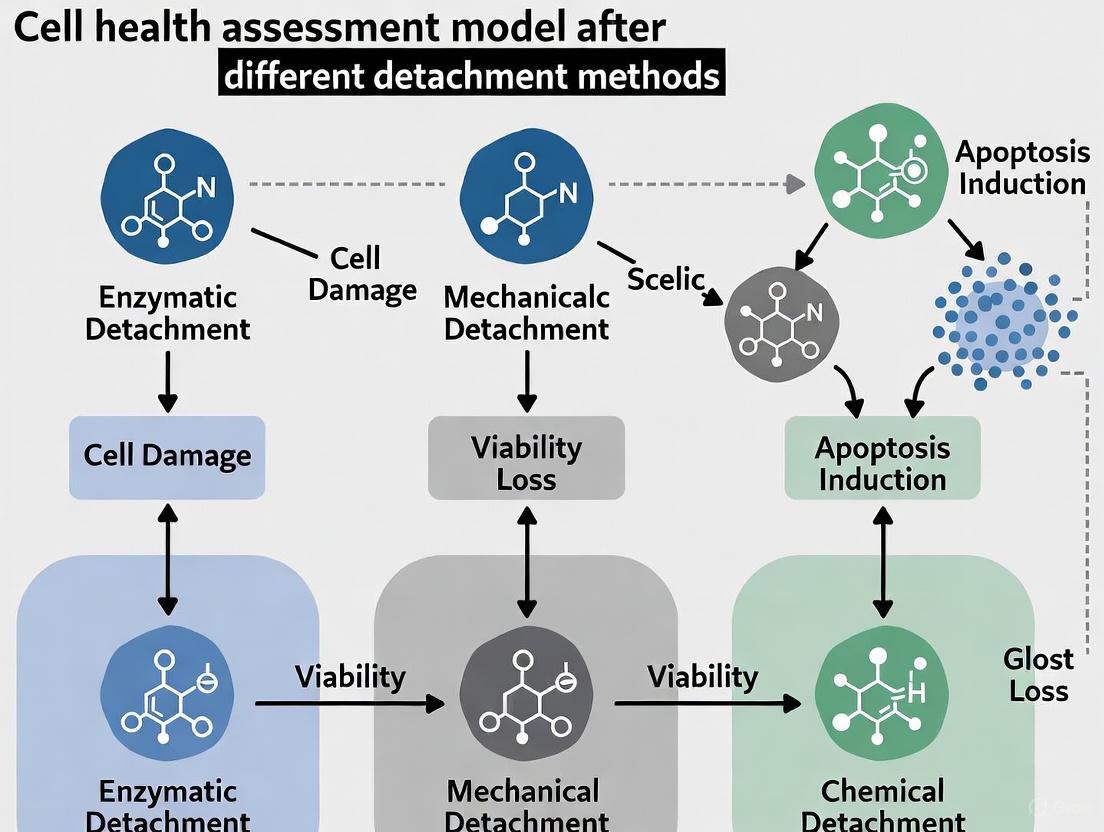
This article provides a comprehensive guide for researchers and drug development professionals on assessing cell health following various detachment methods.
Cell Health Assessment After Detachment: A Critical Guide for Maintaining Viability and Phenotype
Abstract
This article provides a comprehensive guide for researchers and drug development professionals on assessing cell health following various detachment methods. It explores the fundamental mechanisms of cell adhesion and the critical impact of detachment on cell viability, surface marker integrity, and downstream functionality. The content covers a wide range of enzymatic and non-enzymatic techniques, from traditional trypsin to advanced physical and chemical stimuli, offering practical troubleshooting and optimization strategies. By comparing validation methods and providing best practices for selecting appropriate detachment protocols, this resource aims to enhance experimental reproducibility and data reliability in cell-based research, drug discovery, and therapeutic development.
Why Cell Detachment Methodology Fundamentally Impacts Cellular Health and Research Outcomes
The Critical Role of Cell Detachment in Experimental Reproducibility
In vitro cell culture is a cornerstone of biological research, drug discovery, and regenerative medicine. The process of cell detachment—removing adherent cells from their culture surface—is a critical yet frequently overlooked step that significantly impacts experimental outcomes and reproducibility. This procedure, essential for cell passaging, subculturing, and harvesting, can induce substantial cellular stress, affecting viability, phenotype, and downstream functionality [1] [2]. While traditional enzymatic methods like trypsinization have been widely used for decades, they often compromise cell surface proteins and dysregulate metabolic pathways, leading to inconsistent results across experiments [1]. The scientific community increasingly recognizes that the choice of detachment method can introduce significant variability, affecting data interpretation and the reliability of research findings. This guide provides a comparative analysis of contemporary cell detachment techniques, evaluating their performance based on cell viability, functionality, and suitability for specific applications to support robust and reproducible science.
Comparative Analysis of Cell Detachment Techniques
Cell detachment methods are broadly categorized into chemical, physical, and stimuli-responsive approaches. Each technique operates through distinct mechanisms and offers unique advantages and limitations, which are summarized in the table below.
Table 1: Comparison of Major Cell Detachment Techniques
| Technique Category | Specific Method | Mechanism of Action | Key Advantages | Major Limitations | Typical Cell Viability |
|---|---|---|---|---|---|
| Enzymatic Chemical | Trypsin/EDTA [1] | Proteolytic cleavage of adhesion proteins; calcium chelation | Rapid, highly effective, inexpensive, works for most cell types | Damages cell surface proteins/receptors, alters metabolic pathways, enzyme residuals | Variable; can be low due to proteolytic damage |
| Enzymatic Chemical | Collagenase [1] | Degrades collagen in extracellular matrix | Effective for tissues and complex matrices | Less effective for some monolayer cultures, potential enzyme residuals | High for specific tissue-derived cells |
| Non-Enzymatic Chemical | Chelate-Free Solutions [1] | Ionic disruption of cell-surface interactions | Gentler on surface proteins, no enzyme residuals | May be less effective, requires optimization for cell type | Generally High |
| Physical | Mechanical Scraping [1] | Physical force dislodges cells | Simple, no chemicals required | Causes significant physical damage, low viability, inconsistent | Low |
| Physical | Electrochemical Bubbling [3] | Fluid shear stress from bubbles detaches cells | On-demand, preserves viability, reagent-free | Requires specialized electrode equipment, optimization needed | High (>90% for C. vulgaris, MG-63) |
| Stimuli-Responsive | Thermo-Responsive Surfaces [1] | Polymer hydration/swelling changes with temperature | Non-invasive, enables sheet harvesting | Requires specialized cultureware, cost, limited to compatible surfaces | Very High |
| Stimuli-Responsive | Light-Responsive Surfaces [1] | Light-triggered generation of reactive oxygen species or gas bubbles | Spatiotemporal control, on-demand | Requires photosensitive coatings, potential for oxidative stress | High |
The experimental data supporting these comparisons often derives from direct methodology comparisons. For instance, a stress-reduced passaging technique developed for human pluripotent stem cells (PSCs), which optimized detachment and dissociation procedures, demonstrated a marked improvement in cell viability and subsequent reproducibility compared to standard methods [2]. Similarly, in a direct test of a physical method, electrochemical bubble generation achieved successful detachment of Chlorella vulgaris microalgae and mammalian MG-63 cells while maintaining high viability, showcasing a viable non-chemical alternative [3].
Detailed Experimental Protocols and Data
To ensure experimental reproducibility, a clear understanding of standardized protocols is essential. Below, we detail methodologies for two promising techniques: a non-enzymatic physical method and an optimized enzymatic protocol.
This protocol describes a reagent-free method for on-demand cell detachment using electrolysis-generated bubbles, suitable for both microalgae and mammalian cells.
Key Materials:
- Transparent Gold Electrode (10-nm film on glass, Platypus Technologies)
- Millifluidic Channel (PDMS, 3mm height, 4mm width, 2cm length)
- DC Power Supply
- Potassium Bicarbonate Electrolyte (1 M, chloride-free to prevent biocide formation)
- Inverted Microscope with bright-field and fluorescence capabilities
Step-by-Step Workflow:
- Surface Preparation: Design a dual-fingered electrode (e.g., 10 mm width, 1 mm height, 1 mm gap) on the transparent gold surface.
- Cell Seeding: Introduce the cell solution (e.g., C. vulgaris) into the PDMS channel bonded to the electrode. Allow cells to settle and adhere for 2 hours.
- Media Exchange: Flush out the growth media and replace it with the chloride-free potassium bicarbonate electrolyte at a flow rate of 1 mL/min for 5 minutes.
- Bubble Generation: Apply a set current density (e.g., 1-10 A/m²) across the electrodes for 10 seconds using a DC power supply to generate hydrogen and oxygen bubbles directly at the biofouled surface.
- Cell Removal & Collection: Apply a low electrolyte flow rate (1 mL/min) to remove detached cells. The resulting wall shear stress (~3 mPa) is insufficient to remove adherent cells but effectively flushes out those loosened by bubbles.
- Viability Assessment: Analyze collected cells using standard viability assays (e.g., flow cytometry).
Critical Notes: The use of a chloride-free electrolyte is paramount to avoid the generation of toxic hypochlorite, ensuring detachment is mediated purely by physical shear stress. The shear stress generated by a departing bubble with a radius of ~30 µm has been analytically modeled and experimentally confirmed to exceed the adhesion strength of cells like C. vulgaris [3].
This optimized chemical protocol focuses on minimizing dissociation-induced apoptosis in sensitive PSCs.
Key Materials:
- Gentle Dissociation Reagent (e.g., Accutase or similar enzyme blend)
- Chelate-Free, Enzyme-Free Dissociation Buffer
- Centrifuge
- ROCK Inhibitor (Y-27632) (optional, for apoptosis inhibition)
Step-by-Step Workflow:
- Reagent Selection: Use a gentle dissociation reagent or a chelate-free buffer instead of traditional trypsin/EDTA.
- Controlled Detachment:
- Aspirate culture medium and wash with a neutral buffer.
- Add the minimal volume of dissociation reagent needed to cover the cell layer.
- Incubate at 37°C for the shortest duration required for cell detachment (typically 3-10 minutes), monitoring under a microscope.
- Reaction Neutralization: Gently neutralize the dissociation reagent with a sufficient volume of complete culture medium.
- Gentle Cell Harvesting: Avoid pipetting vigorously to dissociate clusters. Instead, gently flush the surface with a wide-bore pipette.
- Low-Speed Centrifugation: Centrifuge the cell suspension at low speed (e.g., 100-200 x g) for 3-5 minutes to pellet cells without causing excessive mechanical stress.
- Resuspension & Seeding: Resuspend the cell pellet gently in fresh pre-warmed medium. If required, add a ROCK inhibitor to the medium for the first 24 hours post-passaging to enhance survival.
Critical Notes: The core improvement of this protocol lies in optimizing every step—reagent choice, incubation time, and mechanical handling—to reduce DNA damage and apoptosis. This leads to significantly improved viability and growth consistency post-passaging [2].
Table 2: Quantitative Viability Outcomes from Different Detachment Methods
| Cell Type | Detachment Method | Experimental Conditions | Reported Viability | Key Measurement Technique |
|---|---|---|---|---|
| SAOS-2 Osteoblast-like | Not Specified (Cytotoxicity assay) | Treated with <38 µm Bioglass @ 100 mg/mL | 9% at 3h, 10% at 72h [4] | Fluorescence Microscopy (FDA/PI) |
| SAOS-2 Osteoblast-like | Not Specified (Cytotoxicity assay) | Treated with <38 µm Bioglass @ 100 mg/mL | 0.2% at 3h, 0.7% at 72h [4] | Flow Cytometry (Multiparametric) |
| Chlorella vulgaris (Algae) | Electrochemical Bubbling [3] | Chloride-free electrolyte, various current densities | Maintained high viability | Implied by sustained green color post-detachment |
| MG-63 (Human Osteosarcoma) | Electrochemical Bubbling [3] | Prototype with partitioned electrodes | Maintained high viability | Not Specified |
| Human Pluripotent Stem Cells (PSCs) | Standard Method [2] | Common lab protocol | Variable, often low viability | RNA-seq, Proteomics, Viability Assays |
| Human Pluripotent Stem Cells (PSCs) | Stress-Reduced Passaging [2] | Optimized detachment/dissociation | Improved viability & reproducibility | RNA-seq, Proteomics, Viability Assays |
Signaling Pathways and Experimental Workflows
The following diagrams, created using Graphviz, illustrate the logical workflow for selecting a detachment method and the cellular signaling pathways affected by the process.
Diagram 1: Cell Detachment Method Decision Workflow
Diagram 2: Cellular Consequences of Detachment Methods
The Scientist's Toolkit: Essential Research Reagents and Materials
Selecting the appropriate tools is fundamental to successful cell detachment. The following table lists key solutions and materials used in the featured experiments and the broader field.
Table 3: Essential Research Reagent Solutions for Cell Detachment
| Reagent / Material | Function / Purpose | Example Use Cases |
|---|---|---|
| Trypsin-EDTA [1] | Protease cleaves adhesion proteins; chelator sequesters Ca²⁺. | General cell culture passaging for robust cell lines. |
| Accutase [2] | Gentle enzyme blend for cell dissociation. | Detachment of sensitive cells like pluripotent stem cells. |
| Chelate-Free Dissociation Buffer [1] | Non-enzymatic, ion-disrupting solution. | Harvesting cells for surface marker analysis by flow cytometry. |
| Collagenase [1] | Enzyme that degrades collagen in the extracellular matrix. | Isolation of cells from tissues (e.g., hepatocytes, adipocytes). |
| ROCK Inhibitor (Y-27632) [2] | Small molecule inhibitor of Rho-associated kinase; reduces apoptosis. | Improving survival of single pluripotent stem cells after passaging. |
| Transparent Gold Electrode [3] | Conductive surface for electrochemical bubble generation. | Electrochemical bubble-driven detachment in millifluidic devices. |
| Thermo-Responsive Polymer (e.g., Poly(NIPAM)) [1] | Polymer that changes hydration with temperature, releasing cells. | Harvesting intact cell sheets for tissue engineering. |
| Potassium Bicarbonate Electrolyte [3] | Chloride-free buffer for electrolysis, prevents biocide formation. | Electrochemical detachment medium for maintaining high cell viability. |
The critical role of cell detachment in experimental reproducibility cannot be overstated. As this guide illustrates, the choice of detachment method directly influences key cellular parameters, including viability, surface protein integrity, metabolic activity, and long-term functionality. While traditional enzymatic methods offer convenience, their potential for introducing variability is high. Advanced techniques—such as electrochemical bubbling, optimized gentle passaging, and stimuli-responsive surfaces—provide promising avenues for enhancing reproducibility by minimizing cellular stress [3] [2]. The future of reproducible cell culture lies in the adoption of these more controlled, gentle, and often non-enzymatic methods, coupled with standardized protocols and rigorous viability assessment using techniques like flow cytometry [4]. By carefully selecting and validating a detachment strategy tailored to their specific cell type and application, researchers can significantly improve the consistency and reliability of their in vitro data.
Cell adhesion is a fundamental biological process that enables cells to interact with their neighbors and their surrounding extracellular matrix (ECM). These interactions are crucial for maintaining tissue structure, facilitating cellular communication, and directing cell behavior during development, homeostasis, and disease progression [5] [6]. For researchers investigating cell health after detachment methods—such as those used in cell passaging or tissue digestion—understanding the molecular mechanisms of adhesion is paramount. The process of detaching cells necessarily disrupts these adhesive bonds, and the method of detachment can significantly influence subsequent cell health, signaling, and experimental outcomes.
The primary molecular players in cell adhesion are cell adhesion molecules (CAMs), a subset of cell membrane proteins that mediate binding between cells and their environment [6]. These molecules work in concert with the extracellular matrix (ECM), a dynamic, three-dimensional network of proteins and polysaccharides that provides structural support and biochemical cues [5] [7]. This guide provides a comparative analysis of these adhesion systems, summarizing key experimental data and methodologies relevant to researchers in cell biology and drug development.
Core Components of the Adhesion Machinery
The Extracellular Matrix (ECM)
The ECM is not merely a passive scaffold but an active participant in cellular signaling. Its composition and physical properties vary significantly across tissues, tailoring the matrix for specific functions such as strength (tendons), cushioning (cartilage), or filtration (basement membranes) [5] [8].
Table 1: Major Biochemical Components of the Extracellular Matrix
| Component Type | Key Examples | Primary Functions | Relevance to Cell Detachment |
|---|---|---|---|
| Proteoglycans | Heparan sulfate, Keratan sulfate, Chondroitin sulfate | Highly viscous; cushion cells; hydrate matrix; bind growth factors [8]. | Create a hydrated gel; their degradation can release growth factors. |
| Insoluble Fibers | Collagen fibers (various types) | Provide tensile strength and resilience; major structural element [5] [8]. | Enzymatic (e.g., collagenase) digestion is often required for dissociation of tough tissues. |
| Multiadhesive Glycoproteins | Fibronectin, Laminin | Bind proteoglycans and collagen to cell surface receptors (e.g., integrins); guide cell migration [5] [8]. | Key ligands for integrins; their recognition is a primary target for non-enzymatic detachment agents. |
The physical properties of the ECM—including its stiffness, viscoelasticity, and topography—are now recognized as critical regulators of cell behavior through mechanotransduction pathways [7]. For instance, ECM stiffness can range from <2 kPa in soft brain tissue to 40–55 MPa in bone, and this stiffness is often dysregulated in diseases like cancer and fibrosis [7]. After cell detachment, the ability of cells to sense and remodel a new ECM upon replating is a key indicator of their health and functional recovery.
Major Families of Cell Adhesion Molecules (CAMs)
CAMs are typically single-pass transmembrane proteins with three domains: an intracellular domain that interacts with the cytoskeleton, a transmembrane domain, and an extracellular domain that mediates binding [6]. They can be broadly classified into four major families, which are detailed in the table below.
Table 2: Comparison of Major Cell Adhesion Molecule (CAM) Families
| CAM Family | Calcium Dependence | Primary Binding Role | Key Members & Ligands | Mechanism & Functional Notes |
|---|---|---|---|---|
| Integrins | Dependent [6] | Cell-ECM [6] | αvβ3, α5β1; bind RGD motifs in fibronectin, collagen, etc. [9]. | Heterodimers of α and β subunits; transmit signals bidirectionally ("inside-out" and "outside-in") [9]. |
| Cadherins | Dependent [6] | Cell-Cell [6] | E-cadherin (epithelial), N-cadherin (neural); homophilic binding [6] [10]. | Homophilic, calcium-dependent glycoproteins; link to actin cytoskeleton via catenins [6]. |
| Immunoglobulin Superfamily (IgSF CAMs) | Independent [6] | Cell-Cell [6] | N-CAM, ICAM, VCAM [8] [6]. | Characterized by Ig-like domains in extracellular region; involved in immune function and neural development [6]. |
| Selectins | Dependent [6] | Cell-Cell [6] | E-selectin (endothelial), L-selectin (leukocyte) [6]. | Bind to carbohydrates (e.g., mucins); mediate leukocyte rolling in vasculature [6]. |
Experimental Models and Data in Adhesion Research
Quantitative Analysis of ECM Physical Properties
The mechanical properties of the ECM are not passive background features but active regulators of cell fate. The following table compiles experimental data on ECM stiffness across different biological contexts, which can influence the choice of model systems for studying detachment and re-adhesion.
Table 3: Experimental Measurements of ECM Stiffness in Normal and Pathological Tissues
| Tissue or Condition | Measured Stiffness | Experimental Measurement Method | Biological Impact & Citation |
|---|---|---|---|
| Normal Brain Tissue | < 2 kPa [7] | Not specified in search results. | Baseline for soft tissues. |
| Normal Breast Tissue | 0.167 ± 0.031 kPa [7] | Not specified in search results. | Serves as a control for diseased states. |
| Breast Cancer Tumor | ~4.04 ± 0.9 kPa [7] | Not specified in search results. | Increased stiffness promotes invasiveness and metastasis [7]. |
| Pulmonary Fibrosis | ~16.52 ± 2.25 kPa [7] | Not specified in search results. | Represents a 5-10x increase over healthy tissue, driving disease progression [7]. |
| Bone | 40 – 55 MPa [7] | Not specified in search results. | Represents a rigid, mineralized ECM. |
Key Experimental Protocols
To study the complex interactions between cells and their adhesive environments, researchers have developed sophisticated experimental models. Below are detailed methodologies for two key approaches cited in the literature.
Protocol 1: Utilizing Supported Lipid Bilayers (SLBs) to Study Viscosity Sensing This protocol is adapted from research investigating how human Mesenchymal Stem Cells (hMSCs) sense substrate viscosity through integrins and N-cadherins [10].
- SLB Fabrication: Prepare Supported Lipid Bilayers (SLBs) using the vesicle deposition method. Two primary lipids are used to create different viscosities: DOPC (1,2-dioleoyl-sn-glycero-3-phosphocholine) for a fluid, low-viscosity layer (~1 × 10⁻⁶ Pa·s·m) and DPPC (1,2-dipalmitoyl-sn-glycero-3-phosphocholine) for a gel-phase, high-viscosity layer (~1 × 10⁻⁴ Pa·s·m) [10].
- Functionalization with Adhesion Ligands: Functionalize the SLBs with adhesion peptides via a NeutrAvidin-biotin linkage.
- For integrin-specific adhesion, use the RGD peptide (Arg-Gly-Asp) at a concentration of 0.2% mol.
- To study integrin-cadherin crosstalk, co-functionalize with RGD and the N-cadherin peptide HAVDI at varying concentrations (e.g., 0.02% mol "low HAVDI" and 2% mol "high HAVDI") [10].
- Cell Seeding and Incubation: Seed human MSCs onto the functionalized SLBs. To minimize non-specific binding and internalization of functionalization reagents, perform the initial incubation at 4°C for 2 hours under gentle shaking [10].
- Inhibition Controls: To confirm the specificity of N-cadherin binding, include control groups where cells are pre-treated with a function-blocking N-cadherin antibody before seeding on HAVDI-functionalized surfaces [10].
- Downstream Analysis: Analyze cell behavior by quantifying:
- Cell Spreading Area: Using fluorescence or phase-contrast microscopy and image analysis software.
- Cytoskeletal Organization: Via immunostaining for F-actin.
- Focal Adhesion Assembly: Via immunostaining for proteins like pavillin or vinculin.
- Mechanotransduction Signaling: By examining the localization of transcription factors like YAP/TAZ [10].
Protocol 2: Analyzing Tissue Fluidity in Zebrafish Embryos This protocol is based on research that identified a "tissue fluidity code" governing the solidification of the presomitic mesoderm (PSM) during zebrafish development [11].
- Model System: Use wild-type and mutant zebrafish embryo models. Key mutants include those for Cadherin 2 (cdh2), fibronectin, Integrin α5, and fibrillin 2b [11].
- Live Imaging and Labeling:
- Use transgenic zebrafish lines expressing fluorescently tagged proteins (e.g., Fibronectin-1a-mNG, Fibrillin-2b-mScarlet) to visualize ECM architecture in live embryos [11].
- Employ a secreted GFP to label the extracellular space and a membrane-bound RFP (e.g., from a Cadherin 2 timer transgene) to label the cell cortex. This allows for the visualization of tissue boundaries and cell membranes in 3D [11].
- Quantitative Morphometrics: Acquire 3D image stacks of the live PSM tissue and calculate the following parameters using machine learning-aided data analysis:
- Mechanistic Probing: Use compound mutants (double, triple, quadruple knockouts) to reveal genetic redundancy and interactions between cadherin and integrin pathways in driving tissue solidification [11].
- Computational Modeling: Complement experimental data with a 2D computational model of tissue solidification that incorporates parameters for cell-cell and cell-ECM adhesion energy to explain the observed phenotypes [11].
Signaling Pathways and Molecular Crosstalk
The adhesion machinery is highly interconnected. A critical concept in modern cell adhesion research is "adhesive crosstalk," where different adhesion systems, such as integrins and cadherins, influence each other's function [10]. The following diagram illustrates the key molecular players and their interactions in the integrin-mediated adhesion pathway, a central hub for mechanotransduction.
Integrin-Mediated Adhesion and Signaling Pathway
Research using SLBs has demonstrated that N-cadherin ligation can compete with integrins for linkage to the actin cytoskeleton, effectively weakening the "molecular clutch" and altering the cell's mechanosensing of viscosity [10]. This crosstalk modulates MSC lineage commitment, highlighting its profound biological impact [10]. Furthermore, in vivo studies in zebrafish show that tissue solidification is promoted by Cadherin 2 working in parallel with the Integrin α5 and fibronectin pathway, while negative feedback through Fibrillin 2b in the ECM promotes tissue fluidization [11].
The Scientist's Toolkit: Essential Research Reagents
The following table lists key reagents and tools used in the experimental studies cited herein, providing a resource for designing related adhesion and detachment studies.
Table 4: Key Research Reagents for Cell Adhesion Studies
| Reagent / Tool | Function / Target | Example Application in Research |
|---|---|---|
| RGD (Arg-Gly-Asp) Peptide | Synthetic peptide ligand for multiple integrins (e.g., αvβ3, α5β1) [9]. | Functionalization of SLBs and hydrogels to specifically engage integrin-mediated adhesion [10]. |
| HAVDI Peptide | Synthetic peptide ligand for N-cadherin [10]. | Co-functionalization of surfaces with RGD to study integrin-cadherin crosstalk [10]. |
| Supported Lipid Bilayers (SLBs) | Synthetic, tunable, purely viscous substrate [10]. | Uncoupling the effects of substrate viscosity from elasticity on cell mechanosensing [10]. |
| Function-Blocking Antibodies | Monoclonal antibodies that inhibit specific CAMs (e.g., anti-N-cadherin) [10]. | Used as control experiments to confirm the specificity of adhesive interactions [10]. |
| Fluorescent Timer Transgenes | Transgenic constructs (e.g., Cdh2-sfGFP-TagRFP) that report protein age and stability [11]. | Visualizing the maturation and turnover of adhesion complexes like cadherins in live cells [11]. |
| Talin, Vinculin, Paxillin | Core focal adhesion plaque proteins [12]. | Immunostaining targets to visualize and quantify focal adhesion size, number, and maturation state. |
Cell detachment is an essential, yet critical, step in the routine culture and analysis of adherent cells. The method chosen to release cells from their substrate is far from trivial; it directly influences key parameters of cellular health, including viability, surface marker integrity, and cellular function. As research and drug development increasingly rely on precise cellular assays, understanding the specific impacts of different detachment techniques becomes paramount. This guide provides an objective, data-driven comparison of common detachment methods, framing the analysis within the broader context of reliable cell health assessment.
Experimental Protocols for Assessing Detachment Impacts
To ensure the reproducibility and validity of the data cited in this guide, the following section outlines the core experimental methodologies employed in the relevant studies.
Protocol 1: Flow Cytometry-Based Viability and Apoptosis Assay
This protocol is designed to distinguish between viable, early apoptotic, and late apoptotic/necrotic cell populations following detachment [4] [13].
- Cell Detachment: Culture adherent cells to ~80% confluence. Harvest cells using the detachment methods under comparison (e.g., trypsin-EDTA, accutase, scraping). Neutralize enzymatic reactions with serum-containing medium.
- Staining: Centrifuge the harvested cells and resuspend in annexin-binding buffer.
- Incubation: Add FITC-conjugated annexin V and propidium iodide (PI) to the cell suspension. Incubate for 15 minutes at room temperature in the dark.
- Analysis: Analyze the cells using flow cytometry. Use a viable, untreated control to set fluorescence baselines. The populations are identified as follows:
- Viable cells: annexin V-/PI-
- Early apoptotic cells: annexin V+/PI-
- Late apoptotic/necrotic cells: annexin V+/PI+
Protocol 2: Surface Marker Integrity Analysis via Flow Cytometry
This protocol assesses the impact of detachment on specific proteins on the cell surface [14] [15].
- Cell Detachment and Harvesting: Detach cells using the methods under investigation. Collect and centrifuge the cells.
- Blocking: Wash the cell pellet and incubate with a buffer containing bovine serum albumin (BSA) to block non-specific binding sites.
- Antibody Staining: Resuspend the cells and incubate with a fluorochrome-conjugated antibody targeting the surface protein of interest (e.g., CD55, Fas receptor).
- Analysis: Analyze the cells by flow cytometry. The median fluorescence intensity (MFI) of the stained population is compared across different detachment groups. A significant reduction in MFI indicates cleavage or damage to the surface marker.
Quantitative Comparison of Detachment Method Impacts
The following tables summarize experimental data comparing the effects of different cell detachment methods on critical cellular health parameters.
Table 1: Impact of Detachment Method on Membrane Integrity and Apparent Viability
This table compares the effects of enzymatic and mechanical detachment methods on cell membrane integrity, a key indicator of viability and assay accuracy.
| Detachment Method | Experimental Details | PI-Positive Cells (% ± SEM) | Key Finding |
|---|---|---|---|
| Trypsin-EDTA (0.25%) | Bon-1 cells; stained in PBS [16] | 9.73% ± 3.86% | Minimal membrane damage, preserving viability assessment. |
| Accutase | Bon-1 cells; stained in PBS [16] | Information not specified in source | Considered gentler than trypsin for many cell types [13]. |
| Rubber Scraper (Mechanical) | Bon-1 cells; stained in PBS [16] | 36.37% ± 5.90% | Causes significant membrane rupture, leading to high false-positive PI staining. |
| Rubber Scraper (Mechanical) | Bon-1 cells; stained in Annexin V binding buffer [16] | 68.30% ± 3.55% | Binding buffer exacerbates pre-existing membrane damage, severely skewing results. |
Table 2: Impact on Specific Cell Surface Marker Expression
This table details how detachment methods can cleave specific proteins from the cell surface, which can compromise immunophenotyping and signaling studies.
| Detachment Method | Surface Marker Analyzed | Effect on Expression | Recovery Time |
|---|---|---|---|
| Trypsin | General surface proteins | Degrades most surface proteins [14] | Varies by protein |
| Accutase | Fas Ligand (FasL) / Fas Receptor | Significant decrease (MFI) [14] [15] | ~20 hours [14] [15] |
| Accutase | Macrophage marker F4/80 | No significant change [14] [15] | Not applicable |
| EDTA-based Solution | Fas Ligand (FasL) / Fas Receptor | Minimal decrease; best preservation [14] [15] | Not applicable |
| Scraping | Fas Ligand (FasL) | Highest level of preservation [14] [15] | Not applicable |
Visualizing the Experimental Workflow and Impacts
The following diagram illustrates the logical workflow for designing an experiment to evaluate detachment methods, leading to the primary cellular parameters affected and the consequential analytical outcomes.
*Experimental Workflow for Detachment Method Evaluation
The Scientist's Toolkit: Essential Research Reagents
The following table lists key reagents and their functions used in the experiments cited in this guide, forming a core toolkit for researchers conducting similar comparisons.
Table 3: Key Reagents for Detachment and Subsequent Analysis
| Reagent / Kit | Function in Experiment |
|---|---|
| Trypsin-EDTA | Proteolytic enzyme mixture that cleaves adhesion proteins for cell detachment; a standard but harsh method [16] [13]. |
| Accutase | Enzyme blend with proteolytic and collagenolytic activity; considered a milder alternative to trypsin [13]. |
| EDTA-based Solution | Calcium chelator (e.g., Versene) that disrupts integrin-mediated adhesion; a non-enzymatic, gentle method [14]. |
| Annexin V / PI Apoptosis Kit | Contains FITC-annexin V for detecting phosphatidylserine externalization (apoptosis) and PI for staining dead cells [13]. |
| Fixable Viability Dyes | Cell-impermeant dyes that bind to amine proteins on dead cells; allow for dead cell exclusion in flow cytometry without interfering with intracellular staining [17]. |
| Fluorochrome-conjugated Antibodies | Antibodies tagged with fluorescent dyes (e.g., FITC) for targeting and quantifying specific surface proteins (e.g., CD55, Fas) via flow cytometry [14] [13]. |
The choice of cell detachment method is a critical determinant in the integrity of downstream cellular data. As demonstrated, mechanical scraping, while simple, inflicts significant damage to the cell membrane, severely compromising viability measurements and apoptosis assays. Enzymatic methods, though more controlled, present their own challenges: traditional trypsin is harsh on many surface proteins, while the milder accutase can still cleave specific markers like the Fas/FasL complex, leading to inaccurate immunophenotyping.
For research and drug development workflows where precise cell health assessment is non-negotiable, the detachment protocol must be actively selected and validated. Non-enzymatic chelating agents like EDTA often provide the best preservation for surface marker studies, whereas a carefully chosen and timed enzymatic treatment may be suitable for viability assays. Ultimately, there is no universal best method. Researchers must align their detachment strategy with their primary analytical endpoints, always confirming that the technique itself does not become a source of experimental bias.
In cell-based research, the detachment of adherent cells is a fundamental step that can significantly influence experimental outcomes and data integrity. The process of cell detachment, while seemingly routine, directly impacts cell health, phenotype, and subsequent functionality. Within the broader context of cell health assessment after different detachment methods research, understanding these effects is paramount for ensuring reproducible and reliable results. This guide objectively compares the performance of various detachment methodologies, supported by experimental data, to illuminate how improper practices can compromise research data at a fundamental level.
The Critical Role of Cell Detachment in Research
Cell detachment is not merely a procedural step but a critical intervention that subjects cells to mechanical, enzymatic, and chemical stresses. These stresses can trigger a range of cellular responses, including the activation of survival and death pathways, alteration of surface receptor integrity, and induction of inflammatory cascades. The method chosen for detachment can therefore directly influence experimental readouts in areas such as drug sensitivity, gene expression profiles, and metabolic studies. For researchers and drug development professionals, overlooking these variables introduces an uncontrolled confounding factor, potentially leading to inaccurate conclusions and costly late-stage failures in the drug development pipeline.
Quantitative Comparison of Detachment Methods
The following table summarizes key performance metrics of common cell detachment methods, highlighting their relative impact on cell health and data integrity.
| Detachment Method | Typical Viability | Impact on Surface Markers | Proliferation Recovery | Key Data Compromises |
|---|---|---|---|---|
| Trypsin-EDTA | 85-95% (if optimized) | High: Cleaves certain surface proteins and antigens [18] | Delayed (24-48 hours) | Altered flow cytometry results; skewed transcriptomic data |
| Accutase | 90-97% | Low to Moderate: Gentle protease activity | Rapid (< 24 hours) | Minimal effect on most receptor-ligand studies |
| Cell Scrapers | 70-85% | Variable: Causes significant mechanical shear | Significantly Delayed | Increased necroptosis; inconsistent yield affects assay normalization [19] |
| Chelator-Based (e.g., EDTA alone) | >95% | Minimal: Does not cleave proteins | Immediate | Ineffective for strongly adherent lines; incomplete detachment affects yield |
Detailed Experimental Protocols for Assessing Detachment Impact
To generate the comparative data above, specific, reproducible experimental protocols are essential. The following methodologies are critical for a comprehensive assessment of detachment method effects.
Protocol for Post-Detachment Viability and Necroptosis Assessment
The integrity of experimental data is heavily dependent on cell viability and the mode of cell death post-detachment. This protocol assesses not only overall viability but also specifically identifies necroptosis, a programmed inflammatory cell death pathway.
- Procedure:
- Detach Cells: Apply the test detachment agent to a confluent monolayer of adherent cells (e.g., HEK293, HeLa) for a standardized duration (e.g., 5 minutes at 37°C).
- Neutralize Reaction: Use a serum-containing medium or specific enzyme inhibitors to neutralize the detachment agent.
- Cell Processing: Centrifuge the cell suspension and wash with PBS.
- Staining & Analysis:
- Perform staining with Trypan Blue for a gross viability count via hemocytometer.
- For necroptosis analysis, stain cells with Propidium Iodide (PI) and an antibody against phosphorylated Mixed Lineage Kinase Domain-Like Pseudokinase (pMLKL), a key effector of necroptosis.
- Analyze stained cells using flow cytometry. PI-positive, pMLKL-positive populations indicate necroptotic cells.
- Data Interpretation: Compare the percentage of viable and necroptotic cells across different detachment methods. A high level of necroptosis indicates a highly inflammatory detachment process, which can skew data in immuno-oncology or inflammation models [19].
Protocol for Surface Marker Integrity Analysis via Flow Cytometry
Many assays rely on the accurate quantification of cell surface proteins. This protocol evaluates how detachment methods affect the integrity of these critical markers.
- Procedure:
- Sample Preparation: Divide a single cell population into multiple aliquots after achieving confluence.
- Comparative Detachment: Apply different detachment methods (e.g., Trypsin-EDTA, Accutase, Enzyme-free buffer) to each aliquot.
- Staining:
- Immediately after detachment and washing, stain cells with fluorescently-labeled antibodies against key surface markers of interest (e.g., CD44, EpCAM).
- Include an isotype control for each condition to set baselines.
- Analysis: Analyze all samples on a flow cytometer using identical settings. Compare the Median Fluorescence Intensity (MFI) of the stained populations across the different detachment groups.
- Data Interpretation: A significant reduction in MFI in the trypsinized group compared to the gentle, enzyme-free group indicates cleavage and loss of the surface epitope, leading to false-negative data in applications like fluorescence-activated cell sorting (FACS) or immunocytochemistry [18].
Cell Health Signaling Pathways Post-Detachment
The following diagram illustrates the key cellular signaling pathways activated in response to the stress of different detachment methods, explaining the downstream consequences on cell health and experimental data.
The Scientist's Toolkit: Essential Research Reagent Solutions
Selecting the right reagents is fundamental for minimizing detachment-induced artifacts. The table below details key solutions and their functions in the context of cell detachment and health assessment.
| Reagent/Material | Function in Detachment Research |
|---|---|
| Accutase | A gentle, proprietary enzyme blend that maintains better surface protein integrity compared to trypsin, ideal for flow cytometry and stem cell applications. |
| Trypsin Inhibitor | Used to immediately neutralize trypsin activity post-detachment, preventing continued proteolytic damage that can compromise subsequent assays. |
| RIP1 Kinase Inhibitor (e.g., Necrostatin-1) | A specific chemical inhibitor used experimentally to suppress the necroptosis pathway, allowing researchers to quantify and mitigate this form of detachment-induced death [19]. |
| Viability Stains (PI / Trypan Blue) | Essential dyes for distinguishing live cells from dead cells in a population, providing a primary metric for assessing detachment method harshness. |
| Phospho-Specific MLKL Antibody | A critical tool for the specific detection of necroptotic cells via flow cytometry or Western blot, enabling precise measurement of this inflammatory death pathway [19]. |
| Enzyme-Free Cell Dissociation Buffer | A non-enzymatic, chelator-based solution that promotes detachment by sequestering calcium, preserving sensitive surface epitopes with minimal protein cleavage. |
The choice of cell detachment method is a critical, yet often underestimated, variable in biological research. As demonstrated, methods like trypsinization can severely compromise surface marker integrity, while mechanical scraping can induce high levels of necroptosis and inflammation. These effects directly translate into compromised data quality, reduced assay reproducibility, and potentially flawed scientific conclusions. A rigorous, evidence-based approach to selecting and validating detachment protocols is not merely a technical detail but a fundamental requirement for robust cell health assessment and reliable research outcomes, particularly in the high-stakes field of drug development. Researchers are urged to treat cell detachment not as a simple preparatory step, but as an integral part of their experimental design.
Comprehensive Guide to Cell Detachment Techniques: From Traditional to Innovative Approaches
Cell detachment is a critical step in the culture of adherent cells, serving as a foundation for subculturing, experimental analysis, and cell-based therapies. The selection of an appropriate enzymatic detachment method directly influences cell viability, surface marker integrity, and downstream applicability. Within the context of cell health assessment research, understanding the specific properties and effects of different detachment enzymes is paramount for obtaining reliable and reproducible data. This guide provides an objective comparison of three commonly used enzymatic agents—Trypsin, Accutase, and Collagenase—drawing on experimental data to elucidate their distinct applications, advantages, and limitations for researchers and drug development professionals.
Enzyme Profiles and Mechanisms of Action
The efficacy and impact of an enzymatic detachment agent are determined by its biochemical composition and mechanism of action.
Trypsin: A serine protease of animal origin (typically porcine or bovine) that cleaves peptide bonds after lysine or arginine residues. It efficiently digests the proteins and extracellular matrix (ECM) components that mediate cell adhesion. However, its activity is non-specific and can damage cell surface proteins, receptors, and adhesion molecules if exposure is prolonged, potentially altering cell function and signaling pathways [20] [1]. Its activity must be inhibited by serum or specific trypsin inhibitors post-detachment.
Accutase: A ready-to-use blend of proteolytic and collagenolytic enzymes derived from non-mammalian, non-bacterial sources. It acts on a broader range of substrates, including proteins and collagen, but at a lower, gentler concentration than trypsin. It is known for preserving cell surface epitopes better than trypsin and does not require an inactivation step, as dilution with culture medium is sufficient to stop its activity [21] [22]. Its gentle nature makes it suitable for sensitive cells.
Collagenase: An enzyme that specifically targets and breaks the peptide bonds in native collagen, a major structural component of the ECM. "Crude" collagenase preparations, often sourced from Clostridium histolyticum, are actually mixtures containing collagenase and other proteases like clostripain and neutral proteases. This synergistic action is highly effective for digesting tough, collagen-rich tissues [23]. It is considered a neutral protease with low cytotoxicity and is particularly useful for isolating cells from intact tissues [20].
The diagram below illustrates the primary molecular targets of each enzyme within the cell adhesion complex.
Diagram 1: Enzymatic Targets in Cell Detachment. This diagram illustrates the primary molecular targets of Trypsin, Accutase, and Collagenase within the complex that adheres a cell to its culture surface.
Comparative Experimental Data and Applications
The theoretical mechanisms of these enzymes translate into distinct practical outcomes, which have been quantified in various experimental settings. The tables below summarize key comparative data.
Table 1: Characteristic Comparison of Detachment Enzymes
| Feature | Trypsin | Accutase | Collagenase |
|---|---|---|---|
| Origin | Animal (porcine/bovine) [20] | Non-mammalian, non-bacterial [21] | Bacterial (e.g., C. histolyticum) [23] |
| Enzyme Type | Serine protease | Blend of proteases & collagenases [20] | Mixture of collagenases & other proteases [23] |
| Primary Action | Cleaves peptide bonds | Cleaves proteins & collagen [20] | Degrades native collagen [23] |
| Inactivation Required | Yes (serum/inhibitor) | No (dilution sufficient) [21] | Varies by protocol |
| GMP Compliance | Concerns for ATMPs [20] | Suitable (non-animal origin) [20] | Requires qualification |
| Ideal For | Routine passaging of robust cells | Sensitive cells (stem cells), flow cytometry [20] [22] | Primary tissue dissociation [23] |
Table 2: Summary of Experimental Performance Data from Key Studies
| Study Context | Trypsin Performance | Accutase Performance | Collagenase Performance |
|---|---|---|---|
| hMSC-TERT Detachment (Bioreactor) | Less suitable; higher cell damage in dynamic systems [20] | >95% viability; suitable for static systems [20] | Not the primary focus in this study |
| hMSC-TERT Harvest (Microcarriers) | Effective in trypsin-accutase mix [24] | Effective in trypsin-accutase mix; high vitality [24] | Tested but less effective than mixed enzymes [24] |
| Surface Marker Integrity (Macrophages) | N/A | Decreased MFI of FasL/Fas; recovery in 20h [14] | N/A |
| Cell Viability (Prolonged Exposure) | Damaging over time [21] | High viability maintained even after 60-90 min [14] | Known for low cytotoxicity [20] |
| Human Spinal Cord Microglia Isolation | N/A | >95% single-cell yield; preserved antigen epitopes [25] | N/A |
Key Application Contexts
Stem Cell and Therapy Manufacturing: For advanced therapeutic medicinal products (ATMPs) like hMSCs, regulatory guidelines emphasize minimizing animal-derived materials. In this context, TrypZean (a recombinant trypsin) and Accutase are preferred over traditional trypsin [20]. One study found that for detaching hMSC-TERT from dynamic bioreactor systems, only TrypZean was suitable, whereas Accutase was effective in static systems [20]. This highlights that the cultivation system (static vs. dynamic) can significantly impact detachment outcomes.
Flow Cytometry and Surface Marker Analysis: While Accutase is often marketed as a gentle enzyme that preserves epitopes, this is not universal. Research shows it can significantly compromise specific surface proteins like Fas ligand (FasL) and Fas receptor, cleaving them into fragments. The surface levels of these markers required up to 20 hours to recover post-detachment [14]. In contrast, an EDTA-based non-enzymatic method preserved these markers better. This underscores the critical need to validate the detachment method for the specific surface markers of interest.
Primary Tissue Dissociation: Isolating cells directly from intact tissues requires breaking down the robust ECM. Collagenase is indispensable for this application, as it specifically digests collagen, which is often the predominant ECM component. Its efficacy is enhanced in "crude" blends that include other supportive proteases, making it the standard for isolating cells like hepatocytes, adipocytes, and islets from tissues [23].
Detailed Experimental Protocols
To ensure reproducibility, below are detailed methodologies for key experiments cited in this guide.
This protocol is used to assess how different detachment methods affect the integrity of cell surface proteins, a critical consideration for flow cytometry.
- 1. Cell Culture: Seed adherent cells (e.g., RAW264.7 macrophages) in culture plates and allow them to reach ~80% confluence.
- 2. Detachment:
- Accutase Group: Remove medium, rinse with PBS, and add Accutase solution. Incubate at 37°C for 10-30 minutes.
- EDTA (Control) Group: Use a commercial EDTA-based non-enzymatic detachment solution for the same duration.
- Scraping (Control) Group: Use a rubber scraper to mechanically detach cells.
- 3. Reaction Stopping: Once cells detach, add complete medium to dilute the enzyme (for Accutase) or inactivate the reaction.
- 4. Cell Processing: Collect cells by centrifugation (200 g for 10 min). Wash with PBS.
- 5. Staining & Analysis:
- Resuspend cell pellet in staining buffer with 3% BSA for 5 minutes.
- Incubate with fluorescently-labeled antibody against the target surface antigen (e.g., anti-FasL) for 45 minutes at 4°C in the dark.
- Wash cells to remove unbound antibody.
- Analyze using flow cytometry. Compare the Mean Fluorescence Intensity (MFI) between treatment groups.
This protocol is relevant for harvesting cells expanded in scalable bioreactor systems.
- 1. Cultivation: Expand hMSC-TERT cells on non-porous microcarriers (e.g., Biosilon, RapidCell) in spinner flasks.
- 2. Harvesting:
- Allow microcarriers to settle and remove the culture medium.
- Wash the cell-covered microcarriers with PBS.
- Add the enzyme solution (e.g., Trypsin, Accutase, Collagenase, or a Trypsin-Accutase mix).
- Incubate at 37°C with gentle agitation. Monitor detachment microscopically.
- 3. Separation & Inactivation: Once cells are detached, filter the suspension through a sieve to separate cells from microcarriers. Transfer the cell suspension to a new vessel containing serum-containing medium to inactivate the enzyme (if trypsin is used).
- 4. Analysis:
- Count cells and determine viability using the Trypan Blue exclusion method.
- Calculate cell yield and vitality for each enzyme condition.
- For functional assessment, perform a differentiation assay (e.g., adipogenic differentiation) on the harvested cells.
This protocol demonstrates the use of Accutase for the gentle and efficient dissociation of primary neural tissue.
- 1. Tissue Preparation: Obtain human embryonic spinal cord tissue. Rinse and mince the tissue into small pieces using scissors or a scalpel in a petri dish.
- 2. Enzymatic Digestion: Transfer the minced tissue into a tube and add Accutase digestion solution. Incubate for 15 minutes at 37°C.
- 3. Mechanical Dissociation: Gently shake the tube by hand to assist in tissue dissociation. Pass the cell suspension through a cell strainer to obtain a single-cell suspension.
- 4. Purification: Purify microglia/macrophages using a non-enzymatic, secondary hand-shaking purification method or a density gradient.
- 5. Culture & Validation: Seed the isolated cells in culture plates. Validate purity and identity via immunofluorescence staining for specific markers like Iba-1 and CD45.
The workflow for a generalized cell detachment and health assessment experiment is summarized below.
Diagram 2: Generalized Workflow for Cell Detachment and Health Assessment. This diagram outlines the key steps in a typical experiment evaluating the impact of detachment methods on cell health.
The Scientist's Toolkit: Essential Research Reagents
The following table lists key reagents and materials essential for conducting cell detachment and subsequent health assessment experiments.
Table 3: Essential Reagents for Detachment and Analysis Experiments
| Reagent/Material | Function/Description | Example Application |
|---|---|---|
| Trypsin-EDTA (0.25%) | Proteolytic enzyme + chelating agent for efficient cell detachment. | Routine passaging of robust, adherent cell lines [13]. |
| Accutase Solution | Gentle, ready-to-use blend of proteases and collagenases. | Detaching stem cells and sensitive primary cells; preparation for flow cytometry [14] [21]. |
| Collagenase (Type I-V) | Enzyme mixtures for digesting collagen in tissues. | Dissociation of primary tissues (e.g., liver, fat, pancreas) to isolate functional cells [23]. |
| EDTA-Based Solution (e.g., Versene) | Non-enzymatic, calcium-chelating solution for mild detachment. | Control treatment for assessing enzymatic impact on surface markers [14]. |
| DMEM/F12 Medium | Standard cell culture medium for cell growth and maintenance. | Used as the base medium for culturing cells prior to experiments [24] [13]. |
| Fetal Bovine Serum (FBS) | Provides essential growth factors and nutrients; inactivates trypsin. | Component of culture medium and for stopping trypsinization [24]. |
| Dulbecco's PBS (without Ca2+/Mg2+) | Salt solution for rinsing cells without disrupting cell adhesion. | Washing step before adding detachment enzymes [13]. |
| Trypan Blue Solution | Vital dye used to stain dead cells blue, excluding live cells. | Assessing cell viability and counting via hemocytometer or automated cell counter [24]. |
| Annexin V FITC / PI Apoptosis Kit | Fluorochrome-labeled reagents to detect apoptotic (Annexin V+/PI-) and necrotic (PI+) cells. | Quantifying apoptosis and necrosis induced by detachment stress [13]. |
| Antibodies for Surface Markers (e.g., anti-FasL, anti-CD55) | Specific antibodies conjugated to fluorophores for detecting cell surface proteins. | Flow cytometric analysis of surface marker integrity post-detachment [14] [13]. |
| Non-Porous Microcarriers (e.g., Biosilon, RapidCell) | Provide a high surface-area-to-volume ratio for adherent cell growth in suspension cultures. | Scalable expansion of adherent cells (e.g., hMSCs) in spinner flasks or bioreactors [24]. |
The selection of a cell detachment method is a critical determinant in experimental and therapeutic outcomes. Trypsin, while efficient and cost-effective for routine work, poses risks to cell surface integrity and is less ideal for sensitive applications. Accutase offers a gentler, xeno-free alternative that generally preserves viability and is excellent for stem cells and flow cytometry, though researchers must verify its effect on specific surface antigens. Collagenase remains the gold standard for the primary dissociation of collagen-rich tissues. A comprehensive assessment of cell health post-detachment must extend beyond simple viability to include detailed analysis of surface markers, functional capacity, and apoptotic status. The optimal enzyme is not universal but must be carefully matched to the specific cell type, application, and subsequent analytical requirements.
In cell culture, the process of detaching adherent cells from their substrate is a fundamental yet critical step that can significantly influence experimental outcomes and cell health. Traditional enzymatic methods, particularly trypsinization, have been widely used for cellular dissociation. However, these methods present substantial drawbacks, including the degradation of most cell surface proteins and extracellular matrix components, which can alter cell phenotype and function [15]. Trypsinization has been shown to cleave anchoring proteins and other essential surface proteins like cell receptors, ultimately leading to dysregulations of various protein expression levels and metabolic pathways [1]. These limitations have driven the development and optimization of alternative detachment strategies, particularly non-enzymatic approaches that can better preserve cellular integrity.
Within this context, EDTA-based solutions and chelate-free alternatives have emerged as valuable tools for researchers seeking to maintain cell surface markers and functional properties post-harvest. EDTA (Ethylenediaminetetraacetic acid) functions by binding calcium ions that are essential for integrins to maintain cell adhesion, thereby facilitating cell release without proteolytic activity [1]. While effective for many applications, EDTA is not always sufficiently potent for strongly adherent cell types and may require mechanical assistance that can compromise cell viability. Recent advances in biomaterials and stimulus-responsive surfaces have enabled the development of innovative chelate-free approaches that offer new possibilities for cell harvesting while minimizing cellular damage.
This comparison guide objectively evaluates EDTA-based solutions against chelate-free alternatives, with particular focus on their effects on cell surface marker preservation, viability, and functional integrity. Understanding the relative strengths and limitations of these methods is essential for researchers across biomedical disciplines, including tissue engineering, regenerative medicine, and drug development, where maintaining native cell characteristics after detachment is paramount for downstream applications and experimental validity.
Mechanism of Action: EDTA-Based Solutions
Biochemical Principles of EDTA
EDTA operates through a specific chemical mechanism that distinguishes it from enzymatic detachment agents. As a synthetic chelating agent, EDTA functions by sequestering divalent cations, particularly calcium (Ca²⁺) and magnesium (Mg²⁺), which are essential cofactors for cell adhesion molecules [1]. Integrins, the primary transmembrane receptors that facilitate cell attachment to the extracellular matrix (ECM), require calcium ions to maintain their functional conformation and binding capacity. By chelating these cations, EDTA induces conformational changes in integrins and disrupts the calcium-dependent interactions between cell surface adhesion molecules and their substrates.
The chelation mechanism involves EDTA's molecular structure, which contains multiple electron-donating atoms that can form coordinate covalent bonds with metal ions. This creates stable, soluble complexes that effectively remove the ions from the cellular environment. The efficiency of this process is influenced by several factors, including pH conditions, with optimal performance typically occurring at physiological pH ranges (7.0-7.4) [26]. Unlike enzymatic methods that permanently degrade attachment proteins, EDTA's action is theoretically reversible, though in practice, the disruption of adhesion complexes still necessitates recovery time for reattachment in subsequent cultures.
Visualizing the EDTA Chelation Mechanism
The following diagram illustrates the molecular mechanism through which EDTA facilitates cell detachment by chelating essential calcium ions:
Mechanism of Action: Chelate-Free Alternatives
Diversity of Chelate-Free Approaches
Chelate-free cell detachment methods encompass a broad spectrum of techniques that operate through physical, chemical, and material-based mechanisms without relying on cation chelation. These approaches offer distinct advantages for specialized applications where preserving surface receptor integrity or avoiding chemical residues is paramount. Thermoresponsive polymers, such as poly(N-isopropylacrylamide) (pNIPAM), undergo reversible hydration and dehydration changes in response to temperature shifts, effectively modulating their surface properties to release cells without chemical intervention [1]. At temperatures above their lower critical solution temperature (LCST), these polymers are hydrophobic and support cell adhesion, while cooling below the LCST triggers a transition to a hydrophilic state that promotes spontaneous cell detachment.
pH-responsive materials represent another chelate-free strategy that exploits changes in surface charge or conformation in response to pH variations. These materials typically contain ionizable functional groups that undergo protonation or deprotonation, leading to swelling, dissolution, or altered surface properties that facilitate cell release [1]. Similarly, light-induced detachment methods utilize photosensitive coatings that generate reactive oxygen species or undergo cleavage upon illumination, enabling precise spatiotemporal control over cell release. Additional approaches include magnetic nanoparticle-based systems where applied magnetic fields induce mechanical forces sufficient to disrupt cell-substrate interactions, and ultrasound-assisted techniques that create microcavitation effects at the cell-surface interface [1].
Comparative Advantages and Limitations
The primary advantage of chelate-free methods lies in their ability to preserve cell surface integrity by avoiding chemical interactions with membrane components. Unlike EDTA, which indirectly affects adhesion molecules through cation depletion, chelate-free approaches typically target the cell-substrate interface without directly interacting with cellular structures. This often results in enhanced viability, improved functional preservation, and reduced recovery time for detached cells. Furthermore, many chelate-free methods eliminate the need for chemical neutralization or extensive washing steps, streamlining downstream applications.
However, these methods also present significant challenges, including specialized equipment requirements, higher implementation costs, and cell-type specific efficacy. The scalability of some chelate-free approaches remains limited compared to conventional chemical methods, particularly for industrial-scale bioprocessing. Additionally, the detachment efficiency of physical methods may vary considerably depending on cell confluency, passage number, and extracellular matrix composition, necessitating optimization for each specific application.
Comparative Experimental Data: EDTA vs. Chelate-Free Methods
Quantitative Comparison of Detachment Methods
The following table summarizes key experimental findings comparing EDTA-based solutions with chelate-free alternatives across multiple parameters critical to cell health and experimental integrity:
| Parameter | EDTA-Based Solutions | Chelate-Free Alternatives | Experimental Context |
|---|---|---|---|
| Surface Marker Preservation | Minimal impact on Fas receptor/ligand expression [15] | Variable; scraping preserves highest levels [15] | Murine macrophages (RAW264.7, J774A.1) |
| Detachment Efficiency | Moderate; may require scraping for strongly adherent cells [1] | High for specialized surfaces (thermoresponsive, magnetic) [1] | Various adherent cell types |
| Cell Viability | Maintains good viability but lower than accutase [15] | Generally high; method-dependent [1] | Multiple cell lines |
| Recovery Time | Minimal for reattachment; surface proteins intact | Varies; may require extended recovery for some methods | Post-detachment culture |
| Method Scalability | High; easily scalable for large cultures | Limited by surface area and specialized equipment [1] | Industrial bioprocessing |
| Cost Considerations | Low; established, inexpensive reagents | Higher; specialized materials and equipment [1] | Research and commercial applications |
Impact on Specific Surface Markers
Research has demonstrated significant differences in how detachment methods affect specific surface markers. A comprehensive study examining Fas receptor (Fas) and Fas ligand (FasL) expression revealed that EDTA-based solutions caused only minimal reduction in surface levels compared to enzymatic methods [15]. In contrast, accutase treatment significantly decreased the mean fluorescence intensity of both Fas and FasL, with recovery requiring approximately 20 hours post-detachment [15]. Mechanical detachment by scraping, a chelate-free alternative, preserved the highest levels of surface FasL expression, though this method carries risks of cellular damage [15].
The implications of these findings extend beyond mere marker preservation, as surface receptor integrity directly influences cellular function. For immune cells like macrophages, maintaining authentic Fas/FasL expression is crucial for studying apoptosis and immune signaling pathways. The same study demonstrated that accutase cleaved the extracellular portion of FasL into fragments below 20 kD, while EDTA treatment preserved full-length FasL at approximately 40 kD [15]. This proteolytic effect would significantly compromise functional studies of death receptor signaling, highlighting the importance of method selection based on specific research objectives.
Experimental Protocols for Method Evaluation
Standardized Protocol for EDTA-Based Detachment
To ensure consistent and reproducible results when using EDTA-based detachment methods, the following protocol is recommended:
- Reagent Preparation: Prepare EDTA solution at appropriate concentration (typically 0.02-0.5 mM) in calcium- and magnesium-free phosphate-buffered saline (PBS). Filter-sterilize using a 0.22 μm membrane and store at 4°C for up to 3 months.
- Cell Detachment Procedure:
- Aspirate culture medium and rinse cells gently with pre-warmed PBS to remove residual serum proteins.
- Add sufficient EDTA solution to cover the cell monolayer (approximately 1-2 mL per 25 cm²).
- Incubate at 37°C for 3-10 minutes, monitoring detachment visually under a microscope.
- Gently tap the vessel to facilitate cell release. For resistant cells, mechanical assistance with a cell scraper may be necessary.
- Neutralize the EDTA solution by adding complete culture medium containing serum.
- Centrifuge cell suspension at 200 × g for 5 minutes and resuspend in fresh medium.
- Viability Assessment: Determine cell viability using trypan blue exclusion or automated cell counting systems. Expected viability should exceed 90% for most cell types.
- Functional Analysis: Assess surface marker integrity through flow cytometry or functional assays relevant to the specific research context.
Assessment Protocol for Chelate-Free Methods
Evaluation of chelate-free detachment methods requires specific adaptations to account for their unique mechanisms:
- Thermoresponsive Surface Protocol:
- Culture cells on thermoresponsive surfaces until desired confluency is achieved.
- Reduce temperature below the LCST (typically to 20-25°C) for 30-60 minutes.
- Gently agitate or rinse surface with cool buffer to collect released cells.
- Concentrate cells by centrifugation and resuspend in pre-warmed culture medium.
- pH-Responsive Method Protocol:
- Adjust medium pH to the trigger point (typically pH 6.0-7.0, depending on the specific material).
- Incubate for 15-30 minutes at 37°C.
- Collect released cells and neutralize pH immediately with complete culture medium.
- Post-Detachment Analysis:
- Quantify detachment efficiency by counting released cells versus remaining adherent cells.
- Assess viability using membrane integrity dyes and metabolic activity assays.
- Evaluate surface marker preservation through comparative flow cytometry with undetached control cells.
- Monitor functional recovery through reattachment efficiency, proliferation rates, and cell-specific functional assays.
Experimental Workflow for Method Comparison
The following diagram outlines a standardized workflow for comparing cell detachment methods, ensuring consistent evaluation across different techniques:
The Scientist's Toolkit: Essential Research Reagents and Materials
Key Reagents for Method Implementation
The following table catalogues essential reagents and materials required for implementing and evaluating EDTA-based and chelate-free detachment methods:
| Reagent/Material | Function/Purpose | Application Notes |
|---|---|---|
| EDTA Solutions | Calcium/magnesium chelation; disrupts integrin-mediated adhesion | Use at 0.02-0.5 mM in calcium-free buffer; concentration varies by cell type |
| Versene Solution | Commercial EDTA-based detachment solution | Standardized formulation; consistent performance across experiments |
| Thermoresponsive Surfaces | Temperature-mediated cell release via polymer hydration changes | Require specific LCST optimization; commercial plates available |
| pH-Responsive Materials | pH-dependent surface property changes facilitating detachment | Must match trigger pH to cell type tolerance; may affect intracellular pH |
| Cell Scrapers | Mechanical detachment for strongly adherent cells | Risk of cellular damage; consistent technique required for reproducibility |
| Calcium-Free PBS | Washing solution to remove divalent cations prior to EDTA treatment | Essential for EDTA efficacy; prevents reagent neutralization |
| Flow Cytometry Antibodies | Surface marker detection post-detachment | Critical for method validation; should target multiple epitopes |
| Viability Assay Kits | Assessment of membrane integrity and metabolic function | Trypan blue, MTT, CCK-8, or propidium iodide exclusion tests |
Contextual Application in Biomedical Research
The selection between EDTA-based solutions and chelate-free alternatives carries significant implications for research outcomes across biomedical disciplines. In regenerative medicine and cell therapy, where maintaining cellular function and phenotype is paramount, chelate-free methods offer distinct advantages despite their higher complexity and cost. The preservation of surface receptors ensures that therapeutic cells retain their intended functional characteristics after transplantation. Conversely, for routine subculture or high-throughput screening where surface marker integrity may be less critical, EDTA-based methods provide a practical balance of efficiency, cost-effectiveness, and adequate cell viability.
In drug development applications, particularly those involving surface receptor-targeted compounds, the choice of detachment method can significantly influence assay results and compound efficacy evaluation. Research has demonstrated that different detachment methods can alter the apparent expression levels of pharmacologically relevant receptors, potentially leading to inaccurate potency assessments or mechanism-of-action interpretations [15] [1]. Similarly, in toxicology studies evaluating membrane integrity or surface marker modulation, method-induced artifacts must be carefully controlled through appropriate detachment strategy selection.
Concluding Recommendations
Based on current experimental evidence, EDTA-based solutions remain the preferred choice for general cell culture maintenance and applications where cost-effectiveness and scalability are primary considerations. Their well-characterized mechanism, ease of use, and minimal equipment requirements make them suitable for most standard laboratory applications. However, for specialized research requiring maximal preservation of surface markers, functional receptors, or native cell physiology, chelate-free alternatives offer superior performance despite their implementation challenges.
Future methodological developments will likely focus on combining the specificity of chelate-free approaches with the practicality of chemical methods, potentially through targeted adhesion modulation or stimulus-responsive systems with enhanced spatial and temporal control. As single-cell technologies and personalized medicine applications continue to advance, the importance of gentle, precise detachment methods that preserve cellular integrity will undoubtedly increase, driving further innovation in this fundamental aspect of cell culture methodology.
In cellular research and regenerative medicine, the detachment of adherent cells is a critical step that directly impacts cell viability, functionality, and the success of downstream applications. Selecting an appropriate detachment method is paramount, as the technique influences post-detachment cell health by altering membrane integrity, surface protein expression, and metabolic activity. This guide objectively compares three physical detachment approaches—traditional scraping, thermo-responsive surfaces, and emerging light-based methods—within the context of cell health assessment research. We evaluate these techniques based on experimental data concerning efficiency, impact on cell viability, and practicality for drug development applications. By synthesizing current research findings and presenting quantitative comparisons, this guide aims to assist researchers and drug development professionals in selecting optimal detachment strategies that preserve cellular integrity and function.
The following table summarizes the core characteristics, mechanisms, and overall performance of the three detachment techniques, providing a foundation for detailed comparison.
Table 1: Overview of Physical Cell Detachment Techniques
| Technique | Fundamental Mechanism | Primary Applications | Cell Viability Impact | Key Advantages | Inherent Limitations |
|---|---|---|---|---|---|
| Scraping | Mechanical force applied via a physical tool to dislodge cells. | Routine cell passaging, harvesting for simple analysis. | Severe; high risk of membrane disruption and physical damage [27]. | Low cost, simple protocol, requires no specialized reagents. | Compromises membrane integrity, non-selective, yields low-quality cell sheets. |
| Thermo-Responsive Surfaces | Hydration/dehydration switch of polymer brushes (e.g., PNIPAAm) with temperature change, altering cell adhesion [28] [29]. | Cell sheet engineering, regenerative medicine, fragile cell harvesting. | High; preserves membrane proteins and cell-cell junctions [29] [30]. | Enables harvest of intact, viable cell sheets with extracellular matrix. | Requires specialized cultureware, polymer graft parameters must be optimized for different cell types [29]. |
| Light-Based Methods | UV light patterns create "sticky" regions on a surface to adsorb or release particles/cells via chemical changes [31]. | Precision assembly, study of extracellular vesicles, high-precision cell patterning. | Presumed high; non-invasive and label-free, avoiding chemical stress [31]. | Unprecedented spatial precision, allows dynamic control and real-time observation. | Emerging technology, limited throughput for large-scale harvesting, requires advanced equipment. |
Performance and Experimental Data
To enable an objective comparison, quantitative data on detachment efficiency, cell health metrics, and operational parameters are synthesized from the literature into a comparative table.
Table 2: Quantitative Comparison of Detachment Technique Performance
| Performance Metric | Scraping | Thermo-Responsive Surfaces | Light-Based Methods |
|---|---|---|---|
| Typical Detachment Efficiency | High, but inconsistent and cell-type dependent. | >90% for optimized systems (e.g., specific PNIPAAm brush configurations) [29]. | Highly efficient for patterned adsorption/ release, but on a small scale [31]. |
| Reported Cell Viability | Low (often <70%) due to physical damage [27]. | High (>90% typically reported) [29] [30]. | Not explicitly quantified, but method is label-free and non-invasive [31]. |
| Separation Factor/ Purity | Not applicable (non-selective). | >50 for label-free cell sorting on microstructured surfaces [28]. | High; capable of arranging specific extracellular vesicles and particles [31]. |
| Detachment Time | Minutes | 20-60 minutes at reduced temperature [29]. | Rapid, real-time control (seconds to minutes) [31]. |
| Key Influencing Factors | Scraper pressure, cell line fragility. | PNIPAAm brush density, chain length, cell type, and temperature shift [29]. | UV pattern resolution, light exposure time, and innate properties of the target EVPs/cells [31]. |
| Impact on Cell Health (Beyond Viability) | Alters membrane integrity, induces shear stress, and disrupts cellular functions. | Preserves extracellular matrix and cell-cell junctions, enabling intact cell sheet transplantation [30]. | Enables real-time study of cellular interactions without apparent interference [31]. |
Key Experimental Findings
Thermo-Responsive Surface Optimization: Research indicates that the performance of thermo-responsive surfaces is highly dependent on the properties of the polymer brush. For instance, a study systematically modulating poly(N-isopropylacrylamide) (PNIPAAm) brush density and chain length found that optimal configurations are cell-type specific. Endothelial cell sheets were successfully fabricated using dense, short PNIPAAm brushes, while NIH/3T3 fibroblast sheets could be harvested using multiple brush configurations, including dense-long and dilute-long brushes [29]. This underscores the need for surface customization to maximize detachment efficiency and cell health for a given application.
Precision of Light-Based Methods: The LEVA (light-induced extracellular vesicle and particle adsorption) technology demonstrates the high precision of light-based methods. It uses controlled ultraviolet light to create adhesive patterns with subcellular resolution, allowing researchers to arrange biological nanoparticles and study their interactions with cells, such as guiding neutrophil immune responses [31]. This highlights the technique's unique value for fundamental research and precision assembly rather than bulk cell harvesting.
Detailed Experimental Protocols
Protocol: Cell Sheet Detachment Using Optimized Thermo-Responsive Brushes
This protocol is adapted from research on fabricating cell sheets using PNIPAAm brushes with controlled graft densities and chain lengths [29].
Surface Preparation: Thermo-responsive cell culture surfaces are prepared by grafting PNIPAAm brushes onto glass coverslips via atom transfer radical polymerization (ATRP).
- The density of the polymer brushes is modulated by varying the molar ratio of the ATRP initiator silane coupling reagent ((chloromethyl)phenylethyl-trimethoxysilane, CPTMS) to a non-initiator co-adsorber (phenethyltrimethoxysilane, PETMS) during silanization (e.g., ratios of 100:0, 50:50, 25:75).
- The chain length of the PNIPAAm brushes is controlled by adjusting the concentration of the NIPAAm monomer during ATRP (e.g., 250 mM or 500 mM).
Cell Seeding and Culture: Cells are seeded onto the prepared PNIPAAm brush-grafted surfaces and cultured under standard conditions (37°C, 5% CO₂) until confluence is reached. At 37°C, the PNIPAAm is dehydrated and hydrophobic, facilitating cell adhesion and proliferation.
Cell Sheet Detachment: Once a confluent monolayer is formed, the culture temperature is reduced to 20°C. This temperature shift hydrates the PNIPAAm brushes, making the surface hydrophilic. Within 20 to 60 minutes, the cell sheet, along with its underlying extracellular matrix, spontaneously detaches from the surface [29].
Protocol: Sensor-Based Detection of Cell Pre-Detachment
This protocol outlines a method for detecting the pre-detachment phase of an adherent cell using a microfluidic system, which minimizes mechanical stress and helps preserve viability [32].
System Setup: A micromechatronic system is integrated with a microfluidic suction circuit and a real-time CCD sensor for imaging. The system uses Microfluidic Pulse Width Modulation (MPWM) to generate a precisely controlled hydrodynamic force field.
Pre-Detachment Monitoring: The target adherent cell (e.g., B16 murine melanoma cell) is subjected to a gradual increase in suction force. The CCD sensor continuously monitors the cell's positional dynamics and oscillatory response.
AI-Driven Feedback: Image processing and deep learning algorithms analyze the video feed in real-time to determine the cell's center coordinates and monitor for the pre-detachment moment—characterized by specific mechanical resistance signals before full detachment.
Adaptive Detachment: Based on the sensor feedback, the MPWM system dynamically adjusts suction parameters (pressure and duration) to optimize the detachment process. This ensures the cell is extracted with minimal mechanical stress and liquid reflux, thereby maximizing post-detraction viability [32].
Visualization of Workflows and Signaling Pathways
Thermo-Responsive Cell Detachment Mechanism
Microfluidic Pre-Detachment Sensing Workflow
Light-Based Patterning and Interaction Study
The Scientist's Toolkit: Essential Research Reagents and Materials
The following table details key materials and reagents essential for implementing the featured detachment techniques, based on the cited experimental research.
Table 3: Key Research Reagent Solutions for Featured Techniques
| Item Name | Function/Description | Featured Technique | Specific Application Context |
|---|---|---|---|
| PNIPAAm Brush-Grafted Surfaces | Thermoresponsive polymer grafted onto substrates via ATRP; enables temperature-controlled cell adhesion/detachment. | Thermo-Responsive Surfaces | Cell sheet engineering for regenerative medicine [29]. |
| ATRP Initiator (CPTMS) | Silane coupling reagent used to immobilize ATRP initiators on glass surfaces for controlled polymer brush growth. | Thermo-Responsive Surfaces | Modulating the density of PNIPAAm brushes [29]. |
| Co-adsorber (PETMS) | Non-initiator silane coupling reagent mixed with CPTMS to control the spacing and density of polymer brushes. | Thermo-Responsive Surfaces | Creating surfaces with varying PNIPAAm graft densities [29]. |
| Microfluidic PWM Circuit | A system generating precisely controlled, pulsed hydrodynamic force fields for gentle cell manipulation. | Sensor-Based Microfluidics | Non-invasive adherent cell extraction and pre-detachment sensing [32]. |
| CCD Sensor with AI Analysis | Real-time imaging system coupled with deep learning algorithms to detect cell positional dynamics. | Sensor-Based Microfluidics | Monitoring oscillatory responses and identifying the pre-detachment moment [32]. |
| UV-Sensitive Substrate (for LEVA) | A surface whose chemical adhesion properties change upon exposure to patterned UV light. | Light-Based Methods | Creating precise, sticky patterns to adsorb EVPs or cells for study [31]. |
| DNA-Coated Cells | Cells functionalized with light-responsive DNA sequences to control cell-cell interactions. | Light-Based Methods | Precision 3D cell assembly and patterning via stereolithography [33]. |
Advanced Microcarrier Systems for Scalable Cell Harvesting
The advancement of regenerative medicine and cell-based therapies has created a critical need for technologies that can produce vast numbers of adherent cells efficiently, consistently, and safely [34]. Traditional culture methods, rooted in flat plastic dishes and flasks, fall significantly short when cell requirements jump from millions to billions, as they present substantial limitations including surface area constraints, inefficient scaling, and labor-intensive manual handling [34]. Microcarrier technology represents a transformative solution to these challenges, offering a sophisticated platform to support, expand, and control adherent cell cultures at previously unimaginable scales [34].
Microcarriers are small, solid beads typically 100-300 micrometers in diameter that provide a surface for anchorage-dependent cells to adhere and proliferate in bioreactors [35] [34]. These critical tools enable large-scale cell culture applications by maximizing surface area-to-volume ratios, making them indispensable for vaccine production, biopharmaceutical manufacturing, and regenerative medicine [35]. The global microcarriers cell culture market, valued at $371 million in 2024, is projected to reach $561 million by 2031, reflecting their growing importance in cell therapy manufacturing [35].
A crucial aspect of microcarrier technology is the harvesting process—the separation of target cells from the microcarriers and growth medium after expansion [36]. Conventional harvesting methods rely on proteolytic enzymes like trypsin, which can damage cell membranes, disrupt cytoskeletal structures, and degrade extracellular matrix proteins, potentially reducing the quality of harvested cells [37]. This comparative guide examines advanced microcarrier systems with innovative harvesting mechanisms, focusing on their performance relative to traditional alternatives and their implications for cell health assessment post-detachment.
Microcarrier System Comparisons: Materials, Mechanisms, and Performance
Classification and Characteristics of Microcarrier Systems
Microcarriers are not created equal; they vary significantly in material composition, surface characteristics, and detachment mechanisms, all of which profoundly impact cell yield, viability, and functionality [34] [38]. Over decades, researchers and industry partners have refined microcarrier materials, coatings, and surface chemistries tailored for different cell types and applications [34]. The choice of microcarrier can influence cell phenotype, proliferation rate, and downstream recovery, making selection critical for specific therapeutic applications [34].
Table 1: Microcarrier Types, Characteristics, and Typical Applications
| Microcarrier Type | Base Material | Surface Properties | Detachment Mechanism | Typical Applications |
|---|---|---|---|---|
| Collagen-coated | Polystyrene | ECM protein coating | Enzymatic | Mesenchymal stem cells, fibroblasts [34] |
| Native collagen | Collagen | Biodegradable, highly biocompatible | Enzymatic or mechanical | Chondrocytes, skin cells [34] |
| Charge-modified | Polystyrene (C, DEAE) | Electrostatic cell attachment | Enzymatic | Hybridoma, Vero, insect cells [34] |
| Thermoresponsive | Gelatin methacryloyl (GelMA) with PNIPAM brushes | Temperature-responsive polymer brushes | Temperature reduction (4°C-20°C) | Clinical-grade MSCs, regenerative medicine [37] |
| Hydrogel-based | Dextran, alginate | Tunable stiffness and porosity | Enzymatic | Embryonic stem cells, research settings [34] |
| Synthetic peptide-modified | Synthetic polymers | Defined ligands for precise interaction | Enzymatic | Stem cell expansion, regulatory-sensitive uses [34] |
Performance Comparison of Microcarrier Harvesting Technologies
Recent advances in microcarrier design have focused particularly on improving the harvesting process to maintain cell health and functionality while enabling scalable production. Traditional enzymatic methods present significant challenges, including potential damage to cell surface receptors, compromised cell functionality, and added cost and complexity [37]. Innovative approaches such as thermoresponsive microcarriers and dissolvable systems have emerged as promising alternatives that minimize enzyme use and improve post-harvest cell viability.
Table 2: Quantitative Performance Comparison of Microcarrier Detachment Methods
| Detachment Method | Detachment Efficiency | Post-Harvest Viability | Experimental Cell Type | Key Advantages | Limitations |
|---|---|---|---|---|---|
| Traditional Enzymatic (Trypsin/TrypLE) | ~80-90% [37] | ~70-85% [37] | Various mammalian cells | Well-established protocols | Potential cell membrane damage, function disruption [37] |
| Thermoresponsive (BrushGel) | 65-69% [37] | 80-95% [37] | Human MSCs, fibroblasts | Minimal enzyme use (10-fold less), preserved function [37] | Lower detachment efficiency, specialized equipment |
| Mechanical/Vibration | ~70-80% [37] | Variable (risk of membrane damage) [37] | Various cell types | Enzyme-free | Limited scalability, viability concerns [37] |
| Dissolvable Microcarriers | ~90% (with carrier dissolution) | >90% (theoretical) | Adherent cells (emerging technology) | Complete cell release, no mechanical stress | Early development stage, potential residue concerns [39] |
The data demonstrate that while traditional enzymatic methods generally provide higher detachment efficiency, advanced systems like thermoresponsive microcarriers offer significant advantages in post-harvest viability and reduced enzymatic damage. The BrushGel system, for instance, enables enzyme-minimized harvesting with high viability (80-95%) using only one-tenth the typical enzyme concentration [37].
Experimental Protocols for Microcarrier-Based Cell Harvesting
Thermoresponsive Microcarrier Harvesting Protocol (BrushGel System)
The following detailed methodology outlines the experimental protocol for cell expansion and harvesting using advanced thermoresponsive microcarriers, based on published research [37]:
Microcarrier Fabrication:
- Synthesize GelMA (gelatin methacryloyl) with controlled degree of methacrylation (DOM) using methacrylic anhydride reaction with gelatin type A [37].
- Fabricate monodisperse GelMA microcarriers using a flow-focusing droplet microfluidic device with 405nm UV cross-linking (lithium phenyl-2,4,6-trimethylbenzoylphosphinate (LAP) photoinitiator) [37].
- Functionalize microcarriers via carbodiimide chemistry (EDC-NHS coupling) to covalently graft carboxylic acid-terminated PNIPAM (poly(N-isopropylacrylamide)) brushes onto surface amine groups [37].
- Characterize microcarrier properties: size distribution (target 100-300μm), swelling ratio, surface chemistry (1H-NMR, TNBS assay), and temperature-responsive behavior [37].
Cell Culture and Expansion:
- Sterilize BrushGel microcarriers (ethanol/UV sterilization) and hydrate in DPBS overnight [37].
- Seed human bone marrow-derived mesenchymal stromal cells (MSCs) or human dermal fibroblasts at optimized density (e.g., 5,000-10,000 cells/cm²) in spinner flasks [37].
- Culture in appropriate medium (DMEM with 10% FBS for fibroblasts; xeno-free MSC medium for clinical-grade cells) with controlled parameters (37°C, 5% CO₂, 21% O₂) [37].
- Maintain dynamic culture with intermittent stirring (40-60 rpm continuous, 20-30 rpm intermittent) for 5-10 days, monitoring glucose consumption and pH [37].
- Perform medium exchanges (50-70% volume) every 2-3 days [37].
Cell Harvesting and Characterization:
- For detachment, reduce culture temperature to 4°C for 45-60 minutes with gentle agitation [37].
- Optional: Apply minimal enzyme treatment (TrypLE, 10% standard concentration, 2-5 minutes) for enhanced detachment [37].
- Separate cells from microcarriers using differential sedimentation or filtering [37].
- Quantify detachment efficiency: (Number of detached cells / Total cells before detachment) × 100 [37].
- Assess post-harvest viability via trypan blue exclusion or live/dead staining [37].
- Evaluate cellular function: proliferative capacity (reseeding assay), phenotypic markers (flow cytometry), gene expression (RT-PCR for COL1A1, etc.), and protein secretion (ELISA) [37].
Comparative Assessment Protocol for Detachment Methods
To objectively evaluate different harvesting approaches within the context of cell health assessment research, the following comparative protocol is recommended:
Experimental Groups:
- Control: Traditional enzymatic detachment (0.25% trypsin or equivalent TrypLE)
- Experimental 1: Thermoresponsive microcarriers with temperature reduction only
- Experimental 2: Thermoresponsive microcarriers with reduced enzyme + temperature
- Experimental 3: Dissolvable microcarriers (if available)
- Experimental 4: Mechanical detachment (vibration/pippeting)
Assessment Timeline and Parameters:
- T0 (Immediate post-harvest): Cell count, viability (trypan blue), membrane integrity (LDH release)
- T24h (Short-term recovery): Reattachment efficiency, apoptosis/necrosis markers (Annexin V/PI)
- T72h (Proliferation capacity): Population doubling time, metabolic activity (WST-1/Alamar Blue)
- T7d (Functional assessment): Lineage-specific differentiation potential, senescence markers, genomic stability
Analytical Methods:
- Flow cytometry: Surface marker expression (CD90, CD105, CD73 for MSCs), apoptosis assays
- Molecular analysis: RNA sequencing for detachment stress response genes
- Functional assays: Osteogenic/adipogenic/chondrogenic differentiation potential
- Morphological assessment: Actin cytoskeleton organization, focal adhesion complexes
Signaling Pathways and Experimental Workflows
Thermoresponsive Cell Detachment Mechanism
Diagram 1: Mechanism of Thermoresponsive Cell Detachment. This diagram illustrates the temperature-dependent conformational changes in PNIPAM polymer brushes that mediate cell attachment at 37°C and detachment below 32°C through modulation of surface hydrophobicity and integrin signaling [37] [40].
Experimental Workflow for Microcarrier-Based Cell Harvesting Comparison
Diagram 2: Experimental Workflow for Microcarrier Harvesting Comparison. This comprehensive workflow outlines the methodology for comparing different cell detachment approaches, including fabrication, culture, multiple harvesting methods, and time-course assessment of cell health and functionality.
Essential Research Reagent Solutions for Microcarrier Studies
Successful implementation of microcarrier-based cell expansion and harvesting requires specific reagents and materials optimized for 3D culture systems. The following table details essential research reagent solutions for conducting comparative studies on microcarrier harvesting methods:
Table 3: Essential Research Reagents for Microcarrier-Based Cell Harvesting Studies
| Reagent Category | Specific Products/Compositions | Function in Experimental Protocol | Key Considerations |
|---|---|---|---|
| Microcarrier Systems | BrushGel (GelMA-PNIPAM) [37], Collagen-coated polystyrene [34], Cytodex [38], Dissolvable microcarriers [39] | Provide substrate for cell adhesion and expansion in 3D culture | Select based on cell type, application, and detachment method; consider surface chemistry, size, and stiffness |
| Cell Culture Media | Xeno-free MSC media [38], DMEM/F12 with 10% FBS [37], Defined serum-free formulations | Support cell proliferation and maintain phenotype during expansion | Optimize for specific cell types; serum-free preferred for clinical applications |
| Detachment Reagents | TrypLE [37], Trypsin-EDTA (0.25%), Accutase, Temperature-reduced buffer (4°C) [37] | Mediate cell release from microcarriers | Enzymatic concentration and duration critical for cell health; thermoresponsive systems minimize enzyme use |
| Characterization Assays | Live/Dead staining (calcein AM/ethidium homodimer) [37], WST-1 metabolic assay [40], Annexin V/PI apoptosis kit | Assess viability, cytotoxicity, and cellular stress responses | Multiplex assays for comprehensive cell health assessment |
| Molecular Analysis Kits | RNA isolation kits, RT-PCR reagents for lineage markers (COL1A1, MYH4, etc.) [37] [41], ELISA for protein secretion | Evaluate genetic and functional markers post-harvest | Analyze stress response genes and differentiation capacity |
| Surface Characterization | TNBS assay [37], 1H-NMR reagents, contact angle measurement | Characterize microcarrier surface properties and functionalization | Confirm successful modification and temperature-responsive behavior |
Advanced microcarrier systems represent a transformative approach to scalable cell harvesting, addressing critical limitations of traditional 2D culture and enzymatic detachment methods. The comparative analysis presented in this guide demonstrates that innovative solutions—particularly thermoresponsive and dissolvable microcarriers—offer significant advantages for maintaining cell health and functionality post-harvest, which is paramount for clinical applications in regenerative medicine and cell-based therapies [34] [37] [38].
Future developments in microcarrier technology will likely focus on further minimizing enzymatic manipulation through smart materials, enhancing harvesting efficiency through combinatorial approaches, and improving compatibility with automated closed-system biomanufacturing platforms [42] [39]. As the cell therapy market continues to expand—with the cell harvesting sector projected to reach $20.08 billion by 2034—advancements in microcarrier design and harvesting methodologies will play an increasingly vital role in enabling scalable, reproducible, and cost-effective production of therapeutic cells [36].
For researchers focused on cell health assessment post-detachment, thermoresponsive microcarrier systems provide a particularly promising platform that minimizes cellular stress and preserves functionality, while dissolvable carriers offer an exciting frontier for completely enzyme-free harvesting. Continued refinement of these technologies, coupled with comprehensive assessment protocols as outlined in this guide, will accelerate the translation of cell therapies from research to clinical applications.
The process of detaching adherent cells is a fundamental step in cell culture, directly influencing experimental outcomes and the reliability of downstream cell health assessments. Selecting an inappropriate detachment method can induce cellular stress, alter surface markers, and reduce viability, thereby compromising data integrity in research and drug development. This guide provides an objective comparison of detachment methodologies, supported by experimental data, to enable researchers to make informed, cell-type-specific decisions that preserve cellular integrity and ensure experimental reproducibility.
Comparative Analysis of Cell Detachment Methods
The optimal detachment strategy balances efficiency with the preservation of cell viability and functionality. The table below summarizes the core characteristics, advantages, and limitations of the primary detachment categories.
Table 1: Overview and Comparison of Major Cell Detachment Methods
| Method Category | Mechanism of Action | Key Advantages | Major Limitations | Typical Cell Viability |
|---|---|---|---|---|
| Enzymatic | Proteolytic degradation of adhesion proteins (e.g., by trypsin) [43] | Well-established, rapid, high efficiency for most cell types [43] | Can damage cell surface proteins and receptors; animal-derived reagents pose compatibility concerns [44] | Variable; can be low for sensitive primary cells [44] |
| Non-Enzymatic Chemical | Chelates calcium/magnesium to disrupt calcium-dependent cell adhesion [43] | Gentler on cell membranes, avoids enzyme residues [43] | Slower than enzymatic methods, may not work for all cell lines [43] | Generally high [43] |
| Mechanical | Physical scraping or agitation to dislodge cells [43] | Simple, fast, no chemical exposure [43] | Causes significant cell trauma and high rates of death [43] | Low [43] |
| Electrochemical | Alternating current on a conductive polymer disrupts adhesion [44] | High viability (>90%); enzyme-free; automatable; reduces consumable waste [44] | Requires specialized equipment and surfaces [44] | >90% [44] |
| Microfluidic/Sensor-Based | Controlled hydrodynamic force field with real-time monitoring [32] | Minimal stress, high precision, preserves membrane integrity and function [32] | Low throughput, complex setup, not for large-scale use [32] | Maximized (exact % highly cell-type dependent) [32] |
Advanced and Emerging Detachment Technologies
Electrochemical Detachment
Recent innovations have introduced enzyme-free strategies using alternating electrochemical current on a conductive biocompatible polymer. This platform disrupts cell adhesion within minutes by tuning the ionic microenvironment. In a study using human cancer cells (osteosarcoma and ovarian cancer), this method increased detachment efficiency from 1% to 95% while maintaining cell viability exceeding 90%, overcoming major limitations of enzymatic and mechanical methods [44]. This approach is particularly promising for automated biomanufacturing of sensitive cell therapies like CAR-T cells [44].
Sensor-Based Microfluidic Detection
For high-precision applications, micromechatronic systems integrated with Microfluidic Pulse Width Modulation (MPWM) circuits enable gentle, controlled cell extraction. These systems use real-time CCD imaging and computational analysis to detect the "pre-detachment moment"—the critical phase before complete adhesion loss. By monitoring positional dynamics and oscillatory responses, the system dynamically adjusts suction parameters, optimizing detachment while minimizing mechanical stress and liquid reflux. This non-invasive approach is significant for single-cell research and regenerative medicine, ensuring minimal biological perturbation [32].
Quantitative Method Comparison: Experimental Data
The following data, synthesized from recent studies, provides a quantitative basis for comparing the performance of detachment and subsequent viability assessment techniques.
Table 2: Experimental Performance Data of Detachment and Viability Methods
| Method/Assay | Experimental Context | Key Performance Metric | Result / Value | Implication for Research |
|---|---|---|---|---|
| Electrochemical Detachment [44] | Human osteosarcoma & ovarian cancer cells | Detachment Efficiency | Increased from 1% to 95% [44] | Enables high-efficiency harvesting without enzymes |
| Cell Viability | >90% [44] | Superior preservation of cell health compared to many traditional methods | ||
| FluidFM Force Spectroscopy [45] | L929 fibroblasts on fibronectin; MC3T3 osteoblasts on collagen | Adhesion Force (Mature vs. Early) | ~150x increase after >1 day culture [45] | Highlights critical need for method adaptation based on adhesion maturity |
| Maximum Detachment Force (Mature) | ~600 nN [45] | Quantifies the substantial forces required to detach established cells | ||
| Flow Cytometry (FCM) vs. Fluorescence Microscopy (FM) [4] | Viability assessment of SAOS-2 cells exposed to bioactive glass particles | Correlation between FCM and FM | r = 0.94 (Strong correlation) [4] | Confirms both methods are reliable for viability trends |
| Viability under high cytotoxicity (FM) | 9% (at 3h) [4] | FM provides a direct visual assessment | ||
| Viability under high cytotoxicity (FCM) | 0.2% (at 3h) [4] | FCM offers higher sensitivity and precision in quantifying extreme cytotoxicity |
Detailed Experimental Protocols
To ensure reproducibility, below are detailed methodologies for key experiments and assays cited in this guide.
Protocol: High-Efficiency Electrochemical Cell Detachment
This protocol is adapted from the MIT-developed method for enzyme-free cell detachment on a conductive polymer nanocomposite surface [44].
- Cell Culture: Grow adherent cells on a specialized conductive biocompatible polymer nanocomposite surface until they reach the desired confluence.
- System Setup: Connect the culture surface to an electrical source capable of delivering low-frequency alternating voltage.
- Detachment: Apply an optimized low-frequency alternating voltage to the culture surface. The specific frequency is critical and must be determined empirically for different cell types.
- Monitoring & Harvesting: Monitor the process, which typically requires a few minutes. Once detachment is observed (e.g., >95% efficiency), gently flush the surface with buffer to collect the cells.
- Viability Assessment: Determine cell viability using a preferred method (e.g., trypan blue exclusion or flow cytometry), consistently yielding >90% viability for many cell types [44].
Protocol: Flow Cytometry for High-Throughput Viability Assessment
This protocol is optimized for high-throughput, cost-effective viability screening from low cell numbers, suitable for post-detachment analysis [46] [4].
- Cell Preparation: Obtain a single-cell suspension after detachment. If using cryopreserved cells, thaw rapidly at 37°C, treat with DNase I (100μg/mL), and rest overnight in complete media before use [46].
- Staining: Resuspend cells in an appropriate buffer. For basic viability, stain with propidium iodide (PI) or 7-AAD for 5-10 minutes at room temperature. For a more detailed analysis of apoptosis/necrosis, use a multiparametric stain such as Hoechst, DiIC1, Annexin V-FITC, and PI [4].
- Data Acquisition: Acquire the samples on a flow cytometer (e.g., BD FACSCanto) without washing to avoid losing dead cells. Analyze a statistically significant number of events (e.g., 10,000 cells).
- Data Analysis: Use flow cytometry analysis software (e.g., FlowJo, BD FACSDiva). Gate on the cell population of interest based on forward and side scatter. Viable cells are identified as the PI/7-AAD negative population [47]. This method provides superior precision, especially under high cytotoxic stress, and can distinguish early and late apoptosis from necrosis [4].
Signaling Pathways and Experimental Workflows
The diagrams below illustrate the logical workflow for selecting a detachment method and the key signaling pathway targeted by a common inhibitory agent.
Diagram 1: Detachment Method Selection
Diagram 2: Aprotinin Anti-inflammatory Pathway
The Scientist's Toolkit: Essential Reagents and Materials
Table 3: Key Research Reagent Solutions for Cell Detachment and Viability Analysis
| Reagent / Material | Primary Function | Application Notes |
|---|---|---|
| Trypsin-EDTA [43] | Proteolytic enzyme chelating agent for enzymatic cell detachment. | Workhorse reagent; can damage delicate cell membranes and surface proteins [44]. |
| Non-Enzymatic Detachment Solution [43] | Chelates calcium/magnesium to disrupt integrin-mediated adhesion. | Gentler alternative for sensitive cells; formulation often proprietary [43]. |
| Aprotinin [48] | Serine protease inhibitor. | Used in research to inhibit thrombin-mediated PAR1 activation and subsequent proinflammatory signaling in endothelial cells (200-1600 KIU/mL) [48]. |
| Propidium Iodide (PI) [47] [4] | Fluorescent nucleic acid dye excluded by live cells. | Standard for flow cytometry and microscopy viability assays; stains dead cells with compromised membranes [47]. |
| 7-AAD [47] | Fluorescent dye binding to DNA in dead cells. | Alternative to PI for flow cytometry; used in multiparametric staining panels [47]. |
| Conductive Polymer Nanocomposite [44] | Specialized culture surface for electrochemical detachment. | Enables enzyme-free, high-viability detachment via applied alternating current [44]. |
| Microfluidic MPWM Circuit [32] | Precision fluidic control for sensor-based cell extraction. | Core component of systems that use hydrodynamic force and real-time imaging for gentle, targeted cell detachment [32]. |
Solving Common Detachment Challenges: Recovery Protocols and Surface Protein Preservation
The integrity of cell surface proteins is paramount for accurate cellular research, particularly in immunology and drug development. This guide objectively compares the effects of various cell detachment methods—enzymatic and non-enzymatic—on the preservation of Fas receptor (Fas) and Fas ligand (FasL), two critical proteins governing apoptotic signaling. Supported by experimental data, we demonstrate that routine detachment techniques can significantly compromise these surface markers, leading to erroneous experimental outcomes. The findings are framed within the broader context of cell health assessment, providing researchers with validated protocols and best practices to ensure data fidelity in studies involving surface protein analysis.
The accurate assessment of cell surface proteins is a cornerstone of biomedical research, enabling breakthroughs in immunology, oncology, and therapeutic development. Among these proteins, the Fas/FasL signaling axis is particularly crucial. FasL is a type-II transmembrane protein primarily expressed on activated T lymphocytes and natural killer (NK) cells [49]. Upon binding to its receptor, Fas (CD95), it initiates a cascade that can lead to apoptotic cell death, a process vital for immune regulation, immune privilege, and the elimination of infected or malignant cells [50] [51] [49]. This pathway is also a key mediator of bystander killing in novel therapies like CAR-T cells, highlighting its therapeutic relevance [52] [53].
However, the functional study of these proteins is highly susceptible to methodological artifacts. Adherent cell cultures require dissociation for analysis, and the chosen detachment strategy can profoundly influence the integrity of surface markers. The degradation or alteration of proteins like Fas and FasL not only compromises single-experiment results but can also skew the understanding of fundamental biological processes. This guide provides a direct comparison of common detachment methods, presenting quantitative evidence of their impact on Fas and FasL, and offers standardized protocols to safeguard against these pervasive sources of error.
Comparative Analysis of Detachment Methods on Fas/FasL Integrity
A systematic investigation compared the effects of enzymatic and non-enzymatic cell detachment solutions on the surface expression of Fas and FasL in murine macrophage cell lines (RAW264.7 and J774A.1) [15]. The methods tested included accutase (an enzymatic blend), a commercial EDTA-based non-enzymatic solution (Versene), and mechanical scraping as a control.
Table 1: Impact of Cell Detachment Method on Surface Protein Mean Fluorescence Intensity (MFI)
| Detachment Method | Mechanism of Action | Effect on FasL MFI | Effect on Fas Receptor MFI | Effect on F4/80 MFI | Cell Viability |
|---|---|---|---|---|---|
| Scraping (Control) | Mechanical dislodgement | Preserved (Highest) | Preserved (Highest) | No Significant Change | Lower (Cell tearing) |
| EDTA-based Solution | Calcium chelation | Slight Decrease | Slight Decrease | No Significant Change | Moderate |
| Accutase | Proteolytic enzyme blend | Significant Decrease | Significant Decrease | No Significant Change | High |
The data reveals that accutase treatment resulted in a significant reduction in the surface levels of both FasL and its receptor compared to both scraping and EDTA-based treatments [15]. This effect was specific, as the surface levels of the macrophage marker F4/80 remained unaltered. Furthermore, the study established that the damaging effect of accutase was reversible. Surface expression of Fas and FasL required up to 20 hours of recovery in complete culture medium to return to baseline levels post-detachment [15].
Molecular Mechanism of Accutase-Induced Damage
Western blot and immunofluorescence analyses provided insight into the mechanism behind the observed loss of surface FasL. The results indicated that accutase cleaves the extracellular portion of membrane-bound FasL, releasing small fragments (<20 kD) into the supernatant [15]. This proteolytic cleavage effectively strips the functional protein from the cell membrane, explaining the reduced signal detected by flow cytometry and its functional impairment in signaling assays.
Detailed Experimental Protocols for Assessing Detachment Effects
To ensure reproducibility, the key methodologies from the cited studies are outlined below.
Protocol: Comparing Detachment Methods via Flow Cytometry
This protocol is adapted from the experimental work comparing accutase, EDTA, and scraping [15].
- 1. Cell Culture: Culture adherent cells (e.g., RAW264.7 macrophages) to ~80% confluency in standard culture plates.
- 2. Cell Detachment:
- Accutase Group: Incubate cells with accutase solution for 10 minutes at 37°C.
- EDTA-based Group: Incubate cells with a non-enzymatic, EDTA-based dissociation solution (e.g., Versene) for 10-30 minutes at 37°C.
- Scraping Group: Use a cell scraper to mechanically dislodge cells in a suitable buffer (e.g., DPBS).
- 3. Cell Processing: Gently pipette or tap the vessel to dislodge cells. Neutralize enzymatic and EDTA reactions with complete culture medium. Centrifuge all samples and wash the cell pellet with FACS buffer (e.g., DPBS with 1% BSA).
- 4. Cell Staining: Resuspend cell pellets in FACS buffer containing fluorescently-conjugated antibodies against FasL (e.g., CD178), Fas (CD95), and a control marker (e.g., F4/80 for macrophages). Include isotype controls. Incubate on ice for 30 minutes in the dark.
- 5. Flow Cytometry Analysis: Wash cells to remove unbound antibody and resuspend in FACS buffer. Analyze samples using a flow cytometer. Compare the Mean Fluorescence Intensity (MFI) of FasL and Fas across the different treatment groups.
Protocol: Functional Validation via Apoptosis Assay
To confirm the functional consequences of FasL damage, a caspase activation assay can be performed.
- 1. Cell Detachment & Recovery: Detach cells using the methods above. Split the harvested cells from each group: one portion for immediate use, and another portion placed in culture for 20 hours to allow for surface protein recovery [15].
- 2. Co-culture with Fas-sensitive Cells: Co-culture the detached (or recovered) cells with a Fas-sensitive target cell line (e.g., Jurkat cells) at a predetermined effector-to-target ratio.
- 3. Caspase Activity Measurement: After a set incubation period (e.g., 4-6 hours), lyse the cells and measure caspase-8 or caspase-3/7 activity using a luminescent or fluorescent caspase assay kit, following manufacturer instructions [52] [51].
- 4. Data Interpretation: Compare the level of caspase activation induced by cells subjected to different detachment methods. Reduced caspase activity in the accutase group (immediate analysis) would indicate functional impairment of the FasL protein.
The Fas/FasL Signaling Pathway and Consequences of Dysregulation
Understanding the critical role of Fas and FasL underscores the importance of their accurate assessment. The following diagram illustrates the canonical Fas/FasL apoptotic signaling pathway.
This pathway initiates when membrane-bound FasL engages and trimerizes the Fas receptor [50] [49]. This interaction recruits the adaptor protein FADD (Fas-associated death domain), which then recruits procaspase-8 to form the Death-Inducing Signaling Complex (DISC) [51] [54]. Within the DISC, procaspase-8 is activated, triggering a cascade of downstream effector caspases (e.g., caspase-3/7) that execute apoptotic cell death [50] [51]. In some cell types, caspase-8 can also cleave Bid, linking the extrinsic pathway to mitochondrial amplification (intrinsic pathway) [51].
When surface FasL is cleaved and damaged by inappropriate detachment methods, this entire signaling cascade is disrupted. The loss of functional FasL prevents the initiation of apoptosis, which can lead to:
- False Negative Results: Failure to detect legitimate apoptotic signaling in experimental systems.
- Misinterpretation of Immune Cell Function: Cytotoxic activity of T-cells and NK cells is heavily dependent on the Fas/FasL pathway [52] [49].
- Compromised Data in Therapeutic Development: Inaccurate assessment of the mechanisms of action for emerging therapies like CAR-T cells, which rely on FasL for bystander killing of antigen-negative tumor cells [52] [53].
Essential Research Reagent Solutions
The following table catalogues key reagents and materials critical for conducting research on Fas/FasL and cell detachment, along with their primary functions.
Table 2: Key Research Reagents and Their Applications
| Reagent / Material | Function / Application |
|---|---|
| Accutase | A blend of proteolytic enzymes used for gentle detachment of adherent cells; shown to cleave FasL [15]. |
| EDTA-based Cell Dissociation Solution | A non-enzymatic chelating agent that disrupts cell adhesion by binding calcium ions; gentler on surface proteins like FasL [15]. |
| Anti-FasL (CD178) Antibody | Fluorescently-conjugated antibody for detecting surface FasL expression via flow cytometry or microscopy. |
| Anti-Fas (CD95) Antibody | Fluorescently-conjugated antibody for detecting surface Fas receptor expression. |
| Caspase-Glo 3/7 or 8 Assay | Luminescent kit for quantifying caspase activity in cells, used as a functional readout for Fas-mediated apoptosis [52] [51]. |
| Recombinant Human FasL | Soluble, recombinant protein used to directly stimulate the Fas pathway in functional studies [53]. |
| Fas-Fc Chimera | Soluble decoy receptor that binds FasL; used as an inhibitory control to confirm specificity of Fas-mediated effects [49]. |
| c-FLIP Inhibitors | Chemical inhibitors of the cellular FLICE-inhibitory protein, which can shift Fas signaling towards apoptosis [51]. |
The evidence clearly demonstrates that the choice of cell detachment method is a critical, yet often overlooked, variable in experimental design. Enzymatic reagents like accutase, while beneficial for cell viability, can cause significant and specific damage to key surface proteins like Fas and FasL. This damage is reversible but requires a lengthy recovery period.
To ensure the integrity of research on surface proteins, researchers should adopt the following best practices:
- Validate Detachment Methods: For any new cell line or surface marker, compare the effects of enzymatic and non-enzymatic detachment.
- Use Appropriate Controls: Include scraping as a control method where feasible to establish a baseline for surface protein integrity.
- Allow for Recovery: If enzymatic detachment is necessary, allow cells to recover in culture for at least 20 hours before performing functional assays dependent on surface proteins [15].
- Employ Functional Assays: Complement surface expression data with functional assays, such as caspase activation, to confirm signaling pathway integrity.
By incorporating these practices, scientists can significantly reduce methodological artifacts, leading to more reliable and reproducible data in cell health assessment and therapeutic development.
In cell-based research and therapeutic development, the process of detaching adherent cells from culture surfaces is a fundamental but critical step. However, this necessary procedure can significantly compromise cell surface integrity, stripping away vital proteins essential for cellular communication, signaling, and function. The recovery of these proteins post-detachment is not instantaneous, creating a potential "blind spot" in experimental and production workflows. This guide objectively compares the performance of common cell-detaching methods, focusing on the experimental evidence for a 20-hour surface protein restoration period. Framed within broader thesis research on post-detachment cell health, this data provides scientists and drug development professionals with the evidence needed to optimize protocols and ensure the integrity of their cellular models.
Key Findings at a Glance
The table below summarizes the core quantitative findings on surface protein recovery from recent studies.
Table 1: Comparative Effects of Cell Detachment Methods on Surface Protein Expression and Recovery
| Detachment Method | Key Impact on Surface Proteins | Recovery Timeline | Key Experimental Models |
|---|---|---|---|
| Accutase | Significant decrease in Fas receptor and Fas ligand expression; cleaves extracellular portion of FasL [15]. | 20 hours for FasL/Fas receptor levels to return to normal [15]. | Murine macrophages (RAW264.7, J774A.1) [15]. |
| Trypsin | Rapidly reduces expression of CD44, CD55, CD73, CD105, CD140a, CD140b, and CD201 on MSCs within 30 minutes [55]. | Not specified in results, but adverse effects on multipotency were limited [55]. | Human synovial mesenchymal stem cells (MSCs) [55]. |
| TrypLE | Did not affect the expression of any MSC surface antigens tested within 30 minutes [55]. | N/A - Minimal impact observed [55]. | Human synovial mesenchymal stem cells (MSCs) [55]. |
| Collagenase | Reduced CD140a expression on MSCs by 30 minutes [55]. | Not specified [55]. | Human synovial mesenchymal stem cells (MSCs) [55]. |
| EDTA-based Solutions | Preserved the highest surface levels of FasL; minimal decrease compared to scraping [15]. | N/A - Minimal impact observed [15]. | Murine macrophages (RAW264.7, J774A.1) [15]. |
| Scraping (Mechanical) | Tended to preserve the highest levels of surface FasL [15]. However, it significantly alters metabolomic profiles compared to enzymatic methods [56]. | N/A - Minimal impact observed [15]. | Murine macrophages; MDA-MB-231 breast cancer cells [15] [56]. |
Detailed Experimental Evidence and Protocols
Accutase and the 20-Hour Recovery of Fas Signaling
Experimental Protocol:
- Cell Model: Murine macrophage cell lines (RAW264.7 and J774A.1).
- Detachment Methods: Cells were treated with accutase, an EDTA-based non-enzymatic solution (Versene), or detached by mechanical scraping for direct comparison.
- Analysis: Surface levels of Fas receptor (Fas) and Fas ligand (FasL) were quantified using flow cytometry (Mean Fluorescence Intensity, MFI). Immunofluorescence staining and western blotting were used to confirm the localization and cleavage of FasL.
- Recovery Phase: After accutase treatment, cells were placed in a complete culture medium and analyzed again via flow cytometry at 2, 4, 6, and 20 hours post-detachment [15].
Key Results: The data demonstrated that accutase cleaves the extracellular portion of FasL, leading to a profound and significant reduction in its surface expression. While the surface levels of other markers (like F4/80) were unaffected, the Fas system required a full 20 hours in culture to recover to levels comparable to those in cells detached with gentle EDTA-based solutions [15].
Comparative Impact on Mesenchymal Stem Cell (MSC) Markers
Experimental Protocol:
- Cell Model: Human synovial MSCs.
- Detachment Methods: Cells were treated with trypsin, TrypLE, collagenase, or a non-enzymatic reagent (C5789) for varying durations (5 to 120 minutes).
- Analysis: Cell viability and the expression of a panel of MSC surface markers (CD73, CD90, CD105, etc.) were analyzed by flow cytometry. The number of trypsin cleavage sites on each antigen was also predicted bioinformatically [55].
Key Results: This study provided a direct, timed comparison of reagent effects. Trypsin rapidly and significantly reduced the detection of multiple key MSC surface markers within 30 minutes. In contrast, TrypLE treatment for up to 30 minutes did not affect the expression of any antigens tested, making it a superior choice for applications requiring immediate surface protein analysis [55].
Metabolomic Consequences of Detachment
Experimental Protocol:
- Cell Model: MDA-MB-231 breast cancer cells.
- Detachment Methods: Trypsinization vs. cell scraping.
- Lysis Methods: Homogenizer beads vs. freeze-thaw cycling.
- Analysis: Untargeted metabolomics using UHPLC–HRMS to profile the types and abundances of hundreds of metabolites. Data was processed with pathway analysis software [56].
Key Results: The detachment method had a far greater impact on the cellular metabolome than the lysis method. Scraping preferentially preserved amino acids and urea cycle metabolites, while trypsinization led to higher levels of lactate and acylcarnitines. This indicates that the choice of detachment method can skew metabolic data by selectively preserving or disrupting specific pathways [56].
The Scientist's Toolkit: Essential Research Reagents
The following table catalogs key reagents used in the featured studies, with their specific functions in cell detachment research.
Table 2: Key Research Reagent Solutions for Cell Detachment Studies
| Reagent / Solution | Function & Mechanism | Key Characteristics |
|---|---|---|
| Accutase | Enzymatic detachment; a blend of proteolytic and collagenolytic enzymes [15]. | Considered milder than trypsin, but shown to cleave specific proteins like FasL [15]. |
| Trypsin | Enzymatic detachment; cleaves peptide bonds after lysine and arginine residues [55]. | Rapid and effective but aggressively cleaves many surface proteins, compromising antibody binding sites [55]. |
| TrypLE | Enzymatic detachment; a recombinant fungal-derived trypsin-like enzyme [55]. | Animal-origin-free; shown to preserve MSC surface antigen expression better than trypsin [55]. |
| EDTA-based Solutions | Non-enzymatic detachment; chelates calcium and other divalent cations, disrupting integrin-mediated adhesion [15] [55]. | A mild method that preserves surface proteins but may be insufficient for strongly adherent cells without mechanical assistance [15]. |
| Collagenase | Enzymatic detachment; specifically cleaves peptide bonds in native collagen [55]. | Useful for digesting tissues and dissociating cells embedded in a collagen-rich matrix [55]. |
The body of evidence clearly demonstrates that the cell detachment event is a major variable in experimental design, with profound implications for the accuracy of surface protein analysis and metabolomic profiling. While enzymatic methods like accutase and TrypLE are often favored for their efficiency, they are not without drawbacks. The finding that a critical signaling system like Fas requires 20 hours to recover post-accutase treatment [15] is a crucial consideration for any functional assay. For researchers requiring immediate analysis of surface markers, non-enzymatic methods or specific enzymes like TrypLE may be optimal [55]. Ultimately, validating detachment and recovery protocols for specific cell types and experimental endpoints is not just a best practice—it is a fundamental requirement for generating reliable and reproducible data in drug development and cell biology research.
In cell-based research and therapeutic development, the process of harvesting adherent cells presents a critical dilemma: how to maximize cell viability while preserving the integrity of cell surface markers. The choice of detachment method can significantly influence experimental outcomes by altering cellular phenotypes and functions. This guide objectively compares the performance of various cell detachment techniques, supported by recent experimental data, to inform best practices in research and drug development.
Comparative Analysis of Cell Detachment Methods
The following table summarizes the key characteristics of different cell detachment methods based on current research findings.
Table 1: Performance comparison of cell detachment methods
| Detachment Method | Mechanism of Action | Cell Viability | Surface Marker Integrity | Key Advantages | Major Limitations |
|---|---|---|---|---|---|
| Accutase | Proteolytic enzyme blend | >90% after 60 min [15] | Compromised (FasL, Fas receptor significantly decreased) [15] | Gentle on cell membranes; maintains high viability with prolonged incubation [15] | Cleaves specific surface proteins (e.g., FasL); requires recovery time (up to 20h) [15] |
| Trypsin | Proteolytic enzyme | Varies with incubation time | Degrades most surface proteins [15] | Rapid and effective for strongly adherent cells [15] | Excessive degradation of surface markers; damages delicate cell membranes [44] |
| EDTA-Based Solutions | Calcium chelation | Lower than accutase after 60 min [15] | Preserved (FasL, Fas receptor maintained) [15] | Non-enzymatic; preserves surface protein integrity [15] | Less effective for strongly adherent cells; may require scraping [15] |
| Mechanical Scraping | Physical force | Not specified | Preserved (highest FasL levels) [15] | No chemical treatment; optimal surface marker preservation [15] | Potential cell damage and rupture; not suitable for sensitive applications [15] [57] |
| Electrochemical | Alternating current on nanocomposite surface | >90% [44] | Not reported | Enzyme-free; rapid detachment; maintains viability; scalable for biomanufacturing [44] | Requires specialized surfaces; newer technology with limited validation [44] |
| Temperature-Responsive | Temperature-modulated polymer hydration | High [57] | Preserved [57] | Preserves extracellular matrix and cell-cell junctions [57] | Expensive specialized surfaces [57] |
Experimental Protocols and Data
Case Study: Accutase vs. EDTA for Surface Marker Preservation
A 2022 study directly compared the effects of accutase and EDTA-based detachment solutions on surface marker expression in murine macrophage cell lines (RAW264.7 and J774A.1) [15].
Experimental Protocol:
- Cells were cultured in standard conditions until confluence
- Detachment solutions: Accutase vs. EDTA-based solution (Versene)
- Incubation times: 10 minutes and 30 minutes at 37°C
- Control: Mechanical scraping without chemical treatment
- Analysis: Flow cytometry for surface markers (FasL, Fas receptor, F4/80)
- Recovery analysis: Cells replated and analyzed at 2h, 8h, and 20h post-detachment
Key Findings:
- Accutase treatment significantly reduced surface levels of FasL and Fas receptor compared to EDTA and scraping
- The macrophage marker F4/80 was unaffected by accutase treatment
- Surface marker levels recovered after 20 hours in culture post-detachment
- Western blot analysis confirmed accutase cleaved the extracellular portion of FasL
- Cell viability was higher with accutase than with EDTA after 60-minute incubation [15]
Table 2: Quantitative effects of detachment methods on surface marker expression
| Detachment Method | Incubation Time | FasL Expression (% of scraped control) | Fas Receptor Expression (% of scraped control) | Cell Viability |
|---|---|---|---|---|
| Scraping (Control) | Immediate | 100% | 100% | Not specified |
| EDTA-Based Solution | 30 minutes | ~80% | ~85% | ~70% at 60 min [15] |
| Accutase | 10 minutes | ~30% | ~40% | >90% at 60 min [15] |
| Accutase | 30 minutes | ~25% | ~35% | >90% at 60 min [15] |
Novel Detachment Technologies
Electrochemical Detachment Platform: A 2025 study introduced an enzyme-free detachment strategy using alternating electrochemical current on a conductive biocompatible polymer nanocomposite surface [44].
Experimental Protocol:
- Surface: Conductive biocompatible polymer nanocomposite
- Application of low-frequency alternating voltage
- Cell types tested: Human cancer cells (osteosarcoma and ovarian cancer)
- Optimization of frequency parameters
- Analysis: Detachment efficiency and cell viability assessment
Key Findings:
- Optimal frequency increased detachment efficiency from 1% to 95%
- Cell viability exceeded 90%
- Potential for automated, closed-loop cell culture systems
- Reduces waste compared to enzymatic methods [44]
The Scientist's Toolkit: Essential Research Reagents
Table 3: Key reagents for cell detachment and viability assessment
| Reagent/Category | Specific Examples | Function/Application | Considerations |
|---|---|---|---|
| Enzymatic Detachment Reagents | Trypsin, Accutase | Proteolytic cleavage of adhesion molecules | Accutase is gentler but still affects specific markers like FasL [15] |
| Non-Enzymatic Detachment Reagents | EDTA-based solutions (e.g., Versene) | Calcium chelation disrupts integrin-mediated adhesion | Better for surface marker preservation but may require mechanical assistance [15] |
| Viability Assessment Dyes | Propidium iodide, Hoechst 33342, DRAQ7, FDA, Calcein-AM | Distinguish live/dead cells based on membrane integrity and enzymatic activity | Propidium iodide only enters dead cells with compromised membranes [4] [58] |
| Apoptosis Detection Reagents | Annexin V-FITC, Caspase assays | Identify apoptotic cells via phosphatidylserine exposure or caspase activation | Annexin V binding requires calcium; often used with PI to distinguish early/late apoptosis [4] |
| Metabolic Activity Assays | MTT, WST-1, MTS, ATP assays | Measure cellular metabolism as viability indicator | Can show significant variation between laboratories; may not distinguish viability from metabolic changes [58] |
| Membrane Integrity Assays | LDH release, G3PDH, G6PD assays | Detect cytoplasmic enzyme release upon membrane damage | Can leak from viable cells under stress; background levels in untreated samples [58] |
Methodological Workflows and Signaling Pathways
Experimental Workflow for Evaluating Detachment Methods
The following diagram illustrates a standardized workflow for comparing cell detachment methods, based on protocols from the cited studies:
Fas Signaling Pathway Impacted by Detachment Methods
The diagram below illustrates how detachment methods affect the Fas signaling pathway, based on findings that accutase cleaves the extracellular domain of FasL:
The selection of cell detachment methods requires careful consideration of the specific research objectives. When surface marker integrity is paramount, non-enzymatic methods like EDTA-based solutions or mechanical scraping provide superior preservation, though potentially at the cost of efficiency and viability. Enzymatic methods like accutase offer high viability and efficient detachment but compromise specific surface markers, necessitating recovery periods before analysis. Emerging technologies like electrochemical detachment show promise for maintaining both viability and potentially surface markers, though further validation is needed. Researchers should align their detachment strategy with their experimental endpoints, allowing appropriate recovery time when using enzymatic methods and validating that critical surface markers remain intact for accurate experimental outcomes.
Troubleshooting Poor Detachment Efficiency and Low Cell Yield
Cell detachment is a critical step in cell culture, directly impacting the yield, viability, and functionality of cells for downstream applications in drug development and clinical therapies. Inefficient detachment can compromise experimental results and manufacturing consistency. This guide objectively compares the performance of various cell detachment methods—enzymatic, non-enzymatic, and novel advanced techniques—by synthesizing current experimental data. The analysis is framed within a broader research thesis on assessing cell health, focusing on quantitative metrics such as detachment efficiency, cell viability, and the functional integrity of harvested cells.
Quantitative Comparison of Detachment Methods
The following table summarizes key performance data from recent studies on various cell detachment techniques, providing a basis for objective comparison.
Table 1: Performance Metrics of Different Cell Detachment Methods
| Detachment Method | Reported Detachment Efficiency | Reported Cell Viability | Key Advantages | Key Limitations | Cell Types / Contexts Studied |
|---|---|---|---|---|---|
| TrypLE (Enzymatic) | 91% in 10 minutes [59] | >90% [59] | Well-established, animal origin-free, direct trypsin substitute [59] [60] | Can damage delicate cell membranes and surface proteins [44] | LNCaP cells (Prostate Carcinoma) on BMProbe [59] |
| Alternating Electrochemical | 95% [44] | Over 90% [44] | Enzyme-free, rapid, minimal waste, automatable, preserves surface proteins [44] | Requires specialized conductive culture surfaces [44] | Human osteosarcoma and ovarian cancer cells [44] |
| Accutase (Enzymatic) | High (for cell passage) [15] | Maintained viability over long treatment (60-90 min) [15] | Considered gentler than trypsin; effective for strongly adherent cells [15] | Cleaves specific surface proteins (e.g., FasL, Fas receptor); requires 20h recovery [15] | RAW264.7 and J774A.1 murine macrophages [15] |
| Thermoresponsive Microcarriers (BrushGel) | 65% to 69% [37] | >95% (post-detachment) [37] | Enzyme-minimized, scalable for bioreactors, high cell quality (e.g., upregulated gene expression) [37] | Requires temperature change; efficiency can be moderate | Human dermal fibroblasts (HNDF), Mesenchymal Stem Cells (MSCs) [37] |
| EDTA-Based (Non-Enzymatic) | Varies by cell type [15] | >90% [60] | Mild, preserves surface proteins (e.g., FasL) [15] | Often insufficient for strongly adherent cells; may require scraping [15] | Lightly adherent cell lines, murine macrophages [60] [15] |
Experimental Protocols for Key Studies
Enzymatic Detachment with TrypLE for In Vivo Device Recovery
This protocol is adapted from research investigating the recovery of circulating tumor cells (CTCs) from a specific in vivo device (BMProbe) [59].
- Cell Line and Coating: LNCaP cells (lymph node carcinoma of the prostate) bound to anti-EpCAM coated BMProbes.
- Detachment Reagent: TrypLE Express enzyme, pre-warmed to 37°C.
- Procedure:
- Transfer the cell-bound BMProbe to a suitable container.
- Add a sufficient volume of TrypLE to ensure complete coverage of the probe's surface.
- Incubate at 37°C for 10 minutes.
- To enhance detachment, supplementary flow-induced shear stress can be applied. A computational fluid dynamics (CFD) simulation recommended a maximum flow rate of 47.76 mL/min to avoid damaging cells [59].
- Assessment: Cell counting and viability analysis post-detachment. The study achieved 91% detachment efficiency without increased efficiency from additional shear stress [59].
Enzyme-Free Electrochemical Detachment from Conductive Surfaces
This protocol is based on a novel method for detaching cells from a conductive polymer nanocomposite surface [44].
- Cell Lines: Human cancer cells, including osteosarcoma and ovarian cancer cells.
- Surface: Biocompatible, conductive polymer nanocomposite culture surface.
- Procedure:
- Culture cells to the desired confluence on the specialized conductive surface.
- Apply a low-frequency alternating voltage to the surface.
- The electrochemical process disrupts cell adhesion within minutes. The optimal frequency must be determined empirically.
- Assessment: The researchers reported a 95% detachment efficiency with over 90% cell viability, overcoming limitations of enzymatic and mechanical methods [44].
Assessment of Surface Protein Integrity Post-Detachment
This protocol highlights the importance of method selection for preserving cell surface markers, based on a study of Fas receptor and Fas ligand (FasL) expression [15].
- Cell Line: RAW264.7 murine macrophages.
- Detachment Reagents: Accutase vs. EDTA-based non-enzymatic cell dissociation buffer.
- Procedure:
- Culture and treat adherent macrophages with the detachment solutions according to manufacturer's instructions (typically 10-30 minutes incubation).
- Detach cells using scraping as a control method.
- Immediately analyze surface levels of FasL and Fas receptor via flow cytometry (Mean Fluorescence Intensity).
- For recovery assessment, re-culture accutase-treated cells in complete medium for up to 20 hours and re-analyze surface markers at intervals.
- Key Findings: Accutase significantly decreased surface levels of FasL and Fas receptor compared to EDTA-based solutions and scraping. The effects were reversible, but surface protein levels required up to 20 hours to fully recover [15].
Visualizing the Experimental Workflow
The diagram below outlines a logical workflow for selecting and evaluating a detachment method based on key criteria and expected outcomes.
The Scientist's Toolkit: Essential Reagents and Materials
Table 2: Key Reagents and Materials for Cell Detachment Research
| Item | Function / Application | Example / Note |
|---|---|---|
| TrypLE Express | Animal origin-free, recombinant enzyme for general cell detachment; direct substitute for trypsin [59] [60]. | Used for detaching LNCaP cells from BMProbe with 91% efficiency [59]. |
| Accutase | Enzymatic blend considered milder than trypsin; used for dissociating sensitive cells and stem cells [15]. | Can cleave specific surface proteins (e.g., FasL); requires recovery time post-detachment [15]. |
| EDTA-Based Buffer | Non-enzymatic dissociation via calcium chelation; ideal for preserving surface protein integrity [60] [15]. | Versene solution; best for lightly adherent cells or when surface markers are critical [15]. |
| Collagenase | Enzymatic dissociation of tissues; targets collagen in the extracellular matrix [60]. | Commonly used for primary tissue digestion (e.g., at 50-200 U/mL) [60]. |
| Dispase | Enzymatic dissociation; effective for detaching cell sheets by targeting fibronectin and collagen [60]. | Often used in combination with collagenase for more efficient tissue dissociation [60]. |
| Thermoresponsive Microcarriers | Provides a substrate for cell growth in bioreactors and allows enzyme-free harvest via temperature reduction [37]. | BrushGel (GelMA with PNIPAM coating) enables detachment at 4°C [37]. |
| Conductive Polymer Surfaces | Specialized culture surfaces that enable electrochemical, enzyme-free cell detachment [44]. | Used with alternating current for rapid, high-viability cell harvest [44]. |
| Cell Scraper | Mechanical detachment tool; can preserve surface proteins but may cause cell damage [60] [15]. | Used as a control method in studies evaluating surface marker preservation [15]. |
Selecting the optimal cell detachment method requires balancing efficiency, viability, and the specific needs of downstream applications. Data shows that while traditional enzymes like TrypLE offer high efficiency, novel methods like electrochemical detachment and thermoresponsive microcarriers provide viable, enzyme-free alternatives that are better suited for scalable manufacturing and preserving cell surface markers. Crucially, even "gentle" enzymes like Accutase can compromise specific surface proteins, underscoring the need for rigorous post-detachment assessment that includes viability, yield, and functional marker integrity to ensure cell health and the validity of subsequent research or therapeutic outcomes.
In the field of biomedical research, assessing cell health after detachment from culture surfaces is a critical yet complex step. Traditional optimization methods, which often rely on one-factor-at-a-time (OFAT) experimentation or exhaustive grid searches, are notoriously resource-intensive. They become prohibitively expensive when applied to the high-dimensional problems common in method development, such as balancing enzyme concentration, detachment time, and mechanical force to maximize post-detachment viability [61] [57].
This guide explores the transformative role of Bayesian Experimental Design (BED) as a superior alternative for developing robust, optimized methods in cell-based research. By framing method development within a probabilistic context, BED provides a structured framework to navigate complex experimental landscapes with unprecedented efficiency, directly addressing the core challenge of maximizing learning from a limited number of costly experiments [62].
Core Principles of Bayesian Experimental Design
Bayesian Optimization (BO) is a sample-efficient, sequential strategy for the global optimization of "black-box" functions—systems where the relationship between inputs and outputs is complex, unknown, or expensive to evaluate [61]. This makes it exceptionally suited for biological optimization, where response landscapes are often rugged, discontinuous, and stochastic [61]. Its power stems from a synergistic combination of three core components [61]:
- Gaussian Process (GP) as a Probabilistic Surrogate Model: A GP defines a distribution over functions. For any set of input parameters (e.g., trypsin concentration, temperature), it provides a Gaussian distribution of the expected output (e.g., cell viability), characterized by a mean (the prediction) and a variance (the uncertainty) [61]. The covariance function, or kernel, dictates the model's assumptions about the function's smoothness and is crucial for balancing overfitting and underfitting with noisy biological data.
- Bayesian Inference for Sequential Learning: The process is inherently Bayesian. The GP serves as the prior belief about the system. After each experiment, this prior is updated with new data to form a posterior distribution. This iterative update allows the model to learn from every data point, progressively refining its understanding of the experimental landscape [62] [61].
- Acquisition Function for Intelligent Decision-Making: The acquisition function uses the GP's predictions (mean and variance) to automatically select the next most informative experimental conditions to test. It formalizes the exploration-exploitation trade-off, balancing the testing of uncertain regions (exploration) with the refinement of known promising areas (exploitation) [61]. Common functions include Expected Improvement (EI) and Upper Confidence Bound (UCB).
Workflow of a Bayesian Optimization Cycle
The following diagram illustrates the iterative, "closed-loop" workflow of the Bayesian Optimization process, showing how data and models interact to guide experiments.
Comparative Analysis: Bayesian Design vs. Traditional Methods
To objectively evaluate performance, we compare Bayesian Optimization against two common traditional methods: One-Factor-at-a-Time (OFAT) and Grid Search. The comparison is based on a benchmark study that optimized a four-dimensional transcriptional control system for limonene production in E. coli—a problem analogous to optimizing multi-parameter cell culture and detachment protocols [61].
Performance Comparison Table
Table 1: Quantitative comparison of optimization methods on a biological problem (limonene production optimization) [61].
| Optimization Method | Key Principle | Experiments to Converge | Resource Efficiency | Handling of Complex Landscapes | Best Use Case |
|---|---|---|---|---|---|
| Bayesian Optimization | Sequential, model-based intelligent sampling | ~18 | Very High | Excellent; avoids local optima | Resource-limited, high-dimensional problems |
| Grid Search | Exhaustive, pre-defined sampling of all combinations | 83 | Very Low | Poor; resolution limited by resources | Very low-dimensional, simple problems |
| One-Factor-at-a-Time | Vary one parameter while holding others constant | Not specified, but typically high | Low | Poor; cannot find interactive effects | Isolating the effect of a single parameter |
The data shows that Bayesian Optimization converged to the optimum using only 22% of the experiments required by a grid search [61]. This dramatic reduction in experimental load is the core value proposition of BED for method development, where each experiment may involve days of cell culture and costly reagents.
Practical Advantages in a Laboratory Context
Beyond raw speed, BED offers several practical advantages that align with the needs of research scientists:
- Dramatic Reduction in Prototyping: Companies adopting Bayesian design have reported a reduction in the number of required prototypes by a factor of 10 in many cases, saving significant time and resources [62].
- Adaptation to Real-World Complexity: The approach easily adapts to complex, multi-objective problems. For instance, it can simultaneously optimize for cell viability, yield, and purity while navigating inherent experimental noise [62] [61].
- Learning from "Failures": The model learns from every data point, including those that do not yield a positive outcome. This helps map the entire design space, including areas of failure, preventing the repetition of mistakes and focusing resources on the most promising avenues [62].
Case Study: Sensor-Based Detection of Cell Pre-Detachment
A compelling application of advanced, data-driven method development is in the gentle extraction of adherent cells. A 2025 study introduced a micromechatronic system that integrates microfluidics, real-time imaging, and AI to detect the "pre-detachment moment" of a cell, a critical phase before complete loss of adhesion [32].
Experimental Protocol for Gentle Cell Extraction
The following table details the key reagents and materials central to this sensor-based detachment experiment.
Table 2: Research Reagent Solutions for Sensor-Based Cell Detachment [32].
| Item Name | Function / Description | Role in the Experimental Protocol |
|---|---|---|
| B16 Murine Melanoma Cells | A commonly used adherent cell line. | Served as the model biological system for developing and validating the detachment method. |
| Microfluidic Suction Circuit | A PDMS-based circuit with precisely controlled fluid flow. | Generated a regulated hydrodynamic force field to progressively disrupt cell-substrate adhesion. |
| MPWM (Microfluidic Pulse Width Modulation) | A technique for high-precision control of microfluidic transport. | Modulated suction parameters (pressure, duration) in real-time for controlled, non-invasive manipulation. |
| CCD Sensor & Imaging System | A camera for real-time video analysis. | Monitored the cell’s positional dynamics and oscillatory response to the applied hydrodynamic force. |
| Image Processing & Deep Learning Algorithms | AI software for video analysis. | Tracked the target cell's center coordinates and behavior to dynamically adjust suction parameters. |
Workflow of the Sensor-Assisted Detachment System
The experimental methodology can be summarized in the following steps, which were enabled by the components listed above:
- System Setup: An adherent cell (e.g., B16 melanoma) is cultured in a Petri dish integrated with a microfluidic suction circuit and a real-time CCD imaging system [32].
- Application of Hydrodynamic Force: A precisely controlled, pulsed hydrodynamic force field is applied to the target cell via the MPWM system, gradually stressing the cell-substrate adhesion [32].
- Real-Time Sensor Monitoring: The CCD sensor continuously records the cell's behavior, tracking subtle changes in its position and oscillatory response. This provides insight into the cell's mechanical resistance [32].
- AI-Powered Pre-Detection Moment Detection: Image processing and deep learning algorithms analyze the video feed to determine the cell's center coordinates and identify the characteristic signals of the pre-detachment phase [32].
- Adaptive Feedback and Cell Extraction: The system uses the sensor data to automatically and dynamically adjust the suction parameters (pressure, pulse duration). This optimization minimizes the liquid volume used and the mechanical stress applied, ensuring gentle extraction while preserving cell viability [32].
System Integration Logic
The diagram below illustrates the integrated feedback loop of this automated system, highlighting the role of AI and real-time sensing.
Implementation: Bayesian Design in Research Practice
For research teams looking to adopt these approaches, several software platforms and methodologies have become accessible.
Accessible Software Tools for Bayesian Optimization
Table 3: Selected software tools supporting advanced optimization in biological research.
| Tool Name | Primary Function | Key Features Relevant to Method Development | Considerations |
|---|---|---|---|
| BioKernel [61] | No-code Bayesian Optimization | Designed for biologists; handles heteroscedastic noise & technical replicates. | Emerging tool from iGEM; may have limited track record. |
| Schrödinger Live Design [63] | Molecular simulation & design | Integrates quantum mechanics & machine learning for robust predictions. | Modular licensing can be costly; steeper learning curve. |
| DeepMirror [63] | Hit-to-lead & lead optimization | User-friendly generative AI for property prediction and molecule generation. | More focused on molecular design than general experiment optimization. |
A Protocol for Implementing a Bayesian Optimization Campaign
The following steps outline a general protocol for deploying BED, inspired by the successful validation of the BioKernel framework [61]:
- Define the Optimization Problem: Clearly specify the input parameters (e.g., detachment solution concentration, incubation time, temperature) and the objective function you wish to maximize or minimize (e.g., post-detachment cell viability quantified by flow cytometry or a fluorescent live/dead assay).
- Establish Prior Knowledge and Constraints: Input any existing data or expert knowledge into the model as the prior. Define the feasible ranges for all input parameters based on practical laboratory constraints.
- Run the Initial Design: Execute a small set of initial experiments (e.g., a Latin Hypercube Sample) to seed the Gaussian Process model with a baseline understanding of the response landscape.
- Execute the Optimization Loop: Begin the iterative cycle as defined in Section 2.1: a. The acquisition function proposes the next best experiment. b. The researcher executes that exact experimental condition. c. The result is measured and fed back into the model to update the GP.
- Analyze Results and Validate: Once the convergence criterion is met (e.g., no significant improvement after several iterations), analyze the final model to identify the predicted optimum. Crucially, perform validation experiments at the recommended conditions to confirm the model's predictions in the lab.
The transition from traditional, resource-intensive optimization methods to intelligent, sequential strategies like Bayesian Experimental Design represents a paradigm shift in biomedical method development. As demonstrated, BED can achieve comparable or superior outcomes using a fraction of the experimental resources [62] [61]. Furthermore, the integration of real-time sensor data and AI, as seen in the cell pre-detachment study, points toward a future of increasingly adaptive, precise, and automated laboratory workflows [32].
For researchers focused on cell health assessment, adopting these advanced optimization frameworks is no longer a theoretical exercise but a practical strategy to enhance precision, accelerate discovery, and ensure that the critical step of cell detachment is performed under the gentlest, most controlled conditions possible.
Validating Detachment Methods: Comparative Analysis and Quality Assessment Techniques
Cell detachment and tissue dissociation are critical first steps in numerous biomedical workflows, from basic cell culture for drug development to the manufacturing of advanced cell therapies. The method chosen to break down cell-cell and cell-matrix adhesions directly influences cell health, functionality, and the success of downstream applications [1]. This guide provides an objective comparison between two fundamental approaches: traditional enzymatic methods and emerging non-enzymatic techniques. Framed within the broader context of cell health assessment post-detachment, this analysis synthesizes current research to help researchers and drug development professionals select the most appropriate method for their specific needs, balancing efficiency, viability, and the preservation of critical cellular properties.
Core Mechanisms and Key Differentiators
The fundamental difference between enzymatic and non-enzymatic methods lies in their mechanism for disrupting cell adhesion.
Enzymatic methods use proteases like trypsin, collagenase, or dispase to actively cleave the proteins and peptides that facilitate cell attachment to the substrate and to each other [60] [1]. While effective, this proteolytic activity can damage cell surface proteins, including receptors and markers critical for cell signaling and identification [64] [1].
Non-enzymatic methods employ a variety of alternative strategies. These include chemical approaches (e.g., chelating agents like EDTA that bind calcium ions required for adhesion), physical stimuli (e.g., mechanical scraping, ultrasound, or electrical currents), and smart materials (e.g., thermoresponsive surfaces that change properties with temperature) [60] [1]. These methods generally aim to disrupt adhesion more gently without digesting surface proteins.
The diagram below illustrates the fundamental mechanisms and downstream consequences of each approach on cell health.
Comparative Outcome Data
The following tables summarize key experimental outcomes from recent studies, highlighting the performance of each method across critical metrics like viability, efficiency, and processing time.
Table 1: Comparison of Tissue Dissociation Techniques for Primary Cell Isolation
| Technology | Dissociation Type | Tissue Type | Viability | Time | Source |
|---|---|---|---|---|---|
| Optimized Enzymatic Protocol | Mechanical & Enzymatic | Human Skin Biopsy | 92.75% | ~3 hours | [64] |
| Electric Field Dissociation | Electrical (Non-enzymatic) | Bovine Liver Tissue | 90% ± 8% | 5 minutes | [64] |
| Ultrasound Dissociation | Ultrasound & Enzymatic | Bovine Liver Tissue | 72% ± 10% (with enzyme) | 30 minutes | [64] |
| Enzyme-Free Acoustic Method | Ultrasound (Non-enzymatic) | Mouse Heart Tissue | 36.7% | Not Specified | [64] |
| Alternating Electrochemical | Electrical (Non-enzymatic) | Human Cancer Cells | >90% | "Within minutes" | [44] [65] |
Table 2: Performance in Cell Culture Detachment and Expansion Systems
| Technology | Dissociation Type | Cell Type | Detachment Efficiency | Post-Detachment Viability | Source |
|---|---|---|---|---|---|
| Trypsin/EDTA (Standard) | Enzymatic | Various adherent lines | High (Protocol-dependent) | >90% (Can be lower for sensitive cells) | [60] |
| Cell Dissociation Buffer | Non-enzymatic (Chemical) | Lightly adherent cells | Lower for strongly adherent cells | >90% | [60] |
| BrushGel Microcarriers | Non-enzymatic (Thermoresponsive) | Human Dermal Fibroblasts | Up to 65% | >95% | [37] |
| BrushGel Microcarriers | Minimized Enzymatic + Thermal | Mesenchymal Stem Cells (MSCs) | 69% | 80% | [37] |
| Alternating Electrochemical | Non-enzymatic (Electrical) | Osteosarcoma, Ovarian Cancer | 95% (from 1% baseline) | >90% | [44] [65] |
Detailed Experimental Protocols
To ensure reproducibility and provide context for the data presented, here are detailed methodologies for key experiments cited in this guide.
Standard Enzymatic Dissociation for Primary Tissue
This is a general protocol for dissociating primary tissue using collagenase, adapted from referenced literature [60].
- Tissue Preparation: Mince the tissue into 3-4 mm pieces using a sterile scalpel or scissors.
- Washing: Wash the tissue pieces several times with Hank's Balanced Salt Solution (HBSS) containing calcium and magnesium. Allow pieces to settle and remove the supernatant between washes.
- Enzyme Incubation: Submerge the tissue in a sufficient volume of HBSS with calcium and magnesium. Add collagenase to a final concentration of 50-200 U/mL.
- Digestion: Incubate at 37°C for 4-18 hours. For increased efficiency, use a rocker platform and consider supplementing with 3 mM CaCl₂.
- Cell Dispersion: After incubation, pass the cell suspension through a sterile stainless-steel or nylon mesh (e.g., 100-200 µm) to disperse cells and remove undigested fragments.
- Washing and Seeding: Wash the dispersed cells several times by centrifugation in HBSS without collagenase. Resuspend the final cell pellet in the appropriate culture medium, perform a viability count, and seed the cells into culture vessels.
Non-Enzymatic Detachment Using Cell Dissociation Buffer
This protocol is suitable for lightly adherent cells and those requiring intact surface proteins [60].
- Reagent Preparation: Warm all reagents, including the cell dissociation buffer and growth medium, to 37°C prior to use.
- Rinsing: Remove and discard the growth medium from the culture vessel. Thoroughly rinse the cell monolayer with 5 mL of a calcium- and magnesium-free PBS per T75 flask. Gently rock the flask to bathe the cells for 30-60 seconds, then aspirate and discard the rinse solution. Repeat this step once.
- Dissociation Buffer Application: Add approximately 5 mL of cell dissociation buffer per T75 flask and gently rock to bathe the cells at room temperature for 1-2 minutes.
- Cell Dislodging: Aspirate the buffer and firmly tap the flask against the palm of your hand to dislodge the cells.
- Completion and Collection: If cells do not detach promptly, allow the flask to sit at room temperature for another 2-5 minutes and tap again. Once cells are visibly detached, add at least 5 mL of complete growth medium to neutralize the process and resuspend the cells.
Novel Electrochemical Cell Detachment
This protocol summarizes the novel enzyme-free strategy presented by MIT researchers [44] [65].
- Surface Requirement: Culture cells on a conductive, biocompatible polymer nanocomposite surface fabricated specifically for this purpose.
- Application of Stimulus: Apply a low-frequency alternating voltage to the culture surface. The specific optimal frequency must be determined empirically for different cell types.
- Adhesion Disruption: The alternating electrochemical current disrupts cell adhesion by shaping the ionic microenvironment at the bio-interface. The process is monitored and typically completes within minutes.
- Cell Harvesting: Once detachment is confirmed (e.g., via microscopy), harvest the cells by standard methods. The process maintains high viability and does not require enzymatic neutralization.
Experimental Workflow Visualization
The typical workflow for comparing detachment methods involves cell processing, application of the method, and a multi-parametric assessment of cell health, as outlined below.
The Scientist's Toolkit: Essential Research Reagents and Materials
Table 3: Key Reagents and Materials for Cell Detachment Research
| Item | Type | Primary Function | Example Use Cases |
|---|---|---|---|
| Trypsin-EDTA | Enzymatic | Proteolytically cleaves adhesion proteins. | Standard subculture of strongly adherent cell lines (e.g., HEK293, HeLa). [60] |
| TrypLE Express | Enzymatic (Animal Origin-Free) | Recombinant fungal protease, trypsin-like activity. | Direct substitute for trypsin; applications requiring animal-origin-free reagents. [60] |
| Collagenase | Enzymatic | Degrades native collagen in the extracellular matrix. | Dissociation of tough, collagen-rich tissues (e.g., liver, tumor biopsies). [64] [60] |
| Dispase | Enzymatic | Neutral protease that dissociates cells by cleaving fibronectin and collagen IV. | Detaching epithelial cells as intact sheets; often used in combination with collagenase. [60] |
| Cell Dissociation Buffer | Non-Enzymatic (Chemical) | Chelates calcium and magnesium ions to disrupt calcium-dependent cell adhesion. | Gentle detachment of sensitive cells where surface protein integrity is critical. [60] |
| Thermoresponsive Microcarriers (e.g., BrushGel) | Non-Enzymatic (Smart Material) | PNIPAM polymer brushes hydrate and swell at low temps, physically pushing cells off. | Scalable, enzyme-free cell expansion in bioreactors for therapeutic cell manufacturing. [37] |
| Electroactive Culture Surfaces | Non-Enzymatic (Physical) | Low-frequency alternating current disrupts the cell-surface interface. | Novel, rapid harvesting of delicate primary or cancer cells with high viability. [44] [65] |
The choice between enzymatic and non-enzymatic cell detachment methods is not a matter of one being universally superior to the other. Instead, it is a strategic decision based on the specific requirements of the downstream application. Enzymatic methods remain the workhorse for many applications due to their high efficiency, well-established protocols, and relatively low cost [60] [66]. However, their potential for introducing proteolytic damage and altering cell physiology is a significant drawback for sensitive workflows like cell therapy manufacturing or receptor studies [64] [1].
Non-enzymatic methods address these drawbacks by offering gentler alternatives that better preserve cell surface integrity and function, which is crucial for therapeutic applications and accurate cell health assessment [44] [37]. While challenges remain in standardization and achieving universal efficiency across all cell types, their alignment with the needs of modern, scalable biomanufacturing and regenerative medicine is clear [64] [1]. The ongoing innovation in this space, particularly in smart materials and physical stimulation techniques, promises to further enhance detachment efficiency, reduce costs, and improve the overall quality of cells harvested for research and therapy.
In the field of cell biology, particularly in research concerning cell health after detachment methods, the ability to monitor cellular responses in real-time has become a cornerstone of modern experimental design. Traditional endpoint assays, while useful, provide only a snapshot of cellular conditions at a single point in time, potentially missing critical kinetic information about cell proliferation, viability, and morphological changes. Real-time monitoring tools have emerged as powerful alternatives, offering continuous, label-free data collection that enables researchers to capture the dynamic nature of cellular behavior. This guide provides an objective comparison of three prominent real-time monitoring technologies—xCELLigence, AI-powered imaging systems, and broader impedance-based systems—evaluating their performance, applications, and experimental protocols to inform researchers in their selection process for cell health assessment studies.
The following table summarizes the core technologies and their performance characteristics based on current research findings.
Table 1: Performance Comparison of Real-Time Monitoring Technologies
| Technology | Core Mechanism | Key Performance Metrics | Correlation with Endpoint Assays | Primary Applications |
|---|---|---|---|---|
| xCELLigence (Impedance-based) | Measures electrical impedance across microelectrodes to quantify cell number, size, and adhesion. | Strong correlation with PRNT (r = 0.829-0.967) [67]. Comparable IC50 values to SRB assay [68]. Cell doubling time measurements align with SRB (e.g., 29.92±2.85 vs. 27.78±5.14 hours for MDA-MB-231) [68]. | Very strong (Spearman's ρ > 0.95) with SRB for cytotoxicity [68]. Strong with Transwell migration assays (ρ > 0.95) [68]. | Dynamic cell proliferation, cytotoxicity, migration, and invasion studies; viral neutralization assays; drug discovery [67] [69] [68]. |
| AI-Powered Live-Cell Imaging | Automated microscopy combined with AI algorithms (e.g., CNNs) to analyze cell morphology, count, and health. | High accuracy for retinal disease diagnosis (AUC up to 0.991) [70]. IDx-DR sensitivity: 87.2%, specificity: 90.9% [70]. EyeArt sensitivity: 91.7%, specificity: 91.5% [70]. | Often used as a reference standard itself. Validated against expert clinician diagnoses [70] [71]. | High-content screening, stem cell research, tissue engineering, long-term cell fate tracking, pathological diagnosis from images [70] [69]. |
| Other Impedance-Based Systems (e.g., RTCA) | Similar to xCELLigence, uses impedance to monitor cell behavior non-invasively. | Effectively tracks drug effects at sub-confluent growth [72]. Can struggle with accuracy at full confluency [72]. | Comparable to IncuCyte; performance varies with cell density [72]. | Real-time cell analysis (RTCA), drug toxicity screening, cell viability assessment [69]. |
Detailed Experimental Protocols
To ensure reproducibility, below are detailed methodologies for key experiments cited in the performance comparisons.
Table 2: Key Experimental Protocols for Performance Validation
| Assay Type | Cell Lines Used | Protocol Summary | Key Parameters Measured |
|---|---|---|---|
| Impedance-Based Proliferation & Cytotoxicity [68] | MDA-MB-231 (breast cancer), A549 (lung cancer) | 1. Cells seeded in E-Plates at various densities (e.g., 100-2000 cells/cm²). 2. Baseline impedance measured for 24 hours. 3. For cytotoxicity, cells treated with a concentration range of paclitaxel (0-100 nM). 4. Impedance monitored continuously for 72+ hours. | Cell Index (CI) and IC50 values. Results compared to Sulforhodamine B (SRB) endpoint assay. |
| Impedance-Based Migration & Invasion [68] | MDA-MB-231, A549 | 1. CIM-Plates used, with upper chamber coated with Matrigel for invasion. 2. Serum-free medium in upper chamber, medium with 10% FBS in lower chamber as chemoattractant. 3. Cells seeded in upper chamber, and impedance monitored at the bottom of the membrane. 4. Data collected every 15 minutes for 24-48 hours. | Cell Index (CI) normalized to show net chemoattraction. Compared to Transwell migration quantified by crystal violet staining and OD measurement. |
| Viral Neutralization Test (xCELLigence) [67] | Baby Hamster Kidney (BHK) cells | 1. Serum samples serially diluted and incubated with DENV-2 virus. 2. Virus-antibody mixtures added to pre-seeded cells in xCELLigence plates. 3. Impedance monitored in real-time via the RTCA system. 4. Neutralization endpoints (NT50, NT70, NT90) calculated based on reduction in virus-induced cytopathic effect. | Neutralization Titers (NT50, NT70, NT90). Correlated with results from the gold-standard Plaque Reduction Neutralization Test (PRNT). |
| AI for Retinal Disease Diagnosis [70] | N/A (Retinal Images) | 1. Large datasets of fundus photos (e.g., Messidor-2, EyePACS-1) used for training. 2. Deep learning models (e.g., CNN, ResNet) trained to classify images. 3. Performance validated on separate test sets against annotations from retinal specialists. | Sensitivity, Specificity, AUC (Area Under the ROC Curve). |
Visualizing Workflows and Relationships
The following diagrams illustrate the core mechanisms and experimental workflows for these technologies.
xCELLigence Impedance Workflow
AI Imaging Analysis Pipeline
The Scientist's Toolkit: Essential Research Reagents and Materials
Table 3: Key Reagents and Materials for Real-Time Cell Monitoring
| Item | Function/Description | Example Use-Cases |
|---|---|---|
| Specialized Culture Plates | Microplates (e.g., E-Plates, CIM-Plates) with integrated microelectrodes for impedance measurement. | All xCELLigence/RTCA experiments for proliferation, cytotoxicity, migration, and invasion [68]. |
| Cell Lines | Well-characterized models (e.g., MDA-MB-231, A549) with known growth and motility characteristics. | Comparative studies of cell behavior and validation against reference methods [68]. |
| Cytotoxic/Treatment Agents | Compounds like paclitaxel to induce a measurable cellular response. | Cytotoxicity and drug dose-response assays [68]. |
| Extracellular Matrix (ECM) Proteins | Proteins like Matrigel to create a basement membrane mimic for invasion studies. | Cell invasion assays when coated on CIM-Plates [68]. |
| Fluorescent Dyes & Labels | Antibody-based fluorescent dyes or genetic modification for cell labeling. | Cell tracking in AI-powered imaging and certain impedance assays; labeling for devices like CircTrek [73]. |
| Serum/Cheamoattractants | Fetal Bovine Serum (FBS) or specific chemokines to create a chemical gradient. | Cell migration and invasion assays [68]. |
| Validated Reference Assays | Endpoint assays like Sulforhodamine B (SRB), Transwell, or PRNT. | Method validation and correlation studies for new real-time technologies [67] [68]. |
The selection of an appropriate real-time monitoring tool is critical for accurate assessment of cell health in detachment and other research contexts. xCELLigence and other impedance-based systems excel in providing label-free, kinetic data on basic cellular processes like proliferation and cytotoxicity, with performance strongly validated against traditional endpoint assays. AI-powered imaging systems offer unparalleled depth in morphological analysis and are becoming increasingly robust for diagnostic and high-content screening applications. The choice between them is not a matter of superiority but of application fit. Impedance systems are ideal for tracking population-level changes continuously and non-invasively, while AI-imaging is superior when single-cell resolution and detailed morphological data are required. For a comprehensive understanding, a combination of these real-time technologies with targeted endpoint assays can provide the most powerful and validated insights into cellular health.
Flow Cytometry for Surface Marker Validation Post-Detachment
Intratumoral heterogeneity is a significant factor in tumor aggressiveness, metastasis, and resistance to therapy, making the isolation and study of distinct cancer cell subpopulations crucial for advancing therapeutic strategies [74]. Flow cytometry (FCM) serves as a powerful tool for identifying and isolating these subpopulations based on surface marker expression. However, the cell detachment process required to prepare adherent cells for FCM analysis can substantially compromise surface protein integrity, potentially leading to inaccurate experimental results [15]. The choice of detachment method represents a critical experimental variable that must be carefully considered in the context of surface marker validation studies. This guide provides a comparative analysis of cell detachment methodologies and flow cytometry protocols, offering researchers evidence-based recommendations for preserving surface marker integrity during cell processing.
Comparative Analysis of Cell Detachment Methods
Mechanism and Impact on Surface Markers
Cell detachment methods function through distinct mechanisms to disrupt cell adhesion, each with different implications for surface marker preservation:
Enzymatic Methods: Trypsin and accutase proteolytically cleave cell adhesion proteins. Trypsin cleaves after lysine or arginine residues, while accutase exhibits broader proteolytic activity. Both can degrade surface proteins, but specific markers show variable susceptibility [15].
Non-Enzymatic Methods: EDTA-based solutions use calcium chelation to disrupt calcium-dependent integrin binding, generally preserving surface proteins but potentially requiring mechanical assistance for strongly adherent cells [15].
Mechanical Scraping: Physically dislodges cells without chemical treatment, preserving surface markers but potentially causing cell membrane damage and reduced viability [15].
Experimental Comparison of Detachment Efficacy
Recent investigations have directly compared the effects of different detachment methods on surface marker integrity:
Table 1: Impact of Detachment Methods on Surface Marker Expression
| Detachment Method | Surface FasL Expression | Surface Fas Receptor | Macrophage Marker F4/80 | Cell Viability | Recovery Time |
|---|---|---|---|---|---|
| Scraping | Preserved (Highest) | Preserved | Unaffected | Moderate | Immediate |
| EDTA-based | Moderately Decreased | Preserved | Unaffected | Good | 2-20 hours |
| Accutase | Significantly Decreased | Decreased | Unaffected | Excellent | 20 hours |
| Trypsin | Not Tested | Not Tested | Not Tested | Variable | Not Tested |
Research demonstrates that accutase significantly decreases the mean fluorescence intensity (MFI) of surface Fas ligand (FasL) and Fas receptor compared to EDTA-based detachment solutions (p < 0.001) [15]. Interestingly, the surface expression of the murine macrophage-specific marker F4/80 remains unaffected by accutase treatment, indicating marker-specific vulnerability to detachment methods [15]. The adverse effects of accutase on surface markers are reversible, requiring up to 20 hours of recovery in complete medium for full restoration of surface FasL and Fas receptor expression [15].
Flow Cytometry Versus Fluorescence Microscopy for Viability Assessment
Technical Comparison of Assessment Methods
When evaluating cell health after detachment, researchers must choose between assessment technologies with different capabilities:
Table 2: Flow Cytometry vs. Fluorescence Microscopy for Viability Assessment
| Parameter | Flow Cytometry | Fluorescence Microscopy |
|---|---|---|
| Principle | Cells in suspension analyzed laser light scattering and fluorescence | Direct imaging of fluorescently stained cells on surface |
| Viability Assay Multiparametric staining (Hoechst, DiIC1, Annexin V-FITC, PI) | FDA/PI staining | |
| Throughput | High-throughput, thousands of cells analyzed quickly | Low-throughput, limited fields of view |
| Data Output | Quantitative viability percentages, apoptosis/necrosis distinction | Qualitative visualization with manual quantification |
| Sensitivity | High, detects rare populations (0.2% viability) | Moderate, limited by sampling bias (9% viability detection) |
| Limitations | Requires cell suspension, specialized instrumentation | Material autofluorescence, photobleaching, subjective quantification |
| Best Application | Particulate biomaterial cytotoxicity, heterogeneous population analysis | Direct morphological assessment, attached cell observation |
Performance in Cytotoxicity Assessment
Comparative studies demonstrate that FCM offers superior sensitivity in detecting viability changes under cytotoxic stress. In assessments of Bioglass 45S5 cytotoxicity on SAOS-2 osteoblast-like cells, FCM detected 0.2% viability for <38 μm particles at 100 mg/mL concentration, while FM registered 9% viability under identical conditions [4]. This heightened sensitivity, coupled with FCM's ability to distinguish early apoptosis, late apoptosis, and necrosis through multiparametric staining, makes it particularly valuable for precise cytotoxicity quantification [4]. Both techniques confirmed the same trend of increased cytotoxicity with smaller particle sizes and higher concentrations, showing strong correlation (r = 0.94, R² = 0.8879, p < 0.0001) despite absolute measurement differences [4].
Experimental Protocols for Surface Marker Validation
Workflow for Marker Identification and Validation
The following diagram illustrates the comprehensive workflow for surface marker identification and validation post-detachment:
Computational Identification of Surface Markers
The clusterCleaver computational package utilizes the Earth Mover's Distance (EMD) metric to identify optimal surface markers for distinguishing transcriptomic subpopulations in scRNA-seq data [74]. EMD measures statistical distance between gene expression distributions, with higher scores indicating better separation potential between clusters. This method successfully identified ESAM and BST2/tetherin as surface markers capable of separating major transcriptomic subpopulations within MDA-MB-231 and MDA-MB-436 cells, respectively [74]. Implementation involves:
- Performing multiplexed scRNA-seq on target cell lines
- Identifying distinct transcriptomic subpopulations via Leiden clustering
- Calculating EMD for all surface marker genes in the Cancer Surfaceome Atlas
- Ranking candidates based on EMD scores for experimental screening
Flow Cytometry Staining Protocol
- Cell Detachment: Use EDTA-based non-enzymatic detachment solution when possible, avoiding accutase for susceptible markers like FasL and Fas receptor [15]
- Recovery Period: Allow 20 hours recovery post-detachment if accutase treatment is unavoidable [15]
- Antibody Staining: Follow manufacturer recommendations for fluorochrome-conjugated monoclonal antibodies [74]
- Controls: Include appropriate isotype controls and compensation standards
- Instrumentation: Utilize systems like Beckman Coulter Flow Cytometer with proper quality control [75]
- Analysis: Gate populations based on forward and side scatter properties, then analyze marker expression
Validation of Isolated Subpopulations
After FACS isolation based on surface marker expression, validation should include:
- Purity assessment via parallel immunostaining (>97% purity ideal) [74]
- Transcriptomic confirmation through bulk RNA-seq methods like TagSeq [74]
- Differential expression analysis to verify subpopulation identities
- Functional assays to confirm maintained biological characteristics
Research Reagent Solutions
Table 3: Essential Reagents for Surface Marker Validation Studies
| Reagent/Category | Specific Examples | Function/Application |
|---|---|---|
| Cell Detachment Solutions | EDTA-based solutions, Accutase, Trypsin | Release adherent cells from culture surfaces with varying impact on surface markers |
| Flow Cytometry Antibodies | Fluorochrome-conjugated monoclonal antibodies | Specific detection of surface markers (ESAM, BST2/tetherin, FasL, Fas receptor) [74] [15] |
| Viability Stains | Propidium Iodide (PI), Hoechst, DiIC1, Annexin V-FITC, Calcein-AM | Distinguish live/dead cells, identify apoptotic populations [4] |
| Computational Tools | clusterCleaver, Scanpy, Seurat | Identify candidate surface markers, analyze scRNA-seq data [74] |
| Cell Culture Media | Complete medium with serum | Support cell recovery post-detachment [15] |
| Validation Reagents | RNA-seq kits, Immunostaining reagents | Confirm transcriptomic identity of isolated subpopulations [74] |
The selection of appropriate cell detachment methods represents a critical consideration in flow cytometry-based surface marker validation studies. Evidence indicates that EDTA-based non-enzymatic detachment generally better preserves surface marker integrity compared to enzymatic methods like accutase, though marker-specific vulnerabilities exist [15]. Flow cytometry offers distinct advantages over fluorescence microscopy for viability assessment, particularly through its superior sensitivity, capacity for multiparametric analysis, and ability to distinguish apoptotic pathways [4]. When combined with computational approaches like the clusterCleaver workflow, researchers can effectively identify, validate, and isolate distinct cellular subpopulations based on surface marker expression [74]. By implementing these optimized protocols and accounting for post-detachment recovery needs, investigators can enhance the reliability of surface marker data in studies of cellular heterogeneity and function.
While determining the number of living cells is a fundamental aspect of cell-based research, a comprehensive assessment of cellular health requires moving beyond simple viability metrics. Functional assays provide critical insights into the complex physiological state of cells, enabling researchers to detect subtle dysfunctions, decipher death mechanisms, and evaluate responses to experimental treatments such as novel detachment methods. This guide compares the performance, applications, and experimental considerations of key functional assay technologies to inform method selection for sophisticated cell health assessment.
Comparative Analysis of Functional Assay Technologies
The table below summarizes the core characteristics, advantages, and limitations of major functional assay categories.
Table 1: Comparison of Core Functional Assay Technologies
| Assay Category | Key Parameters Measured | Throughput | Key Advantages | Primary Limitations |
|---|---|---|---|---|
| Multiparametric Flow Cytometry [4] [76] | Viability, apoptosis (Annexin V/PI), cell cycle (BrdU/PI), mitochondrial membrane potential (JC-1), proliferation (CellTrace) | High (≥10,000 cells/sec) [76] | Multiplexes 8+ parameters from one sample; High statistical power; Distinguishes early vs. late apoptosis [4] [76] | Requires single-cell suspension; Specialized instrumentation; Complex data analysis |
| Imaging Flow Cytometry (IFC) [77] | Autophagic, lysosomal, Golgi health, mitochondrial function, ER stress, NF-κβ activity | High-throughput | Combines high-throughput with morphological data; Suitable for untargeted screening [77] | Higher cost; Data management complexity |
| Metabolic Activity Assays (e.g., Resazurin) [78] [79] | Cellular metabolic activity via redox potential | High (microplate format) | Simple, cost-effective; Non-destructive (allows continuous monitoring) [78] [79] | Susceptible to redox interference; Measures metabolic activity, not direct viability [80] |
| Fluorescence Microscopy (FM) [4] | Live/dead staining (e.g., FDA/PI), basic morphology | Low (limited fields of view) | Direct cell visualization; Accessible instrumentation | Prone to sampling bias; Lower throughput; Difficult to distinguish apoptosis from necrosis [4] |
Detailed Experimental Protocols for Key Assays
Multiparametric Flow Cytometry for Comprehensive Cell Health
This protocol enables the simultaneous assessment of eight different parameters from a single sample, providing a holistic view of cellular status [76].
Workflow Overview:
Step-by-Step Methodology [76]:
- Cell Staining: Integrate multiple stains: BrdU (for DNA synthesis), JC-1 (for mitochondrial membrane potential), Annexin V/PI (for apoptosis/necrosis), and CellTrace Violet (for proliferation tracking).
- Sample Processing: Analyze approximately 500,000 cells per experimental condition using a flow cytometer capable of detecting multiple fluorescence channels.
- Data Acquisition: Collect a minimum of 10,000 events per sample to ensure statistical reliability.
- Parameter Analysis:
- Cell Cycle: Use BrdU and PI staining intensity to identify G1, S, and G2 phases.
- Apoptosis: Differentiate healthy (PI-/Annexin V-), early apoptotic (PI-/Annexin V+), late apoptotic (PI+/Annexin V+), and necrotic (PI+/Annexin V-) populations.
- Mitochondrial Health: Assess JC-1 aggregate/monomer ratio to quantify mitochondrial depolarization.
- Proliferation: Track dye dilution across cell generations to calculate proliferation rates.
Imaging Flow Cytometry (IFC) for Organelle-Specific Screening
This high-throughput platform combines the statistical power of flow cytometry with morphological detail to screen for cellular dysfunction across multiple organelles [77].
Workflow Overview:
Step-by-Step Methodology [77]:
- Cell Model: Use human fibroblast cultures established from patient biopsies or control subjects.
- Assay Panel: Implement six distinct fluorescent assays targeting key cellular components and pathways:
- Autophagic health
- Lysosomal function
- Golgi apparatus integrity
- Mitochondrial function
- Endoplasmic reticulum stress
- NF-κβ activity
- Data Collection: Acquire images of thousands of cells across experimental and control conditions.
- Profile Analysis: Generate distinct phenotypic profiles by comparing fluorescence patterns and morphological features between test samples and healthy controls.
Resazurin-Based Metabolic Assay Optimization
This protocol details the optimization of a common metabolic assay for reliable results, using placental mesenchymal stem cells (P-MSC/TERT308) as a model [79].
Key Optimization Steps [79]:
- Wavelength Selection: Determine optimal excitation/emission parameters (λEx 535 nm/λEm 590 nm for P-MSC/TERT308 cells) to maximize signal-to-noise ratio.
- Incubation Time: Establish appropriate incubation durations based on cell density (e.g., 4 hours for 1.7×10³ to 3.5×10⁴ cells/cm²).
- Assay Limits: Calculate Limit of Blank (LoB: ~18 cells/cm²), Limit of Detection (LoD: ~125 cells/cm²), and Limit of Quantification (LoQ: ~400 cells/cm²) to define the reliable working range.
- Quality Control: Achieve measurement uncertainty of <10% through rigorous validation of repeatability and reproducibility.
Research Reagent Solutions for Functional Assessment
Table 2: Essential Reagents for Functional Cellular Assays
| Reagent / Dye | Primary Function | Key Applications |
|---|---|---|
| Propidium Iodide (PI) [4] [76] | Membrane integrity dye (DNA intercalator) | Distinguishing necrotic/late apoptotic cells; Cell cycle analysis with BrdU |
| Annexin V-FITC [4] [76] | Binds externalized phosphatidylserine | Detection of early-stage apoptosis |
| JC-1 [76] | Mitochondrial membrane potential sensor | Forms red fluorescent aggregates in healthy mitochondria; green monomers upon depolarization |
| BrdU (Bromodeoxyuridine) [76] | Thymidine analog incorporated during DNA synthesis | Identifying S-phase cells; measuring proliferation and cell cycle dynamics |
| CellTrace Violet [76] | Fluorescent cell proliferation dye | Tracking cell division across generations via dye dilution |
| Resazurin Sodium Salt [79] | Redox indicator (blue, non-fluorescent to pink, fluorescent) | Measuring cellular metabolic activity in viability assays |
Selecting appropriate functional assays requires careful consideration of experimental goals, with each technology offering distinct advantages. Flow cytometry provides unparalleled multiparametric single-cell resolution for deep mechanistic studies, while imaging flow cytometry offers unique capabilities for morphological screening of organelle dysfunction. Metabolic assays remain valuable for high-throughput screening but should be complemented with targeted follow-up assays. For comprehensive cell health assessment after detachment methods, a combined approach using multiplexed technologies provides the most robust evaluation of functional integrity beyond simple viability metrics.
Comparative Analysis of Cell Detachment Methods and Their Impact on Cell Health
The choice of cell detachment method is a critical initial step in experimental workflows, as it can significantly influence cell health, surface marker integrity, and the reliability of downstream applications. Research demonstrates that enzymatic and non-enzymatic methods have distinct effects on cellular components.
A 2022 study directly compared the effects of trypsin, accutase, and EDTA-based detachment solutions on the surface expression of Fas receptor (Fas) and Fas ligand (FasL) in macrophages [15]. The findings indicate that accutase treatment significantly decreased the mean fluorescence intensity (MFI) of surface FasL and Fas receptor compared to EDTA-based solutions and scraping [15]. Immunoblotting revealed that accutase cleaves the extracellular portion of FasL into fragments smaller than 20 kD, thereby compromising its membrane localization and function [15]. In contrast, the surface levels of the macrophage-specific marker F4/80 were not altered by accutase, demonstrating that the effect is protein-specific [15].
Crucially, these effects are reversible. After accutase removal and a 20-hour recovery period in complete medium, the surface signals for FasL and Fas receptor were restored [15]. While accutase better maintained overall cell viability during extended detachment periods compared to EDTA, this trade-off between high viability and surface protein integrity must be carefully considered [15].
Table 1: Impact of Cell Detachment Method on Surface Protein Expression and Viability
| Detachment Method | Mechanism | Effect on Surface FasL/Fas | Effect on Cell Viability | Key Considerations |
|---|---|---|---|---|
| Scraping | Mechanical dislodgement | Preserves highest levels [15] | May reduce viability due to tearing [15] | Ideal for sensitive surface protein analysis, but not for all cell types. |
| EDTA-based Solution | Chemical chelation of calcium | Preserves expression (mild decrease vs. scraping) [15] | Maintains good viability [15] | A mild, non-enzymatic option; may be insufficient for strongly adherent cells. |
| Accutase | Enzymatic cleavage | Significantly decreases expression; cleaves extracellular domain [15] | Maintains highest viability over long periods [15] | Requires post-detachment recovery time for surface protein re-expression. |
| Trypsin | Enzymatic cleavage | Degrades most surface proteins [15] | Viability compromised with over-digestion [15] | Broad-spectrum protease; can damage many cell surface markers. |
Downstream Application 1: Drug Screening Platforms
Reliable cell detachment is foundational for generating consistent and physiologically relevant results in drug screening. The market for these services is diverse, with providers catering to different needs, from workplace testing to clinical trials [81] [82] [83].
Leading drug screening companies like LabCorp and Quest Diagnostics offer extensive laboratory capabilities and rapid turnaround times for high-volume testing [81]. DISA Global Solutions distinguishes itself by providing fully integrated compliance solutions and bringing most screening processes in-house, which enhances efficiency and client experience [82]. For rapid, on-site results, companies such as Alere (Abbott) and OraSure Technologies specialize in point-of-care and oral fluid testing solutions [81].
Key market trends include the rising integration of drug screening in opioid stewardship protocols and the growing adoption of oral-fluid testing, which is projected to grow at a CAGR of 17.32% [83]. The Department of Transportation's recent approval of oral-fluid specimens is accelerating this trend, making testing for recent impairment more accessible [83].
Table 2: Comparison of Top Drug Testing Service Providers for Research and Employment
| Provider | Primary Strengths | Technology & Methodology | Ideal Use Case |
|---|---|---|---|
| DISA Global Solutions | Integrated compliance, in-house processes, scalable solutions [82] | Advanced laboratory testing, extensive network [82] | Large enterprises and highly regulated industries [82] |
| Quest Diagnostics | Extensive clinical data, nationwide laboratory network [82] | Mass spectrometry, immunoassays, rapid point-of-care [81] [83] | Nationwide employer health and large-scale screening programs [82] |
| LabCorp | Comprehensive testing services, advanced laboratory capabilities [81] | Immunoassays, GC-MS, LC-MS/MS [81] | Large enterprises requiring comprehensive testing panels [81] |
| Alere (Abbott) | Rapid point-of-care testing solutions [81] | Portable, quick-result kits [81] | On-site testing and rapid results scenarios [81] |
| OraSure Technologies | Non-invasive sample collection [81] | Oral fluid testing kits [81] | Scenarios where observed urine collection is impractical or undesirable [81] |
Downstream Application 2: Therapy Development and AI in Mental Health
In therapy development, particularly for mental health, technological advancements are creating new frontiers. AI-powered platforms are emerging as complementary tools to traditional therapeutic methods, enhancing accessibility and efficiency [84] [85] [86].
These platforms specialize in different aspects of care. Noah AI and Wysa provide 24/7 chat-based support and integrate evidence-based techniques like Cognitive Behavioral Therapy (CBT) [86]. For clinical practice management, Upheal and TherapyNotes combine AI-assisted progress note generation with telehealth functionality, significantly reducing administrative burden [84] [85]. Supanote focuses specifically on streamlining documentation through seamless integration with Electronic Health Records (EHRs) [85].
A critical differentiator among these tools is their approach to data privacy. Users must determine whether a platform uses session data for AI training by default or requires explicit client consent, a key ethical consideration [84].
Downstream Application 3: Multi-Omics Integration for Disease Subtyping
Multi-omics integration represents a powerful paradigm for understanding complex diseases, moving beyond single-layer analysis to provide a holistic view of biological systems. The choice of computational integration method directly impacts the quality of insights gained, particularly in disease subtyping.
A 2025 comparative study on breast cancer subtype classification evaluated a statistical-based approach (MOFA+) against a deep learning-based method (MOGCN) [87]. The study integrated transcriptomics, epigenomics, and microbiomics data from 960 patient samples [87]. MOFA+, an unsupervised factor analysis model, outperformed MOGCN in feature selection, achieving a higher F1 score (0.75) in a nonlinear classification model and identifying 121 biologically relevant pathways compared to MOGCN's 100 [87]. This demonstrates that statistical-based integration can more effectively identify features that discriminate between disease subtypes and capture biologically meaningful signals [87].
The field is rapidly evolving towards single-cell resolution and clinical application. Key 2025 trends include the use of multi-omics for patient stratification, predicting disease progression, and optimizing treatment plans in oncology and beyond [88]. The analysis of cell-free DNA, RNA, proteins, and metabolites via liquid biopsies is a prominent example of non-invasive clinical multi-omics [88].
Multi-Omics Integration Workflow for Subtype Classification
Essential Research Reagent Solutions
Successful execution of the experiments cited in this guide relies on specific reagents and tools. The following table details key solutions for cell detachment, viability assessment, and omics analysis.
Table 3: Key Research Reagent Solutions for Featured Methodologies
| Reagent / Solution | Function / Application | Key Characteristics & Considerations |
|---|---|---|
| Accutase | Detachment of adherent cells [15] | A mild enzymatic blend; preserves general cell viability but can cleave specific surface proteins like FasL [15]. |
| EDTA-Based Cell Dissociation Buffer | Non-enzymatic detachment of adherent cells [15] | A chemical chelator (e.g., Versene); gentler on surface proteins but may be less effective for strongly adherent cells [15]. |
| Propidium Iodide (PI) & Fluorescein Diacetate (FDA) | Live/Dead staining for Fluorescence Microscopy (FM) [89] | PI stains dead cells (red), FDA stains live cells (green). Can be impeded by material autofluorescence [89]. |
| Annexin V-FITC, PI, & Hoechst | Multiparametric viability/apoptosis staining for Flow Cytometry (FCM) [89] | Distinguishes viable (AnnV-/PI-), early apoptotic (AnnV+/PI-), late apoptotic (AnnV+/PI+), and necrotic (AnnV-/PI+) cells [89]. |
| MOFA+ (R Package) | Statistical-based multi-omics integration [87] | Unsupervised tool that uses latent factors to capture variation across omics modalities; effective for feature selection [87]. |
| Multi-Omics Graph Convolutional Network (MOGCN) | Deep learning-based multi-omics integration [87] | Uses graph convolutional networks and autoencoders for dimensionality reduction and feature extraction [87]. |
Detailed Experimental Protocols
Protocol A: Evaluating Detachment Method Impact on Surface Proteins
This protocol is adapted from the 2022 study on detaching adherent cells [15].
- Cell Culture: Culture adherent cells (e.g., RAW264.7 macrophages) in appropriate complete medium.
- Detachment:
- For the EDTA-based group, incubate cells with a non-enzymatic dissociation solution (e.g., Versene) for the minimum time required for detachment (e.g., 10-30 minutes).
- For the Accutase group, incubate cells with Accutase for the same duration.
- For a scraping control, use a cell scraper to mechanically dislodge cells.
- Neutralization & Washing: Neutralize enzymatic activity with complete medium. Centrifuge cell suspensions and wash cells with PBS.
- Flow Cytometry Analysis:
- Resuspend cell pellets in flow cytometry buffer.
- Stain cells with antibodies against the target surface proteins (e.g., FasL, Fas receptor) and a viability dye.
- Analyze samples using a flow cytometer. Compare the Mean Fluorescence Intensity (MFI) of surface proteins between detachment groups.
- Recovery Assessment (Optional): For treated groups, re-seed cells in culture flasks with complete medium. Harvest cells at various time points (e.g., 2, 8, 20 hours) post-detachment and repeat flow cytometry analysis to assess protein re-expression.
Protocol B: Cell Viability Assessment via Flow Cytometry vs. Fluorescence Microscopy
This protocol is adapted from the 2025 comparative study on viability techniques [89].
- Treatment: Expose cells (e.g., SAOS-2 osteoblast-like cells) to the test particulate material (e.g., Bioglass 45S5) at various concentrations and size ranges.
- Multiparametric Staining for Flow Cytometry (FCM):
- Harvest cells and stain with a cocktail of fluorescent dyes.
- Hoechst: Stains all nucleated cells.
- DiIC1: A mitochondrial dye for cell activity.
- Annexin V-FITC: Binds to phosphatidylserine exposed on the surface of apoptotic cells.
- Propidium Iodide (PI): Enters cells with compromised membranes (necrotic/late apoptotic).
- Incubate as per dye specifications and analyze immediately on a flow cytometer. Acquire data for a minimum of 10,000 events per sample.
- Live/Dead Staining for Fluorescence Microscopy (FM):
- On a separate set of treated cells in a culture plate, add a solution containing Fluorescein Diacetate (FDA) and Propidium Iodide (PI).
- Incubate in the dark for a short period (e.g., 5-10 minutes).
- Image multiple random fields using a fluorescence microscope with appropriate filter sets.
- Data Analysis:
- FCM Data: Use analysis software to gate on single, nucleated cells and classify populations based on Annexin V and PI staining.
- FM Data: Manually or automatically count live (FDA-positive/green) and dead (PI-positive/red) cells from acquired images. Calculate viability percentages for both methods and correlate the results.
Protocol C: Multi-Omics Integration for Disease Subtyping using MOFA+
This protocol is adapted from the 2025 breast cancer subtyping study [87].
- Data Collection & Preprocessing:
- Obtain matched multi-omics datasets (e.g., transcriptomics, epigenomics, microbiomics) from a patient cohort.
- Perform standard quality control, normalization, and batch effect correction (e.g., using ComBat) for each omics layer individually.
- MOFA+ Model Training:
- Input the preprocessed omics matrices into the MOFA+ framework (R package).
- Train the unsupervised model to infer a set of Latent Factors (LFs) that capture the major sources of variation across all omics datasets. Use a high number of iterations (e.g., 400,000) to ensure convergence.
- Feature Selection:
- Examine the loadings of each feature (e.g., gene, methylation site) on the latent factors.
- Select the top N features (e.g., top 100) from each omics layer based on the absolute value of their loadings on the factor explaining the highest shared variance.
- Downstream Analysis:
- Clustering & Classification: Use the selected multi-omics features to perform unsupervised clustering (evaluating with indices like Calinski-Harabasz) or train supervised classifiers (e.g., Support Vector Classifier, Logistic Regression) to predict known disease subtypes. Evaluate performance using metrics like the F1 score.
- Pathway Analysis: For transcriptomic features, perform network and pathway enrichment analysis (e.g., using OmicsNet 2.0 and the IntAct database) to identify biological pathways significantly associated with the subtypes.
Conclusion
Cell detachment is not merely a technical step but a critical determinant of experimental success that directly impacts cellular health, phenotype, and data reliability. The choice between enzymatic, chemical, and physical methods requires careful consideration of specific research objectives, with evidence showing that even 'gentle' enzymes like accutase can significantly compromise certain surface proteins like Fas receptors and ligands, requiring substantial recovery periods. As cell-based applications expand in drug discovery, regenerative medicine, and clinical therapeutics, standardized detachment protocols and comprehensive post-detachment validation become increasingly essential. Future directions should focus on developing more targeted detachment technologies that preserve native cell states, integrating real-time monitoring systems, and establishing universal standards for assessing detachment efficacy across diverse cell types and applications. By adopting the optimized approaches outlined in this article, researchers can significantly enhance the quality, reproducibility, and translational potential of their cell-based research.
References
- 1. Cell detachment: A review of techniques, challenges, and ... [https://www.sciencedirect.com/science/article/abs/pii/S0079610725000173]
- 2. A stress-reduced passaging technique improves the ... [https://www.sciencedirect.com/science/article/pii/S2667237521002320]
- 3. Bubble-driven cell detachment - PMC [https://pmc.ncbi.nlm.nih.gov/articles/PMC12526770/]
- 4. Evaluating cell viability assessment techniques [https://pmc.ncbi.nlm.nih.gov/articles/PMC12492793/]
- 5. Extracellular Matrix and Cell Adhesion Molecules [https://bscb.org/learning-resources/softcell-e-learning/extracellular-matrix-and-cell-adhesion-molecules/]
- 6. Cell adhesion molecule [https://en.wikipedia.org/wiki/Cell_adhesion_molecule]
- 7. Extracellular Matrix Signaling Cues: Biological Functions ... [https://pmc.ncbi.nlm.nih.gov/articles/PMC12271642/]
- 8. Extracellular Matrix and Adhesion Molecules | Cell Biology [https://www.tocris.com/cell-biology/extracellular-matrix-and-adhesion-molecules]
- 9. Targeting integrin pathways: mechanisms and advances in ... [https://www.nature.com/articles/s41392-022-01259-6]
- 10. N-cadherin crosstalk with integrin weakens the molecular ... [https://www.nature.com/articles/s41467-024-53107-6]
- 11. A cadherin-integrin–ECM code for presomitic mesoderm fluidity [https://pmc.ncbi.nlm.nih.gov/articles/PMC12633790/]
- 12. Molecular Architecture and Function of Matrix Adhesions - PMC [https://pmc.ncbi.nlm.nih.gov/articles/PMC3101841/]
- 13. Impact of cell harvesting methods on detection ... [https://pmc.ncbi.nlm.nih.gov/articles/PMC7798138/]
- 14. Different methods of detaching adherent cells and their ... [https://pmc.ncbi.nlm.nih.gov/articles/PMC8983651/]
- 15. Different methods of detaching adherent cells and their ... [https://www.nature.com/articles/s41598-022-09605-y]
- 16. Cell Harvesting Methods Affect Cellular Integrity of ... [https://ar.iiarjournals.org/content/38/12/6669]
- 17. Cell Viability Assays for Flow Cytometry [https://www.thermofisher.com/us/en/home/life-science/cell-analysis/flow-cytometry/flow-cytometry-assays-reagents/cell-viability-assays-flow-cytometry.html]
- 18. Quantitative comparison of cell-cell detachment force in ... [https://pubmed.ncbi.nlm.nih.gov/38563859/]
- 19. Inflammatory Mechanisms in the Management and Treatment ... [https://pmc.ncbi.nlm.nih.gov/articles/PMC12298571/]
- 20. Enzymatic Detachment of Therapeutic Mesenchymal ... [https://pmc.ncbi.nlm.nih.gov/articles/PMC3905350/]
- 21. Accutase™ - Capricorn's gentle Detachment Solution [https://www.capricorn-scientific.com/knowledge-center/accutase-trypsin-alternative]
- 22. Accutase [https://www.cytion.com/Accutase/830100]
- 23. Tissue Dissociation Guide: Collagenase, Dispase, and ... [https://www.sigmaaldrich.com/US/en/technical-documents/technical-article/research-and-disease-areas/cell-signaling/collagenase-guide?srsltid=AfmBOopO7Y_rCSvribQ5kBN3mc7H8KPVqsmKFxmKIMLbJ3bTXluU7wi0]
- 24. Expansion and Harvesting of hMSC-TERT - PMC [https://pmc.ncbi.nlm.nih.gov/articles/PMC2701074/]
- 25. Human spinal cord microglia/macrophages culture [https://www.sciencedirect.com/science/article/abs/pii/S016502702500202X]
- 26. Metal Chelators as Antioxidants [https://www.aocs.org/resource/metal-chelators-as-antioxidants/]
- 27. Cell detachment: A review of techniques, challenges, and ... [https://pubmed.ncbi.nlm.nih.gov/40023326/]
- 28. Dynamic Microstructured Thermoresponsive Interfaces for ... [https://pmc.ncbi.nlm.nih.gov/articles/PMC12412105/]
- 29. Effective cell sheet preparation using thermoresponsive ... [https://pubs.rsc.org/en/content/articlehtml/2025/bm/d4bm01705f]
- 30. Functional aligned mesenchymal stem cell sheets ... [https://www.sciencedirect.com/science/article/pii/S2590006425002157]
- 31. New light-based technology arranges cellular messengers ... [https://www.news-medical.net/news/20251118/New-light-based-technology-arranges-cellular-messengers-with-unprecedented-precision.aspx]
- 32. Preliminary Study on Sensor-Based Detection of an Adherent ... [https://pmc.ncbi.nlm.nih.gov/articles/PMC12074402/]
- 33. Precision Cell-Cell Assembly Through Light-Mediated DNA ... [https://pubmed.ncbi.nlm.nih.gov/40029603/]
- 34. Microcarrier Technology: Advancing Adherent Cell Therapies [https://ritaibioreactor.com/adherent-cell/]
- 35. Microcarriers Cell Culture Market Outlook 2025-2032 [https://www.intelmarketresearch.com/microcarriers-cell-culture-2025-2032-654-5277]
- 36. Cell Harvesting Market to Reach USD 20.08 Billion ... [https://finance.yahoo.com/news/cell-harvesting-market-reach-usd-160000277.html]
- 37. Thermoresponsive BrushGel Microcarriers for Efficient Cell ... [https://pmc.ncbi.nlm.nih.gov/articles/PMC12417781/]
- 38. Mapping the microcarrier design pathway to modernise ... [https://www.sciencedirect.com/science/article/abs/pii/S0167779924000015]
- 39. Cell Harvesting System Market Size & Growth Trends, 2032 [https://www.persistencemarketresearch.com/market-research/cell-harvesting-system-market.asp]
- 40. Comparison of different cell culture plates for the enrichment ... [https://pmc.ncbi.nlm.nih.gov/articles/PMC6395970/]
- 41. Microcarrier-seeded muscle cells exhibit delayed ... [https://pmc.ncbi.nlm.nih.gov/articles/PMC12297267/]
- 42. Cell Harvesting System Market to Reach US$15.5 Bn ... [https://www.openpr.com/news/4265303/cell-harvesting-system-market-to-reach-us-15-5-bn-by-2032-says]
- 43. What is Cell Detachment Solution? Uses, How It Works & ... [https://www.linkedin.com/pulse/what-cell-detachment-solution-uses-how-works-top-companies-zvwpc/]
- 44. An improved way to detach cells from culture surfaces [https://news.mit.edu/2025/improved-way-detach-cells-culture-surfaces-1118]
- 45. A comparative analysis of detachment forces and energies ... [https://www.sciencedirect.com/science/article/pii/S0927776520301247]
- 46. A high-throughput screening RT-qPCR assay for ... [https://pmc.ncbi.nlm.nih.gov/articles/PMC9469018/]
- 47. Assessment and Comparison of Viability Assays for ... [https://pmc.ncbi.nlm.nih.gov/articles/PMC10872314/]
- 48. Aprotinin inhibits proinflammatory activation of endothelial ... [https://www.sciencedirect.com/science/article/pii/S002252230501490X]
- 49. Fas ligand [https://en.wikipedia.org/wiki/Fas_ligand]
- 50. Disruption of Fas-Fas Ligand Signaling, Apoptosis, and Innate ... [https://pmc.ncbi.nlm.nih.gov/articles/PMC4125287/]
- 51. FAS mediates apoptosis, inflammation, and treatment ... - PMC [https://pmc.ncbi.nlm.nih.gov/articles/PMC12052831/]
- 52. CAR-engineered lymphocyte persistence is governed by a ... [https://www.nature.com/articles/s43018-025-01009-x]
- 53. Evolutionary regulation of human Fas ligand (CD95L) by ... [https://www.nature.com/articles/s41467-025-60990-0]
- 54. FasL, Fas, and death-inducing signaling complex (DISC ... [https://pubmed.ncbi.nlm.nih.gov/17518537/]
- 55. Effects of Different Cell-Detaching Methods on the Viability ... [https://pmc.ncbi.nlm.nih.gov/articles/PMC5657749/]
- 56. Comparison of Lysis and Detachment Sample Preparation ... [https://pmc.ncbi.nlm.nih.gov/articles/PMC8879193/]
- 57. Mechanical harvesting of cell sheets: an efficient approach for ... [https://stemcellres.biomedcentral.com/articles/10.1186/s13287-025-04411-5]
- 58. An Overview of the Current State of Cell Viability ... [https://pmc.ncbi.nlm.nih.gov/articles/PMC11719996/]
- 59. A Novel CTC-Binding Probe: Enzymatic vs. Shear Stress ... [https://pmc.ncbi.nlm.nih.gov/articles/PMC12345868/]
- 60. Enzymatic and Non-Enzymatic Cell Dissociation Protocols [https://www.thermofisher.com/us/en/home/references/gibco-cell-culture-basics/cell-culture-protocols/cell-dissociation-protocol.html]
- 61. Model: Bayesian Optimisation for Biology | Imperial - iGEM 2025 [https://2025.igem.wiki/imperial/Model]
- 62. The Hidden Value of Experimentation: Revolutionizing R&D ... [https://www.exhive.ai/journal/the-hidden-value-of-experimentation-revolutionizing-rampd-with-bayesian-design-tm7rd]
- 63. Top Drug Discovery Software Solutions to Watch in 2025 [https://www.deepmirror.ai/post/top-drug-discovery-software-solutions-to-watch-in-2025]
- 64. Recent advancements in tissue dissociation techniques for ... [https://pmc.ncbi.nlm.nih.gov/articles/PMC12622302/]
- 65. Researchers present novel, enzyme-free strategy for ... [https://meche.mit.edu/news-media/researchers-present-novel-enzyme-free-strategy-detaching-cells-culture-surfaces]
- 66. Cell Dissociation Market Size Surges 13.58% CAGR by 2034 [https://www.towardshealthcare.com/insights/cell-dissociation-market-sizing]
- 67. Evaluation of three alternative methods to the plaque ... [https://pmc.ncbi.nlm.nih.gov/articles/PMC11373480/]
- 68. Comparative Analysis of Dynamic Cell Viability, Migration ... [https://pmc.ncbi.nlm.nih.gov/articles/PMC3477108/]
- 69. Top Tools for Monitoring Cell Viability and Growth in Real- ... [https://cellculturecollective.com/blog/top-tools-for-monitoring-cell-viability-and-growth-in-real-time/?srsltid=AfmBOoqwzZn2x14beccHT03qZuNC7_c7L-xuyKu1K7pzhF0H_izJcFIa]
- 70. Artificial Intelligence (AI) for Early Diagnosis of Retinal Diseases [https://pmc.ncbi.nlm.nih.gov/articles/PMC11052176/]
- 71. Artificial intelligence-assisted management of retinal ... [https://www.frontiersin.org/journals/medicine/articles/10.3389/fmed.2024.1326004/full]
- 72. A Comparison of Real-Time and Endpoint Cell Viability ... [https://www.sciencedirect.com/science/article/pii/S247255522207294X]
- 73. Wearable device tracks individual cells in the bloodstream ... [https://news.mit.edu/2025/circtrek-wearable-device-tracks-individual-cells-bloodstream-real-time-0423]
- 74. Computational identification of surface markers for isolating ... [https://www.nature.com/articles/s41540-024-00441-6]
- 75. Beckman Coulter Flow Cytometer - System Guide | PDF [https://www.scribd.com/document/838171221/Beckman-Coulter-Flow-Cytometer-System-Guide]
- 76. Comprehensive analysis of cellular metrics [https://www.nature.com/articles/s41420-025-02391-2]
- 77. Imaging flow cytometry-based cellular screening elucidates ... [https://pmc.ncbi.nlm.nih.gov/articles/PMC11806768/]
- 78. Use of resazurin-based metabolic assays as a continuous ... [https://www.sciencedirect.com/science/article/abs/pii/S0887233325001213]
- 79. Optimizing resazurin-based viability assays for P-MSC ... [https://pmc.ncbi.nlm.nih.gov/articles/PMC12100786/]
- 80. From dye exclusion to high-throughput screening: A review ... [https://www.sciencedirect.com/science/article/pii/S0734975025002502]
- 81. Top Drug Screening Companies & How to Compare Them ... [https://www.linkedin.com/pulse/top-drug-screening-companies-how-compare-them-m2quf]
- 82. Top Drug Testing Companies for Employers in 2026 [https://disa.com/news/top-drug-testing-companies/]
- 83. Drug Screening Market Size, Growth & Trends [https://www.mordorintelligence.com/industry-reports/drug-screening-market]
- 84. Best teletherapy platforms for therapists [2025] [https://www.upheal.io/blog/best-teletherapy-platforms-for-therapists]
- 85. Best AI for Therapy Notes: 7 Top Tools Compared (2025) [https://www.supanote.ai/blog/best-ai-for-therapy-notes]
- 86. Top 5 AI Therapy Apps in 2025: Expert-Tested Rankings ... [https://heynoah.ai/blog/top-5-ai-therapy-apps-in-2025-expert-tested-rankings-for-real-mental-health-support]
- 87. Comparative analysis of statistical and deep learning-based ... [https://translational-medicine.biomedcentral.com/articles/10.1186/s12967-025-06662-5]
- 88. 2025 Trends: Multiomics [https://www.genengnews.com/topics/omics/2025-trends-multiomics/]
- 89. Evaluating cell viability assessment techniques: a comparative ... [https://biomedical-engineering-online.biomedcentral.com/articles/10.1186/s12938-025-01452-y]