Decoding Cellular Heterogeneity: A Comprehensive Guide to scRNA-seq Data Analysis for Biomedical Research
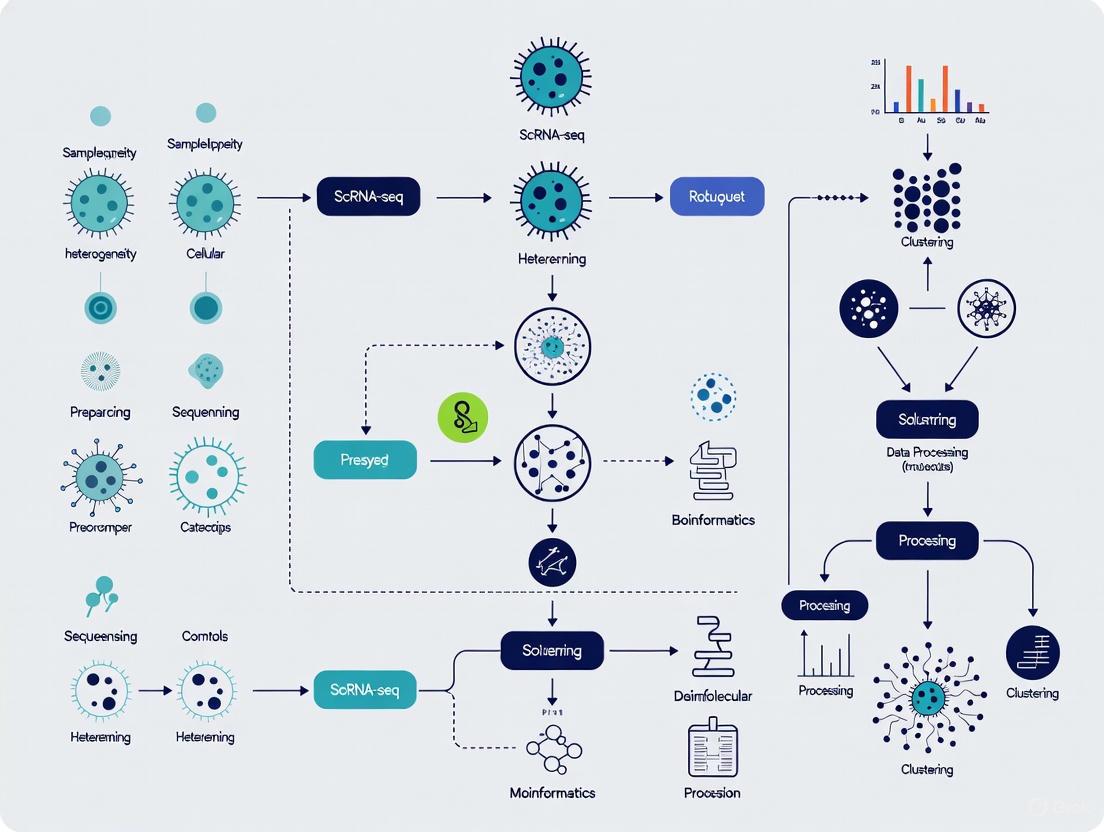
Single-cell RNA sequencing (scRNA-seq) has revolutionized biomedical research by enabling the precise dissection of cellular heterogeneity, revealing previously hidden cell types, states, and dynamics within tissues.
Decoding Cellular Heterogeneity: A Comprehensive Guide to scRNA-seq Data Analysis for Biomedical Research
Abstract
Single-cell RNA sequencing (scRNA-seq) has revolutionized biomedical research by enabling the precise dissection of cellular heterogeneity, revealing previously hidden cell types, states, and dynamics within tissues. This article provides a comprehensive guide for researchers and drug development professionals, covering the foundational principles of scRNA-seq, its pivotal role in uncovering cellular diversity in fields like cancer research and developmental biology, and the key methodological steps from experimental design to data interpretation. It further addresses critical challenges in data analysis, including technical noise and batch effects, and offers robust solutions for troubleshooting and optimization. Finally, it explores the validation of findings and the powerful integration of scRNA-seq with other omics technologies, highlighting its transformative potential in advancing drug discovery and personalized medicine.
The Power of Single-Cell Resolution: Unraveling Cellular Diversity with scRNA-seq
Single-cell RNA sequencing (scRNA-seq) has revolutionized our understanding of cellular systems by enabling the precise characterization of gene expression at the resolution of individual cells. Unlike bulk RNA sequencing, which averages signals across thousands of cells, scRNA-seq dissects cellular heterogeneity, unveiling rare cell types and transitional states that are critical for development, homeostasis, and disease. This technical guide explores the foundational principles, methodologies, and analytical frameworks of scRNA-seq, with a focus on its transformative role in identifying hidden cell populations. We detail experimental and computational best practices, provide actionable protocols for rare cell investigation, and highlight applications in drug discovery and precision medicine, offering researchers a comprehensive resource for leveraging scRNA-seq to decode complex biological systems.
Cellular heterogeneity is a fundamental principle of biology, where genetically identical cells exhibit diverse molecular profiles, functions, and behaviors. Traditional bulk RNA sequencing approaches, which measure the average gene expression across thousands to millions of cells, inevitably mask this heterogeneity [1]. They are unable to resolve distinct cell subtypes, rare populations, or continuous transitional states, limiting our understanding of complex biological processes such as embryonic development, immune responses, and tumor evolution.
The advent of single-cell RNA sequencing (scRNA-seq) has overcome these limitations by allowing researchers to profile the transcriptomes of individual cells within a complex tissue. Since its initial demonstration in 2009, scRNA-seq has rapidly evolved from a low-throughput, specialized technique to a high-throughput, widely accessible technology [2] [3]. It has become an indispensable tool for discovering novel cell types, mapping differentiation trajectories, and investigating the molecular mechanisms underlying cellular identity and function.
This whitepaper frames scRNA-seq within the broader thesis of understanding cellular heterogeneity. By providing an in-depth technical guide, we aim to equip researchers and drug development professionals with the knowledge to design, execute, and interpret scRNA-seq studies, with a particular emphasis on uncovering hidden and rare cell populations.
The Fundamental Shift from Bulk to Single-Cell Transcriptomics
Bulk and single-cell RNA sequencing differ fundamentally in their input material, output data, and biological insights. The core distinctions are summarized in the table below.
Table 1: Key Differences Between Bulk and Single-Cell RNA Sequencing
| Feature | Bulk RNA Sequencing | Single-Cell RNA Sequencing |
|---|---|---|
| Input Material | RNA extracted from a population of thousands to millions of cells. | RNA from individually isolated cells. |
| Output Data | An average gene expression profile for the entire cell population. | Gene expression profiles for each individual cell. |
| Resolution | Population-level; obscures cellular heterogeneity. | Single-cell level; reveals cellular heterogeneity. |
| Ability to Detect Rare Cell Types | Very limited; signals from rare cells are diluted. | High; enables identification and characterization of rare cell types. |
| Primary Applications | Comparing overall gene expression between different tissue samples or conditions. | Cell type discovery, trajectory inference, and analysis of cellular heterogeneity. |
A major strength of scRNA-seq is its ability to identify and characterize rare cell populations that are often overlooked in bulk analyses, such as antigen-specific memory B cells, dormant cancer cells, or rare progenitor states [4] [1]. These populations can be biologically and clinically significant, acting as key drivers in immune responses, disease recurrence, or tissue regeneration.
The following diagram illustrates the conceptual shift from bulk to single-cell analysis and the key steps involved in a typical scRNA-seq workflow.
Technical Foundations of scRNA-seq
Core Technological Principles
A standard scRNA-seq workflow involves isolating single cells, capturing their mRNA, reverse transcribing the RNA into cDNA, amplifying the cDNA, and sequencing it. Two key innovations have been critical for its scalability and accuracy:
- Cellular Barcoding: This involves labeling all cDNA molecules from a single cell with a unique cellular barcode during reverse transcription. This allows transcripts from thousands of cells to be pooled and sequenced together, as bioinformatic tools can later assign each read back to its cell of origin using the barcode [3].
- Unique Molecular Identifiers (UMIs): These are short, random nucleotide sequences added to each mRNA molecule during reverse transcription. UMIs enable accurate quantification of transcript counts by accounting for amplification bias, as PCR duplicates will share the same UMI [3].
The sensitivity of scRNA-seq protocols—the percentage of mRNA molecules present in a cell that are successfully captured and sequenced—has steadily improved, typically ranging from 3% to 20%. This has been achieved through optimized reverse transcription enzymes, buffer conditions, and reduced reaction volumes, such as in nanoliter-scale microfluidic devices [3].
Major scRNA-seq Platforms and Methods
Platforms for scRNA-seq can be broadly categorized into two types:
- Plate-Based Methods: Early protocols relied on fluorescence-activated cell sorting (FACS) to sort individual cells into the wells of 96- or 384-well plates. While these methods offer high sensitivity and are well-suited for processing smaller numbers of cells, their throughput is limited [4] [3].
- Droplet-Based Methods: Technologies like the 10X Genomics Chromium system encapsulate single cells in nanoliter-sized droplets along with barcoded beads. This approach enables the high-throughput profiling of tens of thousands of cells in a single experiment and has become the most widely used platform for large-scale atlas projects [2] [3].
More recent developments include combinatorial indexing methods (e.g., Parse Biosciences' Evercode), which use split-pool barcoding to profile millions of cells without the need for specialized droplet equipment, offering unprecedented scalability [5].
Experimental Design for Investigating Rare Cells
Strategic Considerations
Studying rare cell populations requires careful experimental planning. Key considerations include:
- Targeted vs. Agnostic Isolation: A strict a priori approach, where only the cells of interest are isolated (e.g., using FACS with specific surface markers), reduces heterogeneity and sequencing costs. However, a more agnostic approach, sequencing a mixed population, is beneficial for de novo discovery of new cell subtypes and can reveal unexpected cellular diversity [4].
- Cell Number and Sequencing Depth: Statistical power analysis is recommended to determine the number of cells to sequence. Detecting rare cells requires sequencing a sufficient number of cells to ensure they are captured. For example, to reliably find a population representing 1% of a sample, sequencing 10,000 cells would, in theory, capture 100 of these cells. Sequencing depth (number of reads per cell) must also be sufficient to detect lowly expressed genes, with ~500,000 reads per cell often being a good starting point [4].
- Minimizing Technical Artifacts: Batch effects can severely confound analysis. Randomizing samples across library preparation plates and sequencing lanes, or processing all samples simultaneously, is crucial. The use of spike-in RNA controls (e.g., ERCC or Sequin standards) can help calibrate measurements and account for technical variability [4].
Sample Preparation and Cell Isolation
The method of sample preparation is dictated by the tissue of interest. While immune organs like lymph nodes and spleen are easily dissociated, complex solid tissues or tumors require mechanical or enzymatic dissociation, which can induce cellular stress and transcriptional changes. Using cold-active proteases can help minimize this [4]. Viable cells can be obtained from cryopreserved samples, allowing for batch processing of samples collected at different times [4].
For identifying rare cells, several advanced techniques exist:
- Fluorescent Reporter Models: Genetically engineered mice with fluorescent proteins driven by cell-type-specific promoters allow for precise identification without the need for defined surface markers [4].
- Photolabeling for Spatial Context: Technologies like two-photon photoactivation or photoconversion (e.g., using PA-GFP or Kaede) can mark cells based on their precise microanatomical location within a tissue, which can then be isolated for scRNA-seq (e.g., NICHE-seq) [4].
Table 2: Methods for Isolating Rare Single Cells
| Method | Principle | Advantages | Considerations |
|---|---|---|---|
| FACS | Uses antibodies or fluorescent reporters to sort single cells into plates. | High purity; well-established. | Lower throughput; requires known markers. |
| Droplet-Based Encapsulation | Cells are individually encapsulated in droplets with barcoded beads. | Extremely high throughput; commercial solutions available. | Higher doublet rate; equipment cost. |
| Photolabeling | Cells are optically marked in their native tissue context using microscopy. | Preserves spatial information; no marker bias. | Technically complex; requires specialized models. |
| Combinatorial Indexing | Cells are labeled through multiple rounds of barcoding in plates. | Extremely scalable; no specialized equipment. | Applied to fixed cells or nuclei. |
Computational Analysis of scRNA-seq Data
Standard Analytical Workflow
The analysis of scRNA-seq data is a multi-step process. Standardized pipelines like scRNASequest help automate this workflow, which includes [6]:
- Quality Control (QC) and Filtering: Removal of low-quality cells (based on low gene counts or high mitochondrial RNA percentage, indicating cell stress) and potential doublets (droplets containing two cells).
- Normalization and Harmonization: Adjusting for technical variation like sequencing depth and correcting for batch effects between samples using tools like Harmony, Seurat, or LIGER.
- Dimensionality Reduction: The high-dimensional gene expression data is reduced to 2 or 3 dimensions using methods like PCA, t-SNE, or UMAP for visualization.
- Clustering and Cell Type Annotation: Cells are grouped based on transcriptional similarity. These clusters are then annotated as specific cell types using known marker genes or by comparing to reference datasets.
- Downstream Analysis: This includes identifying differentially expressed genes between conditions, inferring gene regulatory networks, and reconstructing developmental trajectories (pseudotime analysis).
Specialized Tools for Rare Cell Identification
The high dimensionality and sparsity of scRNA-seq data pose specific challenges. Dimensionality reduction methods must be chosen carefully, as they can distort local and global data structures, potentially obscuring rare populations [7]. Furthermore, technical noise and "dropout" events (false zeros) can be mitigated using denoising tools like the deep learning-based ZILLNB framework [8].
Specialized algorithms have been developed specifically for rare cell detection. These include scSID (single-cell similarity division algorithm), which identifies rare populations by deeply analyzing inter-cluster and intra-cluster similarities, demonstrating superior performance and scalability on benchmark datasets [9].
The following diagram outlines a standard analytical workflow and highlights where specialized tools for rare cell analysis are applied.
The Scientist's Toolkit: Essential Reagents and Computational Tools
Successfully conducting an scRNA-seq study, especially for rare cell populations, requires a combination of wet-lab reagents and dry-lab computational resources.
Table 3: Key Research Reagent Solutions and Computational Tools
| Category | Item | Function |
|---|---|---|
| Wet-Lab Reagents | Enzymatic Dissociation Kits | Liberates individual cells from solid tissues for analysis. |
| Viability Stains (e.g., DAPI, Propidium Iodide) | Distinguishes live cells from dead cells during FACS to improve data quality. | |
| Antibody Panels for FACS | Isulates specific cell populations based on surface protein expression. | |
| Commercial scRNA-seq Kits (e.g., 10X Genomics, Parse Evercode) | Provides all necessary reagents for library construction in an optimized system. | |
| Spike-in RNA Controls (e.g., ERCC) | Adds synthetic RNA transcripts to the sample to monitor technical performance. | |
| Computational Tools | Cell Ranger (10X Genomics) | Standard pipeline for processing raw sequencing data into a UMI count matrix. |
| Seurat / Scanpy | Comprehensive R/Python packages for the entire analysis workflow. | |
| Harmony | Fast and robust tool for integrating data from multiple batches or experiments. | |
| scSID, CellBender | Specialized algorithms for rare cell identification and ambient RNA removal. | |
| ZILLNB, DCA | Denoising tools to impute dropouts and correct technical noise. |
Applications in Drug Discovery and Development
scRNA-seq is transforming the pharmaceutical pipeline by providing unprecedented insights into disease mechanisms and therapeutic effects [2] [5].
- Target Identification and Validation: scRNA-seq can pinpoint genes with cell-type-specific expression in disease-relevant tissues. A 2024 study showed that this cell-type specificity is a robust predictor of a drug target's successful progression from Phase I to Phase II clinical trials [5].
- Mechanism of Action (MoA) Studies: In drug screening, scRNA-seq moves beyond simple viability readouts to provide detailed, cell-type-specific gene expression profiles. This helps elucidate a drug's MoA, identify biomarkers of response, and understand resistance mechanisms [2] [5].
- Biomarker Discovery and Patient Stratification: By defining cellular subtypes and their associated transcriptional programs in diseases like cancer, scRNA-seq enables the discovery of more accurate diagnostic and prognostic biomarkers. This allows for better stratification of patient populations for clinical trials and more personalized therapeutic strategies [2] [5].
- Evaluating Preclinical Models: scRNA-seq allows researchers to compare the cellular composition and gene expression profiles of animal models or patient-derived organoids to human tissues, assessing their translatability and relevance before investing in costly clinical trials [2].
Single-cell RNA sequencing has fundamentally changed our approach to investigating complex biological systems. By moving beyond the averaging inherent in bulk analyses, scRNA-seq empowers researchers to dissect cellular heterogeneity at an unparalleled resolution. As this guide has detailed, the careful application of scRNA-seq—from robust experimental design and sample preparation to sophisticated computational analysis—enables the discovery of hidden cell populations and rare cell types that are pivotal to understanding health and disease. The continued integration of scRNA-seq into biomedical research, particularly in drug discovery, promises to accelerate the development of targeted therapies and advance the era of precision medicine.
The fundamental goal of single-cell RNA sequencing (scRNA-seq) is to map gene expression at the individual cell level, enabling researchers to track heterogeneous cell sub-populations and infer regulatory relationships between genes and pathways [10]. Unlike bulk RNA sequencing, which provides an averaged expression profile from thousands of cells, scRNA-seq reveals the cell-to-cell variability that exists even in seemingly homogeneous populations [3]. This cellular heterogeneity is a central feature of biological systems, arising from developmental processes, physiological responses, and stochastic molecular events [10] [3]. Dissecting this heterogeneity is crucial for understanding how biological systems develop, maintain homeostasis, and respond to perturbations—with particular relevance for uncovering disease mechanisms and advancing drug development [3] [11].
The ability to resolve this heterogeneity depends on two interconnected technological foundations: cellular barcoding to tag individual cells, and unique molecular identifiers (UMIs) to accurately count mRNA molecules. These tools have transformed scRNA-seq from a specialized technique limited to small cell numbers into a high-throughput method capable of profiling tens of thousands of cells in a single experiment [10] [3]. This guide examines the core concepts of transcriptome analysis, barcoding strategies, and UMI implementation within the framework of studying cellular heterogeneity, providing researchers with both theoretical understanding and practical methodologies.
The scRNA-seq Workflow: From Cells to Data
The journey from biological sample to single-cell data involves a sophisticated workflow that preserves the identity of individual cells and their molecular constituents. The fundamental steps include sample preparation, cell partitioning, barcoding, library preparation, and sequencing, culminating in computational analysis.
Table 1: Key Steps in Single-Cell RNA Sequencing Workflow
| Workflow Stage | Key Components | Primary Function | Impact on Data Quality |
|---|---|---|---|
| Sample Preparation | Fresh/frozen tissue, dissociation protocol, viability assessment | Obtain high-quality single-cell suspension | Critical for cell viability and representative sampling |
| Cell Partitioning | Microfluidic devices, droplets, microwells | Isolate individual cells | Determines throughput and doublet rate |
| Barcoding | Cell barcodes, UMIs, capture sequences | Tag cellular origin of molecules | Enables multiplexing and cell identification |
| Library Preparation | Reverse transcription, PCR amplification, adapter ligation | Prepare molecules for sequencing | Impacts sensitivity and technical noise |
| Sequencing | Illumina, Nanopore, PacBio platforms | Generate raw sequence data | Determines read length, accuracy, and depth |
| Computational Analysis | Demultiplexing, alignment, quantification | Extract biological insights | Reveals cell types, states, and heterogeneity |
Cell Partitioning and Barcoding Strategies
Modern scRNA-seq employs innovative partitioning systems to process thousands of cells simultaneously. Droplet-based methods, such as those developed by 10x Genomics, use microfluidic chips to encapsulate individual cells in nanoliter-scale emulsion droplets (GEMs) containing barcoded primers [12]. Each droplet functions as an individual reaction chamber where cell lysis, mRNA capture, and barcoding occur simultaneously [10] [12]. Alternative methods use microwell arrays or combinatorial barcoding in multi-well plates to achieve similar goals through different physical mechanisms [3].
The core innovation enabling high-throughput scRNA-seq is cellular barcoding—where each cell's transcripts are tagged with a unique nucleotide sequence during reverse transcription [10] [3]. This allows material from thousands of cells to be pooled for efficient processing and sequencing while maintaining the ability to computationally separate the data by cell of origin during analysis [3]. The development of cellular barcoding represented a watershed moment in scaling single-cell transcriptomics, moving beyond the limitations of plate-based methods that processed only 70-90 cells per run [10].
Figure 1: Single-Cell Barcoding Workflow. The process begins with a single-cell suspension that is partitioned into droplets or wells. Within each partition, cells are lysed, mRNA is captured, and reverse transcription incorporates cellular barcodes that preserve cell-of-origin information throughout subsequent processing.
Unique Molecular Identifiers: Principles and Applications
The Fundamental Challenge of Amplification Bias
A central challenge in scRNA-seq stems from the exceptionally small amounts of starting material—a single mammalian cell contains approximately 10⁵-10⁶ mRNA molecules [13]. To make these molecules detectable on sequencing platforms, amplification through polymerase chain reaction (PCR) is necessary. However, PCR amplification is not uniform across all sequences; certain fragments amplify more efficiently than others due to sequence-specific biases [13] [14]. This amplification bias can distort the true representation of transcripts in the original sample, potentially leading to erroneous biological conclusions.
UMI Mechanism and Implementation
Unique Molecular Identifiers (UMIs) solve the amplification bias problem by providing each original mRNA molecule with a unique tag before amplification occurs. UMIs are short, random nucleotide sequences (typically 8-12 bases in length) that are incorporated into sequencing libraries during the reverse transcription step [13] [14]. When incorporated into cDNA synthesis primers, each mRNA molecule receives a random UMI sequence, creating a unique combination of transcript sequence and molecular barcode [13].
The power of UMIs becomes apparent during computational analysis. After sequencing, bioinformatics pipelines can distinguish between PCR duplicates (multiple copies of the same original molecule) and unique molecules by grouping reads that share both alignment coordinates and UMIs [13] [14]. This enables precise counting of the original mRNA molecules present in each cell, providing accurate digital gene expression counts rather than analog read counts distorted by amplification biases [13].
Figure 2: UMI Workflow for Accurate Transcript Quantification. Each original mRNA molecule receives a unique UMI tag before PCR amplification. After sequencing, computational deduplication identifies reads originating from the same original molecule (sharing UMI and alignment position), enabling precise counting of original molecules despite amplification biases.
UMI Design Considerations and Technical Advances
Effective UMI implementation requires careful design. The pool of possible UMI sequences must be substantially larger than the number of molecules being tagged to ensure each molecule receives a unique identifier [13]. For example, a 10-nucleotide UMI provides 4¹⁰ (1,048,576) possible unique sequences [13]. Recent advances have addressed challenges in UMI recovery and accuracy, particularly with the rise of long-read sequencing technologies. Innovative designs incorporating anchor sequences between barcodes and UMIs help mitigate issues caused by oligonucleotide synthesis errors and improve demarcation of UMI regions in long-read data [15].
Table 2: UMI Applications and Benefits in scRNA-seq
| Application | Technical Challenge | UMI Solution | Impact on Data Quality |
|---|---|---|---|
| Gene Expression Quantification | Amplification bias during PCR | Molecular counting without amplification distortion | More accurate differential expression analysis |
| Rare Transcript Detection | Distinguishing true low expression from technical noise | Absolute molecule counting | Improved sensitivity for rare cell types and transcripts |
| Multiomics Integration | Coordinating different molecular readouts | Shared barcoding system across data types | Better correlation between transcriptome and other modalities |
| Long-Read Sequencing | Higher error rates in third-generation sequencing | Error-correcting UMI designs | Maintains accuracy despite sequencing errors |
Experimental Protocols for scRNA-seq
Droplet-Based Single-Cell RNA Sequencing Protocol
The following protocol outlines the key steps for performing droplet-based scRNA-seq, based on established methodologies [10] [12]:
Sample Preparation and Quality Control
- Dissociate tissue to obtain single-cell suspension using appropriate enzymatic digestion
- Filter cells through flow cytometry strainer (30-40μm) to remove aggregates
- Assess cell viability (>90% recommended) and concentration using trypan blue or automated cell counters
- Adjust concentration to 700-1,200 cells/μL in appropriate buffer (e.g., PBS + 0.04% BSA)
Cell Partitioning and Barcoding
- Load cell suspension onto microfluidic device along with barcoded beads and partitioning oil
- Generate gel beads-in-emulsion (GEMs) at rates of 10-100 droplets per second
- Co-encapsulate single cells with single barcoded beads in nanoliter droplets
- Lyse cells within droplets to release mRNA
- Hybridize mRNA to barcoded oligo-dT primers containing cell barcode and UMI sequences
- Perform reverse transcription within droplets to produce barcoded cDNA
Library Preparation
- Break emulsion and recover barcoded cDNA
- Perform cDNA amplification using PCR (12-14 cycles typically recommended)
- Fragment amplified cDNA to optimal size for sequencing (if required by protocol)
- Add sequencing adapters and sample indices via additional PCR (8-10 cycles)
- Purify library using SPRI beads and quantify using fluorometric methods
- Validate library quality using Bioanalyzer or TapeStation
Sequencing
- Pool multiple libraries using unique dual indexes
- Sequence on appropriate platform (Illumina recommended for most applications)
- Target sequencing depth: 20,000-50,000 reads per cell
- Include custom sequencing primers as required by specific chemistry
Quality Control and Troubleshooting
Critical quality control checkpoints throughout the protocol include:
- Cell Quality: Ensure high viability and single-cell suspension to minimize doublets
- Barcoded Beads: Verify bead integrity and priming efficiency
- Emulsion Quality: Monitor droplet generation for consistent size and stability
- cDNA Yield: Assess after amplification (typically 1-10 ng/μL)
- Final Library: Confirm size distribution (broad peak ~1-5 kb for full-length protocols)
Common issues and solutions:
- Low Cell Recovery: Optimize cell concentration and minimize dead cells
- High Doublet Rate: Reduce cell loading concentration or implement doublet detection algorithms
- Low mRNA Capture Efficiency: Check bead quality and reverse transcription efficiency
- Library Complexity Issues: Verify input quality and reduce amplification cycles
The Scientist's Toolkit: Essential Reagents and Technologies
Table 3: Essential Research Reagents for scRNA-seq Experiments
| Reagent Category | Specific Examples | Function | Technical Considerations |
|---|---|---|---|
| Cell Preparation | Collagenase/Dispase enzymes, DNase I, viability dyes, FACS buffers | Tissue dissociation and cell quality control | Enzyme selection tissue-specific; viability critical for data quality |
| Barcoding Systems | 10x Genomics Gel Beads, Drop-seq beads, inDrop BHM | Cellular and molecular indexing | Barcode complexity determines cell throughput; compatibility with downstream steps |
| Reverse Transcription | Template-switching reverse transcriptases, dNTPs, RNase inhibitors | cDNA synthesis with UMI incorporation | High efficiency critical for sensitivity; template-switching enables full-length capture |
| Amplification | High-fidelity DNA polymerases, dNTPs, buffer systems | cDNA/library amplification | Minimize cycles to reduce bias; maintain sequence fidelity |
| Library Preparation | Fragmentation enzymes, ligases, index primers, SPRI beads | Sequencing library construction | Size selection critical for insert distribution; dual indexing recommended |
| Quality Control | Bioanalyzer/TapeStation reagents, fluorometric quantitation dyes | QC at multiple workflow stages | Critical for identifying issues early; ensures sequencing success |
Advanced Applications and Future Directions
The integration of cellular barcoding and UMIs has enabled sophisticated applications that extend beyond basic transcriptome profiling. Multiomic approaches now simultaneously profile DNA and RNA from the same single cells, linking genetic variants to transcriptional consequences [11]. Tools like SDR-seq (single-cell DNA-RNA-sequencing) capture both genomic variation and gene expression in thousands of cells simultaneously, particularly valuable for understanding non-coding variants that constitute over 95% of disease-associated genetic changes [11].
Computational methods continue to evolve alongside experimental technologies. Advanced algorithms like BLAZE enable accurate cell barcode identification from long-read scRNA-seq data without matched short-read sequencing, simplifying workflows and reducing costs [16]. Graph neural network approaches such as scGraphformer leverage the relational information in scRNA-seq data to identify subtle cellular patterns and relationships that might be obscured by traditional analysis methods [17].
Future directions focus on improving integration across molecular modalities, enhancing sensitivity for rare cell types and transcripts, and developing more robust computational frameworks that can handle the increasing scale and complexity of single-cell data. As these technologies mature, they promise to deepen our understanding of cellular heterogeneity in development, disease, and therapeutic response.
In the context of understanding cellular heterogeneity in scRNA-seq data research, the standard workflow is not merely a procedural necessity but the very foundation for capturing the true diversity of cell types, states, and transitions within a complex biological system. Unlike bulk RNA sequencing, which provides an averaged transcriptome across thousands of cells, scRNA-seq empowers researchers to dissect this heterogeneity, revealing rare cell populations, continuous cellular trajectories, and probabilistic expression events that would otherwise be obscured [3] [18] [1]. This in-depth technical guide details the core steps of the scRNA-seq workflow, from a tissue sample to a sequenced library, providing researchers, scientists, and drug development professionals with the methodologies essential for robust and interpretable data generation.
Sample Preparation and Single-Cell Isolation
The initial phase is critical, as the quality of the single-cell suspension directly determines the success of the entire experiment. The overarching goal is to generate a suspension of viable, dissociated single cells that accurately represent the in vivo cellular composition without introducing technical artifacts.
Tissue Dissociation
The process begins with procured tissue, which must be dissociated into a single-cell suspension. A typical protocol involves a combination of:
- Tissue Dissection and Mechanical Mincing: Physically breaking down the tissue structure.
- Enzymatic Breakdown: Using enzyme mixes (e.g., collagenase, trypsin) to digest the extracellular matrix [19].
The dissociation process is a major source of technical variation, and standardization is paramount. Automated tissue dissociators (e.g., gentleMACS Dissociator, PythoN Tissue Dissociation System, Singulator) offer significant advantages in consistency, speed, and cell viability by using predefined, tissue-specific programs [19]. Key considerations include optimizing the protocol for the specific tissue type to minimize stress-induced changes to the transcriptome and maximizing cell viability.
Cell Isolation Strategies
Once a single-cell suspension is achieved, individual cells must be isolated for separate processing. The common methods are:
Table 1: Common Cell Isolation Methods for scRNA-seq
| Method | Principle | Advantages | Limitations | Throughput |
|---|---|---|---|---|
| Fluorescence-Activated Cell Sorting (FACS) [20] [18] | Cells are sorted into multi-well plates based on light scattering and fluorescence. | High specificity if using labeled antibodies; high cell viability. | Lower throughput; higher cost. | 96 to 384 wells per run. |
| Droplet-Based Microfluidics (e.g., 10x Genomics) [21] | Cells are co-encapsulated with barcoded beads in nanoliter-scale droplets. | Extremely high throughput; cost-effective per cell. | Requires specialized equipment; limited ability to select specific cells. | Tens of thousands to millions of cells per run. |
| Microwell-Based Platforms (e.g., Seq-Well) [20] | Cells are randomly seeded into arrays of thousands of microwells. | Portable; lower cost; no complex equipment needed. | Throughput is lower than droplet-based methods. | Tens of thousands of cells per run. |
| Combinatorial Indexing (e.g., SPLiT-seq) [20] [3] | Cells are labeled in successive rounds of barcoding in multi-well plates. | Does not require physical single-cell isolation; ultra-high throughput. | Can only be applied to permeabilized fixed cells or nuclei. | Up to millions of cells. |
Single-Cell RNA Sequencing: Core Steps
After isolation, the single cells undergo a series of molecular biology steps to convert their minute amounts of RNA into a sequenceable library.
Diagram 1: Core scRNA-seq workflow
Cell Lysis and mRNA Capture
Within each isolated reaction vessel (well or droplet), the cell is lysed to release its RNA. To specifically target polyadenylated messenger RNA (mRNA) and avoid capturing abundant ribosomal RNAs (rRNAs), poly(T) primers are universally employed. These primers anneal to the poly(A) tails of mRNAs, enabling their selective capture [20] [18].
Reverse Transcription and Barcoding
This is a pivotal step where technical innovations have enabled modern high-throughput scRNA-seq. Reverse transcription (RT) converts the captured mRNA into more stable complementary DNA (cDNA). Two key barcoding strategies are incorporated here:
- Cellular Barcoding (CB): All RT primers from a single reaction vessel (representing one cell) share a unique cell barcode. This allows all sequencing reads derived from that cell to be bioinformatically grouped during analysis, enabling the multiplexing of thousands of cells in a single library [3].
- Unique Molecular Identifiers (UMI): Each RT primer also contains a random molecular barcode, the UMI. When a cDNA molecule is synthesized, it is tagged with a unique UMI. This allows bioinformatic correction for amplification bias, as the number of distinct UMIs for a gene reflects the original number of mRNA molecules, not the amplified number of reads [3].
In droplet-based methods like the 10x Genomics Chromium system, this occurs inside Gel Beads-in-emulsion (GEMs), where a single cell, a single barcoded gel bead, and RT reagents are combined [21].
cDNA Amplification and Library Preparation
The minute amounts of cDNA from a single cell must be amplified to generate sufficient material for sequencing. This is typically achieved by PCR or, in some protocols like CEL-Seq2, by in vitro transcription (IVT) [20]. After amplification, the barcoded cDNA from all cells is pooled, and a standard NGS library preparation is performed. This involves fragmentation (for full-length protocols), size selection, and the addition of sequencing adapters [18].
Key scRNA-seq Protocols and Their Properties
Various scRNA-seq protocols have been developed, differing in their transcript coverage, amplification method, and throughput. The choice of protocol depends on the specific biological question.
Table 2: Comparison of Key scRNA-seq Protocols
| Protocol | Isolation Strategy | Transcript Coverage | UMI | Amplification Method | Unique Features |
|---|---|---|---|---|---|
| Smart-Seq2 [20] | FACS | Full-length | No | PCR | High sensitivity for low-abundance transcripts; ideal for isoform and mutation analysis. |
| Drop-Seq [20] | Droplet-based | 3'-end | Yes | PCR | High-throughput, low cost per cell. |
| inDrop [20] | Droplet-based | 3'-end | Yes | IVT | Uses hydrogel beads. |
| CEL-Seq2 [20] | FACS | 3'-only | Yes | IVT | Linear amplification reduces bias. |
| Seq-Well [20] | Droplet-based | 3'-only | Yes | PCR | Portable and low-cost. |
| SPLiT-Seq [20] | Not required | 3'-only | Yes | PCR | Combinatorial indexing; fixed cells/nuclei; highly scalable and low cost. |
Diagram 2: Protocol selection logic
Sequencing and Data Analysis
Sequencing
The final library is sequenced on a next-generation sequencing (NGS) platform (e.g., Illumina, PacBio). For 3' end-counting methods, the sequencing read must cover the cellular barcode and UMI in addition to a fragment of the transcript's 3' end [21].
Primary Data Analysis
The raw sequencing data (FASTQ files) are processed using specialized pipelines (e.g., Cell Ranger for 10x Genomics data) to:
- Demultiplex the data based on cellular barcodes.
- Align reads to a reference genome.
- Generate a gene expression matrix, where rows represent genes, columns represent individual cells, and values are the UMI counts, quantifying the expression level of each gene in each cell [21].
This matrix is the primary data product for all subsequent bioinformatic analyses aimed at deciphering cellular heterogeneity, including clustering, cell type identification, trajectory inference, and differential expression analysis.
The Scientist's Toolkit: Essential Research Reagents and Materials
Table 3: Key Research Reagent Solutions for scRNA-seq
| Item | Function | Example/Note |
|---|---|---|
| Tissue Dissociation Kits | Enzymatic mixes for breaking down extracellular matrix to create single-cell suspensions. | Predefined, tissue-specific kits (e.g., MACS Tissue Dissociation Kits) ensure consistency [19]. |
| Viability Stain | Distinguishes live from dead cells for sorting or quality control. | Propidium iodide or DAPI for flow cytometry. |
| Barcoded Gel Beads | Microbeads coated with oligonucleotides containing poly(T), UMIs, and cell barcodes. | Core component of droplet-based systems (e.g., 10x Genomics) [21]. |
| Reverse Transcriptase | Enzyme that synthesizes cDNA from mRNA templates. | Optimized enzymes are critical for sensitivity and yield [3]. |
| Poly(T) Primers | Oligonucleotides that specifically capture polyadenylated mRNA. | Foundational for mRNA enrichment in most protocols [20] [18]. |
| Template Switching Oligo | Facilitates the addition of universal primer sequences during RT for full-length protocols. | Used in protocols like Smart-Seq2. |
| Library Preparation Kit | Reagents for fragmenting, amplifying, and adding sequencing adapters to cDNA. | Often tailored to specific scRNA-seq platforms. |
The standard scRNA-seq workflow, from meticulous cell isolation to the generation of barcoded sequencing libraries, is a sophisticated but now highly accessible process. By carefully executing each step and selecting the appropriate protocol, researchers can obtain high-quality data that faithfully captures the transcriptional landscape of individual cells. This technical foundation is indispensable for achieving the central goal of dissecting cellular heterogeneity, ultimately driving discoveries in fundamental biology, drug discovery, and personalized medicine.
Single-cell RNA sequencing (scRNA-seq) has emerged as a transformative technology in cancer research, providing unprecedented resolution to dissect the cellular heterogeneity that defines malignant tumors. Unlike bulk RNA sequencing, which averages gene expression across thousands of cells, scRNA-seq enables researchers to profile individual cells within a complex tissue, revealing rare subpopulations, developmental trajectories, and cell-specific responses to therapy [22]. This technical capability is particularly crucial for understanding the tumor microenvironment (TME), a complex ecosystem comprising malignant cells and diverse non-malignant components including immune populations, fibroblasts, endothelial cells, and other stromal elements [23]. The ability to deconstruct this cellular complexity at single-cell resolution has fundamentally advanced our understanding of tumor biology, with direct implications for drug development and therapeutic targeting.
The power of scRNA-seq lies in its capacity to illuminate three critical aspects of cancer biology: (1) the intricate cellular composition and spatial organization of tumors, (2) the developmental pathways and lineage relationships between cell subpopulations, and (3) the molecular mechanisms underlying drug sensitivity and resistance. As we explore in this technical guide, these applications are transforming precision oncology by enabling the identification of novel therapeutic targets, informing combination therapy strategies, and revealing biomarkers of treatment response [24]. The following sections provide a comprehensive examination of the methodologies, applications, and practical implementations of scRNA-seq in contemporary cancer research.
Technical Foundations of scRNA-seq
Core Methodological Principles
A typical scRNA-seq workflow encompasses multiple critical steps: sample acquisition, single-cell isolation, cell lysis, reverse transcription, cDNA amplification, library construction, sequencing, and bioinformatic analysis [22]. The initial single-cell isolation represents a fundamental technical challenge, with current methods including fluorescence-activated cell sorting (FACS), magnetic-activated cell sorting (MACS), laser-capture microdissection (LCM), and increasingly, microfluidic approaches that provide superior throughput and efficiency [22]. Among these, droplet-based microfluidics has emerged as the dominant high-throughput platform, where individual cells are encapsulated in nanoliter droplets containing lysis buffer and barcoded beads using microfluidic and reverse emulsion devices [22].
The scRNA-seq protocols can be broadly categorized into two classes: full-length transcript sequencing approaches (e.g., Smart-seq2, MATQ-seq) and 3′/5′-end transcript sequencing methods (e.g., Drop-seq, inDrop, 10× Genomics) [22]. Full-length methods provide comprehensive transcript coverage, enabling isoform usage analysis, allelic expression detection, and identification of RNA editing markers. In contrast, tag-based methods are typically combined with unique molecular identifiers (UMIs) to reduce amplification bias and improve quantitative accuracy, making them ideal for large-scale cell population studies despite their limitation in transcript coverage [22]. The choice between these approaches depends on the specific research questions, with full-length protocols offering deeper molecular characterization per cell, and tag-based methods enabling larger-scale population analyses.
Quantitative Comparison of scRNA-seq Technologies
Table 1: Comparison of High-Throughput scRNA-seq Platforms
| Platform | Transcript Coverage | Cell Throughput | Per-Cell Cost | UMI Implementation | Key Advantages |
|---|---|---|---|---|---|
| 10× Genomics | 3' or 5' counting | High (thousands) | ~$0.50 | Yes | High sensitivity, low technical noise, commercial support |
| Drop-seq | 3' counting | High (thousands) | ~$0.10 | Yes | Cost-effective, customizable protocol |
| inDrop | 3' counting | High (thousands) | ~$0.25 | Yes | Customizable, good for low-abundance transcripts |
| CEL-seq2 | 3' counting | Medium (hundreds) | Moderate | Yes | High accuracy, low amplification noise |
| MARS-seq2.0 | 3' counting | High (8,000-10,000) | ~$0.10 | Yes | Automated, low background (2%), minimal doublets |
| Seq-Well | 3' counting | High (thousands) | Low | Yes | Portable, minimal equipment requirements |
Recent methodological advances have substantially improved the efficiency and accessibility of scRNA-seq technologies. For example, MARS-seq2.0 has achieved a sixfold reduction in library production costs (from $0.65 to $0.10 per cell) while reducing background levels from 10-15% to just 2% [22]. Similarly, highly scalable droplet-based platforms have reduced library preparation costs to approximately 5 cents per cell, with overall costs of ~$1,400 per tumor including sequencing and throughput of ~5,000 cells [24]. These advancements have made large-scale scRNA-seq studies routine and cost-effective, enabling comprehensive characterization of cellular heterogeneity across diverse cancer types.
Illuminating Tumor Microenvironments
Deconstructing Cellular Heterogeneity
The application of scRNA-seq to tumor microenvironments has revealed an extraordinary degree of cellular diversity that was previously obscured by bulk sequencing approaches. A representative study integrating scRNA-seq with spatial transcriptomics in colorectal cancer (CRC) profiled 41,700 cells from three CRC tumor-normal-blood pairs, identifying eight major cell populations: B cells, T cells, monocytes, NK cells, epithelial cells, fibroblasts, mast cells, and endothelial cells [23]. Further analysis revealed significant differences in cellular composition between tumor and normal tissues, with an approximately 2.5-fold increase in monocytes and a corresponding decrease in NK and B cell populations (to 0.3-0.4 times normal levels) in tumor tissues, suggesting a myeloid-driven immunosuppressive environment in CRC [23].
Beyond cataloging cellular diversity, scRNA-seq enables the identification of novel cell states and functional subsets within broad cell categories. Subclustering of epithelial cells in the CRC study revealed nine distinct subpopulations, including crypt cells, enterocytes, goblet cells, proinflammatory cells, stem-like cells, and tumor cells [23]. The ability to resolve these previously unrecognized cellular states provides critical insights into the functional organization of tumors and their microenvironments, with direct implications for understanding disease mechanisms and identifying therapeutic vulnerabilities.
Spatial Organization and Cellular Interactions
While scRNA-seq provides unparalleled resolution of cellular diversity, it inherently disrupts native spatial context. This limitation has been addressed through integration with spatial transcriptomic (ST) technologies, which preserve spatial information while providing transcriptome-wide data [23]. The combination of these approaches enables researchers to map cell populations back to their original tissue locations, revealing the spatial architecture of tumors and the proximity relationships between different cell types.
In the CRC study, transferring cellular annotations from scRNA-seq to ST data allowed researchers to delineate four distinct tissue regions: tumor, stroma, immune infiltration, and colon epithelium [23]. This integrated analysis revealed intensive intercellular interactions between stroma and tumor regions, including a specific ligand-receptor pair (C5AR1-RPS19) that appeared to mediate cross-talk between these compartments [23]. Additionally, region-specific molecular features were identified, with tumor regions characterized by high TMSB4X expression and stroma regions marked by elevated VIM expression [23]. These findings illustrate how spatial context informs functional interpretation of scRNA-seq data, revealing organizational principles of tumor ecosystems that would remain invisible with either approach alone.
Diagram 1: Cellular Architecture of the Colorectal Cancer Microenvironment. This diagram illustrates the complex cellular composition of the CRC TME as revealed by integrated scRNA-seq and spatial transcriptomics, highlighting key cellular subpopulations, spatial regions, and molecular interactions.
Analyzing Cellular Development and Lineage Relationships
Developmental Trajectories and Cellular Plasticity
scRNA-seq enables the reconstruction of developmental trajectories and lineage relationships within tumors through computational approaches that order cells along pseudotemporal axes based on transcriptomic similarity. This application has been particularly powerful for understanding the cellular hierarchy and plasticity of epithelial populations in colorectal cancer. Studies have demonstrated that human colon cancer cells recapitulate multilineage differentiation processes observed in normal colon epithelia, with distinct subpopulations representing various stages of differentiation and malignant transformation [23].
The identification of seven subtypes of malignant epithelial cells in CRC—tumorCAV1, tumorATF3JUN|FOS, tumorZEB2, tumorVIM, tumorWSB1, tumorLXN, and tumorPGM1—reflects the remarkable heterogeneity within the transformed compartment [23]. Each of these subtypes likely represents distinct functional states with potential implications for therapeutic response and disease progression. The transition from normal epithelium to intraepithelial neoplasia has been associated with patient survival in CRC, highlighting the clinical relevance of understanding these developmental pathways [23]. Similar approaches have been applied across cancer types, revealing conserved principles of tumor evolution while identifying context-specific developmental programs.
Stemness and Differentiation States
A particularly important application of trajectory inference in cancer scRNA-seq data is the identification and characterization of stem-like cells, which often represent therapeutic-resistant populations responsible for tumor maintenance and recurrence. In glioblastoma, single-cell transcriptomics has enabled the distinction of malignantly transformed tumor cells from untransformed cells in the tumor microenvironment while revealing novel insights into developmental programs underlying disease pathogenesis [24]. The ability to resolve these rare but critical populations provides opportunities for developing targeted therapies aimed at eliminating the root cells of tumor propagation.
Predicting and Understanding Drug Responses
Dissecting Mechanisms of Drug Sensitivity and Resistance
scRNA-seq has emerged as a powerful approach for understanding the cellular basis of drug response heterogeneity in cancer. A seminal study in melanoma used scRNA-seq to discover varying proportions of cells harboring drug-susceptible and drug-resistant phenotypes across patients [24]. The authors inferred interactions between malignant cells and T cells and identified expression patterns correlating with T cell infiltration, providing mechanistic insights into the variable clinical responses observed with targeted and immunotherapies [24]. Similarly, studies in lung adenocarcinoma have used scRNA-seq to identify subclonal heterogeneity in anti-cancer drug responses, revealing that pre-existing resistant subpopulations can expand under therapeutic pressure [25].
The ability to profile tumors at single-cell resolution before, during, and after treatment enables direct tracking of dynamic changes in cellular composition and cell states in response to therapy. This application allows researchers to determine whether specific subpopulations are ablated or altered by treatment compared to untreated specimens, providing a powerful approach for understanding mechanism of action and identifying potential resistance pathways [24]. Furthermore, scRNA-seq can reveal whether a therapeutic target is pervasively expressed or restricted to a rare subpopulation, and whether targets for combination therapy are expressed in redundant pathways or separate subpopulations [24].
Computational Tools for Drug Response Prediction
The integration of scRNA-seq data with drug response prediction has led to the development of specialized computational tools, such as scDrug, a bioinformatics workflow that provides a one-step pipeline for cell clustering identification in scRNA-seq data coupled with methods to predict drug treatments [25]. The scDrug pipeline consists of three main modules: scRNA-seq analysis for identification of tumor cell subpopulations, functional annotation of cellular subclusters, and prediction of drug responses [25]. This integrated approach facilitates drug repurposing by enabling the exploration of scRNA-seq data to identify candidate therapies that target specific cellular subpopulations within heterogeneous tumors.
Table 2: scRNA-seq Applications in Drug Discovery and Development
| Application | Methodological Approach | Key Insights | Clinical Implications |
|---|---|---|---|
| Resistance Mechanism Identification | Pre- and post-treatment scRNA-seq profiling | Reveals pre-existing resistant subclones and adaptive responses | Guides rational combination therapies to prevent resistance |
| Target Validation | Co-expression analysis across cell subpopulations | Determines target distribution across heterogeneous populations | Informs patient selection strategies for targeted therapies |
| Combination Therapy Design | Analysis of target co-expression in single cells | Identifies whether combination targets are in same or different pathways | Guides selection of synergistic drug combinations |
| Biomarker Discovery | Correlation of cell state signatures with clinical response | Identifies predictive biomarkers of treatment efficacy | Enables development of companion diagnostics |
| Drug Repurposing | scDrug and similar computational pipelines | Identifies novel indications for existing drugs based on cell state | Accelerates therapeutic development through repositioning |
Diagram 2: scDrug Computational Workflow for Drug Response Prediction. This diagram outlines the three-module bioinformatics pipeline for analyzing scRNA-seq data to predict drug sensitivity and identify repurposing opportunities, connecting cellular heterogeneity directly to therapeutic strategies.
Essential Research Reagent Solutions
The successful implementation of scRNA-seq studies requires carefully selected reagents and materials optimized for single-cell applications. The following table summarizes key solutions used in the field, drawn from methodologies described in the literature.
Table 3: Essential Research Reagents for scRNA-seq Applications
| Reagent Category | Specific Examples | Function | Technical Considerations |
|---|---|---|---|
| Cell Dissociation Kits | Tumor Dissociation Kits (commercial) | Liberate viable single cells from tissue | Must balance yield with preservation of transcriptome state |
| Cell Viability Stains | Propidium iodide, 7-AAD, DAPI | Identify live/dead cells for sorting | Critical for excluding compromised cells from analysis |
| Barcoded Beads | 10× Genomics Gel Beads, Drop-seq Beads | Capture mRNA with cell barcodes and UMIs | Determine sequencing sensitivity and cell throughput |
| Reverse Transcription Mix | Template-switch oligonucleotides, dNTPs | Convert mRNA to cDNA | Critical step determining library complexity |
| Amplification Reagents | PCR master mixes, IVT kits | Amplify cDNA for library construction | Major source of technical noise if not optimized |
| Library Preparation Kits | Nextera XT, custom tagmentation mixes | Fragment and add sequencing adapters | Impact library quality and sequencing efficiency |
| Cell Surface Antibodies | CD45, CD3, EPCAM, others | Identify cell types via protein markers | Enable CITE-seq and cell sorting applications |
| Nucleic Acid Quality Controls | Bioanalyzer RNA chips, Qubit assays | Assess RNA integrity and quantity | Essential for troubleshooting and quality assurance |
The selection of appropriate reagents is critical for generating high-quality scRNA-seq data. For example, the development of MARS-seq2.0 involved optimization of multiple reagent components including lysis buffer composition, reverse transcription primer concentration, second-strand-synthesis enzymes, and barcoded ligation adaptors, resulting in a sixfold cost reduction and significant improvement in performance [22]. Similarly, advances in barcoded bead technologies have been instrumental in enabling highly multiplexed scRNA-seq approaches, with different platforms offering trade-offs between cost, sensitivity, and throughput [24] [22].
Single-cell RNA sequencing has fundamentally transformed our approach to studying cancer biology by providing unprecedented resolution to dissect tumor heterogeneity, microenvironmental organization, and therapeutic responses. The applications discussed in this technical guide—ranging from deconstructing cellular ecosystems to predicting drug sensitivity—illustrate the power of this technology to reveal biological mechanisms that remain invisible to bulk sequencing approaches. As methodological advances continue to reduce costs and improve accessibility, scRNA-seq is poised to become an increasingly integral component of both basic cancer research and clinical translational studies, ultimately enabling more precise and effective therapeutic strategies for cancer patients.
From Sample to Insight: scRNA-seq Methodologies and Translational Applications
Single-cell RNA sequencing (scRNA-seq) has revolutionized our ability to dissect cellular heterogeneity, moving beyond the limitations of bulk sequencing to reveal the complex transcriptomic landscapes of individual cells within tissues and tumors. The selection of an appropriate scRNA-seq platform is a critical first step that directly influences the scale, resolution, and biological insights of a study. This technical guide provides an in-depth comparison of two foundational approaches: high-throughput droplet-based systems, exemplified by 10x Genomics, and the more traditional, sensitive plate-based methods. We detail the underlying technologies, experimental workflows, and performance metrics to equip researchers and drug development professionals with the information necessary to align their platform choice with specific research objectives in the study of cellular diversity.
Cellular heterogeneity is a fundamental characteristic of biological systems, existing even within seemingly homogeneous populations of cells. Understanding this diversity is crucial for unraveling how tissues develop, maintain homeostasis, and respond to disease and treatment [3]. scRNA-seq enables an unbiased, genome-wide characterization of this heterogeneity by providing quantitative molecular profiles from tens of thousands of individual cells [3] [26]. Unlike bulk RNA sequencing, which averages gene expression across thousands of cells, scRNA-seq can identify distinct cell types, reveal rare cell populations, and delineate continuous transitions in cell states, such as those occurring during differentiation or in response to therapies [26]. This high-resolution view is particularly valuable in cancer research, where it can dissect the complex cellular ecosystem of a tumor, revealing malignant sub-clones and the diverse immune and stromal cells that constitute the tumor microenvironment [26]. The core technological challenge of scRNA-seq lies in efficiently isolating individual cells, capturing their often sparse mRNA transcripts, and labeling these molecules with unique identifiers so that data from thousands of cells can be pooled and sequenced simultaneously while retaining single-cell resolution.
Core Technologies and Principles
Plate-Based scRNA-seq Methods
Plate-based methods were the first developed for scRNA-seq. These protocols rely on fluorescence-activated cell sorting (FACS) to distribute individual cells into the wells of a microplate (e.g., 96, 384, or 1,536 wells) [27] [3]. Within each well, cells are lysed, and their mRNA is reverse-transcribed into cDNA.
- Early Protocols (SMART-seq & CEL-seq): Initial methods like SMART-seq provided high sensitivity and full-length transcript coverage but lacked built-in cell barcodes, requiring separate library preparation for each cell [27]. CEL-seq incorporated unique barcoded primers from the start, allowing cDNA from all wells to be pooled after reverse transcription [27].
- Combinatorial Indexing: A significant advancement in plate-based throughput, combinatorial indexing uses multiple rounds of barcoding in a split-pool manner [27] [3]. Fixed, permeabilized cells are distributed into a first plate and tagged with a well-specific barcode. The cells are then pooled and redistributed into a second plate for a second round of barcoding. The resulting combination of barcodes uniquely identifies each cell, enabling the processing of up to 1 million cells in a single experiment without the need for physical compartmentalization [27].
Droplet-Based scRNA-seq (10x Genomics)
Droplet-based methods use microfluidics to achieve high-throughput single-cell isolation. The 10x Genomics Chromium system is a leading commercial platform that creates nanoliter-scale emulsion droplets, each functioning as an independent reaction chamber [27] [28].
The process begins with an aqueous suspension of cells and gel beads. Each bead is coated with oligonucleotides containing several key elements:
- A poly(dT) sequence to capture polyadenylated mRNA.
- A cell barcode unique to each bead, ensuring all transcripts from the same cell receive the same identifier.
- A Unique Molecular Identifier (UMI) that labels each individual mRNA molecule to correct for amplification bias [27] [29].
This suspension is combined with oil in a microfluidic chip, generating thousands of Gel Bead-in-emulsions (GEMs). Ideally, each GEM contains a single cell and a single bead. Upon cell lysis within the droplet, the released mRNA hybridizes to the bead's oligonucleotides. Reverse transcription then occurs, producing barcoded cDNA. After breaking the emulsion, the cDNA is pooled, amplified, and prepared for sequencing [27] [29]. The 10x Genomics system is engineered to ensure most droplets contain exactly one bead, improving efficiency and enabling higher cell throughput [27].
Diagram 1: Droplet-Based Cell Isolation. A single cell and a barcoded gel bead are co-encapsulated in an oil emulsion droplet, where cell lysis and mRNA barcoding occur.
Comparative Performance Analysis
The choice between plate-based and droplet-based methods involves trade-offs between throughput, sensitivity, and cost. The table below summarizes the key performance characteristics of each platform.
Table 1: Performance Comparison of scRNA-seq Platforms
| Feature | Plate-Based scRNA-seq | Droplet-Based scRNA-seq (10x Genomics) |
|---|---|---|
| Throughput | Lowest (Combinatorial indexing increases scale) [27] | Highest (Tens of thousands of cells per run) [27] |
| Cost per Cell | Highest (Greater reagent consumption) [27] | Lowest (Miniaturization via microfluidics) [27] |
| Sensitivity | Highest (Ideal for detecting lowly-expressed genes) [27] | Lower than plate-based [27] |
| Workflow | Flexible but labor-intensive (manual sorting/pipetting) [27] | Highly automated (requires proprietary microfluidics equipment) [27] |
| Best For | Smaller-scale, in-depth studies; rare cell populations [27] | Large-scale studies; atlas-building; profiling heterogeneous tissues [27] |
Beyond these core metrics, each method has specific strengths. Plate-based protocols, particularly full-length ones like SMART-seq3, are superior for detecting splice variants and isoform-level heterogeneity [27]. Droplet-based systems excel in scalability and are the preferred choice for large cohort studies. A 2025 comparative study also highlighted that all major methods, including those from 10x Genomics and Parse Biosciences (a combinatorial indexing provider), are capable of generating high-quality data from sensitive clinical samples like human neutrophils, though sample collection and handling remain critical [30].
Experimental Workflow and Protocols
Detailed Protocol: 10x Genomics Chromium Universal 3'
The following workflow is specific to the 10x Genomics Chromium Single Cell 3' Gene Expression platform [29].
Gel Bead Emulsion (GEM) Generation:
- A single-cell suspension is combined with Master Mix and loaded into a Chromium chip along with gel beads and partitioning oil.
- The instrument generates up to 80,000 GEMs per channel. Each GEM contains a gel bead dissolving reagents, a single cell, and a single gel bead.
- The gel bead dissolves, releasing oligonucleotides with the following structure:
Illumina P5-Read 1-Cell Barcode (16 bp)-UMI (12 bp)-Poly(dT)30-VN[29].
Reverse Transcription and cDNA Synthesis:
- Within each GEM, the cell is lysed, and polyadenylated RNA binds to the poly(dT) sequence on the released oligonucleotides.
- Reverse transcription occurs, primed by the oligonucleotide, to produce full-length, barcoded cDNA.
- The terminal transferase activity of the reverse transcriptase adds a non-templated C to the 3' end of the cDNA strand.
Template Switching:
- A Template Switching Oligo (TSO) binds to the non-templated C, enabling the reverse transcriptase to "switch" templates and copy the TSO sequence, thus completing the cDNA strand [29].
cDNA Amplification and Library Construction:
- The emulsion is broken, and all barcoded cDNA is pooled.
- The cDNA is PCR-amplified using primers specific to the TSO and the oligonucleotide sequence.
- The amplified cDNA is fragmented and size-selected. An Illumina TruSeq adapter is ligated, and a sample index is added via a second PCR to create the final sequencing-ready library. The final library structure incorporates Illumina P5/P7 adapters, cell barcode, UMI, and the cDNA fragment [29].
Diagram 2: 10x Genomics Library Workflow. Key steps from single-cell encapsulation to sequencing library preparation.
The Scientist's Toolkit: Essential Reagent Solutions
Table 2: Key Research Reagents for 10x Genomics and Plate-Based Workflows
| Reagent / Kit | Function | Example Product |
|---|---|---|
| Chromium Chip & Reagents | Forms microfluidic droplets for single-cell isolation and barcoding. | 10x Genomics GEM-X Chip Kit [31] |
| Barcoded Gel Beads | Supplies cell barcodes and UMIs for mRNA capture. | 10x Genomics Barcoded Gel Beads [29] |
| Library Construction Kit | Converts barcoded cDNA into a sequencing-ready library. | 10x Genomics Library Construction Kit [31] |
| Dual Index Kit | Adds unique sample indices for multiplexing multiple libraries. | 10x Genomics Dual Index Kit TT Set A [31] [32] |
| Combinatorial Indexing Kit | Enables plate-based, split-pool barcoding for high cell numbers. | Parse Biosciences Evercode Kit [27] |
| Nuclei Isolation Kit | Prepares nuclei suspensions for samples difficult to dissociate into single cells. | Chromium Nuclei Isolation Kit [31] |
| Feature Barcoding Kit | Enables simultaneous profiling of cell surface proteins alongside gene expression. | Chromium Feature Barcode Kit [31] |
The decision between a droplet-based platform like 10x Genomics and a plate-based method is not a matter of one being universally superior, but rather of selecting the right tool for the biological question and experimental scale. For large-scale atlas projects, clinical trials monitoring, or any study requiring the profiling of tens of thousands of cells to comprehensively map heterogeneity, droplet-based methods offer an unparalleled combination of throughput and cost-effectiveness. Conversely, for focused investigations of specific cell populations, studies where high sensitivity for transcript detection is paramount, or when working with fixed or particularly precious samples, plate-based methods—especially modern combinatorial indexing approaches—remain a powerful and often preferable option. By understanding the technical foundations and practical trade-offs outlined in this guide, researchers can make an informed choice that optimally powers their discovery of cellular diversity.
Understanding cellular heterogeneity is a central goal in single-cell RNA sequencing (scRNA-seq) research. The resolution to distinguish rare cell types, define novel states, and accurately reconstruct biological continua depends overwhelmingly on the quality of the underlying data. This technical guide details the three foundational pillars of a robust scRNA-seq experimental design—cell viability, capture efficiency, and sequencing depth. Optimizing these parameters is not merely a technical exercise; it is a prerequisite for generating biologically meaningful insights into cellular heterogeneity, enabling discoveries in fundamental biology, disease mechanisms, and drug development.
Cell Viability: The Foundation of Quality Data
Cell viability refers to the proportion of live, intact cells in a single-cell suspension prior to library preparation. Compromised viability directly introduces noise and artifacts that can obscure true biological signals.
Impact on Data Integrity
Low-viability libraries are a primary source of misleading results in downstream analyses [33]. The consequences include:
- Formation of artifactual clusters: Debris and dying cells can form distinct clusters or create artificial intermediate states between genuine cell types, complicating interpretation [33].
- Skewed differential expression: Ambient RNA released from lysed cells can be scavenged by intact cells, leading to the false appearance of gene expression [34].
- Masking biological heterogeneity: High levels of technical variation from low-quality cells can drown out subtle but biologically important transcriptomic differences [33].
Assessment and Quality Control (QC)
Rigorous QC is essential. The standard metrics, typically assessed jointly, are summarized in Table 1 [35] [34] [36].
Table 1: Key Quality Control Metrics for scRNA-seq
| QC Metric | Description | Indication of Low Quality | Typical Threshold (Example) |
|---|---|---|---|
| Count Depth | Total number of UMIs or reads per cell | Damaged cell, insufficient cDNA capture | Low end: Significantly below population median [33] |
| Features per Cell | Number of detected genes per cell | Damaged cell, loss of transcript diversity | Low end: Significantly below population median [33] |
| Mitochondrial Read Fraction | Percentage of reads mapping to mitochondrial genes | Cell stress, apoptosis, or broken cell membrane | High end: >10-20% (varies by sample and cell type) [34] [36] |
| Hemoglobin Gene Expression | Expression of genes like HBB and HBA | Contamination from red blood cells [34] | Presence in non-erythroid cells [34] |
The following workflow outlines the process for preparing a single-cell suspension and performing quality control:
Practical Protocols for Maximizing Viability
- Temperature Control: Maintain cells at 4°C after creating a suspension to arrest metabolic activity and reduce stress-induced gene expression [37].
- Gentle Handling: Use media without calcium or magnesium to prevent cation-dependent clumping. Avoid over-pelleting cells during centrifugation, and gently filter the suspension to remove aggregates [37].
- Dissociation Optimization: Tailor dissociation protocols to specific tissues using commercially available enzyme cocktails or automated dissociators (e.g., gentleMACS Dissociator) for reproducible results [37].
- Fixation as an Alternative: For challenging logistics (e.g., clinical samples, time-course experiments), consider fixed-cell or fixed-nuclei protocols. Fixation halts transcriptomic processes, allowing samples to be stored and batched later, thereby mitigating batch effects [37].
Capture Efficiency and Technology Selection
Capture efficiency denotes the effectiveness of a scRNA-seq platform at isolating individual cells and converting their mRNA into sequencable libraries. This choice dictates the scale, cost, and applicability of your study.
Comparison of Commercial Platforms
The selection of a platform is a trade-off between throughput, cell size tolerance, and compatibility with sample type. Key commercial solutions are detailed in Table 2 [38].
Table 2: Research Reagent Solutions for Single-Cell Capture
| Commercial Solution | Capture Platform | Throughput (Cells/Run) | Max Cell Size | Fixed Cell Support | Key Considerations |
|---|---|---|---|---|---|
| 10x Genomics Chromium | Microfluidic oil partitioning | 500 - 20,000 | ~30 µm | Yes | High throughput, widely adopted [38] |
| BD Rhapsody | Microwell partitioning | 100 - 20,000 | ~30 µm | Yes | Allows for targeted mRNA enrichment [38] |
| Parse Evercode | Multiwell-plate combinatorial barcoding | 1,000 - 1M+ | No strict limit | Yes (exclusively) | Extremely high throughput, cost-effective per cell, requires high cell input [38] |
| Fluent/PIPseq (Illumina) | Vortex-based oil partitioning | 1,000 - 1M+ | No strict limit | Yes | Flexible input, no microfluidics hardware [38] |
Cells vs. Nuclei
The decision to sequence whole cells or isolated nuclei is critical and depends on the biological question and sample constraints [37] [38]:
- Whole Cells: Capture the full cytoplasmic mRNA content, providing a richer snapshot of the cell's transcriptomic state. Ideal for high-viability suspensions from tissues that are easy to dissociate.
- Single Nuclei: Recommended for tissues that are difficult to dissociate without damage (e.g., brain, fat, frozen archival tissues). While some cytoplasmic RNA is lost, nuclei contain most of the transcribed RNA and are more resilient to processing [37]. Nuclear sequencing is also the gateway to multi-ome assays, such as paired scRNA-seq and ATAC-seq [38].
The following diagram outlines the decision-making process for selecting the appropriate starting material and platform:
Sequencing Depth: Balancing Resolution and Cost
Sequencing depth refers to the number of reads allocated per cell. It is a key determinant for detecting lowly expressed genes and resolving subtle differences.
Determining Optimal Depth
The optimal depth is a function of the study's goals and the complexity of the system under investigation [39].
- Cell Type Discovery and Atlas Generation: These studies often prioritize sequencing more cells at a moderate depth (e.g., 20,000-50,000 reads/cell) to comprehensively sample the cellular heterogeneity within a tissue [36].
- Detecting Subtle Expression Differences: Studies focused on identifying weak transcriptional responses, such as those to drug treatments, or characterizing continuous processes like differentiation, often require a greater sequencing depth (e.g., 50,000-100,000 reads/cell) to achieve the necessary sensitivity for low-abundance transcripts [39].
- Rare Cell Population Detection: Identifying very rare cell types (e.g., stem cells, circulating tumor cells) is primarily a function of the total number of cells profiled. However, sufficient depth is still needed to confidently assign identity based on their transcriptome once they are captured.
The Relationship Between Parameters
The three pillars are deeply interconnected. As illustrated below, cell viability and capture efficiency set the upper limit for data quality, which sequencing depth then resolves.
- Tissue Dissociation Kits (e.g., Miltenyi Biotec): Pre-optimized enzyme cocktails for generating high-viability single-cell suspensions from various tissues [37].
- Live/Dead Stains and FACS: Fluorescence-activated cell sorting with viability dyes to remove debris and dead cells, or to enrich for specific populations [38].
- Cell Culture Media (Ca/Mg-free): Buffered solutions like HEPES or Hanks’ to prevent cell clumping during processing [37].
- Density Gradient Centrifugation Media (e.g., Ficoll, Optiprep): Effective techniques for separating viable cells from debris and myelin in samples like PBMCs or brain tissue [37].
- Fixed Sample Preservation Kits: Reagents for methanol or crosslinker-based fixation, enabling sample batching and storage [37] [38].
- Nuclei Isolation Kits: Optimized buffers for extracting nuclei from fresh or frozen tissues for single-nuclei RNA-seq [37].
- Ambient RNA Removal Tools (e.g., SoupX, CellBender): Computational tools to correct for contamination from ambient RNA in the solution, a common issue in low-viability samples [36].
A deep understanding of cellular heterogeneity through scRNA-seq is predicated on a rigorously optimized experimental design. Cell viability, capture efficiency, and sequencing depth are not isolated parameters but are deeply intertwined. High viability and appropriate technology selection create a high-fidelity cellular representation, while sufficient sequencing depth ensures the resolution to detect its nuances. By systematically addressing these essentials—employing stringent QC, making informed platform choices, and strategically allocating sequencing resources—researchers can ensure their data is a true reflection of biology, paving the way for robust discoveries in basic research and therapeutic development.
Single-cell RNA sequencing (scRNA-seq) has revolutionized biomedical research by enabling the investigation of gene expression at the resolution of individual cells, thereby revealing the cellular heterogeneity that underpins development, tissue homeostasis, and disease pathogenesis [40] [2]. This technological advancement has been particularly transformative for drug discovery, where understanding cell subpopulations, rare cell types, and distinct cellular states is crucial for identifying novel therapeutic targets, understanding drug mechanisms of action, and developing patient stratification strategies [2] [5]. However, the high-dimensional data generated by scRNA-seq technologies present significant computational challenges. The journey from raw sequencing data to biological insight requires a robust computational pipeline designed to manage technical artifacts, biological variability, and the inherent noise of measuring minute quantities of RNA [34]. This guide provides an in-depth technical overview of the core stages of this pipeline—quality control, normalization, and clustering—framed within the context of understanding cellular heterogeneity for research and drug development applications.
Experimental Design and Raw Data Processing
Foundational Considerations for Experimental Design
Before initiating computational analysis, careful experimental design is paramount. Key considerations include:
- Species: Determine whether the samples are from humans, mice, or other model organisms, as this dictates the reference genomes and gene annotation resources used in downstream analysis [34].
- Sample Origin: The tissue type (e.g., solid tissue, PBMCs, patient-derived organoids) influences dissociation protocols, expected cell types, and potential sources of contamination [34].
- Study Design: Case-control, cohort, or perturbation studies require specific bioinformatic strategies to control for batch effects and biological covariates. For large cohorts, techniques like sample multiplexing can be employed to reduce costs and batch effects [34].
From Sequencing Reads to Count Matrices
The initial computational phase transforms raw sequencing data into a cell-by-gene expression matrix [2] [34]. While core facilities or service providers often perform these steps, understanding the workflow is essential.
Table: Key Steps in Raw Data Processing
| Processing Step | Description | Common Tools |
|---|---|---|
| Sequencing Read QC | Assess read quality and adapter contamination. | FastQC, MultiQC |
| Read Mapping | Align reads to a reference genome/transcriptome. | STAR, HISAT2 |
| Cell Demultiplexing | Assign reads to individual cells based on cellular barcodes. | Cell Ranger, CeleScope, UMI-tools |
| UMI Counting | Generate a cell-by-gene matrix of unique transcript counts. | Cell Ranger, kallisto bustools, scPipe |
This process results in a digital count matrix where each entry represents the number of unique molecular identifiers (UMIs) for a specific gene in a specific cell, providing a quantitative measure of gene expression [2].
The Quality Control Framework
Identifying and Filtering Low-Quality Cells
Quality control (QC) is the first critical step in the analytical workflow, aimed at distinguishing high-quality cells from artifacts such as damaged cells, dying cells, and doublets (multiple cells captured as one) [34]. The three primary metrics for cell QC are:
- Count Depth: The total number of UMIs per cell. Low counts may indicate damaged or poorly captured cells, while very high counts can suggest doublets [34].
- Number of Detected Genes: The number of genes with at least one UMI count per cell. Similar to count depth, extremes on either end suggest low-quality cells or doublets [34].
- Mitochondrial Fraction: The proportion of UMIs derived from mitochondrial genes. A high fraction is indicative of stressed, apoptotic, or low-quality cells due to the exposure of mitochondrial RNA upon cell membrane rupture [34].
Table: Typical QC Metrics and Filtering Thresholds
| QC Metric | Indication of Low Quality | Indication of Doublets | Common Thresholds |
|---|---|---|---|
| Count Depth | Too low | Exceptionally high | Library-dependent; often ± 3 Median Absolute Deviations (MAD) |
| Number of Genes | Too few | Exceptionally many | Library-dependent; often ± 3 MAD |
| Mitochondrial Fraction | High | - | >5-10% for most tissues; higher for certain cell types (e.g., cardiomyocytes) |
Additional contamination sources must be considered. For example, in peripheral blood mononuclear cell (PBMC) or solid tissue samples, cells expressing high levels of hemoglobin genes (e.g., HBB) should be removed, as they likely represent red blood cell contamination [34]. Ambient RNA, free-floating RNA in solution that can be incorporated into droplet-based assays, is another source of noise that can be mitigated computationally using tools like SoupX or DecontX [34].
Data Visualization for QC
Visualizing QC metrics is essential for setting appropriate, dataset-specific thresholds. Common visualizations include:
- Violin Plots: To display the distribution of each QC metric (count depth, gene count, mitochondrial fraction) across all cells.
- Scatter Plots: To visualize the relationship between metrics, such as gene count versus mitochondrial fraction, which can help distinguish different populations of low-quality cells.
Diagram: The iterative process of quality control, involving metric calculation, visualization, and filtering.
Normalization and Feature Selection
Accounting for Technical Variability
Normalization corrects for systematic technical differences between cells to ensure accurate biological comparisons. The primary goal is to address varying count depths (library sizes) across cells, which, if uncorrected, would dominate the expression profiles and downstream analyses [2]. A common and effective method is library size normalization, which scales the counts in each cell by a factor (e.g., the total UMI count per cell) and transforms the data to a consistent scale, such as counts per 10,000 (CP10K) followed by a logarithmic transformation [2]. This log-transformation helps stabilize the variance of gene expression counts, making the data more amenable to statistical modeling and dimensionality reduction techniques.
Identifying Biologically Relevant Genes
After normalization, the next step is feature selection—identifying a subset of genes that contain meaningful biological signal. This step reduces the computational burden and noise in subsequent analyses. The most common approach is to select Highly Variable Genes (HVGs). These are genes that exhibit more cell-to-cell variation than expected by technical noise alone, and are often enriched for genes defining cell identity and state [2]. Methods for HVG detection model the relationship between a gene's expression mean and variance, selecting genes that are outliers from the technical noise model.
Table: Common Normalization and Feature Selection Methods
| Method Category | Purpose | Key Tools / Approaches |
|---|---|---|
| Library Size Normalization | Correct for differences in sequencing depth. | LogNormalize (Seurat), scran pooling-based size factors |
| HVG Selection | Identify genes driving biological heterogeneity. | FindVariableFeatures (Seurat), modelGeneVar (scran) |
Dimensionality Reduction and Clustering
Visualizing and Simplifying Complex Data
ScRNA-seq data is inherently high-dimensional, with tens of thousands of genes measured per cell. Dimensionality reduction techniques are used to project this data into a lower-dimensional space (2D or 3D) for visualization and to reduce noise for clustering.
- Principal Component Analysis (PCA): A linear method that identifies the axes of greatest variance in the data. The top principal components (PCs) are typically used as input for clustering and further non-linear dimensionality reduction [2].
- t-SNE and UMAP: Non-linear methods specifically designed for visualization. They aim to preserve local distances between cells, making them excellent for revealing cluster structure in 2D plots. UMAP is generally faster and better at preserving global structure than t-SNE [2] [34].
Uncovering Cell Types and States through Clustering
Clustering is a fundamental step for identifying putative cell types or states by grouping cells with similar gene expression profiles [41] [34]. The most widely used algorithms are graph-based methods, such as Louvain and Leiden, which operate on a k-nearest neighbor (k-NN) graph of cells built in the reduced dimensional space (e.g., PCA) [41]. The resolution parameter is critical in these algorithms, controlling the granularity of the clustering; a higher resolution leads to a greater number of smaller, more fine-grained clusters [41].
A significant challenge in clustering is stochastic inconsistency. Because these algorithms involve random initialization, running the same clustering function multiple times on the same data with different random seeds can produce different cluster assignments [41]. This undermines the reliability and reproducibility of the results.
Evaluating Clustering Consistency with scICE
To address clustering inconsistency, the single-cell Inconsistency Clustering Estimator (scICE) was recently developed [41]. scICE efficiently evaluates the consistency of cluster labels generated by multiple runs of the Leiden algorithm with different random seeds. It uses the Inconsistency Coefficient (IC), a metric derived from the element-centric similarity of clustering results. An IC close to 1.0 indicates highly consistent and reliable clusters, while a higher IC indicates inconsistency [41]. By performing this evaluation across a range of resolution parameters, scICE can identify a compact set of stable cluster numbers, drastically reducing the need for manual exploration and ensuring robust biological conclusions.
Diagram: The workflow from feature selection to stable clustering, highlighting the critical step of consistency evaluation.
The Scientist's Toolkit: Essential Research Reagents and Computational Tools
Successful execution of the scRNA-seq computational pipeline relies on a combination of wet-lab reagents and dry-lab software tools.
Table: Key Research Reagent Solutions and Computational Tools
| Category | Item | Function / Application |
|---|---|---|
| Wet-Lab Reagents | 10X Genomics Chromium | Microdroplet-based platform for high-throughput single-cell partitioning and barcoding [2]. |
| Parse Biosciences Evercode | Combinatorial barcoding technology enabling mega-scale studies (e.g., 1,092 samples in one run) [5]. | |
| SMART-seq2 reagents | Plate-based protocol for full-length transcript sequencing with high sensitivity [40]. | |
| Computational Tools | Seurat / Scanpy | Comprehensive R/Python ecosystems for end-to-end scRNA-seq analysis [34]. |
| Cell Ranger | Standardized pipeline for processing 10X Genomics data [2] [34]. | |
| scICE (Single-cell Inconsistency Clustering Estimator) | Framework for assessing clustering reliability and identifying consistent results [41]. | |
| SC3, SCENA, scCCESS | Alternative methods for consensus clustering and stability evaluation [41]. |
Advanced Applications in Drug Discovery and Development
The application of this computational pipeline in pharmaceutical research has transformed key aspects of drug discovery:
- Target Identification and Validation: scRNA-seq can pinpoint genes with cell-type-specific expression in disease-relevant tissues, which is a robust predictor of a target's success in clinical trials [2] [5]. When combined with CRISPR screening in technologies like Perturb-seq, it allows for large-scale mapping of gene regulatory networks and drug-target interactions at single-cell resolution [2].
- Drug Screening and Mechanism of Action: Moving beyond traditional viability readouts, scRNA-seq provides detailed, cell-type-specific gene expression profiles in response to drug treatment. This reveals pathways altered by the compound, identifies heterogeneous responses within a cell population, and uncovers potential resistance mechanisms [2] [5].
- Biomarker Discovery and Patient Stratification: By defining cellular subtypes and their associated transcriptional programs with high precision, scRNA-seq enables the discovery of more accurate diagnostic and prognostic biomarkers. This facilitates the stratification of patient populations based on the cellular and molecular architecture of their disease, a cornerstone of precision medicine [2] [5].
The computational pipeline for scRNA-seq data—encompassing rigorous quality control, appropriate normalization, and reliable clustering—is the backbone of modern research into cellular heterogeneity. As scRNA-seq becomes increasingly integral to drug discovery and development, the robustness of this analysis directly impacts the identification of novel therapeutic targets, the understanding of drug mechanisms, and the success of clinical trials. The adoption of emerging best practices, such as using tools like scICE to ensure clustering reliability, is critical for generating reproducible and biologically meaningful insights. By meticulously navigating this computational pipeline, researchers and drug developers can fully leverage the power of single-cell technologies to unravel cellular complexity and advance human health.
Single-cell RNA sequencing (scRNA-seq) has emerged as a transformative technology for dissecting cellular heterogeneity, offering unprecedented resolution for uncovering novel cell states, dynamics, and interactions that underlie disease pathogenesis and treatment responses. This whitepaper explores the translational impact of scRNA-seq through detailed case studies in oncology, reproductive medicine, and pharmacotranscriptomics. We examine how single-cell approaches are refining disease subtyping, elucidating mechanisms of drug resistance, personalizing therapeutic strategies, and optimizing assisted reproductive technologies. By integrating quantitative data summaries, detailed experimental protocols, and visualizations of key signaling pathways and workflows, this guide provides researchers and drug development professionals with a comprehensive framework for leveraging scRNA-seq to bridge the gap between basic research and clinical application.
Cellular heterogeneity is a fundamental property of biological systems that influences development, tissue homeostasis, and disease progression. Traditional bulk sequencing methods average gene expression across thousands of cells, obscuring rare cell populations and continuous transitional states that may drive critical biological processes. Single-cell RNA sequencing (scRNA-seq) resolves this limitation by enabling transcriptomic profiling at individual cell resolution, revealing cellular diversity, developmental trajectories, and cell-cell communication networks that were previously inaccessible [42] [43].
The translational potential of scRNA-seq lies in its capacity to redefine disease taxonomy based on cellular composition and states rather than histology alone. In oncology, scRNA-seq has uncovered complex tumor microenvironments and mechanisms of immunosuppression [42]. In reproductive medicine, it provides insights into gamete development and embryonic maturation [44] [45]. For drug discovery, pharmacotranscriptomic profiling at single-cell resolution reveals variable drug responses within seemingly homogeneous cell populations, enabling more predictive models of therapeutic efficacy and resistance [46]. The following case studies illustrate how dissecting cellular heterogeneity is advancing precision medicine across diverse clinical domains.
Case Study 1: Cancer - Unveiling the Tumor Microenvironment and Drug Resistance
ScRNA-Seq Insights into Osteosarcoma and Sarcoma Biology
In orthopedic oncology, scRNA-seq has revealed the cellular complexity of bone tumors. Studies on osteosarcoma have utilized scRNA-seq to analyze tumor microenvironment composition, revealing transdifferentiation between malignant osteoblasts and chondrocytes, and interactions between cancer-associated fibroblasts and immune cells that promote lymph node metastasis [42]. A landmark genomic, transcriptomic, and immunogenomic study of over 1,300 sarcomas identified five distinct immune subtypes ranging from low to high immune infiltration, with inferior overall survival observed in immune "deplete" clusters compared to immune "enriched" clusters [47]. Gastrointestinal stromal tumors (GIST) predominantly formed a distinct "immune intermediate" cluster marked by specific enrichment for NK cells, suggesting potential for immunotherapeutic strategies [47].
Table 1: Key Findings from Single-Cell Studies in Sarcomas
| Study Focus | Sample Size | Key Finding | Translational Implication |
|---|---|---|---|
| Osteosarcoma [42] | 11 patients | Transdifferentiation between malignant osteoblasts and chondrocytes | Reveals cellular plasticity as a potential therapeutic target |
| Sarcoma Immune Landscape [47] | >1,300 tumors | Five immune subtypes with survival differences | Informs immunotherapy patient selection |
| GIST Specificity [47] | Subset of cohort | Distinct "immune intermediate" cluster with NK cell enrichment | Suggests NK cell-directed therapies |
Pharmacotranscriptomic Profiling in Ovarian Cancer
A groundbreaking study established a multiplex scRNA-seq pharmacotranscriptomics pipeline for high-throughput drug screening in high-grade serous ovarian cancer (HGSOC). This approach combined drug screening with 96-plex scRNA-seq using antibody-oligonucleotide conjugates (Hashtag oligos, HTOs) to barcode live cells from different treatment conditions [46].
Experimental Protocol:
- Sample Preparation: Primary HGSOC cells from patient-derived ex vivo cultures were treated with 45 drugs covering 13 mechanisms of action.
- Live-Cell Barcoding: After 24-hour drug exposure, cells in each well were labeled with unique anti-β2 microglobulin (B2M) and anti-CD298 antibody-oligonucleotide conjugates.
- Multiplexed Sequencing: Samples were pooled for scRNA-seq, with 36,016 high-quality cells sequenced across 288 samples.
- Data Analysis: Transcriptomic profiles were analyzed alongside HTO demultiplexing to assign cells to specific treatment conditions [46].
This approach identified a previously unknown drug resistance feedback loop: a subset of PI3K-AKT-mTOR inhibitors upregulated caveolin 1 (CAV1), leading to activation of receptor tyrosine kinases including EGFR. This resistance mechanism could be mitigated by synergistic targeting of both PI3K-AKT-mTOR and EGFR pathways in CAV1/EGFR-positive HGSOC [46].
Diagram 1: Drug resistance pathway in HGSOC (76x64px)
Case Study 2: Reproductive Medicine - Optimizing Clinical Outcomes Through Single-Cell Analysis
Sibling Oocyte Trials for Embryology Innovation
Sibling oocyte trials represent a powerful study design in assisted reproductive technology (ART) research where a patient's mature oocytes are split between two laboratory techniques, enabling intra-patient comparison while controlling for confounding factors like age and ovarian response [44].
Two seminal studies employing this design were recently evaluated:
- PIEZO-ICSI vs. Conventional ICSI: Compared piezoelectric pulse-mediated oocyte penetration with standard intracytoplasmic sperm injection.
- Microfluidics vs. Density Gradient Centrifugation: Compared microfluidic sperm preparation with conventional density gradient methods [44].
Table 2: Key Outcomes from Sibling Oocyte Trials
| Experimental Comparison | Fertilization Rate | Embryo Development | Clinical Pregnancy |
|---|---|---|---|
| PIEZO-ICSI vs. Conventional ICSI | Improved with PIEZO-ICSI | No significant difference | No significant difference |
| Microfluidics vs. Density Gradient | Improved with Microfluidics | No significant difference | No significant difference |
Experimental Protocol for Sibling Oocyte Trials:
- Patient Selection: Participants with sufficient oocyte yield (≥6-8 mature oocytes).
- Random Allocation: Oocytes randomly allocated to experimental and control groups.
- Procedure Standardization: Same embryologist performed both techniques per patient.
- Outcome Assessment: Embryo development assessed using standardized grading systems.
- Blinding: Embryologists blinded to sperm preparation methods where possible [44].
While both interventions showed improvements in early laboratory outcomes, neither demonstrated significant advantages in ultimate clinical endpoints, highlighting the importance of rigorous study designs for evaluating embryological innovations [44].
Translational Applications in Clinical Embryology
Instituto Bernabeu presented research at ASEBIR 2025 demonstrating diverse translational applications of single-cell technologies in reproductive medicine, including:
- MosaicScore: A machine-learning system for prioritizing mosaic embryo transfer based on analysis of >8,000 embryos, incorporating factors like embryo quality and biopsy timing [45].
- Genetic Variants in Cryotolerance: Identification of genetic variants influencing gamete survival after freeze-thaw cycles, enabling personalized cryopreservation strategies [45].
- Sperm Selection Technologies: Evaluation of microfluidic devices for sperm selection, which reduced DNA fragmentation but did not improve embryo development outcomes in patients without pre-existing DNA damage [45].
Case Study 3: Pharmacotranscriptomics - Single-Cell Approaches to Drug Discovery
Technological Framework for Multiplexed scRNA-Seq in Drug Screening
The pharmacotranscriptomic pipeline demonstrated in HGSOC provides a generalizable framework for high-throughput drug screening at single-cell resolution [46]:
Core Workflow:
- Compound Library Design: Curate drugs covering diverse mechanisms of action with concentration ranges based on preliminary viability assays.
- Live-Cell Barcoding: Implement antibody-oligonucleotide conjugates targeting ubiquitous surface markers (e.g., B2M, CD298) for multiplexed sample tracking.
- Single-Cell Processing: Use droplet-based scRNA-seq platforms compatible with cell hashing technologies.
- Multi-Level Analysis: Integrate transcriptomic clustering, gene set variation analysis (GSVA), and pathway enrichment to map drug response landscapes.
Diagram 2: Pharmacotranscriptomics workflow (85x64px)
Analytical Approaches for Heterogeneous Drug Responses
The single-cell resolution of this approach enabled detection of heterogeneous transcriptional responses to the same drug treatment within cancer cell populations. Analytical strategies included:
- Leiden Clustering: Identified 13 distinct transcriptional clusters reflecting diverse drug response states.
- Mechanism of Action Analysis: Revealed that PI3K-AKT-mTOR and Ras-Raf-MEK-ERK inhibitors induced model-specific transcriptional shifts, while BET, HDAC, and CDK inhibitors produced more consistent clusters across models [46].
- Cell Cycle Integration: Assessed cell cycle phase distribution across clusters to evaluate proliferation-specific drug effects.
The Scientist's Toolkit: Essential Research Reagent Solutions
Table 3: Key Reagents and Technologies for Single-Cell Translational Research
| Reagent/Technology | Function | Application Example |
|---|---|---|
| Antibody-Oligonucleotide Conjugates (HTOs) | Multiplexed sample barcoding | Live-cell hashing for pharmacotranscriptomic screens [46] |
| Doxycycline-Inducible Lentiviral Vectors | Controlled TF overexpression | scTF-seq for transcription factor reprogramming studies [48] |
| Microfluidic Sperm Selection Devices | Centrifugation-free sperm preparation | Sibling oocyte trials comparing semen processing methods [44] [45] |
| Ultra-Rapid Vitrification/Warming Media | Gamete and embryo cryopreservation | Validation of fast-freeze protocols in ART [45] |
| Transformer-Based Graph Neural Networks | Cell type identification from scRNA-seq data | scGraphformer for enhanced cellular heterogeneity analysis [49] |
Discussion and Future Directions
The integration of scRNA-seq technologies into translational research has fundamentally enhanced our understanding of cellular heterogeneity in human health and disease. Several emerging trends promise to further accelerate this progress:
Multimodal Single-Cell Integration: The convergence of transcriptomic, epigenomic, proteomic, and spatial data is creating comprehensive cellular maps. Frameworks like PathOmCLIP (aligning histology with spatial transcriptomics) and GIST (combining histology with multi-omic profiles) exemplify this integrative direction [43].
Foundation Models in Single-Cell Analysis: Large pretrained models such as scGPT (pretrained on 33 million cells) and scPlantFormer are demonstrating exceptional capabilities in cross-species cell annotation, in silico perturbation modeling, and gene regulatory network inference [43].
Computational Ecosystem Development: Platforms like BioLLM, DISCO, and CZ CELLxGENE Discover are aggregating over 100 million cells for federated analysis, while open-source architectures like scGNN+ leverage large language models to democratize access for non-computational researchers [43].
Despite these advances, challenges remain in standardizing evaluation metrics, ensuring reproducible pretraining protocols, and enhancing model interoperability. Initiatives that foster global collaboration, such as the Human Cell Atlas, will be crucial for overcoming these hurdles and fully realizing the translational potential of single-cell technologies [43].
The case studies presented in this whitepaper demonstrate how scRNA-seq technologies are providing unprecedented insights into cellular heterogeneity across cancer, reproductive medicine, and drug discovery. By enabling high-resolution dissection of cell states, dynamics, and interactions, these approaches are refining disease classification, elucidating mechanisms of treatment response and resistance, and personalizing therapeutic interventions. As single-cell technologies continue to evolve through multimodal integration and advanced computational methods, their translational impact will expand, ultimately bridging the gap between cellular omics and actionable biological understanding for precision medicine.
Conquering Data Challenges: Strategies for Robust scRNA-seq Analysis
Single-cell RNA sequencing (scRNA-seq) has emerged as a transformative technology for elucidating cellular heterogeneity at unprecedented resolution, enabling researchers to investigate transcriptional landscapes at the single-cell level [50]. This powerful technology reveals cellular heterogeneity and captures unique gene expression patterns specific to various cell types and states, which is crucial for studying complex biological systems such as the tumor microenvironment, immune cell differentiation, and tissue development [50]. However, the analysis of scRNA-seq data presents significant challenges, primarily due to the prevalence of zero values in the gene expression matrix. These zeros represent a fundamental obstacle in interpreting cellular transcriptomes and accurately understanding cellular heterogeneity [50] [51].
The zero values in scRNA-seq data originate from two distinct biological phenomena: technical zeros (also called "dropout zeros") and biological zeros [52]. Technical zeros occur when a gene is actively expressed in a cell but remains undetected due to technical limitations such as low mRNA capture efficiency, insufficient sequencing depth, or amplification biases [50] [51]. In contrast, biological zeros represent genes that are genuinely not expressed in a particular cell type or state [52]. The fundamental challenge lies in distinguishing between these two types of zeros, as inaccurate classification can lead to either over-imputation (filling true biological zeros) or under-imputation (failing to recover true expression signals), both of which distort biological interpretation [50] [52].
Studies have demonstrated that dropout rates in typical scRNA-seq datasets often exceed 50% and can reach as high as 90% in highly sparse datasets [50]. This high sparsity substantially impacts downstream analyses, including clustering, differential expression analysis, and trajectory inference, ultimately affecting our understanding of cellular heterogeneity in health and disease [50] [53]. This technical guide examines the nature of the dropout problem, evaluates current computational solutions, and provides practical frameworks for researchers to address these challenges in scRNA-seq data analysis.
Technical vs. Biological Zeros: Fundamental Concepts
Characteristics and Distinguishing Features
The distinction between technical and biological zeros is fundamental to accurate scRNA-seq data interpretation. Technical zeros (dropouts) arise from methodological limitations rather than biological reality. These artifacts occur due to the minimal starting amounts of mRNA in individual cells and inefficiencies in mRNA capture during library preparation [51]. The stochastic nature of mRNA expression and amplification further compounds this issue, resulting in a situation where a gene expressed at moderate levels in one cell may be undetected in another cell of the same type [51]. Technical zeros primarily affect lowly to moderately expressed genes, with the probability of dropout inversely related to a gene's true expression level [54].
In contrast, biological zeros represent genuine absence of gene expression in specific cell types or states [52]. These zeros reflect the fundamental molecular characteristics of cellular identity and function. For example, marker genes for specific immune cell populations (e.g., PAX5 in B cells, NCAM1 in NK cells, CD8A in cytotoxic T cells, and CD4 in helper T cells) should show expression patterns consistent with their known biology—expressed in relevant cell types while remaining as zeros in cell types where they are biologically irrelevant [52]. Preserving these true biological zeros during imputation is crucial for maintaining biological fidelity in downstream analyses.
Impact on Downstream Analyses
The confusion between technical and biological zeros has profound implications for scRNA-seq data interpretation:
- Cell Type Identification: Incorrectly imputing biological zeros can obscure true cell type boundaries, while failing to address technical zeros can mask genuine similarities between cells [51] [54].
- Differential Expression Analysis: Excessive technical zeros reduce statistical power and inflate false discovery rates in identifying differentially expressed genes [50] [53].
- Trajectory Inference: Technical zeros can create artificial gaps in continuous biological processes, disrupting the reconstruction of developmental trajectories [50] [55].
- Gene Correlation Networks: Dropout events disrupt the accurate estimation of gene-gene correlations, potentially leading to incorrect inferences about regulatory relationships [50].
Recognizing that dropout patterns themselves may contain biological signal represents a paradigm shift in the field. Some approaches now leverage these patterns directly, using binarized expression data (zero vs. non-zero) for cell type identification, demonstrating that dropout patterns can be as informative as quantitative expression for certain analyses [51].
Computational Imputation Methods: Approaches and Algorithms
Method Categories and Underlying Principles
Numerous computational methods have been developed to address the dropout problem in scRNA-seq data, each with distinct theoretical foundations and implementation strategies. These approaches can be broadly categorized into several classes:
Statistical Modeling Methods assume that gene expression values follow specific probability distributions. Methods like bayNorm and SAVER assume a Poisson-γ distribution for expression levels, while TsImpute employs a zero-inflated negative binomial (ZINB) model [50]. These approaches use statistical frameworks to estimate true expression levels from observed counts, often leveraging Bayesian methods to incorporate prior knowledge about expression distributions [50] [54].
Smoothing Techniques impute missing values by leveraging information from biologically similar cells. Methods in this category include KNN-based imputation, scImpute, and MAGIC [50]. These approaches typically identify neighboring cells in gene expression space and use their expression profiles to impute missing values in target cells. MAGIC employs a Markov affinity-based graph to model cell-cell relationships and propagates expression information through diffusion-like processes [50] [56].
Matrix Factorization Methods leverage the inherent low-rank structure of gene expression matrices. Techniques such as ALRA (Adaptively Thresholded Low-Rank Approximation) use singular value decomposition (SVD) to approximate the true expression matrix, then apply adaptive thresholding to restore biological zeros [50] [52]. These methods assume that the high-dimensional expression data can be effectively captured in a lower-dimensional subspace, with deviations from this structure representing technical noise.
Deep Learning Approaches utilize neural networks to learn complex patterns in scRNA-seq data. Methods include DeepImpute (using deep neural networks), DCA (employing a denoising autoencoder with ZINB loss), and graph neural network-based methods like GNNImpute [50] [57] [56]. These methods can capture nonlinear relationships between genes and cells but often require substantial computational resources and large datasets for effective training [57] [56].
Targeted Imputation Methods represent a recent development focusing computational resources on biologically informative genes. SmartImpute exemplifies this approach, using a targeted gene panel and generative adversarial network (GAN) architecture to impute only pre-specified marker genes, thereby enhancing efficiency and biological relevance [55].
Detailed Methodologies of Representative Approaches
scImpute employs a two-step process that first identifies likely dropout values using a mixture model, then imputes only these values by borrowing information from similar cells [54]. The algorithm: (1) normalizes the count matrix and identifies likely dropouts for each gene using a mixture model of Gamma and Normal distributions; (2) clusters cells into subpopulations; (3) selects similar cells within each cluster; and (4) imputes dropout values using the expression of the same gene in similar cells [54]. This approach preserves true biological zeros while addressing technical dropouts, though its performance depends on accurate cell clustering.
ALRA utilizes a low-rank matrix approximation followed by adaptive thresholding [52]. The method: (1) normalizes and transforms the count matrix; (2) performs rank-k singular value decomposition (SVD) using a symmetrized knee-point detection method to determine the optimal rank; (3) computes a low-rank approximation of the expression matrix; and (4) applies gene-specific thresholding to restore biological zeros by setting values below an adaptively determined threshold to zero [52]. This approach explicitly preserves biological zeros while imputing technical zeros, with strong theoretical foundations in matrix completion theory.
PbImpute implements a multi-stage approach designed to balance dropout recovery and biological zero preservation [50]. Its workflow includes: (1) initial discrimination of zeros using an optimized ZINB model with initial imputation; (2) application of a static repair algorithm to enhance data fidelity; (3) secondary dropout identification based on gene expression frequency and partition-specific coefficient of variation; (4) graph-embedding neural network-based imputation; and (5) implementation of a dynamic repair mechanism to mitigate over-imputation [50]. This comprehensive approach aims to address both under-imputation and over-imputation challenges.
GNNImpute leverages graph attention networks to aggregate information from similar cells [56]. The method: (1) preprocesses data by filtering low-quality cells and genes; (2) constructs a cell-cell graph using k-nearest neighbors based on principal component analysis; (3) employs a graph attention autoencoder with multi-head attention mechanisms to learn cell representations; and (4) uses these representations to impute missing values while preserving the global data structure [56]. The attention mechanism allows the model to differentially weight neighboring cells based on their relevance.
SmartImpute employs a targeted approach using a modified generative adversarial imputation network (GAIN) [55]. The framework: (1) focuses imputation on a predefined set of biologically relevant marker genes; (2) uses a multi-task discriminator in the GAN architecture to distinguish real zeros from missing values; (3) incorporates a proportion of non-target genes during training to improve generalizability; and (4) generates imputations only for the target genes, significantly improving computational efficiency [55].
Table 1: Classification of scRNA-seq Imputation Methods
| Category | Representative Methods | Core Algorithm | Advantages | Limitations |
|---|---|---|---|---|
| Statistical Modeling | SAVER, bayNorm, TsImpute | Bayesian models, ZINB distribution | Statistical robustness, uncertainty quantification | Computational intensity, distribution assumptions |
| Smoothing Techniques | MAGIC, scImpute, KNN | Cell similarity, diffusion, clustering | Intuitive, preserves local structure | Sensitive to parameters, may over-smooth |
| Matrix Factorization | ALRA, scMOO | SVD, low-rank approximation | Theoretical guarantees, computational efficiency | Assumes low-rank structure, may miss nonlinearities |
| Deep Learning | DCA, DeepImpute, GNNImpute | Autoencoders, GANs, graph neural networks | Captures complex patterns, flexible | Computational demand, "black box" interpretation |
| Targeted Imputation | SmartImpute | GANs with targeted genes | Biological relevance, computational efficiency | Requires prior gene selection |
Comparative Performance Evaluation
Benchmarking Studies and Performance Metrics
Systematic evaluations of imputation methods have revealed important insights into their relative strengths and limitations. A comprehensive assessment of 11 imputation methods across 12 real biological datasets and 4 simulated datasets examined performance based on numerical recovery, cell clustering, and marker gene identification [53]. The results demonstrated significant variability in method performance across different evaluation metrics and dataset types.
In numerical recovery assessments, most methods tended to slightly underestimate expression values on real datasets, with some methods (SAVER and scScope) showing significant underestimation and others (DCA and scVI) tending to overestimate expression values [53]. The accuracy of numerical recovery, as measured by mean absolute error and Pearson correlation, varied substantially across protocols, with some methods performing well on 10x Genomics data but poorly on Smart-Seq2 data [53]. These findings highlight the protocol-dependent nature of imputation performance.
In clustering consistency evaluations, measured by the Adjusted Rand Index (ARI), many imputation methods surprisingly produced lower ARI scores than un-imputed data on real datasets [53]. This counterintuitive result suggests that some imputation methods may inadvertently distort biological signals while attempting to correct technical noise. However, on simulated datasets with known ground truth, most methods improved clustering performance, particularly at high dropout rates [53].
Biological Zero Preservation
The ability to preserve true biological zeros represents a critical metric for imputation method evaluation. Studies comparing ALRA, DCA, MAGIC, SAVER, and scImpute on purified immune cell populations demonstrated substantial differences in biological zero preservation [52]. ALRA preserved more than 85% of known biological zeros across multiple cell types, while DCA preserved no biological zeros (always outputting values greater than zero) [52]. MAGIC preserved between 53-71% of biological zeros, while scImpute preserved the most biological zeros but imputed very few technical zeros, indicating potential under-imputation [52].
Table 2: Performance Comparison of Selected Imputation Methods
| Method | Zero Preservation | Computational Efficiency | Clustering Improvement | Key Strengths | Key Limitations |
|---|---|---|---|---|---|
| ALRA | High (~85%) | High | Moderate to High | Strong theoretical foundation, preserves biological zeros | Assumes low-rank structure |
| scImpute | Very High | Moderate | Variable | Selective imputation, avoids altering non-dropouts | Sensitive to clustering quality |
| DCA | None | Moderate | Variable | Handles count distribution, captures nonlinearities | No biological zero preservation |
| MAGIC | Low to Moderate (~53-71%) | Low to Moderate | Variable | Effective diffusion process, enhances visualization | Tendency to over-smooth, alters all values |
| SAVER | Moderate (~69-73%) | Low | Moderate | Bayesian framework, uncertainty estimates | Computationally intensive |
| PbImpute | High | Moderate | High (ARI=0.78) | Balanced approach, multiple repair mechanisms | Complex multi-stage pipeline |
| SmartImpute | High | High | High | Targeted approach, scalable to large datasets | Requires predefined gene panel |
Impact on Downstream Analyses
The ultimate test of imputation methods lies in their ability to improve biological discovery through enhanced downstream analyses. Evaluations have demonstrated that effective imputation can:
- Enhance Cell Type Identification: Methods like PbImpute have shown significant improvement in clustering accuracy (ARI = 0.78 on PBMC data) compared to raw data [50].
- Improve Differential Expression Analysis: Proper imputation increases sensitivity in detecting differentially expressed genes while controlling false discovery rates [50] [54].
- Refine Trajectory Inference: Recovering missing expression values provides more continuous trajectories in developmental processes [50] [55].
- Strengthen Gene-Gene Correlations: Imputation can restore biologically meaningful correlation structures that are obscured by technical zeros [50].
However, benchmarking studies have also revealed that no single method performs consistently well across all datasets and analytical tasks [53]. Method performance exhibits substantial dataset specificity, influenced by factors such as cell type complexity, technical noise level, and sequencing protocol [53].
Experimental Protocols and Workflows
Standardized Evaluation Framework
To ensure rigorous assessment of imputation methods, researchers should implement a standardized evaluation protocol:
Data Preprocessing: Filter cells with fewer than 200 detected genes and genes expressed in fewer than 3 cells. Remove cells with high mitochondrial gene percentage indicating poor viability [56]. Normalize using standard methods (e.g., log(CP10K+1) or SCTransform).
Quality Control Metrics: Calculate pre-imputation quality metrics including total counts, detected genes per cell, and mitochondrial percentage. These help identify potential confounding factors in downstream analyses.
Implementation of Methods: Apply multiple imputation methods using standardized parameters. For methods requiring cell type information (e.g., scImpute), use consistent clustering approaches across comparisons.
Evaluation Metrics: Assess performance using multiple complementary metrics:
- Numerical recovery: Mean squared error, mean absolute error, Pearson correlation
- Cluster quality: Adjusted Rand Index, silhouette width, cluster coherence
- Biological fidelity: Preservation of known marker gene patterns, biological zero retention
- Computational efficiency: Runtime, memory usage, scalability
Downstream Analysis: Apply consistent clustering, differential expression, and trajectory analysis pipelines to imputed and raw data to quantify improvements.
Protocol for Selection of Imputation Methods
Based on benchmarking studies, the following workflow provides a systematic approach to method selection:
Diagram 1: Method Selection Workflow - A systematic approach for selecting appropriate imputation methods based on dataset characteristics and analysis goals.
Table 3: Research Reagent Solutions for scRNA-seq Imputation
| Resource Category | Specific Tools | Purpose/Function | Implementation Considerations |
|---|---|---|---|
| Computational Frameworks | Seurat, Scanpy | Data preprocessing, integration, and analysis | Seurat offers SAVER integration; Scanpy has built-in MAGIC implementation |
| Benchmarking Platforms | scRNA-Bench, scIB | Standardized method evaluation | Provide multiple metrics and visualization for comparative analysis |
| Reference Datasets | PBMC 3k/10k, Mouse Brain Atlas | Method validation and benchmarking | Well-annotated datasets with established cell type markers |
| Quality Control Tools | scater, scran | Pre-imputation QC and normalization | Essential for identifying technical artifacts before imputation |
| Visualization Packages | ggplot2, plotly | Post-imputation assessment | Critical for evaluating imputation effects on data structure |
Emerging Trends and Methodological Advances
The field of scRNA-seq imputation continues to evolve rapidly, with several promising directions emerging:
Integration of Multi-modal Data: New approaches leverage simultaneously measured modalities (e.g., CITE-seq protein measurements, ATAC-seq) to guide RNA imputation [58]. Methods like TotalVI use protein expression to inform RNA imputation, potentially improving accuracy by leveraging concordant signals across modalities [58].
Targeted and Biology-Guided Imputation: Approaches like SmartImpute that focus computational resources on biologically informative genes represent a shift from genome-wide to targeted imputation [55]. This strategy aligns with the recognition that many analytical tasks require accurate quantification of only a subset of marker genes rather than the entire transcriptome.
Interpretable Deep Learning: Emerging methods seek to address the "black box" nature of deep learning approaches by incorporating interpretable components. Neural topic models in methods like scNTImpute provide some interpretability through topic representations that can be linked to biological pathways [57].
Scalable Algorithms for Large Datasets: As scRNA-seq datasets grow to millions of cells, computational efficiency becomes increasingly important. Methods are being optimized for scalability through subsampling strategies, approximate algorithms, and efficient data structures [52] [55].
The strategic application of imputation methods is essential for advancing our understanding of cellular heterogeneity through scRNA-seq analysis. Rather than seeking a universally superior method, researchers should select approaches based on their specific biological questions, dataset characteristics, and analytical goals. The integration of imputation should be viewed as a purposeful step in the analytical pipeline rather than a routine preprocessing operation.
Future methodological development should focus on balancing several competing demands: preserving true biological zeros while recovering technical dropouts, maintaining computational efficiency while capturing complex relationships, and providing interpretable results while leveraging sophisticated models. As the field progresses toward more integrated multi-omics approaches at single-cell resolution, imputation methods will need to evolve accordingly, potentially leveraging complementary data types to improve accuracy.
For researchers investigating cellular heterogeneity in development, disease, and tissue function, appropriate handling of the dropout problem remains essential for accurate biological interpretation. By applying a systematic evaluation framework and selecting methods based on empirical performance rather than algorithmic novelty, the research community can maximize insights from scRNA-seq data while minimizing technical artifacts.
Diagram 2: scRNA-seq Imputation Framework - A comprehensive framework for applying imputation methods to extract meaningful biological insights from scRNA-seq data.
Mitigating Batch Effects and Confounding Technical Variation
The quest to understand cellular heterogeneity—the distinct patterns of gene expression that define individual cell states and types—is a central pillar of single-cell RNA sequencing (scRNA-seq) research. However, this quest is often confounded by technical variation, which can obscure true biological signals and lead to misleading interpretations. Batch effects are systematic technical differences between groups of samples processed separately, for instance, on different days, by different personnel, using different reagent lots, or with different sequencing protocols [59]. In the context of a broader thesis on cellular heterogeneity, recognizing and correcting for these non-biological variations is not merely a technical pre-processing step; it is a fundamental prerequisite for ensuring that the observed transcriptional differences genuinely reflect underlying biology rather than experimental artifacts.
The technical factors that lead to batch effects are diverse and can be introduced at nearly every stage of a scRNA-seq experiment. These include, but are not limited to, variations in cell lysis efficiency, reverse transcriptase enzyme performance, amplification bias during PCR, and molecular sampling depth during sequencing [59]. When integrating multiple datasets—a common practice to increase statistical power and enable cross-condition comparisons—the challenge is compounded. Datasets may originate from different laboratories, different sequencing technologies (e.g., single-cell versus single-nuclei RNA-seq), or even different biological systems (e.g., human versus mouse, or primary tissue versus organoids) [60]. Without effective mitigation, these technical confounders can invalidate downstream analyses such as clustering, differential expression, and trajectory inference, ultimately compromising the study's conclusions about cellular heterogeneity.
Computational Strategies for Batch Effect Correction
A variety of computational methods have been developed to disentangle technical variation from biological signals. These methods integrate multiple datasets, aiming to align cells of the same type across different batches while preserving meaningful biological heterogeneity.
Popular Batch Correction Tools
The following table summarizes several key tools and methodologies commonly used in the field.
Table 1: Common Computational Tools for scRNA-seq Data Integration
| Method/Tool | Underlying Principle | Key Application Context |
|---|---|---|
| Harmony | Iterative clustering and linear correction to remove batch-specific effects. | Integrating datasets from different studies or experimental conditions. |
| Mutual Nearest Neighbors (MNN) | Identifies pairs of cells that are mutual nearest neighbors across batches to infer and correct the batch effect. | Pairwise integration of datasets, particularly when cell type compositions are similar. |
| LIGER | Uses integrative non-negative matrix factorization (iNMF) to factorize multiple datasets and align shared factors. | Integrating large-scale datasets and atlas-level data while allowing for dataset-specific factors. |
| Seurat Integration | Identifies "anchors" (pairs of cells from different datasets) that are inferred to be in a matched biological state, then uses these to correct the data. | A widely used and versatile method for integrating diverse scRNA-seq datasets. |
| ComBat-ref | Employs a negative binomial model to adjust count data, using a reference batch with minimal dispersion as a target. | Correcting batch effects in RNA-seq count data to improve differential expression analysis. |
| sysVI (VAMP + CYC) | A conditional variational autoencoder (cVAE) employing VampPrior and cycle-consistency constraints to integrate datasets with substantial batch effects. | Challenging integrations across distinct systems (e.g., species, organoids/tissue, scRNA-seq/snRNA-seq). |
Advanced Integration with Conditional Variational Autoencoders
Conditional variational autoencoders (cVAEs) are a powerful class of non-linear models that have demonstrated excellent performance in scRNA-seq data integration [60]. They are scalable to large datasets and flexible in accommodating multiple batch covariates. However, standard cVAE-based methods often struggle when batch effects are substantial, such as in cross-species or cross-technology integrations. Recent research has explored extensions to the basic cVAE framework to overcome these limitations [60]:
- Kullback–Leibler (KL) Regularization Tuning: Increasing the strength of the KL divergence regularization in a cVAE forces the latent cell embeddings to adhere more closely to a standard Gaussian distribution. While this can increase batch mixing, it does so non-specifically, stripping away both technical and biological variation and resulting in a loss of information [60].
- Adversarial Learning: This approach adds a discriminator network that tries to predict the batch origin of a cell from its latent embedding. The cVAE is then trained to "fool" this discriminator. A significant drawback is its tendency to over-correct by mixing unrelated cell types, especially when their proportions are unbalanced across batches [60].
- sysVI: A Combined Approach: The sysVI model addresses the shortcomings of the above methods by combining two key innovations:
- VampPrior: This replaces the standard Gaussian prior in the VAE with a more flexible, multi-modal prior, which helps preserve complex biological structures in the data that a simple Gaussian might erase.
- Cycle-Consistency Constraints: This loss function encourages that translating a cell's profile from one batch to another and back again should reconstruct the original profile, promoting the removal of batch effects without altering biological meaning.
This combination has been shown to successfully integrate challenging datasets, such as those from different species or comparing organoids to primary tissue, while maintaining strong biological preservation for downstream analysis of cell states [60].
The following diagram illustrates the core architecture and data flow of the sysVI model.
Figure 1: sysVI Model Architecture for Batch Integration.
Experimental Protocols for Batch Effect Analysis
To ensure the robustness of findings in scRNA-seq studies, it is critical to follow a structured workflow that includes steps for quality control and batch correction. The protocol below outlines a general analysis framework, while subsequent sections provide detailed methodologies for specific integration tasks.
Standard scRNA-seq Analysis Workflow
A typical scRNA-seq analysis involves several sequential steps, as outlined in the Bioconductor workflow [61]:
- Quality Control (QC): Calculation of QC metrics to remove low-quality cells. Common metrics include the total counts per cell, the proportion of mitochondrial reads, and the number of detected genes.
- Normalization: Conversion of raw counts into normalized expression values to eliminate cell-specific biases (e.g., in capture efficiency).
- Feature Selection: Selection of a subset of highly variable genes for downstream analysis to reduce computational overhead and noise.
- Dimensionality Reduction: Application of techniques like Principal Components Analysis (PCA) to obtain a low-rank representation of the data.
- Clustering: Grouping of cells based on similarities in their expression profiles to identify putative cell types or states.
- Batch Correction: When multiple batches are present, a dedicated integration method is applied, typically after feature selection and before final clustering and visualization.
Protocol for Integration Using Seqtometry
For analyses that rely on gene signature scoring, the Seqtometry protocol provides a robust pipeline for processing and integrating multiple datasets [62]:
- Preprocessing: This includes standard steps of quality control, normalization, and filtering of the raw count matrices from scRNA-seq or scATAC-seq data.
- Imputation: (Optional) Filling in missing data values to reduce noise, though this must be done cautiously to avoid introducing artifacts.
- Scoring: Calculation of signature scores for each cell based on predefined gene sets. These scores represent biologically interpretable dimensions, such as pathway activity or cell state.
- Plotting and Integration: Visualization of signature scores across cells and conditions. For integrating multiple datasets, the protocol can be extended to perform a hierarchical analysis by "gating" on specific signatures and rescoring, allowing for a direct comparison of specific cell populations across different batches or studies [62].
Detailed Methodology for sysVI Benchmarking
The development and evaluation of the sysVI model involved a rigorous benchmarking process against challenging integration use cases [60]. The key experimental steps were:
- Dataset Selection: Five between-system use cases were selected to represent substantial batch effects:
- Human retina organoids vs. adult human retina tissue.
- scRNA-seq vs. single-nuclei RNA-seq (snRNA-seq) from subcutaneous adipose tissue.
- scRNA-seq vs. snRNA-seq from a human retina atlas.
- Mouse vs. human pancreatic islets.
- Mouse vs. human skin cells.
- Pre-processing and Confirmation of Batch Effects: For each use case, the authors first confirmed the presence of substantial batch effects by demonstrating that the per-cell-type distances between samples were significantly smaller within a system than between systems.
- Model Training and Comparison: The sysVI model (VAMP + CYC) was trained and compared against other cVAE strategies, including models with tuned KL regularization (KL) and adversarial learning (ADV). The existing model GLUE was also included in the comparison.
- Evaluation Metrics: Performance was assessed using two primary classes of metrics:
- Batch Correction: Measured by the graph integration local inverse Simpson's Index (iLISI), which evaluates the mixing of different batches in the local neighborhood of each cell. A higher iLISI score indicates better integration.
- Biological Preservation: Measured by a modified version of Normalized Mutual Information (NMI), which compares the cell clusters identified after integration to the ground-truth cell type annotations. A higher NMI indicates that the biological cell type structure was better preserved.
The Scientist's Toolkit: Essential Reagents and Computational Materials
Successful execution of scRNA-seq experiments and subsequent batch effect correction relies on a combination of wet-lab reagents and dry-lab computational resources.
Table 2: Key Research Reagent and Computational Solutions
| Item / Resource | Type | Function in scRNA-seq & Batch Mitigation |
|---|---|---|
| Single-Cell Kit Reagents | Wet-lab Reagent | Enable cell encapsulation, lysis, reverse transcription, and barcoding of mRNA. Using the same reagent lot across samples is a key strategy to minimize batch effects. |
| Viability Assay Kits | Wet-lab Reagent | Used to assess cell health and integrity prior to library preparation, helping to ensure that only high-quality cells are sequenced. |
| Spike-in RNA Controls | Wet-lab Reagent | Added in known quantities to the sample to monitor technical variability and assay performance across batches. |
| Alignment Reference (e.g., GRCh38) | Computational Resource | A reference genome sequence used to align the short sequencing reads to their genomic origins. A common reference is essential for cross-study integration. |
| Cell Annotations (e.g., from cell atlases) | Computational Resource | Pre-defined sets of marker genes for known cell types, used to annotate clusters and validate biological preservation after integration. |
| Benchmarking Datasets | Computational Resource | Publicly available datasets with known and challenging batch effects (e.g., cross-species) used to validate and benchmark the performance of new integration methods. |
Quantitative Evaluation of Correction Methods
Systematic benchmarking is crucial for selecting an appropriate batch correction method. The following table summarizes quantitative performance data from a study that evaluated different cVAE-based strategies on challenging integration tasks [60].
Table 3: Performance Comparison of cVAE-Based Integration Strategies
| Integration Scenario | Method | Batch Correction (iLISI) ↑ | Biological Preservation (NMI) ↑ | Key Findings and Trade-offs |
|---|---|---|---|---|
| Cross-Species (Mouse vs. Human) | KL (high weight) | High | Low | Removes biological signal along with batch effect. |
| Adversarial (ADV) | High | Medium | Can mix unrelated cell types with unbalanced proportions. | |
| sysVI (VAMP+CYC) | High | High | Achieves strong integration while preserving cell types. | |
| Organoid vs. Primary Tissue | KL (high weight) | Medium | Low | Loss of fine-grained cellular heterogeneity. |
| Adversarial (ADV) | Medium | Low | Over-correction obscures organoid-specific biology. | |
| sysVI (VAMP+CYC) | High | High | Effectively aligns shared types while retaining system-specific states. | |
| scRNA-seq vs. snRNA-seq | KL (high weight) | Low | Medium | Fails to adequately integrate substantial technical differences. |
| Adversarial (ADV) | Medium | Medium | Partial success but may merge distinct nuclear and cellular profiles. | |
| sysVI (VAMP+CYC) | High | High | Robustly integrates different protocol data. |
Note: iLISI and NMI scores are relative comparisons within the benchmark study [60]. ↑ indicates that a higher score is better.
The data in Table 3 underscores a critical point: the most aggressive batch correction method is not always the best. Methods like high KL-weighting achieve integration by compressing the latent space, effectively discarding information, which harms biological interpretation [60]. Adversarial methods, while powerful, can create artificial harmony by merging biologically distinct cell populations that happen to be unequally represented across batches [60]. The sysVI model, by leveraging VampPrior and cycle-consistency, demonstrates that it is possible to achieve high levels of batch mixing without sacrificing the biological signals necessary for understanding cellular heterogeneity.
Mitigating batch effects is an indispensable step in scRNA-seq research aimed at deciphering cellular heterogeneity. The choice of a correction strategy should be guided by the nature of the batches being integrated. For simple, technical batches, established methods like Harmony or Seurat may be sufficient. However, for substantial batch effects arising from different biological systems or sequencing technologies, advanced methods like sysVI that are specifically designed to handle such challenges are recommended. Ultimately, researchers should prioritize methods that provide a verifiable balance between removing technical artifacts and preserving biological truth, always validating their integrated data through careful inspection of known and novel cell states.
Solving for Low RNA Input, Amplification Bias, and Cell Doublets
Single-cell RNA sequencing (scRNA-seq) has redefined our understanding of cellular heterogeneity, enabling the dissection of complex biological systems at unprecedented resolution. This capability is fundamental for advancing research in drug discovery, tumor microenvironments, and developmental biology [20]. However, the journey from a single cell to a sequenced library is fraught with technical challenges that can obscure true biological signals. Among the most pervasive are the difficulties posed by low RNA input, which can lead to incomplete transcriptome coverage; amplification bias, which skews the representation of gene expression; and the presence of cell doublets, which can lead to the misidentification of cell types and states [63]. Successfully navigating these hurdles is not merely a technical exercise but a critical prerequisite for generating accurate, reliable data that can meaningfully contribute to our understanding of cellular diversity. This guide provides a detailed examination of these core challenges, presenting current methodologies, experimental protocols, and bioinformatic solutions to safeguard the integrity of your scRNA-seq research.
Challenge 1: Low RNA Input
The minute quantity of RNA within a single cell (typically 1-10 pg) presents a fundamental physical limitation for scRNA-seq. This low starting material can result in stochastic sampling where low-abundance transcripts are missed, incomplete reverse transcription, and ultimately, technical noise that masks genuine biological variation [63].
Solutions and Methodologies
Addressing low RNA input requires a combination of optimized wet-lab protocols and specialized computational tools.
1. Experimental Protocol Optimization:
- Enhanced Lysis and Capture: Standardizing and optimizing cell lysis and RNA extraction protocols is crucial to maximize RNA yield and quality [63]. Furthermore, the use of poly(T) primers or random hexamers ensures the selective capture of mRNA, while methods like pre-amplification of cDNA increase the amount of material before sequencing [63] [64].
- Advanced Cell Barcoding Technologies: As an alternative to droplet-based methods, combinatorial barcoding (e.g., Parse Biosciences' Evercode technology) can offer superior sensitivity. This approach performs reverse transcription and barcoding in situ within permeabilized cells, which are then pooled and split across multiple wells. This process avoids the mechanical stress of microfluidics, making it particularly beneficial for fragile immune cells like granulocytes and for detecting rare cell populations that might otherwise be lost [64]. One study demonstrated that combinatorial barcoding detected a higher median number of genes per cell compared to traditional droplet-based methods across various sequencing depths [64].
2. Bioinformatic Correction:
- Unique Molecular Identifiers (UMIs): UMIs are short, random nucleotide sequences used to tag individual mRNA molecules during reverse transcription. This allows for the computational correction of amplification bias by counting the number of unique UMIs associated with a gene, rather than the total number of sequencing reads, providing a more accurate quantification of the original mRNA molecules [20] [63].
- Imputation Algorithms: Computational methods that use statistical models and machine learning can predict the expression levels of missing genes based on observed patterns in the data, effectively mitigating the impact of dropout events [63].
Table 1: Summary of Solutions for Low RNA Input
| Solution Category | Specific Method/Tool | Key Mechanism | Advantage |
|---|---|---|---|
| Experimental | Combinatorial Barcoding (e.g., Evercode) | In-situ barcoding in permeabilized cells; no microfluidics | Reduces loss of fragile cells; high capture efficiency for rare populations [64] |
| Experimental | Pre-amplification | Increases cDNA quantity before sequencing | Boosts signal from low-input samples [63] |
| Experimental/Molecular | Unique Molecular Identifiers (UMIs) | Tags individual mRNA molecules for accurate counting | Corrects for amplification bias and enables digital quantification [20] [63] |
| Computational | Imputation Algorithms (e.g., scvi-tools) | Uses statistical models to predict missing gene expression | Reduces false-negative signals (dropouts) [65] [63] |
Figure 1: A workflow diagram illustrating the multi-faceted strategies, both experimental and computational, used to overcome the challenge of low RNA input in scRNA-seq.
Challenge 2: Amplification Bias
The necessary amplification step in scRNA-seq is not a perfectly uniform process. Stochastic variation in amplification efficiency can occur, where certain transcripts are amplified more efficiently than others due to their sequence or length. This leads to a skewed representation of the true transcript abundances in the final library, complicating the accurate assessment of differential gene expression [63].
Solutions and Methodologies
Tackling amplification bias involves both molecular techniques to control the process and computational tools to model and correct it.
1. Molecular and Protocol-Based Solutions:
- UMIs for Deduplication: As mentioned for low input, UMIs are equally critical for identifying and collapsing PCR duplicates that arise from the over-amplification of the same original molecule. This ensures that the final count per gene reflects the number of original mRNA molecules, not the number of PCR reads [20] [63].
- Spike-In Controls: The use of exogenous RNA transcripts (spike-ins) at known concentrations can be added to the cell lysis buffer. These spike-ins serve as an internal standard to monitor and correct for technical variation, including amplification efficiency and sequencing depth, across different cells or samples [63].
- Full-Length Protocol Selection: scRNA-seq protocols like Smart-Seq2, which generate full-length or near-full-length cDNA, can offer enhanced sensitivity and lower technical variability compared to some 3'-end counting methods, though often at a lower cellular throughput [20].
2. Computational and Modeling Solutions:
- Advanced Normalization: While standard normalization accounts for library size, advanced methods are needed to handle the specific noise structures in single-cell data. Tools like scvi-tools use deep generative models, such as variational autoencoders (VAEs), to probabilistically model gene expression and account for technical sources of variation, including amplification bias, in a unified framework [65].
- Probabilistic Frameworks: These frameworks explicitly model the count-based nature of scRNA-seq data and the underlying technical processes, leading to more robust downstream analyses like differential expression and clustering [65].
Table 2: Summary of Solutions for Amplification Bias
| Solution Category | Specific Method/Tool | Key Mechanism | Advantage |
|---|---|---|---|
| Molecular | Unique Molecular Identifiers (UMIs) | Molecular barcoding for digital counting | Corrects for PCR duplication noise [20] [63] |
| Molecular | Spike-In Controls (e.g., ERCC) | Adds synthetic RNA at known concentrations | Enables technical noise modeling and normalization [63] |
| Protocol Selection | Full-Length Protocols (e.g., Smart-Seq2) | Generates full-length transcript coverage | Can offer lower technical variability and higher sensitivity [20] |
| Computational | Probabilistic Models (e.g., scvi-tools) | Uses deep learning to model technical and biological variation | Provides superior normalization, imputation, and batch correction [65] |
Challenge 3: Cell Doublets
Cell doublets (or multiplets) occur when two or more cells are encapsulated together in a single droplet or share the same barcode combination. This creates an artificial hybrid expression profile that can be misinterpreted as a novel or intermediate cell type, severely confounding the analysis of cellular heterogeneity [63] [66].
Solutions and Methodologies
A multi-pronged strategy is essential to manage doublets, involving experimental design, wet-lab techniques, and robust bioinformatic detection.
1. Experimental Prevention:
- Optimized Cell Loading Density: The most straightforward way to reduce doublet rate is to control cell concentration during loading. Loading too many cells increases the probability of co-encapsulation. Following platform-specific guidelines (e.g., from 10x Genomics) is critical [66].
- Cell Hashing: This technique involves labeling cells from different samples or conditions with unique oligonucleotide-conjugated antibodies (e.g., against ubiquitously expressed surface proteins). After pooling and sequencing, the hashing tags allow for the confident identification of singlets versus multiplets, especially those that would be bioinformatically challenging to detect, such as homotypic doublets (two cells of the same type) [63].
2. Bioinformatic Detection and Removal:
- Specialized Doublet Detection Tools: Several computational tools are designed to simulate artificial doublets and compare their gene expression profiles to real cells in the dataset. Cells with expression profiles highly similar to the simulated doublets are flagged for removal.
- Post-Clustering Analysis: After initial clustering, clusters that exhibit unusually high expression of marker genes from two distinct cell lineages can be flagged as potential doublet populations and removed manually [66].
Table 3: Summary of Solutions for Cell Doublets
| Solution Category | Specific Method/Tool | Key Mechanism | Advantage |
|---|---|---|---|
| Experimental | Optimized Cell Loading | Reduces cell concentration to lower co-encapsulation probability | Primary preventive measure; simple and effective [66] |
| Experimental | Cell Hashing | Labels cells with sample-specific barcoded antibodies | Identifies both heterotypic and homotypic multiplets; demultiplexes samples [63] |
| Computational | Scrublet (Python) | Simulates artificial doublets and scores cell similarity | Fast, widely adopted for droplet-based data [66] |
| Computational | DoubletFinder (R) | Partitions cells and uses k-nearest neighbors to find doublets | High performance in benchmarking; integrates with Seurat [66] |
Figure 2: A strategic workflow for addressing cell doublets, combining preventive experimental techniques with computational detection and removal to ensure the analysis of pure single-cell populations.
Innovative Protocol: scCLEAN for Enhanced Transcript Detection
A key limitation in scRNA-seq is that sequencing reads are predominantly sampled from a small fraction of highly abundant transcripts, obscuring the detection of biologically relevant but low-abundance molecules. A novel molecular method published in 2025, single-cell CRISPRclean (scCLEAN), directly addresses this issue [67].
Detailed Experimental Methodology
scCLEAN is a post-library preparation method that can be applied to any existing scRNA-seq library with a dsDNA intermediate. It utilizes the programmability of CRISPR/Cas9 to recompose the sequencing library before sequencing [67].
- Target Identification: The first step is an in-silico analysis of public scRNA-seq datasets to identify a panel of highly abundant and low-variance transcripts (e.g., ribosomal, mitochondrial, and other non-variable genes) that can be removed without significant loss of biological information. The authors defined a panel of 255 such genes [67].
- sgRNA Design: Single-guide RNA (sgRNA) arrays are designed to target the exonic regions of these identified genes, as well as unwanted genomic regions like intergenic sequences and residual ribosomal RNA (rRNA) [67].
- CRISPR/Cas9 Cleavage: The prepared scRNA-seq library is incubated with the Cas9 enzyme and the pool of designed sgRNAs. The Cas9-sgRNA complexes bind to and cleave the dsDNA molecules corresponding to the highly abundant targets.
- Library Recomposition: The cleaved fragments are effectively removed from the pool of sequencable molecules. This process globally redistributes the sequencing reads, shifting the focus toward the remaining, less abundant transcripts. The study reported that this method redistributes approximately half of the sequencing reads, leading to a 2-fold increase in reads covering the "informative transcriptome" [67].
Application and Impact
When applied to peripheral blood mononuclear cells (PBMCs), scCLEAN increased the detection of unique transcripts and improved the signal-to-noise ratio, enabling the discovery of subtle biological signatures, such as inflammatory pathways in vascular smooth muscle cells relevant to coronary artery disease pathogenesis [67]. This method demonstrates that targeted removal of uninformative, high-abundance molecules is a powerful strategy to enhance the resolution of scRNA-seq without simply increasing sequencing depth.
The Scientist's Toolkit: Essential Research Reagents and Materials
Table 4: Key Research Reagent Solutions for scRNA-seq Challenges
| Item | Function | Context of Use |
|---|---|---|
| Unique Molecular Identifiers (UMIs) | Short, random nucleotide sequences that tag individual mRNA molecules to correct for amplification bias and enable accurate molecular counting. | Standard in most modern droplet-based (10x Genomics, Drop-seq) and combinatorial barcoding protocols [20] [63]. |
| Spike-In RNA Controls (e.g., ERCC) | Synthetic RNA sequences added at known concentrations to the cell lysis buffer to monitor technical variability and enable normalization. | Used for quality control and normalization, particularly in studies comparing across different conditions or protocols [63]. |
| Cell Hashing Oligonucleotides | Antibody-conjugated oligonucleotides that label cells with sample-specific barcodes, enabling sample multiplexing and doublet identification. | Used to pool multiple samples in a single run, reducing costs and identifying inter-sample doublets [63]. |
| CRISPR/Cas9 System (for scCLEAN) | A programmable complex (Cas9 enzyme and sgRNAs) used to cleave and remove highly abundant, uninformative transcripts from a prepared scRNA-seq library. | Applied post-library preparation to recompose the library and enhance detection of low-abundance transcripts [67]. |
| Viability Stain (e.g., DAPI, Propidium Iodide) | Fluorescent dyes that distinguish live cells from dead cells or debris during cell sorting (e.g., FACS), improving the quality of the initial cell suspension. | A critical step in sample preparation to minimize ambient RNA and the inclusion of low-quality cells [66]. |
| Fixation/Permeabilization Reagents | Chemicals that preserve cellular RNA and allow access for in-situ biochemical reactions, such as reverse transcription and barcoding. | Essential for combinatorial barcoding and fixed-nucleus sequencing workflows (e.g., Parse Evercode, sci-RNA-seq) [20] [64]. |
The relentless pursuit of understanding true cellular heterogeneity through scRNA-seq demands rigorous solutions to its inherent technical challenges. As we have outlined, overcoming the obstacles of low RNA input, amplification bias, and cell doublets is achievable through a strategic combination of advanced experimental methods and sophisticated computational analytics. The continued innovation in this field—from more sensitive wet-lab protocols like combinatorial barcoding and scCLEAN to powerful bioinformatic tools like scvi-tools and Scrublet—is steadily enhancing the resolution and reliability of single-cell research. By thoughtfully integrating these solutions into their workflows, researchers and drug development professionals can confidently generate high-fidelity data, paving the way for groundbreaking discoveries in biology and medicine.
Best Practices for Sample Preparation, Library Construction, and Data Normalization
A central challenge in modern biology is to understand how cellular diversity is generated and regulated for tissue homeostasis and in response to external perturbations [3]. Single-cell RNA sequencing (scRNA-seq) has emerged as a transformative tool for dissecting this cellular heterogeneity by providing unbiased, genome-wide molecular profiles from thousands of individual cells [3] [17]. However, the observed cell-to-cell variability in scRNA-seq data stems from both biological differences and technical artifacts, making robust experimental design and analysis prerequisites for meaningful biological insights [3] [68] [69]. This technical guide outlines best practices across the entire scRNA-seq workflow, with a specific focus on how each step influences our ability to accurately characterize cellular heterogeneity.
The fundamental goal of scRNA-seq is to capture the transcriptome of individual cells in a manner that reflects true biological states. Yet multiple technical challenges confound this objective, including the scarcity of starting material, amplification biases, batch effects, and the inherent noise of molecular biology protocols [69]. Understanding and controlling for these variables is not merely a technical exercise—it is essential for correctly interpreting cellular heterogeneity in developmental biology, disease mechanisms, and drug development contexts.
Sample Preparation: Establishing the Foundation for Quality Data
Cell Suspension Preparation
The initial step of generating a high-quality single-cell suspension is critical, as it establishes the upper limit of data quality for the entire experiment. The "ideal sample" contains 100,000-150,000 cells at a concentration of 1,000-1,600 cells/μL with >90% viability and minimal cellular debris or aggregates [70]. Samples should be delivered in buffer free of components that might inhibit reverse transcription (e.g., EDTA above 0.1 mM), with PBS containing 0.04% BSA recommended as compatible with most protocols [70].
The decision between using intact cells or isolated nuclei depends on the biological question and sample characteristics. While intact cells typically yield more mRNA as it includes cytoplasmic transcripts, nuclei isolation is advantageous for difficult-to-dissociate tissues (e.g., neurons) or when integrating with multiome assays such as ATAC-seq [38]. Notably, some cell types show different distributions in nuclear versus intact cellular samples, which should be considered when interpreting resulting heterogeneity [38].
Addressing Technical Challenges in Sample Prep
Cell Viability and Stress: Dissociation protocols can introduce significant stress responses that alter transcriptional profiles. Performing digestions on ice can mediate these responses, though this may slow enzyme activity [38]. Recently, fixation-based methods have been applied to address this issue. Methanol maceration (ACME) and reversible dithio-bis(succinimidyl propionate) (DSP) fixation immediately following cell dissociation can effectively "freeze" transcriptional states while preserving RNA quality [38].
Multiplets and Ambient RNA: Multiplets (two or more cells sharing the same barcode) can artificially inflate expression values and create misinterpretations of cellular heterogeneity [71]. In droplet-based methods, multiplet rates are typically in the low double-digit percentage range, while combinatorial barcoding methods maintain rates in the low single digits [71]. Ambient RNA (background RNA released by damaged cells) can be incorporated into droplets and misattributed to cells, further confounding biological interpretation [71]. Strategies to minimize these artifacts include:
- Proper sample dissociation to prevent clumping
- Using appropriate cell filters
- Adding DNase to reduce stickiness caused by genomic DNA release
- Incorporating wash steps (in combinatorial barcoding methods) to reduce ambient RNA [71]
Table 1: Comparison of Single-Cell Isolation Platforms
| Platform Type | Throughput (Cells/Run) | Capture Efficiency | Max Cell Size | Fixed Cell Support |
|---|---|---|---|---|
| Microfluidic Droplets (e.g., 10X Genomics) | 500-20,000 | 70-95% | 30 µm | Yes [38] |
| Microwells (e.g., BD Rhapsody) | 100-20,000 | 50-80% | 30 µm | Yes [38] |
| Plate-Based Combinatorial Barcoding (e.g., Parse BioScience) | 1,000-1,000,000 | >90% | Not restricted | Yes [38] |
| Vortex-Based Oil Partitioning (e.g., Fluent/PIPseq) | 1,000-1,000,000 | >85% | Not restricted | Yes [38] |
Library Construction: From Molecules to Sequencable Libraries
Core Technologies and Barcoding Strategies
Modern scRNA-seq protocols employ two innovative barcoding approaches that have largely addressed the limitations of early protocols: cellular barcoding and molecular barcoding [3]. Cellular barcoding involves integrating a short cell barcode (CB) into cDNA during reverse transcription, allowing all cDNAs from multiple cells to be pooled for subsequent processing [3]. Molecular barcoding uses unique molecular identifiers (UMIs)—randomly synthesized oligonucleotides incorporated into RT primers—to label individual mRNA molecules, enabling accurate quantification by counting distinct UMIs rather than reads and thereby eliminating amplification bias [3] [70].
Two main technological approaches dominate current scRNA-seq library preparation:
Partition-Based Methods: These include droplet-based systems (e.g., 10X Genomics) that use microfluidics to encapsulate single cells in oil droplets containing barcoded beads, and microwell-based approaches that capture cells in miniature chambers [71]. These methods offer high throughput but may have size restrictions for certain cell types.
Plate-Based Combinatorial Barcoding: This approach uses fixation and permeabilization to make the cell itself the reaction compartment [71]. Cells undergo multiple rounds of split-pool barcoding in 96- or 384-well plates, with each round adding additional barcodes [3] [71]. This method does not require specialized microfluidics equipment and can process extremely high cell numbers with lower multiplet rates, though it requires a minimum of one million cells as input [38].
Library Quality Control and Sequencing Considerations
Rigorous quality control is essential throughout library preparation. After cDNA amplification, fragment analysis should show a distribution between 500-800 base pairs, with fragments ranging from 300-400 bp to as large as 9,000-10,000 bp [71]. After library indexing, the ideal size for clustering on Illumina sequencers is typically 400-500 base pairs [71].
Sequencing depth requires careful consideration based on experimental goals. The general recommendation is 20,000-50,000 reads per cell, though RNA-rich samples may require deeper sequencing [71]. A key advantage of combinatorial barcoding methods is the ability to use one sublibrary to determine optimal sequencing depth before processing remaining samples, potentially reducing costs [71].
Table 2: Key QC Metrics Across the scRNA-seq Workflow
| Workflow Stage | QC Metric | Target/Expected Outcome |
|---|---|---|
| Sample Preparation | Cell Viability | >90% [70] |
| Cell Concentration | 1,000-1,600 cells/μL [70] | |
| Library Preparation | cDNA Fragment Size | 500-800 bp distribution [71] |
| Final Library Size | 400-500 bp [71] | |
| Sequencing | Reads per Cell | 20,000-50,000 [71] |
| Sequencing Quality | Q30 scores maintained throughout [71] |
Diagram 1: Comprehensive scRNA-seq Workflow from Sample to Normalized Data
Data Normalization: Accounting for Biological and Technical Variability
The Critical Impact of Normalization on Heterogeneity Analysis
Normalization is a critical step that directly impacts the ability to discern true biological heterogeneity from technical artifacts. The primary goal of normalization is to make gene counts comparable within and between cells, accounting for both technical and biological variability [69]. A key challenge specific to scRNA-seq is the variation in transcriptome size (the total number of mRNA molecules per cell) across different cell types, which can differ by multiple folds [68]. This variation significantly impacts downstream interpretation of cellular heterogeneity.
Traditional normalization methods like Counts Per 10,000 (CP10K) operate on the assumption that transcriptome size is constant across all cells, eliminating both technology-derived effects and genuine biological variation in transcriptome size [68]. While this approach works adequately for identifying major cell types through clustering, it creates substantial problems when comparing expression across cell types or when using scRNA-seq data as a reference for bulk tissue deconvolution [68]. The scaling effect introduced by CP10K can misrepresent biological differences, particularly for rare cell types in complex microenvironments like tumors.
Normalization Methods and Their Applications
Global Scaling Methods: Include CP10K, CPM (counts per million), and related approaches. These methods are computationally efficient but make strong assumptions about transcriptome size equivalence across cells [69]. They may distort true biological differences in transcript abundance between cell types.
Generalized Linear Models: Methods like SCnorm model count data using generalized linear models that can account for technical sources of variation [69]. These approaches can be more robust to outliers but may require substantial computational resources for large datasets.
Machine Learning-Based Methods: Algorithms such as SCTransform use regularized negative binomial models to normalize data while stabilizing variances [68] [69]. These methods can effectively handle technical noise while preserving biological heterogeneity.
Transcriptome-Size-Aware Normalization: Recently developed approaches like Count based on Linearized Transcriptome Size (CLTS) explicitly incorporate transcriptome size variation into the normalization process [68]. This method corrects for differentially expressed genes typically misidentified by standard CP10K normalization and maintains transcriptome size variation that enhances the accuracy of bulk deconvolution.
Diagram 2: Decision Framework for scRNA-seq Normalization Method Selection
Addressing Multi-Sample Integration and Batch Effects
When integrating multiple samples or datasets—a common scenario in studies of cellular heterogeneity across conditions—batch effect correction becomes essential. Batch effects can arise from technical variations between sequencing runs, different library preparation dates, or even different experimenters [69]. Tools like Harmony combat these effects by embedding cells in a shared space where biological differences are preserved while technical artifacts are minimized [68].
For studies specifically focused on characterizing cellular heterogeneity, the ReDeconv framework introduces specific handling of three issue types: (1) scaling effects caused by transcriptome size variation, (2) gene length effects from different sequencing techniques, and (3) expression variance differences between reference and mixture samples [68]. By addressing these often-overlooked challenges, such specialized frameworks provide more accurate representations of cellular composition in complex tissues.
Table 3: Key Research Reagent Solutions for scRNA-seq Studies
| Reagent/Resource | Function | Considerations for Heterogeneity Studies |
|---|---|---|
| Commercial Library Kits (10X Genomics, Parse BioScience, BD Rhapsody) | Provide standardized reagents for cell barcoding, reverse transcription, and library preparation | Throughput, cell size restrictions, and multiplet rates vary significantly between platforms [38] |
| Viability Stains (e.g., Trypan Blue, Propidium Iodide) | Assess cell membrane integrity before library preparation | Critical for determining input quality; >90% viability recommended to minimize ambient RNA [70] |
| DNase Treatment | Reduces genomic DNA contamination | Decreases cell "stickiness" and aggregate formation, reducing multiplet rates [71] |
| UMI-Barcoded Primers | Molecular labeling for accurate transcript quantification | Essential for distinguishing biological heterogeneity from amplification noise [3] [70] |
| Spike-in RNAs (e.g., ERCC controls) | Technical controls for normalization | Useful for assessing protocol sensitivity but not feasible for all platforms [69] |
| Cell Hash Tagging Oligos | Sample multiplexing | Enables processing of multiple samples in single run, reducing batch effects [3] |
Understanding cellular heterogeneity requires meticulous attention to each step of the scRNA-seq workflow, from sample preparation through data normalization. The interplay between these stages means that compromises in early steps can limit the utility of even the most sophisticated analytical methods. By adopting the best practices outlined in this guide—including rigorous quality control, appropriate normalization strategy selection, and careful consideration of platform strengths and limitations—researchers can maximize the biological insights gained from single-cell transcriptomic studies.
Future methodological developments will likely continue to refine our ability to distinguish technical artifacts from biological heterogeneity, particularly through integrated multiomics approaches and increasingly sophisticated computational methods. However, the fundamental principles of careful experimental design, appropriate controls, and methodical quality assessment will remain essential for extracting meaningful biological truth from single-cell data.
Ensuring Biological Fidelity: Validation, Benchmarking, and Multi-Omic Integration
The revelation of cellular heterogeneity is a cornerstone finding of single-cell RNA sequencing (scRNA-seq), challenging the historical view of tissues as homogeneous entities and reshaping our understanding of development, homeostasis, and disease [72]. Single-cell technologies have uncovered that even morphologically similar cells can exhibit vast molecular diversity, representing a continuum of highly variable states rather than discrete, stable entities [72]. While computational methods are powerful for hypothesis generation, identifying putative novel cell types or states, validation through independent experimental confirmation remains the critical step for establishing biological truth. This guide details a rigorous, multi-stage framework for transitioning from computational annotation of novel cell types to their experimental confirmation, providing researchers with a structured approach to validate cellular discoveries.
Computational Annotation and Discovery of Novel Cell Types
The initial discovery of a novel cell type typically occurs during computational analysis of scRNA-seq data. This process involves several key steps, each requiring careful execution to minimize artifacts and generate robust hypotheses.
Core Computational Workflow and Pipeline Considerations
The standard workflow begins with raw sequencing data and progresses through a series of analytical steps [73]. A critical first step is data preprocessing, which converts raw measurements into bias-corrected, biologically meaningful signals. scRNA-seq data is inherently noisy, characterized by a sparse gene expression matrix with excessive zero entries due to technical artifacts like limited RNA capture efficiency and amplification biases, which can artificially inflate estimates of cell-to-cell variability [72]. Following preprocessing, normalization is performed to correct for differing sequencing depths. The choice of normalization method is crucial; methods like scran and SCnorm generally demonstrate robust performance, particularly in controlling false discovery rates (FDR) when dealing with asymmetric gene expression differences between cell types [74].
The next stage involves dimensional reduction (e.g., using PCA or UMAP) and clustering, which groups cells based on transcriptional similarity. It is at this stage that a cluster of cells may not align with any known annotation, suggesting a potentially novel cell population. Finally, differential expression analysis identifies marker genes that are statistically enriched in the candidate cluster compared to all other cells. These marker genes form the computational evidence for the uniqueness of the putative cell type.
The performance of this entire workflow is highly dependent on the choices of computational tools and library preparation protocols. A systematic evaluation of nearly 3000 pipeline combinations found that the choices of normalization method and library preparation protocol have the most significant impact on analysis outcomes [74]. For instance, full-length protocols like Smart-seq2 excel in detecting isoforms and low-abundance genes, while 3'-end counting droplet-based protocols (e.g., 10X Chromium) enable higher throughput and are better suited for identifying cell subpopulations in complex tissues [20].
Advanced Annotation Methods and Benchmarking
Once a candidate cluster is identified, advanced annotation tools can provide further evidence for its novelty. Supervised and self-supervised methods leverage existing annotated datasets to classify cell types. Recent benchmarks of these methods are essential for selecting the right tool.
Table 1: Performance Benchmark of Selected Cell Type Annotation Tools
| Method | Underlying Technology | Key Strengths | Reported Accuracy/Performance |
|---|---|---|---|
| STAMapper [73] | Heterogeneous Graph Neural Network | Superior accuracy on low-quality spatial data; unknown cell-type detection. | Best performance on 75/81 datasets; highest accuracy & F1 scores. |
| scKAN [75] | Kolmogorov-Arnold Networks | High interpretability; identifies marker genes & gene sets. | 6.63% improvement in macro F1 score over state-of-the-art. |
| LICT [76] | Multi-model Large Language Model (LLM) | Reference-free; provides credibility evaluation; high consistency. | Superior efficiency, consistency, and accuracy vs. existing tools. |
| scMapNet [77] | Masked Autoencoder & Vision Transformer | Batch insensitive; discovers novel biomarker genes. | Significant superiority in accuracy compared to six other methods. |
These tools help determine if a cell cluster can be confidently assigned to a known type or if it possesses a unique expression profile. Methods like STAMapper are particularly valuable for integrating spatial context, while LICT's reference-free approach offers an objective assessment without the constraints of existing reference datasets [73] [76].
Establishing Confidence: Computational Validation Steps
Before proceeding to costly experimental work, candidate novel cell types must be rigorously vetted computationally to ensure they are not technical artifacts.
Addressing Technical Artifacts and Biological Confounders
A primary concern is that the putative novel cluster is driven by technical variation rather than biology. Batch effects, introduced when cells from different conditions are processed separately, can significantly confound results if not properly accounted for in the experimental design [72]. Furthermore, biological processes such as the cell cycle, stress response, or apoptosis can create distinct transcriptional states that may be misinterpreted as a novel cell type. Computational tools exist to model and remove the influence of such confounding factors [72]. Doublet detection (identifying droplets containing two cells) is also crucial, as doublets can appear as hybrid cells and be mis-annotated as a novel state [20].
Validation via Data Simulation and Robustness Testing
Data simulation is a powerful strategy for validating computational findings and benchmarking tools. Simulated data provides explicit ground truth, allowing researchers to test if their analytical pipeline can faithfully recover known cell types and relationships. Recent evaluations of 49 simulation methods have identified tools like SRTsim, scDesign3, and ZINB-WaVE as top performers in generating realistic scRNA-seq and spatial transcriptomics data [78]. Using these tools to simulate data with a known novel cell type and then applying your analysis pipeline is a strong internal validation step.
Additionally, testing the robustness of the novel cluster is essential. This can involve:
- Sub-sampling analysis: Re-running the clustering after randomly sub-sampling cells to see if the cluster remains stable.
- Parameter sensitivity analysis: Varying key parameters in the clustering algorithm to check the persistence of the cluster.
- Pipeline-level benchmarking: As performance varies significantly across the ~3000 possible pipelines, testing robustness across different analytical choices reinforces confidence [74].
Transition to Wet-Lab: Strategies for Experimental Confirmation
After establishing strong computational evidence, the focus shifts to experimental validation using independent methods and samples.
The Scientist's Toolkit: Key Reagents and Technologies
Table 2: Essential Research Reagent Solutions for Experimental Validation
| Reagent / Technology | Primary Function in Validation | Key Considerations |
|---|---|---|
| Fluorescence-Activated Cell Sorting (FACS) [20] | Isolation of live cells from the candidate population for downstream analysis. | Requires specific cell surface markers identified from scRNA-seq data. |
| Antibodies | Visualization (via IF) or isolation (via FACS) of cells based on protein markers. | Must be validated for specificity; congruence with mRNA data is not guaranteed. |
| RNAscope/smFISH [72] | Highly sensitive, single-molecule RNA in situ hybridization to visualize marker genes. | Confirms expression and allows spatial mapping in tissue context. |
| CRISPR-Based Lineage Tracing | Barcodes and tracks the lineage and fate of cells in vivo. | Validates developmental trajectory predictions from computational analysis. |
| Spatial Transcriptomics (e.g., MERFISH, seqFISH) [72] [73] | Maps the expression of hundreds to thousands of genes within intact tissue architecture. | Directly confirms the spatial context and niche of the novel cell type. |
| Spike-In RNAs [72] [74] | External RNA controls added to samples to quantify technical variation. | Helps distinguish biological zeros from technical dropouts in scRNA-seq. |
Spatial Validation and Lineage Tracing
A major limitation of standard scRNA-seq is the loss of spatial information. Since a cell's identity is heavily influenced by its niche and spatial context, confirming the location of the putative novel cell type is paramount.
Spatial transcriptomics technologies bridge this gap. Methods like seqFISH and MERFISH use sequential fluorescence in situ hybridization to profile dozens to hundreds of genes in situ, preserving spatial information [72]. The computational tool STAMapper is explicitly designed to transfer cell-type labels from scRNA-seq to single-cell spatial transcriptomics data, enabling direct spatial validation [73]. Finding the unique gene expression signature of the candidate novel cell type in a specific, reproducible tissue location provides powerful corroborating evidence.
If the novel cell type is hypothesized to represent a new developmental state, lineage tracing is the gold standard for validation. This technique uses heritable molecular marks to label the progeny of individual cells, allowing researchers to experimentally reconstruct developmental trajectories and confirm the existence and potential of a predicted new state [72].
Figure 1: Integrated Workflow for Validating Novel Cell Types. The process is iterative, moving from computational discovery and rigorous in silico validation to targeted experimental confirmation using independent samples and methodologies.
An Integrated Validation Workflow and Future Directions
Validation is most robust when computational and experimental evidence converge. A recommended workflow begins with discovering a candidate cluster and identifying its unique marker genes. Computational validation follows, using simulation and robustness checks to ensure the cluster is not an artifact. Subsequently, these marker genes are used to target the cells experimentally: first through protein-level validation (e.g., immunohistochemistry or flow cytometry) on an independent biological sample, and then through spatial transcriptomics to confirm its unique identity and location within the tissue architecture. If applicable, lineage tracing can finalize the validation of its developmental potential.
Future directions in the field are moving towards greater integration and interpretability. Challenges remain in scaling methods to ever-larger datasets, integrating multi-omic measurements (DNA, RNA, protein), and, crucially, developing more interpretable models that not only predict but also provide biological insight [79]. Tools like scKAN represent a step in this direction by using interpretable architectures to identify cell-type-specific gene sets and their functional relationships [75]. Furthermore, the emergence of LLM-based tools like LICT offers a new, reference-free paradigm for objective cell type identification, potentially reducing manual bias and enhancing reproducibility [76]. As these technologies mature, the pipeline from computational discovery to experimental confirmation will become more efficient, robust, and integral to fully understanding cellular heterogeneity in health and disease.
Benchmarking Computational Tools and Establishing Community Standards
Single-cell RNA sequencing (scRNA-seq) has fundamentally transformed our ability to investigate cellular heterogeneity, enabling researchers to dissect complex biological systems at unprecedented resolution. As the scale and complexity of scRNA-seq datasets have increased—now routinely comprising millions of cells—so too has the sophistication of computational tools available to analyze them [65]. This rapid methodological evolution presents both extraordinary opportunities and significant challenges for the research community. The growing diversity of analysis frameworks, coupled with exploding dataset sizes, has complicated efforts to establish standardized approaches [35]. Meanwhile, technical variations across experimental protocols and platforms introduce additional layers of complexity that can compromise reproducibility and interpretation [80]. This whitepaper provides a comprehensive technical guide to benchmarking computational tools and establishing community standards for scRNA-seq analysis, with a specific focus on addressing cellular heterogeneity in disease research and drug development.
Benchmarking Frameworks for Large-Scale scRNA-seq Analysis
Systematic Performance Evaluation
A 2025 benchmarking study systematically evaluated the scalability, efficiency, and accuracy of five widely used scRNA-seq analysis frameworks using representative datasets [81]. The study employed a 1.3 million mouse brain cell dataset for scalability assessment and three smaller datasets (BE1, scMixology, and cord blood CITE-seq) with ground truth labels to evaluate clustering accuracy. Performance differences were largely driven by algorithmic choices in highly variable gene selection and Principal Component Analysis implementation rather than fundamental methodological limitations [81].
Table 1: Benchmarking Results for scRNA-seq Analysis Frameworks (2025)
| Framework | Scalability Performance | Clustering Accuracy (ARI) | Key Strengths | Computational Requirements |
|---|---|---|---|---|
| rapids-singlecell | Fastest processing | Moderate (ARI: ~0.92) | GPU acceleration (15× speed-up) | Moderate memory usage with GPU |
| OSCA | Moderate | Highest (ARI up to 0.97) | Bioconductor ecosystem robustness | Standard CPU configuration |
| scrapper | Moderate | Highest (ARI up to 0.97) | Accurate cell type identification | Standard CPU configuration |
| Seurat | Good | High (ARI: ~0.95) | Multi-modal integration versatility | Moderate to high memory |
| Scanpy | Good for large datasets | High (ARI: ~0.94) | Python ecosystem integration | Optimized memory use for millions of cells |
Infrastructure and Algorithmic Considerations
The benchmarking study revealed that scalability in scRNA-seq analysis depends critically on both algorithmic and infrastructural factors [81]. GPU acceleration provided substantial performance benefits, with rapids-singlecell achieving a 15× speed-up over the best CPU-based methods. For CPU-based computation, ARPACK and IRLBA were the most efficient algorithms for sparse matrices, while randomized SVD performed best for HDF5-backed data [81]. These findings highlight the importance of matching computational infrastructure to analytical requirements, particularly for large-scale atlas projects and drug screening applications where processing throughput directly impacts research velocity.
Core Computational Toolkits for Heterogeneity Analysis
Foundational Analysis Frameworks
The scRNA-seq bioinformatics landscape in 2025 is characterized by specialized tools operating within broadly compatible ecosystems [65]. Two platforms dominate the computational landscape:
Scanpy continues to dominate large-scale single-cell analysis, particularly for datasets exceeding millions of cells [65]. Its architecture, built around the AnnData object, optimizes memory use and enables scalable workflows. As part of the broader scverse ecosystem, Scanpy integrates seamlessly with other Python tools for statistical modeling and visualization, including comprehensive preprocessing, clustering, UMAP/t-SNE embeddings, and pseudotime analysis.
Seurat remains the standard for R users, offering mature and flexible toolkit for scRNA-seq data analysis [65]. Its anchoring method enables robust data integration across batches, tissues, and even modalities. By 2025, Seurat has expanded to natively support spatial transcriptomics, multiome data, and protein expression via CITE-seq. The modularity of Seurat workflows and integration with Bioconductor and Monocle ecosystems makes it indispensable for versatile analysis pipelines.
Specialized Analytical Modules
Beyond foundational frameworks, specialized tools address specific analytical challenges in heterogeneity research:
scvi-tools brings deep generative modeling into the mainstream through variational autoencoders (VAEs) to model noise and latent structure of single-cell data [65]. This approach provides superior batch correction, imputation, and annotation compared to conventional methods. scvi-tools supports transfer learning and spans scRNA-seq, scATAC-seq, spatial transcriptomics, and CITE-seq data, making it central to many integrative workflows.
CellBender addresses the critical challenge of ambient RNA contamination in droplet-based technologies using deep probabilistic modeling [65]. The tool learns to distinguish real cellular signals from background noise using variational inference, significantly improving cell calling and downstream clustering. Its integration with both Seurat and Scanpy makes it a crucial preprocessing step for high-quality analyses.
Harmony efficiently corrects batch effects across datasets using scalable algorithms that preserve biological variation while aligning datasets [65]. Unlike traditional linear models or canonical correlation analysis, Harmony integrates directly into Seurat and Scanpy pipelines and is particularly useful when analyzing datasets from large consortia like the Human Cell Atlas.
Table 2: Specialized Analytical Tools for scRNA-seq Data Interpretation
| Tool | Primary Function | Methodological Approach | Integration Compatibility | Key Applications |
|---|---|---|---|---|
| Velocyto | RNA velocity | Quantifies spliced/unspliced transcripts | Scanpy workflows, .loom files | Cell fate prediction, differentiation dynamics |
| Monocle 3 | Trajectory inference | Graph-based abstraction | Seurat, spatial transcriptomics | Developmental lineages, temporal dynamics |
| Squidpy | Spatial analysis | Neighborhood graph construction | Scanpy-based | Spatial patterns, ligand-receptor interactions |
| Deep Visualization (DV) | Structure-preserving visualization | Deep manifold transformation | Batch correction in end-to-end manner | Complex trajectory inference, large-scale data |
Advanced Visualization and Interpretation Methods
Structure-Preserving Visualization
Visualization plays a crucial role in interpreting cellular heterogeneity, yet conventional methods face significant limitations including "cell-crowding" in t-SNE and "cell-mixing" in UMAP [82]. Deep Visualization (DV) has emerged as a unified framework that preserves inherent data structure while handling batch effects in an end-to-end manner [82]. DV learns a structure graph based on local scale contraction to describe relationships between cells more accurately, transforming data into 2D or 3D embedding space while preserving geometric structure.
For static scRNA-seq data (cell clustering at a time point), DV minimizes structure distortion between structure graph and visualization graph in Euclidean space (DVEu). For dynamic data (temporal trajectories), DV embeds cells to hyperbolic space with Poincaré (DVPoin) or Lorentz (DV_Lor) models to better represent hierarchical and branched developmental trajectories [82]. This approach addresses the fundamental limitation of Euclidean space in representing tree-like biological structures.
Interactive Exploration Platforms
Tool interoperability and interactive visualization have become increasingly important for biological interpretation. The GDC Single Cell RNA Visualization Platform exemplifies this trend, providing a four-tab workflow for comprehensive data exploration [83]:
- Samples Tab for initial sample selection
- Plots Tab for dimensionality reduction visualization (UMAP, t-SNE, PCA) with customizable parameters
- Gene Expression Tab for investigating individual gene patterns across clusters
- Differential Expression Tab for comparative analysis between clusters
Such platforms enable researchers to navigate the complexity of cellular heterogeneity through intuitive controls for zoom, pan, dot size adjustment (0.01-0.1 range), and opacity configuration (0.1-1.0 range) to reveal population density and transition zones [83].
Experimental Design and Protocol Considerations
Protocol Selection Guidelines
Benchmarking studies comparing 13 commonly used single-cell and single-nucleus RNA-seq protocols have revealed marked differences in performance for cell atlas projects [80]. These evaluations used highly heterogeneous reference samples consisting of two complex tissues (human PBMC and mouse colon) and three cell lines (HEK293-RFP, NIH3T3-GFP, MDCK-Turbo650) to assess protocol performance across diverse cellular contexts. The findings highlight several key features that should be considered when defining guidelines and standards for international consortia:
- Sensitivity: Ability to detect rare cell populations and low-abundance transcripts
- Accuracy: Precision in representing true biological variation versus technical noise
- Multimodal integration: Compatibility with complementary data types (ATAC-seq, protein expression)
- Scalability: Throughput for population-scale studies
- Cost-effectiveness: Balancing informational content with practical constraints
Quality Control Standards
Rigorous quality control remains foundational to reliable heterogeneity analysis. Current best practices recommend multivariate assessment of three key QC covariates [35]:
- Count depth: Number of counts per barcode, with unexpectedly high values suggesting doublets
- Gene detection: Number of genes per barcode, with low values indicating poor-quality cells
- Mitochondrial fraction: Fraction of counts from mitochondrial genes, with elevated values suggesting compromised cellular integrity
These covariates must be considered jointly rather than in isolation, as any can have biological interpretations beyond technical quality [35]. Cells with low counts may represent quiescent populations, while elevated mitochondrial fractions might indicate respiratory activity rather than cell death. Thresholds should be set as permissively as possible to avoid filtering out biologically relevant cell populations unintentionally.
Community Standards and Reporting Guidelines
Cell Annotation and Nomenclature
As single-cell technologies reveal previously unappreciated heterogeneity, standardized nomenclature becomes increasingly critical for communication and meta-analysis. Recent guidelines advocate for modular nomenclature paradigms that eschew conceptualization of cells as belonging to a few idealized subsets [84]. Instead, this approach indicates individual biological properties present in a cell population with brief descriptors, enhancing transparency while facilitating clearer communication of findings.
Primary research reports should define the experimental basis by which relevant subsets are designated in the methods section of each study [84]. This includes specifying marker genes used for annotation, computational methods employed for clustering, and reference datasets utilized for transfer learning. Such standardization is particularly important for drug development applications, where precise cellular targeting depends on accurate population identification.
Ethical and Translational Guidelines
The International Society for Stem Cell Research (ISSCR) has updated its guidelines to address emerging challenges in single-cell research, particularly regarding stem cell-based embryo models (SCBEMs) [85]. The 2025 update refines recommendations in response to scientific and oversight developments in this rapidly evolving area, including:
- Retiring classification of models as "integrated" or "non-integrated" in favor of the inclusive term "SCBEMs"
- Requiring that all 3D SCBEMs have clear scientific rationale, defined endpoints, and appropriate oversight
- Prohibiting transplantation of human SCBEMs to uterus of living animal or human hosts
- Prohibiting ex vivo culture of SCBEMs to the point of potential viability (ectogenesis)
These guidelines promote an ethical, practical, and sustainable approach to stem cell research and the development of cell therapies that can improve human health [85].
Implementation Framework for Research Programs
Tool Selection Criteria
Selecting appropriate computational tools requires careful consideration of multiple factors that directly impact research outcomes [86]:
- Data compatibility: Support for common formats and interoperability with established frameworks
- Usability and accessibility: Learning curve and interface design for diverse research teams
- Feature set: Comprehensive coverage from preprocessing to advanced interpretation
- Performance and scalability: Optimization for large datasets with thousands to millions of cells
- Community and support: Active user communities and robust documentation
- Cost and licensing: Balance between open-source accessibility and commercial support
Table 3: Implementation Considerations for scRNA-seq Analysis Platforms
| Platform | Best Use Case | Data Compliance | Deployment Options | Cost Structure |
|---|---|---|---|---|
| Nygen | AI-powered insights, no-code workflows | Full encryption, compliance-ready backups | Cloud-based | Free-forever tier + subscription from $99/month |
| BBrowserX | Intuitive analysis with single-cell atlas access | Encrypted, compliant infrastructure | Cloud or local | Free trial + custom pricing |
| Partek Flow | Modular, scalable workflow design | Complies with institutional policies | Cloud or local | Free trial + subscriptions from $249/month |
| ROSALIND | Collaborative data interpretation | Encrypted, compliance-ready | Cloud-based | Free trial + plans from $149/month |
| Loupe Browser | 10x Genomics data visualization | Dependent on user's infrastructure | Desktop-only | Free with 10x data |
Reproducibility and Documentation Practices
Establishing community standards requires robust reproducibility frameworks that extend beyond tool selection. The SingleCellExperiment ecosystem in R provides a common format that underpins many Bioconductor tools, promoting reproducibility by enabling seamless transitions between methods [65]. Similar standardization efforts in Python through AnnData objects ensure interoperability across analytical frameworks.
Comprehensive documentation should include not only computational parameters but also experimental protocols, sample characteristics, and preprocessing steps. Tools like Omics Playground and Pluto Bio specifically emphasize collaboration and reproducibility features, including version control, interactive reports, and real-time collaboration capabilities [86].
The scRNA-seq bioinformatics landscape in 2025 reflects a maturation toward specialized tools operating within broadly compatible ecosystems. Foundational platforms such as Scanpy and Seurat continue to anchor analytical workflows, while advanced tools like scvi-tools and Deep Visualization enable researchers to model latent structures, correct technical variance, and denoise data with increasing granularity. The integration of spatial context through frameworks like Squidpy, and refined trajectory inference using Monocle 3 and Velocyto, signal a shift toward dynamic, context-aware representations of cell state [65].
Establishing community standards requires ongoing benchmarking efforts that address both computational efficiency and biological accuracy. As international consortia like the Human Cell Atlas continue to generate population-scale datasets, standardized approaches to quality control, cell annotation, and analytical reporting become increasingly critical for cross-study integration and meta-analysis. By adopting the frameworks and recommendations outlined in this whitepaper, researchers and drug development professionals can enhance the reliability, reproducibility, and biological relevance of their single-cell studies, ultimately accelerating the translation of cellular heterogeneity insights into therapeutic advances.
Integrating scRNA-seq with Spatial Transcriptomics to Preserve Tissue Context
The rapid advancement of single-cell RNA sequencing (scRNA-seq) has revolutionized our understanding of cellular heterogeneity, yet it fundamentally lacks spatial context due to tissue dissociation requirements. Simultaneously, spatial transcriptomics (ST) technologies have emerged that preserve spatial localization but often lack single-cell resolution or whole-transcriptome coverage. This technical guide examines computational and experimental frameworks for integrating scRNA-seq with spatial transcriptomics to overcome these limitations, enabling researchers to characterize tissue architecture at single-cell resolution while maintaining spatial context. We provide a comprehensive overview of integration methodologies, detailed protocols, and analytical frameworks that together facilitate a more holistic understanding of cellular ecosystems in development, homeostasis, and disease.
Single-cell RNA sequencing has become essential for biomedical research over the past decade, particularly in developmental biology, cancer, immunology, and neuroscience [87]. By enabling the quantification of gene expression in individual cells, scRNA-seq has revealed an unexpected level of cellular heterogeneity in both healthy and diseased tissues [3]. However, a crucial limitation exists: conventional scRNA-seq requires cells to be liberated intact and viable from tissue, which largely destroys the spatial context that could otherwise inform analyses of cell identity and function [87].
Spatial transcriptomics bridges this critical gap by preserving anatomical information, enabling direct investigation of spatially defined cellular interactions within their native microenvironment [88]. The position of any given cell relative to its neighbors and non-cellular structures determines the signals to which cells are exposed and ultimately shapes cellular phenotype and function [87]. This integration is particularly valuable in complex tissues where cellular function is tightly regulated by spatial positioning, such as in skeletal muscle regeneration, brain architecture, and tumor microenvironments [88].
Technological Landscape of Spatial Transcriptomics
Spatial transcriptomics technologies can be broadly classified into two main categories: imaging-based approaches and sequencing-based approaches [89] [88]. Each category offers distinct advantages and limitations that must be considered when designing integration studies with scRNA-seq data.
Table 1: Major Spatial Transcriptomics Technologies
| Technology | Category | Principle | Resolution | Genes Profiled | Applications |
|---|---|---|---|---|---|
| 10x Visium [90] | Sequencing-based (array) | Spatial barcoding with oligo arrays | 55 μm (multi-cell) | Transcriptome-wide | Discovery screening, tissue atlases |
| Slide-seq [90] | Sequencing-based (array) | DNA-barcoded beads on surface | 10 μm (single-cell) | Transcriptome-wide | Cellular mapping, spatial patterns |
| MERFISH [88] | Imaging-based (FISH) | Multiplexed error-robust FISH | Subcellular | Hundreds to thousands | Hypothesis testing, subcellular localization |
| seqFISH+ [88] | Imaging-based (FISH) | Sequential hybridization | Subcellular | Up to 10,000 genes | Targeted panels, spatial domains |
| STARmap [91] [88] | Imaging-based (ISS) | In situ sequencing with hydrogel | Subcellular | Predefined gene sets | 3D tissue blocks, complex architectures |
| Xenium [88] | Imaging-based | Hybrid ISS/ISH | Subcellular | Predefined gene panels | Commercial standard, high-plex imaging |
Sequencing-Based Spatial Technologies
Sequencing-based approaches (e.g., 10x Visium, Slide-seq, Stereo-seq) utilize spatial arrays of mRNA-capture probes with positional barcodes [90]. After tissue application, RNA molecules are tagged with spatial barcodes during cDNA synthesis, followed by next-generation sequencing to simultaneously determine gene identity and original tissue location [87]. The key advantage of these methods is their ability to profile the entire transcriptome without requiring pre-specified gene panels, making them ideal for discovery-phase studies [90]. However, their resolution is often limited to multi-cellular spots (55 μm for Visium, encompassing 1-10 cells), though newer platforms like Slide-seq achieve approximately 10 μm resolution, approaching single-cell level [90].
Imaging-Based Spatial Technologies
Imaging-based approaches (e.g., MERFISH, seqFISH, STARmap) rely either on sequential fluorescence in situ hybridization (FISH) or in situ sequencing (ISS) to detect and localize hundreds to thousands of pre-selected RNA transcripts within intact tissue sections [88]. These methods typically achieve subcellular resolution, allowing precise mapping of transcriptional activity within individual cells and even revealing subcellular localization patterns [87]. The main limitation is the constrained number of genes that can be simultaneously profiled, requiring careful prior selection of gene panels based on established biological knowledge or preliminary scRNA-seq findings [90].
Diagram 1: ST tech classification and characteristics.
Computational Integration Methodologies
The integration of scRNA-seq and spatial transcriptomics data addresses fundamental limitations of each approach individually. Computational methods have been developed to either deconvolve seq-based ST data to single-cell resolution or impute transcriptome-wide expression for image-based ST data [90].
Deconvolution of Sequencing-Based Spatial Data
Sequencing-based ST technologies like 10x Visium generate spot-level data containing transcripts from multiple cells. Deconvolution methods leverage scRNA-seq reference data to estimate the proportion and location of different cell types within each spot [90].
SpatialScope represents a unified approach using deep generative models to enhance seq-based ST data to single-cell resolution [90]. The key innovation involves using a deep generative model to learn expression distributions of different cell types from scRNA-seq reference data, then employing Langevin dynamics to sample from the posterior distribution of cellular compositions that most likely generated the observed spot-level expression [90].
The mathematical formulation for SpatialScope operates on the principle that observed spot-level gene expression ( y ) can be represented as the sum of expressions from individual cells plus noise:
[ y = x1 + x2 + \cdots + x_n + \varepsilon ]
where ( xi ) represents gene expression of cell ( i ) with known cell type ( ki ), and ( \varepsilon \sim \mathcal{N}(0, \sigma\varepsilon^2 I) ) represents technical noise [90]. The method then samples from the posterior distribution ( p(X|y, k1, k_2) ) using Langevin dynamics:
[ X^{(t+1)} = X^{(t)} + \eta \nablaX \log p(X^{(t)}|y, k1, k_2) + \sqrt{2\eta} \varepsilon^{(t)} ]
where ( \varepsilon^{(t)} \sim \mathcal{N}(0, I) ) and ( \eta > 0 ) is the step size [90].
Other prominent deconvolution methods include:
- Cell2location [90]: A Bayesian framework that models spatial expression as a combination of cell-type-specific reference signatures.
- RCTD [90]: Robust Cell Type Decomposition uses a statistical model to estimate cell type proportions in each spot.
- CARD [90]: Employes a conditional autoregressive model to incorporate spatial correlation into cell type deconvolution.
- SpatialDWLS [92]: Combines dampened weighted least squares with spatial information.
Imputation for Imaging-Based Spatial Data
For image-based ST technologies (e.g., MERFISH, seqFISH) that measure only hundreds to thousands of pre-selected genes, integration with scRNA-seq enables imputation of transcriptome-wide expression [90]. These methods learn the relationship between the measured genes and the entire transcriptome from scRNA-seq reference data, then predict unmeasured gene expressions in the spatial data.
SpatialScope's imputation functionality uses a deep generative model trained on scRNA-seq data to learn the joint distribution of all genes conditioned on the subset of genes measured in the image-based ST data [90]. This approach has demonstrated higher accuracy compared to earlier methods like Tangram, gimVI, and SpaGE, particularly when ST expression data are sparse [90].
Table 2: Computational Methods for scRNA-seq and ST Integration
| Method | Approach | ST Data Type | Key Features | Limitations |
|---|---|---|---|---|
| SpatialScope [90] | Deep generative models | Both seq-based & image-based | Unified framework; generates pseudo-cells; Potts model for spatial smoothing | Computational intensity; complex implementation |
| Cell2location [90] | Bayesian modeling | Seq-based (multi-cell) | Hierarchical model; accounts of uncertainty in reference | Requires high-quality reference |
| RCTD [90] | Statistical decomposition | Seq-based (multi-cell) | Robust to batch effects; confidence intervals | Limited to cell type proportions |
| Tangram [90] | Optimal transport | Image-based (targeted) | Aligns scRNA-seq cells to spatial locations | Less accurate with sparse data |
| CARD [89] | Spatial autoregressive | Seq-based (multi-cell) | Incorporates spatial correlation | Assumes spatial smoothness |
| CytoSPACE [93] | Cellular alignment | Both seq-based & image-based | Assigns existing scRNA-seq cells to locations | Cannot generate new cell profiles |
Diagram 2: Integration workflows for different ST data types.
Experimental Protocols for Integrated Studies
Successful integration of scRNA-seq and spatial transcriptomics requires careful experimental design and execution. Below we outline key protocols for generating complementary datasets.
Paired scRNA-seq and Spatial Transcriptomics from Same Tissue
Materials:
- Fresh tissue sample (≥ 5 mm³)
- Single-cell suspension kit (e.g., 10x Genomics Chromium)
- Spatial transcriptomics platform (e.g., 10x Visium, Nanostring GeoMx)
- Tissue preservation reagents (OCT for frozen, 4% PFA for fixed)
Protocol:
Tissue Processing
- Divide fresh tissue into two portions: one for scRNA-seq and one for ST
- For scRNA-seq portion: dissociate into single-cell suspension using enzymatic digestion appropriate for tissue type
- For ST portion: either flash-freeze in OCT (for Visium) or fix in 4% PFA (for GeoMx)
Single-Cell RNA Sequencing
- Process single-cell suspension through 10x Genomics Chromium platform
- Target 5,000-10,000 cells per sample for adequate representation
- Sequence to depth of ≥ 50,000 reads per cell
Spatial Transcriptomics
- Cryosection frozen tissue at 10 μm thickness for Visium
- Follow manufacturer's protocol for probe hybridization and library preparation
- For fixed tissues, process according to GeoMx DSP workflow
Quality Control
- scRNA-seq: >70% cell viability pre-processing, >1,000 genes/cell post-sequencing
- ST: >50% RNA integrity, clear histological staining
Reference-Based Integration Using Public Data
When generating both datasets from the same tissue is not feasible, integration can be performed using scRNA-seq reference data from similar tissues or public repositories.
Materials:
- Spatial transcriptomics dataset from experimental sample
- scRNA-seq reference dataset (compatible tissue type, similar biological condition)
- Computational integration tools (SpatialScope, Cell2location, etc.)
Protocol:
Reference Data Curation
- Identify appropriate scRNA-seq reference data (same species, similar tissue, comparable condition)
- Ensure cell type annotation quality in reference data
- Check for batch effects between reference and spatial data
Data Preprocessing
- Normalize both datasets using compatible methods (SCTransform recommended)
- Identify high-variance genes (HVGs) common to both datasets
- Perform batch effect correction if necessary (Harmony, Seurat CCA)
Integration Execution
- Run selected integration method with appropriate parameters
- Validate integration quality using holdout genes or spatial patterns
- Iterate with parameter adjustments if needed
The Scientist's Toolkit: Essential Research Reagents and Platforms
Table 3: Essential Research Reagents and Platforms for Integrated Studies
| Category | Product/Platform | Vendor | Key Applications | Technical Considerations |
|---|---|---|---|---|
| scRNA-seq Platforms | Chromium X | 10x Genomics | High-throughput single-cell profiling | 20,000-100,000 cells/run; 3' or 5' gene expression |
| Parse Biosciences | Parse Biosciences | Fixed RNA profiling | No specialized equipment; uses split-pool barcoding | |
| Spatial Transcriptomics Platforms | Visium HD | 10x Genomics | Whole transcriptome spatial mapping | 2 μm bin size; 4-16 samples/chip |
| Xenium | 10x Genomics | Targeted in situ analysis | 1,000+ gene panel; subcellular resolution | |
| CosMx SMI | NanoString | Spatial multi-omics | 1,000-6,000 RNA targets; 64-108 proteins | |
| MERSCOPE | Vizgen | Whole transcriptome imaging | 500-1,000+ genes; MERFISH technology | |
| Integration Software | SpatialScope | Open source | Unified deconvolution and imputation | Python/R implementation; GPU recommended |
| Cell2location | Open source | Bayesian deconvolution | Python implementation; hierarchical modeling | |
| Seurat | Open source | General integration framework | R package; multiple integration algorithms | |
| Sample Preparation Kits | Visium Tissue Optimization | 10x Genomics | Protocol optimization | Determines permeabilization time |
| Visium Spatial Gene Expression | 10x Genomics | Whole transcriptome ST | 55 μm spots; 5,000 barcoded spots | |
| GeoMx DSP | NanoString | Region-of-interest analysis | Whole transcriptome or cancer transcriptome |
Downstream Analytical Applications
Integrated scRNA-seq and spatial transcriptomics data enable sophisticated downstream analyses that reveal novel biological insights into tissue organization and function.
Spatially Resolved Cell-Cell Communication
The combination of single-cell resolution and spatial positioning enables comprehensive mapping of cell-cell interactions through ligand-receptor pairing analysis [90]. By applying tools like CellPhoneDB or NicheNet to the deconvolved spatial data, researchers can identify interaction hotspots and validate predicted interactions through spatial proximity [90] [87].
In a study of human heart tissue, SpatialScope-enabled decomposition revealed ligand-receptor pairs essential in vascular proliferation and differentiation that were undetectable in the original spot-level data [90]. Similarly, in human embryonic hematopoietic organoids, integrated analysis detected spatially resolved cell-cell interactions and co-localization of different cell types that provided insights into developmental patterning [90].
Identification of Spatially Variable Genes
Spatially variable genes (SVGs) exhibit expression patterns that correlate with spatial location rather than cell type identity alone [94]. Integration approaches enhance SVG detection by providing single-cell resolution that enables distinguishing gene expression gradients within cell types across spatial domains [90].
Methods for SVG detection include:
- SpatialDE: Uses Gaussian process regression to model spatial expression patterns
- SPARK: Employes generalized linear spatial models to identify SVGs
- Hidden Markov Random Field (HMRF) models: Incorporate spatial neighborhood information
Spatial Domain Discovery
Integrated data facilitates the identification of spatially coherent domains or niches—tissue regions with characteristic cellular compositions and transcriptional programs [87]. These domains often correspond to functional tissue units and can be discovered through clustering approaches that incorporate both transcriptional similarity and spatial proximity.
In neuroscience applications, integrated analysis has revealed gene modules expressed in the local vicinity of amyloid plaques in Alzheimer's disease models, suggesting spatially restricted disease mechanisms [87]. Similarly, in cancer research, integrated approaches have identified immunosuppressive niches containing PD-L1-expressing myeloid cells in contact with PD-1-expressing T cells [87].
Future Directions and Emerging Technologies
The field of spatial transcriptomics and its integration with single-cell approaches continues to evolve rapidly. Several emerging technologies promise to further enhance our ability to study cellular heterogeneity in spatial context.
3D Spatial Transcriptomics: Techniques like Deep-STARmap and Deep-RIBOmap now enable 3D in situ quantification of thousands of gene transcripts within 60-200 μm thick tissue blocks [91]. This is achieved through scalable probe synthesis, hydrogel embedding with efficient probe anchoring, and robust cDNA crosslinking [91]. These methods facilitate comprehensive 3D reconstruction of transcriptional landscapes in complex tissues like the brain.
Multi-omics Integration: Future approaches will increasingly combine spatial transcriptomics with other molecular modalities including epigenomics, proteomics, and metabolomics [92]. Technologies like scNMT-seq already enable simultaneous profiling of DNA methylation, chromatin accessibility, and transcriptomics in single cells [3], and spatial versions of these multi-omics approaches are in development.
Temporal-Spatial Analysis: Methods incorporating temporal dimensions, such as RNA timestamps that record transcriptional history through adenosine-to-inosine edits, will enable studying dynamic processes in development and disease within native spatial contexts [92].
As spatial technologies continue to advance in resolution and throughput, and computational methods become more sophisticated, integrated spatial-single cell approaches will increasingly become standard practice for understanding cellular heterogeneity in tissue context.
The fundamental challenge in single-cell RNA-seq (scRNA-seq) research lies in interpreting cellular heterogeneity not merely as a classification exercise but as a dynamic interplay of regulatory mechanisms. While scRNA-seq has revolutionized our ability to profile gene expression at unprecedented resolution, it primarily captures the transcriptional output of cells, providing limited insight into the underlying regulatory processes that drive cellular diversity [95]. The integration of multiple omics layers—transcriptome, epigenome, and proteome—represents a paradigm shift in single-cell analysis, enabling researchers to move beyond descriptive cataloging toward mechanistic understanding of cell states and functions [96] [97]. This multi-omic approach is particularly crucial for understanding complex biological systems where transcriptional output alone provides an incomplete picture of cellular identity and function.
The emergence of sophisticated technologies for simultaneous measurement of multiple modalities has created unprecedented opportunities to dissect the complex regulatory networks governing cell behavior [95] [98]. However, the integration of these disparate data types presents significant computational and methodological challenges that must be addressed to fully leverage their potential [96]. This technical guide provides a comprehensive framework for designing, executing, and interpreting multi-omics studies that combine transcriptomic, epigenomic, and surface protein profiling, with particular emphasis on their application to understanding cellular heterogeneity in health and disease contexts.
Computational Integration Strategies for Multi-Omics Data
Categories of Integration Approaches
The computational integration of multi-omics data can be conceptually divided into distinct paradigms based on the nature of the input data and the specific biological questions being addressed. Matched integration (vertical integration) operates on multi-omics data recorded from the same single cell, using the cell itself as a natural anchor for integration [96]. In contrast, unmatched integration (diagonal integration) combines omics data profiled from different cells, requiring more sophisticated computational strategies to find commonality between modalities [96] [98]. A third emerging category, mosaic integration, handles experimental designs where different samples have various combinations of omics modalities, leveraging overlapping measurements to create a unified representation [96].
Table 1: Computational Integration Methods for Single-Cell Multi-Omics Data
| Method | Year | Methodology | Supported Modalities | Integration Capacity |
|---|---|---|---|---|
| Seurat v4 | 2020 | Weighted nearest-neighbor | mRNA, spatial coordinates, protein, accessible chromatin, microRNA | Matched [96] |
| MOFA+ | 2020 | Factor analysis | mRNA, DNA methylation, chromatin accessibility | Matched [96] |
| totalVI | 2020 | Deep generative | mRNA, protein | Matched [96] |
| GLUE | 2022 | Graph-linked variational autoencoder | Chromatin accessibility, DNA methylation, mRNA | Unmatched [96] [98] |
| LIGER | 2019 | Integrative non-negative matrix factorization | mRNA, DNA methylation | Unmatched [96] |
| Cobolt | 2021 | Multimodal variational autoencoder | mRNA, chromatin accessibility | Mosaic [96] |
| MultiVI | 2022 | Probabilistic modeling | mRNA, chromatin accessibility | Mosaic [96] |
Specialized Computational Frameworks
GLUE (Graph-Linked Unified Embedding) represents a significant advancement for unmatched integration by explicitly modeling regulatory interactions across omics layers through a knowledge-based guidance graph [98]. This approach bridges distinct feature spaces by connecting features from different omics layers (e.g., linking accessible chromatin regions to their putative target genes) and performs adversarial multimodal alignment of cells guided by these feature embeddings [98]. Systematic benchmarking has demonstrated that GLUE achieves superior performance in both cell-state alignment and single-cell level matching accuracy compared to other methods, while maintaining robustness to inaccuracies in prior knowledge [98].
For transcriptome-focused analysis with integration of surface protein data, CITE-seq (Cellular Indexing of Transcriptomes and Epitopes by sequencing) and subsequent analysis tools like citeFUSE and totalVI enable simultaneous measurement of mRNA and hundreds of surface proteins [95] [96]. These methods typically employ multimodal weighted nearest-neighbor approaches (Seurat v4) or deep generative models (totalVI) to leverage the complementary information provided by transcriptomic and proteomic measurements [96].
The emerging scGraphformer framework addresses limitations of traditional graph neural networks by learning comprehensive cell-cell relational networks directly from scRNA-seq data using transformer-based architecture [49]. This approach dynamically constructs intercellular relationship networks through an iterative refinement process, capturing subtle cellular patterns that might be obscured in predefined graph structures [49].
Figure 1: Computational Workflow for Multi-omics Data Integration. The pipeline begins with preprocessing of individual omics layers, followed by integration using computational methods that may incorporate prior biological knowledge, and culminates in unified analysis outputs that leverage complementary information across modalities.
Experimental Methodologies for Multi-Omic Profiling
Simultaneous Profiling Technologies
Experimental approaches for co-profiling transcriptome, epigenome, and surface proteins have evolved rapidly, with several established methods now enabling robust multi-omic characterization from single cells. CITE-seq (Cellular Indexing of Transcriptomes and Epitopes by sequencing) represents a widely adopted approach that combines scRNA-seq with measurement of surface proteins using antibody-derived tags (ADTs) [95]. This method enables the simultaneous quantification of mRNA expression and hundreds of surface proteins, providing a direct link between transcriptional state and cell surface phenotype [95] [96].
For integrated transcriptome and epigenome profiling, ASAP-seq (Select Antigen Profiling by sequencing) and ATAC-RNA-seq enable simultaneous measurement of chromatin accessibility and gene expression from the same cell [95]. These methods typically utilize tagmentation-based approaches (e.g., Assay for Transposase Accessible Chromatin sequencing - ATAC-seq) combined with mRNA capture, allowing researchers to connect regulatory landscape with transcriptional output [95] [97]. The emergence of CUT&Tag (Cleavage Under Targets and Tagmentation) technologies further expands these capabilities to include specific histone modifications alongside transcriptomic measurements [95].
Table 2: Experimental Methods for Multi-omic Profiling at Single-Cell Resolution
| Method | Omics Layers | Key Principle | Typical Applications |
|---|---|---|---|
| CITE-seq | Transcriptome + Surface Proteins | Antibody-derived tags with oligonucleotide barcodes | Immune profiling, cell surface phenotyping [95] [96] |
| ASAP-seq | Chromatin Accessibility + Surface Proteins + Transcriptome | ATAC-seq with antibody oligonucleotide conjugation | Regulatory landscape with surface marker expression [95] |
| ATAC-RNA-seq | Chromatin Accessibility + Transcriptome | Simultaneous ATAC and RNA sequencing in single cells | Gene regulation studies, enhancer-promoter interactions [95] |
| SHARE-seq | Chromatin Accessibility + Transcriptome | Preloading of Tn5 transposase with custom adapters | Multi-omic cell atlas construction [98] |
| TEA-seq | Transcriptome + Epitopes + Chromatin Accessibility | Combined CITE-seq and ATAC-seq | Comprehensive immune cell characterization [97] |
Quality Control and Preprocessing Considerations
Robust quality control is essential for each omics layer to ensure reliable integration and interpretation. For scRNA-seq data, standard QC metrics include the number of counts per barcode (count depth), the number of genes per barcode, and the fraction of counts from mitochondrial genes [35]. Barcodes with low count depth, few detected genes, and high mitochondrial fraction typically represent dying cells or broken cells, while those with unexpectedly high counts may indicate doublets [35].
For epigenomic data, particularly scATAC-seq, key QC metrics include the transcription start site (TSS) enrichment score, fragment size distribution, and fraction of fragments in peaks (FRiP) [95]. Surface protein data from CITE-seq requires careful normalization to account for background staining and antibody efficiency, typically using isotype controls or background subtraction approaches [96].
Data preprocessing must address the distinct technical characteristics of each modality. scRNA-seq data typically requires normalization to account for sequencing depth and biological heterogeneity, followed by feature selection of highly variable genes [35]. scATAC-seq data necessitates peak calling, binning, or term frequency-inverse document frequency (TF-IDF) normalization to account for sparsity [95]. Surface protein data often benefits from centered log-ratio (CLR) normalization or DSB normalization (denoising and standardization with background) to distinguish specific signal from background noise [96].
Figure 2: Experimental Workflow for Simultaneous Multi-omic Profiling. The process begins with antibody staining for surface proteins, followed by cell lysis and nuclei isolation for ATAC-seq processing, culminating in cDNA synthesis and library preparation. After sequencing and demultiplexing, data from all three modalities are available for integrated analysis.
Successful multi-omics studies require careful selection of experimental reagents and computational resources. The following toolkit outlines essential components for designing and executing integrated transcriptome, epigenome, and surface protein profiling studies.
Table 3: Essential Research Reagents and Computational Resources for Multi-omics Studies
| Category | Specific Resource | Function/Application | Key Considerations |
|---|---|---|---|
| Commercial Platforms | 10x Genomics Multiome ATAC + Gene Expression | Simultaneous profiling of chromatin accessibility and gene expression | Compatible with existing 10x workflows, supports thousands of cells [95] |
| 10x Genomics Feature Barcoding | Integration of protein expression with transcriptome | Compatible with CITE-seq antibodies, requires antibody panel optimization [95] | |
| Antibody Resources | TotalSeq Antibodies (BioLegend) | Oligo-conjugated antibodies for CITE-seq | Extensive pre-tested panels, particularly for immunology [96] |
| Cell Hashing Antibodies | Sample multiplexing to reduce batch effects | Enables pooling of multiple samples, reduces technical variability [95] | |
| Computational Tools | Seurat v4/v5 | Analysis and integration of multimodal single-cell data | R-based, extensive documentation, active development [96] [35] |
| SCENIC+ | Unsupervised identification of regulatory networks from multi-omics data | Integrates chromatin accessibility and gene expression for regulatory inference [96] | |
| ArchR | End-to-end analysis of scATAC-seq data | Specialized for epigenomics, can integrate with transcriptomic data [95] [96] | |
| Data Processing | Cell Ranger | Processing of 10x Genomics data | Standardized pipeline, includes cell calling and feature counting [95] [99] |
| FastQC | Quality control of raw sequencing data | Identifies issues from library preparation or sequencing [99] |
Applications in Cellular Heterogeneity and Drug Development
Resolving Complex Cellular Populations
The integration of transcriptome, epigenome, and surface protein profiling has proven particularly powerful for deciphering complex cellular ecosystems where cell states exist along continuous trajectories rather than in discrete clusters. In cancer research, multi-omics approaches have revealed unprecedented heterogeneity within tumor microenvironments, identifying rare cell populations with functional significance such as drug-resistant persister cells or metastatic precursors [49] [97]. By simultaneously capturing gene expression, chromatin accessibility, and surface markers, researchers can connect transcriptional identity with regulatory potential and functional protein expression, moving beyond correlation to causation in understanding cellular behavior.
In immunology, integrated analysis has enabled refined classification of immune cell subsets that were previously indistinguishable using single modalities [96]. For example, the combination of CITE-seq with epigenomic profiling has revealed novel dendritic cell and T cell subsets with distinct functional capacities, defined by coordinated patterns of gene expression, chromatin accessibility, and surface protein expression [96] [97]. These refined classifications have important implications for understanding immune responses in infection, autoimmunity, and cancer immunotherapy.
Accelerating Therapeutic Development
For drug development professionals, multi-omics approaches offer powerful opportunities to identify novel therapeutic targets, understand mechanisms of action, and decipher resistance mechanisms. The integration of surface protein profiling with transcriptomic data is particularly valuable for immunotherapy development, where target identification and validation requires understanding both intracellular signaling and cell surface expression [96] [97]. Multi-omics profiling of patient samples before and during treatment can reveal dynamic changes in cellular composition and cell states associated with treatment response, providing insights for patient stratification and combination therapy strategies.
The pharmaceutical industry increasingly employs multi-omics approaches in preclinical development to assess on-target and off-target effects of therapeutic candidates. For example, integrated scRNA-seq and scATAC-seq can reveal how small molecule inhibitors alter both transcriptional programs and chromatin landscapes, providing a more comprehensive safety profile than traditional approaches [97]. Similarly, multi-omics profiling of engineered cell therapies (e.g., CAR-T cells) can identify molecular signatures associated with persistence, efficacy, and toxicity, guiding the design of next-generation therapeutics [96].
Future Perspectives and Concluding Remarks
The field of single-cell multi-omics is rapidly evolving, with several emerging trends likely to shape future research directions. Technologically, the integration of spatial information represents the next frontier, with emerging methods now enabling coordinated profiling of transcriptome, epigenome, and proteome within tissue context [96]. Computationally, the development of foundation models for single-cell biology, pretrained on large-scale multi-omics datasets, holds promise for more accurate cell state identification and biological discovery [49].
The scalability of multi-omics methods continues to improve, with recent demonstrations of integrated analysis at the scale of millions of cells [98]. This increasing scale, coupled with advancing computational methods, will enable more comprehensive atlasing of human tissues and more powerful comparisons between healthy and diseased states. However, these advances also highlight the growing need for standardized analysis pipelines, reproducible preprocessing methods, and benchmarking frameworks to ensure robust and reproducible biological insights [35] [99].
In conclusion, the coordinated profiling of transcriptome, epigenome, and surface proteins represents a powerful approach for deciphering cellular heterogeneity in complex biological systems. By simultaneously capturing multiple layers of molecular information, researchers can move beyond descriptive cataloging of cell types toward mechanistic understanding of the regulatory programs that underlie cell identity and function. As methods continue to mature and computational integration strategies become more sophisticated, multi-omics approaches will undoubtedly play an increasingly central role in both basic biological research and therapeutic development.
Conclusion
Single-cell RNA sequencing has fundamentally shifted our understanding of biology from a population-average perspective to a high-resolution view of individual cell states and functions. Mastering the foundational concepts, methodological nuances, and robust troubleshooting strategies is paramount for leveraging this technology to its full potential. As we look forward, the integration of scRNA-seq with spatial data and other omics modalities, powered by AI-driven computational frameworks, will provide an even more holistic view of cellular systems. This progress is poised to accelerate the discovery of novel therapeutic targets, enhance patient stratification, and ultimately pave the way for more effective, personalized medical treatments, solidifying scRNA-seq as an indispensable tool in modern biomedical research and clinical translation.
References
- 1. Advancements in single-cell RNA sequencing and spatial ... [https://www.frontierspartnerships.org/journals/acta-biochimica-polonica/articles/10.3389/abp.2025.13922/full]
- 2. Applications of single-cell RNA sequencing in drug discovery ... [https://pmc.ncbi.nlm.nih.gov/articles/PMC10141847/]
- 3. Dissecting Cellular Heterogeneity Using Single-Cell RNA ... [https://pmc.ncbi.nlm.nih.gov/articles/PMC6449718/]
- 4. Single Cell RNA Sequencing of Rare Immune ... [https://www.frontiersin.org/journals/immunology/articles/10.3389/fimmu.2018.01553/full]
- 5. Single Cell Sequencing and The Future of Drug Discovery [https://www.parsebiosciences.com/blog/single-cell-sequencing-and-the-future-of-drug-discovery/]
- 6. scRNASequest: an ecosystem of scRNA-seq analysis ... [https://bmcgenomics.biomedcentral.com/articles/10.1186/s12864-023-09332-2]
- 7. A Quantitative Framework for Evaluating Single-Cell Data ... [https://pmc.ncbi.nlm.nih.gov/articles/PMC7305633/]
- 8. Denoising single-cell RNA-seq data with a deep learning- ... [https://pmc.ncbi.nlm.nih.gov/articles/PMC12629073/]
- 9. scSID: A lightweight algorithm for identifying rare cell types ... [https://www.sciencedirect.com/science/article/pii/S2001037023005184]
- 10. Droplet barcoding for single cell transcriptomics applied to ... [https://pmc.ncbi.nlm.nih.gov/articles/PMC4441768/]
- 11. New tool offers single-cell study of specific genetic variants [https://www.embl.org/news/science-technology/new-tool-offers-single-cell-study-of-specific-genetic-variants/]
- 12. How does single cell RNA-seq work [https://www.10xgenomics.com/blog/how-does-single-cell-rna-seq-work]
- 13. What are Unique Molecular Identifiers (UMIs) and Why do ... [https://www.lexogen.com/blog/rna-lexicon-what-are-unique-molecular-identifiers-umis-and-why-do-we-need-them/]
- 14. Unique Molecular Identifiers (UMIs) - Sequencing [https://www.illumina.com/techniques/sequencing/ngs-library-prep/multiplexing/unique-molecular-identifiers.html]
- 15. Enhancing single-cell transcriptomics using interposed ... [https://www.nature.com/articles/s42003-025-07474-5]
- 16. Identification of cell barcodes from long-read single-cell RNA ... [https://genomebiology.biomedcentral.com/articles/10.1186/s13059-023-02907-y]
- 17. scGraphformer: unveiling cellular heterogeneity and ... [https://www.nature.com/articles/s42003-024-07154-w]
- 18. Classical Single-Cell RNA Sequencing: a comprehensive ... [https://www.lexogen.com/blog/classical-single-cell-rna-sequencing-a-comprehensive-overview/]
- 19. Sample Prep and Cell Isolation Methods for Single-cell [https://frontlinegenomics.com/cell-prep-possibilities-sample-prep-and-cell-isolation-methods-for-single-cell/]
- 20. Navigating single-cell RNA-sequencing: protocols, tools ... [https://pmc.ncbi.nlm.nih.gov/articles/PMC12085826/]
- 21. Single cell RNA-seq: An introductory overview and tools for ... [https://www.10xgenomics.com/blog/single-cell-rna-seq-an-introductory-overview-and-tools-for-getting-started]
- 22. Advances in single-cell RNA sequencing and its ... [https://jhoonline.biomedcentral.com/articles/10.1186/s13045-023-01494-6]
- 23. Integrating spatial and single-cell transcriptomics reveals ... [https://www.nature.com/articles/s41419-024-06598-6]
- 24. Single-Cell Transcriptomic Analysis of Tumor Heterogeneity [https://pmc.ncbi.nlm.nih.gov/articles/PMC5993208/]
- 25. scDrug: From single - cell -seq to RNA prediction drug response [https://pubmed.ncbi.nlm.nih.gov/36544472/]
- 26. Dissecting Cellular Heterogeneity Using Single-Cell RNA ... [https://www.cancer.gov/ccg/blog/2019/dissecting-cellular-heterogeneity-using-single-cell-rna-sequencing]
- 27. Single-cell RNA sequencing methods: plate-, droplet [https://www.integra-biosciences.com/united-states/en/blog/article/single-cell-rna-sequencing-methods-plate-droplet-and-microwell-based-approaches]
- 28. Landscape of Single-cell Technologies - by Hannah Le [https://blog.latch.bio/p/landscape-of-single-cell-technologies]
- 29. 10x Chromium Single Cell 3' Gene Expression - GitHub Pages [https://teichlab.github.io/scg_lib_structs/methods_html/10xChromium3.html]
- 30. Comparison of single-cell RNA-seq methods to enable ... [https://pubmed.ncbi.nlm.nih.gov/40957400/]
- 31. Universal 3 [https://www.10xgenomics.com/products/universal-three-prime-gene-expression]
- 32. Chromium Single Cell 3' Reagent Kits User Guide (v3.1 ... [https://www.10xgenomics.com/support/universal-three-prime-gene-expression/documentation/steps/library-prep/chromium-single-cell-3-reagent-kits-user-guide-v-3-1-chemistry-dual-index]
- 33. Chapter 1 Quality Control | Basics of Single-Cell Analysis ... [https://bioconductor.org/books/3.13/OSCA.basic/quality-control.html]
- 34. Data analysis guidelines for single-cell RNA-seq in ... [https://mmrjournal.biomedcentral.com/articles/10.1186/s40779-022-00434-8]
- 35. Current best practices in single‐cell RNA‐seq analysis [https://pmc.ncbi.nlm.nih.gov/articles/PMC6582955/]
- 36. Best Practices for Analysis of 10x Genomics Single Cell ... [https://www.10xgenomics.com/analysis-guides/best-practices-analysis-10x-single-cell-rnaseq-data]
- 37. Getting Started with scRNA-seq: Experimental Design and ... [https://www.parsebiosciences.com/blog/getting-started-with-scrna-seq-experimental-design-and-sample-preparation/]
- 38. Establishing single cell RNA transcriptomics: a brief guide [https://pmc.ncbi.nlm.nih.gov/articles/PMC12403637/]
- 39. Designing Robust Single-Cell RNA-Seq Experiments [https://www.nygen.io/resources/blog/designing-scrna-seq-experiments]
- 40. Guidelines for reporting single-cell RNA-seq experiments [https://pmc.ncbi.nlm.nih.gov/articles/PMC9302581/]
- 41. scICE: enhancing clustering reliability and efficiency of ... [https://www.nature.com/articles/s41467-025-60702-8]
- 42. From cells to clinic: Single-cell transcriptomics shaping ... - PMC [https://pmc.ncbi.nlm.nih.gov/articles/PMC12158553/]
- 43. Transformative advances in single-cell omics: a ... [https://translational-medicine.biomedcentral.com/articles/10.1186/s12967-025-07091-0]
- 44. Journal Club Global LIVE at MRSi 2025: Sibling Oocyte ... [https://www.asrm.org/journals/fertility-and-sterility/journal-club-global/journal-club-global-live-at-mrsi-2025-sibling-oocyte-studies-in-art/]
- 45. Instituto Bernabeu shares the results of its 13 research ... [https://www.institutobernabeu.com/en/news/instituto-bernabeu-shares-the-results-of-its-13-research-studies-presented-at-the-asebir-2025-congress/]
- 46. A multiplex single-cell RNA-Seq pharmacotranscriptomics ... [https://www.nature.com/articles/s41589-024-01761-8]
- 47. Genomic, transcriptomic, and immunogenomic landscape ... [https://pubmed.ncbi.nlm.nih.gov/40328759/]
- 48. Dissecting the impact of transcription factor dose on cell ... [https://www.nature.com/articles/s41588-025-02343-7]
- 49. scGraphformer: unveiling cellular heterogeneity and ... [https://pmc.ncbi.nlm.nih.gov/articles/PMC11543810/]
- 50. PbImpute: Precise Zero Discrimination and Balanced ... [https://pmc.ncbi.nlm.nih.gov/articles/PMC11898086/]
- 51. Embracing the dropouts in single-cell RNA-seq analysis [https://www.nature.com/articles/s41467-020-14976-9]
- 52. Zero-preserving imputation of single-cell RNA-seq data [https://www.nature.com/articles/s41467-021-27729-z]
- 53. Evaluating imputation methods for single-cell RNA-seq data [https://bmcbioinformatics.biomedcentral.com/articles/10.1186/s12859-023-05417-7]
- 54. An accurate and robust imputation method scImpute for ... [https://www.nature.com/articles/s41467-018-03405-7]
- 55. SmartImpute is a targeted imputation framework for single- ... [https://pmc.ncbi.nlm.nih.gov/articles/PMC12461658/]
- 56. An efficient scRNA-seq dropout imputation method using ... [https://bmcbioinformatics.biomedcentral.com/articles/10.1186/s12859-021-04493-x]
- 57. Imputation method for single-cell RNA-seq data using neural ... [https://pmc.ncbi.nlm.nih.gov/articles/PMC10673642/]
- 58. Benchmarking single-cell cross-omics imputation methods for ... [https://genomebiology.biomedcentral.com/articles/10.1186/s13059-025-03514-9]
- 59. Batch Effect Correction [https://www.10xgenomics.com/analysis-guides/introduction-batch-effect-correction]
- 60. Integrating single-cell RNA-seq datasets with substantial ... [https://pmc.ncbi.nlm.nih.gov/articles/PMC12577435/]
- 61. Chapter 5 Analysis overview | Introduction to Single-Cell ... [https://bioconductor.org/books/3.13/OSCA.intro/analysis-overview.html]
- 62. Protocol for analysis of single-cell sequencing data by ... [https://www.sciencedirect.com/science/article/pii/S2666166724003745]
- 63. Challenges in Single-Cell RNA Seq Data Analysis & ... [https://www.elucidata.io/blog/challenges-and-solutions-in-single-cell-rna-seq-data-analysis]
- 64. The Single Cell Solution Immunology Has Been Waiting For [https://www.parsebiosciences.com/blog/the-single-cell-solution-immunology-has-been-waiting-for/]
- 65. Top 10 Bioinformatics Tools for scRNA-seq in 2025 [https://neovarsity.org/blogs/top-bioinformatics-tools-for-scrna-seq]
- 66. Getting Started with scRNA-seq: Post-Sequencing Data ... [https://www.parsebiosciences.com/blog/getting-started-with-scrna-seq-post-sequencing-data-analysis/]
- 67. A CRISPR/Cas9-based enhancement of high-throughput ... [https://www.nature.com/articles/s41467-025-59880-2]
- 68. Transcriptome size matters for single-cell RNA-seq ... [https://pmc.ncbi.nlm.nih.gov/articles/PMC11787294/]
- 69. Data normalization for addressing the challenges in the ... [https://bmcgenomics.biomedcentral.com/articles/10.1186/s12864-024-10364-5]
- 70. Guide to Getting Started with 10X Genomics Single Cell RNA ... [https://biotech.wisc.edu/guide-to-getting-started-with-10x-genomics-single-cell-rna-seq/]
- 71. Getting Started with scRNA-seq: Library Preparation, QC ... [https://www.parsebiosciences.com/blog/getting-started-with-scrna-seq-library-preparation-qc-and-sequencing/]
- 72. Challenges and emerging directions in single-cell analysis [https://pmc.ncbi.nlm.nih.gov/articles/PMC5421338/]
- 73. High-precision cell-type mapping and annotation of single ... [https://pmc.ncbi.nlm.nih.gov/articles/PMC12502291/]
- 74. A systematic evaluation of single cell RNA-seq analysis ... [https://www.nature.com/articles/s41467-019-12266-7]
- 75. scKAN: interpretable single-cell analysis for cell-type-specific ... [https://genomebiology.biomedcentral.com/articles/10.1186/s13059-025-03779-0]
- 76. Evaluation of cell type annotation reliability using a large ... [https://pmc.ncbi.nlm.nih.gov/articles/PMC12462508/]
- 77. scMapNet: Marker-based cell type annotation of scRNA- ... [https://www.sciencedirect.com/science/article/pii/S2090123225008501]
- 78. Systematic evaluation with practical guidelines for single-cell ... [https://genomebiology.biomedcentral.com/articles/10.1186/s13059-024-03290-y]
- 79. Eleven grand challenges in single-cell data science [https://genomebiology.biomedcentral.com/articles/10.1186/s13059-020-1926-6]
- 80. Benchmarking Single-Cell RNA Sequencing Protocols for Cell ... [https://explore.data.humancellatlas.org/projects/6e177195-0ac0-468b-99a2-87de96dc9db4]
- 81. Benchmarking large-scale single-cell RNA-seq analysis [https://pubmed.ncbi.nlm.nih.gov/41279840/]
- 82. Structure-preserving visualization for single-cell RNA-Seq ... [https://www.nature.com/articles/s42003-023-04662-z]
- 83. scRNA Visualization - GDC Docs - National Cancer Institute [https://docs.gdc.cancer.gov/Data_Portal/Users_Guide/scRNA/]
- 84. Guidelines for T cell nomenclature - PubMed - NIH [https://pubmed.ncbi.nlm.nih.gov/41254224/]
- 85. Guidelines — International Society for Stem Cell Research [https://www.isscr.org/guidelines]
- 86. Powerful scRNA-seq Data Analysis Tools in 2025 [https://www.nygen.io/resources/blog/single-cell-scrna-seq-multi-omics-data-analysis-tools]
- 87. An introduction to spatial transcriptomics for biomedical research [https://genomemedicine.biomedcentral.com/articles/10.1186/s13073-022-01075-1]
- 88. Across the space: applications of spatial transcriptomic ... [https://pmc.ncbi.nlm.nih.gov/articles/PMC12583089/]
- 89. Spatial transcriptomics in development and disease - PMC [https://pmc.ncbi.nlm.nih.gov/articles/PMC10560656/]
- 90. Integrating spatial and single-cell transcriptomics data ... [https://www.nature.com/articles/s41467-023-43629-w]
- 91. Scalable spatial single-cell transcriptomics and ... [https://www.nature.com/articles/s41592-025-02867-0]
- 92. A guide to single-cell sequencing and spatial analysis [https://frontlinegenomics.com/a-guide-to-single-cell-and-spatial-analysis/]
- 93. Integration tools for scRNA-seq data and spatial ... [https://pubmed.ncbi.nlm.nih.gov/38267084/]
- 94. A guidebook of spatial transcriptomic technologies, data ... [https://www.sciencedirect.com/science/article/pii/S2001037023000156]
- 95. Single-Cell Analysis of the Transcriptome and Epigenome [https://pmc.ncbi.nlm.nih.gov/articles/PMC9352558/]
- 96. A Guide to Multi-omics Integration Strategies [https://frontlinegenomics.com/a-guide-to-multi-omics-integration-strategies/]
- 97. Single-cell epigenomics and proteomics methods ... [https://www.sciencedirect.com/science/article/pii/S2667325824000153]
- 98. Multi-omics single-cell data integration and regulatory ... [https://www.nature.com/articles/s41587-022-01284-4]
- 99. 3. Raw data processing [https://www.sc-best-practices.org/introduction/raw_data_processing.html]