Engineering Reproducibility in Organoid Systems: Strategies for Standardization in Disease Modeling and Drug Discovery
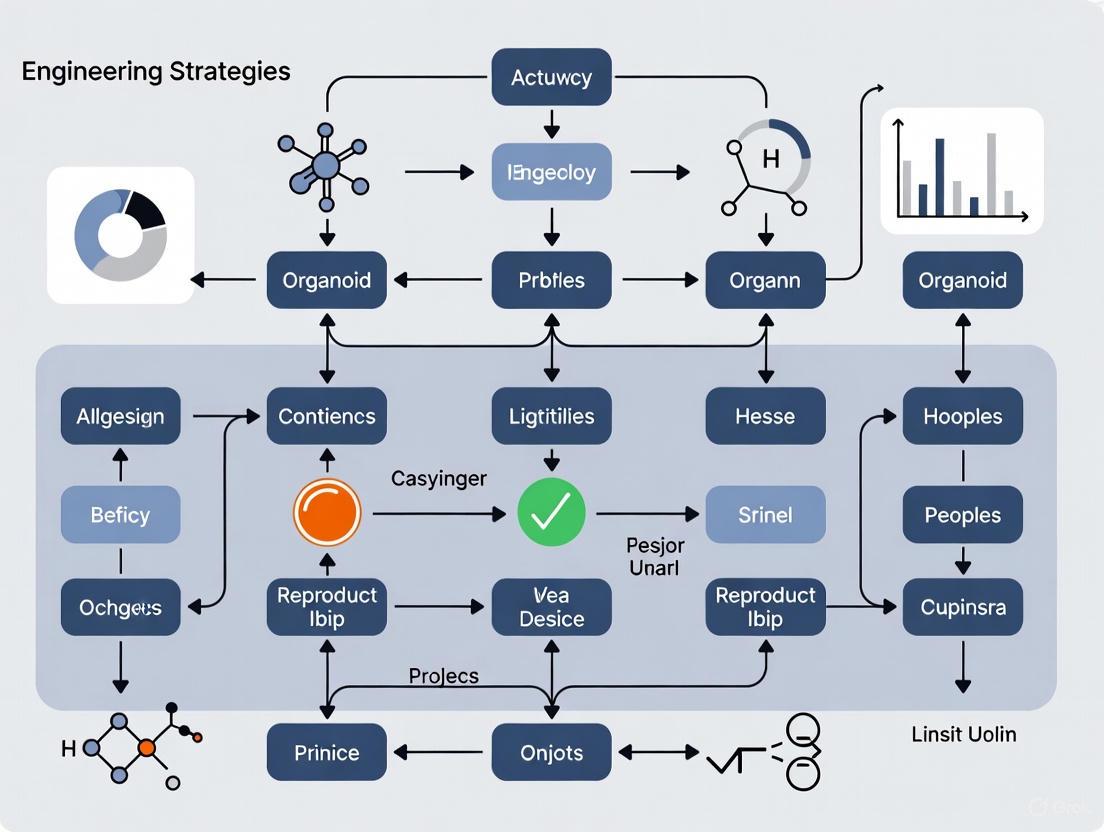
Organoid technology represents a paradigm shift in biomedical research, offering unprecedented physiological relevance for disease modeling and drug development.
Engineering Reproducibility in Organoid Systems: Strategies for Standardization in Disease Modeling and Drug Discovery
Abstract
Organoid technology represents a paradigm shift in biomedical research, offering unprecedented physiological relevance for disease modeling and drug development. However, widespread adoption is hindered by significant challenges in reproducibility, standardization, and scalability. This article provides a comprehensive analysis of engineering strategies designed to overcome these limitations, covering foundational principles of organoid variability, advanced bioengineering methodologies, AI-driven optimization techniques, and rigorous validation frameworks. Tailored for researchers, scientists, and drug development professionals, this resource synthesizes current innovations—from tunable biomaterials and microfluidic systems to automation and ethical guidelines—that are transforming organoids into robust, reliable tools for precision medicine and high-throughput applications.
The Reproducibility Crisis in Organoid Technology: Understanding Fundamental Challenges and Limitations
Organoid technology has emerged as a paradigm-shifting platform in developmental biology, disease modeling, and regenerative medicine, but its rapid progress has outpaced standardization efforts [1]. The inherent heterogeneity of donor characteristics, culture conditions, and assay design complicates reproducibility and limits data integration between laboratories [1] [2]. This variability stems from multiple sources, including batch-to-batch differences in critical reagents, diversity in cellular composition, and limited control over self-organization processes [3] [2]. For organoid technology to fulfill its promise in personalized medicine and drug development, establishing robust quality control metrics is paramount. The Minimum Information about Organoid Research (MIOR) framework has been proposed to address these challenges by creating enforceable standards that enhance reproducibility, facilitate data interoperability, and maximize translational validity [1]. This technical guide provides researchers with concrete quality metrics, troubleshooting solutions, and standardized protocols to improve reproducibility in organoid research, specifically framed within the context of engineering strategies for reproducibility research.
Core Quality Control Metrics and Standards
Essential Quality Metrics Table
Systematic quality control requires monitoring specific, quantifiable parameters throughout the organoid lifecycle. The following table summarizes key metrics adapted from the MIOR framework and recent organoid guidelines [1] [4].
Table 1: Essential Quality Control Metrics for Organoid Research
| Category | Parameter | Acceptance Criteria | Assessment Method |
|---|---|---|---|
| Starting Materials | Cell Viability | >90% [4] | Trypan blue exclusion, flow cytometry |
| Pluripotency Marker Expression | >80% positive for SSEA-4, TRA-1-60 [4] | Flow cytometry, immunocytochemistry | |
| Genetic Stability | Normal karyotype, minimal variations [4] | Chromosomal analysis, whole-genome sequencing | |
| Contamination | Free of bacteria, fungi, mycoplasma, viruses [4] | PCR, microbial culture | |
| Organoid Culture | Morphology | Tissue-specific architecture, consistent size distribution [3] | Brightfield microscopy, image analysis |
| Growth Kinetics | Consistent doubling time, passage-to-passage stability [5] | Diameter measurement, metabolic activity assays | |
| Lineage Specification | Presence of expected differentiated cell types [3] | Immunofluorescence, RNA sequencing | |
| Functional Validation | Tissue-Specific Function | Organ-appropriate physiological responses [3] | Calcium imaging (cardiac), barrier integrity (intestinal), albumin secretion (liver) |
| Drug Response | Consistent IC50 values for reference compounds [6] | Viability assays, functional measurements | |
| Batch Consistency | >80% similarity in key parameters between batches [2] | Multivariate analysis of morphology, gene expression |
Quality Control Workflow
The following diagram illustrates the sequential quality control checkpoints throughout the organoid lifecycle, from initial cell sourcing to final application:
Research Reagent Solutions
Standardized reagents are fundamental to organoid reproducibility. The following table outlines essential materials and their functions in organoid culture systems.
Table 2: Essential Research Reagents for Organoid Culture
| Reagent Category | Specific Examples | Function | Considerations |
|---|---|---|---|
| Extracellular Matrices | Matrigel, Synthetic PEG hydrogels, Decellularized ECM (dECM) [3] | Provides 3D scaffold, mechanical cues, biochemical signals | Matrigel has batch variability; synthetic hydrogels offer tunability [3] |
| Essential Growth Factors | EGF (50 ng/mL), Noggin (100 ng/mL), R-spondin (10-20% CM) [5] [6] | Regulates proliferation, differentiation, stem cell maintenance | Concentration optimization critical; use conditioned media or recombinant [4] |
| Signaling Modulators | A83-01 (500 nM), SB202190 (10 μM), Y-27632 (5-10 μM) [5] [6] | Inhibits differentiation, reduces apoptosis, maintains stemness | Tissue-specific requirements; optimize concentration [6] |
| Basal Media Supplements | B-27 (1×), N-2 (1×), N-acetylcysteine (1-1.25 mM) [5] [6] | Provides essential nutrients, antioxidants, hormones | Serum-free formulations enhance reproducibility [4] |
| Cell Dissociation Agents | Trypsin-EDTA, Accutase, Collagenase [5] | Passaging organoids, generating single cells | Optimization needed to maintain viability and function [5] |
Troubleshooting Guides & FAQs
Frequently Asked Questions
Q1: How can I minimize batch-to-batch variability in my organoid cultures?
- A: Implement rigorous quality control on starting materials, particularly extracellular matrices and growth factors. Use synthetic hydrogels instead of Matrigel where possible for more consistent mechanical properties [3]. Establish master cell banks with comprehensive characterization and use consistent passage protocols between experiments [4]. Maintain detailed records of reagent lot numbers and performance.
Q2: What are the best practices for validating organoid morphology and architecture?
- A: Combine quantitative image analysis with standardized scoring systems. Use high-content imaging to measure organoid size, circularity, and number of budding structures over time [7]. Validate with tissue-specific markers via immunofluorescence to confirm presence of expected cell types and architectural features like crypt-villus structures in intestinal organoids or layered organization in cerebral organoids [3].
Q3: How can I improve the maturity and functionality of my organoid models?
- A: Incorporate mechanical cues through engineered matrices with tissue-appropriate stiffness [3]. Implement extended differentiation protocols with sequential growth factor exposure. Consider integrating organoids with microfluidic systems to enhance nutrient delivery and mimic physiological flow conditions [2]. For certain applications, introduce relevant cell types through co-culture systems to better mimic tissue microenvironment [6].
Q4: What strategies help prevent contamination in long-term organoid cultures?
- A: Maintain strict aseptic technique and regularly test for mycoplasma and other contaminants [5]. Use antibiotic-free media when possible to avoid masking low-level contamination [5]. Implement quarterly quality control testing on all cell lines and culture reagents. Consider using closed-system bioreactors for large-scale or long-term cultures.
Troubleshooting Common Problems
Problem: Low Cell Viability After Thawing Cryopreserved Organoids
- Potential Causes: Inadequate cryopreservation protocol, slow thawing process, improper removal of cryoprotectant.
- Solutions: Use controlled-rate freezing containers and pre-warmed recovery media. Add ROCK inhibitor Y-27632 (5-10 μM) to culture medium for first 24-48 hours post-thaw [5]. Centrifuge gently to remove DMSO and plate at appropriate density in optimized extracellular matrix.
Problem: High Heterogeneity in Organoid Size and Structure
- Potential Causes: Inconsistent initial cell clustering, variable nutrient access, stochastic differentiation.
- Solutions: Use mechanical or enzymatic digestion to achieve uniform starting fragments [5]. Employ bioreactors or agitation systems for consistent nutrient distribution [2]. Optimize seeding density and consider using size-based sorting methods periodically.
Problem: Loss of Tissue-Specific Characteristics Over Multiple Passages
- Potential Causes: Genetic drift, stem cell exhaustion, selective pressure in culture.
- Solutions: Regularly characterize organoids and return to early-passage stocks periodically. Monitor for genetic stability through karyotyping [4]. Optimize culture conditions to maintain stem cell niche, including appropriate growth factor combinations and matrix stiffness [3].
Problem: Necrotic Centers in Large Organoids
- Potential Causes: Limited nutrient diffusion, inadequate oxygen supply, lack of vascularization.
- Solutions: Control organoid size through periodic splitting [2]. Consider co-culture with endothelial cells to promote vascular network formation [8]. Use bioreactor systems to enhance medium perfusion or engineer organoids with internal lumens for better nutrient access [7].
Standardized Experimental Protocols
Comprehensive Organoid Quality Assessment Workflow
This detailed protocol adapts quality control measures from recent guidelines for systematic organoid evaluation [4] [7].
Phase 1: Starting Material Qualification
- Step 1.1: Thaw cryopreserved stem cells or isolate primary tissue following standardized procedures. For pluripotent stem cells, confirm viability >90% via trypan blue exclusion [4].
- Step 1.2: Characterulate stem cell markers through flow cytometry. For pluripotent cells, assess expression of SSEA-4 and TRA-1-60, with >80% positive population required [4].
- Step 1.3: Perform comprehensive contamination testing including mycoplasma PCR, microbial culture, and viral pathogen screening.
- Step 1.4: Verify genetic stability through karyotype analysis or whole-genome sequencing, particularly for cells beyond passage 15 [4].
Phase 2: Morphological and Structural Analysis
- Step 2.1: Capture brightfield images of at least 100 organoids per condition using standardized magnification and lighting.
- Step 2.2: Quantify size distribution, circularity, and structural complexity using image analysis software (e.g., ImageJ, CellProfiler).
- Step 2.3: Fix and section organoids for histological analysis (H&E staining) and tissue-specific architecture assessment.
- Step 2.4: Perform immunofluorescence staining for key lineage markers to verify cellular composition and spatial organization.
Phase 3: Functional Validation
- Step 3.1: Assess tissue-specific functions: barrier integrity (TEER measurement) for epithelial organoids, contractility for cardiac organoids, albumin production for hepatic organoids [3] [4].
- Step 3.2: Evaluate response to reference compounds with known effects on the tissue being modeled.
- Step 3.3: For disease modeling, validate pathological features against primary patient tissues when available.
Sample Preparation and Processing Protocol for Colorectal Organoids
Based on the detailed methodology from PMC12566426, this protocol specifies critical steps for reproducible sample processing [7].
Materials:
- Cold Advanced DMEM/F12 medium with antibiotics
- 15 mL Falcon tubes
- RPMI or DMEM with antibiotics for storage
- Cryopreservation medium (10% FBS, 10% DMSO in 50% L-WRN conditioned medium)
Procedure:
- Collect human colorectal tissue samples under sterile conditions immediately following surgical resection or biopsy.
- CRITICAL STEP: Transfer samples in 5-10 mL of cold Advanced DMEM/F12 medium with antibiotics. Process immediately or use appropriate preservation method.
- For short-term storage (≤6-10 hours): Wash tissues with antibiotic solution and store at 4°C in DMEM/F12 medium with antibiotics.
- For long-term storage (>14 hours): Wash tissues with antibiotic solution and cryopreserve using freezing medium.
- CRITICAL STEP: Note that 20-30% variability in cell viability occurs between preservation methods. Choose method based on anticipated processing delay [7].
- Process tissue through mechanical dissociation followed by enzymatic digestion at 37°C for 30-60 minutes.
- Isolate crypts through sequential filtration and centrifugation steps.
- Embed crypt fragments in optimized extracellular matrix and overlay with tissue-specific medium.
Engineering Strategies for Enhanced Reproducibility
Advanced Engineering Approaches
Engineering strategies offer promising solutions to overcome limitations in traditional organoid culture systems. The following diagram illustrates how these approaches address specific reproducibility challenges:
Precision Matrix Engineering: Traditional Matrigel exhibits batch-to-batch variability and limited tunability. Synthetic polyethylene glycol (PEG)-based hydrogels with tunable stiffness (20-450 Pa range) and programmable viscoelasticity provide consistent mechanical cues [3]. These systems allow precise presentation of adhesion ligands and controlled degradation profiles to guide organoid development.
Microfabrication and Bioprinting: Technologies like 3D bioprinting and microfluidic organ-on-chip platforms enable precise control over organoid size, shape, and spatial organization [9] [10]. These systems provide controlled fluid flow, shear stress, and mechanical conditioning that enhance physiological relevance while improving reproducibility.
Automation and AI Integration: Automated systems for organoid culture reduce human error and variability [2]. AI-based image analysis enables rapid, unbiased phenotyping and quality assessment, removing subjective interpretation from organoid characterization [2].
Vascularization Strategies: Engineering endothelial networks within organoids addresses diffusion limitations that cause necrotic centers [2] [8]. Co-culture with endothelial cells in microfluidic systems with perfusion enhances organoid viability, maturation, and reproducibility.
Implementation Framework
Successfully implementing these engineering strategies requires:
- Characterization of Native Tissue Mechanics: Determine tissue-specific stiffness, viscoelasticity, and topographical features to inform matrix design [3].
- Gradual Technology Integration: Start with incorporating synthetic hydrogels before implementing more complex bioreactor systems.
- Cross-Disciplinary Collaboration: Engage with experts in biomaterials engineering, microfluidics, and automation to leverage specialized knowledge.
- Standardized Validation Metrics: Apply consistent quality control measures across different engineering platforms to enable meaningful comparison.
By adopting these engineering strategies and quality control frameworks, researchers can significantly enhance the reproducibility, scalability, and translational relevance of organoid models, accelerating their application in drug development and personalized medicine.
Matrigel, a basement membrane extract derived from Engelbreth-Holm-Swarm (EHS) mouse sarcoma, has been a cornerstone reagent in cell biology for decades. This tumor-derived material provides a complex mixture of extracellular matrix (ECM) proteins, primarily laminin (~60%), collagen IV (~30%), entactin (~8%), and heparan sulfate proteoglycans, which collectively mimic the native basement membrane environment [11] [12]. While this complexity has made Matrigel invaluable for supporting cell adhesion, proliferation, differentiation, and 3D organoid formation, it introduces significant challenges for engineered strategies aimed at organoid reproducibility research [13] [14].
The fundamental limitations of Matrigel stem from its biological origin. As a poorly defined product extracted from mouse tumors, it exhibits substantial batch-to-batch variability in both biochemical composition and physical properties [11] [12]. This variability directly compromises experimental reproducibility, as even the same cell type cultured in different Matrigel batches may demonstrate different behaviors and differentiation outcomes [14]. Additionally, Matrigel contains undefined growth factors and cytokines that can unpredictably influence cell fate decisions, further complicating data interpretation [11]. For translational research and clinical applications, the tumor-derived, animal-based nature of Matrigel raises concerns about immunogenicity and the potential introduction of xenogenic contaminants, limiting its use in human therapeutic development [12] [15].
Technical Challenges: Specific Limitations of Matrigel
Compositional and Biochemical Limitations
Undefined Complex Composition: Proteomic analyses reveal Matrigel contains more than 1,800 unique proteins, creating an ill-defined microenvironment that makes it difficult to identify specific factors governing organoid development [13]. This complexity obscures mechanistic studies seeking to understand how specific ECM cues influence cell behavior.
Variable Growth Factor Content: Matrigel contains variable amounts of tumor-derived growth factors including transforming growth factor-β (TGF-β), fibroblast growth factors (FGFs), and matrix metalloproteinases (MMPs) [11]. These undefined biological components can actively direct stem cell differentiation along undesirable lineages or promote overproliferation in unpredictable ways [12].
Presence of Xenogenic Contaminants: As a murine sarcoma-derived product, Matrigel carries risks of xenogenic contamination and immunogenic responses, fundamentally limiting its application in human cell therapies and regenerative medicine [12] [15].
Physical and Structural Limitations
Limited Mechanical Tunability: Matrigel offers minimal capacity for precise adjustment of mechanical properties such as stiffness, viscoelasticity, and stress relaxation [12]. This is particularly problematic given the established importance of mechanotransduction in directing cell fate and organoid development [14].
Heterogeneous Mechanical Properties: Local regions within Matrigel hydrogels have been found to exhibit elastic moduli several times higher than the average sample modulus, creating microenvironments with inconsistent mechanical cues that can alter cellular responses [13].
Inadequate Stiffness for Some Tissues: The relatively soft and limited range of mechanical properties in Matrigel may not sufficiently mimic stiffer human tissues, potentially misdirecting organoid maturation and function [12].
Experimental and Reproducibility Limitations
Batch-to-Batch Variability: Significant lot-to-lot differences in Matrigel composition lead to poor experimental reproducibility between laboratories and even within the same laboratory over time [11] [14]. This variability introduces uncontrolled factors that can compromise research findings and drug screening results.
Challenges in Standardization: The undefined nature of Matrigel makes standardization nearly impossible, hindering the comparison of results across different studies and the establishment of validated protocols for regulatory approval [14].
Difficulty in Experimental Interpretation: The complexity and variability of Matrigel make it challenging to attribute observed cellular responses to specific matrix components, complicating the understanding of underlying biological mechanisms [13].
Frequently Asked Questions (FAQs)
Q1: What specific aspects of Matrigel contribute most significantly to batch-to-batch variability? The primary sources of variability include fluctuations in the concentrations of major protein components (laminin, collagen IV, entactin), differential expression of numerous minor protein constituents, variable levels of incorporated growth factors, and differences in gelation properties that affect mechanical characteristics [11] [12].
Q2: How does Matrigel's undefined composition impact signaling studies in organoid development? The undefined growth factors and cytokines in Matrigel can activate or interfere with crucial signaling pathways including Wnt, BMP, and Notch, making it difficult to distinguish matrix-mediated effects from experimentally applied signaling molecules [13]. This complexity is particularly problematic when studying developmental pathways where precise control of morphogen concentrations is essential [14].
Q3: What are the practical consequences of Matrigel's mechanical heterogeneity? Mechanical heterogeneity creates microenvironments with different stiffness and physical properties within the same culture, leading to inconsistent cellular responses and subpopulations of cells experiencing different mechanotransduction signals. This variability can significantly impact organoid formation efficiency, morphology, and functional maturation [13] [12].
Q4: Why is Matrigel unsuitable for clinical translation of organoid technologies? As a tumor-derived animal product, Matrigel carries risks of immunogenicity, potential transmission of animal-derived pathogens, and introduces xenogenic components that would likely trigger immune rejection in human transplantation scenarios. Regulatory agencies generally require fully defined, animal-component-free materials for clinical applications [12] [15].
Q5: What are the key considerations when transitioning from Matrigel to defined alternatives? Critical factors include matching the mechanical properties to the specific tissue being modeled, incorporating appropriate cell-adhesive ligands, ensuring compatibility with existing protocols, validating functional outcomes, and considering manufacturing scalability. A phased approach with side-by-side comparisons is recommended [16] [15].
Research Reagent Solutions: Animal-Free Alternatives
Table 1: Engineered Alternatives to Matrigel for Organoid Research
| Material Category | Specific Examples | Key Characteristics | Compatibility with Organoid Types | Advantages over Matrigel |
|---|---|---|---|---|
| Synthetic Peptide Hydrogels | PeptiMatrix, PuraMatrix | Self-assembling peptides, tunable mechanical properties, defined composition | HepaRG cells, neural organoids, intestinal organoids | High reproducibility, precisely controlled biochemical and mechanical cues [16] |
| Polysaccharide Hydrogels | VitroGel, GrowDex (wood-derived) | Natural polysaccharide backbone, shear-thinning properties, transparent for imaging | HepaRG cells, vascular organoids, intestinal organoids | Reduced nonspecific binding, improved lot-to-lot consistency [16] [15] |
| Recombinant Protein Systems | Recombinant fibronectin, laminin-511 | Human-derived proteins, defined composition, pathogen-free | Brain organoids, blood vessel organoids, iPSC-derived organoids | Xeno-free, clinically relevant, reduced immunogenicity [17] [15] |
| Fibrin-Based Hydrogels | Fibrinogen-thrombin systems | Natural human clotting proteins, protease-degradable, angiogenic properties | Blood vessel organoids, vascular network formation | Biocompatible, supports endothelial sprouting, role in wound healing [15] |
| PEG-Based Hydrogels | PEG-maleimide, PEG-thiol-ene | Highly tunable stiffness, incorporatable adhesion motifs, MMP-degradable | Intestinal organoids, kidney organoids, neural epithelia | Precise control over mechanical properties, definable biochemical cues [11] [12] |
| Decellularized ECM | Liver, intestine, or pancreas ECM | Tissue-specific composition, preserved native architecture | Liver organoids, intestinal organoids, pancreatic organoids | Tissue-specific biochemical cues, preserved vascular networks [13] |
Table 2: Comparative Performance of Animal-Free Hydrogels in Supporting HepaRG Cell Function
| Hydrogel Type | Viability Support | CYP3A4 Induction | Albumin Secretion | MPS Compatibility |
|---|---|---|---|---|
| PeptiMatrix 7.5 | High | Yes | High | Yes [16] |
| PeptiMatrix 5 | Moderate | No | Moderate | Yes [16] |
| VitroGel Organoid-3 | High | No | Low | Yes [16] |
| GrowDex | High (static) | No | Moderate | No [16] |
| Fibrin-Based | High | Comparable to Matrigel | Comparable to Matrigel | Yes [15] |
| Matrigel-Collagen (Reference) | Stable | Yes | High | Yes [16] |
Troubleshooting Guides for Matrigel Transition
Transitioning to Defined Matrices: Step-by-Step Protocol
Objective: Establish a reliable protocol for transitioning from Matrigel to defined hydrogels for brain organoid culture, based on the University of Michigan's animal-free method [17].
Materials Needed:
- Human fibronectin (recombinant human protein)
- Highly porous polymer scaffold (e.g., PEG-based scaffold)
- Pluripotent stem cells (embryonic or induced)
- Neural induction medium
- Cell culture plates and standard tissue culture equipment
Figure 1: Animal-Free Brain Organoid Culture Workflow
Procedure:
- Surface Preparation: Coat culture surfaces with recombinant human fibronectin at manufacturer-recommended concentrations. Allow adsorption for 2 hours at 37°C or overnight at 4°C.
- Cell Seeding: Harvest pluripotent stem cells using standard methods and seed at appropriate density onto prepared surfaces.
- Neural Induction: Initiate neural induction using established protocols while cells are attached to the engineered extracellular matrix.
- 3D Culture Transfer: As neural structures begin to form, transfer developing organoids to a highly porous polymer scaffold that provides structural support while allowing nutrient exchange.
- Long-term Maturation: Continue culture for extended periods (months if necessary) with regular medium changes. Monitor organoid development and function.
Validation Metrics:
- Proteomic analysis of cerebral spinal fluid-like secretion should more closely match human adult CSF compared to Matrigel-grown organoids [17].
- Assess expression of neural markers and structural organization.
- Evaluate functional properties relevant to the specific research application.
Common Transition Challenges and Solutions
Table 3: Troubleshooting Matrix Transition Problems
| Problem | Potential Causes | Solutions | Prevention Tips |
|---|---|---|---|
| Poor Cell Viability | Lack of essential adhesion motifs, inappropriate mechanical properties, missing survival factors | Incorporate RGD peptides, adjust hydrogel stiffness, add defined survival factors (e.g., Y-27632 Rho kinase inhibitor) | Perform comprehensive pre-screening of alternative matrices with viability assays [16] [7] |
| Reduced Organoid Formation Efficiency | Insufficient matrix remodeling capacity, improper ligand density, inadequate porosity | Incorporate MMP-sensitive crosslinks, optimize adhesive ligand concentration, increase scaffold porosity | Select hydrogels with appropriate degradation profiles and pore sizes for specific organoid types [11] [14] |
| Altered Morphology | Non-permissive stiffness, missing topological cues, incorrect biophysical signals | Adjust elastic modulus to match target tissue, introduce microtopographical features, modify stress relaxation properties | Characterize mechanical properties of native tissue and match in hydrogel system [13] [12] |
| Impaired Functional Maturation | Lack of tissue-specific factors, insufficient mechanical cues, missing niche components | Incorporate tissue-specific ECM proteins (laminin, collagen), apply dynamic mechanical stimulation, co-culture with supportive cell types | Include tissue-derived ECM components or recombinant tissue-specific proteins [13] [15] |
Protocol for Evaluating Alternative Hydrogels
Objective: Systematically evaluate animal-free hydrogels for vascular organoid culture using a fibrin-based system [15].
Materials:
- Fibrinogen (human recombinant)
- Thrombin (human recombinant)
- Vitronectin XF for 2D culture
- hiPSCs (multiple clones recommended)
- Vascular differentiation media
- Characterization reagents (antibodies for CD31, PDGFrβ, VE-cadherin)
Procedure:
- 2D Culture Optimization: Culture hiPSCs on Vitronectin-coated surfaces for 5 days, monitoring confluence, morphology, and pluripotency marker expression (Nanog, OCT3/4).
- Vascular Differentiation Initiation: Begin vascular differentiation following established protocols.
- 3D Hydrogel Preparation: Prepare fibrin hydrogels by combining fibrinogen and thrombin at optimized ratios (typically 2-5 mg/mL fibrinogen).
- Organoid Embedding: Embed developing vascular progenitors in fibrin hydrogels at day 13 of differentiation.
- Functional Assessment: Monitor vascular network formation over 18-21 days, analyzing endothelial sprouting, gene expression patterns (OCT4, TWIST, CD31, PDGFrβ), and immunohistochemistry.
Validation:
- Compare surface area quantification via brightfield imaging between Matrigel and fibrin-based cultures.
- Assess expression of mesoderm marker TWIST and mature endothelial markers (CD31, VE-cadherin).
- Evaluate mural cell development using PDGFrβ and ACTA2 markers.
- Quantify vascular network formation and complexity.
Figure 2: Vascular Organoid Differentiation in Fibrin Hydrogel
Engineering Strategies for Enhanced Reproducibility
Advancements in biomaterials engineering have enabled the development of precision matrices that address Matrigel's limitations while providing enhanced control over the organoid microenvironment. These engineering strategies focus on creating defined, tunable systems that support robust organoid development while ensuring experimental reproducibility.
Biochemical Engineering Strategies
Precisely Controlled Adhesive Ligand Presentation: Synthetic hydrogels can be functionalized with specific cell-adhesive peptides (e.g., RGD, IKVAV, YIGSR) at controlled densities to direct cell attachment and signaling without the complexity of full-length ECM proteins [11] [12]. This approach allows researchers to isolate the effects of specific adhesion motifs on organoid development.
Incorporation of Defined Growth Factors: Unlike Matrigel's variable growth factor content, engineered matrices can incorporate precisely quantified recombinant growth factors through covalent binding, affinity-based sequestration, or controlled release mechanisms [12]. This enables exact dosing of morphogens critical for organoid patterning.
Protease-Sensitive Degradation Domains: Engineering matrices with specific cleavage sites for cell-secreted proteases (MMPs, plasmin) allows organoids to remodel their microenvironment in a controlled manner that mimics native ECM turnover [11] [14]. This dynamic remodeling capacity supports organoid expansion and morphogenesis while maintaining definition.
Mechanical Engineering Strategies
Stiffness Tuning for Specific Tissues: Synthetic hydrogels enable precise control over elastic modulus to match the mechanical properties of target tissues, providing appropriate mechanotransduction cues that direct organoid development [12] [14]. This is particularly important given the established role of stiffness in regulating cell differentiation and organogenesis.
Viscoelasticity and Stress Relaxation Design: Advanced hydrogel systems can be engineered with specific viscoelastic properties and stress relaxation characteristics that influence cell spreading, proliferation, and self-organization—features that are uncontrollable in Matrigel [13] [12].
Anisotropic Mechanical Properties: Unlike Matrigel's isotropic structure, engineered matrices can incorporate mechanical anisotropy to guide polarized organoid growth and mimic the directional mechanical cues present in developing tissues [14].
Structural Engineering Strategies
Controlled Porosity and Pore Size: Engineering matrices with defined pore architectures regulates cell migration, nutrient diffusion, and metabolic waste removal, addressing the diffusion limitations that often lead to necrotic cores in larger organoids [12] [18].
Spatially Patterned Biochemical Cues: Advanced fabrication techniques enable the creation of matrices with spatially organized biochemical cues that guide regional patterning within developing organoids, potentially enabling the generation of more complex, regionally specialized organoids [14].
Dynamic Microenvironment Regulation: Stimuli-responsive matrices can be designed to alter their properties in response to external triggers (light, temperature, magnetic fields) or cellular activity, allowing real-time manipulation of the organoid microenvironment during development [12].
These engineering approaches collectively enable the creation of defined, tunable, and reproducible microenvironments for organoid culture that overcome the fundamental limitations of Matrigel while providing enhanced control over organoid development and function. As these technologies mature, they are expected to significantly advance organoid reproducibility and translational applications.
The Impact of Stochastic Self-Organization on Organoid Heterogeneity
Frequently Asked Questions (FAQs)
Q1: What is "stochastic self-organization" in the context of organoids, and why is it a primary source of heterogeneity? Stochastic self-organization refers to the inherently variable and self-driven process where stem cells and their progeny spontaneously form complex 3D structures without externally applied, precise spatial cues. While this process recapitulates remarkable aspects of in vivo development, its reliance on intrinsic cell signaling and local interactions—which are not uniformly controlled—leads to significant batch-to-batch and organoid-to-organoid variability in terms of size, shape, cellular composition, and tissue architecture [19] [20]. This variability is a major challenge for applications requiring high reproducibility, such as drug screening and quantitative disease modeling.
Q2: How does organoid heterogeneity impact drug screening and disease modeling? High heterogeneity can lead to inconsistent and unreliable experimental results. For drug screening, variability in organoid cell composition and maturity can cause differential drug responses that are not representative of the true therapeutic effect, complicating data interpretation and reducing predictive power for clinical outcomes [2] [21]. In disease modeling, the inability to generate organoids with consistent cellular phenotypes and pathologies can hinder the study of disease mechanisms and the validation of therapeutic targets [19] [22].
Q3: What are the key engineering strategies to control stochasticity and improve reproducibility? The main engineering strategies focus on replacing stochastic cues with controlled, deterministic ones. These include:
- Bioengineered Matrices: Using defined synthetic hydrogels to provide consistent biochemical and biophysical cues, replacing variable natural extracts like Matrigel [23] [20].
- Microfluidic and Organ-on-a-Chip Platforms: Incorporating fluid flow to enhance nutrient delivery, reduce necrosis, provide mechanical cues, and enable the formation of stable concentration gradients of morphogens [23] [2] [20].
- Geometric Confinement: Guiding organoid growth and patterning by using micropatterned scaffolds and micro-wells to physically constrain the developing tissues [23] [20].
- Modulating Signaling Pathways: Precisely timing the activation or inhibition of key developmental pathways (e.g., Wnt, BMP, SHH) using small molecules to direct differentiation and patterning [21] [20].
Q4: What functional readouts are most affected by organoid heterogeneity? Key functional readouts susceptible to heterogeneity include:
- Electrophysiological Properties: In neural organoids, the emergence and synchronization of neural network activity can be highly variable [19].
- Drug Metabolism: The expression and activity of drug-metabolizing enzymes (e.g., in hepatic organoids) can vary significantly [24] [25].
- Immune Response Efficacy: The outcome of immuno-oncology assays using co-cultured immune cells is highly dependent on the consistent representation of tumor antigens and microenvironmental factors in tumor organoids [21].
- Barrier Function: The integrity and permeability of epithelial barriers in intestinal or blood-brain barrier organoids can be inconsistent [23] [20].
Troubleshooting Guides
Challenge: High Batch-to-Batch Variability in Organoid Size and Cellular Composition
Potential Causes and Engineering Solutions:
| Potential Cause | Diagnostic Check | Proposed Engineering Solution | Expected Outcome |
|---|---|---|---|
| Uncontrolled Initial Cell Aggregation | Analyze size distribution of cell aggregates pre-culture. | Use microfabricated microwells to generate uniformly sized cell aggregates [20]. | Reduced foundation-to-foundation variability in starting material. |
| Inconsistent ECM Composition & Stiffness | Perform rheology on different lots of ECM (e.g., Matrigel). | Transition to chemically defined synthetic hydrogels (e.g., Polyethylene glycol-based) with tunable mechanical properties [23] [20]. | Improved reproducibility of mechanosensitive signaling and morphology. |
| Variable Morphogen Gradients | Use reporter cell lines to visualize gradient formation. | Integrate with microfluidic devices to perfuse media and generate stable, defined morphogen gradients [23] [2]. | Enhanced control over regional patterning and cell fate specification. |
Detailed Protocol: Establishing Reproducible Aggregation Using Microwells
- Material Preparation: Obtain a commercially available ultra-low attachment 96-well plate with microfabricated microwells (e.g., 400 µm diameter).
- Cell Suspension: Prepare a single-cell suspension from your stem cell population (PSCs or adult stem cells). Determine cell concentration and viability using a hemocytometer and trypan blue exclusion.
- Seeding: Seed cells into the microwell plate at a pre-optimized density (e.g., 1000-3000 cells per microwell) in a minimal volume of medium to encourage aggregation.
- Centrifugation: Centrifuge the plate at low speed (e.g., 100 x g for 3 minutes) to pellet cells into the bottom of each microwell.
- Incubation: Incubate the plate for 24-48 hours to allow for aggregate formation.
- Quality Control: After 48 hours, image a representative number of microwells (e.g., n≥20) and use image analysis software (e.g., ImageJ) to quantify the diameter and circularity of the formed aggregates. Proceed only if the coefficient of variation for aggregate diameter is below 15%.
Challenge: Presence of a Necrotic Core and Hypoxic Stress in Mature Organoids
Potential Causes and Engineering Solutions:
| Potential Cause | Diagnostic Check | Proposed Engineering Solution | Expected Outcome |
|---|---|---|---|
| Diffusion-Limited Nutrient/Waste Exchange | Section organoid and stain for hypoxia markers (e.g., Pimonidazole) or cell death (e.g., TUNEL). | Slice Culture Method: Embed organoid in matrix, section into 200-400 µm thick slices using a vibratome, and culture on a porous membrane insert [19]. | Improved oxygen and nutrient access throughout the tissue, eliminating the necrotic core. |
| Lack of Vasculature | Analyze expression of endothelial cell markers (e.g., CD31). | Co-culture with Endothelial Cells: Mix ~20% human umbilical vein endothelial cells (HUVECs) with your organoid-forming cells during initial aggregation. Add pro-angiogenic factors (VEGF, FGF2) to the medium [2] [25]. | Formation of endothelial networks within the organoid, enhancing survival and potential for perfusion. |
| Excessive Organoid Size | Monitor growth over time and correlate with necrosis onset. | Size Control via Mechanical Dissection: Regularly micro-dissect organoids to maintain a diameter below the diffusion limit (~500 µm) before passaging [19]. | Prevention of necrosis by maintaining organoids within a size range supported by passive diffusion. |
Detailed Protocol: Generating Organoid Slice Cultures
- Embedding: Transfer a mature organoid (~300-500 µm in diameter) into a drop of liquid, low-melt agarose (e.g., 4% in PBS) on a pre-cooled vibratome specimen plate. Allow the agarose to solidify completely.
- Mounting: Glue the agarose block containing the organoid onto the vibratome stage.
- Sectioning: Submerge the block in ice-cold, oxygenated slicing buffer. Use a vibratome to cut 300 µm thick sections.
- Collection: Carefully collect the organoid slices using a wide-bore pipette.
- Culture: Place slices onto a porous membrane insert (e.g., 0.4 µm pore size) in a multi-well plate, with medium contacting the bottom of the insert. This interface provides excellent gas and nutrient exchange.
- Maintenance: Culture slices for the desired duration, replacing medium regularly. Slices can be used for functional assays, fixed for staining, or used for further experimentation.
Challenge: Inconsistent Patterning and Cell Type Specification
Potential Causes and Engineering Solutions:
| Potential Cause | Diagnostic Check | Proposed Engineering Solution | Expected Outcome |
|---|---|---|---|
| Unstructured Soluble Cues | Analyze the expression of regional marker genes via qRT-PCR across multiple organoids. | Use of Morphogen-Generating Beads: Implant controlled-release beads loaded with specific morphogens (e.g., SHH, FGF8) into the developing organoid to create localized signaling centers [20]. | More consistent and precise regional patterning, mimicking the organizing centers in embryonic development. |
| Lack of Physiological Transcriptional Fidelity | Perform scRNA-seq to compare organoid cell transcriptomes to a primary tissue reference atlas. | CRISPR-based Lineage Recording & Tracing: Introduce synthetic genetic recorders to track lineage decisions in real-time and identify culture conditions that yield the most faithful transcriptomes [21]. | Enables screening for protocols that minimize non-physiological gene expression and improve cell type specification. |
The Scientist's Toolkit: Key Reagents & Technologies
This table outlines essential tools for implementing engineering strategies to combat heterogeneity.
| Item / Technology | Function in Reproducibility Research | Key Consideration |
|---|---|---|
| Synthetic Hydrogels (e.g., PEG) | Provides a chemically defined, tunable extracellular matrix (ECM) alternative to Matrigel. Stiffness, degradability, and adhesive ligands can be precisely controlled [23] [20]. | Allows for systematic study of the impact of individual ECM parameters on self-organization. |
| Microfluidic Organ-on-a-Chip | Introduces perfusion, mechanical forces (e.g., fluid shear stress), and enables the creation of stable, user-defined chemical gradients [23] [2] [25]. | Enhances organoid maturation and function while reducing heterogeneity caused by diffusion limits. |
| Micropatterned Substrates | Physically constrains the initial cell aggregate to a defined geometry (e.g., lines, circles), directly guiding the self-organization process and reducing stochasticity [23] [20]. | A powerful top-down approach to instruct bottom-up self-organization. |
| Small Molecule Pathway Modulators | Used to precisely activate or inhibit key signaling pathways (Wnt, TGF-β, Notch, etc.) at specific time windows during differentiation [21] [20]. | Replaces variable endogenous signaling with deterministic, externally applied control. |
| CRISPR-Cas9 & Reporter Cell Lines | Allows for genetic barcoding, lineage tracing, and the generation of fluorescent reporter lines to monitor specific cell types or pathway activity in live organoids [21]. | Essential for quantifying heterogeneity and validating the success of reproducibility strategies. |
Visualizing Strategies and Challenges
The following diagrams illustrate the core concepts and experimental workflows discussed in this guide.
Workflow for Establishing a Reproducible Organoid Line
Frequently Asked Questions (FAQs)
Q1: Why is the extracellular matrix (ECM) considered a crucial biomechanical cue in organoid development?
The ECM is not merely a structural scaffold but a dynamic biomechanical regulator that transmits essential physical signals to cells. Cells sense and respond to the ECM's mechanical properties—such as stiffness, viscoelasticity, and topography—through a process called mechanotransduction [3] [26]. This process involves transmembrane receptors (e.g., integrins) that convert these physical signals into biochemical responses, activating key signaling pathways like YAP/TAZ and Wnt/β-catenin that direct cell fate, proliferation, and morphogenesis [3]. The consistency of these mechanical cues is therefore fundamental for ensuring organoids develop with reproducible architecture and function.
Q2: What are the main limitations of traditional matrices like Matrigel in reproducible organoid research?
While Matrigel has been the "gold standard" for organoid culture, it presents significant challenges for reproducible research:
- Batch-to-Batch Variability: Its composition, derived from mouse sarcoma, is poorly defined and varies between production lots, leading to inconsistent biochemical and mechanical properties [3] [27] [28].
- Limited Tunability: Matrigel has a narrow and fixed stiffness range (approximately 20–450 Pa), making it impossible to recapitulate the diverse and dynamic mechanical environments of different native tissues [3] [26].
- Tumor-Derived Origin: As a tumor-derived product, it contains residual growth factors and enzymes that may confound experimental outcomes and limit clinical translation [27] [28].
Q3: How do changes in ECM stiffness specifically influence organoid development?
Substrate stiffness is a pivotal regulatory factor that profoundly influences cell behavior in organoids.
- Stiffer substrates generally enhance cell spreading, actomyosin contractility, and proliferation. In some contexts, stiffer matrices have been shown to enhance the internalization of nanoparticles and can drive malignant phenotypes in tumor organoids through pathways like epithelial-mesenchymal transition (EMT) [29] [26].
- Softer substrates often promote differentiation and can better mimic the mechanical niche of specific tissues, such as the brain [3] [26]. The optimal stiffness is tissue-specific; for example, mesodermal stiffening during development facilitates directed cell migration, while a soft environment is crucial for neural organoids [3].
Q4: What engineered matrix alternatives exist to improve reproducibility?
To overcome the limitations of Matrigel, several defined and tunable matrix alternatives are being developed:
- Synthetic Hydrogels (e.g., PEG-based): These offer a chemically defined foundation where properties like stiffness, degradability, and cell-adhesive ligands (e.g., RGD peptides) can be precisely controlled [3] [26].
- Decellularized ECM (dECM): Derived from specific tissues or organs, dECM retains a more defined, organ-specific biochemical composition and can provide a more physiologically relevant mechanical microenvironment than Matrigel [3] [27].
- Hybrid and Viscoelastic Hydrogels: Combining natural and synthetic polymers can yield matrices that mimic both the biochemical and complex mechanical properties (e.g., stress relaxation) of native tissues [26] [28].
Troubleshooting Guides
Problem: High Heterogeneity in Organoid Size and Morphology
Potential Cause & Solution:
- Cause 1: Inconsistent ECM Mechanical Properties. Variations in hydrogel polymerization, crosslinking density, or compositional batches lead to an inconsistent mechanical microenvironment.
- Cause 2: Uncontrolled Self-Organization.
Problem: Poor Organoid Maturation and Functionality
Potential Cause & Solution:
- Cause 1: Non-physiological Matrix Stiffness. The matrix stiffness does not match the target native tissue's mechanical properties.
- Cause 2: Lack of Dynamic Mechanical Cues. Native tissues experience evolving mechanical forces during development, which static in vitro models fail to replicate.
Problem: Low Efficiency of Organoid Formation
Potential Cause & Solution:
- Cause: Suboptimal Cell-ECM Adhesion.
- Solution: Ensure the synthetic hydrogel is functionalized with adequate concentrations of cell-adhesive peptides (e.g., RGD derived from fibronectin) to facilitate integrin-mediated adhesion, a prerequisite for survival and proliferation [27] [28]. Perform a dose-response test to identify the optimal ligand density.
Quantitative Data on ECM and Organoid Culture
The table below summarizes key mechanical properties of common matrices and their influence on organoid culture.
Table 1: Mechanical Properties and Performance of Matrices for Organoid Culture
| Matrix Type | Typical Stiffness Range (Elastic Modulus) | Key Characteristics | Impact on Organoid Culture | Best for Organoid Types |
|---|---|---|---|---|
| Matrigel [3] [27] | ~20 - 450 Pa | Poorly defined, tumor-derived, high batch variability. | High risk of inconsistency; limited ability to direct fate via mechanics. | Widely used but not optimal for reproducibility. |
| Polyacrylamide (PAA) Gels [3] | 100 Pa - 100 kPa | Highly tunable stiffness, primarily used for 2D mechanobiology studies. | Demonstrates stiffness-dependent cell spreading and differentiation. | 2D fundamental studies (limited for 3D organoids). |
| Tissue-Derived dECM [3] [27] | Tissue-specific | More defined biochemical composition, retains tissue-specific factors. | Improved biological relevance; supports organ-specific maturation. | Brain, liver, intestine [3] [27]. |
| PEG-based Hydrogels [3] [26] | 100 Pa - 50 kPa | Chemically defined, highly tunable stiffness and ligand presentation. | Enables precise dissection of mechanical cues; enhances reproducibility. | Intestinal, hepatic, renal [26]. |
| Alginate Hydrogels [27] [26] | 500 Pa - 20 kPa | Bio-inert, tunable viscoelasticity via molecular weight and crosslinking. | Good for scalable culture; requires functionalization with adhesive ligands. | Intestinal, islet [27]. |
| Collagen I [27] | 500 Pa - 5 kPa | Natural polymer, exhibits inherent viscoelasticity. | Can promote different morphogenesis (e.g., budding vs. monolayers). | Intestinal, mammary, stomach [27]. |
Core Mechanotransduction Pathway
The following diagram illustrates the primary signaling pathway through which cells sense and respond to biomechanical cues from the ECM, a process critical for organoid development.
Diagram Title: Core Mechanotransduction Signaling Pathway
Experimental Protocol: Assessing the Pathway
- Objective: Validate YAP/TAZ activation in response to matrix stiffness.
- Methodology:
- Culture Setup: Seed progenitor cells on PEG hydrogels tuned to soft (∼1 kPa) and stiff (∼50 kPa) conditions [26].
- Immunofluorescence Staining: After 48 hours, fix cells and stain for YAP/TAZ and a nuclear marker (e.g., DAPI).
- Analysis: Image using confocal microscopy. Quantify the ratio of nuclear-to-cytoplasmic YAP/TAZ fluorescence intensity. A higher ratio on stiff matrices indicates mechano-activation [3] [26].
The Scientist's Toolkit: Research Reagent Solutions
Table 2: Essential Materials for Biomechanical Organoid Research
| Reagent / Material | Function / Description | Key Consideration for Reproducibility |
|---|---|---|
| Polyethylene Glycol (PEG) [3] [26] | A synthetic, inert polymer backbone for creating highly tunable hydrogels. | The molecular weight and crosslinker type/concentration directly determine the hydrogel's stiffness. |
| RGD Peptide [27] [28] | A short peptide sequence (Arg-Gly-Asp) that functionalizes synthetic hydrogels to enable cell adhesion via integrins. | Consistent molar concentration during hydrogel functionalization is critical for uniform cell attachment. |
| Decellularized ECM (dECM) [3] [27] | A hydrogel derived from specific tissues, providing organ-specific biochemical and mechanical cues. | Source tissue and decellularization protocol must be standardized to minimize batch variability. |
| Photo-initiator (e.g., LAP) | A compound that, upon light exposure, initiates the crosslinking of precursor solutions into solid hydrogels. | Concentration and light exposure (wavelength, intensity, time) must be fixed to ensure consistent polymerization. |
| Rho-associated Kinase (ROCK) Inhibitor (Y-27632) [28] | A small molecule that inhibits actomyosin contractility, promoting cell survival after dissociation. | Use at a standardized concentration during sub-culturing to improve plating efficiency and reduce anoikis. |
Organoid technology has emerged as a paradigm-shifting platform in biomedical research, enabling the study of human development, disease modeling, and personalized therapeutics through three-dimensional, self-organizing tissue cultures that mimic native organ architecture and function [21] [30]. Despite rapid advancement and widespread adoption, the field faces a critical challenge: significant variability and lack of standardization across culture protocols, materials, and analytical methods. This heterogeneity compromises experimental reproducibility, data interoperability, and ultimately, the translational validity of organoid research [1]. The stochastic nature of organoid self-organization, combined with reliance on ill-defined matrices and complex medium formulations, results in substantial batch-to-batch variations that hinder comparative analysis and clinical application [3] [18]. This technical support document examines the current gaps in organoid standardization protocols and provides evidence-based troubleshooting guidance to enhance reproducibility within the context of engineering strategies for organoid research.
Core Challenges in Organoid Standardization
Extracellular Matrix (ECM) and Material Variability
The extracellular matrix serves as the foundational scaffold for organoid development, providing not only physical support but also critical biochemical and biomechanical cues that direct cell fate and morphogenesis [3]. Most laboratories rely on Matrigel, a basement membrane extract derived from Engelbreth-Holm-Swarm mouse sarcoma, as the default matrix for 3D organoid culture [5]. However, Matrigel exhibits substantial batch-to-batch variability in its mechanical and biochemical properties due to its complex, biologically-derived composition [3]. This variability directly impacts experimental reproducibility, as the matrix composition influences key cellular processes including adhesion, migration, proliferation, and differentiation [3]. The limited mechanical tunability of Matrigel (stiffness range: ∼20–450 Pa) further restricts its ability to recapitulate the diverse mechanical environments of native tissues [3].
Culture Instability and Limited Lifespan
Inadequate vascularization within organoids results in limited nutrient and oxygen supply to the core regions, affecting long-term viability and functional maintenance [18]. This limitation becomes particularly problematic in large organoids such as cerebral organoids, where central necrosis occurs as the structure expands beyond the diffusion limit of oxygen and nutrients [18]. The resulting limited survival time of organoids restricts their utility for long-term studies and necessitates frequent passaging, which itself disrupts already-formed cellular architecture and phenotypes [18]. Furthermore, most organoid models fail to achieve full functional maturity, with many systems (including brain organoids) primarily exhibiting fetal rather than adult tissue characteristics [18]. Epithelial organoids typically have a lifespan of approximately one week, which is insufficient to recapitulate the complete differentiation program observed in vivo [18].
Heterogeneity in Self-Organization
Organoid cultures demonstrate striking heterogeneity in cellular composition, morphology, and structural organization between batches, primarily due to the stochastic nature of in vitro self-assembly [18]. This inherent variability complicates quantitative analysis and reproducible experimental outcomes. The manual nature of many organoid construction protocols introduces additional technical variations in critical parameters such as initial cell number, type proportions, and ECM concentration [18]. Without standardized metrics and quality control checkpoints, this heterogeneity persists throughout the culture period, generating inconsistent results across experiments and laboratories [31].
Table 1: Key Standardization Challenges in Organoid Culture Systems
| Challenge Category | Specific Issues | Impact on Research |
|---|---|---|
| ECM & Materials | Batch-to-batch variability in Matrigel; Limited mechanical tunability; Undefined composition | Inconsistent growth patterns; Altered differentiation; Poor reproducibility between labs |
| Culture Stability | Limited vascularization; Central necrosis in large organoids; Short lifespan (∼1 week for epithelial organoids) | Restricted long-term studies; Incomplete maturation; Frequent passaging disrupts architecture |
| Self-Organization | Stochastic morphogenesis; Variable cellular composition; Manual protocol variations | Quantitative analysis challenges; Batch effects; Difficulty in comparative studies |
| Monitoring & QC | Reliance on subjective visual inspection; Limited 3D imaging capabilities; Lack of standardized metrics | Delayed problem identification; Inconsistent quality assessment; Non-uniform data collection |
Engineering and Technical Solutions
Engineered Matrices and Microenvironment Control
To address the limitations of biologically-derived matrices, researchers are developing synthetic hydrogel systems with defined composition and tunable physical properties. These include polyethylene glycol (PEG)-based hydrogels with dynamic presentation of adhesion ligands and tunable stiffness, alginate- and DNA-based hydrogels with programmable viscoelasticity, and photo-responsive hydrogels that enable spatiotemporal control of mechanical properties [3]. Decellularized ECM (dECM) hydrogels derived from specific tissues or organs offer an alternative approach, retaining tissue-specific biochemical compositions while providing more defined mechanical properties than Matrigel [3]. For instance, brain-derived dECMs contain approximately 90 brain-specific matrisome proteins, over 94% of which are also found in normal human brain tissue, providing organ-specific biochemical cues that enhance physiological relevance [3].
Automated Monitoring and Quality Control
Implementing real-time imaging and quantitative monitoring systems represents a crucial strategy for standardizing organoid assessment and quality control. Automated imaging platforms, such as the Tecan Spark Cyto with 3D imaging capabilities, enable non-invasive, longitudinal monitoring of key culture parameters including organoid size, morphology, and growth dynamics [31]. This data-driven approach facilitates the identification of critical quality attributes and establishes correlations between initial conditions (e.g., fragment size after splitting) and subsequent organoid development [31]. Research has demonstrated that fragment size immediately after splitting influences early growth dynamics in a donor-dependent manner, with larger fragments sometimes associated with slower proliferation or limited overall growth [31]. By quantifying these parameters across samples and donors, researchers can generate insights that inform standardized seeding protocols.
Microfluidic and Bioreactor Systems
Microfluidic platforms and perfusion bioreactors provide precise control over the organoid culture microenvironment, enhancing reproducibility through automated medium exchange, nutrient delivery, and waste removal [30] [18]. Systems such as the OrganoPlate platform support membrane-free, perfused culture of multiple organoid tubules under physiological flow conditions, reducing variability between individual cultures [31]. These platforms enable high-throughput screening capabilities while maintaining physiological relevance through continuous perfusion that mimics vascular flow [18]. Additionally, rotating wall vessel (RWV) bioreactors create low-shear conditions that reduce mechanical stress on developing organoids, particularly beneficial for preserving delicate structural features in neural and cardiac organoids [30].
Diagram 1: Engineering strategies address key standardization challenges in organoid research. This framework connects specific problems with targeted technological solutions to enhance reproducibility.
Troubleshooting Guide: Frequently Asked Questions
FAQ 1: How can we reduce batch-to-batch variability in organoid cultures?
Solution: Implement a multi-pronged approach focusing on reagent standardization, process control, and quality assurance:
- ECM Management: Thoroughly characterize and qualify each batch of Matrigel or alternative matrices through standardized testing with reference organoid lines. Consider transitioning to defined synthetic hydrogels for critical applications [3].
- Medium Standardization: Use commercially available, pre-tested growth factors and supplements whenever possible. Prepare large master batches of complete medium and aliquot for long-term storage to minimize formulation variations [5].
- Process Control: Establish detailed Standard Operating Procedures (SOPs) for all critical steps including tissue processing, seeding density, feeding schedules, and passaging protocols [7] [31].
- Quality Control: Implement real-time imaging systems to monitor organoid growth and morphology, establishing quantitative acceptance criteria for key parameters such as size distribution, growth rates, and structural features [31].
FAQ 2: What strategies improve reproducibility in organoid-immune co-culture systems?
Solution: Optimize co-culture conditions based on the specific research application:
- Innate Immune Microenvironment Models: Utilize tumour tissue-derived organoids that retain autologous immune cells from the original tissue. Maintain these cultures using liquid-gas interface systems that preserve TME complexity and immune cell functionality [21].
- Immune Reconstitution Models: Establish standardized protocols for introducing immune cells into established organoid cultures, including precise timing, cell ratios, and supporting cytokines [21].
- Validation Methods: Implement functional immune readouts such as T-cell-mediated killing assays, cytokine secretion profiling, and immune checkpoint inhibition responses to verify system functionality [21].
- Culture Duration: Limit experimental timelines to match the demonstrated stability of the immune components, typically 7-14 days for most systems [21].
FAQ 3: How can we address limited maturation and functionality in organoid models?
Solution: Enhance functional maturation through engineering strategies:
- Extended Culture Timelines: Develop protocols that support long-term culture stability through optimized feeding schedules and occasional splitting to prevent central necrosis [18].
- Mechanical Stimulation: Incorporate relevant biomechanical cues such as fluid shear stress in vascular organoids, compression in cartilage models, or stretching in lung and intestinal systems [3] [18].
- Electrical Stimulation: Utilize electrically stimulating bioreactors for neural and cardiac organoids to promote electrophysiological maturation [30].
- Multi-Cellular Systems: Incorporate supporting cell types including mesenchymal cells, endothelial cells, and neurons to create more physiologically relevant microenvironments [18].
FAQ 4: What are best practices for establishing new organoid lines from patient tissues?
Solution: Follow standardized protocols for tissue processing and culture initiation:
- Tissue Processing: Process samples promptly after collection (within 6-10 hours) when possible. For delays, implement either refrigerated storage in antibiotic-supplemented medium (for shorter delays) or cryopreservation in appropriate freezing medium (for delays exceeding 14 hours) [7].
- Culture Initiation: Use optimized, tissue-specific medium formulations with appropriate growth factor combinations. For colorectal organoids, include essential components such as EGF, Noggin, R-spondin, and Wnt signaling activators [7] [5].
- Matrix Selection: Choose appropriate ECM based on tissue type, considering both Matrigel and potential alternatives such as synthetic PEG-based hydrogels or tissue-specific dECM [3].
- Quality Assessment: Establish rigorous quality control checkpoints including viability assessment, molecular characterization, and functional validation against original tissue [7].
Table 2: Essential Research Reagent Solutions for Organoid Standardization
| Reagent Category | Specific Examples | Function & Importance | Standardization Considerations |
|---|---|---|---|
| Basal Medium | Advanced DMEM/F12 | Nutrient foundation for most organoid cultures | Use consistent commercial sources; Prepare master batches |
| Essential Growth Factors | EGF (50 ng/ml), Noggin (100 ng/ml), R-spondin (10-20% CM) | Maintain stemness and promote proliferation | Use recombinant proteins from qualified vendors; Minimize batch changes |
| Signaling Modulators | A83-01 (500 nM), SB202190 (10 μM), Y-27632 (5-10 μM) | Regulate key pathways (TGF-β, p38, ROCK); Enhance viability | Pre-test optimal concentrations for each organoid type |
| Matrix Materials | Matrigel, Synthetic PEG hydrogels, Tissue-specific dECM | Provide 3D scaffold and biochemical cues | Qualify each batch with reference lines; Consider defined alternatives |
| Cell Dissociation Reagents | Trypsin/EDTA, Accutase, Collagenase | Organoid passaging and subculture | Standardize concentration, timing, and neutralization procedures |
Experimental Protocols for Enhanced Reproducibility
Standardized Organoid Initiation from Cryopreserved Material
This protocol outlines a standardized approach for initiating organoid cultures from cryopreserved material, adapted from established methodologies [5]:
- Preparation: Thaw ECM components at 4°C overnight. Warm basal medium to room temperature. Pre-warm culture vessels in a 37°C incubator for at least 60 minutes.
- Thawing: Rapidly thaw cryovial in a 37°C water bath (approximately 2 minutes). Transfer contents to 15mL conical tube with 10mL cold basal medium.
- Washing: Centrifuge at 300 × g for 5 minutes. Aspirate supernatant completely.
- Resuspension: Resuspend cell pellet in appropriate volume of ice-cold ECM (typically 20-40 μL per well of a 6-well plate). Keep on ice to prevent premature gellation.
- Seeding: Dispense ECM-cell suspension as droplets onto pre-warmed culture plates. Incubate at 37°C for 20-30 minutes to solidify.
- Medium Addition: Gently overlay solidified droplets with pre-warmed complete organoid medium (2mL per well of a 6-well plate).
- Culture Initiation: Return plates to 37°C, 5% CO2 incubator. Monitor daily for organoid formation.
Quantitative Organoid Monitoring Protocol
Implement this protocol for standardized organoid assessment and quality control [31]:
- Image Acquisition: Using an automated imaging system (e.g., Tecan Spark Cyto), capture brightfield images of organoid cultures at consistent timepoints (e.g., days 1, 3, 5, 7 post-seeding).
- Parameter Quantification: Use integrated software to automatically detect and measure: Organoid count per field, Cross-sectional area (μm²), Circularity index (4π × area/perimeter²).
- Data Analysis: Calculate growth rates from area measurements over time. Establish size distribution profiles for each batch. Compare morphological parameters to established reference ranges.
- Quality Decision: Apply predetermined acceptance criteria (e.g., minimum organoid count, size range, circularity threshold) to determine culture quality and experimental suitability.
Diagram 2: Standardized workflow for organoid initiation with integrated quality control checkpoints. This protocol emphasizes critical steps where variability can be introduced and should be carefully controlled.
The path to robust standardization in organoid research requires coordinated implementation of engineering solutions, quantitative monitoring, and consensus-based reporting standards. Emerging frameworks such as the Minimum Information about Organoid Research (MIOR) provide structured guidelines for reporting critical parameters including donor characteristics, culture conditions, and quality control metrics [1]. By adopting these standards alongside the technical strategies outlined in this document, researchers can significantly enhance the reproducibility, reliability, and translational potential of organoid models. The integration of defined matrices, automated monitoring systems, microfluidic platforms, and standardized protocols represents a comprehensive engineering approach to overcoming the current limitations in organoid culture systems. Through continued refinement and collaborative standardization efforts, organoid technology will fully realize its potential as a transformative platform for biomedical research and personalized medicine.
Advanced Engineering Solutions: Biomaterials, Automation, and Workflow Standardization
In the pursuit of enhanced organoid reproducibility, engineered extracellular matrices (ECMs) have become indispensable. PEG-based hydrogels represent a cornerstone of this effort, offering a fully defined, synthetic alternative to biologically derived matrices like Matrigel [32] [13]. Their key advantage lies in independent tunability of biochemical and biophysical properties, allowing researchers to dissect the specific role of mechanical cues, such as stiffness, on organoid development and behavior without the confounding variables of poorly defined substrates [32] [26]. By providing a reproducible and controllable environment, PEG hydrogels directly address the critical need for precision and reliability in organoid reproducibility research [28].
► FAQs: PEG Hydrogels in Organoid Culture
1. Why should I use a PEG-based hydrogel instead of Matrigel for my organoid research? PEG hydrogels offer several critical advantages for reproducible science:
- Defined Composition: They are chemically defined and synthetic, eliminating the batch-to-batch variability associated with Matrigel, which is derived from mouse sarcoma cells and contains over 1,800 proteins [32] [13] [33].
- Tunable Stiffness: Their mechanical properties, including stiffness (elastic modulus) and viscoelasticity, can be precisely and independently controlled [32] [26]. This allows for the systematic study of mechanotransduction in organoid development.
- Reduced Immunogenicity: As a synthetic material, PEG minimizes the risk of immune responses, making it more suitable for future therapeutic applications, including transplantation [32] [13].
2. How is stiffness controlled in a PEG hydrogel system? Stiffness is primarily controlled by modulating the crosslinking density within the polymer network [34]. This can be achieved by:
- Varying Polymer Density: Increasing the concentration of the PEG macromer (e.g., % wt/vol) typically leads to a higher density of crosslinks and a stiffer gel [32].
- Using Different Crosslinkers: The choice and design of the crosslinking peptide can influence the network architecture and mechanical strength [32].
3. My organoids are not forming or growing properly in PEG hydrogels. What could be wrong? This common issue can stem from several factors related to hydrogel formulation and cell-material interaction:
- Suboptimal Stiffness: The hydrogel stiffness may not be within the mechanical niche required for your specific organoid type. Different tissues develop optimally at different stiffness ranges [35] [26].
- Inadequate Biochemical Cues: The hydrogel may lack the necessary cell-adhesive ligands (e.g., RGD) at a sufficient density to support cell attachment and survival [32].
- Insufficient Degradability: The crosslinks must include protease-degradable sequences (e.g., GPQ-W) to allow cells to remodel the matrix, spread, and proliferate [32]. A network that is too stable will entrap cells and inhibit growth.
4. How do I incorporate biochemical signals into a PEG hydrogel? PEG hydrogels are highly modular. Bioactive motifs are incorporated via covalent conjugation:
- Adhesive Ligands: Cysteine-containing peptides (e.g., RGD, derived from fibronectin) are conjugated to maleimide-terminated PEG macromers via thiol-maleimide "click" chemistry [32].
- Crosslinker Sequences: Peptides containing protease-cleavable sequences (e.g., GPQ-W, a MMP-sensitive sequence) and terminal cysteines are used to form the degradable crosslinks of the network [32].
5. Can PEG hydrogels be used for in vivo delivery of organoids? Yes. PEG hydrogel precursors can be mixed with organoids and injected into the target site, where they undergo rapid in situ gelation [32]. This approach has been used successfully to deliver human intestinal organoids to injured mouse colon, supporting engraftment and accelerating wound repair [32]. The rapid reaction kinetics, however, require careful handling to ensure homogeneous gel formation [32].
► Troubleshooting Guide: Common Issues and Solutions
| Problem Category | Specific Issue | Potential Causes | Recommended Solutions |
|---|---|---|---|
| Hydrogel Formation | Gelation is too fast/inhomogeneous | Rapid reaction kinetics of crosslinking chemistry [32] | Ensure rapid and thorough mixing. Consider delivering macromer and crosslinker solutions separately for in vivo applications [32]. |
| Gel is too weak or does not form | Incorrect stoichiometry of macromer to crosslinker; low polymer concentration [34] | Verify reagent concentrations and ratios. Increase PEG macromer concentration to increase crosslinking density [32]. | |
| Organoid Viability & Growth | Poor cell survival after encapsulation | Lack of adhesive ligands; stiffness is too high, trapping cells [32] [35] | Incorporate cell-adhesive peptides (e.g., RGD). Ensure crosslinker includes protease-degradable sequences to permit cell-mediated remodeling [32]. |
| Organoids fail to form or are stunted | Stiffness is outside the optimal mechanical niche [35] [26] | Systematically screen a range of hydrogel stiffnesses (e.g., 100 Pa - 3 kPa) to identify the ideal value for your organoid type [32] [26]. | |
| Lack of morphological complexity | Matrix does not permit sufficient remodeling or expansion; missing key biochemical cues [32] | Increase the density of protease-degradable crosslinks. Consider incorporating tissue-specific peptides (e.g., laminin-derived) [32] [13]. | |
| Experimental Reproducibility | High variability between experiments | Inconsistent hydrogel preparation; lot-to-lot variability of reagents | Use synthetic PEG hydrogels to eliminate the batch variability of Matrigel [33]. Standardize mixing times and protocols for hydrogel fabrication [32]. |
► Quantitative Properties of PEG Hydrogels
The properties of PEG hydrogels can be finely adjusted to suit different experimental needs. The table below summarizes key parameters for a commonly used PEG-4MAL formulation and its tunable ranges.
Table 1: Tunable Parameters of PEG-4MAL Hydrogels for Organoid Culture
| Parameter | Typical Value / Range | Functional Impact | Citation |
|---|---|---|---|
| Storage Modulus (G') | ~100 Pa (for HIOs) to >1 kPa | Dictates mechanical niche; influences organoid growth, differentiation, and morphology [32] [26]. | [32] |
| PEG-4MAL Concentration | 3.0% - 4.0% (wt/vol), 20 kDa macromer | Primary control over stiffness; higher concentration increases crosslinking density and modulus [32]. | [32] |
| Adhesive Ligand (RGD) Density | ~2.0 mM (for HIOs), tunable | Promotes cell adhesion and viability; too low leads to anoikis, too high can inhibit morphogenesis [32]. | [32] |
| Crosslinker Type | Protease-degradable (e.g., GPQ-W) | Enables cell-mediated remodeling, invasion, and expansion critical for organoid growth [32]. | [32] |
► Experimental Protocol: Forming a PEG-4MAL Hydrogel for Intestinal Organoid Culture
This protocol details the synthesis of a defined PEG-4MAL hydrogel with a stiffness of ~100 Pa, which supports the generation and culture of human intestinal organoids (HIOs) [32].
Key Reagents:
- 4-armed PEG-maleimide (PEG-4MAL, 20 kDa)
- Cysteine-containing adhesive peptide (e.g., GRGDSPC)
- Protease-degradable crosslinking peptide (e.g., GCRDGPQGIWGQDRCG)
- Appropriate organoid culture medium
Workflow:
- Functionalize PEG-4MAL Macromer: Dissolve the PEG-4MAL macromer in the chosen buffer. Incubate this solution with the cysteine-terminated RGD peptide. This step pre-conjugates the adhesive ligands to the PEG arms via the thiol-maleimide reaction [32].
- Prepare Cell/Spheroid Suspension: Combine your HIO spheroids with the crosslinking peptide (GPQ-W) in culture medium [32].
- Mix and Crosslink: Combine the PEG-4MAL solution (now with RGD) with the spheroid/crosslinker suspension. Mix thoroughly but gently to avoid shearing cells. The thiol groups on the crosslinker peptide will react with the remaining maleimide groups on the PEG arms, forming a stable, crosslinked network that encapsulates the spheroids [32].
- Incubate for Gelation: Allow the mixture to incubate at 37°C for 20-30 minutes for complete gelation. Once set, overlay the hydrogel with organoid culture medium [32].
► Research Reagent Solutions
This table lists essential materials for working with PEG-based hydrogels for organoid culture.
Table 2: Essential Reagents for PEG Hydrogel-based Organoid Culture
| Reagent | Function | Key Characteristics |
|---|---|---|
| PEG-4MAL Macromer | Forms the backbone of the hydrogel network [32]. | 4-armed, maleimide-terminated, 20 kDa molecular weight. Provides sites for covalent conjugation. |
| RGD Peptide | Promotes cell adhesion [32] [35]. | Contains cysteine residue (GRGDSPC) for thiol-maleimide conjugation. |
| GPQ-W Crosslinker | Forms degradable crosslinks [32]. | Peptide sequence (GCRDGPQGIWGQDRCG) cleavable by cell-secreted MMPs. |
| Cell Culture Medium | Supports organoid growth and maintenance. | Must be tailored to the specific organoid type (e.g., containing Wnt3A, R-spondin, Noggin, EGF) [28]. |
► Troubleshooting Decision Workflow
Follow this logical pathway to diagnose and resolve common problems encountered when culturing organoids in PEG hydrogels.
Core Concepts of dECM
What is the fundamental value of using dECM over other matrices like Matrigel? dECM is derived from native tissues or organs through a process that removes cellular components while preserving the intricate network of structural proteins, glycosaminoglycans (GAGs), and bioactive factors [36]. This provides a tissue-specific biochemical and mechanical microenvironment that synthetic matrices or basement membrane extracts (BMEs) like Matrigel cannot fully replicate [37]. While Matrigel is versatile and widely used, its undefined nature, batch-to-batch variability, and inability to represent organ-specific cues limit its reproducibility and physiological relevance [28] [37]. dECM retains the unique, organ-specific composition of the native ECM, offering a more reliable and biomimetic scaffold for organoid culture and tissue engineering [38] [39].
How does dECM directly influence cell behavior? dECM influences cell behavior through multiple, interconnected mechanisms:
- Biochemical Signaling: The preserved tissue-specific ligands (e.g., from collagen, laminin, fibronectin) interact with cell-surface receptors like integrins, initiating intracellular signaling cascades that guide cell adhesion, proliferation, differentiation, and survival [40] [36].
- Mechanical Cues: The physical properties of the dECM scaffold, such as stiffness (elasticity) and viscoelasticity (a combination of solid-like and liquid-like behavior), are sensed by cells through mechanotransduction pathways [40]. Key mechanosensors include integrins, Piezo channels, and the YAP/TAZ transcriptional regulators, which convert physical cues into biochemical signals [40].
- Architectural Guidance: The native 3D fibrous architecture of dECM, including its porosity and topography, provides structural guidance that affects cell morphology and migration [41].
Table 1: Key Mechanical Properties of dECM and Their Cellular Impact
| Property | Description | Cellular Impact |
|---|---|---|
| Stiffness (Elastic Modulus) | Resistance to deformation; varies by tissue (e.g., brain is soft, bone is stiff) [40]. | Regulates cell proliferation, migration, and differentiation. Elevated stiffness can promote fibrosis and cancer progression [41] [40]. |
| Viscoelasticity | Time-dependent response to stress; combines energy storage (elasticity) and dissipation (viscosity) [40]. | Influences cell migration, spreading, and fate determination. More physiologically relevant than purely elastic materials [41]. |
| Porosity & Pore Size | The scale and interconnectivity of spaces within the scaffold. | Controls nutrient diffusion, waste removal, and cell infiltration [38]. |
Troubleshooting Common dECM Experimental Challenges
FAQ: Our dECM hydrogels suffer from poor mechanical integrity and undergo significant contraction during culture. What strategies can we use?
- Problem: Thermally crosslinked dECM hydrogels (gelled at 37°C) often have weak mechanical durability and are prone to contraction, leading to construct disintegration [36].
- Solution: Implement photocrosslinking strategies. Functionalizing dECM with light-sensitive groups (e.g., methacryloyl) allows for a secondary, stable covalent network to be formed upon light exposure [36].
- Protocol Outline:
- Synthesize dECM-MA: Dissolve digested dECM in ice-cold PBS. React with methacrylic anhydride (e.g., 0.5-1% v/v) under controlled pH (~8.5) for several hours on ice. Terminate the reaction and dialyze extensively to remove unreacted compounds [36].
- Photoinitiator Addition: Prior to gelling, mix the dECM-MA solution with a biocompatible photoinitiator like LAP (Lithium phenyl-2,4,6-trimethylbenzoylphosphinate) at a typical concentration of 0.05-0.1% (w/v).
- UV Crosslinking: Pipette the solution into a mold and expose to UV light (365 nm, 5-10 mW/cm²) for 30-60 seconds. This creates a mechanically robust, shape-stable hydrogel [36].
- Protocol Outline:
FAQ: How can we independently study the effects of biochemical vs. mechanical cues in dECM, which are naturally intertwined?
- Problem: In standard dECM scaffolds, modifying stiffness often alters biochemical composition and architecture, making it impossible to decouple their individual effects [41].
- Solution: Utilize advanced hybrid scaffold systems like the DECIPHER (DECellularized In situ Polyacrylamide Hydrogel–ECM hybRid) method [41].
- Protocol Outline:
- Tissue Stabilization: Place a thin section of native cardiac tissue (from young or aged mice) onto a methacrylated coverslip. Incubate with a solution of acrylamide hydrogel pre-reacted with formaldehyde (N-methylolacrylamide) to bind to tissue proteins [41].
- Hydrogel Crosslinking: Polymerize the polyacrylamide (PA) hydrogel using UV light, creating an interpenetrating network that stabilizes the tissue architecture [41].
- In Situ Decellularization: Apply an optimized decellularization protocol using sodium deoxycholate (SDC) and deoxyribonuclease (DNase) to remove cellular material while preserving the native ECM composition and architecture within the PA mesh [41].
- Independent Tuning: This process creates a scaffold where the biochemical ligand presentation is defined by the young or aged ECM, while the mechanical stiffness is independently defined by the composition of the PA hydrogel (e.g., ~10 kPa for young, ~40 kPa for aged tissue) [41].
- Protocol Outline:
The workflow below illustrates the DECIPHER method for creating hybrid scaffolds that decouple biochemical and mechanical cues.
FAQ: We observe batch-to-batch variability in our dECM preparations. How can we improve reproducibility?
- Problem: Inconsistent decellularization efficiency, enzymatic digestion, and source tissue heterogeneity can lead to variable dECM composition and performance [28] [37].
- Solution:
- Standardize Source Tissue: Use tissues from animals of the same age, sex, and genetic background. For human sources, document medical history thoroughly [28].
- Rigorous QC Checks: Implement quantitative assays to standardize each batch. Essential checks include:
- PicoGreen dsDNA Assay: Confirm decellularization with < 50 ng DNA per mg of ECM dry weight [41].
- Collagen & sGAG Quantification: Use hydroxyproline and DMMB assays, respectively, to ensure consistent retention of key ECM components (>95% collagen, >52% sGAG preservation are benchmarks) [41].
- Mechanical Testing: Use nanoindentation or rheology to verify the stiffness and viscoelasticity of the final hydrogel scaffold fall within the expected range for the target tissue [41].
The Scientist's Toolkit: Essential Reagents & Materials
Table 2: Key Research Reagent Solutions for dECM Work
| Reagent / Material | Function | Application Note |
|---|---|---|
| Sodium Deoxycholate (SDC) | Mild detergent for decellularization. | Preferred over harsher SDS for better preservation of native ECM architecture and to minimize collagen denaturation [41]. |
| Deoxyribonuclease (DNase) | Enzyme that degrades DNA. | Used after detergents to remove residual nucleic acids, reducing immunogenic potential [41]. |
| Methacrylic Anhydride | Functionalization agent. | Used to add methacrylate groups to dECM proteins, enabling subsequent photocrosslinking [36]. |
| Photoinitiator (e.g., LAP) | Initiates polymerization upon light exposure. | LAP is favored for its low cytotoxicity and efficiency with 365-405 nm UV-Vis light. Critical for creating stable dECM hydrogels [36]. |
| Polyacrylamide (PA) | Synthetic hydrogel component. | Used in hybrid systems like DECIPHER to independently tune the scaffold's mechanical stiffness without altering the native ECM biochemistry [41]. |
| Collagen Hybridizing Peptide (CHP) | A probe that binds to denatured collagen. | Used as a QC tool to detect and quantify collagen damage caused by the decellularization process [41]. |
Advanced Applications & Integrated Workflows
How can dECM be used with emerging technologies like 3D bioprinting? Photocrosslinkable dECM bioinks are revolutionizing 3D bioprinting. They allow for the layer-by-layer fabrication of complex, patient-specific tissue constructs with high shape fidelity and biological functionality [36]. The process involves preparing a bioink of cells suspended in a cold, photocrosslinkable dECM solution (e.g., dECM-MA). This bioink is then extruded through a bioprinter nozzle and immediately solidified upon exposure to light, enabling the creation of intricate 3D structures that mimic native organ anatomy [36].
Can nanoparticles be combined with dECM to enhance organoid models? Yes, the integration of nanoparticles (NPs) with dECM scaffolds is a promising strategy to create multifunctional organoid platforms [39]. NPs can be designed to address specific limitations:
- Magnetic NPs (e.g., Fe₃O₄): Enable magnetic levitation to create more complex 3D structures or guide asymmetric tissue growth [39].
- Gold Nanoparticles (AuNPs): Can be functionalized with growth factors (e.g., BDNF) for controlled delivery to enhance neuronal differentiation in cerebral organoids [39].
- Conductive NPs (e.g., Graphene Oxide, MXene): Improve electrical signaling within cardiac or neural organoids, promoting functional maturation [39].
The diagram below summarizes the integrated workflow for creating advanced organoid models using dECM and complementary technologies.
Frequently Asked Questions (FAQs) & Troubleshooting Guide
This section addresses common challenges researchers face when working with dynamic culture systems for organoid research, providing targeted solutions to enhance experimental reproducibility.
FAQ 1: Our organoids consistently develop necrotic cores in static culture. How can a dynamic system resolve this, and what are the critical parameters to control?
- Problem: Necrotic cores form due to diffusion limitations, preventing adequate nutrient and oxygen delivery to the organoid's center.
- Solution: Dynamic systems overcome this by using continuous perfusion to mimic natural vasculature, ensuring efficient mass transfer.
- Troubleshooting Guide:
- Symptom: Necrosis in large organoids (>500 µm).
- Check & Adjust: Increase perfusion flow rate; ensure uniform distribution of flow within the culture chamber.
- Symptom: Uniform poor viability or stunted growth.
- Check & Adjust: Verify fresh medium composition and reservoir volume; check for bubble formation in microfluidic channels which can block flow and create dead zones.
- Preventive Action: Integrate the system with a perfusable microfluidic network to mimic vascular function from the outset [42] [43].
FAQ 2: How can we reduce the high batch-to-batch variability observed in our organoid models?
- Problem: Variability arises from inconsistent manual handling and poorly defined microenvironments.
- Solution: Dynamic culture systems standardize the environment. Bioreactors and microfluidic chips provide precise control over medium refreshment, gas exchange, and mechanical cues, minimizing operator-dependent variability.
- Troubleshooting Guide:
- Symptom: Significant size and shape heterogeneity between organoids in the same batch.
- Check & Adjust: Standardize initial cell seeding density and aggregation time in the bioreactor. In microfluidic chips, ensure consistent chamber loading and geometry.
- Symptom: Functional variability (e.g., inconsistent gene expression).
- Check & Adjust: Use automated, computer-controlled platforms to ensure consistent flow rates and mechanical stimulation schedules. Characterize and standardize the mechanical properties (stiffness, viscoelasticity) of the hydrogel used [3] [43].
FAQ 3: Our organoids lack functional maturity compared to native adult tissue. What biomechanical cues can we introduce in a dynamic system to promote maturation?
- Problem: Static cultures lack essential physiological stimuli like fluid shear stress and cyclic strain.
- Solution: Dynamic systems can apply controlled biomechanical forces. This includes fluid shear stress in microfluidic chips to simulate blood flow, and cyclic strain in lung- or gut-on-chip devices to simulate breathing or peristalsis.
- Troubleshooting Guide:
- Symptom: Organoids exhibit immature gene expression profiles.
- Check & Adjust: For vascularized models, apply a physiological range of fluid shear stress (typically 0.5 - 4 dyn/cm²). For lung or gut models, apply cyclic mechanical strain (typically 10-15% elongation) at a physiological frequency [44] [45] [46].
- Symptom: Poor structural organization.
- Check & Adjust: Ensure the extracellular matrix (ECM) stiffness is tuned to match the target native tissue (e.g., ~1 kPa for brain, ~10 kPa for muscle) to guide proper morphogenesis [3].
FAQ 4: We are unable to maintain long-term co-cultures of different organoid types to study organ-organ crosstalk. What system is best suited for this?
- Problem: Co-culturing multiple organoids requires maintaining distinct but communicating microenvironments.
- Solution: A multi-organoid-on-a-chip platform is ideal. These microfluidic devices physically separate different organoids in interconnected chambers, allowing their individual culture while enabling communication via a shared perfused medium that mimics blood flow.
- Troubleshooting Guide:
- Symptom: One organoid type overgrows or dies in a linked system.
- Check & Adjust: Optimize the medium composition to support all organoid types, potentially using a standardized "universal" medium. Adjust the relative size/scaling of each organoid chamber to reflect in vivo organ mass ratios.
- Symptom: Lack of expected physiological coupling (e.g., no metabolic response).
- Check & Adjust: Verify the flow direction and timing between chambers to mimic physiological circulation. Integrate sensors to monitor metabolic markers (e.g., glucose, lactate) in real-time in the circulating medium [42] [45].
Key Data and Experimental Parameters
This section provides quantitative data and standardized protocols essential for designing reproducible experiments with dynamic culture systems.
Table 1: Critical Parameters for Dynamic Culture Systems
| Parameter | Static Culture (for comparison) | Bioreactor Systems | Microfluidic Organ-on-Chip | Target for Organoid Reproducibility |
|---|---|---|---|---|
| Mass Transfer | Passive diffusion-limited | Convective mixing, improved | Continuous perfusion, precise control | Mimic physiological perfusion [42] |
| Shear Stress | Negligible | Variable, often turbulent | Laminar flow, tunable (0.5-4 dyn/cm²) | Promote endothelial & epithelial maturation [44] |
| Mechanical Stimulation | None | Limited (e.g., from stirring) | Yes (e.g., cyclic strain for breathing) | Enhance functional maturity [45] [47] |
| Scalability & Throughput | Low (well plates) | High (larger volumes) | Medium to High (chip arrays) | Enable high-content screening [43] [46] |
| Automation Potential | Low (manual handling) | Medium | High (integrated pumps/sensors) | Reduce operator-induced variability [43] |
Table 2: Biomaterial Properties for Reproducible Organoid Culture
| Biomaterial | Biocompatibility & Key Characteristics | Mechanical Properties (Young's Modulus) | Sterilization Methods | Impact on Organoid Reproducibility |
|---|---|---|---|---|
| PDMS | High biocompatibility, gas permeability, can absorb small molecules [48] | Tunable (kPa to MPa range) | Autoclave | Low cost but requires surface treatment; batch variation possible [48] |
| Collagen | Superior biocompatibility, enzymatic degradability, native cell-adhesion sites [48] | 0.13–9.1 kPa (soft, tissue-like) | Ethylene oxide, Gamma-radiation | Batch-to-batch variation; requires careful sourcing [48] [3] |
| Matrigel | Rich in ECM proteins and growth factors, supports robust organoid growth [3] | ~20–450 Pa (very soft) | Not applicable (sterile extraction) | High batch-to-batch variability; undefined composition harms reproducibility [3] |
| Fibrin | Biocompatible, rapid biodegradability, easy fabrication [48] | ~1.7 MPa (fibre, uncrosslinked) | Standard methods | Poor mechanical strength for some tissues; often requires crosslinking [48] |
| PEG-based Hydrogels | Synthetic, highly tunable, minimal batch variation [3] | Widely tunable (kPa to MPa) | UV light, Autoclave | Excellent reproducibility; requires modification for cell adhesion [3] |
Standardized Experimental Protocol: Establishing a Perfused Brain Organoid-on-Chip
Objective: To enhance the maturation and reproducibility of cerebral organoids by integrating them into a perfused microfluidic platform.
Materials:
- Human pluripotent stem cells (hPSCs)
- Microfluidic chip (e.g., commercial organ-on-chip platform or custom PDMS device)
- Tubing and a precision peristaltic or pressure-driven pump
- ECM hydrogel (e.g., synthetic PEG-based hydrogel or reduced-growth-factor Matrigel)
Methodology:
- Pre-culture of Embryoid Bodies (EBs): Generate EBs from hPSCs according to standard protocols (e.g., Lancaster protocol) and culture until successful neuroectoderm induction (approximately culture day 11) [42].
- Chip Preparation & Seeding:
- Initiate Perfusion:
- Connect the chip to the pump system and a medium reservoir.
- Begin continuous perfusion with neural differentiation medium at a low, constant flow rate (e.g., 0.1 - 1 µL/min) to avoid excessive shear stress while ensuring nutrient delivery.
- Maintain perfusion for the desired culture period (e.g., 30 days or more).
- Monitoring and Analysis:
- Monitor organoid growth and morphology in real-time via microscopy.
- Assess neural differentiation and structural organization by immunostaining for markers like Nestin (neural progenitors), SOX2 (progenitors), and TUJ1 (early neurons). Compare expression levels and organization to static controls [42].
Signaling Pathways and Experimental Workflows
Diagram: Mechanotransduction in Organoid Development
Title: Mechanotransduction Signaling in Organoids
This diagram illustrates how organoids sense and respond to mechanical cues from their engineered microenvironment, a process critical for achieving reproducible morphogenesis and function [3].
Diagram: Organoid-on-Chip Integration Workflow
Title: Organoid-on-Chip Workflow
This workflow outlines the key steps for integrating organoids into a microfluidic platform, highlighting the points where standardization is crucial for reproducibility, from cell source to final analysis [42] [43].
The Scientist's Toolkit: Research Reagent Solutions
Table 3: Essential Materials for Dynamic Organoid Culture
| Reagent/Material | Function/Purpose | Key Considerations for Reproducibility |
|---|---|---|
| Synthetic PEG-based Hydrogels | Defined, tunable 3D extracellular matrix for organoid growth. | Eliminates batch variability of animal-derived matrices; allows precise control of stiffness and degradability [3]. |
| Precision Microfluidic Pumps | Generate controlled, continuous perfusion of culture medium. | Pressure-driven pumps offer superior stability and precision over syringe pumps, ensuring consistent fluidic environment [44]. |
| PDMS (Polydimethylsiloxane) | Elastomeric polymer used for rapid prototyping of microfluidic chips. | Gas-permeable and biocompatible, but can absorb small molecules; surface treatment (e.g., plasma oxidation) is often required [48] [47]. |
| Decellularized ECM (dECM) | Natural hydrogel retaining tissue-specific ECM composition. | Provides organ-specific biochemical cues; less variable and more defined than Matrigel [3]. |
| Wnt3a / R-spondin / Noggin | Key growth factors for stem cell maintenance in many organoid types. | Use recombinant proteins from reliable sources to ensure consistent activity and concentration across batches [21]. |
| Oxygen Sensors | Real-time, non-destructive monitoring of dissolved oxygen in culture chambers. | Critical for maintaining physiological oxygen levels and identifying hypoxic zones that lead to necrosis [45]. |
Technical Support Center: Troubleshooting and FAQs
This technical support center addresses common challenges in automating organoid production and high-throughput screening (HTS), providing targeted guidance to enhance reproducibility and efficiency for researchers and drug development professionals.
Troubleshooting Guides
Problem: High Inter-Organoid Heterogeneity in Automated Production Inter-organoid heterogeneity manifests as significant variations in size, shape, and cellular composition between organoids within the same batch, compromising experimental reproducibility [18] [49].
- Potential Cause 1: Inconsistent Initial Cell Aggregation. Variations in the formation of initial 3D cell aggregates (e.g., embryoid bodies or neurospheres) can lead to divergent developmental paths [50].
- Solution: Implement pre-patterned microwell plates to confine dissociated pluripotent stem cells into uniform-sized aggregates. Using custom-designed plates with equally sized microwells ensures identical diffusion conditions and forces consistent sphere formation, standardizing the starting point for organoid growth [50].
- Potential Cause 2: Variable Manual Liquid Handling. Manual processes for cell seeding, media addition, and feeding are subject to inter-operator variability, leading to inconsistencies in nutrient and growth factor distribution [51].
- Solution: Integrate automated robotic liquid handling systems. These systems execute precise, sub-microliter dispensing across entire microplates within seconds, drastically reducing inter-assay variability and standardizing culture conditions [52] [51].
Problem: Low Throughput and Efficiency in HTS Campaigns Screening timelines are prolonged, and data output is insufficient for robust statistical analysis [53].
- Potential Cause 1: Bottlenecks in Material Handling. Relying on manual movement of microplates between functional modules like incubators, washers, and readers creates bottlenecks [52].
- Solution: Employ integrated robotic arms (Cartesian or articulated) as the core of the HTS platform. These systems orchestrate the continuous, unattended movement of microplates between modules, enabling 24/7 operation and dramatically increasing throughput [52].
- Potential Cause 2: Inefficient Data Management. The vast volumes of multiparametric data generated by HTS are challenging to manage and analyze with manual or non-integrated software [52] [51].
- Solution: Implement a comprehensive Laboratory Information Management System (LIMS). A robust LIMS tracks all experimental metadata, including compound identity, plate location, and execution parameters, ensuring data integrity and enabling automated analysis pipelines for rapid hit identification [52].
Problem: Persistent Cellular Stress in Long-Term Organoid Cultures Organoids exhibit ectopic activation of cellular stress pathways, which can impair proper cell-type specification and maturation [50].
- Potential Cause: Over-reliance on ROCK Inhibitors. Prolonged use of Rho-kinase (ROCK) inhibitors to alleviate cell death after passaging can alter cell metabolism and inadvertently induce stress pathways [50].
- Solution: Limit the use of ROCK inhibitors to the shortest duration necessary. In established protocols, omit the ROCK inhibitor after the first 24 hours of neural induction to prevent aberrant activation of cellular stress responses and promote healthier organoid development [50].
Frequently Asked Questions (FAQs)
Q1: How is data quality measured and ensured in an automated HTS environment? Data quality in HTS is quantitatively measured using specific statistical metrics. The primary metric is the Z-factor, which assesses assay robustness by comparing the signal separation between positive and negative control populations. A Z-factor exceeding 0.5 is generally required for a reliable and high-quality HTS assay. Automated systems should calculate and report these metrics in real-time to allow for continuous quality control [52].
Q2: Does integrating robotics and automation eliminate the need for skilled personnel? No, automation changes the role of personnel rather than eliminating it. The focus shifts from manual assay execution to more advanced tasks, including system validation, maintenance, optimization of integrated workflows, and complex data analysis. This requires staff training in robotics operation, software management, and advanced troubleshooting [52].
Q3: What are the key engineering strategies to improve organoid maturation and function? Key strategies involve using engineering tools to precisely control the culture microenvironment [18].
- Organoids-on-Chips: Using microfluidic chips to provide dynamic fluid flow, mechanical forces (e.g., shear stress, stretching), and co-culture with other cell types like immune cells to better mimic the in vivo physiological environment [18].
- Bioengineering Microenvironments: Employing synthetic hydrogels or 3D printing to create defined extracellular matrices (ECM) that replace variable, animal-derived products like Matrigel, thereby enhancing reproducibility and allowing precise biochemical and mechanical control [18] [53].
Q4: Our lab has legacy instrumentation. Can it be integrated into a modern HTS platform? Integrating legacy instrumentation is a common challenge. Older instruments often lack the necessary application programming interfaces (APIs) for seamless integration. Achieving a unified workflow may require significant custom middleware development or the use of specialized protocol converters. A thorough assessment of communication protocols is essential before designing an automated system [52].
Experimental Protocols for Reproducible Organoid Production
Hi-Q Brain Organoid Production for High-Throughput Applications
This protocol is engineered to generate thousands of uniform brain organoids suitable for disease modeling and drug screening, minimizing heterogeneity and cellular stress [50].
1. Equipment and Software
- Custom spherical plate (e.g., Cyclo-Olefin-Copolymer plate with 185 microwells of 1x1mm) [50].
- Spinner-flask bioreactor system [50].
- Automated cell counter.
- Robotic liquid handler (for medium exchanges and feeding) [53] [51].
2. Reagent Setup
- Neural Induction Medium: As per standard protocols (e.g., containing DMEM/F12, N2 Supplement, Non-Essential Amino Acids) [50].
- ROCK Inhibitor (Y-27632): Use only for the first 24 hours [50].
- Neural Differentiation Medium: Neural Induction Medium supplemented with TGF-β inhibitor (SB431542, 5 µM) and BMP inhibitor (Dorsomorphin, 0.5 μM) [50].
- Maturation Medium: Differentiation medium without Small Molecules [50].
3. Step-by-Step Procedure
4. Data Analysis and Quality Control
- Size Consistency: Randomly select and measure the diameter of at least 300 organoids per batch. The coefficient of variation (CV) for size should be minimal [50].
- Viability Assessment: Use automated imaging and analysis (e.g., with fluorescent live/dead stains) to quantify viability. The number of disintegrated organoids per batch should be negligible (e.g., 1-2 in a batch of 300) [50].
- scRNA-seq: Perform single-cell RNA-sequencing at defined time points (e.g., Day 25) to verify consistent cell diversity across batches and the absence of ectopically activated cellular stress pathways [50].
Research Reagent Solutions
The following reagents and engineered tools are critical for successful automated organoid culture and HTS.
| Item | Function in Workflow | Key Consideration |
|---|---|---|
| Pre-patterned Microwell Plates | Confines cells to form uniform-sized initial aggregates (neurospheres/EBs), reducing heterogeneity [50]. | Plate material (e.g., COC) should be inert and not require pre-coating to ensure consistent cell attachment [50]. |
| Defined Synthetic Hydrogels | Replaces variable, animal-derived Matrigel as the 3D extracellular matrix (ECM), enhancing reproducibility [18] [53]. | Should allow tuning of mechanical properties (stiffness) and incorporation of specific adhesion ligands [18]. |
| Rho-Kinase (ROCK) Inhibitor | Improves cell survival after dissociation and seeding by inhibiting apoptosis [50]. | Prolonged exposure can alter cell metabolism. Use for a limited time (e.g., first 24 hours only) to avoid inducing cellular stress [50]. |
| TGF-β & BMP Inhibitors | Directs pluripotent stem cell differentiation toward neural lineages by suppressing competing mesodermal and endodermal fates [50]. | Concentrations and timing of application are protocol-specific and critical for successful neural induction [50]. |
| Spinner Flask Bioreactor | Provides constant, gentle agitation to organoids in suspension, improving nutrient and oxygen exchange while preventing agglomeration [50]. | The spinning rate must be optimized (e.g., 25 RPM) to provide sufficient mixing without causing mechanical damage [50]. |
Automated HTS Workflow Integration
A fully integrated HTS platform for organoid screening links multiple functional modules through a central robotic arm and scheduling software [52].
Frequently Asked Questions (FAQs) and Troubleshooting Guide
This technical support resource addresses common challenges in programming the viscoelastic and adhesive properties of synthetic hydrogels, with a specific focus on improving reproducibility in organoid culture research.
Fundamental Concepts
Q1: Why should I use defined synthetic hydrogels instead of natural matrices like Matrigel for my organoid research? Natural matrices like Matrigel are complex, poorly defined, and suffer from batch-to-batch variation, which hinders experimental reproducibility and the ability to deconvolute specific biochemical and biophysical cues [54] [13]. Defined synthetic hydrogels provide a precisely tunable environment where individual parameters—such as stiffness, adhesion ligand density, and degradability—can be independently controlled. This is essential for identifying the specific factors that govern organoid development, differentiation, and function [54].
Q2: What is the difference between a hydrogel's elasticity (stiffness) and its viscoelasticity?
- Elasticity (Stiffness): Describes a material's ability to resist deformation and return to its original shape. It is often reported as the elastic or storage modulus (G'). This is a property of an ideal solid.
- Viscoelasticity: Describes a material that exhibits both solid-like (elastic) and liquid-like (viscous) behavior. A viscoelastic material can dissipate energy (through the loss modulus, G'') and exhibit time-dependent mechanical responses, such as stress relaxation, which is crucial for processes like cell migration and spreading [55].
Troubleshooting Adhesion
Q3: How can I achieve strong, tunable adhesion between my hydrogel and biological tissues without altering the bulk hydrogel chemistry? A robust strategy is to engineer the surface network topology of the hydrogel. By creating a surface layer of branched dangling chains (as opposed to a fully cross-linked network), you can form supramolecular "slip linkages" with a bridging polymer applied to the target tissue surface [56].
- Problem: Weak or inconsistent adhesion to tissue surfaces.
- Solution: Engineer a dangling chain layer on your hydrogel surface. This can be achieved by polymerizing the hydrogel against a low-surface-tension mold (e.g., PMMA). The hydrophobicity inhibits polymerization at the interface, resulting in a non-cross-linked layer of polymer chains [56].
- Protocol: Engineering Surface Topology for Enhanced Adhesion
- Mold Preparation: Use a poly(methyl methacrylate) (PMMA) mold for polymerization. For comparison, a glass mold will produce a regular, cross-linked surface.
- Hydrogel Synthesis: Polymerize your hydrogel (e.g., polyacrylamide) directly against the chosen mold.
- Application: After polymerization, apply a solution of a stimuli-responsive bridging polymer (e.g., chitosan or gelatin) to the interface between the hydrogel and the target tissue. The dangling chains on the hydrogel surface will entangle with the bridging polymer, forming strong, dynamic linkages [56].
Q4: The adhesion in my system is too strong, making it difficult to detach the hydrogel without damaging the underlying tissue. How can I program easier detachment? The "slip linkage" strategy based on surface topology inherently allows for controllable adhesion. The dissociation of these linkages via chain slippage is a thermally activated process, meaning adhesion energy and kinetics can be programmed. By designing the linkage for a shorter lifetime under force, you can achieve easy detachment when required [56].
Troubleshooting Viscoelasticity
Q5: How can I dynamically and reversibly tune the stiffness of an existing hydrogel during a cell culture experiment? You can use a simple method involving poly (ethylene glycol) (PEG) to dynamically modulate hydrogel viscoelasticity. Penetrating PEG molecules can form transient hydrogen bonds with the hydrogel's polymer network, effectively increasing its crosslink density and stiffness. This process is reversible by removing the PEG solution [55].
- Problem: The need to study cell response to changing mechanical environments without creating new hydrogels for each condition.
- Solution: Incubate the hydrogel in cell culture media containing PEG. The stiffness can be tuned by varying the PEG molecular weight and concentration. To reverse the effect, simply transfer the hydrogel back to standard culture media [55].
- Protocol: Dynamic Stiffening with PEG
- Hydrogel Preparation: Formulate your base hydrogel (e.g., alginate).
- Stiffening Phase: Add PEG (e.g., 8 kDa MW) to your cell culture medium at a specific concentration (e.g., 10% w/v). Incubate the hydrogel in this solution. PEG will diffuse in and stiffen the matrix via hydrogen bonding.
- Softenening Phase: To return the hydrogel to a softer state, remove the PEG-containing medium and wash/incubate the hydrogel in standard culture medium without PEG. The PEG will diffuse out, reducing stiffness [55].
Q6: What factors control the initial, static viscoelastic properties of my synthetic hydrogel? The key factors are the polymer concentration, molecular weight, and the crosslinking density. A higher density of crosslinks, achieved by increasing the crosslinker-to-monomer ratio, will generally result in a stiffer, more elastic hydrogel [56] [54]. The molecular weight between crosslinks (Mc) is inversely related to the shear modulus (G₀) [55].
General Experimental Issues
Q7: My hydrogel's microstructure looks different from literature reports when I image it with SEM. What could be going wrong? SEM requires dry samples, and the dehydration process (e.g., freeze-drying, critical point drying) can severely alter the native, hydrated microarchitecture of the hydrogel, leading to artifacts like pore collapse [57]. Your results may not reflect the true structure in aqueous conditions. Consider complementing SEM with other techniques that can image under hydrated conditions, such as confocal microscopy or second harmonic generation [57].
Q8: How can I introduce bioactive signals (e.g., for cell adhesion) into my synthetic hydrogel? Since synthetic hydrogels like PEG or polyacrylamide are bio-inert, you must functionalize them. The most common strategy is to conjugate cell-adhesive peptide motifs (e.g., RGD, IKVAV) derived from ECM proteins like fibronectin and laminin into the polymer backbone [54] [57]. This provides specific binding sites for cell integrins.
Experimental Protocol Summaries
| Step | Description | Key Parameters |
|---|---|---|
| 1. Mold Selection | Choose a mold based on desired surface: PMMA for a "TEA gel" with dangling chains; glass for a regular cross-linked surface. | Mold surface energy (hydrophobic vs. hydrophilic). |
| 2. Hydrogel Polymerization | Synthesize hydrogel (e.g., PAAm) directly in the selected mold. | Standard free-radical polymerization conditions. |
| 3. Interface Preparation | Apply a solution of a bridging polymer (e.g., chitosan, gelatin) to the hydrogel surface before contact with the target substrate. | Bridging polymer type, concentration, and triggering stimulus (e.g., pH for chitosan). |
| 4. Adhesion Measurement | Bring the coated hydrogel into contact with the target substrate (e.g., tissue) and measure adhesion strength via peel or lap-shear tests. | Peel rate, contact time. |
| Step | Description | Key Parameters |
|---|---|---|
| 1. Base Hydrogel Formation | Fabricate the primary hydrogel scaffold (e.g., alginate). | Polymer concentration, crosslinking method. |
| 2. PEG Incubation | Transfer hydrogel to cell culture medium supplemented with PEG. | PEG molecular weight (300 Da - 35 kDa), concentration (e.g., 10% w/v), incubation time. |
| 3. Stiffness Assessment | Characterize the storage (G') and loss (G'') moduli using a rheometer. | Oscillation frequency, strain amplitude. |
| 4. Reversal | Transfer hydrogel back to PEG-free medium to allow PEG to diffuse out and soften the matrix. | Incubation time in plain medium. |
Research Reagent Solutions
Table: Essential Materials for Programming Hydrogel Properties
| Reagent / Material | Function / Application | Key Considerations |
|---|---|---|
| Polyacrylamide (PAAm) | A common synthetic hydrogel polymer backbone. | Highly tunable; bio-inert without functionalization [56]. |
| Poly(ethylene glycol) (PEG) | A synthetic polymer used for dynamic stiffening and as a crosslinker. | Biocompatible; molecular weight dictates its effect on stiffness [55]. |
| RGD Peptide | The minimal cell-adhesive peptide sequence (Arginine-Glycine-Aspartic acid). | Must be conjugated to the synthetic polymer network to enable cell adhesion [54]. |
| Chitosan / Gelatin | Natural polymers used as "bridging polymers" for topological adhesion. | Act as a diffusive interface that entangles with surface dangling chains [56]. |
| PMMA Mold | A low-surface-tension substrate for polymerization. | Engineering surface topology to create a layer of branched dangling chains [56]. |
Workflow and Signaling Diagrams
Adhesion Programming Workflow
Cell Response to Hydrogel Cues
Overcoming Technical Hurdles: AI, Quality Control, and Scalability Solutions
Troubleshooting Guides
Common Issues and Solutions in AI-Based Organoid Analysis
Table 1: Troubleshooting Guide for AI-Driven Organoid Image Analysis
| Problem Category | Specific Issue | Possible Causes | Recommended Solutions | Preventive Measures |
|---|---|---|---|---|
| Image Acquisition | Poor image contrast in bright-field microscopy [58] | Complex culture media with interference (air bubbles, debris) [58] | Use the biological knowledge-driven branch in TransOrga-plus to integrate morphological clues [58] | Standardize media clearing protocols before imaging |
| Lack of color and texture context [58] | Inherent limitations of bright-field imaging compared to fluorescence [58] | Leverage the multi-modal transformer in TransOrga-plus to fuse frequency and spatial domain features [58] | Ensure consistent lighting and focus during acquisition | |
| Algorithm Performance | Low detection accuracy (low Dice score) [58] | Model trained on limited or non-diverse organoid samples [58] | Use TransOrga-plus framework, which was trained on a large-scale dataset of 1153 images across multiple organoid types [58] | Curate a diverse training set encompassing various tissue types and maturation stages |
| Inability to track organoids over time [58] | Organoid connections and overlapping during growth [58] | Implement the lightweight multi-object tracking module in TransOrga-plus that decouples visual and identity features [58] | Optimize seeding density to minimize organoid overlap in culture | |
| Data & Reproducibility | High variability in organoid size and shape measurements [31] | Subjective visual inspection; variable initial fragment sizes after splitting [31] | Integrate real-time imaging (e.g., Tecan Spark Cyto) to quantify fragment size and growth dynamics [31] | Establish SOPs defining key handling steps and culture timelines; use assay-ready organoids [31] |
| Batch-to-batch variability affecting analysis [31] | Reagent variability (gel matrix, media) and deviations in handling [31] | Implement routine quality-control measures for critical reagents and use automated, data-driven monitoring [31] | Use standardized, defined matrices instead of variable, tumor-derived materials like Matrigel [3] |
Advanced Technical Troubleshooting
Table 2: Advanced Technical Challenges and Engineering Solutions
| Technical Challenge | Impact on Assessment | Engineering & AI Strategy | Key References |
|---|---|---|---|
| Functional Maturation Arrest | Organoids remain at fetal-to-early postnatal stages, limiting disease modeling (e.g., for Alzheimer's) [59]. | Integrate multimodal bioengineering strategies (e.g., electrical stimulation, microfluidics) with AI-driven maturity benchmarking [59]. | [59] |
| Necrotic Core Formation | Hypoxia-induced cell death in organoid center compromises structural integrity and data reliability [59]. | Use rocking incubators (e.g., in CellXpress.ai system) for constant motion to improve nutrient distribution [60]. | [60] [59] |
| Lack of Standardized Metrics | Inconsistent maturity assessments across labs hinder reproducibility and protocol optimization [59]. | Adopt a multidimensional framework assessing structure, cell diversity, and function; use AI to unify metrics [59]. | [59] |
| Incomplete Microenvironment | Missing immune cells and vasculature reduce physiological relevance for drug screening [21]. | Develop organoid-immune co-culture models and organ-on-chip integration to introduce missing cues [2] [21]. | [2] [21] |
Frequently Asked Questions (FAQs)
Implementation and Protocols
Q1: What is a specific AI framework I can use to analyze bright-field images of my organoids without fluorescent staining? A1: The TransOrga-plus framework is specifically designed for this purpose. It is a knowledge-driven deep learning system that uses a multi-modal transformer-based segmentation module to detect organoids from bright-field images. Its key advantage is the integration of a biological knowledge-driven branch, which allows the model to incorporate expert-defined morphological characteristics (e.g., shape, size, texture) into the analysis, compensating for the lack of color in bright-field images. This system has been validated on a large-scale dataset and outperforms other methods, achieving a high Dice score of 0.919 [58].
Q2: What are the critical steps in the protocol for using TransOrga-plus? A2: The experimental workflow involves several key stages [58]:
- Data Acquisition: Capture bright-field microscopic images of your organoid cultures over time.
- Data Curation & Labeling: Prepare a dataset for training and validation. The creators of TransOrga-plus used a hybrid approach, combining manual annotation with AI-assisted labeling.
- Model Input: Provide the bright-field images along with any relevant, pre-defined biological knowledge about the expected organoid morphology.
- Automated Analysis: Run the framework, which automatically executes:
- Detection & Segmentation: Identifies individual organoids in the image.
- Tracking: Monitors the same organoids across multiple time points.
- Dynamics Analysis: Outputs quantitative data on growth, morphology, and population distribution.
Q3: How can I improve the reproducibility of my organoid cultures before they are even analyzed by AI? A3: Standardization in the pre-culture phase is critical. Key strategies include [31]:
- Establish SOPs: Define precise protocols for handling, media exchange, and splitting.
- Control Initial Conditions: Standardize the initial fragment size and seeding density after passaging, as these significantly influence subsequent growth dynamics.
- Implement QC: Routinely evaluate critical reagents like the gel matrix and media components.
- Use Real-time Imaging: Integrate systems like the Tecan Spark Cyto for non-invasive, quantitative monitoring of parameters like fragment size and growth behavior from the very beginning.
Data and Technology
Q4: My AI model performs well on one organoid type but fails on another. How can I improve its generalizability? A4: This is a common challenge due to the morphological heterogeneity of organoids. The solution lies in using a framework like TransOrga-plus, which was explicitly designed for generalizability. It was trained and validated on a large-scale dataset containing diverse organoid types (including salivary, colon, lung, and pancreatic). The integration of biological knowledge allows the model to adapt to different morphological features, reducing its reliance on vast amounts of annotated data for each new organoid type [58].
Q5: What are the essential reagents and materials needed to implement a reproducible, AI-ready organoid workflow? A5: The following toolkit is essential for generating consistent, high-quality organoids suitable for robust AI analysis.
Table 3: Research Reagent Solutions for AI-Ready Organoid Workflows
| Item | Function & Importance in Standardization | Examples & Notes |
|---|---|---|
| Defined Synthetic Matrices | Provides a consistent 3D environment with tunable mechanical properties, overcoming the batch-to-batch variability of animal-derived Matrigel [3]. | Polyethylene glycol (PEG)-based hydrogels, DNA-based hydrogels, gelatin methacrylate (GelMA) [3]. |
| Standardized Media Kits | Ensures consistent supply of growth factors and nutrients crucial for organoid development and minimizes culture-induced variability [31]. | Commercially available kits or lab-made formulations with strict QC on components like Wnt3A, Noggin, and B27 [31] [21]. |
| Assay-Ready Organoids | Provides pre-optimized, validated organoid models that are delivered ready-to-use, allowing researchers to bypass culture variability and focus on assays and analysis [31]. | e.g., OrganoReady Colon Organoid model [31]. |
| Automated Culture Systems | Eliminates human error and variability in feeding, passaging, and monitoring, which is especially critical for long-term cultures (e.g., brain organoids) [60]. | e.g., CellXpress.ai system with rocking incubator [60]. |
| Real-Time Imaging Systems | Enables non-invasive, quantitative monitoring of key parameters (size, growth, morphology) for QC and provides rich data for AI analysis [31]. | e.g., Tecan Spark Cyto with 3D live-cell imaging modules [31]. |
Essential Visualizations
AI Analysis Workflow
Integrated Reproducibility Strategy
Frequently Asked Questions (FAQs)
Q1: Why do my organoids consistently develop a necrotic core after 7-10 days in culture? A1: This is a classic symptom of nutrient diffusion limits. In the absence of a vascular network, oxygen and nutrients can only passively diffuse about 100-200 µm into a tissue construct [61] [62]. Organoids that grow beyond this critical size will experience hypoxia, nutrient starvation, and metabolic waste accumulation in their core, leading to central cell death [62]. The formation of this necrotic core is a major cause of growth arrest, reduced functionality, and irreproducibility in organoid research [62].
Q2: What are the primary strategies for introducing vasculature into my organoid models? A2: The two main categories of vascularization strategies are in vitro and in vivo methods [62]. In vitro approaches are further divided into:
- Self-Organizing Methods: Co-culturing organoids with endothelial cells (e.g., HUVECs) and supporting cells (e.g., mesenchymal stem cells), which self-assemble into vessel-like networks that can anastomose [61] [62]. This closely mimics natural angiogenesis.
- Templating Methods: Using bioengineering techniques like 3D bioprinting with sacrificial inks or micro-molding to create predefined, perfusable channel networks within hydrogels, which are then seeded with endothelial cells [62].
- Organoid Fusion: Inducing vessel and brain organoids separately and then fusing them together to create an integrated vascular network [63].
Q3: We are using a co-culture system with HUVECs. What is the minimum percentage of endothelial cells needed to form a functional network? A3: Research has shown that incorporating Human Umbilical Vein Endothelial Cells (HUVECs) at as low as 1% of the total cell population can be sufficient to generate highly reproducible and structurally stable vascularized organoid-tissue modules (Angio-TMs) [61]. This low threshold facilitates robust endothelial differentiation and vascular functionality.
Q4: Can I modulate signaling pathways to enhance angiogenesis in my organoids? A4: Yes. For instance, inhibiting the Transforming Growth Factor-beta (TGF-β) signaling pathway has been demonstrated to substantially enhance angiogenic potential. In vascularized organoid-tissue modules, TGF-β inhibition led to a 2.5-fold increase in vessel length density [61]. Conversely, activation of the canonical Wnt signaling pathway with molecules like CHIR99021 is used to induce mesoderm, which gives rise to vascular progenitors [63].
Q5: Beyond nutrient supply, what other advantages does vascularization confer? A5: Vascularization provides more than just survival benefits. It recapitulates critical in vivo interactions:
- Regulation of Neurogenesis: Vascularized brain organoids have shown an increased number of neural progenitors, suggesting blood vessels regulate neural development [63].
- Incorporation of Microglia: Fused vascularized brain organoids can incorporate microglial cells, the brain's resident immune cells, which then respond to immune stimuli [63].
- Blood-Brain Barrier (BBB) Formation: Engineered vascular networks can develop functional BBB-like structures, which is crucial for drug discovery and neurotoxicology studies [63] [62].
Troubleshooting Guides
Problem: Failure of Endothelial Network Formation or Instability
| Symptom | Possible Cause | Solution |
|---|---|---|
| No tubule formation after 7 days | Lack of essential angiogenic growth factors. | Supplement culture medium with VEGF and bFGF [63] [62]. Ensure your basal medium contains necessary components like ascorbic acid and hydrocortisone [61]. |
| Vessels form but quickly regress | Absence of perivascular support cells. | Co-culture with Mesenchymal Stem Cells (MSCs) or fibroblasts. MSCs act as pericyte-like stabilizers and secrete pro-angiogenic factors (VEGF, HGF, bFGF) [61] [64]. |
| Heterogeneous and irreproducible network structures | Spontaneous, uncontrolled morphogenesis. | Use bioengineering approaches like microwell plates (e.g., AggreWell) to standardize the initial cell aggregate size and composition for more deterministic patterning [61] [64]. |
Problem: Persistent Necrotic Core Despite Co-culture
| Symptom | Possible Cause | Solution |
|---|---|---|
| Central necrosis in large organoids (>400 µm) | Vascular network is not perfusable or functional enough. | Implement a dynamic culture system or organoid-on-a-chip technology with microfluidics to apply fluid shear stress, which promotes endothelial maturation and network perfusion [64] [62]. |
| Vascular network does not integrate deeply. | Consider the organoid fusion method, where a pre-formed vascular organoid is fused with your target organoid, allowing for deeper and more robust vascular invasion [63]. |
Experimental Protocol: Generating Vascularized Organoids via Co-culture
This protocol outlines the method for creating scaffold-free, vascularized organoids using a co-culture of human Adipose-Derived Mesenchymal Stem Cells (hADMSCs) and GFP-HUVECs, adapted from recent studies [61].
1. Cell Culture and Preparation
- hADMSCs: Culture in growth medium (DMEM with 10% FBS and 1% Antibiotic-Antimycotic) [61].
- GFP-HUVECs: Culture in EGM-2 medium [61].
- Maintain both cell types at 37°C with 5% CO₂ until 80-90% confluency. Harvest cells using a gentle enzyme like TrypLE Select.
2. Fabrication of 3D Cellular Microblocks (Angio-MiBs)
- Harvest and wash hADMSCs and GFP-HUVECs.
- Create a cell suspension with hADMSCs and GFP-HUVECs at a 99:1 ratio (1% HUVECs of total cells) [61].
- Seed the cell suspension into microwell plates (e.g., AggreWell400) to form standardized aggregates at a density of 3000 cells/MiB.
- Culture the Angio-MiBs for 24-48 hours to allow aggregate formation.
3. Assembly into Angio-Organoid-Tissue Modules (Angio-TMs)
- After MiB formation, inhibit the TGF-β signaling pathway by adding a TGF-β inhibitor (e.g., SB431542) to the culture medium. This enhances angiogenic sprouting [61].
- Culture the TMs under standard conditions, replacing medium every 2-3 days.
- Over 7-14 days, monitor for GFP-positive endothelial sprouting and network formation using fluorescence microscopy.
4. Validation and Analysis
- Immunostaining: Confirm the presence of endothelial networks by staining for PECAM1 (CD31) and VE-cadherin [63].
- Functional Assay: Assess perfusion capability by introducing a fluorescent dextran or similar tracer into the culture and tracking its movement through the network.
- Vessel Quantification: Use image analysis software to measure metrics like vessel length density and branch points [61].
Table 1: Key Quantitative Findings from Vascularization Studies
| Parameter | Finding | Experimental Model | Citation |
|---|---|---|---|
| Critical Diffusion Limit | 100-200 µm from capillary [61] [62] | General tissue engineering principle | [61] [62] |
| Minimal HUVEC % for Network | 1% of total cell population [61] | hADMSC-HUVEC Angio-TMs | [61] |
| Effect of TGF-β Inhibition | 2.5-fold increase in vessel length density [61] | hADMSC-HUVEC Angio-TMs | [61] |
| Key Endothelial Markers | Upregulation of PECAM1, VE-cadherin, VWF, VEGFR2 [63] | hESC-derived VOs | [63] |
Signaling Pathways and Experimental Workflow
The Scientist's Toolkit: Research Reagent Solutions
Table 2: Essential Materials for Vascularized Organoid Generation
| Item | Function / Role in Experiment | Example / Specification |
|---|---|---|
| Human Umbilical Vein Endothelial Cells (HUVECs) | Forms the lining of the engineered blood vessels; the core vascular component. | GFP-labeled HUVECs recommended for easy tracking [61]. |
| Mesenchymal Stem Cells (MSCs) | Acts as perivascular support cells (pericyte-like); secretes pro-angiogenic factors (VEGF, HGF) to stabilize and promote endothelial network growth [61] [64]. | Human Adipose-Derived MSCs (hADMSCs) are accessible and effective [61]. |
| VEGF (Vascular Endothelial Growth Factor) | Key cytokine that promotes endothelial cell proliferation, survival, and tubulogenesis; essential for angiogenesis [63] [62]. | Component of EGM-2 medium and other endothelial differentiation media [61]. |
| TGF-β Inhibitor | Small molecule (e.g., SB431542) that blocks TGF-β signaling, leading to a significant increase in angiogenic sprouting and vessel length density [61]. | Critical for enhancing network complexity. |
| Matrigel | Basement membrane extract used as a 3D hydrogel scaffold to support organoid growth and endothelial network invasion [63] [62]. | Provides a biologically relevant ECM for cell organization. |
| AggreWell Plates | Microwell plates used to fabricate thousands of uniform, size-controlled 3D cell aggregates (Microblocks), improving experimental reproducibility [61]. | Available in 400-800 microwell formats. |
| CHIR99021 | GSK-3 inhibitor that activates the canonical Wnt signaling pathway, crucial for the initial induction of mesoderm from pluripotent stem cells [63]. | Used in vascular organoid differentiation protocols. |
Troubleshooting Guides
Matrix and Extracellular Matrix (ECM)-Related Variability
| Problem Symptom | Potential Root Cause | Verification Method | Corrective Action | Preventive Action |
|---|---|---|---|---|
| Inconsistent organoid morphology and size between batches | Batch-to-batch variability in natural ECM (e.g., Matrigel) [3] [21] | Compare certificate of analysis for multiple lots; Rheology to test stiffness and viscoelasticity [3] | Transition to synthetic hydrogels (e.g., PEG-based, DNA-based) with tunable properties [3] [21] | Implement quality control checks for incoming matrix materials; Establish acceptance criteria for mechanical properties [3] |
| Heterogeneous cellular differentiation within organoids | Uncontrolled or undefined matrix stiffness influencing cell fate [3] | Immunofluorescence for lineage-specific markers; Analyze YAP/TAZ nuclear localization [3] | Use hydrogels with tunable stiffness (e.g., PEG-based, alginate-based) to match target tissue mechanics [3] | Pre-validate hydrogel stiffness for specific organoid types; Document optimal stiffness ranges in SOPs [3] |
| Poor organoid yield or viability | Variable degradation properties or adhesive ligand presentation in matrix [3] | Live/dead staining; Measure organoid formation efficiency [3] | Utilize engineered matrices with dynamically controllable adhesion ligands and degradability [3] | Standardize pre-screening of matrix lots for key ligands (e.g., RGD peptides) [3] |
Culture Media and Supplement Variability
| Problem Symptom | Potential Root Cause | Verification Method | Corrective Action | Preventive Action |
|---|---|---|---|---|
| Loss of specific cell populations in co-culture | Inconsistent growth factor/cytokine activity between media batches [21] | Flow cytometry to characterize immune cell populations; ELISA for cytokine levels [21] | Switch to defined media formulations with recombinant growth factors [21] | Create large, single-use aliquots of critical supplements; Use quality-controlled, GMP-grade materials [21] |
| Uncontrolled fibroblast overgrowth in tumor organoids | Suboptimal cytokine composition (e.g., insufficient Noggin, B27) [21] | Microscopy to observe stromal overgrowth; PCR for fibroblast markers [21] | Optimize medium composition with specific cytokines to inhibit non-tumor cell growth [21] | Document and strictly adhere to tailored medium recipes for each organoid type [21] |
| Divergent organoid maturation patterns | Uncontrolled temporal presentation of morphogens (e.g., Wnt, FGF) [65] | Time-course analysis of gene expression for maturation markers [65] | Implement staged differentiation protocols with precise timing for media changes [65] | Pre-test differentiation capacity of new reagent lots using a standardized reporter cell line |
Process and Protocol Variability
| Problem Symptom | Potential Root Cause | Verification Method | Corrective Action | Preventive Action |
|---|---|---|---|---|
| Necrotic cores in larger organoids | Lack of functional vascularization; diffusion limitations [65] [66] | Histological sectioning and staining for necrotic markers; Hypoxia probes [65] | Integrate vascularization strategies: co-culture with endothelial cells, use of bioreactors, or in vivo transplantation [65] [66] | Incorporate microfluidic systems (organ-on-chip) for perfusion; Limit initial seeding cell number to control size [66] |
| High well-to-well and plate-to-plate variability | Manual, labor-intensive processes leading to inconsistent handling [66] | Quantify coefficients of variation for organoid size and number across plates [66] | Adopt automated liquid handling systems for cell seeding and media changes [66] | Develop detailed, step-by-step SOPs with video demonstrations; Implement routine training and certification [66] |
| Poor reproducibility between different lab personnel | Insufficiently detailed protocols and lack of personnel training [66] | Blind replicate experiments where different researchers culture the same cell line [66] | Establish rigorous training and qualification programs for all personnel [66] | Create highly detailed SOPs with trouble-shooting sections; Implement a system for documenting protocol deviations |
Frequently Asked Questions (FAQs)
Q1: What are the primary sources of batch-to-batch variability in organoid cultures, and which should be prioritized for control?
The main sources are, in order of typical impact:
- Extracellular Matrix (ECM): Natural matrices like Matrigel have significant batch-to-batch variations in biochemical composition and mechanical properties (stiffness, viscoelasticity), directly impacting stem cell fate and morphogenesis [3] [21]. This is often the highest priority issue.
- Culture Media and Supplements: Growth factors, cytokines, and small molecule inhibitors are biologically derived and can vary in activity, leading to inconsistent signaling pathway activation [21].
- Cell Source and Handling: Differences in passage number, thawing procedures, and seeding density can introduce significant variability.
- Protocol Execution: Manual techniques for cell seeding, media changes, and passaging are a major source of operational variability [66].
Q2: Beyond switching to fully synthetic matrices, how can we better control the mechanical microenvironment when using common ECMs like Matrigel?
For researchers not yet ready to transition to synthetic hydrogels, a robust strategy involves:
- Mechanical Pre-screening: Use rheometry to characterize the stiffness and viscoelasticity of each new lot of Matrigel or other natural ECMs [3].
- Blending and Standardization: Blend multiple lots to achieve a more consistent baseline material. Alternatively, supplement the ECM with inert materials like collagen to tune and standardize the final mechanical properties [3].
- Defined Composite Hydrogels: Develop hybrid hydrogels by mixing a base of defined synthetic polymer (e.g., PEG) with a small, standardized amount of natural ECM to provide biological cues while maintaining mechanical control [3] [21].
Q3: Our lab is establishing tumor organoid-immune cell co-cultures. How can we maintain consistency when the immune cells have short lifespans in culture?
Short-lived immune cells in co-culture are a common challenge [65]. Strategies to improve consistency include:
- "Pulsed" Co-culture Protocols: Instead of continuous co-culture, establish a protocol where immune cells are added for a defined, short period (e.g., 24-72 hours) for an assay, then analyzed. This reduces the variability introduced by declining cell health over time.
- Advanced Culture Systems: Implement air-liquid interface (ALI) cultures or microfluidic systems, which are better at maintaining diverse immune cell populations and their functionality for longer periods compared to standard 3D cultures [21] [65].
- Standardized Immune Cell Sources: Use cryopreserved, quality-controlled peripheral blood mononuclear cells (PBMCs) from a single donor for a defined project to minimize source variability. Re-constitute fresh immune cells from this bank for each experiment rather than maintaining them long-term in culture.
Q4: What statistical tools and quality control measures can we implement to monitor and control process variability over time?
Adopting tools from manufacturing and quality engineering is highly effective:
- Statistical Process Control (SPC): Implement control charts for critical quality attributes (CQAs) like organoid diameter, cell viability, or expression of key markers. This helps distinguish common-cause variation from special-cause variation [67] [68].
- Process Capability Analysis: Calculate process capability indices (e.g., Ppk, Cpk) to quantify how well your process can consistently produce organoids within specified limits. A highly capable process (e.g., Ppk > 1.5) may even justify "skip testing" for certain non-critical attributes [68].
- "Golden-Batch" Modeling: Use multivariate data analysis to build a model from your best-performing batches. New batches can then be compared in real-time to this golden model to detect early deviations [67].
Experimental Workflow for Variability Reduction
The following diagram outlines a systematic, evidence-based workflow to identify, diagnose, and address the root causes of batch-to-batch variability.
The Scientist's Toolkit: Key Reagents and Materials
This table lists essential tools and materials for implementing robust organoid culture protocols, as discussed in the troubleshooting guides.
| Item | Function & Rationale | Key Considerations for Reproducibility |
|---|---|---|
| Synthetic Hydrogels (PEG, Alginate, DNA-based) [3] [21] | Provides a chemically defined, tunable 3D scaffold. Eliminates biochemical and mechanical variability inherent in animal-derived matrices. | Prioritize vendors that provide certificates of analysis for stiffness, viscoelasticity, and functional group concentration. |
| Recombinant Growth Factors (e.g., Wnt3A, Noggin, FGF) [21] [65] | Provides defined, consistent activation of key signaling pathways (Wnt, BMP, etc.) crucial for stem cell maintenance and differentiation. | Purchase in large lots, create single-use aliquots, and verify activity with a standardized bioassay upon receipt of a new lot. |
| Designated ECM Lots (e.g., Matrigel) [3] [21] | If synthetic hydrogels are not feasible, using a single, pre-tested lot of a natural ECM for an entire research project can reduce variability. | Pre-test each candidate lot for its ability to support specific organoid formation. Characterize mechanical properties if possible. |
| Programmable Bioreactors [65] [66] | Enhances nutrient and oxygen exchange through mixing or perfusion, promoting uniform organoid growth and reducing necrotic core formation. | Ensure consistent operating parameters (e.g., rotation speed, flow rate) across all experiments. Calibrate equipment regularly. |
| Automated Liquid Handlers [66] | Minimizes operator-induced variability in cell seeding, passaging, and media changes, which is a major source of technical noise. | Validate the system for your specific protocols (e.g., ensure organoids are not sheared during dispensing). |
| Process Analytical Technology (PAT) [67] | Tools like in-line sensors and multivariate analysis software for real-time monitoring of critical process parameters (e.g., pH, O2). | Implement to build a "golden-batch" model and detect process deviations early, allowing for corrective action before batch failure [67]. |
FAQs: Addressing Common Scalability Challenges
Q1: What are the primary limitations of static organoid culture systems that dynamic systems aim to overcome?
Static organoid cultures, typically using the "dome" method where cells are embedded in Matrigel, face significant diffusion limitations. As organoids grow beyond 300-500 µm in diameter, passive nutrient diffusion becomes insufficient, leading to hypoxia (oxygen deprivation) and nutrient gradients that cause central necrosis (cell death in the core) [69]. This fundamentally limits the maximum size, longevity, and physiological relevance of organoids in static cultures. Furthermore, static systems lack mechanical stimulation, which is a crucial regulator of cell behavior and tissue maturation in vivo [3]. Dynamic culture systems address these issues by introducing convective transport through media flow, enhancing nutrient delivery and waste removal, while also providing beneficial mechanical cues like fluid shear stress [70].
Q2: How does a dynamic culture system functionally improve organoid growth and quality?
Dynamic cultures enhance organoid development through two primary mechanisms:
- Improved Mass Transfer: Continuous or perfused media flow ensures a stable supply of nutrients and oxygen throughout the organoid, preventing the formation of necrotic cores and supporting larger, more complex structures [70] [69].
- Mechanical Stimulation: Fluid flow generates shear stress on the organoids. This is not just a passive effect; it actively influences cell signaling pathways (e.g., YAP/TAZ, Wnt/β-catenin), promotes proliferative capacity, and can alter morphology and gene expression, leading to more mature and functional tissues [70] [3]. One study on breast cancer organoids demonstrated that the mechanical effect of fluid shear stress, more than the stable nutrient supply itself, was the primary driver for increased organoid size and a shift from hollow to solid morphology [70].
Q3: When scaling up organoid production in bioreactors, what are the critical parameters to monitor for consistency?
When transitioning to scalable bioreactor systems (e.g., stirred-tank, mini-spin bioreactors), key parameters must be tightly controlled to ensure batch-to-batch consistency [2] [69]:
- Shear Stress: Excessive or turbulent shear stress can damage organoids. The flow rate and agitation speed must be optimized to provide gentle, beneficial stimulation without causing destruction.
- Oxygenation and pH: Dynamic systems allow for better control of dissolved oxygen and pH levels, which are critical for cell metabolism and health.
- Organoid Size and Uniformity: As organoids grow, active size-control strategies—such as periodic cutting using specialized jigs [69] or enzymatic dissociation—are necessary to maintain homogeneity and prevent hypoxia.
- Matrix Consistency: The choice and quality of the extracellular matrix (e.g., Matrigel, synthetic hydrogels) remain a major source of variability. Using engineered, defined matrices can improve reproducibility [3].
Q4: Our team is new to dynamic culture. What is a straightforward first step to implement it?
A practical entry point is to adopt a "fluidic dome" method. This builds upon the familiar static dome protocol but adds a microfluidic component that perfuses the culture with fresh medium [70]. This setup requires less specialized equipment than a full bioreactor and allows researchers to directly compare organoid growth and morphology between static and dynamic conditions within the same experiment, providing immediate validation of the system's benefits.
Q5: How can we maintain sterility during long-term dynamic culture and necessary manipulations like organoid cutting?
Maintaining sterility during extended cultures and manipulations is a common concern. For essential procedures like organoid cutting—which is used to prevent necrosis and enable long-term expansion [69]—3D-printed cutting jigs can be designed, sterilized (e.g., via autoclaving or UV light), and used within a biosafety cabinet. These jigs allow for the rapid and uniform sectioning of dozens of organoids at once while minimizing the risk of contamination associated with manual scalpel methods [69].
Troubleshooting Guides
Table 1: Troubleshooting Organoid Viability in Dynamic Systems
| Symptom | Potential Root Cause | Proposed Solution |
|---|---|---|
| Central Necrosis (Cell death in the core) | Inadequate nutrient diffusion; organoids have grown too large despite dynamic culture. | Implement a regular schedule for organoid cutting or splitting using sterile, 3D-printed jigs to maintain an optimal size [69]. |
| Low Proliferation Rate / Poor Growth | Excessively high fluid shear stress damaging cells; suboptimal growth factor concentration in perfused media. | Reduce flow rate or agitation speed. Re-evaluate and potentially increase the concentration of essential growth factors in the culture medium [70]. |
| High Batch-to-Batch Variability | Inconsistent matrix quality (e.g., Matrigel); fluctuations in dynamic culture parameters. | Transition to more defined, synthetic hydrogels where possible [3]. Implement standard operating procedures (SOPs) and use automated systems to precisely control flow rates, temperature, and pH [2]. |
| Loss of Tissue-Specific Morphology or Marker Expression | Incorrect mechanical cues (e.g., stiffness, shear stress); missing key biochemical niche factors. | Characterize the mechanical properties of the native tissue and tune the culture system's stiffness and flow profile accordingly [3]. Re-optimize the differentiation protocol for dynamic conditions. |
| Contamination During Culture | Breach in sterility of the fluidic system or during manual handling. | Use sterile connectors and tubing, incorporate inline filters for the media reservoir, and perform all open manipulations within a biosafety cabinet using aseptic techniques [69]. |
Table 2: Troubleshooting Reproducibility and Functional Outputs
| Symptom | Potential Root Cause | Proposed Solution |
|---|---|---|
| Inconsistent Drug Screening Results | Heterogeneity in organoid size, cellular composition, and maturity. | Standardize organoid generation by using size-based filtering (e.g., cell strainers) and controlled cutting [69]. Adopt the Minimum Information about Organoid Research (MIOR) framework to improve reporting and identify variables [1]. |
| Failure to Recapitulate Expected Disease Phenotype | Lack of key cellular components (e.g., immune cells, fibroblasts); immature "fetal-like" state. | Develop co-culture protocols within the dynamic system to incorporate missing cell types [71] [25]. Extend the culture period and apply mechanical/biochemical cues known to promote maturation [3]. |
| Poor Vascularization | Standard protocols do not include endothelial cells or relevant angiogenic factors. | Co-culture with endothelial cells and pericytes. Introduce a defined cocktail of pro-angiogenic factors (e.g., VEGF) into the dynamic culture medium to encourage the formation of vascular networks [2]. |
Experimental Protocols for Enhanced Reproducibility
Protocol 1: Implementing an Organoid Cutting Workflow for Long-Term Culture
Objective: To maintain organoid viability and proliferation over extended culture periods (e.g., >100 days) by periodically reducing their size to alleviate diffusion limitations [69].
Materials:
- Organoid Cutting Jig: 3D-printed (e.g., using BioMed Clear resin) base and blade guide. Designs are available in .stl format from public repositories [69].
- Blades: Sterile double-edge safety razor blades.
- Tools: Fine-point tweezers, cut pipette tips (to avoid damaging organoids).
Methodology:
- Preparation: Sterilize all 3D-printed jigs and tools. Work within a biosafety cabinet.
- Harvesting: Transfer organoids from the bioreactor or culture dish into a conical tube. Using a cut 1000 µL pipette tip, aspirate approximately 30 organoids in a small medium volume.
- Alignment: Deposit the organoids into the channel of the cutting jig base. Use a fine pipette tip to remove excess medium. With sterile tweezers, gently align organoids at the bottom of the channel without touching each other.
- Cutting: Position the blade guide onto the jig base. Firmly push a sterile razor blade down through the guide slots, slicing all organoids in the channel simultaneously.
- Collection: Remove the blade and guide. Flush the cut organoid halves out with fresh medium into a clean dish. Check for and collect any adhered halves.
- Re-culturing: Collect all sliced organoids and return them to the dynamic culture system (e.g., a mini-spin bioreactor) for continued growth.
- Scheduling: Initiate the first cut around day 35 of culture, and repeat every three weeks thereafter [69].
Protocol 2: Transitioning from Static "Dome" to Dynamic "Fluidic Dome"
Objective: To enhance the growth rate and structural characteristics of breast cancer organoids by introducing continuous nutrient flow, thereby shortening the culture cycle for drug sensitivity testing [70].
Materials:
- Microfluidic Pump: A system capable of generating stable, low-rate flow.
- Culture Device: A microfluidic chip or custom fluidic chamber housing the Matrigel-embedded organoids.
- Tubing and Connectors: Sterile, gas-permeable tubing.
Methodology:
- Organoid Generation: Establish breast cancer organoids from patient-derived tissue via standard static "dome" culture protocols [70] [7].
- System Setup: Embed a portion of the organoids in Matrigel within the fluidic chamber of the dynamic system. Connect the chamber to a media reservoir via tubing and a pump.
- Culture Conditions: Initiate a continuous, low-shear flow of complete culture medium. For a control group, maintain organoids in a traditional static dome culture with regular medium changes.
- Monitoring: Continuously monitor organoid growth for 2-3 weeks. Organoids in the fluidic system are expected to show significantly larger diameters and higher cell viability compared to the static group, potentially reducing the time needed to reach an assay-ready state [70].
- Validation: Perform immunohistochemical staining to confirm that key molecular markers of the parental tissue are preserved in the dynamically cultured organoids. Conduct drug sensitivity assays to ensure pharmacological responses remain consistent [70].
Key Signaling Pathways and Experimental Workflows
Diagram 1: Mechanotransduction in Dynamic Culture
Diagram 2: Scaling Workflow with Dynamic Culture
The Scientist's Toolkit: Essential Research Reagents and Materials
Table 3: Key Reagents and Materials for Scalable Dynamic Organoid Culture
| Item | Function / Application in Scalability | Key Considerations |
|---|---|---|
| 3D-Printed Cutting Jigs | Enables uniform, sterile sectioning of organoids to prevent necrosis and enable long-term culture [69]. | Designs should be optimized for specific organoid types. Use biocompatible, sterilizable resins (e.g., BioMed Clear). |
| Mini-Spin Bioreactors | Provides a dynamic environment with gentle agitation for scaled-up organoid production [69]. | Optimize spin speed to balance nutrient mixing with detrimental shear forces. |
| Tunable Synthetic Hydrogels | Defined alternatives to Matrigel, allowing precise control over mechanical properties (stiffness, viscoelasticity) and biochemical cues [3]. | PEG-based or other engineered hydrogels offer reproducibility and can be functionalized with adhesion peptides. |
| Microfluidic Pumps & Chips | Creates precise, low-shear perfusion systems for "fluidic dome" or "organoid-on-chip" cultures [70] [72]. | Ensure stable, bubble-free flow. Opt for optically clear materials (e.g., PDMS) for live imaging. |
| Decellularized ECM (dECM) | Bioactive hydrogels derived from specific tissues, providing organ-specific biochemical cues for enhanced maturation [3]. | More physiologically relevant than Matrigel, but can still exhibit batch variability. |
| Programmed Media Formulations | Tailored media containing growth factors (EGF, Noggin, R-spondin) and small molecules to guide differentiation and growth in dynamic conditions [71] [7]. | Concentrations may need re-optimization for perfused systems compared to static cultures. |
Frequently Asked Questions (FAQs)
FAQ 1: What are the primary benefits of combining electrical and mechanical stimulation for organoid maturation? Combining these stimuli creates a more physiologically relevant microenvironment. Electrical stimulation promotes structural and electrophysiological maturation, including enhanced sarcomere organization, conduction velocity, and calcium handling [73]. Mechanical stimulation, particularly cyclic stretching, improves contractile force, sarcomere structure, and calcium cycling [74] [75]. Simultaneous application, known as electro-dynamic stimulation, has been shown to act synergistically, leading to a more significant increase in mature cardiac markers like TNNT2, superior contractile function, and improved tissue organization compared to either stimulus alone [76].
FAQ 2: My stimulated organoids show inconsistent maturation outcomes. What could be the cause? Inconsistency often stems from variability in critical technical parameters. Key factors to troubleshoot include:
- Stimulation Parameters: In electrical stimulation, variations in voltage, pulse duration, frequency, and waveform can significantly impact outcomes [73]. For mechanical stimulation, the strain magnitude, frequency, and duration are critical [75].
- Biomaterial Properties: The elastic modulus (stiffness) of the scaffold or hydrogel must be appropriate for the target tissue, as it provides passive mechanical stimulation [75].
- Cell Composition: The ratio of parenchymal cells to supporting cells (e.g., fibroblasts, endothelial cells) influences tissue formation and response to stimulation [73] [74].
- Manufacturer Batch Effects: The use of natural matrices like Matrigel can introduce variability due to batch-to-batch differences in composition; consider switching to synthetic hydrogels for better reproducibility [21].
FAQ 3: How can I establish a controlled hypoxic environment in a heart-on-a-chip model? Advanced microfluidic systems allow for spatially controlled hypoxia induction. One approach involves a dedicated holder that creates distinct "normoxia" and "hypoxia" zones within the same device. This is achieved by designing channels around the culture chamber that introduce either nitrogen gas or oxygen-scavenging reagents (e.g., sodium sulfite), which lower the oxygen concentration in the culture chamber via diffusion [77]. This setup is ideal for modeling conditions like myocardial infarction.
FAQ 4: What are the advantages of using a non-genetic optical stimulation method like GraMOS? The Graphene-Mediated Optical Stimulation (GraMOS) platform uses graphene to convert light into electrical cues that stimulate cells. Its key advantage is the ability to provide precise, spatiotemporal control over neural activity without requiring genetic modification of the cells (e.g., as in optogenetics). This preserves the natural state and genetic integrity of neurons, making it highly suitable for long-term maturation studies and disease modeling [78].
Troubleshooting Guides
Table 1: Troubleshooting Electrical Stimulation
| Problem | Potential Cause | Solution |
|---|---|---|
| Poor Cell Survival Post-Stimulation | Excessive electric field voltage or current density [73] | Optimize voltage (e.g., 5 V/cm) and pulse duration (e.g., 5 ms); ensure electrode material is biocompatible (e.g., platinum, carbon) [73]. |
| Inconsistent Tissue Response | Non-uniform electric field within 3D construct [73] | Re-evaluate electrode geometry and placement to ensure homogenous current distribution throughout the tissue. |
| Lack of Functional Improvement | Suboptimal stimulation frequency or protocol [73] | Mimic physiological rhythms; for cardiac maturation, a common frequency is 1-2 Hz. Gradually increase frequency over time in a "conditioning" protocol [73]. |
Table 2: Troubleshooting Mechanical Stimulation
| Problem | Potential Cause | Solution |
|---|---|---|
| Tissue Detachment from Scaffold | Strain magnitude is too high [75] | Reduce the elongation percentage (e.g., from 10% to 5%); optimize the adhesion between the tissue and its substrate [74] [75]. |
| Inadequate Maturation Markers | Incorrect stimulation regimen or substrate stiffness [75] | Adjust the cyclic strain frequency to a physiological range (e.g., 0.5-1 Hz for cardiac) [74]. Tune substrate stiffness to match native tissue (e.g., ~10 kPa for neonatal cardiac) [75]. |
| Low Contractile Force | Insufficient mechanical conditioning or lack of supporting cells [73] [74] | Extend the duration of mechanical stimulation. Incorporate fibroblasts (e.g., at a specific CM:fibroblast ratio) to improve tissue integrity and force generation [73] [74]. |
Experimental Protocols for Key Techniques
Protocol 1: Applying Cyclic Mechanical Stretch for Cardiac Maturation
This protocol is adapted from a study enhancing the maturation of iPS cell-derived cardiomyocytes (iPS-CMs) co-cultured with human gingival fibroblasts (HGF) [74].
Key Materials:
- PDMS (Polydimethylsiloxane) stretch chamber
- Mechanical stretching device (e.g., ShellPa Pro)
- Co-culture of iPS cells and HGF (e.g., 4.9 × 10⁵ iPS cells + 2.1 × 10⁵ HGF)
Methodology:
- Seed the cell mixture on a Matrigel-coated PDMS stretch chamber.
- Differentiate iPS cells into cardiomyocytes using a standardized differentiation kit.
- On day 15 post-differentiation initiation, begin the mechanical stimulation regimen.
- Apply uniaxial cyclic stretch at 5% elongation and a frequency of 0.5 Hz.
- Maintain the stimulation for 72 hours.
- Assess maturation via qRT-PCR (for cTnT, Nkx2.5), immunocytochemistry, and analysis of contractility and calcium transients [74].
Protocol 2: Electrical Pacing of 3D Human Pluripotent Stem Cell-Derived Cardiac Tissues
This protocol summarizes parameters for promoting structural and functional maturation in 3D cardiac models [73].
Key Materials:
- 3D engineered heart tissue (EHT) in a specialized bioreactor
- Integrated carbon or platinum electrodes
Methodology:
- Allow EHTs to form and stabilize for 1-2 weeks post-fabrication.
- Initiate electrical pacing using a square-wave waveform.
- Use a field strength of 2-5 V/cm and a pulse duration of 2-5 ms.
- Start with a low frequency (e.g., 0.5-1 Hz) and gradually increase to 2 Hz over a week in a conditioning protocol.
- Continue stimulation for up to several weeks to observe advanced maturation features, such as the presence of T-tubules and improved force-frequency relationships [73] [76].
Signaling Pathways and Workflows
Diagram Title: Cellular Pathways in Electro-Mechanical Maturation
The Scientist's Toolkit: Essential Research Reagents & Materials
Table 3: Key Reagents and Materials for Stimulation Experiments
| Item | Function/Application in Experiment | Example from Literature |
|---|---|---|
| PDMS Stretch Chambers | Provides an elastic substrate for applying controlled cyclic mechanical strain to cells [74] [75]. | Used to apply 5% elongation at 0.5 Hz to iPS-CMs co-cultured with HGF [74]. |
| Matrigel / Hydrogels (e.g., GelMA, Fibrin) | Acts as a 3D extracellular matrix (ECM) scaffold that supports cell growth and tissue formation, and can be tuned for stiffness [73] [75] [21]. | Collagen I/Matrigel hydrogels used to form engineered cardiac tissues for electrical stimulation studies [76]. |
| Carbon/Platinum Electrodes | Biocompatible electrodes used to deliver electrical field stimulation to 3D tissues in bioreactors [73]. | Integrated into bioreactors for pacing 3D cardiac tissues at 2-5 V/cm [73]. |
| Noggin / R-spondin1 / Wnt3A | Growth factors and signaling molecules critical for establishing and maintaining organoid cultures, particularly for intestinal and colon organoids [7] [21]. | Used in culture medium for long-term expansion of intestinal epithelial organoids [7]. |
| Reduced Graphene Oxide (rGO) | Material for non-genetic optical stimulation (GraMOS); converts light into local electrical fields to stimulate excitable cells [78]. | Fabricated into actuators for longitudinal stimulation of hiPSC-derived neurons to enhance maturation [78]. |
Benchmarking Engineered Organoids: Validation Frameworks and Comparative Efficacy
Multi-omics validation represents an integrated analytical approach that combines data from multiple molecular layers—most commonly transcriptomics and proteomics—to generate a comprehensive, biologically consistent profile of a biological system. In the context of organoid reproducibility research, this approach is critical for establishing that engineered organoids not only exhibit the correct transcriptional patterns but also translate these patterns into the appropriate protein-level machinery that defines their physiological function [79]. The reproducibility of organoid models is fundamentally constrained by their inherent variability, which manifests across transcriptional and proteomic dimensions [2] [25]. Consequently, multi-omics validation serves as an essential engineering control, providing a high-dimensional quality metric that ensures organoid models faithfully recapitulate in vivo physiology for reliable use in basic research and drug development [2] [21].
The core challenge in organoid engineering lies in the significant variability observed between organoid batches and even within the same culture. This variability arises from multiple sources, including differences in stem cell sourcing, extracellular matrix composition, soluble factor signaling, and organoid morphology and size, the latter of which can lead to nutrient diffusion issues and necrotic core formation [2] [25]. A 2023 survey revealed that nearly 40% of scientists currently utilize complex models like organoids, with usage expected to double by 2028; however, reproducibility and batch-to-batch consistency remain the two most significant challenges impeding broader adoption [2]. Multi-omics profiling directly addresses these challenges by providing a comprehensive, data-driven framework for quantifying and controlling organoid quality, thereby enabling researchers to distinguish biologically meaningful signals from technical artifacts and drift.
Troubleshooting Guides and FAQs
Transcriptomic Profiling Troubleshooting
Q: My transcriptomics data shows poor correlation between technical replicates. What could be causing this?
Poor correlation between replicates often stems from pre-analytical variables. First, verify that your RNA extraction method is consistent and that all samples undergo identical processing. Check for genomic DNA contamination by running RNA on a gel or using a genomic DNA removal kit. Ensure that the RNA Integrity Number (RIN) is consistently high (>8.0) across all samples, as degradation significantly impacts reproducibility. Also, confirm that your cell harvesting occurs at the same growth confluency and timepoint in the organoid culture cycle, as transcriptomes can shift dramatically with metabolic state and cell density [80].
Q: When integrating transcriptomic data with proteomic data, I observe a low correlation between mRNA and protein levels for many genes. Is this normal?
Yes, this is expected and reflects biological reality rather than technical failure. Multiple factors contribute to the imperfect correlation between transcriptomic and proteomic data, including:
- Post-transcriptional regulation: miRNAs and other non-coding RNAs can regulate mRNA translation without affecting mRNA abundance.
- Protein turnover rates: Different proteins have vastly different half-lives, meaning current protein levels reflect translation of mRNA from hours or days earlier.
- Post-translational modifications: These affect protein stability and function without altering transcription. Instead of expecting perfect correlation, focus on pathway-level consistency—whether upregulated transcriptional pathways correspond to appropriately upregulated protein pathways in your organoid system [79].
Q: What are the critical steps for ensuring my organoid transcriptomes are comparable across different culture batches?
Standardization is key for cross-batch comparability:
- Reference Materials: Incorporate a stable reference RNA sample, such as MHCC97H cell line RNA (which demonstrates exceptional transcriptome stability with Pearson correlation coefficients of 0.983-0.997 across subculturing generations), as an internal control [80].
- Culture Conditions: Maintain strict consistency in organoid size at harvesting (using size filtration if necessary), passage number, feeding schedules, and differentiation protocols.
- Sample Processing: Process all samples simultaneously using the same reagent lots, and include controls for batch effects in your sequencing design.
- Data Analysis: Implement batch correction algorithms in your bioinformatics pipeline when processing the sequencing data [80] [2].
Proteomic Profiling Troubleshooting
Q: I am detecting low signal for my proteins of interest in mass spectrometry. How can I improve this?
Low protein signal can be addressed through several experimental adjustments:
- Sample Preparation: Verify you're using sufficient starting material (typically 50-100μg of protein for complex mixtures). Supplement all buffers with protease and phosphatase inhibitors to prevent degradation during preparation, and work at low temperatures (4°C) whenever possible.
- Protein Enrichment: For low-abundance proteins, consider fractionating your sample or using immunoprecipitation to enrich your targets before mass spectrometry analysis.
- Digestion Optimization: Adjust trypsin digestion time or consider alternative enzymes if your protein of interest has suboptimal cleavage sites. Double digestion with complementary proteases (e.g., Lys-C followed by trypsin) can improve coverage.
- MS Parameters: Work with your mass spectrometry facility to optimize instrument settings specifically for your protein classes of interest [81].
Q: My proteomic replicates show high variability. What are the primary sources of this variability?
The main sources of proteomic variability in organoid cultures include:
- Sample Loss: Low-abundance proteins can be lost during processing steps. Monitor each step by Western blot and scale up if necessary.
- Digestion Efficiency: Inconsistent protein digestion is a major variability source. Standardize digestion time, temperature, and enzyme-to-protein ratios precisely.
- Instrument Performance: Mass spectrometer sensitivity can drift over time. Include quality control standards in each run and schedule instrument maintenance regularly.
- Biological Variability: Organoids themselves may differ in cellular composition. Use multiple organoids per replicate (pooling) to average out individual organoid variations [81].
Q: How can I validate my proteomic findings in organoid systems?
Employ orthogonal validation methods to confirm your proteomic results:
- Western Blotting: The most common method for confirming protein expression and approximate quantity.
- Immunohistochemistry: Essential for spatial validation within the 3D organoid structure, showing which cells express the protein of interest.
- Targeted Mass Spectrometry: Methods like SRM/PRM can provide highly precise quantification for specific protein targets.
- Functional Assays: Implement pharmacological or genetic perturbations to test whether protein changes have functional consequences in your organoid system [82].
Multi-Omics Integration Challenges
Q: What are the best computational approaches for integrating transcriptomic and proteomic data from organoid experiments?
Successful multi-omics integration requires both statistical and biological approaches:
- Correlation Analysis: Calculate Pearson or Spearman correlations between paired mRNA-protein pairs, focusing on pathways rather than individual genes.
- Network-Based Methods: Construct integrated networks where nodes represent molecules and edges represent significant mRNA-protein correlations.
- Pathway Enrichment Analysis: Tools like GSEA can identify pathways that are consistently dysregulated at both transcript and protein levels.
- Machine Learning: Methods like MOFA (Multi-Omics Factor Analysis) can identify latent factors that drive variation across both omics layers. Prioritize methods that account for the different statistical properties and noise structures of transcriptomic versus proteomic data [83] [79].
Table 1: Common Multi-Omics Data Quality Issues and Solutions
| Observation | Potential Problem | Corrective Action |
|---|---|---|
| Poor correlation between technical replicates | Inconsistent sample processing or quality | Standardize RNA/protein extraction protocols; check sample quality metrics (RIN for RNA, protein integrity) |
| Low mRNA-protein correlation for specific genes | Biological discordance or technical artifacts | Validate with orthogonal methods; focus on pathway-level concordance rather than individual genes |
| Batch effects across experiments | Different culture conditions or processing dates | Include reference standards; use batch correction algorithms; process samples randomly |
| Missing data for low-abundance targets | Insensitive detection methods | Enrich specific cell populations; increase starting material; use more sensitive detection platforms |
Table 2: Key Quality Metrics for Transcriptomic and Proteomic Data
| Quality Metric | Transcriptomics Target | Proteomics Target | Assessment Method |
|---|---|---|---|
| Reproducibility | Pearson's r > 0.98 between replicates | Pearson's r > 0.95 between replicates | Correlation analysis of replicate samples |
| Coverage | >50 million reads per sample (bulk RNA-seq) | >4,000 proteins identified (DIA) | Sequencing depth; number of protein identifications |
| Dynamic Range | 5-6 orders of magnitude | 3-4 orders of magnitude | Ratio of highest to lowest abundant molecules detected |
| Sample Quality | RIN > 8.0 | Clear protein bands on SDS-PAGE | Bioanalyzer; gel electrophoresis |
Experimental Protocols for Multi-Omics Validation
Standardized Organoid Culture for Multi-Omics
Principle: Establishing reproducible organoid cultures requires rigorous standardization of stem cell sources, extracellular matrix, and differentiation protocols to minimize technical variability that could confound multi-omics analyses.
Protocol:
- Stem Cell Sourcing: Use early passage (< passage 15) induced pluripotent stem cells (iPSCs) or adult stem cells with comprehensive quality control (karyotyping, pluripotency marker expression, and mycoplasma testing).
- Matrix Standardization: Use consistent lots of extracellular matrix (e.g., Matrigel, synthetic hydrogels) with pre-qualification for organoid formation efficiency. Consider synthetic matrices to reduce batch-to-batch variability [2].
- Differentiation Protocol: Implement precisely timed differentiation protocols with standardized growth factor concentrations. Include quality checkpoints using marker expression at key differentiation stages.
- Harvesting Criteria: Harvest organoids at consistent sizes (150-300μm diameter) using size filtration or microdissection to avoid heterogeneity related to necrotic cores in larger organoids [25].
- Sample Collection: For paired transcriptomic/proteomic analysis, divide each organoid sample into two aliquots immediately after harvesting, with one placed in RNA stabilization buffer and the other in protein lysis buffer.
Validation: Assess organoid morphology consistency using brightfield imaging and quantify marker expression across multiple batches (minimum n=3 batches) before proceeding to omics analyses.
Paired RNA/Protein Extraction from Organoids
Principle: Simultaneous extraction of high-quality RNA and protein from the same organoid sample eliminates biological variability between transcriptomic and proteomic measurements.
Protocol:
- Organoid Collection: Pellet 20-30 organoids (approximately 50-100μL packed volume) by gentle centrifugation (300g for 3 minutes).
- Simultaneous Lysis: Add 1mL of TRIzol reagent to the pellet, vortex thoroughly, and incubate at room temperature for 5 minutes. This simultaneously denatures proteins and preserves RNA.
- Phase Separation: Add 200μL chloroform, vortex vigorously for 15 seconds, incubate at room temperature for 3 minutes, then centrifuge at 12,000g at 4°C for 15 minutes.
- RNA Recovery: Transfer the upper aqueous phase to a new tube for RNA isolation. Precipitate RNA with isopropyl alcohol overnight at -20°C, followed by centrifugation at 12,000g at 4°C for 30 minutes. Wash pellet twice with 75% ethanol and resuspend in RNase-free water.
- Protein Recovery: To the interphase and organic phase, add 300μL ethanol (100%) to precipitate DNA. Centrifuge at 2,000g for 5 minutes at 4°C. Transfer the supernatant to a new tube and precipitate proteins with isopropanol. Wash protein pellet three times with guanidine HCl in ethanol, then once with ethanol alone. Resuspend protein pellet in 1% SDS by gentle heating and vortexing.
- Quality Control: Assess RNA quality using Bioanalyzer (RIN > 8.0) and protein quality by SDS-PAGE with clear banding pattern without smearing [80] [81].
Integrated Multi-Omics Data Analysis Pipeline
Principle: A systematic computational workflow for integrating transcriptomic and proteomic data identifies consistent biological patterns while accounting for platform-specific technical variations.
Protocol:
- Data Preprocessing:
- Transcriptomics: Process raw sequencing reads through alignment (STAR), quantification (featureCounts), and normalization (TPM, DESeq2).
- Proteomics: Process raw mass spectrometry files through database search (MaxQuant) and normalize using variance-stabilizing normalization.
- Quality Assessment:
- Calculate correlation matrices for replicates within each platform.
- Remove samples with poor quality (correlation < 0.85 with their group).
- Batch Effect Correction:
- Use ComBat or removeUnwantedVariation (RUV) methods to correct for technical batch effects.
- Include reference standards to monitor correction efficiency.
- Differential Expression Analysis:
- Perform separate differential expression analysis for RNA and protein using linear models.
- Apply false discovery rate (FDR) correction (Benjamini-Hochberg).
- Multi-Omics Integration:
- Pathway-Level Integration: Use GSEA to identify pathways enriched in both transcriptomic and proteomic datasets.
- Network Integration: Construct cross-correlation networks connecting significantly changing mRNAs and proteins.
- Machine Learning Integration: Apply MOFA to identify latent factors driving variation across both data types.
- Validation Prioritization: Prioritize targets that show consistent directional changes at both transcript and protein levels with FDR < 0.05 in both platforms [83] [79].
Signaling Pathways in Multi-Omics Validation
Multi-Omics Pathway Validation
The PI3K/AKT/mTOR signaling pathway serves as an exemplary model for multi-omics validation, as it demonstrates how transcriptomic and proteomic analyses can converge to elucidate functional mechanisms in organoid systems. Multi-omics studies have revealed that both transcriptional regulators (MYC) and extracellular matrix proteins (LOX) can activate PI3K signaling, which then propagates through AKT phosphorylation to downstream effectors including mTOR, ultimately driving phenotypic outcomes such as fibrosis and cellular senescence [83] [82]. This pathway illustrates the critical importance of measuring both transcriptional regulators and their protein-level effectors to fully understand pathway activity.
In diabetic retinopathy studies, multi-omics approaches identified MYC and LOX as key biomarkers of cellular senescence, with validation showing that their coordinated increase at both RNA and protein levels drives pathological progression through this pathway [83]. Similarly, in adenomyosis research, integrated proteomic and metabolomic analysis revealed PI3K/AKT pathway activation as central to myometrial fibrosis, demonstrating how multi-omics can uncover previously unrecognized pathogenic mechanisms [82]. For organoid engineering, monitoring this pathway at both transcriptional and protein levels provides a robust framework for assessing whether engineered systems accurately replicate disease-associated signaling states.
Experimental Workflow for Multi-Omics Validation
Multi-Omics Experimental Workflow
The experimental workflow for multi-omics validation begins with standardized organoid cultures under rigorously controlled conditions to minimize technical variability. After quality control assessment of organoid morphology and viability, samples are harvested using methods that enable paired RNA and protein extraction from the same organoids, typically using TRIzol or similar dual-purpose reagents. The extracted nucleic acids and proteins then proceed through parallel processing pipelines—RNA sequencing for comprehensive transcriptome profiling and liquid chromatography-tandem mass spectrometry (LC-MS/MS) for proteomic analysis [80] [82].
Critical to this workflow is the implementation of reference standards at key stages. For transcriptomics, stable reference RNA such as from MHCC97H cells (which demonstrates exceptional transcriptome stability with Pearson correlation coefficients of 0.983-0.997 across generations) can be included to monitor technical performance [80]. For proteomics, standardized protein mixtures with known quantities help calibrate instrument response and quantify detection limits. The resulting data streams are then integrated using computational approaches that identify concordant and discordant patterns between transcriptional and protein-level regulation, with subsequent orthogonal validation using methods like immunohistochemistry or Western blotting to confirm key findings in the spatial context of the organoids.
The Scientist's Toolkit: Research Reagent Solutions
Table 3: Essential Reagents for Multi-Omics Validation Studies
| Reagent/Category | Specific Examples | Function in Multi-Omics Validation |
|---|---|---|
| Reference Standards | MHCC97H cell line RNA [80] | Provides stable transcriptome reference for technical normalization across batches and platforms |
| Extraction Reagents | TRIzol, Qiazol [80] | Enables simultaneous extraction of high-quality RNA and protein from the same organoid sample |
| Protease Inhibitors | PMSF, EDTA-free protease inhibitor cocktails [81] | Preserves protein integrity during sample processing by inhibiting endogenous proteases |
| Protein Digestion Enzymes | Trypsin, Lys-C [81] | Cleaves proteins into peptides suitable for mass spectrometry analysis |
| Extracellular Matrices | Matrigel, synthetic hydrogels [2] [21] | Provides 3D structural support for organoid growth; batch consistency is critical for reproducibility |
| Cell Culture Additives | Noggin, R-spondin, Wnt3A, B27 [21] | Maintains stemness and promotes specific differentiation pathways in organoid cultures |
| Quality Control Assays | Bioanalyzer, SDS-PAGE kits [80] [81] | Assesses RNA integrity (RIN) and protein quality before proceeding to expensive omics analyses |
The selection and standardization of research reagents are critical factors in ensuring reproducible multi-omics data. Reference materials like the MHCC97H cell line, which demonstrates exceptional stability in both transcriptome (r = 0.983-0.997) and proteome (r = 0.966-0.994 for DDA) across subculturing generations, provide essential anchors for technical validation across experiments and platforms [80]. Similarly, standardized extracellular matrices with minimal batch-to-batch variability help reduce a major source of organoid culture heterogeneity. When working with mass spectrometry, the use of HPLC-grade water and filter tips is essential to prevent contamination from keratin or polymers that can interfere with protein detection [81]. For organoid cultures specifically, the inclusion of defined growth factor cocktails rather than serum helps minimize undefined variables that can contribute to multi-omics variability.
Core Differences Between Engineered and Traditional Organoid Models
The following table summarizes the fundamental characteristics that distinguish engineered organoid models from traditional ones.
| Feature | Traditional Organoid Models | Engineered Organoid Models |
|---|---|---|
| Core Definition | 3D multicellular structures formed through spontaneous self-organization of stem cells in biomimetic matrices like Matrigel [3] [84]. | Organoids constructed using advanced bioengineering strategies to exert precise control over the cellular and extracellular microenvironment [3] [65]. |
| Starting Cell Types | Adult Stem Cells (ASCs) or Pluripotent Stem Cells (PSCs), including induced PSCs (iPSCs) [85] [65]. | PSCs (including iPSCs) or ASCs, often with defined genetic modifications or co-cultures [3] [71]. |
| Extracellular Matrix (ECM) | Primarily commercially available, tumor-derived matrices (e.g., Matrigel), which are poorly defined and exhibit batch-to-batch variability [3] [86]. | Precisely engineered, tunable substrates such as synthetic PEG-based hydrogels, decellularized ECM (dECM), and recombinant protein-based gels with defined mechanical properties [3] [85]. |
| Control over Morphogenesis | Relies on stochastic, spontaneous self-organization, leading to inherent heterogeneity in size, shape, and cellular composition [3] [71]. | Directed morphogenesis through precise spatiotemporal presentation of biochemical and biomechanical cues, enhancing structural consistency [3] [65]. |
| Key Advantages | High physiological relevance; preserve patient-specific genetics; useful for modeling a wide range of tissues and diseases [84] [71]. | Enhanced reproducibility, reduced variability, tunable microenvironment, and ability to model complex multi-tissue interactions (e.g., via assembloids) [87] [3] [65]. |
| Primary Limitations | High variability, limited reproducibility, undefined ECM composition, and challenges in scaling [87] [3] [71]. | Higher technical complexity and cost; requires specialized expertise in bioengineering and material science [3] [65]. |
| Primary Applications | Basic disease modeling (e.g., microcephaly, genetic disorders), biobanking, and preliminary drug screening [87] [84] [71]. | High-throughput drug screening, precise disease mechanism studies, regenerative medicine, and building complex physiological systems (e.g., vascularized organoids) [3] [25] [65]. |
Troubleshooting Guides and FAQs
Frequently Asked Questions
Q1: Our traditional organoid cultures show high batch-to-batch variability. What engineering strategies can improve reproducibility? A1: The primary strategy is to replace variable matrices like Matrigel with defined, tunable synthetic hydrogels [3]. These engineered matrices allow precise control over mechanical properties (e.g., stiffness, viscoelasticity) and adhesion ligand presentation, which direct stem cell fate and organoid formation more consistently [3]. Furthermore, adopting bioreactor systems can enhance reproducibility by ensuring uniform nutrient and gas exchange during growth, leading to more standardized organoid formation across batches [65].
Q2: How can I control the size of organoids to prevent central cell death? A2: Central cell death occurs due to diffusion limits in oversized organoids lacking vasculature. Key methods include:
- Physical Sizing: Actively control organoid size by mechanically dissociating and re-seeding them once they approach a critical diameter, ideally maintaining them under 500 μm [85].
- Vascularization: This is a key engineering strategy. Co-culture with endothelial cells or use self-forming vascular organoids (e.g., human blood vessel organoids, hBVOs) to create internal perfusion networks, which significantly improve nutrient delivery and viability in larger structures [65].
Q3: What are the best practices for characterizing and validating our organoid models to ensure they are fit-for-purpose? A3: A multi-level validation approach is critical [85]:
- Cellular & Molecular Characterization: Use immunostaining for organ-specific cell lineage markers (e.g., PAX6/SOX2 for neural progenitors, NeuN for neurons) and genomic sequencing to confirm genetic fidelity [87] [85].
- Structural Analysis: Perform histological analyses (e.g., H&E staining) and 3D imaging to confirm the presence of key architectural features, such as neural rosettes or crypt-villus structures [87] [86].
- Functional Assays: Conduct organ-specific functional tests, such as measuring electrical activity in brain organoids or forskolin-induced swelling in cystic fibrosis intestinal organoid models [86] [85].
Q4: When should I choose an iPSC-derived organoid over an adult stem cell (ASC)-derived model? A4: The choice depends on your research question [88]:
- Choose ASC-derived organoids when the goal is to model adult tissue homeostasis, specific epithelial functions, or diseases of a particular organ (e.g., colon cancer, inflammatory bowel disease). They often more accurately represent the adult state of that specific tissue [71] [88].
- Choose iPSC-derived organoids to study early human development, model genetic disorders that affect multiple cell lineages, or generate complex, multi-lineage organoids (e.g., brain, kidney) that contain cell types not present in ASC-derived models [71] [65] [88].
Troubleshooting Common Experimental Issues
| Problem | Potential Cause | Engineered & Traditional Solutions |
|---|---|---|
| High Heterogeneity in Size and Shape | Stochastic self-organization in traditional models [3]. | Traditional: Manual selection of organoids of similar size and morphology [85].Engineered: Use of microengineered scaffolds or droplet-based systems to provide physical constraints that guide uniform growth [3]. |
| Poor Differentiation or Incorrect Cell Fate | Inconsistent signaling cues from the ECM or medium [3]. | Traditional: Optimize growth factor combinations and concentrations in the culture medium [85].Engineered: Use of dynamically tunable hydrogels that allow precise, time-controlled release of morphogens to guide differentiation [3]. |
| Limited Maturation & Functionality | Lack of a physiological microenvironment, including mechanical cues and multiple cell types [3]. | Traditional: Extend culture duration; however, this often has limited success [71].Engineered: Create assembloids by fusing region-specific organoids (e.g., cortex-striatum) to model circuit functionality [87]. Incorporate mechanical stimulation via specialized bioreactors [65]. |
| Contamination (e.g., Fibroblasts) | Presence of non-target cells during initial tissue dissociation [85]. | Traditional: Use of differential adhesion ("pre-plating") to remove faster-adhering fibroblasts [85].Engineered: Employ fluorescence-activated cell sorting (FACS) to positively select for specific stem cell populations (e.g., LGR5+) before initiating 3D culture [85] [71]. |
| Low Success Rate in Culture Establishment | Poor initial tissue viability, especially with cryopreserved samples [85]. | Ensure tissue is transported in cold preservation solution and processed rapidly (ideally within 2-4 hours) [85]. For patient-derived samples, collect sufficient material (e.g., multiple biopsy cores) [85]. |
Detailed Experimental Protocols for Key Analyses
Protocol 1: Quantitative Analysis of 3D Organoid Architecture
This protocol is essential for validating that organoids recapitulate key structural features of native tissue, such as the layered structure of cortical brain organoids [87].
- Objective: To quantify the thickness of defined zones (e.g., Ventricular Zone, Cortical Plate) and the spatial distribution of specific cell types within organoids.
- Materials:
- Method Steps:
- Immunofluorescence Staining: Perform standard IF staining on organoid sections to mark specific cell types and nuclear markers.
- High-Resolution Imaging: Acquire z-stack images using a confocal microscope to capture the entire 3D volume of the structure.
- Radial Measurement of Layer Thickness:
- Identify a neural rosette or a structure with a clear lumen.
- Define the ventricular zone (VZ) based on SOX2+ progenitor cells and the cortical plate (CP) based on BCL11B+ neurons.
- Using image analysis software, draw at least three radial lines from the central lumen outward, separated by 45-degree angles.
- Measure the thickness of the VZ and CP along each radial line and calculate the average [87].
- Cell Distribution Analysis via "Binning":
- Define the region of interest from the lumen to the organoid's outer edge.
- Divide this region into 5-10 equal-sized concentric "bins."
- Count the number of cells of a specific type (e.g., TBR1+ neurons) within each bin.
- Plot the distribution of cell types across the bins to analyze layering [87].
Protocol 2: Functional Neural Activity Analysis in Brain Organoids
- Objective: To record and characterize the spontaneous electrophysiological activity of neural organoids, a key indicator of functional maturation.
- Materials:
- Mature brain organoids.
- Multi-electrode array (MEA) system.
- Recording chamber with controlled temperature and CO₂.
- Method Steps:
- Preparation: Transfer a single organoid onto the MEA plate, ensuring good contact between the organoid and the electrodes.
- Acclimation: Allow the organoid to equilibrate in the recording chamber for at least 30 minutes.
- Recording: Record extracellular field potentials from all electrodes simultaneously for a defined period (e.g., 10-30 minutes).
- Data Analysis:
- Spike Detection: Identify individual action potentials (spikes) from the raw data.
- Burst Analysis: Detect periods of high-frequency, synchronous activity (bursts) across multiple electrodes.
- Network Analysis: Calculate metrics such as mean firing rate, burst frequency, and network synchrony index to quantify functional maturation. Studies have shown that mature brain organoids can exhibit network activities akin to in vivo multi-frequency oscillations [87].
Signaling Pathways and Experimental Workflows
Diagram: Key Signaling Pathways in Organoid Self-Organization
This diagram illustrates the core signaling pathways that are manipulated in organoid culture media to direct cell fate and morphogenesis.
Key Signaling Pathways in Organoid Development
Diagram: Workflow for Developing Engineered vs. Traditional Organoids
This flowchart compares the fundamental processes for generating traditional and engineered organoid models.
Workflow for Developing Organoid Models
The Scientist's Toolkit: Essential Research Reagents & Materials
| Category | Reagent/Material | Function in Organoid Research |
|---|---|---|
| Stem Cell Sources | Induced Pluripotent Stem Cells (iPSCs) | Provide a theoretically unlimited, patient-specific source for generating complex, multi-lineage organoids that model development and genetic diseases [71] [65]. |
| Adult Stem Cells (ASCs) | Isolated from specific tissues (e.g., intestine, liver) to generate organoids that closely mimic adult tissue homeostasis and are ideal for modeling epithelial cancers and disorders [84] [71]. | |
| Culture Matrices | Matrigel | A commercially available, but poorly defined, basement membrane extract. It is the traditional "gold standard" hydrogel that provides a rich but variable mix of ECM proteins and growth factors to support initial organoid formation [3] [86]. |
| Synthetic PEG-based Hydrogels | Engineered matrices that offer a chemically defined, tunable platform. Their stiffness, degradability, and adhesion ligand presentation can be precisely controlled to direct stem cell fate and improve reproducibility [3]. | |
| Decellularized ECM (dECM) | Derived from specific tissues or organs, dECM hydrogels provide a more biologically relevant and organ-specific biochemical composition than Matrigel, enhancing physiological relevance [3]. | |
| Key Signaling Molecules | ROCK Inhibitor (Y-27632) | A small molecule that significantly improves cell survival during the critical phases of organoid passaging, thawing, and single-cell culture [86] [85]. |
| WNT Agonists (e.g., R-spondin-1) | Essential for activating the WNT/β-catenin signaling pathway, which is critical for maintaining stemness in many adult stem cell-derived organoids, such as those from the intestine [86] [65]. | |
| Noggin | A BMP pathway inhibitor. Its addition is crucial for promoting epithelial fate and preventing differentiation in several organoid types, including intestinal and cerebral models [86] [65]. | |
| Characterization Tools | Cell Lineage Markers (e.g., PAX6, SOX2, NeuN) | Antibodies against these proteins are used in immunofluorescence to identify and quantify specific cell types (e.g., progenitors vs. neurons) and validate organoid architecture [87]. |
| Cell Viability Assays (e.g., CellTiter-Glo 3D) | Optimized ATP-based luminescence assays used to quantify the number of viable cells in 3D organoid structures, crucial for drug screening and toxicity testing [86] [85]. | |
| Multi-Electrode Arrays (MEA) | Functional analysis tools for non-invasively recording spontaneous and evoked electrophysiological activity from neural organoids over time, demonstrating functional maturation [87]. |
Frequently Asked Questions (FAQs)
1. What are the main advantages of using organoids in drug screening compared to traditional cell lines? Patient-derived organoids (PDOs) are cultured in an environment that closely mimics their tissue of origin, keeping them both genetically and morphologically in a primary state. Unlike traditional 2D cell lines, which adapt to growth on plastic, organoids maintain a high degree of similarity to the original tissue in terms of gene expression and drug responses. This high fidelity makes them excellent models for predicting tumor behavior in a preclinical setting [89]. Furthermore, organoids retain tumor heterogeneity and patient-specific characteristics, which are often lost in traditional 2D cultures [90].
2. How scalable are organoids for high-throughput drug screening? Advanced organoid culturing methods offer the advantage of increased scalability, allowing for high-throughput screening and the testing of many models simultaneously. This capability is essential for conducting large panel screens efficiently, facilitating the exploration of combination therapies and enhancing the overall speed and scope of preclinical drug testing [89]. Bioprinting technologies further automate cell seeding, enabling the generation of uniform, thin-layer constructs suitable for high-throughput, high-content imaging and screening [91].
3. What are the key limitations of organoid technology in preclinical drug screening? A primary limitation is that their use is primarily limited to epithelial tissues due to their derivation from adult stem cells. This restricts the modeling of non-epithelial tumors, such as hematological cancers and sarcomas. Additionally, the inherent lack of a complete tumor microenvironment (TME) in basic cultures can be a limitation, although this also presents opportunities for selectively reconstituting the TME by adding back specific cell types [89]. Other challenges include high costs, difficulty in accurately replicating the microenvironment, and ethical concerns [92].
4. How reproducible are organoid-based drug screening assays? The assays can demonstrate high robustness and reproducibility. Z-factors often average around 0.7, indicating excellent assay performance, with control variations typically under 20%. Techniques such as lab-automation and batching organoids for repeated measurements enhance reproducibility. Testing the same organoid culture over multiple passages has shown very consistent IC50 data, illustrating that these models can produce robust and reproducible drug response data [89].
5. Can organoid drug response data predict clinical outcomes for patients? Yes, numerous studies have confirmed that organoids can guide treatment decisions and reflect clinical responses to cancer therapies. For example, in colorectal cancer, organoids have been used to create 'living biobanks' that closely recapitulate the original tumors' properties and drug sensitivities [7] [93]. The PharmaFormer AI model, which was fine-tuned on colon cancer organoid data, demonstrated a significantly improved ability to predict patient survival outcomes based on predicted drug response, with hazard ratios for standard therapies increasing after fine-tuning [93].
Troubleshooting Guides
Common Technical Challenges and Solutions
Issue 1: Low Organoid Formation Efficiency after Tissue Processing
- Problem: Low cell viability or poor organoid formation after processing patient tissue samples.
- Potential Causes:
- Delays in tissue processing after collection.
- Microbial contamination.
- Suboptimal processing or digestion techniques.
- Solutions:
- CRITICAL STEP: Process samples promptly. Transfer tissues in cold Advanced DMEM/F12 medium supplemented with antibiotics [7].
- If same-day processing is not possible, use one of two validated preservation methods:
- Short-term storage (≤6–10 h delay): Wash tissues with antibiotic solution and store at 4 °C in DMEM/F12 medium with antibiotics [7].
- Long-term storage (>14 h delay): Cryopreserve tissues after an antibiotic wash using an appropriate freezing medium (e.g., 10% FBS, 10% DMSO in 50% L-WRN conditioned medium) [7].
- Note that a 20–30% variability in live-cell viability can be expected between these two preservation methods [7].
Issue 2: Inconsistent Drug Response Data
- Problem: High variability in IC50 or AUC values between technical replicates or assay runs.
- Potential Causes:
- Inconsistent organoid seeding density or fragmentation.
- Operator-to-operator variability in manual protocols.
- Drift in culture conditions.
- Solutions:
- Implement automated liquid handling robotics for seeding and drug addition to improve consistency [89] [94].
- Use cryopreserved "assay-ready" organoids to ensure a standardized starting point for screens [94].
- Include standard-of-care treatments as internal controls in every experiment to allow for consistent cross-experiment comparison [89].
- For the highest consistency, consider adopting bioprinting for cell seeding, which generates uniform constructs and minimizes operator-induced variability [91].
Issue 3: Limited Representation of the Tumor Microenvironment (TME)
- Problem: Standard organoid cultures lack key TME components like immune cells and cancer-associated fibroblasts, reducing physiological relevance.
- Potential Causes:
- Standard culture media and conditions select for epithelial cells.
- Solutions:
- Air-Liquid Interface (ALI) Culture: This method can preserve various infiltrating immune cell populations (e.g., T cells and B cells) from patient tumors and has been used to construct PDOs for TME studies in lung and colorectal cancer [92].
- Selective Reconstitution: Add back specific cell types (e.g., immune cells, fibroblasts) to the culture to reconstitute a tunable TME [89].
- Co-culture Assays: Develop established protocols for co-culturing organoids with other cell types to study specific interactions, such as with autologous T-cells for CAR-T therapy evaluation [94].
Quantitative Data from Organoid Drug Screening
Table 1: Key Considerations for Organoid-based Biomarker Discovery
| Factor | Requirement | Rationale |
|---|---|---|
| Number of Models | At least 10 sensitive and 10 insensitive organoid lines [94] | Ensures sufficient statistical power and minimizes bias. |
| Efficacy Spread | A 10-fold difference in IC50 values between sensitive and insensitive models is recommended [94] | Enables clear distinction between responders and non-responders. |
| Model Characterization | Whole-exome sequencing and whole transcriptome sequencing for all models [94] | Allows correlation of drug response with genetic and molecular features. |
| Readout | High-content imaging to capture multiple phenotypic features [94] | Provides a wealth of data beyond simple viability, increasing chances of identifying relevant biomarkers. |
Table 2: Comparison of Traditional Models and Organoids in Drug Screening
| Feature | 2D Cell Lines (PDC) | Patient-Derived Xenografts (PDX) | Patient-Derived Organoids (PDO) |
|---|---|---|---|
| Culture Cycle | Short, simple [90] | Long (4-8 months) [90] | Short, scalable [90] [89] |
| Success Rate | High | Low transplant success rate [90] | Variable (e.g., ~39% reported in one study) [90] |
| Tumor Microenvironment | Lacks diverse cell types and spatial organization [90] | Human stroma replaced by mouse stroma over time [90] | Lacks native TME but can be reconstituted [89] [92] |
| Heterogeneity | Lost during culture [90] | Retained but can be altered during passaging [90] | Highly retains original tumor heterogeneity [90] [7] |
| Predictive Value | Poor clinical translatability [90] | Higher predictive value [90] | High clinical predictive value demonstrated [93] |
Experimental Protocols
Detailed Protocol: Establishing Colorectal Cancer PDOs for Drug Screening
This protocol is adapted from current best practices for generating organoids from colorectal tissues [7].
1. Tissue Procurement and Initial Processing (Time: ~2 hours)
- Sample Collection: Human colorectal tissue samples (cancerous, pre-cancerous polyps, or normal) are collected under sterile conditions immediately after colonoscopy or surgical resection, following IRB-approved protocols and informed consent.
- Critical Step: Transfer samples in a 15 mL tube containing 5–10 mL of cold Advanced DMEM/F12 medium supplemented with antibiotics (e.g., penicillin-streptomycin) to maintain sterility.
- Tissue Preservation:
- Method 1 (Short-term storage): If processing within 6-10 hours, wash tissues with antibiotic solution and store at 4 °C in DMEM/F12 with antibiotics.
- Method 2 (Cryopreservation): For delays >14 hours, wash tissues with antibiotic solution and cryopreserve using a freezing medium (e.g., 10% FBS, 10% DMSO in 50% L-WRN conditioned medium).
2. Tissue Digestion and Crypt Isolation
- Wash the tissue sample thoroughly to remove residual contaminants.
- Mechanically mince the tissue into small fragments (<1 mm³).
- Digest the tissue fragments using a dissociation reagent (e.g., collagenase) in a shaking incubator for 30-60 minutes.
- Pass the digested suspension through a strainer (e.g., 100μm) to isolate crypts or single cells.
- Centrifuge the filtrate to pellet the crypts/cells and resuspend in a cold, appropriate basement membrane matrix like Matrigel.
3. 3D Culture Establishment
- Seed the Matrigel suspension containing crypts/cells as droplets in a pre-warmed cell culture plate.
- Allow the Matrigel to polymerize in a cell culture incubator (37°C, 5% CO2) for 10-20 minutes.
- Carefully overlay the polymerized droplets with a specialized organoid growth medium. This medium is typically based on Advanced DMEM/F12 and must be supplemented with a niche-specific cocktail of growth factors. For colorectal organoids, essential supplements include:
- Epidermal Growth Factor (EGF): Promotes proliferation.
- Noggin (a BMP inhibitor): Prevents differentiation.
- R-spondin 1: Activates Wnt signaling, crucial for stem cell maintenance.
- Refresh the culture medium every 2-3 days. Organoids should become visible and be ready for passaging or experimentation within 1-2 weeks.
Workflow: Integrating AI with Organoid Screening for Clinical Prediction
The following diagram illustrates the PharmaFormer pipeline, which combines large-scale cell line data with organoid data to predict clinical drug response [93].
Advanced Protocol: Bioprinting and HSLCI for Single-Organoid Resolution Screening
This protocol enables high-throughput, label-free, time-resolved drug screening at the level of individual organoids [91].
1. Bioprinting Setup and Cell Preparation
- Bioprinter Setup: Use an extrusion bioprinter. Prepare bioink by suspending single cells or small organoid fragments in a mixture of culture medium and Matrigel (e.g., 3:4 ratio).
- Plate Preparation: For optimal imaging, use 96-well glass-bottom plates. Treat the glass with oxygen plasma using a 3D-printed mask to create a defined hydrophilic region. This promotes the formation of a thin, uniform layer of bioink.
- Bioprinting: Transfer the bioink to a print cartridge and incubate at 17°C for 30 minutes. Print into each well at a low extrusion pressure (e.g., 7-15 kPa) to form a mini-square pattern. This pressure range does not adversely affect cell viability. The resulting print should be thin (<100 µm) to facilitate imaging.
2. Drug Treatment and High-Speed Live Cell Interferometry (HSLCI)
- Once bioprinted organoids are established, add drugs to the wells using automated liquid handlers.
- Place the plate in the HSLCI instrument. HSLCI uses a wavefront-sensing camera to perform quantitative phase imaging, measuring the phase shift of light as it passes through the organoids.
- Principle: The measured phase shift is directly proportional to the dry mass density of the organoid. This allows for non-invasive, label-free tracking of biomass changes over time.
3. Data Acquisition and Machine Learning Analysis
- Image the bioprinted mini-squares at regular intervals over several days.
- Use machine learning-based segmentation and classification tools to track individual organoids across time points.
- Analyze the dry mass dynamics for thousands of individual organoids to identify heterogeneous responses, such as transient sensitivity or the emergence of resistant sub-clones, which would be masked in population-level assays.
The Scientist's Toolkit: Essential Reagents and Technologies
Table 3: Key Research Reagent Solutions for Organoid Drug Screening
| Item | Function | Example Use Case |
|---|---|---|
| Basement Membrane Matrix (e.g., Matrigel) | Provides a 3D scaffold that mimics the extracellular matrix, essential for organoid formation and growth. | Used as the base for embedding isolated crypts or cells to establish 3D organoid cultures [7]. |
| Niche Factor Cocktails | Supplements that maintain stemness and drive appropriate differentiation. Typically include EGF, Noggin, R-spondin. | Critical component of the culture medium for long-term expansion of intestinal and colorectal organoids [7]. |
| L-WRN Conditioned Medium | A conditioned medium containing Wnt3a, R-spondin 3, and Noggin. Provides high levels of essential growth factors. | Used as a standardized source of Wnt and Noggin signaling for robust growth of certain organoid types [7]. |
| Air-Liquid Interface (ALI) Culture Inserts | Permeable membrane supports that allow the apical cell surface to be exposed to air. | Used to culture organoids that better mimic hollow organs and to preserve tumor-infiltrating lymphocytes for TME studies [92]. |
| Bioink for Bioprinting | A printable mixture of cells and matrix material (e.g., Medium/Matrigel mix). | Enables automated, highly reproducible seeding of organoids into defined geometries for high-throughput screening [91]. |
| High-Content Imaging (HCI) Systems | Automated microscopes coupled with analysis software for multiplexed phenotypic screening. | Allows quantification of hundreds of morphological features (size, nucleus count, apoptosis) in 3D organoids post-drug treatment [94]. |
Workflow: Organoid Drug Screening from Biopsy to Clinical Prediction
This diagram outlines the comprehensive workflow from patient sample to clinical prediction, integrating advanced engineering strategies.
Foundational Principles for PDO Reproducibility
Patient-Derived Organoids (PDOs) are three-dimensional, multicellular in vitro cultures that replicate the histological, genetic, and functional characteristics of their parental tissue [95] [30]. Their value in precision medicine and drug development is immense, but hinges on achieving high consistency across different donor lines within a biobank. Reproducibility is challenged by the inherent biological variability between patients and technical variability introduced during sample processing and culture. Engineering strategies focus on standardizing every step, from sample acquisition to long-term culture, to minimize this technical noise and ensure that observed differences truly reflect donor biology rather than procedural artifacts [18] [7].
The following diagram outlines the core workflow for establishing reproducible PDO biobanks, integrating key engineering control points essential for maintaining donor line consistency.
Troubleshooting Guides
Low Organoid Formation Efficiency Across Multiple Donor Lines
Problem: A low success rate in establishing viable, expanding organoid cultures from different patient samples.
| Possible Cause | Diagnostic Steps | Solution & Engineering Strategy |
|---|---|---|
| Sample Viability Loss | Review time-from-procurement-to-processing records. Check viability with trypan blue staining. | Implement a standardized preservation protocol: for delays ≤6-10 hours, use refrigerated storage in antibiotic-supplemented medium; for longer delays, use cryopreservation [7]. |
| Inadequate Niche Factor Supplementation | Analyze organoid formation rates by tissue type. Perform RNA-seq to verify stem cell marker expression (e.g., LGR5). | Optimize and titrate essential growth factors. Use commercially available pre-mixed supplements or Wnt-conditioned media to ensure consistent activation of signaling pathways like Wnt and R-spondin [7] [96]. |
| Variable Extracellular Matrix (ECM) | Note the batch numbers of ECM used. Compare organoid morphology between batches. | Transition to synthetic hydrogels (e.g., GelMA) to avoid batch-to-batch variability of animal-derived Matrigel. Pre-test each ECM batch for supportiveness [18] [21]. |
High Inter-Donor Line Heterogeneity in Drug Response
Problem: Drug screening results show high variability, making it difficult to distinguish true biological signals from technical noise.
| Possible Cause | Diagnostic Steps | Solution & Engineering Strategy |
|---|---|---|
| Variable Cellular Maturity | Perform immunostaining for differentiation markers (e.g., mucins, hormones). Compare transcriptomic profiles to native tissue. | Implement directed differentiation protocols by modulating growth factors. Use bioreactors that provide mechanical or electrical stimulation (e.g., for cardiac or neural organoids) to enhance functional maturity [18] [30]. |
| Lack of Standardized Assay Conditions | Audit drug exposure times and concentrations. Check consistency of viability assay reagents and readouts. | Automate drug dispensing and organoid handling using robotic liquid handling systems. Use ATP-based viability assays (e.g., CellTiter-Glo) for more consistent, high-throughput readouts [18] [97]. |
Poor Long-Term Culture Stability and Phenotypic Drift
Problem: Organoid lines lose key characteristics or stop proliferating after several passages.
| Possible Cause | Diagnostic Steps | Solution & Engineering Strategy |
|---|---|---|
| Microbial Contamination | Conduct periodic mycoplasma PCR testing and visual inspection for bacterial/fungal growth. | Add a validated antibiotic-antimycotic cocktail to processing and wash media. Establish a routine sterility testing schedule for all cultures [7]. |
| Passaging-Induced Stress | Monitor growth rates immediately after passaging. Check for elevated apoptosis markers. | Standardize passaging intervals and enzymatic dissociation times. Use Rho-associated protein kinase (ROCK) inhibitor in the medium for 24-48 hours post-passaging to suppress apoptosis [96]. |
| Innate Limitation from Lack of Vasculature | Observe for central necrosis in larger organoids via histology. | Utilize oscillating culture systems or perfusion bioreactors to improve nutrient/waste exchange. For long-term studies, consider microfluidic organ-on-chip platforms to mimic vascular flow [18] [97]. |
Frequently Asked Questions (FAQs)
Q1: What are the most critical growth factors for maintaining the stemness and growth of gastrointestinal PDOs, and how can we ensure their consistent quality? The core growth factors for gastrointestinal PDOs are EGF (Epidermal Growth Factor), Noggin, and R-spondin [7] [96]. This combination is often referred to as "ENR" medium. Wnt ligands (e.g., Wnt3a) are also frequently critical. To ensure consistency, source recombinant growth factors from reputable suppliers and use the same lot for a complete study series. Alternatively, use conditioned media from stable cell lines (e.g., L-WRN for Wnt, R-spondin, Noggin), but always titer and quality-control each batch against a standardized reference to maintain inter-donor line comparability [7].
Q2: How can we accurately model the Tumor Microenvironment (TME) in PDOs to improve the predictability of immunotherapy responses? Traditional PDOs are largely epithelial. To model the TME, use advanced co-culture systems:
- Innate Immune Microenvironment Models: Culture tumor fragments at an air-liquid interface (ALI) to retain autologous tumor-infiltrating lymphocytes (TILs) and stromal cells [21].
- Immune Reconstitution Models: Co-culture established PDOs with peripheral blood lymphocytes or specifically with autologous immune cells like CAR-T cells [21].
- Advanced Engineering Platforms: Integrate PDOs with microfluidic organ-on-chip devices to dynamically introduce immune cells and cytokines, better mimicking in vivo interactions [97] [21].
Q3: Our colorectal PDO biobank shows a bias towards certain molecular subtypes. How can we ensure a biobank is representative of the patient population? This is a common issue. Address it through proactive, annotated sampling:
- Strategic Sourcing: Base your collection strategy on epidemiological data. For example, since approximately 69% of colorectal cancers are left-sided and 31% are right-sided (with differing molecular profiles), intentionally collect samples from all anatomical subsites [7].
- Clinical Data Annotation: Record and link critical clinical data for each sample, including tumor location, stage, prior treatments, and molecular subtype (e.g., MSI status, CMS classification). This allows researchers to select donor lines that match their specific research question and ensures the biobank's utility for diverse studies [95] [7].
Q4: What are the best practices for the cryopreservation and revival of PDOs to ensure high viability and phenotypic recovery? A robust cryopreservation protocol is vital for biobanking. The key steps are:
- Freezing Medium: Use a cryoprotectant solution such as 90% FBS (Fetal Bovine Serum) with 10% DMSO, or a defined freezing medium supplemented with ROCK inhibitor [7].
- Freezing Rate: Use a controlled-rate freezer or a "Mr. Frosty" isopropanol chamber to achieve a slow, steady cooling rate of approximately -1°C per minute.
- Thawing and Recovery: Rapidly thaw cryovials in a 37°C water bath. Immediately transfer the contents to pre-warmed medium containing a ROCK inhibitor, plate in ECM, and allow the organoids to recover for 3-5 days before the first post-thaw passage [7].
The Scientist's Toolkit: Essential Reagents & Materials
Table: Key Research Reagent Solutions for Reproducible PDO Culture
| Item | Function in PDO Culture | Key Considerations |
|---|---|---|
| Basal Medium (e.g., DMEM/F12, Advanced DMEM/F12) | Provides essential nutrients, vitamins, and salts for cell survival and growth. | Choose a formulation with stable glutamine; supplement with HEPES for pH buffering [7]. |
| Niche Factors (e.g., EGF, Noggin, R-spondin, Wnt3a) | Mimics the stem cell niche to support self-renewal and inhibit differentiation. | Recombinant proteins ensure purity; pre-mixed commercial supplements enhance lot-to-lot consistency [96]. |
| Extracellular Matrix (e.g., Matrigel, BME, Synthetic Hydrogels) | Provides a 3D scaffold that supports polarized growth and cell-matrix signaling. | Matrigel has batch variability; synthetic hydrogels (e.g., PEG-based, GelMA) offer defined composition and tunable stiffness [18] [21]. |
| Enzymatic Dissociation Reagents (e.g., Trypsin, Accutase) | Breaks down the ECM and dissociates organoids into single cells or small clusters for passaging. | Over-digestion damages cells; use gentle reagents like Accutase and strictly control incubation time and temperature [7]. |
| ROCK Inhibitor (Y-27632) | Suppects anoikis (cell death after detachment) and apoptosis during passaging, freezing, and thawing. | Crucial for improving cell survival after stressful manipulations; typically used for 24-48 hours post-handling [7]. |
| Antibiotic-Antimycotic Solution | Prevents bacterial and fungal contamination in primary cultures and during processing. | Use prophylactically during initial tissue processing; can be removed from established cultures to avoid masking low-grade contamination [7]. |
Experimental Protocol: Establishing a Reproducible Colorectal PDO Line
This protocol is adapted from a comprehensive guide for generating PDOs from colorectal tissues [7].
Materials
- Tissue Sample: Colorectal tumor or normal tissue from surgical resection or biopsy.
- Transport Medium: Advanced DMEM/F12, kept cold, supplemented with 1x Antibiotic-Antimycotic.
- Digestion Buffer: Advanced DMEM/F12 containing 1-5 mg/mL Collagenase Type XI and 10 µM Y-27632 (ROCK inhibitor).
- Complete Growth Medium: Advanced DMEM/F12 supplemented with key growth factors as shown in the table below.
- Extracellular Matrix: Growth Factor Reduced Matrigel or equivalent synthetic hydrogel, kept on ice.
Table: Example Medium Formulation for Colorectal PDOs
| Component | Typical Concentration | Primary Function |
|---|---|---|
| EGF | 50 ng/mL | Promotes epithelial cell proliferation. |
| Noggin | 100 ng/mL | BMP pathway antagonist; promotes epithelial growth. |
| R-spondin 1 | 500 ng/mL | Potentiates Wnt signaling; critical for stem cell maintenance. |
| Wnt3a (Conditioned Medium) | 50% (v/v) | Activates canonical Wnt/β-catenin signaling. |
| N-Acetylcysteine | 1.25 mM | Antioxidant; improves organoid growth. |
| B27 Supplement | 1x | Provides hormones and growth factors. |
| Gastrin I | 10 nM | Stimulates growth of gastrointestinal mucosa. |
| A83-01 (TGF-β Inhibitor) | 500 nM | Inhibits TGF-β signaling; supports epithelial growth. |
Step-by-Step Methodology
Tissue Procurement and Transport:
- Place tissue specimen in cold transport medium immediately after collection.
- Process within 1 hour for optimal viability. If a delay is unavoidable (6-10 hours), store the sample at 4°C. For longer delays, cryopreserve the tissue [7].
Tissue Processing and Crypt Isolation:
- Wash the tissue 3-5 times in cold PBS with antibiotics to remove contaminants.
- Mince the tissue into small fragments (approximately 1-2 mm³) using surgical scalpels.
- Transfer the fragments to digestion buffer and incubate for 30-90 minutes at 37°C with gentle agitation.
- Pipette the digest up and down several times with a wide-bore pipette to dissociate crypts.
- Pass the suspension through a 70 µm cell strainer to remove undigested fragments and debris.
- Centrifuge the filtrate at low speed (150-300 x g) for 5 minutes to pellet the crypts.
Embedding in ECM and Plating:
- Resuspend the crypt pellet in ice-cold ECM. Avoid forming bubbles.
- Plate 20-50 µL drops of the ECM-cell suspension into the center of a pre-warmed culture plate.
- Incubate the plate for 15-20 minutes at 37°C to allow the ECM to polymerize.
Culture Initiation and Maintenance:
- Carefully overlay the polymerized ECM drops with pre-warmed complete growth medium.
- Culture at 37°C in a 5% CO2 incubator.
- Refresh the medium every 2-3 days. Monitor daily for organoid formation, which typically begins within 2-5 days.
Passaging:
- Passage organoids when they become large and dense (typically every 7-14 days).
- Remove medium and dissolve the ECM dome using cold PBS or a specific dissociation reagent.
- Mechanically break down organoids by pipetting or use a brief enzymatic digestion (e.g., TrypLE for 5-10 mins at 37°C) to generate smaller fragments.
- Re-embed the fragments in fresh ECM and continue culture as before, adding ROCK inhibitor to the medium for the first 2 days post-passaging.
The signaling pathways governing PDO growth and self-organization are complex. The following diagram simplifies the core pathways manipulated by the growth factors in the culture medium, providing a rationale for the protocol's design.
FAQs on Regulatory Standards & Compliance
Q1: What are the key global regulatory updates affecting preclinical organoid research in 2025? Several health authorities have released significant updates impacting the development of advanced therapies, including those based on organoid models.
- FDA (US): The FDA has issued final guidance on ICH E6(R3) Good Clinical Practice, promoting more flexible, risk-based approaches for modern trial designs. Draft guidances include:
- Expedited Programs for Regenerative Medicine Therapies, detailing pathways like RMAT designation to speed patient access.
- Post-Approval Data Collection for Cell/Gene Therapies, emphasizing long-term safety and efficacy monitoring.
- Innovative Trial Designs for Small Populations, recommending novel endpoints and statistical designs for rare diseases [98].
- EMA (Europe): Key draft documents include a Reflection Paper on Patient Experience Data and revised guidelines for treating Hepatitis B and Psoriatic Arthritis, which influence preclinical development requirements [98].
- NMPA (China): Implemented revised clinical trial policies to accelerate drug development and shorten approval timelines, aligning its GCP standards closer to international norms [98].
- Health Canada: Proposed revisions to its biosimilar guidance, notably removing the routine requirement for Phase III comparative efficacy trials, relying more on analytical comparability [98].
Q2: How do USP standards contribute to regulatory predictability for drug products? Public quality standards from the United States Pharmacopeia (USP) are essential tools that support the design, manufacture, testing, and regulation of drugs. They play a critical role in:
- Strengthening Quality and Safety: Helping ensure the quality and safety of medicines marketed in the U.S. and worldwide.
- Increasing Regulatory Predictability: Demonstrating compliance with USP standards supports regulatory compliance and can streamline drug development and approval.
- Providing a Framework for Involvement: Researchers and manufacturers can sponsor or participate in the public comment process for developing new USP standards, contributing to the evolution of these critical benchmarks [99].
Q3: What are the primary ethical considerations when using patient-derived organoids? While the search results provide limited direct information on ethical considerations, the use of patient-derived biological materials and the application of genetic modifications, such as CRISPR, in organoid research inherently involve significant ethical and regulatory considerations that must be addressed for clinical translation [25]. Key areas of focus typically include:
- Informed Consent: Ensuring patients fully understand how their donated cells or tissues will be used in research.
- Data Privacy and Governance: Protecting the genetic and personal information of the donor.
- Genetic Modifications: The ethical implications of editing the genome of human-derived tissues.
- Commercialization and Intellectual Property: Addressing the ownership of derived models and any resulting discoveries.
Troubleshooting Guides for Experimental Issues
Q4: How can I address batch-to-batch variability and poor reproducibility in my organoid cultures? A major source of variability stems from the use of biologically undefined matrices like Matrigel. Implementing engineered, tunable hydrogel systems can significantly improve reproducibility [3].
- Problem: High heterogeneity in organoid size, shape, and cellular composition.
- Root Cause: Reliance on Matrigel, which has batch-to-batch variability, an undefined composition, and limited mechanical tunability [3].
- Solution & Protocol: Implement defined, synthetic hydrogel platforms.
- Step 1: Select a Tunable Hydrogel. Consider using Polyethylene Glycol (PEG)-based hydrogels that allow dynamic presentation of adhesion ligands and tunable stiffness, or alginate- and DNA-based hydrogels with programmable viscoelasticity [3].
- Step 2: Characterize Mechanical Properties. Use rheometry to confirm the stiffness (elastic modulus) and stress-relaxation behavior (viscoelasticity) of your hydrogel to ensure they match the target tissue microenvironment [3].
- Step 3: Functionalize with Adhesion Ligands. Incorporate specific cell-adhesion motifs (e.g., RGD peptides) into the hydrogel at a defined density to support cell attachment and signaling [3].
- Step 4: Encapsulate Cells and Culture. Mix your stem/progenitor cells with the hydrogel precursor solution and crosslink to form a 3D culture. Proceed with your standard differentiation protocol.
Q5: My bone organoids lack structural maturity and physiological relevance. What engineering strategies can help? The lack of a native-like mechanical microenvironment often limits organoid maturation.
- Problem: Organoids that are structurally immature and do not recapitulate key functions of native bone tissue.
- Root Cause: Standard culture conditions fail to replicate the dynamic biomechanical cues of the in vivo extracellular matrix (ECM), which guide morphogenesis through mechanotransduction pathways like YAP/TAZ and Wnt/β-catenin [3].
- Solution & Protocol: Apply mechanobiological engineering strategies to guide development.
- Step 1: Mimic Native Tissue Stiffness. For bone organoids, which develop in a relatively stiff environment, use a PEG-based hydrogel tuned to a higher elastic modulus (e.g., >10 kPa) to promote osteogenic differentiation [3].
- Step 2: Incorporate Dynamic Mechanical Stimuli. Utilize a bioreactor system to apply cyclic mechanical strain or compression to the developing organoids, mimicking forces experienced in the musculoskeletal system.
- Step 3: Co-culture with Supporting Cells. Differentiate your organoids in the presence of other relevant cell types, such as skeletal stem/progenitor cells that give rise to osteoblasts, to better replicate the cellular interactions of the bone niche [8].
The Scientist's Toolkit: Research Reagent Solutions
Table 1: Essential Materials for Engineering Reproducible Organoids
| Item | Function/Application | Key Consideration for Reproducibility |
|---|---|---|
| PEG-based Hydrogels | A synthetic, chemically defined matrix that allows precise tuning of stiffness and incorporation of adhesion ligands [3]. | Eliminates batch variability; enables systematic study of mechanical cues. |
| Decellularized ECM (dECM) | Retains tissue-specific biochemical composition from a source organ, improving biological relevance [3]. | More defined than Matrigel; source tissue and processing must be standardized. |
| RGD Peptide | A common cell-adhesion motif used to functionalize synthetic hydrogels to support cell attachment and growth [3]. | Concentration and spatial presentation can be controlled to modulate integrin signaling. |
| YAP/TAZ Inhibitors | Pharmacological tools (e.g., Verteporfin) to inhibit key mechanotransduction pathways and validate their role in organoid development [3]. | Critical for probing the link between matrix mechanics and cell fate. |
| CRISPR-Cas9 System | For precise genetic editing in stem cells to create isogenic controls or disease models within organoids [25]. | Ensures genetic consistency; requires careful ethical and regulatory review. |
Experimental Protocols for Key Investigations
Protocol 1: Assessing the Role of Mechanotransduction in Organoid Morphogenesis This protocol outlines how to validate the involvement of biomechanical cues in directing organoid development.
- Objective: To determine if matrix stiffness influences organoid formation through the YAP/TAZ signaling pathway.
- Materials:
- PEG-based hydrogel kit with tunable mechanical properties.
- Primary stem cells or induced pluripotent stem cells (iPSCs).
- Cell culture medium with appropriate differentiation factors.
- Antibodies for Immunofluorescence (YAP/TAZ, Nuclei marker).
- Confocal microscope.
- Methodology:
- Fabricate Hydrogels of Varying Stiffness. Prepare two sets of PEG hydrogels: one soft (~1 kPa) and one stiff (~20 kPa), each functionalized with RGD peptide.
- Encapsulate and Culture Cells. Seed your stem cells at a defined density into both hydrogel types and culture for 7-14 days with your differentiation protocol.
- Fix and Stain for YAP/TAZ. At designated time points, fix the organoids and perform immunofluorescence staining for YAP/TAZ. Co-stain with a nuclear marker (e.g., DAPI).
- Image and Quantify. Use confocal microscopy to acquire high-resolution z-stack images. Quantify the nuclear-to-cytoplasmic ratio of YAP/TAZ signal in cells from both conditions. A higher ratio in the stiff hydrogel indicates activation of the mechanotransduction pathway [3].
Protocol 2: Establishing a Standardized Bone Organoid Model for Drug Screening This protocol describes the construction of a more physiologically relevant bone organoid using a defined matrix and co-culture system.
- Objective: To generate a reproducible 3D bone organoid model for preclinical drug efficacy and toxicity testing.
- Materials:
- Human skeletal stem/progenitor cells (e.g., from periosteum or bone marrow).
- Osteogenic differentiation medium.
- Defined, tissue-specific dECM hydrogel or a stiff, RGD-functionalized PEG hydrogel.
- Low-adhesion 3D culture plates.
- Methodology:
- Expand and Prepare Cells. Culture and expand your skeletal stem/progenitor cells.
- Form the Organoid. Mix the cells with the chosen hydrogel precursor solution. Plate small droplets (~20 µL) into the wells of a low-adhesion plate and crosslink to form 3D constructs.
- Induce Osteogenic Differentiation. Culture the organoids in osteogenic medium (containing β-glycerophosphate, ascorbic acid, and dexamethasone) for 21-28 days, refreshing the medium every 2-3 days.
- Validate the Model. Assess functionality through:
- Histology: Alizarin Red S staining to detect calcium deposits (mineralization).
- Gene Expression: qPCR for osteogenic markers (e.g., RUNX2, Osteocalcin).
- Functional Drug Testing: Expose mature organoids to a known osteotoxic drug (e.g., high-dose dexamethasone) and measure a reduction in mineralization or marker expression [8] [25].
Signaling Pathways & Experimental Workflows
Conclusion
The strategic engineering of organoid systems marks a critical evolution toward reliable, reproducible human tissue models. By integrating defined biomaterials, automated workflows, and AI-powered quality control, researchers can systematically address the core challenges of variability and scalability. These advances are transforming organoids from specialized research tools into robust platforms capable of accelerating drug discovery, enhancing personalized medicine, and reducing reliance on animal models. Future progress will depend on interdisciplinary collaboration to establish universal standards, develop more complex vascularized systems, and create ethical frameworks that keep pace with technological innovation. The continued refinement of these engineering strategies promises to unlock the full potential of organoid technology in reshaping biomedical research and clinical applications.
References
- 1. Minimum Information about Organoid Research (MIOR) [https://www.sciopen.com/article/10.26599/CO.2025.9410020]
- 2. 2025 Trends: Organoids [https://www.genengnews.com/topics/genome-editing/2025-trends-organoids/]
- 3. Mechanobiological engineering strategies for organoid culture [https://pmc.ncbi.nlm.nih.gov/articles/PMC12276045/]
- 4. Guidelines for Manufacturing and Application of Organoids [https://pmc.ncbi.nlm.nih.gov/articles/PMC11170119/]
- 5. ATCC Organoid Culture Guide [https://www.atcc.org/resources/culture-guides/organoid-culture-guide]
- 6. Breakthroughs and challenges of organoid models for ... [https://pmc.ncbi.nlm.nih.gov/articles/PMC12059183/]
- 7. A Practical Guide to Developing and Troubleshooting Patient ... [https://pmc.ncbi.nlm.nih.gov/articles/PMC12566426/]
- 8. Engineering bone/cartilage organoids: strategy, progress, ... [https://www.nature.com/articles/s41413-024-00376-y]
- 9. Review Engineering the 3D structure of organoids [https://www.sciencedirect.com/science/article/pii/S2213671124003230]
- 10. Recent advances in organoid engineering [https://pmc.ncbi.nlm.nih.gov/articles/PMC10804911/]
- 11. Synthetic alternatives to Matrigel - PMC - PubMed Central [https://pmc.ncbi.nlm.nih.gov/articles/PMC7500703/]
- 12. Extracellular-Matrix-Mimetic Hydrogels by Using Nanomaterials - PMC [https://pmc.ncbi.nlm.nih.gov/articles/PMC12155247/]
- 13. Towards organoid culture without Matrigel [https://www.nature.com/articles/s42003-021-02910-8]
- 14. Reproducible extracellular matrices for tumor organoid ... [https://pmc.ncbi.nlm.nih.gov/articles/PMC12044958/]
- 15. Animal-free alternatives for Matrigel in human iPSC- ... [https://www.nature.com/articles/s41598-025-20091-w]
- 16. Animal-Free Hydrogels for HepaRG Cell Culture in Static & Dynamic... [https://federalhealthgroup.com/posts/animal-free-hydrogels-for-heparg-cell-culture-in-static--dynamic-systems/]
- 17. Artificially grown 'mini-brains' without animal... | ScienceDaily [https://www.sciencedaily.com/releases/2023/07/230712165232.htm]
- 18. Strategies to overcome the limitations of current organoid ... [https://pmc.ncbi.nlm.nih.gov/articles/PMC12033597/]
- 19. Challenges of Organoid Research - PMC - PubMed Central [https://pmc.ncbi.nlm.nih.gov/articles/PMC10559943/]
- 20. Engineering organoids - PMC - PubMed Central - NIH [https://pmc.ncbi.nlm.nih.gov/articles/PMC7893133/]
- 21. Breakthroughs and challenges of organoid models for ... [https://www.nature.com/articles/s41420-025-02505-w]
- 22. Research Progress, Challenges, and Breakthroughs of ... [https://www.frontiersin.org/journals/cell-and-developmental-biology/articles/10.3389/fcell.2021.740574/full]
- 23. Organoids | Nature Reviews Methods Primers [https://www.nature.com/articles/s43586-022-00174-y]
- 24. Organoid assessment technologies - PMC - PubMed Central [https://pmc.ncbi.nlm.nih.gov/articles/PMC10731122/]
- 25. Advancements, Strategies, and Challenges in Organoid ... [https://www.sciencedirect.com/science/article/pii/S2095809925006083]
- 26. Dynamic hydrogel mechanics in organoid engineering [https://www.sciencedirect.com/science/article/pii/S2452199X2500427X]
- 27. Engineering the Extracellular Matrix for Organoid Culture - PMC [https://pmc.ncbi.nlm.nih.gov/articles/PMC8889330/]
- 28. Reproducible extracellular matrices for tumor organoid culture [https://translational-medicine.biomedcentral.com/articles/10.1186/s12967-025-06349-x]
- 29. Impact of mechanical cues on key cell functions and ... [https://pmc.ncbi.nlm.nih.gov/articles/PMC11193707/]
- 30. A Concise Review of Organoid Tissue Engineering [https://www.mdpi.com/2674-1172/4/3/16]
- 31. Improving organoid reproducibility through real-time imaging [https://www.tecan.com/tecan-journal/improving-organoid-reproducibility-through-real-time-imaging]
- 32. PEG-4MAL hydrogels for human organoid generation, culture ... [https://pmc.ncbi.nlm.nih.gov/articles/PMC7240347/]
- 33. Biomimetic hydrogel supports initiation and growth of ... [https://www.nature.com/articles/s41467-022-28788-6]
- 34. Tailoring Therapy: Hydrogels as Tunable Platforms for ... [https://pmc.ncbi.nlm.nih.gov/articles/PMC12469974/]
- 35. Effects of hydrogel stiffness and viscoelasticity on organoid ... [https://pmc.ncbi.nlm.nih.gov/articles/PMC11877758/]
- 36. Light-activated decellularized extracellular matrix ... [https://www.sciencedirect.com/science/article/abs/pii/S0079642525001203]
- 37. Developments in gastrointestinal organoid cultures to ... [https://www.frontiersin.org/journals/bioengineering-and-biotechnology/articles/10.3389/fbioe.2025.1521044/full]
- 38. Organoid scaffold materials: research and application - PMC [https://pmc.ncbi.nlm.nih.gov/articles/PMC12314432/]
- 39. Recent advances in applications of nanoparticles and ... [https://pmc.ncbi.nlm.nih.gov/articles/PMC12451373/]
- 40. Extracellular Matrix Signaling Cues: Biological Functions ... [https://pmc.ncbi.nlm.nih.gov/articles/PMC12271642/]
- 41. Hybrid hydrogel–extracellular matrix scaffolds identify ... [https://www.nature.com/articles/s41563-025-02234-6]
- 42. Organoids-on-a-chip: microfluidic technology enables culture ... [https://pmc.ncbi.nlm.nih.gov/articles/PMC11933005/]
- 43. Organoids-on-a-chip: microfluidic technology enables ... [https://www.frontiersin.org/journals/bioengineering-and-biotechnology/articles/10.3389/fbioe.2025.1515340/full]
- 44. Microfluidic organoids-on-a-chip: The future of human ... [https://www.sciencedirect.com/science/article/abs/pii/S1084952122002889]
- 45. Human organs-on-chips for disease modelling, drug ... [https://www.nature.com/articles/s41576-022-00466-9]
- 46. Exploring Organ-on-a-Chip Technology: A comprehensive ... [https://elveflow.com/microfluidic-reviews/exploring-organ-on-a-chip-technology-a-comprehensive-review/]
- 47. Microfluidic Organ-on-a-Chip System for Disease Modeling ... [https://pmc.ncbi.nlm.nih.gov/articles/PMC9220862/]
- 48. Microfluidic Organ-on-A-chip: A Guide to Biomaterial Choice ... [https://pmc.ncbi.nlm.nih.gov/articles/PMC9966054/]
- 49. Organoids are not organs: Sources of variation and ... [https://pmc.ncbi.nlm.nih.gov/articles/PMC10277837/]
- 50. Reliability of high-quantity human brain organoids for ... [https://www.nature.com/articles/s41467-024-55226-6]
- 51. How Automation Overcomes Variability & Limitations in ... [https://dispendix.com/blog/how-automation-overcomes-variability-limitations-in-hts-troubleshooting]
- 52. High-Throughput Screening Platforms and Robotics [https://www.labmanager.com/high-throughput-screening-platforms-and-robotics-34584]
- 53. High-throughput solutions in tumor organoids: from culture ... [https://pmc.ncbi.nlm.nih.gov/articles/PMC11811636/]
- 54. Recent advances in defined hydrogels in organoid research [https://pmc.ncbi.nlm.nih.gov/articles/PMC10273284/]
- 55. Dynamic and Reversible Tuning of Hydrogel Viscoelasticity by Transient Polymer Interactions for Controlling Cell Adhesion - PMC [https://pmc.ncbi.nlm.nih.gov/articles/PMC11938001/]
- 56. Programming hydrogel adhesion with engineered polymer network topology - PMC [https://pmc.ncbi.nlm.nih.gov/articles/PMC10523657/]
- 57. A Beginner's Guide to the Characterization of Hydrogel ... [https://pmc.ncbi.nlm.nih.gov/articles/PMC9498492/]
- 58. A knowledge-driven deep learning framework for organoid ... [https://bmcbiol.biomedcentral.com/articles/10.1186/s12915-025-02411-8]
- 59. Navigating Brain Organoid Maturation [https://www.mdpi.com/2218-273X/15/8/1118]
- 60. Automating Brain Organoid Culture Process [https://www.moleculardevices.com/lab-notes/3d-biology/automating-brain-organoid-culture]
- 61. Angiogenesis induction using organoid-tissue modules [https://pmc.ncbi.nlm.nih.gov/articles/PMC12536209/]
- 62. Review on the Vascularization of Organoids ... - PubMed Central [https://pmc.ncbi.nlm.nih.gov/articles/PMC8072266/]
- 63. Generation of vascularized brain organoids to study ... [https://pmc.ncbi.nlm.nih.gov/articles/PMC9246368/]
- 64. Vascular organoids: unveiling advantages, applications ... [https://pmc.ncbi.nlm.nih.gov/articles/PMC10566155/]
- 65. Innovations in Organoid Engineering [https://www.xiahepublishing.com/m/2835-6357/FIM-2025-00023]
- 66. Examining the Market for Organoid Culture Systems in 2025 [https://eureka.patsnap.com/report-examining-the-market-for-organoid-culture-systems-in-2025]
- 67. Reducing Batch-to-Batch Variability of Botanical Drug ... [https://www.sartorius.com/en/knowledge/science-snippets/reducing-batch-to-batch-variability-of-botanical-drug-products-507152]
- 68. The application of skip testing to drug substance manufacture [https://www.europeanpharmaceuticalreview.com/article/39262/the-application-of-skip-testing-to-drug-substance-manufacture/]
- 69. An Efficient Organoid Cutting Method for Long-Term ... [https://pmc.ncbi.nlm.nih.gov/articles/PMC12209159/]
- 70. Dynamic culture system advances the applications of ... [https://www.nature.com/articles/s41598-025-86730-4]
- 71. Trends and challenges in organoid modeling and expansion ... [https://pmc.ncbi.nlm.nih.gov/articles/PMC11608026/]
- 72. Organoids VS Organ-on-a-chip: A Comparative Review ... [https://elveflow.com/microfluidic-reviews/organoids-vs-organ-on-a-chip/]
- 73. Frontiers | Electrical stimulation: a missing key to promote maturation of human pluripotent stem cell-derived cardiomyocytes in three-dimensional cardiac tissues [https://www.frontiersin.org/journals/bioengineering-and-biotechnology/articles/10.3389/fbioe.2025.1686342/full]
- 74. Effect of mechanical stretching stimulation on maturation ... [https://www.nature.com/articles/s41598-025-16063-9]
- 75. Current strategies of mechanical stimulation for maturation ... [https://pmc.ncbi.nlm.nih.gov/articles/PMC8555032/]
- 76. Simultaneous electro-dynamic stimulation accelerates ... [https://www.sciencedirect.com/science/article/pii/S0006291X24011410]
- 77. A novel holder and microfluidic system for spatially controlled ... [https://pubs.rsc.org/en/content/articlehtml/2025/lc/d5lc00460h]
- 78. Non-genetic neuromodulation with graphene optoelectronic actuators for disease models, stem cell maturation, and biohybrid robotics | Nature Communications [https://www.nature.com/articles/s41467-025-62637-6]
- 79. Applications of multi‐omics analysis in human diseases - PMC [https://pmc.ncbi.nlm.nih.gov/articles/PMC10390758/]
- 80. A multi-omics dataset of human transcriptome and ... [https://www.nature.com/articles/s41597-023-02359-w]
- 81. Tips and tricks for successful Mass spec experiments [https://www.ptglab.com/news/blog/tips-and-tricks-for-successful-mass-spec-experiments/?srsltid=AfmBOopgwIF5XPkq459qGRhwy0hRqHnB0j8XeGA0kUhtMjwasBk6qrPv]
- 82. Integrated multi-omics analysis and experimental ... [https://www.nature.com/articles/s41598-025-98369-2]
- 83. Multi-omics and experimental validation studies reveal key ... [https://pmc.ncbi.nlm.nih.gov/articles/PMC12341235/]
- 84. Human organoids: model systems for human biology and ... [https://www.nature.com/articles/s41580-020-0259-3]
- 85. Organoid Experiments: 40 FAQs You Need to Know - Yeasen [https://www.yeasenbio.com/blogs/organoid/organoid-experiments-40-faqs-you-need-to-know]
- 86. Organoid Culture Frequently Asked Questions [https://www.sigmaaldrich.com/US/en/technical-documents/technical-article/cell-culture-and-cell-culture-analysis/3d-cell-culture/organoid-culture-faqs?srsltid=AfmBOop90j3VQv-SogInSwuoYHbkIvjmMR5PscftGnQ5mByR7rc1uMEP]
- 87. Rigor and reproducibility in human brain organoid research [https://pmc.ncbi.nlm.nih.gov/articles/PMC11297560/]
- 88. FAQs: HUMANOID, Organoid Models, and Access ... [https://networkmedicine.ucsd.edu/centers/humanoid/faq.html]
- 89. Why Organoids Are Superior for Drug Screening [https://blog.crownbio.com/why-organoids-are-superior-for-drug-screening]
- 90. Novel organoid model in drug screening: Past, present, and ... [https://pmc.ncbi.nlm.nih.gov/articles/PMC11791835/]
- 91. Drug screening at single-organoid resolution via ... [https://www.nature.com/articles/s41467-023-38832-8]
- 92. Innovations in Organoid Engineering: Construction ... [http://www.xiahepublishing.com/2835-6357/FIM-2025-00023]
- 93. PharmaFormer predicts clinical drug responses through ... [https://www.nature.com/articles/s41698-025-01082-6]
- 94. A Technical FAQ Guide to Oncology Drug Screening Using ... [https://blog.crownbio.com/oncology-drug-screening-using-innovative-organoid-technology-and-biomarker-analysis]
- 95. Patient-Derived Organoid Biobanks for Translational ... [https://pmc.ncbi.nlm.nih.gov/articles/PMC12387782/]
- 96. Organoids technology in cancer research: from basic ... [https://www.frontiersin.org/journals/cell-and-developmental-biology/articles/10.3389/fcell.2025.1569337/full]
- 97. Advances in precision oncology using patient-derived ... [https://www.frontiersin.org/journals/cell-and-developmental-biology/articles/10.3389/fcell.2025.1670328/full]
- 98. Regulatory Updates, September 2025 [https://www.caidya.com/resources/regulatory-updates-sept-2025/]
- 99. Quality and Regulatory Predictability: Shaping USP ... [https://www.fda.gov/drugs/news-events-human-drugs/quality-and-regulatory-predictability-shaping-usp-standards-12112025]