Ensuring Purity in Cell Analysis: A Comprehensive Guide to Automated Cell Counting Contamination Assessment
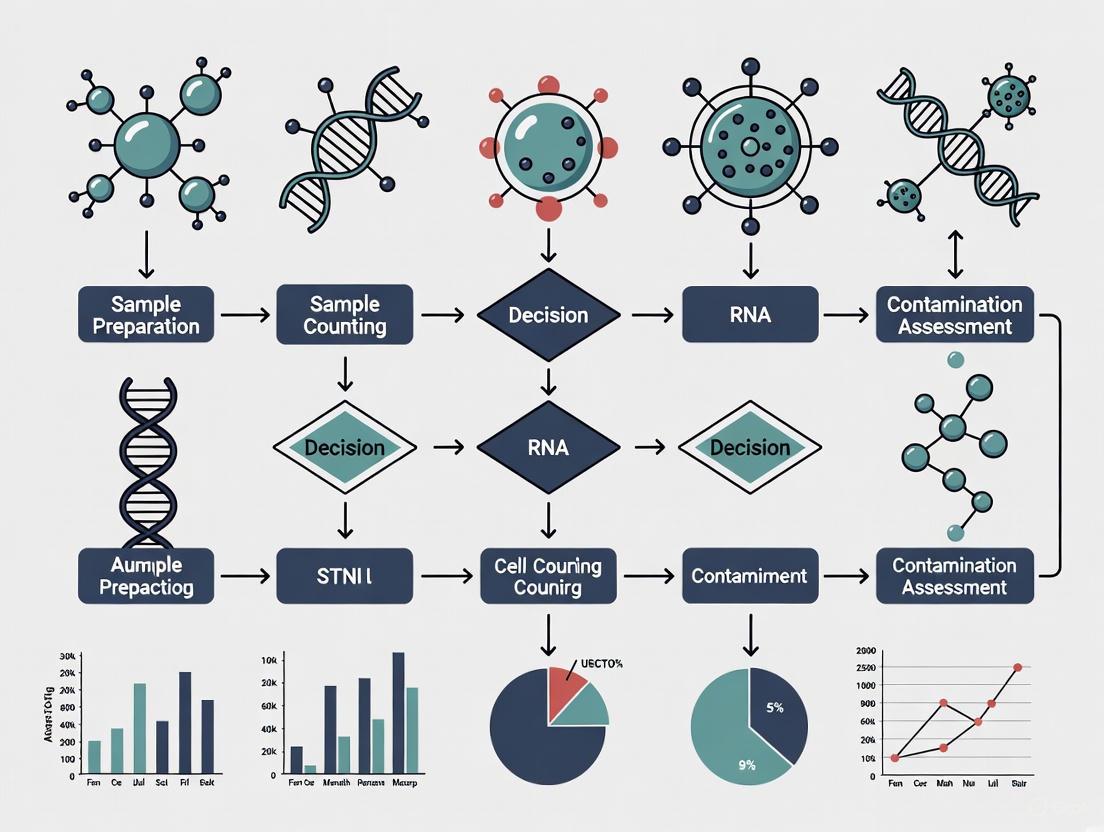
This article provides researchers, scientists, and drug development professionals with a current and comprehensive framework for assessing and mitigating contamination in automated cell counting.
Ensuring Purity in Cell Analysis: A Comprehensive Guide to Automated Cell Counting Contamination Assessment
Abstract
This article provides researchers, scientists, and drug development professionals with a current and comprehensive framework for assessing and mitigating contamination in automated cell counting. It explores the critical impact of contamination on data integrity in sensitive applications like cell and gene therapy, outlines established and emerging methodologies for contamination control—including guidelines for low-biomass samples—and presents robust validation protocols and comparative analyses of automated systems. The content synthesizes the latest standards and technological advancements to offer actionable strategies for ensuring the accuracy, reproducibility, and regulatory compliance of cell-based research and biomanufacturing.
The Critical Impact of Contamination on Automated Cell Counting Accuracy and Data Integrity
In the context of advancing biomanufacturing and cell therapy production, automated workflows have become a cornerstone for ensuring scalability and reproducibility. However, the integration of automation introduces specific vulnerabilities to contamination, which can compromise product safety, efficacy, and quality. Contamination in pharmaceutical products can be biological, chemical, or physical in nature, and its detection is a critical aspect of manufacturing compliance [1]. The growing application of sensitive biologicals, such as cell therapies and biologics, which are highly susceptible to microbial and particulate contamination, further underscores the need for advanced detection and control systems [1]. This application note details the primary sources of contamination within automated environments and provides validated protocols for their assessment and control, supporting the broader research thesis on automated cell counting contamination assessment.
Automated systems, while reducing manual intervention, present unique challenges for contamination control. The primary sources can be categorized as follows:
- Reagent-Derived Contamination: Introduction of impurities through contaminated media, sera, additives, or process buffers. This includes endotoxins, mycoplasma, and chemical impurities [1].
- Equipment-Derived Contamination: System-induced contaminants, including metallic particles from wear-and-tear (e.g., ferrous, non-ferrous, or stainless-steel), leachables from tubing and seals, or biofilms formed within fluidic pathways [1].
- Cross-Contamination: Carry-over of biological material (cells, microbes) or chemicals between different samples or batches processed sequentially on the same automated platform.
The impact of these contaminants is profound. Microbial contamination affects the safety, quality, and efficacy of pharmaceutical products, leading to product recalls, harm to reputation, and economic losses [1]. Therefore, pharmaceutical manufacturers are required to implement advanced quality control measures to identify and avoid such contamination.
Table 1: Common Contamination Sources in Automated Cell Culture and Counting Workflows
| Contamination Source | Example Contaminants | Potential Impact on Cells/Products | Common Detection Methods |
|---|---|---|---|
| Reagents & Consumables | Endotoxins, mycoplasma, chemical impurities, non-inert materials | Altered cell growth/metabolism, toxicity, cell death | Limulus Amebocyte Lysate (LAL) assay, PCR, chromatography [1] |
| Automation Equipment | Metal particles, leachables, plasticizers, lubricants, biofilm-derived microbes | Physical damage to cells, chemical toxicity, introduction of microbial load | Spectroscopy, microscopy, rapid microbiological methods [1] |
| Cross-Contamination | Foreign cells, residual chemicals or biomolecules from previous runs | Culture purity loss, inaccurate experimental data, product adulteration | PCR, short tandem repeat (STR) profiling, fluorescence in-situ hybridization (FISH) |
| Environmental | Airborne microbes, dust particles | Microbial overgrowth, physical interference with cell counting | Active air monitoring, particle counters, settle plates |
Experimental Protocols for Contamination Assessment
Protocol for Monitoring Microbial Contamination in Automated Bioreactors
Objective: To routinely screen for bacterial and fungal contamination in cell cultures maintained within automated bioreactor systems.
Materials:
- Automated cell culture system (e.g., CellXpress.ai) [2]
- Sterile sample collection tubes
- Culture media (e.g., Tryptic Soy Broth for bacteria, Sabouraud Dextrose Broth for fungi)
- PCR thermocycler and reagents for 16S rRNA (bacterial) and ITS (fungal) amplification [1]
- SYBR Green fluorescence dye
Method:
- Sample Collection: Using the automated liquid handler, aseptically withdraw a 1 mL sample from the bioreactor vessel at scheduled intervals (e.g., every 24 hours) and transfer it to a sterile tube.
- Culture-Based Detection (Viability Test):
- Inoculate 100 µL of the sample into separate bottles of sterile bacterial and fungal broth media.
- Incubate the bottles at appropriate temperatures (e.g., 37°C for bacteria, 25-30°C for fungi) for up to 14 days.
- Observe daily for turbidity, which indicates microbial growth.
- Molecular Detection (Rapid Identification):
- Extract total nucleic acid from a 500 µL aliquot of the sample.
- Set up quantitative PCR (qPCR) reactions with primers specific to conserved 16S rRNA (bacterial) and ITS (fungal) regions, using SYBR Green for detection.
- Run the qPCR with the following cycling conditions: initial denaturation at 95°C for 5 min; 40 cycles of 95°C for 30 sec, 55°C for 30 sec, and 72°C for 45 sec.
- Data Analysis: A positive qPCR result, confirmed by melt curve analysis and comparison to a standard curve, indicates the presence of microbial contamination. The cycle threshold (Ct) value can provide semi-quantitative estimation of the microbial load.
Protocol for Assessing Cross-Contamination in Automated Cell Counters
Objective: To validate the efficacy of cleaning protocols in automated cell counters and detect potential carry-over between samples.
Materials:
- Automated cell counter with fluidics system (e.g., LUNA-FX7 or Quantella platform) [3] [4]
- Two distinct cell lines with easily differentiable markers (e.g., GFP-expressing cells and non-fluorescent cells)
- Trypan Blue stain for viability assessment [4]
- Phosphate Buffered Saline (PBS) as a cleaning and background solution
Method:
- Preparation: Culture two cell lines, one expressing GFP and another without any fluorescence.
- Initial High-Load Sample:
- Prepare a concentrated suspension (e.g., > 1 x 10^6 cells/mL) of the GFP-expressing cells.
- Load the sample into the automated counter and perform a standard cell count and viability analysis. Record the results and captured images.
- Cleaning Cycle: Execute the instrument's standard automated cleaning protocol, which typically involves flushing the fluidic path with PBS or a cleaning solution [4].
- Test for Carry-Over:
- Immediately after the cleaning cycle, run a sample of PBS as a "blank."
- Analyze the blank sample using the fluorescence imaging capability of the counter. Any detected GFP-positive events indicate carry-over from the previous sample.
- Subsequent Sample Analysis:
- Load a sample of the non-fluorescent cell line.
- Perform a count and analyze the results for any anomalous fluorescent signals, which would indicate cross-contamination.
- Validation: Repeat the process at least three times to statistically validate the cleaning efficacy. The system should demonstrate zero detectable fluorescent events in the blank and the subsequent non-fluorescent sample.
Protocol for Quantifying Measurement Quality in Cell Counting
Objective: To apply a standardized framework for evaluating the performance and proportionality of cell counting methods, which is critical for ensuring data integrity and detecting anomalies that may signal contamination.
Materials:
- Stable cell line (e.g., E. coli NIST0056 or a mammalian cell line) [5]
- Cell counting instrument(s) to be evaluated (e.g., flow cytometer, impedance-based counter, automated image-based counter)
- Dilution series of the cell sample
Method (based on modified ISO 20391-2:2019 standard [5]):
- Experimental Design: Prepare a stock solution of cells and create a dilution series that spans a log-scale range of concentrations (e.g., from ~5 x 10^5 cells/mL to 2 x 10^7 cells/mL) [5].
- Measurement: Count each dilution level, including the stock, with the instrument(s) under evaluation. Perform multiple technical replicates for each concentration level.
- Quality Metric Calculation:
- Proportionality: Assess the linear relationship between the expected concentration (based on dilution factor) and the measured concentration. An ideal method will be proportional, meaning measured values decrease by the exact dilution factor.
- Coefficient of Variation (CV): Calculate the CV for the replicates at each concentration level to evaluate measurement precision and variability.
- R² Value: Determine the goodness-of-fit from the linear regression of expected vs. measured counts.
- Data Analysis: A method that shows high proportionality, a high R² value, and low CV across the concentration range is considered more fit-for-purpose. Significant deviations from proportionality or high variability at certain concentrations can indicate technical issues or sensitivity to interfering contaminants [5].
Table 2: Key Quality Metrics for Cell Counting Method Evaluation (based on ISO 20391-2)
| Quality Metric | Definition | Interpretation & Implication for Contamination Assessment |
|---|---|---|
| Proportionality | The linear relationship between dilution factor and measured cell concentration. | Deviation from proportionality can signal interference from contaminants or instrument malfunction. |
| Coefficient of Variation (CV) | The ratio of the standard deviation to the mean, measuring precision. | High CV can indicate inconsistent performance, potentially due to particulate contamination clogging fluidics or uneven sample mixing. |
| R² Value | The proportion of variance in the measured values explained by the expected values. | A low R² suggests poor method reliability or the presence of unpredictable interfering factors. |
| Limit of Detection (LOD) | The lowest concentration of cells that can be reliably distinguished from zero. | Critical for detecting low-level microbial contamination in otherwise "clean" samples. |
The Scientist's Toolkit: Key Reagents and Materials
Table 3: Essential Research Reagents and Solutions for Contamination Assessment
| Item | Function/Application | Example Use in Protocol |
|---|---|---|
| Fluorescent Probes (e.g., SYBR Green, Propidium Iodide) | Stain nucleic acids to differentiate between live/dead cells or detect microbial contamination via flow cytometry [5]. | Viability assessment and detection of bacterial/fungal contamination in qPCR assays. |
| Trypan Blue Stain | A vital dye that is excluded by live cells but taken up by dead cells, used for viability counting [4]. | Differentiating live and dead cells during counting on image-based platforms like Quantella. |
| Polymerase Chain Reaction (PCR) Reagents | Amplify specific DNA sequences to detect and identify microbial contaminants with high sensitivity [1]. | Targeted detection of bacterial (16S rRNA) and fungal (ITS) DNA in culture samples. |
| Sterile Phosphate Buffered Saline (PBS) | An isotonic solution used for washing cells, diluting samples, and flushing fluidic pathways in automated equipment. | Used as a diluent and as a "blank" solution for testing carry-over in automated cell counters. |
| Culture Media (e.g., Tryptic Soy Broth) | Supports the growth of microorganisms for viability-based contamination testing (CFU assays) [5]. | Enrichment broth for cultivating potential bacterial contaminants from automated system samples. |
| Calibration Beads | Particles of known size and concentration used to calibrate cell counters and ensure accuracy [3]. | Regular calibration of instruments like the LUNA series to maintain counting precision. |
Workflow Diagrams for Contamination Assessment
The following diagrams outline systematic approaches for monitoring and controlling contamination in automated environments.
Contamination Assessment Workflow
Proactive Contamination Control
Contamination represents a pervasive and critical challenge across the biomedical landscape, directly impacting product safety, diagnostic accuracy, and therapeutic efficacy. In the specific context of automated cell counting contamination assessment research, understanding and controlling contamination is paramount, as even minor contaminants can skew cell counts, compromise data integrity, and lead to erroneous conclusions in both basic research and clinical applications. This document outlines the consequences of contamination across key domains and provides detailed protocols for its detection and mitigation, supporting the broader thesis that advanced, automated assessment strategies are essential for ensuring reliability in cell-based research and therapeutics.
Contamination Consequences Across Key Domains
The impact of contamination varies significantly across different fields but consistently poses risks to patient safety, product quality, and diagnostic accuracy. The following sections and Table 1 summarize the major consequences.
Table 1: Consequences of Contamination in Different Domains
| Domain | Primary Contaminants | Key Consequences | Impact Level |
|---|---|---|---|
| Pharmaceutical Products & Drug Discovery | Chemical impurities, microbial agents, cross-contaminants [1] [6] | Product recalls, induction of antibiotic resistance, ecosystem damage from environmental release [7] [6] | Public health, Environmental |
| Cell Therapy Manufacturing | Bacteria, viruses, mycoplasma, cross-cell line contaminants [8] | Batch loss, patient treatment delays or termination, significant financial losses, operator stress [9] [8] | Patient safety, Therapeutic efficacy, Commercial |
| Clinical Diagnostics | IV fluids, skin commensals, environmental microbes [10] [11] | Misdiagnosis, unnecessary antibiotic treatments, prolonged hospitalization, increased healthcare costs [10] [11] | Patient care, Clinical outcomes |
Drug Discovery and Pharmaceutical Products
In pharmaceutical manufacturing, contaminants can be introduced during production or through improper disposal. Contaminated medicines, particularly those with toxic substances like diethylene glycol (DEG), have caused numerous preventable deaths, especially in pediatric populations [7]. Furthermore, the environmental release of pharmaceuticals, such as antibiotics and anti-inflammatories, through wastewater is an emerging crisis. These substances can disrupt aquatic ecosystems, cause behavioral alterations in marine life, and, most critically, contribute to the global spread of antimicrobial resistance (AMR) [6].
Cell Therapy Manufacturing
Cell therapies are highly vulnerable to contamination due to their living nature and the complexity of their manufacturing processes, which often rely on manual, open-handling steps [9] [8]. A single contamination event can lead to the complete loss of a batch. For autologous therapies (patient-specific), this can mean the irretrievable loss of a patient's therapeutic option [8]. This risk imposes a significant psychological burden on Cell Processing Operators (CPOs), with surveys indicating that 72% express concern about contamination, a fear that exceeds the actual reported incidence (18%) [8]. The industry is moving towards closed, automated systems to reduce this risk, improve reproducibility, and facilitate scale-up [9].
Clinical Diagnostics
In diagnostics, contamination compromises the accuracy of test results, leading to direct patient harm. A primary example is blood culture contamination (BCC), which can cause false positives and inaccurate diagnoses of bacterial infections. This often results in unnecessary antibiotic exposure, prolonged hospital stays, and increased rates of reported central-line-associated bloodstream infections (CLABSIs) [10]. Similarly, IV fluid contamination of blood samples is a common preanalytical error that dilutes or alters analyte measurements, potentially guiding clinicians toward inappropriate treatments such as unnecessary transfusions [11].
The pathways and impacts of contamination across these domains are visualized below.
Application Notes & Experimental Protocols
Protocol 1: Validation of Automated Cell Counting for CSF Diagnostics
Background: The manual Fuchs-Rosenthal chamber is the historical gold standard for cerebrospinal fluid (CSF) leukocyte counting. This protocol validates the use of an automated system (e.g., Sysmex XN-9000 with body fluid mode) against the manual method, a key step in automating contamination assessment workflows [12].
Materials & Reagents:
- CSF Samples: Fresh, native CSF from lumbar punctures or external ventricular drains.
- Automated Cell Counter: Sysmex XN-9000 or equivalent with dedicated body fluid mode.
- Counting Chamber: Fuchs-Rosenthal chamber.
- Microscope: Leica DM4B or equivalent.
- Dilution Solutions: 0.9% NaCl (Fresenius Kabi) and Türk's solution (Sigma-Aldrich).
- Microcentrifuge Tubes and Pipettes.
Procedure:
- Sample Collection & Handling: Collect CSF into standardized tubes. Process all samples within 60 minutes of collection to prevent cell degradation [12].
- Automated Counting: a. Switch the XN-9000 measurement channel to body fluid mode. b. Perform a system flush and background check to ensure no interfering particles are present. c. Gently mix the CSF sample and aspirate 160 µL for analysis. The instrument uses 80 µL for the cell count [12].
- Manual Counting: a. Gently mix the identical CSF sample tube. b. Load 20 µL of native, unstained CSF into the Fuchs-Rosenthal chamber. c. An experienced technician counts the cells under a microscope. For high-cell-count samples, dilute with 0.9% NaCl or Türk's solution prior to loading [12].
- Data Analysis: a. For all samples (n > 100 recommended), perform correlation analysis (e.g., Pearson correlation) between automated and manual counts. b. Generate a Bland-Altman plot to assess the agreement between the two methods and check for systematic bias. c. Pay special attention to the clinical threshold of <20 cells/µL, where diagnostic accuracy is most critical [12].
Expected Outcomes: A strong correlation (R > 0.95) and lack of systematic bias in the Bland-Altman plot demonstrate that automated counting is not inferior to manual counting, even at low cell counts, validating its use for rapid, high-sensitivity CSF analysis [12].
Protocol 2: Surveying Operator Stress and Contamination in Cell Processing
Background: The risk of contamination is a major stressor for CPOs. This protocol outlines a method for quantifying this psychological burden and linking it to specific operational practices, providing data to justify investments in automation and improved workflows [8].
Materials:
- Online Survey Platform: (e.g., Microsoft Forms, Qualtrics).
- Participant Pool: CPOs from universities, clinics, CDMOs, and pharmaceutical companies.
- Data Analysis Software: (e.g., SPSS, R) and AI-based text analysis tool (e.g., ChatGPT 4.0 for qualitative analysis).
Procedure:
- Questionnaire Design: Develop a survey with the following sections:
- Participant demographics (experience, organization type).
- Contamination concern level (5-point Likert scale or binary Yes/No).
- Personal experience with contamination events.
- Attribution of past contamination events (raw materials, reagents, personnel, equipment).
- Open-ended questions on specific contamination worries.
- Operational practices (material handling, BSC use) [8].
- Distribution and Recruitment: Distribute the survey to CPOs at multiple facilities (target >100 participants from >40 sites) over a defined period (e.g., 3 months) [8].
- Data Analysis: a. Quantitative Analysis: Calculate descriptive statistics (percentages, means) for concern levels and incident rates. b. Qualitative Analysis: Use an AI tool to consolidate open-ended responses into major thematic categories (e.g., "uncertainty regarding materials," "risk from open handling") and calculate the frequency of each theme [8].
Expected Outcomes: The survey is likely to reveal a high level of concern (>70%) that exceeds the actual incidence rate (~18%), highlighting the significant psychological burden. Analysis of open-ended responses will identify the most frequent operational fears, providing actionable data for targeted training and process optimization [8].
The workflow for validating an automated cell counting system, incorporating steps from the protocol, is detailed below.
The Scientist's Toolkit: Key Reagents & Materials
Table 2: Essential Research Reagents and Materials for Contamination Assessment
| Item | Function/Application | Example/Specification |
|---|---|---|
| Fuchs-Rosenthal Chamber | Gold standard manual chamber for precise cellular enumeration in body fluids like CSF [12]. | Standardized depth and grid pattern for accurate volume calculation. |
| Automated Cell Counter with Body Fluid Mode | High-throughput, impedance- and flow-based cell counting for body fluids. Reduces operator-dependent error [12]. | Sysmex XN-9000 Body Fluid mode. |
| Biological Safety Cabinet (BSC) | Provides a sterile, HEPA-filtered workspace for open cell culture manipulations, critical for contamination containment [8]. | Class II A2 or higher. |
| Closed System Processing Equipment | Automated systems (e.g., bioreactors, fill-finish) that minimize open-handling steps, reducing contamination risk and operator stress [9]. | Various "one solution" or modular platforms. |
| Decontamination Pass-Box | Allows for safe transfer of materials into cleanrooms or BSCs without compromising the sterile environment [8]. | Equipped with UV light and interlocking doors. |
| Sterile, Single-Use Reagents | Pre-filtered, endotoxin-tested cell culture media, supplements, and dissociation enzymes. Ensures consistent quality and reduces microbial introduction [8]. | Pharmaceutical-grade GMP reagents. |
| Rapid Microbiological Methods (RMM) | Advanced technologies (e.g., PCR, spectroscopy) for faster detection of microbial contaminants compared to traditional culture [1]. | PCR assays for bacterial/mold detection. |
Data Presentation and Analysis
Quantitative data from contamination studies and validation experiments must be clearly summarized. The table below compiles key metrics from the cited research.
Table 3: Quantitative Data on Contamination Incidence and Detection
| Metric | Reported Value / Finding | Context / Implication | Source |
|---|---|---|---|
| CSF Automated vs. Manual Counting Correlation | R = 0.95, p < 0.0001 | Strong correlation validates automated systems for clinical diagnostics [12]. | [12] |
| Cell Processing Operator Contamination Concern | 72% of operators | Highlights significant psychological stress and perceived risk in cell therapy manufacturing [8]. | [8] |
| Actual Cell Culture Contamination Incidence | 18% of operators | Indicates a gap between perceived and actual risk, though absolute rate remains impactful [8]. | [8] |
| Blood Culture Contamination (BCC) Rate (ICU vs Wards) | 1.49% (ICU), 1.09% (Wards) | Using NHSN commensal list provides a more accurate reflection of true BCC rates [10]. | [10] |
| Impact of BCC Rate on CLABSI | 9% increase in CLABSI for every 1% increase in BCC | Quantifies direct negative patient care outcome due to contamination [10]. | [10] |
| Projected Cell & Gene Therapy Manufacturing Market | $97.33 Billion by 2033 | underscores the massive financial stakes and need for scalable, contamination-free processes [13]. | [13] |
Low-biomass samples, characterized by minimal microbial DNA concentrations, present distinct challenges in microbiological research and clinical diagnostics. These samples, which include human tissues, blood, urine, and certain environmental niches, contain microbial DNA levels that approach the limits of detection for standard sequencing approaches [14] [15]. The high ratio of host to microbial DNA, combined with the inevitability of contamination from external sources, creates significant obstacles for accurate analysis [16]. When studying these environments, the contaminant "noise" can easily overwhelm the target "signal," potentially leading to false biological conclusions and misinterpretations [15]. This application note examines the unique challenges of low-biomass research and outlines robust protocols and solutions to ensure data reliability within the context of automated cell counting and contamination assessment.
Key Challenges in Low-Biomass Research
The analysis of low-biomass environments is fraught with technical pitfalls that can compromise data integrity. Contamination represents the most significant challenge, as contaminants can be introduced at every stage—from sample collection and storage to DNA extraction and sequencing [15]. These contaminants originate from various sources, including human operators, sampling equipment, laboratory reagents, and the kits used for nucleic acid isolation [14] [15]. Another critical issue is cross-contamination between samples during processing, which can occur through mechanisms like well-to-well leakage in plate-based workflows [15].
Furthermore, the high host DNA content relative to microbial DNA in samples like human milk or tissues drastically reduces the sequencing depth available for microbial characterization, making metagenomic sequencing particularly challenging [16]. Finally, technical biases such as preferential amplification during PCR can distort the representation of true microbial community structures, especially when starting template concentrations are low [14]. These combined factors necessitate specialized approaches throughout the experimental workflow to generate reliable and interpretable data.
Table 1: Major Contamination Sources and Mitigation Strategies in Low-Biomass Studies
| Contamination Source | Impact on Data | Recommended Mitigation |
|---|---|---|
| Human Operators | Introduction of human skin & oral microbiota into samples [15] | Use of PPE (gloves, masks, coveralls); minimal sample handling [15] |
| Sampling Equipment | Transfer of external microbial DNA to samples [15] | Use of single-use, DNA-free equipment; decontamination with ethanol & DNA-degrading solutions [15] |
| Laboratory Reagents/Kits | Background microbial DNA in extraction kits & PCR reagents [15] | Use of ultrapure, DNA-free reagents; inclusion of negative control samples [14] [15] |
| Laboratory Environment | Airborne contaminants settling on samples or equipment [15] | Use of HEPA-filtered hoods; UV irradiation of surfaces & equipment [15] |
Methodologies and Protocols
DNA Isolation and Sequencing Techniques for Low-Biomass Samples
Selecting appropriate DNA isolation methods is critical for success with low-biomass samples. A comparative study tested four commercial kits on human milk samples and mock communities, evaluating their performance based on consistency and contamination levels [16]. The DNeasy PowerSoil Pro (PS) Kit and the MagMAX Total Nucleic Acid Isolation (MX) Kit provided the most consistent 16S rRNA gene sequencing results with low levels of contamination [16]. The PS kit protocol involves centrifuging samples, resuspending pellets in Solution CD1, bead-beating for cell lysis, and automated DNA extraction [16]. The MX kit method uses a lysis/binding solution, rigorous bead-beating, and manual magnetic bead-based purification [16].
For sequencing, full-length 16S-ITS-23S rRNA gene sequencing using long-read technologies (e.g., nanopore sequencing) offers improved taxonomic resolution over standard 16S rRNA gene sequencing (e.g., V4 region), enabling more reliable tracking of bacterial transmission in low-biomass samples [16] [17]. A novel micelle-based PCR (micPCR) protocol significantly reduces chimera formation and PCR amplification bias by compartmentalizing single template molecules for clonal amplification [17]. When combined with nanopore sequencing on Flongle flow cells, this approach reduces the time-to-results to approximately 24 hours while improving species-level identification [17]. The protocol involves a two-step amplification process: first amplifying full-length 16S rRNA genes with tailed primers, followed by barcoding using nanopore-specific adapters [17].
Advanced Single-Cell Transcriptomic Approaches
Single-cell RNA sequencing (scRNA-seq) technologies provide powerful tools for dissecting functional heterogeneity within microbial communities, overcoming limitations of bulk metatranscriptomics [18]. These methods face unique challenges when applied to microbes, including rigid cell walls, lack of mRNA polyadenylation, and exceptionally low mRNA content compared to mammalian cells [18].
Several innovative platforms have been developed to address these challenges:
- PETRI-seq, microSPLiT, and BaSSSh-seq: These combinatorial indexing approaches do not require physical cell separation. Instead, cells are fixed and permeabilized, with cDNA synthesis occurring in situ. Cells acquire unique oligonucleotide barcodes through iterative splitting and pooling steps, enabling profiling of hundreds of thousands of cells without specialized equipment [18].
- smRandom-seq and ProBac-seq: These droplet-based methods use custom microfluidics or the commercially available 10X Chromium system to isolate individual cells in nanoliter droplets for RNA capture. ProBac-seq uses targeted probe arrays to selectively capture mRNA over rRNA, though this requires species-specific probe design [18].
- BacDrop and M3-seq: These hybrid approaches combine droplet-based cell isolation with enzymatic rRNA depletion (RNase H) to achieve high throughput with improved mRNA capture [18].
These scRNA-seq methods enable researchers to investigate heterogeneous responses to antibiotics, expression dynamics of mobile genetic elements, and metabolic variation within bacterial populations—applications particularly valuable for understanding microbial community function in low-biomass environments [18].
Table 2: Research Reagent Solutions for Low-Biomass Microbial Analysis
| Reagent/Material | Function/Purpose | Application Example |
|---|---|---|
| DNeasy PowerSoil Pro Kit | DNA isolation from difficult samples; effective inhibitor removal [16] | Human milk microbiota studies; low-biomass tissue samples [16] |
| MagMAX Total Nucleic Acid Isolation Kit | High-efficiency nucleic acid isolation using magnetic bead technology [16] | Processing milk, blood, and other low-biomass fluid samples [16] |
| LongAmp Taq 2x MasterMix | Efficient amplification of long amplicons; used in full-length 16S rRNA gene PCR [17] | micPCR/nanopore sequencing workflow for improved species-level resolution [17] |
| Universal rRNA Probe Sets | Depletion of ribosomal RNA during scRNA-seq library preparation [18] | Enhancing mRNA capture in bacterial single-cell transcriptomics [18] |
| ZymoBiomics Microbial Community Standards | Mock communities for validating method performance and accuracy [16] | Benchmarking DNA isolation and sequencing protocols [16] |
Workflow and Data Analysis
Comprehensive Workflow for Low-Biomass Sample Processing
The following diagram outlines a recommended end-to-end workflow for low-biomass sample processing, integrating contamination control measures at each stage:
Contamination Assessment and Data Normalization
Implementing rigorous contamination assessment protocols is essential for reliable data interpretation from low-biomass studies. The consensus guidelines recommend collecting and processing multiple types of negative controls alongside experimental samples, including extraction controls (reagents without sample), PCR water controls, and sampling controls (e.g., swabs exposed to the air in the sampling environment) [15]. These controls should be carried through the entire workflow alongside actual samples.
For data normalization, the micPCR protocol incorporates a unique approach using an internal calibrator (IC)—typically 1,000 Synechococcus 16S rRNA gene copies—added to all samples and negative controls prior to amplification [17]. This enables absolute quantification of 16S rRNA gene copies in each sample, allowing for precise subtraction of contaminating DNA molecules identified in the negative controls [17]. This method provides a significant advantage over relative abundance measurements, particularly for clinical applications where detecting true, low-abundance pathogens is critical.
Low-biomass microbiome research demands specialized approaches throughout the experimental workflow, from sample collection to data analysis. Key considerations include implementing rigorous contamination control measures, selecting appropriate DNA isolation methods such as the PowerSoil Pro or MagMAX kits, utilizing advanced sequencing approaches like full-length 16S rRNA gene sequencing with micPCR, and applying robust bioinformatic corrections based on negative controls. Single-cell transcriptomic methods further enhance our ability to resolve functional heterogeneity within these challenging samples. By adopting these comprehensive strategies, researchers can generate more reliable and interpretable data from low-biomass environments, advancing both fundamental knowledge and clinical applications in microbiome science.
In biotechnology and cell therapy, accurate cell counting is a fundamental measurement that underpins critical decisions, from research reproducibility to determining therapeutic doses for patients. The International Organization for Standardization (ISO) has developed the ISO 20391 series to provide a standardized framework for cell counting, addressing the significant variability that can occur between different methods, instruments, and laboratories [19]. These standards are particularly crucial in the context of automated cell counting and contamination assessment, establishing a common language and validation framework to ensure data reliability and international credibility [19].
The core purpose of ISO 20391 is to ensure the reliability and reproducibility of cell counting data, which is especially vital in Good Manufacturing Practice (GMP) environments where cell counting data are directly linked to the quality control of cell-based therapies and patient safety [19] [20]. For researchers focusing on contamination assessment, this standardized baseline is essential for distinguishing true contamination signals from methodological artifacts.
Core Concepts of ISO 20391-1
ISO 20391-1 establishes three fundamental concepts for quality control in cell counting: accuracy, precision, and uncertainty [19].
- Accuracy refers to how close a measurement is to the true value. For example, if the true cell concentration is 1 × 10⁶ cells/mL, a measurement of 0.95 × 10⁶ demonstrates higher accuracy than 0.70 × 10⁶ [19].
- Precision indicates the consistency of repeated measurements on the same sample. Results of 0.98, 1.00, 1.01, 0.99, and 1.02 × 10⁶ cells/mL clustered closely together demonstrate high precision [19].
- Uncertainty acknowledges that all measurements contain an error margin and should be expressed numerically (e.g., 1.0 × 10⁶ ± 0.05 × 10⁶ cells/mL), defining the range within which the true value likely exists [19].
These concepts form the basic language for describing data reliability in cell counting and are central to understanding and implementing the ISO standards effectively.
The IQ/OQ/PQ Framework for Instrument Qualification
ISO 20391-1 outlines a sequential qualification process to ensure cell counting instruments operate properly in the research environment [19]:
- Installation Qualification (IQ): Verifies the instrument has been correctly installed in the intended environment, checking factors like power supply, temperature, software version, and installation space.
- Operational Qualification (OQ): Confirms the instrument operates correctly as designed, involving running built-in standard tests, checking image capture, and verifying analysis functions.
- Performance Qualification (PQ): Guarantees the instrument delivers expected performance under actual experimental conditions by measuring various cell samples to verify accuracy, precision, and uncertainty remain within defined ranges.
This three-stage assurance process moves from basic installation verification to confirming the instrument delivers reliable data fit for research purposes [19].
Experimental Design & Statistical Analysis per ISO 20391-2
A significant challenge in cell counting is evaluating method quality in the absence of reference materials. ISO 20391-2 addresses this through a dilution series experimental design and statistical framework that quantifies cell counting performance independent of measurement platforms and without requiring a reference material [21].
The Dilution Series Approach and Principle of Proportionality
This methodology utilizes the fundamental property of proportionality of cell count to dilution as an internal control to evaluate cell counting quality [21]. The core principle states that for an accurate cell counting process, measured cell concentration must be proportional to the dilution factor. Deviation from proportionality indicates measurement error [21].
The experimental design involves creating a dilution series from a concentrated cell stock, with key elements including [21]:
- Random sampling to avoid systematic bias
- Replication at each dilution level to assess precision
- Independent dilution series to create a statistically robust dataset
- Dilution integrity verification using calibrated scales to measure pipetted volumes
This design allows researchers to evaluate critical aspects of measurement quality even when true accuracy cannot be assessed due to lack of reference materials [21].
Quality Indicators and Statistical Analysis
The dilution series experimental design enables the calculation of specific quality indicators that form the basis for evaluating cell counting method performance [21] [22]:
- Precision: Quantified by the Coefficient of Variation (%CV), which measures the closeness of agreement between replicate measurements.
- Deviation from Proportionality: Assessed through the Proportionality Index (PI) and the coefficient of determination (R²), which quantify how well the measured counts track with the dilution factors.
These performance metrics characterize the entire cell count measurement process, including the measurement platform, method-specific factors, and the specific cell preparation measured [21].
Quantitative Quality Metrics and Performance Evaluation
Implementation of ISO 20391-2 yields specific, quantifiable metrics for evaluating cell counting method performance. The table below summarizes the key quality indicators and their interpretation:
Table 1: Key Quality Indicators for Cell Counting Method Performance
| Quality Indicator | Description | Interpretation | Target Value Range |
|---|---|---|---|
| Coefficient of Variation (%CV) | Measures precision as the standard deviation of replicates expressed as a percentage of the mean [21] | Lower %CV indicates higher precision and repeatability | Ideally <10%; acceptable depends on application [22] |
| Proportionality Index (PI) | Quantifies deviation from ideal proportional relationship between cell count and dilution factor [21] [22] | PI closer to 1 indicates minimal systematic error; significant deviation suggests measurement issues | Target PI ≈ 1 [21] |
| Coefficient of Determination (R²) | Measures how well the dilution series data fits a proportional relationship [22] | R² closer to 1 indicates strong linear relationship to dilution | R² > 0.98 suggests good proportionality [22] |
These metrics provide a standardized approach to evaluate, compare, and select cell counting methods that are fit-for-purpose, increasing confidence in cell counting results, particularly for critical applications like cell therapy manufacturing [22].
Protocols for Implementing ISO Cell Counting Standards
Workflow for Cell Counting Method Validation
The following diagram illustrates the complete experimental workflow for validating a cell counting method according to ISO 20391 guidelines:
Step-by-Step Experimental Protocol
- Cell Stock Preparation: Prepare a homogeneous, concentrated cell stock suspension. Characterize the stock using initial counts to estimate appropriate dilution ranges [21] [22].
- Dilution Series Design: Prepare a minimum of 5 dilution levels covering the typical working range of the counting method. Prepare each dilution independently from the stock to ensure statistical robustness [21].
- Dilution Integrity Verification: Use a calibrated scale to measure the masses of solution pipetted when creating each independent dilution. This verification ensures any deviation from proportionality is due to the counting method rather than pipetting error [21].
- Sample Analysis & Replication: For each dilution level, prepare and count a minimum of 3 replicate samples. Implement random sampling to avoid systematic bias [21].
- Data Collection: Record raw cell counts for each replicate at every dilution level. Maintain consistent data formatting for analysis [22].
- Statistical Analysis: Calculate the Coefficient of Variation (%CV) for replicates at each dilution level. Perform regression analysis of measured cell concentration against dilution factor to determine R² and Proportionality Index [21] [22].
- Performance Evaluation: Compare calculated quality indicators against pre-defined acceptance criteria (e.g., %CV < 10%, R² > 0.98) to determine if the counting method is fit-for-purpose [22].
Relationship Between Core Concepts and Quality Indicators
The diagram below illustrates how the core concepts of ISO 20391-1 connect to the experimental approach and quality indicators defined in ISO 20391-2:
Research Reagent Solutions for Cell Counting
Successful implementation of ISO cell counting standards requires appropriate selection of reagents and materials. The table below details essential research reagent solutions and their functions:
Table 2: Essential Research Reagent Solutions for Cell Counting
| Reagent/Material | Function | Application Notes |
|---|---|---|
| Viability Stains | Differentiate live and dead cells based on membrane integrity [20] | Trypan blue is common; fluorescent stains (AO/PI) offer higher accuracy [22] |
| Reference Materials | Test samples with defined concentration/viability for validation [19] | Often expensive and challenging to manage; used for instrument calibration |
| Cell Suspension Media | Medium for suspending cells during counting [20] | Culture medium recommended over salt solutions which can affect stain binding [20] |
| Validation Slides | Alternative to reference materials for routine performance verification [19] | More practical for daily use; overcome cost/supply limitations of reference materials |
Application in Automated Cell Counting & Contamination Assessment
For researchers developing automated cell counting contamination assessment platforms, the ISO 20391 framework provides essential validation methodologies. Novel technologies, including smartphone-based platforms and microfluidic systems, must demonstrate performance compatibility with established standards [4] [23].
The dilution series experimental design is particularly valuable for validating label-free, non-invasive contamination detection methods that use machine learning and UV absorbance spectroscopy [24]. By establishing baseline performance metrics before introducing controlled contamination, researchers can rigorously quantify how contamination affects counting accuracy and precision, moving beyond simple yes/no detection to quantitative impact assessment.
Furthermore, implementing these standards supports the integration of advanced cell counting platforms as Process Analytical Technologies (PAT) in automated cell therapy manufacturing, where real-time quality control is essential for reducing costs and ensuring product safety [23].
Proactive Contamination Control: Strategies, Protocols, and Instrument-Specific Applications
Best Practices for Sample Collection and Handling to Minimize Initial Contamination
In the field of automated cell counting and contamination assessment, the integrity of research data and the safety of advanced therapies like Cell Therapy Products (CTPs) are fundamentally dependent on the initial quality of the sample. Contamination introduced during collection and handling can lead to inaccurate cell counts, compromised viability assessments, and ultimately, invalid experimental or clinical outcomes [24] [25]. This document outlines evidence-based best practices and detailed protocols designed to minimize initial contamination, ensuring that samples entering automated analysis pipelines are of the highest possible integrity.
Adhering to these practices is not merely a procedural formality; it is a critical component of research quality. Studies indicate that a significant majority of laboratory errors occur during the pre-analytical phase, often due to improper handling or contamination [25]. By establishing rigorous front-end controls, researchers can enhance the sensitivity, reproducibility, and reliability of downstream automated analyses, including those leveraging novel techniques like machine learning-aided UV spectroscopy for sterility testing [24].
Fundamental Best Practices for Contamination Control
A proactive approach to contamination control requires a combination of prepared materials, proper personnel technique, and a structured workflow. The following principles form the foundation of effective sample integrity management.
Personal Protective Equipment (PPE) and Aseptic Technique
Personnel are a primary potential source of microbial and cross-contamination. All individuals involved in sample collection and handling must wear appropriate PPE, typically including well-fitting non-sterile gloves, a lab coat, and eye protection [26] [27]. Gloves should be changed between samples, or when moving from a potentially contaminated to a clean area, to prevent cross-contamination [27]. Furthermore, performing proper hand hygiene before and after the collection procedure is essential [26].
Workspace Preparation and Environmental Control
The collection environment must be designed to minimize the introduction of airborne contaminants. A clean, well-lit, quiet, and uncluttered workspace is recommended [26]. For procedures involving open containers, the use of a laminar flow hood is critical. These hoods maintain a sterile environment by passing air through High-Efficiency Particulate Air (HEPA) filters, which trap 99.9% of airborne microbes, and by providing a constant, laminar flow of air that sweeps particles away from the sample [27]. The workspace surface should be cleaned with disinfectants such as 70% ethanol or 5-10% bleach before and after sample collection [25].
Selection and Sterilization of Collection Equipment
The use of single-use, sterile disposable equipment is the most effective way to avoid contamination from reagents and tools [26] [25]. This includes needles, syringes, swabs, and collection tubes. For example, when collecting respiratory specimens, only synthetic fiber swabs with thin plastic or wire shafts should be used; calcium alginate swabs or swabs with wooden shafts can contain substances that inactivate viruses and inhibit molecular tests [28]. If reusable tools (e.g., homogenizer probes) are necessary, they must be meticulously cleaned and sterilized, with validation runs using blank solutions to confirm the absence of residual analytes [25].
Table 1: Essential Research Reagent Solutions for Contamination Control
| Item | Function/Benefit | Key Considerations |
|---|---|---|
| Sterile Swabs | Collection of upper respiratory and surface samples. | Use synthetic fiber (e.g., polyester) with plastic/wire shafts; avoid calcium alginate/wood [28]. |
| Viral Transport Media | Preserves specimen integrity during transport. | Ensure compatibility with downstream automated analysis [28]. |
| 70% Ethanol | Effective surface disinfectant. | Commonly used for decontaminating lab benches and equipment [25]. |
| DNA/RNA Decontamination Solutions | Eliminates residual genetic material. | Critical for PCR workflows to prevent false positives (e.g., DNA Away) [25]. |
| HEPA Filters | Provides sterile air for sample processing. | Used in laminar flow hoods; blocks 99.9% of airborne microbes [27]. |
| Trypan Blue | Stain for assessing cell viability. | Used in conjunction with automated cell counters and image-based systems [4]. |
| Sterile, Leak-Proof Collection Containers | Maintains sample integrity and ensures handler safety. | Required for lower respiratory tract specimens and other liquid samples [28]. |
Detailed Experimental Protocols for Low-Contamination Collection
Protocol: Sterile Swab Collection for Microbial Analysis
This protocol is adapted from stringent clinical guidelines for upper respiratory specimen collection and can be applied to surface sampling in research environments [28].
3.1.1 Materials
- Individually wrapped, sterile synthetic fiber swabs (preferred) [28]
- Sterile transport tube containing appropriate medium
- PPE (gloves, lab coat, face mask)
- Cooler with cold packs for transport (if required)
3.1.2 Pre-Collection Steps
- Plan Ahead: Assemble all equipment on a clean, disinfected surface within easy reach [26].
- Patient/Subject Identification: Confirm the identity of the subject and label the transport tube with at least two unique identifiers (e.g., subject ID, date, sample type) before collection [29] [30].
- Hand Hygiene and Gloving: Perform hand hygiene and put on a clean pair of non-sterile gloves [26].
3.1.3 Collection Steps
- If using bulk-packaged swabs, carefully dispense a single swab into a sterile bag without touching the shaft or tip to any surface [28].
- Sample Acquisition: Remove the swab from its packaging, grasping only the distal end. For a surface sample, firmly roll the swab over the target area while rotating it. For a nasopharyngeal sample, insert the swab gently into the nostril parallel to the palate until resistance is met, rotate for several seconds, and slowly withdraw [28].
- Placement in Transport Media: Immediately place the swab tip-first into the transport tube and break the shaft at the score line, if present. Secure the cap tightly [28].
3.1.4 Post-Collection Steps
- Documentation: Record the date, time, exact collection site, and collector's initials. Any deviations from the protocol must be documented [29] [30].
- Storage and Transport: Place the sample in a pre-cooled cooler for immediate transport to the laboratory. Adhere to the required storage conditions to preserve sample integrity [29].
Protocol: Aseptic Liquid Sample Collection (e.g., CSF, Blood)
This protocol is critical for samples destined for sensitive automated analyses like the Sysmex XN-9000 body fluid mode or the Quantella smartphone-based platform [12] [4].
3.2.1 Materials
- Tourniquet (single-use or disinfected) [26]
- Safety-engineered blood collection set or sterile syringe and needles [26]
- Appropriate evacuated collection tubes
- 70% alcohol swabs for skin disinfection
- Gauze or cotton wool
- Sharps container
3.2.2 Pre-Collection Steps
- Patient Preparation: Identify the patient using two identifiers and explain the procedure. Position the patient comfortably, ideally in a supine position [26].
- Site Selection: Inspect the arm to locate a visible, straight vein. Apply the tourniquet and disinfect the site with a 70% alcohol swab using a circular motion, moving from the center outward. Allow the site to air dry [26].
3.2.3 Collection Steps
- Perform Venepuncture: Using an aseptic technique, perform the blood draw. Do not touch the puncture site after disinfection [26].
- Fill Tubes: Gently fill the required collection tubes in the correct order to prevent additive cross-contamination [26].
- Sample Mixing: Invert the tubes gently several times to mix the blood with additives, avoiding vigorous shaking that can cause hemolysis [26].
3.2.4 Post-Collection Steps
- Patient Care: Apply pressure to the site with gauze and check that bleeding has stopped [26].
- Sample Labeling: Label all tubes at the bedside with the required unique identifiers [29].
- Disposal: Immediately dispose of the used needle and syringe as a single unit in a puncture-resistant sharps container [26].
- Transport: Process and transport samples promptly. For instance, Cerebrospinal Fluid (CSF) samples can rapidly lose diagnostic value if analysis exceeds a 2-hour window [12].
Validation and Quality Control in Automated Analysis
Implementing these collection practices is the first step. Their effectiveness must be validated through rigorous quality control (QC) measures integrated with modern automated analysis technologies.
Automated Contamination Assessment Techniques
Traditional sterility testing methods can take up to 14 days, which is incompatible with the rapid timelines required for cell therapies [24] [23]. Emerging technologies are addressing this bottleneck. For instance, a novel method using UV absorbance spectroscopy combined with machine learning can provide a definitive yes/no contamination assessment within 30 minutes [24]. This method is label-free, non-invasive, and can be used as a preliminary continuous safety test during manufacturing, triggering more complex rapid microbiological methods (RMMs) only when potential contamination is detected [24].
Correlation of Automated and Manual Counts
The transition to automated systems for critical cell analysis, such as in Cerebrospinal Fluid (CSF) diagnostics, requires validation against the gold standard. A 2025 study comparing automated cell counting (Sysmex XN-9000) with manual counting in a Fuchs-Rosenthal chamber showed a strong correlation (R=0.95, p<0.0001) across 119 samples [12]. This high level of agreement, even at clinically critical low cell counts (<20 cells/µL), demonstrates that automated systems do not lack diagnostic sensitivity and are a powerful tool when used in the right clinical and research setting [12].
Table 2: Comparison of Manual vs. Automated Cell Counting in CSF (n=119 samples)
| Metric | Manual Counting (Fuchs-Rosenthal) | Automated Counting (Sysmex XN-9000) |
|---|---|---|
| Overall Correlation | Gold Standard | R=0.95, p < 0.0001 [12] |
| Correlation at <20 cells/µL | Gold Standard | R=0.9, p < 0.0001 [12] |
| Typical Processing Time | Slower, requires skilled technician [12] | Faster, high availability, less specialized staff [12] |
| Key Advantage | Long-established reference method [12] | High accuracy and no lack of diagnostic sensitivity even at low counts [12] |
Minimizing initial contamination during sample collection and handling is a non-negotiable prerequisite for robust and reliable automated cell analysis. By integrating the fundamental practices of aseptic technique, proper equipment use, and meticulous documentation with advanced, rapid contamination screening technologies, researchers can significantly enhance data quality. The strong correlation between modern automated systems and gold-standard manual methods provides confidence that well-collected samples will yield accurate results. Adhering to these detailed protocols ensures that the promise of automation—increased throughput, reproducibility, and sensitivity—is fully realized, thereby accelerating progress in biomedical research and personalized medicine.
In the field of automated cell counting and contamination assessment, ensuring the sterility of biological samples and equipment is paramount for both research accuracy and patient safety, particularly in advanced therapies like cell therapy manufacturing. Contamination, whether microbial or through foreign genetic material, can compromise experimental results and the efficacy of therapeutic products. This document details established and emerging decontamination protocols, focusing on UV sterilization and DNA-removing reagents, framed within the context of automated cell culture systems. These protocols are designed to be integrated into a robust quality control workflow, helping researchers and drug development professionals maintain the highest standards of cleanliness and data integrity.
Application Notes & Experimental Protocols
Protocol 1: Rapid Microbial Contamination Detection via UV Absorbance and Machine Learning
This protocol describes a method for the rapid, label-free, and non-invasive detection of microbial contamination in cell therapy products (CTPs) during the manufacturing process. It serves as a powerful preliminary sterility test, significantly reducing the time-to-result compared to traditional methods [24].
- 1. Objective: To detect microbial contamination in cell culture fluids within 30 minutes using UV absorbance spectroscopy and a machine learning algorithm.
- 2. Principle: Microbial contamination alters the biochemical composition of the cell culture medium. These changes produce unique light absorption patterns ("fingerprints") in the ultraviolet spectrum. A trained machine learning model recognizes these patterns and provides a definitive yes/no contamination assessment [24].
3. Key Advantages:
4. Materials & Reagents:
- Cell culture sample
- UV-transparent microplate or cuvette
- UV-Vis Spectrophotometer
- Pre-trained machine learning model for contamination assessment [24]
5. Step-by-Step Procedure:
- Sample Collection: Aseptically withdraw a small volume of cell culture fluid from the bioreactor or culture vessel at designated intervals.
- Sample Loading: Transfer the sample to a UV-transparent microplate or cuvette.
- Spectroscopic Measurement: Place the sample in the spectrophotometer and measure the UV absorbance spectrum across a predefined wavelength range (e.g., 220-300 nm).
- Data Analysis: Input the obtained absorbance spectrum into the pre-trained machine learning model.
- Result Interpretation: The model outputs a "yes" or "no" classification for contamination. A "yes" result should trigger immediate corrective actions and confirmation with a compendial method [24].
6. Data Interpretation: This method is intended as a rapid, preliminary check. Any positive contamination result must be confirmed through standard, validated sterility testing methods before final product release.
Protocol 2: DNA Decontamination Using Non-Thermal Plasma (NTP)
This protocol outlines the use of Non-Thermal Plasma (NTP) for effective DNA decontamination of forensic instruments, such as Vacuum Metal Deposition (VMD) chambers. It is particularly valuable for reaching areas inaccessible to conventional UV-C light and avoids the use of solvents that can interfere with vacuum systems [31].
- 1. Objective: To achieve at least a 100-fold reduction in DNA concentration on surfaces and instruments within a vacuum chamber.
- 2. Principle: Non-thermal plasma, generated within a vacuum, liberates reactive species. These species damage and degrade DNA sources, including cell-free DNA and human cells, effectively decontaminating the chamber [31].
3. Key Advantages:
4. Materials & Reagents:
- Vacuum Metal Deposition (VMD) chamber or similar plasma-capable equipment
- Non-Thermal Plasma generator
- Vacuum pump
5. Step-by-Step Procedure:
- Chamber Loading: Place the items to be decontaminated inside the VMD chamber.
- Vacuum Establishment: Evacuate the chamber to a pressure of 2 × 10⁻¹ mbar [31].
- Plasma Generation: Activate the NTP generator at maximum power for a 1-hour exposure time [31].
- Ventilation: After the cycle is complete, vent the chamber and remove the decontaminated items.
6. Data Interpretation: Studies on human cells and cell-free DNA show this specific condition (1h, 2x10⁻¹ mbar, max power) results in a stable plasma and an approximate 100-fold reduction in DNA concentration [31].
Protocol 3: Surface Decontamination of Automated Mobile Robots (AMRs)
This protocol validates two methods for decontaminating Autonomous Mobile Robots (AMRs) used in hospital and laboratory logistics, such as transporting biological samples. Maintaining microbiological cleanliness is critical to prevent cross-contamination [32].
- 1. Objective: To reduce bacterial and fungal contamination on AMR surfaces below the CDC-recommended threshold of <2.5 colony-forming units per cm² (CFU/cm²) [32].
- 2. Principle: Manual wiping physically removes and chemically inactivates microbes, while fumigation uses vaporized disinfectant to gas out contaminants in a non-contact manner [32].
3. Key Advantages:
4. Materials & Reagents:
- For Manual Wiping: Disposable wipes, EPA-approved liquid disinfectant (e.g., hydrogen peroxide-based, quaternary ammonium compounds).
- For Fumigation: Vaporized Hydrogen Peroxide (VHP) generator, compatible hydrogen peroxide solution.
5. Step-by-Step Procedure:
- Method A: Manual Wiping
- Preparation: Don appropriate personal protective equipment (PPE).
- Application: Soak a wipe in the disinfectant, ensuring it is damp but not dripping.
- Cleaning: Thoroughly wipe all robot surfaces, including buttons, handles, and seams, applying firm pressure. Pay special attention to hard-to-reach areas.
- Dwell Time: Ensure the surface remains wet for the contact time specified by the disinfectant manufacturer.
- Drying: Allow the surface to air dry.
- Method B: Fumigation
- Containment: Place the AMR in a contained area or chamber suitable for fumigation.
- Setup: Position the VHP generator and ensure the area is sealed.
- Decontamination Cycle: Initiate the fumigation cycle using a low-temperature vaporized hydrogen peroxide solution. Note: Standard concentrations may need optimization for hard-to-reach areas [32].
- Aeration: After the cycle, aerate the area according to the manufacturer's instructions before retrieving the AMR.
- Method A: Manual Wiping
6. Data Interpretation: Microbiological sampling (e.g., swab tests followed by plate counts) should be performed post-decontamination to verify efficiency. Manual wiping has been shown to be more effective than standard fumigation at eradicating fungal contamination and meeting CDC standards in hard-to-reach areas [32].
The following tables summarize key quantitative data from the described decontamination methods and related technologies for easy comparison.
Table 1: Performance Comparison of Decontamination & Detection Methods
| Method | Key Metric | Result/Threshold | Time to Result | Reference |
|---|---|---|---|---|
| Traditional Sterility Test | Contamination Detection | Visual confirmation of growth | 14 days [24] | - |
| Rapid Micro Method (RMM) | Contamination Detection | Colorimetric/Fluorescent signal | 7 days [24] | - |
| UV + Machine Learning | Yes/No Contamination Assessment | Pattern Recognition | 30 minutes [24] | - |
| Non-Thermal Plasma (NTP) | DNA Quantity Reduction | ~100-fold reduction [31] | 1 hour [31] | - |
| Manual Wiping (AMR) | Surface Cleanliness | <2.5 CFU/cm² (CDC threshold) [32] | Minutes to hours (including dwell time) | - |
| Fumigation (VHP) for AMR | Surface Cleanliness | >2.5 CFU/cm² in hard-to-reach areas [32] | Several hours (including aeration) | - |
Table 2: Optimized Parameters for DNA Decontamination with Non-Thermal Plasma
| Parameter | Optimized Condition | Notes |
|---|---|---|
| Power Setting | Maximum Power | Ensures stable and effective plasma generation [31] |
| Exposure Time | 1 hour | Sufficient for significant DNA degradation [31] |
| Chamber Pressure | 2 x 10⁻¹ mbar | Critical for maintaining stable plasma conditions [31] |
| Efficacy | ~100-fold DNA reduction | Observed on both human cells and cell-free DNA [31] |
Visualized Workflows
The following diagrams illustrate the logical workflows and relationships for the key protocols discussed.
UV-Based Contamination Screening Workflow
DNA Decontamination with Non-Thermal Plasma
The Scientist's Toolkit: Essential Research Reagents & Materials
Table 3: Key Reagents and Materials for Decontamination and Analysis
| Item | Function/Application | Example/Note |
|---|---|---|
| UV-Vis Spectrophotometer | Measures the absorbance of light by a sample across UV and visible wavelengths. Essential for the rapid contamination detection protocol [24]. | - |
| Non-Thermal Plasma Generator | Generates a plasma field within a vacuum for DNA decontamination of instruments and hard-to-reach surfaces [31]. | Can be integrated into Vacuum Metal Deposition chambers [31]. |
| Vaporized Hydrogen Peroxide (VHP) System | Used for fumigation-based decontamination of rooms, chambers, or large equipment like Autonomous Mobile Robots (AMRs) [32]. | Effective for bacteria; may require optimization for fungi [32]. |
| EPA-Registered Disinfectants | Liquid chemicals used for manual wiping and surface decontamination. Effective against a broad spectrum of microbes [32]. | Includes hydrogen peroxide-based solutions and quaternary ammonium compounds. |
| Microbial Growth Media | Used in traditional compendial sterility testing to culture and detect microbial contamination over 14 days [24] [23]. | - |
| Limulus Amoebocyte Lysate (LAL) | Used in a compendial assay to detect the presence of endotoxins, which are pyrogenic components of bacterial cell walls [23]. | - |
| Trypan Blue | A vital dye used in cell counting and viability assessment. It is excluded by live cells but taken up by dead cells, which appear blue [4] [23]. | Commonly used with hemocytometers or automated cell counters. |
Implementing Rigorous Negative and Process Controls for Contamination Tracking
In the field of automated cell counting and cell therapy manufacturing, the accuracy of cell analysis is fundamentally dependent on the exclusion of microbial contamination. Contaminated cell cultures can compromise experimental reproducibility, lead to erroneous cell count and viability data, and pose significant safety risks in therapeutic contexts [24]. Traditional sterility testing methods, which rely on growth enrichment and can take up to 14 days, are ill-suited for processes requiring timely results, such as the production of life-saving cell therapy products (CTPs) [24]. Consequently, implementing a framework of rigorous negative and process controls is paramount. These controls enable the early detection of contamination, facilitate the validation of cell counting methods, and ensure the reliability of data generated by automated platforms. This document outlines detailed protocols and application notes for integrating these essential controls within a research workflow focused on automated cell counting and contamination assessment.
Key Research Reagent Solutions
The following table details essential reagents and materials required for implementing the contamination controls and cell counting validation protocols described in this document.
Table 1: Essential Research Reagents and Materials for Contamination Tracking and Cell Counting
| Item Name | Function/Brief Explanation |
|---|---|
| Acridine Orange (AO) / Propidium Iodide (PI) | Fluorescent dyes used in tandem for cell viability assessment. AO stains nucleic acids in all cells (green fluorescence), while PI only penetrates compromised membranes of dead cells (red fluorescence) [33]. |
| Trypan Blue | A vital dye used in dye-exclusion assays to distinguish viable from non-viable cells. It is typically used with automated brightfield cell counters and hemocytometers [34] [35]. |
| Magnetic Beads (e.g., for T-cell Isolation) | Used for positive or negative selection of specific cell types (e.g., T-cells) from complex mixtures like PBMCs. Their presence can interfere with some automated cell counting algorithms, necessitating robust counting controls [36]. |
| Lysis Buffer (for RBC removal) | Used to lyse red blood cells in samples like leukopaks, simplifying the counting and analysis of target white blood cells by removing a major source of debris [36]. |
| Cell Culture Wash Buffer (e.g., HBSS with supplements) | Used for washing and diluting cell samples without causing activation or damage, crucial for preparing consistent dilution series for method validation [36]. |
| USA F 1951 Resolution Test Chart | A standardized slide used to validate the resolution and imaging capabilities of automated, image-based cell counting systems like Quantella [34]. |
Experimental Protocols for Control and Validation
Protocol: Validation of Cell Counting Method Suitability
This protocol, adapted from ISO 20391-2 guidance, is designed to quantify the performance of a cell counting method, ensuring it provides accurate and consistent results for a specific cell type and sample matrix, even in the presence of potential interferents like magnetic beads [36].
1. Sample Preparation: - Obtain the cell sample of interest (e.g., isolated T-cells, PBMCs). - If working with a leukopak, use a lysis buffer to remove red blood cells before proceeding [36]. - For samples isolated using magnetic beads (e.g., positive selection CD3/CD28 beads), retain the beads in the sample during counting to simulate process conditions [36].
2. Creation of Dilution Series: - Perform a preliminary approximate cell count to estimate the concentration of the stock cell solution. - Prepare a dilution series with at least five dilution levels (e.g., 1:1, 1:2, 1:3, 1:4, 1:5) using an appropriate buffer such as dPBS with Human Serum Albumin [36]. - Ensure the concentration range of the dilution series falls within the operational range of the counting instrument being evaluated. A typical range is between 5.0 × 10^5 and 1.0 × 10^6 cells/mL [36]. - Prepare three independent sample tubes for each dilution level to allow for statistical analysis of reproducibility.
3. Data Acquisition: - Assign random ID numbers to each sample tube to prevent operator bias during counting. - Count each sample tube three times using the automated cell counter under validation. - Ensure the instrument's parameters (e.g., cell size, circularity, brightness) are set appropriately for the specific cell type [36].
4. Data Analysis: - Calculate the coefficient of variation (%CV) across the replicate observations for each dilution to assess precision [36]. - Evaluate the proportionality index to confirm that the measured cell concentration changes linearly with the expected dilution, which indicates accuracy across different cell densities [36].
Protocol: Machine Learning-Aided UV Absorbance Spectroscopy for Contamination Detection
This protocol describes a rapid, label-free method for the early detection of microbial contamination in cell cultures, serving as a powerful process control [24].
1. Sample Collection: - Aseptically collect small-volume samples from the cell culture bioreactor or culture vessel at designated intervals during the manufacturing process. The method is non-invasive and can use cell culture fluids directly [24].
2. UV Absorbance Measurement: - Transfer the sample to a suitable cuvette for spectroscopy. - Measure the ultraviolet (UV) light absorbance spectrum of the cell culture fluid. This step does not require specialized equipment or cell staining [24].
3. Machine Learning Analysis: - Input the absorbance spectrum data into a pre-trained machine learning model. - The model is trained to recognize the unique "fingerprint" patterns of UV absorption associated with microbial contamination [24].
4. Result Interpretation: - The output is a rapid, automated "yes/no" contamination assessment, provided within 30 minutes of sampling [24]. - A "yes" (contamination detected) result should trigger immediate corrective actions and confirmation using secondary, validated rapid microbiological methods (RMMs) [24].
Protocol: Negative Control for Automated Cell Counting
This protocol establishes a negative control to confirm that the cell counting system and reagents are not contributing background signals or particulates that could be mistaken for cells.
1. Preparation of Control: - Use the same buffer solution (e.g., dPBS with HSA or complete culture medium) that is used to suspend the actual cell samples.
2. Analysis: - Load the buffer solution into the automated cell counter's counting chamber or slide, following the exact same procedure as for a cell sample. - Run the analysis protocol. For image-based systems, inspect the acquired image for any non-cellular particles that the algorithm incorrectly identifies as cells.
3. Interpretation: - An ideal negative control should result in a cell concentration reading of zero cells/mL. - Any consistent non-zero reading indicates background interference, which may require purification of the buffer, adjustment of the instrument's detection threshold, or calibration of the system.
Data Presentation and Analysis
Quantitative Performance of Automated Cell Counting Platforms
The following table summarizes key performance data from recent automated cell analysis technologies, which can be used as benchmarks when validating new methods.
Table 2: Performance Metrics of Cell Counting and Contamination Detection Methods
| Method / Platform | Key Metric | Reported Performance | Application in Controls |
|---|---|---|---|
| Quantella (Smartphone-Based) | Deviation from Flow Cytometry | < 5% deviation [34] | Serves as a reference method for validating other automated counters. |
| Quantella (Smartphone-Based) | Cell Identification Accuracy | > 90% accuracy across 12 cell types [34] | Demonstrates robustness for process controls with diverse cell types. |
| UV Absorbance with ML | Contamination Detection Time | < 30 minutes [24] | Enables rapid process control monitoring compared to 7-14 day traditional methods. |
| General Automated Counting | Throughput | > 10,000 cells per test [34] | Ensures high statistical reliability for counting and viability process controls. |
| ISO 20391-2 Guidance | Acceptable Variability | %CV is a key reported metric; some applications demand < 10-15% total variability [36] [33] | Provides a standard for assessing the precision of counting method suitability protocols. |
Implementing a Contamination Control Workflow
Integrating the described protocols into a cohesive workflow ensures continuous monitoring and validation. The following diagram illustrates how negative and process controls are embedded throughout a cell therapy manufacturing process.
The integration of advanced technologies such as rinsable flow cells, AI-powered imaging, and high-sensitivity fluorescent staining is transforming the landscape of automated cell counting and contamination assessment. Within biomedical research and drug development, the demand for rapid, reproducible, and accurate cellular analysis is paramount, particularly for applications in cell and gene therapy [37]. These technologies collectively address critical limitations of conventional methods, including operator-dependent variability, lengthy sterility testing timelines, and an inability to perform robust single-cell analysis on rare samples [38] [24]. This document provides detailed application notes and experimental protocols for leveraging these tools within an automated cell counting and contamination assessment research framework, providing researchers with validated methodologies to enhance their experimental workflows.
Technology-Specific Application Notes and Quantitative Performance
Rinsable Flow Cells for Automated Cell Analysis
Rinsable flow cells integrate microfluidic channels with automated cleaning protocols to enable repeated, consistent analysis of cell samples with minimal cross-contamination. The Quantella platform, for instance, incorporates a single-channel flow cell (channel width: 100 µm; dimensions: 50 mm × 8 mm) that is analogous to a hemocytometer chamber [4]. A key feature is its compatibility with both single-use and multi-use applications, supported by a validated rinsing protocol that uses a piezoelectric pump for automated sample delivery and self-cleaning [4]. The pump's flow rate is precisely controlled via pulse-width modulation (PWM) at 100 Hz, with a demonstrated linear relationship between applied voltage (1.0–4.5 V) and flow rate [4]. This design is critical for high-throughput applications, allowing the analysis of over 10,000 cells per test, which improves statistical reliability [4].
Table 1: Performance Metrics of the Quantella Rinsable Flow Cell System
| Parameter | Specification | Experimental Value/Outcome |
|---|---|---|
| Field of View (FOV) | 3.2 mm × 4.2 mm | Enables imaging of large specimens (e.g., zebrafish larvae) and tissues in single-cell resolution [4]. |
| Cell Size Detection | As small as 5 µm | Successfully visualized L929 cells and red blood cells [4]. |
| Resolution | Minimum of 1.55 µm | Resolved Group 9, Element 3 on the USAF 1951 test chart [4]. |
| Counting Accuracy | Deviation < 5% from flow cytometry | Validated across 12 diverse cell types, including suspension cells, adherent cells, and primary cells (e.g., RBCs) [4]. |
| Analysis Throughput | >10,000 cells per test | Enables high-throughput, reproducible results with low error rates [4]. |
AI-Powered Imaging for Cell Counting and Viability
AI-powered imaging leverages machine learning and advanced image-processing algorithms to automate cell identification, counting, and viability assessment without relying on user-defined parameters. A notable application is an AI model that analyzes microscopic images of microorganisms to count cells and assess their viability, even when the images are slightly out of focus [39]. This is achieved by including unfocused images in the training dataset, which builds a robust model capable of ensuring sufficient analysis quality without requiring perfect focus during image capture [39]. This technology is configured for accessibility, often involving a simple microscope, a camera (e.g., a smartphone), and a cloud-based AI server for processing [39]. This design lowers the barrier for high-quality cell analysis and reduces inter-operator variability.
Konica Minolta's AI system exemplifies this approach, targeting specific use cases like microalgae analysis to achieve higher accuracy with lower-resolution hardware [39]. Its functions extend beyond counting to include determining cell shape and detecting contamination, providing a multi-faceted analysis tool for biomanufacturing [39].
Table 2: Performance Comparison of Cell Counting Methodologies
| Methodology | Principle | Throughput | Key Advantages | Key Limitations |
|---|---|---|---|---|
| Manual Hemocytometer [38] [37] | Visual cell counting with trypan blue staining. | Low | Low initial cost; widely established. | Labor-intensive; operator-dependent variability; poor standardization [38] [37]. |
| Automated Bright-field Microscopy [38] | Digital imaging and analysis of cells stained with trypan blue or erythrosin B. | Medium to High | Reproducible, objective measurement; additional parameters like size and aggregation [38]. | May require cell-specific settings; staining can be toxic (trypan blue) [38]. |
| AI-Powered Imaging [39] | Machine learning analysis of microscopic images. | High | Robust to focus variations; can determine shape and contamination; reduces inter-operator variability [39]. | May require initial training datasets; potentially limited by specific use cases. |
| Flow Cytometry [4] [37] | Laser-based scattering and fluorescence detection. | High (Gold Standard) | High sensitivity; multiparametric analysis [4]. | High cost; technical expertise required; limited accessibility [4]. |
| Inertial Microfluidics [40] | Hydrodynamic focusing and image-based counting in microchannels. | Medium | Label-free; efficient for multi-cell counting; suitable for resource-limited settings [40]. | Performance dependent on channel geometry and flow rate optimization [40]. |
Advanced Fluorescent Staining for Enhanced Detection
Fluorescent staining techniques provide superior specificity and sensitivity compared to colorimetric dyes like trypan blue, particularly for complex samples. While trypan blue stains all dead cells and cannot differentiate between red blood cells (RBCs) and nucleated white blood cells (WBcs), fluorescent dyes like acridine orange (AO) and DAPI selectively stain cell nuclei [37]. This allows for clear discrimination between RBCs (no nuclei) and nucleated cells, which is critical for accurate lymphocyte counts in cell therapy manufacturing [37].
For detecting low-abundance markers, Tyramide Signal Amplification (TSA) offers a significant advantage over conventional immunofluorescence. The TSA method uses horseradish peroxidase (HRP) conjugated to a secondary antibody to activate multiple fluorescent tyramide probes, which then covalently bind to tyrosine residues near the target epitope [41]. This protocol has been successfully adapted for single extracellular vesicle (EV) analysis and staining of glioblastoma circulating tumour cells (GBM CTCs) [41]. When systematically compared to conventional methods, the TSA technique demonstrated amplified signal intensities (>6x), broader dynamic ranges (~3x), and more stable signals, enabling the detection of low-abundance markers on single EVs and CTCs [41].
Table 3: Comparison of Cell Staining Dyes and Techniques
| Staining Technique | Target | Mechanism | Key Application/Benefit |
|---|---|---|---|
| Trypan Blue [38] [37] | Dead Cells | Membrane integrity; penetrates and stains dead cells blue. | Classic viability assessment; carcinogenic; stains serum proteins; short analysis window (<5 min) [38]. |
| Erythrosin B [38] | Dead Cells | Membrane integrity; stains dead cells pink/purple. | Non-toxic food additive; allows preparation of multiple samples; stains only dead cells, not serum proteins [38]. |
| Acridine Orange (AO)/Propidium Iodide (PI) [38] [37] | Cell Nuclei | AO stains all nuclei (green); PI stains dead cell nuclei (red). | Differentiates nucleated from non-nucleated cells (e.g., RBCs vs. WBcs); enables precise counting of small lymphocytes [37]. |
| Tyramide Signal Amplification (TSA) [41] | Specific Protein Epitopes | Enzyme-mediated activation and covalent binding of tyramide probes. | Amplifies weak signals (>6x); ideal for low-abundance markers on single EVs and CTCs; enables multiplexing [41]. |
Detailed Experimental Protocols
Protocol 1: Automated Cell Analysis with a Rinsable Flow Cell System
This protocol details the operation of the Quantella smartphone-based platform for automated cell viability, density, and confluency analysis [4].
Research Reagent Solutions
- Cell Suspension: Prepare a single-cell suspension in an appropriate buffer or culture medium.
- Viability Stain: Trypan blue solution (typically 0.4%) or a non-toxic alternative like erythrosin B [38].
- Rinsing Solution: Phosphate-buffered saline (PBS) or distilled water for cleaning the flow cell between samples.
Equipment and Software
- Quantella platform with integrated smartphone, rinsable flow cell, and Bluetooth-enabled pump [4].
- Qtouch smartphone application for hardware control and data acquisition [4].
- Cloud server for image processing and analysis [4].
Step-by-Step Procedure
- System Initialization: Launch the Qtouch application on the smartphone. Ensure the Bluetooth connection to the pump is active. Power the LED light source and microcontroller.
- Flow Cell Priming: Load rinsing solution (e.g., PBS) into the system. Use the application to activate the pump and flush the flow channel to remove any air bubbles or residual contaminants.
- Sample Preparation and Loading: Mix the cell suspension thoroughly with trypan blue at a defined ratio (e.g., 1:1). Pipette the stained sample into the sample inlet of the flow cell.
- Image Acquisition: Using the Qtouch application, initiate the automated sample flow. The system will capture high-resolution images (FOV: 3.2 mm x 4.2 mm) of the cells as they pass through the imaging area. The focus can be adjusted manually using the integrated linear stage if necessary.
- Cloud-Based Analysis: Captured images are automatically uploaded to a cloud server. The server runs an adaptive image-processing pipeline that employs multi-exposure fusion and morphological filtering for cell segmentation, distinguishing live (unstained) and dead (blue-stained) cells without user-defined parameters [4].
- Data Review and Visualization: Processed results, including cell density (cells/mL), viability (%), and labeled images (live cells circled in green, dead cells in red), are sent back to the Qtouch application for review.
- System Rinsing: After analysis, initiate the self-cleaning protocol. The pump will flow rinsing solution through the channel to prepare it for the next sample or storage.
Protocol 2: AI-Powered Analysis of Microscopic Images
This protocol describes the use of a cloud-based AI model for counting and determining the viability of microorganisms from microscopic images, a method that is tolerant of suboptimal focus [39].
Research Reagent Solutions
- Cell Culture Sample: e.g., microalgae in culture medium.
- Viability Stains (Optional): Fluorescent dyes like Acridine Orange (AO) and Propidium Iodide (PI) can be used if viability assessment is required and compatible with the AI model.
Equipment and Software
- Microscope.
- Camera or smartphone mounted on the microscope.
- AI server (cloud-based) for image processing.
Step-by-Step Procedure
- System Setup: Mount the smartphone securely onto the microscope's eyepiece. Ensure the camera view is aligned with the microscope's field of view.
- Sample Preparation and Loading: Place a drop of the culture sample on a microscope slide and cover it with a coverslip. Insert the slide onto the microscope stage.
- Image Capture: Adjust the microscope's focus roughly. Using the smartphone application, capture multiple images from different fields of view. Note that the AI model is trained to handle slightly blurry images, so perfect focusing is not critical [39].
- Image Upload and AI Processing: Transfer the captured images from the smartphone to the cloud-based AI server via the application.
- AI Analysis: The server processes the images using a pre-trained model to detect objects (cells), assess viability (if applicable), count the number of cells, and check for contamination by other organisms [39].
- Result Retrieval: The analysis results are sent back to the smartphone application, typically within minutes, displaying the cell count, viability percentage, and other determined parameters.
Protocol 3: Tyramide Signal Amplification (TSA) for Single-EV Staining
This protocol outlines the TSA method for highly sensitive, multiplexed fluorescent staining of single extracellular vesicles (EVs), adapted from a study on glioblastoma-derived EVs [41].
Research Reagent Solutions
- EV Suspension: Isolated EVs from cell culture supernatant or patient plasma.
- Primary Antibodies: Target-specific antibodies (e.g., Anti-A2B5, Anti-CD11c).
- HRP-Conjugated Secondary Antibody: Species-specific secondary antibody conjugated to HRP.
- Tyramide Reagent: Alexa Fluor-conjugated tyramide (e.g., TSA-AF488, TSA-AF594).
- Blocking Buffer: e.g., PBS with 1% BSA.
- Wash Buffer: e.g., PBS.
- Quenching Buffer (for multiplexing): e.g., 100 mM sodium azide, 1% H₂O₂ in PBS.
Equipment
- Fluorescence microscope or automated imaging system.
- Microcentrifuge tubes.
- Pipettes and tips.
Step-by-Step Procedure
- EV Immobilization: Immobilize the EV sample on a clean, charged glass slide or in a microfluidic chamber. Air dry if necessary.
- Fixation and Permeabilization: Fix the EVs with 4% paraformaldehyde for 15 minutes at room temperature. Permeabilize with 0.1% Triton X-100 for 10 minutes if intracellular epitopes are targeted.
- Blocking: Incubate the sample with a blocking buffer for 1 hour at room temperature to minimize non-specific binding.
- Primary Antibody Incubation: Apply the primary antibody diluted in blocking buffer. Incubate for 2 hours at room temperature or overnight at 4°C.
- Washing: Wash the sample three times with wash buffer, for 5 minutes each wash.
- Secondary Antibody Incubation: Apply the HRP-conjugated secondary antibody diluted in blocking buffer. Incubate for 1 hour at room temperature in the dark.
- Washing: Wash the sample three times with wash buffer, for 5 minutes each wash.
- Tyramide Signal Amplification: Apply the fluorescent tyramide reagent (prepared according to manufacturer's instructions) to the sample. Incubate for precisely 10 minutes at room temperature in the dark.
- Reaction Stopping and Washing: Wash the sample thoroughly with wash buffer to stop the amplification reaction.
- (For Multiplexing): To stain for a second marker, introduce a quenching buffer between cycles to inactivate the HRP from the first round. Then, repeat steps 4-9 with a new set of primary antibody, HRP-secondary antibody, and a tyramide reagent with a different fluorophore [41].
- Imaging and Analysis: Mount the sample with an anti-fade mounting medium and image using a fluorescence microscope. The amplified signals will be significantly brighter (>6x) and more stable than with conventional staining, allowing for clear detection of single EVs [41].
The Scientist's Toolkit: Essential Research Reagents and Materials
Table 4: Key Reagent Solutions for Featured Experiments
| Item Name | Function/Application | Example/Specification |
|---|---|---|
| Erythrosin B [38] | Non-toxic viability stain for dead cells. | >5µg/mL concentration; stains dead cells pink/purple; allows sample preparation >2h [38]. |
| Acridine Orange (AO) / Propidium Iodide (PI) [38] [37] | Fluorescent nuclear staining for cell counting and viability. | AO stains all nuclei (green); PI stains nuclei of dead cells (red); enables discrimination of nucleated cells [37]. |
| Tyramide Reagent (e.g., TSA-AF488) [41] | Signal amplification for low-abundance marker detection. | Used in TSA protocol; significantly amplifies fluorescence signal (>6x) for sensitive detection on single EVs and CTCs [41]. |
| HRP-Conjugated Secondary Antibody [41] | Enzyme conjugate for TSA assay. | Binds to primary antibody; catalyzes the activation of tyramide probes [41]. |
| Microfluidic Flow Cell [4] | Sample chamber for automated imaging and analysis. | Single-channel, rinsable design (e.g., 100 µm width, 50mm x 8mm dimensions); enables high-throughput cell counting [4]. |
| AI Model for Image Analysis [39] | Cloud-based software for automated cell counting and classification. | Analyzes microscopic images, even when out-of-focus; provides counts, viability, and contamination data [39]. |
Identifying and Resolving Common Contamination Issues in Automated Cell Counting Systems
Automated cell counters are indispensable in modern laboratories, providing speed and reproducibility for critical applications from basic research to cell therapy development. However, their accuracy can be compromised by technical challenges including high background signals, frequent clogging, and inconsistent results. This guide details the root causes of these issues and provides standardized protocols to resolve them, ensuring data integrity for drug development professionals and researchers.
Troubleshooting Quantitative Data and Solutions
The following table summarizes common problems, their potential causes, and recommended corrective actions.
Table 1: Troubleshooting Guide for Automated Cell Counting
| Problem | Primary Causes | Corrective Actions |
|---|---|---|
| High Background Signal | • Excessive cellular debris [20] [42]• Fluorescent dye aggregation [42]• Suboptimal threshold/algorithm settings [43] [44] | • Pre-filter samples or optimize wash steps [20]• Titrate dyes; use appropriate suspension medium [20] [42]• Adjust fluorescence intensity thresholds [44] |
| Clogging | • Cell aggregates or clumps [20] [42]• Excessive sample viscosity• Incorrect sample loading | • Use declustering algorithm; optimize dissociation [42]• Ensure proper sample dilution [42]• Follow manufacturer's loading instructions [45] |
| Inconsistent Results Between Replicates | • Improper instrument focusing [43] [42]• Unoptimized counting protocol [44] [42]• Inadequate mixing leading to settling [43] | • Use and validate autofocus; check manually [43] [42]• Define and validate size, roundness, and intensity gates [44] [42]• Vortex samples immediately before loading [43] |
Experimental Protocols for Contamination Assessment
Protocol: Assessment and Mitigation of High Background
Principle: High background fluorescence can cause overestimation of cell viability and concentration. This protocol uses image analysis and sample preparation techniques to identify and mitigate the source.
Materials:
- Automated cell counter with fluorescence and brightfield capabilities (e.g., Countess 3FL, LUNA-FX7) [43] [42]
- Acridine orange (AO) and propidium iodide (PI) stains [42]
- Appropriate suspension medium (e.g., culture medium) [20]
- Centrifuge and phosphate-buffered saline (PBS)
- 5 µm pre-filters (optional)
Method:
- Sample Preparation: Harvest cells and resuspend in an appropriate suspension medium. Culture medium is preferred over saline solutions like PBS, which can reduce fluorescence staining intensity [20].
- Staining: Mix cell suspension 1:1 with AO/PI working solution. Incubate for 1 minute protected from light. Note: Titrate stain concentrations if background is persistently high [42].
- Initial Analysis: Load the sample and capture images using both brightfield and fluorescence channels without adjusting the default algorithm.
- Image Diagnosis:
- In brightfield mode, look for out-of-focus particles and speckling that indicates debris [42].
- In the fluorescence channel, a uniformly bright field with poor distinction between cells and background indicates high background.
- Algorithm Optimization: Navigate to the counting protocol settings. Systematically increase the fluorescence threshold until small, dim, non-cellular particles are no longer counted. The green and red fluorescence thresholds set the minimum intensity for a cell to be included in the count [44].
- Sample Cleansing (if necessary): Centrifuge the stained sample at 300 x g for 5 minutes, carefully remove the supernatant, and resuspend the pellet in fresh medium. Alternatively, pass the sample through a 5 µm pre-filter to remove large debris [20].
- Final Analysis: Re-count the cleansed sample with the optimized protocol.
Protocol: Resolution of System Clogging and Cell Aggregation
Principle: Cell clumps and aggregates can clog fluidics or aperture tubes and lead to underestimation of cell concentration. This protocol uses mechanical and enzymatic dissociation to achieve a single-cell suspension.
Materials:
- Automated cell counter with a declustering algorithm (e.g., LUNA-FX7) [42]
- Trypan blue stain (0.4%) [45]
- Enzymatic dissociation reagent (e.g., TrypLE)
- Cell strainer (40 µm)
Method:
- Visual Inspection: Visually inspect the sample for visible clumps.
- Mechanical Dissociation: Gently pipette the sample up and down 10-15 times using a pipette with a tip opening large enough to avoid shearing cells.
- Enzymatic Dissociation (if clumps persist):
- Add an appropriate volume of enzymatic dissociation reagent (e.g., 1:10 volume of TrypLE) to the cell suspension.
- Incubate at 37°C for 3-5 minutes. Gently tap the tube to disperse cells.
- Neutralize the enzyme with complete culture medium.
- Filtration: Pass the dissociated cell suspension through a 40 µm cell strainer.
- Declustering with Algorithm:
- Load the sample and select a counting application that features a declustering function.
- Ensure the declustering setting is enabled. This algorithm helps the software distinguish individual cells within a cluster [42].
- Size Gate Adjustment: Check the diameter settings in the counting protocol. If the upper limit is too low, large but single cells may be excluded. Temporarily widen the maximum diameter gate to ensure all single cells are included, then refine [44].
Workflow Visualization
The following diagrams map the logical troubleshooting pathways for the issues discussed.
Diagram 1: Troubleshooting workflow for cell counting issues.
Diagram 2: Sample preparation and analysis workflow.
The Scientist's Toolkit: Key Reagent Solutions
The selection of appropriate reagents is critical for generating accurate and reproducible cell counting data.
Table 2: Essential Reagents for Automated Cell Counting
| Reagent | Function | Key Application Note |
|---|---|---|
| Acridine Orange (AO) /Propidium Iodide (PI) | AO stains nucleic acids of all cells (green). PI stains nuclei of dead cells with compromised membranes (red) [42]. | Provides superior accuracy for complex samples (e.g., PBMCs) compared to trypan blue, as it better differentiates cells from debris [42]. |
| Trypan Blue | A vital dye excluded by intact membranes of live cells; dead cells with permeable membranes take up the blue stain [43]. | Best suited for homogeneous cell lines. Can be less accurate for primary cells contaminated with red blood cells [42]. |
| Erythrosin B | An alternative vital dye that is excluded by live cells [45]. | A safe stain option that can be used as an alternative to trypan blue [45]. |
| Dimethyl Sulfoxide (DMSO) | A common cryoprotectant used in cell preservation [20]. | Can interfere with AO fluorescence and reduce stained cell counts. Use culture medium as a diluent instead of saline to mitigate this effect [20]. |
In automated cell counting and contamination assessment, the pre-analytical phase is frequently the most significant source of variability and error. Sample preparation, dilution, and staining constitute critical junctures where protocol fidelity directly dictates the accuracy, reliability, and reproducibility of final results. This is especially true in sensitive applications like cell therapy manufacturing, where cell counting is foundational for dosing and quality control [20]. Inaccurate counts can lead to subtherapeutic dosing or toxic effects in patients, while inadequate contamination checks can compromise entire product batches [23]. This application note provides detailed, evidence-based protocols to standardize these pre-analytical steps, thereby enhancing data quality and operational efficiency within the context of automated cell counting systems.
The Impact of Pre-Analytical Variables on Cell Counting
The integrity of a cell counting measurement is established long before the sample is loaded into an analyzer. Key pre-analytical factors introduce variability that can skew results.
- Cell Sample Heterogeneity: Cellular preparations are often complex mixtures of target cells, non-target cells, cellular debris, and residual reagents. Different cell types within a sample, such as those in Peripheral Blood Progenitor Cells (PBPCs), can exhibit distinct viabilities, complicating accurate quantification of the target population [20].
- Suspension Medium Composition: The choice of suspension medium profoundly impacts staining efficiency and cell visibility. The presence of Dimethyl Sulfoxide (DMSO) can interfere with fluorescent dyes like acridine orange (AO), leading to underestimated cell concentrations. Salt-based solutions like PBS or DPBS can reduce the binding capacity of AO to DNA, similarly depressing cell counts. Data shows that using PBS over culture medium can reduce stained T cell concentrations by nearly 40% [20].
- Sample Handling and Preparation: Processes such as dilution and mixing are frequent sources of error. Inconsistent mixing leads to non-homogeneous samples, while improper dilution techniques can introduce volumetric inaccuracies. Adherence to standardized protocols, as outlined in ISO Cell Counting Standards, is crucial for mitigating these errors and ensuring method precision [22].
Essential Reagents and Materials
Successful protocol execution depends on the consistent use of high-quality reagents and materials. The following table catalogues key solutions used in pre-analytical workflows.
Table 1: Key Research Reagent Solutions for Pre-Analytical Steps
| Reagent/Material | Function | Example Application Notes |
|---|---|---|
| CliniMACS PBS/EDTA Buffer | Washing buffer | Used in automated CD34+ cell enrichment processes to maintain cell stability [46]. |
| Human Serum Albumin (HSA) | Buffer additive | Used at 0.5% concentration in washing buffers to improve cell viability and reduce nonspecific binding [46]. |
| Trypan Blue | Viability stain | A classic dye exclusion stain for distinguishing live from dead cells; used in platforms like Quantella [4]. |
| Acridine Orange (AO) | Fluorescent nucleic acid stain | Stains total cell population. Its efficiency is sensitive to DMSO and salt solutions [20]. |
| Propidium Iodide (PI) | Fluorescent viability stain | Stains DNA in dead cells with compromised membranes. Used in tandem with AO [20]. |
| DAPI (4′,6-diamidino-2-phenylindole) | Fluorescent polyphosphate stain | Binds to polyphosphates; emission shift used to identify polyphosphate-accumulating bacteria [47]. |
| JC-D7 | Synthetic fluorescent polyphosphate stain | A newer dye for selective labeling of endogenous polyphosphate in living cells [47]. |
| CD34 MicroBeads | Cell selection | Magnetic beads for the immunomagnetic enrichment of CD34+ hematopoietic stem cells [46]. |
Detailed Experimental Protocols
Protocol: Viability and Density Analysis via Image Cytometry
This protocol outlines the steps for sample preparation and analysis using an automated image-based cytometer (e.g., Quantella [4] or similar systems) for assessing cell density and viability with trypan blue.
Workflow Overview:
Materials:
- Cell sample
- Trypan blue stain (0.4%)
- Appropriate suspension medium (e.g., culture medium, PBS)
- Automated image-based cell counter (e.g., Quantella [4])
Procedure:
- Sample Harvesting: Gently resuspend the cell culture to ensure a homogeneous distribution. For adherent cells, use a standardized detachment protocol (e.g., trypsinization) followed by neutralization and gentle pipetting to achieve a single-cell suspension.
- Staining: Combine 10 µL of the cell suspension with 10 µL of 0.4% trypan blue solution. Mix thoroughly but gently by pipetting. Note: Allow staining to proceed for a consistent duration (typically 1-3 minutes) before analysis, as over-staining can lead to live cell uptake and viability underestimation.
- Loading: Pipette the mixture into a clean, dedicated counting chamber or flow cell. Avoid introducing air bubbles. For the Quantella platform, the integrated piezoelectric pump automates sample delivery through a 100 µm wide flow channel, ensuring consistent layer thickness [4].
- Analysis: Initiate the automated analysis protocol. The system will perform image capture and processing. As demonstrated by Quantella, this involves an adaptive image-processing pipeline using multi-exposure fusion and morphological filtering for accurate, morphology-independent segmentation of live (unstained) and dead (blue-stained) cells [4].
- Data Recording: Record the cell concentration (cells/mL) and viability percentage from the instrument output.
Protocol: Rapid Microbial Contamination Screening via UV Spectroscopy
This protocol describes a rapid, label-free method for detecting microbial contamination in cell culture fluids using UV absorbance spectroscopy and machine learning, as an early preliminary check [24].
Workflow Overview:
Materials:
- Cell culture supernatant
- Centrifuge or filtration unit (0.22 µm)
- UV-transparent cuvette
- UV-Vis spectrophotometer
- Trained machine learning model for pattern recognition [24]
Procedure:
- Sample Collection: Aseptically withdraw a defined volume of cell culture supernatant (e.g., from a bioreactor or culture flask).
- Clarification: Centrifuge the sample (e.g., 10,000 x g for 5 minutes) or pass it through a 0.22 µm filter to remove eukaryotic cells and large debris. The supernatant/filtrate containing any potential microbial contaminants is used for analysis.
- Measurement: Transfer the clarified supernatant to a UV-transparent cuvette. Acquire the UV absorbance spectrum across a range of 220 nm to 300 nm.
- Analysis: Input the spectral data into the pre-trained machine learning model. The model is designed to recognize the specific light absorption patterns associated with microbial metabolites and components, providing a definitive "yes/no" contamination assessment within 30 minutes [24].
- Action: A "yes" (contamination suspected) result should trigger immediate corrective actions and confirmation using compendial or other rapid microbiological methods (RMMs). A "no" result allows the process to continue.
Protocol: Staining of Polyphosphate-Accumulating Bacteria (PAB) for Flow Cytometry
This protocol is used for the detection and enumeration of polyphosphate-accumulating bacteria (PAB) in environmental or industrial samples using DAPI staining and flow cytometry [47].
Materials:
- Bacterial sample (e.g., Tetrasphaera elongata as a positive control)
- DAPI (4′,6-diamidino-2-phenylindole) stock solution
- Appropriate buffer (e.g., PBS)
- Flow cytometer equipped with UV laser (or JC-D7 dye as an alternative [47])
Procedure:
- Sample Fixation: Fix the bacterial cells if required by the experimental design (e.g., with paraformaldehyde). For some applications, live-cell staining may be preferable.
- Staining: Add DAPI to the sample at a final concentration of 1-5 µg/mL. Incubate in the dark for 15-30 minutes. Critical: DAPI binding to polyphosphate causes a spectral shift. The fluorescence emission for polyP-DAPI complexes is red-shifted compared to DNA-DAPI complexes. The flow cytometer must be configured to detect fluorescence at the appropriate wavelength (e.g., >500 nm for polyP-DAPI) [47].
- Analysis: Analyze the sample on a flow cytometer. Use a control strain with low polyP content (e.g., a Pseudomonas sp.) to establish a baseline and define the positive gate for PAB.
- Alternative Staining: As a newer alternative, the JC-D7 dye can be used. This synthetic fluorochrome has been shown to be a promising selective dye for labeling polyP in living cells and may offer advantages for enumerating PAB in complex environmental samples [47].
Validation and Performance Metrics
To ensure that a cell counting method, including its pre-analytical steps, is fit-for-purpose, its performance must be quantitatively evaluated. The ISO 20391-2:2019 standard provides a framework for this, using a dilution series experimental design [22].
Table 2: Key Performance Metrics for Cell Counting Method Validation
| Metric | Definition | Target Value/Range | Interpretation |
|---|---|---|---|
| Precision (Repeatability) | Closen of agreement between results under identical conditions [22]. | Low CV (%) is desirable; specific target depends on application. | Measures the random error and reproducibility of the entire process. |
| Coefficient of Determination (R²) | How well the dilution factor predicts the measured cell concentration [22]. | R² > 0.98 | A high R² indicates the method produces proportional results across a range of concentrations. |
| Proportionality Index (PI) | A parameter derived from the slope of the measured vs. expected concentration plot [22]. | PI = 1 | A PI of 1 indicates perfect proportionality. Deviations suggest systematic error. |
| Bland-Altman Analysis | Assesses agreement between two methods by plotting differences against averages [12]. | No systematic bias; tight limits of agreement. | Used to compare a new method against a reference (e.g., manual hemocytometer). |
For example, a validation study comparing automated and manual CSF leukocyte counting showed a high correlation (R = 0.95, p < 0.0001) across 119 samples. In the clinically critical low-count subgroup (<20 cells/µL), the correlation remained strong (R = 0.9), and Bland-Altman analysis ruled out systematic bias, demonstrating the automated method's reliability [12].
Optimizing pre-analytical steps is a non-negotiable prerequisite for obtaining reliable data in automated cell counting and contamination assessment. The protocols detailed herein provide a roadmap for standardizing sample preparation, dilution, and staining.
Implementation Checklist:
- Method Selection: Define the counting purpose (e.g., in-process monitoring, final product dose) and select the appropriate method (e.g., image cytometry for viability, flow cytometry for phenotyping) [20].
- Process Validation: For critical applications, perform a validation study per ISO 20391-2 [22] to establish precision, R², and PI for your specific cell type and protocol.
- Reagent Qualification: Standardize reagent sources and lot numbers. Validate that suspension media do not interfere with stains or cell counts [20].
- Operator Training: Ensure consistent technique across all personnel for sample mixing, dilution, and staining to minimize operator-induced variability [22].
By rigorously applying these standardized protocols, researchers and manufacturers can significantly reduce pre-analytical variability, enhance the accuracy of cell counting, and strengthen the quality control pipeline for critical applications like cell therapy.
System Maintenance and Calibration Schedules to Prevent Contamination Drift
In automated cell counting systems, contamination drift refers to the gradual deviation of instrument readings from their true values due to accumulating contaminants or suboptimal performance. This phenomenon poses a significant threat to data integrity in pharmaceutical development and biomedical research. As demonstrated in recent cerebrospinal fluid (CSF) diagnostics research, even highly automated systems like the Sysmex XN-9000 require rigorous maintenance protocols to maintain diagnostic sensitivity, particularly at clinically critical low cell counts (e.g., <20 cells/µL) [12]. The measurement quality metrics framework established by the National Institute of Standards and Technology (NIST) further emphasizes that without proper calibration and maintenance, different cell counting methods (impedance, fluorescence flow cytometry, colony forming unit) may yield non-comparable results, compromising research reproducibility and drug development quality control [5] [48]. This application note establishes comprehensive maintenance and calibration protocols to prevent contamination drift within the context of automated cell counting contamination assessment research.
Quantitative Comparison of Cell Counting Methods
Different cell counting methods exhibit characteristic performance profiles with implications for maintenance and calibration requirements. The following table summarizes key quality metrics from recent studies evaluating multiple counting technologies:
Table 1: Performance Comparison of Cell Counting Methods
| Method | Measurand | Proportionality | Variability | Critical Maintenance Factors |
|---|---|---|---|---|
| Impedance Flow Cytometry | Total particle count | High (R² > 0.95) [12] | Low to moderate [5] | Aperture cleanliness, electrolyte quality, calibration verification |
| Fluorescence Flow Cytometry | Total/viable cell count | Moderate to high | Moderate [5] | Laser alignment, fluorescence detector sensitivity, reagent purity |
| Coulter Principle | Total particle count | High | Low [5] | Aperture integrity, fluidic system cleanliness, electronic calibration |
| Colony Forming Unit (CFU) | Culturable cells | Variable depending on organism | High [5] | Media sterility, incubation condition stability, contamination control |
Recent research demonstrates that impedance-based methods show particularly strong correlation with manual counting (R=0.95, p<0.0001) across 119 CSF samples, maintaining accuracy even at diagnostically challenging low cell counts (<20 cells/µL) [12]. However, this performance depends critically on regular maintenance, as contaminant accumulation in fluidic pathways can gradually degrade signal quality and lead to systematic undercounting.
For viability assessment, fluorescence flow cytometry demonstrates greater variability compared to total cell counts, necessitating more frequent validation against reference methods [5]. The NIST framework emphasizes that measurement proportionality - where sample dilutions produce correspondingly reduced measurements - serves as a key quality indicator for detecting systematic drift before it impacts experimental conclusions [5] [48].
Maintenance Protocols for Contamination Prevention
Daily Maintenance Procedures
Diagram 1: Daily Maintenance Workflow
Daily maintenance focuses on contamination prevention and early drift detection. Begin with instrument self-checks and background measurements to establish baseline performance. For impedance-based systems like the Coulter Multisizer, verify background counts remain below manufacturer specifications (<500 particles/mL for clean systems) [5]. Execute quality control using standardized particles (e.g., latex beads of known size and concentration) to detect subtle performance degradation before it impacts sample measurements.
Critical daily tasks include:
- Fluidic system inspection: Check for air bubbles, particulate matter, or tubing discoloration that may indicate biofilm formation
- Surface decontamination: Wipe all external surfaces with 70% ethanol or manufacturer-recommended disinfectant to prevent environmental contamination
- Documentation: Record all observations, quality control results, and any deviations from expected performance for trend analysis
Weekly Maintenance Procedures
Diagram 2: Weekly Maintenance Workflow
Weekly maintenance addresses accumulating contaminants and component wear. Perform comprehensive decontamination cycles using manufacturer-approved solutions, with particular attention to sample introduction pathways and detection chambers. For fluorescence-based systems, include optical component inspection to ensure laser outputs and detector sensitivities remain within specification.
Key weekly tasks include:
- Preventive parts replacement: Replace filters, seals, and high-wear tubing segments according to manufacturer schedules
- Full-range validation: Verify instrument sensitivity across the entire operational range (e.g., 5×10⁵ to 2×10⁷ cells/mL for microbial samples) using appropriate reference materials [5]
- Data management: Backup method files, calibration curves, and maintenance history to prevent data loss
- Trend analysis: Review maintenance logs for gradual performance degradation that may indicate developing issues
Calibration Schedules and Validation Protocols
Calibration Framework
Regular calibration is the cornerstone of contamination drift prevention. Based on industrial sensor maintenance practices and microbial counting validation studies, establish a risk-based calibration schedule prioritizing critical measurements [49] [5]. The following table outlines recommended calibration intervals for different component types:
Table 2: Calibration Schedule for Automated Cell Counting Systems
| System Component | Calibration Interval | Reference Standard | Acceptance Criteria |
|---|---|---|---|
| Fluidic Volume Delivery | Quarterly | NIST-traceable volume standards | ≤2% deviation from expected value |
| Impedance/Electrical Aperture | Monthly | Latex beads of certified size (3-10µm) | CV <3% for size distribution |
| Optical Alignment (Fluorescence Systems) | Semi-annually | Fluorescent calibration beads | ≤5% deviation from established intensity |
| Temperature Control | Quarterly | NIST-traceable thermometer | ±0.5°C from set point |
| Detector Sensitivity | Monthly | Reference samples of known concentration | ≤5% deviation from expected count |
Calibration intervals should be adjusted based on usage intensity, sample type, and criticality of measurements. Systems analyzing challenging samples (e.g., viscous media, high-particulate loads, or pathogenic organisms) require more frequent calibration [49]. As demonstrated in CSF diagnostics research, even sophisticated automated systems like the Sysmex XN-9000 require regular validation against manual counting to maintain diagnostic accuracy, particularly near clinical decision thresholds (e.g., 5 cells/µL) [12].
Performance Verification Protocol
Implement a comprehensive performance verification protocol after each calibration and following any major maintenance. This protocol should include:
- Linearity verification: Test across the instrument's operational range using serial dilutions of reference materials
- Precision assessment: Analyze multiple replicates (n≥5) of mid-range samples; calculate coefficient of variation
- Correlation with reference methods: Periodically compare automated counts with manual chamber counts for a subset of samples [12]
- Background noise measurement: Verify background counts remain within manufacturer specifications
The NIST microbial counting framework emphasizes that method proportionality - consistent response across dilution series - serves as a key metric for detecting systematic errors before they impact data quality [5] [48].
The Scientist's Toolkit: Research Reagent Solutions
Table 3: Essential Research Reagents for Maintenance and Validation
| Reagent/Material | Function | Application Example |
|---|---|---|
| Size-calibrated latex beads | Aperture verification and size calibration | Validate impedance-based sizing accuracy (3-10µm range) [5] |
| Fluorescent reference beads | Optical alignment and detector calibration | Establish consistent fluorescence detection thresholds [5] |
| NIST-traceable counting standards | Absolute count accuracy verification | Provide ground-truth reference for method validation [5] [48] |
| System decontamination solution | Biofilm removal and microbial decontamination | Weekly fluidic system cleaning to prevent contamination drift |
| Sterile saline (0.9% NaCl) | Sample dilution and system flushing | Dilution medium for linearity verification [12] |
| Viability assessment dyes | Membrane integrity and metabolic status evaluation | Validate viability counting functionality (e.g., PI, SYTO dyes) [5] |
Experimental Protocol: Contamination Drift Assessment
Objective
Quantify and monitor contamination drift in automated cell counting systems through periodic performance validation.
Materials
- Automated cell counter (impedance or fluorescence-based)
- Size-calibrated reference particles (3µm, 5µm, 10µm)
- NIST-traceable counting standards (if available)
- Sterile diluent (appropriate for system)
- Quality control samples with known concentration
Methodology
Baseline Establishment:
- Run reference particles in triplicate across operational range
- Calculate mean counts and size measurements for each particle type
- Establish baseline values with statistical control limits (mean ± 3SD)
Routine Monitoring:
- Perform weekly verification with mid-range reference particles
- Record all measurements in instrument quality log
- Calculate running averages and trend over time
Drift Assessment:
- Apply statistical process control rules to identify significant deviations
- Investigate root causes for any points outside control limits
- Implement corrective actions when trends indicate progressive drift
Method Correlation:
- Monthly, compare automated counts with manual chamber counts for 5-10 representative samples [12]
- Calculate correlation coefficient and assess clinical or research significance of any discrepancies
Data Analysis
- Plot control charts for key parameters (count accuracy, size measurement)
- Calculate Pearson correlation coefficients for method comparison
- Perform linear regression analysis to quantify proportional drift
- Document all findings in instrument maintenance record
This systematic approach to maintenance and calibration creates a proactive drift prevention strategy, ensuring data integrity in automated cell counting systems for pharmaceutical development and clinical research applications.
Contamination presents a critical risk in Chimeric Antigen Receptor T-cell (CAR-T) therapy manufacturing, where products are living drugs that cannot be sterilized. Traditional sterility testing methods require 14-28 days, creating significant bottlenecks in vein-to-vein time (the period from cell collection to reinfusion) and jeopardizing treatment for critically ill patients [50] [23] [51]. This case study details the implementation of a rapid contamination detection method within an academic CAR-T manufacturing facility, evaluating its efficacy in reducing detection time while maintaining stringent quality control standards essential for patient safety.
The study addresses a fundamental challenge in cell therapy: traditional compendial methods for sterility testing, while effective, are ill-suited to the time-sensitive nature of living therapies [23]. This methodology was developed within the context of broader research into automated cell counting and contamination assessment, with particular focus on integrating Process Analytical Technologies (PAT) to improve real-time quality monitoring.
Background and Challenge Analysis
A comprehensive survey of CAR-T manufacturing facilities identified sterility testing as a major contributor to extended vein-to-vein times, which can significantly impact patient outcomes [50]. Our facility encountered multiple instances where traditional sterility testing created production delays, highlighting the need for rapid alternatives.
Critical Quality Attributes (CQAs) in CAR-T Manufacturing
Maintaining product Safety, Quality, Identity, Potency, and Purity (SQUIPP) is paramount [50]. The table below outlines key safety and identity CQAs relevant to contamination assessment.
Table 1: Critical Quality Attributes (CQAs) in CAR-T Manufacturing
| Category | CQA | Example Specification | Standard Method Duration |
|---|---|---|---|
| Safety | Sterility | No microbial growth | 14 days [23] |
| Mycoplasma | Negative | Up to 28 days [23] | |
| Endotoxin | <0.5-3.5 EU/mL | ~2 hours [23] | |
| Identity | Viability | ≥70-80% | Minutes to hours [23] |
| Cell Concentration | Variable | Minutes to hours [23] |
The extended timelines for sterility and mycoplasma testing directly conflict with the need for rapid manufacturing of viable cell therapies, creating a critical technological gap this study aims to address.
Experimental Protocol: Rapid Nanopore Sequencing for Contamination Detection
Principle
This protocol adapts a method developed by the Singapore-MIT Alliance for Research and Technology (SMART) that combines third-generation nanopore long-read sequencing with machine learning algorithms to differentiate between clean and contaminated T-cell cultures within 24 hours [51]. The method detects bacterial contamination by identifying microbial genomic DNA, dramatically reducing the time-to-result compared to culture-based methods.
Materials and Equipment
Table 2: Research Reagent Solutions and Essential Materials
| Item | Function/Description |
|---|---|
| Nanopore Sequencer (e.g., MinION) | Performs long-read sequencing of DNA fragments in real-time. |
| Lysis Buffer | Breaks open bacterial cells to release genomic DNA. |
| DNA Extraction & Purification Kit | Isolves and purifies microbial DNA from the sample matrix. |
| PCR Reagents & Primers | Amplifies target bacterial genomic regions (if required). |
| Machine Learning Classification Algorithm | Analyzes sequencing data to distinguish contaminated samples. |
| T-cell Culture Sample | Test article from the CAR-T manufacturing process. |
Step-by-Step Procedure
- Sample Collection: Aseptically withdraw a 1mL sample from the CAR T-cell culture bioreactor at the end of the expansion phase, prior to harvest.
- Cell Lysis and DNA Extraction:
- Transfer the sample to a microcentrifuge tube and centrifuge at 5,000 x g for 10 minutes to pellet cells.
- Carefully discard the supernatant.
- Resuspend the cell pellet in 200μL of lysis buffer and incubate at 65°C for 15 minutes.
- Extract and purify total DNA using a commercial DNA extraction kit, following the manufacturer's instructions. Elute DNA in 50μL of elution buffer.
- Library Preparation and Sequencing:
- Quantify the extracted DNA using a fluorometric method.
- Prepare the sequencing library using a ligation sequencing kit specific to the nanopore platform, using 100-200ng of input DNA without amplification to preserve the native microbial DNA profile.
- Load the prepared library onto the nanopore sequencer and initiate a 12-hour sequencing run.
- Data Analysis and Machine Learning:
- Basecalling and demultiplexing are performed in real-time by the sequencer's software.
- The resulting FASTQ files are analyzed using a pre-trained machine learning algorithm. This algorithm classifies the sample as "contaminated" or "clean" based on the presence and abundance of microbial sequencing reads compared to a background of human T-cell DNA.
- Result Interpretation:
- A "clean" result allows the manufacturing process to proceed to the next stage or final product release.
- A "contaminated" result triggers an investigation, quarantine of the affected batch, and initiation of a new manufacturing run using a backup apheresis sample, if available.
Quality Control and Validation
- Include a positive control (a T-cell culture spiked with a low level of a non-pathogenic reference strain like E. coli) and a negative control (nuclease-free water) in each sequencing run.
- Validate the entire method against the compendial culture method for a minimum of 30 consecutive batches to establish equivalence and determine the new method's sensitivity and specificity.
- The algorithm must be trained on a diverse dataset of common environmental contaminants and manufacturing pathogens to ensure robust detection capabilities [51].
Diagram 1: Rapid contamination detection workflow using nanopore sequencing and machine learning.
Comparative Data Analysis
The implementation of the rapid detection method was validated against the traditional compendial method over 20 consecutive manufacturing batches.
Table 3: Comparative Analysis of Contamination Detection Methods
| Parameter | Traditional Compendial Method [23] | Rapid Nanopore Sequencing Method [51] |
|---|---|---|
| Total Assay Time | 14 days (Sterility) / 28 days (Mycoplasma) | ≤24 hours |
| Time Reduction | Baseline | ~93% (Sterility) / ~99% (Mycoplasma) |
| Principle of Detection | Microbial growth in culture media | Detection of microbial genomic DNA |
| Sensitivity | 1 CFU (validated) | Comparable sensitivity (requires validation) |
| Automation Potential | Low | High (from data analysis to reporting) |
| Impact on Vein-to-Vein Time | Significant delay | Minimal delay |
The data confirmed that the nanopore-based method provided results 93% faster for sterility testing than the 14-day compendial method, with 100% concordance in results for the batches tested [51]. No false negatives or positives were recorded during the validation period.
Integration into the Broader CAR-T Manufacturing Workflow
The rapid contamination method is not a standalone test but is integrated into a holistic quality control strategy. The diagram below contextualizes this test within the end-to-end CAR-T manufacturing process and its associated quality control checkpoints.
Diagram 2: CAR-T manufacturing workflow with integrated QC, highlighting the rapid sterility test.
Positioning the rapid test at the end of the expansion phase provides a significant strategic advantage. It allows for the detection of contaminants introduced during the lengthy ex vivo culture process while leaving sufficient time to perform other crucial, lengthier quality control tests (e.g., replication-competent virus testing) in parallel, rather than sequentially.
This case study demonstrates that rapid nanopore sequencing coupled with machine learning can effectively resolve the critical bottleneck of contamination detection in CAR-T cell manufacturing. Reducing the sterility testing timeline from 14 days to 24 hours directly addresses one of the major barriers—protracted vein-to-vein time—identified in the manufacturing landscape [50] [51].
For researchers and drug development professionals, the implications are substantial. This method enhances manufacturing agility, reduces the risk of batch failure late in the process, and can significantly lower holding costs, contributing to a reduction in the overall Cost of Goods (COGs). Furthermore, it aligns with the industry's move toward greater automation and the implementation of advanced Process Analytical Technologies (PAT) for real-time quality monitoring, as discussed in the context of microfluidic cell analysis [23].
In conclusion, integrating this rapid contamination assessment protocol creates a more robust and efficient CAR-T manufacturing workflow. It enhances patient safety by providing timely, actionable data and supports the broader goal of increasing the accessibility and scalability of these transformative cell therapies for a wider patient population.
Benchmarking Performance: Validating Automated Systems Against Gold Standards and Peer Technologies
Within the context of automated cell counting contamination assessment research, the transition from traditional methods to automated platforms necessitates robust validation frameworks. Manual counting using hemacytometers (e.g., Neubauer improved) and flow cytometry have long served as cornerstone techniques for cell quantification and viability assessment in cellular therapy products and microbiological quality control [52] [53]. However, the life sciences industry is increasingly adopting automated systems to enhance throughput, reproducibility, and operational efficiency [34] [54]. This application note provides detailed protocols and a validation framework for correlating results from automated counting platforms with these established reference methods, ensuring data integrity and regulatory compliance in critical applications such as drug development and cellular product manufacturing.
Establishing the Validation Framework: Key Principles and Correlative Data
A successful validation framework demonstrates that the automated method is at least as reliable as the manual or flow cytometric reference method. The core principles of this validation are accuracy, precision, and linearity across the expected working range of cell concentrations and types.
The following table summarizes correlative data from recent studies comparing various counting methodologies:
Table 1: Comparison of Cell Counting Method Performance from Recent Studies
| Study Context | Methods Compared | Key Correlation Finding | Performance Notes |
|---|---|---|---|
| CSF Diagnostics [54] | Automated (Sysmex XN-9000) vs. Manual (Fuchs-Rosenthal chamber) | Strong correlation (R=0.95, p<0.0001) across 119 samples. | High agreement even at clinically critical low counts (<20 cells/µL). |
| Plant Microspore Culture [53] | Hemacytometer vs. Automated Counter vs. Flow Cytometry | Hemacytometer: Most technically reasonable. Automated counter: Good precision. Flow cytometry: Best reproducibility but deficient accuracy. | Flow cytometry methods showed strong agreement with each other but not with other methods. |
| Smartphone-Based Platform [34] | Quantella (image-based) vs. Flow Cytometry | Deviations <5% from flow cytometry results across diverse cell types. | Achieved >90% accuracy in cell identification; analyzes >10,000 cells per test. |
| Cellular Therapy Products [52] | Trypan Blue, Flow Cytometry (7-AAD/PI), Image-based (Cellometer, Vi-Cell BLU) | All methods provided accurate and reproducible viability measurements on fresh products. | Cryopreserved products showed significant variability between assays. |
Critical Interpretation of Correlation Data
- Context is Key: Strong correlation (e.g., R=0.95) does not necessarily mean identical results, but rather a consistent relationship. Bland-Altman analysis is crucial to check for systematic bias [54].
- Sample Type Matters: Validation must be performed on the specific sample matrices used in research (e.g., fresh vs. cryopreserved cells, CSF, peripheral blood) as performance can vary significantly [52].
- Throughput vs. Resolution: While automated systems like the Sysmex XN-9000 offer rapid analysis and differentiation of leukocyte populations, they may lack the morphological detail provided by manual microscopy for identifying malignant cells or specific cell types [54].
Experimental Protocols for Method Correlation
The following protocols provide a template for conducting a rigorous correlation study between an automated cell counter and reference methods.
Protocol 1: Correlation with Manual Hemacytometer Counting
This protocol is adapted from comparative studies in clinical and plant cell culture settings [53] [54].
I. Materials
- Test samples (e.g., cell suspension in culture medium, CSF)
- Hemacytometer (Neubauer or Fuchs-Rosenthal)
- Microscope
- Automated cell counter (e.g., Sysmex XN-9000, DeNovix systems, or image-based platforms)
- Appropriate diluent (e.g., PBS, HBSS)
- Vital dye (e.g., Trypan Blue) if viability is assessed
II. Procedure
- Sample Preparation: Prepare a homogeneous cell suspension. For viability assessment, mix the sample with 0.4% Trypan blue solution at an appropriate ratio (e.g., 1:1) and incubate briefly [52].
- Manual Counting (Reference Method):
- Carefully load the stained sample onto the hemacytometer.
- Using a microscope, count the live (unstained) and dead (blue) cells in the specified large squares. Perform at least duplicate counts per sample.
- Calculate cell concentration and viability using standard formulas [52].
- Automated Counting (Test Method):
- Follow manufacturer's instructions for instrument calibration and setup. For body fluids, ensure the correct measurement mode is selected [54].
- Load the identical sample into the automated analyzer. If the sample requires dilution, use the same diluent and dilution factor as for the manual method.
- Record the concentration and viability results.
- Replication: Repeat the entire process for a minimum of 10-20 independent samples covering the entire expected concentration range (low, medium, high) [54].
III. Data Analysis
- Perform linear regression analysis to obtain the correlation coefficient (R) and equation of the line.
- Use a Bland-Altman plot to visualize the mean difference between the two methods and the limits of agreement [54].
Protocol 2: Correlation with Flow Cytometry for Viability and Specific Populations
This protocol is critical for complex samples like cellular therapy products where specific subpopulations require analysis [52] [55].
I. Materials
- Test samples (e.g., PBMCs, purified cell subsets, cultured T-cells)
- Flow cytometer
- Flow cytometry staining buffer
- Fluorescent antibodies for cell population markers (e.g., anti-CD3, CD45)
- Viability dye (e.g., 7-AAD or Propidium Iodide (PI))
- Automated cell counter with fluorescence capability (if applicable)
II. Procedure
- Sample Staining for Flow Cytometry:
- Aliquot a volume of the cell sample and stain with fluorochrome-labeled antibodies against relevant surface markers (e.g., CD45, CD3) for 20 minutes at 4°C [52].
- Add a viability dye such as 7-AAD or PI. Incubate for 5-10 minutes at room temperature. Do not wash if using 7-AAD/PI direct staining [52].
- For samples with red blood cells, lyse using ACK lysis buffer and wash using a lyse/wash assistant or manual centrifugation.
- Flow Cytometric Analysis (Reference Method):
- Acquire data on the flow cytometer.
- Gate on the population of interest (e.g., CD45+ leukocytes). Viable cells are identified as the negative population for the viability dye (7-AAD-/PI-) [52].
- Use absolute counting beads during acquisition if determining absolute concentration, or calculate viability as a percentage of the gated population.
- Automated Analysis (Test Method):
- Analyze the same homogeneous sample on the automated counter. For systems like the Cellometer using AO/PI, the automated system will directly provide viability counts based on fluorescence [52].
- Replication: Repeat for multiple samples and cell types.
III. Data Analysis
- Compare the viability percentages (%) obtained from both methods for the same sample using correlation and Bland-Altman analysis.
- For specific cell populations, the flow cytometer provides a purity percentage, which can be compared to the automated counter's classification, if available [55].
Visualizing the Validation Workflow
The following diagram illustrates the logical workflow and decision points for establishing a validation framework.
The Scientist's Toolkit: Key Research Reagent Solutions
Table 2: Essential Reagents and Materials for Cell Counting Validation
| Item | Function / Application | Example Use Case |
|---|---|---|
| Hemacytometer | Manual counting of cells/particles using a calibrated grid. | Reference method for total nucleated cell counts in CSF or cell cultures [54]. |
| Viability Dyes (7-AAD, PI) | Fluorescent dyes that penetrate compromised membranes of dead cells. | Flow cytometry-based viability assessment in cellular therapy products like CAR-T cells [52]. |
| Fluorosphere Beads | Uniform, fluorescent beads of known concentration. | Used as internal standards for absolute counting and for verifying pipetting technique in flow cytometry [53]. |
| CD Marker Antibodies | Fluorochrome-conjugated antibodies for specific cell surface proteins. | Identification and purity assessment of specific cell populations (e.g., CD3+ T cells, CD19+ B cells) [55]. |
| Trypan Blue | Vital dye that is excluded by live cells with intact membranes. | Viability staining for both manual hemacytometer counting and automated systems like the Vi-Cell BLU [52] [34]. |
| Acridine Orange/Propidium Iodide | Fluorescent stains for live/dead cell discrimination. | Used in image-based automated counters (e.g., Cellometer) for viability analysis [52]. |
| MACS MicroBeads | Magnetic beads conjugated to antibodies for cell separation. | Positive selection of specific cell populations (e.g., CD15+ granulocytes) for downstream purity analysis [55]. |
A methodical approach to validation, as outlined in this application note, is fundamental for integrating automated cell counting into critical research and development pipelines. By systematically correlating data with established manual and flow cytometry methods, scientists can ensure the accuracy, precision, and reliability of their results. This robust validation framework ultimately strengthens the scientific rigor in drug development and cellular product manufacturing, providing confidence in the data that underpins key decisions and patient safety.
Automated cell counting and contamination assessment are critical steps in modern biomedical research and drug development. The selection of an appropriate technology platform directly impacts the accuracy, efficiency, and reliability of cell analysis workflows. This application note provides a comparative analysis of three fundamental technology platforms: impedance cytometry, image-based cytometry, and flow cytometry. Each platform offers distinct capabilities for quantitative cell analysis, viability assessment, and detection of microbial contamination, enabling researchers to make informed decisions based on their specific experimental requirements, sample types, and resource constraints. Framed within the context of automated cell counting contamination assessment research, this document provides detailed methodologies and technical specifications to guide platform selection and implementation.
Core Principles and Characteristics
Impedance Cytometry: This label-free technique measures variations in electrical impedance as cells pass through a microfluidic channel with embedded electrodes. The impedance fluctuations at single or multiple frequencies provide information on cell size, membrane integrity, and intracellular composition. It operates based on the Coulter principle and uses simplified electrical models of cells suspended in an electrolyte solution [56] [57] [58]. The technology is particularly suited for real-time monitoring applications and does not require complex optical systems or fluorescent labeling.
Image-Based Cytometry: This technology combines cellular imaging with quantitative analysis, capturing high-resolution images of each cell for morphological examination. Ranging from smartphone-based platforms to high-end imaging flow cytometers, these systems preserve spatial context and subcellular information [59] [4] [60]. They enable visual confirmation of cell identity, morphological abnormalities, and contamination, providing both quantitative data and qualitative visual information that is lost in other techniques.
Flow Cytometry: As the established gold standard for high-throughput cell analysis, flow cytometry hydrodynamically focuses cells into a single-file stream that passes through laser beams. Detectors measure light scattering and fluorescence emissions from labeled cells, enabling multiparametric analysis of thousands of cells per second [59] [56]. Modern systems can simultaneously detect up to 20 parameters or more, providing robust statistical power for population analysis [56].
Comparative Technical Specifications
Table 1: Quantitative Comparison of Cytometry Platforms for Cell Analysis
| Feature | Impedance Cytometry | Image-Based Cytometry | Flow Cytometry |
|---|---|---|---|
| Throughput | Tens of thousands of cells/sec [56] | 1-100 cells/sec (conventional) to >1,000,000 cells/sec (OTS-IFC) [59] [61] | 10,000+ cells/sec [59] |
| Spatial Resolution | N/A (no imaging) | 780 nm (high-end OTS-IFC) to ~1.55 µm (smartphone-based) [4] [61] | N/A (no imaging) |
| Data Dimensionality | Limited to impedance parameters at multiple frequencies [56] | High (spatial information + fluorescence) [56] | ~20 parameters for standard systems [56] |
| Label Requirement | Label-free [56] [57] | Optional (brightfield) to extensive (multiplex fluorescence) [4] | Fluorescence labels typically required [56] |
| Morphological Information | Indirect (inferred from electrical properties) | Direct visualization and quantification | Limited to scatter parameters |
| Cost Range | <$100k [56] | ~$1,000 (smartphone) to >$1M (high-end IFC) [56] [4] | $50k–$1M [56] |
| Best Applications in Contamination Assessment | Real-time monitoring, viability based on membrane integrity | Morphological confirmation, detecting fungal/bacterial contaminants | High-throughput screening, immunophenotyping for contamination |
Table 2: Application Suitability for Contamination Assessment
| Contamination Type | Impedance Cytometry | Image-Based Cytometry | Flow Cytometry |
|---|---|---|---|
| Microbial Detection | Moderate (size-based differentiation) [57] | High (visual confirmation) [4] | Low (without specific labeling) |
| Cell Viability Assessment | High (membrane integrity via opacity) [56] [57] | High (morphology + dye exclusion) [4] | High (fluorescence-based viability dyes) |
| Apoptosis/Necrosis Detection | Moderate (subcellular changes) | High (morphological features) [60] | High (annexin V/propidium iodide) |
| Mycoplasma Detection | Low | Moderate (indirect via cell morphology) | Low |
| Rare Event Detection | Low (limited specificity) | High (visual verification) [59] | High (statistical power) [59] |
Experimental Protocols for Contamination Assessment
Protocol 1: Impedance-Based Cell Viability and Contamination Screening
This protocol utilizes impedance cytometry for label-free assessment of cell health and detection of microbial contamination based on size and membrane property differences [57] [58].
Principle: Viable mammalian cells and microbial contaminants exhibit different dielectric properties due to variations in size, membrane integrity, and internal composition. The opacity parameter (ratio of high-frequency to low-frequency impedance) is particularly sensitive to membrane integrity and can distinguish viable from non-viable cells [56].
Materials:
- Microfluidic impedance cytometer with multi-frequency detection capability (e.g., 0.3 MHz and 20 MHz)
- Phosphate Buffered Saline (PBS) or appropriate electrolyte solution
- Reference particles (e.g., 6μm polystyrene beads) for system calibration
- Cell culture sample for testing
Procedure:
- System Calibration:
- Dilute reference particles in PBS to approximately 10^6 particles/mL
- Prime impedance cytometer with particle suspension
- Record impedance signals at low frequency (0.3 MHz) and high frequency (20 MHz)
- Establish baseline signal for particle size and system performance
Sample Preparation:
- Harvest cell culture sample and centrifuge at 300 × g for 5 minutes
- Resuspend cell pellet in PBS at approximately 1-5×10^6 cells/mL
- Filter through 40μm mesh to remove large aggregates that may clog microfluidic channels
Data Acquisition:
- Load sample into impedance cytometer
- Acquire impedance data for at least 10,000 events at both low and high frequencies
- Record the electrical diameter (from low-frequency impedance) and opacity (high-frequency/low-frequency ratio) for each event
Data Analysis:
- Create a two-dimensional scatter plot of opacity versus electrical diameter
- Gate the primary mammalian cell population based on known size characteristics
- Identify subpopulations with abnormal opacity values indicating membrane compromise
- Flag events with significantly smaller electrical diameter as potential microbial contaminants
Troubleshooting:
- If signal-to-noise ratio is poor, ensure adequate conductivity matching between sheath and sample fluids
- If event rate is unstable, check for proper hydrodynamic focusing and eliminate air bubbles
- If population distribution shifts, recalibrate with reference particles
Protocol 2: Image-Based Cytometry for Morphological Assessment of Contamination
This protocol uses image-based cytometry to visually identify and quantify microbial contamination through morphological analysis [4] [60].
Principle: Different cell types and contaminants exhibit distinct morphological characteristics including size, shape, internal granularity, and staining patterns that can be visualized and quantified through high-resolution imaging.
Materials:
- Image-based cytometer (e.g., conventional imaging flow cytometer or smartphone-based platform)
- Trypan blue stain (0.4%) for viability assessment
- DNA-binding fluorescent stains (e.g., DAPI, Hoechst) for nuclear visualization
- Microbial-specific fluorescent stains (optional, e.g., FUN-1 for yeast)
- Microfluidic flow cell or counting chamber
Procedure:
- Sample Staining:
- Mix 100μL cell suspension with 100μL trypan blue solution (for viability)
- For enhanced microbial detection, add 5μL DNA-binding fluorescent stain (1μg/mL)
- Incubate for 5-10 minutes at room temperature protected from light
System Setup:
- For smartphone-based systems: attach mobile device to optical platform and launch control application [4]
- For high-end systems: initialize instrument and set imaging parameters
- Prime flow system with sheath fluid and ensure stable flow
Image Acquisition:
- Load stained sample into system
- For brightfield imaging: capture images of cells flowing through detection chamber
- For fluorescence imaging: set appropriate excitation/emission parameters for dyes used
- Acquire images of at least 10,000 events to ensure statistical significance [4]
Image Analysis:
- Apply segmentation algorithm to distinguish cells from background
- Classify cells based on morphological parameters (size, circularity, intensity)
- Identify non-viable cells through trypan blue uptake
- Flag events with morphological characteristics inconsistent with mammalian cells (e.g., significantly smaller size, different shape)
Troubleshooting:
- If image quality is poor, adjust focus and illumination settings
- If cell overlap occurs, decrease sample concentration or increase sheath fluid pressure
- If staining is inconsistent, verify dye concentration and incubation time
Protocol 3: Flow Cytometry for High-Throughput Contamination Screening
This protocol leverages the high-throughput capabilities of flow cytometry to rapidly screen for contamination in cell cultures using light scattering and fluorescence detection [59] [56].
Principle: Forward and side scatter signals provide information about cell size and internal complexity, enabling distinction between mammalian cells and potential contaminants. Fluorescence detection with specific dyes enhances sensitivity for identifying compromised cells or microbial contamination.
Materials:
- Flow cytometer with minimum 488nm laser and appropriate detectors
- Propidium iodide (PI) solution (1mg/mL) for viability staining
- SYTO BC Green or similar nucleic acid stain for microbial detection
- Isotonic sheath fluid
Procedure:
- Sample Preparation:
- Aliquot 100μL cell suspension into flow cytometry tubes
- Add 5μL PI solution (final concentration ~5μg/mL) to assess viability
- For comprehensive contamination screening, add 1μL SYTO BC Green (from commercial stock)
- Incubate 15 minutes at room temperature protected from light
Instrument Setup:
- Start up flow cytometer and perform quality control with calibration beads
- Create a dot plot of forward scatter (FSC) versus side scatter (SSC)
- Set up fluorescence detectors for PI (610/20nm filter) and SYTO BC Green (530/30nm filter)
- Adjust photomultiplier tube voltages using unstained and single-stained controls
Data Acquisition:
- Run unstained control to establish autofluorescence baseline
- Run single-stained controls for compensation
- Acquire data for experimental samples, collecting at least 20,000 events per sample
- Set threshold on FSC to eliminate debris and noise
Data Analysis:
- Gate primary cell population based on FSC/SSC characteristics
- Create histogram of PI fluorescence to identify non-viable cells
- Analyze SYTO BC Green fluorescence to detect potential microbial contaminants
- Use back-gating to confirm population identities
Troubleshooting:
- If coefficient of variation increases, check laser alignment and fluidic stability
- If fluorescence intensity is low, verify dye concentrations and incubation conditions
- If event rate decreases, check for clogs in fluidic system
Technology Workflow Visualization
The Scientist's Toolkit: Essential Research Reagents and Materials
Table 3: Key Research Reagent Solutions for Cytometry-Based Contamination Assessment
| Reagent/Material | Function | Application Notes |
|---|---|---|
| Trypan Blue (0.4%) | Viability stain that excludes viable cells | Compatible with brightfield imaging; simple and cost-effective [4] |
| Propidium Iodide | DNA-binding viability dye that enters compromised membranes | Requires flow cytometer with 488nm laser and >600nm detection; use with RNase if needed |
| Reference Polystyrene Beads | System calibration and size standardization | Critical for impedance cytometry calibration and flow cytometry quality control [57] |
| SYTO BC Green | Nucleic acid stain for microbial detection | Penetrates small microbes; may require permeability agents for Gram-positive bacteria |
| DAPI/Hoechst Stains | Nuclear counterstains for imaging | Essential for distinguishing eukaryotic from prokaryotic cells in image-based systems [62] |
| Sheath Fluid/PBS | Isotonic suspension medium | Maintains cell integrity during analysis; must be particle-free for impedance systems |
| Antibody Panels (CD markers) | Specific cell identification and phenotyping | Enables detection of immune cell contamination in flow cytometry [59] |
The comparative analysis of impedance, image-based, and flow cytometry platforms reveals distinct advantages for each technology in automated cell counting and contamination assessment. Impedance cytometry offers label-free, real-time monitoring capabilities ideal for continuous process control. Image-based cytometry provides invaluable visual confirmation and morphological detail for investigating suspicious contaminants. Flow cytometry delivers unparalleled statistical power and multiparametric analysis for high-throughput screening applications. The optimal technology selection depends on specific research requirements including throughput needs, required information content, available resources, and expertise. For comprehensive contamination assessment programs, a complementary approach utilizing multiple platforms provides the most robust solution, leveraging the unique strengths of each technology to ensure cell culture purity and experimental integrity.
Automated cell counting technologies are transforming clinical diagnostics and biopharmaceutical manufacturing by offering rapid, high-throughput analysis. However, their adoption hinges on demonstrating diagnostic sensitivity and accuracy that meets or exceeds traditional manual methods, all while managing risks such as sample contamination. This application note consolidates recent evidence and protocols for automated cell counting of Cerebrospinal Fluid (CSF) and blood, contextualized within the critical framework of contamination assessment research. The data presented herein provide researchers and drug development professionals with validated methodologies and performance metrics to guide the implementation of these technologies in sensitive clinical and manufacturing environments.
The following tables summarize key performance metrics from recent studies comparing automated counting systems to manual gold standards.
Table 1: Performance Metrics of Automated Cell Counting in CSF Diagnostics
| Sample Source | Comparison Method | Correlation (R value) | Sensitivity | Specificity | Key Findings | Citation |
|---|---|---|---|---|---|---|
| Human CSF (Lumbar Puncture & Ventricular Drain) | Manual Fuchs-Rosenthal Chamber | 0.95 (All samples) 0.9 (<20 cells/µL) | High (Not lacking sensitivity even at low counts) | Not Reported | Strong correlation across all cell counts; no systematic bias; clinically interchangeable with manual counting. | [12] |
| Bovine CSF | Conventional Laboratory Methods | Not Reported | 97% (at 20 cells/µL) | 81% (at 20 cells/µL) | Excellent for detecting pleocytosis (AUC=0.94); overestimates TNCC at low cellularity. | [63] |
Table 2: Performance of Automated Counting in Other Cell Processing Contexts
| Application | Automated System | Manual Method | Key Performance Outcome | Citation |
|---|---|---|---|---|
| hiPSC Counting for cGMP | NucleoCounter NC-100 | Bürker Hemocytometer | Higher precision and faster than manual counting; validated for accuracy and reproducibility. | [64] |
| Broad Cell Analysis (Validation) | Quantella Smartphone Platform | Flow Cytometry | <5% deviation from flow cytometry; >90% accuracy in cell identification across 12 cell types. | [4] |
| Bacteremia Prediction (ML Model) | Hematology Analyzer (DxH 900) + Machine Learning | Blood Culture | AUC of 0.861-0.869 for predicting Gram-negative bacteremia using hematological data. | [65] |
Experimental Protocols for Key Studies
Protocol: Comparative Analysis of Automated and Manual CSF Cell Counting
This protocol is adapted from a 2025 study comparing the Sysmex XN-9000 automated analyzer to manual Fuchs-Rosenthal chamber counting [12].
1. Sample Collection and Handling:
- Collect CSF samples via lumbar puncture or from external ventricular drains into standard sterile tubes.
- Critical Step: Process all samples within 60 minutes of collection to prevent cell degradation [12]. Analyze from an identical tube for both methods to ensure consistency.
2. Automated Cell Counting with Sysmex XN-9000:
- Instrument Setup: Switch the measurement channel of the Sysmex XN-9000 to "body fluid mode."
- System Preparation: Flush the system and perform a background check to ensure no interfering particles are present in the measurement channel.
- Sample Analysis: Aspirate 160 µL of native, well-mixed CSF. The instrument uses 80 µL for analysis, employing a combination of impedance and light-scattering techniques (forward scatter for cell size, side scatter for granularity) to differentiate cell types [12].
- Data Recording: Record the leukocyte and erythrocyte counts provided by the instrument.
3. Manual Cell Counting with Fuchs-Rosenthal Chamber:
- Sample Preparation: Load 20 µL of native CSF directly into the Fuchs-Rosenthal chamber. For samples with high cell counts, dilute with 0.9% NaCl or Türk's solution prior to loading.
- Counting: Place the chamber under a microscope (e.g., Leica DM4B) and count the cells. An experienced technician should perform the counting to minimize operator-dependent variability.
- Data Recording: Record the leukocyte and erythrocyte counts based on the manual count.
4. Data Analysis:
- Perform statistical correlation analysis (e.g., Pearson correlation) and agreement analysis (e.g., Bland-Altman plots) to compare the results from the two methods [12].
Protocol: Validation of an Automated Cell Counter for cGMP Manufacturing
This protocol outlines the key validation steps for implementing an automated cell counter, like the NucleoCounter NC-100, in a regulated manufacturing environment for human induced pluripotent stem cells (hiPSCs) [64].
1. Define Validation Parameters: The validation should comply with cGMP regulations (EudraLex) and ICH Q2(R1) guidelines, focusing on:
- Accuracy: Demonstrate that the automated count results are comparable to the reference manual method (Bürker hemocytometer).
- Specificity: Ensure the method can accurately distinguish between viable and non-viable cells.
- Precision: Evaluate both intra-operator and inter-operator reproducibility.
- Linearity and Range: Verify that the method provides accurate counts across the expected cell concentration range in the manufacturing process.
2. Execute Validation Experiments:
- Perform repeated counts of the same hiPSC sample by the same operator (intra-operator precision) and by different trained operators (inter-operator precision) using both the automated and manual methods.
- Analyze samples with varying cell concentrations and viabilities to establish the linear range and accuracy of the automated system.
3. Data Analysis and System Implementation:
- Statistically analyze the data to demonstrate that the automated method has higher precision and is faster than the manual method.
- Upon successful validation, the automated method can be implemented for routine cell counting in the cGMP workflow for hiPSC expansion and dose determination [64].
Visualization of Workflows and Relationships
Diagram 1: Comparative Analysis Workflow. This diagram outlines the core experimental design for validating an automated cell counting system against a manual gold standard.
Diagram 2: Machine Learning for Bacteremia Prediction. This diagram illustrates the workflow for using hematological data and machine learning to classify bacteremia types early in the diagnostic process [65].
The Scientist's Toolkit: Key Research Reagent Solutions
Table 3: Essential Materials and Reagents for Cell Counting and Contamination Assessment
| Item | Function/Application | Context & Rationale |
|---|---|---|
| Fuchs-Rosenthal Chamber | Gold standard manual chamber for CSF leukocyte counting. | Essential for validation studies. Its continued use is mandated by historical precedent and its established reliability, particularly at low cell counts [12]. |
| Sysmex XN-9000 (Body Fluid Mode) | Automated hematology analyzer for CSF and body fluid analysis. | Uses impedance and light scatter (VCS technology) for cell counting and differentiation, offering high throughput and correlation with manual methods [12] [65]. |
| NucleoCounter NC-100 | Fluorescence-based automated cell counter for viability and density. | Validated for cGMP manufacturing of sensitive cell types like hiPSCs; offers higher precision and speed over manual counting [64]. |
| Trypan Blue Stain | Vital dye for distinguishing live (unstained) from dead (blue) cells. | Used in both manual hemocytometry and automated platforms like the Quantella for viability analysis [4]. |
| Biological Safety Cabinet (BSC) | Primary engineering control for aseptic processing. | Critical for mitigating contamination risk during manual cell culture operations; variations in its use are a noted source of operator stress [8]. |
| PCR Assays for EBV/OvHV-2 | Detection of latent or active viral contamination in cell banks. | Robust, specific methods are required for bioprocess safety, as these herpesviruses are common, problematic contaminants [66] [67]. |
| Decontamination Pass-Box | Transfer of materials into cleanrooms while minimizing contamination. | A key infrastructural component to maintain sterility; survey data indicates it is not universally implemented across facilities [8]. |
Accurate cell counting is a foundational requirement in biotechnology, directly determining the reliability and reproducibility of research outcomes, particularly in the development and quality control of cell therapy products [68] [20]. The complexity of cell preparations, heterogeneity of cell types, and diversity of counting methods introduce significant variability, challenging the consistency of results across different operators and laboratories [20]. International standards have been developed to address these challenges, providing a framework for quantitative assessment of cell counting method performance.
This application note details the practical implementation of proportionality and variability metrics from the ISO 20391-2:2019 standard. The guidance is framed within a broader research context focused on automated cell counting contamination assessment, providing researchers and drug development professionals with detailed protocols to quantitatively evaluate and validate their cell counting methods, thereby ensuring data of known and documented quality.
Key Concepts and Metrics of ISO 20391-2
The ISO 20391-2 standard moves beyond instrument qualification to validate the entire cell counting method through experimental design and statistical analysis [68] [21]. Its primary purpose is to provide numerical evidence demonstrating how reliable a counting method is, ensuring research reliability, enhancing international comparability, and supporting regulatory applications [68]. The standard introduces three key quantitative metrics for objective performance verification.
The diagram below illustrates the logical relationship between the core concepts and statistical metrics defined in ISO 20391-2 for assessing cell counting method performance.
Figure 1: ISO 20391-2 Performance Assessment Framework
Statistical Metrics for Performance Evaluation
- Precision - Coefficient of Variation (CV): The CV quantifies the repeatability of a counting method, representing the degree to which results remain consistent when the same sample is measured multiple times under identical conditions [68]. It is calculated as CV (%) = 100 × Standard Deviation / Mean. A lower CV indicates more stable data and higher method reliability [68].
- Proportionality Index (PI): The PI quantifies how much counting results systematically deviate from the expected proportional relationship with dilution [68]. It serves as an internal control for measurement quality; deviation from proportionality indicates that a systematic measurement error has occurred [21]. The PI is the key metric for assessing proportionality but does not represent overall instrument performance by itself [68].
- Coefficient of Determination (R²): The R² evaluates the goodness-of-fit between the dilution series and the counting results in a linear regression model [68]. However, it should be used with caution as it cannot distinguish between random variability and systematic disproportionality, and therefore should not be used alone for pass/fail decisions [68].
Table 1: Key Statistical Metrics for Cell Counting Quality Assessment
| Metric | Definition | Interpretation | Ideal Value |
|---|---|---|---|
| Coefficient of Variation (CV) | CV = (Standard Deviation / Mean) × 100 |
Measures precision/repeatability; lower values indicate higher consistency. | Cell-type dependent; lower is better. |
| Proportionality Index (PI) | Quantifies deviation of actual data from theoretical dilution curve. | Indicates presence of systematic error; smaller values are better. | Close to zero, with narrow confidence interval. |
| Coefficient of Determination (R²) | Goodness-of-fit in linear regression of dilution vs. count. | Indicates linearity; used as a reference metric, not for pass/fail. | Close to 1.00. |
Experimental Design and Protocol
This section provides a detailed, step-by-step protocol for implementing the dilution series experimental design outlined in ISO 20391-2.
Reagent and Material Preparation
Table 2: Research Reagent Solutions and Essential Materials
| Item | Function/Description | Critical Quality Attributes |
|---|---|---|
| Mother Cell Suspension | A single, well-mixed, homogeneous stock suspension of the cells under investigation. | High viability, minimal aggregation, representative of typical samples. |
| Cell Culture Medium | Serves as the suspension and dilution medium. | Validated for compatibility; avoids substances that interfere with staining or counting. |
| Fluorescent Stains (e.g., AO/PI) | Differentiate viable and non-viable cells in fluorescence-based counting. | Validated for the specific cell type; concentration and incubation time optimized. |
| Validation Slides / Standard Beads | For routine instrument quality control and performance verification. | Stable, reproducible, and traceable to reference standards if available. |
| Automated Cell Counter | Image-based, impedance-based, or flow cytometry system for analysis. | Calibrated, with protocols validated for the specific cell type. |
Step-by-Step Dilution Series Protocol
The following workflow details the specific steps for executing a dilution series experiment according to ISO 20391-2.
Figure 2: Dilution Series Experimental Workflow
Step 1: Prepare Mother Cell Suspension
- Begin with a single, well-mixed, homogeneous mother suspension of the cell type being evaluated. Ensure the sample has high viability and minimal aggregation to serve as a consistent starting material [68] [22].
Step 2: Plan the Dilution Series
- From the mother suspension, plan to prepare at least four different dilution fractions (DFs). These DFs should be arranged to evenly cover the operational concentration range (0 < DF ≤ 1), using either linear or logarithmic intervals. Example: 1 (undiluted), 1/2, 1/4, 1/8 [68].
Step 3: Execute Independent Dilutions
- For each planned DF, perform independent dilution from the mother stock suspension. This is critical for assessing dilution integrity. It is recommended to verify the dilution step by using calibrated pipettes or a scale to measure the volumes pipetted, ensuring high dilution integrity [21].
Step 4: Prepare Replicate Samples
- For each DF, prepare at least three independent representative samples. This step assesses variability introduced during sample handling. Minimize pipetting errors, cell aggregation, and debris formation during preparation. Apply the same preparation-to-measurement time across all DFs to maintain consistency [68].
Step 5: Perform Replicate Measurements
- Each representative sample at every DF should be measured in at least three replicate readings. To minimize bias, it is recommended to randomize the measurement order and blind the DF labels from the operator [68]. Use a consistent counting method (e.g., automated image cytometer with fixed settings) for all measurements.
Step 6: Conduct Statistical Analysis
- Calculate the mean cell count for each DF from the replicate measurements. Then compute the three key quality indicators:
Step 7: Reporting
- Clearly report all quality metrics (CV, R², PI), details of the experimental design (dilution steps, number of replicates), sample handling procedures, and measurement conditions to ensure full transparency and reproducibility [68].
Data Analysis and Interpretation
Calculating and Interpreting Quality Metrics
After data collection, statistical analysis transforms raw counts into objective quality metrics. The calculation of CV is standard, while PI calculation, typically based on smoothed residuals, may require specialized software, such as the NIST-developed Shiny application that executes the statistical analysis outlined in ISO 20391-2 [21].
Interpreting CV Values: CV values are cell-type and concentration dependent. The CV assesses the repeatability of the entire method. A lower CV indicates higher precision and more stable data. The CV should be monitored for each dilution fraction to check for concentration-dependent variability [68].
Interpreting PI Values: The PI is the key metric for identifying systematic error. A PI value close to zero, with a narrow confidence interval, indicates minimal systematic deviation from the expected proportional relationship. A large PI value signals that the counting method is not responding proportionally to changes in cell concentration, indicating a potential flaw in the method that requires investigation [68] [21].
Using R² Appropriately: While a high R² (close to 1.00) is generally desirable, it should not be used alone for pass/fail decisions. R² indicates linearity but cannot distinguish between random variability and systematic disproportionality. It should be used as a supplementary reference metric alongside CV and PI [68].
Case Study: Comparing Counting Methods
A practical study demonstrated this protocol by comparing two cell types, two image cytometry instruments, and two fluorescent stains [22]. The dilution series design enabled the calculation of precision, R², and PI for each method combination. Furthermore, a Bland-Altman comparative analysis was used to evaluate bias between the different cell counting methods, facilitating the selection of the most fit-for-purpose method for downstream assays [22].
Table 3: Example Data and Acceptability Thresholds for Common Cell Types
| Cell Type | Typical CV Range (%) | Target PI Range | Typical R² Value | Key Challenges |
|---|---|---|---|---|
| T-Cells (Suspension) | 5-10% | < 0.15 | > 0.98 | Small size; sensitive to handling. |
| MSCs (Adherent) | 8-15% | < 0.20 | > 0.95 | Size heterogeneity; prone to aggregation. |
| hiPSCs (Adherent) | 12-20% | < 0.25 | > 0.90 | High aggregation; requires specific dissociation. |
| CHO (Bioreactor) | 5-12% | < 0.18 | > 0.97 | Viability changes during culture. |
Application in Automated Cell Counting and Contamination Assessment
Integration with Automated Systems
Modern automated cell counters, such as the LUNA-FX7, integrate features that support the principles of ISO 20391-2 [69]. These systems enhance precision by reducing operator variability through automated autofocusing and intelligent image analysis [69]. For teams working in regulated environments, built-in quality control (QC) tools and compliance with 21 CFR Part 11 are essential for ensuring reproducibility and traceability [69].
Automated systems also offer specialized modes, such as a Bioprocess Mode, which allows researchers to monitor cell health, growth rate, viability, and doubling time across multiple cultures simultaneously, automatically recording key bioprocess indicators [69]. This functionality aligns with the ISO standard's emphasis on quantifying method performance over time.
Role in Contamination Assessment
Within the context of contamination assessment research, implementing ISO 20391-2 provides a quantitative framework to detect subtle influences of contaminants on counting accuracy. A contaminant that affects membrane integrity, staining efficiency, or causes cell aggregation would manifest as a deviation in the PI and an increase in CV. By establishing baseline performance metrics for a "clean" system, researchers can objectively quantify the impact of potential contaminants on counting reliability.
This approach is particularly relevant for cell therapy products, where the presence of chemical impurities, cellular debris, or unsuitable suspension media (e.g., those containing DMSO) can significantly impact the accuracy of cell counts and viability measurements [20]. The ISO 20391-2 protocol provides a tool to validate that a counting method remains reliable even in the presence of such matrix effects.
Advantages, Limitations, and Practical Recommendations
Strategic Implementation in the Laboratory
The ISO 20391-2 framework provides significant advantages, most notably the ability to validate counting methods directly using the actual cells and processes handled by the researcher, providing objective, numerical evidence of reliability [68]. However, a key limitation is the requirement for significant resources, including time, materials, and personnel, to execute the full dilution series design with sufficient replication [68]. Furthermore, results are cell-type specific and not easily generalizable, requiring re-validation when the cell type changes [68].
Given these factors, a dual-track strategy is recommended for practical laboratory quality management:
- Method Validation: Use the comprehensive ISO 20391-2 protocol to validate a new counting method or when significant changes are made to an existing method. This secures fundamental reliability and provides data for regulatory submissions or multi-center studies [68].
- Routine QC: For daily instrument checks, use simpler, reproducible standard materials—such as validation slides or stable reference beads—to monitor instrument performance consistently and efficiently. This approach balances rigor with practical workflow demands [68].
The implementation of proportionality and variability metrics from ISO 20391-2 provides a powerful, standardized approach to assess the quality of cell counting methods. By adopting the dilution series experimental design and statistical analysis detailed in this application note, researchers can move beyond simple pass/fail criteria to a quantitative understanding of their measurement process. This is indispensable for ensuring the reliability of data in critical applications like cell therapy development and biopharmaceutical manufacturing, ultimately supporting the delivery of safe and effective cellular products.
Conclusion
The integrity of modern biomedical research and biomanufacturing is fundamentally linked to the accuracy of cell counting, which is critically dependent on effective contamination assessment. By integrating the foundational knowledge, methodological controls, troubleshooting protocols, and rigorous validation frameworks outlined in this article, professionals can significantly enhance data reliability. Future directions will be shaped by the increasing integration of AI and machine learning for real-time contamination detection, the development of more robust universal standards, and the growing demand for automated, closed-system solutions to support the rapidly expanding field of advanced cell and gene therapies. Adopting these comprehensive contamination assessment practices is not merely a technical formality but a essential component of reproducible, high-quality science.
References
- 1. Contamination Detection in Pharma Products Market 2025 ... [https://www.towardshealthcare.com/insights/contamination-detection-in-pharma-products-market-sizing]
- 2. Automated Cell Culture [https://www.moleculardevices.com/applications/automated-cell-culture]
- 3. Logos Biosystems announces the release of the LUNA- ... [https://logosbio.com/news-post/logos-biosystems-announces-the-release-of-the-luna-bx7-automated-cell-counter/]
- 4. Automated smartphone based cell analysis platform [https://www.nature.com/articles/s44303-025-00093-z]
- 5. Measurement quality metrics to improve absolute microbial ... [https://www.frontiersin.org/journals/microbiology/articles/10.3389/fmicb.2025.1631377/full]
- 6. Environmental Pollution from Pharmaceuticals - PMC [https://pmc.ncbi.nlm.nih.gov/articles/PMC12471260/]
- 7. WHO and UNODC release landmark report on ... [https://www.who.int/news/item/24-07-2025-who-and-unodc-release-landmark-report-on-contaminated-medicines--urging-action-to-protect-patients-from-preventable-harm]
- 8. Operator stress factors and cell contamination risks in ... [https://pmc.ncbi.nlm.nih.gov/articles/PMC12019840/]
- 9. The Next Frontier: Industrializing Cell Therapy Manufacturing [https://www.isctglobal.org/telegrafthub/blogs/isct-head-office1/2025/10/07/the-next-frontier-industrializing-cell-therapy-man]
- 10. Multicenter Study Shows U.S. Hospitals Vary Greatly in ... [https://www.hopkinsmedicine.org/news/newsroom/news-releases/2025/09/multicenter-study-shows-us-hospitals-vary-greatly-in-how-they-define-blood-culture-contamination]
- 11. Intravenous fluid-induced specimen contamination and ... [https://jlpm.amegroups.org/article/view/10562/html]
- 12. Automated Cell Counting in CSF Diagnostics Revisited— ... [https://pmc.ncbi.nlm.nih.gov/articles/PMC12109621/]
- 13. Everything to Know About Cell and Gene Therapy in 2025 [https://www.biopharminternational.com/view/everything-to-know-about-cell-and-gene-therapy-in-2025]
- 14. Microbiome applications for pathology: challenges of low ... [https://pmc.ncbi.nlm.nih.gov/articles/PMC7164373/]
- 15. Guidelines for preventing and reporting contamination in ... [https://www.nature.com/articles/s41564-025-02035-2]
- 16. a comparison of DNA isolation and sequencing techniques [https://www.nature.com/articles/s43705-023-00325-6]
- 17. Rapid and reliable species-level identification from clinical ... [https://www.nature.com/articles/s41598-025-14071-3]
- 18. Dissecting microbial communities with single-cell ... [https://pmc.ncbi.nlm.nih.gov/articles/PMC12467864/]
- 19. Understanding Cell Counting Standards: ISO 20391-1 [https://logosbio.com/understanding-cell-counting-standards-iso-20391-1/]
- 20. Challenges of Cell Counting in Cell Therapy Products - PMC [https://pmc.ncbi.nlm.nih.gov/articles/PMC11520012/]
- 21. Evaluating the Quality of Cell Counting Methods [https://www.nist.gov/programs-projects/evaluating-quality-cell-counting-methods-experimental-design-and-statistical]
- 22. Practical application of cell counting method performance ... [https://www.insights.bio/cell-and-gene-therapy-insights/journal/article/2177/Practical-application-of-cell-counting-method-performance-evaluation-and-comparison-derived-from-the-ISO-Cell-Counting-Standards-Part-1-and-2]
- 23. The potential of microfluidic cell analysis in CAR T ... [https://pmc.ncbi.nlm.nih.gov/articles/PMC12605917/]
- 24. Novel method detects microbial contamination in cell cultures [https://news.mit.edu/2025/novel-method-detects-microbial-contamination-smart-0425]
- 25. How to Reduce Sample Contamination [https://blog.omni-inc.com/blog/how-to-reduce-sample-contamination]
- 26. Best practices in phlebotomy - NCBI [https://www.ncbi.nlm.nih.gov/books/NBK138665/]
- 27. How to Avoid Contamination in Lab Samples [https://www.aurorabiomed.com/how-to-avoid-contamination-in-lab-samples/?srsltid=AfmBOop04fRDBjaHtDJ6z-m9MOEDP_6slBobW0tw316w8-FDc57IoW9t]
- 28. Interim Guidelines for Collecting and Handling of Clinical ... [https://www.cdc.gov/covid/hcp/clinical-care/clinical-specimen-guidelines.html]
- 29. Sample Collection & Processing Best Practices For Labs [https://qbench.com/blog/sample-collection-processing-best-practices-for-labs]
- 30. Best Practices to Ensure Sample Integrity During Collection [https://www.needle.tube/resources-8/best-practices-to-ensure-sample-integrity-during-collection]
- 31. The use of non-thermal plasma for DNA decontamination ... [https://www.sciencedirect.com/science/article/pii/S037907382500091X]
- 32. Evaluation of disinfection methods for autonomous mobile ... [https://www.sciencedirect.com/science/article/pii/S0195670125001513]
- 33. Why Automated Cell Counting is Important for Modern ... [https://www.atascientific.com.au/why-automated-cell-counting-is-important-for-modern-research/]
- 34. Automated smartphone based cell analysis platform - PMC [https://pmc.ncbi.nlm.nih.gov/articles/PMC12546929/]
- 35. Overview of Cell Counting Methods: Manual and Automated [https://logosbio.com/how-to-count-cells-an-overview-of-cell-counting-methods/]
- 36. Assessing the suitability of cell counting methods during ... [https://pmc.ncbi.nlm.nih.gov/articles/PMC10438949/]
- 37. Enhancing cell counting for cell and gene therapy [https://www.nature.com/articles/d42473-024-00088-1]
- 38. Automated Cell Counter Overview - InCelligence [https://incelligence.de/en/cell-culture/cell-counting-overview/cell-counter-overview]
- 39. An AI Model for Cell Counting and Viability Assessment Using ... [https://research.konicaminolta.com/en/report/2025/technical-papers/an-ai-model-for-cell-counting-and-viability-assessment-using-microscopic-images-of-microorganisms/]
- 40. Experimental Study on Multi-Cell Counting Using an ... [https://www.mdpi.com/2076-3417/15/10/5701]
- 41. Signal Amplification for Fluorescent Staining of Single ... [https://pmc.ncbi.nlm.nih.gov/articles/PMC12508258/]
- 42. 5 Step Guide to Improving the Accuracy of Automated Cell ... [https://www.atascientific.com.au/5-step-guide-to-improving-the-accuracy-of-automated-cell-counting/]
- 43. Cell Counting Support—Troubleshooting [https://www.thermofisher.com/us/en/home/technical-resources/technical-reference-library/cell-analysis-support-center/cell-counting-support/cell-counting-support-troubleshooting.html]
- 44. Automated Cell Counters: Protocol Settings Explained [https://www.denovix.com/automated-cell-counters-protocol-settings-explained/]
- 45. 9 common manual cell counting problems and how to fix ... [https://westburg.eu/knowledge/cell_counting/9_common_problem_fixes]
- 46. Closed-system manufacturing of therapeutic NK cells using ... [https://www.frontiersin.org/journals/bioengineering-and-biotechnology/articles/10.3389/fbioe.2025.1586912/full]
- 47. Technical note: Flow cytometry assays for the detection ... - BG [https://bg.copernicus.org/articles/22/1729/2025/]
- 48. Measurement quality metrics to improve absolute microbial ... [https://pubmed.ncbi.nlm.nih.gov/40901080/]
- 49. Sensor Drift vs. Bad Equipment: A Diagnostic Playbook for ... [https://www.siegepe.com/post/sensor-drift-vs-bad-equipment-a-diagnostic-playbook-for-ops-and-maintenance]
- 50. Surveying local CAR T-cell manufacturing processes to ... [https://pmc.ncbi.nlm.nih.gov/articles/PMC12057077/]
- 51. The fast and furious contamination detection for Tcell therapy [https://www.futuremedicine.com/articles/the-fast-and-furious-contamination-detection-for-t-cell-therapy]
- 52. Assessment and Comparison of Viability Assays for ... [https://pmc.ncbi.nlm.nih.gov/articles/PMC10872314/]
- 53. Comparison of six different methods to calculate cell densities [https://plantmethods.biomedcentral.com/articles/10.1186/s13007-018-0297-4]
- 54. Automated Cell Counting in CSF Diagnostics Revisited— ... [https://www.mdpi.com/2075-4418/15/10/1202]
- 55. Validation of a New High-Throughput Cell Separation ... [https://www.mdpi.com/1422-0067/26/14/6747]
- 56. What is the future of electrical impedance spectroscopy in ... [https://pmc.ncbi.nlm.nih.gov/articles/PMC8651262/]
- 57. A review on intelligent impedance cytometry systems [https://www.sciencedirect.com/science/article/abs/pii/S0003267023006451]
- 58. Recent Advances in Microfluidic Impedance Detection [https://pmc.ncbi.nlm.nih.gov/articles/PMC12195414/]
- 59. Comparing Flow Cytometry with Imaging Cytometry [https://www.labx.com/resources/comparing-flow-cytometry-with-imaging-cytometry/5523]
- 60. Imaging flow cytometry: from high - resolution ... [https://www.frontiersin.org/journals/bioengineering-and-biotechnology/articles/10.3389/fbioe.2025.1580749/full]
- 61. Imaging flow cytometry with a real-time throughput beyond ... [https://www.nature.com/articles/s41377-025-01754-9]
- 62. Optimizing Colocalized Cell Counting Using Automated and ... [https://pmc.ncbi.nlm.nih.gov/articles/PMC11926031/]
- 63. Utility of an automated analyzer for cytological analysis of ... [https://www.sciencedirect.com/science/article/pii/S1090023325001388]
- 64. Validation of an automated cell counting method for cGMP ... [https://www.sciencedirect.com/science/article/pii/S2215017X22000091]
- 65. Monitoring for early prediction of gram-negative bacteremia ... [https://www.nature.com/articles/s43856-025-01200-2]
- 66. Viral contamination in cell culture: analyzing the impact of ... [https://www.frontiersin.org/journals/microbiology/articles/10.3389/fmicb.2025.1442321/full]
- 67. Viral contamination in biologic manufacture and ... [https://www.nature.com/articles/s41587-020-0507-2]
- 68. Understanding Cell Counting Standards: ISO 20391-2 [https://logosbio.com/understanding-cell-counting-standards-iso-20391-2/]
- 69. Automated cell counting drives development of novel ... [https://www.selectscience.net/article/automated-cell-counting-drives-development-of-novel-therapeutics]