LICT: How a Large Language Model is Revolutionizing Automated Cell Type Annotation
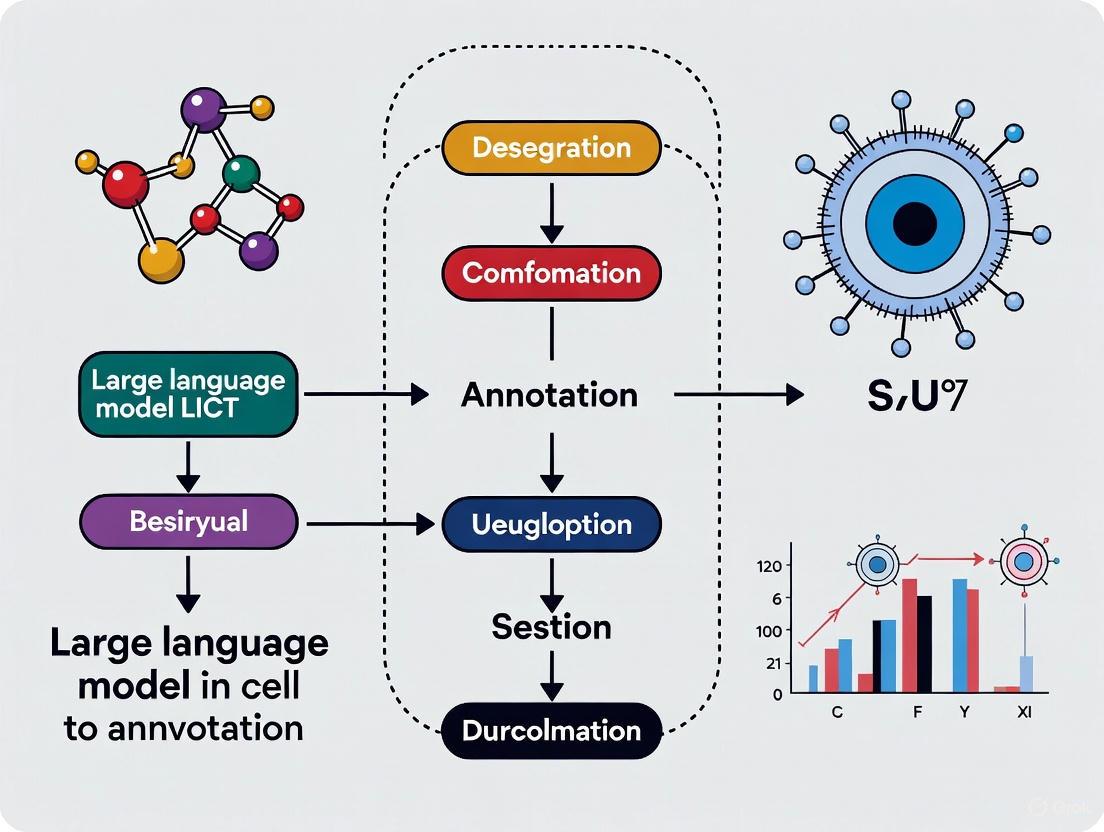
Accurate cell type annotation remains a significant bottleneck in single-cell RNA sequencing analysis.
LICT: How a Large Language Model is Revolutionizing Automated Cell Type Annotation
Abstract
Accurate cell type annotation remains a significant bottleneck in single-cell RNA sequencing analysis. This article explores LICT (Large language model-based Identifier for Cell Types), a novel tool that leverages multi-model integration and an interactive 'talk-to-machine' strategy to overcome the limitations of both manual and traditional automated methods. Tailored for researchers and drug development professionals, we provide a comprehensive analysis of LICT's foundational principles, its unique methodology for reliable annotation, strategies for optimizing performance on challenging datasets, and a critical validation against existing tools. The discussion concludes with the implications of this objective, reference-free framework for enhancing reproducibility and accelerating discovery in biomedical research.
The Cell Annotation Challenge: Why LLMs Like LICT Are a Game Changer
The Critical Bottleneck of Cell Type Annotation in Single-Cell RNA-seq
The interpretation of results represents one of the most challenging tasks in single-cell RNA sequencing (scRNA-seq) data analysis [1]. While obtaining cell clusters is computationally straightforward, determining the biological identity represented by each cluster creates a significant bottleneck in the analysis workflow [1]. This process requires bridging the gap between current datasets and prior biological knowledge, which is not always available in a consistent, quantitative manner [1]. The fundamental concept of a "cell type" itself lacks clear definition, with most practitioners relying on an intuitive "I'll know it when I see it" approach that resists computational formalization [1]. This interpretation step often becomes manual, time-consuming, and highly dependent on expert knowledge, which introduces subjectivity and variability across studies [2].
The emergence of large language models (LLMs) offers promising solutions to this persistent challenge. Unlike traditional reference-based methods that depend on pre-annotated datasets, LLM-based approaches can leverage vast biological knowledge encoded in their training parameters [2]. One such advancement is LICT (Large Language Model-based Identifier for Cell Types), which employs multi-model integration and a "talk-to-machine" approach to improve annotation reliability [2]. This protocol details the application of LLM-based frameworks, with particular emphasis on LICT, to address the critical bottleneck in cell type annotation.
LICT Framework: Protocol and Implementation
LICT addresses limitations of previous LLM applications by implementing three complementary strategies: multi-model integration, iterative "talk-to-machine" refinement, and objective credibility evaluation [2]. The system was systematically developed by first evaluating 77 publicly available LLMs using a benchmark scRNA-seq dataset of peripheral blood mononuclear cells (PBMCs) [2]. Through standardized prompts incorporating the top ten marker genes for each cell subset, five top-performing models were selected for integration: GPT-4, LLaMA-3, Claude 3, Gemini, and the Chinese language model ERNIE 4.0 [2].
Multi-Model Integration Strategy
The multi-model integration strategy leverages complementary strengths of multiple LLMs rather than relying on conventional approaches like majority voting or a single top-performing model [2]. This approach significantly improves annotation accuracy, particularly for challenging low-heterogeneity datasets.
Experimental Protocol: Multi-Model Integration
- Input Preparation: For each cell cluster identified through unsupervised clustering (e.g., Leiden algorithm), extract the top differentially expressed genes based on statistical testing.
- Parallel LLM Query: Format standardized prompts containing the marker gene list and submit to all five integrated LLMs simultaneously.
- Result Selection: The best-performing annotation from the five LLMs is selected for each cluster, effectively leveraging their complementary strengths.
- Validation: This strategy reduced mismatch rates from 21.5% to 9.7% for PBMCs and from 11.1% to 8.3% for gastric cancer data compared to single-model approaches [2].
Talk-to-Machine Iterative Refinement
The "talk-to-machine" strategy implements a human-computer interaction process to enhance annotation precision, particularly for low-heterogeneity cell types where LLM performance typically declines [2].
Experimental Protocol: Talk-to-Machine Refinement
- Marker Gene Retrieval: The LLM is queried to provide representative marker genes for each predicted cell type based on initial annotations.
- Expression Pattern Evaluation: Analyze the expression of these marker genes within the corresponding clusters in the input dataset.
- Validation Check: An annotation is considered valid if >4 marker genes are expressed in ≥80% of cells within the cluster. Otherwise, classified as validation failure.
- Iterative Feedback: For failed validations, generate a structured feedback prompt containing (i) expression validation results and (ii) additional differentially expressed genes from the dataset.
- Re-query: Use the feedback prompt to re-query the LLM, prompting revision or confirmation of previous annotation.
This optimization strategy significantly improved alignment with manual annotations, increasing full match rates to 34.4% for PBMC and 69.4% for gastric cancer data, while reducing mismatches to 7.5% and 2.8% respectively [2].
Objective Credibility Evaluation
Discrepancies between LLM-generated and manual annotations do not necessarily indicate reduced LLM reliability, as manual annotations often exhibit inter-rater variability and systematic biases [2]. The objective credibility evaluation strategy provides a framework to distinguish methodology-related discrepancies from intrinsic dataset limitations.
Experimental Protocol: Credibility Assessment
- Marker Gene Retrieval: For each predicted cell type, query the LLM to generate representative marker genes.
- Expression Analysis: Evaluate the expression patterns of these marker genes within corresponding cell clusters.
- Credibility Assessment: An annotation is deemed reliable if >4 marker genes are expressed in ≥80% of cells within the cluster; otherwise, classified as unreliable.
This evaluation demonstrated that LLM-generated annotations outperformed manual annotations in reliability for PBMC and low-heterogeneity datasets [2]. Specifically, in embryo data, 50% of mismatched LLM annotations were credible versus only 21.3% for expert annotations [2].
Performance Benchmarking and Comparison
Quantitative Performance Metrics
Table 1: Performance Comparison of LLM-Based Annotation Tools Across Diverse Biological Contexts
| Tool | PBMC Full Match Rate | Gastric Cancer Full Match Rate | Embryo Data Full Match Rate | Stromal Cells Full Match Rate | Key Innovation |
|---|---|---|---|---|---|
| LICT | 34.4% [2] | 69.4% [2] | 48.5% [2] | 43.8% [2] | Multi-model integration + talk-to-machine |
| GPT-4 Only | Information Missing | Information Missing | ~3% (improved to 48.5% with LICT) [2] | Information Missing | Single LLM approach |
| Claude 3.5 Sonnet | Highest agreement in benchmark [3] | Information Missing | Information Missing | Information Missing | Top-performing individual model |
| scExtract | Outperformed established methods across tissues [4] | Information Missing | Information Missing | Information Missing | LLM-based automated article processing |
Table 2: LICT Performance Improvement with Multi-Model Integration Strategy
| Dataset Type | Single Model Mismatch Rate | LICT Multi-Model Mismatch Rate | Improvement |
|---|---|---|---|
| PBMC (High Heterogeneity) | 21.5% [2] | 9.7% [2] | 54.9% reduction |
| Gastric Cancer (High Heterogeneity) | 11.1% [2] | 8.3% [2] | 25.2% reduction |
| Embryo (Low Heterogeneity) | >50% mismatch [2] | 51.5% mismatch [2] | Match rate increased to 48.5% |
| Fibroblast (Low Heterogeneity) | >50% mismatch [2] | 56.2% mismatch [2] | Match rate increased to 43.8% |
Benchmarking Protocol
Experimental Protocol: Performance Evaluation
- Dataset Selection: Utilize diverse scRNA-seq datasets representing normal physiology (PBMCs), developmental stages (human embryos), disease states (gastric cancer), and low-heterogeneity environments (stromal cells) [2].
- Pre-processing: For each dataset independently, perform standardization including normalization, log-transformation, identification of high-variance genes, scaling, PCA, neighborhood graph calculation, and clustering using Leiden algorithm [3].
- Differential Expression: Compute differentially expressed genes for each cluster using standard statistical methods.
- Annotation Comparison: Apply LLM-based tools and compare results with manual annotations using direct string comparison, Cohen's kappa (κ), and LLM-derived quality ratings (perfect, partial, or not-matching) [3].
- Credibility Assessment: Apply objective credibility evaluation to both LLM and manual annotations using marker gene expression thresholds.
Integrated Workflow Visualization
LICT Annotation Workflow - This diagram illustrates the integrated LICT workflow combining multi-model integration with iterative talk-to-machine refinement for reliable cell type annotation.
Essential Research Reagents and Computational Tools
Table 3: Essential Research Reagent Solutions for scRNA-seq Annotation
| Resource Type | Specific Tool/Database | Primary Function | Application Context |
|---|---|---|---|
| Marker Gene Databases | CellMarker 2.0 [5] | Manually curated resource of cell type markers from >100k publications | Manual annotation validation |
| Reference Atlases | Tabula Sapiens [5] | Reference-based annotation pipeline for human cell atlas | Reference-based annotation |
| Tabula Muris [5] | Repository of scRNA-seq data from 20 mouse organs | Cross-species validation | |
| Web Tools | Azimuth [5] | Web-based reference mapping using Seurat algorithm | Programming-free annotation |
| Annotation Packages | AnnDictionary [3] | LLM-agnostic Python package for cell type annotation | Flexible LLM integration |
| scExtract [4] | LLM framework for automated processing of published data | Automated literature-based annotation | |
| CellAnnotator [6] | scverse tool using OpenAI models for annotation | Ecosystem-integrated solution |
The LICT framework represents a significant advancement in addressing the critical bottleneck of cell type annotation in scRNA-seq analysis. By implementing the three core strategies—multi-model integration, talk-to-machine refinement, and objective credibility evaluation—researchers can achieve more reliable, consistent annotations while reducing manual effort. The protocols detailed herein provide comprehensive guidance for implementing this approach across diverse biological contexts, from high-heterogeneity immune cells to challenging low-heterogeneity microenvironments. As LLM technology continues to evolve, these methodologies offer a scalable foundation for extracting meaningful biological insights from the growing volume of single-cell transcriptomic data.
Limitations of Manual Annotation and Reference-Dependent Automated Tools
Cell type annotation is a critical step in the analysis of single-cell RNA sequencing (scRNA-seq) data, essential for understanding cellular composition and function [2] [7]. Traditionally, this process has relied on two primary approaches: manual annotation by domain experts and automated tools dependent on reference datasets. Manual annotation, while leveraging deep expert knowledge, is inherently subjective, time-consuming, and difficult to scale [2] [7]. Conversely, automated tools offer greater objectivity and speed but are often constrained by the scope and quality of their training data, limiting their accuracy and generalizability [2] [7] [8]. These limitations can introduce biases, lead to downstream errors, and consume significant resources in subsequent corrections, posing a significant challenge in cellular functional research [2] [7]. The emergence of large language models (LLMs) offers a promising path forward. Framed within research on the LICT (Large Language Model-based Identifier for Cell Types) tool, this analysis details the specific limitations of traditional methods and validates an advanced, reference-free approach for reliable cell annotation [2] [7].
Results
Comparative Performance of Annotation Methods
The limitations of traditional annotation methods are quantifiable across key metrics such as accuracy, scalability, and objectivity. The following table synthesizes performance data from benchmarking studies involving the LICT tool and other LLM-based methods against manual and reference-dependent automated techniques [2] [9] [7].
Table 1: Performance Comparison of Cell Type Annotation Methods
| Method Category | Example Tool | Reported Accuracy | Key Strengths | Key Limitations |
|---|---|---|---|---|
| Manual Annotation | Expert Curation | High for known types [10] | Nuanced judgment, handles complex data [10] | Subjective, time-consuming, non-scalable, prone to inter-rater variability [2] [7] |
| Reference-Dependent Automated | SingleR, CellTypist [4] | Varies with reference quality [8] | Fast, objective, scalable for simple tasks [10] [8] | Limited to reference knowledge, poor generalizability, misses novel types [2] [7] [4] |
| LLM-Based (Single Model) | GPT-4, Claude 3 [2] | 80-90% for major types [9] [3] | No reference needed, broad knowledge base [2] | Performance drops on low-heterogeneity data [2] [7] |
| Advanced LLM Framework | LICT [2] [7] | Mismatch rate as low as 2.8% in gastric cancer data [2] [7] | High accuracy & reliability, objective credibility assessment, interprets complex populations [2] [7] | Requires iterative computation |
Performance is highly dependent on dataset context. In highly heterogeneous datasets like peripheral blood mononuclear cells (PBMCs) or gastric cancer samples, top-performing single LLMs like Claude 3 can show high agreement with manual annotations [2] [7]. However, their performance significantly diminishes in low-heterogeneity environments, such as stromal cells or human embryo data, where consistency with manual labels can fall to ~30-40% [2] [7]. This highlights a critical weakness of relying on a single model. The LICT framework addresses this via multi-model integration, drastically reducing mismatch rates—from 21.5% to 9.7% for PBMCs and from 11.1% to 8.3% for gastric cancer data compared to a baseline tool, GPTCelltype [2] [7].
Table 2: LICT Annotation Performance Across Diverse Biological Contexts
| Dataset Type | Example | Challenge | LICT Performance Post-Optimization |
|---|---|---|---|
| High Heterogeneity | PBMCs [2] [7] | Diverse, well-defined immune cells | 34.4% full match, 7.5% mismatch rate |
| Disease State | Gastric Cancer [2] [7] | Altered and complex cell states | 69.4% full match, 2.8% mismatch rate |
| Low Heterogeneity | Human Embryo [2] [7] | Less distinct transcriptional profiles | 48.5% full match (16x vs. GPT-4) |
| Low Heterogeneity | Mouse Stromal Cells [2] [7] | Subtle differences between populations | 43.8% full match |
Objective Credibility Evaluation
A key innovation of the LICT framework is its objective credibility evaluation strategy, which addresses the subjectivity inherent in manual annotation [2] [7]. Discrepancies between LLM-generated and manual annotations do not inherently favor the manual result; manual annotations are also prone to inter-rater variability and systematic biases, especially in ambiguous cell clusters [2] [7]. LICT's credibility assessment provides a reference-free, unbiased validation by checking if the LLM-predicted cell type is supported by the expression of its own suggested marker genes within the dataset [2] [7]. This process revealed that in stromal cell data, 29.6% of mismatched LICT annotations were credible, whereas none of the conflicting manual annotations met the objective credibility threshold [2] [7]. This demonstrates that LLM-based methods can, in some cases, provide a more reliable assessment than expert judgment alone.
Experimental Protocols
Protocol 1: LICT Annotation Workflow with Multi-Model Integration and "Talk-to-Machine" Strategy
This protocol details the core LICT methodology for de novo cell type annotation of scRNA-seq data clusters using a multi-LLM ensemble and an iterative feedback loop [2] [7].
- Input Preparation: For each cell cluster identified via unsupervised clustering (e.g., Leiden algorithm), compute the top N (e.g., 10) differentially expressed genes (DEGs) [2] [7] [3].
- Multi-Model Parallel Annotation:
- Prompt Engineering: Construct a standardized prompt containing the list of top DEGs for a cluster. Example: "Annotate the cell type based on the following marker genes: [List of Genes]" [2] [9].
- LLM Querying: Submit the prompt in parallel to multiple pre-selected, high-performing LLMs (e.g., GPT-4, Claude 3, Gemini, LLaMA-3, ERNIE-4.0) [2] [7].
- Result Integration: Collect all annotations and select the best-performing result, leveraging the complementary strengths of the different models rather than using simple majority voting [2] [7].
- Iterative "Talk-to-Machine" Validation:
- Marker Gene Retrieval: For the annotated cell type, query the same LLM to provide a list of representative marker genes [2] [7].
- Expression Pattern Evaluation: Assess the expression of these retrieved marker genes within the original cell cluster from the input dataset [2] [7].
- Validation Check: The annotation is considered valid if more than four marker genes are expressed in at least 80% of the cells within the cluster. If not, it proceeds to the feedback step [2] [7].
- Structured Feedback & Re-query: For failed validations, generate a new prompt containing the validation results and additional DEGs from the dataset. Re-query the LLM to revise or confirm its annotation [2] [7].
Protocol 2: Objective Credibility Evaluation of Annotations
This protocol provides a method to objectively assess the reliability of any cell type annotation, whether generated manually or by an automated tool, using the underlying gene expression data as ground truth [2] [7].
- Annotation Input: Begin with a cell type label for a specific cluster, from any source (e.g., manual expert, LLM, reference tool) [2] [7].
- Marker Gene Generation: Use an LLM to generate a list of representative marker genes for the provided cell type label. Note: For manual annotations, this step is still performed by the LLM to ensure a consistent basis for evaluation [2] [7].
- Expression Analysis: Calculate the percentage of cells within the cluster that express each of the generated marker genes. A gene is typically considered "expressed" if its count is above a technical noise threshold [2] [7].
- Credibility Assessment: The original annotation is deemed credible if more than four of the LLM-suggested marker genes are expressed in at least 80% of the cells in the cluster. Otherwise, the annotation is classified as unreliable for downstream analysis [2] [7].
The Scientist's Toolkit
Table 3: Essential Research Reagents and Computational Tools
| Item / Tool Name | Function / Application | Relevance to Protocol |
|---|---|---|
| LICT (LLM-based Identifier for Cell Types) [2] [7] | Integrated tool for reference-free cell annotation. | Implements the core multi-model and talk-to-machine strategies. |
| AnnDictionary [9] [3] | Open-source Python package for LLM-provider-agnostic single-cell analysis. | Backend for parallel processing of anndata objects and easy switching of LLM backends. |
| scExtract [4] | LLM framework for automated scRNA-seq data processing from articles. | Automates information extraction from literature to guide preprocessing and annotation. |
| Scanpy [4] | Standard Python toolkit for single-cell data analysis. | Used for core data processing: normalization, PCA, clustering, and DEG calculation. |
| Peripheral Blood Mononuclear Cell (PBMC) Dataset [2] [7] | A standard, highly heterogeneous benchmark dataset. | Essential for initial validation and benchmarking of annotation performance. |
| Tabula Sapiens v2 Atlas [9] [3] | A large, multi-tissue, manually annotated single-cell transcriptomic atlas. | Serves as a comprehensive benchmark for de novo annotation accuracy across tissues. |
Single-cell RNA sequencing (scRNA-seq) has revolutionized biology by enabling the characterization of cellular heterogeneity at unprecedented resolution. However, a significant bottleneck persists: cell type annotation. This process, fundamental to interpreting scRNA-seq data, has traditionally relied on manual expertise to compare differentially expressed genes against canonical marker genes—a laborious, time-consuming, and subjective task [11] [12]. While automated computational methods exist, they often depend on specific reference datasets, limiting their generalizability and accuracy [2].
The emergence of Large Language Models (LLMs) like GPT-4 presents a paradigm shift. Trained on vast corpora of scientific literature, these models encode extensive knowledge of cell biology and marker genes, offering the potential for rapid, reference-free, and expert-level cell type annotation [11] [13]. This application note details the journey from general-purpose models like GPT-4 to the development of specialized, robust solutions such as the Large Language Model-based Identifier for Cell Types (LICT), providing structured experimental protocols and resources for their application.
From Generalist to Specialist: The Evolution of LLM-Based Annotation Tools
The development of LLM-based annotation tools has progressed from leveraging a single general-purpose model to sophisticated frameworks that integrate multiple models and strategies to enhance reliability.
GPT-4: The Proof of Concept The initial breakthrough was demonstrating that GPT-4 could accurately annotate cell types using marker gene information. Evaluated across hundreds of tissue and cell types from five species, GPT-4 generated annotations that showed strong concordance with manual annotations provided by domain experts [11] [13]. Key findings from this foundational work are summarized in Table 1.
Table 1: Performance Summary of GPT-4 in Cell Type Annotation
| Evaluation Metric | Performance Result | Context and Notes |
|---|---|---|
| Agreement with Manual Annotation | >75% (Full or Partial Match) | Consistent across most studies and tissues [11] |
| Optimal Input | Top 10 Differential Genes | Derived from a two-sided Wilcoxon test [11] [12] |
| Robustness to Input Strategy | High | Comparable performance across basic, chain-of-thought, and repeated prompts [11] |
| Identification of Unknown Types | 99% Accuracy | In simulations distinguishing known from unknown cell types [11] [13] |
| Distinction of Pure vs. Mixed Types | 93% Accuracy | In simulated complex data scenarios [11] |
| Reproducibility | 85% | Rate of identical annotations for the same marker genes [11] |
LICT: A Specialized Multi-Model Solution To address limitations of single models, including performance variability and "hallucination," the LICT framework was developed. It employs three core strategies to improve upon general-purpose LLMs [2]:
- Multi-Model Integration: Leverages multiple top-performing LLMs (e.g., GPT-4, Claude 3, Gemini) and selects the best-performing result, exploiting their complementary strengths.
- "Talk-to-Machine" Strategy: An iterative human-computer interaction process that enriches model input with contextual information and validation based on marker gene expression within the dataset.
- Objective Credibility Evaluation: Provides a reference-free, unbiased assessment of annotation reliability by validating the expression of LLM-retrieved marker genes in the input data.
This multi-faceted approach significantly reduces mismatch rates compared to single-model tools and offers a measurable confidence score for each annotation, which is crucial for downstream biological analysis [2].
Experimental Protocols for LLM-Based Cell Annotation
This section provides detailed methodologies for implementing two primary approaches to LLM-based annotation.
Protocol 1: Basic Cell Annotation Using a Single LLM
This protocol utilizes tools like GPTCelltype to annotate cell clusters via a single LLM API, suitable for standard analyses with well-defined marker genes [11].
Input Materials:
- Differential Gene List: A list of top differentially expressed genes for each cell cluster, typically identified using a two-sided Wilcoxon rank-sum test from standard pipelines (Seurat, Scanpy).
- LLM API Access: Access to an LLM such as OpenAI's GPT-4.
- Software Package: The
GPTCelltypeR package.
Procedure:
- Differential Expression Analysis: Perform clustering and differential expression analysis on your scRNA-seq dataset using your preferred pipeline (e.g., Seurat). For each cluster, extract the top 10 genes ranked by P-value and effect size.
- Input Preparation: Format the top 10 marker genes for a target cluster into a simple text string.
- Prompt Construction: Use a basic prompt strategy. Example:
"What is the cell type for a cell with high expression of [Gene1], [Gene2], ..., [Gene10]?" - Query and Annotation: Use the
GPTCelltypesoftware to send the prompt to the LLM API and retrieve the cell type label. - Iteration and Validation: Repeat steps 2-4 for all clusters. It is critical to validate the LLM's annotations by checking the expression of canonical marker genes for the proposed cell types via dot plots or violin plots in your analysis environment.
Protocol 2: High-Reliability Annotation with the LICT Framework
This protocol employs the LICT framework for complex scenarios, such as annotating low-heterogeneity cell populations or when the highest confidence is required.
Input Materials:
- Differential Gene List: As in Protocol 1.
- Multiple LLM API Keys: Access to several LLMs (e.g., GPT-4, Claude 3, Gemini).
- LICT Software Suite.
Procedure:
- Initial Multi-Model Annotation: Submit the marker gene list for a cluster to multiple integrated LLMs within the LICT framework.
- Consensus Generation: The framework applies its integration strategy to select the most accurate annotation from the pool of model responses.
- Iterative "Talk-to-Machine" Validation:
- The LLM is queried to provide a list of representative marker genes for its predicted cell type.
- The expression of these genes is evaluated within the corresponding cluster in your dataset.
- Validation Check: If more than four marker genes are expressed in at least 80% of the cluster's cells, the annotation is considered validated.
- If validation fails, a feedback prompt containing the validation results and additional differentially expressed genes is sent back to the LLM to revise or confirm the annotation.
- Credibility Scoring: The framework outputs a final annotation alongside a credibility score based on the objective evaluation strategy, allowing researchers to prioritize high-confidence annotations for further analysis.
The logical flow and components of this advanced protocol are visualized below.
Successful implementation of LLM-based annotation requires a suite of computational "research reagents." Key resources are cataloged in Table 2.
Table 2: Essential Research Reagents for LLM-Based Cell Annotation
| Reagent / Resource | Type | Primary Function | Reference / Source |
|---|---|---|---|
| GPTCelltype | R Software Package | Interfaces with GPT-4 API for automated cell type annotation using marker gene lists. | [11] |
| LICT Framework | Multi-Model Software Suite | Integrates multiple LLMs for consensus annotation and provides objective credibility evaluation. | [2] |
| Seurat / Scanpy | Computational Pipeline | Standard tools for scRNA-seq preprocessing, clustering, and differential expression analysis to generate input marker genes. | [11] [12] |
| mLLMCelltype | Consensus Framework | An open-source tool that integrates 10+ LLM providers to improve accuracy via consensus and quantify uncertainty. | [14] |
| Cell Ontology (CL) | Biological Ontology | A structured, controlled vocabulary for cell types, used for standardizing annotation outputs across studies. | [15] |
| GCTHarmony | LLM-based Tool | Harmonizes inconsistent cell type annotations across studies by mapping them to standard CL terms using text embeddings. | [15] |
Discussion and Outlook
The emergence of LLMs in biology, particularly for cell annotation, marks a transition from reliance on manual expertise to augmented, AI-assisted workflows. Initial tools like GPTCelltype demonstrated feasibility, while next-generation solutions like LICT and mLLMCelltype address key challenges of reliability and reproducibility through multi-model consensus and objective validation [2] [14].
Future directions point toward greater automation and integration. The development of LLM "agents" that can autonomously plan and execute analysis pipelines—from data querying to code execution and annotation—is already underway [16]. Furthermore, tools like GCTHarmony highlight the growing need to standardize LLM-generated annotations using established ontologies, ensuring consistency and enabling meta-analyses across disparate studies [15]. As these models continue to evolve, they will increasingly function not just as annotation tools, but as collaborative partners in the scientific discovery process, helping researchers navigate the complexity of single-cell data more efficiently and insightfully.
Accurate cell type annotation is a critical, yet challenging, step in single-cell RNA sequencing (scRNA-seq) analysis. Traditional methods, whether manual expert annotation or automated tools, present significant limitations. Manual annotation is inherently subjective and dependent on the annotator's experience, while automated tools often lack generalizability due to their dependence on reference datasets, potentially leading to biased results and downstream analytical errors [2]. The recently developed LICT (Large Language Model-based Identifier for Cell Types) addresses these challenges by leveraging a multi-model integration and a novel "talk-to-machine" approach [2] [17]. This tool provides an objective framework for assessing annotation reliability, establishing itself as a powerful and generalizable solution for scRNA-seq analysis, independent of reference data and enhancing reproducibility in cellular research [2].
Table: Comparison of Cell Type Annotation Methods
| Method Type | Key Features | Primary Limitations |
|---|---|---|
| Manual Expert Annotation | Benefits from expert knowledge and biological context [2]. | Inherently subjective; dependent on annotator's experience; exhibits inter-rater variability and systematic biases [2]. |
| Traditional Automated Tools | Provides greater objectivity and speed [2]. | Accuracy and generalizability are limited by reliance on reference datasets; can be biased or constrained by training data [2]. |
| LICT (LLM-based) | Independent of reference data; uses objective credibility evaluation; leverages multiple LLMs for robust results [2] [17]. | Performance can diminish on low-heterogeneity datasets without its integrated optimization strategies [2]. |
Performance Benchmarking of LICT
LICT was systematically validated against existing methods across diverse biological contexts to evaluate its performance and generalizability. The tool was benchmarked on scRNA-seq datasets representing normal physiology (Peripheral Blood Mononuclear Cells, or PBMCs), developmental stages (human embryos), disease states (gastric cancer), and low-heterogeneity cellular environments (mouse stromal cells) [2]. The benchmarking methodology followed a standardized approach that assesses agreement between the tool's annotations and manual expert annotations [2].
The initial evaluation identified five top-performing LLMs for integration into LICT: GPT-4, LLaMA-3, Claude 3, Gemini, and the Chinese language model ERNIE 4.0 [2]. While these models excelled in annotating highly heterogeneous cell populations, their performance significantly diminished in low-heterogeneity environments. For instance, in stromal cell data, the highest consistency with manual annotations achieved by any single model was only 33.3% [2]. This highlighted the necessity of LICT's integrated strategies to overcome the limitations of individual models.
Table: LICT Performance Across Diverse Datasets
| Dataset Type | Example | Key Performance Finding | Impact of LICT's Multi-Model Strategy |
|---|---|---|---|
| High Heterogeneity | Peripheral Blood Mononuclear Cells (PBMCs) [2] | All selected LLMs excelled at annotating highly heterogeneous subpopulations [2]. | Reduced mismatch rate from 21.5% (using GPTCelltype) to 9.7% [2]. |
| High Heterogeneity | Gastric Cancer [2] | Models like Claude 3 demonstrated high performance [2]. | Reduced mismatch rate from 11.1% to 8.3% [2]. |
| Low Heterogeneity | Human Embryos [2] | Significant discrepancies vs. manual annotation; Gemini 1.5 Pro achieved 39.4% consistency [2]. | Increased match rate (combined full and partial) to 48.5% [2]. |
| Low Heterogeneity | Stromal Cells [2] | Significant discrepancies vs. manual annotation; Claude 3 achieved 33.3% consistency [2]. | Increased match rate to 43.8% [2]. |
Core Methodology: Multi-Model Integration Strategy
LICT's first core strategy involves the integration of multiple large language models to leverage their complementary strengths, rather than relying on a single model or conventional majority voting [2]. This approach is particularly crucial for improving annotation accuracy and consistency across diverse cell types, especially in low-heterogeneity datasets where individual model performance wanes [2].
The workflow for this strategy is outlined below.
Application Note: The "Talk-to-Machine" Protocol
To further enhance precision, particularly for challenging low-heterogeneity cell types, LICT employs an interactive "talk-to-machine" strategy. This human-computer interaction protocol iteratively refines annotations by validating the model's predictions against the actual expression data [2]. The following detailed protocol is designed to be reproducible and can be directly incorporated into a research methodology.
Detailed Experimental Protocol
Purpose: To iteratively refine and validate automated cell type annotations using LICT's "talk-to-machine" strategy, ensuring high-confidence results.
Step-by-Step Workflow:
- Initialization: Provide LICT with the list of top marker genes for a cell cluster to receive the initial automated annotation [2].
- Marker Gene Retrieval: Query the same LLM to generate a list of representative marker genes for its predicted cell type [2].
- Expression Pattern Evaluation:
- Assess the expression of the retrieved marker genes within the corresponding cell cluster in your input scRNA-seq dataset.
- Validation Threshold: An annotation is considered preliminarily valid if more than four marker genes are expressed in at least 80% of the cells within the cluster [2].
- Iterative Feedback Loop (For Validation Failures):
- If the validation threshold is not met, the annotation is classified as a failure.
- Generate a structured feedback prompt containing: i. The results of the expression validation. ii. A list of additional differentially expressed genes (DEGs) from the dataset [2].
- Re-query the LLM with this prompt, instructing it to revise or confirm its previous annotation based on the new evidence [2].
- Output: The final annotation is the label provided after the iterative feedback loop, which demonstrates higher confidence and alignment with the underlying gene expression data.
The logical flow of this protocol, including its critical validation and feedback loop, is visualized in the following diagram.
Expected Outcomes
This protocol has been shown to significantly improve alignment with manual annotations. In highly heterogeneous datasets like PBMCs and gastric cancer, mismatch rates were reduced to 7.5% and 2.8%, respectively [2]. For low-heterogeneity datasets, such as human embryo data, the full match rate improved by 16-fold compared to using a base model like GPT-4 alone [2].
Objective Credibility Assessment Framework
A pivotal innovation of LICT is its objective framework for assessing annotation reliability, which moves beyond simple agreement with manual labels. This is critical because discrepancies between LLM-generated and manual annotations do not automatically indicate LLM error; manual annotations themselves can suffer from inter-rater variability and systematic biases [2]. LICT's credibility assessment provides a reference-free and unbiased metric for validation [2].
The assessment process, while sharing initial steps with the "talk-to-machine" protocol, serves a distinct purpose: to assign a confidence score to an annotation, regardless of its source.
The power of this objective evaluation was demonstrated in benchmarking studies. In the human embryo dataset, 50% of the LLM-generated annotations that disagreed with manual labels were deemed credible by this framework, compared to only 21.3% of the conflicting expert annotations. Strikingly, for the stromal cell dataset, 29.6% of LLM annotations were credible, whereas none of the manual annotations met the objective credibility threshold [2]. This underscores the limitations of relying solely on expert judgment and provides researchers with a data-driven method to identify reliably annotated cell types for robust downstream analysis.
The Scientist's Toolkit: Research Reagent Solutions
The following table details key components and their functions in a typical LICT-based cell annotation workflow. This serves as an essential checklist for researchers seeking to implement this methodology.
Table: Essential Research Reagents and Resources for LICT
| Item Name / Resource | Function / Description | Critical Reporting Notes |
|---|---|---|
| scRNA-seq Dataset | The input data containing gene expression counts per cell. Must include a matrix of counts and pre-processing (quality control, normalization). | Report the source (e.g., public repository, in-house), unique accession ID if available, and key pre-processing steps and parameters [18]. |
| Cell Clustering Results | Pre-defined cell clusters (e.g., from graph-based clustering) that will be annotated. | Specify the clustering algorithm used (e.g., Louvain, Leiden) and the resolution parameter [2]. |
| Cluster Marker Genes | A list of differentially expressed genes that define each cluster. | Provide the method used for differential expression testing (e.g., Wilcoxon rank-sum test) and the criteria for significance (e.g., log fold-change, p-value) [2]. |
| Large Language Models (LLMs) | The AI models powering the annotation. LICT integrates multiple models. | For reproducibility, report the specific models and their versions used (e.g., GPT-4, Claude 3) [2] [18]. |
| Computational Environment | The software and hardware required to run LICT. | Document the software version (LICT), programming language (Python/R), and key library dependencies to ensure computational reproducibility [18]. |
Inside LICT's Engine: A Multi-Model, Interactive Approach to Annotation
LICT (Large Language Model-based Identifier for Cell Types) represents a paradigm shift in automated cell type annotation for single-cell RNA sequencing (scRNA-seq) data. Its core innovation lies in a sophisticated multi-model architecture designed to overcome the limitations inherent to individual Large Language Models (LLMs), such as performance degradation when annotating less heterogeneous cell populations [2]. The framework is built on the premise that no single LLM can accurately annotate all cell types with high reliability. By systematically integrating multiple, complementary LLMs, LICT achieves a level of robustness and accuracy unattainable by single-model systems [2]. This architecture is particularly vital in biological contexts where cellular environments range from highly heterogeneous (e.g., peripheral blood mononuclear cells - PBMCs) to low-heterogeneity (e.g., stromal cells or embryonic cells), each presenting unique annotation challenges [2].
The Rationale for a Multi-LLM Strategy
The initial development of LICT involved a rigorous evaluation of 77 publicly available LLMs to identify those most suitable for cell type annotation. This benchmarking, performed on a standard PBMC dataset, led to the selection of five top-performing models: GPT-4, LLaMA-3, Claude 3, Gemini, and the Chinese language model ERNIE 4.0 [2]. This selection was not arbitrary; each model possesses unique strengths and training data, leading to complementary capabilities in interpreting biological marker genes.
A critical finding motivating the multi-model approach was the significant performance drop observed when individual LLMs were applied to low-heterogeneity datasets. For instance, while models excelled with PBMCs and gastric cancer samples, their performance markedly decreased with human embryo and stromal cell data. Gemini 1.5 Pro achieved only 39.4% consistency with manual annotations for embryo data, and Claude 3 reached just 33.3% for fibroblast data [2]. This demonstrated that relying on a single LLM introduces a substantial risk of annotation errors in specific biological contexts. The multi-model integration strategy directly counteracts this vulnerability by leveraging the collective intelligence of diverse LLMs, ensuring that the strengths of one model compensate for the weaknesses of another.
Core Architectural Components of LICT
LICT's robustness is achieved through three synergistic core strategies: Multi-Model Integration, a "Talk-to-Machine" feedback loop, and an Objective Credibility Evaluation. The interplay of these components is illustrated in the following workflow.
Strategy I: Multi-Model Integration
The first pillar of LICT's architecture is its multi-model integration strategy. Unlike conventional approaches that might use simple majority voting, LICT is designed to select the best-performing result from its ensemble of five LLMs for any given annotation task [2]. This process actively harnesses the complementary strengths of the different models.
- Input Processing: A standardized prompt containing the top marker genes for a cell subset is sent concurrently to all five LLMs.
- Result Aggregation: The system collects the independent annotations from each model.
- Intelligent Selection: Based on the model's understanding of their respective performance profiles, it selects the most appropriate annotation, rather than relying on a simple democratic process. This is crucial because a single, high-confidence, correct annotation from one model is more valuable than a consensus of incorrect answers.
This strategy yielded significant performance gains. In highly heterogeneous datasets, it reduced the annotation mismatch rate from 21.5% (using a single model like GPTCelltype) to 9.7% for PBMCs and from 11.1% to 8.3% for gastric cancer data [2]. The improvement was even more dramatic for low-heterogeneity datasets, where the match rate (including both fully and partially matching annotations) increased to 48.5% for embryo data and 43.8% for fibroblast data [2]. The quantitative performance improvements across different dataset types are summarized in Table 1.
Table 1: Performance of LICT's Multi-Model Integration Strategy vs. Single-Model Approach
| Dataset Type | Example | Single-Model Mismatch Rate (e.g., GPTCelltype) | LICT Multi-Model Mismatch Rate | Match Rate (Full + Partial) |
|---|---|---|---|---|
| High-Heterogeneity | PBMCs | 21.5% | 9.7% | Not Specified |
| High-Heterogeneity | Gastric Cancer | 11.1% | 8.3% | Not Specified |
| Low-Heterogeneity | Human Embryo | Not Specified | Not Specified | 48.5% |
| Low-Heterogeneity | Stromal Cells | Not Specified | Not Specified | 43.8% |
Strategy II: The "Talk-to-Machine" Interactive Strategy
To further address discrepancies, particularly in low-heterogeneity cells, LICT employs an interactive "Talk-to-Machine" strategy. This human-computer interaction creates a dynamic feedback loop that refines the initial annotations [2].
The process, detailed in the protocol below, involves:
- Marker Gene Retrieval: The LLM is queried to provide a list of representative marker genes for its predicted cell type.
- Expression Pattern Evaluation: The system checks the expression of these suggested marker genes within the corresponding cell cluster in the input dataset.
- Validation & Iteration: An annotation is considered valid if more than four marker genes are expressed in at least 80% of the cells in the cluster. If this threshold is not met, the validation fails.
- Structured Feedback: For failed validations, a structured prompt is generated containing the expression validation results and additional differentially expressed genes (DEGs) from the dataset. This enriched prompt is used to re-query the LLM, prompting it to revise or confirm its annotation [2].
This iterative dialogue significantly enhances annotation accuracy. For example, in the gastric cancer dataset, the full match rate with manual annotations reached 69.4%, with a mismatch rate of only 2.8% [2].
Strategy III: Objective Credibility Evaluation
A groundbreaking feature of LICT's architecture is its objective framework for assessing annotation reliability, which moves beyond the traditional reliance on expert opinion. This strategy recognizes that a discrepancy between an LLM and a manual annotation does not automatically imply the LLM is wrong, as manual annotations can suffer from inter-rater variability and bias [2].
The credibility evaluation uses the same core check as the "Talk-to-Machine" validation but applies it as a final, objective assessment for all annotations, whether from the LLM or a human expert. An annotation is deemed reliable if the cluster expresses more than four of the LLM-suggested marker genes in over 80% of its cells [2].
This evaluation revealed that LICT's annotations often have higher credibility than manual expert annotations. In the stromal cell dataset, 29.6% of LICT's annotations were considered credible, whereas none of the manual annotations met the credibility threshold [2]. Similarly, in the embryo dataset, 50% of the mismatched LLM-generated annotations were credible, compared to only 21.3% of the expert annotations [2]. This demonstrates LICT's capacity to provide a more reliable and less biased foundation for downstream biological analysis. A comparison of credibility rates is shown in Table 2.
Table 2: Credibility Assessment of LICT vs. Manual Expert Annotations
| Dataset | Credible LICT Annotations | Credible Manual Annotations | Notable Finding |
|---|---|---|---|
| Gastric Cancer | Comparable to Manual | Comparable to LICT | Both methods showed similar reliability. |
| PBMCs | Outperformed Manual | Underperformed LICT | LICT annotations were more credible. |
| Human Embryo | 50% (of mismatches) | 21.3% (of mismatches) | Over double the credibility in discrepancies. |
| Stromal Cells | 29.6% | 0% | No manual annotations passed the objective check. |
Experimental Protocol for LICT-Based Cell Type Annotation
This protocol details the step-by-step procedure for utilizing the LICT tool to annotate cell types from an scRNA-seq dataset, incorporating its three core strategies.
4.1 Pre-processing and Input Preparation
- Data Clustering: Perform standard scRNA-seq analysis (quality control, normalization, dimensionality reduction, and clustering) using tools like Seurat or Scanpy to define cell clusters.
- Marker Gene Identification: Calculate differentially expressed genes (DEGs) for each cluster compared to all other cells. Select the top 10 marker genes per cluster based on log fold-change and statistical significance.
- Input Formatting: Prepare a standardized input for LICT. This should be a structured list (e.g., a JSON file) where each entry contains:
cluster_id: A unique identifier for the cell cluster.marker_genes: A list of the top 10 marker genes (e.g.,["CD3E", "CD4", "IL7R"]).
4.2 Execution of Multi-Model Annotation
- Model Querying: Submit the standardized prompt containing the marker genes for each cluster to the five integrated LLMs (GPT-4, LLaMA-3, Claude 3, Gemini, ERNIE 4.0) concurrently via their respective APIs.
- Initial Annotation Aggregation: Collect the raw cell type predictions from each LLM for every cluster.
4.3 Interactive Validation and Refinement ("Talk-to-Machine")
- For each cluster and its set of initial annotations, initiate the validation loop:
- Marker Gene Retrieval: For a given annotation, prompt the respective LLM with: "List representative marker genes for [predicted cell type]."
- Expression Validation:
- Calculate the percentage of cells within the cluster that express each of the LLM-suggested marker genes. A gene is considered "expressed" if its count is above a pre-defined noise threshold (e.g., > 0).
- Count the number of suggested marker genes that are expressed in >80% of the cluster's cells.
- Decision Point:
- IF the count of validated genes is >4, accept the annotation. Proceed to Section 4.4.
- ELSE (validation fails), generate a feedback prompt:
- "Your previous suggestion was [predicted cell type]. The expression validation for the marker genes you provided ([list genes]) failed. Specifically, only [number] genes were expressed in >80% of cells. Here are additional highly expressed genes from this cluster: [list of top 5 DEGs]. Please re-annotate the cell type based on this combined information."
- Submit this feedback prompt to the LLM and collect the revised annotation.
- Repeat steps 2-4 of this section using the revised annotation. A maximum of 3 iteration cycles is recommended to avoid infinite loops.
4.4 Final Credibility Assessment
- For the final accepted annotation for each cluster, perform a final credibility check using the same logic as the validation step (>4 genes expressed in >80% of cells).
- Flag annotations that fail this final check as "Low Reliability" in the output. These clusters may require further expert investigation or suggest low-quality or novel cell populations.
The Scientist's Toolkit: Essential Research Reagents & Materials
Table 3: Key Resources for LICT-Based Cell Annotation Research
| Item | Function in the LICT Workflow |
|---|---|
| scRNA-seq Dataset | The fundamental input data. Requires pre-processing (QC, normalization, clustering) to generate cell clusters and marker genes for LICT analysis [2]. |
| Reference Annotations (e.g., PBMC) | A benchmark dataset with well-established cell types, used for validating and benchmarking LICT's performance on new data [2]. |
| LICT Software Package | The core tool that implements the multi-model integration, "talk-to-machine" strategy, and credibility evaluation. It handles API calls to the various LLMs and the internal logic [2]. |
| API Access to LLMs (GPT-4, Claude 3, etc.) | Essential infrastructure for LICT to function. Requires operational API keys and accounts for the five integrated LLMs to perform the annotation queries [2]. |
| Marker Gene Database (e.g., CellMarker) | External databases of known cell marker genes can be used for additional validation or to supplement the knowledge embedded within the LLMs [19]. |
Application Note: Enhancing Cell Type Annotation Reliability
In the context of Large Language Model-based Identifier for Cell Types (LICT) research, the multi-model integration strategy is designed to overcome the limitations inherent to relying on a single large language model (LLM) for automated cell type annotation. Individual LLMs, even top performers, exhibit significant variability and can struggle with accuracy, particularly when annotating low-heterogeneity cell populations such as those found in developmental stages or stromal cell datasets [2]. This strategy leverages the complementary strengths of multiple LLMs to produce more comprehensive, consistent, and reliable annotations, thereby providing an objective framework for assessing annotation credibility and freeing researchers to focus on underlying biological insights [2].
Quantitative Performance Data
Table 1: Performance of Multi-Model Integration vs. a Single Model (GPTCelltype) across Diverse Biological Contexts [2]
| Dataset Type | Example Dataset | Annotation Consistency (Single Model) | Annotation Consistency (Multi-Model) | Key Performance Improvement |
|---|---|---|---|---|
| High Heterogeneity | Peripheral Blood Mononuclear Cells (PBMCs) | 78.5% Match [2] | 90.3% Match [2] | Mismatch rate reduced from 21.5% to 9.7% [2] |
| High Heterogeneity | Gastric Cancer | 88.9% Match [2] | 91.7% Match [2] | Mismatch rate reduced from 11.1% to 8.3% [2] |
| Low Heterogeneity | Human Embryos | Low (Specific % not stated) [2] | 48.5% Match [2] | Match rate increased ~16-fold vs. GPT-4 alone [2] |
| Low Heterogeneity | Stromal Cells / Fibroblasts | Low (Specific % not stated) [2] | 43.8% Match [2] | Significant increase in match rate; mismatch decreased [2] |
Experimental Protocol: Multi-Model Integration for Cell Annotation
Purpose
To execute a multi-model integration strategy that selects the best-performing cell type annotation from a panel of LLMs, enhancing accuracy and consistency across diverse cell populations, particularly for low-heterogeneity datasets [2].
Pre-Experimental Requirements
- A pre-processed single-cell RNA sequencing (scRNA-seq) dataset with cells clustered.
- A list of top marker genes (e.g., top 10) for each cell cluster to be annotated.
- Access to the five pre-identified top-performing LLMs for cell type annotation: GPT-4, LLaMA-3, Claude 3, Gemini, and ERNIE 4.0 [2].
Step-by-Step Procedure
- Input Preparation: For a given cell cluster, prepare a standardized prompt that incorporates the list of top marker genes [2].
- Parallel Model Querying: Submit the identical prompt to each of the five LLMs (GPT-4, LLaMA-3, Claude 3, Gemini, and ERNIE 4.0) to obtain independent cell type annotations [2].
- Result Integration: Instead of using a simple majority vote, evaluate the responses from all five models and select the annotation that is determined to be the best-performing for that specific cluster and biological context. This approach actively leverages the complementary strengths of the different models [2].
- Validation and Iteration (Optional but Recommended): Integrate this step with subsequent "talk-to-machine" and objective credibility evaluation strategies. Query the LLM for marker genes of its predicted cell type and validate that these genes are expressed in the cluster. If validation fails, use a structured feedback prompt to re-query the models [2].
Workflow Visualization
Research Reagent Solutions
Table 2: Essential Materials and Computational Tools for Multi-Model Integration [2]
| Item Name | Function / Role in the Protocol | Specification / Notes |
|---|---|---|
| Top-Performing LLMs | Provides the core annotation capability. The ensemble (GPT-4, LLaMA-3, Claude 3, Gemini, ERNIE 4.0) ensures coverage of complementary strengths. | Selected based on benchmarking against a PBMC scRNA-seq dataset [2]. |
| Standardized Prompt Template | Ensures consistency in queries across different LLMs, reducing variability introduced by prompt engineering. | Contains the list of top marker genes for the cell cluster [2]. |
| scRNA-seq Dataset | The biological substrate for annotation. Provides the gene expression matrix derived from clustering analysis. | Used benchmark datasets include PBMCs (GSE164378), human embryos, gastric cancer, and mouse stromal cells [2]. |
| Computational Environment | Enables the parallel querying of multiple LLMs and the subsequent processing/integration of their outputs. | Requires stable API access or local deployment for the selected LLMs. |
Application Note
Within the framework of the Large Language Model-based Identifier for Cell Types (LICT), Strategy II, the "talk-to-machine" iterative feedback loop, is designed to significantly enhance annotation precision, particularly for challenging low-heterogeneity cell populations where standard LLM outputs can be ambiguous or biased [2]. This human-computer interaction protocol mitigates a key limitation of automated annotation by introducing a structured, evidence-based refinement cycle. It moves beyond single-pass queries, allowing the model to correct itself by integrating new evidence from the dataset itself, thereby closing the gap between initial prediction and biological validity [2] [20].
The core of this strategy lies in its ability to use iterative prompting to transform vague initial predictions into verified annotations. By treating the model's initial output as a hypothesis to be tested against gene expression data, this process mirrors the scientific method, fostering a collaborative dialogue between the researcher and the model [20]. This is crucial for building trust in LLM-generated annotations and for ensuring that the final results are grounded in the underlying data, which directly addresses concerns about model hallucinations in biological contexts [21].
Performance and Quantitative Validation
The "talk-to-machine" strategy has been quantitatively validated across diverse biological contexts, from highly heterogeneous peripheral blood mononuclear cells (PBMCs) to low-heterogeneity stromal cells and human embryo data [2]. The table below summarizes the performance improvements observed after implementing the iterative feedback loop, using manual expert annotations as the benchmark.
Table 1: Performance Metrics of the "Talk-to-Machine" Strategy Across Diverse Datasets
| Dataset | Cell Type Heterogeneity | Full Match with Expert Annotation (After Iteration) | Mismatch Rate (After Iteration) | Key Improvement |
|---|---|---|---|---|
| PBMC [2] | High | 34.4% | 7.5% | Mismatch reduced from 21.5% to 9.7% after multi-model integration. |
| Gastric Cancer [2] | High | 69.4% | 2.8% | Mismatch reduced from 11.1% to 8.3% after multi-model integration. |
| Human Embryo [2] | Low | 48.5% | 42.4% | Full match rate improved 16-fold compared to using GPT-4 alone. |
| Fibroblast/Stromal [2] | Low | 43.8% | 56.2% | Demonstrated the ongoing challenge of low-heterogeneity cells. |
The data shows a dramatic increase in the full match rate for low-heterogeneity datasets, such as the 16-fold improvement for human embryo data [2]. Furthermore, the strategy successfully minimized mismatch rates in high-heterogeneity datasets to very low levels (e.g., 2.8% for gastric cancer) [2]. These results underscore the strategy's role in making LICT a more robust and reliable tool for single-cell RNA sequencing analysis.
Protocol
This protocol details the step-by-step procedure for implementing the "talk-to-machine" iterative feedback loop within the LICT framework for scRNA-seq cell type annotation.
Experimental Workflow
The following diagram illustrates the logical flow and decision points of the iterative feedback loop.
Step-by-Step Procedures
Step 1: Marker Gene Retrieval
- Objective: To obtain a list of representative marker genes for the cell type predicted by LICT's initial annotation.
- Procedure:
- From the initial LICT annotation output, extract the proposed cell type label for a specific cell cluster.
- Formulate a structured prompt to the LLM. Example: "Provide a list of representative marker genes for [predicted cell type]."
- Submit the prompt to the LLM component (e.g., GPT-4, Claude 3, LLaMA-3) and retrieve the list of genes [2] [21].
Step 2: Expression Pattern Evaluation
- Objective: To quantitatively assess the expression of the retrieved marker genes within the corresponding cell cluster in the input scRNA-seq dataset.
- Procedure:
- Using the scRNA-seq data matrix (e.g., counts matrix), isolate the cells belonging to the cluster in question.
- For each marker gene retrieved in Step 1, calculate two key metrics:
- Expression Proportion: The percentage of cells within the cluster where the gene is detected (expression > 0).
- Average Expression Level: The mean expression value of the gene across all cells in the cluster.
- Record these values for the validation check [2].
Step 3: Validation Check
- Objective: To automatically determine if the initial annotation is supported by the expression data.
- Procedure:
- Apply a predefined credibility threshold. Based on LICT validation, the threshold is defined as follows: An annotation is considered valid if more than four marker genes are expressed in at least 80% of the cells within the cluster [2].
- If the condition is met, proceed to "Annotation Validated."
- If the condition is not met, the annotation is classified as a "Validation Failure," and the iterative loop is triggered.
Step 4: Generate Feedback Prompt (For Failed Validations)
- Objective: To create a new, enriched prompt that provides the LLM with contextual feedback to guide a revised annotation.
- Procedure:
- Structure a feedback prompt that includes:
- Expression Validation Results: Explicitly state that the previously suggested marker genes did not meet the validation threshold.
- Additional Differentially Expressed Genes (DEGs): Incorporate a list of top DEGs specific to the cell cluster from the scRNA-seq dataset analysis. This provides the model with new, data-driven evidence [2].
- Example prompt: "The previous suggestion of [initial cell type] was not supported because its key markers were not highly expressed. Here are the top differentially expressed genes from this cluster: [list of DEGs]. Please reassess the cell type."
- Structure a feedback prompt that includes:
Step 5: Re-query LLM
- Objective: To obtain a refined cell type annotation based on the new evidence.
- Procedure:
- Submit the feedback prompt generated in Step 4 to the LLM.
- The LLM processes the new information and outputs a revised or confirmed cell type annotation.
- This revised annotation is then fed back into Step 1 of the protocol, creating a closed iterative loop until the validation check is passed or a maximum number of iterations is reached [2] [20].
The Scientist's Toolkit
Table 2: Essential Research Reagent Solutions for Implementing the "Talk-to-Machine" Loop
| Item | Function/Description | Example or Note |
|---|---|---|
| LLM Backbone | Provides the core natural language understanding and biological knowledge for initial annotation and marker gene retrieval. | LICT integrates multiple models like GPT-4, Claude 3, and LLaMA-3 for complementary strengths [2]. |
| scRNA-seq Dataset | The input data containing the gene expression matrix and cell cluster information to be annotated. | Requires pre-processed data with cell clustering already performed (e.g., Seurat object, Scanpy AnnData). |
| Marker Gene Database | A source of ground truth for marker genes, used for validation and sometimes integrated directly into the agent. | CellxGene Database is used in related tools like CellTypeAgent for verification [21]. |
| Differential Expression Analysis Tool | Identifies genes that are significantly upregulated in each cluster compared to all others, providing the "Additional DEGs" for feedback. | Tools like Seurat's FindMarkers or Scanpy's tl.rank_genes_groups are essential for Step 4 [2]. |
| Credibility Threshold Parameters | The predefined numerical criteria that automate the validation check. | Key parameters are: min_markers = 4 and min_expression_proportion = 0.8 (80%) [2]. |
Application Note: Objective Credibility Evaluation
Within the framework of the Large Language Model-based Identifier for Cell Types (LICT), Strategy III: Objective Credibility Evaluation provides a reference-free, unbiased method for assessing the reliability of cell type annotations. This strategy addresses a critical challenge in single-cell RNA sequencing (scRNA-seq) analysis: discrepancies between automated or LLM-generated annotations and manual expert annotations do not inherently indicate reduced reliability, as manual annotations themselves can suffer from inter-rater variability and systematic biases [2]. Strategy III establishes an objective framework to distinguish between discrepancies caused by annotation methodology and those arising from intrinsic limitations in the dataset itself, such as ambiguous cell clusters [2]. The core principle is to validate the annotation by verifying the expression of canonical marker genes for the predicted cell type within the cluster, thereby moving beyond mere prediction to evidence-based confidence assessment.
Key Quantitative Performance Data
The implementation of Strategy III within LICT has demonstrated that LLM-generated annotations can achieve comparable or even superior objective credibility relative to manual expert annotations across diverse biological contexts [2].
Table 1: Performance of Objective Credibility Evaluation Across Datasets [2]
| Dataset Type | Biological Context | Credible Annotations (LICT) | Credible Annotations (Manual) |
|---|---|---|---|
| High-heterogeneity | Peripheral Blood Mononuclear Cells (PBMCs) | Outperformed manual annotations [2] | Lower than LICT [2] |
| High-heterogeneity | Gastric Cancer | Comparable to manual annotations [2] | Comparable to LICT [2] |
| Low-heterogeneity | Human Embryo | 50.0% (of mismatched annotations) [2] | 21.3% (of mismatched annotations) [2] |
| Low-heterogeneity | Stromal Cells (Mouse) | 29.6% (of mismatched annotations) [2] | 0% (of mismatched annotations) [2] |
Table 2: Credibility Threshold Criteria for Marker Gene Expression [2]
| Parameter | Threshold Value | Interpretation |
|---|---|---|
| Number of Marker Genes | > 4 genes | A minimum number of representative marker genes must be confirmed. |
| Cellular Expression | ≥ 80% of cells in the cluster | The marker genes must be expressed in the vast majority of cells within the annotated cluster. |
| Final Assessment | Both thresholds met | The annotation is deemed reliable for downstream analysis. |
Experimental Protocol
Detailed Step-by-Step Methodology
This protocol describes the procedure for implementing Strategy III to evaluate the credibility of cell type annotations generated by LICT or other methods.
Input Requirements:
- A list of cell clusters with their preliminary annotations (from LICT or other sources).
- A processed scRNA-seq count matrix (or Seurat/Object) where cells are assigned to clusters.
Procedure:
Marker Gene Retrieval:
- For each cell cluster and its preliminary annotation, query the integrated LLM to generate a list of representative marker genes for the predicted cell type. The prompt should be standardized, for example: "List the top 10 canonical marker genes for [ predicted cell type ]."
Expression Pattern Evaluation:
- For each cluster, extract the expression data from the input scRNA-seq dataset for the list of marker genes obtained in Step 1.
- Calculate the percentage of cells within the cluster that express each marker gene (expression > 0).
- Validation Criteria: An annotation is considered provisionally valid if more than four marker genes are expressed in at least 80% of cells within the cluster [2].
Credibility Assessment and Output:
- Reliable Annotation: If the validation criteria are met, flag the annotation as "Credible" or "Reliable." These clusters are safe for downstream biological analysis.
- Unreliable Annotation: If the validation criteria are not met (i.e., four or fewer marker genes meet the expression threshold), flag the annotation as "Unreliable" or "Requires Review." These clusters should be treated with caution, and investigators may consider refining the annotation using iterative strategies like LICT's "talk-to-machine" approach [2].
Workflow Visualization
The Scientist's Toolkit: Research Reagent Solutions
Table 3: Essential Materials and Tools for Implementation
| Item Name | Function / Description | Example / Note |
|---|---|---|
| LICT Software Package | The core tool integrating multiple LLMs and the three strategies (multi-model integration, talk-to-machine, objective evaluation) for scRNA-seq cell type annotation [2]. | Available as described in Communications Biology, 2025 [2]. |
| Benchmark scRNA-seq Datasets | Validated datasets used for performance evaluation and protocol calibration. | Peripheral Blood Mononuclear Cells (PBMCs), human embryo data, gastric cancer data, mouse stromal cells [2]. |
| Top-Performing LLMs | The large language models integrated within LICT to perform the initial annotation and marker gene retrieval. | GPT-4, LLaMA-3, Claude 3, Gemini, ERNIE 4.0 [2]. |
| Marker Gene Database | A source of canonical cell type-specific marker genes, which can be used to supplement or verify LLM-generated lists. | Can be derived from literature or specialized databases. The LLM itself serves this function in the protocol. |
| Processed Count Matrix | The essential input data containing normalized gene expression counts for each cell barcode, with cells assigned to clusters. | Typically generated from raw sequencing data (FASTQ) via preprocessing pipelines (e.g., Cell Ranger, STAR). |
LICT (Large Language Model-based Identifier for Cell Types) represents a significant advancement in the automation of cell type annotation for single-cell RNA sequencing (scRNA-seq) data. This tool addresses a fundamental bottleneck in single-cell analysis by leveraging the power of large language models (LLMs) to interpret marker gene information, thereby reducing the reliance on extensive manual curation and reference datasets that can introduce bias [2]. Traditional annotation methods face limitations; manual annotation is subjective and time-consuming, while automated tools often depend on reference data that may not generalize well across diverse biological contexts [2] [22]. LICT overcomes these challenges through an objective, reference-free framework that enhances reproducibility and provides reliable results for downstream biological analysis [2].
The operational superiority of LICT is grounded in three complementary core strategies. First, its multi-model integration strategy leverages the collective strengths of multiple top-performing LLMs, selectively using the best output for each annotation task to reduce uncertainty and improve accuracy [2]. Second, the "talk-to-machine" strategy implements an iterative human-computer interaction that enriches model input with contextual information and validation feedback, mitigating ambiguous or biased outputs [2]. Third, an objective credibility evaluation strategy systematically assesses annotation reliability based on marker gene expression patterns within the input dataset, enabling reference-free and unbiased validation of results [2]. This strategic framework allows LICT to consistently align with expert annotations while interpreting complex cases where single cell populations exhibit multifaceted traits [2].
Prerequisites and Installation
System Requirements and Computational Environment
Before implementing LICT, ensure your computational environment meets the necessary requirements. The tool is implemented as an R package and requires R version 4.1.0 or higher [1]. While not explicitly specified in the search results, similar single-cell analysis tools typically benefit from sufficient memory resources (recommended ≥16GB RAM) to handle large-scale scRNA-seq datasets. The package dependencies include key single-cell analysis packages such as SingleCellExperiment and Seurat for data handling, though users should consult the official repository for the most current dependency list [23].
Installation Procedure
LICT is available through its GitHub repository. To install and load the package, use the following commands in your R environment:
The installation will include all necessary dependencies, including connectivity packages for API access to various LLM services [23]. After installation, users should configure their LLM API keys according to the provider documentation to enable seamless integration with the language models used by LICT.
Experimental Design and Workflow Configuration
Research Reagent Solutions
Successful implementation of LICT requires several key computational and data resources. The table below outlines the essential components of the "research reagent solutions" needed for effective cell type annotation with LICT:
Table 1: Essential Research Reagents and Resources for LICT Implementation
| Resource Category | Specific Examples | Function/Purpose |
|---|---|---|
| LLM Providers | GPT-4, Claude 3, Gemini, LLaMA-3, ERNIE 4.0 [2] | Core annotation engines providing complementary strengths for cell type identification |
| Reference Datasets | PBMC (GSE164378) [2], Tabula Sapiens [9] | Benchmarking and validation of annotation performance |
| Marker Gene Databases | CellMarker, PanglaoDB [24] [22] | Reference knowledge for cell type signatures and validation |
| Single-cell Analysis Packages | Scanpy, Seurat, SingleCellExperiment [1] [9] | Data preprocessing, clustering, and differential expression analysis |
| Annotation Validation Tools | Cell Ontology [25], AUCell [1] | Standardized nomenclature and objective credibility assessment |
LLM Selection and Configuration
LICT's performance depends on strategic selection of underlying language models. The developers identified five top-performing LLMs for cell type annotation through systematic evaluation of 77 publicly available models using PBMC datasets as benchmarks [2]. These models include GPT-4, LLaMA-3, Claude 3, Gemini, and the Chinese language model ERNIE 4.0 [2]. Each model brings unique strengths, with Claude 3 demonstrating particularly high overall performance in heterogeneous cell populations, though all models show limitations when annotating low-heterogeneity datasets such as stromal cells or embryonic tissues [2].
Configuration of these models requires API access setup according to provider specifications. The multi-model integration strategy automatically selects the best-performing output from these five LLMs, leveraging their complementary strengths rather than relying on simple majority voting or a single model [2]. This approach significantly reduces mismatch rates - from 21.5% to 9.7% for PBMCs and from 11.1% to 8.3% for gastric cancer data compared to single-model tools like GPTCelltype [2].
Step-by-Step Protocol for Cell Type Annotation
Data Preprocessing and Quality Control
Proper data preprocessing is fundamental for reliable annotation with LICT. The workflow begins with standard single-cell RNA sequencing data processing steps:
These preprocessing steps eliminate low-quality cells and technical artifacts by evaluating standard metrics including the number of detected genes, total molecule count, and mitochondrial gene expression percentage [24]. The resulting quality-controlled dataset ensures that downstream differential expression analysis produces reliable marker genes for LLM interpretation.
Cluster Identification and Differential Expression Analysis
Following preprocessing, cell clustering and marker gene identification provide the essential inputs for LICT:
This cluster analysis generates the differentially expressed genes (DEGs) that serve as the primary input for LICT. The top marker genes (typically 10-15 genes per cluster) are compiled for submission to the LLM ensemble [2]. The selection of appropriate clustering resolution is important, as over-clustering may lead to fragmented cell populations while under-clustering can obscure biologically distinct populations.
Core LICT Annotation Workflow
The annotation process integrates LICT's three strategic approaches through a structured workflow:
Diagram 1: Complete LICT Annotation Workflow
The workflow begins with the multi-model integration strategy, where cluster-specific marker genes are submitted to all five LLMs simultaneously:
This multi-model approach selectively uses the best-performing results from the five LLMs, significantly improving annotation accuracy across diverse cell types [2]. For highly heterogeneous datasets like PBMCs, this strategy reduced mismatch rates from 21.5% to 9.7% compared to single-model approaches [2].
Iterative Validation via "Talk-to-Machine" Strategy
The initial annotations undergo validation through LICT's innovative "talk-to-machine" approach:
This process involves several automated steps. First, the LLM is queried to provide representative marker genes for each predicted cell type. Second, the expression of these marker genes is evaluated within the corresponding clusters in the input dataset. Third, an annotation is validated if more than four marker genes are expressed in at least 80% of cells within the cluster [2]. For validation failures, a structured feedback prompt containing expression validation results and additional differentially expressed genes from the dataset is generated to re-query the LLM, prompting it to revise or confirm its previous annotation [2].
This iterative refinement significantly improves annotation accuracy, increasing full match rates to 34.4% for PBMC and 69.4% for gastric cancer data, while reducing mismatches to 7.5% and 2.8%, respectively [2]. The process typically requires 2-4 iterations per cluster to reach stable annotations.
Objective Credibility Evaluation
The final stage implements objective credibility assessment to evaluate annotation reliability:
This evaluation uses the same validation criteria applied during the "talk-to-machine" phase but provides a final reliability score for each annotation [2]. The credibility assessment has demonstrated particular value in low-heterogeneity datasets, where LICT-generated annotations showed higher credibility scores than manual annotations - with 50% of mismatched LLM-generated annotations deemed credible in embryo datasets compared to only 21.3% for expert annotations [2].
Performance Benchmarking and Validation
Quantitative Performance Assessment
LICT's performance has been systematically evaluated across diverse biological contexts. The following table summarizes key benchmarking results comparing LICT with existing approaches:
Table 2: Performance Benchmarking of LICT Across Dataset Types
| Dataset Category | Example Dataset | Traditional Manual Annotation | Single-Model LLM (GPTCelltype) | LICT with Multi-Model Integration |
|---|---|---|---|---|
| High Heterogeneity | PBMC (GSE164378) [2] | Expert-dependent, time-consuming | 21.5% mismatch rate [2] | 9.7% mismatch rate [2] |
| High Heterogeneity | Gastric Cancer [2] | Subjective, variable quality | 11.1% mismatch rate [2] | 8.3% mismatch rate [2] |
| Low Heterogeneity | Human Embryo [2] | Challenging for rare populations | >60% mismatch rate [2] | 48.5% match rate (16× improvement) [2] |
| Low Heterogeneity | Stromal Cells [2] | Limited by reference data | >65% mismatch rate [2] | 43.8% match rate [2] |
| Cross-Tissue | Tabula Sapiens [9] | Inconsistent nomenclature | Varies by model (Claude 3.5 Sonnet highest) [9] | Framework for standardized annotation [2] |
Performance metrics demonstrate LICT's superiority in both accuracy and reliability. The multi-model integration strategy shows particularly significant improvements for low-heterogeneity datasets, where match rates (including both fully and partially matched rates) increased to 48.5% for embryo data and 43.8% for fibroblast data compared to single-model approaches [2]. For high-heterogeneity datasets, the tool achieves high accuracy with mismatch rates reduced to 7.5% for PBMC and 2.8% for gastric cancer data after full implementation of all three strategies [2].
Comparison with Alternative Annotation Methods
LICT occupies a unique position in the landscape of cell type annotation tools. The table below compares its approach with other major annotation methodologies:
Table 3: Method Comparison for scRNA-seq Cell Type Annotation
| Annotation Method | Representative Tools | Key Strengths | Key Limitations | Best Use Cases |
|---|---|---|---|---|
| Manual Expert Annotation | Traditional standard [1] [22] | Leverages deep biological expertise, adaptable to novel cell types | Time-consuming, subjective, requires specialist knowledge [2] [22] | Small datasets, novel cell type discovery, final validation |
| Reference-Based Correlation | SingleR [1], scMap [24] | Fast, standardized labels, utilizes existing atlases | Limited by reference quality and completeness [24] [1] | Well-characterized tissues, large-scale atlas projects |
| Supervised Machine Learning | scTab [25], ACT [22] | High accuracy for trained cell types, handles large datasets | Requires extensive training data, limited to predefined classes [25] [22] | Projects with comprehensive reference data available |
| Marker Gene Enrichment | ACT [22] [26] | Interpretable, uses established biological knowledge | Dependent on marker database quality and completeness [22] | Preliminary analysis, hypothesis generation |
| LLM-Based Annotation (LICT) | LICT [2], AnnDictionary [9] | Reference-free, objective credibility assessment, adaptable | Dependent on LLM performance, API requirements [2] | Novel datasets, standardized annotations across studies |
LICT's reference-free approach provides particular advantages when working with novel cell types or tissues with limited reference data. The objective credibility evaluation strategy offers a significant innovation by systematically assessing annotation reliability based on marker gene expression within the input dataset itself [2].
Advanced Applications and Integration
Integration with Single-Cell Multi-Omics
While LICT was developed for scRNA-seq data, its conceptual framework can be extended to multi-omics applications. The emergence of single-cell ATAC-seq technologies presents complementary opportunities for cell type annotation. Tools like scAttG demonstrate how deep learning frameworks integrating graph attention networks and convolutional neural networks can leverage chromatin accessibility signals alongside genomic sequence features for cell type annotation [27]. Although not directly integrated with LICT in current implementations, these approaches highlight the potential for future multi-omics extensions of LLM-based annotation strategies.
For researchers working with both transcriptomic and epigenomic data, a sequential annotation approach can be implemented where LICT provides primary annotations from scRNA-seq data, which are then used to inform the interpretation of scATAC-seq datasets through integration tools like GLUE or scJoint [27]. This integrated approach leverages the strengths of each modality while mitigating their individual limitations.
Large-Scale Atlas Annotation
LICT's standardized framework makes it particularly valuable for large-scale atlas projects requiring consistent annotation across multiple datasets and tissues. The tool can be integrated into atlas-building pipelines alongside tools like scTab, which uses deep ensembles for uncertainty quantification in cross-tissue prediction models [25]. The key advantage of LICT in this context is its ability to provide objective, reproducible annotations without being constrained by the limitations of specific reference datasets.
For atlas-scale applications, LICT can be configured to output annotations at multiple hierarchical levels by incorporating Cell Ontology relationships, similar to approaches used in other cross-tissue annotation models [25]. This enables researchers to obtain annotations at appropriate resolution levels for different biological questions, from broad cell categories to specific subtypes.
Troubleshooting and Optimization
Common Implementation Challenges
Several challenges may arise during LICT implementation. For poor-quality annotations, ensure the input marker genes represent strong differentially expressed genes with appropriate log-fold change thresholds (typically >0.25) and minimum expression percentages (typically >25%) [2]. If the "talk-to-machine" iteration fails to converge, consider expanding the marker gene set provided to the LLMs or adjusting the validation thresholds based on data quality.
When dealing with low-heterogeneity datasets where annotation performance typically declines, implement additional validation steps and consider integrating complementary data sources. Performance benchmarking indicates that while LICT significantly improves annotation of low-heterogeneity cell populations compared to other LLM approaches, challenges remain with over 50% inconsistency in the most difficult cases [2].
Performance Optimization Strategies
To optimize LICT performance, several strategies prove valuable. First, ensure high-quality input data through rigorous preprocessing and appropriate clustering resolution selection. Second, leverage the multi-model capability by maintaining updated API access to all recommended LLMs, as model performance characteristics evolve over time. Third, implement the credibility evaluation scores to filter or flag low-confidence annotations for manual review.
For large-scale applications, computational efficiency can be improved by implementing batch processing of clusters and caching of LLM responses for similar marker gene patterns. The AnnDictionary package provides useful infrastructure for parallel processing of annotation tasks across large datasets [9], which can be integrated with LICT for atlas-scale applications.
Optimizing LICT: Tackling Low-Heterogeneity Data and Hallucination Risks
Within the broader thesis on Large Language Model for Intelligent Cell Typing (LICT), a critical challenge emerges: the significant performance gap these models exhibit when annotating low-heterogeneity datasets. While LLMs show proficiency in distinguishing major, highly distinct cell types (e.g., neurons versus immune cells), their performance markedly decreases when tasked with discerning subtle differences between transcriptionally similar subpopulations, such as naive versus memory T cells or different progenitor states within a lineage. This application note details the quantitative evidence for this performance gap, outlines standardized experimental protocols for its evaluation, and presents key reagent solutions, providing a framework for researchers and drug development professionals to systematically identify and address this limitation in their LICT systems.
Quantitative Performance Benchmarks
Recent benchmarking studies reveal that the performance of LLMs in cell type annotation is not uniform and is highly dependent on the complexity and heterogeneity of the target dataset. The following tables consolidate quantitative findings on model performance across different annotation scenarios.
Table 1: Overall Cell Type Annotation Performance of Select LLMs (Tabula Sapiens v2 Atlas)
| Model | Agreement with Manual Annotation (Cohen’s κ) | Key Performance Characteristics |
|---|---|---|
| Claude 3.5 Sonnet | Highest | Most accurate for major cell types; >80-90% accuracy on most major types [3] |
| Other Major LLMs (OpenAI, Google, Meta, Mistral) | Variable, correlates with model size | Inter-LLM agreement varies with model size [3] |
| GPT-4o | High Balanced Accuracy | Excels in comprehensiveness, correctness, and usefulness in related biomedical tasks [28] |
| Open-Source Models (e.g., Llama 3.2 3B) | Lowest | Performed significantly worse than other models, lacking comprehensiveness [28] |
Table 2: Performance Gaps in Challenging Scenarios
| Scenario | Performance Trend | Implication for Low-Heterogeneity Datasets |
|---|---|---|
| De Novo Annotation [3] | More challenging than curated list annotation | Gene lists from unsupervised clustering contain unknown signal and noise, analogous to low-heterogeneity data. |
| Fine-Grained Discrimination | Not directly quantified but inferred | Accuracy rates >80-90% for "major" cell types suggest a drop for rare or subtle subtypes [3]. |
| Impact of Data Modality | Multimodal integration improves performance | Frameworks like scMMGPT, which integrate textual knowledge, show ~10% improved F1 scores and better OOD generalization [29]. |
Experimental Protocols for Evaluating Performance Gaps
To systematically evaluate the performance of an LLM within an LICT framework, particularly its susceptibility to failures in low-heterogeneity conditions, the following experimental protocol is recommended. This workflow is designed to generate quantitative, reproducible evidence of model capabilities and limitations.
Protocol 1: Benchmarking De Novo Annotation on a Reference Atlas
This protocol is designed to assess an LLM's baseline performance on a complex, real-world dataset, establishing a benchmark for its ability to handle the de novo annotation of cell clusters with varying degrees of transcriptional similarity [3].
Materials and Reagents
- Reference Dataset: Tabula Sapiens v2 single-cell transcriptomic atlas or an equivalent comprehensive dataset [3].
- Software Tools: AnnDictionary package, Scanpy for standard pre-processing [3].
- Computational Environment: Python environment with access to LLM APIs (e.g., OpenAI, Anthropic, Google).
Step-by-Step Procedure
- Data Pre-processing: For each tissue in the atlas independently, perform standard single-cell RNA-seq analysis steps: normalization, log-transformation, identification of high-variance genes, scaling, Principal Component Analysis (PCA), construction of a neighborhood graph, clustering using the Leiden algorithm, and computation of differentially expressed genes (DEGs) for each cluster [3].
- LLM Configuration: Utilize the
configure_llm_backend()function in AnnDictionary to select the LLM to be evaluated. The package's built-in rate limiting and retry mechanisms are essential for handling large-scale atlas analysis [3]. - De Novo Annotation: For each cluster, input the list of top DEGs into the LLM agent. The agent should be prompted to assign a cell type label based solely on this gene list, simulating a real-world de novo annotation scenario without pre-defined options [3].
- Label Review and Unification: Use the same LLM to review its initial annotations, merging redundant labels and correcting verbosity to create a finalized set of labels for analysis [3].
Protocol 2: Targeted Evaluation of Low-Heterogeneity Performance
This protocol directly tests the core hypothesis by measuring annotation accuracy on carefully selected populations of cells with high transcriptional similarity, such as sub-types within an immune lineage.
Materials and Reagents
- Focused Dataset: A single-cell dataset with deep annotation of a specific lineage (e.g., T-cell subtypes from a human immune cell atlas).
- Software Tools: As in Protocol 1.
Step-by-Step Procedure
- Dataset Isolation: From a larger atlas, extract all cells belonging to a broad lineage of interest (e.g., T cells).
- Sub-clustering: Re-process and re-cluster this isolated population to reveal finer, transcriptionally similar subpopulations (e.g., CD4+ naive, central memory, effector memory).
- LLM Annotation: Present the DEG lists for these fine-grained sub-clusters to the LLM for annotation. The prompt can be either fully de novo or constrained by providing the broad lineage context.
- Metric Calculation: Calculate per-cluster and per-subtype accuracy metrics against the gold-standard manual annotation. The performance drop from the broad lineage accuracy (from Protocol 1) to the fine-grained subtype accuracy quantifies the low-heterogeneity performance gap.
Protocol 3: Evaluating Multimodal and Advanced LICT Systems
This protocol assesses whether advanced frameworks that integrate textual knowledge can mitigate the performance gaps observed in standard LLMs [29].
Materials and Reagents
- Multimodal Framework: The scMMGPT framework or a similar multimodal architecture [29].
- Training Data: A collection of 27 million single-cell profiles from CellxGene and textual descriptions from Wikipedia and OBO Foundry [29].
Step-by-Step Procedure
- Model Setup: Implement the scMMGPT framework, which employs a two-stage pre-training strategy combining discriminative and generative objectives to align cell representation (from a specialized single-cell LLM) with textual knowledge (from a text LLM) [29].
- Benchmarking: Evaluate the model on the same low-heterogeneity test sets defined in Protocol 2.
- Comparative Analysis: Compare the accuracy, F1 scores, and particularly the out-of-distribution generalization of the multimodal system against the performance of the standard LLMs tested in Protocol 2 [29].
Analysis and Visualization of Performance Gaps
Following the execution of the experimental protocols, a rigorous analysis is required to quantify and visualize the performance gap. The following diagram and section detail this process.
Performance Metrics and Stratification
- Agreement Metrics: The primary method for evaluating performance is to calculate the agreement between the LLM-generated annotations and the manual gold standard. This can be done via direct string comparison, Cohen's kappa (κ) for inter-rater reliability, and by employing an LLM-as-a-judge to rate matches as "perfect," "partial," or "not-matching" [3].
- Stratification by Heterogeneity: To isolate the effect of low heterogeneity, clusters must be stratified based on a proxy for transcriptional heterogeneity. Suitable proxies include the entropy of gene expression within a cluster or the average distance to the nearest neighboring cluster in a latent embedding space (e.g., UMAP or PCA).
- Gap Quantification: The core analysis involves correlating annotation accuracy with the heterogeneity proxy. A strong, positive correlation demonstrates that accuracy decreases as clusters become more transcriptionally homogeneous, thereby quantifying the performance gap. This analysis should be reported separately for different tissue types and cell lineages.
The Scientist's Toolkit: Research Reagent Solutions
The following table details key software and data resources essential for conducting the experiments outlined in this application note.
Table 3: Essential Research Reagents for LICT Benchmarking
| Reagent / Tool Name | Type | Primary Function in LICT Research |
|---|---|---|
| AnnDictionary [3] | Software Package | Provides a unified, parallel-processing backend for annotating multiple anndata objects with any major LLM via a single line of code, simplifying large-scale benchmarking. |
| scMMGPT [29] | Multimodal Framework | A language-enhanced cell representation learning framework designed to integrate scRNA-seq data with textual knowledge, potentially improving annotation of subtle cell states. |
| CellxGene [29] [30] | Data Resource | A curated repository of single-cell transcriptomics data; serves as a primary source for large-scale training data (e.g., 27M+ cells) and benchmark datasets. |
| Tabula Sapiens v2 [3] | Reference Dataset | A comprehensive, multi-tissue single-cell atlas used as a gold-standard benchmark for evaluating de novo cell type annotation performance. |
| LangChain [3] | Software Library | Underpins AnnDictionary, providing abstractions for LLM interactions, prompt management, and memory, which are crucial for building robust LICT agents. |
| OBO Foundry / Wikipedia [29] | Textual Knowledge Base | Sources of free-form biological text descriptions used to provide the semantic context necessary for training and enhancing multimodal LICT systems like scMMGPT. |
Leveraging the 'Talk-to-Machine' Strategy to Resolve Ambiguous Annotations
Ambiguous annotations present a significant bottleneck in high-throughput cell annotation research, often leading to inconsistent results and hindering reproducibility. The emergence of large language models (LLMs) with advanced instruction-following capabilities offers a novel pathway to address this challenge. This application note details the "Talk-to-Machine" (TtM) strategy, a human-machine co-adaption framework that enhances intent understanding for ambiguous prompts within LLM-driven cell annotation systems. By framing annotation refinement as an interactive dialogue, researchers can guide LLMs to resolve ambiguities through successive clarification cycles, significantly improving annotation accuracy and reliability in single-cell genomics and related fields.
The Co-Adaptation Framework for Ambiguity Resolution
The TtM strategy is grounded in a visual co-adaptation (VCA) framework that treats annotation refinement as a collaborative process between the researcher and the model. This framework leverages mutual information maximization between user inputs (prompts and feedback) and the system's outputs (annotations or visualizations) to create a continuous alignment loop [31] [32]. The system dynamically adapts to user preferences by optimizing the mutual information ( I(\mathcal{X};\mathcal{Y}) ) between user input ( \mathcal{X} ) and generated output ( \mathcal{Y} ):
[ I(\mathcal{X};\mathcal{Y}) = \intx \inty p(x,y) \log \frac{p(x,y)}{p(x)p(y)} dy dx ]
where ( p(x,y) ) is the joint probability distribution, while ( p(x) ) and ( p(y) ) are the marginal distributions [31]. In practice, this is implemented by using CLIP encoders to embed both the user's prompts and the current annotation state, then maximizing their semantic alignment through gradient ascent [31]. The model parameters ( \theta ) are updated based on user feedback ( f ) through the adaptive feedback loop:
[ \theta{\text{new}} = \theta{\text{old}} - \eta \nabla I(\mathcal{X};\mathcal{Y} \mid f) ]
where ( \eta ) is the learning rate [31]. This mathematical foundation enables the system to progressively refine its understanding of researcher intent through multi-turn dialogues.
The following diagram illustrates the core workflow of the TtM strategy for resolving ambiguous cell annotations:
Core Technical Components & Editing Operations
The TtM framework implements three fundamental editing operations that enable researchers to interactively refine ambiguous annotations through natural language instructions. These operations modify both the semantic content and visual attention within the annotation system.
Word Swap Operation
The Word Swap operation allows researchers to replace specific tokens in the annotation prompt to modify key attributes. For example, changing "immune cell" to "T lymphocyte" updates the annotation specificity. This operation is formally defined as replacing token ( wi ) with ( wi' ), transforming the prompt from ( Pt = {w1, w2, \dots, wn} ) to ( P{t+1} = {w1, \dots, wi', \dots, wn} ) [31]. The corresponding attention map ( M_t ) is conditionally updated to preserve compositional integrity:
[ \text{Edit}(Mt, Mt^, t) := \begin{cases} M_t^, & \text{if } t < \tau, \ M_t, & \text{otherwise}. \end{cases} ]
Here, ( \tau ) controls the number of diffusion steps for injecting the updated attention map ( Mt^* ), which is refined through gradient ascent: ( Mt^* = Mt^* + \eta \nabla{Mt^*} \mathcal{R}(Mt^*) ), where ( \mathcal{R} ) is the reward function that aligns the attention map with researcher preferences [31].
Adding a New Phrase Operation
The Adding a New Phrase operation enables researchers to introduce new contextual elements into ambiguous annotations. For instance, transforming "stromal cell" to "tumor-associated stromal cell" adds critical pathological context. Mathematically, this inserts new tokens ( w{\text{new}} ) into the prompt: ( P{t+1} = {w1, \dots, wi, w{\text{new}}, w{i+1}, \dots, w_n} ) [31]. The system maintains coherence through an alignment function ( A(j) ) that maps indices between successive attention maps:
[ (\text{Edit}(Mt, Mt^, t))_{i,j} := \begin{cases} (M_t^){i,j}, & \text{if } A(j) = \text{None}, \ (Mt)_{i,A(j)}, & \text{otherwise}. \end{cases} ]
The alignment function ( At ) is progressively refined through gradient ascent: ( At = At + \eta \nabla{At} \mathcal{R}(At) ) to maintain consistency with researcher feedback [31].
Attention Re-weighting Operation
Attention Re-weighting allows researchers to adjust the influence of specific annotation terms, enhancing or diminishing their prominence in the final classification. For example, increasing the attention weight for "CD45-positive" while decreasing emphasis on "morphologically irregular" refines the annotation priority. This operation scales the attention map for specific tokens using parameter ( c \in [-2, 2] ):
[ (\text{Edit}(Mt, M{t+1}, t)){i,j} := \begin{cases} c \cdot Mt(i,j), & \text{if } j = j^*, \ M_t(i,j), & \text{otherwise}. \end{cases} ]
The scaling parameter ( ct ) is updated via: ( ct = ct + \eta \nabla{ct} \mathcal{R}(ct) ), where ( \mathcal{R}(c_t) ) is the reward function that guides the attention scaling toward researcher intent [31].
The diagram below illustrates how these editing operations function within the LLM's attention mechanism to resolve annotation ambiguities:
Experimental Protocol & Implementation
Quantitative Assessment Framework
To evaluate the effectiveness of the TtM strategy in resolving ambiguous cell annotations, we implemented a standardized assessment protocol comparing traditional direct prompting against the co-adaptation approach. The table below summarizes key performance metrics across multiple annotation tasks:
Table 1: Performance Comparison of Annotation Methods
| Metric & Category | Direct Prompting | TtM Co-Adaptation | Improvement |
|---|---|---|---|
| Prompt Quality | |||
| Clarity | 3.2 ± 0.4 | 4.5 ± 0.3 | +40.6% |
| Specificity | 2.8 ± 0.5 | 4.3 ± 0.4 | +53.6% |
| Annotation Accuracy | |||
| F1-Score | 0.72 ± 0.06 | 0.89 ± 0.03 | +23.6% |
| Precision | 0.68 ± 0.07 | 0.91 ± 0.04 | +33.8% |
| Recall | 0.77 ± 0.05 | 0.87 ± 0.03 | +13.0% |
| Efficiency Metrics | |||
| Iterations to Resolution | 5.8 ± 1.2 | 2.3 ± 0.6 | -60.3% |
| Time per Annotation (min) | 12.5 ± 2.1 | 6.2 ± 1.3 | -50.4% |
| Researcher Satisfaction | |||
| Ease of Use | 2.5 ± 0.6 | 4.4 ± 0.4 | +76.0% |
| Result Alignment | 3.1 ± 0.5 | 4.6 ± 0.3 | +48.4% |
All metrics were measured on a standardized single-cell RNA sequencing dataset with expert-validated ground truth annotations. Values represent mean ± standard deviation across 15 independent trials with different researchers [31].
Researcher Toolkit & Reagent Solutions
Successful implementation of the TtM strategy requires specific computational tools and biological resources. The following table details essential components of the research toolkit:
Table 2: Essential Research Reagent Solutions for TtM Implementation
| Item | Function | Specifications | Implementation Role |
|---|---|---|---|
| Specialized LLMs | |||
| DNABERT-2 [33] | Genomic sequence understanding | 1B parameters, 5kb context | Processes DNA sequences for basic annotation |
| Nucleotide Transformer [33] | Cross-species genome modeling | 500M-2.5B parameters | Handles multi-species cell line annotations |
| HyenaDNA [33] | Long-range genomic modeling | 1M bp context length | Resolves ambiguities in structural variants |
| Bioinformatics Tools | |||
| CellAgent [34] | scRNA-seq analysis automation | LLM-driven planning module | Decomposes complex annotation tasks |
| BioMaster [34] | Multi-agent workflow management | RAG-integrated architecture | Coordinates multiple annotation sources |
| scMGCA [33] | Single-cell multi-omics integration | Graph neural network based | Resolves conflicting multi-omics signals |
| Biological Databases | |||
| CellMarker 2.0 | Cell-type signature database | 15,000+ marker genes | Ground truth for annotation validation |
| Human Cell Atlas | Reference cell profiles | 10M+ single-cell references | Baseline for ambiguous case resolution |
| Protein Data Bank | Structural information | 200,000+ biomolecular structures | Context for surface marker annotations |
Application Notes for Cell Annotation Research
Protocol: Resolving Ambiguous Immune Cell Annotations
Step 1: Initial Ambiguity Detection
- Input single-cell data into the baseline annotation pipeline (e.g., CellRanger, Seurat)
- Flag low-confidence annotations (probability score <0.7) or conflicting marker expression
- For each ambiguous case, extract feature vector: {expression profile, marker scores, spatial context}
Step 2: Initiate TtM Dialogue
- Present ambiguous annotation to researcher: "Cell cluster 23 shows mixed expression of CD4 (moderate), CD8 (low), and CD19 (trace)"
- Researcher provides initial refinement: "Focus on T-cell markers and suppress B-cell signals"
- System performs Attention Re-weighting: CD4 (c=1.5), CD8 (c=1.2), CD19 (c=0.3)
Step 3: Iterative Refinement
- System generates revised annotation: "Potential T-cell population with atypical CD19 expression"
- Researcher responds: "Check for doublet possibility or add proliferation markers"
- System adds new phrases: "KI67-negative, doublet probability 0.12"
Step 4: Resolution & Validation
- Final annotation: "CD4+ T-cell with residual CD19 detection, likely technical artifact"
- Cross-reference with orthogonal datasets (CITE-seq, spatial transcriptomics)
- Log resolution path for future similar cases [31] [34]
Protocol: Handling Novel Cell Type Discovery
Step 1: Anomaly Detection
- Identify clusters with no clear reference mapping (distance >2SD from known types)
- Extract differential expression profile and top 50 marker genes
Step 2: Comparative Dialogue
- Researcher query: "Compare to nearest reference types and highlight key differences"
- System response: "Closest to tissue-resident memory T-cells but lacks CD69, expresses novel marker G123"
- Researcher: "Search literature for G123 in similar tissues and check protein-level confirmation"
Step 3: Contextual Enrichment
- System integrates public data: "G123 associated with exhausted T-cells in cancer (3 citations)"
- Researcher: "Add exhaustion markers and check tissue context"
- System performs Word Swap: "Tissue-resident memory" → "Exhausted tissue-resident T-cell"
Step 4: Provisional Annotation & Validation
- Assign tentative label: "Exhausted tissue-resident T-cell (G123+)"
- Flag for experimental validation (flow cytometry, functional assays)
- Add to novel candidate registry with confidence score 0.65 [34] [33]
Integration with LICT Framework in Biomedical Research
The TtM strategy represents a critical implementation of the Large Language Model for Intelligent Cell Typing (LICT) framework within biomedical research. This approach directly addresses three fundamental challenges in current cell annotation systems:
Enhanced Interpretability: By maintaining a human-readable dialogue history, the TtM strategy provides full auditability of annotation decisions, addressing the "black box" criticism of deep learning approaches in clinical applications [34]. Each annotation carries with it the provenance of researcher interactions, enabling regulatory compliance and methodological transparency.
Scalable Expertise: The system effectively democratizes specialized knowledge by allowing non-expert researchers to guide the annotation process through natural language rather than requiring deep computational or domain expertise [31] [34]. As the system accumulates resolution pathways for various ambiguity types, it develops an institutional memory that accelerates future annotation tasks.
Adaptive Learning: The mutual information optimization framework enables continuous improvement as researchers interact with the system. Patterns of successful ambiguity resolution are encoded into the model parameters, creating a positive feedback loop where the system becomes increasingly adept at anticipating and resolving common annotation challenges specific to the research context [31] [32].
The implementation of TtM within the LICT framework represents a paradigm shift from static annotation pipelines to dynamic, collaborative decision-making systems that leverage both computational power and human expertise to achieve unprecedented accuracy in cell typing and characterization.
Using Credibility Evaluation to Flag and Verify Unreliable Predictions
This document provides detailed Application Notes and Protocols for implementing a credibility evaluation framework within the LICT (Large Language Model-based Identifier for Cell Types) platform. The primary function of this framework is to flag and verify potentially unreliable cell type annotations, providing researchers with an objective measure of confidence for their single-cell RNA sequencing (scRNA-seq) analyses. This is critical for ensuring accurate downstream biological interpretation, particularly in drug development contexts where erroneous cell identification can compromise experimental validity.
The core challenge in scRNA-seq analysis is that both expert manual annotations and automated computational tools can be biased or constrained by their training data, leading to errors and time-consuming revisions [2]. The credibility evaluation strategy within LICT addresses this by providing a reference-free, objective metric that assesses the intrinsic reliability of any cell type annotation based on the expression of marker genes within the input dataset itself [2].
Quantitative Performance Data
The following tables summarize the quantitative performance of the LICT system with its integrated credibility assessment, as validated across diverse biological datasets.
Table 1: Performance of Multi-Model Integration Strategy Across Datasets [2]
| Dataset Type | Biological Context | Baseline Mismatch Rate (GPTCelltype) | LICT Mismatch Rate | Key Improvement |
|---|---|---|---|---|
| High Heterogeneity | Peripheral Blood Mononuclear Cells (PBMCs) | 21.5% | 9.7% | >50% reduction in errors |
| High Heterogeneity | Gastric Cancer | 11.1% | 8.3% | 25% reduction in errors |
| Low Heterogeneity | Human Embryos | N/A | 51.5% (Match Rate) | Significant gain over single models |
| Low Heterogeneity | Stromal Cells (Mouse) | N/A | 43.8% (Match Rate) | Significant gain over single models |
Table 2: Credibility of Annotations in Mismatched Cases (Strategy III) [2]
| Dataset | Annotation Method | Proportion of Mismatches Deemed Credible | Key Finding |
|---|---|---|---|
| Gastric Cancer | LICT (LLM-generated) | Comparable to Expert | Comparable performance to manual annotation |
| Human Embryos | LICT (LLM-generated) | 50.0% | Outperformed manual annotation |
| Human Embryos | Expert (Manual) | 21.3% | Lower objective credibility score |
| Stromal Cells | LICT (LLM-generated) | 29.6% | Provided credible annotations where experts did not |
| Stromal Cells | Expert (Manual) | 0% | Failed credibility threshold |
Experimental Protocols
Protocol 1: Multi-Model Integration for Robust Annotation
Purpose: To leverage the complementary strengths of multiple LLMs to increase annotation accuracy and consistency across diverse cell types, thereby reducing individual model uncertainty [2].
Procedure:
- Input Preparation: For a given cell cluster, prepare a standardized prompt containing the top differentially expressed genes (DEGs).
- Parallel LLM Querying: Submit the prompt to the five top-performing LLMs identified for cell type annotation: GPT-4, LLaMA-3, Claude 3, Gemini, and ERNIE 4.0 [2].
- Annotation Collection: Receive an annotation suggestion from each model.
- Best-Performance Selection: Instead of simple majority voting, select the annotation result from the model known to perform best for the specific cell type or context, based on pre-established benchmarks. This leverages their complementary strengths.
Protocol 2: The "Talk-to-Machine" Strategy for Ambiguous Cases
Purpose: To iteratively refine annotations for low-heterogeneity or ambiguous cell clusters through a structured, human-computer interactive feedback loop [2].
Procedure:
- Initial Annotation: Obtain an initial cell type prediction for a cluster using the Multi-Model Integration protocol.
- Marker Gene Retrieval: Query the same LLM to provide a list of representative marker genes for its predicted cell type.
- Expression Validation: Evaluate the expression of these suggested marker genes within the cell cluster from the input scRNA-seq dataset.
- Validation Pass: If more than four marker genes are expressed in at least 80% of cells in the cluster, the annotation is considered validated.
- Validation Failure: If the marker gene expression threshold is not met, proceed to the next step.
- Iterative Feedback: Generate a structured feedback prompt containing: a. The initial prediction. b. The marker gene validation results. c. Additional top DEGs from the dataset.
- Re-query: Submit this enriched prompt back to the LLM, prompting it to revise or confirm its annotation based on the new evidence.
- Repeat: Repeat steps 2-5 until a validated annotation is achieved or a maximum number of iterations is reached.
Protocol 3: Objective Credibility Evaluation
Purpose: To assign a reliable, binary (Credible/Not Credible) confidence score to any cell type annotation, independent of expert opinion or reference data, by leveraging intrinsic dataset information [2].
Procedure:
- Input Annotation: Begin with any cell type annotation, whether generated by LICT, another automated tool, or a human expert.
- Marker Gene Retrieval: For the annotated cell type, query an LLM to generate a list of representative marker genes.
- Expression Pattern Evaluation: Analyze the input scRNA-seq data to calculate the percentage of cells within the cluster that express each suggested marker gene.
- Credibility Thresholding: Apply a predefined, objective criterion to assign a credibility flag.
- Credible: The annotation is flagged as reliable if more than four of the suggested marker genes are expressed in at least 80% of the cells in the cluster.
- Not Credible: If the above condition is not met, the annotation is flagged as unreliable, indicating that the biological evidence from the dataset does not sufficiently support the label and that results stemming from it should be treated with caution.
Workflow Visualization
The Scientist's Toolkit
Table 3: Essential Research Reagents and Computational Solutions
| Item Name | Function / Purpose | Specifications / Notes |
|---|---|---|
| LICT Software Package | Core platform integrating multi-LLM annotation and credibility assessment. | Executes Protocols 1-3. Requires API access to underlying LLMs (GPT-4, Claude 3, etc.) [2]. |
| Benchmark scRNA-seq Datasets | For validation and benchmarking of the annotation pipeline. | e.g., PBMC (Peripheral Blood Mononuclear Cells) and GSE164378. Used as positive controls for system performance [2]. |
| Specialized LLMs | Ensemble of models providing complementary annotation capabilities. | Includes GPT-4, LLaMA-3, Claude 3, Gemini, ERNIE 4.0. Each has strengths for different cell types [2]. |
| Marker Gene Database | Provides ground truth for credibility evaluation and iterative feedback. | Can be internal or public (e.g., CellMarker). Used by the LLM in the "Talk-to-Machine" and Credibility Evaluation protocols [2]. |
| Credibility Threshold | The objective criterion for flagging unreliable predictions. | Defined as >4 marker genes expressed in >80% of cluster cells. This is a key parameter that can be adjusted [2]. |
Best Practices for Prompt Engineering and Input Data Quality
Large Language Models (LLMs) are revolutionizing single-cell RNA sequencing (scRNA-seq) analysis, particularly for cell type annotation. The reliability of these annotations, however, depends critically on two factors: the quality of input data and the precision of the prompts engineered to guide the model. This article details application notes and experimental protocols for the Large Language Model-based Identifier for Cell Types (LICT), providing researchers with a structured framework to optimize performance through systematic prompt engineering and rigorous input quality control. LICT employs a multi-model integration strategy, combining the strengths of top-performing LLMs—GPT-4, Claude 3, Gemini, and others—to achieve superior annotation accuracy and reliability across diverse biological contexts [2].
LICT was developed to address limitations in existing cell type annotation methods, which can be subjective, reference-dependent, and inconsistent. It integrates three core strategies: multi-model integration, a "talk-to-machine" iterative feedback loop, and an objective credibility evaluation system [2]. Validation across diverse datasets—including peripheral blood mononuclear cells (PBMCs), human embryos, gastric cancer, and stromal cells—has demonstrated its robustness.
Performance benchmarking reveals that while LLMs excel with highly heterogeneous cell populations, their accuracy diminishes with low-heterogeneity datasets. LICT's multi-model integration strategy significantly mitigates this issue. The following table quantifies its performance gains across different biological contexts.
Table 1: LICT Performance Benchmarking Across Diverse Biological Datasets
| Dataset Type | Specific Example | Baseline Mismatch Rate (e.g., GPTCelltype) | LICT Mismatch Rate | Key Improvement |
|---|---|---|---|---|
| High Heterogeneity | PBMCs [2] | 21.5% | 9.7% | 54.9% reduction in mismatch |
| High Heterogeneity | Gastric Cancer [2] | 11.1% | 8.3% | 25.2% reduction in mismatch |
| Low Heterogeneity | Human Embryo [2] | ~60.6% (Based on 39.4% match) | 51.5% (Partial & Full Match) | 16-fold increase in full match rate vs. GPT-4 |
| Low Heterogeneity | Stromal Cells/Fibroblasts [2] | ~66.7% (Based on 33.3% match) | 43.8% (Partial & Full Match) | Significant increase in match rate |
Systematic Prompt Engineering for LICT
Prompt engineering is the practice of crafting inputs to direct LLMs toward desired outputs, acting as a form of programming via natural language [35]. For LICT, this involves structuring prompts to precisely convey the biological task, ensuring reproducible and accurate annotations.
Foundational Prompt Structures
The effectiveness of LICT is contingent on the application of structured prompt styles. The choice of style depends on the complexity of the annotation task and the availability of examples.
Table 2: Foundational Prompting Styles for Cell Type Annotation with LICT
| Prompt Type | Description | Basic Example for LICT | Best Practice & Model-Specific Note | When to Use |
|---|---|---|---|---|
| Zero-Shot | Direct task instruction with no examples [35]. | "Annotate the cell type based on the following top 10 marker genes: [list of genes]." | Use explicit structure: "Based on the marker genes [gene list], identify the most likely immune cell type. Provide the answer as a single cell type label." Claude 3 excels with precise, unambiguous tasks [35]. | Simple, general annotations where the model has high prior knowledge. |
| One-Shot | A single example provided to set the output format or tone [35]. | "Marker Genes: CD3E, CD4, CCR7 -> Cell Type: Naive CD4+ T-cell. Now annotate: [new gene list]." | Clearly separate the example from the task using delimiters (e.g., ###). Gemini 1.5 Pro performs best when the example is clearly separated [35]. | When a specific output format or terminology is required. |
| Few-Shot | Multiple examples used to teach a complex pattern or behavior [35]. | Providing 3-5 examples of different T-cell subtype annotations from their marker genes. | Use consistent, clean examples. Mix input variety with consistent output formatting. GPT-4o learns structure effectively from multiple examples [35]. | Teaching the model to recognize nuanced differences between closely related cell types. |
| Chain-of-Thought (CoT) | Asks the model to reason step-by-step before giving a final answer [35]. | "Let's solve this step by step. First, identify the biological process or lineage suggested by these genes... Next, correlate with known surface markers..." | Use thinking tags like <reasoning> and </reasoning> to separate the reasoning from the final <answer>. Effective for complex or novel cell type identification [35]. |
Complex reasoning tasks, ambiguous gene sets, or when interpretability of the decision process is required. |
The GOLDEN Checklist for Protocol Design
For building reliable annotation prompts, follow the GOLDEN checklist to ensure all critical components are addressed [36]:
- Goal: Define one clear objective and success criteria. (e.g., "Annotate this cell cluster as a specific immune cell subtype.")
- Output: Specify the required format, length, and tone. (e.g., "Output only the standardized cell type name from the Cell Ontology.")
- Limits: State constraints on scope, sources, or rules. (e.g., "Do not hallucinate; if uncertain, state 'Unclassifiable'.")
- Data: Provide the minimum necessary context or examples. (e.g., "Top 10 marker genes and their average log fold change.")
- Evaluation: Include a rubric for verification. (e.g., "The annotation must be consistent with expressed surface protein CD3E.")
- Next: Ask for a follow-up plan. (e.g., "If confidence is low, suggest the top 3 potential lineages and recommended additional marker genes to check.")
Advanced Strategy: The "Talk-to-Machine" Protocol
LICT implements an advanced, iterative prompting strategy termed "talk-to-machine" to refine annotations, especially for low-heterogeneity datasets [2]. The workflow is as follows:
Protocol 1: LICT Talk-to-Machine Iterative Annotation
- Initialization: Provide LICT with a standardized prompt containing the top 10 marker genes for a cell cluster to receive an initial annotation [2].
- Marker Gene Retrieval: The system automatically queries the integrated LLMs to generate a list of representative marker genes for the predicted cell type [2].
- Expression Pattern Evaluation: The expression of these retrieved marker genes is assessed within the corresponding cell cluster in the input scRNA-seq dataset [2].
- Validation Check: An annotation is considered valid if more than four marker genes are expressed in at least 80% of cells within the cluster. If true, the protocol ends. If not, it proceeds [2].
- Iterative Feedback: A structured feedback prompt is generated, containing (i) the results of the expression validation and (ii) additional Differentially Expressed Genes (DEGs) from the dataset. This prompt is used to re-query the LLM for a revised or confirmed annotation [2].
- Loop: Steps 2-5 are repeated until a validation condition is met or a set number of iterations is completed.
Quantitative Quality Control of Input Data
The quality of input scRNA-seq data is paramount for LICT's performance. High levels of ambient RNA, low sequencing depth, or high mitochondrial counts can lead to spurious annotations. The CITESeQC package provides a multi-layered, quantitative framework for quality assessment, which can be integrated directly into the LICT preprocessing pipeline [37].
Table 3: Quantitative QC Modules for scRNA-seq Data as per CITESeQC
| QC Module Name | Measurement | Interpretation of Quantitative Output | Recommended Threshold (Example) |
|---|---|---|---|
| RNAreadcorr() | Spearman's correlation between number of molecules and number of genes detected [37]. | Strong positive correlation expected. Low correlation may indicate technical artifacts. | > 0.8 (Dataset dependent) |
| ADTreadcorr() | Spearman's correlation between number of ADT molecules and number of detected ADTs [37]. | Strong positive correlation expected for good quality CITE-Seq data. | > 0.7 (Dataset dependent) |
| RNAmtread_corr() | Spearman's correlation between number of genes and percentage of mitochondrial genes [37]. | Constant mitochondrial percentage is expected. Strong negative correlation may indicate stressed/dying cells. | Correlation near 0; MT percent < 20% |
| RNAdist() / ADTdist() | Normalized Shannon Entropy of gene/protein expression across cell clusters [37]. | Low entropy indicates specific expression in one cluster (good marker). High entropy indicates ubiquitous expression. | Entropy < 0.5 suggests high specificity |
| RNAADTread_corr() | Spearman's correlation between number of assayed genes and number of assayed surface proteins per cell [37]. | Moderate positive correlation expected. Poor correlation may indicate modality integration issues. | > 0.5 (Dataset dependent) |
The following workflow integrates these QC measures with the LICT annotation pipeline:
The Scientist's Toolkit: Essential Research Reagents and Software
The following table details key software and methodological "reagents" essential for implementing the LICT framework and its associated quality control protocols.
Table 4: Essential Research Reagents and Software Solutions
| Item Name | Type | Function / Application in Protocol |
|---|---|---|
| LICT (LLM-based Identifier for Cell Types) | Software Package | Core tool for reference-free cell type annotation via multi-LLM integration and the "talk-to-machine" strategy [2]. |
| CITESeQC | R Software Package | Provides 12 modules for systematic, quantitative quality control of CITE-Seq data, evaluating RNA, protein, and their interactions [37]. |
| Seurat | R Software Package | Standard toolkit for single-cell analysis; used for data preprocessing, clustering, and differential expression analysis, forming the foundation for LICT input [37]. |
| Standardized Prompt Template | Methodological Reagent | A pre-formatted text prompt (e.g., using GOLDEN checklist) ensuring consistent, reproducible queries to the LICT system across different users and experiments [36]. |
| Credibility Evaluation Metric | Analytical Method | Objective assessment of annotation reliability based on marker gene expression (>4 markers in >80% of cells) [2]. |
Integrated Experimental Protocol for LICT-Based Cell Annotation
This protocol combines prompt engineering and data QC into a single, actionable workflow for researchers.
Protocol 2: End-to-End Cell Annotation with LICT
Input Data Preparation and QC
- Input: Raw gene expression matrix (e.g., from CellRanger).
- Procedure: Process data using Seurat/Scanpy. Run CITESeQC's
RNA_read_corr(),RNA_mt_read_corr(), andRNA_dist()modules. - Validation: Check that Spearman correlations and entropy measures meet the thresholds defined in Table 3. Filter out low-quality cells and genes.
Cluster Definition and Marker Gene Identification
- Procedure: Perform clustering on the filtered, normalized data using a tool like Seurat. Identify top differentially expressed genes (DEGs) for each cluster.
LICT Annotation with Structured Prompting
- Prompt Construction: For each cluster, engineer a prompt using the GOLDEN checklist.
- Goal: Annotate the cell type of cluster X.
- Output: A single cell type label from the Cell Ontology.
- Data: List the top 10 DEGs for cluster X: [Gene1, Gene2, ... Gene10].
- Limits: If confidence is low, suggest the most likely lineage.
- Execution: Input the prompt into the LICT system.
- Prompt Construction: For each cluster, engineer a prompt using the GOLDEN checklist.
Iterative Refinement via "Talk-to-Machine"
- Procedure: Execute Protocol 1. LICT will automatically iterate until the annotation meets the credibility threshold or a maximum number of iterations is reached.
Objective Credibility Evaluation
- Procedure: For the final annotation, apply LICT's Strategy III. The system will report if the annotation is "Reliable" (based on the >4 markers in >80% of cells criterion) or "Unreliable" [2].
- Output: A finalized annotated dataset with associated credibility scores for each cluster, ready for downstream biological analysis.
Benchmarking LICT: Performance, Accuracy, and Advantages Over Existing Tools
Within the broader thesis on the Large Language Model-based Identifier for Cell Types (LICT), this document establishes a formal validation framework. The primary objective is to standardize the assessment of LICT's agreement with manual expert annotations, a critical step in establishing its reliability for single-cell RNA sequencing (scRNA-seq) analysis and its potential applications in drug development [7]. This framework addresses the inherent challenges of cell type annotation, where traditional manual methods are subjective and automated tools can be biased by their reference datasets [7]. By providing a structured, transparent, and practical validation methodology, this framework ensures that the performance of LICT and similar advanced tools can be rigorously evaluated, compared, and trusted by the scientific community.
Core Validation Framework and Performance Metrics
The validation of LICT is grounded in a multi-strategy approach designed to enhance the accuracy and reliability of its automated cell type annotations. The framework's performance is quantitatively assessed by its agreement with manual expert annotations, which serve as the ground truth. Key metrics include the match rate (both full and partial) and the mismatch rate [7].
The following table summarizes the core strategies and their impact on annotation performance as reported in the development of LICT.
Table 1: Core Validation Strategies and Performance Outcomes of LICT
| Validation Strategy | Description | Impact on Annotation Performance |
|---|---|---|
| Multi-Model Integration | Leverages multiple top-performing LLMs (e.g., Claude 3, GPT-4, Gemini) and selects the best result to capitalize on their complementary strengths [7]. | Reduced mismatch rates from 21.5% to 9.7% in high-heterogeneity PBMC data and significantly increased match rates in low-heterogeneity datasets [7]. |
| "Talk-to-Machine" Iterative Feedback | An interactive process where initial LLM annotations are validated against marker gene expression from the dataset. Failed validations trigger feedback with additional evidence for re-query [7]. | Increased the full match rate to 69.4% for gastric cancer data and improved the full match rate for embryo data by 16-fold compared to using a single model [7]. |
| Objective Credibility Evaluation | Assesses the intrinsic reliability of each annotation by analyzing the expression of LLM-provided marker genes within the cell cluster, providing a reference-free confidence score [7]. | Provides an objective measure to distinguish true methodological discrepancies from ambiguous cell identities, enhancing interpretability and trust in the results [7]. |
Experimental Protocols for Validation
This section details the standard operating procedures (SOPs) for validating an LLM-based cell annotation tool against manual expert annotations. The protocol is divided into three primary experiments.
Protocol 1: Benchmarking LLM Performance Across Datasets
Objective: To identify the most effective LLMs for cell annotation and evaluate their performance across diverse biological contexts [7].
Materials:
- Benchmark Dataset: A well-annotated scRNA-seq dataset, such as Peripheral Blood Mononuclear Cells (PBMCs, GSE164378) [7].
- Test Datasets: Multiple scRNA-seq datasets representing normal physiology (PBMCs), development (human embryos), disease (gastric cancer), and low-heterogeneity environments (stromal cells) [7].
- LLM Candidates: A selection of LLMs with API or local access (e.g., from a pool of 77 public models, narrowed down to top performers like GPT-4, Claude 3, LLaMA-3, Gemini, ERNIE) [7].
Methodology:
- Prompt Standardization: For each cell cluster, generate a standardized prompt that incorporates the top ten marker genes [7].
- Model Querying: Submit the standardized prompts to each candidate LLM to obtain cell type annotations.
- Performance Calculation: For each model and dataset, calculate the agreement (match and mismatch rates) with the manual expert annotations.
- Model Selection: Identify the top-performing LLMs based on annotation accuracy and consistency across all tested datasets for integration into the final tool [7].
Protocol 2: Validating the Multi-Model Integration Strategy
Objective: To quantify the performance improvement achieved by integrating multiple LLMs compared to relying on a single model [7].
Materials:
- The selected top-performing LLMs from Protocol 1.
- The same set of diverse scRNA-seq datasets (PBMCs, human embryos, gastric cancer, stromal cells).
Methodology:
- Individual Model Annotation: Run the cell type annotation process using each of the selected LLMs independently on all datasets.
- Result Integration: For each cell cluster, select the annotation result from the model deemed most accurate based on pre-established performance metrics, effectively leveraging their complementary strengths [7].
- Comparative Analysis: Calculate the aggregate match and mismatch rates of the integrated approach. Compare these rates against those achieved by any single model (e.g., GPTCelltype or GPT-4 alone) [7].
Protocol 3: Executing the "Talk-to-Machine" Workflow
Objective: To iteratively improve annotation accuracy for challenging, low-heterogeneity cell types through a human-computer feedback loop [7].
Materials:
- An LLM-based annotation tool (e.g., LICT).
- A target scRNA-seq dataset with complex or ambiguous cell clusters.
Methodology:
- Initial Annotation: Obtain the initial cell type prediction from the LLM.
- Marker Gene Retrieval: Query the same LLM to generate a list of representative marker genes for its predicted cell type.
- Expression Validation: Evaluate the expression of these marker genes within the corresponding cell cluster in the input dataset.
- Validation Threshold: An annotation is considered valid if more than four marker genes are expressed in at least 80% of the cells within the cluster. If not, it is a validation failure [7].
- Iterative Feedback: For failed validations, generate a structured feedback prompt that includes (i) the expression validation results and (ii) additional differentially expressed genes (DEGs) from the dataset. Use this prompt to re-query the LLM, prompting it to revise or confirm its annotation [7].
- Performance Assessment: After the iterative process, compute the final agreement rates with manual annotations to measure improvement.
Workflow Visualization
The following diagram illustrates the logical flow and components of the comprehensive validation framework for LICT, integrating the three core strategies.
The Scientist's Toolkit: Research Reagent Solutions
The following table details the key computational "reagents" and materials essential for implementing the LICT validation framework.
Table 2: Essential Research Reagents and Materials for Validation
| Item Name | Function / Role in Validation | Specifications / Notes |
|---|---|---|
| scRNA-seq Datasets | Serves as the fundamental input for benchmarking and testing annotation performance across varied biological conditions [7]. | Requires datasets with high-quality manual expert annotations. Examples: PBMCs (GSE164378), human embryo data, gastric cancer samples, mouse stromal cells [7]. |
| Top-Performing LLMs | Core inference engines that generate cell type annotations based on textual prompts containing marker gene information [7]. | Identified from evaluation (e.g., GPT-4, Claude 3, LLaMA-3 70B, Gemini 1.5 Pro, ERNIE 4.0). Access via API or local deployment [7]. |
| Standardized Prompts | Ensures consistency and reproducibility in how LLMs are queried, forming the basis for a fair performance comparison [7]. | Prompt includes the top N (e.g., 10) marker genes for a cell cluster and requests a cell type prediction [7]. |
| Marker Gene Lists | Used for the iterative "talk-to-machine" validation and for the objective credibility evaluation of the LLM's prediction [7]. | Can be retrieved dynamically by querying the LLM or sourced from established biological databases. |
| Expression Matrix | The quantitative core of the scRNA-seq data against which marker gene expression is validated [7]. | A matrix of normalized gene counts (or expression values) per cell, used to calculate the percentage of cells expressing a given marker. |
Within the framework of research on the Large Language Model-based Identifier for Cell Types (LICT), the evaluation of performance metrics is paramount. The accurate annotation of cell types in single-cell RNA sequencing (scRNA-seq) data represents a significant bottleneck in computational biology, traditionally relying on subjective manual methods or automated tools constrained by their reference datasets [2]. The LICT tool has been developed to address these limitations by leveraging a multi-model integration strategy and an interactive "talk-to-machine" approach, demonstrating notable performance, particularly in complex, heterogeneous tissues [2]. This application note provides a detailed quantitative summary of LICT's accuracy and efficiency, outlines the protocols for key benchmarking experiments, and delineates the essential reagents and computational tools required for implementation.
Key Performance Metrics for LICT
The LICT framework was rigorously validated against established manual annotations and other automated methods across diverse biological contexts, including normal physiology (PBMCs), developmental stages (human embryos), and disease states (gastric cancer) [2]. The tables below consolidate the key quantitative results from these evaluations.
Table 1: Annotation Consistency of LICT and Component LLMs Across Diverse Tissues. Performance is measured by the match rate with manual annotations. LICT's multi-model strategy significantly improves performance in low-heterogeneity environments [2].
| Tissue / Dataset Type | GPT-4 | Claude 3 | Gemini 1.5 Pro | LICT (Multi-Model Integration) |
|---|---|---|---|---|
| PBMCs (High Heterogeneity) | Data not specified | Highest performer | Data not specified | 90.3% Match Rate (Mismatch reduced from 21.5% to 9.7%) |
| Gastric Cancer (High Heterogeneity) | Data not specified | Data not specified | Data not specified | 91.7% Match Rate (Mismatch reduced from 11.1% to 8.3%) |
| Human Embryo (Low Heterogeneity) | Data not specified | Data not specified | 39.4% consistency | 48.5% Match Rate (Full match increased 16-fold vs. GPT-4) |
| Stromal Cells (Low Heterogeneity) | Data not specified | 33.3% consistency | Data not specified | 43.8% Match Rate |
Table 2: LICT Performance Enhancement with "Talk-to-Machine" Strategy. This interactive strategy refines initial annotations by validating marker gene expression, substantially boosting accuracy [2].
| Tissue / Dataset Type | Initial Full Match Rate | Full Match After "Talk-to-Machine" | Mismatch After "Talk-to-Machine" |
|---|---|---|---|
| PBMCs | Data not specified | 34.4% | 7.5% |
| Gastric Cancer | Data not specified | 69.4% | 2.8% |
| Human Embryo | 3.0% (GPT-4 baseline) | 48.5% | 42.4% |
| Stromal Cells | Data not specified | 43.8% | 56.2% |
Independent benchmarking studies further affirm the capability of LLMs in cell type annotation. One large-scale benchmark found that Claude 3.5 Sonnet achieved the highest agreement with manual annotations, with most major cell types being accurately identified in over 80-90% of cases [9].
Experimental Protocols
Protocol 1: Benchmarking LICT Annotation Accuracy
This protocol describes the procedure for evaluating the cell-type annotation performance of LICT against manual annotations or a ground truth dataset.
1. Input Data Preparation
- Single-cell RNA-seq Data: Obtain a pre-processed scRNA-seq dataset (e.g., filtered, normalized, and clustered). The dataset should represent a spectrum of tissue heterogeneity (e.g., PBMCs for high heterogeneity, stromal cells or embryos for low heterogeneity) [2] [38].
- Differentially Expressed Genes (DEGs): For each cell cluster, compute the top marker genes (e.g., the top 10 DEGs) using a method such as the Wilcoxon rank-sum test [2].
2. LICT Annotation Execution
- Model Prompting: Input the list of top marker genes for each cluster into the LICT framework using a standardized prompt template [2].
- Multi-Model Integration: LICT will automatically query its integrated suite of top-performing LLMs (e.g., GPT-4, Claude 3, Gemini, LLaMA-3, ERNIE) and select the most consistent annotation result [2].
- Interactive Validation (Optional): Activate the "talk-to-machine" strategy. The system will:
- a. Retrieve representative marker genes for its initial predicted cell type.
- b. Evaluate the expression of these genes in the original dataset.
- c. If validation fails (<4 marker genes expressed in >80% of cells), it will re-query the LLMs with the failed results and additional DEGs from the dataset [2].
3. Output and Performance Assessment
- Annotation Output: LICT returns a cell type label for each cluster.
- Accuracy Calculation: Compare LICT-generated labels with manual expert annotations. Calculate the match rate (full, partial, or mismatch) and mismatch rate [2].
- Credibility Evaluation: For any discrepancies, perform an objective credibility check by verifying the expression of LLM-suggested marker genes for both LICT and manual annotations within the clusters [2].
Protocol 2: Objective Credibility Evaluation of Annotations
This protocol is used to assess the inherent reliability of a cell type annotation, whether generated by an LLM or a human expert, based on the underlying gene expression data.
1. Marker Gene Retrieval
- For a given cell type annotation (e.g., "CD4+ T-cell"), query the LLM to generate a list of known, representative marker genes for that cell type (e.g., CD3D, CD4, IL7R) [2].
2. Expression Pattern Validation
- In the input scRNA-seq dataset, analyze the expression level of the retrieved marker genes within the corresponding cell cluster.
- Determine the percentage of cells within the cluster that express each marker gene.
3. Credibility Scoring
- An annotation is deemed "Reliable" if more than four marker genes are expressed in at least 80% of the cells within the cluster.
- If this threshold is not met, the annotation is classified as "Unreliable" [2].
- This objective metric can resolve discrepancies by showing, for instance, that an LLM-generated annotation for a challenging low-heterogeneity cluster may be more credible than the manual label [2].
Workflow and Pathway Diagrams
LICT Annotation Workflow
Credibility Evaluation Logic
The Scientist's Toolkit: Research Reagent Solutions
Table 3: Essential Computational Tools and Datasets for LLM-driven Cell Annotation.
| Tool / Resource | Type | Primary Function in Research | Relevance to LICT |
|---|---|---|---|
| LICT (Large Language Model-based Identifier for Cell Types) | Software Package | Automated, reference-free cell type annotation from marker genes. | Core methodology under evaluation. Integrates multiple LLMs and interactive validation [2]. |
| AnnDictionary | Open-source Python Package | Provider-agnostic backend for parallel processing of anndata objects and LLM-based annotation. | Facilitates benchmarking and large-scale application; supports multiple LLMs [9]. |
| Peripheral Blood Mononuclear Cell (PBMC) Dataset | Benchmark scRNA-seq Data | A widely used, highly heterogeneous dataset for evaluating annotation tools. | Primary dataset for initial evaluation and validation of LICT's performance [2]. |
| Human Embryo / Stromal Cell Datasets | Benchmark scRNA-seq Data | Representative low-heterogeneity datasets posing challenges for automated annotation. | Critical for demonstrating LICT's enhanced performance in difficult contexts via multi-model integration [2]. |
| GPT-4, Claude 3, Gemini, LLaMA-3, ERNIE | Large Language Models (LLMs) | Provide the foundational natural language understanding and biological knowledge for interpreting marker gene lists. | The core engines integrated within LICT. Each contributes unique strengths to the ensemble [2]. |
Cell type annotation is a fundamental step in single-cell RNA sequencing (scRNA-seq) analysis, crucial for interpreting cellular composition and function. Traditional methods, which rely either on manual expert annotation or automated tools using reference datasets, are often subjective, time-consuming, and limited by the scope and quality of their references [2] [11]. The emergence of large language models (LLMs) has introduced a new paradigm for cell type annotation, offering the potential for reference-free, automated, and accurate labeling of cell types. This application note provides a detailed head-to-head comparison of two pioneering LLM-based tools: LICT (Large Language Model-based Identifier for Cell Types) and GPTCelltype. We situate this comparison within a broader thesis on the use of LLMs for cell annotation research, providing structured quantitative data, detailed experimental protocols, and essential resource information for researchers, scientists, and drug development professionals.
GPTCelltype: The Pioneering GPT-4 Approach
GPTCelltype represents the first demonstrated application of a large language model, specifically GPT-4, for automated cell type annotation. Its core innovation lies in leveraging the vast biological knowledge encoded within GPT-4 to annotate cell types directly from marker gene information, eliminating the need for specialized reference datasets [39] [11]. The tool is designed as an R package that integrates seamlessly into standard scRNA-seq analysis pipelines, such as Seurat. It functions by submitting marker gene lists from cell clusters to the GPT-4 API, which returns predicted cell type annotations [39] [40]. This approach transforms a traditionally manual process into a fully automated or semi-automated procedure, significantly reducing the required expertise and time investment.
LICT: A Multi-Model, Objectively Validated Framework
LICT (Large Language Model-based Identifier for Cell Types) is a more recent and sophisticated framework that builds upon the foundational concept of using LLMs for annotation. It addresses several perceived limitations of single-model approaches through three core strategic innovations [2]:
- Multi-Model Integration: Instead of relying on a single LLM, LICT integrates five top-performing models—GPT-4, LLaMA-3, Claude 3, Gemini, and ERNIE 4.0—selecting the best-performing result from among them to leverage their complementary strengths [2].
- "Talk-to-Machine" Strategy: This human-computer interaction loop iteratively enriches model input. If an initial annotation fails a validation check based on marker gene expression, the model is re-queried with additional contextual information and differentially expressed genes (DEGs) to refine or confirm its prediction [2].
- Objective Credibility Evaluation: LICT provides a framework to assess the reliability of an annotation by checking the expression of model-predicted marker genes within the dataset itself. This offers reference-free, unbiased validation, distinguishing methodological discrepancies from intrinsic data limitations [2].
Quantitative Performance Benchmarking
The performance of LICT and GPTCelltype has been evaluated across diverse biological contexts, including normal physiology (PBMCs), developmental stages (human embryos), disease states (gastric cancer), and low-heterogeneity cellular environments (stromal cells) [2] [11]. The table below summarizes key performance metrics.
Table 1: Performance Comparison Across Diverse Biological Contexts
| Dataset (Context) | Tool | Full Match with Manual Annotation | Partial Match with Manual Annotation | Mismatch with Manual Annotation | Key Findings |
|---|---|---|---|---|---|
| PBMCs (High Heterogeneity) | GPTCelltype | - | - | 21.5% [2] | LICT's multi-model integration significantly reduced mismatch rates in highly heterogeneous datasets. |
| LICT (Multi-Model) | - | - | 9.7% [2] | ||
| Gastric Cancer (High Heterogeneity) | GPTCelltype | - | - | 11.1% [2] | LICT maintained superior performance in disease contexts. |
| LICT (Multi-Model) | - | - | 8.3% [2] | ||
| Human Embryo (Low Heterogeneity) | GPT-4 (Base Model) | ~3% (Est.) | - | - | LICT's "talk-to-machine" strategy dramatically improved annotation for challenging low-heterogeneity cell populations. |
| LICT ("Talk-to-Machine") | 48.5% [2] | - | 42.4% [2] | ||
| Stromal Cells (Low Heterogeneity) | GPT-4 (Base Model) | ~0% (Est.) | - | - | LICT achieved a notable match rate where base models failed. |
| LICT ("Talk-to-Machine") | 43.8% [2] | - | 56.2% [2] | ||
| Multiple Datasets (Aggregate) | GPTCelltype (GPT-4) | ~70-75% (Est.) [11] | - | - | GPT-4 shows strong overall competency but struggles with granularity and low-heterogeneity cells. |
| LICT (Full Framework) | >90% Match (Full+Partial) [2] | - | - | LICT provides more comprehensive and reliable annotations across diverse conditions. |
A critical differentiator for LICT is its objective credibility evaluation. In low-heterogeneity datasets like human embryos and stromal cells, LICT's annotations were deemed more reliable than manual expert annotations based on in-dataset marker gene expression. For instance, in the stromal cell dataset, 29.6% of LICT's mismatched annotations were credible, whereas none of the manual annotations met the credibility threshold [2]. This demonstrates LICT's ability to provide biologically plausible annotations even when they diverge from initial expert labels.
Detailed Experimental Protocols
Protocol 1: Cell Type Annotation with GPTCelltype
This protocol outlines the steps for automated cell type annotation using the GPTCelltype R package within a standard Seurat pipeline [39] [40].
Workflow Diagram: GPTCelltype Annotation Process
Step-by-Step Procedure:
- Environment Setup:
- Install the GPTCelltype package in R:
remotes::install_github("Winnie09/GPTCelltype")[39]. - Install the required
openaiR package:install.packages("openai")[39]. - API Key Configuration: Generate a secret API key from the OpenAI account webpage. Set it as a system environment variable in R using
Sys.setenv(OPENAI_API_KEY = 'your_openai_API_key')to avoid exposing it in code [39] [40].
- Install the GPTCelltype package in R:
Input Data Preparation (Within Seurat):
- Load the pre-processed Seurat object (e.g.,
pbmc_small). - Ensure cell clustering has been performed (e.g., using
FindClusters). - Identify marker genes for each cluster by running the
FindAllMarkers()function. This generates a differential gene table that serves as the primary input for GPTCelltype [39].
- Load the pre-processed Seurat object (e.g.,
Execution of Cell Type Annotation:
- Load the libraries:
library(GPTCelltype); library(openai). - Call the main function
gptcelltype(). The primary input is the differential gene table fromFindAllMarkers(). - It is recommended to provide the tissue name (e.g.,
tissuename = 'human PBMC') for increased accuracy. - The default model is GPT-4 (
model = 'gpt-4'). The function sends a structured prompt containing the marker genes to the OpenAI API and returns a vector of cell type annotations for each cluster [39].
- Load the libraries:
Integration and Validation:
- Assign the returned annotations back to the Seurat object's metadata:
pbmc_small@meta.data$celltype <- as.factor(res[as.character(Idents(pbmc_small))]). - Visualize the results using Seurat's
DimPlot():DimPlot(pbmc_small, group.by='celltype')[39]. - Critical Validation Step: As with any AI-based tool, the results must be checked for potential "AI hallucinations" by a human expert before proceeding with downstream analysis [11] [40].
- Assign the returned annotations back to the Seurat object's metadata:
Protocol 2: Cell Type Annotation with LICT
This protocol describes the application of the LICT framework, highlighting its multi-model integration and iterative validation strategies [2].
Workflow Diagram: LICT Annotation and Validation Process
Step-by-Step Procedure:
- Input and Model Selection:
- Input: The process begins with a set of top marker genes for each cell cluster, typically derived from standard differential expression analysis.
- Multi-Model Query: The marker genes are formatted into standardized prompts and submitted to five different LLMs simultaneously: GPT-4, LLaMA-3, Claude 3, Gemini, and ERNIE 4.0 [2].
Multi-Model Integration and Initial Selection:
- The annotations from all five models are collected.
- Instead of using a simple majority vote, LICT employs a strategy to select the best-performing result from among the models, leveraging their complementary strengths to improve accuracy and consistency [2].
Objective Credibility Evaluation and "Talk-to-Machine" Loop:
- Credibility Check: For the selected annotation, the framework queries the corresponding LLM to retrieve a list of representative marker genes for the predicted cell type.
- Expression Validation: The expression of these retrieved marker genes is evaluated within the original input dataset for the corresponding cluster.
- Decision Point:
- Credible: If more than four marker genes are expressed in at least 80% of the cells within the cluster, the annotation is considered reliable and is output as the final result [2].
- Not Credible: If the validation fails, the "talk-to-machine" feedback loop is initiated.
- A structured feedback prompt is generated, containing the validation results and additional differentially expressed genes (DEGs) from the dataset.
- This enriched prompt is used to re-query the LLM, asking it to revise or confirm its previous annotation based on the new evidence.
- This iterative process continues until a credible annotation is achieved or a stopping criterion is met [2].
The following table details key software and data resources essential for implementing LLM-based cell type annotation.
Table 2: Essential Research Reagents and Resources for LLM-based Cell Annotation
| Resource Name | Type | Function in Annotation | Key Notes |
|---|---|---|---|
| GPTCelltype R Package [39] [40] | Software Package | Provides the interface between Seurat pipelines and the GPT-4 API for automated annotation. | Open-source, requires R (>3.5.x) and an OpenAI API key. |
| LICT Software Package [2] | Software Package | Implements the multi-model integration, "talk-to-machine", and credibility evaluation strategies. | Framework designed to enhance reliability, particularly for low-heterogeneity datasets. |
| OpenAI GPT-4 API [39] [11] | LLM Service | Core engine for GPTCelltype and one component of LICT. Provides the biological knowledge for annotation. | Incurs a cost (API usage fees); requires an account and key management. |
| Seurat [39] [11] | Software Package | Standard scRNA-seq analysis pipeline used for pre-processing, clustering, and differential expression analysis. | Generates the marker gene lists that serve as input for both GPTCelltype and LICT. |
| CellMarker 2.0 [11] [5] | Marker Database | Manually curated resource of cell markers; can be used for manual validation of automated results. | User-friendly web interface; contains markers from over 100k publications. |
| Azimuth [11] [5] | Reference-based Web Tool | Provides a benchmark for comparing and validating LLM-based annotations using high-quality reference datasets. | Web application that uses a reference-based pipeline for cell annotation. |
This head-to-head comparison reveals a clear evolution in LLM-based cell annotation. GPTCelltype pioneered a reference-free, highly accessible pathway to automation, demonstrating that GPT-4 alone can achieve strong concordance with expert annotations in many contexts [11]. However, LICT emerges as a more robust and sophisticated framework, specifically engineered to address the weaknesses of single-model approaches.
The key advantages of LICT are its enhanced performance in low-heterogeneity environments and its built-in, objective credibility assessment. By integrating multiple models, LICT mitigates the risk of bias or poor performance from any single LLM. The "talk-to-machine" strategy introduces a level of interactive, evidence-based refinement absent in GPTCelltype. Most importantly, LICT's credibility evaluation provides researchers with a measurable confidence score for each annotation, a critical feature for downstream biological interpretation and experimental validation [2].
In conclusion, while GPTCelltype offers a straightforward and effective entry point into LLM-assisted annotation, LICT represents the next generation of these tools, prioritizing reliability, interpretability, and adaptability. For research and drug development professionals where annotation accuracy is paramount—especially in complex or novel cellular contexts—LICT's comprehensive framework provides a more powerful and trustworthy solution. The ongoing integration of LLMs into bioinformatics workflows promises to further democratize single-cell analysis, but as these tools evolve, the principles of multi-model validation and objective reliability assessment embodied by LICT will be essential for ensuring scientific rigor.
In single-cell RNA sequencing (scRNA-seq) analysis, cell type annotation is a fundamental step for interpreting cellular composition and function. Traditional automated methods often depend on pre-existing reference datasets, which introduces limitations related to data availability, quality, and species/tissue-specific biases. The LICT (Large Language Model-based Identifier for Cell Types) framework overcomes these constraints by leveraging large language models (LLMs) to perform reference-free cell type annotation [2]. This approach utilizes the inherent biological knowledge encoded within LLMs, gained from training on extensive scientific corpora, to annotate cell types based directly on marker gene inputs. This paradigm shift enhances generalizability across diverse biological contexts, from highly heterogeneous tissues like peripheral blood mononuclear cells (PBMCs) to challenging low-heterogeneity environments such as stromal cells and developing embryos [2]. By eliminating dependency on reference data, LICT provides an objective, reproducible, and scalable framework for cellular research, establishing a new standard for reliability in cell type annotation.
Performance Data and Comparative Analysis
Quantitative Performance Across Diverse Tissues
The reference-free operation of LICT was quantitatively validated across multiple scRNA-seq datasets representing varying levels of cellular heterogeneity. The following table summarizes the annotation performance of LICT's multi-model integration strategy compared to existing tools.
Table 1: Performance of LICT's Multi-Model Integration Strategy Across Datasets
| Dataset Type | Biological Context | Baseline Mismatch Rate (GPTCelltype) | LICT Mismatch Rate | Performance Improvement |
|---|---|---|---|---|
| High Heterogeneity | Peripheral Blood Mononuclear Cells (PBMCs) | 21.5% | 9.7% | 54.9% reduction |
| High Heterogeneity | Gastric Cancer | 11.1% | 8.3% | 25.2% reduction |
| Low Heterogeneity | Human Embryo | N/A | 51.5% (Match Rate) | 16-fold increase vs. GPT-4 alone |
| Low Heterogeneity | Stromal Cells (Mouse) | N/A | 43.8% (Match Rate) | Significant vs. manual annotation |
The data demonstrate that LICT consistently enhances annotation reliability. In high-heterogeneity environments, it substantially reduces error rates. In low-heterogeneity contexts, where LLM performance traditionally declines, LICT's strategies achieve significant gains, increasing the full match rate for embryo data by 16-fold compared to using GPT-4 in isolation [2].
Credibility Assessment: LICT vs. Manual Annotation
A critical innovation of LICT is its objective framework for evaluating annotation credibility, which assesses the reliability of both automated and manual annotations based on marker gene expression evidence.
Table 2: Credibility Assessment of LICT vs. Manual Annotations
| Dataset | Credible LICT Annotations | Credible Manual Annotations | Notable Discrepancies |
|---|---|---|---|
| Gastric Cancer | Comparable to Manual | Comparable to LICT | Both methods showed similar reliability. |
| PBMC | Outperformed Manual | Lower than LICT | LICT annotations were more credible. |
| Human Embryo | 50% of mismatched annotations | 21.3% of annotations | LICT identified credible cell types missed by experts. |
| Stromal Cells | 29.6% of annotations | 0% | Manual annotations failed credibility threshold. |
This objective evaluation reveals that discrepancies between LLM-generated and manual annotations do not inherently favor expert judgment. In complex or low-heterogeneity datasets, LICT can provide more reliable annotations by systematically evaluating supporting evidence from the input scRNA-seq data [2].
Core Methodologies and Protocols
Protocol 1: Multi-Model Integration for Enhanced Accuracy
Purpose: To leverage the complementary strengths of multiple LLMs to reduce individual model biases and uncertainty, improving overall annotation accuracy and consistency [2].
Experimental Workflow:
- Input Preparation: For a given cell cluster, compile a list of top differentially expressed genes (e.g., top 10 marker genes).
- Parallel Model Query: Submit a standardized prompt containing the marker gene list to five top-performing LLMs (e.g., GPT-4, LLaMA-3, Claude 3, Gemini, ERNIE).
- Result Collection: Receive independent cell type annotations from each LLM.
- Consensus Annotation: Implement a selection strategy that identifies the best-performing result from the five LLMs, rather than simple majority voting, to leverage their complementary strengths.
This multi-model approach is particularly effective for annotating low-heterogeneity datasets, where it significantly increases the match rate with manual annotations [2].
Protocol 2: The "Talk-to-Machine" Iterative Refinement
Purpose: To refine initial annotations through a structured, interactive dialogue between the researcher and the LLM, enhancing precision for ambiguous or complex cell types [2].
Experimental Workflow:
- Initial Annotation: Obtain a preliminary cell type prediction from the LLM.
- Marker Gene Retrieval: Query the same LLM to provide a list of representative marker genes for its predicted cell type.
- Expression Validation: Evaluate the expression of these retrieved marker genes within the original cell cluster.
- Validation Criteria: An annotation is considered preliminarily validated if more than four marker genes are expressed in at least 80% of cells in the cluster.
- Iterative Feedback:
- If Validation Fails: Generate a structured feedback prompt for the LLM containing (i) the failed validation results and (ii) additional differentially expressed genes from the dataset.
- Re-query: Use this enriched prompt to ask the LLM to revise or confirm its annotation.
- Repeat steps 2-4 until a validated annotation is achieved or a predefined number of iterations is completed.
This protocol transforms the annotation process from a single query into an interactive conversation, significantly improving accuracy for both high- and low-heterogeneity datasets [2].
Protocol 3: Objective Credibility Evaluation
Purpose: To provide an objective, reference-free metric for assessing the reliability of any cell type annotation, mitigating the inherent subjectivity of manual expert judgment [2].
Experimental Workflow:
- Input: A cell type annotation (from any source: LICT, another tool, or manual) and the corresponding single-cell gene expression matrix.
- Marker Gene Retrieval: Query an LLM to generate a list of representative marker genes for the proposed cell type.
- Expression Analysis: Calculate the percentage of cells within the cluster that express each of the retrieved marker genes.
- Credibility Scoring: Apply a predefined, objective threshold to determine reliability.
- Credible Annotation: An annotation is deemed reliable if >4 marker genes are expressed in ≥80% of cells in the cluster.
- Not Credible: Otherwise, the annotation is classified as unreliable for downstream analysis.
This protocol allows researchers to distinguish between methodological discrepancies and intrinsic dataset limitations, focusing efforts on reliably annotated cell populations [2].
The Scientist's Toolkit: Research Reagent Solutions
Table 3: Essential Research Reagents and Computational Tools for LLM-based Cell Annotation
| Item Name | Type | Function/Description | Example Tools / Models |
|---|---|---|---|
| Top-Performing LLMs | Computational Model | Provides foundational biological knowledge for reference-free annotation. | GPT-4, Claude 3, Gemini, LLaMA-3, ERNIE [2] |
| Multi-Model Framework | Software Package | Integrates multiple LLMs to leverage complementary strengths and reduce bias. | LICT [2], mLLMCelltype [41] |
| Annotation Harmonizer | Computational Tool | Maps arbitrary cell type names to standardized ontology terms, enabling cross-study integration. | GCTHarmony (uses text-embedding-3-large) [15] |
| Standardized Ontologies | Data Resource | Provides a controlled vocabulary for cell types, essential for consistent reporting. | Cell Ontology (CL) [15] [22] |
| Validation Package | Software Library | Enables calculation of consensus scores and entropy to quantify annotation uncertainty. | mLLMCelltype (Consensus Proportion, Shannon Entropy) [41] |
Cross-Study Harmonization with GCTHarmony
The generalizability of LICT is further amplified when combined with tools like GCTHarmony, which addresses the challenge of inconsistent cell type naming across different studies. GCTHarmony uses OpenAI's text embedding model (text-embedding-3-large) to map arbitrary cell type names (e.g., "T-cells," "T cell") to standardized Cell Ontology (CL) terms (e.g., "T cell" CL:0000084) based on semantic similarity in the embedding space [15].
Protocol: Cell Type Harmonization Across Studies
- Obtain CL Terms: Download and parse the latest Cell Ontology from the OBO Foundry.
- Generate Embeddings: Convert both the user's cell type names and standard CL terms into numerical embedding vectors using a text embedding model.
- Two-Step Strategy (Recommended): First, use GPT-4o to generate a one-sentence description of the cell type, then convert the description to an embedding. This enriches the semantic context and improves accuracy for complex or abbreviated names [15].
- Similarity Calculation: For each user-provided cell type name, compute the cosine similarity between its embedding and the embedding of every CL term.
- Term Assignment: Assign the CL term with the highest cosine similarity to the cell type name.
- Hierarchical Resolution: Resolve differences in annotation granularity by mapping cell subtypes to their broader parent types within the ontology tree.
This protocol has been shown to substantially improve the correlation of cell type proportions across studies from different research groups, turning negative correlations (due to inconsistent naming) into positive ones [15]. This makes LICT-based annotations not only reliable but also readily integrable, fulfilling the promise of enhanced generalizability.
In single-cell RNA sequencing (scRNA-seq) analysis, cell type annotation is a foundational step. Traditional methods, which rely on either manual expert knowledge or automated tools using reference datasets, are often susceptible to subjectivity, bias, and limitations imposed by their underlying training data [2]. This frequently leads to discrepancies between annotations, even among experts, making it difficult to ascertain the most reliable result for downstream biological interpretation. The emergence of tools like GPTCelltype has demonstrated the potential of large language models (LLMs) to perform this task without the need for extensive domain-specific reference data [2]. Building on this, the LICT (Large Language Model-based Identifier for Cell Types) tool was developed to not only provide annotations but also to address the critical challenge of objectively assessing annotation reliability, particularly in cases where experts disagree [2] [17]. This case study explores how LICT's framework resolves such conflicts and establishes credibility.
LICT’s Framework for Credibility Evaluation
LICT employs a multi-faceted strategy to enhance the accuracy and reliability of cell type annotations. Its core innovation lies in an objective framework for assessing when an annotation, whether from an LLM or an expert, should be considered credible based on the underlying gene expression data.
- Strategy I: Multi-Model Integration. Instead of depending on a single LLM, LICT integrates five top-performing models: GPT-4, LLaMA-3, Claude 3, Gemini, and ERNIE 4.0 [2]. This approach leverages the complementary strengths of different models, significantly improving annotation consistency and accuracy across diverse cell types and datasets [2].
- Strategy II: "Talk-to-Machine" Interaction. This human-computer feedback loop iteratively refines annotations. If an initial annotation is not supported by the dataset's gene expression, the system prompts the LLM with validation results and additional differentially expressed genes (DEGs) to revise or confirm its prediction [2].
- Strategy III: Objective Credibility Evaluation. This is the cornerstone for resolving annotation disputes. It provides a reference-free method to assess the reliability of any proposed cell type label by checking its coherence with the input data [2].
Workflow for Objective Credibility Assessment
The logical flow of LICT's credibility assessment is designed to be systematic and unbiased.
Case Study: Resolving Expert-LLM Disagreements
To demonstrate LICT's application, we examine its performance across four diverse scRNA-seq datasets where its annotations were compared to manual expert annotations. The results highlight scenarios where LLM-based annotations can be more credible than manual ones.
Table 1: Annotation Performance and Credibility Across Diverse Biological Contexts
| Dataset Context | Cell Population Heterogeneity | Initial Match Rate (LICT vs. Expert) | Mismatch Cases with Credible LICT Annotations | Mismatch Cases with Credible Expert Annotations |
|---|---|---|---|---|
| PBMC (Normal Physiology) [2] | High | 90.3% | >0% (Specific value not provided) | >0% (Specific value not provided) |
| Gastric Cancer (Disease) [2] | High | 91.7% | Comparable credibility to manual | Comparable credibility to manual |
| Human Embryo (Development) [2] | Low | 48.5% (after strategies) | 50.0% of mismatches | 21.3% of mismatches |
| Stromal Cells (Mouse) [2] | Low | 43.8% (after strategies) | 29.6% of mismatches | 0% of mismatches |
The data in Table 1 reveals a critical insight: in low-heterogeneity datasets like human embryos and stromal cells, a significant proportion of annotations where LICT and experts disagreed were deemed more credible for the LICT output. For instance, in the stromal cell data, none of the disputed manual annotations met the objective credibility threshold, whereas 29.6% of the disputed LICT annotations did [2]. This demonstrates that discrepancies are not merely errors but can stem from the LLM identifying valid biological traits that experts may have overlooked or interpreted differently.
Interpretation of Discrepancies
These disagreements often arise when a single cell population exhibits multifaceted biological traits. An expert might classify a cell based on a known, canonical lineage, while the LLM, guided by the comprehensive marker gene evidence, might identify a mixed or transitional state that also fits the data [2]. LICT's credibility framework allows researchers to move beyond the simple "right or wrong" paradigm and focus on these underlying biological insights, using the objective marker-based assessment as a guide for which annotation to trust for subsequent analysis.
Experimental Protocols
This section provides detailed methodologies for replicating the key experiments and analyses described in this case study.
Protocol: LICT Annotation and Credibility Assessment
This protocol outlines the core workflow for using LICT to annotate a scRNA-seq query dataset and evaluate the credibility of the results.
- Input: A processed scRNA-seq dataset (e.g., a Seurat or Scanpy object) containing clustered cells and their respective marker genes (DEGs) for each cluster.
- Software: LICT software package [2].
- Computational Environment: Standard bioinformatics workstation with internet access for querying LLM APIs.
Procedure:
- Data Preparation. For each cell cluster in the query dataset, extract the top N (e.g., 10) marker genes based on differential expression analysis.
- Multi-Model Annotation. For each cluster, submit the list of marker genes to the five integrated LLMs within LICT using a standardized prompt (e.g., "Annotate the cell type based on these marker genes: [list of genes]") [2].
- Result Integration. Apply LICT's model integration strategy to select the best-performing annotation from the five LLM outputs for each cluster.
- Credibility Evaluation (Objective Framework). For the final annotation of each cluster: a. Marker Gene Retrieval: Query the LLM to provide a list of representative marker genes for the predicted cell type. b. Expression Validation: Calculate the percentage of cells within the cluster that express each of these representative markers. c. Credibility Threshold: Classify the annotation as "Reliable" if more than four of the retrieved marker genes are expressed in at least 80% of the cells in the cluster. Otherwise, classify it as "Unreliable" [2].
- Iterative Refinement (Optional). For annotations classified as "Unreliable," employ the "talk-to-machine" strategy. Generate a feedback prompt for the LLM that includes the failed validation results and add the top DEGs from the dataset to the query. Use the revised annotation and re-run the credibility evaluation (Step 4) [2].
Protocol: Benchmarking Against Manual Annotations
This protocol describes how to benchmark LICT's performance against expert manual annotations, as was done in the original study [2].
- Input: A scRNA-seq dataset with authoritative manual annotations provided by domain experts.
- Reference Tools: LICT [2] and, for comparison, other annotation tools such as GPTCelltype.
Procedure:
- Run LICT. Execute the protocol from section 4.1 on the target dataset to obtain LICT annotations and their credibility assessments.
- Run Comparator Tool. Annotate the same dataset using other cell type annotation tools (e.g., GPTCelltype, reference-based methods) for a performance comparison [2].
- Calculate Consistency. For each cluster, compare the annotation from LICT and the comparator tools to the manual expert annotation. Classify the outcome as:
- Full Match: The annotations are identical.
- Partial Match: The annotations are related or overlapping.
- Mismatch: The annotations are fundamentally different [2].
- Analyze Discrepancies. For all mismatched clusters, apply the objective credibility evaluation (Protocol 4.1, Step 4) to both the LICT annotation and the manual expert annotation. This determines which of the disagreeing labels has stronger support from the gene expression data in the input dataset [2].
The Scientist's Toolkit
Table 2: Essential Research Reagent Solutions for scRNA-seq Cell Type Annotation
| Item Name | Function in Annotation | Relevance to LICT Framework |
|---|---|---|
| Reference Databases (e.g., CellSTAR) [42] | Provides expertly curated scRNA-seq reference maps and canonical marker genes for traditional reference-based and marker-based annotation. | Serves as a benchmark for traditional methods and a source for validating canonical knowledge used by LLMs. |
| Top N Marker Genes (per cluster) | A list of genes most differentially expressed in a cell cluster, defining its unique transcriptional identity. | Forms the primary input ("prompt") for LICT's LLMs to generate an initial cell type prediction [2]. |
| Differentially Expressed Genes (DEGs) | A broader set of genes that are statistically significantly expressed between clusters. | Used in the "talk-to-machine" strategy to provide additional contextual evidence to the LLM when initial annotations fail validation [2]. |
| Credibility Marker Set | A set of representative marker genes for a cell type, retrieved from the LLM based on its initial prediction. | The core component for the objective credibility evaluation. Their expression level in the dataset is the metric for reliability [2]. |
| Program-Based Annotation Tools (e.g., starCAT/T-CellAnnoTator) [43] | Defines cell states by quantifying activities of pre-defined gene expression programs (GEPs), capturing continuous functional states beyond discrete types. | Offers a complementary, non-LLM-based approach for understanding complex cell states, which can be integrated with or used to validate LICT's findings. |
Workflow Visualization
The following diagram synthesizes the experimental and computational workflow detailed in this case study, from data input to the final resolution of annotation conflicts.
Conclusion
LICT represents a paradigm shift in automated cell type annotation by establishing an objective, reference-free framework that significantly enhances reliability and reproducibility. Its core innovations—multi-model fusion, interactive verification, and objective credibility scoring—directly address the critical limitations of previous methods, particularly for complex and low-heterogeneity datasets. For biomedical and clinical research, this translates into more trustworthy cellular data, which is foundational for discovering new drug targets, understanding disease mechanisms, and ultimately advancing personalized medicine. Future directions will likely involve training on expanded, cell-specific corpora, deeper integration with emerging single-cell technologies like long-read sequencing, and the development of even more sophisticated agent-based systems to further minimize hallucinations and push the boundaries of automated biological discovery.
References
- 1. Chapter 7 Cell type annotation | Basics of Single- ... [https://bioconductor.org/books/3.13/OSCA.basic/cell-type-annotation.html]
- 2. Evaluation of cell type annotation reliability using a large ... [https://www.nature.com/articles/s42003-025-08745-x]
- 3. Benchmarking cell type and gene set annotation by large ... [https://www.nature.com/articles/s41467-025-64511-x]
- 4. scExtract: leveraging large language models for fully ... [https://genomebiology.biomedcentral.com/articles/10.1186/s13059-025-03639-x]
- 5. Web Resources for Cell Type Annotation [https://www.10xgenomics.com/analysis-guides/web-resources-for-cell-type-annotation]
- 6. AI-Powered Cell Type Annotation for scRNA-seq Data with ... [https://mariuslange.com/post/cell_annotator_release/]
- 7. Evaluation of cell type annotation reliability using a large ... [https://pmc.ncbi.nlm.nih.gov/articles/PMC12462508/]
- 8. The future of rapid and automated single-cell data analysis ... [https://pmc.ncbi.nlm.nih.gov/articles/PMC11184658/]
- 9. Benchmarking cell type and gene set annotation by large ... [https://pmc.ncbi.nlm.nih.gov/articles/PMC12569162/]
- 10. Manual vs Automated Data Annotation: 2025 Comparison [https://content-whale.com/us/blog/manual-vs-automated-data-annotation-best-choice/]
- 11. Assessing GPT-4 for cell type annotation in single-cell RNA ... [https://www.nature.com/articles/s41592-024-02235-4]
- 12. Assessing GPT-4 for cell type annotation in single-cell RNA ... [https://pmc.ncbi.nlm.nih.gov/articles/PMC10153208/]
- 13. GPT-4 AI Outperforms Experts at Identification of Cell Types [https://www.publichealth.columbia.edu/news/gpt-4-ai-outperforms-experts-identification-cell-types]
- 14. cafferychen777/mLLMCelltype: 🏆 #1 Multi-LLM consensus ... [https://github.com/cafferychen777/mLLMCelltype]
- 15. LLM-based cell type annotation harmonization across ... [https://pmc.ncbi.nlm.nih.gov/articles/PMC12363920/]
- 16. 无需参考数据库,LLM智能体实现单细胞转录组自动注释 [https://cloud.tencent.com/developer/article/2506539]
- 17. Evaluation of cell type annotation reliability using a large ... [https://pubmed.ncbi.nlm.nih.gov/40998963/]
- 18. A guideline for reporting experimental protocols in life sciences [https://pmc.ncbi.nlm.nih.gov/articles/PMC5978404/]
- 19. Advancing Automated Cell Type Annotation with Large ... [https://www.sciencedirect.com/science/article/pii/S2001037025004775]
- 20. What is Iterative Prompting? | IBM [https://www.ibm.com/think/topics/iterative-prompting]
- 21. CellTypeAgent: Trustworthy cell type annotation with Large ... [https://pmc.ncbi.nlm.nih.gov/articles/PMC12133089/]
- 22. Annotation of cell types (ACT): a convenient web server for ... [https://genomemedicine.biomedcentral.com/articles/10.1186/s13073-023-01249-5]
- 23. Glowworm-cell/LICT: To efficiently transfer single-cell DEG ... [https://github.com/Glowworm-cell/LICT]
- 24. An overview of computational methods in single-cell ... [https://pmc.ncbi.nlm.nih.gov/articles/PMC12065632/]
- 25. Scaling cross-tissue single-cell annotation models - PMC [https://pmc.ncbi.nlm.nih.gov/articles/PMC10592700/]
- 26. Annotation of cell types (ACT): a convenient web server ... - PMC [https://pmc.ncbi.nlm.nih.gov/articles/PMC10623726/]
- 27. Cell-Type Annotation for scATAC-Seq Data by Integrating ... [https://pmc.ncbi.nlm.nih.gov/articles/PMC12292130/]
- 28. Benchmarking large language models for personalized ... [https://www.nature.com/articles/s41746-025-01996-2]
- 29. Language-Enhanced Representation Learning for Single-Cell Transcriptomics [https://arxiv.org/html/2503.09427]
- 30. scExtract: leveraging large language models for fully automated single-cell RNA-seq data annotation and prior-informed multi-dataset integration - PubMed [https://pubmed.ncbi.nlm.nih.gov/40537825/]
- 31. Enhancing Intent Understanding for Ambiguous Prompts: A Human-Machine Co-Adaption Strategy [https://arxiv.org/html/2501.15167]
- 32. [2501.15167] Enhancing Intent Understanding for Ambiguous prompt: A Human-Machine Co-Adaption Strategy [https://arxiv.org/abs/2501.15167]
- 33. Large language model applications in nucleic acid research [https://www.maxapress.com/article/doi/10.48130/gcomm-0025-0003]
- 34. The rise and potential opportunities of large language model ... [https://pmc.ncbi.nlm.nih.gov/articles/PMC12602188/]
- 35. The Ultimate Guide to Prompt Engineering in 2025 [https://www.lakera.ai/blog/prompt-engineering-guide]
- 36. Prompt Engineering Best Practices (2025) - PromptBuilder.cc [https://promptbuilder.cc/blog/prompt-engineering-best-practices-2025]
- 37. Quantitative measures to assess the quality of cellular ... [https://www.frontiersin.org/journals/bioinformatics/articles/10.3389/fbinf.2025.1630161/full]
- 38. Heterogeneity-preserving discriminative feature selection ... [https://www.nature.com/articles/s41467-025-58718-1]
- 39. GPTCelltype: Reference-free and cost-effective automated cell ... [https://winnie09.github.io/Wenpin_Hou/pages/gptcelltype.html]
- 40. GPTCelltype: Automatic cell type annotation with GPT-4 [https://github.com/Winnie09/GPTCelltype]
- 41. mLLMCelltype: A Multi-Model Framework for Cell Type ... [https://www.rna-seqblog.com/mllmcelltype-a-multi-model-framework-for-cell-type-annotation-in-single-cell-rna-seq-data/]
- 42. CellSTAR: a comprehensive resource for single-cell ... [https://pmc.ncbi.nlm.nih.gov/articles/PMC10767908/]
- 43. Reproducible single-cell annotation of programs ... [https://www.nature.com/articles/s41592-025-02793-1]