Modern Mycoplasma Screening: Protocols for Rapid, Reliable Contamination Control in Biopharmaceutical Manufacturing
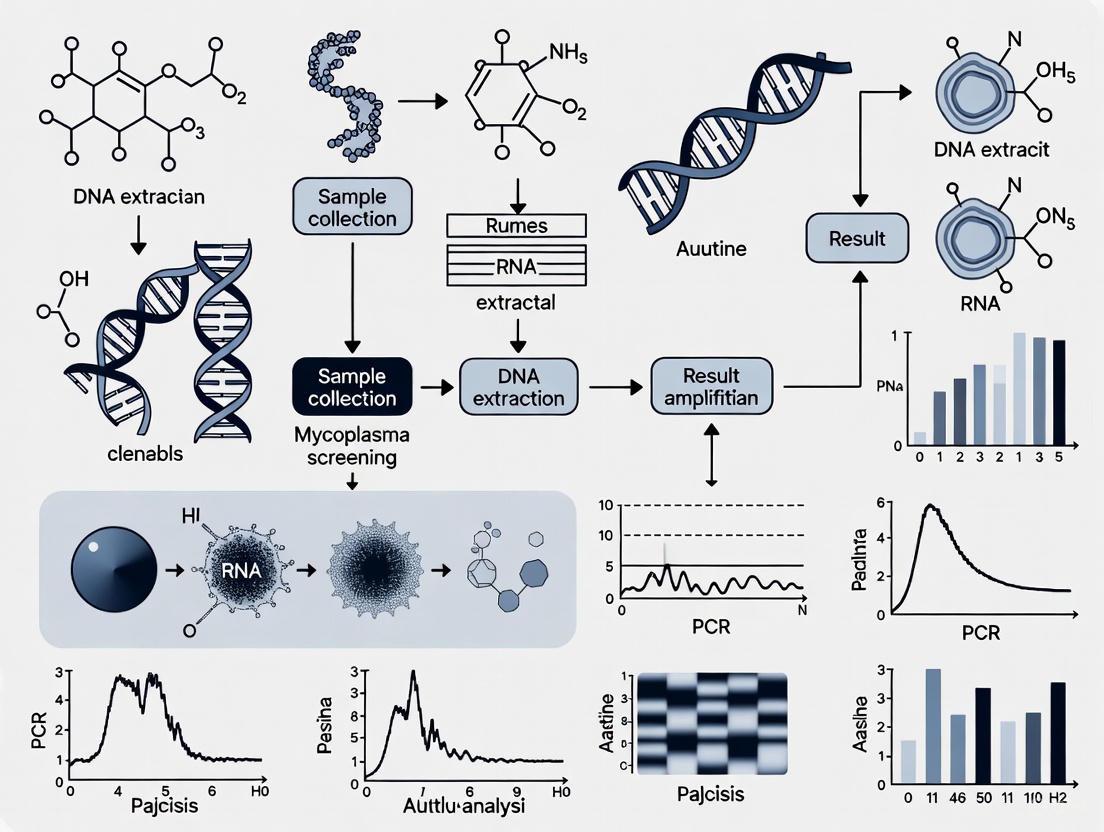
This article provides a comprehensive guide to modern mycoplasma screening protocols, tailored for researchers, scientists, and drug development professionals.
Modern Mycoplasma Screening: Protocols for Rapid, Reliable Contamination Control in Biopharmaceutical Manufacturing
Abstract
This article provides a comprehensive guide to modern mycoplasma screening protocols, tailored for researchers, scientists, and drug development professionals. It bridges foundational knowledge with advanced applications, covering the critical risks of mycoplasma contamination in cell cultures and biopharmaceuticals. The scope extends from traditional culture methods to the latest rapid molecular techniques like PCR and fully automated NAT systems, addressing their implementation in routine workflows. It further offers strategic insights for troubleshooting common pitfalls, optimizing testing efficiency, and navigating the rigorous validation requirements for regulatory compliance, particularly for advanced therapies and rapid-release manufacturing.
Understanding Mycoplasma Contamination: Risks, Sources, and Impact on Cell Cultures and Drug Safety
Mycoplasmas represent a unique genus of prokaryotic bacteria within the class Mollicutes, characterized by their complete lack of a cell wall and their status as the smallest known self-replicating organisms [1] [2]. These biological characteristics make them particularly adept at evading conventional detection methods, posing significant challenges for research laboratories and biopharmaceutical production facilities. It is estimated that between 15-35% of cell cultures are contaminated with mycoplasmas, endangering nearly all aspects of cell physiology and compromising experimental data and biopharmaceutical product safety [3]. This application note examines the fundamental biological traits that enable mycoplasmas to avoid detection and provides detailed protocols for reliable screening within the context of routine mycoplasma screening protocol research.
Key Biological Characteristics Facilitating Immune Evasion and Detection Avoidance
Structural and Metabolic Adaptations
Mycoplasmas possess several distinctive biological features that contribute to their stealth nature:
- Minimalistic Cellular Structure: Lacking a cell wall and containing only a plasma membrane, ribosomes, and circular double-stranded DNA, mycoplasmas range in size from 0.15 to 0.3 micrometers, allowing them to pass through standard sterilization filters (0.22 μm) used in tissue culture [1] [3].
- Reduced Genome and Metabolic Dependence: With severely limited biosynthetic capabilities due to their small genomes, mycoplasmas depend entirely on their host for essential nutrients including cholesterol, amino acids, fatty acids, and vitamins [2] [3].
- Host and Tissue Specificity: Their parasitic lifestyle and stringent metabolic requirements result in strict host and tissue tropism, though several species have adapted to cell culture environments with loss of original host specificity [1] [4].
Immune Evasion Mechanisms
Mycoplasmas employ sophisticated strategies to persist within host organisms and cell cultures:
- Cell Invasion: Multiple species including M. penetrans, M. pneumoniae, M. genitalium, and M. bovis can invade non-phagocytic eukaryotic cells, residing within cytoplasm and perinuclear sites where they evade immune detection [1].
- Biofilm Formation: Capacity to form protective biofilms that provide physical barriers against immune factors [1].
- Antigen Variation: Surface membrane lipoproteins and adhesins undergo antigenic variation, enabling escape from antibody recognition [1].
- Molecular Mimicry: Utilization of molecular components that resemble host structures, avoiding immune recognition [1].
- Modulation of Immune Responses: Capability to suppress immune cell activity and function, including avoidance of phagocytosis and degradation of neutrophil extracellular traps (NETs) [1].
Established Mycoplasma Detection Methods: Advantages and Limitations
The following table summarizes the performance characteristics of major mycoplasma detection methods:
Table 1: Comparison of Mycoplasma Detection Methodologies
| Detection Method | Time to Result | Sensitivity | Key Advantages | Major Limitations |
|---|---|---|---|---|
| Direct Culture [3] | Up to 28 days | High for cultivable species | Detects viable cells; Considered gold standard for compendial methods | Laborious; Requires specific media; Not all species cultivable |
| Indirect Hoechst Staining [3] | 3-5 days | Moderate | Cost-effective; Detects non-cultivable species | Not specific to mycoplasma; Requires expert interpretation |
| PCR-based Methods [4] [3] | 4-6 hours | High | Rapid; Sensitive; Specific; Broad species detection | Cannot distinguish viable from non-viable cells; Requires optimization |
| qPCR Methods [5] [6] | 4-6 hours | High | Quantitative; Automated; Regulatory acceptance for lot-release | Equipment costs; Validation required |
| Simultaneous Amplification and Testing (SAT) [7] | Within 24 hours | High | High specificity (97.5%); Detects RNA indicating active infection | Limited to targeted species |
| BIOFIRE Multiplex PCR [8] | ~1 hour | High | Ultra-rapid; Automated; Multiplex capability | Platform-specific consumables |
Table 2: Performance Comparison of Selected Detection Methods for M. pneumoniae in Clinical Samples [7]
| Method | Sensitivity (%) | Specificity (%) | Youden Index | Kappa Value |
|---|---|---|---|---|
| MP-IgM (Particle Agglutination) | 74.0 | 79.7 | 53.7 | 0.536 |
| MP-RNA (SAT) | 61.8 | 97.5 | 59.3 | 0.634 |
| Combined SAT + MP-IgM (PA) | 84.2 | 78.7 | 62.9 | 0.602 |
Mechanisms of Mycoplasma Contamination and Detection Evasion
The following diagram illustrates how the fundamental biological characteristics of mycoplasmas enable them to contaminate cell cultures and evade detection:
Detailed Experimental Protocols for Mycoplasma Detection
Protocol 1: Four-Primer PCR for Universal Mycoplasma Detection
This protocol adapts the methodology described by [4] for comprehensive mycoplasma screening:
Principle: Utilizes ultra-conserved eukaryotic (Uc48) and mycoplasma-specific (Myco) sequence primers targeting the 16S rRNA region, enabling simultaneous detection of mycoplasma contamination with an internal eukaryotic control.
Reagents and Equipment:
- DNA extraction kit (QIAamp DNA Mini Kit or equivalent)
- PCR master mix with DNA polymerase
- Ultra-conserved primer sets:
- Mycoplasma-specific primers (166-191 bp product)
- Eukaryotic Uc48 primers (105 bp control product)
- Thermal cycler
- Agarose gel electrophoresis equipment
- DNA molecular weight markers
Procedure:
- Sample Collection: Harvest 1-5 × 10^6 cells from culture without antibiotics
- DNA Extraction: Isolate genomic DNA according to kit instructions, eluting in 50-100 μL elution buffer
- PCR Reaction Setup:
- Prepare 25 μL reaction mixture containing:
- 12.5 μL PCR master mix
- 1 μL each forward and reverse mycoplasma primers (10 μM)
- 1 μL each forward and reverse eukaryotic primers (10 μM)
- 2 μL template DNA (100-200 ng)
- Nuclease-free water to 25 μL
- Prepare 25 μL reaction mixture containing:
- Thermal Cycling Conditions:
- Initial denaturation: 95°C for 5 minutes
- 35 cycles of:
- Denaturation: 95°C for 30 seconds
- Annealing: 58°C for 30 seconds
- Extension: 72°C for 45 seconds
- Final extension: 72°C for 7 minutes
- Analysis:
- Separate PCR products on 2% agarose gel with ethidium bromide
- Visualize under UV light:
- 105 bp band: internal control (successful PCR)
- 166-191 bp band: mycoplasma contamination
Validation Parameters:
- Limit of Detection (LOD): 6.3 pg mycoplasma DNA or ~8.2×10^3 genomic copies [4]
- Coverage: Designed to detect 92% of all Mycoplasmatota species across six orders [4]
Protocol 2: Combined Serological and Molecular Testing for Enhanced Detection
Based on the findings of [7], this protocol combines MP-IgM detection with RNA-based testing for improved diagnostic accuracy:
Principle: Leverages both antibody response (MP-IgM via Particle Agglutination) and direct pathogen detection (MP-RNA via SAT) to increase sensitivity and specificity for active infections.
Reagents and Equipment:
- SERODIA MYCO-II kit (Fuji Rebio) or equivalent for Particle Agglutination
- MP-RNA detection kit (Rendu Biotechnology) or equivalent for SAT
- Venous blood collection tubes
- Throat swab collection system
- Water bath or thermal block
- Microcentrifuge
Procedure: A. MP-IgM Particle Agglutination (PA):
- Collect venous blood sample, separate serum
- Prepare serial dilutions of serum specimen (1:20 to 1:640)
- Add 25 μL of each dilution to microtiter plate wells
- Add 25 μL of sensitized gelatin particles to each well
- Mix gently, cover, and incubate at room temperature for 3 hours
- Interpret results: Positive if agglutination at titer ≥1:160
B. MP-RNA Simultaneous Amplification and Testing (SAT):
- Collect throat swab specimen in appropriate transport medium
- Extract nucleic acids according to kit instructions
- Prepare isothermal amplification reaction mix
- Add template RNA and incubate at 41°C for 60 minutes
- Detect results: Fluorescence signal indicates MP-RNA presence
Interpretation:
- Positive Result: Either MP-IgM ≥1:160 or MP-RNA positive
- Confirmatory: Both tests positive indicates active infection
- Combined testing provides sensitivity of 84.2% and specificity of 78.7% [7]
Mycoplasma Detection Workflow for Biopharmaceutical Applications
The following diagram outlines a comprehensive testing strategy for biopharmaceutical quality control:
Essential Research Reagent Solutions
Table 3: Key Research Reagents for Mycoplasma Detection
| Reagent/Kit | Specific Function | Application Context |
|---|---|---|
| Titered Mycoplasma Reference Strains Panel (ATCC MP-7) [3] | Provides validated reference strains with high viability and low GC/CFU ratio | Method validation and comparison studies |
| Universal Mycoplasma Detection Kit (ATCC 30-1012K) [3] | Broad-range 16S rRNA primers with touchdown PCR protocol | Routine screening of cell cultures |
| MycoSEQ Mycoplasma Detection Assay [6] | qPCR-based detection with regulatory acceptance | Biopharmaceutical lot-release testing |
| SERODIA MYCO-II Kit [7] | Particle agglutination for MP-IgM detection | Serological diagnosis in clinical samples |
| BIOFIRE Panel [8] | Multiplex PCR for rapid, automated detection | High-throughput screening in GMP environments |
| Quantitative Mycoplasma DNA CRMs [3] | Certified Reference Materials for assay standardization | Quality control and assay validation |
Mycoplasmas' unique biological characteristics, including their small size, lack of a cell wall, and reduced genomes, make them particularly adept at evading detection in both research and biopharmaceutical production environments. Their ability to persist through immune evasion mechanisms like intracellular invasion and molecular mimicry further complicates detection efforts. Implementation of robust screening protocols that leverage both molecular and culture-based methods, tailored to specific application requirements, is essential for ensuring research integrity and biopharmaceutical product safety. The continued development and validation of rapid, sensitive detection methodologies remains critical for addressing the challenges posed by this stealth contaminant, particularly as advanced therapies with short shelf-lives necessitate faster turnaround times for quality control testing.
Mycoplasma contamination represents a pervasive and costly threat to the integrity of biopharmaceutical manufacturing processes. As the smallest free-living organisms, mycoplasmas lack a cell wall and have very small genomes, making them resistant to commonly used antibiotics and difficult to detect through routine microscopy [4]. Between 10-35% of all cell lines are estimated to be contaminated with mycoplasmas, posing significant risks to product safety, experimental validity, and ultimately, patient health [4]. The economic implications of such contamination events can be catastrophic, with documented cases resulting in hundreds of millions of dollars in losses, regulatory fines, and long-term damage to company reputation. This application note outlines the critical consequences of mycoplasma contamination and establishes a standardized, cost-effective PCR protocol for routine screening that can serve as a universal standard within the biopharmaceutical industry, framed within broader research on mycoplasma screening protocols.
Economic & Operational Consequences of Contamination
Contamination events in biopharmaceutical manufacturing carry severe financial and operational implications that extend far beyond the immediate loss of product. The economic impact encompasses direct financial losses, regulatory consequences, and long-term reputational damage.
Documented Case Studies
Historical incidents illustrate the devastating potential of contamination events:
Genzyme (2009): Viral contamination forced the temporary closure of a Massachusetts manufacturing plant, halting production of Fabrazyme and Cerezyme drugs used by 8,000 patients globally. The incident was estimated to cost up to $300 million in lost revenue, plus a $175 million FDA fine and a $28.4 million product write-off [9].
McNeil Consumer Healthcare (2009): Metal particulate contamination in children's pain medicine led to a plant closure lasting over five years, a $25 million FDA fine, $100 million in plant refitting costs, and an estimated $1.6 billion in recall and market reaction costs [9].
Baxter Healthcare (2011): Endotoxin contamination in kidney dialysis medication occurred due to microscopic cracks in manufacturing tanks, potentially risking patient safety and necessitating major process reviews [9].
Broader Business Impacts
Beyond immediate financial penalties, contamination events trigger cascading operational challenges:
Product Efficacy Concerns: Microbial contamination can compromise pharmaceutical efficacy by degrading active ingredients or altering their chemical properties [10].
Regulatory Compliance Violations: Bioburden exceeding acceptable limits results in regulatory violations, potentially leading to product recalls, sanctions, fines, and delays in market approval for new products [10].
Erosion of Consumer Trust: Contamination incidents damage the relationship between manufacturers and customers, creating long-term market confidence issues [10].
Table 1: Economic Impact of Major Pharmaceutical Contamination Events
| Company | Year | Contaminant | Estimated Financial Impact | Additional Consequences |
|---|---|---|---|---|
| Genzyme | 2009 | Virus | >$500M (lost revenue + fines) | 6-month production halt; drug shortages |
| McNeil Consumer Healthcare | 2009 | Metal particulates | ~$1.7B (total costs) | 5-year plant closure; massive recall |
| Baxter Healthcare | 2011 | Bacterial endotoxins | Not quantified | Potential patient safety risks |
Mycoplasma Contamination: Specific Risks & Detection Challenges
Mycoplasma contamination presents unique challenges in biopharmaceutical manufacturing due to its subtle nature and profound effects on cellular systems.
Impact on Cell Physiology and Product Quality
Mycoplasma infection significantly alters normal cell behavior and physiology through multiple mechanisms:
Metabolic Interference: Mycoplasmas utilize host cell nutrients through various pathways including arginine metabolism, fermentation of sugars to lactate, or oxidation of pyruvate or lactate, potentially depriving host cells of essential metabolites [4].
Genetic and Signaling Alterations: Contamination affects gene expression patterns, interferes with signal transduction pathways, impairs nucleic acid incorporation, induces oxidative stress, promotes chromosomal alterations and instability, and may even cause malignant transformation through inhibition of TP53 tumor suppressor function [4].
Subtle Phenotypic Changes: Unlike dramatic bacterial contamination, mycoplasma infection typically causes mild phenotypic changes in host cells that are easily overlooked during routine culture, especially when growth medium is replaced regularly [4].
Detection Challenges
Mycoplasmas evade conventional detection methods due to several inherent characteristics:
Size and Structure: Their reduced size (approximately 0.2-0.3 μm) and lack of cell wall allows them to evade standard sterilization filtration techniques and prevents detection by light microscopy [4].
Growth Characteristics: Mycoplasmas do not produce turbidity in culture medium, making visual detection impossible [4].
Survival Capabilities: They survive cryopreservation and direct contact with liquid nitrogen, potentially spreading through liquid nitrogen tanks and preserving contamination in frozen aliquots [4].
Established Protocols for Mycoplasma Detection
Comparison of Detection Methods
Various methodologies exist for mycoplasma detection, each with distinct advantages and limitations:
Table 2: Comparison of Mycoplasma Detection Methods
| Method | Principle | Detection Time | Advantages | Limitations |
|---|---|---|---|---|
| Microbial Culture | Growth on specific broth/agar | 1-2 weeks | Historical gold standard; can detect viable organisms | Long incubation; many strains don't grow on substrates |
| Hoechst Staining | DNA staining with fluorescent dye | 1-2 days | Fast visual readout; relatively inexpensive | Subjective interpretation; requires expertise |
| PCR-Based Detection | DNA amplification of conserved regions | Several hours | High sensitivity/specificity; broad species detection | Requires DNA extraction; primer design critical |
| Immunoassays | Antibody binding to specific epitopes | 1-2 days | Specific detection | Limited to targeted species; may miss uncommon strains |
| Microchip Electrophoresis | DNA separation on microchips | Several hours | High-tech approach | Expensive equipment; not widely established |
A Universal PCR-Based Detection Protocol
Recent research has established a reliable and cost-effective PCR method that can serve as a universal standard for mycoplasma testing. The applied strategy utilizes ultra-conserved eukaryotic and mycoplasma sequence primers covering by design 92% of all species in the six orders of the class Mollicutes within the phylum Mycoplasmatota [4].
Primer Design and Specificity
The protocol employs a sophisticated bioinformatics approach for primer design:
Target Selection: Primers target highly conserved 16S rRNA mycoplasma-specific regions identified through the NCBI Bacterial 16S Ribosomal RNA RefSeq Targeted Loci Project (Accession PRJNA33175) [4].
Coverage Analysis: The selected primer combination matches with 198 out of 216 mycoplasma species or 226 out of 246 mycoplasma strains, providing a total coverage of 92% in both cases [4].
Specificity Validation: Analysis of 25796 database entries demonstrated the primer pair identifies 272 entries representing 204 different species, of which 198 (97%) are on-target (mycoplasmas) and only six (3%) are off-target (non-mycoplasmas) [4].
Table 3: Mycoplasma Primer Coverage Across Genera
| Genera | Matched Species/All Species | Percentage Species [%] | Matched Strains/All Strains | Percentage Strains [%] |
|---|---|---|---|---|
| Acholeplasma | 8/9 | 89 | 11/12 | 92 |
| Metamycoplasma | 22/22 | 100 | 28/28 | 100 |
| Mycoplasma | 39/41 | 95 | 42/44 | 95 |
| Mycoplasmopsis | 43/44 | 98 | 53/56 | 95 |
| Spiroplasma | 34/38 | 89 | 34/38 | 89 |
| Ureaplasma | 9/9 | 100 | 9/9 | 100 |
The following diagram illustrates the experimental workflow and primer binding strategy for the mycoplasma detection protocol:
Detailed Experimental Protocol: Four-Primer PCR Method
Reagent Preparation
Primer Design and Formulation
The protocol utilizes a combination of mycoplasma-specific primers and eukaryotic control primers:
Forward Primers (Myco-5 series):
- Myco-5-1: CGCCTGAGTAGTACGTTCGC
- Myco-5-2: CGCCTGAGTAGTACGTACGC
- Myco-5-3: TGCCTGAGTAGTACATTCGC
- Myco-5-4: TGCCTGGGTAGTACATTCGC
- Myco-5-5: CGCCTGGGTAGTACATTCGC
- Myco-5-6: CGCCTGAGTAGTATGCTCGC [11]
Reverse Primers (Myco-3 series):
- Myco-3-1: GCGGTGTGTACAAGACCCGA
- Myco-3-2: GCGGTGTGTACAAAACCCGA
- Myco-3-3: GCGGTGTGTACAAACCCCGA [11]
Primer Mix Preparation:
- Dissolve each primer to a final concentration of 100 μM
- Mix all forward primers together to reach a final concentration of 10 μM each
- Mix all reverse primers similarly to 10 μM final concentration
- For 100 μl primer mix: combine 10 μl of each forward primer + 40 μl water [11]
Master Mix Formulation
Prepare PCR reactions according to the following formulation:
Table 4: PCR Reaction Master Mix Formulation
| Reagent | Volume (μl) | Final Concentration | Function |
|---|---|---|---|
| 10x PCR Buffer | 2.5 | 1x | Reaction buffer |
| 25 mM MgCl₂ | 2.0 | 2.0 mM | Magnesium cofactor |
| 10 mM dNTPs | 1.0 | 0.4 mM | Nucleotide substrates |
| Forward Primer Mix | 1.0 | 0.4 μM each | Mycoplasma detection |
| Reverse Primer Mix | 1.0 | 0.4 μM each | Mycoplasma detection |
| Cell Culture Supernatant | 2.0 | Undiluted | Template source |
| Taq Polymerase | 0.2 | 0.5-1.0 U/μl | DNA amplification |
| Nuclease-Free Water | 15.3 | - | Volume adjustment |
| Total Volume | 25.0 |
Sample Preparation
- Collect 100 μl of cell culture supernatant from a dense culture (80-100% confluent) into a 1.5 ml tube [11]
- Heat the sample for 5 minutes at 95°C to denature proteins and release DNA [11]
- Centrifuge for 2 minutes in a bench centrifuge at maximum speed to pellet debris [11]
- Use 2.0 μl of the supernatant as template in the PCR reaction [11]
PCR Amplification Parameters
Perform amplification using the following thermal cycling conditions:
Table 5: PCR Thermal Cycling Conditions
| Step | Temperature (°C) | Time | Cycles | Purpose |
|---|---|---|---|---|
| Initial Denaturation | 95 | 2:00 min | 1 | Complete denaturation |
| Denaturation | 94 | 0:30 sec | 5 | Strand separation |
| Annealing | 50 | 0:30 sec | 5 | Low-specificity binding |
| Extension | 72 | 0:35 sec | 5 | Initial amplification |
| Denaturation | 94 | 0:15 sec | 30 | Strand separation |
| Annealing | 56 | 0:15 sec | 30 | High-specificity binding |
| Extension | 72 | 0:30 sec | 30 | Specific amplification |
| Final Hold | 4 | ∞ | 1 | Short-term storage |
Results Analysis and Interpretation
- Electrophoresis: Run PCR products on a 2% agarose gel with appropriate DNA ladder [11]
- Expected Amplicon Sizes:
- Mycoplasma-specific band: 166-191 bp
- Eukaryotic control band: 105 bp [4]
- Result Interpretation:
- Positive: Both 105 bp and 166-191 bp bands present
- Negative: Only 105 bp band present (eukaryotic control)
- Invalid: No bands present (PCR failure) [4]
Assay Validation and Quality Control
- Limit of Detection (LOD): The assay detects as little as 6.3 pg of M. orale DNA, equivalent to approximately 8.21×10³ genomic copies [4]
- Specificity: Primers cover 92% of mycoplasma species with 97% on-target specificity [4]
- Controls:
- Include negative control (water) to exclude false positives
- Include positive control (known infected culture supernatant) when available [11]
The Scientist's Toolkit: Essential Research Reagents
Implementation of routine mycoplasma screening requires specific reagents and equipment to ensure reliable results:
Table 6: Essential Research Reagents for Mycoplasma Screening
| Reagent/Equipment | Specification/Function | Application Notes |
|---|---|---|
| Mycoplasma Primers | Myco-5 & Myco-3 series | Multiple variants for broad species coverage (92%) |
| DNA Polymerase | Thermostable (e.g., Taq) | Standard PCR-grade enzyme with buffer system |
| dNTP Mix | 10 mM each dNTP | PCR-grade nucleotide mixture |
| MgCl₂ Solution | 25 mM concentration | Critical cofactor for polymerase activity |
| Agarose | Molecular biology grade | Gel electrophoresis for result visualization |
| DNA Ladder | 100-1000 bp range | Size determination of amplification products |
| Cell Culture Medium | Serum-free supernatant | Template source from confluent cultures |
| Thermal Cycler | Standard PCR instrument | Programmable temperature cycling |
| Gel Electrophoresis System | Standard horizontal system | Result visualization and documentation |
Mycoplasma contamination presents a clear and present danger to both product integrity and economic viability in biopharmaceutical manufacturing. The consequences of contamination events extend from compromised research data and product efficacy to catastrophic financial losses measured in hundreds of millions of dollars. Implementation of robust, routine screening protocols represents not merely a regulatory compliance issue, but a fundamental component of sound business practice in the biopharmaceutical industry. The four-primer PCR method described herein provides a standardized, cost-effective, and highly reliable approach for mycoplasma detection that can serve as a universal standard across research and manufacturing environments. By adopting this rigorous screening methodology, biopharmaceutical organizations can substantially mitigate the profound risks associated with mycoplasma contamination, protecting both their scientific integrity and economic viability in an increasingly competitive marketplace.
Mycoplasma contamination represents a pervasive and serious challenge in cell culture laboratories, compromising the integrity and reproducibility of biomedical research and biopharmaceutical production. As the smallest known free-living organisms, mycoplasmas lack a cell wall, which contributes to their resistance to many common antibiotics and allows them to evade routine detection methods. Understanding the epidemiological profile of the most prevalent contaminating species is fundamental to developing effective screening and control protocols. This application note provides a comprehensive analysis of the predominant mycoplasma species in cell cultures, supported by quantitative data, and presents detailed experimental protocols for their detection and eradication, framed within the broader context of routine mycoplasma screening protocol research.
Epidemiology of Prevalent Mycoplasma Species
Prevalence and Species Distribution
Mycoplasma contamination affects an estimated 15-35% of continuous cell lines worldwide, with some studies reporting contamination rates as high as 80% in specific settings [12] [13]. This extensive contamination problem stems from the bacteria's ability to thrive in cell culture environments without causing immediate visible changes to the culture. Although over 20 mycoplasma species have been identified as cell culture contaminants, epidemiological studies consistently demonstrate that a limited number of species account for the overwhelming majority of contamination incidents.
Table 1: Primary Mycoplasma Species in Cell Culture Contamination
| Species | Approximate Prevalence | Natural Host | Key Characteristics |
|---|---|---|---|
| M. orale | ~36% | Human | Most common contaminant; originates from human oral flora |
| M. arginini | ~18% | Bovine | Frequently introduced via bovine serum |
| M. hyorhinis | ~14% | Porcine | Can cause cytopathic effects in some cell types |
| M. fermentans | ~9% | Human | Capable of invading eukaryotic cells |
| M. hominis | ~8% | Human | Associated with urogenital tract infections |
| A. laidlawii | ~6% | Bovine | Common serum contaminant; environmentally resilient |
| Other Species | ~9% | Various | Includes M. pirum, M. salivarium |
Six primary species account for approximately 95% of all detected mycoplasma contaminations in continuous cell line cultures [14] [13]. The distribution of these species reflects their primary contamination sources, with human-derived species (such as M. orale, M. fermentans, M. hominis, and M. salivarium) comprising the majority of isolates, followed by bovine-derived species (including M. arginini and A. laidlawii) and porcine-derived species (notably M. hyorhinis) [14].
Understanding the transmission pathways of mycoplasma contamination is essential for developing effective prevention strategies. The epidemiology of contamination has shifted over time; while contaminated bovine serum was historically the main source, current evidence indicates that cross-contamination between cell lines is now the predominant route [4]. Laboratory personnel serve as significant reservoirs for human-derived species, with studies indicating that 81% of laboratory technicians are mycoplasma carriers [13].
The remarkable transmissibility of mycoplasmas is facilitated by several factors: their small size (0.3-0.8 μm) allows them to potentially pass through 0.2 μm filters used for sterilizing media; they survive cryopreservation and can spread in liquid nitrogen tanks; and they are resistant to common cell culture antibiotics like penicillin and streptomycin [4] [12]. Routine laboratory activities such as talking, sneezing, or handling multiple cell types without adequate precautions significantly contribute to aerosol-based dissemination [14] [13].
Figure 1: Transmission Dynamics of Mycoplasma Contamination in Cell Culture Laboratories
Detection Methodologies
PCR-Based Detection Protocols
Nucleic acid amplification techniques, particularly polymerase chain reaction (PCR), have become the gold standard for mycoplasma detection due to their high sensitivity, specificity, and rapid turnaround time compared to traditional culture methods [12]. PCR methods can detect as few as a handful of mycoplasma genome copies and provide results within 2.5 to 5 hours, compared to the 28 days required for culture methods [12].
Universal PCR Protocol for Mycoplasma Detection
A recently developed universal PCR protocol utilizes ultra-conserved regions of the 16S rRNA gene to detect a broad spectrum of mycoplasma species with 92% coverage across the class Mollicutes [4]. This method employs a four-primer system that simultaneously amplifies mycoplasma DNA (166-191 bp product) and eukaryotic DNA (105 bp internal control product) to verify sample quality and PCR efficiency.
Table 2: Key Reagents for Universal Mycoplasma PCR Detection
| Reagent | Function | Specifications |
|---|---|---|
| Mycoplasma Primers | Amplification of mycoplasma 16S rRNA | Ultra-conserved sequences covering 92% of Mollicutes |
| Eukaryotic Primers (Uc48) | Internal positive control | Amplifies 105 bp eukaryotic DNA fragment |
| DNA Polymerase | DNA amplification | Heat-stable with high processivity |
| dNTP Mix | Nucleotide substrates | Balanced solution of dATP, dCTP, dGTP, dTTP |
| Buffer System | Optimal reaction conditions | Includes MgCl₂ at appropriate concentration |
| Template DNA | Target nucleic acids | Cell culture supernatant or cell lysate |
The protocol involves the following key steps:
- Sample Preparation: Collect approximately 1-2 mL of cell culture supernatant or harvest cells and resuspend in PBS. Include both test samples and controls (known positive, negative, and no-template controls).
- DNA Extraction: Use commercial DNA extraction kits according to manufacturer's instructions. Proper extraction is critical for removing PCR inhibitors and ensuring high-quality DNA.
- PCR Reaction Setup: Prepare master mix containing:
- 12.5 μL of 2× PCR master mix
- 0.7 μM of each mycoplasma-specific primer
- 0.7 μM of eukaryotic control primers
- 3 μL of template DNA
- Nuclease-free water to 25 μL total volume
- Amplification Parameters:
- Initial denaturation: 95°C for 5 minutes
- 35 cycles of: 95°C for 30 seconds, 60°C for 30 seconds, 72°C for 45 seconds
- Final extension: 72°C for 7 minutes
- Product Analysis: Separate PCR products by gel electrophoresis (2% agarose) and visualize with ethidium bromide or alternative DNA stains. The presence of a 166-191 bp band indicates mycoplasma contamination, while the 105 bp control band confirms reaction validity.
This method has demonstrated a limit of detection of 6.3 pg of mycoplasma DNA, equivalent to approximately 8.21×10³ genomic copies, ensuring high sensitivity for early contamination detection [4].
Species-Specific Multiplex PCR for Common Contaminants
For laboratories focusing on the most prevalent contaminants, a targeted multiplex TaqMan PCR assay has been developed specifically for M. arginini and M. orale, which together account for over 50% of mycoplasma contaminations [15]. This assay uses species-specific probes labeled with different fluorophores (FAM for M. orale, CalRd610 for M. arginini) to enable simultaneous detection and differentiation.
The reaction composition for this multiplex assay includes:
- 12.5 μL of 2× QuantiTect Probe PCR Master Mix
- 0.7 μM of forward and reverse primers (Myco16SF and Myco16SR)
- 0.4 μM of each species-specific probe
- 3 μL of DNA template
- Nuclease-free water to 25 μL total volume
The cycling conditions follow a standard real-time PCR protocol with annealing/extension at 60°C for 60 seconds. This method provides both identification and quantification of these two common contaminants, with specific applications in monitoring decontamination efficacy.
Alternative Detection Technologies
While PCR remains the most widely used method, alternative technologies offer complementary approaches for mycoplasma detection:
Volatile Organic Compound (VOC) Analysis: An emerging technology using gas chromatography with ion mobility spectrometry (GC-IMS) can detect mycoplasma contamination through analysis of microbial VOCs. This method has demonstrated detection of mycoplasma at 24 hours post-inoculation, providing extremely early indication of contamination [16].
Microbiological Culture: The historical gold standard involves culture on specific mycoplasma broth or agar plates, requiring 1-4 weeks of incubation. While highly specific, this method detects only cultivable strains (approximately 20% of known species) and has largely been replaced by molecular methods in routine screening [4] [12].
Hoechst DNA Staining: This fluorescent staining method allows visualization of mycoplasma DNA attached to cell membranes. While rapid, it requires experience in interpretation and may lack sensitivity for low-level contamination [4] [12].
Decontamination Protocols
Antibiotic Treatment for Mycoplasma Eradication
When mycoplasma contamination is detected in valuable cell lines, antibiotic treatment represents a practical approach for decontamination. A recently validated protocol specifically targets M. arginini and M. orale using a combination of daptomycin and clindamycin [15].
The decontamination protocol involves:
- Antibiotic Preparation: Prepare stock solutions of daptomycin (10 mg/mL) and clindamycin (25 mg/mL) in sterile water or buffer according to manufacturer's instructions.
- Treatment Application: Add antibiotics to culture media at final concentrations of 25 μg/mL for daptomycin and 12.5 μg/mL for clindamycin.
- Treatment Duration: Maintain cells in antibiotic-containing media for 14 days, with medium changes every 2-3 days.
- Post-Treatment Validation: After the treatment period, passage cells in antibiotic-free media for at least two passages and retest for mycoplasma using PCR to confirm eradication.
This specific antibiotic combination effectively clears mycoplasma contamination while preserving the viability of intracellular bacteria like Rickettsia and Ehrlichia in co-culture systems, making it particularly valuable for specialized research applications [15].
Figure 2: Mycoplasma Decontamination Protocol Workflow
Complementary Eradication Methods
While antibiotic treatment represents the most practical approach for most laboratories, alternative methods may be employed in specific circumstances:
Mouse Inoculation: Historically used for rickettsial cultures, this method involves inoculating laboratory mice with contaminated cells and re-isolating mycoplasma-free cultures from brain endothelial cells. This approach is limited by ethical considerations, regulatory requirements, and variable efficacy across cell types [15].
Antibiotic Prophylaxis: For high-risk procedures or particularly valuable cell lines, some laboratories employ continuous low-dose antibiotic prophylaxis. However, this approach is controversial as it may mask low-level contamination and potentially contribute to antibiotic resistance development.
Implementation in Quality Control Programs
Designing a Routine Screening Protocol
Effective mycoplasma control requires integration of regular testing into laboratory quality assurance programs. Regulatory authorities including the FDA and European Medicines Agency require that cell cultures used in pharmaceutical production be tested for mycoplasma contamination at various stages of the production process [12].
A comprehensive screening protocol should include:
- Testing Frequency: Every 2 weeks to 3 months, depending on cell line value and risk assessment
- Sample Selection: Test all new cell lines upon receipt, pre- and post-cryopreservation, and at termination
- Method Selection: PCR-based methods for routine screening due to speed and sensitivity
- Confirmation Testing: Culture methods or secondary PCR assays for confirmation of positive results
- Documentation: Maintain complete records of all testing results and subsequent actions
Prevention Strategies
Preventing mycoplasma contamination is significantly more efficient than eradication. Key preventive measures include:
- Personnel Training: Educate staff on proper aseptic technique and contamination risks
- PPE Compliance: Enforce wearing of lab coats, gloves, and face protection when working with cell cultures
- Reagent Quality Control: Source reagents from reputable suppliers that perform mycoplasma testing
- Workflow Segregation: Separate incoming and established cell lines, with dedicated media and equipment
- Regular Monitoring: Implement a scheduled testing program rather than testing only when contamination is suspected
The epidemiology of mycoplasma contamination in cell cultures is characterized by a limited number of predominant species, primarily of human and bovine origin, which account for the vast majority of incidents. Implementation of robust detection methods, particularly PCR-based assays targeting conserved genomic regions, enables sensitive and specific identification of contamination. When integrated with systematic decontamination protocols and preventive measures, these approaches form a comprehensive strategy for maintaining mycoplasma-free cell cultures, thereby ensuring the reliability and reproducibility of research outcomes and biopharmaceutical products. Regular surveillance using the protocols outlined in this application note provides an essential foundation for quality assurance in cell culture-based science and industry.
Mycoplasma contamination represents a critical risk to cell cultures and biopharmaceutical products, potentially compromising product safety, efficacy, and quality. Regulatory bodies worldwide have established mandatory testing requirements to ensure detection and control of these contaminants. The European Pharmacopoeia (Ph. Eur.) and the U.S. Food and Drug Administration (FDA) provide specific, evolving frameworks for mycoplasma testing, with recent updates significantly modernizing accepted methodologies [17] [18]. This application note synthesizes current regulatory requirements and provides detailed experimental protocols within the context of routine mycoplasma screening protocol research, serving as a comprehensive resource for researchers, scientists, and drug development professionals.
Global Regulatory Landscape
Regulatory guidelines for mycoplasma testing are dynamic, with recent revisions emphasizing scientific advancement and risk-based approaches. The table below summarizes the core quantitative requirements from major regulatory bodies.
Table 1: Key Regulatory Requirements for Mycoplasma Testing
| Regulatory Body | Applicable Documents | Key Methodological Requirements | Detection Limit | Effective Date |
|---|---|---|---|---|
| European Pharmacopoeia (Ph. Eur.) | General Chapter 2.6.7. Mycoplasmas [17] | Culture method AND Indicator cell culture method (or a validated NAT method). A risk-based approach is permitted with justification [17] [19]. | NAT: <10 GC/CFU ratio; <100 genomic copies (GC)/ml and ≤10 colony forming units (CFU)/ml [17] [19]. | April 1, 2026 [17] |
| U.S. FDA | USP <63>; Draft Guidance: "Safety Testing of Human Allogeneic Cells Expanded for Use in Cell-Based Medical Products" [18] | Recommends mycoplasma testing as specified in USP <63>. Alternative methods of comparable sensitivity are acceptable [18]. | Not explicitly stated in reviewed documents; follows USP standards. | Draft guidance published April 2024 [18] |
European Pharmacopoeia (Ph. Eur.) Chapter 2.6.7
The recently adopted Ph. Eur. Chapter 2.6.7 marks a significant modernization, formally recognizing the equivalence of Nucleic Acid Amplification Techniques (NAT) to traditional culture-based assays [17] [19] [20]. The revised chapter mandates a combination of the culture method and the indicator cell culture method. However, a validated NAT method can be used as an alternative to one of these, provided its use is justified by a risk assessment and authorized by the competent authority [17] [21]. This update provides a less prescriptive, risk-based testing strategy and sets clear, validated performance benchmarks for NAT methods, including a detection limit of ≤10 CFU/ml or <100 GC/ml [19]. The revised chapter and 11 associated monographs will be published in Ph. Eur. Issue 12.2 in October 2025 and become official on April 1, 2026 [17].
U.S. Food and Drug Administration (FDA) Guidelines
The FDA's approach to mycoplasma testing for cell-based medical products, including allogeneic cells expanded in vitro, references the United States Pharmacopeia (USP) <63> for testing standards [18]. The FDA acknowledges that alternative methods can be used if they demonstrate comparable sensitivity to the prescribed methods. A recent draft guidance highlights the importance of a comprehensive safety testing strategy for products derived from cultured human allogeneic cells, which includes testing for adventitious agents like mycoplasma [18]. The FDA may impose a clinical hold on Investigational New Drug (IND) applications if the Chemistry, Manufacturing, and Control (CMC) information is insufficient to evaluate safety risks [18].
Experimental Protocols for Compliance
This section details specific methodologies to meet global regulatory requirements, with a focus on the updated Ph. Eur. 2.6.7 standards.
Nucleic Acid Amplification Technique (NAT) Protocol
The following protocol is designed for a real-time quantitative PCR (qPCR) assay compliant with Ph. Eur. 2.6.7.
Sample Preparation
- Sample Type: Test both cells and supernatant whenever possible [17].
- Volume: Use a volume justified by a risk assessment, as specific volume instructions have been removed from revised monographs [17].
- Controls:
- Negative Control: Sterile culture medium.
- Positive Control: A quantified mycoplasma standard (e.g., M. orale or A. laidlawii) at a concentration near the limit of detection (≤10 CFU/ml) [19].
- Internal Control: A non-competitive internal control to monitor for PCR inhibition.
Nucleic Acid Extraction
- Use a validated extraction method that efficiently recovers both DNA and RNA to detect a broad spectrum of mollicutes.
- Include an external positive control (e.g., a 100 GC/ml standard) during extraction to monitor extraction efficiency [19].
Amplification and Detection
- Technology: Use a reverse-transcriptase qPCR to enable detection of both DNA and RNA, thereby increasing sensitivity [19].
- Targets: Primers and probes should be designed to conserve regions of the mycoplasma genome (e.g., 16S rRNA genes) to ensure detection of >130 mollicutes [19].
- Reaction Setup:
- Master Mix: 12.5 µL
- Primer/Probe Mix: 2.5 µL
- Template DNA: 10 µL
- Total Reaction Volume: 25 µL
- Amplification Profile:
- Reverse Transcription: 50°C for 10 min (if using RT-qPCR)
- Polymerase Activation: 95°C for 5 min
- 45 Cycles of:
- Denaturation: 95°C for 15 sec
- Annealing/Extension: 60°C for 60 sec (with data acquisition)
Result Interpretation
- A sample is considered positive if the cycle threshold (Ct) value is less than or equal to the Ct value of the positive control.
- The internal control must amplify in all samples for the test to be valid.
- The assay must be validated to demonstrate a limit of detection of <100 GC/ml and ≤10 CFU/ml for all relevant mycoplasma species [19].
The logical workflow for this methodology, from sample collection to final interpretation, is outlined below.
Traditional Culture and Indicator Cell Culture Methods
While NAT methods are now recognized as equivalent, traditional methods remain part of the Ph. Eur.'s core strategy. The culture method involves inoculating the test sample into both liquid and solid mycoplasma media and observing for growth and characteristic colonies over a minimum of 14-28 days. The indicator cell culture method (e.g., using Vero cells) involves fixing and staining the cells after incubation to detect mycoplasma contamination via cytopathic effect or staining patterns (e.g., using DAPI or Hoechst stains). The revised Ph. Eur. chapter allows for the substitution of one of these traditional methods with a validated NAT method, based on a risk assessment [17].
The Scientist's Toolkit: Essential Research Reagents
The following table details key reagents and materials required for establishing a regulatory-compliant mycoplasma testing protocol.
Table 2: Essential Research Reagents for Mycoplasma Testing
| Item | Function/Application | Example/Specification |
|---|---|---|
| qPCR Master Mix | Amplification of target nucleic acid sequences. | Includes DNA polymerase, dNTPs, and buffer. For RT-qPCR, includes reverse transcriptase. |
| Mycoplasma Primers/Probes | Specific detection of mycoplasma DNA/RNA. | Designed to conserved 16S rRNA regions; detects >130 mollicutes [19]. |
| Nucleic Acid Extraction Kit | Isolation of high-quality DNA and RNA from samples. | Validated for high recovery efficiency of mycoplasma nucleic acids. |
| Mycoplasma Standards | Positive controls for assay validation and run control. | Quantified reference materials (e.g., 100 GC/vial, ≤10 CFU/ml) [19]. |
| Cell Culture Media | For traditional culture method and cell line maintenance. | Liquid and solid media formulations suitable for fastidious mycoplasma growth. |
| Indicator Cell Lines | For indicator cell culture method. | Mammalian cell lines such as Vero cells. |
| Staining Dyes | Visualizing mycoplasma on indicator cells. | DNA-binding dyes (e.g., DAPI, Hoechst 33258). |
The global regulatory landscape for mycoplasma testing is converging toward a more flexible, risk-based approach that embraces advanced molecular methods while upholding stringent performance standards. The recent overhaul of Ph. Eur. Chapter 2.6.7 formally establishes Nucleic Acid Amplification Techniques as a cornerstone of mycoplasma testing strategies, provided they meet defined sensitivity criteria [17] [19]. For researchers and drug developers, success hinges on implementing rigorously validated protocols, maintaining comprehensive documentation, and justifying testing strategies through robust risk assessments. Staying current with these evolving guidelines is essential for ensuring the safety and quality of cell-based products and biopharmaceuticals in a dynamic regulatory environment.
From Culture to PCR: Implementing Modern Mycoplasma Detection Methods in Routine Workflows
Mycoplasma contamination represents one of the most serious challenges in cell culture-based research and biopharmaceutical production. As the smallest free-living prokaryotes (0.1-0.3 μm in diameter) lacking a cell wall, mycoplasmas can proliferate to high concentrations (10^8 cells/mL) in culture media without causing turbidity or observable cell death, allowing contamination to remain undetected for extended periods [22] [23] [24]. These organisms extensively affect cell physiology and metabolism, altering morphology, growth characteristics, membrane composition, and metabolic pathways, ultimately compromising experimental integrity and product safety [22] [23].
International regulatory pharmacopeias, including the United States Pharmacopeia (USP <63>), European Pharmacopoeia (Ph. Eur. 2.6.7), and Japanese Pharmacopeia (JP XVIII), designate the 28-day culture method as the gold standard for mycoplasma testing in biologics and cell therapy products [25] [26]. This compendial method requires inoculation of test samples into both liquid broth and solid agar media, followed by extended incubation with multiple subcultures to detect slow-growing mycoplasma strains through visible colony formation [25] [26].
Table 1: Core Mycoplasma Species of Regulatory Concern
| Mycoplasma Species | Normal Host/Source | Relevance for Testing |
|---|---|---|
| Acholeplasma laidlawii | Bovine serum | Required when antibiotics used during production |
| Mycoplasma arginini | Bovine serum | Core challenge organism in proficiency testing |
| Mycoplasma fermentans | Human | Vaccines or cell banks for human use |
| Mycoplasma hyorhinis | Swine (trypsin) | Non-avian veterinary vaccines or cell cultures |
| Mycoplasma orale | Human (oropharyngeal) | Vaccines for human and veterinary use |
| Mycoplasma pneumoniae | Human | Vaccines or cell banks for human use |
Critical Analysis of the 28-Day Culture Method
Technical Workflow and Requirements
The compendial culture method employs a dual-medium approach to maximize detection of diverse mycoplasma species. The test sample is inoculated into liquid broth medium, which is subsequently subcultured onto solid agar plates at multiple time points (typically days 3-7, 14, and 21). The cultures undergo extended incubation at 35-37°C under appropriate atmospheric conditions, with final examination for characteristic "fried egg" colony formation under microscopy [25] [26]. The indicator cell culture method, an alternative approach described in pharmacopeias, involves inoculating samples onto Vero cell monolayers followed by DNA staining with Hoechst stain after 3-5 days of incubation to detect mycoplasmas attached to the cell surface [26].
Diagram 1: Culture Method Workflow
Documented Limitations and Critical Shortcomings
Despite its status as a regulatory benchmark, the 28-day culture method presents significant limitations that impact its utility in modern biotechnology and therapeutic development.
Table 2: Limitations of Culture-Based Mycoplasma Detection
| Limitation Category | Specific Issue | Impact on Testing |
|---|---|---|
| Temporal Constraints | 28-day incubation period | Incompatible with short shelf-life products (e.g., ATMPs) |
| Technical Limitations | Inability to culture fastidious species | False negatives for clinically relevant strains |
| Resource Demands | Labor-intensive procedures | High personnel costs and facility usage |
| Sample Volume | Requires ~15 mL of product | Challenging for small-batch productions |
| Result Interpretation | Subjective colony identification | Potential for technical error |
The extended 28-day incubation period represents the most significant operational constraint, particularly for advanced therapeutic medicinal products (ATMPs) with shelf lives of 48-72 hours [25] [5]. This temporal incompatibility necessitates quarantine of critical products pending mycoplasma test results, creating substantial logistical and financial challenges in biopharmaceutical manufacturing [25].
Methodologically, the culture approach demonstrates limited sensitivity for fastidious mycoplasma species with complex nutritional requirements. Studies have documented the inability of reference laboratories to recover specific mycoplasma species, including M. hyorhinis, M. salivarium, M. synoviae, M. orale, M. pulmonis, and M. pneumoniae using standard Hayflick's broth and agar, requiring alternative media formulations for successful culture [25]. This technical challenge underscores a critical paradox: the regulatory gold standard cannot reliably detect several mycoplasma species known to contaminate cell cultures.
A comparative study highlighted this vulnerability when both the standard culture method and a hybrid culture-quantitative PCR assay failed to detect mycoplasma contamination in a human natural killer-like cell line, while nucleic acid-based techniques successfully identified the contamination [27] [28]. This evidence directly challenges the presumed superiority of culture methods as the most reliable detection approach.
Advanced Detection Methodologies
Nucleic Acid Amplification Techniques (NAT)
Molecular detection methods, particularly PCR-based platforms, have emerged as viable alternatives to address the limitations of culture-based approaches. These techniques detect mycoplasma-specific genomic targets, dramatically reducing detection time while maintaining high sensitivity and specificity [26] [24].
Table 3: Performance Comparison of Commercial Mycoplasma Detection Assays
| Assay Platform | Technology | Limit of Detection | Time to Result |
|---|---|---|---|
| Biofire Mycoplasma | Molecular | Highest sensitivity | ~1 hour |
| MycoSEQ (Life Tech) | qPCR | ≤10 CFU/mL | 4-6 hours |
| MycoTOOL (Roche) | qPCR | ≤10 CFU/mL | 4-6 hours |
| VenorGEM (Minerva) | qPCR | ≤10 CFU/mL | ~3 hours |
| ATCC Universal | Molecular | Variable | 4-6 hours |
Recent technological advances have further optimized molecular detection. A 2023 study developed universal primer-based methods targeting the 16S-23S rRNA intergenic spacer region (ISR), achieving unprecedented species coverage across 143 Mycoplasma species with zero cross-reactivity with non-target microorganisms [24]. These assays combine comprehensive detection capability with rapid turnaround times of 1-2 hours, demonstrating 100% concordance with pharmacopeial standards while eliminating the need for complex DNA extraction procedures [24].
Diagram 2: NAT-Based Detection Workflow
Alternative Non-Culture Methods
While NAT-based platforms dominate the rapid detection landscape, several alternative techniques remain relevant for specific applications:
- Fluorescent DNA Staining: Using DAPI or Hoechst stains to detect mycoplasma DNA attached to cell surfaces. This method provides results within hours but has limited sensitivity (≥10^6 CFU/mL) and subjective interpretation [23] [26].
- Enzyme-Linked Immunosorbent Assay (ELISA): Detects specific mycoplasma antigens using antibody-based recognition. Limited by species-specific antibody reactivity and unable to provide comprehensive contamination screening [23].
- Bioluminescence Methods: Employ biochemical detection of ADP-ATP conversion by mycoplasma enzymes coupled with luciferase reactions. Rapid but insufficient for low-level contamination detection [23].
- Microarray and Biosensor Platforms: Advanced systems like the T5000 biosensor system utilize PCR with electrospray ionization mass spectrometry to provide genus/species identification and quantification. These offer high precision but require specialized equipment [27].
Essential Research Reagent Solutions
Table 4: Key Reagents for Mycoplasma Detection
| Reagent/Cell Line | Application | Function and Importance |
|---|---|---|
| Vero B4 Cells | Indicator cell culture | Support attachment and growth of diverse mycoplasma species |
| Hayflick's Broth/Agar | Culture medium | Nutritive base for mycoplasma proliferation |
| SP4 Medium | Fastidious species culture | Supports growth of challenging species (e.g., M. pneumoniae) |
| Hoechst 33258/DAPI | DNA staining | Fluorescent detection of mycoplasma DNA |
| Universal Primers (16S-23S ISR) | NAT-based detection | Amplification of conserved mycoplasma genomic regions |
| Mycoplasma Standards | Assay controls | Non-infectious quantitative controls (10-100 CFU) |
The 28-day culture method, while maintaining its status as the regulatory gold standard, presents significant limitations for modern biopharmaceutical and cell therapy applications. The extended incubation period, inability to detect fastidious species, and substantial resource requirements necessitate alternative approaches for many contemporary applications. Molecular detection methods, particularly validated qPCR and isothermal amplification platforms, offer rapid, sensitive, and specific alternatives that align with the requirements of short shelf-life products while maintaining the sensitivity demanded by international standards. The ongoing development of universal detection systems targeting genomic regions with high discriminatory power will further enhance our capacity to comprehensively monitor mycoplasma contamination in biological manufacturing, ultimately ensuring product safety while streamlining development workflows.
Nucleic Acid Amplification Techniques (NAT) represent foundational methodologies in molecular biology that enable the rapid, specific, and sensitive detection of target genetic sequences. These techniques have become indispensable tools for diagnostic applications, biomedical research, and quality control in pharmaceutical development. Within the context of routine mycoplasma screening for cell culture and biopharmaceutical production, NAT offers significant advantages over traditional culture-based methods, including dramatically reduced turnaround times and enhanced detection sensitivity [29]. This article provides a comprehensive technical overview of three pivotal NAT platforms: conventional Polymerase Chain Reaction (PCR), quantitative real-time PCR (qPCR), and the emerging CRISPR-Cas12a detection system. We will examine the fundamental principles, optimized protocols, and practical applications of each technology, with a specific focus on their implementation for robust mycoplasma contamination screening in regulated laboratory environments.
The critical importance of reliable mycoplasma detection cannot be overstated in biopharmaceutical manufacturing and cell therapy development. Mycoplasma contamination acts as an "invisible killer" that can compromise cell metabolism, induce aberrant development, and ultimately jeopardize product safety and patient health [29]. Traditional culture-based detection methods require up to 28 days for results, creating significant bottlenecks in production timelines, while modern NAT-based approaches can reduce this testing cycle to mere hours while maintaining exceptional sensitivity and specificity [29]. The continuous evolution of NAT platforms addresses the growing demand for rapid, accurate, and cost-effective quality control measures in life sciences research and development.
Polymerase Chain Reaction (PCR): Fundamental Principles and Protocols
Core Principles and Mechanism
The Polymerase Chain Reaction (PCR), first introduced by Kary Mullis in 1985, revolutionized molecular biology by providing a simple yet powerful method to exponentially amplify specific DNA sequences in vitro [30]. This technique employs a thermostable DNA polymerase, typically isolated from Thermus aquaticus (Taq polymerase), which retains enzymatic activity after repeated exposure to high temperatures required for DNA denaturation. The PCR process consists of three fundamental steps that are repeated for 30-40 cycles: (1) Denaturation, where double-stranded DNA is heated to 95°C to separate complementary strands; (2) Annealing, where the temperature is lowered to 55-72°C to allow sequence-specific primers to bind to their complementary target sequences; and (3) Extension, where the temperature is raised to 75-80°C to optimize DNA polymerase activity for strand elongation in the 5' to 3' direction [30]. Each cycle theoretically doubles the amount of target DNA, resulting in an exponential amplification that can generate millions to billions of copies from a single template molecule.
The remarkable sensitivity of PCR, capable of detecting as little as 1-100 ng of input DNA, also represents a potential limitation due to its vulnerability to contamination [30]. Common PCR inhibitors include proteinase K, phenol, EDTA, ionic detergents, heparin, and hemoglobin, which can interfere with polymerase activity and reduce amplification efficiency. Proper sample preparation through purification methods such as dialysis, ethanol precipitation, chloroform extraction, or chromatography is essential to remove these contaminants and ensure reaction success [30]. Additionally, primer design represents a critical factor in PCR specificity, with optimal primers typically 20-25 nucleotides in length and specifically targeting unique sequences within the genome of interest to minimize nonspecific amplification and primer-dimer formation.
PCR Protocol for Mycoplasma Detection
Sample Preparation:
- Extract nucleic acids from cell culture supernatants or cell pellets using specialized kits designed for mycoplasma detection (e.g., ACROBiosystems Mycoplasma DNA Sample Preparation Kit, Cat. No. OPA-E101) [29].
- Employ automated nucleic acid extraction systems to improve consistency and recovery while reducing potential cross-contamination.
- Elute DNA in nuclease-free water or TE buffer and quantify using spectrophotometric or fluorometric methods.
Reaction Setup:
- Prepare a master mix containing:
- 1X PCR buffer
- 1.5-2.5 mM MgCl₂ (concentration requires optimization)
- 200 μM of each dNTP
- 0.2-0.5 μM of each forward and reverse primer
- 0.5-1.25 U of DNA polymerase per reaction
- Nuclease-free water to volume
- Add template DNA (1-100 ng) to individual reaction tubes.
- Include appropriate controls: negative control (nuclease-free water), positive control (mycoplasma DNA), and internal amplification control.
Amplification Parameters:
- Initial denaturation: 95°C for 2-5 minutes
- 35-40 cycles of:
- Denaturation: 95°C for 15-30 seconds
- Annealing: 55-65°C for 15-30 seconds (temperature optimized for primer set)
- Extension: 72°C for 30-60 seconds per kb of amplicon
- Final extension: 72°C for 5-10 minutes
- Hold at 4°C
Post-Amplification Analysis:
- Analyze PCR products by agarose gel electrophoresis (1.5-2% agarose) with ethidium bromide or SYBR Safe staining.
- Visualize DNA bands under UV light to confirm expected amplicon size.
- For enhanced specificity, consider Southern blot hybridization with sequence-specific probes.
Applications and Limitations in Mycoplasma Screening
PCR serves as a valuable tool for mycoplasma detection due to its ability to identify contamination across a broad range of species. Well-designed primer sets can detect over 250 species of mycoplasma and mollicutes, including the most common contaminants in cell culture: M. arginini, M. fermentans, M. hominis, M. hyorhinis, M. orale, M. pirum, M. salivarium, and Acholeplasma laidlawii [14]. The technique provides significant time savings compared to traditional culture methods, with results available in hours rather than weeks. However, conventional PCR has limitations for quantitative analysis, as it provides only endpoint detection and lacks the capability to determine initial template concentration without additional validation steps. Furthermore, the potential for false positives due to contamination and false negatives from inhibition requires careful experimental design and appropriate control inclusion [30] [29].
Quantitative Real-Time PCR (qPCR): Advanced Detection and Quantification
Principles of Real-Time Detection
Quantitative real-time PCR (qPCR) represents a significant advancement over conventional PCR by enabling the monitoring of amplification progress as it occurs, rather than solely at the endpoint of the reaction [31]. This fundamental difference allows for precise quantification of the initial target nucleic acid concentration through analysis of the amplification kinetics. The key innovation in qPCR is the incorporation of fluorescent reporter molecules that emit signals proportional to the amount of accumulated PCR product. Two primary detection chemistries are commonly employed: (1) TaqMan probes (fluorogenic 5' nuclease chemistry), which utilize sequence-specific oligonucleotide probes labeled with a fluorescent reporter and quencher; and (2) SYBR Green dye, which intercalates nonspecifically into double-stranded DNA and emits fluorescence upon binding [31]. Each approach offers distinct advantages: TaqMan assays provide enhanced specificity through an additional hybridization step, while SYBR Green offers greater flexibility and lower cost.
The qPCR amplification process progresses through three characteristic phases: exponential, linear, and plateau. Unlike conventional PCR, which typically analyzes products in the plateau phase, qPCR quantification focuses on the exponential phase where reaction efficiency is highest and most consistent [31]. During this critical exponential phase, the real-time instrument calculates two essential values: the threshold, which is the fluorescent detection level significantly above background signal, and the Cq value (quantification cycle), which represents the PCR cycle at which the sample's fluorescence intersects the threshold [31]. The Cq value exhibits an inverse logarithmic relationship with the initial template concentration, serving as the fundamental parameter for both absolute and relative quantification approaches.
Reverse Transcription qPCR (RT-qPCR) for RNA Detection
When analyzing RNA targets such as gene expression markers or RNA viruses, reverse transcription quantitative PCR (RT-qPCR) combines an initial reverse transcription step with subsequent qPCR amplification [31]. This methodology can be performed using either one-step or two-step approaches. In the one-step procedure, reverse transcription and PCR amplification occur in a single reaction tube using a unified buffer system, offering streamlined workflow, reduced contamination risk, and faster processing. The two-step approach separates the reverse transcription and amplification steps, providing greater flexibility for analyzing multiple targets from a single cDNA synthesis reaction and enabling archival storage of cDNA for future analyses [31]. For reverse transcription priming, oligo d(T)₁₆ primers target the poly-A tails of eukaryotic mRNA, while random primers provide comprehensive coverage of all RNA species, including non-polyadenylated transcripts.
qPCR Protocol for Mycoplasma Detection
Assay Design and Validation:
- Select primer-probe sets that detect a broad range of mycoplasma species (≥20 species) including those specified by pharmacopeial standards [29].
- Validate assay specificity against related bacterial species and host cell DNA to ensure no cross-reactivity.
- Determine amplification efficiency (90-110%) using standard curves with serial dilutions of mycoplasma DNA.
- Include appropriate endogenous controls for normalization when performing quantitative analyses.
Reaction Setup:
- Prepare master mix containing:
- 1X qPCR buffer
- 3-5 mM MgCl₂
- 200 μM of each dNTP
- 0.1-0.3 μM of each primer
- 0.1-0.2 μM of probe (for TaqMan assays) or 0.5-1X SYBR Green dye
- 0.5-1.25 U DNA polymerase per reaction
- Reverse transcriptase (for one-step RT-qPCR)
- Nuclease-free water to volume
- Distribute appropriate volume to each well of a qPCR plate.
- Add template DNA/RNA (1-100 ng) to reactions, including:
- Test samples
- Negative control (nuclease-free water)
- Positive control (mycoplasma DNA)
- Standard curve dilutions (for absolute quantification)
- Seal plate with optical adhesive film and centrifuge briefly.
Amplification Parameters: For one-step RT-qPCR:
- Reverse transcription: 50°C for 10-30 minutes
- Initial denaturation: 95°C for 2-5 minutes
- 40-45 cycles of:
- Denaturation: 95°C for 10-15 seconds
- Annealing/Extension: 60°C for 30-60 seconds (with fluorescence acquisition)
For DNA template qPCR:
- Initial denaturation: 95°C for 2-5 minutes
- 40-45 cycles of:
- Denaturation: 95°C for 10-15 seconds
- Annealing/Extension: 60°C for 30-60 seconds (with fluorescence acquisition)
Data Analysis:
- Analyze amplification curves to identify Cq values for each sample.
- For absolute quantification: Compare sample Cq values to standard curve to determine initial copy number.
- For relative quantification: Use comparative Cq (ΔΔCq) method with appropriate reference genes.
- Establish positivity threshold based on validation studies (e.g., Cq < 40).
Performance Characteristics in Mycoplasma Screening
Well-validated qPCR assays for mycoplasma detection demonstrate exceptional performance characteristics that meet or exceed regulatory requirements. According to validation data, these assays can detect as few as 0.1-1 CFU/mL for various mycoplasma species, significantly exceeding the 10 CFU/mL sensitivity threshold specified in pharmacopeial standards [29]. The technique shows broad coverage, capable of detecting over 200 mycoplasma species, along with acholeplasma, spiroplasma, and ureaplasma species [29]. Specificity testing against unrelated bacteria (e.g., Streptococcus pneumoniae, Lactobacillus acidophilus), yeast (e.g., Pichia pastoris), and mammalian cell lines (e.g., CHO, HEK293) typically shows no cross-reactivity, with undetermined Cq values in all negative controls [29]. This combination of high sensitivity, broad coverage, and exceptional specificity makes qPCR particularly valuable for mycoplasma screening in biopharmaceutical manufacturing, cell therapy products, and vaccine development.
Table 1: Comparison of NAT-Based Mycoplasma Detection Methods
| Parameter | Conventional PCR | Quantitative PCR (qPCR) | CRISPR-Cas12a Assays |
|---|---|---|---|
| Detection Principle | End-point detection by gel electrophoresis | Real-time fluorescence monitoring | Fluorescence or lateral flow readout |
| Amplification Method | Thermal cycling | Thermal cycling | Isothermal or thermal cycling |
| Time to Result | 3-4 hours | 1-2 hours | 30 minutes - 2 hours |
| Quantification Capability | Semi-quantitative | Absolute or relative quantification | Semi-quantitative to quantitative |
| Sensitivity | ~10-100 copies/reaction | 0.1-1 CFU/mL for mycoplasma | 2.5-9 copies/reaction |
| Specificity | High with optimized primers | Very high with probe-based detection | Very high with dual recognition |
| Throughput | Moderate | High | Moderate to high |
| Equipment Needs | Thermal cycler, gel documentation | Real-time PCR instrument | Fluorometer or lateral flow reader |
| Cost per Test | Low | Moderate | Moderate to low |
| Multiplexing Capability | Limited | Moderate with probe optimization | Good with multiple crRNAs |
CRISPR-Cas12a-Based Detection: Emerging Technology
Fundamental Mechanisms and Principles
CRISPR-Cas12a represents a groundbreaking technology for nucleic acid detection that leverages the properties of bacterial adaptive immune systems. Cas12a is a RNA-guided DNA endonuclease that belongs to the type V-A CRISPR system and possesses two distinct enzymatic activities: targeted cis-cleavage and nonspecific trans-cleavage [32]. The mechanism begins with the formation of a binary complex between the Cas12a protein and a CRISPR RNA (crRNA) containing a 20-nucleotide guide sequence programmable to recognize specific DNA targets. This complex surveils DNA for a specific short signature motif known as the protospacer adjacent motif (PAM), which for most Cas12a orthologs is T-rich (e.g., 5'-TTN-3') [32]. Upon recognizing a target sequence with the appropriate PAM and complementarity to the crRNA guide, Cas12a undergoes a conformational change that activates its RuvC endonuclease domain, leading to sequence-specific cleavage of the target DNA (referred to as cis-cleavage activity).
A unique property of Cas12a that makes it particularly valuable for diagnostic applications is its collateral trans-cleavage activity. After activation through target recognition, Cas12a non-specifically cleaves single-stranded DNA molecules in solution [32]. This collateral cleavage activity enables substantial signal amplification, as a single activated Cas12a complex can process thousands of reporter molecules. Diagnostic applications leverage this mechanism by incorporating fluorescently quenched single-stranded DNA reporters into the reaction; when cleaved by activated Cas12a, the fluorophore is separated from the quencher, generating a detectable fluorescent signal [33]. This combination of highly specific target recognition with powerful signal amplification allows CRISPR-Cas12a systems to achieve exceptional sensitivity and specificity for nucleic acid detection.
ERA-CRISPR/Cas12a Protocol for Pathogen Detection
The integration of Cas12a with isothermal amplification techniques such as Enzymatic Recombinase Amplification (ERA) enables rapid, sensitive detection of pathogens without requiring thermal cycling equipment [33]. The following protocol outlines the complete workflow for mycoplasma detection using ERA-CRISPR/Cas12a:
crRNA Design and Preparation:
- Identify conserved genomic regions specific to mycoplasma species (e.g., 16S rRNA genes).
- Design crRNA guides with 20-nt spacer sequences complementary to target regions.
- Select crRNAs with minimal off-target potential using design tools (e.g., ARTEMIS algorithm) [34].
- Synthesize crRNAs commercially or by in vitro transcription with purification.
ERA Isothermal Amplification:
- Prepare ERA reaction mix containing:
- 1X ERA reaction buffer
- Recombinase (UvsX protein)
- Single-stranded DNA-binding protein (gp32)
- DNA polymerase
- 0.4-0.6 μM forward and reverse primers
- Nuclease-free water
- Add template DNA (1-10 μL) extracted from test samples.
- Incubate at 37-42°C for 15-25 minutes to amplify target sequences.
- Heat-inactivate at 80°C for 5 minutes or use directly in Cas12a detection step.
CRISPR-Cas12a Detection:
- Prepare Cas12a detection master mix containing:
- 50-100 nM Cas12a enzyme
- 50-100 nM specific crRNA
- 1X NEBuffer 2.1 or similar
- 500-1000 nM fluorescent ssDNA reporter (e.g., FAM-TTATT-BHQ1)
- Nuclease-free water
- Combine 5-10 μL of ERA amplification product with detection mix.
- Incubate at 37-42°C for 10-20 minutes in a fluorometer or real-time PCR instrument.
- Measure fluorescence at regular intervals (e.g., every minute).
Result Interpretation:
- Positive samples show exponential increase in fluorescence over time.
- Negative samples maintain baseline fluorescence.
- Establish threshold fluorescence value based on negative controls.
- For quantitative applications, prepare standard curves with known copy numbers.
Application for Mycoplasma Screening
CRISPR-Cas12a technology offers significant advantages for mycoplasma screening in biopharmaceutical quality control, particularly when integrated with isothermal amplification methods. The ERA-CRISPR/Cas12a system can detect target nucleic acids at remarkably low concentrations, with demonstrated sensitivity of 2.5-9 copies per reaction in optimized assays [33]. The entire workflow, from sample processing to result interpretation, can be completed within 30-45 minutes at a constant temperature of 37-42°C, dramatically reducing testing time compared to both culture methods and conventional PCR [33]. This rapid turnaround enables near-real-time monitoring of cell cultures and bioprocesses, facilitating faster decision-making in manufacturing workflows.
The specificity of CRISPR-Cas12a detection derives from the dual recognition requirements: successful crRNA binding to target sequences and appropriate PAM recognition. This dual requirement minimizes false positives and enables discrimination of closely related species. Specificity testing against common respiratory pathogens and other adenovirus subtypes showed no cross-reactivity, confirming the high specificity of properly designed assays [33]. For mycoplasma screening specifically, crRNAs can be designed to target conserved regions unique to mycoplasma species, or multiplexed approaches can be developed to simultaneously detect the most common contaminating species. The combination of isothermal amplification with Cas12a detection creates a portable, equipment-minimized platform suitable for point-of-care testing or deployment in resource-limited settings, offering new possibilities for decentralized quality control testing in biopharmaceutical manufacturing.
Comparative Analysis and Implementation Considerations
Performance Metrics Across NAT Platforms
When selecting an appropriate nucleic acid amplification platform for mycoplasma screening, researchers must consider multiple performance characteristics relative to their specific application requirements. Traditional PCR, while cost-effective and widely established, provides only semi-quantitative results and requires post-amplification processing that increases hands-on time and contamination risk [30]. Quantitative PCR addresses these limitations by enabling real-time monitoring of amplification kinetics, providing both quantitative capabilities and reduced contamination risk through closed-tube analysis [31]. The emerging CRISPR-Cas12a platform offers an alternative paradigm that combines isothermal amplification with highly specific CRISPR-based detection, enabling rapid testing with minimal equipment requirements [33].
Sensitivity comparisons demonstrate that all three platforms can achieve the regulatory sensitivity threshold of 10 CFU/mL for mycoplasma detection when properly optimized [29]. Validation studies show that qPCR can detect as few as 0.1-1 CFU/mL for various mycoplasma species, while CRISPR-Cas12a systems have demonstrated detection limits of 2.5-9 copies per reaction for DNA targets [33] [29]. In terms of analytical specificity, all methods can achieve exceptional discrimination when carefully designed, though the dual recognition requirement (primers + probe for qPCR; crRNA + PAM for Cas12a) may provide additional specificity safeguards in CRISPR-based systems. For time-to-result, CRISPR-Cas12a assays offer the fastest completion (30-45 minutes total), followed by qPCR (60-120 minutes), with conventional PCR requiring the longest timeframe (180-240 minutes including post-processing) [33] [31].
Implementation in Regulated Environments
Implementation of NAT methods for mycoplasma screening in biopharmaceutical quality control requires careful consideration of regulatory compliance, validation requirements, and integration with existing quality systems. Regulatory authorities including the FDA, EMA, and pharmacopeial standards (USP, EP) provide specific guidance for mycoplasma testing of biological products, with increasing acceptance of nucleic acid-based methods as alternatives or complements to traditional culture-based approaches [29]. Method validation should establish performance characteristics including accuracy, precision, specificity, robustness, and limit of detection according to regulatory guidelines.
For qPCR applications, validation should include demonstration of detection capability for all relevant mycoplasma species, with particular attention to species specified in pharmacopeial monographs [29]. This typically involves testing against a panel of representative species including M. orale, M. pneumoniae, M. hyorhinis, M. salivarium, M. fermentans, M. synoviae, M. gallisepticum, M. arginini, A. laidlawii, and S. citri [29]. For CRISPR-Cas12a implementations, while regulatory acceptance is still evolving, validation approaches should follow similar principles with additional characterization of crRNA specificity and Cas12a enzyme activity. Regardless of the platform selected, establishment of proper controls is essential, including positive controls (mycoplasma DNA), negative controls (nuclease-free water), inhibition controls, and extraction controls.
Table 2: Research Reagent Solutions for NAT-Based Mycoplasma Detection
| Reagent Type | Specific Examples | Function | Application Notes |
|---|---|---|---|
| Nucleic Acid Extraction Kits | ACROBiosystems Mycoplasma DNA Sample Preparation Kit (OPA-E101) [29] | Isolation and purification of microbial DNA from complex samples | Optimized for mycoplasma lysis; includes controls for extraction efficiency |
| PCR/qPCR Master Mixes | Commercial qPCR kits compliant with pharmacopeial standards [29] | Provides enzymes, buffers, and nucleotides for amplification | Includes optimized magnesium concentrations and stabilization reagents |
| Primer-Probe Sets | Validated mycoplasma detection sets [29] | Sequence-specific recognition of target DNA | Designed to detect >250 mollicutes species; pre-validated for specificity |
| CRISPR Reagents | Cas12a protein, synthetic crRNAs [33] [32] | Target recognition and signal amplification | Requires cold chain maintenance; quality critical for activity |
| Fluorescent Reporters | FAM-/HEX-labeled ssDNA probes [33] [31] | Signal generation in qPCR and CRISPR assays | Quencher selection depends on instrument capabilities |
| Positive Controls | Recombinant plasmids with target sequences [33] | Assay performance verification | Quantified copy number standards for calibration |
| Reference Materials | Mycoplasma genomic DNA standards [29] | Method validation and quality control | Traceable to international standards |
Future Perspectives and Concluding Remarks
The evolution of nucleic acid amplification technologies continues to advance the capabilities for mycoplasma detection in biopharmaceutical and cell therapy applications. Emerging trends include the development of fully integrated "lab-on-a-chip" systems that combine sample preparation, amplification, and detection in automated platforms, further reducing hands-on time and operator dependency. Multiplexing capabilities are also improving, with both qPCR and CRISPR platforms advancing toward simultaneous detection of multiple mycoplasma species alongside other adventitious agents in unified assay formats. The integration of artificial intelligence for assay design, particularly for crRNA optimization in CRISPR systems, promises to enhance both sensitivity and specificity while reducing development timelines [34].
For researchers and quality control professionals selecting appropriate NAT platforms, the decision matrix should consider application-specific requirements including throughput needs, equipment availability, regulatory compliance, and operational constraints. qPCR currently represents the most established technology for regulated environments, with extensive validation history and regulatory acceptance. CRISPR-Cas12a platforms offer compelling advantages for rapid screening applications, decentralized testing, and situations requiring minimal equipment infrastructure. Conventional PCR remains a cost-effective option for research settings where quantitative results are not essential. As the field continues to evolve, the convergence of these technologies—combining the quantification robustness of qPCR with the simplicity and speed of CRISPR systems—will likely yield next-generation platforms that further enhance mycoplasma screening capabilities for the biopharmaceutical industry.
The Scientist's Toolkit: Essential Research Reagents
Successful implementation of nucleic acid amplification techniques for mycoplasma screening requires access to high-quality, well-characterized research reagents. The following table summarizes essential materials and their functions for establishing robust detection protocols.
Mycoplasma contamination poses a significant risk to biopharmaceutical manufacturing, negatively impacting cell health, bioreactor yields, and product safety. Traditional compendial mycoplasma tests, with lengthy 28-day turnaround times, create critical bottlenecks, especially for products with short shelf lives [35]. This application note details the implementation strategy for a rapid, fully automated 'lab-in-a-pouch' Nucleic Acid Amplification Technique (NAT)—the BIOFIRE Mycoplasma Test. This validated solution reduces time-to-result to approximately one hour, minimizes hands-on time and operator skill requirements, and has gained regulatory approval from agencies including the US FDA and EMA for commercial drug product release [36] [35]. The protocols herein are framed within ongoing research to modernize routine mycoplasma screening, providing a validated path for deploying closed-system automation in quality control.
The BIOFIRE Filmarray technology represents a paradigm shift from conventional mycoplasma testing methods. It is a fully automated, closed-system NAT that integrates all steps from sample preparation to final result within a single, disposable pouch [35]. This design fundamentally addresses the major limitations of both compendial culture methods and earlier NATs.
Key Advantages Over Conventional Methods:
- Drastic Reduction in Time-to-Result (TTR): Delivers results in about one hour, compared to 28 days for the culture assay and approximately one day for other rapid NATs [36] [35].
- Full Process Automation: The closed "lab in a pouch" system requires minimal manual intervention, reducing the potential for human error and improving data integrity [36] [35].
- Simplified Operation: Requires minimal user training and skill, in contrast to conventional NATs that demand highly skilled operators for significant hands-on work [36].
- Reduced Contamination Risk: The closed process eliminates the need for strict segregation of test areas to prevent amplicon contamination, a common concern with open PCR methods [35].
Table 1: Comparison of Mycoplasma Testing Methodologies
| Parameter | Compendial Culture Method | Conventional NAT Methods | 'Lab-in-a-Pouch' BIOFIRE Test |
|---|---|---|---|
| Time-to-Result | 28 days [35] | ~1 day [35] | ~1 hour [36] |
| Automation Level | Manual | Partial (e.g., nucleic acid extraction only) | Fully automated, closed system [35] |
| Hands-on Time | High | Significant | Minimal [36] |
| Operator Skill Required | High | High | Minimal [36] |
| Contamination Risk | Requires lab segregation | Requires lab segregation | Minimal risk; no strict lab segregation needed [35] |
Validation & Suitability Testing Protocol
A collaborative group of pharmaceutical experts has outlined a comprehensive path for method validation and suitability testing (also known as method equivalency) to ensure the new test is fit-for-purpose for lot release and in-process testing, per pharmacopoeial guidance [36]. The following protocol details the key experiments.
Experimental Protocol: Method Suitability (Equivalency) Testing
This protocol demonstrates that the 'lab-in-a-pouch' method detects mycoplasma contamination in the presence of the product (e.g., a monoclonal antibody) as effectively as the compendial method.
1. Objective: To demonstrate that the BIOFIRE Mycoplasma Test can detect a panel of relevant mycoplasma species in the presence of the specific biopharmaceutical product without matrix interference.
2. Materials and Reagents:
- Test System: BIOFIRE Mycoplasma Test Kit (including pouches and hydration solution).
- Instrumentation: BIOFIRE Filmarray Torch or T8 System.
- Cell Culture Media: The specific medium used in the manufacturing process.
- Product Matrix: The purified drug substance (e.g., mAb) at the maximum concentration present in in-process samples.
- Positive Controls: A panel of mycoplasma strains, typically including M. orale, M. pneumoniae, A. laidlawii, and other relevant species, at low titers (e.g., 10-100 CFU/mL).
- Negative Controls: Sterile cell culture media and product matrix.
3. Experimental Workflow:
4. Procedure: 1. Sample Preparation: * Prepare the product-medium mixture at the intended test ratio. * Inoculate the mixture with each mycoplasma strain from the panel at a low titer (e.g., 10-100 CFU/mL) to create the test articles (Group 1). * Prepare the negative control article by mixing the product with medium without mycoplasma spike (Group 2). * Prepare the positive control article by spiking culture medium alone with the mycoplasma panel (Group 3). 2. Testing: * Load a 200 µL aliquot of each prepared article (Groups 1, 2, and 3) into a separate BIOFIRE Mycoplasma Test pouch according to the manufacturer's instructions. * Insert the pouches into the BIOFIRE Filmarray instrument and start the run. * The system automatically performs nucleic acid extraction, amplification, and detection. 3. Acceptance Criteria: The test is considered suitable if the system detects mycoplasma in all spiked samples (Groups 1 and 3) and yields no detection in the non-spiked negative control (Group 2) [36].
Experimental Protocol: Method Validation
Once suitability is established, a full validation is performed to characterize the method's performance, following ICH Q2(R1) principles. The key validation parameters and a typical experimental approach are summarized below.
Table 2: Method Validation Parameters and Protocol Summary
| Validation Parameter | Experimental Protocol Summary | Acceptance Criteria |
|---|---|---|
| Specificity | Test a panel of relevant mycoplasma species (e.g., 8-10 strains) and other common bioburden organisms. | Detection of all mycoplasma strains. No cross-reactivity with non-target organisms. |
| Limit of Detection (LOD) | Test serial dilutions of mycoplasma cells (e.g., M. orale) in product-medium matrix. Use a statistical method (e.g., probit analysis) on multiple replicates. | The lowest concentration detected in ≥95% of replicates. Must be equal to or better than the compendial method. |
| Robustness | Deliberately introduce small variations in operational parameters (e.g., sample volume, sample hold time). | The method remains unaffected by small, deliberate variations. |
| Repeatability & Intermediate Precision | Test multiple replicates at a low mycoplasma titer (near LOD) on the same day (repeatability) and by different analysts on different days (intermediate precision). | Consistent detection with minimal variability between runs and analysts. |
Implementation Roadmap
Successful implementation of a new method requires careful planning beyond technical validation. The following roadmap, based on the experience of Johnson & Johnson's regulatory approval, outlines the key stages from feasibility to commercial use [35].
Key Activities by Phase:
- Phase 1: Feasibility: Initial assessment of the BIOFIRE system's capability to detect a broad mycoplasma panel in the specific product matrix.
- Phase 2: Method Development & Suitability: Finalize the sample preparation protocol and execute the formal Method Suitability Testing protocol described in Section 2.1.
- Phase 3: Formal Validation: Execute the full validation study as outlined in Section 2.2, documenting all parameters under GMP conditions.
- Phase 4: Regulatory Filing: Prepare a robust prior-approval submission detailing the validation data and demonstrating comparability to the compendial method. Engage early with health authorities [35].
- Phase 5: Roll-Out & Control: Implement the validated method in quality control laboratories, including comprehensive analyst training, updates to SOPs, and establishing a system for ongoing performance monitoring.
The Scientist's Toolkit: Research Reagent Solutions
Implementing and validating the 'lab-in-a-pouch' solution requires specific materials and reagents. The following table details key components essential for the experiments described in this note.
Table 3: Essential Research Reagents and Materials for 'Lab-in-a-Pouch' Implementation
| Item | Function / Application | Specifications / Notes |
|---|---|---|
| BIOFIRE Mycoplasma Test Pouch | Single-use, disposable "lab" containing all reagents for extraction, amplification, and detection. | The closed system is the core of the technology, ensuring simplicity and contamination control [36]. |
| Mycoplasma Reference Strains | Positive controls for specificity, LOD, and suitability testing. | Panel must be representative; common strains include M. orale, M. arginini, M. hyorhinis, A. laidlawii [36] [35]. |
| BIOFIRE Hydration Solution | Hydrates the lyophilized reagents within the pouch prior to PCR. | Essential for proper reagent reconstitution and assay performance. |
| Characterized Drug Substance/Product | Serves as the test matrix for validation. | Must be at the intended in-process testing concentration to properly assess matrix effects [36]. |
| Sterile Cell Culture Media | Diluent for the product and mycoplasma strains. | Must be identical to the media used in the manufacturing process being controlled. |
Mycoplasma contamination presents a significant risk to the safety and efficacy of biological products, including cell and gene therapies (CGTs). These bacteria lack a cell wall, making them resistant to many antibiotics and difficult to detect in cell culture without visible changes to the media [37] [25]. Regulatory authorities worldwide mandate rigorous testing protocols to ensure products are free of mycoplasma and other adventitious agents [37]. This application note provides a structured framework for tailoring mycoplasma testing strategies to critical bioprocessing scenarios: bulk harvest, final product, and the unique challenges of CGTs. The core challenge lies in selecting and validating a testing method that balances regulatory compliance, analytical performance, and the practical constraints of the product's lifecycle, particularly for short-shelf-life therapies [6] [38].
Testing Methodologies and Regulatory Landscape
A fundamental understanding of available testing methods and the regulatory environment is crucial for developing a compliant testing strategy.
Compendial vs. Rapid Methodologies
The "gold standard" for mycoplasma testing is the 28-day culture-based method prescribed in USP <63>, European Pharmacopoeia (EP) 2.6.7, and Japanese Pharmacopoeia (JP) chapters [25] [39]. This method involves inoculating samples into both liquid and solid media and incubating for up to 28 days to promote the growth of any mycoplasmas [37] [39]. While highly sensitive, this extended timeline is incompatible with products having short shelf-lives [6] [25].
Rapid microbiological methods, particularly nucleic acid amplification techniques (NAAT) like real-time PCR (qPCR), have emerged as viable alternatives. These methods offer significantly reduced turnaround times—often providing results in hours instead of weeks—while maintaining high levels of sensitivity and specificity [37] [6]. The European and Japanese pharmacopeias recognize molecular testing as acceptable if the method's limit of detection (LOD) is ≤10 colony-forming units per milliliter (CFU/mL) compared to agar and broth culture [25]. In the United States, any non-USP <63> method is considered an alternative and requires rigorous end-user validation to demonstrate equivalency as outlined in USP <1223> [25].
Key Regulatory Considerations for Method Validation
Successful implementation of a rapid method requires careful validation to meet global regulatory standards. Key parameters include:
- Limit of Detection (LOD): The method must robustly detect mycoplasma contamination at or below 10 CFU/mL [40] [25].
- Sample Interference: The assay must be shown to be unaffected by the product matrix itself (e.g., high cell density, media components) through a mycoplasmastasis or inhibition assay [39].
- Coverage of Relevant Species: Validation should demonstrate the method can detect a representative panel of mycoplasma species that are common contaminants and/or specified by pharmacopeias [38] [25].
The following table summarizes the primary testing methodologies and their characteristics.
Table 1: Comparison of Primary Mycoplasma Testing Methodologies
| Methodology | Principle | Turnaround Time | Key Regulatory References | Primary Application |
|---|---|---|---|---|
| Culture-Based | Inoculation into broth and agar media to promote microbial growth. | Up to 28 days [25] | USP <63>, EP 2.6.7, JP [39] | Final product testing for products with long shelf lives. |
| PCR (qPCR) | Detection of mycoplasma DNA using sequence-specific primers and probes. | ~5 hours to same-day [6] [41] | USP <1223>, EP 5.1.6 [37] | In-process, bulk harvest, and final product testing for short-shelf-life products. |
| Indicator Cell Culture | Detection of cell-associated mycoplasmas using a permissive cell line. | Several days to weeks | EP 2.6.7, JP [39] | Detecting species that are difficult to culture. |
| Enzymatic Methods | Detection of metabolic byproducts (e.g., ATP) from mycoplasmas. | Varies | USP <1223> | Alternative rapid method. |
Scenario-Based Testing Strategies
The optimal testing strategy is dictated by the manufacturing stage and the specific nature of the product. The following diagram outlines a logical decision-making workflow for selecting the appropriate testing strategy based on the product scenario.
Diagram 1: Mycoplasma Testing Strategy Selection Workflow
Scenario 1: Cell and Gene Therapies (CGTs)
CGTs, such as CAR-T cells, represent the most challenging scenario due to their autologous nature, complex manufacturing, and extremely short shelf lives—often 48 to 72 hours [38] [25]. A 28-day sterility test is therefore impractical for final product release.
- Recommended Method: Rapid qPCR is the predominant solution for lot-release testing in CGTs [6] [41]. Its same-day turnaround enables confirmation of mycoplasma absence before patient infusion.
- Strategic Considerations:
- Upstream Testing: Implement rapid mycoplasma and sterility testing at the upstream stage (e.g., on raw materials and in-process samples) to detect and mitigate contamination sources early, reducing downstream product loss [38].
- Minimizing Over-testing: Develop a testing plan that conserves the precious and limited final product volume for patient administration, maximizing the therapeutic dose [38].
- Regulatory Precedent: Platforms like the MycoSEQ Mycoplasma Detection System have a established track record of regulatory acceptance for lot-release testing of multiple commercially released CGTs [6].
Scenario 2: Bulk Harvest
Testing the bulk harvest, or bioreactor harvest, serves as a critical in-process control point. The primary goal is to identify contamination early in the process before significant value is added, thereby saving time and resources.
- Recommended Method: qPCR-based methods are ideal for this scenario. They provide a rapid assessment of the harvest's contamination status, informing timely decisions on whether to proceed with downstream purification [39]. An Enrichment qPCR assay, which combines a brief culture enrichment step with subsequent PCR detection, can offer improved sensitivity and robustness for detecting low-level contaminants and is particularly suited for detecting viable mycoplasmas [39].
- Strategic Considerations:
- Sample Volume: Bulk harvest samples are typically more readily available than final product, allowing for larger sample volumes to be tested if required for sensitivity.
- Matrix Interference: The harvest matrix may contain process-related impurities (e.g., host cell DNA, proteins, media components) that can inhibit PCR. Method validation must include a demonstration that the method is robust in the presence of this matrix [39].
Scenario 3: Final Product with Long Shelf-life
For traditional biologics with longer shelf-lives, such as monoclonal antibodies or recombinant proteins, the compendial culture method remains a viable and often required option for final product release.
- Recommended Method: Compendial Culture Method [39]. This method is directly referenced in regulatory guidelines and provides the highest level of assurance for products where time is not a limiting constraint.
- Strategic Considerations:
- Regulatory Compliance: Using the harmonized USP/EP/JP method simplifies regulatory filings for global markets [37] [39].
- Broader Detection: Culture methods can theoretically detect a wider range of viable mycoplasma species without prior knowledge of their genetic sequence, providing an untargeted approach.
Experimental Protocols and Reagents
Detailed Protocol: qPCR-Based Mycoplasma Detection
This protocol outlines the generic steps for using a commercial qPCR kit, such as the MycoSEQ system, for the detection of mycoplasma [6] [41].
Principle: The assay uses sequence-specific primers and probes to amplify and detect conserved genomic regions of mycoplasma species. An internal positive control is included to rule out PCR inhibition.
Materials and Equipment:
- Commercial qPCR mycoplasma detection kit (e.g., MycoSEQ)
- Real-time PCR instrument (e.g., Applied Biosystems 7500 Fast)
- Nucleic acid extraction system (e.g., KingFisher Flex)
- PrepSEQ nucleic acid extraction kits
- Microcentrifuges, pipettes, and sterile, nuclease-free tips and tubes
Procedure:
- Sample Preparation: Aseptically aliquot the required volume of test article (cell culture supernatant, bulk harvest, or final product). The volume is typically defined during validation but is often less than 1 mL [41].
- Nucleic Acid Extraction: Extract genomic DNA from the sample using the automated extraction system and compatible kits according to the manufacturer's instructions. This step purifies the DNA and removes potential PCR inhibitors.
- PCR Reaction Setup: Prepare the master mix according to the kit's specifications. Dispense the appropriate volume into the PCR plate or tubes. Add the extracted DNA template to the reactions.
- Real-time PCR Amplification: Place the plate in the real-time PCR instrument and run the thermocycling program as defined by the kit. A standard program may include: Hold stage: 50°C for 2 minutes, 95°C for 10-20 minutes; Cycling stage (40 cycles): 95°C for 15 seconds, 60°C for 1 minute.
- Data Analysis: Analyze the amplification curves using the instrument's software. The software, such as AccuSEQ, will automatically call samples positive or negative based on the cycle threshold (Ct) value crossing a predefined limit, established during validation.
Validation Parameters: For a compendial alternative method, validation must demonstrate LOD ≤10 CFU/mL for a panel of relevant species, specificity, robustness, and repeatability [40] [25].
The Scientist's Toolkit: Essential Research Reagent Solutions
The following table lists key reagents and materials critical for implementing a robust mycoplasma testing protocol.
Table 2: Essential Reagents and Materials for Mycoplasma Testing
| Item | Function/Description | Example Products / Notes |
|---|---|---|
| qPCR Detection Kit | Contains pre-formulated primers, probes, enzymes, and buffers for mycoplasma-specific amplification. | MycoSEQ (Thermo Fisher), MycoTOOL (Roche), VenorGEM (Minerva Biolabs) [25]. |
| Nucleic Acid Extraction Kit | For isolating high-purity, inhibitor-free genomic DNA from complex biological samples. | PrepSEQ kits (Thermo Fisher) [41]. Compatibility with automation is key. |
| Mycoplasma Reference Standards | CFU-calibrated, low-GC/CFU strains for method validation, LOD determination, and positive controls. | Mycosafe Standards (Merck) [40]. Essential for demonstrating a GC/CFU ratio <10 as required by updated EP 2.6.7 [40]. |
| Control Standard Endotoxins (CSE) | For parallel endotoxin testing, a critical safety test for final products. | CSEs traceable to international standards are used in LAL assays [37]. |
| Culture Media | Enriched broths and agars (e.g., Hayflick's, SP4) for compendial culture and enrichment steps. | Available from biological suppliers like Hardy Diagnostics [25]. |
Tailoring mycoplasma testing strategies to the specific product and manufacturing stage is not merely a regulatory formality but a critical component of risk management and operational efficiency. The shift from a one-size-fits-all culture approach to a scenario-driven strategy, leveraging rapid molecular methods, is essential for the advancement of modern biotherapeutics, especially for cell and gene therapies. By understanding the regulatory expectations, rigorously validating fit-for-purpose methods, and implementing strategic testing at points like bulk harvest and upstream processes, developers can safeguard product quality and patient safety while navigating the challenges of complex and time-sensitive production timelines.
Effective sample preparation and nucleic acid extraction are foundational to the accuracy and reliability of downstream molecular diagnostics, particularly within the context of routine mycoplasma screening in biopharmaceutical and clinical research settings. Mycoplasma contamination acts as an invisible killer, compromising cell cultures, biopharmaceutical products, and ultimately patient safety by inducing aberrant cell development and metabolic disturbance [29]. The detection of these minute, cell-wall lacking prokaryotes is notoriously challenging, with culture-based methods requiring up to 28 days for results, thereby critically delaying product release and decision-making processes [29] [42].
The transition to rapid, molecular-based detection methods like PCR and isothermal amplification has revolutionized mycoplasma testing, reducing turnaround times to mere hours. However, the sensitivity and specificity of these powerful techniques are entirely dependent on the quality of the extracted nucleic acid template [29] [42]. The presence of PCR inhibitors co-purified from complex biological samples can lead to false negatives, decreased sensitivity, or complete amplification failure, jeopardizing the entire diagnostic workflow [43]. This application note details best practices for sample preparation and nucleic acid extraction, framed within mycoplasma screening protocol research, to mitigate these risks and ensure robust, reproducible results for researchers, scientists, and drug development professionals.
Understanding PCR Inhibitors in the Context of Mycoplasma Screening
PCR inhibitors are substances that prevent or reduce the amplification of nucleic acids, leading to false results, reduced sensitivity, or total assay failure. During mycoplasma screening, samples such as cell culture supernatants, bioprocess fluids, or biological products can introduce a variety of these compounds into the extraction process [43] [29].
Inhibitors interfere with amplification through several mechanisms: they may bind directly to nucleic acids or polymerases, interfere with DNA replication, or sequester essential co-factors like Mg²⁺ ions [43]. The table below categorizes common inhibitors relevant to mycoplasma testing environments.
Table 1: Common PCR Inhibitors and Their Sources in Mycoplasma Screening
| Inhibitor Category | Specific Examples | Primary Sources | Mechanism of Inhibition |
|---|---|---|---|
| Biological Components | Immunoglobulins (IgG), Hemoglobin, Proteases, Nucleases | Blood, Serum, Cell Cultures | Binds single-stranded DNA; degrades nucleic acids or polymerase |
| Culture Media Components | Collagen, Albumin, Growth Factors | Tissue Culture Media, Cell Lysates | Binds polymerase or nucleic acids |
| Chemical Reagents | Phenol, Ethanol, Isopropanol, SDS, EDTA | Extraction & Purification Kits, Lysis Buffers | Denatures polymerase; sequesters Mg²⁺ ions |
| Biological Sample Carry-over | Bile Salts, Urea, Humic Acids | Feces, Urine, Environmental Contaminants | Unknown or multiple mechanisms |
A critical and often overlooked inhibitor is native immunoglobulin (IgG) present in blood and serum-based samples, which has an exceptional affinity for single-stranded DNA [43]. Furthermore, EDTA in common storage buffers like TE buffer inhibits PCR by chelating Mg²⁺ ions, which are essential co-factors for DNA polymerases [43].
Best Practices for Sample Collection, Storage, and Processing
A systematic approach to sample handling, from collection to processing, is the first line of defense against the introduction of inhibitors and the degradation of target nucleic acids.
Sample Collection and Storage
The initial collection phase sets the stage for analytical success. Key considerations include:
- Representative Sampling: Ensure the collected sample accurately represents the bulk material, which is crucial for heterogeneous samples [44].
- Aseptic Technique: Use sterile collection vessels and tools to prevent external contamination and the introduction of nucleases [43].
- Appropriate Storage Conditions: Proper storage is vital for maintaining sample integrity. Biological samples for nucleic acid extraction often require immediate freezing at -20°C or -80°C to prevent degradation. Blood samples must be stored at 2-8°C and not left at room temperature for more than eight hours [44].
- Optimal Storage Buffer: Store purified DNA in nuclease-free water instead of TE buffer to avoid EDTA-mediated inhibition in downstream assays. Create small aliquots to prevent repeated freeze-thaw cycles [43].
Sample Processing and Nucleic Acid Extraction
The choice of extraction method significantly influences the purity, yield, and quality of the nucleic acid product, directly impacting assay sensitivity.
Table 2: Comparison of DNA Extraction Methods for Molecular Diagnostics
| Extraction Method | Principle | Relative Cost | Throughput | Inhibitor Removal Efficiency | Best Suited For |
|---|---|---|---|---|---|
| Spin-Column (SC) | Silica-membrane binding & washing | Medium | Medium to High | High | High-purity requirements; PCR/qPCR |
| Magnetic Beads (MB) | Magnetic silica particle binding | Medium | High (automated) | High | High-throughput labs; automated systems |
| Hotshot (HS) | Thermal lysis & centrifugation | Very Low | Low | Low | Resource-limited settings; quick checks |
| Dipstick (DS) | Lateral flow capture | Low | Low | Medium | Point-of-care; field use |
A recent study on Clostridium perfringens detection highlights these trade-offs, finding that Spin-Column (SC) and Magnetic Beads (MB) methods yielded DNA with higher purity and quality, with the SC method demonstrating superior performance in both LAMP and PCR assays. However, the Hotshot (HS) method, while not the top performer, was identified as the most practical for DNA extraction in resource-limited environments [45]. This underscores the need to align the extraction methodology with the application's specific requirements for sensitivity, throughput, and infrastructure.
For mycoplasma DNA extraction specifically, the use of optimized lysis buffers and automated nucleic acid extraction devices is highly recommended to improve both DNA recovery and the consistency of sample processing [29].
Strategies for Inhibitor Removal and Assay Facilitation
When inhibitors are suspected or known to be present, specific strategies can be employed to remove them or mitigate their effects.
Purification Techniques and Additives
- Advanced Purification Methods: Techniques such as silica columns, magnetic silica beads, and immunocapture methods are designed to efficiently purify nucleic acids while removing contaminants. In forensic applications, Chelex is commonly used to purify nucleic acids from complex samples [43].
- Chemical Additives and Facilitators: Incorporating specific additives into the PCR master mix can counteract the effects of inhibitors. The choice of additive depends on the type of inhibitor present [43].
- BSA (Bovine Serum Albumin): Effective against inhibitors like polyphenols and immunoglobulins.
- DMSO (Dimethyl Sulfoxide): Helps disrupt secondary structures in DNA and is particularly useful for mitigating the effects of polysaccharides.
- Betaine: Reduces the dependence of DNA melting on base composition and can help with GC-rich templates.
- Sample Dilution: A simple but effective strategy is to dilute the nucleic acid sample, which also dilutes the inhibitor concentration. A caveat is that this may reduce sensitivity for low-abundance targets [43].
Inhibitor-Specific Countermeasures
Table 3: Targeted Strategies for Common PCR Inhibitors
| Inhibitor Type | Recommended Removal/Facilitation Strategy |
|---|---|
| Phenol | Polyvinylpyrrolidone (PVP) |
| Polysaccharides | Tween-20, DMSO, PEG, or activated carbon |
| Humic Acids (soil, sewage) | Dialysis, flocculation, column-based methods, ultrafiltration |
| Urea (urine) | Dialysis, ultrafiltration |
| Proteases | Protease inhibitors, BSA |
| Ca²⁺ ions | Addition of Mg²⁺ or other chelating agents |
Experimental Protocol: Validated Nucleic Acid Extraction for Mycoplasma Detection
The following protocol is adapted from methodologies validated for high-sensitivity detection of Mycoplasma pneumoniae on automated systems [42], providing a robust framework for routine screening.
Sample Preparation and DNA Extraction
Materials & Reagents:
- Sample: Cell culture supernatant, bioprocess fluid, or similar matrix.
- Lysis Buffer (e.g., from ACROBiosystems Mycoplasma DNA Sample Preparation Kit, Cat. No. OPA-E101) [29].
- DNA Purification Kit: Spin-column or magnetic beads-based, suitable for the sample volume.
- Nuclease-free water.
- Microcentrifuge tubes or plates compatible with the purification system.
- Microcentrifuge or automated liquid handling system (e.g., MagNA Pure 96, Panther Fusion System) [42].
Procedure:
- Sample Lysis:
- Transfer 200 µL of sample into a sterile microcentrifuge tube.
- Add an appropriate volume of lysis buffer (refer to manufacturer's instructions) and mix thoroughly by vortexing.
- Incubate at room temperature for 10 minutes.
Nucleic Acid Purification:
- Follow the manufacturer's instructions for the chosen DNA purification kit (Spin-column or Magnetic Beads).
- If using a manual spin-column protocol:
- Apply the lysate to the column.
- Wash with the provided wash buffers once or twice to remove salts and contaminants effectively.
- Elute DNA with 50-100 µL of nuclease-free water or a low-EDTA elution buffer.
DNA Storage:
- Quantify the DNA using a spectrophotometer (e.g., Nanodrop). The A260/280 ratio should be close to 1.8 for pure DNA. A lower ratio may indicate protein or phenol contamination [43].
- Store the eluted DNA at -20°C in small aliquots to avoid repeated freeze-thaw cycles.
Workflow Diagram: Sample Preparation for Mycoplasma Testing
The following diagram illustrates the complete workflow from sample collection to analysis, highlighting critical control points to avoid inhibitors and false results.
Diagram 1: Sample preparation workflow for mycoplasma testing.
Quality Control and Inhibition Detection
Robust quality control is non-negotiable for a reliable mycoplasma screening program.
- Spectrophotometric Analysis: Assess DNA purity using A260/280 and A260/230 ratios. For pure DNA, expect an A260/280 ratio of ~1.8 and an A260/230 ratio of ~2.0-2.2. Lower ratios indicate contamination with proteins/phenol or carbohydrates/guanidine, respectively [43].
- Internal Positive Controls: Use an internal control (e.g., a spiked exogenous DNA sequence or an endogenous housekeeping gene) that is co-amplified with the target. The failure of the internal control to amplify is a strong indicator of the presence of PCR inhibitors in the sample [43].
- Standard Operating Procedures (SOPs): Establish and rigorously follow SOPs for sample preparation, equipment calibration, and reagent validation to ensure process consistency and result traceability [29].
The Scientist's Toolkit: Essential Reagents and Materials
The following table details key research reagent solutions and materials essential for implementing a robust nucleic acid extraction protocol for mycoplasma detection.
Table 4: Essential Research Reagent Solutions for Nucleic Acid Extraction
| Item | Function/Description | Example Product/Catalog Number |
|---|---|---|
| Optimized Lysis Buffer | Efficiently breaks down cells/virions and inactivates nucleases while preserving nucleic acid integrity. | ACROBiosystems Mycoplasma DNA Sample Preparation Kit (OPA-E101) [29] |
| Silica Spin-Columns | Purifies nucleic acids via binding in high-salt conditions, washing away impurities, and eluting in low-salt buffer. | Various manufacturers (e.g., Qiagen DNeasy) |
| Magnetic Bead Kits | Paramagnetic silica particles allow for automated, high-throughput nucleic acid purification without centrifugation. | Various manufacturers (e.g., MagMAX kits) |
| PCR Additives (BSA, DMSO) | Enhances polymerase stability and processivity, mitigating the effects of common inhibitors in the reaction. | Thermo Scientific TaqMan Master Mix [42] |
| Validated qPCR Assay Kit | Pre-optimized primers, probes, and master mix for specific and sensitive detection of mycoplasma targets. | ACROBiosystems Mycoplasma Detection Kits (OPA-S102) [29] |
| Internal Control Assay | Non-target nucleic acid sequence co-amplified to identify inhibition or extraction failure. | RNase P gene assay; exogenous spike-in controls |
The shift towards rapid, high-throughput mycoplasma detection methods places a premium on sample preparation integrity. The reliability of nucleic acid amplification tests is inextricably linked to the quality of the input nucleic acids. By adhering to best practices in sample collection, storage, and processing, selecting appropriate extraction methodologies like spin-columns or magnetic beads for high-purity requirements, and implementing rigorous quality control measures and inhibitor detection strategies, laboratories can significantly reduce the risk of false results. A standardized, meticulous approach to sample preparation is not merely a preliminary step but a critical determinant of success in routine mycoplasma screening, ultimately safeguarding the quality of biopharmaceutical products and the validity of clinical research.
Optimizing Your Screening Protocol: Strategies for Efficiency, Sensitivity, and Overcoming Challenges
The scaled adoption of cell and gene therapies (CGTs) demands a new era of agile, precise, and efficient quality control methods [38]. Unlike traditional pharmaceuticals, cell and gene therapies are living products, which means their characteristics can change over time and under different conditions [38]. This inherent variability, combined with their often limited shelf life—sometimes as short as 48 to 72 hours—poses a significant challenge for traditional quality control frameworks that were designed for more stable products [38] [25]. The precious and often scarce nature of these therapies makes extensive sampling for quality control purposes unfeasible, as the primary goal is to maximize the amount of product available for therapeutic use [38]. Consequently, manufacturers must develop novel testing strategies that maximize information obtained from minimal sample volumes, ensuring that enough product remains available for patient treatment while still adhering to strict regulatory standards for safety and efficacy [38].
Within this context, mycoplasma testing presents a particular challenge. Mycoplasma contamination is a significant safety concern in the biopharmaceutical industry, with historical data suggesting contamination rates between 15% to 30% in some cell lines [25]. These cell-wall-lacking prokaryotic organisms are difficult to detect using conventional methods and can reach high numbers in cell culture without causing visible changes, potentially compromising product quality and patient safety [25] [12]. Regulatory authorities worldwide, including the FDA, require that cell cultures used in pharmaceutical production be free from mycoplasma contamination, making testing mandatory at various stages of the production process [12]. This application note outlines strategic testing plans and detailed protocols to minimize over-testing while ensuring comprehensive mycoplasma screening, thereby maximizing final product availability for patients.
Strategic Framework for Minimizing Over-testing
Core Principles for Efficient Testing
Developing an efficient testing strategy for cell and gene therapies requires a fundamental shift from traditional approaches. The following core principles provide a foundation for minimizing over-testing while maintaining product quality and safety:
- Risk-Based Sample Selection: When a sample has a higher cell density, testing an entire batch becomes impractical due to volume and resource constraints. Instead of comprehensive batch testing, implement a risk-based approach that focuses on the most relevant sample types and time points, leveraging process understanding to identify potential contamination risks [38].
- Targeted Species Validation: For mycoplasma detection method validation, testing every compendial species is unnecessary and inefficient. Instead, use a representative selection of common and relevant species encountered in your specific cell culture environment, which streamlines the validation process while maintaining adequate sensitivity and specificity [38].
- Upstream Testing Integration: Implementing rapid sterility and mycoplasma testing at the upstream stage of cell and gene therapy development significantly reduces the burden on the downstream process by allowing for early detection and mitigation of potential contamination sources. This proactive approach prevents the carry-over of contaminants, reducing product loss and delays [38].
- Collaborative Partnership: Engage with experienced testing partners who can provide holistic analysis of your development and manufacturing processes. These partners can offer tailored recommendations to enhance testing efficiency and develop new analytical methods specifically suited to your product's unique characteristics [38].
Analytical Testing Strategies for Upstream and Downstream Processes
A strategic approach to analytical testing across the entire manufacturing workflow is crucial for minimizing over-testing. The table below outlines key considerations for implementing efficient testing strategies at different process stages:
Table 1: Strategic Testing Considerations Across Manufacturing Workflows
| Process Stage | Testing Objectives | Efficiency Considerations | Impact on Product Conservation |
|---|---|---|---|
| Upstream | Early detection of contamination; Process monitoring | Implement rapid methods to identify issues before significant resources are invested; Use smaller sample volumes | Prevents loss of entire batches by catching contamination early |
| Downstream | Final product release verification; Safety testing | Leverage data from upstream testing to reduce duplicate testing; Focus on critical quality attributes | Reduces the sample volume needed from final, limited product |
| Raw Materials | Incoming material qualification | Test raw materials before incorporation into process to prevent introduction of contaminants | Prevents batch rejection due to contaminated raw materials, conserving final product |
Rapid sterility and mycoplasma testing at the upstream stage is particularly crucial as it allows for early detection and mitigation of potential contamination sources, significantly reducing the burden on the downstream process [38]. By catching issues early, manufacturers can avoid the costly and time-consuming process of reworking or discarding contaminated products, leading to more efficient resource utilization and maximized product availability [38].
Comparative Performance of Mycoplasma Detection Methods
Evaluation of Commercial Molecular Assays
The transition from traditional culture-based methods to molecular techniques for mycoplasma detection represents a significant advancement in testing efficiency for cell and gene therapies. A recent proof-of-principle study evaluated five commercial molecular assays using 10 cultured Mollicutes species across four log-fold dilutions (1,000 CFU/mL to 1 CFU/mL) to assess limit of detection (LOD) and repeatability [25]. The results provide critical data for selecting the most appropriate method based on your product's specific requirements.
Table 2: Performance Comparison of Commercial Mycoplasma Detection Assays
| Assay Name | Manufacturer | Limit of Detection Performance | Key Analytical Characteristics | Compliance with International Standards |
|---|---|---|---|---|
| Biofire Mycoplasma assay | bioMérieux Industry | Most sensitive in comparative study [25] | Detects broad range of species with high sensitivity | Potential to meet ≤10 CFU/mL LOD for Ph. Eur. and JP |
| MycoSEQ Mycoplasma detection kit | Life Technologies | Comparable to MycoTOOL [25] | Capable of detecting up to 90 species in 4 hours [12] | Requires validation for use as alternative method in US |
| MycoTOOL Mycoplasma real-time detection kit | Roche | Comparable to MycoSEQ [25] | Validated for 11 mycoplasma species; FDA approved for certain products [12] | Approved by EMA and FDA for release testing of certain pharmaceuticals [12] |
| VenorGEM qOneStep kit | Minerva Biolabs | Variable performance across species [25] | One-step qPCR format for rapid detection | May not meet ≤10 CFU/mL LOD for all relevant species |
| ATCC universal Mycoplasma detection kit | American Type Culture Collection | Variable performance across species [25] | Detects over 60 species including the eight most common contaminants [12] | May not meet ≤10 CFU/mL LOD for all relevant species |
The study demonstrated that not all commercial assays were capable of meeting the ≤10 CFU/mL limit of detection required to replace culture-based methods according to European and Japanese pharmacopeia standards [25]. This highlights the importance of carefully selecting and validating any molecular method before implementation for product release testing.
Regulatory Framework and Method Validation
Understanding the regulatory landscape for mycoplasma testing is essential for developing compliant yet efficient testing strategies. The following table summarizes key regulatory requirements across different jurisdictions:
Table 3: Regulatory Requirements for Mycoplasma Testing in Cell and Gene Therapies
| Regulatory Body | Primary Method | Alternative Method Acceptance | Key Requirements |
|---|---|---|---|
| United States (FDA) | USP <63> culture method (28 days) [25] | Alternative methods require rigorous validation per USP <1223> [25] | Must demonstrate equivalency to USP <63>; No 510(k) clearance for cGMP product release [25] |
| European Union | Ph. Eur. chapter 2.6.7 culture method [25] | Molecular testing accepted if LOD ≤10 CFU/mL compared to culture [25] | Recognizes molecular methods as acceptable with demonstrated sensitivity |
| Japan | JP XVIII culture method [25] | Molecular testing accepted if LOD ≤10 CFU/mL compared to culture [25] | Similar to European requirements for alternative methods |
In the United States, any non-USP <63> method is considered an alternative method that requires rigorous end-user validation to meet the equivalency specifications as outlined in USP <1223>, despite any premarket testing conducted by the vendor [25]. This regulatory framework necessitates careful planning and execution of validation studies when implementing rapid methods for product release testing.
Detailed Experimental Protocols for Mycoplasma Testing
Protocol for Rapid Mycoplasma Detection Using Molecular Methods
This protocol provides a detailed methodology for implementing rapid mycoplasma testing in cell and gene therapy products using molecular methods, enabling faster release decisions while maintaining regulatory compliance.
Sample Preparation and Nucleic Acid Extraction
- Sample Collection: Aseptically collect a representative sample from the cell culture or final product. The recommended volume is typically 1-2 mL, though this should be justified based on product characteristics and validation data [38]. For products with very limited volume, consider sample pooling strategies or reduced volume testing, both of which require specific validation.
- Nucleic Acid Extraction: Perform nucleic acid extraction using a validated method that efficiently recovers mycoplasma DNA. Automated extraction platforms such as the MagNA Pure 96 system (Roche) can provide consistent recovery while minimizing manual handling [42]. Include appropriate controls throughout the process:
- Positive Control: Use a non-infectious mycoplasma DNA standard or inactivated mycoplasma cells [42].
- Negative Control: Use nuclease-free water or DNA extraction buffer.
- Inhibition Control: Spike a known amount of mycoplasma DNA into a separate aliquot of sample to detect potential PCR inhibitors.
- DNA Quantification: Quantify the extracted DNA using spectrophotometric or fluorometric methods to ensure sufficient quality and quantity for downstream testing. The A260/A280 ratio should be approximately 1.8-2.0 for pure DNA preparations.
Real-Time PCR Setup and Analysis
- Reaction Preparation: Prepare the PCR reaction mix according to the selected commercial assay's instructions. Most assays will include:
- 10-15 μL of Master Mix
- 1-5 μL of Primer-Probe Mix
- 5-10 μL of Template DNA
- Nuclease-free water to reach the final reaction volume [42]
- Thermal Cycling Conditions: Program the real-time PCR instrument with the appropriate thermal profile. A typical profile includes:
- Initial denaturation: 95°C for 2-10 minutes
- 40-45 cycles of:
- Denaturation: 95°C for 15 seconds
- Annealing/Extension: 60°C for 30-60 seconds [42]
- Data Analysis: Analyze the amplification curves using the instrument's software. Set the threshold for cycle threshold (Ct) determination consistently across all runs. Samples with Ct values below the validated cut-off should be considered potentially positive and investigated further.
- Result Interpretation: Compare sample Ct values to the established standard curve or pre-determined cut-off values from validation studies. Report results as positive, negative, or invalid based on control performance.
Workflow Diagram: Strategic Mycoplasma Testing Pathway
The following workflow illustrates the strategic pathway for implementing rapid mycoplasma testing in cell and gene therapy manufacturing:
Strategic Mycoplasma Testing Workflow
Protocol for Method Validation
Before implementing any rapid mycoplasma detection method for product release testing, a comprehensive validation study must be conducted to demonstrate equivalency to compendial methods.
Limit of Detection (LOD) Determination
- Test Organisms: Select a panel of relevant mycoplasma species based on your specific manufacturing environment and regulatory requirements. Include at minimum: Acholeplasma laidlawii, Mycoplasma arginini, Mycoplasma fermentans, Mycoplasma orale, and Mycoplasma hyorhinis [38] [25]. Additional species may be included based on risk assessment.
- Preparation of Inoculum: Culture each reference strain according to standard methods and enumerate using colony forming units (CFU) per mL. Prepare serial log-fold dilutions in the same matrix as your product (e.g., cell culture media, formulation buffer) [25].
- Testing Protocol: Test each dilution in replicates (minimum n=6) to establish the lowest concentration at which ≥95% of tested samples return positive results [25]. The LOD should be ≤10 CFU/mL to meet European and Japanese pharmacopeia standards for alternative methods [25].
Robustness and Precision Assessment
- Intermediate Precision: Conduct testing on multiple days, with different analysts, using different equipment lots to demonstrate method consistency.
- Repeatability: Perform replicate testing (n≥10) of samples spiked with mycoplasma at the LOD and at higher concentrations to establish intra-assay precision.
- Specificity: Challenge the method with closely related non-mycoplasma bacteria and with different mycoplasma species to confirm absence of cross-reactivity.
Essential Research Reagent Solutions
Implementing an efficient mycoplasma testing strategy requires access to high-quality reagents and systems. The table below details key research reagent solutions for mycoplasma detection in cell and gene therapies:
Table 4: Essential Research Reagents for Mycoplasma Detection
| Reagent/System | Manufacturer | Primary Function | Application Context |
|---|---|---|---|
| MycoSEQ Mycoplasma Detection Kit | Life Technologies | qPCR-based detection of up to 90 mycoplasma species [12] | High-throughput testing of raw materials and in-process samples |
| MycoTOOL Real-time Detection Kit | Roche | qPCR detection validated for 11 mycoplasma species [12] | FDA-approved for release testing of certain pharmaceutical products [12] |
| BIOFIRE FILMARRAY 2.0 Industry System | bioMérieux | Automated PCR-based detection system [46] | Rapid mycoplasma testing with minimal hands-on time |
| ATCC Universal Mycoplasma Detection Kit | American Type Culture Collection | PCR-based detection of over 60 mycoplasma species [12] | Research use and cell line screening |
| Hayflick's Broth and Agar | Hardy Diagnostics | Culture medium for mycoplasma growth and isolation [25] | Compendial method testing and reference standard preparation |
| SP4 Medium with Arginine | Hardy Diagnostics | Specialized medium for fastidious mycoplasma species [25] | Culturing challenging species like M. pneumoniae and M. hyorhinis |
Strategic testing plans that minimize over-testing while ensuring product quality are essential for maximizing product availability in cell and gene therapies. The implementation of rapid molecular methods for mycoplasma detection, when properly validated, can significantly reduce testing timelines from 28 days (required for compendial culture methods) to as little as 4-6 hours, while maintaining the sensitivity and specificity required for product release [25] [5]. This dramatic reduction in turnaround time is particularly crucial for products with short shelf lives, enabling faster release decisions and reducing the need for extensive stability studies.
Successful implementation of these strategic testing approaches requires careful planning and collaboration with experienced testing partners who can provide tailored recommendations based on your specific product and process characteristics [38] [46]. As the field of cell and gene therapy continues to evolve, maintaining a flexible and adaptive approach to testing will be essential for navigating emerging regulatory expectations while ensuring that maximal product reaches patients in need.
Matrix effects present a significant challenge in molecular diagnostics, particularly within the context of routine mycoplasma screening for cell culture-based research and biopharmaceutical production. These effects, caused by interfering substances co-extracted from the sample, can suppress or enhance assay signals, leading to potentially false-negative or false-positive results. In modern laboratories, the increasing use of high-cell-density cultures and complex, nutrient-rich media introduces a variety of potent inhibitors—including proteins, lipids, polysaccharides, and salts—that can compromise the accuracy of nucleic acid amplification tests (NAATs) [47]. For mycoplasma detection, which is critical for ensuring the safety of biologics and the validity of research data, undetected contamination due to matrix-related inhibition can have serious scientific and financial repercussions [48]. This application note outlines structured protocols and data-driven strategies to identify, quantify, and mitigate these matrix effects, thereby safeguarding the reliability of mycoplasma screening programs.
Understanding and Quantifying Matrix Effects
The Fundamental Problem
The sample matrix is defined as all components of a sample other than the analyte of interest. In high-cell-density cultures, this can include cellular debris, proteins, and DNA from the host cells. Complex culture media often contain albumin, surfactants, vitamins, and salts that can interfere with molecular detection systems [47]. The fundamental problem is that these matrix components can co-purify with the target mycoplasma DNA and subsequently inhibit the enzymes used in PCR or isothermal amplification, leading to a reduction in apparent assay sensitivity or complete false negatives [48].
Methods for Detecting Matrix Effects
Table 1: Methods for Detecting Matrix Effects in Molecular Assays
| Method | Description | Key Outcome Measures | Advantages |
|---|---|---|---|
| Standard Addition | Spiking known quantities of the target analyte (e.g., mycoplasma DNA) into the sample matrix and a neutral solvent (e.g., water) [47]. | Comparison of calibration curve slopes; a difference indicates a matrix effect [47]. | Directly measures the net effect of all matrix components. |
| Post-Column Infusion | Continuously infusing the analyte into the LC-MS effluent post-column while injecting a blank sample preparation [47]. | Regions of signal suppression or enhancement in the chromatogram [47]. | Pinpoints the exact retention time window of matrix interference. |
| Internal Standard (IS) Monitoring | Using a stable isotope-labeled or structurally similar analog as an internal control. | Significant deviation in the IS response in sample matrices versus clean solutions. | Controls for both matrix effects and recovery; the gold standard for quantitative LC-MS [47]. |
| Dilution Assay | Analyzing the sample at a series of dilutions. | Observation of a non-linear or unexpected response to dilution. | A simple, practical first step to identify potential inhibition. |
A core strategy for detection is the standard addition method, which involves spiking a known quantity of the target mycoplasma DNA into both the suspect sample matrix and a known, clean matrix like water. A comparison of the detector response (e.g., PCR cycle threshold, Ct) or the slope of the calibration curve between the two can reveal the presence and magnitude of the matrix effect [47]. For assays using mass spectrometry, the post-column infusion experiment visually maps out regions of ion suppression. In all cases, the use of an appropriate internal standard is highly recommended to monitor for inhibition in every sample [47].
Protocols for Mitigating Matrix Effects in Mycoplasma Screening
Sample Dilution and Clean-Up
The simplest approach to mitigating matrix effects is to dilute the sample, thereby reducing the concentration of inhibitors. However, this also dilutes the target analyte and can push it below the limit of detection. A more robust approach involves dedicated nucleic acid clean-up protocols.
Protocol: Solid-Phase Extraction (SPE) for Mycoplasma DNA Purification
- Objective: To isolate and purify mycoplasma DNA from complex cell culture samples, removing PCR inhibitors.
- Materials:
- Commercial DNA extraction kit (e.g., silica-membrane based spin columns).
- Proteinase K.
- Ethanol (96-100%).
- Nuclease-free water.
- Microcentrifuge.
- Procedure:
- Lysis: Mix 200 µL of cell culture supernatant (or lysed high-cell-density pellet) with 20 µL of Proteinase K and 200 µL of binding buffer. Incubate at 56°C for 10 minutes.
- Binding: Add 200 µL of ethanol (96-100%) to the lysate and mix thoroughly. Transfer the entire mixture to a silica spin column and centrifuge at ≥10,000 × g for 1 minute. Discard the flow-through.
- Washing: Add 500 µL of wash buffer 1 (optional, often contains guanidine salts) to the column. Centrifuge at ≥10,000 × g for 1 minute. Discard the flow-through.
- Second Wash: Add 500 µL of wash buffer 2 (often contains ethanol) to the column. Centrifuge at ≥10,000 × g for 1 minute. Discard the flow-through. Centrifuge the empty column for an additional 2 minutes to dry the membrane completely.
- Elution: Place the column in a clean 1.5 mL microcentrifuge tube. Apply 50-100 µL of nuclease-free water (pre-heated to 70°C) directly onto the center of the silica membrane. Incubate for 2 minutes at room temperature. Centrifuge at ≥10,000 × g for 1 minute to elute the purified DNA.
- Troubleshooting Note: If inhibition persists, the eluted DNA can be further diluted 1:5 or 1:10 and re-assayed. The use of magnetic bead-based clean-up systems is an effective alternative to spin columns.
Advanced Amplification Chemistry and Internal Standards
Selecting an amplification chemistry that is inherently robust to inhibitors and incorporating a reliable internal control are critical steps.
Protocol: Implementing an Internal Control for qPCR
- Objective: To co-amplify a non-target sequence in every reaction to distinguish true target negatives from PCR failure due to inhibition.
- Materials:
- qPCR master mix (preferably one formulated for inhibitor resistance).
- Target-specific primers/probes for mycoplasma (e.g., detecting 16S rRNA gene).
- Internal Control DNA (e.g., a synthetic oligonucleotide or plasmid with a different sequence).
- Internal Control-specific primers/probes (with a distinct fluorescent dye, e.g., VIC vs. FAM).
- Procedure:
- Assay Design: Design or obtain an Internal Control (IC) that is amplified with similar efficiency to the mycoplasma target but is detected on a different fluorescent channel.
- Sample Spiking: A known, low copy number of the IC is added to the lysis buffer or directly to the qPCR reaction mix for every sample, including no-template controls (NTCs) and positive controls.
- Amplification: Run the qPCR assay according to standard protocols.
- Interpretation:
- Valid Result: The IC amplifies within its expected Ct range. The sample result (positive/negative for mycoplasma) is then reliable.
- Invalid Result: The IC fails to amplify or shows a significantly delayed Ct (> 3 cycles beyond the average in NTCs). This indicates PCR inhibition, and the sample must be re-tested after further dilution or clean-up.
The move towards isothermal amplification techniques, such as Enzyme Restriction Amplification (ERA) combined with CRISPR/Cas12a detection, offers a promising alternative. The operating temperature of ERA (35°C–42°C) is compatible with Cas12a activity, enabling the development of sensitive "one-pot" systems that minimize aerosol contamination [49]. Some studies suggest that CRISPR-based systems may exhibit different tolerance profiles to inhibitors compared to traditional Taq polymerase-based PCR [49].
Table 2: Comparison of Mycoplasma Detection Assays and Their Features
| Assay Type | Principle | Time-to-Result | Reported Sensitivity | Suitability for Complex Matrices |
|---|---|---|---|---|
| Culture Method [49] | Growth in specialized media | 3-4 weeks | High (Gold Standard) | Low (Inhibitors can prevent growth) |
| qPCR with IC [48] | DNA amplification with fluorescent detection | < 3 hours | < 10 CFU/ml | High (when combined with sample clean-up and IC) |
| ERA-CRISPR/Cas12a (One-Pot) [49] | Isothermal amplification + CRISPR cleavage | ~1 hour (Fluorescence) | 1 copy/µL | Promising (Simplified workflow reduces contamination) |
| ERA-CRISPR/Cas12a (LFA) [49] | Isothermal amplification + lateral flow readout | ~1 hour + 5 min strip | 10² copies/µL | Good for rapid, on-site screening |
The Scientist's Toolkit: Research Reagent Solutions
Table 3: Essential Reagents for Managing Matrix Effects
| Reagent / Kit | Function | Example Use Case |
|---|---|---|
| Silica-Membrane Spin Columns | Binds DNA in high-salt conditions, allowing impurities to be washed away. | Standard clean-up protocol for removing inhibitors from cell culture supernatants. |
| Magnetic Bead-Based Kits | Uses paramagnetic particles to bind nucleic acids for separation in a magnetic field. | High-throughput automated extraction of mycoplasma DNA from complex samples. |
| Inhibitor-Resistant PCR Master Mix | Polymerase and buffer formulations designed to tolerate common inhibitors. | Direct amplification of minimally processed samples, improving workflow speed. |
| Synthetic Internal Control DNA | Non-target sequence used to monitor amplification efficiency in each reaction. | Spiked into every qPCR to distinguish inhibition from a true negative result. |
| Venor QMP Kit [48] | A commercial qPCR kit for mycoplasma. | Validated, rapid mycoplasma screening compliant with pharmacopeia guidelines. |
| Proteinase K | Proteolytic enzyme that degrades proteins and nucleases. | Initial digestion step in DNA extraction to lyse cells and inactivate enzymes. |
Integrated Workflow for Reliable Mycoplasma Screening
The following diagram and protocol integrate the concepts above into a cohesive workflow for managing matrix effects from sample collection to final result interpretation.
Protocol: End-to-End Workflow for Mycoplasma Screening with Matrix Effect Management
- Step 1: Sample Collection. Collect a minimum of 200 µL of cell culture supernatant. For high-cell-density cultures, a brief centrifugation to pellet bulk cellular debris may be beneficial, though the mycoplasmas, which reside on the cell surface and in the medium, should remain in the supernatant.
- Step 2: Nucleic Acid Extraction. Perform DNA extraction using a validated solid-phase method (see Protocol 3.1). This is the most critical step for removing inhibitors.
- Step 3: Internal Control Addition. Spike a consistent, low amount of the internal control into the eluted DNA or directly into the master mix.
- Step 4: Amplification & Detection. Run the qPCR or isothermal amplification assay (e.g., ERA-CRISPR) according to the manufacturer's instructions.
- Step 5: Result Interpretation.
- If the Internal Control is within specification, report the mycoplasma result.
- If the Internal Control is inhibited, the test is invalid. The sample must be diluted (e.g., 1:5 in nuclease-free water) and re-assayed, or the DNA must be re-extracted with an additional wash step or a different clean-up method.
Matrix effects stemming from advanced cell culture systems are a formidable but manageable challenge. A systematic approach that combines effective sample clean-up, the use of inhibitor-resistant chemistry, and the mandatory inclusion of an internal control provides a robust defense against false negatives in mycoplasma screening. By adopting these protocols, researchers and drug development professionals can ensure the integrity of their cell cultures, the safety of biopharmaceutical products, and the reliability of their scientific data.
Mycoplasma contamination represents a significant threat to the integrity of cell cultures, potentially compromising scientific data, biopharmaceutical manufacturing, and patient safety. Traditional validation approaches for mycoplasma detection methods have often involved testing against every compendial species, a process that is both time-consuming and resource-intensive. However, a new, streamlined paradigm is emerging—one that leverages strategic species selection based on scientific rationale and risk assessment. This approach maintains the rigorous standards required for quality control while significantly enhancing efficiency, a consideration particularly critical for cell and gene therapies with limited shelf lives [36] [38]. This application note details a streamlined framework for validating mycoplasma detection methods, providing structured protocols and data-driven recommendations for researchers and drug development professionals.
The Rationale for a Streamlined Validation Strategy
The drive towards a more streamlined validation strategy is rooted in both practical necessity and scientific progress. The traditional compendial culture method for mycoplasma requires up to 28 days, creating a critical bottleneck in the manufacturing timeline for modern biologics, especially short shelf-life products [36] [50]. Furthermore, the cell and gene therapy (CGT) sector faces unique challenges, including limited product available for testing and an urgent need to minimize patient wait times [38]. Exhaustive testing of every possible species directly conflicts with these operational realities.
Scientifically, the advent of molecular detection methods, particularly Nucleic Acid Amplification Techniques (NAT) like PCR, has enabled this strategic shift. Unlike culture methods, a single, well-designed PCR assay can detect a broad range of mycoplasma species by targeting conserved genetic regions [4] [38]. As noted in industry discussions, "testing every compendial species is unnecessary. Instead, using a representative selection of common and relevant species encountered in cell culture environments streamlines the process, making it more efficient and cost-effective" [38]. This targeted approach ensures that validation resources are focused on the most probable contaminants, providing sufficient coverage without superfluous testing.
Table 1: Comparison of Traditional vs. Streamlined Validation Approaches
| Aspect | Traditional Compendial Approach | Streamlined, Risk-Based Approach |
|---|---|---|
| Scope of Testing | Tests all compendial species | Tests a representative selection of relevant species [38] |
| Underlying Technology | Primarily culture-based | Nucleic Acid Amplification Techniques (NAT) like PCR [36] |
| Validation Timeline | Lengthy (weeks) | Significantly reduced (hours to days) [36] [50] |
| Resource Intensity | High (cost, labor, sample volume) | Optimized and efficient [38] |
| Applicability | Conventional pharmaceuticals | Essential for cell & gene therapy and short shelf-life products [36] [38] |
A Strategic Framework for Relevant Species Selection
The core of the streamlined approach is a strategic framework for selecting the most relevant mycoplasma species for method validation. This strategy prioritizes organisms based on their prevalence, origin, and the specific cell culture environment.
Prevalence and Risk Assessment
The selection process should first focus on the mycoplasma species most frequently encountered in cell culture laboratories. Historical and recent survey data indicate that a limited number of species account for the vast majority of contamination events. These include Acholeplasma laidlawii, Mycoplasmopsis arginini, Mycoplasmopsis fermentans, Mesomycoplasma hyorhinis, and Metamycoplasma orale [4]. These species have largely lost their host species tropism and are commonly found in bovine serum or spread via laboratory cross-contamination, making them high-priority validation targets.
Coverage via Conserved Genetic Sequences
The use of primers targeting ultra-conserved regions of the 16S rRNA gene is a key tactic for achieving broad detection coverage with a limited number of tests. One validated PCR protocol utilizes this strategy to achieve a theoretical coverage of 92% of all species in the class Mollicutes, which includes all known mycoplasmas [4] [51]. By bioinformatically designing primers against these conserved sequences, a single assay can detect a wide range of species, including those not explicitly included in the validation panel. This means that validating against a handful of representative species can demonstrate the assay's capability to detect dozens of other related species that share the targeted genetic sequence.
Representative Strain Selection for Validation
For method validation, it is recommended to select a panel of species that represents the genetic and physiological diversity of mycoplasmas. The panel should include species required by major pharmacopoeias (e.g., US, European, and Japanese) but can be optimized to avoid redundancy.
Table 2: Example Panel of Relevant Mycoplasma Species for Validation
| Mycoplasma Species | Rationale for Inclusion | Reported Detection Limit (CFU/mL) |
|---|---|---|
| Acholeplasma laidlawii | Common contaminant from bovine serum; represents genus Acholeplasma [4] [29] | 0.1 [29] |
| Metamycoplasma orale | Common human-source contaminant; frequent in cell cultures [4] [29] | 1 [29] |
| Mesomycoplasma hyorhinis | Prevalent cell culture contaminant [4] [29] | 1 [29] |
| Mycoplasmopsis fermentans | Can invade eukaryotic cells; represents a challenging detection case [4] [29] | 1 [29] |
| Mycoplasmopsis arginini | Common bovine-derived contaminant [4] | 1 [29] |
| Mycoplasmoides pneumoniae | Pathogenic human species; validates clinical relevance [4] [29] | 0.1 [29] |
Experimental Protocol: A Universal PCR Method for Mycoplasma Detection
The following protocol is adapted from a published, cost-effective PCR method designed as a universal standard for routine mycoplasma testing [4] [51]. It utilizes a four-primer system to simultaneously detect mycoplasma and a eukaryotic positive control.
Principle
This multiplex endpoint PCR assay uses two primer pairs:
- Mycoplasma-specific primers targeting a 166-191 bp fragment of the 16S rRNA gene, which is ultra-conserved across 92% of Mollicutes species.
- Eukaryotic control primers (Uc48) targeting a 105 bp fragment of the 18S rRNA gene, which verifies the presence of amplifiable DNA from the host cell line and confirms the PCR was successful.
Materials and Equipment
Table 3: Research Reagent Solutions for Mycoplasma PCR
| Item | Function / Description |
|---|---|
| Mycoplasma DNA Sample Preparation Kit (e.g., OPA-E101) | Optimized lysis buffers and solutions for maximum DNA recovery and removal of PCR inhibitors [29]. |
| Mycoplasma Detection Kit (e.g., OPA-S102) | Contains validated primer-probe combinations, enzymes, and optimized reaction mix for standardized qPCR [29]. |
| Ultra-conserved 16S rRNA Mycoplasma Primers | Primer pair designed to cover 92% of Mollicutes species by targeting conserved genomic regions [4] [51]. |
| Eukaryotic 18S rRNA Control Primers (Uc48) | Primer pair for amplifying a 105 bp fragment as an internal positive control [4]. |
| Thermal Cycler or Real-Time qPCR Instrument | For precise amplification and detection of PCR products. |
| Automated Nucleic Acid Extraction System | Recommended to enhance consistency and reliability of sample processing [50] [29]. |
Step-by-Step Procedure
- Sample Collection: Collect a sample from the cell culture supernatant or a lysed cell pellet. For adherent cells, it is recommended to test the cells themselves, as mycoplasmas often colonize eukaryotic cell membranes [4].
- Nucleic Acid Extraction: Extract total DNA from the sample using a commercial DNA preparation kit or an automated extraction system. The use of optimized lysis buffers is critical to maximize DNA recovery and remove potential PCR inhibitors. Include a negative control (nuclease-free water) and a positive control (known mycoplasma DNA) in the extraction batch.
- PCR Reaction Setup:
- Prepare the PCR master mix according to the detection kit's instructions or as a laboratory-prepared mix containing DNA polymerase, dNTPs, reaction buffer, and the two pairs of primers (Mycoplasma-specific and eukaryotic control).
- Dispense the master mix into PCR tubes or a plate.
- Add the extracted template DNA to the respective reactions.
- PCR Amplification: Run the PCR using the following cycling conditions, optimized for a standard thermal cycler:
- Initial Denaturation: 95°C for 5 minutes.
- 35-40 Cycles of:
- Denaturation: 95°C for 30 seconds.
- Annealing: 60°C for 30 seconds.
- Extension: 72°C for 30 seconds.
- Final Extension: 72°C for 5 minutes. For real-time qPCR, the reaction is monitored during the annealing/extension step of each cycle.
- Analysis of Results: Analyze the PCR products by agarose gel electrophoresis.
- A positive mycoplasma contamination is indicated by a band at 166-191 bp.
- The successful run and DNA integrity are confirmed by a band from the internal control at 105 bp.
- A sample is negative for mycoplasma if only the 105 bp band is present.
- The run is invalid if no bands are present, indicating a possible failure in the PCR or DNA extraction.
Method Performance and Validation
- Limit of Detection (LOD): The described protocol has demonstrated a sensitivity of 6.3 pg of genomic M. orale DNA, equivalent to approximately 8.21 x 10³ genomic copies [4]. This meets or exceeds the regulatory standard of 10 CFU/mL [29].
- Specificity: The primer design provides high specificity for Mollicutes. Testing against common cell lines (e.g., CHO, HEK293) and unrelated bacteria (e.g., E. coli, Streptococcus pneumoniae) should show no cross-reactivity [29].
- Assay Workflow: The following diagram illustrates the streamlined workflow from sample to result.
Adopting a streamlined approach to mycoplasma detection validation, which focuses on a scientifically justified panel of relevant species rather than all compendial species, is a more efficient and equally rigorous strategy. This paradigm shift, enabled by modern molecular techniques like PCR, is crucial for meeting the aggressive timelines of contemporary biopharmaceutical manufacturing, particularly in the cell and gene therapy space. The protocols and data presented herein provide a clear roadmap for implementing this risk-based approach, ensuring product safety while enhancing operational efficiency.
In the context of a broader thesis on routine mycoplasma screening protocol research, this application note details the strategic integration of rapid mycoplasma testing to alleviate bottlenecks in biopharmaceutical production. Mycoplasma contamination acts as an invisible killer, compromising drug safety and patient health by causing aberrant cell development, metabolic disturbance, and cell death [29]. Between 10% and 35% of all cell lines are contaminated with mycoplasmas, which can drastically alter cellular functions, including growth, viability, and protein synthesis, ultimately leading to unreliable experimental results and production failures [4] [52].
Traditional culture-based detection, the historical gold standard, requires up to 28 days for results, creating a significant logistical and financial burden by occupying valuable production suites and holding up batch release [29] [52]. This note provides detailed protocols and data for implementing rapid nucleic acid amplification tests (NAATs), which reduce detection cycles from weeks to hours. By providing critical quality control (QC) data points that bridge upstream (cell culture) and downstream (purification) processing, these rapid methods enable real-time decision-making, minimize hold times, and enhance overall production efficiency without compromising product safety [53] [29] [54].
The Critical Role of Mycoplasma Testing in Bioprocessing
The Impact of Mycoplasma Contamination on Upstream and Downstream Processing
Mycoplasma contamination introduces risks across the entire production workflow. During upstream processing, where cells are cultivated and the biological product is synthesized, mycoplasmas can compete with host cells for nutrients, alter cell metabolism and morphology, and reduce the yield and quality of products like monoclonal antibodies [53] [52]. These effects are often subtle and may not cause visible cell death, allowing contamination to go unnoticed while compromising product integrity [52].
In downstream processing, which focuses on the purification and formulation of the target product, mycoplasmas and their by-products become impurities that must be removed [53] [54]. Their small size (0.2-0.4 µm) and lack of a cell wall allow them to pass through some sterilization filters, posing a significant challenge to ensuring final product sterility [52]. Effective testing must therefore be integrated at critical points to protect the entire production line.
Comparison of Mycoplasma Detection Methods
A variety of methods exist for mycoplasma detection, each with different principles, sensitivities, and time requirements. The following table summarizes the key techniques, highlighting the advantage of rapid molecular methods.
Table 1: Comparison of Common Mycoplasma Detection Methods
| Method | Principle | Time to Result | Sensitivity | Key Advantages | Key Limitations |
|---|---|---|---|---|---|
| Culture Method | Growth on agar/broth media [52] | ~28 days [29] [52] | High (10 CFU/mL) [29] | Considered the "Gold standard"; high sensitivity [52] | Very slow; cannot detect non-cultivable species [4] [52] |
| DNA Staining (Hoechst) | Fluorescent staining of extranuclear DNA [52] | 1-2 days [52] | Low to Moderate [52] | Fast and inexpensive [52] | Subjective interpretation; low infection levels can be missed [4] [52] |
| Enzyme Immunoassay (ELISA) | Detection with species-specific antibodies [52] | Hours [52] | Varies [52] | Rapid; can identify specific species [52] | Limited range of detectable mycoplasma species [52] |
| Standard PCR | Amplification of mycoplasma DNA [52] | 1 day [52] | High [4] | Sensitive, specific, and reproducible [52] | Risk of false positives from lab DNA contamination [52] |
| Rapid qPCR | Real-time fluorescent amplification of DNA [29] [42] | 3-5 hours [29] | Very High (0.1-1 CFU/mL) [29] | Fast, highly accurate, sensitive, and automatable [29] [42] | Requires DNA extraction; risk of false positives from lab DNA [52] |
Protocol for Rapid Mycoplasma Detection by qPCR
This protocol outlines a validated qPCR procedure for rapid mycoplasma release testing. It is designed for integration at critical control points, such as after the seed train expansion in upstream processing and before the final formulation in downstream processing [53].
Sample Preparation and Nucleic Acid Extraction
Function: To isolate high-quality mycoplasma and genomic DNA from cell culture supernatant or other process samples. Critical Reagents & Equipment:
- Sample: 200 µL of cell culture supernatant from the bioreactor harvest [42].
- Lysis Buffer: An optimized buffer to break open mycoplasma cells and stabilize nucleic acids (e.g., from ACROBiosystems Cat. No. OPA-E101) [29].
- Automated Nucleic Acid Extraction System: Platforms like the MagNA Pure 96 (Roche) are recommended for consistency and reproducibility [29] [42].
- Elution Buffer: Low-EDTA TE buffer or nuclease-free water.
Procedure:
- Collection: Aseptically collect a 1 mL sample from the bioreactor or harvest vessel. Clarify by centrifugation at 300 × g for 5 minutes to remove cells and debris [53] [52].
- Lysis: Transfer 200 µL of the clarified supernatant to a tube containing the lysis buffer. Vortex thoroughly and incubate at room temperature for 10 minutes.
- Extraction: Load the lysate onto the automated extraction platform according to the manufacturer's instructions. The protocol should include steps for binding, washing, and eluting DNA. Elute the purified DNA in 50-100 µL of elution buffer.
- Storage: Store extracted DNA at -20 °C if not used immediately.
Quantitative PCR (qPCR) Setup and Amplification
Function: To specifically amplify and detect mycoplasma DNA with high sensitivity and a broad dynamic range. Critical Reagents & Equipment:
- Primers and Probe: Designed against ultra-conserved regions of the mycoplasma 16S rRNA gene or specific targets like the RepMp1 gene. The primer-probe set must cover a wide range of species [4] [42].
- qPCR Master Mix: A pre-mixed solution containing DNA polymerase, dNTPs, and optimized buffers (e.g., TaqMan Universal PCR Master Mix) [42].
- qPCR Instrument: A real-time PCR system such as the QuantStudio5 or a fully automated platform like the Panther Fusion System [42].
- Controls:
- Negative Control: Nuclease-free water.
- Positive Control: A plasmid containing the target sequence or genomic DNA from a known mycoplasma species (e.g., M. orale) [42].
- Internal Control: A control to verify DNA extraction and absence of PCR inhibitors, such as a human gene (e.g., β-globin) for cell culture samples [42].
Procedure:
- Reaction Mix Preparation: Thaw all reagents and keep on ice. Prepare the reaction mix for each sample in a sterile optical tube or plate as follows:
- 15 µL TaqMan Universal PCR Master Mix
- 3 µL Primer-Probe Mix (containing forward primer, reverse primer, and FAM-labeled probe)
- 2 µL Nuclease-free Water
- 10 µL Extracted DNA Template
- Total Volume: 30 µL [42]
- Loading and Run: Seal the plate or tubes and centrifuge briefly. Load onto the qPCR instrument and run the following thermal cycling protocol:
- UNG Incubation (optional): 2 minutes at 50°C
- Initial Denaturation: 10 minutes at 95°C
- 45 Cycles of:
- 15 seconds at 95°C (Denaturation)
- 60 seconds at 60°C (Annealing/Extension) [42]
- Data Analysis: Set the fluorescence threshold in the automated software to intersect the exponential phase of the amplification curves. A sample is considered positive if it produces a cycle threshold (Ct) value below a pre-defined limit (e.g., Ct < 40).
Experimental Workflow for Integrated Testing
The following diagram visualizes the protocol's workflow and its strategic integration into the production process, highlighting how rapid results inform decisions.
Data Presentation: Validation of Rapid qPCR Methods
The implementation of rapid qPCR requires rigorous validation to ensure it meets regulatory standards for sensitivity and specificity, replacing traditional methods without compromising quality [29] [42].
Table 2: Analytical Sensitivity of a Validated qPCR Assay (Meeting Pharmacopoeial Standards)
This table demonstrates that the qPCR method meets or exceeds the regulatory requirement of 10 CFU/mL sensitivity for a broad panel of mycoplasma species [29].
| Mycoplasma Species | Compendia Requirement (CFU/mL) | Validated Assay Detection Limit (CFU/mL) |
|---|---|---|
| Mycoplasma pneumoniae | 10 | 0.1 |
| Acholeplasma laidlawii | 10 | 0.1 |
| Spiroplasma citri | 10 | 0.1 |
| Mycoplasma orale | 10 | 1 |
| Mycoplasma hyorhinis | 10 | 1 |
| Mycoplasma fermentans | 10 | 1 |
| Mycoplasma arginini | 10 | 1 |
Table 3: Specificity Testing of a qPCR Assay Against Non-Target Organisms
This table confirms the assay's specificity, showing no cross-reactivity with common cell lines or unrelated bacteria, which is critical for avoiding false positives [29].
| Tested Organism / Cell Line | qPCR Result (Positive/Negative) |
|---|---|
| CHO Cells (10^6 cells/mL) | Negative |
| HEK293 Cells (10^6 cells/mL) | Negative |
| E. coli | Negative |
| Streptococcus pneumoniae | Negative |
| Lactobacillus acidophilus | Negative |
| Staphylococcus epidermidis | Negative |
The Scientist's Toolkit: Essential Research Reagent Solutions
Selecting the right reagents is fundamental to establishing a robust and reliable rapid testing protocol.
Table 4: Essential Reagents and Kits for Rapid Mycoplasma qPCR Testing
| Item | Function & Description | Example Product (for informational purposes) |
|---|---|---|
| Automated Nucleic Acid Extraction Kit | Purifies DNA from complex samples like cell culture supernatant, ensuring removal of PCR inhibitors and high DNA recovery. Essential for reproducibility [29]. | MagNA Pure 96 DNA and Viral NA Small Volume Kit (Roche) |
| Mycoplasma Detection qPCR Kit | A ready-to-use master mix containing validated primers/probes targeting conserved mycoplasma sequences, ensuring broad coverage and sensitivity [29]. | ACROBiosystems Mycoplasma Detection Kit (Cat. No. OPA-S102) |
| Positive Control Template | A quantified plasmid or genomic DNA used to validate each qPCR run, confirming assay sensitivity and reagent functionality [42]. | Clone of target gene (e.g., RepMp1) in a plasmid vector |
| Instrument-Specific Reagents | Reagents formulated for fully automated, high-throughput systems, enabling seamless integration into busy QC labs. | Panther Fusion Mycoplasma Reagent Pack (Hologic) |
The integration of rapid, qPCR-based mycoplasma testing directly addresses a critical bottleneck in biopharmaceutical production. By providing results in hours instead of weeks, this approach significantly reduces the burden on the production process. It enables faster release of in-process materials and final products, minimizes the financial hold-up of valuable production suites, and enhances overall manufacturing agility [29]. The validated protocols and data presented here provide a framework for researchers and drug development professionals to implement this strategic quality control measure, thereby strengthening the entire pipeline from upstream development to downstream purification and ensuring the timely delivery of safe and effective biologics.
Proficiency Testing (PT), also known as interlaboratory comparison, is a cornerstone of quality assurance in laboratories conducting mycoplasma screening. It serves as an external quality control measure, enabling laboratories to assess and demonstrate the reliability of their testing methods while fostering continuous improvement. For researchers, scientists, and drug development professionals, implementing robust PT schemes is not merely a regulatory formality but a critical component of ensuring data integrity, product safety, and regulatory compliance in the development of biologics, cell and gene therapies, and pharmaceutical products.
The global mycoplasma testing market, projected to grow from USD 780.0 million in 2025 to USD 1,534.4 million by 2035, underscores the expanding role of these quality control measures within the biopharmaceutical industry [55]. This growth is paralleled by the increasing adoption of molecular methods like PCR, which currently dominates the market with a 72.0% share of mycoplasma detection systems [55]. PT programs are particularly vital for validating these rapid, nucleic acid amplification technique (NAT)-based methods against the traditional, yet prolonged, culture-based gold standards. Effective PT programs help laboratories navigate methodological challenges, including the detection of inhibitors in complex matrices and achieving the sensitivity required to meet pharmacopeial limits of ≤10 CFU/mL [40].
Quantitative Analysis of Proficiency Testing Outcomes
Analysis of data from long-term PT programs provides invaluable insights into methodological performance and industry-wide capabilities. A six-year international mycoplasma detection proficiency testing program, involving participants from 12 countries across biopharma quality control labs, service providers, regulatory agencies, and research institutions, revealed key quantitative trends essential for benchmarking [56].
Table 1: Summary of Six-Year Mycoplasma Proficiency Testing Program Results [56]
| Performance Metric | Result | Implication for Quality Improvement |
|---|---|---|
| Overall Success Rate | Majority achieved ≥4/5 correct results; many with flawless analyses | Demonstrates high reliability of established test systems and expert labs |
| Key Challenge: Inhibitory Matrices | Deliberate inclusion of PVSA, cell debris, low-GC mycoplasma standards | Revealed improvement opportunities in extraction protocols and sample handling |
| Primary Performance Differentiator | Validated commercial kits with optimized protocols outperformed in-house methods | Highlights importance of standardized, optimized workflows for complex matrices |
| Critical Success Factor | Effective DNA extraction and use of internal controls | Identifies sample preparation as a key focus area for method optimization |
These findings demonstrate that while the overall quality of testing is high, specific challenges remain. The consistent inclusion of methodological "stress tests" in PT schemes has been instrumental in driving quality improvements across participating laboratories. The data shows that laboratories using validated commercial kits with optimized protocols consistently achieve more stable results, as these kits provide harmonized workflows for sample preparation and PCR reagents that are particularly beneficial when dealing with complex matrices or low target concentrations [56].
Experimental Protocols for Proficiency Testing
Implementing a structured PT protocol is essential for generating meaningful, actionable data. The following section outlines core methodologies derived from established proficiency testing programs and validation studies.
Core Proficiency Test Sample Processing Protocol
The following workflow details the standardized procedure for analyzing PT samples, based on established methodologies from international PT programs and high-throughput diagnostic implementations [56] [57].
Step-by-Step Procedure:
- Sample Reception and Log-in: Laboratories receive anonymized samples spiked with defined quantities of inactivated mycoplasma or other microorganisms. Upon arrival, record the sample IDs and condition, and store them appropriately as specified in the PT scheme instructions [56].
- Blinded Analysis: Process the PT samples alongside routine laboratory runs using your established in-house or commercial method. It is critical to treat PT samples identical to routine clinical or quality control samples to obtain a realistic assessment of daily performance [56] [57].
- Internal Control Integration: Include appropriate internal controls (e.g., for nucleic acid extraction and amplification) to monitor for inhibition or test failure. For example, the human β-globin gene is commonly used as an internal control for DNA extraction efficiency in respiratory samples [57].
- Result Analysis and Review: Analyze the generated results (e.g., Ct values for PCR, presence/absence for culture) with the testing team prior to submission. Discuss any ambiguities or technical challenges encountered.
- Data Submission: Submit the results to the PT provider through the designated portal before the specified deadline. For instance, the National Poultry Improvement Plan (NPIP) 2025 Salmonella Group D Proficiency Test required results to be submitted via the APHIS portal by November 14, 2025 [58].
- Performance Assessment: The PT provider compiles results from all participants into an anonymized report, providing individualized feedback on performance relative to the group and assigned value.
- Corrective Action and Documentation: If performance is unsatisfactory, implement root cause analysis and corrective actions. Document all steps, results, and improvements for quality records and regulatory audits.
Protocol for Validation of an Automated Mycoplasma Detection Assay
Adapting or implementing new methodologies requires rigorous validation against reference standards. The following protocol, based on a 2025 study, details the validation of a laboratory-developed test on a high-throughput automated system [57].
Table 2: Key Phases for Validation of an Automated Mycoplasma Detection Assay [57]
| Validation Phase | Key Activities | Acceptance Criteria |
|---|---|---|
| Assay Design & Setup | Translate primer/probe sequences (e.g., targeting RepMp1 gene) to automated platform (e.g., Panther Fusion). Prepare quantified positive control (e.g., plasmid via ddPCR). | Functional reaction setup on the new platform. |
| Precision & Repeatability | Run replicates of reference samples at different concentrations (e.g., ~150 and ~5000 copies/mL) across multiple runs. | Robust correlation (e.g., ≥94%) with original in-house assay. |
| Sensitivity (LoD) Determination | Test dilution series of mycoplasma standard (e.g., Mycosafe) or quantified plasmid. Compare to reference method. | Comparable sensitivity (e.g., 46 vs. 25 copies/mL); must meet ≤10 CFU/mL requirement. |
| Specificity & Cross-Reactivity | Challenge assay with non-target mycoplasma species and other common respiratory pathogens. | 100% specificity for target pathogen. |
| Clinical/Sample Concordance | Test a panel of well-characterized clinical samples (e.g., n=62) and external quality controls (e.g., QCMD). | High concordance (e.g., 100%) with reference method. |
Detailed Steps:
- Assay Transfer: Adapt the existing assay's primer and probe sequences—for instance, those targeting the repetitive RepMp1 gene of M. pneumoniae for increased sensitivity—to the workflow of the automated platform [57].
- Control Material Generation: Clone the amplicon into a plasmid vector and quantify it precisely using a method like droplet digital PCR (ddPCR) to create a traceable positive control for determining the limit of detection (LoD) and linearity [57].
- Precision and Sensitivity Testing: Determine the LoD by testing serial dilutions of a calibrated mycoplasma standard, such as Mycosafe Reference Standards, which have a defined GC/CFU ratio of 1–9, ensuring accurate comparison between NAT and culture methods [40]. Assess precision by running multiple replicates of quality control samples at different concentrations.
- Concordance Study: Perform testing on a panel of clinical samples and external quality control (QC) samples. The validation study achieved 100% concordance for both clinical samples (n=62) and external QCMD samples when comparing the automated system to the original in-house real-time PCR [57].
- Throughput and Workflow Integration: Finally, validate the full operational workflow, including sample loading, data management, and routine operation, to ensure the system meets the laboratory's throughput needs.
The Scientist's Toolkit: Essential Research Reagent Solutions
The reliability of mycoplasma proficiency testing and routine screening is fundamentally dependent on the quality and appropriateness of the reagents and controls used. The following table catalogs key solutions that form the foundation of robust mycoplasma detection.
Table 3: Essential Research Reagents and Materials for Mycoplasma Testing [56] [40] [12]
| Reagent/Material | Function & Application | Key Characteristics & Examples |
|---|---|---|
| CFU-Calibrated Reference Standards | Validation of NAT methods; LoD studies; positive controls. | Mycosafe strains; defined low GC/CFU ratio (1-9); viable or inactivated formats [40]. |
| Nucleic Acid Extraction Kits | Isolation of mycoplasma DNA/RNA from complex sample matrices. | Optimized for cell culture media, BALF, sputum; includes internal controls for process monitoring [56] [57]. |
| PCR Master Mixes & Reagents | Amplification of target mycoplasma DNA. | Real-time PCR kits (e.g., TaqMan); include primers/probes targeting 16S rRNA or specific genes like RepMp1 [12] [57]. |
| Inhibitory Sample Matrices (for PT) | Stress-testing assays; identifying vulnerabilities in extraction/amplification. | PT panels spiked with PVSA, cell debris, high protein content [56]. |
| Automated Platform Reagents | Reagent cartridges and kits for high-throughput systems. | Pre-configured for systems like Panther Fusion; ensure lot-to-lot consistency [57]. |
| Culture Media & Supplements | Gold standard method; required by pharmacopeias for certain tests. | Complex media enriched with sterols and growth factors; for growth promotion testing [40] [12]. |
Proficiency testing is an indispensable, dynamic tool that transcends its role as a simple performance check. In the context of routine mycoplasma screening, it provides an objective mechanism for benchmarking methods, validating new technologies, and ultimately safeguarding the quality of biopharmaceutical products and the accuracy of clinical diagnostics. The quantitative data and standardized protocols outlined in this application note provide a framework for laboratories to not only meet regulatory demands but to champion a culture of continuous quality improvement. As the field advances with higher levels of automation, digital integration, and novel molecular techniques, PT will remain the critical practice that ensures these innovations deliver on their promise of enhanced safety, efficacy, and reliability.
Validation and Comparative Analysis: Ensuring Regulatory Compliance for New Mycoplasma Tests
Within the framework of routine mycoplasma screening protocol research, the validation of new detection methods is a critical step for ensuring product safety and regulatory compliance in the biopharmaceutical and drug development industries. Regulatory guidelines mandate that biotherapeutics manufactured using cell culture be proven free of Mycoplasma contamination, a common and detrimental agent that can compromise product quality and patient safety [6]. While traditional, culture-based methods have been the gold standard, they are time-consuming, requiring up to 28 days, which is incompatible with the short shelf-life of advanced therapies like cell and gene treatments [59] [6].
Consequently, rapid molecular methods, particularly those based on PCR and novel isothermal amplification techniques, have emerged as viable alternatives. However, their successful implementation and regulatory acceptance hinge on the rigorous demonstration of key validation parameters. This application note details the experimental strategies and protocols for establishing the sensitivity, specificity, and robustness of Mycoplasma detection methods, providing a roadmap for researchers and scientists to navigate the regulatory submission process.
Key Validation Parameters and Experimental Design
The validation of a Mycoplasma detection method requires a structured approach to demonstrate its analytical performance. The core parameters and their experimental establishment are summarized below.
Table 1: Key Validation Parameters and Validation Approaches
| Validation Parameter | Experimental Approach | Acceptance Criteria Examples |
|---|---|---|
| Sensitivity (Detection Limit) | Spiking study with a panel of Mycoplasma species at low concentrations to determine the limit of detection (LOD) [60]. | Consistent detection (e.g., ≥95% hit rate) at a defined DNA copy number (e.g., 10 copies/µL) [61]. |
| Specificity | Testing against a panel of non-target organisms (e.g., other bacteria, host cell DNA) to check for cross-reactivity [60]. | No false-positive signals with any non-target organism in the panel [60]. |
| Robustness | Deliberate, small variations in method parameters (e.g., incubation time/temperature, reagent lots, different operators) [60]. | The method performance remains unaffected and within predefined specifications [60]. |
| Comparability | Parallel testing of samples using the new method and the compendial/culture-based method [6] [62]. | Demonstration of equivalent or superior detection capability [62]. |
Establishing Analytical Sensitivity (Limit of Detection)
Objective: To determine the lowest concentration of Mycoplasma that can be reliably detected by the assay.
Protocol:
- Preparation of Mycoplasma Inoculum: Utilize a panel of relevant Mycoplasma species (e.g., M. pneumoniae, M. orale, M. arginini). Quantify the DNA using a reference method to determine the copy number/µL [60].
- Spiking and Dilution: Spike the quantified Mycoplasma DNA or viable cells into the same matrix as the test samples (e.g., cell culture supernatant, antibody solution, raw materials). Serially dilute the spiked samples to create a concentration series around the expected LOD.
- Testing and Analysis: Test each dilution level with a sufficient number of replicates (e.g., n=20). The LOD is defined as the lowest concentration at which the method detects the contaminant in ≥95% of the replicates [60].
Establishing Analytical Specificity
Objective: To demonstrate that the method specifically detects Mycoplasma and does not cross-react with other potentially present microorganisms or the sample matrix itself.
Protocol:
- Panel Creation: Assemble a panel of non-target organisms, including other bacteria (Gram-positive and Gram-negative), yeast, and fungi. Crucially, include a high concentration of host cell DNA (e.g., from CHO or HEK293 cells) to assess interference [60].
- Testing: Test each member of the panel in the same manner as a true sample.
- Analysis: The method should yield negative results for all non-target organisms, confirming the absence of cross-reactivity and false positives.
Advanced Methodologies and Workflows
Beyond traditional PCR, newer technologies offer enhanced speed and simplicity. The following workflow illustrates the general process for a molecular Mycoplasma test, from sample to result.
Protocol: Rapid Mycoplasma Detection via RPA-CRISPR/Cas12a
This protocol outlines a rapid, equipment-free method for Mycoplasma detection, ideal for in-process monitoring [60].
Principle: The method combines isothermal Recombinase Polymerase Amplification (RPA) with CRISPR/Cas12a detection. RPA amplifies the target Mycoplasma DNA isothermally. The Cas12a/gRNA complex then binds to the amplified product, activating its collateral cleavage activity to cut a reporter probe, generating a fluorescent signal visible under blue light [60].
Procedure:
- RPA Amplification (20 minutes):
- Prepare the RPA reaction mix using a commercial kit (e.g., TwistAmp basic kit).
- Add the extracted DNA sample to the mix.
- Incubate the reaction tube at a constant temperature of 37-42°C for 20 minutes in a simple heating block or water bath.
CRISPR/Cas12a Detection (20 minutes):
- Prepare the detection mix containing LbCas12a protein, gRNA designed against conserved Mycoplasma 16S rRNA regions, and a single-stranded DNA (ssDNA) fluorescent reporter probe.
- Transfer the RPA amplification product into the detection mix.
- Incubate at 37°C for 20 minutes.
Result Visualization:
- Visualize the results by exposing the reaction tube to a blue-light transilluminator. A positive result is indicated by bright green fluorescence, while a negative sample shows no fluorescence.
Key Advantages: The entire process takes only 40 minutes, requires no complex thermal cyclers, and has a visual readout, making it highly suitable for use as a Process Analytical Technology (PAT) tool [60].
The Scientist's Toolkit: Essential Research Reagents
Successful validation and routine implementation of a Mycoplasma detection method rely on a set of core reagents and solutions.
Table 2: Essential Research Reagent Solutions for Mycoplasma Detection Validation
| Reagent / Solution | Function / Description | Example Use in Validation |
|---|---|---|
| Universal RPA Primers | Primers targeting conserved regions (e.g., 16S rRNA) for broad amplification of Mycoplasma species [60]. | Used in the RPA-CRISPR/Cas12a protocol to ensure detection of a wide panel of contaminants. |
| gRNA for Cas12a | Guide RNA that directs the Cas12a enzyme to a specific sequence within the amplified Mycoplasma DNA [60]. | Ensures the specificity of the detection step in the CRISPR-based system. |
| Fluorescent ssDNA Reporter | A single-stranded DNA molecule coupled to a fluorophore and quencher. Cleavage by activated Cas12a produces a fluorescent signal [60]. | Serves as the detectable output in the RPA-CRISPR/Cas12a assay. |
| Mycoplasma Reference Strains | Quantified cultures or genomic DNA from a panel of Mycoplasma species. | Essential for conducting sensitivity (LOD) and specificity studies. |
| Validation Support Services | Expert consultation on validation strategy, protocol design, and regulatory documentation [6] [63]. | Aids in navigating regulatory requirements and preparing for successful submission. |
Navigating Regulatory Submission
A successful regulatory submission is built upon a foundation of robust, well-documented validation data. Collaboration with internal regulatory departments and potentially the technology vendor is crucial from the early stages of validation planning [62]. Vendors often provide critical support documentation, such as a Drug Master File (DMF) on file with regulatory agencies, which can streamline the review process [6]. The validation data package should comprehensively address all parameters outlined in Table 1 and demonstrate comparability to, or superiority over, the compendial method, especially for novel technologies like the BIOFIRE Mycoplasma system or the RPA-CRISPR/Cas12a assay [59] [60] [62].
In conclusion, the shift towards rapid Mycoplasma testing methods requires a meticulous and data-driven validation strategy. By systematically establishing sensitivity, specificity, and robustness, and by leveraging advanced molecular tools and vendor support, researchers can ensure their testing protocols meet the stringent demands of global regulatory authorities, thereby accelerating the development and release of safe biopharmaceutical products.
Mycoplasma contamination represents a critical risk in biopharmaceutical manufacturing and cell culture-based research, potentially compromising product safety, experimental integrity, and patient health [24] [12]. These cell wall-less bacteria can proliferate to high concentrations without visible turbidity or pH changes in culture media, often leading to covert infections that alter host cell metabolism and viability [24]. Effective mycoplasma testing is therefore mandated by regulatory authorities worldwide for biologics and advanced therapy medicinal products (ATMPs) [5].
A fundamental challenge in developing robust detection methods lies in demonstrating sufficient coverage against a representative panel of mycoplasma species. This application note details evidence-based strategies for selecting appropriate species panels and validating detection assays to ensure comprehensive coverage, with a focus on practical implementation for researchers and quality control professionals engaged in routine mycoplasma screening.
Defining a Representative Mycoplasma Panel
Epidemiological Basis for Species Selection
Mycoplasma panel selection should prioritize species with the highest probability of contaminating cell cultures and biopharmaceutical processes. Current research indicates that a small subset of species accounts for the vast majority of contamination events:
Table 1: Primary Mycoplasma Contaminants in Cell Culture
| Species | Prevalence | Natural Host | Significance |
|---|---|---|---|
| Mycoplasma arginini | High [24] | Bovine [12] | Raw material contamination |
| Acholeplasma laidlawii | High [24] | Bovine [12] | Serum-derived contaminant |
| Mycoplasma orale | High [24] | Human [12] | Laboratory personnel source |
| Mesomycoplasma hyorhinis | High [24] | Porcine [12] | Trypsin-derived contaminant |
| Mycoplasmopsis fermentans | High [24] | Human [12] | Human commensal |
Epidemiological studies demonstrate that approximately 95% of contaminations are caused by just these five species [24]. An additional 3-6 species are frequently included in validation panels to address less common but concerning contaminants with potential human pathogenicity or specific growth requirements that challenge detection methods [12].
Regulatory Guidance on Species Inclusion
Pharmacopeial standards (USP, EP, JP) specify that detection methods must demonstrate capability to detect specific mycoplasma species with a defined limit of detection, typically 10 CFU/mL [29] [64]. The following species are commonly referenced in regulatory documents:
Table 2: Regulatory-Referenced Mycoplasma Species
| Species | Regulatory Relevance | Detection Challenge |
|---|---|---|
| M. pneumoniae | Clinical significance [42] | Fastidious growth [24] |
| M. gallisepticum | Veterinary importance [24] | Included in validation panels |
| M. synoviae | Veterinary importance [24] | Included in validation panels |
| Spiroplasma citri | Plant pathogen [24] | Broader panel representation |
Regulatory authorities increasingly accept Nucleic Acid Amplification Techniques (NAT) as alternatives to traditional culture-based methods, provided they demonstrate equivalent or superior sensitivity and specificity to the gold standard methods [65] [5].
Figure 1: Workflow for Developing a Representative Mycoplasma Panel. The process begins with scope definition and integrates multiple data sources to create a comprehensive validation panel.
Validation Strategies for Comprehensive Coverage
Analytical Sensitivity and Limit of Detection
Establishing adequate sensitivity is essential for demonstrating method coverage. The limit of detection (LOD) should be determined for each species in the validation panel using standardized preparations:
- Sample Preparation: Use quantified mycoplasma stocks diluted in the same matrix as test samples (e.g., cell culture supernatant) [29]
- Testing Protocol: Test a minimum of 24 replicates at target concentration (10 CFU/mL) [29]
- Acceptance Criterion: ≥95% detection rate at the target concentration [29]
Table 3: Example LOD Validation Data for qPCR Assay
| Mycoplasma Species | Target LOD (CFU/mL) | Achieved LOD (CFU/mL) | Detection Rate |
|---|---|---|---|
| M. orale | 10 | 1 | 24/24 [29] |
| M. pneumoniae | 10 | 0.1 | 24/24 [29] |
| M. hyorhinis | 10 | 1 | 24/24 [29] |
| A. laidlawii | 10 | 0.1 | 24/24 [29] |
| M. fermentans | 10 | 1 | 24/24 [29] |
Analytical Specificity and Cross-Reactivity Assessment
Specificity validation must demonstrate that the detection method does not generate false positives from related or commonly encountered organisms:
- Cross-Reactivity Panel: Include genetically related bacteria, common cell lines, and other potential contaminants [24] [29]
- Testing Concentration: Use high concentrations of non-target organisms (e.g., 10⁶ cells/mL for mammalian cells) [29]
- Acceptance Criterion: 0% detection of non-target organisms [29]
Recent studies have successfully demonstrated no cross-reactivity with various cell lines (CHO, HEK293, T-cells) and bacterial species (Streptococcus pneumoniae, E. coli, Staphylococcus epidermidis) when using properly designed assays [29].
Molecular Target Selection for Broad-Range Detection
Genomic Region Comparison
The choice of target genomic region significantly impacts detection coverage. Research comparing different targets has revealed distinct advantages and limitations:
Table 4: Comparison of Genomic Targets for Mycoplasma Detection
| Genomic Target | Advantages | Limitations | Coverage Capability |
|---|---|---|---|
| 16S-23S rRNA ISR | Higher discriminatory power [24] | Requires multiple primers [24] | 143 species validated [24] |
| 16S rRNA gene | Well-conserved regions [64] | May cross-react with bacteria [64] | 11+ pharmacopeia species [64] |
| Ribosomal RNA | Abundant target [12] | RNA stability concerns [12] | 13 species validated [12] |
Primer and Probe Design Strategies
Effective primer and probe design must balance conservation across mycoplasma species with specificity against non-target organisms:
- Multi-Primer Approach: Some assays utilize a single primer pair targeting conserved regions, with specificity conferred through species-specific probes [64]
- Region Selection: The 16S rRNA gene between nucleotides 899-1075 has shown excellent conservation across mycoplasma species while maintaining discrimination from eukaryotic DNA [64]
- Mismatch Tolerance: Deliberate design with degeneracy to accommodate sequence variants across species without compromising sensitivity [64]
Advanced assays have successfully detected up to 250 species of mycoplasma and mollicutes using carefully designed primer systems [29].
Figure 2: Molecular Targeting Strategy for Broad-Range Detection. The approach shows how conserved regions and specific probes work together to ensure comprehensive coverage.
Experimental Protocols for Validation Studies
Protocol: Limit of Detection Determination
This protocol establishes the minimum detectable concentration for each species in the validation panel.
Materials:
- Quantified mycoplasma stocks (target species)
- Sterile culture medium (identical to test samples)
- qPCR reagents and equipment
- DNA extraction kit
Procedure:
- Prepare serial dilutions of each mycoplasma species in culture medium to include concentrations of 0.1, 1, 10, and 100 CFU/mL
- Extract DNA from each dilution using standardized protocol
- Perform amplification in triplicate for each concentration
- Repeat the entire experiment for three independent runs (total n=24 per concentration)
- Calculate detection rate at each concentration
- Determine LOD as the lowest concentration with ≥95% detection rate
Validation Criteria:
- Method must detect ≤10 CFU/mL for all compendial species [29]
- Linear response across dilution series with R² > 0.98
- Amplification efficiency between 90-110%
Protocol: Specificity Testing
This protocol verifies that the detection method does not cross-react with non-target organisms.
Materials:
- Non-target bacterial strains (e.g., E. coli, S. aureus, S. pneumoniae)
- Mammalian cell lines (e.g., CHO, HEK293)
- Fungal species (e.g., P. pastoris) if relevant
Procedure:
- Culture non-target organisms to high concentration (10⁶ CFU/mL for bacteria, 10⁶ cells/mL for mammalian cells)
- Extract nucleic acids using same protocol as test samples
- Perform detection assay following standard procedure
- Include no-template controls and positive mycoplasma controls
- Document all results and investigate any unexpected signals
Validation Criteria:
- Zero amplification from non-target organisms [29]
- No inhibition of positive controls when spiked with non-target organisms
- Clear distinction between positive and negative controls
Research Reagent Solutions Toolkit
Table 5: Essential Reagents for Mycoplasma Detection Validation
| Reagent/Category | Function | Example Applications |
|---|---|---|
| Universal PCR Primers | Amplify conserved genomic regions | Broad-range detection of 143+ species [24] |
| Species-Specific Probes | Differentiate between mycoplasma species | Confirmatory testing [64] |
| Mycoplasma Reference Strains | Validation positive controls | LOD studies, method qualification [29] |
| Nucleic Acid Extraction Kits | Isolate target DNA from complex samples | Sample preparation [42] |
| qPCR Master Mixes | Enable real-time amplification detection | Quantitative analysis [64] |
Validating mycoplasma detection methods against a representative species panel requires a systematic approach integrating epidemiological data, regulatory requirements, and analytical performance characteristics. By selecting appropriate target species based on contamination prevalence, designing molecular assays targeting conserved genomic regions, and rigorously establishing sensitivity and specificity parameters, researchers can demonstrate sufficient coverage for robust routine screening. The strategies outlined herein provide a framework for developing validated detection methods that meet both scientific and regulatory standards for biopharmaceutical manufacturing and cell culture research.
Mycoplasma contamination poses a significant threat to the integrity of cell culture, potentially leading to altered cellular physiology, genetic instability, and unreliable scientific data. Effective routine screening is therefore paramount in maintaining research reproducibility and ensuring the safety of biopharmaceutical products. This application note provides a comparative benchmarking analysis of traditional culture methods versus rapid Nucleic Acid Testing (NAT) for mycoplasma detection. Framed within the context of developing a robust routine screening protocol, this document delivers detailed experimental methodologies and performance data to guide researchers, scientists, and drug development professionals in selecting and implementing optimal detection strategies. The data presented herein demonstrate that while traditional methods have their place, modern NATs offer significant advantages in speed, sensitivity, and suitability for high-throughput screening environments.
The choice between traditional culture and molecular methods represents a fundamental decision in mycoplasma screening strategy. The table below summarizes the core characteristics of each approach.
Table 1: Core Characteristics of Mycoplasma Detection Methods
| Feature | Traditional Culture Method | Rapid Nucleic Acid Testing (NAT) |
|---|---|---|
| Principle | Microbiological growth on specialized broth or agar plates [4] | PCR amplification of highly conserved genomic regions [4] |
| Typical Duration | 1 to 2 weeks [4] | Several hours to same-day results [4] |
| Key Advantage | Considered a historical "gold standard" [4] | High sensitivity and specificity; broad species coverage [4] |
| Primary Limitation | Long incubation time; cannot detect non-cultivable species [4] | Does not distinguish between viable and non-viable organisms [4] |
| Automation Potential | Low | High |
The diagram below illustrates the logical decision-making pathway for selecting an appropriate mycoplasma detection method based on project requirements.
Experimental Protocols
Protocol for Traditional Culture Methods
While slow, traditional culture remains a reference method and is essential for certain regulatory applications.
3.1.1 Materials and Reagents
- Specialized mycoplasma broth and agar plates (e.g., SP4 medium)
- Anaerobic and aerobic incubation systems
- Positive control mycoplasma strain (e.g., M. orale)
- Sterile syringes and filters (0.45 µm)
3.1.2 Procedure
- Sample Inoculation: Aseptically inoculate 0.1 mL of the test sample (cell culture supernatant) into 10 mL of mycoplasma broth. Simultaneously, inoculate 0.1 mL onto solid mycoplasma agar plates.
- Incubation: Incurate the broth and plates aerobically and anaerobically at 36°C ± 1°C. A 5-10% CO2 atmosphere can enhance the growth of some strains.
- Subculture: After 3-7 days of incubation, subculture 0.1 mL from the broth onto fresh agar plates. Repeat this subculture once more after an additional 3-7 days.
- Observation: Examine all agar plates daily for the first week and at the end of the incubation period (minimum 14 days, often up to 28 days) for characteristic mycoplasma colonies, typically appearing as "fried-egg" colonies under microscopic observation (40-100x magnification) [4].
Protocol for Rapid NAT via Four-Primer PCR
This PCR protocol is designed for routine screening with an internal control to verify reaction success [4].
3.2.1 Materials and Reagents
- Primers: Two primer pairs are used simultaneously:
- Mycoplasma-specific primers: Targeting ultra-conserved 16S rRNA regions. Sequence example: Forward 5'-...-3', Reverse 5'-...-3' (yields 166-191 bp product).
- Eukaryotic control primers (Uc48): Targeting a conserved host gene (e.g., human β-actin). Sequence example: Sense 5'-ATTGCCGACAGGATGCAGA-3', Antisense 5'-ATTGCCGACAGGATGCAGA-3' (yields 105 bp product) [4].
- PCR Master Mix: Contains DNA polymerase, dNTPs, and buffer.
- Nucleic Acid Extraction Kit: Silica bead-based (e.g., SHIFT-SP) or dipstick-based method [66] [67].
- Thermal Cycler and equipment for gel electrophoresis or qPCR detection.
3.2.2 Procedure
- Nucleic Acid Extraction:
- Lyse cells from the test sample using a guanidine hydrochloride-based lysis buffer (e.g., 800 mM guanidine HCl, 50 mM Tris pH 8, 0.5% Triton X-100) [66] [67].
- Bind nucleic acids to silica beads or a cellulose dipstick. A lower pH (e.g., 4.1) during binding can significantly improve DNA yield [66].
- Wash with a buffer (e.g., 10 mM Tris pH 8.0, 0.1% Tween 20) to remove impurities [67].
- Elute pure DNA/RNA in nuclease-free water or directly in the PCR mix.
- PCR Setup: In a reaction tube, combine:
- 10-25 µL of PCR master mix
- 0.2 µL each of forward and reverse primers for both the mycoplasma and eukaryotic targets
- 2-5 µL of the extracted nucleic acid template
- Nuclease-free water to the final volume (e.g., 50 µL).
- Amplification: Run the PCR with cycling conditions optimized for the primer sets and instrument. A typical protocol may involve:
- Initial denaturation: 95°C for 2 minutes
- 35-40 cycles of: Denaturation (95°C, 15 sec), Annealing (55-60°C, 30 sec), Extension (72°C, 30 sec)
- Final extension: 72°C for 5 minutes.
- Analysis: Resolve PCR products by gel electrophoresis. The presence of a band at ~105 bp indicates a successful PCR (internal control), while a band at 166-191 bp indicates mycoplasma contamination.
The following workflow diagram summarizes the key steps and comparative timelines for both protocols.
Performance Benchmarking and Data Analysis
Quantitative Performance Comparison
The following table synthesizes key performance metrics from experimental data, highlighting the operational and diagnostic differences between the methods.
Table 2: Quantitative Performance Benchmarking of Detection Methods
| Performance Metric | Traditional Culture | Rapid NAT (PCR) | Source Reference |
|---|---|---|---|
| Total Assay Time | 14 - 28 days [4] | ~6 hours (from sample to result) [4] | |
| Analytical Sensitivity (LOD) | Varies by strain; many are non-cultivable [4] | <10 genomic copies/reaction (e.g., 6.3 pg DNA for M. orale) [4] | |
| Mycoplasma Species Coverage | Limited to cultivable strains | Covers ~92% of Mollicutes species by design [4] | |
| Ability to Detect Viable Organisms | Yes | No (detects DNA from viable and non-viable organisms) | |
| Sensitivity in Complex Samples | Lower sensitivity in complex matrices like pleural fluid [68] | High sensitivity, though may require sample-specific optimization [66] | |
| Automation & Throughput | Low | High (compatible with automated liquid handling and analysis) [66] |
Diagnostic Sensitivity and Specificity
A large-scale clinical study comparing an automated blood culture system (ABCS) to conventional culture for pleural fluid samples provides an insightful analogy for sensitivity differences. The study found that ABCS detected bacteria in 632 patients, whereas conventional culture was positive in only 302 (47.8%) of those same cases. The remaining 330 (52.2%) patients had positive results exclusively with the more sensitive automated system [68]. This underscores a fundamental limitation of traditional culture methods—suboptimal sensitivity—which is also a critical factor in mycoplasma detection. The high sensitivity of NATs significantly reduces the rate of false negatives, which is crucial for ensuring cell line integrity.
The Scientist's Toolkit: Essential Research Reagents
Successful implementation of a mycoplasma screening protocol, particularly rapid NATs, relies on a core set of reagents and materials.
Table 3: Essential Research Reagents and Materials for Mycoplasma NAT
| Item | Function/Description | Example/Note |
|---|---|---|
| Mycoplasma Primers | Ultra-conserved primers for broad detection of Mollicutes class [4] | Designed to cover >90% of species from six orders [4]. |
| Internal Control Primers | Amplifies a eukaryotic "housekeeping" gene to confirm PCR validity [4] | Targets like β-Actin; yields a distinct, smaller amplicon [4]. |
| Lysis/Binding Buffer | Disrupts cells and inactivates nucleases; enables NA binding to solid phase. | Often contains chaotropes (e.g., guanidine HCl) and Tris buffer at optimized low pH [66] [67]. |
| Silica Magnetic Beads / Dipsticks | Solid phase for rapid, equipment-free nucleic acid purification. | Beads for automation [66]; cellulose-based dipsticks for point-of-care use [67]. |
| Wash Buffer | Removes proteins, salts, and other impurities from bound NA. | Typically a low-salt buffer with detergent (e.g., Tris with Tween 20) [67]. |
| Elution Buffer | Releases purified nucleic acids from the solid phase into solution. | Can be nuclease-free water or a dedicated low-EDTA Tris buffer. |
| Positive Control DNA | Genomic DNA from a common mycoplasma species to validate the assay. | Metamycoplasma orale is a frequently used positive control [4]. |
This comparative analysis clearly demonstrates that rapid NATs, particularly PCR-based methods, offer superior performance for routine mycoplasma screening in terms of speed, sensitivity, and species coverage compared to traditional culture. The documented 92% species coverage and limit of detection down to a few picograms of DNA make NATs an powerful tool for ensuring cell culture purity [4]. The historical "gold standard" of culture remains relevant for detecting viable organisms but is hampered by a turnaround time of weeks versus hours.
For researchers establishing a routine screening protocol within a thesis or drug development framework, the four-primer PCR protocol provides a robust, reliable, and cost-effective methodology. Its built-in internal control mitigates the risk of false negatives due to reaction failure, a critical feature for high-confidence quality control. The adoption of such rapid, sensitive molecular methods is strongly recommended to enhance research reproducibility and safeguard biopharmaceutical products against the pervasive challenge of mycoplasma contamination.
Mycoplasma contamination represents a significant risk in the biopharmaceutical industry, capable of compromising cell culture integrity, bioreactor yields, and ultimately, patient safety [36]. For commercial drug product release, regulatory compliance requires rigorous mycoplasma testing, traditionally performed using culture-based methods that require up to 28 days for results [5]. This extended timeline creates substantial bottlenecks in manufacturing, particularly for products with short shelf lives [36].
Nucleic Acid Amplification Techniques (NATs) have emerged as viable alternatives, offering rapid results within hours instead of weeks [5]. This case study examines the validation pathway for the BIOFIRE Mycoplasma Test, a novel closed-system NAT, following the framework discussed by pharmaceutical industry experts [36]. The validation approach aligns with updated regulatory standards, including the new European Pharmacopoeia Chapter 2.6.7, which takes effect in April 2026 and formally recognizes PCR-based methods as equivalent to traditional culture assays [19].
Validation Framework and Regulatory Context
The validation of NAT-based mycoplasma testing methods requires demonstrating comparable sensitivity and reliability to the compendial culture method. The European Pharmacopoeia Chapter 2.6.7 (Edition 12.2) establishes a clear benchmark for NAT-based methods, specifying a detection limit of ≤10 colony-forming units per milliliter (CFU/mL) or <100 genomic copies per milliliter (GC/mL) [19]. This regulatory update provides a standardized framework for implementation and validation.
Table 1: Key Regulatory Requirements for NAT-Based Mycoplasma Testing
| Validation Parameter | Requirement | Regulatory Reference |
|---|---|---|
| Detection Limit | ≤10 CFU/mL or <100 GC/mL | EP 2.6.7 [19] |
| GC/CFU Ratio for Reference Standards | <10 (unless justified) | EP 2.6.7 [40] |
| Detection Spectrum | All relevant regulatory and product-relevant species | [36] [40] |
| Methodology | Comparable sensitivity to culture method | EP 2.6.7 [19] |
The BIOFIRE Mycoplasma Test system provides a closed, fully automated "lab in a pouch" NAT solution that minimizes hands-on time, reduces required user training, and delivers results in approximately one hour [36]. This represents a significant advancement over conventional NATs, which require substantial hands-on time from highly skilled operators.
Experimental Design and Validation Protocols
The validation pathway follows a comprehensive approach to demonstrate method suitability for commercial drug product release testing. The strategy encompasses detection limit determination, inclusivity testing, robustness evaluation, and comparative testing against the compendial method.
Critical Reagents and Reference Standards
The selection of appropriate reference standards is fundamental to validation success. Mycoplasma reference standards must be CFU-calibrated with a confirmed GC/CFU ratio below 10, as specified in the updated pharmacopoeial requirements [40]. Preparations from the mid to late exponential growth phase are ideal, as they provide a GC/CFU ratio typically between 1-2, allowing for accurate correlation between genomic copies and viable organisms [40].
Table 2: Essential Research Reagents for Validation
| Reagent/Standard | Function | Key Specifications |
|---|---|---|
| Mycosafe Mycoplasma Reference Standards | Validation standard & positive control | CFU-calibrated, GC/CFU ratio 1-9, exponential growth phase [40] |
| Venor Mycoplasma qPCR Kit | NAT-based detection | EP 2.6.7 compliant, LOD: <100 GC/mL & ≤10 CFU/mL, >130 mollicutes detection [19] |
| 100GC Mycoplasma Standards | External positive control | 100 GC/vial (lyophilized), RNA-containing DNA standard [19] |
| BIOFIRE Mycoplasma Test | Closed-system NAT testing | Automated "lab in a pouch", ~1 hour results, minimal hands-on time [36] |
Detailed Experimental Protocols
Limit of Detection (LOD) Determination
Objective: Establish that the method detects ≤10 CFU/mL for each product-relevant mycoplasma species [19].
Materials:
- Mycosafe Mycoplasma Reference Standards with GC/CFU ratio <10 [40]
- Product matrix (drug substance/drug product)
- BIOFIRE Mycoplasma Test kits [36]
Procedure:
- Prepare serial dilutions of mycoplasma reference standards in product matrix to cover expected LOD range (1-100 CFU/mL)
- Spike product matrix with each dilution level in triplicate
- Test spiked samples using the BIOFIRE Mycoplasma Test system
- Include negative controls (unspiked matrix) and positive controls (100GC Mycoplasma Standards)
- Repeat across three independent experimental runs
- Calculate LOD using statistical methods (e.g., probit analysis) to determine concentration detected with ≥95% probability
Acceptance Criterion: Consistent detection at ≤10 CFU/mL for all relevant mycoplasma species [19].
Inclusivity Testing Protocol
Objective: Demonstrate detection capability across >130 mollicutes species, with emphasis on regulatory-required strains [19] [40].
Materials:
- Mycoplasma reference strains: A. laidlawii, M. fermentans, M. hyorhinis, M. orale, M. pneumoniae, M. arginini, M. salivarium, M. gallisepticum, M. synoviae, S. citri [19]
- Drug product matrix
Procedure:
- Obtain reference strains from recognized collections
- Culture each strain to mid-exponential growth phase (GC/CFU ratio 1-2) [40]
- Prepare suspensions at 2x LOD (20 CFU/mL) in product matrix
- Test each strain in triplicate using BIOFIRE Mycoplasma Test
- Include appropriate controls
Acceptance Criterion: 100% detection of all relevant mycoplasma species at the target LOD.
Robustness and Precision Evaluation
Objective: Establish method reliability under varying conditions.
Procedure:
- Prepare samples spiked with mycoplasma at LOD, 2x LOD, and 10x LOD concentrations
- Include multiple product lots (minimum two commercial lots, one aged) [69]
- Vary operators (minimum two), instruments (minimum two), and days (minimum three)
- Execute testing following standardized BIOFIRE Mycoplasma Test protocol
- Analyze results for inter/intra-assay variability
Acceptance Criterion: ≤5% coefficient of variation for quantitative aspects; 100% concordance in qualitative results.
Comparability Study Against Compendial Method
Objective: Demonstrate equivalent or superior performance to the culture-based method.
Procedure:
- Prepare blinded panels containing:
- Samples spiked with various mycoplasma species at 10 CFU/mL
- Naturally contaminated samples (if available)
- Negative samples
- Test all samples in parallel using:
- BIOFIRE Mycoplasma Test (triplicate)
- Culture method according to EP 2.6.7 [19]
- Culture method requires 28-day incubation period [5]
- Compare results for concordance
Acceptance Criterion: ≥95% overall agreement with culture method, with NAT method demonstrating equivalent or better sensitivity.
Implementation in Commercial Manufacturing
Integration into Quality Control Systems
Implementing the validated NAT method requires establishing a control strategy for routine testing. This includes defining system suitability criteria, incorporating appropriate controls in each run, and establishing data management procedures.
Table 3: Routine Testing Control Strategy
| Control Element | Frequency | Acceptance Criteria |
|---|---|---|
| Negative Control | Each test run | No mycoplasma detection |
| Positive Control | Each test run | Detection of target mycoplasma species |
| Internal Control | Each sample | Proper amplification to monitor inhibition |
| System Suitability | Each instrument run | All controls meet specifications |
Training and Knowledge Transfer
The closed-system design of the BIOFIRE Mycoplasma Test significantly reduces training requirements compared to conventional NAT methods [36]. Implementation should include:
- Technical Training: Hands-on sessions on proper sample handling, instrument operation, and data interpretation
- Documentation Review: Standard Operating Procedures (SOPs), validation reports, and troubleshooting guides
- Proficiency Testing: Initial and periodic competency assessment for operators
The validation pathway for novel closed-system NAT methods represents a paradigm shift in mycoplasma testing for commercial drug product release. By following the structured approach outlined in this case study—focusing on detection limit determination, inclusivity testing, robustness evaluation, and comparability assessment—manufacturers can successfully implement rapid, reliable mycoplasma testing methods that meet updated regulatory standards.
The adoption of automated, closed-system solutions like the BIOFIRE Mycoplasma Test enables significant reductions in testing timelines—from 28 days to approximately one hour—while maintaining rigorous quality standards [36] [5]. This advancement is particularly crucial for supporting the manufacturing of innovative therapies with short shelf lives, ultimately enhancing patient access to critical medicines.
As regulatory frameworks continue to evolve, with the new EP Chapter 2.6.7 becoming effective in April 2026 [19], the pharmaceutical industry is well-positioned to leverage these technological advancements to improve manufacturing efficiency while maintaining the highest standards of product quality and patient safety.
The biopharmaceutical industry is increasingly adopting rapid, alternative methods for critical quality control tests, such as mycoplasma detection, to replace traditional compendial methods that can take up to 28 days [35] [25]. Mycoplasma contamination poses a significant risk to cell-derived products, and regulatory agencies mandate its testing as part of the microbial control strategy [35]. Transitioning from the gold-standard culture method to rapid nucleic acid testing (NAT) methods requires a rigorous regulatory strategy to demonstrate that the new method is equivalent or superior to the compendial method. This application note provides a detailed roadmap for compiling the necessary data and navigating the submission processes for both the U.S. Food and Drug Administration (FDA) and the European Medicines Agency (EMA). A successful submission hinges on a comprehensive validation package that demonstrates the alternative method's robustness, precision, and suitability for its intended use [35] [25].
The foundational regulatory guidance for these submissions in the U.S. includes the FDA's Special 510(k) Program for device components [70] [71] and broader initiatives like the New Alternative Methods Program, which aims to adopt methods that can replace, reduce, and refine animal testing [72]. In the European Union, the Medical Devices Regulation (MDR) and In Vitro Diagnostic Devices Regulation (IVDR) govern the regulatory landscape, with specific consultation procedures required for certain high-risk categories and combination products [73] [74]. Understanding the specific context of use and the respective agency's expectations is paramount for a successful submission.
Experimental Protocols for Method Validation
A critical component of the regulatory submission is the experimental data generated during method validation. The following protocols outline the key experiments required to demonstrate that a rapid NAT method, such as the BioFire Filmarray "lab in a pouch" technology, is a suitable alternative to the compendial 28-day culture method [35] [25].
Protocol for Limit of Detection (LOD) Studies
Objective: To determine the lowest concentration of Mycoplasma that can be consistently detected by the alternative method, ensuring it meets or exceeds the pharmacopeial standard of ≤10 CFU/mL [25] [29].
Materials and Reagents:
- Reference Strains: A panel of at least 10 Mycoplasma and Acholeplasma species, as specified by USP <63>, Ph. Eur. 2.6.7, and JP XVIII. Core species include Acholeplasma laidlawii, Mycoplasma fermentans, Mycoplasma pneumoniae, Mycoplasma orale, and Mycoplasma hyorhinis [25] [75].
- Culture Media: Hayflick’s broth and agar, or SP4 medium for fastidious species [25].
- Diluent: Appropriate sterile buffer for preparing log-fold dilutions.
Procedure:
- Culture each reference strain according to the harmonized compendial methods and quantify the concentration (CFU/mL) [25].
- Prepare log-fold serial dilutions of each organism in a relevant matrix (e.g., cell culture medium) to achieve concentrations ranging from 1,000 CFU/mL to 1 CFU/mL.
- For each concentration level, test a minimum of n=6 replicates across two different analysts to assess repeatability [25].
- Process all samples using the alternative NAT method according to the manufacturer's instructions.
- Record the number of positive results at each dilution level.
Data Analysis:
Protocol for Specificity and Cross-Reactivity Testing
Objective: To verify that the alternative method specifically detects Mycoplasma species and does not cross-react with other common bacteria or the product matrix itself [29].
Materials and Reagents:
- Specificity Panel: Genomic DNA or cultured samples from unrelated bacteria (e.g., Streptococcus pneumoniae, Escherichia coli), yeast (e.g., Pichia pastoris), and high-density cell lines (e.g., CHO, HEK293, T cells) [29].
- Positive Controls: DNA from the Mycoplasma reference strains used in the LOD study.
- Negative Control: Nuclease-free water.
Procedure:
- Extract nucleic acid from each sample in the specificity panel using the standardized procedure for the alternative method.
- Process the extracted samples using the alternative NAT method.
- Include positive and negative controls in each run.
Data Analysis:
- A true positive result is indicated by the detection of all Mycoplasma positive controls.
- The method is considered specific if all non-Mycoplasma samples and the negative control return negative results (e.g., "Undetermined" or Ct values above the cut-off) [29].
Protocol for Testing in the Presence of Product Matrix
Objective: To evaluate potential matrix interference that could lead to false-positive or false-negative results [25].
Materials and Reagents:
- Product Matrix: A representative sample of the cell therapy product or biologic (e.g., Tumor Infiltrating Lymphocytes (TILs) at 10^7 cells/mL) [25].
- Low-Level Contaminant: A Mycoplasma reference strain at a concentration near the established LOD (e.g., 10 CFU/mL).
Procedure:
- Spike the product matrix with the low-level Mycoplasma contaminant.
- Process the spiked sample and an unspiked matrix control using the alternative NAT method.
- Perform testing in replicates to ensure statistical significance.
Data Analysis:
- The method is considered free from matrix interference if the spiked samples are consistently positive and the unspiked controls are consistently negative [25].
The following workflow diagram illustrates the key stages of the method validation process leading to regulatory submission.
Compiling and Structuring Submission Data
The regulatory submission must present validation data clearly and comprehensively. The following tables summarize the quantitative data required for the submission dossier, structured for easy comparison and review by regulatory agencies.
Table 1: Summary of Limit of Detection (LOD) Data for Compendial Strains
| Mycoplasma Species | Compendial Requirement (CFU/mL) | Demonstrated LOD (CFU/mL) | Number of Positive Replicates / Total Replicates |
|---|---|---|---|
| Acholeplasma laidlawii | 10 | 0.1 | 24/24 [29] |
| Mycoplasma orale | 10 | 1 | 24/24 [29] |
| Mycoplasma pneumoniae | 10 | 0.1 | 24/24 [29] |
| Mycoplasma hyorhinis | 10 | 1 | 24/24 [29] |
| Mycoplasma fermentans | 10 | 1 | 24/24 [29] |
| Spiroplasma citri | 10 | 0.1 | 24/24 [29] |
Table 2: Specificity and Cross-Reactivity Testing Results
| Tested Organism / Cell Line | Result (Ct Value or Detected/Not Detected) | Conclusion |
|---|---|---|
| Streptococcus pneumoniae | Undetermined [29] | No cross-reactivity |
| Escherichia coli | Undetermined [29] | No cross-reactivity |
| Lactobacillus acidophilus | Undetermined [29] | No cross-reactivity |
| CHO Cells (10^6 cells/mL) | Undetermined [29] | No interference |
| HEK293 Cells (10^6 cells/mL) | Undetermined [29] | No interference |
| T Cells (10^7 cells/mL) | Undetermined [29] | No interference |
The Scientist's Toolkit: Research Reagent Solutions
Selecting the appropriate reagents and kits is fundamental to generating robust validation data. The following table details essential materials for developing and validating a rapid mycoplasma NAT method.
Table 3: Key Research Reagent Solutions for Mycoplasma NAT Method Validation
| Item | Function / Description | Example Catalog Number / Source |
|---|---|---|
| Mycoplasma Reference Strains | Essential for LOD studies. Must include species listed in USP, Ph. Eur., and JP [25] [75]. | ATCC strains (e.g., A. laidlawii ATCC 23206) |
| Mycoplasma DNA Sample Preparation Kit | Optimized for high DNA recovery and removal of PCR inhibitors; critical for sensitivity [29]. | OPA-E101 (ACROBiosystems) [29] |
| Mycoplasma Detection Kit | Validated primer-probe sets for broad coverage of >250 Mollicutes species [29]. | OPA-S102 (ACROBiosystems) [29] |
| Nucleic Acid Extraction System | Automated systems improve consistency and reliability of sample processing [29]. | N/A |
| Universal Mycoplasma Detection Kit | A commercially available kit used in comparative performance studies [25]. | ATCC |
| MycoTOOL Mycoplasma Detection Kit | A commercially available, GMP-suitable real-time PCR kit [25] [75]. | Roche |
Regulatory Pathway Strategy: FDA vs. EMA
Navigating the regulatory landscape requires a clear understanding of the distinct pathways and requirements for the FDA and EMA. The following diagram outlines the parallel processes for both major agencies.
FDA Submission Pathway
For the FDA, alternative methods are often reviewed as part of a Special 510(k) submission when the test is considered a device or part of a device [70] [71]. This pathway is suitable for manufacturers modifying their own legally marketed device and leverages design control procedures.
- Eligibility: The Special 510(k) is appropriate when well-established methods are used to evaluate the change, and the results can be sufficiently reviewed in a summary or risk analysis format [70] [71].
- Content and Format: The submission must include all elements required under 21 CFR 807.87, a 510(k) summary, and a declaration of conformity with design controls [70]. The FDA's eSTAR platform is the mandatory electronic submission template [70].
- Review Timeline: The FDA intends to process Special 510(k) submissions within 30 days of receipt, significantly faster than the 90-day timeline for Traditional 510(k)s [70] [71].
For methods that do not fit the device framework, the New Alternative Methods Program provides other qualification mechanisms, such as the Drug Development Tool (DDT) and Medical Device Development Tool (MDDT) programs, where a method is qualified for a specific Context of Use [72].
EMA Submission Pathway
In the EU, the regulatory pathway depends on the product's classification. For integral drug-device combinations (e.g., a pre-filled syringe), the entire product is regulated under pharmaceutical legislation and requires a Marketing Authorisation [73] [74].
- Integral Products: Under Article 117 of the MDR, the marketing authorisation application for an integral product must include a CE certificate for the device or, if not CE-marked, an opinion from a notified body on its conformity [73] [74].
- Consultation Procedures: For specific device categories, such as devices with an ancillary medicinal substance or companion diagnostics, the notified body must seek a scientific opinion from the EMA before issuing a CE certificate [73].
- Lifecycle Management: The EMA's revised guidance clarifies that major changes to the device part (e.g., design, performance characteristics, intended purpose) require a new or updated notified body opinion submitted via a variation to the marketing authorisation [74].
A key difference from the FDA process is the involvement of notified bodies in conformity assessments for medical devices, with the EMA providing scientific opinions on the pharmaceutical aspects [73].
Conclusion
The field of mycoplasma screening is undergoing a pivotal transformation, driven by the need for speed and precision in modern biopharmaceuticals, especially for cell and gene therapies with limited shelf lives. The key takeaway is a definitive shift from lengthy culture-based methods to validated, rapid molecular techniques that deliver results in hours, not weeks. A successful modern protocol is not defined by a single test but by a holistic strategy that integrates the right technology—often automated, closed-system NATs—with optimized sampling, rigorous validation, and continuous quality assurance through proficiency testing. Looking forward, the integration of AI for data analysis and the further development of point-of-care solutions will continue to enhance detection accuracy and operational efficiency. By adopting these advanced, reliable screening protocols, the industry can better safeguard product quality, accelerate time-to-market for life-saving treatments, and ultimately ensure patient safety.
References
- 1. Unveiling the stealthy tactics: mycoplasma ’s immune evasion ... [https://pmc.ncbi.nlm.nih.gov/articles/PMC10502178/]
- 2. sciencedirect.com/topics/biochemistry-genetics-and-molecular- biology ... [https://www.sciencedirect.com/topics/biochemistry-genetics-and-molecular-biology/mycoplasma]
- 3. Mycoplasma quality control of cell substrates and ... [https://www.atcc.org/resources/white-papers/mycoplasma-quality-control-of-cell-substrates-and-biopharmaceuticals]
- 4. A PCR protocol to establish standards for routine mycoplasma ... [https://pmc.ncbi.nlm.nih.gov/articles/PMC10192841/]
- 5. Mycoplasma Testing Of Biopharmaceuticals And ATMP [https://www.cellandgene.com/doc/mycoplasma-testing-of-biopharmaceuticals-and-atmp-current-regulations-challenges-and-trends-0001]
- 6. Mycoplasma Testing Implementation and Validation [https://www.thermofisher.com/us/en/home/life-science/bioproduction/contaminant-and-impurity-testing/mycoplasma-detection/compliance.html]
- 7. Comparison of different detection methods for Mycoplasma ... [https://pmc.ncbi.nlm.nih.gov/articles/PMC7893926/]
- 8. Mycoplasma detection: a game-changer in bioproduction ... [https://clean-cells.com/mycoplasma-detection-a-game-changer-in-bioproduction-protection/]
- 9. The high cost of contamination in drugs manufacturing [https://www.pharmaceutical-technology.com/sponsored/high-cost-contamination-drugs-manufucaturing/]
- 10. The Critical Impact of Bioburden in Pharmaceutical ... [https://krakensense.com/blog/the-critical-impact-of-bioburden-in-pharmaceutical-manufacturing]
- 11. Homemade PCR Test for Mycoplasma Contamination [https://bitesizebio.com/23682/homemade-pcr-test-for-mycoplasma-contamination/]
- 12. Mycoplasma Detection in Cell Cultures [https://www.rapidmicrobiology.com/test-method/rapid-detection-of-mycoplasmas]
- 13. An introduction to mycoplasma contamination in cell cultures [https://captivatebio.com/detecting-mycoplasma-contamination-in-cell-cultures/]
- 14. Mycoplasma Testing Market Outlook 2027 [https://www.pharmiweb.com/press-release/2025-11-19/mycoplasma-testing-market-outlook-2027-key-developments-and-future-scope]
- 15. Molecular identification and antibiotic clearance of ... [https://pmc.ncbi.nlm.nih.gov/articles/PMC11792515/]
- 16. VOC analysis for rapid, early detection of bacteria, mold ... [https://www.sciencedirect.com/science/article/pii/S2472555225000759]
- 17. EPC adopts mycoplasmas general chapter and monographs ... [https://www.edqm.eu/en/-/epc-adopts-mycoplasmas-general-chapter-and-monographs-updated-to-incorporate-latest-analytical-developments]
- 18. New FDA Draft Guideline regarding Safety Testing ... [https://www.gmp-compliance.org/gmp-news/new-fda-draft-guideline-regarding-safety-testing-of-human-allogeneic-cells]
- 19. Contamination Control Compass Edition #10/2025 [https://news.minerva-biolabs.com/newsletter/2025/10/]
- 20. Revision of Chapter 2.6.7 of the European Pharmacopoeia ... [https://www.gmp-compliance.org/gmp-news/revision-of-chapter-2-6-7-of-the-european-pharmacopoeia-published-for-comment]
- 21. Regulatory Round-up - May 2025 [https://ct.catapult.org.uk/news/regulatory-round-up-may-2025]
- 22. Prevention and Detection of Mycoplasma Contamination in ... [https://pmc.ncbi.nlm.nih.gov/articles/PMC3584481/]
- 23. Why Test for Mycoplasma in My Cell Culture? [https://www.goldbio.com/blogs/articles/testing-for-mycoplasma?srsltid=AfmBOorlWd--SoGGkt4fGNkK7qe5HSLEf6Kit14_QZA7BsQvyp0RWmy_]
- 24. Development and validation of universal PCR, basic ERA ... [https://www.sciencedirect.com/science/article/abs/pii/S0882401025003948]
- 25. Comparison of Five Commercial Molecular Assays for ... [https://pmc.ncbi.nlm.nih.gov/articles/PMC9945500/]
- 26. How to Detect a Mycoplasma Contamination? [https://news.minerva-biolabs.com/informative-articles/2024/05]
- 27. Cross comparison of rapid mycoplasma detection platforms [https://www.sciencedirect.com/science/article/abs/pii/S1045105609001742]
- 28. Cross comparison of rapid mycoplasma detection platforms [https://pubmed.ncbi.nlm.nih.gov/20153218/]
- 29. Mycoplasma detection and accurate rapid release testing [https://www.news-medical.net/whitepaper/20250922/Mycoplasma-detection-and-the-need-for-accurate-rapid-release-testing.aspx]
- 30. Polymerase Chain Reaction (PCR) - StatPearls - NCBI - NIH [https://www.ncbi.nlm.nih.gov/books/NBK589663/]
- 31. Introduction to Quantitative PCR (qPCR) Gene Expression ... [https://www.thermofisher.com/us/en/home/life-science/pcr/real-time-pcr/real-time-pcr-learning-center/gene-expression-analysis-real-time-pcr-information/introduction-gene-expression.html]
- 32. Optimized protocols for the characterization of Cas12a ... [https://pmc.ncbi.nlm.nih.gov/articles/PMC10403974/]
- 33. An ERA-CRISPR/Cas12a Method for Highly Sensitive ... [https://pmc.ncbi.nlm.nih.gov/articles/PMC12610586/]
- 34. Protocol for high-precision CRISPR-Cas12a-based SNV ... [https://www.sciencedirect.com/science/article/pii/S2666166725001029]
- 35. Roadmap to Implementation of a Rapid "Lab in a Pouch" ... [https://pubmed.ncbi.nlm.nih.gov/40883016/]
- 36. STRATEGY FOR VALIDATION OF NEW MYCOPLASMA ... [https://journal.pda.org/content/early/2025/09/27/pdajpst.2025-000023.1]
- 37. Comprehensive Testing Strategies: Reliable Analytical ... [https://www.bioprocessintl.com/process-development/safeguarding-bioproduction-modalities-comprehensive-testing-strategies-require-reliable-analytical-processes-and-reference-materials]
- 38. Optimizing Testing in Cell and Gene Therapy: A Key Driver ... [https://www.pharmtech.com/view/optimizing-testing-in-cell-and-gene-therapy-a-key-driver-for-industry-growth-and-adoption]
- 39. Mycoplasma Tests [https://www.ppd.com/our-solutions/ppd-laboratories/gmp-lab/capabilities/mycoplasma-tests/]
- 40. CFU-Calibrated, Low-GC/CFU Mycoplasma Standards ... [https://www.rapidmicrobiology.com/news/the-advantages-of-ready-to-use-calibrated-mycoplasma-strains-for-microbial-qc]
- 41. Rapid Sterility Testing: Overcoming Challenges in Cell ... [https://www.thermofisher.com/blog/life-in-the-lab/bioprocessing-overcoming-challenges-cell-therapy/]
- 42. Implementation of a Laboratory-Developed Test for the ... [https://pmc.ncbi.nlm.nih.gov/articles/PMC12300490/]
- 43. The Inhibitors Haunting Your PCR [https://bitesizebio.com/35727/inhibitors-haunting-pcr/]
- 44. What is Sample Preparation? [https://www.phenomenex.com/knowledge-center/spe-knowledge-center/streamlining-sample-preparation-best-practices-for-accuracy-and-precision?srsltid=AfmBOop0nftwMf0OYvS7zF5QKxYEIGFh7Jp_wco8Iu7JlWNKcKFnXkeu]
- 45. Evaluation of different DNA extraction methods for the ... [https://www.sciencedirect.com/science/article/pii/S1056617125000844]
- 46. News | Mycoplasma Testing [https://www.bionique.com/about-us/news/]
- 47. Matrix Effects on Quantitation in Liquid Chromatography [https://www.chromatographyonline.com/view/matrix-effects-on-quantitation-in-liquid-chromatography-sources-and-solutions]
- 48. rapid and reliable mycoplasma detection based on PCR [https://www.rapidmicrobiology.com/news/unexplained-cell-culture-results-hidden-mycoplasma-contamination-could-be-the-cause]
- 49. The establishment and optimization of a Mycoplasma ... [https://pmc.ncbi.nlm.nih.gov/articles/PMC11960117/]
- 50. Key Points and Accurate Workflow for Rapid Release Testing [https://www.labmanager.com/key-points-and-accurate-workflow-for-rapid-release-testing-34396]
- 51. A PCR protocol to establish standards for routine ... [https://pubmed.ncbi.nlm.nih.gov/37216121/]
- 52. Why Test for Mycoplasma in My Cell Culture? [https://www.goldbio.com/blogs/articles/testing-for-mycoplasma?srsltid=AfmBOooOYRKTWyRaVi_smlDnzl0lkgOw4rH-KTvjzybgDShrnf0Et3uj]
- 53. Do you know the logic behind the Upstream and ... [https://ipi.academy/blog/details/288/do-you-know-the-logic-behind-the-upstream-and-downstream-processes-in-biopharmaceutical-production]
- 54. Upstream vs. Downstream Processing in Biomanufacturing [https://venair.com/en/blog/articles/upstream-downstream]
- 55. Mycoplasma Detection Systems Market [https://www.factmr.com/report/446/mycoplasma-detection-systems-market]
- 56. Mycoplasma Detection Proficiency Testing: Ensuring Quality ... [https://news.minerva-biolabs.com/informative-articles/2025/04]
- 57. Implementation of a Laboratory-Developed Test for the ... [https://www.mdpi.com/2076-0817/14/7/692]
- 58. NPIP | Animal Health [https://www.poultryimprovement.org/labInfo/index.cfm]
- 59. Regulatory Submission Strategy for Implementation and ... [https://www.biomerieux.com/us/en/education/resource-hub/on-demand-webinars/pharmaceutical-qc-on-demand-webinars/regulatory-submission-strategy-for-implementation-and-validation-of-a-new-pcr-based-technology-for-mycoplasma-testing-webinar.html]
- 60. Rapid and sensitive Mycoplasma detection in antibody ... [https://www.sciencedirect.com/science/article/abs/pii/S0731708525002456]
- 61. PCR sensitivity for Mycoplasma pneumoniae detection in ... [https://pmc.ncbi.nlm.nih.gov/articles/PMC12345179/]
- 62. Regulatory submission strategy for implementation and ... [https://www.biomerieux-industry.com/en-us/pharma-quality-control/resources/webinars/validation-new-PCR-based-technology-for-mycoplasma-testing]
- 63. Assay Development, Validation Services and Transfer [https://www.bionique.com/services/assay-development-validation-services-and-transfer/]
- 64. Simple, specific, rapid, and pharmacopoeia-compliant ... [https://pmc.ncbi.nlm.nih.gov/articles/PMC12441703/]
- 65. STRATEGY FOR VALIDATION OF NEW MYCOPLASMA ... [https://pubmed.ncbi.nlm.nih.gov/40962418/]
- 66. A rapid and high-yield method for nucleic acid extraction [https://www.nature.com/articles/s41598-025-95226-0]
- 67. Rapid (30-second), equipment-free purification of nucleic ... [https://pmc.ncbi.nlm.nih.gov/articles/PMC7528719/]
- 68. Comparison of conventional culture and automated blood ... [https://pmc.ncbi.nlm.nih.gov/articles/PMC12323579/]
- 69. Best Practices for In-Use Stability: 2024 CASSS CMC Forum [https://www.bioprocessintl.com/cmc-forums/best-practices-for-in-use-stability-and-compatibility-studies-a-summary-of-the-2024-casss-cmc-strategy-forum-part-1]
- 70. How To Prepare A Special 510(k) [https://www.fda.gov/medical-devices/premarket-notification-510k/how-prepare-special-510k]
- 71. The Special 510(k) Program [https://www.fda.gov/regulatory-information/search-fda-guidance-documents/special-510k-program]
- 72. Implementing Alternative Methods [https://www.fda.gov/science-research/advancing-alternative-methods-fda/implementing-alternative-methods]
- 73. Medical devices | European Medicines Agency (EMA) [https://www.ema.europa.eu/en/human-regulatory-overview/medical-devices]
- 74. EMA revised its guidance on medical devices/ IVDs used in ... [https://www.hoganlovells.com/en/publications/ema-revised-its-guidance-on-medical-devices-ivds-used-in-combination-with-medicinal-products]
- 75. Comparison Mycoplasma test kits for cell culture (research to ... [https://incelligence.de/en/cell-culture/cell-culture-contamination/mycoplasma-test-kits]