Mycoplasma Detection Methods Compared: A Sensitivity Analysis for Modern Labs
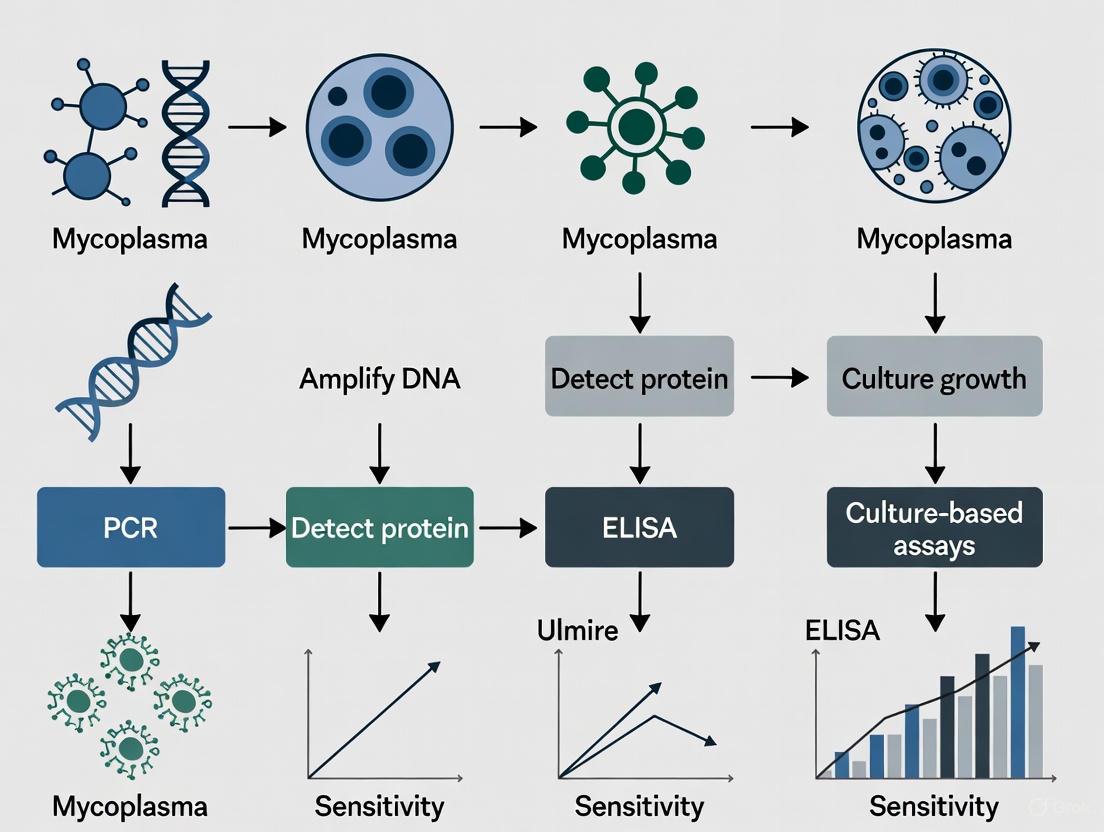
This article provides a comprehensive comparison of mycoplasma detection method sensitivities for researchers, scientists, and drug development professionals.
Mycoplasma Detection Methods Compared: A Sensitivity Analysis for Modern Labs
Abstract
This article provides a comprehensive comparison of mycoplasma detection method sensitivities for researchers, scientists, and drug development professionals. It covers foundational principles of mycoplasma contamination, detailed operational workflows of current techniques, strategies for troubleshooting and optimization, and a rigorous validation of method performance against regulatory standards. By synthesizing the latest research and technological advancements, this guide aims to support informed decision-making for ensuring cell culture integrity and biopharmaceutical product safety.
The Invisible Threat: Understanding Mycoplasma Contamination and Its Impact
Mycoplasma contamination represents a formidable and persistent challenge in cell culture laboratories and the biopharmaceutical industry. These microorganisms compromise experimental data, jeopardize product safety, and are notoriously difficult to detect using conventional methods. This guide provides a comparative analysis of mycoplasma detection methodologies, evaluating their sensitivity, limitations, and appropriate applications. We examine the unique biological characteristics of mycoplasma—including their minimal size, absence of a cell wall, and sophisticated immune evasion tactics—that underlie this detection challenge. Supporting experimental data and standardized protocols are presented to aid researchers, scientists, and drug development professionals in selecting and validating the most effective detection strategy for their specific needs.
The Stealth Adversary: Unique Biological Characteristics of Mycoplasma
Mycoplasmas are the smallest self-replicating organisms known, possessing a unique biology that makes them particularly adept at evading detection [1]. Unlike most bacteria, they lack a rigid cell wall, a characteristic that not only confers resistance to common antibiotics like penicillin but also contributes to their plasticity and ability to pass through standard sterilizing filters with 0.2 µm pores [2] [3] [4]. Their small size, typically 0.15–0.3 µm, allows them to proliferate to high concentrations in cell culture media without causing turbidity or other visible signs of contamination, rendering them an "invisible enemy" [2] [5].
Furthermore, mycoplasmas exhibit a close association with host cells. They utilize a specialized attachment organelle to bind to host cell surfaces, which prevents mucociliary clearance and can activate complex, sometimes damaging, immune responses [1] [4]. Perhaps most strikingly, many mycoplasma species, including M. pneumoniae and M. genitalium, can be internalized by non-phagocytic host cells through mechanisms like clathrin-dependent or caveolae-dependent endocytosis [1]. This intracellular lifestyle offers a sanctuary for the bacteria, helping them establish latent or chronic infections by shielding them from the host's immune response and from the effects of certain antibiotics [1] [4]. The diagram below illustrates the key pathways of mycoplasma invasion and its consequences.
Figure 1: Pathways of Mycoplasma Host Cell Invasion and Consequences. Mycoplasma utilizes multiple entry mechanisms to reach an intracellular sanctuary, enabling immune evasion and chronic infection.
Comparative Analysis of Mycoplasma Detection Methods
The "stealth" characteristics of mycoplasma necessitate highly sensitive and specific detection methods. The table below provides a quantitative comparison of the primary techniques used, highlighting the trade-offs between speed, sensitivity, and regulatory acceptance.
Table 1: Comprehensive Comparison of Mycoplasma Detection Methods
| Detection Method | Principle | Time to Result | Approximate Limit of Detection (LOD) | Key Advantages | Key Limitations |
|---|---|---|---|---|---|
| Culture-Based (Gold Standard) [6] [7] | Inoculation of sample into broth and onto agar plates to support mycoplasma growth. | Minimum 28 days [6] | 3–10 CFU/10 mL for broth culture [7] | Compendial method (EP, USP, JP); high sensitivity for viable cells. | Lengthy process; cannot detect non-cultivable species. |
| Indicator Cell Culture (DNA Staining) [2] [6] | Staining DNA in fixed indicator cells (e.g., Vero) with Hoechst or DAPI; mycoplasma appear as extranuclear fluorescence. | 3–5 days [6] | 10–100 CFU/mL [7] | Detects some non-cultivable species; faster than culture. | Less sensitive than culture; subjective interpretation required. |
| PCR-Based Methods [6] [7] | Amplification of highly conserved 16S rRNA gene sequences in the mycoplasma genome. | A few hours [6] | Detects down to low concentrations; highly sensitive [6] | Rapid, highly sensitive, specific; can detect >100 species. | Cannot distinguish between viable and dead organisms. |
Experimental Protocol: Culture-Based Method (Gold Standard)
The culture-based method, as described in the pharmacopeias, involves a rigorous two-step process to maximize the detection of viable mycoplasma [6]:
- Broth Enrichment: The test sample is inoculated into a liquid broth medium to encourage the growth of any present mycoplasma.
- Agar Subculture: At multiple time points during the incubation period (e.g., days 3, 7, and 14), an aliquot from the broth culture is subcultured onto solid agar plates.
- Colony Examination: The agar plates are incubated and periodically examined under a microscope for the presence of characteristic "fried-egg" mycoplasma colonies. The process requires a minimum of 28 days to confirm a negative result.
Experimental Protocol: PCR-Based Detection
PCR-based methods offer a rapid and powerful alternative, with protocols typically involving [6]:
- Sample Preparation: Collection of a small volume of cell culture supernatant or a cell pellet.
- Nucleic Acid Extraction: Isolation of total DNA from the sample.
- Amplification: Setting up a PCR reaction using primers that target a highly conserved region of the mycoplasma 16S rRNA gene. This can be performed via conventional, real-time (qPCR), or digital PCR.
- Analysis: Detection of amplification products. In qPCR, this is done in real-time using fluorescent probes (e.g., TaqMan), providing a result in about 3 hours.
The Scientist's Toolkit: Essential Reagents for Mycoplasma Detection
Selecting the right reagents is critical for successful and reliable mycoplasma testing. The following table details key materials and their functions in standard detection workflows.
Table 2: Key Research Reagent Solutions for Mycoplasma Detection
| Reagent / Material | Function in Detection | Application Notes |
|---|---|---|
| Mycoplasma Broth and Agar [6] | Supports the growth and colony formation of cultivable mycoplasma species for the gold standard method. | The composition is critical; requires media supplements like horse serum for optimal growth. |
| Vero Indicator Cells [6] | Used in the indicator cell culture method to support the growth of mycoplasma species that are difficult to culture in standard media. | Cells are cultured on a coverslip, infected with the sample, and then stained after 3-5 days. |
| Hoechst or DAPI Stain [2] [6] | Fluorescent DNA-binding dyes that stain both host cell nuclei and any associated mycoplasma DNA. | In a positive sample, fluorescent extranuclear specks or a veil-like pattern are visible under a fluorescence microscope. |
| Mycoplasma 16S rRNA Primers & Probes [6] | Specific oligonucleotides that bind to and amplify a conserved genetic target in mycoplasma for PCR-based detection. | Enables detection of over 100 relevant mycoplasma species with high specificity. |
| TaqMan Probes [6] | Fluorogenic probes used in real-time PCR (qPCR) that provide the highest level of specificity by only detecting the intended amplified product. | Provides a closed-tube system, reducing the risk of cross-contamination compared to conventional PCR with gel electrophoresis. |
| Non-Infectious Mycoplasma Standards [6] | Quantified controls (e.g., 10 or 100 CFU) used to validate the sensitivity and performance of a detection assay. | Essential for ensuring the test can detect mycoplasma at the required low levels. |
Advanced Evasion: Molecular Mechanisms of Immune and Detection Avoidance
Mycoplasma's stealthiness extends beyond physical characteristics to active molecular strategies that facilitate persistence. A key mechanism is antigen variation, where mycoplasmas alter the expression of their major surface antigens to evade the host's adaptive immune response [1]. Furthermore, they can directly modulate host immune responses by inhibiting the activity of immune cells like macrophages and suppressing lymphocyte function [1]. Some species have even developed mechanisms to degrade or resist the activity of immune molecules, such as by cleaving host antibodies or degrading neutrophil extracellular traps (NETs) [1].
The following diagram summarizes the multifaceted immune evasion tactics employed by mycoplasmas, which collectively contribute to their ability to remain undetected within a host system.
Figure 2: Mycoplasma Immune Evasion Strategies. A summary of the key mechanisms, from surface protein variation to direct interference with immune cell functions, that allow mycoplasma to persist.
The unique challenge of detecting mycoplasma contamination stems from a confluence of factors: their minimal size, the absence of a cell wall, and their sophisticated stealth mechanisms, including intracellular invasion and immune evasion. While the traditional culture method remains the gold standard for its sensitivity to viable organisms, its extended timeline is often impractical for modern biopharmaceutical workflows. PCR-based methods have emerged as a rapid, highly sensitive, and specific alternative, though they require careful validation to account for the detection of non-viable organisms. The choice of detection method must be a strategic decision, informed by the specific application, regulatory requirements, and a deep understanding of the elusive nature of mycoplasma itself. Rigorous routine testing, coupled with strict aseptic technique, is the only effective strategy to safeguard the integrity of cell-based research and the safety of biological products.
The Invisible Threat: Mycoplasma Contamination in Biological Systems
Mycoplasma contamination represents a critical, yet often overlooked, threat to scientific research and pharmaceutical safety. These smallest self-replicating organisms lack cell walls, measure only 0.1-0.3 µm, and can pass through standard 0.22 µm sterilization filters, making them formidable contaminants in biological production systems [8]. Classified within the Mollicutes class, mycoplasmas have minimal genomes and depend on host organisms for nutrients, allowing them to thrive in cell cultures without causing immediate visible changes [9].
The prevalence of contamination is alarming, with estimates suggesting 10-35% of cell lines are infected, and some studies reporting rates as high as 80% in specific settings [10] [9]. This contamination occurs primarily through laboratory staff, contaminated serum, culture media, or previously infected cell lines [11]. The most common contaminating species include M. hyorhinis, M. arginini, M. orale, M. fermentans, and A. laidlawii, which account for over 95% of infections despite originally deriving from bovine, porcine, and human hosts [10] [11].
The mechanisms of damage are multifaceted. Mycoplasmas can alter host cell physiology by inducing chromosomal abnormalities, affecting gene expression, disrupting signal transduction, and promoting oxidative stress [10]. Perhaps most concerning is their potential to inhibit TP53 tumor suppressor function, potentially contributing to malignant transformation in host cells [10]. By competing for essential nutrients with host cells, they indirectly cause morphological changes, reduce growth rates, and diminish cell viability [10] [8]. These alterations compromise experimental data, potentially leading to false conclusions and irreproducible research findings.
For drug development and biological manufacturing, the stakes are exceptionally high. Mycoplasma contamination can compromise product safety and efficacy, necessitating rigorous testing mandates from regulatory agencies worldwide [12] [9]. The transition to advanced therapies like cell and gene treatments with short shelf lives has further intensified the need for rapid, sensitive detection methods that can keep pace with production timelines while ensuring patient safety [12] [13].
Comparative Analysis of Mycoplasma Detection Methodologies
Performance Benchmarking of Commercial Detection Kits
Table 1: Comparison of Major Commercial Mycoplasma Detection Methods
| Method/Assay | Detection Principle | Time to Result | Claimed Sensitivity | Key Species Detected | Regulatory Status |
|---|---|---|---|---|---|
| MycoSEQ (Thermo Fisher) | Real-time PCR | ~4 hours | ≤10 CFU/mL [13] | Up to 90 species [9] | FDA, EMA acceptance for multiple products [12] |
| MycoTOOL (Roche) | Real-time PCR | <2 hours | Comparable to MycoSEQ [13] | 11 species with validation [9] | EMA, FDA approval for certain pharmaceuticals [9] |
| Biofire Mycoplasma (bioMérieux) | Multiplex PCR | ~1 hour | Most sensitive in comparative study [13] | Multiple respiratory pathogens + Mycoplasma [14] | - |
| VenorGEM qOneStep (Minerva Biolabs) | Real-time PCR | - | Variable performance [13] | - | - |
| ATCC Universal Kit | Endpoint PCR | 2.5-5 hours [9] | Detects >60 species [9] | 8 most common contaminants [9] | Research use |
| Milliprobe System | Transcription-Mediated Amplification (rRNA) | <4 hours | Validated for 13 species [9] | Focus on ribosomes for sensitivity | Semi-automated |
Table 2: Performance Characteristics Across Method Types
| Method Category | Limit of Detection | Specificity Considerations | Throughput Capacity | Implementation Complexity |
|---|---|---|---|---|
| Culture Methods (Gold Standard) | Variable (misses non-cultivable species) [11] | High for cultivable species | Low (weeks) | High (specialized media and expertise) [8] |
| PCR-based Methods | 10-100 CFU/mL for most; some down to few genomic copies [9] [13] | May detect non-viable organisms; primer design critical [15] | High | Moderate (nucleic acid extraction required) |
| Enzymatic Methods (MycoAlert) | Lower than PCR (52.5% vs 57.5% in one study) [11] | May cross-react with other microbial contamination | Medium | Low (simple protocol) |
| Staining Methods (Hoechst/DAPI) | Low sensitivity; ~10^4-10^5 organisms/mL [9] | Subjective interpretation; false positives from cell debris | Medium | Low (but requires fluorescence microscopy) |
| RPA-CRISPR/Cas12a | Comparable to qPCR [8] | High specificity with crRNA guidance | Medium | Low (isothermal, equipment-free) |
Analytical Sensitivity: Head-to-Head Comparison
Independent comparative studies provide critical performance data for selecting appropriate detection methods. A 2023 systematic evaluation of five commercial molecular assays revealed significant differences in limit of detection (LOD) across platforms when testing identical biological samples [13]. The Biofire Mycoplasma assay demonstrated the highest sensitivity, followed closely by MycoSEQ and MycoTOOL which showed comparable performance [13]. Importantly, not all commercial assays met the ≤10 CFU/mL detection threshold required by European and Japanese pharmacopeia standards to replace culture-based methods [13] [15].
The sample matrix can significantly impact detection sensitivity. When testing in the presence of tumor infiltrating lymphocytes (TILs), a common component in cellular therapies, no assay interference was observed, indicating robust performance in complex biological samples [13]. This finding is particularly relevant for cell therapy applications where the product itself constitutes the sample matrix.
Primer design plays a crucial role in detection capabilities. Methods targeting the 16S rRNA gene, which contains both highly conserved and variable regions, can achieve broad detection coverage. One research group developed a universal PCR protocol using ultra-conserved primers that covers approximately 92% of all species across six orders of the class Mollicutes [10]. This approach detected 198 out of 216 mycoplasma species (226 out of 246 strains), providing comprehensive coverage for most laboratory and production scenarios [10].
Methodological Workflows and Technical Requirements
Table 3: Laboratory Implementation Requirements
| Method | Specialized Equipment | Technical Expertise | Hands-on Time | Total Duration | Cost Considerations |
|---|---|---|---|---|---|
| Culture-Based | CO₂ incubators, sterile culture facilities | High (mycoplasma culture specialist) | Moderate | 28 days [13] | High (specialized media, extended labor) |
| PCR-Based | Thermal cycler, real-time PCR instrument | Moderate (molecular biology skills) | 1-2 hours | 4-5 hours [9] | Medium (reagent costs, instrumentation) |
| RPA-CRISPR/Cas12a | Water bath or heat block | Basic laboratory skills | <30 minutes | 40 minutes [8] | Low (minimal equipment needs) |
| Enzymatic (MycoAlert) | Luminometer | Basic laboratory skills | <30 minutes | ~1 hour | Medium (kit costs) |
| Staining Methods | Fluorescence microscope | Basic cell culture skills | 1-2 hours | 3-5 hours | Low (reagent costs only) ``` |
Advanced Detection Protocols and Experimental Design
Universal PCR Protocol for Broad-Spectrum Detection
A rigorously validated PCR protocol establishes a universal standard for routine mycoplasma screening with exceptional coverage of diverse species [10]. The methodology employs a four-primer system that simultaneously amplifies mycoplasma target sequences (166-191 bp) and eukaryotic control sequences (105 bp), providing both contamination detection and PCR verification in a single reaction [10].
Primer Design Strategy: The protocol utilizes bioinformatic analysis of the NCBI Bacterial 16S Ribosomal RNA RefSeq Targeted Loci Project to identify ultra-conserved regions across mycoplasma species. The selected primer combination matches 198 out of 216 mycoplasma species (226 out of 246 strains), achieving 92% coverage across the class Mollicutes [10]. This comprehensive approach detects species from all major genera including Acholeplasma, Mesomycoplasma, Metamycoplasma, Mycoplasma, Mycoplasmoides, Mycoplasmopsis, and Spiroplasma [10].
Sample Processing: To maximize detection likelihood, the protocol uses eukaryotic cell extracts, recognizing that mycoplasmas colonize cell membranes and can invade eukaryotic cells. The constant inclusion of eukaryotic DNA serves as an internal control for PCR efficiency [10].
Sensitivity Validation: The assay demonstrates a limit of detection of 6.3 pg of M. orale DNA, equivalent to approximately 8.21×10³ genomic copies, when tested across twelve different cell lines [10]. This sensitivity meets pharmacopeial requirements for replacement of culture methods when properly validated.
Innovative RPA-CRISPR/Cas12a Methodology
Emerging technologies offer promising alternatives for rapid monitoring. The RPA-CRISPR/Cas12a system represents a significant advancement for rapid detection in biopharmaceutical workflows [8].
Experimental Workflow: The system begins with Recombinase Polymerase Amplification (RPA) at constant temperature (20 minutes) followed by CRISPR/Cas12a detection (20 minutes), completing the entire process in 40 minutes without specialized equipment [8]. The visual readout under blue-violet light eliminates the need for complex instrumentation.
Assay Design: The method employs universal RPA primers and guide RNA (gRNA) targeting highly conserved 16S rRNA gene sequences, generating a 470 bp amplification product [8]. The collateral cleavage activity of Cas12a against single-stranded DNA reporters produces fluorescent signals only in the presence of specific target amplification, dramatically reducing false positives from non-specific amplification.
Performance Characteristics: This novel approach demonstrates sensitivity comparable to qPCR while offering advantages in speed, equipment requirements, and operational simplicity [8]. The method shows particular promise for Process Analytical Technology (PAT) implementation in biopharmaceutical production where rapid results are essential for real-time quality control.
Essential Research Reagents and Solutions
Table 4: Critical Research Reagents for Mycoplasma Detection
| Reagent/Category | Specific Examples | Function and Application | Technical Considerations |
|---|---|---|---|
| Nucleic Acid Extraction Kits | QIAamp DNA Mini Kit [14], VenorGeM Sample Preparation Kit [8] | Isolation of high-quality DNA for molecular detection | Efficiency critical for sensitivity; potential inhibitor carryover affects PCR |
| Universal Primer Sets | 16S rRNA-targeted primers [10] [11] | Broad-spectrum detection of diverse mycoplasma species | Coverage of >90% species with ultra-conserved regions [10] |
| Culture Media Systems | Hayflick's broth/agar [13], SP4 medium with arginine [13] | Gold standard cultivation for viable organisms | Fastidious growth requirements; some species non-culturable [11] |
| Enzymatic Detection Reagents | MycoAlert reagents [11] | Detection via enzymatic activity in viable mycoplasmas | Rapid results (<20 min) but lower sensitivity than PCR [11] |
| CRISPR Components | LbCas12a protein, crRNA [8] | Specific target recognition and signal amplification | High specificity with collateral cleavage activity [8] |
| Fluorescent Stains | Hoechst dye, DAPI [10] [11] | DNA staining for microscopic visualization | Lower sensitivity; subjective interpretation [9] |
| Positive Control Materials | Cultured type strains (ATCC) [13], purified nucleic acids [15] | Assay validation and quality control | Essential for validation; represents likely contaminants |
Regulatory Compliance and Validation Frameworks
Implementation of mycoplasma detection methods in regulated environments requires careful attention to validation requirements and regulatory expectations. The European Pharmacopoeia (Chapter 2.6.7) specifically outlines parameters for alternative method validation, including specificity, sensitivity, robustness, precision, and ruggedness [15].
Specificity validation must demonstrate the method's ability to detect a broad range of mycoplasma species potentially present in the test article while not detecting host cells or closely related bacteria [15]. This requires testing against a panel of representative species, with selection based on the most likely contamination threats. For example, processes using avian material should include M. synoviae and M. gallisepticum, while mammalian cell culture should focus on species of human, bovine, or porcine origin [15].
Sensitivity requirements dictate that replacement methods must demonstrate a detection limit of ≤10 CFU/mL compared to agar and broth culture methods [15]. Achieving this threshold often requires sample concentration or enrichment steps, as the small volumes used in nucleic acid amplification (typically <100 μL) can represent a 100-fold reduction in analyzed sample volume compared to culture methods requiring 15 mL [15].
The regulatory landscape for molecular methods continues to evolve. As of 2021, the MycoSEQ Mycoplasma Detection System had gained regulatory acceptance for lot-release testing across 42 commercially released drugs, including cell and gene therapies, tissue therapies, recombinant proteins, monoclonal antibodies, and vaccines [12]. This track record demonstrates the growing acceptance of molecular methods despite the historical predominance of culture-based testing.
Equivalence demonstrations require parallel testing of the official method and alternative method using identical samples [15]. This comparability study should include a sufficient number of samples to provide statistical confidence, with regulatory agencies sometimes requesting ongoing parallel testing as a condition of approval for the alternative method.
The selection of appropriate mycoplasma detection methodologies represents a critical decision point with far-reaching implications for research integrity and pharmaceutical safety. The methodological evolution from traditional culture-based approaches to advanced molecular techniques reflects the growing demand for rapid, sensitive, and specific detection capabilities, particularly for advanced therapies with limited shelf lives.
The performance trade-offs between different methods necessitate careful consideration of application requirements. While PCR-based methods offer an optimal balance of sensitivity, specificity, and speed for most applications, emerging technologies like RPA-CRISPR/Cas12a show promise for rapid monitoring and point-of-need testing [8]. Traditional culture methods maintain their position as the regulatory gold standard for product release testing, despite their extended timeframe [13].
The validation imperative cannot be overstated. Whether implementing commercially available kits or laboratory-developed tests, rigorous validation against regulatory standards ensures reliable performance and regulatory compliance [15]. The comprehensive comparison data presented in this review provides a foundation for evidence-based method selection tailored to specific research and production needs.
As biological therapies continue to advance in complexity, mycoplasma detection methodologies must similarly evolve to meet emerging challenges. The integration of rapid detection technologies into Process Analytical Technology frameworks represents the next frontier in contamination control, enabling real-time quality assessment and enhancing the safety profile of biological products destined for clinical use [8]. Through strategic method selection and rigorous implementation, the scientific community can effectively mitigate the risks posed by mycoplasma contamination, protecting both research investments and patient safety.
Mycoplasma contamination represents one of the most significant and challenging threats to cell culture integrity, affecting an estimated 15-35% of continuous cell lines worldwide [16] [17]. These minimalistic bacteria lack cell walls and possess remarkably small genomes, allowing them to evade conventional detection methods while profoundly impacting cellular functions. Understanding the specific species responsible for the majority of contamination events is crucial for developing effective detection and prevention strategies in biopharmaceutical production and basic research. This guide examines the predominant mycoplasma species in cell culture environments, compares the sensitivity of detection methodologies, and provides experimental protocols for ensuring cell culture integrity.
The Predominant Contaminants: A Profile of Key Species
Extensive screening of contaminated cell cultures has revealed that approximately 95% of mycoplasma contamination events are caused by just eight species originating from human, bovine, and porcine sources [16] [18]. These species have adapted to exploit the cell culture environment efficiently, often persisting at high densities (10⁵–10⁸ organisms/mL) without producing the turbidity or dramatic pH changes characteristic of other microbial contaminants [18].
Table 1: Prevalent Mycoplasma Species in Cell Culture
| Species | Origin | Prevalence | Notable Characteristics |
|---|---|---|---|
| Mycoplasma arginini | Bovine | ~15% of infections [16] | Common contaminant from bovine sera [18] |
| Mycoplasma fermentans | Human | ~25% of infections [16] | Can invade host cells [18] |
| Mycoplasma hominis | Human | ~20% of infections [16] | Associated with human operators [17] |
| Mycoplasma hyorhinis | Porcine | ~10% of infections [16] | Difficult to culture; from trypsin [18] |
| Mycoplasma orale | Human | ~25% of infections [16] | Common in human oral flora [17] |
| Mycoplasma pirum | Human | ~5% of infections [16] | Less common but significant |
| Mycoplasma salivarium | Human | ~5% of infections [16] | Found in human oral cavity |
| Acholeplasma laidlawii | Bovine | ~10% of infections [16] | Common contaminant from bovine sera [18] |
The sources of these contaminants are typically linked to laboratory operations: human-sourced species often originate from laboratory personnel through insufficient aseptic technique, while bovine species are frequently introduced via contaminated fetal bovine serum (FBS) [17]. Porcine species like M. hyorhinis may be introduced through trypsin preparations of porcine origin [18]. The sharing of contaminated cell lines between laboratories further perpetuates the dissemination of these species [18].
Comparative Analysis of Mycoplasma Detection Methods
Accurate detection of mycoplasma contamination presents significant technical challenges due to the small size of these organisms (0.15-0.3 μm) and their absence of cell walls [19]. Multiple methodologies have been developed, each with distinct advantages, limitations, and sensitivity profiles.
Table 2: Comparison of Mycoplasma Detection Methods
| Method | Principle | Time to Result | Sensitivity (CFU/mL) | Key Advantages | Key Limitations |
|---|---|---|---|---|---|
| Microbial Culture [11] | Growth on agar | 4-5 weeks [16] | Variable; ~40% detection rate [11] | Gold standard; detects viability | Lengthy; some species not culturable |
| DNA Fluorochrome Staining [16] | Fluorescent DNA binding | 1-2 days | Moderate | Visually intuitive; rapid | Less sensitive; subjective interpretation |
| Enzymatic (MycoAlert) [11] | ATP level measurement | <30 minutes | 52.5% detection rate [11] | Very rapid; easy to perform | Higher cost; requires specialized kit |
| PCR-Based Methods [11] [18] | DNA amplification | Several hours | 57.5% detection rate; detects 10 CFU/mL [11] [18] | High sensitivity/specificity; rapid | Detects DNA, not necessarily viability |
| RT-PCR Methods [18] | RNA amplification | Several hours | 50 copies/reaction [18] | Detects viable organisms; extremely sensitive | Complex validation; technical expertise |
A 2014 comparative study demonstrated the superior sensitivity of molecular methods, reporting 57.5% detection rates for PCR-based methods compared to 52.5% for enzymatic methods and only 40% for microbial culture [11]. This enhanced sensitivity is critical as mycoplasma contamination can significantly alter cell physiology, causing chromosomal aberrations, disruption of nucleic acid synthesis, changes in membrane antigenicity, and inhibition of cell proliferation [16].
Experimental Protocols for Mycoplasma Detection
Protocol 1: Microbial Culture Method
The direct culture method remains the regulatory gold standard for mycoplasma detection despite its lengthy incubation period [16].
- Sample Preparation: Inoculate samples of cell culture supernatant into both liquid broth and agar plates specifically formulated for mycoplasma growth [16].
- Incubation: Maintain cultures under both aerobic and anaerobic conditions at 37°C for a minimum of 4-5 weeks [16].
- Observation: Weekly examine agar plates for characteristic "fried-egg" colonies indicative of mycoplasma growth [16].
- Confirmation: Subculture from liquid broth to solid agar at 7-day intervals to confirm viability and colony morphology [16].
Protocol 2: PCR-Based Detection
PCR methods provide rapid, sensitive detection of mycoplasma contamination and can identify over 60 species of Mycoplasma, Acholeplasma, Spiroplasma, and Ureaplasma [16].
- Sample Preparation: Culture cells in antibiotic-free medium for at least 4 days without medium exchange to allow potential mycoplasma amplification [11].
- DNA Extraction: Isolate DNA from cell culture supernatant using column-based purification systems [18].
- Primer Design: Use universal primers targeting the conserved 16S rRNA region of the mycoplasma genome to ensure broad detection capability [11] [18].
- Amplification: Perform touchdown PCR protocols to enhance sensitivity and specificity [16].
- Detection: Analyze amplification products by gel electrophoresis or real-time fluorescence detection [18].
Protocol 3: Enzymatic Detection (MycoAlert Assay)
This bioluminescent assay detects ATP levels in mycoplasma cells and can be completed in less than 30 minutes [11].
- Sample Collection: Transfer 100 μL of cell culture supernatant to a clean tube [11].
- Reagent Addition: Add 100 μL of MycoAlert reagent and measure luminescence after 5 minutes (Reading A) [11].
- Second Reading: Add 100 μL of MycoAlert Substrate and measure luminescence after 10 minutes (Reading B) [11].
- Calculation: Determine the ratio of Reading B/Reading A. A ratio ≥1.2 indicates mycoplasma contamination [11].
Research Reagent Solutions for Mycoplasma Detection
Table 3: Essential Research Reagents for Mycoplasma Detection
| Reagent/Kit | Function | Application Context |
|---|---|---|
| MycoAlert Assay Kit [11] | Detects microbial ATP via bioluminescence | Rapid screening; results in <30 minutes |
| Universal 16S rRNA Primers [11] [18] | Amplifies conserved mycoplasma genomic regions | PCR-based detection of multiple species |
| Hoechst 33258/DAPI Stains [16] | Fluorescent DNA binding | Microscopic visualization of mycoplasma DNA |
| Mycoplasma Broth and Agar [16] | Supports mycoplasma growth | Cultural methods for viability assessment |
| Plasmocin [20] | Antibiotic treatment | Elimination of contamination from valuable cultures |
| RNA Extraction Kits [18] | Nucleic acid isolation | RT-PCR-based detection of viable mycoplasma |
Mycoplasma Detection Workflow
The following diagram illustrates the logical workflow for selecting appropriate mycoplasma detection methods based on experimental requirements:
Effective management of mycoplasma contamination requires comprehensive understanding of the usual suspect species, their sources, and appropriate detection methodologies. While microbial culture remains the regulatory gold standard, modern PCR-based methods offer enhanced sensitivity and faster turnaround times, with enzymatic assays providing rapid screening capabilities. For researchers and drug development professionals, implementing a routine testing schedule using validated methods represents the most effective strategy for safeguarding cell cultures against these pervasive contaminants, thereby ensuring the integrity of biological products and the reliability of experimental data.
For over a century, microbial culture has served as the fundamental benchmark for detecting and identifying pathogenic microorganisms in both clinical diagnostics and biopharmaceutical safety testing. Rooted in the pioneering work of 19th-century microbiologists like Robert Koch, culture methods established the paradigm for linking specific microorganisms to disease [21]. Despite its historical status as the "gold standard," culture technology presents significant limitations, particularly for fastidious organisms such as Mycoplasma species, which lack cell walls and require specialized growth conditions. This review objectively compares the performance of traditional culture methods against emerging molecular alternatives for mycoplasma detection, presenting experimental data on sensitivity, specificity, and time-to-results. As the biopharmaceutical industry advances toward faster process analytical technology (PAT), understanding the evolving role of microbial culture becomes essential for researchers, scientists, and drug development professionals seeking to implement robust contamination control strategies.
The development of microbial culture represents a cornerstone achievement in medical science. Robert Koch's 1881 paper "Zur Untersuchung von Pathogenen Organismen" not only established foundational techniques for growing isolated bacterial colonies but also laid the groundwork for one of the most persistently utilized laboratory methods—the cell culture [21]. This methodology became the prototype for diagnostic cultures across medical specialties, including the standard urine culture for urinary tract infections and blood cultures for sepsis detection. The enduring legacy of these techniques is reflected in their continued designation as "gold standards" against which newer technologies are measured.
Culture remains the principal means of conventional testing in microbiology laboratories worldwide. When positive, cultures are generally regarded as a definitive diagnosis, providing both species identification and viable organisms for subsequent analysis [22]. The technique enables quantitative assessment of microbial burden and allows for phenotypic antimicrobial susceptibility testing, which remains crucial for antibiotic stewardship [23]. Furthermore, regulatory agencies including the U.S. Food and Drug Administration (FDA) mandate culture-based testing for product safety, such as Mycoplasma testing in cellular therapy products following United States Pharmacopeia (USP) chapter <63> [13]. Despite these strengths, the technological landscape is shifting rapidly toward molecular alternatives that address critical limitations of traditional culture methods.
Fundamental Limitations of Culture Methods
Temporal and Sensitivity Constraints
The most significant constraint of culture-based detection is the prolonged incubation period required for results. Standard bacterial cultures typically require 24-48 hours for preliminary results, with additional time needed for full identification and susceptibility testing [24]. For fastidious organisms like Mycoplasma species, compendial culture methods necessitate up to 28 days of incubation, creating incompatibility with biological products featuring short shelf-lives (48-72 hours) [13] [8]. This extended timeframe represents a critical barrier for timely clinical decision-making and biopharmaceutical product release.
Sensitivity limitations further undermine culture's gold standard status. Numerous studies demonstrate that culture fails to detect significant proportions of microbial pathogens. Blood cultures, for instance, identify causative organisms in only 10-15% of severe pneumonia cases, with sensitivity further diminished by prior antimicrobial administration [22]. For Mycoplasma detection, culture exhibits notoriously low positive rates despite advances in culture techniques, with some species failing to grow altogether on standard media [25]. This inadequate detection capability has driven the development of more sensitive molecular alternatives.
Technical and Biological Limitations
Culture efficacy is constrained by several technical and biological factors:
- Nutritional fastidiousness: Many microorganisms, including certain Mycoplasma and Campylobacter species, require specific nutrient supplements and growth conditions not provided in standard media [26].
- Viability dependence: Culture detects only viable, replicating organisms, potentially missing pathogens damaged by antimicrobial pretreatment or environmental stress [22].
- Non-cultivable organisms: Certain microorganisms, including spirochetes and some Mycoplasma species, cannot be propagated using standard culture techniques, creating diagnostic blind spots [24] [8].
- Contamination susceptibility: Culture is highly vulnerable to pre-analytical contamination, with average institutional contamination rates of approximately 15% for urine cultures [21].
Table 1: Comparative Performance of Mycoplasma Detection Methods
| Method | Sensitivity | Specificity | Time to Result | Key Limitations |
|---|---|---|---|---|
| Culture (Agar/Broth) | High (but species-dependent) | High | Up to 28 days | Fails to detect non-cultivable species; prolonged incubation; requires viability [13] [27] |
| DNA Staining (DAPI/Hoechst) | Low | Moderate | 1-2 days | Subjective interpretation; difficult with low-level contamination [27] |
| PCR | High | High | Several hours | May detect non-viable organisms; requires DNA extraction [27] |
| qPCR | Very High | Very High | Several hours | Equipment-intensive; potential for false positives from contaminating DNA [27] |
| mNGS | Exceptional | High | 1-2 days | Expensive; complex data analysis; may detect clinically irrelevant organisms [25] |
| RPA-CRISPR/Cas12a | Comparable to qPCR | High | 40 minutes | Emerging technology; limited commercial availability [8] |
Mycoplasma Detection: A Case Study in Evolving Standards
The Particular Challenge of Mycoplasma
Mycoplasma species present unique detection challenges that highlight the limitations of traditional culture. As the smallest free-living prokaryotes (0.2-0.4 μm) lacking cell walls, Mycoplasma are unable to be visualized by standard microscopy and do not cause culture media turbidity, allowing them to proliferate undetected in cell cultures for extended periods [27]. Mycoplasma contamination affects an estimated 15-35% of cell lines worldwide, with devastating consequences for research reproducibility and biopharmaceutical production [27].
These organisms impact cell culture systems through multiple mechanisms: altering cell morphology and metabolism; modifying membrane composition; disrupting signal transduction; impairing DNA, RNA, and protein synthesis; and causing chromosomal alterations [27]. In biopharmaceutical production, Mycoplasma contamination can reduce monoclonal antibody yields and compromise product quality and safety [8]. Their small size enables them to pass through standard 0.22 μm sterilization filters, complicating contamination control [8].
Compendial Culture Methods for Mycoplasma
Regulatory guidelines for Mycoplasma testing in cell therapy products and biologics traditionally require culture-based methods outlined in USP <63>, European Pharmacopoeia chapter 2.6.7, and Japanese Pharmacopoeia XVIII [13]. The compendial method involves inoculating samples into both liquid broth and solid agar media, followed by extended incubation (28 days) and periodic observation for metabolic activity (color change in broth) or characteristic "fried-egg" colony formation on agar [13] [8].
While this method is considered the gold standard due to its theoretical high sensitivity, it suffers from critical limitations in practice. The 28-day incubation period is incompatible with products featuring short shelf lives, and the method may fail to detect non-cultivable Mycoplasma species [8]. Additionally, culture requires sensitivity testing for each batch of culture medium and carries risks of microbial contamination during handling [8].
Table 2: Experimental Performance of Commercial Molecular Mycoplasma Detection Assays
| Assay Name | Limit of Detection | Time to Result | Compliance with Pharmacopeia Standards |
|---|---|---|---|
| Biofire Mycoplasma Assay | Most sensitive | Hours | Capable of meeting ≤10 CFU/mL LOD for EP/JP [13] |
| MycoSEQ Mycoplasma Detection | Comparable to MycoTOOL | Hours | Variable performance against standards [13] |
| MycoTOOL Mycoplasma Real-time Detection | Comparable to MycoSEQ | Hours | Variable performance against standards [13] |
| VenorGEM qOneStep | Less sensitive than leaders | Hours | Not all assays meet ≤10 CFU/mL LOD [13] |
| ATCC Universal Mycoplasma Detection | Less sensitive than leaders | Hours | Not all assays meet ≤10 CFU/mL LOD [13] |
Emerging Methodologies: Supplementing and Replacing Culture
Molecular Detection Platforms
Nucleic acid amplification tests (NAATs) have emerged as powerful alternatives to culture-based detection. Polymerase chain reaction (PCR) and real-time quantitative PCR (qPCR) offer significantly reduced detection times (hours versus weeks) while maintaining high sensitivity and specificity [27]. These methods amplify specific DNA sequences unique to Mycoplasma species, enabling detection even at low contamination levels. The 2019 guidelines from the American Thoracic Society and Infectious Diseases Society of America acknowledge the superior performance of molecular methods for certain applications, stating that "NAATs have largely replaced rapid antigen tests and culture for respiratory virus detection" [26].
Metagenomic next-generation sequencing represents the most advanced molecular approach, offering hypothesis-free detection of all nucleic acids in a sample. In a 2025 study comparing diagnostic methods for Mycoplasma pneumoniae pneumonia, BALF-mNGS demonstrated significantly superior sensitivity (74.1%) compared to serum IgM antibody assays (23.6%) and served as an effective reference standard for evaluating other non-invasive tests [25]. The unparalleled detection capability of mNGS comes with tradeoffs, including demanding technical requirements, high costs, and complex data interpretation that currently limit its widespread adoption [25].
Isothermal Amplification and CRISPR-Based Systems
The most recent innovation in Mycoplasma detection combines isothermal amplification with CRISPR/Cas systems for rapid, equipment-free testing. Recombinase polymerase amplification operates at constant temperature, facilitating rapid DNA amplification without thermal cycling equipment [8]. When coupled with CRISPR/Cas12a, which recognizes specific DNA sequences and exhibits robust trans-cleavage activity, the system generates detectable fluorescent signals upon target identification [8].
This RPA-CRISPR/Cas12a platform detects Mycoplasma contamination in just 40 minutes—a dramatic improvement over the 28-day culture requirement [8]. The method's simplicity (water bath incubation followed by visual fluorescence detection under blue-violet light) and minimal equipment needs make it ideal for real-time quality control in biopharmaceutical production environments [8]. This technology represents the cutting edge of Process Analytical Technology for biopharmaceutical manufacturing, aligning with next-generation analytical platform requirements.
Experimental Comparisons: Culture Versus Molecular Methods
Respiratory Pathogen Detection
Comparative studies demonstrate the superior sensitivity of molecular methods for detecting respiratory pathogens, including Mycoplasma pneumoniae. In investigations of patients with atypical pneumonia symptoms who tested negative for typical agents by culture and viral PCR, multiplex RT-PCR identified pathogenic organisms in a significant proportion of culture-negative samples: 20 cases of Legionella pneumophila, 146 cases of Mycoplasma pneumoniae, and 170 cases of Bordetella pertussis [26]. This enhanced detection capability enables more accurate diagnosis and subsequent patient management.
The performance advantage of molecular methods is particularly evident in formal comparative studies. A 2025 evaluation of non-invasive diagnostic tests for Mycoplasma pneumoniae pneumonia found that nasopharyngeal swab nucleic acid testing demonstrated 74.1% sensitivity and 99.3% specificity, dramatically outperforming serum IgM antibody assays at 23.6% sensitivity and 98.0% specificity [25]. Importantly, both methods failed to meet non-inferiority criteria compared to BALF-mNGS, establishing sequencing technology as the superior detection methodology despite its practical limitations for routine use [25].
Biopharmaceutical Applications
In biopharmaceutical quality control, molecular methods are increasingly replacing culture-based Mycoplasma testing despite regulatory hurdles. A 2023 proof-of-principle analysis of five commercial molecular assays for Mycoplasma testing of cellular therapy products evaluated their performance against cultured Mollicutes species across four log-fold dilutions [13]. The Biofire Mycoplasma assay demonstrated the highest sensitivity, followed by comparable performance between MycoSEQ and MycoTOOL assays [13]. Not all commercial assays met the ≤10 CFU/mL limit of detection required to replace culture-based methods according to European and Japanese pharmacopeia standards, highlighting the importance of rigorous validation when implementing alternative methods [13].
Machine Learning-Enhanced Diagnosis
Beyond direct detection methodologies, machine learning approaches are being developed to predict Mycoplasma infection based on clinical and laboratory parameters. A 2025 comprehensive study based on machine learning models for early identification of Mycoplasma pneumoniae infection in children with segmental/lobar pneumonia achieved 57.1% sensitivity, 69.6% accuracy, and 0.752 AUC using a Random Forest model incorporating seven clinical variables [28]. While not replacing direct detection, these computational approaches complement laboratory testing by providing early identification before traditional test results become available.
Essential Research Reagents and Methodologies
Table 3: Research Reagent Solutions for Mycoplasma Detection
| Reagent/Equipment | Function | Application Examples |
|---|---|---|
| Hayflick's Broth/Agar | Culture medium for Mycoplasma species | Compendial culture methods per USP <63> [13] |
| SP4 Medium with Arginine | Enhanced culture medium for fastidious Mycoplasma | Culture of M. hyorhinis, M. pneumoniae [13] |
| DAPI/Hoechst Stains | Fluorescent DNA-binding dyes | Microscopic visualization of Mycoplasma [27] |
| Universal 16S rRNA Primers | Target conserved bacterial sequences | PCR and sequencing-based identification [22] |
| RPA Primers & Cas12a gRNA | Isothermal amplification and CRISPR detection | RPA-CRISPR/Cas12a platform [8] |
| iFlash 3000 CLIA Platform | Chemiluminescence immunoassay detection | Serum IgM antibody detection [25] |
| BALF Collection System | Bronchoalveolar lavage fluid sampling | mNGS and culture specimen collection [25] |
Microbial culture maintains its historical significance as the foundation of microbiological diagnosis, but its role as an exclusive gold standard is increasingly untenable for fastidious organisms like Mycoplasma. The limitations of culture—prolonged incubation requirements, inability to detect non-cultivable species, and technical complexity—have driven the development and implementation of molecular alternatives that offer superior speed, sensitivity, and practicality. While culture remains necessary for certain applications like phenotypic antimicrobial susceptibility testing, molecular methods including PCR, mNGS, and emerging CRISPR-based platforms are progressively supplementing or replacing traditional culture across clinical diagnostics and biopharmaceutical quality control.
The evolution of Mycoplasma detection methodologies reflects a broader transformation in microbiology, where "gold standards" are becoming context-dependent rather than absolute. Future directions will likely involve further refinement of rapid, equipment-free detection platforms like RPA-CRISPR/Cas12a and increased integration of machine learning approaches to complement direct detection methods. For researchers, scientists, and drug development professionals, this evolving landscape necessitates familiarity with both traditional and emerging technologies to implement appropriate, fit-for-purpose detection strategies that ensure both patient safety and product quality.
A Guide to Modern Mycoplasma Detection Techniques
Nucleic Acid Amplification Technologies (NAATs) represent the cornerstone of modern molecular diagnostics and life sciences research. For decades, the polymerase chain reaction (PCR) has served as the undisputed gold standard for nucleic acid detection, enabling countless breakthroughs in genomics, pathogen detection, and personalized medicine. However, the field is now undergoing a transformative shift with the emergence of powerful new methodologies, particularly Clustered Regularly Interspaced Short Palindromic Repeats (CRISPR)-based systems. These technologies are pushing the boundaries of detection sensitivity, specificity, and accessibility.
This evolution is particularly critical in applications requiring the utmost reliability, such as mycoplasma detection in biopharmaceutical manufacturing and cell culture. Mycoplasma contamination poses a substantial risk to the safety, efficacy, and quality of biological products, necessitating detection methods of the highest sensitivity and specificity [8]. This guide provides an objective comparison of traditional and emerging NAATs, framing their performance within the context of sensitive mycoplasma detection research. We will summarize quantitative performance data, detail experimental protocols, and outline the essential reagent toolkit, providing researchers and drug development professionals with a clear roadmap for selecting the appropriate molecular technology for their specific application needs.
Comparative Analysis of Key NAAT Platforms
The landscape of NAATs is diverse, encompassing both traditional thermal-cycling methods and innovative isothermal amplification techniques. The table below provides a structured comparison of the primary nucleic acid amplification technologies relevant to diagnostic and research applications.
Table 1: Comparison of Key Nucleic Acid Amplification Technologies
| Technology | Amplification Mechanism | Reaction Conditions | Primary Target | Key Advantages | Reported Sensitivity in Context |
|---|---|---|---|---|---|
| PCR [29] | Thermal cycling & enzymatic synthesis | 30-40 cycles of varying temperatures (e.g., 95°C, 50-65°C, 72°C) | DNA | Considered the gold standard; highly versatile for research | High sensitivity (variable based on protocol) |
| LAMP [29] [30] | Isothermal with strand-displacing polymerase | Constant temperature (60-65°C) | DNA | Rapid, simple, equipment-free; results can be visually detected | High sensitivity; often comparable to PCR |
| RPA [30] | Isothermal with recombinase enzymes | Constant temperature (37-42°C) | DNA | Fastest turnaround (20-40 min); low-temperature operation | High sensitivity; can detect low copy numbers [8] |
| NASBA [29] | Isothermal with reverse transcriptase & RNA polymerase | Constant temperature (~41°C) | RNA | High sensitivity and specificity for RNA targets | More sensitive than PCR for RNA detection |
| TMA [29] | Isothermal transcription-mediated amplification | Constant temperature | RNA & DNA | Highly sensitive; rapid results (<2 hours) | More sensitive than PCR |
| CRISPR-Cas12a/13 [31] [32] | CRISPR RNA-guided target recognition & collateral cleavage | Constant temperature (e.g., 37°C) | DNA (Cas12) or RNA (Cas13) | Single-nucleotide specificity; multiple readout options | Attomolar (aM) range sensitivity possible [32] |
The selection of an appropriate NAAT depends on the application's specific requirements. While PCR remains the most broadly used technique due to its proven track record and affordability [29], isothermal techniques like LAMP and RPA offer distinct advantages for point-of-care testing (POCT). Their ability to operate at a single temperature eliminates the need for expensive thermal cyclers, making them ideally suited for resource-limited settings [30]. More recently, CRISPR-based systems have introduced a new paradigm of exceptional specificity and programmable detection, further expanding the molecular toolkit [31] [32].
The CRISPR Revolution in Nucleic Acid Detection
Core Mechanisms and Clinical Superiority
CRISPR-based diagnostics leverage the programmable nature of CRISPR-associated (Cas) proteins. Upon recognition of a target nucleic acid sequence guided by a custom CRISPR RNA (crRNA), certain Cas proteins, such as Cas12 and Cas13, exhibit a nonspecific "collateral cleavage" activity [32]. This activated nuclease can cleave surrounding reporter molecules, generating a detectable signal that confirms the presence of the target pathogen.
The clinical performance of CRISPR diagnostics often surpasses traditional methods. They offer exceptional specificity capable of single-nucleotide resolution, which is crucial for identifying genetic mutations and differentiating closely related pathogens [31] [32]. Furthermore, their intrinsic signal amplification mechanism allows for sensitivity down to the attomolar (aM) range [32]. When integrated with portable platforms like lateral flow assays, CRISPR systems enable robust, equipment-free point-of-care testing [31].
Integration with NAATs: The One-Pot Strategy
A powerful advancement in the field is the integration of CRISPR systems with pre-existing NAATs. While CRISPR is highly specific, its direct application can lack the sensitivity to detect ultra-low concentrations of target nucleic acids. To bridge this gap, CRISPR is often paired with isothermal amplification techniques like RPA or LAMP [31]. This combination first amplifies the target sequence, providing enough material for the CRISPR system to generate a robust, detectable signal.
Early integration methods involved separate, sequential steps, which increased procedural complexity and the risk of aerosol contamination. The field is now moving toward "one-pot" strategies, where both amplification and CRISPR detection occur in a single sealed tube [31]. This is achieved through ingenious spatial or temporal separation strategies:
- Spatial Separation: Using physical barriers or immiscible phases within the same tube to keep amplification and detection reagents separate until the appropriate time [31].
- Temporal Separation: Controlling the sequential activation of reactions, for example, by chemically modifying or "caging" Cas nucleases to remain inactive until amplification is complete [31].
These integrated one-pot systems streamline workflows, reduce contamination, and enhance the platform's suitability for point-of-care diagnostics [31].
Mycoplasma Detection: A Case Study in Sensitivity
Experimental Protocol: RPA-CRISPR/Cas12a for Mycoplasma
A recent study exemplifies the application of an RPA-CRISPR/Cas12a one-pot system for rapid and sensitive mycoplasma detection in bioprocessing [8]. The detailed methodology is as follows:
- Sample Preparation: Nucleic acids are extracted from cell culture samples using a commercial kit, such as the VenorGeM Sample Preparation Kit [8].
- Primer and gRNA Design: Universal RPA primers and guide RNA (gRNA) are designed to target highly conserved regions of the mycoplasma 16S rRNA gene to ensure broad detection across multiple species [8].
- Amplification (20 minutes): The extracted nucleic acid is added to an RPA reaction mix (e.g., using a TwistAmp basic kit) and incubated in a water bath at 37-42°C for 20 minutes [8].
- CRISPR Detection (20 minutes): The RPA-amplified product is directly transferred into the CRISPR/Cas12a detection system. This system contains:
- LbCas12a protein
- The species-specific gRNA
- A single-stranded DNA (ssDNA) fluorescent reporter probe (e.g., FAM-labeled with a BHQ1 quencher)
- The reaction is incubated at 37°C for 20 minutes [8].
- Result Readout: The presence of mycoplasma DNA is confirmed by the generation of a fluorescent signal, which can be visualized by the naked eye under a blue-violet light or quantified with a fluorometer [8].
This entire process, from sample to answer, is completed in just 40 minutes, demonstrating a significant speed advantage over traditional culture methods, which can take up to 28 days [8].
Diagram 1: RPA-CRISPR/Cas12a mycoplasma detection workflow
Performance Comparison with qPCR
The RPA-CRISPR/Cas12a method was rigorously validated against nine common Mycoplasma species. The results demonstrate its utility as a robust Process Analytical Technology (PAT) tool [8].
Table 2: Mycoplasma Detection Method Comparison
| Detection Method | Time to Result | Key Equipment | Sensitivity | Specificity | Main Advantage |
|---|---|---|---|---|---|
| Culture-Based [8] | Up to 28 days | Incubators, specialized media | High (for culturable species) | High | Gold standard, regulatory mandate |
| qPCR [8] | Several hours | Thermal cycler, fluorometer | High | High | High sensitivity, quantitative |
| RPA-CRISPR/Cas12a [8] | ~40 minutes | Water bath or heat block, blue-light visualizer | Comparable to qPCR | High (with conserved 16S rRNA target) | Speed, simplicity, point-of-care suitability |
The experimental data confirmed that the RPA-CRISPR/Cas12a platform achieved sensitivity comparable to qPCR methods while offering a dramatically faster and simpler workflow [8]. This makes it an ideal candidate for real-time quality control in biopharmaceutical production.
Essential Research Reagent Solutions
Implementing the described NAATs, particularly advanced CRISPR-based assays, requires a specific set of core reagents. The following table details the essential components and their functions.
Table 3: Key Research Reagent Solutions for NAAT and CRISPR Workflows
| Reagent / Material | Function | Example in Protocol |
|---|---|---|
| LbCas12a Protein | CRISPR-associated nuclease; provides target-specific recognition and trans-cleavage activity. | Core enzyme in the CRISPR detection step for mycoplasma [8]. |
| crRNA / gRNA | Guide RNA; programs the Cas protein to recognize a specific DNA or RNA target sequence. | Designed against conserved mycoplasma 16S rRNA for specific detection [8]. |
| RPA Primer Sets | Specific oligonucleotides that bind to the target DNA for isothermal amplification. | Universal primers for amplifying a ~470 bp region of mycoplasma DNA [8]. |
| ssDNA Fluorescent Reporter | A quenched probe cleaved by activated Cas12a; cleavage generates a fluorescent signal. | FAM-labeled ssDNA probe quenched by BHQ1; signal indicates target presence [8]. |
| Strand-Displacing DNA Polymerase | Enzyme that synthesizes new DNA strands and displaces downstream DNA in isothermal methods. | Key component in LAMP reactions [30]. |
| Reverse Transcriptase | Enzyme that converts RNA into complementary DNA (cDNA) for amplification. | Essential for RNA target detection in methods like RT-RPA and NASBA [29]. |
The field of nucleic acid diagnostics is advancing toward greater integration, multiplexing, and point-of-care applicability. Future developments are focused on:
- Enhanced Multiplexing: Platforms like bead-based bbCARMEN are being developed to enable the simultaneous detection of nine distinct viral targets in a single, deployable reaction, significantly expanding diagnostic coverage [33].
- Improved Sensitivity with Novel Reporters: Bead-based split-luciferase reporter systems (bbLuc) represent a promising alternative to fluorescent reporters, offering up to 20x higher sensitivity in amplification-free CRISPR assays [33].
- Automated Microfluidic Platforms: Digital Microfluidics (DMF) is emerging as a powerful tool to complete the entire NAAT workflow—from extraction to amplification and detection—on a miniaturized, automated chip, minimizing human intervention [30].
In conclusion, the journey of nucleic acid amplification from PCR to CRISPR has fundamentally transformed molecular diagnostics. While PCR remains a vital and versatile tool, the integration of isothermal amplification with CRISPR-based detection creates a powerful synergy of speed, sensitivity, and specificity. As demonstrated in the critical application of mycoplasma detection, these advanced NAATs provide researchers and drug developers with robust, rapid, and deployable solutions that meet the stringent demands of modern bioprocessing and clinical diagnostics, ensuring the safety and efficacy of biological products.
In the field of molecular diagnostics and life sciences research, the polymerase chain reaction (PCR) remains an indispensable tool for nucleic acid detection. As research on detection methods for fastidious organisms like mycoplasma advances, the scientific community continually refines the fundamental PCR paradigm to balance three critical parameters: sensitivity, speed, and specificity. This technological evolution has spawned specialized variants including real-time quantitative PCR (qPCR), recombinant polymerase amplification (RPA), and CRISPR-based detection systems, each offering distinct advantages for specific applications. This guide objectively compares the performance of these PCR-based methodologies, drawing on experimental data from recent studies to provide researchers, scientists, and drug development professionals with evidence-based insights for method selection in mycoplasma detection and related applications.
Technical Foundations: Methodologies and Mechanisms
Real-Time Quantitative PCR (qPCR)
Experimental Protocol: The qPCR methodology employs fluorescent reporters to monitor amplification in real-time during the exponential phase of the reaction. As detailed in studies on pathogen detection, the process begins with designing specific primers and TaqMan probes based on conserved target sequences (e.g., 18S rDNA for trypanosoma detection). The reaction mixture typically includes DNA template, forward and reverse primers, TaqMan probe (dual-labeled with reporter and quencher dyes), dNTPs, polymerase enzyme, and reaction buffer. Amplification proceeds through 40-45 cycles of denaturation (95°C), annealing (primer-specific temperature, typically 55-60°C), and extension (72°C). The fluorescent signal increases proportionally to amplified product quantity, allowing quantification through threshold cycle (Ct) values, which correlate inversely with starting template concentration [34] [35].
Quantitative Interpretation: The Ct value represents the amplification cycle at which fluorescence exceeds a predetermined threshold above background. A standard curve generated from samples with known concentrations enables absolute quantification, with lower Ct values indicating higher template concentrations. This relationship demonstrates a logarithmic correlation, where each 3.3-cycle difference typically represents a tenfold difference in starting material [35].
Recombinase Polymerase Amplification with CRISPR/Cas12a (RPA-CRISPR/Cas12a)
Experimental Protocol: This isothermal method combines RPA with CRISPR/Cas12a detection for rapid, specific nucleic acid identification. The process begins with RPA amplification at 37-42°C for 15-30 minutes using recombinase enzymes that facilitate primer binding to target sequences without thermal denaturation. Subsequently, the amplified product is combined with CRISPR RNA (crRNA) designed to recognize specific target sequences and the Cas12a enzyme. When the crRNA-Cas12a complex binds to its target DNA, it activates collateral cleavage activity that degrades fluorescent reporter molecules, generating a detectable signal. This system enables visual detection under blue light or with lateral flow strips, eliminating the need for sophisticated instrumentation [36].
Allele-Specific PCR (AS-PCR)
Experimental Protocol: AS-PCR detects single nucleotide polymorphisms (SNPs) through primers specifically designed to match mutant or wild-type sequences at their 3' ends. The protocol involves designing multiple forward primers with variations at the 3' terminus to differentially amplify specific alleles, alongside a common reverse primer. Critical optimization steps include testing different primer mismatches, determining optimal annealing temperatures (typically 57-58°C as established in fungicide resistance detection studies), and establishing internal reference primers to control for reaction efficiency. After amplification, products are visualized via gel electrophoresis, with specific band patterns indicating the presence of target mutations [37].
Performance Comparison: Quantitative Data Analysis
The following tables consolidate experimental performance data across multiple PCR methodologies, providing researchers with comparative metrics for method selection.
Table 1: Sensitivity and Speed Comparison of PCR-Based Detection Methods
| Method | Detection Limit | Time to Result | Quantification Capability | Pathogen Studied |
|---|---|---|---|---|
| qPCR | 25 copies/μL [34] | 1.5-3 hours [35] | Absolute quantification with standard curve [35] | Trypanosoma spp. [34] |
| RPA-CRISPR/Cas12a | 15 copies/μL [36] | 45 minutes [36] | Endpoint detection, visual interpretation [36] | Nervous Necrosis Virus [36] |
| AS-PCR | 7-70 ng/μL [37] | ~2 hours [37] | Qualitative (presence/absence of mutation) [37] | Botrytis cinerea fungicide resistance [37] |
Table 2: Specificity and Reproducibility Metrics
| Method | Specificity | Repeatability (CV) | Cross-Reactivity | Application Context |
|---|---|---|---|---|
| qPCR | No cross-reaction with common co-pathogens [34] | Inter-assay CV <2.0%, Intra-assay CV <1.5% [34] | High specificity with optimized TaqMan probes [34] | Clinical diagnostics, pathogen quantification [34] [35] |
| RPA-CRISPR/Cas12a | High specificity confirmed against related viruses [36] | 100% concordance with qPCR in clinical validation [36] | crRNA specificity prevents non-target detection [36] | Field-deployable diagnostics, point-of-care testing [36] |
| AS-PCR | Distinguishes single nucleotide differences [37] | 100% agreement with sequencing results [37] | Specific primer design critical for allele discrimination [37] | Antimicrobial resistance testing, genotyping [37] |
Workflow Visualization
PCR Method Workflows: A comparative visualization of qPCR, RPA-CRISPR/Cas12a, and AS-PCR experimental processes.
The Scientist's Toolkit: Essential Research Reagents
Table 3: Key Research Reagent Solutions for PCR-Based Detection
| Reagent/Component | Function | Application Examples |
|---|---|---|
| TaqMan Probes | Dual-labeled fluorescent probes enabling real-time detection during amplification; provide exceptional specificity through hybridization to target sequences [34] [35] | Trypanosoma spp. quantification in fish tissues; pathogen load assessment in clinical samples [34] |
| crRNA Guides | CRISPR RNA molecules that program Cas12a enzyme to recognize specific DNA sequences; enable highly specific detection through complementary binding [36] | Viral pathogen identification in aquaculture; point-of-care diagnostic systems [36] |
| Allele-Specific Primers | Primers designed with 3'-terminal nucleotides matching specific mutations; enable discrimination of single nucleotide polymorphisms through selective amplification [37] | Detection of fungicide resistance mutations in agricultural pathogens; genetic screening for point mutations [37] |
| Recombinase Enzymes | Facilitate primer invasion into double-stranded DNA without denaturation; enable isothermal amplification at low temperatures [36] | Rapid field-deployable diagnostics; resource-limited settings without thermal cyclers [36] |
Discussion: Strategic Method Selection in Mycoplasma Detection
The comparative performance data reveals a clear paradigm where each PCR methodology occupies a distinct application niche based on its sensitivity, specificity, and operational characteristics. For mycoplasma detection research requiring absolute quantification with maximal sensitivity and reproducibility, qPCR remains the gold standard, particularly when pathogen loads may be low. The technology's ability to detect down to 25 copies/μL with excellent reproducibility (CV <2.0%) makes it ideal for preclinical testing of cell cultures and biologics where early mycoplasma contamination detection is critical [34] [35].
In contrast, RPA-CRISPR/Cas12a systems offer compelling advantages when speed and portability are prioritized over precise quantification. With results available in 45 minutes and visual detection capabilities, this approach suits rapid screening applications and resource-limited environments. However, researchers should note that while this method demonstrates excellent specificity through CRISPR-mediated recognition, its quantitative capabilities remain limited to endpoint detection [36].
AS-PCR occupies a specialized niche in mycoplasma research when detecting specific genetic markers, such as antibiotic resistance mutations or strain differentiations. Its ability to discriminate single-nucleotide changes with minimal instrumentation makes it valuable for epidemiological studies and treatment guidance. However, its qualitative nature and moderate sensitivity (7-70 ng/μL) limit its application in quantification of mycoplasma load [37].
Each method presents distinct trade-offs in the sensitivity-speed-specificity paradigm. qPCR offers the highest sensitivity and precise quantification but requires sophisticated instrumentation and longer processing times. RPA-CRISPR/Cas12a provides rapid results with field-deployable potential but offers semi-quantitative data at best. AS-PCR delivers exceptional specificity for genetic variants but with reduced sensitivity and qualitative outputs. The optimal choice depends fundamentally on the research question, available resources, and required detection parameters.
The evolving PCR paradigm continues to offer researchers multiple pathways for nucleic acid detection, each with distinctive performance characteristics in the critical balance between sensitivity, speed, and specificity. While qPCR maintains its position as the quantitative gold standard for sensitive mycoplasma detection in drug development, emerging technologies like RPA-CRISPR/Cas12a address growing needs for rapid, portable screening applications. AS-PCR remains invaluable for specific genotyping applications requiring discrimination of minor genetic variations. As methodological refinements continue, informed selection among these approaches based on comprehensive performance data will remain essential for advancing mycoplasma detection research and application across scientific and clinical domains.
Mycoplasma contamination poses a significant risk to biopharmaceutical production and clinical diagnostics, potentially compromising product quality and patient safety. Traditional detection methods, such as culture-based assays, often require days or weeks, creating a critical bottleneck in rapid diagnostics and biomanufacturing workflows. The emerging generation of molecular detection platforms combines isothermal amplification with integrated sample preparation to deliver sample-to-answer solutions in dramatically shorter timeframes. This guide objectively compares the performance of three innovative, rapid platforms for Mycoplasma pneumoniae (MP) detection, providing researchers and drug development professionals with the experimental data necessary for informed technology selection.
Platform Performance Comparison
The table below summarizes the key performance metrics of three leading technological approaches, as validated in recent peer-reviewed studies.
Table 1: Comparative Performance of Rapid, Isothermal Sample-to-Answer Platforms
| Platform Name | Core Technology | Limit of Detection (LoD) | Time-to-Result | Sample-to-Answer Integration | Key Distinguishing Feature |
|---|---|---|---|---|---|
| FA-RMP [38] | Rotary Microfluidic RT-LAMP | 50 copies/μL (MP DNA) [38] | ~30 minutes [38] | Full integration (swab lysis to detection) [38] | High-throughput; processes 4 samples with 16 reactions in parallel [38] |
| ERA/CRISPR-Cas12a [39] | Enzymatic Recombinase Amplification + CRISPR-Cas12a | 1 copy/μL (fluorescence)100 copies/μL (dipstick) [39] | ~30 minutes [39] | Requires separate nucleic acid extraction [39] | Ultra-high sensitivity; multiple readout methods (portable fluorometer or visual dipstick) [39] |
| MICASOR [40] | Isothermal Convective PCR (iPCR) | 1 copy/μL (clinical samples) [40] | ~15 minutes [40] | Full "one-pot" integration (lysis to detection) [40] | Extreme speed and simplicity; uses a single enzyme and pair of primers; includes Internal Amplification Control (IAC) [40] |
Detailed Experimental Protocols
A critical understanding of each method's workflow is essential for assessing its suitability for specific laboratory environments. The following sections detail the experimental protocols and key reagents used in the cited studies.
Fully Automated Rotary Microfluidic Platform (FA-RMP)
The FA-RMP exemplifies a fully integrated, high-throughput system.
- Workflow Overview: The process begins with a nasopharyngeal swab sample loaded into a disposable microfluidic cartridge. The platform then automates all subsequent steps: sample lysis via rotation, reagent partitioning, lyophilized RT-LAMP amplification at 65°C, and real-time moving-probe fluorescence read-out. The entire process is encapsulated within the cartridge and a benchtop reader [38].
- Primer Design: LAMP primers were designed to target the P1 adhesion gene of Mycoplasma pneumoniae using PrimerExplorer V5 software [38].
- Amplification Reaction: The 25 µL LAMP reaction mixture included a commercial Lyo-Ready reaction mix, Eva Green fluorescent dye, primer mixture, MgSO₄, and the sample. All reagents were pre-loaded as lyophilized beads within the cartridge's reaction chambers, which were rehydrated upon sample introduction [38].
- Detection: Fluorescence signals were recorded every 60 seconds by the platform's integrated optical detection module to generate real-time amplification curves [38].
ERA/CRISPR-Cas12a Dual System
This system pairs high-sensitivity isothermal amplification with the specificity of CRISPR-Cas12a.
- Workflow Overview: The protocol involves two main stages. First, the target DNA is amplified using Enzymatic Recombinase Amplification (ERA) at 37-42°C for 15 minutes. Second, the ERA amplicon is detected using the CRISPR-Cas12a system, which provides both fluorescence and lateral flow dipstick readouts [39].
- Primer and gRNA Design: ERA primers were designed to target the conserved adhesion P1 gene. A specific guide RNA (gRNA) was designed to recognize a complementary sequence within the ERA amplicon [39].
- ERA Reaction: The amplification was performed using a Basic ERA Kit. The reaction mixture included buffer, forward and reverse primers, and the DNA template [39].
- CRISPR-Cas12a Detection: The detection mixture contained the LbCas12a protein, the synthesized gRNA, a single-stranded DNA (ssDNA) reporter probe (FAM-TTATTATT-BHQ1 for fluorescence, or FAM-TTATTATT-Biotin for dipsticks), and the ERA amplicon. Positive samples activate the "collateral cleavage" activity of Cas12a, cleaving the reporter probe and generating a signal [39].
Microsphere Integrated Convective Amplification Sensor (MICASOR)
MICASOR leverages convective PCR to achieve extreme speed in a simple format.
- Workflow Overview: MICASOR's "all-in-one-pot" design is its key innovation. A ready-to-use, lyophilized reagent microsphere is stored in the reaction tube. Upon addition of the raw sample, the tube is placed in a 95°C heater. The bottom heat simultaneously induces thermal lysis of pathogens and drives thermal convection, which circulates the sample and rehydrated reagents to accomplish PCR amplification. An Internal Amplification Control (IAC) is included to monitor for false negatives [40].
- Primer and Probe Design: Primers and hydrolysis probes were designed to target the CARDS toxin gene of Mycoplasma pneumoniae using Oligo 7 software [40].
- One-Pot Reaction: The reaction uses a standard Taq polymerase. The lyophilized microsphere contains all necessary primers, probes, and enzymes. The user only needs to add the sample and initiate the run on a portable, multi-channel real-time fluorescence detector [40].
Visual Workflow Comparison
The diagram below illustrates the core operational logic and key differentiators of the three platforms, highlighting their level of automation and unique technological integrations.
Essential Research Reagent Solutions
The successful implementation of these platforms relies on a suite of specialized reagents. The table below catalogs the key materials and their functions.
Table 2: Key Reagents and Materials for Mycoplasma Detection Platforms
| Reagent / Material | Function / Role | Example Use-Case |
|---|---|---|
| Lyo-Ready LAMP Mix | A stable, ready-to-lyophilize reaction mixture containing Bst DNA polymerase, buffer, and dNTPs for isothermal amplification. | Pre-loaded into the FA-RMP microfluidic cartridges as lyophilized beads for stable, room-temperature storage [38]. |
| Bst DNA Polymerase | A strand-displacing DNA polymerase essential for LAMP isothermal amplification. | Core enzyme in the LAMP reaction for both the FA-RMP and LAMP-CRISPR/Cas12a assays [38] [41]. |
| LbCas12a Protein | The CRISPR-associated effector protein that provides specific target recognition and collateral cleavage activity for signal generation. | Used in the ERA/CRISPR-Cas12a system to detect amplicons and cleave the reporter probe [39]. |
| ERA Kit (Basic) | Contains recombinase, single-stranded DNA-binding proteins, and polymerase for efficient isothermal amplification at low temperatures. | Used for the initial amplification of the MP target DNA prior to CRISPR detection [39]. |
| ssDNA Fluorescence Reporter | A short, dye-quencher-labeled single-stranded DNA probe (e.g., FAM-TTATTATT-BHQ1) cleaved by activated Cas12a. | Signal generation molecule in the CRISPR-Cas12a and Cas12b fluorescence assays [39] [42]. |
| Lyophilized Reagent Microsphere | A room-temperature-stable pellet containing all primers, probes, enzymes, and dNTPs required for amplification. | Enables the simple, "one-pot" workflow of the MICASOR system; users only add sample [40]. |
The landscape of mycoplasma detection is rapidly evolving, with each of the featured platforms offering a distinct advantage. The FA-RMP is the champion for high-throughput settings requiring full automation. The ERA/CRISPR-Cas12a system is unmatched in raw analytical sensitivity and readout flexibility. The MICASOR platform leads in operational speed and simplicity, offering a robust "sample-in, result-out" solution in under 20 minutes. The choice of platform ultimately depends on the specific priorities of the workflow, whether they are throughput, sensitivity, or simplicity and speed. These emerging technologies collectively demonstrate that rapid, isothermal, and sample-to-answer solutions are now capable of meeting the rigorous demands of modern biopharmaceutical research and development.
Mycoplasma contamination represents a critical challenge in both clinical diagnostics and biopharmaceutical manufacturing. In clinical settings, Mycoplasma pneumoniae is a significant cause of community-acquired pneumonia, requiring accurate diagnosis for appropriate treatment [14]. Simultaneously, in biopharmaceutical production, mycoplasma contamination of cell cultures poses serious risks to product safety and can lead to substantial economic losses [9]. The selection of appropriate detection methods is therefore paramount across these fields.
The evolution of detection technologies has progressed from traditional culture-based methods to modern molecular techniques, significantly reducing detection times from several weeks to mere hours [43] [9]. This guide provides a comprehensive comparison of current mycoplasma detection methods, focusing on their practical workflows from initial sample preparation through final result interpretation. We present experimental data and standardized protocols to assist researchers, scientists, and drug development professionals in selecting and implementing the most appropriate detection strategies for their specific needs.
Comparative Analysis of Detection Methods
Performance Metrics Across Methodologies
The following table summarizes the key characteristics of major mycoplasma detection methods, highlighting the trade-offs between time, sensitivity, and practicality:
Table 1: Comparison of Major Mycoplasma Detection Methods
| Method | Time to Result | Approximate Sensitivity | Key Advantages | Main Limitations |
|---|---|---|---|---|
| Microbial Culture | 28 days [9] to 5 weeks [9] | Variable; some species hardly grow [11] | Regulatory gold standard [44] [9] | Time-consuming; technically demanding [9] |
| PCR-Based Methods | 2.5-5 hours [9] | 6.3 pg DNA or ~8,210 genomic copies [10]; <10 CFU [44] | Rapid; high sensitivity and specificity [11] [9] | Risk of false positives/negatives [43] [9] |
| Enzymatic (MycoAlert) | <20 minutes [11] | Higher than culture methods [11] | Fast; can substitute for culture [11] | Requires specialized reagents |
| DNA Staining (Hoechst) | 1-2 days [9] | Lower than PCR [9] | Rapid visual readout | Difficult interpretation; lower sensitivity [10] [9] |
| Digital PCR | Not specified | <10 CFU/mL [45] | Absolute quantification; high precision | Higher cost; specialized equipment |
Clinical Sample Detection: Impact of Sample Type
For clinical detection of Mycoplasma pneumoniae, sample selection significantly impacts test sensitivity:
Table 2: Impact of Sample Type on M. pneumoniae Detection Sensitivity
| Sample Type | Testing Method | Sensitivity | Specificity | Reference Standard |
|---|---|---|---|---|
| Nasopharyngeal Swab | Multiplex PCR | 74.9% (95% CI: 67.9%-81.0%) [14] | 99.2% (95% CI: 97.0%-99.9%) [14] | RT-PCR on oropharyngeal extracts [14] |
| Oropharyngeal Swab | Smart Gene Myco | 96.2% (95% CI: 92.3%-98.4%) [14] | 100.0% (95% CI: 98.5%-100.0%) [14] | RT-PCR on oropharyngeal extracts [14] |
This comparative data demonstrates that oropharyngeal samples provide significantly better sensitivity for M. pneumoniae detection compared to nasopharyngeal samples (96.2% vs. 74.9%, P < 0.001) [14]. This finding has important implications for clinical diagnostic protocols.
Detailed Experimental Protocols
Four-Primer PCR for Cell Culture Contamination
A recently developed universal PCR protocol enables comprehensive mycoplasma screening with internal controls [10]. This method utilizes ultra-conserved eukaryotic and mycoplasma sequence primers covering 92% of all species across six orders of the class Mollicutes [10].
Sample Preparation:
- Culture cells in antibiotic-free medium for at least 4 days without exchanging medium to allow potential mycoplasma amplification [11]
- Harvest cells and extract genomic DNA using validated kits (e.g., QIAamp DNA Mini Kit) [14]
- Include positive controls (known mycoplasma DNA) and negative controls (mycoplasma-free DNA) in each run
PCR Reaction Setup:
- Use four-primer combination: Mycoplasma-specific primers + eukaryotic Uc48-primer pairs [10]
- Reaction components: Template DNA, primers, PCR master mix, nuclease-free water
- Cycling conditions: Initial denaturation (95°C for 5 min); 35 cycles of denaturation (95°C for 30s), annealing (60°C for 30s), extension (72°C for 30s); final extension (72°C for 5 min) [10]
Result Interpretation:
- Positive control: 105 bp product from eukaryotic primers confirms PCR efficiency [10]
- Mycoplasma detection: 166-191 bp product indicates contamination [10]
- Sensitivity: Limit of detection of 6.3 pg or 8.21×10³ genomic copies for M. orale DNA [10]
Figure 1: Four-Primer PCR Workflow for Mycoplasma Detection
Real-Time PCR with Internal Controls
An internally-controlled TaqMan-based real-time PCR assay provides rapid detection without DNA extraction [44]:
Sample Processing:
- Direct use of cell culture medium without DNA extraction [44]
- Include internal amplification control to prevent false negatives [45]
- Use proprietary magnetic bead-based separation technology for nucleic acid extraction when higher purity required [46]
qPCR Setup:
- Target conserved 16S rRNA regions for broad species detection [9]
- Reaction mix: Template, primers, TaqMan probe, qPCR master mix
- Cycling parameters: Uracil-DNA glycosylase incubation (50°C for 2 min); polymerase activation (95°C for 10 min); 40 cycles of denaturation (95°C for 15s) and annealing/extension (60°C for 1 min)
Analysis and Interpretation:
- Quantification against standard curve from 10⁶ to 10¹ copies/test [14]
- Threshold determination using automated software analysis
- Validation of results with positive and negative controls
Sample Collection Protocol for Clinical Diagnostics
For optimal detection of Mycoplasma pneumoniae in clinical settings:
Oropharyngeal Swab Collection:
- Use specialized swabs (e.g., Nipro sponge swab TYPE L) [14]
- Collect samples from posterior pharynx and tonsillar areas
- Place swabs in extraction buffer solution containing surfactants and chaotropic salts [14]
- Store at -80°C or -18°C until processing [14]
DNA Extraction and Analysis:
- Extract DNA using validated kits (QIAamp DNA Mini Kit) [14]
- Perform real-time PCR targeting CARDS toxin gene [14]
- Use primers: forward 5'-TTTGGTAGCTGGTTACGGGAAT-3', reverse 5'-GGTCGGCACGAATTTCATATAAG-3' [14]
- Apply probe: 5'-FAM-TGTACCAGAGCACCCCAGAAGGGCT-BHQ1-3' [14]
Essential Research Reagent Solutions
The following table catalogs key reagents and their functions in mycoplasma detection workflows:
Table 3: Essential Research Reagents for Mycoplasma Detection
| Reagent/Kit | Primary Function | Application Context | Key Features |
|---|---|---|---|
| QIAamp DNA Mini Kit [14] | Nucleic acid extraction | Clinical and cell culture samples | High-quality DNA purification |
| MycoSEQ Detection System [46] | Real-time PCR detection | Biopharmaceutical testing | Regulatory accepted; 5-hour workflow |
| MycoAlert Kit [11] | Enzymatic detection | Cell culture screening | Results in <20 minutes |
| QIAcuity Mycoplasma Quant Kit [45] | Digital PCR detection | High-sensitivity applications | Detects 127 species; <10 CFU/mL sensitivity |
| PrepSEQ Mycoplasma Nucleic Acid Extraction Kit [46] | Magnetic bead-based nucleic acid extraction | Automated workflows | High recovery efficiency; under 2 hours |
| Smart Gene Myco [14] | Point-of-care PCR detection | Clinical diagnostics | Detects MP and macrolide-resistance mutations |
Method Selection Guide
Clinical Diagnostics vs. Bioprocessing Applications
The optimal detection method varies significantly between clinical and industrial applications:
Clinical Diagnostic Setting:
- Prioritize: Speed, sensitivity, and sample type optimization
- Recommended: Oropharyngeal sampling with PCR detection [14]
- Throughput: Moderate, with rapid turnaround for treatment decisions
- Key consideration: Impact of prior antimicrobial therapy on DNA loads [14]
Bioprocessing Quality Control:
- Prioritize: Regulatory compliance, comprehensive species coverage
- Recommended: PCR-based methods like MycoSEQ System [46]
- Throughput: High, for raw materials, in-process, and lot-release testing [46]
- Key consideration: Validation against pharmacopeial standards [46]
Figure 2: Method Selection Guide for Different Applications
Emerging Trends and Future Directions
The field of mycoplasma detection continues to evolve with several significant trends:
Rapid Release Testing:
- Advanced technologies shortening detection cycles from weeks to hours [43]
- Integration of nucleic acid amplification and fluorescence detection [43]
- Compliance with multiple pharmacopeial requirements (USP, EP) [43]
Automation and Digital Integration:
- Movement toward automated nucleic extraction systems [46]
- AI-driven data analysis to reduce human error [47]
- Implementation of automated platforms like AutoMate Express System [46]
Expanding Detection Capabilities:
- Systems capable of detecting up to 127 different mycoplasma species [45]
- Integration of resistance gene detection (e.g., macrolide-resistance in M. pneumoniae) [14]
- Adoption of digital PCR for absolute quantification without standard curves [45]
Effective mycoplasma detection requires careful consideration of multiple factors including application context, required sensitivity, regulatory requirements, and available resources. The data presented demonstrates that molecular methods, particularly PCR-based approaches, offer significant advantages in both clinical and bioprocessing settings due to their sensitivity, speed, and specificity.
For clinical diagnostics, the evidence strongly supports using oropharyngeal samples rather than nasopharyngeal swabs for M. pneumoniae detection, with sensitivity improving from 74.9% to 96.2% [14]. In biopharmaceutical applications, validated PCR systems like MycoSEQ provide regulatory-compliant solutions that dramatically reduce detection time from weeks to hours while maintaining required sensitivity [46].
As detection technologies continue to advance, researchers and professionals should consider implementing rapid testing platforms that integrate automation, comprehensive species coverage, and resistance detection capabilities to ensure both diagnostic accuracy and product safety.
Beyond the Protocol: Optimizing Sensitivity and Overcoming Pitfalls
Mycoplasma contamination poses a significant threat to biological research and biopharmaceutical production, with false-negative results carrying particularly serious consequences. This comprehensive analysis compares the sensitivity of leading mycoplasma detection methods, specifically examining how sample type and microbial viability influence diagnostic accuracy. Evaluation of cultural, molecular, and enzymatic techniques reveals substantial variability in their susceptibility to false negatives, largely dictated by methodological limitations in detecting non-viable organisms and accommodating diverse sample matrices. Data from controlled studies indicate that molecular methods, particularly PCR-based assays targeting conserved genomic regions, demonstrate superior sensitivity (up to 100% in real-time PCR formats) compared to traditional culture methods (as low as 33.33% sensitivity). The integration of complementary technologies—specifically, RNA-based detection to confirm microbial viability and DNA-based methods to maximize sensitivity—provides a robust solution to the false-negative dilemma, offering the scientific community a pathway to enhanced detection reliability.
Mycoplasmas, the smallest self-replicating organisms lacking cell walls, present a pervasive contamination challenge in cell culture systems, affecting an estimated 15-35% of continuous cell lines [48] [9]. These stealth contaminants evade conventional detection by typically causing no visible turbidity or pH changes in culture media while simultaneously altering host cell metabolism, growth characteristics, and gene expression profiles [49] [9]. The false-negative phenomenon in mycoplasma detection represents a critical vulnerability in both research reproducibility and biopharmaceutical safety, potentially compromising experimental outcomes and leading to substantial economic losses [15] [50].
The reliability of any detection method is fundamentally constrained by two intersecting variables: sample type (including source, matrix composition, and volume) and microbial viability (the proportion of living, metabolically active organisms) [15]. Cultural methods, historically regarded as the gold standard, exclusively detect viable mycoplasmas but may require incubation periods of 28 days or more, while simultaneously failing to detect fastidious species with complex nutritional requirements [11] [51]. Molecular techniques offer dramatically reduced detection times but introduce an alternative vulnerability: the inability to distinguish between nucleic acids derived from viable organisms versus non-viable remnants, potentially creating false positives while simultaneously risking false negatives through inhibition events or suboptimal sample processing [15] [9].
This systematic comparison examines the sensitivity landscape of contemporary mycoplasma detection methodologies, with particular emphasis on their differential performance across challenging sample types and varying states of microbial viability. By synthesizing experimental data from direct method comparisons, we aim to establish evidence-based guidelines for method selection and implementation that minimize false-negative results across diverse laboratory and production environments.
Comparative Performance of Detection Methods
Methodologies and Experimental Approaches
The fundamental principles underlying major mycoplasma detection categories dictate their inherent strengths and limitations regarding false-negative results:
Culture Methods (Gold Standard): The conventional approach involves inoculating samples into both liquid enrichment broth (e.g., PPLO broth) and onto solid agar media, followed by extended incubation periods—typically 28 days according to pharmacopeial requirements [9]. Mycoplasmas form characteristic "fried egg" colonies on solid media due to central growth into the agar and peripheral surface growth [49]. While this method specifically confirms viability through replication, its notable limitations include an inability to detect non-cultivable species and potentially false-negative results with fastidious strains like M. hyorhinis [11].
DNA Staining Methods (Direct Fluorescence): This cytochemical approach utilizes DNA-binding fluorochromes such as Hoechst 33258 or DAPI to stain both cellular and mycoplasmal DNA [11] [51]. Following fixation, samples are examined under fluorescence microscopy where mycoplasmas appear as characteristic particulate or filamentous fluorescence on the cell surface or in intercellular spaces [11]. While rapid (requiring only 1-2 days), this method suffers from limited sensitivity (≥10⁶ CFU/mL) and potential interference from background fluorescence or bacterial contamination [52] [49].
PCR-Based Methods (Molecular Detection): Both conventional and real-time PCR protocols typically target the highly conserved 16S rRNA gene regions or the 16S-23S rRNA intergenic spacer region (ISR) [52] [49]. Universal primer sets are designed to amplify a broad spectrum of mycoplasma species while avoiding cross-reactivity with eukaryotic DNA or other bacterial contaminants [49] [51]. Real-time PCR formats provide not only detection but also quantification through cycle threshold (Ct) values, with superior sensitivity reaching 10 genome copies or fewer per reaction [49] [48].
Enzymatic Methods (Biochemical Detection): Commercial kits like the MycoAlert system utilize a biochemical approach based on mycoplasma enzyme activity [11] [51]. The assay measures the activity of adenosine phosphorylase (AdoP) or other mycoplasma-specific enzymes through a luminescent signal generated when mycoplasma-containing samples convert specific substrates. This method offers rapid results (approximately 20 minutes) but may produce false negatives with species lacking the target enzymes, such as M. pneumoniae, M. piriformis, and M. lipophilum [49].
RNA-Based Detection: Methods like simultaneous amplification and testing (SAT) target ribosomal RNA, which is naturally abundant in viable mycoplasmas and degrades rapidly after cell death [53] [54]. This approach provides a reliable indicator of viable organisms while maintaining the sensitivity advantages of nucleic acid amplification [54].
Quantitative Performance Comparison
Table 1: Comparative Sensitivity of Mycoplasma Detection Methods
| Detection Method | Sensitivity Range | Specificity Range | Time to Result | Key Limitations |
|---|---|---|---|---|
| Microbial Culture | 33.33%-40% [11] [51] | 100% [51] | 28+ days [9] | Fails with fastidious species; prolonged incubation |
| DNA Fluorochrome Staining | 46.66% [51] | Varies | 1-2 days | Low sensitivity (≥10⁶ CFU/mL); subjective interpretation |
| Conventional PCR | 56.66%-57.5% [11] [51] | 100% [51] | 4-5 hours | Detects non-viable organisms; risk of PCR inhibition |
| Real-time PCR | 60%-100% [51] | 100% [51] | 2-3 hours [48] | Requires specialized equipment; detects non-viable organisms |
| Enzymatic (MycoAlert) | 52.5%-53.33% [11] [51] | Varies | <30 minutes | False negatives with enzyme-deficient species |
| RNA-Based (SAT) | 74.0% (when combined with serology) [54] | 97.5% [54] | 2-3 hours | RNA instability; more complex sample handling |
Table 2: Impact of Sample Type on Detection Sensitivity
| Sample Type | Optimal Method | Detection Challenges | Recommended Volume |
|---|---|---|---|
| Cell Culture Supernatant | PCR-based methods [51] | Inhibitors from media components; low mycoplasma concentration | 0.1-1 mL [15] |
| Throat Swabs/Respiratory Samples | RNA-based (SAT) or PCR [53] [54] | Human DNA background; sampling variability | Varies by kit specifications |
| Serum/Raw Materials | Culture or PCR [9] | High protein content; potential autofluorescence | 0.5-1 mL |
| Bioreactor Harvest | Real-time PCR [9] | Complex matrix; potential inhibitors | 0.1-0.5 mL |
| Clinical Sputum | RT-PCR [53] | Viscosity; heterogeneous distribution | 0.2-0.5 mL |
Analysis of False-Negative Trends
The experimental data reveal consistent patterns in false-negative results across detection methodologies. Culture methods, while theoretically capable of detecting a single viable organism, demonstrated remarkably high false-negative rates (up to 66.67% in some studies) due primarily to their inability to support the growth of fastidious species with complex nutritional requirements [52] [51]. This vulnerability was particularly evident with species such as M. hyorhinis, which frequently evades detection in culture-based systems despite being a common cell culture contaminant [11].
Molecular methods exhibited their own characteristic false-negative profiles, predominantly driven by sample-specific inhibition and the limited sample volumes typically processed in PCR reactions (generally <100 μL) [15]. This volume limitation creates a significant sensitivity gap compared to culture methods that routinely test larger sample volumes (up to 15 mL), potentially resulting in a 100-fold difference in absolute sensitivity purely based on volume [15]. Sample matrix effects further compound this issue, with complex biological samples like serum, sputum, and cell culture harvests containing PCR inhibitors that can generate false negatives unless adequately controlled through internal amplification controls [15] [48].
Enzymatic methods demonstrated false-negative patterns specifically associated with mycoplasma species that lack the target enzymes, creating significant detection gaps for several clinically and industrially relevant species [49]. This biochemical limitation underscores the importance of validating enzymatic methods against a comprehensive panel of mycoplasma species relevant to the specific application context.
The Viability-Sensitivity Relationship
The fundamental tension between detecting viable organisms and maximizing analytical sensitivity represents the core challenge in mycoplasma detection. Traditional culture methods exclusively detect viable mycoplasmas through replication but sacrifice sensitivity for fastidious species and require prolonged incubation [11] [9]. In contrast, DNA-based PCR methods offer exceptional analytical sensitivity (as low as 10 genome copies) but cannot distinguish between viable organisms and non-viable remnants, potentially leading to false-positive results while simultaneously risking false negatives through inhibition or sample processing issues [15] [51].
RNA-based detection technologies effectively bridge this gap by targeting labile RNA molecules that degrade rapidly after cell death, thereby serving as reliable indicators of viable organisms while maintaining the sensitivity advantages of nucleic acid amplification [53] [54]. The characteristically short half-life of bacterial mRNA (typically seconds to minutes) makes it an ideal marker for viability assessment, though technical challenges in handling these unstable molecules present practical implementation hurdles [54].
Table 3: Viability Assessment Across Detection Methods
| Method Category | Detects Viable Organisms? | Detects Non-Viable Organisms? | Suitable for Sterility Testing? |
|---|---|---|---|
| Culture Methods | Yes [9] | No | Yes |
| DNA-Based PCR | Yes [49] | Yes [15] | No |
| RNA-Based Methods | Yes [54] | Rarely | Conditional |
| Enzymatic Methods | Yes [11] | No | Yes |
| DNA Staining | Yes [51] | Yes [51] | No |
The experimental data from comparative studies strongly supports a combined approach for optimal detection reliability. In a 2021 clinical study involving 830 children with community-acquired pneumonia, the combination of MP-RNA (SAT) with MP-IgM (particle agglutination) demonstrated significantly improved sensitivity (84.2%), specificity (78.7%), and Youden index (62.9%) compared to either method alone [54]. This synergistic effect highlights the value of integrating complementary technologies to overcome individual methodological limitations.
Diagram 1: Integrated Approach to Overcoming False Negatives - This workflow illustrates how combining viability assessment with sensitivity maximization creates a complementary detection system that addresses the limitations of individual methods.
The Scientist's Toolkit: Essential Research Reagents
Table 4: Essential Reagents for Mycoplasma Detection Research
| Reagent/Category | Specific Examples | Function & Application | Validation Considerations |
|---|---|---|---|
| PCR Master Mixes | Universal 16S rRNA primers [52] [49], 16S-23S ISR primers [49] | Broad-spectrum detection of mycoplasma species; targets conserved genomic regions | Species coverage (validated against 143+ species); absence of cross-reactivity with host cells [49] |
| Nucleic Acid Extraction Kits | QIAamp DNA Mini Kit [53] | Isolation of high-quality DNA/RNA from complex samples; removal of PCR inhibitors | Yield efficiency; inhibitor removal; compatibility with sample matrix |
| Cell Culture Media | PPLO Broth, SP-4 Medium [49] | Support growth of fastidious mycoplasma species; used in cultural methods | Growth promotion testing; support of reference strains |
| Enzymatic Detection Kits | MycoAlert Assay [11] [51] | Biochemical detection of mycoplasma enzyme activity; rapid results | Validation against enzyme-deficient species; compatibility with sample matrix |
| Fluorescent Stains | Hoechst 33258, DAPI [11] [51] | DNA-binding dyes for cytochemical detection; visualizes mycoplasma DNA | Specificity for microbial vs. host DNA; staining optimization |
| Positive Controls | Non-infectious plasmid DNA [49], Reference strains | Quality control for assay performance; monitoring inhibition | Stability; accurate quantification; safety profile |
| Internal Controls | Commercial IC systems [48] | Monitoring extraction efficiency; detecting PCR inhibition | Non-competitive design; distinct detection channel |
The landscape of mycoplasma detection methodologies reveals a complex interplay between analytical sensitivity, viability assessment, and practical implementation across diverse sample types. The experimental data consistently demonstrates that single-method approaches inevitably suffer from characteristic vulnerabilities—cultural methods with fastidious species, DNA-based methods with viability uncertainty, and enzymatic methods with species-specific enzyme requirements.
The path forward lies in strategic method integration rather than seeking a universal single solution. For applications requiring definitive viability assessment, such as product release testing, the combination of RNA-based molecular methods with cultural techniques provides complementary verification. For research settings prioritizing detection sensitivity and speed, real-time PCR methodologies targeting conserved genomic regions offer the most reliable protection against false negatives, particularly when incorporating internal controls to monitor inhibition.
As method technologies continue evolving, particularly with isothermal amplification platforms and microfluidic systems, the fundamental relationship between sample type, microbial viability, and detection sensitivity will remain the critical framework for evaluating new technologies. By maintaining this focus on the core mechanisms of false-negative generation, the scientific community can systematically enhance detection reliability while navigating the complex tradeoffs inherent in mycoplasma testing methodologies.
Combating False Positives and Non-Specific Amplification
In the field of biologics and veterinary vaccine production, false positives and non-specific amplification in Mycoplasma testing present significant challenges, potentially leading to costly product discards, delayed releases, and compromised research integrity. Polymerase chain reaction (PCR), while faster than traditional culture-based methods, is particularly prone to these issues due to primer cross-reactivity with non-target organisms or vaccine components. This guide objectively compares emerging and established detection technologies—next-generation sequencing (NGS), CRISPR-Cas12a, and optimized qPCR—evaluating their performance in overcoming these critical limitations to ensure product safety and accurate quality control.
Methodologies at a Glance: Experimental Protocols
To understand the performance data, a summary of the key experimental protocols from the cited studies is provided below.
NGS-Based Detection (Reference-Mapping Method) [55] [56]: This protocol was designed to overcome PCR cross-reactivity in vaccines containing Erysipelothrix rhusiopathiae.
- Sample Preparation: Mycoplasma species were spiked into vaccine samples containing E. rhusiopathiae. DNA was extracted using a magnetic bead-based protocol on an automated nucleic acid platform.
- Library Preparation & Sequencing: Standard library prep was performed for shotgun metagenomic sequencing on an Illumina platform.
- Bioinformatic Analysis (Two-Step Alignment): Processed reads were first aligned to a reference genome of the known vaccine component (e.g., E. rhusiopathiae) to filter out non-specific reads. The remaining, non-aligned reads were then subjected to de novo assembly, and the resulting contigs were classified using a nucleotide database to identify Mycoplasma sequences.
RPA-CRISPR/Cas12a Detection [8]: This method combines isothermal amplification with CRISPR's specificity for a rapid, equipment-light test.
- Sample Lysis & DNA Extraction: A commercial sample preparation kit was used to extract nucleic acids from cell culture samples.
- Recombinase Polymerase Amplification (RPA): The extracted DNA was amplified using universal primers targeting the conserved 16S rRNA region of Mycoplasma. This isothermal reaction ran for 20 minutes at 39°C.
- CRISPR/Cas12a Detection: The RPA product was directly added to a reaction containing LbCas12a protein and a specific crRNA. If the target DNA was present, Cas12a's collateral activity cleaved a fluorescent reporter molecule. Results were visualized under blue-violet light after 20 minutes.
Optimized qPCR with Probe Specificity [57] [58]: This approach enhances traditional PCR to mitigate false positives.
- Sample Preparation: Use of optimized lysis buffers and automated nucleic acid extraction to improve DNA recovery and consistency.
- qPCR with Hydrolysis Probes: While primers may cross-react with bacterial DNA, the specificity is conferred by TaqMan hydrolysis probes. The signal is generated only if the probe specifically binds to the target sequence between the primers, allowing for confident interpretation.
- Validation: Kits are validated against pharmacopoeial standards (EP, USP) and include a broad panel of Mycoplasma and Acholeplasma species to ensure coverage.
Performance Comparison of Detection Methods
The table below summarizes the key performance characteristics of the different methods based on the experimental data.
Table 1: Comparative Performance of Mycoplasma Detection Methods
| Method | Key Principle | Time to Result | Sensitivity (Detection Limit) | Specificity / False Positive Control | Key Advantage |
|---|---|---|---|---|---|
| Conventional PCR | Amplification with universal primers | Several hours | 10 CFU/mL for some species [57] | Low; prone to cross-reactivity with related bacteria (e.g., E. rhusiopathiae) [55] [56] | Widely established, fast turnaround vs. culture |
| Optimized qPCR | Amplification with specific hydrolysis probes | ~2-3 hours | 0.1 - 1 CFU/mL, exceeds 10 CFU/mL regulatory standard [57] | High; probes prevent signal from non-specific primer binding [58] | Pharmacopoeia-compliant, robust, and quantitative |
| RPA-CRISPR/Cas12a | Isothermal amplification + CRISPR collateral cleavage | ~40 minutes | 10 CFU/mL [8] | High; requires specific crRNA binding and RPA amplification [8] | Extreme speed and simplicity, potential for point-of-use |
| NGS (Reference-Mapping) | Shotgun sequencing + bioinformatic filtering | Hours to days | Up to 100-fold lower than PCR in complex samples [55] [56] | Very High; bioinformatic removal of non-specific reads confirms target [55] [56] | Unbiased detection, identifies unknown contaminants, supreme specificity |
The data reveals a clear trade-off between speed and the breadth of information. RPA-CRISPR/Cas12a is the fastest method, while NGS provides the most comprehensive specificity and sensitivity in complex samples.
Visualizing the NGS and RPA-CRISPR Workflows
The core advantage of the NGS method is its two-step bioinformatic filtering process, which systematically eliminates non-specific reads.
The RPA-CRISPR/Cas12a method achieves specificity through a dual biochemical verification process.
The Scientist's Toolkit: Key Research Reagent Solutions
Successful implementation of these advanced detection methods relies on specific reagents and kits. The following table details essential solutions for the featured experiments.
Table 2: Essential Reagents for Featured Mycoplasma Detection Methods
| Reagent / Kit | Function | Method of Use |
|---|---|---|
| Mycoplasma Detection Kit (qPCR) [57] | Validated primer-probe sets for specific, pharmacopoeia-compliant detection. | Used in optimized qPCR workflows with standardized sample preparation for quality control. |
| Universal Mycoplasma Primers (e.g., GPO-3/MGSO) [59] | Broad-range amplification of Mycoplasma 16S rRNA gene for initial screening. | Used in conventional PCR; followed by gel electrophoresis and sequencing for identification. |
| RPA Basic Kit [8] | Contains enzymes and reagents for isothermal nucleic acid amplification at 39°C. | Used for the first step of the RPA-CRISPR/Cas12a assay to amplify target DNA without a thermal cycler. |
| LbCas12a Nuclease [8] | CRISPR-associated protein that provides specificity via crRNA and exhibits collateral cleavage activity. | Combined with a custom crRNA and fluorescent reporter in the detection step of the RPA-CRISPR assay. |
| Magnetic Bead-Based DNA Extraction Kit [56] | Automated, high-throughput nucleic acid purification from complex samples. | Critical for preparing clean DNA input for both NGS and PCR-based methods to minimize inhibitors. |
| Multiplex PCR Assay for M. arginini & M. orale [59] | Species-specific TaqMan assay for identifying two common cell culture contaminants. | Used for monitoring and confirming the species identity in contamination and clearance studies. |
The choice of a Mycoplasma detection method depends on the application's specific requirements for speed, specificity, and information depth. For routine, high-throughput quality control where regulatory compliance is key, optimized qPCR remains the robust standard. When the highest possible specificity is required to resolve ambiguous PCR results in complex mixtures like combination vaccines, NGS with reference-mapping is the most powerful solution, despite longer turnaround times. For rapid, near-process monitoring where equipment may be limited, RPA-CRISPR/Cas12a emerges as a highly promising and rapid alternative. By understanding the capabilities and protocols of each method, researchers and drug development professionals can strategically select and implement the right tool to effectively combat false positives and ensure product safety.
Mycoplasma contamination poses a significant risk to biological products, potentially compromising cell culture performance, altering gene expression profiles, and jeopardizing product safety and efficacy [8]. While modern detection methods have evolved to offer unprecedented sensitivity, their performance is critically dependent on effectively managing interference from sample matrices and reagents. The complex composition of biological samples—including cell debris, proteins, and various chemical components—can profoundly inhibit molecular detection systems, leading to potentially catastrophic false-negative results. This comprehensive analysis examines how sample matrices and reagents impact detection sensitivity across leading mycoplasma detection platforms, providing researchers and drug development professionals with evidence-based guidance for optimizing assay performance and ensuring result reliability.
Comparative Analysis of Detection Methods and Matrix Effects
The sensitivity of mycoplasma detection methods varies significantly across platforms, with each demonstrating distinct advantages and vulnerabilities to matrix effects. The following comparison details the performance characteristics of current technologies.
Table 1: Performance Comparison of Mycoplasma Detection Methods
| Detection Method | Theoretical Sensitivity | Time to Result | Key Matrix Challenges | Sensitivity in Complex Matrices |
|---|---|---|---|---|
| Culture-Based | 10 CFU/mL [60] | 28 days [8] | Fastidious growth requirements, complex auxotrophic needs [49] | Highly variable; may fail to detect "non-culturable" species [8] |
| PCR-Based | 10 CFU/mL [60] | 3 hours [60] | Cell debris, high protein content, excipients [61] | Sensitivity reduction without optimized extraction [61] |
| RPA-CRISPR/Cas12a | Comparable to qPCR [8] | 40 minutes [8] | Not fully characterized | High tolerance for high-background samples [8] |
| Indicator Cell Culture | 5-10 CFU [62] | 6-7 days [62] | Cytotoxicity, cell density effects | Requires specialized training for interpretation [62] |
Mechanisms of Inhibition: Experimental Evidence
Nucleic Acid Amplification Techniques (NAT)
Matrix interference in PCR-based methods represents the most thoroughly characterized inhibition pathway. Proficiency testing data from Minerva Biolabs reveals that inhibitors present in biological samples directly compromise extraction efficiency and amplification fidelity [61]. Specific challenging matrices include:
- High protein content: Can coat nucleic acids and interfere with polymerase activity
- Cell debris: May introduce nucleases that degrade target sequences
- High cell density: Increases background DNA, competing for reaction components
- Chemical excipients: Residual components from bioprocessing can inhibit enzymatic reactions
The impact of these inhibitors is quantifiable. Laboratories using commercial kits with validated, optimized protocols consistently demonstrate superior performance in proficiency testing compared to those relying on in-house methods [61]. This performance gap directly correlates with the effectiveness of integrated control systems designed to monitor inhibition throughout the extraction and amplification process.
Culture-Based Methods
While less vulnerable to molecular inhibitors, culture-based methods face distinct matrix challenges related to microbial viability and growth dynamics. The fastidious nutritional requirements of many mycoplasma species make them susceptible to growth inhibition by residual antibiotics, cytotoxic compounds, or suboptimal culture conditions [49]. The extended incubation period (up to 28 days) required for culture-based methods further compounds these challenges, as slow-growing contaminants may be overwhelmed by more robust competing microorganisms present in the sample matrix [8].
Methodological Frameworks for Mitigating Matrix Effects
Nucleic Acid Extraction Optimization
Effective DNA extraction represents the most critical intervention for managing matrix effects in molecular detection. The VenorGeM Sample Preparation Kit, specifically designed for challenging samples, exemplifies this approach through several key features [8]:
- Inhibitor removal: Specialized buffers neutralize common PCR inhibitors
- Nucleic acid protection: Stabilizes target sequences during purification
- Integrated controls: Monitors extraction efficiency and identifies inhibition
The validation approach for extraction methods must demonstrate consistent recovery efficiency across diverse matrices, including cell culture supernatants, serum-containing media, and bulk harvest samples [18].
Assay Design Strategies
Advanced assay architectures incorporate specific design elements to overcome matrix challenges:
RPA-CRISPR/Cas12a Platform: This system demonstrates inherent tolerance to high-background samples, attributed to the combination of isothermal amplification (RPA) and specific Cas12a cleavage [8]. The method's primer design targeting highly conserved 16S rRNA regions provides an additional layer of robustness against sequence variations that might be exacerbated by matrix effects [8].
Universal PCR Systems: Targeting the 16S-23S rRNA intergenic spacer region with optimized primer sets enables detection across 143 Mycoplasma species while maintaining specificity against non-target microorganisms [49]. This broad coverage is particularly valuable for samples where matrix effects might amplify minor sequence variations.
Workflow Integration of Controls
Properly designed control systems are essential for identifying matrix interference in real-time:
Table 2: Essential Control Systems for Monitoring Inhibition
| Control Type | Function | Interpretation |
|---|---|---|
| Internal Control | Added to sample lysis buffer | Detects inhibition of extraction and amplification |
| Positive Control | Template with known concentration | Verifies assay functionality |
| Inhibition Control | Sample spiked with target sequence | Quantifies matrix-specific inhibition |
| Exogenous RNA Control | Added before nucleic acid isolation [18] | Controls for extraction, RT, PCR, and detection |
Experimental Protocols for Assessing Matrix Effects
Protocol 1: Inhibition Spike-and-Recovery
This standardized protocol evaluates matrix-specific effects on detection sensitivity:
- Prepare sample matrices: Collect representative samples (cell culture supernatant, serum-containing media, bulk harvest)
- Spike with quantified targets: Inoculate with 10 CFU/mL of reference strains (e.g., M. arginini, A. laidlawii)
- Extract nucleic acids: Using validated extraction methods with inhibition controls
- Amplify and detect: Run parallel assays with purified standards
- Calculate recovery efficiency: Compare CT values between spiked matrices and controls
Acceptable performance demonstrates ≤0.5 log reduction in sensitivity compared to ideal conditions [18].
Protocol 2: Limit of Detection (LOD) Verification
Establish matrix-specific detection limits through endpoint dilution:
- Prepare serial dilutions: Spike matrices with mycoplasma reference strains from 100 CFU/mL to 1 CFU/mL
- Test replicates: Minimum of 24 replicates per dilution level
- Statistical analysis: Determine the lowest concentration detected with ≥95% positivity [18]
- Compare across matrices: Establish matrix-specific cutoff values
Signaling Pathways and Workflow Visualization
Inhibition Pathways in Molecular Detection
This workflow illustrates how matrix components interfere with critical detection steps, ultimately increasing false-negative risk. The parallel pathways demonstrate how inhibitors can either directly compromise individual technical steps or bypass control systems entirely.
Research Reagent Solutions for Matrix Challenges
Selecting appropriate reagents is critical for overcoming matrix effects in mycoplasma detection.
Table 3: Essential Reagents for Managing Matrix Effects
| Reagent Category | Specific Examples | Function in Mitigating Matrix Effects |
|---|---|---|
| Nucleic Acid Extraction Kits | VenorGeM Sample Preparation Kit [8] | Specialized for challenging samples; includes inhibitor removal technology |
| Enzyme Systems | RPA enzymes (TwistAmp basic kit) [8] | Isothermal amplification demonstrates tolerance to background interference |
| CRISPR Components | LbCas12a protein [8] | Specific cleavage reduces false positives from non-specific amplification |
| Commercial Detection Kits | Venor qPCR kits [60] | Validated for complex matrices; compliant with pharmacopeial standards |
| Control Systems | 10CFU Sensitivity Standards [60] | Irreversibly inactivated mycoplasma for spike-and-recovery validation |
The interplay between sample matrices, reagents, and detection sensitivity represents a critical consideration in mycoplasma testing. As evidenced by comparative performance data, even theoretically sensitive methods can demonstrate significantly reduced effectiveness when confronted with complex biological matrices. The consistent superiority of validated commercial kits in proficiency testing underscores the importance of optimized, integrated systems rather than standalone detection chemistries [61].
Emerging technologies, particularly RPA-CRISPR/Cas12a, offer promising approaches for managing matrix effects through alternative amplification and detection mechanisms [8]. However, these platforms still require comprehensive validation across diverse sample types. Future developments should focus on standardized inhibition panels for method validation, universal extraction protocols adaptable to multiple sample types, and integrated digital systems that automatically flag potential inhibition based on control performance metrics.
For researchers and drug development professionals, the evidence clearly indicates that sensitivity claims for any detection method must be evaluated in context-specific matrices rather than idealized conditions. Only through rigorous, matrix-specific validation can laboratories ensure the reliability of mycoplasma detection and ultimately safeguard the quality and safety of biological products.
Mycoplasma contamination represents a critical risk to cell culture integrity, potentially compromising research data, bioprocess performance, and the safety of biological products. For decades, the gold standard for detection was the 28-day culture-based method, a timeline incompatible with modern short-shelf-life therapeutics like cell and gene therapies. This guide objectively compares the performance of emerging rapid detection methodologies against traditional techniques, providing researchers and drug development professionals with the experimental data needed to adapt to an evolving regulatory landscape. The data demonstrates that nucleic acid amplification techniques (NAT) now offer a validated, regulatory-accepted pathway that balances speed, sensitivity, and compliance.
Understanding the Regulatory Imperative
Regulatory bodies worldwide mandate Mycoplasma testing for biologics and cell-based products. The traditional 28-day culture-based test, as outlined in pharmacopeial standards like USP 〈63〉, EP 2.6.7, and JP XVIII, was the historical benchmark [12] [13]. However, this method is impractical for products with shelf-lives of only 48-72 hours, creating a critical need for alternative methods [12] [13].
The regulatory environment has evolved to accommodate this need. The European Pharmacopoeia (EP) and Japanese Pharmacopoeia (JP) now recognize molecular testing as an acceptable alternative, provided the method demonstrates a limit of detection (LOD) of ≤10 CFU/mL compared to agar and broth culture [13]. In the United States, while any non-USP 〈63〉 method is considered an alternative, the FDA permits its use following rigorous end-user validation as per USP 〈1223〉 [13]. Successful regulatory filings using NAT methods, such as the MycoSEQ Mycoplasma Detection System, have been accepted for lot-release testing across multiple therapeutic categories, including cell and gene therapies, monoclonal antibodies, and vaccines [12].
Comparative Analysis of Mycoplasma Detection Methods
The following table summarizes the core characteristics of major detection method categories, highlighting the trade-offs between time, sensitivity, and applicability.
Table 1: Comparison of Major Mycoplasma Detection Method Categories
| Method Category | Key Example(s) | Time to Result | Approx. Sensitivity | Key Advantage | Key Disadvantage |
|---|---|---|---|---|---|
| Culture-Based (Gold Standard) | USP 〈63>, EP 2.6.7 | 28 days [13] | ≤10 CFU/mL [13] | High specificity, direct viability measurement | Impractical for short-shelf-life products [13] |
| PCR-based (qPCR) | MycoSEQ (Applied Biosystems) [12] | Hours [12] | Varies by kit; can meet ≤10 CFU/mL [13] | Rapid, high throughput, regulatory track record | Requires validation for alternative method use [13] |
| CRISPR-based | RPA-CRISPR/Cas12a [8] | ~40 minutes [8] | Comparable to qPCR [8] | Extreme speed, equipment-free potential | Emerging technology, less established regulatory path |
| Fluorescent Staining | Hoechst 33258 Staining [49] | 4-7 days [49] | ≥10^6 CFU/mL [49] | Low cost, visual result | Low sensitivity, requires significant cell material |
Performance Comparison of Commercial Molecular Assays
A 2023 proof-of-principle study provides critical head-to-head performance data for five commercially available molecular assays, evaluating their limit of detection (LOD) and repeatability using cultured Mollicutes species [13].
Table 2: Analytical Performance of Commercial Molecular Mycoplasma Assays [13]
| Assay Name | Manufacturer | Reported Limit of Detection (LOD) Performance | Capable of Meeting ≤10 CFU/mL LOD per EP/JP? |
|---|---|---|---|
| Biofire Mycoplasma assay | bioMérieux Industry | Most sensitive in study | Not explicitly stated |
| MycoSEQ Mycoplasma detection kit | Life Technologies (Thermo Fisher) | Comparable to MycoTOOL | Yes, for some species |
| MycoTOOL Mycoplasma real-time detection kit | Roche | Comparable to MycoSEQ | Yes, for some species |
| VenorGEM qOneStep kit | Minerva Biolabs | Less sensitive than leaders | No |
| ATCC universal Mycoplasma detection kit | American Type Culture Collection | Less sensitive than leaders | No |
The study concluded that not all commercially available assays were capable of meeting the ≤10 CFU/mL LOD standard required by the European and Japanese pharmacopeias to replace culture-based methods, underscoring the importance of rigorous assay selection and validation [13].
Experimental Protocols & Validation Data
Key Experimental Protocol: LOD Determination
The comparative analysis in Table 2 was generated using a standardized experimental protocol to ensure unbiased results [13].
- Strains and Culture: Ten type strains from the class Mollicutes were selected based on their inclusion in international pharmacopeia standards and their prevalence as cell culture contaminants (e.g., M. arginini, A. laidlawii, M. hyorhinis). Strains were cultured in Hayflick’s or SP4 broth and agar [13].
- Inoculum Preparation and Quantification: Cultured organisms were subjected to log-fold dilutions (from 1,000 CFU/mL to 1 CFU/mL) prepared in biological duplicates. Each condition was tested with three replicates per dilution (n=6 per condition) [13].
- Testing and Analysis: Each diluted inoculum was tested using the five commercial molecular assays. The LOD was determined based on the lowest concentration at which the assay consistently produced a positive result. The study also included testing in the presence of a complex matrix (tumor infiltrating lymphocytes, TILs) to evaluate for assay inhibition, with no interference observed [13].
Advanced Methodologies: Pushing the Boundaries of Sensitivity
Recent research has focused on developing novel assays that offer broader species coverage and faster results.
- Universal 16S-23S rRNA ISR Assays: One study developed universal primer-based methods (PCR, ERA, and qPCR) targeting the 16S-23S rRNA intergenic spacer region (ISR). This approach demonstrated zero cross-reactivity with non-target microorganisms and achieved 100% concordance with pharmacopeial standards, while reducing detection time to just 1–2 hours [49].
- RPA-CRISPR/Cas12a Platform: Another innovative method combines recombinase polymerase amplification (RPA) with CRISPR/Cas12a. The operational workflow is as follows, enabling rapid, visual detection.
This platform completes the entire detection process in 40 minutes and requires no complex thermal cycling equipment, making it a promising candidate for Process Analytical Technology (PAT) in biopharmaceutical production [8].
The Scientist's Toolkit: Essential Research Reagent Solutions
Selecting the right reagents is fundamental to implementing a robust detection method. The following table details key solutions used in the featured experiments.
Table 3: Key Research Reagent Solutions for Mycoplasma Detection
| Reagent / Kit / Instrument | Function / Application | Experimental Context |
|---|---|---|
| MycoSEQ Mycoplasma Detection Assay (Thermo Fisher) [12] | SYBR Green-based qPCR for broad-range detection | Used in comparative studies; has a track record of regulatory acceptance for lot-release testing [12] [13] |
| Hayflick's Broth & Agar (Hardy Diagnostics) [13] | Enriched culture medium for cultivating fastidious Mycoplasma species | Used for the cultivation and quantification of reference strains in validation studies [13] |
| LbCas12a Protein | Enzyme for CRISPR-based detection; provides collateral cleavage activity | Key component in the RPA-CRISPR/Cas12a platform for generating a fluorescent signal upon target recognition [8] |
| TwistAmp Basic Kit | Ready-to-use mix for isothermal Recombinase Polymerase Amplification (RPA) | Used for the rapid amplification of target DNA in the RPA-CRISPR/Cas12a method without thermal cycling [8] |
| VenorGeM Sample Preparation Kit (Minerva Biolabs) [8] | Optimized for extracting Mycoplasma DNA from complex samples | Used in multiple studies to ensure efficient nucleic acid isolation prior to PCR or other NAT methods [8] |
Strategic Implementation for a Future-Proof Lab
Successfully adapting to new regulatory requirements involves more than selecting a sensitive assay; it requires a holistic strategy.
- Invest in Validation: For any alternative method, a comprehensive validation is non-negotiable. This includes determining specificity, sensitivity, LOD, robustness, and repeatability as per USP 〈1223〉 [13]. Leverage vendor support for Instrument Installation Qualification/Operational Qualification (IQ/OQ), Computer System Validation (CSV), and regulatory consulting [12].
- Prioritize Universal Detection: Assays targeting conserved genomic regions like the 16S-23S rRNA ISR or 16S rRNA gene offer coverage for a wide range of Mycoplasma species, including fastidious strains that may not grow in culture [49] [18]. This ensures protection against the vast majority of known contaminants.
- Evaluate Total Workflow Cost: While kit cost is a factor, the significant reduction in turnaround time from 28 days to hours can mitigate production risks, expedite lot disposition, and prevent the costly consequences of undetected contamination propagating through a production line [12].
- Engage Early with Regulators: When planning to use an alternative method, early communication with regulatory agencies is crucial. Prepare a robust data package for submission, which may include referencing a Drug Master File (DMF) if one is available for the assay [12] [13].
The paradigm for Mycoplasma detection is shifting decisively away from the 28-day culture standard toward rapid, sensitive, and reliable molecular methods. As the data shows, modern PCR and emerging CRISPR-based assays can meet or exceed the sensitivity of traditional methods while providing results in hours or even minutes. To future-proof your lab, the strategic imperative is clear: invest in a rigorously validated, molecular-based detection system that aligns with global regulatory trends, safeguards your cell lines, and accelerates the development of safe, effective biological products.
Head-to-Head: A Data-Driven Sensitivity Comparison of Detection Methods
In analytical chemistry and bioanalysis, the Limit of Detection (LOD) is a fundamental performance parameter that defines the lowest quantity or concentration of a component that can be reliably distinguished from its absence. The concept of "reliably" implies a statistical foundation, balancing the risks of false positives and false negatives [63]. According to the U.S. Centers for Disease Control and Prevention (CDC), LOD is formally defined as the level at which a measurement has a 95% probability of being greater than zero [64]. The Limit of Quantification (LOQ), a related parameter, represents the lowest concentration that can be measured with acceptable precision and accuracy for quantitative purposes [65].
The accurate determination of LOD is crucial across scientific disciplines, from environmental monitoring to pharmaceutical development and clinical diagnostics. However, the absence of a universal protocol for establishing these limits has led to varied approaches among researchers, making direct comparisons between methodologies challenging [65]. This guide objectively compares the sensitivity of key mycoplasma detection methodologies, providing researchers and drug development professionals with a clear framework for evaluating analytical performance based on experimental data and standardized LOD assessments.
Fundamental Principles of LOD Calculation
Statistical Foundation and Definitions
The modern definition of LOD incorporates probabilities for both Type I errors (false positives) and Type II errors (false negatives). The International Organization for Standardization (ISO) defines LOD as the true net concentration of an analyte that will lead, with probability (1-β), to the conclusion that the concentration in the analyzed material is greater than that of a blank sample [63]. This definition hinges on establishing two key values:
- Critical Level (LC): The decision limit at which a measured signal is considered to indicate the analyte's presence, controlling the false positive rate (α). Mathematically, LC = z₁₋α × σ₀, where σ₀ is the standard deviation of the blank signal and z₁₋α is the critical value from the standardized normal distribution [63].
- Detection Limit (LD): The true concentration that gives a specified probability (typically β = 0.05) that the measured value will exceed LC, thus controlling false negatives. When α = β = 0.05 and standard deviations are constant, LD ≈ 2 × LC ≈ 3.3 × σ₀ [63].
Contemporary Approaches for LOD Assessment
While classical statistical approaches remain foundational, newer graphical validation strategies offer complementary perspectives:
- Uncertainty Profile: This innovative approach uses tolerance intervals and measurement uncertainty to determine the lowest concentration where uncertainty limits fall within acceptability limits, providing precise uncertainty estimation [65].
- Accuracy Profile: A graphical tool similar to uncertainty profile that uses tolerance intervals for recovery rates to assess the validity of bioanalytical procedures over the concentration range [65].
Comparative studies indicate that classical statistical strategies may provide underestimated LOD and LOQ values, while graphical approaches based on tolerance intervals (uncertainty and accuracy profiles) offer more realistic assessments, particularly for chromatographic methods like HPLC [65].
Comparative LOD of Mycoplasma Detection Methods
Methodologies and Experimental Protocols
The following table summarizes the experimental protocols and performance characteristics of three prominent mycoplasma detection methodologies:
| Methodology | Experimental Protocol Summary | Detection Time | Key Performance Indicators |
|---|---|---|---|
| Culture-Based Methods | Inoculation of samples onto both liquid and solid media; detection via metabolic activity (pH changes) in liquid media or colony morphology on solid media [8]. | Up to 28 days [8] | Considered gold standard for sensitivity; may fail to detect "non-culturable" species [8]. |
| PCR-Based Methods | Nucleic acid extraction followed by amplification using target-specific primers; detection via fluorescent probes or DNA-binding dyes [8] [66]. | Several hours to 1 day [8] | High sensitivity and specificity; sensitivity varies with sample type (96.2% for oropharyngeal vs. 74.9% for nasopharyngeal samples) [66]. |
| RPA-CRISPR/Cas12a | Isothermal amplification (20 min at constant temperature) followed by CRISPR/Cas12a detection (20 min); visual readout under blue-violet light [8]. | 40 minutes [8] | Equipment-free platform; comparable sensitivity to qPCR; specifically targets conserved 16S rRNA sequences [8]. |
Sensitivity Comparison and LOD Performance
The table below provides a detailed comparison of the sensitivity and operational characteristics across mycoplasma detection methodologies:
| Methodology | Theoretical LOD | Practical Sensitivity | Sample Processing Requirements | Advantages | Limitations |
|---|---|---|---|---|---|
| Culture-Based | Not quantitatively defined but historically the most sensitive [8] | High for culturable species; unable to detect non-culturable Mycoplasma [8] | Requires specialized media preparation; sensitivity testing for each batch [8] | Regulatory gold standard; detects viable organisms [8] | Lengthy process (up to 28 days); requires viable organisms; specialized expertise [8] |
| Conventional PCR | Varies by assay design and target | 74.9-96.2% clinical sensitivity depending on sample type [66] | Nucleic acid extraction required; thermal cycling equipment [8] | Faster than culture; detects non-culturable species; high specificity [8] | Requires specialized equipment; potential for false negatives with primer mismatches [8] |
| RPA-CRISPR/Cas12a | Comparable to qPCR [8] | 100% specificity demonstrated; detects multiple Mycoplasma species [8] | Minimal equipment (water bath); 40-minute total process [8] | Rapid; equipment-free; visual readout; high tolerance for primer mismatches [8] | Emerging technology; requires validation for regulatory acceptance [8] |
Experimental Workflow for RPA-CRISPR/Cas12a Detection
The following diagram illustrates the streamlined workflow of the RPA-CRISPR/Cas12a mycoplasma detection method:
Research Reagent Solutions for Advanced Detection
The table below details essential reagents and their functions in modern mycoplasma detection methodologies, particularly the RPA-CRISPR/Cas12a system:
| Reagent/Component | Function | Application in Detection |
|---|---|---|
| LbCas12a Protein | CRISPR-associated enzyme that recognizes specific DNA sequences and exhibits trans-cleavage activity against single-stranded DNA [8]. | Key component of CRISPR/Cas12a detection system; cleaves reporter probes upon target recognition [8]. |
| TwistAmp Basic Kit | Commercial kit containing reagents for Recombinase Polymerase Amplification (RPA) [8]. | Enables isothermal amplification of target DNA sequences without thermal cycling [8]. |
| Universal RPA Primers | Oligonucleotides targeting conserved Mycoplasma 16S rRNA gene sequences [8]. | Amplifies target regions from multiple Mycoplasma species with high specificity [8]. |
| crRNA | CRISPR RNA that guides Cas12a protein to specific target sequences [8]. | Provides detection specificity by programming Cas12a to recognize amplified Mycoplasma DNA [8]. |
| ssDNA Reporter Probes | Fluorescently-quenched single-stranded DNA molecules [8]. | Generates detectable signal when cleaved by activated Cas12a; enables visual detection [8]. |
| VenorGeM Sample Preparation Kit | Commercial kit optimized for mycoplasma DNA extraction [8]. | Prepares nucleic acids from various sample types while maintaining target integrity [8]. |
Implications for Research and Diagnostic Applications
The sensitivity differences between detection methodologies have significant practical implications. The RPA-CRISPR/Cas12a system represents a notable advancement for process analytical technology (PAT) in biopharmaceutical production, where rapid results are essential for real-time quality control [8]. Its minimal equipment requirements and 40-minute processing time make it suitable for resource-limited settings without compromising sensitivity.
For clinical applications, sample selection critically impacts sensitivity. Recent comparative studies demonstrate that oropharyngeal samples show significantly better sensitivity (96.2%) for Mycoplasma pneumoniae detection compared to nasopharyngeal samples (74.9%) [66]. This finding has important implications for diagnostic protocols and epidemiological surveillance, emphasizing that optimal sampling methods are as crucial as analytical sensitivity.
Methodology selection involves balancing multiple factors: required sensitivity, turnaround time, equipment availability, and regulatory requirements. While culture methods remain the regulatory gold standard for mycoplasma detection in biological products [8], nucleic acid amplification techniques increasingly offer compelling alternatives with significantly reduced detection times and maintained sensitivity, particularly when targeting conserved genomic regions like the 16S rRNA gene [8].
The accurate detection of Mycoplasma species represents a critical challenge for researchers and quality control professionals in biotechnology and pharmaceutical development. These cell-wall-less prokaryotes persistently contaminate cell cultures, affecting an estimated 15-35% of cell lines worldwide, with potentially devastating consequences for research integrity and biologics production [67]. The minute size of Mycoplasma organisms (0.2-0.4 µm) and their lack of a cell wall enable them to evade standard detection methods while resisting common antibiotics, creating an ongoing quality assurance concern [67] [8].
The fundamental challenge in Mycoplasma detection lies in achieving sufficient species specificity while minimizing cross-reactivity with closely related species, eukaryotic DNA, or other bacterial contaminants. This comparative guide examines current detection methodologies, their specific limitations regarding cross-reactivity, and experimental approaches to validate species-specific identification across diverse applications from clinical diagnostics to vaccine quality control.
Table 1: Cross-Reactivity Challenges Across Mycoplasma Detection Methods
| Detection Method | Specificity Mechanism | Primary Cross-Reactivity Challenges | Documented Evidence |
|---|---|---|---|
| PCR with Universal Primers | Conserved genomic region targeting | Non-specific amplification with closely related bacteria | Cross-reactivity between Mycoplasma universal primers and Erysipelothrix rhusiopathiae in veterinary vaccines [55] |
| Serological Assays (ELISA) | Antibody-antigen recognition | Extensive cross-reactivity between Mycoplasma species | Difficulty distinguishing M. genitalium from M. pneumoniae due to shared epitopes [68] |
| 16S rRNA Metabarcoding | Hypervariable region sequencing | Limited read overlap causing non-specific hits | Higher proneness to non-specific hits compared to reference mapping [55] |
| Culture-Based Methods | Growth characteristics & colony morphology | Non-cultivable species lead to false negatives | Fastidious growth requirements miss 20-40% of contaminations [67] [49] |
| qPCR with Hydrolysis Probes | Probe specificity with fluorescent signal | Primer cross-reaction with bacterial species | Specificity conferred by hydrolysis probes filters bacterial cross-reactivity [58] |
Methodological Approaches and Experimental Protocols
Next-Generation Sequencing with Reference Mapping
Next-generation sequencing (NGS) platforms offer a powerful solution to cross-reactivity challenges through comprehensive genomic analysis. A 2025 study developed a dual-step reference mapping approach specifically designed to enhance species identification in complex biological samples [55].
Experimental Protocol:
- Sample Preparation: Spike five Mycoplasma species (A. laidlawii, M. fermentans, M. orale, M. hyorhinis, M. synoviae) into samples containing E. rhusiopathiae, a common vaccine component known to cause PCR cross-reactivity [55]
- Library Preparation: Fragment DNA and attach adapters following standard NGS workflows
- Dual-Step Bioinformatics Analysis:
- Primary Alignment: Map reads to a custom reference database containing Mycoplasma and common contaminant genomes
- De Novo Assembly: Reconstruct Mycoplasma-derived contigs from unmapped reads
- Filtering: Implement stringent thresholds to eliminate non-specific reads
- Validation: Compare against metabarcoding approach using DADA2 and Qiime2 pipelines
Key Findings: The reference mapping method demonstrated up to 100-fold improvement in detection limits compared to conventional PCR, effectively overcoming the cross-reactivity limitations that plague traditional molecular methods in veterinary vaccine applications [55].
Recombinant Antigen Development for Serological Specificity
Addressing serological cross-reactivity requires careful antigen selection. A 2025 investigation developed a novel immunoassay targeting the M. genitalium MG075 antigen to distinguish it from the closely related M. pneumoniae [68].
Experimental Protocol:
- Antigen Selection: Identify species-specific epitopes within the MG075 protein present in lipid-associated membrane extracts
- Recombinant Expression: Clone and express antigen fragments in Escherichia coli
- Assay Development: Implement western line-blot format under denaturing conditions to maintain antigen specificity
- Validation Testing:
- Sensitivity: Test against 101 adult sera with PCR-confirmed M. genitalium infections
- Specificity: Evaluate against 166 pediatric sera with and without M. pneumoniae exposure
- Performance Metrics: Calculate sensitivity, specificity, and cross-reactivity rates
Key Findings: The MG075-based assay achieved 87.1% sensitivity and 95.2% specificity, successfully overcoming the historical cross-reactivity between these clinically relevant species [68].
Figure 1: NGS Reference Mapping Workflow. This dual-step bioinformatics approach effectively filters non-specific reads to enable accurate species identification.
Multiplex qPCR with Hydrolysis Probes
Targeting conserved regions with probe-based specificity offers a balanced approach for routine testing. A 2025 study developed a comprehensive qPCR assay capable of detecting 11 mycoplasma species relevant to pharmacopoeia standards using only two primers and two hydrolysis probes [58].
Experimental Protocol:
- Primer and Probe Design: Target conserved regions with cross-reactivity assessment against bacterial genomes
- Specificity Optimization: Design hydrolysis probes to confer species-specific detection
- Amplification Conditions: Standardize thermal cycling parameters for uniform performance across species
- Contingency Planning: Implement amplicon sequencing for contaminant identification
- Validation: Test against pharmacopoeia reference strains and potential interferents
Key Findings: While primers demonstrated cross-reactivity with bacterial species, the specificity conferred by hydrolysis probes allowed confident interpretation of results and unambiguous statement regarding mycoplasma presence [58].
Comparative Performance Analysis
Table 2: Quantitative Detection Limits Across Methodologies
| Detection Platform | Limit of Detection | Turnaround Time | Species Coverage | Key Advantages |
|---|---|---|---|---|
| Culture-Based (Gold Standard) | 10-100 CFU/mL [13] | 28 days [13] [8] | Cultivable species only (~60%) [49] | Regulatory acceptance; high specificity |
| Conventional PCR | Varies by species | 4-8 hours | 90%+ with universal primers | Rapid; cost-effective; sensitive |
| qPCR with Hydrolysis Probes | ≤10 CFU/mL [58] | 2-4 hours | 11 species with targeted approach | Quantitative; specific; compliant |
| Next-Generation Sequencing | Up to 100x better than PCR [55] | 24-48 hours | All species in database | Comprehensive; discovers novel species |
| RPA-CRISPR/Cas12a | Comparable to qPCR [8] | 40 minutes | 9 common species | Equipment-free; rapid; visual readout |
Research Reagent Solutions for Mycoplasma Detection
Table 3: Essential Research Reagents and Their Applications
| Reagent/Kit | Primary Function | Specificity Features | Experimental Use Cases |
|---|---|---|---|
| Hayflick's Broth & Agar | Culture-based mycoplasma growth | Supports fastidious species | Gold standard validation [13] |
| Hoechst 33258/DAPI Stains | DNA fluorescence staining | Binds AT-rich regions | Rapid screening (sensitivity ≥10^6 CFU/mL) [67] [49] |
| VenorGeM Sample Preparation Kit | Nucleic acid extraction | Removes PCR inhibitors | Sample prep for molecular assays [8] |
| SERODIA MYCO-II | Particle agglutination serology | Detects membrane components | Clinical MP-IgM detection (74% sensitivity) [54] |
| TwistAmp Basic RPA Kit | Isothermal nucleic acid amplification | Tolerates single base mismatches | Rapid, equipment-free detection [8] |
| CRISPR/Cas12a gRNA | Specific target recognition | Programmable sequence specificity | Species identification in RPA-CRISPR platform [8] |
Figure 2: Specificity Challenge Solutions. Multiple methodological approaches address distinct cross-reactivity problems in Mycoplasma detection.
The evolving landscape of Mycoplasma detection methodologies demonstrates a consistent trajectory toward enhanced specificity and reduced cross-reactivity. While conventional PCR and serological assays continue to face challenges with non-specific amplification and antibody cross-reactivity, emerging technologies offer promising solutions.
Next-generation sequencing with sophisticated bioinformatics pipelines successfully overcomes primer-based cross-reactivity limitations, while recombinant antigen development enables precise serological discrimination between closely related species. For routine quality control applications, qPCR with hydrolysis probes and emerging RPA-CRISPR/Cas12a platforms provide species-specific detection with minimal cross-reactivity.
The selection of an appropriate detection methodology must balance specificity requirements with practical considerations including turnaround time, equipment availability, and regulatory compliance. As method validation continues to advance, the integration of orthogonal approaches may offer the most robust solution for ensuring accurate species identification across diverse research and bioprocessing applications.
Mycoplasma contamination represents a critical threat to the integrity of cell cultures, potentially compromising scientific data, delaying research projects, and jeopardizing the safety of biopharmaceutical products. Traditional detection methods, while established, require prolonged incubation periods that create significant bottlenecks in research and production timelines. This guide provides an objective comparison of mycoplasma detection methodologies, tracing the evolution from 28-day culture-based techniques to modern rapid tests that deliver results in as little as one hour, with a specific focus on their sensitivity and application in scientific and drug development contexts.
Table 1. Comparison of Mycoplasma Detection Methods
| Method | Total Time | Detection Limit | Key Advantage | Primary Limitation |
|---|---|---|---|---|
| Culture-Based [8] | Up to 28 days | High Sensitivity (considered gold standard) [8] | Detects viable organisms | Time-consuming; may miss non-culturable species [8] |
| Fluorescent Staining [8] | Faster than culture | Lower Sensitivity [8] | Rapid results | Complex interpretation, less sensitive [8] |
| qPCR [60] | < 3 hours [60] | < 10 CFU/mL [60] | Speed, sensitivity, and regulatory compliance [60] | Requires specialized equipment |
| RPA-CRISPR/Cas12a [8] | ~40 minutes [8] | Comparable to qPCR [8] | Extreme speed and equipment-free potential [8] | Emerging technology |
Experimental Protocols and Methodologies
Traditional Culture-Based Method
The culture-based method is the historical gold standard mandated by pharmacopeias. The protocol involves inoculating the test sample into both liquid and solid culture media. In liquid media, microbial growth is indicated by a color change due to pH shifts from metabolic activity. On solid media, characteristic "fried-egg" colony morphology is identified. The process requires up to 28 days for a definitive result to ensure the detection of slow-growing mycoplasma species. A critical prerequisite is that each batch of culture medium must undergo sensitivity testing, adding to the procedural complexity and time [8].
Rapid qPCR-Based Detection
qPCR techniques have been validated as alternatives by regulatory authorities like the EP and FDA. A prominent commercial example is the Venor series of kits [60].
- Principle: The method uses TaqMan probes to amplify the highly conserved 16S rRNA gene region in the mycoplasma genome, enabling the detection of over 160 species [60].
- Procedure: The sample is first prepared, often using a dedicated kit. The nucleic acid is then extracted and purified. The qPCR reaction is set up using a master mix containing the specific primers and probes. The run is performed on a real-time PCR cycler, which takes less than three hours from start to finish. The kit includes internal and positive controls to troubleshoot potential PCR inhibition and ensure result integrity [60].
Novel RPA-CRISPR/Cas12a Assay
This method combines recombinase polymerase amplification (RPA) with the gene-targeting power of CRISPR/Cas12a for ultra-fast detection [8].
- Workflow:
- RPA Amplification: The extracted sample DNA is added to an RPA reaction mix and incubated in a simple water bath at a constant temperature for 20 minutes. This step amplifies the target 16S rRNA gene sequence.
- CRISPR/Cas12a Detection: The RPA product is transferred to a detection mix containing the Cas12a protein and a specific guide RNA (gRNA). If the target DNA is present, Cas12a becomes activated and cleaves a reporter molecule, generating a fluorescent signal. This incubation also takes 20 minutes.
- Result Interpretation: The result can be read directly by the naked eye under blue-violet light. A positive sample will fluoresce. The entire process, from sample to result, takes approximately 40 minutes [8].
Diagram 1: Workflow of the 40-minute RPA-CRISPR/Cas12a detection assay.
The Scientist's Toolkit: Key Research Reagent Solutions
The following table details essential materials and their functions for implementing the described rapid detection methods, particularly the novel RPA-CRISPR/Cas12a assay.
Table 2. Essential Reagents for Rapid Mycoplasma Detection
| Reagent / Solution | Function | Example / Note |
|---|---|---|
| Universal RPA Primers | Amplifies target 16S rRNA gene from multiple Mycoplasma species. | Designed for conserved regions; provides high specificity and tolerance to mismatches [8]. |
| Cas12a Protein (e.g., LbCas12a) | Binds to gRNA and target DNA, then cleaves reporter molecule. | The core enzyme of the CRISPR detection system [8]. |
| Guide RNA (gRNA) | Directs Cas12a protein to the specific target DNA sequence. | Crucial for the specificity of the CRISPR/Cas12a detection step [8]. |
| ssDNA Fluorescent Reporter | Generates a detectable signal when cleaved by activated Cas12a. | Signal is visible under blue-violet light [8]. |
| Nucleic Acid Extraction Kit | Isolates DNA from cell culture samples for testing. | e.g., VenorGeM Sample Preparation Kit [8]. |
| qPCR Master Mix | Contains enzymes, dNTPs, and buffer for quantitative PCR. | e.g., Power SYBR Green PCR Master Mix [8]. |
| Positive & Internal Controls | Validates the test procedure and checks for inhibition. | Included in commercial kits like Venor; essential for reliable results [60]. |
Contextualizing Rapid Diagnostics in Clinical Microbiology
The shift toward faster diagnostic solutions is not isolated to mycoplasma detection. Similar transitions are occurring across clinical microbiology to improve patient outcomes and antibiotic stewardship.
- Sepsis Diagnosis: For life-threatening conditions like sepsis, every hour of delayed appropriate antibiotic treatment can decrease survival rates by 8% [69]. Rapid point-of-care (PoC) tests for bloodstream infections have proven to be cost-effective and life-saving by enabling earlier targeted therapy, reducing the use of broad-spectrum antibiotics [70]. Emerging culture-free methods can isolate and identify pathogens from whole blood in under two hours, representing a significant advancement over traditional blood cultures that take days [69].
- Respiratory Infections: In emergency departments, the use of seasonally-tailored rapid PCR panels for pneumonia has slashed the time to pathogen identification from over 48 hours to about 12-14 hours. This acceleration leads to more guideline-concordant empiric therapy, fewer antibiotic changes, and shorter antibiotic courses [71].
Diagram 2: Logical relationship between diagnostic speed, methodology, and clinical impact.
The landscape of mycoplasma detection has undergone a profound transformation. The journey from the 28-day culture-based standard to rapid sub-3-hour qPCR tests, and further to the groundbreaking 40-minute RPA-CRISPR/Cas12a assay, highlights a consistent drive for greater speed while maintaining high sensitivity. For researchers and drug development professionals, this evolution translates to enhanced ability to safeguard cell cultures, protect biopharmaceutical products, and make timely decisions. The choice of method ultimately depends on the specific application's requirement for speed, sensitivity, and regulatory compliance, but the trend is unequivocally toward faster, more efficient, and integrated testing solutions.
Mycoplasma contamination represents a critical risk to the safety, efficacy, and quality of biological products, including cellular therapies and monoclonal antibodies. These cell-wall-less prokaryotes can pass through standard 0.22 μm sterilization filters and are resistant to common antibiotics like penicillin, allowing them to persist covertly in cell cultures [8] [72]. Regulatory agencies worldwide, including the FDA, EMA, and other international bodies, mandate rigorous mycoplasma testing according to pharmacopoeial standards outlined in the United States Pharmacopeia (USP) Chapter <63>, European Pharmacopoeia (Ph. Eur.) Chapter 2.6.7, and the Japanese Pharmacopoeia (JP) [13] [73]. The historical gold standard involves a 28-day culture-based method that requires both agar and broth cultivation, creating a significant challenge for products with short shelf lives, such as autologous cellular therapies which may only be viable for 48 to 72 hours [13]. This fundamental incompatibility has driven the development and regulatory acceptance of rapid molecular alternatives that can provide results within days rather than weeks, while maintaining the sensitivity required to detect contamination at or below the threshold of 10 colony forming units (CFU) per milliliter established by the European and Japanese pharmacopoeias [13] [73].
Comparative Performance of Detection Methods
Methodologies and Regulatory Acceptance
The evolution of mycoplasma detection methodologies has progressed from traditional culture-based approaches to sophisticated nucleic acid amplification techniques. Culture methods, while considered the gold standard for their high sensitivity, require up to 28 days for completion due to the fastidious growth requirements of many mycoplasma species [8] [13]. Alternative methods include fluorescent DNA-binding dyes for cytological staining, which provide faster results but with lower sensitivity and more complex interpretation [8]. Nucleic acid amplification techniques (NAT), particularly various forms of polymerase chain reaction (PCR), have emerged as the leading alternative, offering enhanced sensitivity, specificity, and significantly reduced detection times [8] [13]. Regulatory acceptance of these methods varies by region, with the Ph. Eur. and JP recognizing validated molecular tests with a limit of detection (LOD) of ≤10 CFU/mL as acceptable alternatives to culture methods, while the USP considers any non-culture method as alternative and requires extensive end-user validation to demonstrate equivalency [13].
Quantitative Performance Comparison of Commercial Assays
A comprehensive proof-of-principle study evaluated five commercially available molecular assays for mycoplasma detection using ten cultured Mollicutes species at various concentrations to determine limits of detection and repeatability [13]. The results provide critical benchmarking data against pharmacopoeial standards.
Table 1: Performance Comparison of Commercial Mycoplasma Detection Assays
| Assay Name | Technology | Limit of Detection Performance | Key Advantages | Regulatory Status |
|---|---|---|---|---|
| BioFire Mycoplasma Assay | Multiplex PCR | Most sensitive among tested assays [13] | Results within 24 hours to 3 days; targets RNA to detect viable organisms [73] | Meets Ph. Eur., USP, JP guidelines [73] |
| MycoSEQ Mycoplasma Detection Kit | Real-time PCR (qPCR) | Comparable to MycoTOOL [13] | Industry standard; results in 3-5 days with magnetic bead DNA extraction [73] | Meets Ph. Eur., USP, JP guidelines [73] |
| MycoTOOL Mycoplasma Real-time Detection Kit | Real-time PCR (qPCR) | Comparable to MycoSEQ [13] | — | — |
| VenorGEM qOneStep Kit | qPCR | — | — | — |
| ATCC Universal Mycoplasma Detection Kit | PCR | — | — | — |
The performance data reveals significant variability in detection capabilities among commercially available platforms. The BioFire Mycoplasma assay demonstrated the highest sensitivity, followed by the MycoSEQ and MycoTOOL assays which showed comparable performance [13]. Importantly, the study indicated that not all commercial assays were capable of meeting the ≤10 CFU/mL LOD threshold required to replace culture-based methods according to European and Japanese pharmacopoeia standards [13]. This highlights the critical importance of rigorous assay validation before implementation in regulated environments.
Impact of Sample Type on Detection Sensitivity
Beyond the detection methodology itself, the sample type collected significantly impacts detection sensitivity, particularly in clinical diagnostics. A 2025 study comparing nasopharyngeal and oropharyngeal samples for detecting Mycoplasma pneumoniae (MP) demonstrated markedly superior sensitivity with oropharyngeal samples (96.2%) compared to nasopharyngeal samples (74.9%) when using commercially available PCR tests [14]. This finding has substantial implications for both clinical diagnostics and possibly industrial testing, suggesting that sampling strategy must be optimized alongside detection methodology to maximize sensitivity.
Experimental Protocols and Methodologies
Compendial Culture Method (Gold Standard)
The traditional compendial method for mycoplasma detection requires a combination of inoculation into both liquid broth and onto solid agar media, followed by prolonged incubation [13]. The specific protocol involves:
- Sample Inoculation: Aseptically inoculate 0.1-0.2 mL of test article into at least 10 mL of Hayflick's broth (or SP4 medium for fastidious species) and onto Hayflick's agar plates [13].
- Incubation Conditions: Inculate broth cultures at 37°C and agar plates at 35-37°C with 5% CO₂ for up to 28 days [13].
- Monitoring and Subculture: Observe broth cultures every 2-3 days for color change indicating metabolic activity (orange-yellow for glucose metabolizers, red-purple for arginine metabolizers). Subculture 0.1-0.2 mL from broths showing color change or at 7-14 days during incubation to fresh agar plates [13].
- Colony Examination: Examine agar plates weekly under 20-200× magnification for characteristic "fried-egg" colony morphology [13].
- Indicator Cell Culture Method: For non-cultivable species, inoculate test article onto Vero cell monolayers, incubate for 3-5 days, and stain with DNA-binding fluorochrome (e.g., Hoechst 33258) to detect extracellular mycoplasma DNA [13].
Molecular Detection Protocol (MycoSEQ Example)
Molecular methods offer significantly faster turnaround times while maintaining high sensitivity. The MycoSEQ protocol exemplifies this approach:
- Nucleic Acid Extraction: Extract DNA from test articles using magnetic bead-based extraction methods [73].
- PCR Setup: Prepare reaction mixtures containing Power SYBR Green dye and target-specific primers [73].
- Amplification and Detection: Perform real-time PCR amplification with cycling conditions optimized for mycoplasma detection [73].
- Data Analysis: Interpret results based on cycle threshold (Ct) values compared to established cutoffs and standard curves [73].
This methodology reduces testing time to 3-5 calendar days compared to the 28 days required for culture methods, making it compatible with products having short shelf lives [73].
Emerging RPA-CRISPR/Cas12a Protocol
A novel isothermal detection method combining Recombinase Polymerase Amplification (RPA) with CRISPR/Cas12a has been developed for rapid mycoplasma detection:
- Sample Preparation: Extract nucleic acids using commercial kits such as the VenorGeM Sample Preparation Kit [8].
- RPA Amplification: Amplify target sequences using universal RPA primers targeting conserved Mycoplasma 16S rRNA gene sequences in a water bath at 39°C for 20 minutes [8].
- CRISPR/Cas12a Detection: Transfer amplified product to the CRISPR-Cas12a detection system with specifically designed guide RNA (gRNA) and incubate for 20 minutes [8].
- Result Visualization: Observe fluorescence under blue-violet light or using lateral flow strips, with the entire process taking approximately 40 minutes [8].
This method demonstrates comparable sensitivity to qPCR while offering advantages in speed, simplicity, and equipment requirements, making it suitable for point-of-need testing [8].
Essential Research Reagents and Materials
Successful mycoplasma detection requires specific reagents and materials optimized for each methodology. The following table outlines key components essential for implementing these detection protocols.
Table 2: Essential Research Reagent Solutions for Mycoplasma Detection
| Reagent/Material | Function | Example Products/Suppliers |
|---|---|---|
| Hayflick's Broth & Agar | Culture media for mycoplasma growth and colony formation | Hardy Diagnostics [13] |
| SP4 Medium | Specialized culture medium for fastidious mycoplasma species | Hardy Diagnostics [13] |
| Universal Transport Medium (UTM) | Preserves sample integrity for nucleic acid detection | UTM Nasopharyngeal Sample Collection Kit (Copan) [14] |
| Nucleic Acid Extraction Kits | Isolates DNA/RNA for molecular detection | QIAamp DNA Mini Kit (Qiagen), VenorGeM Kit (Minerva Biolabs) [14] [8] |
| RPA Kits | Isothermal amplification of target DNA sequences | TwistAmp Basic Kit (TwistDX) [8] |
| CRISPR/Cas12a Proteins | Sequence-specific detection and signal amplification | LbCas12a (New England Biolabs) [8] |
| Fluorescent DNA Dyes | Visualize mycoplasma DNA in indicator cell method | Hoechst 33258 [13] |
| Positive Control Strains | Validate assay performance and sensitivity | ATCC reference strains (e.g., M. pneumoniae ATCC 15531) [13] |
Workflow Visualization of Detection Methods
The following diagrams illustrate the procedural workflows and decision pathways for both traditional culture methods and modern molecular detection approaches, highlighting the significant differences in complexity and time requirements.
Diagram 1: Compendial Culture Method Workflow (28-day process)
Diagram 2: Molecular Detection Method Workflow (1-3 day process)
The landscape of mycoplasma testing continues to evolve with emerging technologies offering promising alternatives to current methods. The RPA-CRISPR/Cas12a system represents a significant advancement, enabling detection in approximately 40 minutes with sensitivity comparable to qPCR while requiring minimal equipment [8]. Digital PCR (dPCR) is also gaining traction for its absolute quantification capabilities and potential for enhanced sensitivity [74]. The market for mycoplasma detection is projected to grow substantially, driven by increasing regulatory requirements, expansion of the biopharmaceutical industry, and greater awareness of contamination risks [74]. Future developments will likely focus on point-of-care testing platforms, increased automation, and further integration of molecular methods as primary rather than alternative testing approaches. As these technological advances continue, regulatory standards will need to evolve accordingly to ensure that new methods provide equivalent or superior protection against mycoplasma contamination while enabling the development of increasingly complex biological products.
Conclusion
The evolution of mycoplasma detection is marked by a definitive shift from lengthy culture-based methods toward rapid, highly sensitive molecular techniques. While PCR remains a robust and widely validated choice for its high sensitivity and specificity, emerging technologies like RPA-CRISPR/Cas12a and fully integrated PCR systems promise to further compress detection times to under an hour without sacrificing accuracy. The optimal method is not a one-size-fits-all solution but must be selected based on a balanced consideration of required sensitivity, speed, cost, and regulatory compliance. For the biomedical field, particularly in advanced therapies with short shelf-lives, the adoption of these rapid, sensitive methods is not just a convenience but a necessity to ensure product safety and accelerate the pace of innovation.
References
- 1. Unveiling the stealthy tactics: mycoplasma's immune evasion ... [https://pmc.ncbi.nlm.nih.gov/articles/PMC10502178/]
- 2. Prevention and Detection of Mycoplasma Contamination in ... [https://pmc.ncbi.nlm.nih.gov/articles/PMC3584481/]
- 3. Mycoplasma Contamination | Thermo Fisher Scientific - US [https://www.thermofisher.com/us/en/home/references/gibco-cell-culture-basics/biological-contamination/mycoplasma-contamination.html]
- 4. Clinical Overview of Mycoplasma pneumoniae Infection [https://www.cdc.gov/mycoplasma/hcp/clinical-overview/index.html]
- 5. The Importance of Mycoplasma Testing in Cell Culture [https://cellculturecompany.com/the-importance-of-mycoplasma-testing-in-cell-culture/]
- 6. How to Detect a Mycoplasma Contamination? [https://news.minerva-biolabs.com/informative-articles/2024/05]
- 7. Evaluation of the ATCC experimental mycoplasma ... [https://www.sciencedirect.com/science/article/abs/pii/S1045105613000894]
- 8. Rapid and sensitive Mycoplasma detection in antibody ... [https://www.sciencedirect.com/science/article/abs/pii/S0731708525002456]
- 9. Mycoplasma Detection in Cell Cultures [https://www.rapidmicrobiology.com/test-method/rapid-detection-of-mycoplasmas]
- 10. A PCR protocol to establish standards for routine mycoplasma ... [https://pmc.ncbi.nlm.nih.gov/articles/PMC10192841/]
- 11. Sensitivity of biochemical test in comparison with other ... [https://pmc.ncbi.nlm.nih.gov/articles/PMC4158010/]
- 12. Mycoplasma Testing Implementation and Validation [https://www.thermofisher.com/us/en/home/life-science/bioproduction/contaminant-and-impurity-testing/mycoplasma-detection/compliance.html]
- 13. Comparison of Five Commercial Molecular Assays for ... [https://pmc.ncbi.nlm.nih.gov/articles/PMC9945500/]
- 14. PCR sensitivity for Mycoplasma pneumoniae detection in ... [https://pmc.ncbi.nlm.nih.gov/articles/PMC12345179/]
- 15. Top Ten Validation Considerations when Implementing a ... [https://www.americanpharmaceuticalreview.com/Featured-Articles/112516-Top-Ten-Validation-Considerations-when-Implementing-a-Rapid-Mycoplasma-Test/]
- 16. Mycoplasma Contamination [https://www.atcc.org/the-science/authentication/mycoplasma-contamination]
- 17. Types of Cell Culture Contamination and How To Prevent ... [https://www.technologynetworks.com/cell-science/articles/types-of-cell-culture-contamination-and-how-to-prevent-them-397776]
- 18. Assay Validation for Rapid Detection of Mycoplasma ... [https://www.bioprocessintl.com/assays/assay-validation-for-rapid-detection-of-mycoplasma-contamination]
- 19. Cell Culture Contamination Troubleshooting [https://www.sigmaaldrich.com/US/en/technical-documents/technical-article/cell-culture-and-cell-culture-analysis/mammalian-cell-culture/cell-culture-troubleshooting-contamination?srsltid=AfmBOopJbNX3B6-Gq-TVDMi_AD8p6Udfm1p42A__e4TlzTaF74vcwlpM]
- 20. Mycoplasma Contamination: Prevention, Testing & Treatment [https://blog.cellsignal.com/mycoplasma-contamination]
- 21. A New Gold Rush: A Review of Current and Developing ... [https://pmc.ncbi.nlm.nih.gov/articles/PMC7998255/]
- 22. The changing culture of the microbiology laboratory - PMC [https://pmc.ncbi.nlm.nih.gov/articles/PMC3852448/]
- 23. Antibiotic sensitivity testing [https://en.wikipedia.org/wiki/Antibiotic_sensitivity_testing]
- 24. Bacterium Culture - an overview | ScienceDirect Topics [https://www.sciencedirect.com/topics/medicine-and-dentistry/bacterium-culture]
- 25. Evaluation of non-invasive diagnostic tests for Mycoplasma ... [https://pmc.ncbi.nlm.nih.gov/articles/PMC12518258/]
- 26. Is it time to substitute culture with molecular diagnostics for ... [https://www.thermofisher.com/blog/clinical-conversations/is-it-time-to-substitute-culture-with-molecular-diagnostics-for-infectious-diseases/]
- 27. Why Test for Mycoplasma in My Cell Culture? [https://www.goldbio.com/blogs/articles/testing-for-mycoplasma?srsltid=AfmBOoox0EoDT1tbZtF_bro8kcZcmjRl3_H67VnUFoItlSy5GUWWni4v]
- 28. A comprehensive study based on machine learning ... [https://www.nature.com/articles/s41598-025-07513-5]
- 29. Comparison of PCR with Other Nucleic Acid Amplification ... [https://www.mybiosource.com/learn/comparison-of-pcr-with-other-nucleic-acid-amplification-techniques/]
- 30. Nucleic acid amplification tests in digital microfluidics [https://www.nature.com/articles/s41378-025-00977-5]
- 31. Recent Advances and Applications in Integrating Nucleic ... [https://www.sciencedirect.com/science/article/abs/pii/S0165993625003243]
- 32. CRISPR‐driven diagnostics: Molecular mechanisms, clinical ... [https://pmc.ncbi.nlm.nih.gov/articles/PMC12464570/]
- 33. Bead-based approaches for increased sensitivity and ... [https://www.nature.com/articles/s41551-025-01498-2]
- 34. 大黄鱼源锥体虫荧光定量PCR检测方法的建立及应用 [http://www.hyyysci.com/article/doi/10.14012/j.jfr.2025100?viewType=HTML]
- 35. 【宝典】实时荧光定量PCR 的原理及应用! - 知识概念 [https://lab.jgvogel.cn/c/2025-09-05/1546114.shtml]
- 36. 基于RPA-CRISPR/Cas12a的神经坏死病毒快速检测方法建立 [https://www.schinafish.cn/cn/article/doi/10.12131/20250068]
- 37. 灰葡萄孢菌对二甲酰亚胺类杀菌剂抗性的AS-PCR快速检测技术 [https://xbgjxt.swu.edu.cn/article/doi/10.13718/j.cnki.xdzk.2025.04.009?viewType=HTML]
- 38. A fully automated rotary microfluidic platform for high ... [https://www.nature.com/articles/s41378-025-01044-9]
- 39. Ultrasensitive, Specific, and Rapid Detection of ... [https://pmc.ncbi.nlm.nih.gov/articles/PMC9136402/]
- 40. Microsphere integrated convective amplification sensor for ... [https://www.sciencedirect.com/science/article/abs/pii/S092540052401565X]
- 41. Method development and clinical validation of LAMP ... [https://pmc.ncbi.nlm.nih.gov/articles/PMC12021640/]
- 42. Rapid, ultrasensitive and highly specific diagnosis of ... [https://www.frontiersin.org/journals/cellular-and-infection-microbiology/articles/10.3389/fcimb.2023.1147142/full]
- 43. Key Points and Accurate Workflow for Rapid Release Testing [https://www.labmanager.com/key-points-and-accurate-workflow-for-rapid-release-testing-34396]
- 44. A highly sensitive internally-controlled real-time PCR assay ... [https://www.sciencedirect.com/science/article/pii/S104510561930137X]
- 45. Mycoplasma detection [https://www.qiagen.com/jp/applications/digital-pcr/applications/mycoplasma-detection]
- 46. Mycoplasma Detection Solutions [https://www.thermofisher.com/us/en/home/life-science/bioproduction/contaminant-and-impurity-testing/mycoplasma-detection/solutions.html]
- 47. Top Mycoplasma Testing Companies & How to Compare ... [https://www.linkedin.com/pulse/top-mycoplasma-testing-companies-how-yoyic/]
- 48. Mycoplasma tests and the Impact of Contamination - Yeasen [https://www.yeasenbio.com/blogs/cell/concept-of-mycoplasma-and-the-impact-of-contamination]
- 49. Development and validation of universal PCR, basic ERA ... [https://www.sciencedirect.com/science/article/abs/pii/S0882401025003948]
- 50. Cell culture challenges: Contamination & prevention [https://greenelephantbiotech.com/blog/cell-culture-challenges-contamination-prevention/]
- 51. Real-time PCR assay is superior to other methods for the ... [https://pmc.ncbi.nlm.nih.gov/articles/PMC4960155/]
- 52. Detection of mycoplasma contamination in cell cultures by ... [https://pmc.ncbi.nlm.nih.gov/articles/PMC201282/]
- 53. Comparison of different detection methods for Mycoplasma ... [https://pmc.ncbi.nlm.nih.gov/articles/PMC7893926/]
- 54. Comparison of different detection methods for Mycoplasma ... [https://bmcpediatr.biomedcentral.com/articles/10.1186/s12887-021-02523-4]
- 55. Application of next-generation sequencing for detecting ... [https://pubmed.ncbi.nlm.nih.gov/41142556/]
- 56. Application of next-generation sequencing for detecting ... [https://www.frontiersin.org/journals/veterinary-science/articles/10.3389/fvets.2025.1657098/full]
- 57. Mycoplasma detection and accurate rapid release testing [https://www.news-medical.net/whitepaper/20250922/Mycoplasma-detection-and-the-need-for-accurate-rapid-release-testing.aspx]
- 58. Simple, specific, rapid, and pharmacopoeia-compliant ... [https://www.sciencedirect.com/science/article/pii/S2329050125001676]
- 59. Molecular identification and antibiotic clearance of ... [https://pmc.ncbi.nlm.nih.gov/articles/PMC11792515/]
- 60. rapid and reliable mycoplasma detection based on PCR [https://www.rapidmicrobiology.com/news/unexplained-cell-culture-results-hidden-mycoplasma-contamination-could-be-the-cause]
- 61. Mycoplasma Detection Proficiency Testing: Ensuring Quality ... [https://news.minerva-biolabs.com/informative-articles/2025/04]
- 62. Rapid and sensitive mycoplasma detection system using ... [https://pmc.ncbi.nlm.nih.gov/articles/PMC8866286/]
- 63. The Limit of Detection [https://www.chromatographyonline.com/view/limit-detection]
- 64. Limit of Detection | National Exposure Report [https://www.cdc.gov/environmental-exposure-report/php/about-the-data/limit-of-detection.html]
- 65. Comparison of approaches for assessing detection and ... [https://www.nature.com/articles/s41598-024-83474-5]
- 66. PCR sensitivity for Mycoplasma pneumoniae detection in ... [https://pubmed.ncbi.nlm.nih.gov/40608326/]
- 67. Why Test for Mycoplasma in My Cell Culture? [https://www.goldbio.com/blogs/articles/testing-for-mycoplasma?srsltid=AfmBOor_lTFJoOn-3fiRAP0CHDJG4ZzJiplS2Jvb7q45exoJ_nH2TZGg]
- 68. Detection of human IgG antibodies against Mycoplasma ... [https://pubmed.ncbi.nlm.nih.gov/40265939/]
- 69. Culture-free detection of bacteria from blood for rapid ... [https://www.nature.com/articles/s41746-025-01948-w]
- 70. Cost-effectiveness of a rapid point-of-care test for ... [https://www.sciencedirect.com/science/article/pii/S2352914822001952]
- 71. Rapid, season-specific PCR testing versus traditional ... [https://pmc.ncbi.nlm.nih.gov/articles/PMC12318422/]
- 72. A simple and sensitive assay for mycoplasma detection in ... [https://pmc.ncbi.nlm.nih.gov/articles/PMC3341502/]
- 73. Mycoplasma Testing [https://www.eurofins.com/biopharma-services/product-testing/services/biopharma-product-testing-services/microbiology/mycoplasma-testing/]
- 74. Mycoplasma Detection PCR Kit 2025-2033 Analysis [https://www.archivemarketresearch.com/reports/mycoplasma-detection-pcr-kit-294682]