Organoid Generation Methods: From Stem Cells to Standardized 3D Models for Biomedical Research
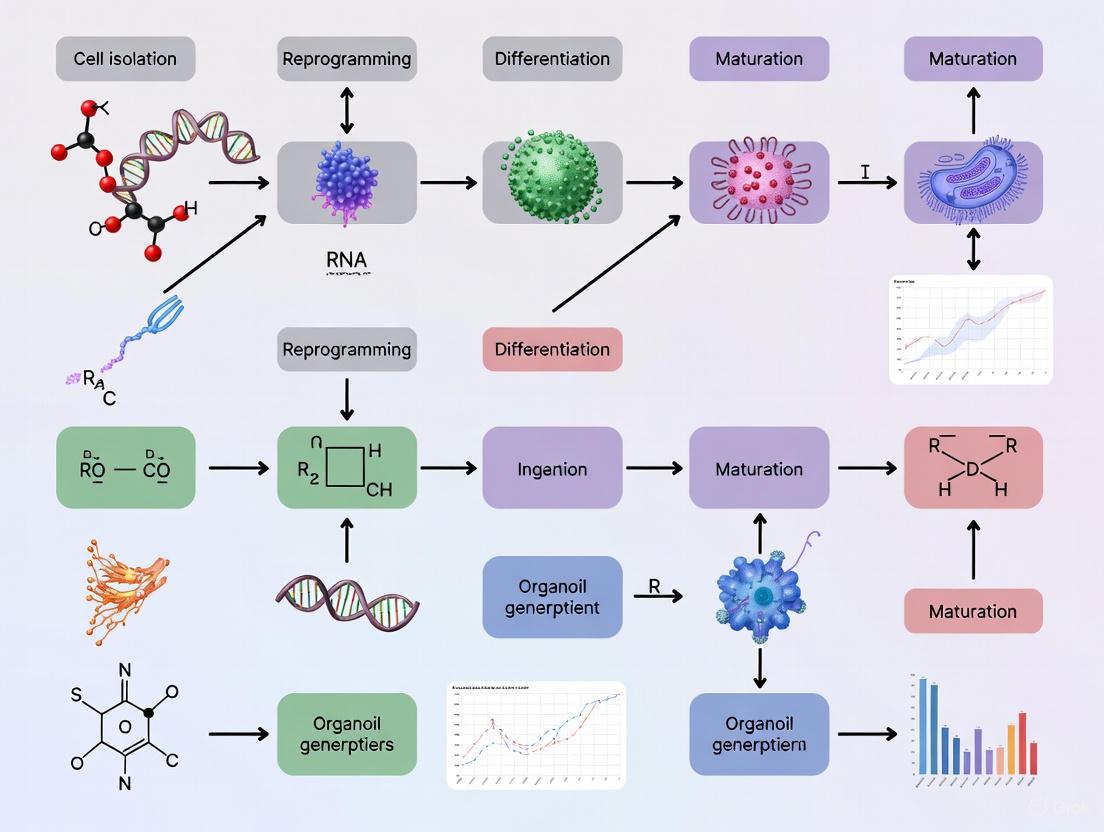
This article provides a comprehensive overview of the current landscape of organoid generation, detailing the foundational principles, diverse methodological approaches, and key applications in disease modeling and drug development.
Organoid Generation Methods: From Stem Cells to Standardized 3D Models for Biomedical Research
Abstract
This article provides a comprehensive overview of the current landscape of organoid generation, detailing the foundational principles, diverse methodological approaches, and key applications in disease modeling and drug development. It explores the significant challenges of standardization, vascularization, and functional maturation that researchers face. Furthermore, it outlines advanced engineering and bioinformatics strategies for troubleshooting and validation. Designed for researchers, scientists, and drug development professionals, this review synthesizes cutting-edge advances and serves as a guide for leveraging organoid technology in preclinical and personalized medicine applications.
The Foundations of Organoid Technology: Principles, Potentials, and Market Growth
Organoids are defined as three-dimensional (3D) multicellular, microtissues derived from stem cells that are designed to closely mimic the complex structure and functionality of human organs such as the lung, liver, or brain [1]. Unlike traditional two-dimensional (2D) cell cultures, organoids are multi-cellular and demonstrate a high order of self-assembly, allowing for a better representation of complex in vivo cell responses and interactions [1]. Three distinct criteria differentiate an organoid: (1) it is a 3D biological microtissue containing several types of cells; (2) it represents the complexity, organization, and structure of a tissue; and (3) it resembles at least some aspect of a tissue's functionality [1].
The fundamental property of organoids lies in their ability to self-organize from stem cells or organ progenitors through cell sorting and spatially restricted lineage commitment in a manner similar to in vivo processes [2]. This self-organization capacity enables them to develop into structures containing multiple organ-specific cell types that are grouped together and spatially organized similar to an actual organ, while also recapitulating some specific functions of the organ such as contraction, neural activity, endocrine secretion, filtration, or excretion [2].
Organoid Generation Methods: PSC vs. AdSC Derived Organoids
Organoids can be generated from two primary stem cell sources, each with distinct characteristics, protocols, and applications. The table below summarizes the key differences between these approaches.
Table 1: Comparison of PSC-derived and AdSC-derived Organoids
| Characteristic | Pluripotent Stem Cell (PSC) Derived Organoids | Adult Stem Cell (AdSC) Derived Organoids |
|---|---|---|
| Cell Source | Embryonic stem cells (ESCs) or induced pluripotent stem cells (iPSCs) [3] | Tissue-resident stem cells from adult organs [3] |
| Protocol Development | First PSC-derived brain organoid-like spheroids reported in 2008 [3] | First established for intestine in 2009 after identifying Lgr5+ stem cells [3] |
| Cellular Complexity | Complex cellular components including mesenchymal, epithelial, and even endothelial components [3] | Primarily epithelial cell types only [3] |
| Maturity State | More suitable for studying early organogenesis and embryonic development [3] | Closer to adult tissue maturity [3] |
| Culture Duration | Several months with specific cocktails of growth factors needed at each step [3] | Simpler procedure requiring less time [3] |
| Expansion Capacity | Lose ability to expand once cells reach terminal differentiation [3] | Can be expanded in vitro for long periods while maintaining genetic stability [3] |
| Ideal Applications | Human developmental biology, early organogenesis [3] | Adult tissue repair, viral infection disease, personalized medicine [3] |
Key Organoid Protocols and Methodologies
General Workflow for Organoid Culture
The general workflow for organoid culturing and screening involves multiple standardized steps that ensure proper development and functionality.
Diagram 1: General Organoid Culture Workflow
Thawing of Cryopreserved Organoids
The process of initiating organoid cultures from cryopreserved material follows these critical steps [4]:
Preparation: Warm basal medium and complete culture medium to room temperature. Thaw extracellular matrix (ECM) at 4°C, keeping it on ice once thawed. Warm culture vessels in a 37°C incubator for at least 60 minutes.
Thawing: Rapidly thaw cryovial in a 37°C water bath until only a small ice crystal remains. Transfer contents to a conical tube containing warm basal medium.
Washing: Centrifuge at 150-300 × g for 5 minutes. Aspirate supernatant, being careful not to disturb the cell pellet.
Resuspension: Resuspend cell pellet in appropriate volume of ice-cold ECM by gentle pipetting. Keep suspension on ice to prevent premature ECM polymerization.
Plating: Dispense ECM-cell suspension as droplets onto pre-warmed culture vessels. Typically, 20-50 µl domes are plated in the center of each well.
Solidification: Incubate plate for 20-30 minutes at 37°C to allow ECM domes to solidify.
Media Addition: Carefully overlay solidified domes with pre-warmed complete culture medium.
Culture Maintenance: Place cultures in a humidified 37°C, 5% CO₂ incubator. Refresh medium every 2-3 days, monitoring organoid growth and development.
Brain Organoid Generation Protocols
Brain organoids represent one of the most complex organoid systems, with two primary methodological approaches: unguided and guided protocols.
Table 2: Brain Organoid Generation Protocols
| Protocol Type | Description | Key Features | Applications |
|---|---|---|---|
| Ungulated Protocol | Stem cells undergo spontaneous differentiation without extrinsic patterning factors [5] | Forms multiple brain regions; Significant variations among organoids [5] | Modeling overall brain development; Studying complex neural interactions [5] |
| Guided Protocol | Uses specific morphogens to pattern region-specific organoids [5] | Increased reproducibility; Targeted regional identity [5] | Studying specific brain regions; Disease modeling of regional pathologies [5] |
Signaling Pathways for Regional Patterning in Brain Organoids
The generation of region-specific brain organoids requires precise manipulation of key developmental signaling pathways.
Diagram 2: Signaling Pathways for Brain Organoid Patterning
Cerebral Organoid Protocol
The generation of cerebral organoids follows this detailed methodology [3] [5]:
Embryoid Body (EB) Formation: Culture human pluripotent stem cells in a serum-free floating culture of EB-like aggregates with quick aggregation (SFEBq) system.
Neural Induction: Inhibit both WNT and transforming growth factor-β (TGF-β) signaling to promote neuroectodermal fate through SMAD inhibition.
Matrix Embedding: Embed EBs in Matrigel to provide structural support for complex morphological development.
Differentiation Culture: Transfer to rotational bioreactor for long-term suspension culture (several months) with specific growth factors for neural development.
Maturation: Add BDNF, GDNF, TGF-β, and cAMP to promote neuronal maturation and synaptic formation [3].
Key modifications include the use of orbital shaking or bioreactors to improve nutrient access and reduce necrotic core formation, which remains a challenge in larger organoids [5].
Vascularized Organoid Protocol
Recent advancements have enabled the creation of vascularized organoids, overcoming a major limitation in organoid technology.
Vascularized Cardiac Organoid Generation
A breakthrough protocol for generating vascularized heart organoids was recently demonstrated [6]:
Optimized Recipe Testing: Researchers combined methods for generating cardiomyocytes, endothelial cells, and smooth muscle cells into 34 different recipes specifying growth factors, concentrations, and timing.
Condition 32 Selection: The winning recipe produced organoids with the highest amounts of cardiomyocytes, endothelial cells, and smooth muscle cells, as visualized through fluorescent labeling.
Self-Organization: The doughnut-shaped organoids self-organized with cardiomyocytes and smooth muscle cells on the inside, along with an outer layer of endothelial cells that formed branching, tubular vessels resembling capillaries (10-100 microns in diameter).
Characterization: Single-cell RNA sequencing revealed each organoid contained 15-17 different cell types, comparable to a six-week-old embryonic heart (which has 16 cell types).
This vascularization strategy has also been successfully adapted to create liver organoids with robust networks of blood vessels, demonstrating its potential for broad application across organ systems [6].
Essential Research Reagents and Materials
Successful organoid culture requires specific reagents and materials that support the complex 3D environment necessary for proper development and maturation.
Table 3: Essential Research Reagents for Organoid Culture
| Reagent Category | Specific Examples | Function | Application Notes |
|---|---|---|---|
| Extracellular Matrices | Matrigel, Cultrex BME, Synthetic hydrogels [5] [4] | Provides 3D scaffold for structural support; Directs cell fate and differentiation [5] | Matrigel is most common but has batch variability; Synthetic alternatives being developed [5] |
| Base Media | Advanced DMEM/F12 [4] | Nutrient foundation for culture medium | Must be supplemented with tissue-specific factors |
| Essential Supplements | N-2 Supplement, B-27 Supplement [4] | Provides hormones, vitamins, and growth factors | Standard component for neural and other organoid types |
| Growth Factors | EGF (50 ng/ml), Noggin (100 ng/ml), FGF-10 (100 ng/ml), R-spondin [4] | Patterns differentiation; Promotes specific tissue development | Concentrations vary by organoid type; Often require conditioned media |
| Small Molecule Inhibitors | A83-01 (TGF-β inhibitor), SB202190 (p38 inhibitor), Y-27632 (ROCK inhibitor) [4] | Controls signaling pathways; Prevents anoikis during passaging | Critical for maintaining viability in single cell cultures |
| Additional Supplements | N-Acetylcysteine (1-1.25 mM), Nicotinamide (10 mM), Gastrin (10 nM) [4] | Antioxidant support; Metabolic and hormonal support | Concentrations vary by organoid type |
Current Challenges and Limitations in Organoid Technology
Despite significant advancements, organoid technology faces several important limitations that researchers must consider in experimental design.
Table 4: Challenges and Potential Solutions in Organoid Technology
| Challenge | Impact on Research | Potential Solutions |
|---|---|---|
| Lack of Vascularization | Limited size (<3 mm); Necrotic core formation; Reduced maturity [5] [6] | Vascularization protocols [6]; Bioreactor culture [5]; Sliced organoid approaches [5] |
| Batch-to-Batch Variability | Reduced reproducibility; Difficulty comparing studies [7] [5] | Defined matrices; Automated production; Standardized protocols [7] |
| Incomplete Maturation | Fetal rather than adult phenotype; Limited disease modeling applicability [7] | Long-term culture; Volumetric compression; Transplantation [5] |
| Missing Cell Types | Lack of immune, vascular, neural, and microbiome components [8] | Assembloids; Co-culture systems; Microfluidic integration [7] [5] |
| Scalability Issues | Limited throughput for drug screening; High costs [7] | Automated systems; Bioreactor scaling; High-content imaging [7] |
Organoid technology has revolutionized biomedical research by providing unprecedented access to human-specific tissue models that bridge the gap between traditional 2D cell cultures and animal models. The self-organizing capacity of stem cells to form complex 3D structures that recapitulate key aspects of human organ development, architecture, and function has opened new avenues for studying human development, disease modeling, drug discovery, and personalized medicine.
Future developments in organoid technology will likely focus on enhancing complexity through improved vascularization, incorporation of immune cells, and creation of multi-organ systems through assembloid approaches. The integration of organoids with organ-on-chip technologies and microfluidic systems will further enhance their physiological relevance and utility in drug development and toxicity testing [7]. As standardization improves and protocols become more refined, organoids are poised to become an increasingly indispensable tool in the researcher's toolkit, potentially reducing reliance on animal models and accelerating the development of novel therapeutics.
With the organoid market expected to reach $15.01 billion by 2031 [7], continued investment and innovation in this field is assured, promising ever more sophisticated models of human biology and disease that will deepen our understanding of human physiology and transform biomedical research.
The selection of core starting materials is a pivotal first step in organoid generation, fundamentally shaping the subsequent protocol, the resulting model's biology, and its ultimate application. The two primary cell sources are Pluripotent Stem Cells (PSCs), including embryonic and induced pluripotent stem cells (iPSCs), and Tissue-Resident Stem Cells (TSCs), also known as adult stem cells. PSCs are characterized by their theoretically unlimited self-renewal capacity and potential to differentiate into any cell type from all three germ layers. In contrast, TSCs are partially committed progenitors found in specific adult tissues, responsible for natural tissue maintenance and repair. This Application Note provides a structured comparison of these two starting materials, complete with quantitative data, detailed protocols for each approach, and essential signaling pathway diagrams to guide researchers in selecting and implementing the optimal strategy for their experimental and therapeutic goals.
Comparative Analysis: Pluripotent vs. Tissue-Resident Stem Cells
Table 1: Comparative Analysis of Pluripotent and Tissue-Resident Stem Cells as Starting Materials for Organoids.
| Feature | Pluripotent Stem Cells (PSCs) | Tissue-Resident Stem Cells (TSCs) |
|---|---|---|
| Origin | Embryonic stem cells (ESCs) or induced pluripotent stem cells (iPSCs) [9] [10] | Healthy or diseased adult tissues (e.g., biopsies, surgical specimens) [11] [10] |
| Differentiation Potential | Multilineage; can generate multiple cell types of an organ, including epithelial, stromal, and niche cells [10] [12] | Primarily unilineage; typically generate the epithelial cell types of their tissue of origin [10] [11] |
| Key Representative Markers | OCT4, SOX2, NANOG | LGR5 (Intestine, Liver, Stomach) [11] [9] |
| Self-Organization Cue | Intrinsic, recapitulating developmental processes [13] [14] | Dependent on niche factors provided in the culture medium (e.g., Wnt, R-spondin, Noggin) [11] [9] |
| In Vivo Correlation | Models organogenesis and fetal-like tissues [13] [15] | Models adult tissue homeostasis and physiology [11] |
| Genetic Manipulation | Highly amenable to gene editing (e.g., CRISPR/Cas9) for disease modeling [10] [13] | More challenging to manipulate genetically [10] |
| Typical Culture Duration | Longer (several weeks to months) to allow for multistage differentiation [12] [14] | Shorter (can be established and expanded in weeks) [11] |
| Primary Applications | Developmental biology, disease modeling (including genetic disorders), drug toxicity screening [13] [16] | Personalized disease modeling (e.g., cancer), host-pathogen interaction, regenerative medicine [11] [13] |
Table 2: Quantitative Assessment of Organoid Similarity to Native Human Tissues. Data derived from a quantitative prediction algorithm (W-SAS) analyzing RNA-seq data from human pluripotent stem cell (hPSC)-derived models against the GTEx database of human tissues [15].
| hPSC-Derived Model | Target Organ | Similarity Score (%) | Key Functional Genes in Panel |
|---|---|---|---|
| Liver Organoids / Hepatocytes | Liver | Calculated by LiGEP algorithm [15] | Albumin, CYP450 enzymes |
| Lung Bud Organoids (LBOs) | Lung | Quantified by LuGEP [15] | Surfactant proteins (SFTPC) |
| Gastric Organoids (GOs) | Stomach | Quantified by StGEP [15] | Pepsinogen, Gastrin |
| Cardiomyocytes (CMs) | Heart | Quantified by HtGEP [15] | Troponins, Myosins |
Detailed Experimental Protocols
Protocol 1: Generating Retinal Organoids from Human Pluripotent Stem Cells (hPSCs)
This protocol is adapted from a highly reproducible and efficient method for generating retinal organoids, which achieves 100% efficiency in pure retinal organoid formation through timed activation of BMP signaling [17].
Key Reagents & Materials:
- Cell Line: Human PSC line (e.g., H7).
- Basal Medium: DMEM/F12 or RPMI-1640.
- Small Molecules: CHIR99021 (GSK3 inhibitor, activates Wnt signaling), IWP-2 (Wnt inhibitor).
- Growth Factors: Recombinant human BMP4 (for timed activation).
- Matrix: Matrigel or a defined synthetic hydrogel [18].
- Equipment: Ultra-low attachment round-bottom plates.
Workflow:
Detailed Steps:
- Culture hPSCs to 90-95% confluency in feeder-free conditions on Matrigel-coated plates.
- Initiate Differentiation (Day 0): Switch to differentiation basal medium (e.g., RPMI/B27 minus insulin) supplemented with 12 µM CHIR99021 to activate Wnt signaling and specify primitive streak-like cells.
- Inhibit Wnt Signaling (Day 3): Replace medium with basal medium containing 5 µM IWP-2 to promote neural and eye field specification.
- Form Aggregates (Day 7): Dissociate cells to single cells using Accutase. Seed 500,000 cells per well in an ultra-low attachment round-bottom plate. Centrifuge at 1200 rpm for 5 minutes to form a uniform aggregate.
- Timed BMP Activation (Day 7-10): Add recombinant human BMP4 to the culture medium to direct the aggregates toward a retinal fate. Inhibition of BMP signaling at this stage leads to default forebrain fate [17].
- 3D Maturation: Maintain aggregates in suspension culture with regular medium changes. Over 4-8 weeks, the organoids will self-organize into structured retinal tissue with photoreceptor cells.
Protocol 2: Establishing Primary Human Intestinal Organoids from Tissue
This protocol is based on the seminal work for generating organoids from primary tissue-resident LGR5+ stem cells, a method since adapted for numerous other epithelial tissues [11] [9].
Key Reagents & Materials:
- Tissue Sample: Human intestinal biopsy or surgical resection sample.
- Digestion Buffer: Collagenase/Dispase or other tissue-specific dissociation enzyme.
- Basal Medium: Advanced DMEM/F12.
- Essential Niche Factors: Recombinant R-spondin 1, Recombinant Noggin, Epidermal Growth Factor (EGF).
- Matrix: Matrigel or BME [18].
Workflow:
Detailed Steps:
- Tissue Dissociation: Mince the intestinal tissue into small fragments. Incubate with a digestion buffer containing collagenase (e.g., 2 mg/mL) at 37°C for 30-60 minutes with gentle agitation.
- Crypt Isolation: Filter the cell suspension through a strainer (e.g., 100-500 µm) to remove large debris and collect intestinal crypts. Centrifuge the flow-through to pellet the crypts.
- Embedding in Matrix: Resuspend the crypt pellet in cold Matrigel. Plate the suspension as small droplets in a pre-warmed culture plate and incubate at 37°C for 10-20 minutes to allow the Matrigel to polymerize.
- Culture Initiation: Overlay the polymerized Matrigel droplets with complete intestinal organoid medium. The essential components are:
- R-spondin 1: Activates Wnt signaling, critical for stem cell maintenance.
- Noggin: A BMP inhibitor, prevents stem cell differentiation.
- EGF: Promotes proliferation.
- Maintenance and Passaging: Culture the organoids at 37°C, changing the medium every 2-3 days. Within 3-5 days, cystic and budding structures will appear. To passage, mechanically break up the organoids or use a dissociation reagent, re-embed the fragments in fresh Matrigel, and continue culture.
The Scientist's Toolkit: Essential Research Reagents
Table 3: Key Reagent Solutions for Organoid Culture.
| Reagent Category | Specific Examples | Function in Organoid Culture |
|---|---|---|
| Extracellular Matrix (ECM) | Matrigel, BME, defined synthetic hydrogels [18] | Provides a 3D scaffold that mimics the native basement membrane; essential for structural support and biochemical signaling. |
| Wnt Pathway Agonists | R-spondin 1, CHIR99021 (GSK3 inhibitor) [11] [14] | A master regulator of stemness. Crucial for the expansion and maintenance of both PSC-derived progenitors and TSCs like LGR5+ cells. |
| BMP Pathway Modulators | Noggin (inhibitor), BMP4 (agonist) [17] [11] | Inhibition is often required for TSC culture and neural induction in PSCs. Timed activation can specify retinal fate in PSCs [17]. |
| Growth Factors | EGF, FGF2, FGF10 [11] [14] | Promote progenitor cell proliferation and survival. Specific FGFs are key for morphogenesis in lung, pancreas, and other organoids. |
| Metabolic Maturators | Triiodothyronine (T3), All-trans Retinoic Acid (ATRA) [12] | Used in later stages of culture to promote functional maturation of organoids, such as photoreceptor development or alveolar maturation. |
The extracellular matrix (ECM) and soluble signaling factors together form the foundational niche that guides organoid development, maturation, and function. This application note details standardized protocols for incorporating these essential niche components to generate high-fidelity organoids. We provide comparative data on matrix performance, step-by-step methodologies for establishing ECM-based and ECM-free cultures, and visual guides to critical signaling pathways. By defining the composition and application of the niche, researchers can achieve greater reproducibility and physiological relevance in organoid models for basic research and drug development.
Organoids are three-dimensional (3D) in vitro structures that recapitulate key aspects of their corresponding in vivo organs, including cellular diversity, tissue architecture, and specific functions [9]. Their generation relies on the ability of stem cells to self-organize, a process directed by cues from their microenvironment, or niche [19]. This niche is composed of two primary elements:
- The Extracellular Matrix (ECM): A 3D scaffold that provides structural support, mechanical cues, and biochemical signals.
- Soluble Factors: Growth factors, cytokines, and morphogens that activate signaling pathways governing cell fate, proliferation, and differentiation.
The careful orchestration of these components is not merely supportive but is the decisive factor in the successful generation of organoids that are biologically and physiologically relevant. This document provides application notes and detailed protocols for manipulating these niche components to direct organogenesis in vitro.
Application Notes: Core Components of the Niche
The Extracellular Matrix (ECM) Scaffold
The ECM is a complex network of proteins and polysaccharides that provides structural and biochemical support to surrounding cells. In organoid culture, the ECM mimics the native basement membrane, influencing cell polarity, proliferation, and spatial organization [20] [21].
Table 1: Common Matrices for Organoid Culture and Their Properties
| Matrix Type | Key Examples | Key Advantages | Major Limitations | Common Organoid Applications |
|---|---|---|---|---|
| Basement Membrane Extract (BME) | Matrigel, Geltrex, Cultrex | Versatile & widely adopted Contains natural ECM proteins (laminin, collagen IV) Supports robust organoid growth [21] | Poorly defined composition Significant batch-to-batch variability Contains growth factors [20] [21] | Intestine, colon, stomach, pancreas, liver [21] |
| Decellularized ECM (dECM) | Organ-specific dECM hydrogels | Tissue-specific biochemical composition Potentially superior biomimicry [19] [22] | Complex preparation process Variable composition depending on source | Tumor models, heart [19] [22] |
| Engineered/Synthetic Matrices | PEG-based, recombinant protein hydrogels | Chemically defined & reproducible Tunable mechanical properties (stiffness, degradability) [20] | Often requires extensive optimization May lack native bioactivity | Intestinal, customized tissue models [20] |
| Specific ECM Protein Complexes | Laminin-Entactin (LN/ET) Complex | Defined ECM component Promotes specific morphogenesis | Limited applicability across organoid types | Heart organoids [23] |
Soluble Signaling Factors
Soluble factors act as molecular switches that guide stem cell differentiation and pattern organoids. The required factors depend on the organoid type and the developmental pathways being modeled.
Table 2: Essential Soluble Factors for Organoid Patterning
| Signaling Pathway | Key Factors | Primary Function in Organogenesis | Example Organoid Applications |
|---|---|---|---|
| WNT | WNT3A, R-spondin, GSK3 inhibitors (e.g., CHIR99021) | Maintains stemness and promotes proliferation; critical for axial patterning [19] [24] | Intestinal, cerebral, cardiac [19] [24] |
| FGF | FGF4, FGF10, bFGF (FGF2) | Promotes mesoderm formation, tissue growth, and chamber formation [23] | Heart, intestinal [23] [19] |
| BMP | BMP4; Noggin (BMP antagonist) | Dorsal-ventral patterning; neuronal differentiation; its inhibition promotes epithelial fate [19] [24] | Cerebral, gastric |
| SHH | Sonic Hedgehog | Ventral neural tube patterning; dorsoventral axis formation [24] | Cerebral, neural tube |
| TGF-β/Activin | Activin A, A-83-01 (inhibitor) | Definitive endoderm specification; mesoderm induction [19] | Hepatic, pancreatic |
| EGF | Epidermal Growth Factor | Promoves epithelial cell proliferation and survival [19] [20] | Ubiquitous in epithelial organoids |
Detailed Protocols
Protocol 1: Generating Murine Heart Organoids using FGF4 and LN/ET Complex
This protocol generates heart organoids with atrium- and ventricle-like structures from mouse embryonic stem cells (mESCs) through a combination of a specific ECM and growth factor signaling [23].
Workflow Overview:
Materials:
- Cells: Mouse embryonic stem cells (mESCs).
- Basal Medium: Appropriate mESC differentiation medium.
- ECM: Laminin-Entactin (LN/ET) Complex.
- Critical Soluble Factors:
- FGF4: Crucial for initiating CM proliferation and chamber formation.
- BMP4: Promotes differentiation of neural crest cells and cardiac autonomic nerves.
- BIO: A Wnt pathway activator.
- LIF: Leukemia inhibitory factor.
- Equipment: Low-attachment U-bottom plates for EB formation, standard cell culture incubator.
Procedure:
- Embryoid Body (EB) Formation: Harvest and aggregate mESCs to form EBs in low-attachment plates. The optimal initial cell density is 1000-5000 cells/EB [23]. EBs formed from only 500 cells showed reduced size and beating ability.
- Initial Induction Culture: Transfer intact EBs to culture conditions containing gelated LN/ET complex and supplement the medium with FGF4 (e.g., 100 ng/mL). Culture for the first 8 days. Note: Omission of the LN/ET complex prevents the formation of heart tubes and chambered structures.
- Secondary Patterning Culture: From day 9 to day 13, add a cocktail of factors to the medium, including BMP4, the Wnt activator BIO, and LIF.
- Maturation: Continue culture for up to 15 days, with regular medium changes every 2-3 days. Beating and morphological changes resembling looping heart tubes can be observed from day 10 onwards.
Quality Control: The success of organoid generation can be assessed by:
- Morphology: Observation of contracting areas and chamber-like structures under a light microscope.
- Functional Analysis: Measurement of beating rates (expected ~95 beats/min) and motion vector analysis [23].
- Histology: Immunostaining for cardiac markers (e.g., Troponin T, Actinin) and transmission electron microscopy to identify sarcomeric structures.
Protocol 2: A Comparative Framework for Testicular Organoid Generation
This framework directly compares four archetypal methods for generating testicular organoids from unsorted primary murine testicular cells, highlighting the impact of the physical niche [25].
Workflow Overview:
Materials:
- Cells: Primary testicular cell suspension from mice.
- ECM: Matrigel or similar BME for ECM-based conditions.
- Basal Medium: Defined medium suitable for testicular cell culture.
- Equipment: Standard tissue culture plates (for 2D), low-attachment plates (for 3D ECM-free), and standard plates for 3D ECM-embedded cultures.
Procedure:
- Cell Isolation: Prepare a single-cell suspension from murine testes using enzymatic digestion.
- Parallel Culture Setup: Plate the cells in four distinct environments:
- 2D ECM-Free: Plate cells on standard tissue culture plastic.
- 2D ECM: Plate cells on a thin layer of gelled ECM (e.g., Matrigel).
- 3D ECM-Free: Culture cells in suspension as aggregates in low-attachment plates.
- 3D ECM: Embed cells within a dome of gelled ECM.
- Maintenance: Culture all conditions with the same medium formulation, replenished every 2-3 days.
- Assessment: After a defined period (e.g., 10-21 days), assess organoids against three primary benchmarks [25]:
- Cellular Self-Assembly: Degree of cellular reorganization.
- Major Cell Type Inclusion: Presence of Sertoli, Leydig, germ, and peritubular cells.
- Tissue Architecture: Compartmentalization into tubule-like versus interstitial areas.
Outcome: The study found that 2D ECM and 3D ECM-free cultures generated organoids with internal morphologies most similar to native testes, including de novo compartmentalization and established long-term endocrine function [25].
The Scientist's Toolkit: Research Reagent Solutions
Table 3: Essential Reagents for Niche-Based Organoid Culture
| Reagent Category | Specific Product Examples | Critical Function |
|---|---|---|
| Basement Membrane Extracts | Matrigel (Corning), Geltrex, Cultrex | Provides a complex, biologically active scaffold for 3D growth and polarization of epithelial organoids [19] [21]. |
| Wnt Pathway Modulators | Recombinant WNT3A, R-spondin, CHIR99021 | Activates canonical Wnt signaling to maintain stemness and drive proliferation in intestinal and other organoids [19]. |
| FGF Pathway Ligands | Recombinant FGF4, FGF10, bFGF (FGF2) | Key for mesodermal and endodermal patterning; critical for heart and intestinal organoid formation [23]. |
| TGF-β/BMP Modulators | Recombinant BMP4, Noggin, A-83-01 | Controls dorsoventral patterning (BMP4/SHH) and promotes endodermal differentiation (BMP4/Noggin inhibition) [23] [24]. |
| ROCK Inhibitors | Y-27632 | Enhances cell survival during passaging and initial plating by inhibiting apoptosis [24]. |
| Decellularized ECM | Organ-specific dECM hydrogels | Provides a tissue-specific scaffold that can improve the physiological relevance of tumor and heart organoid models [19] [22]. |
Signaling Pathway Diagrams
The self-organization of organoids is directed by a core set of evolutionarily conserved signaling pathways. The diagram below illustrates the key pathways and their interactions in patterning a generic forebrain organoid, demonstrating how soluble factors control cell fate.
The efficiency of organoid formation is highly dependent on the specific combination of niche components. The following table summarizes key quantitative outcomes from published studies.
Table 4: Quantitative Outcomes from Optimized Organoid Protocols
| Organoid Type | Critical Niche Components | Reported Efficiency / Functional Outcome | Source |
|---|---|---|---|
| Murine Heart | LN/ET Complex + FGF4 | 88% organoid generation efficiency with chamber formation Beating rate: ~95 beats/min FGF10: 25-42% efficiency Without LN/ET: Failed morphogenesis | [23] |
| Murine Testicular | 2D ECM & 3D ECM-Free | Best morphology and compartmentalization vs. other methods Established long-term endocrine function | [25] |
| General Challenges | Lack of Vascularization | Limits organoid size due to nutrient diffusion Leads to necrotic core formation | [7] |
| General Challenges | Standard BME (Matrigel) | High batch-to-batch variability hinders reproducibility | [20] [21] |
Organoid technology represents a paradigm shift in biomedical research, providing in vitro three-dimensional models that recapitulate the structural and functional complexity of native organs. This field has evolved from the pioneering development of basic intestinal organoids to the current creation of sophisticated multi-region assembloids, offering unprecedented platforms for studying human development, disease mechanisms, and drug responses. These advances are particularly transformative for drug development, enabling more physiologically relevant preclinical testing while reducing reliance on animal models that often poorly predict human outcomes. This application note traces these historical milestones while providing detailed protocols that empower researchers to implement these cutting-edge models in their investigations of organoid generation methods.
Historical Progression of Organoid Models
Foundational Breakthroughs
The organoid field commenced with landmark work in intestinal modeling. In 2009, Sato et al. demonstrated that single Lgr5+ intestinal stem cells could self-organize into crypt-villus structures without mesenchymal niche cells, establishing the fundamental principle that adult stem cells retain intrinsic programming to reconstruct their tissue of origin [26]. This breakthrough initiated the broader organoid field, providing the methodological foundation for subsequent modeling of increasingly complex tissues and systems.
Evolution of Model Complexity
The progression from simple organoids to complex models is characterized by several key advances:
- 2009-2011: Development of first intestinal organoids from adult stem cells and later from human colorectal cancers [26] [27]
- 2010s: Expansion to diverse tissues including gastric, hepatic, and cerebral organoids
- 2017-2020: Incorporation of immune cells and stromal components to better mimic tissue microenvironment [26] [28]
- 2020-2025: Creation of multi-region assembloids with functional connectivity [29]
Table 1: Historical Timeline of Key Organoid Milestones
| Year | Breakthrough | Significance | Reference |
|---|---|---|---|
| 2009 | First intestinal organoids from single Lgr5+ stem cells | Established principle of stem cell self-organization | Sato et al., Nature [26] |
| 2011 | Human colorectal cancer organoids | Extended technology to disease modeling | Sato et al. [27] |
| 2017 | Macrophage-enteroid co-culture | Incorporated immune components | Noel et al. [26] |
| 2019 | Human blood vessel organoids | Vascularized organoid models | Wimmer et al. [30] |
| 2025 | Multi-region brain organoids (MRBOs) | Whole-brain models with regional connectivity | Kathuria et al. [29] |
Established Organoid Protocol: Intestinal Organoids with Microbial Co-culture
Principle
This protocol enables the generation of human intestinal organoids from adult stem cells and their subsequent co-culture with microbes to study host-microbe interactions, a capability critical for investigating infectious diseases, microbiome interactions, and epithelial barrier function [26].
Materials and Reagents
Table 2: Essential Reagents for Intestinal Organoid Culture and Co-culture
| Reagent Category | Specific Reagents | Function | Source/Reference |
|---|---|---|---|
| Basement Matrix | Cultrex BME Type 2, Matrigel GFR | 3D structural support for organoid growth | [31] |
| Essential Growth Factors | Wnt3A, R-spondin 1, Noggin | Stem cell maintenance and proliferation | [26] [31] |
| Medium Supplements | B-27, N-acetylcysteine, Gastrin | Enhanced growth and viability | [28] [31] |
| Digestive Enzymes | Collagenase Type II, TrypLE | Tissue dissociation and passage | [31] |
| Microinjection Equipment | Microinjection device, fine needles | Precise microbial delivery to organoid lumen | [26] |
Step-by-Step Procedure
Establishment of Human Intestinal Organoids
- Tissue Acquisition and Preparation: Obtain fresh intestinal biopsies (1-3 mm³) from surgical specimens. Immediately place in ice-cold AdvDMEM+++ supplemented with Primocin [31].
- Tissue Dissociation:
- Mince tissue thoroughly with disposable scalpels in a 10-cm Petri dish
- Transfer to 15 ml tube with collagenase type II (1-2 mg/ml) and Y-27632 Rho kinase inhibitor (10 µM)
- Incubate on orbital shaker at 37°C for 30-90 minutes, monitoring dissociation every 15 minutes
- Pass suspension through 100-µm cell strainer to remove undigested fragments [31]
- Embedding in Matrix:
- Centrifuge filtrate at 300 × g for 5 minutes
- Resuspend pellet in cold BME (approximately 50-100 organoid fragments/µl)
- Plate 20-30 µl drops in pre-warmed 24-well plate
- Solidify for 15-30 minutes at 37°C before adding expansion medium [31]
- Maintenance Culture:
The following workflow diagram illustrates the complete process for generating and applying intestinal organoids:
Microbial Co-culture via Microinjection
- Prepare Bacterial Suspension: Grow bacteria to mid-log phase in appropriate medium, centrifuge and resuspend in organoid medium at desired multiplicity of infection [26].
- Microinjection Setup:
- Transfer mature organoids to imaging-compatible dish
- Load bacterial suspension into microinjection needle
- Carefully penetrate organoid lumen and inject 50-200 nl suspension [26]
- Post-Injection Culture:
- Maintain co-culture for desired duration (typically 2-24 hours)
- Monitor bacterial viability and organoid integrity via live microscopy [26]
- Downstream Analysis:
- Assess spatial relationships by fluorescence live microscopy
- Analyze bacterial and organoid cell viability and growth kinetics
- Evaluate transcriptomic responses by RNA sequencing [26]
Applications and Validation
This established protocol enables investigation of host-microbe interactions with great experimental control. Applications include:
- Studying infection mechanisms of pathogens like Cryptosporidium and SARS-CoV-2 [26]
- Modeling genotoxic effects of pks+ E. coli in colorectal cancer [26]
- Investigating epithelial barrier function and immune responses [28]
Advanced Protocol: Multi-Region Brain Assembloids
Principle
This cutting-edge protocol generates whole-brain assembloids containing multiple regionally-specified neural tissues and rudimentary blood vessels, enabling study of neuropsychiatric disorders, brain development, and neural connectivity in a human-specific context [29].
Materials and Specialized Reagents
- Neural cells from separate brain regions (cortical, midbrain, hindbrain)
- Endothelial cells for vascular components
- Sticky proteins (biological "superglue" for tissue integration)
- Neural differentiation media with region-specific patterning factors
- Low-attachment plates or CERO bioreactor for 3D culture [29] [32]
Step-by-Step Procedure
Regional Neural Differentiation:
- Generate neural progenitor cells from pluripotent stem cells
- Pattern toward specific regional identities using morphogens (e.g., SHH for ventral, FGF8 for anterior)
- Culture for 30-40 days to establish regional characteristics [29]
Vascular Component Preparation:
- Differentiate endothelial cells from same stem cell source
- Form primitive vessel structures in 3D culture [29]
Assemblage Integration:
Maturation and Functional Validation:
- Culture assembled tissues for 60+ days to establish connectivity
- Monitor electrical activity using multi-electrode arrays
- Assess regional marker expression and spatial organization [29]
The following diagram illustrates the advanced process for creating multi-region brain assembloids:
Characterization and Applications
The resulting multi-region brain organoids (MRBOs) contain approximately 6-7 million neurons (versus tens of billions in adult brains) and exhibit:
- Electrical activity and network responses [29]
- Early blood-brain barrier formation [29]
- 80% of cell types present in early human fetal brain development [29]
- Regional connectivity mimicking whole-brain organization [29]
These assembloids enable research into schizophrenia, autism, and Alzheimer's disease, providing platforms for drug testing and understanding neurodevelopmental disorders [29].
Quantitative Analysis Methods for Organoid Characterization
Histopathological Scoring Principles
Valid scoring systems for organoid analysis should be definable, reproducible, and produce meaningful results. Key principles include [33]:
- Masking (Blinding): Constrain bias by masking the pathologist to experimental groups during examination and scoring
- Clear Definitions: Use specific terminology including percent of tissue affected rather than vague terms like "mild" or "severe"
- Interpretation Consistency: Guard against "diagnostic drift" during scoring through standardized criteria
Image Analysis and Morphometry
Advanced image processing software enables quantitative analysis of organoid features:
Table 3: Quantitative Methods for Organoid Characterization
| Analysis Type | Methodology | Application in Organoids | Software Tools |
|---|---|---|---|
| Cell Size Analysis | Nuclei detection with region expansion | Quantifying hypertrophy | Tissue Studio [34] |
| Vacuole Quantification | Area and roundness criteria | Lipid deposition analysis | Image-Pro Plus [34] |
| Inflammatory Cell Infiltration | Size-based discrimination | Immune response assessment | Image-Pro Plus [34] |
| Spatial Organization | Region recognition algorithms | Tissue patterning analysis | Tissue Studio [34] |
| Electrophysiological Activity | Multi-electrode arrays | Neural functional assessment | [29] |
Applications in Disease Modeling and Drug Development
Tumor Organoids for Drug Resistance Research
Tumor organoids model cancer in vitro while preserving parental tumor histology and genomics, capturing heterogeneity and drug response [27]. Key applications include:
- Drug Screening: High-throughput testing of therapeutic agents
- Resistance Mechanism Investigation: Study acquired resistance through prolonged drug exposure
- Personalized Medicine: Patient-derived organoids for treatment selection
Modeling methods vary by tumor type but share common steps: sampling, cell mass preparation, density adjustment, and ECM mixing/plating [27]. Success rates for tumor organoid establishment exceed traditional models while maintaining genetic stability.
Integration with Computational Modeling
Computational approaches enhance organoid research through:
- Agent-Based Models: Simulate emergent behavior from cell-cell interactions [35]
- Hybrid Mechanistic Data-Driven Approaches: Combine physics-based models with machine learning [35]
- Bayesian Calibration Methods: Parameter optimization based on experimental data [35]
These computational tools help understand organoid morphogenesis, development, and functionality, accelerating translation from basic research to clinical applications.
Troubleshooting and Technical Considerations
Common Challenges and Solutions
- Low Organoid Viability After Thawing: Include Rho kinase inhibitor in recovery medium for first 48 hours [31]
- Poor Regional Specification in Brain Organoids: Optimize morphogen concentrations and timing [29]
- Inconsistent Microbial Co-culture Results: Standardize bacterial growth phase and microinjection volume [26]
- High Batch-to-Batch Variability: Use synthetic Wnt surrogate instead of Wnt3A-conditioned medium [31]
Quality Control Measures
- Regular mycoplasma testing and line identity confirmation [31]
- Validation of regional markers in brain assembloids [29]
- Monitoring genetic stability through whole-genome sequencing during long-term culture [27]
The evolution from simple intestinal organoids to complex multi-region assembloids represents a transformative advancement in experimental biology. These models now provide unprecedented opportunities to study human development, disease mechanisms, and therapeutic interventions in physiologically relevant contexts. The protocols detailed herein provide researchers with robust methodologies to implement these technologies, from established intestinal organoid systems to cutting-edge brain assembloids. As the field progresses, integration with computational modeling, enhanced vascularization, and improved immune component incorporation will further strengthen the relevance and application of these powerful experimental platforms.
The drug development process is notoriously inefficient, with overall success rates of transitioning from discovery to market approval at less than 10% [36]. Late-phase clinical trial failures represent a major driver of cost and inefficiency, with over 85% of trials failing due to safety and efficacy concerns despite promising preclinical results [7]. This high attrition rate exceeds 85%, contributing to an average cost of $1-2 billion and a timeline exceeding 15 years for each new drug approved for clinical use [36].
Conventional preclinical models, including two-dimensional (2D) immortalized cell cultures and animal models, have demonstrated limited predictive value for human responses. The interspecies genetic and physiological differences between animals and humans limit their power to predict human-relevant toxicity mechanisms and disease processes, while 2D cultures cannot replicate the complex cellular interactions found in human tissues [7] [36]. Within this challenging landscape, organoid technology has emerged as a transformative approach that better recapitulates human physiology, offering a promising pathway to reduce clinical trial failures and revolutionize drug development.
Organoid Technology: A Paradigm Shift in Preclinical Modeling
Organoids are three-dimensional (3D) cell culture systems that incorporate key structural and functional characteristics of human organs [37]. These self-organized structures are derived from adult stem cells (ASCs), embryonic stem cells (ESCs), or induced pluripotent stem cells (iPSCs), and can be expanded from tissue samples or via directed differentiation of pluripotent sources [36]. The unique capability of organoids to mimic the heterocellular composition of native tissues enables researchers to reconstruct functional aspects of human physiology in a laboratory setting, providing a more physiologically relevant platform for evaluating drug efficacy, toxicity, and mechanism of action [7].
Table 1: Organoid Market Growth and Projections
| Metric | 2022/2023 Value | Projected Value | Timeframe | CAGR |
|---|---|---|---|---|
| Global Organoids Market | USD 88 Million [38] / USD 3.03 Billion [7] | USD 290.8 Million [38] / USD 15.01 Billion [7] | 2029 [38] / 2031 [7] | 18.4% [38] / 22.1% [7] |
| Primary Drivers | Biopharmaceutical adoption, academic research, personalized medicine applications | |||
| Key Segments | Stem cell-derived organoids, tumor cell-derived organoids |
The remarkable market growth trajectory underscores the rapid adoption and immense potential of organoid technology across basic research, drug discovery, and clinical applications. This expansion is fueled by several compelling advantages over conventional models:
- Enhanced Biological Relevance: Organoids preserve genetic, morphological, and functional properties of original tissues, maintaining the cellular diversity and spatial organization found in vivo [36] [39].
- Species-Specific Modeling: As human cell-derived systems, organoids eliminate interspecies variability, providing more accurate predictions of human responses [36].
- Patient-Specific Applications: Patient-derived organoids (PDOs) enable the incorporation of human diversity into early drug development stages, allowing assessment of drug activity and adverse effects across populations with varying genetic backgrounds [7].
Quantitative Evidence: Validating Organoid Predictive Power
Substantial evidence has accumulated demonstrating the superior predictive value of organoid models in forecasting clinical drug responses. The following table summarizes key validation studies across multiple cancer types:
Table 2: Predictive Performance of Patient-Derived Organoid Models in Clinical Response Assessment
| Cancer Type | Sample Size | Therapeutic Classes Tested | Sensitivity | Specificity | Reference |
|---|---|---|---|---|---|
| Lung Cancer | 36 patients | Chemotherapy, Targeted therapy | 84.0% | 82.8% | [39] |
| Lung Cancer | 103 patients | Chemotherapy | 100% | 100% | [39] |
| Breast Cancer | 35 patients | Chemotherapy, Targeted therapy, Immunotherapy | 82.35% | 69.23% | [39] |
| Gastrointestinal Cancer | 72 patients | Chemotherapy, Targeted therapy | 100% | 93% | [39] |
A specific study on lung adenocarcinoma organoids demonstrated their exceptional capability to replicate drug responses observed in animal models and clinical samples. The organoid models accurately simulated pharmacodynamic profiles for four chemotherapy regimens (etoposide, paclitaxel, cisplatin, and carboplatin), showing high consistency with animal models for key parameters including G2/M phase cell cycle arrest, Ki-67-mediated proliferation dynamics, HER2-mediated invasive phenotype, and early apoptosis [40]. Furthermore, drug resistance analysis confirmed that EGFR/HER2 mutations in the organoid model closely matched clinical resistance samples, highlighting their utility for predicting the evolution of treatment resistance [40].
Technical Protocols: Implementing Organoid Disease Models
Establishing Patient-Derived Cancer Organoids for Drug Screening
The following protocol outlines the methodology for generating and utilizing patient-derived organoids for drug sensitivity testing, adapted from established procedures for various epithelial cancers [41]:
Phase 1: Sample Processing and Initial Culture (Days 1-7)
- Obtain patient tissue samples via biopsy or surgical resection under appropriate ethical guidelines.
- Mechanically dissociate tissue using scalpels or forceps, followed by enzymatic digestion with collagenase (1-2 mg/mL) and dispase (1-2 mg/mL) in PBS with DNase I (10-100 µg/mL) for 30-60 minutes at 37°C with agitation.
- Filter cell suspension through 70-100 µm strainers and centrifuge at 300-500 × g for 5 minutes.
- Resuspend cell pellet in extracellular matrix (typically Matrigel or similar basement membrane extract) and plate as droplets in pre-warmed tissue culture plates. Allow matrix to polymerize for 20-30 minutes at 37°C.
- Overlay with organoid-specific culture medium containing essential niche factors including:
- Wnt-3A (10-100 ng/mL) to maintain stemness
- R-Spondin-1 (500-1000 ng/mL) for Wnt pathway enhancement
- Noggin (100 ng/mL) as a BMP pathway inhibitor
- EGF (50 ng/mL) to promote proliferation
- A83-01 (500 nM) as a TGF-β pathway inhibitor
- Y-27632 (10 µM) as a ROCK inhibitor to prevent anoikis
- B27 supplement (1×) and N-acetylcysteine (1.25 mM) for antioxidant support
Phase 2: Organoid Expansion and Maintenance (Weeks 1-4)
- Refresh culture medium every 2-3 days, monitoring organoid formation and growth.
- For passaging (typically every 7-14 days), mechanically break organoids by pipetting or use enzymatic dissociation with TrypLE Express for 5-15 minutes at 37°C.
- Replate dissociated organoids at appropriate split ratios (typically 1:3 to 1:8) in fresh matrix with complete medium.
- Cryopreserve organoids in freezing medium (90% FBS + 10% DMSO) for long-term storage in liquid nitrogen.
Phase 3: Drug Sensitivity Screening (Days 21-30)
- Harvest organoids and dissociate into single cells or small fragments (approximately 10-50 cells).
- Seed into 96-well or 384-well plates in matrix at optimized density (typically 1,000-10,000 cells per well).
- After 24-48 hours, add drug treatments in serial dilutions across the plate, including appropriate controls.
- Incubate for 5-7 days with drug exposure, refreshing medium with compounds every 2-3 days.
- Assess viability using CellTiter-Glo 3D or similar ATP-based assays, measuring luminescence.
- Calculate IC50 values and generate dose-response curves using appropriate software (e.g., GraphPad Prism).
- Validate responses through secondary assays including immunohistochemistry, flow cytometry, or RNA sequencing.
Diagram 1: Patient-derived organoid workflow for drug screening applications.
Critical Signaling Pathways in Organoid Culture Maintenance
The successful long-term culture of organoids requires precise activation of key developmental signaling pathways. The following diagram and description outline the core pathways and their functional roles:
Diagram 2: Core signaling pathways governing organoid development.
The diagram above illustrates four essential signaling pathways that must be carefully balanced in organoid culture media:
- Wnt/β-catenin Pathway: Activated by Wnt-3A and R-Spondin, this pathway is fundamental for maintaining stemness and enabling long-term self-renewal, particularly in intestinal, gastric, and hepatic organoids [39].
- BMP Pathway Inhibition: Noggin, a BMP antagonist, prevents differentiation and supports the undifferentiated state of stem and progenitor cells within organoids [39].
- TGF-β Pathway Inhibition: A83-01, a TGF-β receptor inhibitor, blocks epithelial-to-mesenchymal transition and supports epithelial proliferation and maturation [39].
- EGF Pathway: Epidermal Growth Factor promotes cell proliferation and viability across multiple organoid types, including those from intestine, lung, and breast tissue [39].
Essential Research Reagent Solutions
The successful establishment and maintenance of organoid cultures requires carefully formulated reagents and supplements. The following table details critical components for organoid media formulation:
Table 3: Essential Research Reagents for Organoid Culture
| Reagent Category | Specific Examples | Function | Application Notes |
|---|---|---|---|
| Base Matrix | Matrigel, Collagen Hydrogels, Synthetic PEG Hydrogels | Provides 3D structural support and biochemical cues | Matrix stiffness should be tissue-appropriate (4 kPa for pancreas, 20-30 kPa for lung) [42] |
| Growth Factors | Wnt-3A, R-Spondin-1, Noggin, EGF, FGF family | Activates developmental signaling pathways | Concentrations vary by tissue type (typically 10-100 ng/mL) [39] |
| Small Molecule Inhibitors | A83-01 (TGF-β inhibitor), Y-27632 (ROCK inhibitor), SB202190 (p38 inhibitor) | Controls differentiation and enhances survival | Y-27632 is particularly critical during passaging to prevent cell death [39] |
| Media Supplements | B27, N2, N-acetylcysteine, Nicotinamide | Provides antioxidant support and essential nutrients | B27 is widely used across most organoid types [39] |
| Digestive Enzymes | Collagenase, Dispase, TrypLE Express | Tissue dissociation and organoid passaging | Gentle enzymes preferred over traditional trypsin to preserve surface receptors |
Advanced Model Systems: Enhancing Physiological Relevance
Organoid-on-Chip Technology
Microfluidic organ-on-chip platforms address several limitations of conventional organoid culture by providing dynamic control over the microenvironment. These systems incorporate perfusable microchannels that mimic vascular function, enabling enhanced nutrient exchange and waste removal that supports extended organoid growth and maturation [43]. The technology also permits the application of biomechanical stimuli, such as fluid shear stress and cyclic strain, which are essential for proper tissue development and function [43]. Perhaps most significantly, multi-organoid-on-chip approaches enable the study of inter-organ communication by connecting different organoid types through microfluidic circulatory systems, better replicating systemic human physiology [43].
Vascularization and Immune System Integration
A critical limitation of early organoid models has been the lack of functional vasculature, which restricts nutrient diffusion and limits organoid size, often resulting in necrotic cores [7]. Advanced co-culture systems now incorporate endothelial cells to form primitive vascular networks within organoids, enhancing their physiological relevance and enabling more accurate studies of drug delivery and distribution [7] [43]. Additionally, the integration of immune cells, including T cells and macrophages, into tumor organoid models has created powerful platforms for evaluating immunotherapy efficacy and studying tumor-immune interactions [39]. These co-culture systems better replicate the tumor microenvironment and have demonstrated particular utility for screening immune checkpoint inhibitors, CAR-T therapies, and other immunomodulatory approaches [39].
Future Perspectives and Implementation Recommendations
The integration of organoid technology into mainstream drug development pipelines represents a paradigm shift in how the pharmaceutical industry approaches preclinical research. Several key trends are shaping the future implementation of these models:
- Automation and Standardization: Advanced platforms combining automation and artificial intelligence are addressing reproducibility challenges by standardizing organoid generation and analysis, reducing operator-dependent variability and enabling high-throughput screening [7].
- Regulatory Acceptance: The FDA Modernization Act 2.0 has empowered researchers to use innovative non-animal methods, including organoids, for safety and efficacy testing, accelerating regulatory adoption of these platforms [7] [36].
- Multi-omics Integration: Combining organoid screening with genomic, transcriptomic, and proteomic analyses enables deeper understanding of drug response mechanisms and identification of predictive biomarkers for patient stratification [39].
Implementation of organoid technology within drug development pipelines requires strategic planning. We recommend initially focusing on specific applications where organoids provide the greatest advantage over existing models, such as patient-derived tumor organoids for oncology or specialized tissue models for toxicity assessment in susceptible organs. Building collaborative partnerships with academic institutions that have established organoid expertise can accelerate technology transfer and implementation. Furthermore, investing in standardized protocols and quality control metrics will ensure consistent, reproducible results across screening campaigns and facilitate regulatory acceptance of data generated with these innovative models.
Protocols and Applications: Building Specialized Organoids for Disease and Drug Screening
Ungenerated vs. Guided Differentiation for Whole-Brain and Region-Specific Organoids
The advent of brain organoid technology has revolutionized the study of human neurodevelopment and disease. These three-dimensional, self-organizing structures derived from pluripotent stem cells recapitulate key aspects of the developing human brain, offering an unprecedented window into human-specific brain processes that cannot be adequately modeled in traditional two-dimensional cultures or animal models [44] [45]. Central to this field is the strategic decision between two fundamental differentiation approaches: unguided and guided protocols. Unguided differentiation relies on the intrinsic self-organization potential of stem cells to form whole-brain organoids containing multiple brain regions, while guided differentiation utilizes exogenous patterning factors to direct development toward specific brain regions [46]. This Application Note provides a detailed comparison of these methodologies, supported by experimental protocols and analytical frameworks to inform researchers' selection and implementation of these powerful model systems.
Comparative Analysis of Differentiation Approaches
Conceptual Frameworks and Defining Characteristics
Unguided neural organoids (often called "whole-brain organoids") emerge from protocols that minimize external patterning cues. Stem cell aggregates are allowed to spontaneously differentiate and self-organize, recapitulating aspects of early embryonic brain development where multiple brain regions emerge concurrently [46] [45]. This approach leverages the innate morphogenetic potential of pluripotent stem cells to generate organoids with diverse neural cell types from various regions of the neural axis, including cerebral cortex, hippocampus, retina, and ventral telencephalon [45].
Regionalized neural organoids (guided) result from protocols that provide precise temporal and spatial presentation of small molecules and growth factors that mimic embryonic patterning signals. These exogenous factors actively direct stem cell differentiation toward specific neural lineages, resulting in organoids with more homogeneous regional identities such as cortex, striatum, hypothalamus, midbrain, or cerebellum [46] [45]. This approach significantly reduces heterogeneity by controlling cell fate decisions through the manipulation of key developmental signaling pathways.
Quantitative Comparison of Output Characteristics
The table below summarizes the key differential characteristics between these two approaches, based on current literature and protocol outcomes.
Table 1: Comparative Analysis of Unguided versus Guided Brain Organoid Differentiation Approaches
| Parameter | Unguided Whole-Brain Organoids | Guided Region-Specific Organoids |
|---|---|---|
| Regional Diversity | High diversity; multiple brain regions present simultaneously [46] [45] | Limited to one specific brain region (e.g., cortex, midbrain, hypothalamus) [46] [45] |
| Cellular Heterogeneity | High heterogeneity; contains various neuronal and glial cell types from different regions [45] | Lower heterogeneity; enriched for specific neuronal subtypes of the target region [45] |
| Protocol Control | Minimal intervention; intrinsic self-patterning [46] | High degree of control via exogenous patterning factors [46] |
| Reproducibility | Lower reproducibility between batches due to spontaneous differentiation [45] | Higher reproducibility and uniformity within batches [45] |
| Technical Expertise | Technically less complex but requires careful monitoring [44] | More complex, requiring precise timing of factor addition [47] |
| Primary Applications | Studying inter-regional interactions, global brain patterning, disorders affecting multiple areas [29] | Investigating region-specific development, circuitry, and disorders (e.g., cortical malformations, Parkinson's) [47] [45] |
| Representative Protocols | Lancaster & Knoblich (2014) serum-free embryoid body formation [44] [45] | Qian et al. (2018) miniaturized spinning bioreactor for region-specific organoids [47] |
Experimental Protocols and Workflows
Protocol for Unguided Whole-Brain Organoid Generation
The following protocol adapts the pioneering whole-brain organoid method with subsequent refinements for generating multi-region brain organoids (MRBOs) [44] [29].
Initial Materials and Reagent Setup:
- Human induced pluripotent stem cells (hiPSCs) at 80-90% confluence
- Essential 8 or mTeSR1 pluripotency maintenance medium
- Advanced DMEM/F-12 basal medium
- Neural induction supplement (N2, B27 without vitamin A)
- Matrigel (or similar extracellular matrix)
- Rho-associated protein kinase (ROCK) inhibitor Y-27632
- Dispase or EDTA solution for cell detachment
- 6-well low-attachment plates
- Spinning bioreactor system (commercial or custom-built SpinΩ) [47]
Week 1-2: Embryoid Body Formation and Neural Induction
- hiPSC Dissociation: Harvest hiPSCs using gentle cell dissociation reagent. Quench with complete medium containing 10µM ROCK inhibitor. Centrifuge at 300g for 5 minutes and resuspend in neural induction medium.
- Aggregation: Plate 9,000 cells per well in a 6-well low-attachment plate in neural induction medium supplemented with ROCK inhibitor. The low-attachment surface promotes formation of uniform embryoid bodies.
- Medium Refresh: At day 2, carefully replace medium with fresh neural induction medium without ROCK inhibitor.
- Continuous Monitoring: Monitor embryoid body formation daily. At day 5-7, embryoid bodies should appear spherical with smooth borders, approximately 400-500µm in diameter.
Week 3-4: Matrigel Embedding and Initial Differentiation
- Embedding: Carefully transfer individual embryoid bodies to cold Matrigel droplets (approximately 30µL per embryoid body) using pre-cooled tips. Solidify Matrigel for 20-30 minutes at 37°C.
- Plating: Transfer Matrigel-embedded organoids to 6-well plates containing organoid differentiation medium (DMEM/F-12, N2 supplement, B27 supplement without vitamin A).
- Initial Differentiation Culture: Culture for 7 days with medium changes every other day.
Week 5 Onward: Extended Maturation in Bioreactor
- Bioreactor Transfer: Transfer organoids to a spinning bioreactor system (e.g., SpinΩ) [47] containing fresh differentiation medium.
- Long-term Culture: Maintain organoids in spinning bioreactors with medium changes twice weekly. Organoids can be maintained for several months to study later developmental events.
- Optional Fusion for Multi-region Models: For enhanced multi-regional complexity, separately generate region-specific organoids (cortical, midbrain, hypothalamic) and fuse using "biological superglue" approaches to create assembled whole-brain models [29].
Protocol for Guided Region-Specific Organoid Generation
This protocol outlines the generation of cortical brain organoids as a representative example of guided differentiation, with modifications applicable to other brain regions through adjustments in patterning factors [47] [46] [45].
Initial Materials and Reagent Setup:
- hiPSCs at 80-90% confluence
- Essential 8 or mTeSR1 medium
- DMEM/F-12 with GlutaMAX
- Neurobasal medium
- N2 supplement
- B27 supplement with and without vitamin A
- Small molecule inhibitors: Dorsomorphin (DM), SB431542
- Growth factors: FGF2, EGF, BDNF, GDNT
- patterning factors: Cyclopamine (ventral), BMP4 (dorsal), FGF8 (anterior), FGF19 (posterior)
- Matrigel
- 6-well low-attachment plates
- Spinning bioreactor system
Week 1-2: Neural Induction and Patterning
- Dual SMAD Inhibition: Harvest hiPSCs and plate as embryoid bodies in neural induction medium containing 10µM SB431542 (TGF-β inhibitor) and 500nM Dorsomorphin (BMP inhibitor) to promote neural ectoderm formation.
- Regional Patterning (Days 3-10): For cortical specification, add 100ng/mL FGF2 and 100nM SAG (Smoothened agonist) to promote dorsal telencephalic identity. For midbrain organoids, utilize FGF8 and SHH; for hypothalamic, use SHH and BMP.
- Medium Refresh: Refresh medium with patterning factors every other day.
Week 3-4: Matrigel Embedding and Regional Specification
- Embedding: At day 10, embed emerging neuroepithelial structures in Matrigel droplets as described in section 3.1.
- Regional Maturation: Transfer to differentiation medium (Neurobasal, B27 with vitamin A, N2, BDNF, GDNF) to support neuronal maturation and regional specification.
- Bioreactor Transfer: Transfer to spinning bioreactors at day 14 to enhance nutrient availability and growth.
Week 5-10: Terminal Differentiation and Maturation
- Extended Maturation: Maintain in spinning bioreactors with twice-weekly medium changes for up to 20 weeks for advanced maturation.
- Characterization: Analyze regional identity via immunostaining for region-specific markers (e.g., FOXG1 for forebrain, OTX2 for midbrain, NKX2.1 for hypothalamus).
The following diagram illustrates the key signaling pathways manipulated in guided differentiation protocols to achieve regional specificity:
Diagram 1: Signaling Pathways for Regional Specification. This diagram illustrates how guided differentiation protocols manipulate key developmental signaling pathways to direct pluripotent stem cells toward specific regional neural fates. The diagram highlights how inhibition of SMAD signaling establishes neural ectoderm, followed by regional specification through precise activation of patterning factors.
The Scientist's Toolkit: Essential Research Reagents
Successful implementation of brain organoid protocols requires carefully selected reagents and materials. The following table details essential components and their specific functions in organoid generation and maintenance.
Table 2: Essential Research Reagents for Brain Organoid Generation
| Reagent Category | Specific Examples | Function and Application |
|---|---|---|
| Stem Cell Media | Essential 8, mTeSR1 | Maintains pluripotency of hiPSCs before differentiation initiation [19] |
| Neural Induction Agents | SB431542, Dorsomorphin, LDN-193189 | Dual SMAD inhibition to promote neural ectoderm differentiation [45] |
| Patterning Factors | FGF2, FGF8, FGF19, BMP4, Cyclopamine, SAG, Purmorphamine | Direct regional specification (e.g., FGF8 for anterior patterning, SHH for ventral) [46] [45] [19] |
| Extracellular Matrices | Matrigel, Cultrex BME, synthetic hydrogels | Provides 3D scaffold for structural support and morphogenetic signaling [44] [19] |
| Maturation Factors | BDNF, GDNF, NT-3, cAMP | Supports neuronal survival, neurite outgrowth, and synaptic maturation in later stages [45] |
| Bioreactor Systems | SpinΩ, commercial spinning bioreactors | Enhances nutrient/waste exchange, enables larger organoid growth [47] |
| Characterization Tools | Regional markers (FOXG1, OTX2, NKX2.1), scRNA-seq, MEA | Validates regional identity, cellular composition, and functional maturation [29] [46] |
Advanced Model Systems: Assembloids and Vascularization
Assembloid Generation for Circuitry Studies
A significant advancement in brain organoid technology is the creation of assembloids - 3D structures formed by combining organoids of different regional identities or integrating specialized cell types [46] [45]. This approach enables the study of circuit formation and inter-regional interactions that model complex neural pathways in the developing brain.
Protocol: Cortical-Striatal Assembloid Generation
- Component Preparation: Generate separate dorsal forebrain (cortical) and ventral forebrain (striatal) organoids using guided differentiation protocols (4-8 weeks maturation).
- Assembly: Place one cortical and one striatal organoid in close proximity in a low-attachment well with minimal medium to encourage contact.
- Fusion Promotion: After 24 hours, carefully transfer the paired organoids to a Matrigel droplet to stabilize the interface.
- Circuit Maturation: Maintain fused assembloids in spinning bioreactors with neural maturation medium (containing BDNF, GDNF) for 4-8 weeks to allow axonal projections and synaptic connections to form.
- Validation: Confirm functional connectivity using calcium imaging, electrophysiology, and viral tracing approaches [45].
The following workflow diagram illustrates the process for generating and validating these advanced model systems:
Diagram 2: Assembloid Generation Workflow. This diagram outlines the key steps for generating multi-region assembloids, from initial generation of region-specific organoids through assembly, fusion, maturation, and functional validation stages.
Vascularization Strategies for Enhanced Maturity
A critical limitation of conventional brain organoids is the lack of vascular networks, which restricts nutrient exchange and limits organoid size and maturity [7] [46]. Recent protocols have addressed this through several approaches:
Co-culture with Endothelial Cells:
- Endothelial Cell Preparation: Differentiate hiPSCs to endothelial progenitor cells using VEGF and BMP4 supplementation [46].
- Integration: Dissociate endothelial cells and mix with neural progenitors at the organoid formation stage, or inject into pre-formed organoids.
- Vascular Maturation: Culture in medium containing VEGF, FGF2, and EGF to promote vascular network formation [46].
Microfluidic and Organ-on-Chip Integration:
- Device Preparation: Utilize commercial or custom microfluidic devices with adjacent chambers for organoid and endothelial cell culture.
- Vascular Interface: Seed endothelial cells in channel networks adjacent to brain organoids to create perfusable vascular systems that interact with the neural tissue [7] [45].
These vascularization strategies enhance organoid survival, increase size limits, enable better maturation, and model blood-brain barrier functions - critical for drug permeability studies [7] [46].
The strategic selection between unguided and guided differentiation protocols fundamentally shapes the research questions addressable with brain organoid technology. Unguided whole-brain organoids offer unparalleled capacity to model global brain development and disorders affecting multiple interconnected regions, while guided region-specific organoids provide the precision and reproducibility required for investigating region-specific pathologies and circuitry. The continuing evolution of these technologies - including assembloid approaches for circuit integration and vascularization strategies for enhanced physiological relevance - promises to further bridge the gap between in vitro models and human brain biology. As these protocols become more standardized and accessible, they are poised to accelerate both fundamental neurodevelopmental research and translational drug discovery applications, particularly for neuropsychiatric and neurodegenerative disorders that have proven difficult to model in existing systems.
{ article }
Establishing Patient-Derived Organoid (PDO) Biobanks for Personalized Medicine
Patient-derived organoids (PDOs) represent a transformative three-dimensional (3D) in vitro model system that recapitulates the histological, genetic, and phenotypic heterogeneity of original patient tumors. The establishment of living PDO biobanks provides an unparalleled resource for advancing personalized oncology, high-throughput drug screening, and biomarker discovery. This application note details standardized protocols for generating, characterizing, and biobanking PDOs from clinical specimens, framing these methodologies within the broader context of organoid generation research. We provide detailed experimental workflows, quantitative success rates across cancer types, and a curated list of essential research reagents. Designed for researchers, scientists, and drug development professionals, this document serves as a comprehensive technical guide for implementing PDO biobanking to bridge the gap between basic cancer research and clinical application.
The high failure rate of oncology clinical trials, exceeding 85%, is largely attributable to the limited predictive power of conventional preclinical models such as 2D cell cultures and animal systems, which often fail to capture human-specific tumor biology and patient-specific variability [7]. Patient-derived organoids (PDOs), which are self-organizing 3D cellular structures grown from patient tumor tissue, have emerged as a powerful tool to address this translational gap [48]. PDOs can be established from various cancer types, including colorectal, pancreatic, breast, and glioma cancers, and have been shown to retain the genetic and cellular heterogeneity of their parental tumors [49]. The compilation of these PDOs into living biobanks creates a robust platform for disease modeling, large-scale drug development, and the design of personalized treatment strategies [48] [49] [50]. This document outlines the critical procedural and quality control steps for the successful establishment of a PDO biobank, with a focus on applications in precision medicine.
Establishing a PDO Biobank: Workflow and Quantitative Success Rates
The process of building a PDO biobank involves a multi-stage workflow from sample acquisition to functional characterization. Adherence to standardized protocols at each step is critical for ensuring the biological relevance and reproducibility of the organoid lines.
Key Workflow Diagram
The following diagram illustrates the core workflow for establishing and utilizing a PDO biobank.
Quantitative Success Rates Across Tumor Types
The success of PDO establishment is highly dependent on the tissue of origin and sample quality. The table below summarizes reported success rates from published studies, providing realistic benchmarks for biobank planning.
Table 1: Success Rates for PDO Establishment from Various Cancer Types
| Cancer Type | Reported Success Rate | Sample Type | Key Considerations | Source Example |
|---|---|---|---|---|
| Breast Cancer (Tumor) | 87.5% (21/24 cases) | Surgical Sample | Higher success from tumor vs. healthy tissue. | [51] |
| Breast Cancer (Healthy) | 20.8% (5/24 cases) | Surgical Sample | Scarce material often limits success. | [51] |
| Colorectal Cancer | ~90% | Surgical Sample | Culture protocols are relatively mature. | [49] |
| Metastatic Gastrointestinal Cancers | High (110 lines from 71 patients) | Various | Can be established even with low tumor/stroma ratio. | [49] |
| High-Risk Colorectal Adenoma (HRCA) | 37 lines from 33 patients | Biopsy | Use of non-WNT3a medium improved purity. | [52] |
| Glioblastoma (GBM) | Established | Surgical Sample | Preserves key features of parental tumors. | [49] |
Detailed Experimental Protocols
Protocol #1: Processing of Surgical Samples for Breast Cancer PDOs
This protocol is adapted from a study that processed surgical and biopsy specimens from 33 breast cancer patients, achieving an 87.5% success rate from tumor tissue [51].
Materials:
- Collagenase III and Hyaluronidase Cocktail: For enzymatic digestion of the extracellular matrix.
- Cell Strainers: 100 μm and 20 μm porosity for sequential filtration to separate organoids from single cells.
- Basal Medium: Advanced DMEM/F12.
- Growth Factor Cocktail: Typically includes R-spondin-1, Noggin, EGF, gastrin, A83-01 (TGF-β inhibitor), and SB202190 (p38 inhibitor) [51] [52].
- Extracellular Matrix (ECM): Growth Factor Reduced Matrigel or similar basement membrane extract.
Method:
- Digestion: Mince fresh surgical samples into ~3 mm³ fragments. Incubate with the collagenase/hyaluronidase cocktail overnight at 37°C.
- Filtration and Separation: Sequentially filter the digested material through 100 μm and 20 μm cell strainers. The organoids are typically retained on the 20 μm strainer.
- Embedding: Resuspend the organoid-containing pellet in cold ECM and plate as small droplets in a pre-warmed culture plate. Allow the ECM to polymerify at 37°C for 20-30 minutes.
- Culture: Overlay the polymerified ECM droplets with the complete organoid culture medium. Refresh the medium every 2-3 days.
- Passaging: Once organoids reach a critical size (typically every 1-2 weeks), mechanically or enzymatically dissociate them and re-embed fragments into new ECM for expansion.
Protocol #2: High-Throughput Drug Screening on PDOs
This protocol outlines the use of a PDO biobank for drug discovery, as demonstrated in a screen of 139 compounds on a biobank of 37 high-risk colorectal adenoma PDO lines [52].
Materials:
- Viability Assay: CellTiter-Glo 3D or similar ATP-based luminescence assay.
- Compound Library: Customized or commercial library of therapeutic compounds.
- Liquid Handling Robot: For high-throughput plating and compound addition.
- Multi-well Plates: 96- or 384-well plates suitable for 3D culture.
Method:
- PDO Preparation: Harvest and dissociate PDOs into small, uniform fragments. Seed a pre-determined number of fragments into each well of a 384-well plate in ECM.
- Compound Addition: After 24-72 hours, add compounds from the library to the wells using a liquid handler. Include positive (e.g., cytotoxic agent) and negative (DMSO vehicle) controls.
- Incubation: Incubate PDOs with compounds for a predetermined period (e.g., 5-7 days).
- Viability Readout: Add CellTiter-Glo 3D reagent to each well, lyse the organoids, and measure luminescence. The signal is proportional to the amount of ATP present and thus the viable cell mass.
- Data Analysis: Calculate percentage inhibition relative to controls. Dose-response curves can be generated for hit compounds to determine IC₅₀ values.
The Scientist's Toolkit: Essential Research Reagents
The following table catalogs critical reagents and their functional roles in PDO establishment and culture, as cited in the referenced literature.
Table 2: Essential Reagents for PDO Culture and Biobanking
| Reagent Category | Specific Examples | Function in PDO Culture | Key References |
|---|---|---|---|
| Digestive Enzymes | Collagenase III, Dispase, Hyaluronidase | Breaks down tissue extracellular matrix to isolate epithelial units and stem cells. | [51] [52] |
| Extracellular Matrix (ECM) | Matrigel, Cultrex BME | Provides a 3D scaffold that mimics the basement membrane, supporting polarized growth and signaling. | [51] [48] [52] |
| Core Growth Factors | R-spondin-1, Noggin, EGF | Activates Wnt signaling (R-spondin), inhibits BMP signaling (Noggin), and promotes proliferation (EGF). | [48] [52] |
| Small Molecule Inhibitors | A83-01 (TGF-β inhibitor), Y-27632 (ROCK inhibitor), SB202190 (p38 inhibitor) | Inhibits differentiation, reduces anoikis (cell death upon detachment), and improves plating efficiency. | [48] [52] |
| Characterization Reagents | Antibodies against Ki-67, OLFM4, c-Myc | Used in immunohistochemistry to validate proliferation and stemness markers in PDOs vs. original tissue. | [52] |
Signaling Pathways in PDO Culture
The self-renewal and differentiation of epithelial stem cells within PDOs are governed by a core set of evolutionarily conserved signaling pathways. The diagram below illustrates the key pathways manipulated via culture medium components.
The systematic establishment of PDO biobanks represents a significant milestone in preclinical cancer research. By providing detailed protocols, quantitative benchmarks, and essential resource guides, this application note equips researchers to develop robust models that faithfully capture patient-specific tumor biology. The integration of PDO biobanks with high-throughput screening and multi-omics technologies holds the promise of accelerating the development of personalized cancer therapies, ultimately improving patient outcomes. Future directions will focus on standardizing protocols across labs, incorporating immune and stromal components to better mimic the tumor microenvironment, and integrating PDOs with advanced platforms like organ-on-a-chip systems to enhance physiological relevance [7] [48] [53].
{ /article }
The tumor microenvironment (TME) is a complex ecosystem where dynamic interactions between cancer cells, immune cells, and stromal components determine disease progression and therapeutic response [54] [55]. Patient-derived organoids (PDOs) have emerged as transformative three-dimensional ex vivo models that faithfully recapitulate the genetic and phenotypic heterogeneity of original tumors [56] [19]. However, traditional organoid cultures primarily epithelial components, limiting their utility for studying immuno-oncology. Integrating immune cells into these models through advanced co-culture techniques has become essential for investigating tumor-immune interactions and developing more effective immunotherapies [56].
These co-culture systems bridge a critical gap between conventional 2D cell cultures and in vivo models, enabling the study of human-specific immune responses with unprecedented physiological relevance [57]. The advent of immune checkpoint inhibitors and cellular immunotherapies has further accelerated the development of these platforms, which now serve as indispensable tools for personalized drug testing and mechanistic studies of immune cell recruitment, activation, and cytotoxic functions [56] [58]. This protocol details the establishment, maintenance, and application of these sophisticated models for cancer research.
Applications in Cancer Research and Drug Development
Key Research and Clinical Applications
Co-culture systems integrating immune cells with tumor organoids have diversified applications across basic, translational, and clinical research:
Immunotherapy Efficacy Screening: PDO-immune co-cultures enable evaluation of T-cell mediated killing in response to immune checkpoint inhibitors (ICIs) like anti-PD-1 and anti-CTLA-4 antibodies [56]. These systems help identify patient-specific responses to ICIs, addressing the limitation that only a subset of patients (e.g., 30-40% in melanoma) responds to these treatments [56].
CAR-T Cell Validation: Organoid-immune cell co-cultures serve as crucial preclinical models for assessing efficacy and toxicity of chimeric antigen receptor (CAR) T-cell therapies for solid tumors [56]. For example, brightfield and immunostaining imaging in bladder cancer organoids co-cultured with MUC1 CAR-T cells has demonstrated T cell activation, proliferation, and induction of tumor cell apoptosis [57].
Drug Discovery Platforms: These systems facilitate high-throughput screening of novel immunomodulatory agents under physiologically relevant conditions [56] [13]. They help identify mechanisms of resistance to conventional therapies and enable testing of combination strategies targeting both tumor cells and immune components [55].
Personalized Therapy Selection: Autologous co-culture systems using patient-derived tumor organoids and immune cells allow functional testing of individualized drug responsiveness, guiding precision medicine approaches [56] [57]. For instance, they have been used to identify patients who may benefit from CD39 blockade based on increased CD39 expression in tumor-infiltrating T cells [56].
TME Dynamics Analysis: Advanced co-culture models enable investigation of spatial and temporal dynamics within the TME, including immune cell infiltration, exhaustion states, and metabolic interactions [54]. Techniques like cellular social network analysis can quantify spatial relationships and interactions between different cell types in these cultures [59].
Comparative Analysis of Co-culture System Parameters
Table 1: Key parameters for different co-culture configurations used in TME modeling
| Co-culture Format | System Complexity | Throughput Potential | Key Readouts | Physiological Relevance | Technical Challenges |
|---|---|---|---|---|---|
| 2D Monolayer Co-culture | Low | High | Cell viability, Cytokine secretion, Migration | Low - lacks 3D architecture | Limited cell-cell and cell-ECM interactions [57] |
| Organoid + Immune Cell Mixed Co-culture | Medium | Medium | Tumor killing, Immune infiltration (imaging) | Medium - 3D structure but limited organization | Controlling immune:target cell ratios [56] |
| Microfluidic Systems | High | Low (current systems) | Real-time migration, Dynamic interactions | High - vascular flow, mechanical cues | Specialized equipment, technical expertise [58] |
| Assembloids | High | Medium | Multi-tissue interactions, Spatial organization | High - incorporates stromal components | Reproducibility, standardization [57] |
| Scaffold-based 3D Models | Medium-High | Medium | Invasion, Drug penetration, Immune trafficking | Medium-High - tunable ECM environment | Batch-to-batch variability in natural matrices [18] |
Experimental Protocols
Protocol 1: Establishing Autologous Tumor Organoid-Immune Cell Co-cultures
Principle: This protocol describes the creation of a co-culture system using patient-derived tumor organoids and autologous immune cells, preserving the individual's unique immune recognition capacity [56] [57].
Materials:
- Patient-derived tumor organoids (passage 3-10)
- Autologous peripheral blood mononuclear cells (PBMCs) or tumor-infiltrating lymphocytes (TILs)
- Advanced DMEM/F12 culture medium
- Organoid culture supplements (Noggin, R-spondin-1, EGF, Wnt3A)
- Immune cell culture supplements (IL-2, IL-15, IL-21)
- Reduced-growth factor Matrigel or synthetic hydrogel
- 24-well or 96-well culture plates
- T cell activation reagents (anti-CD3/CD28 beads, if required)
Procedure:
Organoid Preparation:
- Extract patient-derived tumor organoids from maintenance Matrigel domes using ice-cold PBS.
- Mechanically dissociate organoids to small fragments (50-100 μm) using gentle pipetting or enzymatic digestion with TrypLE Express for 3-5 minutes at 37°C.
- Resuspend organoid fragments in fresh Matrigel (approximately 50-100 organoids/50 μL dome).
- Plate Matrigel domes in pre-warmed culture plates and polymerize for 20-30 minutes at 37°C.
- Overlay with complete organoid culture medium and culture for 24-48 hours before co-culture.
Immune Cell Isolation and Activation:
- Isolate PBMCs from patient blood samples using Ficoll density gradient centrifugation.
- For TIL isolation, mechanically dissociate tumor tissue and digest with collagenase/hyaluronidase cocktail for 30-60 minutes, followed by density gradient separation.
- If using pre-activated T cells, stimulate with anti-CD3/CD28 beads (1:1 bead-to-cell ratio) in the presence of IL-2 (100 IU/mL) for 3-5 days.
- For natural killer (NK) cells, isolate using negative selection kits and activate with IL-15 (50 ng/mL) for 24-48 hours.
Co-culture Establishment:
- After 24-48 hours of organoid pre-culture, carefully remove culture medium.
- Add activated immune cells in co-culture medium (RPMI 1640 + 10% human AB serum + IL-2 100 IU/mL) at optimized effector:target ratios (typically 5:1 to 20:1).
- Include controls: organoids alone, immune cells alone, and appropriate treatment controls.
- Culture for up to 7 days, with medium changes every 2-3 days.
Assessment and Analysis:
- Monitor daily using brightfield microscopy for organoid integrity and immune cell clustering.
- At endpoint, quantify organoid viability using ATP-based assays or live/dead staining.
- For spatial analysis, fix and immunostain for markers such as CD8 (T cells), CD56 (NK cells), Granzyme B (cytotoxicity), and cleaved caspase-3 (apoptosis).
- Analyze immune cell phenotypes by flow cytometry after extraction from Matrigel.
- Collect supernatants for cytokine profiling (IFN-γ, TNF-α, IL-6, etc.) using multiplex assays.
Figure 1: Workflow for establishing autologous tumor organoid-immune cell co-cultures
Protocol 2: Microfluidic Tumor-Immune Co-culture System
Principle: This protocol leverages microfluidic technology to create compartmentalized yet interconnected tumor and immune cell regions, enabling real-time monitoring of dynamic interactions and migration [58].
Materials:
- Microfluidic device (commercial or custom-designed)
- Pressure-driven or passive pumping system
- Phaseguide or capillary barrier chips
- Time-lapse live-cell imaging system
- Collagen I or fibrin hydrogels
- Fluorescent cell tracking dyes (e.g., CMFDA, CTFR)
Procedure:
Device Preparation:
- Sterilize microfluidic devices using UV irradiation (30 minutes per side) or 70% ethanol flushing.
- Pre-treat channels with PBS to maintain hydrophilicity if required by device design.
3D Tumor Compartment Loading:
- Mix dissociated tumor organoids or cancer cells with collagen I hydrogel (2-4 mg/mL) at a density of 5-10×10^6 cells/mL.
- Slowly inject cell-laden hydrogel into the gel channel using pressure-driven flow or pipetting, allowing capillary action to fill the chamber.
- Polymerize hydrogel at 37°C for 30 minutes.
- Add culture medium to medium channels to prevent dehydration.
Immune Cell Loading:
- Label immune cells with fluorescent cell tracker dyes according to manufacturer's protocol.
- Resuspend immune cells in serum-free medium at 2-5×10^6 cells/mL.
- Introduce immune cell suspension into the immune cell channel, allowing direct contact with the hydrogel containing tumor organoids.
Real-time Monitoring and Analysis:
- Place device in environmentally controlled live-cell imaging system (37°C, 5% CO₂).
- Acquire time-lapse images every 10-30 minutes for up to 72 hours.
- Track immune cell migration using automated tracking software (e.g., TrackMate, Imaris).
- Quantify parameters including migration velocity, meandering index, and interaction time with tumor cells.
- At endpoint, fix and stain for immunocytochemistry within the device.
Signaling Pathways in Tumor-Immune Interactions
Co-culture systems recapitulate critical signaling pathways that govern tumor-immune interactions, including immune checkpoint signaling, cytokine networks, and antigen recognition mechanisms [56] [19].
Figure 2: Key signaling pathways in tumor-immune interactions
Research Reagent Solutions
Essential Materials for Tumor-Immune Co-culture Systems
Table 2: Key reagents and materials for establishing tumor-immune co-culture models
| Reagent Category | Specific Examples | Function | Application Notes |
|---|---|---|---|
| Extracellular Matrices | Matrigel, Collagen I, fibrin, synthetic PEG hydrogels | Provide 3D structural support, biochemical cues | Matrigel batch variability concerns driving shift to defined synthetic alternatives [18] |
| Cytokines for Immune Cell Maintenance | IL-2, IL-7, IL-15, IL-21 | Maintain immune cell viability, function, and appropriate activation states | Concentration optimization critical to prevent exhaustion or insufficient activation [56] |
| Immune Cell Activation Reagents | Anti-CD3/CD28 beads, PMA/ionomycin, antigen-pulsed dendritic cells | Prime immune cells for antitumor activity | Autologous antigen presentation enhances physiological relevance [57] |
| Cell Tracking Reagents | CFSE, CTFR, CellTracker dyes | Enable visualization and tracking of immune cell migration and interactions | Differential labeling permits simultaneous tracking of multiple immune populations [58] |
| Immunotherapy Agents | Anti-PD-1/PD-L1, anti-CTLA-4, CAR-T cells, bispecific antibodies | Test immunotherapeutic interventions in physiological context | Enables combination therapy screening and resistance mechanism studies [56] [55] |
| Analysis Reagents | Live/dead viability dyes, apoptosis markers, cytokine detection arrays | Quantify tumor cell killing and immune responses | Multiplexed approaches provide comprehensive response profiling [57] |
Technical Considerations and Troubleshooting
Optimization of Critical Parameters
Successful establishment of tumor-immune co-culture systems requires careful optimization of several parameters:
Effector-to-Target Ratios: Titrate ratios between 1:1 and 20:1 to identify optimal conditions for specific tumor types. High ratios may cause non-specific killing, while low ratios might not elicit detectable responses [56].
T Cell Activation Status: Balance between sufficient activation for antitumor activity and preventing over-activation leading to exhaustion. Typical activation periods range from 3-5 days using anti-CD3/CD28 beads or antigen-presenting cells [57].
Matrix Composition: Adjust extracellular matrix composition to permit immune cell infiltration while maintaining organoid integrity. Softer matrices (e.g., 3-4 mg/mL collagen) often facilitate better T cell migration than stiffer environments [18].
Culture Duration: Most co-culture assays run for 3-7 days, allowing sufficient time for immune recognition and killing while maintaining viability. Extended cultures may require additional cytokine support for immune cells [56].
Addressing Common Challenges
Poor Immune Cell Infiltration: If immune cells fail to infiltrate tumor organoids, consider pre-treating organoids with matrix-degrading enzymes, using more porous matrix alternatives, or incorporating chemoattractants like CXCL9/10 [58].
Rapid Immune Cell Exhaustion: Supplement cultures with lower IL-2 concentrations (50-100 IU/mL) rather than high doses, add checkpoint blockade antibodies, or use intermittent stimulation protocols [56].
Organoid Dissociation During Co-culture: Optimize matrix concentration, use gentler handling techniques during medium changes, and consider the organoid maturation stage—more established organoids often withstand co-culture better [19].
High Variability Between Replicates: Standardize organoid size through mechanical or enzymatic processing, use consistent cell counting methods, and implement appropriate experimental controls to normalize results [57].
Future Directions
The field of tumor-immune co-culture systems is rapidly evolving with several promising developments:
Vascularization: Incorporating endothelial cells to form vascular networks that better model immune cell trafficking and drug delivery [7] [57].
Multi-omic Integration: Combining co-culture systems with single-cell RNA sequencing, spatial transcriptomics, and proteomic analyses for comprehensive profiling of tumor-immune interactions [54].
Microfluidic Advancements: Developing more sophisticated organ-on-chip platforms with multiple tissue compartments, integrated sensors, and automated fluid handling [58].
Standardization Efforts: Addressing reproducibility challenges through defined matrices, automated organoid production, and quality control metrics [7] [13].
These advancements will further enhance the physiological relevance and translational utility of co-culture systems, solidifying their role in immuno-oncology research and personalized medicine approaches.
Application Notes
Technological Synergy for Enhanced Physiological Models
The integration of 3D bioprinting with organ-on-a-chip (OoC) technologies represents a paradigm shift in biomedical engineering, enabling the creation of complex, physiologically relevant microtissues within precisely controlled microenvironments. This convergence addresses critical limitations of traditional models by combining the spatial patterning capabilities of bioprinting with the dynamic perfusion and mechanical control of microfluidic systems [60] [61]. The resulting platforms recapitulate key aspects of human physiology more accurately than either technology alone, particularly for drug screening applications where conventional models often fail to predict human responses [62] [63]. This synergy has proven especially valuable in cancer research, where patient-derived tumor organoids can be bioprinted within microfluidic devices that mimic the tumor microenvironment, including vascularization, mechanical cues, and heterogeneous cell populations [64] [65].
Key Applications in Biomedical Research
- Drug Discovery and Development: Integrated bioprinted OoC systems enable high-throughput compound screening using human-derived tissues, providing more predictive data on drug efficacy, metabolism, and toxicity before advancing to clinical trials [63]. Multi-organ systems demonstrate particular utility for assessing organ-specific toxicities and systemic effects [65].
- Disease Modeling: Patient-specific disease models, especially for cancer, inflammatory conditions, and genetic disorders, can be established by bioprinting patient-derived cells into OoC devices [64] [43]. These models preserve native tissue heterogeneity and enable study of disease mechanisms in a human-specific context.
- Personalized Medicine: The combination of patient-derived organoids with standardized OoC platforms facilitates therapeutic testing on individual patient samples, potentially predicting treatment responses before clinical administration [64] [63].
- Reduced Animal Dependence: These technologies address growing ethical concerns and regulatory shifts away from animal testing by providing human-relevant models that often demonstrate superior predictive capability for human responses [63] [60].
Table 1: Comparison of Major 3D Bioprinting Technologies for OoC Applications
| Bioprinting Method | Key Advantages | Limitations | Suitable OoC Applications |
|---|---|---|---|
| Inkjet Bioprinting | Low cost, rapid prototyping, ease of handling [60] | Low resolution, instability for vascular channels [61] | Simple tissue patterning, low-resolution vascular networks |
| Micro-Extrusion | Inexpensive, rapid prototyping, moderate resolution [60] [61] | Low printing speed, long post-processing, potential cell damage [61] | High-cell density tissues, embedded vascular structures |
| Stereolithography (SLA/DLP) | High resolution, rapid prototyping, ease of preparation [60] [61] | Limited biomaterial options, potential UV cytotoxicity [61] | Complex microarchitectures, high-precision channel networks |
| Laser-Induced Forward Transfer | High resolution, biocompatibility, printing speed [61] | High cost, 3D instability, requires post-processing [61] | Single-cell patterning, delicate tissue structures |
| Two-Photon Polymerization | Very high resolution (sub-micron) [60] [61] | Very slow printing speed, high cost, limited compatibility [61] | Nanoscale features, complex microenvironments |
Current Limitations and Research Frontiers
Despite rapid advancement, significant challenges remain in fully realizing the potential of integrated bioprinting and OoC technologies. Biomaterial development has lagged behind other aspects, with limited options for truly biomimetic hydrogels that replicate native extracellular matrix complexity [65]. Standardization and scalability present additional hurdles, as manual processes and system-to-system variability hinder reproducible manufacturing and high-throughput applications [60] [43]. Vascularization remains particularly challenging, with current systems often failing to establish perfusable, hierarchical vascular networks that can support large tissue volumes [62] [43]. Long-term maturation and stability also require improvement, as many bioprinted tissues fail to achieve adult-level functionality and viability beyond several weeks [62] [65].
Experimental Protocols
Protocol: Fabrication of a Bioprinted Liver-on-a-Chip Platform
This protocol describes the integration of 3D bioprinting with microfluidic chip technology to create a functional human liver model for drug toxicity testing. The approach combines primary human hepatocytes (PHHs) with supporting stromal cells in a spatially defined architecture within a perfused microfluidic device, addressing the limitations of conventional PHH cultures that rapidly lose functionality [65]. The system enables maintenance of hepatocyte function for several weeks, allowing for repeated-dose toxicity studies and metabolism investigations [65].
Materials and Equipment
Table 2: Key Research Reagent Solutions for Bioprinted Liver-on-a-Chip
| Reagent/Material | Function/Purpose | Examples/Specifications |
|---|---|---|
| Primary Human Hepatocytes | Principal functional liver cells for drug metabolism and toxicity assessment | Freshly isolated or cryopreserved, viability >85% [65] |
| Decellularized Liver ECM Hydrogel | Biomimetic matrix providing biochemical cues for hepatocyte function | Derived from human or porcine liver, 3-5% concentration [65] |
| Hyaluronic Acid-Based Bioink | Synthetic ECM providing structural support and tunable mechanical properties | Functionalized with RGD peptides, storage modulus 500-1000 Pa [65] |
| Endothelial Cells | Vascular lining for barrier function and angiogenesis | Human umbilical vein endothelial cells (HUVECs) or liver sinusoidal endothelial cells |
| Microfluidic Chip Device | Platform for housing tissues and enabling perfusion | PDMS or thermoplastic, 1-2 mm culture chambers, 100-200 µm channel width [60] [61] |
| Perfusion Medium | Nutrient delivery and waste removal | Williams E Medium supplemented with hepatocyte maintenance supplements |
Required Equipment:
- Extrusion-based bioprinter with temperature control (4-37°C) and sterile enclosure [61]
- Pneumatic or mechanical dispensing system with 150-400 µm nozzles [60]
- Microfluidic perfusion system with programmable flow controls
- Sterile biosafety cabinet for cell manipulation
- Incubator maintained at 37°C, 5% CO₂
Step-by-Step Procedure
Step 1: Bioink Preparation and Cell Encapsulation
- Prepare liver-specific bioink by combining decellularized liver ECM (3 mg/mL) with hyaluronic acid-based hydrogel (5% w/v) in a 1:1 ratio [65].
- Dissociate PHHs and endothelial cells to single-cell suspensions, confirming viability >85% via trypan blue exclusion.
- Centrifuge cells and resuspend in bioink to achieve final concentrations of 10×10⁶ cells/mL for PHHs and 5×10⁶ cells/mL for endothelial cells.
- Maintain bioink-cell mixtures on ice until printing to prevent premature crosslinking.
Step 2: Microfluidic Chip Preparation
- Fabricate or obtain sterile microfluidic devices with appropriate architecture (typically 1-2 mm diameter culture chambers connected to 100-200 µm perfusion channels) [60].
- If using PDMS devices, treat with oxygen plasma for 30 seconds to enhance hydrophilicity.
- Pre-coat perfusion channels with 0.1 mg/mL collagen IV to enhance endothelial cell adhesion.
- Mount chips in printing platforms, ensuring secure positioning and registration for precise bioprinting.
Step 3: Bioprinting Process
- Load bioink-cell mixtures into sterile printing cartridges, avoiding bubble formation.
- Program printing path to create hexagonal lobule-mimetic patterns with defined zones for hepatocytes and endothelial cells.
- Set printing parameters: 150-250 kPa pressure, 5-8 mm/s printing speed, 0.8 mm nozzle height from substrate [61].
- Maintain stage temperature at 15°C during printing to optimize bioink viscosity and cell viability.
- Print tissue constructs directly into chip culture chambers, typically creating 1.5 mm diameter × 0.5 mm thick structures.
Step 4: Crosslinking and Perfusion Establishment
- After printing, expose constructs to UV light (365 nm, 5 mW/cm²) for 60 seconds for initial crosslinking.
- Introduce calcium-containing medium to complete ionic crosslinking of alginate components (if used).
- Connect chips to perfusion system, beginning with low flow rates (0.5 µL/min) for 6 hours, gradually increasing to 2 µL/min over 24 hours [43].
- Place chips in incubator (37°C, 5% CO₂) with continuous perfusion throughout culture period.
Step 5: Culture Maintenance and Monitoring
- Replace perfusion medium every 48 hours using specialized hepatocyte maintenance formulations.
- Monitor tissue viability daily via microscopy, assessing morphological changes.
- Collect effluent medium for analysis of metabolic markers (albumin, urea) and drug metabolites.
- Culture tissues for up to 4 weeks, with functional peaks typically observed at 7-14 days.
Troubleshooting Guidance
- Poor Cell Viability After Printing: Reduce printing pressure, increase nozzle diameter, or optimize bioink composition to decrease viscosity.
- Channel Blockage During Perfusion: Implement 0.22 µm filters in medium lines and ensure complete crosslinking before initiating flow.
- Rapid Decline in Hepatocyte Function: Verify medium supplements are fresh and properly formulated; consider co-culture with additional stromal cells.
- Tissue Detachment from Chip: Modify surface treatment protocols or incorporate anchor points in chip design.
Protocol: Establishment of Patient-Derived Tumor Organoid Platform
This protocol describes the bioprinting of patient-derived tumor organoids (PDOs) within microfluidic devices for personalized drug testing applications. The approach preserves native tumor heterogeneity and microenvironmental interactions, enabling assessment of therapeutic responses in an individualized context [64]. The system maintains tumor-infiltrating lymphocytes, cancer-associated fibroblasts, and other stromal components present in original biopsies, providing a more comprehensive platform for evaluating both targeted therapies and immunotherapies [64] [65].
Materials and Equipment
Specialized Reagents:
- Patient-derived tumor organoids from biopsy or surgical specimens [64]
- Cancer-specific extracellular matrix hydrogel (e.g., Matrigel or tumor ECM-derived hydrogels)
- Immune cell maintenance supplements (IL-2, IL-15 for T cell preservation) [65]
- Tumor culture medium optimized for specific cancer type
Required Equipment:
- Microvalve or acoustic bioprinting system for precise organoid placement [61]
- Multi-chamber microfluidic devices with cell traps or patterned surfaces
- Live-cell imaging system for time-course assessment of treatment responses
Step-by-Step Procedure
Step 1: Tumor Organoid Preparation
- Obtain patient tumor samples through biopsy or surgical resection under approved protocols.
- Process tissue using mechanical dissociation and enzymatic digestion (collagenase/hyaluronidase) to create organoid fragments 100-200 µm in diameter.
- Culture organoids in tumor-specific medium for 7-14 days to expand cell numbers, maintaining native cellular heterogeneity [64].
Step 2: Bioink Formulation with Tumor Microenvironment Components
- Prepare bioink combining basal hydrogel (e.g., hyaluronic acid or alginate) with 30% tumor-derived ECM extract.
- Incorporate cancer-associated fibroblasts from the same patient at 1:5 ratio (CAFs:tumor cells) when available [64].
- Gently mix tumor organoids with bioink, maintaining structural integrity of organoid fragments.
Step 3: Chip Fabrication and Bioprinting
- Utilize microvalve bioprinting system to precisely deposit tumor organoid-laden bioink into designated culture chambers [61].
- Pattern multiple tumor regions within single devices to enable parallel drug testing.
- Create adjacent endothelial channels for vascular interaction studies when relevant.
Step 4: Immunotherapy Assessment
- For immuno-oncology applications, preserve tumor-infiltrating lymphocytes during initial processing [65].
- Introduce immune checkpoint inhibitors (anti-PD-1/PD-L1) via perfusion system at clinically relevant concentrations.
- Monitor immune cell activation and tumor cell killing via time-lapse microscopy and effluent analysis of cytotoxic markers.
Visualization Diagrams
Workflow for Bioprinted Organ-on-a-Chip Fabrication
Multi-Organ Body-on-a-Chip System Architecture
Key Applications in Cancer Research, Infectious Disease, and Regenerative Medicine
Application Notes
Organoid technology has emerged as a transformative tool in biomedical research, enabling the development of three-dimensional (3D) in vitro models that faithfully recapitulate the structural and functional complexity of human tissues and organs. These advanced models bridge the critical gap between traditional two-dimensional (2D) cell cultures and in vivo animal models, providing unprecedented opportunities for disease modeling, drug development, and regenerative medicine. By preserving the genetic and phenotypic characteristics of their tissue of origin, organoids serve as valuable platforms for investigating disease mechanisms, predicting therapeutic responses, and advancing personalized medicine approaches across multiple disciplines including oncology, infectious disease, and tissue engineering [19] [66].
Cancer Research Applications
In cancer research, patient-derived organoids (PDOs) have revolutionized preclinical modeling by maintaining the genomic landscape and heterogeneity of original tumors. These models accurately recapitulate patient-specific responses to therapeutic agents, enabling more predictive drug screening and biomarker discovery.
Table 1: Key Applications of Organoids in Cancer Research
| Application Area | Specific Uses | Key Advantages | Representative Findings |
|---|---|---|---|
| Drug Screening & Discovery | High-throughput compound testing, drug repositioning, combination therapy assessment [67] [68] | Preserves tumor heterogeneity; Correlates with clinical patient responses [68] | PDOs from paclitaxel-responsive patients showed ~4-fold lower IC50 values compared to those from non-responders [68] |
| Personalized Medicine | Treatment selection based on PDO drug sensitivity, prediction of clinical outcomes [68] | Guides patient-specific therapy; Predicts treatment resistance [27] | Rectal cancer PDOs sensitive to radiotherapy/chemotherapy correlated with positive patient prognosis [68] |
| Tumor Biology & Heterogeneity | Studying cancer stem cells, intratumor heterogeneity, metastasis mechanisms [27] | Maintains cellular diversity and genetic stability of original tumor [27] | Colorectal cancer PDO biobanks retain parental mutation spectra and copy number variations [68] |
| Tumor Microenvironment (TME) | Investigating cancer-stroma interactions, immune cell recruitment, ECM remodeling [19] | Incorporates TME components using decellularized ECM scaffolds and co-culture systems [19] | dECM-based models replicate interactions between tumor cells, ECM, and microenvironment [19] |
Infectious Disease Applications
Organoids derived from various epithelial tissues provide physiologically relevant models for studying host-pathogen interactions, particularly for pathogens that exhibit species specificity or require specific cellular receptors absent in conventional cell lines.
Table 2: Key Applications of Organoids in Infectious Disease Research
| Application Area | Specific Pathogens/Models | Key Advantages | Representative Findings |
|---|---|---|---|
| Gastrointestinal Infections | Helicobacter pylori, norovirus, SARS-CoV-2, enteric pathogens [69] [66] | Preserves polarized epithelial structure with proper receptor expression [66] | SARS-CoV-2 infected intestinal organoids via ACE2 receptors; Induced interferon release [66] |
| Respiratory Infections | Influenza, RSV, SARS-CoV-2 using airway organoids [66] | Contains relevant cell types (ciliated, goblet, basal); Recapitulates human-specific responses [66] | RSV infects airway organoids but not transformed cells due to receptor presence [66] |
| Host-Pathogen Mechanisms | Bacterial adhesion, invasion, toxin effects, cellular response [69] | Enables luminal microinjection for pathogen delivery; Studies polarized responses [69] | Microinjected H. pylori in gastric organoids mimics in vivo infection patterns [69] |
| Therapeutic Development | Antiviral screening, vaccine testing, microbiome studies [66] | Human-relevant model for therapeutic efficacy and toxicity assessment [66] | Cystic fibrosis PDOs used for patient-centered drug testing [66] |
Regenerative Medicine Applications
In regenerative medicine, organoids harness principles of developmental biology to create functional tissue units for disease modeling, tissue replacement, and developmental studies. Their ability to self-organize and differentiate into complex structures makes them invaluable for understanding organogenesis and developing therapeutic strategies.
Table 3: Key Applications of Organoids in Regenerative Medicine
| Application Area | Specific Uses | Key Advantages | Representative Findings |
|---|---|---|---|
| Disease Modeling | Genetic disorders (e.g., cystic fibrosis), developmental anomalies, degenerative diseases [66] [70] | Patient-specific modeling; Recapitulates disease pathophysiology [66] | Cystic fibrosis patient-derived organoids enable personalized drug testing [66] |
| Tissue Engineering & Replacement | Epithelial tissue regeneration, organ replacement strategies, biofabrication [70] | 3D architecture similar to native tissue; Potential for autologous transplantation [70] | Incorporation with biomaterials and 3D bioprinting for functional tissue creation [70] |
| Developmental Biology | Studying organogenesis, cell fate decisions, morphogenetic signaling [19] [70] | Recapitulates developmental processes in vitro; Reveals mechanisms of tissue patterning [19] | Intestinal organoids develop crypt-villus structures with all major epithelial cell types [19] |
| Cell Therapy | Hepatocyte transplantation, pancreatic islet replacement, neural repair [70] | Source of functional differentiated cells; Potential for limitless expansion [70] | Hematopoietic stem cells (most characterized) routinely used in transplantation [70] |
Experimental Protocols
Cancer Organoid Drug Screening Protocol
This protocol outlines the standardized process for establishing colorectal cancer PDOs and utilizing them for high-throughput drug screening applications, adapted from established methodologies [67] [68].
Workflow Overview:
Materials Required:
- Tumor Tissue Sample: Surgical specimen or biopsy (≥1-3 mm³)
- Digestion Enzymes: Collagenase/hyaluronidase mixture, TrypLE Express
- Extracellular Matrix: Corning Matrigel, Geltrex, or BME
- Culture Media: Advanced DMEM/F12 supplemented with:
- Essential additives: N2, B27, HEPES, Glutamax
- Growth factors: EGF (50 ng/mL), Noggin (100 ng/mL), R-spondin-1 (10%)
- Specialized factors: Wnt3A (50%) for colorectal cultures
- Antibiotics: Penicillin/Streptomycin (100 U/mL)
- ROCK Inhibitor: Y-27632 (10 µM) for initial plating
- Drug Screening Plates: 96-well or 384-well ultra-low attachment plates
- Viability Assay Reagent: CellTiter-Glo 3D Cell Viability Assay
Detailed Procedure:
Sample Processing and Digestion:
- Transfer tumor tissue to cold DPBS in a sterile Petri dish
- Minced tissue into 1-3 mm³ fragments using surgical scissors
- Transfer fragments to 15 mL tube with digestion enzymes
- Incubate at 37°C with agitation (15 min - 2 hours depending on tissue type)
- Monitor dissociation progress; stop when 2-10 cell clusters predominate
- Pass cell suspension through 70-100 µm cell strainer
- Centrifuge at 150-300 × g for 5 minutes at 4°C
Organoid Establishment and Culture:
- Resuspend cell pellet in ice-cold Matrigel (30-50 µL drops/well)
- Plate in pre-warmed 24-well plates; polymerize at 37°C for 20-30 minutes
- Overlay with complete organoid culture medium (500 µL/well)
- Culture at 37°C, 5% CO2 with medium changes every 3-4 days
- Passage every 7-14 days when organoids reach 500 µm diameter
Drug Screening Protocol:
- Harvest and dissociate organoids to single cells/small clusters
- Adjust cell density to 1,000-10,000 cells/well in Matrigel
- Plate in drug screening plates (96-well or 384-well format)
- Culture for 3-5 days to allow organoid reformation
- Treat with drug compounds (typically 3-6 days exposure)
- Add CellTiter-Glo reagent and measure luminescence
- Calculate IC50 values using appropriate curve-fitting algorithms
Quality Control Measures:
- Confirm genetic stability across passages (genomic sequencing)
- Verify retention of original tumor histology (H&E staining)
- Validate drug response reproducibility across technical replicates
- Establish success criteria: >30-40% of seeded structures should grow into organoids [69]
Infectious Disease Microinjection Protocol
This protocol describes the microinjection of pathogens into the lumen of gastric organoids to study host-pathogen interactions, specifically for Helicobacter pylori infection modeling [69].
Workflow Overview:
Materials Required:
- Gastric Organoids: Established from mouse or human gastric tissue
- Pathogen Culture:
- H. pylori Sydney Strain 1 (SS1)
- Columbia Agar Base with 5% defibrinated horse blood
- Antibiotic supplements: Vancomycin (5 µg/mL), Trimethoprim (10 µg/mL)
- Cycloheximide (50 µg/mL)
- Microinjection System: Nanoject II microinjector with replacement capillaries
- Injection Needles: Drummond Scientific capillaries (pulled with P-2000 pipette puller)
- Injection Marker: Lucifer Yellow fluorescent dye (1-2% in injection medium)
- Cultureware: Sterile 2-well chambered cover glass slides
- Imaging Equipment: Inverted microscope with camera system
Detailed Procedure:
Organoid Preparation for Microinjection:
- Culture gastric organoids in chambered cover glass wells for 3-5 days
- Use dense Matrigel drops (50 µL) to facilitate injection
- Select organoids of 300-500 µm diameter with clear luminal structure
- Replace culture medium 2-4 hours before injection
Pathogen Preparation:
- Culture H. pylori on Columbia blood agar plates
- Incubate for 48-72 hours in microaerophilic conditions at 37°C
- Harvest bacteria using Brucella broth with 10% FBS
- Adjust concentration to 10⁸-10⁹ CFU/mL for injection
- Mix bacterial suspension with Lucifer Yellow (0.5-1%) for visualization
Microinjection System Setup:
- Pull injection capillaries to appropriate tip diameter (5-10 µm)
- Backfill capillary with mineral oil using Drummond loading pipette
- Front-load with 2-3 µL of bacterial suspension
- Mount capillary onto Nanoject II microinjector
- Calibrate injection volume to 50-100 nL per injection
Microinjection Technique:
- Position organoid under 10-20× objective
- Approach organoid surface with capillary at 30-45° angle
- Gently penetrate organoid wall and advance into lumen
- Inject 50-100 nL of bacterial suspension
- Withdraw capillary carefully to minimize leakage
- Document injected organoids with brightfield and fluorescence imaging
Post-Injection Analysis:
- Monitor organoids for morphological changes (4-72 hours post-infection)
- Fix at timepoints for immunohistochemistry or electron microscopy
- Collect supernatant for cytokine analysis (IL-8, IFN-γ)
- Process for RNA extraction and gene expression analysis
- Compare injected vs. non-injected control organoids
Troubleshooting Notes:
- Optimize injection pressure and duration to minimize tissue damage
- Include dye-only injection controls to assess mechanical injury effects
- Monitor bacterial viability in injection suspension
- Use ROCK inhibitor (Y-27632) in culture medium to improve organoid survival
Stem Cell Differentiation Protocol for Regenerative Applications
This protocol outlines the directed differentiation of human induced pluripotent stem cells (iPSCs) into intestinal organoids for regenerative medicine applications, incorporating key developmental signaling pathway manipulations [19] [70].
Signaling Pathway Regulation:
Materials Required:
- Stem Cells: Human iPSCs or ESCs (quality-controlled, mycoplasma-free)
- Basal Media: mTeSR1 for maintenance, Advanced DMEM/F12 for differentiation
- Key Signaling Molecules:
- Activin A (100 ng/mL) for endoderm induction
- CHIR99021 (3 µM) for Wnt pathway activation
- FGF4 (500 ng/mL) for hindgut morphogenesis
- WNT3A (100 ng/mL) for intestinal specification
- EGF (50 ng/mL) for epithelial proliferation
- Noggin (100 ng/mL) for BMP inhibition
- R-spondin-1 (10%) for Wnt potentiation
- Extracellular Matrix: Growth factor-reduced Matrigel
- Cultureware: Low-attachment plates for embryoid body formation
- Characterization Reagents: Antibodies for CDX2, SOX17, villin, lysozyme
Detailed Procedure:
Pluripotent Stem Cell Culture:
- Maintain iPSCs in mTeSR1 on Matrigel-coated plates
- Passage at 70-80% confluence using EDTA or enzyme-free dissociation
- Ensure >90% viability and pluripotency marker expression
Definitive Endoderm Induction (Days 1-3):
- Dissociate iPSCs to single cells with Accutase
- Seed at 100,000 cells/cm² in mTeSR1 with ROCK inhibitor
- At 60-70% confluence, switch to endoderm induction medium:
- RPMI 1640 with 1× B27 supplement
- Activin A (100 ng/mL)
- CHIR99021 (3 µM) for first 24 hours only
- Culture for 3 days with daily medium changes
- Verify endoderm commitment by SOX17/FOXA2 immunostaining (>80% positive)
Mid/Hindgut Specification (Days 4-8):
- Transition to hindgut medium:
- Advanced DMEM/F12 with 1× B27, 1× N2
- FGF4 (500 ng/mL)
- WNT3A (100 ng/mL)
- Culture for 4-5 days with medium changes every other day
- Monitor emergence of tubular structures and CDX2 expression
- Transition to hindgut medium:
3D Organoid Culture and Maturation (Days 9-30+):
- Mechanically isolate hindgut spheroids
- Embed in Matrigel droplets (30-50 µL) in 24-well plates
- Culture with intestinal growth medium:
- Advanced DMEM/F12 with 1× B27, 1× N2
- EGF (50 ng/mL), Noggin (100 ng/mL), R-spondin-1 (10%)
- N-acetylcysteine (1 mM)
- Allow organoid maturation for 2-4 weeks with biweekly passaging
- Expand for experimental use or cryopreservation
Quality Assessment and Validation:
- Confirm 3D architecture with crypt-villus domains (H&E staining)
- Verify multilineage differentiation:
- Enterocytes (villin, sucrose-isomaltase)
- Goblet cells (MUC2)
- Enteroendocrine cells (chromogranin A)
- Paneth cells (lysozyme)
- Assess functional maturity (enzyme activities, barrier formation)
- Test responsiveness to physiological stimuli (Wnt, Notch modulation)
Applications in Regenerative Medicine:
- Disease modeling of intestinal disorders (inflammatory bowel disease, cystic fibrosis)
- Drug absorption and metabolism studies
- Host-microbiome interaction research
- Potential source for epithelial tissue replacement
Research Reagent Solutions
Table 4: Essential Research Reagents for Organoid Technology
| Reagent Category | Specific Products | Key Functions | Application Notes |
|---|---|---|---|
| Extracellular Matrices | Corning Matrigel, BME, Geltrex [19] [69] | Provides 3D structural support; Contains basement membrane proteins | Growth factor reduced formulations preferred for controlled studies; Lot-to-lot variability requires validation |
| Stem Cell Niche Factors | R-spondin-1, Noggin, Wnt3a [19] | Mimics stem cell niche signaling; Maintains stemness and promotes proliferation | Available as recombinant proteins or conditioned media; Critical for long-term culture |
| Digestion Enzymes | Collagenase/Hyaluronidase, TrypLE, Dispase [69] [27] | Tissue dissociation; Cell cluster generation | Enzyme combinations and digestion times vary by tissue type; Optimization required |
| Basal Media | Advanced DMEM/F12 [69] | Nutrient foundation; Optimized for 3D culture | Typically supplemented with HEPES, Glutamax for pH stability and metabolism |
| Media Supplements | N2, B27, N-acetylcysteine [69] | Provides hormones, antioxidants, trace elements | Essential for cell survival and growth in serum-free conditions |
| Cytokines & Growth Factors | EGF, FGF, HGF, BMP4 [19] [70] | Directs differentiation and morphogenesis | Concentration and timing critical for specific lineage commitment |
| Specialized Inhibitors | ROCK inhibitor (Y-27632), GSK3 inhibitors [19] | Enhances cell survival after passage; Modulates signaling pathways | ROCK inhibitor particularly important for single cell plating |
| Characterization Tools | CellTiter-Glo 3D [68], Immunostaining reagents | Viability assessment; Lineage identification | 3D-optimized assays account for diffusion limitations and architecture |
Overcoming Limitations: Engineering Solutions for Reproducibility and Maturation
The emergence of necrotic cores within organoids represents a critical bottleneck in the field of three-dimensional (3D) tissue modeling. This phenomenon occurs when organoids exceed a diffusion limit of approximately 100-200 μm for oxygen and nutrients, leading to hypoxia and central cell death in larger structures [71] [72]. The absence of functional vasculature imposes severe physical constraints on organoid growth, longevity, and physiological relevance, ultimately compromising their utility in developmental studies, disease modeling, and drug screening applications.
Vascularization has consequently emerged as a paramount objective in organoid engineering. This application note provides a comprehensive overview of advanced vascularization strategies, detailing specific protocols and quantitative assessments to guide researchers in overcoming the challenge of necrotic core formation. By integrating robust vascular networks, organoids can achieve enhanced viability, maturation, and physiological accuracy, thereby unlocking their full potential in biomedical research.
Quantitative Analysis of Vascularization Benefits
The integration of vascular networks confers measurable advantages to organoid models. The table below summarizes key quantitative findings from recent studies on vascularized organoids.
Table 1: Quantitative Benefits of Organoid Vascularization
| Parameter Measured | Performance of Vascularized Organoids | Significance |
|---|---|---|
| Size Limitation | Overcomes ~3 mm diameter barrier of avascular organoids [6] | Enables growth beyond the diffusion limit, permitting larger, more complex structures. |
| Apoptosis Reduction | Up to three-fold lower apoptosis [73] | Significantly mitigates central necrosis, improving cell viability and model health. |
| Vessel Diameter | Formation of capillary-like tubes 10-100 μm in diameter [6] | Recapitulates the scale of native microvasculature, facilitating efficient nutrient exchange. |
| Cellular Diversity | Contains 15-17 different cell types (comparable to a six-week embryonic heart) [6] | Promotes self-organization into a more complex, tissue-like cellular environment. |
Strategic Approaches to Organoid Vascularization
Several bioengineering strategies have been successfully developed to introduce functional vascular networks into organoids. The choice of strategy depends on the target organ, research application, and available laboratory resources.
Table 2: Comparison of Vascularization Strategies for Organoids
| Strategy | Core Principle | Key Advantages | Reported Applications |
|---|---|---|---|
| Co-differentiation | Simultaneously differentiates pluripotent stem cells into both organ-specific and vascular lineages using a optimized chemical recipe [6]. | Generates highly integrated, innate vasculature; simple protocol once optimized. | Heart, Liver [6] |
| Exogenous Co-culture | Incorporates external endothelial cells (e.g., HUVECs, HBMVECs) into the developing organoid, often using a hydrogel delivery system [73]. | Can use readily available cell types; allows for control over endothelial cell source. | Cerebral [73] |
| Vascular Organoid Fusion | Co-cultures a lineage-specific organoid with a pre-formed vascular organoid, allowing networks to merge [72]. | Creates a complex, patient-specific vascular network from iPSCs. | Emerging methodology [72] |
| Organoid-on-a-Chip | Integrates organoids into microfluidic devices to create perfusable vascular channels under flow [72]. | Introduces perfusion, enhancing nutrient delivery and maturity. | Various (platform technology) [72] |
| 3D Bioprinting | Uses bioprinting to create organoids with predefined, perfusable vascular channels [72]. | Offers high architectural control over vascular network design. | Various (platform technology) [72] |
Detailed Experimental Protocols
Protocol 1: Co-differentiation for Generating Vascularized Cardiac Organoids
This protocol is adapted from the pioneering work of Abilez, Yang, Wu, and colleagues, which successfully generated the first heart and liver organoids with their own blood vessels [6].
Key Reagent Solutions:
- Base Cells: Human Pluripotent Stem Cells (hPSCs).
- Induction Factors: A specific combination of growth factors and small molecules to direct differentiation towards cardiomyocyte, endothelial cell, and smooth muscle cell lineages. The published "condition 32" was the optimized recipe [6].
- Matrix: A suitable extracellular matrix (ECM) like Corning Matrigel matrix is often used to support 3D growth [74].
- Reporter System (Optional): Genetically modified hPSCs fluorescing in different colors upon differentiation into target cell types (e.g., cardiomyocytes, endothelial cells) for easy visualization [6].
Methodology:
- Culture and Preparation of hPSCs: Maintain hPSCs in an undifferentiated state using standard feeder-free or feeder-dependent culture conditions.
- Induction of Differentiation: Begin differentiation by aggregating hPSCs into 3D aggregates. Bathe the aggregates in a tailored medium containing the optimized cocktail of factors to co-differentiate them into the three key cardiac lineages.
- Optimization of Recipe: The protocol involves testing different combinations and timings of growth factors. The winning "condition 32" recipe was identified by screening 34 different growing conditions [6].
- Maturation and Analysis: Allow organoids to grow for approximately two weeks. Monitor for the emergence of distinct cell populations and the self-organization of a doughnut-shaped structure with an inner layer of cardiomyocytes and smooth muscle cells and an outer layer of endothelial cells that form tubular vessels [6].
- Validation: Use 3D microscopy to confirm the presence of branched, tubular vascular networks. Perform single-cell RNA sequencing to assess the diversity of cell types generated.
Protocol 2: Hydrogel-Based Encapsulation for Cerebral Organoid Vascularization
This protocol is based on the work of Navarro et al., which describes an encapsulation approach to deliver endothelial cells to developing cerebral organoids (COs) [73] [75].
Key Reagent Solutions:
- Base Organoids: Developing human cerebral organoids.
- Endothelial Cells: Human Brain Microvascular Endothelial Cells (HBMVECs), selected for their brain-specific properties [73].
- Hydrogel: An ECM-based, progressively degrading hydrogel (e.g., a tuned mixture of Matrigel and other ECM components) [73].
- Media Formulation: A specialized medium that supports both neural and endothelial cell growth and network formation.
Methodology:
- Generate Cerebral Organoids: Differentiate hPSCs into COs using established protocols.
- Prepare Endothelial Cell-Hydrogel Mixture: Mix HBMVECs into the liquid ECM-based hydrogel at a defined concentration.
- Encapsulate Organoids: Form droplets of the cell-laden hydrogel, each containing a single developing CO. The hydrogel acts as a delivery vehicle for the endothelial cells.
- Tune Hydrogel and Media: Adjust the hydrogel concentration and media composition to promote the formation of vascular-like networks that penetrate the core of the organoid.
- Culture and Mature: Maintain the encapsulated organoids in culture. The progressive degradation of the hydrogel facilitates the integration of endothelial cells into the organoid parenchyma.
- Validation: Assess the formation of a neurovascular unit by confirming the presence of astrocytic end-foot interactions, pericyte wrapping, and a collagen-laminin basal lamina around the endothelial networks [73]. Measure the reduction in apoptotic markers and improvement in media internalization.
The Scientist's Toolkit: Essential Research Reagents
Successful implementation of vascularization protocols requires a carefully selected set of biological and material reagents.
Table 3: Key Research Reagent Solutions for Organoid Vascularization
| Reagent Category | Specific Examples | Function in Vascularization |
|---|---|---|
| Cell Sources | Human Pluripotent Stem Cells (hPSCs), Human Brain Microvascular Endothelial Cells (HBMVECs), Human Umbilical Vein Endothelial Cells (HUVECs) [73] [71] | Provide the raw cellular material for generating both the organoid parenchyma and the vascular network. |
| Growth Factors | Vascular Endothelial Growth Factor (VEGF-A), Fibroblast Growth Factor (FGF-2), Transforming Growth Factor-beta (TGF-β1) [71] [72] | Key signaling molecules that drive endothelial cell proliferation, migration, and tube formation (angiogenesis). |
| Extracellular Matrices | Corning Matrigel matrix, Fibrin, Collagen-based hydrogels, Alginate, functionalized Polyethylene Glycol (PEG) [76] [74] | Provide a 3D scaffold that mimics the in vivo microenvironment, supporting cell adhesion, migration, and self-organization. |
| Small Molecule Inhibitors/Activators | CHIR99021 (Wnt activator), LY294002 (PI3K inhibitor), Rho-associated kinase inhibitor (ROCKi) [74] [72] | Precisely control key differentiation and self-organization signaling pathways (e.g., Wnt, PI3K). ROCKi is used to reduce cell death during passaging. |
| Reporter Cell Lines | PECAM1-mRuby3; ACTA2-EGFP dual reporter hPSC line [77] | Enable real-time, non-invasive visualization and quantification of endothelial and smooth muscle cell dynamics within living organoids. |
Critical Signaling Pathways in Neurovascular Development
Recapitulating the in vivo crosstalk between neural and vascular cells is fundamental to creating a functional neurovascular unit in brain organoids. The following pathway illustrates key molecular interactions.
The strategic incorporation of vascular networks is no longer an optional enhancement but a fundamental requirement for advancing organoid technology. Protocols such as co-differentiation and hydrogel-based encapsulation provide robust, empirically validated methods to infuse organoids with lifelike vasculature, directly addressing the pervasive challenge of necrotic cores. As these methodologies continue to evolve and converge with other bioengineering innovations like organ-on-a-chip systems and 3D bioprinting, they will pave the way for the generation of increasingly complex, mature, and physiologically accurate human tissue models. This progress will profoundly impact our ability to study human development and disease and to screen therapeutic compounds with high predictive validity.
The inherent heterogeneity in organoid morphology, cell type composition, and functional maturity represents a significant bottleneck in leveraging these models for robust biomedical research and drug development [7]. This application note details standardized protocols integrating artificial intelligence (AI) and automation to control critical variables in organoid production, thereby enhancing reproducibility and scalability for industrial and clinical applications.
The following workflow diagram illustrates the integrated AI and automation pipeline for standardized organoid production, from initial cell seeding to final quantitative analysis.
Automated & AI-Enabled Production Workflow
This protocol is designed for use with pluripotent stem cells (iPSCs) or adult stem cells to generate standardized cerebral, intestinal, or hepatic organoids, but can be adapted for other types.
Materials and Equipment
- Stem Cell Source: Induced Pluripotent Stem Cells (iPSCs) or patient-derived stem cells.
- Basal Media: Organoid-specific differentiation media (e.g., DMEM/F-12, Neurobasal).
- Growth Factors: Recombinant proteins (e.g., WNTs, BMPs, Noggin) [78].
- Extracellular Matrix (ECM): GMP-grade, defined hydrogels to replace animal-derived Matrigel [7] [79].
- Automated Bioprinter: BioAssemblyBot or equivalent system for consistent cell aggregation [80].
- AI Microscope: ImageXpress HCS.ai or equivalent system for live-cell imaging [80].
- Bioreactor: Stirred-tank bioreactors for scalable, dynamic culture [7].
Protocol Steps
Automated Seeding and Aggregation
- Use the BioAssemblyBot bioprinter to dispense a uniform cell suspension into 96- or 384-well U-bottom plates.
- Critical Step: Program the printer to deposit a precise volume containing 5,000-10,000 cells per well to control initial aggregate size. Centrifuge plates at 500 × g for 10 minutes to promote aggregate formation [80].
AI-Optimized Differentiation and Culture
- Transfer cell aggregates to ECM droplets in a pre-warmed 24-well plate.
- Critical Step: Employ an AI platform (e.g., SINAP deep learning algorithm) to analyze bright-field images daily. The AI predicts differentiation efficiency and adjusts media composition in real-time, for instance, by modulating the timing of growth factor addition (e.g., BDNF, dual-SMAD inhibitors) based on predicted organoid morphology [78] [81] [80].
Real-Time Quality Control with Automated Imaging
- Culture organoids for the required duration (e.g., 30-100 days for cerebral organoids).
- Critical Step: Use the ImageXpress HCS.ai system for automated, non-invasive imaging every 72-96 hours. The integrated AI performs segmentation and classification, flagging cultures that deviate from pre-set morphological parameters (e.g., diameter, circularity) for removal or protocol adjustment [80].
Quantitative Analysis & Phenotyping
Post-production, organoids must be rigorously analyzed. The SCOUT (Single-cell and Cytoarchitecture analysis of Organoids using Unbiased Techniques) pipeline enables multiscale 3D phenotyping [81].
Materials for Analysis
- Fixation and Clearing Reagents: SHIELD protocol reagents (poly-epoxide crosslinker) and PROTOS-based optical clearing solution [81].
- Antibodies: Primary antibodies for key markers (e.g., anti-SOX2 for progenitors, anti-TBR1 for neurons).
- Imaging System: Light-sheet fluorescent microscopy (LSFM) system.
- Analysis Software: SCOUT pipeline software (publicly available on GitHub).
SCOUT Analysis Protocol
Whole-Organoid Processing and Staining
- Fix organoids using the SHIELD protocol (poly-epoxide crosslinker) to preserve biomolecules during delipidation [81].
- Perform whole-organoid immunostaining using eFLASH technology for simultaneous staining of 8-10 organoids with antibodies against SOX2, TBR1, and a nuclear dye (e.g., Syto16) within 1-2 days.
High-Resolution 3D Imaging
- Image intact, cleared organoids using LSFM at single-cell resolution (e.g., 0.65 × 0.65 × 2.00 µm voxel size). This generates approximately 150 GB of data per organoid [81].
AI-Driven Image and Data Analysis
- Run the 3D image datasets through the SCOUT pipeline.
- The pipeline uses a curvature-based seeded watershed algorithm for nuclear detection (~90% accuracy) and co-localizes fluorescence signals for molecular phenotyping (SOX2+ progenitors, TBR1+ neurons, double-negative cells) [81].
- The AI computes ~300 quantitative descriptors for each organoid, including single-cell properties, spatial context (proximity to other cell types), and organoid-wide cytoarchitecture.
Expected Results and Data Output
Table 1: Key Quantitative Metrics Extracted by the SCOUT Pipeline for Organoid Standardization [81].
| Metric Category | Specific Measured Features | Impact on Standardization |
|---|---|---|
| Single-Cell Metrics | Nuclear volume, marker expression intensity (SOX2, TBR1), cell type classification. | Quantifies cellular composition and identity, ensuring consistency between batches. |
| Spatial Context | Positional proximity score (Pi) of each cell to SOX2+ and TBR1+ regions. | Maps cellular organization and identifies aberrant cell positioning. |
| Cytoarchitectural | Number and size of ventricular zones (SOX2+ regions), neuron-rich area organization. | Ensures structural fidelity and correct patterning of the model. |
| Organoid-Wide | Diameter, volume, cell density, distribution of necrotic cores. | Controls for overall size and health, critical for reproducible drug screening. |
The Scientist's Toolkit: Essential Research Reagents & Technologies
Table 2: Key Research Reagent Solutions for Automated and AI-Enabled Organoid Production.
| Item Name | Function & Application | Key Benefit for Standardization |
|---|---|---|
| GMP-Grade ECM Hydrogels | Defined, animal-free matrix for 3D cell culture. | Eliminates batch-to-batch variability and immunogenicity of animal-derived Matrigel [7] [79]. |
| BioAssemblyBot | Automated robotic system for assembling cellular structures. | Enables precise, hands-free layering of cells and ECM, ensuring reproducible initial conditions [80]. |
| ImageXpress HCS.ai | Automated microscope with integrated AI for live-cell analysis. | Provides non-invasive, real-time quality control and phenotypic scoring of 3D cultures [80]. |
| SINAP Deep Learning Algorithm | AI model for analyzing 3D organoid culture datasets. | Rapidly identifies subtle phenotypic changes, enabling real-time protocol optimization [80]. |
| SCOUT Pipeline Software | Computational tool for multiscale 3D image analysis. | Extracts hundreds of quantitative features from intact organoids, enabling unbiased comparison [81]. |
| Stirred-Tank Bioreactors | Scalable systems for dynamic organoid culture. | Improves nutrient diffusion, reduces necrotic core formation, and allows mass production [7]. |
Discussion
The integration of automation and AI, as detailed in these protocols, directly addresses the critical challenge of heterogeneity in organoid technology. By controlling the initial seeding via bioprinting, optimizing culture conditions with machine learning, and employing AI for non-invasive quality control and deep phenotyping, researchers can generate organoids with significantly improved reproducibility [7] [80].
These standardized methods are foundational for the wider adoption of organoids in high-throughput drug screening, toxicity testing, and regenerative medicine, as reflected in recent regulatory shifts like the FDA Modernization Act 2.0 [7] [79]. Ongoing initiatives, such as the NIH Standardized Organoid Modeling (SOM) Center, which applies AI and advanced robotics to scale production and analyze over 100,000 samples daily, are pivotal for establishing these integrated platforms as the new benchmark in the field [82].
The field of three-dimensional (3D) cell culture and organoid generation has long been dependent on Matrigel, a basement membrane matrix extracted from Engelbreth-Holm-Swarm mouse sarcomas. Despite its widespread use, Matrigel possesses significant limitations including a complex, ill-defined composition, high batch-to-batch variability, and the presence of xenogeneic contaminants [83]. These shortcomings introduce substantial uncertainty into cell culture experiments and hinder experimental reproducibility, thereby limiting the translational potential of organoid technologies in regenerative medicine and drug discovery [84] [83].
Synthetic polyethylene glycol (PEG)-based hydrogels have emerged as promising alternatives, offering precisely defined biochemical and biophysical properties [85] [83]. Unlike Matrigel, PEG hydrogels provide a tunable platform that allows researchers to systematically investigate how specific microenvironmental cues—such as stiffness, adhesion ligand density, and degradability—influence cell behavior and organoid development [86] [85]. This application note details protocols and experimental data demonstrating the superior performance of synthetic PEG hydrogels in supporting cardiomyocyte differentiation and intestinal organoid generation, providing researchers with defined, reproducible tools for advancing organoid research.
Quantitative Performance Comparison
Rigorous comparisons between synthetic PEG hydrogels and traditional Matrigel have demonstrated significant advantages in key performance metrics across multiple cell types.
Table 1: Performance Metrics of Synthetic PEG Hydrogels vs. Matrigel
| Cell Type/Application | Key Metric | PEG Hydrogel Performance | Matrigel Performance | Reference |
|---|---|---|---|---|
| iPSC-derived Cardiomyocytes | Differentiation Efficiency (cTnT+ cells) | 24% increase | Baseline | [86] |
| Cardioids (hiPSC-derived) | Viability in Optimal Formulation | High viability | High viability | [85] |
| Cardioids (hiPSC-derived) | Reproducibility | Improved consistency | High batch-to-batch variability | [85] |
| Human Intestinal Organoids (HIOs) | In vitro growth and expansion | Robust and highly reproducible | Limited by undefined matrix | [84] |
Table 2: Influence of PEG Hydrogel Properties on Organoid Development
| Hydrogel Property | Experimental Range | Impact on Cardioid Development | Impact on Intestinal Organoids |
|---|---|---|---|
| Stiffness (Storage Modulus) | 1.3 kPa (3 wt%) to 11.9 kPa (8 wt%) | Softer gels (3 wt%) support higher viability and larger size; Stiffer gels restrict growth. | Stiff matrix maintains stem cells; Soft matrix promotes differentiation [85]. |
| RGD Adhesion Ligand | 1 mM to 2 mM | Significant influence on differentiation; 2 mM RGD enriched heart/vasculature genes. | Critical for cell adhesion and survival (N/A specific concentration in [84]). |
| Polymer Concentration | 3 wt% to 8 wt% | Lower concentration (3 wt%) supports optimal viability and morphology. | Serves as a defined vehicle for injection and engraftment [84]. |
Experimental Protocols
Protocol 1: Cardiomyocyte Differentiation from iPSCs on Synthetic PEG Hydrogels
This protocol describes a screening approach to identify fully-defined synthetic PEG hydrogels that support iPSC-derived cardiac progenitor cell (iPSC-CPC) adhesion, survival, and differentiation into iPSC-derived cardiomyocytes (iPSC-CMs) [86].
3.1.1. Hydrogel Formulation and Preparation
- Macromer Solution: Prepare a 20 mM HEPES buffered solution containing 4-arm PEG-norbornene (MW 20 kDa). Prepare stock solutions at 3, 5, and 8 wt% [85].
- Adhesion Ligands: Prepare a 10 mM stock solution of the cell-adhesive peptide RGD (sequence: AC-GCGYGRGDSPG-NH₂) in sterile water. For screening, use final concentrations of 1 mM and 2 mM [86] [85].
- Crosslinker: Prepare a bis-cysteine MMP-degradable peptide crosslinker (sequence: GPQGIWGQ) at a concentration of 5 mM in HEPES buffer. Maintain a 1:1 molar ratio of thiol to norbornene groups for complete gelation [85].
- Polymerization: Combine PEG-norbornene, RGD peptide, and crosslinker. Initiate the crosslinking reaction using a photoinitiator (e.g., LAP) under UV light (365 nm, 5-10 mW/cm²) for 5-10 minutes to form the hydrogel [85].
3.1.2. Cell Seeding and Differentiation
- iPSC-CPC Culture: Maintain and expand iPSC-derived cardiac progenitor cells (iPSC-CPCs) in standard culture conditions.
- Seeding: Seed iPSC-CPCs onto the pre-formed PEG hydrogels in a 24-well plate at a density of 50,000 - 100,000 cells/cm².
- Cardiomyocyte Differentiation: 24 hours post-seeding, initiate differentiation by switching to cardiomyocyte differentiation medium. The specific cytokine and small molecule timing (e.g., CHIR99021) should follow established protocols for your cell line [86] [85].
- Analysis: Analyze differentiation efficiency after 10-14 days via flow cytometry for cardiac Troponin T (cTnT) expression and assess contractile function via video recording and analysis [86].
Protocol 2: Generation of Human Intestinal Organoids (HIOs) in Defined PEG Hydrogels
This protocol describes the generation and expansion of human intestinal organoids (HIOs) from pluripotent stem cells in a fully defined, synthetic hydrogel, completely eliminating the need for tumour-derived ECM [84].
3.2.1. Synthesis of Maleimide-Terminated PEG Hydrogel
- Macromer: Use a 4-arm, maleimide-terminated poly(ethylene glycol) (PEG) macromer.
- Adhesive Ligands: Functionalize the PEG macromer with adhesion peptides (e.g., laminin-derived peptides like IKVAV or GFOGER, or RGD) via Michael-type addition [84]. A common crosslinker is a dithiol peptide (e.g., GPQGIWGQ for MMP-degradability).
- Gel Formation: Suspend human pluripotent stem cell (hPSC) aggregates in the macromer/peptide solution prior to crosslinking. The gelation occurs rapidly via the maleimide-thiol reaction at physiological pH, encapsulating the cells [84].
3.2.2. HIO Differentiation and In Vivo Engraftment
- Directed Differentiation: Culture the encapsulated hPSC aggregates in a sequence of media designed to direct differentiation towards definitive endoderm, then mid/hindgut, and finally intestinal tissue, following established protocols [84].
- Maturation: Culture the developing HIOs for up to 60 days, with periodic medium changes. The synthetic hydrogel supports the complex 3D morphogenesis required to form patterned, cystic HIOs with crypt- and villus-like domains [84].
- In Vivo Application: For translational studies, the hydrogel can serve as an injection vehicle. Harvest HIOs after 30-40 days of culture and mix them with the liquid PEG precursor solution. Inject the mixture subcutaneously or into injured intestinal mucosa, where it will crosslink in situ and support HIO engraftment and wound repair [84].
The Scientist's Toolkit: Research Reagent Solutions
A successful transition to defined synthetic hydrogel systems requires specific reagents and materials. The following table details essential components for implementing the protocols described in this note.
Table 3: Essential Materials for Synthetic Hydrogel-based Organoid Culture
| Reagent/Material | Function/Description | Example Usage |
|---|---|---|
| 4-arm PEG-norbornene (20 kDa) | Synthetic polymer backbone forming hydrogel network via thiol-ene crosslinking. | Cardioid culture [85], general 3D cell encapsulation. |
| 4-arm PEG-maleimide | Synthetic polymer backbone forming hydrogel network via Michael-addition. | Human Intestinal Organoid (HIO) generation [84]. |
| MMP-degradable Crosslinker (e.g., GPQGIWGQ) | Peptide crosslinker allowing cell-mediated hydrogel remodeling and invasion. | Critical for cardioid and HIO development [84] [85]. |
| RGD Adhesion Peptide (AC-GCGYGRGDSPG-NH₂) | Binds integrin receptors on cell surface, promoting adhesion and survival. | Cardiomyocyte differentiation (1-2 mM) [86] [85]. |
| Laminin-derived Peptides (e.g., IKVAV, GFOGER) | Mimic native ECM components, providing specific integrin-binding motifs. | Supports intestinal and endometrial organoids [84] [85]. |
| Photoinitiator (e.g., LAP) | Initiates radical crosslinking of norbornene-functionalized PEG upon UV exposure. | Forming PEG-norbornene hydrogels [85]. |
The pursuit of physiologically relevant in vitro models has long been a challenge in biological research. Traditional two-dimensional (2D) cell cultures and animal models often fail to fully recapitulate the complexity of human tissues, limiting their predictive value for human physiology and disease. Within this context, three-dimensional (3D) organoids have emerged as transformative tools that better mimic the architectural and functional properties of human organs. However, a significant limitation of conventional 3D culture methods has been the inability to consistently generate organoids with full structural maturity and long-term viability.
The air-liquid interface (ALI) culture system addresses these limitations by creating a microenvironment that more closely simulates physiological conditions. In this system, cells are seeded on a porous membrane where their basal surface is in contact with culture medium, while their apical surface is exposed to air. This configuration mimics key aspects of tissue organization in vivo, particularly for epithelial tissues such as skin, respiratory tract, and gastrointestinal system [87]. The ALI method has demonstrated remarkable success in enhancing cellular differentiation, promoting structural complexity, and extending the functional lifespan of organoids, making it an indispensable technology for advancing organoid research and applications.
Key Advantages of ALI Culture Systems
Enhanced Structural Maturation
ALI culture systems have demonstrated significant improvements in the structural maturation of various organoid types. In skin organoids, for instance, the ALI method markedly enhances hair follicle development compared to conventional floating cultures. A 2025 study published in Burns & Trauma revealed that ALI-cultured skin organoids (T-SKOs) developed larger and more mature hair follicles with features closely resembling natural hair shafts, whereas those in floating cultures (F-SKOs) were smaller and less developed [88] [89]. This enhanced maturation is attributed to the improved oxygen gradient and physiological stress conditions at the air-liquid interface that better mimic the natural skin environment.
Similarly, in renal organoids, perfusion-based ALI systems promoted better organization of tubular structures with enhanced cytoskeletal and basement membrane reorganization [90]. The study found that specific flow rates (2.5 μL/min) significantly improved tubular formation, while higher flow rates (10 μL/min) had detrimental effects, highlighting the importance of optimizing perfusion parameters for different tissue types.
Extended Lifespan and Reduced Necrosis
A critical limitation of conventional organoid culture is the development of necrotic cores due to inadequate nutrient diffusion and waste accumulation in larger structures. ALI systems effectively address this challenge by improving medium diffusion throughout the organoids. Research on renal organoids demonstrated that perfusion ALI culture enhanced medium diffusion and significantly reduced lactic acid accumulation compared to static conditions, indicating improved metabolic waste removal [90].
For cerebral organoids, the incorporation of microglia within ALI cultures (MG-ALI-COs) minimized necrotic core formation, a common limitation in extended traditional cultures, thereby favoring microglia survival and homeostasis for long-term studies [91]. This extended viability is particularly valuable for modeling chronic diseases and long-term developmental processes.
Improved Physiological Relevance
ALI-cultured organoids exhibit cellular composition and functional characteristics that more closely resemble their in vivo counterparts. In respiratory models, ALI cultures develop a pseudostratified epithelium with functional ciliated cells, goblet cells, and basal cells that demonstrate appropriate polarization and specialized functions such as mucociliary clearance [92] [87]. This physiological relevance extends to disease modeling, where ALI-cultured airway epithelia have shown consistent antiviral cytokine responses (including CXCL10, IL-6, and IFNs) and appropriate viral replication kinetics when infected with influenza A virus [92].
Table 1: Quantitative Benefits of ALI Culture Across Organoid Types
| Organoid Type | Key Improvement | Experimental Findings | Reference |
|---|---|---|---|
| Skin Organoids | Hair follicle formation | Enhanced hair follicle numbers and size compared to floating culture | [88] [89] |
| Renal Organoids | Tubular organization | Improved cytoskeletal and basement membrane organization at 2.5 μL/min flow rate | [90] |
| Airway Organoids | Viral replication kinetics | >4-log increase in virus titre with consistent antiviral cytokine response | [92] |
| Cerebral Organoids | Necrosis reduction | Minimized necrotic core formation, enhanced microglia survival | [91] |
| Gastrointestinal Organoids | Long-term culture | Successful expansion for over 60 days with multilineage differentiation | [93] [94] |
ALI Culture Protocols and Methodologies
General ALI Protocol Framework
The establishment of ALI cultures follows a systematic approach that can be adapted for various tissue types. The fundamental principle involves creating an interface where the basal layer of cells receives nutrients from the medium below while the apical surface is exposed to air, mimicking physiological conditions [87]. The general workflow encompasses several key stages that can be visualized in the following experimental workflow:
The initial phase involves cell isolation from the target tissue using enzymatic digestion (typically with trypsin) followed by purification steps [87]. For pluripotent stem cell-derived organoids, this stage involves directed differentiation toward the target lineage before ALI establishment. The isolated cells are then expanded in conventional liquid culture until sufficient numbers are obtained.
Cells are subsequently seeded on porous membrane supports (such as transwell inserts) at high density. The critical ALI transition occurs once cells reach confluence, at which point the apical medium is removed, exposing the apical surface to air while the basal medium continues to nourish the cells from below [88] [87]. This transition triggers enhanced differentiation and maturation, typically over 4-6 weeks, resulting in organoids with appropriate apical-basal polarization and tissue-specific functions.
Tissue-Specific Protocol Variations
Skin Organoid Protocol (T-SKO)
For skin organoids with enhanced hair follicle development, human induced pluripotent stem cells (hiPSCs) are first differentiated into skin organoids using established protocols. The key innovation involves transferring developing organoids to ALI conditions on transwell membranes (T-SKOs) rather than maintaining them in conventional floating culture (F-SKOs) [88] [89]. This transition significantly enhances hair follicle maturation, both in number and structural complexity, compared to floating cultures. The ALI-cultured skin organoids demonstrate improved epidermal stratification, dermal organization, and appendage development, closely mimicking human skin architecture.
Airway Epithelium Protocol
Respiratory ALI cultures are typically established from primary human bronchial epithelial cells (HBECs) isolated from patient samples or commercial sources. Cells are expanded in specialized media such as PneumaCult Ex Plus before seeding on transwell inserts [92]. After reaching confluence, ALI is established by removing apical medium, and differentiation proceeds for 4-6 weeks. The resulting cultures develop a pseudostratified epithelium containing ciliated cells, goblet cells, club cells, and basal cells, with functional mucociliary clearance comparable to native airway epithelium [92] [87].
Cerebral Organoid Protocol with Microglia Integration
For generating microglia-containing ALI cortical organoids (MG-ALI-COs), the protocol involves simultaneous differentiation of hiPSCs toward cortical and macrophage lineages, followed by their integration at the ALI [91]. This approach minimizes necrotic core formation, a common limitation in conventional cerebral organoids, thereby supporting microglia survival and homeostasis for long-term studies of neuroimmune interactions.
Essential Reagents and Equipment
Successful implementation of ALI culture systems requires specific reagents and specialized equipment. The following table summarizes the key components of the "Researcher's Toolkit" for establishing and maintaining ALI cultures:
Table 2: Essential Research Reagent Solutions for ALI Culture
| Category | Specific Examples | Function/Purpose | Application Notes | |
|---|---|---|---|---|
| Culture Media | PneumaCult, SABM, DMEM/F12 | Basal nutrition and differentiation support | Must be supplemented with tissue-specific growth factors and differentiation cues | [92] [87] |
| Scaffold Materials | Matrigel, BME, Collagen-based matrices, Synthetic hydrogels | Provide 3D structural support and biochemical cues | Thermosensitive materials (liquid at 4°C, gel at 37°C) facilitate cell embedding | [18] |
| Cell Sources | Primary epithelial cells, hiPSCs, Tissue-derived stem cells | Foundation for organoid development | Choice depends on research question and availability | [88] [92] |
| Specialized Supplements | R-spondin, Noggin, Growth factors, Rho kinase inhibitor | Enhance stem cell survival and direct differentiation | ROCK inhibitor prevents anoikis during initial cell isolation | [87] |
| Culture Platforms | Transwell inserts, Perfusion chips, 3D-printed devices | Physical support with porous membrane for ALI establishment | Perfusion systems enhance nutrient/waste exchange | [88] [90] |
The selection of appropriate scaffold materials is particularly critical, as these matrices provide both structural support and biochemical cues that guide organoid development. Natural matrices like Matrigel and decellularized extracellular matrix (dECM) hydrogels offer complex biological cues but exhibit batch-to-batch variability [18]. Synthetic hydrogels provide better reproducibility and tunability of mechanical properties but may lack native biological signals. Recent advances in scaffold engineering have developed stimuli-responsive hydrogels that undergo structural changes in response to temperature, pH, or light, enabling greater control over the organoid microenvironment [18].
Applications in Disease Modeling and Drug Development
Respiratory Infection Models
ALI-cultured airway epithelia have emerged as invaluable tools for studying respiratory viral infections, including influenza, SARS-CoV-2, and RSV. A 2025 collaborative study across multiple research institutions demonstrated that ALI models support robust replication of influenza A virus with >4-log increase in virus titre and reproduce appropriate antiviral immune responses, including induction of CXCL10, IL-6, and type I/III interferons [92]. These models also enable the evaluation of serum-mediated neutralization, showing 3- to 6-log decreases in virus titres when virus was pre-incubated with immune serum, demonstrating their utility in vaccine evaluation.
Personalized Medicine and Drug Screening
The ability to generate patient-specific organoids using ALI culture has profound implications for personalized medicine. In cystic fibrosis research, intestinal organoids derived from patients have been used to assess CFTR functionality and response to modulator therapies like elexacaftor/tezacaftor/ivacaftor [13]. The ALI system enables functional assays that can predict individual treatment responses, guiding therapeutic decisions. Furthermore, ALI-cultured organoids are increasingly being adopted in drug discovery pipelines for toxicity screening and efficacy testing, potentially reducing reliance on animal models [13].
Table 3: ALI Culture Applications in Disease Modeling and Drug Development
| Application Area | Specific Use Case | Advantage over Conventional Models | Reference |
|---|---|---|---|
| Infectious Disease | Influenza virus infection studies | Physiologically relevant viral entry and replication; appropriate innate immune response | [92] |
| Genetic Disease | Cystic fibrosis organoid models | Patient-specific responses to CFTR modulators; personalized treatment prediction | [13] |
| Drug Toxicity | Nephrotoxicity screening | Improved prediction of renal tubular toxicity due to enhanced maturation | [90] |
| Regenerative Medicine | Skin organoid transplantation | Enhanced hair follicle development for potential therapeutic applications | [88] [89] |
| Neurodegenerative Disease | Microglia-containing brain organoids | Modeling neuroimmune interactions in conditions like Alzheimer's disease | [91] |
Technical Considerations and Optimization Strategies
Perfusion Parameters
The implementation of perfusion in ALI systems requires careful optimization of flow rates to balance nutrient delivery with mechanical stress. Research on renal organoids demonstrated that a flow rate of 2.5 μL/min promoted tubular organization and cytoskeletal rearrangement, while higher flow rates (10 μL/min) diminished tubular structures [90]. This highlights the tissue-specific nature of optimal perfusion parameters and the importance of empirical determination for each organoid system.
Scaffold Selection and Design
The choice of scaffold material significantly influences organoid development in ALI cultures. Different scaffold types offer distinct advantages and limitations as illustrated in the following scaffold comparison:
Natural scaffolds like Matrigel and decellularized extracellular matrix (dECM) provide complex biological cues that support organoid development but suffer from batch-to-batch variability [18]. Synthetic hydrogels offer better reproducibility and tunability of mechanical properties but may require incorporation of adhesive ligands and growth factors to support cell survival and differentiation. "Smart" scaffolds that respond to temperature, pH, or light enable dynamic control of the microenvironment and hold promise for guiding spatially organized morphogenesis [18].
Standardization and Reproducibility
A significant challenge in ALI organoid culture is the standardization of protocols across research laboratories. A 2025 multi-center study addressing this issue found that despite variations in cell sources and culture methods, different ALI models produced consistent results in viral replication kinetics and immune responses when harmonized protocols were applied [92]. This suggests that with careful attention to critical parameters, ALI cultures can achieve sufficient reproducibility for preclinical research and drug development applications.
The air-liquid interface culture system represents a significant advancement in organoid technology, effectively addressing key limitations of conventional culture methods. By creating a more physiologically relevant microenvironment, ALI enhances structural maturation, extends functional lifespan, and improves the translational relevance of organoid models. The continued refinement of ALI protocols, coupled with advances in scaffold design and perfusion technologies, promises to further enhance the utility of these systems for modeling human development, disease mechanisms, and therapeutic responses. As standardization improves and applications expand, ALI-cultured organoids are poised to become indispensable tools in basic research, drug discovery, and personalized medicine.
The integration of three-dimensional (3D) organoid models into drug discovery pipelines represents a significant leap toward more physiologically relevant screening systems. However, the widespread adoption of organoids in high-throughput screening (HTS) has been hampered by challenges in scalability, reproducibility, and standardization [95] [96]. Bioreactor technologies have emerged as a critical solution to these limitations, enabling the standardized mass production of organoids while maintaining their complex 3D architecture and cellular heterogeneity [97] [98]. This Application Note details practical bioreactor methodologies and protocols that support the integration of organoid technologies into high-throughput screening workflows, addressing a key bottleneck in preclinical drug development.
Bioreactor Platforms for Organoid Generation
Several bioreactor systems have been adapted or specifically designed to meet the demanding requirements of high-throughput screening applications. These platforms vary in their scale, automation capabilities, and suitability for different organoid types.
Table 1: Bioreactor Platforms for High-Throughput Organoid Production
| Bioreactor Type | Scale/Capacity | Key Features | Demonstrated Organoid Applications | Throughput Advantages |
|---|---|---|---|---|
| Miniaturized Spinning Bioreactor (SpinΩ) | Multi-well format | Compact, 3D-printed, enables culture of large organoids despite lack of vasculature [47] | Forebrain, midbrain, and hypothalamus organoids from hiPSCs [47] | Increased throughput and reproducibility for quantitative modeling and compound testing [47] |
| Single-Use Vertical Wheel Bioreactors | 100 mL maximum working volume | Gentle, uniform mixing with reduced agitation speeds; homogeneous shear distribution [99] | Cerebellar organoids from human PSCs [99] | Generation of shape and size-controlled cell aggregates for homogeneous differentiation; less laborious production [99] |
| Automated Liquid Handling Systems | Standard 96-well plates | Fully automated from seeding to analysis; no matrix embedding required [97] | Automated midbrain organoids (AMOs) [97] | 99.7% sample retention during automated processes; minimal intra- and inter-batch variability (CV: 3.56%) [97] |
| Benchtop 3D Cell Culture Bioreactors | 15-50 mL per vessel | Monitoring and control of temperature, pH, CO₂; multiple parallel vessels [98] | Hematopoietic organoids ("hemanoids") and macrophages [98] | Standardized, continuous production of immune cells over multiple weeks; intermediate-scale manufacturing [98] |
Experimental Protocols
Generation of Automated Midbrain Organoids in 96-Well Format
This protocol enables the production of highly homogeneous midbrain organoids suitable for high-content screening applications, with minimal batch-to-batch variability [97].
Key Materials:
- Starting Cells: Small molecule neural precursor cells (smNPCs) derived from pluripotent stem cells [97]
- Basal Medium: Neural differentiation medium
- Growth Factors: Midbrain-patterning factors (e.g., FGF8, SHH)
- Equipment: Automated liquid handling system with 96-channel pipetting head [97]
Procedure:
- Automated Seeding: Dispense smNPCs as a single-cell suspension into ultra-low attachment 96-well round-bottom plates at a density of 5,000-10,000 cells per well using the automated system.
- Aggregation Phase: Centrifuge plates (200 × g, 10 min) to promote aggregate formation and transfer to automated incubator system.
- Maintenance and Differentiation: Execute programmed medium exchanges every 2-3 days via automated liquid handler, maintaining cultures for 30 days with precise temporal control.
- Quality Control: Monitor organoid size and morphology through integrated imaging; exclude outliers based on predefined size thresholds (coefficient of variation typically <5%) [97].
Critical Steps:
- Maintain strict environmental control (37°C, 5% CO₂) throughout differentiation.
- Implement minimal handling to preserve organoid integrity and reduce contamination risk.
- Apply standardized criteria for organoid selection to ensure screen reproducibility.
Scalable Generation of Hematopoietic Organoids in Benchtop Bioreactors
This method enables continuous production of functionally relevant macrophages from hematopoietic organoids over multiple weeks, providing a consistent supply of immune cells for screening applications [98].
Key Materials:
- Bioreactor System: CERO 3D Cell Culture Incubator or equivalent [98]
- Cells: Human induced pluripotent stem cells (hiPSCs) [98]
- Basal Media: E8, E6, and X-VIVO 15 media [98]
- Cytokines and Factors: hVEGF (50 ng/mL), hBMP-4 (50 ng/mL), hSCF (20 ng/mL), hIL-3 (25 ng/mL), hM-CSF (50 ng/mL) [98]
Procedure:
- Initial Aggregate Formation: Inoculate 3 × 10⁶ hiPSCs as single cells into 18 mL mesoderm priming medium in bioreactor. Culture for 26 hours at 80 rpm rotation speed with 2-second rotation period.
- Mesoderm Priming (Days 1-7):
- Day 1: Exchange medium to mesoderm priming medium 1b, reduce rotation speed to 65 rpm with 4-second period.
- Day 2: Increase culture volume to 36 mL, adjust rotation to 75 rpm.
- Day 4: Perform full medium exchange to mesoderm priming medium 2, adjust rotation to 80 rpm.
- Hematopoietic Differentiation (Day 10+):
- Exchange to macrophage differentiation medium containing hIL-3 and hM-CSF.
- Maintain at 80 rpm with 2-second rotation period.
- Macrophage Harvest:
- Beginning from day 10-14, harvest released macrophages twice weekly by collecting supernatant followed by filtration through 70 μm filters.
- Continue production for multiple weeks with regular medium exchanges.
Critical Parameters:
- Precisely control rotation speeds to maintain organoids in suspension without excessive shear stress.
- Monitor hemanoid morphology throughout culture period.
- Validate macrophage function through phagocytosis and activation assays.
Figure 1: Workflow for hematopoietic organoid generation and continuous macrophage production in benchtop bioreactors, adapted from [98]. MP1a/b: Mesoderm Priming Medium 1a/b; MP2: Mesoderm Priming Medium 2; MDM: Macrophage Differentiation Medium.
The Scientist's Toolkit: Essential Research Reagents and Materials
Successful implementation of bioreactor-based organoid generation requires carefully selected reagents and materials to ensure reproducibility and scalability.
Table 2: Essential Research Reagents for Bioreactor-Based Organoid Culture
| Reagent Category | Specific Examples | Function | Application Notes |
|---|---|---|---|
| Extracellular Matrix Substitutes | Geltrex, Vitronectin, Synthetic hydrogels | Provides 3D scaffold for cell growth and organization; recapitulates native ECM [95] | Select based on organoid type; consider cost for scale-up; synthetic alternatives enhance reproducibility [95] |
| Specialized Media Formulations | E8, E6, X-VIVO 15, DMEM-F12 | Basal nutrition; cell type-specific support [98] | Use fully defined formulations to minimize batch variability; consider cost in screening context [98] |
| Key Growth Factors & Cytokines | VEGF, BMP-4, SCF, IL-3, M-CSF, FGF8, SHH | Direct differentiation toward target lineages; support proliferation and maturation [98] | Critical for patterning; constitutes significant cost factor; source recombinant human proteins for consistency [98] |
| Small Molecule Inhibitors/Activators | ROCK inhibitor (Y-27632), A83-01, SB202190 | Enhance cell survival after passaging; modulate key signaling pathways [95] [99] | ROCK inhibitor essential for single-cell seeding; others pathway-specific [95] |
| Cell Dissociation Reagents | Enzymatic (collagenase, DNAase, hyaluronidase) and non-enzymatic (EDTA) solutions | Tissue digestion to single cells; passaging of cultures [95] | Optimization required for different tissue types; over-digestion reduces viability [95] |
Quality Control and Analytical Methods
Rigorous quality assessment is essential for ensuring organoid reproducibility in screening applications. Both morphological and functional analyses should be implemented throughout the production process.
Morphological and Phenotypic Analysis:
- Size Distribution Monitoring: Automated imaging systems should track organoid diameter and circularity, with coefficients of variation <5% indicating acceptable batch homogeneity [97].
- Immunostaining and Whole Mount Imaging: Implement automated whole mount immunostaining protocols for 3D structures, followed by tissue clearing and high-content imaging to verify cellular composition and organization without labor-intensive sectioning [97].
- Marker Expression Validation: Confirm presence of cell type-specific markers through immunofluorescence (e.g., Calbindin for Purkinje cells, PAX6/MAP2 for granule cells in cerebellar organoids) [99].
Functional Assessment:
- Neuronal Activity Monitoring: For neural organoids, assess spontaneous neural activity through calcium imaging or electrophysiology to confirm functional maturation [97].
- Macrophage Functional Assays: For hematopoietic systems, validate functionality through phagocytosis assays, cytokine secretion profiling in response to polarization stimuli, and migration assays [98].
- Drug Response Profiling: Include reference compounds with known mechanisms in each batch to verify physiological responses and assay performance [96].
Figure 2: Quality control workflow for organoid batches destined for high-throughput screening applications.
Applications in Drug Discovery and Development
The integration of bioreactor-generated organoids into screening workflows has enabled several advanced applications in pharmaceutical research and development.
Disease Modeling and Compound Screening: Organoids generated through scalable bioreactor processes recapitulate key aspects of human diseases, providing more predictive platforms for compound evaluation. Patient-derived tumor organoids maintain the characteristic heterogeneity of source tissues, enabling personalized therapy screening and assessment of drug efficacy across diverse genetic backgrounds [95]. Similarly, brain region-specific organoids model neurodevelopmental disorders and neurodegenerative diseases, facilitating screening for neuroactive compounds in a human-relevant system [47] [97].
Immunotoxicity and Safety Assessment: The continuous production of immune cells from hematopoietic organoids addresses a critical gap in preclinical safety assessment. Macrophages derived from bioreactor cultures provide a reproducible system for evaluating immunomodulatory drug effects and detecting compound-induced immunotoxicity [98]. Standardized production of these cells enables routine incorporation into safety screening cascades, potentially identifying adverse immune effects earlier in the development process.
High-Content Phenotypic Screening: Automated bioreactor systems generate organoids with sufficient reproducibility for complex phenotypic screening. Image-based multivariate analysis of organoids treated with compound libraries can identify subtle phenotypes and mechanism-of-action information not accessible through traditional target-based approaches [96]. The self-organization capabilities of organoids allow screening for compounds that modulate tissue-level phenotypes rather than single molecular targets.
Bioreactor technologies have transformed organoids from specialized research tools into scalable screening platforms capable of supporting drug discovery and development. The protocols and applications detailed in this document provide a framework for implementing these advanced model systems in high-throughput settings. As these technologies continue to evolve with improvements in automation, sensor integration, and data analytics, bioreactor-generated organoids are poised to become central components of more physiologically relevant, human-based screening paradigms that bridge the gap between traditional in vitro models and clinical efficacy.
Ensuring Fidelity: Multi-Omic and Functional Validation of Organoid Models
Genomic and Transcriptomic Profiling to Verify In Vivo-like Gene Expression
The pursuit of biologically relevant in vitro models has led to the rapid adoption of three-dimensional organoid systems in biomedical research. These structures, derived from pluripotent or adult stem cells, self-organize to mimic key architectural and functional aspects of their in vivo counterparts [100]. However, the value of these sophisticated models hinges on their ability to faithfully recapitulate the gene expression profiles of the native tissues they represent. This application note details standardized protocols for genomic and transcriptomic profiling to validate the molecular authenticity of organoid models, providing researchers with a framework for quality assessment in organoid generation and application.
Accurate verification is particularly crucial given the documented tendency of some organoid cultures to develop molecular drifts. For instance, normal tissue-derived colorectal organoids have been shown to acquire tumor-like gene expression features in culture despite maintaining normal genomes [101]. Such findings underscore the necessity of robust molecular profiling to ensure that experimental results generated using organoid models translate meaningfully to human physiology and disease.
Analytical Frameworks for Organoid Validation
Multi-Omics Integration for Comprehensive Characterization
A multi-layered analytical approach is essential for thorough molecular validation of organoids. Multi-omics analysis provides complementary data streams that collectively assess different aspects of organoid fidelity:
- Genomics: Evaluates genomic stability, identifies mutational patterns, and confirms tissue origin during long-term culture [100]
- Transcriptomics: Assesses functional maturation and cell-type-specific expression programs through bulk and single-cell RNA sequencing [100]
- Epigenomics: Analyzes DNA methylation patterns and epigenetic aging, particularly relevant for disease modeling with inflammatory components [100]
- Proteomics: Validates protein-level expression and signaling pathway activity, bridging the gap between genetic information and functional phenotype [100]
Validation Metrics and Benchmarking Standards
Organoid validation requires comparison against appropriate reference standards. The following table outlines key analytical approaches and their validation outputs:
Table 1: Analytical Methods for Organoid Validation
| Method | Primary Application | Key Validation Metrics | Technical Considerations |
|---|---|---|---|
| Whole Genome Sequencing | Genomic stability, copy number variations [101] | Concordance with primary tissue, absence of culture-induced drifts | Requires high coverage (>30x); identifies structural variants |
| Single-cell RNA-Seq | Cellular heterogeneity, rare populations [101] | Cell type composition, differentiation trajectories, expression signatures | Cell viability critical; computational analysis complex |
| Bulk RNA-Seq | Transcriptome-wide expression profiling [102] | Correlation with origin tissue, pathway activity | Requires replicates for statistical power |
| DNA Methylation Array | Epigenetic age, regulatory landscape [100] | Methylation clock analysis, promoter methylation | Tissue-specific reference epigenomes needed |
| Mass Spectrometry Proteomics | Protein expression, post-translational modifications [100] | Protein abundance correlation, biomarker expression | Sample preparation critical for membrane proteins |
Experimental Protocols
Single-Cell RNA Sequencing Workflow
The following diagram illustrates the complete single-cell RNA sequencing workflow for organoid characterization:
Figure 1: scRNA-seq workflow for organoid characterization. Critical quality control parameters must be monitored at each step to ensure data reliability.
Protocol Details
- Organoid Harvesting: Mechanically dissociate Matrigel-embedded organoids using ice-cold PBS followed by centrifugation at 300g for 5 minutes [101]
- Enzymatic Dissociation: Incubate organoid pellets with TrypLE Express enzyme for 10-15 minutes at 37°C with gentle agitation [102]. Quench with complete medium containing serum
- Cell Quality Control: Assess viability (>85% via trypan blue exclusion) and count using automated cell counter. Filter through 40μm strainer to remove aggregates [101]
- Library Preparation: Use commercial platforms (10x Genomics Chromium) targeting 5,000-10,000 cells per sample. Include spike-in RNA controls for quality monitoring
- Sequencing: Run on Illumina platforms targeting 50,000 reads per cell with paired-end sequencing [101]
- Data Analysis: Process using Cell Ranger pipeline followed by Seurat or Scanpy for clustering, differential expression, and trajectory analysis
Bulk Transcriptomic Analysis for Drug Response Profiling
For drug screening applications, bulk RNA-seq provides a cost-effective approach for correlating gene expression with treatment responses:
Drug Testing and Expression Correlation
- Organoid Preparation: Plate 50 organoids per well in 96-well plates in Matrigel droplets [102]
- Drug Exposure: Treat with concentration gradients of standard-of-care drugs (e.g., 5-FU, oxaliplatin, SN-38) for 72-96 hours [102]
- Viability Assessment: Measure cell viability using ATP-based assays (CellTiter-Glo) and calculate IC50 values [102]
- RNA Isolation: Pool 3 replicate wells per condition. Extract RNA using column-based kits with DNase treatment
- Expression Correlation: Identify genes whose expression consistently correlates with IC50 values across multiple organoid lines and datasets [102]
Table 2: Gene Expression Markers of Drug Response in Colorectal Cancer Organoids
| Drug | Gene Symbol | Expression Correlation | Potential Function | Validation Status |
|---|---|---|---|---|
| 5-FU | UMPS | Positive | Activates prodrug | Confirmed in cell lines [102] |
| Oxaliplatin | ERCC1 | Positive | DNA damage repair | Previously implicated [102] |
| SN-38 | TOP1 | Positive | Drug target | Novel association [102] |
| 5-FU | DPYD | Negative | Drug inactivation | Previously known [102] |
| Multiple | ABCC1 | Positive | Drug efflux transporter | Cross-resistance role [102] |
Essential Research Reagents
Table 3: Key Reagents for Organoid Molecular Profiling
| Category | Specific Product | Application | Critical Function |
|---|---|---|---|
| Dissociation | TrypLE Express [102] | Organoid dissociation | Gentle enzyme for single-cell suspension |
| Matrix | Matrigel GFR [102] | 3D culture support | Basement membrane matrix for growth |
| Culture Medium | Intestinal Organoid Medium [101] | Organoid maintenance | Contains Wnt, R-spondin, Noggin for growth |
| Sequencing | Chromium Single Cell 3' Kit [101] | scRNA-seq library prep | Barcoding and cDNA synthesis |
| Quality Control | Bioanalyzer RNA Kit | RNA integrity check | RIN evaluation before sequencing |
Signaling Pathways in Organoid Development
Understanding the signaling pathways directing organoid development is essential for proper differentiation and maturation:
Figure 2: Key signaling pathways in organoid development. Pathway activity should be validated through transcriptomic and proteomic analysis to ensure proper differentiation.
Concluding Remarks
Genomic and transcriptomic profiling provides an essential framework for establishing organoid models that faithfully recapitulate in vivo-like gene expression. The protocols outlined herein enable researchers to quantitatively assess organoid authenticity, identify potential molecular drifts, and validate models for specific research applications. As the field advances toward increased standardization, these verification methods will play a crucial role in ensuring that organoid technologies fulfill their promise as physiologically relevant models for human development, disease modeling, and therapeutic discovery.
Implementation of these profiling protocols requires careful attention to technical details—particularly at the sample preparation stage—as data quality fundamentally depends on initial processing steps. Furthermore, analytical approaches should be tailored to specific research questions, with single-cell methods providing resolution of cellular heterogeneity and bulk methods offering cost-effective solutions for larger-scale screening applications. Through rigorous molecular validation, organoid models can reliably bridge the gap between traditional cell culture and human physiology, accelerating translational research in precision medicine.
Proteomic and Metabolomic Analyses for Functional Assessment
The generation of organoids that accurately mimic the complex structures and functions of human organs is a central goal in modern biomedical research. A major challenge in this field is the functional validation of these in vitro models to ensure they reliably recapitulate in vivo physiology and pathology. Multi-omics analyses, particularly proteomics and metabolomics, have emerged as powerful tools for the functional assessment of organoids, providing deep insights into their molecular phenotype [100]. Proteomics reveals the functional effector molecules within cells, while metabolomics captures the dynamic metabolic state, offering a direct readout of physiological activity. Together, these approaches enable researchers to move beyond structural characterization to quantitatively evaluate organoid function, stability, and authenticity as human tissue models [100] [7]. This Application Note details integrated protocols for proteomic and metabolomic analysis specifically tailored for the functional assessment of organoid models, framed within the broader context of organoid generation method validation.
The Role of Multi-Omics in Organoid Assessment
Organoids hold tremendous potential as models for biological development, various pathologies, and personalized drug response prediction [100]. However, their utility depends critically on rigorous assessment of their molecular fidelity and functional competence. The complex microenvironment of organoids, intricate cellular crosstalk, and organ-specific architectures necessitate comprehensive assessment strategies [100].
Proteomic and metabolomic analyses provide crucial layers of biological information for organoid validation:
- Proteomic profiles confirm the presence of key proteins and signaling pathways essential for organ-specific functions.
- Metabolomic profiles reveal active metabolic pathways and nutrient utilization patterns, indicating physiological relevance.
- Integrated multi-omics enables deciphering of cell-cell interaction mechanisms and provides unprecedented quantitative assessment of molecular maps [100].
For drug development applications, proteome-wide profiling of patient-derived tumour organoids has been shown to recapitulate diversity among patients, closely resembling the original tumour proteome [100]. This capability makes organoids valuable avatars for personalized treatment screening, particularly for cancers, rare genetic diseases, and multifactorial disorders [100] [7].
Single-Sample Workflow for Combined Proteomic and Metabolomic Analysis
This section details a robust workflow for simultaneous extraction and analysis of proteins and metabolites from a single organoid sample, minimizing pre-analytical variability and enabling true integrative analysis.
MTBE-SP3 Workflow Principle
The MTBE-SP3 protocol enables joint analysis of the proteome and metabolome from the same sample, significantly reducing sample-to-sample variation—a critical consideration for precious organoid specimens [103]. The method integrates biphasic metabolite extraction using methyl-tert-butylether (MTBE) with single-pot solid-phase-enhanced sample preparation (SP3) for proteomics [103].
Key advantages of this unified approach:
- Minimized pre-analytical variability by processing both analytes from the same physical sample
- Reduced sample heterogeneity concerns, particularly important for organoids with varying cell type compositions
- Limited total sample input requirement, crucial for organoid cultures with limited biomass
- Enhanced data integration by ensuring proteomic and metabolomic data originate from identical biological material
Experimental Protocol: MTBE-SP3 Workflow
Sample Preparation
- Organoid Collection: Harvest organoids from culture matrix using appropriate dissociation methods. Pool multiple organoids if necessary to obtain sufficient biomass.
- Wash Steps: Wash organoid pellets with cold phosphate-buffered saline (PBS) to remove culture medium contaminants.
- Quick-Freezing: Snap-freeze pellets in liquid nitrogen and store at -80°C until processing.
- Sample Homogenization: For larger organoid structures, cryopulverize using a chilled ball mill (e.g., Retsch MM400) without defrosting to preserve molecular integrity [103].
Biphasic Metabolite Extraction (75EtOH/MTBE)
- Add 300 µl ice-cold 75% ethanol to the organoid sample.
- Vortex thoroughly and sonicate for 5 minutes on ice.
- Add 750 µl MTBE (tert-Butyl methyl ether).
- Incubate at room temperature on a shaker (850 rpm) for 30 minutes.
- Add 190 µl H₂O to separate phases.
- Vortex and incubate at 4°C for 10 minutes.
- Centrifuge for 15 minutes at 13,000 g at 4°C [103].
Result: This generates two phases—an upper organic phase (containing non-polar lipids) and a lower aqueous phase (containing polar metabolites)—plus a protein pellet at the interface.
Metabolite Processing
- Phase Collection: Carefully collect both upper and lower phases without disturbing the protein pellet.
- Drying: Evaporate solvents using a speed vacuum concentrator.
- Storage: Store dried metabolites at -80°C until analysis.
- Analysis Ready: Reconstitute in appropriate solvents for LC-MS analysis:
- Polar metabolites: 50% methanol/water
- Lipids: Chloroform:methanol (1:1) [103]
Protein Processing (autoSP3)
- Protein Resuspension: Add 100 µl of SDS-containing lysis buffer to the protein pellet.
- Protein Quantification: Determine protein concentration using a bicinchoninic acid (BCA) assay.
- SP3 Bead Binding: Transfer protein lysate to a plate containing magnetic beads, add acetonitrile to a final concentration of >50%, and incubate to promote protein-bead binding.
- Wash Steps: Perform multiple washes with 70% ethanol to remove contaminants.
- Protein Digestion: Add trypsin/Lys-C mixture in 50 mM HEPES, pH 8.5, and digest overnight at 37°C with shaking.
- Peptide Recovery: Collect cleaved peptides after acidification and proceed with LC-MS/MS analysis [103].
Workflow Visualization
Key Research Reagent Solutions
Table 1: Essential reagents and materials for proteomic and metabolomic analysis of organoids
| Reagent/Material | Function | Application Notes |
|---|---|---|
| MTBE (methyl-tert-butylether) | Organic solvent for biphasic extraction; efficiently partitions lipids and polar metabolites [103] | Superior to chloroform for metabolite coverage and concentration; less hazardous |
| SP3 Magnetic Beads | Enable single-pot, solid-phase-enhanced sample preparation; facilitate protein clean-up and digestion [103] | Compatible with automation; effective for protein amounts from 1 µg to 1 mg |
| Trypsin/Lys-C Mix | Proteolytic enzymes for protein digestion; generate peptides for LC-MS/MS analysis [103] | Combination provides more complete digestion than trypsin alone |
| LC-MS Grade Solvents | High-purity water, methanol, acetonitrile for metabolomic and proteomic analysis | Essential for minimizing background noise and ion suppression in MS |
| HEPES Buffer (pH 8.5) | Provides optimal alkaline conditions for efficient protein digestion [103] | Superior to ammonium bicarbonate for digestion efficiency |
| SDS Lysis Buffer | Efficiently solubilizes proteins from the post-extraction pellet [103] | Compatible with SP3 protocol despite detergent content |
Data Analysis and Functional Interpretation
Proteomic Data Analysis Pipeline
Proteomic data from organoids should be processed and interpreted with specific consideration for their unique biology:
- Protein Identification & Quantification: Process raw MS files using search engines (MaxQuant, Spectronaut) against appropriate protein databases.
- Pathway Analysis: Utilize enrichment tools (GSEA, Ingenuity Pathway Analysis) to identify activated biological pathways.
- Cell Type Signature Verification: Check for proteins characteristic of target organ cell types and absence of aberrant expression.
- Comparison to Reference Data: Compare organoid proteomes to available tissue proteome databases to assess similarity [100].
Metabolomic Data Analysis Pipeline
Metabolomic data provides insights into the functional state of organoids:
- Peak Picking & Alignment: Use software (XCMS, Progenesis QI) for peak detection and alignment across samples.
- Metabolite Identification: Match accurate mass and fragmentation spectra to databases (HMDB, METLIN).
- Pathway Analysis: Identify enriched metabolic pathways (via MetaboAnalyst, MPEA).
- Flux Analysis Inference: Use steady-state levels to infer pathway activity, though true flux analysis requires isotope tracing [100].
Integrative Analysis Approaches
- Correlation Networks: Identify associations between protein abundances and metabolite levels.
- Multi-Omics Factor Analysis: Discover latent factors driving variation across both data types.
- Pathway Mapping: Integrate proteomic and metabolomic data onto biochemical pathways to identify regulated modules.
Table 2: Key analytical parameters for proteomic and metabolomic characterization of organoids
| Analytical Parameter | Proteomic Analysis | Metabolomic Analysis |
|---|---|---|
| Primary Platform | LC-MS/MS (Orbitrap instruments) | LC-MS (Q-TOF, Orbitrap) |
| Typical Coverage | 5,000-10,000 proteins | 500-1,000 metabolites (including lipids) |
| Key Quality Metrics | Missing data, CVs in QC samples, peptide intensity distribution | Peak resolution, retention time stability, intensity drift in QC samples |
| Data Normalization | Median normalization, variance stabilization | Probabilistic quotient normalization, cubic spline correction |
| Batch Effect Correction | Combat, remove unwanted variation (RUV) | Quality control-based robust spline correction (QC-RSC) |
| Statistical Analysis | Linear models for differential analysis (limma) | Generalized linear models, partial least squares-discriminant analysis |
Application to Organoid Functional Assessment
Assessment of Organoid Authenticity
Proteomic and metabolomic analyses provide critical evidence for organoid authenticity:
- Proteomic Signatures: Quantitative mass-spectrometry-based proteome profiles of patient-derived tumour organoids recapitulate diversity among patients and resemble original tumours [100]. For example, proteomics analysis revealed diverse epidermal cell proliferation and differentiation proteins in iPSC-derived epithelial and mesenchymal (EM) organoids that are present in native skin tissues [100].
- Metabolic Activity: Targeted analysis of central carbon metabolites and hormone production models in intestinal organoids demonstrates donor-specific metabolic patterns that reflect in vivo physiology [100].
Evaluation of Batch Effects and Reproducibility
A significant challenge in organoid culture is batch-to-batch variability, which can be quantitatively monitored using multi-omics:
- Proteomic Quality Control: Monitor consistency of key protein markers across different organoid batches.
- Metabolomic Stability: Assess reproducibility of metabolic profiles as an indicator of culture condition stability.
- Multi-Omics Integration: Combined analysis provides more robust assessment of reproducibility than either approach alone.
Functional Response Testing
Organoids can be challenged with physiological stimuli or therapeutics to assess functional competence:
- Drug Response: Proteomic and metabolomic changes in response to drug treatment can reveal mechanisms of action and resistance.
- Pathogen Infection: Integrated multi-omics can capture host-pathogen interactions and immune responses in organoid models.
- Toxicology Assessment: Metabolic disruption and stress response proteins provide sensitive indicators of compound toxicity.
The workflow visualization below illustrates the analytical process from raw data to functional insights:
Troubleshooting and Technical Considerations
Common Challenges and Solutions
- Low Protein Yield from Organoids: Increase starting material; ensure complete dissolution of protein pellet after metabolite extraction; extend digestion time.
- Incomplete Metabolite Extraction: Verify phase separation; ensure proper sample homogenization; consider adding an additional extraction step for challenging samples.
- High Technical Variation: Include quality control samples (pooled reference samples) throughout processing; randomize sample processing order; implement automated protocols where possible.
- Matrix Effects: Use matrix-matched calibration standards; implement stable isotope-labeled internal standards for both proteomic and metabolomic analysis.
Quality Control Measures
- Proteomic QC: Monitor digestion efficiency using control proteins; track peptide intensity distributions; assess missing data patterns.
- Metabolomic QC: Use pooled quality control samples to monitor instrument performance; evaluate retention time stability; assess peak shape and intensity.
- Process QC: Include process blanks to identify contamination sources; use reference standards to assess extraction efficiency.
Proteomic and metabolomic analyses provide powerful, complementary approaches for the functional assessment of organoids, enabling researchers to move beyond morphological characterization to validate molecular and functional fidelity to native tissues. The integrated MTBE-SP3 workflow described here allows for efficient parallel analysis of proteins and metabolites from the same organoid sample, reducing variability and enhancing data integration. As the organoid field continues to advance toward greater physiological relevance and clinical applications [7], these multi-omics approaches will play an increasingly critical role in quality control, functional validation, and mechanistic studies. The protocols and analytical frameworks outlined in this Application Note provide a foundation for implementing these powerful assessment strategies in organoid research and development.
Single-Cell and Spatial Technologies to Decipher Cellular Heterogeneity
The emergence of sophisticated three-dimensional (3D) organoid models has revolutionized the study of complex biological systems by providing in vitro platforms that recapitulate the structural and functional characteristics of native organs [7] [43]. However, the full potential of these models can only be unlocked through parallel advances in analytical technologies that can resolve their inherent complexity. Single-cell and spatial technologies have become indispensable tools in this endeavor, enabling researchers to deconstruct cellular heterogeneity, characterize novel cell states, and reconstruct developmental trajectories within organoid systems at unprecedented resolution [104] [105]. These technologies are particularly valuable for validating organoid fidelity against native tissues and optimizing culture protocols to enhance physiological relevance [106].
The integration of these analytical approaches is transforming organoid research across diverse applications, from developmental biology and disease modeling to drug discovery and personalized medicine [104] [107]. This application note provides detailed protocols and analytical frameworks for implementing single-cell and spatial technologies to decipher cellular heterogeneity in organoid models, with a specific focus on practical implementation for researchers and drug development professionals.
Single-Cell RNA Sequencing of Organoid Models
Protocol: Single-Cell Isolation and Library Preparation from Gastroesophageal Organoids
This optimized protocol enables robust single-cell capture and transcriptomic profiling across developmental stages, revealing dynamic changes in cell populations and transcriptional programs [104].
Specialized Materials and Reagents
- Dissection Solution: Hanks' Balanced Salt Solution (HBSS) supplemented with 10 mM HEPES, 100 U/mL penicillin, and 100 µg/mL streptomycin
- Digestion Enzymes:
- Embryonic/Newborn Tissues: TrypLE Express Enzyme (Thermo Fisher Scientific)
- Adult Tissues: Collagenase II (1-2 mg/mL) pretreatment followed by TrypLE Express
- Cell Strainers: 70 µm and 100 µm mesh sizes
- Fluorescence-Activated Cell Sorting (FACS) Buffer: Phosphate-buffered saline (PBS) with 1% bovine serum albumin (BSA) and 2 mM EDTA
- Viability Stains: Propidium iodide (1-2 µg/mL) or DAPI (0.5-1 µg/mL)
- Single-Cell RNA Sequencing Platform: 10x Genomics Chromium Controller with v3.1 chemistry or equivalent
Step-by-Step Procedure
Tissue Dissection and Preparation:
- Isolate gastroesophageal tissues from embryonic (E15, E19), newborn, or adult mice following institutional ethical guidelines.
- Precisely identify and dissect esophagus, gastroesophageal junction (GEJ), and stomach regions.
- Transfer tissues to ice-cold Dissection Solution and mince into 1-3 mm³ pieces using sterile surgical scissors.
Tissue Dissociation:
- For Embryonic/Newborn Tissues: Incubate tissue pieces with TrypLE Express Enzyme alone for 10-15 minutes at 37°C with gentle agitation. This reduced incubation minimizes mechanical stress and preserves cell viability [104].
- For Adult Tissues: Pretreat with Collagenase II (1-2 mg/mL) for 30-60 minutes at 37°C to break down the dense extracellular matrix, followed by TrypLE Express digestion for 15-30 minutes [104].
- Mechanically dissociate tissues by vigorous pipetting every 10-15 minutes during digestion.
- Monitor dissociation progress under a microscope; digestion is complete when clusters of 2-10 cells become visible.
Single-Cell Suspension Preparation:
- Filter cell suspension through 70 µm or 100 µm cell strainers (selected based on tumor type and digestion efficiency).
- Centrifuge filtrate at 300-400 × g for 5 minutes at 4°C.
- Resuspend cell pellet in FACS Buffer and count using a hemocytometer or automated cell counter.
- Assess viability using trypan blue exclusion or fluorescent viability stains.
Cell Sorting and Quality Control:
- For transgenic models requiring selection of specific cell populations (e.g., GFP+ cells from Trp53flox/flox mice), sort cells using FACS [108].
- Collect cells maintaining >90% viability as determined by propidium iodide or DAPI exclusion.
- Adjust cell concentration to 700-1,200 cells/µL targeting 10,000 cells per sample as recovery goal.
Single-Cell Library Preparation and Sequencing:
- Process cells through the 10x Genomics Chromium Controller according to manufacturer's instructions.
- Generate barcoded scRNA-seq libraries using the Chromium Single Cell 3' Reagent Kit v3.1.
- Assess library quality using Agilent Bioanalyzer High Sensitivity DNA chips (expected peak: ~500 bp).
- Sequence libraries on an Illumina platform targeting >50,000 reads per cell as minimum requirement [108].
Data Analysis Pipeline
The following workflow outlines the key steps for processing and analyzing single-cell RNA sequencing data from organoids:
Quality Control Metrics and Parameters
Table 1: Quality Control Thresholds for scRNA-seq Data Analysis
| Parameter | Inclusion Criteria | Exclusion Criteria | Rationale |
|---|---|---|---|
| Genes per Cell | >500 | <200 or >5,000 | Filters low-quality cells and doublets [108] |
| UMI Counts per Cell | >1,000 | >25,000 | Eliminates cells with poor RNA capture or excessive counts |
| Mitochondrial Gene Percentage | <5-10% | >5-10% | Removes dying or stressed cells [108] |
| Ribosomal Gene Percentage | 5-15% | >30% | Excludes cells with abnormal translational activity |
| Cell Cycle Phase Distribution | Balanced distribution | Strong phase dominance | Identifies proliferative subpopulations |
Computational Tools for scRNA-seq Analysis
Table 2: Essential Bioinformatics Tools for Organoid Single-Cell Analysis
| Tool Name | Application | Key Features | Reference |
|---|---|---|---|
| Cell Ranger | Primary data processing | Demultiplexing, barcode processing, gene counting | 10x Genomics |
| Seurat | Comprehensive analysis | Dimensionality reduction, clustering, visualization | [108] |
| Monocle3 | Trajectory inference | Pseudotemporal ordering, lineage reconstruction | [106] |
| SingleR | Cell type annotation | Reference-based classification using transcriptomic atlases | - |
| EnrichR | Pathway analysis | Gene ontology, pathway enrichment from DE genes | [108] |
Spatial Analysis of Organoid Models
Protocol: Integrated RNA-Protein Spatial Mapping in Gastroesophageal Tissues
This protocol enables simultaneous detection of transcripts and proteins in tissue sections, providing a comprehensive view of gene expression and protein localization within spatial context [104].
Specialized Materials and Reagents
- Fixative Solution: 4% paraformaldehyde (PFA) in PBS, ice-cold
- Permeabilization Reagents: Triton X-100 (0.1-0.3%) or saponin (0.1-0.5%)
- Protease Reagents: RNAscope Protease III or IV (ACD Bio)
- Spatial Analysis Kits:
- RNAscope 2.5 HD Reagent Kit-RED assay (ACD Bio)
- RNAscope Multiplex Fluorescent Reagent Kit
- Hybridization Buffers: Provided with RNAscope kits
- Antibodies: Target-specific primary and fluorescently-conjugated secondary antibodies
- Mounting Medium: ProLong Gold Antifade Mountant with DAPI
Step-by-Step Procedure
Tissue Fixation and Sectioning:
- Fix freshly isolated gastroesophageal tissues or mature organoids in ice-cold 4% PFA for 16-24 hours at 4°C.
- Wash fixed tissues with PBS (3 × 15 minutes) to remove residual PFA.
- Process tissues through graded ethanol series (70%, 85%, 95%, 100%) and embed in paraffin blocks.
- Section tissues at 4-5 µm thickness using a microtome and mount on charged glass slides.
- Dry slides overnight at 42°C before proceeding to staining.
Deparaffinization and Pretreatment:
- Bake slides at 60°C for 1 hour to improve adhesion.
- Deparaffinize in xylene (2 × 10 minutes) and rehydrate through graded ethanol series (100%, 95%, 85%, 70%) to distilled water.
- Perform antigen retrieval using appropriate buffer (e.g., citrate buffer, pH 6.0 or EDTA buffer, pH 8.0) at 95-100°C for 15-30 minutes.
- Cool slides to room temperature for 30 minutes and wash with distilled water.
Protease Treatment:
- Treat sections with RNAscope Protease III or IV for 15-30 minutes at 40°C.
- Optimize protease concentration and incubation time empirically for different tissue types to balance RNA accessibility with tissue morphology preservation.
Single-Molecule RNA In Situ Hybridization:
- Apply target-specific probe pairs (designed against genes of interest) to sections and incubate at 40°C for 2 hours in a HybEZ oven.
- Perform sequential amplification steps (AMP 1-6) according to RNAscope kit instructions with careful timing for each step.
- For multiplex detection, use different channel probes (e.g., C1, C2, C3) with sequential hybridization and amplification.
- Develop signal using Fast Red dye (detectable at 580 nm) or other fluorophore-conjugated tyramides.
Immunofluorescence Staining:
- After completing RNAscope procedure, block sections with 5% normal serum from host species of secondary antibody for 1 hour at room temperature.
- Incubate with primary antibodies diluted in blocking solution overnight at 4°C.
- Wash with PBS containing 0.1% Tween-20 (3 × 5 minutes).
- Incubate with fluorophore-conjugated secondary antibodies (avoiding emission spectrum overlap with RNAscope signals) for 1-2 hours at room temperature.
- Wash thoroughly with PBS (3 × 5 minutes).
Imaging and Analysis:
- Mount sections with ProLong Gold Antifade Mountant containing DAPI for nuclear counterstaining.
- Image using a confocal or epifluorescence microscope with appropriate filter sets for each fluorophore.
- Acquire z-stack images for 3D reconstruction if needed.
- Process and analyze images using software such as ImageJ, Imaris, or commercial RNAscope analysis tools.
Quality Control and Technical Considerations
- Protease Optimization: Excessive protease treatment degrades tissue morphology, while insufficient treatment reduces hybridization efficiency. Test multiple concentrations initially.
- Signal Specificity: Include negative control probes (e.g., bacterial dapB) to assess non-specific background signal.
- Antibody Validation: Confirm antibody specificity in organoid models using appropriate positive and negative controls.
- Spectral Overlap: Carefully select fluorophore combinations to minimize bleed-through between channels during multiplex detection.
Research Reagent Solutions for Organoid Analysis
Table 3: Essential Research Reagents for Single-Cell and Spatial Analysis of Organoids
| Reagent Category | Specific Products | Application | Technical Notes |
|---|---|---|---|
| Dissociation Enzymes | TrypLE Express, Collagenase II, Hyaluronidase | Tissue dissociation for single-cell isolation | Enzyme combination and incubation time must be optimized for different organoid types [104] |
| Extracellular Matrices | Matrigel, BME, Geltrex, synthetic hydrogels | 3D organoid culture support | Batch-to-batch variability in Matrigel can affect reproducibility; synthetic alternatives provide consistency [109] |
| Cell Culture Supplements | B27, N2, Noggin, R-spondin, EGF, FGF10 | Organoid growth and maintenance | Signaling requirements vary by organoid type; e.g., WNT essential for stomach but not esophageal organoids [104] |
| Viability Stains | Propidium iodide, DAPI, Calcein AM | Assessment of cell viability during sorting | Critical for ensuring high-quality single-cell suspensions for sequencing |
| Spatial Analysis Kits | RNAscope HD/Reduction kits, MERFISH, CODEX | Multiplex RNA and protein detection | RNAscope provides single-molecule sensitivity; compatible with IHC/IF [104] |
| Sequencing Reagents | 10x Genomics Chromium kits, Parse Biosciences | Single-cell library preparation | 10x provides high-throughput solution; Parse offers split-pool combinatorial indexing |
| Bioinformatics Tools | Seurat, Scanpy, Cell Ranger, Space Ranger | Computational analysis of single-cell and spatial data | Open-source options available; require significant computational expertise [108] |
Key Signaling Pathways in Gastroesophageal Organoid Development
Spatial analysis of gastroesophageal organoids has revealed distinct signaling microenvironments that regulate cellular behavior and maintain tissue homeostasis. The following diagram illustrates key pathways identified through single-cell and spatial analysis:
Pathway-Specific Experimental Applications
WNT Signaling Assessment:
- Spatial Mapping: Detect expression of Lgr5, Axin2 (WNT target genes) and Rspo3 (stromal source) using smRNA-ISH
- Functional Validation: Culture organoids with WNT agonists/antagonists to assess pathway requirement [104]
- Single-Cell Analysis: Identify cell-type specific WNT pathway activation through scRNA-seq
BMP Signaling Assessment:
- Spatial Localization: Map expression of BMP ligands and inhibitors across epithelial and stromal compartments
- Pathway Manipulation: Add recombinant Noggin (BMP inhibitor) to culture medium to assess effects on differentiation
- Signal Transduction: Visualize phospho-SMAD1/5/8 localization by immunofluorescence to identify responding cells
Applications in Disease Modeling and Drug Development
The integration of single-cell and spatial technologies with organoid models has created powerful platforms for studying disease mechanisms and therapeutic responses. These approaches are particularly valuable for:
Tumor Microenvironment Deconstruction
Single-cell analysis of primary gastric organoids has revealed complex cellular interactions within the tumor microenvironment. In p53 null gastric organoid models, scRNA-seq identified diverse macrophage subpopulations with distinct functional states, including:
- M1-like inflammatory macrophages (cluster 3): Express Marco and Il18, associated with inflammatory responses and cell clearance
- M2-like wound-healing macrophages (cluster 4): Express Arg1, Cxcl3, and Mmp12, promoting angiogenesis and tissue remodeling
- Proliferating macrophage subset (cluster 5): Express cell cycle genes including Cdk1 and Aurkb [108]
Drug Response Assessment
Organoid models combined with single-cell technologies enable precise evaluation of therapeutic responses:
- Patient-derived organoids recapitulate patient-specific drug sensitivities, allowing ex vivo testing of chemotherapeutics and targeted therapies [107]
- Immune-organoid co-culture systems facilitate assessment of immunotherapies including immune checkpoint inhibitors and CAR-T cells [109]
- Spatial analysis reveals drug penetration patterns and identifies resistant subpopulations within heterogeneous organoids
Organoid Model Validation
Single-cell and spatial technologies provide essential validation of organoid fidelity:
- Cellular composition comparison between organoids and native tissues using scRNA-seq
- Spatial organization assessment of key cell types and signaling gradients
- Lineage trajectory validation through pseudotemporal ordering of organoid differentiation
- Functional maturity evaluation through comparison with developmental atlases [106]
The integration of single-cell and spatial technologies with organoid models represents a transformative approach for deciphering cellular heterogeneity in complex biological systems. The protocols and applications detailed in this document provide researchers with robust methodologies to characterize organoid models at unprecedented resolution, validate their physiological relevance, and apply them to study disease mechanisms and therapeutic interventions. As these technologies continue to advance, they will undoubtedly yield new insights into organ development, disease pathogenesis, and treatment strategies, ultimately accelerating the translation of basic research findings into clinical applications.
The pursuit of biologically relevant in vitro models is a central goal in biomedical research. While traditional two-dimensional (2D) cell cultures and animal models have been foundational, they often fail to recapitulate human physiology and disease, contributing to high attrition rates in drug development [110] [13]. Organoids—three-dimensional (3D), self-organizing structures derived from stem cells—have emerged as a powerful intermediary, bridging the gap between simple cell cultures and complex in vivo environments [111]. This Application Note provides a structured, comparative analysis of organoids against primary tissues and animal models. It includes quantitative benchmarking data, detailed protocols for key characterization experiments, and essential resources to facilitate the integration of organoid technology into research and development workflows.
Comparative Analysis: Organoids vs. Established Models
Organoids offer a unique blend of human specificity and physiological complexity. This section quantitatively benchmarks their performance against primary human tissues and conventional animal models.
Table 1: Benchmarking Organoids Against Primary Tissue and Animal Models
| Feature | Organoids | Primary Tissue | Animal Models |
|---|---|---|---|
| Architectural Complexity | 3D structure mimicking crypt-villus architecture [112]; exhibits cell polarity [7] | Native 3D tissue architecture | Native in vivo anatomy and systemic interactions [110] |
| Cellular Composition | Contains key cell types (e.g., LGR5+ stem cells, MUC2+ Goblet cells) [112] | Full, native cellular diversity | Interspecies differences in cell types and proportions [110] |
| Human Specificity | Derived from human stem cells; avoids interspecies variability [110] | Gold standard for human biology | Significant species differences in genetics, immune response, and drug metabolism [110] [113] |
| Genetic & Phenotypic Fidelity | Retains patient-specific genetic and epigenetic profiles; can exhibit fetal-like phenotype [110] [15] [114] | Perfectly reflects the donor's genetics and disease state | Genetically homogeneous, inbred strains; may not recapitulate human disease etiology [113] |
| Experimental Scalability & Throughput | Amenable to high-throughput and automated screening [7] [97] | Limited by donor availability and expansion capacity | Low-throughput; time-consuming and costly [110] |
| Systemic Interactions | Lacks vascularization, immune cells, and organ crosstalk (can be integrated with Organ-on-Chip) [110] [7] | Fully integrated systemic physiology | Intact systemic, immune, and hormonal regulation [110] |
| Ethical Considerations | Reduces reliance on animal testing [110] [113] | Sourced from biopsies with donor consent | Significant ethical concerns and regulatory oversight |
Quantitative Benchmarking of Organoid Similarity
To move beyond qualitative assessments, computational tools have been developed to quantitatively evaluate how closely organoids recapitulate native human tissues. One such method is the Web-based Similarity Analytics System (W-SAS), which calculates an organ-specific similarity score (%) based on RNA-seq data [15].
Table 2: Quantitative Similarity of Organoids to Human Tissues via W-SAS This table illustrates the application of organ-specific gene expression panels (Organ-GEP) to calculate the similarity of stem cell-derived organoids to their target human organs. Data is based on the validation of the W-SAS algorithm [15].
| Organoid Type | Target Organ | Similarity Metric | Key Findings / Similarity Score |
|---|---|---|---|
| hPSC-Derived Lung Bud Organoids (LBOs) | Human Lung | Lung-specific Gene Expression Panel (LuGEP) | Successfully detected similarity to human lung tissue. |
| hPSC-Derived Gastric Organoids (GOs) | Human Stomach | Stomach-specific Gene Expression Panel (StGEP) | Successfully detected similarity to human stomach tissue. |
| hPSC-Derived Cardiomyocytes (CMs) | Human Heart | Heart-specific Gene Expression Panel (HtGEP) | Successfully detected similarity to human heart tissue. |
Key Application of W-SAS: Researchers can upload RNA-seq data (in TPM, FPKM, or RPKM format) to the W-SAS portal to obtain a quantitative similarity percentage and gene expression pattern analysis for liver, lung, stomach, and heart models, providing a standardized quality control metric [15].
Experimental Protocols for Benchmarking
This section outlines detailed methodologies for establishing and critically evaluating organoid models.
Protocol: Semi-Automated Establishment of Human Intestinal Organoids (HIOs)
This protocol, adapted from [112], describes a standardized method for deriving HIOs from mucosal biopsies using a semi-automated dissociation system.
3.1.1 Reagents and Materials
- Mucosal Biopsies: Collected from duodenum, terminal ileum, or sigmoid colon.
- Dissociation Reagent: 2.5 mM EDTA in PBS.
- Coating Agent: 0.1% Bovine Serum Albumin (BSA).
- Extracellular Matrix: Matrigel matrix (Corning).
- Complete Expansion Medium (WENRAS): See Table 3 for composition.
- Rho-kinase Inhibitor: Y-27632 (Y, Sigma-Aldrich).
- Equipment: Semi-automated dissociation system (e.g., Cytiva Via Extractor).
3.1.2 Workflow
- Biopsy Collection and Washing: Collect mucosal biopsies and wash three times with cold, sterile PBS.
- Tissue Dissociation:
- Semi-Automated Method: Place biopsies in 0.1% BSA-coated pouches with 5 ml of 2.5 mM EDTA. Seal and run on the Via Extractor at 4°C (150 rpm for 7 min for fresh tissue; 5 min for cryopreserved tissue).
- Conventional Method (for comparison): Incubate biopsies in 2.5 mM EDTA for 30 min at 4°C on a roller-mixer. Manually release crypts via repeated pipetting.
- Crypt Isolation and Seeding:
- Centrifuge the crypt suspension at 800 x g for 5 min.
- Resuspend the pellet in Matrigel. Seed approximately 100 crypts per 20 µl Matrigel dome in a pre-warmed 48-well plate.
- Incubate at 37°C for 5–10 min for gel polymerization.
- Culture Maintenance:
- Add complete expansion medium supplemented with 10 µM Y-27632.
- The following day, replace with fresh complete medium (without Y-27632).
- Replenish medium every 2–3 days and passage organoids every 7–10 days.
3.1.3 Troubleshooting
- Problem: Biopsy adhesion to equipment.
- Solution: Pre-coat plastic containers and tips with 0.1% BSA.
- Problem: Organoids fail to grow.
- Solution: Ensure crypts are fully released, minimize EDTA exposure, and maintain dissociation at 4°C.
- Problem: Impaired organoid growth.
- Solution: Adjust dissociation parameters to balance cell yield and viability; target crypt isolation, not single cells.
Protocol: Quantitative Assessment of Organoid Similarity using W-SAS
This protocol describes the steps for using the Web-based Similarity Analytics System to benchmark organoids [15].
3.2.1 Workflow
- RNA Sequencing: Extract total RNA from organoids and perform RNA-seq to generate transcriptome data.
- Data Formatting: Process raw sequencing data to obtain expression values in TPM, FPKM, or RPKM format.
- Web-Based Analysis: Access the W-SAS portal (https://www.kobic.re.kr/wsas/).
- Similarity Calculation: Upload the formatted expression file and select the relevant organ-specific gene panel (e.g., LuGEP for lung organoids).
- Result Interpretation: The system outputs a quantitative similarity score (%) and a visualization of gene expression patterns, allowing for direct comparison to the target human organ.
Visualization of Workflows and Signaling
The following diagrams, generated using Graphviz DOT language, illustrate core experimental workflows and signaling pathways in organoid biology.
Diagram 1: Organoid Generation Workflow
Diagram 2: Key Signaling Pathways in Organoid Culture
The Scientist's Toolkit: Essential Research Reagents
Successful organoid culture relies on a defined set of reagents and materials. The following table details key solutions for establishing and maintaining human intestinal organoids, based on the protocol in [112].
Table 3: Essential Research Reagent Solutions for Intestinal Organoid Culture
| Reagent / Material | Function / Application | Example Composition / Notes |
|---|---|---|
| Matrigel Matrix | Provides a 3D extracellular matrix scaffold for organoid growth and polarization. | Basement membrane extract; polymerizes at 37°C to form a gel. |
| Advanced DMEM/F12 (ADF+++) | Basal medium for organoid culture. | Supplemented with GlutaMAX, HEPES buffer, and Penicillin/Streptomycin. |
| Noggin | Bone Morphogenetic Protein (BMP) inhibitor; essential for establishing and maintaining stem cell niche. | Typically used at 100 ng/mL. |
| R-spondin-1 | Wnt pathway agonist; critical for LGR5+ intestinal stem cell maintenance and proliferation. | Used as conditioned medium (20% vol/vol) or recombinant protein. |
| WNT3A / WNT Surrogate | Activates canonical Wnt signaling to drive stem cell self-renewal. | Recombinant protein or surrogate (e.g., 0.2 nM). |
| B-27 Supplement | Serum-free supplement providing hormones, vitamins, and other factors for cell growth and survival. | Used at 1x concentration. |
| EGF (Epidermal Growth Factor) | Promotes epithelial cell proliferation. | Typically used at 50 ng/mL. |
| N-Acetylcysteine | Antioxidant that improves organoid viability and growth. | Typically used at 1.25 mM. |
| Rho-kinase Inhibitor (Y-27632) | Improves cell survival after passaging and during cryopreservation. | Used at 10 µM, typically for the first 24-48 hours after seeding. |
| Gastrin I | Hormone that stimulates epithelial growth and differentiation. | Typically used at 10 nM. |
Organoids represent a transformative technology that effectively benchmarks against key aspects of primary human tissue while overcoming fundamental limitations of animal models. The quantitative tools, standardized protocols, and essential resources detailed in this Application Note provide a framework for researchers to rigorously evaluate and implement organoid models. As the field advances with improvements in automation, vascularization, and immune system integration [7] [13], organoids are poised to become an indispensable platform for de-risking drug discovery, advancing personalized medicine, and reducing the reliance on animal testing in accordance with modern regulatory shifts like the FDA Modernization Act 2.0 [113].
Electrophysiological and Functional Assays for Phenotypic Confirmation
Within the broader context of organoid generation methods research, the production of a three-dimensional, physiologically relevant model is only the initial step. Phenotypic confirmation—verifying that these structures not only resemble but also function like their in vivo counterparts—is a critical and complex challenge. This verification is paramount for ensuring that data from organoid-based studies in disease modeling, drug development, and regenerative medicine are biologically meaningful. While histological and genomic analyses can confirm structural and molecular authenticity, they cannot capture dynamic functional processes. Therefore, a suite of electrophysiological and functional assays is indispensable for comprehensively assessing organoid phenotype, particularly for electrically active tissues like neural and cardiac organoids. This document provides detailed application notes and protocols for these essential confirmation techniques, framing them within the rigorous requirements of a research thesis.
Electrophysiological Techniques for Functional Analysis
Electrophysiological techniques are the gold standard for assessing the functional maturity of electrically active organoids, such as those modeling the brain and heart. The selection of a technique depends on the research question, balancing needs for spatial resolution, temporal resolution, and throughput. The table below summarizes the key characteristics of the primary methods used in organoid research.
Table 1: Comparison of Key Electrophysiological Techniques for Organoid Analysis
| Technique | Temporal Resolution | Spatial Resolution | Throughput | Primary Application | Key Advantage | Key Limitation |
|---|---|---|---|---|---|---|
| Patch Clamp Electrophysiology | Very High (µs) | Single-cell | Low | Investigation of specific ion channels, action potentials, and synaptic currents [115] [116]. | Direct, high-fidelity measurement of ionic currents and membrane potential [115]. | Technically challenging; low-throughput; invasive [115] [116]. |
| Microelectrode Arrays (MEAs) | High (ms) | Network-level (multiple cells) | Medium to High | Long-term, non-invasive monitoring of network activity in neural and cardiac organoids [115] [116]. | Enables chronic recordings of extracellular field potentials from multiple sites simultaneously [115] [117]. | Lower spatial resolution than patch clamp; primarily measures extracellular potentials [115]. |
| Optogenetics | High (ms) | Cell population-specific | Medium | Precise stimulation of defined neuronal populations to dissect neural circuits within organoids [115]. | Combines genetic targeting with light activation for exceptional specificity in stimulating or inhibiting activity [115]. | Requires genetic modification; light penetration can be limited in larger, dense organoids [115]. |
| Calcium Imaging | Moderate (s) | Single-cell to network-level | Medium | Visualization of network-level activity and synchronous bursting events [116]. | Provides large-scale spatial mapping of activity across a population of cells [116]. | Indirect measure of electrical activity; lower temporal resolution than electrophysiology [116]. |
Advanced Microelectrode Array (MEA) Platforms
Traditional 2D MEAs face a fundamental geometric mismatch with 3D organoids, often recording from only one surface and missing internal activity [115] [117]. Recent innovations have produced advanced MEA platforms designed specifically for 3D tissues:
- Mesh MEA: This technology features a flexible, mesh-like structure that organoids can grow around and into. This design preserves the organoid's natural 3D morphology and allows for stable, long-term recording of electrical signals from its core without causing significant structural damage [115].
- 360° Size-Adjustable MEA System: This system employs multiple independently positionable multielectrode probes that surround the organoid, providing complete angular coverage. Each probe carries vertically aligned electrodes, allowing for insertion from all directions and adaptation to organoids of varying sizes (approximately 1–3.7 mm in diameter). This configuration offers broad spatial coverage for comprehensive electrophysiological monitoring [117].
Detailed Experimental Protocols
This section provides step-by-step methodologies for key experiments cited in this document.
Protocol: Electrophysiological Monitoring of Cerebral Organoids Using a 360° MEA
This protocol describes the setup and operation of an adjustable 3D MEA system for long-term recording from cerebral organoids [117].
Materials and Reagents
- 360° MEA system (e.g., custom system with 64 channels across 8 probes) [117]
- Cerebral organoids (e.g., derived from hiPSCs using a commercial kit like STEMdiff Cerebral Organoid Kit) [117]
- mTeSR Plus medium (for hiPSC maintenance)
- Organoid culture medium (as per differentiation kit or laboratory protocol)
- Signal acquisition system (e.g., National Instruments USB-6363) [117]
Procedure
- Organoid Maturation: Generate and mature cerebral organoids according to established protocols [117]. Ensure organoids have developed neuronal networks, which typically requires several weeks to months in culture.
- System Setup: Place the MEA system inside a standard cell culture incubator. Fill the culture well with pre-warmed organoid culture medium.
- Organoid Loading: Transfer a single mature cerebral organoid into the hollow cylindrical organoid holder at the center of the MEA system.
- Probe Positioning: Individually adjust the position of each of the eight multielectrode probes using the miniature manipulators. Carefully advance the needle-like probe tips until they make contact with the surface of the organoid from all directions. The independent x-, y-, and z-axis control allows the system to adapt to the organoid's specific size and shape.
- Signal Acquisition: Connect the signal lines to the amplification circuit and data acquisition module. Acquire extracellular signals at a high sampling rate (e.g., 25 kHz). The system can remain in the incubator for continuous, long-term monitoring over days or weeks [117].
- Data Analysis: Analyze recorded data for spike activity, burst patterns, and network synchronization using appropriate software (e.g., custom scripts in MATLAB or Python).
Protocol: Functional Analysis of Intestinal Organoid Regeneration
This protocol leverages an image-based screening approach to quantitatively map the phenotypic landscape of intestinal organoid regeneration and infer regulatory genetic interactions [118].
Materials and Reagents
- Intestinal organoids derived from single adult intestinal stem cells [118]
- Advanced DMEM/F12 medium
- Key growth factors (e.g., EGF, Noggin, R-spondin) for intestinal organoid culture
- Annotated compound library (e.g., small molecule inhibitors, receptor agonists/antagonists)
- Matrigel (for 3D culture embedding)
- Fixation and staining solutions for high-content imaging
Procedure
- Organoid Generation and Treatment: Seed single intestinal stem cells in Matrigel and culture under standard conditions to form organoids. At the desired developmental stage, treat organoids with a library of compounds designed to perturb key signaling pathways (e.g., Wnt, BMP, Notch, Retinoic Acid) [118].
- High-Content Imaging: At defined time points post-treatment, fix the organoids and perform multiplexed staining for key phenotypic markers (e.g., proliferation markers, differentiation markers, cell death markers). Alternatively, perform live imaging to track dynamic morphological changes.
- Multivariate Feature Extraction: Use automated image analysis software (e.g., in MATLAB or Python) to segment the organoids and extract hundreds of quantitative features from each organoid. These features form a detailed "phenotypic fingerprint" and may include:
- Organoid size and shape metrics
- Bud count and morphology
- Cellular composition ratios (stem, progenitor, differentiated cells)
- Spatial distribution of cell types
- Phenotypic Landscape Mapping and Genetic Interaction Inference: Apply computational methods to analyze the multivariate feature profiles. The phenotypic fingerprints are used to construct a map of the regulatory landscape and infer genetic interactions that control cell-fate transitions during regeneration and homeostasis [118].
- Validation: Validate predictions from the screen using orthogonal methods, such as scRNA-seq to confirm inferred cell-state transitions or RNA-protein spatial analysis (e.g., RNAscope combined with immunofluorescence) to visualize the expression and localization of key regulators like retinoic acid nuclear receptors [118] [104].
Research Reagent Solutions Toolkit
The following table details essential materials and reagents commonly used in the generation, maintenance, and functional assessment of organoids, as featured in the cited protocols.
Table 2: Key Research Reagent Solutions for Organoid Culture and Phenotypic Confirmation
| Reagent Category | Specific Examples | Function in Organoid Research |
|---|---|---|
| Extracellular Matrix (ECM) | Matrigel (Growth Factor Reduced), Cultrex BME | Provides a 3D scaffold that mimics the native basement membrane, supporting organoid growth, polarization, and self-organization [28] [119]. |
| Base Media & Supplements | Advanced DMEM/F12, B-27 Supplement, N-Acetylcysteine, N2 Supplement | Serves as the nutrient foundation and provides essential hormones, proteins, and antioxidants for cell survival and growth [28] [119]. |
| Growth Factors & Cytokines | Recombinant Human EGF, Noggin, R-spondin-1, FGF10, FGF2, Wnt-3a | Critical for directing stem cell fate, promoting proliferation, inhibiting differentiation, and patterning organoids towards specific lineages [28] [104] [119]. |
| Signaling Pathway Modulators | A83-01 (TGF-β inhibitor), Y-27632 (ROCK inhibitor), SB202190 (p38 MAPK inhibitor), CHIR99021 (WNT activator) | Small molecules used to precisely manipulate key signaling pathways to enhance organoid formation, viability, and differentiation [28] [104] [119]. |
| Dissociation Enzymes | Accutase, TrypLE, Collagenase I/II/IV, Liberase TL | Enzymatic blends used to dissociate tissues into single cells for organoid initiation or to break down organoids into smaller fragments for passaging [28] [104]. |
Workflow and Signaling Pathway Diagrams
Integrated Workflow for Organoid Generation and Phenotypic Confirmation
The following diagram outlines a comprehensive experimental workflow that integrates organoid generation with multi-faceted phenotypic confirmation, from molecular to functional analysis.
Integrated Workflow for Organoid Phenotypic Confirmation
Key Signaling Pathways in Gastroesophageal Organoid Patterning
This diagram illustrates the critical signaling pathways that dictate cell identity and regional specification in gastroesophageal organoids, a key consideration for phenotypic confirmation.
Signaling in Gastroesophageal Organoid Patterning
Conclusion
Organoid generation has matured into a powerful, multifaceted technology poised to revolutionize biomedical research and drug development. While foundational principles are well-established, the field is rapidly advancing through engineered solutions that address critical challenges in reproducibility, vascularization, and functional maturation. The successful integration of methods like organ-on-a-chip, automated culture systems, and sophisticated multi-omic validation is bridging the gap between in vitro models and human physiology. Future progress hinges on the widespread adoption of standardized, scalable protocols and the continued collaboration between academia and industry. As these models become more physiologically relevant and accessible, they are set to dramatically improve the predictive power of preclinical studies, accelerate the discovery of personalized therapeutics, and ultimately fulfill their promise in regenerative medicine.
References
- 1. , Organoids Research | Molecular Devices 3 D Organoid [https://www.moleculardevices.com/applications/3d-cell-models/organoids]
- 2. - Wikipedia Organoid [https://en.wikipedia.org/wiki/Organoid]
- 3. in basic research and clinical applications - PMC Human organoids [https://pmc.ncbi.nlm.nih.gov/articles/PMC9127490/]
- 4. Culture Organoid | ATCC Guide [https://www.atcc.org/resources/culture-guides/organoid-culture-guide]
- 5. Brain organoid and limitations - PMC protocols [https://pmc.ncbi.nlm.nih.gov/articles/PMC10987830/]
- 6. Creation of vascularized mini-organs marks milestone... | Stanford Report [https://news.stanford.edu/stories/2025/06/heart-liver-organoids-research-regenerative-therapy]
- 7. Trends: 2025 Organoids [https://www.genengnews.com/topics/genome-editing/2025-trends-organoids/]
- 8. OrganoidDB: a comprehensive organoid database for the multi-perspective exploration of bulk and single-cell transcriptomic profiles of organoids - PMC [https://www.ncbi.nlm.nih.gov/pmc/articles/PMC9825539/]
- 9. Organoids | Nature Reviews Methods Primers [https://www.nature.com/articles/s43586-022-00174-y]
- 10. Trends and challenges in organoid modeling and expansion with... [https://pmc.ncbi.nlm.nih.gov/articles/PMC11608026/]
- 11. Frontiers | Primary human organoids models: Current progress and key milestones [https://www.frontiersin.org/journals/bioengineering-and-biotechnology/articles/10.3389/fbioe.2023.1058970/full]
- 12. Multiocular organoids from human induced pluripotent ... stem cells [https://stemcellres.biomedcentral.com/articles/10.1186/s13287-021-02651-9]
- 13. Human organoids as 3D in vitro platforms for drug discovery: opportunities and challenges | Nature Reviews Drug Discovery [https://www.nature.com/articles/s41573-025-01317-y]
- 14. Robust generation of human-chambered cardiac organoids from... [https://stemcellres.biomedcentral.com/articles/10.1186/s13287-022-03215-1]
- 15. Development of a quantitative prediction... | Nature Communications [https://www.nature.com/articles/s41467-021-24746-w?error=cookies_not_supported&code=cc435789-58ca-4fd0-b301-e716f0152d92]
- 16. Frontiers | Stem Cells and Organoid Technology in Precision Medicine in Inflammation: Are We There Yet? [https://www.frontiersin.org/journals/immunology/articles/10.3389/fimmu.2020.573562/full]
- 17. A highly reproducible and efficient method for retinal organoid ... [https://pubmed.ncbi.nlm.nih.gov/38870053/]
- 18. Frontiers | Organoid scaffold materials: research and application [https://www.frontiersin.org/journals/bioengineering-and-biotechnology/articles/10.3389/fbioe.2025.1637456/full]
- 19. Frontiers | Organoids technology in cancer research: from basic applications to advanced ex vivo models [https://www.frontiersin.org/journals/cell-and-developmental-biology/articles/10.3389/fcell.2025.1569337/full]
- 20. Reproducible extracellular for tumor matrices culture... organoid [https://translational-medicine.biomedcentral.com/articles/10.1186/s12967-025-06349-x]
- 21. Frontiers | Developments in gastrointestinal organoid cultures to... [https://www.frontiersin.org/journals/bioengineering-and-biotechnology/articles/10.3389/fbioe.2025.1521044/full]
- 22. Frontiers | Cardiac organoids: a new tool for disease modeling and drug screening applications [https://www.frontiersin.org/journals/cardiovascular-medicine/articles/10.3389/fcvm.2025.1537730/full]
- 23. In vitro generation of functional murine heart organoids via FGF4 and... [https://www.nature.com/articles/s41467-020-18031-5?error=cookies_not_supported&code=259b9467-afd0-444c-9710-fa8477b3acf3]
- 24. Multiscale engineering of brain organoids for disease modeling - PMC [https://pmc.ncbi.nlm.nih.gov/articles/PMC11265575/]
- 25. Extra Cellular Matrix -Based and Extra Cellular Matrix -Free... [https://pubmed.ncbi.nlm.nih.gov/33104061/]
- 26. cocultures with microbes | Nature Intestinal organoid Protocols [https://www.nature.com/articles/s41596-021-00589-z?error=cookies_not_supported&code=c0e7a367-cd72-4fa9-8e74-14f6319dbc2d]
- 27. Modeling methods of different tumor organoids and their application in... [https://www.oaepublish.com/articles/cdr.2025.34]
- 28. for Immune Cell Isolation, Protocol Generation, and... Organoid [https://bio-protocol.org/en/bpdetail?id=5157&type=0]
- 29. Johns Hopkins scientists grow novel 'whole-brain' organoid | Hub [https://hub.jhu.edu/2025/07/25/hopkins-researchers-develop-whole-brain-organoid/]
- 30. Research Advances in the Construction and Application of Intestinal ... [https://www.besjournal.com/en/article/doi/10.3967/bes2025.010]
- 31. Establishment and Culture of Human Intestinal Derived... Organoids [https://pmc.ncbi.nlm.nih.gov/articles/PMC9285512/]
- 32. Implementing a meningioma organoid platform for testing new... [https://bonndoc.ulb.uni-bonn.de/xmlui/handle/20.500.11811/13695]
- 33. Principles for valid histopathologic scoring in research - PMC [https://pmc.ncbi.nlm.nih.gov/articles/PMC3795863/]
- 34. Quantitative analysis of histopathological findings using image processing software - PMC [https://pmc.ncbi.nlm.nih.gov/articles/PMC5660959/]
- 35. Frontiers | Editorial: Integrating computational modeling and organoid ... [https://www.frontiersin.org/journals/bioengineering-and-biotechnology/articles/10.3389/fbioe.2025.1670630/full]
- 36. Improving Drug Discovery with Organoids [https://www.stemcell.com/improving-drug-discovery-with-organoids.html]
- 37. Organoids: A new window into disease, development and discovery | Harvard Stem Cell Institute (HSCI) [https://www.hsci.harvard.edu/organoids]
- 38. Market Surges with Applications in Disease Organoids and... Modeling [https://finance.yahoo.com/news/organoids-market-surges-applications-disease-153400939.html]
- 39. Breakthroughs and challenges of organoid for assessing... models [https://pmc.ncbi.nlm.nih.gov/articles/PMC12059183/]
- 40. Frontiers | Tumor organoids may be more suitable for clinical ... [https://www.frontiersin.org/journals/cell-and-developmental-biology/articles/10.3389/fcell.2025.1639922/full]
- 41. Establishment of patient-derived cancer organoids for drug-screening applications | Nature Protocols [https://www.nature.com/articles/s41596-020-0379-4]
- 42. Harnessing Organoid Platforms for Nanoparticle Drug Development - PMC [https://pmc.ncbi.nlm.nih.gov/articles/PMC12282546/]
- 43. Frontiers | Organoids -on-a-chip: microfluidic technology enables... [https://www.frontiersin.org/journals/bioengineering-and-biotechnology/articles/10.3389/fbioe.2025.1515340/full]
- 44. Frontiers | Modeling neurodegenerative diseases with brain ... organoids [https://www.frontiersin.org/journals/cell-and-developmental-biology/articles/10.3389/fcell.2025.1663286/full]
- 45. Frontiers | Brain : a new paradigm for studying human... organoids [https://www.frontiersin.org/journals/neuroscience/articles/10.3389/fnins.2025.1699814/full]
- 46. Human Brain : Development and Applications - PMC Organoids [https://pmc.ncbi.nlm.nih.gov/articles/PMC12149405/]
- 47. Generation of human brain region - specific using... organoids [https://pubmed.ncbi.nlm.nih.gov/29470464/]
- 48. Patient-Derived Organoids in Precision Medicine: Drug Screening, Organoid-on-a-Chip and Living Organoid Biobank - PMC [https://pmc.ncbi.nlm.nih.gov/articles/PMC8755639/]
- 49. Tumor organoid biobank -new platform for medical research | Scientific... [https://www.nature.com/articles/s41598-023-29065-2?error=cookies_not_supported&code=abd93912-5b6a-4c00-b410-9d8572db4dfd]
- 50. The pivotal application of patient-derived organoid biobanks for personalized treatment of gastrointestinal cancers - PubMed [https://pubmed.ncbi.nlm.nih.gov/36207749/]
- 51. and Morphological Characterization of Patient-Derived... Establishment [https://biologicalproceduresonline.biomedcentral.com/articles/10.1186/s12575-019-0099-8]
- 52. of a large-scale patient-derived high-risk colorectal... Establishment [https://biomedcentral.eu/articles/10.1186/s12916-023-03034-y]
- 53. Roche | Mapping the future of organoids [https://www.roche.com/stories/mapping-the-future-of-organoids]
- 54. Frontiers | The tumor microenvironment across four dimensions: assessing space and time in cancer biology [https://www.frontiersin.org/journals/immunology/articles/10.3389/fimmu.2025.1554114/full]
- 55. Microenvironment and Tumor Heterogeneity as Pharmacological Targets in Precision Oncology - PMC [https://pmc.ncbi.nlm.nih.gov/articles/PMC12195999/]
- 56. Exploring Tumor – Immune Interactions in Co - Culture Models of... [https://pmc.ncbi.nlm.nih.gov/articles/PMC10572813/]
- 57. Frontiers | Advancements and challenges in culturing patient-derived... [https://www.frontiersin.org/journals/lab-on-a-chip-technologies/articles/10.3389/frlct.2025.1663420/full]
- 58. Microfluidic Co - Culture Models for Dissecting the Immune ... | JoVE [https://www.jove.com/kr/t/61895/microfluidic-co-culture-models-for-dissecting-immune-response-in]
- 59. Revealing Shared Tumor Microenvironment Dynamics Related to Microsatellite Instability Across Different Cancers Using Cellular Social Network Analysis | Sciety Labs (Experimental) [https://sciety-labs.elifesciences.org/articles/by?article_doi=10.1101/2025.09.28.25336824]
- 60. Bioprinting on Organ-on-Chip: Development and Applications - PMC [https://pmc.ncbi.nlm.nih.gov/articles/PMC9775862/]
- 61. Bioprinters for Organs-On-Chips - PMC [https://pmc.ncbi.nlm.nih.gov/articles/PMC6756175/]
- 62. From organoids to organoids-on-a-chip: Current applications and challenges in biomedical research - PMC [https://pmc.ncbi.nlm.nih.gov/articles/PMC11970821/]
- 63. Organoids and organs-on-chips: Recent advances, applications in drug development, and regulatory challenges - ScienceDirect [https://www.sciencedirect.com/science/article/abs/pii/S2666634025000947]
- 64. Bioprinting of Cells, Organoids and Organs-on-a-Chip Together with Hydrogels Improves Structural and Mechanical Cues [https://www.mdpi.com/2073-4409/13/19/1638]
- 65. Frontiers | Grand challenges in organoid and organ-on-a-chip technologies [https://www.frontiersin.org/journals/bioengineering-and-biotechnology/articles/10.3389/fbioe.2024.1366280/full]
- 66. Using Organoids in the Study of Infectious | Corning Diseases [https://www.corning.com/asean/en/products/life-sciences/resources/stories/the-cutting-edge/using-organoids-in-the-study-of-infectious-diseases.html]
- 67. Application of Cancer Organoid Model for Drug Screening and Personalized Therapy - PMC [https://pmc.ncbi.nlm.nih.gov/articles/PMC6562517/]
- 68. Drug screening model meets cancer organoid technology - PMC [https://pmc.ncbi.nlm.nih.gov/articles/PMC7451679/]
- 69. as a Model to Study Organoids - PMC Infectious Disease [https://pmc.ncbi.nlm.nih.gov/articles/PMC8210541/]
- 70. Frontiers | Medical embryology and regenerative medicine: research and applications in clinical practice [https://www.frontiersin.org/journals/cell-and-developmental-biology/articles/10.3389/fcell.2025.1619036/full]
- 71. Recent advancements and future requirements in vascularization of... [https://pmc.ncbi.nlm.nih.gov/articles/PMC9669755/]
- 72. Bioengineering methods for vascularizing organoids - PMC [https://pmc.ncbi.nlm.nih.gov/articles/PMC11228284/]
- 73. Cerebral Organoids with Integrated Endothelial Networks Emulate the... [https://www.research.ed.ac.uk/en/publications/cerebral-organoids-with-integrated-endothelial-networks-emulate-t]
- 74. Using Organoids for Disease Modeling | Organoid Culture... | Corning [https://www.corning.com/emea/de/products/life-sciences/resources/stories/the-cutting-edge/using-organoids-for-disease-modeling.html]
- 75. Cerebral Organoids with Integrated Endothelial... | Axion Biosystems [https://www.axionbiosystems.com/resources/publication/cerebral-organoids-integrated-endothelial-networks-emulate-neurovascular-unit]
- 76. Vascularised organoids: Recent advances and applications in cancer research - PMC [https://pmc.ncbi.nlm.nih.gov/articles/PMC11882480/]
- 77. A novel quantitative angiogenesis assay based on visualized vascular organoid - PubMed [https://pubmed.ncbi.nlm.nih.gov/39751990/]
- 78. -enabled AI : Construction, analysis, and application - PMC organoids [https://pmc.ncbi.nlm.nih.gov/articles/PMC10511344/]
- 79. Standards for Organoids - PMC [https://pmc.ncbi.nlm.nih.gov/articles/PMC11170121/]
- 80. Growing Interest in Organoids : AI & Automated Solutions... [https://emag.medicalexpo.com/growing-interest-in-organoids-ai-automated-solutions-by-molecular-devices/]
- 81. Multiscale 3D phenotyping of human cerebral organoids | Scientific Reports [https://www.nature.com/articles/s41598-020-78130-7]
- 82. NIH Standardized Organoid Modeling (SOM) Center | National Institutes of Health (NIH) [https://www.nih.gov/som]
- 83. alternatives to Synthetic | Nature Reviews Materials Matrigel [https://www.nature.com/articles/s41578-020-0199-8?error=cookies_not_supported&code=73570dc5-e034-4ee8-b1ff-8b314e629045]
- 84. for human intestinal Synthetic and... hydrogels organoid generation [https://www.nature.com/articles/ncb3632?error=cookies_not_supported&code=a69dcde7-5eee-4908-ad31-76a287025880]
- 85. Mechanically and Chemically Defined PEG Hydrogels Improve... [https://pmc.ncbi.nlm.nih.gov/articles/PMC12184082/]
- 86. support robust and reproducible cardiomyocyte... Synthetic hydrogels [https://pubs.rsc.org/en/content/articlelanding/2025/bm/d4bm01636j]
- 87. Air-liquid interface cell culture - Wikipedia [https://en.wikipedia.org/wiki/Air-liquid_interface_cell_culture]
- 88. New air - liquid enhances hair follicle formation in... interface method [https://www.news-medical.net/news/20250122/New-air-liquid-interface-method-enhances-hair-follicle-formation-in-skin-organoids.aspx]
- 89. The empowering influence of air - liquid on skin... interface culture [https://pubmed.ncbi.nlm.nih.gov/39822647/]
- 90. Perfusion culture maintained with an air-liquid interface to stimulate epithelial cell organization in renal organoids in vitro | BMC Biomedical Engineering | Full Text [https://bmcbiomedeng.biomedcentral.com/articles/10.1186/s42490-019-0017-9]
- 91. for generating and using human iPSC-derived... Protocol [https://pubmed.ncbi.nlm.nih.gov/40601426/]
- 92. Frontiers | Comparison of air - liquid transwell and airway... interface [https://www.frontiersin.org/journals/immunology/articles/10.3389/fimmu.2025.1532144/full]
- 93. An Air-Liquid Interface Culture System for 3D Organoid Culture of Diverse Primary Gastrointestinal Tissues - PubMed [https://pubmed.ncbi.nlm.nih.gov/27246020/]
- 94. An Air – Liquid System for 3D Interface of... Culture Organoid Culture [https://link.springer.com/protocol/10.1007/978-1-4939-3603-8_4]
- 95. High-throughput solutions in tumor organoids: from culture to drug screening - PMC [https://pmc.ncbi.nlm.nih.gov/articles/PMC11811636/]
- 96. Organoids in image-based phenotypic chemical screens | Experimental & Molecular Medicine [https://www.nature.com/articles/s12276-021-00641-8]
- 97. A fully automated high-throughput workflow for 3D-based chemical screening in human midbrain organoids | eLife [https://elifesciences.org/articles/52904]
- 98. Standardized generation of human iPSC-derived hematopoietic... [https://stemcellres.biomedcentral.com/articles/10.1186/s13287-024-03785-2]
- 99. Generation of Mature Cerebellar Scalable from Human... Organoids [https://www.jove.com/t/61143/scalable-generation-mature-cerebellar-organoids-from-human]
- 100. assessment technologies - PMC Organoid [https://pmc.ncbi.nlm.nih.gov/articles/PMC10731122/]
- 101. Systematic evaluation of colorectal cancer organoid system by... [https://genomebiology.biomedcentral.com/articles/10.1186/s13059-022-02673-3]
- 102. Frontiers | Predicting patient outcomes with gene - expression ... [https://www.frontiersin.org/journals/molecular-biosciences/articles/10.3389/fmolb.2025.1531175/full]
- 103. A single-sample workflow for joint metabolomic and proteomic ... [https://clinicalproteomicsjournal.biomedcentral.com/articles/10.1186/s12014-024-09501-9]
- 104. Integrated protocol for single-cell RNA sequencing, organoid culture, and RNA-protein spatial analysis in gastroesophageal tissues | BMC Methods | Full Text [https://bmcmethods.biomedcentral.com/articles/10.1186/s44330-025-00035-6]
- 105. Single-Cell and Spatial Analysis of Emergent Organoid Platforms - PubMed [https://pubmed.ncbi.nlm.nih.gov/37191807/]
- 106. Developmental Biology in Single - Cell Sequencing - SCDiscoveries [https://www.scdiscoveries.com/research-areas/developmental-biology/]
- 107. Iteration of Tumor Organoids in Drug Development: Simplification and Integration [https://www.mdpi.com/1424-8247/18/10/1540]
- 108. Single-cell transcriptome analysis identifies distinct cell types and niche signaling in a primary gastric organoid model | Scientific Reports [https://www.nature.com/articles/s41598-019-40809-x]
- 109. Breakthroughs and challenges of organoid models for assessing cancer immunotherapy: a cutting-edge tool for advancing personalised treatments | Cell Death Discovery [https://www.nature.com/articles/s41420-025-02505-w]
- 110. Could Organoids Make Animal Obsolete in Research? Models [https://www.news-medical.net/health/Can-Organoids-Replace-Animal-Models-in-Human-Disease-Research.aspx]
- 111. 3D and organoid culture in research: physiology, hereditary genetic... [https://cellandbioscience.biomedcentral.com/articles/10.1186/s13578-022-00775-w]
- 112. Automated tissue dissociation for the establishment of human... [https://pmc.ncbi.nlm.nih.gov/articles/PMC12141665/]
- 113. FDA Modernization Act 2.0: transitioning beyond animal with... models [https://pmc.ncbi.nlm.nih.gov/articles/PMC10617761/]
- 114. Benchmarking brain organoid recapitulation of fetal corticogenesis - PubMed [https://pubmed.ncbi.nlm.nih.gov/36539399/]
- 115. Deep Dive: Electrophysiological Techniques for Organoid Research [https://www.harvardbioscience.com/blog/deep-dive-electrophysiological-techniques-for-organoid-research]
- 116. Analysis of Brain Electrophysiological : Current... Organoids [https://pmc.ncbi.nlm.nih.gov/articles/PMC7835643/]
- 117. Frontiers | 360° size-adjustable microelectrode array system for... [https://www.frontiersin.org/journals/bioengineering-and-biotechnology/articles/10.3389/fbioe.2025.1596009/full]
- 118. landscape of intestinal Phenotypic regeneration | Nature organoid [https://www.nature.com/articles/s41586-020-2776-9?error=cookies_not_supported]
- 119. Head and neck tumor organoid biobank for modelling individual... [https://jeccr.biomedcentral.com/articles/10.1186/s13046-025-03345-3]