Patient-Derived Organoids: Revolutionizing Precision Oncology from Basic Research to Clinical Applications
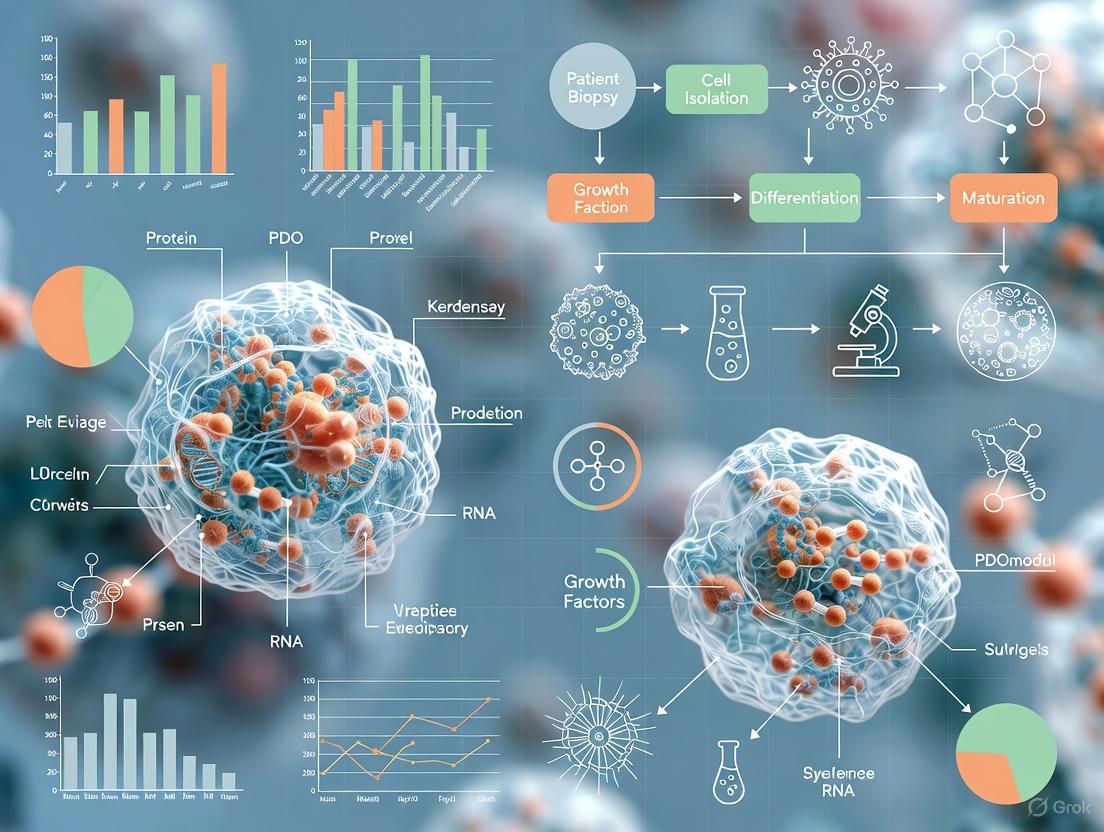
Patient-derived organoids (PDOs) have emerged as transformative three-dimensional models that faithfully recapitulate the histological, genetic, and functional heterogeneity of parental tumors.
Patient-Derived Organoids: Revolutionizing Precision Oncology from Basic Research to Clinical Applications
Abstract
Patient-derived organoids (PDOs) have emerged as transformative three-dimensional models that faithfully recapitulate the histological, genetic, and functional heterogeneity of parental tumors. This comprehensive review explores the foundational principles of PDO biobanking, detailed methodological protocols for establishment and culture, and advanced applications in drug screening, therapy personalization, and immunotherapy research. We further address critical troubleshooting strategies for model optimization and provide rigorous validation data comparing PDO performance against traditional preclinical models. For researchers, scientists, and drug development professionals, this synthesis offers both practical guidance and a forward-looking perspective on how PDO technology is bridging the gap between basic cancer research and clinical translation in precision medicine.
The Rise of Living Biobanks: How PDOs Are Redefining Preclinical Cancer Research
Organoid technology represents a paradigm shift in biomedical research, offering unprecedented opportunities for disease modeling, drug development, and personalized medicine. This in-depth technical guide traces the historical trajectory of patient-derived organoid (PDO) models, from foundational discoveries to current revolutionary applications. We examine the core biological principles governing organoid development, detail standardized methodologies for PDO generation and characterization, and explore the integration of these advanced models into translational research pipelines. Within the context of a broader thesis on PDO research, this review synthesizes technological advancements with practical applications, providing researchers and drug development professionals with comprehensive frameworks for implementing organoid technology in preclinical studies. Our analysis highlights how PDOs have transformed traditional approaches to cancer research, infectious disease modeling, and therapeutic screening while addressing ongoing challenges in standardization and reproducibility.
The past decade has witnessed the emergence of patient-derived organoids (PDOs) as powerful three-dimensional (3D) in vitro models that closely recapitulate histological, genetic, and functional features of parental primary tissues [1]. This technology represents a groundbreaking tool for cancer research and precision medicine, addressing critical limitations of traditional two-dimensional (2D) cell cultures and animal models. Unlike conventional preclinical systems, PDOs preserve patient-specific genetic mutations, maintain tissue-specific architectural integrity, and exhibit physiologically relevant cell-cell and cell-matrix interactions [1] [2]. The development of living PDO biobanks has further accelerated biomedical discovery by providing platforms for drug screening, biomarker discovery, and functional genomics on an unprecedented scale [1].
The transformative potential of organoid technology lies in its capacity to bridge the gap between oversimplified 2D cultures and complex in vivo systems. As noted by Cedars-Sinai investigators, "You can make organoids of any organ and disease you want, from a patient's own cells, and you can make as many as you need. It's so much more efficient for drug trials and disease modeling. That's why there's such excitement around this technology" [3]. This efficiency has catalyzed a revolution across multiple research domains, from basic developmental biology to clinical treatment personalization.
Historical Foundations and Key Milestones
The conceptual and technical foundations of organoid technology were established through successive breakthroughs in stem cell biology and 3D culture systems. The historical trajectory of this field reveals how disparate lines of inquiry converged to enable the current revolution in human disease modeling.
Predecessor Models and Theoretical Frameworks
Prior to the development of modern organoid systems, researchers relied on experimental approaches that demonstrated the innate self-organization capacity of dissociated cells:
- 1960s-1980s: Developmental biology studies utilized cell dissociation and reaggregation experiments to investigate organogenesis, establishing fundamental principles of self-organization [4]
- Early 2000s: Embryoid bodies (multicellular aggregates derived from pluripotent stem cells) served as precursors to organoids, exhibiting characteristics similar to the inner cell mass at pre-gastrulation stages [5]
- Neural rosette formation: Adherent cultures of embryoid bodies generated polarized neural progenitor cell structures resembling the early neural tube, with preserved apical-basal polarity and NPC cleavage patterns [5]
These early models demonstrated that cells possess an intrinsic capacity to form specific cellular structures without external guidance, but lacked the complexity and tissue fidelity of modern organoids.
The Breakthrough: Intestinal Organoids and the Adult Stem Cell Revolution
The pivotal milestone in modern organoid technology occurred in 2009 when Sato and colleagues pioneered a controlled 3D ex vivo culture system utilizing rapidly proliferating Lgr5+ adult stem cells from mouse intestinal crypts [1]. By combining extracellular matrix components with specific growth factors, they successfully recreated healthy tissue niches that closely resembled in vivo conditions while retaining patient-specific characteristics [1]. This innovation led to the formation of "mini-intestines" featuring consistent villus-crypt structures and a full complement of specialized cell types.
The original intestinal organoid protocol was subsequently adapted for human intestinal organoids and extended to other Lgr5+ stem cell-containing organs, including colon, stomach, and liver [1]. Critically, researchers also developed methods for generating organoids from non-Lgr5+ stem cell populations, such as those of lung, pancreas, and endometrium, dramatically expanding the technological applicability [1].
Pluripotent Stem Cell-Derived Organoids and Brain Modeling
Parallel developments in pluripotent stem cell research enabled the generation of organoids from tissues lacking identifiable adult stem cells. The development of 3D culture methods for embryoid bodies to mimic developing mouse cortex [5] and human retinal tissue [5] established fundamental principles for neural organoid generation. A landmark protocol for cerebral organoid growth was established by implanting embryoid bodies in Matrigel matrix to assist tissue formation, combined with spinning bioreactor technology to enhance gas and nutrient exchange [5].
This cerebral organoid system recapitulated major features of the developing cortex, including apical-basal polarity, interkinetic nuclear migration, neural stem cell division modes, and neuronal migration patterns [5]. Particularly significant was the emergence of an enlarged outer subventricular zone (OSVZ), a basal proliferative zone prominent in primates but absent in mice, highlighting the unique capacity of organoids to model human-specific neurodevelopmental features.
The Patient-Derived Organoid Era and Biobanking
The most recent phase in the historical trajectory of organoid technology has been the widespread establishment of patient-derived organoid biobanks and their application to personalized medicine. Over the past decade, researchers and clinicians have created living tumor and paired healthy tissue-specific PDO biobanks that, when integrated with patient-specific clinical information, provide unprecedented repositories of physiologically relevant disease models [1]. These biobanks have enabled large-scale applications including multi-omic analyses, drug development and screening, disease modeling, and clinical implementation of precision medicine [1].
Table 1: Historical Milestones in Organoid Technology Development
| Year | Breakthrough | Significance | Reference |
|---|---|---|---|
| 2006 | Discovery of induced pluripotent stem cells (iPSCs) | Enabled generation of patient-specific pluripotent cells without embryonic sources | [2] |
| 2009 | First intestinal organoids from Lgr5+ adult stem cells | Established 3D culture system for adult stem cell-derived organoids | [1] |
| 2011 | Human intestinal organoids | Adapted technology for human tissue modeling | [1] |
| 2013 | Cerebral organoid protocol | Enabled modeling of human-specific brain development features | [5] |
| 2015 | First large-scale PDO biobanks | Created repositories for drug screening and personalized medicine | [1] |
| 2018 | Assembloid technologies | Enabled modeling of neural circuit formation through organoid fusion | [5] |
| 2020s | Microenvironment integration | Incorporation of immune cells, vasculature, and stromal components | [6] [4] |
Technical Foundations: Principles and Protocols
The successful implementation of organoid technology requires understanding of core biological principles and mastery of standardized methodological approaches. This section details the fundamental mechanisms governing organoid development and provides explicit protocols for PDO generation.
Biological Principles of Self-Organization
Organoid formation harnesses innate developmental programs through the orchestration of several key biological processes:
Self-Organization refers to the intrinsic, spontaneous capacity of cells to form specific cellular structures without external guidance. This process is driven by:
- Adhesion proteins that enable autonomous cell sorting and cluster formation
- Spatially restricted cell-fate decisions of progenitor cell daughters
- Tissue-scale tension generated by cell-cell adhesion and contractile cytoskeletons, contributing to tissue curvature and shape [5]
Stem Cell Hierarchy Recapitulation enables organoids to maintain the full spectrum of differentiated cell types and stem-cell hierarchy present in native tissues [1]. This preservation of cellular diversity is essential for physiological relevance.
Spatial and Chemical Gradients emerge within 3D organoid structures, creating physiological distributions of oxygen, nutrients, and growth factors that replicate organ-level processes like barrier development, secretion, and metabolic zonation [1].
Organoids can be derived from multiple stem cell sources, each with distinct advantages and applications:
Table 2: Stem Cell Sources for Organoid Generation
| Stem Cell Type | Origin | Advantages | Limitations | Common Applications | |
|---|---|---|---|---|---|
| Embryonic Stem Cells (ESCs) | Blastocyst inner cell mass | Pluripotency; robust differentiation potential | Ethical concerns; limited patient specificity | Developmental biology; disease modeling | [7] |
| Induced Pluripotent Stem Cells (iPSCs) | Reprogrammed somatic cells | Patient specificity; no ethical concerns; genetic manipulability | Variable reprogramming efficiency; epigenetic memory | Personalized disease modeling; drug screening | [2] [7] |
| Adult Stem Cells (ASCs) | Tissue-specific stem cells (e.g., Lgr5+ intestinal stem cells) | Maintain tissue identity; faster protocol | Limited expansion potential; tissue availability restricted | Cancer modeling; regenerative medicine | [1] [4] |
| Tissue-Derived Cells (TDCs) | Primary human tissues | Maintain original tissue characteristics; no reprogramming needed | Limited lifespan; restricted expansion | Patient-derived tumor models; infectious disease research | [7] |
Core Signaling Pathways in Organoid Development
The successful establishment and maintenance of organoids requires precise recapitulation of developmental signaling environments. Key pathways include:
Wnt/β-catenin Signaling: A critical pathway regulating cell fate determination, migration, polarity, neural patterning, and organogenesis during embryonic development [4]. Wnt activators like WNT3A, R-spondin-1 (RSPO1), or small molecule GSK3 inhibitors are essential components of many adult stem cell-derived organoid culture protocols [4].
EGF Signaling: Epidermal growth factor (EGF) pathway activation promotes cell proliferation and survival in numerous organoid systems, particularly in epithelial organoids [4].
BMP/TGF-β Signaling: Bone morphogenetic proteins (BMPs) and transforming growth factor-beta (TGF-β) pathways play context-dependent roles in organoid differentiation, often requiring precise inhibition or activation depending on the target tissue [4].
FGF Signaling: Fibroblast growth factors (FGFs) contribute to posterior endoderm patterning, hindgut and intestinal morphogenesis, differentiation, and growth [4]. The combined activity of WNT3A and FGF4 is required for hindgut differentiation in intestinal organoids [4].
Diagram 1: Signaling pathways in organoid development. Core pathways regulating key processes in organoid formation and maintenance.
Standardized Protocol for Patient-Derived Organoid Generation
Based on comprehensive analysis of established methodologies [8] [9], we present a standardized protocol for PDO generation:
Step 1: Sample Acquisition and Processing
- Obtain tumor samples through surgical or non-surgical methods (biopsy, bodily fluids)
- Remove non-epithelial tissue (muscle, fat) with surgical instruments
- Cut primary tumor tissues into 1-3 mm³ pieces
- Digest tissues using collagenase/hyaluronidase and TrypLE Express enzymes appropriate for tumor type
- For incubations <2 hours: agitate mixture every 10-15 minutes
- For overnight incubations: use shaker with 10µM ROCK inhibitor to improve growth efficiency
- Monitor digestion completion when clusters of 2-10 cells become visible
- Pass cell suspension through strainers (70µm/100µm) to isolate appropriately sized single cells or cell clusters [9]
Step 2: Extracellular Matrix Embedding and Plating
- Mix digested cells with extracellular matrix (ECM) hydrogel (Matrigel, BME, or Geltrex)
- Plate cell-ECM mixture in 98/48/24-well plates (10-20µL per drop)
- Invert plates to prevent cell settling and adhesion to well bottom
- Incubate at 37°C with 5% CO₂ for 15-30 minutes for ECM solidification
- Add pre-warmed organoid medium after solidification [9]
Step 3: Medium Formulation and Culture Maintenance
- Utilize tissue-specific medium formulations supplemented with essential growth factors:
- Change medium every 2-4 days depending on organoid type and density
- Passage organoids every 2-8 weeks using mechanical disruption or enzymatic digestion [9]
Step 4: Quality Control and Characterization
- Verify organoid morphology through brightfield microscopy
- Confirm tissue-specific markers via immunohistochemistry
- Validate genomic stability through whole genome/exome sequencing
- Assess functional characteristics relevant to tissue of origin [10]
Diagram 2: PDO generation workflow. Key steps in establishing patient-derived organoid cultures.
The Scientist's Toolkit: Essential Research Reagents and Materials
Successful implementation of organoid technology requires specific reagents and materials optimized for 3D culture systems. The following table details essential components for PDO research:
Table 3: Essential Research Reagents for Organoid Technology
| Reagent Category | Specific Examples | Function | Application Notes |
|---|---|---|---|
| Extracellular Matrices | Matrigel, BME, Geltrex, synthetic hydrogels | Provide 3D structural support; regulate biochemical signaling | Matrigel remains "gold standard"; batch variability concerns [6] [9] |
| Stem Cell Maintenance Factors | ROCK inhibitor (Y-27632), TGF-β inhibitors | Enhance stem cell survival; prevent differentiation | Critical during initial plating and passaging [9] |
| Wnt Pathway Activators | WNT3A, R-spondin 1, GSK3 inhibitors (CHIR99021) | Maintain stemness; promote proliferation | Essential for intestinal, gastric, hepatic organoids [4] |
| Growth Factors | EGF, FGF, HGF, Noggin, BMP4 | Regulate proliferation; patterning; differentiation | Tissue-specific combinations required [4] |
| Digestive Enzymes | Collagenase/hyaluronidase, TrypLE, Accutase | Tissue dissociation; organoid passaging | Concentration and timing vary by tissue type [9] |
| Characterization Tools | Immunostaining antibodies, RNA/DNA extraction kits | Quality assessment; validation | Confirm tissue-specific markers and genomic stability [10] |
Current Applications in Biomedical Research
PDO technology has revolutionized multiple domains of biomedical research through its unique capacity to model human physiology and disease with high fidelity.
Cancer Research and Drug Development
In oncology, PDOs have become indispensable tools for drug screening and personalized therapy:
Drug Response Prediction: Multiple studies have demonstrated that PDOs preserve patient-specific drug responses, enabling prediction of clinical outcomes. For example, colorectal cancer PDOs have shown 88% sensitivity, 100% specificity, and 93% positive predictive value for drug response prediction [1].
High-Throughput Screening: PDO biobanks enable medium-to-high throughput drug screening across diverse genetic backgrounds. The table below summarizes representative PDO biobanks for cancer research:
Table 4: Representative Patient-Derived Organoid Biobanks in Cancer Research
| Cancer Type | Sample Number | Country | Primary Applications | Reference |
|---|---|---|---|---|
| Colorectal | 55 tumor, 41 normal | Japan | Disease modeling; genomic characterization | [1] |
| Colorectal | 151 tumor | China | Drug response prediction | [1] |
| Breast | 168 tumor | Netherlands | Drug response prediction; subtype analysis | [1] |
| Pancreatic | 31 tumor | Switzerland | Disease modeling; high-throughput screening | [1] |
| Ovarian | 76 tumor | United Kingdom | Disease modeling; drug response prediction | [1] |
| Multi-cancer | 110 metastatic | United Kingdom | High-throughput screening (in vitro/in vivo) | [1] |
Tumor Microenvironment Modeling: Advanced PDO systems now incorporate immune cells, cancer-associated fibroblasts, and other stromal components to better model tumor-immune interactions and therapy responses [6] [4]. Co-culture systems combining organoids with autologous immune cells enable evaluation of immunotherapies including CAR-T cells and immune checkpoint inhibitors [6].
Infectious Disease Modeling
Organoids have transformed infectious disease research by providing human-specific models of pathogen-host interactions:
SARS-CoV-2 Research: During the COVID-19 pandemic, lung and intestinal organoids provided critical insights into viral tropism, replication mechanisms, and epithelial responses to infection [7].
Host-Pathogen Interactions: Organoids enable study of infection mechanisms for diverse pathogens including bacteria (Helicobacter pylori), viruses (Zika, norovirus), and parasites [7].
Antiviral Screening: Organoid-based platforms facilitate medium-throughput screening of antiviral compounds in physiologically relevant human tissue contexts [7].
Neurological Disease Modeling
Brain organoids have created unprecedented opportunities to study human-specific neurodevelopmental processes and disorders:
Neurodevelopmental Disorders: Cerebral organoids model microcephaly, autism spectrum disorders, and other neurodevelopmental conditions with human-specific features [5] [10].
Neurodegenerative Diseases: Organoid systems now incorporate features of Alzheimer's disease, Parkinson's disease, and ALS through patient-derived iPSCs or genetic engineering [5].
Circuit Formation Analysis: Assembloid technologies fuse region-specific brain organoids to model neuronal migration and circuit formation between brain areas [5].
Technical Challenges and Methodological Innovations
Despite substantial progress, organoid technology faces several technical challenges that drive ongoing methodological innovation.
Standardization and Reproducibility
Significant heterogeneity exists in organoid development, even within identical culture conditions [10]. Recent approaches to address this include:
Quality Control Metrics: Systematic analysis has identified Feret diameter (maximal caliper diameter) as a reliable single parameter characterizing brain organoid quality, with a threshold of 3050µm distinguishing high-quality organoids (94.4% PPV, 69.4% NPV) [10].
Mesenchymal Cell Content: Transcriptomic analysis reveals that high-quality brain organoids consistently display lower presence of mesenchymal cells, which negatively correlate with neural differentiation [10].
Automated Imaging and Analysis: Machine learning-empowered image cytometry platforms enable high-throughput analysis of organoid parameters (quantity, size, shape) within complex co-cultures [6].
Tumor Microenvironment Recapitulation
Traditional PDO cultures primarily contain epithelial components, limiting their utility for studying tumor-stroma interactions. Innovative solutions include:
Decellularized ECM (dECM) Scaffolds: dECM from tissues provides tissue-specific matrix compositions that better replicate native microenvironmental niches [4].
Immune Cell Co-culture Systems: Incorporation of autologous immune cells enables modeling of tumor-immune interactions and immunotherapy evaluation [6].
Microfluidic Organ-on-Chip Platforms: Integration of organoids with microfluidic systems enables precise control over microenvironmental conditions and incorporation of vascular perfusion [2].
Maturation and Complexity
Many organoid systems exhibit fetal-like characteristics and lack full functional maturation. Advanced approaches to enhance maturity include:
Extended Culture Duration: Prolonged culture (up to 1+ years) promotes maturation of neuronal networks and glial cell populations in brain organoids [5].
Transplantation In Vivo: Engraftment of organoids into animal models enhances vascularization and maturation through exposure to systemic factors [7].
Morphogen Screening: Systematic testing of patterning factors improves regional specification and cellular diversity [7].
Future Perspectives and Concluding Remarks
The historical trajectory of organoid technology reveals a rapid evolution from basic discovery to transformative research tool. As we look toward future developments, several key areas will likely shape the next chapter of this revolution:
Standardization and Biobanking: International efforts to standardize protocols and establish large-scale PDO biobanks will enhance reproducibility and accessibility [1]. The development of quantitative quality metrics will be essential for rigorous experimental design [10].
Clinical Translation: PDOs are increasingly being integrated into clinical decision-making, particularly in oncology for therapy selection and response prediction [1] [2]. Prospective clinical trials validating PDO-based treatment guidance are currently underway.
Multi-system Integration: Future directions include linking multiple organoid systems to model inter-organ interactions and systemic drug responses, moving toward "human-on-a-chip" platforms [2].
Microenvironment Engineering: Advanced bioengineering approaches using synthetic matrices, vascularization strategies, and stromal component incorporation will enhance physiological relevance [4].
In conclusion, organoid technology has progressed from a specialized laboratory technique to a cornerstone of modern biomedical research. By providing experimentally tractable yet physiologically relevant human models, PDOs have bridged the longstanding gap between traditional preclinical models and clinical application. As methodology continues to advance, these remarkable "mini-organs" will undoubtedly play an increasingly central role in unraveling disease mechanisms, accelerating drug development, and realizing the promise of personalized medicine.
Patient-derived organoids (PDOs) represent a transformative advancement in preclinical cancer research, bridging the critical gap between traditional two-dimensional (2D) cell cultures and in vivo models. These self-organizing three-dimensional (3D) structures derived from patient tumors faithfully retain the histological and genetic complexity of their tissue of origin. This technical review examines the core principles underlying the superiority of PDOs over conventional 2D models, focusing on their enhanced physiological relevance, preservation of tumor heterogeneity, and applications in drug discovery and personalized medicine. By providing a more accurate representation of the tumor microenvironment and patient-specific responses to therapeutics, PDO platforms have emerged as indispensable tools for accelerating translational oncology research and clinical decision-making.
For decades, cancer research has relied heavily on two-dimensional (2D) cell cultures and animal models for preclinical studies. While these systems have contributed valuable insights into cancer biology, they present significant limitations in predicting clinical outcomes. Traditional 2D cell cultures, where cells grow as monolayers on plastic surfaces, cannot replicate the complex architecture and microenvironment of in vivo solid tumors [11]. This oversimplified model fails to capture critical cell-cell and cell-matrix interactions that influence tumor behavior, drug penetration, and therapeutic resistance [12].
The disconnect between conventional models and human pathophysiology is evidenced by the high failure rate of anticancer drugs in clinical trials. Despite promising results in 2D culture systems, approximately 90% of cancer-targeting drugs fail to pass clinical trials and gain regulatory approval [12]. This stark statistic underscores the urgent need for more physiologically relevant models that can better predict patient responses.
Patient-derived organoids have emerged as a groundbreaking technology that addresses these limitations. PDOs are 3D multicellular structures derived directly from patient tumor samples that self-organize to recapitulate key aspects of the original tissue architecture and function [13]. Since the pioneering work of Sato et al. in 2009 establishing intestinal organoid cultures, the PDO platform has been extended to numerous cancer types, generating powerful new tools for both basic research and clinical applications [1].
Fundamental Differences Between PDOs and 2D Models
Architectural and Physiological Complexity
The most fundamental distinction between PDOs and traditional 2D models lies in their structural organization, which profoundly influences cellular behavior and function.
Table 1: Architectural and Microenvironmental Differences Between 2D and PDO Models
| Feature | Traditional 2D Models | PDO 3D Models |
|---|---|---|
| Spatial Organization | Monolayer, flat geometry | Three-dimensional, tissue-like structure |
| Cell-Cell Interactions | Limited to peripheral contacts | Omnidirectional, mimicking in vivo cell networks |
| Cell-Matrix Interactions | Uniform, synthetic substrate | Natural, basal membrane-like environment |
| Proliferation Gradient | Homogeneous proliferation | Heterogeneous (proliferative outer layer to quiescent core) |
| Metabolic Gradients | Uniform nutrient and gas exchange | Physiological gradients of oxygen, nutrients, pH |
| Gene Expression Profiles | Artificial, adaptation to plastic | Physiological, resembling original tumor tissue |
PDOs replicate the intricate architecture of human tumors in a way that 2D systems cannot. Unlike the uniform monolayer of 2D cultures, PDOs develop distinct organizational patterns that mirror the original tissue, including polarized structures and specialized regions [13]. This 3D architecture enables the formation of physiological gradients—including oxygen, nutrients, and metabolic waste products—that create microenvironments similar to those found in actual tumors [11]. These gradients influence critical cancer phenotypes such as metabolic adaptation, quiescence, and the emergence of treatment-resistant cell populations.
The extracellular matrix (ECM) interactions differ substantially between models. While 2D cultures grow on rigid plastic surfaces, PDOs are typically embedded in a 3D matrix (such as Matrigel) that more closely mimics the natural basal membrane environment [14]. This allows for more physiologically relevant cell-matrix signaling that directly impacts cell survival, proliferation, and differentiation [11].
Diagram 1: Architectural differences between 2D and PDO models showing the development of physiological gradients in 3D structures.
Tumor Microenvironment and Cellular Heterogeneity
PDOs excel at preserving the cellular heterogeneity and elements of the tumor microenvironment (TME) found in original patient tumors, a critical feature largely lost in traditional 2D cultures.
Cellular Diversity: While 2D cultures often select for the most rapidly proliferating cell subtypes, PDOs maintain the diverse cellular composition of the original tumor, including cancer stem cells (CSCs), differentiated cancer cells, and sometimes stromal elements [13]. This preservation of cellular heterogeneity is crucial for studying tumor evolution and drug resistance mechanisms.
Stem Cell Hierarchy: PDO cultures preserve the stem-cell hierarchy and self-renewal capabilities of the parent tissue, allowing for long-term expansion while maintaining differentiation potential [1]. This is particularly valuable for studying cancer stem cells, which are often responsible for tumor recurrence and metastasis.
TME Reconstruction: Advanced co-culture systems now enable the incorporation of various TME components into PDO models, including cancer-associated fibroblasts (CAFs), immune cells, and endothelial cells [15]. These sophisticated setups allow researchers to study tumor-stroma interactions and immunotherapy responses in ways previously impossible with 2D systems.
The preservation of heterogeneity in PDOs extends beyond cellular composition to genetic and functional diversity. Genomic analyses have confirmed that PDOs maintain the mutational spectrum and transcriptomic profiles of their parent tumors through multiple passages, providing stable models that faithfully represent the original cancer [13].
Technical Advantages of PDO Platforms
Genetic and Molecular Fidelity
A cornerstone of PDO utility is their exceptional capacity to preserve the genetic and molecular characteristics of original patient tumors, far surpassing what is possible with traditional 2D cell lines.
Table 2: Molecular Fidelity Comparison Between 2D Cultures and PDOs
| Molecular Feature | 2D Culture Performance | PDO Performance | Clinical Significance |
|---|---|---|---|
| Mutational Profile | Drifts with passage; selective pressure | Maintains original tumor mutations long-term | Accurate representation of therapeutic targets |
| Gene Expression | Artificial adaptation to plastic | Closely matches original tumor transcriptome | Better prediction of drug response pathways |
| Histological Architecture | Lost in monolayer | Preserved tissue organization and polarity | Maintenance of tissue-specific functions |
| Cellular Heterogeneity | Reduced to dominant clones | Retains original tumor heterogeneity | Models clonal evolution and drug resistance |
| Drug Response Genes | Altered expression patterns | Maintains physiological expression levels | More accurate drug sensitivity prediction |
Multiple studies have validated the genetic stability of PDOs through comprehensive genomic analyses. For example, Vlachogiannis et al. demonstrated that PDOs derived from metastatic gastrointestinal cancers maintained the mutational spectrum and gene expression profiles of the original tumors [13]. This fidelity extends beyond single-point mutations to include copy number variations, structural variants, and transcriptional subtypes that define cancer heterogeneity.
The functional consequences of this genetic fidelity are profound. Drug sensitivity testing in PDOs has shown remarkable correlation with patient responses in clinical settings. One landmark study reported that PDOs could predict patient responses to anticancer drugs with 88% accuracy for sensitivity and 100% accuracy for resistance [13]. This predictive power represents a significant advancement over traditional 2D models, which often show poor clinical correlation.
Experimental Versatility and High-Throughput Capability
PDO platforms offer unprecedented experimental flexibility while maintaining physiological relevance:
High-Throughput Screening: PDOs are amenable to automation and standardization, enabling large-scale drug screening campaigns that would be prohibitively expensive or time-consuming with animal models [12]. This scalability makes them ideal for drug discovery applications.
Biobanking Applications: Living PDO biobanks encompassing diverse cancer types and patient populations have been established globally, providing invaluable resources for both basic and translational research [1]. These repositories capture the molecular diversity of human cancers, enabling researchers to study rare subtypes and population-specific differences.
Genetic Manipulation: Like traditional cell lines, PDOs are amenable to genetic engineering using CRISPR/Cas9 and other gene-editing technologies [13]. This allows for functional studies of specific mutations, gene function analysis, and the development of engineered models for mechanistic research.
Multi-omic Integration: PDOs provide sufficient biological material for comprehensive molecular profiling, including genomics, transcriptomics, proteomics, and metabolomics [1]. This enables systems-level approaches to understanding drug mechanisms and resistance pathways.
The experimental workflow for establishing and utilizing PDOs in drug screening applications involves several critical steps that ensure reliability and reproducibility:
Diagram 2: Standardized workflow for establishing PDOs and conducting drug screening assays.
Methodological Protocols for PDO Establishment and Drug Screening
Core PDO Culture Methodology
The successful establishment of PDO cultures requires careful attention to several technical components:
Sample Processing and Initiation
- Fresh tumor tissue is collected and transported in cold preservation medium
- Samples are minced into fragments (<1 mm³) and digested with collagenase or other tissue-specific enzymes
- Dissociated cells or small tissue fragments are embedded in ECM matrix (typically Matrigel)
- Matrix droplets are polymerized and overlaid with tissue-specific culture medium
Culture Medium Composition The culture medium is a critical factor in successful PDO establishment and must be tailored to specific cancer types:
- Base Medium: Advanced DMEM/F12 is commonly used as a foundation
- Growth Factors: Combinations include EGF, Noggin, R-spondin, FGF10, and Wnt3a depending on tissue origin
- Supplements: N-acetylcysteine, B27, and N2 supplements support growth and reduce oxidative stress
- Tissue-Specific Factors: Specialized factors such as neuregulin for breast cancer or β-estradiol for ovarian cancer [16]
Quality Control Assessment Rigorous QC is essential to verify that PDOs faithfully represent original tumors:
- Histopathological comparison using H&E staining and immunohistochemistry
- Genomic validation through whole-exome or whole-genome sequencing
- RNA sequencing to confirm transcriptomic fidelity
- Functional assays to confirm tissue-specific characteristics
Drug Screening Protocols
Standardized protocols for PDO-based drug screening have been developed to ensure reproducibility and clinical relevance:
Experimental Setup
- PDOs are dissociated into single cells or small fragments and seeded in 384-well plates
- Drugs are applied in concentration gradients (typically 8-12 points) with appropriate controls
- Treatment duration varies from 2-14 days depending on the cancer type and agent
- Multiple technical and biological replicates are included for statistical rigor
Endpoint Measurements
- Cell Viability: ATP-based luminescence assays (CellTiter-Glo)
- Morphological Analysis: High-content imaging to assess structural changes
- Metabolic Readouts: Optical metabolic imaging (OMI) to measure treatment effects
- Apoptosis Markers: Caspase activation and other cell death indicators
Data Analysis
- Dose-response curves are generated and parameters calculated (IC50, AUC, GR values)
- Response thresholds are established based on clinical correlation studies
- Growth rate inhibition metrics (GR) account for proliferation differences between models [16]
Essential Research Reagents for PDO Research
Table 3: Key Reagent Solutions for PDO Establishment and Culture
| Reagent Category | Specific Examples | Function | Application Notes |
|---|---|---|---|
| ECM Substitutes | Matrigel, Collagen I, Synthetic PEG hydrogels | Provides 3D structural support mimicking basal membrane | Matrix composition affects organoid morphology and gene expression |
| Digestive Enzymes | Collagenase, Dispase, Trypsin-EDTA | Dissociates tissue into single cells or small clusters | Enzyme selection and duration critical for viability |
| Growth Factors | EGF, FGF, R-spondin, Noggin, Wnt3a | Supports stem cell maintenance and proliferation | Combinations must be optimized for each cancer type |
| Medium Supplements | B27, N2, N-acetylcysteine | Provides essential nutrients and reduces oxidative stress | Serum-free formulations prevent differentiation |
| Cryopreservation Media | DMSO-containing solutions with specific proteins | Enables long-term biobanking of PDO lines | Standardized protocols ensure high post-thaw viability |
Clinical Validation and Translational Applications
Predictive Value for Patient Treatment Response
The most compelling evidence for PDO superiority comes from clinical studies demonstrating their predictive value for patient treatment outcomes:
A pooled analysis of 17 studies examining PDOs as predictive biomarkers found that drug sensitivity testing in PDOs could accurately forecast clinical responses in patients [16]. Five of these studies reported statistically significant correlations between PDO drug screen results and patient outcomes, while 11 additional studies showed strong trends toward correlation.
Notable examples include:
- Colorectal Cancer: The TUMOROID and CinClare trials demonstrated that PDO responses to irinotecan-based regimens predicted clinical responses in metastatic colorectal cancer patients [16].
- Gastrointestinal Cancers: A landmark study showed that PDOs predicted patient responses with 88% sensitivity and 100% specificity for certain agents [13].
- Breast Cancer: PDOs derived from various breast cancer subtypes have shown differential responses to targeted therapies that correspond to clinical observations [1].
The predictive performance of PDOs represents a significant improvement over traditional 2D models. Whereas 2D cultures often show poor correlation with clinical responses due to their simplified nature and genetic drift, PDOs maintain the critical heterogeneity and microenvironmental context that determine treatment outcomes.
Applications in Personalized Medicine and Drug Development
PDO platforms have enabled several innovative applications in both clinical decision-making and pharmaceutical development:
Personalized Therapy Selection
- PDOs can be established from patient biopsies and used to test multiple therapeutic options ex vivo
- Results can guide treatment selection before administration to patients, potentially avoiding ineffective therapies and reducing side effects
- The typical timeline of 2-8 weeks for PDO establishment and drug testing fits within the window for treatment decisions in many cancer types [12]
Preclinical Drug Discovery
- Pharmaceutical companies increasingly utilize PDO platforms for target validation and compound screening
- PDO biobanks representing diverse patient populations help identify biomarkers of response and resistance
- The ability to conduct high-throughput screens with physiologically relevant models accelerates lead optimization
Radiation and Immunotherapy Applications
- Recent advances have extended PDO applications to radiation sensitivity testing and immunotherapy response prediction
- Co-culture systems incorporating immune cells enable evaluation of checkpoint inhibitors and other immunotherapies
- These applications address previously inaccessible dimensions of cancer treatment using traditional models
Current Challenges and Future Directions
Despite their considerable advantages, PDO technologies face several challenges that represent opportunities for further development:
Technical Limitations
- Standardization of culture conditions across laboratories remains challenging
- Incorporation of complete tumor microenvironment components (vasculature, immune cells) requires ongoing optimization
- Matrigel and other animal-derived matrices introduce batch variability and limit clinical translation
Methodological Advancements Future improvements in PDO technology focus on:
- Development of defined, synthetic matrices to replace biological extracts
- Microfluidic and organ-on-chip platforms to enable more complex microenvironmental control
- Automated imaging and analysis systems for high-content screening applications
- Integration with multi-omic technologies for comprehensive molecular profiling
Clinical Implementation Barriers Wider adoption of PDOs in clinical practice requires:
- Validation in prospective clinical trials demonstrating utility in improving patient outcomes
- Reduction in establishment time to fit within clinical decision windows
- Cost reduction and process standardization to enable accessibility across healthcare settings
- Development of regulatory frameworks for clinical utilization
Patient-derived organoids represent a paradigm shift in preclinical cancer modeling, offering unprecedented fidelity to original tumors while maintaining experimental tractability. Their superiority over traditional 2D models stems from their capacity to preserve tumor architecture, cellular heterogeneity, genetic profiles, and microenvironmental context. As the technology continues to evolve, PDO platforms are poised to accelerate drug discovery, enable personalized therapy selection, and fundamentally improve our understanding of cancer biology. While challenges remain in standardization and clinical implementation, the core principles underlying PDO superiority establish them as indispensable tools in modern cancer research and precision medicine.
The inherent heterogeneity of tumors—encompassing genetic, epigenetic, and phenotypic diversity—represents a fundamental challenge in oncology, significantly impacting treatment response and the emergence of resistance [17]. This heterogeneity manifests spatially (both between and within lesions) and temporally (through clonal evolution), making it difficult to capture a complete molecular portrait of a patient's cancer through a single diagnostic snapshot [17]. Patient-derived organoid (PDO) biobanks have emerged as a transformative platform to address this complexity. These living repositories consist of three-dimensional cell culture models derived directly from patient tumor samples, which faithfully recapitulate the histological and molecular characteristics of their parental tissue [1] [18]. By preserving this heterogeneity in vitro, PDO biobanks provide an invaluable resource for basic research, drug development, and the advancement of personalized medicine, enabling the study of tumor biology and therapeutic response on a scalable, patient-specific basis [1] [19].
Global Landscape of Patient-Derived Organoid Biobanks
International efforts have led to the establishment of numerous PDO biobanks, capturing a wide spectrum of cancer types and populations. These initiatives range from comprehensive, multi-cancer collections to specialized repositories focused on specific malignancies.
Table 1: Select Global Patient-Derived Tumor Organoid (PDTO) Biobanks
| Cancer Type/ Focus | Institution/Initiative | Country | Key Details | References |
|---|---|---|---|---|
| Comprehensive | Hubrecht Institute, UMC Utrecht, Royal Netherlands Academy | Netherlands | One of the most comprehensive; >1000 organoids from various organs (e.g., breast, colon, pancreas, lung). | [19] |
| Colorectal Cancer (CRC) | Hans Clevers' Team | Netherlands | 22 CRC organoids; 90% success rate; >80% post-resuscitation survival. | [19] |
| Metastatic GI Cancers | Vlachogiannis et al. | UK | 110 tissues from 71 patients with metastatic colorectal/gastroesophageal cancer. | [19] |
| Head and Neck Cancer (HNC) | Rajiv Gandhi Cancer Institute (RGCIRC) | India | 1,300 donors; 13,000 biosample aliquots; focus on advanced-stage cancers. | [20] |
| Nasopharyngeal Carcinoma | Wang et al. | - | 39 organoids from primary/recurrent cases; preserved Epstein-Barr virus. | [19] |
| Gastric Cancer | Yan et al. | China | Biobank from 34 patients; includes normal, dysplastic, tumor, and metastatic tissues. | [19] |
| Pancreatic Cancer & Precursors | Beato et al. | - | Includes Intraductal Papillary Mucinous Neoplasm (IPMN) organoids. | [19] |
| Glioblastoma (GBM) | Jacob et al. | - | Culture method from fresh brain tissue without single-cell dissociation. | [19] |
| Low-Grade Glioma | Abdullah et al. | - | Preserved molecular/histological features and diverse cellular environment. | [19] |
The distribution of these biobanks reflects both scientific priorities and technical maturity. The Netherlands, the United States, and China are prominent contributors, with colorectal, pancreatic, breast, and glioma cancers being among the most commonly biobanked, indicative of the relative maturity of culture techniques for these malignancies [19]. A key trend is the creation of "paired organoid" biobanks, which include models derived from a patient's primary tumor and its matched metastasis or from tumor and adjacent healthy tissue, providing a powerful system for studying tumorigenesis and metastatic evolution [1] [19].
Core Methodologies for Biobanking Patient-Derived Organoids
The value of a PDO biobank is contingent upon the robustness and standardization of its methods, from sample acquisition and processing to long-term storage and quality control.
Sample Acquisition and Processing
The process begins with the collection of patient tissue, typically from surgical resections or biopsies. Adherence to stringent guidelines, such as those from the International Society for Biological and Environmental Repositories (ISBER) and the World Health Organization, is critical for maintaining sample integrity and minimizing pre-analytical variability [21] [20]. Key steps include:
- Informed Consent and Ethical Oversight: Ensuring donor consent and institutional review board approval, in compliance with national and international guidelines (e.g., Indian Council of Medical Research guidelines in the RGCIRC biobank) [20].
- Sample Collection and Anonymization: Tissue collection is performed 60-90 minutes post-surgery to minimize cold ischemia time. Samples are anonymized prior to storage using a unique identification system [20].
- Tissue Dissociation: Tumor tissue undergoes mechanical mincing followed by enzymatic digestion (e.g., using collagenase and DNase) to create a single-cell suspension or small aggregates [20] [18].
- Derivative Preparation: Biobanks often process multiple derivatives from a single donor. The RGCIRC biobank, for example, prepares fresh frozen tissue, dissociated tumor cells (DTCs), peripheral blood mononuclear cells (PBMCs), plasma, and serum from each patient, creating a multifaceted resource for research [20].
Table 2: Essential Research Reagent Solutions for PDO Biobanking
| Reagent/Category | Specific Examples | Function in PDO Workflow | |
|---|---|---|---|
| Extracellular Matrix (ECM) | Matrigel, Basement Membrane Extract (BME), synthetic PEG-based hydrogels | Provides a 3D scaffold for cell growth and self-organization; mimics the tumor microenvironment. | [18] |
| Dissociation Enzymes | Collagenase, DNase | Breaks down the extracellular matrix in tumor tissue to create single-cell suspensions or small aggregates for culture initiation. | [20] |
| Basal Media | DMEM/F12, Advanced DMEM/F12 | Serves as the nutrient foundation for culture media, supporting cell survival and proliferation. | [1] [20] |
| Critical Growth Factors | EGF, R-Spondin, Noggin, Wnt3a | Activates key signaling pathways (EGFR, Wnt) essential for stem cell maintenance and organoid growth. Note: Mutations (e.g., in Wnt pathway) can make some factors unnecessary. | [18] |
| Cryopreservation Medium | Controlled-rate freezing compounds (e.g., DMSO) | Protects cells from ice crystal formation damage during freezing for long-term storage in liquid nitrogen. | [20] |
Organoid Culture, Expansion, and Biobanking
The dissociated cells are embedded in an extracellular matrix (ECM) dome, most commonly Matrigel, and cultured in specialized, serum-free media supplemented with a precise cocktail of growth factors tailored to the tissue of origin [18]. The essential signaling pathways that must be activated for successful organoid culture are summarized in the diagram below.
Once established, organoids can be expanded through enzymatic or mechanical dissociation and re-seeding. For long-term biobanking, organoids are cryopreserved using controlled-rate freezing in liquid nitrogen, with reported post-resuscitation survival rates exceeding 80% [20] [19]. A robust Laboratory Information Management System (LIMS) is indispensable for tracking the vast inventory, managing associated clinical and molecular data, and ensuring sample traceability from procurement to disbursal for research projects [20].
PDO biobanks serve as a foundational platform for deploying advanced analytical techniques to deconstruct tumor heterogeneity at multiple levels.
Multi-Omic Characterization
Biobanked PDOs are amenable to a suite of genomic, transcriptomic, and proteomic analyses. Common validation steps include Whole Genome/Exome Sequencing (WGS/WES), RNA sequencing (RNA-seq), and histological analysis to confirm that organoids recapitulate the genetic landscape and tissue architecture of the original tumor [1]. For example, a multi-omics study on a biobank of 50 primary colon cancers and paired liver metastases confirmed that the organoids faithfully reflected the tumor's genetic and transcriptomic profiles [19]. This integrated approach helps identify key driver mutations, transcriptional subtypes, and cellular hierarchies within the heterogeneous tumor population.
Functional Interrogation through Drug Screening
A primary application of PDO biobanks is high-throughput drug screening. The workflow involves exposing biobanked organoids to libraries of therapeutic compounds (chemotherapies, targeted therapies, etc.) and measuring viability endpoints using assays like CellTiter-Glo [18]. The resulting dose-response data can reveal correlations between specific genetic variants and drug sensitivity or resistance. For instance, a colorectal cancer PDO biobank was used to identify 18 genetic signatures that predicted response to oxaliplatin, distinguishing sensitive and resistant patient populations [19]. This functional data transforms the biobank from a static collection into a dynamic predictor of clinical treatment outcomes.
Capturing Spatial and Temporal Heterogeneity
While tissue biopsies offer a limited snapshot, complementary technologies like liquid biopsy (LBx) can provide a more comprehensive view of spatial heterogeneity. One study compared genetic profiles from 56 post-mortem tissue samples with pre-mortem liquid biopsies, finding that LBx detected a substantial proportion (33-92%) of the variants found across all metastatic lesions [17]. However, some tissue-specific and LBx-exclusive variants were also identified, underscoring the value of combining PDO models with LBx for a more complete genetic profile [17]. Furthermore, longitudinal collection and biobanking of PDOs from a patient over the course of therapy can capture the temporal evolution of their disease and the emergence of resistance, offering insights into clonal dynamics [18].
Challenges, Standards, and Future Directions
Despite their promise, PDO biobanks face several technical and operational challenges. The success rate of culture establishment is not universal, and some cancer types remain difficult to grow. The lack of a fully represented tumor microenvironment (TME), particularly functional immune and stromal components, in standard PDO cultures is a significant limitation [18]. Co-culture systems, such as air-liquid interface (ALI) cultures that retain native stromal and immune cells, are being developed to address this gap [18].
Standardization is another major hurdle. To ensure reproducibility and data comparability across global initiatives, the field is moving towards adopting best practices. The ISBER Best Practices provides a definitive global guide for managing biorepositories, covering collection, storage, retrieval, and distribution of specimens [21]. Initiatives like the International Stem Cell Biobanking Initiative (ISCBI) are also working towards standardizing practices, for instance, by developing frameworks for the accurate genetic assignment of human pluripotent stem cell lines, which has implications for PDO biobanking [22].
Future directions for the field, as highlighted in recent forums like AACR 2025, include:
- Integration of Artificial Intelligence (AI): Using AI to interpret the complex, multi-omic data generated from biobanks to identify novel biomarkers and predict drug responses [23].
- Enhancing Diversity and Equity: Deliberately building biobanks that include samples from underrepresented populations to mitigate health disparities and ensure the broad applicability of research findings [23].
- Operational Resilience: Implementing secure, scalable, and regulatory-compliant infrastructure to protect long-term research investments, especially in the face of funding instability [23].
Global biobanking initiatives for patient-derived organoids are at the forefront of the battle against tumor heterogeneity. By providing scalable, physiologically relevant models that mirror the genetic and phenotypic diversity of human cancers, these repositories have become indispensable tools for advancing our understanding of cancer biology and accelerating the development of personalized therapies. As methodologies mature and international collaboration strengthens through standardization, PDO biobanks are poised to fully realize their potential, ultimately bridging the gap between laboratory discovery and clinical application to improve outcomes for cancer patients worldwide.
Patient-derived organoids (PDOs) have emerged as transformative tools in precision oncology, offering unprecedented capability to model individual patient tumors. The value of these bio-models hinges critically on their ability to maintain the genomic and histological fidelity of the original tumor tissue through successive culture passages. This technical review examines the fundamental principles and methodologies for preserving patient-specific characteristics in PDO development, drawing upon current advances across renal, colorectal, and breast cancer applications. We detail standardized protocols for tissue processing, culture optimization, and validation frameworks that ensure PDOs retain parent tumor morphology, genetic alterations, and heterogeneity. The strategic preservation of these features positions PDOs as clinically actionable platforms for drug screening, therapy personalization, and translational cancer research.
Patient-derived organoids are three-dimensional (3D) microtissues generated from patient tumor samples that self-organize to recapitulate architectural and functional aspects of the original malignancy [24]. Unlike traditional two-dimensional (2D) cultures that suffer from genetic drift and lost heterogeneity, PDOs maintain patient-specific genomic and histological characteristics when established under optimized conditions [25]. This fidelity enables clinically relevant modeling of therapeutic responses, resistance mechanisms, and tumor-immune interactions across cancer types including renal cell carcinoma (RCC), colorectal cancer, and breast cancer [25] [26] [27].
The preservation of native tumor attributes requires meticulous attention to tissue sourcing, processing methodologies, culture matrices, and molecular validation. This whitepaper provides a comprehensive technical framework for maintaining genomic and histological fidelity throughout the PDO lifecycle, with specific protocols and quality control measures tailored to the requirements of research scientists and drug development professionals.
Molecular Basis of Tumor Heterogeneity and Implications for PDO Fidelity
Cancer Subtype-Specific Molecular Features
The successful replication of patient-specific characteristics in PDOs requires understanding the distinct molecular backgrounds of different cancer subtypes, which directly impact organoid establishment efficiency and culture stability.
Table 1: Molecular Characteristics and Organoid Culture Considerations by Cancer Subtype
| Cancer Type | Characteristic Molecular Features | Organoid Culture Implications | Recommended Niche Factors |
|---|---|---|---|
| Clear Cell RCC (ccRCC) | VHL inactivation (≈80%), chromosome 3p loss, HIF signaling activation, PBRM1/SETD2/BAP1 mutations [25] | High establishment success; requires HIF pathway consideration; maintains metabolic features | EGF, Noggin, R-spondin [25] |
| Papillary RCC (pRCC) | MET activation, chromosomal gains (7, 17), CDKN2A deletions (type II) [25] | Moderate success; type II shows unstable growth; HGF dependence | Enhanced EGF, HGF supplementation [25] |
| Chromophobe RCC (chRCC) | Extensive chromosomal losses, TP53 mutations (30-35%), HNF1B deficiency, oxidative phosphorylation dependence [25] | Low proliferative capacity; culture instability; high failure rate | Antioxidants, metabolic support [25] |
| Colorectal SRCC | Autophagy pathway upregulation, high mucin content [26] | Retains histopathological features; models peritoneal metastasis | Standard intestinal organoid factors [26] |
| Breast Cancer (ER/PR/HER2+) | Subtype-specific receptor expression, fibroblast heterogeneity, cytokine secretion profiles [27] | Maintains cellular architecture and TME components; requires subtype-specific validation | ECM components, stromal co-cultures [27] |
The molecular heterogeneity outlined in Table 1 necessitates subtype-specific optimization of PDO culture conditions. For instance, the low establishment efficiency of chromophobe RCC organoids relates directly to its distinct molecular background, including TP53 mutations observed in 30-35% of cases that compromise genomic stability and disrupt cell cycle checkpoints [25]. Concurrent HNF1B deficiency further impairs expression of spindle assembly checkpoint components (MAD2L1, BUB1B) and cell cycle regulators (p27, RB1), contributing to chromosomal instability and defective mitotic progression [25]. Additionally, chRCC cells maintain high mitochondrial content and rely on oxidative phosphorylation, inducing chronic oxidative and ER stress that further compromises cellular viability under ex vivo conditions [25].
Technical Factors Influencing Fidelity Preservation
Multiple technical parameters significantly impact the success of preserving patient-specific characteristics in PDOs:
Tissue Viability: Necrotic tumor cores often lack viable epithelial progenitor cells, reducing regenerative capacity [25]. Mucinous or fibrotic histologies, frequently encountered in papillary and collecting duct RCC, further hinder matrix embedding and organoid initiation.
Dissociation Method Selection: The choice between mechanical and enzymatic dissociation significantly influences outcome; harsh mechanical dissociation may shear fragile tumor cells, while extended enzymatic digestion can degrade surface proteins necessary for self-organization [25].
Ischemia Time: Prolonged cold ischemia time during tissue processing compromises cell viability and organoid-forming potential [25]. Standardization of tissue handling remains critical for improving reproducibility across cancer subtypes.
Methodological Framework for Preserving Genomic and Histological Fidelity
Tissue Acquisition and Processing Protocol
Materials Required:
- Transport medium (e.g., cold Advanced DMEM/F12 with antibiotic-antimycotic)
- Sterile dissection instruments
- Digestion enzyme cocktail (Collagenase/Dispase based, concentration optimized for tissue type)
- Cell strainers (70μm, 100μm, 40μm sequential filtering)
- Geltrex or Matrigel for 3D embedding
- Complete organoid culture medium with subtype-specific growth factors
Step-by-Step Workflow:
- Sample Collection: Collect fresh tumor tissue from surgical resection or biopsy in cold transport medium, minimizing ischemia time (<1 hour optimal) [25] [27].
- Tissue Processing:
- Rinse tissue with cold PBS to remove blood contaminants
- Mince tissue into <1 mm³ fragments using sterile scalpels
- For enzymatic digestion, incubate fragments with appropriate enzyme cocktail (e.g., Collagenase IV 1-2 mg/mL + Dispase 1 mg/mL) at 37°C for 30-60 minutes with gentle agitation [27]
- Cell Isolation:
- Mechanically dissociate partially digested tissue by pipetting
- Filter cell suspension through sequential cell strainers (100μm → 70μm → 40μm)
- Centrifuge at 300-500 × g for 5 minutes
- Resuspend pellet in cold PBS and count viable cells using trypan blue exclusion
- 3D Embedding:
- Mix viable cell suspension with Geltrex/Matrigel on ice (200-500 cells/μL matrix)
- Plate 20-40 μL droplets in pre-warmed tissue culture plates
- Polymerize for 20-30 minutes at 37°C
- Overlay with appropriate complete organoid medium
The development of droplet-based microfluidic technology with temperature control enables generation of numerous small organoid spheres from minimal tumor tissue samples while preserving the tumor microenvironment (TME), facilitating drug response evaluations within 14 days [24].
Culture Medium Optimization for Different Cancer Types
Preservation of tumor characteristics requires carefully formulated culture media that maintain the original tumor's cellular composition while preventing overgrowth of non-malignant cells:
Table 2: Culture Medium Components for Maintaining Tumor Fidelity
| Component | Function | Concentration Range | Application Notes |
|---|---|---|---|
| Wnt-3A | Activates Wnt/β-catenin signaling; promotes stemness | 50-100 ng/mL | Essential for gastrointestinal cancers; use conditioned medium for some applications [24] |
| Noggin | BMP pathway inhibition; prevents differentiation | 50-100 ng/mL | Critical for maintaining undifferentiated state; particularly important for intestinal and renal cultures [25] [24] |
| R-spondin-1 | Potentiates Wnt signaling; niche factor | 250-500 ng/mL | Enhances epithelial growth; used in most epithelial-derived organoid systems [25] |
| EGF | Promoves proliferation and survival | 25-100 ng/mL | Dose varies by cancer type; higher concentrations (50-100 ng/mL) for pRCC [25] |
| HGF | MET receptor activation; scattering factor | 5-25 ng/mL | Particularly important for pRCC with MET activation; lower concentrations for other types [25] |
| B27 Supplement | Provides hormonal and lipid factors | 1X-2X | Serum-free replacement; enhances viability [24] |
| A83-01 | TGF-β receptor inhibitor; prevents fibroblast overgrowth | 0.5-1 μM | Critical for suppressing stromal expansion while maintaining tumor epithelium [24] |
| FGF-10 | Fibroblast growth factor signaling | 50-200 ng/mL | Branching morphogenesis in some cancer types (e.g., breast) [27] |
Medium optimization is essential to ensure the growth of tumor cells while preventing the overgrowth of non-tumor cells. Specific cytokines, such as Noggin and B27, are often added to inhibit fibroblast proliferation while promoting the expansion of tumor cells [24]. The exact culture conditions vary depending on the tumor type, requiring addition of multiple soluble factors to promote organoid growth while maintaining original tumor characteristics.
Extracellular Matrix Optimization
The extracellular matrix (ECM) provides not only physical support but also regulates cell behavior to maintain cell fate [24]. While Matrigel, extracted from Engelbreth-Holm-Swarm tumors, is widely used, it demonstrates significant batch-to-batch variability in mechanical and biochemical properties that affects experimental reproducibility [24]. Synthetic matrix materials, such as synthetic hydrogels and gelatin methacrylate (GelMA), provide consistent chemical compositions and physical properties for stable organoid growth [24]. By precisely regulating matrix stiffness and porosity, these synthetic materials improve organoid culture outcomes, enabling more stable simulation of in vivo environments.
Validation Frameworks for Genomic and Histological Fidelity
Histopathological Validation Protocols
Tissue Processing and Staining:
- Organoid Harvesting: Collect organoids from matrix using cold PBS or cell recovery solutions
- Fixation: Fix in 4% paraformaldehyde for 30-60 minutes at 4°C
- Processing: Embed in histogel or agarose for paraffin embedding; section at 4-5μm thickness
- Staining:
- Hematoxylin and Eosin (H&E) for basic architecture
- Periodic acid-Schiff (PAS) for mucin detection (particularly relevant for SRCC) [26]
- Immunohistochemistry (IHC) for lineage-specific markers
IHC Marker Panels for Validation:
- Breast Cancer: ER, PR, HER2, CD24 (luminal epithelial cells), CD20 (B cells), CD45 (leukocytes), CD73/90/105 (mesenchymal stem cells), CD34/105 (vascular endothelial cells), E-cadherin (EMT), Fibronectin/Collagen/Laminin (fibroblasts) [27]
- RCC: PAX8, CA-IX, CD10, Vimentin [25]
- Colorectal SRCC: Cytokeratin 7/20, MUC2, CDX2 [26]
The research evaluates the ability of PDOs to recapitulate the histopathological characteristics of the original breast tumor, including cellular architecture, tissue organization, and phenotypic heterogeneity [27]. In colorectal SRCC, PDO and patient-derived xenograft (PDX) models exhibited histopathologic features consistent with the original tumors, including high mucin content and eccentric nuclei [26].
Genomic and Molecular Validation Techniques
DNA Sequencing:
- Whole exome or targeted sequencing of original tumor and matched PDOs
- Comparison of somatic mutations, copy number variations, and structural variants
- Focus on driver mutations and truncal alterations present in original tissue
RNA Sequencing:
- Bulk RNA-seq for transcriptional profiling
- Single-cell RNA sequencing to resolve cellular heterogeneity
- Pathway analysis to confirm maintenance of signaling programs (e.g., HIF signaling in ccRCC) [25]
Additional Molecular Analyses:
- Oxidative stress biomarkers and secretome analysis patterns to identify release patterns of pro-inflammatory growth cytokines produced by endothelial and cancer stem cells [27]
- Autophagy gene expression profiling (particularly relevant for SRCC) [26]
The workflow diagram below illustrates the complete process from tissue acquisition through validation of patient-derived organoids:
Functional Validation Assays
Drug Sensitivity Testing:
- Establish dose-response curves for standard-of-care agents
- Compare IC50 values between PDOs and clinical response when available
- Assess combination therapies (e.g., FOLFIRI with paclitaxel/vincristine in SRCC) [26]
Tumor Microenvironment Reconstruction:
- Innate immune microenvironment models: Tumor tissue-derived organoids that retain functional tumor-infiltrating lymphocytes (TILs) and replicate PD-1/PD-L1 immune checkpoint function [24]
- Immune reconstitution models: Co-culture of tumor organoids with autologous immune cells to study tumor-immune interactions [24]
Essential Research Reagent Solutions
Table 3: Key Research Reagents for Maintaining PDO Fidelity
| Reagent Category | Specific Products | Function in PDO Culture | Considerations for Fidelity |
|---|---|---|---|
| Basal Media | Advanced DMEM/F-12, RPMI-1640 | Nutrient foundation | Serum-free formulations prevent undefined differentiation |
| Digestion Enzymes | Collagenase IV, Dispase, Trypsin-EDTA | Tissue dissociation | Enzyme concentration and timing critical for viability |
| ECM Matrices | Geltrex, Matrigel, Synthetic hydrogels | 3D structural support | Batch variability concerns; synthetic alternatives improve reproducibility |
| Growth Factors | Recombinant EGF, Noggin, R-spondin, FGF, HGF | Stem cell maintenance and proliferation | Subtype-specific combinations essential for preserving original characteristics |
| Supplements | B-27, N-2, N-Acetylcysteine | Antioxidant and hormonal support | Enhances viability while maintaining genomic stability |
| Signaling Inhibitors | A83-01 (TGF-βi), Y-27632 (ROCKi) | Prevents anoikis and differentiation | Temporary use only in initial establishment phase |
| Cryopreservation Media | CryoStor CS10, Bambanker | Long-term storage of PDO biobanks | Maintain viability and differentiation capacity post-thaw |
The preservation of patient-specific genomic and histological characteristics in PDOs requires integrated optimization across tissue handling, culture conditions, and validation frameworks. Successful implementation of the protocols outlined in this technical review enables generation of organoid models that faithfully maintain parent tumor morphology, genetic profiles, and functional behaviors. As these technologies continue evolving with advances in synthetic matrices, microfluidic systems, and multi-omics integration, PDO fidelity will further strengthen their role as predictive preclinical platforms for drug development and personalized therapy guidance across diverse cancer types.
Within the rapidly advancing field of patient-derived organoid (PDO) research, Lgr5+ stem cells have emerged as a foundational element for generating physiologically relevant in vitro models. The discovery that a single Lgr5+ intestinal stem cell can self-organize to form a full, ever-expanding organoid marked a paradigm shift in preclinical modeling [28]. These adult stem cells are now recognized for their critical role in maintaining tissue homeostasis and driving the formation of organoids that recapitulate the architectural and functional complexity of their original organs [29] [30]. In the context of PDOs, particularly for cancers such as colorectal, pancreatic, and bladder malignancies, Lgr5+ cells often represent the cancer stem cell (CSC) population responsible for tumor propagation, heterogeneity, and therapeutic resistance [31] [32]. This technical guide explores the biological foundations of Lgr5+ and other stem cell populations, their operational mechanisms within organoid systems, and their transformative impact on disease modeling and drug development.
Molecular Identity and Physiological Functions of Lgr5+ Stem Cells
Biological Characterization of Lgr5+ Populations
Lgr5 (Leucine-rich repeat-containing G-protein coupled receptor 5) serves as a definitive marker for active, cycling stem cells in multiple adult tissues. Its expression identifies a population of cells that are not only responsible for routine tissue turnover but also capable of initiating organoid formation in vitro.
- Anatomically Discrete Localization: In the intestinal epithelium, Lgr5+ stem cells reside specifically at the crypt base, intermixed with Paneth cells which constitute their supportive niche [29] [28]. Similar discrete localization patterns are observed in other organs, including the base of hair follicles, stomach glands, and mammary tissue.
- Functional Properties: Lgr5+ cells demonstrate continuous cycling and divide symmetrically to maintain the stem cell pool through a process of "neutral competition" for niche space [28]. Under physiological conditions, they follow a unidirectional hierarchy, giving rise to transient amplifying cells which subsequently differentiate into all mature epithelial lineages—enterocytes, goblet cells, enteroendocrine cells, tuft cells, and Paneth cells—thus sustaining complete tissue renewal [29] [32].
- Role as the R-spondin Receptor: A critical functional aspect of Lgr5 is its role as a component of the Wnt receptor complex. Lgr5 binds R-spondin ligands with high affinity, thereby potently amplifying Wnt signaling activity, which is essential for stem cell maintenance and self-renewal [28]. This molecular function directly explains the absolute dependence of Lgr5+ stem cells on R-spondin in organoid culture systems.
Table 1: Key Marker Expression and Functional Roles of Stem Cell Populations in Organoid Biology
| Stem Cell Population | Key Identifying Markers | Primary Functional Role | Representative Organ Systems |
|---|---|---|---|
| Active Cycling Stem Cells | Lgr5, ASCL2, OLFM4 | Routine tissue maintenance, rapid response to injury, organoid initiation | Intestine, stomach, liver, hair follicle |
| Reserve/Quiescent Stem Cells | Bmi1, Lrig1, Hopx | Injury-induced regeneration, cellular backup pool | Intestinal crypt (+4 position), other epithelia |
| Cancer Stem Cells (CSCs) | Lgr5, CD44, CD133, EpCAM | Tumor initiation, propagation, therapeutic resistance, metastasis | Colorectal, pancreatic, breast, bladder cancers |
| Pluripotent Stem Cells | SOX2, OCT4, NANOG | Differentiation into all embryonic germ layers, disease modeling | Induced PSCs (iPSCs), Embryonic Stem Cells (ESCs) |
Plasticity and Interconversion with Other Stem Cell States
The traditional model of a rigid stem cell hierarchy has been supplanted by a more dynamic understanding of cellular plasticity, wherein stem cells can interconvert between different functional states. The Lgr5+ population exists within this spectrum of plasticity rather than as a static entity.
- Bidirectional Transitions: Lineage-tracing studies have demonstrated that upon ablation of Lgr5+ intestinal stem cells, Lgr5− populations can undergo dedifferentiation to regenerate the Lgr5+ stem cell pool, challenging the unidirectionality of stem cell lineage [32].
- Functional Subtypes within CSC Pool: In colorectal cancer, the CSC compartment comprises at least two interconvertible states: (1) highly proliferative LGR5+ OLFM4+ proCSCs that drive tumor expansion, and (2) slow-cycling, drug-resistant CLU+ revCSCs (revival CSCs) that survive therapy and can regenerate the proliferative pool upon treatment cessation [32].
- Microenvironmental Influence: Transitions between these states are governed by niche-derived signals including Wnt, Notch, and EGFR pathway activities. Inflammatory cues can further reprogram cell fate; for instance, Paneth cells can acquire stem-like properties under inflammatory conditions mimicking injury or tumorigenesis [32].
Lgr5+ Stem Cells in Organoid Technology: Experimental Methodologies
Core Protocol: Isolation and 3D Culture of Lgr5+ Stem Cells
The establishment of organoids from single Lgr5+ stem cells represents a cornerstone technique in modern biomedical research. The following protocol details the essential methodology for isolating and cultivating these cells [29].
Table 2: Essential Research Reagents for Lgr5+ Stem Cell Organoid Culture
| Reagent/Category | Specific Examples | Function in Protocol |
|---|---|---|
| Tissue Dissociation | EDTA, DPBS | Releases crypt structures from tissue architecture through chelation and mechanical dissociation. |
| Cell Sorting | Fluorescent-Activated Cell Sorting (FACS) | Isolates Lgr5+ population based on endogenous GFP expression in reporter models. |
| Extracellular Matrix | Matrigel, Cultrex BME | Provides 3D scaffold mimicking basal lamina, essential for polarization and self-organization. |
| Essential Growth Factors | R-spondin-1, Noggin, EGF, Wnt-3a | Creates stem cell niche: R-spondin potentiates Wnt signaling, Noggin inhibits differentiation, EGF promotes proliferation. |
| Specialized Media | Organoid Growth Medium (STEMCELL Technologies) | Base medium providing essential nutrients, buffers, and antibiotics for optimal growth. |
| Passaging/Dissociation | Y-27632 (ROCK inhibitor) | Enhances single cell survival after dissociation by inhibiting anoikis. |
Experimental Workflow for Lgr5+ Intestinal Stem Cell Sorting and Organoid Culture [29]:
Tissue Harvesting and Processing:
- Euthanize Lgr5-EGFP reporter mouse and dissect intestinal tissue.
- Flush lumen thoroughly with ice-cold DPBS to remove fecal content.
- Dissect tissue into 2×2 mm pieces and incubate in 5 mM EDTA on ice for 20 minutes with periodic pipetting to release crypts.
Crypt Isolation and Single-Cell Dissociation:
- Monitor crypt release under fluorescence microscopy, stopping when approximately 70% of crypts are liberated.
- Filter supernatant through 70-100 μM strainers to remove debris and collect crypt fraction.
- Centrifuge at 250×g for 10 minutes at 4°C.
- Resuspend pellet and dissociate to single cells using a 26-gauge needle.
- Pass cells through a 20-μM strainer to prevent clogging during sorting.
Fluorescence-Activated Cell Sorting (FACS):
- Resuspend cells in organoid growth medium and sort using a FACS Aria II or equivalent instrument.
- Identify Lgr5+ population based on endogenous GFP expression.
- Gate cells using forward scatter, side scatter, and pulse-width parameters to exclude doublets and debris.
- Collect Lgr5+ GFPhi population for organoid culture.
3D Organoid Culture Establishment:
- Centrifuge sorted Lgr5+ cells at 500×g for 10 minutes and remove supernatant.
- Combine sorted cells with growth factor-enriched Matrigel: R-spondin-1 (1 μg/mL), Noggin (100 ng/mL), EGF (50 ng/mL), and Wnt-3a (2.5 ng/mL).
- Plate Matrigel-cell mixture in center of pre-warmed culture plate and incubate at 37°C for 20 minutes to polymerize.
- Overlay with complete organoid growth medium supplemented with Y-27632 (10 μM) for the first 48 hours to enhance survival.
- Replace medium every 4 days, monitoring organoid formation and growth daily by microscopy.
Signaling Pathways Governing Lgr5+ Stem Cell Maintenance
The self-renewal and differentiation of Lgr5+ stem cells are precisely regulated by a network of evolutionarily conserved signaling pathways. These pathways are recapitulated in organoid culture systems through specific growth factor supplementation.
Applications in Disease Modeling and Therapeutic Development
Cancer Stem Cell Research and Drug Resistance Mechanisms
Lgr5+ CSCs have been implicated as fundamental drivers of tumor progression and therapeutic resistance across multiple cancer types. PDO models enable unprecedented investigation into these processes.
- Ameloblastoma Modeling: In benign but locally aggressive ameloblastomas, Lgr5+ epithelial tumor stem-like cells generate 3D organoids that recapitulate histopathologic features of distinct subtypes. Treatment with BRAFV600E inhibitors unexpectedly enriched the Lgr5+ subpopulation, revealing a potential mechanism for therapeutic resistance and recurrence [31].
- Colorectal Cancer Heterogeneity: PDOs derived from colorectal cancer patients preserve the original tumor's genetic mutations, cellular heterogeneity, and drug response patterns. These models have demonstrated that Lgr5+ CSCs can dynamically interconvert with non-CSC states and survive chemotherapy as drug-tolerant persister (DTP) cells [32].
- Bladder Cancer CSC Enrichment: In bladder cancer, PDO culture conditions selectively enrich for basal-type CSCs marked by CD44 and CK5 expression. Serial passaging of these organoids effectively purifies the CSC population, providing a platform for studying CSC plasticity and therapeutic targeting [33].
PDO Biobanks and Precision Oncology Applications
The establishment of living PDO biobanks represents a transformative resource for cancer research and drug discovery, with Lgr5+ stem cells playing a central role in their development and utility.
Table 3: Representative Patient-Derived Organoid Biobanks in Cancer Research
| Cancer Type | Number of PDO Lines | Country | Primary Applications | Reference |
|---|---|---|---|---|
| Colorectal Cancer | 151 | China | Drug response prediction, high-throughput screening | [1] |
| Breast Cancer | 168 | Netherlands | Drug response prediction, biomarker discovery | [1] |
| Pancreatic Cancer | 77 | USA | Disease modeling, drug screening | [1] |
| Ovarian Cancer | 76 | United Kingdom | Disease modeling, therapy response prediction | [1] |
| Gastric Cancer | 46 | China | High-throughput screening, drug response prediction | [1] |
These comprehensively characterized biobanks enable:
- High-Throughput Drug Screening: Medium-throughput screening of PDO libraries identifies candidate therapeutics and biomarkers of response [1] [34].
- Personalized Therapy Selection: PDOs derived from individual patients can predict clinical response to chemotherapy, targeted therapy, and radiation, potentially guiding treatment decisions [2] [1].
- Multi-omics Integration: Combining PDO screening with genomic, transcriptomic, and proteomic analyses reveals mechanisms of drug sensitivity and resistance [1].
Current Challenges and Future Directions
Despite significant advances, several technical and biological challenges remain in fully leveraging Lgr5+ stem cells in PDO research. The tumor microenvironment (TME) is incompletely recapitulated in conventional organoid cultures, lacking critical components such as immune cells, vasculature, and stromal elements that influence CSC behavior and therapeutic responses [33] [34]. Protocol standardization remains elusive, with variability in culture conditions, extracellular matrix compositions, and growth factor concentrations leading to batch-to-batch variability that can impact experimental reproducibility [2]. Additionally, the functional maturation of organoids may be limited, with some models retaining fetal-like characteristics or failing to fully recapitulate the cellular complexity of adult tissues [2].
Future advancements are focusing on several key areas. Advanced co-culture systems that incorporate immune cells, cancer-associated fibroblasts, and endothelial cells are being developed to create more physiologically relevant TME models [33] [34]. Organ-on-chip technologies integrate microfluidics with organoid culture to introduce dynamic flow conditions, mechanical forces, and spatial organization that better mimic in vivo physiology [2] [33]. Furthermore, CRISPR-Cas9 genome editing of Lgr5+ stem cells in organoids enables precise modeling of genetic mutations, lineage tracing, and functional genomics studies to delineate mechanisms of disease pathogenesis and treatment resistance [32] [28].
Lgr5+ stem cells constitute a biological cornerstone for the establishment and application of patient-derived organoid models in biomedical research. Their unique capacity for self-renewal, differentiation, and pathological reprogramming positions them as essential components in modeling human development, disease, and therapeutic interventions. As organoid technology continues to evolve, overcoming current limitations through interdisciplinary approaches that integrate bioengineering, computational biology, and stem cell science will further enhance the translational relevance of these models. The continued refinement of Lgr5+-based PDO systems promises to accelerate drug discovery, advance precision oncology, and fundamentally improve our understanding of human biology and disease mechanisms.
From Bench to Bedside: Establishing Robust PDO Protocols for Drug Discovery and Personalized Therapy
Patient-derived organoids (PDOs) are three-dimensional (3D) in vitro models that preserve the genetic, phenotypic, and architectural characteristics of the original patient tissue [35] [4]. These "mini-organs" have emerged as transformative tools in preclinical oncology and personalized medicine, enabling more accurate drug screening and therapeutic response prediction than traditional two-dimensional cell cultures [36] [4]. The successful establishment of PDOs hinges critically on the initial steps of tissue procurement and crypt isolation, which aim to harvest the adult stem cells responsible for intestinal epithelium regeneration [35] [37].
This technical guide details robust methodologies for procuring intestinal tissue and isolating viable crypts, forming the essential foundation for generating intestinal organoids. When performed with precision, these techniques allow researchers to create ex vivo systems that faithfully mimic the stem cell niche and cellular heterogeneity of the native intestine, providing invaluable models for studying intestinal physiology, disease modeling, and drug discovery [37].
Technical Specifications: Critical Parameters for Crypt Isolation
Successful crypt isolation depends on careful attention to several technical parameters. The following table summarizes key quantitative specifications derived from established protocols.
Table 1: Technical Specifications for Intestinal Crypt Isolation
| Parameter | Specification | Notes |
|---|---|---|
| Tissue Segment Length | 20 cm (small intestine); 3-6 cm (colon) | Harvest proximal to stomach; for colon, include proximal region [38]. |
| Tissue Piece Size | 2-5 mm | Smaller pieces improve washing efficiency and crypt yield [38] [37]. |
| EDTA Incubation | 15-90 minutes at 4°C | Time varies by protocol; with rocking for colonic tissue [38] [37]. |
| Centrifugation Speed | 200-290 x g | Lower speed (200 x g) for pelleting crypts; higher (290 x g) for cleaning fractions [38]. |
| Crypt Yield Assessment | 10 crypts/μL target | Count full, long crypts under microscope to estimate concentration before plating [37]. |
| Primary Wash Cycles | 10-20 cycles | Continue until supernatant is clear of debris [38]. |
Materials and Reagents
Laboratory Equipment
- Biological Safety Cabinet (BSC) [35]
- Refrigerated centrifuge (capable of 200-290 x g) [38] [37]
- Rocking platform (for incubation steps) [38] [37]
- Water bath (set to 37°C) [35]
- Incubator (maintained at 37°C and 5% CO₂) [35]
- Microscope (bright-field, for crypt counting) [37]
Research Reagent Solutions
The following table catalogues the essential reagents required for successful crypt isolation and serves as a key resource for laboratory preparation.
Table 2: Essential Research Reagents for Crypt Isolation and Culture
| Reagent/Solution | Function/Application | Technical Notes |
|---|---|---|
| Phosphate Buffered Saline (PBS), cold | Washing intestinal tissue to remove debris and contaminants [38] [37]. | Must be ice-cold (2-8°C) to minimize crypt damage during isolation [38]. |
| Gentle Cell Dissociation Reagent | Liberating crypts from the tissue matrix through chemical dissociation [38]. | Room temperature incubation; time varies for small intestine (15 min) vs. colon (20 min) [38]. |
| EDTA Solution | Chelating agent that loosens crypts from the intestinal lining by binding calcium [39] [37]. | Used in epithelial dissociation media; incubation times and temperatures vary by protocol [37]. |
| Y-27632 (ROCK inhibitor) | Improves stem cell survival by inhibiting apoptosis following dissociation [37]. | Added to epithelial and crypt dissociation media [37]. |
| Basement Membrane Matrix (e.g., Matrigel) | Provides a 3D scaffold that supports stem cell growth and organoid formation [35] [4]. | Liquid at 4°C, gels at room temperature; kept on ice during plating [35]. |
| L-WRN Conditioned Media | Culture medium containing essential growth factors (Wnt3A, R-spondin-3, Noggin) that mimic the stem cell niche [37]. | Supports long-term organoid culture; filtered and aliquoted for storage [37]. |
| Bovine Serum Albumin (BSA) | Used in PBS buffers to prevent tissue and crypts from sticking to pipettes and tubes [38]. | 0.1% BSA in PBS is typical for resuspension buffers [38]. |
| 70 μm Cell Strainer | Filters dissociated crypts away from larger, undigested tissue pieces [38] [37]. | Crucial for obtaining a clean crypt fraction for culture. |
Methodologies: A Detailed Procedural Guide
Tissue Procurement and Preparation
The following workflow outlines the complete process from tissue procurement to crypt plating, highlighting key decision points and procedural stages.
Workflow for Tissue Procurement and Crypt Isolation
4.1.1 Large Animal Tissue Procurement
For human patient-derived organoids, the process begins with a biopsy taken with patient consent, typically a few millimeters of intestinal tissue allocated for research after diagnostic needs are met [35]. The sample is placed in a specialized storage solution and transported chilled to the research laboratory to maintain cell viability [35].
4.1.2 Murine Model Tissue Procurement
For murine studies, ethical regulations must be followed for animal sacrifice [38]. The protocol is as follows:
- Harvesting: Excise approximately 20 cm of small intestine proximal to the stomach or 3-6 cm of colon, cutting below the cecum and above the rectum [38].
- Cleaning: Use forceps to remove any membrane, blood vessels, and fat from the exterior of the intestine [38].
- Lumen Flushing: Place the intestinal segment in a dish containing cold PBS (2-8°C). Flush the lumen by inserting a pipette tip into one end and gently flushing with 1 mL cold PBS [38].
4.1.3 Tissue Processing
- Longitudinal Incision: Using small scissors, cut the intestinal section open lengthwise to expose the lumen [38].
- Luminal Washing: Open the intestine with the lumen facing up. Use a micropipette to gently wash the intestinal sheet three times with 1 mL cold PBS [38].
- Segmentation: Transfer the segment to a clean dish with fresh cold PBS. Hold the intestine over a 50 mL conical tube and cut it into 2-5 mm pieces, allowing them to fall into the buffer [38] [37]. Consistent piece size ensures efficient washing and crypt dissociation.
Crypt Isolation Protocol
The crypt isolation process involves repeated washing followed by chemical dissociation to liberate intact crypts from the surrounding tissue.
4.2.1 Washing and Cleaning Phase
- Gravity Settling: Pre-wet a 10 mL serological pipette with PBS and gently pipette the intestinal pieces up and down three times [38].
- Supernatant Removal: Let the pieces settle by gravity for approximately 30 seconds, then gently aspirate the supernatant, leaving enough liquid to just cover the tissue [38].
- Cycle Repetition: Add 15 mL fresh cold PBS and repeat the rinsing process. Continue for 15-20 cycles, or until the supernatant is clear of debris [38]. For colon tissue, the supernatant may clear after 3-5 washes, but 15 washes are still recommended [38].
4.2.2 Crypt Dissociation
- Chemical Dissociation: Remove the final supernatant and resuspend the tissue pieces in 25 mL room temperature Gentle Cell Dissociation Reagent. Incubate at room temperature for 15 minutes (20 minutes for colon) on a rocking platform at 20 rpm [38]. Alternatively, some protocols use EDTA-containing solutions incubated at 4°C with rocking for longer durations (e.g., 90 minutes) to loosen crypts [37].
- Crypt Release: After incubation, let tissue segments settle for 30 seconds and remove the dissociation reagent. Resuspend the pieces in 10 mL cold PBS with 0.1% BSA and pipette up and down three times [38].
- Fraction Collection: Wait for the tissue pieces to settle (∼30 seconds), then gently remove the supernatant and filter it through a 70 μm filter into a fresh 50 mL tube. This is labeled "Fraction 1" and is placed on ice [38]. Repeat this process 3-4 times to generate successive fractions containing liberated crypts [38]. For colon, additional fractions may be needed if debris persists [38].
4.2.3 Crypt Concentration and Assessment
- Pelletting Crypts: Centrifuge the collected fractions at 290 x g for 5 minutes at 2-8°C. Carefully pour off and discard the supernatants, retaining the pellets [38].
- Final Resuspension: Resuspend each pellet in 10 mL cold PBS with 0.1% BSA and transfer to labeled 15 mL tubes [38].
- Crypt Counting: Centrifuge the fractions again at 200 x g for 3 minutes at 2-8°C. Gently pour off the supernatant. To estimate crypt concentration, pipette 10 μL of the resuspended crypts onto a microscope slide and count the number of intact, long crypts under a bright-field microscope [37]. Calculate the volume needed to plate at the desired density (e.g., 10 crypts/μL) [37].
Crypt Plating and Initial Organoid Culture
- Matrix Embedding: Centrifuge the calculated volume of crypts to form a pellet. While the crypts are centrifuging, briefly centrifuge a thawed vial of basement membrane matrix (e.g., Matrigel) to pellet any condensation. Keep the matrix on ice [37]. Resuspend the crypt pellet in the cold, liquid matrix. The gel matrix provides the essential 3D structural support for organoid development [35] [37].
- Culture Initiation: Plate 30-50 μL drops of the crypt-matrix mixture onto a pre-warmed 96-well culture plate. Allow the drops to gel for 10-20 minutes at room temperature or 37°C [35] [37].
- Media Addition: Once the drops have solidified, carefully overlay each drop with pre-warmed organoid culture medium, such as L-WRN media, which contains essential growth factors like Wnt agonists and R-spondin [37].
- Incubation: Transfer the culture plate to a 37°C, 5% CO₂ incubator. Renew the liquid feed every 2-3 days. Organoids typically develop within 1-2 weeks, after which they can be expanded through passaging [35].
Troubleshooting and Quality Control
Low Crypt Yield: This can result from insufficient dissociation. Ensure fresh dissociation reagent is used and incubation times are optimized for the specific tissue type. For colon, increasing the number of collection fractions can improve yield [38].
Excessive Debris: Inadequate washing is the primary cause. Ensure the supernatant is completely clear before proceeding to the dissociation step. The number of washes may need to be increased beyond 20 for particularly dirty samples [38].
Poor Organoid Formation: This may indicate damage to stem cells during isolation. Maintain cold temperatures throughout the isolation process until the incubation steps. Using a ROCK inhibitor (Y-27632) in the dissociation and plating media can significantly improve stem cell survival [37].
The meticulous procurement of tissue and isolation of viable crypts are the critical first steps in establishing physiologically relevant intestinal organoid models. When executed with precision, these protocols yield a foundation of healthy stem cells capable of forming organoids that recapitulate the cellular heterogeneity and architectural complexity of the native intestine [37].
In the broader context of PDO research, these techniques enable the creation of powerful ex vivo platforms. Intestinal organoids serve as invaluable tools for drug discovery, disease modeling, and the development of personalized treatment strategies, ultimately bridging the gap between conventional cell culture and in vivo models [36] [4] [37]. As the field advances with technologies like automated biomanufacturing and computational analytics, the reliability and scalability of these initial steps will become increasingly important for translating organoid research into clinical applications [36].
Patient-derived organoids (PDOs) have emerged as a transformative technology in cancer research and precision medicine, providing in vitro models that faithfully recapitulate the histological, genetic, and functional characteristics of parental tumors [1]. Unlike traditional two-dimensional cell cultures, PDOs preserve tumor heterogeneity, stem-cell hierarchy, and cell-cell interactions, making them indispensable for drug screening, disease modeling, and functional genomics [1]. The successful establishment and maintenance of these sophisticated models hinge upon the precise optimization of three critical culture components: the extracellular matrix (ECM), culture media, and growth factors. These elements collectively provide the necessary structural support, biochemical cues, and signaling pathways that enable organoids to mimic in vivo conditions. This technical guide examines the current standards and methodologies for optimizing these core components within the broader context of PDO research, providing researchers with actionable protocols and frameworks for advancing their experimental systems.
Core Culture Components: Matrices, Media, and Signaling Molecules
The triumvirate of matrices, media, and growth factors constitutes the fundamental microenvironment for PDO development and long-term maintenance. Each component plays a distinct yet interconnected role in supporting organoid growth while preserving the original tumor's biological characteristics.
Extracellular Matrices: Structural Scaffolds for 3D Growth
The extracellular matrix provides the essential three-dimensional scaffolding that enables organoids to develop their characteristic structural complexity. This scaffold not only offers physical support but also regulates critical cell behaviors including proliferation, differentiation, and survival through biomechanical and biochemical cues [24].
Matrigel: As the most widely utilized ECM material, Matrigel is a basement membrane extract derived from Engelbreth-Holm-Swarm (EHS) mouse sarcoma tumors. Its composition includes laminin, collagen IV, entactin, and various growth factors that collectively provide a biologically active environment conducive to organoid formation [24]. However, significant batch-to-batch variability in its mechanical and biochemical properties presents challenges for experimental reproducibility [24].
Synthetic Alternatives: To address the limitations of animal-derived matrices, researchers have developed synthetic hydrogel systems such as gelatin methacrylate (GelMA) and other engineered polymers. These defined matrices offer consistent chemical compositions and tunable physical properties, including controllable stiffness and porosity, thereby improving culture stability and reproducibility [24].
Culture Media Formulations: Biochemical Support Systems
Culture media for PDOs must be meticulously optimized to support the growth of specific tumor cell types while suppressing the expansion of non-tumor cells. The baseline media typically consist of advanced formulations such as DMEM/F12, supplemented with a range of specific components essential for organoid viability and proliferation [24].
Key media components include:
- Essential supplements: N-acetylcysteine, B27, and N2 supplements provide crucial antioxidants, vitamins, lipids, and hormones.
- Antimicrobial agents: Penicillin/streptomycin and Primocin prevent microbial contamination in long-term cultures.
- Metabolic regulators: Glucose, HEPES buffer, and glutamine maintain proper metabolic function and pH balance.
- Specialized additives: Nicotinamide and prostaglandin E2 have been identified as beneficial for specific organoid types.
The optimization process requires careful balancing of these components to maintain tumor cell growth while inhibiting fibroblast overgrowth, often through the strategic addition of inhibitors like Noggin [24].
Growth Factors and Signaling Pathway Activators
Growth factors are indispensable for activating specific signaling pathways that maintain stemness, promote proliferation, and guide differentiation in PDOs. The required combination varies significantly depending on the tumor type and tissue of origin, necessitating tailored formulations for different cancer models [24].
Table 1: Essential Growth Factors and Their Functions in PDO Cultures
| Growth Factor | Primary Function | Key Signaling Pathway | Representative Applications |
|---|---|---|---|
| Wnt-3A | Maintains stemness and promotes proliferation | Wnt/β-catenin | Colorectal, gastric, hepatic organoids |
| R-spondin 1 | Enhances Wnt signaling | Wnt/β-catenin | Gastrointestinal organoids |
| Noggin | Inhibits BMP signaling | BMP | Multiple epithelial organoids |
| EGF | Stimulates epithelial proliferation | EGFR | Broadly used across organoid types |
| FGF-10 | Promoves branching morphogenesis | FGFR2IIIb | Lung, prostate organoids |
| HGF | Induces morphogenesis and motility | c-Met | Liver organoids |
| A83-01 | Inhibits TGF-β signaling | TGF-β | Multiple organoid types |
For instance, Wnt-3A and R-spondin 1 are critical for maintaining stemness in gastrointestinal organoids by activating the Wnt/β-catenin pathway, while Noggin inhibits BMP signaling to prevent differentiation [24]. The EGF pathway supports epithelial proliferation across multiple organoid types, and FGF-10 is particularly important for branching morphogenesis in lung and prostate organoids. Tissue-specific factors like HGF play vital roles in liver organoid development but may be omitted from other systems [24]. Additionally, small molecule inhibitors such as A83-01 (a TGF-β inhibitor) help maintain the undifferentiated state of progenitor cells in various PDO models.
Experimental Protocols for PDO Culture Establishment
Primary Protocol: Establishing Colorectal Cancer PDO Cultures
This foundational protocol for deriving colorectal cancer organoids is adapted from seminal studies that established robust methodology for gastrointestinal PDO culture [1] [24].
Materials Required:
- Fresh colorectal tumor tissue (≥1 cm³)
- Advanced DMEM/F12 medium
- Digestion enzymes: Collagenase Type XI (1.5 mg/mL) and Dispase (1 mg/mL)
- DNase I (10 μg/mL)
- Complete culture medium with growth factors
- Matrigel or synthetic alternative
- 37°C incubator with 5% CO₂
Step-by-Step Methodology:
Tissue Processing:
- Transport tumor tissue in cold advanced DMEM/F12 medium supplemented with antibiotics.
- Wash tissue three times with PBS containing penicillin/streptomycin.
- Mince tissue into approximately 1 mm³ fragments using sterile scalpels.
Enzymatic Digestion:
- Incubate tissue fragments with collagenase/dispase/DNase I enzyme mixture for 30-60 minutes at 37°C with gentle agitation.
- Mechanically dissociate every 15 minutes by pipetting to enhance cell separation.
- Stop digestion by adding 10% FBS-containing medium.
Cell Separation and Seeding:
- Filter cell suspension through 70μm then 40μm cell strainers.
- Centrifuge at 300 × g for 5 minutes and resuspend pellet in complete organoid medium.
- Mix cell suspension with Matrigel (1:1 ratio) and plate 20-30 μL droplets in pre-warmed culture plates.
- Polymerize Matrigel for 20-30 minutes at 37°C before overlaying with complete medium.
Medium Composition for Colorectal PDOs:
- Advanced DMEM/F12 base
- Wnt-3A (50% v/v conditioned medium)
- R-spondin 1 (10% v/v conditioned medium)
- Noggin (100 ng/mL)
- EGF (50 ng/mL)
- N-acetylcysteine (1 mM)
- B27 supplement (1×)
- N2 supplement (1×)
- A83-01 (500 nM)
- Gastrin I (10 nM)
- Nicotinamide (10 mM)
Culture Maintenance:
- Change medium every 2-3 days.
- Passage organoids every 7-14 days based on growth density using mechanical disruption or enzymatic digestion with TrypLE.
- Cryopreserve organoids in 90% FBS with 10% DMSO for long-term storage.
Advanced Protocol: Establishing Immune-Organoid Co-Culture Systems
This advanced protocol enables the study of tumor-immune interactions by incorporating autologous immune cells into PDO cultures, creating a more physiologically relevant model for immunotherapy research [24].
Materials Required:
- Established PDOs (≥2 weeks old)
- Autologous peripheral blood mononuclear cells (PBMCs) or tumor-infiltrating lymphocytes (TILs)
- Immune cell culture medium: RPMI-1640 with 10% FBS and IL-2 (100 IU/mL)
- Recombinant human IFN-γ (10 ng/mL)
- Anti-PD-1/PD-L1 antibodies (10 μg/mL) for checkpoint inhibition studies
Methodology:
Immune Cell Preparation:
- Isolate PBMCs from patient blood samples using Ficoll density gradient centrifugation.
- Alternatively, isolate TILs from digested tumor tissue by magnetic bead separation for CD45⁺ cells.
- Activate immune cells for 48-72 hours in immune cell medium with anti-CD3/CD28 beads and IL-2.
Co-Culture Establishment:
- Harvest PDOs from Matrigel using cell recovery solution.
- Mechanically dissociate PDOs into small clusters (50-100 cells each).
- Mix PDO clusters with activated immune cells at 1:10 ratio (organoid cells:immune cells).
- Embed in low-attachment plates or reconstitute in Matrigel for 3D co-culture.
Treatment and Assessment:
- Add immunotherapeutic agents (e.g., anti-PD-1 antibodies) to appropriate wells.
- Co-culture for 3-7 days with daily medium changes.
- Assess immune-mediated killing through flow cytometry (annexin V/PI staining), live-cell imaging, or cytokine release assays (ELISA for IFN-γ, Granzyme B).
Signaling Pathways in PDO Culture: Visualization and Analysis
The successful maintenance of PDOs requires precise activation and inhibition of key developmental signaling pathways. The following diagrams illustrate the core pathways modulated by critical growth factors in organoid culture systems.
Diagram 1: Core Signaling Pathways in PDOs. This diagram illustrates how key growth factors regulate stemness, proliferation, and differentiation in organoid cultures through modulation of critical signaling pathways.
Research Reagent Solutions: Essential Materials for PDO Research
Table 2: Essential Research Reagents for Patient-Derived Organoid Culture
| Reagent Category | Specific Product | Function | Application Notes |
|---|---|---|---|
| Basal Medium | Advanced DMEM/F12 | Nutrient foundation | Base for all organoid media formulations |
| ECM Matrix | Matrigel, GFR | 3D structural support | Batch variation requires testing; consider synthetic alternatives |
| Wnt Pathway | Recombinant Wnt-3A, R-spondin 1 | Stemness maintenance | Critical for gastrointestinal organoids |
| BMP Inhibition | Recombinant Noggin | Prevents differentiation | Used in most epithelial organoid types |
| Growth Factor | Recombinant EGF | Epithelial proliferation | Universal requirement across organoid types |
| TGF-β Inhibition | A83-01 | Maintains progenitor state | Small molecule inhibitor |
| Cell Recovery | Cell Recovery Solution | Matrigel dissociation | Preserves viability during passaging |
| Dissociation | TrypLE Express | Organoid dissociation | Gentle enzyme for single cells |
| Supplements | B27, N2 | Essential nutrients | Serum-free replacement |
The optimization of matrices, media, and growth factors represents the cornerstone of successful patient-derived organoid culture. As evidenced by the growing international biobanks of PDOs from various cancer types, standardized yet flexible approaches to these core components enable the creation of physiologically relevant models that faithfully recapitulate patient-specific tumor characteristics [1]. The continued refinement of culture systems—including the development of defined matrices, optimized media formulations, and precise growth factor combinations—will further enhance the translational potential of PDOs in drug discovery, personalized therapy selection, and fundamental cancer biology. Future directions point toward increased standardization, incorporation of immune components, and integration with advanced technologies like microfluidics and artificial intelligence to unlock the full potential of these remarkable models in precision oncology [24].
The high failure rates of oncology drugs in clinical development, often due to issues with efficacy or toxicity, have underscored the critical need for more physiologically relevant preclinical models [40]. Patient-derived organoids (PDOs) are three-dimensional (3D) cell culture models derived from patient tumor samples that closely recapitulate the histological, genetic, and functional features of their parental primary tissues [1]. Unlike traditional two-dimensional (2D) cell cultures, PDOs preserve the full spectrum of differentiated cell types, maintain disease-associated genetic mutations, and exhibit cell–cell and cell–matrix interactions that replicate organ-level processes [1]. This biological fidelity makes them powerful tools for drug development, particularly in high-throughput screening (HTS) contexts where predicting patient-specific treatment responses is paramount.
The integration of PDOs with automated HTS technologies represents a paradigm shift in oncology drug discovery. Research has demonstrated a poor correlation between drug efficacy in traditional 2D models and more clinically relevant 3D spheroids [41]. For aggressive cancer subtypes like triple-negative breast cancer (TNBC) that lack targeted treatment options, PDO biobanks have revealed distinct transcriptional profiles and hyperactivated signaling pathways such as NOTCH and MYC that represent new therapeutic vulnerabilities [42]. Automation of PDO-based assays addresses previous technical challenges in handling complex 3D tissue models while enabling the rapid screening of thousands of compounds with the accuracy and reproducibility required for translational research [43] [44].
Establishing a PDO Biobank for Screening
Derivation and Characterization of PDOs
The creation of a living PDO biobank begins with processing patient tumor tissues or ascites fluid to isolate stem cells or tumor cells. These cells are embedded in an extracellular matrix (such as Matrigel) and cultured in specialized media containing growth factor combinations that mimic the native tissue niche [1]. This approach was pioneered for intestinal organoids and has since been extended to numerous organs including stomach, liver, pancreas, mammary gland, ovaries, and kidneys [1]. Successful establishment requires optimization of culture conditions for each tissue type, with media formulations typically including Wnt agonists, R-spondin, Noggin, and other tissue-specific growth factors.
Quality control and validation are critical steps before PDOs can be deployed in screening campaigns. Comprehensive characterization includes:
- Histological analysis to verify that PDOs recapitulate the tissue architecture and cellular heterogeneity of the original tumor [1]
- Genomic profiling through whole genome sequencing (WGS), whole exome sequencing (WES), and RNA sequencing (RNA-seq) to confirm preservation of mutational signatures and transcriptional profiles [1]
- Functional validation through drug response testing with standard-of-care therapeutics to ensure physiological relevance
Internationally, researchers have established numerous tumor and paired healthy tissue-specific PDO biobanks. These biobanks reflect diverse cancer types and patient populations, supporting both basic and translational research [1]. For example, one colorectal cancer PDO biobank established in the Netherlands contained 22 tumor and 19 healthy organoid lines validated by WGS and RNA-seq for high-throughput screening applications [1].
Adaptation of PDOs to High-Throughput Formats
Adapting PDO cultures to HTS requires optimization for miniaturization, robustness, and reproducibility. Key technical considerations include:
- Uniform size distribution through mechanical or enzymatic dissociation followed by standardized passaging protocols
- Scalable production to ensure adequate organoid quantities for screening thousands of compounds
- Cryopreservation protocols that maintain viability and functionality after thawing
- Quality control metrics including viability, morphological consistency, and marker expression
Successful adaptation enables PDOs to be formatted into 384-well or 1536-well plates for quantitative HTS (qHTS), where large chemical libraries are screened across multiple concentrations in low-volume cellular systems [45].
Automation of PDO Drug Screening
Integrated Automation Platforms
Automating the complex workflow of PDO-based drug screening is essential for achieving the precision, reproducibility, and throughput required for effective compound testing. Integrated robotic systems, such as the BioAssembly platform, combine multiple components into a seamless workflow [43] [44]. This platform typically includes:
- BioAssemblyBot (BAB) for precise handling and dispensing of PDOs
- BioStorageBot modular incubator for maintaining optimal culture conditions during processing
- BioApps software for intuitive workflow control and integration
- High-content imagers for automated endpoint analysis
In practice, the BAB improves accuracy and efficiency when dispensing PDOs suspended in Matrigel into multiwell plates. The system's highly tunable operation parameters (such as pipetting speed) minimize organoid fragmentation and non-uniform plating [43]. Specifically, automation has been shown to improve the rate of successful Matrigel dome formation by 10% while reducing dispensing time by 50% compared to manual operations by experienced scientists [43]. This dome formation is critical for preventing meniscus formation at the well edge, which can complicate subsequent imaging steps [44].
Automated Screening Workflow
A typical automated PDO drug screening workflow proceeds through the following standardized steps:
- PDO Preparation: PDOs are suspended in 80% Matrigel and precisely dispensed into multiwell plates to form central domes [43]
- Culture Maintenance: Automated media changes and compound additions are performed according to programmed schedules
- Compound Exposure: Serial dilutions of therapeutic compounds are added, typically after 2 days of culture
- Endpoint Analysis: After 5-7 days of additional incubation, viability assays and high-content imaging are performed
- Data Acquisition: Automated imaging protocols capture brightfield and fluorescence images for analysis
This automated workflow enables the screening of diverse compound libraries, including natural product collections (1,000-4,000 compounds), FDA-approved drug libraries (2,000-3,000 drugs), drug repurposing collections (~4,000 compounds), and metabolism-focused libraries (800-5,000 compounds) [46].
Data Analysis and Interpretation
High-Content Analysis and Feature Extraction
The complexity of PDO responses to therapeutic compounds necessitates sophisticated analytical approaches that go beyond simple viability metrics. High-content analysis (HCA) extracts multiple features from image datasets to capture nuanced phenotypic changes [43]. In automated PDO screening, up to 76 different image features can be quantified, including:
- Morphological parameters: Area, diameter, form factor, and circularity
- Intensity metrics: Mean, median, and total fluorescence intensities
- Texture features: Patterns that might indicate structural changes or heterogeneity
These multiparametric datasets are analyzed using specialized software such as IN Carta for image analysis and StratoMineR for advanced analytics [43]. Principal component analysis (PCA) of these feature sets can reveal differential responses to inhibitors in a dose-dependent manner, enabling the identification of patient-specific drug sensitivities [43]. For example, in a study comparing two different colorectal cancer PDO donors, this approach demonstrated that PDOs from Donor 1 had limited response to MEK1/2 and WEE1 inhibitors (31.5% hit rate), while PDOs from Donor 2 exhibited significant sensitivity to both inhibitors (100% hit rate) [43].
Quantitative HTS Data Analysis
Quantitative HTS (qHTS) presents unique statistical challenges, particularly when analyzing thousands of concentration-response profiles generated from PDO screens [45]. The Hill equation (HEQN) is commonly used to model these profiles:
Where Ri is the measured response at concentration Ci, E0 is the baseline response, E∞ is the maximal response, AC50 is the concentration for half-maximal response, and h is the shape parameter [45].
However, parameter estimates obtained from the HEQN can be highly variable if the tested concentration range fails to include at least one of the two asymptotes, if responses are heteroscedastic, or if concentration spacing is suboptimal [45]. Statistical approaches with reliable classification performance across diverse response profiles are essential to minimize false positives and false negatives in hit identification.
Experimental Design Considerations for Robust Data
Several factors critically impact the quality and interpretability of PDO screening data:
- Concentration range selection must adequately capture both baseline and maximal response levels to ensure accurate curve fitting [45]
- Replication strategies improve measurement precision, with larger sample sizes leading to noticeable increases in the precision of AC50 and Emax estimates [45]
- Control compounds with known mechanisms should be included in each screening batch to monitor assay performance
- Viability assays such as CellTiter-Glo 3D, which measures ATP production as an indirect measure of cell viability, provide complementary data to morphological analyses [43]
Applications in Precision Oncology
Predictive Biomarker Discovery
PDO biobanks serve as essential platforms for identifying predictive biomarkers that can guide patient stratification in clinical trials. By correlating drug response data with comprehensive molecular profiling, researchers can identify genetic features associated with drug sensitivity or resistance. For example, in triple-negative breast cancer PDOs, enrichment of luminal progenitor-like cells with distinct transcriptional profiles and hyperactivation of NOTCH and MYC signaling has been linked to specific therapeutic vulnerabilities [42]. Functional validation using targeted inhibitors (such as DAPT for NOTCH inhibition and MYCi975 for MYC inhibition) in PDO models confirmed reduced organoid formation, suggesting these pathways as both biomarkers and therapeutic targets [42].
Drug Repurposing Screens
PDO-based HTS has emerged as a powerful approach for drug repurposing, offering a rapidly translatable strategy for identifying new oncology indications for existing drugs. In ovarian cancer, for instance, patient-derived polyclonal spheroids isolated from ascites fluid closely mimic clinical behavior and have been used to screen libraries of FDA-approved, investigational, and newly approved compounds [41]. This approach identified rapamycin as a promising candidate that demonstrated limited activity as monotherapy but synergized effectively with standard treatments like cisplatin and paclitaxel in vitro [41]. The combination of rapamycin with platinum-based therapy led to significant cytotoxicity and marked reduction in tumor burden in syngeneic in vivo models, providing compelling rationale for clinical evaluation [41].
The Scientist's Toolkit: Essential Research Reagents
Table 1: Key Research Reagent Solutions for PDO-based Drug Screening
| Reagent/Technology | Function in PDO Screening | Application Examples |
|---|---|---|
| Extracellular Matrix (Matrigel) | Provides 3D scaffold for organoid growth and polarization | Dome formation in well plates for uniform drug exposure [43] |
| Specialized Media Formulations | Maintains stemness and tissue-specific differentiation | Combinations of growth factors (Wnt, R-spondin, Noggin) for specific PDO types [1] |
| Cell Viability Assays (CellTiter-Glo 3D) | Measures ATP production as indicator of metabolically active cells | Endpoint viability assessment in high-throughput format [43] [46] |
| High-Content Imaging Systems | Captures multiparametric morphological and fluorescence data | Automated imaging of PDO responses to treatment [43] |
| Automated Liquid Handling | Enables precise PDO dispensing and compound addition | BioAssemblyBot for consistent dome formation and compound serial dilutions [43] [44] |
| Analysis Software (IN Carta, StratoMineR) | Extracts and analyzes multiple features from image data sets | Principal component analysis and phenotypic distance mapping [43] |
Visualizing the Automated Screening Workflow
Automated PDO Screening Workflow: This diagram illustrates the sequential steps in an automated patient-derived organoid drug screening platform, from initial PDO preparation through final hit identification.
The automation of PDO-based high-throughput screening represents a significant advancement in preclinical drug development that bridges the gap between traditional cell line models and patient clinical responses. By combining the physiological relevance of organoids with the scalability of automated screening platforms, researchers can now generate clinically predictive data at unprecedented scale and efficiency. The integration of advanced data analysis methods, including high-content imaging and multiparametric feature extraction, enables the capture of nuanced responses that correlate with patient outcomes.
Future developments in this field will likely focus on increasing physiological complexity through co-culture systems that incorporate immune cells and stromal components, further enhancing the predictive value of PDO screens. Additionally, the standardization of protocols and analytical frameworks across research institutions will be crucial for generating comparable data sets that can inform clinical decision-making. As these technologies mature, automated PDO screening is poised to become a cornerstone of precision oncology, accelerating the identification of effective therapies while reducing reliance on animal models in accordance with the 3Rs (Replacement, Reduction, and Refinement) principles [40].
The high failure rates of conventional cancer therapies, driven by interpatient heterogeneity, underscore the critical need for predictive models in oncology. This whitepaper examines the central role of patient-derived organoids (PDOs) in forecasting responses to chemotherapy and targeted therapy. We detail standardized experimental protocols for PDO establishment and drug sensitivity testing, presenting quantitative validation data that demonstrates strong correlation with clinical outcomes. Furthermore, we explore the integration of advanced computational approaches, such as the PharmaFormer AI model, which enhances predictive accuracy by combining large-scale cell line data with PDO pharmacogenomics. This synthesis of biological and computational models provides researchers with a robust, physiologically relevant framework for accelerating personalized drug development and improving clinical decision-making.
A meta-analysis of 570 phase II clinical trials reveals a fundamental challenge in oncology: the median response rate to single-agent chemotherapy is a mere 11.9% [47]. While targeted therapies offer improved precision, their success is contingent upon the presence of specific, druggable molecular targets, and their median response rate remains approximately 30% [47]. This high rate of therapeutic failure stems from the profound molecular and phenotypic diversity of tumors between individuals, a phenomenon that traditional 2D cell cultures and animal models fail to adequately capture.
Animal models, while valuable, exhibit inherent species differences from humans, and 2D cell lines lack cellular heterogeneity and physiological relevance [48] [34]. Consequently, over 90% of cancer drugs that show promise in preclinical studies fail to translate into successful clinical treatments [34]. This review frames its discussion within the burgeoning field of patient-derived organoid (PDO) research, a technology that mitigates these limitations by providing three-dimensional, physiologically relevant cell models that more closely resemble the molecular state of healthy and pathological tissue [48]. PDOs stably retain the genomic mutations, gene expression profiles, and multiple cell populations of the original tumor tissues, making them a compelling platform for predicting clinical outcomes and guiding personalized treatment strategies [47].
PDOs as a Predictive Biomimetic Model
Patient-derived organoids are three-dimensional in-vitro models cultivated from patient tumor tissue in an extracellular matrix. Their key advantage lies in their ability to preserve the genetic and histological characteristics, and even the drug sensitivities, of the primary tumor [47]. This biological fidelity makes them a powerful tool for therapy prediction.
Comparative Advantages Over Traditional Models
The predictive power of PDOs stems from their superior biomimetic properties compared to conventional models.
- Cellular Heterogeneity and 3D Architecture: Unlike homogeneous 2D cell lines, PDOs maintain the cellular diversity of the original tumor and grow in three dimensions, which recapitulates critical cell-cell and cell-matrix interactions absent in flat cultures [48] [34].
- Molecular Fidelity: PDOs stably retain the genomic and transcriptomic landscapes of the donor tumor tissue. Studies have confirmed this on histological, genomic, and transcriptomic levels, establishing a direct link between the model and the patient's disease [49].
- Predictive Validity: PDOs display more heterogeneous drug responses than monolayer cultures and are thought to more closely represent drug responses observed in vivo. This has been validated in multiple cancer types, including colorectal, pancreatic, and bladder cancers [49] [47].
Key Research Reagent Solutions for PDO Workflows
The establishment and maintenance of PDOs require a suite of specialized reagents. The following table details essential materials and their functions in a standard PDO pipeline.
Table 1: Essential Research Reagents for PDO Establishment and Drug Testing
| Reagent / Material | Function in PDO Workflow |
|---|---|
| Cultrex Reduced Growth Factor BME, Type 2 | An extracellular matrix (ECM) mimic that provides the 3D scaffold for organoid growth and polarization [49]. |
| Collagenase II / Dispase | Enzymatic digestion cocktail used to dissociate solid tumor tissue into smaller cell clusters or single cells for initial plating [49]. |
| Tissue-specific Expansion Medium | A chemically defined medium (e.g., containing Wnt3A, R-spondin, Noggin) that supports the growth and maintenance of adult stem cells and their derivatives within the organoid culture [49]. |
| ROCK Inhibitor (Y-27632) | A small molecule that inhibits apoptosis and significantly improves the survival and viability of single cells after passaging or thawing [49]. |
| TrypLE Express | A gentle enzyme solution used for dissociating organoids during routine passaging, helping to maintain cell health [49]. |
Experimental Protocols for Drug Sensitivity Testing
A standardized methodology is critical for generating reliable and reproducible drug response data from PDOs. The following protocol outlines the key steps from tissue acquisition to data analysis.
PDO Establishment and Culture
- Tissue Acquisition and Dissociation: Obtain fresh tumor tissue from surgical resection or biopsy under informed consent and ethical approval. Manually mince the tissue into ~1 mm pieces and digest using a solution containing Collagenase II (125 µg/ml), Dispase (100 µg/ml), and DNAse I (100 µg/ml) at 37°C for 30 minutes to 3 hours, depending on tissue density [49].
- Plating and Expansion: Filter the cell suspension through a 100 µm strainer, perform red blood cell lysis, and pellet the cells. Resuspend the cells in Cultrex BME and plate as domes. After solidification, overlay with organoid-specific expansion medium, supplemented with Amphotericin B and a ROCK inhibitor for the first week to prevent contamination and improve initial survival [49].
- Passaging: Once organoids reach a size of ~200 µm or a culture density of 70%, split them mechanically and/or enzymatically using TrypLE Express. Replate the fragments at an appropriate ratio in fresh BME domes with new medium, typically every 7-14 days [49].
Drug Sensitivity and Response Assays
- Drug Preparation: Prepare stocks of chemotherapeutic (e.g., 5-FU, Oxaliplatin, Irinotecan) and targeted agents (e.g., Cetuximab) in appropriate solvents. serially dilute in culture medium to create a concentration range covering expected clinical plasma levels [50].
- Drug Exposure: Harvest and dissociate PDOs into single cells or small clusters. Seed them evenly into BME-coated plates or assays. After 24-48 hours, expose the PDOs to the drug dilutions. For combination therapy, drugs are applied simultaneously at a fixed ratio to mimic clinical regimens like FOLFIRINOX [49].
- Viability Readout: After a 5-7 day exposure period, measure cell viability using assays such as CellTiter-Glo 3D, which quantifies ATP levels as a proxy for metabolically active cells [50].
- Data Analysis: Calculate the half-maximal inhibitory concentration (IC50) or the Area Under the dose-response Curve (AUC). The AUC has been shown to be a more accurate drug-response metric than IC50, particularly in multi-drug testing scenarios [49]. Classify PDOs as "sensitive" or "resistant" based on a predefined threshold, often established by comparing with clinical response data.
The following workflow diagram illustrates the complete process from patient to prediction.
Quantitative Validation of PDO Predictive Power
Robust validation studies across multiple cancer types have demonstrated the strong correlation between PDO drug responses and patient clinical outcomes.
Validation in Specific Cancers
Colorectal Cancer (CRC): A 2025 study established PDOs from 9 CRC patients and tested sensitivity to five chemotherapeutic agents (5-FU, oxaliplatin, irinotecan, raltitrexed, trifluridine) and the targeted therapy cetuximab. The study found that RAS-mutant organoids were consistently resistant to cetuximab, while RAS wild-type organoids showed variable responses. Critically, the PDO drug responses correlated with the patients' clinical treatment outcomes in most cases, validating the model's predictive accuracy [50].
Pancreatic Ductal Adenocarcinoma (PDAC): A 2025 study on 13 PDAC PDOs performed both single-agent and multi-drug testing (mFOLFIRINOX and gemcitabine/paclitaxel). The study developed a new classification score based on the AUC of cell viability curves, which reached a prediction accuracy of 85% for clinical response. This work highlighted that multi-drug testing yields a higher accuracy than single-agent testing, more closely replicating clinical conditions [49].
The table below consolidates quantitative findings from recent high-impact studies, providing a clear comparison of PDO performance across different methodologies.
Table 2: Quantitative Validation of PDO Predictive Accuracy in Clinical Response
| Cancer Type | PDO Source (n) | Therapeutic Agents Tested | Key Metric | Correlation with Clinical Outcome | Reference |
|---|---|---|---|---|---|
| Colorectal Cancer | 9 patients | 5-FU, Oxaliplatin, Irinotecan, Cetuximab, etc. | IC50 / Inhibition Rate | Correlation in most cases; RAS mutation predicted cetuximab resistance. | [50] |
| Pancreatic Cancer | 13 patients | mFOLFIRINOX, Gemcitabine/Paclitaxel | AUC-based Score | 85% Prediction Accuracy; Multi-drug testing superior to single-agent. | [49] |
| Multiple Cancers | 29 colon PDOs | 5-FU, Oxaliplatin | Hazard Ratio (HR) | Fine-tuned AI model improved HR for 5-FU from 2.50 to 3.91. | [47] |
Integration with AI and Machine Learning
The individual culture and drug testing of PDOs can be time-consuming and costly. To overcome this limitation, researchers are integrating PDOs with artificial intelligence to create scalable predictive models.
The PharmaFormer Model
PharmaFormer is a clinical drug response prediction model based on a custom Transformer architecture and transfer learning [47]. Its development occurs in three stages:
- Pre-training: The model is initially trained on abundant gene expression and drug sensitivity data from over 900 pan-cancer 2D cell lines from the GDSC database.
- Fine-tuning: The pre-trained model is then refined (fine-tuned) using a smaller dataset of tumor-specific PDO pharmacogenomic data.
- Clinical Prediction: The fine-tuned model analyzes bulk RNA-seq data from patient tumor tissues (e.g., from TCGA) to predict drug response and stratify patients into high- and low-risk groups.
This approach leverages the large-scale data from cell lines while incorporating the biological fidelity of organoids. In colon cancer, the PharmaFormer model fine-tuned with PDO data significantly improved the prediction of patient survival, with the hazard ratio for oxaliplatin increasing from 1.95 (pre-trained) to 4.49 (fine-tuned) [47].
The following diagram illustrates the architecture and workflow of this AI-driven approach.
Patient-derived organoids represent a transformative technology in the quest to predict clinical responses to chemotherapy and targeted therapy. By faithfully modeling patient-specific tumor biology, PDOs provide a robust platform for drug sensitivity testing that directly correlates with clinical outcomes, as evidenced by high prediction accuracies in cancers like colorectal and pancreatic ductal adenocarcinoma. The integration of PDOs with advanced computational methods, such as the PharmaFormer AI model, further augments their power, enabling more accurate and scalable patient stratification.
Future research must focus on standardizing PDO culture and drug-response classification protocols to ensure reproducibility across laboratories. Furthermore, current PDO models largely lack the tumor microenvironment, including stromal and immune cells. The next frontier is the development of complex co-culture systems, integrated with functional biomaterials and organ-on-chip technologies, to create even more physiologically relevant models that can predict responses to immunotherapies and account for tumor-stroma interactions [34]. As these technologies mature and are incorporated into clinical trials, they hold the definitive promise to guide personalized treatment choices, improve patient survival, and accelerate the development of novel oncology therapeutics.
Patient-derived organoids (PDOs) have emerged as a groundbreaking tool in cancer research, closely recapitulating the histological, genetic, and functional features of parental primary tumors [1]. These three-dimensional cell models provide a novel platform for investigating tumor pathogenesis, drug screening, and treatment response prediction [51]. However, a significant limitation of traditional PDO models is their lack of diverse cellular composition, particularly immune cells, which are pivotal components of the tumor microenvironment (TME) [51]. This limitation hinders their ability to fully replicate the complex interactions that occur within actual tumors.
The integration of immune cells into PDO systems through advanced co-culture techniques has opened new avenues for exploring the dynamic interplay between tumors and the immune system. These co-culture models serve as more physiologically relevant in vitro systems that enable researchers to observe how immune cells influence tumor growth and progression, thereby providing valuable insights into the intricate mechanisms of tumor immunity [51]. Within the context of a broader thesis on PDO model research, this whitepaper examines the current state, applications, methodologies, and future directions of tumor organoid-immune co-culture systems, with a specific focus on their transformative potential in cancer research and drug development.
Scientific Foundation: Tumor Immunity and the Need for Advanced Models
Components of the Tumor Immune Microenvironment
The tumor immune system represents a vital component of the TME, playing a critical role in identifying and eliminating tumor cells. This system comprises diverse cells and molecules that cooperate synergistically to counteract tumor development and progression [51]. Immune cells within the TME are classified into two main categories: adaptive immune cells and innate immune cells.
Adaptive immune cells, including T cells and B cells, are activated upon exposure to specific antigens and utilize immune memory to amplify immune responses [51]. Innate immune cells, also referred to as intrinsic immunity, provide a non-specific defense mechanism that becomes active within hours of foreign antigen entry into the body. Key innate immune cells include macrophages, natural killer (NK) cells, neutrophils, and dendritic cells [51]. Beyond cellular components, the tumor immune system encompasses various molecules and signaling pathways, such as TNF, which can induce apoptosis in tumor cells, trigger inflammatory responses, and enhance immune cell activity [51].
Limitations of Conventional Models and the PDO Advantage
Traditional preclinical models, including monolayer cultures of cancer cell lines and patient-derived xenografts (PDXs), present significant limitations for immunotherapy research. Conventional cancer cell lines typically lose the heterogeneity of parental tumors, while PDX models are time- and resource-intensive [52]. PDOs address these limitations by preserving the full spectrum of differentiated cell types and stem-cell hierarchy, maintaining disease-associated genetic mutations and related drug responses, and exhibiting cell–cell and cell–matrix interactions that replicate organ-level processes [1].
The establishment of PDOs has progressed significantly, with diverse models now covering a wide range of solid tumors, including colorectal cancer, breast cancer, hepatocellular carcinoma, prostate cancer, and non-small cell lung cancer, among others [51]. Most tumor organoids are derived directly from patient cancer samples and generated under conditions that support adult stem cell-based organoid growth [51]. The development of living PDO biobanks has further accelerated research, providing repositories of diverse physiologically relevant disease models that can be used worldwide for multi-omic approaches, drug development, and clinical implementation of precision medicine [1].
Technical Approaches: Establishing Robust Co-culture Systems
Core Components and Reagent Solutions
Table 1: Essential Research Reagents for Tumor Organoid-Immune Co-culture Systems
| Reagent Category | Specific Examples | Function and Application |
|---|---|---|
| Extracellular Matrix (ECM) | Matrigel [51] | Provides structural support and biochemical cues for 3D organoid growth; primarily consists of adhesive proteins, proteoglycans, and collagen IV. |
| Essential Growth Factors | Wnt3A, R-spondin-1, Noggin [51] | Maintains stem cell niche and promotes organoid growth and viability; specific combinations depend on tumor type. |
| Immune Cell Sources | Peripheral Blood Lymphocytes (PBLs), Peripheral Blood Mononuclear Cells (PBMCs) [51] | Provides patient-specific immune populations for co-culture, including T cells, NK cells, and monocytes. |
| Culture Media Supplements | Epidermal Growth Factor (EGF), TGF-β receptor inhibitors [51] | Supports epithelial cell proliferation and inhibits fibroblast overgrowth in organoid cultures. |
| Cytokines for Immune Activation | IL-2, IFN-γ [51] | Activates and expands tumor-reactive T cells in co-culture systems to enhance anti-tumor cytotoxicity. |
Methodological Framework for Co-culture Establishment
The successful establishment of tumor organoid-immune cell co-cultures involves a systematic, multi-stage process. The following workflow outlines the key procedural stages from sample acquisition to functional analysis:
Sample Acquisition and Processing: The optimal tissue source for generating PDOs is typically from the tumor margin with minimal necrosis rates [51]. The establishment process begins with mechanical dissociation and enzymatic digestion of tumor samples, followed by seeding the cell suspension onto biomimetic scaffolds such as Matrigel [51]. The cultivation of tumor organoids often employs growth factor-reduced media to minimize clone selection and avoid potential confounding effects on drug treatments [51].
Immune Cell Isolation and Preparation: Immune cells for co-culture are commonly isolated from peripheral blood samples obtained from the same patient. Dijkstra et al. developed a co-culture platform combining peripheral blood lymphocytes and tumor organoids to enrich tumor-reactive T cells from patients with mismatch repair-deficient colorectal cancer and non-small cell lung cancer [51]. These T cells were demonstrated to effectively assess cytotoxic efficacy against matched tumor organoids.
Co-culture Establishment and Maintenance: The integration of tumor organoids and immune cells requires careful optimization of culture conditions to maintain the viability and functionality of both cell types. Tsai et al. constructed a co-culture model involving peripheral blood mononuclear cells and pancreatic cancer organoids, through which they observed the activation of myofibroblast-like cancer-associated fibroblasts and tumor-dependent lymphocyte infiltration [51]. These models enable the study of complex cell-cell interactions within a controlled environment.
Advanced System Architectures: Microfluidic Platforms
Recent technological advancements have introduced sophisticated microfluidic platforms that enhance the physiological relevance of co-culture systems. Immune system-on-a-chip (ISOC) technology represents a transformative approach that provides a highly controlled and physiologically relevant platform for studying immune responses and therapeutic interventions [53].
Table 2: Comparison of Co-culture System Platforms
| Platform Type | Key Features | Applications | Limitations |
|---|---|---|---|
| Standard Well-based Co-culture | Direct or indirect contact in multi-well plates; moderate throughput [51] | Initial immune-tumor interaction studies; cytotoxicity assays | Limited control over microenvironment; static conditions |
| Microfluidic ISOC Platforms | Dynamic fluid flow; precise control of mechanical and chemical gradients [53] | Drug screening; metastasis studies; personalized immunotherapy | Technical complexity; scalability challenges; cost |
| 3D Bioprinted Systems | Spatial precision in cell placement; customizable architecture [53] | Complex TME modeling; vascularized models | Limited resolution for small features; cell viability concerns |
ISOC platforms are engineered to replicate complex physiological interactions and conditions of living organisms through sophisticated design methodologies [53]. These microsystems can simulate multi-organ systems by integrating multiple modules and are compatible with online analytical methods, allowing for real-time monitoring of organoid status [53]. When circulating immune components are incorporated, these systems can accurately simulate immune surveillance processes and assess potential immunosuppressive effects ranging from mild inflammation to cytokine storms [53].
Research Applications and Functional Assays
Key Research Applications in Cancer Immunotherapy
Co-culture systems of tumor organoids and immune cells have enabled several critical applications in basic and translational cancer research:
Drug Screening and Immunotherapy Testing: PDO-immune co-cultures provide a powerful platform for evaluating the efficacy of immunotherapeutic agents, including immune checkpoint inhibitors, CAR-T cells, and bispecific antibodies. These systems allow for high-throughput screening of drug combinations and dose optimization in a patient-specific context [51]. From 2017 to 2023, 42 clinical trials have used tumor organoids derived from cancer patients to aid in optimizing clinical decision-making [51], with an increasing number now incorporating immune components.
Mechanistic Studies of Immune Evasion: Co-culture models enable detailed investigation of the mechanisms by which tumor cells evade immune surveillance. Single-cell RNA sequencing analysis of these systems has revealed intricate cellular communication networks, such as the CCL5-CCR1 ligand-receptor signaling axis in tumor-associated macrophages and mast cells, which emerged as a potential immune checkpoint in gastric cancer peritoneal metastasis [54].
Biomarker Discovery and Validation: The integration of multi-omic approaches with PDO-immune co-cultures facilitates the identification of predictive biomarkers for immunotherapy response. Transcriptomic and proteomic analyses of these systems can reveal expression patterns correlated with treatment sensitivity or resistance [1].
Essential Functional Assays and Readouts
Viability and Cytotoxicity Assays: Standard assays include measuring organoid cell death in response to immune cell co-culture using flow cytometry-based apoptosis assays or lactate dehydrogenase (LDH) release assays. Dijkstra et al. utilized co-culture platforms to assess the sensitivity of tumor cells to T cell-mediated attacks at an individualized patient level [51].
Immune Cell Profiling: Characterization of immune cell phenotypes and activation states is typically performed using flow cytometry or mass cytometry. Surface markers (e.g., CD3, CD4, CD8, CD56) and activation markers (e.g., CD69, CD25, PD-1) are commonly assessed to evaluate immune cell composition and functional status [51].
Cytokine and Chemokine Analysis: Multiplex ELISA or Luminex assays are employed to quantify secreted factors in co-culture supernatants. These analyses provide insights into the immune status and communication networks within the TME [54].
Imaging-Based Analyses: Live-cell imaging and immunofluorescence microscopy enable spatial assessment of immune cell infiltration into organoids and direct cell-cell interactions. These approaches provide visual evidence of immune cell behavior within the TME [51].
Current Challenges and Future Perspectives
Technical Limitations and Optimization Strategies
Despite significant progress, several challenges remain in the development and implementation of tumor organoid-immune co-culture systems:
Microenvironment Complexity: Current co-culture models often lack the full complexity of the native TME, including vascular networks, nervous innervation, and diverse stromal populations. Emerging strategies to address this limitation incorporate additional cell types, such as cancer-associated fibroblasts and endothelial cells, to create more comprehensive models [53].
Standardization and Reproducibility: The absence of internationally standardized culture media or techniques presents challenges for comparing results across studies and laboratories [51]. Ongoing efforts focus on developing defined, xenogeneic-free culture conditions to enhance reproducibility and clinical translation.
Scalability and High-Throughput Screening: While co-culture systems show great promise for drug screening, scaling these models for high-throughput applications remains technically challenging. Microfluidic platforms with integrated automation offer potential solutions to this limitation [53].
Integration with Advanced Analytical Technologies
The future of PDO-immune co-culture systems lies in their integration with cutting-edge analytical technologies:
Single-Cell Multi-Omics: Combining co-culture systems with single-cell RNA sequencing, ATAC-seq, and proteomic analyses enables comprehensive characterization of cellular states and interactions at unprecedented resolution. Studies utilizing these approaches have identified novel cellular subpopulations and communication networks in gastric cancer and its peritoneal metastases [54].
Real-Time Monitoring and Biosensing: Advanced ISOC platforms incorporating biosensors allow for continuous, non-invasive monitoring of metabolic activity, cytokine secretion, and cell viability, providing dynamic data on system behavior [53].
Computational Modeling and Artificial Intelligence: The complex datasets generated from co-culture systems are increasingly analyzed using computational approaches, including machine learning algorithms, to identify patterns and predict system behavior. These integrations facilitate the development of digital twins of patient-specific TMEs for in silico therapy testing.
Advanced co-culture systems representing the tumor immune microenvironment have transformed our approach to cancer research and drug development. By integrating immune components with patient-derived organoids, these models bridge a critical gap between traditional in vitro systems and in vivo physiology, providing unprecedented opportunities to study human-specific tumor-immune interactions. While challenges remain in standardization, scalability, and microenvironment complexity, ongoing technological innovations in microfluidics, single-cell analytics, and computational integration continue to enhance the fidelity and utility of these systems. As the field progresses, PDO-immune co-cultures are poised to play an increasingly central role in personalized immunotherapy development, biomarker discovery, and fundamental cancer biology research, ultimately accelerating the translation of scientific discoveries to clinical applications that improve patient outcomes.
The development of cancer immunotherapies has been transformed by the emergence of patient-derived organoid (PDO) models, which offer unprecedented fidelity in recapitulating the tumor microenvironment and patient-specific biology. Unlike traditional cell lines, PDOs retain the histological, genomic, and transcriptomic features of the parent tumor, providing a sophisticated platform for evaluating immunotherapy efficacy and mechanisms of resistance [55]. This technological advancement is particularly valuable in urothelial carcinoma and other solid tumors where the complexity of the tumor-immune interface has limited the predictive power of conventional models. The integration of PDOs into immunotherapy testing pipelines represents a paradigm shift toward more personalized and biologically relevant preclinical assessment, enabling researchers to bridge the gap between in vitro findings and clinical outcomes with greater accuracy.
The critical need for such advanced models is underscored by the variable response rates observed across immunotherapeutic modalities. While immune checkpoint inhibitors (ICIs) have improved survival in multiple cancer types, only a subset of patients derives clinical benefit [56]. Similarly, CAR-T cell therapies have demonstrated remarkable efficacy in hematological malignancies but face significant challenges in solid tumors [57]. PDO models provide a physiologically relevant system to investigate these response disparities and develop strategies to overcome resistance mechanisms, ultimately accelerating the translation of novel immunotherapies from bench to bedside.
Current Landscape and Challenges in Cancer Immunotherapy
Immune Checkpoint Inhibitors: Clinical Successes and Limitations
Immune checkpoint inhibitors have revolutionized oncology by blocking inhibitory pathways such as PD-1/PD-L1 and CTLA-4, thereby restoring T-cell-mediated antitumor immunity [56]. Their clinical impact is substantial, with the Cancer Research Institute reporting over 150 FDA immunotherapy approvals since 2011, spanning checkpoint blockade, adoptive cell therapies, bispecific T-cell engagers, and cytokine agonists [58]. Clinical adoption has increased more than 20-fold since 2011, with checkpoint inhibitors accounting for 81% of total approvals [58].
Despite these successes, significant challenges remain. Response rates vary considerably across cancer types and patient populations, with many patients exhibiting primary or acquired resistance. The limitations of current predictive biomarkers contribute to this variability; while PD-L1 expression and microsatellite instability-high (MSI-H) status have demonstrated utility, they face limitations including assay variability, tumor heterogeneity, and dynamic changes in expression patterns [56]. These challenges highlight the critical need for more sophisticated testing platforms like PDOs that can better predict patient-specific responses.
CAR-T Cell Therapy: Structural Evolution and Solid Tumor Barriers
CAR-T cell therapy represents a fundamentally different approach, involving the genetic engineering of a patient's own T cells to express chimeric antigen receptors that redirect them against tumor cells. The structural evolution of CAR constructs has progressed through multiple generations, each addressing limitations of its predecessor:
- First-generation CARs incorporated only the CD3ζ signaling domain but demonstrated limited persistence and efficacy due to insufficient T-cell activation [57].
- Second-generation CARs added a co-stimulatory domain (CD28 or 4-1BB), significantly enhancing proliferation, cytotoxicity, and persistence [57]. All six currently approved CAR-T products are second-generation constructs [57].
- Third-generation CARs combine multiple signaling domains (e.g., CD28, 4-1BB, ICOS, OX40) to further enhance potency [57].
- Fourth-generation CARs (TRUCKs) are engineered to release cytokines into the tumor microenvironment and may express additional proteins such as chemokine receptors or bispecific T cell engagers [57].
- Fifth-generation CARs integrate additional membrane receptors, such as IL-2 receptor signaling, enabling antigen-dependent JAK/STAT pathway activation to sustain CAR-T cell activity and promote memory formation [57].
Despite these engineering advances, CAR-T therapy faces substantial barriers in solid tumors, including poor tumor penetration, antigen heterogeneity, on-target/off-tumor toxicities, and the immunosuppressive tumor microenvironment [57]. These challenges are particularly pronounced in acute myeloid leukemia (AML), where the absence of an ideal target antigen that is not shared with healthy hematopoietic stem and progenitor cells creates the risk of life-threatening myeloablation [57].
Tumor Vaccines: mRNA Platforms and Immune Activation
Tumor vaccines represent a third major immunotherapeutic approach, with mRNA-based platforms gaining significant attention following the COVID-19 pandemic. Recent groundbreaking research has revealed that SARS-CoV-2 mRNA vaccines not only provide protection against viral infection but also sensitize tumors to immune checkpoint blockade [59]. The innate immune response to mRNA vaccination induces a substantial increase in type I interferon, enabling innate immune cells to prime CD8+ T cells that target tumor-associated antigens [59]. When combined with ICIs, this approach demonstrates synergistic efficacy, particularly in immunologically cold tumors that normally respond poorly to checkpoint inhibition alone [59].
Table 1: Key Challenges in Current Immunotherapy Modalities
| Immunotherapy Modality | Major Challenges | Current Solutions |
|---|---|---|
| Immune Checkpoint Inhibitors | Variable response rates; Lack of reliable biomarkers; Primary and acquired resistance [56] | Combination therapies; Novel biomarkers (TMB, TILs, ctDNA) [56] |
| CAR-T Cell Therapy | Limited solid tumor efficacy; Toxicity (CRS, neurotoxicity); Antigen escape; Immunosuppressive TME [57] | Next-generation CARs; Safety switches; Multi-targeting approaches [60] |
| Tumor Vaccines | Personalized vaccine complexity; Manufacturing time; Immune evasion [59] | Off-the-shelf mRNA platforms; Combination with ICIs [59] [61] |
PDO Models as a Precision Platform for Immunotherapy Evaluation
Technical Framework for PDO Implementation
The implementation of PDO models in immunotherapy testing requires careful attention to technical details throughout the workflow. The process begins with obtaining patient tumor tissue through surgical resection or biopsy, followed by mechanical and enzymatic dissociation into single cells or small clusters. These cells are then embedded in an extracellular matrix substitute and cultured in specialized media containing growth factors and signaling molecules that support the expansion of epithelial cells while inhibiting fibroblast overgrowth [55].
Critical to the successful establishment of PDOs is the maintenance of key biological characteristics of the original tumor. High-fidelity PDO models retain the histological architecture, genomic and transcriptomic profiles, and tumor heterogeneity of the parental tumor [55]. This preservation extends to the tumor microenvironment components, including immune cells and stromal elements, particularly when co-culture systems are implemented. For immunotherapy applications, the development of immune-enriched PDOs through the incorporation of autologous or allogeneic immune cells creates a more physiologically relevant system for evaluating therapeutic responses.
Applications in Evaluating CAR-T Cell Efficacy
PDO models provide an ideal platform for assessing CAR-T cell functionality, trafficking, and cytotoxicity in a human-derived, three-dimensional context that more closely mimics in vivo conditions than traditional 2D cultures. The value of this approach is particularly evident in solid tumors, where the complex interplay between cancer cells and the immunosuppressive microenvironment creates significant barriers to CAR-T efficacy. Using PDOs, researchers can investigate mechanisms of resistance such as upregulation of inhibitory checkpoints, secretion of immunosuppressive cytokines, and the role of specific cellular populations in limiting CAR-T cell activity.
The modular GA1CAR system developed at the University of Chicago exemplifies the type of innovative approach that can be efficiently validated using PDO platforms [60]. This "plug-and-play" system utilizes engineered immune cells with a docking site that can receive updated tumor targeting information via short-lived antibody fragments (Fabs). Without the Fab, GA1CAR-T cells remain inactive, providing clinicians with precise control over therapy administration. The system's flexibility allows for retargeting by simply switching the antibody fragment, enabling addressing of tumor heterogeneity and evolution without generating new CAR-T cells for each target [60]. PDOs enable rigorous testing of such systems across multiple tumor types and against heterogeneous cell populations within individual tumors.
Diagram 1: Modular GA1CAR System Mechanism
Assessing Checkpoint Inhibitor Responses and Biomarkers
PDO models enable comprehensive evaluation of checkpoint inhibitor responses by preserving the native immune contexture and PD-L1 expression patterns observed in the original tumor [55]. This capability is particularly valuable for validating predictive biomarkers, which remain a critical challenge in checkpoint inhibitor therapy. While PD-L1 expression is the most widely used biomarker, its predictive value is limited by tumor heterogeneity, assay variability, and dynamic changes following therapy [56].
The integration of PDOs with multi-omics approaches facilitates the identification and validation of novel biomarkers beyond PD-L1. Tumor mutational burden (TMB), microsatellite instability (MSI), tumor-infiltrating lymphocytes (TILs), and circulating tumor DNA (ctDNA) have all emerged as potential predictors of response to immune checkpoint blockade [56]. PDO models allow for systematic investigation of how these biomarkers correlate with treatment efficacy in a controlled setting. Furthermore, the recent identification of TET2-mutated clonal hematopoiesis as a potential biomarker for improved immunotherapy response exemplifies the type of discovery that can be validated using PDO platforms [62]. Researchers at MD Anderson Cancer Center found that TET2 mutations in white blood cells are associated with enhanced antigen presentation and more activated T cells, leading to improved outcomes after immunotherapy [62].
Validating Tumor Vaccine Mechanisms and Combinations
The unexpected discovery that SARS-CoV-2 mRNA vaccines sensitize tumors to immune checkpoint inhibition highlights the value of sophisticated model systems for investigating novel immunotherapy combinations [59]. PDO models provide an ideal platform for deconstructing the mechanisms underlying this synergistic effect, particularly the role of type I interferon in enhancing antigen presentation and T-cell priming. Using PDOs, researchers can manipulate specific components of the immune response to determine their relative contributions to vaccine-enhanced checkpoint blockade.
The application of PDOs in tumor vaccine development extends beyond mechanistic studies to include optimization of vaccine composition, dosing schedules, and combination regimens. Clinical data from MD Anderson Cancer Center demonstrated that patients with advanced lung or skin cancer who received a COVID-19 mRNA vaccine within 100 days of starting immunotherapy lived significantly longer than those who did not receive the vaccine [59] [61]. In advanced lung cancer, median survival nearly doubled from 20.6 months to 37.3 months, while in metastatic melanoma, significant improvements in both overall survival and progression-free survival were observed [59] [61]. PDO models can help identify the optimal timing and sequencing of such combinations, potentially accelerating their translation to clinical practice.
Table 2: Quantitative Clinical Benefits of COVID-19 mRNA Vaccines with Immunotherapy
| Cancer Type | Patient Cohort | Survival without Vaccine | Survival with Vaccine | Hazard Ratio (Adjusted) |
|---|---|---|---|---|
| Stage III/IV NSCLC [59] | 180 vaccinated vs. 704 unvaccinated | Median OS: 20.6 months | Median OS: 37.3 months | HRadj = 0.51 (95% CI: 0.37-0.71) |
| Stage III NSCLC [59] | Subgroup analysis | Not reported | Not reported | HRadj = 0.37 (95% CI: 0.16-0.89) |
| Stage IV NSCLC [59] | Subgroup analysis | Not reported | Not reported | HRadj = 0.52 (95% CI: 0.37-0.74) |
| Metastatic Melanoma [59] | 43 vaccinated vs. 167 unvaccinated | Median OS: 26.67 months | Median OS: Unmet (longer follow-up needed) | HRadj = 0.37 (95% CI: 0.18-0.74) |
| Metastatic Melanoma (PFS) [59] | 43 vaccinated vs. 167 unvaccinated | Median PFS: 4.0 months | Median PFS: 10.3 months | HRadj = 0.63 (95% CI: 0.40-0.98) |
Advanced Methodologies and Experimental Protocols
Protocol for Evaluating CAR-T Cell Function in PDO Models
Materials and Reagents:
- Patient-derived organoids (established and characterized)
- Autologous or allogeneic CAR-T cells (manufactured and quantified)
- Appropriate extracellular matrix (e.g., Matrigel, Cultrex BME)
- Organoid culture medium (tumor-type specific)
- T-cell medium (RPMI-1640 with IL-2 and IL-15)
- Flow cytometry antibodies (CD3, CD8, CAR detection marker, viability dye)
- Cytokine detection multiplex assay
- Live-cell imaging system
Procedure:
- PDO Preparation: Harvest and dissociate PDOs into single cells or small clusters (10-20 cells). Count and resuspend in appropriate extracellular matrix at optimized density (typically 500-1000 cells/μL).
- Co-culture Establishment: Plate PDOs in 20-μL droplets in 48-well plates, allowing matrix polymerization (30 minutes, 37°C). Add appropriate organoid culture medium and culture for 24-48 hours to allow structure formation.
- CAR-T Cell Addition: Harvest CAR-T cells, count, and resuspend in T-cell medium. Add CAR-T cells to PDO cultures at optimized effector-to-target ratios (typically 1:1 to 10:1). Include controls (untreated PDOs, non-transduced T cells with PDOs).
- Response Monitoring: Monitor co-cultures daily using brightfield microscopy to assess organoid integrity and T-cell infiltration. For quantitative assessment, harvest co-cultures at designated timepoints (days 3, 5, 7).
- Endpoint Analyses:
- Viability Assessment: Dissociate PDOs and stain with viability dyes and tumor-specific markers for flow cytometric analysis.
- T-cell Phenotyping: Analyze CAR-T cells for activation markers (CD69, CD25), exhaustion markers (PD-1, LAG-3, TIM-3), and memory subsets.
- Cytokine Profiling: Collect supernatant for multiplex analysis of IFN-γ, TNF-α, IL-2, IL-6, and other relevant cytokines.
- Imaging: Fix and stain for confocal microscopy to evaluate T-cell infiltration and spatial distribution.
Protocol for Checkpoint Inhibitor Screening in PDOs
Materials and Reagents:
- Immune-checkpoint rich PDOs (characterized for PD-L1 expression)
- Checkpoint inhibitor antibodies (anti-PD-1, anti-PD-L1, anti-CTLA-4)
- Isotype control antibodies
- Autologous immune cells (if using immune-enhanced co-cultures)
- Multiplex immunofluorescence staining panels
- RNA/DNA extraction kits
- scRNA-seq reagents if performing single-cell analyses
Procedure:
- PDO Characterization: Prior to screening, characterize PDOs for relevant checkpoint molecule expression (PD-L1, B7-H3, B7-H4, etc.) via flow cytometry or immunofluorescence.
- Treatment Setup: Plate PDOs as described in section 4.1. Establish co-cultures with autologous immune cells if evaluating tumor-immune interactions.
- Inhibitor Treatment: Add checkpoint inhibitors at clinically relevant concentrations (typically 1-10 μg/mL for antibodies). Include appropriate isotype controls and untreated controls.
- Response Assessment:
- Viability Metrics: Assess organoid viability using ATP-based assays or flow cytometry at days 3, 7, and 14.
- Immune Profiling: Analyze immune cell composition and phenotype in co-culture conditions.
- Transcriptomic Analysis: Perform bulk or single-cell RNA sequencing to identify response signatures and resistance mechanisms.
- Spatial Analysis: Utilize multiplex immunofluorescence to evaluate immune cell infiltration and spatial relationships with tumor cells.
Protocol for Evaluating Vaccine-Induced Immune Responses
Materials and Reagents:
- PDOs with characterized antigen expression profile
- mRNA vaccine constructs (antigen-specific or non-specific)
- Lipid nanoparticles (LNPs) for mRNA delivery
- Type I interferon signaling inhibitors
- Antigen-presenting cell populations
- ELISpot kits for IFN-γ detection
- MHC multimer reagents for antigen-specific T cells
Procedure:
- Vaccine Preparation: Formulate mRNA vaccines in LNPs according to established protocols. Characterize particle size, encapsulation efficiency, and integrity.
- PDO Pre-sensitization: Treat PDOs with mRNA-LNP formulations for 24 hours to simulate in vivo vaccination effects.
- Immune Cell Co-culture: Establish co-cultures of pre-sensitized PDOs with autologous immune cells (T cells, antigen-presenting cells).
- Response Evaluation:
- T-cell Activation: Assess T-cell proliferation, activation marker expression, and cytokine production.
- Antigen Spreading: Evaluate responses to tumor-associated antigens beyond the vaccine target.
- Dendritic Cell Maturation: Analyze antigen-presenting cell phenotype and function.
- Type I Interferon Signaling: Monitor interferon-stimulated gene expression and protein production.
Diagram 2: mRNA Vaccine Anti-Tumor Mechanism
The Scientist's Toolkit: Essential Research Reagents and Solutions
Table 3: Key Research Reagent Solutions for Immunotherapy Testing in PDO Models
| Reagent Category | Specific Examples | Research Application | Technical Considerations |
|---|---|---|---|
| Extracellular Matrix | Matrigel, Cultrex BME, synthetic hydrogels | Provides 3D scaffolding for PDO growth and maintenance | Batch variability; Composition definition; Optimization for different cancer types [55] |
| Cytokines/Growth Factors | EGF, Noggin, R-spondin, FGF, Wnt analogs | Supports stem cell maintenance and lineage differentiation | Concentration optimization; Stability; Species compatibility [55] |
| CAR Constructs | Second-generation (CD28/4-1BB), Modular systems (GA1CAR) | Engineered T cell functionality and specificity testing | Transduction efficiency; CAR expression validation; Functional potency [57] [60] |
| Checkpoint Inhibitors | Anti-PD-1, Anti-PD-L1, Anti-CTLA-4 antibodies | Immune checkpoint blockade efficacy assessment | Isotype controls; Concentration ranges; Combination strategies [56] |
| m Vaccine Formulations | SARS-CoV-2 spike mRNA, Tumor antigen mRNA, LNPs | Vaccine-induced immune activation studies | LNP optimization; mRNA stability; Delivery efficiency [59] |
| Flow Cytometry Panels | Immune cell profiling, Activation markers, Cytokine detection | Comprehensive immune monitoring | Panel design; Compensation controls; Viability dyes [62] |
| Single-Cell Analysis | scRNA-seq reagents, CITE-seq antibodies, Spatial transcriptomics | High-resolution cellular mapping | Sample preparation; Data integration; Computational analysis [56] |
Patient-derived organoid models represent a transformative technology for advancing cancer immunotherapy, offering unprecedented biological fidelity in preclinical testing. Their ability to retain patient-specific tumor characteristics and microenvironmental features makes them uniquely positioned to address critical challenges in CAR-T cell therapy, checkpoint inhibition, and tumor vaccine development. As the field progresses, the integration of PDOs with advanced analytical technologies—including single-cell sequencing, spatial transcriptomics, and artificial intelligence—will further enhance their predictive power and clinical relevance.
The ongoing optimization of PDO platforms, including the incorporation of additional microenvironmental components such as fibroblasts, endothelial cells, and diverse immune populations, will create even more physiologically relevant models for immunotherapy evaluation. When combined with innovative therapeutic approaches such as the modular GA1CAR system and repurposed mRNA vaccine platforms, PDO-based testing promises to accelerate the development of more effective and personalized immunotherapeutic strategies. Through the systematic application of these advanced models, researchers can overcome longstanding barriers in immuno-oncology and deliver on the promise of precision cancer medicine.
Overcoming Technical Hurdles: Expert Strategies for Reliable PDO Culture and Analysis
Patient-derived organoids (PDOs) represent a transformative 3D culture model that recapitulates the histopathological and genetic profiles of a patient's tissue, offering an unprecedented platform for personalized medicine and preclinical drug discovery [63]. Despite their potential, the path to establishing robust and reproducible PDO cultures is fraught with technical challenges that can compromise experimental outcomes. This guide details common pitfalls encountered during PDO establishment and culture, providing actionable troubleshooting strategies to enhance success rates for researchers and drug development professionals.
Critical Challenges in PDO Initiation and Culture
A primary obstacle in PDO generation is the variable success rate across different cancer types. For example, while success rates for colorectal cancer PDOs can be high, rates for oesophageal squamous cell carcinoma (ESCC) are reported around 68.75%, with generally low success for oesophageal cancers being a recognized issue [64]. This variability is often influenced by the factors below.
Pitfall 1: Suboptimal Tissue Processing and Sample Viability
The initial steps of tissue procurement and processing are critical. Delays or improper handling can significantly reduce cell viability and culture success.
- Challenge: Tissue samples not processed promptly can suffer from cellular stress and apoptosis. The time between surgical resection and lab processing is a key variable [65] [66].
- Troubleshooting:
- Prompt Processing: Begin tissue processing as soon as possible after collection. For surgical resections (typically 1.0–2.5 cm), tissue can be stored in complete medium (e.g., RPMI) at 4°C for about 16 hours. For smaller biopsies or cytobrush samples, immediate processing is recommended [66].
- Transport Conditions: Ensure the clinical team transports tissue in a 15-mL conical tube containing ice-cold PBS or advanced DMEM/F12 supplemented with antibiotics, and transport on ice within 2 hours of collection [65] [66].
- Sample Preservation Strategies: If same-day processing is impossible, consider these methods [65]:
- Short-term refrigerated storage: Wash tissues with an antibiotic solution and store at 4°C in an appropriate medium (e.g., DMEM/F12 with antibiotics) for delays of 6-10 hours.
- Cryopreservation: For anticipated delays exceeding 14 hours, cryopreservation is preferable. Use a freezing medium such as 10% FBS, 10% DMSO in 50% L-WRN conditioned medium. Note that a 20–30% variability in live-cell viability can be expected between these two preservation methods [65].
Pitfall 2: Contamination and Microbial Overgrowth
Microbial contamination, whether bacterial or fungal, is a frequent cause of culture failure.
- Challenge: Contamination can originate from the patient tissue itself or be introduced during sample collection or processing.
- Troubleshooting:
- Antibiotic/Antimycotic Washes: Thoroughly wash tissue samples upon arrival in the lab using a wash medium containing high concentrations of antibiotics (e.g., Penicillin-Streptomycin) and antimycotics (e.g., Amphotericin B) [65] [66].
- Lymphoprep Separation: For cervical cancer PDOs derived from cytobrush samples, using Lymphoprep separation can help isolate viable tumor cells from contaminants [66].
- Critical Step: During media preparation, include 1% Penicillin-Streptomycin (P/S) in all wash and complete media. Aliquot and freeze media at -20°C for long-term storage to maintain antibiotic efficacy [66].
Pitfall 3: Poor Organoid Growth and Differentiation
Even with viable tissue, cultures may fail to expand or recapitulate the original tissue's cellular diversity.
- Challenge: Inadequate or ill-defined culture conditions fail to support the niche requirements for stem cell maintenance and differentiation.
- Troubleshooting:
- Matrix Selection: Use high-quality, phenol red-free, growth factor-reduced Matrigel or other extracellular matrix (ECM) substitutes as a 3D scaffold. The ECM should be kept on ice to prevent premature polymerization [63] [65].
- Optimized Media Formulations: Culture media must be precisely defined. The table below details the components of a full growth medium for cervical cancer PDOs, which illustrates the complex combination of nutrients, growth factors, and inhibitors required [66]:
Table 1: Key Components of a Full Growth Medium for PDO Culture (Example: Cervical Cancer)
| Component | Final Concentration | Function |
|---|---|---|
| AdvDF+++ (Base medium) | - | Provides essential nutrients and HEPES buffer [66]. |
| B27 & N2 Supplements | 1X | Provides hormones, proteins, and essential nutrients for cell survival and growth [66]. |
| N-Acetylcysteine | 1.25 mM | Antioxidant that supports cell viability [66]. |
| R-spondin1-conditioned medium | 10% | Activates Wnt signaling, critical for stem cell maintenance [66]. |
| Noggin-conditioned medium | 2% | BMP pathway inhibitor, promotes epithelial growth [66]. |
| EGF | 50 ng/mL | Promotes epithelial cell proliferation [66]. |
| FGF10 & FGF7 (KGF) | 100 ng/mL & 25 ng/mL | Stimulate growth and morphogenesis [66]. |
| A83-01 | 500 nM | TGF-β receptor inhibitor, prevents epithelial differentiation [66]. |
| Y27632 (ROCK inhibitor) | 10 µM | Inhibits anoikis (cell death upon detachment), improves viability of dissociated cells [66]. |
| CHIR99021 | 300 nM | GSK-3 inhibitor, stabilizes β-catenin to enhance Wnt signaling [66]. |
Pitfall 4: Loss of Patient Tumor Characteristics over Time
PDOs must faithfully retain the genetic and phenotypic features of the original tumor to be useful as avatars.
- Challenge: Phenotypic drift can occur with extended in vitro passaging, where the organoids may lose key mutations, heterogeneity, or histological features.
- Troubleshooting:
- Early Passage and Biobanking: Cryopreserve early-passage PDOs (e.g., passages 2-5) to create a stable resource. Avoid continuous long-term culture for critical experiments [63] [64].
- Routine Quality Control: Regularly characterize PDOs to ensure they retain the properties of the original tumor. Techniques include:
- Histology (H&E staining): To confirm architecture matches the original tissue [64].
- Genetic Profiling: Use short tandem repeat (STR) analysis for authentication and whole-exome sequencing to confirm genomic fidelity [64].
- Immunohistochemistry (IHC): Validate the expression of key protein markers (e.g., CD44, HER2) [64].
Table 2: Summary of Common Pitfalls and Evidence-Based Troubleshooting Strategies
| Pitfall Category | Specific Challenge | Impact on Culture | Troubleshooting Solution | Key References |
|---|---|---|---|---|
| Sample Viability | Delays in processing | Reduced formation efficiency | Process immediately or use refrigerated storage (<10h) / cryopreservation (>14h) | [65] [66] |
| Contamination | Microbial overgrowth | Complete culture loss | Antibiotic washes, Lymphoprep separation, strict aseptic technique | [65] [66] |
| Growth Failure | Low success rate (e.g., Oesophageal CA) | Inability to establish model | Optimize matrix, use tissue-specific growth factors, pre-test media components | [64] |
| Lineage Stability | Phenotypic drift | Loss of clinical relevance | Early passage biobanking, routine QC (STR, WES, IHC) | [63] [64] |
| Drug Screening | Prediction accuracy | Translational utility | Use validated assays; correlate with patient response | [63] [64] |
Essential Workflow and Signaling for PDO Culture
The following diagram synthesizes the key stages of PDO culture and the critical signaling pathways that must be maintained in vitro for successful establishment and expansion. The ROCK inhibitor (Y27632) is particularly crucial during the initial seeding and passage phases to prevent cell death after dissociation.
PDO Culture Workflow and Key Signaling
The Scientist's Toolkit: Essential Reagents for PDO Culture
Table 3: Key Research Reagent Solutions for PDO Culture
| Reagent Category | Specific Examples | Function in PDO Culture |
|---|---|---|
| Extracellular Matrix | Matrigel, Basement Membrane Extract | Provides a 3D scaffold that mimics the in vivo basement membrane, supporting self-organization [63] [65]. |
| Base Medium | Advanced DMEM/F12 (with HEPES & GlutaMAX) | Nutrient-rich foundation for culture media; HEPES maintains pH stability [65] [66]. |
| Essential Supplements | B27, N2, N-Acetylcysteine | Provide defined lipids, hormones, trace elements, and antioxidants for stem cell survival [66]. |
| Stem Cell Niche Factors | R-spondin1 (Wnt agonist), Noggin (BMP inhibitor), EGF | Critically maintain stemness and drive the proliferation of epithelial stem cells [63] [66]. |
| Small Molecule Inhibitors | A83-01 (TGF-β inhibitor), Y27632 (ROCK inhibitor) | Prevent differentiation and inhibit anoikis, significantly improving plating efficiency after passaging [66]. |
| Digestion Enzymes | Collagenase A, Hyaluronidase, DNase I | Gentle enzymatic cocktail for dissociating tissue samples and organoids for passaging without excessive damage [66]. |
Successfully navigating the pitfalls of PDO culture requires meticulous attention to detail at every stage, from tissue procurement to long-term biobanking. By implementing the standardized protocols and troubleshooting strategies outlined here—such as optimizing tissue processing, using defined matrices and media, and conducting rigorous quality control—researchers can enhance the reproducibility and translational relevance of their PDO models. As the field progresses, addressing these challenges will be paramount for fully realizing the potential of PDOs in personalized cancer therapy and drug discovery [63] [64].
In the rapidly advancing field of patient-derived organoid (PDO) research, the integrity of biological samples is paramount. PDOs have emerged as powerful tools in personalized medicine, faithfully recapitulating the histological and genetic features of original tumors, making them indispensable for drug screening and precision treatment strategies [1]. The global expansion of living PDO biobanks underscores the critical need for reliable sample preservation methods that maintain cellular viability and functionality for future applications [1]. Within this context, researchers must strategically balance two fundamental preservation approaches: short-term refrigerated storage and long-term cryopreservation.
The selection between these methods directly impacts the success of organoid culture establishment, experimental reproducibility, and ultimately, the translational value of research findings. Refrigerated storage offers immediate processing advantages, while cryopreservation enables the creation of sustainable biobanks for longitudinal studies. This technical guide examines both methodologies within the specific framework of PDO research, providing evidence-based protocols, comparative analyses, and practical implementation strategies to optimize sample preservation workflows in research and drug development settings.
Fundamental Principles of Sample Preservation
The Biological Impact of Low Temperatures
Preservation methods utilizing low temperatures operate on the principle that cooling dramatically reduces biological and chemical reactions in living cells [67]. As temperatures decrease, metabolic processes slow progressively until reaching a state of complete biological inactivity at cryogenic temperatures below -135°C [67] [68]. This metabolic suspension preserves cells in a "frozen in time" state, preventing degradation and maintaining sample integrity for extended periods [68].
The critical challenge in low-temperature preservation lies in managing the phase transition of water, as ice crystal formation can cause severe cellular damage through mechanical disruption of membranes and organelle structures [69]. Both refrigerated storage and cryopreservation must navigate this hazard through different approaches. At refrigerated temperatures (2-8°C), metabolic activity continues at a reduced rate, allowing limited cellular processes to occur while minimizing damage from ice formation [70]. In contrast, cryopreservation aims to completely halt all metabolic activity while employing strategies to prevent ice crystal damage through cryoprotective agents and controlled freezing rates [69] [67].
The Critical Role of Preservation in PDO Research
For patient-derived organoid research, sample preservation quality directly influences model fidelity and experimental outcomes. PDOs maintain the genetic and phenotypic heterogeneity of their parental tumors, making them valuable predictive tools for drug response testing and personalized treatment strategies [1] [71]. However, this fidelity depends entirely on the viability and functional integrity of the starting material [65] [72].
Effective preservation protocols ensure that organoids derived from stored tissues retain key characteristics of the original tumors, including histological architecture, marker expression, and drug response profiles [72]. Research demonstrates that properly cryopreserved tumor tissues can generate organoids with a 95.2% success rate while maintaining structural features and drug response patterns comparable to those derived from fresh tissues [72]. This capability enables the creation of comprehensive PDO biobanks that support high-throughput drug screening and biomarker discovery while preserving precious patient samples for future analyses [1].
Refrigerated Storage: Methodology and Applications
Technical Protocol for Short-Term Refrigerated Storage
Refrigerated storage at 2-8°C provides a practical solution for short-term preservation of tissue samples destined for organoid culture. The following step-by-step protocol is adapted from established methodologies for handling colorectal tissues [65]:
Sample Collection and Transport: Collect human colorectal tissue samples under sterile conditions immediately following surgical resection or biopsy procedures. Place specimens in a 15 mL Falcon tube containing 5-10 mL of cold Advanced DMEM/F12 medium supplemented with antibiotics (e.g., penicillin-streptomycin) [65].
Antibiotic Wash: Wash tissues thoroughly with antibiotic solution to minimize microbial contamination during storage.
Storage Conditions: Transfer samples to Dulbecco's Modified Eagle Medium (DMEM)/F12 medium supplemented with additional antibiotics. Maintain samples at 4°C for the duration of the storage period [65].
Processing Timeline: Process samples within 6-10 hours of collection for optimal viability. While this method can support viability for up to 14 hours, significant degradation in organoid formation efficiency may occur beyond the 10-hour window [65].
This method is particularly valuable when same-day processing is not feasible, such as when samples are collected after standard laboratory hours or when logistical challenges prevent immediate processing [65].
Applications and Limitations in PDO Workflows
Refrigerated storage serves specific niches within PDO research workflows, primarily when samples will be processed within a single working day. The method offers several practical advantages:
- Procedural Simplicity: Requires minimal specialized equipment beyond standard laboratory refrigerators [73]
- Rapid Access: Samples remain readily available for processing without thawing procedures
- Avoidance of Cryoprotectant Toxicity: Eliminates potential cellular damage from cryoprotective agents like DMSO
However, this approach presents significant limitations for broader biobanking applications. Comparative studies indicate a 20-30% reduction in cell viability compared to optimally preserved cryopreserved samples when storage extends beyond 14 hours [65]. Additionally, metabolic activity continues at reduced levels even at refrigeration temperatures, potentially altering cellular physiology over extended storage periods [70].
Cryopreservation: Methodology and Applications
Principles and Techniques
Cryopreservation extends beyond simple freezing to encompass carefully controlled processes that minimize cellular damage while achieving complete metabolic arrest. The two primary technical approaches are slow freezing and vitrification [69].
Slow Freezing involves a controlled, gradual reduction in temperature, typically at a rate of -1°C per minute [67]. This gradual cooling allows water to slowly exit cells before freezing, minimizing intracellular ice crystal formation. The process requires specialized equipment such as controlled-rate freezers or isopropanol-containing freezing containers that achieve the desired cooling profile when placed at -80°C [67].
Vitrification utilizes ultra-rapid cooling to transform cellular water directly into a glass-like amorphous solid without ice crystal formation [69] [74]. This method employs higher concentrations of cryoprotectants in combination with extremely rapid cooling rates, typically achieved by direct immersion in liquid nitrogen [69]. While vitrification effectively eliminates ice crystal damage, it introduces potential toxicity concerns from high cryoprotectant concentrations and requires precise technical execution [69].
Cryoprotective Agents (CPAs) and Formulations
Cryoprotective agents are essential components of cryopreservation protocols, functioning to protect cells from freezing-related damage through multiple mechanisms:
Table 1: Common Cryoprotective Agents and Their Applications
| CPA Category | Examples | Mechanism of Action | Common Applications |
|---|---|---|---|
| Permeating CPAs | Dimethyl sulfoxide (DMSO), Glycerol, 1,2-propanediol | Penetrate cell membranes, reducing intracellular ice formation by hydrogen bonding with water molecules | DMSO: Most common for mammalian cells; Glycerol: Microorganisms and sperm [69] |
| Non-Permeating CPAs | Polyvinyl pyrrolidone, Hydroxyethyl starch, Sugars | Remain extracellular, creating osmotic gradient that promotes controlled cellular dehydration | Often combined with permeating CPAs for synergistic effect [69] |
| Commercial Formulations | CELLBANKER series, CryoStor | Pre-optimized combinations of CPAs with defined components; often serum-free for clinical applications | CELLBANKER: Various mammalian cell types; CryoStor: Stem cells and sensitive primary cells [69] [67] |
Technical Protocol for Cryopreservation of Tissues for PDO Culture
The following protocol provides a optimized methodology for cryopreserving tumor tissues specifically for subsequent organoid culture, achieving demonstrated success rates of 95.2% [72]:
Tissue Preparation: Mince freshly collected tumor tissues into small fragments (approximately 1-2 mm³) using sterile surgical blades or scalpels.
Cryoprotectant Application: Transfer tissue fragments to freezing medium. Research formulations include:
Packaging: Aliquot tissue suspension into cryogenic vials, preferably internal-threaded models to prevent contamination during storage [67].
Controlled Cooling: Utilize one of the following approaches:
Long-Term Storage: Transfer cryopreserved samples to liquid nitrogen tanks for long-term storage at -135°C to -196°C [67] [72].
For established organoids, the cryopreservation protocol involves collecting organoids, digesting them into small clusters using TrypLE, resuspending in FBS containing 10% DMSO, and following similar cooling and storage procedures [71].
Comparative Analysis: Refrigerated Storage vs. Cryopreservation
Quantitative Comparison of Preservation Outcomes
Direct comparative studies provide valuable insights into the practical outcomes of different preservation methods for PDO applications:
Table 2: Quantitative Comparison of Preservation Methods for PDO Applications
| Parameter | Refrigerated Storage | Cryopreservation |
|---|---|---|
| Temperature Range | 2-8°C [65] | -135°C to -196°C (liquid nitrogen) [67] |
| Maximum Storage Duration | ≤14 hours (recommended) [65] | Indefinite (years to decades) [74] |
| Cell Viability Impact | 20-30% reduction after 6-10 hours [65] | Varies with protocol; high viability with optimization [72] |
| Organoid Formation Success Rate | Not explicitly quantified; decreases with storage time | 95.2% from cryopreserved tissues [72] |
| Metabolic Activity | Reduced but ongoing [70] | Completely arrested [68] |
| Infrastructure Requirements | Standard laboratory refrigerator [73] | Specialized storage systems (liquid nitrogen tanks, -80°C freezers) [67] |
Functional Consequences for PDO Research
Beyond quantitative metrics, the functional implications of preservation method selection significantly impact research outcomes in PDO studies:
Genetic and Phenotypic Fidelity: Organoids derived from properly cryopreserved tissues maintain structural features, tumor marker expression, and drug response profiles comparable to those derived from fresh tissues [72]. This preservation of functional characteristics is essential for predictive drug testing and personalized medicine applications.
Experimental Flexibility: Cryopreservation enables the creation of living biobanks containing diverse PDO models that can be utilized for future studies not envisioned at the time of collection [1]. These resources support high-throughput drug screening campaigns and retrospective analyses as new therapeutic targets emerge.
Technical Reproducibility: Standardized cryopreservation protocols improve experimental reproducibility across research groups and over time by providing consistent starting materials [67]. This consistency is particularly valuable for multi-institutional collaborations and longitudinal studies.
Strategic Implementation in PDO Research
Decision Framework for Preservation Method Selection
The following workflow diagram provides a systematic approach for selecting appropriate preservation methods based on specific research requirements and constraints:
Essential Research Reagent Solutions
Successful implementation of preservation strategies requires specific reagents and materials optimized for PDO research:
Table 3: Essential Reagents for Sample Preservation in PDO Research
| Reagent Category | Specific Examples | Function | Application Notes |
|---|---|---|---|
| Transport Media | Advanced DMEM/F12 with antibiotics | Maintains tissue viability during transport from clinical site to lab | Critical for preserving sample integrity before preservation [65] |
| Cryoprotective Media | CryoStor CS10, CELLBANKER series | Protects cells from ice crystal damage during freezing | Commercial formulations offer standardized, serum-free options [69] [67] |
| Serum-Free Freezing Media | mFreSR for pluripotent stem cells | Specialized formulations for specific cell types | Optimized for different PDO types; enhances post-thaw recovery [67] |
| Extracellular Matrix | Matrigel | Provides 3D support structure for organoid growth | Essential for post-preservation organoid culture from stored tissues [71] |
| Cryopreservation Additives | DMSO, Glycerol | Penetrating cryoprotectants | Concentration optimization critical to balance protection and toxicity [69] |
Advanced Applications and Future Perspectives
Emerging Protocols and Technical Innovations
The field of sample preservation for PDO research continues to evolve with several promising developments:
Air-Liquid Interface (ALI) Culture Compatibility: Recent research demonstrates that cryopreserved tumor tissues can successfully generate ALI cultures that maintain the original tumor microenvironment [72]. This capability enables more physiologically relevant drug testing, including evaluation of immune checkpoint inhibitors that require intact tumor-immune interactions.
Complex Co-culture Systems: Advanced applications include establishing PDO-T cell co-culture systems from cryopreserved samples for personalized immunochemotherapy testing [71]. These sophisticated models allow evaluation of combination therapies and immuno-oncology applications while maintaining the patient-specific characteristics of the original tumor.
Vitrification Techniques: While traditionally applied to reproductive cells, vitrification methods are being adapted for complex tissues and organoid structures [69]. These approaches eliminate ice crystal formation entirely, potentially improving viability for more sensitive tissue types.
Integration with Biobanking Infrastructure
The strategic balance between refrigerated storage and cryopreservation enables the development of comprehensive PDO biobanks that support diverse research applications [1]. These living biobanks incorporate clinical annotation with high-quality biospecimens, creating powerful resources for drug discovery and personalized medicine. The classification and global distribution of such biobanks reflect growing international efforts to standardize preservation protocols and broaden access to well-characterized PDO models [1].
Future developments will likely focus on increasing automation, standardizing protocols across institutions, and improving the cost-effectiveness of long-term storage solutions. Additionally, as single-cell analyses and multi-omic approaches become more integrated with PDO research, preservation methods must maintain not only viability but also molecular integrity for downstream applications.
The strategic balance between refrigerated storage and cryopreservation represents a fundamental consideration in patient-derived organoid research. Refrigerated storage offers practical short-term solutions for immediate processing scenarios, while cryopreservation provides the foundation for sustainable biobanking and long-term research initiatives. The decision between these approaches must consider experimental timelines, technical resources, and research objectives.
Evidence demonstrates that both methods can effectively support PDO generation when appropriately implemented, with cryopreservation achieving remarkable 95.2% success rates in recent studies [72]. As PDO models continue to advance personalized medicine and drug development, optimized preservation protocols will remain essential for maintaining the genetic and phenotypic fidelity that makes these systems so valuable. Through thoughtful application of the principles and protocols outlined in this technical guide, researchers can maximize the scientific return from precious patient-derived samples while building robust, reproducible research programs in this rapidly evolving field.
Patient-derived organoids (PDOs) have emerged as a powerful tool in precision oncology and biomedical research, capable of recapitulating the genetic and phenotypic heterogeneity of original patient tumors [75] [65]. However, the generation and long-term maintenance of PDOs are critically dependent on effective contamination control strategies. Contamination presents a particularly formidable challenge in organoid research because gastrointestinal-derived tissues inherently harbor complex microbiota, and precious patient samples are often irreplaceable [76]. Microbial contamination, especially from Mycoplasma species, can profoundly alter organoid biology, leading to compromised data in drug screening assays and potentially misleading conclusions in preclinical studies [75].
The foundation of contamination prevention lies in a dual approach: rigorous aseptic technique throughout all procedures and the strategic use of antimicrobial agents. This guide synthesizes current evidence and established protocols to provide researchers with a comprehensive framework for maintaining contaminant-free PDO cultures, thereby ensuring the reliability and reproducibility of research outcomes.
Standardized Protocols for Tissue Processing and Decontamination
Initial Tissue Washing and Processing
The initial processing of patient tissue is the first and most critical line of defense against contamination. Research demonstrates that implementing a standardized washing protocol before dissociation can dramatically reduce contamination rates.
Evidence-Based Washing Protocol: A systematic study comparing different washing solutions for colorectal cancer tissues found significant variation in contamination outcomes [76]. The results, summarized in the table below, clearly demonstrate the efficacy of Primocin-containing solutions.
Table 1: Contamination Rates of PDO Cultures Following Different Pre-Processing Wash Solutions
| Washing Solution | Contamination Rate | Impact on Cell Viability |
|---|---|---|
| No wash | 62.5% | Baseline |
| PBS | 50.0% | Not significantly affected |
| PBS with Penicillin/Streptomycin (P/S) | 25.0% | Reduced percentage of living cells |
| PBS with Primocin | 0.0% | Not significantly affected |
Recommended Procedure:
- Collection: Collect human tissue samples in cold DMEM or Advanced DMEM/F-12 without antibiotics and process promptly [65] [76].
- Washing: Transfer the tissue to a 6-well plate and wash three times for 5 minutes each on ice with PBS supplemented with 0.1 mg/mL Primocin [76].
- Mechanical Processing: Following washes, mince the tissue into approximately 2 mm³ pieces using sterile scalpels [75] [65].
- Enzymatic Digestion: Digest tissue pieces using mechanical and enzymatic methods (e.g., gentleMACS Dissociator) with protocols specific to human tumors to generate a single-cell suspension [75].
This optimized washing step is a simple yet highly effective measure to preserve valuable samples.
Culture Medium and Antibiotic Selection
The choice of antimicrobial agents in culture medium is a careful balance between eliminating contamination and maintaining organoid health. The general guidance is to use antibiotics judiciously.
General Guidance: For established organoid models, the ATCC Organoid Culture Guide advises against the routine use of antibiotics in culture medium, as this can mask low-level contamination [77]. Instead, rigorous sterility testing of all reagents is recommended.
Antibiotics for Initial Culture:
- Primocin: For the initial establishment of PDOs, especially from mucosal tissues, Primocin is highly effective. It is commonly used at a concentration of 0.1 mg/mL in the culture medium during the first few days or passages [76].
- Penicillin/Streptomycin: While widely available, evidence suggests P/S can negatively impact the growth and viability of some PDOs [76]. Its use should be validated for specific organoid lines.
- Gentamicin: As a less-common alternative, 50 µg/mL gentamicin can be used in complete organoid growth medium [78].
Table 2: Common Antimicrobials in PDO Culture Medium
| Antimicrobial Agent | Typical Concentration | Primary Use Case | Considerations |
|---|---|---|---|
| Primocin | 0.1 mg/mL | Initial culture of biopsies/mucosal tissues | Broad-spectrum; shown to eliminate contamination without affecting viability. |
| Penicillin/Streptomycin | 100 U/mL, 100 µg/mL | General cell culture | Readily available; may reduce living cells in some PDOs. |
| Gentamicin | 50 µg/mL | Mouse intestinal organoid culture | An alternative for established protocols. |
Mycoplasma Contamination: A Hidden Challenge
Mycoplasma contamination is particularly problematic in cell culture due to its small size (less than 1 µm) and the fact that it often goes undetected by visual inspection [75]. Mycoplasma can significantly alter eukaryotic cell function, impacting DNA, RNA, and protein synthesis, and ultimately skewing drug sensitivity assays in PDOs [75].
Detection and Eradication
Detection: Regular testing is crucial. This is typically performed using a PCR-based detection kit, such as the Sigma LookOut Mycoplasma PCR Detection Kit, which tests for 19 common species [75].
Eradication Methods:
- Antibiotic Treatment: Commercial antibiotic formulations like Plasmocin or Plasmocure can be used, but they pose risks. Treatments can be extremely stressful to cancer cells, and Mycoplasma may develop resistance [75].
- In Vivo Passaging (Xenograft Method): A highly effective, non-antibiotic method involves passaging contaminated PDOs through immunodeficient mice [75].
- Subcutaneously inject cells from a Mycoplasma-positive PDO into a JAX NOD.CB17-PrkdcSCID-J mouse.
- Allow a tumor to form and grow to approximately 0.5 cm³.
- Harvest the tumor, which is typically free of Mycoplasma.
- Mechanically and enzymatically digest the tumor to re-establish the PDO culture in vitro. This method was reported to be 100% effective at decontaminating colorectal PDOs (n=9) and serves as a reliable way to salvage precious, contaminated lines [75].
The following diagram illustrates the decision pathway for managing Mycoplasma contamination.
Comprehensive Aseptic Technique and Quality Control
Foundational Aseptic Practices
Beyond antimicrobials, consistent aseptic technique is the bedrock of contamination prevention. Key practices include [77]:
- Personal Protective Equipment (PPE): Always wear appropriate PPE, including lab coats and gloves.
- Biosafety Cabinet (BSC): Perform all cell culture manipulations within a certified BSC, maintaining uncluttered, clean workspace.
- Reagent Management: Use only cell culture-grade reagents. Aliquot reagents to minimize repeated freeze-thaw cycles and avoid introducing contaminants.
- Equipment Maintenance: Regularly clean incubators, water baths, and microscopes. Use sterile filtered caps on bottles if placed in a water bath.
Quality Control and Authentication
Maintaining PDO quality involves ongoing monitoring and authentication [79]:
- Routine Contamination Screening: Implement a schedule for routine mycoplasma testing (e.g., monthly) for all cultured lines.
- Cell Line Authentication: Periodically authenticate PDOs using methods like Short Tandem Repeat (STR) profiling to confirm human origin and identity, especially after procedures like xenograft passaging [75] [79].
- Batch Testing of Reagents: Test critical, non-commercial reagents like conditioned media for sterility before use.
The Scientist's Toolkit: Essential Reagents for Contamination Control
Table 3: Key Research Reagent Solutions for Contamination Prevention
| Reagent / Material | Function | Example Use Case |
|---|---|---|
| Primocin | Broad-spectrum antibiotic/antimycotic | Prevents microbial growth in washing solutions and initial culture medium [76]. |
| Penicillin/Streptomycin | Standard antibiotic combination | General use in cell culture; use with caution in PDOs [76] [78]. |
| Reduced-Growth Factor (RGF) Matrigel | Basement membrane matrix for 3D culture | Provides a defined, consistent scaffold for organoid growth, reducing batch variability [27]. |
| ROCK Inhibitor (Y-27632) | Inhibits Rho-associated kinase | Improves viability of cryopreserved cells upon thawing, reducing stress-related cell death [77]. |
| LookOut Mycoplasma PCR Detection Kit | Detects Mycoplasma DNA | Regular screening for this common and insidious cell culture contaminant [75]. |
| Fetal Bovine Serum (FBS) | Serum supplement for media | Supports cell growth; should be heat-inactivated to eliminate complement and potential contaminants [79]. |
Preventing contamination in patient-derived organoid research requires a multi-faceted strategy that integrates evidence-based washing protocols, judicious antibiotic use, vigilant mycoplasma management, and meticulous aseptic technique. The adoption of standardized protocols, such as pre-processing tissue washes with Primocin and utilizing xenograft passaging for mycoplasma eradication, significantly increases the success rate of PDO generation and maintenance. By implementing these best practices, researchers can safeguard the integrity of their precious PDO biobanks, ensuring that these powerful models yield reliable and translatable findings in precision medicine and drug development.
In the field of patient-derived organoid (PDO) research, the integrity of your models hinges on the initial steps taken from the moment tissue is procured. PDOs are powerful three-dimensional (3D) ex vivo models that faithfully recapitulate the histological, genetic, and functional characteristics of parental tumors, making them invaluable for translational cancer research, drug screening, and precision medicine [1] [18]. However, the journey from the operating room to the culture incubator is a critical window where cell viability is paramount. Delays between tissue collection and processing are often unavoidable in practice, particularly when clinical collection sites and research laboratories are physically separate [65]. This technical guide provides evidence-based, practical strategies for navigating these delays to maximize cell viability and ensure the successful establishment of robust PDO cultures.
Critical Steps Upon Collection
The protocol for preserving viability begins immediately after surgical resection or biopsy. To minimize ischemic stress, fresh tumor specimens should be transported from the operating suite to the lab on ice or at 4°C in a sterile tube containing a specialized transport medium, typically Advanced DMEM/F12 supplemented with antibiotics (e.g., penicillin-streptomycin) to suppress microbial contamination [80] [65]. The timeframe from collection to processing should be minimized, with successful protocols reporting processing times under four hours for most samples [80].
Strategic Approaches for Managing Processing Delays
When immediate processing is not feasible, researchers must employ a preservation strategy. The choice of strategy is primarily determined by the anticipated length of the delay. Based on experimental observations, the following two methods are recommended, with a noted 20-30% variability in live-cell viability between them [65].
Method 1: Short-Term Refrigerated Storage
This approach is suitable for delays of 6 to 10 hours.
- Procedure: After collection, wash the tissue with an antibiotic solution. Subsequently, store the tissue at 4°C in a storage medium such as Dulbecco’s Modified Eagle Medium (DMEM)/F12 or RPMI, supplemented with antibiotics [65].
- Rationale: Cold temperature slows down metabolic activity and reduces the rate of cell death, providing a window for processing without the complexity of cryopreservation.
Method 2: Cryopreservation for Long-Term Storage
This method is the preferred option when the expected processing delay exceeds 14 hours, or for the purpose of building a living PDO biobank [1] [65].
- Procedure: Following an antibiotic wash, the tissue is cryopreserved using a defined freezing medium. An example of an effective medium is one containing 10% Fetal Bovine Serum (FBS), 10% DMSO, in 50% L-WRN conditioned medium (which supplies Wnt3a, R-spondin, and Noggin) [65].
- Rationale: Cryopreservation halts cellular activity entirely, allowing for indefinite storage. The use of a specialized medium containing DMSO as a cryoprotectant and key growth factors helps maintain cell viability and progenitor cell potential during the freeze-thaw cycle.
The decision-making process for selecting the appropriate method based on delay duration is summarized in the workflow below.
Quantitative Comparison of Preservation Methods
The table below summarizes the key characteristics of the two primary preservation strategies to aid in experimental planning.
Table 1: Comparison of Tissue Preservation Strategies for PDO Generation
| Preservation Method | Recommended Delay Duration | Key Components | Reported Impact on Viability | Primary Applications |
|---|---|---|---|---|
| Short-Term Refrigerated Storage | ≤ 6-10 hours | Advanced DMEM/F12, Antibiotics | Not explicitly quantified, but viability decreases with time | Rapid processing; same-day or overnight delays |
| Cryopreservation | > 14 hours (Long-term) | FBS (10%), DMSO (10%), L-WRN Medium (50%) | 20-30% variability vs. short-term storage [65] | Biobanking; scheduled experiments; logistical flexibility |
Essential Reagents for Tissue Preservation and Processing
A successful PDO pipeline relies on a toolkit of specific reagents. The following table details critical components for the initial stages of tissue handling, dissociation, and early culture.
Table 2: Research Reagent Solutions for Tissue Processing and Initial PDO Culture
| Reagent / Material | Function / Purpose | Example Use in Protocol |
|---|---|---|
| Advanced DMEM/F12 | Base transport and storage medium; nutrient-rich and formulated for low serum conditions. | Transport medium supplemented with antibiotics [65]. |
| Antibiotics (e.g., Penicillin-Streptomycin) | Prevents bacterial and fungal contamination during transport and initial culture. | Added to transport and short-term storage media [65]. |
| DMSO (Dimethyl Sulfoxide) | Cryoprotectant; penetrates cells to prevent ice crystal formation during freezing. | Component (10%) of tissue cryopreservation medium [65]. |
| L-WRN Conditioned Medium | Source of essential growth factors (Wnt3a, R-spondin, Noggin) for stem cell maintenance. | Component (50%) of cryopreservation medium; used in PDO culture media [65]. |
| Matrigel / BME | Natural extracellular matrix (ECM) hydrogel; provides a 3D scaffold for organoid growth and self-organization. | Used to embed dissociated tissue or cells for 3D PDO culture [80] [18]. |
| Digestive Enzymes (e.g., Trypsin) | Enzymatically breaks down tissue into smaller fragments or single cells for culture initiation. | Used during the tissue processing step after transport [80]. |
Experimental Workflow: From Preserved Tissue to Validated PDOs
Once the tissue has been stabilized and transported, it undergoes a standardized workflow to establish and validate the PDO cultures. This process involves tissue dissociation, embedding in a 3D matrix, and expansion in a specialized growth medium, followed by critical validation steps.
The workflow illustrated above culminates in the validation of the established PDOs. This is a critical step to confirm that the organoids faithfully recapitulate the original tumor's biology. Key validation methods include:
- Histology and Immunohistochemistry (IHC): Confirmation of squamous phenotype in HNSCC PDOs using markers like PanCK, p63, and Ki67 has been demonstrated, verifying that the PDOs maintain the histological and proliferative features of the parent tumor [80].
- Genomic Analysis: Whole-exome sequencing (WES) is used to verify that PDOs retain the driver mutations, copy number variations (CNVs), and even the subclonal architecture of the original tumor [80].
- Functional Drug Screening: The response of PDOs to therapeutic agents can be assessed using viability assays like CellTiter-Glo, which measures ATP as a proxy for metabolically active cells. For example, HNSCC PDOs have shown sensitivity to cisplatin and chemoradiation, mirroring clinical responses [80].
Managing the interval between tissue collection and processing is not merely a logistical hurdle but a foundational aspect of reproducible and successful PDO research. By implementing a strategic approach guided by the expected delay—opting for short-term refrigerated storage for brief intervals and cryopreservation for extended periods—researchers can significantly optimize initial cell viability. Adhering to these standardized protocols for tissue handling, coupled with rigorous validation of the resulting organoids, ensures the generation of high-quality PDO models. This reliability is fundamental for advancing translational applications, from functional drug screening and biomarker discovery to the ultimate goal of personalizing cancer therapy for patients.
Patient-derived organoids (PDOs) have emerged as a ground-breaking tool in cancer research and precision medicine, closely recapitulating the histological, genetic, and functional features of their parental primary tissues [1]. These three-dimensional, self-organising cell cultures retain the genetic and phenotypic diversity of the original tissue, providing a more physiologically relevant platform than traditional 2D cell lines or animal models for studying disease and testing therapies [81]. The true potential of PDOs is now being unlocked through the integration of advanced readout technologies that create a powerful synergy for extracting deep biological insights. Artificial intelligence (AI), single-cell sequencing, and high-content imaging (HCI) are transforming PDOs from simple tissue mimics into sophisticated, information-rich systems capable of predicting patient-specific treatment responses and accelerating drug discovery [24] [82].
This technical guide examines the integration of these advanced readout technologies within PDO research, providing methodologies and frameworks for researchers and drug development professionals. By combining these approaches, scientists can move beyond bulk population averages to understand cellular heterogeneity, capture dynamic functional responses, and build predictive models of drug efficacy with unprecedented resolution.
AI-Powered Analysis of PDOs
Machine Learning and Deep Learning Applications
Artificial intelligence has become indispensable for processing the complex, high-dimensional data generated from PDO experiments. Machine learning (ML) and deep learning (DL) algorithms excel at extracting subtle patterns from large datasets that may elude conventional analysis [83]. In PDO research, AI applications range from basic cell classification to complex phenotypic screening.
ML algorithms such as support vector machine (SVM), logistic regression, and random forest are widely used for classification and regression tasks based on carefully selected features [83]. For instance, Ferguson et al. designed a wideband electrical sensor combined with an ML model for detecting size-changed nuclei in single-cell microfluidic devices, achieving 94% accuracy in distinguishing ciprofloxacin-treated and untreated cells [83]. Similarly, Manak et al. developed a live-cell phenotypic biomarker assay using a random forest classifier that achieved over 80% accuracy in risk stratification of cancer patients [83].
As data complexity has grown, DL models have demonstrated superior capabilities for end-to-end workflow processing. Convolutional Neural Networks (CNNs) have proven particularly valuable for image analysis tasks. Lamanna et al. developed the Digital Microfluidic Isolation of Single Cells for -Omics (DISCO) platform, which combines digital microfluidics with a CNN-based DenseNet for single-cell segmentation, enabling deep analysis of rare cell populations with contextual dependencies [83]. Other models like variational autoencoders and vision transformers are also being deployed for single-cell segmentation with microscopy image data from microfluidic devices [83].
AI-Driven Workflow Automation
The integration of AI throughout PDO workflows is revolutionizing experimental consistency and scalability. Automated systems like the CellXpress.ai Automated Cell Culture System can operate continuously, with AI algorithms interpreting data to make real-time decisions about when to feed, passage, or add specific growth factors to organoid cultures [81]. This transforms subjective judgment into traceable, data-driven decisions, significantly improving reproducibility.
AI-powered software such as IN Carta Image Analysis Software leverages machine learning to improve the accuracy and robustness of high-content image analysis from complex 3D organoid models [82]. These systems reduce human bias, accelerate the identification of promising compounds, and can process high-dimensional biological data at scales impossible through manual analysis [81]. The implementation of AI also enables real-time image classification and analysis during active experiments, as demonstrated by intelligent image-activated cell sorting (iIACS) systems that combine lightweight CNNs with high-speed electronics for real-time cell sorting decisions [83].
Table 1: AI Models in PDO Research and Their Applications
| AI Model Type | Specific Examples | Application in PDO Research | Performance Metrics |
|---|---|---|---|
| Machine Learning | Support Vector Machine (SVM) | Classification of drug-treated vs. untreated cells based on brightfield images | 92-94% accuracy [83] |
| Machine Learning | Random Forest | Risk stratification of cancer patients using phenotypic biomarkers | >80% AUC in ROC curve [83] |
| Deep Learning | Convolutional Neural Networks (CNN) | Single-cell segmentation in microfluidic platforms; real-time image classification | High segmentation accuracy; real-time processing [83] |
| Deep Learning | DenseNet | Single-cell segmentation in DISCO platform | Enhanced analysis of rare cell populations [83] |
Single-Cell Sequencing Technologies
Building Comprehensive Cell Atlases
Single-cell RNA sequencing (scRNA-seq) has revolutionized our ability to characterize cell type heterogeneity in complex PDO models, illuminating remarkable diversity of progenitor, neuronal, and glial cell types that develop within neural organoids [84]. The integration of multiple scRNA-seq datasets into comprehensive atlases provides powerful resources for benchmarking PDO fidelity and understanding cellular composition.
The Human Neural Organoid Cell Atlas (HNOCA) represents a landmark achievement in this domain, integrating 36 scRNA-seq datasets spanning 26 protocols totaling more than 1.7 million cells [84]. This atlas enables researchers to quantitatively assess which portions of the developing central nervous system are generated by existing protocols and identify primary cell populations that remain under-represented. Through computational projection to reference atlases of developing human brain, HNOCA allows systematic quantification of transcriptomic fidelity between organoid cells and their primary counterparts [84].
The analytical pipeline for building such atlases typically involves multiple steps: data curation and harmonization, batch effect correction using tools like scPoli for label-aware data integration, clustering based on integrated representations, and annotation based on canonical marker gene expression [84]. These approaches have revealed that while organoid cells show strong similarity to primary cells in molecular signatures, they also exhibit consistent differences such as perturbed metabolic signatures associated with glycolysis [84].
Experimental Protocol: scRNA-seq of PDOs
Sample Preparation:
- Culture PDOs using standardized conditions appropriate for the tissue of origin [1] [24].
- For immune cell co-culture studies, add autologous peripheral blood lymphocytes or tumor-infiltrating lymphocytes at appropriate ratios (typically 1:1 to 1:5 immune:tumor cells) [24].
- Allow immune-tumor interactions to develop for 24-72 hours before processing.
Single-Cell Suspension:
- Dissociate PDOs using enzyme-free cell dissociation reagents or gentle enzymatic treatment (e.g., Accutase) for 10-20 minutes at 37°C [84].
- Quench enzymes with complete medium containing serum or inhibitors.
- Pass cells through 40μm strainers to remove aggregates and ensure single-cell suspension.
- Assess viability using trypan blue or similar methods, aiming for >85% viability.
Library Preparation and Sequencing:
- Process cells through standard scRNA-seq platforms (10X Genomics, Drop-seq, etc.) following manufacturer protocols [84].
- Target 5,000-10,000 cells per sample to ensure adequate representation of cellular heterogeneity.
- Sequence to appropriate depth (typically 50,000-100,000 reads per cell).
- Include sample multiplexing with hashtag oligonucleotides when processing multiple conditions [84].
Data Analysis:
- Process raw sequencing data through standard pipelines (Cell Ranger, STARsolo, etc.).
- Perform quality control to remove low-quality cells (high mitochondrial percentage, low unique genes).
- Integrate datasets using batch correction methods (Seurat, Harmony, scVI) [84].
- Annotate cell types using reference atlases and marker gene expression.
- Conduct differential expression and pathway analysis to identify functional changes.
Table 2: scRNA-seq Analysis Reveals PDO Composition and Fidelity
| Analysis Type | Key Findings in PDO Research | Implications for Model Validation |
|---|---|---|
| Cell Type Diversity | Unguided neural organoid protocols generate cells across many brain regions but with high variability; guided protocols show enrichment for targeted regions but often include neighboring regions [84] | Informs protocol selection based on research goals; highlights need for improved regional specificity |
| Transcriptomic Fidelity | Strong similarity in core identity genes but consistent metabolic differences (e.g., glycolysis stress) in organoid cells compared to primary counterparts [84] | Suggests limitations in nutrient delivery; supports use of improved culture systems like microfluidics |
| Protocol Benchmarking | Telencephalic cell types are most strongly represented; thalamic, midbrain and cerebellar cell types are least represented across current protocols [84] | Guides protocol development for under-represented regions; sets expectations for model capabilities |
| Disease Modeling | Atlas serves as diverse control cohort to annotate and compare disease models, identifying genes and pathways underlying pathological mechanisms [84] | Enables more accurate interpretation of disease-specific phenotypes in PDOs |
Figure 1: scRNA-seq workflow for PDO analysis, from sample preparation through data analysis to biological insights.
High-Content Imaging Platforms
Advanced Imaging Systems and Microfluidic Integration
High-content imaging of PDOs requires specialized platforms that can capture the three-dimensional complexity of these models while providing the resolution necessary for detailed phenotypic analysis. Modern systems like the ImageXpress HCS.ai High-Content Screening System offer multiple imaging modes including brightfield label-free imaging, widefield, and confocal fluorescent imaging, with automated water immersion objectives that provide up to 4x increase in signal for greater resolution and sensitivity [82].
Microfluidic technology has dramatically advanced HCI capabilities for PDOs by addressing key challenges in organoid culture and analysis. The OrganoidChip+ represents an all-in-one microfluidic device designed to integrate both culturing and HCI of adult stem cell-derived organoids within one platform [85] [86]. This system incorporates a culture chamber with restricted height (550μm) to facilitate organoid growth close to a thin glass substrate, enabling high-resolution imaging with high-numerical aperture objectives [85]. The device includes trapping areas that allow for complete immobilization of organoids after Matrigel digestion, addressing the challenge of sample drift during imaging sessions [85].
These integrated systems enable transferless culturing, staining, and imaging—eliminating the need to move organoids between platforms and reducing artifacts associated with sample transfer [85]. The predetermined organoid locations in these devices significantly accelerate imaging throughput by eliminating the need to search for organoids across large areas [85]. Furthermore, the microfluidic environment provides more uniform delivery of nutrients and reagents to organoids, resulting in superior average growth rates compared to traditional Matrigel dome cultures [85].
Experimental Protocol: High-Content Imaging of PDOs
Sample Preparation:
- Culture PDOs in optimized matrices appropriate for the tissue type [24].
- For microfluidic platforms: seed cell-Matrigel suspension into culture chambers (~5μL volume) [85].
- Maintain cultures with appropriate medium changes until desired maturity (typically 5-7 days for intestinal organoids) [85].
- Apply experimental treatments (drug compounds, cytokines, etc.) at appropriate concentrations and durations.
Staining Procedures:
- For viability assessment: use live-cell dyes (e.g., Calcein-AM for live cells, Ethidium homodimer-1 for dead cells) diluted in culture medium [85].
- Incubate for 30-60 minutes at culture conditions.
- For immunofluorescence: fix with 4% paraformaldehyde for 15-30 minutes, permeabilize with 0.1-0.5% Triton X-100, block with 1-5% BSA, incubate with primary antibodies overnight at 4°C, followed by secondary antibodies for 1-2 hours at room temperature [85].
- Include nuclear staining (DAPI, Hoechst) in mounting medium or during secondary antibody incubation.
Image Acquisition:
- For microfluidic platforms: transfer organoids to trapping chambers using flow-induced drag after staining [85].
- Acquire z-stack images with appropriate step sizes (typically 2-5μm) to capture full organoid volume.
- Use high-NA objectives (20x-60x) with water immersion for improved resolution when imaging deep into organoid structures [82].
- For high-throughput screens: utilize automated stage movement and focus maintenance systems.
- Include brightfield imaging for morphological assessment and growth tracking [85].
Image Analysis:
- Use AI-powered software (e.g., IN Carta) for automated organoid segmentation and feature extraction [82].
- Apply machine learning algorithms for classification of phenotypic responses [83].
- Quantify parameters including organoid size, shape, viability marker intensity, spatial distribution of specific cell types, and structural features.
- Compare treatment groups to appropriate controls using statistical methods accounting for multiple comparisons.
Integrated Workflows and Synergistic Applications
Multi-Modal Data Integration
The true power of advanced readouts emerges when AI, single-cell sequencing, and HCI are integrated into unified workflows that provide complementary insights into PDO biology. Multi-omic approaches that combine genomic, proteomic, and phenotypic screening data are increasingly essential for comprehensive characterization of PDO responses [81]. AI serves as the critical integrator, finding patterns across these diverse data modalities that would be impossible to detect through separate analyses.
Integrated platforms like the DISCO (Digital Microfluidic Isolation of Single Cells for -Omics) demonstrate this principle by combining digital microfluidics, laser cell lysis, and CNN-based analysis to link single-cell sequencing data with immunofluorescence characteristics [83]. This enables researchers to select specific cells of interest from limited samples based on imaging features and then subject them to omics analysis, creating direct connections between phenotype and genotype [83].
Similarly, intelligent image-activated cell sorting (iIACS) systems combine lightweight CNNs with high-speed microfluidics to perform real-time image classification and cell sorting based on morphological features [83]. These systems capture high-resolution images of cells in flow, analyze them through AI algorithms, and physically sort cells based on the analysis—all at high throughput rates [83]. This integration enables functional testing of specific cell populations isolated based on phenotypic characteristics.
Experimental Protocol: Drug Screening in PDOs
Platform Setup:
- Utilize automated liquid handling systems for superior consistency compared to manual pipetting [87].
- Employ 384-well plates or microfluidic platforms (e.g., OrganoidChip+) for high-throughput screening [85] [87].
- Include appropriate controls (vehicle-only, positive controls for cell death, etc.) randomized across plates.
Compound Treatment:
- Prepare drug compounds in serial dilutions covering clinically relevant concentrations.
- Apply compounds using robotic liquid handling to ensure precision and reproducibility [87].
- Include co-culture conditions with immune cells when testing immunotherapies [24].
- Maintain treatment for duration appropriate to mechanism of action (typically 24-96 hours).
Multi-Modal Readout:
- Acquire brightfield images at regular intervals to track organoid growth and morphology [85].
- Perform high-content confocal imaging at endpoint for detailed phenotypic analysis [82] [87].
- Process samples for scRNA-seq to characterize transcriptional responses and cellular heterogeneity [84].
- Optionally, collect supernatant for cytokine/chemokine analysis or metabolic assays.
Integrated Data Analysis:
- Extract phenotypic features from imaging data using AI-based analysis [82].
- Identify differentially expressed genes and pathways from scRNA-seq data [84].
- Build predictive models linking drug response to baseline PDO characteristics [1] [81].
- Validate findings using orthogonal assays and in vivo models when possible.
Figure 2: Integrated drug screening workflow combining PDO biobanks with multi-modal readouts and AI-driven data integration.
The Scientist's Toolkit: Essential Research Reagents and Platforms
Table 3: Essential Research Reagents and Platforms for Advanced PDO Analysis
| Category | Specific Products/Platforms | Key Features/Functions | Applications in PDO Research |
|---|---|---|---|
| Microfluidic Platforms | OrganoidChip+ | All-in-one device for culturing, staining, and high-resolution imaging; 550μm chamber height; integrated trapping areas | Enables transferless culturing and imaging; improves growth rates; facilitates high-content analysis [85] |
| Microfluidic Platforms | OrganoPlate (MIMETAS) | Simple design; long-term culture capabilities; compatible with high-resolution imaging | Disease modeling; staining; high-resolution imaging of ASOs [85] |
| Imaging Systems | ImageXpress HCS.ai High-Content Screening System | Modular design; widefield and confocal imaging modes; AI-powered IN Carta analysis software | High-throughput screening; 3D organoid imaging; phenotypic analysis [82] |
| AI/Analysis Software | IN Carta Image Analysis Software | AI-powered; machine learning algorithms; guided workflows; reduces complexity of image analysis | Automated segmentation of complex organoid images; feature extraction; classification [82] |
| Extracellular Matrices | Matrigel | Basement membrane extract from EHS tumors; provides 3D support environment | Standard support for various organoid types; maintains cell fate [24] |
| Extracellular Matrices | Synthetic hydrogels (e.g., GelMA) | Consistent chemical composition; tunable mechanical properties; reduced batch variability | Improved reproducibility; precise control of stiffness and porosity [24] |
| Cell Culture Additives | Growth factor cocktails (Wnt3A, R-spondin, Noggin, etc.) | Promotes stemness and differentiation; regulates specific signaling pathways | Maintenance of tumor organoid growth and function; protocol-specific requirements [24] |
| Automation Systems | CellXpress.ai Automated Cell Culture System | Continuous perfusion; large-scale organoid production (6-15 million per batch); consistent passages | Industrial-scale organoid production; reduced reliance on animal models [81] |
The integration of AI, single-cell sequencing, and high-content imaging represents a transformative advancement in PDO research, creating synergistic workflows that extract unprecedented insights from these already powerful models. These technologies move PDO analysis beyond simple morphological assessment to deep molecular and functional characterization at cellular resolution. As these approaches continue to mature, they promise to accelerate the translation of PDO technology into clinical applications, particularly in personalized medicine where predicting individual patient responses to therapies remains a fundamental challenge [1] [81].
Future developments will likely focus on standardizing these advanced readouts across research laboratories and commercial platforms. Recent initiatives like the NIH Standardized Organoid Modeling (SOM) Center, with $87 million in initial funding, aim to leverage AI, robotics, and human cell sources to establish reproducible organoid models that can be widely adopted by researchers and accepted by regulators [88]. Such efforts will be crucial for addressing current challenges in culture stability, immune system simulation, and drug sensitivity testing accuracy [24] [88].
As these technologies evolve, they will further blur the boundaries between in vitro models and in vivo physiology, enabling increasingly accurate predictions of human responses to drugs and diseases. The continued refinement of integrated readout platforms will solidify the position of PDOs as indispensable tools in precision medicine, drug discovery, and fundamental biological research.
Addressing Batch Variability in Extracellular Matrix Materials
In the field of patient-derived organoid (PDO) research, the extracellular matrix (ECM) is far more than a simple scaffold; it provides the essential three-dimensional biochemical and biophysical microenvironment that governs critical processes such as cell proliferation, differentiation, and drug response [89] [18]. The gold standard for three-dimensional cancer models, including PDOs, often involves the use of commercially available Matrigel, a complex cocktail of ECM proteins and growth factors derived from the Engelbreth-Holm-Swarm murine sarcoma [89]. However, a significant challenge with these natural hydrogels is their substantial batch-to-batch variability, which can compromise experimental reproducibility and the reliability of translational data [18]. This technical guide outlines the sources of this variability and provides detailed, actionable protocols for its characterization and mitigation, specifically framed within the context of robust and reproducible PDO research.
Quantifying Variability: From Mechanical to Compositional Analysis
A systematic approach to addressing ECM variability begins with its precise quantification. Key properties to assess include mechanical strength, biochemical composition, and structural attributes. The following table summarizes core quantitative metrics and methods for characterizing ECM samples, drawing from clinical and research contexts [90].
Table 1: Key Analytical Methods for Characterizing ECM Variability
| Property Measured | Methodology | Typical Output | Significance in PDO Culture |
|---|---|---|---|
| Mechanical Strength | Perforation Test (e.g., ISO 7198 standard) [90] | Maximal force (Newtons) at rupture | Mimics tissue stiffness; influences cell signaling and differentiation. |
| Thickness | Automated pixel standard deviation via phase-contrast microscopy [90] | Thickness (micrometers) | Affects nutrient diffusion and overall 3D architecture. |
| Hydroxyproline Content | Hydroxyproline Assay (colorimetric) [90] | Collagen content (micrograms) | Serves as a key quantitative marker for total collagen. |
| Glycosaminoglycan (GAG) Content | Spectrophotometric assays (e.g., DMMB) [90] | GAG content (micrograms) | Indicates presence of hydrogel-forming polysaccharides. |
| Full Matrisome Analysis | Mass Spectrometry (Proteomics) [90] | Relative abundance of 70+ ECM proteins | Provides a comprehensive profile of ECM composition. |
Evidence from clinical-scale production highlights the reality of inter-batch variability. For instance, in cell-assembled matrices (CAMs) produced under Good Manufacturing Practice (GMP) conditions, coefficients of variability can be substantial: 33% for strength, 19% for thickness, 24% for hydroxyproline, and 19% for glycosaminoglycan content [90]. Furthermore, matrisome analyses can reveal which specific proteins correlate with critical physical properties; for example, the relative abundance of type I collagen subunit alpha-1 has been directly correlated with CAM strength [90].
Experimental Protocols for ECM Characterization and Quality Control
Implementing rigorous, standardized protocols is fundamental for monitoring and controlling ECM variability. Below are detailed methodologies for key quality control assays.
Protocol: Perforation Test for Mechanical Strength
This protocol assesses the mechanical integrity of ECM sheets or similar biomaterials [90].
- Sample Preparation: Manually detach the cultured ECM sheet (e.g., from a six-well plate) and position it on a custom-made clamping device.
- Instrument Setup: Use a spherical Teflon indenter (e.g., 9-mm diameter). Set a constant displacement rate of 20 mm per minute.
- Measurement: Perforate the sample until rupture. Record the maximal force (N) achieved during the test.
- Replication: Perform the test on multiple samples (e.g., n=6 per batch/donor) to ensure statistical reliability.
Protocol: Hydroxyproline Assay for Collagen Content
This colorimetric assay quantifies hydroxyproline, a marker for collagen [90].
- Hydrolysis:
- Obtain dried ECM samples (e.g., 8-mm diameter rounds).
- Rehydrate with 100 μL distilled water for 30 minutes.
- Hydrolyze with 100 μL of 10 N sodium hydroxide (NaOH) at 120°C for one hour.
- Neutralize the lysate with 100 μL of 10 N hydrochloric acid (HCl).
- Detection:
- Load standards (trans-4-hydroxy-L-proline) and hydrolyzed samples in duplicate into a 96-well plate and dry at 65°C for two hours.
- Oxidize the evaporated samples by adding 100 μL of 0.05 M Chloramine-T solution for 20 minutes.
- Develop the color by adding 100 μL of 1 M Ehrlich's solution and incubating at 65°C for 20 minutes.
- Stop the reaction on ice for five minutes and measure the absorbance at 550 nm.
Workflow for an Integrated ECM Quality Control Pipeline
The following diagram illustrates a logical workflow for a comprehensive quality control process, integrating the protocols described above to ensure batch consistency.
Mitigation Strategies: From Commercial Alternatives to Engineered Solutions
Several strategies can be employed to overcome the limitations of variable natural ECMs like Matrigel.
Researchers can choose from a spectrum of ECM materials, each with distinct advantages and drawbacks [18].
Table 2: Comparison of ECM Types for PDO Culture
| ECM Type | Examples | Key Advantages | Key Disadvantages |
|---|---|---|---|
| Natural Hydrogels (Commercial) | Matrigel, BME [18] | Biologically active; supports growth of many PDO types. | High batch variability; animal origin; complex, undefined composition. |
| Natural Hydrogels (Purified) | Pure Collagen, Alginate, Fibrin [18] | More defined composition; tunable mechanical properties. | May lack full biological complexity; potential for variability remains. |
| Decellularized Tissues | Human or animal tissue-derived ECM [18] | Retains organ-specific biochemical cues. | Complex processing; risk of immune response if allogeneic. |
| Synthetic Hydrogels | Polyethylene Glycol (PEG), PLGA [18] | Highly reproducible; tunable mechanical and biochemical properties. | Often require functionalization with adhesion peptides (e.g., RGD). |
A Strategic Framework for Selecting an ECM Mitigation Path
The choice of mitigation strategy depends on the specific research requirements and constraints. The decision tree below outlines a logical path for selecting the most appropriate approach.
The Scientist's Toolkit: Essential Reagents and Materials
Table 3: Key Research Reagent Solutions for ECM Work
| Item/Category | Function in ECM Research | Specific Examples & Notes |
|---|---|---|
| Commercial Natural ECM | Provides a biologically complex 3D scaffold for PDO growth. | Matrigel, Basement Membrane Extract (BME). Critical to pre-qualify batches [89] [18]. |
| Defined Natural Polymers | Serves as a more consistent base for constructing hydrogels. | Pure Collagen I, Alginate, Fibrin. Can be mixed to create custom blends [18]. |
| Synthetic Hydrogel Kits | Offers a highly reproducible and tunable scaffold system. | Polyethylene Glycol (PEG)-based hydrogel kits [18]. |
| Growth Factors & Supplements | Critical additives for PDO medium to support growth. | EGF, Wnt3a, R-Spondin, Noggin. Requirements may change based on oncogenic mutations [18]. |
| Assay Kits | For quantifying ECM components as part of QC. | Hydroxyproline Assay Kit, Glycosaminoglycan (GAG) Assay Kit [90]. |
| Proteomics Services | For in-depth composition analysis of ECM (matrisome). | Mass spectrometry services for comprehensive protein profiling [90]. |
Addressing batch variability in extracellular matrix materials is not merely a technical obstacle but a fundamental requirement for advancing the reliability and translational power of patient-derived organoid research. By implementing the detailed quantitative assessments, standardized experimental protocols, and strategic mitigation frameworks outlined in this guide, researchers can significantly enhance the precision and reproducibility of their PDO models. As the field progresses, the adoption of defined and synthetic matrices will be pivotal in moving from variable biological extracts to consistently engineered microenvironments, thereby strengthening the pathway from basic cancer research to personalized clinical applications.
Proving Predictive Power: How PDOs Stack Up Against Traditional Cancer Models
The pursuit of effective cancer therapies relies heavily on preclinical models that accurately recapitulate human tumor biology. Within the broader thesis of patient-derived organoid (PDO) research, this whitepaper provides a technical comparison of three fundamental model systems: two-dimensional (2D) cell lines, patient-derived xenografts (PDXs), and PDOs. The emergence of PDO technology represents a paradigm shift in cancer modeling, offering a sophisticated in vitro platform that preserves key characteristics of original tumors while providing unprecedented experimental flexibility [91]. As precision medicine advances, understanding the distinct advantages, limitations, and appropriate applications of each model system becomes crucial for directing research resources and accelerating drug development.
This document provides an in-depth technical guide for researchers and drug development professionals, offering detailed methodologies, comparative analyses, and practical resources for implementing these models in oncology research.
Model Characteristics and Comparative Analysis
Defining the Model Systems
Two-Dimensional (2D) Cell Lines: Traditional 2D cell lines are immortalized cancer cells grown as monolayers on flat, rigid plastic surfaces. These models have served as the workhorse of cancer biology for decades, enabling foundational discoveries in molecular pathways and high-throughput compound screening [92] [14]. However, their simplicity creates significant limitations, as they lack the three-dimensional architecture and cellular heterogeneity of human tumors, potentially compromising their clinical predictive value [92].
Patient-Derived Xenografts (PDXs): PDX models are established by implanting fresh patient tumor tissue fragments or cells into immunodeficient mice, allowing the human tissue to engraft and propagate in vivo [93]. These models preserve key features of the original tumor, including gene expression profiles, histopathological characteristics, and molecular signatures more faithfully than traditional cell line models [93] [94]. PDXs have become the gold standard for in vivo preclinical therapeutic testing, particularly for their ability to maintain tumor heterogeneity and provide a physiological context for drug evaluation [95].
Patient-Derived Organoids (PDOs): PDOs are three-dimensional (3D) in vitro structures derived from patient tumor tissue that self-assemble to mimic the architecture and functionality of the original tumor [91] [92]. These "mini-organs" preserve the cancer stem cell compartment and can be long-term cultured while maintaining genetic stability and the phenotypic, morphologic, and genetic features of their parental tumors [95]. PDOs effectively bridge the gap between traditional 2D cell lines and complex in vivo models, offering physiological relevance with the convenience of in vitro systems [95].
Comprehensive Model Comparison
Table 1: Head-to-Head Comparison of Key Model Characteristics
| Characteristic | 2D Cell Lines | PDX Models | PDO Models |
|---|---|---|---|
| Tumor Architecture | Monolayer; lacks 3D structure [92] | Preserves original tumor histology [93] | 3D structure mimicking native tissue [91] |
| Tumor Heterogeneity | Low; clonal selection over time [96] | High; maintains patient tumor heterogeneity [93] | High; preserves cellular diversity [91] |
| Tumor Microenvironment (TME) | Lacks native TME [91] | Contains human stroma initially, replaced by mouse stroma over time [93] | Can be reconstituted with immune/stromal cells via co-culture [91] [96] |
| Genetic Stability | Genetic drift during long-term culture [96] | Genetically stable across passages [93] | High genetic stability in long-term culture [95] |
| Experimental Timeline | Short (days to weeks) [97] | Long (months to 1+ years) [91] | Moderate (weeks to months) [91] |
| Success Rate/Engraftment | High survival rate [92] | Variable (9-85% depending on cancer type) [98] | High culture efficiency [91] |
| Cost Considerations | Low cost [92] [97] | High cost (animal maintenance, monitoring) [91] [97] | Moderate cost [92] |
| Throughput Capability | High-throughput screening amenable [91] [92] | Low throughput [91] | High-to-medium throughput screening [95] |
| Immunocompetent System | No | Limited (immunodeficient hosts) [93] | Can be reconstituted with immune cells [91] [96] |
| Clinical Predictive Value | Limited for complex drug responses [14] | High (concordant with patient responses) [98] | High (>90% correlation with PDX drug response) [95] |
Table 2: Quantitative Experimental Metrics for Model Implementation
| Parameter | 2D Cell Lines | PDX Models | PDO Models |
|---|---|---|---|
| Typical Establishment Time | Days [92] | 3-8 months [91] | 1-4 weeks [91] |
| Drug Screening Timeline | 3-7 days [14] | 3-6 months [91] | 2-4 weeks [95] |
| Cost per Model Line (USD) | $100-500 [97] | $5,000-15,000+ [91] | $1,000-3,000 [92] |
| Scalability (Number of Compounds) | 1,000s [92] | 10s [91] | 100s-1,000s [95] |
| Success Rate Range | >90% [92] | 9-85% (cancer-dependent) [98] | Varies by cancer type, generally high [91] |
Model Selection Decision Tree
Detailed Experimental Protocols
PDO Establishment and Culture Workflow
The generation of PDOs from patient tumors requires meticulous technique to preserve the stem cell compartment and tissue architecture. The following protocol outlines the core methodology based on established best practices [91]:
Step 1: Sample Acquisition and Processing
- Obtain tumor tissue via surgical resection or biopsy, ensuring compliance with ethical regulations and informed consent [91].
- Within 1-2 hours of resection, place tissue in cold advanced DMEM/F12 medium supplemented with antibiotics and 10µM ROCK inhibitor to enhance viability.
- Mechanically mince tissue into 1-3 mm³ fragments using surgical scissors or scalpels, then enzymatically digest with collagenase/hyaluronidase and TrypLE Express enzymes appropriate for the tumor type [91].
- For digestion periods exceeding 2 hours, agitate mixture every 10-15 minutes with vigorous shaking and pipetting. Monitor digestion progress until clusters of 2-10 cells become visible.
Step 2: Cell Processing and Plating
- Filter cell suspension through 70-100µm strainers to obtain appropriately sized cell clusters, then centrifuge at 300-500 × g for 5 minutes.
- Resuspend pellet in basement membrane extract (BME, Matrigel, or Geltrex) at a density of 500-10,000 cells/10µL depending on tumor type [91].
- Plate 10-20µL drops of cell-ECM suspension into pre-warmed culture plates, then invert plates and incubate at 37°C with 5% CO₂ for 15-30 minutes to solidify ECM.
- After solidification, add pre-warmed organoid medium containing essential growth factors including Wnt pathway activators, epidermal growth factor (EGF), and TGF-β pathway inhibitors like Noggin [91].
Step 3: Maintenance and Passaging
- Change medium every 2-3 days, monitoring for organoid formation and growth.
- For passaging (typically every 1-3 weeks), mechanically disrupt organoids and digest with TrypLE Express, then replate as above.
- Cryopreserve organoids in freezing medium containing 10% DMSO for long-term biobanking.
PDO Establishment Workflow
PDX Generation Protocol
Establishing PDX models requires careful handling of patient tissue and specialized animal husbandry techniques [93]:
Step 1: Tissue Implantation
- Implant patient-derived tumor tissues as either fragments (1-3 mm³) or single-cell suspensions into immunodeficient mice (e.g., NOG/NSG, NOD-SCID) [93].
- For fragment implantation, use trocar needles for subcutaneous implantation or surgical procedures for orthotopic implantation.
- Mix single-cell suspensions with basement membrane matrix (Matrigel) prior to transplantation to enhance engraftment efficiency [93].
- Designate first-generation mice as F0, with subsequent generations named F1, F2, etc. [93].
Step 2: Monitoring and Passaging
- Monitor tumor growth rates and volumes consistently, as different tumor types require varying times for establishment (typically 3-8 months) [93].
- Recognize implantation failure when no significant tumor growth is detected for at least 6 months [93].
- Passage tumors by harvesting at 1000-1500 mm³ volume, mincing into fragments, and reimplanting into new recipient mice.
- Use models from F3 generation onward for drug therapy trials and mechanistic studies to ensure stabilization [93].
Step 3: Quality Control and Biobanking
- Store PDX samples with corresponding patient clinical information to generate comprehensive PDX libraries [93].
- Validate models through immunohistochemistry for human-specific markers and compare to original tumor characteristics.
- Regularly screen for pathogens and maintain mice in specific pathogen-free conditions [93].
Drug Screening Applications
PDO-Based High-Throughput Screening:
- Scale PDOs to 384-well formats for high-throughput drug screening, with typical assay timelines of 2-4 weeks [95].
- Treat organoids with compound libraries, then assess viability using CellTiter-Glo 3D or similar ATP-based assays optimized for 3D cultures.
- Utilize high-content imaging systems to evaluate morphological changes and specific pathway responses through immunofluorescence [95].
- Validate screening hits in matched PDX models for in vivo confirmation when PDOs show >90% correlation with PDX drug responses [95].
PDX Drug Efficacy Studies:
- Randomize mice into treatment groups when tumors reach 150-200 mm³, with 5-8 mice per group for statistical power [98].
- Administer compounds via clinically relevant routes (oral gavage, intraperitoneal injection) using human-equivalent doses.
- Monitor tumor volumes 2-3 times weekly with caliper measurements, and body weight for toxicity assessment.
- Conduct pharmacokinetic/pharmacodynamic studies by collecting plasma and tumor tissues at various time points post-treatment.
The Scientist's Toolkit: Essential Research Reagents
Table 3: Key Research Reagent Solutions for Model Development
| Reagent/Category | Specific Examples | Function/Application | Model Relevance |
|---|---|---|---|
| Basement Membrane Matrix | Matrigel, BME, Geltrex [91] | Provides 3D scaffold for cell growth and polarization | PDO, PDX (implantation) |
| Digestive Enzymes | Collagenase/Hyaluronidase, TrypLE Express [91] | Dissociates tissue while preserving cell viability | PDO, PDX |
| Specialized Media | Advanced DMEM/F12 with growth factors [91] | Supports stem cell maintenance and proliferation | PDO |
| Growth Factor Cocktails | EGF, Noggin, R-spondin, Wnt agonists [91] | Activates signaling pathways crucial for stemness | PDO |
| ROCK Inhibitor | Y-27632 [91] | Enhances cell survival after dissociation | PDO |
| Immunodeficient Mice | NOG, NSG, NOD-SCID [93] | Host for human tumor engraftment without rejection | PDX |
| Cell Viability Assays | CellTiter-Glo 3D [95] | Measures ATP levels in 3D structures | PDO |
| Cryopreservation Media | FBS with 10% DMSO [91] | Enables long-term biobanking of models | PDO, PDX |
Integration in Drug Development and Precision Oncology
The complementary use of PDOs and PDXs creates a powerful pipeline for efficient drug discovery and personalized therapy development. A compelling example comes from breast cancer research, where a platform of PDXs and matched PDX-derived organoids (PDxOs) was established from treatment-refractory and metastatic tumors [98]. In this workflow, high-throughput drug screening conducted in PDxOs identified a candidate therapy, which was subsequently validated in matched PDX models in vivo [98]. This approach demonstrated clinical utility in a case of triple-negative breast cancer, where the identified therapy resulted in a complete response and progression-free survival period more than three times longer than previous treatments [98].
The strategic integration of these models leverages their respective strengths: PDOs provide scalability and throughput for initial candidate identification, while PDXs offer physiological validation in an in vivo system. This combined approach accelerates the drug discovery process while maintaining high clinical predictive value, ultimately supporting more informed decisions in both pharmaceutical development and clinical oncology practice [95] [98].
The comparative analysis presented in this technical guide demonstrates that PDOs, 2D cell lines, and PDX models each occupy distinct and complementary roles in modern cancer research. While 2D cell lines remain valuable for initial high-throughput screening and mechanistic studies, their limitations in predicting clinical responses are increasingly recognized. PDX models continue to serve as the gold standard for in vivo therapeutic validation, despite their resource-intensive nature. PDOs have emerged as a transformative technology that effectively bridges the gap between these traditional approaches, offering unprecedented preservation of tumor biology with the practical advantages of in vitro systems.
Future advancements in PDO technology will likely focus on enhancing tumor microenvironment complexity through improved immune cell co-culture systems, vascularization, and multi-tissue integration via organ-on-chip platforms [96] [92]. Standardization of culture protocols and quality control metrics across laboratories will be essential for maximizing reproducibility and translational impact [96]. As these technologies mature, the strategic integration of PDOs with complementary models will continue to accelerate oncology drug discovery and advance the implementation of functional precision medicine for cancer patients.
Patient-derived organoids (PDOs) are three-dimensional structures grown from patients' stem or tumor cells that mimic the biological characteristics of their original tissue [24]. In cancer research, a critical step toward personalized medicine is establishing a strong clinical correlation—where the treatment sensitivity observed in PDO models directly corresponds to the actual clinical outcomes experienced by the patient from whom the organoids were derived [16]. This validation is essential for establishing PDOs as a predictive biomarker in clinical decision-making [16].
The transition from traditional models to PDOs addresses a significant limitation in preclinical research. While conventional 2D cell cultures often fail to replicate the tumor microenvironment and cellular heterogeneity, PDOs better preserve these critical features, making them more physiologically relevant for drug response testing [99]. Clinical correlation studies specifically aim to determine whether PDOs can accurately forecast which treatments will be effective for individual patients, thereby reducing exposure to ineffective therapies and associated toxicities [100] [16].
Foundational Concepts and Methodological Framework
Defining Clinical Correlation in PDO Research
In the context of PDO research, clinical correlation refers to the statistical and functional relationship between the treatment sensitivity measured in organoid-based drug screens and the clinical response observed in patients following treatment [16]. This relationship is typically quantified using correlational analyses that measure the strength and direction of association between in vitro assay results and patient outcomes [101].
A correlation coefficient provides two key pieces of information: it predicts where a measured value of interest falls on a line given a known value of another variable, and it expresses a reduction in variability associated with knowing that variable [101]. For PDO studies, this means determining whether drug response metrics from organoid screens can reliably predict actual patient treatment responses.
Study Designs for Clinical Correlation
Different observational study designs can be employed to establish clinical correlation, each with distinct advantages and limitations:
- Prospective Cohort Studies: Patients are enrolled before treatment, and their PDOs are tested alongside their clinical journey, allowing direct comparison between PDO predictions and outcomes [102]. The SOTO study for head and neck cancer exemplifies this approach, where PDOs are generated prospectively and treatment sensitivity is correlated with patient outcomes [100].
- Case-Control Studies: Patients with known treatment responses (cases and controls) are selected retrospectively, and their banked PDOs are analyzed to identify differential drug sensitivity patterns [102].
- Cross-Sectional Studies: These provide a snapshot at a single time point, comparing PDO drug sensitivity with current disease status [102].
Each design must account for potential biases, particularly selection bias (systematic differences in patient characteristics) and confounding (extraneous factors influencing both exposure and outcome) [102]. Statistical methods such as matching, stratification, and modelling are employed to control for these confounding effects [102].
Experimental Protocols for PDO Clinical Correlation
PDO Establishment and Biobanking
The foundational step in clinical correlation studies is the robust generation of PDOs from patient samples. The general workflow encompasses sample acquisition, processing, culture establishment, and quality validation [100] [103].
Table: Sample Sources and Success Rates for PDO Establishment
| Sample Source | Processing Method | Average Success Rate | Key Considerations |
|---|---|---|---|
| Tumor Tissue | Enzymatic digestion (Collagenase/DNase), filtration, embedding in Matrigel | 39.5% [103] | Prioritize non-necrotic tissue; process within 24 hours [103] |
| Peritoneal Fluid | Centrifugation, filtration, embedding in Matrigel | 34.4% [103] | Abundant in metastatic abdominal cancers [103] |
| Peripheral Blood | Centrifugation, filtration, embedding in Matrigel | 25.6% [103] | Source of circulating tumor cells [103] |
Successful culture requires optimized medium compositions specific to each tumor type, often including factors like Wnt3A, R-spondin, Noggin, and B27 to promote stem cell growth while inhibiting fibroblast overgrowth [24]. The extracellular matrix (typically Matrigel or synthetic hydrogels) provides crucial physical support and regulates cell behavior [24].
Quality Control and Characterization
Before drug screening, PDOs must undergo rigorous quality control to ensure they faithfully represent the original tumor [16]. Essential validation includes:
- Histopathological Analysis: Comparing PDO morphology with original tumor tissue via hematoxylin and eosin staining [100] [103].
- Molecular Profiling: Confirming preservation of mutational signatures, gene expression patterns, and copy number variations through DNA/RNA sequencing [100] [16].
- Immunohistochemical Characterization: Verifying protein marker expression patterns match the original tumor [103].
- Stability Assessment: Ensuring long-term culture stability and genetic drift absence through serial passaging analysis [24].
In a recent multicenter study, 84% of PDOs (21/25) successfully retained pathogenic variants present in the source tumors, demonstrating high genomic fidelity [103].
Drug Sensitivity Assays and Response Quantification
Drug screening protocols vary but share common elements regarding platform setup, duration, and endpoint measurements:
- Screening Format: Most studies embed PDOs in matrix for screening, though some use suspension or co-culture models [16].
- Exposure Duration: Typically ranges from 2 to 24 days, with most assays running 5-14 days to capture both immediate and delayed responses [16].
- Endpoint Read-outs: Cell viability measured via luminescence assays is most common (11/17 studies), while other approaches include immunofluorescence with dead/alive staining, optical metabolic imaging, and cytokine quantification in co-culture systems [16].
The area under the drug response curve (AUC), which combines potency and efficacy, has emerged as a robust parameter for predicting patient response, potentially more accurate than IC50 (50% inhibitory concentration) values [16]. Some advanced platforms utilize growth rate inhibition metrics (GR) that account for proliferation rate differences, reducing variability in drug screens [16].
Diagram Title: Clinical Correlation Workflow for PDO Validation
Quantitative Analysis of Clinical Validity
Pooled Evidence from Clinical Studies
As of 2021, 17 publications had examined PDOs as predictive biomarkers in cancer patients [16]. These studies encompassed various tumor types, including colorectal, pancreatic, breast, ovarian, and head and neck cancers, with cohort sizes ranging from 2 to 80 patients per study [16].
Table: Clinical Validity Evidence Across Tumor Types
| Tumor Type | Treatment Modality | Correlation Strength | Key Findings |
|---|---|---|---|
| Colorectal Cancer | Irinotecan-based chemotherapy | Statistically significant [16] | TUMOROID and CinClare trials showed PDO response predicted clinical outcome [16] |
| Various Cancers (17 studies) | Systemic therapy, targeted therapy | Significant in 5 studies, trend in 11 studies [16] | Positive predictive value of 88% and negative predictive value of 100% reported in gastrointestinal cancer [16] |
| Pancreatic Cancer | FOLFIRINOX, Gemcitabine + nab-paclitaxel | Strong correlation | 3D PDOs more accurately mirrored patient responses than 2D cultures [99] |
| Head and Neck Cancer | Radiotherapy, Platinum chemotherapy | Under investigation | Prospective SOTO study aims to correlate PDO sensitivity with patient outcomes [100] |
The evidence demonstrates particular promise in gastrointestinal cancers, where one study reported a positive predictive value of 88% and a negative predictive value of 100% when PDOs were used to predict treatment response [100] [16]. This high negative predictive value is clinically valuable, as it may help identify patients unlikely to benefit from specific treatments, sparing them unnecessary toxicity.
Statistical Analysis and Interpretation
Proper statistical analysis is crucial for establishing meaningful clinical correlations. Key considerations include:
- Correlation Measures: Pearson correlation coefficients quantify linear relationships between PDO drug response metrics and patient outcomes, while non-parametric tests (Spearman rank, Kendall tau) handle ordinal data or non-normal distributions [101].
- Effect Size vs. Statistical Significance: Researchers must consider both the statistical significance (p-values) and clinical meaningfulness of correlation strengths, as large sample sizes can produce significant p-values for trivial effects [101].
- Alpha Inflation: Running multiple statistical tests without correction increases the risk of false positives (Type I errors); corrections like Bonferroni adjustment mitigate this risk [101].
- Causal Inference Limitations: Correlation alone cannot establish causation; rigorous study design is needed to support causal claims about PDO predictive value [101].
Diagram Title: Statistical Correlation Framework
Advanced Models and Technical Considerations
Incorporating Complexity: Co-culture Models
Simple PDO cultures lack immune and stromal components critical to treatment response. To address this limitation, researchers developed organoid-immune co-culture models that better recapitulate the tumor microenvironment [24]. These include:
- Innate Immune Microenvironment Models: PDOs cultured with autologous tumor-infiltrating lymphocytes (TILs) preserved from original samples maintain functional immune cells that enable immunotherapy response testing [24] [103].
- Reconstituted Immune Microenvironment Models: Autologous or allogeneic immune cells are added to established PDOs to evaluate therapies like immune checkpoint inhibitors, CAR-T cells, and oncolytic viruses [24].
These advanced models allow researchers to study complex interactions between cancer cells and the immune system, providing more comprehensive platforms for predicting immunotherapy responses [24].
The Scientist's Toolkit: Essential Research Reagents
Table: Key Reagents for PDO Clinical Correlation Studies
| Reagent Category | Specific Examples | Function | Considerations |
|---|---|---|---|
| Dissociation Reagents | Collagenase IV, TrypLE Express, DNAse | Tissue disaggregation into single cells/clusters | Optimization needed for different tissue types; duration affects viability [103] |
| Extracellular Matrix | Matrigel, Synthetic hydrogels (GelMA) | 3D structural support, biomechanical cues | Matrigel has batch variability; synthetic matrices improve reproducibility [24] |
| Growth Factors | Wnt3A, R-spondin, Noggin, B27, Neuregulin | Maintain stemness, promote organoid growth | Formulations must be tissue-specific; serum-free formulations reduce variability [24] [16] |
| Culture Media | Advanced DMEM/F12, defined media compositions | Nutrient supply, maintenance of physiological conditions | Must be optimized for each cancer type; antibiotic/antimycotic additives prevent contamination [99] [103] |
| Assay Reagents | Cell viability indicators, apoptosis markers, metabolic dyes | Quantify treatment response | Optical metabolic imaging captures heterogeneity; multiplexed readouts provide richer data [16] |
Current Challenges and Future Directions
Limitations in Clinical Implementation
Despite promising results, several challenges impede the widespread clinical adoption of PDO-based treatment prediction:
- Establishment Success Rates: Current success rates for PDO generation range from 25.6% to 39.5% depending on sample source, limiting applicability to all patients [103].
- Time Constraints: The process of establishing, expanding, and testing PDOs typically requires 4-8 weeks, which may be too long for patients with rapidly progressive disease [100] [16].
- Tumor Heterogeneity: Intra-tumor heterogeneity may not be fully captured in PDOs, potentially leading to incomplete representation of the tumor ecosystem [100].
- Standardization Issues: Protocol variations across laboratories affect reproducibility, highlighting the need for standardized operating procedures [24].
Emerging Solutions and Innovations
Several innovative approaches are addressing these limitations:
- Microfluidic Platforms: Technologies like droplet-based microfluidic systems enable rapid generation of miniature organoid spheres from minimal tissue, potentially reducing assay time to 14 days [24].
- Conditionally Reprogrammed Cells (CRCs): Using CRC-derived organoids allows faster establishment while preserving molecular characteristics [99].
- Multi-omics Integration: Combining PDO drug screening with genomic, transcriptomic, and proteomic profiling provides deeper insights into resistance mechanisms [24] [104].
- Artificial Intelligence: AI-assisted image analysis of PDO morphological changes following treatment can accelerate and standardize response quantification [24].
Clinical correlation studies validating PDO drug responses against patient outcomes represent a critical bridge between preclinical models and clinical application in precision oncology. The growing body of evidence demonstrates that PDOs can preserve tumor characteristics and reflect treatment sensitivity patterns observed in patients. While challenges remain in standardization and implementation timeline, ongoing technological innovations continue to enhance the predictive power and clinical utility of PDO platforms. As these models evolve to incorporate greater complexity through co-culture systems and integrate with multi-omics approaches, they hold immense promise for guiding personalized treatment decisions and improving cancer care outcomes.
Patient-derived organoids (PDOs) are three-dimensional (3D) cell culture models generated from patients' own tumor or healthy tissues. These models have emerged as powerful tools that closely recapitulate the histological, genetic, and functional features of their parental primary tissues, representing a ground-breaking advancement for cancer research and precision medicine [1]. Over the past decade, the development of PDO biobanks has created essential platforms for drug screening, biomarker discovery, and functional genomics, supporting both basic and translational research efforts worldwide [1].
The adoption of PDO platforms necessitates a thorough cost-benefit analysis (CBA) to evaluate their economic viability and practical advantages compared to traditional preclinical models. CBA is a systematic approach that quantifies and compares the monetary value of all relevant costs and benefits associated with a policy, program, or intervention [105]. This analytical method allows for a comprehensive assessment of societal welfare by capturing both market and non-market effects, including broader community and cross-sectoral impacts [105]. In the context of PDO platforms, CBA provides a framework for determining whether the benefits of implementing these advanced models justify their costs and offers a basis for comparing them with conventional approaches.
This technical guide examines the economic and practical advantages of PDO platforms within the broader thesis of PDO model research, providing researchers, scientists, and drug development professionals with a comprehensive analysis of their value proposition in oncology and precision medicine.
Economic Advantages of PDO Platforms
Comparative Analysis of Preclinical Models
PDO platforms offer significant economic advantages over traditional preclinical models, primarily through their ability to generate more predictive data earlier in the drug development pipeline, thereby reducing late-stage failure rates. The high failure rate of cancer drugs in clinical trials – over 90% fail to translate from preclinical studies to successful treatments – highlights the limited predictive accuracy of conventional models and represents a substantial economic burden [34].
Table 1: Comparative Economic Analysis of Preclinical Cancer Models
| Model Type | Establishment Cost | Timeline | Throughput Potential | Predictive Accuracy | Key Economic Implications |
|---|---|---|---|---|---|
| 2D Cell Cultures | Low | Short | High | Limited | Low initial cost but poor clinical translation leads to high downstream costs |
| Animal Models | High | Long | Low | Moderate | High development costs and time requirements; species-specific limitations |
| PDO Platforms | Moderate | Moderate | High | High | Reduced late-stage attrition; better candidate selection |
Specific Cost-Benefit Advantages
Reduced Development Timelines and Costs
Organoid models demonstrate more physiologically relevant cellular compositions and behaviors compared to two-dimensional (2D) cultures, bridging the gap between cell lines and animal models by better preserving the structure and heterogeneity of the original tumor [92]. Compared to animal models, PDOs can shorten experimental timelines, simplify experimental procedures, and are well-suited for large-scale expansion and passaging [92]. This makes organoid models ideal for biobanking and high-throughput screening, offering both temporal and economic efficiencies.
The ability of PDOs to be stably sub-cultured over extended periods enables the creation of living biobanks that serve as renewable resources for multiple research applications [92]. These biobanks, when established in conjunction with patient-specific clinical information, offer a unique opportunity to create repositories of diverse physiologically relevant disease models that can be used worldwide for a range of applications [1].
Improved Predictive Accuracy and Reduced Attrition
Several omics studies have confirmed that PDOs more closely resemble parental tissue as they recapitulate tissue-specific histological features, preserve the full spectrum of differentiated cell types and stem-cell hierarchy, maintain disease-associated genetic mutations and related drug response, and exhibit cell–cell and cell–matrix interactions [1]. These features make PDOs reliable in vitro models for functional analyses, personalized therapies, drug-response studies for prediction medicine, and disease modeling in translational research [1].
The superior predictive power of PDOs directly addresses the primary cost driver in drug development: late-stage clinical failure. By providing more human-relevant data earlier in the process, PDO platforms enable better go/no-go decisions, potentially saving billions in development costs associated with failed late-stage trials.
Technical and Practical Advantages
Enhanced Biological Relevance
PDOs preserve the complex tissue architecture and cellular diversity of human cancers, enabling more accurate predictions of tumor growth, metastasis, and drug responses [92]. The 3D architecture of organoids allows for the generation of physiological gradients of oxygen, nutrients, and growth factors, replicating organ-level processes like barrier development, secretion, and metabolic zonation [1].
Integration with microfluidic platforms, such as organ-on-a-chip systems, further enhances the ability to model tumor-environment interactions in real-time [92]. These advanced systems provide dynamic culture conditions that more accurately mimic the in vivo environment, facilitating the exploration of new therapies and mechanisms of drug resistance.
Applications in Personalized Medicine and Drug Development
Drug Screening and Therapeutic Prediction
PDOs are particularly valuable in predicting the efficacy of neoadjuvant and adjuvant therapies for tumors [92]. Research and evaluation of PDOs can facilitate the selection of neoadjuvant and adjuvant chemotherapy agents, as well as explore the mechanisms underlying chemoradiotherapy resistance in tumors [92]. For example, PDOs can be used to evaluate responses to chemotherapy, enabling the personalization of adjuvant chemotherapy regimens [92].
Large-scale PDO biobanks have demonstrated the ability to correlate genetic features with drug responses, enabling precision oncology approaches. For instance, one study utilizing 106 colorectal cancer PDOs conducted whole-genome sequencing, whole-exome sequencing, and RNA sequencing to enable high-throughput screening and identify gene-drug response correlations [1].
Immunotherapy Development
Organoid technology has shown significant potential in tumor vaccine research, especially in antigen screening, vaccine design, and personalized immunotherapy [92]. Organoids can create miniature tumor models with three-dimensional structures derived from patient tumor tissues, preserving the genetic and phenotypic characteristics of the original tumor while reconstructing the tumor microenvironment (TME) [92].
Organoid-immune co-culture models have emerged as powerful tools for studying the TME and evaluating immunotherapy responses [24]. These models can be broadly categorized into innate immune microenvironment models and reconstituted immune microenvironment models, depending on the source of the immune components used in the co-culture [24].
Multi-omics and Systems Biology Applications
PDOs are suited to multi-omic approaches that, in conjunction with clinical data, can unveil predisposition, prognostic, predictive, and diagnostic biomarkers to provide personalized care for specific diseases [1]. The integration of organoid culture technology with genomic data enables researchers to more accurately predict treatment responses and further optimize neoadjuvant and adjuvant strategies [92].
Table 2: Technical Applications of PDO Platforms in Cancer Research
| Application Domain | Specific Implementation | Research Advantage |
|---|---|---|
| Drug Screening | High-throughput compound testing on PDO biobanks | Identifies patient-specific drug responses; enables correlation of genetic features with sensitivity |
| Disease Modeling | Recreation of tumor heterogeneity and progression | Preserves genetic mutations and cellular diversity of original tumors |
| Immunotherapy Testing | Co-culture with autologous immune cells | Models patient-specific tumor-immune interactions; predicts response to checkpoint inhibitors |
| Biomarker Discovery | Multi-omic analysis of PDOs and matched patient data | Identifies predictive biomarkers for treatment selection |
| Personalized Therapy | Rapid drug testing on individual patient PDOs | Guides clinical treatment decisions; predicts patient-specific therapeutic responses |
Experimental Protocols and Methodologies
Establishment of PDO Cultures
The development of organoid technology has progressed significantly over the last two decades, driven by advances in stem cell biology and tissue engineering. Organoids were first established as self-organizing systems derived from intestinal stem cells, with a seminal study by Sato et al. demonstrating that single Lgr5+ stem cells from the mouse intestine could generate crypt-villus structures in vitro without the need for a mesenchymal niche [24].
Key Protocol Steps:
Tissue Acquisition and Processing: Fresh tumor tissue samples are obtained through surgical resection or biopsy and mechanically dissociated into small fragments or single cells.
Extracellular Matrix (ECM) Embedding: Processed tissue or cells are suspended in ECM substitutes, most commonly Matrigel, which provides a 3D environment that supports organoid formation and growth.
Specialized Media Formulation: Culture media is optimized for specific cancer types with precise combinations of growth factors, including:
- Wnt3A for activating Wnt signaling pathway
- Noggin for BMP inhibition
- R-spondin for enhancing Wnt signaling
- Additional tissue-specific factors (EGF, FGF, etc.)
Long-term Culture and Passaging: Organoids are maintained through regular passaging every 1-4 weeks, depending on growth rate, with mechanical or enzymatic dissociation to maintain cultures.
A key challenge in constructing tumor organoids lies in the complexity of tumor and non-tumor cells in the cell suspension. To prevent the overgrowth of non-tumor cells, medium optimization is essential [24]. Specific cytokines, such as Noggin and B27, are often added to inhibit fibroblast proliferation while promoting the expansion of tumor cells [24].
PDO Biobanking Methodology
The creation of living PDO biobanks involves additional standardization steps to ensure reproducibility and long-term viability:
Quality Control Assessment: Each PDO line undergoes histological, genetic, and functional validation to confirm it recapitulates the original tumor characteristics.
Cryopreservation: Organoids are preserved in liquid nitrogen using specialized freezing media containing cryoprotectants like DMSO, enabling long-term storage while maintaining viability.
Annotated Clinical Data Integration: PDO lines are linked to detailed patient clinical information, including treatment history, outcomes, and molecular profiling data.
Standardized Revival Protocols: Established procedures for thawing and expanding cryopreserved PDOs to ensure experimental consistency.
Drug Screening Protocols
High-throughput drug screening using PDO platforms follows standardized protocols:
Organoid Harvesting and Dissociation: PDOs are collected from 3D culture and dissociated into single cells or small clusters.
Plate Seeding: Cells are seeded in 384-well plates at optimized densities using automated liquid handling systems.
Compound Library Application: Libraries of therapeutic compounds are applied across a concentration range (typically 8-point dilution series).
Viability Assessment: Cell viability is measured after 3-7 days using ATP-based or similar assays.
Data Analysis: Dose-response curves are generated to calculate IC50 values and assess drug sensitivity.
This approach has been successfully implemented across multiple cancer types, including colorectal, pancreatic, breast, and ovarian cancers, with studies demonstrating correlation between PDO drug responses and patient clinical outcomes [1].
Essential Research Reagents and Materials
The successful establishment and maintenance of PDO platforms requires specific research reagents and materials optimized for 3D culture systems.
Table 3: Essential Research Reagent Solutions for PDO Platforms
| Reagent Category | Specific Examples | Function | Application Notes |
|---|---|---|---|
| ECM Substitutes | Matrigel, Synthetic hydrogels, Gelatin methacrylate (GelMA) | Provides 3D scaffold for organoid growth | Matrigel shows batch variability; synthetic alternatives improve reproducibility |
| Growth Factors | Wnt3A, R-spondin, Noggin, EGF, FGF, HGF | Activates signaling pathways for stem cell maintenance | Combinations vary by tissue type; optimized for specific cancer models |
| Media Supplements | B27, N2, N-acetylcysteine, Gastrin | Provides essential nutrients and signaling molecules | Inhibits fibroblast overgrowth; promotes epithelial cell expansion |
| Dissociation Reagents | Trypsin-EDTA, Accutase, Collagenase | Enzymatic dissociation for organoid passaging | Concentration and timing optimization critical for viability |
| Cryopreservation Media | DMSO-containing freezing media | Long-term storage of PDO lines | Controlled-rate freezing improves post-thaw viability |
The ECM plays a crucial role in organoid construction, providing not only physical support but also regulating cell behavior to maintain cell fate [24]. While Matrigel remains widely used, significant batch-to-batch variability in its mechanical and biochemical properties affects experimental reproducibility [24]. To overcome these limitations, researchers have developed synthetic matrix materials, such as synthetic hydrogels and GelMA, which provide consistent chemical compositions and physical properties for stable organoid growth [24].
Signaling Pathways in PDO Maintenance
The maintenance and growth of PDOs depend on the precise activation of key signaling pathways through specific growth factors and culture conditions. Understanding these pathways is essential for optimizing PDO culture systems.
Growth factors such as Wnt3A and R-spondin play crucial roles in the maintenance of stemness and differentiation in organoids by positively regulating the Wnt signaling pathway, while Noggin inhibits BMP signaling to prevent differentiation [24]. These pathways are applicable to the growth of various organoids, though specific combinations may be optimized for particular tissue types.
The cost-benefit analysis of PDO platforms reveals substantial economic and practical advantages over traditional preclinical models. While the initial establishment costs of PDO systems are higher than simple 2D cultures, their superior predictive accuracy, ability to model human-specific disease biology, and applications in personalized medicine generate significant long-term value by reducing drug development attrition rates and enabling more effective therapeutic strategies.
The technical advantages of PDOs – including preservation of tumor heterogeneity, maintenance of patient-specific genetic profiles, and compatibility with high-throughput screening – position these platforms as transformative tools in cancer research and precision oncology. As standardization improves and integration with advanced technologies like microfluidics, artificial intelligence, and multi-omics approaches advances, the value proposition of PDO platforms is expected to further increase, accelerating their adoption across academic research, pharmaceutical development, and clinical applications.
Ongoing efforts to address current challenges in immune cell diversity, long-term culture stability, and reproducibility will enhance the reliability and applicability of PDO platforms. Future developments integrating artificial intelligence, multi-omics, and high-throughput platforms are expected to improve the predictive power of organoid models and accelerate the clinical translation of immunotherapy and other cancer treatments [24].
Patient-derived organoids (PDOs) have emerged as a transformative preclinical model in oncology research, bridging the critical gap between conventional two-dimensional cell cultures and in vivo patient responses [18]. These three-dimensional structures faithfully recapitulate the histological, genetic, and functional characteristics of parental tumors, maintaining patient-specific molecular profiles and cellular heterogeneity [36] [1]. However, the full translational potential of PDOs in personalized medicine and drug development hinges on rigorous validation of their molecular fidelity through multi-omics approaches.
Multi-omics validation provides a comprehensive framework for verifying the concordance between PDOs and their original tumors across genomic, transcriptomic, and proteomic layers [106] [107]. This technical guide examines current methodologies, analytical frameworks, and experimental protocols for establishing PDOs as clinically predictive models, with particular emphasis on integrated omics strategies that enhance their reliability for therapeutic screening and biomarker discovery.
The Critical Role of Multi-omics Validation in PDO Research
The biological complexity of human tumors presents substantial challenges for preclinical modeling. Traditional validation approaches focusing solely on genomic concordance provide an incomplete assessment of model fidelity [106]. Multi-omics validation addresses this limitation through:
- Comprehensive Molecular Profiling: Simultaneous assessment of DNA, RNA, and protein-level characteristics provides a holistic view of PDO fidelity beyond what single-omics approaches can achieve [108].
- Functional Pathway Analysis: Transcriptomic and proteomic data reveal whether genetic alterations manifest as expected functional consequences in signaling pathways and regulatory networks [107].
- Identification of Discordance: Proteogenomic analyses can detect post-transcriptional regulation events where mRNA expression does not correlate with protein abundance, highlighting potential limitations in transcriptome-only validation [106].
- Biomarker Discovery: Integrated multi-omics datasets from PDOs enable identification of novel predictive biomarkers and therapeutic targets through machine learning approaches [47] [108].
The regulatory landscape is increasingly recognizing the value of these advanced models. In April 2025, the FDA announced plans to phase out traditional animal testing in favor of organoids and organ-on-a-chip systems for drug safety evaluation [36]. This policy shift underscores the urgent need for standardized validation frameworks to ensure these models reliably predict clinical outcomes.
Technical Frameworks for Multi-omics Concordance Assessment
Genomic Validation
Genomic validation forms the foundation of PDO fidelity assessment, ensuring that fundamental genetic alterations present in the original tumor are preserved. Standard approaches include:
Table 1: Genomic Validation Methods for PDO Concordance
| Method | Target | Key Parameters | Technical Considerations |
|---|---|---|---|
| Whole Genome Sequencing (WGS) | Single nucleotide variants, structural variants, copy number alterations | Mutational signatures, tumor mutation burden, chromosomal instability | Requires high coverage (≥30x); computationally intensive |
| Whole Exome Sequencing (WES) | Coding region variants | Driver mutations, clinically actionable alterations | More cost-effective than WGS; captures most functionally relevant variants |
| Targeted NGS Panels | Predefined cancer-related genes | Variant allele frequency, specific oncogenic mutations | High sensitivity for low-frequency variants; clinically implementable |
Essential genomic validation should confirm preservation of driver mutations, copy number variations, and mutational signatures characteristic of the tumor of origin [1] [106]. For example, colorectal cancer PDOs typically maintain APC, KRAS, and TP53 mutations found in primary tumors, while breast cancer PDOs preserve HER2 amplifications and PIK3CA mutations [1].
Transcriptomic Profiling
Transcriptomic analysis validates the functional consequences of genomic alterations and confirms preservation of gene expression programs:
Table 2: Transcriptomic Profiling Approaches
| Method | Applications | Advantages | Concordance Metrics |
|---|---|---|---|
| RNA Sequencing | Differential expression, alternative splicing, fusion genes | Comprehensive, hypothesis-free | Pearson correlation (≥0.85), Spearman rank correlation |
| Single-cell RNA-seq | Cellular heterogeneity, subpopulation identification | Resolves cellular composition | Cell type signature preservation, trajectory analysis |
| Gene Expression Microarrays | Expression profiling of predefined genes | Cost-effective, standardized | Similarity scores, hierarchical clustering |
Transcriptomic concordance is particularly important for assessing tumor subtype classification and therapeutic target expression [106] [47]. Preservation of gene expression signatures related to drug metabolism, DNA repair pathways, and immune recognition strengthens the predictive value of PDOs for specific therapeutic classes.
Proteomic and Phosphoproteomic Characterization
Proteomic validation provides the most direct assessment of functional protein abundance and activity states:
Table 3: Proteomic Characterization Methods
| Method | Analytical Focus | Data Output | Applications in PDO Validation |
|---|---|---|---|
| Mass Spectrometry (SWATH-MS) | Global protein quantification | Protein abundance, pathway activation | Drug target expression, metabolic pathway preservation |
| Reverse Phase Protein Array | Targeted protein signaling | Phosphorylation status, signaling network activity | Therapy response prediction, pathway inhibition assessment |
| Phosphoproteomics | Kinase-substrate relationships | Signaling network topology | Drug mechanism of action, resistance pathway identification |
Proteogenomic integration is particularly powerful for identifying functional effectors of genomic alterations and explaining discordances between genetic predictions and drug responses [106] [107]. For example, proteotranscriptomic analysis of colorectal cancer PDOs revealed that oxaliplatin non-responders exhibited enrichment of tRNA aminoacylation processes and a shift toward oxidative phosphorylation dependence, insights not apparent from genomic analysis alone [106].
Experimental Protocols for Multi-omics Validation
Integrated Workflow for Multi-omics Concordance
The following diagram illustrates a comprehensive workflow for multi-omics validation of PDOs:
Sample Preparation Protocol
Materials Required:
- Matched patient tumor tissue (fresh or optimally preserved)
- Early-passage PDOs (passages 3-5 recommended)
- DNA/RNA/protein extraction kits (all-preparation compatibility preferred)
- Extracellular matrix (Matrigel or defined alternatives)
- Organoid culture media (tissue-specific formulation)
Parallel Sample Processing:
- Tissue Processing: Divide fresh tumor sample into aliquots for (a) PDO generation, (b) nucleic acid extraction, and (c) protein extraction immediately upon receipt.
- PDO Culture: Embed tissue fragments or dissociated cells in extracellular matrix and culture in tissue-specific media [18]. Maintain detailed passage records.
- Harvesting: Collect PDOs at 80-90% confluence for analysis. Use minimum of 3 biological replicates per model.
- Nucleic Acid Extraction: Process matched tumor tissue and PDOs in parallel using identical kits/protocols to minimize technical variation.
- Protein Extraction: Use urea-based or SDS-containing buffers compatible with downstream proteomic applications.
Data Integration and Analysis Framework
Computational Integration Methods: The following diagram illustrates the computational framework for multi-omics data integration:
Key Analytical Approaches:
- Similarity Metrics: Calculate Pearson correlation coefficients for gene expression and protein abundance between tumor and PDO pairs. Employ principal component analysis to visualize overall similarity.
- Multi-omics Factorization: Apply integrative methods like JIVE or intNMF to decompose multi-omics data into joint and individual factors, identifying shared patterns across molecular layers [108].
- Network-based Integration: Construct molecular interaction networks incorporating genomic variants, differentially expressed genes, and differentially abundant proteins to identify conserved regulatory modules.
- Machine Learning Applications: Implement supervised models to classify PDOs based on molecular subtypes or predict drug response using multi-omics features [47] [108].
The Scientist's Toolkit: Essential Research Reagents and Platforms
Table 4: Key Research Reagent Solutions for Multi-omics Validation
| Category | Specific Products/Platforms | Primary Applications | Technical Considerations |
|---|---|---|---|
| Extracellular Matrices | Matrigel, BME, synthetic PEG hydrogels | 3D structural support for PDO growth | Batch variability; defined alternatives improve reproducibility |
| Nucleic Acid Extraction | QIAamp DNA Micro Kit, AllPrep kits | Simultaneous DNA/RNA extraction | Preservation of nucleic acid integrity for sequencing |
| Sequencing Platforms | Illumina NovaSeq, PacBio, Nanopore | WGS, WES, RNA-seq | Coverage depth >30x for DNA, >50M reads for RNA-seq |
| Proteomics Platforms | SWATH-MS, TMT labeling, phospho-enrichment | Global protein quantification, signaling analysis | Sample multiplexing, phosphorylation site localization |
| Multi-omics Integration | MOFA+, mixOmics, OmicsEV | Statistical integration of multiple data types | Handling missing data, cross-platform normalization |
| Bioinformatics | Cell Ranger, Seurat, MaxQuant | Single-cell analysis, proteomic quantification | Computational resources, pipeline standardization |
Case Studies in Multi-omics Validation
Colorectal Cancer PDOs
A comprehensive proteotranscriptomic analysis of advanced colorectal cancer PDOs demonstrated high concordance between original tumors and derived organoids across histopathological, genomic, and transcriptomic dimensions [106]. Drug sensitivity testing revealed differential responses to oxaliplatin and palbociclib, with integrated analysis identifying:
- tRNA aminoacylation enrichment in oxaliplatin non-responders
- Oxidative phosphorylation dependence in resistant models
- MYC activation and chaperonin complex enrichment associated with exceptional palbociclib response
This study established a robust framework for linking drug response data with baseline multi-omics characteristics to identify predictive biomarkers.
Pancreatic Neuroendocrine Tumors
Proteogenomic characterization of non-functional pancreatic neuroendocrine tumors (NF-PanNETs) integrated genomic, transcriptomic, proteomic, and phosphoproteomic profiles from 108 tumors [107]. Key findings included:
- Functional insights into MEN1 alterations using Men1-conditional knockout mice
- Three-protein prognostic signature validated in an independent cohort
- Four proteomic subtypes with distinct molecular characteristics and therapeutic vulnerabilities
- Identification of CDK5 and CACNA1D as therapeutic targets through PDO drug screening
This research demonstrated how multi-omics stratification can reveal both ubiquitous and subtype-specific therapeutic targets.
Advanced Applications: AI and Multi-omics Integration
The PharmaFormer model represents a cutting-edge application of multi-omics data in PDO research [47]. This Transformer-based architecture employs transfer learning to predict clinical drug responses by:
- Pre-training on extensive cell line pharmacogenomic data
- Fine-tuning with limited PDO drug response data
- Predicting patient-specific therapeutic outcomes
This approach significantly improved hazard ratio predictions for 5-fluorouracil (2.50 to 3.91) and oxaliplatin (1.95 to 4.49) in colorectal cancer, demonstrating how machine learning leverages multi-omics data to enhance clinical predictions [47].
Multi-omics validation provides an essential framework for establishing PDOs as clinically relevant models. Through integrated genomic, transcriptomic, and proteomic analysis, researchers can comprehensively assess molecular concordance, identify potential limitations, and strengthen the predictive value of these innovative models. As the field advances, standardization of validation protocols and continued development of computational integration methods will be crucial for maximizing the impact of PDOs in precision oncology and drug development.
Patient-derived organoids (PDOs) are three-dimensional cellular structures cultivated from patient tumor tissues that recapitulate the genetic, phenotypic, and functional characteristics of the original malignancy [109]. These innovative models mark a significant advancement in cancer research, addressing critical limitations of traditional two-dimensional cell lines and patient-derived xenografts (PDX) by preserving tumor microenvironment interactions, maintaining heterogeneity, and enabling long-term cultivation without animal hosts [110] [111]. The establishment of PDO biobanks from various cancer types has accelerated their application in drug development, biomarker discovery, and personalized therapy selection [112]. This technical analysis examines validation evidence from colorectal and breast cancer case studies, demonstrating the capacity of PDOs to accurately predict clinical treatment responses and inform therapeutic decision-making.
Colorectal Cancer: Predicting Chemotherapy Response
Clinical Validation of PDOs in Metastatic Colorectal Cancer
A 2025 prospective study investigating metastatic colorectal cancer (mCRC) demonstrated the robust predictive capacity of PDOs for treatment response to standard chemotherapy regimens [113]. The research established PDOs from metastatic biopsies prior to patients initiating new systemic treatments. Through optimized culture conditions that improved establishment success from 22% to 75%, researchers conducted drug sensitivity testing with a seven-drug panel including the patients' actual treatment regimens [113].
The PDO drug sensitivity significantly correlated with patient response in biopsied lesions (R=0.41-0.49, p<0.011) and all target lesions (R=0.54-0.60, p<0.001) across all treatments [113]. For 5-fluorouracil (5-FU) and oxaliplatin combination therapy specifically, PDO screens demonstrated high predictive accuracy with a positive predictive value (PPV) of 0.78, negative predictive value (NPV) of 0.80, and area under the receiver operating characteristic curve (AUROC) of 0.78-0.88 [113]. Furthermore, PDO response was significantly associated with patient progression-free survival (PFS, p=0.016) and overall survival (OS, p=0.049), establishing this platform as both a predictive and prognostic biomarker [113].
Systematic Review Evidence for CRC PDO Predictive Value
A 2023 systematic review and meta-analysis encompassing multiple colorectal cancer PDO studies further validated these findings, reporting an overall positive predictive value of 68% and negative predictive value of 78% for organoid-informed treatment selection [114]. This performance notably outperforms response rates observed with empirically guided treatment selection in clinical practice. The analysis included studies testing PDO predictive value for chemotherapies (5-FU, oxaliplatin, irinotecan), targeted drugs, and radiation therapy across various CRC stages [114]. The consistency of findings across multiple independent research groups strengthens the evidence for PDOs as reliable predictors of treatment response in colorectal cancer.
Table 1: Predictive Performance of PDOs in Colorectal Cancer Clinical Studies
| Study Type | Treatment Focus | Positive Predictive Value (PPV) | Negative Predictive Value (NPV) | Correlation with Clinical Response | Association with Survival |
|---|---|---|---|---|---|
| Prospective mCRC Trial [113] | 5-FU + Oxaliplatin | 0.78 | 0.80 | R=0.54-0.60 (all lesions, p<0.001) | PFS (p=0.016), OS (p=0.049) |
| Systematic Review [114] | Various CRC Therapies | 0.68 | 0.78 | Consistent correlation across studies | Not reported |
Breast Cancer: Modeling Tumor Evolution and Therapy Resistance
Case Study: Tracking Phenotypic Evolution Through Neoadjuvant Chemotherapy
A 2024 breast cancer case study provided remarkable insights into tumor evolution under therapeutic pressure using PDO technology [115]. Researchers established PDO cultures from a 69-year-old patient with luminal B breast cancer before (O-PRE) and after (O-POST) neoadjuvant chemotherapy (NACT) and surgery. Comprehensive characterization through histology, immunohistochemistry, transcriptomic analysis, and drug screening revealed that O-POST organoids exhibited a more aggressive phenotype compared to O-PRE [115].
The post-treatment organoids showed a significant increase in the proliferation index (Ki67), along with enrichment of stem-like cell populations (CD24low/CD44low and EPCAMlow/CD49fhigh) associated with tumor initiation potential, multipotency, and metastatic capacity [115]. Analysis of ErbB receptor expression demonstrated a notable decrease in HER-2 expression coupled with increased EGFR expression in O-POST, accompanied by deregulation of the PI3K/Akt signaling pathway confirmed by transcriptomic analysis [115]. These molecular changes illustrate the dynamic adaptation of tumors under therapeutic pressure and demonstrate the value of PDOs for capturing this evolution in vitro.
Transcriptomic Analysis Reveals Resistance Mechanisms
Single-cell RNA sequencing analysis of the paired breast cancer PDOs identified 11 distinct cell type clusters, revealing the selective enrichment of luminal phenotype cells and a decrease in epithelial-mesenchymal transition (EMT) cell types following neoadjuvant treatment [115]. This finding suggests that chemotherapy preferentially eliminates certain cell populations while enriching for others with inherent or acquired resistance mechanisms. The persistence of these luminal-phenotype cells in O-POST organoids, which demonstrated greater resistance to chemotherapy, provides valuable insights into the cellular populations responsible for treatment failure and disease recurrence [115].
Table 2: Characteristics of Paired Breast Cancer PDOs Before and After Neoadjuvant Chemotherapy
| Parameter | O-PRE (Before Treatment) | O-POST (After Treatment) | Functional Significance |
|---|---|---|---|
| Proliferation Rate | Lower Ki67 index | Significantly increased Ki67 index | Enhanced replicative capacity |
| Stem Cell Populations | Baseline levels | Increased CD24low/CD44low and EPCAMlow/CD49fhigh | Heightened tumor initiation and metastatic potential |
| Receptor Expression | HER-2 positive | Decreased HER-2, increased EGFR | Shift in signaling dependency |
| Signaling Pathways | Normal PI3K/Akt activity | Deregulated PI3K/Akt pathway | Altered survival signaling |
| Therapeutic Response | More treatment-sensitive | Enriched chemotherapy-resistant cells | Modeling of acquired resistance |
Experimental Protocols and Methodologies
Standardized PDO Establishment and Drug Screening Protocol
The foundational methodology for PDO establishment and drug screening is consistent across colorectal and breast cancer applications, with minor modifications for tissue-specific requirements [113] [115]. The standard workflow encompasses tissue acquisition, processing, organoid cultivation, drug exposure, and response assessment.
Tissue Processing and Organoid Cultivation: Patient tumor tissues obtained via surgical resection or biopsy are immediately transferred to specialized transport medium and processed within 1-2 hours [115]. Tissues undergo mechanical mincing followed by enzymatic digestion using collagenase (typically 1-2 mg/mL) for 1-3 hours at 37°C. The resulting cell suspension is filtered through 100μm strainers to remove undigested fragments, centrifuged, and the pellet is washed twice before resuspension in extracellular matrix substitutes such as Cultrex Ultimatrix or Matrigel [115]. The matrix-embedded cells are plated as droplets in pre-warmed multiwell plates and allowed to solidify before adding organoid-specific culture media.
Culture Media Composition: Breast cancer PDO media typically includes DMEM/F12 base supplemented with Noggin-conditioned medium, B27 supplement, N-acetyl-cysteine, nicotinamide, heregulin-beta-1, and various growth factors (EGF, FGF-10, FGF-7) [115]. Colorectal cancer PDO media formulations may vary but generally include essential growth factors supporting intestinal stem cell maintenance such as R-spondin, Noggin, and Wnt pathway agonists [114].
Drug Screening Methodology: Established PDOs are dissociated and replated in 96-well formats for high-throughput drug screening. Organoids are exposed to therapeutic agents across a concentration range for specified durations (typically 5-10 days) [113] [16]. Viability is assessed using standardized endpoints such as CellTiter-Glo luminescent assays, Calcein-AM/EthD-1 live/dead staining, or optical metabolic imaging (OMI) [16]. Response parameters including area under the curve (AUC), IC50, GR50 (concentration causing half-maximal inhibition of growth rate), and GRAUC (growth rate adjusted AUC) are calculated from dose-response curves [113] [16].
Advanced PDO Validation Techniques
Comprehensive validation of PDOs employs multi-omics approaches to confirm fidelity to original tumors. Histopathological comparison through hematoxylin and eosin (H&E) staining confirms architectural resemblance, while immunohistochemistry (IHC) validates protein marker expression patterns [115]. Genomic fidelity is assessed through whole-genome sequencing (WGS) and RNA sequencing (RNA-seq) comparing PDOs with parent tumor tissues [110] [115]. Functional validation includes transplantation of PDOs into immunocompromised mice to confirm tumorigenic capacity or direct correlation with patient treatment response in clinical settings [113] [16].
The Scientist's Toolkit: Essential Research Reagents and Materials
Table 3: Key Reagents and Materials for PDO Research
| Reagent/Material | Function | Examples/Specifications |
|---|---|---|
| Extracellular Matrix | Provides 3D structural support mimicking basement membrane | Cultrex Ultimatrix, Matrigel, Geltrex [115] |
| Digestive Enzymes | Tissue dissociation for cell isolation | Collagenase (1-2 mg/mL), Dispase [115] |
| Basal Medium | Nutrient foundation for culture | DMEM/F12, Advanced DMEM/F12 [115] |
| Growth Factors | Support stem cell maintenance and proliferation | EGF (5-50 ng/mL), FGF-10 (20 ng/mL), FGF-7 (5 ng/mL), Heregulin-beta-1 (37.5 ng/mL), Noggin, R-spondin [115] |
| Supplements | Provide essential factors for survival and growth | B27 supplement (1×), N-acetyl-cysteine (1.25 mM), Nicotinamide (0.2 mM) [115] |
| ROCK Inhibitor | Prevents anoikis during initial culture | Y-27632 (5-10 μM) [115] |
| Viability Assays | Quantify drug response | CellTiter-Glo 3D, Calcein-AM/EthD-1 staining, ATP-based assays [113] [16] |
Molecular Signaling in PDO Therapeutic Response
The molecular basis for treatment response predictions in PDOs involves recapitulation of key signaling pathways that drive tumor progression and therapy resistance. In colorectal cancer PDOs, drug sensitivity correlates with pathway activities including Wnt/β-catenin signaling, MAPK pathway, and DNA damage response mechanisms [114]. Breast cancer PDOs demonstrate clinically relevant signaling alterations, particularly in the PI3K/Akt pathway, ErbB receptor network, and hormone receptor signaling axes [115].
In the breast cancer case study, the transition from treatment-naïve to post-chemotherapy PDOs revealed significant molecular evolution characterized by decreased HER-2 expression with concurrent EGFR increase and PI3K/Akt pathway deregulation [115]. These alterations correlate with the emergence of stem-like populations (CD24low/CD44low, EPCAMlow/CD49fhigh) demonstrating enhanced tumor initiation capacity and therapy resistance. The persistence of these populations following neoadjuvant chemotherapy identifies them as key mediators of treatment failure and potential targets for therapeutic intervention [115].
The accumulating evidence from colorectal and breast cancer case studies substantiates PDOs as physiologically relevant models that accurately predict clinical therapeutic responses. The demonstrated predictive values (PPV: 0.68-0.78, NPV: 0.78-0.80) across multiple independent studies suggest that PDO-based treatment selection could significantly improve patient outcomes by avoiding ineffective therapies and associated toxicities [113] [114]. The capacity of PDOs to model tumor evolution under therapeutic pressure, as evidenced by the breast cancer case tracking phenotypic changes before and after neoadjuvant chemotherapy, provides unprecedented opportunities to study resistance mechanisms and identify rational treatment combinations [115].
Future development of PDO technology focuses on incorporating additional tumor microenvironment components including immune cells, cancer-associated fibroblasts, and vascular elements to better model complex in vivo interactions [112]. Integration with microfluidic organ-on-chip platforms and advanced biomaterials will enhance physiological relevance, while standardized protocols and automated high-throughput screening systems will facilitate clinical implementation [112]. As validation in prospective clinical trials accumulates, PDO platforms are poised to transform precision oncology by enabling truly individualized therapy selection based on functional ex vivo drug response testing.
Patient-derived organoids (PDOs) have emerged as transformative tools in biomedical research, offering an unprecedented ability to model human diseases, particularly cancer, in an ex vivo setting. These three-dimensional (3D) cultures, derived directly from patient tissues, recapitulate the histological and genetic complexity of their tissue of origin, enabling personalized drug screening and disease modeling [2] [65]. The establishment of living PDO biobanks has further accelerated translational research, providing platforms for drug discovery, biomarker identification, and functional genomics [1]. However, despite their rapid adoption and demonstrated utility, PDO technology faces significant technical and biological limitations that restrict its full potential in basic research and clinical translation. This review provides a critical examination of these limitations, offering a structured analysis of where PDO models currently fall short and highlighting the persistent gaps that require methodological innovation.
Technical and Methodological Challenges in PDO Culture
Culture Variability and Reproducibility Issues
The establishment and maintenance of PDO cultures suffer from substantial technical challenges that directly impact experimental reproducibility and data interpretation. A primary concern is the batch-to-batch variability of critical culture components, particularly the extracellular matrix (ECM) substitutes like Matrigel, which is extracted from Engelbreth-Holm-Swarm tumors and demonstrates significant lot-to-lot variations in its mechanical and biochemical properties [24]. This variability introduces substantial inconsistency in organoid growth rates, morphology, and differentiation potential across experiments and between laboratories.
Further compounding this problem is the lack of standardized culture protocols across different research institutions. While foundational protocols exist for various tissue types, they frequently undergo laboratory-specific modifications in components such as growth factor combinations, basal media formulations, and passaging techniques [2] [65]. For instance, the optimization of culture media is essential to prevent the overgrowth of non-tumor cells in tumor-derived organoids, requiring the addition of specific cytokines, growth factors, and small molecules that vary by tumor type [24]. This methodological heterogeneity challenges the comparison of results across studies and hampers the development of universally applicable diagnostic or therapeutic applications based on PDO responses.
Table 1: Key Sources of Technical Variability in PDO Culture Systems
| Variability Source | Impact on PDO Culture | Potential Mitigation Strategies |
|---|---|---|
| Extracellular Matrix Batch Effects | Differences in organoid growth, morphology, and differentiation | Development of synthetic hydrogels; Quality control measures |
| Growth Factor Composition | Altered signaling pathway activation and cell fate decisions | Standardized commercial formulations; Conditioned media quantification |
| Tissue Processing Methods | Variable cell viability and organoid formation efficiency | Protocol harmonization; Automated dissection |
| Donor-to-Donor Variability | Biological differences obscuring experimental effects | Increased sample size; Paired experimental designs |
Scalability and Throughput Limitations
The application of PDOs in medium- to high-throughput drug screening remains technically challenging due to difficulties in scaling current culture systems. Traditional PDO cultures require substantial manual manipulation for passaging, feeding, and experimental setup, creating a significant bottleneck for large-scale applications such as compound screening or functional genomics [2]. The substantial hands-on time and specialized expertise needed further complicates their widespread implementation in industrial drug discovery pipelines where throughput and reproducibility are paramount.
Additionally, the inherent biological variability of primary tissue-derived models necessitates testing across large organoid cohorts to achieve statistical power, which is currently resource-prohibitive for many research groups. While recent innovations in automation and microfluidic systems show promise for enhancing throughput, these technologies remain inaccessible to many laboratories due to cost and technical complexity [24] [34]. The integration of PDOs with high-content imaging and analysis platforms also presents challenges, as 3D structures require specialized imaging modalities and analysis algorithms that are less developed than those for 2D cultures.
Biological Limitations of Current PDO Models
Incomplete Tumor Microenvironment (TME) Recapitulation
Perhaps the most significant biological limitation of conventional PDO cultures is their inadequate representation of the native tumor microenvironment (TME). While PDOs excellently preserve epithelial cancer cells, they frequently lack critical TME components including immune cells, cancer-associated fibroblasts, vascular networks, and neural elements [2] [109]. This deficiency is particularly problematic for immunotherapy research, where immune-tumor interactions are fundamental to treatment response and resistance mechanisms [24].
The absence of a functional immune system in standard PDO cultures severely limits their utility for evaluating immunotherapies such as immune checkpoint inhibitors, CAR-T cell therapies, and oncolytic viruses. Without autologous immune populations, researchers cannot fully model the complex immune evasion mechanisms that characterize many treatment-resistant cancers [24]. Similarly, the lack of vasculature in PDOs prevents the study of angiogenesis, metastatic dissemination, and drug penetration barriers—all critical aspects of cancer biology and therapeutic efficacy.
Table 2: Missing Microenvironmental Components in Conventional PDO Cultures
| TME Component | Functional Role in Native Tissue | Impact of Absence in PDOs |
|---|---|---|
| Tumor-Infiltrating Lymphocytes | Immune surveillance; Response to immunotherapy | Limited immunotherapy modeling |
| Cancer-Associated Fibroblasts | ECM remodeling; Growth factor secretion | Altered signaling microenvironment |
| Vascular Endothelium | Nutrient/Oxygen delivery; Metastatic dissemination | No study of angiogenesis or drug delivery |
| Neural Elements | Tumor innervation; Signaling | Incomplete microenvironmental signaling |
Challenges in Maintaining Tumor Heterogeneity and Cellular Diversity
Although PDOs theoretically preserve the genetic heterogeneity of original tumors, in practice, selective pressure during culture establishment and passaging often leads to the overgrowth of specific subclones and the loss of others [65]. This progressive reduction in diversity potentially obscures the very intratumoral heterogeneity that PDOs are designed to model, particularly for studying drug resistance mechanisms that often emerge from minor cellular subpopulations.
The culture conditions themselves introduce additional artificial selection pressures. The specific combination of growth factors, ECM composition, and media formulations inevitably favors the expansion of cell types best adapted to those in vitro conditions, which may not represent the dominant or most clinically relevant populations in the original tumor [24] [65]. Furthermore, the gradual loss of differentiated cell types over serial passages in favor of proliferative progenitor cells creates models that may better represent the stem cell compartment but fail to capture the full cellular diversity of native tissues, including crucial terminal differentiation states.
Functional and Analytical Limitations in Research Applications
Limitations in Drug Screening and Therapeutic Predictions
While PDOs have shown promising correlations between drug sensitivity in vitro and patient clinical response, several limitations constrain their predictive accuracy for therapeutic outcomes. The absence of pharmacokinetic and pharmacodynamic considerations in static PDO cultures represents a significant gap, as drug exposure in vitro does not replicate the complex absorption, distribution, metabolism, and excretion (ADME) processes that occur in patients [2]. Consequently, drug concentration responses in PDOs may not accurately reflect achievable therapeutic windows in humans.
Additionally, the simplified TME in PDOs fails to capture critical resistance mechanisms mediated by non-epithelial components. For example, the lack of vasculature prevents evaluation of drug delivery efficiency, while the absence of cancer-associated fibroblasts impedes study of stroma-mediated drug resistance, a well-established barrier to effective cancer treatment, particularly in pancreatic and colorectal cancers [34]. These limitations potentially explain why some PDO drug sensitivity studies demonstrate excellent in vitro-in vivo correlations for certain agent classes but poor predictive value for others, especially those reliant on microenvironmental activation or delivery.
Challenges in Microenvironment and Immune System Modeling
Recognizing the critical limitation of immune component absence, researchers have developed organoid-immune co-culture systems, which introduce their own technical challenges. These models can be broadly categorized into innate immune microenvironment models (preserving autologous immune cells from tissue samples) and reconstituted immune microenvironment models (adding immune components to established PDOs) [24]. However, both approaches face difficulties in maintaining immune cell viability, phenotype, and function in co-culture conditions over extended time periods.
The limited long-term stability of these complex co-cultures restricts the duration of experiments, particularly for studying chronic immune responses or memory cell formation. Furthermore, standard PDO cultures lack physiologic immune cell trafficking, as the static nature of these systems does not permit the dynamic migration of immune cells between lymphoid tissues, peripheral blood, and the tumor site—a critical process for effective anti-tumor immunity [24]. While microfluidic "organ-on-chip" platforms offer potential solutions by enabling fluid flow and improved nutrient/waste exchange, these systems introduce additional complexity and are not yet widely adopted [2].
Experimental Protocols for Addressing PDO Limitations
Protocol for Establishing Immune-Organoid Co-Cultures
To address the critical gap of immune component absence, researchers have developed protocols for establishing immune-organoid co-culture systems. The following methodology outlines the key steps for creating these enhanced models:
Tissue Processing and Organoid Establishment
- Collect tumor tissue samples under sterile conditions immediately following surgical resection, transferring samples in cold Advanced DMEM/F12 medium supplemented with antibiotics [65].
- Process tissue within 1-2 hours of collection or utilize validated preservation methods (refrigerated storage for delays ≤6-10 hours or cryopreservation for longer delays) to maintain cell viability [65].
- Mechanically dissociate tissue using scalpel or scissors followed by enzymatic digestion with collagenase or dispase to generate single-cell suspensions or small tissue fragments [116].
- Embed digested tissue in appropriate ECM substitute (Matrigel or synthetic hydrogels) and culture with tissue-specific medium formulations containing essential growth factors (e.g., EGF, Noggin, R-spondin for colorectal cultures) [24] [65].
Immune Cell Isolation and Co-Culture Establishment
- Isolate peripheral blood mononuclear cells (PBMCs) from patient blood samples using density gradient centrifugation (e.g., Lymphoprep separation) [116].
- Alternatively, isolate tumor-infiltrating lymphocytes (TILs) from digested tumor tissue by magnetic or fluorescence-activated cell sorting using CD45+ selection [24].
- Establish co-culture by adding immune cells to mature PDOs in either direct contact or transwell systems, depending on experimental requirements [24].
- Supplement culture medium with immune-supporting cytokines (e.g., IL-2, IL-15, IL-21) to maintain immune cell viability and function during co-culture period [24].
Validation and Functional Assessment
- Confirm immune cell survival, phenotype, and spatial distribution within co-cultures using flow cytometry and immunohistochemistry at regular intervals (e.g., days 1, 3, 7) [24].
- Assess immune cell functionality through cytokine production measurements (ELISA or multiplex assays) and cytotoxic activity assays (e.g., luciferase-based killing assays) [24].
- Evaluate therapy responses in co-culture systems compared to PDO-alone controls to determine immune-mediated effects [24].
Workflow for Establishing PDOs from Low-Volume Samples
Recognizing that sample availability often limits PDO establishment, particularly in early-stage cancers or precious biopsies, the following protocol optimizes success with minimal starting material:
Sample Collection and Initial Processing
- For low-volume samples (e.g., cytobrush specimens, fine-needle aspirates, core biopsies), collect tissue directly into specialized preservation media containing enhanced antibiotic/antimycotic cocktails [116].
- Concentrate low cellularity samples by gentle centrifugation (300-500 × g for 5 minutes) and process immediately without cryopreservation to maximize viability [116].
- Use minimal-volume ECM domes (10-15 μL) to concentrate limited cell numbers and enhance cell-cell contact for improved organoid formation efficiency [116].
Culture Initiation and Expansion
- Supplement standard media formulations with additional growth factors and ROCK inhibitor (Y-27632) during initial plating to enhance survival of low-input cell populations [65].
- Monitor cultures daily without disturbance for initial 7-10 days, allowing organoid formation before first media change.
- Extend time between passaging (14-21 days versus standard 7-14 days) to allow adequate biomass accumulation before subculturing [116].
- Utilize conditioned media from established organoid cultures of similar type to provide additional paracrine signaling support for challenging low-input cultures [116].
Essential Research Reagent Solutions for PDO Research
Table 3: Key Research Reagents for Patient-Derived Organoid Culture
| Reagent Category | Specific Examples | Function in PDO Culture |
|---|---|---|
| Extracellular Matrices | Matrigel, Synthetic hydrogels (GelMA) | Provide 3D structural support; Regulate cell signaling and behavior |
| Essential Growth Factors | EGF, Noggin, R-spondin, Wnt3a | Maintain stemness; Promote proliferation; Regulate differentiation |
| Niche Factor Supplements | B27, N2, N-acetylcysteine | Provide essential nutrients; Antioxidant support |
| Signaling Pathway Modulators | A83-01 (TGF-β inhibitor), SB202190 (p38 inhibitor) | Regulate differentiation; Enhance epithelial growth |
| Cell Survival Enhancers | Y-27632 (ROCK inhibitor) | Inhibit anoikis; Improve cell survival after passage |
| Specialized Media Components | Advanced DMEM/F12, GlutaMAX, HEPES | Nutritional base; pH stability |
Visualizing PDO Establishment and Limitations
Patient-derived organoids represent a significant advancement over traditional 2D cultures and have already transformed numerous aspects of cancer research and personalized medicine. However, as this review systematically outlines, substantial limitations persist in their ability to fully recapitulate human biology and predict therapeutic responses. The technical challenges of standardization and scalability, combined with the biological shortcomings in microenvironment modeling and maintained heterogeneity, create significant gaps between current PDO capabilities and their potential translational impact. Addressing these limitations requires interdisciplinary approaches integrating bioengineering, computational biology, and immunology to develop next-generation PDO systems that more faithfully model human physiology and disease. As innovation continues in co-culture systems, standardized protocols, and advanced analytical methods, the future of PDO technology remains promising, provided the field directly confronts and systematically resolves these critical shortcomings.
Conclusion
Patient-derived organoids represent a paradigm shift in cancer research, successfully bridging the critical gap between traditional preclinical models and human clinical trials. Through their unparalleled ability to preserve tumor heterogeneity and patient-specific characteristics, PDOs have demonstrated remarkable predictive power in drug response assessment, particularly for chemotherapy, targeted therapies, and emerging immunotherapies. While challenges remain in standardizing protocols, fully recapitulating the tumor microenvironment, and ensuring long-term culture stability, the integration of PDOs with cutting-edge technologies like organ-on-a-chip systems, AI-driven analysis, and multi-omics approaches promises to further enhance their clinical relevance. As living biobanks continue to expand and co-culture systems become more sophisticated, PDOs are poised to become indispensable tools in the precision oncology arsenal, ultimately accelerating the development of personalized treatment strategies and improving patient outcomes across diverse cancer types.
References
- 1. Patient-Derived Organoid Biobanks for Translational ... [https://pmc.ncbi.nlm.nih.gov/articles/PMC12387782/]
- 2. Stem Cells and Organoids: A Paradigm Shift in Preclinical ... [https://pmc.ncbi.nlm.nih.gov/articles/PMC12299584/]
- 3. The Rise of the Organoids [https://www.cedars-sinai.org/discoveries/the-rise-of-the-organoids.html]
- 4. Organoids technology in cancer research: from basic ... [https://www.frontiersin.org/journals/cell-and-developmental-biology/articles/10.3389/fcell.2025.1569337/full]
- 5. Past, Present, and Future of Brain Organoid Technology [https://pmc.ncbi.nlm.nih.gov/articles/PMC6776157/]
- 6. Analysis of organoid and immune cell co-cultures by ... [https://www.frontiersin.org/journals/medicine/articles/10.3389/fmed.2023.1274482/full]
- 7. Applications and research trends in organoid based ... [https://www.nature.com/articles/s41598-025-07816-7]
- 8. Protocol for generation and utilization of patient-derived ... [https://www.sciencedirect.com/science/article/pii/S2666166725004459]
- 9. Modeling methods of different tumor organoids and their ... [https://www.oaepublish.com/articles/cdr.2025.34]
- 10. Deciphering brain organoid heterogeneity by identifying ... [https://www.nature.com/articles/s42003-025-08855-6]
- 11. Mimicking the Complexity of Solid Tumors: How Spheroids ... [https://pmc.ncbi.nlm.nih.gov/articles/PMC11987746/]
- 12. Patient-derived organoid (PDO) platforms to facilitate ... [https://translational-medicine.biomedcentral.com/articles/10.1186/s12967-020-02677-2]
- 13. Patient-derived organoids: a promising model for ... [https://pmc.ncbi.nlm.nih.gov/articles/PMC6225812/]
- 14. 3D tumor cultures for drug resistance and screening ... [https://molecular-cancer.biomedcentral.com/articles/10.1186/s12943-025-02281-2]
- 15. Patient-derived organoids in translational oncology and ... [https://www.sciencedirect.com/science/article/pii/S0304383523001313]
- 16. Patient-derived organoids as a predictive biomarker for ... [https://www.nature.com/articles/s41698-021-00168-1]
- 17. Dissecting Tumor Heterogeneity by Liquid Biopsy—A ... [https://www.mdpi.com/1422-0067/26/15/7614]
- 18. Patient-derived tumor organoids: a new avenue ... - Nature [https://www.nature.com/articles/s12276-024-01272-5]
- 19. Tumor organoid biobank-new platform for medical research [https://www.nature.com/articles/s41598-023-29065-2]
- 20. Comprehensive biobanking to enhance precision medicine in ... [https://pmc.ncbi.nlm.nih.gov/articles/PMC12550390/]
- 21. ISBER Best Practices For Repositories [https://www.isber.org/page/BPR]
- 22. International Stem Cell Biobanking Initiative (ISCBI) Annual ... [https://www.isscr.org/unaffiliated-events/iscbi-2025]
- 23. Expert reflections from AACR 2025 [https://www.ddw-online.com/expert-reflections-from-aacr-2025-34912-202505/]
- 24. Breakthroughs and challenges of organoid models for ... [https://www.nature.com/articles/s41420-025-02505-w]
- 25. Renal cell carcinoma organoids for precision medicine: bridging the gap... [https://translational-medicine.biomedcentral.com/articles/10.1186/s12967-025-06949-7]
- 26. Patient-Derived Organoids and Xenografts Uncover ... [https://pubmed.ncbi.nlm.nih.gov/39879477/]
- 27. Frontiers | Mechanically induced development and maturation of... [https://www.frontiersin.org/journals/immunology/articles/10.3389/fimmu.2025.1594405/full]
- 28. Clevers Group: Adult stem cell-based organoids [https://www.hubrecht.eu/research/clevers-lgr5-stem-cells-wnt-signaling-cancer-2/]
- 29. Lgr5+ intestinal stem cell sorting and organoid culture - PMC [https://pmc.ncbi.nlm.nih.gov/articles/PMC6600610/]
- 30. Organoid models: applications and research advances in ... [https://www.frontiersin.org/journals/oncology/articles/10.3389/fonc.2025.1432506/full]
- 31. LGR5+ epithelial tumor stem-like cells generate a 3D- ... [https://www.nature.com/articles/s41419-020-2560-7]
- 32. Patient-Derived Tumor Organoids to Model Cancer Cell ... [https://www.mdpi.com/2073-4409/14/18/1464]
- 33. Patient-derived organoid co-culture systems as next- ... [https://www.sciencedirect.com/science/article/abs/pii/S030438352500360X]
- 34. Advances in precision oncology using patient-derived ... [https://www.frontiersin.org/journals/cell-and-developmental-biology/articles/10.3389/fcell.2025.1670328/full]
- 35. How to grow patient - derived (PDOs) | Molecular Devices organoids [https://www.moleculardevices.com/lab-notes/3d-biology/how-to-grow-patient-derived-organoids]
- 36. Iteration of Tumor Organoids in Drug Development [https://pmc.ncbi.nlm.nih.gov/articles/PMC12566727/]
- 37. Three-dimensional culture of murine colonic crypts to study ... [https://pmc.ncbi.nlm.nih.gov/articles/PMC10460493/]
- 38. Mouse Intestinal Crypt Isolation Protocol [https://www.stemcell.com/how-to-isolate-mouse-intestinal-crypts.html]
- 39. Intestinal Crypts Isolation: A Method to Isolate Whole ... [https://www.jove.com/v/30072/intestinal-crypts-isolation-method-to-isolate-whole-crypts-from-small]
- 40. Advancing oncology drug development: Innovative ... [https://www.sciencedirect.com/science/article/abs/pii/S0304419X25002094]
- 41. A Novel 3D High-Throughput Phenotypic Drug Screening ... [https://pubmed.ncbi.nlm.nih.gov/40109101/]
- 42. How Patient-Derived Organoids are Shaping the future of ... [https://www.atcc.org/blogs/2025/how-pdos-are-shaping-the-future-of-tnbc]
- 43. Patient-Derived Organoid (PDO) High-Content Assays [https://www.moleculardevices.com/en/assets/app-note/dd/3d-biology/automating-patient-derived-organoid-high-content-assays]
- 44. How can PDO high-content assays be automated? [https://www.news-medical.net/whitepaper/20240605/How-can-PDO-High-Content-Assays-be-Automated.aspx]
- 45. Quantitative high-throughput screening data analysis [https://pmc.ncbi.nlm.nih.gov/articles/PMC4375054/]
- 46. PDO-based Drug Screening [https://www.creative-bioarray.com/pdo-based-drug-screening.htm]
- 47. PharmaFormer predicts clinical drug responses through ... [https://www.nature.com/articles/s41698-025-01082-6]
- 48. Opportunities of patient-derived organoids in drug ... [https://pubmed.ncbi.nlm.nih.gov/39978784/]
- 49. Multi-drug pharmacotyping improves therapy prediction in ... [https://pmc.ncbi.nlm.nih.gov/articles/PMC12433005/]
- 50. Study on drug sensitivity and clinical application of tumor ... [https://pubmed.ncbi.nlm.nih.gov/41113053/]
- 51. Tumor organoid-immune co-culture models - Nature [https://www.nature.com/articles/s41420-025-02407-x]
- 52. Patient-derived organoids (PDOs) and PDO- ... [https://www.sciencedirect.com/science/article/pii/S2667005422000679]
- 53. Advances in engineering immune–tumor microenvironments ... [https://pmc.ncbi.nlm.nih.gov/articles/PMC12560574/]
- 54. Comprehensive analysis of the tumor immune ... [https://www.nature.com/articles/s41598-025-13892-6]
- 55. [Advances in the application of patient-derived organoid ... [https://pubmed.ncbi.nlm.nih.gov/41216742/]
- 56. Predictive Biomarkers in Cancer Immunotherapy [https://pmc.ncbi.nlm.nih.gov/articles/PMC12289453/]
- 57. CAR-T cell therapy for cancer: current challenges and ... [https://www.nature.com/articles/s41392-025-02269-w]
- 58. Introducing CRI's 2025 Cancer Immunotherapy Insights + ... [https://www.cancerresearch.org/blog/introducing-the-cri-cancer-immunotherapy-insights-impact-report]
- 59. SARS-CoV-2 mRNA vaccines sensitize tumours to immune ... [https://www.nature.com/articles/s41586-025-09655-y]
- 60. New 'plug-and-play' cell design could revolutionize cancer ... [https://news.uchicago.edu/story/new-plug-and-play-cell-design-could-revolutionize-cancer-immunotherapy]
- 61. ESMO 2025: Study finds COVID-19 mRNA vaccine sparks ... [https://ecancer.org/en/news/27155-esmo-2025-study-finds-covid-19-mrna-vaccine-sparks-immune-response-to-fight-cancer]
- 62. Researchers find new biomarker for improved ... [https://www.mdanderson.org/newsroom/research-newsroom/researchers-find-new-biomarker-for-improved-immunotherapy-response-in-solid-tumors.h00-159780390.html]
- 63. Promises and Challenges of Organoid-Guided Precision ... [https://pmc.ncbi.nlm.nih.gov/articles/PMC8492003/]
- 64. Promising preclinical patient-derived organoid (PDO) and ... [https://bmccancer.biomedcentral.com/articles/10.1186/s12885-023-11434-9]
- 65. A Practical Guide to Developing and Troubleshooting Patient ... [https://pmc.ncbi.nlm.nih.gov/articles/PMC12566426/]
- 66. Protocol for culturing patient-derived organoids of cervical ... [https://pmc.ncbi.nlm.nih.gov/articles/PMC11472619/]
- 67. Basics: Protocols and Best Practices for Freezing... Cryopreservation [https://www.stemcell.com/cryopreservation-basics-protocols-and-best-practices-for-freezing-cells]
- 68. Why Store Biological Samples At Low Temperatures? [https://www.thermofisher.com/blog/biobanking/why-store-biological-samples-at-low-temperatures/]
- 69. Cryopreservation: A Review Article - PMC [https://pmc.ncbi.nlm.nih.gov/articles/PMC9756256/]
- 70. and Refrigeration of platelets differentially affect... cryopreservation [https://pubmed.ncbi.nlm.nih.gov/27158813/]
- 71. A novel malignant mesothelioma organoids-T cell co- ... [https://www.nature.com/articles/s41598-025-25087-0]
- 72. Establishing a cryopreserved biobank of living tumor ... [https://www.sciencedirect.com/science/article/pii/S2452199X24003955]
- 73. Video: Preserving Using Cold: Cooling Agents and... Samples [https://www.jove.com/v/5042/preserving-samples-using-cold-cooling-agents-instruments]
- 74. Cryopreservation: Key Applications, Methods, and Benefits [https://migene.neuome.com/blogs/cryopreservation-understanding-its-process-applications-benefits-and-drawbacks/]
- 75. Effects and Eradication of Mycoplasma Contamination on ... [https://pmc.ncbi.nlm.nih.gov/articles/PMC10530407/]
- 76. Standardizing Patient-Derived Organoid Generation ... [https://www.frontiersin.org/journals/oncology/articles/10.3389/fonc.2021.781833/full]
- 77. ATCC Organoid Culture Guide [https://www.atcc.org/resources/culture-guides/organoid-culture-guide]
- 78. Establishing Organoid Culture from Mouse Intestinal Crypts [https://www.stemcell.com/how-to-establish-mouse-intestinal-organoid-culture.html]
- 79. Essential Guidelines for Manufacturing and Application of ... [https://pmc.ncbi.nlm.nih.gov/articles/PMC11170116/]
- 80. Integrating Artificial Intelligence-Driven Digital Pathology ... [https://pmc.ncbi.nlm.nih.gov/articles/PMC12262215/]
- 81. Building reliable organoid models for human-relevant drug ... [https://www.drugtargetreview.com/article/189707/building-reliable-organoid-models-for-human-relevant-drug-discovery/]
- 82. ImageXpress HCS.ai High-Content Screening System [https://www.moleculardevices.com/products/cellular-imaging-systems/high-content-imaging/imagexpress-hcs-ai]
- 83. Enhancing single-cell biology through advanced AI-powered ... [https://pmc.ncbi.nlm.nih.gov/articles/PMC10550334/]
- 84. An integrated transcriptomic cell atlas of human neural ... [https://www.nature.com/articles/s41586-024-08172-8]
- 85. A microfluidic platform for culturing and high-content ... [https://www.nature.com/articles/s41598-025-23883-2]
- 86. A microfluidic platform for culturing and high-content ... [https://pubmed.ncbi.nlm.nih.gov/41249220/]
- 87. Development of an automated 3D high content cell ... [https://www.sciencedirect.com/science/article/pii/S2472555224000443]
- 88. First-of-its-kind organoid centre to reduce reliance on ... [https://www.ddw-online.com/first-of-its-kind-organoid-centre-to-reduce-reliance-on-animal-models-37405-202510/]
- 89. Patient Derived Organoids (PDOs), Extracellular Matrix ... [https://pmc.ncbi.nlm.nih.gov/articles/PMC10093183/]
- 90. Inter-donor variability of extracellular matrix production in long ... [https://pmc.ncbi.nlm.nih.gov/articles/PMC9275472/]
- 91. Modeling methods of different tumor organoids and their ... [https://pmc.ncbi.nlm.nih.gov/articles/PMC12366422/]
- 92. Organoid models in oncology: advancing precision cancer ... [https://www.cancerbiomed.org/content/early/2025/07/24/j.issn.2095-3941.2025.0127]
- 93. Patient-derived xenograft models: Current status, challenges ... [https://pmc.ncbi.nlm.nih.gov/articles/PMC12179623/]
- 94. Patient-derived xenograft models: Current status ... [https://www.sciencedirect.com/science/article/pii/S2352304225000091]
- 95. PDOs, PDXOs, PDOXs or PDXs? Selecting the Best Model ... [https://blog.crownbio.com/pdos-pdxos-pdoxs-or-pdxs-selecting-the-best-model-to-progress-your-patient-centric-research]
- 96. Modeling metastasis – leveraging novel tools to streamline ... [https://pmc.ncbi.nlm.nih.gov/articles/PMC12452062/]
- 97. In Vivo vs. In Vitro Models: Key Differences and ... [https://liveonbiolabs.com/in-vivo-vs-in-vitro-models/]
- 98. A human breast cancer-derived xenograft and organoid ... [https://www.nature.com/articles/s43018-022-00337-6]
- 99. Establishing 3D organoid models from patient-derived ... [https://molecular-cancer.biomedcentral.com/articles/10.1186/s12943-025-02374-y]
- 100. Correlation of the treatment sensitivity of patient-derived ... [https://pmc.ncbi.nlm.nih.gov/articles/PMC11474813/]
- 101. Interpretation of correlations in clinical research - PMC [https://pmc.ncbi.nlm.nih.gov/articles/PMC6130913/]
- 102. Chapter 12 Methods for Correlational Studies - NCBI - NIH [https://www.ncbi.nlm.nih.gov/books/NBK481614/]
- 103. Multicenter study correlating molecular characteristics and ... [https://jeccr.biomedcentral.com/articles/10.1186/s13046-025-03437-0]
- 104. Patient-Derived Tumor Organoids to Model Cancer Cell ... [https://pmc.ncbi.nlm.nih.gov/articles/PMC12469014/]
- 105. Systematic review on the use of cost-benefit analysis to ... - PMC [https://pmc.ncbi.nlm.nih.gov/articles/PMC12455489/]
- 106. “Proteotranscriptomic analysis of advanced colorectal cancer ... [https://pmc.ncbi.nlm.nih.gov/articles/PMC9817273/]
- 107. Proteogenomic characterization of non-functional ... [https://www.sciencedirect.com/science/article/pii/S1535610825001175]
- 108. A technical review of multi-omics data integration methods [https://pmc.ncbi.nlm.nih.gov/articles/PMC12315550/]
- 109. Patient-derived organoids in precision cancer medicine [https://www.sciencedirect.com/science/article/pii/S266663402400343X]
- 110. Patient-derived organoids: a promising tool for breast ... [https://pmc.ncbi.nlm.nih.gov/articles/PMC10853415/]
- 111. Patient-derived organoids: a promising tool for breast ... [https://www.frontiersin.org/journals/oncology/articles/10.3389/fonc.2024.1350935/full]
- 112. Advances in precision oncology using patient-derived ... [https://pmc.ncbi.nlm.nih.gov/articles/PMC12518345/]
- 113. Patient-derived organoids predict treatment response in ... [https://pubmed.ncbi.nlm.nih.gov/40982295/]
- 114. predictive value of organoids in colorectal cancer [https://www.nature.com/articles/s41598-023-45297-8]
- 115. Breast cancer patient-derived organoids for the investigation ... [https://pmc.ncbi.nlm.nih.gov/articles/PMC11210105/]
- 116. Protocol for culturing patient-derived organoids of cervical ... [https://www.sciencedirect.com/science/article/pii/S2666166724005185]