Penicillin-Streptomycin vs. Gentamicin: A Research Guide to Antibiotics in Cell Culture
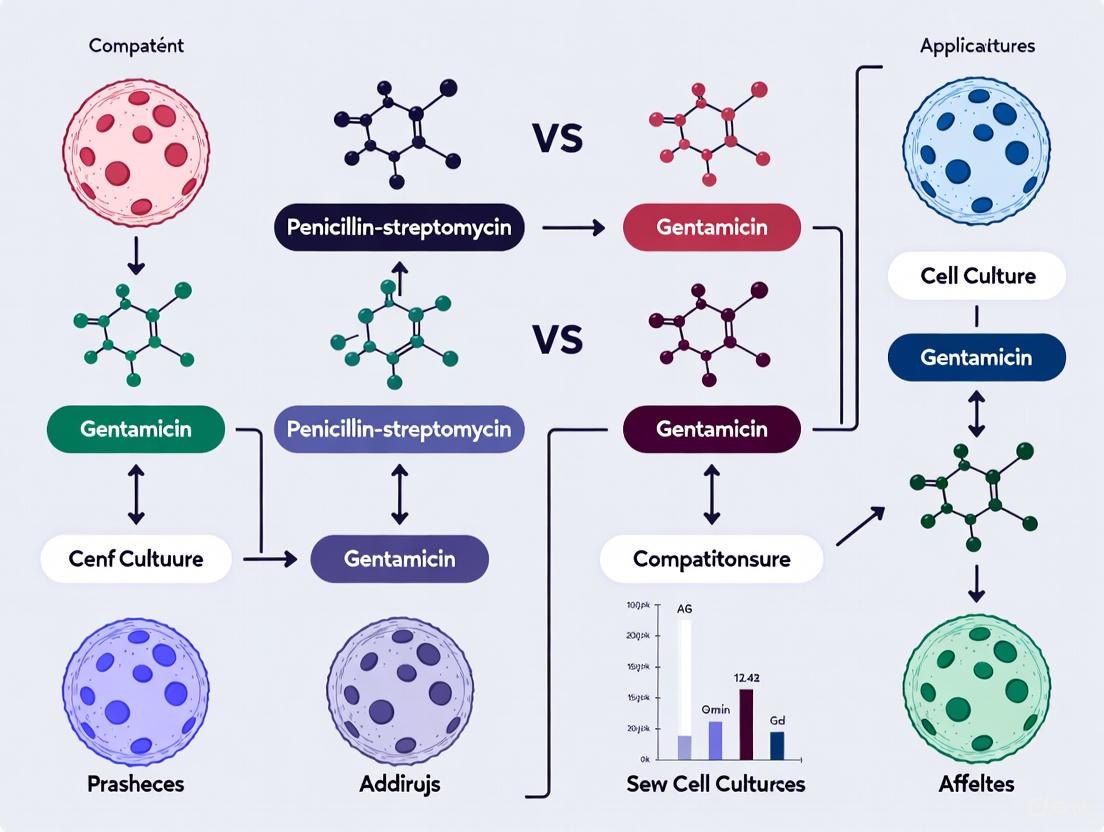
The routine use of antibiotics like penicillin-streptomycin (Pen-Strep) and gentamicin in cell culture is a standard practice to prevent bacterial contamination.
Penicillin-Streptomycin vs. Gentamicin: A Research Guide to Antibiotics in Cell Culture
Abstract
The routine use of antibiotics like penicillin-streptomycin (Pen-Strep) and gentamicin in cell culture is a standard practice to prevent bacterial contamination. However, a growing body of evidence reveals that these antibiotics are not biologically inert and can significantly confound experimental outcomes. This article synthesizes current research to provide a comprehensive guide for researchers and drug development professionals. It covers the foundational mechanisms of these antibiotics, details their methodological application in different cell types, and offers troubleshooting strategies for common issues. A critical comparative analysis evaluates the specific effects of Pen-Strep and gentamicin on cellular physiology, including electrophysiology, gene expression, and metabolism, empowering scientists to make informed, context-dependent choices to ensure the integrity of their data.
Understanding the Basics: Mechanisms and Spectrum of Pen-Strep vs. Gentamicin
In cell culture research, maintaining sterile conditions is paramount to ensure the validity of experimental results. Antibiotics are a critical line of defense against bacterial contamination, with penicillin-streptomycin and gentamicin being among the most commonly used agents. This guide provides an objective comparison of these antibiotic classes—beta-lactams and aminoglycosides—synthesizing data on their mechanisms, efficacy, and cellular effects to inform evidence-based selection for in vitro studies.
Beta-lactam and aminoglycoside antibiotics employ distinct mechanisms to inhibit or kill bacteria, a fundamental difference that underpins their use and effects in cell culture.
- Beta-Lactams (e.g., Penicillin): These antibiotics are characterized by a core beta-lactam ring in their molecular structure. Their primary mechanism is the inhibition of bacterial cell wall synthesis. They act as peptidomimetics, structurally resembling the D-Ala-D-Ala dipeptide terminus of the peptidoglycan precursor. This allows them to acylate and irreversibly inhibit penicillin-binding proteins (PBPs), which are transpeptidase enzymes essential for the cross-linking and strengthening of the peptidoglycan cell wall. The absence of peptidoglycan in mammalian cells is the basis for their selective toxicity [1].
- Aminoglycosides (e.g., Streptomycin, Gentamicin): This class features amino sugars linked to a hexose ring. They are protein synthesis inhibitors that bind irreversibly to the aminoacyl-tRNA site (A-site) of the 16S ribosomal RNA within the 30S bacterial ribosomal subunit. This binding leads to misreading of the mRNA code, incorporation of incorrect amino acids, and ultimately the production of aberrant proteins that disrupt the bacterial cell membrane, leading to cell death [2].
The diagram below illustrates the distinct antibacterial mechanisms of beta-lactams and aminoglycosides.
Comparative Experimental Data in Clinical and Research Contexts
The following tables synthesize quantitative data from clinical studies and in vitro research to compare the efficacy and cellular impact of these antibiotic classes.
Table 1: Clinical Efficacy and Toxicity in Treating Gram-Negative Bacteraemic UTI [3]
| Parameter | Beta-Lactam Group (n=96) | Aminoglycoside Group (n=38) | P-value |
|---|---|---|---|
| Clinical Improvement at 72 hours | 55.0% | 65.8% | 0.335 |
| Clinical Improvement by Discharge | 87.5% | 94.7% | 0.663 |
| Hospital Stay (median days) | +1.7 days longer | Baseline | N/A |
| Kidney Injury Incidence | 26.5% | 37.0% | 0.155 |
Table 2: Summary of Key Experimental Findings in Cell Culture Models
| Study Model | Antibiotic Treatment | Key Findings | Citation |
|---|---|---|---|
| HepG2 Liver Cells | Penicillin-Streptomycin (PenStrep) | 209 genes differentially expressed; activation of drug metabolism (PXR/RXR) and apoptosis pathways. | [4] |
| hESC Neural Differentiation | Gentamicin | Significant cell death; reduced expression of neural progenitor markers (Pax6, Emx2, Otx2). | [5] |
| hiPSC-Derived Cardiomyocytes | Gentamicin (10-25 µg/mL) | Altered action potential parameters: Resting Membrane Potential, Amplitude, and Duration. | [6] |
| hiPSC-Derived Cardiomyocytes | Penicillin/Streptomycin (PS) | No significant effects on action potential parameters. | [6] |
Detailed Experimental Protocols
To ensure reproducibility, below are detailed methodologies from key studies cited in this guide.
- Cell Line and Culture: Human HepG2 hepatocarcinoma cells.
- Treatment Groups: Culture in media supplemented with 1% Penicillin-Streptomycin (standard concentration) vs. vehicle control.
- RNA Sequencing (RNA-seq):
- Extract total RNA using a standardized kit (e.g., MasterPure RNA Purification Kit).
- Prepare cDNA libraries from 1.0 µg of total RNA.
- Perform sequencing and differential expression analysis using software like DESeq2 with a q-value cutoff of ≤ 0.1.
- Chromatin Immunoprecipitation (ChIP-seq):
- Cross-link proteins to DNA.
- Sonicate chromatin to fragment DNA.
- Immunoprecipitate with an antibody targeting H3K27ac, a mark of active enhancers and promoters.
- Sequence the immunoprecipitated DNA and identify differentially enriched peaks (q-value ≤ 0.1).
- Pathway Analysis: Utilize DAVID and Ingenuity Pathway Analysis (IPA) to identify enriched biological pathways among differentially expressed genes.
- Cell Source: Commercially available human induced pluripotent stem cell-derived cardiomyocytes (hiPSC-CMs).
- Plating: Thaw and plate cells onto 0.1% gelatin-coated coverslips for patch clamp or directly onto Multi-Electrode Array (MEA) plates.
- Antibiotic Exposure: Culture cells for 2-3 weeks in medium containing:
- Gentamicin (10 µg/mL and 25 µg/mL)
- Penicillin/Streptomycin mixture (e.g., 100 U/mL Penicillin, 100 µg/mL Streptomycin)
- Control (no antibiotics)
- Manual Patch Clamp Recording:
- Measure action potential parameters: Resting Membrane Potential (RMP), Action Potential Amplitude (APA), and Action Potential Duration (APD).
- Multi-Electrode Array (MEA) System:
- Record field potential parameters, including beat period and spike amplitude, from spontaneously beating cardiomyocytes.
The Scientist's Toolkit: Essential Research Reagents
The table below lists key materials and their functions for investigating antibiotic effects in cell culture, as derived from the featured protocols.
Table 3: Key Research Reagent Solutions for Antibiotic Studies
| Reagent / Material | Function in Research | Example from Protocols |
|---|---|---|
| HepG2 Cell Line | Human liver model for studying drug metabolism and antibiotic-induced gene expression changes. | Used in RNA-seq and ChIP-seq to identify PenStrep-responsive pathways [4]. |
| hiPSC-Derived Cardiomyocytes | Human cardiac model for safety pharmacology; detects functional changes in electrophysiology. | Used in patch clamp and MEA to test gentamicin and PS effects [6]. |
| hESCs (e.g., H9 Line) | Pluripotent cell model for studying early human development and differentiation toxicity. | Differentiated into neural and hepatic lineages to assess gentamicin's impact [5]. |
| Penicillin-Streptomycin Solution | Standard antibiotic mixture for preventing bacterial contamination in cell culture. | Tested at 1% v/v concentration for its effects on gene expression and electrophysiology [4] [6]. |
| Gentamicin Solution | Broad-spectrum aminoglycoside antibiotic for controlling contamination. | Tested at 10-50 µg/mL for its effects on differentiation and cardiomyocyte function [5] [6]. |
| RNA-Seq & ChIP-seq Kits | Tools for genome-wide analysis of gene expression and epigenetic regulation. | Used to quantify PenStrep-induced transcriptional and chromatin changes [4]. |
| Patch Clamp / MEA Systems | Platforms for functional electrophysiological assessment of excitable cells like cardiomyocytes. | Used to measure action potential and field potential parameters after antibiotic exposure [6]. |
Research Implications and Selection Guide
The experimental data indicates a critical trade-off. Gentamicin shows a higher risk of inducing cellular toxicity, notably disrupting the differentiation of sensitive cell types like hESCs into neural lineages and altering the electrophysiology of cardiomyocytes [5] [6]. In contrast, penicillin-streptomycin, while still altering gene expression in hepatic cells, did not significantly affect cardiac electrophysiological parameters in the same study [6].
The workflow below summarizes the decision-making process for selecting an antibiotic in cell culture, based on the synthesized evidence.
The choice between penicillin-streptomycin and gentamicin in cell culture is not trivial. Beta-lactams (penicillin) and aminoglycosides (streptomycin, gentamicin) have distinct mechanisms and, crucially, different off-target effects on mammalian cells. The evidence demonstrates that gentamicin poses a significant risk for interfering with stem cell differentiation and cardiomyocyte function, while penicillin-streptomycin may be a suitable alternative for many applications, though it still perturbs gene expression. The most scientifically rigorous approach is to use no antibiotics whenever possible. When contamination control is essential, researchers should select the agent least likely to confound their specific experimental readouts, as guided by the data presented herein.
Penicillin-Streptomycin (Pen-Strep) and Gentamicin are two foundational tools in the fight against bacterial contamination in cell culture. While both are used to maintain sterile conditions, they achieve this through distinct and complementary mechanisms. Pen-Strep is a synergistic combination attacking both cell wall synthesis and protein translation, whereas Gentamicin is a single, broad-spectrum aminoglycoside antibiotic that acts with concentration-dependent bactericidal activity. The choice between them hinges on the specific bacterial threats, the cell line in use, and the nature of the biological research being conducted, as evidence shows they can differentially impact cellular physiology and experimental outcomes [7] [8] [9].
The integrity of cell culture research is perpetually threatened by bacterial contamination. Antibiotics serve as a critical line of defense, and among the most prevalent are Pen-Strep and Gentamicin. Pen-Strep is a classic combination of two antibiotics: penicillin (a β-lactam) and streptomycin (an aminoglycoside). This duo provides broad coverage against many Gram-positive and Gram-negative bacteria [7]. Gentamicin, also an aminoglycoside, is a broad-spectrum antibiotic frequently used alone or in antibiotic-antimycotic mixtures [8] [9]. Understanding their fundamental mechanisms is not just an academic exercise; it is essential for selecting the right reagent, troubleshooting contamination, and recognizing potential confounding effects in experimental data, as these compounds can alter gene expression and even the electrophysiology of certain cell types [4] [6].
Molecular Mechanisms of Action
The bactericidal strategies of Pen-Strep and Gentamicin target essential, yet distinct, cellular processes.
Penicillin-Streptomycin (Pen-Strep): A Synergistic Duo
The Pen-Strep combination leverages two different mechanisms to cause irreparable damage to bacterial cells.
- Penicillin (β-lactam antibiotic): This component targets the final stage of bacterial cell wall synthesis. It irreversibly binds to penicillin-binding proteins (PBPs), enzymes responsible for cross-linking the peptidoglycan meshwork that provides structural integrity. Inhibition of PBPs prevents the formation of a stable cell wall. In a hypertonic environment, the growing bacterium, weakened by a lack of cell wall support, absorbs water and eventually lyses. Penicillin is particularly effective against Gram-positive bacteria but has limited efficacy against many Gram-negative species due to their outer membrane [7] [4].
- Streptomycin (Aminoglycoside antibiotic): This component targets protein synthesis. It binds irreversibly to the 16S rRNA of the 30S ribosomal subunit. This binding induces misreading of the mRNA code, leading to the incorporation of incorrect amino acids and the production of non-functional or truncated proteins. Furthermore, it inhibits the initiation of translation and causes the dissociation of the 70S ribosomal complex into its 30S and 50S subunits, halting protein production entirely. Streptomycin provides coverage against many Gram-negative bacteria and enhances the combination's overall spectrum [7] [4].
Gentamicin: A Potent Protein Synthesis Blocker
Gentamicin is a single aminoglycoside antibiotic with a potent, multi-stage mechanism of action that leads to rapid bacterial cell death.
- Initial Electrostatic Attachment: The positively charged gentamicin molecules are attracted to and interact with the negatively charged lipopolysaccharides on the outer membrane of Gram-negative bacteria. This interaction displaces divalent cations, destabilizing the membrane and creating transient holes that facilitate the antibiotic's entry [10].
- Energy-Dependent Uptake: The drug is then actively transported into the cell cytoplasm via an oxygen-dependent process. This step explains why aminoglycosides like gentamicin are ineffective against anaerobic bacteria [11] [10].
- Irreversible Ribosomal Binding and Lethal Damage: Once inside, gentamicin binds with high affinity to a specific region of the 16S rRNA within the 30S ribosomal subunit, specifically the A-site. This binding has two critical consequences:
- Bacterial Cell Death: The accumulation of dysfunctional proteins is incorporated into the bacterial cell membrane, disrupting its integrity and leading to increased permeability, further antibiotic influx, and eventual cell death. This bactericidal effect is concentration-dependent, meaning higher peak concentrations result in greater and faster bacterial killing [11] [10].
The following diagram visualizes and contrasts the primary mechanisms of action for Pen-Strep and Gentamicin.
Comparative Experimental Data & Practical Applications
While both are used for contamination control, their different properties lead to distinct experimental considerations.
Spectrum of Activity and Efficacy
The following table summarizes the key antibacterial and practical characteristics of Pen-Strep and Gentamicin.
Table 1: Direct Comparison of Pen-Strep and Gentamicin for Cell Culture
| Parameter | Penicillin-Streptomycin (Pen-Strep) | Gentamicin |
|---|---|---|
| Primary Components | Penicillin G + Streptomycin [7] | Gentamicin sulfate (a complex of C1, C1a, C2) [12] [6] |
| Spectrum of Activity | Broad, vs. Gram-positive (Pen) & Gram-negative (Strep) [7] | Very broad, vs. Gram-negative (including Pseudomonas) & some Gram-positive [11] [8] |
| Stability in Media | Less stable; degraded by enzymes, pH extremes, and heat [7] [8] | Highly stable; resistant to heat, pH variation, and autoclaving [14] [8] |
| Suggested Working Concentration | 50-100 U/mL Penicillin, 50-100 µg/mL Streptomycin [7] [9] | 10-50 µg/mL [9] |
| Cytotoxicity Evidence | Alters gene expression in HepG2 cells (>200 genes) [4] | Alters action potential in hiPSC-derived cardiomyocytes [6] |
| Primary Research Use | Routine bacterial prevention in standard cell lines [9] | Broad-spectrum control, especially with Gram-negative risk; sensitive assays [8] [9] |
Impact on Research Outcomes: Key Experimental Findings
Beyond contamination control, researchers must consider the direct biological effects of these antibiotics on their experimental systems.
- Gene Expression Profiling: A genome-wide RNA-sequencing study on HepG2 cells (a human liver cell line) cultured with standard 1% Pen-Strep identified 209 differentially expressed genes compared to antibiotic-free controls. Pathway analysis revealed significant enrichment for stress response pathways, including "xenobiotic metabolism signaling" and "PXR/RXR activation." This demonstrates that routine Pen-Strep use can introduce significant confounders in genetic, genomic, and pharmacological studies [4].
- Electrophysiological Properties: Research using human induced pluripotent stem cell-derived cardiomyocytes (hiPSC-CMs) showed that gentamicin (10-25 µg/mL) significantly altered key action potential parameters. This included changes in resting membrane potential (RMP), action potential amplitude (APA), and action potential duration (APD). Such findings are critical for cardiac safety pharmacology and suggest that antibiotic choice is paramount in electrophysiological studies [6].
The Scientist's Toolkit: Essential Research Reagents
The following table lists key reagents and their applications for working with these antibiotics in a research setting.
Table 2: Essential Reagents for Antibiotic Use in Cell Culture
| Reagent / Material | Function / Description | Common Usage & Considerations |
|---|---|---|
| Penicillin-Streptomycin Solution (100X) | A concentrated, sterile solution of penicillin and streptomycin in balanced salt solution or water. | Working concentration is typically 1X (e.g., 5 mL per 500 mL media). Aliquot and store at -20°C to avoid freeze-thaw degradation [9]. |
| Gentamicin Sulfate Solution (50 mg/mL) | A concentrated, sterile aqueous solution of gentamicin sulfate. | Used at a final concentration of 10-50 µg/mL. More stable than Pen-Strep; store at -20°C [9]. |
| Antibiotic-Antimycotic Solution (100X) | A cocktail often containing Penicillin, Streptomycin, and the antifungal agent Amphotericin B. | Provides broad-spectrum protection against bacteria and fungi. Useful for primary cell culture or when fungal contamination is a concern [9]. |
| Mycoplasma Detection Kit (PCR-based) | A critical quality control tool. Gentamicin and Pen-Strep are ineffective against mycoplasma, which lacks a cell wall. | Regular testing (e.g., quarterly) is mandatory, as antibiotic use can mask low-level mycoplasma contamination, leading to altered cell behavior and unreliable data [9]. |
| Sterile Phosphate-Buffered Saline (PBS) | Used for washing cells and as a diluent. | Essential for reconstituting or diluting antibiotic stocks to ensure sterility and correct osmolarity. |
The choice between Penicillin-Streptomycin and Gentamicin is not merely one of habit but should be a deliberate decision based on experimental needs.
- Choose Pen-Strep for: Routine maintenance of robust, standard cell lines where the risk of contamination is primarily from common laboratory bacteria and cost is a consideration. Its long history and widespread use make it a familiar default.
- Choose Gentamicin for: Situations requiring a broader spectrum of activity, particularly against Gram-negative bacteria like Pseudomonas, or when enhanced stability in the culture medium is desired (e.g., during long-term experiments or in media subject to pH shifts). Its singular composition can also be preferable in experimental designs where the dual-mechanism of a combination could be a confounding variable.
Ultimately, the gold standard for sensitive experiments, such as gene expression studies, electrophysiology, or the culture of primary and stem cells, is to avoid antibiotics entirely once a culture is confirmed clean. Excellent aseptic technique remains the most valuable tool for ensuring the integrity and reproducibility of cell culture research [9].
In cell culture research, safeguarding precious cells from bacterial contamination is paramount. Among the most common prophylactic agents are penicillin-streptomycin and gentamicin. While both are widely used, their spectra of activity against Gram-positive bacteria, Gram-negative bacteria, and the elusive mycoplasma differ significantly. This guide provides an objective comparison of these two antibiotic options, underpinned by experimental data, to help researchers make an informed choice for their specific cell culture applications.
Mechanisms of Action: A Tale of Two Strategies
The fundamental difference between these antibiotics lies in their mechanisms of bacterial cell death, which directly influences their spectrum of activity.
Comparative Spectrum of Activity and Efficacy
The theoretical mechanisms translate into practical differences in the spectrum of bacterial control, supported by empirical observations.
Table 1: Spectrum of Activity and Key Characteristics
| Feature | Penicillin-Streptomycin (PenStrep) | Gentamicin |
|---|---|---|
| Gram-positive Bacteria | Effective (Primarily via Penicillin) [15] [9] | Effective [15] [9] |
| Gram-negative Bacteria | Effective (Primarily via Streptomycin) [15] [9] | Effective, broader coverage [15] [9] |
| Mycoplasma | Ineffective (Lacks a cell wall) [16] [9] | Ineffective (Lacks a cell wall) [16] [9] |
| Primary Mechanism | Penicillin: Inhibits cell wall synthesis.Streptomycin: Inhibits protein synthesis. [15] | Inhibits protein synthesis. [15] |
| Stability in Media | Less stable; sensitive to pH and temperature, short half-life at 37°C. [15] | Highly stable; stable at 37°C across a wide pH range for up to 15 days. [15] |
Experimental Data and Biological Consequences
Beyond contamination control, the choice of antibiotic can directly influence experimental outcomes by affecting cell physiology.
Effects on Gene Expression
A genome-wide study on HepG2 cells (a human liver cell line) cultured with standard PenStrep supplementation identified 209 differentially expressed genes compared to antibiotic-free controls. This included 157 upregulated and 52 downregulated genes. Pathway analysis revealed these genes were significantly enriched in processes like apoptosis, drug response, and unfolded protein response. Crucially, the study also found thousands of changes in the chromatin landscape (H3K27ac marks), indicating that PenStrep can alter the fundamental regulatory biology of cells [17].
Effects on Cardiomyocyte Electrophysiology
Research using human induced pluripotent stem cell-derived cardiomyocytes (hiPSC-CMs) demonstrated that gentamicin can directly affect electrophysiological parameters. When hiPSC-CMs were cultured with 25 µg/ml of gentamicin, manual patch clamp recording showed a significant depolarization of the resting membrane potential (RMP) compared to control cells (-60 ± 3.1 mV vs. -73 ± 1.4 mV). Action potential duration (APD) was also significantly altered, which is a critical parameter in cardiac safety pharmacology [6].
The Mycoplasma Challenge
Mycoplasma contamination is a major concern in cell culture due to its cryptic nature and resistance to standard antibiotics. As illustrated in Table 1, both PenStrep and gentamicin are ineffective against mycoplasma because these bacteria lack a cell wall, rendering penicillin's mechanism useless [16]. Furthermore, their small size and plasticity allow them to pass through standard sterile filters [16]. Eradication requires targeted antibiotics, such as quinolones (e.g., ciprofloxacin) or a combination of tiamulin and minocycline (e.g., BM-Cyclin), with studies showing success rates between 66% and 85% in permanently cleansing infected cultures [18].
The Scientist's Toolkit: Essential Research Reagents
Table 2: Key Reagents for Antibiotic Use and Contamination Control
| Reagent | Function & Rationale |
|---|---|
| Penicillin-Streptomycin (100X) | A ready-to-use combination for broad-spectrum prophylaxis against Gram-positive and Gram-negative bacteria. Common working concentration is 1% v/v (100 U/mL penicillin, 100 µg/mL streptomycin) [9] [19]. |
| Gentamicin Sulfate (50 mg/mL) | A broad-spectrum aminoglycoside stock solution. Used at working concentrations of 10–50 µg/mL. Preferred for its superior stability [15] [9]. |
| Antibiotic-Antimycotic (100X) | A solution that typically combines PenStrep with Amphotericin B to provide additional protection against fungal and yeast contaminants [9]. |
| Mycoplasma Removal Agent | A specialized reagent designed to eliminate mycoplasma contamination from cell cultures, as standard antibiotics are ineffective [9]. |
| Mycoplasma Detection Kit (PCR-based) | Essential for routine screening of cryptic mycoplasma contamination, which does not cause media turbidity and can remain undetected for many passages [16] [9]. |
The choice between penicillin-streptomycin and gentamicin is not trivial. PenStrep offers a classic, synergistic combination for general bacterial prophylaxis. In contrast, gentamicin provides broader Gram-negative coverage and significantly greater stability in culture conditions, making it preferable for sensitive applications or large-scale cultures. Critically, neither antibiotic is effective against mycoplasma, which requires dedicated detection and eradication strategies. Ultimately, the most reliable approach combines robust aseptic technique with the strategic, rather than routine, use of antibiotics to ensure the integrity of cell-based research.
Key Historical and Current Uses in Standard Cell Culture Protocols
The routine use of antibiotics has long been a standard practice in mammalian cell culture to prevent bacterial contamination, a major threat that can compromise experimental results and lead to the loss of valuable cell lines [9] [15]. Among the most common agents used for this purpose are the combination of penicillin-streptomycin (Pen-Strep) and gentamicin [9] [15]. While both provide broad-spectrum antibacterial coverage, they possess distinct biochemical properties, historical contexts, and effects on cultured cells that influence their suitability for different research applications. This guide provides an objective comparison of Pen-Strep and gentamicin, framing their use within the broader context of modern cell culture practices, which increasingly advocate for antibiotic-free media to avoid potential cytotoxic effects and the masking of low-grade, persistent contaminants like mycoplasma [9] [20] [4].
Antibiotic Profiles and Historical Context
Penicillin-Streptomycin (Pen-Strep)
Pen-Strep is a long-trusted combination that targets a broad range of bacteria and is especially common in busy labs where sterility is harder to control [9].
- Penicillin: A β-lactam antibiotic that interferes with bacterial cell wall synthesis and is primarily effective against Gram-positive bacteria [15].
- Streptomycin: An aminoglycoside antibiotic that binds to the 30S ribosomal subunit, leading to misreading of mRNA and inhibition of protein synthesis. It provides coverage against Gram-negative bacteria and some Gram-positive organisms [15] [4].
Their action is synergistic; the inhibition of the cell wall by penicillin facilitates the entry of streptomycin into the bacterial cell [15]. Historically, this combination became a default additive for routine cell culture work. However, a significant drawback is its instability; penicillin has a very short half-life at 37°C and loses activity rapidly at both acidic and alkaline pH, while streptomycin progressively loses activity at alkaline pH [15].
Gentamicin
Gentamicin is another aminoglycoside antibiotic with broad-spectrum activity against Gram-positive and Gram-negative bacteria, as well as mycoplasma [15] [21]. Its mechanism of action is similar to streptomycin, involving binding to the bacterial 30S ribosomal subunit and causing misreading of mRNA [22] [15]. A key historical study from 1972 highlighted its superior biochemical stability compared to Pen-Strep, demonstrating stability across a wide pH range (pH 2 to 10) for 15 days at 37°C, unaffected by the presence of serum, and stable to autoclaving [14]. This stability, along with findings that it did not harm various cell types or interfere with virological studies like plaque assays and interferon production, suggested its unique usefulness for the shipment of clinical specimens and long-term tissue culture studies [14].
Direct Comparison: Key Parameters
The table below summarizes the core characteristics of Pen-Strep and Gentamicin for direct comparison.
Table 1: Direct comparison of Penicillin-Streptomycin and Gentamicin for cell culture
| Parameter | Penicillin-Streptomycin (Pen-Strep) | Gentamicin |
|---|---|---|
| Antibiotic Class | Penicillin: β-lactam; Streptomycin: Aminoglycoside [15] | Aminoglycoside [15] |
| Mechanism of Action | Pen: Inhibits cell wall synthesis; Strep: Inhibits protein synthesis (30S subunit) [15] | Inhibits protein synthesis (30S subunit) [15] |
| Spectrum of Activity | Broad-range (Gram-positive & Gram-negative) [9] | Broad-spectrum (Gram-positive, Gram-negative, Mycoplasma) [15] [21] |
| Standard Working Concentration | 100 U/mL Penicillin; 100 µg/mL Streptomycin (1x) [9] [15] | 10–50 µg/mL [9] [15] |
| pH & Temperature Stability | Low stability. Penicillin is heat-labile and pH-sensitive; Streptomycin loses activity at alkaline pH [15] | High stability. Stable at 37°C across a wide pH range (2-10) and during autoclaving [14] [15] |
| Effect of Serum | Penicillin activity decreases in serum-containing media [15] | Unaffected by serum [14] |
| Historical Emergence & Use Case | Default, synergistic combination for routine cell culture [9] | Valued for stability in long-term culture, virus studies, and specimen transport [14] |
Impact on Cell Culture and Experimental Outcomes
A critical consideration for researchers is the often-overlooked impact of these antibiotics on the biological systems under study. Evidence shows that both Pen-Strep and gentamicin can induce significant off-target effects in mammalian cells.
Effects on Gene Expression and Regulation
A genome-wide study on HepG2 cells (a human liver cell line) cultured with standard Pen-Strep supplementation identified 209 differentially expressed genes compared to antibiotic-free controls [4]. These included transcription factors like ATF3, which can alter the regulation of other genes. Pathway analysis revealed significant enrichment for xenobiotic metabolism signaling and PXR/RXR activation pathways, indicating that the cells were mounting a stress and drug metabolism response to the antibiotics [4]. Furthermore, changes in the chromatin landscape (H3K27ac marks) were observed at over 9,500 regulatory regions, suggesting that Pen-Strep can alter the fundamental gene regulatory program of cultured cells [4].
Cytotoxic and Functional Effects
Beyond gene expression, antibiotics can directly impair cellular functions.
- Cytotoxicity: High doses of gentamicin or the antifungal amphotericin B can impair membrane function and slow cell proliferation, particularly in sensitive cell types like stem cells [9] [15].
- Altered Differentiation: Studies have shown that both Pen-Strep and gentamicin can alter the differentiation of human adipose-derived stem cells into adipocytes. Similar effects have been observed in embryonic stem cells, mesenchymal stem cells, and primary cancer cell lines [20].
- Inhibition of Complex Tissue Formation: In three-dimensional cultures of normal human epidermal keratinocytes (NHEK), β-lactam antibiotics and aminoglycosides were found to inhibit cell growth and the establishment of a fully differentiated epidermis [20]. The proposed mechanism involves detrimental effects on mitochondrial activity, organelles of bacterial origin that share biomolecular similarities with the antibiotic targets [20].
Table 2: Summary of documented off-target effects on mammalian cells
| Effect Category | Experimental Evidence |
|---|---|
| Altered Gene Expression | 209 genes differentially expressed in HepG2 cells; upregulation of stress and drug metabolism pathways [4]. |
| Changed Epigenetic Landscape | 9,514 H3K27ac peaks (enhancer markers) were differentially enriched in HepG2 cells treated with Pen-Strep [4]. |
| Impaired Differentiation | Altered adipocyte differentiation in human adipose-derived stem cells; inhibited formation of differentiated epidermis in 3D keratinocyte cultures [20]. |
| Cytostatic Effects | Slower proliferation rates observed in some primary cells and sensitive cell lines [9] [20]. |
Best Practices and Decision Framework
The choice to use antibiotics, and which one to select, should be an intentional decision based on the specific experimental context rather than an unconsidered habit [9]. The following workflow and guidelines can aid in this decision-making process.
When to Use Antibiotics
- Thawing frozen cells: Cells are vulnerable during initial recovery [9].
- Primary cell culture (early passages): Reduces the risk of early loss due to contamination [9].
- Shared incubators or crowded lab settings: Increased potential for cross-contamination [9].
- Working with irreplaceable samples: Temporary protection for high-value cultures [9].
When to Avoid Antibiotics
- Sensitive cell types: Stem cells, primary cells, and other delicate types are more susceptible to cytotoxic and off-target effects [9] [20].
- Gene expression, epigenetic, or phenotypic studies: Antibiotics can alter cellular behavior and skew results [9] [4].
- Long-term maintenance of cultures: Can mask aseptic technique failures and promote the development of antibiotic-resistant bacteria [9] [15].
- Suspected mycoplasma contamination: Standard antibiotics are ineffective against mycoplasma (which lacks a cell wall) and may only suppress symptoms, allowing the contamination to persist undetected. Targeted detection and elimination reagents are required instead [9].
The Scientist's Toolkit: Essential Reagents and Materials
The table below lists key materials and reagents used in cell culture for contamination control, along with their primary functions.
Table 3: Key research reagent solutions for cell culture and contamination control
| Reagent/Material | Primary Function in Cell Culture |
|---|---|
| Penicillin-Streptomycin (100x) | Broad-spectrum antibiotic solution for prophylaxis against Gram-positive and Gram-negative bacteria [9]. |
| Gentamicin Sulfate (50 mg/mL) | Broad-spectrum, stable antibiotic for prophylaxis, effective against bacteria and mycoplasma [9] [15]. |
| Antibiotic-Antimycotic Solution (100x) | A combination cocktail (e.g., Pen-Strep + Amphotericin B) for protection against both bacterial and fungal contamination [9]. |
| Amphotericin B | Antifungal agent used to prevent contamination from yeast and fungi [9]. |
| Mycoplasma Removal Reagent | Targeted reagents (e.g., pleuromutilin/tetracycline) specifically formulated to eliminate mycoplasma contamination, not routine prophylaxis [9] [15]. |
Both penicillin-streptomycin and gentamicin have historically served as vital tools for safeguarding cell cultures against bacterial contamination. Pen-Strep remains a widely used, synergistic combination for general, short-term use, while gentamicin offers distinct advantages in stability for long-term cultures or challenging conditions. However, a growing body of evidence demonstrates that these compounds are not biologically inert and can significantly alter gene expression, cellular differentiation, and other critical experimental outcomes. Therefore, the modern paradigm is shifting towards a more deliberate and cautious approach. Strong aseptic technique remains the most reliable long-term defense against contamination. Antibiotics should be employed strategically for specific, short-term needs rather than as a universal crutch, and they should be omitted entirely for sensitive assays to ensure the integrity and reproducibility of scientific data [9] [15] [20].
Practical Application: Dosage, Stability, and Cell-Type Specific Guidelines
Standard Working Concentrations and Preparation of Stock Solutions
In cell culture research, preventing bacterial contamination is paramount for maintaining the integrity of experiments. Among the most common antibiotics used for this purpose are penicillin-streptomycin (Pen-Strep) and gentamicin. Pen-Strep is a classic combination offering broad-spectrum coverage, while gentamicin is a potent, broad-spectrum aminoglycoside. The choice between these antibiotics significantly impacts experimental outcomes, influencing not only contamination control but also cellular physiology and data reliability. This guide provides a detailed, objective comparison of their standard working concentrations, stock solution preparation, and performance in research settings to inform evidence-based selection.
Antibiotic Comparison Tables
Key Characteristics and Mechanisms
The table below summarizes the fundamental properties of penicillin-streptomycin and gentamicin.
- Table 1: Fundamental Antibiotic Characteristics
| Characteristic | Penicillin-Streptomycin (Pen-Strep) | Gentamicin |
|---|---|---|
| Class | Beta-lactam (Penicillin) & Aminoglycoside (Streptomycin) | Aminoglycoside |
| Mechanism of Action | Penicillin: Inhibits bacterial cell wall synthesis.Streptomycin: Binds to the 30S ribosomal subunit, inhibiting protein synthesis. [23] [24] [25] | Binds to the 30S ribosomal subunit, inhibiting protein synthesis. [23] |
| Spectrum of Activity | Broad-spectrum against Gram-positive and Gram-negative bacteria. [24] [25] | Broad-spectrum; effective against Gram-positive and Gram-negative bacteria, and mycobacteria. [23] |
| Primary Research Application | General prevention of bacterial contamination in cell culture. [9] [25] | Prevention of contamination; particularly effective against Gram-negative bacteria and in controlling mycobacterial contamination. [23] [9] |
| Cytotoxicity Considerations | Generally low cytotoxicity at standard concentrations. [9] | Can be cytotoxic to sensitive cell lines at higher concentrations; effects include impaired proliferation and increased lactate production. [26] [9] |
Stock and Working Concentrations
Standardized concentrations are critical for effective contamination control while minimizing effects on cells.
- Table 2: Standard Preparation and Working Concentrations
| Antibiotic | Common Stock Concentration | Working Concentration | Solvent | Storage |
|---|---|---|---|---|
| Penicillin-Streptomycin | 100X Solution: 10,000 U/mL Penicillin, 10,000 µg/mL Streptomycin [27] [24] [25] | 1X: 100 U/mL Penicillin, 100 µg/mL Streptomycin [27] [9] | Aqueous buffer/Water [9] [25] | -20°C [9] |
| Gentamicin | 50 mg/mL [9] or 7.5 mg/mL [28] | Cell Culture: 10-50 µg/mL [9]Bactericidal in Tissue Culture: Up to 50 µg/mL [26] | Water [29] [28] | -20°C or 4°C [29] [28] [9] |
Experimental Protocols
Preparation of Antibiotic Stock Solutions
Preparing Gentamicin Stock Solution (50 mg/mL)
This protocol outlines the preparation of a concentrated, sterile gentamicin stock solution from powder.
Materials:
Method:
- Weighing: Accurately weigh out 1 gram of gentamicin powder. [29]
- Dissolution: Add the powder to approximately 0.8 L of sterile distilled water in a sterile container and mix thoroughly until completely dissolved. [29]
- Final Volume: Bring the final volume to 1 L with sterile distilled water. This yields a stock concentration of 1 mg/mL, or 1000 µg/mL. For a 50 mg/mL stock, adjust the mass and volume proportionally (e.g., 1 g in 20 mL). [29] [27]
- Sterile Filtration: Pre-wet a 0.22 µm syringe filter with sterile water. Pass the entire gentamicin solution through the filter into a sterile container. This step is critical for removing microbial contaminants from the powder and solution. [29] [28]
- Aliquoting and Storage: Dispense the sterile filtrate into small, single-use aliquots to avoid repeated freeze-thaw cycles. Store the aliquots at -20°C, where they can remain stable for up to one year. [29] [9]
Preparing Penicillin-Streptomycin Stock Solution
While often purchased as a ready-made 100X solution, it can be prepared from individual components.
Materials:
- Penicillin G (sodium salt)
- Streptomycin sulfate
- Sterile, distilled water
- 0.22 µm filter unit
- Sterile bottles for storage
Method:
- Weighing: Weigh out penicillin and streptomycin to achieve a final combined concentration that, when diluted, gives the standard working concentration (e.g., 10,000 U/mL penicillin and 10 mg/mL streptomycin for a 100X stock). [27] [25]
- Dissolution: Add the powders to approximately 80% of the final desired volume with sterile water and mix until fully dissolved.
- Sterile Filtration: Filter sterilize the solution using a 0.22 µm filter into a sterile bottle. [25]
- Aliquoting and Storage: Aliquot the solution and store at -20°C. [9] [25]
Protocol for Supplementing Cell Culture Media
Once stock solutions are prepared, they are added to sterile cell culture media.
- Workflow Diagram: Antibiotic Media Preparation
- Method:
- Thaw Antibiotic: Thaw an aliquot of the antibiotic stock solution completely. [9]
- Prepare Media: Aseptically warm the required volume of complete cell culture media (e.g., DMEM, RPMI) to room temperature or 37°C.
- Calculate Volume: Calculate the volume of antibiotic stock needed using the formula: Volume of Stock (mL) = (Desired Final Concentration / Stock Concentration) × Final Media Volume (mL). For example, to make 500 mL of media with 1X Pen-Strep from a 100X stock: (1X / 100X) × 500 mL = 5 mL of stock.
- Add and Mix: Using sterile technique, add the calculated volume of antibiotic stock to the warm media. Gently swirl or invert the bottle to ensure homogeneous mixing. [27]
- Storage: The antibiotic-supplemented media can be used immediately. For short-term storage, keep at 4°C for up to a few weeks, though long-term storage is not recommended.
Protocol for Testing Antibiotic Efficacy
It is good practice to verify that prepared antibiotic plates or media are functioning correctly.
Materials:
Method:
- Streak Plates: Take two antibiotic-containing plates. On the first, streak the resistant strain. On the second, streak the sensitive strain. [27]
- Incubate and Observe: Incubate both plates overnight at the appropriate growth temperature (e.g., 37°C). [27]
- Interpret Results: A properly functioning antibiotic preparation will show robust growth only on the plate with the resistant strain. The sensitive strain should show no growth. Growth of the sensitive strain indicates the antibiotic has degraded or was prepared incorrectly. [27]
Comparative Experimental Data and Applications
Performance in Bacterial Contamination Control
Direct comparative studies provide evidence for the relative efficacy of these antibiotics.
- Table 3: Comparative Bactericidal Efficiency
| Experimental Finding | Supporting Data |
|---|---|
| Gentamicin's Superior MBC | The minimal bactericidal concentration (MBC) of gentamicin was generally lower than that of the Pen-Strep combination in both cell-free media and tissue cultures, indicating higher potency. [26] |
| Direct Efficiency Comparison | A study comparing gentamicin (50 µg/mL) against Pen-Strep (100 U/mL + 100 µg/mL) against 31 bacterial strains across 7 species concluded that gentamicin is superior for controlling bacterial growth in tissue culture. [26] |
| Stability and Satellite Colonies | Gentamicin is highly stable, even when exposed to heat during autoclaving. Unlike ampicillin (a beta-lactam like penicillin), its use is associated with fewer "satellite colonies" due to its stability and lower susceptibility to inactivation by bacterial enzymes. [23] |
Impact on Cellular Physiology
Antibiotics can have off-target effects on mammalian cells, which is a critical consideration for sensitive assays.
- Gentamicin: Studies on mammalian cell lines show that concentrations at or above 1000 µg/mL cause cellular damage, including depressed proliferation and elevated lactate production. However, concentrations up to 125 µg/mL showed no significant effects on these metabolic parameters. [26] This indicates a high safety margin at standard working concentrations (10-50 µg/mL).
- Penicillin-Streptomycin: While generally considered to have low cytotoxicity, the presence of Pen-Strep has been shown to alter the gene expression profile in certain cell lines, such as HepG2, affecting over 200 genes related to stress and metabolism. [9] This can be a critical confounder in transcriptomic or phenotypic studies.
The following diagram summarizes the key decision-making workflow for selecting between these antibiotics based on experimental context.
- Workflow Diagram: Antibiotic Selection Strategy
The Scientist's Toolkit: Essential Research Reagent Solutions
A well-equipped lab has key reagents readily available for effective cell culture maintenance and contamination control.
- Table 4: Essential Research Reagents for Antibiotic Use
| Reagent Solution | Function | Example Use-Case |
|---|---|---|
| Penicillin-Streptomycin (100X) | Ready-to-use solution for broad-spectrum bacterial contamination control. [24] [25] | Default antibiotic for routine culture of robust, non-sensitive cell lines. [9] |
| Gentamicin Sulfate (50 mg/mL) | Concentrated stock for potent, broad-spectrum coverage, especially against Gram-negative bacteria. [23] [9] | Selection for situations requiring higher potency or when concerned about Gram-negative contaminants. |
| Antibiotic-Antimycotic (100X) | A combination of antibiotics (e.g., Pen-Strep) with an antimycotic (e.g., Amphotericin B) to combat both bacterial and fungal contamination. [9] | Used when fungal or yeast contamination is suspected or as a precaution in high-risk environments. |
| Mycoplasma Removal Reagent | Targeted agent to eliminate mycoplasma contamination, which is resistant to standard antibiotics due to its lack of a cell wall. [9] | Treatment of cultures confirmed to be infected with mycoplasma. Not for routine prevention. |
| Sterile Filtration Units (0.22 µm) | Devices used to sterilize heat-sensitive solutions, such as antibiotic stocks, without degrading them. [29] [28] | Essential for preparing sterile stock solutions from powder before adding to cell culture media. |
The routine use of antibiotics in cell culture is a fundamental strategy to prevent bacterial contamination, yet the biochemical stability of these supplements is often overlooked. The choice between commonly used antibiotic formulations, primarily penicillin-streptomycin (Pen-Strep) and gentamicin, can significantly impact the reproducibility and reliability of experimental data. This guide provides a objective, data-driven comparison of their stability profiles, focusing on their tolerance to heat, pH variations, and the presence of serum in culture media. Understanding these parameters is crucial for researchers, scientists, and drug development professionals to select the most appropriate antibiotic for their specific experimental conditions and to ensure the long-term health and authenticity of their cell lines.
Comparative Stability Profiles: Quantitative Data
The stability of an antibiotic in cell culture conditions is dictated by its ability to maintain potency when exposed to physiological temperature (37°C), varying pH levels, and serum components. The data below summarize key experimental findings.
Table 1: Direct Comparison of Penicillin-Streptomycin and Gentamicin Stability
| Stability Parameter | Penicillin-Streptomycin | Gentamicin |
|---|---|---|
| Heat Stability | Penicillin has a very short half-life at 37°C [15]. | Stable at 37°C for at least 15 days [14] [15]. Stable over 6 weeks in aqueous solution at 37°C [30]. |
| pH Stability | Penicillin: Rapid loss of activity at both acidic & alkaline pH [15].Streptomycin: Progressive loss of activity at alkaline pH [15]. | Stable across a wide pH range (pH 2 to 10) for 15 days at 37°C [14] [15]. |
| Serum Effects | Penicillin activity is decreased in the presence of serum [15]. | Activity is unaffected by the presence of serum [14]. |
| Autoclaving | Penicillin is completely inactivated by autoclaving [15]. | Stable and retains activity after autoclaving (121°C, 15 minutes) [14] [15]. |
| Recommended Working Concentration | Penicillin: 100 U/mLStreptomycin: 100 µg/mL [15] | 50 µg/mL [14] [15] |
Table 2: Broader Antibiotic Stability at 37°C (Data from Samara et al., 2017) This study tested antibiotic stability in saline over six weeks, providing a broader context for the stability of other common classes [30].
| Antibiotic Class | Representative Antibiotics | Long-Term Stability at 37°C |
|---|---|---|
| Aminoglycosides | Gentamicin, Amikacin | Excellent stability [30]. |
| Beta-lactams | Penicillins, Cephalosporins | Rapid degradation; exponential decay over time [30]. |
| Glycopeptides | Vancomycin | Excellent stability [30]. |
| Quinolones | Ciprofloxacin | Excellent stability [30]. |
| Tetracyclines | Doxycycline | Excellent stability [30]. |
Key Experimental Data and Protocols
The comparative data presented are derived from specific experimental investigations. The following details the key methodologies used to generate the foundational stability data.
Evaluation of Gentamicin for Virology and Tissue Culture
This 1972 study provided a comprehensive stability profile for gentamicin, directly comparing it to Pen-Strep [14].
- Experimental Protocol:
- pH Stability: Gentamicin and Pen-Strep were prepared in tissue culture medium and adjusted to pH levels ranging from 2 to 10. Solutions were maintained at 37°C for 15 days, after which antibiotic activity was assessed.
- Heat Stability: Antibiotics were subjected to autoclaving at 121°C with 15 lb of pressure for 15 minutes. Retention of antibacterial activity was measured post-treatment.
- Serum Interference: The activity of both antibiotics was tested in the presence and absence of serum to determine if serum components inhibited their efficacy.
- Key Findings: The study concluded that unlike Pen-Strep, gentamicin was stable across the entire tested pH spectrum, its activity was unaffected by serum, and it withstood autoclaving without loss of potency [14].
Antibiotic Stability at Body Temperature
A 2017 study assessed the stability of 38 antibiotics in aqueous solution at 37°C over six weeks, simulating long-term release from biomaterials [30].
- Experimental Protocol:
- Solution Preparation: Antibiotics were dissolved in 0.9% NaCl to a target concentration of 200 mg/L.
- Incubation: Solutions were incubated at 37°C for 42 days.
- Analysis: Antibiotic degradation was quantified using liquid chromatography coupled to mass spectrometry (LC-MS/MS). Concurrently, antibacterial activity was determined at regular intervals using the Kirby-Bauer disk diffusion assay.
- Key Findings: The study classified antibiotics based on their stability. Gentamicin, alongside other aminoglycosides, glycopeptides, and quinolones, demonstrated excellent long-term stability. In contrast, beta-lactam antibiotics (including penicillin) showed exponential degradation over time [30].
The following workflow diagrams the logical relationship between environmental factors, their impact on antibiotic stability, and the resulting experimental consequences.
The Scientist's Toolkit: Essential Research Reagents
Successful cell culture experimentation relies on a set of fundamental reagents and materials. The following table details essential components referenced in the studies cited in this guide.
Table 3: Key Research Reagent Solutions for Antibiotic Stability Work
| Reagent/Material | Function & Application | Key Considerations |
|---|---|---|
| Penicillin-Streptomycin (Pen-Strep) | Broad-spectrum combination for controlling Gram-positive and Gram-negative bacteria [9] [15]. | Synergistic action. Check for pH and temperature sensitivity during experiments and storage [15]. |
| Gentamicin Sulfate | Broad-spectrum aminoglycoside effective against bacteria and mycoplasma [14] [15]. | Superior stability profile makes it suitable for long-term experiments or where pH control is difficult [14]. |
| Amphotericin B | Antimycotic agent added to prevent fungal and yeast contamination [9]. | Can be cytotoxic at higher concentrations. It is light-sensitive and requires protection from light [9]. |
| Mueller-Hinton Broth | Standardized liquid medium used in antimicrobial susceptibility testing, including stability studies [31]. | Its well-defined composition is ideal for reproducible antibiotic potency assays [31]. |
| Cell Culture Media (e.g., M199) | A complex nutrient medium used to sustain cells and, in some protocols, for antibiotic incubation with tissues [32]. | The specific formulation can interact with antibiotics; stability may vary between different media [14]. |
| Kirby-Bauer Disk Diffusion Assay | A classic microbiological method to qualitatively assess the antibacterial activity of an antibiotic solution [30]. | Used to confirm retained antibiotic function after exposure to stressors like heat or prolonged incubation [30]. |
| Liquid Chromatography with Mass Spectrometry (LC-MS/MS) | An analytical technique for precise quantification of antibiotic concentration and detection of degradation products [30]. | The gold standard for objectively measuring antibiotic stability and calculating degradation half-lives [30]. |
The choice between penicillin-streptomycin and gentamicin extends beyond mere spectrum of activity. The experimental data compellingly demonstrate that gentamicin possesses superior biochemical stability under standard cell culture conditions—namely, at 37°C, across a wide pH range, and in the presence of serum. While Pen-Strep remains a viable option for many applications, researchers must account for its rapid degradation, which can lead to a loss of contamination control in long-term experiments or where media pH is not tightly regulated. For critical experiments, sensitive cell types, or studies where media cannot be frequently changed, gentamicin offers a more robust and reliable solution to ensure consistent antibiotic protection and experimental integrity.
The choice of antibiotic supplementation in cell culture is a critical decision that directly impacts experimental reproducibility and biological relevance. While penicillin-streptomycin (PenStrep) and gentamicin represent the most commonly used antibiotics in mammalian cell culture systems, they exhibit distinct properties, efficacy, and off-target effects that influence their suitability for different research applications. This guide provides a comprehensive, evidence-based comparison of these antibiotics, focusing on their effects across primary cells, stem cells, and cell lines to inform selection criteria for specific experimental contexts.
Antibiotic Properties and Mechanisms of Action
Fundamental Characteristics
Table 1: Basic Properties of Penicillin-Streptomycin vs. Gentamicin
| Property | Penicillin-Streptomycin | Gentamicin |
|---|---|---|
| Class | Penicillin: β-lactam; Streptomycin: Aminoglycoside | Aminoglycoside |
| Mechanism | Penicillin: inhibits cell wall synthesis; Streptomycin: protein synthesis inhibitor (30S ribosomal subunit) | Protein synthesis inhibitor (30S ribosomal subunit) |
| Spectrum | Broad-spectrum (Gram-positive & Gram-negative) | Broad-spectrum (Gram-positive, Gram-negative, Mycoplasma) |
| Standard Concentration | 100 U/mL penicillin + 100 μg/mL streptomycin | 50 μg/mL |
| Stability | Penicillin unstable at 37°C; both sensitive to pH changes | Stable at 37°C across pH 2-10 for 15 days; unaffected by serum |
| Heat Stability | Inactivated by autoclaving | Stable to autoclaving |
| Cytotoxicity | Concentration-dependent effects on various cell types | Minimal at recommended concentrations |
Stability and Practical Handling
Gentamicin demonstrates superior stability characteristics compared to PenStrep, maintaining activity across a wide pH range (2-10) for at least 15 days at 37°C, unaffected by the presence of serum, and stable to autoclaving [14] [15]. In contrast, penicillin has a very short half-life at 37°C with rapid loss of activity at both acidic and alkaline pH, while streptomycin shows progressive loss of activity at alkaline pH [15]. Penicillin activity decreases in serum-containing media and is completely inactivated by autoclaving [15]. These stability profiles make gentamicin particularly advantageous for long-term experiments, shipment of clinical specimens, and situations where pH fluctuations may occur [14].
Experimental Evidence of Biological Effects
Effects on Gene Expression and Regulation
Genome-wide studies reveal that antibiotic supplementation can significantly alter cellular physiology at the molecular level. Research demonstrates that PenStrep treatment induces substantial changes in gene expression profiles in human cell lines:
Table 2: Documented Effects of Antibiotics on Cellular Processes
| Cell Type | Antibiotic | Concentration | Documented Effects | Reference |
|---|---|---|---|---|
| HepG2 (liver cell line) | PenStrep | 1% (standard) | 209 differentially expressed genes (157 upregulated, 52 downregulated) | [4] [17] |
| HepG2 | PenStrep | 1% (standard) | 9,514 H3K27ac peaks altered (chromatin landscape changes) | [4] [17] |
| hESCs | Gentamicin | 50 μg/mL | Significant cell death during neural differentiation | [5] |
| hESCs | PenStrep | 1% (standard) | Reduced expression of neural progenitor markers (Pax6, Emx2, Otx2) | [5] |
| C2C12 myotubes | Streptomycin | 100 μg/mL | ~40% reduction in myotube diameter, 25% lower differentiation | [33] |
| hiPSC-CMs | Gentamicin | 25 μg/mL | Altered action potential parameters (RMP, APA, APD) | [6] |
Pathway analysis of PenStrep-responsive genes identified significant enrichment for "xenobiotic metabolism signaling" and "PXR/RXR activation" pathways, indicating activation of cellular detoxification mechanisms [4] [17]. Additional affected pathways included apoptosis, unfolded protein response, nitrosative stress, insulin response, and cell growth/proliferation [4] [17]. These widespread transcriptomic alterations demonstrate that routine antibiotic use can inadvertently activate stress response pathways and alter fundamental cellular processes.
Cell Type-Specific Responses
Stem Cells and Differentiating Systems
Human embryonic stem cells (hESCs) show particular sensitivity to antibiotic exposure during differentiation processes. Research demonstrates that while neither PenStrep nor gentamicin affected hESC viability or pluripotency marker expression under maintenance conditions, significant cell death occurred through caspase cascade activation during directed differentiation toward neural fate [5]. Gentamicin specifically adversely affected early embryonic neurogenesis with significantly reduced expression of neural progenitor markers Pax6, Emx2, Otx2, and Pou3f2 [5]. This cell type-specific vulnerability during differentiation highlights the importance of antibiotic-free conditions in developmental studies.
Cardiac Cells and Electrophysiology
In human induced pluripotent stem cell-derived cardiomyocytes (hiPSC-CMs), both PenStrep and gentamicin alter electrophysiological parameters relevant to cardiac safety pharmacology [6]. Gentamicin at 25 μg/mL significantly changed resting membrane potential (RMP), action potential amplitude (APA), and action potential duration (APD) in spontaneously beating hiPSC-CMs [6]. These findings have important implications for drug screening applications where accurate electrophysiological recording is essential.
Muscle Cell Differentiation
Streptomycin specifically demonstrates detrimental effects on muscle cell development, with C2C12 myotubes showing approximately 40% reduction in diameter, 25% lower differentiation, and 60% lower fusion index when exposed to 100 μg/mL streptomycin [33]. This was accompanied by reduced protein synthesis rates and fragmentation of the mitochondrial network, with smaller mitochondrial footprint (-64%) and shorter branch lengths (-34%) [33].
Recommended Experimental Protocols
Antibiotic-Free Transition Protocol
For sensitive applications where antibiotic effects may confound results, implementing an antibiotic-free culture system is recommended:
Antibiotic-Free Transition Workflow
This gradual transition allows cells to adapt while maintaining contamination control. Additional washing steps are critical when moving to antibiotic-free conditions to remove residual antibiotics that may persist in cellular compartments or bind to plastic surfaces [34].
Contamination Rescue Protocol
When antibiotic treatment is necessary to rescue contaminated cultures:
- Identify contaminant through microscopic examination and microbial testing
- Select appropriate antibiotic based on contaminant sensitivity
- Use minimal effective concentration for the shortest duration necessary
- Include additional washes after treatment to remove antibiotic residues
- Validate recovery through viability assessment and functional assays
- Return to antibiotic-free conditions when possible for experimental work
Decision Framework for Antibiotic Selection
Application-Specific Recommendations
Table 3: Antibiotic Selection Guide by Research Application
| Research Application | Recommended Antibiotic | Rationale | Special Considerations |
|---|---|---|---|
| Stem cell maintenance | Gentamicin (50 μg/mL) or none | Superior stability; less effect on pluripotency | Monitor for spontaneous differentiation |
| Stem cell differentiation | Antibiotic-free recommended | Prevents impairment of differentiation processes | Implement strict aseptic technique |
| Primary cell culture | Gentamicin (50 μg/mL) | Broad-spectrum coverage including mycoplasma | Test cytotoxicity for sensitive primary cells |
| Long-term experiments | Gentamicin (50 μg/mL) | Superior stability over extended periods | Refresh media more frequently if using PenStrep |
| Electrophysiology studies | Antibiotic-free recommended | Prevents alteration of electrical properties | Use primary cultures with low contamination risk |
| Genomic/transcriptomic studies | Antibiotic-free recommended | Avoids gene expression and chromatin alterations | Include antibiotic controls if required |
| Protein synthesis studies | Antibiotic-free recommended | Avoids inhibition of mammalian protein synthesis | Particularly important with aminoglycosides |
| Routine cell line maintenance | PenStrep (1%) or Gentamicin (50 μg/mL) | Cost-effective for basic maintenance | Monitor for decreased efficacy over time |
The Scientist's Toolkit: Essential Research Reagents
Table 4: Key Research Reagents for Cell Culture Antibiotic Studies
| Reagent | Function | Application Notes |
|---|---|---|
| Penicillin-Streptomycin Solution | Combined antibiotic for broad-spectrum contamination control | Unstable at 37°C; avoid for long-term experiments |
| Gentamicin Solution | Stable, broad-spectrum antibiotic including mycoplasma coverage | Superior for long-term cultures; resistant to autoclaving |
| Mycoplasma Detection Kit | PCR-based detection of mycoplasma contamination | Essential for validating antibiotic efficacy |
| Cell Viability Assay Kit | Quantification of antibiotic cytotoxicity | Critical for determining appropriate concentrations |
| RNA Sequencing Reagents | Genome-wide transcriptome analysis | For comprehensive assessment of antibiotic effects |
| Differentiation Induction Media | Directed differentiation of stem cells | Antibiotic-free recommended for neural differentiation |
| Electrophysiology Recording Equipment | Action potential and field potential measurement | Antibiotic-free conditions essential for accurate readings |
The selection between penicillin-streptomycin and gentamicin for cell culture should be guided by experimental context rather than convention. Gentamicin offers superior stability and is preferable for long-term cultures, mycoplasma control, and studies where medium replenishment is infrequent. Penicillin-streptomycin remains a cost-effective option for routine maintenance of robust cell lines. However, for stem cell differentiation, electrophysiology, genomic, and protein synthesis studies, antibiotic-free conditions are strongly recommended to prevent confounding biological effects. Researchers should implement careful transition protocols when moving to antibiotic-free systems and reserve antibiotic use for specific applications where contamination risk outweighs potential experimental confounds.
Protocols for Thawing, Routine Maintenance, and Contamination Control
In cell culture, the primary goals are to maintain cell viability, ensure genetic stability, and prevent contamination. While aseptic technique is the first line of defense, antibiotics like penicillin-streptomycin (PenStrep) and gentamicin are routinely used as supplements in cell culture media to mitigate the risk of bacterial contamination [17]. The choice between these common antibiotics can influence experimental outcomes, making it a critical consideration for researchers in drug development and basic science. This guide provides an objective comparison of PenStrep and gentamicin, framing the analysis within standardized protocols for thawing, maintaining, and controlling contamination in mammalian cell cultures. The experimental data presented underscores the importance of evidence-based selection of these reagents.
Thawing and Routine Maintenance Protocols
Consistent and careful technique during cell thawing and routine maintenance is fundamental to cell health and the reproducibility of experimental data. The following general protocols are synthesized from standard laboratory practices.
Core Protocol: Thawing Cryopreserved Cells
The thawing process is critical for reviving cells with high viability. The key principle is a rapid thaw to minimize damage from ice crystal formation and a quick dilution of the cryoprotectant (e.g., DMSO), which can be toxic to cells at room temperature [35] [36] [37].
Materials:
- Cryovial of frozen cells
- Water bath or bead bath at 37°C
- Pre-warmed complete growth medium
- Centrifuge tubes
- Appropriate culture vessel
- 70% ethanol for disinfection
Step-by-Step Method:
- Preparation: Pre-warm the appropriate complete growth medium in a 37°C water bath. Label the culture vessel and centrifuge tubes [37].
- Rapid Thaw: Remove the cryovial from liquid nitrogen and immediately place it in the 37°C water bath. Gently swirl the vial until only a small ice crystal remains (typically 1-2 minutes). Do not submerge the vial cap [35] [36].
- Decontamination and Transfer: Wipe the cryovial thoroughly with 70% ethanol and move it to a laminar flow hood. Slowly transfer the thawed cell suspension dropwise into a centrifuge tube containing a generous volume (e.g., 10 mL) of pre-warmed medium [38] [37].
- Cryoprotectant Removal: Centrifuge the cell suspension at approximately 200 × g for 5-10 minutes. Carefully aspirate the supernatant, which contains the diluted DMSO [35] [38].
- Resuspension and Seeding: Gently resuspend the cell pellet in fresh, pre-warmed growth medium. Plate the cells at a high density in a culture vessel and place it in a 37°C incubator with the appropriate CO₂ concentration to optimize recovery [35] [36].
Core Protocol: Routine Cell Maintenance
Daily maintenance ensures cells remain healthy and in their optimal growth phase.
Key Practices:
- Daily Observation: Examine cultures daily using a microscope to assess cell morphology, confluency, and signs of contamination (e.g., unusual turbidity in the medium) [38] [39].
- Feeding: Replace the culture medium every 2-3 days to replenish nutrients and remove metabolic waste [39].
- Subculturing (Passaging): Passage adherent cells when they are in a semi-confluent, logarithmic growth phase. This typically involves washing with a buffer like PBS, treating with a dissociation agent (e.g., trypsin-EDTA), inactivating the enzyme with serum-containing medium, centrifuging, and reseeding at an appropriate density [39]. Suspension cultures are passaged by simple dilution into fresh medium [39].
- Record Keeping: Maintain a detailed tissue culture log including passage numbers, splitting ratios, feeding schedules, and observations [39].
The following workflow integrates these protocols into a standard cell culture experiment, highlighting key decision points.
Contamination Control: Penicillin-Streptomycin vs. Gentamicin
While proper technique is paramount, antibiotics provide an additional layer of security against bacterial contamination. The table below compares the fundamental properties of the two most common antibiotic supplements.
Table 1: Basic Properties of Common Cell Culture Antibiotics
| Property | Penicillin-Streptomycin (PenStrep) | Gentamicin |
|---|---|---|
| Common Working Concentration | 1% (v/v) solution (e.g., 100 U/mL penicillin, 100 µg/mL streptomycin) [17] | 50 µg/mL [14] |
| Stability in Culture Medium | Varies by component | Stable across a wide pH range (2-10) and unaffected by serum [14] |
| Heat Stability | Not stable to autoclaving | Stable to autoclaving [14] |
| Typical Spectrum | Broad-spectrum (Gram+/Gram-) | Broad-spectrum (Gram+/Gram-, incl. Mycoplasma) [14] |
Experimental Comparison: Effects on Cell Physiology
Beyond their antimicrobial properties, it is crucial to understand how these antibiotics affect the cells themselves. Recent studies have quantitatively assessed their impact on specific cellular functions.
Table 2: Experimental Data on Antibiotic-Induced Cellular Effects
| Experimental Measure | Penicillin-Streptomycin (PenStrep) | Gentamicin |
|---|---|---|
| Gene Expression Changes (HepG2 cells) | 209 differentially expressed genes (157 up, 52 down) [17] | Induces similar gene expression patterns as PenStrep (e.g., shared gentamicin targets) [17] |
| Affected Pathways (from RNA-seq) | Xenobiotic metabolism, PXR/RXR activation, Apoptosis, Drug response [17] | Data not available in search results, but shares upstream regulator targets with PenStrep [17] |
| Action Potential in hiPSC-CMs (from patch clamp) | No significant change reported in the study [6] | Significant alteration of RMP, APA, and APD at 10-25 µg/mL [6] |
| Field Potential in hiPSC-CMs (from MEA) | No significant change reported in the study [6] | Significant alteration of FPD and spike amplitude at 25 µg/mL [6] |
hiPSC-CMs: human induced pluripotent stem cell-derived cardiomyocytes; RMP: Resting Membrane Potential; APA: Action Potential Amplitude; APD: Action Potential Duration; FPD: Field Potential Duration.
Detailed Methodology for Electrophysiology Assessment
The data in Table 2 regarding the effects on cardiomyocytes were generated using the following experimental protocols [6]:
- Cell Culture: hiPSC-CMs were thawed and plated according to the supplier's instructions (Cellular Dynamics International). Cells were maintained for 2-3 weeks in culture medium supplemented with either gentamicin (10 or 25 µg/mL), PenStrep (1% v/v), or no antibiotics (control) before testing.
- Manual Patch Clamp Recording: Action potentials were recorded from spontaneously beating hiPSC-CMs at 37°C using the whole-cell patch clamp technique. Key parameters measured included resting membrane potential (RMP), action potential amplitude (APA), and action potential duration at 50% and 90% repolarization (APD₅₀ and APD₉₀).
- Multi-Electrode Array (MEA) Recording: hiPSC-CMs were plated on MEA chips. Field potentials were recorded, and parameters such as field potential duration (FPD) and spike amplitude were analyzed.
The Researcher's Toolkit: Essential Reagents and Materials
Successful cell culture relies on a suite of core reagents and equipment. The following table details the essential items for the protocols and experiments discussed in this guide.
Table 3: Essential Research Reagent Solutions for Cell Culture
| Reagent / Equipment | Function in Protocol |
|---|---|
| Complete Growth Medium | Provides essential nutrients, bulk ions, amino acids, vitamins, and growth factors to support cell survival and proliferation [39]. |
| Cryoprotectant (e.g., DMSO) | Used in freezing media to protect cells from ice crystal formation and osmotic shock during the cryopreservation and thawing processes [38]. |
| Antibiotics (PenStrep/Gentamicin) | Supplements added to culture media to prevent bacterial contamination [17]. |
| Cell Dissociation Agent (e.g., Trypsin-EDTA) | An enzymatic solution used to detach adherent cells from the culture vessel surface for subculturing or harvesting [39]. |
| Fetal Bovine Serum (FBS) | A common serum supplement that provides a complex mixture of growth factors, hormones, and attachment factors crucial for the growth of many cell types [39]. |
| Biosafety Cabinet (BSC) | A contained, ventilated workspace that provides a sterile environment for handling cells and reagents, protecting both the user and the culture [40]. |
| Controlled-Rate Freezing Container | A device used to ensure an optimal, controlled freezing rate (typically -1°C/minute) during cell cryopreservation to maximize post-thaw viability [38]. |
The experimental data reveals a critical consideration: while both PenStrep and gentamicin are effective for contamination control, they are not biologically inert. Gentamicin, despite its stability and broad-spectrum efficacy, has been shown to significantly alter the electrophysiology of sensitive cells like hiPSC-CMs at standard concentrations (50 µg/mL) [6]. This makes it a poor choice for cardiac safety pharmacology or any studies where ion channel function is a key endpoint.
Conversely, PenStrep did not show significant effects on cardiomyocyte electrophysiology in the cited study [6]. However, a comprehensive genome-wide analysis has demonstrated that PenStrep can induce significant changes in gene expression and the epigenetic landscape in human liver cells (HepG2) [17]. It upregulates pathways involved in drug metabolism and stress response, which could confound results in toxicology, pharmacology, and genomics research.
The following diagram summarizes the key biological pathways and processes impacted by antibiotic exposure, based on the omics data.
Conclusion: The choice between penicillin-streptomycin and gentamicin is not one of mere convenience. Researchers must make an evidence-based decision aligned with their experimental goals.
- For electrophysiology studies, particularly with cardiomyocytes, gentamicin should be used with caution or avoided in favor of PenStrep or antibiotic-free culture.
- For genomic, transcriptomic, and toxicological studies, the data suggests that antibiotic-free culture is the gold standard to avoid confounding variables. If antibiotics are necessary for a specific high-risk application, PenStrep may be preferable, but its impact on drug metabolism pathways should be considered.
Ultimately, rigorous aseptic technique remains the most critical factor for successful cell culture. Antibiotics should be viewed as a supplemental control measure, not a substitute for sterile practice, and their selection must be a deliberate, hypothesis-aware component of experimental design.
Solving Common Problems: Cytotoxicity, Masked Contamination, and Resistance
Identifying and Mitigating Antibiotic-Induced Cytotoxicity
Antibiotics are a fundamental component of mammalian cell culture, providing a critical defense against bacterial contamination. However, their cytotoxic effects pose a significant challenge, potentially compromising experimental integrity and cell viability. The choice between commonly used antibiotic supplements—primarily penicillin-streptomycin combinations and gentamicin—requires careful consideration of their distinct biological impacts. This guide provides a structured comparison of these antibiotics, evaluating their performance based on cytotoxic thresholds, effects on cell physiology, and implications for research outcomes, supported by experimental data to inform evidence-based selection for cell culture applications.
Comparative Profile of Common Cell Culture Antibiotics
The table below summarizes the key characteristics, recommended concentrations, and cytotoxic profiles of penicillin-streptomycin and gentamicin [9] [15].
Table 1: Direct Comparison of Penicillin-Streptomycin and Gentamicin for Cell Culture
| Feature | Penicillin-Streptomycin (Pen-Strep) | Gentamicin |
|---|---|---|
| Common Formulation | Combination antibiotic (typically 100× stock: 10,000 U/mL Penicillin, 10,000 µg/mL Streptomycin) [9] | Single aminoglycoside antibiotic (typically 50 mg/mL stock) [9] |
| Working Concentration | 1× (100 U/mL Penicillin; 100 µg/mL Streptomycin) [9] | 10 - 50 µg/mL [9] |
| Spectrum of Activity | Broad-spectrum; synergistic against Gram-positive and Gram-negative bacteria [15] | Broad-spectrum; effective against mycoplasma, Gram-negative, and Gram-positive bacteria [15] |
| Stability in Culture Media | Penicillin has a short half-life at 37°C; both are sensitive to pH changes [15] | Highly stable at 37°C across a wide pH range for up to 15 days [15] |
| Reported Cytotoxic Concentrations | Altered gene expression at standard concentrations; cytotoxicity is cell line-dependent [9] | Significant cytotoxicity at 2000 µg/mL; decreased viability at 4500 µg/mL and 7500 µg/mL [41] |
| Key Cytotoxic Mechanisms | Altered gene expression profiles (e.g., stress response, metabolism) [9] | Increased intracellular Ca²⁺ levels ([Ca²⁺]i), leading to morphological changes and cell death [42] |
Experimental Data on Cytotoxicity and Cellular Impact
Cytotoxicity and Cell Viability Assessments
Quantitative data reveals clear differences in how cell lines tolerate these antibiotics. A study on Vero cells (African green monkey kidney cells) treated with gentamicin showed a concentration-dependent decrease in viability. Cell survival rates were 89.21% at 500 µg/mL, 79.54% at 1000 µg/mL, and a sharp drop to 34.59% at 2000 µg/mL. Concentrations of 4500 µg/mL and 7500 µg/mL showed a further statistically significant decrease in vital cell content [41]. While these high concentrations far exceed typical working doses, they highlight the compound's inherent toxicity.
For penicillin-streptomycin, cytotoxicity is often more subtle. A study on HepG2 cells demonstrated that exposure to a standard 1× concentration of Pen-Strep resulted in differential expression of over 200 genes, including those involved in cellular stress responses and metabolism [9]. This indicates that even at recommended doses, antibiotics can exert off-target effects that may compromise the biological relevance of experimental data.
Mechanisms of Cytotoxicity: Signaling Pathways
The cytotoxicity of gentamicin and penicillin-streptomycin involves distinct biochemical pathways, particularly in mammalian cells.
Gentamicin has been shown to cause nephrotoxicity in clinical use, and its cytotoxic mechanism in renal cells involves a significant influx of calcium ions [42]. In MDCK-C11 cells (a model for distal nephron cells), exposure to 0.1 mM gentamicin induced a time-dependent increase in intracellular calcium concentration ([Ca²⁺]i). This increase was dependent on the presence of extracellular Ca²⁺, as it was abolished by the calcium chelator EGTA. The sustained high level of [Ca²⁺]i is a known trigger for cellular damage and apoptosis, leading to the observed morphological changes and decreased metabolic activity [42].
Diagram: Proposed Signaling Pathway of Gentamicin-Induced Cytotoxicity in Sensitive Cell Lines
The cytotoxic mechanism of penicillin-streptomycin is less defined but is linked to its ability to chelate essential metal ions. A potentiometric study showed that penicillin can form stable complexes with trace metal ions like Fe(III) and Cu(II) at physiological pH. This chelation can potentially lower the bioavailability of these crucial minerals in the culture system, which may contribute to secondary cytotoxic effects, such as anemia in prolonged clinical therapy [43]. In cell culture, this could manifest as altered cellular metabolism and gene expression.
Essential Reagents and Experimental Protocols
The Scientist's Toolkit: Key Research Reagents
The following table lists essential materials and reagents used in the featured experiments for evaluating antibiotic-induced cytotoxicity [42] [9] [41].
Table 2: Essential Research Reagents for Cytotoxicity Assessment
| Reagent / Assay | Function / Explanation |
|---|---|
| MDCK-C11 Cells | A cloned subtype of Madin-Darby canine kidney cells akin to intercalated cells of the distal nephron; used as a model for gentamicin nephrotoxicity studies [42]. |
| Vero Cells | A cell line derived from African green monkey kidneys; commonly used for general cytotoxicity testing [41]. |
| FLUO-4 AM Dye | A fluorescent calcium indicator; used to monitor qualitative changes in intracellular Ca²⁺ levels ([Ca²⁺]i) [42]. |
| MTT Assay | A colorimetric assay that measures the metabolic activity of cells via mitochondrial reductase enzymes; a standard method for assessing cell viability and proliferation [42] [41]. |
| Neutral Red Uptake Assay | A cell viability assay based on the ability of living cells to incorporate the neutral red dye into their lysosomes [42]. |
| EGTA (Ca²⁺ Chelator) | A calcium-specific chelator; used experimentally to confirm the role of extracellular Ca²⁺ in a signaling pathway [42]. |
Detailed Experimental Protocol: Assessing Gentamicin-Induced Cytotoxicity
This protocol is adapted from methodologies used to evaluate the cytotoxic effects of gentamicin on MDCK-C11 and Vero cell lines [42] [41].
Objective: To determine the effect of different gentamicin concentrations on cell viability, metabolic activity, and intracellular calcium flux.
Materials:
- Cell line of interest (e.g., Vero, MDCK-C11, or a relevant primary cell culture)
- Gentamicin sulfate stock solution (e.g., 50 mg/mL)
- Complete cell culture media and reagents
- 96-well plates (for MTT assay) and glass coverslips (for Ca²⁺ imaging)
- MTT reagent, DMSO, Neutral Red solution
- FLU-4 AM dye
- Inverted epifluorescence microscope with incubation chamber
- Microplate reader
Methodology:
- Cell Seeding and Treatment: Seed cells at an appropriate density (e.g., 1x10⁴ cells/well for a 96-well plate) and allow them to adhere overnight. The following day, treat cells with a concentration range of gentamicin (e.g., 0 µg/mL, 10 µg/mL, 50 µg/mL, 500 µg/mL, 1000 µg/mL, 2000 µg/mL) for 24-48 hours.
- MTT Viability Assay:
- After treatment, add MTT reagent to each well and incubate for 2-4 hours at 37°C.
- Carefully remove the media and solubilize the formed formazan crystals with DMSO.
- Measure the absorbance at 550 nm using a microplate reader. Cell viability is expressed as a percentage of the untreated control.
- Neutral Red Assay:
- Following treatment, incubate cells with Neutral Red solution for 2 hours.
- Rapidly rinse cells with a formaldehyde-CaCl₂ solution to remove unincorporated dye.
- Extract the incorporated dye using an acetic acid-ethanol solution and measure absorbance at 540 nm.
- Intracellular Ca²⁺ Measurement:
- Seed cells on glass coverslips and culture until 70-80% confluent.
- Load cells with 10 µM FLUO-4 AM dye for 20 minutes at 37°C.
- Place the coverslip in a thermoregulated chamber (37°C) on an inverted microscope.
- Record baseline fluorescence (excitation 480 nm, emission 520 nm) for 1 minute.
- Expose cells to a solution containing 0.1 mM gentamicin and record fluorescence changes over 30 minutes. Data can be reported as a percentage change from the baseline fluorescence.
- Morphological Analysis: Monitor and document changes in cell morphology using phase-contrast microscopy or scanning electron microscopy after antibiotic exposure.
The experimental data demonstrates that both penicillin-streptomycin and gentamicin present a trade-off between contamination control and potential cytotoxic side effects. Gentamicin offers superior biochemical stability and anti-mycoplasma activity, but its mechanism of cytotoxicity via calcium dysregulation is potent and well-documented. Penicillin-streptomycin, while less stable, can alter cellular gene expression even at standard concentrations, an effect that can easily go unnoticed.
Recommendations for researchers:
- For sensitive applications such as stem cell culture, gene expression studies, or metabolic phenotyping, an antibiotic-free culture regime is highly recommended, provided that strict aseptic technique can be maintained [9].
- For routine or high-risk culture (e.g., primary cell isolation, shared incubators), use antibiotics at the lowest effective concentration and for the shortest duration possible.
- Gentamicin is preferable for its stability, but researchers should first validate that their specific cell line is not sensitive to its calcium-mediated cytotoxic effects at the chosen working concentration.
- Penicillin-Streptomycin remains a cost-effective standard, but users should be aware of its potential for inducing subtle genetic and metabolic shifts.
Ultimately, the choice of antibiotic should be a deliberate, validated decision rather than a default laboratory practice, ensuring that the integrity of cellular models is not compromised for the sake of convenience.
In the pursuit of safeguarding precious cell cultures from microbial contamination, many researchers routinely incorporate antibiotics like penicillin-streptomycin (Pen-Strep) or gentamicin into their media. While this practice offers a perceived layer of security, it introduces a significant and often overlooked problem: the masking of low-level contaminants. This persistent, sub-clinical contamination can silently alter cellular physiology and compromise experimental data, raising critical questions about the validity of routine antibiotic use in research.
The choice between commonly used antibiotics like Pen-Strep and gentamicin is not merely a matter of convenience but a decision with profound implications for data integrity. This article objectively compares these two staples of the cell culture laboratory, framing the analysis within the broader thesis that an over-reliance on antibiotics can create a false sense of security. For researchers, scientists, and drug development professionals, understanding this masking problem is the first step toward implementing more robust and reliable cell culture practices.
The Masking Mechanism: How Antibiotics Hide Contamination
Antibiotics do not necessarily sterilize a culture; they often merely suppress microbial growth to a level that is not visually apparent under standard microscopy. This creates a scenario where low-level contamination can persist for extended periods.
The Illusion of Sterility
- Suppression vs. Elimination: Antibiotics applied to a contaminated culture may reduce the bacterial load without fully eradicating all microorganisms [9]. These surviving microbes can enter a dormant state or develop resistance, leading to a chronic, low-grade infection.
- Undetectable by Routine Inspection: Contaminants like mycoplasma, which lack a cell wall and are unaffected by common antibiotics like Pen-Strep, can persist indefinitely without causing turbidity or sharp pH shifts in the medium, which are the classic signs of contamination [44] [15]. Mycoplasma contamination is notoriously difficult to detect without specialized tests such as PCR, Hoechst staining, or ELISA kits [45] [46].
Consequences of Masked Contamination
The presence of these hidden contaminants is not benign. It can lead to:
- Altered Cellular Metabolism: Competing with host cells for nutrients [15].
- Changes in Gene Expression and Phenotype: Mycoplasma infections, for instance, have been shown to sensitize cells to apoptosis and induce cytokine expression [15].
- Reduced Data Reliability and Reproducibility: The unrecognized presence of contaminants can skew results and lead to irreproducible findings, a serious concern for both basic research and drug development [47].
Table 1: Types of Contaminants and Their Detectability in the Presence of Antibiotics
| Contaminant Type | Effect of Pen-Strep/Gentamicin | Routine Detection | Risk of Masking |
|---|---|---|---|
| Bacteria | Suppressed, but resistance can develop [9] | Turbidity, pH drop [44] | Medium |
| Mycoplasma | Largely unaffected by Pen-Strep; Gentamicin has some activity [9] [15] | Requires PCR, Hoechst stain [44] [45] | High |
| Fungi/Yeast | Unaffected; requires antimycotics [9] | Turbidity, mycelia, pH change [44] | Medium (if antimycotics are used) |
| Virus | Unaffected [44] | Requires PCR, EM, assays [45] | High |
| Cross-Contamination | Unaffected [45] | Requires STR profiling [47] [45] | High |
Figure 1: The Masking Effect Pathway. This diagram contrasts the consequences of routine antibiotic use against an antibiotic-free approach. The left path (red) shows how antibiotics mask contamination, leading to compromised data. The right path (green) shows how contamination becomes apparent and can be managed in antibiotic-free cultures, preserving data integrity.
Penicillin-Streptomycin vs. Gentamicin: A Head-to-Head Comparison
To make an informed choice between these common antibiotics, a detailed comparison of their properties, efficacy, and impact on cells is essential. The following experimental data and stability profiles provide a basis for objective evaluation.
Stability and Practical Handling
Stability under cell culture conditions is a critical practical differentiator.
Table 2: Stability and Practical Handling Profile
| Property | Penicillin-Streptomycin (Pen-Strep) | Gentamicin |
|---|---|---|
| Thermal Stability | Rapid loss of activity at 37°C [15] | Stable at 37°C for at least 15 days [15] |
| pH Stability | Penicillin loses activity at acidic/alkaline pH; Streptomycin loses activity at alkaline pH [15] | Stable across a wide pH range (acidic and alkaline) [15] |
| Effect of Serum | Penicillin activity decreases in serum-containing media [15] | Unaffected by the presence of serum [15] |
| Stability to Autoclaving | Inactivated by autoclaving [15] | Stable after autoclaving (121°C, 15 mins) [15] |
| Half-life in Culture | Short, particularly for Penicillin [15] | Long (days) |
Spectrum of Activity and Efficacy
- Pen-Strep: This combination is a broad-spectrum solution. Penicillin is primarily effective against Gram-positive bacteria, while Streptomycin covers both Gram-positive and Gram-negative bacteria, providing a synergistic effect [15].
- Gentamicin: As a single aminoglycoside antibiotic, it is effective against a broad spectrum of bacteria, including Gram-positive and Gram-negative strains, and has demonstrated activity against mycoplasma [15]. Its stability gives it a longer effective window in culture.
Documented Effects on Cell Physiology
Crucially, both antibiotics can exert unintended effects on cultured cells, which is a core component of the "masking problem"—not only of microbes but also of altered cellular responses.
- Cytotoxicity and Altered Gene Expression: A large-scale study found that Pen-Strep can alter the expression of over 200 genes in HepG2 cells, affecting stress responses and metabolism [9]. Gentamicin and Amphotericin B can also show dose-dependent cytotoxicity, particularly in sensitive cell types like stem cells [9].
- Impact on Electrophysiology: A specialized study on human induced pluripotent stem cell-derived cardiomyocytes (hiPSC-CMs) revealed that both antibiotics can affect critical functional readings.
- Gentamicin: Altered action potential and field potential parameters. Furthermore, it significantly attenuated mRNA expression of cardiac sodium and potassium ion channels [48]. The study concluded that gentamicin should not be used in culture media for electrophysiological measurements [48].
- Pen-Strep: Treatment also affected action potential parameters. The study suggested that 100 U/mL penicillin and 100 µg/mL streptomycin are the maximum appropriate concentrations that do not influence action potential waveforms in these cells [48].
Table 3: Summary of Experimental Effects on Cell Physiology
| Parameter | Penicillin-Streptomycin (100 U/mL, 100 µg/mL) | Gentamicin (25-50 µg/mL) |
|---|---|---|
| Gene Expression | Altered expression of >200 genes (e.g., stress, metabolism) [9] | Data less extensive than for Pen-Strep |
| Viability/Cytotoxicity | Generally low cytotoxicity at standard concentration [9] | Dose-dependent cytotoxicity, especially in sensitive cells [9] |
| Electrophysiology (hiPSC-CMs) | Minimal effect on action potential at 100 U/mL/100 µg/mL [48] | Significantly alters action potential/field potential; not recommended [48] |
| Ion Channel Expression | Not specifically reported | Attenuated mRNA of cardiac Na+/K+ channels [48] |
Experimental Protocols for Investigating Antibiotic Effects
To objectively assess the impact of antibiotics in a specific research context, the following experimental methodologies can be employed.
Protocol for Evaluating Antibiotic Toxicity and Cytostatic Effects
This protocol is adapted from standard decontamination procedures and cytotoxicity testing [44].
- Cell Preparation: Dissociate, count, and dilute the cell line of interest in antibiotic-free medium to the concentration used for routine passaging.
- Dose-Response Setup: Dispense the cell suspension into a multi-well culture plate. Add the antibiotic of choice (e.g., Pen-Strep or Gentamicin) to the wells in a range of concentrations (e.g., 0.5x, 1x, 2x, 5x the standard working concentration).
- Culture and Observation: Culture the cells and observe them daily for signs of toxicity over several days. Key indicators include:
- Morphological Changes: Sloughing, appearance of vacuoles, decrease in confluency, and cell rounding.
- Growth Inhibition: Calculate population doubling times and compare to an untreated control to identify cytostatic effects.
- Determine Toxic Concentration: Identify the concentration at which the antibiotic becomes toxic to the cells. For subsequent decontamination or testing, a concentration one- to two-fold lower than the toxic level should be used [44].
Protocol for Detecting Masked Mycoplasma Contamination
Given the ineffectiveness of standard antibiotics against mycoplasma, specific detection protocols are essential [9] [45].
- Sample Collection: Collect supernatant from a test culture that has been maintained for at least 3 days without a medium change.
- DNA Extraction: Extract total DNA from the sample according to standard molecular biology protocols.
- PCR Amplification: Perform a PCR reaction using primers specific for highly conserved mycoplasma genes (e.g., 16S rRNA). Include appropriate controls (negative control with nuclease-free water, positive control with known mycoplasma DNA).
- Gel Electrophoresis: Analyze the PCR products by agarose gel electrophoresis. The presence of a band of the expected size in the test sample indicates mycoplasma contamination.
Figure 2: Mycoplasma Detection Workflow. A step-by-step PCR-based protocol to detect masked mycoplasma contamination, which is unaffected by routine antibiotics like Pen-Strep.
The Scientist's Toolkit: Essential Reagents for Contamination Control
Moving beyond a reliance on antibiotics requires a set of tools and reagents to maintain sterile cultures and monitor for contamination actively.
Table 4: Key Research Reagent Solutions for Contamination Control
| Reagent / Material | Function | Considerations |
|---|---|---|
| Penicillin-Streptomycin (100X) | Broad-spectrum antibiotic combination for routine prophylaxis [9] [15]. | Short half-life at 37°C; can alter gene expression; masks low-level contamination [9] [15]. |
| Gentamicin Sulfate (50 mg/mL) | Broad-spectrum, stable antibiotic for bacterial control [9] [15]. | More stable than Pen-Strep; can be cytotoxic to sensitive cells; not suitable for electrophysiology studies [48] [15]. |
| Antibiotic-Antimycotic Solution (100X) | A combination of antibiotics and Amphotericin B to protect against bacteria and fungi [9]. | Provides broad coverage but carries combined risks of its components, including cytotoxicity [9]. |
| Mycoplasma Removal Agent | A targeted reagent (e.g., based on pleuromutilin/tetracycline) to eliminate mycoplasma from contaminated cultures [9] [15]. | For emergency decontamination of valuable stocks; not for routine use. Always follow manufacturer's instructions [9]. |
| Mycoplasma Detection Kit (PCR-based) | A kit for routinely testing cell cultures for mycoplasma contamination [44] [46]. | Essential for quality control, as mycoplasma is invisible to the naked eye and resistant to standard antibiotics [15]. |
| Sterile Filtration Units (0.1 µm & 0.22 µm) | For sterilizing heat-sensitive liquids. A 0.22 µm filter removes bacteria; a 0.1 µm filter is required for mycoplasma [45]. | Critical for processing self-prepared media, sera, or reagents. |
| Hoechst Stain | A DNA-binding fluorescent dye used to stain fixed cells. Contaminating mycoplasma appear as tiny, speckled fluorescence in the cytoplasm and surrounding cells [44] [45]. | A standard, accessible method for visualizing mycoplasma, though less sensitive than PCR. |
The comparative analysis of penicillin-streptomycin and gentamicin reveals that neither is an innocuous safeguard. Both can mask low-level contamination, and both carry risks of altering the very cellular systems under investigation. Gentamicin offers superior biochemical stability, while Pen-Strep remains a widely available and familiar combination. However, the key takeaway is that neither should be used as a permanent crutch to compensate for inadequate aseptic technique.
Based on the evidence, the following best practices are recommended:
- Prioritize Aseptic Technique: Meticulous sterile technique is the most effective and reliable long-term defense against contamination [44] [45] [46].
- Limit Antibiotic Use: Reserve antibiotics for specific, high-risk scenarios such as thawing valuable frozen stocks, working with primary cultures, or in shared, high-traffic incubators. Ideally, maintain cells without routine antibiotics [9] [46].
- Implement Routine Mycoplasma Testing: Test all new cell lines upon receipt and establish a regular schedule (e.g., quarterly) for monitoring all active cultures [47] [46].
- Use Antibiotic-Free Media for Critical Experiments: For sensitive assays, particularly those involving genomics, transcriptomics, electrophysiology, or phenotype characterization, culture cells in antibiotic-free media for several passages prior to the experiment to ensure stable, unperturbed baseline biology [9] [48].
By shifting the paradigm from contamination masking to active prevention and monitoring, researchers can significantly enhance the reliability, reproducibility, and scientific rigor of their cell culture-based work.
Addressing the Confounding Factor of Antibiotic Carryover in Assays
The choice between penicillin-streptomycin (PS) and gentamicin as antibiotics in cell culture systems is critical, as both can introduce significant experimental confounding through antibiotic carryover and direct effects on cell physiology. This guide objectively compares their performance based on experimental data, highlighting implications for research validity and therapeutic development.
Table 1: Core Characteristics and Experimental Performance Comparison
| Parameter | Penicillin-Streptomycin (PS) | Gentamicin |
|---|---|---|
| Common Working Concentration | 100 U/mL Penicillin, 100 µg/mL Streptomycin [26] | 5-50 µg/mL [6] [49] |
| Spectrum | Broad-spectrum (Gram-positive & Gram-negative) [50] | Broad-spectrum (Gram-positive & Gram-negative), effective against mycobacteria [50] |
| Stability | Less stable; breaks down relatively quickly [50] | Highly stable; tolerant to heat and autoclaving [50] |
| Carryover Potential | High: Binds to tissue culture plastic, requires vigorous washing to remove [34] | Not explicitly studied for plastic binding, but effects persist in cultured cells [6] |
| Effect on hIPSC-Cardiomyocytes (Electrophysiology) | Minimal to no significant change in action potential parameters [6] | Significant Alterations: Dose-dependent changes to Resting Membrane Potential (RMP), Action Potential Amplitude (APA), and Action Potential Duration (APD) [6] |
| Effect on Cell Metabolism | Alters gene expression profiles in HepG2 cells (209 genes differentially expressed) [34] | Induces Metabolic Shift: Promotes aerobic glycolysis (Warburg effect), increases lactate production, and inhibits mitochondrial membrane potential in mammary cell lines [49] |
| Cytotoxicity/Tissue Culture Utility | Compared to gentamicin, less bactericidally efficient in some tissue culture systems [26] [51] | Superior control of bacterial growth in tissue culture for some applications; cytotoxic at high concentrations (>1000 µg/ml) [26] [51] |
Detailed Experimental Data and Protocols
The data in Table 1 is supported by specific experimental findings. The following section details the key evidence and methodologies that reveal the confounding effects of these antibiotics.
Electrophysiological Impact on hIPSC-Derived Cardiomyocytes
Background: Human induced pluripotent stem cell-derived cardiomyocytes (hiPSC-CMs) are a critical model for predicting drug-induced cardiotoxicity, such as QT prolongation and arrhythmia [6].
Experimental Protocol [6]:
- Cells: hiPSC-CMs (commercially sourced from Cellular Dynamics International).
- Culture: Cells were cultured in the presence or absence of either Gentamicin (10 and 25 µg/mL) or PS for 2-3 weeks.
- Assessment: Action potential waveforms were recorded using a manual patch clamp technique. Key parameters measured included:
- RMP: Resting Membrane Potential
- APA: Action Potential Amplitude
- APD: Action Potential Duration at various repolarization levels (APD20, APD50, APD90)
Key Results:
- Gentamicin: At 25 µg/mL, it caused statistically significant alterations in RMP, APA, and APD90 in spontaneously beating hiPSC-CMs [6].
- PS: Showed no significant effects on any of the action potential parameters measured under the same conditions [6].
- Implication: For cardiac electrophysiology studies, Gentamicin use can skew baseline data, potentially leading to false positives/negatives in drug safety assays.
Antibiotic Carryover and Its Confounding Role
Background: Antibiotic carryover occurs when residual antibiotics from cell culture are transferred into downstream assays, inhibiting bacterial growth independent of any genuine antimicrobial properties of the tested experimental product [34] [52].
Experimental Protocol [34]:
- Cell Culture: Multiple human dermal fibroblast and keratinocyte cell lines were cultured.
- Conditioned Media (CM) Production: Cells were first incubated in basal medium containing 1% antibiotic/antimycotic (AA), then switched to antibiotic-free medium for a conditioning period to collect CM for extracellular vesicle (EV) research.
- Antimicrobial Testing: The collected "Routine CM" (CMR) was tested for antimicrobial activity against penicillin-sensitive and penicillin-resistant Staphylococcus aureus.
- Mitigation Testing: The effect of pre-washing cell monolayers with sterile PBS before CM collection was investigated.
Key Results:
- CMR from all cell lines showed potent bacteriostatic activity against penicillin-sensitive S. aureus, but not against the penicillin-resistant strain [34].
- The antimicrobial activity was traced to residual penicillin retained on the tissue culture plastic and released into the medium [34].
- A single pre-wash of the cell monolayer with PBS was sufficient to remove this carryover effect [34].
- Implication: Observed antimicrobial properties of CM or EVs can be a complete artifact of antibiotic carryover, leading to profoundly misleading conclusions.
Induction of Metabolic Dysfunction and Oxidative Stress
Background: Mitochondria share a bacterial ancestry, making them susceptible to antibiotics designed to target prokaryotic protein synthesis [49].
Experimental Protocol [49]:
- Cells: Normal human mammary epithelial cells (MCF-12A) and breast cancer cells (MCF-7, MDA-MB-231).
- Culture Conditions: Cells were cultured in parallel with and without 50 µg/mL Gentamicin for 7 days.
- Assessments:
- RT-qPCR: Measured gene expression of hypoxia-inducible factor (HIF1α), glycolytic enzymes, and glucose transporters.
- Lactate Assay: Quantified lactate production in the culture medium.
- Mitochondrial Staining: Used JC-1 dye to detect loss of mitochondrial membrane potential (∆Ψm).
- DNA Damage Assay: Measured 8-hydroxy-2'-deoxyguanosine (8-OHdG), a marker of oxidative DNA damage.
Key Results:
- Gentamicin upregulated HIF1α, glycolytic enzymes, and glucose transporters, pushing cells toward a pro-glycolytic state [49].
- It increased lactate production and suppressed mitochondrial membrane potential, indicating a shift to aerobic glycolysis (the Warburg effect) [49].
- Treatment led to increased mitochondrial reactive oxygen species and significant oxidative DNA damage [49].
- Implication: Metabolic and signaling studies conducted in the presence of Gentamicin are likely investigating a state of induced pathology rather than normal or native cellular physiology.
Visualizing Antibiotic-Induced Metabolic Dysfunction
The following diagram illustrates the cellular signaling and metabolic pathways disrupted by gentamicin exposure, as documented in the experimental data.
Experimental Workflow for Mitigating Carryover
This workflow provides a step-by-step protocol for producing conditioned medium or cells free from antibiotic carryover effects.
The Scientist's Toolkit: Essential Reagents and Materials
Table 2: Key Research Reagent Solutions
| Item | Function/Application in Mitigating Carryover |
|---|---|
| Antibiotic-Free Basal Medium | The foundation for producing conditioned media or maintaining cells in the final stages before an experiment to prevent introduction of antibiotics. |
| Dulbecco's Phosphate Buffered Saline (PBS), Sterile | Used for washing cell monolayers to elute and remove antibiotics adsorbed to tissue culture plastic [34]. |
| Bovine Serum Albumin (BSA) | Protein-enriched media (e.g., with 5% BSA) can bind certain drugs like TMC207, neutralizing carryover effects in subsequent bacterial titrations [52]. |
| hiPSC-Derived Cardiomyocytes | A physiologically relevant in vitro model for cardiac safety pharmacology. Data shows its electrophysiology is sensitive to gentamicin [6]. |
| Penicillin-Streptomycin Solution | A common, cost-effective antibiotic mixture. Researchers should be aware of its high carryover potential and minimal impact on cardiomyocyte electrophysiology [6] [34] [50]. |
| Gentamicin Solution | A highly stable, broad-spectrum antibiotic. Researchers should be aware of its significant impacts on cell metabolism and electrophysiology, even at standard concentrations [6] [49]. |
Strategies for Transitioning to and Maintaining Antibiotic-Free Cultures
The routine use of antibiotics like penicillin-streptomycin and gentamicin in cell culture has long been a standard practice for preventing bacterial contamination. However, a growing body of evidence reveals that these antibiotics are not biologically inert and can significantly influence experimental outcomes. Research demonstrates that penicillin-streptomycin can alter the expression of over 200 genes in HepG2 cells, including transcription factors and genes involved in drug metabolism and stress response pathways [4]. Similarly, gentamicin has been shown to disrupt cardiac electrophysiology, significantly affecting the resting membrane potential and action potential parameters in human induced pluripotent stem cell-derived cardiomyocytes (hiPSC-CMs) [6].
Transitioning to antibiotic-free cultures is therefore essential for obtaining physiologically relevant and reproducible data, particularly in sensitive applications such as 'omics' research, stem cell studies, and preclinical drug development. This guide provides a structured, evidence-based framework for researchers to eliminate antibiotic dependence while safeguarding cell health and data integrity.
Comparative Analysis of Penicillin-Streptomycin and Gentamicin
Understanding the specific effects of common antibiotics is the first step in appreciating the necessity of antibiotic-free cultures. The table below summarizes key experimental findings for penicillin-streptomycin and gentamicin.
Table 1: Documented Cellular Effects of Common Cell Culture Antibiotics
| Antibiotic | Concentration Used | Cell Line/Model | Documented Effects | Key Experimental Findings |
|---|---|---|---|---|
| Penicillin-Streptomycin (Pen-Strep) | 1% (Standard 1X) | HepG2 (human liver) [4] | Altered Gene Expression & Epigenetics | - 209 differentially expressed genes (157 up, 52 down).- Pathways: PXR/RXR activation (p=9.43E-05), apoptosis, unfolded protein response.- 9,514 H3K27ac peaks altered (active enhancers/promoters). |
| Gentamicin | 10 µg/mL and 25 µg/mL | hiPSC-CMs [6] | Electrophysiological Disruption | - Altered Resting Membrane Potential (RMP) at 25 µg/mL.- Reduced Action Potential Amplitude (APA).- Shortened Action Potential Duration (APD) at both concentrations. |
| Penicillin-Streptomycin (Pen-Strep) | Standard 1X | hiPSC-CMs [6] | Electrophysiological Disruption | - Altered Action Potential Duration (APD).- Changes in Beat Period. |
A Stepwise Protocol for Transitioning to Antibiotic-Free Cultures
A sudden removal of antibiotics can shock cells and reveal underlying, low-level contaminations. A systematic, phased approach is critical for success. The workflow below outlines the key stages for a successful transition.
Phase 1: Preparation and Baseline Assessment
- Cell Banking: Before beginning the transition, create a large, secure stock of frozen vials of your cell line in its current state (with antibiotics). This provides a safety net should the transition fail [9].
- Aseptic Technique Review: Ensure all personnel are trained and competent in sterile technique, including proper use of the biosafety cabinet, flaming, and avoiding aerosol generation [9].
- Establish a Monitoring Protocol: Implement a schedule for regular contamination checks. This should include visual inspection for media turbidity and cell morphology changes under the microscope, as well as periodic PCR-based testing for mycoplasma, which is resistant to standard antibiotics and often masked by their use [9].
Phase 2: Gradual Weaning and Direct Comparison
The core experimental step is a side-by-side comparison as antibiotic levels are reduced.
- Experimental Setup: Split cells into two parallel cultures: one maintained with the usual antibiotic concentration (control) and one undergoing weaning.
- Weaning Process: For the weaning group, reduce the antibiotic concentration stepwise (e.g., from 1X to 0.5X, then 0.25X) over 2-3 passages at each step [9].
- Data Collection: At each passage, meticulously track and compare key parameters between the control and weaning groups, as detailed in the table below.
Table 2: Key Parameters to Monitor During Antibiotic Weaning
| Parameter | Method of Assessment | Expected Outcome in Successful Transition |
|---|---|---|
| Doubling Time | Cell counting and population growth analysis over time. | No significant change from control culture. |
| Morphology | Daily bright-field microscopy. | No visible changes in cell shape, size, or granulation. |
| Viability | Trypan Blue exclusion or other viability stains. | Viability remains consistently high (>95% for most lines). |
| Metabolic Activity | Assays like PrestoBlue or MTT. | Metabolic activity profile remains consistent with control. |
| Contamination | Visual inspection, PCR-based testing. | No signs of bacterial or fungal growth. |
| Cell Line-Specific Function | e.g., differentiation potential, transfection efficiency. | Function is maintained or improved. |
Phase 3: Final Removal and Expansion
Once cells show stable growth at a low antibiotic concentration (e.g., 0.25X) for several passages, they can be moved to completely antibiotic-free medium. Continue to monitor all parameters from Table 2 for at least three more passages.
Phase 4: Validation and Long-Term Maintenance
- Final Validation: Perform a comprehensive contamination check, especially for mycoplasma, to confirm the culture is clean.
- Create a New Master Bank: Once validated, expand the antibiotic-free culture and create a new, large master working bank to ensure a long-term supply [53].
- Maintain Rigorous Discipline: The long-term success of antibiotic-free cultures hinges on unwavering commitment to aseptic technique and a clean lab environment.
The Scientist's Toolkit: Essential Reagents for Antibiotic-Free Culture
Success in antibiotic-free culture is supported by using high-quality reagents and materials designed to support cell health.
Table 3: Research Reagent Solutions for Antibiotic-Free Culture
| Reagent / Material | Function & Importance | Considerations for Antibiotic-Free Work |
|---|---|---|
| Chemically Defined Medium (CDM) | A fully defined, serum-free medium eliminates lot-to-lot variability and unknown factors that can compromise cell health [53]. | Promotes consistency and reduces the risk of introducing contaminants from poorly defined components like serum. |
| Recombinant Trypsin/TrypLE | An animal-free enzyme for cell detachment and passaging. | Reduces risk of introducing bacterial or viral contaminants associated with animal-derived trypsin [53]. |
| Mycoplasma Detection Kit | Essential for routine monitoring via PCR or other direct detection methods. | Critical because antibiotics mask mycoplasma contamination; regular testing is non-negotiable [9]. |
| Antibiotic-Free FBS or Serum Alternatives | If serum is required, source it antibiotic-free. Alternatively, use validated serum replacements like microbial lysates [54] or recombinant albumin alternatives [55]. | Eliminates unintended antibiotic exposure. Serum alternatives can also be more defined and sustainable. |
Transitioning to antibiotic-free cell culture is a strategic investment in data quality and scientific rigor. While it requires initial effort and discipline, the payoff is substantial: more physiologically relevant and reliable cellular models. The documented effects of penicillin-streptomycin on gene regulation [4] and the impact of gentamicin on cardiomyocyte electrophysiology [6] provide a compelling scientific rationale for this shift. By adopting the structured, phased approach outlined in this guide—emphasizing preparation, meticulous monitoring, and the use of high-quality, defined reagents—researchers and drug development professionals can confidently eliminate this hidden variable from their experiments, ensuring their results reflect true biology.
Direct Comparison: Validating Effects on Gene Expression, Electrophysiology, and Metabolism
Comparative Analysis of Bactericidal Efficacy and Stability
Within cell culture research, maintaining aseptic conditions is paramount, and the selection of an appropriate antibiotic agent is a critical decision that can fundamentally influence experimental outcomes. This guide provides an objective comparison between two predominant antibiotic strategies: the combination of penicillin-streptomycin (P/S) and the single agent gentamicin. The analysis is framed within the context of a broader thesis on their application for cell culture research, focusing on their bactericidal efficacy, stability under various conditions, and their often-overlooked impact on cell phenotype, particularly in advanced three-dimensional culture systems. The objective is to equip researchers, scientists, and drug development professionals with consolidated experimental data and protocols to make an informed choice tailored to their specific experimental needs.
The table below synthesizes the core properties of penicillin-streptomycin and gentamicin based on the reviewed literature.
Table 1: Comparative Analysis of Penicillin-Streptomycin and Gentamicin
| Characteristic | Penicillin-Streptomycin (P/S) | Gentamicin |
|---|---|---|
| Class Composition | Beta-lactam (Penicillin) + Aminoglycoside (Streptomycin) | Aminoglycoside |
| Primary Mechanism | Penicillin: Inhibits cell wall synthesis.Streptomycin: Inhibits protein synthesis by binding the 30S ribosomal subunit. [56] | Inhibits protein synthesis by binding the 30S ribosomal subunit. [56] |
| Spectrum of Activity | Broad-spectrum; effective against many Gram-positive and Gram-negative bacteria. [57] | Broad-spectrum; effective against both Gram-positive and Gram-negative bacteria, and used to treat mycobacterial contamination. [56] |
| Stability | Streptomycin is stable to autoclaving. [56] | Highly stable; can withstand autoclaving and is stable over a wide pH range. [14] [56] |
| Impact on 3D Cell Culture | Inhibits sphere-forming ability and reduces cancer stem cell population in suspension culture. [57] | Information not explicitly available in search results, but caution is advised with aminoglycosides. [57] |
| Typical Use Cases | Routine cell culture, prevention of bacterial contamination. [57] | Large-scale culturing, low-pH conditions, controlling mycoplasma, and high-heat sterilization requirements. [14] [56] |
Analysis of Bactericidal Efficacy
Efficacy in Antimicrobial Activity
Both P/S and gentamicin are broad-spectrum agents, but their efficacy can vary depending on the context. Gentamicin's broad-spectrum activity covers both Gram-positive and Gram-negative bacteria and is particularly noted for its use in controlling mycobacterial contamination in cell culture. [56] When compared directly with streptomycin (a component of P/S), gentamicin is effective at lower concentrations. [56] Furthermore, a study on experimental enterococcal endocarditis found no significant difference in treatment efficacy between low-dose and high-dose gentamicin when combined with penicillin, suggesting that even lower concentrations can be effective in certain synergistic combinations. [58]
Impact on Advanced Cell Culture Models
A critical consideration for modern research is the impact of antibiotics on complex cell culture models. A 2016 study revealed that the penicillin-streptomycin cocktail severely inhibits the sphere-forming ability of various cancer cell lines (including colorectal, breast, and lung) in suspension culture, a model used to enrich for tumor-initiating cells (TICs). [57] This effect was dose-dependent and correlated with a significant decrease in the ALDH-positive cancer stem cell population, suggesting that P/S specifically impairs self-renewal capacity. [57] This finding warns that routine use of P/S in 3D culture systems may introduce significant experimental bias by selectively targeting a key cell sub-population.
Analysis of Stability and Practical Usage
Chemical and Physical Stability
Stability is a defining factor in antibiotic selection. Gentamicin demonstrates superior stability, maintaining its activity after autoclaving and across a broad pH range (pH 2 to 10). [14] It is also less susceptible to inactivation by beta-lactamase enzymes compared to ampicillin, a penicillin derivative. [56] This makes gentamicin ideal for experiments requiring sterile, large-scale cultures or those conducted under variable pH conditions. While streptomycin is also stable to autoclaving, the overall P/S cocktail's activity can degrade more quickly than gentamicin in growth media. [56]
Considerations for Experimental Design
The choice between these antibiotics should be guided by the specific experimental goals:
- For routine, short-term monolayer cultures, P/S is a cost-effective and widely used option. [56] [57]
- For large-scale cultures, long-term experiments, or low-pH conditions, gentamicin is preferred due to its greater stability and reduced risk of satellite colony formation. [56]
- For 3D suspension cultures or cancer stem cell research, the systematic addition of any antibiotic, particularly P/S, is strongly discouraged as it can mask contamination and critically impact cellular phenotype. [57] If decontamination is unavoidable, short-term use and subsequent removal are recommended.
Detailed Experimental Protocols
Protocol: Assessing Antibiotic Impact on Sphere Formation
This protocol is adapted from the 2016 study that identified the inhibitory effect of P/S on 3D cultures. [57]
Objective: To evaluate the impact of penicillin-streptomycin on the sphere-forming efficiency of cancer cell lines in suspension culture.
Materials:
- Cancer cell lines (e.g., HT29, T84, MCF7, A549)
- Standard cell culture medium and reagents
- Penicillin-Streptomycin (P/S) solution (e.g., 100x concentrate)
- Serum-free sphere formation medium
- Low-attachment culture plates
- Centrifuge and cell counter
Methodology:
- Cell Preparation: Culture cells in monolayer with and without P/S for a minimum of two weeks to acclimate.
- Sphere Assay: Harvest cells and seed them at low density (e.g., 1,000-10,000 cells/mL) into low-attachment plates containing serum-free sphere formation medium.
- Experimental Conditions: Set up two conditions for each cell line:
- Control: Sphere medium only.
- Test: Sphere medium supplemented with P/S at the recommended concentration (e.g., 1x).
- Dose-Response (Optional): Seed cells in media containing a range of P/S concentrations (e.g., 0.1x, 0.5x, 1x) to establish a dose-response relationship.
- Incubation and Analysis: Incubate cells for 5-10 days. Count the number of spheres formed (spheres >50 μm in diameter) under a microscope. The sphere-forming efficiency is calculated as (number of spheres formed / number of cells seeded) x 100%.
- Downstream Analysis: Spheres can be collected for further analysis, such as flow cytometry for ALDH activity to assess cancer stem cell population. [57]
Protocol: Ionic Liquid-Based Bacterial Lysis for DNA Extraction
This rapid, IL-based method is applicable for preparing DNA from both Gram-positive and Gram-negative bacteria for subsequent molecular diagnostics. [59]
Objective: To rapidly lyse bacterial cells for DNA extraction using hydrophilic ionic liquids, avoiding hazardous chemicals and lengthy procedures.
Materials:
- Bacterial culture (e.g., Enterococcus faecalis)
- Ionic Liquid: Choline Hexanoate ([Cho]Hex) or 1-ethyl-3-methylimidazolium acetate ([C2mim]OAc)
- Tris buffer (10 mM, pH 8.0)
- Microcentrifuge tubes
- Heating block
Methodology:
- Cell Harvesting: Pellet bacterial cells from liquid culture by centrifugation. Wash the pellet and resuspend in Tris buffer.
- Lysis Reaction: Mix the cell suspension with the selected ionic liquid. The optimal concentrations are:
- For [C2mim]OAc: A final concentration of 90% (w/v).
- For [Cho]Hex: A final concentration of 50% (w/v).
- Incubation: Incubate the mixture for 30 minutes at 95°C on a heating block.
- Dilution and Use: Dilute the crude lysate 1:20 with Tris buffer to reduce the IL concentration and alleviate potential inhibition in downstream qPCR applications.
- Analysis: Use the diluted lysate directly as a template in a quantitative PCR (qPCR) reaction to detect and quantify bacterial DNA. [59]
Visualizations and Workflows
Mechanism of Action and Cellular Impact
Experimental Workflow for 3D Culture Impact
The Scientist's Toolkit: Essential Research Reagents
Table 2: Key Reagents for Antibiotic Efficacy and Cell Culture Studies
| Reagent / Solution | Function / Application |
|---|---|
| Penicillin-Streptomycin (P/S) Cocktail | A combination antibiotic for broad-spectrum prevention of bacterial contamination in routine 2D cell culture. [57] |
| Gentamicin Sulfate | A stable, broad-spectrum aminoglycoside antibiotic for cell culture, especially suitable for large-scale cultures or low-pH conditions. [56] |
| Low-Attachment Plates | Cultureware with a specially treated surface to prevent cell adhesion, enabling the formation of 3D spheroids and spheres in suspension culture. [57] |
| Aldehyde Dehydrogenase (ALDH) Assay Kit | A functional assay to identify and isolate cells with high ALDH activity, a marker for cancer stem cells and tumor-initiating cells. [57] |
| Ionic Liquids (e.g., Choline Hexanoate) | Used for rapid, chemical-based lysis of bacterial cells (both Gram-positive and Gram-negative) for quick DNA preparation for molecular diagnostics. [59] |
| Serum-Free Sphere Formation Medium | A specialized medium supplemented with growth factors to support the survival and proliferation of stem-like cells in non-adherent conditions. [57] |
Cell culture research requires meticulous control of experimental conditions, and the choice of antibiotics is a critical, yet often overlooked, factor. Penicillin-streptomycin (PenStrep) and gentamicin are two of the most commonly used antibiotics in mammalian cell culture to prevent bacterial contamination. While effective for this purpose, a growing body of evidence demonstrates that these agents are not biologically inert and can significantly influence cellular physiology at multiple levels. This guide objectively compares the documented cellular impacts of PenStrep versus gentamicin, providing researchers and drug development professionals with experimental data to inform their selection of cell culture reagents.
Mechanisms of Action and Spectrum
Understanding the fundamental mechanisms by which these antibiotics act is essential for contextualizing their off-target effects.
Penicillin-Streptomycin (PenStrep): This combination antibiotic utilizes a two-pronged mechanism. Penicillin, a β-lactam antibiotic, inhibits bacterial cell wall synthesis by binding to penicillin-binding proteins, disrupting peptidoglycan cross-linking, and causing cell lysis. Streptomycin, an aminoglycoside, binds to the 30S subunit of the bacterial ribosome, inducing mistranslation of mRNA and inhibiting protein synthesis [4] [60]. This combination provides broad-spectrum coverage against many Gram-positive and Gram-negative bacteria.
Gentamicin: This aminoglycoside antibiotic also primarily targets the 30S ribosomal subunit, impairing proofreading and leading to the production of faulty, non-functional proteins that ultimately disrupt the bacterial cell membrane [61] [60]. It is a broad-spectrum antibiotic, effective against a wide range of Gram-negative bacteria and some Gram-positive bacteria, and is often noted for its high stability in cell culture media [61] [9].
Comparative Analysis of Documented Cellular Impacts
The following synthesis of experimental data reveals that both PenStrep and gentamicin can exert significant and distinct effects on eukaryotic cells, influencing outcomes from genomic regulation to directed differentiation.
| Impact Category | Penicillin-Streptomycin (PenStrep) | Gentamicin |
|---|---|---|
| Gene Expression | Alters expression of 209 genes in HepG2 cells (157 upregulated, 52 downregulated) [4]. | Induces significant cell death during hESC differentiation via caspase cascade activation [5]. |
| Chromatin Landscape | Alters 9,514 H3K27ac peaks (5,087 enriched, 4,427 depleted) in HepG2 cells, indicating changes in active enhancers and promoters [4]. | Data from search results is insufficient to report specific chromatin changes. |
| Key Pathways Affected | Xenobiotic metabolism signaling; PXR/RXR activation; Apoptosis; Unfolded protein response [4]. | Disruption of early embryonic neurogenesis; Activation of apoptotic pathways [5]. |
| Impact on Differentiation | Information not specified in provided search results. | Significantly reduces expression of neural progenitor markers (Pax6, Emx2, Otx2, Pou3f2) in hESCs [5]. |
| Stability in Culture | Standard formulation is less stable than gentamicin [61]. | Highly stable, including during autoclaving and at low pH [61]. |
Detailed Experimental Protocols and Data
To ensure the reproducibility of these findings, the following outlines the key methodologies from the cited studies.
This study provides a comprehensive view of PenStrep-induced molecular changes in a human liver cell line commonly used in pharmacokinetic and genomic studies.
- Cell Culture and Treatment: HepG2 cells were cultured in media supplemented with standard 1% PenStrep (10,000 U/mL penicillin and 10 mg/mL streptomycin) or a vehicle control. The cells were maintained under these conditions for the duration of the experiments.
- RNA-seq for Gene Expression: Total RNA was isolated from treated and control cells. Libraries were prepared and sequenced (RNA-seq). Differential expression analysis was performed using DESeq2, identifying genes with a significant adjusted p-value (q-value ≤ 0.1).
- ChIP-seq for Chromatin Modifications: Chromatin Immunoprecipitation followed by sequencing (ChIP-seq) was performed using an antibody against H3K27ac, a histone mark associated with active enhancers and promoters. Differentially enriched peaks were identified using DESeq.
- Key Findings: The study identified 209 differentially expressed genes and 9,514 differential H3K27ac peaks, linking PenStrep to altered regulatory landscapes in pathways like drug metabolism and apoptosis.
This research highlights the specific toxicity of gentamicin on differentiating human embryonic stem cells, with implications for developmental studies.
- Cell Culture and Differentiation: H9 human embryonic stem cells (hESCs) were maintained in feeder-free conditions. Differentiation was directed towards neural and hepatic lineages using established protocols.
- Antibiotic Treatment: During differentiation, cultures were treated with gentamicin (50 mg/mL) or maintained without antibiotics.
- Assessment of Cell Death and Gene Expression: Cell viability was monitored, and caspase activity was measured to assess apoptosis. The expression of lineage-specific markers was quantified using real-time qRT-PCR. Primer sequences for markers like Pax6, Emx2, and Otx2 were obtained from Primer Bank.
- Key Findings: Gentamicin caused significant cell death during differentiation through caspase activation and specifically reduced key neural progenitor markers, indicating an adverse effect on early neurogenesis.
Signaling Pathways and Cellular Workflows
The cellular response to antibiotic exposure involves specific molecular pathways. The diagram below synthesizes the key mechanisms and outcomes described in the research.
The Scientist's Toolkit: Essential Research Reagents
The following table details key materials and reagents used in the featured experiments, providing a reference for researchers seeking to replicate or design similar studies.
Table 2: Key Reagents for Investigating Antibiotic Impacts
| Reagent / Material | Function in Research | Example from Studies |
|---|---|---|
| HepG2 Cell Line | Immortalized human liver carcinoma cells; model for hepatotoxicity, metabolism, and genomic studies. | Used for genome-wide RNA-seq and ChIP-seq to profile PenStrep effects [4]. |
| H9 hESC Line | Human embryonic stem cell line; model for early human development, differentiation, and teratogenicity. | Used to investigate gentamicin's impact on neural and hepatic differentiation [5]. |
| Matrigel | Extracellular matrix preparation used as a substrate to support the attachment and growth of sensitive cells, including stem cells. | Used as a coating substrate for the feeder-free culture of H9 hESCs [5]. |
| Neural Induction Media | Specialized media formulation used to direct the differentiation of pluripotent stem cells into neural lineages. | Contained KSR, LDN193189, and SB431542 to pattern hESCs towards a neural fate [5]. |
| H3K27ac Antibody | Target for Chromatin Immunoprecipitation (ChIP); binds to histone H3 acetylated at lysine 27 to mark active enhancers and promoters. | Used in ChIP-seq to map PenStrep-induced changes in the regulatory landscape of HepG2 cells [4]. |
| Caspase Assay Kits | Detect and measure the activity of caspase enzymes, which are key executioners of apoptosis (programmed cell death). | Used to demonstrate that gentamicin-induced cell death occurs through caspase activation [5]. |
The experimental data clearly demonstrates that both penicillin-streptomycin and gentamicin have documented, significant impacts on cultured cells that extend beyond their intended antimicrobial function. The choice between them is not neutral and should be guided by the specific research context. PenStrep induces broad genomic and epigenomic changes, such as altering the expression of hundreds of genes and the H3K27ac landscape, which can confound studies in toxicology, metabolism, and gene regulation. In contrast, gentamicin, while highly stable, shows a particular toxicity in differentiation models, especially affecting neural progenitor cells by inducing caspase-mediated cell death and suppressing key developmental markers. For sensitive applications like stem cell biology, developmental modeling, and genomic analyses, an antibiotic-free culture regime is the optimal choice to avoid these confounding effects. When antibiotics are necessary for protecting valuable cultures, researchers should make a conscious, informed selection based on the potential off-target impacts detailed in this guide.
The choice of antibiotics in cell culture is a critical, yet often overlooked, aspect of experimental design in biomedical research. While essential for preventing microbial contamination, these reagents are not physiologically inert and can directly influence experimental outcomes. This guide provides an objective comparison between two commonly used antibiotic regimens—penicillin-streptomycin (PS) and gentamicin—focusing on their effects on the electrophysiology of human induced pluripotent stem cell-derived cardiomyocytes (hiPSC-CMs). hiPSC-CMs have emerged as a pivotal model for cardiac safety pharmacology, making it imperative to understand how standard culture components like antibiotics can alter their functional properties [6]. This comparison is structured to assist researchers, scientists, and drug development professionals in making an informed, evidence-based selection to enhance the reliability of their data.
Background and Mechanism of Action
Penicillin-Streptomycin (PS)
- Penicillin: This β-lactam antibiotic acts by inhibiting bacterial cell wall synthesis. It targets the transpeptidase enzyme, thereby disrupting the formation of peptidoglycan cross-links, which leads to osmotic lysis and cell death. It is primarily effective against Gram-positive bacteria [6].
- Streptomycin: As an aminoglycoside antibiotic, streptomycin binds to the 30S subunit of the bacterial ribosome. This interaction leads to misreading of the genetic code during mRNA translation and inhibition of protein synthesis, providing broad-spectrum coverage [6].
Gentamicin
Gentamicin is also an aminoglycoside antibiotic, a complex produced by Micromonospora purpurea that consists of several closely related components (gentamicin C1, C2, and C3). Its mechanism is similar to streptomycin, involving binding to the 30S ribosomal subunit to cause misreading of tRNA and inhibition of protein translation [6] [14]. A key differentiator noted in earlier virology and tissue culture studies is its notable stability across a wide pH range (pH 2 to 10) and its resistance to inactivation by serum or autoclaving, making it particularly useful for long-term studies or the shipment of clinical specimens [14].
Experimental Comparison in hiPSC-CM Electrophysiology
Experimental Protocol and Methodology
To quantitatively assess the electrophysiological impact of these antibiotics, a controlled study was conducted using hiPSC-CMs.
- Cell Culture: hiPSC-CMs were thawed and plated according to supplier protocols. Cells were cultured in the presence or absence of gentamicin (10 and 25 μg/ml) or PS for 2-3 weeks before analysis [6].
- Electrophysiological Recordings: Two primary methods were employed:
- Manual Patch Clamp: This technique was used to record action potentials (APs) from spontaneously beating cardiomyocytes. Key parameters measured included Resting Membrane Potential (RMP), Action Potential Amplitude (APA), and Action Potential Duration (APD) [6].
- Multi-Electrode Array (MEA) System: This system was used to record extracellular field potentials (FPs). Parameters analyzed included Spike Amplitude (SA), Burst Rate (BR), and Field Potential Duration (FPD) [6].
- Data Acquisition and Analysis: Measurements were taken from multiple cells and experiments, and statistical analysis was performed to compare the antibiotic-treated groups against the untreated control.
Key Findings on Action Potential Parameters
The manual patch clamp analysis revealed that gentamicin, at both 10 and 25 μg/ml, induced significant alterations in the action potential waveform of hiPSC-CMs. In contrast, PS showed no statistically significant effects on these parameters compared to the control [6].
Table 1: Effects of Antibiotics on Action Potential Parameters in hiPSC-CMs (Manual Patch Clamp)
| Parameter | Control | Gentamicin (10 μg/ml) | Gentamicin (25 μg/ml) | Penicillin/Streptomycin (PS) |
|---|---|---|---|---|
| Resting Membrane Potential (RMP) | -73 ± 1.4 mV | -67 ± 2.1 mV* | -60 ± 3.1 mV* | Not Significant |
| Action Potential Amplitude (APA) | 103 ± 2.1 mV | 95 ± 2.8 mV* | 89 ± 3.5 mV* | Not Significant |
| Action Potential Duration at 50% (APD50) | 220 ± 11 ms | 270 ± 16 ms* | 300 ± 20 ms* | Not Significant |
| Action Potential Duration at 90% (APD90) | 280 ± 13 ms | 340 ± 19 ms* | 380 ± 24 ms* | Not Significant |
| Statistical Significance | *p < 0.05 vs. Control | *p < 0.05 vs. Control | Not Significant |
Key Findings on Field Potential Parameters
Consistent with the action potential data, the MEA recordings demonstrated that gentamicin treatment led to significant prolongation of the field potential duration, a parameter analogous to the QT interval in an electrocardiogram. PS did not show significant effects [6].
Table 2: Effects of Antibiotics on Field Potential Parameters in hiPSC-CMs (Multi-Electrode Array)
| Parameter | Control | Gentamicin (10 μg/ml) | Gentamicin (25 μg/ml) | Penicillin/Streptomycin (PS) |
|---|---|---|---|---|
| Spike Amplitude (SA) | Not Significant | Not Significant | Not Significant | Not Significant |
| Burst Rate (BR) | Not Significant | Not Significant | Not Significant | Not Significant |
| Field Potential Duration (FPD) | 340 ± 16 ms | 400 ± 22 ms* | 450 ± 28 ms* | Not Significant |
| Statistical Significance | *p < 0.05 vs. Control | *p < 0.05 vs. Control | Not Significant |
Visualizing the Experimental Workflow and Impact
The following diagram illustrates the experimental workflow used to generate the comparative data and the logical relationship between antibiotic treatment and the observed electrophysiological outcomes.
Diagram 1: Experimental workflow for comparing antibiotic effects.
The data from this study allows for the development of a decision framework to guide antibiotic selection based on the specific requirements of the research.
Diagram 2: Decision framework for antibiotic selection.
The Scientist's Toolkit: Key Research Reagents
The following table details essential materials and their functions relevant to the experiments cited in this guide.
Table 3: Essential Research Reagents and Materials
| Reagent / Material | Function / Application in Research | Example from Cited Experiments |
|---|---|---|
| hiPSC-CMs | A human-relevant cell model used for evaluating cardiac electrophysiology, drug-induced toxicity, and proarrhythmic risk. | Commercial hiPSC-CMs (e.g., from Cellular Dynamics International) were used to study antibiotic effects [6]. |
| Manual Patch Clamp | Gold-standard technique for high-fidelity recording of action potentials and ionic currents from individual cells. | Used to measure RMP, APA, and APD in hiPSC-CMs treated with antibiotics [6]. |
| Multi-Electrode Array (MEA) | A non-invasive, higher-throughput system for recording extracellular field potentials from a monolayer of cells. | Used to measure FPD, spike amplitude, and burst rate in hiPSC-CM cultures [6]. |
| Gentamicin Sulfate | A broad-spectrum aminoglycoside antibiotic used in cell culture to prevent bacterial contamination. | Tested at 10 and 25 μg/ml; shown to alter cardiomyocyte electrophysiology [6]. |
| Penicillin-Streptomycin Solution | A combination antibiotic effective against a wide range of Gram-positive and Gram-negative bacteria. | Used as a comparison; showed no significant effects on cardiomyocyte electrophysiology in the study [6]. |
| Cell Culture Medium Optimization | The process of fine-tuning culture medium components to support specific cell growth and function, which can be enhanced with machine learning. | Active learning and machine learning (e.g., GBDT algorithm) were used to optimize 29 medium components for mammalian cell culture [62]. |
| Short Tandem Repeat (STR) Profiling | A DNA profiling method used for authenticating cell lines and confirming their origin to avoid misidentification. | Recommended as a method for cell line authentication in best practice guidelines [63]. |
The experimental data presents a clear distinction between the two antibiotics in the context of hiPSC-CM electrophysiology. Gentamicin demonstrably and significantly affects key electrophysiological parameters, including depolarizing the resting membrane potential, reducing the action potential amplitude, and prolonging the action potential duration. These effects are concentration-dependent. In contrast, under the conditions tested, Penicillin-Streptomycin showed no statistically significant impact on these same parameters [6].
Implications for Cardiac Safety Pharmacology
The findings have profound implications for drug development research. The Comprehensive in vitro Proarrhythmia Assay (CiPA) initiative promotes the use of hiPSC-CMs for assessing drug-induced proarrhythmic risk. The prolongation of FPD and APD caused by gentamicin is a hallmark of a proarrhythmic signal. Therefore, the presence of gentamicin in the culture medium could lead to false-positive results or mask the true effects of a drug candidate under investigation [6]. For studies where precise electrophysiological measurement is the goal, PS appears to be the less confounding choice.
Broader Context and Best Practices
While this case study focuses on electrophysiology, other practical factors may influence the choice of antibiotic. For instance, gentamicin's noted stability makes it suitable for long-term cell culture experiments, tissue shipments, or situations where pH control is difficult [14]. Furthermore, general cell culture guidelines stress that while antibiotics can be useful, particularly in primary culture, they should be removed as soon as possible to minimize any potential effects on cell physiology. All cultures should be regularly tested for microbial contamination, such as mycoplasma, regardless of the antibiotic used [63].
Final Recommendation
In conclusion, the selection between penicillin-streptomycin and gentamicin is not trivial and should be driven by the specific research objectives.
- For electrophysiological studies, cardiac safety pharmacology, and proarrhythmia risk assessment using hiPSC-CMs, penicillin-streptomycin is the recommended choice due to its minimal interference on key functional metrics.
- If gentamicin is required for specific practical reasons, such as its stability for long-term cultures, researchers must account for its direct electrophysiological effects in their experimental design and data interpretation. Control experiments must meticulously match the antibiotic condition between test and control groups to ensure the validity of the findings.
The routine use of antibiotics in cell culture represents a fundamental, yet often overlooked, variable in experimental biology. While employed primarily to prevent bacterial contamination, a growing body of evidence demonstrates that these compounds exert direct effects on mammalian cell physiology, particularly mitochondrial function and metabolic pathways. Within the context of cell culture research, the choice between commonly used antibiotic combinations—specifically penicillin-streptomycin (PenStrep) versus gentamicin—carries implications that extend far beyond contamination control. Both antibiotics differ significantly in their chemical stability, mechanisms of antibacterial action, and crucially, their off-target effects on eukaryotic cellular processes [14] [64].
This guide objectively compares the metabolic consequences of PenStrep versus gentamicin exposure in cultured cells, synthesizing experimental data to inform evidence-based selection for research applications. The thesis central to this comparison is that gentamicin, as a singular aminoglycoside, exerts more pronounced and direct effects on mitochondrial bioenergetics and glycolytic flux, whereas the PenStrep combination may influence cells through different mechanisms, including gene expression regulation. Understanding these distinctions is critical for researchers in drug development and metabolic studies, where preserving authentic cellular physiology is paramount for data integrity and translational relevance.
Comparative Profiles: Penicillin-Streptomycin vs. Gentamicin
Table 1: Fundamental Properties and General Cell Culture Effects
| Property | Penicillin-Streptomycin (PenStrep) | Gentamicin |
|---|---|---|
| Class | β-lactam (Penicillin) + Aminoglycoside (Streptomycin) | Aminoglycoside |
| Standard Working Concentration | 50-100 U/mL Penicillin, 50-100 µg/mL Streptomycin [64] | 5-50 µg/mL [14] [49] |
| Stability in Culture Medium | Less stable; degrades within several weeks [64] | Highly stable; stable over a wide pH range (2-10) and to autoclaving [14] |
| Primary Antibacterial Mechanism | Inhibits bacterial cell wall synthesis (Penicillin) + Binds 30S ribosomal subunit, causing mistranslation (Streptomycin) [64] | Binds 30S ribosomal subunit, inhibiting protein synthesis [64] |
| Reported Effects on Mammalian Cells | Alters gene expression (e.g., ATF3, SOX4); activates PXR/RXR and stress pathways [17] | Impairs mitochondrial membrane potential; increases oxidative stress and glycolytic gene expression [49] |
Table 2: Documented Effects on Metabolism and Physiology
| Metabolic Parameter | Penicillin-Streptomycin (PenStrep) | Gentamicin |
|---|---|---|
| Mitochondrial Respiration | Information not available in search results | Stimulates state 4 and inhibits state 3u respiration; reduces respiratory control ratio (RCR) [65] |
| Mitochondrial Membrane Potential | Information not available in search results | Collapses mitochondrial membrane potential in multiple cell types [65] [49] |
| Glycolytic Shift | Information not available in search results | Upregulates HIF1α, glycolytic enzymes, and glucose transporters; increases lactate production [49] |
| Oxidative Stress | Associated with response to reactive oxygen species in chromatin studies [17] | Induces mitochondrial reactive oxygen species (MtROS) and oxidative DNA damage (8-OHdG) [49] |
| Cytotoxicity (IC20 for proliferation) | Not reported for mixture | >1000 µg/mL (Primary Human Osteoblasts) [66] |
Metabolic and Mitochondrial Dysfunction
Direct Impairment of Mitochondrial Bioenergetics by Gentamicin
Gentamicin directly targets mitochondrial function, acting as an uncoupler of the electron transport chain. Studies on isolated rat liver and kidney mitochondria demonstrate that gentamicin stimulates state 4 respiration (non-phosphorylating, leak respiration) while inhibiting state 3u respiration (maximal, uncoupled respiration), leading to a significant reduction in the respiratory control ratio (RCR), a key indicator of mitochondrial coupling and health [65]. This is accompanied by a collapse of the mitochondrial membrane potential (MtMP), the essential proton gradient that drives ATP synthesis [65]. In intact cells, including mammary cell lines, this membrane potential dissipation is a consistent finding, confirming that the effects observed in isolated organelles are relevant in a more complex cellular environment [49].
Induction of a Glycolytic Shift and Oxidative Stress
The mitochondrial damage inflicted by gentamicin triggers a compensatory metabolic shift toward aerobic glycolysis, a phenomenon known as the Warburg effect. In human mammary epithelial (MCF-12A) and breast cancer cell lines (MCF-7, MDA-MB-231), culturing with gentamicin upregulated gene expression of hypoxia-inducible factor 1-alpha (HIF1α), several glycolytic enzymes, and glucose transporters compared to cells maintained in antibiotic-free media [49]. This transcriptional reprogramming was functionally consequential, resulting in a significant increase in extracellular lactate production [49]. Furthermore, the mitochondrial dysfunction induced by gentamicin elevates the production of mitochondrial reactive oxygen species (MtROS), leading to oxidative damage, including the accumulation of 8-hydroxy-2'-deoxyguanosine (8-OHdG), a marker of oxidative DNA damage [49].
Genome-Wide Regulatory Changes Induced by Penicillin-Streptomycin
In contrast to the direct mitochondrial targeting by gentamicin, the PenStrep combination appears to exert significant effects at the genomic and regulatory level. RNA-sequencing of HepG2 liver cells cultured with PenStrep identified 209 differentially expressed genes compared to antibiotic-free controls [17]. These genes were significantly enriched in pathways involved in xenobiotic metabolism signaling, PXR/RXR activation, and apoptosis [17]. Critical findings from this study include the upregulation of transcription factors like ATF3, which can alter the regulation of downstream genes, and an enrichment for known targets of gentamicin, suggesting some overlapping stress responses [17]. Complementing the gene expression changes, chromatin immunoprecipitation (ChIP-seq) for the H3K27ac mark, indicative of active enhancers and promoters, revealed 9,514 genomic regions with altered enrichment upon PenStrep treatment [17]. This indicates that standard PenStrep supplementation can reshape the epigenetic landscape of cultured cells, potentially confounding studies of gene regulation.
Experimental Data and Methodologies
Key Experimental Protocols for Assessing Antibiotic Effects
The following summarized methodologies are derived from the cited studies, providing a framework for researchers to validate or explore these effects in their own models.
1. Protocol for Measuring Mitochondrial Function (Isolated Mitochondria)
- Objective: To assess the direct impact of a compound on mitochondrial respiratory states.
- Method Summary: Mitochondria are isolated from tissue (e.g., rat liver) via differential centrifugation. Oxygen consumption rates are measured using an oxygen electrode (Oroboros Oxygraph-2K) in assay media. Key respiratory states are induced sequentially:
- State 4: Respiration fueled by substrates (e.g., pyruvate/malate for Complex I or succinate for Complex II) in the absence of ADP (leak respiration).
- State 3: Phosphorylating respiration upon addition of ADP.
- State 3u: Maximal uncoupled respiration induced by a titrated amount of carbonyl cyanide m-chlorophenyl hydrazone (CCCP).
- The Respiratory Control Ratio (RCR) is calculated as State 3/State 4 [65].
2. Protocol for Assessing Glycolytic Shift and Oxidative Stress in Cell Lines
- Objective: To evaluate metabolic reprogramming and oxidative damage in intact cells cultured with antibiotics.
- Method Summary:
- Cell Culture: Maintain parallel cultures of cell lines (e.g., MCF-12A, MCF-7) in media with or without the antibiotic of interest (e.g., 50 µg/ml gentamicin) for a defined period (e.g., 7 days) [49].
- Lactate Production: Measure the concentration of L-lactate in the cell culture supernatant using a commercial lactate assay kit and a colorimetric readout [49].
- Gene Expression: Extract total RNA and perform RT-qPCR to quantify mRNA levels of genes related to glycolysis (e.g., HIF1α, GLUTs, glycolytic enzymes) [49].
- Oxidative DNA Damage: Quantify the levels of 8-hydroxy-2'-deoxyguanosine (8-OHdG) in the cell culture media or lysates using a specific ELISA kit [49].
- Mitochondrial Membrane Potential (ΔΨm): Use a fluorescent dye, such as JC-1, which accumulates in mitochondria and emits red fluorescence in a potential-dependent manner. A collapse in ΔΨm is indicated by a shift from red (aggregates) to green (monomers) fluorescence [49].
3. Protocol for Genome-Wide Expression and Regulation Profiling
- Objective: To identify antibiotic-induced changes in the transcriptome and epigenome.
- Method Summary:
- Cell Culture & Treatment: Culture cells (e.g., HepG2) in triplicate with standard PenStrep (1%) or a vehicle control for the entire culture period [17].
- RNA-seq: Extract total RNA, prepare sequencing libraries, and perform high-throughput sequencing. Differential expression analysis is conducted using software like DESeq2 to identify genes with significant expression changes [17].
- H3K27ac ChIP-seq: Cross-link proteins to DNA, shear chromatin by sonication, and immunoprecipitate DNA bound to the H3K27ac histone mark. Sequence the immunoprecipitated DNA and map the reads to the genome to identify regions of active enhancers and promoters that change with antibiotic treatment [17].
The Scientist's Toolkit: Essential Research Reagents
Table 3: Key Reagents for Investigating Antibiotic-Induced Metabolic Shifts
| Reagent / Material | Critical Function | Example Application |
|---|---|---|
| High-Resolution Respirometry System (e.g., Oxygraph-2K) | Measures real-time oxygen concentration to assess mitochondrial respiratory function in isolated organelles or permeabilized cells. | Quantifying State 3, State 4, and RCR [65]. |
| Fluorescent Probes (e.g., JC-1, Rhodamine-123) | Potentiometric dyes used to detect changes in mitochondrial membrane potential in live cells via fluorescence microscopy or flow cytometry. | Visualizing and quantifying gentamicin-induced ΔΨm collapse [49]. |
| Lactate Assay Kit | Enzymatic colorimetric/fluorometric kit for quantifying L-lactate concentration in cell culture supernatants. | Providing a functional readout of glycolytic flux [49]. |
| 8-OHdG ELISA Kit | Immunoassay for specific and sensitive quantification of oxidative DNA damage biomarker 8-OHdG. | Measuring oxidative stress levels in cells or culture media [49]. |
| RNA-Sequencing & ChIP-Sequencing Services/Kits | Enable genome-wide profiling of transcriptome changes and histone modifications. | Identifying PenStrep-induced alterations in gene expression and regulatory elements [17]. |
Signaling Pathways and Conceptual Workflows
Gentamicin-Induced Metabolic Reprogramming Pathway
The diagram below illustrates the cascade of cellular events triggered by gentamicin exposure, linking mitochondrial damage to a pro-glycolytic state.
Experimental Decision Workflow for Researchers
This workflow provides a logical framework for selecting antibiotics and designing experiments based on research goals and cell type.
The experimental data compellingly demonstrate that the routine inclusion of antibiotics in cell culture media is not a physiologically neutral practice. Penicillin-streptomycin and gentamicin induce distinct and significant off-target effects that can confound research findings, particularly in studies of metabolism, genomics, and signal transduction. Gentamicin acts as a potent inducer of mitochondrial dysfunction, forcing a compensatory glycolytic shift and increasing oxidative stress. In contrast, PenStrep elicits widespread changes in gene expression and the epigenetic landscape, potentially masking or altering authentic cellular responses to experimental treatments.
For the research and drug development professional, this evidence necessitates a more critical and deliberate approach to antibiotic use. The choice between these agents should be guided by the specific research context: gentamicin may be suitable for short-term cultures where its stability is advantageous, or even as a deliberate metabolic perturbagen. PenStrep remains a common choice, but its potential to alter gene expression pathways requires careful consideration, especially in genomic and transcriptional studies. Ultimately, for the most physiologically authentic data, particularly in sensitive metabolic assays, the gold standard remains antibiotic-free cell culture coupled with rigorous aseptic technique. Acknowledging and controlling for the metabolic shifts induced by these common laboratory reagents is essential for ensuring the integrity and reproducibility of biomedical research.
Conclusion
The choice between penicillin-streptomycin and gentamicin is far from trivial; it is a critical experimental variable that can directly impact data reliability and reproducibility. While gentamicin offers superior stability and broad-spectrum coverage, and Pen-Strep remains a cost-effective standard, both can induce significant off-target effects, including altered gene expression, compromised mitochondrial function, and skewed metabolic profiles. The key takeaway is a paradigm shift from routine, default use to intentional, context-specific application. For sensitive assays—particularly those involving electrophysiology, genomics, metabolomics, or primary and stem cells—antibiotic-free culture should be the gold standard. For other scenarios, selecting the appropriate antibiotic and using it at the minimal effective concentration for the shortest duration necessary is essential. Future research must continue to delineate the full scope of antibiotic-induced cellular changes, and the scientific community should prioritize rigorous validation of historical data generated in antibiotic-supplemented media to ensure the foundation of biomedical research is built upon robust and uncontested cellular physiology.
References
- 1. β-lactam antibiotics: An overview from a medicinal ... [https://www.sciencedirect.com/science/article/abs/pii/S0223523420308011]
- 2. Aminoglycoside antibiotics: Trying to find a place in this world [https://www.sciencedirect.com/science/article/abs/pii/S0196439924000126]
- 3. Aminoglycoside versus β-lactam treatment for urosepsis— ... [https://pmc.ncbi.nlm.nih.gov/articles/PMC12272161/]
- 4. Use antibiotics in cell culture with caution: genome-wide ... [https://pmc.ncbi.nlm.nih.gov/articles/PMC5548911/]
- 5. Effects of Aminoglycoside Antibiotics on Human Embryonic ... [https://pmc.ncbi.nlm.nih.gov/articles/PMC5632925/]
- 6. The effects of gentamicin and penicillin/streptomycin on ... [https://www.sciencedirect.com/science/article/abs/pii/S1056871917301570]
- 7. - Pen - Wikipedia Strep [https://en.wikipedia.org/wiki/Pen-Strep]
- 8. A Guide for Choosing Between Commonly Used Antibiotics [https://www.goldbio.com/blogs/articles/a-guide-for-choosing-between-commonly-used-antibiotics?srsltid=AfmBOoqInWBMSvCAGnkGL-RIVg3_zWBNvdxTuKxcbUJ2anU2qHuYpydR]
- 9. Antibiotics in Cell Culture: When and How to Use Them [https://www.capricorn-scientific.com/knowledge-center/antibiotics-in-cell-culture]
- 10. Gentamicin: Uses, Interactions, Mechanism of Action [https://go.drugbank.com/drugs/DB00798]
- 11. Gentamicin - StatPearls - NCBI Bookshelf - NIH [https://www.ncbi.nlm.nih.gov/books/NBK557550/]
- 12. Gentamicin - an overview | ScienceDirect Topics [https://www.sciencedirect.com/topics/pharmacology-toxicology-and-pharmaceutical-science/gentamicin]
- 13. Gentamicin [https://en.wikipedia.org/wiki/Gentamicin]
- 14. Evaluation of Gentamicin for Use in Virology and Tissue ... [https://pmc.ncbi.nlm.nih.gov/articles/PMC380388/]
- 15. The relevance of antibiotic supplements in mammalian cell ... [https://gulhanemedj.org/articles/the-relevance-of-antibiotic-supplements-in-mammalian-cell-cultures-towards-a-paradigm-shift/gulhane.galenos.2020.871]
- 16. The Microscopic Cell Culture Plague: Mycoplasma [https://akronbiotech.com/blog/the-microscopic-cell-culture-plague-mycoplasma]
- 17. Use antibiotics in cell culture with caution: genome-wide ... [https://www.nature.com/articles/s41598-017-07757-w]
- 18. Comparative antibiotic eradication of mycoplasma ... [https://pubmed.ncbi.nlm.nih.gov/11929000/]
- 19. Why Use Antibiotics in Cell Culture? [https://www.sigmaaldrich.com/US/en/technical-documents/technical-article/cell-culture-and-cell-culture-analysis/mammalian-cell-culture/antibiotics-in-cell-culture?srsltid=AfmBOorDkigYHA88E_akf3auV686c1rEfnTpjABeT870Myx_T-q3zl8C]
- 20. Antibiotics in Cell Culture: Friend or Foe? [https://www.kosheeka.com/antibiotics-in-cell-culture-friend-or-foe/]
- 21. A Guide for Choosing Between Commonly Used Antibiotics [https://www.goldbio.com/blogs/articles/a-guide-for-choosing-between-commonly-used-antibiotics?srsltid=AfmBOop997yxTMFu1-oLYWHPoGhpOrcOrQe7EwA7eXYftKHJqi6cAwfk]
- 22. Antibiotic Classification & Mechanism - Basic Science [https://www.orthobullets.com/basic-science/9059/antibiotic-classification-and-mechanism]
- 23. A Guide for Choosing Between Commonly Used Antibiotics [https://www.goldbio.com/blogs/articles/a-guide-for-choosing-between-commonly-used-antibiotics?srsltid=AfmBOorlYpldcAoRBYG8kE0sOW9omo7JWfoaCAOI7Ybt7759r3tbxM16]
- 24. Penicillin-Streptomycin (10000 U/mL) 100 mL | Buy Online [https://www.thermofisher.com/order/catalog/product/15140122]
- 25. Penicillin Streptomycin Solution, Pen-Strep ... [https://www.sigmaaldrich.com/US/en/product/sigma/p4333?srsltid=AfmBOoo2KzhJ5nG7BHpt5k3Dk59HNp5zMXsuG1ehju8nMeEbP-e4qyjU]
- 26. Gentamicin as a bactericidal antibiotic in tissue culture [https://pubmed.ncbi.nlm.nih.gov/236490/]
- 27. Pouring LB Agar Plates [https://www.addgene.org/protocols/pouring-lb-agar-plates/]
- 28. Stock Solution - Microbiology and Molecular Biology [https://mmbio.byu.edu/griffitts-lab/stock-solution]
- 29. Gentamicin Stock Solution Preparation and Recipe [https://www.novoprolabs.com/tools/buffer-preparations-and-recipes/gentamicin-stock-solution]
- 30. Antibiotic stability over six weeks in aqueous solution at ... [https://pmc.ncbi.nlm.nih.gov/articles/PMC5457644/]
- 31. Effects of storage temperature and pH on the stability ... [https://pmc.ncbi.nlm.nih.gov/articles/PMC271666/]
- 32. From Penicillin-Streptomycin to Amikacin-Vancomycin [https://journals.plos.org/plosone/article?id=10.1371/journal.pone.0051605]
- 33. The commonly used antibiotic streptomycin reduces protein ... [https://pmc.ncbi.nlm.nih.gov/articles/PMC12172565/]
- 34. Antibiotic carry over is a confounding factor for cell-based ... [https://www.nature.com/articles/s41598-025-14186-7]
- 35. Thawing Cells | Thermo Fisher Scientific - US [https://www.thermofisher.com/us/en/home/references/gibco-cell-culture-basics/cell-culture-protocols/thawing-cells.html]
- 36. How to Thaw Cells: Best Practices for Cell Culture Success [https://www.assaygenie.com/blog/how-to-thaw-cells?srsltid=AfmBOorkekgBU3fjzr2BnJwPljMFehsSUgehYkxoxyhpJWHUVZrHFxbk]
- 37. Best Practices for Cell Thaw and Recovery in Mammalian ... [https://cellculturecompany.com/best-practices-for-cell-thaw-and-recovery-in-mammalian-cell-culture/]
- 38. Cell culture and maintenance protocol [https://www.abcam.com/en-us/technical-resources/protocols/cell-culture-and-maintenance-protocol]
- 39. Maintaining Cells [https://molecular-biology.coe.hawaii.edu/lessons/maintaining-cells/]
- 40. Biosafety Levels & Lab Safety Guidelines [https://aspr.hhs.gov/S3/Pages/Biosafety-Level-Requirements.aspx]
- 41. In Vitro Assessment of Gentamicin Cytotoxicity on the... [https://reference-global.com/article/10.1515/arls-2017-0018]
- 42. The aminoglycoside antibiotic gentamicin is able to alter ... [https://pmc.ncbi.nlm.nih.gov/articles/PMC6110354/]
- 43. The Effect of Streptomycin and Penicillin on Trace Metal Ions Level... [https://scialert.net/fulltext/?doi=pjbs.2000.354.355]
- 44. Cell Culture Contamination | Thermo Fisher Scientific - US [https://www.thermofisher.com/us/en/home/references/gibco-cell-culture-basics/biological-contamination.html]
- 45. Cell Culture Contamination: How to Prevent Fungal, Yeast, ... [https://www.corning.com/worldwide/en/products/life-sciences/resources/stories/at-the-bench/how-to-control-bacterial-contamination-and-other-unwelcome-micro.html]
- 46. Prevention of Contaminations in Cell Culture [https://ibidi.com/content/436-prevention-of-contaminations]
- 47. A Beginner's Guide to Cell Culture: Practical Advice for ... [https://pmc.ncbi.nlm.nih.gov/articles/PMC10000895/]
- 48. The effects of gentamicin and penicillin/streptomycin on ... [https://pubmed.ncbi.nlm.nih.gov/29288713/]
- 49. The adverse effect of gentamicin on cell metabolism in three ... [https://journals.plos.org/plosone/article?id=10.1371/journal.pone.0214586]
- 50. A Guide for Choosing Between Commonly Used Antibiotics [https://www.goldbio.com/blogs/articles/a-guide-for-choosing-between-commonly-used-antibiotics?srsltid=AfmBOopUbu2zBC51YsntIi5ghY_Oz7Zb99x8pOzoROn5zwpLdqCDBTLM]
- 51. Gentamicin as a bactericidal antibiotic in tissue culture [https://link.springer.com/article/10.1007/bf02120767]
- 52. Prevention of Drug Carryover Effects in Studies Assessing ... [https://pmc.ncbi.nlm.nih.gov/articles/PMC2446915/]
- 53. Promoting ethical and reproducible cell culture [https://www.frontiersin.org/journals/toxicology/articles/10.3389/ftox.2025.1670513/full]
- 54. Microbial lysates as low-cost serum replacements in ... [https://www.sciencedirect.com/science/article/abs/pii/S0963996924017046]
- 55. Low-cost food-grade alternatives for serum albumins in ... [https://www.nature.com/articles/s41598-025-99603-7]
- 56. A Guide for Choosing Between Commonly Used Antibiotics [https://www.goldbio.com/blogs/articles/a-guide-for-choosing-between-commonly-used-antibiotics?srsltid=AfmBOoq-dU5Jky0xpS_PREaDI6jz3j6n_hGwGYyfx6urfGRkV59NRTIb]
- 57. Antibiotics inhibit sphere-forming ability in suspension culture [https://pmc.ncbi.nlm.nih.gov/articles/PMC4751670/]
- 58. Influence of gentamicin dose size on the efficacies ... [https://pubmed.ncbi.nlm.nih.gov/6818902/]
- 59. Simple lysis of bacterial cells for DNA-based diagnostics ... [https://www.nature.com/articles/s41598-019-50246-5]
- 60. 14.4: Inhibitors of Protein Synthesis [https://bio.libretexts.org/Courses/City_College_of_San_Francisco/Introduction_to_Microbiology_(Liu_et_al.)/14%3A_Antibiotics/14.04%3A_Inhibitors_of_Protein_Synthesis]
- 61. A Guide for Choosing Between Commonly Used Antibiotics [https://www.goldbio.com/blogs/articles/a-guide-for-choosing-between-commonly-used-antibiotics?srsltid=AfmBOoqmNx-uVz0Lq2h34kOi15_CpUIGRlQX3gq34HY5IZNvDPKb-f7W]
- 62. Employing active learning in the optimization of culture ... [https://www.nature.com/articles/s41540-023-00284-7]
- 63. Guidelines for the use of cell lines in biomedical research [https://www.nature.com/articles/bjc2014166]
- 64. A Guide for Choosing Between Commonly Used Antibiotics [https://www.goldbio.com/blogs/articles/a-guide-for-choosing-between-commonly-used-antibiotics?srsltid=AfmBOop8JeT-HAJBGzk4djf8JcY3RSpDRFrpV2oppns60z6-A5fcQUaW]
- 65. Gentamicin Affects the Bioenergetics of Isolated Mitochondria ... [https://pmc.ncbi.nlm.nih.gov/articles/PMC6753894/]
- 66. Influence on Mitochondria and Cytotoxicity of Different ... [https://pmc.ncbi.nlm.nih.gov/articles/PMC1797653/]