Pre-Freeze Cell Quality Control: Essential Measures for Ensuring Viability and Function in Biomanufacturing
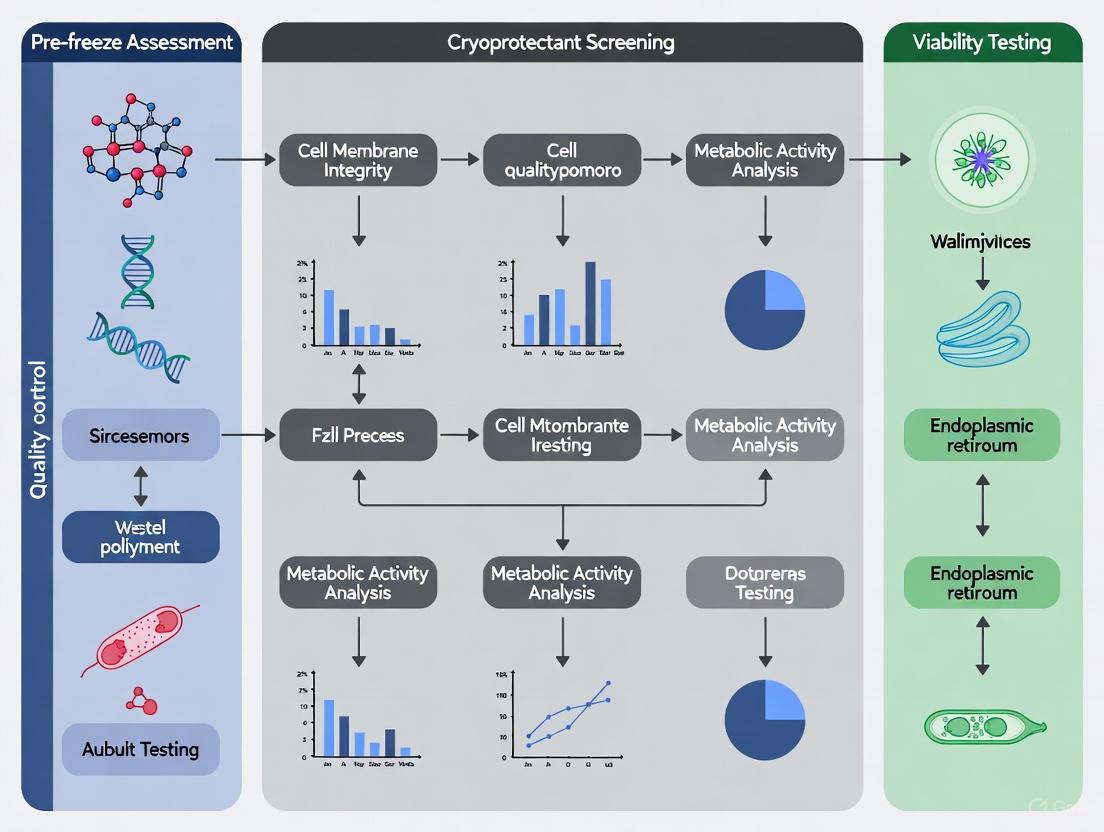
This article provides a comprehensive guide to pre-freeze quality control (QC) measures, a critical determinant of success in cell and gene therapy.
Pre-Freeze Cell Quality Control: Essential Measures for Ensuring Viability and Function in Biomanufacturing
Abstract
This article provides a comprehensive guide to pre-freeze quality control (QC) measures, a critical determinant of success in cell and gene therapy. Tailored for researchers, scientists, and drug development professionals, it covers the foundational principles of why pre-freeze QC is indispensable for product stability and batch reproducibility. The content delves into methodological applications, including standardized tests for sterility, potency, and identity, alongside best practices for cell handling. It further addresses common troubleshooting scenarios and optimization strategies to mitigate processing stress and variability. Finally, the article explores validation frameworks and comparative analyses of QC techniques, emphasizing the role of robust pre-freeze protocols in meeting regulatory standards and ensuring clinical efficacy.
Why Pre-Freeze Quality is Non-Negotiable: The Foundation of Cell Therapy Success
Linking Pre-Freeze Cell Health to Post-Thaw Viability and Clinical Outcomes
FAQs: The Fundamentals of Pre-Freeze Cell Health
Q1: Why is the pre-freeze growth phase of cells critical for post-thaw viability? Cells harvested during their logarithmic growth phase (log phase) exhibit significantly better recovery after thawing compared to cells in the stationary phase [1] [2] [3]. Cells in the log phase are inherently healthier, more robust, and have not yet depleted nutrients or accumulated significant metabolic waste, making them more resilient to the stresses of cryopreservation [3]. For best results, cells should have greater than 80% confluency and be in a state of active proliferation before freezing [2].
Q2: What are the key pre-freeze quality control checks to perform? Before cryopreservation, you should confirm the following:
- Absence of Microbial Contamination: Test for mycoplasma, bacteria, and fungi. Signs include media turbidity, unexpected color change, or morphological changes in the cells [2].
- High Viability: The cell population should have at least 90% viability before freezing, as determined by methods like Trypan Blue exclusion [4] [2].
- Proper Phenotype and Functionality: Ensure cells maintain their expected characteristics, which is vital for their intended clinical or experimental function post-thaw [5].
Q3: How does passaging method (as single cells vs. aggregates) influence post-thaw recovery? The optimal passaging method can be cell-type dependent:
- Freezing as Aggregates (Clumps): This method is often used for sensitive cells like induced pluripotent stem cells (iPSCs). Cell-cell contacts support survival, and recovery can be faster post-thaw. A key disadvantage is the variability in aggregate size, which can lead to inconsistent cryoprotectant penetration [1].
- Freezing as Single Cells: This allows for better quality control through accurate cell counting and more consistent vial-to-vial recovery. However, single cells may require more time after thawing to re-form necessary aggregates [1].
Q4: Can pre-freeze treatments improve cell resilience? Yes, several pre-conditioning strategies can enhance post-thaw outcomes:
- Pre-incubation with Anti-oxidants: This helps combat oxidative stress induced during the freeze-thaw process [6] [3].
- Glucose Supplementation: Provides an energy source to support cellular metabolism during the stressful freezing process [6].
- Alginate Encapsulation: A biomaterial-based approach that can protect cells during freezing [6].
Troubleshooting Guides
Issue: Low Post-Thaw Viability
| Potential Cause | Investigation Method | Corrective Action |
|---|---|---|
| Cells not in log phase | Check confluency and growth data; ensure passage was performed during exponential growth. | Harvest cells at 80-90% confluency and avoid using over-confluent, contact-inhibited cultures [2] [3]. |
| High-level of pre-freeze apoptosis | Use a viability stain (e.g., Trypan Blue) and check for morphological signs of stress. | Optimize culture conditions and passage cells more frequently to maintain health. Minimize mechanical stress during harvesting [3]. |
| Undetected contamination | Perform mycoplasma testing and bacterial/fungal culture. | Implement stricter aseptic techniques and routinely test cell banks for contamination [2]. |
| Inaccurate cell counting | Calibrate automated cell counters or cross-check with a hemocytometer. | Use a consistent counting method and ensure the cell suspension is homogeneous when aliquoting [4]. |
Issue: Poor Cell Function or Engraftment Despite Good Viability
| Potential Cause | Investigation Method | Corrective Action |
|---|---|---|
| Cellular senescence or genetic drift | Check population doubling times and perform karyotyping or other genetic stability assays. | Freeze cells at as low a passage number as possible and create a master cell bank to preserve early-passage stocks [4] [5]. |
| Loss of critical cell sub-populations | Use flow cytometry to immunophenotype the cells before freezing and after thawing. | Adjust the freezing protocol to be more gentle; consider cell-type specific freezing media that better preserve surface markers [5]. |
| Mitochondrial damage | Measure ATP levels or use a mitochondrial membrane potential dye post-thaw. | Incorporate antioxidants into the freezing medium or pre-incubation culture medium to protect mitochondria [3]. |
Data Presentation: Pre-Freeze Parameters and Their Impact
The following table synthesizes key quantitative findings from the literature on how pre-freeze factors influence post-thaw outcomes.
Table 1: Linking Pre-Freeze Cell Health to Post-Thaw Recovery and Clinical Efficacy
| Pre-Freeze Parameter | Target / Optimal Condition | Impact on Post-Thaw Outcomes | Supporting Evidence |
|---|---|---|---|
| Growth Phase | Logarithmic Phase | ↑ Viability, ↑ Recovery Speed, ↑ Functional Output | Cells in log phase handle cold storage and freezing better than stationary phase cells [1] [3]. |
| Cell Viability | >90% | Essential for achieving a therapeutically viable cell dose post-thaw. | Freezing cells at a high viability is a standard protocol to ensure successful thawing outcomes [4] [2]. |
| Cell Age/Passage | Low Passage Number | ↓ Risk of Senescence, ↑ Genetic Stability, ↑ Proliferative Potential | Freezing at low passage numbers minimizes aging, transformation, and genetic drift [4] [5]. |
| Cell Concentration | 1x10^6 - 10x10^6 cells/mL | Prevents low viability from under-concentration or toxicity/clumping from over-concentration. | Typical freezing concentration is within 1x10^3 - 1x10^6 cells/mL, but should be optimized per cell type [2]. |
| Pre-freeze Health (Functional) | Confirmed Phenotype & Potency | Critical for in vivo engraftment and therapeutic efficacy (e.g., for HSPCs, MSCs, CAR-T cells). | Post-thaw cell function (e.g., engraftment, immunomodulation) is directly linked to pre-freeze quality [5]. |
Experimental Protocols
Protocol 1: Standardized Pre-Freeze Cell Health Assessment
This protocol provides a methodology for characterizing cell health prior to cryopreservation, a critical step for ensuring reproducible post-thaw results.
Key Materials:
- Log-phase cell culture
- Trypan Blue solution [7]
- Hemocytometer or automated cell counter
- Equipment for flow cytometry (optional, for immunophenotyping)
- Culture media and centrifuge tubes
Methodology:
- Harvesting: Gently detach adherent cells using a gentle dissociation reagent to minimize membrane damage. For suspension cells, proceed directly to the next step [3].
- Cell Counting and Viability Staining:
- Immunophenotyping (If Required): For therapeutic cells like CAR-T cells or MSCs, take an aliquot of cells for flow cytometric analysis to confirm the presence of critical surface markers and the absence of undesired populations [5].
- Metabolic Assay (Optional): Plate a small number of cells in a multi-well plate and incubate with a metabolic dye like alamarBlue. Measure fluorescence or absorbance after 1-4 hours of incubation to establish a pre-freeze metabolic baseline [7].
Protocol 2: Optimized Freezing Protocol for Log-Phase Cells
This is a general protocol for freezing; cell-specific adjustments should be made based on the cell type.
Key Materials:
- Healthy, log-phase cell pellet
- Pre-chilled freezing medium (e.g., complete culture medium with 10% DMSO or a commercial serum-free alternative like CryoStor CS10)
- Sterile cryogenic vials
- Controlled-rate freezing apparatus (e.g., CoolCell or Mr. Frosty) or a programmable freezer
Methodology:
- Preparation: Centrifuge the harvested cell suspension at approximately 100–400 × g for 5–10 minutes. Aspirate the supernatant completely [4] [2].
- Resuspension: Gently resuspend the cell pellet in cold freezing medium to achieve the desired optimal cell concentration (e.g., 1-10 million cells/mL) [2] [3]. Use wide-bore pipet tips to reduce shear stress [3].
- Aliquoting: Dispense the cell suspension into labeled cryovials. Gently mix the main suspension often to maintain a homogeneous mixture [4].
- Equilibration: Allow the filled vials to equilibrate for 10–15 minutes on ice. This permits cryoprotectant penetration without prolonged toxic exposure [3].
- Controlled-Rate Freezing:
- Long-Term Storage: After 24 hours, quickly transfer the cryovials to a liquid nitrogen tank for long-term storage in the vapor phase (below -135°C) [4] [1].
Visualization: The Pre-Freeze to Post-Thaw Workflow
The following diagram illustrates the logical workflow and critical control points linking pre-freeze health to clinical outcomes.
The Scientist's Toolkit: Research Reagent Solutions
Table 2: Essential Materials for Pre-Freeze Quality Control and Cryopreservation
| Item | Function | Example Product(s) |
|---|---|---|
| Defined Cryopreservation Media | Provides a protective, consistent environment for cells during freezing, often with lower toxicity than lab-made DMSO/serum mixes. | CryoStor [2], Synth-a-Freeze [4] [7] |
| Cell Viability Stain | Identifies cells with compromised membranes to calculate pre-freeze and post-thaw viability. | Trypan Blue Solution [4] [7] |
| Metabolic Assay Reagent | Measures cell health, proliferation, and metabolic activity as a functional quality check. | alamarBlue Cell Viability Reagent [7] |
| Controlled-Rate Freezing Container | Achieves a consistent, slow cooling rate (~1°C/min) in a standard -80°C freezer, crucial for high viability. | CoolCell [2] [3], Mr. Frosty [4] [2] |
| Sterile Cryogenic Vials | Secure, leak-resistant containers for long-term storage in liquid nitrogen. | Internal-threaded vials recommended to prevent contamination [2]. |
| Gentle Dissociation Reagents | Detaches adherent cells with minimal damage to membrane proteins, preserving cell health. | TrypLE Express [4], non-enzymatic cell scrapers [3] |
In the realm of cell and gene therapy, the cryopreservation process is often viewed through the lens of the freezing protocol itself. However, the final post-thaw viability and functionality of a cellular product are profoundly influenced by its condition long before the first drop of cryoprotectant is added. A cascade of pre-freeze stressors can initiate a domino effect, critically undermining the resilience of cells during the cryopreservation journey. This technical resource center, framed within broader thesis research on pre-freeze quality control, provides troubleshooting guides and FAQs to help researchers identify and mitigate these early-stage challenges, ensuring that your cells enter the freezing process with the greatest possible strength.
Frequently Asked Questions (FAQs)
Q1: What are the most critical pre-freeze cell quality metrics to monitor? The most critical metrics are cell viability, growth phase, and passage number. Cells should be frozen at a high concentration of at least 90% viability and in the logarithmic growth phase (log-phase) to ensure they are metabolically active and healthy, which leads to the best post-thaw outcomes [4] [1]. Furthermore, using cells at as low a passage number as possible helps prevent genetic drift and senescence, which can compromise cryopreservation resilience [4].
Q2: How does the choice of cryoprotectant introduce a pre-freeze stressor? The most common cryoprotectant, Dimethyl Sulfoxide (DMSO), is a double-edged sword. While it protects cells by preventing intracellular ice formation, it also introduces chemical toxicity [8] [9]. This toxic stress occurs when cells are exposed to DMSO at non-cryogenic temperatures before freezing and after thawing. The concentration and time of exposure pre-freeze are critical factors to control.
Q3: Can the method used to passage cells before freezing impact their recovery? Yes, significantly. The choice between passaging cells as single cells or cell aggregates (clumps) involves a trade-off.
- Cell Aggregates: Cell-cell contacts support survival, and recovery is often faster. However, inconsistent aggregate size can lead to uneven penetration of cryoprotectant, causing variable viability [1].
- Single Cells: This method allows for better quality control and consistent cell counting but can be more stressful for the cells, potentially requiring a longer recovery period post-thaw [1]. The optimal method is often cell-type specific and should be determined experimentally.
Q4: What are the consequences of using a non-optimized cooling rate? An improper cooling rate inflicts two major types of damage, both rooted in pre-freeze decisions about protocol selection. The table below summarizes the balancing act required.
Table: Consequences of Non-Optimized Cooling Rates
| Cooling Rate | Primary Risk | Effect on the Cell |
|---|---|---|
| Too Slow | Excessive cellular dehydration & physical deformation [8] | Water leaves the cell too extensively, leading to solute damage and shrinkage. |
| Too Fast | Intracellular ice crystal formation [8] [10] | Water does not leave the cell quickly enough, forming lethal ice crystals that rupture membranes. |
Troubleshooting Guides
Problem: Consistently Low Post-Thaw Viability Despite Using a Standard Protocol
Potential Pre-Freeze Stressors and Solutions:
Stressor: Cells Frozen in Stationary Phase.
- Solution: Always harvest cells for cryopreservation when they are in the log-phase of growth [1]. Check the confluence and growth characteristics of your culture to determine the optimal harvesting window.
Stressor: High Passage Number or Undetected Microbial Contamination.
Stressor: Suboptimal Cryopreservation Medium.
- Solution: Systematically test different cryopreservation media formulations. For sensitive cells like PBMCs or stem cells, consider commercially available, serum-free, GMP-compliant media that are designed to reduce stress [9]. The table below summarizes key findings from a recent study on PBMC cryopreservation media.
Table: Evaluation of Cryopreservation Media for PBMCs over 2 Years [9]
| Freezing Medium | Composition | Long-term Viability & Functionality | Notes |
|---|---|---|---|
| FBS10 (Reference) | 90% Fetal Bovine Serum + 10% DMSO | High | Traditional standard, but has ethical and batch-variability concerns. |
| CryoStor CS10 | Serum-free, Protein-free + 10% DMSO | High (Comparable to FBS10) | Effective, defined, and xeno-free alternative. |
| NutriFreez D10 | Serum-free, Animal-protein-free + 10% DMSO | High (Comparable to FBS10) | Viable alternative to FBS-based media. |
| Media with <7.5% DMSO | Various serum-free, low DMSO | Significant viability loss | Eliminated in study for long-term storage. |
Problem: High Variability in Recovery Between Vials of the Same Cell Batch
Potential Pre-Freeze Stressors and Solutions:
Stressor: Inconsistent Cell Detachment or Aggregate Size.
- Solution: For adherent cells, ensure the detachment process (e.g., using trypsin) is gentle, consistent, and properly neutralized to minimize damage [4]. If freezing aggregates, standardize the size of the clusters to ensure uniform cryoprotectant exposure.
Stressor: Inhomogeneous Cell Suspension During Aliquoting.
- Solution: When dispensing the cell suspension into cryovials, gently and frequently mix the main container to maintain a homogeneous cell mixture. This prevents the cells from settling and ensures each vial gets an equal cell density [4].
The Scientist's Toolkit: Key Research Reagent Solutions
Table: Essential Materials for Robust Cryopreservation Protocols
| Item | Function & Importance | Technical Notes |
|---|---|---|
| Controlled-Rate Freezer (CRF) | Provides precise, reproducible control over the critical cooling rate (typically -1°C/min), which is vital for managing ice formation and dehydration [12] [8]. | Preferable to passive freezing devices for critical applications and late-stage clinical products [12]. |
| DMSO (Cell Culture Grade) | A permeating cryoprotectant that penetrates the cell, reduces ice crystal formation, and mitigates osmotic shock [4] [8]. | Use a bottle reserved for cell culture; open only in a laminar flow hood to avoid contamination. Handle with care due to cytotoxicity and its ability to enhance the uptake of other molecules [4]. |
| Defined Serum-Free Freezing Media | Pre-formulated, xeno-free media (e.g., CryoStor, NutriFreez) that reduce variability and contamination risks associated with FBS, providing a consistent environment for sensitive cells [9]. | |
| CoolCell or Mr. Frosty | A passive cooling device that provides an approximate -1°C/min cooling rate when placed in a -80°C freezer, offering a low-cost alternative to CRFs [4]. | Suitable for early research or when CRF is unavailable. |
Experimental Protocols & Workflows
Detailed Methodology: Assessing Pre-Freeze Cell Quality for Cryopreservation
This protocol is designed to systematically evaluate the impact of pre-freeze cell state on post-thaw recovery.
1. Pre-Freeze Preparation:
- Cell Culture: Culture your cells (e.g., iPSCs) under standard conditions. Plan the experiment to harvest cells at different confluence levels (e.g., 60% for log-phase, 100% for stationary phase) and at different passage numbers (e.g., low passage vs. high passage) [1].
- Characterization: Before dissociation, confirm the absence of microbial contamination (e.g., mycoplasma) using a validated method [11].
- Cell Detachment: For adherent cells, gently detach using a reagent like trypsin or TrypLE. Gently triturate to achieve a single-cell suspension or controlled aggregate size, depending on your protocol [4] [1].
- Cell Counting and Viability Assessment: Use an automated cell counter (e.g., Countess) or hemocytometer with Trypan Blue exclusion to determine total cell count and viability. Only proceed with populations showing >90% viability [4].
2. Freezing Process:
- Centrifugation: Centrifuge the cell suspension at 100–400 × g for 5–10 minutes. Aspirate the supernatant carefully [4].
- Resuspension: Resuspend the cell pellet in your chosen, pre-cooled cryopreservation medium (e.g., a commercial serum-free medium with 10% DMSO) at the recommended density [4] [9].
- Aliquoting: Dispense the cell suspension into pre-chilled cryovials. Mix the main suspension frequently to ensure homogeneity.
- Controlled-Rate Freezing: Place cryovials in a CoolCell passive freezing container or a controlled-rate freezer (CRF). If using a CRF, employ a standard slow-cooling profile (e.g., -1°C/min) to at least -40°C before transferring to liquid nitrogen vapor phase for storage [4] [12].
3. Post-Thaw Analysis:
- Rapid Thawing: Thaw the vials rapidly in a 37°C water bath with gentle agitation until just a small ice crystal remains [1] [9].
- Mitigating Osmotic Shock: Immediately upon thawing, transfer the cell suspension to a pre-warmed medium containing DNase (e.g., 10 µg/mL) to prevent cell clumping, and perform a gradual dilution to reduce osmotic stress [1] [9].
- Viability & Functionality Assessment: Perform a cell count and viability check post-thaw. For a deeper analysis, include functionality assays relevant to your cell type (e.g., cytokine secretion for immune cells, pluripotency marker expression for stem cells) at various time points post-thaw (e.g., 24 hours, 72 hours) to assess recovery [1] [9].
The following workflow diagram illustrates the logical relationship between pre-freeze conditions, the freezing process, and the final cell outcome.
Technical Support Center
Troubleshooting Guides
Guide 1: Addressing Poor Post-Thaw Cell Viability
Problem: Low cell viability and recovery after thawing cryopreserved allogeneic cell banks.
Investigation & Solutions:
| Observation | Potential Root Cause | Corrective Action |
|---|---|---|
| Low viability across all batches | Suboptimal freezing rate [13] | Validate and optimize controlled-rate freezing profile; avoid passive freezing for sensitive cells [12]. |
| High viability but low potency/functionality | Cryoprotectant Agent (CPA) toxicity or improper formulation [13] | Screen alternative CPAs (e.g., different DMSO concentrations); use defined, GMP-compliant freezing media [2]. |
| Viability decreases after prolonged culture post-thaw | Selection of subpopulations or epigenetic changes induced by cryopreservation [13] | Optimize the entire process, including pre-freeze cell health and post-thaw culture conditions [13]. |
| High variability between vials | Inconsistent freezing profile or vial location in freezer [12] | Perform temperature mapping and freeze curve analysis of the controlled-rate freezer; avoid mixed loads of different container types [12]. |
Guide 2: Managing Scalability and Batch Consistency
Problem: Inconsistent quality and performance when scaling up pre-freeze cell production.
Investigation & Solutions:
| Observation | Potential Root Cause | Corrective Action |
|---|---|---|
| Metabolic or functional drift in late-passage cells | Sequential passaging and long-term culture [14] | Establish well-characterized master and working cell banks early; limit cell passaging [13]. |
| Variable potency in final product | Donor variability and starting material heterogeneity [14] | Implement rigorous donor screening and incoming material QC; define acceptance criteria for starting materials [14]. |
| Inability to produce sufficient cells per batch | Limitations of planar expansion technologies (e.g., Cell Factories) [15] | Transition to microcarrier-based bioreactor systems for larger, more uniform scale-up [15]. |
| Failed sterility tests post-thaw | Operator-mediated variability and contamination in open processes [16] | Shift from open to closed processing systems and automate where possible [16]. |
Frequently Asked Questions (FAQs)
Q1: Why is pre-freeze quality control so critical for allogeneic therapies, more so than for autologous products? Allogeneic therapies are designed as "off-the-shelf" products derived from a universal donor to treat many patients [15]. A single pre-freeze manufacturing batch must yield a large number of doses (up to 10^9 cells/dose) [15] [16], making the quality, consistency, and safety of the cell bank paramount. A failure in one batch can impact thousands of patient doses, whereas an autologous batch affects only a single patient.
Q2: What are the minimum pre-freeze QC checks I should perform on my cell bank? The minimum criteria for characterizing cells like MSCs before freezing include identity, sterility, viability, purity, and potency [14]. You should also confirm that cells are in their maximum growth phase and have greater than 80% confluency prior to harvesting for cryopreservation [2].
Q3: We are using a standard controlled-rate freezer default profile. Is this sufficient? For many common cell types, the default profile may be adequate. However, survey data indicates that 33% of groups dedicate significant R&D to freezing process development [12]. Sensitive or engineered cells (e.g., iPSCs, cardiomyocytes, certain T-cells) often require an optimized, cell-specific freezing profile to maintain critical quality attributes post-thaw [12]. You should validate that the default profile works for your specific cell type and primary container.
Q4: Can the act of freezing itself alter my cell product? Yes. Suboptimal cryopreservation can lead to more than just low viability; it can cause chromosomal damage, epigenetic changes, and the selection of subpopulations [13]. Furthermore, even for cell-free products like conditioned medium, freezing can significantly alter the composition of proteins and extracellular vesicles, affecting the product's therapeutic potential [17].
Q5: What is the single biggest scalability hurdle in allogeneic cell therapy manufacturing? Scaling the cryopreservation process itself was identified as the biggest hurdle by 22% of industry respondents in a recent survey [12]. The ability to process an entire manufacturing batch efficiently and reproducibly, while maintaining critical quality attributes, is a major challenge as therapies move toward commercialization.
Experimental Data & Protocols
The table below summarizes key quantitative findings on how a standard freezing step can alter a biological product, underscoring the need for rigorous pre-freeze QC.
| Analyzed Parameter | Impact of Freezing at -80°C | Analytical Method | Research Context |
|---|---|---|---|
| Total Protein Content | 34% reduction | Bradford assay | Conditioned Medium (CM) from Adipose-derived Stem Cells [17] |
| Extracellular Vesicles | Significant depletion of larger particle types; stable total concentration | Nanoparticle Tracking Analysis (NTA) | Conditioned Medium (CM) from Adipose-derived Stem Cells [17] |
| Biochemical Composition | Changes in protein, lipid, and nucleic acid content | Raman Spectroscopy | Conditioned Medium (CM) from Adipose-derived Stem Cells [17] |
Detailed Protocol: Optimized Cryopreservation for Cell Banking
This protocol outlines a best-practice methodology for creating a research-scale working cell bank, incorporating key pre-freeze considerations [2] [13].
1. Pre-freeze Preparation:
- Cell Health: Ensure cells are healthy, in the log phase of growth, and free from microbial contamination (e.g., test for mycoplasma). Harvest cells at >80% confluency [2].
- Cryoprotectant Medium Selection: Use a chemically defined, serum-free cryopreservation medium (e.g., CryoStor CS10) to avoid lot-to-lot variability and safety concerns associated with fetal bovine serum (FBS) [14] [2]. Keep the medium chilled.
- Container: Use sterile, internal-threaded cryogenic vials suitable for GMP processes [13].
2. Harvesting and Formulation:
- Harvest cells according to standard protocol (e.g., using dissociation reagents) and centrifuge.
- Carefully remove the supernatant and resuspend the cell pellet in cold cryopreservation medium to a final concentration typically between 1x10^6 to 1x10^7 cells/mL [2]. Note: Optimal concentration is cell-type dependent and should be determined empirically.
3. Controlled-Rate Freezing:
- Aliquot the cell suspension into cryogenic vials.
- Place vials in an isopropanol freezing container (e.g., Nalgene Mr. Frosty) or a controlled-rate freezer (CRF).
- Freeze the cells at a controlled rate of approximately -1°C/minute by placing the container in a -80°C freezer overnight. This slow cooling rate is critical for high post-thaw viability [2].
4. Long-Term Storage:
- After 24 hours, promptly transfer the cryogenic vials to a liquid nitrogen storage tank for long-term preservation at -135°C to -196°C [2]. Avoid long-term storage at -80°C.
Workflow and Pathway Diagrams
Pre-Freeze QC Decision Pathway
Cell Therapy Manufacturing Workflow
The Scientist's Toolkit: Essential Research Reagents
| Item | Function & Rationale |
|---|---|
| Defined, Serum-Free Freezing Media (e.g., CryoStor CS10) | A GMP-manufactured, ready-to-use medium that provides a safe, protective environment during freezing and thawing, eliminating the variability and safety risks of home-made FBS-containing media [2]. |
| Controlled-Rate Freezer (CRF) | Equipment that provides precise control over the cooling rate (e.g., -1°C/min), a critical process parameter for maximizing cell viability and ensuring batch consistency, especially for commercial products [12]. |
| Sterile Cryogenic Vials (Internal-threaded) | Single-use, sterile vials for product storage. Internal-threaded vials are preferred to minimize the risk of contamination during filling and while stored in liquid nitrogen [13]. |
| Cryoprotectant Agents (CPAs) | Compounds like Dimethyl Sulfoxide (DMSO) that protect cells from freezing-induced damage. The choice and concentration are critical and must be optimized for each cell type [13]. |
| Mycoplasma Detection Kit | Essential test kit to ensure the starting cells and final product are free from mycoplasma contamination, a key pre-freeze safety check [2]. |
Defining Critical Quality Attributes (CQAs) for Your Specific Cell Type and Product
In the development of cell and gene therapies, a Critical Quality Attribute (CQA) is defined as a "physical, chemical, biological, or microbiological property or characteristic that should be within an appropriate limit, range, or distribution to ensure the desired product quality" according to the ICH Q8(R2) Guideline [18] [19]. For cell-based products, establishing well-defined CQAs is fundamental to ensuring safety, consistency, and therapeutic effectiveness throughout the development and manufacturing process [20]. This is particularly crucial for pre-freeze quality control, as the cryopreservation process itself can significantly impact these attributes, potentially altering cell composition, viability, and function [12] [17]. This guide provides targeted troubleshooting advice to help researchers identify, measure, and control CQAs for their specific cell therapy products.
Frequently Asked Questions (FAQs) on CQAs
1. What are the core CQAs required for all cell therapy products? The US Code of Federal Regulations (21CFR610) outlines fundamental CQAs for biological products, which include Safety, Purity, Identity, and Potency [18]. These form the foundation upon which product-specific CQAs are built.
2. How do CQAs differ between cell types like CAR-T cells and MSCs? While core concepts are similar, the specific implementation of CQAs varies significantly based on cell type and mechanism of action.
- For Mesenchymal Stromal Cells (MSCs): The International Society for Cell and Gene Therapy (ISCT) proposes minimal criteria for identity, which are often adopted as CQAs, including adherence to plastic, expression of specific surface markers (CD73⁺, CD90⁺, CD105⁺), absence of hematopoietic markers (CD45⁻, CD34⁻, CD14⁻, HLA-DR⁻), and trilineage differentiation potential [18] [20]. Potency assays must be tailored to the therapeutic indication, such as immunomodulatory activity for Graft vs. Host Disease [18].
- For CAR-T Cells: CQAs focus more on the genetic modification and T-cell function. Key attributes include CAR expression (confirmed by flow cytometry and PCR), Vector Copy Number (VCN), T-cell subset ratios (CD4/CD8), and transgene integrity to ensure safety from insertional mutagenesis [20] [11]. Potency is often assessed via cytokine (e.g., IFN-γ) release upon antigen stimulation [11].
3. Why is a potency assay so challenging to develop, and what are the common approaches? Potency is a measure of the biological activity linked to the product's clinical effect. Its development is challenging because the mechanism of action for many cell therapies is not fully understood, and in vitro assays may not perfectly predict in vivo function [18] [21]. Common approaches include [20] [19]:
- Direct Biological Activity Assay: e.g., Mixed lymphocyte reaction for T-cells or cytokine secretion profile.
- Indirect Assay: e.g., Correlating cell phenotype (like CD86 expression on dendritic cells) with function.
- Matrix Assay: Evaluating a panel of characteristics whose cumulative assessment provides a measure of potency.
4. How can routine processes like cryopreservation affect my product's CQAs? Cryopreservation is a critical process that can directly impact CQAs like viability and potency. Non-controlled thawing can cause osmotic stress and intracellular ice crystal formation, leading to poor cell viability and recovery [12]. Furthermore, research on Conditioned Medium (CM) has shown that a single freeze-thaw cycle at -80°C can cause a 34% reduction in total protein content and alter the composition of extracellular vesicles, demonstrating that even interim storage steps can significantly change critical attributes of a biological product [17]. This underscores the need to define and control cryopreservation as a Critical Process Parameter (CPP).
Troubleshooting Guides for Common CQA Challenges
Problem 1: Inconsistent Potency Assay Results
Potential Causes and Solutions:
- Cause: Lack of assay robustness and reproducibility across operators or laboratories.
- Solution: Perform rigorous assay qualification early in development. Characterize the assay's precision, reproducibility, sensitivity, and dynamic range. Use standardized protocols and, if available, reference materials to ensure comparability [21].
- Cause: The chosen assay does not adequately reflect the product's mechanism of action (MoA).
Problem 2: Loss of Critical Attributes Post-Cryopreservation
Potential Causes and Solutions:
- Cause: Suboptimal freezing or thawing rates damaging cells.
- Solution: Transition from passive freezing to controlled-rate freezing (CRF). CRF allows control over cooling rates, which can mitigate chilling injury and osmotic stress, thereby preserving CQAs like viability and cytokine secretion [12]. Validate the freeze-thaw profile for your specific cell type and container.
- Cause: Inadequate post-thaw analytics failing to capture true cell health.
Problem 3: Failure to Meet Identity or Purity Specifications
Potential Causes and Solutions:
- Cause: Overgrowth of non-target cells (e.g., fibroblasts in MSC cultures).
- Cause: Residual impurities from manufacturing (e.g., host cell proteins, vectors).
- Solution: Develop a well-defined impurity profile during early development. Validate that your manufacturing process effectively removes or reduces these impurities to acceptable levels, based on safety data from preclinical and clinical studies [20].
Experimental Protocols for Key CQA Assessments
Protocol 1: Vector Copy Number (VCN) Quantification for CAR-T Cells
Objective: To ensure consistent genetic modification and assess risk of genotoxicity by quantifying the average number of CAR transgene copies per cell genome.
Methodology (using qPCR or ddPCR):
- Extract Genomic DNA: Isolate high-quality genomic DNA from the final CAR-T cell product.
- Design Primers/Probes: Create assays targeting the CAR transgene and a single-copy reference human gene (e.g., RPPH1).
- Prepare Standard Curve: Generate a standard curve using a reference material with a known VCN.
- Perform Amplification: Run the qPCR or ddPCR reaction according to validated protocols.
- Calculate VCN: Determine the VCN using the formula:
VCN = (Quantity of CAR transgene / Quantity of reference gene)Acceptance Criterion: Regulatory agencies typically set an upper VCN limit (often 5 copies/cell) to mitigate insertional mutagenesis risks [20] [11].
Protocol 2: Mycoplasma Detection via Nucleic Acid Amplification
Objective: To ensure sterility by detecting the absence of mycoplasma contamination with a rapid turnaround time suitable for short-lived cell therapy products.
Methodology:
- Sample Selection: Test either the cell suspension or culture supernatant.
- DNA Extraction: Perform nucleic acid extraction using a method validated with the chosen amplification kit.
- Amplification: Use a commercial nucleic acid amplification test (NAAT) kit that has been validated to detect at least 10 CFU/mL for each mycoplasma strain recommended by the Pharmacopoeia.
- Controls: Include appropriate positive and negative controls.
- Result Interpretation: A validated test can provide results in hours, replacing the 28-day culture method and enabling release of products with short shelf-lives [11].
CQA Specifications by Cell Type
The following table summarizes key CQAs and their typical specifications for two common cell therapy platforms.
Table 1: CQA Specifications for MSC and CAR-T Cell Therapies
| CQA Category | MSC Therapy | CAR-T Cell Therapy |
|---|---|---|
| Identity | Phenotype: CD73⁺, CD90⁺, CD105⁺ > 95%; CD45⁻, CD34⁻, CD14⁻, HLA-DR⁻ < 5% [20] | CAR⁺/CD3⁺ population > XX% (product-specific) [20] |
| Purity | Minimal contamination by fibroblasts or hematopoietic cells [20] | Minimal residual untransduced T cells, host cell proteins, or vector debris [20] |
| Potency | Indication-specific (e.g., IDO activity, angiogenic cytokine secretion) [18] | IFN-γ release upon antigen stimulation > XX pg/mL (product-specific) [11] |
| Safety (Sterility) | No viable bacteria, fungi, or mycoplasma detected (Sterility Test USP <71>, Mycoplasma Test) [20] | No viable bacteria, fungi, or mycoplasma detected [11] |
| Safety (Genetics) | Not typically applicable | Vector Copy Number (VCN) < 5 copies/cell (typical limit) [20] |
| Viability | >70% post-thaw viability (Trypan Blue, 7-AAD) [20] | >70% viability at release [20] |
Process and Decision Flows
Diagram 1: CQA Identification Workflow
The Scientist's Toolkit: Essential Research Reagents
Table 2: Key Reagents for CQA Assessment
| Reagent / Material | Function in CQA Assessment | Example Use Case |
|---|---|---|
| Fluorochrome-conjugated Antibodies | Cell surface and intracellular marker staining for identity and purity analysis by flow cytometry. | Confirming MSC surface marker profile (CD73, CD90, CD105) [20]. |
| qPCR/ddPCR Reagents | Quantitative analysis of gene expression and vector copy number. | Quantifying CAR transgene copy number in CAR-T cells [20] [11]. |
| ELISA Kits | Quantification of specific protein secretion (cytokines, growth factors). | Measuring IFN-γ release as a potency assay for CAR-T cells [11]. |
| Cell Differentiation Kits | Inducing and assessing multi-lineage differentiation potential. | Evaluating trilineage differentiation (osteogenic, adipogenic, chondrogenic) for MSCs [18]. |
| Validated Mycoplasma NAAT Kits | Rapid and sensitive detection of mycoplasma contamination. | Final product sterility testing with a short turnaround time [11]. |
| LAL/rFC Assay Kits | Detection and quantification of bacterial endotoxins. | Ensuring final product meets endotoxin limit specifications [20] [11]. |
Implementing a Robust Pre-Freeze QC Workflow: From Collection to Cryopreservation
FAQs: Addressing Common QC Testing Challenges
Q1: What actions should be taken if product bioburden test results are significantly elevated compared to historical trend data?
A bioburden "spike" requires a systematic investigation and corrective action. Key steps include [22]:
- Review Environmental Monitoring Data: Check for deviations in the product manufacturing area's cleaning and disinfection processes.
- Assess Raw Materials: Evaluate if changes or contamination in raw materials from suppliers is a contributing factor.
- Review Sampling Plan: Determine if the number of samples or frequency of bioburden testing is sufficient.
- Microbial Characterization: Identify the microbial species present to help trace the potential root cause of contamination.
Q2: If a product’s bioburden test results are high, does this directly correlate with high endotoxin levels?
Not necessarily. Elevated bioburden counts do not automatically mean endotoxin levels are high, as endotoxins are specifically associated with Gram-negative bacteria [22]. An increase in bioburden may be due to Gram-positive bacteria or fungi, which do not produce endotoxin. To investigate, use identification techniques (e.g., Gram Stain) and perform a specific Bacterial Endotoxin Test (BET) to quantify endotoxin levels [22].
Q3: Is it possible to reliably identify microorganisms from colony morphology alone?
No, colony morphology (characteristics like color, shape, and edge) offers clues but is not sufficient for reliable identification. Morphology can vary significantly within a species and can be similar between different species [22]. For conclusive identification, use less subjective methods like MALDI-ToF or bacterial DNA sequencing [22].
Q4: What are the key tips for preventing mycoplasma contamination in cell cultures?
Mycoplasma contamination is a serious and widespread problem that can compromise research data [23]. Key preventive measures include [23]:
- Practice Aseptic Technique: Work carefully to avoid generating aerosols and clean spills immediately.
- Source Cells Responsibly: Obtain cell lines from a reliable source and ensure they have been recently screened for mycoplasma.
- Maintain a Clean Workspace: Regularly sterilize work surfaces, equipment, water baths, and incubators.
- Avoid Routine Antibiotic Use: Standard antibiotics are ineffective against mycoplasma (which lacks a cell wall) and can mask low-level contamination.
- Screen Regularly: Test all cells routinely, including new cell lines entering the lab and cells at the start of long-term experiments.
Troubleshooting Guides
Endotoxin Testing
| Observation | Problem | Corrective Action |
|---|---|---|
| Underprediction of endotoxin in environmental samples | Recombinant Factor C (rFC) assays may not detect all natural environmental endotoxin variants with the same sensitivity as the traditional LAL test [24]. | For critical product testing, validate the rFC method against a compendial LAL test using product-specific and environmental isolates. |
| Regulatory hesitancy | Concern that non-animal derived reagents like rFC are not sufficiently equivalent to the gold standard (LAL) [25] [24]. | Refer to recent pharmacopeial chapters (e.g., USP <86>, Ph. Eur. 2.6.32) that now provide guidelines for using rFC and other recombinant reagents [26]. |
Mycoplasma Detection
| Observation | Problem | Corrective Action |
|---|---|---|
| High background signal (in enzymatic assays) | Insufficient washing or contamination of the work area with the detection enzyme (e.g., alkaline phosphatase) [27]. | Follow the washing protocol meticulously. Keep the work area clean and free of contaminating enzymes. |
| Poor precision | Pipetting error, RNase contamination, or using a plate that was not pre-washed as required [27]. | Use proper pipetting technique with a new tip for each step. Employ an RNase-free technique and wash the plate per protocol before use. |
| No signal for positive control | A component or step was omitted, or the assay was compromised by RNase contamination [27]. | Carefully re-read the protocol before repeating the assay. Ensure an RNase-free technique is used throughout. |
Sterility Testing
| Observation | Problem | Corrective Action |
|---|---|---|
| Sample is unsuitable for membrane filtration | The product is of high viscosity, an insoluble solid, or a medical device not conducive to filtration [28]. | Use the Direct Inoculation Method by immersing the sample directly into culture media [28]. |
| Turbid culture medium after 14-day incubation | The sample is contaminated with viable microorganisms and fails sterility requirements [28]. | The batch fails the test. Initiate an investigation into the manufacturing and testing processes to find the source of contamination. |
Experimental Protocols & Data
Quantitative Impact of Cryopreservation on Cell Quality
Cryopreservation is a critical step in the cell therapy pipeline, but it can significantly impact cell quality. The table below summarizes quantitative data on how cryopreservation affects human Bone Marrow-derived Mesenchymal Stem Cells (hBM-MSCs), a key therapeutic cell type [29].
| Cell Attribute | 0-4 Hours Post-Thaw | 24 Hours Post-Thaw | Beyond 24 Hours |
|---|---|---|---|
| Viability | Reduced [29] | Recovered to acceptable levels [29] | N/A |
| Apoptosis Level | Increased [29] | Decreased from peak levels [29] | N/A |
| Metabolic Activity | Impaired [29] | Remained lower than fresh cells [29] | N/A |
| Adhesion Potential | Impaired [29] | Remained lower than fresh cells [29] | N/A |
| Proliferation Rate | N/A | N/A | No significant difference observed [29] |
| Colony-Forming Unit (CFU-F) Ability | N/A | N/A | Reduced in some cell lines [29] |
| Differentiation Potential | N/A | N/A | Variably affected (cell line-dependent) [29] |
Detailed Methodologies for Key QC Experiments
Protocol 1: Membrane Filtration Method for Sterility Testing This is one of the most widely used methods for sterility testing [28].
- Sample Pre-treatment: Prepare the sample based on its type. Filterable liquids may be diluted to improve flow rate. Ointments and oils are dissolved in a solvent like isopropyl myristate. Solid antibiotics are dissolved in a sterile solution, and medical devices are rinsed with a sterile solution, and the rinsate is filtered [28].
- Sample Filtration: Aseptically transfer the pre-treated sample into a sterile filtration funnel assembly fitted with a membrane (pore size ≤0.45 µm). Apply a vacuum to draw the fluid through the membrane, which captures any microorganisms [28].
- Membrane Incubation: Using sterile tweezers, transfer the membrane to a suitable culture medium. Seal the vessel and incubate for at least 14 days at specified temperatures [28].
- Result Interpretation: After incubation, observe the medium for turbidity. Clear medium indicates the sample is sterile. Turbid medium indicates microbial growth and test failure [28].
Protocol 2: Validating a Bioburden Test Method Before routine bioburden testing, the method itself must be validated to ensure accurate results [22].
- Recovery Efficiency Validation: This test validates how efficiently microorganisms are removed from the product. It generates a "correction factor" that is applied to the raw bioburden data to account for the method's efficiency. There are two common approaches [22]:
- Inoculation Method: Spiking the product with known bacterial spores (e.g., Bacillus species). This is suitable for products with expected low bioburden.
- Native Repetitive Method: Repeatedly rinsing the product's natural (native) bioburden. This is recommended for products with an expected high bioburden.
- Inhibitory Substances Screening: This test validates that substances from the product itself are not inhibiting or killing microbes during the test, which would lead to an underestimation of bioburden. The method must demonstrate that such inhibitory substances are neutralized [22].
Signaling Pathways and Workflows
Endotoxin Detection Cascade
The following diagram illustrates the key pathways for both the traditional LAL test and the modern recombinant Factor C (rFC) test.
Sterility Testing Workflow
This workflow outlines the decision process for choosing between the two primary sterility testing methods.
The Scientist's Toolkit: Research Reagent Solutions
| Reagent / Material | Function in QC Testing |
|---|---|
| Limulus Amebocyte Lysate (LAL) | The traditional gold standard reagent, derived from horseshoe crab blood, used in compendial Bacterial Endotoxin Tests (BET) to detect LPS [24] [26]. |
| Recombinant Factor C (rFC) | A sustainable, animal-free recombinant protein that detects endotoxin. It forms the basis of modern BETs, offering a consistent supply and reduced batch-to-batch variability [26]. |
| Dimethyl Sulfoxide (DMSO) | A cryoprotectant agent used in cell freezing media. It penetrates cells to prevent damaging intracellular ice crystal formation during cryopreservation [1]. |
| Membrane Filter (0.45 µm) | A critical component of the membrane filtration sterility test. It captures microorganisms from a liquid sample for subsequent incubation and detection [28]. |
| Selective Culture Media | Used in sterility and mycoplasma testing to support the growth of potential contaminants while being non-inhibitory. Incubation is typically for 14+ days [28]. |
Frequently Asked Questions (FAQs)
1. How can I determine transduction efficiency when specific antibodies for my transgene are not available? The PrimeFlow RNA Assay is a flow cytometry-based method that uses customized probes for in situ RNA hybridization to detect transgene expression at a single-cell level. This technique is particularly valuable for codon-optimized therapeutic transgenes where antibodies are non-existent or lack sensitivity. It allows for the quantification of viral RNA in transduced cells and can be combined with staining for surface markers to analyze transduction efficiency in different cell subpopulations [30].
2. What method provides a more accurate measurement of the Vector Copy Number (VCN) in transduced cell populations? While qPCR is the traditional method for determining the average VCN in a bulk cell population, it can underestimate the actual VCN in transduced cells due to the inclusion of non-transduced cells. Droplet Digital PCR (ddPCR) is a robust alternative that provides absolute quantification without a standard curve. Furthermore, an adjusted VCN calculation (VCNadj) that accounts for transduction efficiency based on Poisson statistics offers a more accurate representation of the true VCN within the genetically modified cells [31] [32].
3. Why is my post-thaw cell viability or potency lower than expected? Cryopreservation can significantly alter the composition of your cell product. Research shows that freezing conditioned medium (CM) at -80°C prior to processing causes a 34% reduction in total protein content and changes the proportion of extracellular vesicle types. The thawing process is equally critical; non-controlled thawing can cause osmotic stress and intracellular ice crystal formation, leading to poor cell viability and recovery. Using controlled-rate freezing and validated, consistent thawing procedures is essential for maintaining Critical Quality Attributes (CQAs) [17] [12].
4. What is the current industry practice for qualifying controlled-rate freezers (CRFs)? A key industry survey found little consensus on CRF qualification. Nearly 30% of respondents rely on vendor qualifications, which may not represent the final use case. A thorough qualification should assess a range of conditions, including full versus empty chamber mapping, temperature mapping across a grid of locations, and freeze curve mapping with different container types and mixed loads. Utilizing freeze curves as part of process monitoring, rather than relying solely on post-thaw analytics, can provide early warning of system performance issues [12].
Troubleshooting Guides
Issue 1: Low or Undetectable Transgene Expression via Flow Cytometry
This problem occurs when the transgene is not expressed or cannot be detected by conventional antibody-based flow cytometry.
Potential Cause 1: Lack of a sensitive or available antibody for the transgene.
- Solution: Implement the PrimeFlow RNA Assay.
- Experimental Protocol:
- Probe Design: Design a set of ~20-40 oligonucleotide probe pairs that bind specifically to the mRNA sequence of your transgene [30].
- Cell Fixation and Permeabilization: Fix cells to preserve cellular architecture and permeabilize to allow probe entry, using the reagents provided in the PrimeFlow kit [30].
- Hybridization: Incubate fixed cells with the target probe set to allow binding to the mRNA [30].
- Signal Amplification: Use pre-amplifier and amplifier molecules that bind to the target probes to create a branched DNA (bDNA) structure for signal amplification [30].
- Label and Detect: Label the amplified signal with a fluorescent conjugate and analyze by flow cytometry. This method can provide an 8,000 to 16,000-fold signal amplification [30].
Potential Cause 2: Weak promoter or gene silencing.
- Solution: Compare promoter strength and test different promoters.
- Experimental Protocol:
- Clone your transgene into lentiviral vectors with different promoters (e.g., MND, EFS, PGK, SFFV) [30].
- Transduce your target cells (e.g., human CD34+ cells) with these vectors under identical conditions [30].
- Use the PrimeFlow RNA Assay to detect transgene mRNA. Differences in promoter strength will be reflected in the percentage of positive cells and the mean fluorescence intensity (MFI) of the transduced population [30].
Issue 2: Inconsistent or Inaccurate Vector Copy Number (VCN) Data
Inaccurate VCN can lead to misinformed decisions about product safety and efficacy.
- Potential Cause: Bulk population measurement diluting the signal with non-transduced cells.
- Solution: Use droplet digital PCR (ddPCR) with an adjusted calculation.
- Experimental Protocol for ddPCR VCN Assessment [31] [32]:
- DNA Extraction: Isolate genomic DNA from the engineered cell product.
- Assay Design: Design primer and probe sets for two targets:
- Vector Sequence: Targets a unique region of the integrated vector (e.g., the CD3ζ domain, 4-1BB/CD3ζ junction for BBz-designed CARs, or CD28/CD3ζ for 28z CARs).
- Reference Gene: A single-copy endogenous human gene (e.g., GAPDH, RNase P).
- Droplet Generation and PCR: Partition the PCR reaction into thousands of nanoliter-sized droplets. Perform endpoint PCR amplification.
- Droplet Reading and Analysis: Use a droplet reader to count the fluorescent-positive (target-containing) and negative droplets for both vector and reference assays.
- VCN Calculation:
- Bulk VCN (VCNbulk): Calculated as (Concentration of vector copies) / (Concentration of reference gene copies).
- Adjusted VCN (VCNadj): To account for transduction efficiency (TE), use the formula derived from Poisson statistics: VCNadj = -ln(1 - TE/100). This provides a closer approximation of the VCN within the transduced cell subpopulation [31].
Issue 3: Poor Post-Thaw Recovery and Viability
Cell death or dysfunction after thawing is a common bottleneck in cell therapy workflows.
Potential Cause 1: Inconsistent or suboptimal freezing process.
- Solution: Transition from passive freezing to controlled-rate freezing (CRF).
- Experimental Protocol for CRF Qualification [12]:
- Temperature Mapping: Perform a full vs. empty temperature mapping of the CRF chamber across a grid of locations to identify hot or cold spots.
- Freeze Curve Mapping: Use thermocouples to record freeze curves for different container types (e.g., cryobags, vials) and fill volumes that represent your standard process.
- Define Limits: Establish alert and action limits for critical freeze curve parameters (e.g., supercooling, freezing rate) based on successful post-thaw outcomes.
- Profile Optimization: For sensitive cells (e.g., iPSCs, CAR-Ts), the default CRF profile may not be sufficient. Develop an optimized profile by testing different cooling rates and nucleation parameters, linking them to CQAs like viability and potency [12].
Potential Cause 2: Damaging thawing process.
- Solution: Implement a controlled and consistent thawing method.
- Experimental Protocol:
- Use a validated, GMP-compliant thawing device (e.g., controlled-temperature water bath or dry thawer) instead of an unregulated water bath, which poses contamination risks [12].
- Standardize the thawing process across all operators, aiming for a rapid warming rate (e.g., ~45°C/min has been established as good practice for some cell types) [12].
- Immediately after thaw, dilute the cell product in a pre-warmed medium to reduce the concentration of cytotoxic cryoprotectants like DMSO.
Table 1: Impact of Pre-Freezing on Conditioned Medium (CM) Composition [17]
| Analytical Parameter | Freshly Processed CM (F-CM) | Frozen then Thawed CM (T-CM) | Change |
|---|---|---|---|
| Total Protein Content | Baseline | -34% | Decrease |
| Extracellular Vesicles | Proportion of larger vesicles present | Depletion of larger vesicle types | Altered Distribution |
| Biochemical Composition | Baseline fingerprint | Altered Raman spectra for proteins, lipids, nucleic acids | Changes Detected |
Table 2: Comparison of VCN Measurement Methodologies
| Method | Principle | Key Advantage | Key Limitation |
|---|---|---|---|
| qPCR | Relative quantification against a standard curve. | Well-established, widely used [30]. | Bulk population average; underestimates VCN in transduced cells [30]. |
| Colony-Forming Cell (CFC) Assay | qPCR on individual cell colonies [30]. | Provides some single-cell level information [30]. | Low-throughput, not true single-cell resolution [30]. |
| Droplet Digital PCR (ddPCR) | Absolute quantification by partitioning reactions [31] [32]. | High precision, no standard curve needed, enables VCN adjustment for transduction efficiency [31] [32]. | Higher cost, specialized equipment required. |
Table 3: The Scientist's Toolkit: Key Reagents & Materials
| Item | Function / Application |
|---|---|
| PrimeFlow RNA Assay | Detects transgene mRNA via branched DNA signal amplification when antibodies are unavailable [30]. |
| Custom Target Probe Sets | Oligonucleotides designed to bind specifically to the mRNA of your transgene for use with PrimeFlow [30]. |
| ddPCR Supermix & Reagents | Chemical mixture optimized for digital PCR, including polymerase, dNTPs, and buffers [31] [32]. |
| Vector & Reference Gene Assays | Primer and probe sets for ddPCR to target the integrated vector and a single-copy endogenous reference gene [32]. |
| Controlled-Rate Freezer (CRF) | Precisely controls cooling rate to minimize cryo-injury, crucial for process consistency [12]. |
| Cryopreservation Bags/Vials | Primary containers for freezing cell products; qualification is needed for CRF profiling [12]. |
Experimental Workflows and Relationships
The success of any experiment or therapy relying on cryopreserved cells is fundamentally determined by the quality and physiological state of those cells before freezing. Pre-freeze processing is not merely a preparatory step but a critical intervention point that dictates post-thaw viability, functionality, and experimental reproducibility. Within the broader context of pre-freeze cell quality control research, this guide addresses the core triumvirate of cellular attributes—confluency, passage number, and metabolic state—that must be meticulously controlled to ensure cryopreservation success. Evidence consistently demonstrates that cells frozen during their maximum growth phase (log phase) and at as low a passage number as possible yield the highest viability and most consistent performance upon thawing [4] [2]. Furthermore, the cells' metabolic activity immediately before freezing has been directly linked to their ability to recover normal function post-thaw [33]. Ignoring these parameters risks introducing significant variability, genetic drift, and functional decline into your cell stocks, compromising everything from basic research findings to the efficacy of cell-based therapies [4] [34]. This technical support center provides targeted FAQs, troubleshooting guides, and validated protocols to empower researchers in standardizing these crucial pre-freeze variables.
Key Concepts and Definitions
- Confluency: The percentage of the culture vessel surface area covered by adherent cells. For pre-freeze processing, the target is typically 70-90% for most adherent cell lines, indicating active log-phase growth [2] [35].
- Passage Number: The number of times a cell population has been subcultured (or "split") since its primary isolation. A lower passage number is generally preferred for cryopreservation to minimize genetic drift and senescence [4] [34].
- Population Doubling Level (PDL): The total number of times the cell population has doubled since primary isolation. This is a more precise metric than passage number, as it accounts for variations in inoculation density and recovery at each subculture [34].
- Metabolic State: The functional profile of a cell's metabolic network. Research indicates that a cell's pre-cryopreservation metabolic activity significantly impacts its post-thaw recovery, with immature cells or those cultured for shorter periods potentially taking longer to regain normal function [33].
- Log Phase (Exponential Phase): The period of active cell division when growth is most vigorous. Freezing during this phase is a universally recommended best practice [4] [2].
Frequently Asked Questions (FAQs)
FAQ 1: What are the concrete consequences of using a high-passage cell line for cryopreservation? Using high-passage cell lines introduces significant risks, including phenotypic and genotypic changes (genetic drift) that can alter the cell line's characteristics as a biological model [34]. These changes are not uniform; for instance, transfection efficiency can either increase or decrease in a cell-line-dependent manner with increasing passage number [34]. High-passage cells are also more prone to senescence and transformation, which compromises the reproducibility and reliability of experimental results generated from frozen stocks [4].
FAQ 2: How does pre-freeze metabolic state influence post-thaw recovery? The metabolic state at the time of freezing is a powerful determinant of recovery. Studies on 3D-bioprinted osteoblast constructs have shown that immature osteoblasts take longer to recover post-thaw than their mature counterparts [33]. Furthermore, the pre-cryopreservation culture period has a marked effect; cells cryopreserved after a longer-term culture (e.g., 7 days) recovered their metabolic activity and function to normal values faster than those frozen earlier [33]. This underscores that cellular maturity and metabolic readiness are critical factors for successful cryopreservation.
FAQ 3: What is the optimal cell confluency for freezing, and why is it critical? For most cell types, the optimal confluency for freezing is between 70% and 90% [2] [35]. Harvesting cells at this stage of the log phase (maximum growth phase) is crucial because it ensures cells are robust, healthy, and metabolically active, leading to the best outcomes upon thawing [4] [2]. Allowing cells to become over-confluent (100%) can induce contact inhibition and drive them into a stationary phase, making them less resilient to the stresses of freezing and thawing [35].
FAQ 4: Can I freeze cells immediately after passaging them? No, it is not advisable. Cells need time to recover and re-enter the log phase of growth after the stress of passaging (e.g., enzymatic dissociation). You should allow the cells to grow for at least one or two doubling times post-passaging before assessing their confluency and preparing them for freezing. Freezing cells that have not fully recovered will result in poor post-thaw viability.
Troubleshooting Guides
Troubleshooting Poor Post-Thaw Viability
| Problem | Potential Pre-Freeze Cause | Recommended Action |
|---|---|---|
| Low Post-Thaw Viability | Cells were not in log phase (over- or under-confluent) [4] [2]. | Harvest adherent cells at 70-90% confluency. Confirm growth phase for suspension cells. |
| Passage number was too high [34]. | Return to an earlier passage, low-PDL stock. Establish a cell bank at the lowest possible passage. | |
| Cells were stressed or unhealthy prior to freezing (e.g., contaminated, pH shift) [2]. | Only freeze cultures with >90% viability. Check for contamination and ensure optimal culture conditions. | |
| Slow Post-Thaw Recovery | Incorrect pre-freeze metabolic state or maturity [33]. | Extend the pre-freeze culture period to ensure metabolic maturity for certain cell types. |
| Nutrient depletion in the culture medium before harvesting. | Ensure fresh, complete medium is provided 24 hours before harvesting for freezing. |
Troubleshooting Post-Thaw Functional Deficits
| Problem | Potential Pre-Freeze Cause | Recommended Action |
|---|---|---|
| Altered Post-Thaw Function (e.g., differentiation capacity, secretion profile) | High passage number leading to genetic drift and phenotypic changes [4] [34]. | Characterize cells and freeze working banks at a consistent, low passage number. |
| Cells were in a state of metabolic stress before freezing [33]. | Optimize feeding schedules and avoid letting cells become over-confluent prior to harvest. | |
| Inconsistent Results Between Frozen Vials | Inconsistent confluency or passage number at time of freezing. | Standardize the pre-freeze processing protocol, strictly adhering to target confluency and passage number. |
| Variability in the metabolic state of harvested cells. | Standardize the duration of culture and feeding regimen prior to cell harvesting for freezing. |
Quantitative Data and Experimental Protocols
The following table consolidates key quantitative metrics from research to guide pre-freeze processing. Note that optimal values, especially for cell concentration, can vary by cell type.
Table 1: Key Pre-Freeze Metrics and Parameters from Experimental Data
| Parameter | Target / Optimal Value | Experimental Context / Cell Type | Key Finding / Rationale |
|---|---|---|---|
| Pre-Freeze Viability | > 90% [4] | General cell culture principle | Ensures only healthy, robust populations are preserved. |
| Cell Confluency | 70-90% [2] [35] | Adherent cell lines | Captures cells during log-phase growth for maximum recovery. |
| Cell Concentration in Freezing Vial | 1x10^3 - 1x10^6 cells/mL [2] | General guidance | Prevents low viability from too few cells or clumping from too many. |
| Pre-Freeze Culture Period | 7 days vs. shorter periods [33] | 3D-bioprinted osteoblast constructs | A longer pre-freeze culture led to faster recovery of metabolic activity and function. |
| Total Protein Loss after Freezing | 34% reduction [17] | Conditioned Medium (CM) from ASCs | Highlights that freezing can alter composition of cell secretions, relevant for functional assays. |
Protocol: Standardized Pre-Freeze Cell Processing
This protocol outlines the critical steps for preparing adherent cells for cryopreservation, with emphasis on controlling confluency, passage number, and metabolic health.
Title: Protocol for Harvesting and Preparing Adherent Cells for Cryopreservation
Objective: To harvest healthy, log-phase cells at a specified passage and confluency for the creation of high-quality frozen stocks.
Materials:
- Log-phase cultured cells at 70-90% confluency [4] [2]
- Pre-warmed complete growth medium
- Pre-warmed balanced salt solution (e.g., DPBS, without calcium or magnesium)
- Pre-warmed dissociation reagent (e.g., trypsin or TrypLE Express)
- Centrifuge tubes
- Equipment for determining cell count and viability (e.g., hemocytometer or automated cell counter)
Method:
- Preparation: One day before freezing, refresh the medium on the cells to ensure they are nutrient-replete and in an optimal metabolic state [33].
- Verification: On the day of freezing, microscopically verify that the cells are healthy and at the target confluency (70-90%). Do not proceed if cells appear stressed, contaminated, or are over-confluent.
- Dissociation: a. Aspirate the culture medium and gently rinse the cell layer with a balanced salt solution to remove residual serum and calcium/magnesium that can inhibit trypsin. b. Add a sufficient volume of pre-warmed dissociation reagent to cover the cell layer. c. Incubate at 37°C for the time specified for the cell type until cells detach (typically 2-5 minutes). d. Gently tap the vessel to aid detachment and neutralize the dissociation reagent with 2-3 volumes of complete growth medium containing serum [4].
- Centrifugation: Transfer the cell suspension to a centrifuge tube and pellet the cells at approximately 100–400 × g for 5–10 minutes [4].
- Resuspension and Counting: Aspirate the supernatant and resuspend the cell pellet in a small volume of fresh, cold complete medium. Perform a cell count and viability assay. Proceed only if viability exceeds 90% [4].
- Preparation for Freezing: Centrifuge the cells again, aspirate the supernatant, and resuspend the cell pellet at the desired final concentration in an appropriate, ice-cold freezing medium [4].
Diagram: Pre-Freeze Cell Processing Workflow
The Scientist's Toolkit: Research Reagent Solutions
Table 2: Essential Materials for Pre-Freeze Processing and Cryopreservation
| Item | Function / Application | Key Considerations |
|---|---|---|
| Controlled-Rate Freezer or Cryo-Container (e.g., "Mr. Frosty", Corning CoolCell) | Ensures a consistent, slow cooling rate of ~1°C/minute, which is critical for cell survival [4] [2]. | Prevents lethal intracellular ice crystal formation. Isopropanol containers must be at room temperature for correct freeze rate. |
| Cryoprotectant Agents (CPAs) | Penetrating (e.g., DMSO, Glycerol) agents reduce ice crystal formation by lowering the freezing point and slowing cooling [4]. | DMSO must be handled carefully and used at appropriate concentrations (often 10%). Serum-free, defined freezing media (e.g., CryoStor, Synth-a-Freeze) are excellent alternatives [4] [2]. |
| Sterile Cryogenic Vials | Designed for ultra-low temperature storage. | Use internal-threaded vials to minimize contamination risk during storage in liquid nitrogen [2]. |
| Serum-Free, Defined Freezing Media | A ready-to-use, chemically defined alternative to home-made DMSO/serum mixes. | Promotes higher, more consistent post-thaw viability and function. Reduces variability and safety concerns associated with serum and DMSO [4] [2]. |
| Cell Dissociation Reagents (e.g., Trypsin, TrypLE) | Gently detaches adherent cells from the culture substrate prior to freezing [4]. | Over-exposure can damage cell membranes. Use the gentlest effective method; non-enzymatic scrapers can be used for sensitive cells [3]. |
| Automated Cell Counter / Hemocytometer | Accurately determines pre-freeze cell concentration and viability via Trypan Blue exclusion [4]. | Essential for standardizing the number of cells frozen per vial, a key factor for successful recovery. |
FAQs on Cryopreservation Media Selection and Formulation
What are the key components of cryopreservation media, and what is the primary function of each?
Cryopreservation media are specialized solutions formulated to protect cells from the extreme stresses of freezing and thawing. Their composition is critical for maintaining cell viability, functionality, and genetic stability during long-term storage [36].
Table: Key Components of Cryopreservation Media and Their Functions
| Component | Primary Function | Examples & Considerations |
|---|---|---|
| Base Solution | Provides an isotonic environment and foundational nutrients. | Cell culture media or balanced salt solutions. |
| Cryoprotective Agents (CPAs) | Penetrate cells to prevent lethal intracellular ice crystal formation. | Dimethyl sulfoxide (DMSO) at 5-10% concentration is most common [1]. |
| Serum/Serum Replacements | Provide proteins and growth factors that support cell survival; can mitigate osmotic stress. | Fetal Bovine Serum (FBS) has variability and contamination risk; serum-free formulations use defined protein supplements [2] [36]. |
| Protective Additives | Mitigate secondary cellular stress, such as oxidative damage. | Antioxidants and other stabilizing compounds. |
Why should I transition from serum-containing to serum-free, GMP-compliant cryopreservation media?
While traditional serum-containing media like FBS with DMSO are effective, they pose significant risks for regulated drug development and manufacturing [2] [36]. Serum-free, GMP-compliant media offer several critical advantages:
- Reduced Risk Profile: Serum is biologically derived and has undefined components, leading to risks of pathogen transmission and lot-to-lot variability that can compromise experimental reproducibility and product consistency [2] [37].
- Regulatory Compliance: GMP (Good Manufacturing Practice) guidelines ensure that media are consistently produced and controlled according to strict quality standards. This involves rigorous testing for microbial contamination, endotoxin levels, and nutritional content, which is essential for clinical applications and for obtaining regulatory approvals [2] [37] [38].
- Enhanced Traceability: GMP-grade media come with comprehensive documentation, including a Certificate of Analysis (CoA), which details the composition, manufacturing process, and quality control tests. This ensures full traceability and facilitates regulatory audits [37] [38].
How do I select the correct cryopreservation medium for my specific cell type and application?
Selecting the appropriate medium requires a risk-based approach that considers the final application of the preserved cells.
Table: Cryopreservation Media Selection Guide
| Media Type | Best For | Advantages | Disadvantages |
|---|---|---|---|
| Serum-Containing | Basic research with limited regulatory concerns. | Proven effectiveness; rich in growth factors. | Lot-to-lot variability; risk of pathogen transmission; ethical concerns [36]. |
| Serum-Free, Defined | Pre-clinical research and process development. | Reduced contamination risk; better consistency; suitable for early clinical applications [36]. | May require optimization for specific cell types. |
| Cell Type-Specific, GMP-Compliant | Clinical trials and commercial cell therapy manufacturing. | Tailored to specific cellular requirements; ensures regulatory compliance; supports IND and BLA submissions [2] [37]. | Higher cost; requires rigorous quality documentation. |
The key decision factors are:
- Final Application: Is the work for research, clinical trials, or commercial therapy? GMP-compliant media are mandatory for clinical use [37].
- Cell Type Sensitivity: Stem cells (e.g., iPSCs, ESCs), primary cells, and engineered cells (e.g., CAR-T) often require specialized, optimized formulations to maintain their critical quality attributes (CQAs) post-thaw [2] [12].
- Post-Thaw Functionality Needs: Ensure the medium preserves not just viability but also the specific functions needed, such as differentiation potential or target cell killing efficacy [36].
Troubleshooting Common Cryopreservation Issues
Why are my post-thaw cell viability and recovery rates low?
Low post-thaw recovery is a common challenge often stemming from multiple factors in the pre-freeze, freezing, and thawing processes. The following workflow outlines a systematic approach to diagnose and correct these issues.
Pre-Freeze Cell Health: The quality of cells before freezing is paramount. Always harvest cells during their maximum growth phase (log phase) at greater than 80% confluency [2]. Prior to freezing, ensure cells are healthy and free from microbial contamination, particularly mycoplasma, which can drastically reduce recovery [2] [39]. Using an incorrect cell concentration in the cryovial can also lead to poor outcomes; a very low concentration results in low viability, while a very high concentration can cause undesirable clumping. A general range of 1x10^5 to 1x10^6 cells/mL is recommended, though optimization for specific cell types may be needed [2].
Freezing Protocol: The rate of cooling is a critical process parameter. A controlled rate of approximately -1°C/minute is ideal for most cell types as it balances the prevention of intracellular ice formation with the avoidance of excessive cell dehydration [2] [1]. This can be achieved using a controlled-rate freezer (CRF) or passive freezing containers (e.g., "Mr. Frosty") placed in a -80°C freezer [2].
Thawing Process: The established rule is "slow freeze, rapid thaw." Rapid thawing in a 37°C water bath with gentle agitation is crucial to minimize the time cells are exposed to the toxic effects of DMSO and to reduce damage from ice recrystallization [2] [12]. Immediately after thawing, the cell suspension should be diluted in warm culture medium to gradually reduce the DMSO concentration and prevent osmotic shock [1].
Storage Conditions: For long-term stability, cells must be stored at or below -135°C, typically in the vapor phase of liquid nitrogen. Storage at -80°C is not recommended for the long term, as cells will degrade over time due to transient warming events and the inability to fully suspend metabolic activity [2] [1]. Storing cells above the extracellular glass transition temperature of DMSO (-123°C) can lead to stressful events that reduce viability [1].
How can I prevent osmotic shock and DMSO toxicity during thawing?
Osmotic shock and DMSO toxicity are interconnected issues that occur during the thawing process. Rapid warming (at a rate of approximately 45°C/min) is the first defense, reducing the time cells are exposed to high solute concentrations [12]. To mitigate osmotic stress when diluting out the cryoprotectant, consider slowly adding pre-warmed culture medium to the thawed cell suspension dropwise while gently swirling the tube, rather than adding the cells directly into a large volume of medium. This allows for a more gradual equilibration of solutes across the cell membrane [1]. Using specialized, serum-free freezing media with optimized DMSO concentrations can also reduce toxicity compared to lab-made formulations with variable DMSO content [2] [36].
Experimental Protocols for Media Qualification
Protocol: Post-Thaw Viability and functionality Assessment
Purpose: To qualify a new lot or type of GMP-compliant cryopreservation medium by evaluating its performance in preserving not only cell viability but also key cellular functions.
Materials:
- Cryopreservation media (test and control formulations)
- Healthy, log-phase cells
- Controlled-rate freezing container or CRF
- Liquid nitrogen storage tank
- Water bath (37°C)
- Complete cell culture medium
- Hemocytometer or automated cell counter
- Trypan blue solution
- Cell-specific functional assay kits (e.g., flow cytometry markers, differentiation kits, metabolic activity assays)
Methodology:
- Cell Preparation: Harvest healthy cells during their log-phase growth. Perform a cell count and viability check to establish a pre-freeze baseline [2] [39].
- Freezing: Divide the cell pellet into aliquots and resuspend each in the different cryopreservation media to be tested, following the manufacturer's recommended cell concentration. Aliquot into cryovials. Freeze the vials using a standardized controlled-rate method (e.g., -1°C/min) and transfer to liquid nitrogen for storage for at least 24 hours [2].
- Thawing and Recovery: Rapidly thaw one vial of each test condition in a 37°C water bath. Immediately upon thawing, gently transfer the cell suspension to a tube containing pre-warmed complete medium to dilute the cryoprotectant. Centrifuge to remove the freezing medium and resuspend the cell pellet in fresh culture medium. Seed the cells at a recommended density [2] [1].
- Data Collection and Analysis:
- Viability Measurement: At 24 hours post-thaw, perform a cell count with trypan blue exclusion to calculate post-thaw viability [40].
- Functionality Assessment: At appropriate time points (e.g., 3-7 days post-thaw), perform cell-specific functional assays. For immune cells, this could be immunophenotyping by flow cytometry to confirm marker expression. For stem cells, this could be a pluripotency marker assay or a directed differentiation protocol to confirm retained differentiation potential [39] [1].
- Growth Kinetics: Monitor and compare the population doubling time and morphology of the thawed cells against your established benchmarks.
The Scientist's Toolkit: Essential Research Reagent Solutions
Table: Key Reagents for a Robust Cryopreservation Workflow
| Reagent / Material | Function | GMP/Quality Considerations |
|---|---|---|
| Defined, Serum-Free Freezing Media (e.g., CryoStor CS10, PromoExQ) | Provides a protective, defined environment for freezing; reduces lot-to-lot variability. | Select GMP-manufactured versions with CoA for clinical work [2] [37] [38]. |
| Controlled-Rate Freezing Device (CRF or passive containers like CoolCell) | Ensures consistent, optimal cooling rate (~ -1°C/min) for high viability. | CRF provides better documentation for cGMP processes; system qualification is critical [2] [12]. |
| Cryogenic Vials | Secure, leak-proof containment for long-term storage. | Use sterile, internal-threaded vials to prevent contamination during liquid nitrogen storage [2]. |
| Liquid Nitrogen Storage System | Maintains temperatures ≤ -135°C for indefinite long-term storage. | Requires continuous monitoring and alarm systems for sample security [2] [39]. |
| Validated Thawing System (e.g., controlled-rate thawers) | Provides consistent, rapid warming to minimize DMSO toxicity. | More reproducible and GMP-compliant than manual water baths, especially for bedside thawing [12]. |
| Mycoplasma Detection Kit | Essential QC tool to confirm pre-freeze cell culture is contamination-free. | Regular testing (e.g., every few weeks) is a best practice to ensure data integrity [2] [39]. |
Troubleshooting Pre-Freeze QC Failures and Optimizing for Consistency
FAQs on Variability in Cellular Starting Materials
What are the primary sources of variability in leukopaks from healthy donors? Variability in leukopaks stems from donor biology and collection practices. Key biological factors include the donor's health status, age, chronic conditions, body mass index (BMI), smoking history, and latent viral status [41]. Collection-related variability arises from processing a fixed volume of blood (e.g., 12 liters) or a set multiple of a donor's total blood volume (TBV), without accounting for individual differences in white blood cell (WBC) count and the percentage of peripheral blood mononuclear cells (%PBMC) [41]. This often results in leukopaks with inconsistent yields of PBMCs and varying levels of contaminants like red blood cells (RBCs), granulocytes, and platelets.
How does the choice between fresh and frozen starting materials impact variability and development? While fresh cells may seem cost-effective for early research, they introduce significant variability and risk as a program advances [42]. Fresh cells are highly perishable, and their composition can vary between collections from the same donor due to factors like health status and timing of collection, making it challenging to generate reproducible data [42]. Furthermore, shipping delays can lead to complete batch loss. Frozen cellular materials, though having a higher upfront cost, provide consistency, flexibility, and reliability essential for clinical and commercial manufacturing [42]. They allow for precise manufacturing planning, immediate access to pre-characterized donors, and are considered the only scalable, commercially viable solution [42].
Which uncommon cellular starting materials are emerging in the field? Researchers are exploring several unconventional sources with therapeutic potential [43]. These include:
- Amniotic fluid cells: Investigated for neonatal conditions and wound healing.
- Urine-derived stem cells: Collected non-invasively for urologic and neurologic therapies.
- Dental pulp stem cells: Harvested from baby teeth for spinal cord injury and stroke recovery.
- Nasal mucosa stem cells: Collected via a simple swab for neurodegenerative diseases.
- Skeletal muscle-derived cells (SMDCs): Used in autologous products for conditions like stress urinary incontinence [43].
What are the key challenges in cryopreservation that can affect cell quality? The cryopreservation process itself is a major source of variability. Key challenges include [12]:
- Freezing Process: A lack of consensus on qualifying controlled-rate freezers and whether different container types can be frozen together. Over 60% of industry professionals use default freezing profiles, which may not be optimal for sensitive cell types like iPSCs or CAR-T cells [12].
- Thawing Process: Non-controlled thawing at the bedside or in the lab can cause osmotic stress, intracellular ice crystal formation, and prolonged exposure to cryoprotectants like DMSO, leading to poor cell viability and recovery [12].
- Scaling: The "ability to process at a large scale" is identified as the biggest hurdle for cryopreservation in cell and gene therapy, crucial for commercializing therapies [12].
Troubleshooting Guides
Issue: High Variability in Leukopak Cell Yields
Problem: Inconsistent PBMC yields and high levels of contaminants (RBCs, granulocytes, platelets) from donor to donor, disrupting downstream manufacturing.
Investigation & Resolution:
| Investigation Step | Evidence of Issue | Recommended Mitigation Protocol |
|---|---|---|
| Donor Pre-Qualification | Donors do not meet specific criteria (e.g., HLA type, viral exposure, high frequency of target cells). | Implement a rigorous donor screening program. Pre-qualify donors based on age, BMI, health history, and therapy-specific needs like T stem cell memory count [41]. |
| Collection Method Analysis | Using fixed-volume processing (e.g., 2x TBV or 12L) results in variable PBMC yields (see Table 1). | Use an apheresis collection calculator that factors in the donor's unique WBC count, %PBMCs, and TBV to determine the process volume needed for a target cell yield (e.g., 10 billion PBMCs) [41]. |
| Leukopak Quality Assessment | High hematocrit (>3%), low PBMC percentage (<90%), or excessive platelets/granulocytes. | Define and require suppliers to provide leukopaks meeting specific quality attributes: hematocrit ≤3%, ≥90% PBMCs, and minimal platelets [41]. Request a Certificate of Analysis. |
Issue: Poor Post-Thaw Cell Viability and Recovery
Problem: Low cell viability and functionality after cryopreservation and thawing.
Investigation & Resolution:
| Investigation Step | Evidence of Issue | Recommended Mitigation Protocol |
|---|---|---|
| Controlled-Rate Freezing (CRF) Profile | Using a default CRF profile for a sensitive cell type (e.g., iPSC-derived cells). | Develop an optimized CRF profile. Critical parameters to control include the cooling rate before/after nucleation and the final temperature before transfer to storage. Avoid over-reliance on vendor qualification; perform in-house qualification with your product [12]. |
| Thawing Method | Using a non-controlled, manual thawing process (e.g., water bath). | Implement a controlled-thawing device to ensure a consistent, rapid warming rate. Standardize the thawing procedure across R&D and clinical settings to improve reproducibility [12]. |
| Cryopreservation Formula | High and variable cell death post-thaw. | Optimize the cryoprotective agent (CPA) formulation (e.g., DMSO concentration) and the cell freezing density. Consider advanced CPA cocktails to reduce toxicity [12]. |
Table 1: Impact of Leukopak Collection Method on PBMC Yield Variability [41] This table compares the predicted PBMC yield from ten hypothetical donors when using a fixed-volume collection method versus a method that uses a calculator to target 10 billion cells.
| Healthy Donor | WBC (cells/µL) | %PBMC | TBV (L) | Predicted PBMC if process: 2x TBV | Predicted PBMC if process: 12L | Process Vol to Target 10B PBMC (L) | Predicted PBMC with Calculator |
|---|---|---|---|---|---|---|---|
| #1 | 8800 | 18% | 6.3 | 11.9B | 11.4B | 11.0 | 10.5B |
| #2 | 5300 | 19% | 4.7 | 5.6B | 7.1B | 17.0 | 10.1B |
| #3 | 6600 | 27% | 6.3 | 13.6B | 12.8B | 9.5 | 10.2B |
| #4 | 6400 | 35% | 4.4 | 11.8B | 16.1B | 7.5 | 10.1B |
| #5 | 5000 | 25% | 6.9 | 10.3B | 9.0B | 13.5 | 10.1B |
| #6 | 4800 | 20% | 7.7 | 8.9B | 6.9B | 17.5 | 10.1B |
| #7 | 5600 | 29% | 5.8 | 11.4B | 11.7B | 10.5 | 10.2B |
| #8 | 7500 | 34% | 4.9 | 15.1B | 18.4B | 7.0 | 10.7B |
| #9 | 9100 | 21% | 5.1 | 11.6B | 13.8B | 9.0 | 10.3B |
| #10 | 3100 | 38% | 4.9 | 6.9B | 8.4B | 14.5 | 10.2B |
B = Billion cells; L = Liters
Table 2: Industry Survey on Key Cryopreservation Challenges [12] This table summarizes the biggest hurdles in cryopreservation as identified by industry professionals.
| Identified Hurdle | Survey Response (%) |
|---|---|
| Ability to process at a large scale | 22% |
| Cost of the process | 18% |
| Ability to maintain CQAs | 16% |
| Viability and recovery post-thaw | 14% |
| Logistics and supply chain | 12% |
| Other | 18% |
The Scientist's Toolkit: Essential Research Reagents & Materials
Table 3: Key Materials for Pre-Freeze Quality Control
| Item | Function in Quality Control |
|---|---|
| Leukopak from Pre-Qualified Donors | The foundational cellular starting material. Using pre-screened donors reduces inherent biological variability [41]. |
| Apheresis Collection Calculator | A tool (often software) that uses donor-specific data (WBC, %PBMC, TBV) to calculate the blood volume needed for a consistent target cell yield, standardizing collections [41]. |
| Cryoprotective Agent (CPA) e.g., DMSO | A chemical that protects cells from ice crystal formation and osmotic shock during freezing. Optimization of concentration and formulation is critical for viability [12]. |
| Controlled-Rate Freezer (CRF) | Equipment that precisely controls the cooling rate of cell products. Essential for process control and documentation in cGMP manufacturing [12]. |
| Controlled-Thawing Device | A GMP-compliant device that ensures a consistent, rapid warming rate, replacing contamination-prone water baths and improving post-thaw viability [12]. |
Experimental Workflow for Pre-Freeze Quality Control
This diagram outlines a comprehensive workflow for managing variability in cellular starting materials, from donor selection to cryopreservation.
Quality Control Checkpoint Logic
This diagram details the decision-making process at the incoming quality control checkpoint.
Troubleshooting Guides
Guide 1: Managing Processing Delays Between Tissue Collection and Cryopreservation
Problem: Inconsistencies in post-thaw cell viability and functionality due to unavoidable delays between sample collection and the start of the freezing protocol.
Background: The pre-freeze handling period is a critical window where cellular health can be significantly compromised. Processing delays can lead to stress responses, metabolic shifts, and the initiation of apoptosis, all of which degrade the starting material and reduce the quality of the cryopreserved product [44] [45]. The following guide outlines steps to mitigate these effects.
Troubleshooting Steps:
Assess the Scope of the Delay:
- Action: Immediately upon sample acquisition, determine the expected processing timeline.
- Rationale: The strategy for handling the delay depends on its duration. Short delays (under 6-10 hours) can be managed with refrigerated storage, while longer delays require cryopreservation [44].
Select and Execute an Appropriate Holding Protocol:
Action: Based on the assessed delay, choose one of the following validated methods:
Method for Short-Term Delays (≤ 6-10 hours):
- Wash the tissue sample with a cold antibiotic solution (e.g., Penicillin-Streptomycin in Advanced DMEM/F12) to minimize microbial contamination.
- Submerge the tissue in a cold holding medium (such as DMEM/F12 or RPMI supplemented with antibiotics) [44].
- Store at 4°C until processing.
Method for Long-Term Delays (>10-14 hours):
- Cryopreserve the entire tissue sample for later processing.
- After an antibiotic wash, preserve the tissue using a specialized freezing medium (e.g., containing 10% FBS, 10% DMSO, and 50% L-WRN conditioned medium) [44].
- Store in vapor-phase liquid nitrogen.
Rationale: These methods are designed to stabilize the tissue. Refrigeration slows metabolic activity, while cryopreservation halts it entirely. Note that a 20-30% variability in live-cell viability can be expected between these two preservation methods, so selection is critical [44].
Document the Ischemia Time:
- Action: Meticulously record the time from sample collection (or blood supply interruption) to the initiation of the freezing protocol or stabilization step.
- Rationale: This "warm ischemia time" is a key process parameter for quality control. It allows for the correlation of post-thaw outcomes with pre-freeze handling and is essential for investigating lot-to-lot variability [45].
Verify Pre-Freeze Cell Health:
- Action: Before beginning cryopreservation, assess the viability and concentration of the cell suspension using a method like trypan blue exclusion.
- Rationale: Freezing should only be performed on healthy, log-phase cells with greater than 80% confluency. Proceeding with compromised cells will guarantee poor post-thaw recovery [46] [2]. The optimal concentration for freezing is typically within a general range of 1x10^3 to 1x10^6 cells/mL [2].
Summary of Mitigation Strategies for Processing Delays:
| Delay Duration | Recommended Method | Critical Steps | Expected Impact on Viability |
|---|---|---|---|
| Short (≤ 6-10 hours) | Refrigerated Storage | Antibiotic wash; storage in cold medium at 4°C. | Lower impact; viability dependent on cell type and exact duration. |
| Long (>10-14 hours) | Tissue Cryopreservation | Antibiotic wash; cryopreservation in defined medium; vapor-phase LN₂ storage. | Higher impact; 20-30% variability vs. refrigerated method [44]. |
Guide 2: Controlling Ice Crystal Formation Due to Suboptimal Freezing Rates
Problem: Low post-thaw cell viability and functionality caused by intracellular ice crystal formation, which damages membranes and organelles.
Background: The rate of cooling is a primary determinant of ice crystal size and location. Slow freezing promotes the formation of large, damaging extracellular ice crystals, causing cellular dehydration. Uncontrolled fast freezing can lead to lethal intracellular ice formation. The goal is a controlled, slow cooling rate, typically -1°C per minute, to allow water to safely exit the cell before freezing [46] [2].
Troubleshooting Steps:
Do Not Rely on Non-Programmable Freezing Methods:
- Action: Avoid using insulated cardboard or polystyrene foam boxes as freezing chambers.
- Rationale: These homemade devices do not provide a controlled, reproducible, or uniform cooling rate, leading to serious differences in viability among vials [46].
Select a Controlled-Rate Freezing Method:
- Action: Choose one of the following methods to achieve the -1°C/minute cooling rate:
- Controlled-Rate Freezer (CRF): Use an electronic programmable freezing unit for the most precise and documentable control [12] [2].
- Isopropanol-Freezing Container: Use devices like Corning CoolCell or Nalgene Mr. Frosty. Place vials in the room-temperature container, then directly into a -80°C freezer. The isopropanol (or the container's conductive material) ensures an approximately -1°C/minute cooling rate [2].
- Action: Choose one of the following methods to achieve the -1°C/minute cooling rate:
Validate the Freezing Process:
- Action: If using a CRF, qualify its performance with a temperature mapping study across different load configurations (e.g., full vs. empty, different container types) [12].
- Rationale: A vendor's factory qualification may not represent your specific use case. Understanding the system's limits ensures consistent freezing for all your samples [12].
Prevent Temperature Fluctuations During Transfer:
- Action: After the freezing cycle is complete, transfer vials to long-term storage in vapor-phase liquid nitrogen (-135°C to -196°C) as quickly as possible.
- Rationale: Exposure to warm temperatures during transfer can cause small ice crystals to melt and recrystallize into larger, more damaging crystals, a process known as recrystallization [47] [46]. Storage at -80°C is not suitable for long-term preservation, as cells will degrade over time [2].
Frequently Asked Questions (FAQs)
Q1: What is the single most important factor for successful cell cryopreservation? A: There is no single factor, but rather a combination of four critical elements: (1) starting with healthy, contamination-free cells in the log phase of growth; (2) using the correct cryoprotective agent (e.g., DMSO) at an appropriate concentration; (3) employing a controlled cooling rate of approximately -1°C per minute; and (4) storing cells under proper cryogenic conditions (vapor-phase liquid nitrogen) [46] [2].
Q2: We are having trouble with our iPSCs not forming good colonies after thawing. What should we check in our pre-freeze protocol? A: For sensitive cells like iPSCs, pre-freeze handling is paramount. Key checkpoints include:
- Cell Condition: Feed cells daily before cryopreservation and freeze when they are 80-90% confluent, typically 2-4 days after passaging. Overgrown cultures have poor viability [46].
- Cluster Size: Ensure cell clumps are properly dissolved before freezing. Large clusters prevent cryoprotectant penetration, leading to low survival in the core [46].
- Handling: Use gentle centrifugation (200-300 x g for 2 minutes) and pipetting to avoid mechanical stress [46].
Q3: Can we refreeze cells that we previously thawed? A: It is strongly discouraged. Cryopreservation is a traumatic process for cells. Refreezing previously thawed cells typically results in very low viability because the surviving cells are further stressed by a second round of freezing and thawing, which exacerbates damage from ice crystals and osmotic stress [46].
Q4: How can we improve post-thaw cell viability if our current results are inconsistent? A: Focus on these four pre-freeze checkpoints:
- Cell Health & Density: Freeze only healthy, log-phase cells at the recommended density (e.g., ~1-2 x 10^6 cells/mL for a standard cryovial). High density can cause nutrient and CPA insufficiency [46].
- CPA Exposure: Minimize the time cells are exposed to Cryoprotective Agents (CPAs) at room temperature before freezing.
- Cooling Rate: Consistently use a validated controlled-rate method (CoolCell or CRF) [46] [2].
- Thawing: Thaw cells rapidly and dilute out the CPA gently to avoid osmotic shock [46].
Experimental Workflow for Pre-Freeze Handling Research
The following diagram illustrates a robust experimental workflow for studying pre-freeze handling variables, derived from established methodologies [44] [46] [45].
Diagram 1: Experimental workflow for pre-freeze handling research.
Research Reagent Solutions
The table below lists essential materials and their functions for conducting pre-freeze and cryopreservation research, as cited in the literature.
| Research Reagent / Material | Function in Pre-Freeze & Freezing Context |
|---|---|
| Advanced DMEM/F12 | Serves as a base medium for tissue transport and short-term cold storage, maintaining osmotic balance [44]. |
| Cryoprotective Agents (CPAs) | Protect cells from intra- and extracellular ice crystal damage. DMSO is the most common intracellular CPA [46] [2]. |
| Defined Cryopreservation Media (e.g., CryoStor) | Ready-to-use, serum-free media that provide a defined, consistent, and protective environment for cells during freeze-thaw, reducing lot-to-lot variability [2]. |
| Controlled-Rate Freezing Container (e.g., CoolCell) | A passive device placed in a -80°C freezer to ensure a consistent cooling rate of approximately -1°C/minute, which is critical for high viability [46] [2]. |
| Internal-Threaded Cryogenic Vials | Designed to minimize contamination risk during filling and storage in liquid nitrogen, ensuring sample integrity [2]. |
| Liquid Nitrogen (Vapor Phase) | Provides the recommended long-term storage environment (-135°C to -196°C) to suspend all metabolic activity and ensure cellular stability for years [46] [2]. |
Optimizing Pre-Freeze Cell Concentration and Formulation to Minimize Cryo-Injury
Frequently Asked Questions (FAQs)
How does cryoprotectant concentration affect cell survival? The concentration of cryoprotectants like glycerol and DMSO is critical. While they prevent damaging intracellular ice formation, they can cause cytotoxicity and osmotic stress at high concentrations, disrupting phospholipid structures and altering cytoplasm viscosity [48]. Optimal concentrations are cell-type specific; for example, a study on canine spermatozoa found that 3% and 6% glycerol provided significantly higher post-thaw motility compared to 0%, 1.5%, or 9% concentrations [48].
What is the impact of freezing rate on different cell types? The freezing rate must be carefully controlled. A slow cooling rate of approximately -1°C per minute is widely used and effective for many cell types in suspension [4] [49]. However, optimal rates can vary; a rapid freezing rate averaging -31°C/min was found to be optimal for canine spermatozoa when combined with 3% glycerol [48]. For complex tissues like ovarian tissue, multi-step protocols involving different cooling rates (e.g., 1°C/min to -7°C, then 0.3°C/min to -40°C) are necessary to manage ice crystallization [50].
Why is my post-thaw cell viability low, even with high pre-freeze viability? Low post-thaw viability can result from several factors in the pre-freeze phase:
- Suboptimal Cell Concentration: Freezing at too high or too low a cell density can compromise recovery.
- Incorrect Cryoprotectant: The type and concentration of cryoprotectant may not be suitable for your specific cell type.
- Poor Freezing Control: Uncontrolled, slow freezing in a standard -80°C freezer can cause ice crystal damage, whereas controlled-rate freezing improves consistency [12].
- Cellular State: Cells should be frozen in the log phase of growth at a high concentration of at least 90% viability for the best outcomes [4].
Can I use a passive freezing container instead of a controlled-rate freezer? Yes, passive freezing containers (e.g., "Mr. Frosty") are designed to achieve a cooling rate of approximately -1°C/min in a -80°C freezer and are a low-cost, effective alternative for many applications [4] [49]. However, controlled-rate freezers (CRFs) provide superior control over critical process parameters and are increasingly prevalent, especially for late-stage clinical and commercial cell therapy products [12]. While 60% of survey respondents in the cell therapy industry use a CRF's default freezing profile, sensitive cells like iPSCs and certain primary cells often require optimized, non-standard profiles [12].
What are the key differences between preserving cell suspensions and 3D constructs? Cryopreserving 3D constructs like hydrogels, spheroids, and bioprinted tissues is more complex than preserving cell suspensions. Challenges include ensuring adequate cryoprotectant (CPA) diffusion throughout the scaffold, managing thermal gradients, and minimizing ice formation that can disrupt the 3D architecture [51]. Biomaterials like hyaluronic acid and alginate can themselves provide cryoprotective effects, and DMSO-free strategies using polymers with ice-recrystallization inhibition (IRI) properties are an active area of research [51].
Troubleshooting Common Pre-Freeze Issues
Problem: Low Post-Thaw Viability Despite High Pre-Freeze Viability
| Potential Cause | Underlying Issue | Recommended Solution |
|---|---|---|
| Incorrect Cell Concentration | High density leads to nutrient deprivation and metabolite buildup; low density reduces survival signals. | Freeze at the optimal density for your cell type. For fibroblasts, a concentration of 1-5 x 10^6 cells/mL is often effective [49]. |
| Suboptimal Cryoprotectant | Cytotoxicity from DMSO or glycerol; osmotic shock. | Test a range of concentrations. Use 5-10% DMSO for many mammalian cells [4] [49], or optimize for your cell type (e.g., 3% glycerol for canine sperm [48]). |
| Uncontrolled Freezing Rate | Intracellular ice formation (too fast) or excessive dehydration (too slow). | Use a controlled-rate freezer or a passive freezing container to maintain a cooling rate of ~ -1°C/min [4] [49]. |
| Non-log Phase Cells | Cells not in their most robust state are more susceptible to cryo-injury. | Freeze cells during the log phase of growth [4]. |
Problem: Poor Recovery of Cell Function Post-Thaw (e.g., Reduced Adhesion, Differentiation)
| Potential Cause | Underlying Issue | Recommended Solution |
|---|---|---|
| Cryo-Injury to Membranes and Organelles | Disruption of mitochondrial and plasma membrane integrity. | Include a protein source like FBS or HPL in the freezing medium to stabilize membranes [49] [52]. Consider adding non-penetrating CPAs like sucrose [50]. |
| Disruption of Extracellular Matrix (ECM) | For complex constructs, freezing can disrupt collagen organization and mechanical properties [52]. | For ECM-rich products like cell sheets, consider hypothermic preservation as an alternative. For 3D constructs, use biomaterials with intrinsic cryoprotective properties (e.g., HA, silk fibroin) [51] [52]. |
| Inadequate Potency/Function Testing | Viability assays may not detect subtler functional deficits. | Implement post-thaw potency assays specific to your cell's function (e.g., IFN-γ ELISA for T-cells, differentiation assays for stem cells) [11]. |
Table 1: Optimized Cryopreservation Parameters from Recent studies
| Cell / Tissue Type | Optimal Cryoprotectant Formulation | Optimal Cell Concentration | Freezing Rate / Protocol | Key Outcome Metrics | Source |
|---|---|---|---|---|---|
| Canine Spermatozoa | Tris-egg yolk-citrate extender with 3% Glycerol | 1.0 × 10^8 spermatozoa/mL | Rapid freezing (-31°C/min avg.) 1 cm above LN₂ | Higher mitochondrial activity & viability post-thaw [48] | [48] |
| Human Dermal Fibroblasts (HDF) | FBS + 10% DMSO | Not specified (data from cell bank) | Passive freezing container (~ -1°C/min) | >80% viability, retained phenotype (Ki67, Col-1 expression) after 3 months [49] | [49] |
| Human Ovarian Tissue | Leibovitz L-15 with 1.5M DMSO & 0.1M sucrose | Tissue fragments | Multi-step controlled-rate:1°C/min to -7°C → Seeding → 0.3°C/min to -40°C → 10°C/min to -140°C | Resumed folliculogenesis; tissue quality similar to fresh [50] | [50] |
| hMSCs in 3D MeHA Hydrogels | 10% DMSO in Methacrylated Hyaluronic Acid (MeHA) hydrogel | Encapsulated cells | Controlled-rate freezing | 40-60% post-thaw viability; preserved differentiation potential [51] | [51] |
Table 2: The Scientist's Toolkit: Essential Reagents and Materials
| Item | Function / Rationale | Example Application |
|---|---|---|
| Dimethyl Sulfoxide (DMSO) | A membrane-permeating cryoprotectant that reduces ice crystal formation by replacing intracellular water. It is the most common CPA but requires optimization to minimize toxicity [48] [49]. | Used at 5-10% for many cell lines (e.g., HDFs [49]); also used at 1.5M (~10.5% v/v) for ovarian tissue [50]. |
| Glycerol | A penetrating cryoprotectant often used as an alternative to DMSO, particularly in reproductive cell cryopreservation [48]. | Optimized at 3% concentration for canine spermatozoa [48]. |
| Fetal Bovine Serum (FBS) / Human Platelet Lysate (HPL) | Provides a source of proteins and macromolecules that help stabilize cell membranes and reduce osmotic shock during freezing and thawing [49]. | Common component of freezing media, e.g., "FBS + 10% DMSO" [49] [52]. |
| Sucrose | A non-penetrating cryoprotectant that helps to dehydrate cells gently before freezing, reducing intracellular ice formation, and stabilizes the cell membrane. | Used at 0.1M in ovarian tissue cryopreservation in combination with DMSO [50]. |
| Controlled-Rate Freezer / Passive Container | Apparatus to ensure a consistent, reproducible, and optimal cooling rate, which is critical for cell survival. | A controlled-rate freezer allows for complex multi-step protocols [50]. A passive container (e.g., "Mr. Frosty") provides a simple way to achieve ~ -1°C/min [4] [49]. |
| Hyaluronic Acid (HA) Hydrogels | A biomaterial for 3D culture that can also act as a cryoprotective matrix, improving CPA diffusion and providing structural support during freezing [51]. | Used as a scaffold for cryopreserving hMSCs, maintaining viability and differentiation potential post-thaw [51]. |
Detailed Experimental Protocol: Optimizing Canine Sperm Cryopreservation
This protocol, adapted from a 2025 study, provides a detailed methodology for systematically testing glycerol concentration and freezing rate [48].
1. Primary Dilution and Equilibration
- Isolate the sperm-rich fraction from the ejaculate.
- Dilute the sample individually with a standard Tris-egg yolk-citrate extender to a concentration of 2.0 × 10^8 spermatozoa/mL.
- Equilibrate the diluted samples for 3 hours in a refrigerator at 4°C.
2. Cryoprotectant Addition
- Prepare the basic extender supplemented with glycerol to achieve final concentrations of 0%, 1.5%, 3%, 6%, and 9%.
- Add an equal volume of these extenders to the equilibrated sperm samples to achieve the final glycerol concentration and a final sperm concentration of 1.0 × 10^8 spermatozoa/mL.
3. Freezing Process
- Load the samples into 0.25 mL straws.
- Place the straws horizontally in a rack positioned at defined heights (e.g., 1, 4, 7, or 10 cm) above the surface of liquid nitrogen in a closed styrene foam box for 15 minutes. This creates different freezing rates.
- After freezing in vapor, plunge the straws directly into liquid nitrogen for storage.
4. Thawing and Assessment
- Thaw the straws in a water bath at 70°C for 5 seconds.
- Evaluate post-thaw quality at 0, 12, and 24 hours. Key metrics include:
- Sperm Motility Index (MI)
- Viability (e.g., via trypan blue exclusion)
- Mitochondrial (MT) Activity (e.g., via JC-1 or MTT assay)
Key Finding: The combination of a rapid freezing rate (1 cm height, averaging -31°C/min) with 3% glycerol provided the highest mitochondrial activity and viability, minimizing damage from ice crystal formation [48].
Experimental Workflow for Cryopreservation Optimization
The following diagram illustrates the logical workflow for designing a cryopreservation optimization experiment, based on the methodologies cited.
Mechanisms of Cryo-Injury and Protection
This diagram outlines the primary pathways of cryo-injury to cells and how optimized pre-freeze strategies confer protection.
Leveraging Data Analytics and AI for Early Detection of Process Anomalies
In the context of pre-freeze cell quality control measures research, maintaining process consistency is paramount. Anomalies during cell processing—deviations from established norms in parameters like cell confluency, media composition, or environmental conditions—can significantly compromise cell viability, functionality, and the overall success of downstream therapeutic applications [53]. Variations in the pre-freeze phase can alter the critical biological properties of the final product, making early detection essential [53].
Artificial Intelligence (AI) and data analytics transform how researchers detect these process anomalies. AI-driven anomaly detection uses machine learning to automatically identify unusual patterns in data that deviate from the established norm, allowing for intervention before issues cause significant damage [54]. This proactive approach is a substantial improvement over traditional, often manual, quality control methods that are typically reactive and can miss subtle, complex patterns indicative of process failure. Implementing these systems enhances the reproducibility and robustness of cryopreservation protocols, which is a cornerstone of reliable bioprocessing [53] [55].
How AI-Driven Anomaly Detection Works
AI-driven anomaly detection follows a structured, multi-stage workflow that transforms raw data into actionable alerts. This process is continuous and adaptive, learning from new data to improve its accuracy over time [54].
The Anomaly Detection Workflow
The following diagram illustrates the typical workflow for an AI-driven anomaly detection system in a research or bioprocessing environment:
Workflow Description:
- Data Collection: The system gathers data from diverse sources relevant to cell culture and processing. This includes structured data (e.g., cell counts, confluence metrics, nutrient concentrations from databases) and unstructured data (e.g., logs from bioreactor sensors, technician notes, microscopic images) [54] [56].
- Preprocessing: The collected data is cleaned, normalized, and transformed. This critical step handles missing values, removes noise, and standardizes formats to ensure data consistency and quality, which is foundational for accurate model performance [54] [56].
- Model Training: Depending on the available data and the goal, machine learning models are trained using different approaches (see section 2.2). This stage involves feeding historical data to the algorithm to learn the relationships between different process parameters [54].
- Pattern Learning: The AI system establishes a comprehensive baseline of "normal" process behavior by analyzing historical data. It learns the typical interactions and ranges for parameters like pH, dissolved oxygen, and cell growth rates [54].
- Detection and Alerts: Once trained, the model monitors incoming, real-time data. It flags any significant deviations from the learned baseline—such as an unexpected drop in glucose consumption rate—and triggers an alert for researcher intervention [54].
Types of AI Learning Methods for Anomaly Detection
The choice of machine learning method depends on the nature of the available data and the specific anomalies of interest. The table below summarizes the three primary approaches.
Table 1: AI Learning Methods for Anomaly Detection in Bioprocessing
| Method | Key Principle | When to Use | Pros | Cons |
|---|---|---|---|---|
| Supervised Learning [54] | Model is trained on labeled datasets with known "normal" and "anomalous" examples. | When you have a large, reliable historical dataset with well-labeled anomalies. | High accuracy with well-labeled data; easy to interpret in some models. | Requires extensive labeled data (hard for rare events); struggles with novel, unknown anomalies. |
| Unsupervised Learning [54] | Model identifies anomalies by finding patterns/deviations in data without pre-existing labels. | When labeled anomaly data is scarce or unavailable. | Discovers unknown or evolving anomalies; no need for labeled data. | Higher false positive rate; interpretation can be complex. |
| Semi-Supervised Learning [54] | Model is trained primarily on "normal" data and flags deviations from this baseline. | When you have abundant normal data, but anomalies are rare or costly to label. | Good balance between accuracy and flexibility; adaptable for rare but critical events. | Performance depends heavily on quality of "normal" data; may miss anomalies hidden in normal variations. |
In the context of pre-freeze quality control, semi-supervised learning is often highly applicable, as researchers typically have vast amounts of data from successful, "normal" cell processing runs and aim to detect any deviation that could compromise cell quality [54].
Troubleshooting Guides & FAQs for AI-Assisted Process Monitoring
This section addresses specific, common challenges researchers may face when implementing or using AI for anomaly detection in their pre-freeze workflows.
FAQ 1: Our AI system generates too many false alerts, causing "alert fatigue." How can we reduce this?
Answer: A high rate of false positives is a common challenge that can often be resolved by refining the model's sensitivity and improving data quality.
- Troubleshooting Steps:
- Review and Retrain the Model: False positives can occur if the model's "normal" baseline is too narrow or based on non-representative data. Re-train the model with a larger, more comprehensive dataset of normal process runs, ensuring it captures acceptable natural variations [54].
- Adjust Alert Thresholds: Most systems allow you to adjust the statistical confidence level required to trigger an alert. Slightly increasing the threshold can filter out minor, insignificant fluctuations while still capturing critical deviations [54].
- Conduct a Root Cause Analysis: Investigate the alerts flagged as false positives. If they consistently relate to a specific parameter (e.g., a temporary sensor glitch), you can add data validation rules or exclude that noisy data source from critical alerts [56].
- Implement a Feedback Loop: Incorporate a feature where users can label alerts as "true" or "false" positives. This feedback can be used to automatically retrain and improve the model's accuracy over time [54].
FAQ 2: We have limited labeled data for "failed" experiments. Can AI still be effective for us?
Answer: Yes. The scarcity of labeled failure data is a typical scenario, especially with novel processes. In this case, Unsupervised or Semi-Supervised Learning methods are the most appropriate starting point [54].
- Recommended Protocol:
- Select a Semi-Supervised Model: Choose a model like a One-Class SVM or an Autoencoder that specializes in learning from "normal" data only [54].
- Compile a "Gold Standard" Normal Dataset: Gather data from your known successful, high-quality cell processing runs. This dataset must be as clean and representative as possible.
- Train the Model: Use only this "gold standard" dataset to train the model, allowing it to learn the complex, multi-variable signature of a successful process.
- Deploy and Monitor: The model will now flag any future process run that deviates significantly from this learned signature of success, enabling early detection of potential failures without needing examples of every possible failure mode.
FAQ 3: How can we validate that an AI-flagged anomaly truly predicts a loss in post-thaw cell quality?
Answer: Correlating process anomalies with a definitive post-thaw quality metric is essential for validation.
- Validation Experiment Protocol:
- Design: When the AI system flags a process run as anomalous, proceed with the cryopreservation as planned. Also, select a non-flagged ("in-control") process run from the same batch for comparison.
- Thaw and Assess: Thaw the vials from both the anomalous and in-control runs using a standardized, rapid-thaw protocol (e.g., in a 37°C water bath) [2].
- Measure Critical Quality Attributes (CQAs): Perform the following post-thaw analyses on cells from both groups:
- Viability: Use a trypan blue exclusion assay or flow cytometry with Annexin V/PI staining.
- Functionality: Conduct a cell-specific functional assay (e.g., ATP content assay, attachment efficiency test, or differentiation potential assay) [53].
- Key Biomarkers: Quantify the release of specific bioactive mediators (e.g., HGF, VEGFA) using a Luminex assay or ELISA, as freezing can alter the composition of critical secreted factors [55].
- Correlate: Statistically compare the post-thaw CQAs between the anomalous and control groups. A consistent, statistically significant degradation in quality in the AI-flagged group validates the model's predictive power.
The Scientist's Toolkit: Essential Reagents and Materials
Successful implementation of AI-driven monitoring relies on a foundation of robust and well-defined laboratory materials. The following table details key reagents and their functions in the context of pre-freeze processing and quality assessment.
Table 2: Key Research Reagent Solutions for Pre-Freeze Processing and Quality Control
| Item | Function | Application Example in Pre-Freeze QC |
|---|---|---|
| DMSO (Dimethyl Sulfoxide) [6] [2] | A permeating cryoprotective agent (CPA) that depresses the freezing point of water, reduces ice crystal formation, and facilitates vitrification. | Standard component of cryopreservation media (typically at 5-10% concentration) to protect cells during freezing [2]. |
| Defined Cryopreservation Media (e.g., CryoStor CS10) [2] | Ready-to-use, serum-free freezing media that provide a safe, protective, and consistent environment for cells during freezing and thawing. | Used as a GMP-compliant alternative to lab-made FBS/DMSO mixtures to ensure lot-to-lot consistency and reduce variability in pre-freeze banking [2]. |
| Viability Assay Kits (e.g., Annexin V/Propidium Iodide) [53] | Enable precise quantification of live, apoptotic, and necrotic cell populations through flow cytometry. | A critical post-thaw quality control assay to validate that the pre-freeze process maintained high cell viability and minimal apoptosis [53]. |
| Luminex Multiplex Assay Kits [55] | Allow simultaneous quantification of multiple soluble bioactive factors (e.g., cytokines, growth factors) from a small sample volume. | Used to profile the secretome of cells pre- and post-freeze. Detects freezing-induced changes in the composition of critical mediators, a key quality attribute [55]. |
| Lactate Dehydrogenase (LDH) Assay Kit | Measures LDH release into the culture medium, a marker of cell membrane damage and cytotoxicity. | Can be used as a process analytics (PAT) tool to monitor cell health during pre-freeze culture, with spikes in LDH serving as a potential anomaly for AI systems to detect. |
| Nanoparticle Tracking Analysis (NTA) System [55] | Characterizes the concentration and size distribution of extracellular vesicles (EVs) in a sample. | Profiles EVs in conditioned medium pre-freeze. Changes in EV profile can be a sensitive indicator of cellular stress and a useful data stream for anomaly detection [55]. |
Visualizing the Integrated Quality Control System
A fully integrated pre-freeze quality control system combines AI-powered process monitoring with traditional biological validation. The following diagram illustrates the logical relationship and data flow between these components, creating a comprehensive framework for ensuring cell quality.
Validating Your QC Methods and Comparing Traditional vs. Novel Approaches
In the context of pre-freeze cell quality control for advanced therapies, analytical method validation provides the documented evidence that your quality control (QC) assays are suitable for their intended purpose [57] [58]. It guarantees that the data you use to make critical decisions about cell quality—such as viability, potency, and identity—are reliable, accurate, and reproducible before committing valuable cell-based products to cryopreservation [59].
Adhering to established guidelines like ICH Q2(R2) is not merely a regulatory formality; it is a fundamental component of good manufacturing practice (GMP) that supports the identity, strength, quality, purity, and potency of biological products [57] [60]. A properly validated method acts as your blueprint, ensuring consistency throughout the product's lifecycle and providing confidence that your pre-freeze quality measures accurately reflect the product's critical quality attributes (CQAs) [59] [61].
Core Principles of Analytical Method Validation
Key Validation Parameters and Their Definitions
The International Council for Harmonisation (ICH) Q2(R2) guideline outlines the fundamental validation characteristics required for analytical procedures [57] [62]. Understanding these parameters is essential for designing a robust validation protocol for your QC assays.
Table: Essential ICH Q2(R1) Validation Parameters and Their Definitions
| Parameter | Definition | Importance in Pre-Freeze QC |
|---|---|---|
| Specificity [63] [62] | Ability to measure the analyte unequivocically in the presence of potential interferents (e.g., matrix, degradants). | Ensures you are measuring the true signal of your target analyte (e.g., a specific cell surface marker) and not interference from cryoprotectants or other media components. |
| Accuracy [64] [62] | Closeness of agreement between the measured value and a value accepted as a true or reference value. | Verifies that your assay correctly measures analyte concentration, ensuring accurate cell counts or potency readings before freezing. |
| Precision [64] [62] | Closeness of agreement between a series of measurements from multiple sampling. Includes repeatability, intermediate precision, and reproducibility. | Demonstrates your assay produces consistent results across different analysts, days, or equipment, which is crucial for reliable batch release data. |
| Detection Limit (LOD) [62] | Lowest amount of analyte that can be detected, but not necessarily quantified. | Critical for impurity or contaminant assays to ensure they are detectable at levels below which they could impact product safety or efficacy. |
| Quantitation Limit (LOQ) [62] | Lowest amount of analyte that can be quantitatively determined with acceptable precision and accuracy. | Important for quantifying low-level impurities or critical attributes that have a defined acceptance limit. |
| Linearity [64] [62] | Ability of the method to obtain results directly proportional to analyte concentration within a given range. | Ensures your assay provides a proportional response across the expected concentration range of your analyte (e.g., in a standard curve for ELISA). |
| Range [62] | Interval between the upper and lower concentrations for which linearity, accuracy, and precision have been established. | Defines the concentrations over which your assay is proven to be suitable, covering all possible sample results. |
| Robustness [62] | Measure of the method's capacity to remain unaffected by small, deliberate variations in method parameters. | Evaluates the reliability of your assay during routine use, such as minor fluctuations in temperature or reagent pH, which is vital for transfer to a QC lab. |
The Method Validation Lifecycle
Method validation is not a single event but part of a broader lifecycle that includes method development, validation, verification, transfer, and ongoing monitoring [60]. For pre-freeze QC assays, the process begins with a thorough understanding of the physiochemical properties of the analyte and the intended purpose of the method [59]. A risk-based approach should be used to identify which analytical procedures are critical to control the quality of the cell product and thus require full validation [57] [61].
Frequently Asked Questions (FAQs) on Method Validation
1. Why is method validation particularly crucial for pre-freeze cell quality control?
Pre-freeze QC data determines if a cell therapy product is suitable for cryopreservation. Using a non-validated or inadequately validated method can result in false data, leading to the freezing of a substandard product or the erroneous rejection of a viable batch [59]. Furthermore, research demonstrates that common pre-processing steps, like freezing at -80°C, can significantly alter the composition of biological materials (e.g., causing a 34% reduction in total protein content) [17]. A validated, stability-indicating method is essential to ensure your QC assay can accurately monitor the product despite such potential changes [63].
2. What are the most common mistakes in demonstrating method specificity, and how can I avoid them?
Common mistakes in specificity validation include [63]:
- Not setting appropriate acceptance criteria: Avoid using generic criteria from an SOP without scientific justification for your specific method. Review all acceptance criteria against what is known about the method's capability during protocol design.
- Not investigating all potential interferences: You must conduct a thorough review of the sample matrix (e.g., cell culture media, cryoprotectants) and all reagents used to identify all potential interferents.
- Not considering potential changes in the sample: For methods used in stability testing, you must demonstrate that the method can distinguish the analyte from its degradation products, often through forced degradation studies [63].
3. How do I determine the right acceptance criteria for accuracy and precision?
Acceptance criteria should be based on the method's intended use and the required level of reliability. For accuracy, this is often expressed as percent recovery, and for precision, as Relative Standard Deviation (RSD) [64] [62]. Generally, for assay methods, precision RSD values are expected to be below 2% [62]. However, these criteria must be justified based on the product's specification limits and the risk to product quality [61] [64]. A capability index (Cp) can be calculated to relate method precision and accuracy to the specification width [58].
4. When should an analytical method be revalidated?
Revalidation is necessary when there are significant changes that could impact the method's performance [60]. This includes:
- Changes in the synthesis of the drug substance or composition of the finished product.
- Changes in the analytical procedure itself.
- Transfer of the method to a new laboratory.
- Changes in major equipment. The degree of revalidation depends on the nature and criticality of the change [60].
Troubleshooting Guide: Addressing Common Method Validation Failures
Table: Common Validation Issues and Investigative Actions
| Problem | Potential Root Cause | Corrective and Preventive Actions |
|---|---|---|
| Poor Precision/High Variability | - Inconsistent sample preparation [61]- Uncontrolled environmental factors- Instrument instability | - Standardize and meticulously document sample prep steps [61].- Conduct a robustness study to identify critical factors [62].- Ensure instrument qualification and system suitability tests are in place [58] [62]. |
| Inaccuracy/Low Recovery | - Incomplete extraction of the analyte- Loss of analyte during preparation (e.g., adsorption)- Interference from the sample matrix | - Optimize the extraction or sample preparation procedure.- Use appropriate container materials and additives.- Re-evaluate and enhance method specificity to rule out matrix effects [63]. |
| Insufficient Specificity | - Inability to separate the analyte from impurities, degradants, or matrix components. | - During development, use forced degradation studies to ensure the method can resolve the analyte from its degradation products [63].- Optimize chromatographic conditions or sample clean-up steps. |
| Failed Linearity | - Saturation of detector response at high concentrations.- Non-optimal range selected. | - Prepare fresh standard solutions and verify their stability.- Extend or adjust the calibration range to ensure it covers 80-120% of the target concentration for assays [62]. |
| Failed Robustness | - The method is too sensitive to minor, intentional variations in parameters. | - During development, identify critical method parameters through a robustness study [62].- Tighten the control limits for these critical parameters in the method instructions. |
The Scientist's Toolkit: Essential Reagents and Materials
Table: Key Research Reagent Solutions for Method Validation
| Item | Function in Validation | Critical Quality Attributes |
|---|---|---|
| Certified Reference Standards | Serves as the benchmark for determining accuracy, linearity, and precision [58]. | Certified purity, stability, and traceability. Must be stored and handled as specified. |
| High-Purity Reagents & Solvents | Used in mobile phases, sample dilution, and preparation. Impurities can cause high background noise, interfering with LOD/LOQ and specificity [59]. | Grade appropriate for the intended use (e.g., HPLC, LC-MS), low in impurities, and from a reliable supplier. |
| Well-Characterized Matrix Blank | Essential for proving specificity by demonstrating the lack of interference from the sample matrix [63] [62]. | Should be identical to the sample matrix but without the analyte (e.g., placebo, blank culture media). |
| Stable Control Samples | Used to demonstrate precision (repeatability and intermediate precision) over time [58]. | Homogeneous, stable, and representative of the test samples. Should be stored in aliquots under validated conditions. |
Experimental Workflow and Data Relationships
The following diagram illustrates a systematic, risk-based workflow for the development and validation of an analytical method, highlighting the interconnectedness of key activities.
For researchers and drug development professionals, establishing a robust quality control (QC) strategy for pre-freeze cell analysis is a critical determinant of downstream product safety and efficacy. The decision between developing in-house methods, utilizing commercial kits, or outsourcing to contract testing services impacts not only cost but also control, turnaround time, and data reliability. This technical resource provides a structured framework for this decision, offering evidence-based comparisons, detailed protocols, and troubleshooting guides tailored to the needs of cell therapy and biologics production.
The composition of complex biologicals like conditioned medium (CM) can be significantly altered by routine pre-freeze handling, with one study showing a 34% reduction in total protein content after freezing at -80°C, underscoring the need for stringent, well-characterized QC processes [17]. This article synthesizes current research and industry practices to guide the implementation of QC measures that ensure batch-to-batch reproducibility and product integrity.
Core Comparative Analysis: Weighing Your Options
The choice between in-house and external QC strategies involves balancing multiple, often competing, factors. The following analysis breaks down these considerations to inform your quality control roadmap.
Decision Factors at a Glance
The table below summarizes the primary advantages and challenges associated with in-house testing and outsourced contract services.
Table 1: Pros and Cons of In-House vs. Contract Testing Services
| Factor | In-House Testing | Contract Testing Services |
|---|---|---|
| Turnaround Time | Immediate access to equipment; faster for high-priority projects [65]. | Delays due to transport and queue times at the external lab [65]. |
| Quality Assurance & Control | Direct oversight over processes, method validation, and calibration [65]. | Adherence to external standards (e.g., GMP, ISO); specialized expertise [65] [11]. |
| Confidentiality | Maximum data security and IP protection; sensitive data never leaves the organization [65]. | Higher risk of data exposure, though mitigated by confidentiality agreements [65]. |
| Infrastructure & Expertise | Requires significant investment in equipment, facilities, and skilled personnel [65] [66]. | Access to specialized equipment and accredited methods without capital expense [65] [66]. |
| Cost Structure | High upfront cost; cost-efficient long-term for high testing volumes [65] [66]. | Pay-as-you-go; ideal for low-volume or occasional testing; can become costly at high frequency [65] [66]. |
| Scalability | Can become a logistical bottleneck when diversifying a supply base or scaling operations [67]. | Inherently scalable to project demands without internal resource re-allocation. |
| Objectivity & Integrity | Risk of "going native" or compromised objectivity with long-term factory relationships [67]. | Independent, impartial assessment provided by a third party [67]. |
Quantitative Data: Commercial Kits vs. In-House Methods
Empirical data is crucial for evaluating the performance of commercial kits against in-house developed methods. The following tables summarize key findings from recent comparative studies.
Table 2: Performance Comparison of Molecular Diagnostic Assays for Intestinal Protozoa [68]
| Pathogen | Commercial vs. In-House PCR Agreement | Key Performance Notes |
|---|---|---|
| Giardia duodenalis | Complete agreement between commercial and in-house methods. | Both demonstrated high sensitivity and specificity, similar to microscopy. |
| Cryptosporidium spp. | High specificity, but limited sensitivity for both methods. | Limited sensitivity likely due to challenges in DNA extraction from the parasite. |
| Dientamoeba fragilis | High specificity, but inconsistent detection. | Performance was inconsistent, highlighting a need for method optimization. |
| Overall Workflow | PCR results from preserved stool samples were superior to fresh samples. | Emphasizes the impact of sample collection and storage on downstream QC success. |
Table 3: RNA Quantity and Quality from FFPE Samples Using Different Commercial Kits [69]
| Extraction Kit (Manufacturer) | Performance in Quantitative Recovery | Performance in Qualitative Recovery (RQS/DV200) |
|---|---|---|
| Promega | Provided the maximum recovery for tonsil and lymphoma samples. | Information not specified in provided text. |
| Thermo Fisher Scientific | Performed better for two out of three appendix samples. | Information not specified in provided text. |
| Roche | Not the top performer in quantity. | Provided systematically better-quality recovery than other kits. |
| General Finding | The quantity of RNA recovered varied notably between different commercial kits. | Three of the seven kits performed better than the others in terms of RQS and DV200 values. |
Essential Research Reagent Solutions
A robust QC workflow relies on a suite of core reagents and tools. The following table details essential items for pre-freeze cell quality control.
Table 4: Key Reagents and Tools for Pre-Freeze QC
| Reagent/Tool | Primary Function in QC |
|---|---|
| Nucleic Acid Extraction Kits | Isolate DNA/RNA for pathogen or vector copy number testing. Performance varies by kit and sample type [68] [69]. |
| Mycoplasma Detection Kits | Detect mycoplasma contamination via validated nucleic acid amplification techniques (e.g., PCR), a regulatory requirement for cell therapies [11]. |
| Endotoxin Testing Assays | Quantify bacterial endotoxins using Limulus Amebocyte Lysate (LAL) or Recombinant Factor C (rFC) assays [11]. |
| ELISA Kits | Assess product potency by quantifying specific proteins (e.g., IFN-γ) following antigenic stimulation [11]. |
| Cell Staining Dyes (e.g., CFSE) | Fluorescently label cells or extracellular vesicles for characterization by flow cytometry [17]. |
| Luminex Multiplex Assays | Simultaneously quantify multiple soluble bioactive molecules (e.g., cytokines, growth factors) in a single sample [17]. |
| Cryopreservation Media | Protect cell viability and function during the freezing process, often containing cryoprotective agents like DMSO [12]. |
| QC Check Sheets | The foundational document for inspections, providing detailed, unambiguous criteria for objective pass/fail decisions [67]. |
Experimental Protocols for Key QC Analyses
Protocol: Mycoplasma Detection via Nucleic Acid Amplification
Application: Ensuring sterility and safety of cell therapy products like CAR-T cells prior to cryopreservation [11].
Methodology:
- Sample Collection: Collect a representative sample from the cell culture supernatant or cell suspension.
- DNA Extraction: Extract DNA using a validated method or kit. The choice of extraction method must be compatible with the subsequent amplification kit to maintain validated performance. Automated systems like the MagNA Pure 96 System can be used [68] [11].
- Amplification Setup: Perform PCR using a commercial kit or a validated in-house assay. For commercial kits, strictly follow the manufacturer's instructions.
- Validation: Each user must perform local validation to ensure the test meets detection limits (sensitivity of at least 10 CFU/mL for specified mycoplasma strains) and works with their specific matrices and equipment [11].
Protocol: RNA Extraction from Challenging Samples
Application: Isolving high-quality RNA from formalin-fixed paraffin-embedded (FFPE) tissue samples for downstream sequencing or PCR [69].
Methodology:
- Deparaffinization: Treat FFPE tissue sections with xylene or a kit-provided solution to remove paraffin.
- Digestion & Lysis: Incubate the sample with a proprietary lysis buffer, often containing enzymes like proteinase K and specific buffers to reverse formalin cross-links.
- Binding: Bind the released RNA to a silica membrane column.
- Washing: Wash the column multiple times with provided buffers to remove contaminants.
- Elution: Elute the purified RNA in the smallest recommended volume of nuclease-free water to maximize concentration [69].
- Quality Assessment: Analyze the eluted RNA using a nucleic acid analyser to determine concentration and quality metrics like RNA Quality Score (RQS) and DV200 [69].
Troubleshooting Guides & FAQs
FAQ: General Strategy and Cost-Benefit
Q: How do I decide if in-house testing is financially viable for my organization? A: Perform a break-even analysis. Compare the per-sample cost of outsourcing to the total cost of ownership for in-house equipment (including leasing/financing, maintenance, consumables, and labor). If your testing volume consistently exceeds the break-even point, bringing it in-house may be more cost-effective. Financing programs can mitigate high upfront equipment costs, making this transition easier [66].
Q: What are the risks of relying solely on a contract testing lab? A: The primary risks include longer turnaround times, which can disrupt R&D cycles, potential communication lags, and less direct control over scheduling and prioritization. There is also a risk of lower responsiveness and flexibility compared to an internal team [65] [66].
Q: Is a hybrid QC strategy a common practice? A: Yes, many organizations adopt a hybrid approach. This involves maintaining in-house capabilities for high-volume, routine, or IP-sensitive tests while outsourcing specialized, low-volume, or highly complex analyses to contract labs. This balances control, cost, and access to specialized expertise [65].
FAQ: Troubleshooting Experimental QC Challenges
Q: Our molecular assays for parasite detection show high specificity but low sensitivity. What could be the cause? A: This is a common challenge, often attributed to inadequate DNA extraction from the robust wall structure of parasite oocysts [68]. Review and optimize your DNA extraction procedure. Furthermore, the type of sample preservation can significantly impact results; samples preserved in specific media often yield better DNA quality than fresh samples [68].
Q: We see significant batch-to-batch variation in our conditioned medium (CM) product. Could pre-freeze handling be a factor? A: Absolutely. Research demonstrates that freezing freshly collected CM at -80°C prior to concentration can cause a 34% reduction in total protein content and alter the distribution of extracellular vesicles compared to processing it fresh [17]. To ensure reproducibility, standardize and meticulously document every step of the pre-freeze process, including holding times and temperatures.
Q: When qualifying a controlled-rate freezer for cryopreservation, what should the temperature mapping include? A: Do not rely solely on vendor qualification. Your mapping should assess real-world use cases: full versus empty chamber loads, temperature across a grid of locations, and freeze curve mapping across different container types and configurations. This ensures the freezer performs reliably under your specific conditions [12].
Workflow Visualization
QC Strategy Decision Workflow
This diagram outlines the logical decision-making process for choosing between in-house and outsourced QC testing.
Pre-Freeze QC Analysis Workflow
This diagram illustrates a generalized experimental workflow for pre-freeze quality control of a cell-based product.
Technical Support Center
Troubleshooting Guides
Low CAR T-Cell Viability
Problem: Final CAR T-cell product shows low viability, potentially leading to manufacturing failure and "out-of-specification" products [70].
Investigation & Resolution:
| Investigation Step | Potential Cause | Corrective Action |
|---|---|---|
| Analyze leukapheresis quality [71] | Poor starting material from heavily pre-treated patients; recent bendamustine therapy [70] | Implement stricter quality control on leukapheresis; consider longer washout periods for specific chemotherapies. |
| Review pre-freeze processing [53] | Sub-lethal stresses from culture conditions, centrifugation, or filtration [53] | Optimize and qualify all processing steps (culture, activation, isolation) to minimize cell stress and loss. |
| Audit cryopreservation protocol [53] | Suboptimal introduction/removal of DMSO causing osmotic stress; inappropriate freezing rate [53] | Validate a controlled-rate freezing process and optimize DMSO handling to minimize toxicity and osmotic damage. |
Inconsistent Potency or Transduction Efficiency
Problem: Batch-to-batch variation in CAR T-cell potency or low vector copy number (VCN).
Investigation & Resolution:
| Investigation Step | Potential Cause | Corrective Action |
|---|---|---|
| Quality control of raw/starting materials [71] | Inconsistent quality of cytokines, media, or viral vectors [71] | Implement a rigorous qualification strategy for all raw materials and source GMP-grade reagents where possible. |
| Monitor cell composition [71] | High levels of contaminants (e.g., CD14+ cells) during culture initiation can negatively affect T-cell activation and expansion [71] | Ensure adequate depletion of high-content CD14+ cells from apheresis products prior to manufacturing. |
| Standardize potency assay [11] | Use of non-validated or variable potency assays (e.g., IFN-γ ELISA) [11] | Harmonize and validate potency assessment methods, such as IFN-γ ELISA following antigenic stimulation. |
Flow Cytometry Detection Issues for CAR T Cells
Problem: Inconsistent or unreliable monitoring of circulating CAR T cells post-infusion.
Investigation & Resolution:
| Investigation Step | Potential Cause | Corrective Action |
|---|---|---|
| Check sample stability [72] | Delayed measurement; sample degradation during storage [72] | Start flow cytometric analysis immediately after sample collection. CAR T cell values can diminish after just one day. |
| Verify reagent titration [72] | Suboptimal antibody concentration leading to poor signal-to-noise ratio [72] | Titrate the CD19 CAR Detection Reagent and Anti-Biotin-PE antibody to determine the volume with the highest signal-to-noise ratio. |
| Confirm assay sensitivity [72] | Low number of acquired T-cell events; measurement below the limit of detection [72] | Ensure sufficient T-cell events are acquired. The assay's Lower Limit of Quantification (LLOQ) may be as low as 0.05% of T cells. |
Frequently Asked Questions (FAQs)
Q1: What are the most critical quality control (QC) tests to harmonize for academic CAR-T cell batch release? [11]
A: According to the UNITC Consortium, the key QC tests for harmonization are:
- Mycoplasma Detection: Use validated commercial nucleic acid amplification test (NAT) kits.
- Endotoxin Testing: Perform via Limulus Amebocyte Lysate (LAL) or Recombinant Factor C (rFC) assays with validated protocols.
- Vector Copy Number (VCN) Quantification: Use validated qPCR or digital droplet PCR (ddPCR) techniques.
- Potency Assessment: Conduct through IFN-γ ELISA following antigenic stimulation.
Q2: How can a simple step like freezing affect my cell product's quality, and how do I control it? [17] [53]
A: Freezing is a critical process, not just a storage step. It can cause:
- Compositional Changes: Freezing freshly collected conditioned medium at -80°C caused a 34% reduction in total protein content and altered the proportion of extracellular vesicles [17].
- Cell Loss & Damage: This can result from osmotic stress during cryoprotectant (e.g., DMSO) addition/removal, inappropriate cooling rates, or transient warming during storage [53].
Control Strategies:
- Validate the entire process, including DMSO addition, controlled-rate freezing, and rapid thawing.
- Avoid interim freezing steps unless necessary and validated, as pre-processing cold storage can alter the product.
- Monitor post-thaw cell health, not just membrane integrity.
Q3: What are the regulatory expectations for raw and starting materials in CAR-T manufacturing? [71] [73]
A: While nuances exist between the EMA and FDA, core principles include:
- Starting Materials (e.g., leukapheresis product, viral vectors) must be produced under GMP principles, and their quality is the responsibility of the CAR-T manufacturer [71] [73].
- Raw Materials (e.g., cytokines, media) must be qualified for their intended use. A risk-based approach is essential, focusing on patient safety, especially concerning viral safety [71].
- Documentation from suppliers is critical, but in-house validation is often necessary.
Q4: Is it acceptable to infuse an "out-of-specification" CAR-T product? [70]
A: Recent real-world evidence suggests it can be considered. A UK study on patients with large B-cell lymphoma found that infusing OOS products (often due to low viability) resulted in safety and efficacy outcomes that were not significantly different from in-specification products [70]. However, this decision must be made on a case-by-case basis, considering the specific OOS parameter and the patient's clinical status.
Experimental Protocols & Data
Detailed Methodologies
This protocol is validated for monitoring CD19-targeted CAR T cells (e.g., tisagenlecleucel) in peripheral blood.
Workflow Diagram: CAR T-Cell Detection via Flow Cytometry
Key Steps:
- Stain: Incubate 100 µL of lysed/washed whole blood with 1 µL biotinylated CD19 CAR Detection Reagent.
- Wash: Remove unbound reagent.
- Stain: Incubate with secondary antibody cocktail (Anti-Biotin-PE, viability dye 7-AAD, CD3-APC, CD45-KrO).
- Acquire & Analyze: Run on a flow cytometer. CAR T cells are defined as 7-AAD-/CD45+/mononuclear cells/CD3+/CD19 CAR+.
Validation Parameters:
- Precision: Assess via intra-assay (technical duplicates) and inter-assay precision.
- Sensitivity (LLOQ): The lower limit of quantification can be as low as 0.05% of T cells or 22 CAR T cell events.
- Stability: Samples must be analyzed immediately post-collection. CAR T cell values diminish with delayed measurement.
Workflow Diagram: Mycoplasma Testing Strategy
Key Considerations:
- Kit Selection: Choose a nucleic acid amplification technique (NAT) kit validated according to the European Pharmacopoeia. Key criteria include compatibility with your DNA extraction method, validation for both cell suspensions and supernatants, and ability to detect at least 10 CFU/mL for key mycoplasma strains [11].
- On-Site Validation: Even with a commercial kit, local validation is essential. This includes verifying detection limits and ensuring the kit performs as expected with your specific equipment and sample matrices (e.g., your cell culture supernatant) [11].
Table 1: Impact of Freezing on Conditioned Medium Composition [17]
| Analytical Method | Measured Parameter | Freshly Processed CM (F-CM) | Frozen/Thawed CM (T-CM) | % Change |
|---|---|---|---|---|
| Bradford Assay | Total Protein Content | Baseline | -34% | -34% |
| Luminex Assay | Selected Bioactive Mediators (e.g., cytokines) | Baseline | Decreased | Confirmed Reduction |
| Nanoparticle Tracking Analysis (NTA) | Concentration of Larger Vesicles | Baseline | Significantly Depleted | Decreased |
| Raman Spectroscopy | Biochemical Fingerprint (Proteins, Lipids, Nucleic Acids) | Baseline | Altered | Significant Changes |
Table 2: Outcomes for Patients Infused with Out-of-Specification (OOS) CAR-T Products [70]
| Outcome Metric | OOS Product Infusion (n=13) | Delayed In-Specification Infusion (n=11) | Control Group (In-Specification) (n=14) |
|---|---|---|---|
| 1-Month Overall Response Rate (ORR) | 53.9% | 54.6% | 71.4% |
| 1-Month Complete Response (CR) Rate | 46.2% | 27.3% | 57.1% |
| 1-Year Overall Survival (OS) | 52.8% | 46.8% | 68.4% |
| Any-Grade Cytokine Release Syndrome (CRS) | 83.3% | 90.9% | 93.1% |
| Any-Grade Neurotoxicity (ICANS) | 38.5% | 30.0% | 34.5% |
The Scientist's Toolkit: Essential Research Reagents & Materials
Table 3: Key Reagents for CAR-T Cell Production and Quality Control
| Item | Function / Application | Key Considerations |
|---|---|---|
| CD19 CAR Detection Reagent [72] | Flow cytometric detection and monitoring of CD19-targeting CAR T cells in vitro and in vivo. | Consists of a biotinylated CD19 antigen. Requires a secondary anti-biotin antibody for detection. |
| Dynabeads (anti-CD3/CD28) [74] | Magnetic beads for T-cell activation and expansion. Isolate, activate, and expand T cells without feeder cells. | Clinical-grade beads eliminate the need for manually adding soluble cytokines for initial stimulation. |
| Mycoplasma NAT Kit [11] | Rapid, sensitive detection of mycoplasma contamination in cell cultures and final products. | Prefer kits validated per Pharmacopoeia. Must validate in-house for specific matrices and equipment. |
| LAL/rFC Assay Kits [11] | Detection of bacterial endotoxins in the final cell product as a critical safety test. | The Limulus Amebocyte Lysate (LAL) or Recombinant Factor C (rFC) assays must be performed with validated protocols to prevent matrix interference. |
| GMP-Grade Cytokines (e.g., IL-2) [71] | Promote T-cell growth and survival during the ex vivo manufacturing process. | Quality is crucial. Use GMP-grade to ensure purity, potency, and viral safety. Supplier qualification is essential. |
The Role of Process Data (e.g., Freeze Curves) as a Complementary Release Criterion
FAQs: Understanding Freeze Curves and Release Criteria
Q1: What is a freeze curve, and why is it important for cell therapy products?
A freeze curve is a temperature profile recorded during the controlled-rate freezing process of a biological product like a cell therapy. It charts the temperature of the product sample against time, capturing critical events such as the release of the latent heat of fusion. This process data is vital because it serves as a direct record of the physical environment the cells experienced during freezing. Consistency in the freeze curve profile indicates a consistent and controlled process, which is crucial for ensuring the viability, potency, and critical quality attributes (CQAs) of the final cell product [12].
Q2: Why should freeze curve data be used as a complementary release criterion instead of relying only on post-thaw analytics?
Relying solely on post-thaw analytics, such as viability and cell count, is a reactive approach. If a product fails, the root cause—often a deviation in the freezing process—may remain unknown. Freeze curve data provides a proactive, process-oriented control. It can identify why a sample did not perform as expected by detecting deviations in the freezing equipment performance or process execution. This allows for intervention before product failure and helps establish a more robust link between the manufacturing process and product quality [12].
Q3: What are the key parameters to monitor in a freeze curve for a successful cryopreservation process?
Key parameters in a freeze curve include:
- Supercooling: The degree to which the sample temperature drops below its freezing point before ice nucleation begins.
- Nucleation Temperature: The temperature at which ice crystal formation is initiated.
- Release of Latent Heat: The temperature spike following nucleation, caused by the release of energy as water changes to ice.
- Post-Nucleation Cooling Rate: The rate at which the sample cools after the major ice phase has formed, which is critical to prevent intracellular ice formation and osmotic stress.
- Final Temperature: The temperature of the product at the end of the freezing run before transfer to long-term storage [12].
Q4: Our lab uses default freezing profiles on our controlled-rate freezer. Is this sufficient?
While default profiles can work for a wide variety of cell types, they are not universally optimal. Survey data indicates that about 60% of users employ default profiles. However, certain specialized or sensitive cells, such as iPSCs, cardiomyocytes, or engineered cells, may require optimized freezing profiles to maintain their CQAs. The suitability of a default profile should be validated for each specific product and primary container configuration [12].
Q5: What are the common challenges in qualifying a controlled-rate freezing system?
The industry lacks a universal consensus on qualification methodologies. Key challenges include:
- Over-reliance on Vendor Qualification: Nearly 30% of labs rely on vendors for system qualification, which may not represent the full scope of the lab's specific use cases.
- Defining the Qualification Scope: A robust qualification should go beyond a single profile and include temperature mapping across different locations, various container types, and mixed load configurations to understand the system's performance limits [12].
Troubleshooting Guides
Issue 1: High Post-Thaw Viability Variability
Problem: Cell viability after thawing is inconsistent across different batches, but the culture process is consistent.
| Possible Cause | Investigation | Corrective Action |
|---|---|---|
| Inconsistent freeze curve profiles | Compare historical freeze curves of good and bad batches. Look for variations in nucleation temperature or cooling rates. | Qualify the controlled-rate freezer with the specific container types and volumes you use. Establish alert/action limits for key freeze curve parameters [12]. |
| Suboptimal thawing process | Audit the thawing procedure. Is it controlled and consistent, or performed manually in a water bath? | Implement a controlled-thawing device to ensure a consistent and rapid warming rate, minimizing osmotic stress and DMSO toxicity [12]. |
| Improper cryoprotectant agent (CPA) | Review literature on CPA formulations for your specific cell type. | Investigate and optimize the CPA composition and concentration. Consider using newer, less toxic formulations [75]. |
Issue 2: Freeze Curve Shows Excessive Supercooling
Problem: The freeze curve shows a significant temperature drop below the freezing point before nucleation occurs, leading to a large and sharp exothermic event.
Risks: Excessive supercooling can result in flash freezing, promoting the formation of small, sharp intracellular ice crystals that are damaging to cellular structures.
Solutions:
- Induce Seeding: Manually trigger nucleation (seeding) when the sample temperature is just below its freezing point. This can be done by briefly touching the container with a cold instrument like forceps cooled in liquid nitrogen.
- Validate Seeding Step: If using a automated seeder, ensure it is consistently calibrated and functioning correctly.
- Adjust Profile: A qualified engineer may adjust the freezing profile to reduce the cooling rate just before the expected nucleation point.
Issue 3: Deviation in Freeze Curve Detected
Problem: A batch's freeze curve falls outside the established acceptance criteria.
Immediate Actions:
- Quarantine the affected product unit(s).
- Investigate Equipment: Check the controlled-rate freezer for alarms, error logs, liquid nitrogen levels, and proper sealing.
- Document the Deviation: Record all details of the event and the investigated root cause.
Decision Matrix:
- If the root cause is identified and corrected, and the product's freeze curve is the only anomaly, consider performing accelerated stability testing or expedited post-thaw analytics on a representative unit to inform the release decision.
- If the CQAs of the product are well-understood and the deviation is minor, the product may still be released, supported by the process data and other analytical results.
- If the deviation is major and the product's quality cannot be verified, the batch should be rejected. The freeze curve data has then successfully prevented the release of a potentially subpotent product.
Experimental Protocols & Data
Protocol: Generating and Analyzing a Freeze Curve for Process Qualification
Objective: To establish a baseline freeze curve profile for a specific cell product in its primary container and define acceptable parameter ranges.
Materials:
- Controlled-rate freezer (CRF)
- Primary container (e.g., cryobag, cryovial)
- Temperature logging device (e.g., thermocouple)
- Cell product or placebo media
- Data analysis software
Methodology:
- Setup: Place the temperature probe in a container filled with the product or a validated placebo that mimics the thermal properties of the product. Ensure the probe is positioned in the geometric center of the liquid volume.
- Loading: Place the instrumented container in the CRF chamber in a location identified during temperature mapping studies.
- Freezing: Execute the predefined freezing protocol on the CRF.
- Data Recording: Record the temperature at a high frequency (e.g., once every 5-10 seconds) throughout the entire freezing cycle.
- Replication: Repeat steps 1-4 for at least three separate runs to establish reproducibility.
Data Analysis:
- Plot temperature versus time for each run.
- Identify and record the key parameters: supercooling point, nucleation temperature, post-nucleation cooling rate, and final temperature.
- Calculate the mean and standard deviation for each parameter across the replicates.
- Set preliminary action and alert limits (e.g., mean ± 2SD for alerts, mean ± 3SD for actions).
Quantitative Data on Freezing Impacts
The following table summarizes experimental findings from recent studies on how freezing processes can affect biological products, underscoring the need for rigorous process control.
Table 1: Documented Impacts of Freezing Processes on Biological Products
| Product Type | Freezing Condition | Measured Impact | Experimental Method | Citation |
|---|---|---|---|---|
| Human Plasma | Long-term storage at -80°C for 6.6-10.6 years | Significant correlation for 13 of 18 complement biomarkers (e.g., C3, C3a increased; FH, C1q decreased). | Solid-phase enzyme immunoassays (ELISA, MSD) | [76] |
| Stem Cell Conditioned Medium (CM) | Freezing at -80°C prior to concentration | 34% reduction in total protein content; change in extracellular vesicle size distribution. | Bradford assay, Nanoparticle Tracking Analysis (NTA), Raman spectroscopy | [17] |
| Cell-Based Therapies (Industry Survey) | Non-controlled vs. controlled thawing | Poor cell viability & recovery due to osmotic stress and intracellular ice formation. | Industry survey, post-thaw analytics | [12] |
The Scientist's Toolkit: Key Research Reagents & Materials
Table 2: Essential Materials for Cryopreservation Process Development and Monitoring
| Item | Function/Application | Key Considerations |
|---|---|---|
| Controlled-Rate Freezer (CRF) | Precisely controls the cooling rate of biological samples to optimize cell survival. | Choose between liquid nitrogen and electrically cooled models. Consider capacity, programmability, and data logging capabilities [12] [75]. |
| Cryoprotective Agents (CPAs) | Penetrating (e.g., DMSO) and non-penetrating (e.g., sucrose) agents protect cells from ice crystal damage and osmotic shock. | DMSO concentration and removal process are critical. New, less toxic CPA formulations are under development [12] [75]. |
| Primary Containers | Cryovials, cryobags, or other containers that hold the product during freezing and storage. | The container's material and geometry significantly influence heat transfer and, consequently, the freeze curve. Must be qualified with the CRF [12]. |
| Temperature Logging System | Thermocouples or data loggers that record the product temperature throughout the freezing process to generate freeze curves. | Must be accurate at low temperatures and have a small enough form factor to not disrupt the freezing process. Calibration is essential. |
| Specialized Cell Culture Media | For 3D cultures (spheroids, organoids) used in drug discovery, providing a more in vivo-like context for efficacy and toxicity testing. | Includes low-attachment plates, hanging drop plates, hydrogels, and scaffolds [77] [78]. |
Process Workflow and Decision Diagrams
Freeze Curve Monitoring Workflow
Decision Logic for Product Release
Conclusion
A rigorous pre-freeze quality control strategy is not merely a regulatory checkbox but the cornerstone of manufacturing reliable and effective cell-based therapies. By integrating foundational knowledge, standardized methodological applications, proactive troubleshooting, and validated comparative analyses, developers can significantly enhance post-thaw cell viability, functionality, and batch-to-batch consistency. As the industry moves towards larger-scale allogeneic products and more complex therapies, future directions must focus on the adoption of advanced, real-time monitoring technologies, further harmonization of international QC standards, and the development of novel, non-invasive assays that can predict long-term cell function. Ultimately, investing in a science-driven pre-freeze QC protocol is an investment in the entire therapeutic pipeline, accelerating the delivery of transformative treatments to patients.
References
- 1. Improving Cell Recovery: Freezing and Thawing ... [https://pmc.ncbi.nlm.nih.gov/articles/PMC8909336/]
- 2. Protocols and Best Practices for Freezing Cells [https://www.stemcell.com/cryopreservation-basics-protocols-and-best-practices-for-freezing-cells]
- 3. Cell Storage Protocols: Best Practices for Cell Survival [https://www.corning.com/worldwide/en/products/life-sciences/resources/stories/at-the-bench/cell-storage-protocols-best-practices-for-cell-survival.html]
- 4. Cell Freezing Protocols | Thermo Fisher Scientific - US [https://www.thermofisher.com/us/en/home/references/gibco-cell-culture-basics/cell-culture-protocols/freezing-cells.html]
- 5. Impact of Cryopreservation and Freeze-Thawing on ... [https://pmc.ncbi.nlm.nih.gov/articles/PMC9045030/]
- 6. Cryopreservation: An Overview of Principles and Cell- ... [https://pmc.ncbi.nlm.nih.gov/articles/PMC7995302/]
- 7. Cell Viability, Proliferation, Cryopreservation, and ... [https://www.thermofisher.com/us/en/home/technical-resources/technical-reference-library/cell-analysis-support-center/cell-viability-proliferation-cryopreservation-apoptosis-support/cell-viability-proliferation-cryopreservation-apoptosis-support-getting-started.html]
- 8. FAQ Series: The Science Behind Cryopreservation [https://allcells.com/faq-series-the-science-behind-cryopreservation/]
- 9. Evaluation of the viability and functionality of human ... [https://pmc.ncbi.nlm.nih.gov/articles/PMC12355051/]
- 10. Cryopreservation & Cell Viability: Unlocking Preservation [https://strexcell.com/blog/cell-viability-after-cryopreservation/]
- 11. Harmonisation of quality control tests for academic ... [https://www.nature.com/articles/s41409-025-02637-8]
- 12. Cryopreservation - Key Survey Findings from the ISCT ... [https://www.isctglobal.org/telegrafthub/blogs/ken-ip1/2025/05/28/cryopreservation-key-survey-findings-from-the-isct]
- 13. Technical Considerations in the Freezing, Low ... [https://pmc.ncbi.nlm.nih.gov/articles/PMC6558338/]
- 14. Manufacturing Cell and Gene Therapies - PubMed Central - NIH [https://pmc.ncbi.nlm.nih.gov/articles/PMC10961620/]
- 15. Allogeneic Cell Therapy Bioprocess Economics and ... [https://pmc.ncbi.nlm.nih.gov/articles/PMC4065358/]
- 16. Design Considerations for Large-Scale Stem Cell ... [https://ispe.org/pharmaceutical-engineering/november-december-2023/design-considerations-large-scale-stem-cell]
- 17. Pre-Concentration Freezing Alters the Composition of ... - PMC [https://pmc.ncbi.nlm.nih.gov/articles/PMC11852129/]
- 18. Critical Quality Attributes (CQAs): Know Their Importance & Limitations in Product & Process Development - RoosterBio [https://www.roosterbio.com/blog/critical-quality-attributes-cqas-know-their-importance-limitations-in-product-process-development/]
- 19. What are CQAs?: Understanding the FDA’s Critical Quality Attributes – MKA Insights [https://mkainsights.com/what-are-cqas-understanding-the-fdas-critical-quality-attributes/]
- 20. Understanding Critical Quality Attributes (CQAs) in T-Cell and MSC Therapy - Atlantis Bioscience Pte Ltd [https://www.atlantisbioscience.com/blog/understanding-critical-quality-attributes-cqas-in-t-cell-and-msc-therapy/]
- 21. Identifying and Measuring Critical Quality Attributes - Navigating the Manufacturing Process and Ensuring the Quality of Regenerative Medicine Therapies - NCBI Bookshelf [https://www.ncbi.nlm.nih.gov/books/NBK475684/]
- 22. Microbiology Testing FAQ | TechTip [https://www.steris-ast.com/resources/techtips/microbiology-testing-faq]
- 23. 10 Tips for Preventing Mycoplasma Contamination [https://www.regmednet.com/10-tips-for-preventing-mycoplasma-contamination/]
- 24. Past, Present, and Future of Endotoxin Testing [https://www.americanpharmaceuticalreview.com/Featured-Articles/571720-Past-Present-and-Future-of-Endotoxin-Testing/]
- 25. Turning tides for endotoxin testing - C&EN [https://cen.acs.org/safety/drug-safety/Turning-tides-endotoxin-testing/102/i34]
- 26. Celebrating innovation with Professor Ding - bioMerieux [https://www.biomerieux.com/us/en/blog/pharmaceutical-qc/Celebrating-innovation-Professor-Ding.html]
- 27. Troubleshooting Guide: MycoProbe Mycoplasma Detection ... [https://www.rndsystems.com/resources/technical/troubleshooting-guide-mycoprobe-mycoplasma-detection-kit]
- 28. Sterility Testing: A Comprehensive Guide | Rocker [https://www.rocker.com.tw/en/application/sterility-testing/]
- 29. Quantitative assessment of the impact of cryopreservation on ... [https://stemcellres.biomedcentral.com/articles/10.1186/s13287-020-02054-2]
- 30. A Novel Branched DNA-Based Flowcytometric Method for ... [https://pmc.ncbi.nlm.nih.gov/articles/PMC7876092/]
- 31. An adjusted droplet digital PCR assay for quantification of ... [https://www.sciencedirect.com/science/article/pii/S2590018824003289]
- 32. Droplet digital PCR allows vector copy number assessment ... [https://translational-medicine.biomedcentral.com/articles/10.1186/s12967-021-02925-z]
- 33. Effects of Cryopreservation on Cell Metabolic Activity and ... [https://pmc.ncbi.nlm.nih.gov/articles/PMC7215951/]
- 34. Cell Culture FAQs [https://lifescience.invitro.com.au/l/cell-culture-faqs]
- 35. Cell Culture Guide - Techniques and Protocols [https://www.assaygenie.com/cell-culture-guide-techniques-and-protocols/?srsltid=AfmBOoqkQw17MJSLePzYwS7o6Mwo8NHFgI2CFHx_rIO1nA1_3kdyPDIs]
- 36. Introduction to Cryopreservation Media [https://www.cytion.com/us/Knowledge-Hub/Blog/Introduction-to-Cryopreservation-Media/]
- 37. Biomanufacturing with GMP cell culture media [https://www.regmednet.com/biomanufacturing-with-gmp-cell-culture-media-an-interview-with-maximilian-gert-kleint_promocell/]
- 38. Gibco Media GMP Quality [https://www.thermofisher.com/us/en/home/life-science/cell-culture/mammalian-cell-culture/cell-culture-media/gibco-media-gmp-quality.html]
- 39. Cell Culture Quality Control: The Key to Reproducibility [https://www.technologynetworks.com/cell-science/articles/cell-culture-quality-control-the-key-to-reproducibility-361872]
- 40. Cell Death Troubleshooting in Cell Culture [https://www.sigmaaldrich.com/US/en/technical-documents/technical-article/cell-culture-and-cell-culture-analysis/mammalian-cell-culture/cell-culture-troubleshooting-cell-death?srsltid=AfmBOooUYekTI4m3fczdVa3a-Yob7ob4ndIXFWW37BPda1CKosBvcRyE]
- 41. What's In The Leukopak Matters For Cell Therapy ... [https://www.cellandgene.com/doc/what-s-in-the-leukopak-matters-for-cell-therapy-manufacturing-0001]
- 42. Frozen Cellular Materials for CGT in 2025 [https://www.organabio.com/from-research-to-clinical-trials-to-commercialization-advancing-cgt-with-frozen-cellular-starting-materials/?srsltid=AfmBOorPRIdTzPdRtGtz74V-Sa3cxFfdL_T_gFwFCf7buNWL3WbrlGa-]
- 43. Cell Notes: Uncommon Cellular Starting Materials [https://www.aabb.org/news-resources/news/article/2025/05/29/cell-notes--uncommon-cellular-starting-materials--where-novel-therapies-begin]
- 44. A Practical Guide to Developing and Troubleshooting Patient ... [https://pmc.ncbi.nlm.nih.gov/articles/PMC12566426/]
- 45. Adequate pre-freezing handling slows the quality ... [https://www.sciencedirect.com/science/article/abs/pii/S0963996923009687]
- 46. Cryopreservation of Cells: Dos and Don'ts [https://www.corning.com/worldwide/en/products/life-sciences/resources/stories/at-the-bench/the-dos-and-donts-of-cryopreservation.html]
- 47. Effects of Freezing, Frozen Storage and Thawing on the ... [https://pmc.ncbi.nlm.nih.gov/articles/PMC12331523/]
- 48. Optimization of canine sperm cryopreservation by focusing ... [https://pmc.ncbi.nlm.nih.gov/articles/PMC11754312/]
- 49. Optimisation of cryopreservation conditions, including storage ... [https://bmcmolcellbiol.biomedcentral.com/articles/10.1186/s12860-024-00516-6]
- 50. Optimization of freezing and thawing protocols for human ... [https://www.sciencedirect.com/science/article/pii/S0011224025000513]
- 51. Advances in Cryopreservation Strategies for 3D ... [https://www.mdpi.com/1422-0067/26/14/6908]
- 52. Cryogenic, but not hypothermic, preservation disrupts the ... [https://pmc.ncbi.nlm.nih.gov/articles/PMC11732602/]
- 53. Impact of Freeze–Thaw Processes on the Quality of Cells [https://www.insights.bio/cell-and-gene-therapy-insights/journal/article/365/Impact-of-FreezeThaw-Processes-on-the-Quality-of-Cells]
- 54. AI Anomaly Detection: Benefits, Types, Use cases and ... [https://rtslabs.com/ai-anomaly-detection/]
- 55. Pre-Concentration Freezing Alters the Composition of ... [https://www.mdpi.com/2079-7737/14/2/181]
- 56. How to Use AI for Data Analytics 2025 | Ultimate Guide [https://sranalytics.io/blog/ai-for-data-analytics/]
- 57. ICH Q2(R2) Validation of analytical procedures [https://www.ema.europa.eu/en/ich-q2r2-validation-analytical-procedures-scientific-guideline]
- 58. What is analytical method validation in GMP [https://www.gmpsop.com/what-is-analytical-method-validation-in-gmp/]
- 59. Top Mistakes in Analytical Method Validation and How to ... [https://www.pharmoutsourcing.com/Featured-Articles/350046-Top-Mistakes-in-Analytical-Method-Validation-and-How-to-Avoid-Them/]
- 60. Analytical Method Validation Questions and Answers [https://www.complianceonline.com/resources/analytical-method-validation-questions-and-answers.html]
- 61. Assay Development and Method Validation Essentials [https://www.biopharminternational.com/view/assay-development-and-method-validation-essentials]
- 62. Key ICH Method Validation Parameters to Know [https://altabrisagroup.com/ich-method-validation-parameters/]
- 63. Common Mistakes in Method Validation and How to Avoid ... [https://www.linkedin.com/pulse/common-mistakes-method-validation-how-avoid-them-part-oona-mcpolin]
- 64. Analytical Methods: A Statistical Perspective on the ICH ... [https://www.biopharminternational.com/view/analytical-methods-statistical-perspective-ich-q2a-and-q2b-guidelines-validation-analytical-methods]
- 65. In-House vs. Outsourced Testing: Balancing Cost and Control [https://www.labmanager.com/in-house-testing-vs-outsourced-testing-balancing-cost-and-control-33643]
- 66. Contract Testing Labs vs. In-House Testing [https://boldview.com/contract-testing-labs-vs-in-house-testing/]
- 67. Product Quality Control Testing: In House or In Lab [https://www.maplesourcing.com/product-quality-control-testing-in-house-or-in-lab.html]
- 68. Comparative analysis of commercial and “In-House ... [https://pmc.ncbi.nlm.nih.gov/articles/PMC12317615/]
- 69. Systematic comparison of quantity and quality of RNA ... [https://translational-medicine.biomedcentral.com/articles/10.1186/s12967-024-05890-5]
- 70. Overcoming CAR T Manufacturing Failure in LBCL [https://www.ajmc.com/view/overcoming-car-t-manufacturing-failure-in-lbcl]
- 71. Optimizing CAR-T treatment: A T2EVOLVE guide to raw and ... [https://pmc.ncbi.nlm.nih.gov/articles/PMC11897765/]
- 72. Monitoring of Circulating CAR T Cells: Validation of a Flow ... [https://www.frontiersin.org/journals/immunology/articles/10.3389/fimmu.2022.830773/full]
- 73. Manufacturing and control strategies for Cell and Gene ... [https://www.parexel.com/insights/blog/manufacturing-and-control-strategies-for-cell-and-gene-therapy-products-navigating-eu-and-us-regulatory-requirements]
- 74. CAR T Cell Characterization With Flow Cytometry [https://www.thermofisher.com/us/en/home/life-science/cell-analysis/flow-cytometry/research-areas-methods-flow-cytometry/immuno-oncology-research-using-flow-cytometry/car-t-cell-characterization-flow-cytometry.html]
- 75. Cell Culture Freezing Navigating Dynamics ... [https://www.archivemarketresearch.com/reports/cell-culture-freezing-325990]
- 76. Effects of freezer storage time on levels of complement ... [https://pmc.ncbi.nlm.nih.gov/articles/PMC5674861/]
- 77. Three-Dimensional in Vitro Cell Culture Models in Drug ... [https://www.frontiersin.org/journals/pharmacology/articles/10.3389/fphar.2018.00006/full]
- 78. Three-Dimensional Cell Cultures in Drug Discovery and ... [https://pmc.ncbi.nlm.nih.gov/articles/PMC5448717/]