Satellite Colonies: A Complete Guide to Prevention, Troubleshooting, and Optimization for Robust Bacterial Selection
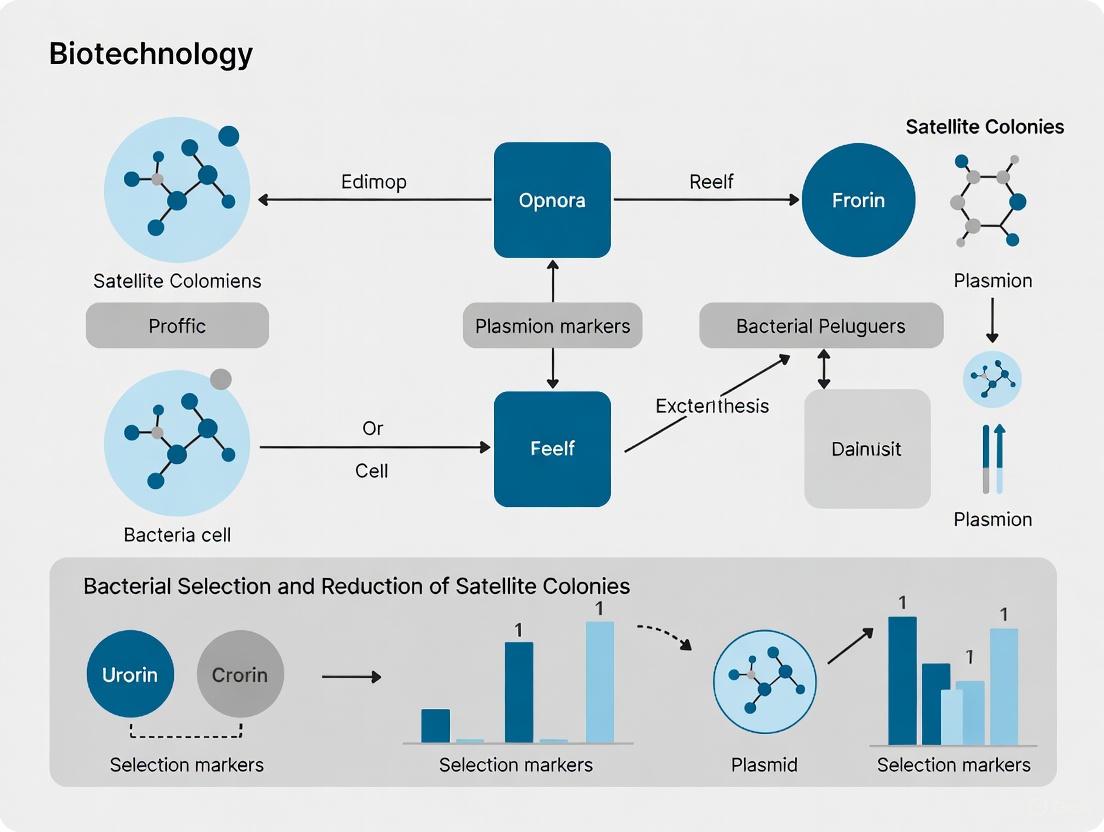
This article provides a comprehensive resource for researchers and drug development professionals seeking to eliminate satellite colonies in bacterial selection.
Satellite Colonies: A Complete Guide to Prevention, Troubleshooting, and Optimization for Robust Bacterial Selection
Abstract
This article provides a comprehensive resource for researchers and drug development professionals seeking to eliminate satellite colonies in bacterial selection. It covers the foundational science behind satellite colony formation, including β-lactamase-mediated antibiotic degradation and cooperative survival dynamics. The guide delivers actionable methodological strategies for robust selection, a systematic troubleshooting protocol for common laboratory problems, and a comparative analysis of antibiotic alternatives and validation techniques. By synthesizing current research and established protocols, this work aims to enhance the efficiency and reliability of cloning and selection workflows in biomedical research.
Understanding Satellite Colonies: The Science Behind a Common Laboratory Nuisance
What Are Satellite Colonies? Defining the Morphology and Problem
Troubleshooting Guide: Satellite Colonies in Bacterial Selection
FAQ: Understanding Satellite Colonies
What are satellite colonies and how do I identify them? Satellite colonies are small bacterial colonies that form around a primary colony on selective media, typically occurring when the primary colony degrades or modifies the selective agent in its immediate vicinity. They are characterized by their distinctive morphology: significantly smaller than primary colonies, forming a "halo" pattern around central resistant colonies, and appearing only in close proximity to primary colonies rather than randomly distributed across the plate.
Why are satellite colonies problematic in bacterial selection experiments? Satellite colonies present significant challenges for researchers. They can be mistakenly picked during colony selection, leading to false positives in experimental results. When transferred to fresh media, they typically fail to grow without the protective effect of nearby primary colonies, wasting valuable research time. Their presence complicates accurate counting of truly transformed colonies and can contaminate well-isolated colonies in purification steps, potentially compromising downstream applications like plasmid preparation or protein expression.
What causes satellite colonies to form? The primary mechanism involves degradation of the selection agent:
- Antibiotic degradation: Primary resistant colonies may secrete enzymes like β-lactamases that break down antibiotics in the surrounding medium
- Metabolic cross-feeding: Resistant colonies may alter the local environment in ways that temporarily support growth of non-resistant cells
- Acidification/alkalinization: pH changes from metabolic activity of primary colonies can reduce effectiveness of some antibiotics
- Threshold effects: Selection agent concentration falls below inhibitory levels in the immediate vicinity of large primary colonies
Experimental Protocols for Satellite Colony Investigation
Protocol 1: Systematic Characterization of Satellite Colony Formation
Objective: Quantify satellite colony formation under various selection conditions.
Materials:
- Bacterial strains with known resistance markers
- Multiple antibiotics at standard concentrations
- LB agar plates
- Sterile toothpicks or inoculation loops
- Incubator set at 37°C
Procedure:
- Prepare selective plates with antibiotics at standard concentrations (e.g., 100μg/mL ampicillin, 50μg/mL kanamycin)
- Spot 5μL of overnight culture of resistant strains in the center of each plate
- Include controls with non-resistant strains to confirm selection effectiveness
- Incubate plates at 37°C for 16-24 hours
- Measure and record: diameter of primary colony, number of satellite colonies, distance of satellites from primary colony, size distribution of satellites
- Repeat with varying antibiotic concentrations (25%, 50%, 150% of standard)
Interpretation: Compare satellite formation patterns across different antibiotics and concentrations to identify conditions that minimize this phenomenon.
Protocol 2: Verification of True Transformation Status
Objective: Distinguish between true transformants and satellite colonies.
Materials:
- Fresh selective plates
- Non-selective plates
- Sterile toothpicks
- Colony PCR reagents
Procedure:
- Pick both primary and satellite colonies using sterile toothpicks
- Streak onto fresh selective plates to assess growth
- Parallel streak onto non-selective plates as growth controls
- For molecular verification, resuspend portion of colony in PCR mix targeting resistance marker
- Compare growth patterns and PCR results between primary and satellite colonies
Interpretation: True transformants will grow on both selective and non-selective media, while satellite colonies will typically only grow on non-selective media or when in close proximity to resistant colonies.
Quantitative Analysis of Satellite Colony Formation
Table 1: Satellite Colony Formation Across Common Selection Systems
| Selection Antibiotic | Mechanism of Action | Frequency of Satellite Formation | Typical Satellite Count Range | Primary Degradation Mechanism |
|---|---|---|---|---|
| Ampicillin | Cell wall synthesis | High | 15-50 satellites per primary | β-lactamase secretion |
| Kanamycin | Protein synthesis | Low | 0-5 satellites per primary | Acetyltransferase modification |
| Chloramphenicol | Protein synthesis | Medium | 5-20 satellites per primary | Acetyltransferase secretion |
| Tetracycline | Protein synthesis | Low | 0-3 satellites per primary | Efflux pump protection |
| Spectinomycin | Protein synthesis | Medium | 5-15 satellites per primary | Adenyltransferase secretion |
Table 2: Impact of Experimental Conditions on Satellite Formation
| Condition Variable | Standard Protocol | Satellite-Reducing Modification | Effect on Satellite Formation | Considerations |
|---|---|---|---|---|
| Antibiotic concentration | 100μg/mL ampicillin | 150μg/mL ampicillin | 75% reduction | May slow growth of true positives |
| Incubation time | 16-24 hours | 12-16 hours | 60% reduction | Smaller primary colonies |
| Agar thickness | Standard (~15mL) | Increased (~25mL) | 40% reduction | Higher antibiotic capacity |
| Plate storage | 4°C, 1 month | Freshly poured | 50% reduction | Antibiotic degradation in storage |
| Inoculation density | High streak | Isolated single colonies | 85% reduction | Requires accurate dilution |
Research Reagent Solutions for Satellite Colony Management
Table 3: Essential Reagents for Satellite Colony Investigation
| Reagent/Chemical | Function | Application Notes |
|---|---|---|
| β-lactamase inhibitors | Prevents degradation of ampicillin-class antibiotics | Use at 0.1-1mM concentration in plating media |
| Fresh antibiotic stocks | Maintains consistent selection pressure | Prepare fresh monthly; avoid freeze-thaw cycles |
| Alternative antibiotics | Provides options when satellite formation interferes with selection | Consider switching from ampicillin to kanamycin for problem constructs |
| Chromogenic substrates | Visual identification of true transformants | X-gal/IPTG for blue-white screening reduces satellite picking |
| Tetracycline derivatives | More stable alternatives to ampicillin | Doxycycline or minocycline offer reduced satellite formation |
Experimental Workflow for Satellite Colony Investigation
Mitigation Strategies and Best Practices
Antibiotic Management
- Use freshly prepared antibiotic stocks and plates to ensure full potency
- Consider increasing antibiotic concentration by 25-50% for problem constructs
- Implement combination antibiotic approaches where possible
- Test antibiotic stability under your specific incubation conditions
Technical Modifications
- Reduce incubation time to prevent overgrowth of primary colonies
- Ensure proper spacing between colonies by using appropriate dilution factors
- Consider using alternative selection systems when satellite formation persists
- Implement secondary screening methods (colony PCR, blue-white screening) to verify true positives
Protocol Validation
- Regularly include control transformations to monitor satellite formation rates
- Document satellite colony characteristics for your specific experimental system
- Train all laboratory personnel in satellite colony identification and proper colony selection techniques
- Establish quality control thresholds for acceptable satellite formation rates in routine experiments
By implementing these troubleshooting approaches and experimental protocols, researchers can significantly reduce the impact of satellite colonies on their bacterial selection experiments, improving the reliability and efficiency of their molecular biology workflows.
Core Mechanism and FAQs
What is the fundamental mechanism behind satellite colony formation? Satellite colonies are non-resistant bacterial cells that grow around a central, antibiotic-resistant colony on a selection plate. This phenomenon occurs because the resistant colony secretes the enzyme β-lactamase, which inactivates the β-lactam antibiotic (e.g., ampicillin) in the immediate vicinity. This local detoxification creates a zone where the antibiotic concentration falls below an inhibitory level, allowing susceptible cells to form small, "satellite" colonies [1] [2].
How is β-lactamase secreted to inactivate antibiotics? In Gram-negative bacteria like E. coli, β-lactamases are often secreted into the periplasmic space and can also be released into the surrounding environment, especially when antibiotics are present [3] [4]. Once secreted, the enzyme hydrolyzes the critical β-lactam ring within the antibiotic's structure. This hydrolysis reaction, catalyzed by a serine residue in Class A β-lactamases, opens the ring and renders the antibiotic molecule incapable of binding to its target, the Penicillin-Binding Proteins (PBPs), thus neutralizing its antibacterial activity [5] [6] [7].
Why are satellite colonies a problem for research? The presence of satellite colonies complicates the selection process during molecular biology experiments, such as cloning or protein expression. Researchers aiming to pick large, resistant colonies may accidentally select a non-plasmid-containing satellite colony, leading to failed experiments, poor plasmid yields, and inefficient protein expression [1] [2].
Troubleshooting Guide: Satellite Colonies
| Problem Description | Common Causes | Recommended Solutions |
|---|---|---|
| Presence of satellite colonies | Old antibiotic stock [1] [2]; Low antibiotic concentration [1] [2]; Antibiotic not mixed evenly in agar [1]; Plates grown for too long (>16 hours) [1] | Use fresh antibiotic stocks [2]; Increase ampicillin concentration to 200 µg/mL or higher [2]; Ensure even mixing of antibiotic in medium [1]; Do not over-incubate plates [1] |
| No colonies grow | Non-viable competent cells [1]; Incorrect antibiotic used for selection [1] | Check cell viability and transformation protocol [1]; Verify the correct antibiotic matches the plasmid's resistance gene [1] |
| Excessive small colonies | Degraded antibiotic from old stock or hot media [1] [2]; Ineffective antibiotic concentration [1] | Use fresh, sterilized media and new antibiotic stock [1]; Allow media to cool before adding antibiotic [1] |
Experimental Workflow: From Enzyme Secretion to Colony Formation
The following diagram illustrates the core mechanism of satellite colony formation, from β-lactamase secretion by a resistant colony to the growth of susceptible satellite colonies.
Research Reagent Solutions
The table below lists key reagents and their roles in studying or mitigating β-lactamase-mediated satellite colony formation.
| Reagent | Function & Application |
|---|---|
| Nitrocefin | A chromogenic cephalosporin substrate used for rapid, cost-efficient detection of β-lactamase activity. A color change indicates hydrolysis [8]. |
| Carbenicillin | A more stable β-lactam antibiotic used as an alternative to ampicillin for selection. It is less susceptible to enzymatic inactivation, reducing satellite colonies [1] [2]. |
| Fresh Antibiotic Stocks | Essential for maintaining effective selection pressure. Degraded antibiotics have lower effective concentrations, promoting satellite formation [1] [2]. |
| Clavulanate, Tazobactam, Sulbactam | β-lactamase inhibitors. Used in combination with β-lactam antibiotics to protect them from hydrolysis and overcome resistance [5] [3]. |
Detailed Experimental Protocols
Protocol 1: Minimizing Satellite Colonies in Plate-Based Selection
This protocol is adapted from standard molecular biology practices for bacterial selection [1] [2].
Preparation of Selection Plates:
- Prepare and autoclave your standard agar medium (e.g., LB Agar).
- Allow the medium to cool to approximately 50-55°C before adding the antibiotic. Higher temperatures can accelerate antibiotic degradation.
- Add a fresh stock of ampicillin to a final concentration of 100-200 µg/mL. For enhanced stability, use carbenicillin at 100 µg/mL.
- Stir the medium thoroughly to ensure the antibiotic is evenly distributed.
- Pour the plates and allow them to solidify. Store plates at 4°C for short-term use.
Transformation and Plating:
- Perform your standard transformation protocol.
- Plate transformed cells onto the selection plates and spread evenly.
- Incubate plates at the appropriate temperature (e.g., 37°C) for 12-16 hours. Avoid over-incubation beyond 16 hours, as this allows more time for β-lactamase to degrade the antibiotic.
Colony Selection:
- Identify large, primary colonies, which are likely the resistant transformants.
- Be cautious of small colonies growing in the proximity of large ones. These are satellite colonies.
- To confirm a true transformant, restreak a colony onto a fresh selection plate. Satellite colonies will not grow upon re-streaking.
Protocol 2: Detecting β-lactamase Activity via a Nitrocefin-Based Assay
This protocol provides a method to confirm β-lactamase production in bacterial colonies [8].
Reagent Preparation:
- Prepare a nitrocefin solution according to the manufacturer's instructions. Nitrocefin is typically solubilized in dimethyl sulfoxide (DMSO) and then diluted in a buffer such as phosphate-buffered saline (PBS).
Assay Execution:
- Option A (Colony Test): Use a sterile loop or toothpick to transfer a portion of a bacterial colony onto a piece of filter paper. Add a drop of the nitrocefin solution directly onto the biomass. The development of a red color within minutes indicates β-lactamase activity.
- Option B (Liquid Assay): Grow a small bacterial culture and pellet the cells. Resuspend the cell pellet in a buffer containing nitrocefin and monitor the solution for a color change from yellow to red.
Result Interpretation:
- A positive reaction (red color) confirms the presence of an active β-lactamase enzyme.
- The intensity of the color can provide a semi-quantitative estimate of enzyme activity.
Frequently Asked Questions (FAQs)
Q1: What are satellite colonies and why are they a problem in my bacterial selection experiments? Satellite colonies are small colonies of non-resistant cells that grow around a large, antibiotic-resistant colony on your selection plates. They are a common problem during antibiotic selection because they can be mistakenly picked instead of your colony of interest, which contains the plasmid with the antibiotic resistance gene. These satellites have not taken up your plasmid vector, so they are unwanted in your experiments [9].
Q2: What causes satellite colonies to form? Satellite colonies form due to a social interaction. The large, resistant colony (the cooperator) produces and secretes the enzyme β-lactamase, which degrades the ampicillin in the surrounding agar. This creates a localized zone where the antibiotic concentration is reduced or eliminated, allowing non-resistant cells (cheaters) to grow and form the small satellite colonies [9] [2] [4].
Q3: My liquid cultures seem to be losing their plasmid. Is this related? Yes, this is a related phenomenon. In liquid culture, β-lactamase secreted by resistant cells can build up in the medium and inactivate the ampicillin over time. This removes the selective pressure, allowing cells that have lost the plasmid to proliferate. This can lead to poor plasmid prep yields and undesirable protein expression results [2].
Q4: Can I still get satellite colonies even if my antibiotic is fresh? Yes. Even with fresh antibiotic, the fundamental biology of β-lactamase secretion and diffusion can lead to satellite formation, especially if plates are grown for too long (e.g., more than 16 hours). The degradation is a continuous process driven by the resistant colonies [9].
Q5: Are the cells in satellite colonies true genetic "cheaters"? The term "cheater" is used in an ecological sense. These cells do not pay the metabolic cost of producing the β-lactamase enzyme or maintaining the plasmid but benefit from the public good (antibiotic degradation) produced by the resistant cooperators [4] [10]. Research suggests that these satellite colonies may often be founded by persister cells—dormant bacterial cells that have survived the antibiotic and then grow once the environment is detoxified [4].
Troubleshooting Guide: Common Scenarios and Solutions
Problem: Satellite Colonies are Present on Plates
| Problem Cause | Diagnostic Check | Recommended Solution |
|---|---|---|
| Old antibiotic stock | Check the age of your antibiotic aliquot and its documented stability. | Use new stock of antibiotics to ensure effectiveness [9]. |
| Low antibiotic concentration | Verify the concentration used against your protocol. | Use the recommended concentration; for ampicillin, a higher concentration (e.g., 200 µg/mL) can help [9] [2]. |
| Improper antibiotic mixing | Look for uneven colony growth or selection patterns on the plate. | Use a stirrer to mix the antibiotic evenly in the molten agar medium before pouring plates [9]. |
| Overgrown plates | Check the incubation time. | Do not grow your transformation plates for more than 16 hours [9]. |
| Antibiotic degradation by β-lactamase | Look for satellites specifically around large colonies. | Use carbenicillin instead of ampicillin. It is more stable and less susceptible to inactivation in growth media [9] [2]. |
Problem: No Colonies Grow on Plate
| Problem Cause | Diagnostic Check | Recommended Solution |
|---|---|---|
| Non-viable competent cells | Check the transformation efficiency of your competent cells with a known control plasmid. | Use fresh, viable competent cells that have been properly stored [9]. |
| Incorrect antibiotic | Double-check that the antibiotic in the plate matches the resistance gene on your plasmid. | Use the correct antibiotic for selection [9]. |
| Antibiotic degraded from the start | Test the plate with a sensitive strain to see if it grows. | Use fresh, sterilized growth medium and add antibiotic from a fresh stock [9]. |
Problem: Too Many Small Colonies on Plate
| Problem Cause | Diagnostic Check | Recommended Solution |
|---|---|---|
| Old antibiotic stock | Check the age of your antibiotic aliquot. | Use a new stock of antibiotics [9]. |
| Low antibiotic concentration | Verify the concentration used against your protocol. | Use the recommended antibiotic concentration; avoid under-dosing [9]. |
| Improper antibiotic mixing | Look for a general "lawn" of small colonies all over the plate. | Ensure the antibiotic is mixed thoroughly and evenly in the growth medium [9]. |
Theoretical Framework: The Ecology of Resistance
The formation of satellite colonies is a classic example of social evolution and game theory in a microbial population. The system can be understood through the lens of cooperators and cheaters:
- Cooperators: Cells that carry the resistance plasmid. They produce the "public good" (β-lactamase) but pay a metabolic cost for its production and for maintaining the plasmid [10].
- Cheaters: Cells that do not carry the plasmid. They avoid the metabolic cost but benefit from the detoxified environment created by the cooperators [10].
This dynamic can lead to an eco-evolutionary feedback loop. The proportion of cooperators influences the overall population's ability to detoxify the environment, which in turn affects the total population size. A high frequency of cheaters can threaten the population's survival if the antibiotic degradation capacity becomes too low. Studies in yeast have shown that populations can "spiral" in phase space towards a stable state of coexistence between cooperators and cheaters, avoiding total collapse [10].
Experimental Protocols & Methodologies
Protocol: Minimizing Satellite Colonies in Agar Plates
Principle: To prevent the growth of non-resistant satellite colonies by maintaining consistent antibiotic selection pressure throughout the experiment.
Materials:
- Fresh, sterilized growth medium (e.g., LB Agar)
- Fresh antibiotic stock solution (e.g., Ampicillin 100 mg/mL or Carbenicillin 50 mg/mL)
- Water bath at 55°C
- Sterile Petri dishes
Procedure:
- Prepare and autoclave your growth medium.
- Allow the medium to cool in a water bath until it is warm to the touch (approx. 55°C). Do not add antibiotic to hot media.
- Add the antibiotic from a fresh, concentrated stock to achieve the final working concentration (e.g., 100 µg/mL for ampicillin, or up to 200 µg/mL if problems persist).
- Mix the medium-antibiotic solution thoroughly but gently to avoid bubbles, ensuring the antibiotic is evenly distributed.
- Pour the plates immediately and allow them to solidify.
- Store the plates in the dark at 4°C and use them within a few weeks.
- When plating your transformation, ensure cells are spread evenly.
- Incubate the plates at the appropriate temperature for no more than 16 hours. Check for colonies and pick them before overgrowth occurs.
Protocol: Avoiding Plasmid Loss in Liquid Culture
Principle: To prevent the overgrowth of plasmid-free cells in liquid culture by managing β-lactamase buildup and culture density.
Materials:
- LB Broth with appropriate antibiotic
- Centrifuge and tubes
- Fresh, antibiotic-free LB Broth
Procedure:
- Inoculate your starter culture from a single colony and grow it to mid-log phase.
- For the main culture: Pellet the cells from the starter culture and resuspend them in fresh, antibiotic-free medium before inoculating the main culture. This step removes secreted β-lactamase from the starter [2].
- Inoculate the main culture containing the appropriate antibiotic.
- Monitor the growth. Do not allow the culture to reach saturation and sit for extended periods. Do not let the OD600 exceed 3.0 in LB [2].
- Harvest cells while they are still in late-log phase for plasmid extraction or protein expression.
The Scientist's Toolkit: Key Reagents & Materials
The following table lists essential reagents for troubleshooting satellite colonies and managing cooperator-cheater dynamics.
| Reagent / Material | Function & Rationale |
|---|---|
| Carbenicillin | A more stable β-lactam antibiotic alternative to ampicillin. It is inactivated by β-lactamase much more slowly, providing more consistent selection pressure and significantly reducing satellite colony formation [9] [2]. |
| Fresh Antibiotic Stocks | Using new aliquots of antibiotics ensures full potency. Old stocks may have degraded, leading to de facto lower concentrations and loss of selection [9]. |
| Viable Competent Cells | High-efficiency, viable competent cells are crucial for achieving a high number of true transformants, making it easier to identify correct colonies before satellites become visible [9]. |
| Sterilized Growth Medium | Fresh, sterile medium ensures no contaminating microbes or pre-existing enzymes (e.g., β-lactamases) that could degrade the antibiotic before the experiment begins [9]. |
| Modeling Software (e.g., Python, R) | Mathematical models can help predict the population dynamics of cooperators and cheaters. They allow for in-silico testing of how mutation rates and selection strengths influence population structure and the emergence of cheaters [11] [12]. |
| Flow Cytometer | If using fluorescently tagged strains, a flow cytometer can precisely and rapidly quantify the ratio of cooperator to cheater cells in a mixed population over time, providing data for modeling [10]. |
Visualizing the Satellite Colony Formation Pathway
The following diagram illustrates the sequential biological and ecological process that leads to the formation of satellite colonies on an antibiotic-containing plate.
FAQ: Understanding and Troubleshooting Satellite Colonies
What are satellite colonies? Satellite colonies are small colonies of bacteria that do not contain your plasmid of interest. They are able to grow on selective media (e.g., ampicillin plates) because they are located near a large, resistant colony that has inactivated the antibiotic in the immediate surrounding area. [13]
Why are satellite colonies a problem? Satellite colonies are not transformed with your plasmid. Accidentally picking a satellite colony for your experiment will result in no growth in liquid culture, failed plasmid preps, or a complete lack of protein expression, wasting significant time and resources. [2]
What causes satellite colonies to form? The primary mechanism is the secretion of the enzyme β-lactamase by bacteria that have been successfully transformed with a plasmid containing an ampicillin resistance gene (e.g., bla). This enzyme diffuses into the growth medium and degrades the ampicillin in the vicinity of the resistant colony, creating a zone where non-resistant bacteria can grow. [2]
Troubleshooting Guide: Reducing Satellite Colonies
| Contributing Factor | Problem | Solution |
|---|---|---|
| Antibiotic Stability | Using old stocks of ampicillin or plates stored for too long, leading to partial degradation of the antibiotic before use. [13] [2] | Use fresh antibiotic stocks and plates. Consider using the more stable carbenicillin as an alternative. [13] [2] |
| Incubation Time | Leaving transformation plates to grow for too long (e.g., >20 hours). The prolonged secretion of β-lactamase allows for more complete antibiotic degradation and satellite growth. [14] | Do not incubate plates for more than 16-20 hours. [14] [13] |
| Colony Density | Plating cells at a very high density. This leads to a high density of resistant colonies, which collectively degrade the antibiotic more efficiently. [14] | Plate cells at a lower density to reduce the total amount of β-lactamase secreted into the medium. [14] |
| Antibiotic Concentration | Using an ampicillin concentration that is too low, making it easier for β-lactamase to inactivate it completely in local areas. [2] | Increase the ampicillin concentration to 200 µg/mL or as recommended in your specific protocol. [2] |
| Mixing | Improper mixing of the antibiotic into the molten agar, creating concentration gradients. [13] | Use a stirrer to ensure the antibiotic is mixed evenly throughout the growth medium. [13] |
| Media Temperature | Adding antibiotic to media that is too hot, which can accelerate its degradation. [13] | Ensure the growth medium has cooled sufficiently before adding the antibiotic. [13] |
Experimental Protocol: Investigating Satellite Colony Formation
This protocol allows for the systematic study of factors influencing satellite colony formation, aligning with a thesis focused on reducing their occurrence.
1. Materials and Reagents
- Bacterial Strains: Chemically competent E. coli cells (e.g., DH5α).
- Plasmids: A plasmid containing an ampicillin resistance gene (e.g., pUC19).
- Media: LB broth and LB agar.
- Antibiotics: Ampicillin (sodium salt) and carbenicillin (disodium salt). Prepare fresh stock solutions.
- Equipment: Sterile spreaders, incubator, Petri dishes.
2. Method 1. Transform the competent E. coli cells with the plasmid according to your standard laboratory protocol. 2. Plate the transformation reaction onto several LB agar plates containing the selective antibiotic. 3. Vary the test conditions: * Antibiotic Type: Use plates supplemented with either ampicillin (e.g., 100 µg/mL) or carbenicillin (e.g., 100 µg/mL). * Incubation Time: Incubate plates at 37°C and count colonies at 16 hours. Continue incubation for a subset of plates and re-count at 24 and 48 hours to monitor the appearance of satellites over time. 4. Count the number of large colonies (putative transformants) and the number of small satellite colonies surrounding them. 5. To confirm satellite colonies are not resistant, pick several from each condition and re-streak them onto a fresh LB plate containing the same antibiotic. True satellites will not grow.
3. Data Analysis Calculate the percentage of large colonies that have associated satellite colonies under each condition. Statistical analysis (e.g., a t-test) can be used to determine if changes in antibiotic type or incubation time significantly affect the frequency of satellite formation.
Mechanism of Satellite Colony Formation
The following diagram illustrates the process by which a resistant colony enables the growth of non-resistant satellite colonies.
Research Reagent Solutions
The following table lists key materials and their functions for experiments related to controlling satellite colonies.
| Reagent / Material | Function | Key Consideration |
|---|---|---|
| Carbenicillin | A more stable alternative to ampicillin for selection. Degrades more slowly, reducing satellite formation. [13] [2] | More expensive than ampicillin, but provides more robust selection. [2] |
| Fresh Antibiotic Stocks | Ensure the initial concentration of the selective agent is correct and effective. | Old or improperly stored stocks can degrade, leading to a lower effective concentration. [14] [13] |
| Chemically Competent E. coli | Standard host for transformation and plasmid propagation. | Strains like Stbl2 are recommended for cloning unstable DNA inserts, but standard strains like DH5α are common. [14] |
Proactive Prevention: Laboratory Protocols for Flawless Bacterial Selection
Best Practices for Antibiotic Preparation and Storage
Troubleshooting Guides
Guide 1: Satellite Colonies on Agar Plates
Problem: Small, unintended colonies (satellite colonies) growing around large primary colonies on selective agar plates.
- Potential Cause & Solution:
- Old or Degraded Antibiotic: Prepare fresh antibiotic stock solutions. Old stocks lose efficacy, allowing non-resistant cells to grow [15]. Avoid repeated freeze-thaw cycles by storing antibiotics in single-use aliquots [16].
- Low Antibiotic Concentration: Verify the working concentration is correct. For ampicillin, increasing the concentration to 200 µg/mL can help suppress satellite formation [2].
- Improper Agar Mixing: Ensure antibiotic is thoroughly and evenly mixed into agar medium after cooling to below 50°C [15] [17].
- Prolonged Plate Storage: Use freshly poured plates. Do not store plates for longer than 3 months, even at 4°C, as antibiotics degrade over time [17].
- Antibiotic Instability: For beta-lactam antibiotics like ampicillin, consider switching to the more stable carbenicillin, which is less prone to degradation by secreted beta-lactamase [15] [2] [18].
Guide 2: No Bacterial Growth on Selective Plates
Problem: No colonies appear on the agar plate after transformation and incubation.
- Potential Cause & Solution:
- Incorrect Antibiotic: Double-check that the correct antibiotic for the plasmid's resistance gene was used [15].
- Non-viable Competent Cells: Check the viability and transformation efficiency of competent cells using a control plasmid [15].
- Complete Antibiotic Degradation: Test antibiotic efficacy using a disk diffusion assay [16]. Use fresh stocks if degradation is suspected.
Guide 3: Excessive or Unusually Small Colonies
Problem: An overabundance of very small colonies grows on the selective plate.
- Potential Cause & Solution:
- Degraded Antibiotic Stock: The antibiotic may have partially degraded, providing weak selection pressure. Use a new aliquot from a properly stored stock [15].
- Insufficient Antibiotic Concentration: Confirm the correct dilution was used from the stock solution to the working concentration in the agar [15].
Frequently Asked Questions (FAQs)
FAQ 1: What is the single most important factor in extending the shelf life of my research antibiotics?
The most critical factor is strict adherence to storage conditions. Most antibiotic stock solutions must be stored at -20°C, protected from light, and in single-use aliquots to minimize freeze-thaw cycles [16]. Some, like ampicillin, are more stable at -80°C [16].
FAQ 2: Why should I avoid multiple freeze-thaw cycles?
Repeated freezing and thawing accelerates antibiotic degradation by causing temperature fluctuations that reduce stability and increase exposure to light and oxygen [16]. Preparing small, single-use aliquots is the best practice.
FAQ 3: How can I test if my stored antibiotic is still effective?
The disk diffusion assay is a reliable method [16]. Briefly, a disk is soaked in the antibiotic solution and placed on a lawn of susceptible bacteria. A clear zone of inhibition around the disk indicates the antibiotic is still active.
FAQ 4: What is the difference between using ampicillin and carbenicillin?
Both are selected with the same resistance gene (AmpR), but carbenicillin is more stable in agar and liquid culture [15] [2] [18]. This greater stability makes it less susceptible to inactivation by secreted beta-lactamase enzyme, significantly reducing problems like satellite colony formation [18].
FAQ 5: At what temperature should I add antibiotics to molten agar?
Always add heat-sensitive antibiotics to agar after it has been autoclaved and cooled to below 50°C [17]. Adding antibiotics to hot agar will cause rapid degradation.
FAQ 6: How long can I store my antibiotic stock solutions?
This varies, but many filter-sterilized stock solutions stored at -20°C can last for up to a year [16]. However, always refer to the manufacturer's specific instructions. Powder forms, when stored desiccated and frozen, can last for years [16].
Data Presentation
Table 1: Common Antibiotic Stock and Working Concentrations
Table summarizing standard preparation and use concentrations for antibiotics frequently used in molecular biology.
| Antibiotic | Stock Solution Concentration | Working Concentration | Solvent |
|---|---|---|---|
| Ampicillin | 50 mg/mL [17] | 50-100 µg/mL [16] [17] | Water [17] |
| Carbenicillin | 50-100 mg/mL [16] | 50-100 µg/mL [16] | Water |
| Kanamycin | 10-50 mg/mL [16] [17] | 50 µg/mL [17] | Water [17] |
| Chloramphenicol | 25-50 mg/mL [16] | 170 µg/mL [17] | Ethanol [17] |
| Tetracycline | 5-10 mg/mL [16] | 50 µg/mL [17] | Ethanol [17] |
| Spectinomycin | 50-100 mg/mL [16] | 50 µg/mL [17] | Water |
Table 2: Antibiotic Stability and Selection Properties
Table comparing key characteristics of different antibiotics for experimental planning.
| Antibiotic | Stability & Satellite Colony Risk | Key Advantage | Key Disadvantage |
|---|---|---|---|
| Ampicillin | Less stable; prone to satellite colonies [2] [18] | Cost-effective; shorter post-transformation recovery [18] | Degrades quickly; can lead to plasmid loss [2] |
| Carbenicillin | Highly stable; low satellite colony risk [15] [18] | Highly stable; interchangeable with AmpR [18] | More expensive than ampicillin [2] [18] |
| Kanamycin | Highly stable [18] | Cost-effective; also confers resistance to G418 (eukaryotic cells) [18] | Requires longer post-transformation recovery [18] |
| Spectinomycin | Highly stable [18] | Stable alternative to streptomycin [18] | Does not work in all bacterial strains (e.g., SHuffle) [18] |
Experimental Protocols
Protocol 1: Preparing and Storing Antibiotic Stock Solutions
- Weighing: Accurately weigh the antibiotic powder.
- Dissolution: Dissolve the powder in the correct sterile solvent (e.g., water or ethanol, see Table 1).
- Sterilization: Filter-sterilize the solution using a 0.22 µm syringe filter into a sterile tube. Do not autoclave.
- Aliquoting: Immediately aliquot the solution into small, single-use volumes in sterile microcentrifuge tubes.
- Storage: Label tubes clearly and store at the recommended temperature (typically -20°C), protected from light.
Protocol 2: Disk Diffusion Assay for Testing Antibiotic Efficacy
Method: [16]
- Prepare Lawn: Spread a susceptible bacterial strain (e.g., E. coli) evenly across an agar plate to create a "lawn" of growth.
- Apply Disk: Aseptically place a sterile filter paper disk onto the surface of the agar.
- Add Antibiotic: Apply a defined volume (e.g., 10 µL) of the antibiotic stock solution to be tested onto the disk.
- Incubate: Incubate the plate right-side-up at 37°C for 16-24 hours.
- Analyze: Observe and measure the zone of inhibition (clear area) around the disk. Compare it to a zone produced by a known fresh stock to determine efficacy.
Visualization: Satellite Colony Formation Mechanism
The Scientist's Toolkit: Research Reagent Solutions
Table of essential materials and their functions for reliable antibiotic selection.
| Item | Function & Importance |
|---|---|
| 0.22 µm Syringe Filter | For sterilizing antibiotic stock solutions without using heat, which can degrade the antibiotic [16] [17]. |
| Single-Use Cryotubes | For aliquoting stock solutions to prevent loss of potency from repeated freeze-thaw cycles [16]. |
| Carbenicillin | A more stable alternative to ampicillin for selection with the AmpR gene; significantly reduces satellite colonies [15] [18]. |
| Dimethyl Sulfoxide (DMSO) / Glycerol | Common cryoprotectants for long-term storage of bacterial strains at ultra-low temperatures [19]. |
| Desiccant | Used when storing antibiotic powders to absorb moisture and prevent hydrolysis, extending shelf life [16]. |
Optimal Antibiotic Concentration and Media Preparation Guidelines
In bacterial selection research, the formation of satellite colonies represents a significant challenge that can compromise experimental integrity. These small, antibiotic-sensitive colonies grow around resistant transformants due to localized antibiotic degradation, potentially leading to the selection of false positives. This guide provides comprehensive protocols and troubleshooting strategies to minimize satellite colony formation through optimized antibiotic use and media preparation.
FAQs and Troubleshooting Guides
What are satellite colonies and why do they form?
A: Satellite colonies are small colonies of antibiotic-sensitive bacteria that grow around a large, antibiotic-resistant colony on selective plates. They form because the resistant colony secretes enzymes, such as β-lactamase in the case of ampicillin resistance, into the surrounding medium. This enzyme degrades the antibiotic in the immediate vicinity, creating a localized zone where sensitive bacteria can grow [20] [2]. This problem is particularly common with ampicillin selection, as β-lactamase is efficiently secreted and rapidly inactivates the antibiotic.
How can I prevent satellite colonies in my experiments?
A: Implement these evidence-based strategies to minimize satellite colonies:
- Use fresh antibiotics: Old antibiotic stocks degrade over time, reducing effective concentration [20] [2].
- Optimize incubation time: Do not exceed 16-20 hours of incubation at 37°C [20] [14].
- Ensure proper mixing: Stir antibiotics evenly throughout cooled media before pouring plates [20].
- Consider antibiotic alternatives: Replace ampicillin with carbenicillin, which is more stable and less susceptible to degradation [21] [20] [2].
- Use higher antibiotic concentrations: For ampicillin, consider increasing to 200 µg/mL to counteract degradation [2].
Why are no colonies growing on my selection plates?
A: Several factors can cause complete growth absence:
- Antibiotic mismatch: Verify the antibiotic in your media matches the resistance marker on your plasmid [22].
- Competent cell viability: Check transformation efficiency using a control supercoiled vector [14].
- Antibiotic activity: Ensure antibiotic stocks are fresh and properly stored [20] [17].
- Temperature sensitivity: Some plasmids or strains require lower growth temperatures (25-30°C) [14] [22].
Why are there too many small colonies on my transformation plates?
A: An overabundance of small colonies often indicates:
- Degraded or old antibiotic stocks with reduced effectiveness [20].
- Insufficient antibiotic concentration for proper selection [20] [2].
- Improper antibiotic mixing during plate preparation, creating concentration gradients [20].
- Plating at too high cell density, overwhelming the selection system [14].
Experimental Protocols
Protocol 1: Preparing LB Agar Plates with Antibiotics
Follow this detailed protocol for consistent, reliable selection plates:
Prepare LB Agar Base
Cool Agar Appropriately
Add Antibiotic
Pour and Store Plates
- Pour approximately 30-35 mL per standard 90mm petri dish [17].
- Pass the flame briefly over the surface to remove air bubbles [17].
- Leave plates to solidify at room temperature for 30 minutes, then dry overnight [21].
- Store plates inverted at 4°C in the dark, using within 1 month for optimal antibiotic activity [21] [17].
Protocol 2: Quality Testing Selection Plates
Validate plate functionality before critical experiments:
Streak Control Strains
Incubate and Interpret Results
Quantitative Data Tables
Recommended Antibiotic Concentrations
Table 1: Standard working and stock concentrations for common selection antibiotics
| Antibiotic | Stock Concentration | Working Concentration | Solvent | Stability |
|---|---|---|---|---|
| Ampicillin | 50-100 mg/mL [21] [17] | 100 µg/mL [21] [22] | Water [21] | ~1 month at 4°C [17] |
| Carbenicillin | 100 mg/mL [21] | 100 µg/mL [21] [22] | Water [21] | More stable than ampicillin [21] [20] |
| Kanamycin | 10-50 mg/mL [21] [17] | 50 µg/mL [21] [22] | Water [21] | ~3 months at 4°C [17] |
| Chloramphenicol | 25-30 mg/mL [21] [17] | 25-170 µg/mL [21] [17] | Ethanol [21] [17] | ~3 months at 4°C [17] |
| Tetracycline | 5-10 mg/mL [21] [17] | 10-50 µg/mL [21] [17] | Ethanol [21] [17] | Light-sensitive [17] |
Antibiotic Selection Guide
Table 2: Comparative properties of common antibiotics for bacterial selection
| Antibiotic | Mechanism of Action | Advantages | Disadvantages | Satellite Colony Risk |
|---|---|---|---|---|
| Ampicillin | Inhibits cell wall synthesis [2] | Inexpensive, widely used [2] | Rapid degradation by β-lactamase, satellite colonies common [20] [2] | High [20] [2] |
| Carbenicillin | Inhibits cell wall synthesis [21] | More stable than ampicillin, reduces satellites [21] [20] [2] | More expensive [21] [2] | Low [20] |
| Kanamycin | Binds 30S ribosomal subunit [17] | Stable, minimal satellite issues [17] | Can affect protein synthesis in expression hosts | Very Low |
| Chloramphenicol | Binds 50S ribosomal subunit [17] | Effective for low-copy number plasmids [17] | Slower growth, dissolved in ethanol [21] [17] | Low |
Research Reagent Solutions
Table 3: Essential materials for optimal antibiotic selection experiments
| Reagent/Material | Function | Usage Notes |
|---|---|---|
| LB Agar Powder | Nutrient base for bacterial growth | Pre-mixed formulations ensure consistency [21] |
| Antibiotic Stocks | Selective pressure for transformants | Filter sterilize, aliquot, store at -20°C in dark [21] [17] |
| Autoclavable Bottles | Media preparation and sterilization | Fill only 3/4 full to prevent boiling over [17] |
| Sterile Petri Dishes | Solid support for colony growth | Standard 90mm dishes hold 30-35mL agar [17] |
| Water Bath | Temperature control for antibiotic addition | Maintain at 55-60°C for antibiotic stability [21] |
Workflow and Relationship Diagrams
Satellite Colony Prevention Strategy
Satellite colonies are a frequent challenge in bacterial selection experiments, particularly when using ampicillin. These small, plasmid-free colonies grow around a primary transformant because the antibiotic in the surrounding medium is inactivated, compromising selection accuracy. This technical support article details the strategic advantage of using carbenicillin over ampicillin to mitigate this issue and provides actionable troubleshooting guidance.
FAQ: Understanding Satellite Colonies and Antibiotic Selection
What are satellite colonies and why are they a problem?
Satellite colonies are small, plasmid-free bacterial colonies that grow around a large, plasmid-containing colony on selective antibiotic plates. They form because resistant cells secrete β-lactamase enzymes that degrade the ampicillin in the immediate vicinity [23]. This local reduction in antibiotic concentration allows non-resistant cells to proliferate [23]. Their presence complicates the selection of true transformants, risks cross-contamination, and can lead to experimental inaccuracies [23].
Why is carbenicillin often a better choice than ampicillin for selection?
Carbenicillin is a semi-synthetic beta-lactam antibiotic, similar to ampicillin, but with superior stability. Its key advantages for laboratory selection are detailed in the table below.
Table 1: Quantitative Comparison of Ampicillin and Carbenicillin
| Property | Ampicillin | Carbenicillin |
|---|---|---|
| Chemical Stability | Breaks down relatively quickly; plates are best used within 4 weeks [24]. | More stable in growth media; better tolerance for heat and acidity [24]. |
| Susceptibility to β-lactamase | More susceptible to inactivation by β-lactamase enzymes [24]. | Less susceptible to inactivation by β-lactamase [24]. |
| Formation of Satellite Colonies | Associated with significant satellite colony formation [24] [23]. | Associated with fewer satellite colonies due to greater stability [24]. |
| Recommended Use | Standard, short-term experiments where cost is a primary factor [24]. | Large-scale culturing, long-term experiments, and when minimizing satellites is critical [24]. |
What are other common reasons for failed antibiotic selection?
- No Colonies Grow: This could result from using non-viable competent cells, an incorrect antibiotic for the resistance marker, or degraded antibiotic stock [23] [25].
- Too Many Small Colonies: Often caused by using an old antibiotic stock, an overly low antibiotic concentration, or insufficient mixing of the antibiotic in the agar medium [23].
Troubleshooting Guide: Avoiding Satellite Colonies
| Problem | Possible Cause | Solution |
|---|---|---|
| Satellite Colonies are Present | Old antibiotic stock or low antibiotic concentration [23]. | Use a fresh antibiotic stock and ensure the correct working concentration [23]. |
| Antibiotic was inactivated by excessive heat when added to media [23]. | Cool media sufficiently (around 55°C) before adding the antibiotic [23]. | |
| Antibiotic was not mixed evenly in the growth medium [23]. | Use a stirrer to mix the antibiotic thoroughly after adding it to the media [23]. | |
| Plates were incubated for too long. | Do not grow transformation plates for more than 16 hours [23]. | |
| Unexpected Plasmid Loss | Beta-lactamase secretion protects neighboring sensitive cells (cooperative resistance), allowing plasmid-free "cheaters" to emerge [26]. | Use a more stable antibiotic like carbenicillin. For critical applications, consider selection in liquid culture, which can maintain plasmids more robustly than surface growth [26]. |
Experimental Protocol: Implementing Carbenicillin Selection
This protocol provides a method for preparing LB agar plates with carbenicillin for bacterial selection.
Materials (Research Reagent Solutions):
- LB-Agar
- Carbenicillin disodium salt (e.g., GoldBio Catalog No. C-103) [23]
- Sterile distilled water
- Sterile Petri dishes
- 0.22 μm syringe filter (for filter-sterilizing carbenicillin stock)
Procedure:
- Prepare Antibiotic Stock Solution: Dissolve carbenicillin in sterile distilled water to make a 100 mg/mL (1000X) stock solution. Filter-sterilize using a 0.22 μm filter. Aliquot and store at -20°C [27].
- Prepare LB-Agar: Autoclave the LB-agar medium and then allow it to cool in a water bath to approximately 55°C (comfortable to hold).
- Add Antibiotic: Add 1 mL of the 100 mg/mL carbenicillin stock for every 1 L of sterile LB-agar (or 100 μL per 100 mL) to achieve a final working concentration of 100 μg/mL [27].
- Mix Thoroughly: Swirl the flask gently or use a stirrer to ensure the antibiotic is evenly distributed throughout the molten agar [23].
- Pour Plates: Pour the agar mixture into sterile Petri dishes under aseptic conditions.
- Store Plates: Allow the plates to solidify, then store them at 4°C. While carbenicillin plates are more stable than ampicillin, using them within a few weeks is recommended for optimal performance.
Mechanism of Satellite Colony Formation and Intervention
The diagram below illustrates the process of satellite colony formation with ampicillin and how using carbenicillin provides a more robust selection environment.
Key Research Reagent Solutions
Table 2: Essential Reagents for Antibiotic Selection Experiments
| Reagent | Function | Example |
|---|---|---|
| Carbenicillin (Disodium) | Stable beta-lactam antibiotic for selective growth of transformed bacteria, reducing satellite colonies [24] [23]. | GoldBio, Catalog No. C-103 [23] |
| Competent E. coli Cells | Genetically engineered bacteria with high efficiency for plasmid transformation. | GB10B Chemically Competent E. coli Cells [23] |
| Ampicillin (Sodium) | Standard beta-lactam antibiotic for selection; cost-effective but less stable [24]. | GoldBio, Catalog No. A-301 [23] |
| LB-Agar Plates | Standard growth medium for solid-phase bacterial culture and selection. | - |
What are satellite colonies and why are they a problem in bacterial selection?
Satellite colonies are small, often untransformed bacterial colonies that grow around a large, antibiotic-resistant colony on a selective plate. These satellites arise because the large, resistant colony secretes enzymes (such as β-lactamase in the case of ampicillin resistance) that degrade the antibiotic in the immediate surrounding area, creating a localized zone where even non-resistant cells can grow [28]. The primary problem with satellite colonies is that they can be mistakenly picked during screening, wasting time and resources on clones that lack your plasmid and insert of interest.
Troubleshooting Guide: Addressing Common Issues
No Colonies or Very Few Colonies
Problem: After overnight incubation, no colonies or very few colonies are observed on the selective plate.
| Possible Cause | Recommendations |
|---|---|
| Suboptimal Transformation Efficiency | - Avoid freeze-thaw cycles of competent cells [29].- Use high-quality, phenol-free DNA for transformation [29].- Ensure the antibiotic corresponds to the vector's resistance marker [29]. |
| Insufficient Cell Recovery | - Recover transformed cells in rich media like SOC for ~1 hour to allow antibiotic resistance gene expression [30].- Incubate recovery cultures with shaking (e.g., 225 rpm) [30]. |
| Incorrect Antibiotic Use | - Verify the antibiotic concentration is correct and the stock is fresh [28] [29].- For plasmids with both ampicillin and tetracycline resistance, select on ampicillin as tetracycline can be unstable and produce toxins [29]. |
Presence of Satellite Colonies
Problem: Many small colonies are observed growing around large, primary colonies.
| Possible Cause | Recommendations |
|---|---|
| Antibiotic Degradation | - Use carbenicillin instead of ampicillin, as it is more stable and less susceptible to inactivation [28] [29].- Ensure the antibiotic is evenly mixed in the agar medium before pouring plates [28]. |
| Over-incubation | - Do not incubate plates for more than 16 hours [28] [29].- Pick colonies promptly after growth is observed to avoid overgrowth and antibiotic breakdown [29]. |
| Old Antibiotic Stock | - Use fresh antibiotic stocks and check their efficacy if satellite colonies are a recurring problem [28]. |
Too Many Colonies or Overgrown Plates
Problem: Plates have a lawn of cells or too many fused colonies, making it impossible to pick single isolates.
| Possible Cause | Recommendations |
|---|---|
| Large Number of Cells Plated | - Pellet cells after recovery and resuspend in a smaller volume (e.g., 100-200 µL) before plating to concentrate transformants [30].- Plate a series of dilutions of the transformed culture to achieve an ideal density of 30-300 colonies per plate [29]. |
| Long Incubation Time | - Limit incubation to <16 hours. Some fast-growing strains may require even shorter incubation [29]. |
| Improper Spreading | - Use sterile techniques and tools to spread cells evenly across the plate surface to prevent clumping [29]. |
Critical Control Points: Protocols and Best Practices
Optimized Incubation Parameters
The table below summarizes the optimal conditions for incubation to minimize satellite colony formation.
| Parameter | Optimal Setting | Rationale & Technical Notes |
|---|---|---|
| Time | < 16 hours [28] [29] | Prolonged incubation allows large colonies to break down the antibiotic, permitting the growth of non-resistant satellite colonies. |
| Temperature | 37°C (for standard E. coli strains) [31] | Consistent, correct temperature ensures robust growth of desired transformants without unnecessarily accelerating antibiotic degradation. |
| Plate Orientation | Upside down (agar side up) [32] | Prevents condensation from accumulating on the lid and dropping onto the agar surface, which can spread cells and promote satellite formation. |
Aseptic Plating Technique
Proper plating technique is critical for obtaining well-isolated colonies. The quadrant streak method is recommended for isolating single colonies [32].
- Workspace Preparation: Clear the work area and disinfect the bench surface. Organize all supplies for easy access [32].
- Instrument Sterilization: Use a sterile inoculation loop, stick, or toothpick. If using a metal loop, flame it until red hot before and between each streaking step to avoid carrying over excess cells [32].
- Quadrant Streaking:
- First Quadrant: Lift the lid of the agar plate just enough to access the surface. Spread the inoculum over approximately one-quarter of the plate using a rapid, smooth, back-and-forth motion [32].
- Subsequent Quadrants: Turn the plate 90°. Lightly touch the sterile loop into the previous quadrant and drag it into the adjacent, unused quadrant, crossing over the previous streaks only once or twice. Repeat for the third and fourth quadrants. The goal is to dilute the cells across the plate to obtain single colonies by the later quadrants [32].
Diagram: Workflow for Quadrant Streak Plating to Isolate Single Colonies
Research Reagent Solutions
The following table details key reagents and their functions in ensuring effective bacterial selection.
| Reagent | Function & Rationale |
|---|---|
| Carbenicillin | A more stable alternative to ampicillin for selection. It is less susceptible to degradation by β-lactamase, significantly reducing the formation of satellite colonies [28]. |
| SOC Medium | A rich recovery medium used after heat shock or electroporation. It contains nutrients that maximize transformation efficiency by allowing cells to express the antibiotic resistance gene before being plated on selective media [30]. |
| Agar Plates | Provide a solid, nutrient-rich surface for bacterial colony growth. Plates must be dried and at room temperature before use to prevent condensation and avoid killing cells when spreading [32]. |
| Competent Cells | Genetically engineered bacteria (e.g., E. coli) that can uptake foreign DNA. High transformation efficiency is crucial. Cells should be stored at -70°C to -80°C and thawed on ice to maintain viability and efficiency [30] [29]. |
Frequently Asked Questions (FAQs)
Q1: My antibiotic is fresh, but I still get satellite colonies. What else can I do? A: First, ensure you are not over-incubating your plates; limit growth to 16 hours or less. Second, consider your antibiotic concentration. While following the protocol is key, a slightly higher concentration of ampicillin (within a non-toxic range) can sometimes help. The most effective solution is to switch to the more stable antibiotic, carbenicillin [28] [29].
Q2: How can I tell the difference between a satellite colony and a true transformant? A: True transformants are typically larger, appear robust, and are centrally located. Satellite colonies are much smaller, appear less healthy, and form a "halo" around large, true transformants. When picking colonies, always select large, well-isated colonies that are not surrounded by smaller satellites [28] [29].
Q3: Why should I incubate my plates upside down? A: Incubating plates with the agar side up prevents condensation from accumulating on the lid and dripping onto the bacterial colonies. This prevents cross-contamination between colonies and the spread of bacteria or enzymes (like β-lactamase) that can lead to satellite colony formation [32].
Q4: I see many small colonies across my entire plate, not just around large ones. What does this mean? A: Widespread small colonies often indicate a problem with the antibiotic selection itself, rather than localized degradation. The most common causes are an incorrect, too low, or inactivated antibiotic concentration in the agar medium. Verify your antibiotic stock concentration and ensure it was mixed thoroughly into the medium before pouring plates [28].
Troubleshooting Satellite Colonies: A Step-by-Step Diagnostic and Optimization Guide
Frequently Asked Questions (FAQs)
1. What are satellite colonies and why are they a problem? Satellite colonies are small colonies of bacteria that did not take up the plasmid with the antibiotic resistance gene. They grow around a large, resistant colony on your selection plate [33]. They are a problem because they can be mistakenly picked during your experiment, leading to failed transformations or poor yields in subsequent steps like plasmid prep or protein expression [33] [2].
2. What causes satellite colonies to form? The primary cause is the degradation of the antibiotic in the growth medium around a resistant colony. Large, resistant colonies secrete an enzyme called β-lactamase (encoded by the bla gene on the plasmid), which inactivates ampicillin in the surrounding area. This creates a localized zone with reduced antibiotic pressure, allowing non-resistant "satellite" cells to grow [33] [4] [2].
3. I'm using the correct ampicillin concentration, but I still get satellites. Why? Even with the correct initial concentration, the ampicillin in your plates can become degraded over time. This can be due to using old antibiotic stocks or agar plates that have been stored for too long. The effective concentration of ampicillin decreases, making it easier for β-lactamase to inactivate it completely around resistant colonies [33] [2].
4. Is there a better alternative to ampicillin for selection? Yes, using carbenicillin is a highly recommended alternative. Carbenicillin is another β-lactam antibiotic that is inactivated by the same β-lactamase enzyme. However, it is much more stable than ampicillin in growth media, leading to a slower rate of inactivation and significantly reducing the formation of satellite colonies [33] [2].
Troubleshooting Guide: Satellite Colonies
Problem: Satellite Colonies are Present on Selection Plates
If you observe small colonies clustering around your large, primary transformants, follow this systematic troubleshooting guide. The table below summarizes the common causes and immediate solutions.
| Problem Cause | Symptoms | Recommended Solution |
|---|---|---|
| Old Antibiotic Stock [33] | Satellite colonies appear even on freshly poured plates using old stock. | Use a fresh aliquot of antibiotic. For ampicillin, avoid repeated freeze-thaw cycles [2]. |
| Low Antibiotic Concentration [33] | Widespread small colonies across the plate, not just around large ones. | Increase the ampicillin concentration to 200 µg/mL or higher to ensure sustained selection pressure [2]. |
| Improper Antibiotic Mixing [33] | Uneven colony growth; satellites may appear in specific sectors of the plate. | Use a stir bar or vortex to ensure the antibiotic is evenly mixed in the cooled media (<55°C) before pouring [33]. |
| Overgrown Plates [33] | Satellites appear after plates are incubated for longer than 16 hours. | Do not incubate transformation plates for more than 16 hours [33]. |
| Inherent Ampicillin Instability | Satellite colonies are a consistent issue even with fresh, properly made plates. | Switch from ampicillin to the more stable antibiotic carbenicillin (100 µg/mL) [33] [2]. |
Experimental Protocol: Preventing Satellite Colonies in Liquid Culture
The problem of antibiotic inactivation also occurs in liquid culture, which can lead to plasmid loss and poor yields. Follow this detailed protocol to maintain selection pressure [2].
- Starter Culture: Inoculate a single colony into LB medium containing the appropriate antibiotic (e.g., ampicillin at 100-200 µg/mL).
- Avoid Saturation: Do not allow the starter culture to grow beyond the mid- to late-log phase. Never grow cultures to an OD600 higher than 3.0 [2].
- Remove β-lactamase: Pellet the cells from the starter culture by centrifugation (e.g., 3,000-4,000 x g for 10 minutes).
- Resuspend: Carefully decant the supernatant, which contains the secreted β-lactamase enzyme. Resuspend the cell pellet in fresh, antibiotic-free LB medium.
- Inoculate Main Culture: Use this washed cell suspension to inoculate your main expression or amplification culture medium, to which you have added a fresh dose of antibiotic.
The Science Behind Satellite Colonies: A Mechanism Diagram
The following flowchart illustrates the core mechanism of satellite colony formation, linking the action of old antibiotics to the consequence of improper spreading of resistant colonies.
The Scientist's Toolkit: Essential Research Reagents
The table below lists key reagents and materials used in bacterial selection experiments to prevent satellite colonies, along with their specific functions.
| Research Reagent | Function & Rationale |
|---|---|
| Carbenicillin | A more stable β-lactam antibiotic than ampicillin. It is inactivated by β-lactamase much more slowly, providing a longer-lasting and more reliable selection pressure and drastically reducing satellite colony formation [33] [2]. |
| Fresh Antibiotic Stocks | Using newly prepared or properly stored (e.g., -20°C, minimal freeze-thaw cycles) aliquots of antibiotics ensures the stated concentration is accurate and effective, preventing selection failure due to degraded antibiotic [33] [2]. |
| Chemically Competent E. coli Cells | Genetically engineered strains (e.g., DH5α, BL21) optimized for efficient plasmid uptake. Using viable, high-efficiency cells ensures a good number of true transformants [33]. |
| Lysogeny Broth (LB) Agar | A standard, rich microbial growth medium that supports robust bacterial growth. Using a fresh, sterilized medium without antibiotics is crucial before adding the selection agent [33]. |
Addressing 'No Colonies' and 'Too Many Small Colonies'
Frequently Asked Questions (FAQs)
Q1: What are the most common reasons for obtaining no colonies after bacterial transformation? The primary causes include using competent cells with low transformation efficiency, incorrect antibiotic selection in the agar plates, using an insufficient amount or degraded quality of plasmid DNA, or errors in the heat-shock protocol during transformation [29] [34].
Q2: Why do I sometimes get a lawn of many tiny, small colonies? An overgrowth of small colonies, often appearing as a lawn, typically indicates an issue with the antibiotic selection. This can be due to using an incorrect antibiotic, an overly low antibiotic concentration, or degraded antibiotic that has lost its effectiveness, allowing untransformed cells to grow [29] [34].
Q3: What are satellite colonies and how can I prevent them? Satellite colonies are small, often slow-growing colonies that form around a large, central transformed colony. They are usually untransformed cells that are able to grow because the central colony has broken down the antibiotic in its immediate vicinity [29]. To prevent them, avoid incubating plates for more than 16 hours and ensure you are using the correct, stable antibiotic at the proper concentration [29] [34].
Q4: How does the size and quality of the plasmid DNA affect transformation? Larger plasmids generally result in lower transformation efficiency compared to smaller plasmids [34]. Furthermore, DNA contaminated with substances like phenol, ethanol, or proteins can significantly reduce the number of transformants [29].
Q5: My transformed colonies contain the wrong or truncated DNA insert. What could be the cause? This can occur if the DNA insert is unstable in the host strain or if mutations were introduced during PCR amplification. Using specialized stable strains (e.g., Stbl2 or Stbl4 for direct repeats) and high-fidelity polymerases can help mitigate this issue [29].
The following tables summarize the potential causes and solutions for the common problems of "No Colonies" and "Too Many Small Colonies."
Table 1: Troubleshooting "No Colonies" on Agar Plates
| Possible Cause | Recommended Solution | Key Experimental Checkpoints |
|---|---|---|
| Low transformation efficiency | Test competence with a control plasmid (e.g., pUC19); ensure proper storage at -70°C and minimize freeze-thaw cycles [29] [34]. | Calculate transformation efficiency; should be >10^7 cfu/μg for routine cloning [34]. |
| Incorrect antibiotic | Verify the antibiotic corresponds to the resistance marker on the plasmid [29] [34]. | Streak untransformed cells on selective plate to confirm cell death. |
| Suboptimal DNA quality/quantity | Use clean, high-quality DNA. For chemical transformation, use 1 pg–100 ng of DNA [34]. | Check DNA purity and concentration via spectrophotometry. |
| Issues with heat-shock | Follow protocol precisely: incubate on ice (30 min), 42°C heat-shock (45 sec), return to ice (2 min) [34]. | Use a calibrated heat block or water bath. |
| Insufficient cell recovery | Use rich recovery medium like SOC and incubate with shaking for 1 hour at 37°C before plating [29] [34]. | Ensure adequate aeration and recovery time for expression of antibiotic resistance. |
Table 2: Troubleshooting "Too Many Small Colonies" and Lawns
| Possible Cause | Recommended Solution | Key Experimental Checkpoints |
|---|---|---|
| Low or degraded antibiotic | Prepare fresh antibiotic stock solutions and use the correct concentration in plates [29] [34]. | Verify antibiotic concentration and check expiration date. |
| Over-incubation of plates | Limit incubation time to <16 hours to prevent antibiotic breakdown and satellite colony formation [29]. | Check plates after 16 hours and store at 4°C if necessary. |
| Too many cells plated | Plate an appropriate volume of the transformed culture. Serially dilute the culture if necessary [29]. | Aim for 30-300 well-isolated colonies per plate. |
| Broken antibiotic selection | For ampicillin resistance, consider using the more stable carbenicillin. Ensure antibiotic is evenly mixed in agar [29]. | Use carbenicillin (100-200 μg/mL) instead of ampicillin for more stable selection. |
| Toxic clone or protein expression | Use a low-copy number plasmid, a tightly regulated expression strain, and grow at a lower temperature (e.g., 30°C) [29]. | Use inducible promoters and avoid basal expression. |
Experimental Protocols
Protocol 1: Standard Chemical Transformation ofE. coli
This protocol is adapted for high-efficiency chemically competent cells [34].
- Thawing: Thaw a 50-100 μL aliquot of competent cells (e.g., GB10B) on ice.
- DNA Addition: Gently add 1-10 ng of plasmid DNA (or 1-5 μL of a ligation reaction) to the cells. Mix by tapping the tube; do not vortex.
- Incubation: Incubate the mixture on ice for 30 minutes.
- Heat-Shock: Transfer the tube to a preheated 42°C water bath for exactly 45 seconds. Do not shake.
- Recovery: Immediately return the tube to ice for 2 minutes.
- Outgrowth: Add 500-1000 μL of pre-warmed SOC or LB medium to the tube.
- Expression: Incubate the tube for 1 hour at 37°C with shaking (200-250 rpm).
- Plating: Plate 50-200 μL of the culture onto pre-warmed selective agar plates. Incubate plates upside down at 37°C for 12-16 hours.
Protocol 2: Calculating Transformation Efficiency (TE)
Transformation efficiency (TE) is calculated as colony-forming units (cfu) per microgram of DNA (cfu/μg) [34].
- Transform with a known quantity of a standard control plasmid (e.g., 10 pg of pUC19).
- Plate a dilution series of the transformed culture. For example:
- Dilute the transformation reaction 10-fold (e.g., 10 μL into 990 μL of medium).
- Plate 50-100 μL of this dilution.
- Count the number of colonies on the plate the next day.
- Calculate TE using the formula:
- TE (cfu/μg) = (Number of colonies × Dilution Factor) / μg of DNA
- Example: If you transformed 0.00001 μg of DNA, did a 10/1000 × 50/1000 = 0.0005 dilution, and counted 250 colonies:
- TE = 250 / 0.00001 / 0.0005 = 5.0 × 10^10 cfu/μg [34].
Experimental Workflow Visualization
The Scientist's Toolkit: Research Reagent Solutions
Table 3: Essential Reagents for Bacterial Transformation and Selection
| Reagent / Material | Function / Purpose | Example & Notes |
|---|---|---|
| Competent Cells | Genetically engineered E. coli cells capable of taking up foreign DNA. | GB5-alpha: For general cloning and plasmid propagation. BL21(DE3): For protein expression. Choose based on efficiency and genotype needs [34]. |
| SOC Medium | A nutrient-rich recovery medium used after heat-shock to allow cells to repair and express antibiotic resistance genes. | Contains peptides, nucleotides, and magnesium for optimal recovery. Crucial for achieving high transformation efficiency [34]. |
| Selective Antibiotics | Added to agar plates to select for successfully transformed cells that contain the antibiotic resistance marker. | Ampicillin/Carbenicillin: Use carbenicillin for its greater stability. Kanamycin, Chloramphenicol: Follow recommended concentrations (e.g., 50-100 μg/mL) [29] [34]. |
| Control Plasmid | A plasmid of known concentration and quality used to test the transformation efficiency of competent cells. | pUC19: A small, high-copy number plasmid, ideal for calculating TE [34]. |
| Ligation-Ready Strains | Specialized strains for propagating unstable DNA inserts, such as those with direct repeats or viral sequences. | Stbl2, Stbl4 cells: Designed to reduce recombination, ideal for cloning unstable sequences [29]. |
Troubleshooting Guides
FAQ: Addressing Common Transformation Problems
1. Why are my selected colonies producing empty vectors (no insert)?
Empty vectors often result from the re-ligation of a digested plasmid backbone that was not successfully dephosphorylated [35]. This can be mitigated by optimizing the vector-to-insert molar ratio in your ligation reaction, typically between 1:1 and 1:10 [36] [35]. Furthermore, if the cloned DNA or expressed protein is toxic to the cells, it can create selective pressure for bacteria that have lost the insert [29]. Using a low-copy-number plasmid, a tightly regulated expression strain, or growing the cells at a lower temperature (e.g., 25–30°C) can help alleviate this issue [29].
2. What causes transformants to have incorrect, mutated, or truncated DNA inserts?
Incorrect inserts can arise from several sources. If the insert contains direct or inverted repeats, it can be unstable in standard cloning strains; using specialized strains like Stbl2 or Stbl4 is recommended for such sequences [29]. Mutations can be introduced during PCR amplification if a non-high-fidelity polymerase is used [29] [36]. Truncated inserts may occur if there are unrecognized internal restriction sites within your insert sequence or if the assembly method (like Gibson Assembly) uses primers with suboptimal overlap lengths [29].
3. How can I reduce or eliminate satellite colonies from my plates?
Satellite colonies are small, ampicillin-sensitive colonies that grow around a genuine transformant due to the degradation of the antibiotic [37]. To prevent them:
- Limit incubation time: Do not incubate transformation plates for more than 16 hours [29] [37].
- Use carbenicillin instead of ampicillin, as it is more stable in growth media [29] [37].
- Ensure you are using the correct antibiotic concentration and that your antibiotic stock is fresh [37].
- Always pick large, well-isolated colonies and avoid picking any tiny colonies growing in the vicinity [36].
4. I see no colonies after transformation. What should I check first?
Begin by verifying the viability and transformation efficiency of your competent cells. Transform a known, intact plasmid (e.g., pUC19) to confirm that your cells are healthy and competent [36] [38]. You should also double-check that you are using the correct antibiotic for selection and that the concentration in your plates is appropriate [35] [38]. Other common causes include using an improper heat-shock protocol [39] [36], adding too much DNA or ligation mixture to the transformation [29] [35], or the DNA construct itself being too large or toxic to the cells [39] [36].
Troubleshooting Table: Incorrect Inserts and Empty Vectors
| Problem | Possible Cause | Recommended Solution |
|---|---|---|
| Empty Vectors | Vector re-ligation | Optimize vector:insert molar ratio (1:1 to 1:10); dephosphorylate vector ends [36] [35]. |
| Toxic DNA/protein | Use a low-copy-number plasmid; use a tightly regulated expression strain; grow at lower temperature (25-30°C) [29]. | |
| Improper colony selection | For blue/white screening, ensure the host strain carries the lacZΔM15 marker [29]. |
|
| Incorrect/Truncated Inserts | Unstable DNA (repeats) | Use specialized strains (e.g., Stbl2, Stbl4) for sequences with direct or inverted repeats [29]. |
| Mutation during PCR | Use a high-fidelity DNA polymerase [29] [36]. | |
| Internal restriction site | Re-analyze insert sequence for the presence of undiscovered restriction enzyme recognition sites [36]. | |
| Improper assembly | For seamless cloning, re-design primers to use longer overlaps [29]. | |
| No Colonies | Non-viable competent cells | Check cell viability and transformation efficiency with a control plasmid [39] [38]. |
| Incorrect antibiotic | Confirm the antibiotic matches the plasmid's resistance marker and is at the correct concentration [29] [36]. | |
| Wrong heat-shock protocol | Strictly follow the recommended protocol and timing, especially for the heat shock step [39] [38]. | |
| Satellite Colonies | Degraded ampicillin | Use carbenicillin instead of ampicillin; use fresh antibiotic stocks; limit plate incubation to <16 hours [29] [37]. |
| Over-plating | Plate an appropriate volume of cells to avoid overly dense colonies [29]. |
Experimental Protocols
Workflow: Troubleshooting Transformant Issues
The following diagram outlines a logical workflow for diagnosing and correcting common issues with bacterial transformants.
Protocol: Control Transformations for Systematic Troubleshooting
Running the following control reactions is essential for pinpointing the specific step in your cloning workflow that has failed [36].
1. Uncut Vector Control:
- Purpose: To verify cell viability, calculate transformation efficiency, and confirm the antibiotic resistance of the plasmid.
- Method: Transform 100 pg–1 ng of an uncut, known plasmid (e.g., pUC19) into your competent cells.
- Expected Result: A high number of colonies. If few or no colonies grow, the competent cells or the antibiotic selection is the issue [36].
2. Cut Vector Control:
- Purpose: To determine the background from undigested plasmid.
- Method: Transform the vector that has been cut with your restriction enzyme(s).
- Expected Result: The number of colonies should be less than 1% of the uncut vector control. A high count indicates incomplete digestion [36].
3. Vector-Only Ligation Control:
- Purpose: To check the efficiency of dephosphorylation and confirm that the vector cannot re-ligate.
- Method: Ligate the cut (and ideally dephosphorylated) vector without any insert and transform.
- Expected Result: Should yield a similar low number of colonies as the "Cut Vector Control." A high number indicates successful re-ligation, meaning dephosphorylation was inefficient [36].
The Scientist's Toolkit
Research Reagent Solutions
The table below lists key reagents and their specific functions in troubleshooting and preventing issues with incorrect inserts and empty vectors.
| Reagent / Material | Function in Troubleshooting |
|---|---|
| High-Efficiency Competent Cells (e.g., NEB 10-beta, NEB 5-alpha) | Ensures sufficient uptake of DNA; recA- strains reduce recombination; McrA-/McrBC- strains prevent degradation of methylated plant/mammalian DNA [39] [36]. |
| Stable Cloning Strains (e.g., Stbl2, Stbl4) | Specialized strains for propagating unstable DNA sequences, such as those with direct or inverted repeats, without rearrangement [29]. |
| Tightly Regulated Expression Strains (e.g., NEB-5-alpha F´ Iq) | Minimize basal (leaky) expression of toxic proteins from the insert, reducing selective pressure for cells that lose the insert [39] [36]. |
| Carbenicillin | A more stable alternative to ampicillin for selection; significantly reduces the formation of satellite colonies due to its slower degradation [29] [37]. |
| High-Fidelity DNA Polymerase (e.g., Q5) | Reduces the introduction of mutations during PCR amplification of the insert, ensuring the correct DNA sequence is cloned [29] [36]. |
| Gel Extraction & PCR Cleanup Kits | Purifies DNA fragments to remove contaminants like salts, enzymes, or EDTA from previous steps that can inhibit downstream ligation or transformation efficiency [36]. |
| DNA Ligase (Rapid) | Enzymes like Quick Ligase can improve ligation efficiency, especially for difficult fragments, and reduce the time for the ligation step [36]. |
In bacterial selection research, the emergence of satellite colonies poses a significant challenge to experimental integrity and efficiency. These antibiotic-sensitive colonies grow due to the degradation of selective pressure by transformed bacteria, leading to potential misinterpretation of results and contamination of cultures. This technical support center document addresses specific issues researchers encounter, providing targeted troubleshooting guides and FAQs framed within the context of reducing satellite colonies. The strategies outlined herein focus on two fundamental pillars: selecting appropriate bacterial host strains and implementing precise vector copy number control, supported by detailed protocols and data-driven recommendations for scientific professionals in research and drug development.
Understanding Satellite Colonies: Mechanisms and Impact
What are satellite colonies and why do they form?
Satellite colonies are small colonies of antibiotic-sensitive cells that grow around a large, antibiotic-resistant colony on selective plates. These satellites form when beta-lactamase enzyme, secreted by transformed colonies containing plasmids with ampicillin (or similar) resistance markers, degrades the antibiotic in the surrounding medium [40]. This creates a localized zone with reduced antibiotic concentration, allowing untransformed cells to proliferate [2]. The presence of satellite colonies complicates colony picking and can lead to false positives in screening experiments, potentially compromising downstream applications.
Impact on Experimental Outcomes
Satellite colonies present multiple challenges for researchers:
- False Positives: Untransformed cells are mistakenly selected for downstream processing
- Cross-Contamination: Satellite colonies can contaminate liquid cultures started from picked colonies
- Reduced Efficiency: Time and resources are wasted on screening non-transformants
- Data Integrity Issues: Misidentification can lead to erroneous experimental conclusions
Troubleshooting Guides
Satellite Colony Identification and Prevention
Problem: Small colonies growing around larger colonies on selective plates.
Troubleshooting Steps:
- Verify Antibiotic Integrity: Check the age of your antibiotic stock and preparation date [40]. Discard stocks older than recommended shelf life.
- Optimize Antibiotic Concentration: Ensure the antibiotic is at the appropriate concentration [40]. For ampicillin, consider increasing to 200 µg/mL or higher [2].
- Evaluate Plate Storage: Use freshly prepared plates or those stored appropriately for less than a few weeks [30].
- Control Incubation Time: Do not exceed 16 hours of plate growth [40]. Prolonged incubation allows more time for antibiotic degradation.
- Improve Mixing Technique: Use a stirrer to ensure antibiotic is evenly distributed in agar medium [40].
- Temperature Control: Verify that media is not too hot when adding antibiotic to prevent degradation [40].
Prevention Strategies:
- Use carbenicillin instead of ampicillin for greater stability [40] [2]
- Create fresh glycerol stocks for long-term plasmid storage [41]
- Streak for isolated single colonies rather than dense patches [41]
- Include proper controls in each experiment to verify selection efficiency
No Colony Growth Transformation
Problem: No colonies appear on selective plates after transformation.
Troubleshooting Steps:
- Check Competent Cell Viability: Verify that competent cells are within their expiration date and have been properly stored [40] [30].
- Confirm Antibiotic Selection: Ensure the correct antibiotic corresponds to the resistance marker on your plasmid [40].
- Validate Plasmid Quality: Verify plasmid concentration and integrity through gel electrophoresis [41].
- Assess Transformation Efficiency: Test competent cells with a control plasmid of known transformation efficiency [30].
- Review Transformation Protocol: Confirm that all steps (heat shock/electroporation, recovery) were performed correctly [30].
Excessive Background Growth
Problem: Too many small colonies appear on selective plates.
Troubleshooting Steps:
- Check Antibiotic Concentration: Verify proper antibiotic concentration and consider increasing if necessary [40].
- Confirm Antibiotic Activity: Test antibiotic efficacy on sensitive strains [2].
- Evaluate DNA Amount: Reduce the amount of DNA used in transformation to avoid overloading [30].
- Verify Ligation Efficiency: For ligation reactions, ensure high efficiency to reduce recircularized empty vector background [30].
- Assess Selective Plate Condition: Use freshly poured plates or ensure proper storage of pre-poured plates [30].
Host Strain Selection Strategies
Principles of Host Strain Selection
Selecting an appropriate bacterial host strain is critical for successful protein expression and reducing satellite colonies. Different strains offer varying metabolic characteristics, recombination proficiencies, and restriction systems that can impact plasmid stability and transformation efficiency [42] [43]. For expression of toxic proteins, specific host strains with regulated expression systems or proteolytic deficiencies may be necessary to maintain plasmid stability and prevent selective pressure loss that promotes satellite formation [42].
Advanced Strain Engineering
Recent advances in host strain engineering focus on improving transformation efficiency and reducing satellite colony formation through directed evolution approaches. By subjecting bacterial strains to growth-coupled selection pressure, researchers can identify mutants with enhanced transformation characteristics [44]. These engineered strains can better maintain plasmid stability, reducing the incidence of satellite colonies through more consistent antibiotic selection pressure.
Vector Copy Number Control
Engineering Plasmid Copy Number
Plasmid copy number directly influences both transformation efficiency and satellite colony formation. Higher copy number plasmids can increase gene dosage but may also accelerate antibiotic degradation through higher expression of resistance enzymes [44]. Recent research demonstrates that directed evolution of origin of replication (ORI) sequences can generate copy number variants that improve transformation efficiency while maintaining selection pressure [44].
Implementation Strategies
Research Reagent Solutions
Table 1: Essential Research Reagents for Satellite Colony Reduction
| Reagent Type | Specific Examples | Function & Application | Considerations for Satellite Reduction |
|---|---|---|---|
| Antibiotics | Ampicillin, Carbenicillin, Kanamycin | Selective pressure for transformed cells | Use carbenicillin for stability; verify concentration [40] [2] |
| Competent Cells | Chemically competent E. coli (DH5α, BL21), Electrocompetent cells | Plasmid transformation and propagation | Assess transformation efficiency; use fresh aliquots [30] |
| Plasmid Origins | pVS1, RK2, pSa, BBR1 mutants | Control plasmid replication and copy number | Higher copy number variants improve transformation [44] |
| Selection Vectors | Growth-coupled selection systems | Identify copy number mutants | Links plasmid survival to antibiotic resistance [44] |
| Culture Media | SOC medium, LB broth with antibiotics | Cell recovery and growth | SOC increases transformation efficiency 2-3 fold [30] |
Frequently Asked Questions (FAQs)
Q1: What is the most effective antibiotic choice to prevent satellite colonies? A: While ampicillin is commonly used, carbenicillin is significantly more stable in culture media and less susceptible to degradation by beta-lactamase, making it far more effective at preventing satellite colony formation [40] [2]. Although more expensive, the improved selection efficiency often justifies the cost for critical experiments.
Q2: How does plasmid copy number affect satellite colony formation? A: Copy number directly influences the amount of beta-lactamase enzyme produced and secreted into the medium. Higher copy number plasmids can accelerate antibiotic degradation, potentially increasing satellite formation. However, engineered moderate-copy-number variants can optimize the balance between transformation efficiency and selection maintenance [44].
Q3: What host strain characteristics are important for reducing satellite colonies? A: Strains with better plasmid stability maintenance, appropriate for your specific plasmid origin, and compatible with your protein expression system are crucial [42] [43]. For toxic proteins, strains with tighter regulatory control can prevent selective pressure loss that promotes satellite formation.
Q4: How can I quickly identify satellite colonies versus true transformants? A: Satellite colonies are typically much smaller, appear clustered around larger transformed colonies, and won't grow when replica-plated onto fresh antibiotic plates. True transformants are generally larger, more uniform, and will grow upon re-streaking on selective media [40].
Q5: What quality control measures are essential for plasmid preparation? A: Key QC measures include:
- Restriction analysis to verify identity
- Sequencing of key regions
- Assessment of plasmid homogeneity (% supercoiled)
- Endotoxin levels for mammalian transfections
- Verification of concentration and purity (A260/280 ratio 1.8-2.0) [45]
Quantitative Data for Experimental Planning
Table 2: Antibiotic Selection Guidelines for Satellite Colony Prevention
| Antibiotic | Working Concentration | Stability in Agar | Stability in Broth | Satellite Prevention Efficiency | Key Considerations |
|---|---|---|---|---|---|
| Ampicillin | 50-100 µg/mL (standard), 200 µg/mL (satellite reduction) | 2-3 weeks at 4°C | Degrades rapidly in growing cultures | Low-Medium | Add fresh to cooled media; monitor culture density closely [40] [2] |
| Carbenicillin | 50-100 µg/mL | 4-6 weeks at 4°C | More stable than ampicillin | High | Preferred despite higher cost; slower degradation rate [40] [2] |
| Kanamycin | 25-50 µg/mL | 2-3 months at 4°C | Stable for weeks | High | Not degraded by beta-lactamase; different mechanism [46] |
Table 3: Plasmid Copy Number Engineering Outcomes Across ORIs
| Origin of Replication | Copy Number Change | Transformation Efficiency Impact | Stable Transformation Improvement | Key Applications |
|---|---|---|---|---|
| pVS1 variants | Higher-copy-number mutants | Significantly improved | 60-100% in Arabidopsis thaliana; 390% in Rhodosporidium toruloides [44] | Plant and fungal biotechnology |
| RK2 variants | Copy number diversified | Improved with specific mutants | Data not specified in results | Broad-host-range applications |
| pSa variants | Copy number diversified | Improved with specific mutants | Data not specified in results | Specific host systems |
| BBR1 variants | Copy number diversified | Improved with specific mutants | Data not specified in results | Metabolic engineering |
Implementing advanced strategies in host strain selection and vector copy number control provides researchers with powerful tools to reduce satellite colony formation in bacterial selection experiments. By understanding the mechanisms behind satellite colony development and applying the targeted troubleshooting approaches outlined in this document, scientists can significantly improve the efficiency and reliability of their transformation workflows. The integration of proper antibiotic selection, engineered vector systems, and appropriate host strains creates a comprehensive approach to maintaining selection pressure and experimental integrity throughout molecular biology workflows.
Validation and Comparative Analysis: Ensuring Selection Fidelity and Exploring Alternatives
In bacterial selection research, a high number of satellite colonies can complicate the identification of true positive clones containing your plasmid of interest. Colony PCR and restriction analysis are two foundational techniques used to screen these colonies quickly and accurately, ensuring that only clones with the correct construct are selected for downstream applications. This guide provides detailed troubleshooting and protocols to integrate these validation methods seamlessly into your workflow, directly supporting efforts to reduce the picking of false-positive satellite colonies.
FAQs: Core Concepts and Troubleshooting
FAQ 1: What is Colony PCR and why is it used for screening clones?
Colony PCR is a rapid method to screen bacterial colonies from a transformation plate for the presence of a desired DNA insert, without the need for time-consuming plasmid purification [47]. It uses lysed bacterial cells directly as the PCR template. Primers are designed to amplify the insert itself or the insert-plasmid junction, allowing you to verify the insert's presence, size, and orientation within a matter of hours, thus quickly distinguishing your real colonies from satellite colonies.
FAQ 2: How can I prevent satellite colonies from forming in the first place?
Satellite colonies are small, ampicillin-sensitive colonies that grow around a large, ampicillin-resistant colony because the resistant colony secretes β-lactamase, degrading the antibiotic in its immediate vicinity [48]. To minimize their formation:
- Use fresh antibiotics: Avoid old antibiotic stocks that may have degraded [48] [29].
- Optimize antibiotic concentration: Ensure you are using the recommended concentration; a slightly higher concentration of ampicillin can help [48].
- Use a more stable antibiotic: Replace ampicillin with the more stable carbenicillin [48] [29].
- Limit incubation time: Do not grow transformation plates for more than 16 hours [48] [29].
- Ensure even antibiotic distribution: Mix the growth medium thoroughly after adding the antibiotic [48].
FAQ 3: My colony PCR shows a band of the expected size, but sequencing reveals the insert is wrong. What happened?
A band of the correct size does not guarantee the sequence is correct. This can be due to:
- Non-specific amplification: The PCR primers may have amplified a different, similarly-sized region.
- PCR errors or mutations: If the insert was generated by PCR, the polymerase may have introduced mutations [29].
- Cloning of incorrect fragments: The initial ligation may have incorporated an unwanted PCR product.
Solution: Always include positive and negative controls in your colony PCR [47]. For final verification, sequence the PCR product or the plasmid itself to confirm the sequence is error-free [47].
FAQ 4: I got no colonies on my positive control plate after transformation. What should I check?
If your positive control (transformation with a known, intact plasmid) yields no colonies, the problem lies with your transformation or plating setup.
- Competent cell viability: Test fresh competent cells with a known plasmid to verify their transformation efficiency [29] [49].
- Antibiotic selection: Confirm you are using the correct antibiotic that corresponds to the resistance marker on your plasmid, and that the antibiotic stock is fresh and effective [29] [49].
- Cell recovery: Ensure cells were given adequate time in recovery media (e.g., SOC medium) after heat shock to express the antibiotic resistance gene [29].
FAQ 5: What is the difference between analyzing a clone by Colony PCR versus Restriction Analysis?
The two methods provide complementary information and are often used together.
Table: Comparison of Clone Analysis Methods
| Feature | Colony PCR | Restriction Analysis |
|---|---|---|
| Primary Use | Rapid initial screening for insert presence and size [47] | Confirmatory analysis of insert identity and plasmid structure |
| Template | Lysed bacterial cells [47] | Purified plasmid DNA |
| Key Outcome | Amplified DNA fragment size on a gel | DNA fragment size pattern (banding) on a gel after digestion |
| Throughput | High | Medium |
| Advantage | Fast; no need for plasmid prep [47] | Higher certainty; can check for orientation and multiple inserts |
Troubleshooting Guide
Table: Common Problems and Solutions in Cloning Validation
| Problem | Possible Cause | Solution |
|---|---|---|
| No PCR product in colony PCR | Too many cells picked, inhibiting PCR [47] | Use a smaller amount of cells; simply touch the colony with a sterile tip and swirl it in the PCR mix. |
| Primers are not designed correctly | Redesign primers to ensure they flank the insert and have appropriate melting temperatures. | |
| PCR reagents are inactive | Include a positive control (e.g., a known plasmid) to confirm the PCR master mix is working [47]. | |
| Smear or multiple bands in colony PCR | Non-specific priming | Optimize PCR annealing temperature. Ensure primers are specific to your insert/vector. |
| Too much template (bacterial cells) | Dilute the template or use fewer cells [47]. | |
| No colonies after restriction and ligation | Inefficient ligation | Check that the DNA insert-to-vector ratio is optimal (typically 3:1 to 10:1). Ensure fresh ATP is used in the ligation buffer [49]. |
| Toxic insert | Use a low-copy-number plasmid or a tightly regulated expression strain [29]. Grow plates at a lower temperature (e.g., 30°C) [29] [49]. | |
| Too many background colonies (no insert) | Vector self-ligation | Ensure the vector was properly dephosphorylated. Use a two-enzyme digest to create incompatible ends and prevent the vector from re-circularizing without an insert [49]. |
| Satellite colonies | Follow the satellite colony prevention tips above (FAQ 2) [48] [29]. |
Experimental Protocols
Detailed Protocol 1: Colony PCR
This protocol allows you to screen dozens of colonies in under an hour for the presence of your insert [50].
Materials:
- SapphireAmp Fast PCR Master Mix (or similar hot-start master mix) [50]
- Sequence-specific primers
- Sterile pipette tips or toothpicks
- PCR tubes or plate
- Thermal cycler
- Gel electrophoresis equipment
Method:
- Prepare PCR Master Mix: On ice, prepare a master mix for the number of reactions needed (include ~10% extra). For one reaction:
- 25 µL 2X PCR Master Mix [50]
- 0.5 µL Forward Primer (20 µM)
- 0.5 µL Reverse Primer (20 µM)
- 24 µL Nuclease-free Water
- Total Volume: 50 µL
Aliquot and Template Addition:
- Dispense 50 µL of master mix into each PCR tube.
- Using a sterile pipette tip, gently touch a well-isolated colony from your transformation plate. Avoid satellite colonies [49].
- Streak the picked colony onto a fresh, labeled antibiotic plate to create a replica for later use [47] [50].
- Place the same tip into the PCR mix and swirl to release the cells.
PCR Amplification:
- Run the following program in your thermal cycler:
Analysis:
- Load 5-10 µL of the PCR product directly onto an agarose gel for electrophoresis [50].
- Visualize the gel. A single, sharp band at the expected size indicates a positive clone.
Detailed Protocol 2: Restriction Analysis of Plasmid DNA
This confirmatory test is performed after a colony has been grown in liquid culture and the plasmid has been purified.
Materials:
- Purified plasmid DNA (miniprep)
- Appropriate restriction enzyme(s) and buffer
- Gel electrophoresis equipment
Method:
- Digest Setup:
- In a microcentrifuge tube, combine:
- 1 µg Purified Plasmid DNA
- 1 µL Restriction Enzyme (10 units)
- 5 µL Appropriate 10X Reaction Buffer
- Nuclease-free water to 50 µL final volume.
- Mix gently and centrifuge briefly.
- Incubate at the enzyme's optimal temperature (usually 37°C) for 1 hour.
- In a microcentrifuge tube, combine:
- Gel Analysis:
- Run the entire digestion reaction on an agarose gel alongside an uncut plasmid control and a DNA ladder.
- Compare the observed banding pattern to the expected pattern for your desired construct. A correct clone will show a perfect match.
Workflow Visualization
The following diagram illustrates the integrated workflow for screening bacterial colonies, from transformation to final validation, highlighting key decision points to avoid satellite colonies and false positives.
Research Reagent Solutions
Table: Essential Reagents for Colony Validation and Satellite Colony Reduction
| Reagent / Material | Function / Application | Key Considerations |
|---|---|---|
| High-Efficiency Competent Cells (e.g., NEB 5-alpha, DH5α) [29] [49] | Host for plasmid transformation and propagation. | Use recA- strains to prevent plasmid recombination [29] [49]. Avoid freeze-thaw cycles to maintain efficiency [29]. |
| Carbenicillin [48] | Selective antibiotic for plasmid maintenance. | More stable than ampicillin; significantly reduces satellite colony formation [48]. |
| Fast PCR Master Mix (e.g., SapphireAmp) [50] | Amplifies the DNA insert directly from bacterial colonies. | Enables fast cycling; contains a loading dye for direct gel loading post-PCR [50]. |
| Restriction Enzymes [49] | Digests purified plasmid to confirm insert identity and orientation. | Select enzymes that cut uniquely in the vector and insert to generate a diagnostic band pattern. |
| T4 DNA Ligase [49] | Joins the DNA insert to the plasmid vector during cloning. | Ensure fresh ATP in the buffer; optimize insert:vector molar ratio (e.g., 3:1) [49]. |
Core Properties and Mechanisms of Action
Ampicillin and carbenicillin are both semi-synthetic antibiotics belonging to the beta-lactam class, which is characterized by the presence of a beta-lactam ring in their molecular structures [51]. As beta-lactam antibiotics, their primary mechanism of action involves inhibiting bacterial cell wall synthesis. They achieve this by binding to penicillin-binding proteins, which ultimately leads to cell wall instability and bacterial lysis [51]. Resistance to both antibiotics in bacterial populations is conferred through beta-lactamase enzymes, which destroy the critical beta-lactam ring, thereby inactivating the antibiotic [51] [2].
Despite their similar mechanisms, key structural and stability differences dictate their performance in laboratory environments. Ampicillin is composed of a thiazolidine ring and a side chain linked to the beta-lactam ring [51]. Carbenicillin differs through the inclusion of both a benzyl group and a carboxyl group in its structure [51]. This structural variation underpins carbenicillin's superior stability, granting it better tolerance for heat and acidity compared to ampicillin [51] [52].
Table 1: Fundamental Characteristics at a Glance
| Characteristic | Ampicillin | Carbenicillin |
|---|---|---|
| Antibiotic Class | Beta-lactam | Beta-lactam |
| Mechanism of Action | Inhibits cell wall synthesis | Inhibits cell wall synthesis |
| Resistance Mechanism | Beta-lactamase degradation | Beta-lactamase degradation |
| Primary Research Use | General prokaryotic selection | Large-scale culturing, reduced satellites |
| Relative Stability | Low; breaks down quickly [51] | High; more stable to heat and acid [51] [52] |
Direct Comparison: Stability, Efficacy, and Cost
The critical differences between ampicillin and carbenicillin become evident in a direct comparison of their stability, effectiveness in selection, and economic impact.
Stability and Satellite Colony Formation: A major practical disadvantage of ampicillin is its relatively rapid breakdown. Agar plates need to be used within four weeks for maximum activity, and even then, the formation of satellite colonies is a common issue [51]. Satellite colonies are small colonies of plasmid-free cells that grow around a large, plasmid-containing colony. This occurs because the resistant colony secretes the beta-lactamase enzyme into the surrounding medium, degrading the ampicillin and creating a localized safe zone for non-resistant "cheater" cells to grow [2] [53] [26]. Carbenicillin is significantly more stable in growth media and is less susceptible to inactivation by beta-lactamase [51]. This superior stability directly translates to a reduction in satellite colony formation, providing cleaner and more reliable selection plates [51] [52].
Efficacy in Liquid Culture: The instability of ampicillin is also problematic in liquid cultures. The build-up of extracellular beta-lactamase can inactivate the antibiotic in the culture medium, removing selective pressure and allowing a substantial portion of cells to lose the plasmid [2]. This leads to poor plasmid prep yields and inconsistent protein expression. Carbenicillin's stability makes it the preferred choice for large-scale culturing experiments where consistency over time is critical [51].
Cost Considerations: From an economic standpoint, ampicillin is typically the more cost-effective option. Carbenicillin generally costs two to four times the price of ampicillin [51]. This cost difference is the primary reason ampicillin remains in widespread use for routine applications where its limitations are not a significant hindrance.
Table 2: Side-by-Side Comparison for Experimental Decision-Making
| Parameter | Ampicillin | Carbenicillin |
|---|---|---|
| Stability in Media | Low; degrades relatively quickly [51] | High; more stable [51] [52] |
| Satellite Colonies | Common problem [51] [2] | Significant reduction [51] |
| Liquid Culture Performance | Poor; prone to plasmid loss [2] | Excellent; more reliable for large-scale culture [51] |
| Relative Cost | Low (cost-effective) [51] | High (2-4x more expensive than ampicillin) [51] |
| Susceptibility to β-lactamase | Highly susceptible [2] | Less susceptible [51] |
Troubleshooting Guide and FAQs
FAQ 1: Why am I seeing small colonies (satellites) growing around my large colonies on ampicillin plates?
Answer: These are satellite colonies, which are populations of plasmid-free cells [53]. They grow because your large, plasmid-containing colonies are secreting beta-lactamase, which degrades the ampicillin in the immediate vicinity [2] [53]. This creates a small zone where the antibiotic concentration is too low to kill non-resistant cells. While these satellites typically won't grow when transferred to a fresh ampicillin plate, they can complicate colony picking [2].
FAQ 2: My plasmid yields from liquid culture are consistently low. Could the choice of antibiotic be the cause?
Answer: Yes. In liquid culture with ampicillin selection, beta-lactamase secreted by resistant cells can accumulate and inactivate the antibiotic throughout the medium [2]. This removes the selective pressure, allowing bacteria that have lost the plasmid to proliferate and outcompete your desired population, leading to poor plasmid yields [2]. This public goods effect, where plasmid-free "cheater" cells benefit from the resistance of their neighbors, is a documented phenomenon [26].
FAQ 3: What are the most effective strategies to prevent satellite colonies and plasmid loss?
Answer: Several strategies can mitigate these issues:
- Use Fresh Antibiotics: Never use old ampicillin stocks or plates, as degradation reduces effective concentration [2] [53].
- Increase Antibiotic Concentration: For ampicillin, using 200 µg/mL or higher can help [2].
- Avoid Over-growth: Do not let liquid cultures saturate for too long (do not exceed OD600 of 3) and do not grow transformation plates for more than 16 hours [2] [53].
- Wash Starter Cultures: Pellet and re-suspend the starter culture in fresh, antibiotic-free medium before inoculating the main culture to remove secreted beta-lactamase [2].
- Switch to Carbenicillin: This is the most effective solution. Its superior stability directly reduces satellite colony formation and improves plasmid maintenance in liquid culture [51] [2].
Diagram: The process of satellite colony formation due to localized antibiotic degradation.
Experimental Protocols for Optimal Antibiotic Use
Protocol 1: Preparing Antibiotic Plates to Minimize Satellite Colonies
Objective: To create selection plates that minimize the formation of satellite colonies, ensuring robust selection for plasmid-containing bacteria.
Materials:
- LB Agar
- Antibiotic stock solution (e.g., Amp: 100 mg/mL, Carb: 50 mg/mL)
- Sterile Petri dishes
- Water bath or incubator
Method:
- Autoclave the LB agar medium and allow it to cool to approximately 50-55°C. Critical step: Ensure the medium is not too hot, as high temperatures can accelerate antibiotic degradation [53].
- Add the appropriate volume of sterile antibiotic stock to achieve the working concentration.
- Mix thoroughly using a stirrer or by gentle swirling to ensure the antibiotic is evenly distributed throughout the medium. Inadequate mixing can create gradients of antibiotic concentration [53].
- Pour the plates and allow the agar to solidify.
- Store the plates at 4°C. For maximum activity, use ampicillin plates within four weeks. Carbenicillin plates, due to their higher stability, can be stored for longer [51].
Protocol 2: Maintaining Plasmid Integrity in Liquid Culture
Objective: To maintain a high proportion of plasmid-containing cells during growth in liquid culture.
Materials:
- LB Broth
- Antibiotic stock solution
- Freshly transformed bacterial culture or a single colony from a fresh plate
Method:
- Inoculate a starter culture in LB broth containing the appropriate antibiotic. Grow overnight.
- Critical Step for Ampicillin: To prevent public good-mediated plasmid loss, pellet the cells from the starter culture by brief centrifugation. Discard the supernatant, which contains secreted beta-lactamase. Re-suspend the cell pellet in fresh, antibiotic-free LB medium [2].
- Use this washed culture to inoculate your main expression or amplification culture, adding fresh antibiotic to the main culture.
- Monitor the culture growth. Do not allow the culture to reach saturation and sit for extended periods. It is recommended not to grow cultures beyond an OD600 of 3 [2].
- If using ampicillin and experiencing persistent plasmid loss, consider switching the main culture to carbenicillin selection for more stable long-term maintenance [51].
The Scientist's Toolkit: Essential Research Reagents
Table 3: Key Reagents for Bacterial Selection Experiments
| Reagent | Function & Application |
|---|---|
| Ampicillin (Sodium Salt) | Cost-effective beta-lactam antibiotic for general prokaryotic selection in plates and small-scale liquid cultures where high stability is not critical [51] [53]. |
| Carbenicillin (Disodium Salt) | Stable beta-lactam antibiotic for experiments requiring robust, long-term selection, such as large-scale protein expression cultures, or when satellite colony formation must be minimized [51] [53]. |
| Competent E. coli Cells | Genetically engineered bacterial cells (e.g., DH5α, BL21) with enhanced ability to take up plasmid DNA, essential for transformation efficiency [53]. |
| LB Broth & Agar | Standard microbial growth media for cultivating E. coli. Agar is added to create a solid surface for colony formation [2] [53]. |
| Sterile Antibiotic Stock Solutions | Concentrated, filter-sterilized aqueous solutions of antibiotics. Stored at -20°C, they are used to supplement sterile media to create selective conditions [2]. |
Evaluating Kanamycin and Tetracycline for Different Applications
Antibiotic Comparison for Bacterial Selection
The table below compares the core characteristics of Kanamycin and Tetracycline relevant to selection experiments.
| Parameter | Kanamycin (Aminoglycoside) | Tetracycline |
|---|---|---|
| Mechanism of Action | Binds 30S ribosomal subunit, causes misreading of tRNA and inhibits translocation [54] | Binds 30S ribosomal subunit, prevents aminoacyl-tRNA accommodation [55] |
| Primary Resistance Mechanism | Enzymatic modification and inactivation [56] | Efflux pumps (EFF), Ribosomal Protection Proteins (RPP), Enzymatic inactivation (Destructases) [55] |
| Typical Working Concentration | 3 - 6 mg/L (in experimental setups) [54] | 0.5 - 1 mg/L (in experimental setups) [54] |
| Key Consideration for Selection | Can antagonize phage proliferation, potentially reducing fitness costs that suppress antibiotic tolerance [54] | Different drug generations (1st-3rd) selectively enrich for specific resistance mechanisms (EFF, RPP, DES1) [55] |
Frequently Asked Questions (FAQs)
1. Why do I see excessive satellite colonies on my Kanamycin plates? Excessive satellite colonies often indicate antibiotic degradation or sub-inhibitory concentration. Kanamycin is stable, so the most common cause is an insufficient concentration in the agar medium. Ensure your stock solution is fresh and that the final concentration in the plates is correct (typically 50 µg/mL for E. coli). Also, avoid pouring plates with antibiotics that are too hot, and do not store plates for extended periods, as this can reduce efficacy [56].
2. My bacterial growth is inhibited on Tetracycline plates, but no transformed colonies appear. What is wrong? This "no growth" scenario can point to a problem with the transformation itself or excessive antibiotic pressure. First, verify the viability of your competent cells using a control plasmid. Second, confirm the concentration of Tetracycline. Third-generation tetracyclines like tigecycline are extremely potent and can inhibit some resistant strains at very low concentrations [55]. Ensure your resistance marker is appropriate for the tetracycline generation you are using.
3. How does the mechanism of resistance influence my choice of antibiotic for selection? The resistance mechanism directly impacts the stability and fidelity of your selection. Tetracycline resistance via efflux pumps (EFF) is common and generally effective for standard lab strains. However, if your experiment involves strategies to reduce satellite colonies, be aware that sub-lethal concentrations of tetracycline can promote the horizontal gene transfer of resistance genes via conjugation and transformation, potentially increasing background growth [57]. Kanamycin resistance, often achieved by enzymatic inactivation, may present a lower risk of co-selecting for other resistances in some contexts.
4. Can other environmental factors affect the effectiveness of these antibiotics? Yes. The presence of other selective agents, even at low levels, can lead to co-selection for antibiotic resistance. Metals (e.g., copper, zinc), biocides, and even some non-antibiotic drugs can enrich for bacterial populations that harbor linked resistance genes for antibiotics like tetracycline and kanamycin on the same plasmid (co-resistance) or select for multi-drug efflux pumps (cross-resistance) [58]. Maintaining a clean lab environment is crucial.
Troubleshooting Guide: Satellite Colonies
Satellite colonies are small, antibiotic-sensitive colonies that grow around a large, resistant colony. They arise because the large colony breaks down the antibiotic in its immediate vicinity, creating a safe zone for non-resistant bacteria to grow.
Diagnosis and Solutions Flowchart
Detailed Troubleshooting Steps
Solution A: Increase Antibiotic Concentration
- Action: Systematically increase the antibiotic concentration in your plates by 25-50%. For example, if using 50 µg/mL Kanamycin, test 60-75 µg/mL.
- Rationale: A uniform problem across all plates suggests the minimum inhibitory concentration (MIC) for your bacterial background is not being met. Environmental contaminants like metals or biocides can elevate the MSC (Minimum Selective Concentration), requiring a higher antibiotic dose to prevent background growth [58].
Solution B: Pick Colonies Early and Re-streak
- Action: Pick transformed colonies for analysis or re-streaking within 16-18 hours of plating. Do not allow plates to incubate for extended periods (e.g., over 24 hours).
- Rationale: Large, resistant colonies can break down the antibiotic in their local environment. Picking colonies before this degradation becomes widespread prevents satellite formation and potential cross-contamination [30].
Solution C: Ensure Antibiotic is Evenly Mixed in Agar
- Action: After adding the antibiotic to cooled, molten agar (~50°C), mix the bottle by swirling thoroughly before pouring plates. Avoid creating bubbles.
- Rationale: Inadequate mixing leads to gradients of antibiotic concentration within and between plates, creating zones where the antibiotic is below the effective concentration [30].
Solution D: Verify Antibiotic Stock and Plate Storage
- Action: Prepare fresh antibiotic stock solutions, aliquot, and store at the recommended temperature (often -20°C). Avoid repeated freeze-thaw cycles. Note the expiration date of prepared plates; for best results, use within a few weeks.
- Rationale: Antibiotics can degrade over time, especially in liquid form or when stored in plates. Using degraded stocks is a common cause of selection failure [30].
The Scientist's Toolkit: Key Research Reagents
The table below lists essential materials for bacterial transformation and selection experiments.
| Reagent / Material | Function / Application |
|---|---|
| Chemically Competent E. coli (e.g., NEB Turbo) | Engineered for high DNA uptake efficiency. Genotype includes mutations to improve transformation efficiency and plasmid DNA quality (e.g., endA1 for clean preps) [59]. |
| SOC Medium | A rich recovery medium used after heat shock. Contains nutrients that maximize transformation efficiency by allowing cells to express the antibiotic resistance marker before selection [30]. |
| LB Agar Plates with Antibiotic | Solid growth medium for selective outgrowth of transformed bacteria. The antibiotic ensures only cells containing the resistance plasmid can form colonies [30]. |
| pUC19 Plasmid Control | A standard supercoiled plasmid used to determine the transformation efficiency of competent cells, expressed as colony-forming units per µg DNA (CFU/µg) [59]. |
| Antibiotic Stock Solutions | Water or ethanol-based concentrated stocks added to media for selection. Must be sterile-filtered, stored properly, and used at the correct working concentration to ensure effective selection [30]. |
Assessing Plasmid Stability and Long-Term Culture Maintenance
Troubleshooting Guides
FAQ: Addressing Common Plasmid Stability Issues
Q: Why do small "satellite" colonies appear around my primary colonies on selective plates?
A: Satellite colonies are typically antibiotic-sensitive cells that grow because resistant colonies nearby have degraded the antibiotic in the local environment. This is particularly common with ampicillin selection, where β-lactamase enzyme secreted by resistant cells hydrolyzes the antibiotic in the surrounding medium [2] [4] [29]. These satellite colonies do not contain your plasmid and will not grow when transferred to fresh selective media.
Q: My plasmid yields are low in liquid culture, even though growth appears normal. What could be causing this?
A: Low plasmid yields often indicate plasmid loss during culture growth. This can occur when selective pressure is diminished due to antibiotic degradation (especially with ampicillin) or when cultures become over-saturated [2] [60]. Using antibiotics with greater stability (like carbenicillin instead of ampicillin), avoiding over-growth of cultures, and re-suspending cells in fresh selective medium before inoculating main cultures can help maintain selective pressure [2].
Q: How does my choice of antibiotic affect plasmid stability during long-term culture?
A: Antibiotic stability varies significantly. Ampicillin is rapidly degraded by β-lactamase, quickly diminishing selective pressure [2]. Kanamycin is more stable but can still be inactivated over time [61]. Research indicates that for strains with high levels of T7 RNA polymerase (like BL21(DE3)), plasmids with Tn903.1-type fragments (kanamycin resistance) maintain stability better over longer induction times (20 hours) compared to those with Tn3.1-type fragments (ampicillin resistance) [61].
Q: My plasmid contains repetitive sequences or viral elements that seem to recombine during propagation. How can I prevent this?
A: Sequences like long terminal repeats (LTRs) in viral vectors are prone to intramolecular recombination [62]. To minimize this:
- Use recombinase-deficient strains such as Stbl2, Stbl3, or NEB Stable
- Grow cultures at lower temperatures (30°C instead of 37°C)
- Pick smaller colonies when streaking plates, as these are more likely to contain the full-length plasmid
- Avoid over-growing cultures and reduce antibiotic concentration if needed [62]
Troubleshooting Table: Plasmid Stability Issues and Solutions
| Problem | Possible Causes | Recommended Solutions |
|---|---|---|
| Satellite colonies on plates | Antibiotic degradation by resistant colonies [2] [4] | - Use carbenicillin instead of ampicillin [2]- Increase antibiotic concentration (200 µg/mL for ampicillin) [2]- Use fresh antibiotic plates and limit incubation time to <16 hours [2] [29] |
| Low plasmid yield | Plasmid loss during culture; insufficient selective pressure [2] | - Avoid culture saturation (do not exceed OD600 = 3) [2]- Pellet and re-suspend starter culture in fresh medium [2]- Use stable antibiotics [2] |
| No transformants or very few colonies | Antibiotic degradation in stale plates; incorrect concentration [2] [63] | - Prepare fresh selective plates [2] [63]- Verify antibiotic concentration matches plasmid resistance [29]- Include positive control to verify transformation efficiency [29] |
| Plasmid recombination | Repetitive sequences; incompatible host strain [62] | - Use recombination-deficient strains (Stbl2, Stbl3, NEB Stable) [62]- Grow at 30°C instead of 37°C [62]- Pick small colonies and test multiple clones [62] |
| Unstable plasmids in long-term culture | Lack of proper maintenance systems; high metabolic burden [64] | - Use strains with lowered polymerase levels (e.g., C41(DE3)) for long induction [61]- Include partition systems in plasmid design [64]- Maintain consistent selective pressure |
Experimental Protocols
Protocol 1: Assessing Plasmid Stability in Liquid Culture
Purpose: To quantitatively measure plasmid retention over multiple generations in liquid culture.
Materials:
- LB medium with appropriate antibiotic
- Antibiotic-free LB medium
- Sterile phosphate buffered saline (PBS)
- Selective agar plates
Method:
- Inoculate a single colony into 5 mL LB with antibiotic. Grow overnight (12-16 hours) at appropriate temperature.
- Dilute the overnight culture 1:1000 in fresh antibiotic-free LB to create a non-selective condition [65].
- Continue sub-culturing every 12-24 hours, maintaining 1:1000 dilution into fresh antibiotic-free medium.
- At each sub-culture step (every 24 hours), plate appropriate dilutions onto both selective and non-selective agar plates.
- Count colonies after incubation and calculate the percentage of plasmid-containing cells: (colonies on selective plates / colonies on non-selective plates) × 100.
- Continue for approximately 10 passages (approximately 100 generations) to assess long-term stability [65].
Interpretation: Plasmid stability is considered high if >90% of cells retain the plasmid after 10 passages without selection. A rapid decline indicates poor maintenance.
Protocol 2: Evaluating Antibiotic Degradation in Culture
Purpose: To monitor antibiotic inactivation during culture growth, which leads to loss of selective pressure.
Materials:
- Test strain with plasmid
- Antibiotic-sensitive indicator strain
- LB medium with antibiotic
- Sterile filter disks
Method:
- Grow plasmid-containing strain in LB with antibiotic (e.g., ampicillin at 100 µg/mL) for various time periods (2, 4, 8, 16, 24 hours).
- Centrifuge 1 mL of culture at each time point and filter-sterilize the supernatant.
- Spread antibiotic-sensitive indicator strain on LB agar without antibiotic.
- Apply sterile filter disks to the agar and add equal volumes of the filtered supernatants to each disk.
- Incubate plates overnight and measure zones of inhibition.
Interpretation: Decreasing zones of inhibition over time indicate antibiotic degradation. Rapid degradation (within 8-16 hours) suggests insufficient selective pressure for long-term culture [2].
Table: Antibiotic Selection Guidelines for Plasmid Maintenance
| Antibiotic | Working Concentration | Stability in Culture | Satellite Colony Risk | Special Considerations |
|---|---|---|---|---|
| Ampicillin | 100 µg/mL (50 µg/mL for low-copy) [63] | Low (rapidly degraded) [2] | High [2] [4] | - Degrades quickly in liquid culture [2]- Use carbenicillin for better stability [2] |
| Kanamycin | 50 µg/mL [63] | Moderate [61] | Moderate | - More stable than ampicillin [61]- Recommended for long induction times [61] |
| Tetracycline | 5 µg/mL [60] | Low (light-sensitive) [29] | Low | - Unstable and can produce toxins [29]- Avoid for long-term cultures [29] |
| Chloramphenicol | 34 µg/mL [60] | High | Low | - Can be used for copy number amplification [60] |
Table: Bacterial Strain Selection for Enhanced Plasmid Stability
| Strain | Key Features | Ideal Applications | Plasmid Stability Features |
|---|---|---|---|
| C41(DE3) | Lower levels of T7 RNA polymerase [61] | Long protein induction times; toxic protein expression | Efficient plasmid maintenance over long induction times with both ampicillin and kanamycin [61] |
| BL21(DE3) | High levels of T7 RNA polymerase [61] | Standard protein expression | Keep induction times short or use kanamycin selection for better maintenance [61] |
| Stbl2/Stbl3 | Recombinase-deficient [62] | Viral vectors; unstable sequences | Reduces recombination in sequences with repeats (LTRs, ITRs) [62] |
| DH5α | recA1 endA1 mutations [60] | General cloning; high-quality DNA prep | High-quality DNA suitable for sequencing [60] |
Research Reagent Solutions
Essential Materials for Plasmid Stability Research
| Item | Function | Application Notes |
|---|---|---|
| Carbenicillin | β-lactam antibiotic (more stable than ampicillin) [2] | Use when ampicillin degradation is problematic; hydrolyzed more slowly by β-lactamase [2] |
| pBSU101-BFP-BL | Plasmid with β-lactamase and fluorescent reporter [66] | Research on cooperative resistance and protection zones [66] |
| pCON minimal plasmid | 2.6 kb model plasmid with pBBR1 origin and nptII [65] | Study of plasmid persistence mechanisms without selection pressure [65] |
| SOC medium | Nutrient-rich recovery medium after transformation [63] | Not optimal for plasmid yield; switch to LB for outgrowth [63] |
| Modified LB media | Proprietary formulations with enhanced nutrients [63] | Can increase plasmid yield by an average of 57% in 500 mL cultures [63] |
Workflow and Pathway Diagrams
Plasmid Stability Troubleshooting Workflow
Plasmid Maintenance Factor Relationships
Conclusion
Effectively managing satellite colonies requires a holistic approach that integrates a deep understanding of the underlying social microbiology with meticulous laboratory practice. Key takeaways include the non-negotiable use of fresh antibiotics, the strategic superiority of carbenicillin for β-lactam selection, and the critical importance of controlling incubation times. The implications for biomedical and clinical research are significant, as reliable selection is the foundation of accurate genetic engineering and the study of antibiotic resistance dynamics. Future directions will likely involve the development of even more stable antibiotic formulations and engineered host-plasmid systems that further reduce the fitness cost of resistance markers, thereby minimizing the selective pressure that gives rise to these satellite cheaters.
References
- 1. Troubleshooting: Satellite Colonies [https://www.goldbio.com/blogs/articles/satellite-colonies?srsltid=AfmBOopVrC3-NZw7gMPfHpTquKOWG4JlXGqA-KfdnY6aQTTXlMEAPVjC]
- 2. Satellite Colonies Problem With Ampicillin Selection [https://bitesizebio.com/10188/whats-the-problem-with-ampicillin-selection/]
- 3. Beta-lactamase [https://en.wikipedia.org/wiki/Beta-lactamase]
- 4. Live to cheat another day: bacterial dormancy facilitates the ... [https://pmc.ncbi.nlm.nih.gov/articles/PMC4817691/]
- 5. β-Lactams and β-Lactamase Inhibitors: An Overview - PMC [https://pmc.ncbi.nlm.nih.gov/articles/PMC4968164/]
- 6. beta-lactamase (Class A) [https://www.ebi.ac.uk/thornton-srv/m-csa/entry/2/]
- 7. The hydrolytic water molecule of Class A β-lactamase ... [https://www.nature.com/articles/s41598-020-66431-w]
- 8. Top 7 FAQs About Beta-Lactamase [https://agscientific.com/blog/beta-lactamase-enzyme-frequently-asked-questions.html?srsltid=AfmBOorKadBjFBARm_RLTadJpeSNmxrFFo5dBbIGAqS_D52rRm20Qhgm]
- 9. Troubleshooting: Satellite Colonies [https://www.goldbio.com/blogs/articles/satellite-colonies?srsltid=AfmBOopO0FKbyqxk1UrVRQyLeQ3ZyGdugZiueppWyhNMhAU2CcU9LLKX]
- 10. Feedback between Population and Evolutionary Dynamics ... [https://journals.plos.org/plosbiology/article?id=10.1371/journal.pbio.1001547]
- 11. Population dynamics of microbial cross-feeding are ... [https://pmc.ncbi.nlm.nih.gov/articles/PMC8443577/]
- 12. Mutation and Selection in Bacteria: Modelling and Calibration [https://pmc.ncbi.nlm.nih.gov/articles/PMC6373360/]
- 13. Troubleshooting: Satellite Colonies [https://www.goldbio.com/blogs/articles/satellite-colonies?srsltid=AfmBOoo2mm4r2-BSf2WnN2nyFQh_w6bTT0EuRsyagIeEutO_Gyfb8RI0]
- 14. Cloning Basics Support - Troubleshooting [https://www.thermofisher.com/us/en/home/technical-resources/technical-reference-library/cloning-technical-support-center/clone-basics/cloning-basics-troubleshooting.html]
- 15. Troubleshooting: Satellite Colonies [https://www.goldbio.com/blogs/articles/satellite-colonies?srsltid=AfmBOooqf0g2ytLAR7cEw7ZMKiNIQ6bpjQHYxHNyZEX8OCx44heZVxoh]
- 16. Five Tips To Make Your Research Antibiotics Last Longer [https://www.goldbio.com/blogs/articles/5-tips-make-research-antibiotics-last-longer?srsltid=AfmBOopNOAPtg9jpzgyf8h1yz4ahiC9cgqUXwLxfSEUYwIn0QXbZGCOx]
- 17. Bacterial cultivation media and antibiotics [https://www.qiagen.com/us/knowledge-and-support/knowledge-hub/bench-guide/plasmid/working-with-plasmids/bacterial-cultivation-media-and-antibiotics]
- 18. Plasmids 101: Choosing an Antibiotic Resistance Gene [https://blog.addgene.org/plasmids-101-choosing-an-antibiotic-resistance-gene]
- 19. Storing Bacterial Samples for Optimal Viability [https://www.thermofisher.com/us/en/home/industrial/microbiology/microbiology-learning-center/storing-bacterial-samples-for-optimal-viability.html]
- 20. Troubleshooting: Satellite Colonies [https://www.goldbio.com/blogs/articles/satellite-colonies?srsltid=AfmBOoqTfJ0uE3A60qH909yXW-CbFeHg-XYo1_1dene9TscQOQSyX7hD]
- 21. Pouring LB Agar Plates [https://www.addgene.org/protocols/pouring-lb-agar-plates/]
- 22. Protocols Inoculating a Liquid Bacterial Culture [https://www.addgene.org/protocols/inoculate-bacterial-culture/]
- 23. Troubleshooting: Satellite Colonies [https://www.goldbio.com/blogs/articles/satellite-colonies?srsltid=AfmBOor9QGjJAIMSAwrPkmUl3Oq2BLbBW2R2gicvMd3c2GnBRGZpeZvS]
- 24. A Guide for Choosing Between Commonly Used Antibiotics [https://www.goldbio.com/blogs/articles/a-guide-for-choosing-between-commonly-used-antibiotics?srsltid=AfmBOopM4QmN8TbtOiFOilYx8wlD_vypYoRAcV2geGAL--CDFBRRMH5o]
- 25. Expression Support— Bacteria Troubleshooting [https://www.thermofisher.com/uk/en/home/technical-resources/technical-reference-library/protein-expression-support-center/bacterial-expression-support/bacterial-expression-support-troubleshooting.html]
- 26. Plasmid-free cheater cells commonly evolve during laboratory ... [https://pmc.ncbi.nlm.nih.gov/articles/PMC10245762/]
- 27. Protocols [https://www.addgene.org/search/educational-resources/protocols/?q=CIL]
- 28. Troubleshooting: Satellite Colonies [https://www.goldbio.com/blogs/articles/satellite-colonies?srsltid=AfmBOor9cPxTmTEOrS19L9f3IIR8XV-Z86ENmp4sZK3q9NpPgL1sHfVQ]
- 29. Bacterial Transformation Troubleshooting Guide [https://www.thermofisher.com/us/en/home/life-science/cloning/cloning-learning-center/invitrogen-school-of-molecular-biology/molecular-cloning/transformation/bacterial-transformation-troubleshooting-guide.html]
- 30. Bacterial Transformation Workflow [https://www.thermofisher.com/us/en/home/life-science/cloning/cloning-learning-center/invitrogen-school-of-molecular-biology/molecular-cloning/transformation/bacterial-transformation-workflow.html]
- 31. Bacteriology Culture Guide [https://www.atcc.org/resources/culture-guides/bacteriology-culture-guide]
- 32. Aseptic Laboratory Techniques: Plating Methods - PMC [https://pmc.ncbi.nlm.nih.gov/articles/PMC4846335/]
- 33. Troubleshooting: Satellite Colonies [https://www.goldbio.com/blogs/articles/satellite-colonies?srsltid=AfmBOor92L1iXsOwZ3niQIngC7DfF7iClj5WZhnbOgc79VMFhLgir3j6]
- 34. Troubleshooting: Bacterial Transformation [https://www.goldbio.com/blogs/articles/troubleshooting-bacterial-transformation?srsltid=AfmBOortdesH_JAZIwXsGZwNEjx4E0I45kMDoQ4ZEv8xs3Ukfc1y2_SH]
- 35. DNA Transformation Troubleshooting Guide [https://www.genscript.com/dna-transformation-troubleshooting-guide.html]
- 36. Troubleshooting Guide for Cloning [https://www.neb.com/en-us/tools-and-resources/troubleshooting-guides/troubleshooting-guide-for-cloning?srsltid=AfmBOoo22yABZLl6YCPD5MpFqozzJgfgisHdRh7geyXObR1IAEY0Huxv]
- 37. Troubleshooting: Satellite Colonies [https://www.goldbio.com/blogs/articles/satellite-colonies?srsltid=AfmBOooiF62_-av-p2niE2cG4MEtf361zyY2V3iZY8bEv7ICd1dR5MzJ]
- 38. Bacterial Transformation Troubleshooting for Beginners [https://bitesizebio.com/37681/bacterial-transformation-troubleshooting/]
- 39. Troubleshooting Transformation Reactions [https://www.neb.com/en-us/tools-and-resources/troubleshooting-guides/troubleshooting-transformation-reactions?srsltid=AfmBOopZ-wN8YDjsef6iiy95j3qDuZjrZmK5Iaa7wJbQt6QfvqNjw7LC]
- 40. Troubleshooting: Satellite Colonies [https://www.goldbio.com/blogs/articles/satellite-colonies?srsltid=AfmBOoq9h6Vvx4T5f0KovfzomRQ6BbdJhTe-XSoLqK22X2_6ZiCV-O3X]
- 41. Plasmid Handling and Storage [https://www.addgene.org/recipient-instructions/myplasmid/]
- 42. Host strain selection for bacterial expression of toxic proteins [https://pubmed.ncbi.nlm.nih.gov/7854183/]
- 43. [3] Host strain selection for bacterial expression of toxic ... [https://www.sciencedirect.com/science/article/pii/0076687994410577]
- 44. Binary vector copy number engineering improves ... [https://www.nature.com/articles/s41587-024-02462-2]
- 45. GenScript and Plasmid Prep Quality Control FAQ [https://www.genscript.com/plasmid-prep-quality-control-FAQ.html]
- 46. Cell Culture Antibiotic Selection Guide [https://www.sigmaaldrich.com/US/en/technical-documents/technical-article/cell-culture-and-cell-culture-analysis/cell-culture-troubleshooting/antibiotic-selector?srsltid=AfmBOoqsrqdFmNduLo99Z7SlKrjxJ4n2OSOYu0GoAMHD9RmiqttGA69H]
- 47. What is colony PCR? | IDT [https://www.idtdna.com/page/support-and-education/decoded-plus/colony-pcr-what-is-it-and-why-is-it-important/]
- 48. Troubleshooting: Satellite Colonies [https://www.goldbio.com/blogs/articles/satellite-colonies?srsltid=AfmBOoryPTf9xO6h6cvYCtVYvQiNxqb7S3v_GCzgnrJjo05TnuUyPGhs]
- 49. Troubleshooting Guide for Cloning [https://www.neb.com/en-us/tools-and-resources/troubleshooting-guides/troubleshooting-guide-for-cloning?srsltid=AfmBOor4DVgvmXKT7eHBoaB0ALrfy9Ycv7og41MN8o_F5Z3C-xnqc3RK]
- 50. Colony PCR: Protocol complete in under an hour [https://www.takarabio.com/learning-centers/pcr/technical-notes/colony-pcr-in-under-an-hour?srsltid=AfmBOoo-QF1uP1i5UUS3uHHLe4P3QE8oJZQ-CeeuSExhMsSenVXzzuxU]
- 51. A Guide for Choosing Between Commonly Used Antibiotics [https://www.goldbio.com/blogs/articles/a-guide-for-choosing-between-commonly-used-antibiotics?srsltid=AfmBOoqU0yqHEzvW27tohF4Em1RelyXUbXc520umsUHUkoJddi9k8orJ]
- 52. Carbenicillin [https://en.wikipedia.org/wiki/Carbenicillin]
- 53. Troubleshooting: Satellite Colonies [https://www.goldbio.com/blogs/articles/satellite-colonies?srsltid=AfmBOoql2hrHw3thfRsRjnDOpfc5Dpe52iF3MTDIwgg2Dq4ZyCGVqTGr]
- 54. Aminoglycosides Antagonize Bacteriophage Proliferation ... [https://pmc.ncbi.nlm.nih.gov/articles/PMC8276799/]
- 55. The tetracycline resistome is shaped by selection for ... [https://pmc.ncbi.nlm.nih.gov/articles/PMC11806011/]
- 56. Antibiotic Resistance: The Top 10 List [https://www.drugs.com/article/antibiotic-resistance.html]
- 57. Antibiotics at environmentally relevant concentrations can ... [https://www.maxapress.com/article/doi/10.48130/biocontam-0025-0005]
- 58. Co-selection for antibiotic resistance by environmental ... [https://www.nature.com/articles/s44259-024-00026-7]
- 59. NEB® Turbo Competent E. coli (High Efficiency) [https://www.neb.com/en-us/products/c2984-neb-turbo-competent-e-coli-high-efficiency?srsltid=AfmBOopLDYsB7jidPc378Wt6eodNiN6btP9XDcLPXj4154iXXbFHXm2i]
- 60. Growth Of Bacterial Cultures [https://www.qiagen.com/us/knowledge-and-support/knowledge-hub/technology-and-research/plasmid-resource-center/growth-of-bacterial-cultures]
- 61. Tips for efficiently maintaining pET expression plasmids [https://pmc.ncbi.nlm.nih.gov/articles/PMC10716060/]
- 62. Three Tips for Preventing Viral Plasmid Recombination in ... [https://blog.addgene.org/preventing-viral-plasmid-recombination]
- 63. Enhance Bacterial Growth: Strategies for Efficient Cultures [https://en.vectorbuilder.com/resources/vector-academy/troubleshooting/bacterial-culture-troubleshoot.html]
- 64. Prevalence and Significance of Plasmid Maintenance ... [https://pmc.ncbi.nlm.nih.gov/articles/PMC3191983/]
- 65. Emergence of plasmid stability under non-selective ... [https://www.nature.com/articles/s41467-019-10600-7]
- 66. Spatial segregation and cooperation in radially expanding ... [https://www.nature.com/articles/s41396-021-00982-2]