Scaffold-Based vs. Scaffold-Free 3D Cell Culture: A Comprehensive Guide for Advanced Research and Drug Development
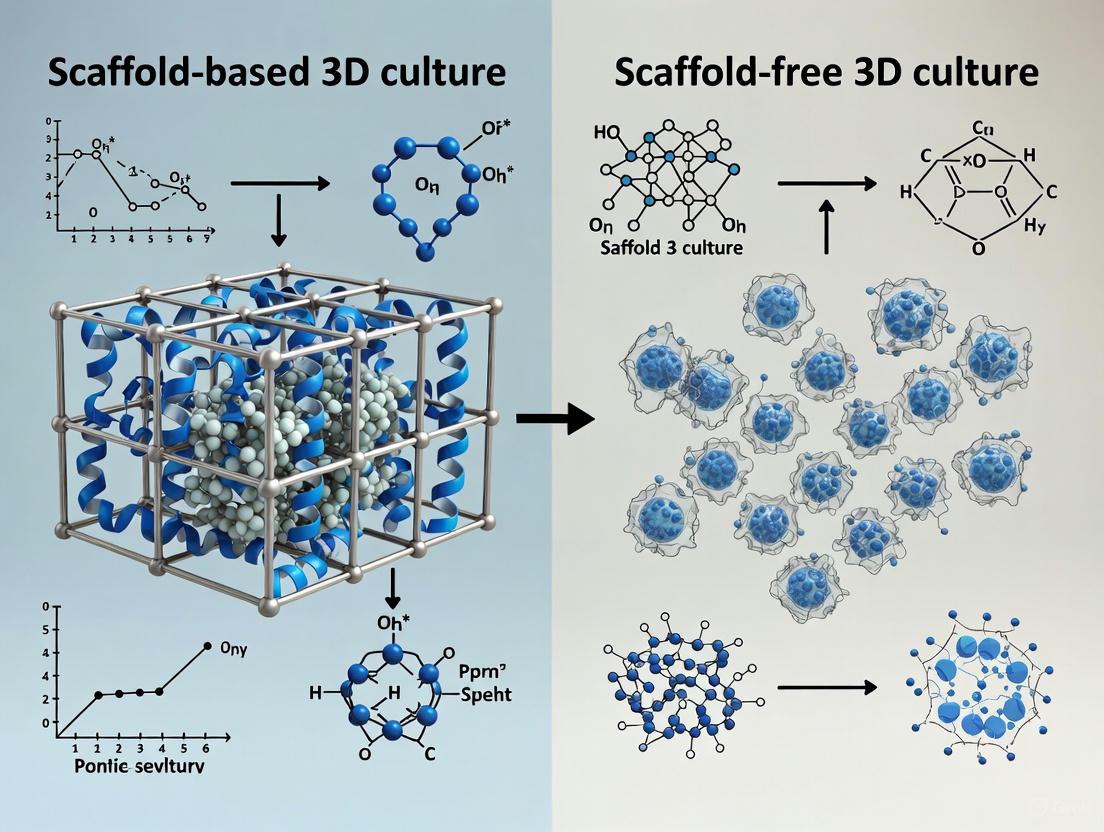
This article provides a detailed comparative analysis of scaffold-based and scaffold-free three-dimensional (3D) cell culture systems, essential tools for researchers and drug development professionals seeking more physiologically relevant in vitro...
Scaffold-Based vs. Scaffold-Free 3D Cell Culture: A Comprehensive Guide for Advanced Research and Drug Development
Abstract
This article provides a detailed comparative analysis of scaffold-based and scaffold-free three-dimensional (3D) cell culture systems, essential tools for researchers and drug development professionals seeking more physiologically relevant in vitro models. It covers the foundational principles of both approaches, exploring how scaffold-based systems using hydrogels, polymers, and decellularized matrices provide extracellular matrix (ECM) mimicry, while scaffold-free techniques like hanging drop and ULA plates promote self-assembly into spheroids and organoids. The content delves into methodological protocols, applications in cancer research, cardiotoxicity testing, and stem cell therapy, alongside critical troubleshooting for challenges in nutrient diffusion, assay compatibility, and standardization. Through validation against traditional 2D cultures and animal models, the article synthesizes evidence-based insights to guide model selection, aiming to enhance preclinical prediction and accelerate the translation of biomedical discoveries.
Understanding 3D Culture Paradigms: From 2D Limitations to Scaffold and Scaffold-Free Fundamentals
The foundation of in vitro cell-based research has been undergoing a fundamental transformation, moving from traditional two-dimensional (2D) monolayer systems toward more physiologically relevant three-dimensional (3D) models. This transition represents a critical advancement in biomedical science, addressing the longstanding limitations of conventional 2D cultures where cells grow on flat, rigid surfaces, resulting in unnatural cell morphology and behavior [1] [2]. The growing recognition that 2D models inadequately represent the complex in vivo microenvironment has accelerated adoption of 3D systems, particularly in cancer research and drug development where accurate representation of tissue architecture is essential [3] [4].
The limitations of 2D culture systems have significant implications for translational research. Compounds that appear effective in 2D monolayer conditions frequently fail to produce comparable results in animal models or human patients, contributing to high attrition rates in drug development [3]. Approximately only 10% of investigational compounds successfully progress through clinical development, with many failures attributed to inadequate efficacy or unacceptable toxicity not predicted by traditional 2D screening models [1]. This translation gap has driven the scientific community toward 3D cell culture technologies that better recapitulate the architectural, mechanical, and biochemical characteristics of native tissues [3].
This technical guide examines the critical shift from 2D to 3D cell culture systems, with particular focus on the comparative advantages of scaffold-based versus scaffold-free approaches within the context of modern cancer research and drug discovery. We provide detailed methodological frameworks and technical considerations for implementing these advanced models in research settings.
Critical Limitations of 2D Monolayer Systems
Physiological Irrelevance and Artificial Microenvironment
Traditional 2D cell culture imposes numerous physical and biological constraints that poorly mimic native tissue environments. In monolayer systems, all cells experience uniform exposure to nutrients, growth factors, and oxygen, lacking the gradient distributions characteristic of in vivo tissues [1]. This homogeneous environment fails to recapitulate the spatial heterogeneity found in natural tissues, particularly in tumors which exhibit distinct proliferative, hypoxic, and necrotic zones [4].
Cells cultured in 2D systems typically adopt abnormal flattened morphologies and exhibit altered polarity compared to their in vivo counterparts [1]. This distorted cellular architecture disrupts normal signal transduction pathways, as the spatial organization of cell surface receptors engaged in interactions with surrounding cells is fundamentally different in 2D versus 3D environments [1]. The unnatural physical constraints of 2D culture influence gene expression profiles, cellular differentiation, and response to therapeutic agents [1] [2].
The rigid, flat substrate of traditional culture surfaces fails to replicate the biomechanical properties of native extracellular matrix (ECM). In living tissues, cells interact with a complex 3D network of ECM components that provide mechanical cues influencing cell behavior, including migration, proliferation, and apoptosis [4]. The absence of proper cell-ECM interactions in 2D systems leads to altered expression of key receptors and signaling molecules, further diminishing physiological relevance [4].
Implications for Drug Discovery and Cancer Research
The limitations of 2D culture systems have profound consequences for preclinical research, particularly in oncology. Drug response disparities between 2D cultures and in vivo conditions are well-documented, with therapeutic agents often showing significantly different efficacy and toxicity profiles [3] [5]. This poor predictive power contributes to the high failure rate of anticancer drugs in clinical trials, with issues of efficacy and toxicity being predominant reasons for late-stage attrition [5].
In cancer research, 2D models cannot adequately replicate the tumor microenvironment (TME), which plays a crucial role in tumor progression, metastasis, and therapeutic resistance [3] [4]. The TME consists of cancer cells, stromal cells, immune cells, blood vessels, and ECM components that interact through complex paracrine and juxtacrine signaling networks [4]. The absence of these critical interactions in 2D systems limits their utility for studying tumor biology and response to treatment.
Table 1: Comparative Analysis of 2D vs. 3D Cell Culture Systems
| Parameter | 2D Cell Culture | 3D Cell Culture |
|---|---|---|
| Cell Morphology | Flat, stretched | Natural, tissue-like |
| Cell-ECM Interactions | Limited, unnatural | Extensive, physiologically relevant |
| Nutrient/Oxygen Gradients | Uniform distribution | Physiological gradients established |
| Proliferation Rates | Typically higher | More physiologically appropriate |
| Gene Expression Patterns | Altered | More representative of in vivo |
| Drug Response | Often overestimated | More predictive of clinical response |
| Cell Signaling | Disrupted by artificial polarity | Proper spatial organization |
| Tumor Heterogeneity | Poorly represented | Better recapitulated |
| Cost and Throughput | Lower cost, higher throughput | Higher cost, moderate throughput |
| Technical Complexity | Simple, standardized | More complex, requires optimization |
3D Cell Culture Systems: Fundamental Principles and Advantages
Physiological and Technical Advantages
3D cell culture systems create microenvironments that more closely mimic tissue architecture by allowing cells to grow in all three spatial dimensions, facilitating natural cell-cell and cell-ECM interactions [1] [4]. This spatial organization enables the formation of physiological gradients of oxygen, nutrients, and metabolic waste products that drive the development of heterogeneous cell populations within 3D structures [1] [4]. These gradients mirror the in vivo situation where proliferating cells are typically located near nutrient sources while quiescent, hypoxic, or necrotic cells reside in core regions [4].
The preservation of native cellular phenotypes represents another significant advantage of 3D culture systems. Cells grown in 3D environments maintain more natural morphological characteristics and differentiated functions compared to their 2D counterparts [1]. For example, cancer cells in 3D culture exhibit enhanced expression of chemokine receptors and integrins involved in cell-ECM interactions, which influences metastatic potential and drug sensitivity [4]. The restoration of proper epithelial polarity in 3D cultures enables more accurate studies of vectorial transport, barrier function, and specialized cellular functions [2].
From a practical research perspective, 3D models serve as a bridge between traditional 2D cultures and animal models, offering a cost-effective, scalable, and ethically favorable alternative for preclinical research [4]. These systems provide enhanced predictive capability for drug efficacy and toxicity while reducing reliance on animal testing, aligning with the principles of the 3Rs (Replacement, Reduction, and Refinement) in research [5].
Applications in Cancer Research and Drug Development
The implementation of 3D cell culture models has yielded particularly valuable insights in oncology research. These systems better replicate critical tumor characteristics such as therapeutic resistance mechanisms, including physical barriers to drug penetration, hypoxic cores, and altered cell signaling pathways [3] [4]. Studies have demonstrated that cancer cells in 3D cultures show significantly different responses to chemotherapeutic agents compared to 2D cultures, often requiring higher drug concentrations for equivalent efficacy, which more closely mirrors clinical observations [3].
In drug discovery pipelines, 3D models enable more predictive high-throughput screening of compound libraries [6] [7]. The pharmaceutical industry is increasingly adopting these models to improve early-stage decision-making, with a focus on developing scalable, reliable, and reproducible 3D platforms that maintain physiological relevance while enabling automated screening processes [6]. The global 3D cell culture market, valued at $2.54 billion in 2024 and projected to reach $6.29 billion by 2032, reflects this growing adoption, particularly in cancer research applications [7].
Patient-derived 3D models, including organoids and tumor spheroids, have advanced personalized medicine approaches by enabling in vitro testing of therapeutic strategies on patient-specific tissue [5]. These models preserve the genetic and phenotypic heterogeneity of original tumors, allowing for functional drug sensitivity testing that can inform clinical treatment decisions [5].
Scaffold-Based 3D Culture Systems
Fundamental Principles and Material Classifications
Scaffold-based 3D culture systems utilize supporting matrices to provide structural framework that enables cells to attach, migrate, and organize into three-dimensional structures [8] [4]. These biomimetic scaffolds are designed to replicate key aspects of the native extracellular matrix, creating microenvironments that support physiologically relevant cell behavior [3]. The scaffold-based segment held the leading market share in 2024, reflecting its extensive utilization in drug development and tissue engineering applications [7].
Scaffold materials are broadly categorized into natural and synthetic polymers, each with distinct advantages and limitations. Natural polymers include biologically derived materials such as collagen, Matrigel, fibrin, hyaluronic acid, alginate, and laminin-rich ECM [1] [8]. These materials offer inherent bioactivity with presence of native binding sites and growth factors that support cell adhesion and function [8]. However, they may exhibit batch-to-batch variability and poor mechanical strength [8]. Synthetic polymers include polyethylene glycol (PEG), polylactic acid (PLA), polycaprolactone (PCL), and polyvinyl alcohol (PVA), which provide excellent control over mechanical properties, reproducibility, and customization but often lack natural cell recognition sites [1] [8].
Hydrogels represent a particularly important class of scaffold materials composed of hydrophilic polymer chains that absorb large amounts of water while maintaining structural integrity [8]. These materials exhibit tissue-like stiffness and effectively mimic the natural ECM, allowing soluble factors such as cytokines and growth factors to diffuse through the matrix [8] [2]. Recent advances include development of composite scaffolds that combine multiple materials to achieve optimized mechanical and biological properties [8].
Technical Methodologies and Protocols
Hydrogel-based 3D culture represents one of the most widely used scaffold-based approaches. A standard protocol involves several key steps:
- Hydrogel preparation: Natural hydrogels (e.g., collagen, Matrigel) are typically thawed on ice and mixed with cell suspension in cold buffer to prevent premature polymerization. Synthetic hydrogels may require crosslinking initiators or exposure to specific light wavelengths for photopolymerization.
- Cell encapsulation: Cells are resuspended in the hydrogel precursor solution at appropriate density (typically 0.5-5×10^6 cells/mL depending on application).
- Polymerization: The cell-hydrogel mixture is transferred to culture vessels and incubated at 37°C to initiate gelation (5-60 minutes depending on material).
- Culture maintenance: After polymerization, appropriate culture medium is added and refreshed according to experimental requirements.
For hard polymeric scaffolds, common techniques include:
- Scaffold pre-treatment: Scaffolds may require sterilization (ethanol, UV irradiation) and hydration before cell seeding.
- Static seeding: Cell suspension is applied directly to scaffolds and allowed to attach during incubation.
- Dynamic seeding: Utilizing bioreactors or agitation systems to enhance cell distribution throughout scaffold porosity.
Matrix-embedded organoid cultures represent advanced scaffold-based models particularly valuable for cancer research. A representative protocol for establishing patient-derived organoid (PDO) cultures involves [9] [5]:
- Tissue processing: Patient tumor samples are minced and digested enzymatically (collagenase/dispase) to obtain single cells or small tissue fragments.
- Matrix embedding: Cells are resuspended in Matrigel or similar basement membrane extract and plated as droplets in pre-warmed culture plates.
- Gel polymerization: Plates are incubated at 37°C for 20-30 minutes to solidify matrix.
- Organoid culture: Appropriate medium with growth factors (EGF, Noggin, R-spondin) is added to support organoid formation and maintenance.
- Passaging and expansion: Organoids are enzymatically or mechanically dissociated and re-embedded in fresh matrix for expansion.
Applications and Case Studies in Cancer Research
Scaffold-based 3D models have demonstrated particular utility in oncology research, where they enable investigation of tumor-stroma interactions, drug penetration, and metastasis. In osteosarcoma research, scaffold-based systems provide enhanced platforms for studying tumor-stroma interactions, drug responses, and chemoresistance mechanisms [3]. Biomimetic scaffolds composed of bone-like materials allow OS cells to establish more physiologically relevant phenotypes and signaling pathways compared to conventional 2D cultures [3].
A notable application involves modeling tumor invasion using 3D hydrogel/Matrigel organoid cultures. Researchers have cultured breast cancer cell-derived and patient-derived organoids in 3D Matrigel/hydrogel overlay systems with calibrated elastic moduli ranging from 150-320Pa (mimicking normal human breast tissues) to 1100-5700Pa (representing stiff breast tumors) to study how extracellular matrix stiffness controls tumor invasion [9]. These models have revealed critical roles for mechanical signaling in cancer progression and identified potential therapeutic targets for inhibiting metastasis.
In colorectal cancer research, synthetic hydrogel matrices with tunable biomimetic properties have provided systems for studying cell-matrix interactions related to tumorigenesis [4]. These 3D cultured cells overexpressed mRNA for surface receptors (proteases, α3, α5, β1 integrins) compared to 2D cultured cells, and spheroid progression depended on the cells' ability to proteolytically remodel their ECM and engage in specific integrin interactions [4]. Importantly, the 3D spheroids showed higher survival rates after exposure to chemotherapeutic agents compared to 2D monolayers, better simulating in vivo chemosensitivity [4].
Scaffold-Free 3D Culture Systems
Fundamental Principles and Methodological Approaches
Scaffold-free 3D culture systems generate multicellular aggregates through self-assembly processes without supporting matrices, relying on innate cell-cell adhesion mechanisms to form organized structures [8]. These approaches typically generate spherical aggregates known as spheroids, which develop endogenous ECM production and establish natural nutrient and oxygen gradients [1]. While considered the gold standard among 3D culture systems, scaffold-free models have limitations in replicating complex cell-ECM interactions present in the native tumor microenvironment [3].
The hanging drop method utilizes gravity to drive cellular aggregation in suspended droplets [8] [2]. This technique involves preparing cell suspensions at optimized densities (typically 1-5×10^4 cells/mL), dispensing small volumes (10-50μL) as droplets on the underside of culture plate lids, inverting the plates to allow droplets to hang, and incubating for aggregation (24-72 hours). The hanging drop method enables precise control over spheroid size and uniformity but may present challenges for medium exchange and long-term culture maintenance [2].
Ultra-low attachment (ULA) plates feature specially treated surfaces that prevent cell adhesion, forcing cells to self-assemble into spheroids [3] [2]. The standard protocol involves seeding cell suspensions at appropriate densities directly into ULA wells, centrifuging plates briefly (100-200×g for 1-2 minutes) to enhance cell-cell contact, and maintaining cultures with regular medium exchanges. ULA platforms support higher throughput applications and longer culture durations compared to hanging drop methods [3].
Agitation-based approaches utilize dynamic culture conditions to prevent cell attachment and promote aggregation [8]. These methods include rotary cell culture systems, spinner flasks, and orbital shakers that maintain cells in constant motion, preventing adhesion to vessel surfaces while enhancing nutrient/waste exchange. Although these systems can generate large quantities of spheroids, they often produce heterogeneous sizes and may subject cells to potentially damaging shear forces [8].
Magnetic levitation employs nanoparticle-based assembly to form 3D structures [2]. This innovative approach involves incubating cells with magnetic nanoparticles (typically 50-100nm diameter) for 4-24 hours, applying external magnetic fields to concentrate cells into aggregates, and maintaining cultures with continuous magnetic exposure to preserve 3D architecture. Magnetic levitation enables rapid spheroid formation and precise spatial manipulation but introduces foreign nanoparticles that may influence cellular behavior [2].
Applications and Case Studies in Cancer Research
Scaffold-free spheroid models have proven valuable for cancer stem cell (CSC) research and high-throughput drug screening applications. In osteosarcoma, spheroids enriched with cancer stem cells promote anchorage-independent growth under serum-free, nonadherent culture conditions supplemented with growth factors such as EGF and bFGF for maintaining stem cell phenotype [3]. These CSC-enriched spheroids display tumor-like characteristics in vitro and demonstrate tumorigenic capacity in vivo, providing models for studying tumor initiation, dormancy, metastasis, and recurrence mechanisms [3].
Research by Ozturk et al. demonstrated that scaffold-free spheroids derived from Soas-2 osteosarcoma stem cells preserved stem-like properties longer than cells in monolayer culture, making them more relevant platforms for assessing drug responses, particularly against cancer stem cell populations [3]. Similarly, Ohya et al. showed that MG-63 OS spheroids cultured under serum-free, nonadhesive conditions could be used to evaluate KCa1.1 channel inhibition, which enhanced spheroid sensitivity to standard chemotherapeutic drugs including paclitaxel, doxorubicin, and cisplatin [3].
Sant et al. conducted studies generating uniform 3D tumor spheroids using ultralow attachment microplates or polyethylene glycol dimethacrylate hydrogel microwell arrays for cancer drug discovery [3]. Their findings revealed that uniform, size-controlled 3D spheroids more closely resemble the structural complexity and microenvironment of actual tumors, leading to more physiologically relevant drug response data compared to traditional 2D cell cultures [3].
To address limitations in replicating tumor microenvironment complexity, hybrid spheroid models have been developed by co-culturing cancer cells with stromal components including fibroblasts, immune cells, and endothelial cells [3]. These multi-cellular systems better mimic the cellular heterogeneity of actual tumors and enable investigation of paracrine signaling networks that influence cancer progression and therapeutic resistance.
Table 2: Scaffold-Based vs. Scaffold-Free 3D Culture Systems
| Characteristic | Scaffold-Based Systems | Scaffold-Free Systems |
|---|---|---|
| Structural Support | Provided by exogenous matrix | Self-assembled cellular organization |
| ECM Composition | Defined by scaffold material | Endogenously produced by cells |
| Control over Microenvironment | High control over biochemical/mechanical properties | Limited to cellular self-organization |
| Technical Complexity | Moderate to high | Low to moderate |
| Throughput Potential | Moderate | High for simple spheroids |
| Cost Considerations | Higher (specialized matrices) | Lower (minimal specialized materials) |
| Reproducibility | Matrix-dependent (high for synthetic) | Method-dependent (high for ULA) |
| Physiological Relevance | High when properly designed | Good for cell-cell interactions |
| Primary Applications | Tissue engineering, invasion studies, stromal interactions | High-throughput screening, cancer stem cells, basic tumor biology |
| Limitations | Potential batch variability (natural scaffolds), matrix effects | Limited control over ECM composition, size restriction in core |
The Scientist's Toolkit: Essential Research Reagents and Materials
Successful implementation of 3D cell culture methodologies requires specific reagents and specialized materials optimized for three-dimensional growth environments. This section details critical components of the 3D cell culture toolkit, with particular emphasis on solutions validated in cancer research applications.
Table 3: Essential Research Reagents for 3D Cell Culture
| Reagent/Material | Composition/Type | Primary Function | Application Examples |
|---|---|---|---|
| Basement Membrane Extracts (Matrigel, Cultrex) | Laminin, collagen IV, entactin, heparin sulfate proteoglycans | Provides biologically active 3D substrate for cell growth | Organoid culture, tumor-stroma interaction studies |
| Natural Hydrogels | Collagen, fibrin, alginate, hyaluronic acid | Creates biomimetic 3D environment with native adhesion motifs | Epithelial morphogenesis, drug penetration studies |
| Synthetic Hydrogels | PEG, PLA, PVA-based polymers | Provides defined, tunable 3D microenvironment | Mechanotransduction studies, controlled release applications |
| Ultra-Low Attachment Plates | Polymer-coated surfaces that prevent protein adhesion | Enforces scaffold-free spheroid formation | High-throughput drug screening, cancer stem cell enrichment |
| Hanging Drop Plates | Specialized plates with arrayed droplet positions | Facilitates uniform spheroid formation via gravity | Spheroid size optimization studies, developmental biology |
| Bioinert Scaffolds | Polystyrene, glass microfibers | Provides physical support without biochemical signaling | Cell migration studies, angiogenesis assays |
| Specialized Culture Media | Tissue-specific formulations with growth factors | Supports long-term viability and function in 3D | Patient-derived organoid culture, differentiated cell models |
| Dissociation Reagents | Enzyme cocktails (collagenase, dispase, accutase) | Enables recovery of cells from 3D matrices | Subculturing, single-cell analysis, flow cytometry |
Scaffold-Based Culture Reagents
For scaffold-based approaches, basement membrane extracts represent the most widely utilized natural matrices, particularly for epithelial cancer models and organoid cultures [1] [9]. These temperature-sensitive liquids polymerize at 37°C to form reconstituted basement membranes that support complex 3D organization and polarized structures. Collagen type I hydrogels provide another fundamental scaffold material, especially relevant for modeling stromal-rich tumors and studying invasion processes [4]. These matrices offer tunable mechanical properties through concentration adjustments and crosslinking strategies.
Advanced synthetic hydrogel systems including PEG-based matrices and composite scaffolds have gained prominence for their defined composition and customizable properties [8]. These materials can be functionalized with specific adhesion peptides (RGD, YIGSR) and matrix metalloproteinase (MMP)-sensitive crosslinkers to create proteolytically degradable environments that permit cell-mediated remodeling [8] [4]. The development of polymer-coated ceramic scaffolds combining structural support with enhanced biocompatibility represents an innovative approach for modeling bone-related cancers and tissue interfaces [8].
Scaffold-Free Culture Platforms
Scaffold-free methodologies rely heavily on specialized cultureware that minimizes cell-substrate adhesion. Ultra-low attachment plates with covalently bound hydrogel surfaces or chemically modified polymers prevent protein adsorption and cell attachment, promoting spontaneous aggregation [3] [2]. Hanging drop plates with precision-molded well arrays facilitate consistent spheroid formation through gravitational settling and are particularly valuable for establishing size-controlled models [2].
Magnetic nanoparticle systems enable scaffold-free assembly through bio-compatible iron oxide nanoparticles that become internalized by cells, allowing magnetic field-driven aggregation [2]. These platforms provide unique capabilities for manipulating spatial organization and creating complex multi-cellular architectures not achievable through self-assembly alone [2].
Specialized Culture Media Formulations
3D culture systems often require tailored media formulations optimized for enhanced nutrient diffusion and tissue-specific function. Key modifications include increased antioxidant concentrations (vitamin C, N-acetylcysteine) to combat oxidative stress in dense 3D structures, and specialized growth factor cocktails to maintain stemness or promote differentiation [3] [5]. For cancer stem cell enrichment in spheroid cultures, serum-free formulations supplemented with EGF, bFGF, B27, and N2 have proven effective [3].
Organoid culture systems demand particularly complex media formulations containing multiple niche factors including R-spondin, Noggin, Wnt agonists, and tissue-specific morphogens [5]. These specialized formulations enable long-term expansion while maintaining genetic stability and phenotypic fidelity to original tissues [5].
Current Challenges and Future Perspectives
Technical and Translational Hurdles
Despite significant advancements, 3D cell culture technologies face several persistent challenges that limit their widespread adoption. Standardization and reproducibility issues remain considerable hurdles, particularly with natural scaffold materials that exhibit batch-to-batch variability [3] [6]. The development of synthetic, defined matrices addresses some concerns, but these materials often lack the biological complexity of native ECM [8]. Industry efforts are focusing on creating more consistent platforms that maintain physiological relevance while enabling reliable, reproducible results across laboratories and applications [6].
Technical complexity and cost considerations present additional barriers to implementation. 3D culture systems generally require more specialized expertise, longer culture periods, and higher costs compared to conventional 2D methods [7]. These factors can be particularly limiting for academic laboratories and in high-throughput screening environments where scalability and cost-effectiveness are paramount [7]. The global 3D cell culture market growth (projected CAGR of 12.1% from 2025-2032) reflects increasing adoption, but cost reduction through technological innovations remains necessary for broader implementation [7].
Analytical limitations constitute another significant challenge, as standard molecular biology techniques often require optimization for 3D cultures. Imaging dense spheroids or scaffold-embedded cells presents difficulties with light penetration and reagent diffusion [4]. Similarly, RNA/protein extraction from 3D structures may yield lower quantities and require specialized protocols. Advanced analytical methods including light-sheet microscopy, chemical clearing techniques, and single-cell sequencing approaches are being adapted to address these limitations [4].
Emerging Technologies and Future Directions
The integration of artificial intelligence and machine learning with 3D culture systems represents a promising frontier in cancer research and drug discovery [10]. AI-powered analysis of complex 3D imaging data can extract subtle morphological features and patterns not discernible through conventional analysis, enabling more sophisticated classification of treatment responses and predictive modeling [10]. These approaches are particularly valuable for high-content screening applications where multidimensional data from 3D models generates information-rich datasets amenable to computational analysis [10].
Microfluidic and organ-on-a-chip platforms are advancing 3D culture capabilities by enabling precise control over microenvironmental conditions and spatial organization [5]. These systems incorporate fluid flow, mechanical forces, and multi-tissue interactions that more comprehensively mimic in vivo physiology [5]. The integration of patient-derived cells into these platforms creates powerful personalized medicine tools for predicting individual treatment responses and understanding patient-specific disease mechanisms [5].
Multi-omics integration with 3D culture models is generating unprecedented insights into cancer biology and therapeutic mechanisms. Combining genomic, transcriptomic, proteomic, and metabolomic analyses of 3D cultures provides comprehensive molecular portraits that capture the complexity of tumor responses to microenvironmental cues and therapeutic interventions [4] [5]. These integrated approaches are particularly valuable for understanding resistance mechanisms and identifying biomarkers predictive of treatment outcomes.
The continued refinement of 3D culture technologies is expected to further bridge the gap between traditional in vitro models and clinical reality, accelerating drug development and enhancing our fundamental understanding of cancer biology. As these systems become more sophisticated, accessible, and standardized, they are poised to transform preclinical research paradigms and ultimately improve patient outcomes through more predictive modeling of human biology and disease.
Scaffold-based three-dimensional (3D) cell culture has emerged as a transformative technology in biomedical research, addressing the critical limitations of traditional two-dimensional (2D) monolayers by providing a physiologically relevant microenvironment. This approach utilizes a biomimetic structural support system designed to emulate the native extracellular matrix (ECM), thereby enabling more accurate investigation of cellular behaviors, drug responses, and disease mechanisms in vitro. This technical guide delineates the core principles, methodologies, and applications of scaffold-based 3D culture systems, framing them within the broader research context of scaffold-based versus scaffold-free techniques to empower researchers and drug development professionals in selecting appropriate models for their specific investigative needs.
For decades, two-dimensional (2D) cell culture has served as the cornerstone of in vitro research, facilitating foundational biological discoveries and initial drug screening [8]. However, this monolayer system forces cells to grow on rigid, flat surfaces, which is a poor representation of the complex 3D architecture found in living tissues [8] [4]. Consequently, cells in 2D culture often exhibit aberrant morphology, disrupted signaling, and gene expression profiles that do not accurately predict in vivo behavior or therapeutic efficacy [8]. This discrepancy underscores a significant translational gap between preclinical studies and clinical outcomes.
The tumor microenvironment (TME) and tissue-specific niches are characterized by intricate cell-cell and cell-ECM interactions that govern critical processes like proliferation, differentiation, and metastasis [4]. To bridge this gap, research has pivoted towards 3D cell culture models, which can be broadly categorized into scaffold-based and scaffold-free systems [8] [11]. Scaffold-free techniques, such as the use of ultra-low attachment (ULA) plates or the hanging drop method, promote cell self-assembly into spheroids or organoids [8] [12] [13]. While valuable for studying cell-cell interactions and generating heterogeneous populations, these models can lack the structural and biochemical cues provided by the ECM [14] [15].
In contrast, scaffold-based 3D culture provides a biomimetic framework that directly mimics the native ECM, offering not only physical support but also essential biochemical and mechanical cues [8] [16] [4]. This makes scaffold-based systems particularly adept at recapitulating the in vivo microenvironment, thereby providing a more predictive platform for studying cancer biology, tissue regeneration, and drug responses [14] [15].
Core Principles and Components of Scaffold-Based 3D Culture
The Role of the Scaffold as a Synthetic ECM
The scaffold is the defining component of this technology, acting as a synthetic analog to the native ECM. Its primary functions are:
- Structural Support: Providing a 3D architecture for cell adhesion, proliferation, and migration [8] [16].
- Mechanical Signaling: Transmitting biomechanical cues through tissue-like stiffness that influence cell fate, including differentiation and metastasis [16] [4].
- Biochemical Regulation: Presenting integrin-binding sites and serving as a reservoir for growth factors and cytokines that regulate cellular signaling cascades [8] [16].
- Transport Medium: Facilitating the diffusion of oxygen, nutrients, and metabolic waste through its porous network [8].
The effectiveness of a scaffold is governed by key design parameters, including porosity for cell migration and nutrient transport, mechanical strength matched to the target tissue, and biocompatibility to ensure non-toxic degradation and integration with host tissues [11] [16].
Classification and Properties of Scaffold Materials
Scaffold materials are strategically selected based on the research application and are classified into natural, synthetic, and hybrid composites.
Table 1: Classification and Characteristics of Scaffold Materials
| Material Type | Examples | Key Advantages | Key Limitations |
|---|---|---|---|
| Natural Polymers/Hydrogels | Collagen, Matrigel, alginate, gelatin, hyaluronic acid, fibrin [8] [16] | Inherent bioactivity, biocompatibility, and presence of cell recognition sites; excellently mimic the native ECM [8]. | Poor and variable mechanical properties; potential immunogenicity; batch-to-batch variability [8]. |
| Synthetic Polymers | Polyethylene glycol (PEG), polylactic acid (PLA), polycaprolactone (PCL) [8] | High consistency, reproducibility, tunable mechanical properties, and precise control over architecture [8]. | Lack inherent bioactivity and cell recognition sites, often requiring functionalization with ECM-derived peptides (e.g., RGD) [8]. |
| Composites & Ceramics | Polymer-ceramic composites (e.g., PCL-HA), hydroxyapatite (HA), bioglass [8] [15] | Combine advantages of components; enhanced mechanical strength and bioactivity; ideal for bone tissue engineering [8] [15]. | Complexity in fabrication; potential for incompatibility between materials [8]. |
Fabrication Techniques for Scaffold Engineering
The method of scaffold fabrication directly determines its architectural and functional properties.
- Electrospinning: Creates micro- to nano-scale fibrous meshes that highly resemble the fibrous structure of native ECM, promoting cell attachment [11] [16].
- Freeze-Drying (Lyophilization): Generates highly porous sponges by freezing and sublimating a polymer solution, ideal for nutrient diffusion and cell infiltration [11] [16].
- Decellularization: Involves the removal of cellular material from native tissues, leaving behind a intact, biologically active ECM scaffold that perfectly retains the tissue's native composition and architecture [16].
- 3D Bioprinting: Enables the precise layer-by-layer deposition of cell-laden bioinks (which can contain natural or synthetic polymers) to create complex, patient-specific tissue constructs [11] [16].
Diagram 1: Scaffold fabrication techniques and their primary outcomes.
Methodologies and Experimental Protocols
Establishing a Scaffold-Based 3D Culture: A General Workflow
The process of creating a scaffold-based 3D model involves several critical steps, from scaffold selection to endpoint analysis. The following workflow generalizes this process, which can be adapted for specific scaffold types like collagen or Matrigel.
Diagram 2: Generalized workflow for establishing a scaffold-based 3D culture.
Detailed Protocol: Collagen ECM Scaffold Method for Liposarcoma Models
This protocol, adapted from Tahara et al. (2024), provides a specific methodology for creating a 3D culture using a Type I collagen scaffold [13].
Objective: To establish a 3D collagen-based model for studying dedifferentiated liposarcoma cell lines.
Materials:
- Rat tail collagen Type I (e.g., Corning, Cat #354236)
- Cell lines: Lipo246 and Lipo863, or other relevant cancer cell lines.
- Culture medium: DMEM supplemented with 10% FBS.
- Reagents: 10x DPBS, 1N NaOH, double-distilled sterile water.
- Labware: 12-well or 24-well tissue culture plates.
Method:
- Preparation of Collagen Hydrogel Solution: On ice, mix the following components in a sterile tube to achieve a final collagen concentration of 3 mg/mL at pH 7.4:
- Rat tail collagen Type I
- 10x DPBS
- 1N NaOH (volume titrated to neutralize the collagen acid)
- Double-distilled sterile water
- Keep the mixture on ice to prevent premature polymerization.
Cell Suspension Preparation: Trypsinize, count, and resuspend cells in culture medium at a density of 1 × 10^5 cells/mL. Keep the suspension on ice.
Mixing and Seeding: On ice, combine the cell suspension with the prepared collagen solution at a 1:1 ratio. Gently mix to avoid bubble formation.
- For a "layer" method, seed 1 mL/well of the mixture into a 12-well plate.
- For a "droplet" method, seed 50 µL/well of the mixture into a 24-well plate.
Polymerization: Incubate the plate at 37°C for 30 minutes to allow the collagen-cell mixture to solidify into a gel.
Adding Culture Medium: After solidification, carefully add 1 mL (for 12-well plates) or 500 µL (for 24-well plates) of pre-warmed culture media on top of the gel without disrupting it.
Culture Maintenance: Incubate the plates at 37°C in a 5% CO₂ incubator. Change the growth medium every 2-3 days. Cultures can be maintained for up to 14 days for analysis.
The Scientist's Toolkit: Essential Research Reagents
Table 2: Key Research Reagents for Scaffold-Based 3D Culture
| Reagent / Material | Function & Application | Example Use Case |
|---|---|---|
| Matrigel | A basement membrane extract from mouse sarcoma; rich in ECM proteins like laminin and collagen. Provides a biologically active scaffold for organoid and spheroid culture. | Used to cultivate organoids of intestine, brain, and liver; promotes spheroid formation in liposarcoma models [13]. |
| Type I Collagen | The most abundant protein in the ECM; forms a fibrillar hydrogel that supports cell adhesion and migration. | Serves as a defined scaffold for 3D cancer models (e.g., liposarcoma) and is widely used in tissue engineering [13]. |
| Synthetic Peptide Hydrogels (PeptiGels) | Customizable synthetic hydrogels with defined mechanical properties and chemical functionalities. | Allows researchers to decouple biochemical and mechanical cues in the cellular microenvironment for controlled studies [17]. |
| Hydroxyapatite (HA) Scaffolds | A calcium phosphate ceramic that is a major component of bone mineral. Provides osteoconductive properties. | Used in bone tissue engineering and to mimic the osteosarcoma stem cell niche, enhancing stemness gene expression [15]. |
| ROCK Inhibitor (Y-27632) | A chemical inhibitor of Rho-associated coiled-coil kinase (ROCK). Reduces apoptosis in single cells and promotes stem cell survival. | Added to media to enhance the formation and stability of holospheres and preserve stemness markers in keratinocyte cultures [12]. |
| Decellularized ECM (dECM) | Native tissue ECM stripped of cellular components, retaining tissue-specific biochemical and structural cues. | Used as a bioink for 3D bioprinting or as a scaffold to create highly biomimetic tissue models for disease study and regeneration [16]. |
Applications in Biomedical Research
Cancer Research and Drug Screening
Scaffold-based 3D models have revolutionized cancer research by more accurately modeling the tumor microenvironment (TME). For instance, in osteosarcoma research, hydroxyapatite-based scaffolds have been used to culture cancer stem cells (CSCs), successfully recapitulating the CSC niche. These models demonstrated enhanced expression of stemness markers (OCT-4, NANOG) and niche-interaction genes (NOTCH-1, IL-6) compared to 2D or scaffold-free cultures, providing a platform to study chemoresistance and discover novel therapies [15]. Similarly, Romero-López et al. showed that decellularized ECM from colon tumors promoted distinct vascular network formation and altered cancer cell metabolism compared to normal ECM, highlighting how scaffold composition directly influences tumor behavior [4].
A critical application is in drug sensitivity testing, where scaffold-based models often show greater resistance to chemotherapeutic agents, more closely mirroring clinical responses. In a direct comparison, liposarcoma cells cultured in 3D collagen scaffolds showed higher cell viability after MDM2 inhibitor treatment than cells in 2D cultures, underscoring the importance of a 3D ECM context for predictive drug testing [13].
Tissue Engineering and Regenerative Medicine
The role of scaffold-based systems is foundational in tissue engineering, where the goal is to develop functional tissue constructs for restoration or replacement.
- Bone Tissue Engineering: Hydroxyapatite and bioceramic scaffolds provide the necessary mechanical strength and osteoconductivity to support osteoblast adhesion and bone mineralization [11] [15].
- Skin Wound Healing: Collagen-based scaffolds and other natural polymers are used to create temporary matrices that support the migration and growth of keratinocytes and fibroblasts, facilitating rapid wound closure and re-epithelialization [12] [16].
- Cartilage Regeneration: Flexible yet resilient scaffolds composed of hydrogels or collagen provide a supportive environment for chondrocytes to produce new cartilage matrix [11].
Comparative Analysis: Scaffold-Based vs. Scaffold-Free 3D Culture
The choice between scaffold-based and scaffold-free methodologies is pivotal and should be guided by the specific research objectives. The table below summarizes the core distinctions.
Table 3: Comparative Analysis: Scaffold-Based vs. Scaffold-Free 3D Culture
| Aspect | Scaffold-Based 3D Culture | Scaffold-Free 3D Culture |
|---|---|---|
| Structural Foundation | Physical, ECM-mimetic framework guides cell organization [8] [11]. | Cells self-assemble without external support, forming spheroids/organoids [8] [12]. |
| Impact on Cell Behavior | Promotes organized growth, adhesion, and tissue-like arrangement; provides biomechanical and biochemical cues [8] [4]. | Encourages natural cell-cell interactions; ideal for studying self-organization and heterogeneity [12] [13]. |
| Control & Reproducibility | High control over mechanical properties and architecture with synthetic scaffolds [8]. | Simpler setup, but can lead to heterogeneous spheroid sizes, potentially affecting reproducibility [12]. |
| Suitability for Cell Types | Ideal for cells requiring structural support (e.g., bone, cartilage, skin) [11]. | Often used for cancer cells, stem cells, and others that readily self-aggregate [11]. |
| Primary Applications | Tissue engineering, disease modeling requiring specific ECM cues, studying cell-ECM interactions [14] [15]. | Generating organoids, tumor spheroids for high-throughput screening, studying cell-cell signaling [12]. |
Challenges and Future Directions
Despite its significant advantages, scaffold-based 3D culture faces several challenges. Technical hurdles include optimizing scaffold properties like porosity, degradation rate, and mechanical strength to match native tissues perfectly [8]. Reproducibility can be an issue, particularly with natural hydrogels like Matrigel, which have batch-to-batch variability and a complex, ill-defined composition [13]. Furthermore, cost and complexity are often higher than for 2D or simple scaffold-free methods, and the presence of a scaffold can sometimes complicate downstream analysis like cell retrieval and molecular profiling [8].
Future developments are poised to overcome these limitations. The field is moving towards advanced hybrid and composite scaffolds that combine the bioactivity of natural materials with the tunable strength of synthetic polymers [8] [16]. 3D bioprinting is enabling the creation of complex, multi-cellular constructs with precise spatial control [16]. Furthermore, the integration of smart materials (e.g., stimuli-responsive hydrogels) and automation with AI-driven design will enhance functionality, scalability, and throughput, accelerating the translation of research from the bench to the clinic [18].
Scaffold-based 3D cell culture represents a critical advancement in in vitro modeling by faithfully mimicking the structural and biochemical complexity of the native ECM. Within the broader context of 3D research methodologies, it offers a unique and powerful approach for investigating cell-ECM interactions, a component often missing from scaffold-free systems. As this technology continues to evolve with improvements in biomaterial design and fabrication, it holds the unparalleled potential to bridge the persistent gap between traditional 2D culture and in vivo physiology. This will undoubtedly lead to more accurate disease models, more predictive drug screening platforms, and ultimately, more effective therapeutic outcomes.
In the field of three-dimensional (3D) cell culture, two predominant philosophies have emerged: scaffold-based and scaffold-free approaches. Scaffold-based systems utilize supportive biomaterials—such as natural or synthetic polymers—to provide a structural framework that mimics the extracellular matrix (ECM) and guides tissue formation [4] [19]. In contrast, scaffold-free 3D culture represents a fundamentally different paradigm, capitalizing on the innate ability of cells to self-assemble and produce their own ECM into complex, tissue-like structures without reliance on exogenous materials [20] [21]. This methodology is founded on the principle that cells, when provided with the appropriate environmental cues, possess the sophisticated capacity to autonomously organize in a manner that closely recapitulates native tissue architecture and function.
The distinction between these approaches is more than technical; it reflects a different perspective on how to best mimic human physiology. Scaffold-free systems eliminate potential complications associated with scaffold use, such as batch-to-batch variability of biological matrices, inflammatory responses to synthetic materials, and the mechanical and chemical limitations of scaffolds that may restrict certain cellular functions [20] [21]. Instead, they harness the efficiency and biological precision of cell-directed tissue assembly, creating microtissues with enhanced cell-cell communication and physiologically relevant ECM composition [22]. This article explores the core principles, methodologies, and applications of scaffold-free 3D culture, framing its utility within the broader context of 3D biomedical research.
Core Principles and Biological Mechanisms
The Foundations of Self-Assembly and Cellular Organization
The scaffold-free approach is underpinned by the biological principle of self-assembly, a process governed by innate cellular programming. When deprived of a rigid artificial scaffold, cells revert to a more natural mode of organization, relying on cell-cell adhesion molecules such as cadherins and connexins to form cohesive 3D structures [20] [8]. This self-organizing capability is a fundamental property of many cell types, enabling them to create complex tissue architectures with efficiency that remains unparalleled by human-made devices [21].
A critical outcome of this self-assembly process is the development of physiochemical gradients within the forming microtissue. As the structure grows, it naturally develops gradients of oxygen, nutrients, and metabolic waste. This results in the establishment of distinct microenvironments within the same construct: proliferating cells typically reside on the oxygen-rich periphery, while quiescent, hypoxic, and even necrotic cells may occupy the core, thereby mimicking the gradients observed in vivo tumors and native tissues [3] [4]. This level of organizational complexity is difficult to achieve with predefined scaffold systems.
Cell-Driven Extracellular Matrix Production
In the absence of an exogenous scaffold, cells actively synthesize and deposit their own native ECM, creating a biologically authentic microenvironment. This cell-driven matrix production results in a tissue-specific ECM composition that is far more representative of natural tissues than most engineered scaffolds [21]. Proteomic studies of scaffold-free cultures have demonstrated a profound upregulation of matrisome proteins—the core components of the ECM—when cells transition from 2D to 3D culture conditions, indicating the generation of a complex, tissue-like ECM [22].
The deposited ECM is not merely structural; it serves as a dynamic, bioactive scaffold that influences fundamental cellular processes. It acts as a reservoir for growth factors and cytokines, facilitates crucial cell-matrix signaling through integrin binding, and provides mechanical cues that direct cell fate and function [20] [4]. This self-produced ECM also enhances the therapeutic potential of scaffold-free constructs upon transplantation, as it protects the transplanted cells, promotes their retention at the site of injury, and supports integration with host tissues while minimizing foreign body responses [21].
Table 1: Advantages and Disadvantages of Scaffold-Free 3D Culture
| Advantage | Description | Research Implication |
|---|---|---|
| Enhanced Physiological Relevance | Recapitulates native tissue architecture, cell-cell interactions, and ECM composition [20] [22]. | More predictive data for drug testing and disease modeling. |
| Elimination of Scaffold-Related Artifacts | Avoids batch-to-batch variability, immune reactions, and biocompatibility issues of exogenous materials [20] [21]. | Improved experimental consistency and clinical safety. |
| Development of Natural Gradients | Supports formation of physiological oxygen, nutrient, and metabolic waste gradients [3] [4]. | Better models of tumor microenvironments and tissue heterogeneity. |
| Inherent Simplicity and Cost-Effectiveness | Many methods require minimal specialized equipment or reagents beyond low-adhesion surfaces [8] [23]. | Increased accessibility and higher throughput potential. |
| Challenge | Description | Potential Mitigation Strategy |
| Limited Scalability for Thick Tissues | Diffusion limits typically restrict construct size to ~40-80 μm without vascularization [21]. | Co-culture with endothelial cells to promote pre-vascularization; use of bioreactors [21]. |
| Heterogeneity in Size and Shape | Self-assembly can lead to variability in microtissue dimensions, especially in non-patterned systems [12]. | Use of microcavity plates or hanging drop methods for improved uniformity [12] [8]. |
| Extended Culture Periods | Time required for sufficient ECM deposition and tissue maturation can be prolonged [21]. | Application of biochemical stimuli (e.g., ROCK inhibition) to accelerate maturation [12]. |
| High Initial Cell Number Requirements | Generating substantial 3D constructs can demand large quantities of cells [21]. | Optimization of seeding density and use of proliferative cell sources like stem cells. |
Methodological Approaches and Standardization
Established Techniques for Scaffold-Free Culture
A diverse array of technical platforms has been developed to support and standardize scaffold-free 3D culture, each with distinct advantages for specific research applications.
Liquid Overlay and Ultra-Low Attachment (ULA) Surfaces: This is one of the most accessible and widely used techniques. Culture vessels are coated with hydrophilic or inert polymers that prevent protein adsorption and cell attachment, forcing cells to aggregate and form spheroids [3] [23]. The technique can be implemented in both low-throughput formats (e.g., 6-well ULA plates) for generating heterogeneous spheroid populations, and high-throughput formats (e.g., 96-well ULA plates with round bottoms or microcavities) for producing highly uniform spheroids ideal for drug screening [12]. The Corning Elplasia plate, for instance, contains microcavities that guide spheroid formation, ensuring consistent size and circularity [12] [23].
Hanging Drop Method: This technique involves suspending a droplet of cell culture medium, containing a precise number of cells, from the lid of a culture dish. Gravity causes the cells to aggregate at the liquid-air interface within the droplet, forming a single spheroid [8]. The primary advantage of this method is the exquisite control over spheroid size and cellular composition, which is determined by the initial cell concentration and volume of the droplet [8]. While powerful for generating uniform spheroids, the method can be technically challenging for long-term cultures due to evaporation and medium exchange difficulties.
Agitation-Based Methods: These approaches, which include spinner flasks and rotary wall bioreactors, use constant gentle agitation to keep cells in suspension, preventing them from adhering to the vessel walls and instead promoting their aggregation into spheroids [3] [8]. The dynamic culture environment improves nutrient and gas exchange throughout the medium, supporting the growth of larger spheroids. However, these systems often produce a broad distribution of spheroid sizes and require specialized equipment [8].
A Standardized Workflow for Heterogeneous Spheroid Generation
The following protocol, adapted from a study on epithelial spheroids, provides a detailed example of a scaffold-free culture setup designed to investigate cellular heterogeneity [12].
Objective: To establish a low-throughput scaffold-free culture system that generates a heterogeneous population of spheroids (holospheres, merospheres, and paraspheres) from HaCaT keratinocytes for the study of stemness diversity.
Materials:
- Cell Line: Immortalized human keratinocyte line (e.g., HaCaT) [12].
- Basal Medium: Dulbecco's Modified Eagle's Medium (DMEM) [12].
- Supplements: 10% heat-inactivated fetal bovine serum (FBS), penicillin/streptomycin, amphotericin B [12].
- Specialized Equipment: 6-well Ultra-Low Attachment (ULA) plates (e.g., Corning, Cat. No. 3471) [12].
- Biologically Active Compound: ROCK1 inhibitor (Y-27632) [12].
Methodology:
- Cell Seeding: Trypsinize, count, and resuspend HaCaT cells at a concentration of (4.0 \times 10^3) cells/mL in complete DMEM. Seed 2 mL of the cell suspension ((8.0 \times 10^3) cells total) into each well of a 6-well ULA plate. Prepare replicates for both control and treatment groups [12].
- Experimental Intervention: For the treatment group, supplement the culture medium with 5 µM ROCK1 inhibitor (Y-27632). The control group receives an equivalent volume of the vehicle (e.g., DMSO) [12].
- Incubation and Culture: Incubate the plates for five days at 37°C in a 5% CO₂ atmosphere. Do not change the medium during this period to allow for undisturbed spheroid formation and maturation [12].
- Classification and Analysis (Day 5):
- Assess spheroid morphology using an inverted microscope.
- Classify spheroids by size and morphology into subtypes [12]:
- Holospheres: Large (>200 µm), smooth, and compact spheroids, often functioning as BMI-1+ stem cell reservoirs.
- Merospheres: Medium-sized spheroids that may show migratory potential in scaffold-based assays.
- Paraspheres: The smallest spheroids, which can also contribute to epithelial outgrowth.
The following workflow diagram illustrates the key experimental steps and the self-assembly pathway that leads to different spheroid subtypes.
The Scientist's Toolkit: Essential Reagents and Materials
Table 2: Key Research Reagent Solutions for Scaffold-Free 3D Culture
| Reagent/Material | Function | Example Product/Note |
|---|---|---|
| Ultra-Low Attachment (ULA) Plates | Provides a non-adhesive surface that forces cells to aggregate into spheroids. | Corning Spheroid Microplates; Corning Elplasia Plates for high-throughput, uniform spheroids [12] [23]. |
| ROCK Inhibitor (Y-27632) | Enhances cell survival and stemness during the initial phases of spheroid formation by inhibiting apoptosis. | Used at 5 µM concentration to promote holosphere formation and preserve stemness markers [12]. |
| Serum-Free or Low-Serum Media | Supports spheroid formation by minimizing cell attachment and proliferation driven by serum factors. | Often supplemented with growth factors (EGF, bFGF) to maintain viability and stem cell phenotype [3]. |
| Temperature-Responsive Polymers | Enables the harvest of intact cell sheets without enzymatic digestion, preserving ECM and cell junctions. | Poly(N-isopropylacrylamide) (pNIPAM) is commonly used in cell sheet engineering [21]. |
| Defined Synthetic Matrices | Used for subsequent embedding of formed spheroids to study invasion, migration, and stem cell capacity in a controlled microenvironment. | Corning Synthegel; Matrigel for scaffold-based outgrowth assays [12] [23]. |
Key Applications and Research Utility
Cancer Research and Drug Screening
Scaffold-free spheroids have become indispensable tools in oncology research, accounting for approximately 34% of 3D cell culture applications [24]. They excel at modeling the complex pathology of tumors, as they spontaneously develop the hypoxic cores, proliferative rims, and heterogeneous cell populations characteristic of in vivo solid tumors [3] [4]. This physiological accuracy translates to more predictive drug response data. For instance, studies have consistently shown that cancer cells in 3D spheroids exhibit significantly higher resistance to chemotherapeutic agents like paclitaxel and doxorubicin compared to their 2D-cultured counterparts, thereby providing a more clinically relevant platform for drug discovery and efficacy testing [3] [4].
The utility of these models is further enhanced by the ability to create co-culture spheroids that incorporate stromal cells such as cancer-associated fibroblasts and immune cells. This allows researchers to deconstruct the complex interactions within the tumor microenvironment (TME) that influence cancer progression, metastasis, and treatment resistance [3]. Furthermore, scaffold-free cultures are particularly effective for enriching and studying cancer stem cells (CSCs), a subpopulation responsible for tumor initiation, recurrence, and metastasis. Under serum-free, non-adherent conditions, CSCs that display tumorigenic capacity are selectively promoted, providing a powerful model for developing therapies targeting this resilient cell population [3].
Regenerative Medicine and Tissue Engineering
In regenerative medicine, scaffold-free strategies, particularly cell sheet engineering, offer a promising avenue for creating functional tissue surrogates. This technology allows for the harvest of intact, living cell sheets complete with their native ECM and cell-cell junctions, which can be stacked or rolled to create more complex, multi-layered tissues such as cardiac patches, vascular grafts, and corneal epithelia [20] [21]. The preserved ECM is critical, as it acts as a natural scaffold that promotes engraftment and functional integration upon transplantation, leading to improved therapeutic outcomes in both preclinical models and clinical trials [21].
The field is also advancing towards greater automation and sophistication. Automated robotic systems have been developed for the stacking of multiple cell sheets, enabling the fabrication of thicker, more complex tissue constructs in a reproducible and scalable manner [21]. To address the critical challenge of vascularization, researchers are creating pre-vascularized networks within cell sheets by co-culturing endothelial cells with parenchymal cells, a necessary step for sustaining the viability of thick implants destined for clinical application [21].
Quantitative Insights and Technical Data
The following table consolidates key quantitative findings from seminal scaffold-free culture studies, providing a reference for experimental design and expectation.
Table 3: Quantitative Data from Scaffold-Free 3D Culture Studies
| Culture Model / Intervention | Key Quantitative Outcome | Research Significance |
|---|---|---|
| Heterogeneous Spheroid Assay (6-well ULA) | Generated distinct spheroid populations: Holospheres (408.7 µm²), Merospheres (99 µm²), Paraspheres (14.1 µm²) [12]. | Demonstrates the inherent heterogeneity in low-throughput systems, enabling study of stem cell subpopulations. |
| High-Throughput Spheroid Formation (96-well) | Produced highly uniform spheroids with consistent circularity; BIOFLOAT plates seeded with 5,000 cells/well [12]. | Highlights the reproducibility and scalability of high-throughput systems for drug screening applications. |
| ROCK1 Inhibition (Y-27632, 5 µM) | Enhanced holosphere formation, preserved stemness markers (e.g., BMI-1), and reduced premature differentiation [12]. | Identifies a key biochemical intervention to modulate stemness and control spheroid phenotype. |
| Scaffold-Free MSC Spheroids | Showed increased secretion of pro-angiogenic (VEGF, HGF, FGF2) and immunomodulatory factors (PGE2, TGF-β) vs. 2D culture [20]. | Underpins the enhanced therapeutic paracrine activity of cells in 3D spheroids for regenerative applications. |
| Cell Sheet Thickness Limit | ~40–80 µm: Maximum diffusion limit for oxygen and nutrients in avascular constructs [21]. | A critical design parameter for engineering implantable tissues; necessitates strategies for vascularization. |
The scaffold-free 3D culture field is evolving rapidly, driven by technological innovations and a deepening understanding of tissue biology. Key future directions include the integration of 3D bioprinting for the precise spatial organization of spheroids and cell sheets into more complex architectures, and the development of advanced organ-on-a-chip systems that combine scaffold-free microtissues with microfluidics to create dynamic, multi-tissue models for systemic disease and pharmacology studies [24]. Furthermore, the application of artificial intelligence (AI) and machine learning for the analysis of complex 3D culture datasets and the optimization of culture parameters promises to enhance both the reproducibility and predictive power of these models [24].
In conclusion, scaffold-free 3D culture stands as a powerful and complementary approach to scaffold-based methods within the tissue engineering and drug development arsenal. By harnessing the fundamental biological processes of self-assembly and cell-driven matrix production, it generates physiologically relevant microtissues that bridge the gap between traditional 2D culture and in vivo animal models. As protocols become more standardized and technologies more accessible, scaffold-free systems are poised to play an increasingly pivotal role in accelerating translational research, personalizing medical treatments, and ultimately improving the efficacy and safety of new therapeutics.
The transition from two-dimensional (2D) to three-dimensional (3D) cell culture represents a paradigm shift in biomedical research, driven by the critical need for experimental models that more accurately mirror the intricate architecture and functionality of living tissues. Traditional 2D monolayer cultures, while simple and cost-effective, fail to recapitulate the complex in vivo microenvironment where cells reside [25] [26]. This microenvironment is characterized by dynamic cell-cell interactions, a rich extracellular matrix (ECM), and pervasive physicochemical gradients of oxygen, nutrients, and signaling molecules [27] [4]. The oversimplified nature of 2D cultures often leads to aberrant cell morphology, gene expression, and drug responses, limiting their predictive value for clinical outcomes [26] [27].
3D cell culture systems bridge this gap by providing a platform where cells can grow and interact in all three dimensions, thereby preserving native cellular behaviors and tissue-specific functions. These systems are broadly categorized into scaffold-based and scaffold-free approaches, each with distinct mechanisms for supporting tissue complexity [25] [28]. Scaffold-based techniques utilize a biomimetic matrix to provide structural support and biochemical cues, closely mimicking the native ECM [25] [17]. In contrast, scaffold-free methods rely on the innate ability of cells to self-assemble and secrete their own matrix, forming cohesive structures like spheroids and organoids [20] [28]. This review delves into the key physiological advantages of these 3D culture systems, with a focused analysis on how they recapitulate the critical features of living tissue: robust cell-cell interactions, physiologically relevant gradients, and multidimensional tissue complexity, all within the context of comparing scaffold-based and scaffold-free methodologies.
Core Physiological Advantages of 3D Culture Systems
Recapitulation of Cell-Cell and Cell-ECM Interactions
In living tissues, cells are in constant communication with their neighbors and the surrounding extracellular matrix (ECM). These interactions are fundamental to regulating crucial processes like proliferation, differentiation, migration, and apoptosis [27] [4].
- Scaffold-Based Models: These systems explicitly provide a biomimetic ECM, which serves as a physical scaffold and a reservoir for biochemical signals. Cells seeded within these scaffolds interact with the matrix via integrins and other adhesion molecules, activating intracellular signaling pathways that influence cell fate and function [25] [27]. For instance, the biochemical composition and mechanical stiffness of the scaffold can guide cell differentiation and organize tissue morphology [8]. Research has demonstrated that cancer cells cultured in 3D scaffolds overexpress mRNA for integrins and other surface receptors compared to their 2D counterparts, highlighting the profound influence of the matrix on cell phenotype [27].
- Scaffold-Free Models: These models excel at fostering direct, unmediated cell-cell interactions. In spheroids and cell sheets, cells naturally form tight junctions, gap junctions, and desmosomes, creating a cohesive tissue-like unit [20] [28]. The preservation of these intercellular connections and the native ECM deposited by the cells themselves is a hallmark of technologies like cell sheet engineering [28]. This enhanced interaction directly influences cellular phenotype, as seen in mesenchymal stem cell (MSC) spheroids where E-cadherin-mediated contact activates ERK and AKT pathways, leading to increased secretion of vascular endothelial growth factor (VEGF) [20].
The ability to preserve these critical interactions makes 3D models indispensable for studying tissue development, homeostasis, and disease progression.
Establishment of Physiological Gradients
In vivo, tissues are characterized by spatial heterogeneity in the distribution of molecules, a feature absent in uniform 2D monolayers. 3D cultures naturally re-establish these physicochemical gradients, which are critical for studying drug penetration, metabolic activity, and tissue zonation [27] [4].
A quintessential example is the oxygen gradient observed in dense cellular aggregates like tumor spheroids. Proliferating cells at the well-oxygenated periphery consume oxygen and nutrients, creating a hypoxic and nutrient-depleted core [27]. This core often contains quiescent, necrotic, or apoptotic cells, mirroring the microenvironment found in avascular tumors or the center of developing tissues [27] [4]. Similarly, nutrient gradients and the accumulation of metabolic waste products influence cellular behavior and gene expression in a depth-dependent manner.
These gradients are not merely a byproduct of 3D culture but a defining physiological feature. They significantly impact drug response, as therapeutic agents must diffuse through multiple cell layers to reach their target, often leading to reduced efficacy in the core regions—a phenomenon commonly observed in solid tumors that contributes to drug resistance [27]. This makes 3D models particularly valuable for preclinical drug screening, as they provide a more accurate prediction of in vivo drug penetration and efficacy than 2D models.
Emergence of Tissue-like Complexity and Architecture
The third key advantage of 3D culture systems is their capacity to support the emergence of complex, tissue-like architectures. This goes beyond simple cell aggregation to encompass tissue-specific organization, functionality, and heterogeneity [25] [27].
- Structural Fidelity: Scaffold-based systems allow for the engineering of tissues with specific shapes and organizational patterns by tailoring the scaffold's architecture, porosity, and mechanical properties to match the target tissue [25]. This is crucial for engineering structured tissues like bone and cartilage. Scaffold-free systems, particularly organoids, demonstrate a remarkable capacity for self-organization, forming complex structures that recapitulate the cellular heterogeneity and micro-anatomy of organs [20].
- Functional Maturation: Cells in a 3D context often exhibit enhanced functionality and maturity. For example, MSC spheroids show increased secretion of trophic factors (e.g., VEGF, HGF, FGF2) and ECM components compared to 2D-cultured cells [20]. In cancer research, 3D models better simulate the pathophysiological events of in vivo tumors, including chemosensitivity and metastatic potential [27] [4].
- Cellular Heterogeneity: 3D models can co-culture multiple cell types—such as cancer cells, stromal cells, and immune cells—in a shared microenvironment [27]. This enables the study of complex tumor-stroma interactions and their role in cancer progression and therapy resistance, providing a more comprehensive model of the tumor microenvironment (TME) [27] [4].
The following table summarizes the distinct advantages of scaffold-based and scaffold-free systems in modeling these physiological features.
Table 1: Comparative Advantages of Scaffold-Based and Scaffold-Free 3D Culture Systems
| Physiological Feature | Scaffold-Based Models | Scaffold-Free Models |
|---|---|---|
| Cell-ECM Interactions | High; controlled by scaffold material, stiffness, and functionalization [25] [17] | Driven by cell-secreted ECM; more natural but less tunable [20] [28] |
| Cell-Cell Interactions | Supported within the matrix structure [25] | Very high; direct, unmediated interactions are foundational [20] [28] |
| Gradient Formation | Supported; depends on scaffold porosity and diffusion [25] [27] | Excellent; dense cellular aggregates foster strong nutrient and oxygen gradients [27] [4] |
| Architectural Control | High; pre-determined by scaffold design [25] | Emergent; based on self-organization (e.g., spheroids, organoids) [20] |
| Tissue Complexity | Ideal for structured tissues (bone, cartilage) [25] | Ideal for organoids and modeling self-organizing tissues [20] |
| Typical Applications | Tissue engineering, regenerative medicine, controlled drug testing [25] [23] | Cancer research (spheroids), stem cell biology, drug screening [27] [20] |
Experimental Methodologies and Workflows
To effectively harness the physiological advantages of 3D cultures, robust and reproducible protocols are essential. Below are detailed methodologies for representative scaffold-based and scaffold-free techniques.
Scaffold-Based 3D Culture Using Hydrogels
Principle: Cells are embedded within a hydrogel scaffold that mimics the native extracellular matrix (ECM), providing mechanical support and biochemical cues [25] [17].
Protocol:
- Hydrogel Preparation: Select an appropriate natural (e.g., Corning Matrigel Matrix, collagen, peptide hydrogel like PeptiGels) or synthetic hydrogel [27] [23] [17]. Prepare the hydrogel precursor solution according to the manufacturer's instructions, keeping it on ice to prevent premature polymerization.
- Cell Seeding: Harvest and count the cells. Gently mix the cell suspension with the cold hydrogel precursor to achieve a homogeneous distribution. The final cell density should be optimized for the specific cell type and application (e.g., 1-5 million cells/mL for many cancer spheroid models) [27].
- Polymerization: Transfer the cell-hydrogel mixture into the desired culture vessel (e.g., multi-well plate, microfluidic chip). Incubate the construct at 37°C for the time required for the hydrogel to solidify (typically 20-60 minutes, depending on the material).
- Culture Maintenance: After polymerization, carefully overlay the hydrogel construct with pre-warmed cell culture medium. Refresh the medium according to the specific requirements of the cell type, typically every 2-3 days.
- Analysis: The 3D construct can be analyzed using various endpoints:
- Viability/Cytotoxicity: Use live/dead assays (e.g., Calcein-AM/Ethidium homodimer-1).
- Morphology: Fix and perform immunohistochemistry (IHC) or immunofluorescence (IF) for specific markers and image using confocal microscopy.
- Gene Expression: Extract RNA directly from the hydrogel for qPCR analysis [27].
Scaffold-Free 3D Culture Using the Hanging Drop Method
Principle: Gravity forces cells to aggregate at the bottom of a suspended droplet of medium, promoting self-assembly into a single spheroid without external scaffolds [20] [8].
Protocol:
- Cell Suspension Preparation: Harvest and resuspend cells in complete culture medium. Calculate the volume and cell concentration needed to yield the desired number of cells per spheroid (e.g., 500-1000 cells/drop for many applications) [8].
- Droplet Generation: Invert the lid of a standard tissue culture dish. Pipette a precise volume of the cell suspension (typically 20-40 µL) onto the underside of the lid, creating a series of suspended droplets.
- Aggregation: Carefully place the lid back onto the dish base, which contains phosphate-buffered saline (PBS) to maintain humidity and prevent evaporation. The cells will settle to the air-liquid interface at the bottom of the droplet and begin to aggregate.
- Culture Maintenance: Culture the plates undisturbed in a humidified incubator at 37°C with 5% CO₂ for 2-5 days to allow for compact spheroid formation.
- Spheroid Harvesting: To harvest, carefully place the lid right-side-up and pipette medium over the droplets to wash the spheroids into a collection plate. Spheroids can then be used for drug treatment, imaging, or molecular analysis [8].
Signaling Pathways and Molecular Mechanisms
The physiological relevance of 3D cultures is underpinned by the activation of specific signaling pathways that are poorly recapitulated in 2D. The diagram below illustrates key pathways modulated by the 3D microenvironment.
Diagram 1: Signaling Pathways in 3D Microenvironments
The 3D microenvironment directly influences cell behavior through several key mechanisms:
- Integrin-Mediated Signaling: Cell adhesion to the ECM in scaffold-based systems, or to cell-secreted ECM in scaffold-free systems, triggers integrin activation. This initiates downstream signaling cascades, including the PI3K/AKT and ERK pathways, which promote cell survival, proliferation, and differentiation [27]. The mechanical properties of the scaffold, such as stiffness, can modulate this signaling, influencing cancer progression and drug resistance [17].
- Cadherin-Mediated Signaling: In scaffold-free systems like spheroids and cell sheets, strong E-cadherin binding from cell-cell contact activates the ERK pathway, leading to increased secretion of paracrine factors like VEGF, which is crucial for angiogenesis [20].
- Hypoxia-Induced Signaling: The hypoxic gradient stabilizes Hypoxia-Inducible Factor-1α (HIF-1α), a master regulator that drives a glycolytic metabolic shift (Warburg effect) and can activate pathways like Wnt/β-catenin to maintain stemness, both hallmarks of aggressive cancers [27] [20]. This leads to the upregulation of survival factors such as CXCL12 [20].
The Scientist's Toolkit: Essential Reagents and Materials
Successful implementation of 3D culture requires specific materials. The following table outlines key solutions for setting up these cultures.
Table 2: Essential Research Reagents for 3D Cell Culture
| Reagent/Material | Function | Example Applications |
|---|---|---|
| Natural Hydrogels (e.g., Matrigel, Collagen, Alginate) [23] [8] | Scaffold-based culture; provides a biologically active ECM mimic for cell attachment and signaling. | Tumor organoid culture, angiogenesis assays, epithelial cell morphogenesis [27] [23]. |
| Synthetic Hydrogels (e.g., PeptiGels, PEG-based hydrogels) [17] [8] | Scaffold-based culture; offers defined composition, tunable mechanical properties, and high reproducibility. | Controlled studies of cell-matrix interactions, stem cell differentiation, drug screening [17]. |
| Ultra-Low Attachment (ULA) Plates [23] [8] | Scaffold-free culture; prevents cell adhesion, forcing cells to aggregate and form spheroids. | High-throughput spheroid formation for cancer research and toxicity screening [27] [23]. |
| Temperature-Responsive Culture Dishes (e.g., PIPAAm-coated) [28] | Scaffold-free cell sheet engineering; allows for harvest of intact, ECM-rich cell sheets via temperature shift. | Fabrication of stratified tissues for corneal, cardiac, or hepatic regeneration [20] [28]. |
| Microfluidic Devices (Organ-on-a-Chip) [26] [29] | Provides a dynamic 3D culture platform with perfusable channels for precise control of fluid flow and gradients. | Creating complex, multi-tissue models (e.g., tumor-vasculature interactions), advanced pharmacokinetic studies [26] [29]. |
The adoption of 3D cell culture technologies is no longer a niche approach but a necessity for advancing biomedical research and drug development. The capacity of these systems to recapitulate cell-cell interactions, establish physiological gradients, and model tissue complexity provides an unparalleled level of physiological relevance compared to traditional 2D monolayers. Both scaffold-based and scaffold-free approaches offer unique and complementary advantages, with the choice of system depending on the specific research question—whether it requires the controlled microenvironment of a engineered scaffold or the self-organizing principles of a scaffold-free spheroid or organoid.
As the field evolves, the integration of these 3D models with advanced technologies like microfluidics and high-content imaging will further enhance their predictive power. This will ultimately accelerate the discovery of effective therapeutics and improve our fundamental understanding of human biology and disease pathology, creating a more direct and ethical pathway from the bench to the bedside.
The Role of 3D Cultures in Bridging the Gap Between Traditional 2D Cultures and Animal Models
The transition from traditional two-dimensional (2D) cell cultures to three-dimensional (3D) systems represents a paradigm shift in biomedical research. 3D cultures effectively bridge the critical gap between simplistic 2D monolayers and complex, costly animal models by providing a physiologically relevant intermediate that more accurately mimics the in vivo microenvironment. This technical review examines the distinct advantages and applications of both scaffold-based and scaffold-free 3D culture systems within drug discovery and development pipelines. We provide standardized methodological protocols, quantitative comparative analyses, and technical implementation frameworks to guide researchers in selecting appropriate 3D culture modalities for specific research objectives. The integration of these advanced culture technologies promises to enhance drug screening accuracy, improve translational predictability, and potentially reduce reliance on animal models through the principles of Replacement, Reduction, and Refinement (3Rs).
Traditional 2D cell culture has served as a fundamental tool in biological research for decades, yet it suffers from significant limitations in predicting in vivo responses. Cells cultured in 2D monolayers on rigid plastic surfaces lose their native morphological characteristics, exhibit altered gene expression patterns, and fail to recapitulate critical cell-cell and cell-extracellular matrix (ECM) interactions [30]. These limitations become particularly problematic in drug discovery, where compelling evidence suggests that cells cultured in these non-physiological conditions are not representative of cells residing in the complex microenvironment of living tissues [30]. This discrepancy contributes significantly to the high failure rate in drug discovery, with more than half of all drugs failing in Phase II and Phase III clinical trials due to insufficient efficacy [30].
Animal models, while providing a whole-organism context, present their own challenges including species-specific differences that complicate the extrapolation of results to humans, ethical concerns, high costs, and lengthy experimental timelines [31] [30]. Three-dimensional cell culture technologies have emerged as a powerful intermediate that captures essential elements of tissue physiology while maintaining experimental controllability. These systems restore critical tissue-specific architecture, mechanical and biochemical cues, and cellular interactions that drive more physiologically relevant responses in everything from basic biological studies to drug efficacy and toxicity testing [31].
3D Culture Systems: Scaffold-Based Versus Scaffold-Free Approaches
3D cell culture technologies can be broadly categorized into scaffold-based and scaffold-free systems, each with distinct advantages, limitations, and optimal applications. The selection between these approaches depends on research objectives, required throughput, and the specific physiological context being modeled.
Scaffold-Based 3D Culture Systems
Scaffold-based systems utilize three-dimensional matrices that mimic the native extracellular matrix (ECM), providing structural support and biochemical cues that influence cell behavior, differentiation, and tissue organization [8].
- Natural Hydrogels: Derived from biological sources, these include materials such as collagen, Matrigel, fibrin, and alginate. They offer high biocompatibility and bioactive motifs that support cell adhesion and function [8]. For example, Matrigel, a basement membrane extract from murine EHS tumors, provides a complex mixture of ECM proteins and growth factors that support the development of sophisticated tissue structures [12] [32].
- Synthetic Hydrogels: Including polyethylene glycol (PEG) and polyacrylamide, these offer superior control over mechanical properties, consistency, and reproducibility compared to natural hydrogels [33] [8]. Their synthetic nature allows precise tuning of degradation rates, stiffness, and incorporation of specific bioactive peptides.
- Hard Polymer Scaffolds: Constructed from materials like polystyrene (PS) or polycaprolactone (PCL), these scaffolds excel in replicating ECM structure for studying cell-to-ECM interactions and have high cell recovery properties, making them valuable in tissue regeneration and tumor treatment research [8].
- Bioceramics and Composites: Used particularly for bone tissue engineering, bioceramics like hydroxyapatite (HA) and β-tri-calcium phosphate (TCP) are bioactive, biocompatible, and biodegradable [8]. Composites combine multiple materials to achieve optimized mechanical and physiological properties unattainable with single components.
Scaffold-Free 3D Culture Systems
Scaffold-free techniques promote cell self-assembly into 3D structures without artificial supporting materials, allowing cells to produce and organize their own ECM, thereby creating tissue-like structures through self-organization [33].
- Low-Adhesion Plates: Surfaces coated with hydrophilic polymers minimize cell attachment, forcing cells to aggregate into spheroids. These systems are available in various formats, including 96-well round-bottom plates suitable for high-throughput applications [12] [31].
- Hanging Drop Plates: Cells are suspended in liquid droplets from plate apertures, where they aggregate into spheroids through gravity. This method allows precise control over spheroid size but requires transferring spheroids for subsequent assays [31] [8].
- Agitation-Based Methods: Using spinner flasks or rotating bioreactors, these systems maintain cells in constant motion to prevent adhesion and promote aggregation into spheroids. While suitable for large-scale production, they can produce heterogeneous spheroid sizes and expose cells to shear stress [31] [8].
- Magnetic Levitation: Utilizing magnetic nanoparticles and magnetic fields to position and concentrate cells into 3D structures, this emerging technique provides spatial control over spheroid formation [34].
Table 1: Comparative Analysis of 3D Culture Techniques
| Technique | Advantages | Disadvantages | Primary Applications |
|---|---|---|---|
| Scaffold-Based Hydrogels | High physiological relevance; biocompatible; tunable properties | Potential lot-to-lot variability (natural); complex cell recovery | Organoid development; tissue engineering; disease modeling |
| Scaffold-Free Spheroids | Simple protocol; scalable; HTS compatible; high reproducibility | Simplified architecture; limited mechanical support | High-throughput screening; cancer research; toxicity testing |
| Organoids | Patient-specific; in vivo-like complexity and architecture | Variable results; less amenable to HTS; lack vasculature | Disease modeling; personalized medicine; developmental biology |
| 3D Bioprinting | Custom architecture; chemical/physical gradients; co-culture ability | Lack vasculature; tissue maturation challenges; expensive | Tissue engineering; complex disease models; regenerative medicine |
| Organs-on-Chips | In vivo-like microenvironment; chemical/physical gradients | Difficult to adapt to HTS; technical complexity | ADME-Tox studies; disease mechanisms; pharmacokinetics |
Standardized Methodologies for 3D Culture
Implementing robust and reproducible 3D culture protocols requires careful attention to cell sourcing, culture conditions, and characterization methods. Below we outline standardized protocols for both scaffold-based and scaffold-free approaches.
Scaffold-Free Spheroid Formation Protocol
High-Throughput Uniform Spheroid Generation using 96-Well Plates
- Cell Line and Culture: Utilize HaCaT keratinocytes or other relevant cell types. Maintain routine culture in Dulbecco's Modified Eagle's Medium (DMEM) supplemented with 10% fetal bovine serum (FBS), penicillin/streptomycin, and amphotericin B at 37°C with 5% CO₂ [12].
- Platform Selection: Employ either Elplasia 96-well microcavity plates (Corning #4442) for high-density spheroid formation or BIOFLOAT 96-well U-bottom plates (Sarstedt #83.3925.400) for standard applications [12].
- Cell Seeding: For Elplasia plates, prepare cell suspension at 1.0 × 10⁶ cells/mL and dispense 50 µL (5.0 × 10⁴ cells) per well. For BIOFLOAT plates, use 5.0 × 10³ cells per well in 50 µL volume. Pre-incubate plates with complete medium for 30 minutes at 37°C before seeding [12].
- Incubation and Formation: Inculture plates undisturbed for 48 hours at 37°C with 5% CO₂ to allow spheroid formation [12].
- Characterization and Analysis: On day 2, image spheroids using automated microscopy (e.g., ImageXpress Micro 4). Quantify spheroid number, diameter, and circularity using high-content analysis software (e.g., MetaXpress) with standard thresholding algorithms (minimum object size 50 µm², circularity > 0.6) [12].
Low-Throughput Heterogeneous Spheroid Populations
- Platform: Use 6-well ultra-low attachment (ULA) plates (Corning #3471) to generate heterogeneous spheroid populations with distinct subpopulations [12].
- Cell Seeding: Seed 8.0 × 10³ HaCaT cells in 2 mL complete DMEM per well in sextuplicate. For enhanced stemness, include ROCK1 inhibitor (Y-27632) at 5 µM final concentration [12].
- Incubation: Culture for five days without medium change to allow development of heterogeneous spheroid populations [12].
- Classification: On day 5, classify spheroids by morphology and size:
- Holospheres: Large, smooth, compact structures (>200 µm) expressing BMI-1+ stem cell markers
- Merospheres: Intermediate-sized spheroids (∼99 µm²) with migratory capacity
- Paraspheres: Small spheroids (∼14.1 µm²) capable of outward migration and epithelial sheet formation [12]
Scaffold-Based 3D Culture Protocol
Epithelial Spheroid Culture in Matrigel Scaffolds
- Matrix Preparation: Thaw Matrigel or similar basement membrane extract (e.g., Geltrex matrix) on ice overnight. Pre-chill tips and tubes to prevent premature polymerization [32].
- Cell Embedding: Mix pre-formed spheroids (from scaffold-free methods) with cold Matrigel at a ratio of approximately 1:10 (spheroids:matrix). Gently pipette to distribute evenly without creating bubbles [12].
- Polymerization: Plate the cell-Matrigel mixture in culture vessels and incubate at 37°C for 30-60 minutes to allow complete polymerization [12] [32].
- Culture Maintenance: Carefully overlay polymerized gels with appropriate culture medium. Change medium every 2-3 days, taking care not to disrupt the gel matrix [32].
- Outgrowth Assessment: Monitor spheroid behavior within the matrix. Merospheres and paraspheres typically migrate outward to form epithelial sheets, while holospheres remain intact as stem cell reservoirs [12].
The Scientist's Toolkit: Essential Research Reagents
Table 2: Key Reagents and Materials for 3D Cell Culture
| Category | Product/Technology | Function and Application |
|---|---|---|
| Cultureware | Nunclon Sphera plates (Thermo Fisher) | Low-attachment surface with minimal cell adhesion for spheroid formation [32] |
| Elplasia plates (Corning) | Microcavity plates for high-throughput, uniform spheroid generation [12] | |
| Matrices | Matrigel/Geltrex matrix | Basement membrane extract for scaffold-based cultures and organoid development [12] [32] |
| Collagen I | Natural hydrogel for tissue engineering and stromal modeling [8] | |
| Synthetic PEG hydrogels | Customizable synthetic matrix with controlled mechanical properties [8] | |
| Small Molecules | ROCK1 inhibitor (Y-27632) | Enhances stem cell survival and holosphere formation in keratinocytes [12] |
| Analysis Tools | CytoVista clearing agent | Enables optical transparency for imaging inside thick 3D cultures [32] |
| ProLong Glass Antifade Mountant | Maintains fluorescence and reduces spherical aberration in 3D imaging [32] | |
| Imaging Systems | CellInsight CX7 HCA system | High-content analysis platform for automated 3D culture quantification [32] |
| EVOS cell imaging systems | Live cell imaging and documentation of 3D cultures [32] |
Technical Challenges and Analytical Considerations
The implementation of 3D cultures presents unique technical challenges that differ significantly from traditional 2D systems. Understanding and addressing these limitations is crucial for successful experimental outcomes.
Analytical and Quantification Challenges
Accurate quantification in 3D cultures remains particularly challenging due to several factors:
- Cell Number Determination: Traditional cell counting methods rely on complete dissociation into single-cell suspensions, which is often inefficient in 3D constructs due to strong cell-cell and cell-matrix interactions [33]. This creates normalization challenges for downstream applications where measured quantities must be expressed per cell.
- Diffusional Limitations: 3D structures develop concentration gradients of nutrients, gases, and chemical reagents, including dyes and antibody solutions used for staining [33]. This can lead to heterogeneous staining patterns and inaccurate measurements, particularly in the core regions of larger spheroids.
- Imaging Limitations: The opacity and thickness of 3D structures complicates fluorescence imaging, with signal attenuation increasing significantly with depth [32]. Imaging cores of spheroids exceeding 300 µm in diameter often requires specialized clearing agents (e.g., CytoVista) to improve light penetration [32].
Standardization and Reproducibility Concerns
Achieving consistent, reproducible results across different laboratories and experiments presents significant hurdles:
- Structural Heterogeneity: Scaffold-free systems, particularly low-throughput methods, often produce populations with varied spheroid sizes and morphologies [12] [34]. This heterogeneity complicates data interpretation and requires robust classification systems and sampling strategies.
- Matrix Variability: Natural matrices like Matrigel exhibit batch-to-batch variation in protein composition and growth factor content, potentially affecting experimental reproducibility [33].
- Culture Complexity: The increased biological relevance of 3D cultures comes with added procedural complexity, requiring specialized training and quality control measures to maintain consistency [33] [34].
Applications in Drug Discovery and Development
The enhanced physiological relevance of 3D culture systems has led to their rapid adoption across multiple stages of the drug discovery and development pipeline.
Enhanced Disease Modeling and Drug Screening
3D culture systems have demonstrated particular value in oncology research, where they better recapitulate key features of tumor biology:
- Drug Resistance Mechanisms: Tumor spheroids develop physiological gradients of oxygen, nutrients, and metabolites, creating heterogeneous cell populations including hypoxic, quiescent cells that often demonstrate enhanced resistance to chemotherapeutic agents compared to 2D cultures [31] [30]. For example, HCT-116 colon cancer cells in 3D culture show increased resistance to fluorouracil, oxaliplatin, and irinotecan compared to 2D monolayers, mirroring in vivo chemoresistance patterns [31].
- Stem Cell Compartments: 3D cultures maintain and support cancer stem cell populations that drive tumor initiation and progression. In epithelial spheroid models, holospheres serve as BMI-1+ stem cell reservoirs that can be enhanced through ROCK1 inhibition, providing valuable platforms for targeting therapy-resistant stem cells [12].
- Microenvironmental Interactions: Scaffold-based systems allow investigation of how ECM composition and stiffness influence drug response. Cells within 3D matrices often show altered sensitivity to targeted therapies and chemotherapeutics due to matrix-mediated survival signaling [30].
Market Adoption and Implementation Trends
The growing recognition of 3D culture value is reflected in market trends and industry adoption:
- Market Growth: The scaffold-free 3D cell culture market is projected to grow from $534.7 million in 2025 to $1.85 billion by 2035, representing a compound annual growth rate (CAGR) of 14.8%, driven by rising demand for physiologically relevant models in drug discovery [34].
- Technology Segmentation: Spheroids dominate the scaffold-free market segment with a 35.8% revenue share, reflecting their standardized protocols and compatibility with high-throughput screening applications [34].
- Industry Adoption: Pharmaceutical and biotechnology companies represent the largest end-user segment, leveraging 3D cultures for drug discovery, toxicity prediction, and personalized medicine applications [34]. Strategic acquisitions, such as Merck's purchase of HUB Organoids, highlight the industry's commitment to integrating these technologies into drug development pipelines [34].
Table 3: Clinical Applications of Scaffold-Based and Scaffold-Free Therapies
| Clinical Indication | Therapeutic Approach | Product/Construct | Status |
|---|---|---|---|
| Periodontitis | Scaffold-free stem cell sheet | PDL-derived stem cell sheet | Clinical trials [34] |
| Knee Osteoarthritis | Scaffold-free spheroid | ASC spheroid | Clinical trials [34] |
| Skin Ulcers/Wounds | Scaffold-based skin substitute | Apligraf (bovine collagen + cells) | FDA approved [34] |
| Cartilage Defects | Scaffold-based cartilage repair | MACI (porcine collagen + chondrocytes) | FDA approved [34] |
| Retinitis Pigmentosa | Scaffold-free spheroid | UC-MSC spheroid | Clinical trials [34] |
3D cell culture technologies represent a critical advancement in biological model systems, effectively bridging the gap between traditional 2D cultures and animal models. The complementary strengths of scaffold-based and scaffold-free approaches provide researchers with a versatile toolkit for addressing diverse research questions. Scaffold-free systems offer advantages in scalability, reproducibility, and high-throughput screening applications, while scaffold-based methods better replicate the complex ECM interactions essential for tissue development and disease modeling.
Future developments in 3D culture technology will likely focus on enhancing standardization, integrating multiple cell types in complex co-culture systems, and developing more sophisticated analytical methods for characterizing these models. The continued adoption of 3D cultures across academic, pharmaceutical, and biotechnology sectors promises to improve the predictive accuracy of preclinical studies, potentially reducing late-stage drug attrition rates and advancing the development of more effective therapeutics. As these technologies mature, they will play an increasingly central role in realizing the goals of personalized medicine and reducing reliance on animal models through the principles of the 3Rs.
Visual Appendix: Experimental Workflows and Signaling Pathways
3D Culture Selection Workflow
ROCK Inhibition Enhances Stemness
Protocols and Practical Applications: Implementing 3D Models in Disease Research and Drug Screening
Scaffold-based techniques represent a foundational approach in tissue engineering and 3D cell culture, designed to mimic the native extracellular matrix (ECM) and provide a supportive microenvironment for cells. Unlike scaffold-free methods that rely on cellular self-assembly, scaffold-based strategies utilize a biomaterial framework to guide cell growth, organization, and function [28] [35]. These three-dimensional, porous structures serve as synthetic ECMs, delivering seeded cells to the desired site, encouraging cell-biomaterial interactions, and promoting cell adhesion, proliferation, and differentiation [36]. Their core functions include permitting adequate transport of gases, nutrients, and growth factors to ensure cell survival and function, while controlling the structure and function of the engineered tissue [36]. This guide details the core scaffold-based techniques—covering hydrogels (including collagen, fibrin, and Matrigel), synthetic polymer scaffolds, and decellularized tissues—framed within the broader context of 3D culture research. The strategic selection of a scaffold-based over a scaffold-free approach is often dictated by the requirement for specific mechanical properties, controlled tissue architecture, and enhanced guidance for tissue regeneration [28] [8].
Hydrogel Scaffolds
Hydrogels are three-dimensional networks of hydrophilic polymers that can absorb vast quantities of water or biological fluids, swelling without dissolving [36]. Their high water content and soft, rubbery consistency in the swollen state closely resemble living tissues, making them exceptionally biocompatible [36]. The high hydrophilicity stems from functional groups like carboxyl, amide, amino, and hydroxyl distributed along the polymer chains [36]. A key differentiator from simple gels is their inherent crosslinking, which enables them to retain their 3D structure without dissolving [36].
Classification and Properties
Hydrogels can be classified based on origin, durability, and responsiveness to environmental stimuli [36]. Natural hydrogels, derived from polymers like collagen, fibrin, or alginate, are typically biodegradable and bioactive, offering innate cell recognition sites [36] [8]. Synthetic hydrogels, such as those made from polyethylene glycol (PEG) or polylactic acid (PLA), offer higher consistency, reproducibility, and control over mechanical properties, though they may lack cell adhesion motifs without functionalization [36] [8]. A significant category is "smart" or stimuli-responsive hydrogels that undergo reversible changes in their swelling behavior, network structure, or mechanical characteristics in response to environmental cues like pH, temperature, or ionic strength [36].
Table 1: Key Characteristics of Common Natural Hydrogels in 3D Cell Culture
| Material | Origin | Key Properties & Advantages | Primary Applications & Considerations |
|---|---|---|---|
| Collagen | Natural Polymer (Protein) | Major component of native ECM; excellent biocompatibility and bioactivity; promotes cell adhesion and differentiation [8]. | Skin, bone, and cartilage tissue engineering; highly bioactive but can have poor mechanical properties [8]. |
| Fibrin | Natural Polymer (Protein) | Formed from fibrinogen and thrombin; excellent biocompatibility and inherent role in wound healing; can be derived from patient's own blood [37]. | Tissue repair and wound healing; used as a sealant and in engineering heart, cartilage, and liver tissues [37]. |
| Matrigel | Natural Matrix | Basement membrane extract rich in ECM proteins like laminin and collagen; contains growth factors; provides a biologically active substrate [8]. | Cancer biology (e.g., breast cancer cell line models), angiogenesis, and organoid culture; batch-to-batch variability and animal origin are considerations [8]. |
| Alginate | Natural Polymer (Polysaccharide) | Derived from seaweed; forms gentle gels via ionic crosslinking (e.g., with Ca²⁺); highly biocompatible and biodegradable [8]. | Cell encapsulation, drug delivery, and wound healing; often used in composites to improve cell attachment and biomechanical support [8]. |
Fabrication Methods for Hydrogel Scaffolds
- Free Radical Polymerization: This conventional method involves initiating a reaction with thermal, UV, or redox initiators to polymerize vinyl or acrylate-based monomers (e.g., acrylates, acrylamides). A bi-functional crosslinker is added to form the 3D network. It can be performed in bulk or solution (often using water), with solution polymerization being preferred for larger quantities to manage heat and viscosity [36].
- Chemical Crosslinking: This technique uses a bi-functional crosslinking agent (e.g., glutaraldehyde) to react with functional groups on hydrophilic polymer chains in a dilute solution. It is suitable for natural polymers like chitosan or collagen that have modifiable functional groups (e.g., -NH₂, -OH). The crosslinking density directly controls the mesh size and mechanical strength of the resulting hydrogel [36].
- Irradiation Crosslinking: Ionizing radiation (e.g., electron beam, γ–rays) is applied to a polymer solution to generate radicals along the polymer strands, which combine to form crosslinks. A key advantage is the absence of chemical catalysts or additives, allowing for simultaneous synthesis and sterilization. The crosslinking extent is controlled by the irradiation dose, making it ideal for applications where contamination is a critical concern [36].
Other Scaffold-Based Techniques
Synthetic Polymer Scaffolds
Synthetic polymer scaffolds offer precise control over architecture, mechanical strength, and degradation rate [8]. Common materials include polycaprolactone (PCL), polylactic acid (PLA), polyglycolic acid (PGA), and polystyrene (PS) [8] [35]. These materials exhibit excellent biocompatibility with negligible inflammatory response and are valuable for studying cell-to-ECM interactions and tissue regeneration [8]. However, they often suffer from low inherent cell affinity due to hydrophobicity and a lack of cell recognition sites, a limitation that can be addressed through surface modification [8]. Furthermore, some synthetic polymers may have insufficient mechanical strength or inappropriate degradation rates for certain applications [8].
Fabrication Techniques:
- Electrospinning: Produces non-woven, fibrous mats with a high surface-area-to-volume ratio, closely mimicking the fibrous structure of the native ECM. This promotes cell attachment and nutrient exchange [35].
- 3D Bioprinting: Allows for the precise, layer-by-layer deposition of materials and cells (bioinks) to create complex, patient-specific 3D architectures. This technique provides unparalleled control over scaffold geometry and cell placement [35].
- Freeze-Drying (Lyophilization): Creates highly porous, sponge-like scaffolds by freezing a polymer solution and then removing the ice crystals via sublimation under vacuum. The pore size and morphology can be controlled by the freezing parameters [35].
Decellularized Tissues
Decellularized tissues are a distinct class of scaffold-based materials. This process involves removing all cellular and nuclear material from a native organ or tissue, leaving behind the intact, natural 3D ECM structure, including essential proteins like collagen, glycoproteins, and proteoglycans [35]. The resulting scaffold is inherently biocompatible and bioactive, possessing the complex ultrastructure and biomechanical cues of the original tissue, which are difficult to replicate synthetically. These scaffolds are particularly valuable in regenerative medicine for engineering complex organs and for creating highly physiologically relevant models for disease study and drug testing.
Comparative Analysis: Scaffold-Based vs. Scaffold-Free Techniques
The choice between scaffold-based and scaffold-free methods is fundamental and depends on the research objectives, the tissue of interest, and the desired outcomes.
Table 2: Scaffold-Based vs. Scaffold-Free 3D Culture Techniques
| Aspect | Scaffold-Based 3D Culture | Scaffold-Free 3D Culture |
|---|---|---|
| Core Principle | Cells are seeded into an exogenous, porous 3D matrix that mimics the ECM [28] [36]. | Cells self-assemble into 3D structures without a solid support, relying on cell-cell interactions [28]. |
| Structural Support | Provides a physical framework that guides cell organization and tissue architecture [35]. | Lacks structural support; cells form clusters or sheets (e.g., spheroids, organoids) [28] [35]. |
| Impact on Cell Behavior | Promotes organized growth, adhesion, and tissue-like arrangement; scaffold properties (stiffness, porosity) directly influence gene expression and cell fate [8] [35]. | Encourages natural cell-cell interactions and self-organization, often resulting in more authentic cellular behaviors and signaling [28]. |
| Key Techniques | Use of hydrogels, synthetic polymer scaffolds, and decellularized ECM [36] [35]. | Hanging drop, low-adhesion well plates, agitation-based methods, and cell sheet engineering [28] [8]. |
| Typical Outputs | Engineered tissue constructs with defined shape and structure [35]. | Spheroids, organoids, and tissue strands [28] [8]. |
| Suitability | Ideal for engineering structured tissues (bone, cartilage, skin) and applications requiring specific mechanical guidance [35]. | Excellent for cancer research, stem cell biology, drug screening, and creating organ-like structures [28] [35]. |
| Key Challenges | Potential for immune response, limited cell infiltration in dense scaffolds, and difficulty in cell retrieval [8] [35]. | Limited control over final structure, potential for heterogeneous-sized aggregates, and inability to guide specific tissue shapes [28] [8]. |
A prominent scaffold-free technology is Cell Sheet Engineering, which utilizes temperature-responsive culture dishes coated with poly(N-isopropylacrylamide (PIPAAm) [28]. At 37°C, the surface is hydrophobic, allowing cells to adhere and proliferate. When the temperature is reduced below 32°C, the surface becomes hydrophilic, causing the polymer to hydrate and release an intact, contiguous cell sheet along with its self-produced ECM, without the need for enzymatic digestion [28]. These sheets can be directly transplanted or stacked to create thicker, 3D tissue-like constructs, offering high cell viability and preserved cell-cell junctions and endogenous ECM [28].
Experimental Protocols and Methodologies
Protocol: Fabricating and Seeding a Collagen-Based Hydrogel Scaffold
This protocol outlines the steps for creating a 3D cell culture environment using a Type I collagen hydrogel, a common natural polymer scaffold.
Material Preparation:
- Prepare a neutralization solution, typically 10X Phosphate Buffered Saline (PBS) and 0.1M NaOH, sterilely.
- Chill all components and equipment (e.g., pipettes, tubes) on ice to prevent premature collagen polymerization.
- Trypsinize and count the cells to be encapsulated. Keep the cell suspension on ice.
Solution Mixing and Neutralization:
- In a sterile tube on ice, combine the components in the following order:
- Cell culture medium (and/or serum)
- Cell suspension (in a small volume)
- 10X PBS
- Acid-soluble Type I Collagen solution (typical final concentration between 2-5 mg/mL)
- Gently mix by pipetting. Avoid introducing air bubbles.
- The solution will become a visible pink/orange color as the pH rises, indicating neutralization.
- In a sterile tube on ice, combine the components in the following order:
Gelation and Culture:
- Quickly pipette the neutralized collagen-cell mixture into the desired culture vessel (e.g., multi-well plate).
- Transfer the plate to a 37°C, 5% CO₂ incubator for 30-60 minutes. The hydrogel will solidify into a firm gel.
- Once polymerized, carefully add an appropriate volume of pre-warmed cell culture medium on top of the hydrogel to prevent drying. Change the medium regularly.
Protocol: Harvesting and Transplanting a Cell Sheet
This protocol describes the process for detaching an intact cell sheet using a temperature-responsive culture dish, a key scaffold-free technique [28].
Cell Seeding and Culture:
- Seed cells onto a temperature-responsive culture dish (e.g., UpCell dish) pre-coated if necessary, at the desired density.
- Culture the cells under standard conditions (37°C, 5% CO₂) until they reach confluence and form a complete sheet with robust cell-cell connections and deposited ECM.
Cell Sheet Detachment:
- Once confluent, reduce the incubation temperature to below 32°C (often room temperature, ~20°C) for 30-60 minutes.
- Observe the cells under a microscope. The cells will detach from the dish surface as a contiguous, intact sheet while preserving their deposited extracellular matrix and cell-cell junctions. The change in PIPAAm hydrophobicity causes this release without enzymatic treatment [28].
Harvesting and Transplantation:
- Gently transfer the floating cell sheet using a pipette, a supportive membrane, or by carefully manipulating the medium.
- The cell sheet can now be directly transplanted onto a host tissue bed in vivo or layered with other sheets in vitro to create 3D structures.
The Scientist's Toolkit: Essential Research Reagents and Materials
Table 3: Essential Research Reagents and Materials for Scaffold-Based 3D Culture
| Item | Function & Application |
|---|---|
| Temperature-Responsive Culture Dish | A polystyrene dish grafted with PIPAAm polymer for harvesting intact cell sheets without enzymatic digestion, a key tool for scaffold-free engineering [28]. |
| Type I Collagen Solution | Acid-extracted collagen from rat tail or bovine skin used to form natural hydrogel scaffolds that closely mimic the native ECM for 3D cell culture. |
| Fibrinogen & Thrombin Kit | Two-component system for forming fibrin hydrogels in situ; used for creating scaffolds that mimic the wound healing cascade and for tissue repair [37]. |
| Matrigel Basement Membrane Matrix | A solubilized basement membrane preparation extracted from Engelbreth-Holm-Swarm (EHS) mouse sarcoma, used for organoid culture and angiogenesis assays. |
| Polycaprolactone (PCL) | A biodegradable synthetic polyester commonly used in electrospinning and 3D printing to create scaffolds with high mechanical strength for hard tissue engineering. |
| Polyethylene Glycol (PEG) Diacrylate | A synthetic macromer that can be crosslinked via UV light to form hydrogels with highly tunable mechanical properties; often functionalized with cell-adhesive peptides (e.g., RGD). |
Visualizing Scaffold-Based Strategy and Cell-Scaffold Interactions
The following diagrams, created using the specified color palette and contrast rules, illustrate the core concepts and workflows in scaffold-based tissue engineering.
Diagram 1: Strategy selection for 3D culture techniques, illustrating the decision pathway between scaffold-based and scaffold-free approaches based on experimental requirements.
Diagram 2: Cell-scaffold interactions showing how key scaffold properties directly influence critical cellular processes and outcomes in tissue engineering.
In the evolving landscape of three-dimensional (3D) cell culture, the dichotomy between scaffold-based and scaffold-free techniques represents a fundamental methodological divide. Scaffold-based approaches utilize exogenous materials—such as natural or synthetic hydrogels—to mimic the extracellular matrix (ECM) and provide structural support for cell growth [8] [4]. In contrast, scaffold-free methods rely on the innate tendency of cells to self-assemble into 3D aggregates, thereby forming complex structures through cell-cell interactions without synthetic or natural matrix support [38] [39]. This technical guide focuses on three principal scaffold-free techniques: hanging drop, ultra-low attachment (ULA) plates, and agitation-based bioreactors.
The drive toward scaffold-free systems stems from limitations observed in both traditional two-dimensional (2D) cultures and some scaffold-based 3D models. Conventional 2D monolayers, while convenient, cannot replicate the complex architecture and cell-cell signaling found in living tissues, often resulting in data that poorly translates to in vivo conditions [40] [4]. Scaffold-free methods address this by enabling cells to establish their own ECM and natural cell contacts, often leading to enhanced physiological relevance [41]. Furthermore, these methods avoid potential complications introduced by scaffold materials, such as batch-to-batch variability (particularly with animal-derived matrices like Matrigel), interference with biochemical analysis, or unintended biological effects on cell behavior [42] [8]. Within this context, hanging drop, ULA plates, and agitation-based bioreactors have emerged as cornerstone techniques for generating spheroids and other self-assembled cellular structures critical for advanced cancer research, drug screening, and stem cell biology.
Core Principles and Comparative Analysis of Scaffold-Free Techniques
Fundamental Mechanisms and Physical Forces
Scaffold-free 3D cell culture techniques facilitate spheroid formation by minimizing cell-substrate adhesion, thereby promoting cell-cell cohesion. The underlying principle is that most mammalian cells, when denied a solid surface for attachment, will naturally aggregate to form 3D structures [8] [43]. The specific physical forces at play, however, vary significantly between the methods, influencing the consistency, size, and morphology of the resulting spheroids [39].
Hanging Drop Culture: This method operates by suspending a droplet of cell culture medium, containing a known number of cells, from the lid of a culture dish. The surface tension of the droplet maintains its integrity, while gravity acts to concentrate the cells at the air-liquid interface, initiating aggregation. The buoyant force within the droplet provides a counterbalance, creating a stable environment for spheroid formation [39]. A key advantage is the minimal reliance on external forces or additives, making it one of the purest forms of scaffold-free culture [41].
Ultra-Low Attachment (ULA) Plates: These are specially manufactured culture plates with wells coated with a hydrophilic, non-adhesive polymer (e.g., poly-HEMA) that prevents protein adsorption and subsequent cell attachment [44] [43]. When a single-cell suspension is seeded, the cells settle at the bottom of the well—often a U- or V-shaped bottom—due to gravity. The absence of adhesion points forces the cells to cohere to one another, forming a single, centralized spheroid per well [44]. Centrifugation is sometimes employed to enhance initial cell contact [8].
Agitation-Based Bioreactors: This approach uses constant movement, such as magnetic stirring or rotational shaking, to maintain cells in a suspended state. The agitation generates dynamic forces that prevent cells from adhering to the walls of the culture vessel. The continuous mixing increases the frequency of cell-cell collisions, promoting aggregation. However, the shear forces must be carefully controlled to avoid damaging cells or preventing stable spheroid formation [8].
Table 1: Comparative Analysis of Physical Forces in Scaffold-Free Methods
| Method | Primary Force for Initiation | Secondary Force/Environment | Contribution of Additive Factors |
|---|---|---|---|
| Hanging Drop | Gravity [39] | Buoyant Force [39] | Methylcellulose (as a stabilizer in some protocols) [39] |
| ULA Plates | Gravity [39] | Low Adhesion Surface [44] | Centrifugation (in some protocols) [8] |
| Agitation-Based Bioreactors | Dynamic Fluid Forces [8] | Simulated Microgravity [8] | Methylcellulose (to stabilize aggregation) [8] |
Technical Specifications and Spheroid Output
The choice of scaffold-free method directly impacts practical aspects of experimentation, including throughput, spheroid uniformity, and scalability. Each technique offers a distinct balance of these factors, making them suitable for different research applications.
Hanging Drop: This method is renowned for producing spheroids with a narrow size distribution and high uniformity, with reported variation coefficients of 10-15% [39]. The spheroid size can be precisely controlled by adjusting the cell seeding density and the volume of the droplet [8]. While traditional hanging drop setups can be labor-intensive, the advent of commercial 384-well hanging drop array plates has significantly improved throughput and reproducibility [39]. A limitation is the typical working volume (e.g., 10-30 µL per drop), which can constrain medium exchange and long-term culture.
Ultra-Low Attachment (ULA) Plates: ULA plates are designed for ease of use and compatibility with standard laboratory workflows, including liquid handlers and automated imaging systems [44]. They are available in various well formats (96-well, 384-well) and bottom geometries (U-bottom, V-bottom, M-bottom) to optimize spheroid compactness for different cell types [43]. The U-bottom design is most common and helps center a single, uniform spheroid in each well. These plates support high-throughput screening applications and allow for in-well assays and imaging [44].
Agitation-Based Bioreactors: Bioreactors, such as spinner flasks and rotary wall vessels, excel in large-scale spheroid production. They are not limited by well numbers and can generate vast quantities of spheroids in a single vessel [8]. However, a significant drawback is the tendency to produce a heterogeneous mixture of spheroids with a wide range of sizes and shapes, as the constant agitation does not provide a standardized environment for every aggregate [8]. This method is less suited for high-throughput screening where uniformity is critical but is ideal for bulk production of cells or spheroids for tissue engineering [45].
Table 2: Technical Specifications and Output of Scaffold-Free Methods
| Method | Throughput Potential | Spheroid Uniformity | Scalability | Ease of Use/Handling |
|---|---|---|---|---|
| Hanging Drop | Medium (improved with arrays) [39] | High (CV 10-15%) [39] | Low to Medium | Medium (requires careful pipetting) [39] |
| ULA Plates | High (96-well, 384-well formats) [44] | High (single spheroid/well) [43] | Medium (limited by plate size) | High (similar to standard plates) [44] |
| Agitation-Based Bioreactors | Low for screening, High for yield [8] | Low (heterogeneous sizes) [8] | Very High | Medium (requires parameter optimization) [8] |
Detailed Experimental Protocols
Hanging Drop Method for Spheroid Formation
The following protocol, adapted from recent studies, details spheroid generation using a 384-hanging drop array plate [39].
Step 1: Cell Preparation
- Culture the cells of interest (e.g., primary hepatocytes, cancer cell lines) using conventional 2D methods until they reach approximately 90% confluence [39].
- Wash the cells with phosphate-buffered saline (PBS) and detach them using 0.25% Trypsin/EDTA.
- Collect the cell pellet via centrifugation and resuspend it in the standard 2D culture medium. Supplement the medium with 0.24% methylcellulose (e.g., Methocel A4M) to increase viscosity and stabilize the droplet morphology, preventing premature spheroid disintegration [39].
Step 2: Cell Seeding in Hanging Drop Plate
- Prepare a cell suspension at a density of 20,000 cells in 28 µL of the methylcellulose-supplemented medium [39]. The optimal density may require empirical adjustment for different cell types.
- Using a micropipette, carefully dispense a 28 µL aliquot of the cell suspension into each well of the hanging drop culture plate (e.g., #HDP1385, Sigma-Aldrich). Avoid touching the tip to the well edges to ensure droplet integrity.
- Place the plate in a CO₂ incubator (37°C, 5% CO₂). The droplets will remain suspended, and cells will aggregate at the liquid-air interface to form a single spheroid per droplet.
Step 3: Culture Maintenance and Spheroid Maturation
- Replace 50% of the medium (14 µL) daily with fresh, pre-warmed, methylcellulose-supplemented medium. Perform this exchange gently to avoid dislodging the spheroid-containing droplets.
- Culture the spheroids for a period of 4 to 12 days, monitoring maturation daily via phase-contrast microscopy. Mature spheroids typically exhibit a compact, spherical morphology. Prolonged culture beyond this point may induce central necrosis due to diffusion limitations [39].
Ultra-Low Attachment (ULA) Plate Protocol
This protocol outlines spheroid formation in a 96-well ULA plate, a common and user-friendly platform [44] [43].
Step 1: Preparation of Single Cell Suspension
- Harvest cells as described in the previous protocol. It is critical to obtain a single-cell suspension. If cells are particularly sticky or prone to clumping, pass the suspension through a 40 µm cell strainer to eliminate pre-existing aggregates [44].
Step 2: Seeding and Centrifugation
- Seed a 200 µL aliquot of cell suspension into each well of a 96-well round-bottom ULA plate (e.g., PrimeSurface plates). The seeding density is cell-type dependent but often ranges from 1,000 to 10,000 cells per well [43].
- To encourage initial cell contact, centrifuge the plate at low speed (e.g., 100-500 × g for 3-5 minutes). This step is optional but recommended for some cell types to ensure a single, centered spheroid forms [8].
Step 3: Culture and Analysis
- Incubate the plate under standard conditions (37°C, 5% CO₂). Many cell lines will form a compact spheroid within 24-72 hours [44].
- For medium exchange, carefully aspirate half the volume (≈100 µL) using a micropipette, ensuring the tip is not placed near the spheroid to avoid accidental aspiration. Gently add fresh medium.
- Spheroids can be analyzed directly in the plate. The optically clear, U-bottom design of ULA plates facilitates brightfield and fluorescence imaging, as well as various in-well viability and cytotoxicity assays [44].
The Scientist's Toolkit: Essential Research Reagents and Materials
Table 3: Key Research Reagent Solutions for Scaffold-Free 3D Cell Culture
| Item | Function/Application | Example Product/Specification |
|---|---|---|
| 384-Well Hanging Drop Plate | Platform for high-throughput, uniform spheroid formation with minimal external forces. | Sigma-Aldrich #HDP1385 [39] |
| 96-Well ULA Plate, U-bottom | Promotes formation of a single, centered spheroid per well; ideal for high-throughput drug screening. | PrimeSurface MS-9096UZ [43] |
| Methylcellulose | Hydrophilic polymer added to culture medium to increase viscosity and stabilize spheroids in hanging drop and suspension cultures. | Methocel A4M [39] |
| Recombinant Trypsin | Animal-origin-free enzyme for cell detachment from 2D culture, ensuring a single-cell suspension for consistent spheroid formation. | UltraTryple (REGEN-αGEEK) [45] |
| Serum-Free, Xeno-Free Media | Chemically defined media that support 3D culture without introducing variability from animal sera. | UltraMedia (REGEN-αGEEK) [45] |
| Dissolvable Microcarriers | Used in bioreactor systems for large-scale cell expansion; can be dissolved for high-yield cell harvest. | Recombinant humanized collagen type I microcarriers [45] |
Applications in Biomedical Research
Scaffold-free spheroids have become indispensable tools across multiple research domains due to their enhanced physiological relevance compared to 2D cultures.
Cancer Research and Drug Screening: 3D spheroids mimic key aspects of solid tumors, including internal gradients of oxygen, nutrients, and metabolic waste. This environment leads to the formation of proliferating cells at the periphery and quiescent or necrotic cells in the core, creating a more accurate model for studying drug penetration and efficacy [4]. For instance, studies on dedifferentiated liposarcoma cell lines showed that 3D collagen models demonstrated higher cell viability after drug treatment compared to 2D models, highlighting the role of the 3D architecture in drug resistance [42]. Similarly, evaluation of the anticancer drug 5-Fluorouracil on MCF-7 breast cancer spheroids in ULA plates provides a more predictive model of therapeutic response [43].
Stem Cell and Organoid Differentiation: Scaffold-free methods are crucial for generating embryoid bodies from pluripotent stem cells (iPSCs and ESCs), which are the foundational step for differentiating into various tissues, such as neural retina, cerebellar tissue, and hepatic cells [41] [43]. The self-organization potential of cells in hanging drop or ULA cultures facilitates the formation of complex, tissue-like structures. Research has demonstrated that primary hepatocytes from sheep and buffalo maintained liver-specific transcript markers more effectively in hanging drop cultures than in traditional 2D systems [41].
Large-Scale Cell Production for Therapy: Agitation-based bioreactor systems, often incorporating dissolvable microcarriers, are being developed for the industrial-scale expansion of therapeutic cells, such as human umbilical cord mesenchymal stem cells (hUCMSCs). These 3D-cultured cells show reduced senescence, enhanced migration, and improved angiogenic and anti-inflammatory capabilities compared to their 2D-cultured counterparts, making them more potent for applications like diabetic wound repair [45].
Critical Pathway and Workflow Visualizations
Experimental Workflow for Scaffold-Free Spheroid Culture
The following diagram illustrates a generalized experimental workflow for establishing and utilizing scaffold-free spheroid cultures, integrating common steps from the hanging drop and ULA plate protocols.
Decision Framework for Scaffold-Free Method Selection
This logical diagram provides a guideline for researchers to select the most appropriate scaffold-free method based on their specific experimental goals and constraints.
Concluding Perspective: The Role of Scaffold-Free Methods in Advanced Cell Culture
Scaffold-free methods represent a paradigm shift in in vitro modeling, offering a direct path to studying intrinsic cell behaviors and multicellular interactions without the confounding variables introduced by exogenous matrices. The hanging drop technique stands out for its simplicity and ability to produce highly uniform spheroids under the primary influence of gravity, making it an excellent choice for fundamental biological studies and protocol development. ULA plates provide a robust, user-friendly platform that bridges the gap between high-throughput screening and physiological relevance, firmly establishing themselves as a workhorse in drug discovery and toxicology. Agitation-based bioreactors, while producing more heterogeneous populations, are unmatched in their scalability for tissue engineering and industrial cell production.
The ongoing integration of these scaffold-free platforms with advanced microfluidic systems ("spheroid-on-chip") and automated imaging and analysis technologies promises to further enhance their reproducibility, analytical power, and translational potential [38]. As the field moves toward more complex co-culture systems and patient-derived organoid models, the principles of self-organization inherent to scaffold-free methods will remain central to recreating the architectural and functional complexity of human tissues in a dish.
The high failure rate of oncology drug development is partly attributable to the poor predictive power of traditional two-dimensional (2D) cell culture models, which do not accurately replicate the complex in vivo tumor physiology [46] [47]. Animal models, while valuable, are expensive, time-consuming, raise ethical concerns, and often have limited predictive value for human disease [47]. Three-dimensional (3D) cell culture technologies have emerged as a powerful bridge between these models, enabling the creation of in vitro systems that more faithfully mimic the structural and functional complexity of human tumors [46] [47]. These advanced models are particularly crucial for studying the tumor microenvironment (TME) and drug penetration, two factors critically influencing therapeutic efficacy and the emergence of drug resistance [47].
A fundamental distinction in 3D culture methodologies lies in the use of external supports. Scaffold-based systems utilize a biological or synthetic matrix to provide structural and biochemical support, closely mimicking the native extracellular matrix (ECM) [48] [47]. In contrast, scaffold-free methods rely on cell-self-assembly to form structures like spheroids, which secrete their own ECM and develop internal nutrient and oxygen gradients characteristic of avascular tumors [48] [49]. The choice between these approaches is strategic, impacting the model's physiological relevance, reproducibility, scalability, and suitability for specific research applications such as high-throughput drug screening or mechanistic studies of cell-ECM interactions [50]. This guide provides an in-depth technical overview of these systems, focusing on their application in modeling the TME and assessing drug penetration for more accurate preclinical oncology research.
Scaffold-Based 3D Culture Systems
Core Principles and Techniques
Scaffold-based cultures involve inoculating cells within a porous, 3D structure that provides mechanical support and biochemical cues. The ideal scaffold material is non-toxic, biocompatible, biodegradable, and possesses suitable porosity and surface activity to promote cell adhesion, proliferation, and differentiation [47]. These systems are designed to overcome the limitations of 2D culture by enabling the simulation of the 3D structure of cells to the greatest extent, thereby more fully harnessing the functional capabilities of tumor cells [47].
Table 1: Major Scaffold-Based 3D Culture Techniques
| Technique | Description | Key Applications | Advantages | Limitations |
|---|---|---|---|---|
| Hydrogel Scaffolds [48] [47] | 3D networks of hydrophilic polymers (e.g., Matrigel, collagen) in a water-rich environment. | Epithelial morphogenesis, stem cell differentiation, drug response studies. | Mimics native ECM; highly biocompatible; tunable properties. | Batch-to-batch variability (natural hydrogels); potential immunogenicity. |
| Synthetic Polymer Scaffolds [48] | "Hard" scaffolds made from biodegradable materials like poly-ε-caprolactone or optically clear polystyrene. | Cancer cell migration, invasion studies; high-content imaging. | High reproducibility and control over mechanical/chemical properties; optimal for imaging. | May lack native bioactive motifs. |
| Microcarrier Scaffolds [47] | Soluble beads that provide initial support and a medium for soluble factor diffusion. | Large-scale cell expansion; bioreactor cultures. | Facilitates adhesion, migration, and long-term growth; scalable. | Less suitable for recreating specific tissue architectures. |
| 3D Bioprinting [48] [47] | Precise deposition of cells, proteins (bioinks), and bioactive materials to construct tissue models. | Creating complex, multi-cellular tissue constructs; vascularized models. | Unparalleled control over spatial architecture and cell placement. | Technically complex and expensive; requires specialized expertise. |
Experimental Protocol: Scaffold-Based Spheroid Culture for Regenerative Studies
This protocol, adapted from a 2025 study, details the embedding of pre-formed epithelial spheroids in Matrigel to study outgrowth and stemness, a process relevant to modeling cancer cell invasion and response [50].
- Step 1: Spheroid Generation. Generate scaffold-free spheroids using a low-throughput method. Seed HaCaT keratinocytes (8.0 × 10³ cells in 2 mL complete DMEM) into each well of a 6-well Ultra-Low Attachment (ULA) plate. Incubate undisturbed for 48 hours in a humidified incubator at 37°C and 5% CO₂ to allow for the formation of heterogeneous spheroid populations (holospheres, merospheres, paraspheres) [50].
- Step 2: Matrigel Embedding. Chill all tools (tips, plates) on ice. Thaw Matrigel on ice overnight. Gently mix the spheroid suspension with cold Matrigel at a recommended ratio (e.g., 1:1). Pipette the mixture into the wells of a pre-chilled plate. Incubate the plate at 37°C for 20-30 minutes to allow the Matrigel to polymerize [50].
- Step 3: Culture and Analysis. Carefully overlay polymerized Matrigel with complete culture medium. Refresh the medium every 2-3 days. Monitor spheroid behavior (e.g., outgrowth, invasion) daily using phase-contrast microscopy. For endpoint analysis, fix and immunostain the cultures for markers of interest (e.g., BMI-1 for stemness) [50].
Scaffold-Free 3D Culture Systems
Core Principles and Techniques
Scaffold-free systems promote the self-assembly of cells into 3D aggregates, commonly known as spheroids or multicellular tumor spheroids (MCTS). These structures develop their own ECM, establish cell-cell interactions, and recapitulate critical physiological phenomena such as oxygen and nutrient gradients, the development of a proliferative outer layer and a quiescent or necrotic core, and increased resistance to therapeutics [48] [49]. This makes them highly biologically relevant for oncology research [46].
Table 2: Major Scaffold-Free 3D Culture Techniques
| Technique | Description | Key Applications | Advantages | Limitations |
|---|---|---|---|---|
| Hanging Drop [47] [49] | Cells are seeded in droplets on the lid of a culture dish; gravity forces aggregation at the droplet bottom. | Initial tumor spheroid formation; studies of cell aggregation. | Simple, low-cost; no specialized equipment required. | Low-throughput; cumbersome media changes; prone to handling errors. |
| Liquid Overlay (Agarose) [49] | Cell suspension is plated on a non-adherent surface coated with agarose to prevent attachment. | Generating multiple spheroids of varying sizes; co-culture models. | Inexpensive; suitable for bulk spheroid production. | Spheroid size heterogeneity; potential for spheroid fusion. |
| Ultra-Low Attachment (ULA) Plates [50] [49] | Plates with covalently bound hydrogel coatings that minimize cell attachment. | High-throughput drug screening; producing uniform, single spheroids. | High reproducibility and uniformity; amenable to automation. | Higher cost than manual methods; limited well geometry options. |
| Rotating Cell Culture Systems [47] | Culture vessels rotate around a horizontal axis, keeping cells in constant free-fall. | Large-scale spheroid production; co-cultures requiring constant mixing. | Low shear stress; promotes large 3D tissue-like assembly. | Requires specialized bioreactor equipment. |
Experimental Protocol: High-Throughput Spheroid Formation for Drug Screening
This protocol is designed for generating uniform spheroids suitable for high-throughput compound screening, a critical application in drug discovery [50] [49].
- Step 1: Platform Selection. Choose a high-throughput 96-well platform. The Elplasia 96-well Microcavity plate is optimal for generating a large number of uniform spheroids per well. The BIOFLOAT 96-well U-Bottom plate is an alternative ULA option [50].
- Step 2: Cell Seeding.
- Step 3: Spheroid Formation. Pre-incubate plates with medium for 30 minutes at 37°C before seeding. After seeding, incubate plates undisturbed for 48 hours at 37°C, 5% CO₂.
- Step 4: Quality Control and Analysis. On day 2, image spheroids using a high-content imager (e.g., ImageXpress Micro 4) at 4x magnification. Use associated software (e.g., MetaXpress) to automatically quantify spheroid number, diameter, and circularity to ensure batch consistency [50].
The Scientist's Toolkit: Essential Research Reagents and Materials
Table 3: Key Research Reagent Solutions for 3D Cancer Models
| Item | Function/Application | Examples & Notes |
|---|---|---|
| Basement Membrane Matrix [47] [49] | Provides a biologically active scaffold mimicking the in vivo ECM for scaffold-based cultures and organoid growth. | Matrigel is most common. Tailor polymer concentration and stiffness to the specific cell type. |
| Synthetic Hydrogels [48] [47] | Defined, reproducible scaffolds for 3D culture; properties like pore size and degradation rate can be tailored. | Polyethylene glycol (PEG), poly(lactic-co-glycolic) acid (PLGA). Offer batch-to-batch consistency. |
| Ultra-Low Attachment (ULA) Plates [50] [49] | Promote scaffold-free spheroid formation by inhibiting cell adhesion to the plastic surface. | Available in 6-well (for heterogeneity) and 96-well U-bottom/Elplasia (for high-throughput uniformity). |
| ROCK Inhibitor [50] | Enhances cell survival and stemness potential in primary and difficult-to-culture cells within 3D models. | Y-27632. Often used in initial plating phases to reduce anoikis. |
| CRC Cell Lines [49] | Well-characterized models for studying colorectal cancer biology and therapy in 3D formats. | HCT116, DLD-1, SW480 (form compact spheroids); SW48 requires specific conditions for compact spheroids. |
| Immortalized Fibroblasts [49] | Used in co-culture to introduce a critical component of the tumor stroma, improving physiological relevance. | CCD-18Co (colonic fibroblasts). Influences cancer cell transcription and drug response. |
Modeling the Tumor Microenvironment and Drug Penetration
Recapitulating Key Features of the TME
The TME is a complex ecosystem, and 3D models excel at modeling its critical aspects. The 3D architecture itself creates nutrient and oxygen gradients. Proliferating cells are located on the spheroid periphery, while quiescent cells reside in intermediate layers, and a necrotic core develops in large spheroids, mirroring in vivo tumor microregions [49]. This spatial heterogeneity directly influences drug sensitivity and is a key advantage over 2D cultures [46].
Furthermore, 3D models facilitate the incorporation of tumor-stroma interactions. Co-culturing cancer cells with other cell types, such as immortalized fibroblasts, introduces critical paracrine signaling and ECM remodeling that significantly alter cancer cell behavior, transcriptional profiles, and therapy resistance [49]. For instance, co-cultures of CRC organoids with cancer-associated fibroblasts (CAFs) can recapitulate features of aggressive mesenchymal-like tumors [49]. Scaffold-based systems further enhance this by providing a matrix for studying cancer cell invasion, a key step in metastasis [50].
Application in Drug Penetration and Sensitivity Testing
A significant application of 3D tumor models is in assessing drug penetration and efficacy. The dense structure of MCTSs presents a physical barrier to drug delivery, mimicking one of the major causes of drug resistance in solid tumors [46]. Studies using techniques like dynamic optical coherence tomography have visualized and quantified the differential response of tumor spheroids to various drug types, revealing treatment-induced changes in intracellular dynamics that are not observable in 2D cultures [46].
The enhanced biological relevance of 3D models translates to improved predictive power in drug sensitivity testing. Patient-Derived Organoids (PDOs) have shown particular promise in predicting clinical drug responses, enabling the development of personalized therapy strategies [47]. Compared to 2D models, 3D cultures generally demonstrate higher resistance to chemotherapeutic agents, a phenomenon attributed to factors like limited drug penetration, altered proliferation gradients, and enhanced cell-survival signaling within the 3D structure [47] [49]. This makes them a more reliable tool for preclinical drug screening.
The choice between scaffold-based and scaffold-free 3D culture systems is not a matter of superiority, but of strategic alignment with research objectives. A comprehensive, integrated methodological framework that systematically selects and optimizes the 3D culture system is key to advancing oncology research [50]. Scaffold-free systems, such as those using ULA plates, are generally optimal for applications requiring high-throughput scalability, such as large-scale drug screening and bulk cell expansion, due to their reproducibility and ease of use [50] [49]. Conversely, scaffold-based systems are indispensable for physiologically relevant studies investigating cell-ECM interactions, stem cell niches, and invasion, as they provide critical biochemical and biophysical cues from the matrix [48] [50].
The future of 3D cancer modeling lies in increasing complexity and clinical translation. The use of Patient-Derived Organoids (PDOs) represents a significant stride toward personalized medicine, allowing for in vitro prediction of patient-specific drug responses [47]. Further innovation will involve the integration of additional TME components (immune cells, vasculature) through advanced co-culture systems and 3D bioprinting [48] [47]. As these technologies become more standardized and accessible, they are poised to dramatically enhance the accuracy of preclinical studies, reduce the reliance on animal models, and ultimately contribute to more effective and personalized cancer therapies [49].
The integration of human induced pluripotent stem cell-derived cardiomyocytes (hiPSC-CMs) into cardiotoxicity testing represents a paradigm shift in drug safety evaluation. This whitepaper details the application of both scaffold-based and scaffold-free three-dimensional (3D) cardiac constructs for predicting drug-induced cardiotoxicity, with a specific focus on torsadogenic risk assessment. By moving beyond traditional two-dimensional (2D) monolayers, these advanced models more accurately recapitulate the human cardiac microenvironment, addressing a critical need in pharmaceutical development where cardiovascular toxicity remains a leading cause of drug attrition. We present comprehensive experimental protocols, quantitative validation data, and a direct comparison of scaffold methodologies, providing researchers with a technical framework for implementing these physiologically relevant testing platforms. The evidence demonstrates that 3D hiPSC-derived constructs exhibit superior sensitivity in detecting cardiotoxic compounds compared to conventional systems, enabling more accurate prediction of human clinical outcomes during preclinical safety screening.
Cardiovascular disease remains the leading cause of death worldwide, accounting for approximately 19.8 million deaths annually, yet the pipeline of new cardiovascular drugs has steadily decreased in recent years [51]. A fundamental challenge in drug development is the high attrition rate, with only approximately 5% of new molecular entities ultimately receiving approval [51]. Cardiotoxicity, particularly drug-induced arrhythmias such as Torsades de Pointes, represents a major safety concern that frequently emerges during clinical trials or post-marketing surveillance, highlighting the limitations of existing preclinical models [51].
Traditional cardiotoxicity assessment relies primarily on animal models and 2D cell culture systems, which fail to replicate the complex physiological characteristics of human cardiac tissue [52]. Animal models exhibit significant species differences in cardiac biology; for instance, mouse heart rates are approximately eight times higher than humans, and cardiac repolarization mechanisms involve different ion currents [51]. Meanwhile, conventional 2D cultures lack the 3D architecture, cell-cell interactions, and physiological extracellular matrix (ECM) composition necessary for mature cardiac function [4]. These limitations have driven the development of more physiologically relevant testing platforms using hiPSC-CMs organized into 3D constructs, which bridge the gap between traditional 2D systems and clinical studies [52] [51].
hiPSC-Derived Cardiac Constructs: Technical Foundations
Key Characteristics of hiPSC-Derived Cardiomyocytes
hiPSC-CMs offer an unlimited source of human cardiomyocytes for drug safety testing but exhibit an immature phenotype similar to fetal cardiomyocytes that limits their predictive accuracy [51]. Table 1 summarizes the fundamental differences between hiPSC-CMs and adult human cardiomyocytes (AdCMs), highlighting key maturation challenges that 3D culture systems aim to address.
Table 1: Morphological and Functional Differences Between hiPSC-CMs and Adult Cardiomyocytes
| Characteristic | hiPSC-CMs | Adult Cardiomyocytes |
|---|---|---|
| Cell Morphology | Small, rounded (3,000-6,000 μm³) | Cylindrical (∼40,000 μm³) |
| Sarcomere Organization | Poorly organized, random orientation | Highly organized, parallel myofibrils |
| Sarcomere Length | 1.7-2.0 μm | 1.9-2.2 μm |
| T-Tubule Development | Rarely observed | Well-developed network |
| Metabolic Profile | Glycolytic metabolism | Oxidative metabolism |
| Mitochondrial Structure | Small with sparse cristae | Large with well-developed cristae |
Scaffold-Based versus Scaffold-Free Approaches
The methodology for creating 3D cardiac constructs falls into two primary categories, each with distinct advantages and applications for cardiotoxicity testing:
Scaffold-Based 3D Cultures utilize a structural framework that mimics the native extracellular matrix (ECM), providing mechanical support and biochemical cues that guide tissue organization [53]. These systems employ natural materials (e.g., collagen, gelatin) or synthetic polymers (e.g., polylactic acid, polyglycolic acid) fabricated through techniques such as electrospinning, 3D bioprinting, or freeze-drying [53]. The scaffold architecture promotes cell adhesion, organized growth, and tissue-like arrangement, making it particularly suitable for engineering structured cardiac tissues that require specific shapes and organization [53]. A key advantage for cardiotoxicity testing is the ability to precisely control mechanical properties and incorporate vascular networks, as demonstrated in 3D bioprinted constructs with microvascular fragments that enhanced graft survival and function [54].
Scaffold-Free 3D Cultures rely on cellular self-assembly to form aggregates without external structural support, resulting in spontaneous cell-cell interactions that often produce more authentic cellular behaviors [12]. These systems include cardiac organoids and spheroids generated using ultra-low attachment (ULA) plates, hanging drop methods, or micropatterned plates [12]. The self-organizing nature of scaffold-free systems makes them particularly valuable for studying cell-cell communication, electrical coupling, and emergent tissue-level functions relevant to arrhythmogenesis [52]. They typically offer higher throughput capabilities, making them suitable for medium-to-high throughput drug screening applications [12].
Table 2: Comparative Analysis of Scaffold-Based and Scaffold-Free Approaches for Cardiac Constructs
| Aspect | Scaffold-Based 3D Culture | Scaffold-Free 3D Culture |
|---|---|---|
| Structural Foundation | Physical ECM-mimetic framework | Cell self-assembly without external support |
| Cell-Matrix Interactions | Enhanced, guided by scaffold properties | Limited to native cell-secreted ECM |
| Throughput Capability | Lower, more complex fabrication | Higher, compatible with screening platforms |
| Reproducibility | High with controlled fabrication | Moderate, influenced by self-organization |
| Maturation Induction | Strong via mechanical and topological cues | Moderate, primarily through cell-cell signaling |
| Best Applications | Disease modeling, mechanistic studies, therapeutic implants | Drug screening, toxicity testing, developmental studies |
Experimental Platforms and Methodologies
Scaffold-Free Cardiac Organoids for Drug Testing
A robust protocol for generating human Cardiac Organoids (hCOs) from hiPSCs has demonstrated particular utility in cardiotoxicity assessment [52]. The methodology involves several critical stages:
Differentiation and Culture: hiPSCs are differentiated into cardiomyocytes using established small molecule protocols, with hCOs maintained in culture for up to 12 weeks to allow functional maturation [52]. During this period, a stable increase in heart rate is typically observed, indicating progressive maturation of pacemaker activity and electrical conduction.
Quality Control and Characterization: Successful differentiation is confirmed through immunostaining and flow cytometry for cardiac markers (TNNT2 for cardiomyocytes), smooth muscle cell markers (aSMA), fibroblast markers (VIM), and endothelial markers (PECAM) [52]. The differentiation rate into cardiomyocytes using this 3D protocol has been shown to exceed that of conventional 2D methods, highlighting one advantage of the organoid system.
Functional Validation: Calcium imaging using the positive drug nifedipine (at concentrations of 1, 5, and 10μM) demonstrates concentration-dependent changes in calcium signal response, confirming that hCOs effectively reflect changes in various ion channels, a critical capability for cardiotoxicity assessment [52].
This platform has been validated using a panel of reference compounds including positive controls (Quinidine, Moxifloxacin, Nifedipine, E-4031), false positive (Diltiazem), false negative (Bepridil), and negative controls (Levofloxacin) [52]. When compared to existing 2D hiPSC-CM data, hCOs exhibited more sensitive changes in beat rate (BPM), suggesting they can more accurately reflect drug-induced cardiotoxicity [52].
Scaffold-Based Engineered Platforms with Coculture Systems
Incorporating cardiac fibroblasts (CFs) into engineered cardiac constructs via coculture systems has shown significant benefits for modeling the native myocardial microenvironment. A representative protocol utilizes:
hiPSC Differentiation: A single hiPSC line is differentiated to both cardiomyocytes and cardiac fibroblasts to ensure genetic consistency [55]. CFs are essential components, making up 20-30% of cells in native cardiac tissue and playing critical roles in ECM deposition, remodeling, and paracrine signaling [55].
Engineered Substrate Culture: Cells are cultured on engineered substrates with physiological stiffness to prevent artificial activation of fibroblasts into myofibroblasts, which can occur on conventional stiff tissue culture plastic [55].
Experimental Paradigm: The platform employs a coculture-conditioned medium-monoculture paradigm to decouple the effects of direct cell-cell contact and paracrine signaling [55]. This approach has revealed that CM-CF coculture induces larger CM contractile strains, increased spontaneous contraction rates, enhanced contractile anisotropy, and improved myofibril alignment compared to CM-only monocultures [55].
Notably, the paracrine effects of fibroblast-conditioned medium (FCM) alone are sufficient to induce larger contractile strains and faster contraction kinetics, with these effects persisting after FCM removal [55]. However, FCM does not influence CM spontaneous rate, contractile alignment, anisotropy, or relaxation kinetics, indicating that both direct contact and soluble factors contribute to full functional enhancement [55].
Quantitative Assessment of Cardiotoxicity
Comprehensive cardiotoxicity assessment in these platforms incorporates multiple functional parameters:
Calcium Handling: Evaluation using fluorescent indicators (e.g., Fluo-4, Cal-520) to measure calcium transient characteristics including amplitude, duration, and decay kinetics, which are sensitive indicators of disrupted cellular homeostasis [52].
Contractility Analysis: Quantified through video microscopy and digital image correlation (DIC) to measure contraction strain, rate, and relaxation kinetics [55]. This provides a non-invasive method for assessing mechanical function in response to drug exposure.
Electrophysiological profiling: Recorded using microelectrode array (MEA) systems to measure field potential duration, beat rate variability, and conduction velocity, which are critical for identifying proarrhythmic compounds [56].
Viability and Structural Assessment: Measured through ATP content, lactate dehydrogenase release, and immunostaining for structural proteins and apoptosis markers to evaluate comprehensive cytotoxic effects.
Research Reagent Solutions Toolkit
Table 3: Essential Research Reagents for hiPSC-Derived Cardiac Constructs
| Reagent/Category | Specific Examples | Function/Application |
|---|---|---|
| hiPSC Culture | mTeSR1 medium, Matrigel, Versene, Y-27632 (ROCK inhibitor) | Maintenance and expansion of undifferentiated hiPSCs [55] |
| Cardiac Differentiation | CHIR99021, IWP-2/IWR-1 (GiWi protocol) | Directed differentiation of hiPSCs to cardiomyocytes [55] |
| Cell Purification | Lactate-based purification media | Metabolic selection for cardiomyocytes [55] |
| 3D Culture Platforms | Elplasia 96-well plates, BIOFLOAT plates, ULA plates | Scaffold-free spheroid and organoid formation [12] |
| Scaffold Materials | Collagen, Matrigel, fibrin-based hydrogels, synthetic PEG | ECM-mimetic support for scaffold-based constructs [53] |
| Functional Assessment | Cal-520/Fluo-4 calcium dyes, MEA systems, contractility imaging | Measurement of electrophysiological and mechanical function [52] [56] |
| Characterization Reagents | Antibodies against TNNT2, αSMA, VIM, PECAM-1 | Quality control and differentiation efficiency validation [52] |
Signaling Pathways in Cardiac Construct Maturation and Function
The enhanced predictive capability of 3D cardiac constructs stems from their recapitulation of key signaling pathways that govern cardiac maturation and function. The following diagram illustrates the major signaling mechanisms involved in scaffold-based coculture systems:
Diagram 1: Signaling Mechanisms in Cardiac Coculture Systems. This diagram illustrates how cardiac fibroblasts (CFs) and cardiomyocytes (CMs) interact through multiple mechanisms including extracellular matrix (ECM) remodeling, paracrine signaling, and direct cell-cell contact to enhance contractile function in scaffold-based coculture systems [55].
Additionally, the response to cardiotoxic compounds involves disruption of specific cardiac ion channels and calcium handling proteins, as visualized in the following pathway:
Diagram 2: Cardiotoxicity Pathways from Ion Channel Disruption to Arrhythmia. This diagram maps how cardiotoxic compounds target specific ion channels and calcium handling proteins, leading to action potential abnormalities and calcium transient disruptions that ultimately cause arrhythmogenic outcomes [51] [56].
Validation and Applications in Drug Safety Assessment
Quantitative Performance of Cardiac Organoids
The predictive capability of hCOs has been systematically validated against reference compounds with known torsadogenic risk. Table 4 summarizes representative experimental data from cardiotoxicity screening using hCOs:
Table 4: Cardiotoxicity Assessment Using Human Cardiac Organoids (hCOs)
| Compound | Risk Category | Concentration Tested | Key Functional Changes in hCOs |
|---|---|---|---|
| Quinidine | Positive Control | Clinical relevant | Significant BPM reduction [52] |
| Moxifloxacin | Positive Control | Clinical relevant | Moderate BPM changes [52] |
| Nifedipine | Positive Control | 1, 5, 10 μM | Concentration-dependent calcium signal response [52] |
| E-4031 | Positive Control | Clinical relevant | Pronounced BPM alteration [52] |
| Diltiazem | False Positive | Clinical relevant | Accurate classification (non-torsadogenic) [52] |
| Bepridil | False Negative | Clinical relevant | Correct identification (torsadogenic) [52] |
| Levofloxacin | Negative Control | Clinical relevant | No significant BPM changes [52] |
These results demonstrate that hCOs exhibit more sensitive detection of cardiotoxic compounds compared to traditional 2D hiPSC-CM models, with enhanced capability to distinguish false positives and false negatives from truly torsadogenic compounds [52]. The platform successfully modeled concentration-dependent responses, a critical requirement for predictive toxicology.
Integrated Cardiotoxicity Evaluation Methodology
Advanced testing platforms now employ dual-cardiotoxicity evaluation methods that simultaneously assess multiple cardiac parameters using hiPSC-CMs [56]. This integrated approach combines:
Microelectrode Array (MEA) Analysis: Measuring field potential duration (FPD) as a surrogate for QT interval, beat rate variability, and conduction abnormalities [56].
Contractility Monitoring: Quantifying contraction amplitude, kinetics, and relaxation parameters using optical methods [56].
This multimodal assessment provides a comprehensive functional profile that more accurately predicts clinical cardiotoxicity by capturing compound effects on both electrical and mechanical cardiac function. The methodology has been validated using drugs with known torsadogenic risk, demonstrating superior predictive accuracy compared to single-parameter assays [56].
hiPSC-derived cardiac constructs represent a transformative advancement in cardiotoxicity testing, offering human-relevant, physiologically complex platforms that bridge the gap between traditional preclinical models and clinical outcomes. The evidence demonstrates that both scaffold-based and scaffold-free 3D systems provide superior predictive capability compared to conventional 2D cultures, with each approach offering distinct advantages for specific applications in drug safety assessment.
Scaffold-free cardiac organoids enable higher-throughput screening with enhanced sensitivity to pharmacological interventions, while scaffold-based coculture systems better recapitulate the multicellular architecture and mechanical properties of native myocardium for mechanistic investigations. The continuing evolution of these technologies—including integration with nanotechnology, advanced biosensing, and machine learning-based analysis—promises to further enhance their predictive accuracy and throughput capabilities.
As standardization and validation of these platforms progress, hiPSC-derived cardiac constructs are poised to become central components of the drug development pipeline, enabling earlier detection of cardiotoxicity liabilities and reducing reliance on animal models with limited predictive value for human clinical outcomes. This paradigm shift toward more human-relevant testing systems has the potential to significantly improve drug safety while accelerating the development of novel therapeutics for cardiovascular disease.
The field of regenerative medicine is increasingly leveraging three-dimensional (3D) cell culture systems to overcome the limitations of traditional two-dimensional (2D) cultures and animal models. Stem cell spheroids and organoids represent advanced microphysiological systems that more accurately mimic the structural complexity, cellular heterogeneity, and functional properties of native tissues [57]. These 3D models bridge the gap between conventional 2D cell cultures and in vivo animal models, offering a physiologically relevant platform for studying tissue development, disease modeling, drug screening, and regenerative therapies [4].
The fundamental distinction in 3D culture methodologies lies between scaffold-based and scaffold-free systems. Scaffold-based approaches utilize natural or synthetic biomaterials to provide structural support that mimics the extracellular matrix (ECM), guiding cell organization and tissue formation [58]. In contrast, scaffold-free systems rely on the innate ability of cells to self-assemble into 3D aggregates through cell-cell interactions without external scaffolding materials [8]. Understanding the relative advantages, limitations, and appropriate applications of each approach is essential for advancing regenerative medicine strategies aimed at repairing or replacing damaged tissues and organs.
Physiological Foundations of 3D Microenvironments
Extracellular Matrix Interactions and Cellular Crosstalk
The extracellular matrix (ECM) provides crucial biochemical and biophysical cues that direct cell fate decisions, including survival, proliferation, differentiation, and morphogenesis. In native tissues, the ECM exhibits distinct composition, topology, and organization specific to each tissue type [4]. The ECM contains water, carbohydrates, proteins, fibrous matrix proteins, glycoproteins, proteoglycans, glycosaminoglycans, growth factors, protease inhibitors, and proteolytic enzymes that collectively influence cellular genotypes and phenotypes [4]. Scaffold-based 3D cultures aim to replicate this complex ECM environment using natural or synthetic materials to provide structural support and biochemical signaling cues [58].
Cells cultured in 3D environments establish enhanced cell-cell and cell-ECM interactions that significantly influence their behavior and functionality [8]. These interactions are mediated through cell junctions that form direct intercellular passageways, enabling communication through soluble factors such as cytokines and growth factors [8]. The biochemical composition of the ECM modulates numerous adhesion-related cellular functions, including cell cycle progression, adhesion, and proliferation [8]. These sophisticated interactions in 3D systems lead to more physiologically relevant cellular responses, making them particularly valuable for regenerative medicine applications.
Stem Cell Dynamics in 3D Microenvironments
Stem cells exhibit remarkably different behaviors in 3D environments compared to 2D cultures. Three-dimensional cultures enhance stem cell regenerative potential by promoting the upregulation of progenitor markers, improving proliferative capacity, and increasing resistance to apoptosis [12]. Within spheroid cultures, distinct cellular subpopulations emerge with varying stemness characteristics. For instance, in epithelial spheroid systems, holospheres (large, compact spheroids >200μm) serve as BMI-1+ stem cell reservoirs, while smaller merospheres and paraspheres demonstrate greater migratory capacity and contribute to epithelial sheet formation [12].
The activation of specific signaling pathways plays a crucial role in maintaining stemness within 3D cultures. Inhibition of Rho-associated kinase (ROCK1) has been shown to enhance holosphere formation, preserve stemness markers, and reduce premature differentiation in epithelial spheroid systems [12]. This molecular insight highlights how strategic manipulation of signaling pathways can optimize 3D culture systems for regenerative applications by preserving the therapeutic potential of stem cell populations.
The following diagram illustrates the key signaling pathways and cellular decision points in stem cell spheroid and organoid formation:
Stem Cell Decision Pathways in 3D Culture Systems
Scaffold-Free 3D Culture Systems
Methodological Approaches and Technical Protocols
Scaffold-free 3D culture systems generate cellular aggregates through forced-floating, hanging drop, or agitation-based methods that promote spontaneous cell-cell adhesion and self-organization [8]. These approaches produce heterogeneous-sized spheres known as spheroids, which can range from simple cellular aggregates to more complex structures with tissue-like organization [8].
High-throughput spheroid formation can be achieved using specialized commercial platforms. For epithelial keratinocyte (HaCaT) cultures, the following standardized protocol has been developed [12]:
Elplasia 96-well Black Round Bottom Microcavity Plate Method:
- Trypsinize, count, and resuspend HaCaT cells at 1.0 × 10^6 cells/mL
- Dispense 50μL aliquots (5.0 × 10^4 cells) into each well pre-incubated with complete DMEM
- Incubate undisturbed for 48 hours at 37°C with 5% CO₂
- Image using automated microscopy (4× magnification) with analysis of spheroid number, diameter, and circularity
BIOFLOAT 96-well U-Bottom Plate Method:
- Resuspend cells at 1.0 × 10^5 cells/mL
- Add 50μL (5.0 × 10^3 cells) per well
- Incubate undisturbed for 48 hours under standard conditions
Low-throughput heterogeneity assays utilize six-well ultra-low-attachment (ULA) plates to generate diverse spheroid populations [12]:
- Seed 8.0 × 10^3 HaCaT cells in 2mL complete DMEM per well of ULA six-well plates
- Establish experimental groups with and without 5μM ROCK1 inhibitor (Y-27632)
- Incubate for five days without medium change
- Classify spheroid morphology by size and structure: holospheres (>200μm, compact), merospheres (intermediate), and paraspheres (<50μm, loose)
- Quantify cross-sectional areas using ImageJ software with stratification into quartiles
Applications and Advantages in Tissue Engineering
Scaffold-free systems offer distinct advantages for specific regenerative applications, particularly when seeking to minimize external biomaterials and leverage innate cellular self-organization capabilities. The global scaffold-free 3D cell culture market is projected to grow substantially, reaching USD 37 million by 2025 with a compound annual growth rate of 12.9% from 2025 to 2033, reflecting increasing adoption in research and therapeutic development [59].
In epithelial regeneration for extensive skin injuries, scaffold-free epithelial spheroid cultures demonstrate enhanced regenerative potential. Holospheres maintain BMI-1+ stem cell reservoirs, while smaller merospheres and paraspheres contribute to epithelial sheet formation through outward migration [12]. This heterogeneity mirrors the cellular dynamics of natural wound healing and provides multiple cellular subsets for coordinated tissue repair.
For osteochondral tissue engineering, scaffold-free approaches facilitate the self-assembly of mesenchymal stem cells (MSCs) into cartilage-like organoids. These systems demonstrate extracellular matrix composition rich in type II collagen and proteoglycans similar to native cartilage, though they may exhibit progressive degradation over time and tendency toward hypertrophic differentiation [60]. The implementation of ROCK pathway inhibition enhances stemness preservation in these systems, reducing premature differentiation and maintaining progenitor populations [12].
Scaffold-Based 3D Culture Systems
Biomaterial Platforms and Fabrication Techniques
Scaffold-based 3D culture systems utilize natural or synthetic materials to create structural frameworks that mimic the native extracellular matrix (ECM). These scaffolds provide mechanical support, biochemical cues, and spatial organization that guide cell behavior and tissue formation [58]. The global 3D cell culture market is dominated by scaffold-based approaches, which accounted for the largest market share in 2024 due to their structural rigidity, availability of attachment points, and support for complex tissue formation [61].
Natural biomaterials commonly used in scaffold-based systems include [58]:
- Collagen: Abundant in native ECM, promotes cell adhesion and migration
- Gelatin: Denatured collagen with excellent biocompatibility
- Hyaluronic acid: Glycosaminoglycan that regulates hydration and cell signaling
- Fibrin: Involved in blood clotting and wound healing processes
- Laminin: Basement membrane component that supports epithelial organization
Synthetic polymers offer greater control over mechanical properties and degradation kinetics [58]:
- Polylactic acid (PLA): Biodegradable polyester with tunable mechanical strength
- Polyglycolic acid (PGA): Degradable polymer with high tensile strength
- Polyethylene glycol (PEG): Hydrophilic polymer that resists protein adsorption
- Polycaprolactone (PCL): Slow-degrading polyester for long-term implants
Fabrication techniques for scaffold production include [58]:
- Electrospinning: Creates fibrous structures similar to native ECM
- 3D Bioprinting: Enables precise control over scaffold architecture and cellular patterning
- Freeze-Drying: Generates highly porous structures that facilitate nutrient diffusion
Applications in Complex Tissue Engineering
Scaffold-based systems excel in engineering structured tissues that require specific mechanical properties and spatial organization. In bone tissue engineering, scaffolds fabricated from hydroxyapatite, bioceramics, or polymer-ceramic composites provide the stiffness and osteoconductivity needed to support osteoblast adhesion, proliferation, and mineralization [58]. These constructs can bridge critical-sized bone defects and gradually degrade as new bone tissue forms.
For osteochondral organoids modeling osteoarthritis, scaffold-based approaches enable the recapitulation of the complex interface between cartilage and bone tissues [60]. These models incorporate multiple cell types, including MSCs, chondrocytes, and osteoblasts, within biomimetic hydrogels that provide appropriate differentiation cues. The resulting organoids replicate key aspects of OA pathogenesis, including cartilage degradation, synovitis, and aberrant subchondral bone remodeling, making them valuable for drug screening and pathomimetic modeling [60].
In skin tissue engineering, collagen-based scaffolds promote rapid epithelialization and wound closure by supporting keratinocyte migration and differentiation [58]. These systems can be enhanced through the incorporation of endothelial cells to promote vascularization and fibroblasts to generate dermal components, creating bilayered skin equivalents for burn treatment and chronic wound management.
Systematic Comparison of 3D Culture Platforms
Technical Specifications and Performance Metrics
The selection between scaffold-based and scaffold-free approaches requires careful consideration of technical specifications, performance metrics, and specific research or therapeutic objectives. The following table summarizes key quantitative comparisons between these platforms:
Table 1: Technical Comparison of Scaffold-Based vs. Scaffold-Free 3D Culture Systems
| Parameter | Scaffold-Based Systems | Scaffold-Free Systems |
|---|---|---|
| Structural Properties | ECM-mimetic framework with controlled architecture [58] | Self-assembled aggregates with inherent cellular organization [8] |
| Mechanical Strength | Tunable stiffness matching target tissue (e.g., 0.1-500 kPa for soft tissues) [58] | Limited to innate cell-cell adhesion forces |
| Degradation Timeline | Programmable from days to months based on material selection [58] | Not applicable (no exogenous materials) |
| Spheroid Size Control | Limited by scaffold diffusion constraints | High precision via initial seeding density [12] |
| Scalability | Moderate, limited by fabrication techniques | High, compatible with 96-384 well formats [12] |
| Cost Considerations | Higher (specialized materials/fabrication) | Lower (minimal specialized equipment) [59] |
| Throughput Capacity | Moderate for complex tissues | High for uniform spheroid production [12] |
| Stem Cell Maintenance | Matrix-dependent signaling | Enhanced through 3D self-organization [12] |
Functional Outcomes in Regenerative Applications
Different 3D culture platforms yield distinct functional outcomes in regenerative applications, influenced by their fundamental design principles and mechanical properties:
Table 2: Functional Comparison in Regenerative Medicine Applications
| Application | Scaffold-Based Advantages | Scaffold-Free Advantages |
|---|---|---|
| Epithelial Regeneration | Guided tissue organization with basal lamina mimicry [58] | Enhanced stemness; heterogeneous subpopulations [12] |
| Osteochondral Tissue | Support for mineralized matrix; mechanical competence [60] | Cartilage-like ECM (type II collagen, proteoglycans) [60] |
| Drug Screening | Physiological barrier function; compartmentalization | High reproducibility; compatibility with HTS [12] [59] |
| Tumor Modeling | ECM-mediated drug resistance; invasion studies [4] | Native cell-cell contacts; hypoxia gradients [57] |
| Stem Cell Expansion | Controlled differentiation through matrix cues | Preservation of stemness through self-organization [12] |
| Clinical Translation | Structural implants for tissue replacement | Minimal regulatory concerns (no foreign materials) |
Experimental Workflows and Research Reagents
Standardized Methodological Pipeline
The following diagram illustrates a comprehensive experimental workflow for developing 3D culture systems for regenerative medicine applications:
Experimental Workflow for 3D Culture Systems
Essential Research Reagent Solutions
Successful implementation of 3D culture systems requires specific research reagents and materials tailored to each approach. The following table outlines essential components for establishing robust 3D culture platforms:
Table 3: Essential Research Reagents for 3D Culture Systems
| Reagent Category | Specific Examples | Function & Application |
|---|---|---|
| Specialized Cultureware | Elplasia 96-well microcavity plates [12] | High-throughput spheroid formation with uniform size distribution |
| BIOFLOAT U-bottom plates [12] | Scaffold-free spheroid generation via forced-floating method | |
| Ultra-low attachment (ULA) surface plates [12] | Prevent cell adhesion, promote 3D self-assembly | |
| Matrix Materials | Corning Matrigel [12] | Basement membrane extract for epithelial and tumor organoids |
| Collagen type I hydrogels [58] | Natural ECM mimic for connective tissue models | |
| Synthetic PEG-based hydrogels [58] | Defined mechanical properties, minimal batch variation | |
| Small Molecule Inhibitors | Y-27632 (ROCK inhibitor) [12] | Enhances stem cell survival and holosphere formation |
| TGF-β/BMP pathway modulators [60] | Directs chondrogenic/osteogenic differentiation in osteochondral organoids | |
| Characterization Tools | Live-cell imaging systems [12] | Dynamic monitoring of spheroid growth and migration |
| Histological embedding systems | Structural analysis of 3D architecture and ECM deposition | |
| qPCR/RNS-seq platforms [12] | Molecular profiling of stemness and differentiation markers |
The strategic integration of both scaffold-based and scaffold-free 3D culture systems provides a comprehensive toolbox for advancing regenerative medicine. Scaffold-free approaches offer advantages in scalability, stemness preservation, and physiological self-organization, making them ideal for high-throughput screening applications and systems where endogenous matrix production is desired [12]. In contrast, scaffold-based systems excel in providing structural support, mechanical cues, and spatially controlled microenvironments necessary for engineering complex tissues with specific architectural requirements [58].
Future developments in 3D culture technologies will likely focus on enhancing vascularization, functional maturation, and integration with host tissues following implantation [62]. The emergence of microfluidics-based 3D culture systems and organ-on-chip platforms will enable more sophisticated modeling of tissue-tissue interfaces and systemic physiological responses [61]. Additionally, the integration of biofabrication strategies such as 3D bioprinting will allow precise manipulation of cellular composition and 3D organization within organoids, improving their utility for disease modeling, drug screening, and regenerative medicine applications [63].
As the field progresses, standardized methodological frameworks that systematically optimize 3D culture systems for specific regenerative applications will be essential for accelerating clinical translation. The continued refinement of both scaffold-based and scaffold-free approaches, along with their strategic integration, holds significant promise for developing effective regenerative therapies that address the global burden of tissue and organ damage.
Overcoming Technical Hurdles: Standardization, Assay Adaptation, and Scalability Challenges
The transition from two-dimensional (2D) to three-dimensional (3D) cell culture models represents a paradigm shift in biomedical research, offering a more physiologically relevant platform for studying tissue organization, disease mechanisms, and drug responses. However, a significant challenge in 3D culture systems is overcoming diffusion limitations that create nutrient and oxygen gradients within the constructs, directly impacting cellular behavior and viability. This technical guide examines these diffusion constraints within the context of scaffold-based and scaffold-free 3D culture systems, providing a comprehensive analysis of gradient formation, quantitative assessments, and advanced engineering solutions. By comparing these complementary approaches and presenting detailed methodologies to monitor and address diffusion barriers, this review equips researchers with the necessary tools to develop more physiologically accurate 3D models that effectively bridge the gap between in vitro studies and clinical applications.
In three-dimensional cell cultures, the spatial architecture of the construct fundamentally alters how nutrients and oxygen reach individual cells, creating microenvironments that closely mimic in vivo conditions. Unlike 2D monolayers where cells have uniform access to media components, 3D models develop metabolic gradients that lead to heterogeneous microenvironments with distinct cellular zones. These gradients arise from the physical limitations of diffusion distances and consumption rates by cells, resulting in regions of proliferation, quiescence, and necrosis based on their relative position within the construct [4] [64]. This phenomenon is particularly pronounced in larger constructs where cells residing deep inside may not receive adequate oxygen and nutrients, potentially leading to central necrosis [65].
The tumor microenvironment (TME) in vivo is characterized by such gradients, which influence therapeutic responses and disease progression. Three-dimensional culture systems recapitulate these critical features, including hypoxic cores, nutrient deprivation zones, and resultant alterations in gene expression and metabolic activity [3] [4]. Understanding and controlling these diffusion processes is therefore essential for creating biologically relevant models that can accurately predict drug efficacy and toxicity in clinical settings. The development of perfusable networks and optimized scaffold designs addresses these diffusion limitations, enabling sustained in vitro growth of functional microtissues that more closely resemble native tissues [65].
Quantitative Analysis of Gradient Formation
Gradient Impact on Cellular Viability and Function
Nutrient and oxygen gradients in 3D constructs establish distinct cellular zones that mirror the heterogeneity found in native tissues and tumors. The diffusion-consumption balance dictates that metabolites become progressively depleted from the construct periphery to the core, creating a stratified environment with varying cellular states [4]. In spheroids, this typically results in an outer layer of proliferating cells, an intermediate zone of quiescent cells, and a central core of necrotic or apoptotic cells when critical size thresholds are exceeded [4] [64]. This organizational pattern directly influences experimental outcomes and must be carefully considered when designing 3D culture systems.
Metabolic analyses reveal significant differences between 2D and 3D cultures, with 3D models showing elevated glutamine consumption under glucose restriction and higher lactate production, indicating an enhanced Warburg effect characteristic of many tumors [64]. Quantitative monitoring using microfluidic platforms has demonstrated that 3D cultures exhibit increased per-cell glucose consumption compared to their 2D counterparts, suggesting the presence of fewer but more metabolically active cells [64]. These metabolic adaptations are driven by the gradient dynamics and highlight the importance of diffusion considerations in model design.
Comparative Diffusion Parameters in 3D Models
Table 1: Quantitative comparison of diffusion-related parameters in scaffold-based and scaffold-free 3D models
| Parameter | Scaffold-Free Spheroids | Scaffold-Based Constructs | Significance |
|---|---|---|---|
| Maximal Diffusion Distance | 150-200 μm (onset of necrosis) [4] | Variable based on scaffold porosity and architecture [65] | Determines maximum construct size without central necrosis |
| Glucose Consumption Rate | 3D models show increased per-cell consumption [64] | Dependent on scaffold composition and cell density | Impacts nutrient supplementation requirements |
| Spheroid Size Distribution | Heterogeneous populations: holospheres (408.7 μm²), merospheres (99 μm²), paraspheres (14.1 μm²) [12] | More uniform distribution possible with controlled fabrication | Affects experimental reproducibility and interpretation |
| Pore Influence on Diffusion | Not applicable | Number of pores has most significant influence, followed by pore size and hydrogel concentration [65] | Critical design parameter for scaffold-based systems |
| Oxygen Gradient Formation | Established within 5-7 days in spheroids >500 μm [4] | Can be modulated through scaffold material and perfusion | Drives cellular heterogeneity and stemness preservation |
Table 2: Metabolic differences between 2D and 3D culture systems
| Metabolic Parameter | 2D Culture | 3D Culture | Biological Implications |
|---|---|---|---|
| Proliferation Rate | Higher and more uniform [64] | Reduced due to diffusion limitations [64] | Better mimics in vivo tumor growth rates |
| Glucose Dependence | Stronger reliance for proliferation [64] | Can utilize alternative metabolic pathways [64] | Explains differential drug responses |
| Lactate Production | Lower relative to glucose consumption | Higher, indicating enhanced Warburg effect [64] | Recapitulates tumor metabolism more accurately |
| Glutamine Utilization | Standard consumption patterns | Elevated consumption under glucose restriction [64] | Adaptive metabolic flexibility in nutrient gradients |
| Drug Sensitivity | Generally higher sensitivity [4] | Reduced sensitivity due to limited penetration [4] | More predictive of in vivo therapeutic efficacy |
Scaffold-Based vs. Scaffold-Free Approaches to Diffusion Management
Scaffold-Free Systems and Native Gradient Formation
Scaffold-free 3D cultures, including spheroids and organoids, rely on cellular self-assembly to form three-dimensional structures that intrinsically develop nutrient and oxygen gradients. These systems generate physiologically relevant gradients through natural diffusion processes, creating microenvironments with concentric zones of proliferation, quiescence, and necrosis that mirror in vivo tissue organization [4] [66]. The high-throughput generation of uniform spheroids using platforms like BioFloat and ELPLASIA 96-well systems enables reproducible study of these gradient effects on cellular behavior and drug response [12]. The inherent gradient formation in scaffold-free systems makes them particularly valuable for studying tumor biology and stem cell behavior under conditions that closely mimic the in vivo state.
The heterogeneity of spheroid populations generated in low-throughput systems, such as six-well ultra-low attachment (ULA) plates, provides distinct advantages for studying cellular responses to diffusion gradients. Classification of these heterogeneous populations into holospheres (large, compact structures >200 μm), merospheres (intermediate-sized), and paraspheres (small clusters) reveals differential behaviors under gradient conditions [12]. For instance, in Matrigel scaffolds, merospheres and paraspheres demonstrate outward migration to form epithelial sheets, while holospheres remain intact as BMI-1+ stem cell reservoirs, highlighting how diffusion characteristics influence cellular fate decisions [12].
Scaffold-Based Systems for Controlled Microenvironments
Scaffold-based 3D culture systems utilize engineered materials to provide structural support that can be designed to modulate diffusion processes. These systems offer tunable properties including porosity, pore size, mechanical strength, and biodegradability that directly influence nutrient and oxygen transport [65] [67]. Natural hydrogels such as collagen, Matrigel, and alginate provide bioactive motifs that support cell-matrix interactions while allowing diffusion of soluble factors, though they often suffer from poor mechanical properties [8] [67]. Synthetic polymers like polyethylene glycol (PEG) and polylactic acid (PLA) offer greater control over scaffold architecture and reproducibility, but may lack inherent bioactivity [8] [67].
Advanced fabrication techniques enable precise control over scaffold architecture to optimize diffusion characteristics. Electrospinning produces fibrous structures similar to the native extracellular matrix (ECM) that facilitate cell attachment and nutrient exchange [67]. 3D bioprinting allows for precise spatial control over scaffold architecture, enabling the creation of complex geometries with customized diffusion properties [65] [68]. Freeze-drying creates highly porous structures that enhance nutrient flow and waste removal [67]. These engineering approaches allow researchers to design scaffolds with optimized diffusion characteristics for specific tissue types and research applications.
Methodologies for Monitoring and Addressing Diffusion Barriers
Experimental Protocols for Diffusion Characterization
Protocol 1: Assessing Metabolic Gradients in 3D Spheroids
This protocol outlines the steps for generating and analyzing metabolic gradients in scaffold-free spheroid models, adapted from studies comparing 2D and 3D culture metabolism [64].
Spheroid Generation: Seed cells in ultra-low attachment (ULA) 96-well round-bottom plates at a density of 5,000 cells/well in 100 μL of complete medium. Centrifuge plates at 300 × g for 5 minutes to promote aggregate formation. Incubate at 37°C with 5% CO₂ for 48-72 hours to allow spheroid formation.
Metabolic Monitoring: Transfer spheroids to microfluidic chips or specialized culture plates that allow continuous media perfusion without disrupting spheroid integrity. Collect daily media samples for metabolic analysis using commercial kits or HPLC to measure glucose, glutamine, and lactate concentrations.
Viability Assessment: At experimental endpoints, incubate spheroids with fluorescent viability markers (e.g., calcein-AM for live cells, propidium iodide for dead cells) for 1-2 hours. Image using confocal microscopy to visualize gradient-dependent viability patterns through Z-stack sectioning.
Image Analysis: Quantify viability gradients using image analysis software (e.g., ImageJ, IMARIS) to measure the thickness of viable cell layers and necrotic core formation. Correlate these measurements with spheroid size and nutrient consumption data.
Protocol 2: Engineering Perfusable Networks in Hydrogel Constructs
This protocol describes the creation of perfusable networks to overcome diffusion limitations in larger scaffold-based constructs, based on recent advances in 3D printing technologies [65].
Network Design: Design multiscale porous networks using CAD software, optimizing pore number and size based on the specific diffusion requirements of the cell type and construct size.
Scaffold Fabrication: Fabricate networks using fused deposition modeling (FDM), stereolithography (SLA), or two-photon polymerization (2PP) printing technologies with appropriate biomaterials (e.g., PEGDA, GelMA, PCL).
Hydrogel Embedding: Embed the printed networks within hydrogels (e.g., collagen, fibrin) containing cells at the desired density. Allow hydrogel polymerization according to manufacturer specifications.
Diffusion Characterization: Perfuse networks with fluorescent dextrans or contrast agents of varying molecular weights. Use time-lapse confocal microscopy or micro-computed tomography to quantify diffusion kinetics through the network and surrounding hydrogel.
Functional Validation: Culture cell-laden constructs under static and perfused conditions. Compare viability, proliferation, and tissue-specific function to assess the impact of enhanced diffusion.
The Scientist's Toolkit: Essential Research Reagents
Table 3: Key research reagents and materials for addressing diffusion limitations in 3D cultures
| Reagent/Material | Function | Application Examples |
|---|---|---|
| Ultra-Low Attachment (ULA) Plates | Prevents cell adhesion, promoting spheroid formation through self-aggregation | High-throughput spheroid generation for gradient studies [12] |
| Matrigel | Basement membrane matrix for scaffold-based cultures studying cell-matrix interactions | Evaluating spheroid outgrowth capacity and migration [12] |
| ROCK Inhibitor (Y-27632) | Enhances cell survival and stemness in 3D cultures under gradient stress | Improving holosphere formation and preserving stemness markers [12] |
| Polyethylene Glycol (PEG) | Synthetic hydrogel with tunable properties for controlled diffusion studies | Creating scaffolds with defined porosity and diffusion characteristics [8] |
| Oxygen-Sensitive Probes | Visualizing and quantifying oxygen gradients in 3D constructs | Mapping hypoxic regions in spheroids and scaffold-based constructs [4] |
| Microfluidic Platforms | Enabling continuous perfusion and real-time monitoring of metabolites | Studying nutrient consumption and waste removal in 3D models [64] |
Visualization of Diffusion Concepts and Experimental Approaches
Diagram 1: Nutrient and oxygen gradient formation in 3D constructs. This visualization shows how diffusion limitations create distinct cellular zones, with proliferating cells at the oxygen-rich periphery and quiescent or necrotic cells in the nutrient-deprived core.
Diagram 2: Experimental workflow for studying diffusion in scaffold-based and scaffold-free 3D cultures. This flowchart outlines the key methodological steps for both approaches, highlighting their unique processes while converging on common characterization techniques.
Addressing diffusion limitations represents a critical frontier in advancing 3D cell culture technologies for both basic research and clinical applications. The strategic selection between scaffold-based and scaffold-free approaches should be guided by specific research objectives, with scaffold-free systems offering inherent gradient formation ideal for mimicking native tissue microenvironments, and scaffold-based systems providing engineered solutions for controlling diffusion parameters in larger constructs. Quantitative characterization of nutrient and oxygen gradients, combined with advanced engineering strategies such as perfusable networks and optimized scaffold architectures, enables researchers to overcome traditional diffusion barriers that limit construct size and viability.
The integration of these approaches fosters the development of more physiologically relevant models that better predict in vivo responses, ultimately enhancing drug discovery pipelines and reducing reliance on animal models. As the field advances, the convergence of 3D culture technologies with microfluidic systems, advanced imaging, and computational modeling will further refine our ability to control microenvironmental conditions, opening new possibilities for tissue engineering, disease modeling, and personalized medicine. By systematically addressing diffusion limitations, researchers can harness the full potential of 3D culture systems to bridge the gap between in vitro observations and clinical outcomes.
Three-dimensional (3D) cell culture has emerged as a transformative tool in biomedical research, addressing critical limitations of traditional two-dimensional (2D) monolayers by more accurately mimicking the architectural and functional complexity of living tissues [69] [4]. In these systems, cell viability and function are profoundly influenced by two interdependent factors: medium formulation, which supplies essential biochemical cues, and culture duration, which dictates cellular exposure to nutrients, waste products, and endogenous signaling molecules. The optimization of these parameters is not universal but must be tailored to the specific 3D culture methodology employed—primarily categorized as scaffold-based or scaffold-free approaches [12] [8] [70]. Scaffold-based systems utilize natural or synthetic matrices to provide structural and biochemical support, closely emulating the extracellular matrix (ECM) [4]. In contrast, scaffold-free systems rely on cell self-assembly to form aggregates, such as spheroids and organoids, facilitating intense cell-cell interactions [12]. This guide provides a technical framework for researchers to optimize medium composition and culture duration within the context of both paradigms, enabling the development of more physiologically relevant models for drug discovery and disease modeling.
Core Principles: Medium and Duration in 3D Systems
The transition from 2D to 3D culture introduces unique metabolic and physicochemical constraints. In a 3D structure, the diffusion of nutrients, oxygen, and signaling molecules follows a gradient from the periphery to the core, creating heterogeneous microenvironments within the same construct [4]. Cells on the exterior experience conditions similar to 2D culture, while interior cells may reside in hypoxic, nutrient-depleted, and acidic conditions. This gradient directly impacts fundamental cellular processes, including proliferation, differentiation, and apoptosis, making optimal medium formulation and culture timing critical for maintaining viability and function across the entire structure [69].
- Medium Formulation as a Microenvironment Designer: The culture medium is no longer just a source of sustenance; it is an active designer of the microenvironment. In scaffold-based systems, the medium must work in concert with the scaffold's material properties. For example, a synthetic scaffold might require a medium supplemented with specific adhesion proteins (e.g., RGD peptides) to facilitate cell attachment [8]. In scaffold-free systems, the medium is the primary source of signals that guide self-organization and maintain stemness or differentiation. Components like ROCK inhibitor (Y-27632) are often crucial in the initial phases of scaffold-free culture to enhance cell survival and promote aggregation by inhibiting apoptosis [12].
- Culture Duration and Functional Maturation: The appropriate culture duration is experiment-dependent. Short-term cultures (days) may suffice for acute toxicity screens, while long-term cultures (weeks to months) are necessary for studying tissue maturation, chronic disease progression, or complex processes like angiogenesis [69] [4]. Duration must be optimized to allow for the development of desired functional characteristics—such as the formation of tight junctions in an epithelial barrier model or the expression of specific metabolic enzymes in a liver model—without allowing the core of the spheroid or construct to become overly necrotic.
Scaffold-Based vs. Scaffold-Free Systems: A Comparative Framework
The choice between scaffold-based and scaffold-free culture dictates distinct strategies for optimizing medium and duration. The table below summarizes the key characteristics and optimization requirements for each system.
Table 1: Optimization Strategies for Scaffold-Based vs. Scaffold-Free 3D Cultures
| Feature | Scaffold-Based 3D Cultures | Scaffold-Free 3D Cultures |
|---|---|---|
| Core Principle | Cells grow within a supportive 3D matrix (e.g., hydrogels, porous scaffolds) [8] [4] | Cells self-assemble into aggregates without an external matrix (e.g., spheroids, organoids) [12] [70] |
| Key Medium Considerations | - Matrix-specific compatibility (e.g., pH, ionic strength)- Supplementation with matrix-remodeling enzymes (e.g., collagenase)- Gradients of nutrients/growth factors influenced by scaffold density [71] [4] | - Aggregation-promoting factors (e.g., ROCK inhibitor)- Chemically defined formulations for reproducibility- High nutrient concentration to support dense cores [12] [71] |
| Culture Duration Dynamics | - Longer durations supported by matrix-protected niches- Slower diffusion can delay nutrient depletion and waste accumulation | - Rapid formation (24-72 hours)- Necrotic core can develop quickly (within 5-7 days) without intervention [12] |
| Ideal Applications | - Tissue engineering (skin, bone, cartilage)- Studying cell-ECM interactions and invasion [69] [4] | - High-throughput drug screening- Cancer biology (tumor spheroids)- Developmental biology (organoids) [12] [72] |
Optimizing Medium Formulation: Strategies and Protocols
Advanced optimization of cell culture media has moved beyond traditional one-factor-at-a-time (OFAT) approaches. Bayesian Optimization (BO) has emerged as a powerful, resource-efficient iterative framework for designing complex media compositions, successfully identifying formulations that maintain PBMC viability ex vivo and enhance recombinant protein production in yeast with 3–30 times fewer experiments than standard Design of Experiments (DoE) methods [73].
Key Components and Reagent Solutions
Table 2: Research Reagent Solutions for 3D Culture Medium Optimization
| Reagent Category | Examples | Function in 3D Culture |
|---|---|---|
| Basal Media Blends | DMEM, RPMI-1640, AR5, XVIVO [73] | Provides foundational nutrients, vitamins, and salts. Blending different media can create a superior nutrient profile for specific cell types. |
| Supplements & Growth Factors | Fetal Bovine Serum (FBS), B-27, N-2, EGF, FGF [71] | Provides hormones, attachment factors, and undefined components crucial for growth and differentiation. |
| Signaling Pathway Modulators | ROCK1 inhibitor (Y-27632) [12] | Enhances cell survival and stemness during the initial aggregation phase in scaffold-free cultures, reducing anoikis. |
| Hydrogel Matrices | Corning Matrigel, Geltrex, synthetic PEG hydrogels, collagen [12] [71] [8] | Provides a biologically active 3D scaffold for scaffold-based cultures, presenting integrin-binding sites and biochemical cues that mimic the native ECM. |
| Novel Optimization Tools | Bayesian Optimization (BO) algorithms [73] | An AI-driven experimental design framework that efficiently navigates complex, multi-component media design spaces to rapidly identify optimal formulations. |
Experimental Protocol: Medium Optimization via Bayesian Design
The following workflow, adapted from a study optimizing media for peripheral blood mononuclear cell (PBMC) culture, demonstrates the application of BO [73].
- Define Objective and Constraints: Clearly state the goal (e.g., "Maximize viability of PBMCs at 72 hours"). Define constraints, such as the total volume of a media blend must equal 100% [73].
- Establish Design Space: Identify the media components (e.g., DMEM, RPMI, AR5, XVIVO) and their allowable concentration ranges. This space can include continuous variables (concentrations) and categorical variables (e.g., types of carbon sources) [73].
- Initial Experimentation: Perform a small initial set of experiments (e.g., 6 blends) to build the first surrogate model.
- Iterative Bayesian Optimization Loop:
- Model Update: A Gaussian Process (GP) model is trained on all collected data to predict the objective (e.g., viability) across the entire design space, with associated uncertainty.
- Experiment Planning: The Bayesian optimizer suggests the next set of experiments by balancing exploration (probing high-uncertainty regions) and exploitation (refining known promising regions).
- Experimental Feedback: The new experiments are conducted, and the results are fed back into the model.
- Convergence and Validation: The loop continues until the model converges on an optimum or the experimental budget is spent. The final optimized medium should be validated in independent biological replicates.
Diagram 1: Bayesian Media Optimization Workflow
Optimizing Culture Duration: Monitoring and Maintenance
Culture duration must be optimized to capture the desired biological state before viability and function decline. The dynamics differ significantly between scaffold-based and scaffold-free systems.
Quantitative Dynamics in Different 3D Models
Table 3: Culture Duration and Functional Outcomes in 3D Models
| 3D Model Type | Typical Formation Time | Key Viability/Functional Markers by Duration | Point of Functional Decline |
|---|---|---|---|
| Scaffold-Free Spheroids (HaCaT) | 48 hours (initial aggregation) [12] | - Day 2: High viability, uniform circularity in high-throughput plates.- Day 5: Emergence of heterogeneous subtypes (holospheres, merospheres, paraspheres) with distinct stemness profiles [12]. | Necrotic core can develop after 5-7 days, impacting metabolic activity and proliferation in the center [12] [4]. |
| Scaffold-Based Organoids (in Matrigel) | 3-7 days (initial growth) | - Week 1-2: Proliferation and lumen formation.- Week 3+: Maturation, cell type differentiation, and functional assay suitability (e.g., drug screening) [9]. | Over-confluence and matrix degradation can occur after 4+ weeks, leading to reduced structural integrity and function. |
| Patient-Derived Organoids (PDOs) | 1-3 weeks (establishment) [9] | - Week 2-4: Expansion and biobanking.- Week 4+: Sufficient biomass for high-throughput pharmacotyping (e.g., KRAS inhibition studies) [9]. | Long-term culture (>2 months) may lead to genetic drift or loss of original tumor microenvironment cues. |
Protocol: Assessing Viability and Function Over Time
A standardized protocol for monitoring a 3D culture over time is essential for determining the optimal endpoint.
- Seeding and Culture: Seed cells according to the optimized protocol for your system (e.g., 8.0 × 10³ HaCaT cells/well in ULA 6-well plates for heterogeneous spheroids, or embed in Matrigel for organoid culture) [12].
- Scheduled Monitoring:
- Brightfield Imaging: Daily imaging to monitor morphology, size, and contraction. Tools like the ImageXpress Micro system can automate this for high-throughput formats [12] [71].
- Viability Assays: Use live/dead staining kits (e.g., calcein AM/ethidium homodimer-1) at critical time points (e.g., days 3, 5, 7, 10) to visualize live (green) and dead (red) cells, particularly in the spheroid core [71].
- Metabolic Assays: Perform assays like MTT or CellTiter-Glo 3D at regular intervals. Note that these assays may be less effective for large spheroids due to reagent penetration issues and should be correlated with imaging data [71].
- Functional Assays: At key time points, harvest samples for endpoint functional analyses, such as:
- Data-Driven Endpoint Selection: The optimal culture duration is the point where the desired functional readout (e.g., marker expression, drug response) is maximal and precedes a significant drop in overall viability.
Integrated Workflow: From Seeding to Analysis
Combining the principles of medium optimization and duration monitoring creates a robust, end-to-end workflow for establishing reliable 3D cultures. The following diagram integrates the key steps for both scaffold-based and scaffold-free systems, highlighting critical decision points.
Diagram 2: Integrated 3D Culture Workflow
The successful implementation of 3D cell culture models hinges on a meticulous, system-specific approach to optimizing medium formulation and culture duration. As this guide has detailed, scaffold-based and scaffold-free methodologies demand distinct strategies: the former requiring synergy between matrix and medium, and the latter relying on precisely formulated media to guide self-organization and maintain viability. The adoption of advanced, resource-efficient techniques like Bayesian Optimization for media development represents a significant leap forward, enabling the rapid discovery of high-performance formulations that would be intractable with traditional methods [73]. Furthermore, a disciplined, data-driven approach to monitoring cultures over time is essential for identifying the critical window for experimental analysis, before the inevitable onset of necrosis or functional decline. By integrating these principles, researchers can fully harness the power of 3D cultures to create more predictive and physiologically relevant models, thereby accelerating discovery in drug development, disease modeling, and regenerative medicine.
The transition from traditional two-dimensional (2D) to three-dimensional (3D) cell culture models represents a significant milestone in biomedical research, offering a more physiologically relevant context that better mimics the intricate architecture and cellular environment found in vivo [74]. However, this advancement introduces substantial challenges for biochemical assay adaptation and imaging quantification, particularly when comparing scaffold-based and scaffold-free methodologies. Scaffold-free systems typically generate spherical cell aggregates known as spheroids through methods like forced-floating, hanging drop, or agitation-based approaches [8], while scaffold-based approaches utilize natural or synthetic matrices such as Matrigel, collagen, or synthetic hydrogels to support three-dimensional growth [8] [4].
The core challenge lies in the altered diffusion dynamics within 3D environments. Unlike 2D cultures where nutrients, gases, drugs, and assay reagents diffuse relatively straightforwardly, the penetration of these substances becomes inherently more complex in 3D structures, creating uneven gradients that significantly impact cellular behavior and assay outcomes [74]. Additionally, the inherent depth and density of 3D models pose substantial obstacles for imaging clarity, as traditional microscopy techniques optimized for observing shallow 2D layers encounter difficulties when visualizing cells situated deeper within these structures [74]. This technical guide addresses these critical challenges by providing targeted solutions for penetration enhancement and accurate quantification across both scaffold-based and scaffold-free 3D culture systems.
Assay Adaptation Strategies for 3D Models
Penetration Barriers and Solution Framework
The extracellular matrix in scaffold-based systems and the compact cellular architecture in scaffold-free spheroids create substantial diffusion barriers that conventional 2D assay protocols cannot overcome. In scaffold-free spheroid models, particularly those exceeding 500μm in diameter, nutrient and oxygen gradients naturally form, mimicking the diffusion limitations found in solid tumors [75]. These gradients create distinct cellular zones with varying metabolic activities and proliferation rates – proliferating cells at the periphery, quiescent cells in the middle, and necrotic cores in the largest spheroids [4]. This architectural complexity fundamentally alters how assay reagents interact with cells throughout the 3D structure.
Table 1: Diffusion Barriers and Strategic Solutions in 3D Culture Models
| Barrier Type | Impact on Assays | Scaffold-Based Solutions | Scaffold-Free Solutions |
|---|---|---|---|
| Physical Diffusion Limitation | Reduced reagent penetration creating concentration gradients | Matrix degradation strategies; Reduced hydrogel concentration; Smaller scaffold size | Spheroid size control (<500μm); Micro-injection techniques; Sonoporation |
| Metabolic Gradients | Variable cellular responses based on position in 3D structure | Zone-specific analysis via segmentation; Metabolic pathway modulators | Size-based spheroid sorting; Computational modeling of gradients |
| Signal Detection Constraints | Reduced signal capture from internal regions | Transparent matrix formulations; Refractive index matching | Clearing protocols (CLARITY, CUBIC); Light-sheet microscopy |
| Viability Assessment Challenges | Incomplete dye penetration leading to false negatives | ATP-based assays instead of MTT; 3D-optimized multiplex assays | Membrane integrity dyes with improved penetration; Glucose consumption tracking |
Biochemical Assay Optimization for 3D Systems
Traditional colorimetric assays widely used in 2D cultures, such as MTT (3-(4,5-dimethylthiazol-2-yl)-2,5-diphenyltetrazolium bromide), prove particularly problematic in 3D environments. The formazan crystals produced during the MTT assay may not solubilize effectively in dense 3D environments, leading to inaccurate viability readings [74]. ATP-based assays, such as luminescent detection kits, have emerged as a superior alternative for 3D cultures, offering increased sensitivity and better penetration capabilities [74]. Similarly, for apoptosis detection, fluorescence or luminescence-based assays provide enhanced clarity and sensitivity compared to colorimetric methods in 3D settings [74].
For gene expression analysis in 3D cultures, the enhanced cell-cell and cell-matrix interactions significantly influence transcriptional regulation. Studies have demonstrated that variations in the gene and protein expression of key signaling components such as epidermal growth factor receptors (EGFR), phosphorylated protein kinase B (phospho-AKT), and p42/44 mitogen-activated protein kinases (phospho-MAPK) occur in 3D cultured cancer cell lines compared to their 2D counterparts [4]. These differences necessitate optimized lysis protocols that ensure complete disruption of the 3D structure while preserving RNA integrity, often requiring extended digestion times or specialized homogenization methods.
Table 2: Adapted Biochemical Assays for 3D Culture Applications
| Assay Type | 2D Format | 3D Adaptation | Protocol Modifications | Compatibility |
|---|---|---|---|---|
| Viability/Cytotoxicity | MTT colorimetric | ATP-based luminescent | Extended incubation; Lysing steps | Scaffold-based & Scaffold-free |
| Apoptosis | Colorimetric caspase | Fluorescent caspase | Increased reagent concentration; Longer penetration time | Better for scaffold-free |
| Metabolic Activity | Glucose consumption | Lactate production | Media volume normalization; Extended time points | Scaffold-based & Scaffold-free |
| Gene Expression | Standard RNA extraction | Enhanced lysis protocol | Mechanical disruption; Extended digestions | Better for scaffold-based |
| Protein Analysis | Standard Western | Capillary electrophoresis | Increased protein input; Alternative normalization | Scaffold-based & Scaffold-free |
Advanced Imaging and Quantification Techniques
Imaging Modalities for 3D Structures
The three-dimensional nature of both scaffold-based and scaffold-free cultures demands specialized imaging approaches that can overcome light scattering and signal attenuation at depth. Confocal microscopy represents the minimum requirement for high-quality 3D imaging, offering optical sectioning capabilities that eliminate out-of-focus light [74]. For thicker samples exceeding 100μm, multiphoton microscopy provides superior depth penetration with reduced phototoxicity, making it ideal for live spheroid and organoid imaging [76]. Light-sheet microscopy has emerged as a powerful tool for rapid 3D imaging of intact samples with minimal photodamage, particularly valuable for time-series observations of dynamic processes in 3D cultures [75].
Sample preparation represents a critical determinant of imaging success. For scaffold-based systems using natural matrices like Matrigel, high concentrations can introduce optical aberrations that impede clear imaging [75]. Balancing matrix concentration to maintain structural support while minimizing scattering is essential. For scaffold-free spheroids, mounting techniques that minimize deformation while providing optimal refractive index matching significantly improve image quality [76]. The use of specialized mounting media with clearing properties can enhance signal detection from internal regions of spheroids.
3D Imaging and Analysis Workflow
Computational Analysis and Segmentation
Accurate quantification of 3D cultures requires sophisticated computational approaches to extract meaningful data from complex image sets. The high cellular density and thickness of 3D structures present significant challenges for individual cell segmentation [76]. Deep learning algorithms have proven particularly valuable for analyzing tissues in 3D, with tools like Cellpose providing pre-trained models for cytoplasmic and nuclear segmentation that can be further refined for specific applications [76].
For researchers working with heterogeneous spheroid populations, classification systems based on size and morphological characteristics enable more precise quantification. Studies utilizing low-throughput six-well ultra-low-attachment (ULA) plates have established categorization frameworks identifying distinct spheroid subtypes: holospheres (large, smooth, compact spheroids >200μm), merospheres (intermediate size with migratory capacity), and paraspheres (small, highly migratory clusters) [12]. These subpopulations exhibit different behaviors in matrix environments, with holospheres maintaining stem cell reservoirs while merospheres and paraspheres demonstrate outward migration and epithelial sheet formation [12].
3D Image Analysis Pipeline
Experimental Protocols for 3D Culture Analysis
High-Throughput Spheroid Formation and Analysis
Scaffold-free spheroid models benefit from standardized protocols that enable reproducible generation and analysis. The following protocol outlines a comprehensive approach for high-throughput spheroid formation and quantification:
Materials:
- Elplasia 96-well Black Round Bottom Microcavity plate (Corning, Cat. No. 4442) or BIOFLOAT 96-well U-Bottom plate (Sarstedt, Cat. No. 83.3925.400)
- HaCaT keratinocytes or other relevant cell line
- Complete culture medium (DMEM supplemented with 10% FBS, antibiotics)
- ROCK1 inhibitor (Y-27632; 10 mM stock solution in DMSO)
- Pre-incubated plates with complete DMEM for 30 min at 37°C
Method:
- Trypsinize cells and resuspend at appropriate density (1.0 × 10^6 cells/mL for Elplasia plates; 1.0 × 10^5 cells/mL for BIOFLOAT plates)
- Dispense 50μL cell suspension per well (5.0 × 10^4 cells for Elplasia; 5.0 × 10^3 cells for BIOFLOAT)
- Incubate undisturbed for 48 hours at 37°C, 5% CO₂
- For experimental groups, include ROCK1 inhibitor at 5μM final concentration to enhance stemness preservation
- Image spheroids using automated microscopy (4× magnification, multiple non-overlapping fields per well)
- Quantify spheroid number, diameter, and circularity using high-content analysis software (MetaXpress or equivalent)
This protocol generates uniform spheroids with high reproducibility, making it suitable for screening applications and quantitative comparisons between experimental conditions [12].
Scaffold-Based Spheroid Embedding and Outgrowth Assessment
For scaffold-based systems, evaluating spheroid behavior within matrix environments provides insights into migratory capacity and stem cell functionality:
Materials:
- Matrigel or alternative ECM matrix
- Low-throughput 6-well ULA plates (Corning, Cat. No. 3471)
- Pre-formed spheroids (from protocol 4.1 or alternative method)
- Chilled tips and tubes for Matrigel handling
Method:
- Pre-chill tubes and tips at 4°C to prevent premature Matrigel polymerization
- Thaw Matrigel on ice and mix with pre-formed spheroids at a ratio of 1:3 (spheroid suspension:Matrigel)
- Plate Matrigel-spheroid mixture in pre-warmed plates and incubate at 37°C for 30 minutes to solidify
- Carefully overlay with complete culture medium
- Culture for 3-7 days with medium changes every 2-3 days
- Image daily using inverted microscopy to track outgrowth patterns
- Fix and stain for specific markers (BMI-1 for stem cell identification, differentiation markers)
This approach enables the assessment of spheroid-matrix interactions and identifies functional subpopulations based on outgrowth behavior. Holospheres typically remain intact as stem cell reservoirs, while merospheres and paraspheres migrate outward to form epithelial sheets [12].
Research Reagent Solutions Toolkit
Table 3: Essential Reagents and Tools for 3D Culture Analysis
| Reagent/Tool | Function | Application Examples | Compatibility |
|---|---|---|---|
| Ultra-Low Attachment Plates | Prevents cell adhesion, promotes spheroid formation | High-throughput: 96-well Elplasia plates; Low-throughput: 6-well ULA plates | Primarily scaffold-free |
| Matrigel | Natural ECM matrix for 3D culture | Spheroid embedding; Stem cell differentiation studies | Scaffold-based |
| ROCK1 Inhibitor (Y-27632) | Enhances stemness, reduces differentiation | Improves holosphere formation and viability | Both systems |
| ATP-Based Viability Assays | Measures metabolic activity via luminescence | CellTiter-Glo 3D; Superior to MTT in 3D models | Both systems |
| Cellpose | Deep learning-based segmentation | Individual cell identification in 3D structures | Both systems |
| Transparent Synthetic Matrices | Defined composition scaffolds | Polyethylene glycol (PEG) hydrogels with tunable properties | Scaffold-based |
| Tissue Clearing Reagents | Reduces light scattering for deep imaging | CLARITY, CUBIC protocols for enhanced imaging depth | Both systems |
Adapting biochemical assays and imaging techniques for accurate quantification in 3D cultures requires a systematic approach that addresses the unique challenges posed by both scaffold-based and scaffold-free systems. The solutions presented in this guide – from assay reformulation and imaging optimization to computational analysis – provide researchers with a framework for obtaining reliable, quantitative data from these physiologically relevant models. As the field continues to advance, the integration of standardized protocols, such as those outlined here, will be crucial for accelerating the translation of 3D culture research from basic science to clinical applications in drug discovery and personalized medicine.
The transition from traditional two-dimensional (2D) cultures to three-dimensional (3D) models represents a paradigm shift in cancer research and drug development. Spheroids, as three-dimensional cell aggregates, more accurately mimic the complex architecture of in vivo tumors, including critical features such as cell-cell interactions, nutrient and oxygen gradients, and zones of proliferating and quiescent cells. However, the full potential of these advanced models is hampered by a significant challenge: a lack of standardization in spheroid size and scaffold properties. This whitepaper provides a comprehensive technical guide to established and emerging methodologies for ensuring reproducibility in both scaffold-free and scaffold-based 3D culture systems. By synthesizing current best practices and quantitative data, we aim to equip researchers with the tools necessary to generate reliable, physiologically relevant data, thereby accelerating the translation of 3D culture technologies from the bench to preclinical applications.
Three-dimensional (3D) cell cultures have emerged as indispensable tools for modeling the complex architecture and pathophysiology of human tissues, particularly in oncology [27] [4]. Unlike 2D monolayers, 3D models recapitulate essential in vivo characteristics, including pervasive cell-cell and cell-extracellular matrix (ECM) interactions, the formation of diffusion gradients for oxygen, nutrients, and drugs, and the emergence of heterogeneous cell populations within a single structure [77] [27]. This physiological relevance makes 3D spheroids superior for drug screening, toxicity testing, and fundamental studies of cancer biology.
Despite their advantages, the inherent complexity of 3D systems introduces major challenges in reproducibility. A primary recurring problem in developing these models is the lack of constancy over time and across multiple productions [78]. Variability in spheroid size and scaffold properties can lead to inconsistent experimental results, as any observed effect may be attributable to the heterogeneous properties of the 3D support rather than the variable being tested [33] [78]. This lack of reliability threatens the validity of data and hampers comparisons between studies. Therefore, establishing standardized, robust protocols is not merely an optimization step but a fundamental prerequisite for the widespread adoption and credible application of 3D cultures in translational research. This guide systematically addresses these standardization challenges within the broader context of scaffold-based versus scaffold-free research paradigms.
Standardizing Scaffold-Free Spheroid Cultures
Scaffold-free methods rely on preventing cell adhesion to a flat surface, encouraging cells to self-assemble into spheroids. The choice of platform directly impacts the uniformity, size, and applicability of the resulting spheroids.
High-Throughput Methods for Uniform Spheroid Production
For applications requiring high reproducibility and scalability, such as drug screening, commercially available ultra-low attachment (ULA) plates are the gold standard. These plates feature a polymer-coated surface that minimizes protein adsorption and cell attachment, guiding cells to aggregate into single, consistent spheroids per well [12] [79].
- Methodology: Cells are seeded as a single-cell suspension into U-bottom 96-well or 384-well ULA plates. Plates are briefly centrifuged (e.g., 250 x g for 5 minutes) to concentrate cells at the bottom of the well and then incubated undisturbed for 48-72 hours to allow for spheroid formation [79]. The need for a medium change and the optimal seeding density are cell line-dependent and must be determined empirically.
- Quantitative Performance: As demonstrated in a comparative study, high-throughput systems like the BIOFLOAT and Elplasia 96-well plates generate highly uniform spheroids with consistent circularity, making them ideal for automated imaging and analysis pipelines [12].
Table 1: Comparison of High-Throughput Scaffold-Free Platforms
| Platform | Well Geometry | Key Feature | Typical Seeding Density (HaCaT) | Reported Outcome |
|---|---|---|---|---|
| Nunclon Sphera [79] | 96-well U-bottom | Minimal ECM protein adsorption | 100 - 3,000 cells/well (HCT-116) | Uniform shape, well-defined edges, few satellite colonies |
| Elplasia [12] | 96-well, microcavity | Multiple spheroids per well | 50,000 cells/well | Uniform spheroids, high reproducibility |
| BIOFLOAT [12] | 96-well U-bottom | High-throughput compatibility | 5,000 cells/well | Uniform spheroids, consistent circularity |
Low-Throughput Methods for Studying Heterogeneity
In contrast, low-throughput systems like six-well ULA plates are designed to generate a heterogeneous population of spheroids. This diversity is not a flaw but a feature, enabling the study of different spheroid subtypes and their unique stemness and regenerative potentials within a single culture [12].
- Methodology: A single-cell suspension is seeded into each well of a 6-well ULA plate. The plates are incubated for several days (e.g., 5 days) without medium change to allow for the spontaneous formation of spheroids of varying sizes and morphologies [12].
- Classification and Analysis: Spheroids can be classified based on size and morphology. For instance, one study classified them into:
- Holospheres: Large (>200 µm), compact spheroids acting as BMI-1+ stem cell reservoirs.
- Merospheres: Medium-sized spheroids capable of migrating and forming epithelial sheets.
- Paraspheres: Small spheroids with similar migratory capacity [12]. This heterogeneity mirrors the cellular diversity found in real tissues and tumors. Treatment with ROCK1 inhibitor (Y-27632) has been shown to enhance the formation of holospheres, preserve stemness markers, and reduce premature differentiation, providing a means to manipulate the population distribution for specific experimental goals [12].
The following workflow outlines the decision process for selecting and implementing a scaffold-free spheroid culture method:
Standardizing Scaffold-Based 3D Cultures
Scaffold-based systems provide a biomimetic microenvironment that can more fully recapitulate the in vivo extracellular matrix (ECM), influencing critical processes like cell differentiation, migration, and response to therapeutic agents [27] [8].
Hydrogel Scaffolds: Composition and Properties
Hydrogels, composed of hydrophilic polymer chains, are among the most common scaffolds due to their high water content and tissue-like stiffness.
- Natural Hydrogels: Derived from proteins or other biological sources (e.g., Matrigel, collagen, alginate, fibrin). They are biocompatible and contain innate bio-active motifs that support cell adhesion and function. However, they can suffer from batch-to-batch variability and poor mechanical strength [33] [8].
- Synthetic Hydrogels: Made from materials like polyethylene glycol (PEG) or polyacrylamide. They offer superior control over mechanical properties (e.g., stiffness, porosity), high consistency, and reproducibility. Their drawback is a lack of inherent cell-adhesion sites, which often must be functionalized with peptide sequences (e.g., RGD) to improve cell interaction [27] [8].
The selection of hydrogel type involves a direct trade-off between biological functionality and experimental control, as illustrated below:
Standardization of Scaffold Properties and Incorporation
To ensure reproducibility in scaffold-based cultures, key parameters must be rigorously controlled.
- Stiffness: Measured in kilopascals (kPa), stiffness is a critical mechanical property that dictates cell behavior. Different tissues have distinct stiffness ranges, and scaffolds should be tailored to match. For example, a study using a supramolecular hydrogel with a defined stiffness of 0.4 kPa demonstrated highly reproducible spheroid growth [78].
- Pore Size and Porosity: These parameters govern the diffusion of nutrients, gases, and waste products, as well as cell migration within the scaffold.
- ECM Protein Composition: The inclusion of specific ECM proteins (e.g., laminin, fibronectin) provides biochemical cues that influence cell fate.
Protocol: Embedding Spheroids in Matrigel for Outgrowth Assays This protocol is used to study the migratory and invasive potential of spheroids [12].
- Chill Materials: Pre-cool tubes, pipette tips, and the multi-well plate on ice.
- Prepare Matrigel: Thaw Matrigel on ice overnight. Gently mix it to ensure homogeneity.
- Plate Spheroids: Using a wide-bore tip, carefully transfer pre-formed spheroids into the well of a plate.
- Embedding: Remove excess medium. Gently overlay the spheroids with a thin layer of chilled Matrigel (~50-100 µL, depending on well size).
- Polymerize: Incubate the plate at 37°C for 20-30 minutes to allow the Matrigel to solidify.
- Add Medium: Carefully add culture medium on top of the polymerized Matrigel layer without disturbing it.
- Culture and Image: Culture the embedded spheroids, monitoring outgrowth (the migration of cells away from the core spheroid) over time using microscopy.
Table 2: Key Scaffold Properties for Standardization
| Property | Description | Impact on Reproducibility | Standardization Method |
|---|---|---|---|
| Stiffness (Elastic Modulus) | Resistance to deformation | Critical for cell differentiation, proliferation, and drug response [78]. | Use commercial kits or rheometers to validate. Use synthetic hydrogels for precise control. |
| Pore Size | Average diameter of interstitial spaces | Affects nutrient diffusion, cell infiltration, and spheroid size. | Control via fabrication technique (e.g., freezing rate for cryogels) and polymer concentration. |
| Composition | Biochemical makeup (natural/synthetic) | Influences cell adhesion, signaling, and phenotype. | Use synthetic hydrogels or quality-controlled natural batches. Report exact components and concentrations. |
| Geometry/Architecture | 3D shape and structure of the scaffold | Ensures consistent cell distribution and environmental cues. | Use 3D printing or micro-molding for precise fabrication [80]. |
The Scientist's Toolkit: Essential Reagents and Materials
Successful and reproducible 3D culture relies on a core set of specialized materials. The table below details key solutions for the experiments cited in this guide.
Table 3: Research Reagent Solutions for Standardized 3D Culture
| Item | Function/Application | Example Product/Citation |
|---|---|---|
| ULA Plates (96-well) | High-throughput, uniform spheroid formation via forced-floating | Nunclon Sphera [79], BIOFLOAT [12] |
| ULA Plates (6-well) | Low-throughput generation of heterogeneous spheroid populations | Corning ULA plates [12] |
| Microcavity Plates | Formation of multiple uniform spheroids per well | Elplasia plates [12] |
| Basement Membrane Matrix | Natural hydrogel for cell embedding and differentiation assays | Matrigel [12] |
| ROCK1 Inhibitor | Enhances cell survival and stemness in spheroid cultures; reduces dissociation-induced apoptosis | Y-27632 [12] |
| Viability Assays (3D-optimized) | Assess cell health in dense spheroids where diffusion is limited | PrestoBlue, LIVE/DEAD Kit [79] |
| MSLA 3D Printer | DIY fabrication of custom stamps and molds for agarose microwells [80] | Anycubic Photon Mono [80] |
The choice between scaffold-free and scaffold-based 3D culture systems is not a matter of superiority but of strategic alignment with experimental objectives. As this guide outlines, scaffold-free systems excel in scalability, simplicity, and high-throughput screening, providing a direct path to studying cell-cell interactions in a controlled, bulk environment. Conversely, scaffold-based systems offer unparalleled physiological relevance by mimicking the mechanical and biochemical nuances of the native ECM, making them ideal for investigating cell-matrix dynamics, invasion, and complex tissue morphogenesis.
The path to robust and reproducible science in 3D culture lies in the rigorous standardization of critical parameters. For spheroids, this means controlling size and homogeneity through the selection of appropriate platforms and seeding densities. For scaffolds, it demands precise characterization and reporting of stiffness, porosity, and composition. By adopting the standardized methodologies and quantitative frameworks presented herein—from high-throughput ULA plates to defined synthetic hydrogels—researchers can mitigate variability and generate reliable, translatable data. As the field advances, this commitment to reproducibility will be the cornerstone for validating 3D cultures as indispensable models in the quest to understand cancer biology and develop effective therapeutics.
The transition from traditional two-dimensional (2D) cell culture to three-dimensional (3D) models represents a significant advancement in biomedical research, offering a more physiologically relevant context for drug screening and toxicology studies. This paradigm is primarily divided into two methodologies: scaffold-based and scaffold-free techniques [28] [8]. Scaffold-based approaches utilize porous biomaterial matrices that support cell attachment, proliferation, and tissue formation, mimicking the native extracellular matrix (ECM) [8]. Conversely, scaffold-free methods rely on the innate ability of cells to self-assemble into 3D structures, such as spheroids or cell sheets, without exogenous support materials [28]. The integration of these advanced 3D culture systems with microfluidic platforms and bioreactor technologies has created powerful tools for high-throughput screening (HTS), enabling rapid, cost-effective evaluation of drug candidates, toxins, and metabolic factors with improved predictive validity for in vivo responses [81] [82].
Scaffold-Based Versus Scaffold-Free 3D Culture Systems
Core Principles and Techniques
Scaffold-based techniques provide a structural framework for cells to adhere to and colonize. These scaffolds, made from natural or synthetic materials, are designed to be porous, facilitating the transport of oxygen, nutrients, and waste products [8]. The composition and geometry of the scaffold are critical, as they directly influence gene expression and cell-cell communication [8]. Natural polymer hydrogels, such as collagen, alginate, and fibrin, are popular for their bioactivity and ability to mimic the natural ECM [8]. Synthetic polymers, including polyethylene glycol (PEG) and polylactic acid (PLA), offer greater control over mechanical properties and architectural design [8].
Scaffold-free techniques represent a "bottom-up" approach, using cell aggregates as building blocks to form larger constructs [28]. Key methods include:
- Spheroid Formation: Achieved through forced-floating in low-adhesion wells, hanging drop methods, or agitation-based approaches in rotating bioreactors [8].
- Cell Sheet Technology: Utilizes temperature-responsive culture surfaces grafted with poly(N-isopropylacrylamide) (PIPAAm) [28]. Cells adhere and proliferate at 37°C, and upon reducing the temperature below 32°C, the surface becomes hydrophilic, allowing for the harvest of an intact, contiguous cell sheet along with its deposited ECM, without enzymatic digestion [28].
Table 1: Comparison of Scaffold-Based and Scaffold-Free 3D Culture Approaches
| Feature | Scaffold-Based Techniques | Scaffold-Free Techniques |
|---|---|---|
| Structural Support | Provided by exogenous, porous biomaterial matrix [8] | Provided by cell-self-produced ECM and strong cell-cell junctions [28] |
| Common Materials | Natural hydrogels (e.g., collagen, alginate), synthetic polymers (e.g., PEG, PLA), ceramics, composites [8] | Cell aggregates, spheroids, tissue strands, cell sheets [28] [8] |
| Key Advantages | Mimics ECM; supports tissue organization; tunable mechanical properties [8] | Avoids foreign material; preserves native ECM and cell junctions; enables direct transplantation [28] |
| Key Limitations | Potential for poor cell infiltration; scaffold degradation rate may not match tissue formation; animal-derived materials can have batch variability [8] | Limited mechanical integrity initially; spheroid size can be heterogeneous; requires high initial cell density [28] [8] |
| Primary Applications | Bone, cartilage, ligament tissue engineering; drug delivery vehicles [28] [8] | Regeneration of heart, liver, corneal tissues; creation of complex tissue structures for drug testing [28] |
Functional Outcomes in Research
The choice between scaffold-based and scaffold-free systems significantly impacts experimental outcomes, particularly in regenerative medicine. For instance, in treating infarcted myocardium, the transplantation of cardiomyocyte cell sheets has been shown to develop electrical connections with the host heart, secrete therapeutic cytokines, form capillary networks, and inhibit damaging remodeling processes [28]. In contrast, the classic injection of dissociated cell suspensions often results in poor cell survival and engraftment [28]. This highlights a key advantage of scaffold-free cell sheets: the preservation of vital cell-cell connections and endogenous ECM, which promotes greater structural and functional integration upon implantation.
Microfluidic Integration for High-Throughput Screening
The Role of Microfluidic Bioreactors
Microfluidic microbioreactors (μBRs) are miniaturized cultivation systems designed to mimic the controlled environment of large-scale bioreactors while operating with volumes typically less than 1 ml [82]. These systems merge the high-throughput capability of microtiter plates with the sophisticated process control of bench-scale fermenters, making them ideal for rapid strain screening and bioprocess optimization [82]. Their small footprint allows for massive parallelization; for example, one microfluidic chemostatic bioreactor platform can simultaneously study 64 different chemostatic conditions on a footprint of just 7x7 cm² [81]. This represents a 64-fold increase in throughput and a halving of experimental time compared to conventional methods [81].
Key Design Considerations and Challenges
The fabrication of μBRs often uses polymers like polydimethylsiloxane (PDMS) and polymethylmethacrylate (PMMA) due to their optical clarity, biocompatibility, and ease of prototyping [82]. PDMS is particularly valued for its high permeability to oxygen and carbon dioxide, which is beneficial for cell-based systems [82]. However, several challenges arise at the microscale:
- Evaporation: High surface-to-volume ratios can lead to significant fluid loss, especially with gas-permeable materials like PDMS [82].
- Mixing: Laminar flow dominates at small scales, making mixing reliant on diffusion rather than turbulence [82].
- Bubble Formation: Air bubbles can disrupt flow, block channels, and interfere with optical measurements [82].
- Material Compatibility: PDMS can swell in the presence of organic solvents, and the limited pH range of some polymer μBRs may not suit all organisms [82].
Table 2: Quantitative Performance Comparison of Bioreactor Systems
| Parameter | Shake Flasks / Microtiter Plates | Bench-Scale Bioreactors | Microfluidic Bioreactors (μBR) |
|---|---|---|---|
| Working Volume | 0.1 - 3 ml (microtiter plates) [82] | Typically > 100 ml | < 1 ml [82] |
| Throughput | High (e.g., 96 wells) [82] | Low | Very High (e.g., 64 conditions in parallel) [81] |
| Process Control (pH, DO) | Limited or end-point measurements [82] | Sophisticated, online control [82] | Good and improving, online control possible [81] [82] |
| Reagent Consumption | Moderate | High | Very Low [81] |
| Experimental Duration | Standard | Long | Up to 50% faster [81] |
| Mixing Efficiency | Moderate (orbital shaking) | High (mechanical stirring) | Laminar flow, diffusion-dependent [82] |
Experimental Workflows and Protocols
Workflow for High-Throughput Screening with a Microfluidic μBR
The following diagram illustrates a generalized, integrated workflow for conducting high-throughput screening using a microfluidic bioreactor, combining principles from scaffold-based and scaffold-free cultures.
Detailed Protocol: On-Chip Chemostatic Culture for Lipid Production
This protocol is adapted from studies using microfluidic chemostats to optimize microalgal lipid production, a relevant model for HTS [81].
- Chip Preparation: Use a sterile, gas-permeable PDMS-based microfluidic chip with an array of culture chambers. Pre-condition the chip by flushing with sterile phosphate-buffered saline (PBS).
- Inoculation: Introduce a concentrated suspension of cells (e.g., Chlorella sp.) into the chip's loading inlets. Use on-chip micropumps to distribute the cell suspension evenly into all parallel culture chambers.
- Chemostat Operation:
- Connect the chip to medium reservoirs containing the growth media with varying concentrations of the target nutrient (e.g., nitrogen for lipid accumulation studies).
- Initiate continuous perfusion using integrated microvalves to control the flow. Maintain a constant dilution rate to ensure steady-state growth conditions.
- Control the gas, nutrition, and temperature (GNT) environment cooperatively through the chip's design [81].
- On-line Monitoring: Use integrated optical sensors (optodes) to continuously monitor culture density (optical density), pH, and dissolved oxygen (DO) levels in each chamber.
- Sampling and End-point Analysis:
- At defined time points, automatically collect effluent from specific chambers for off-line analysis.
- For lipid analysis, fix cells on-chip with aldehydes and stain with lipid-soluble fluorescent dyes (e.g., Nile Red). Quantify fluorescence intensity using an on-chip or off-chip fluorescence detector.
- Correlate lipid productivity with nutrient levels to identify optimal conditions.
Detailed Protocol: Cell Sheet Fabrication for Tissue Engineering
This scaffold-free protocol details the creation of a monolayer cell sheet using a temperature-responsive culture dish [28].
- Surface Preparation:
- Use a tissue culture polystyrene (TCPS) dish grafted with the temperature-responsive polymer PIPAAm. Ensure the polymer density is between 0.8–2.2 µg/cm² for optimal performance [28].
- Sterilize the PIPAAm-TCPS dish under UV light for 30 minutes.
- Cell Seeding and Culture:
- Seed the target cells (e.g., cardiomyocytes, oral mucosal epithelial cells) at an appropriate density onto the PIPAAm-TCPS surface.
- Culture the cells at 37°C in a 5% CO₂ incubator until they reach 100% confluency and have formed a dense, interconnected layer with deposited ECM.
- Cell Sheet Harvest:
- Reduce the culture temperature to below 32°C (typically 20°C) for 30-60 minutes.
- Observe the cells under a microscope. The cells will gradually detach from the hydrophilic surface as an intact, contiguous sheet, without the need for proteolytic enzymes like trypsin.
- Sheet Transfer:
- Carefully maneuver the detached cell sheet. It can be lifted from the surface and either transplanted directly onto a host tissue bed or stacked with other sheets to create 3D, layered constructs [28].
The Scientist's Toolkit: Essential Research Reagents and Materials
Table 3: Key Reagent Solutions and Materials for 3D HTS with Microfluidics
| Item Name | Function/Description | Application Context |
|---|---|---|
| Polydimethylsiloxane (PDMS) | Silicone-based elastomer; optically clear, gas-permeable, and used for rapid prototyping of microfluidic devices via soft lithography [82]. | Primary material for fabricating flexible, disposable μBRs suitable for cell culture [82]. |
| Temperature-Responsive PIPAAm | Polymer grafted onto culture surfaces; allows for non-enzymatic cell detachment by changing temperature, enabling harvest of intact cell sheets [28]. | Foundation of scaffold-free cell sheet technology for tissue engineering and regenerative medicine [28]. |
| Natural Hydrogels (Collagen, Alginate) | Biomaterials derived from biological sources that form highly hydrated 3D networks; mimic the native extracellular matrix (ECM) and support cell encapsulation [8]. | Used as scaffold materials in scaffold-based 3D cell cultures to provide biochemical and structural support. |
| Integrated Optodes | Miniaturized optical sensor spots embedded in culture vessels for non-invasive, real-time measurement of analytes like dissolved oxygen and pH [82]. | Enable continuous monitoring of critical culture parameters within microtiter plates and μBRs for improved process control [82]. |
| Microvalves and Micropumps | Microfluidic components fabricated from materials like PDMS that control the precise direction, timing, and volume of fluid flow within a μBR [82]. | Essential for automating perfusion, medium mixing, and chemostat operation in a miniaturized HTS platform [81] [82]. |
Evidence-Based Model Selection: Direct Comparisons, Predictive Value, and Translational Success
Three-dimensional (3D) cell culture systems have revolutionized biomedical research by providing models that more accurately mimic the in vivo tumor microenvironment (TME) compared to traditional two-dimensional (2D) monolayers [4]. These systems are broadly categorized into scaffold-based and scaffold-free approaches, each offering distinct advantages and limitations for studying cancer biology and drug responses [83]. Scaffold-free methods rely on cell self-assembly to form structures like spheroids, whereas scaffold-based techniques utilize natural or synthetic matrices to support 3D tissue architecture [8] [4]. This review provides a systematic, head-to-head comparison of these methodologies, highlighting critical morphological and biological differences through recent case studies. We present standardized experimental protocols, quantitative data comparisons, and pathway analyses to guide researchers in selecting the optimal culture system for specific applications in drug development and cancer research.
Fundamental Differences Between Scaffold-Based and Scaffold-Free 3D Cultures
The choice between scaffold-based and scaffold-free 3D culture systems fundamentally influences experimental outcomes by shaping the cellular microenvironment. Scaffold-free cultures generate multicellular aggregates through self-assembly, driven by cell-cell interactions in non-adherent conditions. These systems typically form spheroids ranging from uniform, reproducible structures in high-throughput platforms to heterogeneous populations in low-throughput formats [12]. In contrast, scaffold-based systems provide an artificial extracellular matrix (ECM) that guides cell growth, differentiation, and tissue organization in three dimensions [8] [83]. These matrices, composed of natural materials like collagen or Matrigel, or synthetic polymers such as polylactic acid (PLA), offer mechanical support and biochemical cues that more closely mimic native tissue architecture [8].
The core distinction lies in their approach to replicating tissue complexity. Scaffold-free models excel at capturing cell-cell communication and forming nutrient and oxygen gradients that mimic in vivo conditions [12]. Scaffold-based systems better replicate the cell-matrix interactions critical for studying invasion, metastasis, and tissue-specific functions [4]. This fundamental difference directly impacts their applications: scaffold-free systems are ideal for high-throughput drug screening and studying tumor heterogeneity, while scaffold-based approaches better model tissue regeneration, metastasis, and complex TME interactions [83].
Figure 1: Classification of Major 3D Cell Culture Systems. Scaffold-free methods rely on self-assembly techniques, while scaffold-based approaches utilize supporting matrices to mimic extracellular conditions.
Morphological Differences: Quantitative Case Study Analysis
Epithelial Spheroid Heterogeneity in Scaffold-Free Systems
A 2025 study systematically compared scaffold-free and scaffold-based epithelial spheroid systems using HaCaT keratinocytes, revealing significant morphological heterogeneity dependent on culture methodology [12]. In low-throughput six-well ultra-low attachment (ULA) plates, researchers observed three distinct spheroid subpopulations with striking morphological differences:
Table 1: Morphological Classification of Scaffold-Free Epithelial Spheroids [12]
| Spheroid Type | Cross-sectional Area (μm²) | Morphological Description | Stem Cell Characteristics |
|---|---|---|---|
| Holospheres | 408.7 | Large, smooth, compact structures | BMI-1+ stem cell reservoirs |
| Merospheres | 99.0 | Medium-sized, migratory potential | Formed epithelial sheets in Matrigel |
| Paraspheres | 14.1 | Small, highly migratory | Outward migration in matrix environments |
This heterogeneity emerged specifically in low-throughput ULA plates, whereas high-throughput systems (96-well BIOFLOAT and Elplasia plates) generated highly uniform spheroids with consistent circularity, demonstrating how technical parameters dramatically influence morphological outcomes [12].
Colorectal Cancer Spheroid Formation Across Multiple Cell Lines
A comprehensive 2025 study compared seven different 3D culture techniques across eight colorectal cancer (CRC) cell lines, assessing their ability to form compact multicellular tumor spheroids (MCTS) [49]. The methodologies included overlay on agarose, hanging drop, U-bottom plates without matrix, and U-bottom plates supplemented with methylcellulose, Matrigel, or collagen type I hydrogels.
Table 2: Morphological Assessment of CRC Spheroids Across Culture Techniques [49]
| Culture Technique | Spheroid Compactness | Size Uniformity | Success Rate Across 8 CRC Lines | Notable Observations |
|---|---|---|---|---|
| Hanging Drop | Moderate | High | 75% | Cost-effective for initial screening |
| U-bottom Plates (Matrix-free) | Variable | Moderate | 62.5% | Formation dependent on specific cell line |
| Methylcellulose Supplement | High | High | 87.5% | Enhanced compaction across multiple lines |
| Matrigel Hydrogel | High | Moderate | 100% | Supported all lines including challenging SW48 |
| Collagen Type I | Moderate | Moderate | 75% | Line-specific performance variations |
The study notably developed a novel protocol for generating compact SW48 spheroids, a cell line previously resistant to 3D culture, using U-bottom plates with Matrigel or methylcellulose [49]. This breakthrough highlights how tailored scaffold-based conditions can overcome cell line-specific limitations in 3D model development.
Biological Functional Differences: Drug Response and Stemness
Chemoresistance Profiles in 3D Models
Multiple studies have demonstrated that 3D culture models consistently show increased resistance to chemotherapeutic agents compared to 2D cultures, more accurately replicating in vivo drug responses [3] [4]. This enhanced resistance stems from better replication of tumor physiology, including gradient formation, cell-matrix interactions, and presence of quiescent cell populations.
In osteosarcoma research, scaffold-free MG-63 spheroids demonstrated enhanced survival when treated with paclitaxel, doxorubicin, and cisplatin compared to 2D cultures [3]. Similarly, Soas-2 osteosarcoma stem cells maintained in scaffold-free spheroids preserved stem-like properties longer than monolayer cultures, contributing to therapy resistance [3]. These findings were corroborated by a separate study where 3D-cultured prostate cancer cells (LNCaP, PC3) showed upregulated expression of CXCR7 and CXCR4 chemokine receptors and increased survival following paclitaxel treatment compared to 2D cultures [4].
Stemness Enhancement Through ROCK Inhibition
The addition of ROCK1 inhibitor (Y-27632) to scaffold-free HaCaT keratinocyte cultures significantly enhanced holosphere formation and preserved stemness markers while reducing premature differentiation [12]. This pharmacological intervention demonstrates how scaffold-free systems can be modulated to enrich for stem cell populations, providing valuable models for studying cancer stem cells and their role in therapeutic resistance and tumor recurrence.
Experimental Protocols for Direct Comparison Studies
Materials:
- HaCaT keratinocytes or other epithelial cell lines
- Six-well ULA plates (Corning, Cat. No. 3471)
- Complete DMEM medium with 10% FBS
- ROCK1 inhibitor Y-27632 (Tocris, Cat. No. 1254) optional
Methodology:
- Trypsinize and count HaCaT cells using trypan blue exclusion
- Prepare cell suspension at 4.0×10³ cells/mL in complete DMEM
- Add 2 mL cell suspension (8.0×10³ cells total) to each well of six-well ULA plates
- For stemness enhancement: Add ROCK1 inhibitor to experimental wells (5 μM final concentration)
- Incubate plates for 5 days at 37°C, 5% CO₂ without medium change
- Image spheroids using inverted microscopy (20× objective)
- Classify spheroids by morphology and quantify cross-sectional areas using ImageJ
Materials:
- CRC cell lines (e.g., SW48, DLD1, HCT116)
- U-bottom 96-well plates
- Matrigel matrix or methylcellulose
- Anti-adherence solution (for cost-effective alternative to commercial U-bottom plates)
Methodology:
- Treat standard multi-well plates with anti-adherence solution or use commercial cell-repellent plates
- Prepare single-cell suspension of CRC cells
- For scaffold-based approach: Mix cell suspension with Matrigel (final concentration 2-4 mg/mL) or methylcellulose (2-4%)
- Seed 5.0×10³ cells/well in U-bottom plates
- Centrifuge plates at 300×g for 5 minutes to enhance initial cell aggregation
- Culture for 5-7 days, monitoring spheroid formation daily
- For co-culture studies: Add immortalized colonic fibroblasts (CCD-18Co) at 1:5 ratio (fibroblasts:cancer cells)
Figure 2: Experimental Workflow for Comparative 3D Culture Studies. The protocol branches into scaffold-free and scaffold-based approaches after platform selection, converging for analytical endpoints.
The Scientist's Toolkit: Essential Research Reagents
Table 3: Essential Research Reagents for 3D Culture Studies [12] [49] [83]
| Reagent/Consumable | Function | Example Products | Application Context |
|---|---|---|---|
| ULA Plates | Prevents cell attachment, enabling spheroid self-assembly | Corning Ultra-Low Attachment Plates, BIOFLOAT plates | Scaffold-free spheroid formation |
| Matrigel | Basement membrane matrix for scaffold-based cultures | Corning Matrigel | Epithelial morphogenesis, invasion studies |
| Collagen Type I | Natural hydrogel scaffold mimicking ECM | Rat tail collagen I | Stromal interaction models |
| Methylcellulose | Viscosity enhancer promoting cell aggregation | Sigma-Aldrich methylcellulose | Compact spheroid formation in challenging lines |
| ROCK Inhibitor | Enhances stem cell survival and holosphere formation | Y-27632 (Tocris) | Stemness enrichment in epithelial cultures |
| Hanging Drop Plates | Facilitates spheroid formation through gravity | 3D Biomatrix Hanging Drop Plates | Initial screening, uniform spheroid production |
Scaffold-based and scaffold-free 3D culture systems offer complementary strengths for cancer research and drug development. Scaffold-free methods excel in producing self-assembled structures that replicate cell-cell interactions and gradient formations, ideal for high-throughput screening and studying tumor heterogeneity [12]. Scaffold-based approaches provide essential ECM cues for modeling invasion, metastasis, and complex tissue architecture [4]. The choice between these systems should be guided by specific research objectives, with scaffold-free platforms optimal for drug screening applications and scaffold-based systems better suited for studying tumor-stroma interactions and tissue morphogenesis. Future developments will likely focus on integrating both approaches into hybrid models that capture the full complexity of the tumor microenvironment while maintaining reproducibility and scalability for pharmaceutical applications.
The high failure rate of oncology drugs in clinical trials, often attributed to the poor predictive power of traditional two-dimensional (2D) cell culture, underscores a critical need for more physiologically relevant preclinical models. This in-depth technical guide examines how three-dimensional (3D) cell culture models, encompassing both scaffold-based and scaffold-free systems, bridge the gap between conventional 2D cultures and in vivo physiology to more accurately predict drug efficacy and toxicity. We explore the fundamental biological disparities between these models, provide standardized protocols for their implementation, and present quantitative evidence demonstrating the superior clinical translatability of 3D systems in functional precision medicine, particularly for complex diseases like ovarian cancer.
The drug discovery process remains lengthy and costly, with at least 75% of novel drugs that demonstrate efficacy during preclinical testing failing in clinical trials due to insufficient efficacy or safety concerns [84] [85]. A significant contributor to this high attrition rate is the continued reliance on two-dimensional (2D) cell culture models during early screening phases. While inexpensive and reproducible, these monolayer cultures grown on flat, rigid plastic surfaces fail to replicate the intricate tissue microenvironment found in vivo [84] [85].
In living tissues, cells exist in a complex three-dimensional architecture surrounded by an extracellular matrix (ECM), with which they constantly interact. These cell-cell and cell-ECM interactions mediate cell morphology, behavior, migration, adhesion, and gene expression—all crucial factors influencing drug response [84] [85]. The table below summarizes the critical limitations of 2D models that contribute to their poor predictive power.
Table 1: Fundamental Differences Between 2D and 3D Cell Culture Models
| Characteristic | 2D Culture | 3D Culture | Biological Implication |
|---|---|---|---|
| Cell Morphology | Flat, elongated; forced monolayer growth [86] | Natural cell shape preserved; multi-layered aggregates [86] | Maintains native cell polarity and architecture |
| Cell Signaling | Limited cell-cell interaction; artificial adhesion to plastic [87] | Enhanced cell-cell and cell-ECM communication [8] [87] | Recapitulates native signaling pathways and gene expression |
| Nutrient/Gradient Access | Uniform exposure to nutrients and drugs [86] | Gradients of oxygen, nutrients, and metabolic waste [84] [88] | Mimics diffusion barriers in solid tumors (e.g., hypoxia) |
| Drug Sensitivity | Often overestimated due to uniform drug access [86] [88] | More resistant; better mimics in vivo drug response [86] [89] | More accurate prediction of clinical drug efficacy |
| Gene Expression | Often vastly different from in vivo models [86] | Closely resembles levels found in vivo [86] | More physiologically relevant drug target expression |
| Proliferation Rate | Unnaturally rapid pace [86] | Realistic proliferation rates [86] | Better models tumor growth kinetics |
These fundamental disparities explain why drugs that appear effective in 2D models often fail in clinical settings. The transition to 3D models represents a paradigm shift toward physiological relevance in preclinical drug screening.
The 3D Advantage: Key Biological Mechanisms
Physiological Microenvironment and Signaling
Three-dimensional cultures replicate the in vivo milieu through several key mechanisms. The mechanical environment in 3D culture is fundamentally different—cells experience stiffness closer to that of soft tissues (similar to "Jell-O or cream cheese") rather than the supraphysiological rigidity of plastic or glass [87]. This directly affects crucial processes including cell adhesion, spreading, migration, and differentiation.
Furthermore, the 3D matrix sequesters biomolecules and maintains concentration gradients of soluble factors, growth factors, oxygen, and nutrients [87]. These gradients, which are absent in traditional 2D culture without microfluidics, guide stem cell differentiation and morphogenesis during development in vivo. For example, in tumor spheroids, nutrient and oxygen gradients create spatial heterogeneity that mirrors the proliferation gradient of in vivo solid tumors, complete with hypoxic cores [87] [88].
Drug Penetration and Resistance Mechanisms
The architecture of 3D models introduces physiological barriers to drug penetration that are absent in monolayer cultures. In spheroids, proliferating cells are located at the periphery, with quiescent and necrotic cells in the core, creating differential zones of drug sensitivity that mirror in vivo tumors [87]. This structure necessitates that drugs penetrate multiple cell layers to reach all target cells, more accurately modeling the delivery challenges faced by therapeutics in clinical settings.
The cell-ECM interactions in 3D environments also activate integrin-mediated signaling pathways that promote cell survival and confer resistance to apoptosis—a phenomenon consistently observed in clinical tumors but absent in 2D cultures [86]. This explains why 3D cultures often demonstrate drug resistance profiles more aligned with clinical observations [86] [89].
3D Culture Modalities: Scaffold-Based vs. Scaffold-Free Systems
The 3D culture landscape is broadly divided into scaffold-based and scaffold-free approaches, each with distinct advantages and applications in drug response research.
Scaffold-Based Systems
Scaffold-based systems utilize a three-dimensional framework that mimics the native extracellular matrix (ECM), providing structural support and biochemical cues that influence cell behavior.
Table 2: Scaffold-Based 3D Culture Systems
| Scaffold Type | Key Materials | Advantages | Limitations | Primary Applications |
|---|---|---|---|---|
| Natural Hydrogels | Collagen, Matrigel, fibrin, alginate [8] [85] | Exceptional biocompatibility; contain native adhesion sites & growth factors [8] [85] | Batch-to-batch variability; poor mechanical strength [8] | Stem cell differentiation; epithelial morphogenesis [12] [85] |
| Synthetic Hydrogels | Polyethylene glycol (PEG), polylactic acid (PLA) [8] | High consistency, reproducibility, and tunable properties [8] | Lack natural adhesion sites; may require functionalization [8] | High-throughput screening; controlled mechanistic studies |
| Polymeric Hard Materials | Polystyrene (PS), polycaprolactone (PCL) [8] | Replicate ECM structure; high cell recovery [8] | Insufficient mechanical strength for some applications [8] | Tissue regeneration studies; tumor cell treatment testing |
| Biological Composites | Alginate with synthetic polymers; PCL with ceramic materials [8] | Optimized mechanical & physiological properties [8] | Increased complexity in fabrication [8] | Bone tissue engineering; enhanced cell proliferation studies |
Scaffold-Free Systems
Scaffold-free techniques rely on cell self-assembly to form 3D structures without external supporting materials, promoting natural cell-cell interactions.
Table 3: Scaffold-Free 3D Culture Systems
| Method | Principle | Advantages | Limitations | Output |
|---|---|---|---|---|
| Ultra-Low Attachment (ULA) Plates | Prevents cell adhesion using coated surfaces [12] [8] | Simple, inexpensive, reproducible; suitable for medium-to-high throughput [12] | Limited control over spheroid size; some cell lines require cadherin expression [85] | Heterogeneous spheroid populations (holospheres, merospheres, paraspheres) [12] |
| Hanging Drop | Gravity-induced cell aggregation in suspended droplets [8] [85] | Good control over spheroid size & uniformity [8] | Limited culture volume; challenging medium changes [85] | Uniform spheroids |
| Magnetic Levitation | Uses magnetic nanoparticles & external magnets to aggregate cells [86] [85] | Rapid spheroid formation; spatial manipulation capability [86] | Nanoparticles may affect cell viability & function [85] | Spheroids with controlled density |
| Agitation-Based Approaches | Continuous stirring prevents adhesion to container walls [8] | Suitable for large-scale production | Non-uniform spheroid size; requires specialized equipment [8] | Broad range of spheroid sizes |
Diagram: 3D Culture System Selection Framework. The choice between scaffold-based and scaffold-free methods depends on research objectives, with each approach offering distinct advantages for specific applications.
Experimental Protocols: Implementing 3D Cultures in Drug Response Studies
Standardized Scaffold-Free Protocol for Heterogeneous Spheroid Generation
For investigating stemness diversity and drug response heterogeneity, low-throughput six-well ultra-low-attachment (ULA) plates generate populations with varying sizes and morphologies [12].
Materials:
- HaCaT keratinocytes or relevant cell line [12]
- ULA six-well plates (Corning, Cat. No. 3471) [12]
- Complete DMEM with 10% FBS, antibiotics [12]
- ROCK1 inhibitor (Y-27632; 5 µM final concentration) [12]
Methodology:
- Cell Seeding: Seed 8.0 × 10³ cells in 2 mL complete medium per ULA well in sextuplicate [12].
- Experimental Groups: Establish control and ROCK1 inhibitor-treated (5 µM) groups [12].
- Incubation: Culture for five days without medium change at 37°C, 5% CO₂ [12].
- Spheroid Classification: On day 5, assess morphology using inverted microscopy. Classify spheroids by size and morphology [12]:
- Holospheres: Large, smooth, compact structures (>200 µm) with stem cell properties
- Merospheres: Intermediate-sized spheroids with migratory capacity
- Paraspheres: Small spheroids (<50 µm) with limited stemness
ROCK1 inhibition enhances holosphere formation, preserves stemness markers (BMI-1+), and reduces premature differentiation—critical for maintaining drug-resistant stem cell populations in screening [12].
High-Throughput Uniform Spheroid Generation for Screening
For drug screening applications requiring reproducibility and scalability, high-throughput systems generate uniform spheroids [12].
Materials:
- Elplasia 96-well Black Round Bottom Microcavity plate (Corning, Cat. No. 4442) or BIOFLOAT 96-well U-Bottom plate (Sarstedt, Cat. No. 83.3925.400) [12]
- ImageXpress Micro 4 with MetaXpress Analysis Software [12]
Methodology:
- Elplasia Protocol:
- Resuspend cells at 1.0 × 10⁶ cells/mL
- Dispense 50 µL (5.0 × 10⁴ cells) per well
- Incubate undisturbed for 48 hours [12]
BIOFLOAT Protocol:
- Resuspend cells at 1.0 × 10⁵ cells/mL
- Add 50 µL (5.0 × 10³ cells) per well
- Incubate undisturbed for 48 hours [12]
Analysis: Image four non-overlapping fields per well at 4× magnification. Automatically quantify spheroid number, diameter, and circularity using thresholding algorithms (minimum object size 50 µm², circularity > 0.6) [12].
Functional Precision Medicine Platform (DET3Ct) for Clinical Translation
The Drug Efficacy Testing in 3D Cultures (DET3Ct) platform represents a cutting-edge approach for rapid clinical decision support, achieving results within six days of sample acquisition [89].
Materials:
- Fresh uncultured patient cells (tissue or ascites) [89]
- Live-cell dyes: TMRM (mitochondrial polarization), POPO-1 iodide (membrane permeabilization), Hoechst33342 (nuclei) [89]
- OC repurposing library: 58 small molecules in five-point concentration ranges [89]
Workflow:
- Sample Processing: Immediately process patient tissue/ascites upon acquisition [89].
- Recovery Period: Allow 3-day recovery for self-assembly into spheroids/aggregates [89].
- Dye and Drug Addition: Add dye combinations and drug library [89].
- Imaging: Image upon treatment and 72 hours post-treatment [89].
- Analysis: Custom pipeline evaluates cell health (TMRM volume/composite volume ratio) and cell death (POPO-1/Hoechst33342 ratio) [89].
- Drug Sensitivity Scoring: Calculate Drug Sensitivity Scores (DSS) for each compound; DSS > 8 considered a hit [89].
Diagram: DET3Ct Platform Workflow. This functional precision medicine approach generates patient-specific drug sensitivity profiles within six days, enabling clinical translation.
Quantitative Evidence: Validating Superior Clinical Predictivity
Correlation with Patient Outcomes
The DET3Ct platform demonstrated significant clinical correlation in a cohort of 20 samples from 16 ovarian cancer patients. Carboplatin sensitivity scores were significantly different (p < 0.05) for patients with progression-free interval (PFI) ≤ 12 months compared to those with PFI > 12 months [89]. This establishes that 3D culture response directly correlates with clinical outcomes—a critical validation missing from 2D models.
In this study, the platform achieved a >90% success rate in providing clinically actionable results within six days of surgery, compatible with treatment decision timelines [89]. The 3D format better retained proliferation characteristics and pathobiology of the in vivo setting compared to parallel 2D cultures [89].
Drug Combination Discovery
The platform also enabled evaluation of 27 tailored combinations within 10 days of operation [89]. Key findings included:
- Carboplatin + A-1331852 (Bcl-xL inhibitor) showed additive effects in 4/8 ovarian cancer samples
- Afatinib + A-1331852 demonstrated synergistic interaction in 5/7 models
- Synergy was not observed in patient-derived fibroblast models, indicating cancer-specific toxicity [89]
This approach uncovered molecular underpinnings of synergy: Bcl-xL and BIM upregulation through EGFR inhibition, providing both functional and mechanistic insights for combination therapy development [89].
The Scientist's Toolkit: Essential Research Reagents
Table 4: Essential Reagents for 3D Drug Response Studies
| Reagent/Category | Specific Examples | Function/Application | Key Considerations |
|---|---|---|---|
| Ultra-Low Attachment Plates | Elplasia 96-well (Corning 4442) [12]; BIOFLOAT U-bottom [12]; ULA 6-well plates (Corning 3471) [12] | Promote spheroid formation via minimized cell-surface adhesion | Elplasia for high-uniformity; ULA 6-well for heterogeneity studies |
| Hydrogel Scaffolds | Matrigel, Collagen I, Fibrin [85]; Synthetic PEG, PLA [8] | Mimic extracellular matrix; provide biochemical/mechanical cues | Natural hydrogels for biocompatibility; synthetic for reproducibility |
| Small Molecule Inhibitors | ROCK1 inhibitor (Y-27632) [12] | Enhance stemness; reduce differentiation; improve spheroid formation | 5 μM concentration effective for holosphere promotion |
| Live-Cell Imaging Dyes | TMRM, POPO-1 iodide, Hoechst33342 [89] | Multiparameter cell health/death assessment in dynamic assays | TMRM for mitochondrial health; POPO-1 for membrane integrity |
| Cell Lines | HaCaT keratinocytes [12]; Patient-derived cells [89] | Disease modeling; drug screening | Primary cells for clinical relevance; established lines for reproducibility |
The evidence overwhelmingly supports the superior predictive power of 3D cell culture models over traditional 2D systems in drug response studies. Through their ability to recapitulate critical physiological features—including three-dimensional architecture, physiochemical gradients, appropriate cell-ECM interactions, and natural barriers to drug penetration—3D models provide a more accurate platform for evaluating drug efficacy and toxicity.
The strategic integration of both scaffold-based and scaffold-free approaches creates a comprehensive toolbox for drug development. Scaffold-free systems excel in high-throughput screening applications and studies of cell-cell interactions, while scaffold-based approaches provide the physiological context of extracellular matrix influences on drug response. The emerging success of functional precision medicine platforms like DET3Ct, which can predict patient-specific therapy responses in clinically relevant timeframes, heralds a new era in oncology drug development where 3D models bridge the critical gap between preclinical testing and clinical application.
As the field advances, the combination of 3D models with emerging technologies—including microfluidics, organ-on-a-chip systems, and artificial intelligence for predictive analytics—will further enhance their predictive validity and throughput. The ongoing standardization of 3D culture protocols and analytical methods will accelerate their adoption across the pharmaceutical industry, ultimately improving the efficiency of drug development and the success rate of clinical trials.
Comparative Analysis of ECM Deposition and Gene Expression Profiles
The evolution of three-dimensional (3D) cell culture models represents a paradigm shift in biomedical research, bridging the critical gap between traditional two-dimensional (2D) monolayers and complex in vivo environments. This technical guide provides an in-depth analysis of how the choice between scaffold-based and scaffold-free 3D culture systems fundamentally influences extracellular matrix (ECM) deposition and gene expression profiles, with significant implications for disease modeling, drug development, and regenerative medicine. Within the context of a broader thesis on 3D culture methodologies, this review establishes that scaffold-based systems provide essential biomechanical and biochemical cues that recapitulate native tissue microenvironments, whereas scaffold-free systems offer valuable insights into autonomous cell self-organization and differentiation potential. The ECM is not merely a structural scaffold but a dynamic, signaling-active component that regulates essential cell behaviors including differentiation, migration, and proliferation through mechanotransduction pathways [90]. Understanding how different 3D culture platforms modulate ECM deposition and subsequent gene expression patterns is therefore critical for selecting appropriate models for specific research applications, from cancer biology to tissue engineering.
Fundamental Principles of 3D Culture Systems
Defining Scaffold-Based and Scaffold-Free Approaches
Three-dimensional cell culture aims to provide a suitable micro-environment for optimal cell growth, differentiation, and function, enabling the creation of tissue-like constructs in vitro [91]. This field has evolved into two principal methodologies: scaffold-based and scaffold-free systems. Scaffold-based 3D culture provides cells with a structured environment that closely resembles the native extracellular matrix (ECM), offering mechanical support and biochemical cues that guide cell organization, growth, and function in three dimensions [92]. These scaffolds can be fabricated from natural materials (e.g., collagen, Matrigel), synthetic polymers (e.g., polycaprolactone), or hybrid materials. In contrast, scaffold-free 3D culture allows cells to spontaneously aggregate and self-assemble into multicellular structures, typically spheroids or organoids, without exogenous support materials [91] [23]. This approach encourages natural cell-cell interactions and often results in more authentic cellular behaviors, particularly for cell types with inherent self-organization capabilities.
Comparative Mechanisms of Cell-ECM Interaction
The mechanical and biochemical interactions between cells and their microenvironment differ fundamentally between scaffold-based and scaffold-free systems, leading to distinct patterns of ECM deposition and gene expression. In scaffold-based cultures, cells interact with the provided matrix through integrin-mediated adhesion, activating mechanotransduction pathways that sense mechanical properties such as stiffness, viscoelasticity, and degradability [90]. These interactions trigger intracellular signaling cascades that converge on the nucleus to regulate transcription and phenotype. The scaffold itself provides topological cues that direct cell organization and tissue formation. Conversely, in scaffold-free systems, cells create their own ECM through de novo synthesis and deposition, resulting in endogenous matrix organization that emerges from cell-directed processes rather than predefined scaffold architecture [91]. This self-generated ECM still engages cell surface receptors and activates signaling pathways, but the mechanical context and spatial organization differ significantly from scaffold-based environments.
Table 1: Core Characteristics of Scaffold-Based vs. Scaffold-Free 3D Culture Systems
| Parameter | Scaffold-Based Systems | Scaffold-Free Systems |
|---|---|---|
| Structural Foundation | Physical scaffold mimicking ECM | Cell-self assembly without support |
| ECM Source | Pre-formed exogenous matrix + cell-derived ECM | Entirely cell-derived through self-assembly |
| Key Material Examples | Matrigel, collagen, synthetic polymers (PCL), decellularized tissues | Ultra-low attachment surfaces, hanging drops |
| Cell-ECM Interactions | Integrin-mediated adhesion to predefined matrix | Cell-cell contacts with endogenous ECM deposition |
| Mechanotransduction | Sensing of scaffold mechanical properties | Sensing of cell-generated mechanical forces |
| Typical Applications | Tissue engineering, cancer stem cell niches, drug testing | Spheroid formation, cancer research, stem cell biology |
Quantitative Analysis of ECM Deposition
ECM Composition and Organization Across Platforms
Comparative studies reveal significant differences in ECM composition, organization, and mechanical properties between scaffold-based and scaffold-free systems. Research utilizing patient-derived scaffolds (PDS) from breast tumor and normal breast tissue demonstrated that decellularized tumor ECM preserved key components including collagen, glycosaminoglycans, collagen IV, and vimentin at significantly higher levels compared to normal tissue scaffolds [93]. Histological assessments based on trichrome, PAS, Sirius red, and alcian blue staining confirmed not only preservation of ECM structural and biochemical components in PDS, but also revealed higher density, abundance, and cross-linking among collagen and other ECM proteins in tumor-derived scaffolds [93]. These structural differences translated to functional mechanical properties, with tumor PDS exhibiting significantly higher stiffness measured by Young's modulus compared to normal PDS [93].
In synthetic scaffold systems, human dermal fibroblasts cultured in 3D electrospun polycaprolactone (PCL) scaffolds demonstrated progressive deposition of fibronectin, collagen I, and laminin throughout the entire 3D structure over a 14-day culture period [94]. This ECM deposition pattern was influenced by transforming growth factor-β1 (TGF-β1) treatment, which altered both the quantity and organization of deposited matrix proteins. Additionally, TGF-β1 treatment induced morphological changes in fibroblasts, making them more elongated with increased linearized actin filaments compared to non-treated controls [94]. These findings highlight how scaffold-based systems not support ECM deposition but also allow investigation of cytokine-mediated ECM remodeling.
Methodological Considerations for ECM Analysis
Standardized protocols for ECM characterization are essential for meaningful cross-study comparisons. For scaffold-based systems, decellularization protocols effectively remove cellular components while preserving key ECM contents, enabling isolation and analysis of the matrix itself [93]. Complete decellularization can be verified through H&E staining showing elimination of cell nuclei while maintaining ECM filaments, DAPI staining confirming removal of nuclear material, and DNA quantification demonstrating significant reduction in DNA content (e.g., from 527.1 ng/μL in native scaffolds to 7.9 ng/μL in decellularized scaffolds) [93]. Following decellularization, ECM components can be quantified through various methods: sulfated glycosaminoglycan (GAG) content via dimethylmethylene blue assay, total collagen content via hydroxyproline assay, and specific ECM proteins through immunohistochemistry or immunofluorescence [93] [94]. For scaffold-free systems, similar analytical approaches can be applied to entire spheroids or organoids, though mechanical disruption may be necessary to access the internal ECM. Secreted factors including matrix metalloproteinases (MMPs) and cytokines like IL-6 can be analyzed in conditioned media collected from both culture systems [94].
Table 2: Quantitative Analysis of ECM Deposition in 3D Culture Systems
| ECM Parameter | Scaffold-Based Systems | Scaffold-Free Systems | Analytical Methods |
|---|---|---|---|
| Collagen Content | Tumor PDS: 507.35 μg/mg (native), 469.59 μg/mg (decellularized) [93] | Cell-derived, variable based on cell type and culture duration | Hydroxyproline assay, Sirius red staining, IHC |
| GAG Content | Tumor PDS: 3.07 μg/mg (native), 2.99 μg/mg (decellularized) [93] | Cell-derived, typically lower than scaffold-based systems | Dimethylmethylene blue assay, Alcian blue staining |
| Key ECM Proteins | Collagen IV, vimentin, fibronectin, laminin overexpression in tumor vs normal PDS [93] | Basement membrane proteins in organized spheroids | Immunofluorescence, Western blot, IHC |
| Matrix Stiffness | Tumor PDS: Significantly higher Young's modulus vs. normal PDS [93] | Determined by cellular contractility and endogenous ECM | Tensile testing, atomic force microscopy |
| Soluble Factors | MMP activity and IL-6 secretion influenced by TGF-β1 treatment [94] | Cytokine profile varies with spheroid size and organization | ELISA, zymography, multiplex assays |
Gene Expression Profiles in 3D Microenvironments
Expression of Stemness and Invasion Markers
The 3D microenvironment exerts profound influence on gene expression patterns, with significant differences observed between scaffold-based and scaffold-free cultures. Research using biomimetic hydroxyapatite-based scaffolds for osteosarcoma culture demonstrated that cancer stem cells (CSCs) maintained enhanced stemness features when cultured in scaffold-based systems compared to 2D controls [15]. Specifically, scaffold-cultured CSCs showed significant upregulation of stemness markers including OCT-4, NANOG, and SOX-2, with the magnitude of increase dependent on both scaffold composition and cell line. For instance, SAOS-2 sarcospheres cultured in hydroxyapatite scaffolds exhibited a ~19.2-fold increase in OCT-4 expression and a ~40.9-fold increase in NANOG expression compared to scaffold-free sarcospheres [15]. Similarly, genes associated with CSC niche interaction, including NOTCH-1, HIF-1α, and IL-6, showed significantly higher expression in 3D scaffold-based cultures, highlighting the role of scaffold-derived cues in maintaining stem cell phenotypes.
In breast cancer models, MCF-7 cells cultured on tumor-derived scaffolds showed significant overexpression of invasiveness hub genes (CAV1, CXCR4, CNN3, MYB, and TGFB1) compared to those cultured on normal tissue-derived scaffolds [93]. This gene expression profile correlated with functional changes, including enhanced IL-6 secretion (122.91 vs. 30.23 pg/10⁶ cells) and increased proliferation in tumor scaffold cultures [93]. Bioinformatic analysis of differentially-expressed genes between non-invasive (MCF-7) and invasive (MDA-MB-231, HCC1937, BT549, Hs578t) breast cancer cell lines identified key markers of cell motility and migration, including CAV1, CAV2, CNN3, CXCR4, MYB, TGFB1, and ZNF518B [93]. These findings establish that scaffold-based systems can preserve or enhance disease-relevant gene expression patterns that may be lost in conventional 2D culture or under-expressed in scaffold-free systems.
Methodology for Gene Expression Analysis
Comprehensive gene expression analysis in 3D culture systems requires specialized protocols to overcome technical challenges associated with these complex models. For transcriptomic studies, RNA extraction from 3D cultures often requires mechanical disruption or enzymatic digestion to ensure complete cell recovery from scaffolds or spheroids. Following RNA extraction and quality assessment, gene expression can be analyzed through quantitative real-time PCR for targeted gene analysis or RNA sequencing for global transcriptomic profiling [93] [15]. Bioinformatics pipelines are then employed to identify differentially-expressed genes (DEGs) using thresholds such as minimum fold change (>2) and false discovery rate (FDR)-corrected p-value (<0.01) [93]. Gene co-expression network analysis can further identify strongly co-regulated gene pairs (correlation coefficient >0.9, adjusted p-value <0.01) and hub genes with central roles in biological processes [93]. Functional annotation through Gene Ontology (GO) enrichment analysis reveals biological processes overrepresented in identified gene clusters, with processes like cell migration, motility, and adhesion commonly highlighted in 3D culture models [93].
Diagram 1: Gene Expression Analysis Workflow in 3D Culture Systems. This workflow outlines the standardized process for transcriptomic profiling, from sample preparation through functional annotation of results.
Experimental Protocols for Comparative Studies
Scaffold-Based Culture Methodology
Patient-Derived Scaffolds (PDS): Tumor and normal tissue specimens are surgically resected and decellularized using an SDS-based protocol. Tissues are treated with SDS solution followed by multiple washes with PBS containing antibiotics and antimycotics [93]. Complete decellularization is verified through H&E staining showing elimination of cell nuclei, DAPI staining confirming nuclear material removal, and DNA quantification demonstrating reduction to <10 ng/μL [93]. Preservation of ECM components is confirmed through GAG quantification (no significant difference between native and decellularized tissue) and collagen content assessment (maintained after decellularization) [93]. For cell culture, scaffolds are seeded with cell suspensions (e.g., MCF-7 breast cancer cells at appropriate density) and maintained for up to 15 days with regular medium changes. Analysis includes MTT cell viability assays, DAPI staining for nuclei counting, gene expression analysis via qRT-PCR, and cytokine measurement via ELISA [93].
Synthetic Scaffold Culture: Electrospun polycaprolactone (PCL) scaffolds are prepared through O2 plasma treatment for 10 seconds to increase surface hydrophilicity, followed by sterilization with 99.5% ethanol for 15 minutes and rinsing with PBS [94]. Cell suspensions (e.g., human dermal fibroblasts at 30,000 cells/mL or co-cultures with breast cancer cells) are added to scaffolds in multiwell plates. Cultures are maintained for up to 14 days with medium changes every 72 hours [94]. For cytokine treatment studies, TGF-β1 is added to a final concentration of 5 ng/mL 24 hours after seeding. ECM deposition is analyzed through immunofluorescence staining of decellularized samples for fibronectin, collagen I, and laminin, with visualization by confocal fluorescence microscopy [94]. Secreted factors including MMPs and IL-6 are analyzed in collected medium.
Scaffold-Free Culture Methodology
High-Throughput Spheroid Formation: Commercial ultra-low attachment (ULA) platforms such as Elplasia 96-well microcavity plates or BIOFLOAT 96-well U-bottom plates are pre-incubated with complete medium for 30 minutes at 37°C to equilibrate temperature [12]. Cells are trypsinized, counted, and resuspended at appropriate densities (e.g., 1.0 × 10^6 cells/mL for Elplasia plates, 1.0 × 10^5 cells/mL for BIOFLOAT plates). Cell suspension aliquots (50 μL) are gently dispensed into each well, and plates are incubated undisturbed for 48 hours at 37°C, 5% CO2 [12]. Spheroid formation is assessed through automated imaging and analysis of spheroid number, diameter, and circularity.
Low-Throughput Heterogeneous Spheroid Formation: Cells are seeded into ULA six-well plates (e.g., 8.0 × 10^3 HaCaT keratinocytes in 2 mL complete medium per well) and incubated for five days without medium change [12]. For inhibition studies, ROCK1 inhibitor (Y-27632) can be added at 5 μM final concentration to enhance holosphere formation and preserve stemness markers [12]. Spheroids are classified by morphology and size into holospheres (large, smooth, compact spheroids >200 μm), merospheres, and paraspheres based on cross-sectional area quantification in ImageJ [12]. For scaffold-based comparison, spheroids can be embedded in Matrigel to evaluate outgrowth capacity and migration behavior.
Diagram 2: Experimental Workflows for 3D Culture Systems. Comparative protocols for scaffold-based and scaffold-free methodologies highlight key steps from preparation through analysis.
Signaling Pathways in 3D Microenvironments
Mechanotransduction Pathways
Cells in 3D microenvironments sense and respond to mechanical cues through mechanotransduction pathways that differ significantly from 2D systems. In 3D contexts, mechanical confinement by the surrounding ECM restricts changes in cell volume and shape but allows cells to generate force on the matrix through extending protrusions, regulating cell volume, and actomyosin-based contractility [90]. Traditional integrin-mediated pathways sense mechanical properties including ECM stiffness, viscoelasticity, and degradability, with integrin clustering triggering intracellular signaling through focal adhesion kinase (FAK) and SRC family kinases [90]. More recently described mechanosensitive ion channel-mediated pathways sense 3D confinement, with Piezo1 and TRPV4 channels activating calcium signaling in response to membrane deformation [90]. These mechanical sensing pathways converge on the nucleus through YAP/TAZ transcriptional regulators and other effectors to control transcription and phenotype. Additional pathways engaged in 3D environments include Rho GTPase signaling regulating actomyosin contractility, and TGF-β/Smad signaling activated by mechanical stress [90]. The integration of these pathways enables cells to dynamically respond to the physical properties of their 3D microenvironment.
ECM-Mediated Signaling Networks
The composition and organization of ECM components activate specific signaling networks that regulate cell behavior in 3D cultures. In scaffold-based systems, ECM ligands such as collagen, laminin, and fibronectin engage specific integrin heterodimers (e.g., α2β1 and α3β1 for collagen, α6β4 for laminin) to initiate outside-in signaling [90]. These interactions activate downstream effectors including PI3K/Akt, MAPK, and NF-κB pathways, influencing cell survival, proliferation, and differentiation. In cancer models, tumor-derived ECM enhances NOTCH-1, HIF-1α, and IL-6 signaling, promoting stemness and aggressive phenotypes [93] [15]. Hypoxia within dense 3D structures stabilizes HIF-1α, activating glycolytic metabolism and angiogenesis-related genes. Additionally, ECM-bound growth factors such as TGF-β are presented to cells in spatially-regulated patterns, creating signaling gradients that direct cell fate decisions. In scaffold-free systems, self-generated ECM still engages these pathways but with distinct spatial organization emerging from cell-directed deposition rather than predefined scaffold architecture.
Diagram 3: Mechanotransduction Pathways in 3D Microenvironments. Key signaling pathways activated by mechanical cues in 3D cultures, showing convergence on transcriptional regulation and phenotypic outcomes.
The Scientist's Toolkit: Essential Research Reagents
Table 3: Essential Research Reagents for 3D Culture Studies
| Reagent/Category | Specific Examples | Function/Application |
|---|---|---|
| Scaffold Materials | Matrigel, Geltrex, GrowDex, Polycaprolactone (PCL), Patient-Derived Scaffolds (PDS), Hydroxyapatite | Provide 3D structural support mimicking native ECM; influence cell signaling and behavior [93] [95] [15] |
| Scaffold-Free Platforms | Corning Elplasia plates, BIOFLOAT plates, Ultra-Low Attachment (ULA) surfaces, Hanging drop systems | Enable spheroid formation through forced floating or prevention of substrate attachment [12] [23] |
| Decellularization Reagents | SDS solution, Triton X-100, NH4OH, DNase/RNase enzymes | Remove cellular components while preserving ECM structure and composition for PDS preparation [93] |
| ECM Characterization Tools | Dimethylmethylene blue (GAG assay), Hydroxyproline (collagen assay), Antibodies against fibronectin, collagen I, laminin | Quantify and localize specific ECM components in 3D cultures [93] [94] |
| Molecular Analysis Kits | RNA extraction kits, cDNA synthesis kits, qPCR master mixes, ELISA kits for cytokines (IL-6, TGF-β1) | Analyze gene expression and protein secretion in 3D culture systems [93] [15] [94] |
| Signaling Modulators | TGF-β1 cytokine, ROCK inhibitor (Y-27632), MMP inhibitors | Manipulate specific signaling pathways to investigate mechanism in 3D contexts [12] [94] |
This comparative analysis demonstrates that the choice between scaffold-based and scaffold-free 3D culture systems significantly influences ECM deposition patterns and gene expression profiles, with important implications for experimental design and data interpretation. Scaffold-based systems provide essential biomechanical and biochemical cues that recapitulate native tissue microenvironments, promoting enhanced ECM deposition, maintenance of stemness phenotypes, and expression of disease-relevant gene signatures. Conversely, scaffold-free systems offer valuable insights into autonomous cell self-organization and differentiation potential, with applications in high-throughput screening and developmental biology. The decision between these approaches should be guided by research objectives, with scaffold-based methods preferred for studying ECM-mediated signaling and tissue-level organization, and scaffold-free methods suitable for investigating cell-autonomous behaviors and scalable assay development. As 3D culture technologies continue to evolve, standardized methodologies and comprehensive characterization of ECM and gene expression patterns will be essential for advancing our understanding of tissue physiology and disease mechanisms.
The evolution of three-dimensional (3D) cell culture systems has fundamentally transformed biomedical research by providing models that more accurately replicate the intricate architecture and physiological conditions of living tissues compared to traditional two-dimensional (2D) monolayers [91] [96]. Researchers face a critical methodological decision point: selecting between scaffold-based and scaffold-free culture platforms. This choice is far from trivial, as each system offers distinct advantages and limitations that directly influence experimental outcomes and biological relevance [91] [21]. The decision matrix becomes particularly nuanced when research objectives diverge between two prominent applications: the study of cancer stem cells (CSCs) within tumor microenvironments and the engineering of functional tissue mimics for regenerative medicine [97] [27] [21].
Scaffold-based approaches utilize natural or synthetic biomaterials to provide structural support that mimics the native extracellular matrix (ECM), guiding cell organization and tissue development [91] [27]. In contrast, scaffold-free systems rely on the innate ability of cells to self-assemble into 3D structures without exogenous support materials, preserving natural cell-cell interactions and endogenous matrix deposition [97] [28]. This technical guide provides an in-depth comparative analysis of these platforms, offering a structured framework for researchers to align their methodological choices with specific research goals in cancer biology and tissue engineering.
Fundamental Principles of 3D Culture Systems
The Microenvironment: Defining Physiological Relevance
The transition from 2D to 3D culture systems addresses a fundamental limitation of traditional cell culture: the inability to recapitulate the spatial, mechanical, and biochemical complexities of native tissues [91] [96]. In living tissues, cells exist within a sophisticated 3D architecture where they establish multidirectional contacts with neighboring cells and interact with a complex ECM that provides not only structural support but also critical biochemical and biophysical cues [27] [4]. This three-dimensional microenvironment influences virtually all aspects of cell behavior, including gene expression, differentiation, proliferation, and response to therapeutic agents [91] [4].
The extracellular matrix (ECM) serves as a dynamic, instructive scaffold that regulates tissue morphogenesis and homeostasis through its composition, topology, and mechanical properties [27]. Beyond providing structural integrity, the ECM sequesters growth factors, presents cell adhesion ligands, and transmits mechanical signals that influence cell fate decisions [27] [4]. Every tissue type possesses a distinct ECM composition and organization that directly controls cell function and behavior [27]. The biochemical composition of the ECM modulates adhesion-related cellular functions, including cell cycle progression, adhesion dynamics, and proliferation rates [8].
Scaffold-Based Systems: Engineering the Niche
Scaffold-based 3D culture systems utilize biocompatible materials to create an artificial ECM that supports cell attachment, proliferation, and tissue formation [91] [27]. These systems provide researchers with extensive control over mechanical properties, architectural features, and biochemical composition, enabling the design of microenvironments tailored to specific research applications [27] [8]. Scaffolds can be fabricated from natural materials (such as collagen, fibrin, hyaluronic acid, or Matrigel) or synthetic polymers (including polyethylene glycol (PEG), polylactic acid (PLA), or polycaprolactone (PCL)) [91] [8].
Hydrogels—networks of hydrophilic polymer chains that absorb large amounts of water—are particularly valuable as scaffold materials due to their tissue-like stiffness and ability to mimic key aspects of the native ECM [8]. Natural hydrogels (e.g., collagen, Matrigel) provide innate biological recognition sites that support cell adhesion and function but may exhibit batch-to-batch variability and poor mechanical strength [8]. Synthetic hydrogels offer higher consistency, reproducibility, and tunability but often require modification with adhesion ligands to support cell attachment [8]. Advanced composite scaffolds combining multiple materials have emerged to address the limitations of individual components, providing optimized biomechanical support and bioactivity [8].
Scaffold-Free Systems: Harnessing Self-Organization
Scaffold-free 3D culture systems leverage the innate propensity of cells to self-assemble into tissue-like structures without exogenous support materials [97] [28]. These approaches preserve natural cell-cell interactions and allow cells to deposit their own ECM, closely mimicking aspects of developmental biology and native tissue organization [21] [28]. The absence of artificial scaffolds eliminates potential biocompatibility issues and foreign body responses, while the endogenous ECM acts as a natural carrier and protector for transplanted cells in therapeutic applications [21].
The most common scaffold-free platforms include spheroids (self-assembled cellular aggregates), organoids (stem cell-derived self-organizing structures that recapitulate organ functionality), and cell sheets (intact layers of cells with preserved cell-cell junctions and deposited ECM) [97] [98] [28]. These systems generate 3D structures through various methods, including the hanging drop technique, low-adhesion surfaces, agitation-based approaches, and temperature-responsive culture dishes [91] [8] [28]. The resulting structures exhibit enhanced cell-cell communication, tissue-specific differentiation, and physiological responses to external stimuli [97] [98].
Table 1: Core Characteristics of Scaffold-Based and Scaffold-Free 3D Culture Systems
| Parameter | Scaffold-Based Systems | Scaffold-Free Systems |
|---|---|---|
| Structural Support | Provided by exogenous biomaterials | Generated through cell-self assembly and endogenous ECM |
| ECM Composition | Defined by researcher-selected materials | Determined by cellular secretion and organization |
| Key Advantages | Tunable mechanical properties; Controlled architecture; High reproducibility | Native cell-cell interactions; Superior biocompatibility; Developmental mimicry |
| Primary Limitations | Potential inflammatory responses; Batch variability (natural scaffolds); Limited biological recognition (synthetic scaffolds) | Limited control over mechanical properties; Structural instability for large constructs; Heterogeneity in self-assembled structures |
| Common Applications | Tissue engineering; Drug screening; Mechanobiology studies | Cancer stem cell research; Regenerative medicine; Developmental biology |
Scaffold-Free Systems for Cancer Stem Cell Research
Physiological Rationale and Technical Advantages
Scaffold-free systems, particularly 3D spheroids, have emerged as powerful tools for cancer stem cell (CSC) research due to their ability to recapitulate key aspects of tumor microenvironments that maintain stemness and drive therapeutic resistance [91] [27]. The spatial organization within spheroids generates physiological gradients of oxygen, nutrients, and metabolic waste products that mirror the conditions found in avascular regions of solid tumors [91] [27]. This architectural complexity enables the emergence of cellular heterogeneity, with proliferating cells typically located at the periphery and quiescent or necrotic cells in the core—a distribution pattern that closely mimics in vivo tumor organization [27] [4].
The hypoxic core of larger spheroids provides a sanctuary for CSCs, which thrive in low-oxygen environments and demonstrate enhanced resistance to conventional therapies [91] [27]. Research has consistently shown that cancer cells cultured as 3D spheroids maintain stem cell markers and properties that are rapidly lost in traditional 2D cultures [91] [27]. For example, human colon tumor cells grown as 3D spheroids preserve CD133 expression (a CSC marker), expand under serum-free conditions, initiate xenograft tumors, and display resistance to chemotherapy-induced apoptosis—critical characteristics that are not maintained in 2D cultures [91]. Similarly, ovarian cancer spheroids display enhanced self-renewal potential and increased invasiveness compared to their 2D counterparts [91].
Standardized Methodologies for CSC Spheroid Formation
Hanging Drop Method
The hanging drop technique represents a widely employed scaffold-free approach for generating uniform, size-controlled spheroids ideal for CSC studies [91] [8]. This method involves suspending droplets of cell suspension (typically 10-50 μL) on the lid of a culture dish, forcing cells to aggregate at the bottom of the droplet by gravity [91]. The hanging drop platform maintains a high local concentration of endogenous factors and signaling molecules that sustain tissue function and stemness properties better than monolayer cultures [91].
Protocol Optimization:
- Cell concentration should be optimized for each cell type but typically ranges from 1.0×10^4 to 1.0×10^5 cells/mL [12] [8]
- Droplet volume of 20-30 μL provides optimal balance between nutrient diffusion and aggregation efficiency
- Incubation periods of 48-72 hours typically yield compact, well-formed spheroids
- Commercially available hanging drop arrays (e.g., Elplasia plates) enhance throughput and reproducibility [12]
Ultra-Low Attachment (ULA) Surfaces
ULA plates with polymer-coated surfaces that prevent cell attachment provide a high-throughput alternative for spheroid formation [12] [8]. These systems facilitate spontaneous aggregation when cells are seeded in suspension, generating spheroids with minimal technical intervention [12]. The six-well ULA format promotes the formation of heterogeneous spheroid populations with varying sizes and morphologies, enabling the emergence of distinct subpopulations (holospheres, merospheres, and paraspheres) that reflect different proliferative and stem-like potentials [12].
Protocol Optimization:
- Pre-incubate ULA plates with culture medium for 30 minutes at 37°C to equilibrate surfaces [12]
- Seed HaCaT cells at 8.0×10^3 cells per well in 2 mL complete medium for six-well plates [12]
- For 96-well formats, cell seeding densities of 5.0×10^3 to 5.0×10^4 cells per well are typical [12]
- Centrifugation at 300-500 × g for 10 minutes enhances initial cell aggregation [8]
- Culture for 3-5 days without medium change promotes compact spheroid formation [12]
Agitation-Based Methods
Rotating bioreactors and orbital shakers maintain cells in constant suspension through gentle agitation, preventing attachment and promoting aggregation into spheroids [8]. These systems generate a broad range of spheroid sizes but offer scalability for large-volume production [8]. The constant mixing minimizes gravitational settling and enhances nutrient exchange, potentially supporting the formation of larger spheroids [8].
Enhancement of Stemness Properties
ROCK (Rho-associated protein kinase) inhibition has been demonstrated to significantly enhance stemness properties in scaffold-free cultures [12]. Treatment with ROCK1 inhibitor (Y-27632) at 5 μM concentration promotes holosphere formation (large, smooth, compact spheroids corresponding to the upper quartile of sizes >200 μm), preserves stemness markers (such as BMI-1), and reduces premature differentiation [12]. This pharmacological intervention increases the yield of CSCs for downstream applications and functional assays.
Table 2: Scaffold-Free Methods for Cancer Stem Cell Research
| Method | Mechanism | Key Advantages | Optimal Applications | Technical Considerations |
|---|---|---|---|---|
| Hanging Drop | Gravitational aggregation in suspended droplets | Size uniformity; Controlled cellular density; Minimal equipment requirements | High-content screening; Drug sensitivity assays; Mechanistic studies | Limited scalability; Manual processing; Evaporation concerns |
| Ultra-Low Attachment (ULA) Plates | Forced aggregation on non-adherent surfaces | High-throughput capacity; Reproducibility; Compatibility with automation | Large-scale screening; Long-term culture; Heterogeneity studies | Size variability; Specialized equipment requirements |
| Agitation-Based Methods | Continuous suspension prevents attachment | Scalability for large volumes; Enhanced nutrient/waste exchange | Bioreactor production; Large spheroid formation; Co-culture systems | Shear stress on cells; Specialized equipment; Size heterogeneity |
Scaffold-Based Systems for Tissue Mimicry
Engineering Physiologically Relevant Microenvironments
Scaffold-based systems excel in applications requiring precise control over mechanical and biochemical properties to create functional tissue mimics for regenerative medicine and disease modeling [27] [21]. By recapitulating key aspects of the native extracellular matrix, scaffold-based approaches provide the structural and signaling context necessary for cells to establish tissue-like organization and functionality [27] [8]. The ability to fine-tune scaffold composition, stiffness, porosity, and bioactivity enables researchers to engineer microenvironments that direct specific cellular responses, including differentiation, morphogenesis, and functional assembly [27] [8].
Differentiation between various scaffold types is critical for selecting the appropriate platform for specific tissue engineering applications. Natural hydrogels (e.g., collagen, Matrigel, fibrin) provide biological recognition sites that support cell adhesion, proliferation, and tissue-specific function but may exhibit batch-to-batch variability and limited mechanical strength [8]. Synthetic hydrogels (e.g., PEG, PLA) offer superior control over mechanical properties and chemical consistency but require modification with adhesion ligands to support cell attachment [8]. Decellularized ECM scaffolds preserve tissue-specific composition and ultrastructure, providing an ideal microenvironment for tissue regeneration but presenting challenges in standardization and immunogenicity [27].
Hydrogel-Based Tissue Modeling Protocols
Natural Hydrogel Embedding
ECM-derived hydrogels such as Matrigel, collagen, and fibrin serve as excellent substrates for epithelial and stromal tissue mimics [27] [12]. These materials provide a rich network of adhesive proteins, growth factors, and proteoglycans that support complex tissue morphogenesis [27] [8].
Matrigel Embedding Protocol:
- Thaw Matrigel on ice overnight at 4°C to prevent premature polymerization [12]
- Mix cell suspension with cold Matrigel at appropriate density (typically 1.0-5.0×10^5 cells/mL) [12]
- Plate cell-Matrigel mixture in pre-warmed culture vessels and incubate at 37°C for 30 minutes to initiate gelation
- Carefully overlay with complete culture medium after polymerization
- Culture for 5-14 days with regular medium changes to support tissue maturation
Application Example: When HaCaT keratinocyte spheroids are embedded in Matrigel, distinct migratory behaviors emerge based on spheroid type. Merospheres and paraspheres migrate outward to form epithelial sheets, while holospheres remain intact as BMI-1+ stem cell reservoirs, demonstrating how scaffold-based systems can preserve and study functional heterogeneity [12].
Synthetic Hydrogel Fabrication
Synthetic hydrogels based on PEG, PLA, or other polymers provide precisely defined microenvironments for investigating specific cell-matrix interactions [27] [8]. These systems enable independent control of mechanical properties, degradation kinetics, and biochemical functionalization [8].
PEG-Based Hydrogel Protocol:
- Prepare PEG-diacrylate (PEGDA) macromer solution in PBS with photoinitiator (Irgacure 2959 at 0.05-0.1% w/v)
- Mix cell suspension with PEGDA solution at desired density (typically 2.0-10.0×10^6 cells/mL)
- Transfer mixture to mold and crosslink via UV exposure (320-400 nm, 5-10 mW/cm² for 2-5 minutes)
- Culture resulting cell-laden hydrogels in appropriate medium with regular changes
- Functionalize with RGD adhesion peptides (0.5-2.0 mM) to enhance cell attachment
Cell Sheet Engineering for Tissue Reconstruction
Cell sheet engineering represents a sophisticated scaffold-free approach to tissue mimicry that preserves native ECM and cell-cell junctions [21] [28]. This technology utilizes temperature-responsive culture surfaces (typically grafted with poly(N-isopropylacrylamide [PIPAAm]) that allow controlled cell adhesion and detachment without enzymatic digestion [21] [28]. The resulting cell sheets retain their deposited ECM, surface proteins, and intercellular connections, making them particularly valuable for constructing stratified tissue architectures [21] [28].
Cell Sheet Fabrication Protocol:
- Prepare temperature-responsive culture dishes by electron beam irradiation of PIPAAm onto TCPS surfaces (polymer density 0.8-2.2 μg/cm²) [28]
- Seed cells at high density (e.g., 104,000 cells/cm² for human endometrial gland-derived MSCs) and culture to confluence at 37°C [21]
- Reduce temperature to 20-32°C for 30-60 minutes to initiate hydration of PIPAAm and sheet detachment [28]
- Carefully transfer intact cell sheets using supportive membranes or direct application to target surfaces
- Stack multiple sheets to create 3D tissue constructs without sutures or external fixation [21] [28]
Application Examples: Multi-layered cell sheet stacking has generated sophisticated tissue mimics including skeletal muscle-like structures from myoblasts, myocardial-like tissues from cardiomyocytes, and tubular neural-like tissues from astrocytes and iPSC-derived neurons [21]. These constructs demonstrate functional properties and architectural organization that closely resemble native tissues.
Table 3: Scaffold-Based Systems for Tissue Mimicry Applications
| Scaffold Type | Key Characteristics | Advantages for Tissue Mimicry | Limitations | Representative Applications |
|---|---|---|---|---|
| Natural Hydrogels (Collagen, Matrigel, Fibrin) | Tissue-like stiffness; Native bioactivity; Enzymatic degradation | Excellent cytocompatibility; Support complex morphogenesis; Rich in adhesion sites | Batch variability; Poor mechanical strength; Limited tunability | Epithelial morphogenesis; Angiogenesis models; Stromal tissue engineering |
| Synthetic Hydrogels (PEG, PLA) | Precisely tunable properties; Consistent composition; Controlled degradation | Defined mechanical environment; Reproducibility; Modular biofunctionalization | Requires chemical modification for cell adhesion; Limited biological recognition | Mechanotransduction studies; Defined microenvironments; High-throughput screening |
| Decellularized ECM | Tissue-specific composition; Preserved ultrastructure; Native biomechanics | Physiological relevance; Retention of tissue-specific factors; Vascular architecture | Potential immunogenicity; Processing variability; Limited source material | Organ-specific models; Vascularized constructs; Complex tissue engineering |
Comparative Analysis: Application-Based Decision Framework
Strategic Selection for Research Objectives
The choice between scaffold-based and scaffold-free 3D culture systems should be guided by specific research objectives, technical requirements, and desired biological endpoints [97] [91] [27]. Each platform offers distinct advantages that align with different applications in cancer biology and tissue engineering. Below, we present a structured decision framework to guide researchers in selecting the optimal platform for their specific needs.
Quantitative Comparison of Performance Metrics
Table 4: Performance Metrics of 3D Culture Systems Across Applications
| Performance Metric | Scaffold-Free Spheroids | Scaffold-Based Hydrogels | Cell Sheets |
|---|---|---|---|
| Stemness Maintenance | High (CD133+ populations preserved) [91] | Variable (depends on scaffold composition) | High (stemness markers enhanced) [12] |
| Drug Resistance | Elevated (mimics in vivo chemoresistance) [27] | Moderate (depends on diffusion barriers) | Not fully characterized |
| Throughput Capability | High (compatible with 96/384-well formats) [12] | Moderate to high | Low to moderate (requires specialized surfaces) [21] |
| Structural Complexity | Limited to spherical architecture | High (can engineer complex shapes) | Moderate (2.5D layered structures) [21] |
| ECM Composition | Endogenous, cell-derived | Exogenous, researcher-controlled | Endogenous, organized native ECM [28] |
| Clinical Translation | Promising for injection therapies | FDA-approved materials available | Direct applicability for transplantation [21] [28] |
| Typical Culture Period | 3-7 days [12] | 7-28 days | 7-21 days [21] |
Integrated and Advanced Systems
The distinction between scaffold-based and scaffold-free approaches is becoming increasingly blurred with the development of hybrid systems that incorporate elements of both platforms [12]. For example, researchers can initially form spheroids using scaffold-free methods and subsequently embed them in hydrogel matrices to study invasion, migration, and tissue integration [12]. This combined approach leverages the advantages of both systems: the physiological relevance of self-assembled cellular structures and the tunable microenvironment provided by engineered scaffolds [12].
Microfluidic and Organ-on-Chip technologies represent another frontier in 3D culture, enabling precise control over biochemical gradients, fluid shear stress, and mechanical forces while supporting both scaffold-based and scaffold-free cultures [96]. These systems allow researchers to create more physiologically relevant models that incorporate multiple cell types, vascular perfusion, and tissue-tissue interfaces [96]. The integration of 3D culture systems with microfluidics has shown particular promise in cancer research, where it enables real-time monitoring of drug responses and metastatic behaviors under controlled conditions [96].
The Scientist's Toolkit: Essential Research Reagents
Table 5: Essential Research Reagents for 3D Culture Applications
| Reagent Category | Specific Examples | Function | Application Notes |
|---|---|---|---|
| Low-Adhesion Surfaces | Corning Elplasia plates; BIOFLOAT plates; ULA plates | Prevent cell attachment; Promote spheroid formation | Enable high-throughput spheroid production; Maintain stemness [12] |
| Temperature-Responsive Polymers | Poly(N-isopropylacrylamide) | Enable cell sheet harvesting without enzymatic digestion | Preserve ECM and cell junctions; Critical for tissue engineering [21] [28] |
| Natural Hydrogels | Matrigel; Collagen I; Fibrin | Mimic native ECM; Support tissue morphogenesis | Batch variability requires quality control; Rich in biological signals [27] [12] |
| Synthetic Hydrogels | PEG-based hydrogels; PLA scaffolds | Provide defined microenvironments; Tunable properties | Require functionalization with adhesion peptides; High reproducibility [8] |
| ROCK Inhibitors | Y-27632 | Enhance stem cell survival and proliferation; Promote compact spheroid formation | Use at 5-10 μM concentration; Particularly beneficial for primary cells [12] |
| Decellularized ECM | Tissue-specific dECM (liver, heart, etc.) | Provide tissue-specific biological cues | Preserves native composition and architecture; Immunogenicity concerns [27] |
The strategic selection between scaffold-based and scaffold-free 3D culture systems represents a critical methodological determinant in contemporary biomedical research. For cancer stem cell investigations, scaffold-free spheroid models offer unparalleled advantages in preserving stemness properties, recapitulating therapeutic resistance mechanisms, and modeling the cellular heterogeneity characteristic of solid tumors. Conversely, tissue mimicry and engineering applications benefit from the precise microenvironmetal control afforded by scaffold-based systems, particularly hydrogels and decellularized matrices that guide tissue-specific organization and functionality.
The emerging paradigm favors context-appropriate selection rather than universal superiority of either approach. Research objectives focused on CSC biology, high-throughput drug screening, and modeling native cellular interactions will likely benefit from scaffold-free platforms. Applications requiring controlled microenvironments, complex tissue architecture, or implantation for regenerative medicine may achieve superior outcomes with scaffold-based systems. Future advancements will undoubtedly include more sophisticated hybrid approaches, improved standardization, and enhanced integration with microfluidic technologies to address current limitations and expand the physiological relevance of 3D culture models across diverse research applications.
In the evolving landscape of three-dimensional (3D) cell culture, a clear methodological dichotomy exists between scaffold-based and scaffold-free systems. Scaffold-based 3D culture provides a structured biomimetic environment using natural or synthetic materials to replicate the extracellular matrix (ECM), guiding cell organization and tissue-like growth [8] [99]. In contrast, scaffold-free techniques, such as ultra-low attachment plates or hanging drop methods, rely on self-assembly to form cell aggregates like spheroids, emphasizing cell-cell interactions over cell-matrix interactions [12] [8]. Patient-Derived Organoids (PDOs) represent a convergence of these approaches, harnessing the self-organizing potential of stem cells within a scaffold-based matrix (like Matrigel) to create ex vivo microtissues that recapitulate the genetic, proteomic, and morphological characteristics of a patient's tumor [100]. This technical guide explores how PDOs, validated against clinical data, are emerging as a powerful preclinical platform for personalizing cancer therapy, with a specific focus on colorectal cancer (CRC).
Clinical Validation of PDOs as Predictive Biomarkers
The transition of PDOs from a research tool to a clinical application hinges on robust validation studies demonstrating their ability to accurately predict patient treatment outcomes. Recent prospective studies have provided compelling evidence for their predictive power.
Table 1: Clinical Validation Studies of PDOs in Predicting Treatment Response
| Study (Author, Year) | Cancer Type | PDO Validation Metric | Correlation with Clinical Outcome | Key Finding |
|---|---|---|---|---|
| Smabers et al. [101] | Metastatic CRC | Drug sensitivity (IC50, GRAUC) to 5-FU, Irinotecan, Oxaliplatin | Significant correlation (R=0.54-0.60, p<0.001) with target lesion response [101]. | PDOs demonstrated high predictive accuracy for oxaliplatin-based doublet chemotherapy (PPV: 0.78, NPV: 0.80, AUROC: 0.78-0.88) [101]. |
| Mao et al. [100] | CRC with Liver Metastasis | Sensitivity to FOLFOX or FOLFIRI regimens | Associated with clinical response and prognosis [100]. | Established a PDO biobank for 50 patients, confirming the link between PDO drug sensitivity and patient outcomes. |
| Jensen et al. [100] | Metastatic CRC | Drug sensitivity testing to guide treatment | Feasibility demonstrated in a phase II clinical study [100]. | PDO-guided treatment resulted in a median progression-free survival of 67 days and a median overall survival of 189 days. |
These studies underscore the clinical relevance of PDOs. Notably, research has shown that patients whose PDOs were resistant to oxaliplatin had a significantly shorter progression-free survival (3.3 months) compared to those with sensitive PDOs (10.9 months) [100]. This ability to mirror patient-specific drug responses is a cornerstone of their utility in personalized medicine.
Experimental Protocol: PDO Drug Sensitivity Assay
A typical workflow for validating PDOs against clinical data involves a standardized drug sensitivity assay, as utilized in the studies cited in Table 1.
Detailed Methodology:
- PDO Establishment: Tumor tissue is obtained from patients via metastatic biopsy or surgical resection. The tissue is minced and digested enzymatically (e.g., with collagenase) to create a single-cell suspension or small cell clusters [100].
- 3D Culture in Matrix: The cell suspension is embedded in a scaffold-based matrix, most commonly Matrigel or other defined hydrogels, which provides the necessary biochemical and physical cues for stem cell maintenance and organoid formation [100]. The culture is maintained in a specialized medium containing growth factors (e.g., EGF, Noggin, R-spondin) that support the growth of epithelial stem cells while suppressing the growth of healthy colon organoids [100].
- Passaging and Biobanking: Once established, PDOs can be passaged and expanded. A key quality control step involves validating that the PDOs retain the genomic (mutations, copy number alterations) and proteomic (protein marker expression like pan-cytokeratin, CDX2) features of the original patient tumor through sequencing and immunohistochemistry [100].
- Drug Screening: PDOs are dissociated into uniform fragments and exposed to a panel of therapeutic drugs, typically the same regimens the patient is scheduled to receive (e.g., 5-FU, oxaliplatin, irinotecan). Drugs are tested across a range of concentrations.
- Viability Readout: After a defined incubation period (e.g., 5-7 days), cell viability is measured using assays like CyQUANT, which quantifies cellular DNA content, or ATP-based assays. Dose-response curves are generated to calculate metrics like the Area Under the Curve (AUC), IC50, or GR50 (concentration for half-maximal growth rate inhibition) [101].
- Data Correlation: The in vitro PDO drug sensitivity data is then statistically correlated with the patient's clinical response, typically measured by radiological assessment of tumor size change (e.g., RECIST criteria) [101].
Diagram 1: Workflow for PDO establishment, validation, and drug sensitivity testing.
PDOs within the 3D Culture Technological Ecosystem
The rise of PDOs must be understood within the broader context of 3D cell culture technologies. The choice between scaffold-based and scaffold-free systems is dictated by the research or clinical objective.
Table 2: Scaffold-Based vs. Scaffold-Free 3D Culture Systems
| Feature | Scaffold-Based 3D Culture | Scaffold-Free 3D Culture | PDOs (Hybrid Approach) |
|---|---|---|---|
| Core Principle | Cells grow within a synthetic or natural ECM-mimetic matrix [8] [99]. | Cells self-assemble without external support via forced-floating, hanging drop, or agitation [12] [8]. | Patient-derived cells self-organize within a scaffold-based matrix (e.g., Matrigel) [100]. |
| Key Advantages | Provides mechanical support, mimics tissue-specific stiffness, enables study of cell-ECM interactions [4] [99]. High reproducibility and scalability for screening [12]. | Simple setup, promotes strong cell-cell contacts, forms heterogeneous spheroid populations ideal for studying stemness [12] [8]. | Retains patient-specific tumor heterogeneity, genetics, and tissue architecture; suitable for personalized drug screens [101] [100]. |
| Limitations | Potential for batch-to-batch variability (natural scaffolds), complexity in cell retrieval, scaffold properties can influence cell behavior [8] [34]. | Limited mechanical stability, can form heterogeneous sizes, less control over tissue organization [8] [34]. | Culture can be slow and expensive; healthy cell overgrowth requires selective media [100]. |
| Primary Applications | Tissue engineering, regenerative medicine, drug development [7] [99]. | High-throughput drug screening, cancer research, spheroid formation [12] [34]. | Personalized medicine, drug sensitivity testing, biomarker discovery, immunotherapy research [101] [100]. |
PDOs occupy a unique niche by combining the physiological relevance of a scaffold-based system with the patient-specificity of a primary culture. While high-throughput, scaffold-free spheroid models are optimized for scalability and uniform screening, the scaffold-based PDO model prioritizes physiological relevance for regenerative and personalized applications [12].
The Scientist's Toolkit: Essential Reagents for PDO Research
Establishing and maintaining PDO cultures requires a specific set of reagents and materials to successfully replicate the tumor microenvironment ex vivo.
Table 3: Key Research Reagent Solutions for PDO Culture
| Reagent/Material | Function | Example Application in PDO Culture |
|---|---|---|
| Basement Membrane Matrix (e.g., Matrigel) | A natural hydrogel scaffold derived from mouse sarcoma, rich in ECM proteins like laminin, collagen, and growth factors. Provides the 3D structural and biochemical support for organoid formation and growth [12] [100]. | Used as the primary scaffold to embed dissociated tumor cells for initial PDO formation and subsequent passaging. |
| Specialized Culture Medium | A defined medium containing a cocktail of growth factors, cytokines, and small molecules that selectively support the growth of epithelial stem cells while inhibiting differentiation and fibroblast overgrowth [100]. | Typically includes EGF, Noggin, R-spondin, and other niche factors. Composition is often optimized for specific cancer types. |
| Dissociation Enzyme (e.g., Collagenase, Trypsin-EDTA) | Enzymatic solution used to break down the ECM of the original tumor tissue into a single-cell suspension or small clusters for initial plating, and for dissociating established PDOs for passaging or drug screening [100]. | Critical for processing patient biopsies and for generating uniform PDO fragments for high-throughput drug assays. |
| ROCK Inhibitor (Y-27632) | A small molecule inhibitor of Rho-associated coiled-coil containing protein kinase (ROCK). Suppresses anoikis (cell death upon detachment) and enhances the survival and proliferation of stem cells in suspension or 3D culture [12] [50]. | Routinely added to the culture medium during the initial PDO establishment phase and after passaging to improve plating efficiency and viability. |
| Cell Viability Assay Kits (e.g., CyQUANT, CellTiter-Glo) | Fluorometric or luminescent assays that quantify cellular DNA content or ATP levels, respectively. Used as a high-throughput readout for drug efficacy in PDO screens [101]. | Applied after drug treatment to measure the reduction in viable cell mass, enabling the generation of dose-response curves (AUC, IC50). |
The validation of PDOs against clinical data marks a significant shift towards more predictive and personalized preclinical models. Future developments will focus on integrating PDOs with other advanced technologies, such as microfluidic organ-on-a-chip systems to introduce dynamic fluid flow and mechanical stresses [102], and 3D bioprinting to create more complex, multi-tissue architectures [102]. Furthermore, the establishment of large-scale PDO biobanks from diverse patient populations will be crucial for capturing the full spectrum of tumor heterogeneity and for identifying novel therapeutic targets [100].
Despite the promise, challenges remain, including the lack of standardized protocols across laboratories, the high cost and time required for culture establishment, and the need to more fully recapitulate the tumor immune microenvironment [34] [102]. Ongoing research is addressing these limitations by developing defined, non-animal-derived hydrogels and optimizing co-culture methods with immune cells [100].
In conclusion, positioned at the intersection of scaffold-based and scaffold-free methodologies, PDOs have demonstrated unparalleled utility in predicting patient-specific therapeutic responses. As the technology matures and standardization improves, PDOs are poised to become an indispensable tool in the oncologist's arsenal, ultimately accelerating the development of effective, personalized cancer therapies and improving patient outcomes.
Conclusion
The choice between scaffold-based and scaffold-free 3D culture is not a matter of one being universally superior, but rather depends on the specific research question. Scaffold-based systems excel in providing precise biomechanical cues and mimicking complex cell-ECM interactions crucial for studying invasion and metastasis. Scaffold-free models offer a streamlined approach to study cell-cell communication and are highly effective for high-throughput drug screening and forming organoids. Both paradigms represent a monumental leap over traditional 2D cultures, providing more physiologically relevant data that can de-risk drug development and improve clinical translation. Future directions will involve the creation of more complex hybrid and multi-cellular systems, further standardization of protocols, and the integration of these models into organ-on-a-chip platforms, ultimately paving the way for more predictive human biology models and personalized therapeutic strategies.
References
- 1. Three-Dimensional Cell Culture Systems and Their ... [https://pmc.ncbi.nlm.nih.gov/articles/PMC4026212/]
- 2. Is It Time to Start Transitioning From 2D to 3D Cell Culture? [https://www.frontiersin.org/journals/molecular-biosciences/articles/10.3389/fmolb.2020.00033/full]
- 3. Advancement in Scaffold-Based 3D Cell Culture Models for ... [https://pmc.ncbi.nlm.nih.gov/articles/PMC12606569/]
- 4. Scaffold-based 3D cell culture models in cancer research [https://jbiomedsci.biomedcentral.com/articles/10.1186/s12929-024-00994-y]
- 5. Advancing oncology drug development: Innovative ... [https://www.sciencedirect.com/science/article/abs/pii/S0304419X25002094]
- 6. The Model of Excellence in 3D Cell Culture: Scalable ... [https://insphero.com/3d-cell-culture-model-of-excellence/]
- 7. 3D Cell Culture Market Size, Share, Trends & Forecast, 2032 [https://www.fortunebusinessinsights.com/3d-cell-culture-market-109009]
- 8. 3D Cell Culture Methods and Applications [https://elveflow.com/microfluidic-reviews/3d-cell-culture-methods-and-applications-a-short-review/]
- 9. 3D Cell Culture Summit Roadshow 2025 [https://www.corning.com/worldwide/en/products/life-sciences/news-events/events/2025/09/3d-summit-2025.html]
- 10. Leveraging 3D cell culture and AI technologies for next- ... [https://www.sciencedirect.com/science/article/pii/S3050562325000418]
- 11. What Is Scaffold-Based 3D Culture? Techniques And ... [https://cellculturecollective.com/blog/what-is-scaffold-based-3d-culture-techniques-and-applications/?srsltid=AfmBOorI9C5SinkfosooajQAKOHq0-XQ9LfN5Y-rQtx8Z-THmK5NIwzM]
- 12. Standardized Methodology of Scaffold-Free ... - PubMed Central [https://pmc.ncbi.nlm.nih.gov/articles/PMC12566299/]
- 13. Comparison of three-dimensional cell culture techniques ... [https://www.frontiersin.org/journals/cell-and-developmental-biology/articles/10.3389/fcell.2024.1362696/full]
- 14. Advancement in Scaffold-Based 3D Cell Culture Models for ... [https://pubmed.ncbi.nlm.nih.gov/41139822/]
- 15. Scaffold-based 3D cellular models mimicking the ... [https://www.nature.com/articles/s41598-020-79448-y]
- 16. Design and Applications of Extracellular Matrix Scaffolds in ... [https://pmc.ncbi.nlm.nih.gov/articles/PMC12293650/]
- 17. What is scaffold-based 3D culture? [https://www.cellgs.com/blog/what-is-scaffold-based-3d-culture.html]
- 18. China scaffold based 3d cell culture market Scope 2025-by ... [https://www.linkedin.com/pulse/china-scaffold-based-3d-cell-culture-market-scope-vuzhf]
- 19. What Is Scaffold-Based 3D Culture? Techniques And ... [https://cellculturecollective.com/blog/what-is-scaffold-based-3d-culture-techniques-and-applications/?srsltid=AfmBOor-SyCeKoUb5UCK6JPyvwOx8ZM68nRmAh-xeZTq4QnONpz3znbw]
- 20. Scaffold-free 3D culture systems for stem cell-based tissue ... [https://pmc.ncbi.nlm.nih.gov/articles/PMC11446583/]
- 21. Scaffold-free cell-based tissue engineering therapies [https://www.nature.com/articles/s41536-021-00133-3]
- 22. Scaffold-free 3D cell culture of primary skin fibroblasts ... [https://www.sciencedirect.com/science/article/pii/S2590028521000107]
- 23. 3D Cell Culture Scaffolding Developments [https://www.corning.com/worldwide/en/products/life-sciences/resources/stories/the-cutting-edge/cellular-scaffolding-and-modern-tissue-engineering.html]
- 24. 3d Cell Culture Market: Comprehensive Analysis and ... [https://www.pharmiweb.com/press-release/2025-02-12/3d-cell-culture-market-comprehensive-analysis-and-forecast-2025-2035]
- 25. What Is Scaffold-Based 3D Culture? Techniques And ... [https://cellculturecollective.com/blog/what-is-scaffold-based-3d-culture-techniques-and-applications/?srsltid=AfmBOorOtSiTtDqMghRumPoxnMShqtxmw6dHSNSmy6KRFShQ37Do0Lt_]
- 26. Microfluidic 3D cell culture: potential application for tissue ... [https://pmc.ncbi.nlm.nih.gov/articles/PMC3909686/]
- 27. Scaffold-based 3D cell culture models in cancer research [https://pmc.ncbi.nlm.nih.gov/articles/PMC10789053/]
- 28. Scaffold-Free 3-D Cell Sheet Technique Bridges the Gap ... [https://pmc.ncbi.nlm.nih.gov/articles/PMC6801996/]
- 29. Microfluidics, Explained [https://www.cellink.com/blog/microfluidics-explained/]
- 30. Three-Dimensional in Vitro Cell Culture Models in Drug ... [https://www.frontiersin.org/journals/pharmacology/articles/10.3389/fphar.2018.00006/full]
- 31. Three-Dimensional Cell Cultures in Drug Discovery and ... [https://pmc.ncbi.nlm.nih.gov/articles/PMC5448717/]
- 32. 5 steps to creating 3D cell culture models [https://www.thermofisher.com/us/en/home/life-science/cell-culture/organoids-spheroids-3d-cell-culture/5-steps-creating-3d-cell-models.html]
- 33. Current strategies with implementation of three- ... [https://pmc.ncbi.nlm.nih.gov/articles/PMC9372643/]
- 34. Scaffold Free 3D Cell Culture Market Size - Growth Report ... [https://www.researchnester.com/reports/scaffold-free-3d-cell-culture-market/3934]
- 35. What Is Scaffold-Based 3D Culture? Techniques And ... [https://cellculturecollective.com/blog/what-is-scaffold-based-3d-culture-techniques-and-applications/?srsltid=AfmBOoo11kNFhAXoRhlwa3J_InCJyU2cd47W67mUQtbOM_0YENjK28fI]
- 36. Hydrogel scaffolds for tissue engineering: Progress and ... [https://pmc.ncbi.nlm.nih.gov/articles/PMC3963751/]
- 37. Developing fibrin-based biomaterials/scaffolds in tissue ... [https://www.sciencedirect.com/science/article/pii/S2452199X24003438]
- 38. improving physiological relevance and yield with 3D cell culture [https://pubs.rsc.org/en-ca/content/articlehtml/2025/nr/d5nr00707k]
- 39. Application of Single Cell Type-Derived Spheroids ... [https://pmc.ncbi.nlm.nih.gov/articles/PMC11430518/]
- 40. Current Advances in 3D Dynamic Cell Culture Systems - PMC [https://pmc.ncbi.nlm.nih.gov/articles/PMC9778081/]
- 41. Hanging Drop, A Best Three-Dimensional (3D) Culture ... [https://www.nature.com/articles/s41598-017-01355-6]
- 42. Comparison of three-dimensional cell culture techniques ... [https://pmc.ncbi.nlm.nih.gov/articles/PMC10945377/]
- 43. PrimeSurface® 3D Culture Spheroid plates: Ultra-low ... - S-Bio [https://s-bio.com/product/primesurface/]
- 44. Millicell® Ultra-Low Attachment (ULA) Plate FAQs [https://www.sigmaaldrich.com/US/en/technical-documents/technical-article/cell-culture-and-cell-culture-analysis/3d-cell-culture/millicell-ultra-low-attachment-plate-faqs?srsltid=AfmBOoqLQ1-8VL7vnczoVqmewo8r1_IDTzKCXQKiN1MpkE34-6YMKR7T]
- 45. Automated and Enclosed Three-Dimensional ... [https://pmc.ncbi.nlm.nih.gov/articles/PMC12104559/]
- 46. the role of 3D cell cultures in mimicking tumor ... [https://pubmed.ncbi.nlm.nih.gov/40873434/]
- 47. 3D tumor cultures for drug resistance and screening ... [https://pmc.ncbi.nlm.nih.gov/articles/PMC11927140/]
- 48. Cell 3 D Culture [https://www.sigmaaldrich.com/RU/en/applications/cell-culture-and-cell-culture-analysis/cell-culture-by-technique/3d-cell-culture]
- 49. Comparative analysis of 3D-culture techniques for ... [https://www.nature.com/articles/s41598-025-13588-x]
- 50. Standardized Methodology of Scaffold - Free and Scaffold - Based ... [https://www.mdpi.com/2409-9279/8/5/123]
- 51. Human induced pluripotent stem cell-derived ... [https://www.frontiersin.org/journals/bioengineering-and-biotechnology/articles/10.3389/fbioe.2025.1687840/full]
- 52. Development of drug toxicity evaluation platform using ... [https://www.sciencedirect.com/science/article/pii/S1056871925002291]
- 53. What Is Scaffold-Based 3D Culture? Techniques And ... [https://cellculturecollective.com/blog/what-is-scaffold-based-3d-culture-techniques-and-applications/?srsltid=AfmBOoqpxSw8B4hSX7ykAfayWZ4BEuAw5GiHBgrmSf7u8LzLwQd3brOC]
- 54. 3D bioprinting of human iPSC-derived cardiac constructs ... [https://pubmed.ncbi.nlm.nih.gov/40341269/]
- 55. hiPSC-derived cardiac fibroblasts dynamically enhance the ... [https://www.frontiersin.org/journals/bioengineering-and-biotechnology/articles/10.3389/fbioe.2025.1546483/full]
- 56. Dual-Cardiotoxicity Evaluation of Torsadogenic Risk Drugs ... [https://www.sciencedirect.com/science/article/pii/S0006291X2501472X]
- 57. Oral tissue spheroid, organoid, and organ‐on chip ... [https://pmc.ncbi.nlm.nih.gov/articles/PMC12478447/]
- 58. What Is Scaffold-Based 3D Culture? Techniques And ... [https://cellculturecollective.com/blog/what-is-scaffold-based-3d-culture-techniques-and-applications/?srsltid=AfmBOooxEGpsU6_iS_5yE_zNHk5q5qulCmX2yN15QpVv5sK1AMd9sqXG]
- 59. Scaffold Free 3D Cell Culture Future-proof Strategies [https://www.archivemarketresearch.com/reports/scaffold-free-3d-cell-culture-145711]
- 60. Applications in osteochondral organoids for osteoarthritis ... [https://www.frontiersin.org/journals/bioengineering-and-biotechnology/articles/10.3389/fbioe.2025.1629608/full]
- 61. 3D Cell Culture Market Size & Growth Forecast to 2030 [https://www.marketsandmarkets.com/Market-Reports/3d-cell-culture-market-191072847.html]
- 62. A Concise Review of Organoid Tissue Engineering [https://www.mdpi.com/2674-1172/4/3/16]
- 63. Review Engineering the 3D structure of organoids [https://www.sciencedirect.com/science/article/pii/S2213671124003230]
- 64. 2D versus 3D tumor-on-chip models to study the impact of ... [https://www.nature.com/articles/s41598-025-03504-8]
- 65. Multi-scale additive manufacturing of 3D porous networks ... [https://www.sciencedirect.com/science/article/pii/S1742706125001679]
- 66. Three-Dimensional Culture System: A New Frontier in ... [https://pmc.ncbi.nlm.nih.gov/articles/PMC12292892/]
- 67. What Is Scaffold-Based 3D Culture? Techniques And ... [https://cellculturecollective.com/blog/what-is-scaffold-based-3d-culture-techniques-and-applications/?srsltid=AfmBOop5215Z7e9-1BrQ5S8Zqmt5hvMxVBPS0nBTceub11LBXzynTYf6]
- 68. Recent advances in 3D cell culture models in cancer drug ... [https://link.springer.com/article/10.1007/s40005-025-00740-y]
- 69. Perspective of 3D culture in medicine [https://pmc.ncbi.nlm.nih.gov/articles/PMC11693738/]
- 70. Cell 3 Tools and Techniques D Culture [https://www.sigmaaldrich.com/US/en/technical-documents/technical-article/cell-culture-and-cell-culture-analysis/3d-cell-culture/3d-cell-culture-technology]
- 71. Cell 3 Tips To Optimize Your Workflow | Technology Networks D Culture [https://www.technologynetworks.com/cell-science/how-to-guides/3d-cell-culture-tips-to-optimize-your-workflow-398326]
- 72. Cell 3 System in the Real World: 5 Uses You'll Actually See... D Culture [https://www.linkedin.com/pulse/3d-cell-culture-system-real-world-5-uses-youll-actually-4pvxf]
- 73. Accelerating cell culture media development using ... [https://www.nature.com/articles/s41467-025-61113-5]
- 74. Unlocking the Potential of 3d Cell Culture: a Guide to ... [https://www.aatbio.com/resources/assaywise/2023-12-1/unlocking-the-potential-of-3d-cell-culture-a-guide-to-assay-optimization]
- 75. Harnessing 3D cell models and high-resolution imaging to ... [https://pmc.ncbi.nlm.nih.gov/articles/PMC12277333/]
- 76. Single cell resolution 3D imaging and segmentation within ... [https://www.nature.com/articles/s44303-025-00099-7]
- 77. Spheroids as a Type of Three-Dimensional Cell Cultures ... [https://pmc.ncbi.nlm.nih.gov/articles/PMC7503223/]
- 78. Reproducible 3D culture of multicellular tumor spheroids in ... [https://www.sciencedirect.com/science/article/pii/S0021967324007672]
- 79. Formation of Uniform and Reproducible 3D Cancer ... [https://www.thermofisher.com/us/en/home/references/newsletters-and-journals/bioprobes-journal-of-cell-biology-applications/bioprobes-72/bioprobes-72-3d-cancer-spheroids.html]
- 80. MSLASpheroidStamp: 3d cell spheroids for everyone [https://www.sciencedirect.com/science/article/abs/pii/S2405886625000326]
- 81. Microfluidic chemostatic bioreactor for high-throughput ... [https://www.sciencedirect.com/science/article/pii/S2452199X22003103]
- 82. Review of microfluidic microbioreactor technology for high- ... [https://pmc.ncbi.nlm.nih.gov/articles/PMC3631267/]
- 83. What Is Scaffold-Based 3D Culture? Techniques And ... [https://cellculturecollective.com/blog/what-is-scaffold-based-3d-culture-techniques-and-applications/?srsltid=AfmBOor5F4ltjVWNnguUc77-iaMqQekbFHClnmmY86hIWYEmW9I0Aagz]
- 84. A comprehensive review on 3D tissue models [https://www.sciencedirect.com/science/article/abs/pii/S0142961223004167]
- 85. A Comprehensive Review on 3D Tissue Models [https://pmc.ncbi.nlm.nih.gov/articles/PMC10843844/]
- 86. Is It Time to Start Transitioning From 2D to 3D Cell Culture? [https://pmc.ncbi.nlm.nih.gov/articles/PMC7067892/]
- 87. 3D vs 2D Cell Culture: Key Insights and Advantages [https://www.mimetas.com/en/blogs/345/3d-cell-culture-vs--traditional-2d-cell-culture-explained.html]
- 88. 3D vs 2D Cell Culture: Which Model Suits Your Lab in 2025? [https://www.pharmanow.live/knowledge-hub/research/3d-vs-2d-cell-culture-comparison]
- 89. The drug efficacy testing in 3D cultures platform identifies ... [https://www.nature.com/articles/s41698-023-00463-z]
- 90. Cell–extracellular matrix mechanotransduction in 3D - PMC [https://pmc.ncbi.nlm.nih.gov/articles/PMC10656994/]
- 91. Advances in 3D cell culture technologies enabling tissue‐like ... [https://pmc.ncbi.nlm.nih.gov/articles/PMC4694114/]
- 92. What Is Scaffold-Based 3D Culture? Techniques And ... [https://cellculturecollective.com/blog/what-is-scaffold-based-3d-culture-techniques-and-applications/?srsltid=AfmBOorIZTJGCZ2fOS0aiA1vHcSbCVmILHb5yeYhgwe_-lwBxlVLxo6q]
- 93. Tumor extracellular matrix enhances invasive gene ... [https://www.nature.com/articles/s41598-025-12196-z]
- 94. Identification of extracellular matrix proteins secreted by ... [https://www.nature.com/articles/s41598-021-85742-0]
- 95. Comparative Analysis of 3D Culture Methodologies in ... [https://pmc.ncbi.nlm.nih.gov/articles/PMC11952452/]
- 96. Breaking the mold: 3D cell cultures reshaping the future of ... [https://www.frontiersin.org/journals/cell-and-developmental-biology/articles/10.3389/fcell.2024.1507388/full]
- 97. Scaffold-free 3D culture systems for stem cell-based tissue ... [https://pubmed.ncbi.nlm.nih.gov/39364211/]
- 98. Therapeutic strategies of three-dimensional stem cell ... [https://www.sciencedirect.com/science/article/pii/S2452199X22001554]
- 99. What Is Scaffold-Based 3D Culture? Techniques And ... [https://cellculturecollective.com/blog/what-is-scaffold-based-3d-culture-techniques-and-applications/?srsltid=AfmBOoralS70yMAZ5oRlYzEPVZphCZO9-HNBfFia7mHTYLQV8GeNhvqY]
- 100. Patient-derived organoids (PDOs) as a promising platform ... [https://pmc.ncbi.nlm.nih.gov/articles/PMC12530486/]
- 101. Patient-derived organoids predict treatment response in ... [https://pubmed.ncbi.nlm.nih.gov/40982295/]
- 102. 3D Cell Culture Market Size, Share & Growth 2025 to 2035 [https://www.futuremarketinsights.com/reports/3d-cell-culture-market]