Scraping vs. Enzymatic Detachment in Cell Metabolomics: A Comprehensive Guide for Optimal Sample Preparation
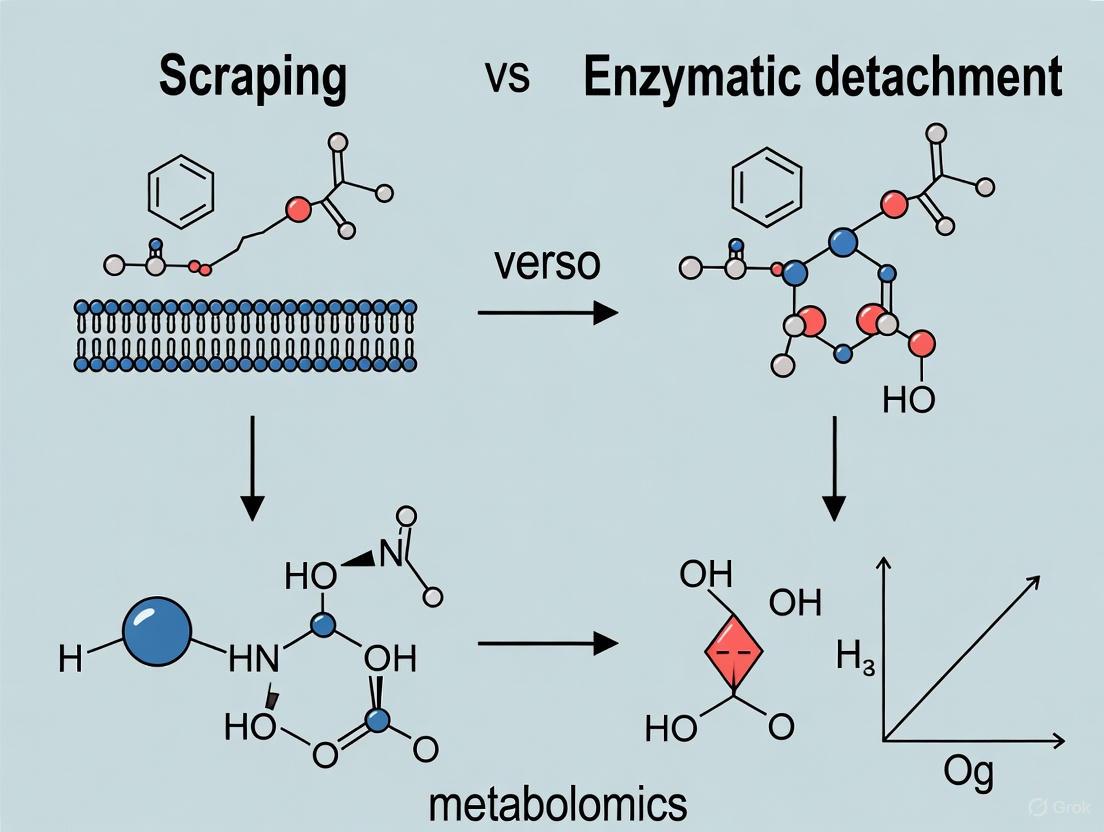
Accurate sample preparation is the cornerstone of reliable cell metabolomics, and the choice between mechanical scraping and enzymatic detachment is a critical, yet often overlooked, step.
Scraping vs. Enzymatic Detachment in Cell Metabolomics: A Comprehensive Guide for Optimal Sample Preparation
Abstract
Accurate sample preparation is the cornerstone of reliable cell metabolomics, and the choice between mechanical scraping and enzymatic detachment is a critical, yet often overlooked, step. This article provides a definitive guide for researchers and drug development professionals on how cell harvesting methods directly impact metabolite profiles and data integrity. Drawing on recent, high-quality studies, we explore the foundational principles behind metabolite leakage and stress response, detail optimized protocols for various cell types, troubleshoot common pitfalls, and present a rigorous comparative analysis of the metabolic pathways most affected. By synthesizing evidence from NMR and MS-based metabolomics, this resource empowers scientists to make informed, reproducible methodological choices that preserve in vivo metabolic states and enhance the translational value of their research.
Why Your Cell Harvesting Method Matters: Foundations of Metabolite Integrity
The Critical Role of Sample Preparation in Metabolomic Workflows
In metabolomics, which aims to provide a comprehensive snapshot of the metabolic state of a biological system, the pre-analytical phase is not merely a preliminary step but a critical determinant of data quality and biological relevance. Sample preparation fundamentally influences the accuracy, reproducibility, and biological interpretation of metabolomic data. This is especially true for cell culture metabolomics, where the choice of how to harvest cells—mechanical scraping versus enzymatic detachment—can dramatically alter the metabolic profile observed. The central challenge is to quench metabolic activity rapidly and completely, thereby "freezing" the metabolome in a state that reflects its in vivo condition without introducing artifacts. This guide objectively compares these two fundamental harvesting approaches, providing the experimental data and protocols necessary for researchers to make informed decisions that enhance the reliability of their metabolomic studies.
Scraping vs. Enzymatic Detachment: A Head-to-Head Comparison
The initial harvesting of adherent cells is a critical juncture in the workflow. The primary goal is to detach cells from their culture surface while simultaneously halting all enzymatic activity to preserve the authentic intracellular metabolome.
Direct Mechanical Scraping: This method involves physically dislodging adherent cells directly into a quenching organic solvent, such as cold methanol. The key advantage is the near-instantaneous quenching of metabolism upon contact with the solvent, which is crucial for capturing a accurate snapshot of the cell's physiological state [1]. Since no enzymes are used, there is no risk of introducing exogenous compounds or enzymatic activities that could alter the metabolome.
Enzymatic Detachment (Trypsinization): This method uses proteolytic enzymes like trypsin to digest cell-surface proteins, allowing cells to detach from the culture flask. A significant drawback is the increased risk of metabolite leakage due to enzyme-induced membrane injury [2]. Furthermore, the procedure requires incubation at 37°C, a temperature at which metabolic activity continues, potentially altering metabolite levels before quenching can occur [3]. The trypsin solution itself can also introduce chemical interference in subsequent mass spectrometry analysis.
Quantitative Experimental Data and Comparative Analysis
Recent studies have systematically quantified the differences between these harvesting methods. The following table consolidates key findings from controlled experiments.
Table 1: Comparative Metabolite Abundances and Pathway Perturbations in Scraping vs. Trypsinization
| Metabolite Class/Pathway | Observed Effect (Trypsinization vs. Scraping) | Statistical Significance & Details |
|---|---|---|
| Amino Acids & Peptides | Lower abundances of histidine, leucine, phenylalanine, glutamic acid [4] [5]. | Statistically significant differences; attributed to metabolite leakage from cell membrane injury [4] [2]. |
| Lactate | Higher abundance in trypsinized samples [5]. | Suggests continued glycolytic activity during the enzyme incubation period at 37°C [5]. |
| Acylcarnitines & Fatty Acid Metabolites | Higher abundance in trypsinized samples [5]. | Indicates a specific effect on fatty acid metabolism, potentially a stress response to the harvesting condition [5]. |
| Urea Cycle & Amino Group Metabolism | Significantly perturbed [5]. | Pathway analysis (Combined p-value = 0.00035) confirmed major alterations [5]. |
| Tyrosine Metabolism | Significantly perturbed [5]. | One of the most affected pathways (Combined p-value = 9.00 × 10⁻⁵) [5]. |
| Number of Perturbed Pathways | Trypsinization vs. scraping perturbs a larger number of metabolic pathways [5]. | 16 pathways were significantly altered, compared to only 4 for different lysis methods [5]. |
The data clearly demonstrates that the choice of detachment method has a profound and widespread impact on the metabolic profile, with trypsinization affecting a broader range of pathways.
Detailed Experimental Protocols for Method Comparison
To ensure reproducibility and facilitate the adoption of optimal practices, the following detailed protocols are provided based on cited research.
Protocol for Direct Scraping into Organic Solvent
This protocol is recommended for maximizing metabolite recovery for amino acids and peptides, and for achieving rapid metabolic quenching [4] [5].
- Cell Culture and Washing: Grow adherent cells to 80-90% confluence. Place the culture vessel on an ice-cold metal plate and swiftly wash the cell layer twice with cold (4°C) Dulbecco's Phosphate Buffered Saline (DPBS) to remove residual culture medium [4] [6].
- Quenching and Scraping: Aspirate the PBS completely. Add an appropriate volume of pre-chilled extraction solvent (e.g., 80% methanol). Immediately and vigorously scrape the cells from the surface using a cell scraper [4].
- Transfer and Lysate Processing: Transfer the cell lysate in solvent to a precooled microcentrifuge tube.
- Cell Disruption: Sonicate the lysate (e.g., 3 pulses of 10 seconds each) to ensure complete cell disruption [4] [6].
- Precipitation and Incubation: Incubate the samples for 20 minutes at -20°C to precipitate proteins [4].
- Centrifugation and Storage: Centrifuge at 14,000 × g for 15 minutes at 4°C. Carefully collect the supernatant (the metabolite-containing fraction) and store it at -80°C until analysis [4] [6].
Protocol for Enzymatic Detachment (Trypsinization)
This method is provided for comparative purposes, though its use is discouraged due to the high risk of artifacts [2] [3].
- Cell Washing: Wash the cell layer twice with warm (37°C) DPBS [4] [6].
- Enzymatic Detachment: Add a suitable volume of pre-warmed trypsin solution (e.g., TrypLE Express or 0.25% trypsin-EDTA) and incubate at 37°C for approximately 5 minutes, or until cells detach [4] [6].
- Neutralization and Collection: Neutralize the trypsin by adding culture medium containing serum. Transfer the cell suspension to a centrifuge tube.
- Washing and Quenching: Pellet the cells by centrifugation (e.g., 300 × g for 5 minutes). Aspirate the supernatant and resuspend the cell pellet in a cold quenching solvent like 50% methanol [4].
- Downstream Processing: From this point, follow steps 4 through 6 of the scraping protocol for sonication, incubation, and centrifugation.
Simplified Metabolite Extraction (SiMeEx) Protocol
A recent methodological advancement is the SiMeEx protocol, which eliminates the scraping step entirely for greater speed and suitability for high-throughput applications in 96-well plates [1].
- Washing: Wash cells with 0.9% NaCl solution.
- Dual-Solvent Quenching: Add a mixture of ice-cold methanol and deuterated water (ddH₂O) containing an internal standard directly to the culture well on an ice-cold metal plate [1].
- Flush-Mixing: Perform flush-mixing immediately after adding the solvents. Omit the scraping step [1].
- Transfer and Extraction: Transfer the extraction fluid to a tube pre-filled with cold chloroform.
- Vortexing and Centrifugation: Vortex at 1400 rpm for 10 minutes and then centrifuge to separate phases [1].
- The SiMeEx method has been validated in various immortalized and primary cells, demonstrating equivalent metabolite recovery to standard scraping methods while offering significant time savings [1].
Visualizing the Experimental Workflows and Their Impacts
The following diagrams summarize the key procedural differences and metabolic consequences of the two main harvesting methods.
Experimental Workflow Comparison
Metabolic Pathway Impact Profile
The diagram below illustrates the specific metabolic pathways most significantly affected by the harvesting method, based on pathway analysis of experimental data [5].
The Scientist's Toolkit: Essential Reagents and Materials
Successful execution of metabolomic sample preparation requires carefully selected reagents and materials. The following table details key solutions used in the featured protocols.
Table 2: Research Reagent Solutions for Cell Harvesting and Metabolite Extraction
| Reagent/Material | Function in Workflow | Application Notes & Rationale |
|---|---|---|
| Methanol (MeOH) | Organic extraction solvent for metabolite quenching and protein precipitation. | High-polarity solvent effective for a broad range of metabolites; often used at 80% concentration in water [4] [7]. |
| Dulbecco's PBS (DPBS) | Buffer for washing cells to remove culture medium contaminants. | Must be pre-cooled (4°C) for scraping to slow metabolism; warmed (37°C) for trypsinization to maintain enzyme activity and cell viability [4] [6]. |
| Trypsin-EDTA | Proteolytic enzyme solution for detaching adherent cells. | Use of trypsin-based agents is discouraged due to risk of metabolite leakage and continued metabolism during incubation [4] [2]. TrypLE Express is a recombinant alternative [4]. |
| Chloroform (CHCl₃) | Organic solvent for two-phase extraction of lipids. | Used in biphasic systems (e.g., methanol-chloroform-water) to separate hydrophobic metabolites (in lower organic phase) from hydrophilic metabolites (in upper aqueous phase) [6] [1]. |
| Cell Scraper | Disposable or reusable tool for mechanical cell detachment. | Critical for direct scraping into solvent; allows for rapid quenching with minimal metabolite loss [4] [5]. |
| Pentanedioic-d6 Acid | Internal Standard (IS) for Gas Chromatography-Mass Spectrometry (GC-MS). | Added at the beginning of extraction to correct for technical variability and quantify metabolite recovery [1]. |
The body of evidence unequivocally demonstrates that sample preparation is not a trivial pre-analytical step but a foundational element that dictates the quality and validity of metabolomic data. The choice between scraping and enzymatic detachment is a primary source of potential artifact.
Based on the comparative data and protocols presented, the following recommendations are made:
- Prioritize Direct Scraping into Organic Solvent: For most untargeted metabolomics studies seeking an unbiased snapshot of the intracellular metabolome, direct scraping is the superior method. It enables instantaneous quenching, minimizes metabolite leakage, and avoids the introduction of enzymatic artifacts [4] [5] [2].
- Reserve Trypsinization for Specific Cases: Enzymatic detachment should be used with caution and primarily when cell integrity post-harvest is an absolute requirement for downstream processes other than metabolomics. Researchers must be aware of its significant impact on amino acid, energy, and lipid metabolism pathways [5] [3].
- Consider High-Throughput Alternatives: For screening applications or studies with limited cell numbers, the SiMeEx protocol presents a validated and efficient alternative that omits scraping without compromising metabolite recovery [1].
- Standardize and Document: Whichever method is chosen, it is imperative to standardize the protocol within a study and provide a detailed description in publications to ensure reproducibility and enable meaningful cross-study comparisons.
By critically evaluating and rigorously optimizing the sample preparation workflow, researchers can ensure that their metabolomic data truly reflects the biological phenomena under investigation, thereby accelerating discovery in fields from basic biology to drug development.
In metabolomics research, the initial steps of sample preparation are critical, as they directly influence the integrity and composition of the metabolic profile being studied. For adherent cell cultures, the process of detaching cells from their substrate represents a potential source of significant metabolic perturbation. The two primary methods for this detachment—mechanical scraping and enzymatic trypsinization—elicit different cellular stresses and can consequently alter the metabolome in distinct ways. Within the context of a broader thesis on scraping versus enzymatic detachment for metabolomics research, this guide provides an objective comparison of these techniques. We summarize performance data from key experiments and provide detailed methodologies to assist researchers, scientists, and drug development professionals in making an informed choice that optimizes data quality and reliability in their specific research context.
Methodological Comparison and Impact on Metabolomics
The choice between scraping and trypsinization is not merely a matter of convenience; it directly impacts the biochemical state of the cell at the moment of metabolism quenching.
- Mechanical Scraping: This method involves physically dislodging adherent cells using a rubber or plastic scraper. It is a purely physical process that avoids the introduction of foreign enzymes. However, the shear forces applied can cause plasma membrane breakage and immediate cell death in a subset of the population [8].
- Enzymatic Trypsinization: This method uses the proteolytic enzyme trypsin, often combined with EDTA, to digest cell adhesion proteins. While effective and uniform, trypsin actively cleaves proteins on the cell surface and has been shown to induce rapid cytoplasmic alterations, leading to the leakage of metabolites and electrolytes from within the cell [9].
The fundamental distinction lies in the mechanism of action: scraping inflicts an immediate mechanical trauma, while trypsinization initiates a rapid biochemical cascade of proteolytic damage and cellular stress response, both of which can confound metabolic measurements.
Experimental Workflow for Method Comparison
A typical experimental workflow to compare the metabolic impact of these detachment methods is visualized below. This general framework is adapted from procedures used in several of the cited studies [5] [4].
Quantitative Comparison of Metabolic Profiles
Direct comparative studies using mass spectrometry (MS) and nuclear magnetic resonance (NMR) spectroscopy have quantified the distinct effects of scraping and trypsinization on the metabolome.
A study on MDA-MB-231 breast cancer cells using ultra-high-performance liquid chromatography–high-resolution mass spectrometry (UHPLC–HRMS) found that the detachment method had a more significant effect on the metabolic profile than the subsequent cell lysis method. Pathway analysis revealed that trypsinization perturbed a larger number of metabolic pathways compared to scraping [5].
Table 1: Significantly Perturbed Metabolic Pathways in MDA-MB-231 Cells (Trypsinized vs. Scraped)
| Pathway Name | Combined P-value |
|---|---|
| Tyrosine metabolism | 9.00 × 10⁻⁵ |
| Urea cycle/amino group metabolism | 0.00035 |
| Arginine and proline metabolism | 0.00039 |
| Vitamin B6 (pyridoxine) metabolism | 0.0011 |
| Tryptophan metabolism | 0.00267 |
| Aspartate and asparagine metabolism | 0.00394 |
| Vitamin B3 (nicotinate and nicotinamide) metabolism | 0.00951 |
| Glycine, serine, alanine and threonine metabolism | 0.0133 |
Source: Adapted from [5]
Relative Abundance of Key Metabolites
Research on human mesenchymal stem cells (hMSCs) and fibroblasts using NMR spectroscopy demonstrated that the detachment method significantly affects the measured abundance of intracellular metabolites. The study concluded that direct scraping into an organic solvent generally yields higher abundances of determined metabolites compared to trypsinization, particularly for amino acids and peptides [4].
Table 2: Metabolite Abundance and Variation by Detachment Method
| Compound Class | Trend in Scraped Samples | Trend in Trypsinized Samples | Key Example Metabolites |
|---|---|---|---|
| Amino Acids & Peptides | Higher Abundance [5] [4] | Lower Abundance | Histidine, Leucine, Phenylalanine, Glutamic Acid [5] |
| Urea Cycle Metabolites | Higher Abundance [5] | Lower Abundance | Not Specified |
| Energy & Fatty Acid Metabolites | Lower Abundance | Higher Abundance [5] | Lactate, Acylcarnitines [5] |
Detailed Experimental Protocols
To ensure reproducibility, below are detailed protocols for cell detachment and metabolite extraction as employed in the cited studies.
Protocol for Mechanical Scraping and Metabolite Extraction
This protocol is adapted from methods used for human dermal fibroblasts adult (HDFa) and dental pulp stem cells (DPSCs) [4].
- Cell Culture & Washing: Grow adherent cells to 80-90% confluence. Wash the cell layer twice with cold Dulbecco's Phosphate Buffered Saline (DPBS, 4°C) to remove media residues and rapidly cool the cells.
- Scraping & Quenching: Aspirate the PBS completely. Add a pre-chilled extraction solvent (e.g., 50% or 80% methanol) directly to the culture flask. Immediately scrape the cells from the surface using a sterile, chilled cell scraper. The organic solvent simultaneously quenches metabolism and begins the extraction process.
- Cell Lysate Transfer: Transfer the cell lysate in solvent to a pre-cooled microtube.
- Disruption & Incubation: Sonicate the sample (e.g., 3 pulses of 10 seconds each) to ensure complete cell disruption. Incubate the sample for 20 minutes at -20°C to precipitate proteins.
- Centrifugation & Storage: Centrifuge the sample at 14,000 × g for 10 minutes at 4°C. Carefully collect the supernatant containing the metabolites and store it at -80°C until analysis.
Protocol for Enzymatic Trypsinization and Metabolite Extraction
This protocol is based on studies investigating trypsinization in various cell lines [5] [4].
- Cell Culture & Washing: Grow adherent cells to 80-90% confluence. Wash the cell layer twice with warm (37°C) or cold (4°C) DPBS, depending on the protocol.
- Trypsinization: Aspirate the PBS. Add a sufficient volume of trypsin-based solution (e.g., 0.25% trypsin-EDTA or TrypLE Express) to cover the cell layer. Incubate at 37°C for a defined period, typically 2-5 minutes, monitoring under a microscope until cells detach.
- Enzyme Neutralization: Neutralize the trypsin activity by adding a volume of culture medium containing serum (e.g., 10% FBS) or a defined inhibitor.
- Cell Pellet Collection: Transfer the cell suspension to a centrifuge tube. Pellet the cells by centrifugation (e.g., 1000 rpm for 5 minutes).
- Washing & Metabolite Extraction: Carefully aspirate the supernatant and wash the cell pellet with cold PBS. Resuspend the pellet in a pre-chilled extraction solvent (e.g., 50% methanol). Proceed with sonication, incubation, and centrifugation as described in the scraping protocol.
The relationship between protocol choice and its effect on the cell and subsequent analysis is summarized below.
The Scientist's Toolkit: Essential Research Reagents
The following table lists key reagents and their functions in preparing cell samples for metabolomics, as referenced in the studies.
Table 3: Essential Reagents for Cell Harvesting and Metabolite Extraction
| Reagent/Solution | Function in Protocol |
|---|---|
| Trypsin-EDTA | Proteolytic enzyme solution that digests cell adhesion proteins to detach adherent cells [8] [5]. |
| TrypLE Express | A recombinant fungal-derived enzyme, a non-animal alternative to trypsin for cell detachment [10]. |
| Dulbecco's PBS (DPBS) | A balanced salt solution used for washing cells to remove culture medium prior to detachment and extraction [4]. |
| Methanol (Chilled) | A polar solvent used for rapid metabolic quenching and efficient extraction of a wide range of polar metabolites [11] [4]. |
| Chloroform | A non-polar solvent used in biphasic extraction systems (e.g., with methanol) for the simultaneous extraction of lipids and polar metabolites [11] [4]. |
| MTBE (Methyl tert-butyl ether) | A non-polar solvent used for the extraction of lipophilic metabolites, particularly lipids [11] [4]. |
| Acetonitrile | A polar solvent used for protein precipitation and extraction of metabolites, known to effectively quench metabolism [4]. |
| Cell Scrapers | Sterile, disposable tools with a flexible blade for mechanically dislodging cells from a surface without chemicals [8]. |
The choice between mechanical scraping and enzymatic trypsinization in metabolomics research is not a matter of one method being universally superior. Instead, the decision must be guided by the specific research question and the metabolite classes of interest. The experimental data consistently shows that trypsinization induces broader and more significant perturbations across central metabolic pathways, including amino acid and vitamin metabolism. Conversely, scraping tends to yield higher recovery of certain amino acids and peptides, potentially offering a more accurate snapshot for some studies, albeit with a risk of physical membrane damage.
Therefore, researchers must weigh these trade-offs carefully. For studies focusing on amino acid metabolism or surface protein analyses, scraping may be preferable. For large-scale, automated workflows where uniformity is paramount, trypsinization might be selected with the acknowledgement of its metabolic impact. Critically, once a detachment method is chosen for a given study, it must be consistently applied throughout to ensure the comparability of results. This methodological consistency is the cornerstone of robust and reproducible metabolomics research.
Understanding Metabolite Leakage and Cellular Stress Responses
In vitro metabolomics provides a powerful approach for understanding cellular physiological states by comprehensively analyzing intracellular metabolites. However, the accuracy of this analysis is critically dependent on sample preparation, particularly the cell harvesting method. The choice between mechanical scraping and enzymatic detachment represents a pivotal decision point that can significantly influence metabolite integrity and subsequent data interpretation. Growing evidence suggests that enzymatic methods, while convenient, may induce cellular stress and metabolite leakage, thereby distorting the true metabolic profile of cells [4]. This comparison guide objectively evaluates the performance of these competing approaches within the context of metabolomics research, providing researchers with experimental data and methodological insights to inform their protocol selection.
The integrity of metabolomic studies rests upon the fundamental principle of effective metabolic quenching – rapidly arresting biochemical activity to preserve an accurate snapshot of the cellular metabolic state at the time of sampling. Inefficient quenching or harsh harvesting techniques can trigger stress responses that alter metabolite levels, potentially leading to erroneous conclusions about underlying biological processes [4]. This is particularly relevant when studying cellular stress responses, where the harvesting method itself could confound the very phenomena under investigation.
Comparative Performance Analysis: Scraping vs. Enzymatic Detachment
A systematic comparison of harvesting methods reveals significant differences in their impact on metabolite recovery and profile integrity. The quantitative data below summarize key performance metrics based on controlled experimental studies.
Table 1: Quantitative Comparison of Cell Harvesting Methods for Metabolomics
| Performance Metric | Mechanical Scraping | Enzymatic Detachment (Trypsinization) | Experimental Context |
|---|---|---|---|
| Overall Metabolite Abundance | Higher yields for most identified metabolites [4] | Significantly reduced yields for numerous metabolites [4] | NMR-based study of HDFa and DPSCs [4] |
| Amino Acids & Peptides | Better preservation; significantly higher abundances observed [4] | Substantial leakage and lower measured abundances [4] | NMR-based study of HDFa and DPSCs [4] |
| Impact on Cellular Stress | Minimal enzymatic activity induction | Potential induction of stress responses during detachment | Methodological guidance for stress response studies [4] |
| Methodological Simplicity | Direct scraping into cold organic solvent [4] | Requires enzyme inactivation and additional washing steps [4] | Protocol optimization for adherent cells [4] |
| Metabolic Quenching Speed | Rapid quenching possible when scraping into cold solvent [4] | Slower process; delay before metabolism is stopped [4] | Evaluation of sample preparation critical points [4] |
Key Experimental Findings and Data Interpretation
The comparative data demonstrate a clear performance advantage for mechanical scraping in metabolomic studies. The fundamental issue with enzymatic methods lies in their mechanism of action; trypsin and other proteases work by digesting cell-surface proteins and adhesion molecules, a process that is not instantaneous and during which cells remain metabolically active. This window of activity, combined with the breach of membrane integrity, creates opportunity for metabolite leakage and stress-induced metabolic alterations [4]. In contrast, mechanical scraping, when performed by directly transferring cells into a cold quenching solvent, achieves near-instantaneous metabolic arrest, thereby better preserving the native metabolic state.
The superior performance of scraping is particularly evident for specific metabolite classes. The significantly higher recovery of amino acids and peptides with scraping suggests that enzymatic detachment either directly or indirectly promotes the efflux of these crucial metabolites [4]. This is a critical consideration for studies investigating nitrogen metabolism, protein synthesis, or energy pathways where amino acids serve as key intermediates.
Detailed Experimental Protocols
To ensure reproducible and reliable results, adherence to standardized protocols is essential. Below are the detailed methodologies for the key harvesting approaches and the subsequent metabolomic analysis as derived from the cited literature.
Optimized Protocol for Mechanical Scraping
This protocol is designed for the harvesting of adherent human cells, such as mesenchymal stem cells or fibroblasts, for NMR-based metabolomics [4].
- Preparation: Pre-cool DPBS (Dulbecco's Phosphate Buffered Saline) and the selected extraction solvent (e.g., 50% methanol) to 4°C.
- Washing: Remove the culture medium and gently wash the cell monolayer twice with cold DPBS (4°C) to remove residual media components.
- Metabolite Extraction: Add the cold extraction solvent (e.g., 50% methanol) directly to the culture flask.
- Cell Harvesting: Use a cell scraper to mechanically detach the cells directly into the solvent, ensuring rapid quenching of metabolism.
- Lysate Collection: Transfer the cell lysate in solvent to a pre-cooled microtube.
- Cell Disruption: Sonicate the lysate 3 times for 10 seconds each to ensure complete cell disruption.
- Incubation: Incubate the samples for 20 minutes at -20°C to precipitate proteins.
- Centrifugation: Centrifuge at 14,000 × g for 10 minutes at 4°C.
- Storage: Collect the supernatant (containing metabolites) and store at -80°C until analysis. The protein pellet can be reserved for normalization [4].
Protocol for Enzymatic Detachment (Trypsinization)
This protocol outlines the common enzymatic method, which has been shown to be less optimal for metabolomic studies [4].
- Washing: Wash the cell monolayer twice with warm DPBS (37°C).
- Detachment: Add a trypsin-based enzyme solution (e.g., TrypLE Express or 0.25% trypsin-EDTA) and incubate at 37°C until cells detach.
- Neutralization: Resuspend the detached cells in culture medium containing serum to neutralize the enzyme.
- Centrifugation: Pellet the cells by centrifugation.
- Washing: Wash the cell pellet with DPBS and re-centrifuge.
- Metabolite Extraction: Resuspend the final cell pellet in a cold extraction solvent (e.g., 50% methanol). The subsequent steps for sonication, incubation, and centrifugation are identical to the scraping protocol [4].
Metabolomic Analysis Workflow
The following diagram illustrates the core decision points and workflows for the two harvesting methods and the subsequent analytical steps.
Research Reagent Solutions
The following table details key reagents and materials essential for conducting reliable metabolomics studies, particularly those focused on minimizing metabolite leakage.
Table 2: Essential Research Reagents and Materials for Metabolomics Sample Preparation
| Reagent/Material | Function/Application | Key Considerations |
|---|---|---|
| DPBS (Dulbecco's PBS) | Washing cell monolayer to remove culture media contaminants. | Use ice-cold for scraping; warm for trypsinization [4]. |
| Methanol (50-80%) | Common extraction solvent; quenches metabolism and precipitates proteins. | High polarity useful for a broad range of metabolites [4]. |
| Acetonitrile (70%) | Organic solvent for metabolite extraction and protein precipitation. | Effective for polar metabolites; alternative to methanol [4]. |
| Methanol-Chloroform | Two-phase extraction system for comprehensive metabolomics and lipidomics. | Separates hydrophilic (methanol/water) and hydrophobic (chloroform) metabolites [4]. |
| MTBE (Methyl-tert-butyl ether) | Solvent for lipid-rich extractions in two-phase systems. | Used in protocols for enhanced lipid recovery [4]. |
| Cell Scraper | Mechanical detachment of adherent cells directly into solvent. | Preferable over enzymatic methods for metabolite integrity [4]. |
| Trypsin/TrypLE Express | Proteolytic enzyme for cell detachment from culture surface. | Associated with metabolite leakage and stress; use with caution [4]. |
The collective experimental data provide a compelling case for selecting mechanical scraping over enzymatic detachment in metabolomics studies where accuracy and preservation of in vivo metabolite levels are paramount. The evidence of significantly higher metabolite yields, particularly for amino acids and peptides, and the minimized risk of inducing artifactual stress responses establish scraping as the superior methodological choice [4].
This distinction is not merely technical but has profound implications for biological interpretation. In studies of cellular stress responses – such as oxidative stress, mitochondrial stress, or drug-induced toxicity – the use of enzymatic detachment could introduce a confounding variable, masking or mimicking the genuine metabolic signature of interest [12] [13]. Therefore, to ensure data integrity and generate biologically relevant conclusions, researchers should prioritize rapid, mechanical harvesting methods like scraping into cold organic solvents as a standard practice in their metabolomics workflow.
In cell culture metabolomics, the initial step of detaching adherent cells is a critical pre-analytical variable that can dramatically alter the resulting metabolic profile. The choice between mechanical scraping and enzymatic detachment (e.g., trypsinization) represents a fundamental methodological crossroad, with significant implications for the accurate quantification of key metabolite classes. Research indicates that harvesting approaches introduce systematic biases that disproportionately affect specific metabolic pathways, particularly amino acids, peptides, and energy intermediates [4] [5].
This guide provides an objective comparison of scraping versus enzymatic detachment methodologies, synthesizing experimental data to elucidate their differential impacts on metabolomic outcomes. Within the broader thesis of metabolomics research, the evidence demonstrates that detachment method selection is not merely a technical consideration but a determinant of analytical validity, especially for studies investigating nitrogen metabolism, energy pathways, and peptide signaling.
Comparative Experimental Data: Scraping vs. Enzymatic Detachment
Quantitative Metabolite Abundance Changes
The following table summarizes experimental findings on how detachment methods affect the recovery of key metabolite classes, based on untargeted metabolomics studies using human mesenchymal stem cells, fibroblasts, and MDA-MB-231 cancer cells [4] [5].
Table 1: Impact of Detachment Method on Metabolite Abundance and Pathway Alteration
| Metabolite Class | Specific Metabolites Affected | Direction of Change (Scraping vs. Trypsin) | Statistical Significance | Affected Pathways |
|---|---|---|---|---|
| Amino Acids & Peptides | Histidine, Leucine, Phenylalanine, Glutamic Acid, Tyrosine [5] | Significantly Higher in Scraped Samples [5] | p < 0.05 [5] | Tyrosine metabolism, Urea cycle, Arginine and proline metabolism [5] |
| Energy Intermediates | Lactate [5] | Significantly Higher in Trypsinized Samples [5] | p < 0.05 [5] | Glycolysis/Gluconeogenesis [5] |
| Fatty Acid Metabolites | Medium-Chain Acylcarnitines [5] | Significantly Higher in Trypsinized Samples [5] | p < 0.05 [5] | Fatty acid oxidation, Biosynthesis [5] |
| Nucleotides | NTPs, NDPs [14] | Highly Sensitive to Extraction Conditions [14] | 5- to 8-fold increase with optimized solvent [14] | Nucleotide metabolism [5] |
Pathway-Level Analysis
Beyond individual metabolites, the detachment method has a broader impact on metabolic pathway interpretation. A study on MDA-MB-231 cells revealed that trypsinization versus scraping perturbed sixteen major metabolic pathways at a statistically significant level, whereas lysis methods had a much lesser effect, altering primarily fatty acid-related pathways [5]. The most significantly altered pathways from this analysis are ranked below.
Table 2: Metabolic Pathways Most Affected by Cell Detachment Method (from MDA-MB-231 Study)
| Pathway Name | Combined P-value |
|---|---|
| Tyrosine metabolism | 9.00 × 10⁻⁵ |
| Urea cycle/amino group metabolism | 0.00035 |
| Arginine and proline metabolism | 0.00039 |
| Vitamin B6 (pyridoxine) metabolism | 0.0011 |
| Tryptophan metabolism | 0.00267 |
| Aspartate and asparagine metabolism | 0.00394 |
Detailed Experimental Protocols for Method Comparison
Protocol for Mechanical Scraping and Metabolite Extraction
The following optimized protocol for scraping and metabolite extraction is compiled from procedures used in comparative studies [4]:
- Cell Culture and Washing: Grow adherent cells (e.g., HDFa, DPSCs) to 80-90% confluence. Upon harvesting, place the culture vessel on ice and swiftly aspirate the culture medium. Wash the cell monolayer twice with cold (4°C) Dulbecco's Phosphate Buffered Saline (DPBS) to remove residual media [4].
- Scraping and Quenching: While the vessel is still on ice, add a pre-chilled organic extraction solvent (e.g., 80% methanol, 50% methanol, or 70% acetonitrile) directly to the cells. Immediately use a cell scraper to mechanically detach the cells, combining the quenching of metabolism and cell lysis into a single rapid step. The cell lysate in solvent should be quickly transferred to a pre-cooled microtube [4].
- Metabolite Extraction: Subject the lysate to sonication on ice (e.g., 3 pulses of 10 seconds each) to ensure complete cell disruption and metabolite extraction. Incubate the samples for 20 minutes at -20°C to precipitate proteins. Centrifuge at 14,000× g for 15 minutes at 4°C to pellet cellular debris and precipitated protein [4].
- Sample Collection: Collect the supernatant (the metabolite-containing fraction) and store it at -80°C until analysis. The protein pellet can be dissolved in a suitable buffer (e.g., SDT buffer) for subsequent proteomic analysis or normalization [4].
Protocol for Enzymatic Detachment and Metabolite Extraction
This protocol outlines the trypsinization approach, highlighting steps that introduce variability [4] [5]:
- Cell Washing and Detachment: Wash the cell monolayer twice with warm (37°C) or cold (4°C) DPBS. Add a pre-warmed enzymatic solution, such as TrypLE Express or 0.25% trypsin-EDTA, to cover the cells. Incubate at 37°C for the time required for detachment (typically 3-5 minutes). This incubation period and the enzymatic activity itself are potential sources of metabolic stress [4].
- Metabolism Quenching and Washing: Neutralize the enzyme by adding a volume of complete culture medium or PBS. A critical step involves centrifuging the cell suspension to pellet the cells and then washing them with PBS to remove the enzyme. This additional centrifugation step can cause metabolite leakage from cells [5].
- Metabolite Extraction: Resuspend the cell pellet in a pre-chilled organic solvent like 50% methanol. From this point, the extraction process (sonication, incubation, centrifugation) follows the same steps as the scraping protocol (Step 3 above) [4].
- Key Consideration: Studies strongly advise against the use of trypsin, noting a "high risk of cell membrane injury and metabolite leakage" [2].
Visualizing the Experimental Workflow and Metabolic Impact
The diagram below illustrates the two detachment methods and their divergent impacts on the cellular metabolome, particularly highlighting the risk to amino acids and peptides.
The Scientist's Toolkit: Essential Research Reagent Solutions
The following table details key reagents and materials critical for conducting a robust comparison of detachment methods in metabolomics research.
Table 3: Essential Research Reagents and Materials for Cell Harvesting Metabolomics
| Reagent/Material | Function in Experiment | Specific Application Notes |
|---|---|---|
| TrypLE Express / Trypsin-EDTA | Enzymatic cell detachment | Introduces metabolic stress; requires careful quenching and washing steps that can cause metabolite loss [4] [2]. |
| Cell Scrapers | Mechanical cell detachment | Enables direct scraping into cold quenching solvent, minimizing metabolic alterations during harvest [4] [5]. |
| Methanol, Acetonitrile, Ethanol | Organic extraction solvents | Used for simultaneous metabolism quenching, protein precipitation, and metabolite extraction. Efficiency varies by polarity [4] [15]. |
| Phosphate Buffered Saline (PBS) | Washing buffer | Used to remove culture media prior to harvesting. Must be ice-cold for scraping to quench metabolism [4]. |
| Internal Standards (e.g., D5-glutamate) | Metabolomics normalization | Critical for correcting instrumental drift. Note: Residual enzyme activity in extracts can alter certain labeled standards [14] [16]. |
| Phospholipid Removal Tubes (e.g., Phree) | Sample clean-up | Solid-phase extraction (SPE) method that can reduce matrix effects but may lower coverage of some polar metabolites [15]. |
Discussion and Research Implications
Mechanistic Insights into Metabolite Alterations
The observed depletion of amino acids and peptides in trypsinized samples likely results from multiple factors. The trypsinization process itself, which involves incubation at 37°C and subsequent centrifugation steps, induces cellular stress, potentially activating proteolytic enzymes and altering membrane permeability, leading to metabolite leakage [5] [2]. Furthermore, a groundbreaking 2024 study revealed that common metabolite extraction protocols do not fully remove or inactivate proteins, leaving over 1,000 proteins, including metabolic enzymes, in the metabolite fraction [14]. This residual enzymatic activity can drive post-extraction modifications, such as the conversion of D5-glutamate to D4-glutamate, obscuring the true biological state and potentially contributing to the observed depletion of specific amino acid pools in trypsin-treated samples where the sample processing time is longer [14].
Recommendations for Different Research Objectives
- For Studies Focusing on Amino Acids, Peptides, and Nitrogen Metabolism: The evidence strongly indicates that direct scraping into cold solvent is the superior method. It minimizes pre-analytical bias and provides a more accurate snapshot of these labile metabolite classes [4] [5].
- For High-Throughput Screening: While scraping is recommended, the logistical constraints of large-scale experiments must be considered. If trypsinization is unavoidable, the protocol must be rigorously standardized, and the potential biases for affected pathways (Table 1 & 2) must be explicitly acknowledged in data interpretation [5].
- For Comprehensive Metabolome Coverage: No single method is perfect. Some studies suggest that the orthogonality of different extraction methods (e.g., methanol precipitation vs. SPE) could be leveraged to increase overall metabolome coverage, though this must be balanced against increased sample consumption and potential reproducibility issues [15].
The choice between scraping and enzymatic detachment is a pivotal decision that fundamentally shapes the metabolomic landscape, with a pronounced impact on the detection of amino acids, peptides, and energy-related intermediates. Quantitative data demonstrates that mechanical scraping consistently yields higher and likely more authentic abundances of amino acids and peptides, while trypsinization artificially elevates metabolites associated with cellular stress like lactate and acylcarnitines.
Researchers must align their cell harvesting methodology with their specific biological questions. For investigations where the integrity of nitrogen metabolism and peptide signaling is paramount, direct scraping into an organic solvent is the unequivocal method of choice. This approach ensures that the metabolic snapshot obtained faithfully represents the in vivo state of the cells, thereby enhancing the biological relevance and reproducibility of metabolomic findings in drug development and basic research.
Linking Harvesting Techniques to Data Reproducibility and Variability
In metabolomics research, the initial step of harvesting cells from culture surfaces is a critical pre-analytical variable that directly influences subsequent data quality and biological interpretation. This guide provides an objective comparison of the two primary detachment methods—enzymatic (typically using trypsin) and mechanical (scraping)—within the context of metabolomics studies. The choice of harvesting technique introduces significant variability in the types and abundances of metabolites detected, thereby impacting the reproducibility of research findings [5] [6]. As metabolomics gains prominence in biomedical research and drug development, understanding and controlling for these technical variables becomes paramount for generating reliable, reproducible data that can effectively bridge the gap between preclinical discovery and clinical application [17].
Comparative Analysis of Detachment Methods
Mechanism of Action and Practical Considerations
Enzymatic Detachment primarily utilizes proteolytic enzymes like trypsin or TrypLE Express to cleave proteins in the extracellular matrix and cell-surface receptors that mediate adhesion [18]. This method is widely adopted due to its effectiveness and convenience for standard cell culture workflows. However, the enzymatic activity not only liberates cells but also cleaves specific cell-surface proteins and receptors, potentially activating cellular stress responses and altering metabolic states [18] [6].
Mechanical Detachment (scraping) employs physical force to dislodge adherent cells, typically using a rubber or plastic scraper. While this method avoids chemical treatment, the physical shear stress can potentially damage cell membranes and trigger immediate stress responses [6]. A refined approach involves direct scraping into organic solvent, which immediately quenches metabolism during the harvesting process, potentially preserving the metabolic profile more accurately [6].
Impact on Metabolic Profiles: Experimental Data
Multiple studies have systematically investigated how detachment methods influence observed metabolic profiles. The table below summarizes key quantitative findings from comparative experiments:
Table 1: Impact of Detachment Method on Metabolic Profiles
| Experimental Metric | Trypsinization | Scraping | Research Context |
|---|---|---|---|
| Number of Significantly Altered Metabolic Pathways [5] | 16 pathways significantly altered | Reference value | MDA-MB-231 breast cancer cells |
| Representative Altered Pathways [5] | Tyrosine metabolism, urea cycle, vitamin B6 metabolism, arginine/proline metabolism | Reference value | MDA-MB-231 breast cancer cells |
| Relative Abundance of Amino Acids (e.g., histidine, leucine, phenylalanine) [5] | Lower | Higher | MDA-MB-231 breast cancer cells |
| Relative Abundance of Lactate & Fatty Acid Metabolites [5] | Higher | Lower | MDA-MB-231 breast cancer cells |
| Extraction Efficiency for Metabolite Quantification [6] | Lower yields for many metabolites | Higher abundances of determined metabolites | HDFa and DPSC cells |
The data consistently demonstrate that the detachment method significantly affects the resulting metabolic profile. Research on MDA-MB-231 cells indicates that trypsinization perturbs a substantially larger number of metabolic pathways compared to scraping, affecting fundamental processes including amino acid metabolism, vitamin metabolism, and nitrogen handling [5]. Specifically, trypsinized samples showed increased levels of lactate and acylcarnitines, suggesting alterations in energy metabolism, whereas scraped samples exhibited higher abundances of various amino acids and urea cycle-related metabolites [5].
Furthermore, a 2024 study on human mesenchymal stem cells (hMSCs), including dental pulp stem cells (DPSCs) and human dermal fibroblasts (HDFa), confirmed that direct scraping into an organic solvent generally yields higher abundances of a wide range of metabolites compared to enzymatic methods using trypsin or TrypLE [6]. This was particularly evident for amino acids and peptides, highlighting how trypsinization can compromise the accurate measurement of these metabolite classes.
Detailed Experimental Protocols
To ensure reproducibility and facilitate comparative analysis, detailed methodologies from key cited studies are outlined below.
Protocol for Metabolomic Analysis Comparing Detachment Methods
This protocol is adapted from the 2022 study by McInnis et al. investigating detachment and lysis methods in MDA-MB-231 cells [5].
- Cell Culture: Culture MDA-MB-231 cells (or cell line of interest) in standard media until they reach 80-90% confluence.
- Cell Harvesting:
- Trypsinization Arm: Detach cells using a standard concentration of trypsin (e.g., 0.25%) or a recombinant enzyme like TrypLE Express. Incubate at 37°C until cells detach. Neutralize the enzyme with complete media.
- Scraping Arm: Gently wash cells with pre-warmed PBS. Using a cell scraper, mechanically detach the cells in a small volume of PBS or directly into the extraction solvent.
- Metabolite Extraction: Pellet cells by centrifugation. Extract intracellular metabolites using a suitable solvent like 80% methanol. Vigorously vortex and incubate at -20°C for 20 minutes.
- Sample Preparation: Centrifuge at high speed (e.g., 14,000 × g, 10-15 minutes, 4°C) to pellet cell debris. Transfer the supernatant containing the metabolites to a new vial.
- Data Acquisition: Analyze samples using Ultra-High-Performance Liquid Chromatography–High-Resolution Mass Spectrometry (UHPLC–HRMS). Use a quality control study pool (QCSP) to monitor analytical reproducibility.
- Data Analysis: Process raw data for peak picking, alignment, and normalization. Conduct multivariate statistical analyses, such as Principal Component Analysis (PCA) and Orthogonal Projections to Latent Structures (OPLS), to model the variance between groups. Perform pathway analysis using tools like MetaboAnalyst.
Protocol for Harvesting Method Optimization in hMSCs
This protocol is adapted from the 2024 study by Virant et al. focusing on human mesenchymal stem cells [6].
- Cell Culture: Grow HDFa or DPSCs in DMEM:F12 + GlutaMAX medium supplemented with 10% FBS until 80% confluent.
- Washing: Wash cell monolayers twice with cold Dulbecco's PBS (DPBS, 4°C) to rapidly quench metabolism.
- Experimental Harvesting:
- Method A (Direct Scraping): Scrape cells directly from the flask surface into a pre-chilled extraction solvent (e.g., 50% methanol).
- Method B (Trypsinization): Detach cells using TrypLE Express Enzyme or 0.25% trypsin-EDTA. After detachment, resuspend the cell pellet in the extraction solvent.
- Cell Lysis and Metabolite Extraction:
- Transfer the cell lysate in solvent to a microtube.
- Sonicate the sample (e.g., 3 pulses of 10 seconds each) to ensure complete lysis.
- Incubate for 20 minutes at -20°C to precipitate proteins.
- Centrifuge at 14,000 × g for 15 minutes at 4°C.
- Sample Storage: Collect the supernatant (metabolite fraction) and store at -80°C until analysis. The protein pellet can be reserved for subsequent protein quantification for normalization purposes.
- Analysis: Analyze the metabolite extracts using Nuclear Magnetic Resonance (NMR) spectroscopy or LC-MS.
Visualizing Experimental Workflows and Metabolic Impacts
The following diagrams, generated using Graphviz, illustrate the core experimental workflows and the consequential metabolic impacts of different detachment choices.
Experimental Workflow for Metabolite Harvesting
Metabolic Pathways Affected by Detachment Method
The Scientist's Toolkit: Essential Research Reagents and Materials
The table below lists key reagents and materials used in the featured experiments, along with their specific functions in the context of cell harvesting for metabolomics.
Table 2: Key Research Reagents and Materials for Cell Harvesting in Metabolomics
| Reagent/Material | Function in Experiment | Example from Literature |
|---|---|---|
| Trypsin / TrypLE Express | Proteolytic enzyme used in enzymatic detachment to cleave adhesion proteins. | 0.25% trypsin-EDTA or TrypLE Express used for detaching MDA-MB-231, HDFa, and DPSC cells [5] [6]. |
| Cell Scraper | A plastic or rubber tool for the mechanical detachment of adherent cells without chemicals. | Used as the mechanical alternative to trypsin in comparative studies [5] [6]. |
| Methanol / Ethanol | Organic solvents used to quench metabolism immediately upon cell harvesting and to extract intracellular metabolites. | 50% - 80% Methanol or Ethanol used for extraction and direct scraping [6]. |
| Acetonitrile | Organic solvent used for metabolite extraction, effective in precipitating proteins. | 70% Acetonitrile tested as an extraction solvent [6]. |
| PBS (Phosphate Buffered Saline) | A balanced salt solution used for washing cell monolayers to remove residual culture media before harvesting. | Cold DPBS (4°C) used to wash cells prior to scraping to quench metabolism [6]. |
| Methanol-Chloroform / MTBE | Solvent systems for two-phase extraction, separating polar metabolites (aqueous) from lipids (organic). | Methanol-Chloroform and MTBE (methyl-tert-butyl ether) methods used for comprehensive metabolite and lipid extraction [6]. |
| SDS Buffer (e.g., SDT Buffer) | Lysis buffer containing Sodium Dodecyl Sulfate (SDS) for solubilizing and recovering the protein pellet after metabolite extraction. | Used for protein resuspension after metabolite extraction, enabling protein-based normalization [6]. |
Optimized Protocols: Implementing Scraping and Detachment in Your Lab
The choice of cell harvesting methodology is a critical pre-analytical step in cell-based metabolomics, significantly influencing the resulting metabolic profile. For adherent cell cultures, the primary methods involve mechanical detachment via scraping or enzymatic detachment using trypsin [6] [5]. Research consistently demonstrates that the harvesting technique can introduce more variation in metabolite levels than the specific cell lysis method used subsequently [5]. Direct scraping into an organic solvent is increasingly recognized as a superior approach for many applications, as it enables rapid metabolism quenching and minimizes the metabolic perturbations and cell membrane damage associated with enzymatic treatments [6] [19]. This protocol provides a detailed guide for implementing the direct scraping method and objectively compares its performance with enzymatic alternatives.
Detailed Step-by-Step Protocol
Reagents and Equipment
- Cell Culture: Adherent cells (e.g., HDFa, DPSCs, MDA-MB-231), complete culture medium, Dulbecco's Phosphate Buffered Saline (DPBS), pre-warmed to 37°C or cooled to 4°C.
- Harvesting & Extraction: Appropriate organic solvent (e.g., 50-80% methanol, 80% ethanol, 70% acetonitrile, or a methanol-chloroform mixture), cell scrapers.
- Equipment: Temperature-controlled centrifuge, sonicator, microtubes, -20°C and -80°C freezers.
Protocol Workflow
The following diagram outlines the core procedural steps for the direct scraping method:
Key Procedural Notes
- Metabolism Quenching: The use of cold PBS and the immediate addition of cold organic solvent are crucial for rapid metabolism quenching, preserving the in vivo metabolic state [6] [20].
- Solvent Choice: The optimal solvent depends on the metabolite classes of interest. A one-phase system with 80% methanol is a robust starting point for polar metabolites [6].
- Simultaneous Protein Precipitation: This protocol results in simultaneous protein precipitation. The protein pellet can be solubilized in an appropriate buffer (e.g., SDT buffer) for subsequent proteomic analysis, facilitating multi-omics data integration from the same sample [6].
Performance Comparison: Direct Scraping vs. Trypsinization
Quantitative Metabolite Abundance
The choice of harvesting method directly impacts the observed abundance of key metabolites. The table below summarizes experimental data from untargeted metabolomics studies comparing the two techniques [6] [5].
Table 1: Comparative Metabolite Abundance: Scraping vs. Trypsinization
| Metabolite / Metabolite Class | Relative Abundance in Scraped Samples | Relative Abundance in Trypsinized Samples | Analytical Platform |
|---|---|---|---|
| Amino Acids & Peptides | Higher Abundance [6] | Lower Abundance | NMR [6] |
| Histidine, Leucine, Phenylalanine, Glutamic acid | Higher Abundance [5] | Lower Abundance | UHPLC-HRMS [5] |
| Urea Cycle Metabolites | Higher Abundance [5] | Lower Abundance | UHPLC-HRMS [5] |
| Lactate | Lower Abundance | Higher Abundance [5] | UHPLC-HRMS [5] |
| Acylcarnitines | Lower Abundance | Higher Abundance [5] | UHPLC-HRMS [5] |
| Vitamin B6 Metabolism | Higher Abundance [5] | Lower Abundance | UHPLC-HRMS [5] |
Impact on Metabolic Pathways
Beyond individual metabolites, harvesting methods significantly alter the interpretation of pathway-level activity. Pathway analysis of data from MDA-MB-231 cells revealed that trypsinization perturbed a larger number of metabolic pathways compared to scraping [5].
Table 2: Significantly Altered Metabolic Pathways Based on Detachment Method
| Pathway Name | Significance (Combined p-value) | Direction of Perturbation in Trypsinized Samples |
|---|---|---|
| Tyrosine metabolism | 9.00 × 10⁻⁵ [5] | Up |
| Urea cycle/Amino group metabolism | 0.00035 [5] | Up |
| Arginine and proline metabolism | 0.00039 [5] | Up |
| Vitamin B6 metabolism | 0.0011 [5] | Up |
| Tryptophan metabolism | 0.00267 [5] | Up |
| Glycine, serine, alanine, and threonine metabolism | 0.0133 [5] | Up |
Cell Integrity and Viability
The integrity of the cell membrane post-harvesting is a critical factor. A study using propidium iodide (PI) uptake as an indicator of membrane damage found that mechanical scraping caused significantly more PI-positive cells (36.4% in PBS) compared to trypsinization (9.7% in PBS) [19]. This suggests that trypsinization is gentler on the plasma membrane, though the subsequent exposure to organic solvents in the extraction phase will permeabilize all cells.
The Scientist's Toolkit: Essential Research Reagents
Table 3: Key Reagent Solutions for Metabolite Extraction via Direct Scraping
| Reagent Solution | Function | Example Use Case & Rationale |
|---|---|---|
| Methanol (50-80%) | Protein precipitation and metabolite extraction. Effective for a broad range of polar metabolites. | A one-phase extraction system; 80% methanol showed high efficiency for mesenchymal stem cells [6]. |
| Methanol-Chloroform Mixture | Two-phase extraction. Separates hydrophobic (lipid) and hydrophilic (polar) metabolites into distinct phases. | Comprehensive metabolomics and lipidomics. The polar phase is collected for analysis of water-soluble metabolites [6]. |
| Acetonitrile (70%) | Protein precipitation and metabolite extraction. Can provide different selectivity compared to methanol. | Alternative one-phase extraction; useful for LC-MS applications due to its volatility and MS-compatibility [6] [20]. |
| MTBE (Methyl-tert-butyl ether) | Two-phase extraction for lipids and hydrophilic metabolites. | Lipidomics-focused studies. The protocol involves scraping into methanol followed by adding MTBE and water to induce phase separation [6]. |
| DPBS (Dulbecco's PBS) | Washing buffer. Removes residual culture medium and extracellular metabolites. | Pre-wash step before scraping; using ice-cold DPBS helps quench metabolism [6] [20]. |
The experimental data clearly demonstrates that direct scraping into an organic solvent yields higher abundances of many central carbon metabolites, particularly amino acids and peptides, compared to trypsinization [6] [5]. This is likely because scraping facilitates rapid metabolic quenching, minimizing continued enzymatic activity and leakage of metabolites that can occur during the longer trypsinization process [6].
However, the optimal choice is experiment-dependent. Trypsinization may be preferable when preserving cell membrane integrity for subsequent analyses is paramount, or when studying specific pathways like glycolysis where elevated lactate in trypsinized samples could be relevant [5] [19]. For most untargeted metabolomics studies aiming to capture a broad and accurate snapshot of the intracellular metabolome, direct scraping is the recommended method due to its superior quenching and reduced technical artifacts.
Conclusion: Direct scraping into an organic solvent provides a robust, efficient, and reliable method for harvesting adherent cells for metabolomic analysis. While it may cause more immediate physical damage to cell membranes than trypsin, it outperforms enzymatic detachment by rapidly quenching metabolism, thereby preserving a more accurate representation of the in vivo metabolic state and maximizing recovery of critical metabolite classes.
In cell culture metabolomics, the method chosen to harvest adherent cells is a critical pre-analytical step that directly influences the resulting metabolic profile. This guide focuses on standardizing the trypsinization protocol, an enzymatic method widely used for cell detachment. The process involves using the protease trypsin, often in combination with the chelating agent ethylenediaminetetraacetic acid (EDTA), to cleave proteins in the extracellular matrix and cell-surface receptors, thereby releasing cells from their culture surface [18]. While trypsinization offers efficient cell detachment, it presents a significant dilemma for metabolomics researchers: it introduces measurable artifacts by altering membrane proteins, cytoskeleton organization, and cytoplasmic composition [9]. These alterations can compromise data integrity if not properly standardized and accounted for in experimental design.
The broader context of cell detachment methodologies primarily contrasts enzymatic approaches (like trypsinization) with non-enzymatic alternatives such as mechanical scraping. Scraping physically dislodges cells without chemical intervention, potentially preserving native metabolic states but presenting other challenges like potential cell damage and incomplete harvesting [3]. Understanding this methodological landscape is essential for selecting appropriate protocols and accurately interpreting metabolomics data. This guide provides a standardized framework for trypsinization, compares its performance against scraping, and presents experimental data to inform protocol selection for metabolomics research.
Comparative Analysis: Trypsinization vs. Scraping in Metabolomics
Impact on Metabolic Profiles and Pathway Alterations
Multiple studies have demonstrated that the choice of detachment method significantly influences the observed cellular metabolome. A comprehensive study on MDA-MB-231 triple-negative breast cancer cells revealed that detachment methods had a more substantial effect on metabolic profiles than cell lysis techniques [5]. Pathway analysis identified numerous metabolic pathways that were significantly altered between trypsinized and scraped samples.
Table 1: Metabolic Pathways Significantly Altered by Detachment Method (Trypsinization vs. Scraping)
| Pathway Name | Combined P-value | Primary Metabolite Classes Affected |
|---|---|---|
| Tyrosine metabolism | 9.00 × 10⁻⁵ | Amino acids |
| Urea cycle/amino group metabolism | 0.00035 | Amino acids, nitrogen compounds |
| Arginine and proline metabolism | 0.00039 | Amino acids |
| Vitamin B6 (pyridoxine) metabolism | 0.0011 | Vitamins, cofactors |
| Tryptophan metabolism | 0.00267 | Amino acids |
| Aspartate and asparagine metabolism | 0.00394 | Amino acids |
| Vitamin B3 (nicotinate and nicotinamide) metabolism | 0.00951 | Vitamins, cofactors |
| Starch and sucrose metabolism | 0.01075 | Carbohydrates |
| Methionine and cysteine metabolism | 0.01137 | Amino acids, sulfur compounds |
| Glycine, serine, alanine and threonine metabolism | 0.0133 | Amino acids |
The data indicates that trypsinization particularly affects amino acid metabolism and vitamin-related pathways, suggesting that researchers studying these metabolic areas should exercise caution when using enzymatic detachment or consider alternative methods [5].
Metabolite Abundance and Variability
The direction and magnitude of change in metabolite levels differ significantly between detachment methods. A comparison of intracellular metabolites across four different human cell lines demonstrated that 82–97% of measured metabolites displayed linear correlation with cell numbers, validating normalization approaches [3]. However, the specific concentrations varied markedly based on harvesting technique.
Table 2: Relative Abundance of Select Metabolites: Trypsinization vs. Scraping
| Metabolite | Class | Relative Abundance (Trypsinization vs. Scraping) | Biological Implications |
|---|---|---|---|
| Lactate | Energy metabolite | Higher in trypsinized samples [5] | Altered glycolytic flux measurement |
| Acylcarnitines | Fatty acid metabolites | Higher in trypsinized samples [5] | Impacted β-oxidation assessment |
| Amino Acids (e.g., Histidine, Leucine, Phenylalanine) | Proteinogenic metabolites | Higher in scraped samples [5] | Underestimated amino acid pools with trypsin |
| Glutamic Acid | Neurotransmitter, metabolite | Higher in scraped samples [5] | Altered neurotransmitter/nitrogen metabolism |
| Choline | Phospholipid precursor | Altered by harvesting method [21] | Affected glycerophospholipid metabolism |
These findings demonstrate method-specific biases, where trypsinization may enhance detection of certain energy metabolites while underestimating amino acid pools compared to scraping [5] [21].
Cellular Viability and Post-Harvesting Recovery
Beyond metabolic alterations, detachment methods significantly impact cell viability and the ability of cells to reattach and function after harvesting—critical considerations for downstream applications.
Research on mesenchymal stem cells (MSCs) revealed a significantly higher proportion of viable cells after trypsinization (93.2% ± 3.2%) compared to enzyme-free dissociation buffer (68.7% ± 5.0%) [22]. Similarly, trypsin-dissociated MSCs showed significantly better reattachment rates 24 hours post-harvest compared to cells dissociated with enzyme-free buffers [22]. This suggests that while trypsin may alter metabolic profiles, it can preserve viability better than some non-enzymatic alternatives.
Standardized Trypsinization Protocol for Metabolomics
Reagents and Equipment
Table 3: Essential Research Reagent Solutions for Trypsinization
| Item | Specification | Function | Considerations for Metabolomics |
|---|---|---|---|
| Trypsin-EDTA Solution | 0.05%-0.25% trypsin with 0.53 mM EDTA in buffered saline [3] [22] | Proteolytic cleavage of adhesion proteins; calcium chelation | Use consistent lot and concentration; pre-warm to 37°C |
| Phosphate Buffered Saline (PBS) | Calcium- and magnesium-free [22] | Removes residual medium and calcium ions | Essential for trypsin activation |
| Quenching Solution | Ice-cold complete culture medium or PBS with serum [3] | Neutralizes trypsin activity | Critical for stopping proteolysis |
| Metabolite Extraction Solvent | Methanol, methanol/acetonitrile, or combination [3] [15] | Extracts intracellular metabolites | Pre-chill; use consistently across samples |
| Culture Vessels | T-flasks, plates | Cell growth | Choose appropriate format for rapid processing |
Step-by-Step Procedure
- Preparation: Pre-warm trypsin-EDTA solution and PBS (calcium- and magnesium-free) to 37°C. Prepare ice-cold quenching solution and pre-chill metabolite extraction solvent. Label all collection tubes.
- Culture Preparation: Remove culture medium from adherent cells at appropriate confluence (typically 70-90%).
- Washing: Gently add pre-warmed PBS to the culture vessel and swirl to cover the monolayer. Immediately aspirate PBS completely. Repeat this washing step once more to ensure complete removal of culture medium and serum proteins that would inhibit trypsin [22].
- Trypsin Application: Add pre-warmed trypsin-EDTA solution to cover the cell monolayer (e.g., 1 mL for a 25 cm² flask, 2 mL for a 75 cm² flask [3]).
- Incubation: Place the culture vessel in a 37°C incubator for 2-5 minutes. Monitor detachment microscopically. Gently tap the vessel against your hand to facilitate cell detachment once most cells appear rounded. Critical Note: Minimize incubation time to reduce tryptic degradation of surface proteins and metabolites [9].
- Trypsin Neutralization: Once cells are detached, immediately add a sufficient volume of ice-cold quenching solution (typically 2-3 times the volume of trypsin used) to neutralize trypsin activity.
- Cell Collection: Transfer the cell suspension to a pre-chilled centrifuge tube. Rinse the culture surface with cold PBS to collect residual cells and pool with the initial suspension.
- Metabolism Quenching and Metabolite Extraction: Centrifuge the cell suspension at 4°C (e.g., 500×g for 5 minutes [22]). Carefully decant the supernatant. Rapidly resuspend the cell pellet in pre-chilled metabolite extraction solvent (e.g., methanol) [3] [15]. Vortex vigorously and proceed with your standardized metabolomics extraction protocol.
Figure 1: Standardized Trypsinization Workflow for Metabolomics. This flowchart outlines the critical steps for consistent cell harvesting, emphasizing temperature control and minimal processing time.
Experimental Data Supporting Protocol Implementation
Mechanistic Insights into Trypsin Effects
The alterations in metabolic profiles observed after trypsinization are not random but stem from specific cellular disturbances. Research using terahertz sensing and confocal microscopy on epithelial cells has demonstrated that trypsin proteolysis induces cytoplasmic modifications within seconds of exposure [9]. These changes include:
- Rapid Volume Changes: Initial mechanical re-equilibrium of the membrane affecting cell volume.
- Solute Transfer: Leakage of small solutes, including electrolytes and metabolites, across the compromised membrane.
- Cytoskeletal Damage: Disruption of membrane proteins and the cytoskeleton, further exacerbating metabolite leakage.
The extent of these alterations shows a non-linear correlation with both trypsin concentration and exposure time, highlighting the importance of standardizing these parameters [9].
Comparative Protocol Performance
When designing metabolomics studies, understanding the trade-offs between different detachment methods is crucial. The following experimental comparisons provide guidance for protocol selection.
Table 4: Comprehensive Comparison of Cell Detachment Methods for Metabolomics
| Parameter | Trypsinization | Mechanical Scraping | Key Evidence |
|---|---|---|---|
| Metabolic Profile Alteration | Significant, pathway-specific | Significant, different pattern | 16 pathways altered by trypsin [5] |
| Amino Acid Levels | Generally lower | Generally higher | Higher His, Leu, Phe, Glu in scraped cells [5] |
| Energy Metabolite Levels | Generally higher (e.g., lactate) | Generally lower | Altered glycolysis/TCA cycle [5] [21] |
| Cell Viability | Higher post-detachment | Variable, potential damage | 93.2% (trypsin) vs. 68.7% (buffer) viability [22] |
| Post-Harvest Reattachment | Better | Not applicable | Critical for subsequent cultures [22] |
| Surface Protein Integrity | Compromised (cleaves proteins) | Preserved | Fas receptor/ligand cleaved by enzymes [23] |
| Technical Reproducibility | High with standardization | High | Both methods show good reproducibility [5] |
| Speed of Processing | Fast (minutes) | Fast | Trypsinization ~5-6 mins [22] |
| Best Applications | Studies requiring high viability; not ideal for amino acid/surface protein studies | Studies targeting amino acids, avoiding enzymatic artifacts | Method choice is metabolite-dependent [5] |
The choice between trypsinization and scraping for cell harvesting in metabolomics involves significant trade-offs that must be aligned with research objectives. Based on current evidence, trypsinization provides excellent cell viability and reproducibility but systematically alters specific metabolic pathways, particularly amino acid metabolism and vitamin-related pathways [5]. Conversely, scraping avoids enzymatic artifacts but may cause physical damage and presents different metabolic biases.
For researchers selecting trypsinization, this guide provides a standardized protocol emphasizing minimal exposure time, precise temperature control, and immediate metabolism quenching to enhance data reliability. Future methodological developments should focus on creating even gentler enzymatic blends and optimizing non-enzymatic, physics-based detachment methods to minimize metabolic perturbations while maintaining high cell viability and yield [18].
In microbial systems biology and metabolic engineering, quantitative metabolome analysis provides invaluable insights for determining in vivo kinetic parameters and conducting isotopic nonstationary 13C flux analysis [24]. The central challenge in this field stems from the remarkably rapid turnover time of metabolic intermediates—often occurring in sub-seconds to several tens of seconds—which necessitates equally rapid techniques to preserve an accurate in vivo metabolic state [24]. Among these techniques, rapid quenching serves as the foundational first step, effectively "freezing" cellular metabolism at a specific moment to prevent significant (inter)conversion of metabolites.
Cold aqueous methanol quenching has emerged as a predominant method for achieving this metabolic arrest, particularly because it maintains cell integrity, thereby allowing subsequent washing steps to remove extracellular metabolites that could otherwise compromise the accuracy of intracellular measurements [24]. However, the efficacy of this technique is not universal; it requires careful optimization for different biological systems, as suboptimal conditions can lead to substantial metabolite leakage and inaccurate biological interpretations [24]. This guide examines cold methanol quenching within the broader methodological framework of metabolomics research, specifically contrasting it with alternative approaches and providing detailed experimental protocols to inform researchers and drug development professionals.
Quenching Technique Comparison: Mechanisms and Applications
Various quenching methods have been developed to halt metabolic activity across different biological systems. The table below provides a comparative overview of major quenching techniques, their underlying mechanisms, and typical applications.
Table 1: Comparison of Major Quenching Techniques in Metabolomics Research
| Technique | Mechanism of Action | Primary Applications | Key Advantages | Key Limitations |
|---|---|---|---|---|
| Cold Methanol Quenching | Rapid temperature drop and solvent penetration disrupts enzyme activity [24]. | Microbial metabolomics (e.g., Penicillium chrysogenum, Saccharomyces cerevisiae) [24]. | Fast; allows subsequent cell washing; effective for many microbes [24]. | Risk of metabolite leakage; requires optimization for different organisms [24]. |
| Liquid Nitrogen Quenching | Ultra-rapid freezing halts all biochemical reactions [25]. | Single-cell mass spectrometry; tissue metabolomics [25] [26]. | Extremely fast; preserves overall metabolome effectively [25]. | Requires specialized handling; not always suitable for all sample types. |
| Rapid Gas Quenching | Utilizes high-velocity cooled gases (e.g., helium-argon blends) for convective heat transfer [27]. | Metallurgy and materials science; vacuum furnace processing [27]. | Prevents surface oxidation; suitable for high-temperature processing [27]. | Primarily applied in materials science, not biological metabolomics. |
| Splat Quenching | Flattens molten metal droplets against chilled surfaces for extreme cooling (~10⁶ °C/sec) [28]. | Metallic glass production; materials science [28]. | Extremely high cooling rates; produces novel material states [28]. | Not applicable to biological systems. |
Cold Methanol Quenching: Optimization and Quantitative Recovery
Key Parameters and Metabolite Recovery
The effectiveness of cold methanol quenching is highly dependent on specific protocol parameters. Research on Penicillium chrysogenum demonstrates that optimal conditions can achieve average metabolite recoveries of 95.7% (±1.1%) [24]. The table below summarizes how varying conditions affect metabolite leakage and recovery.
Table 2: Optimization Parameters for Cold Methanol Quenching in Penicillium chrysogenum [24]
| Parameter | Optimal Condition | Suboptimal Condition | Impact on Metabolite Recovery |
|---|---|---|---|
| Methanol Content | 40% (v/v) | 60% (v/v) | Lower methanol content reduces metabolite leakage [24]. |
| Temperature | Near -20°C | Warmer temperatures | Colder temperatures minimize leakage [24]. |
| Contact Time | Minimal (immediate processing) | Prolonged exposure | Longer contact times increase metabolite leakage [24]. |
| Metabolite Characteristics | N/A | Lower molecular weight, lower absolute net charge | Increased leakage for smaller, less charged molecules [24]. |
Mechanism of Metabolite Leakage
In eukaryotic microorganisms like Penicillium chrysogenum, metabolite leakage during cold methanol quenching occurs primarily through diffusion over the cell membrane rather than cold shock [24]. This diffusion mechanism means leakage extent correlates with both exposure time to the quenching solution and the physicochemical properties of metabolites, particularly molecular weight and absolute net charge [24]. This contrasts with prokaryotes, where a sudden temperature change alone (cold shock) may induce metabolite release [24].
Scraping vs. Enzymatic Detachment in Metabolomics
Cell Harvesting Methodologies
For adherent cell cultures, the initial harvesting method significantly impacts metabolic integrity. The two primary approaches—mechanical scraping and enzymatic detachment—yield substantially different metabolic profiles.
Table 3: Scraping vs. Enzymatic Detachment for Metabolomic Analysis of Adherent Cells
| Parameter | Direct Scraping into Organic Solvent | Enzymatic Detachment (Trypsinization) |
|---|---|---|
| General Principle | Mechanical dislodgement of cells directly into quenching solvent [6]. | Proteolytic enzyme treatment to digest adhesion proteins [6] [29]. |
| Impact on Metabolites | Higher abundances of determined metabolites [6]. | Significant metabolite leaking; altered metabolite expression rates [6]. |
| Specific Metabolic Effects | Better preservation of amino acids and peptides [6]. | Reduced levels of amino acids and peptides due to leakage [6]. |
| Typical Applications | Preferred for quantitative metabolomics of adherent cells (HDFa, DPSCs) [6]. | Common in cell culture but problematic for metabolomics [6]. |
| Protocol Considerations | Requires cold PBS washing followed by immediate scraping into cold organic solvent [6]. | Involves trypsin/EDTA incubation with warm PBS washes; increases processing time [6]. |
Experimental Evidence and Practical Implications
Comparative studies on human adherent cells (dermal fibroblasts and dental pulp stem cells) reveal that direct scraping into organic solvent yields higher abundances of determined metabolites compared to enzymatic methods [6]. Specifically, trypsinization is associated with significant metabolite leakage, particularly affecting amino acids and peptides [6]. This evidence strongly suggests that scraping provides a more accurate representation of the in vivo metabolic state for adherent cell systems.
Detailed Experimental Protocols
Optimized Cold Methanol Quenching Protocol for Microbes
This protocol, optimized for Penicillium chrysogenum, can be adapted for other microbial systems with appropriate validation [24]:
- Preparation: Pre-cool quenching solution (40% v/v aqueous methanol) to -40°C. Pre-cool centrifuges and rotors to -20°C.
- Rapid Sampling: Quickly withdraw samples (±0.7 s) from the bioreactor using a rapid sampling device and spray into tubes containing 5-10 ml of cold quenching solution.
- Immediate Mixing: Vortex samples for 2-5 s immediately after sampling (<1 s) until a vortex is established.
- Temperature Maintenance: Return samples immediately to the cryostat after mixing.
- Centrifugation: Centrifuge samples for 5 min at 4,800 × g in a cooled centrifuge (-20°C).
- Washing: Decant supernatant and resuspend cell pellets in 5 ml of washing solution (same composition and temperature as quenching solution).
- Second Centrifugation: Repeat centrifugation step and collect washing solution separately.
- Storage: Place cell pellets, quenching solutions, and washing solutions in cryostat until further processing.
- Internal Standards: Add 13C internal standard solution to washed cell pellets for accurate quantification.
Scraping-Based Harvesting Protocol for Adherent Cells
This protocol for adherent human cells (e.g., HDFa, DPSCs) minimizes metabolite loss [6]:
- Preparation: Pre-cool DPBS to 4°C and organic solvent extractant (e.g., 50% methanol) to -20°C.
- Washing: Wash cells twice with cold (4°C) DPBS solution.
- Scraping: Scrape cells directly from culture flask using the cold organic solvent as the extractant.
- Transfer: Transfer cell lysates to microtubes.
- Sonication: Sonicate samples 3 × 10 s to ensure complete cell disruption.
- Incubation: Incubate samples for 20 min at -20°C to facilitate metabolite extraction.
- Centrifugation: Centrifuge at 14,000 × g for 10-15 min at 4°C.
- Collection: Collect supernatant containing metabolites for analysis.
- Storage: Store metabolite extracts at -80°C until analysis.
Workflow Visualization
Diagram 1: Metabolomics Sample Processing Workflow
Research Reagent Solutions
Table 4: Essential Research Reagents for Metabolic Quenching Protocols
| Reagent/Solution | Function | Application Notes |
|---|---|---|
| HPLC-grade Methanol | Primary quenching and extraction solvent [24] [6]. | Concentration critical (e.g., 40% v/v for P. chrysogenum) [24]. |
| 13C Internal Standard Solution | Isotopic internal standard for quantification [24] [30]. | Contains U-13C-labeled isotopologues; corrects for losses during processing [24]. |
| Dulbecco's PBS (DPBS) | Washing buffer to remove extracellular metabolites [6]. | Use cold (4°C) for scraping protocols; without Ca2+/Mg2+ for enzymatic detachment [6] [29]. |
| Trypsin-EDTA/TrypLE | Enzymatic detachment agent [6] [29]. | Associated with metabolite leakage; avoid for metabolomics when possible [6]. |
| Liquid Nitrogen | Ultra-rapid quenching for sensitive samples [25]. | Preserves metabolome effectively; used in single-cell MS studies [25]. |
| Ammonium Formate Buffer | Removes residual enzymatic activity [26]. | Cold solution recommended for tissue and cell samples [26]. |
Cold methanol quenching remains a cornerstone technique for preserving metabolic snapshots in microbial systems, achieving optimal performance with 40% methanol content at -20°C and minimal processing times to reduce metabolite leakage through diffusion [24]. For adherent cell systems, direct scraping into organic solvent provides superior metabolite preservation compared to enzymatic detachment methods, which induce significant leakage particularly affecting amino acids and peptides [6]. These findings underscore the necessity of validating and optimizing quenching conditions for each specific biological system, as no universal method exists for all organisms [24]. By implementing these optimized protocols and understanding the comparative advantages of different approaches, researchers can significantly enhance the accuracy and reliability of their metabolomic studies, ultimately leading to more meaningful biological insights and more effective drug development pipelines.
This guide objectively compares two primary cell detachment methods—mechanical scraping and enzymatic trypsinization—in high-throughput metabolomics research utilizing 96-well plates. Quantitative data reveals that trypsinization better preserves cellular integrity, with only 6.9-9.7% of cells showing membrane damage compared to 36.4-68.3% in scraped samples [19]. Furthermore, sample preparation methodology significantly impacts metabolic profiles, with detachment methods causing greater metabolic perturbation than lysis techniques [5]. The selection of adapter methods and protocols directly influences data quality, biological relevance, and success in drug development pipelines.
In high-throughput screening environments, the initial cell harvesting step is critical for maintaining metabolic integrity. Mechanical scraping and enzymatic trypsinization represent the two primary approaches for processing adherent cells in 96-well formats, with each method introducing distinct effects on the metabolome. Metabolomics captures the dynamic changes in small molecules, providing a functional readout of cellular state [31]. When sample preparation artifacts alter these metabolic profiles, they can compromise biomarker discovery and mechanistic studies. This comparison guide evaluates experimental data on how these detachment methods impact cellular integrity and metabolome stability, enabling researchers to select optimal protocols for their specific applications.
Comparative Experimental Data: Scraping vs. Trypsinization
Cellular Integrity Assessment
Propidium iodide (PI) uptake studies directly quantify plasma membrane damage caused during cell harvesting:
Table 1: Cell Membrane Damage Comparison Between Detachment Methods
| Detachment Method | Washing Solution | PI-Positive Cells (%) | Statistical Significance |
|---|---|---|---|
| Trypsinization | PBS | 9.7 ± 3.9% | p=0.025 vs. scraped/PBS |
| Trypsinization | Binding Buffer | 6.9 ± 2.5% | p<0.001 vs. scraped/binding buffer |
| Scraping | PBS | 36.4 ± 5.9% | Baseline |
| Scraping | Binding Buffer | 68.3 ± 3.6% | p=0.015 vs. scraped/PBS |
Data from flow cytometry analysis demonstrate that enzymatic harvesting using 0.25% trypsin instead of mechanical harvesting by rubber scraper caused less damage of cell integrity [19]. The binding buffer used in apoptosis detection protocols further aggravated membrane damage in already compromised scraped cells [19].
Metabolic Pathway Perturbations
Untargeted metabolomics using UHPLC-HRMS revealed distinct metabolic profiles between detachment methods:
Table 2: Significantly Altered Metabolic Pathways by Detachment Method
| Metabolic Pathway | Combined p-Value | Direction of Change |
|---|---|---|
| Tyrosine metabolism | 9.00 × 10⁻⁵ | Higher in scraped samples |
| Urea cycle/amino group metabolism | 0.00035 | Higher in scraped samples |
| Arginine and proline metabolism | 0.00039 | Higher in scraped samples |
| Vitamin B6 metabolism | 0.0011 | Higher in scraped samples |
| Tryptophan metabolism | 0.00267 | Higher in scraped samples |
| Lactate production | Not quantified | Higher in trypsinized samples |
| Acylcarnitines | Not quantified | Higher in trypsinized samples |
Scraped samples showed significantly higher levels of amino acids, vitamins, and urea cycle metabolites, while trypsinized samples exhibited elevated lactate and fatty acid-related metabolites [5]. Sixteen metabolic pathways were significantly altered between trypsinized and scraped samples, representing diverse metabolite classes [5].
Detailed Experimental Protocols
Cell Culture and Harvesting Methodology
Materials: Bon-1 cells (human pancreatic neuroendocrine tumor) were cultured in DMEM/F12 Ham medium supplemented with 10% fetal bovine serum at 37°C in a humidified atmosphere of 5% CO₂ [19].
Harvesting Protocols:
- Enzymatic Detachment: Cells were incubated with 0.25% trypsin-EDTA for 5 minutes, followed by neutralization with 10% FBS-supplemented medium [19].
- Mechanical Detachment: Cells were gently detached using a rubber scraper without enzymatic treatment [19].
- Post-Harvest Processing: All cell aliquots were washed once with PBS. For metabolomics studies, samples were typically quenched immediately using cold methanol or liquid nitrogen to preserve metabolic states [5].
Metabolomic Analysis Workflow
Sample Preparation:
- Two physical lysis methods were compared: homogenizer beads versus freeze-thaw cycling [5].
- Metabolite extraction using appropriate solvents (typically methanol:acetonitrile:water mixtures) [31].
- Analysis by ultra-high-performance liquid chromatography–high-resolution mass spectrometry (UHPLC–HRMS) [5].
Data Processing:
- Raw data processing included noise reduction, peak detection, and alignment [31].
- Statistical analysis using PCA and PLS-DA to visualize metabolic differences [5].
- Pathway analysis using tools like Mummichog and MetaboAnalyst [32] [5].
Metabolomics Workflow from Cell Culture to Data Interpretation
Metabolic Pathway Analysis
The differential effects of detachment methods on metabolic pathways can be visualized through their impact on key biochemical processes:
Metabolic Pathways Affected by Detachment Methods
The Scientist's Toolkit: Essential Research Reagents and Equipment
Table 3: Key Research Reagent Solutions for 96-Well Plate Metabolomics
| Item | Function | Example Applications |
|---|---|---|
| 0.25% Trypsin-EDTA | Enzymatic cell detachment | Preserving cellular integrity during harvesting [19] |
| Rubber Scrapers | Mechanical cell detachment | Comparative studies of harvesting methods [19] |
| UHPLC-HRMS System | Metabolite separation and detection | Untargeted metabolomics profiling [5] |
| Binding Buffer | Calcium-dependent annexin V binding | Apoptosis detection, affects membrane integrity [19] |
| 96-Well Fluidic Systems | High-throughput screening under flow | Mechanotransduction studies [33] |
| SMRTbell Prep Kit 3.0 | Library preparation for sequencing | High-throughput PacBio sequencing [34] |
| Automated Liquid Handlers | High-throughput reagent dispensing | Library preparation for sequencing [34] |
Based on comparative experimental data, trypsinization is recommended over mechanical scraping for high-throughput metabolomics studies in 96-well plates when preserving cellular integrity is paramount. However, researchers should consider that trypsinization alters specific metabolic pathways, particularly elevating lactate and acylcarnitine levels [5]. For studies focusing on amino acid metabolism or vitamin-related pathways, scraping may capture different biological information, despite causing more membrane damage. The optimal choice depends on the specific research objectives, target pathways, and required cellular viability. Standardizing detachment protocols across experiments is essential for generating reproducible, comparable metabolomics data in drug development pipelines.
In regenerative medicine and cancer research, mesenchymal stem cells (MSCs) and fibroblasts represent two closely related yet functionally distinct stromal cell populations. Their similar morphology and overlapping surface markers have historically complicated experimental interpretation, particularly in disease modeling and therapeutic development. The International Society for Cellular Therapy (ISCT) establishes three key criteria for defining MSCs: adherence to plastic under standard culture conditions; expression of specific surface markers (CD73, CD90, CD105 ≥95%) with lack of hematopoietic markers (CD34, CD45, CD14/CD11b, CD79α/CD19, HLA-DR ≤2%); and capacity for in vitro differentiation into osteogenic, chondrogenic, and adipogenic lineages [35] [36]. While fibroblasts may share some of these characteristics, particularly surface marker expression, they typically demonstrate more restricted differentiation potential and specialized functions in extracellular matrix production [37].
The distinction becomes particularly crucial in cancer models, where cancer-associated fibroblasts (CAFs) emerge as key players in tumor progression. CAFs can originate from various sources, including resident tissue fibroblasts, adipocytes, and notably, bone marrow-derived MSCs, with studies suggesting at least 25% of activated CAFs derive from BM-MSCs [38]. This developmental relationship underscores the importance of accurate cell type identification in experimental models. The growing application of metabolomics in pharmaceutical research further compounds this need, as different cell preparation methods can significantly alter metabolic profiles and subsequent data interpretation [4] [5] [2]. This guide provides a comprehensive comparison of MSCs and fibroblasts across biological characteristics, metabolic profiles, and methodological considerations for cancer modeling.
Biological and Functional Characteristics
Core Definitions and Origins
Mesenchymal Stem Cells (MSCs) are non-hematopoietic, multipotent stromal cells first identified in bone marrow. They can differentiate into various mesodermal lineages including osteoblasts, chondrocytes, and adipocytes, and possess immunomodulatory properties. MSCs have since been isolated from diverse tissues including adipose tissue, umbilical cord, dental pulp, and placenta [35] [36]. Their therapeutic potential is largely attributed to paracrine secretion of bioactive molecules rather than direct differentiation [35].
Fibroblasts are the dominant cell type in connective tissue, vital for tissue development, maintenance, and repair. They are primarily specialized for extracellular matrix (ECM) production and wound repair, secreting massive amounts of structural proteins like collagen type I, the most abundant protein in mammals [37]. While some hypothesize that fibroblasts are essentially "senescent MSCs" or exist along a functional spectrum with MSCs, they generally demonstrate more restricted plasticity [39] [37].
Comparative Surface Marker Profiles
The following table outlines key surface markers used to distinguish MSCs and fibroblasts:
Table 1: Cell Surface Marker Comparison between MSCs and Fibroblasts
| Surface Marker | MSCs (ISCT Criteria) | Fibroblasts | Primary Function/Biological Role |
|---|---|---|---|
| CD105 | Positive (≥95%) | Positive | Type I membrane glycoprotein essential for cell migration and angiogenesis [35] |
| CD73 | Positive (≥95%) | Positive | 5'-exonuclease catalyzing AMP hydrolysis to adenosine [35] |
| CD90 | Positive (≥95%) | Positive | Mediates cell-cell and cell-ECM interactions, contributing to adhesion and migration [35] |
| CD44 | Often Positive | Positive | Cell surface adhesion receptor [35] |
| CD34 | Negative (≤2%) | Typically Negative | Hematopoietic stem cell and endothelial cell biomarker [35] [36] |
| CD45 | Negative (≤2%) | Typically Negative | White blood cell marker [35] [36] |
| CD14/CD11b | Negative (≤2%) | Typically Negative | Monocyte and macrophage markers [35] [36] |
| CD79α/CD19 | Negative (≤2%) | Typically Negative | B-cell markers [35] [36] |
| HLA-DR | Negative (≤2%) | Typically Negative | MHC-II molecule with strong immunogenic properties [35] [36] |
| α-SMA | Variable | High in activated fibroblasts (myofibroblasts) | Marker for myofibroblasts and contractility [38] |
| FAP | Variable | High in CAFs | Fibroblast activation protein, often elevated in tumor environments [38] |
Despite these general patterns, the distinction can be nuanced. Some studies report fibroblasts from various tissues (breast, dermal, lung) expressing the classic MSC-positive markers (CD73, CD90, CD105) while lacking negative markers, making them phenotypically indistinguishable from MSCs by standard criteria [37]. This overlap necessitates additional functional and molecular characterization for definitive identification.
Functional Capabilities and Signaling Pathways
Functional differences between MSCs and fibroblasts extend beyond surface markers:
Differentiation Potential: While both cell types can demonstrate multipotency under specific conditions, MSCs generally exhibit broader and more robust trilineage differentiation capacity into osteocytes, adipocytes, and chondrocytes. Fibroblasts typically show more limited differentiation potential, though they can be induced to differentiate under specific conditions [37].
Transcriptomic and Epigenetic Signatures: Computational analyses reveal distinct gene expression patterns. MSCs show strong signatures for KRAS signaling (essential for stemness maintenance), regulation of coagulation and complement (resolving inflammatory processes), and wound healing capacity. Fibroblasts upregulate genes predominately related to transcription, biosynthetic processes, and tissue-specific morphological features [40]. Accompanying DNA methylation profiles reveal differentially methylated regions, particularly in HOX genes, providing additional biomarker potential [40].
Therapeutic Mechanisms: MSCs exert effects primarily through immunomodulation and trophic factor secretion. They interact with various immune cells (T cells, B cells, dendritic cells, macrophages) through direct cell-cell interactions and release of immunosuppressive molecules [35]. Fibroblasts play crucial roles in structural support, ECM remodeling, and clinical applications for skin repair (e.g., Apligraf, Dermagraft for diabetic foot ulcers) [37].
Methodological Considerations: Cell Detachment and Metabolomics
Detachment Methods Impact on Metabolic Profiling
In metabolomics studies, sample preparation critically influences results. For adherent cells, the detachment method represents a key variable that can significantly alter metabolic profiles:
Table 2: Impact of Detachment Methods on Metabolic Pathways in Cancer Cell Models
| Metabolic Pathway | Scraping Method Effect | Trypsinization Method Effect | Statistical Significance (p-value) |
|---|---|---|---|
| Tyrosine Metabolism | Higher Abundance | Lower Abundance | 9.00 × 10⁻⁵ [5] |
| Urea Cycle/Amino Group Metabolism | Higher Abundance | Lower Abundance | 0.00035 [5] |
| Arginine and Proline Metabolism | Higher Abundance | Lower Abundance | 0.00039 [5] |
| Vitamin B6 Metabolism | Higher Abundance | Lower Abundance | 0.0011 [5] |
| Tryptophan Metabolism | Higher Abundance | Lower Abundance | 0.00267 [5] |
| Aspartate and Asparagine Metabolism | Higher Abundance | Lower Abundance | 0.00394 [5] |
| Glycolysis/Gluconeogenesis | Lower Lactate | Higher Lactate | < 0.05 [5] |
| Fatty Acid Metabolism | Lower Acylcarnitines | Higher Acylcarnitines | < 0.05 [5] |
Research comparing scraping versus trypsinization in MDA-MB-231 breast cancer cells demonstrated that detachment methods had the greatest effect on metabolic profiles, with scraping generally yielding higher abundances of amino acids and peptides, while trypsinized samples showed elevated levels of lactate and acylcarnitines [5]. These findings emphasize that no singular detachment method is universally superior, but each approach has distinct advantages depending on the metabolite classes of interest.
Optimized Protocols for Cell Processing
Mechanical Scraping Protocol for Metabolomics
For studies focusing on amino acids, peptide, and vitamin metabolism pathways, mechanical scraping provides superior recovery:
- Culture Preparation: Grow cells to 80% confluence in standard culture conditions [4].
- Washing: Wash cell layer twice with cold (4°C) Dulbecco's PBS solution to remove media contaminants [4].
- Scraping: Directly scrape cells into appropriate organic extractant (e.g., 50% methanol, 80% methanol, or 70% acetonitrile) pre-cooled to -20°C [4].
- Processing: Transfer cell lysate to microtubes, sonicate 3 × 10 seconds, and incubate for 20 minutes at -20°C [4].
- Separation: Centrifuge at 14,000 × g for 10 minutes at 4°C to pellet precipitated proteins [4].
- Storage: Collect supernatant containing metabolites and store at -80°C until analysis [4].
This approach minimizes metabolic leakage and enzymatic activity, preserving more accurate snapshots of intracellular metabolites compared to enzymatic methods [4] [2].
Metabolite Extraction Efficiency Comparison
Different extraction solvents show variable efficiency for specific metabolite classes:
Table 3: Metabolite Extraction Efficiency by Solvent Method
| Extraction Solvent | Extraction Efficiency | Recommended Application |
|---|---|---|
| 80% Methanol | High for polar metabolites | Central carbon metabolism, amino acids |
| 50% Methanol | Moderate for broad spectrum | General metabolomic screening |
| 70% Acetonitrile | High for polar metabolites | Polar metabolite analysis with minimal protein contamination |
| 80% Ethanol | High for identified metabolites | Broad-spectrum metabolomics |
| Methanol-Chloroform | High for lipids and metabolites | Comprehensive lipidomics and metabolomics |
| MTBE | High for lipids | Lipid-focused analyses |
Studies comparing extraction efficiencies recommend methanol-based protocols for polar metabolites, while methanol-chloroform (two-phase system) and MTBE methods provide superior lipid recovery [4]. The selection of extraction solvent should align with the metabolite classes of interest for the specific research question.
Cancer Model Applications
Cancer-Associated Fibroblasts (CAFs) in Tumor Microenvironment
In cancer models, CAFs emerge as critical components of the tumor microenvironment (TME) across both solid tumors and hematological malignancies. CAFs display remarkable heterogeneity with several identified subtypes:
- myCAFs: Myofibrotic CAFs characterized by α-SMA⁺FAP⁺ phenotype with low inflammatory cytokine secretion [38]
- iCAFs: Inflammatory CAFs with low α-SMA expression and high secretion of IL-6 and other inflammatory mediators [38]
- apCAFs: Antigen-presenting CAFs expressing MHC class II genes and regulators of immune activity [38]
CAFs originate from multiple sources, including resident tissue fibroblasts, BM-MSCs, adipocytes, epithelial cells, and endothelial cells through various activation mechanisms [38]. The transformation from normal fibroblasts to CAFs typically involves signaling molecules, with TGF-β recognized as a key activation factor [38].
MSC-Fibroblast Spectrum in Cancer Progression
The relationship between MSCs and fibroblasts becomes particularly relevant in cancer models, where MSCs can be recruited to tumor sites and differentiate into CAFs, contributing to tumor progression, immune evasion, and therapy resistance [38]. This plasticity underscores the importance of understanding both cell types in cancer biology.
Essential Research Reagent Solutions
The following table outlines key reagents and their applications in MSC and fibroblast research:
Table 4: Essential Research Reagents for Stromal Cell Studies
| Reagent/Category | Specific Examples | Research Application | Considerations |
|---|---|---|---|
| Culture Media | DMEM-F12 + GlutaMAX, MSC-GM Media, Fibroblast Medium | Cell expansion and maintenance | Serum batches affect differentiation potential; xeno-free options available for clinical applications [39] [40] |
| Detachment Reagents | TrypLE Express, Trypsin-EDTA, Cell Scrapers | Cell passaging and harvesting for analysis | Trypsinization alters metabolic profiles; scraping preferred for metabolomics [4] [5] |
| Metabolite Extraction | Methanol, Acetonitrile, Ethanol, Chloroform, MTBE | Metabolite isolation for metabolomics | Solvent choice affects metabolite recovery; 80% methanol recommended for polar metabolites [4] |
| Surface Marker Antibodies | CD105, CD73, CD90, CD34, CD45, HLA-DR, α-SMA | Cell characterization by flow cytometry | Multicolor panels required for definitive identification; no single definitive marker available [39] [35] |
| Differentiation Kits | OsteoMAX-XF, StemPro Adipogenesis Kit | Trilineage differentiation assessment | Standardized protocols enable comparison across studies; quality controls essential [39] |
| Analysis Kits | Proteome Profiler Arrays, MTT Assay Kits | Functional characterization | Normalization to cell number or protein content critical for quantification [39] |
MSCs and fibroblasts, while sharing morphological and phenotypic similarities, demonstrate crucial functional differences that significantly impact their behavior in physiological and pathological contexts. The distinction becomes particularly important in cancer models, where both cell types contribute to the tumor microenvironment through different mechanisms. Methodological considerations, especially regarding cell detachment approaches for metabolomic studies, substantially influence research outcomes and require careful selection based on the specific metabolites and pathways of interest. As single-cell technologies and multi-omics approaches advance, our understanding of these stromal cell populations will continue to refine, enabling more precise disease modeling and therapeutic development.
Solving Common Challenges and Advanced Optimization Strategies
Minimizing Technique-Induced Variability in Metabolite Abundance
In cell culture metabolomics, the initial step of detaching adherent cells from culture surfaces introduces significant technical variability that can compromise data integrity and reproducibility. Sample preparation remains a critical point in metabolomic analysis, with harvesting approaches substantially influencing metabolite recovery and preservation [4]. The choice between mechanical scraping and enzymatic detachment (typically using trypsin) represents a fundamental methodological decision that directly impacts observed metabolite abundances. This comparison guide objectively evaluates these competing techniques using current experimental data, providing researchers and drug development professionals with evidence-based protocols to minimize technique-induced variability in their metabolomic studies.
The growing application of cell culture metabolomics in pharmacology and drug development necessitates standardized, reproducible sample preparation methods [2]. As the field advances toward high-throughput screening and personalized medicine approaches, controlling for technical variability becomes increasingly important for accurate biomarker discovery, drug target identification, and mechanism of action studies.
Comparative Analysis: Scraping Versus Enzymatic Detachment
Mechanism of Action and Cellular Impact
The two detachment methods operate through fundamentally different mechanisms, each with distinct implications for cellular integrity and metabolite preservation:
Mechanical Scraping: This method employs physical force to dislodge adherent cells from culture surfaces. While the mechanical stress can potentially damage cell membranes, it acts rapidly and avoids introducing foreign biochemical agents. When performed with pre-cooled solvents, scraping enables near-instantaneous metabolism quenching, effectively "freezing" the metabolic state at the time of harvest [2].
Enzymatic Detachment (Trypsinization): Trypsin and other proteolytic enzymes work by digesting extracellular matrix proteins and cell surface receptors that facilitate adhesion. This method poses multiple risks to metabolic integrity: the enzymatic process requires incubation time at physiological temperatures (typically 37°C), during which metabolic activities continue uncontrolled. Furthermore, trypsin can directly damage cell membranes and surface proteins, potentially leading to metabolite leakage [2].
Quantitative Comparison of Metabolite Recovery
Recent research provides quantitative evidence of how detachment methods influence observed metabolite levels. A 2024 systematic comparison of harvesting approaches using NMR-based metabolomics revealed significant differences in metabolite abundances between scraping and trypsinization techniques [4].
Table 1: Impact of Detachment Method on Metabolite Abundance
| Metabolite Class | Extraction Method | Scraping vs. Trypsinization Effect | Statistical Significance |
|---|---|---|---|
| Amino Acids & Peptides | 50% Methanol | Higher abundance with scraping | P < 0.05 |
| Hydrophilic Metabolites | 80% Methanol | Higher abundance with scraping | P < 0.05 |
| Lipids | MTBE/Methanol-Chloroform | Comparable recovery | Not Significant |
| Energy Metabolites | 80% Ethanol | Higher abundance with scraping | P < 0.05 |
| Nucleotides | Acetonitrile | Moderate improvement with scraping | P < 0.05 |
The study demonstrated that direct scraping into organic solvent yielded higher abundances of determined metabolites across multiple classes, with particularly notable improvements for amino acids and peptides in both human dermal fibroblasts (HDFa) and dental pulp stem cells (DPSCs) [4]. The researchers attributed these differences to the combined effect of avoiding the warm incubation period required for enzymatic detachment and minimizing metabolite leakage from membrane damage.
Methodological Recommendations for Different Metabolite Classes
Based on current evidence, specific recommendations can be made for metabolite classes:
Polar Metabolites (Amino Acids, Organic Acids, Sugars): Mechanical scraping with immediate quenching in cold organic solvent (50-80% methanol) provides superior preservation. The rapid metabolism quenching prevents continued enzymatic activity that would alter the concentrations of these labile metabolites.
Lipids and Hydrophobic Compounds: Both methods show comparable efficiency, though solvent selection (MTBE or methanol-chloroform) proves more critical than detachment method for these metabolite classes [4].
Energy Metabolites (ATP, NADH, TCA Cycle Intermediates): Scraping with pre-cooled tools and solvents is essential due to the rapid turnover of these metabolites, which can change within seconds of perturbation.
Experimental Protocols for Reproducible Metabolite Extraction
Optimized Scraping Protocol for Metabolomics
The following protocol, adapted from metabolomics studies on human adherent cells, maximizes metabolite recovery while minimizing technical variability [4]:
Preparation: Pre-cool phosphate-buffered saline (PBS) and extraction solvent (typically 80% methanol) to 4°C. Chill scrapers on ice or at -20°C.
Washing: Rapidly wash cell monolayer twice with cold PBS (4°C) to remove culture medium contaminants. The PBS should be added, swirled gently, and immediately removed.
Metabolite Quenching and Harvesting: Add appropriate volume of cold extraction solvent directly to culture vessel. Immediately scrape cells using pre-cooled scraper, maintaining temperature control. The solvent simultaneously quenches metabolism and begins extraction.
Transfer and Processing: Transfer cell lysate in solvent to a pre-cooled microtube. Sonicate 3 × 10 seconds (maintaining cold temperature) to ensure complete cell disruption.
Incubation and Clarification: Incubate samples for 20 minutes at -20°C to precipitate proteins. Centrifuge at 14,000 × g for 15 minutes at 4°C.
Storage: Collect supernatant (metabolite extract) and store at -80°C until analysis. The protein pellet can be retained for normalization purposes [4].
This protocol emphasizes speed and temperature control throughout, critical factors for preserving accurate metabolic profiles.
Alternative Enzymatic Detachment Protocol
When enzymatic detachment is unavoidable (e.g., for certain sensitive cell types), the following modified protocol can help minimize variability:
Reduced Incubation: Use minimal incubation time with trypsin (typically 2-4 minutes) at room temperature rather than 37°C to slow metabolic activity.
Rapid Neutralization: Use ice-cold culture medium with serum or trypsin inhibitor for neutralization, immediately placing samples on ice after detachment.
Quick Processing: Centrifuge briefly at 4°C and immediately proceed to metabolite extraction with cold solvent.
Consistency: Maintain consistent timing across all samples to reduce batch effects.
Despite these adjustments, enzymatic methods generally show greater metabolite leakage and altered abundance for certain classes compared to scraping [4] [2].
Visualizing the Experimental Workflow
The following diagram illustrates the key decision points and procedural steps in cell harvesting for metabolomics, highlighting where variability can be introduced and controlled:
Analytical Techniques and Data Processing Considerations
Integration with Downstream Analytical Platforms
The choice of detachment method must align with subsequent analytical techniques in the metabolomics workflow:
Mass Spectrometry-Based Platforms: For LC-MS and GC-MS applications, scraping minimizes introduction of enzymatic proteins that can interfere with analysis or cause ion suppression.
NMR Spectroscopy: While NMR is less susceptible to matrix effects, the superior metabolite preservation with scraping still provides more accurate quantitative data [4].
Single-Cell Metabolomics: For emerging high-throughput methods like HT SpaceM, gentle harvesting that maintains cell integrity is paramount [41].
Data Processing and Normalization Strategies
Regardless of detachment method, appropriate data processing helps mitigate technical variability:
Quality Control Measures: Implement internal standards added immediately after detachment to account for any processing variations.
Normalization Approaches: Use protein content (from the extraction pellet) for normalization, as this correlates better with cell mass than DNA content in metabolomics [4].
Batch Correction: Process scraping and enzymatic samples in separate batches to avoid confounding effects during statistical analysis.
The Scientist's Toolkit: Essential Research Reagents
Table 2: Key Reagents for Cell Harvesting in Metabolomics
| Reagent/Material | Function | Protocol Considerations |
|---|---|---|
| Pre-cooled Methanol (80%) | Metabolite extraction & quenching | Maintain at -20°C or lower for immediate metabolism arrest |
| Ice-cold PBS | Washing buffer | Remove culture medium residues without metabolic perturbation |
| Cell Scrapers | Mechanical detachment | Pre-cool; choose appropriate size for culture vessel |
| Trypsin/TRYpLE | Enzymatic detachment | Use at reduced temperatures when possible |
| Protein Assay Reagents | Normalization | Quantify protein from extraction pellet for data normalization |
| Internal Standards | Quality control | Add immediately after harvesting for process monitoring |
The cumulative evidence from current metabolomics research strongly supports mechanical scraping as the preferred method for detaching adherent cells in studies where accurate metabolite quantification is paramount. The demonstrated higher metabolite abundances, particularly for amino acids and energy metabolites, combined with more rapid metabolism quenching, make scraping the superior approach for minimizing technique-induced variability [4] [2].
For the drug development professionals and researchers composing our audience, we recommend:
Prioritize scraping for most untargeted metabolomics applications where comprehensive metabolite coverage is desired.
Standardize harvesting protocols across experiments and research groups to improve data comparability and reproducibility.
Document detachment methods in publications with specific details (solvent temperature, processing times) to enable proper interpretation and meta-analysis.
Consider emerging technologies such as electrochemical detachment methods currently in development that may offer enzyme-free alternatives with potential for automation [42].
As metabolomics continues to evolve as a critical tool in pharmacological research and precision medicine, controlling for technical variability through optimized sample preparation methods remains fundamental to generating biologically meaningful, reproducible data.
In the field of metabolomics, the accurate snapshot of a cell's physiological state hinges on the effective quenching of metabolism and the subsequent release of intracellular molecules. The choice of extraction solvent is a critical decision that directly impacts the breadth and reliability of metabolic data. Furthermore, this choice is intrinsically linked to the initial method of cell harvesting—enzymatic detachment versus mechanical scraping—a step that can independently alter the metabolome. This guide provides an objective comparison of four common solvents—methanol, ethanol, acetonitrile, and methyl-tert-butyl ether (MTBE)—drawing on recent experimental data to help researchers select the optimal protocol for robust and reproducible metabolomics research.
Solvent Performance at a Glance
The following table summarizes the key performance characteristics of the four extraction solvents based on comparative studies.
Table 1: Comparison of Metabolite Extraction Solvent Performance
| Solvent | Extraction Efficiency | Key Advantages | Key Limitations | Ideal Use Cases |
|---|---|---|---|---|
| Methanol | High for a broad range of polar metabolites [4] | Rapid metabolism quenching; compatible with scraping; high reproducibility [2] | Can lead to significant protein co-precipitation | General untargeted metabolomics; protocols requiring rapid quenching |
| Ethanol (80%) | High for most identified metabolites, similar to methanol [4] | Effective precipitation; can yield high abundances for many metabolite classes [4] | Potentially less effective for some very hydrophilic compounds | Targeted analyses where it shows high efficiency for specific metabolites |
| Acetonitrile | Moderate, generally lower than methanol or ethanol [4] | Efficient protein precipitation; less co-precipitation of metabolites | Broader metabolome coverage can be lower than alcohols [4] | Methods prioritizing clean sample preparation and protein removal |
| MTBE | High for non-polar metabolites (lipids) [4] | Excellent for lipidomics; forms two-phase systems with water-methanol | Lower efficiency for polar metabolites; requires more complex handling [4] | Lipid-focused studies; two-phase extraction for simultaneous polar/apolar metabolite recovery |
Detailed Experimental Protocols and Data
To make an informed choice, it is essential to understand the experimental evidence behind the performance summaries.
Key Experimental Findings
A systematic study compared the efficiencies of various organic reagents, including methanol, ethanol, acetonitrile, and MTBE, for extracting intracellular metabolites from human mesenchymal stem cells and fibroblasts. The results from untargeted NMR spectroscopy revealed statistically significant differences in metabolite abundances [4].
- Direct Comparison of Polar Solvents: Extraction using different polar reagents—50% and 80% methanol, or acetonitrile—mostly showed the same quality. However, for both cell types tested, 80% ethanol extractions showed higher extraction efficiency for the most identified and quantified metabolites, alongside the MTBE and methanol-chloroform methods [4].
- The Role of Cell Harvesting Method: The same study found that the method of cell detachment significantly impacts results. Direct scraping into an organic solvent yielded higher abundances of determined metabolites compared to trypsinization, which particularly affected amino acids and peptides [4]. This underscores the critical interplay between harvesting and extraction.
Standardized Extraction Protocols
Below is a detailed protocol for a one-phase extraction system, adaptable for different solvents, as derived from the literature [4].
- Cell Culture and Washing: Grow adherent cells to 80-90% confluence. Wash the cell layer twice with a cold phosphate-buffered saline (PBS) solution (4°C) to remove residual culture medium.
- Cell Harvesting (Scraping Recommended): For adherent cells, mechanically scrape them directly from the culture surface using an appropriate, pre-chilled extractant (e.g., 80% methanol). Avoid enzymatic detachment with trypsin, as it can cause metabolite leakage and alter the metabolic profile [2].
- Cell Lysis and Metabolite Extraction: Transfer the cell lysate in solvent to a microtube.
- Sonication: Sonicate the sample 3 times for 10 seconds each to ensure complete cell disruption.
- Incubation: Incubate the sample for 20 minutes at -20°C to precipitate macromolecules.
- Separation: Centrifuge the sample at 14,000× g for 10 minutes at 4°C to pellet insoluble material and precipitated proteins.
- Collection: Collect the supernatant, which contains the extracted metabolites, and store it at -80°C until analysis.
For a two-phase system (e.g., using MTBE/methanol), the protocol involves adding further solvents like chloroform and water to separate the polar (aqueous) and non-polar (organic) metabolite fractions, which are then collected separately [4].
The Critical Link: Cell Harvesting Methods
The initial step of detaching adherent cells from their culture surface is a major source of variation in metabolomics. The core conflict lies between enzymatic and mechanical detachment.
- Enzymatic Detachment (Trypsinization): Using enzymes like trypsin is associated with metabolite leaking and affects the metabolite expression rate. The process can damage cell membranes and is not recommended for metabolomics studies due to the high risk of altering the metabolome [4] [2].
- Mechanical Detachment (Scraping): Direct scraping into organic solvent is a method that yields higher abundances of determined metabolites and is the recommended approach [4]. This method is stressful for cells, but by scraping directly into a quenching solvent like cold methanol, metabolic activity is halted instantly, preserving a more accurate snapshot.
A novel, enzyme-free strategy using electrochemical currents on a conductive polymer surface has also been demonstrated. This approach can achieve over 90% cell viability and 95% detachment efficiency without enzymes or scraping, presenting a promising future alternative for high-throughput applications [42].
The following workflow diagram illustrates the decision-making process for sample preparation in cell culture metabolomics, highlighting the central role of the harvesting method.
Decision Workflow for Metabolite Extraction
The Scientist's Toolkit: Essential Research Reagents
The following table lists key reagents and their functions in a typical metabolomics sample preparation workflow.
Table 2: Essential Reagents for Cell Culture Metabolomics
| Reagent / Material | Function in the Protocol |
|---|---|
| Methanol (HPLC grade) | Primary solvent for quenching metabolism and extracting polar metabolites. |
| MTBE (HPLC grade) | Primary solvent for extracting non-polar metabolites and lipids. |
| Chloroform | Used in two-phase extraction systems to separate lipids from polar metabolites. |
| Phosphate-Buffered Saline (PBS) | For washing cells to remove residual culture medium before extraction. |
| Pentanedioic-d6 acid | A common internal standard added during extraction to correct for technical variability. |
| TrypLE / Trypsin-EDTA | Enzyme solution for cell detachment (use is discouraged for metabolomics) [2]. |
| Cell Scraper | A mechanical tool for detaching adherent cells directly into extraction solvent. |
No single extraction solvent is universally superior; the optimal choice is a deliberate trade-off dictated by the research question. Methanol and ethanol consistently demonstrate high efficiency for a broad range of polar metabolites and are the solvents of choice for general untargeted metabolomics, especially when paired with the recommended practice of direct scraping into the cold solvent. In contrast, MTBE is the definitive option for lipidomics. Acetonitrile serves as a viable alternative when clean protein precipitation is a priority. Ultimately, a rigorous and reproducible metabolomics protocol depends on standardizing the entire workflow from detachment to analysis, with the understanding that the harvesting method is not a mere preliminary step but a decisive factor in data quality.
In mass spectrometry-based metabolomics, a reliable and rapid method for metabolite extraction is paramount to capturing an accurate snapshot of cellular physiology. For adherent mammalian cells, the conventional first step has predominantly involved detaching cells from their culture surface—either through mechanical scraping or enzymatic treatment with trypsin/EDTA—before metabolite quenching and extraction [1] [6]. This detachment step is often considered essential but introduces significant complexity, time, and potential sources of error into the workflow.
The central thesis of this guide is that the cell detachment step, a long-standing staple of preparation protocols, can be omitted entirely without compromising metabolite recovery. This article objectively compares the performance of the Simplified Metabolite Extraction (SiMeEx) method, which excludes cell scraping, against standard detachment-inclusive methods. We provide supporting experimental data and detailed protocols to empower researchers, scientists, and drug development professionals in making an informed choice for their metabolomics studies.
Methodological Comparison: SiMeEx vs. Standard Detachment-Based Protocols
Core Principles and Workflows
The fundamental difference between the methods lies in the handling of adherent cells after the initial quenching step.
- The Standard Method involves a multi-step process: after washing cells with a saline solution like PBS and quenching metabolism with ice-cold organic solvent (e.g., methanol), researchers must physically scrape the cells from the culture vessel while the plate is maintained on an ice-cold metal plate. The cell suspension is then transferred to a tube for subsequent vortexing and phase separation [1]. This scraping step is tedious, time-consuming, and can be a source of irreproducibility between different users.
- The SiMeEx Method simplifies this process dramatically. Following the identical washing and quenching steps, the scraping step is entirely omitted. Instead, after adding the extraction solvent, the plate is simply subjected to flush-mixing to ensure proper contact between the solvent and the quenched cell monolayer. The extraction fluid is then directly transferred to a tube containing an organic solvent like chloroform [1] [43]. This elimination of scraping is the core innovation that confers SiMeEx's advantages.
The following workflow diagrams illustrate the procedural differences between these two approaches.
Detailed Experimental Protocols
For laboratories wishing to implement these methods, below are the detailed experimental protocols as described in the literature.
Table: Detailed Experimental Protocols for Metabolite Extraction
| Protocol Step | Standard Method with Scraping | SiMeEx Method (No Detachment) |
|---|---|---|
| Cell Culture | Grow adherent cells in 12-well or 6-well plates to desired confluence [1]. | Identical to standard method. Compatible down to 96-well plates [1]. |
| Washing | Wash cells twice with 0.9% NaCl solution (pre-warmed or ice-cold, as required) to remove culture medium [1] [44]. | Identical to standard method. |
| Quenching & Extraction | Add ice-cold methanol (MS or HPLC grade) and water (with internal standard, e.g., pentanedioic-d6 acid). Maintain plates on an ice-cold metal plate [1] [44]. | Identical to standard method. |
| Cell Detachment | Mechanically scrape cells thoroughly from the plate surface [1] [6]. | Omit the scraping step entirely [1] [43]. |
| Post-Detachment Processing | Flush-mix the cell suspension four times. Transfer extraction fluid to a tube pre-filled with cold chloroform [1]. | Perform flush-mixing immediately on the plate after adding solvents. Transfer the extraction fluid directly to a tube with chloroform [1]. |
| Mixing & Phase Separation | Vortex at 1400 rpm for 20 minutes. Centrifuge at 17,000 g to separate phases [1]. | Vortex at 1400 rpm for 10 minutes. Centrifuge to separate phases [1]. |
| Sample Collection | Collect the polar (upper) phase for GC-MS or LC-MS analysis [1]. Store at -80°C [44]. | Identical to standard method. |
Performance Comparison and Supporting Data
Metabolite Recovery and Analytical Performance
The primary validation for any new extraction method is its performance compared to the established standard. Research demonstrates that SiMeEx achieves comparable, and in some aspects superior, performance without the scraping step.
Table: Quantitative Comparison of Extraction Performance
| Performance Metric | Standard Method with Scraping | SiMeEx Method (No Detachment) | Experimental Context |
|---|---|---|---|
| Extraction Time (per 12-well plate) | Lengthy, primarily due to scraping [1] | < 30 minutes [1] [43] | Protocol timing [1] |
| Polar Metabolite Recovery | Baseline | Equivalent recovery to standard method [1] [43] | GC-MS analysis in RAW 264.7, A549, HT-29, NIH3T3, primary macrophages [1] |
| Cell Number Requirements | Higher, limited by scraping efficiency in small wells | Lower, enables analysis from 96-well plates (e.g., 5×10⁴ cells/well) [1] | Cell seeding and extraction from various well sizes [1] |
| Reproducibility | Potential for user-dependent variation during scraping | High, less error-prone by omitting manual scraping [1] | Methodological comparison [1] |
| Viability / Metabolism Quenching | Effectively quenched with MeOH/ddH₂O [1] | Effectively quenched; LIVE/DEAD assay confirmed termination of cell activity [1] | Measured using LIVE/DEAD Cytotoxicity/Viability Assay Kit in RAW 264.7 cells [1] |
| Suitability for High-Throughput Studies | Low, due to time and well-size restrictions | High, due to speed and compatibility with small well formats [1] | Application testing [1] |
Comparison with Enzymatic Detachment (Trypsinization)
While SiMeEx eliminates scraping, enzymatic detachment with trypsin remains an alternative. However, evidence strongly advises against trypsinization for metabolomics.
- Induction of Metabolic Artefacts: Treatment with trypsin/EDTA can lead to significant alterations in cell metabolism, potentially skewing results [1]. A comprehensive comparison of harvesting methods found "statistically significant differences in the abundances of several metabolites... when the cells were detached mechanically to organic solvent compared to when applying enzymes" [6].
- Metabolite Leakage: Trypsinization can compromise cell membrane integrity, causing leakage of intracellular metabolites and resulting in their under-representation in the final analysis [1] [6].
- Superior Performance of Direct Scraping: Direct scraping into an organic solvent yields higher abundances of determined intracellular metabolites compared to trypsinization [6]. SiMeEx builds on this by showing that even the mechanical scraping can be omitted without losing efficacy.
The following diagram synthesizes the impact of these different sample preparation paths on the final metabolomic data, highlighting the risks associated with enzymatic detachment and the fidelity of the direct SiMeEx approach.
A Critical Consideration: Residual Enzymatic Activity in Extracts
A recent groundbreaking discovery has revealed a potential pitfall in standard metabolite extraction protocols that has broad implications for the field. A diverse proteome of over 1000 proteins, significantly enriched for metabolic enzymes, remains soluble in metabolite extracts obtained via common solvent-based extraction methods (e.g., methanol, acetonitrile) [45]. This residual enzymatic activity can act as an unintended "bioreactor," leading to post-extraction metabolite interconversions and potentially generating false biological phenotypes [45].
- Key Evidence: The study demonstrated residual transaminase activity in dried and resuspended extracts, observing the in-extract conversion of D5-glutamate to D4-glutamate, which was not due to spontaneous hydrogen-deuterium exchange [45].
- Recommended Solution: A simple and effective mitigation strategy is the integration of a post-extraction 3 kDa molecular weight cut-off filtration step. This filtration effectively removes proteins >3 kDa, preventing these post-extraction artefacts and providing a superior method for polar metabolomics [45] [44]. This step can be readily incorporated into both standard and SiMeEx protocols to enhance data fidelity.
The Scientist's Toolkit: Essential Research Reagents and Materials
Table: Key Reagent Solutions for Metabolite Extraction Protocols
| Item | Function / Application in Metabolite Extraction |
|---|---|
| Ice-cold Methanol (HPLC/MS grade) | Primary quenching and extraction solvent; denatures enzymes and facilitates metabolite solubilization [1] [44] [15]. |
| Chloroform (HPLC grade) | Used in liquid-liquid extraction to separate hydrophobic compounds (lipids) from the polar metabolite phase [1]. |
| PBS or 0.9% NaCl Solution | For washing cell monolayers to remove residual culture medium prior to extraction [1] [44]. |
| Deuterated Internal Standards | Added during extraction to correct for technical variability; e.g., Pentanedioic-d6 acid, D5-glutamate [1] [45]. |
| 3 kDa Molecular Weight Cut-off Filters | For post-extraction removal of soluble proteins to eliminate residual enzymatic activity and prevent metabolite interconversions [45] [44]. |
| Liquid Nitrogen (Optional) | For rapid snap-freezing of cells to arrest metabolism instantaneously, as an alternative or addition to cold solvent quenching [44]. |
| Cell Scraper | Essential for the standard method; not required for SiMeEx [1] [44]. |
The comparative data presented in this guide strongly supports the adoption of the Simplified Metabolite Extraction (SiMeEx) method for mass spectrometry-based metabolomics of adherent mammalian cells. By objectively omitting the cell scraping step, SiMeEx achieves:
- Efficiency: It significantly reduces sample preparation time.
- Fidelity: It provides metabolite recovery equivalent to the standard scraping method.
- Versatility: It is validated across multiple cell types, including immortalized and primary cells.
- High-Throughput Compatibility: It enables robust metabolomics from smaller well formats like 96-well plates.
When this simplified workflow is combined with a post-extraction 3 kDa filtration step to mitigate residual enzymatic activity, researchers have a powerful, robust, and artefact-minimizing protocol at their disposal. For the fields of drug discovery, biomarker identification, and basic metabolic research, SiMeEx represents a meaningful step toward greater standardization, reproducibility, and efficiency in metabolomic sample preparation.
In cellular metabolomics, the sample preparation steps of cell harvesting and lysis are critical for obtaining accurate and reproducible data. The method chosen to disrupt cells directly influences the types and abundances of metabolites extracted, thereby impacting subsequent analytical results and biological interpretations. Within the broader context of comparing scraping versus enzymatic detachment in metabolomics research, the selection of an appropriate lysis method represents a fundamental downstream decision that can either preserve or distort the cellular metabolic state. This guide provides an objective comparison between two common physical lysis techniques—bead homogenization and freeze-thaw cycling—by examining their underlying mechanisms, efficiency in metabolite recovery, and effects on specific metabolic pathways.
The fundamental difference between these methods lies in their mechanism of cell disruption. Bead homogenization utilizes rapid mechanical shearing forces from beads to physically tear apart cell walls and membranes, making it highly effective for tough cellular structures. In contrast, the freeze-thaw method relies on repeated freezing and thawing to form ice crystals that physically damage cells from within, causing them to swell and ultimately break [46] [47].
Methodological Comparison
Fundamental Mechanisms of Disruption
Bead Homogenization
Bead homogenization, also known as bead milling, constitutes a mechanical disruption approach where cells are subjected to intense shearing forces. In this process, a cell suspension is agitated vigorously with small, solid beads—typically glass, ceramic, or steel. The violent collision between the beads, cells, and chamber walls generates tremendous shear forces that physically tear apart cellular structures including cell walls and membranes. This mechanism proves particularly effective for disrupting robust cellular structures such as bacterial cell walls, yeast cells, and microalgae [46] [48]. The efficiency of this method depends on several parameters including bead size, bead-to-sample ratio, agitation speed, and processing duration.
Freeze-Thaw Cycles
The freeze-thaw method employs a fundamentally different physical principle centered on phase changes. Cells undergo repeated cycles of freezing—typically at temperatures around -20°C to -80°C—followed by thawing at room temperature or 37°C. During the freezing phase, ice crystals form first in the extracellular solution, increasing solute concentration in the unfrozen extracellular spaces. This creates osmotic pressure that draws water out of cells, causing dehydration and shrinking. As freezing continues or temperatures decrease further (between -2°C and -10°C), intracellular content freezes and expands due to internal ice formation, ultimately leading to cell lysis [46] [47]. Multiple freeze-thaw cycles can enlarge ice crystals, promoting more extensive cell disintegration [47].
Experimental Protocols in Practice
Standardized Bead Homogenization Protocol
For effective bead homogenization of adherent mammalian cells, the following protocol has been demonstrated:
- Cell Harvesting: After removing culture media, harvest cells using physical scraping in a chilled, appropriate buffer (e.g., phosphate-buffered saline). Maintain samples on ice throughout the process to prevent metabolite degradation.
- Bead Preparation: Transfer cell suspension to tubes containing homogenization beads (typically 0.5mm diameter) filling approximately 32% of the volume [48].
- Homogenization: Process the sample using a bead homogenizer for approximately 6 minutes at optimized speed settings [48].
- Separation: Centrifuge to separate beads and cellular debris from the lysate.
- Storage: Collect supernatant (lysate) and store at -80°C until metabolite extraction and analysis.
This method has shown disruption efficiencies exceeding 90% for various cell types, including resistant microalgal cells [48].
Standardized Freeze-Thaw Protocol
For freeze-thaw lysis of mammalian cells:
- Cell Harvesting: Harvest cells as above, using either scraping or trypsinization based on experimental design.
- Freezing: Rapidly freeze cell pellets in a dry ice/ethanol bath or freezer at -80°C for a minimum of 15-30 minutes. Slow freezing rates generally produce larger ice crystals and more effective lysis [46] [47].
- Thawing: Thaw samples rapidly at room temperature or 37°C.
- Repetition: Repeat the freeze-thaw cycle 3-5 times for optimal lysis efficiency [46].
- Clarification: Centrifuge to remove cellular debris.
- Storage: Collect supernatant and store at -80°C until analysis.
Multiple cycles (typically 3-5) are necessary for efficient lysis, though the process can be quite lengthy compared to mechanical methods [46].
Figure 1: Experimental Workflow Comparison. The diagram illustrates the standardized protocols for both bead homogenization (red) and freeze-thaw (blue) methods, highlighting key procedural differences including repetition requirements for freeze-thaw cycles.
Comparative Performance Data
Efficiency in Metabolite Recovery
The choice between bead homogenization and freeze-thaw cycles significantly impacts the metabolic profile obtained from cells. Research directly comparing these methods using ultra-high-performance liquid chromatography–high-resolution mass spectrometry (UHPLC–HRMS) untargeted metabolomics reveals that lysis methods produce distinct metabolic profiles, with significant effects on certain metabolite classes [5].
Table 1: Comparative Metabolite Recovery Between Lysis Methods
| Metabolite Class | Bead Homogenization Performance | Freeze-Thaw Performance | Research Findings |
|---|---|---|---|
| Fatty Acids & Acylcarnitines | Moderate recovery | Higher abundance | Freeze-thaw showed notably higher levels of fatty acid-related metabolites, especially in trypsinized samples [5] |
| Amino Acids | Consistent performance | Variable recovery | No clear superiority; specific amino acids performed better with each method [5] |
| Nucleotides | Good efficiency | Moderate efficiency | Bead homogenization generally provided more consistent results [5] |
| Phenolic Compounds | Lower efficiency | Superior recovery | Freeze-thaw proved most efficient for releasing phenolic compounds from microalgae [48] |
| General Metabolites | Higher disruption efficiency | Moderate disruption efficiency | Bead milling achieved >90% disruption efficiency vs. ~34% for freeze-thaw in resistant microalgae [48] |
Impact on Metabolic Pathways
Pathway analysis comparing the two lysis methods indicates that bead homogenization and freeze-thaw cycling differentially affect specific biochemical pathways. Studies demonstrate that while detachment methods (scraping vs. trypsinization) perturb a larger number of metabolic pathways, lysis methods still significantly influence certain metabolic classes [5].
Table 2: Metabolic Pathway Alterations by Lysis Method
| Metabolic Pathway | Bead Homogenization Effect | Freeze-Thaw Effect | Statistical Significance |
|---|---|---|---|
| Tryptophan Metabolism | Baseline reference | Significantly perturbed | Combined p-value: 0.0031 [5] |
| De Novo Fatty Acid Biosynthesis | Baseline reference | Significantly perturbed | Combined p-value: 0.0068 [5] |
| Fatty Acid Activation | Baseline reference | Significantly perturbed | Combined p-value: 0.0134 [5] |
| Fatty Acid Metabolism | Baseline reference | Significantly perturbed | Combined p-value: 0.0222 [5] |
| Amino Acid Pathways | Minimal perturbation | Minimal perturbation | Not significant for either method [5] |
| Vitamin Metabolism | Minimal perturbation | Minimal perturbation | Not significant for either method [5] |
The data indicates that freeze-thaw cycling has a more pronounced effect on lipid and fatty acid metabolism pathways compared to bead homogenization. This suggests that the physical process of freezing and thawing may specifically impact lipid-containing cellular structures or lipid-associated metabolites.
Figure 2: Metabolic Pathway Impact. The diagram visualizes how freeze-thaw methods significantly perturb fatty acid and tryptophan pathways (green), while both methods show minimal impact on amino acid and vitamin metabolism pathways (gray).
Integration with Cell Detachment Methods
The interaction between cell detachment methods and lysis techniques creates a complex sample preparation landscape that significantly influences metabolomic outcomes. Research indicates that detachment methods (scraping vs. trypsinization) have a substantially greater effect on metabolic profiles than the choice of lysis method, though both factors contribute to the final metabolotype [5] [49].
Method Combination Efficiency
Studies specifically examining the combination of harvesting and lysis methods for adherent mammalian cells provide guidance for optimal protocol design:
Table 3: Optimal Harvesting and Lysis Combinations
| Application Context | Recommended Harvest Method | Recommended Lysis Method | Experimental Basis |
|---|---|---|---|
| General Metabolomics | Scraping | Freeze-Thaw | Demonstrated superior efficiency and minimal metabolite alteration in MCF-7 and HeLa cells [49] |
| Lipid/Fatty Acid Studies | Scraping | Freeze-Thaw | Enhanced recovery of fatty acid metabolites and acylcarnitines [5] |
| Amino Acid Analysis | Scraping | Either method | Scraping preserves amino acid levels; lysis method has lesser impact [5] |
| Rapid Processing | Trypsinization | Bead Homogenization | Faster processing time when enzymatic detachment is used [5] |
Notably, research using chemical isotope labeling LC-MS-based metabolomics has demonstrated that the combination of scraping and freeze-thaw cycling represents a simple and efficient method for harvesting and lysing adherent mammalian cells, providing high metabolite recovery with minimal introduction of artifacts [49].
Practical Implementation Guide
Decision Framework for Method Selection
The choice between bead homogenization and freeze-thaw cycles depends on multiple experimental factors. The following decision pathway provides guidance for selecting the appropriate method based on research objectives and practical constraints:
Figure 3: Lysis Method Decision Framework. This flowchart provides a systematic approach for selecting between bead homogenization and freeze-thaw methods based on experimental requirements, cell type, and practical constraints.
The Scientist's Toolkit: Essential Research Reagents and Materials
Successful implementation of either lysis method requires specific laboratory materials and reagents. The following table details essential components for executing these protocols:
Table 4: Essential Research Reagents and Materials for Cell Lysis
| Item | Function/Purpose | Application Context |
|---|---|---|
| Homogenization Beads (0.5mm) | Mechanical disruption of cellular structures through shearing forces | Bead homogenization only [48] |
| Bead Homogenizer Instrument | Provides controlled agitation for bead-sample mixture | Bead homogenization only [46] |
| Cryogenic Vials | Withstand extreme temperatures during freezing steps | Freeze-thaw method only [46] |
| Dry Ice/Ethanol Bath | Rapid freezing of samples for ice crystal formation | Freeze-thaw method (alternative: -80°C freezer) [46] |
| Protease Inhibitors | Prevent protein degradation during lysis process | Both methods [46] |
| Nuclease Additives (DNase/RNase) | Reduce sample viscosity by digesting released nucleic acids | Bead homogenization (less critical for sonication) [46] |
| Hypotonic Buffer | Promotes cell swelling and enhances lysis efficiency | Both methods (enhances freeze-thaw) [46] |
| Physical Scrapers | Mechanical cell detachment without enzymatic alteration | Preferred harvesting method paired with both lysis methods [5] [49] |
The comparative analysis between bead homogenization and freeze-thaw cycles reveals a complex landscape where method superiority depends heavily on experimental context. Bead homogenization demonstrates clear advantages for applications requiring high disruption efficiency, particularly for resistant cell types, and offers faster processing times. Conversely, freeze-thaw cycles show particular strength in lipid and fatty acid studies, require minimal equipment investment, and when combined with scraping detachment, provide an excellent balance of efficiency and metabolite preservation for general metabolomics applications.
Critically, the interaction between detachment and lysis methods underscores the importance of considering the entire sample preparation workflow rather than optimizing individual steps in isolation. Researchers should align their method selection with specific analytical priorities—whether prioritizing comprehensive metabolite recovery, pathway-specific sensitivity, or practical implementation constraints—to ensure metabolomic data accurately reflects biological reality rather than methodological artifacts.
Internal Standards and Quality Controls for Robust Quantification
In metabolomics, the accurate quantification of cellular metabolites is paramount for understanding biological phenotypes, especially in cancer research where dysregulated cellular metabolism is a recognized hallmark [5] [50]. However, the reliability of this quantitative data is heavily influenced by pre-analytical steps, particularly the methods used to harvest adherent cells prior to analysis. The choice between mechanical scraping and enzymatic detachment (trypsinization) represents a critical methodological crossroad that directly impacts cellular integrity and consequently, the metabolic profile observed [5] [19]. This guide objectively compares these detachment techniques within the framework of robust quantification practices, emphasizing how proper implementation of internal standards (IS) and quality controls (QC) can mitigate variability and ensure data integrity for researchers, scientists, and drug development professionals.
Comparative Analysis: Scraping vs. Trypsinization in Metabolomics
Impact on Cellular Integrity and Viability
The fundamental difference between scraping and trypsinization begins with their physical versus enzymatic action, which directly affects plasma membrane integrity. Research investigating propidium iodide (PI) uptake as an indicator of cell membrane damage revealed that non-fixed scraped cells showed significantly higher fractions of PI-positive staining (36.37% ± 5.90% in PBS) compared to non-fixed trypsinized cells (9.73% ± 3.86% in PBS), demonstrating that enzymatic harvesting using 0.25% trypsin causes less damage to cellular integrity than mechanical harvesting with a rubber scraper [19]. This compromised membrane integrity in scraped cells can be further aggravated by the binding buffers used in subsequent analytical protocols, potentially accelerating phospholipid degradation and increasing membrane permeability due to disturbance of calcium homeostasis [19].
Effects on Metabolic Profiles and Pathways
The consequences of detachment method selection extend profoundly to the resulting metabolic profiles. In a comprehensive study using ultra-high-performance liquid chromatography–high-resolution mass spectrometry (UHPLC–HRMS) untargeted metabolomics of MDA-MB-231 cells, principal component analysis (PCA) revealed a clear distinction between all four extraction methods (combining detachment and lysis techniques) [5]. Supervised analyses demonstrated that both detachment method and lysis method produced strong differences in metabolomes, with Q2 values > 0.5—a benchmark widely accepted for metabolomics data as an indication of reproducibility [5].
Pathway analysis further illuminated the differential impacts, showing that the detachment method perturbed a larger number of metabolic pathways compared to the lysis method [5]. Specifically, sixteen metabolic pathways were significantly altered between trypsinized and scraped samples, representing diverse metabolite classes, while the comparison between lysis methods showed metabolic perturbations primarily in processes related to fatty acids [5].
Table 1: Metabolic Pathways Significantly Altered by Detachment Method in MDA-MB-231 Cells
| Pathway Name | Combined P-value | Primary Metabolite Classes Affected |
|---|---|---|
| Tyrosine metabolism | 9.00 × 10⁻⁵ | Amino acids |
| Urea cycle/amino group metabolism | 0.00035 | Amino acids, nitrogen compounds |
| Arginine and proline metabolism | 0.00039 | Amino acids |
| Vitamin B6 (pyridoxine) metabolism | 0.0011 | Vitamins, cofactors |
| Tryptophan metabolism | 0.00267 | Amino acids |
| Aspartate and asparagine metabolism | 0.00394 | Amino acids |
| Vitamin B3 (nicotinate and nicotinamide) metabolism | 0.00951 | Vitamins, nucleotides |
| Starch and sucrose metabolism | 0.01075 | Carbohydrates, sugars |
| Methionine and cysteine metabolism | 0.01137 | Amino acids, sulfur compounds |
| Glycine, serine, alanine and threonine metabolism | 0.0133 | Amino acids |
The direction and magnitude of metabolite abundance changes followed distinct patterns. In general, the majority of peaks were higher in scraped samples, particularly amino acids (such as histidine, leucine, phenylalanine, and glutamic acid) and metabolites related to vitamin metabolism and the urea cycle [5]. In contrast, trypsinized samples exhibited higher levels of lactate, acylcarnitines, and other fatty acid-related metabolites [5]. This systematic bias highlights how detachment method selection can selectively enhance or suppress detection of specific metabolite classes.
Reproducibility and Method Performance
In terms of reproducibility, no singular detachment-lysis combination was universally superior across all metabolite classes [5]. Rather, each method showed certain compounds with low relative standard deviation (RSD) and others with high RSD values, indicating that optimization must be tailored to the specific metabolites of interest for a given study [5]. This nuanced performance characteristic underscores the importance of strategic method selection based on analytical priorities rather than seeking a one-size-fits-all solution.
Experimental Protocols for Method Comparison
Cell Culture and Harvesting Procedures
For reproducible comparison of detachment methods, the following standardized protocol is recommended:
- Cell Culture: MDA-MB-231 cells (or other relevant adherent cell line) are cultured in appropriate medium (e.g., DMEM/F12 Ham supplemented with 10% fetal bovine serum and 1% penicillin/streptomycin) at 37°C in a humidified atmosphere of 5% CO₂ [19].
- Enzymatic Detachment (Trypsinization):
- Remove culture supernatant and rinse cells with phosphate-buffered saline (PBS)
- Incubate with 0.25% trypsin-EDTA for 5 minutes at 37°C
- Neutralize trypsin activity with 10% fetal bovine serum-supplemented medium [19]
- Centrifuge cell suspension and wash pellet with PBS
- Mechanical Detachment (Scraping):
- Remove culture supernatant and rinse cells with PBS
- Gently detach cells using a rubber scraper
- Centrifuge cell suspension and wash pellet with PBS [19]
- Cell Counting and Viability Assessment:
- Determine cell count and viability using trypan blue exclusion or automated cell counters
- Confirm membrane integrity through propidium iodide exclusion assays [19]
Metabolite Extraction and Analysis
- Metabolite Extraction:
- Implement two physical lysis methods: freeze-thaw cycling or bead homogenization [5]
- Use ice-cold extraction solvents (typically methanol:acetonitrile:water mixtures)
- Centrifuge at high speed (e.g., 14,000-16,000 × g) at 4°C to remove insoluble material
- LC-MS Analysis:
- Utilize UHPLC-HRMS systems with appropriate chromatographic columns (e.g., reversed-phase C18 or HILIC)
- Employ both positive and negative ionization modes for comprehensive metabolite coverage
- Incorporate quality control samples (pooled quality control study pool) throughout the analytical sequence [5] [51]
- Data Processing:
- Process raw data using platforms such as XCMS, MAVEN, or MZmine for peak detection, alignment, and integration [50]
- Normalize data to account for systematic variation
- Annotate metabolites using in-house standard libraries or public databases following Metabolomics Standards Initiative (MSI) reporting standards [50]
Diagram 1: Experimental workflow for comparing detachment methods in cell metabolomics
Internal Standards: Selection and Implementation
Internal Standard Types and Selection Criteria
Internal standards (IS) play a critical role in ensuring reliable and reproducible results in LC-MS bioanalysis by accounting for variability introduced during sample preparation, chromatographic separation, and mass spectrometric detection [52]. Two primary types of internal standards are used:
- Stable Isotope-Labeled Internal Standard (SIL-IS): Compounds where one or several atoms in the analyte are replaced by stable isotopes (²H, ¹³C, ¹⁵N, or ¹⁷O) [52]. SIL-IS have nearly identical chemical and physical properties to the target analyte, ensuring consistent extraction recovery during sample preparation and similar ionization suppression/enhancement from co-eluting matrix components [52].
- Structural Analogue Internal Standard: Compounds exhibiting chemical and physical similarities to the target analyte, particularly in hydrophobicity (logD) and ionization properties (pKa) [52]. Compounds with the same critical functional groups (e.g., -COOH, -SO₂, -NH₂, halogens, or heteroatoms) are ideal as they minimize differences in extraction recovery and ionization efficiency [52].
For SIL-IS selection, key considerations include:
- A mass difference of 4-5 Da from the analyte to minimize mass spectrometric cross-talk [52]
- Preference for ¹³C, ¹⁵N, or ¹⁷O-labeled IS over ²H-labeled due to potential deuterium-hydrogen exchange and retention time shifts [52]
- Verification of internal standard purity to avoid interference with the analyte [52]
Internal Standard Addition and Concentration Optimization
The timing of internal standard addition significantly impacts its effectiveness:
- Pre-Extraction Addition: Preferred for liquid-liquid extraction (LLE) or solid-phase extraction (SPE), where IS is added before introducing buffers or organic solvents [52]
- Post-Extraction Addition: Appropriate for assays where early IS addition may induce conversion between molecular forms (e.g., free and encapsulated forms in liposomes) [52]
- Post-Chromatographic Separation: Internal standard introduced via post-column infusion to ensure uniform detection conditions in multi-component analyses [52]
For internal standard concentration determination, several factors must be considered:
- Cross-Interference: IS concentration should maintain ≤20% of LLOQ for IS-to-analyte contributions and ≤5% of IS response for analyte-to-IS contributions [52]
- Mass Spectrometric Sensitivity: Higher IS concentrations may be needed to achieve adequate signal-to-noise ratio when sensitivity is relatively low [52]
- Matrix Effects: IS concentration is typically matched to 1/3 to 1/2 of the upper limit of quantification (ULOQ) concentration to encompass the average peak concentration (Cmax) of most drugs and metabolites [52]
- Solubility and SPE Plate Capacity: Avoid excessively high IS concentrations that could cause solubility issues or exceed SPE plate capacity [52]
Table 2: Internal Standard Implementation Strategies for Different Analytical Scenarios
| Analytical Scenario | Recommended IS Type | Addition Timing | Concentration Considerations |
|---|---|---|---|
| Targeted Metabolomics | SIL-IS (matched to analyte) | Pre-extraction | 1/3 to 1/2 of ULOQ |
| Untargeted Metabolomics | Multiple SIL-IS (covering different classes) | Pre-extraction | Balanced across metabolite abundance range |
| Complex Sample Preparation | Structural analogue or SIL-IS | Early in process (before immunocapture) | Higher concentration to prevent adsorption |
| Lipidomics | SIL-IS (lipid class-specific) | Pre-extraction | Matched to predominant lipid classes |
| Multi-analyte Panels | Universal IS or multiple SIL-IS | Pre-extraction | Optimized for each analyte or analyte group |
Quality Control Strategies for Robust Quantification
Quality Control Samples and Procedures
Quality control in metabolomics encompasses both the analytical sequence and the experimental process. Key elements include:
- Pooled Quality Control Samples (QCSP): Prepared by combining aliquots from all study samples and injected at regular intervals throughout the analytical sequence to monitor system stability and performance [5] [51]. In properly controlled experiments, >90% of named metabolites should demonstrate RSD <30% across QCSP injections [5].
- Internal Quality Control (IQC) Models: Modern approaches utilize sigma metrics that relate the desired quality with laboratory performance: Sigma = (TEa - absSE)/CV, where TEa is total allowable error, absSE is absolute systematic error, and CV is coefficient of variation [53]. Higher sigma values enable more relaxed IQC procedures.
- Patient-Based QC Algorithms: For measurands without stable control material, methods like average of normals (AoN) calculate the mean (or median) of daily patient results and monitor variation over time [53]. This approach is particularly useful for analytes with tight biologic control (e.g., electrolytes, calcium) or stable patient populations [53].
Evaluating Internal Standard Abnormal Responses
Monitoring internal standard responses provides valuable insights into experimental conditions. Significant variations may impact quantitative accuracy [52]:
- Individual Anomalies: Abnormal IS responses in individual samples often arise from random variations during addition, extraction, or injection (e.g., failure to add or accidental double addition) [52]. The accuracy of affected sample data is typically compromised, usually due to human error.
- Systematic Anomalies: Consistent anomalies may stem from issues with the system itself, such as errors with the injector, liquid phase, or mass spectrometer [52]. These can be assessed by inspecting chromatographic behavior (retention time variations, signal interference, or abnormal peaks).
Diagram 2: Quality control framework for robust quantification in metabolomics
The Scientist's Toolkit: Essential Research Reagent Solutions
Table 3: Essential Research Reagents for Scraping vs. Enzymatic Detachment Metabolomics
| Reagent/Category | Specific Examples | Function/Application | Key Considerations |
|---|---|---|---|
| Detachment Reagents | 0.25% trypsin-EDTA | Enzymatic cell detachment | Concentration optimization needed for different cell lines |
| Cell scrapers (rubber/plastic) | Mechanical cell detachment | Sterile, single-use preferred to avoid cross-contamination | |
| Internal Standards | SIL-IS (²H, ¹³C, ¹⁵N, ¹⁷O) | Quantification reference | Mass difference of 4-5 Da from analyte recommended |
| Structural analogue IS | Alternative when SIL-IS unavailable | Match logD, pKa, and critical functional groups | |
| Extraction Solvents | Methanol, acetonitrile, water | Metabolite extraction | Ice-cold mixtures in varying ratios for different metabolite classes |
| LC-MS Materials | UHPLC columns (C18, HILIC) | Chromatographic separation | Column choice depends on metabolite polarity |
| Mobile phase additives | Chromatographic performance | Formic acid, ammonium acetate, ammonium hydroxide | |
| Quality Control Materials | Pooled QC samples | System suitability monitoring | Prepared from study samples, injected throughout sequence |
| Commercial control materials | Process verification | Commutable materials preferred (human origin, minimal manipulation) | |
| Viability Assessment | Propidium iodide | Membrane integrity assessment | 50 μg/mL final concentration, 20 min incubation [19] |
| Trypan blue | Cell viability determination | 0.4% solution, hemocytometer counting |
The choice between scraping and enzymatic detachment in metabolomics research presents a significant trade-off that must be strategically aligned with study objectives. Trypsinization generally provides superior cellular integrity preservation and may be preferable for studies focusing on membrane-sensitive metabolites or apoptosis pathways [19]. Conversely, scraping demonstrates advantages for certain metabolite classes, particularly amino acids and urea cycle compounds, though with potentially greater variability in membrane integrity [5]. Critically, neither method universally outperforms across all metabolite classes, emphasizing the need for detachment method selection based on specific analytical targets rather than assumed superiority.
Robust quantification ultimately depends on integrating appropriate detachment methods with comprehensive quality control frameworks and properly implemented internal standards. Stable isotope-labeled internal standards added pre-extraction provide the most effective compensation for analytical variability [52], while systematic monitoring of internal standard responses enables detection of both individual and systematic anomalies throughout the analytical process [52] [53]. By aligning detachment strategies with study-specific priorities and implementing rigorous quality control practices, researchers can ensure the reliability and interpretability of their metabolomic data in drug development and basic research applications.
Head-to-Head Comparison: Validating Method Efficacy with NMR and MS Data
In cell-based metabolomics, the initial step of harvesting cells is critical, as it can profoundly influence the metabolic snapshot obtained. For adherent cell cultures, researchers primarily choose between mechanical scraping and enzymatic detachment (typically using trypsin) [6] [5]. A growing body of comparative evidence indicates that the choice of method is not merely a matter of convenience but significantly impacts the observed metabolic profile. This guide objectively compares these two approaches, presenting experimental data that demonstrate mechanical scraping generally yields higher recovery for crucial classes of intracellular metabolites, thereby supporting its use for obtaining a more accurate representation of the cellular metabolic state.
Key Comparative Data: Scraping vs. Enzymatic Detachment
The following table synthesizes findings from recent studies that directly compare the metabolic outcomes of scraping and trypsinization.
Table 1: Comparative Impact of Harvesting Methods on Metabolite Recovery
| Metabolite Class / Pathway | Impact of Scraping vs. Trypsinization | Supporting Experimental Data |
|---|---|---|
| Amino Acids & Peptides | Significantly higher abundances with scraping [6] [5]. | In HDFa and DPSC cells, scraping to solvent yielded higher levels of determined metabolites, particularly amino acids and peptides [6]. In MDA-MB-231 cells, compounds like histidine, leucine, phenylalanine, and glutamic acid were higher in scraped samples [5]. |
| Urea Cycle & Amino Group Metabolism | Significantly perturbed by detachment method; scraping favors more accurate profiling [5]. | Pathway analysis showed the urea cycle/amino group metabolism was one of the most significantly altered pathways between trypsinized and scraped samples (Combined P-value = 0.00035) [5]. |
| Energy Metabolism (Lactate) | Lower in scraped samples; trypsinization may artificially elevate glycolytic byproducts [5]. | Trypsinized samples showed higher levels of lactate, suggesting potential stress-induced metabolic shifts during the longer detachment process [5]. |
| Lipids & Acylcarnitines | Higher in trypsinized samples for some classes [5]. | Trypsinized samples had higher levels of acylcarnitines and other fatty acid-related metabolites, indicating a different impact on lipid metabolism [5]. |
| Overall Pathway Perturbation | Trypsinization alters a larger number of metabolic pathways [5]. | 16 metabolic pathways were significantly altered between trypsinized and scraped samples, compared to only a few for different lysis methods [5]. |
Detailed Experimental Protocols
To ensure reproducibility and provide a clear basis for comparison, this section details the methodologies from key studies cited in this guide.
Protocol: Direct Scraping into Organic Solvent
This protocol, optimized for human adherent cells like HDFa and DPSCs, focuses on rapid metabolism quenching and maximal metabolite recovery [6].
- Cell Culture and Washing: Grow cells to 80-90% confluence. Carefully aspirate the culture medium and wash the cell monolayer twice with cold Dulbecco's Phosphate Buffered Saline (DPBS, 4 °C).
- Metabolism Quenching and Detachment: While the culture dish is kept on an ice-cold metal plate, add a pre-cooled extraction solvent (e.g., 50% or 80% methanol, 70% acetonitrile, or 80% ethanol) directly to the cells [6].
- Cell Scraping: Use a cell scraper to mechanically detach the cells immediately into the solvent. The combination of cold solvent and physical detachment rapidly quenches metabolism.
- Lysate Transfer and Sonication: Transfer the cell lysate-solvent mixture to a microtube. Sonicate the sample (e.g., 3 pulses of 10 seconds each) to ensure complete cell disruption and metabolite release.
- Incubation and Centrifugation: Incubate the samples for 20 minutes at -20°C to precipitate proteins. Subsequently, centrifuge at 14,000 × g for 10 minutes at 4°C.
- Sample Collection: Collect the supernatant (the metabolite-containing fraction) and store it at -80°C until analysis. The protein pellet can be reserved for subsequent proteomic analysis [6].
Protocol: Trypsinization-Based Detachment
This protocol describes a common trypsinization method, which has been shown to introduce more significant metabolic alterations [6] [5].
- Cell Washing: Aspirate the culture medium and wash the cell monolayer twice with warm (37°C) or cold (4°C) DPBS.
- Enzymatic Detachment: Add a trypsin-based solution (e.g., TrypLE Express or 0.25% trypsin-EDTA) to the cells and incubate at 37°C for several minutes until cells detach.
- Metabolism Quenching: Once cells are detached, resuspend them in a quenching solution, typically 50% methanol [6]. It is critical to note that metabolism remains active during the detachment incubation and until full quenching is achieved.
- Lysate Transfer and Sonication: Transfer the cell suspension to a microtube. Sonicate as described in the scraping protocol.
- Incubation, Centrifugation, and Storage: Follow the same steps for incubation, centrifugation, and sample storage as in the scraping protocol.
Protocol: Simplified Metabolite Extraction (SiMeEx)
The SiMeEx protocol offers a streamlined, scraping-free alternative, demonstrating that the scraping step itself can be omitted without compromising metabolite recovery for many applications [1].
- Washing and Quenching: Wash cells with 0.9% NaCl solution. Subsequently, add a pre-cooled mixture of equal parts ice-cold methanol and ddH₂O (containing an internal standard) directly to the culture well, ensuring the cell layer is covered.
- Flush-Mixing (No Scraping): Instead of scraping, immediately perform flush-mixing of the extraction fluid in the culture well. This action disrupts the cells without requiring physical scraping.
- Solvent Transfer and Extraction: Transfer the extraction solvent to a microtube pre-filled with cold chloroform.
- Vortexing and Centrifugation: Vortex the mixture at 1400 rpm for 10 minutes, then centrifuge to achieve phase separation.
- Polar Phase Collection: Collect the upper, polar phase containing the hydrophilic metabolites for analysis [1].
Analytical Techniques for Metabolite Profiling
The protocols above are typically coupled with high-resolution analytical platforms to quantify the extracted metabolome.
- Nuclear Magnetic Resonance (NMR) Spectroscopy: Provides broad-spectrum, quantitative data and is highly reproducible. It is particularly effective for detecting sugars, organic acids, alcohols, and other highly polar substances [6] [54].
- Liquid Chromatography-Mass Spectrometry (LC-MS): The most prevalent platform for untargeted metabolomics. It offers high sensitivity, broad metabolite coverage, and can be coupled with various column chemistries (e.g., reversed-phase C18 for non-polar metabolites, hydrophilic interaction liquid chromatography (HILIC) for polar metabolites) to enhance separation [54] [55] [56].
- Gas Chromatography-Mass Spectrometry (GC-MS): A robust method for analyzing metabolites of the central carbon metabolism and is particularly suitable for volatile compounds or those made volatile through derivatization [1] [54].
Visualizing the Experimental Workflows
The diagram below illustrates the key steps and decision points in the three major metabolite extraction protocols, highlighting where methodological differences occur.
Impact on Metabolic Pathways
The choice of harvesting method has a profound and non-uniform impact on metabolic pathways. Trypsinization does not simply lower overall metabolite levels; it selectively alters specific biochemical networks, which can lead to misinterpretation of the cell's metabolic state.
Table 2: Significantly Altered Metabolic Pathways in Trypsinized vs. Scraped Samples
| Metabolic Pathway | Combined P-value | Biological Implication |
|---|---|---|
| Tyrosine Metabolism | 9.00 × 10⁻⁵ | Disruption of amino acid and neurotransmitter synthesis. |
| Urea Cycle/Amino Group Metabolism | 0.00035 | Altered nitrogen metabolism and ammonia detoxification. |
| Arginine and Proline Metabolism | 0.00039 | Impacts polyamine synthesis, collagen production, and immune function. |
| Vitamin B6 (Pyridoxine) Metabolism | 0.0011 | Affects a critical cofactor for amino acid metabolism. |
| Tryptophan Metabolism | 0.00267 | Disrupts a key pathway with immunoregulatory functions. |
| De Novo Fatty Acid Biosynthesis | 0.0068 (Beads vs. Freeze-Thaw) | Alters lipid synthesis and energy storage pathways. |
The Scientist's Toolkit: Essential Research Reagents
The following table lists key reagents and materials required for implementing the scraping-based metabolomics protocol, which has been shown to optimize recovery of intracellular metabolites.
Table 3: Essential Reagents for Scraping-Based Metabolite Extraction
| Item | Function / Application | Examples / Notes |
|---|---|---|
| Organic Solvents | Metabolism quenching and metabolite extraction. | Methanol, Ethanol, Acetonitrile (HPLC/MS grade). 50-80% concentrations are common for one-phase systems [6]. |
| Buffered Saline | Washing cell monolayer to remove media contaminants. | Dulbecco's PBS (DPBS), pre-warmed or cooled as per protocol [6]. |
| Cell Scrapers | Mechanical detachment of adherent cells. | Disposable or sterilizable scrapers designed for specific culture dish formats. |
| Internal Standards | Normalization for analytical variation and quantification. | Stable isotope-labeled metabolites (e.g., ¹³C-glucose, ¹⁵N-aspartate) or chemical analogs (e.g., pentanedioic-d6 acid) [1] [55]. |
| Protein Precipitation Aids | Enhancing protein removal during extraction. | Sonication; incubation at -20°C [6]. |
| Analytical Columns | Separation of metabolites prior to detection. | HILIC columns (polar metabolites), C18 reversed-phase columns (lipids, non-polar metabolites) [54] [55]. |
The evidence from comparative metabolomic studies strongly supports the use of direct scraping into a cold organic solvent as the preferred method for harvesting adherent cells when the goal is an accurate assessment of the intracellular metabolome, particularly for amino acids, peptides, and related pathways. This method enables rapid metabolism quenching, minimizes metabolite leakage, and reduces the introduction of artifactual metabolic changes.
While trypsinization remains a viable method for certain applications and may even be preferred for specific lipid classes, researchers must be aware of its extensive impact on central metabolic pathways. The simplified SiMeEx protocol presents a compelling, high-throughput alternative that eliminates the scraping step without sacrificing metabolite recovery. The choice of method should be a deliberate decision based on the specific metabolic pathways of interest, underscoring that sample preparation is not just a preliminary step but a critical determinant of data quality in metabolomics.
Pathway Analysis Reveals Significant Perturbations from Enzymatic Detachment
In the field of cell metabolomics, the initial step of harvesting adherent cells is a critical pre-analytical variable that can significantly influence subsequent metabolic measurements and biological interpretations. This process is foundational to research in drug development, cancer biology, and metabolic studies, where accurate representation of intracellular metabolites is paramount. The central methodological question revolves around whether to use enzymatic detachment (typically with trypsin) or mechanical scraping to collect cells, each approach offering distinct advantages and limitations. Growing evidence suggests that the detachment method itself can induce cellular stress responses, alter metabolic pathways, and potentially confound experimental outcomes [57] [9] [5].
The thesis framing this comparison posits that while enzymatic detachment offers convenience and standardization, it introduces significant metabolic artifacts that may compromise data integrity compared to mechanical approaches. This comprehensive analysis synthesizes current experimental data to objectively evaluate how these detachment methods impact metabolomic profiles, providing researchers with evidence-based guidance for selecting appropriate methodologies for specific research applications.
Comparative Metabolic Impacts of Detachment Methods
Global Metabolic Profile Alterations
Multiple studies have demonstrated that the choice of detachment method significantly reshapes the overall metabolic landscape of harvested cells. Research comparing trypsinization versus scraping in MDA-MB-231 breast cancer cells revealed clear distinctions in metabolic profiles through principal component analysis, with supervised analyses showing high R²X, R²Y, and Q² values (>0.5), indicating reproducible method-specific metabolic signatures [5]. These findings suggest that detachment methods produce distinct metabotypes that must be considered when interpreting experimental results.
The magnitude of effect from detachment methods appears substantial. In direct comparisons, detachment method exerted a greater influence on metabolic profiles than lysis technique, with trypsinization affecting a broader range of metabolic pathways compared to mechanical scraping [5]. This global impact underscores the critical importance of standardizing detachment protocols across comparative studies to ensure valid biological interpretations.
Pathway-Specific Perturbations
Enzymatic detachment induces specific alterations in key metabolic pathways, as revealed by pathway enrichment analysis. The most significantly affected pathways include:
Table 1: Significantly Altered Metabolic Pathways in Trypsinized vs. Scraped Cells
| Pathway Name | Combined P-value | Impact Direction |
|---|---|---|
| Tyrosine metabolism | 9.00 × 10⁻⁵ | Increased in trypsinized |
| Urea cycle/amino group metabolism | 0.00035 | Increased in trypsinized |
| Arginine and proline metabolism | 0.00039 | Increased in trypsinized |
| Vitamin B6 metabolism | 0.0011 | Increased in trypsinized |
| Tryptophan metabolism | 0.00267 | Increased in trypsinized |
| Aspartate and asparagine metabolism | 0.00394 | Increased in trypsinized |
| Glycine, serine, alanine and threonine metabolism | 0.0133 | Increased in trypsinized |
| Fatty acid metabolism | 0.02224 | Increased in scraped |
The most pronounced alterations occur in amino acid metabolism pathways, with tyrosine metabolism showing the highest statistical significance (combined p-value = 9.00 × 10⁻⁵) [5]. This pattern suggests that enzymatic detachment triggers specific stress responses and metabolic adaptations that fundamentally alter the cell's metabolic state.
Beyond amino acid metabolism, trypsinization affects vitamin and cofactor pathways, including vitamin B6 (pyridoxine) metabolism and vitamin B3 (nicotinate and nicotinamide) metabolism, both essential for numerous enzymatic functions [5]. Additionally, nucleotide and carbohydrate pathways such as purine metabolism, starch and sucrose metabolism, and nucleotide sugar metabolism show significant perturbation, indicating broad disruption of central metabolic processes.
Individual Metabolite Level Changes
At the individual metabolite level, distinct patterns emerge between detachment methods:
Table 2: Representative Metabolite Changes by Detachment Method
| Metabolite Class | Examples | Direction in Trypsinized vs. Scraped |
|---|---|---|
| Amino acids | Histidine, leucine, phenylalanine, glutamic acid | Lower in trypsinized |
| Energy metabolism | Lactate | Higher in trypsinized |
| Fatty acid derivatives | Acylcarnitines | Higher in trypsinized |
| Urea cycle metabolites | Citrulline, ornithine | Lower in trypsinized |
Scraped samples generally show higher abundances of most amino acids (histidine, leucine, phenylalanine, glutamic acid) and urea cycle-related metabolites [5]. This pattern may reflect better preservation of intracellular metabolic pools when avoiding enzymatic stress.
Conversely, trypsinized samples demonstrate elevated levels of lactate and acylcarnitines, suggesting alteration in energy metabolism and fatty acid oxidation processes [5]. These changes potentially indicate stress responses activated during enzymatic detachment.
Mechanisms Underlying Detachment-Induced Perturbations
Cytoplasmic and Membrane Alterations
The mechanisms through which trypsinization alters metabolic profiles involve direct physical and biochemical impacts on cell integrity. Research using terahertz sensing and confocal microscopy has demonstrated that trypsin induces cytoplasmic modification within seconds of exposure, facilitating transfer of small solutes including electrolytes and metabolites [9]. This rapid compromise of cellular integrity fundamentally alters the metabolic composition before extraction procedures even begin.
Trypsinization primarily targets proteins responsible for cell adhesion but also cleaves other membrane proteins and cytoskeletal elements, leading to membrane permeability changes and subsequent leakage of intracellular metabolites [9] [5]. This non-selective proteolytic activity distinguishes enzymatic from mechanical detachment and underlies many of the observed metabolic artifacts.
Stress Response Activation
Enzymatic detachment triggers cellular stress responses that directly impact metabolic pathways. Studies comparing animal-based enzymes (trypsin) versus animal-origin-free enzymes (TrypLE) found that traditional trypsin treatment increases apoptosis induction and alters expression of stress-related proteins including heat shock proteins (HSP-60, HSP-90β) and protein disulfide isomerase A3 [57].
At the transcriptional and translational levels, trypsinization affects oxidative phosphorylation processes and reduces mRNA and protein levels of Cytochrome C Oxidase Assembly Protein 17 (COX17), a critical component of the mitochondrial respiratory chain [57]. Additionally, significant reductions in spermine and spermidine levels, polyamines involved in glutathione metabolism and apoptosis inhibition, further indicate activation of stress response pathways during enzymatic detachment [57].
Experimental Protocols for Method Comparison
Cell Culture and Detachment Procedures
For reproducible comparison of detachment methods, the following standardized protocol is recommended:
Cell Culture Conditions:
- Maintain MDA-MB-231 cells (or other relevant cell lines) in DMEM/F12 + GlutaMAX supplemented with 10% fetal bovine serum and antibiotics (100 U/mL penicillin and 100 µg/mL streptomycin) [6] [5].
- Culture cells in a humidified atmosphere at 37°C with 5% CO₂ until they reach 80-90% confluence [6].
- Use consistent passage numbers (e.g., passage 4) across comparisons to minimize variability [6].
Mechanical Detachment Protocol:
- Pre-cool Dulbecco's PBS (DPBS) to 4°C [5].
- Wash cell monolayer twice with cold DPBS to remove media components [6] [5].
- Add appropriate extraction solvent (e.g., 50% methanol, 80% methanol, or 70% acetonitrile) directly to culture vessel [6].
- Immediately scrape cells using a chilled cell scraper, transferring the lysate to a microtube [5].
- Sonicate 3 × 10 seconds and incubate for 20 minutes at -20°C [5].
- Centrifuge at 14,000 × g for 15 minutes at 4°C and collect supernatant for analysis [5].
Enzymatic Detachment Protocol:
- Warm trypsin solution (0.25% trypsin-EDTA) or animal-origin-free alternatives (TrypLE Express) to 37°C [6] [57].
- Wash cell monolayer twice with warm DPBS (37°C) [6].
- Add minimal volume of enzyme solution to cover cells and incubate at 37°C for 3-5 minutes [57].
- Confirm detachment under microscope and neutralize enzyme with complete growth media containing serum [57].
- Centrifuge cell suspension at 1,000 rpm for 5 minutes and discard supernatant [57].
- Proceed with metabolite extraction as described above.
Metabolite Extraction and Analysis
Metabolite Extraction Methods:
- One-phase extraction: Use 50% (v/v) methanol, 80% (v/v) methanol, 70% (v/v) acetonitrile, or 80% (v/v) ethanol for simultaneous cell scraping and metabolite extraction [6].
- Two-phase extraction: Employ methanol-chloroform (9:1 ratio) or MTBE methods for comprehensive metabolite recovery including polar and non-polar species [6].
- Protein precipitation: Resuspend precipitated proteins in SDT buffer (4% SDS, 100 mM DTT, 100 mM Tris-HCl pH 7.4) for normalization [6].
Analytical Considerations:
- For NMR-based metabolomics, direct scraping into organic solvent yields higher abundances of determined metabolites, with MTBE, methanol-chloroform, and 80% ethanol extractions showing superior efficiency for most identified metabolites [6].
- For MS-based approaches, optimize extraction methods based on metabolite classes of interest, as efficiency varies significantly by compound class [5].
Visualization of Experimental Workflow and Metabolic Impacts
The following diagram illustrates the experimental workflow for comparing detachment methods and their primary metabolic consequences:
The Scientist's Toolkit: Essential Research Reagents
Table 3: Essential Research Reagents for Detachment Method Comparisons
| Reagent/Category | Specific Examples | Function/Application |
|---|---|---|
| Enzymatic Detachment Reagents | 0.25% trypsin-EDTA [57] | Proteolytic cell detachment by cleaving adhesion proteins |
| TrypLE Express [57] | Animal-origin-free enzyme alternative to trypsin | |
| Mechanical Detachment Aids | Cell scrapers [5] | Physical displacement of adherent cells |
| Pre-cooled DPBS [5] | Buffer for washing cells prior to scraping | |
| Metabolite Extraction Solvents | 50-80% methanol [6] [5] | Polar metabolite extraction with protein precipitation |
| Methanol-chloroform (9:1) [6] | Two-phase extraction for comprehensive metabolite recovery | |
| Acetonitrile (70%) [6] | Protein precipitation and polar metabolite preservation | |
| MTBE (Methyl-tert-butyl ether) [6] | Lipid and metabolite extraction with high efficiency | |
| Analysis Standards & Buffers | SDT buffer (4% SDS, 100 mM DTT, 100 mM Tris-HCl) [6] | Protein resuspension for normalization |
| Internal standards for MS/NMR | Quantification and instrument performance monitoring |
This comparative analysis demonstrates that cell detachment methodology significantly influences metabolomic profiles through distinct mechanisms. Enzymatic detachment induces broad pathway perturbations, particularly in amino acid metabolism, and activates cellular stress responses that alter the native metabolic state. Conversely, mechanical scraping better preserves metabolic integrity, especially for amino acids and urea cycle metabolites, potentially offering a more accurate representation of intracellular conditions.
The choice between methods should be guided by research objectives and metabolite classes of interest. For studies requiring minimal perturbation, particularly those investigating amino acid metabolism, energy pathways, or stress responses, mechanical detachment presents clear advantages. However, enzymatic methods may remain suitable for certain applications where cell integrity is less critical or when processing large sample sets.
These findings underscore the necessity of standardizing and reporting detachment methodologies in metabolomics studies to ensure reproducibility and appropriate biological interpretation. Future methodological developments should focus on optimizing detachment conditions to minimize artifacts while maintaining practical implementation across diverse research applications.
Nuclear Magnetic Resonance (NMR)-based metabolomics has emerged as a powerful tool for characterizing the physiological state of cells in regenerative medicine and disease modeling research. However, the reliability of metabolomic data is profoundly influenced by pre-analytical procedures, particularly the method used to harvest adherent cells like Mesenchymal Stem Cells (MSCs) and fibroblasts. The choice between mechanical scraping and enzymatic detachment (trypsinization) represents a critical juncture in experimental design, with each method introducing distinct metabolic biases that can impact data interpretation and cross-study comparisons. This guide objectively compares these harvesting techniques, supported by experimental data, to inform robust experimental design in NMR-based cell profiling.
Direct Comparison: Scraping vs. Trypsinization
Metabolic Profile Alterations
The cell detachment method significantly influences the observed metabolic profile. Research indicates that trypsinization affects a larger number of metabolic pathways compared to mechanical scraping, introducing more substantial bias in the metabolome [5].
Table 1: Impact of Detachment Method on Metabolic Pathways
| Detachment Method | Significantly Altered Pathways | Representative Metabolites Affected |
|---|---|---|
| Trypsinization | Tyrosine metabolism; Urea cycle/amino group metabolism; Arginine and proline metabolism; Vitamin B6 metabolism; Tryptophan metabolism; Glycine, serine, alanine, and threonine metabolism [5]. | Higher levels of lactate and acylcarnitines [5]. |
| Scraping | Fewer pathways significantly altered [5]. | Higher levels of amino acids (e.g., histidine, leucine, phenylalanine, glutamic acid) and urea cycle-related metabolites [5]. |
Metabolite Abundance and Reproducibility
The choice of detachment method directly impacts the measured abundance of key metabolites. No single method is universally superior, but each shows advantages for specific metabolite classes [5].
Table 2: Metabolite Abundance by Detachment Method
| Metabolite Class | Higher Abundance in Scraping | Higher Abundance in Trypsinization |
|---|---|---|
| Amino Acids & Peptides | Histidine, Leucine, Phenylalanine, Glutamic acid [5] [4] | |
| Energy Metabolism | Lactate [5] | |
| Lipids & Derivatives | Acylcarnitines, Fatty acid-related metabolites [5] |
The variation between different detachment-lysis combinations shows that scraping directly into an organic solvent generally yields higher abundances of determined metabolites and is recommended to minimize metabolite leakage [4].
Detailed Experimental Protocols for NMR-Based Metabolomics
Cell Culture and Harvesting
- Cell Lines: Studies commonly use human MSCs (e.g., adipose-derived, bone marrow-derived) and human dermal fibroblasts (HDFa). Cells are typically cultured in DMEM/F12 medium supplemented with 10% Fetal Bovine Serum (FBS) and 1% penicillin/streptomycin at 37°C in a 5% CO₂ humidified atmosphere [58] [4].
- Harvesting at 80% Confluence: Cells are harvested at approximately 80% confluence to ensure consistent metabolic states.
- Scraping Method: Culture medium is removed, and cells are washed twice with cold (4°C) Phosphate-Buffered Saline (PBS). Cells are then scraped directly using an organic solvent (e.g., 50% methanol) or a rubber policeman/scraper into cold PBS [5] [4] [59].
- Trypsinization Method: After washing with PBS, cells are incubated with a trypsin-based solution (e.g., 0.25% trypsin-EDTA) at 37°C for 5-10 minutes. The enzymatic reaction is halted by adding serum-containing medium. The cell suspension is then centrifuged, and the pellet is washed with PBS [5] [4].
Metabolite Extraction
Efficient extraction is crucial for a comprehensive metabolomic profile. A common and effective protocol is as follows [4]:
- Cell Lysis: The cell pellet is resuspended in a pre-cooled extraction solvent. A mixture of methanol and chloroform (for a two-phase system) or 80% methanol (for a one-phase system) has shown high efficiency for extracting a broad range of metabolites from MSCs and fibroblasts [4].
- Precipitation: The sample is vortexed, sonicated (e.g., 3 x 10 seconds), and incubated at -20°C for 20 minutes to precipitate proteins.
- Centrifugation: The sample is centrifuged at high speed (e.g., 14,000 × g) at 4°C for 15 minutes.
- Collection: The supernatant (containing the metabolites) is separated from the protein pellet and stored at -80°C until NMR analysis.
NMR Spectroscopy Analysis
- Sample Preparation: The extracted metabolite supernatant is often lyophilized and reconstituted in a deuterated buffer (e.g., D₂O phosphate buffer containing 0.0001% Trimethylsilylpropanoic acid (TSP) as a chemical shift reference) [60] [61].
- Data Acquisition: 1H-NMR spectra are acquired using a high-field NMR spectrometer (e.g., Bruker AVANCE 600 MHz). A standard 1D NMR experiment with water signal suppression (e.g., NOESY-presat or zgesgp pulse sequence) is typically used. Parameters may include: a spectral width of 10-12 ppm, 5-second relaxation delay, and 32-400 transients to achieve a good signal-to-noise ratio [60] [61].
- Data Processing: Spectra are processed with software like MestReNova or TopSpin: applying exponential line broadening (e.g., 0.3-1 Hz), Fourier transformation, phase and baseline correction, and referencing to TSP (0.0 ppm). The spectral region is then binned (e.g., to 0.01 ppm buckets) for multivariate statistical analysis [61].
Diagram 1: Experimental workflow for NMR-based cell metabolomics, highlighting the critical harvesting step where methodological choice significantly impacts results.
Metabolic Pathways and Functional Implications
The detachment method-induced changes in metabolomic profiles are not random; they reflect disruptions in specific, crucial biochemical pathways.
Diagram 2: Metabolic pathway disruptions associated with trypsinization. This method significantly impacts amino acid and energy metabolism, and can induce metabolite leakage due to membrane protein cleavage.
The observed metabolic alterations have direct functional implications:
- Amino Acid Metabolism: The reduction in amino acids like glutamate, glutamine, and alanine with trypsinization is critical because these metabolites are central to TCA cycle anaplerosis, nitrogen metabolism, and glutathione synthesis, which are vital for cellular differentiation and antioxidant defense [61].
- Energy Metabolism: Increased lactate and acylcarnitine levels suggest trypsinization may stress cellular energy systems, potentially mimicking a state of glycolytic shift or impaired fatty acid oxidation [5]. This is a key consideration when studying mitochondrial function or metabolic reprogramming during differentiation.
The Scientist's Toolkit: Essential Research Reagents
Table 3: Key Reagents for NMR-Based Metabolomics of Adherent Cells
| Reagent / Material | Function / Application | Example Use-Case |
|---|---|---|
| Trypsin-EDTA | Enzymatic cell detachment; cleaves adhesion proteins. | Standardized harvesting for comparison studies; not recommended for metabolomics-focused work due to metabolite interference [5] [4]. |
| Cell Scrapers | Mechanical cell detachment (rubber/plastic). | Harvesting for metabolomics with minimal perturbation; scraping directly into cold solvent is optimal [4] [59]. |
| Methanol & Chloroform | Organic solvents for metabolite extraction and protein precipitation. | Used in biphasic (e.g., Folch) or monophasic extraction for high-efficiency recovery of polar and non-polar metabolites [4]. |
| Deuterated Solvents (D₂O) | NMR solvent; provides a lock signal and minimizes water proton interference. | Reconstitution of lyophilized metabolite extracts for NMR spectroscopy [60]. |
| Internal Standard (TSP) | NMR chemical shift reference and quantitation standard. | Added to NMR samples for spectral calibration (0.0 ppm) and concentration quantification [60]. |
Based on the comparative experimental data, the following recommendations are proposed for researchers designing NMR-based metabolomic studies with MSCs or fibroblasts:
- Prioritize Mechanical Scraping: For most untargeted metabolomic studies aiming to capture an unbiased snapshot of cellular metabolism, scraping directly into a cold organic solvent is the recommended harvesting method. This approach minimizes enzymatic perturbation and metabolite leakage, leading to a more accurate representation of amino acid and energy pathways [5] [4].
- Use Trypsinization with Caution: If trypsinization is unavoidable, researchers must be acutely aware of its significant impact on the metabolome. The data generated should be interpreted with the understanding that key pathways related to amino acid metabolism are particularly vulnerable to alteration [5].
- Standardize and Report Methodology: Consistency in sample preparation is paramount. The exact harvesting and extraction protocol should be meticulously detailed in publications to ensure reproducibility and enable valid comparisons across different studies.
In conclusion, the choice between scraping and trypsinization is a fundamental decision that shapes the outcome of NMR-based metabolomic profiling. By selecting scraping and following optimized extraction protocols, researchers can enhance the reliability of their data, thereby strengthening insights into MSC and fibroblast biology for regenerative medicine and drug development.
Liquid Chromatography-Mass Spectrometry (LC-MS) based untargeted metabolomics has emerged as a powerful tool for probing the intricate metabolic rewiring in cancer cells. This case study focuses on its application in triple-negative breast cancer (TNBC), using the MDA-MB-231 cell line as a model. TNBC is characterized by high aggressiveness and limited treatment options, making the understanding of its metabolic dysregulation a critical research area [62]. The sample preparation phase, particularly cell harvesting, is a critical pre-analytical step. The choice between mechanical scraping and enzymatic detachment can significantly influence the resulting metabolic profile, a key consideration within the broader thesis of optimizing metabolomics protocols [4].
Experimental Protocols & Methodologies
Cell Culture and Treatment
MDA-MB-231 cells are cultured in standard DMEM medium supplemented with 10% fetal bovine serum and antibiotics at 37°C in a humidified atmosphere with 5% CO2 [63]. For metabolomics studies, treatments are typically applied after cells reach 70-80% confluence. For instance, studies investigating histone deacetylase inhibitors (HDACi) like valproic acid (VPA) and its derivative HO-AAVPA treat cells at their IC15 concentrations (175.6 µM for HO-AAVPA and 3.48 mM for VPA in MDA-MB-231 cells) to study sub-lethal metabolic effects [62].
Cell Harvesting: Scraping vs. Enzymatic Detachment
The harvesting method is a crucial determinant of metabolic integrity.
- Mechanical Scraping: Cells are placed on ice, washed twice with ice-cold PBS, and then scraped directly into an organic extraction solvent like 80% methanol. This method rapidly quenches metabolism and avoids enzymatic alterations [4].
- Enzymatic Detachment: This involves using trypsin or TrypLE Express Enzyme to detach cells from the culture surface before metabolite extraction. Studies have shown that this method can cause significant metabolite leakage and alterations in the levels of amino acids and peptides compared to direct scraping [4].
Metabolite Extraction
A one-phase system using 80% methanol is a common and effective approach. The work flow for this method is as follows:
After centrifugation, the supernatant containing the metabolites is collected for LC-MS analysis, while the protein pellet can be used for normalization [4]. This method demonstrates high extraction efficiency for a wide range of polar metabolites.
LC-MS Untargeted Metabolomics Analysis
The analysis typically involves:
- Chromatography: Reversed-phase liquid chromatography (RPLC) is used to separate metabolites.
- Mass Spectrometry: A high-resolution mass spectrometer (e.g., Q-TOF) operates in both positive and negative ionization modes to detect a broad range of metabolites.
- Data Processing: Raw data are processed using software like XCMS or MS-DIAL for feature detection, alignment, and annotation. Metabolite identities are assigned by matching accurate mass and fragmentation spectra (MS/MS) to databases such as the Human Metabolome Database (HMDB) [62] [64].
Comparative Data: Scraping vs. Enzymatic Detachment
The choice of harvesting method significantly impacts the measured metabolome. The following table summarizes key differences observed in studies comparing these techniques:
Table 1: Impact of Cell Harvesting Method on Metabolite Recovery
| Parameter | Mechanical Scraping | Enzymatic Detachment (Trypsin) |
|---|---|---|
| General Efficiency | Higher abundances for most determined metabolites [4] | Lower metabolite recovery due to leakage and degradation [4] |
| Metabolite Classes Most Affected | Improved recovery across multiple classes [4] | Significant alterations in amino acids and peptides [4] |
| Metabolism Quenching | Rapid, direct quenching into solvent; better preservation of in vivo state [4] | Slower; potential for continued enzymatic activity [4] |
| Practical Workflow | Faster, single-step process [4] | Requires additional steps: enzyme incubation, neutralization, and centrifugation [4] |
Key Metabolic Findings in MDA-MB-231 Cells
LC-MS untargeted metabolomics has revealed crucial metabolic vulnerabilities in MDA-MB-231 cells. Treatment with HDAC inhibitors like HO-AAVPA and VPA significantly dysregulates specific metabolic pathways, as shown in the table below.
Table 2: Metabolomic Effects of HDAC Inhibitors on MDA-MB-231 Cells
| Treatment Compound | Key Dysregulated Pathways | Specific Metabolite Alterations | Biological Implication |
|---|---|---|---|
| HO-AAVPA | Glycerophospholipid metabolism, Sphingolipid metabolism [62] | Specific dysregulation of various lipid species [62] | Disruption of membrane integrity and cell signaling; antiproliferative effects [62] |
| Valproic Acid (VPA) | Glycerophospholipid metabolism, Sphingolipid metabolism [62] | Distinct lipid profile changes compared to HO-AAVPA [62] | Suggests additional biological targets beyond HDAC inhibition [62] |
The central role of glycerophospholipid and sphingolipid metabolism in the response of MDA-MB-231 cells to HDAC inhibition can be visualized as follows:
The Scientist's Toolkit: Essential Research Reagents
Successful untargeted metabolomics requires specific reagents and tools at each stage. The following table details key solutions for experiments involving MDA-MB-231 cells.
Table 3: Essential Research Reagent Solutions for LC-MS Metabolomics
| Reagent/Material | Function/Application | Example Usage |
|---|---|---|
| HDAC Inhibitors (e.g., HO-AAVPA, VPA) | Investigate role of epigenetic regulation in cancer metabolism [62] | Treat MDA-MB-231 cells at IC15 (e.g., 175.6 µM HO-AAVPA) to probe metabolic adaptations [62] |
| Methanol (80%, ice-cold) | Single-phase metabolite extraction; rapid metabolism quenching [4] | Direct scraping of cells into this solvent for efficient metabolite recovery [4] |
| Human Metabolome Database (HMDB) | Reference database for metabolite annotation [62] | Match accurate mass and MS/MS spectra from LC-MS data for putative metabolite identification [62] [64] |
| C18 Chromatography Column | Reversed-phase separation of complex metabolite mixtures prior to MS [64] | Separate lipids and other semi-polar metabolites from cell extracts [64] |
| High-Resolution Mass Spectrometer | Accurate mass measurement for determining elemental composition [62] | Distinguish between isobaric metabolites and enable confident annotation [62] |
This case study underscores the power of LC-MS untargeted metabolomics in unraveling the metabolic dependencies of MDA-MB-231 triple-negative breast cancer cells. The findings highlight glycerophospholipid and sphingolipid metabolism as critical pathways affected by HDAC inhibitor treatment, revealing potential therapeutic targets. Furthermore, the data solidifies the importance of rigorous sample preparation, demonstrating that mechanical scraping is superior to enzymatic detachment for preserving accurate metabolic profiles. These protocols and insights provide a robust framework for future metabolomics research aimed at understanding and targeting cancer metabolism.
Assessing Reproducibility and Technical Variance Across Methods
In cell culture metabolomics, the initial steps of cell harvesting and metabolite extraction are critical, as they directly influence the reproducibility and technical variance of the resulting data. This guide objectively compares the performance of different sample preparation methods—specifically, mechanical scraping versus enzymatic detachment—for metabolomic studies. The broader thesis in this field contends that direct scraping into an organic solvent provides a metabolically superior snapshot compared to enzymatic methods, primarily by minimizing cellular stress and metabolite leakage. The following sections provide a detailed, evidence-based comparison of these approaches, summarizing quantitative data and detailing experimental protocols to support robust and reproducible research outcomes.
Key Comparison: Scraping vs. Enzymatic Detachment
The choice of how to harvest adherent cells is a primary source of technical variance. The fundamental difference between these methods lies in their mechanism of cell detachment and its subsequent impact on cellular metabolomics.
Experimental Evidence and Impact on Metabolites
Table 1 summarizes the statistically significant differences observed in metabolite abundances when cells are detached via scraping versus trypsinization.
Table 1: Impact of Harvesting Method on Metabolite Abundance
| Metabolite Class | Higher Abundance in Scraping | Higher Abundance in Trypsinization | Supporting Research |
|---|---|---|---|
| Amino Acids & Peptides | Histidine, Leucine, Phenylalanine, Glutamic acid [5] [4] | NMR and LC-MS/MS studies on HDFa and DPSC cells [6] [5] | |
| Urea Cycle Metabolites | Metabolites in urea cycle/amino group metabolism [5] | Pathway analysis on MDA-MB-231 cells [5] | |
| Vitamins & Cofactors | Compounds in Vitamin B6 and B3 metabolism [5] | Pathway analysis on MDA-MB-231 cells [5] | |
| Energy & Fatty Acid Metabolites | Lactate, Acylcarnitines, Fatty acid-related metabolites [5] | LC-MS/MS analysis of breast cancer cells [5] |
The diagram below illustrates the core workflow differences and the consequent metabolic impacts of each harvesting method.
Underlying Mechanisms and Technical Variance
The observed metabolic differences are attributed to the fundamental mechanisms of each harvesting method. Trypsin, a protease, cleaves cell-adhesion proteins but also inadvertently damages membrane proteins and the cytoskeleton, leading to cytoplasmic alterations and metabolite leakage within seconds of exposure [9]. In contrast, mechanical scraping into a cold organic solvent facilitates rapid quenching of metabolism, minimizing these stress-induced artifacts [6] [3]. Studies confirm that harvesting method has a greater effect on the final metabolic profile than the specific physical lysis method (e.g., freeze-thaw vs. bead homogenization) applied afterward [5].
Comparative Efficiencies of Metabolite Extraction Solvents
Following cell harvesting, the choice of extraction solvent is another critical factor determining the breadth and efficiency of metabolite recovery. No single solvent is universally optimal, but performance can be compared across different chemical classes.
Table 2 ranks the efficiency of common extraction solvents based on their performance in recovering intracellular metabolites from human mesenchymal stem cells, as determined by quantitative NMR [6] [4].
Table 2: Extraction Solvent Efficiency for Intracellular Metabolites
| Extraction Method | Extraction Efficiency | Key Metabolites/Classes Efficiently Recovered | Notes |
|---|---|---|---|
| MTBE Method | High | Broad spectrum of identified metabolites | Two-phase system; high efficiency for both HDFa and DPSC cells [6] |
| Methanol-Chloroform | High | Broad spectrum of identified metabolites | Two-phase system; separates polar and hydrophobic metabolites [6] |
| 80% Ethanol | High | Broad spectrum of identified metabolites | One-phase system; shows high extraction efficiency [6] |
| 50% Methanol | Moderate | - | One-phase system; comparable quality to 80% methanol and acetonitrile [6] [4] |
| 80% Methanol | Moderate | - | One-phase system; comparable quality to 50% methanol and acetonitrile [6] |
| 70% Acetonitrile | Moderate | - | One-phase system; comparable quality to methanol-based extractions [6] |
Detailed Experimental Protocols
To ensure reproducibility, the following detailed protocols are provided based on the cited comparative studies.
Protocol for Cell Harvesting Method Comparison
This protocol is adapted from studies on human dermal fibroblasts adult (HDFa) and dental pulp stem cells (DPSCs) [6] [4].
- Cell Culture: Culture cells (e.g., HDFa, DPSCs) in appropriate medium (e.g., DMEM:F12 + GlutaMAX with 10% FBS) at 37°C and 5% CO₂ until 80-90% confluence.
- Pre-Harvest Washing: Wash cell monolayers twice with Dulbecco's Phosphate Buffered Saline (DPBS), either pre-warmed (37°C) or cooled on ice (4°C).
- Harvesting Methods:
- Direct Scraping: Aspirate DPBS and add the chosen cold organic extraction solvent (e.g., 50% v/v methanol) directly to the culture flask. Immediately scrape the cells mechanically and transfer the lysate to a microtube.
- Trypsinization: Aspirate DPBS and add trypsin-based detachment enzyme (e.g., TrypLE Express or 0.25% trypsin-EDTA). Incubate at 37°C for the time required for detachment (typically 3-5 minutes). Neutralize the enzyme with culture medium, pellet the cells via centrifugation, and then resuspend the cell pellet in the cold extraction solvent (e.g., 50% methanol).
- Metabolite Extraction: Sonicate the lysates (3 pulses of 10 seconds each). Incubate the samples at -20°C for 20 minutes. Centrifuge at 14,000× g for 20 minutes at 4°C.
- Sample Storage: Collect the supernatant (metabolite fraction) and store at -80°C until analysis. The protein pellet can be resuspended in a buffer like SDT for subsequent normalization [6].
Protocol for Metabolite Extraction Using a Two-Phase System
This protocol, used for MTBE and methanol-chloroform extractions, is effective for broad metabolite recovery [6].
- Cell Washing and Harvesting: Wash cells with cold DPBS (4°C). Scrape cells from the culture surface using 75% methanol and transfer the lysate to a microtube.
- Phase Separation:
- For Methanol-Chloroform: Add chloroform to the lysate in a ratio of 9:1 (methanol:chloroform).
- For MTBE Extraction: Add methyl-tert-butyl ether (MTBE) to the lysate.
- Extraction: Sonicate the mixture (3 pulses of 10 seconds). Incubate for 20 minutes at 4°C with agitation. Centrifuge at 14,000× g and 4°C to achieve phase separation.
- Sample Collection: Collect the upper hydrophobic phase (lipid-rich) and the lower polar phase (aqueous metabolite-rich) separately. Store both at -80°C. The protein interphase can be processed for normalization [6].
The Scientist's Toolkit: Research Reagent Solutions
Selecting the appropriate reagents is fundamental to controlling technical variance. The following table details key materials and their functions in cell culture metabolomics.
Table 3: Essential Reagents for Cell Culture Metabolomics
| Reagent / Material | Function / Role | Key Considerations |
|---|---|---|
| Trypsin-EDTA | Enzymatic cell detachment. Cleaves adhesion proteins. | Known to induce metabolite leakage and alter cytoplasmic composition; use may be avoided for high-fidelity metabolomics [9] [3]. |
| Methanol | Organic solvent for metabolite extraction and metabolism quenching. | Commonly used at 50-80% concentration; effective for protein precipitation and preserving a wide range of polar metabolites [6] [3]. |
| Chloroform | Organic solvent for lipid extraction. | Used in two-phase systems (e.g., with methanol) to simultaneously extract hydrophobic and polar metabolites [6]. |
| MTBE (Methyl-tert-butyl ether) | Organic solvent for lipid extraction. | Used as an alternative in two-phase extraction systems; showed high extraction efficiency for a broad spectrum of metabolites [6]. |
| Acetonitrile | Organic solvent for metabolite extraction. | Used, for example, as 70% solution for protein precipitation; performance is often comparable to methanol [6]. |
| Ethanol | Organic solvent for metabolite extraction. | Used, for example, as 80% solution; demonstrated high extraction efficiency in comparative studies [6]. |
| DPBS (Dulbecco's Phosphate Buffered Saline) | Washing buffer to remove culture media and extracellular metabolites. | Should be cold (4°C) to help slow metabolic activity during washing steps prior to quenching [6] [4]. |
| Hoechst 33342 | Fluorescent DNA dye. | Used for DNA quantification-based normalization of metabolite concentrations to cell number, a robust normalization strategy [3]. |
Visualization of Experimental Workflow and Statistical Outcomes
The overall process from sample preparation to data analysis involves critical steps that influence the final interpretation. Furthermore, the choice of statistical analysis for the complex data generated must be considered, as it can affect the identification of significant findings.
The following diagram outlines the complete experimental workflow for a metabolomics study, highlighting key decision points that impact reproducibility.
For data analysis, the choice of statistical method is non-trivial, especially with high-dimensional data where the number of metabolites (M) can approach or exceed the number of study subjects (N). Simulation-based comparisons of statistical methods reveal that no single method is universally superior, but performance depends on data structure [65].
- For Continuous Outcomes: With large sample sizes (N > 200) or a large number of metabolites (M = 2000), sparse multivariate methods like Sparse Partial Least Squares (SPLS) and the Least Absolute Shrinkage and Selection Operator (LASSO) outperform traditional univariate approaches (e.g., FDR correction). They demonstrate higher positive predictive value by better handling the inter-correlation between metabolites and reducing false positives [65].
- For Binary Outcomes: In scenarios with small sample sizes, univariate methods with multiplicity correction may perform best. However, as sample sizes increase to 1000 or 5000, multivariate methods like LASSO and SPLS again show more robust performance [65].
- Enrichment Analysis: For the functional interpretation of untargeted metabolomics data from in vitro studies, comparisons of enrichment methods have indicated that Mummichog may outperform Metabolite Set Enrichment Analysis (MSEA) and Over Representation Analysis (ORA) in terms of consistency and correctness [32].
Conclusion
The evidence is clear: the cell detachment method is not a mere technicality but a fundamental determinant of metabolomic data quality. Direct scraping into a quenching solvent consistently emerges as the superior approach for preserving a broader range of intracellular metabolites, particularly amino acids and peptides, and minimizing technique-induced pathway perturbations. However, the optimal choice is context-dependent; researchers must align their method with their specific biological question, cell model, and target metabolome. The future of the field lies in the continued refinement of simplified, high-throughput protocols like SiMeEx and the integration of these robust preparation standards into large-scale functional genomics and drug discovery pipelines. By prioritizing meticulous sample preparation, the scientific community can unlock more reproducible and biologically relevant insights into cellular metabolism, accelerating advancements in biomedicine.
References
- 1. SiMeEx, a simplified method for metabolite extraction of ... [https://pmc.ncbi.nlm.nih.gov/articles/PMC9812552/]
- 2. Cell culture metabolomics – The shortcut to drug ... [https://biocrates.com/cell-culture-metabolomics/]
- 3. Removing the bottlenecks of cell culture metabolomics [https://link.springer.com/article/10.1007/s11306-016-1104-8]
- 4. Comparison of Various Extraction Approaches for ... [https://www.mdpi.com/2218-1989/14/5/268]
- 5. Comparison of Lysis and Detachment Sample Preparation ... [https://pmc.ncbi.nlm.nih.gov/articles/PMC8879193/]
- 6. Comparison of Various Extraction Approaches for ... [https://pmc.ncbi.nlm.nih.gov/articles/PMC11122815/]
- 7. Comparison between 5 extractions methods in either ... [https://pmc.ncbi.nlm.nih.gov/articles/PMC10200056/]
- 8. Cell Scraping vs. Trypsin for Cell Culture [https://www.stellarscientific.com/blog/cell-scraping-vs-trypsin-for-cell-culture/?srsltid=AfmBOopqWDr4iYOVQcEN1D4XSkJf_xB4ApZ41GM5lreOBQ1527AWh4pf]
- 9. Impact of trypsin on cell cytoplasm during detachment of ... [https://www.sciencedirect.com/science/article/pii/S0006349524004065]
- 10. Effect of enzymatic and mechanical methods of dissociation ... [https://pmc.ncbi.nlm.nih.gov/articles/PMC4785092/]
- 11. Mass-spectrometry based metabolomics - PubMed Central - NIH [https://pmc.ncbi.nlm.nih.gov/articles/PMC12105183/]
- 12. Integrated analysis of transcriptional and metabolic responses ... [https://pubmed.ncbi.nlm.nih.gov/40233762/]
- 13. Integrative single-cell metabolomics and phenotypic ... [https://www.nature.com/articles/s41467-025-57992-3]
- 14. A diverse proteome is present and enzymatically active in ... [https://pmc.ncbi.nlm.nih.gov/articles/PMC11237058/]
- 15. Comparison between 5 extractions methods in either plasma ... [https://cmbl.biomedcentral.com/articles/10.1186/s11658-023-00452-x]
- 16. How Metabolomics Normalization Boosts Study ... [https://www.iroatech.com/blog/how-metabolomics-normalization-enhances-reproducibility-in-studies/]
- 17. Enhancing Reproducibility in Drug Development Research [https://www.cos.io/blog/enhancing-reproducibility-in-drug-development-research]
- 18. Cell detachment: A review of techniques, challenges, and ... [https://www.sciencedirect.com/science/article/abs/pii/S0079610725000173]
- 19. Cell Harvesting Methods Affect Cellular Integrity of ... [https://ar.iiarjournals.org/content/38/12/6669]
- 20. Development of an Untargeted Metabolomics Strategy to ... [https://pmc.ncbi.nlm.nih.gov/articles/PMC10058937/]
- 21. NMR metabolomics for evaluating passage number and harvesting effects on mammalian cell metabolome - PubMed [https://pubmed.ncbi.nlm.nih.gov/30970239/]
- 22. Comparison of Enzymatic and Non- ... [https://pmc.ncbi.nlm.nih.gov/articles/PMC3055293/]
- 23. Different methods of detaching adherent cells and their ... [https://www.nature.com/articles/s41598-022-09605-y]
- 24. Optimization of cold methanol quenching for quantitative ... [https://pmc.ncbi.nlm.nih.gov/articles/PMC3397231/]
- 25. Developing a Cell Quenching Method to Facilitate Single ... [https://pubmed.ncbi.nlm.nih.gov/40443889/]
- 26. Metabolic Quenching - Center for Innovative Technology [https://www.vanderbilt.edu/cit/metabolic-quenching/]
- 27. US5173124A - Rapid gas quenching process [https://patents.google.com/patent/US5173124A/en]
- 28. Rapid Quenching Techniques - Metallic Glass Consulting, LLC [https://metallicglassconsulting.com/what-is-metallic-glass/rapid-quenching-techniques/]
- 29. and Non- Enzymatic Cell... | Thermo Fisher Scientific - DE Enzymatic [https://www.thermofisher.com/de/de/home/references/gibco-cell-culture-basics/cell-culture-protocols/cell-dissociation-protocol.html]
- 30. Spatial quantitative metabolomics enables identification of ... [https://www.nature.com/articles/s42255-025-01340-8]
- 31. Metabolomics: Insights for Disease Mechanisms & ... [https://esmed.org/metabolomics-insights-for-disease-mechanisms-biomarkers/]
- 32. Comparison of popular enrichment methods for untargeted ... [https://pubmed.ncbi.nlm.nih.gov/40715905/]
- 33. A 96-wells fluidic system for high-throughput screenings ... [https://pmc.ncbi.nlm.nih.gov/articles/PMC10504069/]
- 34. High-throughput PacBio library preparation and ... [https://pmc.ncbi.nlm.nih.gov/articles/PMC12364924/]
- 35. Mesenchymal stem cells in treating human diseases [https://www.nature.com/articles/s41392-025-02313-9]
- 36. Mesenchymal stem cells: opening a new chapter in the ... [https://pmc.ncbi.nlm.nih.gov/articles/PMC12465317/]
- 37. Deference to the Differences Between Fibroblasts & MSCs [https://www.roosterbio.com/blog/deference-to-the-differences-between-fibroblasts-mscs/]
- 38. Cancer associated fibroblasts in tumors: focusing on solid ... [https://pmc.ncbi.nlm.nih.gov/articles/PMC12229999/]
- 39. Proteomic Study Revealed a Distinction Between Human ... [https://pmc.ncbi.nlm.nih.gov/articles/PMC12408728/]
- 40. Comparative computational analysis to distinguish ... [https://www.frontiersin.org/journals/immunology/articles/10.3389/fimmu.2023.1270493/full]
- 41. HT SpaceM: A high-throughput and reproducible method ... [https://www.sciencedirect.com/science/article/pii/S0092867425009298]
- 42. Researchers present novel, enzyme-free strategy for ... [https://meche.mit.edu/news-media/researchers-present-novel-enzyme-free-strategy-detaching-cells-culture-surfaces]
- 43. SiMeEx, a simplified method for metabolite extraction of ... [https://pubmed.ncbi.nlm.nih.gov/36619169/]
- 44. Preparation of cell samples for metabolomics [https://massspec.chem.ox.ac.uk/metabolite-extraction-from-cells]
- 45. A diverse proteome is present and enzymatically active in ... [https://www.nature.com/articles/s41467-024-50128-z]
- 46. Traditional Methods of Cell Lysis for Protein Extraction [https://www.thermofisher.com/us/en/home/life-science/protein-biology/protein-biology-learning-center/protein-biology-resource-library/pierce-protein-methods/traditional-methods-cell-lysis.html]
- 47. Freeze Thawing - an overview [https://www.sciencedirect.com/topics/immunology-and-microbiology/freeze-thawing]
- 48. Evaluation of efficiency of disruption methods for ... [https://www.sciencedirect.com/science/article/pii/S2211926423001911]
- 49. Development of a simple and efficient method of harvesting ... [https://www.sciencedirect.com/science/article/abs/pii/S0003267017313326]
- 50. Guide to Metabolomics Analysis: A Bioinformatics Workflow [https://pmc.ncbi.nlm.nih.gov/articles/PMC9032224/]
- 51. Tutorial 1: Basic Metabolomics Data Analysis Workflow [https://cimcb.github.io/MetabWorkflowTutorial/Tutorial1.html]
- 52. Internal Standards in LC−MS Bioanalysis [https://dmpkservice.wuxiapptec.com/articles/404-internal-standards-in-lc-ms-bioanalysis-which-when-and-how/]
- 53. Internal quality control – past, present and future trends [https://pmc.ncbi.nlm.nih.gov/articles/PMC10197334/]
- 54. Metabolomics - a primer - PMC [https://pmc.ncbi.nlm.nih.gov/articles/PMC5376220/]
- 55. Development of an Untargeted Metabolomics Strategy to ... [https://www.mdpi.com/2218-1989/13/3/311]
- 56. An Optimised MS-Based Versatile Untargeted ... [https://www.mdpi.com/2297-8739/10/5/314]
- 57. Integrated Multi-Omic Characterization of the Detachment ... [https://pmc.ncbi.nlm.nih.gov/articles/PMC9656133/]
- 58. Biological and Metabolomic Characterization of Human ... [https://pmc.ncbi.nlm.nih.gov/articles/PMC12504344/]
- 59. Impact of cell harvesting methods on detection ... [https://pmc.ncbi.nlm.nih.gov/articles/PMC7798138/]
- 60. HRMAS 1H-NMR measured changes of the metabolite ... [https://pmc.ncbi.nlm.nih.gov/articles/PMC4112179/]
- 61. NMR metabolomics of fibroblasts with inherited ... [https://link.springer.com/article/10.1007/s11306-018-1345-9]
- 62. Untargeted LC-MS/MS Metabolomics Study of HO-AAVPA and ... [https://pmc.ncbi.nlm.nih.gov/articles/PMC10572250/]
- 63. The MDA-MB-231 Breast Cancer Cell Secretomes Modify ... [https://www.mdpi.com/1422-0067/26/11/5003]
- 64. Unveiling the dark matter of the metabolome: A narrative ... [https://www.sciencedirect.com/science/article/pii/S0039914025008173]
- 65. Quantitative Comparison of Statistical Methods for ... [https://pmc.ncbi.nlm.nih.gov/articles/PMC9227835/]