Self-Organization and Differentiation in Organoids: From Principles to Applications in Biomedical Research
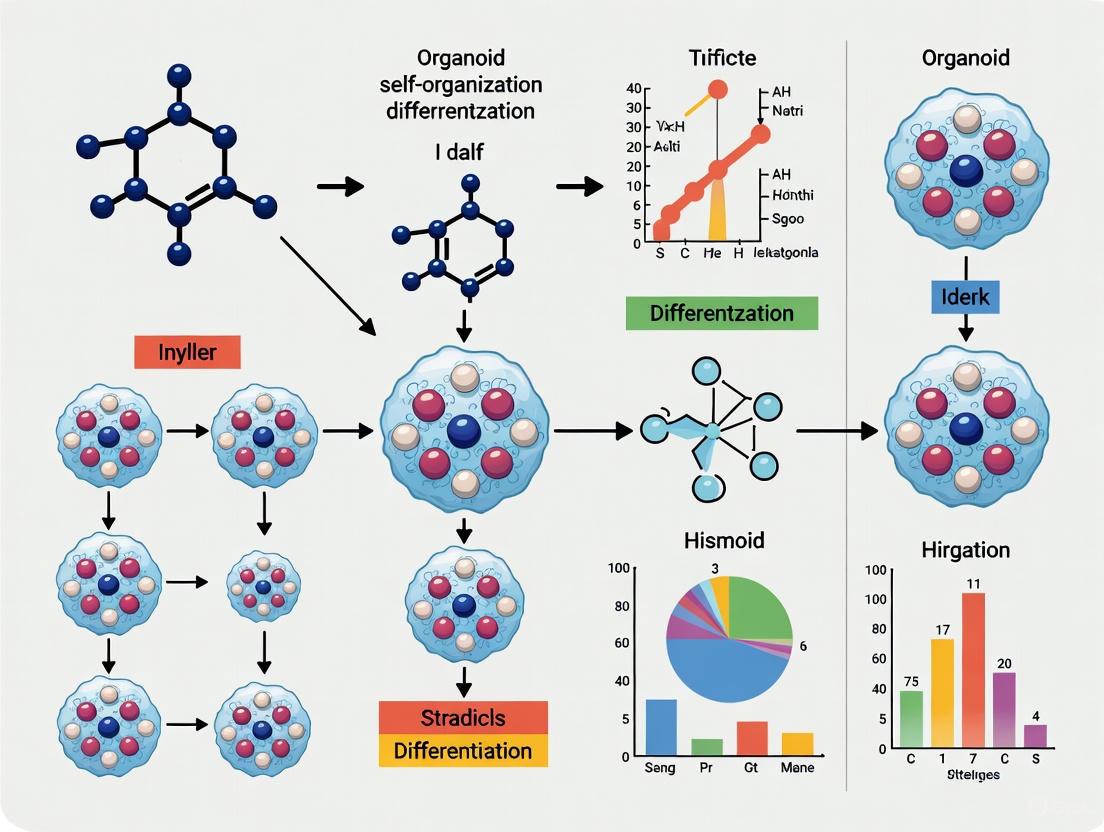
This article provides a comprehensive overview of the principles and applications of organoid self-organization and differentiation, a revolutionary technology in modern biomedical research.
Self-Organization and Differentiation in Organoids: From Principles to Applications in Biomedical Research
Abstract
This article provides a comprehensive overview of the principles and applications of organoid self-organization and differentiation, a revolutionary technology in modern biomedical research. Tailored for researchers, scientists, and drug development professionals, it explores the fundamental biological mechanisms driving self-organization, details established and emerging protocols for generating various organoid types, and addresses key challenges in model reproducibility and scalability. The content further examines the validation of organoid systems against traditional models and their growing impact on disease modeling, drug screening, and the advancement of precision medicine, synthesizing insights to guide future research and clinical translation.
The Principles of Self-Organization: How Organoids Mimic Natural Development
Defining Self-Organization in Organoid Systems
Self-organization is the foundational process whereby stem cells, through intrinsic genetic programming and environmental cues, spontaneously form complex three-dimensional (3D) structures that mimic the architecture and functionality of native organs. This in-depth technical guide explores the core principles, molecular mechanisms, and quantitative dynamics of self-organization within organoid systems. Framed within the broader context of organoid and differentiation research, this whitepaper provides researchers and drug development professionals with a detailed examination of the biological circuits, experimental methodologies, and analytical tools used to study and direct this process. The ability to recapitulate human-specific pathophysiology makes understanding self-organization paramount for advancing disease modeling, drug discovery, and precision medicine [1].
Core Principles of Self-Organization
Self-organization in organoids describes the phenomenon where initially homogeneous populations of stem cells undergo spatial reorganization and differentiation to form structured tissues without external guidance. This process relies on the interplay between intrinsic cellular programs and extrinsic environmental signals [2].
The key biological principles enabling self-organization include:
- Stem Cell Plasticity: Human pluripotent stem cells (hPSCs), including both embryonic stem cells (hESCs) and induced pluripotent stem cells (hiPSCs), possess the capacity to self-renew indefinitely and differentiate into virtually any cell type in the human body. This plasticity is the raw material for self-organization [1].
- Self-Assembly and Sorting: Cells within the 3D culture undergo sorting and aggregation based on differential adhesion properties, leading to the formation of distinct tissue layers and compartments [3].
- Cell Polarity and Symmetry Breaking: A critical early step is the establishment of apical-basal polarity within cells, which breaks the initial symmetry of the cell aggregate and defines the organizational axis for subsequent development [2].
- Lineage Commitment and Differentiation: As structures form, cells commit to specific lineages in a spatially and temporally coordinated manner, generating the multiple cell types found in the native organ [1] [2].
- Formation of a Progenitor Niche: Self-organizing systems often establish specialized microenvironments that maintain progenitor cells and guide their controlled differentiation, mirroring in vivo developmental processes [4].
Molecular and Signaling Pathways Governing Self-Organization
The self-organization process is directed by a complex interplay of signaling pathways that form a self-regulating network. Key pathways function as biological circuits, providing positional information and dictating cell fate decisions.
Figure 1: Signaling pathways governing organoid self-organization and patterning.
Key Pathway Interactions
- WNT and Hippo Signaling Crosstalk: Research on human brain organoids has shown that an extrinsically provided matrix enhances lumen expansion and telencephalon formation. This matrix-induced regional guidance is mechanistically linked to the WNT and Hippo (YAP1) signaling pathways. Specifically, the induction of the WNT ligand secretion mediator (WLS) marks the earliest emergence of non-telencephalic brain regions [2].
- Extracellular Matrix (ECM) and Mechanosensing: The extracellular microenvironment, including provided matrices like Matrigel, is not a passive scaffold. It actively modulates tissue morphogenesis by inducing cell polarization and neuroepithelial formation. Cells sense these mechanical cues through pathways like YAP, which in turn influences gene expression programs involving ECM pathway regulators [2].
- Programmed Morphogen Gradients: Similar to native development, self-organizing organoids create their own localized sources of morphogens (e.g., BMP, SHH, FGF). The diffusion of these molecules creates concentration gradients that pattern the tissue and instruct cells to adopt different fates based on their position [2].
Quantitative Analysis of Morphodynamic Phases
The self-organization of organoids is a dynamic process that can be quantitatively tracked using long-term live imaging. A 2025 study on human brain organoids defined three distinct morphodynamic phases during early development [2].
Table 1: Quantitative morphodynamics of early brain organoid development. Data derived from long-term light-sheet microscopy imaging [2].
| Developmental Phase | Time Period (Days in Vitro) | Key Morphological Events | Quantitative Changes (Average) |
|---|---|---|---|
| Phase 1: Rapid Growth & Lumen Initiation | Day 4 - Day 6 | Transition from spherical embryoid body to formation of multiple small lumens via cavitation. | - Organoid volume: 4x increase- Lumen number: from 3.7 ± 2.5 to 13.4 ± 2.5 |
| Phase 2: Lumen Fusion & Tissue Stabilization | Day 6 - Day 7 | Fusion of small lumens into larger, more stable structures. | - Lumen number: decrease to 5.4 per organoid- Total lumen volume: Increase |
| Phase 3: Patterning & Stabilization | After Day 7 | Lumen number stabilizes; tissue begins regionalization and differentiation. | - Lumen number: Stable- Lumen volume: Decrease |
Experimental Protocols for Investigating Self-Organization
Protocol: Long-Term Live Imaging of Brain Organoid Morphodynamics
This protocol enables the tracking of tissue morphology, cell behaviors, and subcellular features over weeks of organoid development [2].
- Cell Line Preparation: Use induced pluripotent stem cells (iPSCs) with endogenously tagged fluorescent proteins (e.g., actin-GFP, tubulin-RFP, histone-GFP). The WTC-11 line has been successfully utilized.
- Generate Sparse, Mosaic Organoids:
- Aggregate approximately 500 fluorescently labelled iPSCs with unlabelled parental iPSCs at a low ratio (e.g., 2:100) to create sparsely labelled embryoid bodies. This allows for clear tracking and segmentation of single cells.
- Culture and Neural Induction:
- Day 0: Aggregate cells into spherical embryoid bodies.
- Day 4: Transition organoids into neural induction medium (NIM) containing an extrinsic matrix (e.g., Matrigel). Move organoids to the imaging chamber.
- Long-Term Light-Sheet Microscopy:
- Use an inverted light-sheet microscope (e.g., Viventis Microscopy) with controlled environmental conditions (temperature, CO₂).
- Place organoids in a custom sample chamber with microwells (e.g., 800 µm diameter) to stabilize location.
- Image organoids for up to 188 hours (and beyond) with a 30-minute time resolution. Use a 25× objective (demagnified to 18.5×) to capture the entire organoid initially, then use tiling acquisition as organoids grow.
- Media Exchange During Imaging:
- Day 10: Exchange media to enhance neural differentiation.
- Day 15: Provide vitamin A to support maturation.
- Image and Data Analysis:
- Use computational tools for 3D segmentation and tracking to quantify tissue-scale properties (organoid volume, lumen volume, lumen number) and cellular dynamics (nuclear migration, cell elongation).
Figure 2: Workflow for long-term live imaging of organoid self-organization.
The Scientist's Toolkit: Essential Research Reagents and Materials
A standardized set of reagents and instruments is critical for the reproducible generation and analysis of self-organizing organoids.
Table 2: Key research reagent solutions for organoid self-organization studies.
| Reagent / Instrument | Function / Application | Specific Example / Note |
|---|---|---|
| Induced Pluripotent Stem Cells (iPSCs) | The foundational cell source possessing the self-renewal and differentiation capacity required for self-organization. | Patient-derived iPSCs enable creation of disease-specific models [1]. |
| Extracellular Matrix (ECM) | Provides a 3D scaffold that supports cell polarization, lumen formation, and provides mechanical cues. | Matrigel is commonly used. Its composition influences regional patterning [2]. |
| Fluorescent Protein Tags | Enables live-cell imaging and tracking of subcellular structures and cell lineages over time. | Endogenous tagging of proteins like Actin (ACTB), Tubulin (TUBA1B), Histone (HIST1H2BJ) [2]. |
| Neural Induction Medium (NIM) | Directs pluripotent stem cells toward a neuroectodermal fate, initiating the self-organization program. | Specific growth factor combinations guide differentiation toward neural lineages [2]. |
| Light-Sheet Fluorescence Microscope | Allows for long-term, high-resolution, live imaging of entire organoids with minimal phototoxicity. | Customized inverted systems (e.g., Viventis) with environmental control are used [2]. |
| Automated Image Analysis Software | Provides tools for deep-learning-based segmentation and 3D volumetric analysis of complex organoid structures. | IN Carta Software, other platforms with machine learning classification [5]. |
| Hubrecht Organoid Technology (HUB) Protocols | Standardized, IP-protected methods for the robust culture of organoids from various epithelial tissues. | Used for generating intestinal, pancreatic, and liver organoids with high translatability [6] [4]. |
Implications for Drug Development and Disease Modeling
Understanding and harnessing self-organization is transforming preclinical research. Patient-derived organoids (PDOs) that recapitulate the self-organization of native and diseased tissues offer a more human-relevant platform for drug testing [1].
- Predictive Toxicology: Self-organizing liver organoids derived from hiPSCs can be used to assess human-specific hepatotoxicity, a major cause of drug attrition. Intestinal organoids can model the GI toxicity common with oncology drugs [1] [3].
- Personalized Medicine: In oncology, patient-derived tumor organoids (PDTOs) retain the genetic and cellular heterogeneity of the original tumor. Drug sensitivity testing on these self-organized "patient avatars" can help predict individual therapeutic responses and inform treatment decisions [1] [6] [4].
- Modeling Complex Diseases: Brain organoids enable the study of neurodevelopmental and neurodegenerative diseases in a human-specific context. The self-organization process recapitulates tissue-level pathologies that cannot be modeled in 2D cultures [1] [2].
Self-organization is the central, defining phenomenon that empowers organoid technology to bridge the gap between traditional in vitro models and human physiology. It is a quantifiable process driven by an interplay of genetic programming, signaling pathway crosstalk, and biophysical cues from the microenvironment. While challenges in standardization, scalability, and full maturation remain, the continued refinement of experimental protocols—such as long-term live imaging and automated analysis—is rapidly advancing the field. A deep mechanistic understanding of self-organization is crucial for leveraging organoids to their full potential in de-risking drug development, advancing precision medicine, and fundamentally understanding human development and disease.
Organoid technology represents a paradigm shift in biomedical research, providing in vitro three-dimensional (3D) models that closely mimic the structural and functional characteristics of human organs [7]. These miniature, self-organized structures are derived from stem cells and preserve native tissue architecture and cellular interactions critical for physiological relevance, offering a significant improvement over traditional two-dimensional (2D) cell cultures [7]. The cellular origin of organoids is a fundamental determinant of their properties and applications. This technical guide provides a comprehensive comparison between two principal organoid types: those derived from pluripotent stem cells (PSCs), including induced pluripotent stem cells (iPSCs) and embryonic stem cells (ESCs), and those originating from adult stem cells (ASCs), also known as tissue-specific stem cells [7] [8]. Understanding the distinctions between these cellular origins is crucial for researchers selecting appropriate models for studying human development, disease modeling, drug screening, and regenerative medicine strategies.
Fundamental Biological Distinctions
Pluripotent Stem Cell-Derived Organoids
Pluripotent stem cells (PSCs), including induced pluripotent stem cells (iPSCs) and embryonic stem cells (ESCs), possess the unique capacity to differentiate into virtually any cell type of the human body [1]. iPSCs are generated by reprogramming adult somatic cells into a pluripotent state using defined transcription factors, a groundbreaking technology pioneered by Takahashi and Yamanaka in 2006 [1] [9]. PSC-derived organoids are generated through step-by-step differentiation protocols that recapitulate embryonic organ development [8]. This process involves directing uniform PSCs through specific lineage commitments using precise sequences of morphogens and growth factors, typically over several months [8]. Due to the pluripotency of their starting material, these organoids often contain complex cellular components, including multiple epithelial, mesenchymal, and sometimes endothelial cell types, making them particularly valuable for modeling early human developmental processes [8].
Adult Stem Cell-Derived Organoids
Adult stem cell (ASC)-derived organoids, also known as patient-derived organoids (PDOs), are generated directly from tissue-resident stem cells isolated from patient biopsies or surgical specimens [7] [8]. The establishment of intestinal organoid culture from Lgr5+ stem cells in 2009 marked a pivotal advancement in this field [8]. Unlike PSC-derived systems, ASC-derived organoids are cultivated from tissue-specific stem cells with restricted potency, resulting in structures that typically contain a single epithelial cell type [8]. These organoids exhibit remarkable fidelity to their tissue of origin, recapitulating tissue-specific characteristics, cellular heterogeneity, and disease phenotypes while maintaining the donor's genetic background [7]. Their direct derivation from adult tissues enables faster generation (compared to PSC-derived organoids) and makes them indispensable for personalized medicine applications [8].
Table 1: Core Characteristics of PSC-Derived and ASC-Derived Organoids
| Characteristic | PSC-Derived Organoids | ASC-Derived Organoids |
|---|---|---|
| Stem Cell Source | Induced Pluripotent Stem Cells (iPSCs), Embryonic Stem Cells (ESCs) [1] [8] | Tissue-resident Adult Stem Cells (e.g., Lgr5+ intestinal stem cells) [8] |
| Cellular Complexity | Multiple cell types (epithelial, mesenchymal, etc.) [8] | Primarily epithelial cell types [8] |
| Maturity State | Fetal or embryonic-like [8] | Adult tissue-like [8] |
| Culture Initiation | Directed differentiation from pluripotent state [8] | Expansion of committed tissue stem cells [8] |
| Genetic Landscape | Can be genetically engineered or from specific donors [1] | Preserves patient-specific genetic mutations and background [7] |
Technical and Experimental Considerations
Key Signaling Pathways and Differentiation
The self-organization of organoids from both PSCs and ASCs is guided by intricate signaling pathways that mimic developmental and tissue-homeostatic processes. For endoderm-derived organoids, such as those from the liver, pancreas, and intestine, key signaling molecules include Wnt, Noggin, R-spondin, and epidermal growth factor (EGF) [10] [8]. The specific combination and temporal application of these signals determine the patterning and cellular composition of the resulting organoid. PSC-derived organoids require precisely timed activation and inhibition of developmental pathways like TGF-β, BMP, FGF, and Wnt to guide lineage specification [8]. In contrast, ASC-derived organoids rely on niche signals that maintain adult stem cell populations in their native context, such as EGF, Noggin, and R-spondin for intestinal organoids [8]. The diagram below illustrates the core signaling logic in organoid self-organization from these two distinct cellular origins.
Standardized Protocols and Quality Assessment
Robust and reproducible organoid culture requires strict adherence to standardized protocols and rigorous quality control measures. International initiatives, such as the Organoid Standards Initiative established in Korea, have developed general guidelines for organoid manufacturing and quality evaluation to promote transparency, reproducibility, and reliability [11]. Key aspects of quality control for source cells include genetic validation, chromosomal analysis, marker evaluation, differentiation potential assessment, and contamination testing (e.g., for mycoplasma and viruses) [11]. Essential quality metrics for mature organoids encompass size, shape, viability, gene expression profiles, and functional characteristics specific to the organ being modeled [11]. The workflow below outlines a generalized experimental protocol for generating and validating organoids from both sources.
The Scientist's Toolkit: Essential Research Reagents
Successful organoid culture relies on a carefully selected set of reagents and materials. The table below details essential components for establishing and maintaining organoid systems.
Table 2: Essential Research Reagents for Organoid Culture
| Reagent Category | Specific Examples | Function in Organoid Culture |
|---|---|---|
| Base Matrix | Matrigel, Cultrex BME, Synthetic PEG-based hydrogels [11] [10] | Provides a 3D scaffold that mimics the extracellular matrix (ECM), supporting cell polarization and self-organization. |
| Growth Factors & Cytokines | EGF, FGF, Noggin, R-spondin, WNT agonists [11] [8] | Key signaling molecules that direct stem cell maintenance, lineage differentiation, and pattern formation. |
| Media Supplements | B-27, N-2, N-Acetylcysteine [11] | Provides essential nutrients, antioxidants, and hormones for cell survival and growth in serum-free conditions. |
| Dissociation Agents | Accutase, Trypsin-EDTA, Collagenase [11] | Enzymatic solutions used to break down the matrix and dissociate organoids for passaging or analysis. |
| Source Cells | iPSCs, ESCs, or patient tissue-derived ASCs [11] [8] | The foundational cellular material from which organoids are derived. Quality is paramount. |
Comparative Analysis and Applications
Advantages, Limitations, and Strategic Selection
The choice between PSC-derived and ASC-derived organoids is dictated by the specific research question, as each system offers distinct advantages and faces particular limitations. PSC-derived organoids exhibit remarkable plasticity, can model a wide range of tissues and developmental stages, and are particularly valuable for studying genetic disorders and early human development [7]. However, they often face challenges such as prolonged differentiation protocols, variability in maturation levels, and batch-to-batch reproducibility issues [7] [1]. In contrast, ASC-derived organoids faithfully recapitulate tissue-specific characteristics and disease phenotypes from the patient of origin, making them superior for personalized medicine applications, including drug screening and predicting individual treatment responses [7]. Their main limitations include restricted cellular diversity (primarily epithelial) and the inability to generate organoids from tissues where stem cells are inaccessible, such as the brain or heart [8].
Table 3: Functional Comparison for Research Applications
| Parameter | PSC-Derived Organoids | ASC-Derived Organoids |
|---|---|---|
| Developmental Biology | Excellent model for early organogenesis [8] | Limited application |
| Disease Modeling | Ideal for monogenic/developmental disorders [1] | Ideal for adult-onset diseases and cancer [7] |
| Drug Discovery & Toxicology | Predictive for human-specific toxicity [1] | High predictive value for patient-specific drug response [7] [1] |
| Personalized Medicine | Requires genetic reprogramming of patient cells [9] | Direct derivation from patient biopsies enables rapid testing [7] |
| Scalability & Throughput | Moderate (lengthy differentiation) [7] | High (direct expansion) [7] |
| Genetic Engineering | Highly amenable to CRISPR/Cas9 editing [1] | More challenging to genetically manipulate |
Emerging Applications and Future Directions
Organoid technology is rapidly evolving, with emerging applications spanning basic research and clinical translation. In drug development, both PSC- and ASC-derived organoids are being integrated into high-throughput screening platforms to assess efficacy and toxicity, providing more human-relevant data than traditional models and helping to reduce late-stage drug attrition [12] [1]. The field of personalized oncology has been particularly transformed by patient-derived tumor organoids (PDTOs), a type of ASC-derived organoid, which retain the genomic and phenotypic features of the original tumor and can be used to test chemotherapeutic responses ex vivo [1]. In regenerative medicine, PSC-derived organoids hold promise for future transplantation therapies, as demonstrated by early studies using iPSC-derived retinal sheets for macular degeneration [9]. The integration of organoids with cutting-edge technologies like artificial intelligence, high-content imaging, microfluidic "organ-on-a-chip" systems, and 3D bioprinting is poised to further enhance their utility and physiological relevance [7] [1] [9].
The strategic selection between pluripotent and adult stem cell-derived organoids is foundational to the experimental design in modern biomedical research. PSC-derived organoids provide a unique window into human development and are powerful tools for modeling genetic diseases, while ASC-derived organoids offer unparalleled fidelity for studying adult tissue physiology, disease pathology, and personalized therapeutic interventions. As standardization efforts, such as the development of international guidelines for manufacturing and quality control, continue to mature [11], the reliability and translational impact of organoid models are expected to increase significantly. By understanding the inherent strengths and limitations of each cellular origin, researchers can leverage these sophisticated 3D models to deepen our understanding of human biology, accelerate drug discovery, and advance the frontier of precision medicine.
The process of organogenesis, fundamental to developmental biology, is governed by sophisticated spatiotemporal dynamics of signaling pathways and morphogen gradients. Within the burgeoning field of organoid research, recapitulating these precise molecular dialogues is paramount for generating in vitro models that accurately mimic in vivo organ development and function. This whitepaper provides an in-depth technical examination of the core signaling pathways—including WNT, BMP, FGF, Hippo (YAP/TAZ), and mechanotransduction cascades—that orchestrate self-organization and patterning in organoids. By synthesizing recent advances in live imaging, single-cell transcriptomics, and engineered culture systems, we delineate the experimental frameworks and reagent toolkits essential for investigating and manipulating these pathways to control organoid morphogenesis, thereby enhancing their reproducibility and physiological relevance for disease modeling and drug development.
Organoid technology has emerged as a paradigm-shifting platform for studying developmental biology, disease mechanisms, and drug responses. These three-dimensional (3D) structures exhibit remarkable self-organization capabilities, replicating the complex architectures and functions of their in vivo counterparts [13]. The foundation of this self-organization lies in the recapitulation of intrinsic developmental programs, where signaling pathways and morphogen gradients act as the primary directors of cellular fate, tissue patterning, and morphological change [14]. The morphogenetic process often begins with mesenchymal condensation, a dynamic event involving extensive cell-cell interactions and spatial reorganization that sets the stage for subsequent organogenesis [14]. Understanding and controlling these pathways is not merely an academic exercise; it is critical for addressing key challenges in the organoid field, such as functional maturity, reproducibility, and the faithful modeling of human physiology [15] [16]. This guide details the core pathways, quantitative data, and experimental protocols that underpin the recapitulation of organogenesis in organoid models.
Core Signaling Pathways in Organogenesis
The coordinated activity of a core set of evolutionarily conserved signaling pathways dictates the progression from homogeneous stem cell condensates to complex, patterned organoids. The following table summarizes the primary functions of these key pathways.
Table 1: Core Signaling Pathways in Organoid Development and Patterning
| Pathway | Primary Ligands/Effectors | Key Role in Organogenesis | Representative Organoid System |
|---|---|---|---|
| WNT/β-catenin | WNT ligands, β-catenin, GSK-3β | Axis patterning, progenitor cell maintenance, tissue identity (e.g., telencephalon vs. caudalized tissue) [2] | Brain Organoids [2] |
| BMP | BMP2/4/7, SMADs | Cell fate specification, neuroepithelial induction, lumen morphogenesis [2] [17] | Ocular Organoids [17] |
| FGF | FGF ligands, FGFR | Differentiation, neuroepithelial maturation, lumen expansion [2] [17] | Ocular Organoids [17] |
| Hippo (YAP/TAZ) | YAP1, TAZ, LATS1/2 | Mechanotransduction, regulation of WNT signaling via WLS, tissue growth control [2] | Brain Organoids [2] |
| Rho/ROCK | Rho GTPases, ROCK, Myosin II | Actomyosin contractility, cytoskeletal remodeling, supracellular mechanical coherence [14] | Mesenchymal Condensates [14] |
| TGF-β/SMAD | TGF-β, Nodal, SMADs | Cell differentiation, ECM production, often acts in concert with BMP signaling | General Organoid Culture [16] |
Integration of Biochemical and Mechanical Signaling
A pivotal concept in modern organogenesis is the inextricable link between biochemical signaling and mechanical forces. Pathways are not isolated; they function within integrated mechanochemical feedback loops. For instance, the Hippo pathway effector YAP1 is a key mechanosensor that translocates to the nucleus in response to cytoskeletal tension and ECM stiffness, where it can upregulate the expression of WNT ligand secretion mediator (WLS) to modulate tissue patterning [2]. Simultaneously, Rho/ROCK-mediated actomyosin contractility generates patterned stress fields that can simultaneously activate BMP/FGF signaling while suppressing TGF-β pathways, thereby directly linking mechanical deformation to biochemical fate decisions [14]. This feedback establishes a self-reinforcing loop that progressively stabilizes condensed tissues into cohesive mechanical units, guiding robust pattern formation.
Quantitative Dynamics and Experimental Assessment
Advancements in long-term live imaging and omics technologies have enabled the quantitative tracking of morphogenetic events, moving from qualitative observation to precise, data-driven analysis of organoid development.
Quantifying Tissue-Scale Morphodynamics
A recent study on human brain organoid development established a multi-mosaic labeling strategy combined with light-sheet microscopy to quantify tissue-scale properties over weeks of development [2]. The data below illustrates key morphodynamic phases:
Table 2: Quantitative Morphodynamics in Early Brain Organoid Development [2]
| Time Point | Organoid Volume (Relative Fold Change) | Total Lumen Volume | Average Lumen Number per Organoid | Interpreted Morphogenetic Phase |
|---|---|---|---|---|
| Day 4 | 1x | Minimal | Not reported | Initial aggregation |
| Day 5 | Increasing | Early expansion | 3.7 ± 2.5 | Initiation of cavitation |
| Day 6 | ~4x (by Day 8) | Increasing | 13.4 ± 2.5 | Rapid lumen formation |
| Day 7 onwards | Stabilizing | Decrease after fusion | Stabilizes at ~5.4 | Lumen fusion and tissue stabilization |
The data reveals a phase of rapid tissue growth and lumen formation followed by a stabilization phase involving lumen fusion, highlighting a self-organizing process that refines tissue architecture [2].
Experimental Workflow for Pathway Analysis
The following diagram outlines a comprehensive experimental workflow for analyzing signaling pathways and morphogen gradients in organoids, integrating live imaging, molecular manipulation, and multi-omics validation.
Detailed Experimental Protocols
This section provides detailed methodologies for key experiments cited in this review, focusing on the establishment of imaging-ready organoids and pathway manipulation.
Objective: To track tissue morphology, cell behaviors, and subcellular features over weeks of brain organoid development.
- Organoid Generation:
- Starting Material: Aggregate approximately 500 human induced pluripotent stem cells (iPSCs) into embryoid bodies at day 0.
- Fluorescent Labeling: Use a sparse mosaicism approach. Combine iPSC lines, each with a different endogenously tagged fluorescent protein (e.g., ACTB::GFP for actin, HIST1H2BJ::GFP for nucleus, TUBA1B::RFP for tubulin), with unlabeled parental cells at a 2:100 ratio.
- Neural Induction: At day 4, transition organoids to neural induction medium (NIM) containing an extrinsic matrix (e.g., Matrigel).
- Imaging Setup:
- Microscopy: Use an inverted light-sheet microscope with a 25× objective (demagnified to 18.5×) and a controlled environmental chamber.
- Sample Chamber: Employ a custom fluorinated ethylene propylene chamber with microwells (e.g., 800 µm diameter) to stabilize individual organoids for long-term imaging. The chamber should allow for medium exchange with minimal drift.
- Acquisition: Begin imaging at day 4. Use a time resolution of 30 minutes for up to 188 hours (8 days). For larger organoids, implement tiling acquisition to capture the entire structure.
- Data Analysis:
- Segmentation: Use computational tools to segment and quantify organoid volume, lumen volume, and lumen number over time.
- Tracking: Apply demultiplexing algorithms to track the dynamics of distinct subcellular features from the multi-mosaic data.
Objective: To assess the role of BMP and FGF signaling in lens formation within fish ocular organoids.
- Organoid Culture: Generate ocular organoids from medaka (Oryzias latipes) blastula cells under minimal growth factor 3D suspension culture conditions that allow for concurrent retina and lens formation.
- Pathway Inhibition:
- BMP Inhibition: Add a BMP signaling pathway inhibitor (e.g., Dorsomorphin) to the culture medium at a critical timepoint for lens progenitor establishment.
- FGF Inhibition: Add an FGF signaling pathway inhibitor (e.g., SU5402) to the medium during the lens fiber cell differentiation phase.
- Outcome Assessment:
- Imaging: Monitor organoid morphology for the presence, size, and positioning of the lens structure.
- Molecular Analysis: Perform whole-mount fluorescent in situ hybridization (e.g., HCR) or immunostaining for key lens markers (e.g., Pax6, c-Maf, Sox1, crystalline proteins) to confirm the molecular fidelity of lens formation.
- Conclusion: The coordinated activity of BMP and FGF signaling is essential for the establishment of lens progenitor cells and their subsequent differentiation, even when morphogenesis follows a non-canonical "inside-out" route.
The Scientist's Toolkit: Research Reagent Solutions
A critical factor in successful organoid research is the selection of appropriate reagents and materials. The following table details essential components for recapitulating organogenesis.
Table 3: Essential Research Reagents for Organoid-based Recapitulation of Organogenesis
| Reagent/Material | Function in Organogenesis | Example Use Case |
|---|---|---|
| Matrigel | Extracellular matrix (ECM) providing structural support, biochemical cues, and mechanical signals; enhances cell polarization and lumen formation. | Used in brain organoid protocols to support neuroepithelium formation and lumen enlargement [2]. |
| Recombinant Growth Factors (Wnt3a, Noggin, FGF, BMP4, HGF) | Activate specific signaling pathways to direct cell fate, maintain stemness, and promote differentiation and tissue patterning. | Wnt3a and Noggin are commonly used in gut and other organoid media; BMP4 and FGF are critical for ocular organoid lens formation [17] [16]. |
| Small Molecule Inhibitors/Agonists (e.g., Dorsomorphin, SU5402, YAP/TAZ inhibitors) | Chemically perturb specific signaling pathways to establish their necessity and function during morphogenesis. | Used to dissect the roles of BMP and FGF in lens formation in ocular organoids [17]. |
| Synthetic Hydrogels (e.g., GelMA) | Defined, reproducible ECM alternative to Matrigel; allows precise tuning of mechanical properties (stiffness, porosity). | Improving culture reproducibility and studying the role of mechanotransduction in organoid development [16]. |
| CRISPR/Cas9 & Fluorescent Reporter Cell Lines | Enables endogenous tagging of proteins for live imaging and gene knockout/knockin to study gene function. | Used to create sparsely labelled, multi-mosaic brain organoids for tracking subcellular dynamics [2]. |
Signaling Pathway Crosstalk in Brain Regionalization
The interplay between the Hippo and WNT pathways, modulated by the extracellular matrix, serves as a powerful example of how signaling crosstalk guides complex patterning events. The following diagram delineates this mechanochemical regulatory network.
This model demonstrates that the presence of an extrinsic ECM promotes telencephalon formation while simultaneously inducing YAP1-mediated upregulation of WLS, which enhances WNT signaling and marks the earliest emergence of non-telencephalic (caudalized) tissue identities [2]. This pathway crosstalk illustrates how a single external cue (ECM) can orchestrate regional patterning through the integration of mechanical (Hippo) and biochemical (WNT) signaling.
Recapitulating organogenesis in vitro requires a deep and applied understanding of the signaling pathways and morphogen gradients that direct self-organization. As evidenced by recent studies, this endeavor has progressed beyond merely adding soluble factors to encompass the control of mechanical forces, supracellular actin architectures, and the dynamic remodeling of the extracellular matrix [2] [14]. The experimental frameworks and reagent toolkits detailed herein provide a roadmap for researchers to systematically investigate and manipulate these processes. Future efforts will be directed toward enhancing the standardization and physiological relevance of organoid models. This will involve the integration of vascularization, immune cell co-cultures, and the use of synthetic hydrogels for better reproducibility [13] [16]. Furthermore, the adoption of frameworks like the Minimum Information about Organoid Research (MIOR) will be crucial for improving data interoperability and accelerating the clinical translation of discoveries made using these powerful models [15]. By mastering the control of signaling pathways and their complex interactions, the field moves closer to reliably engineering organoids that fully capture the complexity of human tissues, thereby revolutionizing personalized medicine, drug development, and our fundamental understanding of human development.
Organoids, three-dimensional (3D) in vitro structures derived from stem cells, have emerged as a transformative model system for studying human development and disease. Their value lies in their capacity to self-organize and recapitulate emergent properties—complex outcomes that arise from the dynamic interactions of simpler components—of native organs. These properties encompass 3D tissue architecture, multifaceted cellular diversity, and organ-specific functionality, which collectively bridge the gap between traditional two-dimensional (2D) cultures and in vivo models [1] [18]. This technical guide delineates the core emergent properties of organoids, framed within the context of self-organization and differentiation research, and provides detailed methodologies for their quantification and analysis, aimed at researchers and drug development professionals.
The process of self-organization is governed by principles reminiscent of early embryonic development. Stem cells, through a series of proliferation, differentiation, and sorting events, generate complex structures from seemingly homogeneous beginnings. Key to this is the differential adhesion hypothesis, where cells sort and rearrange based on thermodynamic principles driven by variations in surface adhesion [18]. Furthermore, the spatial and temporal presentation of molecular cues directs patterning and cell fate specification, leading to the emergence of form and function that cannot be predicted from genomic information alone.
Architectural Emergence and Patterning
The emergence of complex 3D architecture is a hallmark of organoid systems. This includes the formation of distinct tissue layers, lumens, and even region-specific patterning, which arise from the self-organizing capabilities of stem cells under controlled environmental conditions.
Engineering Spatial Patterning
The development of architectural complexity can be directed using bioengineering strategies that replicate the morphogen gradients present in vivo. Microfluidic devices, for instance, provide exquisite spatiotemporal control over soluble factors, enabling the generation of stable concentration gradients that guide axial patterning [19].
One advanced method involves creating a pseudo morphogen signaling center within the developing organoid. For example, the incorporation of a small cluster of inducible Sonic Hedgehog (SHH)-expressing hiPSCs into an embryoid body can generate a dorsal-ventral axial patterned forebrain organoid, with the titratable expression of SHH controlled by doxycycline [19].
Table 1: Key Morphogens for Regional Patterning in Brain Organoids
| Target Region | Key Patterning Factors | Function in Axis Patterning |
|---|---|---|
| Forebrain | SMAD inhibitors, TGF-β/BMP antagonists [19] | Anterior/ Dorsal specification |
| Midbrain | FGF8, SHH, WNT [19] | Rostral-Caudal and Ventral patterning |
| Hindbrain | FGF, Retinoic Acid (RA) [19] | Caudal specification |
| Ventralization | SHH (high concentration) [19] | Ventral patterning (e.g., dopaminergic neurons) |
Quantitative Imaging of 3D Architecture
Analyzing the emergent architecture of dense, multi-layered organoids like gastruloids requires advanced imaging pipelines. A powerful approach involves whole-mount two-photon microscopy combined with computational processing to correct artifacts and achieve accurate 3D segmentation at cellular resolution [20].
Protocol: In Toto Multi-Color Two-Photon Imaging and Analysis
- Sample Preparation and Clearing: Fix and immunostain organoids. Mount cleared samples in an 80% glycerol solution, which has been shown to provide a 3-fold and 8-fold reduction in intensity decay at 100 µm and 200 µm depth, respectively, compared to PBS mounting. Use spacers between coverslips to avoid compressing samples [20].
- Dual-View Imaging: Image each immunostained organoid sequentially from two opposing sides using a two-photon microscope to penetrate deep into the thick tissue [20].
- Computational Processing:
- Spectral Unmixing: Apply algorithms to remove signal cross-talk between fluorescent channels [20].
- Dual-View Registration and Fusion: Align and merge the two image stacks to reconstruct a complete in toto image of the organoid [20].
- 3D Nuclei Segmentation: Use a computational module (e.g., the Tapenade Python package) to identify and segment individual cell nuclei in 3D space [20].
- Signal Normalization: Correct for intensity variations across depth and different channels to enable reliable quantification [20].
Table 2: Quantitative Metrics for Architectural Analysis
| Scale of Analysis | Quantifiable Metric | Experimental Method |
|---|---|---|
| Tissue Scale | Global shape, Elongation, Symmetry breaking | 3D reconstruction from two-photon imaging [20] |
| Cellular Scale | Nuclear density, Nuclear morphology (volume, sphericity), Spatial distribution of cell types | 3D nuclei segmentation and classification [20] |
| Molecular Scale | 3D spatial patterns of gene expression, Protein co-expression | Multi-channel immunofluorescence and spectral unmixing [20] |
Emergence of Cellular Diversity
A critical emergent property of organoids is their ability to generate the diverse array of cell types found in the native organ. This diversity arises from the differentiation and self-organization of stem cells, recapitulating developmental trajectories.
The choice of stem cell source significantly influences the heterogeneity and functionality of the resulting organoid.
- Pluripotent Stem Cells (PSCs): Include embryonic stem cells (ESCs) and induced pluripotent stem cells (iPSCs). PSC-derived organoids are ideal for modeling organogenesis and developmental events, as they resemble fetal-stage tissues [18] [19]. iPSCs, in particular, allow for the creation of patient-specific models for precision medicine [1] [18].
- Adult Stem Cells (ASCs): Derived from biopsy samples of healthy or diseased tissues. ASC-derived organoids model tissue homeostasis and are particularly valuable for studying monogenic diseases and cancer [18] [21].
Driving PSCs toward specific neural fates requires precise manipulation of signaling pathways. The following protocol outlines the generation of region-specific brain organoids.
Protocol: Guided Differentiation for Region-Specific Brain Organoids
- EB Formation: Aggregate PSCs into embryoid bodies (EBs) in a low-attachment plate. To enhance cell viability, use a small-molecule cocktail (e.g., chroman 1, emricasan, polyamines, and tran-ISRIB) which has been shown to improve survival over traditional ROCK inhibitors [19].
- Neural Induction: Skew EB differentiation toward neuroectoderm by adding SMAD signaling inhibitors (e.g., Dorsomorphin, SB431542) to the culture medium [19].
- Regional Patterning: Add specific combinations of patterning factors to direct regional identity (See Table 1).
- Maturation: Maintain the organoids in differentiation media for extended periods (weeks to months) to allow for the emergence of mature neuronal and glial cell types [18].
Characterization of Cellular Heterogeneity
The emergent cellular diversity must be rigorously characterized. Single-cell RNA sequencing (scRNA-seq) is a key tool for mapping the transcriptional landscape and identifying the distinct cell populations present within an organoid. Studies have shown that brain organoids, for instance, contain a diversity of neuronal and glial cell types with transcriptional profiles resembling the fetal human brain [18] [19]. Immunofluorescence staining for cell-type-specific markers is used to validate the spatial organization of these cell populations within the 3D structure.
Emergence of Organ-Specific Functionality
The ultimate validation of an organoid model is its ability to perform functions characteristic of the native organ. This emergent functionality arises from the correct integration of diverse cell types within an appropriate 3D architecture.
Functional Readouts
Organoids exhibit a range of organ-specific functions:
- Neural Activity: Brain organoids have been shown to develop electrically active neurons that can form synaptic connections and exhibit network-level activity, captured via multi-electrode arrays (MEAs) or calcium imaging [18].
- Metabolic Function: Liver organoids (hepatocytes) can perform albumin secretion, drug metabolism, and bile acid synthesis, making them valuable for toxicology studies [1].
- Barrier Function and Secretion: Intestinal organoids develop a polarized epithelium with crypt-villus structures, exhibit peristalsis-like contractions, and secrete mucus [1] [22].
- Disease Modeling: Patient-derived tumor organoids (PDTOs) retain the genomic and phenotypic heterogeneity of the original tumor, allowing for the study of drug resistance mechanisms and the screening of personalized therapeutic regimens [1] [21].
Protocol: Functional Analysis of Brain Organoid Neural Networks
- Preparation: Transfer mature brain organoids to a recording chamber.
- Recording: Use multi-electrode arrays (MEAs) to record extracellular electrical activity from multiple sites within the organoid over time.
- Pharmacological Modulation: Apply neurotransmitters (e.g., glutamate, GABA) or neuroactive drugs to assess the network's functional response.
- Data Analysis: Quantify metrics such as mean firing rate, burst patterns, and network synchronization to evaluate the maturity and functionality of the emergent neural networks.
The Scientist's Toolkit: Essential Research Reagents
The following table details key reagents and materials essential for modeling emergent properties in organoid research.
Table 3: Research Reagent Solutions for Organoid Research
| Reagent/Material | Function & Application | Example Use Case |
|---|---|---|
| Matrigel / BME | Extracellular matrix (ECM) hydrogel providing a 3D scaffold for growth and self-organization. | Standard support for intestinal, brain, and many other epithelial organoid types [18] [21]. |
| Soluble Patterning Factors | Small molecules and growth factors that direct regional cell fate. | SHH for ventral neural patterning; FGF8 for midbrain specification; BMP/TGF-β inhibitors for forebrain induction [19]. |
| Rho-associated kinase (ROCK) inhibitor | Enhances cell survival after dissociation and during initial plating. | Added during the passaging of organoids to prevent anoikis [19] [21]. |
| TryptLE Express / Collagenase | Enzymes for the dissociation of tissue samples or organoids into single cells or small clusters. | Digesting patient tumor samples to initiate tumor organoid cultures [21]. |
| Computational Tools (e.g., Tapenade) | Python-based packages for 3D image processing, segmentation, and quantitative analysis. | Correcting imaging artifacts and segmenting nuclei in dense gastruloids for morphological analysis [20]. |
The emergent properties of architecture, cellular diversity, and functionality establish organoids as a powerful platform for deciphering the principles of self-organization, modeling human development and disease, and advancing drug discovery. The continued refinement of bioengineering techniques, imaging modalities, and analytical tools will further enhance the fidelity and reproducibility of these models. As we better understand and control the emergent properties of organoids, their potential to revolutionize personalized medicine and reduce reliance on animal testing will be fully realized, marking a new era in biomedical research.
Cerebral organoids, three-dimensional (3D) miniaturized structures derived from human pluripotent stem cells (PSCs), have emerged as a transformative model for studying human brain development and disease. These self-organizing tissues recapitulate fundamental features of the developing human brain, including cellular heterogeneity, regional architecture, and the emergence of functional neural networks [23] [8]. Unlike traditional two-dimensional cultures, cerebral organoids exhibit structural and functional properties that more closely resemble in vivo brain tissue, providing an unprecedented window into early human brain development and the complex process of self-organization [24] [25]. This case study examines the mechanistic basis of self-organized patterning in cerebral organoids, focusing on the intrinsic and extrinsic cues that guide morphogenesis, the quantitative assessment of resulting structures and functions, and the experimental methodologies that enable their precise analysis. The findings presented herein are framed within the broader context of organoid self-organization and differentiation research, offering insights for researchers, scientists, and drug development professionals.
Core Principles of Self-Organization in Cerebral Organoids
Self-organization in cerebral organoids refers to the process by which stem cells, through intrinsic developmental programs and minimal external guidance, form complex 3D structures that mimic the embryonic brain. This process relies on the capacity of pluripotent stem cells to undergo differentiation and spatial reorganization in a manner that recapitulates in vivo developmental trajectories [25]. Two primary methodological paradigms guide this process: unguided and guided protocols.
Unguided protocols induce human PSCs to differentiate primarily through intrinsic signaling mechanisms without providing exogenous patterning factors. This approach typically involves the generation of embryoid bodies, induction into neuroectoderm, embedding in Matrigel, and transfer to bioreactors to promote expansion and maturation [25]. The resulting cerebral organoids spontaneously develop discrete, region-specific domains such as forebrain, midbrain, and hindbrain tissues, offering a model for studying global brain patterning [24] [25]. However, this method yields considerable heterogeneity and variability in structure and cell-type representation across different organoids [26] [25].
Guided protocols enhance reproducibility by using small molecules and growth factors to direct differentiation toward specific brain regions. Through the timed manipulation of key signaling pathways—such as TGF-β, BMP, WNT, and SHH—researchers can generate region-specific organoids representing cortical, striatal, midbrain, or thalamic identities [24] [8]. This approach reduces inter-organoid variability and enables targeted studies of particular brain areas and their connectivity [24].
A landmark study demonstrated that cerebral organoids transition through distinct morphodynamic phases during early development [2]. Initially, organoids undergo rapid tissue and lumen growth, followed by a stabilization phase characterized by lumen fusion, and finally a phase of tissue patterning and regional specification. This structured progression underscores the presence of an intrinsic self-organizing capacity that operates even in the absence of external patterning cues.
Key Signaling Pathways Governing Patterning and Regionalization
The self-organization of cerebral organoids is orchestrated by a complex interplay of signaling pathways that direct cell fate, tissue patterning, and morphogenesis. Understanding these pathways is essential for manipulating organoid development and enhancing their physiological relevance.
Extracellular Matrix and Mechanosensing
The extracellular matrix (ECM) provides critical structural and biochemical support for developing organoids. Recent research utilizing long-term live light-sheet microscopy has revealed that an extrinsic ECM, such as Matrigel, profoundly influences tissue morphogenesis by promoting cell polarization, neuroepithelial formation, and lumen enlargement through fusion events [2]. These morphological changes are intrinsically linked to global patterning and regionalization outcomes.
Mechanistically, ECM-induced regional guidance is mediated through the WNT and Hippo signaling pathways. Activation of these pathways, particularly YAP-mediated upregulation of the WNT ligand secretion mediator (WLS), marks the earliest emergence of non-telencephalic brain regions [2]. This finding establishes a crucial link between matrix-linked mechanosensing dynamics and brain regionalization during organoid development.
Key Developmental Signaling Pathways
Multiple evolutionarily conserved signaling pathways work in concert to pattern cerebral organoids:
- TGF-β/BMP Signaling: Inhibition of these pathways via dual-SMAD inhibition promotes neural induction by directing cells toward a neuroectodermal fate rather than mesodermal or endodermal lineages [8] [27].
- WNT Signaling: This pathway plays a pivotal role in anterior-posterior patterning. Modulation of WNT signaling influences the emergence of telencephalic versus caudalized tissue identities [2].
- Fibroblast Growth Factor (FGF) Signaling: FGFs maintain the proliferative capacity of neural precursors and influence regional specification [24] [25].
- SHH Signaling: This pathway is crucial for ventral patterning and is often manipulated to generate ventral forebrain organoids or striatal organoids [24].
The following diagram illustrates the core signaling pathways and their functional roles in organoid self-patterning:
Quantitative Profiling of Organoid Development and Patterning
Advanced imaging and computational approaches have enabled comprehensive quantitative assessment of cerebral organoid development, revealing the dynamics and outcomes of self-organization processes.
Morphodynamic Analysis
Live light-sheet microscopy studies tracking organoid development over weeks have quantified three distinct morphodynamic phases [2]:
- Early Phase (Days 4-8): Characterized by rapid tissue growth with organoid volume increasing approximately four-fold and lumen number peaking at day 6 (13.4 ± 2.5 lumens per organoid).
- Stabilization Phase (Days 6-7): Marked by lumen fusion, reducing the average lumen count to 5.4 per organoid by day 7.
- Patterning Phase (After Day 7): Features stable lumen numbers with decreasing individual lumen volume, coinciding with tissue patterning and regional specification.
Cellular Diversity and Organization
Single-cell RNA sequencing analyses across multiple protocols and cell lines have established comprehensive profiles of cell-type representation in cerebral organoids. The introduction of metrics such as the NEST-Score enables quantitative evaluation of protocol-driven differentiation propensities and comparisons to in vivo references [26] [28].
The SCOUT (Single-cell and Cytoarchitecture analysis of Organoids using Unbiased Techniques) pipeline provides automated multiscale phenotyping of intact cerebral organoids, extracting hundreds of features characterizing molecular, cellular, spatial, cytoarchitectural, and organoid-wide properties [27]. This approach has revealed that SOX2+ radial glial progenitors and TBR1+ early post-mitotic neurons self-organize into spatially distinct regions, with proximity analysis enabling identification of ventricular zones and neuronal regions despite the absence of a common coordinate system [27].
Table 1: Quantitative Morphodynamics of Early Brain Organoid Development
| Development Phase | Time Period | Key Morphological Changes | Quantitative Metrics |
|---|---|---|---|
| Early Growth Phase | Days 4-8 | Rapid tissue expansion and lumen formation | 4-fold increase in organoid volume; Peak of 13.4 ± 2.5 lumens per organoid at day 6 |
| Stabilization Phase | Days 6-7 | Lumen fusion and tissue consolidation | Lumen number decreases to 5.4 per organoid by day 7 |
| Patterning Phase | After day 7 | Tissue regionalization and specification | Stable lumen number with decreasing individual lumen volume |
Emergence of Functional Neural Networks
The ultimate validation of successful self-organization in cerebral organoids is the emergence of functional neural networks capable of electrical activity and synaptic transmission.
Electrophysiological Properties
Integrated multimodal and transcriptomic analyses reveal that cerebral organoids develop a molecular repertoire of ionotropic receptors that support action potentials, synaptic transmission, and oscillatory dynamics resembling early brain activity [24]. Patch-clamp recordings demonstrate measurable sodium and potassium currents by 60 days in vitro (DIV), with neurons responding to both glutamate and GABA application [24]. Multi-electrode array (MEA) recordings capture spontaneous electrophysiological activity progressing from stable firing to burst firing patterns, with the emergence of periodic oscillatory network activities in mature organoids (6-8 months) [24] [25].
Network Synchronization and Functional Connectivity
Calcium imaging and MEA recordings have revealed that neural networks in cortical organoids continually mature, showing enhancements in firing rate, burst frequency, and synchrony index over time [25]. Remarkably, synchronous network events in 8-month-old organoids exhibit characteristics comparable to those seen in preterm neonatal electroencephalography (EEG), with timing features of spontaneous activity transients showing a high degree of similarity between cortical organoids and preterm infants [25].
Table 2: Functional Neural Network Development in Cerebral Organoids
| Functional Property | Developmental Timeline | Assessment Methods | Significance |
|---|---|---|---|
| Intrinsic Excitability | Measurable by 60 DIV | Patch-clamp recording | Demonstrates neuronal maturation and ion channel function |
| Synaptic Transmission | Emerges after 60 DIV | Patch-clamp, neurotransmitter application | Evidence of functional synapse formation |
| Network Oscillations | Detectable at 6-8 months | Multi-electrode arrays, calcium imaging | Indicates coordinated network activity |
| Synchronized Bursts | Present at 8 months | MEA, comparison to neonatal EEG | Recapitulates features of early human brain activity |
Experimental Protocols for Studying Self-Organization
Ungided Cerebral Organoid Protocol
The established protocol for generating unguided cerebral organoids involves several critical stages [25] [2]:
- Embryoid Body Formation (Day 0): Aggregate approximately 500 human PSCs into spherical embryoid bodies using low-attachment plates.
- Neuroectoderm Induction (Day 4): Transfer embryoid bodies to neural induction medium containing Matrigel or other extracellular matrix to support neuroepithelial formation.
- Expansion and Maturation (Day 10+): Exchange to differentiation media to enhance neural differentiation, with later addition of vitamin A to support maturation.
- Long-term Culture: Maintain organoids in suspension culture with agitation for up to 8+ months to allow for advanced maturation and network development.
Advanced Imaging and Analysis Techniques
Recent advances in live imaging have enabled unprecedented observation of organoid self-organization dynamics:
- Sparse Multi-Mosaic Labeling: Generate organoids from fluorescently tagged PSCs (labeling actin, tubulin, plasma membrane, nucleus, or nuclear envelope) mixed with unlabeled cells at approximately 2:100 ratios to enable single-cell tracking while maintaining normal development [2].
- Long-Term Light-Sheet Microscopy: Culture organoids in specialized imaging chambers with controlled environmental conditions, acquiring images at 30-minute intervals over weeks of development [2].
- Whole-Organoid Clearing and Staining: Apply SHIELD protocol for tissue preservation and clearing, followed by eFLASH technology for rapid whole-organoid immunostaining [27].
- Computational Analysis: Employ automated pipelines like SCOUT for nuclear segmentation, cell typing, spatial context analysis, and quantification of cytoarchitectural features [27].
The following workflow diagram illustrates the integrated experimental and computational approach for analyzing self-organization:
The Scientist's Toolkit: Essential Research Reagents
Table 3: Essential Research Reagents for Cerebral Organoid Studies
| Reagent Category | Specific Examples | Function in Organoid Research |
|---|---|---|
| Extracellular Matrices | Matrigel | Supports neuroepithelial formation, lumen expansion, and tissue patterning |
| Neural Induction Factors | Noggin, SB431542 (Dual-SMAD inhibition) | Promotes neuroectodermal differentiation by inhibiting BMP and TGF-β pathways |
| Patterning Molecules | SHH, BMP, FGF, WNT agonists/antagonists | Directs regional specification along dorsal-ventral and anterior-posterior axes |
| Maturation Factors | BDNF, GDNF, NT-3, cAMP | Enhances neuronal differentiation, survival, and functional maturation |
| Cell Line Tags | Endogenous fluorescent tags (H2B-GFP, ACTB-RFP) | Enables live tracking of subcellular structures and cell behaviors |
| Staining Markers | SOX2, TBR1, PAX6, CTIP2, MAP2 | Identifies specific cell types and regional identities in fixed tissues |
| Tissue Clearing Agents | SHIELD reagents, PROTOS | Renders organoids optically transparent for 3D imaging |
Discussion and Research Implications
The study of self-organized patterning in cerebral organoids represents a paradigm shift in how researchers approach human brain development and disease modeling. The findings summarized in this case study highlight the remarkable capacity of stem cells to self-organize into complex structures resembling the early human brain, governed by an interplay of intrinsic genetic programs and extrinsic cues from the cellular microenvironment.
The mechanistic insights gained from cerebral organoid research have profound implications for both basic science and translational applications. From a fundamental perspective, organoids provide a unique window into previously inaccessible stages of human brain development, enabling researchers to decipher the molecular and cellular principles underlying tissue patterning, neuronal differentiation, and network formation [24] [25]. The identification of ECM-mediated mechanosensing as a driver of brain regionalization, for instance, reveals previously underappreciated aspects of human brain development that could not be easily studied in traditional model systems [2].
From a translational standpoint, cerebral organoids offer powerful platforms for disease modeling, drug screening, and regenerative medicine approaches. Patient-derived organoids can recapitulate pathophysiological features of neurodevelopmental disorders such as Rett syndrome, autism, and microcephaly, providing human-specific models for drug discovery and therapeutic development [25] [27]. The emergence of assembloid systems—fused region-specific organoids that model circuit formation—further expands these applications by enabling studies of neuronal migration and excitatory-inhibitory balance in 3D models of neurodevelopmental disorders [24].
Despite these advances, challenges remain in the field. Organoids typically remain immature compared to the adult human brain, with developmental arrest often observed in long-term cultures [24]. Ongoing efforts to enhance maturation through glial co-culture, physiologically optimized culture media, transplantation into rodent brains, and combinatorial treatment with neurotrophic factors represent important steps toward overcoming these limitations [24]. Additionally, variability in organoid generation remains a concern, though quantitative profiling approaches and standardized scoring metrics are increasingly addressing this issue [26] [28].
As the field progresses, cerebral organoids will continue to provide invaluable insights into the principles of self-organization and their implications for human brain development, disease, and evolution. The integration of advanced imaging, multiscale analysis, and engineered microenvironments will further enhance the physiological relevance of these models, solidifying their role as indispensable tools in neuroscience research and therapeutic development.
Protocols and Practical Applications: From Guided Differentiation to Disease Modeling
The advent of brain organoid technology represents a paradigm shift in biomedical research, offering an unprecedented window into human-specific brain development and disease. These three-dimensional (3D) structures derived from human pluripotent stem cells (hPSCs) recapitulate key aspects of the cellular composition, organization, and function of the developing human brain [29] [18]. The fundamental capacity of stem cells to self-organize and differentiate in vitro provides a unique platform for investigating the intrinsic and extrinsic factors that guide brain morphogenesis [2]. Current methodologies bifurcate into two principal approaches: unguided whole-brain protocols that leverage spontaneous self-organization to generate organoids containing multiple brain regions, and guided region-specific protocols that use extrinsic patterning factors to direct development toward particular brain identities [30] [31]. This technical guide delineates the core principles, methodologies, and applications of these complementary approaches, contextualized within the broader framework of self-organization and differentiation research.
Core Principles of Organoid Self-Organization
Brain organoid generation harnesses the innate self-organizing capacity of stem cells, a phenomenon rooted in early embryogenesis. The process initiates with the aggregation of hPSCs into embryoid bodies (EBs), which serve as a foundational 3D aggregate mimicking early embryonic development [29] [32]. Subsequent neural induction and differentiation proceed through a sequence of intrinsically programmed steps that mirror in vivo development, including neuroepithelium formation, lumenization, and regional patterning [2] [30].
Critical to this self-organization is the concept of differential adhesion, where cells sort and rearrange based on thermodynamic principles driven by variations in surface adhesion [29] [18]. This cellular self-assembly is further guided by tissue-scale morphodynamics involving coordinated cell behaviors such as interkinetic nuclear migration, cell elongation, and cytoskeletal reorganization [2]. The extracellular matrix (ECM) serves as a crucial scaffold that supports these processes by providing mechanical cues and facilitating polarization, with research demonstrating that ECM exposure modulates tissue morphogenesis by inducing cell polarization and neuroepithelial formation [2] [30]. The self-organization process unfolds through a latent intrinsic order emerging from the initial conditions of the system, wherein multipotent embryoid bodies directed toward neuroectoderm progressively assemble, self-pattern, and undergo morphogenesis [2].
Table 1: Key Self-Organization Events in Early Brain Organoid Development
| Developmental Stage | Key Morphogenetic Events | Representative Cellular Behaviors | Timeframe (Approx.) |
|---|---|---|---|
| Embryoid Body Formation | Cell aggregation, initial polarization | Cell-cell adhesion, apoptosis-mediated cavitation | Days 0-5 [32] |
| Neuroepithelium Induction | Neural commitment, rosette formation | Apical-basal polarization, lumen formation | Days 5-11 [2] |
| Lumen Expansion & Maturation | Ventricular zone formation, progenitor expansion | Interkinetic nuclear migration, radial glia elongation | Days 11-21 [2] |
| Regional Patterning | Spatial segregation of brain territories | Neural progenitor specification, domain restriction | Days 16-30+ [2] [31] |
Whole-Brain Organoid Protocols
Unguided whole-brain organoid protocols employ a minimalist approach that leverages the innate self-patterning capabilities of pluripotent stem cells without exogenous patterning factors. These protocols generate organoids containing diverse brain regions—including forebrain, midbrain, and hindbrain territories—through spontaneous differentiation [30] [31]. The seminal protocol established by Lancaster et al. (2013) serves as the foundation for this approach, utilizing Matrigel as a 3D scaffold and orbital shaking to enhance nutrient diffusion [18].
The fundamental workflow begins with EB formation from dissociated hPSCs in low-attachment 96-well plates, typically seeding 9,000 cells per well to ensure uniform aggregation [33] [32]. These EBs are maintained in neural induction medium to promote default neural ectoderm differentiation. Between days 5-7, the resulting neuroectodermal structures are embedded in Matrigel droplets, which provide crucial ECM support for the developing neuroepithelium [2] [32]. The embedded organoids are then transferred to dynamic culture conditions using orbital shakers to facilitate nutrient-waste exchange and support long-term maturation over months [33] [18].
Key Applications and Limitations
Whole-brain organoids excel in modeling global brain development and disorders affecting multiple brain regions. Their principal advantage lies in recapitulating the cellular diversity and complex tissue interactions of the developing brain, making them invaluable for studying neurodevelopmental processes like human-specific progenitor expansion and initial brain regionalization [2] [30]. They are particularly suited for investigating conditions such as microcephaly, where Lancaster et al. successfully used patient-derived iPSCs to model disease mechanisms [18], and for viral infection studies, as demonstrated by Qian et al.' modeling of Zika virus effects on neurodevelopment [29].
However, this approach faces significant challenges, primarily organoid-to-organoid variability due to the stochastic nature of spontaneous differentiation [33] [30]. Single-cell transcriptomic studies reveal substantial heterogeneity in cell-type composition and regional identities across individual organoids [31]. Additional limitations include the development of necrotic cores in larger organoids due to insufficient nutrient penetration, and inconsistent cellular organization that complicates quantitative analysis [30]. The inherent complexity and unpredictability of regional patterning in whole-brain organoids makes interpreting specific disease phenotypes challenging, particularly for disorders affecting discrete neural circuits [31].
Region-Specific Brain Organoid Protocols
Signaling Pathways for Regional Patterning
Region-specific organoid protocols employ precise temporal activation or inhibition of key developmental signaling pathways to direct differentiation toward defined brain identities. This guided approach generates more reproducible organoids with restricted regional fates, such as dorsal forebrain (cortical), ventral forebrain, midbrain, or hindbrain identities [30] [31]. The patterning process primarily manipulates five core signaling pathways: SMAD, WNT, Sonic Hedgehog (SHH), retinoic acid (RA), and FGF, which act as morphogenetic cues to establish positional identities along the dorsal-ventral and anterior-posterior axes [30].
Initial neural induction typically involves dual SMAD inhibition (using dorsomorphin and SB-431542) to promote efficient neuroectodermal differentiation by blocking alternative mesodermal and endodermal fates [31]. Subsequent regional specification is achieved through pathway-specific modulators: WNT and BMP inhibition promotes rostral/dorsal forebrain fates, while SHH activation drives ventral patterning [30]. Conversely, WNT and RA activation enhances caudalization toward midbrain, hindbrain, or spinal cord identities [30]. The strength, timing, and duration of these patterning signals are critical determinants of the resulting regional identity, enabling the generation of organoids with specific transcriptional profiles and cellular composition.
Representative Protocol: Generation of Cortical Spheroids
The generation of human cortical spheroids (hCS) exemplifies the region-specific approach, producing organoids with dorsal forebrain identity through defined patterning conditions [31]. The protocol begins with EB formation in ultra-low attachment plates, similar to whole-brain methods. However, instead of permitting spontaneous differentiation, the EBs are immediately subjected to dual SMAD inhibition (using dorsomorphin and SB-431542) in neural induction medium to establish a default dorsal forebrain fate [31].
Following initial neural induction (days 5-7), the developing spheroids are maintained in medium containing growth factors EGF and FGF2 to support the proliferation and expansion of cortical neural progenitors [31]. This progenitor expansion phase is critical for establishing ventricular-like zones containing apical radial glia. Subsequent maturation (from approximately day 20 onward) involves transitioning to medium containing BDNF and NT3 to support neuronal differentiation, survival, and functional maturation [31]. This protocol yields self-organizing 3D cultures resembling the dorsal forebrain that can be maintained for extended periods, displaying cellular features observed in the postnatal brain, including astrocytes and mature neuronal networks [31].
Table 2: Regional Patterning Strategies for Specific Brain Identities
| Target Brain Region | Key Patterning Factors | Major Cell Types Generated | Protocol Duration |
|---|---|---|---|
| Dorsal Forebrain (Cortical) | Dual SMAD inhibition; WNT/BMP inhibition [30] [31] | Apical radial glia, intermediate progenitors, deep/upper layer cortical neurons [33] [31] | 5+ weeks [31] |
| Ventral Forebrain | Dual SMAD inhibition; SHH activation [30] [31] | NKX2.1+ medial ganglionic eminence progenitors, GABAergic interneurons [31] | 5+ weeks [31] |
| Midbrain | Dual SMAD inhibition; SHH + WNT activation; FGF8 [30] | FOXA2+ floor plate progenitors, dopaminergic neurons [18] | 6+ weeks |
| Hindbrain/Spinal Cord | Dual SMAD inhibition; WNT/RA/FGF activation [30] | HOX+ progenitors, motor neurons [30] | 6+ weeks |
Comparative Analysis and Technical Challenges
Quantitative Comparison of Protocol Outcomes
Direct comparison of whole-brain versus region-specific protocols reveals fundamental trade-offs between recapitulation of overall brain complexity and experimental reproducibility. Whole-brain organoids exhibit substantial variability in size, regional composition, and cellular organization, with one morphodynamic study documenting lumen numbers ranging from 3.7 ± 2.5 to 13.4 ± 2.5 per organoid during development [2]. In contrast, region-specific cortical spheroids demonstrate significantly higher reproducibility in cellular composition and transcriptional profiles, with single-cell RNA-seq confirming consistent generation of expected cell types across batches [33] [31].
The presence of an extrinsic ECM scaffold profoundly influences morphogenetic outcomes in both approaches. Research demonstrates that ECM exposure enhances lumen expansion and promotes telencephalon formation, while organoids grown without exogenous ECM display altered morphologies with increased neural crest and caudalized tissue identities [2]. This matrix-induced regional guidance is linked to WNT and Hippo (YAP1) signaling pathways, with ECM triggering spatially restricted induction of the WNT ligand secretion mediator (WLS) that marks earliest emergence of non-telencephalic brain regions [2].
Table 3: Whole-Brain vs. Region-Specific Organoid Comparison
| Parameter | Whole-Brain Organoids | Region-Specific Organoids |
|---|---|---|
| Regional Diversity | High: Multiple brain regions (forebrain, midbrain, hindbrain) [30] [31] | Low: Restricted to targeted brain area [31] |
| Reproducibility | Low: High organoid-to-organoid variability [33] [30] | High: More consistent cellular composition [33] [31] |
| Patterning Control | Low: Spontaneous self-organization [30] | High: Directed by extrinsic morphogens [30] [31] |
| Protocol Complexity | Moderate: Fewer patterning factors needed [32] | High: Multiple timed factor additions [31] |
| Maturation Timeline | Extended: Months for full regionalization [30] | Streamlined: Weeks to specific fate [31] |
| Ideal Applications | Modeling global brain development, disorders affecting multiple regions [30] [18] | Reductionist studies of specific regions, circuit assembly, high-throughput screening [31] |
Technical Limitations and Innovative Solutions
Both organoid approaches share several technical challenges that represent active areas of methodological development. Variable reproducibility remains a concern, particularly for whole-brain protocols, though this can be mitigated by using defined matrices and standardized agitation systems [33] [30]. Necrotic core formation due to limited nutrient diffusion in larger organoids persists as a significant hurdle, with potential solutions including the use of spinning bioreactors [18], engineered scaffold materials [30] [34], and the development of cup-shaped Organoid-Tissue Modules that enhance oxygen and nutrient diffusion [34].
The absence of functional vascularization limits organoid size and maturation, particularly for modeling later developmental stages. While current organoids lack endogenous vasculature, transplantation studies demonstrate that iPSC-derived brain organoids can vascularize when grafted into mouse brains, establishing functional blood vessels [18]. Incomplete cellular diversity represents another limitation, with most protocols generating limited non-neural cell types like microglia or vascular cells, though co-culture strategies are emerging to address this gap [30] [18].
A particularly innovative solution to the limitations of both approaches is the development of assembloid technologies, which combine separately generated region-specific organoids to model inter-regional interactions [30] [31]. For example, fusing dorsal forebrain (cortical) spheroids with ventral forebrain spheroids creates forebrain assembloids that recapitulate the migration of GABAergic interneurons from ventral to dorsal regions, enabling studies of human interneuron migration and integration that were previously impossible in vitro [31]. This modular approach maintains the reproducibility of region-specific organoids while enabling investigation of complex circuit formation between distinct brain areas.
The Scientist's Toolkit: Essential Research Reagents
Table 4: Essential Reagents for Brain Organoid Generation
| Reagent Category | Specific Examples | Function in Protocol |
|---|---|---|
| Stem Cell Media | StemFlex Medium, mTeSR Plus [33] [32] | hPSC maintenance and expansion pre-differentiation |
| Neural Induction Supplements | N-2 Supplement, B-27 Supplement, Heparin [33] | Support neural progenitor specification and survival |
| SMAD Inhibitors | Dorsomorphin, SB-431542, LDN-193189 [31] | Induce neuroectodermal differentiation by inhibiting BMP/TGF-β signaling |
| Patterning Molecules | SHH agonists (SAG, Purmorphamine), WNT agonists/antogens (CHIR99021, IWP-2), Retinoic Acid [30] [31] | Direct regional specification along anterior-posterior and dorsal-ventral axes |
| Extracellular Matrices | Matrigel, Geltrex, Synthetic hydrogels [2] [33] [30] | Provide 3D scaffold supporting neuroepithelial polarization and morphogenesis |
| Growth Factors | EGF, FGF2, BDNF, NT-3 [31] | Support neural progenitor expansion (EGF/FGF2) and neuronal maturation (BDNF/NT-3) |
| Enzymatic Dissociation Reagents | Accutase, Gentle Cell Dissociation Reagent [33] [32] | Gentle dissociation of hPSCs for embryoid body formation |
| ROCK Inhibitor | Y-27632 [32] | Enhance cell survival after dissociation and single-cell passaging |
Future Perspectives and Concluding Remarks
Brain organoid technology has rapidly evolved from proof-of-concept models to sophisticated tools for investigating human-specific brain development and disease. The continuing refinement of both whole-brain and region-specific protocols addresses fundamental questions in self-organization and differentiation research, particularly regarding the relative contributions of intrinsic cellular programs versus extrinsic cues in guiding brain patterning. Future methodological developments will likely focus on enhancing reproducibility through standardized culture platforms, improving maturation through vascularization strategies, and increasing complexity through assembloid approaches [30] [31].
The complementary strengths of whole-brain and region-specific protocols offer researchers a versatile toolkit for addressing diverse biological questions. Whole-brain organoids remain invaluable for exploring emergent properties of global brain organization and disorders with widespread neurodevelopmental impact, while region-specific approaches provide more controlled systems for investigating defined circuits and pathways [30] [31]. As these technologies continue to mature, they promise to bridge critical gaps in our understanding of human brain development and dysfunction, ultimately advancing both basic neuroscience and therapeutic development for neurological and psychiatric disorders.
Organoids are three-dimensional (3D) in vitro systems that model organs in terms of differentiated cell types, spatial arrangement, morphology, and functionality. Their formation is driven by self-organization, a fundamental process where local interactions between cells in an initially disordered system spontaneously lead to the emergence of higher-order structures without centralized control [10]. This process, which depends on non-linear dynamics and feedback control, mirrors the principles of organogenesis in vivo [10] [35]. The balance between intrinsic self-organizing capabilities and external experimental guidance lies at the heart of organoid technology. Researchers can harness this balance through two primary differentiation strategies: unguided and guided protocols. Unguided methods leverage the innate, spontaneous morphogenetic potential of pluripotent stem cell aggregates, while guided approaches use exogenous patterning factors to direct development toward specific regional identities [36] [37]. This review provides a technical analysis of these strategies, examining their underlying mechanisms, methodological workflows, and applications, thereby offering a framework for selecting the appropriate paradigm for specific research goals in disease modeling and drug development.
Unguided Differentiation: Harnessing Spontaneous Self-Organization
Core Principles and Methodological Workflow
Unguided, or self-directed, differentiation strategies aim to maximize the innate self-organizing potential of pluripotent stem cells (PSCs) with minimal external interference. The core principle is to create a permissive environment that recapitulates the signaling milieu of early embryonic development, allowing the cell aggregates to spontaneously undergo symmetry breaking, pattern formation, and morphogenesis [35]. This approach results in cerebral organoids (also termed whole-brain organoids) that contain a remarkable diversity of cell lineages and brain regions [36] [37].
The seminal protocol for generating unguided cerebral organoids, established by the Knoblich group, involves a series of key steps [36]. The process begins with the formation of embryoid bodies (EBs) from dissociated human PSCs (hPSCs). These EBs are then embedded within an extracellular matrix (ECM), such as Matrigel, which provides a 3D scaffold that supports complex tissue morphogenesis. The embedded aggregates are subsequently transferred to spinning bioreactors, a critical step that enhances nutrient and oxygen diffusion, thereby supporting the growth and viability of larger, more complex tissue structures [36]. Throughout this process, the culture medium is devoid of exogenous patterning factors, allowing the intrinsic signaling dynamics and cell-cell interactions within the aggregate to direct the emergence of regional identities, which can range from forebrain to midbrain, hindbrain, and even retinal and mesodermal tissues [36].
Applications, Advantages, and Limitations
The primary advantage of unguided organoids is their remarkable cellular and regional diversity. This makes them particularly powerful for modeling interactions between different brain regions and for studying global aspects of human brain development that are difficult to observe otherwise [36]. Single-cell transcriptomic profiling has confirmed that cerebral organoids contain neural progenitors, excitatory and inhibitory neurons, astrocytes, and oligodendrocyte precursor cells, reflecting a broad spectrum of central nervous system cell types [36].
However, this strength is intrinsically linked to the method's main limitation: high variability. The stochastic nature of spontaneous differentiation leads to unpredictable proportions and spatial arrangements of different cell types and regions across individual organoids and experimental batches [36] [38]. This heterogeneity presents a significant challenge for quantitative analyses and standardized assays. Furthermore, while unguided organoids recapitulate many aspects of early brain development, some features, such as the formation of distinct cortical neuronal layers and complex neuronal circuitry, are not fully replicated [36].
Guided Differentiation: Imposing Control for Regional Specificity
Core Principles and Methodological Workflow
In contrast to unguided methods, guided (or patterned) differentiation strategies use exogenous patterning factors—such as small molecules and growth factors—to direct hPSCs toward specific regional fates [36] [37]. This paradigm, pioneered by the Sasai group, involves a serum-free culture of EB-like aggregates with the sequential addition of factors that activate or inhibit key developmental signaling pathways [36]. The goal is to bias cell fate decisions and mimic the spatially organized signaling cues that pattern the embryonic neural tube.
The workflow for generating guided, region-specific organoids is highly tailored. To generate forebrain organoids, for instance, protocols typically employ dual SMAD inhibition (e.g., using SB431542 and Dorsomorphin) to efficiently direct hPSCs toward a neural ectoderm lineage [36] [39]. Subsequent patterning is achieved through the precise temporal manipulation of pathways such as WNT and Sonic Hedgehog (SHH) to confer dorsal or ventral positional identities [37]. A notable advancement in guided methodology is the Hi-Q brain organoid platform, which enhances reproducibility by generating large quantities of uniform organoids. This protocol bypasses the traditional EB formation step by using custom-designed microwells to generate uniform-sized neurospheres, which are then transferred to spinner flasks for long-term culture and differentiation [39]. This approach demonstrates how engineering the initial physical constraints of the system can significantly improve protocol robustness.
Applications, Advantages, and Limitations
The principal advantage of guided organoids is their enhanced reproducibility and regional specificity. By controlling the initial patterning signals, researchers can generate organoids with relatively consistent cellular compositions and cytoarchitectures, making them ideal for modeling region-specific diseases and for drug screening applications that require standardized conditions [36] [39]. For example, guided forebrain organoids consistently form cortical structures with distinct layers resembling the ventricular zone, subventricular zone, and cortical plate [36].
A potential trade-off of excessive guidance is that the high concentrations of external factors can sometimes interfere with the innate self-organization and cell-cell communication processes, potentially resulting in organoids with smaller neuroepithelial structures or less-defined cytoarchitecture [36]. A best-practice compromise is to use external patterning factors only during the initial stages of differentiation, establishing a foundational regional identity, and then removing them to allow subsequent maturation to proceed via intrinsic self-organizing programs [36].
Direct Comparative Analysis: Guided vs. Unguided Strategies
Table 1: A direct comparison of guided versus unguided differentiation strategies for brain organoids.
| Feature | Guided Differentiation | Unguided Differentiation |
|---|---|---|
| Core Principle | External patterning factors direct fate [36] [37] | Innate spontaneous self-organization [36] |
| Patterning Factors | Required (e.g., Growth factors, SMAD inhibitors) [36] | Minimized or absent [36] |
| Regional Identity | Specific (e.g., Forebrain, Midbrain) [36] [37] | Heterogeneous, multiple regions [36] |
| Reproducibility | High, low batch-to-batch variation [36] [39] | Low, high heterogeneity [36] [38] |
| Key Applications | Disease modeling of specific regions, drug screening [39] [37] | Studying inter-regional interactions, whole-organ development [36] |
| Technical Example | Hi-Q forebrain organoids in spinner flasks [39] | Cerebral organoids in spinning bioreactors [36] |
Advanced Methodologies and Emerging Technologies
Assembloids: Integrating Guided Units for Higher-Order Complexity
A powerful extension of guided organoid technology is the development of assembloids. These are structures created by fusing separately generated, region-specific organoids to model interactions between distinct brain areas [36] [37]. For example, fusing dorsal and ventral forebrain organoids produces an assembloid that recapitulates the interneuron migration observed in vivo [36]. This approach combines the reproducibility of guided methods with the capacity to study complex neural circuits, offering a unique platform for investigating neurodevelopmental processes and diseases that involve multiple brain regions.
Engineering and Computational Tools for Enhanced Analysis
Recent engineering and computational advances are critical for overcoming the limitations of both guided and unguided strategies. Bioreactor designs, such as spinning flasks and orbital shakers, have been optimized for improved nutrient delivery [36] [39]. Furthermore, the use of synthetic biomaterials and microfilament scaffolds provides physical cues that can guide organoid development and improve morphological consistency [36] [35].
In parallel, sophisticated computational pipelines are being developed for high-content organoid analysis. The TransOrga-plus framework uses a knowledge-driven deep learning model to automatically detect and track organoid dynamics from bright-field microscopic images in a non-invasive, label-free manner, significantly enhancing analysis throughput [40]. Similarly, the 3DCellScope platform employs AI-based multilevel segmentation to perform high-speed 3D analysis of nuclear, cellular, and whole-organoid structures, enabling detailed quantification of morphology and cellular topology in response to external perturbations [41]. These tools are indispensable for extracting robust, quantitative data from complex 3D organoid cultures, particularly in drug screening campaigns.
Table 2: Essential research reagents and materials for organoid differentiation protocols.
| Reagent / Material Category | Specific Examples | Function in Protocol |
|---|---|---|
| Extracellular Matrix | Matrigel [36] | Provides a 3D scaffold for structural support and morphogenesis. |
| Patterning Inhibitors | SB431542 (TGF-β inhibitor), Dorsomorphin (BMP inhibitor) [39] | Directs neural induction via dual SMAD inhibition. |
| Growth Factors | EGF, FGF [10] | Supports proliferation and maintenance of neural progenitor cells. |
| Bioreactor Systems | Spinning bioreactors, spinner flasks [36] [39] | Enhances nutrient and oxygen diffusion for larger organoids. |
| Microwell Plates | Custom-designed COC plates [39] | Generates uniform-sized initial cell aggregates for improved reproducibility. |
Diagram 1: Workflow comparison of unguided, guided, and assembloid generation protocols.
The choice between guided and unguided differentiation strategies is not a matter of superiority but of strategic alignment with research objectives. Unguided methods excel in modeling the complexity and emergent properties of whole-brain development and inter-regional interactions, embracing the inherent power of self-organization. In contrast, guided methods provide the control and reproducibility required for reductionist disease modeling, mechanistic studies, and standardized drug screening. The future of organoid research lies in the continued refinement of both paradigms, the intelligent integration of their principles through technologies like assembloids, and the adoption of advanced engineering and computational tools to quantify and control the self-organizing processes that make organoids such powerful models of human biology and disease.
The pursuit of faithful in vitro models of human neural development has been revolutionized by organoid technology. Three-dimensional brain organoids, derived from human pluripotent stem cells (hPSCs), offer an unprecedented window into the processes of human-specific neurodevelopment, disease pathogenesis, and potential regenerative strategies [42] [43]. The core principle underlying this technology is the guided recapitulation of embryonic brain development, which is orchestrated by a precise spatiotemporal interplay of key signaling pathways [42]. By manipulating these pathways—primarily SMAD, WNT, Sonic Hedgehog (SHH), and Retinoic Acid (RA)—researchers can direct stem cells to form neural tissue and pattern it along the anterior-posterior (rostral-caudal) and dorsal-ventral axes [30] [44]. This technical guide details the mechanisms and experimental methodologies for manipulating these critical signaling pathways to control the self-organization and regional differentiation of neural organoids, providing a foundational resource for researchers and drug development professionals in the field.
The Foundational Role of Dual SMAD Inhibition
Mechanism and Rationale
The initiation of neural fate from pluripotent stem cells requires their default differentiation toward the neuroectoderm, a process actively suppressed by TGF-β and BMP signaling in the pluripotent state [45]. Dual SMAD inhibition is a robust and widely adopted protocol that simultaneously blocks these two pathways, thereby releasing this inhibition and enabling efficient, reproducible induction of neuroectodermal cells [45] [46].
The mechanism involves two parallel interventions:
- TGF-β/Activin/Nodal Inhibition: Using small-molecule inhibitors such as SB431542, which targets Activin receptor-like kinases ALK4, ALK5, and ALK7. This suppresses SMAD2/3 activation, a driver of mesendodermal fates, and promotes exit from the pluripotent state [45].
- BMP Inhibition: Achieved using recombinant antagonists like Noggin or small-molecule inhibitors such as Dorsomorphin or its analog LDN193189. These target ALK2/3/6 receptors, blocking the phosphorylation of SMAD1/5/8 and preventing BMP-mediated differentiation toward non-neural ectoderm and mesoderm [45].
The outcome is the highly efficient (≥80% purity) generation of neural progenitor cells (NPCs) with a default anterior forebrain identity [45] [44]. This population serves as the blank slate upon which other patterning signals act to specify regional identities.
Experimental Protocol for Neural Induction
The following table summarizes the core reagents and steps for establishing a dual SMAD inhibition protocol.
Table 1: Core Reagents for Dual SMAD Inhibition-Based Neural Induction
| Component | Example Reagents | Target/Pathway | Function |
|---|---|---|---|
| TGF-β Inhibitor | SB431542 | ALK4, ALK5, ALK7 / TGF-β | Inhibits SMAD2/3; suppresses mesendoderm |
| BMP Inhibitor | LDN193189, Dorsomorphin, Noggin | ALK2/3/6 / BMP | Inhibits SMAD1/5/8; promotes neuroectoderm |
| Basal Medium | DMEM/F-12, Neurobasal | N/A | Culture medium foundation |
| Supplements | N-2, B-27 | N/A | Provides essential nutrients for neural cells |
Key Workflow:
- Starting Material: Begin with high-quality, confluent hPSCs (iPSCs or ESCs).
- Initial Priming: Dissociate cells and aggregate them into embryoid bodies (EBs).
- Dual Inhibition Treatment: Culture EBs in neural induction medium supplemented with both a TGF-β inhibitor (e.g., 10 µM SB431542) and a BMP inhibitor (e.g., 100-500 nM LDN193189 or 100 ng/mL Noggin).
- Duration: Maintain this dual inhibition for 10-14 days, with medium changes every other day.
- Outcome: By day 10-14, EBs should exhibit a translucent, neural ectoderm morphology, ready for further patterning or differentiation [45] [46].
Pattering the Anterior-Posterior Axis: WNT and RA Pathways
WNT Signaling: Master Regulator of Caudalization
The WNT/β-catenin pathway is a primary determinant of posterior identity. The concentration and timing of WNT activation are critical for caudalizing the default anterior neuroectoderm to form midbrain, hindbrain, and spinal cord tissues [44].
- Role in Patterning: Lower or inhibited WNT signaling favors telencephalic (forebrain) fates, while progressively stronger WNT activation promotes diencephalic, midbrain, and hindbrain identities [30] [44].
- Manipulation Strategies:
- Inhibition: To generate forebrain organoids, WNT inhibition is crucial after dual SMAD inhibition. Small molecules like IWR-1 (which stabilizes Axin) or IWP-2 (which inhibits Porcupine) are used to suppress WNT signaling [30] [44].
- Activation: To generate midbrain organoids (e.g., for dopamine neurons), WNT activation is applied. This is achieved using agonists such as CHIR99021 (a GSK-3β inhibitor that stabilizes β-catenin) often in combination with SHH activation [44].
Retinoic Acid (RA) Signaling for Spinal Cord Identity
RA, a vitamin A metabolite, is a powerful caudalizing morphogen essential for specifying hindbrain and spinal cord fates [47] [48] [44].
- Role in Patterning: RA patterns the posterior neural tube along the rostral-caudal axis. It is critical for the induction of motor neurons and the formation of spinal cord organoids [47] [48].
- Manipulation Strategies:
- Activation: The addition of all-trans retinoic acid (ATRA) at concentrations ranging from 100 nM to 1 µM is a standard method to caudalize neuroectodermal progenitors and promote spinal cord identity [47] [44]. RA often works in concert with WNT and FGF signaling to pattern these regions.
- Inhibition: While less common in spinal cord protocols, inhibition of RA signaling (e.g., using RA receptor antagonists) can be used to preserve more rostral identities.
Table 2: Quantitative Parameters for Anterior-Posterior Patterning
| Target Region | Key Pathways | Example Reagents & Concentrations | Typical Timing |
|---|---|---|---|
| Forebrain/Cortex | WNT Inhibition | IWR-1 (1-10 µM), IWP-2 (1-5 µM) | Days 5-20 of differentiation |
| Midbrain | WNT Activation, SHH Activation | CHIR99021 (1-5 µM), SHH (100-500 ng/mL) | Days 5-15 of differentiation |
| Hindbrain/Spinal Cord | RA Activation, WNT/FGF Activation | ATRA (100 nM - 1 µM), CHIR99021 | Days 5-20 of differentiation |
Patterning the Dorsal-Ventral Axis: SHH and BMP/WNT Pathways
Sonic Hedgehog (SHH) as the Primary Ventralizing Factor
The SHH pathway is the principal signal responsible for ventral patterning of the neural tube [48] [30].
- Role in Patterning: Secreted from the notochord and floor plate, SHH forms a ventral-to-dorsal concentration gradient. This gradient dictates the fate of neural progenitor cells, with high concentrations inducing the most ventral cell types, including motor neurons and floor plate, and lower concentrations permitting dorsal fates like cortical excitatory neurons [48].
- Mechanism: SHH binds to its receptor Patched-1 (PTCH1), relieving the inhibition of Smoothened (SMO). This leads to the activation of GLI transcription factors, which regulate the expression of ventral fate genes such as Nkx2.1 (for medial ganglionic eminence) and Olig2 (for motor neuron progenitors) [48].
- Manipulation Strategies:
- Activation: To generate ventral organoids (e.g., subpallium/ventral forebrain) or spinal motor neurons, recombinant SHH protein (or its agonists like SAG or Purmorphamine) is added to the culture. The concentration and duration are critical; higher concentrations (e.g., 500-1000 ng/mL) are typically required for motor neuron induction [48] [44].
- Inhibition: Inhibition of SHH (e.g., with Cyclopamine) can be used to promote dorsal identities.
BMP and WNT Signaling in Dorsal Patterning
Dorsal patterning is primarily governed by members of the BMP family and WNTs, secreted from the roof plate [48] [30].
- Role in Patterning: BMP and WNT signaling promote the specification of dorsal sensory interneurons and cortical excitatory neurons [30]. The dorsal telencephalon, which gives rise to the cerebral cortex, is specified under conditions of low SHH and WNT activity, but requires precise levels of BMP signaling at later stages for cortical plate maturation.
- Manipulation Strategies:
- After initial dual SMAD inhibition, dorsal fates are reinforced by the continued inhibition of SHH and the modulated use of BMPs. For example, cortical organoid protocols may involve a transient, low-dose BMP exposure later in differentiation to promote specific cortical layer identities [30].
Table 3: Quantitative Parameters for Dorsal-Ventral Patterning
| Target Region/Cell Type | Key Pathways | Example Reagents & Concentrations |
|---|---|---|
| Dorsal Forebrain (Cortex) | BMP/WNT Inhibition (post-SMADi), SHH Inhibition | Noggin, LDN193189, IWR-1 |
| Ventral Forebrain (MGE) | SHH Activation | SAG (100-500 nM), Purmorphamine (1-5 µM) |
| Spinal Motor Neurons | SHH Activation, RA Activation | SAG/Purmorphamine + ATRA (100 nM - 1 µM) |
Integrated Experimental Workflows and Advanced Models
Workflow for Generating Region-Specific Organoids
The successful generation of a region-specific organoid requires the sequential application of the patterning cues described above. The following diagram illustrates the logical workflow and key decision points for directing cell fate.
The Scientist's Toolkit: Essential Research Reagents
This table catalogs key reagents used for signaling manipulations in neural organoid differentiation, providing researchers with a ready reference for experimental design.
Table 4: Research Reagent Solutions for Signaling Pathway Manipulation
| Reagent Name | Category | Target/Pathway | Primary Function |
|---|---|---|---|
| SB431542 | Small Molecule Inhibitor | ALK4/5/7 / TGF-β | Part of dual SMADi; induces neuroectoderm |
| LDN193189 | Small Molecule Inhibitor | ALK2/3/6 / BMP | Part of dual SMADi; induces neuroectoderm |
| Noggin | Recombinant Protein | BMP Ligands / BMP | BMP antagonist; alternative for dual SMADi |
| CHIR99021 | Small Molecule Agonist | GSK-3β / WNT | WNT pathway activator; caudalizes tissue |
| IWR-1 | Small Molecule Inhibitor | Axin / WNT | WNT pathway inhibitor; maintains anterior fate |
| SAG | Small Molecule Agonist | Smoothened / SHH | Potent SHH pathway activator; ventralizes tissue |
| Purmorphamine | Small Molecule Agonist | Smoothened / SHH | SHH pathway activator; ventralizes tissue |
| All-trans Retinoic Acid (ATRA) | Small Molecule | RAR/RXR / RA | Caudalizing agent; specifies spinal cord |
Toward Higher-Order Complexity: Assembloids
The ultimate application of region-specific organoids is their fusion to create assembloids, which model the interactions between multiple brain regions [49] [44]. For instance, fusing dorsal (glutamatergic) and ventral (GABAergic) forebrain organoids generates a forebrain assembloid that recapitulates the migration of interneurons from the ventral to the dorsal region, a key developmental event [44]. Similarly, fusing cortical, spinal cord, and skeletal muscle spheroids creates corticomotor assembloids where neural activity can trigger muscle contraction, modeling a functional neural circuit [44]. These complex models rely entirely on the precise individual patterning of each component organoid using the signaling manipulations detailed in this guide.
The controlled manipulation of the SMAD, WNT, SHH, and RA signaling pathways provides the foundational framework for engineering neural organoids in vitro. The precise timing, sequence, and concentration of modulators for these pathways allow researchers to steer the self-organization of pluripotent stem cells into specific neural tissues, mirroring the events of embryonic development. As the field progresses, the refinement of these protocols—coupled with advancements in bioengineering, biomaterials, and functional analysis—will further enhance the reproducibility and relevance of these models. The ability to deconstruct and reconstruct human neural development through these key signaling manipulations continues to make organoids an indispensable tool for basic neuroscience, disease modeling, and therapeutic discovery.
The field of biomedical research has been transformed by the development of three-dimensional (3D) in vitro systems that mimic human organs with remarkable fidelity. Organoids, which are millimeter-size structures that replicate key organ functions, have emerged as powerful tools for studying organ development, homeostasis, regeneration, and disease modeling [10]. These self-organizing 3D structures form from pluripotent or tissue-derived stem cells through a process guided by internal signaling and external cues, ultimately generating differentiated cells, morphology, and functionality that resemble the tissue of origin [10]. However, traditional organoid systems face significant limitations, primarily their inability to grow beyond a few millimeters in diameter due to the lack of integrated vascular networks [50]. This constraint has spurred the development of two advanced model systems: vascularized organoids that generate their own blood vessels, and assembloids that integrate multiple organoids or cell types to model inter-tissue and inter-organ communication [51] [52]. These sophisticated models represent a paradigm shift in our ability to study human development, disease mechanisms, and therapeutic interventions with unprecedented physiological relevance.
The fundamental principle underlying organoid formation is self-organization - a process where local interactions between cells in an initially disordered system lead to the emergence of higher-order structures without centralized control [10]. This spontaneous organization depends on non-linear dynamics, feedback control mechanisms, and energy input, making the system robust to perturbations and capable of maintaining homeostasis [10]. The emergence of vascularized organoids and assembloids marks the next evolutionary step in this field, enabling researchers to overcome current size limitations and model complex multi-tissue interactions that more accurately recapitulate human physiology.
Theoretical Foundation: Self-Organization in Organoid Development
Principles of Self-Organization and Emergence
Self-organization in organoid development follows fundamental principles observed across biological and physical systems. The process is spontaneous when sufficient energy is available and depends on non-linear dynamics rather than linear relations among cellular components [10]. Positive feedback mechanisms drive system growth, typically ceasing when the system reaches a new conformation stabilized by negative feedback [10]. These state changes are highly responsive to environmental conditions, which researchers can manipulate through media components, substrate properties, and spatial constraints [10].
The initial cellular state significantly influences self-organization capacity. Organoids can be generated from various cell sources, including adult stem cells (e.g., intestinal LGR5+ cells), tissue progenitors from embryonic or fetal tissue, or pluripotent stem cells engineered to acquire specific organ identities [10]. Interestingly, the expression of traditional stem cell markers like LGR5 is dynamic and plastic - single LGR5+ intestinal cells downregulate this marker during initial culture but re-express it after approximately 62 hours, while LGR5- cells can also generate organoids with lower efficiency [10]. This cellular plasticity enables unexpected cell types to initiate organoid formation, as demonstrated by adult pancreatic and liver cells that can activate proliferative programs despite slow division rates in vivo [10].
External Controls and Boundary Conditions
The self-organization process is guided by boundary conditions imposed through experimental control. Media components provide crucial biochemical cues that direct differentiation and patterning, often based on knowledge of developmental signaling pathways [10]. Material properties of growth substrates, such as alternative hydrogels to replace Matrigel, and spatial constraints further influence the emergent structures [10]. Advanced approaches even involve developing multiple organoid types and placing them in proximity to generate new self-organized structures at interfaces, as demonstrated by the formation of hepato-biliary-pancreatic regions from foregut and midgut organoids [10].
Table 1: Key Signaling Pathways in Organoid Self-Organization
| Signaling Pathway | Role in Organoid Development | Representative Factors |
|---|---|---|
| Wnt/β-catenin | Maintenance of stemness, proliferation, and patterning | Wnt3A, R-spondin |
| BMP/TGF-β | Cell fate specification, differentiation | BMP2, BMP4, TGF-β1 |
| FGF | Proliferation, regional patterning | FGF2, FGF10 |
| Retinoic Acid | Regional specification, differentiation | All-trans retinoic acid |
| Hedgehog | Morphogen patterning, tissue organization | Sonic hedgehog, cyclopamine |
| Notch | Cell fate decisions, differentiation control | DAPT, Jagged1 |
Vascularized Organoids: Overcoming Size Limitations
The Vascularization Breakthrough
A significant limitation of conventional organoids is their inability to grow beyond approximately 3 millimeters in diameter due to the lack of a blood vessel system that delivers oxygen and nutrients to interior cells [50]. Beyond this size, organoids begin to die inside because they cannot efficiently absorb resources from their environment [50]. This constraint has hindered the maturation and utility of organoid models for both research and therapeutic applications.
Recent research has overcome this bottleneck through the development of vascularized organoids that generate integrated blood vessel networks. Stanford Medicine researchers have pioneered methods to create the first heart and liver organoids with functional vascular systems, potentially paving the way for organoid-based regenerative therapies [50] [53]. By optimizing differentiation protocols for human pluripotent stem cells, the team successfully generated organoids containing robust networks of branching, tubular vessels that resemble the capillaries found in native organs, measuring 10 to 100 microns in diameter [50]. This vascularization breakthrough allows organoids to not only grow larger but also reach more mature developmental states, enhancing their utility as biological models [50].
Protocol for Vascularized Cardiac Organoid Generation
The generation of vascularized cardiac organoids involves a carefully optimized protocol that combines methods for differentiating three key cell types: cardiomyocytes, endothelial cells, and smooth muscle cells [50]. Researchers reviewed established differentiation protocols and combined them into 34 different recipes specifying growth factors, concentrations, and temporal sequences [50]. To enable visualization of the differentiation process, they genetically modified stem cells to express fluorescent reporter proteins that标记 the three target cell types [50].
After testing all conditions, one recipe (condition 32) emerged as clearly superior, producing the most vibrant cardiac organoids with all three cell types [50]. The resulting doughnut-shaped organoids displayed remarkable organization with cardiomyocytes and smooth muscle cells internally and an outer endothelial layer forming definitive blood vessels [50]. Single-cell RNA sequencing analysis revealed that these organoids contained 15-17 different cell types, comparable to the cellular diversity of a six-week-old embryonic heart (which has 16 cell types), though still short of the 21 cell types found in an adult heart [50]. This unexpected cellular complexity suggests the protocol approximates the conditions of early embryonic development, making it valuable for studying developmental stages that are otherwise difficult to access for ethical reasons [50].
Diagram 1: Vascularized cardiac organoid generation workflow.
Applications and Validation of Vascularized Organoids
The vascularized cardiac organoids have demonstrated significant utility as models for studying development and drug effects. As proof of concept, researchers tested fentanyl on these organoids and discovered that exposure led to increased blood vessel formation [50]. This finding reveals previously unknown effects of opioids on vascular development that could have implications for prenatal exposure. The vascularization strategy has also been successfully adapted to create liver organoids with robust blood vessel networks, demonstrating the generalizability of the approach across organ systems [50] [53].
The successful vascularization protocol appears to mimic conditions found in early embryonic development when different cell types emerge and blood vessels begin to form [50]. This makes the model particularly valuable for studying the earliest stages of human development, a period that presents ethical challenges for direct investigation. Additionally, the creation of a triple reporter stem cell line - genetically engineered to express three different fluorescent proteins identifying heart cells and two types of blood vessel cells - enables real-time visualization of blood vessel formation intermixed with organ-specific cells [53].
Table 2: Quantitative Analysis of Vascularized Cardiac Organoids
| Parameter | Vascularized Cardiac Organoids | Six-Week Embryonic Heart | Adult Human Heart |
|---|---|---|---|
| Number of Cell Types | 15-17 | 16 | 21 |
| Blood Vessel Formation | Branched, tubular vessels (10-100 μm) | Developing vasculature | Mature vascular network |
| Diameter Limitations | Potential to exceed 3mm with vascularization | N/A | N/A |
| Key Cell Populations | Cardiomyocytes, endothelial cells, smooth muscle cells | Similar progenitor populations | All mature cardiac cell types |
| Model Applications | Development, drug testing, disease modeling | N/A | N/A |
Assembloid Technology: Modeling Complex Cellular Interactions
Fundamentals of Assembloid Systems
Assembloid technology represents a transformative approach that addresses the limitations of traditional 2D and single-cell type culture systems in modeling complex tissue interactions [51]. Assembloids are defined as self-organizing 3D systems formed by integrating multiple organoids or cell types, providing a more accurate platform for studying inter-tissue and inter-organ communication [51]. This technology enables researchers to investigate complex biological phenomena that emerge when different tissue components interact, going beyond what can be studied in isolated organoids.
Current assembloids can be categorized into four primary assembly strategies based on their design principles [51]. Multi-region assembloids integrate organoids representing different anatomical regions of an organ system. Multi-lineage systems combine distinct cellular lineages within a tissue. Multi-gradient assembloids incorporate spatial concentration gradients of signaling molecules to pattern tissues. Multi-layer approaches stack or arrange tissue layers to model anatomical interfaces [51]. Each strategy aims to replicate specific biological contexts with high fidelity, enabling investigations into developmental processes, tissue homeostasis, and disease mechanisms that involve cross-talk between different cellular compartments.
Thalamocortical Assembloid Protocol
A sophisticated example of assembloid technology is the development of human thalamocortical assembloids to investigate sensory processing pathways. The protocol begins with the guided differentiation of human induced pluripotent stem cells (hiPSCs) into thalamic and cortical organoids using established methods [54] [55]. These regionalized neural organoids are then fused to create assembloids that recreate thalamocortical circuitry displaying both short-term and long-term synaptic plasticity [54] [55].
The detailed protocol involves several critical phases: first, hiPSCs are differentiated into regionalized neural organoids using small molecules and growth factors that pattern the cells toward specific regional identities [56]. For cortical organoids, this typically involves dual SMAD inhibition to promote neural induction followed by patterning toward forebrain fate [56]. Thalamic organoid differentiation requires additional patterning factors to specify diencephalic identity [56]. After 30-60 days of differentiation, the individual organoids are brought into contact to form assembloids, which continue to mature for several weeks while functional connections develop between the regions [54] [55].
The resulting thalamocortical assembloids enable researchers to investigate properties of synaptic transmission and plasticity using whole-cell patch-clamp electrophysiology [54] [55]. This approach allows direct measurement of synaptic currents, connectivity rates, and both short-term and long-term plasticity phenomena in a human-derived system that models the reciprocal connections between thalamus and cortex essential for sensory processing [54].
Advanced Application: Four-Part Ascending Sensory Assembloid
Recent research has advanced assembloid complexity by creating a four-part human ascending somatosensory assembloid (hASA) that models the complete spinothalamic pathway [56]. This sophisticated system integrates four distinct regional organoids: somatosensory organoids (containing sensory neurons), dorsal spinal cord organoids, thalamic organoids, and cortical organoids [56]. The integrated model recapitulates the polysynaptic pathway responsible for conveying pain, touch, itch, and proprioceptive information from the periphery to the brain.
The generation process for hASA involves separately generating each component organoid with specific regional identities before assembly [56]. Transcriptomic profiling confirmed the presence of key cell types in this circuit: cortical glutamatergic neurons (FOXG1+, SLC17A7+), thalamic excitatory neurons (TCF7L2+, SLC17A6+), dorsal spinal cord projection neurons (HOXB4+, PHOX2A+), and primary afferent somatosensory neurons (POU4F1+, PPP1R1C+) [56]. Rabies virus tracing and calcium imaging demonstrated that sensory neurons properly connect to dorsal spinal cord neurons, which subsequently connect to thalamic neurons, forming the complete ascending pathway [56].
Following noxious chemical stimulation, calcium imaging of hASA showed coordinated responses across the entire circuit [56]. Extracellular recordings and imaging revealed synchronized activity across the assembloid, demonstrating functional integration [56]. Notably, when researchers introduced loss-of-function mutations in the SCN9A gene (encoding the NaV1.7 sodium channel), which causes congenital insensitivity to pain in humans, the assembloids displayed disrupted synchrony [56]. Conversely, a gain-of-function SCN9A variant associated with extreme pain disorder induced hypersynchrony throughout the sensory pathway [56]. These findings validate the system's utility for modeling human disease states and screening potential therapeutics.
Diagram 2: Four-part somatosensory assembloid generation.
The Scientist's Toolkit: Essential Research Reagents and Materials
Successful generation of advanced organoid and assembloid models requires carefully selected reagents and materials. The following table compiles key solutions used in the protocols described in this review, providing researchers with a practical resource for implementing these techniques.
Table 3: Essential Research Reagents for Assembloid and Vascularized Organoid Generation
| Reagent/Material | Function/Application | Example Use Cases |
|---|---|---|
| Human Pluripotent Stem Cells (hiPSCs/ESCs) | Foundational starting material for organoid generation | All organoid and assembloid protocols [54] [50] [56] |
| Regional Patterning Factors (Small Molecules, Growth Factors) | Direct differentiation toward specific organ identities | BMP, Wnt, FGF, Retinoic Acid for regional specification [10] [56] |
| Extracellular Matrix Substitutes (Matrigel, Synthetic Hydrogels) | Provide 3D structural support and biochemical cues | Organoid embedding and support [10] |
| Fluorescent Reporter Cell Lines | Enable visualization of specific cell types and differentiation progress | Triple reporter lines for cardiomyocytes, endothelial cells, smooth muscle cells [50] [53] |
| Single-Cell RNA Sequencing Reagents | Characterization of cellular composition and identity | Validation of cell types in organoids and assembloids [50] [56] |
| Calcium Indicators and Live-Cell Imaging Systems | Functional assessment of neuronal activity and cellular responses | Measuring coordinated activity in assembloids [56] |
| Patch-Clamp Electrophysiology Setup | Investigation of synaptic transmission and plasticity | Assessing thalamocortical connectivity [54] [55] |
| Modular Assembly Chambers/Devices | Physical support for organoid fusion and assembly | Formation of multi-part assembloids [51] [56] |
Future Perspectives and Challenges
Despite remarkable progress, several challenges remain in the field of advanced organoid models. Reproducibility across different cell lines and laboratories requires further standardization of protocols [51]. While vascularization represents a significant breakthrough, achieving functional anastomosis with host vasculature following transplantation remains an important goal for regenerative applications [50]. Similarly, current assembloid models, while increasingly complex, still lack full immune cell integration, glial cell populations, and other supportive cell types that contribute to tissue function in vivo [56].
Future research directions will likely focus on incorporating these missing elements to create even more physiologically relevant models. The integration of bioengineering approaches such as microfluidic systems to create "organ-on-a-chip" platforms with precise environmental control represents a promising avenue [51]. Additionally, the application of artificial intelligence to analyze the complex multimodal data generated by these systems and optimize differentiation protocols shows considerable potential for advancing the field [51].
The ethical considerations surrounding increasingly sophisticated neural assembloids also warrant ongoing discussion, particularly as these models approach greater functional complexity. However, with appropriate guidelines, vascularized organoids and assembloids hold tremendous promise for advancing our understanding of human development, disease mechanisms, and for developing novel therapeutic strategies that can be more effectively translated to clinical applications.
The development of vascularized organoids and assembloids represents a transformative advancement in biomedical research capabilities. By overcoming fundamental limitations of traditional organoid systems - specifically size constraints and inability to model inter-tissue interactions - these advanced models provide unprecedented opportunities to study human biology and disease in physiologically relevant contexts. The detailed protocols emerging from recent research, such as those for vascularized cardiac organoids and multi-part neural assembloids, provide scientists with powerful tools to investigate developmental processes, disease mechanisms, and therapeutic interventions. As these technologies continue to evolve and become more accessible, they are poised to accelerate progress across basic research, drug discovery, and regenerative medicine, ultimately enabling more effective translation of scientific discoveries to clinical applications that benefit human health.
Organoid technology has emerged as a revolutionary tool in biomedical research, enabling the study of human diseases with unprecedented physiological relevance. These three-dimensional, self-organizing structures derived from stem cells recapitulate key architectural and functional aspects of human organs, providing a unique platform for investigating disease mechanisms, developmental processes, and therapeutic interventions [57] [29]. Unlike traditional two-dimensional cell cultures that lack tissue-specific spatial organization, or animal models that suffer from interspecies differences, organoids preserve the cellular heterogeneity, tissue architecture, and genetic stability of their tissue of origin [58]. This fidelity positions organoids as transformative models for studying human-specific biology and pathology.
The fundamental principle underlying organoid technology is the innate capacity of stem cells to self-organize and recreate organ-specific structures when provided with appropriate environmental cues. This process mirrors endogenous developmental pathways, driven by cell sorting and spatially restricted lineage commitment [29]. Organoids can be generated from multiple sources, including embryonic stem cells (ESCs), induced pluripotent stem cells (iPSCs), and adult stem cells (ASCs), each offering distinct advantages for specific research applications [22]. The development of organoid technology represents a convergence of advances in stem cell biology, tissue engineering, and developmental signaling, enabling researchers to recreate increasingly complex tissue structures in vitro.
This technical guide explores the application of organoid models across three major disease domains: neurodevelopmental disorders, cancer, and infectious diseases. For each domain, we examine established protocols, key applications, and methodological considerations, with a unifying focus on the principles of self-organization and differentiation that underpin organoid development. The content is structured to provide researchers with practical insights into implementing these models while contextualizing their application within broader research on tissue morphogenesis and disease pathogenesis.
Brain Organoids for Neurodevelopmental Disorders
Protocol Selection and Regional Patterning
The generation of brain organoids involves guiding pluripotent stem cells through stages of neural induction, patterning, and maturation to recapitulate developing brain tissue. Two primary approaches have been established: unguided protocols that rely on intrinsic self-organization potential to generate whole-brain organoids containing multiple regional identities, and guided protocols that use exogenous morphogens to direct development toward specific brain regions [57]. The selection between these approaches depends on research objectives, with guided protocols offering higher regional consistency and unguided protocols preserving inter-regional interactions.
Table 1: Comparison of Brain Organoid Protocols
| Protocol/Lab | Key Features | Advantages | Disadvantages/Limitations |
|---|---|---|---|
| Whole-Brain/ Unguided (Knoblich/Lancaster) | Relies on cellular self-organization; Embedded in Matrigel; Uses rotating bioreactors | Models interactions between multiple brain regions; No exogenous patterning factors required | High batch-to-batch variability; Uncontrolled regional composition; Necrotic core formation [57] |
| Region-Specific/ Patterned (Pasca et al.) | Uses small molecule morphogens; Directed differentiation into specific brain regions | High regional consistency and reproducibility; Good cellular purity; Ideal for studying region-specific disorders | Sacrifices whole-brain complexity; Requires pre-definition of target brain region [57] |
| Assembloids (Pasca et al.) | Assembly of organoids from different regions; Models inter-regional connectivity | Enables study of long-range neuronal connections; Reveals mechanisms of brain region interactions | Higher technical complexity; Assembly efficiency requires optimization [57] |
| Hi-Q Brain Organoids (Ramani et al.) | Bypasses embryoid body stage; Uses custom uncoated microplates | High reproducibility and consistency; Minimal activation of cellular stress pathways; Supports cryopreservation | Relatively new protocol; Long-term developmental potential requires further validation [57] |
Regional patterning of brain organoids is achieved through precise temporal application of small molecules that activate or inhibit key developmental signaling pathways. For example, dual SMAD inhibition (using SB431542 and LDN193189) enhances neural induction by suppressing mesodermal and endodermal differentiation, while Wnt activation with CHIR99021 promotes caudalization [57]. Dorsal-ventral patterning is controlled through SHH pathway modulation, with higher SHH activity generating ventral identities and lower activity permitting dorsal fate specification.
The Form-Fate Relationship in Brain Organoid Development
Recent research has revealed a crucial relationship between tissue morphology and developmental progression in brain organoids. Lancaster and colleagues demonstrated that organoids with more complex morphology better mimic in vivo human fetal brain development at the transcriptomic level [59]. Their systematic analysis showed that common protocol adjustments—including variations in patterning factors, Matrigel exposure, and growth factor supplementation—significantly impact organoid morphology at both macroscopic and tissue architectural levels.
The morphology-fate relationship was quantified through an unbiased semi-automated pipeline measuring nine parameters including size, geometry, texture, and surface complexity. Organoids with higher surface complexity (measured by inflection points, circularity, and standard curvature) demonstrated stronger correlation with primary tissue transcriptomes and more appropriate temporal progression of cell identities [59]. Perturbations to tissue architecture, whether through protocol variations or physical encapsulation to simplify morphology, resulted in aberrant maturational timing and intermingling of cells in both space and time.
Table 2: Key Signaling Pathways in Brain Organoid Development
| Signaling Pathway | Role in Brain Development | Common Modulators | Effect on Regional Identity |
|---|---|---|---|
| WNT/β-catenin | Anterior-posterior patterning; Neurogenesis regulation | CHIR99021 (activator); IWP-2 (inhibitor) | Posteriorization with activation; Anteriorization with inhibition [2] |
| SHH | Ventralization; Floor plate and basal plate specification | SAG (activator); Cyclopamine (inhibitor) | Ventral identities with activation; Dorsal identities with inhibition [57] |
| TGF-β/BMP | Dorsalization; Neural crest induction | LDN193189 (inhibitor); BMP4 (activator) | Dorsal identities with activation; Enhanced neural induction with inhibition [57] |
| FGF | Neural induction; Regional patterning | FGF2, FGF8 (activators) | Midbrain/hindbrain specification with FGF8; General proliferation with FGF2 [59] |
| Hippo/YAP | Mechanosensing; Tissue growth regulation | Matrix stiffness modulation | Regional specification through mechanotransduction [2] |
Applications in Disease Modeling and High-Throughput Screening
Brain organoids have been successfully employed to model various neurodevelopmental disorders including microcephaly, autism spectrum disorders, and Zika virus-induced microcephaly [57] [29]. Lancaster et al. utilized iPSCs from microcephaly patients to generate brain organoids that recapitulated the premature differentiation of neural progenitors underlying the disease phenotype [29]. Similarly, Qian et al. employed iPSC-derived brain organoids to model neurodevelopmental disorders caused by Zika virus infection, providing insights into the cellular mechanisms of virus-induced pathology [29].
For high-throughput applications, the "Hi-Q brain organoid" culture method developed by Ramani et al. enables generation of hundreds of high-quality brain organoids per batch with minimal activation of cellular stress pathways [57]. This protocol bypasses the traditional embryoid body stage, directly inducing iPSCs to differentiate into neurospheres while precisely controlling size using custom uncoated microplates. The resulting organoids support cryopreservation and recultivation, facilitating large-scale drug screening initiatives.
Diagram 1: Brain Organoid Generation Workflow. The diagram illustrates key stages in brain organoid differentiation from pluripotent stem cells, highlighting critical protocol decision points.
Cancer Organoids for Tumor Modeling and Therapy Screening
Capturing Tumor Heterogeneity and Cellular Plasticity
Patient-derived tumor organoids (PDOs) have emerged as powerful models that preserve the cellular diversity, structure, and functional characteristics of primary tumors [60] [58]. Unlike traditional cancer cell lines that undergo significant genetic drift and selection in 2D culture, PDOs maintain intra- and inter-tumoral heterogeneity, including cancer stem cell (CSC) hierarchies and distinct functional states [60]. This fidelity enables more accurate modeling of tumor biology and therapeutic responses.
A key advantage of PDOs is their capacity to model cancer cell plasticity—the reversible transition between distinct phenotypic states that underlies therapeutic resistance and tumor recurrence [60]. Plasticity manifests in several forms: bidirectional transitions between CSC and non-CSC states, interconversion between proliferative (proCSC) and revival (revCSC) stem cell states, and the emergence of drug-tolerant persister (DTP) cells [60]. These dynamic transitions are regulated by both intrinsic factors (transcriptional and epigenetic reprogramming) and extrinsic cues from the tumor microenvironment, including WNT, NOTCH, and EGFR pathway activity.
Table 3: Cancer Organoid Applications in Therapy Development
| Application Domain | Specific Uses | Key Readouts | Notable Examples |
|---|---|---|---|
| Drug Screening | High-throughput compound testing; Combination therapy optimization | Viability assays; Apoptosis markers; Cell cycle analysis | Biobanks of colorectal cancer organoids for drug sensitivity profiling [58] |
| Personalized Therapy | Patient-specific treatment selection; Biomarker identification | Ex vivo response correlation with clinical outcomes; Genetic signature analysis | Prostate cancer organoids guiding personalized treatment decisions [58] |
| Immunotherapy | Immune checkpoint inhibitor testing; CAR-T cell efficacy assessment | T-cell mediated killing; Cytokine secretion; Immune cell infiltration | Co-culture models with autologous immune cells [16] |
| Resistance Mechanisms | Studying drug-tolerant persister cells; Plasticity-driven resistance | Lineage tracing; Single-cell transcriptomics; Epigenetic profiling | Modeling adaptive resistance in colorectal cancer organoids [60] |
Establishing Tumor Organoids and Co-culture Systems
The establishment of PDOs begins with processing patient tumor samples (surgical resections or biopsies) through mechanical dissection and enzymatic digestion to create single-cell suspensions or small tissue fragments [58]. These are then embedded in extracellular matrix (typically Matrigel) and cultured in specialized media containing niche factors that support the growth of tumor cells while inhibiting the expansion of normal stromal cells [58]. Medium optimization is critical and often requires tissue-specific formulations, with common components including R-spondin-1 (WNT pathway agonist), Noggin (BMP inhibitor), EGF, and various other growth factors.
To model the tumor-immune interface, researchers have developed sophisticated co-culture systems that combine tumor organoids with immune components. Two primary approaches have emerged: (1) innate immune microenvironment models that preserve autologous tumor-infiltrating lymphocytes from the original specimen, and (2) reconstituted immune microenvironment models where tumor organoids are co-cultured with peripheral blood lymphocytes or engineered immune cells [16]. These systems enable evaluation of immunotherapies including immune checkpoint inhibitors, CAR-T cells, and bispecific antibodies.
Diagram 2: Cancer Organoid Development and Applications. This workflow outlines the process of establishing patient-derived tumor organoids and their key applications in cancer research and drug development.
The Scientist's Toolkit: Essential Reagents for Cancer Organoid Research
Table 4: Key Research Reagents for Cancer Organoid Culture
| Reagent Category | Specific Examples | Function | Application Notes |
|---|---|---|---|
| Extracellular Matrices | Matrigel; Synthetic hydrogels (GelMA) | Provides 3D structural support; Regulates cell behavior | Matrigel shows batch variability; Synthetic matrices offer consistency [16] |
| Niche Factors | R-spondin-1; Noggin; Wnt3a | Maintains stemness; Supports proliferation | Concentration optimization required for different cancer types [58] |
| Growth Factors | EGF; FGF10; HGF; Neurogulin-1 | Promotes cell growth and survival | Tissue-specific requirements; HGF critical for liver cancer models [16] |
| Small Molecule Inhibitors/Activators | A83-01 (TGF-β inhibitor); Y-27632 (ROCK inhibitor) | Enhances cell survival; Directs differentiation | Y-27632 improves survival after passage [58] |
| Media Supplements | B27; N2; N-Acetylcysteine | Provides essential nutrients; Reduces oxidative stress | Standard components across multiple organoid types [16] |
Organoid Models of Infectious Diseases
Recapitulating Host-Pathogen Interactions
Organoids provide physiologically relevant models for studying infectious diseases by recreating the complex interface between pathogens and human tissues [61] [22]. Unlike traditional cell lines that often lack appropriate receptor expression and polarization, organoids preserve the cellular complexity and tissue architecture that determine susceptibility to infection. This has proven particularly valuable for studying pathogens with species-specific tropism, including many viruses that exclusively infect human cells.
The application of organoid technology to infectious disease research has accelerated dramatically during the COVID-19 pandemic, with organoid models being deployed to study SARS-CoV-2 tropism, replication, and pathogenesis [61]. Brain, lung, and intestinal organoids have revealed tissue-specific vulnerability to infection and have helped identify potential mechanisms of neurological and gastrointestinal symptoms in COVID-19 patients. Similarly, organoid models have provided insights into Zika virus-induced microcephaly, HIV persistence, and monkeypox virus pathogenesis [61] [22].
Protocol Considerations for Infection Studies
The use of organoids for infection modeling requires specific methodological adaptations. For intracellular pathogens, organoids must be accessible to inoculation, which often requires microinjection or disruption of the organoid structure to expose the luminal surface [22]. For established models like intestinal organoids, this can be achieved through mechanical disruption or temporary enzymatic treatment to create fragments with exposed apical surfaces.
Another critical consideration is the preservation of host defense mechanisms in organoids. Many organoid cultures initially lack fully functional immune components, limiting their capacity to model inflammatory responses to infection. To address this limitation, researchers have developed co-culture systems incorporating immune cells, including macrophages, lymphocytes, and natural killer cells [22]. These models better recapitulate the immune response to infection and enable study of pathogen-immune interactions.
Table 5: Organoid Models for Selected Infectious Diseases
| Infectious Agent | Organoid Types Used | Key Findings | References |
|---|---|---|---|
| SARS-CoV-2 | Lung, intestinal, brain, vascular | Identification of ACE2-dependent and independent entry mechanisms; Characterization of tissue tropism | [61] [22] |
| Zika virus | Brain, testicular, placental | Mechanisms of microcephaly; Viral persistence in immune-privileged sites | [22] |
| HIV | Lymphoid, gut, cerebral | Viral reservoirs and latency; Blood-brain barrier disruption | [61] |
| Mycobacterium tuberculosis | Lung | Host-pathogen interactions; Drug permeability studies | [22] |
| Enteric pathogens (Salmonella, Norovirus) | Intestinal | Epithelial invasion mechanisms; Mucosal immune responses | [22] |
Future Directions and Concluding Perspectives
The integration of organoid technology with advancing methodologies promises to further enhance their utility in disease modeling and drug development. Several emerging trends are particularly noteworthy: the development of multi-organ systems through organoid assembly or microfluidic linking; the incorporation of vascular networks to improve nutrient delivery and mimic systemic circulation; the integration of functional immune components to model inflammatory and autoimmune conditions; and the application of high-content imaging and artificial intelligence for automated phenotypic analysis [58] [16].
Challenges remain in standardization, reproducibility, and scalability of organoid cultures. Protocol variability across laboratories, batch-to-batch differences in extracellular matrices, and incomplete maturation of certain cell types represent ongoing limitations [59] [58]. However, continuous refinement of culture conditions, development of defined synthetic matrices, and establishment of quality control metrics are addressing these concerns.
The creation of comprehensive cell atlases through single-cell transcriptomic profiling of organoids provides a powerful resource for benchmarking and protocol optimization. The integrated Human Neural Organoid Cell Atlas (HNOCA), for example, encompasses over 1.7 million cells from 26 protocols, enabling systematic assessment of organoid fidelity and identification of under-represented cell types [62]. Similar efforts for other organ systems will facilitate quantitative comparisons across protocols and accelerate model refinement.
In conclusion, organoid technology has established itself as a transformative platform for modeling human diseases, offering unprecedented physiological relevance while maintaining experimental tractability. Their application to neurodevelopmental disorders, cancer, and infectious diseases has already yielded significant insights into disease mechanisms and therapeutic responses. As the technology continues to evolve, organoids are poised to become indispensable tools in the transition toward more predictive disease models and personalized therapeutic approaches.
High-Throughput Drug Screening and Toxicological Assessments
The pharmaceutical industry faces a critical challenge in improving the predictive power of preclinical models, as traditional two-dimensional (2D) cell cultures and animal models often fail to faithfully recapitulate human-specific physiological responses, leading to high attrition rates in clinical trials [1]. Organoid technology has emerged as a transformative solution to this problem. Organoids are three-dimensional (3D) multicellular structures derived from pluripotent stem cells (PSCs) or adult stem cells (ASCs) that self-organize to mimic the architecture, functionality, and cellular complexity of native human organs [63] [1]. This capacity for self-organization and differentiation makes them particularly valuable for high-throughput drug screening and toxicological assessments, as they provide a more physiologically relevant platform for evaluating drug efficacy, metabolism, and toxicity while aligning with the ethical principles of the 3Rs (replacement, reduction, and refinement) in animal research [1] [64].
The integration of organoid technology with advanced screening platforms represents a paradigm shift in preclinical drug development. By preserving patient-specific genetic and phenotypic features, organoids enable more accurate modeling of human diseases and individual drug responses, bridging the critical translational gap between traditional in vitro models and human clinical trials [63] [1]. This technical guide explores the fundamental principles, methodologies, and applications of organoid-based systems in high-throughput screening and toxicological assessment, providing researchers with comprehensive protocols and analytical frameworks to leverage these advanced models in pharmaceutical development.
Organoid Biology and Self-Organization Principles
Organoid Derivation and Self-Organization Mechanisms
Organoids can be derived from two primary cell sources: pluripotent stem cells (PSCs), including embryonic stem cells (ESCs) and induced pluripotent stem cells (iPSCs), or adult stem cells (ASCs) [63]. The derivation process exploits the innate self-organization capacity of stem cells, which undergo spontaneous patterning and morphogenesis to form organ-specific structures. PSC-derived organoids mimic embryonic development by recapitulating key steps in organogenesis, including spatial organization and cell type specification [63]. This process typically takes several weeks to generate mature organoids and results in structures with increased cellular complexity, often containing multiple organ-specific cell types including epithelial and mesenchymal components [63].
In contrast, ASC-derived organoids originate from tissue-resident stem cells, such as Lgr5+ intestinal stem cells, and primarily model tissue homeostasis and regeneration [63] [64]. The establishment of ASC-derived organoids depends critically on Wnt signaling pathway activation, typically achieved through culture media supplementation with Wnt activators like R-spondin 1 and Wnt3A [63]. These organoids can be generated in just a few days but generally contain fewer cell types, primarily limited to organ-specific epithelial and stem cells [63].
Key Signaling Pathways in Organoid Development and Function
The self-organization and differentiation of organoids are governed by precise modulation of evolutionarily conserved signaling pathways. Different pathways must be carefully manipulated in a stage-specific manner to direct stem cells toward particular organ fates [63]. The following diagram illustrates the major signaling pathways involved in intestinal organoid development and their functional roles:
Environmental contaminants and pharmaceutical compounds can disrupt these finely-tuned signaling pathways, leading to altered cell differentiation, inflammation, structural abnormalities, and apoptosis [65]. Understanding these pathway interactions is essential for designing robust screening assays and interpreting compound effects in organoid-based systems.
High-Throughput Screening Platforms and Methodologies
Quantitative High-Throughput Screening (qHTS) Concepts
Quantitative high-throughput screening (qHTS) represents a significant advancement over traditional HTS by performing multiple-concentration experiments in a low-volume cellular system, typically using 1536-well plates with volumes less than 10μl per well [66]. This approach generates full concentration-response curves for thousands of compounds simultaneously, resulting in lower false-positive and false-negative rates compared to single-concentration screening [66]. The US Tox21 collaboration exemplifies the scale of modern qHTS, simultaneously testing more than 10,000 chemicals across 15 concentrations [66].
The Hill equation (HEQN) serves as the primary model for analyzing qHTS concentration-response data:
Where Ri represents the measured response at concentration Ci, E0 is the baseline response, E∞ is the maximal response, AC50 is the concentration for half-maximal response, and h is the shape parameter [66]. The AC50 and Emax (E∞ - E0) parameters are frequently used to prioritize chemicals for further investigation, with AC50 representing compound potency and Emax representing efficacy [66].
Critical Considerations in qHTS Experimental Design
Parameter estimates obtained from the Hill equation can be highly variable if certain experimental design principles are not followed. Reliability of AC50 estimates depends critically on the tested concentration range establishing at least one of the two asymptotes of the concentration-response curve [66]. Simulation studies demonstrate that AC50 estimates show poor repeatability (spanning several orders of magnitude) when the concentration range fails to capture the lower asymptote, particularly when Emax values are low [66].
Sample size significantly impacts parameter estimation precision. Increasing from single to multiple replicates (3-5 replicates) substantially improves the precision of both AC50 and Emax estimates, particularly for challenging curve shapes where only one asymptote is established [66]. Researchers must also be aware that non-monotonic response relationships expressing real biology cannot be adequately described by the inherently monotone Hill equation, potentially leading to misinterpretation of screening data [66].
Advanced Imaging and Analysis Frameworks
Long-term live imaging of organoids presents significant technical challenges but provides invaluable dynamic data on growth, differentiation, and compound effects. The LSTree framework represents a comprehensive solution, combining optimized light-sheet microscopy with dedicated image processing workflows to transform imaging data into quantitative digital organoids [67]. This integrated system addresses key challenges in organoid imaging through position-dependent illumination alignment that fine-tunes illumination sheets for each sample position, correcting for refractive index mismatches and obstacles in the light path [67].
The LSTree workflow incorporates several specialized processing modules:
- 3D sample drift correction with automated cropping
- Denoising using Noise2Void deep learning scheme
- Deconvolution using tensor-flow based algorithms
- Segmentation of organoids, cells, and nuclei using convolutional neural networks (RDCNet)
- Lineage tracking and multivariate feature extraction [67]
This framework enables simultaneous monitoring of organoid and single-cell features over extended periods (typically 4 days with imaging every 10 minutes), capturing critical parameters including nuclei number growth, epithelium volume, cell division synchronicity, and nuclear-cytoplasmic volume ratios [67].
Organoid-Based Toxicological Assessment
Organoid Models for Target Organ Toxicity
Organoids have been successfully established for all major organs susceptible to drug-induced toxicity, providing human-relevant models for predictive toxicology. The following table summarizes key organoid models and their applications in toxicological assessment:
Table 1: Organoid Models for Toxicological Assessment
| Organ System | Cell Sources | Key Functional Markers | Toxicological Applications | Example Compounds Tested |
|---|---|---|---|---|
| Liver [64] | iPSCs, adult ductal cells, multicellular co-cultures | CYP450 enzymes, albumin secretion, bile acid transport, urea production | Hepatotoxicity, cholestasis, drug-induced liver injury (DILI), phospholipidosis | Acetaminophen, bosentan, environmental heavy metals |
| Heart [1] | iPSC-derived cardiomyocytes | Beat rate, contractility, field potential duration (MEA), troponin release | Cardiotoxicity, QT prolongation, contractility impairment | Doxorubicin, chemotherapeutic agents |
| Kidney [64] | iPSCs, adult kidney cells | Albumin uptake, marker expression (LTL, ECAD, PDX), barrier function | Nephrotoxicity, glomerular injury, tubular damage | Aminoglycosides, cisplatin |
| Intestine [63] [64] | Intestinal crypt stem cells (Lgr5+), iPSCs | Barrier integrity, mucus production, nutrient transport, alkaline phosphatase | Gastrointestinal toxicity, barrier disruption, inflammation | Chemotherapeutic agents, inflammatory compounds |
| Brain [1] [64] | iPSC-derived neural progenitors | Neural rosette formation, neuronal markers, synaptic activity, calcium signaling | Neurotoxicity, developmental neurotoxicity, myelin disruption | Chemotherapeutic agents, environmental toxicants |
Validation Studies and Predictive Performance
Organoid-based toxicology models have demonstrated superior predictive performance compared to traditional 2D systems. In a comprehensive validation study evaluating 238 pharmaceuticals (including 32 negative controls and 206 known DILI compounds), human liver organoids showed 88.7% sensitivity and 88.9% specificity for predicting drug-induced liver injury using bile acid transport activity and cell viability as endpoints [64]. The study also revealed that bosentan-induced cholestasis was specific to organoids expressing the CYP2C9*2 variant, highlighting the potential for detecting subpopulation-specific toxicities [64].
Comparative studies between 2D and 3D organoid models consistently demonstrate enhanced sensitivity in the latter. For example, liver organoids were more sensitive to acetaminophen-induced toxicity than 2D cultured stem cell-derived hepatic cells [64]. Similarly, 3D hepatic organoids showed greater sensitivity to drug-induced phospholipidosis compared to conventional 2D HepG2 cells, with better recapitulation of morphological changes and gene expression patterns observed in human liver [64].
Essential Research Reagents and Materials
Successful organoid culture and screening requires carefully defined reagents and culture components. The following table details essential research solutions and their specific functions in organoid-based screening:
Table 2: Essential Research Reagent Solutions for Organoid Screening
| Reagent Category | Specific Examples | Function in Organoid Culture & Screening |
|---|---|---|
| Stem Cell Sources [63] [1] | iPSCs, embryonic stem cells, adult tissue stem cells (Lgr5+) | Foundation for organoid generation; iPSCs enable patient-specific models; ASCs facilitate rapid organoid formation |
| Signaling Modulators [63] | R-spondin 1, Wnt3A, Noggin, growth factors (EGF, FGF) | Activation of Wnt pathway for ASC-derived organoids; patterning and differentiation guidance |
| Extracellular Matrix [67] [64] | Matrigel, synthetic hydrogels, collagen matrices | 3D structural support; presentation of biochemical and biophysical cues; regulation of cell behavior |
| Differentiation Factors [63] [64] | BMP modulators, retinoic acid, thyroid hormone, maturation factors | Direction of stem cell differentiation toward specific lineages; promotion of functional maturation |
| Culture Media [63] | Organ-specific media formulations, defined media components | Maintenance of cell viability; support of organ-specific functions; experimental consistency |
| Screening Reagents [66] [64] | Viability indicators (ATP content), functional dyes (calcium flux), transporter substrates | Assessment of toxic endpoints; measurement of functional responses; high-content readouts |
Standardized Experimental Protocols
Protocol: High-Throughput Toxicity Screening Using Liver Organoids
This protocol adapts methodologies from Shinozawa et al. (2021) for scalable toxicity assessment in 384-well format [64]:
Organoid Generation:
- Differentiate human iPSCs into definitive endoderm using Activin A (100 ng/mL) for 3 days
- Pattern toward hepatic fate with BMP4 (20 ng/mL) and FGF2 (10 ng/mL) for 5 days
- Embed resulting hepatic progenitor cells in Matrigel droplets (20 μL containing 1000 cells)
- Culture for 14 days with hepatic maturation factors (HGF, dexamethasone)
Microplate Preparation:
- Transfer mature organoids to 384-well plates using automated liquid handling
- Maintain organoids in floating culture with Williams E Medium supplemented with maturation factors
- Pre-incubate for 24 hours before compound addition
Compound Treatment:
- Prepare compound libraries in DMSO with final concentration not exceeding 0.1%
- Implement 8-point half-log dilution series (typically 100 μM to 0.003 μM)
- Include positive controls (100 μM troglitazone) and negative controls (0.1% DMSO)
- Treat organoids for 72 hours with daily medium changes
Endpoint Assessment:
- Cell Viability: Measure ATP content using CellTiter-Glo 3D
- Biliary Function: Incubate with 5 μM cholyl-lysyl-fluorescein (CLF) for 30 minutes, measure fluorescence accumulation
- Imaging Analysis: Acquire brightfield and fluorescence images using high-content imaging system
Data Analysis:
- Calculate fold-change compared to vehicle control for each endpoint
- Generate concentration-response curves using Hill equation modeling
- Classify compounds as toxic if both viability ≤50% and CLF accumulation ≤50% of control at any concentration
Protocol: Live Imaging of Intestinal Organoid Responses
This protocol is adapted from the LSTree framework for dynamic assessment of compound effects [67]:
Sample Preparation:
- Generate intestinal organoids from Lgr5+ stem cells or iPSCs using established methods
- FACS sort single cells or 4-cell spheres from mature organoids
- Mount as 5μL Matrigel drops on patterned FEP foil wells to stabilize imaging
Microscopy Setup:
- Use dual-illumination inverted light-sheet microscope with multi-positioning sample holder
- Implement position-dependent illumination alignment for each sample position
- Set image acquisition every 10 minutes for 96 hours (4 days)
- Maintain environmental control (37°C, 5% CO2) throughout imaging
Compound Exposure:
- Add test compounds after 24 hours of baseline imaging
- Include vehicle controls in parallel experiments
- Perform medium changes with compound refreshment at 48 hours
Image Processing Workflow:
- Apply drift correction using automated cropping tool
- Process images through denoising (Noise2Void) and deconvolution pipeline
- Segment organoids, lumens, cells, and nuclei using RDCNet convolutional neural network
- Track lineages and extract multiscale features using LSTree workflow
Feature Extraction:
- Quantify organoid-level parameters: volume growth, budding dynamics, lumen formation
- Analyze cellular-level features: division synchronicity, mitotic peaks, apoptosis
- Calculate nuclear-cytoplasmic ratios and cell volume distributions over time
Data Analysis and Interpretation Framework
Concentration-Response Analysis in qHTS
The analysis of qHTS data requires careful consideration of curve fitting quality and parameter estimation reliability. Several curve classes should be recognized during data analysis:
- Class 1: Complete curves showing two asymptotes (reliable AC50 estimation)
- Class 2: Incomplete curves showing only one asymptote (high AC50 uncertainty)
- Class 3: Flat curves with no concentration-response relationship (inactive compounds)
- Class 4: Non-monotonic curves showing multiphasic responses (cannot be fit with standard Hill equation) [66]
For reliable potency ranking, researchers should prioritize compounds showing Class 1 curves, as AC50 estimates from Class 2 curves exhibit high variability, sometimes spanning several orders of magnitude in simulation studies [66].
Multi-Omics Integration for Mechanistic Insights
Advanced organoid screening increasingly incorporates multi-omics approaches to elucidate mechanisms of toxicity. Bulk and single-cell RNA-sequencing can identify pathway perturbations and altered cellular subpopulations in response to compound treatment [68]. Databases such as OrganoidDB provide valuable resources for comparing organoid transcriptomes with primary tissues and benchmarking model fidelity [68]. Integration of transcriptomic data with high-content imaging features enables deeper understanding of structure-activity relationships and facilitates the identification of novel biomarkers for specific toxicity phenotypes.
Current Limitations and Future Directions
Despite their significant promise, organoid-based screening platforms face several challenges that must be addressed to enhance their translational relevance. Standardization remains a critical issue, with variability in organoid architecture, cellular diversity, and reproducibility limiting broad application [65] [69]. Most current toxicity studies utilize acute, high-dose exposure models that fail to mimic real-world human exposure scenarios, which typically involve chronic, low-dose exposures [65].
Future advancements will likely focus on several key areas:
- Integration of multi-organoid platforms to assess systemic toxicity [65] [69]
- Incorporation of chronic, low-dose exposure models for ecological and regulatory relevance [65]
- Enhanced maturation protocols to achieve more adult-like phenotypes [1]
- Vascularization and immune component integration to better mimic tissue microenvironment [69]
- AI-driven predictive modeling to extract maximal information from complex screening datasets [69]
The convergence of organoid technology with bioengineering approaches such as organ-on-chip systems and 3D bioprinting will further enhance physiological relevance and screening throughput [69]. As these technologies mature, organoid-based screening is poised to become the standard for preclinical assessment of drug efficacy and safety, ultimately improving the success rate of clinical translation and enabling more personalized therapeutic approaches.
Overcoming Technical Hurdles: Enhancing Reproducibility, Maturation, and Scalability
Addressing Batch-to-Batch Variability and Heterogeneity
The field of organoid research represents a paradigm shift in biomedical science, offering three-dimensional, self-organizing structures that mimic the architectural and functional complexity of human organs [1]. These sophisticated models have become indispensable tools for studying human development, disease mechanisms, and drug responses. However, as organoid technology transitions from pioneering innovation to mainstream application, the scientific community faces a critical challenge: addressing the significant batch-to-batch variability and heterogeneity that can compromise experimental reproducibility and translational relevance [1] [16]. This variability manifests across multiple dimensions, including differences in organoid size, cellular composition, structural organization, and functional maturation, creating substantial hurdles for standardized drug screening and clinical application.
The fundamental principles of organoid self-organization inherently contribute to this heterogeneity. Unlike conventional two-dimensional cultures where environmental controls are more straightforward, organoids develop through complex, dynamic processes of cellular differentiation and spatial patterning that are highly sensitive to initial culture conditions [58]. This sensitivity, while essential for recapitulating organogenesis, introduces multiple potential sources of variation. As research moves toward high-throughput applications in pharmaceutical development and precision medicine, establishing robust protocols to control and minimize this variability becomes paramount for realizing the full potential of organoid technology in basic research and clinical decision-making [1] [16].
The reproducibility challenges in organoid science stem from multiple technical and biological factors that introduce variability throughout the culture process. Understanding these sources is the first step toward developing effective mitigation strategies.
Extracellular Matrix (ECM) Inconsistency: Matrigel, the most commonly used ECM in organoid culture, is derived from Engelbreth-Holm-Swarm mouse sarcoma tumors, resulting in significant batch-to-batch variability in its mechanical and biochemical properties [16]. This natural-sourced matrix contains undefined components and exhibits variations in growth factor composition, viscosity, and polymerization characteristics that directly influence organoid development and morphology.
Culture Medium Formulations: Organoid culture media typically contain complex mixtures of growth factors, cytokines, and small molecules that precisely regulate developmental signaling pathways [16]. The quality and concentration of these components—including Wnt agonists, Noggin, R-spondin, and various mitogens—are critical for directing differentiation. Minor variations in their preparation, storage, or sourcing can dramatically alter organoid outcomes. For example, the differentiation state of intestinal organoids significantly influences their response to toxic compounds, underscoring how culture conditions affect experimental readouts [70].
Stem Cell Source Heterogeneity: The initial cell population used for organoid generation carries intrinsic biological variability. Whether utilizing induced pluripotent stem cells (iPSCs), embryonic stem cells (ESCs), or adult stem cells, differences in donor-specific genetics, epigenetic status, tissue origin, and cell passage number contribute to observable variations in organoid characteristics [58] [1]. This is particularly relevant for patient-derived organoids, where maintaining the original tumor heterogeneity is desirable, but technical variability must be minimized.
Functional Consequences for Research and Drug Development
The impact of uncontrolled variability extends throughout the research pipeline, with significant practical implications for basic science and translational applications.
Compromised Reproducibility: In pharmaceutical research, batch-to-batch variability hinders the consistency of drug screening results, making it difficult to compare data across experiments and laboratories [1]. This lack of reproducibility can obscure true treatment effects and increase the risk of both false positives and false negatives in compound screening.
Barriers to Clinical Translation: For organoid technology to fulfill its promise in personalized medicine, protocols must demonstrate sufficient reliability to guide clinical decision-making [16]. High variability in patient-derived organoid drug responses undermines clinical confidence and poses significant challenges for regulatory approval of organoid-based diagnostic platforms.
Reduced Predictive Power: The inherent heterogeneity of organoid cultures can mask important biological signals and reduce the statistical power of experiments, necessitating larger sample sizes and more complex experimental designs [70]. This is particularly problematic for rare patient samples where material is limited.
Table 1: Major Sources of Variability in Organoid Cultures and Their Experimental Impacts
| Variability Source | Specific Examples | Impact on Experimental Outcomes |
|---|---|---|
| Extracellular Matrix | Batch-to-batch variation in Matrigel composition and mechanical properties | Differences in organoid morphology, growth rates, and differentiation efficiency |
| Culture Media | Variations in growth factor activity, supplement quality, and preparation methods | Altered signaling pathway activation and cell fate decisions |
| Stem Cell Source | Donor genetic variability, passage number, differentiation competence | Changes in baseline gene expression and response to experimental manipulations |
| Protocol Differences | Dissociation methods, seeding density, feeding schedules | Inconsistent organoid formation and maturation timelines |
Experimental Approaches and Technical Solutions
Standardization of Culture Components
Addressing variability requires a systematic approach to standardizing each component of the organoid culture system. Significant advances have been made in developing defined, reproducible alternatives to traditional, highly variable reagents.
Defined Synthetic Matrices: To overcome the limitations of Matrigel, researchers are increasingly turning to engineered hydrogel systems with controlled chemical and mechanical properties [16]. These synthetic matrices, such as gelatin methacrylate (GelMA), offer consistent composition, tunable stiffness, and reproducible porosity, providing a more stable microenvironment for organoid development. The implementation of such defined matrices reduces batch effects and enables mechanistic studies of how specific ECM components influence organoid formation and function.
Standardized Media Formulations: Commercially available, predefined media kits specifically designed for different organoid types help reduce variability introduced by in-house media preparation. For example, the PluriForm Organoid Kit provides a turnkey solution that minimizes weeks of optimization work and standardizes pluripotent aggregate formation from induced pluripotent stem cells [71]. Similarly, IntestiCult media systems offer standardized conditions for intestinal organoid culture, improving reproducibility across laboratories [70].
Quality Control Measures: Implementing rigorous quality control protocols for all culture components is essential. This includes routine functional testing of critical growth factors using standardized bioassays, proper aliquoting and storage of sensitive reagents, and meticulous documentation of reagent lot numbers to enable retrospective analysis of batch effects.
Protocol Optimization and Automation
Standardization of experimental protocols represents another critical strategy for reducing technical variability in organoid research.
Automated Production Systems: Incorporating automation into organoid culture workflows significantly enhances reproducibility. Automated systems for cell seeding, medium exchange, and organoid passaging minimize operator-dependent variability and enable more consistent handling procedures. These systems also facilitate the production of organoids at scales required for high-throughput screening applications [1].
Structured Differentiation Protocols: Establishing precisely timed and controlled differentiation protocols helps direct organoid development toward more consistent endpoints. For example, the systematic application of proliferative versus differentiation media in intestinal organoid cultures produces distinct, reproducible cellular states that yield different toxicity responses to pharmaceutical compounds [70]. Documenting and adhering to detailed, step-by-step protocols with explicit timing, medium formulations, and quality checkpoints is essential.
Standardized Characterization Methods: Implementing consistent metrics and methods for assessing organoid quality and maturation stage helps identify and control for inherent variability. This includes quantitative morphological analyses, marker expression profiling through flow cytometry or immunostaining, and functional assessments tailored to specific organoid types.
Table 2: Research Reagent Solutions for Reducing Variability
| Reagent Category | Specific Solutions | Function & Benefit |
|---|---|---|
| ECM Substitutes | Synthetic hydrogels, GelMA, defined PEG-based matrices | Provide consistent mechanical and biochemical properties; reduce batch effects |
| Standardized Media Kits | PluriForm Organoid Kit, IntestiCult OGM/ODM | Pre-optimized formulations ensure consistent growth factor and nutrient composition |
| Quality-Controlled Cells | Characterized iPSC lines, cell banking with early passage stocks | Reduce source cell variability through comprehensive pre-screening |
| CRISPR Tools | Defined knockout/knockin constructs, reporter lines | Enable precise genetic modification for consistent lineage tracing and gene function studies |
Quality Control and Analytical Frameworks
Comprehensive Characterization Approaches
Robust quality control frameworks are essential for monitoring and controlling organoid variability. Implementing a multi-parameter assessment strategy provides a comprehensive view of organoid characteristics and identifies potential sources of inconsistency.
Morphological and Structural Analysis: Regular brightfield imaging combined with quantitative image analysis algorithms can assess organoid size distribution, structural complexity, and morphological features. Advanced imaging techniques like confocal microscopy provide detailed information about cellular organization and tissue architecture in three dimensions, enabling detection of subtle variations that might indicate culture problems [70].
Molecular Profiling: Transcriptomic analysis through bulk or single-cell RNA sequencing offers powerful insights into the cellular composition and differentiation status of organoid cultures. As demonstrated in intestinal organoid studies, principal component analysis (PCA) of gene expression data clearly distinguishes between proliferative and differentiated states, providing objective metrics for quality assessment [70]. Regular molecular characterization establishes reference profiles for validated organoid batches.
Functional Assays: Organoid function should be assessed using assays relevant to their specific application. This may include electrophysiological measurements for neural organoids, albumin production for hepatic organoids, or barrier integrity tests for epithelial organoids. These functional readouts provide critical validation that extends beyond morphological and molecular characterization.
Data Integration and Analysis
Modern computational approaches enable more sophisticated analysis of organoid variability and its impact on experimental outcomes.
Multi-Omics Integration: Combining transcriptomic, proteomic, and epigenomic data provides a systems-level understanding of organoid biology and identifies potential sources of functional variation. Advanced bioinformatics tools can correlate molecular profiles with functional outcomes to establish predictive quality markers.
Machine Learning Applications: Artificial intelligence and machine learning algorithms are increasingly being applied to analyze complex organoid data sets [16]. These approaches can identify subtle patterns in high-content screening data, classify organoid phenotypes, and predict functional responses based on morphological features, thereby improving the reproducibility and predictive power of organoid-based assays.
The following workflow diagram illustrates a comprehensive quality control pipeline for monitoring and addressing variability in organoid cultures:
Quality Control Workflow for Organoid Batches
Emerging Technologies and Future Directions
Advanced Engineering Approaches
Innovative bioengineering strategies are providing new tools to address the fundamental challenges of organoid variability and reproducibility.
Microfluidic and Organ-on-Chip Platforms: The integration of organoids with microfluidic systems creates more controlled microenvironments that enhance culture stability and reproducibility [1] [16]. These "organ-on-chip" platforms enable precise regulation of nutrient delivery, waste removal, and mechanical cues, while also allowing for controlled interactions between different organoid types. The constant perfusion in these systems reduces gradient formation and improves nutrient availability throughout the organoid, leading to more consistent growth and maturation.
3D Bioprinting Technologies: Bioprinting offers unprecedented control over organoid assembly by precisely positioning cells and matrix materials in three-dimensional space [71]. This approach enables the creation of organoids with defined initial conditions, including specific cell ratios and spatial arrangements that mimic native tissue organization more reliably than self-assembly alone. The resulting reproducibility advantages are particularly valuable for high-throughput screening applications where consistency is paramount.
CRISPR-Based Lineage Tracing: Advanced genome editing tools enable precise labeling and tracking of specific cell populations within developing organoids [58]. These approaches provide new insights into the cellular dynamics of organoid formation and help quantify the inherent variability in differentiation outcomes between batches. The combination of CRISPR technology with single-cell sequencing offers powerful methods for deconstructing the sources of heterogeneity in organoid cultures.
Standardization and Regulatory Alignment
As organoid technology moves toward clinical applications, establishing standardized frameworks and regulatory alignment becomes increasingly important.
Reference Standards and Proficiency Testing: The development of well-characterized reference organoid lines and inter-laboratory proficiency testing programs will help benchmark performance across different research centers and commercial providers. These initiatives promote best practices and enable objective assessment of reproducibility.
GMP-Compliant Manufacturing: Implementing Good Manufacturing Practice (GMP) principles for organoid production represents the gold standard for clinical translation [58]. This includes rigorous documentation, standardized operating procedures, quality control checkpoints, and comprehensive staff training—all aimed at minimizing variability in therapeutic-grade organoids.
Automated High-Content Screening: Platforms that combine automated organoid culture with high-content imaging and analysis are becoming increasingly sophisticated [1]. These systems enable continuous monitoring of organoid development and function, generating rich datasets that can be mined to identify quality markers and early indicators of batch failure.
The following diagram illustrates how various advanced technologies integrate to create more reproducible organoid research platforms:
Technology Integration for Reproducible Organoids
Addressing batch-to-batch variability and heterogeneity represents one of the most significant challenges in organoid research, with implications spanning from basic science to clinical applications. Through the implementation of standardized culture systems, rigorous quality control frameworks, and advanced engineering approaches, the field is making substantial progress toward more reproducible and reliable organoid models. The continued development of defined matrices, automated culture platforms, and sophisticated analytical methods will further enhance consistency while preserving the biological complexity that makes organoids such valuable models. As these technologies mature and integrate, organoids are poised to fulfill their potential as predictive tools in drug discovery, disease modeling, and personalized medicine, ultimately bridging the long-standing gap between traditional in vitro models and in vivo physiology.
The extracellular matrix (ECM) is a fundamental component of the tissue microenvironment, providing not only structural support but also critical biochemical and biophysical cues that direct cell behavior. In organoid culture, the ECM serves as an artificial niche that mimics the in vivo basement membrane, thereby guiding stem cell self-organization, differentiation, and morphogenesis into three-dimensional (3D) structures that recapitulate organ functionality. For decades, Matrigel, a basement membrane extract (BME) derived from the Engelbreth-Holm-Swarm (EHS) mouse sarcoma, has been the predominant matrix for 3D organoid culture due to its high biocompatibility and complex composition of ECM proteins and growth factors [72] [73] [74]. However, its tumor-derived, undefined nature presents significant scientific and ethical challenges. This whitepaper examines the role of Matrigel in supporting organoid self-organization and differentiation, and explores the emerging landscape of defined, animal-free alternatives that promise enhanced reproducibility and clinical translatability for biomedical research.
Matrigel: Properties, Applications, and Limitations
Composition and Functional Properties
Corning Matrigel Matrix is a solubilized basement membrane preparation extracted from the EHS mouse sarcoma. This tumor is rich in ECM proteins, and the resulting matrix is composed primarily of laminin (a major component), collagen IV, heparan sulfate proteoglycans, entactin/nidogen, and a number of growth factors [72]. Its composition underlies its functionality as a hydrogel that exists in a liquid state at low temperatures (4°C) and polymerizes into a 3D gel at physiological temperatures (22-37°C), making it ideal for encapsulating cells for 3D culture [75].
Table 1: Common Matrigel Formulations and Their Applications
| Product Type | Key Characteristics | Primary Applications in Research |
|---|---|---|
| Standard Matrigel | Contains phenol red; full complement of native growth factors | General 2D and 3D cell culture of normal and transformed cells [72] |
| Growth Factor Reduced (GFR) | Lower levels of TGF-β and other growth factors | Applications requiring a more defined basement membrane preparation [72] |
| High Concentration (HC) | Higher protein concentration | In vivo applications like tumor formation and angiogenesis assays; demanding 3D cultures [72] [76] |
| hESC-qualified | Qualified for human embryonic stem cell culture | Feeder-free culture and maintenance of hESCs and hiPSCs [72] |
| For Organoid Culture | Phenol red-free; optimized for organoid growth | Organoid culture and differentiation [72] [76] |
Role in Supporting Organoid Self-Organization
Matrigel supports organogenesis in vitro by replicating key aspects of the native stem cell niche. It provides a scaffold with adequate mechanical properties and cell-adhesive ligands that facilitate cell attachment, proliferation, and polarization [77]. Furthermore, its reservoir of endogenous growth factors works synergistically with exogenous factors added to the culture medium to activate signaling pathways critical for lineage specification and morphogenesis. For instance, pioneering work on gastrointestinal organoids demonstrated that embedding intestinal stem cells in Matrigel, combined with a medium containing EGF, Noggin, and R-spondin, was sufficient to drive the formation of structures containing all the differentiated cell lineages of the intestine [74] [29]. This capability to support the complex process of self-organization has made Matrigel a cornerstone protocol in organoid research across nearly all organ systems, including brain, kidney, liver, and blood vessels [73] [29].
Limitations for Research and Translation
Despite its widespread use, Matrigel's properties impose significant limitations that hinder scientific reproducibility and clinical application.
- Batch-to-Batch Variability: As a naturally derived product, its composition varies between production lots, with studies showing only about 53% similarity between batches. This variability undermines experimental reproducibility and can lead to inconsistent organoid formation and differentiation outcomes [78] [77] [74].
- Tumorigenic and Xenogeneic Origin: Derived from a mouse sarcoma, Matrigel's composition reflects a cancerous, murine microenvironment. It contains proteins associated with inflammation and tissue remodeling that can skew results and is biologically incompatible with human clinical applications due to risks of immune rejection and pathogen transmission [78] [73].
- Ethical and Sustainability Concerns: The production of Matrigel is resource-intensive and involves significant animal suffering. Each 10 mL bottle requires the sacrifice of approximately two mice that have been injected to develop tumors, a practice at odds with the global push to reduce animal use in research (the 3Rs principle) [78].
- Ill-Defined Composition: The complex and undefined nature of Matrigel makes it difficult to deconvolve the specific ECM cues responsible for observed biological effects, limiting its utility for mechanistic studies [77].
Defined Alternatives to Matrigel
The limitations of Matrigel have catalyzed the development of defined, animal-free alternatives. These matrices aim to provide a reproducible, clinically relevant, and tunable microenvironment for organoid culture.
Categories of Alternative Matrices
Advanced scaffold materials can be broadly classified into several categories, each with distinct advantages and limitations.
Table 2: Categories and Examples of Defined ECM Alternatives
| Category | Description | Examples | Key Advantages | Key Challenges |
|---|---|---|---|---|
| Recombinant Protein Hydrogels | Composed of human recombinant proteins produced in vitro. | Recombinant laminin (e.g., LN-511), Vitronectin [73] | Defined, xeno-free, human-relevant; support hiPSC pluripotency and differentiation [73]. | Can be costly; may lack the complexity of native ECM. |
| Natural Polymer Hydrogels (Human-derived) | Derived from purified human proteins. | Fibrin hydrogels [73] | Biocompatible, biodegradable, pro-angiogenic; supports vascular network formation [73]. | Mechanical properties may require optimization; batch variability of raw materials. |
| Decellularized ECM (dECM) Hydrogels | ECM derived from decellularized human or animal tissues. | Decellularized skeletal muscle (dSkM) [79] | Retains tissue-specific biochemical and architectural cues; improves cell maturation [79]. | Composition is not fully defined; potential for residual cellular material. |
| Synthetic Hydrogels | Artificially synthesized polymers (e.g., PEG). | Poly(ethylene glycol) (PEG)-based hydrogels [75] [77] | Highly tunable mechanical and biochemical properties; high reproducibility [77]. | Often requires functionalization with adhesive ligands; can be resistant to cell-driven remodeling. |
Experimental Evidence and Protocols
Recent studies demonstrate the successful application of these alternatives in organoid models.
Vitronectin and Fibrin in Vascular Organoids: A 2025 study established a fully animal-free protocol for human iPSC-derived blood vessel organoids (BVOs). hiPSCs were first cultured and expanded on 2D surfaces coated with Vitronectin XF, a recombinant human protein, which maintained pluripotency with efficiency comparable to Matrigel [73]. For 3D vascular organoid differentiation, fibrin-based hydrogels were used as a substitute for Matrigel. Fibrin gels were formed by combining fibrinogen and thrombin, providing a matrix that effectively supported vascular network formation and endothelial cell sprouting [73]. Gene expression analysis confirmed the successful differentiation into endothelial (CD31+) and mural (PDGFrβ+) cells, key components of functional vasculature [73].
Protocol: Fibrin Hydrogel for 3D Vascular Organoid Culture
- Prepare a working solution of fibrinogen (e.g., 5 mg/mL) in pre-warmed organoid culture medium.
- Mix the cell suspension (e.g., hiPSC-derived progenitors) with the fibrinogen solution.
- Add thrombin (e.g., 1 U/mL final concentration) to the cell-fibrinogen mixture and pipette gently to initiate polymerization.
- Quickly transfer the mixture to the desired culture vessel (e.g., a multi-well plate).
- Incubate at 37°C for 10-30 minutes to allow complete gelation.
- Carefully add organoid differentiation medium on top of the polymerized fibrin gel.
- Culture and refresh medium as per standard vascular organoid differentiation protocols [73].
Decellularized Matrices for Complex Organoids: In the development of tissue-engineered neuromuscular organoids (t-NMOs), researchers used decellularized skeletal muscle (dSkM) as a scaffold for hiPSCs [79]. The dSkM preserved the structural, topographical, and mechanical properties of native muscle ECM. When hiPSCs were seeded onto dSkM and subjected to a neuromuscular differentiation protocol, they invaded the scaffold and self-organized into 3D constructs containing compartmentalized neuronal and muscular components that established functional neuromuscular junctions, a feat that was enhanced by the tissue-specific ECM cues [79]. This model was further used to recapitulate the pathological phenotype of Duchenne Muscular Dystrophy, demonstrating its utility in disease modeling [79].
The Scientist's Toolkit: Research Reagent Solutions
The transition to defined matrices requires a toolkit of commercially available and experimentally validated reagents.
Table 3: Key Reagent Solutions for Defined Organoid Culture
| Reagent / Material | Function / Application | Key Characteristics |
|---|---|---|
| Recombinant Vitronectin (e.g., Vitronectin XF) | 2D coating substrate for feeder-free culture of hiPSCs and hESCs. | Defined, xeno-free, recombinant human protein; supports enzyme-free passaging [73]. |
| Recombinant Laminin (e.g., LN-511, LN-521) | 2D coating substrate for pluripotent stem cells and specific differentiation protocols. | Defined, xeno-free; key basement membrane protein for stem cell adhesion and survival. |
| Fibrinogen/Thrombin Kit | In-situ formation of 3D fibrin hydrogels for organoid culture. | Human-derived, clinically relevant; gelation time and stiffness are adjustable via component ratios [73]. |
| Decellularized ECM Hydrogels | 3D scaffolds providing tissue-specific biochemical and architectural cues. | Available from various commercial sources or produced in-house from tissues like muscle, liver, or intestine [79]. |
| Synthetic PEG-based Hydrogels | Highly tunable 3D scaffolds for reductionist studies and clinical applications. | Can be functionalized with adhesive peptides (e.g., RGD) and matrix metalloproteinase (MMP)-sensitive cross-linkers to permit cell remodeling [75] [77]. |
Visualizing the Transition to Defined Microenvironments
The following diagram illustrates the conceptual and practical shift from using ill-defined, animal-derived matrices to defined, tunable microenvironments in organoid research.
Diagram 1: Transition from traditional to defined matrices in organoid research.
The experimental workflow for implementing a defined matrix, such as fibrin, in a specific organoid model is detailed below.
Diagram 2: Workflow for establishing vascular organoids using a defined fibrin hydrogel.
The ECM is far more than a passive scaffold; it is an dynamic, instructive niche that is indispensable for organoid self-organization and differentiation. While Matrigel has been an invaluable tool for establishing organoid technology, its limitations are driving the field toward a new paradigm. The future of organoid research lies in the adoption of defined, tunable, and clinically relevant matrices such as recombinant proteins, fibrin, and advanced synthetic hydrogels. These alternatives offer unprecedented control over the biochemical and biophysical microenvironment, enabling more reproducible, mechanistic, and human-relevant studies. As these defined systems continue to evolve and become more accessible, they will undoubtedly accelerate progress in disease modeling, drug discovery, and regenerative medicine.
Limitations in Cellular Maturation and Protocol Longevity
Within the broader context of organoid self-organization and differentiation research, a fundamental challenge persists: the inherent limitations in achieving complete cellular maturation and maintaining long-term protocol stability. Organoids, which are three-dimensional miniature structures cultured in vitro, have emerged as an invaluable tool for modeling human brain development and disease, given the relative inaccessibility of developing human brain tissue [80]. These self-organizing systems recapitulate early tissue organization and contain tissue-resident cell types, providing an unprecedented window into human-specific developmental processes [8]. However, despite their promising features, the reliability of neural organoids for certain applications is tempered by significant constraints that continue to be overcome. This technical guide examines the core limitations of cellular maturation and protocol longevity, framing them within the central paradigm of organoid self-organization, and provides researchers with current methodological approaches to address these challenges.
Core Limitations in Neural Organoid Systems
Incomplete Cellular Maturation and Specification
The process of cellular maturation in organoids does not perfectly duplicate the refined gene networks observed in endogenous development. While organoids reproduce many cell type-specific gene expression patterns, critical aspects of cellular specification remain impaired.
Impaired Cell Type Specification: Single-cell RNA sequencing analyses across multiple organoid protocols consistently reveal decreased expression of type-defining marker genes. For example, outer radial glia-like cells in organoids nearly lack PTPRZ1 expression despite expressing other markers like HOPX, and excitatory neurons show significantly reduced levels of upper-layer markers such as SATB2 compared to primary cortical cells [80]. This imperfect specification appears pervasive across protocols and does not resolve over time, potentially impacting the fidelity of disease modeling [80].
Persistent Cellular Stress: Organoid cells chronically ectopically express stress-associated genes, indicative of metabolic stress, endoplasmic reticulum stress/unfolded protein response, and electron transport dysfunction [80]. Unlike primary tissue, where metabolic gene expression is dynamically regulated, organoids exhibit this stress signature across all cell types, which may interfere with normal developmental programs, fate specification, and functional maturation [80].
Table 1: Quantified Deficits in Cellular Maturation Based on scRNA-seq Data
| Deficit Category | Specific Example | Experimental Measurement | Impact on Model Fidelity |
|---|---|---|---|
| Impaired Gene Expression | Reduced SATB2 in upper-layer neurons | Significantly decreased levels vs. primary cells [80] | Compromised cortical layer identity |
| Missing Cell Markers | Absence of PTPRZ1 in oRG-like cells | Nearly absent in organoids vs. primary tissue [80] | Incomplete radial glia diversity |
| Chronic Cell Stress | Ectopic stress gene expression | Chronic expression in all cell types [80] | Interference with development |
Structural and Physiological Limitations
The fundamental architecture of traditional 3D organoid culture systems introduces structural constraints that directly impact cellular health and maturation potential.
Hypoxia and Necrosis: Suspension organoids face critical diffusion limitations, typically developing a necrotic core when their radius exceeds 300-400μm [81]. This lack of perfusion and oxygenation becomes increasingly problematic in long-term cultures, where organoids can grow up to 5mm in diameter [80]. The resulting cell death in the organoid interior compromises tissue integrity and introduces confounding variables in experimental readouts.
Limited Arealization and Circuit Formation: While protocols exist to generate organoids with specific regional identities (dorsal forebrain, ventral forebrain, midbrain, etc.), the self-organization within these structures remains rudimentary [80]. The formation of a simplified radial scaffold with ventricular zone-like rosettes represents a significant advance, but it does not fully recapitulate the laminar organization and complex microcircuitry of the developing human cortex [80].
Protocol Variability and Longevity Challenges
The reproducibility and long-term stability of organoid cultures present substantial hurdles for standardized research applications and high-throughput screening.
Source-Dependent Variability: Protocol outcomes are highly influenced by pluripotent cell line choices and differentiation propensities. A 2025 systematic analysis across multiple cell lines and four different brain organoid protocols demonstrated significant variability in cell-type representation, complicating their use in biomedical research [28] [26]. The introduction of the NEST-Score to evaluate cell-line and protocol differentiation propensities represents a recent approach to quantify and address this variability.
Limited Long-Term Culture Stability: Traditional free-floating organoids exhibit considerable structural variability and heterogeneity over extended culture periods [81]. The viability of long-term cultures is challenged by progressive necrosis, with structural integrity diminishing over time without active intervention such as slicing or transfer to air-liquid interface cultures [80] [81].
Methodological Advances and Experimental Approaches
Novel Culture Platforms to Enhance Maturation
Recent technological innovations in organoid culture platforms directly address limitations in maturation and longevity.
Adherent Cortical Organoid System: A novel method generates adherent cortical organoids in a multiwell format, creating structures with stereotypical dimensions (3 × 3 × 0.2 mm) that persist for up to 300 days without necrotic cores [81]. This platform demonstrates several advantages:
- Reproducible Topography: The self-organization after seeding forebrain-patterned NPCs in 384-well plates yields a highly reproducible singular radial cortical structure in approximately 80% of wells at 60 days, decreasing to about 50% after one year [81].
- Enhanced Maturation Markers: These organoids exhibit an inside-out pattern of cortical development, with deep-layer marker CTIP2 emerging before upper-layer marker CUX1, eventually forming rudimentary segregation of cortical layers [81].
- Functional Maturation: Longitudinal imaging revealed morphologically mature dendritic spines, axonal myelination, and robust neuronal activity, alongside the presence of multiple glial cell types including oligodendrocytes and morphologically distinct astrocytes [81].
Table 2: Quantitative Analysis of Adherent Cortical Organoid Development
| Time Point | Key Developmental Events | Cell Type Changes | Structural Features |
|---|---|---|---|
| Initial Seeding | NPCs seeded at optimized density | FOXG1+ frontal cortical NPCs | - |
| Week 4 | Proliferative expansion of NPCs | SOX2+ (58.4%), PAX6+ (34.5%) | Emergence of early neural markers |
| Week 8 | Self-organization and layer formation | CTIP2+ (14.0%), CUX1+ (24.4%) | Single radial structure in ~80% of wells |
| Long-Term (300 days) | Functional maturation | Neurons with spines, astrocytes, oligodendrocytes | Myelination, robust activity, ~50% structural integrity |
Protocol Standardization and Quality Control
Addressing variability requires systematic approaches to protocol standardization and quality control measures.
The NEST-Score Framework: A 2025 study established a quantitative framework for evaluating protocol and cell-line performance by systematically analyzing the cellular and transcriptional landscape of brain organoids across multiple cell lines using four regional protocols (dorsal/ventral forebrain, midbrain, striatum) [28] [26]. This approach:
- Provides a reference of cell-type recapitulation across cell lines and protocols
- Identifies early gene expression signatures predicting protocol-driven organoid generation
- Offers a web-accessible data resource for protocol validation and comparison [28]
Optimized Seeding and Culture Conditions: Success in generating reproducible organoids depends critically on optimizing initial conditions:
- Seeding Density Calibration: A significant correlation (r²=0.67) exists between NPC proliferation rate and optimal seeding density for successful adherent organoid generation [81]. Sparse seeding produces neural networks lacking structure, while excessive density causes overgrowth and compromised survival.
- Matrix and Microenvironment Control: Organoids embedded in defined matrices allow investigators to control composition and mechanical properties, enabling studies of how aged ECM affects tissue function—particularly relevant for aging research [82].
Integrating Advanced Technologies
Emerging technologies offer promising avenues to overcome current limitations in organoid maturation and complexity.
Vascularization and Perfusion Strategies: Current efforts focus on enhancing diffusion through microfluidics or vascularization to address the inherent metabolic constraints of 3D tissues [81]. The mutually beneficial interaction of neural and vascular cells represents a promising frontier for improving organoid health and maturation [81].
Automation and High-Throughput Screening: Automated organoid culturing contributes to understanding complex cellular interactions and increases reproducibility [83]. The adherent cortical organoid platform, with its standardized multiwell format, holds considerable potential for high-throughput drug discovery and neurotoxicological screening [81].
The Scientist's Toolkit: Essential Research Reagents and Solutions
Table 3: Key Research Reagent Solutions for Organoid Research
| Reagent/Category | Specific Examples | Function in Organoid Research |
|---|---|---|
| Extracellular Matrices | Matrigel, Defined synthetic matrices | Provides physiological 3D microenvironment for self-organization [81] [8] |
| Patterning Molecules | Noggin, SMAD inhibitors, WNT agonists/antagonists | Directs regional specificity (dorsal/ventral forebrain, midbrain) [80] [8] |
| Growth Factors | BDNF, GDNF, EGF, TGF-β, R-spondin | Supports neuronal survival, differentiation, and stem cell maintenance [8] [82] |
| Cell Sources | hiPSC-derived NPCs, Patient-derived somatic cells | Provides starting material with defined genetic backgrounds [81] [7] |
| Specialized Media | Neural Differentiation Medium, Air-Liquid Interface media | Promotes specific lineage commitment and enhanced maturation [81] |
Signaling Pathways Governing Organoid Development and Maturation
The sequential activation of specific signaling pathways directs the self-organization and regional patterning of neural organoids, recapitulating developmental principles.
The field of organoid research continues to evolve rapidly along three major trajectories: delving deeper into specific cell-tissue behaviors, studying broad interactions of multiple cell types within tissues, and strengthening connections between basic science and patient-specific applications [83]. While significant challenges remain in achieving complete cellular maturation and protocol longevity, recent advances in adherent culture systems, quantitative quality control metrics, and standardized differentiation protocols are progressively eroding these barriers. The systematic comparison of protocols and cell lines, enabled by frameworks like the NEST-Score, provides a pathway toward enhanced reproducibility and reliability [28] [26]. As organoid technology continues to mature, balancing the inherent self-organizing capacity of stem cell aggregates with precisely engineered microenvironments will be crucial for realizing the full potential of these remarkable models in basic research, disease modeling, and therapeutic development.
The advancement of organoid self-organization and differentiation research is fundamentally reshaping biomedical science. Organoids, defined as stem cell-derived three-dimensional (3D) tissues that recapitulate developmental processes and tissue-specific function in vivo, provide an unprecedented platform for studying human development, disease modeling, and drug evaluation [84] [29]. However, a significant translational bottleneck exists: moving from pioneering laboratory protocols to robust, reproducible production processes capable of generating the high-quality, consistent organoids required for advanced research and clinical applications.
This technical guide addresses this challenge by detailing integrated strategies for scaling production through advanced bioreactor systems and automation technologies. The delicate nature of organoid cultures, which rely on precise recapitulation of developmental cues and self-organization principles, demands specialized scale-up approaches that differ from traditional bioprocessing. The framework presented herein enables researchers to transition from small-scale organoid culture to production-level systems while maintaining the integrity of the self-organization processes essential for generating physiologically relevant tissues.
Bioreactor Scale-Up Principles for Organoid Culture
Fundamental Scale-Up Challenges and Parameters
Bioreactor scale-up involves optimizing both scale-independent parameters (e.g., pH, temperature, dissolved oxygen concentration, media composition) and scale-dependent parameters (e.g., agitation, aeration, mixing efficiency) that change with increasing bioreactor size [85]. For organoid cultures, this balance is particularly critical as the 3D tissue structures are highly sensitive to mechanical forces and environmental gradients.
The transition from laboratory to production scale introduces non-linear challenges, including decreased surface-area-to-volume ratios that impact heat and mass transfer, increased mixing times leading to potential nutrient and pH gradients, and changes in fluid dynamics from laminar to turbulent flow regimes [85]. These factors can significantly influence organoid development, morphology, and function if not properly controlled.
Table 1: Key Bioreactor Scale-Up Parameters and Their Impact on Organoid Culture
| Scale-Up Parameter | Definition | Impact on Organoid Culture | Considerations for Scale-Up |
|---|---|---|---|
| Power per Unit Volume (P/V) | Power input from agitation per unit liquid volume | Influences shear forces, which can disrupt organoid morphology and self-organization | Lower P/V typically preferred for sensitive organoid cultures; must balance with mixing requirements |
| Volumetric Oxygen Transfer Coefficient (kLa) | Measure of oxygen transfer efficiency from gas to liquid phase | Critical for oxygen-dependent metabolism during organoid differentiation | Must maintain consistent oxygen levels without creating damaging bubbles at organoid surfaces |
| Mixing Time | Time required to achieve homogeneity in the bioreactor | Affects nutrient availability and waste removal; impacts uniform organoid growth | Longer mixing times at large scale can create microenvironments affecting organoid development |
| Impeller Tip Speed | Linear speed at the impeller edge | Related to shear forces that can damage developing organoid structures | Often limited to prevent mechanical damage to delicate 3D tissue structures |
| Oxygen Transfer Rate (OTR) | Actual amount of oxygen transferred to culture per unit time | Must match organoid oxygen consumption rates throughout growth cycle | Varies with organoid type, developmental stage, and density |
Advanced Scale-Up Strategy: Integrating Aeration and Agitation
Recent research has demonstrated that conventional scale-up strategies based solely on constant P/V or kLa are insufficient for modern bioreactor systems, particularly when dealing with the diverse specifications of single-use bioreactors now common in organoid research [86]. A more sophisticated approach considers the combined effects of aeration pore size, initial gas flow rates, and agitation intensity.
A 2024 study established a quantitative relationship between aeration pore size and initial aeration rates in the P/V range of 20 ± 5 W/m³, determining that appropriate initial aeration falls between 0.01 and 0.005 m³/min for aeration pore sizes ranging from 1 to 0.3 mm [86]. This refined approach is particularly relevant for organoid culture, where gas-liquid mass transfer must be optimized while minimizing shear damage to delicate 3D structures.
The experimental methodology for determining these parameters involves:
- Design of Experiments (DoE) using orthogonal test methods to examine combined effects of P/V, gas flow rates (vvm), and aeration pore sizes
- Parallel bioreactor systems to ensure experimental consistency across multiple conditions
- Assessment of critical quality attributes including organoid viability, structural integrity, marker expression, and functional maturity
Table 2: Experimental Conditions for Bioreactor Parameter Optimization
| Parameter | Range Tested | Experimental Points | Corresponding Conditions |
|---|---|---|---|
| P/V (W/m³) | 8.8 - 28.8 | 4 points: 8.8, 18.8, 23.8, 28.8 | Agitation speeds: 240, 320, 350, 375 rpm |
| Aeration Pore Size (mm) | 0.3 - 1.0 | 4 points: 0.3, 0.5, 0.8, 1.0 | Covers common single-use bioreactor specifications |
| VVM (m³/min) | 0.003 - 0.012 | 3 points: 0.003, 0.0075, 0.012 | Scaled based on initial culture volume |
Automation and Digital Integration in Bioprocessing
Core Automation Technologies for Organoid Production
Automation technologies provide critical tools for maintaining consistency and monitoring quality throughout organoid production scale-up. Modern bioprocess automation integrates sensors, actuators, and controllers to monitor critical process parameters (CPPs) in real-time, including temperature, pressure, pH, and dissolved oxygen [87]. For organoid culture, this capability is extended to monitor morphological and functional development through advanced process analytical technologies (PAT).
Key automation systems relevant to organoid production include:
- Robotic Process Automation (RPA): Enables rapid, repeatable processes for media exchange, feeding, and sampling operations, reducing human intervention and associated contamination risks [88]
- Single-Use Bioprocessing Systems: Provide flexibility and reduce cross-contamination concerns, with major suppliers now offering integrated bioreactor families with geometrically similar designs across scales [85] [87]
- Advanced Process Control: Implements real-time monitoring and control of critical process parameters that influence organoid self-organization and differentiation
- Integrated Bioreactor Systems: Combine bioreactor operation with upstream intensification technologies to simplify seed train and perfusion implementation [87]
Data Architecture and Artificial Intelligence Integration
The implementation of effective automation requires sophisticated data architecture that treats data as an asset shared across manufacturing systems [88]. For organoid research, this involves creating unified data ecosystems that connect equipment from multiple original equipment manufacturers (OEMs), breaking away from traditional vendor-locked approaches.
Artificial intelligence and machine learning technologies are increasingly applied to optimize critical process parameters in bioprocessing [87]. Specific applications in organoid production include:
- Machine Learning Algorithms: Modeling complex relationships between process variables and organoid quality outcomes
- Artificial Neural Networks (ANN): Optimizing culture conditions for specific organoid types and applications
- Real-time Monitoring and Control: Using in-silico models to simulate real-world events and proactively identify risks to critical quality attributes [88]
- Predictive Modeling: Determining trends that could lead to quality deviations, allowing preemptive process adjustments
The implementation of these advanced technologies requires careful validation strategies, particularly in regulated environments. Risk-based approaches following GAMP 5 guidelines and leveraging new frameworks like Computer Software Assurance help ensure systems are fit for intended use while accommodating technological innovation [88].
Integrated Workflow for Scalable Organoid Production
Diagram 1: Organoid Scale-Up and Automation Workflow
The Scientist's Toolkit: Essential Research Reagents and Materials
Successful implementation of scaled organoid production requires carefully selected materials and reagents that support the complex process of self-organization and differentiation. The following table details essential components for reproducible organoid culture across scales.
Table 3: Essential Research Reagents for Organoid Production
| Reagent/Material | Function in Organoid Culture | Scale-Up Considerations |
|---|---|---|
| Pluripotent Stem Cells (PSCs) | Foundational cells capable of differentiating into all organ-specific cell types; includes ESCs and iPSCs | Quality control of master cell banks; consistent reprogramming protocols for iPSCs; monitoring genetic stability across passages [29] |
| 3D Culture Matrices | Scaffold materials that support 3D structure formation and self-organization; includes Basement Membrane Extract (BME) and synthetic hydrogels | Batch-to-batch consistency; temperature control during handling; scalable preparation methods; compatibility with bioreactor systems [29] |
| Directed Differentiation Factors | Signaling molecules that guide lineage specification and tissue patterning; includes growth factors, small molecules, and morphogens | Stability in culture conditions; precise concentration control; timing of application specific to developmental windows; cost at production scale [84] |
| Specialized Culture Media | Nutrient formulations supporting specific organoid types and developmental stages; often require custom supplementation | Media preparation automation; stability of components; compatibility with real-time monitoring systems; streamlined formulation for cost-effectiveness |
| Single-Use Bioreactor Components | Disposable culture vessels, sensors, and fluidic pathways that minimize contamination risk | Supplier reliability; leachable/extractable testing; integration with existing automation platforms; geometric similarity across scales [85] [86] |
Experimental Protocol: Bioreactor Scale-Up for Cerebral Organoid Production
Background and Principle
This protocol details the scale-up of cerebral organoid production from iPSCs using controlled bioreactor systems, based on established principles of neural development and self-organization [84] [29]. The methodology enables the production of functionally mature cerebral organoids while maintaining key characteristics of human brain development, including layer organization, regional specification, and the emergence of electrically active neural networks.
Materials and Reagents
- Cell Source: Human induced pluripotent stem cells (iPSCs), quality-controlled and free of contamination
- Basal Media: Neural induction medium, cerebral organoid differentiation medium
- Supplements: Matrigel or similar ECM matrix, B27 supplement, N2 supplement, growth factors (FGF2, EGF, BDNF, GDNF)
- Small Molecules: SMAD inhibitors (dorsomorphin, SB431542), ROCK inhibitor (Y-27632)
- Bioreactor System: Parallel bioreactor system with marine-type impeller, 500mL working volume, integrated DO/pH/temperature control
- Monitoring Equipment: Dissolved oxygen sensor, pH probe, biomass monitor, offline metabolite analyzers
Procedure
iPSC Expansion and Quality Control
- Culture iPSCs in defined, feeder-free conditions until 70-80% confluent
- Confirm pluripotency marker expression (OCT4, SOX2, NANOG) via immunostaining
- Detach cells using gentle dissociation reagent, count viability (>90% required)
Embryoid Body (EB) Formation
- Suspend iPSCs at 10,000 cells/mL in neural induction medium supplemented with ROCK inhibitor
- Transfer to ultra-low attachment plates, 100μL per well (1,000 cells/EB)
- Culture for 5 days, with daily medium exchange, until forming uniform EBs
Neural Induction and Matrigel Embedding
- Day 5: Transfer EBs to neural induction medium with SMAD inhibitors
- Day 7: Embed individual EBs in Matrigel droplets (10μL per EB)
- Transfer Matrigel-embedded EBs to differentiation medium
Bioreactor Inoculation and Process Control
- Transfer organoids to bioreactor at density of 500 organoids/L
- Set initial conditions: DO 50%, pH 7.2, temperature 37°C, agitation 50 rpm
- Implement feeding strategy: 50% medium exchange every 3 days
- Monitor glucose consumption and lactate production daily
Scale-Up Implementation
- After 15 days, begin gradual scale-up by increasing agitation to maintain P/V of 15-20 W/m³
- Adjust aeration to maintain kLa of 5-10 h⁻¹, using appropriate pore size spargers
- Implement gradual temperature reduction to 35°C to promote maturation
- Continue culture for 30-60 days total, with periodic sampling for quality assessment
Quality Assessment and Characterization
- Monitor organoid size distribution and morphology
- Assess neural differentiation markers (PAX6, SOX1, TUJ1, MAP2) via immunostaining
- Evaluate layer formation (CTIP2, TBR1, SATB2) in sectioned organoids
- Test electrophysiological activity using multi-electrode arrays when appropriate
Validation of Protocol
This protocol has been validated through multiple parameters:
- Consistent generation of cerebral organoids with appropriate regional specification
- Reproducible expression of layer-specific neuronal markers across batches
- Demonstration of neural network activity in mature organoids
- Successful transfer between bioreactor scales (100mL to 3L) with maintained quality attributes
The successful scaling of organoid production requires an integrated approach that combines fundamental bioreactor engineering principles with advanced automation technologies. By implementing the strategies outlined in this guide—including optimized aeration and agitation parameters, robust process automation, and comprehensive quality assessment—researchers can overcome the critical bottleneck between laboratory discovery and production-scale application. These advanced bioprocessing methods enable the generation of high-quality, physiologically relevant organoids at scales necessary for drug screening, disease modeling, and the emerging field of regenerative medicine, ultimately accelerating the translation of organoid technology to clinical applications.
Organoids, which are three-dimensional (3D) in vitro systems that model organs in terms of differentiated cell types, spatial arrangement, and functionality, have emerged as powerful tools to investigate organ development, adult tissue homeostasis, and disease manifestation [10]. Their formation is driven by self-organization, a process where local interactions between cells in an initially disordered system lead to the emergence of patterns and functions at the whole-organoid level without centralized command [10]. This process depends on non-linear dynamics and feedback control, making the system robust to perturbations. However, many first-generation organoid models remain incomplete, primarily recapitulating epithelial structures while lacking critical components such as stroma, vasculature, and tissue-resident immune cells [89]. These missing elements create essential developmental and functional niches in vivo. The absence of a vascular network, for instance, limits nutrient and oxygen diffusion, restricting organoid growth and maturation, while the lack of immune cells, like microglia in the brain, prevents the study of neuroinflammation and immune-mediated pruning of synapses [90] [91]. Similarly, the limited formation of complex neural networks hinders the modeling of system-level neural functions.
This whitepaper details advanced methodologies for integrating these missing components into organoid models, focusing on technical protocols and their basis in the principles of self-organization. The incorporation of mesoderm-derived elements, in particular, introduces new signaling dynamics that guide emergent patterns, thereby enhancing the physiological relevance and application of organoids in disease modeling, drug screening, and regenerative medicine.
Vascularization: Engineering a Perfusable Network
Vascularization is paramount for sustaining organoids beyond a diffusion-limited size and for establishing organ-specific barriers, such as the blood-brain barrier (BBB).
Strategies for Vascularization
Two primary strategies have proven successful for creating vascularized organoids: the fusion method and the direct incorporation of mesodermal progenitor cells (MPCs).
- Fusion Method: This approach involves generating separate brain organoids (BOrs) and vessel organoids (VOrs) and subsequently fusing them. Sun, Ju et al. induced VOrs from human embryonic stem cells (hESCs) by activating canonical Wnt signaling with CHIR99021 for mesoderm induction, followed by endothelial differentiation using basic fibroblast growth factor (bFGF), vascular endothelial growth factor (VEGF), and bone morphogenetic protein 4 (BMP4) [91]. The matured VOrs were then co-embedded with BOrs in Matrigel, where they self-organized into an integrated vascular network within the neural tissue [90] [91].
- MPC Incorporation Method: Wörsdörfer et al. directly incorporated iPSC-derived Brachyury+ mesodermal progenitor cells (MPCs) into neural or tumor spheroids [89]. These MPCs, when treated with VEGF, differentiate into endothelial cells and can also give rise to pericytes and smooth muscle cells, forming a hierarchically organized vascular network with a basal lamina [89].
Quantitative Outcomes of Vascularization
Table 1: Functional Outcomes of Organoid Vascularization
| Parameter | Outcome in Fused BOrs [90] [91] | Outcome in MPC-Vascularized Organoids [89] |
|---|---|---|
| Network Structure | Robust, integrated vascular network-like structures | Hierarchic organization with endothelial cells and mural cells |
| Lumen Formation | Observed in vessel-like structures | Clear lumen formation observed |
| Barrier Function | Presence of blood-brain barrier-like structures | Not explicitly reported |
| Neural Progenitors | Increased number of neural progenitors | Not explicitly reported |
| Transplant Connectivity | Not tested | Human vessels connected to chicken host vessels in CAM assay |
Experimental Protocol: Generation of Vascularized Brain Organoids via Fusion
Step 1: Generate Brain Organoids (BOrs)
- Protocol: Use established guided or unguided cerebral organoid protocols from hiPSCs or hESCs [92] [47]. For unguided protocols, culture EBs in neural induction medium and then embed in Matrigel, using a spinning bioreactor for long-term maturation [47].
Step 2: Generate Vessel Organoids (VOrs) [91]
- Day 0: Form embryoid bodies (EBs) from hPSCs.
- Day 2: Activate Wnt signaling by treating EBs with 3-6 µM CHIR99021 in RPMI 1640 medium for 2 days to induce mesoderm.
- Day 4: Differentiate mesoderm towards vascular progenitors by switching to a medium containing 50 ng/mL VEGF, 20 ng/mL bFGF, and 25 ng/mL BMP4 for 3 days.
- Day 7: Mature the emerging endothelial cells in endothelial cell medium (ECGM-MV2) with VEGF for 5 days.
- Day 12: Embed the spheroids in Matrigel droplets and culture in VOr maturation medium (MV2 supplemented with N2 and B27) for several weeks, refreshing medium every 3-4 days.
Step 3: Fuse BOrs and VOrs [90] [91]
- Co-embed pre-formed BOrs (e.g., day 25-35) and VOrs (e.g., day 20-40) in a single Matrigel droplet.
- Culture the fused organoid in a 1:1 mixture of neural organoid medium and VOr maturation medium.
- The vascular network from the VOr will infiltrate the BOr over 1-3 weeks.
Diagram 1: Workflow for generating vascularized brain organoids via the fusion method.
Immune Cells: Incorporating Microglia
Microglia, the resident immune cells of the central nervous system, are essential for synaptic pruning, response to injury, and immune surveillance.
Strategies for Microglia Incorporation
A key finding is that the same mesodermal progenitor cells (MPCs) used for vascularization can also give rise to microglia-like cells. Wörsdörfer et al. reported that MPCs incorporated into neural organoids delivered Iba1+ cells that infiltrated the neural tissue in a microglia-like manner [89]. Similarly, the VOrs generated by Sun, Ju et al. using a neurotrophic factor-containing maturation medium spontaneously induced a large number of microglial cells alongside endothelial cells [91]. This suggests that the differentiation protocol can be tuned to favor the development of specific mesodermal lineages.
Functional Validation of Microglia
Table 2: Functional Characterization of Incorporated Microglia in Organoids
| Assay Type | Experimental Finding | Implication |
|---|---|---|
| Immune Challenge | Exposure to LPS triggered an active immune response in microglia within fused organoids [91]. | Microglia are functional and can respond to pathogenic stimuli. |
| Synaptic Engulfment | Incorporated microglia demonstrated the ability to engulf synapses [91]. | Recapitulates a critical homeostatic function of microglia in neural circuit refinement. |
| Infiltrative Capacity | Iba1+ cells derived from MPCs were observed to infiltrate the neural tissue [89]. | The cells are motile and can integrate into the organoid's structure appropriately. |
Experimental Protocol: Generating Microglia-Containing Organoids via MPCs
Step 1: Generate Mesodermal Progenitor Cells (MPCs) [89]
- Culture hiPSCs to 80-90% confluence.
- To induce mesoderm, treat cells with 6 µM CHIR99021 and 50 ng/mL BMP4 in a defined base medium for 3 days. Over 80% of cells should become Brachyury+.
- Harvest the resulting Brachyury+ MPCs for incorporation.
Step 2: Incorporate MPCs into Neural Spheroids
- Mix the harvested MPCs with pre-formed, early-stage neural spheroids (e.g., Sox1+ neural spheres) in a 1:1 ratio [89].
- Allow the aggregates to fuse and form a single spheroid.
- Culture the fused organoids in suspension on a rocking platform in neural differentiation medium for long-term maturation (up to 280 days).
Outcome: The MPCs will self-organize within the neural spheroid, giving rise to a vascular network and Iba1+ microglial cells that populate the neural tissue.
Neural Networks: Monitoring Functional Complexity
As organoids become more complex, traditional imaging methods are insufficient for capturing their functional neural activity. Advanced bioelectronic interfaces are now being developed to monitor these dynamics.
The Need for Advanced Bioelectronic Sensors
While confocal and light-sheet microscopy can provide detailed 3D and 4D structural data [47], they cannot capture key functional features like electrophysiological activity and metabolic states. There is a pressing need for bioelectronic interfaces capable of continuous, long-term surveillance of organoid function [47]. Planar multi-electrode arrays (MEAs), commonly used for 2D cultures, are poorly suited for 3D organoids as they result in a loss of spatial information.
Emerging Solutions in Bioelectronic Interfaces
The field is evolving towards 3D interfaces that envelop or penetrate the organoid, offering superior signal-to-noise ratio and spatial coverage. Key advancements include:
- 3D Flexible Electrodes: These interfaces are miniaturized, flexible, and biocompatible, conforming to the organoid's surface for more durable and stable recordings [47].
- Multimodal Sensors: Next-generation sensors combine electrophysiology with metabolite detection (e.g., oxygen, glucose) for a comprehensive functional characterization [47].
- High-Density MEAs: These improve the spatiotemporal resolution of neural activity recording across a larger area of the organoid [47].
The Scientist's Toolkit: Essential Research Reagents
Table 3: Key Reagents for Integrating Missing Components into Organoids
| Reagent / Material | Function / Purpose | Example Usage in Protocol |
|---|---|---|
| CHIR99021 | GSK3β inhibitor; activates Wnt signaling to induce mesoderm specification. | Used at 3-6 µM for initial MPC induction from hPSCs [91] [89]. |
| BMP4 | Bone Morphogenetic Protein 4; promotes lateral plate mesoderm differentiation. | Used at 25-50 ng/mL with CHIR99021 for MPC induction [91] [89]. |
| VEGF | Vascular Endothelial Growth Factor; drives endothelial cell differentiation and survival. | Used at 50 ng/mL for vascular progenitor differentiation and maturation [91]. |
| bFGF | Basic Fibroblast Growth Factor; supports proliferation of vascular progenitors. | Used at 20 ng/mL in vascular progenitor differentiation medium [91]. |
| Matrigel | Basement membrane extract; provides a 3D extracellular matrix for self-organization and network formation. | Used to embed VOrs, BOrs, and for the fusion process [90] [89]. |
| N2 & B27 Supplements | Chemically defined supplements providing hormones, vitamins, and other factors crucial for neural and vascular cell survival and maturation. | Added to VOr maturation medium to impart brain-specific vessel features [91]. |
| Y-27632 (RhoKi) | ROCK inhibitor; enhances cell survival after dissociation and during single-cell seeding. | Commonly used in organoid passaging and during initial cell sorting steps [93]. |
The integration of vascular networks, immune cells, and functional neural circuits marks a transformative advancement in organoid technology. By leveraging the principles of self-organization and guiding them with precise biological cues—such as Wnt activation for mesoderm induction and neurotrophic factors for patterning—researchers can now generate more physiologically relevant and complex human tissue models. The methodologies detailed herein, from organoid fusion to MPC incorporation, provide a robust technical foundation for creating these advanced systems. As these models continue to evolve, particularly with the integration of sophisticated bioelectronic monitoring, they will profoundly deepen our understanding of human development, disease pathology, and therapeutic interventions, ultimately bridging the critical gap between traditional in vitro models and in vivo physiology.
Benchmarking Organoid Models: Validation Against Traditional Systems and Clinical Translation
Validating Organoid Physiology Against Native Human Tissues
The emergence of three-dimensional (3D) organoid technology represents a paradigm shift in biomedical research, providing models that recapitulate the architecture and physiology of native human organs. Derived from pluripotent or adult stem cells, these self-organizing structures offer a powerful platform for studying human development, disease modeling, and drug screening. However, their utility is contingent upon rigorous validation against the native tissues they aim to mimic. This technical guide outlines a comprehensive framework for assessing organoid physiology, encompassing structural, functional, and molecular benchmarks. Within the broader context of organoid self-organization research, we detail standardized methodologies and quantitative metrics to ensure that these in vitro models faithfully replicate in vivo biology, thereby enhancing their translational relevance in pharmaceutical development.
Organoid technology is founded on the developmental biological principle of self-organization, where stem cells undergo spontaneous patterning and morphogenesis to form complex, organ-like tissues in vitro. The term "organoid" itself means "organ-like tissue," defined as stem cell-derived 3D tissues that recapitulate developmental processes and specific tissue functions observed in vivo [84]. This process can be viewed as a "cut & paste" of developmental biology into a dish, leveraging the inherent capacity of cells to form functional structures without external scaffolding [84]. The first pioneering work creating human 3D cerebral tissue emerged in 2008, laying the groundwork for current neural organoid research [84].
For researchers, the central challenge lies in determining the extent to which these self-organized structures accurately mirror the physiology of their native counterparts. This validation is a critical prerequisite for their application in disease modeling, drug efficacy screening, and toxicology testing, where they increasingly outperform traditional 2D cultures and animal models by preserving patient-specific genetic and phenotypic features [1]. This guide provides a systematic approach to this essential validation process.
A Multidimensional Validation Framework
A robust validation strategy must assess multiple facets of organoid physiology. The following integrated framework ensures a comprehensive evaluation, combining structural, functional, and molecular analyses.
Structural and Architectural Validation
The fundamental requirement for an organoid is to mimic the cytoarchitecture and cellular diversity of the native tissue.
- Histological Analysis: Perform standard histological staining (e.g., H&E) to assess overall tissue organization and morphology. Compare key architectural features, such as the crypt-villus structures in intestinal organoids [1] or the layered organization in cerebral organoids [84].
- Immunofluorescence (IF) and Immunohistochemistry (IHC): Use antibodies against tissue-specific markers to identify and localize distinct cell populations. For example, a validated brain organoid should contain neurons (e.g., TUJ1+), astrocytes (e.g., GFAP+), and oligodendrocytes.
- Electron Microscopy: Utilize transmission electron microscopy (TEM) to evaluate ultrastructural details, such as the presence of tight junctions, microvilli, synaptic structures, or bile canaliculi in hepatic organoids [1].
Table 1: Key Structural Benchmarks for Organoid Validation
| Organoid Type | Key Structural Markers | Target Architecture | Validation Technique |
|---|---|---|---|
| Cerebral Organoid | PAX6 (neural progenitors), TUJ1 (neurons), GFAP (astrocytes) [94] | Cortical layers, ventricular zones [84] | IF, IHC, TEM (for synapses) |
| Intestinal Organoid | LGR5 (stem cells), MUC2 (goblet cells), Lysozyme (Paneth cells) [94] | Crypt-villus organization, polarized epithelium [1] | H&E, IF/IHC |
| Hepatic Organoid | Albumin (hepatocytes), CYP3A4 (metabolic enzymes), CK19 (cholangiocytes) [1] | Hepatocyte cords, bile canaliculi [1] | IF/IHC, TEM |
| Kidney Organoid | LTL (proximal tubules), WT1 (podocytes), E-Cadherin (tubular epithelia) [94] | Glomeruli and tubular structures [94] | IF/IHC |
Functional Validation
Physiological relevance is ultimately determined by functional capacity. The following assays test key organ-specific functions.
- Electrophysiology: For neural organoids, perform patch-clamp recordings or multi-electrode array (MEA) analysis to confirm the presence of functional neurons capable of firing action potentials and forming synaptic networks [94].
- Secretory and Metabolic Functions: For hepatic organoids, measure the secretion of albumin and urea, and assess cytochrome P450 (e.g., CYP3A4) enzyme activity to model drug metabolism [1]. For intestinal organoids, monitor enzyme secretion (e.g., dipeptidyl peptidase-4) and nutrient absorption.
- Barrier Function and Transport: Use transepithelial electrical resistance (TEER) measurements to quantify the integrity and functionality of epithelial barriers in organoids like intestine or blood-brain barrier models.
Table 2: Core Functional Assays for Organoid Validation
| Organ System | Critical Functions | Validation Assay | Expected Outcome |
|---|---|---|---|
| Neural | Synaptic transmission, network activity | Multi-electrode array (MEA), Patch-clamp | Synchronized bursting, action potentials [94] |
| Hepatic | Albumin secretion, drug metabolism, bile acid transport | ELISA, LC-MS, CYP450 activity assays | Albumin >1μg/day/10^6 cells, detectable metabolite production [1] |
| Intestinal | Epithelial barrier integrity, enzyme secretion | TEER measurements, ELISA | TEER >100 Ω*cm², enzyme activity detection |
| Renal | Albumin uptake, selective filtration | Fluorescent dextran uptake assays | Concentration-dependent uptake in proximal tubules |
Molecular and Genomic Validation
Omics technologies provide a high-resolution, unbiased assessment of molecular fidelity.
- Transcriptomic Profiling: Conduct bulk or single-cell RNA sequencing (scRNA-seq) to compare the gene expression profile of the organoid to a reference dataset from the native human tissue. This identifies the presence and proportion of all expected cell types and assesses the maturity of the organoid.
- Epigenomic Analysis: Use assays like ATAC-seq to evaluate the chromatin accessibility landscape, providing insight into the regulatory state of the organoid and its similarity to in vivo development.
- Proteomic Analysis: Mass spectrometry-based proteomics can verify the presence and relative abundance of key proteins, including receptors, channels, and structural proteins.
Detailed Experimental Protocols
Protocol for Transcriptomic Validation Using scRNA-seq
This protocol allows for the deconstruction of cellular heterogeneity and a direct comparison to native tissue at the single-cell level.
- Organoid Dissociation: Harvest mature organoids and dissociate them into a single-cell suspension using a validated enzymatic cocktail (e.g., Accutase or TrypLE). Pass the suspension through a flow cytometry-compatible strainer to remove aggregates.
- Cell Viability and Quality Control: Assess cell viability using a trypan blue exclusion assay or automated cell counter. Viability should exceed 80% for optimal results.
- Single-Cell Library Preparation: Using a platform such as the 10x Genomics Chromium, capture thousands of single cells and prepare barcoded cDNA libraries according to the manufacturer's instructions.
- Sequencing and Data Processing: Sequence the libraries on an Illumina platform to a recommended depth of >50,000 reads per cell. Process the raw data using an alignment tool (e.g., Cell Ranger) to generate a gene expression matrix.
- Bioinformatic Analysis:
- Clustering and Annotation: Use Seurat or Scanpy to perform dimensionality reduction (UMAP/t-SNE) and cluster cells based on gene expression patterns. Annotate cell clusters by comparing their marker genes to known cell-type-specific signatures from public native tissue databases.
- Cross-Tissu`e Comparison: Integrate the organoid dataset with a reference scRNA-seq dataset from the target human tissue using tools like Symphony or Seurat's CCA. Calculate correlation metrics to quantify similarity.
Protocol for Functional Validation of Hepatic Organoids
This protocol assesses key detoxification functions, a critical aspect of liver physiology.
- CYP450 Activity Assay:
- Incubate hepatic organoids with a substrate specific to a cytochrome P450 enzyme (e.g., Luciferin-IPA for CYP3A4 activity).
- After a predetermined incubation period (e.g., 1-3 hours), measure the luminescent signal generated by the converted product using a plate reader.
- Compare the activity levels to those of primary human hepatocytes (PHHs) as a positive control.
- Albumin Secretion ELISA:
- Collect conditioned media from hepatic organoids cultured for 24 hours in a serum-free maintenance medium.
- Use a human albumin ELISA kit according to the manufacturer's protocol to quantify the amount of secreted albumin.
- Normalize the albumin concentration to the total DNA content or protein content of the organoids to allow for comparative analysis against PHH benchmarks.
Visualizing the Validation Workflow
The following diagram outlines the logical progression and key decision points in a comprehensive organoid validation pipeline.
Validation Workflow
The Scientist's Toolkit: Essential Reagents and Materials
Successful generation and validation of organoids rely on a core set of reagents and materials.
Table 3: Research Reagent Solutions for Organoid Validation
| Category | Reagent/Material | Function and Application |
|---|---|---|
| Stem Cell Sources | Human Pluripotent Stem Cells (hPSCs) [1] | Foundational starting material for generating a wide variety of regional organoids. |
| Induced Pluripotent Stem Cells (iPSCs) [1] | Patient-specific cells for creating personalized disease models and drug testing. | |
| Culture Matrices | Matrigel / Basement Membrane Extract | A complex 3D extracellular matrix that provides structural support and biochemical cues for organoid growth and self-organization. |
| Key Assay Kits | Single-Cell RNA Sequencing Kits (e.g., 10x Genomics) | For comprehensive molecular profiling and cell-type identification. |
| Albumin ELISA Kit | For quantifying hepatocyte function in liver organoids. | |
| CYP450 Activity Assay Kits (e.g., P450-Glo) | For assessing metabolic competency of hepatic organoids. | |
| Analysis Tools | Primary Antibodies for Tissue-Specific Markers | For immunofluorescence and immunohistochemistry to validate structural composition. |
| Bioinformatics Software (e.g., Seurat, Scanpy) | For processing and interpreting high-throughput sequencing data from organoids. |
The journey from a self-organizing cluster of stem cells to a validated, physiologically relevant organoid is complex and requires a rigorous, multi-parametric approach. By employing the structured framework outlined here—integrating structural, functional, and molecular benchmarks with standardized protocols—researchers can robustly quantify the fidelity of their models. This rigorous validation is paramount for harnessing the full potential of organoid technology to advance our understanding of human biology, model diseases with high fidelity, and develop safer, more effective therapeutics. As the field progresses, the integration of these models with advanced bioengineering, such as organ-on-a-chip systems [1], and artificial intelligence will further enhance their precision and translational power.
Abstract The transition from traditional two-dimensional (2D) cell cultures and animal models to three-dimensional (3D) organoid systems represents a paradigm shift in biomedical research. Organoids, which are stem cell-derived, self-organizing structures that mimic the architecture and functionality of native organs, offer a powerful tool for studying human development, disease modeling, and drug discovery. This whitepaper provides a comparative analysis of these model systems, detailing the technical protocols for organoid generation, their advantages and limitations, and their integration into modern research workflows. The content is framed within the context of advancing research on organoid self-organization and differentiation, highlighting how these processes yield models with superior physiological relevance.
The pharmaceutical industry faces a critical challenge in translating preclinical findings to clinical success, with high attrition rates in clinical trials often attributed to the poor predictive power of existing models [1]. Traditional 2D cell cultures, while simple and inexpensive, lack the spatial architecture and cellular interactions of human tissues. Animal models, though providing a systemic context, suffer from interspecies differences that often render them inadequate for predicting human-specific responses [95]. The convergence of stem cell biology and bioengineering has catalyzed the emergence of organoid technology. Human pluripotent stem cells (hPSCs), including induced pluripotent stem cells (iPSCs), can self-renew and differentiate into virtually any cell type, providing the foundation for generating organoids that preserve patient-specific genetic and phenotypic features [1] [94]. This review examines how these self-organizing 3D systems are transforming preclinical research by offering a more human-relevant, ethical, and individualized approach.
Comparative Analysis of Model Systems
The following tables provide a structured comparison of the key characteristics, advantages, and disadvantages of 2D cultures, animal models, and organoids.
Table 1: Fundamental Characteristics and Applications
| Feature | 2D Cell Cultures | Animal Models | Organoids |
|---|---|---|---|
| Architecture | Monolayer; flat and artificial | Whole-organism, in vivo physiology | 3D; tissue-like structure and organization [1] [94] |
| Cellular Complexity | Low; often a single cell type | High; all native cell types present | Medium to High; multiple cell types of the target organ [96] |
| Human Physiological Relevance | Low | Moderate (limited by interspecies differences) | High (human cell-derived) [1] [95] |
| Throughput & Cost | High throughput, low cost | Low throughput, very high cost | Medium throughput, cost decreasing with automation [97] |
| Personalization Potential | Low (limited to established cell lines) | Low | High (can be derived from patient-specific iPSCs) [1] [4] |
| Typical Applications | High-throughput drug screening, basic mechanistic studies | Study of systemic physiology, behavior, and complex disease | Disease modeling, personalized drug testing, developmental biology [1] [94] [95] |
Table 2: Functional and Practical Considerations
| Consideration | 2D Cell Cultures | Animal Models | Organoids |
|---|---|---|---|
| Predictive Power for Drug Efficacy | Poor | Moderate (high failure rate in translation) | High (better recapitulation of human tissue responses) [1] [4] |
| Predictive Power for Toxicity | Limited | Moderate | Improving, especially for organ-specific toxicity (e.g., hepatotoxicity) [1] [96] |
| Ethical Concerns | Low | Significant (animal welfare) | Low (derived from human cells) [98] [95] |
| Reproducibility & Standardization | High | Moderate | Currently a challenge (batch-to-batch variability) [1] [96] |
| Scalability | Excellent | Difficult and expensive | Improving with bioreactors and automation [97] [96] |
| Integration with Microfluidics/AI | Well-established | Limited | Emerging (e.g., organ-on-chip, AI-powered image analysis) [1] [99] |
Experimental Protocols in Organoid Research
A cornerstone of organoid research is the methodology that guides self-organization from stem cells. The following workflows detail two advanced protocols.
Protocol 1: Generation of Unguided Brain Organoids for Morphodynamic Studies
This protocol, adapted from a recent Nature study, enables long-term live imaging of brain organoid development, making it ideal for studying self-organization and patterning [2].
Workflow Overview:
Key Reagents and Materials:
- Induced Pluripotent Stem Cells (iPSCs): Preferably with endogenously tagged fluorescent proteins (e.g., actin, tubulin, membrane) for live tracking [2].
- Extracellular Matrix (Matrigel): Provides a scaffold that supports neuroepithelium formation and lumen expansion [2].
- Neural Induction Medium (NIM): A defined medium without morphogens to allow "unguided" self-patterning.
- Custom Light-Sheet Microscope: Adapted for long-term sterile imaging with environmental control, allowing tracking over weeks [2].
Key Insights: This protocol revealed that an extrinsic matrix enhances lumen expansion and telencephalon formation via modulation of WNT and Hippo (YAP1) signaling pathways, providing a morphodynamic view of early brain regionalization [2].
Protocol 2: Microfluidic Droplet Culture for Enhanced Organoid Patterning
This innovative protocol uses microscale droplets to enhance cell-cell interactions and regulate differentiation trajectories, demonstrating how microenvironment controls self-organization [100].
Workflow Overview:
Key Reagents and Materials:
- Murine or Human ESCs/iPSCs: The starting material for differentiation.
- Microfluidic Chip (PDMS): Fabricated using 3D-printed molds to generate and trap micro-droplets [100].
- Droplet Phase (Oil): Creates an isolated, confined environment for each cell aggregate.
- Defined Differentiation Media: For generating specific organoids like gastruloids or cardioids.
Key Insights: Confinement in microfluidic droplets accelerates the accumulation of autocrine and paracrine signaling molecules, which promotes tissue patterning and the self-organization of more structured cardiac organoids compared to standard methods [100].
The Scientist's Toolkit: Essential Research Reagents
Successful organoid culture relies on a suite of specialized reagents and tools. The following table details key solutions for the field.
Table 3: Key Reagent Solutions for Organoid Research
| Reagent Category | Specific Examples | Function & Importance |
|---|---|---|
| Stem Cell Sources | Induced Pluripotent Stem Cells (iPSCs); Adult Stem Cells (e.g., LGR5+ intestinal stem cells) [4] | iPSCs offer patient-specificity and multilineage potential; adult stem cells are ideal for modeling specific epithelial tissues. |
| Culture Matrices & Scaffolds | Matrigel; Synthetic hydrogels; Decellularized ECM [97] [96] | Provides a 3D structural and biochemical scaffold that mimics the native stem cell niche, essential for self-organization. |
| Specialized Media & Supplements | Defined media with tailored growth factors (e.g., EGF, Noggin, R-spondin); Small molecule inhibitors [97] [4] | Directs stem cell differentiation and maintains organoid growth by activating or inhibiting key signaling pathways. |
| Advanced Culture Systems | Bioreactors; Ultra-low attachment plates; Microfluidic organ-on-chip platforms [97] [100] | Bioreactors improve scalability and nutrient exchange; organ-on-chip systems allow dynamic control of the microenvironment. |
| Genetic Engineering Tools | CRISPR/Cas9 [1] [96] | Enables the creation of reporter lines, disease models (e.g., introducing cancer mutations), and the study of gene function. |
Current Challenges and Future Directions
Despite their promise, organoid technologies face hurdles that are the focus of intensive research.
- Standardization and Reproducibility: Protocol variability and batch-to-batch differences in matrices like Matrigel remain major obstacles to data reproducibility and regulatory acceptance [1] [96]. Future efforts are focused on developing chemically defined matrices and automated, high-throughput culture systems [97].
- Enhancing Complexity and Maturation: Most organoids lack key in vivo features such as functional vascular networks, immune cells, and neural innervation. This limits their size, longevity, and ability to model systemic interactions. Promising solutions include co-culture with endothelial and immune cells [96] [99] and the use of 3D bioprinting to create spatially patterned tissues [99].
- Integration with AI and Big Data: The field is moving towards the creation of organoid biobanks and atlases. AI and machine learning are being deployed to analyze high-content imaging data from drug screens, predict patient-specific drug responses, and optimize culture conditions [97] [99].
- Regulatory and Industrial Adoption: The FDA Modernization Act 2.0 has opened the door for the use of human-relevant models like organoids in preclinical testing [4] [95]. The global market for organoid culture systems is projected to grow significantly, reflecting rising adoption in pharmaceutical R&D [97].
Organoids represent a transformative technology that effectively bridges the gap between traditional 2D cultures and animal models. By recapitulating the self-organization and differentiation processes of human tissues, they offer unparalleled insights into human biology and disease. While challenges in standardization, vascularization, and scalability persist, interdisciplinary innovations in bioengineering, genomics, and computational biology are rapidly advancing the field. As these models become more sophisticated and integrated into research pipelines, they are poised to significantly enhance the predictive power of preclinical studies, accelerate drug discovery, and pave the way for truly personalized medicine.
Patient-Derived Organoids (PDOs) for Personalized Therapy Prediction
Patient-Derived Organoids (PDOs) represent a transformative three-dimensional (3D) cell culture model that closely mimics the histological, genetic, and functional characteristics of original patient tissues [101]. Over the past decade, these living biobanks have emerged as powerful platforms for translational research and precision oncology, addressing critical limitations of traditional two-dimensional (2D) cell lines and animal models [101] [102]. The technology, pioneered in 2009 with the development of intestinal organoid culture systems, utilizes adult stem cells to create in vitro systems that preserve patient-specific disease phenotypes and therapeutic responses [101] [102]. Within the broader context of organoid self-organization and differentiation research, PDOs provide unprecedented insight into tissue regeneration, development, and disease progression, serving as essential avatars for functional precision medicine in cancer treatment [101] [7].
PDO Biobanking: Global Status and Technical Validation
The establishment of living PDO biobanks reflects international efforts to create reproducible, physiologically relevant disease models. These biobanks collect organoids derived from diverse tumor types and patient populations, supporting both basic research and clinical applications [101].
Table 1: Global Distribution of Representative PDO Biobanks
| System | Organ | Number of Samples | Country | Primary/Metastatic | Main Validation Methods | Translational Applications |
|---|---|---|---|---|---|---|
| Digestive | Colorectal | 55 | Japan | Primary & Metastatic | Histology, WGS, RNA microarray | Disease modeling [101] |
| Digestive | Colorectal | 151 | China | Primary & Metastatic | Histology, RNA-seq | Drug response prediction [101] |
| Digestive | Pancreas | 31 | Switzerland | Primary & Metastatic | Histology, WGS, WES, RNA-seq | Disease modeling, high-throughput screening [101] |
| Reproductive | Mammary gland | 168 | Netherlands | Primary & Metastatic | Histology, WGS, RNA-seq | Drug response prediction [101] |
| Reproductive | Ovaries | 76 | United Kingdom | Primary & Metastatic | Histology, WES, RNA-seq | Disease modeling, drug response prediction [101] |
| Urinary | Kidney | 54 | Netherlands | Primary & Metastatic | Histology, genomic analysis | Disease modeling [101] |
Technical validation confirms that PDOs faithfully recapitulate parental tissue characteristics. Multi-omics studies demonstrate that PDOs: (i) maintain tissue-specific histological features; (ii) preserve the full spectrum of differentiated cell types and stem-cell hierarchy; (iii) retain disease-associated genetic mutations and corresponding drug response profiles; and (iv) exhibit physiological cell-cell and cell-matrix interactions [101]. This fidelity makes PDOs particularly valuable for functional analyses, personalized therapies, and predictive medicine [101].
Experimental Workflows: From Tissue to Drug Response Prediction
PDO Generation and Culture Protocols
The standard workflow for establishing PDOs involves a coordinated process of tissue acquisition, processing, and culture optimization. The following diagram outlines the core experimental workflow:
Tissue Processing and Digestion: Fresh surgical specimens or core needle biopsies are obtained and minced into pieces, followed by careful mechanical homogenization [103]. The tumor mixture is digested using enzymes such as Liberase TH (50 µg/ml) or Collagenase A in basal medium supplemented with Y-27632 (10 µM), a ROCK inhibitor that prevents anoikis [103]. Digestion typically occurs with shaking for approximately 1 hour at 37°C, with mechanical disruption (pipetting) applied to improve the process [103].
Cell Isolation and Culture: After digestion, the cell suspension is filtered through a 100 µm cell strainer, centrifuged, and treated with red blood cell lysis solution [103]. The resulting cell pellet is resuspended in Basement Membrane Extract (BME/Matrigel) and plated. Once polymerized, cultures are maintained in organoid-specific growth media, typically renewed three times weekly [103]. For colorectal cancer PDOs, culture media is modified from established protocols and may include commercial formulations like Intesticult Organoid Growth Medium [103].
Passaging and Cryopreservation: PDOs are passaged every 7-14 days using TrypLE 1X incubation at 37°C for 5-20 minutes, followed by mechanical dissociation into single cells or small clusters [103]. Cells are then replated in BME at optimal density (approximately 500 cells/μL of BME) [103]. For long-term storage, PDOs can be cryopreserved in FBS with 10% DMSO and successfully recovered after thawing [103].
The Scientist's Toolkit: Essential Research Reagents
Table 2: Key Reagents for PDO Establishment and Drug Screening
| Reagent Category | Specific Examples | Function | Application Context |
|---|---|---|---|
| Dissociation Enzymes | Liberase TH, Collagenase A (Type IV), Tumor Dissociation Kit (human) | Tissue digestion and single-cell isolation | Critical initial step for processing tumor specimens [103] |
| Extracellular Matrix | Basement Membrane Extract (BME/Matrigel) | Provides 3D scaffold for growth and polarization | Essential for all PDO culture systems [103] |
| ROCK Inhibitor | Y-27632 | Prevents anoikis and improves cell survival | Used during initial plating and passaging [103] |
| Culture Media Supplements | Intesticult Organoid Growth Medium, tissue-specific growth factors | Supports stem cell maintenance and differentiation | Formulated for specific tissue types [101] [103] |
| Viability Assay Reagents | CellTiter-Glo 3D | Measures cell viability in 3D cultures | Used for high-throughput drug screening [104] [103] |
Drug Screening and Response Prediction
High-Throughput Screening Methodologies
Comprehensive drug testing forms the cornerstone of PDO-based therapeutic prediction. Advanced screening platforms enable the evaluation of numerous compounds simultaneously, generating sensitivity profiles ("chemograms") that guide treatment selection [104] [103].
Drug Panel Composition: Effective screening panels include both conventional chemotherapies and targeted agents. For colorectal cancer, a 25-drug panel might include: 5-fluorouracil, oxaliplatin, irinotecan, epidermal growth factor receptor inhibitors, antiangiogenic agents, PARP inhibitors (Olaparib), PI3KCA inhibitors (Taselisib), mTOR inhibitors (Everolimus), ATR inhibitors (AZD6738), WEE1 inhibitors (AZD1775), HDAC inhibitors (Quisinostat), and WNT pathway inhibitors [104] [103].
Viability Assessment: Drug responses are typically quantified using CellTiter-Glo 3D cell viability assays, which measure ATP levels as a proxy for viable cells [104]. Half-maximal inhibitory concentration (IC50) values are calculated for each drug, enabling comparison of relative sensitivities across different compounds [104].
Workflow Timeline: From tissue acquisition to final chemogram, the entire process can be completed within a median turnaround time of 6 weeks (range: 4-10 weeks), making it potentially compatible with clinical decision-making timelines [103].
Case Study: WEE1 Inhibition in Triple-Negative Breast Cancer
The following diagram illustrates a specific application of PDO technology in evaluating targeted therapies:
In triple-negative breast cancer (TNBC), PDO models have been instrumental in validating WEE1 kinase as a therapeutic target [104]. WEE1 serves as a primary regulator of G2/M phase checkpoints, and its elevated expression correlates with poor survival in TNBC patients [104]. Drug screening using PDOs, PDX-derived organoids (PDXOs), and patient-derived xenografts (PDXs) demonstrated that the WEE1 inhibitor AZD1775 effectively suppressed tumor growth in models with high WEE1 expression [104]. Mechanistic studies revealed that AZD1775 treatment inhibited CDK1 phosphorylation, increased γH2AX phosphorylation (indicating DNA damage), induced G2/M cell cycle arrest, and activated caspase 3/7-mediated apoptosis [104].
Clinical Implementation and Validation
The translation of PDO technology into clinical practice requires demonstrating both analytical validity and clinical utility. Several studies have addressed these challenges:
Concordance with Original Tumors: Genomic profiling shows approximately 94% concordance between PDOs and the tumors from which they were derived [103]. This high fidelity ensures that drug responses observed in PDOs accurately reflect the patient's disease biology.
Predictive Value for Clinical Response: In direct comparisons between PDO responses and patient outcomes, PDO-based testing demonstrated 75% sensitivity and specificity in predicting clinical treatment responses [103]. This predictive capacity holds significant promise for guiding therapy selection, particularly for patients who have exhausted standard treatment options.
Biopsy Success Rates: The take-on rate for PDOs established from core needle biopsies reaches 61.5%, making the approach feasible even with limited starting material [103]. This is particularly important for metastatic or inaccessible tumors where surgical resection may not be possible.
Advanced Technologies and Future Perspectives
Imaging and Analysis Frameworks
Advanced imaging technologies enable detailed characterization of PDO growth and dynamics. Multiscale light-sheet microscopy combined with deep learning-based segmentation allows long-term, high-resolution imaging of intestinal organoids, tracking individual cells and structures in 3D over several days [105]. These frameworks can digitalize organoids by segmenting single organoids, their lumen, cells, and nuclei in 3D, linking lineage trees with spatial segmentation data [105]. The integration of these tools provides unprecedented insight into organoid self-organization and differentiation dynamics.
Integration with Biomaterials and Microengineering
The convergence of PDO technology with functional biomaterials, extracellular matrix mimetics, and organ-on-chip systems enables more physiologically relevant culture environments [106]. These advanced platforms better capture tumor-stroma-immune interactions, enhancing the predictive power of drug screening assays [106]. Microfluidic systems also facilitate high-throughput phenotypic screening, addressing scalability challenges in PDO-based approaches [106].
Patient-Derived Organoids represent a paradigm shift in personalized cancer therapy prediction. By faithfully recapitulating the histological, genetic, and functional features of patient tumors, PDOs serve as powerful avatars for ex vivo drug testing and biomarker discovery. The continued refinement of culture protocols, imaging technologies, and analytical frameworks will further enhance the clinical implementation of PDO-based functional precision medicine. As the field advances, integrating PDOs with multi-omics approaches and advanced engineering systems holds promise for accelerating drug development and improving patient outcomes through truly personalized treatment strategies.
Utilizing Organoid Biobanks for Large-Scale Research Initiatives
Over the past decade, patient-derived organoids (PDOs) have emerged as powerful three-dimensional (3D) in vitro models that closely recapitulate the histological, genetic, and functional features of their parental primary tissues, representing a ground-breaking tool for cancer research and precision medicine [101]. This advancement has led to the development of living PDO biobanks—collections of organoids derived from a wide range of tumor types and patient populations—which serve as essential platforms for drug screening, biomarker discovery, and functional genomics [101]. The global organoid biobank market, valued at 1,200 USD Million in 2024 and projected to grow to 4,000 USD Million by 2035, reflects the increasing importance of these resources in biomedical research [107].
For researchers investigating organoid self-organization and differentiation, biobanks provide unparalleled access to standardized, physiologically relevant models that mirror the in vivo processes of tissue development and disease progression. These systems demonstrate remarkable self-organization capabilities, where local interactions between cells in an initially disordered system spontaneously lead to the formation of higher-order structures through processes dependent on non-linear dynamics and feedback control [10]. This inherent self-organization capacity makes organoid biobanks particularly valuable for studying developmental biology, tissue homeostasis, and disease mechanisms in a controlled yet biologically relevant context.
Foundational Principles: Self-Organization and Differentiation in Organoid Systems
Mechanisms of Self-Organization
The formation of organoids from dissociated cells exemplifies emergent biological complexity. Unlike self-assembly, self-organization is an energy-dependent process that relies on distributed command across all cellular components rather than centralized control [10]. This process involves:
- Positive feedback loops that drive system growth until reaching a new conformational state
- Stable negative feedback mechanisms that maintain homeostasis
- Robustness to perturbations enabling self-repair and maintenance
- Non-linear dynamics rather than simple linear relations among cellular components
The self-organization capacity varies depending on the initial cell source. Adult stem cells or progenitors (e.g., intestinal LGR5+ cells) possess a natural propensity to generate daughter cells that differentiate into organized structures [10]. Interestingly, single LGR5- cells can also generate organoids, albeit with less efficiency, and upregulate LGR5 within 62 hours, demonstrating cellular plasticity during the self-organization process [10]. For tissues without identified stem cell markers, differentiated cells with proliferation potential can undergo transcriptional and epigenetic remodeling to initiate organoid formation, as observed in liver ductal cells where the DNA-demethylation protein Tet1 plays a crucial role [10].
Experimental Evidence of Self-Organization Capacity
Diagram: The self-organization process in organoids involves complex interactions between initial cell populations and external cues, leading to emergent structures through pattern formation and differentiation.
Establishing and Characterizing Organoid Biobanks
Biobank Development Workflow
Diagram: Comprehensive workflow for establishing characterized organoid biobanks, from tissue acquisition to cryopreservation and research applications.
Global Landscape of Tumor Organoid Biobanks
Table 1: Representative Patient-Derived Tumor Organoid (PDTO) Biobanks Worldwide
| System/Body District | Organ | Number of Samples | Country | Primary/Metastatic | Main Characterization Methods | Reference |
|---|---|---|---|---|---|---|
| Digestive | Colorectal | 22 tumor, 19 normal | Netherlands | Primary | WGS; RNA-seq | [101] |
| Digestive | Colorectal | 55 tumor, 41 normal | Japan | Primary and metastatic | Histology, WGS, RNA microarray | [101] |
| Digestive | Colorectal | 32 tumor, 18 normal | China | Primary | MSI analysis, WES, WGS, RNA-seq, sc-RNA-seq | [101] |
| Digestive | Rectal | 96 tumor | China | Primary | Histology, WES | [101] |
| Digestive | Pancreas | 31 tumor | Switzerland | Primary and metastatic | Histology, WGS, WES, RNA-seq | [101] |
| Reproductive | Mammary gland | 168 tumor | Netherlands | Primary and metastatic | Histology, WGS, RNA-seq | [101] |
| Reproductive | Ovaries | 76 tumor | United Kingdom | Primary and metastatic | Histology, WES, RNA-seq | [101] |
| Urinary | Kidney | 54 tumor, 47 normal | Netherlands | Not specified | Not specified | [101] |
The success rates for organoid culture establishment vary by tumor type, with colorectal cancer organoids showing success rates up to 90% and post-thaw viability exceeding 80% [108]. These biobanks increasingly include paired healthy tissue-derived organoids, enabling comparative studies of disease mechanisms and assessment of therapeutic windows [101] [109].
Essential Research Reagents and Solutions
Table 2: Key Research Reagent Solutions for Organoid Culture and Screening
| Reagent Category | Specific Examples | Function in Organoid Research |
|---|---|---|
| Extracellular Matrix | Matrigel, Synthetic hydrogels | Provides 3D scaffold mimicking native extracellular environment; enables self-organization and polarization |
| Base Media | Advanced DMEM/F-12 | Nutrient foundation supporting organoid growth and maintenance |
| Growth Factors | Recombinant human EGF, Noggin, R-Spondin, FGF7, FGF10, B27, N2 | Essential niche factors directing stem cell maintenance and differentiation |
| Signaling Modulators | A83-01 (TGF-β inhibitor), Y-27632 (ROCK inhibitor), Nicotinamide | Enhance organoid establishment and growth by modulating key signaling pathways |
| Dissociation Reagents | TrypLE Express, Liberase TM, Cell Recovery Solution | Enable organoid passaging and processing while maintaining viability |
| Cryopreservation Media | OrganoBank Pro kits, DMSO-based solutions | Long-term preservation of organoid viability and functionality |
Advanced Screening Platforms for Large-Scale Research
High-Content Screening (HCS) Platforms
Recent technological advances have addressed the challenges of screening 3D organoid models. The OrganoidChip+ represents an all-in-one microfluidic device designed to integrate both culturing and high-content imaging of adult stem cell-derived organoids without sample transfer [110]. This platform addresses six key pillars for effective organoid screening:
- Transferless culturing, immunofluorescence staining, and high-resolution imaging
- Limited span of organoid location in the z-direction
- Pre-determined organoid locations to enable high-throughput assays
- Complete organoid immobilization
- Flat, thin substrate for high-resolution imaging
- Scalable and cost-effective design for high-throughput screening [110]
Organoids cultured in the OrganoidChip+ exhibited superior average growth rates over those in traditional Matrigel dome cultures, with comparable or slightly better viability and redox ratio measurements [110].
Automated High-Throughput Screening Workflow
Diagram: Automated workflow for high-content screening of organoid biobanks, enabling large-scale compound testing with rich phenotypic readouts.
Protocol: Automated High-Content Screening of Organoids
Materials and Methods (adapted from [111]):
Organoid Preparation:
- Thaw cryopreserved organoids rapidly at 37°C and transfer to pre-warmed base media
- Centrifuge at 200 × g for 5 minutes to remove cryopreservation solution
- Resuspend in ice-cold Matrigel (Corning) and plate as 20-30 μL domes in 10 cm dishes
- After solidification (20 minutes at 37°C), add appropriate organoid growth media
- Culture for 5-10 days, replacing media every 2-3 days
Organoid Passaging:
- Aspirate media and add ice-cold Cell Recovery Solution
- Gently scrape domes and transfer to 15 mL centrifuge tube
- Incubate on ice for 30-45 minutes
- Centrifuge at 200 × g for 5 minutes and remove supernatant
- Resuspend in base media and mechanically dissociate by pipetting 50 times
- Remove single cells by pulse centrifugation (520 × g for 1 second)
- Mix with Matrigel and passage at 1:3 to 1:4 ratio
High-Throughput Screening Setup:
- Prepare single organoid suspensions using TrypLE Express digestion
- Mix with Matrigel and dispense into 384-well plates using robotic liquid handling (Hamilton Microlab VANTAGE)
- Culture for 7 days to allow organoid reformation
- Add compound libraries using automated pin transfer or dispensing
- Incubate for predetermined time based on assay objectives (typically 3-7 days)
Endpoint Analysis:
- Image-based analysis: Fix with 4% PFA, permeabilize with 0.5% Triton X-100, stain with relevant antibodies and viability markers (e.g., Calcein-AM, Ethidium homodimer-1)
- Image using high-content systems (e.g., Perkin Elmer Opera Phenix) with confocal capabilities
- Biochemical assays: Measure ATP levels (CellTiter-Glo), caspase activity, or other relevant endpoints
- Multiparametric analysis: Extract size, morphology, intensity, and texture features from acquired images
Critical Considerations:
- Robotic liquid handling demonstrates improved precision and automated randomization capabilities compared to manual pipetting [111]
- Image-based techniques show greater sensitivity in detecting phenotypic changes compared to traditional biochemical assays [111]
- Maintain strict mycoplasma testing protocols and quality control measures throughout the process [111]
Translational Applications and Research Insights
Drug Discovery and Development
Organoid biobanks have demonstrated significant value in drug development pipelines. Large-scale screens using colorectal cancer organoid biobanks have identified population-level genetic and transcriptomic signatures associated with anticancer drug responses that correlate with clinical outcomes [112]. Similar approaches with pancreatic cancer organoids from 138 patient tumor samples have enabled researchers to identify predictive biomarkers of therapeutic response [112].
The ability to conduct "clinical trials in a dish" using diverse organoid biobanks allows researchers to model patient population heterogeneity, including genomic, histopathological, and immunological diversity [109]. This approach enables the identification of predictive biomarkers, testing of combination therapies, and evaluation of therapeutic windows using healthy control organoids before advancing to clinical trials [109].
Disease Modeling and Precision Medicine
Organoid biobanks serve as invaluable resources for studying disease mechanisms and progression. For example, the establishment of nasopharyngeal carcinoma organoid biobanks preserving Epstein-Barr virus infection has enabled studies of viral persistence and recurrence mechanisms [108]. Similarly, glioma organoid biobanks have preserved the molecular and histological features of primary tumors while maintaining a diverse cellular environment for studying the glioma microenvironment [108].
In precision medicine, patient-derived organoid biobanks have shown promise in predicting individual treatment responses. A study of rectal cancer patients receiving neoadjuvant chemoradiotherapy used organoid biobanks to predict treatment response with 84.43% accuracy, 78.01% sensitivity, and 91.97% specificity [108]. This demonstrates the potential for organoid biobanks to guide personalized treatment strategies.
Current Challenges and Future Perspectives
Technical and Analytical Challenges
Despite the considerable progress, several challenges remain in the widespread implementation of organoid biobanks for large-scale research:
- Protocol standardization: Variation in culture protocols across laboratories and for different tissue types affects organoid quality and data reproducibility [109]
- Tumor microenvironment representation: Recreating the complete tumor microenvironment, including immune cells, fibroblasts, and vascular components, remains challenging [101] [109]
- Scalability and cost: Establishing and maintaining large organoid biobanks requires significant infrastructure investment and technical expertise [107]
- Data management and integration: Managing the complex multimodal data generated from organoid screening requires sophisticated bioinformatics infrastructure [113]
Emerging Solutions and Future Directions
Several promising approaches are addressing these challenges:
- Microfluidic and chip-based systems like the OrganoidChip+ enable more controlled culture conditions and high-content imaging [110]
- Co-culture systems incorporating immune cells and other stromal components better model the tumor microenvironment [109]
- Automation and robotics increase reproducibility and throughput while reducing operational variability [111]
- AI and machine learning approaches extract more information from high-content imaging data and identify complex patterns in screening data [107] [112]
- Multi-omics integration combining genomic, transcriptomic, proteomic, and metabolomic data provides comprehensive characterization of biobank specimens [113]
As these technologies mature, organoid biobanks will become increasingly central to large-scale research initiatives, providing clinically relevant models that bridge the gap between traditional cell culture and in vivo studies. The continuing development of standardized protocols, analytical frameworks, and shared resources will further enhance the utility of organoid biobanks for understanding fundamental biology and advancing therapeutic development.
Regulatory Considerations and the Path to Clinical Adoption
Organoid technology, defined as stem cell-derived three-dimensional (3D) tissues that recapitulate developmental processes and tissue-specific function in vivo, has emerged as a transformative tool in biomedical research [84]. The core of organoid generation lies in its capacity for self-organization—the ability of stem cells to self-assemble into complex structures mimicking native organs when provided with appropriate biochemical and biophysical cues. This process is often described as a "cut & paste" of developmental biological processes into a dish [84]. However, as these models become increasingly sophisticated, capable of forming intricate structures such as neural oscillations and layered architectures, they encounter a complex landscape of regulatory considerations. The path to clinical adoption requires researchers to navigate evolving ethical frameworks, validate models against in vivo benchmarks, and implement standardized protocols that ensure both scientific rigor and regulatory compliance. This guide examines these challenges within the context of ongoing research into organoid self-organization and differentiation, providing a technical roadmap for researchers and drug development professionals.
Global Regulatory and Ethical Frameworks
The rapid progression of human organoid research, particularly involving neural tissues, chimeras, and embryonic models, has prompted the development of specialized ethical guidelines worldwide. Understanding these frameworks is essential for designing clinically relevant research programs.
China's Pioneering Ethical Guidelines
In April 2025, China's National Science and Technology Ethics Committee issued the world's first comprehensive governance framework specifically targeting human organoid research [114]. These guidelines establish a three-tiered governance architecture that integrates Western bioethical principles with Eastern Confucian values, emphasizing communitarian norms and societal welfare [114].
- Foundational Principles: The guidelines anchor research in five core principles: Beneficence (prioritizing societal welfare), Risk Control (extending to environmental protection), Respect for Autonomy (implementing dynamic consent protocols), Scientific Necessity (demanding minimal biological material use), and Fairness (explicitly combating technology-driven stigmatization) [114].
- Operational Requirements: The guidelines mandate several key processes:
- Establishment of specialized Research Ethics Committees (RECs) with domain-specific expertise.
- Implementation of dynamic consent protocols requiring re-consent for substantial changes in research scope.
- Classification of neural data from brain organoids as sensitive health information, requiring privacy protections.
- Requirement for personnel certification in specialized technical skills, laws, ethics, and safety [114].
- Special Provisions for High-Risk Research:
- Brain Organoids: Require real-time EEG monitoring and complexity caps to prevent perithreshold consciousness emergence.
- Human-Animal Chimeras: Must restrict human cell ratios and implement behavioral tracking.
- Integrated Stem Cell-Based Embryo Models (ISEMs): Carry an explicit ban on uterine implantation and mandate culture termination upon neural tube formation [114].
Table: Key Provisions in China's 2025 Human Organoid Research Ethical Guidelines
| Research Area | Specific Safeguards | Risk Management Focus |
|---|---|---|
| Brain Organoids | Real-time EEG monitoring, complexity caps | Preventing consciousness emergence, privacy of neural data |
| Organoid-Chimeras | Human cell ratio restrictions, behavioral tracking | Species integrity, germline contamination, cross-species cognition |
| Embryo Models (ISEMs) | Uterine implantation ban, culture termination checkpoints | Synthetic embryogenesis, developmental completion |
Comparative Global Landscape
Other major research jurisdictions have adopted distinct approaches to organoid governance:
- United States: Exemplifies patchwork pragmatism with decentralized oversight through National Institutes of Health guidelines, institutional review boards, and disparate state laws. The commercial sector faces minimal specific constraints, creating regulatory uncertainty for brain organoid and chimera research [114].
- European Union: Adopts a doctrine-based approach centered on human dignity, unifying governance under the General Data Protection Regulation, Clinical Trials Regulation, and the Oviedo Convention. The EU maintains non-negotiable bans on human germline editing and exercises extreme caution toward neural organoids [114].
- Australia: Implements tiered licensing through its updated National Statement (2023), requiring dual approvals for embryo-derived organoids and imposing explicit chimera restrictions while pioneering "ethical phase-gating" for progressive oversight [114].
Quantitative Assessment of Organoid Quality and Variability
A critical step toward clinical adoption involves rigorous benchmarking of organoid systems against in vivo references. Protocol and pluripotent cell line choices significantly influence organoid variability and cell-type representation, complicating their use in regulated biomedical research [28] [26].
The NEST-Score Evaluation System
Recent research has introduced the NEST-Score as a quantitative metric to evaluate cell-line- and protocol-driven differentiation propensities through comparisons to in vivo references [28] [26]. This systematic analysis of the cellular and transcriptional landscape across multiple cell lines and protocols aims to establish references for cell-type recapitulation. The study identified early gene expression signatures that predict protocol-driven organoid generation, providing a valuable resource for protocol and cell-line performance validation [28].
Table: NEST-Score Evaluation of Brain Organoid Protocols
| Protocol Type | Targeted Region | Key Cell Types Recapitulated | Differentiation Propensity | Line-to-Line Variability |
|---|---|---|---|---|
| Dorsal Forebrain | Cerebral cortex | Excitatory neurons, glial progenitors | High for cortical layers | Moderate |
| Ventral Forebrain | Subpallium | GABAergic neurons, interneurons | High for inhibitory lineages | Moderate to High |
| Midbrain | Midbrain | Dopaminergic neurons | Medium for dopaminergic cells | High |
| Striatum | Basal ganglia | Medium spiny neurons | Medium for striatal patterns | Moderate |
OrganoidDB for Transcriptomic Benchmarking
To facilitate standardized comparisons, OrganoidDB provides a comprehensive resource for multi-perspective exploration of organoid transcriptomes [68]. The database includes curated bulk and single-cell transcriptome profiles of 16,218 human and mouse organoid samples, integrated with primary tissue and cell line data to enable direct comparisons [68].
Key functionalities of OrganoidDB include:
- Querying gene expression across different organoid types, sources, and protocols
- Comparing organoids with primary tissues and other sample types
- Analyzing expression across developmental stages
- Accessing pre-computed differentially expressed genes and enriched pathways
- Exploring single-cell clustering and marker gene results [68]
This resource enables researchers to assess how closely their organoid models recapitulate the transcriptional profiles of native tissues, a crucial validation step for preclinical applications.
Experimental Protocols for Reproducible Organoid Generation
Standardized methodologies are essential for reducing variability and ensuring regulatory compliance. The following protocols incorporate recent advancements in quality control and benchmarking.
Neural Organoid Generation with NEST-Score Validation
This protocol emphasizes quality checkpoints aligned with regulatory considerations for neural models.
Phase 1: Pluripotent Stem Cell Preparation and Neural Induction
- Days 1-3: Culture human iPSCs/ESCs in essential 8 medium on vitronectin-coated plates. Confirm pluripotency markers (OCT4, NANOG) >95% by flow cytometry.
- Days 4-8: Neural induction using dual SMAD inhibition (LDN-193189 100nM, SB431542 10μM) in N2B27 medium. Monitor PAX6 and SOX1 expression via immunostaining [84] [28].
Phase 2: 3D Aggregation and Regional Patterning
- Days 9-15: Dissociate neural progenitor cells and aggregate in low-attachment 96-well plates (3,000-5,000 cells/well) in neural differentiation medium.
- Days 16-30: Apply region-specific patterning factors:
Phase 3: Maturation and Quality Control
- Days 31-90: Transfer organoids to spinning bioreactors or orbital shakers (60-70rpm) in neuronal maturation medium supplemented with BDNF, GDNF, and cAMP.
- Quality Control Checkpoints:
- Day 45: scRNA-seq sampling for NEST-Score calculation and comparison to in vivo references.
- Day 60: Electrophysiological assessment using Mesh MEA to detect network activity.
- Day 75: Immunohistochemistry for layer-specific markers (CTIP2, TBR1 for cortex; GAD67 for ventral regions).
- Day 90: EEG monitoring if applicable for neural organoids approaching integrative complexity [28] [114] [115].
Bioengineered Kidney Organoid Protocol with Enhanced Maturation
Kidney organoids face challenges including immature cellular composition and limited function. This protocol incorporates bioengineering approaches to enhance physiological relevance [116].
Phase 1: Directed Differentiation of hPSCs
- Days 1-5: Prime hPSCs with CHIR99021 (3-12μM concentration gradient) in RPMI 1640/B27 without insulin to induce posterior primitive streak and intermediate mesoderm. Monitor TBX6 and E-Cadherin expression.
- Days 6-9: Pattern nephron progenitors using FGF9 (50ng/mL) and Heparin (1μg/mL) in KNeph medium. Confirm SIX2 and PAX2 expression [116].
Phase 2: 3D Aggregation in Engineered Microenvironments
- Days 10-20: Embed cells in tailored hydrogel systems (0.5-1.5mg/mL laminin-entactin mimicking kidney matrix stiffness) or organ-on-chip devices with continuous perfusion.
- Alternative Approach: Use transwell filters for air-liquid interface culture to enhance polarization [116].
Phase 3: Vascularization and Functional Maturation
- Days 21-60: Introduce HUVEC cells (1:5 ratio) and VEGF (50ng/mL) to promote endothelial network formation.
- Days 61-90: Apply cyclic mechanical stretch (5-10% strain, 0.5Hz) using flexible membrane systems to simulate renal pressure fluctuations.
- Functional Assessment:
- Day 70: Dextran clearance assays to measure glomerular filtration.
- Day 85: Albumin uptake assays to assess proximal tubule function.
- Day 90: Transcriptomic comparison to fetal and adult kidney references using OrganoidDB [116].
The Scientist's Toolkit: Essential Research Reagents and Platforms
Success in organoid research requires careful selection of reagents, materials, and platforms that support robust self-organization while generating data compatible with regulatory requirements.
Table: Essential Research Reagent Solutions for Organoid Research
| Category | Specific Product/Platform | Function in Organoid Research | Regulatory Considerations |
|---|---|---|---|
| Extracellular Matrices | Matrigel, Laminin-521, Synthetic PEG hydrogels | Provide biochemical and biophysical cues for 3D self-organization | Lot-to-lot variability documentation; xeno-free requirements for clinical applications |
| Regional Patterning Kits | STEMdiff Cerebral Organoid Kit, Intestinal Organoid Kit | Standardized media formulations for specific organoid types | GMP-grade components for therapeutic applications |
| Quality Control Tools | 10X Genomics Chromium, Mesh MEA, Seahorse Analyzer | Assess cell diversity, electrophysiology, and metabolism | Validation against reference standards; FDA-recognized QC endpoints |
| Data Integration Platforms | OrganoidDB, Cell Ranger, SCType | Transcriptomic benchmarking and cell type identification | Data traceability and audit trails for regulatory submissions |
| Bioreactor Systems | Spin bioreactors, Organ-on-chip platforms | Enhance nutrient/waste exchange and maturation | Scalability documentation for clinical manufacturing |
Signaling Pathways Governing Self-Organization and Differentiation
The successful generation of organoids relies on recapitulating developmental signaling pathways that guide self-organization. Understanding these pathways enables researchers to optimize protocols and address limitations in current organoid models.
The path to clinical adoption for organoid technologies requires methodological sophistication coupled with proactive regulatory engagement. As the field progresses, several key priorities emerge:
First, researchers must implement quantitative benchmarking using tools like the NEST-Score and OrganoidDB to demonstrate physiological relevance and reduce model variability [28] [68]. Second, the adoption of bioengineering approaches—including tailored matrices, mechanical stimulation, and vascularization strategies—will be essential to overcome current limitations in organoid maturation and function [116]. Finally, ethical foresight must be embedded throughout the research lifecycle, with particular attention to neural models, chimeras, and embryonic structures [114].
The pioneering regulatory framework established by China signals a shift toward preemptive governance of organoid technologies [114]. Researchers worldwide should anticipate similar developments in their jurisdictions and prepare by implementing robust consent protocols, electrophysiological monitoring where appropriate, and transparent documentation practices. By integrating these scientific and regulatory considerations from the outset, the field can accelerate the translation of organoid technologies from compelling research tools to validated platforms for drug discovery and personalized medicine.
Conclusion
Organoid technology, grounded in the principles of self-organization and differentiation, represents a paradigm shift in biomedical research, offering unprecedented models for human development and disease. While significant challenges in standardization, reproducibility, and model completeness remain, ongoing innovations in protocol optimization, bioengineering, and data integration are rapidly addressing these limitations. The convergence of organoids with patient-specific data, high-throughput screening, and advanced biofabrication techniques positions this field to profoundly accelerate drug discovery, advance personalized medicine, and reduce reliance on traditional animal models. Future efforts must focus on enhancing organoid complexity and maturation, establishing robust validation frameworks, and bridging the gap between in vitro findings and clinical outcomes to fully realize the transformative potential of this technology.
References
- 1. Stem Cells and Organoids: A Paradigm Shift in Preclinical ... [https://pmc.ncbi.nlm.nih.gov/articles/PMC12299584/]
- 2. Morphodynamics of human early brain organoid ... [https://www.nature.com/articles/s41586-025-09151-3]
- 3. Organoids in Drug Development: Evolving and Expanding [https://www.criver.com/eureka/organoids-drug-development-evolving-and-expanding]
- 4. Beyond animal models: how organoids could transform ... [https://www.nature.com/articles/d42473-025-00219-2]
- 5. Organoid Innovation Center, Automated Drug Discovery ... [https://www.moleculardevices.com/applications/organoid-innovation-center]
- 6. Organoids for Oncology Drug Development | [https://www.crownbio.com/model-systems/in-vitro/organoids]
- 7. iPSC-derived and Patient-Derived Organoids: Applications ... [https://www.sciencedirect.com/science/article/pii/S2666027X24000501]
- 8. Human organoids in basic research and clinical applications [https://www.nature.com/articles/s41392-022-01024-9]
- 9. Induced Pluripotent Stem Cell (iPSC) Industry Trends for ... [https://bioinformant.com/ipsc-industry-trends/]
- 10. Self-organization of organoids from endoderm-derived cells [https://pmc.ncbi.nlm.nih.gov/articles/PMC8026476/]
- 11. Essential Guidelines for Manufacturing and Application of ... [https://pmc.ncbi.nlm.nih.gov/articles/PMC11170116/]
- 12. Induced Pluripotent Stem Cells (iPSCs) Market Prospects ... [https://www.businesswire.com/news/home/20251111238841/en/Induced-Pluripotent-Stem-Cells-iPSCs-Market-Prospects-2025-2033-Industry-Gains-Traction-with-Rising-Investments-and-Collaborations---ResearchAndMarkets.com]
- 13. 2025 Trends: Organoids [https://www.genengnews.com/topics/genome-editing/2025-trends-organoids/]
- 14. Cell condensation initiates organogenesis: the role of actin ... [https://pmc.ncbi.nlm.nih.gov/articles/PMC12257841/]
- 15. Minimum Information about Organoid Research (MIOR) [https://www.sciopen.com/article/10.26599/CO.2025.9410020]
- 16. Breakthroughs and challenges of organoid models for ... [https://www.nature.com/articles/s41420-025-02505-w]
- 17. Inverted Assembly of the Lens Within Ocular Organoids ... [https://elifesciences.org/reviewed-preprints/108702]
- 18. Frontiers | Modeling neurodegenerative diseases with brain organoids: from development to disease applications [https://www.frontiersin.org/journals/cell-and-developmental-biology/articles/10.3389/fcell.2025.1663286/full]
- 19. Multiscale engineering of brain organoids for disease modeling - PMC [https://pmc.ncbi.nlm.nih.gov/articles/PMC11265575/]
- 20. A quantitative pipeline for whole-mount deep imaging and analysis of multi-layered organoids across scales [https://elifesciences.org/reviewed-preprints/107154]
- 21. Modeling methods of different tumor organoids and their ... [https://www.oaepublish.com/articles/cdr.2025.34]
- 22. Applications and research trends in organoid based infectious disease models | Scientific Reports [https://www.nature.com/articles/s41598-025-07816-7]
- 23. Organoids: The current status and biomedical applications [https://pmc.ncbi.nlm.nih.gov/articles/PMC10192887/]
- 24. The emergence of electrical activity in human brain organoids [https://pmc.ncbi.nlm.nih.gov/articles/PMC12447339/]
- 25. Functional Neural Networks in Human Brain Organoids [https://pmc.ncbi.nlm.nih.gov/articles/PMC11418062/]
- 26. Quantitative profiling of human brain organoid cell diversity ... [https://www.sciencedirect.com/science/article/pii/S2211124725009398]
- 27. Multiscale 3D phenotyping of human cerebral organoids [https://www.nature.com/articles/s41598-020-78130-7]
- 28. Quantitative profiling of human brain organoid cell diversity ... [https://pubmed.ncbi.nlm.nih.gov/40864552/]
- 29. Advances in the Development and Application of Human ... [https://pmc.ncbi.nlm.nih.gov/articles/PMC11775963/]
- 30. Brain organoid protocols and limitations [https://www.frontiersin.org/journals/cellular-neuroscience/articles/10.3389/fncel.2024.1351734/full]
- 31. Generation and Assembly of Human Brain Region-Specific ... [https://pmc.ncbi.nlm.nih.gov/articles/PMC6597009/]
- 32. Protocol for Neural Organoid Culture [https://www.stemcell.com/neural-organoid-culture.html]
- 33. A simplified protocol for the generation of cortical brain ... [https://pmc.ncbi.nlm.nih.gov/articles/PMC10110973/]
- 34. Self-assembled organoid-tissue modules for scalable ... [https://pubmed.ncbi.nlm.nih.gov/40097127/]
- 35. Engineering Stem Cell Self-organization to Build Better ... [https://www.sciencedirect.com/science/article/pii/S1934590919302097]
- 36. Brain organoids: advances, applications and challenges - PMC [https://pmc.ncbi.nlm.nih.gov/articles/PMC6503989/]
- 37. Brain Organoids and Assembloids—From Disease Modeling ... [https://pmc.ncbi.nlm.nih.gov/articles/PMC12155111/]
- 38. Organoid variability examined | Nature Methods [https://www.nature.com/articles/nmeth.4362]
- 39. Reliability of high-quantity human brain organoids for ... [https://www.nature.com/articles/s41467-024-55226-6]
- 40. A knowledge-driven deep learning framework for organoid ... [https://pmc.ncbi.nlm.nih.gov/articles/PMC12538981/]
- 41. Digitalized organoids: integrated pipeline for high-speed ... [https://www.nature.com/articles/s41592-025-02685-4]
- 42. Generation of Neural Organoids and Their Application in ... [https://pmc.ncbi.nlm.nih.gov/articles/PMC12362823/]
- 43. Brain Organoids in Neurodegenerative Disease Modeling [https://link.springer.com/article/10.1007/s12035-025-05293-7]
- 44. Brain organoids: building higher-order complexity and neural ... [https://pmc.ncbi.nlm.nih.gov/articles/PMC12276974/]
- 45. Dual SMAD inhibition as a versatile platform in human ... [https://pmc.ncbi.nlm.nih.gov/articles/PMC12581692/]
- 46. Dual SMAD inhibition as a versatile platform in human ... [https://www.sciencedirect.com/science/article/pii/S1016847825001086]
- 47. Bioelectronic Interfaces and Sensors for Neural Organoids [https://www.nature.com/articles/s41378-025-01038-7]
- 48. The role of Sonic Hedgehog (SHH) in the formation ... [https://link.springer.com/article/10.1007/s44337-025-00480-w]
- 49. building higher-order complexity and neural circuitry models [https://www.sciencedirect.com/science/article/pii/S0167779925000460]
- 50. Advance in creating organoids could aid research, lead to ... [https://med.stanford.edu/news/all-news/2025/06/heart-organoid.html]
- 51. Evolving from organoid to assembloid with enhanced ... [https://www.sciopen.com/article/10.26599/CO.2025.9410010]
- 52. Mini hearts, lungs and livers made in lab now grow their ... [https://www.nature.com/articles/d41586-025-02183-9]
- 53. Advancements in Stem Cell Research: Creating Vascularized ... [https://med.stanford.edu/cvi/mission/news_center/articles_announcements/2025/advancements-in-stem-cell-research-creating-vascularized-organoids.html]
- 54. Protocol for generating human assembloids to investigate ... [https://www.sciencedirect.com/science/article/pii/S266616672500036X]
- 55. Protocol for generating human assembloids to investigate ... [https://pubmed.ncbi.nlm.nih.gov/39921865/]
- 56. Human assembloid model of the ascending neural sensory ... [https://www.nature.com/articles/s41586-025-08808-3]
- 57. Brain organoids: a new paradigm for studying human ... [https://pmc.ncbi.nlm.nih.gov/articles/PMC12620469/]
- 58. Organoids as Next-Generation Models for Tumor ... [https://www.mdpi.com/2674-1172/4/4/23]
- 59. Tissue morphology influences the temporal program of human ... [https://pmc.ncbi.nlm.nih.gov/articles/PMC10765088/]
- 60. Patient-Derived Tumor Organoids to Model Cancer Cell ... [https://pmc.ncbi.nlm.nih.gov/articles/PMC12469014/]
- 61. Organoid Models to Study Human Infectious Diseases [https://pubmed.ncbi.nlm.nih.gov/39973397/]
- 62. An integrated transcriptomic cell atlas of human neural ... [https://www.nature.com/articles/s41586-024-08172-8]
- 63. Organoids for toxicology and genetic toxicology [https://pmc.ncbi.nlm.nih.gov/articles/PMC9071088/]
- 64. Human Organoids for Predictive Toxicology Research and ... [https://www.frontiersin.org/journals/genetics/articles/10.3389/fgene.2021.767621/full]
- 65. Human organoids to assess environmental contaminants ... [https://www.sciencedirect.com/science/article/pii/S0304389425024811]
- 66. Quantitative high-throughput screening data analysis [https://pmc.ncbi.nlm.nih.gov/articles/PMC4375054/]
- 67. Multiscale light-sheet organoid imaging framework - PMC [https://pmc.ncbi.nlm.nih.gov/articles/PMC9388485/]
- 68. OrganoidDB: a comprehensive organoid database for the ... [https://pmc.ncbi.nlm.nih.gov/articles/PMC9825539/]
- 69. Advancements, Strategies, and Challenges in Organoid ... [https://www.sciencedirect.com/science/article/pii/S2095809925006083]
- 70. The differentiation state of small intestinal organoid models ... [https://www.frontiersin.org/journals/cell-and-developmental-biology/articles/10.3389/fcell.2025.1508820/full]
- 71. Organoids Market Size, Share, Trends, & Industry Sales by 2035 [https://www.transparencymarketresearch.com/organoids-market.html]
- 72. Matrigel Matrix | Trusted Extracellular Matrices [https://www.corning.com/worldwide/en/products/life-sciences/products/surfaces/matrigel-matrix.html]
- 73. Animal-free alternatives for Matrigel in human iPSC- ... [https://www.nature.com/articles/s41598-025-20091-w]
- 74. Developments in gastrointestinal organoid cultures to ... [https://www.frontiersin.org/journals/bioengineering-and-biotechnology/articles/10.3389/fbioe.2025.1521044/full]
- 75. Organoid scaffold materials: research and application [https://www.frontiersin.org/journals/bioengineering-and-biotechnology/articles/10.3389/fbioe.2025.1637456/full]
- 76. Corning® Matrigel® Matrix [https://ecatalog.corning.com/life-sciences/b2c/US/en/Surfaces/Extracellular-Matrices-ECMs/Corning%C2%AE-Matrigel%C2%AE-Matrix/p/corningMatrigelMatrix]
- 77. Reproducible extracellular matrices for tumor organoid culture [https://translational-medicine.biomedcentral.com/articles/10.1186/s12967-025-06349-x]
- 78. Six reasons to replace Basement Membrane Extracts in ... [https://www.fc3r.com/en/news/six-reasons-to-replace-basement-membrane-extracts-104.html]
- 79. Tissue-engineered neuromuscular organoids - PMC [https://pmc.ncbi.nlm.nih.gov/articles/PMC12276242/]
- 80. Challenges of Organoid Research - PMC - PubMed Central [https://pmc.ncbi.nlm.nih.gov/articles/PMC10559943/]
- 81. Human adherent cortical organoids in a multiwell format [https://elifesciences.org/reviewed-preprints/98340]
- 82. Opportunities for organoids as new models of aging - PMC [https://pmc.ncbi.nlm.nih.gov/articles/PMC5748992/]
- 83. Exploring the future of organoid research [https://amolf.nl/news/organoidnl-symposium-2025-exploring-the-future-of-organoid-research]
- 84. Self-organization and applications of neural organoids [https://www.sciencedirect.com/science/article/pii/S0171933525000214]
- 85. Exploring Principles of Bioreactor Scale-Up [https://www.bioprocessintl.com/bioreactors/lessons-in-bioreactor-scale-up-part-1-mdash-exploring-introductory-principles]
- 86. A new strategy in bioreactor scale-up and process transfer ... [https://pmc.ncbi.nlm.nih.gov/articles/PMC11420042/]
- 87. Automation in Bioprocessing [https://stellarix.com/insights/articles/automation-in-bioprocessing/]
- 88. Streamlining Bioprocesses with Automation [https://www.biopharminternational.com/view/streamlining-bioprocesses-with-automation]
- 89. Generation of complex human organoid models including ... [https://www.nature.com/articles/s41598-019-52204-7]
- 90. Generation of vascularized brain organoids to study ... [https://pubmed.ncbi.nlm.nih.gov/35506651/]
- 91. Generation of vascularized brain organoids to study ... [https://elifesciences.org/articles/76707]
- 92. Development of a quantitative prediction algorithm for ... [https://www.nature.com/articles/s41467-021-24746-w]
- 93. Comparison of Cell and Organoid-Level Analysis of Patient ... [https://pmc.ncbi.nlm.nih.gov/articles/PMC7372585/]
- 94. Human organoids: model systems for human biology and ... [https://www.nature.com/articles/s41580-020-0259-3]
- 95. Could Organoids Make Animal Models Obsolete in ... [https://www.news-medical.net/health/Can-Organoids-Replace-Animal-Models-in-Human-Disease-Research.aspx]
- 96. Trends and challenges in organoid modeling and expansion ... [https://pmc.ncbi.nlm.nih.gov/articles/PMC11608026/]
- 97. Examining the Market for Organoid Culture Systems in 2025 [https://eureka.patsnap.com/report-examining-the-market-for-organoid-culture-systems-in-2025]
- 98. Replacing Animal Testing with Stem Cell-Organoids [https://link.springer.com/article/10.1007/s12015-024-10723-5]
- 99. From Organoid Co-Cultures to Functional Tumoroids [https://blog.crownbio.com/from-organoid-co-cultures-to-functional-tumoroids]
- 100. Culture of pluripotent stem cells in microscale droplets ... [https://stemcellres.biomedcentral.com/articles/10.1186/s13287-025-04625-7]
- 101. Patient-Derived Organoid Biobanks for Translational ... [https://pmc.ncbi.nlm.nih.gov/articles/PMC12387782/]
- 102. Interpretation of the past, present, and future of organoid ... [https://pmc.ncbi.nlm.nih.gov/articles/PMC11347291/]
- 103. Implementing patient derived organoids in functional precision ... [https://jeccr.biomedcentral.com/articles/10.1186/s13046-023-02853-4]
- 104. Anti-cancer drug sensitivity testing and preclinical evaluation ... [https://pmc.ncbi.nlm.nih.gov/articles/PMC12183918/]
- 105. Multiscale light-sheet organoid imaging framework [https://www.nature.com/articles/s41467-022-32465-z]
- 106. Advances in precision oncology using patient-derived ... [https://www.frontiersin.org/journals/cell-and-developmental-biology/articles/10.3389/fcell.2025.1670328/full]
- 107. Organoid Biobank Market: Future Outlook and Trends 2035 [https://www.wiseguyreports.com/reports/organoid-biobank-market]
- 108. Tumor organoid biobank-new platform for medical research [https://www.nature.com/articles/s41598-023-29065-2]
- 109. Organoid Biobanks: Living Predictive Models for Cancer ... [https://blog.crownbio.com/organoid-biobanks]
- 110. A microfluidic platform for culturing and high-content ... [https://www.nature.com/articles/s41598-025-23883-2]
- 111. Development of an automated 3D high content cell ... [https://pmc.ncbi.nlm.nih.gov/articles/PMC12380041/]
- 112. Organoids in high-throughput and high-content screenings [https://www.frontiersin.org/journals/chemical-engineering/articles/10.3389/fceng.2023.1120348/full]
- 113. Data Management in Biobanking: Strategies, Challenges, and ... [https://pmc.ncbi.nlm.nih.gov/articles/PMC11417763/]
- 114. Charting bioethical frontiers: China's human organoid ... [https://pmc.ncbi.nlm.nih.gov/articles/PMC12509384/]
- 115. Free Guide: Mesh MEA Organoid Culture Protocols [https://www.harvardbioscience.com/blog/download-our-free-guide-to-mesh-mea-organoid-culture-protocols]
- 116. Unlocking the full potential of human pluripotent stem cell ... [https://pubmed.ncbi.nlm.nih.gov/40280411/]