Single-Cell Foundation Models: A Comprehensive Guide for Biomedical Researchers
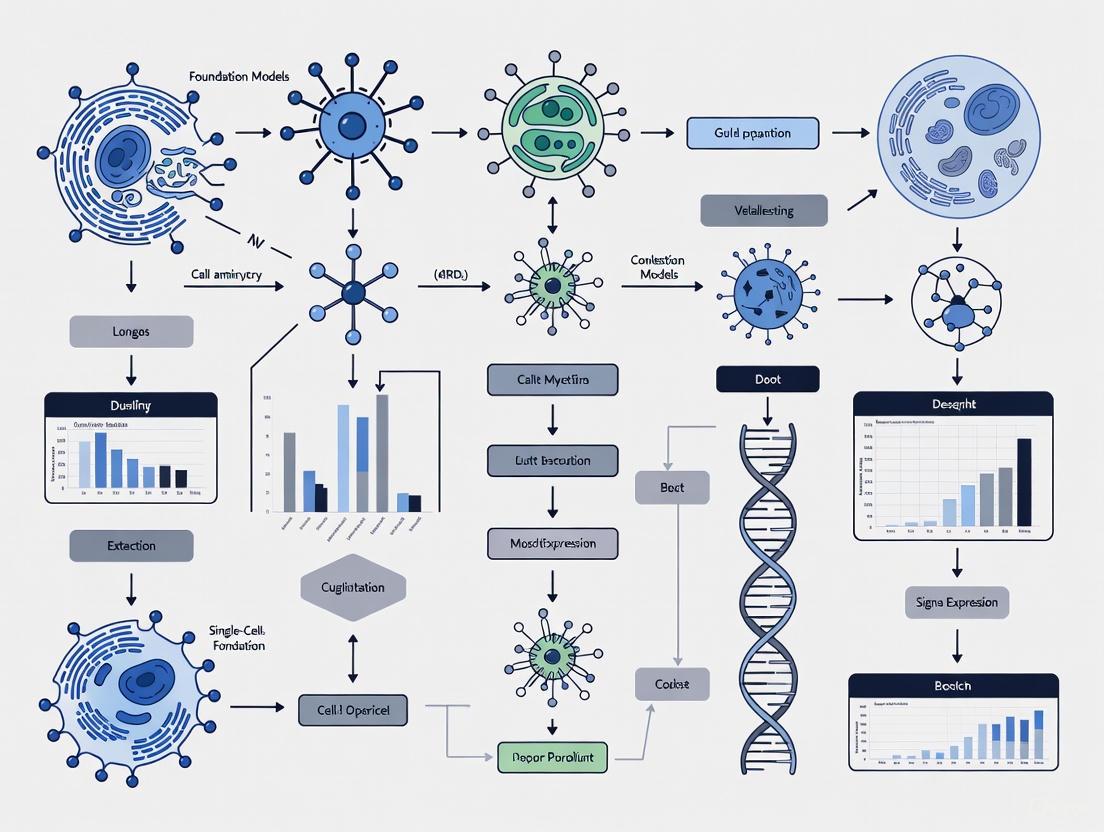
This article provides a comprehensive overview of single-cell foundation models (scFMs), large-scale AI systems pretrained on millions of single-cell transcriptomes to decipher the fundamental 'language' of biology.
Single-Cell Foundation Models: A Comprehensive Guide for Biomedical Researchers
Abstract
This article provides a comprehensive overview of single-cell foundation models (scFMs), large-scale AI systems pretrained on millions of single-cell transcriptomes to decipher the fundamental 'language' of biology. Tailored for researchers, scientists, and drug development professionals, we explore the core concepts and architecture of scFMs, detail their methodological approaches and diverse applications in tasks like cell annotation and drug response prediction, address current limitations and optimization strategies through rigorous benchmarking, and provide validation frameworks for model selection. This guide synthesizes the current state of scFMs to empower their effective application in biological discovery and clinical translation.
Understanding Single-Cell Foundation Models: Core Concepts and Biological Principles
Single-cell foundation models (scFMs) represent a transformative advancement at the intersection of artificial intelligence and cellular biology. These models are defined as large-scale deep learning systems pretrained on vast datasets of single-cell omics data, capable of being adapted to a wide range of downstream biological tasks through self-supervised learning [1]. Inspired by the revolutionary success of transformer architectures in natural language processing (NLP), researchers have begun treating cellular data as a linguistic structure, where individual cells correspond to documents and genes or genomic features function as words or tokens [1]. This conceptual shift enables the application of sophisticated language models to decipher the complex "language" of cellular function and regulation, creating a unified framework for analyzing the rapidly expanding repositories of single-cell genomic data [1].
The significance of scFMs lies in their capacity to address fundamental challenges in single-cell genomics, where data exhibit characteristics of high dimensionality, significant sparsity, and complex biological noise [2]. By learning universal biological patterns from millions of cells across diverse tissues, species, and conditions, these models develop a foundational understanding of cellular components that can be transferred to specialized tasks with minimal fine-tuning [1] [2]. This paradigm mirrors the pretrain-then-finetune approach that has proven successful in NLP, offering unprecedented opportunities to explore cellular heterogeneity, decipher regulatory networks, and accelerate therapeutic discovery [1] [3].
Core Architectural Principles and Development
Data Sourcing and Curation
The development of robust scFMs requires carefully curated and massive-scale single-cell datasets that capture the full spectrum of biological variation. These models are typically pretrained on organized archives and databases that provide unified access to annotated single-cell data [1]. Key resources include:
- CZ CELLxGENE: Provides standardized access to over 100 million unique cells with consistent annotations [1]
- Human Cell Atlas: Offers broad coverage of cell types and states across multiple organs [1]
- Public Repositories: NCBI GEO, SRA, and EMBL-EBI Expression Atlas host thousands of individual single-cell studies [1]
- Curated Compendia: PanglaoDB and Human Ensemble Cell Atlas collate data from multiple sources with quality controls [1]
A critical challenge in assembling pretraining corpora involves managing batch effects, technical noise, and variations in sequencing depth across different experiments [1]. Effective pretraining requires meticulous data selection, filtering strategies for cells and genes, balanced dataset compositions, and rigorous quality control measures [1]. The emergence of AI-assisted curation methods has further enhanced data quality, with approaches like LLM-generated textual annotations helping to standardize biological descriptions across diverse datasets [4].
Tokenization Strategies for Non-Sequential Data
Unlike natural language, where words follow a natural sequential order, gene expression data lacks inherent sequence, presenting a fundamental challenge for transformer architectures that require structured input. scFMs employ various tokenization strategies to convert raw gene expression profiles into discrete tokens that models can process:
Table: Tokenization Strategies in Single-Cell Foundation Models
| Strategy | Mechanism | Example Models | Advantages |
|---|---|---|---|
| Expression Ranking | Genes are ordered by expression level within each cell | Early transformer models [1] | Deterministic, captures most active genes |
| Value Binning | Expression values are partitioned into discrete bins | scBERT [1] | Reduces noise from precise expression values |
| Normalized Counts | Uses normalized expression values directly | Several recent models [1] | Simpler implementation, preserves information |
| Multimodal Enrichment | Incorporates special tokens for metadata and modalities | scGPT, CellWhisperer [1] [4] | Provides biological context beyond expression |
After tokenization, each gene token is typically converted to an embedding vector that may combine a gene identifier embedding with its expression value representation [1]. Positional encoding schemes are then adapted to represent the relative order or rank of each gene in the cell, providing the necessary structural information for transformer attention mechanisms [1].
Model Architecture and Attention Mechanisms
Most scFMs are built on transformer architectures, which utilize attention mechanisms to model relationships between all genes in a cell simultaneously [1]. The attention mechanism enables the model to learn which genes are most informative about a cell's identity or state, how genes co-vary across cells, and how they participate in regulatory or functional relationships [1]. Two primary architectural paradigms have emerged:
- Encoder-based models (e.g., BERT-like): Employ bidirectional attention mechanisms that learn from the context of all genes in a cell simultaneously, making them particularly effective for classification tasks and generating rich cell embeddings [1].
- Decoder-based models (e.g., GPT-like): Utilize unidirectional masked self-attention that iteratively predicts masked genes conditioned on known genes, favoring generation tasks and perturbation prediction [1].
Hybrid architectures that combine encoder and decoder components are also being explored, though no single architecture has emerged as clearly superior for all single-cell data analysis tasks [1]. The attention layers in these architectures gradually build up latent representations at both the gene and cell levels, capturing hierarchical biological relationships that enable the model's transfer learning capabilities [1].
Diagram 1: Architectural overview of single-cell foundation models showing the flow from raw data to learned representations through transformer architectures.
Pretraining Strategies and Objectives
scFMs are trained using self-supervised objectives on large, unlabeled single-cell datasets, typically through masked gene prediction tasks analogous to masked language modeling in NLP [1]. During pretraining, random subsets of genes in each cell's expression profile are masked, and the model learns to predict these masked values based on the context provided by the remaining genes [1]. This process forces the model to internalize the complex co-expression patterns and regulatory relationships that define cellular states and functions.
More advanced pretraining approaches incorporate multimodal learning, simultaneously training on transcriptomic data paired with textual descriptions of cell states and experimental conditions [4]. For example, CellWhisperer employs contrastive learning to align transcriptome embeddings with their corresponding biological descriptions in a joint embedding space, enabling natural language queries of cellular data [4]. This multimodal approach creates a bridge between numerical gene expression patterns and human-interpretable biological concepts, significantly enhancing the model's utility for exploratory analysis.
Experimental Framework and Benchmarking
Evaluation Metrics and Performance Assessment
Comprehensive benchmarking of scFMs requires diverse evaluation metrics that assess both technical performance and biological relevance. Recent studies have employed a range of metrics spanning unsupervised, supervised, and knowledge-based approaches [2]:
Table: Benchmarking Metrics for Single-Cell Foundation Models
| Metric Category | Specific Metrics | Evaluation Purpose | Biological Interpretation |
|---|---|---|---|
| Unsupervised | Batch mixing scores, Silhouette width, KNN accuracy | Data integration quality, Cluster separation | Preservation of biological variation while removing technical artifacts |
| Supervised | Cell type annotation accuracy, AUROC, AUPRC | Predictive performance on labeled tasks | Generalization to new cell types and conditions |
| Knowledge-based | scGraph-OntoRWR, Lowest Common Ancestor Distance (LCAD) | Biological consistency with prior knowledge | Concordance with established biological hierarchies and relationships |
The introduction of ontology-informed metrics like scGraph-OntoRWR represents a significant advancement, as it measures the consistency between cell type relationships captured by scFMs and established biological knowledge encoded in cell ontologies [2]. Similarly, the LCAD metric assesses the severity of cell type misclassification errors by measuring the ontological proximity between predicted and actual cell types, providing a more biologically nuanced view of model performance than simple accuracy [2].
Key Experimental Protocols
Zero-Shot Cell Type Annotation Protocol
Cell type annotation represents a fundamental application where scFMs demonstrate significant utility. The standard protocol involves:
- Embedding Extraction: Generate cell embeddings from the pretrained scFM without any fine-tuning (zero-shot) [2]
- Reference Mapping: Project query cells into a reference embedding space constructed from well-annotated cell atlases [2]
- Similarity Assessment: Compute cosine similarity or Euclidean distance between query cells and reference cell types [2]
- Annotation Transfer: Assign cell type labels based on nearest neighbors in the reference space [2]
- Confidence Estimation: Calculate prediction confidence scores based on distance to reference populations [2]
This approach leverages the rich biological knowledge encoded during pretraining, often achieving competitive performance without task-specific fine-tuning, particularly for common cell types well-represented in the pretraining corpus [2].
Batch Integration and Harmonization Protocol
Batch effect correction represents another critical application of scFMs, with the following standard methodology:
- Data Input: Process multiple datasets with known batch effects through the scFM to generate integrated embeddings [2]
- Dimensionality Reduction: Apply UMAP or t-SNE to the integrated embeddings for visualization [2]
- Batch Mixing Evaluation: Quantify batch mixing using metrics like Local Inverse Simpson's Index (LISI) or k-BET [2]
- Biological Conservation Assessment: Evaluate preservation of biological variation using cell type silhouette scores or clustering metrics [2]
- Comparative Analysis: Benchmark against established methods like Seurat, Harmony, and scVI [2]
Performance in this task demonstrates the model's ability to disentangle technical artifacts from genuine biological signals, a crucial capability for integrating data from multiple studies and platforms [2].
Multimodal Natural Language Integration Protocol
The integration of natural language capabilities with scFMs, as exemplified by CellWhisperer, involves a specialized protocol:
- Multimodal Training Data Curation: Use LLM-assisted curation to generate concise biological descriptions for transcriptomic profiles [4]
- Contrastive Learning: Train the model to align transcriptome embeddings with corresponding text embeddings in a joint space [4]
- Query Processing: Process natural language queries through the text encoder to generate query embeddings [4]
- Similarity Search: Compute cosine similarity between query embeddings and all transcriptome embeddings in the dataset [4]
- Response Generation: Employ a fine-tuned LLM to generate natural language responses incorporating both the retrieved transcriptome information and biological knowledge [4]
This approach has demonstrated strong performance in zero-shot prediction of cell types and other biological annotations, achieving AUROC values up to 0.927 in retrieval tasks [4].
Performance Benchmarking Results
Recent comprehensive benchmarks evaluating six prominent scFMs against established baseline methods reveal several key findings:
Table: Comparative Performance of scFMs Across Biological Tasks
| Model | Cell Type Annotation (Accuracy) | Batch Integration (LISI Score) | Drug Response (AUROC) | Computational Efficiency |
|---|---|---|---|---|
| Geneformer | 0.78-0.92 | 0.65-0.88 | 0.71-0.83 | Medium |
| scGPT | 0.81-0.94 | 0.68-0.91 | 0.75-0.87 | Low |
| scBERT | 0.76-0.89 | 0.62-0.85 | 0.69-0.80 | High |
| Baseline (Seurat) | 0.72-0.87 | 0.70-0.89 | 0.65-0.78 | High |
| Baseline (scVI) | 0.74-0.88 | 0.67-0.87 | 0.68-0.82 | Medium |
Key insights from benchmarking studies indicate that no single scFM consistently outperforms all others across diverse tasks, emphasizing the importance of task-specific model selection [2]. While scFMs generally demonstrate robust performance across multiple applications, simpler machine learning models can sometimes achieve competitive results on specific tasks with fewer computational resources, particularly when dataset size is limited [2].
Successful implementation and application of scFMs requires familiarity with a core set of computational resources, datasets, and software tools that constitute the essential research toolkit for this domain.
Table: Essential Research Resources for Single-Cell Foundation Models
| Resource Category | Specific Tools/Datasets | Primary Function | Access Information |
|---|---|---|---|
| Pretrained Models | Geneformer, scGPT, scBERT, scFoundation | Provide pre-built foundation models for transfer learning | GitHub repositories, HuggingFace, model-specific portals |
| Data Repositories | CZ CELLxGENE, Human Cell Atlas, GEO, SRA | Source of standardized single-cell data for pretraining and fine-tuning | Publicly accessible web portals with API access |
| Benchmarking Suites | scGraph-OntoRWR, scFMBench | Standardized evaluation of model performance on biological tasks | GitHub repositories with documentation |
| Multimodal Tools | CellWhisperer | Natural language interaction with single-cell data | Web interface (cellwhisperer.bocklab.org) and code repository |
| Visualization Platforms | CELLxGENE Explorer | Interactive exploration of single-cell data and model outputs | Web-based interface with plugin architecture |
These resources collectively enable researchers to implement scFMs without building models from scratch, leverage standardized evaluation frameworks for comparative assessments, and apply these powerful tools to specific biological questions through user-friendly interfaces [1] [4] [2].
Diagram 2: End-to-end workflow for developing and applying single-cell foundation models, from data curation through biological interpretation.
Applications in Drug Discovery and Therapeutic Development
scFMs are demonstrating significant utility across multiple phases of drug discovery and development, leveraging their capacity to model cellular heterogeneity and predict response to perturbations:
Target Identification and Validation
In target discovery, scFMs enable identification of disease-associated cell states and regulatory networks by comparing cellular landscapes between healthy and diseased tissues at unprecedented resolution [3]. The models can predict how specific genetic or chemical perturbations affect cellular states, prioritizing targets with desired therapeutic effects while minimizing potential side effects [3]. This approach has proven particularly valuable in oncology, neurology, and immunology, where cellular heterogeneity plays a crucial role in disease mechanisms [3].
Drug Response Prediction and Repurposing
scFMs excel at predicting cellular responses to therapeutic compounds by learning from large-scale perturbation datasets [3]. When combined with transfer learning approaches that integrate information from bulk cell line screens, these models can predict drug responses at single-cell resolution, identifying subpopulations that may drive treatment resistance or sensitivity [3]. This capability enables more accurate stratification of patient populations and identification of new indications for existing compounds through computational drug repurposing [3].
Elucidating Traditional Medicine Mechanisms
Interestingly, scFMs are also being applied to decipher the mechanisms of traditional medicines, particularly traditional Chinese medicine (TCM) [3]. By analyzing how complex herbal formulations influence cellular heterogeneity and gene regulatory networks, researchers can identify active components, molecular targets, and systems-level mechanisms of action that were previously obscure [3]. This application demonstrates the versatility of scFMs in navigating complex biological spaces with limited prior mechanistic knowledge.
Future Directions and Challenges
Despite rapid progress, several challenges remain in the development and application of scFMs. Key limitations include the non-sequential nature of omics data, inconsistencies in data quality and annotation, computational intensity of training and fine-tuning, and difficulties in interpreting the biological relevance of latent embeddings [1]. Future developments will likely focus on several strategic directions:
- Multimodal Integration: Combining transcriptomic, epigenetic, proteomic, and spatial data within unified foundation models to capture complementary biological information [1]
- Interpretability Advances: Developing better methods to extract biologically meaningful insights from model attention patterns and latent representations [1] [2]
- Resource Optimization: Creating more efficient model architectures and training strategies to reduce computational barriers [2]
- Clinical Translation: Establishing robust protocols for applying scFMs in clinical decision support and therapeutic development [3]
As these challenges are addressed, scFMs are poised to become increasingly central to single-cell genomics, serving as pivotal tools for advancing our understanding of cellular function and unlocking deeper insights into disease mechanisms [1]. Their development represents a paradigm shift in how we approach the complexity of cellular systems, moving from specialized analytical pipelines toward unified frameworks that learn fundamental principles of cellular biology from data itself.
The emergence of transformer architectures has revolutionized computational biology, particularly in the analysis of gene interactions and regulatory networks. Originally developed for natural language processing (NLP), these models have found remarkable applicability in biological contexts due to the analogous nature of biological sequences to language texts. Genome sequences can be interpreted as the language of biology, and tools proficient in handling language data can potentially decipher hidden patterns within these sequences [5]. The core innovation of transformers—the attention mechanism—has proven uniquely suited to handle the massive scale and intricate nature of genomic data, enabling researchers to capture long-range dependencies between genomic positions, consider multiple relevant genomic regions simultaneously, and adaptively focus on biologically salient features [5].
Single-cell foundation models (scFMs) represent the cutting-edge application of transformer architectures in biology. These are large-scale deep learning models pretrained on vast single-cell datasets through self-supervised learning, capable of being adapted for various downstream tasks [1]. The fundamental premise is that by exposing a model to millions of cells encompassing many tissues and conditions, the model can learn the fundamental principles of cells and their features that are generalizable to new datasets or analytical tasks [1]. This review explores how the transformer architecture, particularly through its attention mechanisms, is revolutionizing our ability to decode complex gene interactions from single-cell data, thereby advancing our understanding of cellular function and disease mechanisms.
Core Architecture: From Natural Language to Gene Language
Attention Mechanism: The Fundamental Innovation
The attention mechanism represents the foundational innovation that enables transformers to excel at modeling biological sequences. Originally introduced in sequence-to-sequence models, attention revolutionized how deep learning models handle and interpret data by providing a mechanism to "attend to" different parts of the input sequence when generating output [5]. In biological terms, this implies the ability to consider different genomic regions and their relations dynamically during the interpretation process.
The attention mechanism computes a weighted sum of input features, where the weights (attention scores) are dynamically determined based on the input data. This allows the model to focus more on essential or relevant features and less on irrelevant ones [5]. For gene interaction analysis, this capability is transformative—it allows models to identify which genes are most informative about a cell's identity or state, how they covary across cells, and how they have regulatory or functional connections [1]. The mathematical formulation of attention can be expressed as:
Attention(Q, K, V) = softmax(QKᵀ/√dₖ)V
Where Q (Query), K (Key), and V (Value) are matrices derived from the input sequences, and dₖ is the dimensionality of the key vectors. This mechanism enables the model to dynamically weight the importance of different genes when making predictions about regulatory relationships.
Transformer Architecture in Biological Context
The full transformer model represents a complete shift from the sequential processing nature of recurrent neural networks (RNNs) and their variants. Transformers leverage attention mechanisms to process input data in parallel, allowing for faster and more efficient computations [5]. The architecture consists of a stack of identical transformer modules, each with two primary sub-layers: a multi-head self-attention mechanism and a position-wise fully connected feed-forward network.
In biological applications, two key architectural variants have emerged:
Encoder-based models (e.g., BERT-like): Utilize bidirectional attention mechanisms where the model learns from the context of all genes in a cell simultaneously [1]. These are particularly effective for classification tasks and generating cell embeddings.
Decoder-based models (e.g., GPT-like): Employ unidirectional masked self-attention that iteratively predicts masked genes conditioned on known genes [1]. These excel in generative tasks and sequential prediction.
A critical adaptation for biological data involves positional encoding. Unlike words in a sentence, genes have no inherent ordering. To address this, researchers have developed various strategies:
- Ranking genes by expression levels within each cell
- Partitioning genes into bins based on expression values
- Using gene identifiers with learned positional embeddings [1]
Figure 1: Transformer Architecture for Biological Data Analysis
Single-Cell Foundation Models: Implementation and Architectures
Tokenization Strategies for Biological Data
Tokenization—the process of converting raw biological data into discrete units processable by transformer models—represents a critical challenge in scFM development. Unlike natural language, gene expression data lacks inherent sequential structure, requiring innovative adaptation strategies [1]. Several approaches have emerged:
Gene-based tokenization: Treating individual genes as tokens, with expression values incorporated as additional features [1] [2]. This is the most common approach, where each gene becomes an input token, and combinations of these tokens collectively represent a single cell.
Expression-based ordering: Since genes lack natural ordering, some models rank genes within each cell by expression levels, feeding the ordered list of top genes as a "sentence" for the transformer [1]. Alternative approaches bin genes by expression values or use normalized counts directly.
Multi-modal tokenization: Advanced models incorporate tokens indicating different omics modalities (e.g., scATAC-seq, spatial transcriptomics) and batch information to enable integrated analysis across data types [1].
The tokenization process typically produces three embedding types: gene embeddings (analogous to word embeddings), value embeddings (representing expression levels), and positional embeddings [2]. These are combined to form the comprehensive input representation processed by the transformer layers.
Prominent Single-Cell Foundation Models
Several scFMs with distinct architectural characteristics and training methodologies have been developed:
Table 1: Comparison of Single-Cell Foundation Models
| Model | Architecture Type | Pretraining Data Scale | Key Innovations | Primary Applications |
|---|---|---|---|---|
| scBERT | BERT-like Encoder | Millions of cells | Bidirectional attention for cell type annotation | Cell classification, GRN inference [1] [6] |
| scGPT | GPT-like Decoder | Diverse cell atlas | Generative pretraining, multi-omic integration | Cell generation, perturbation response [1] [2] |
| Geneformer | Transformer Encoder | Millions of cells | Context-aware gene embeddings | Gene network analysis, disease mechanism [2] |
| Nicheformer | Hybrid Transformer | 110+ million cells | Integrates single-cell + spatial data | Spatial context prediction, tissue organization [7] |
| PINNACLE | Geometric Deep Learning | 394,760 protein representations | Contextualized protein interaction networks | Therapeutic target nomination [8] |
These models demonstrate the versatility of transformer architectures in adapting to various biological questions and data types. For instance, Nicheformer represents a particularly advanced implementation that integrates both dissociated single-cell data and spatial transcriptomics, enabling the reconstruction of tissue context from single-cell information alone [7].
Decoding Gene Interactions: Methodologies and Applications
Gene Regulatory Network Inference
Transformer-based models have demonstrated remarkable capabilities in inferring gene regulatory networks (GRNs)—complex webs of interactions where transcription factors control target gene expression. A novel approach leveraging scBERT demonstrates how pretrained transformers can be enhanced with joint graph learning to infer GRNs [6]. This method combines rich contextual representations from pre-trained single-cell language models with structured knowledge encoded in existing GRNs using graph neural networks (GNNs), effectively reasoning over both gene expression constraints and structured biological knowledge [6].
The application of this method on human cell benchmark datasets shows superior performance over state-of-the-art baselines, providing deeper understanding of cellular regulatory mechanisms [6]. The key advantage of transformer approaches lies in their ability to capture non-linear relationships and long-range dependencies within the regulatory architecture, overcoming limitations of traditional correlation-based methods.
Analytical Workflow for Gene Interaction Mapping
The process of decoding gene interactions from single-cell data involves a sophisticated multi-step workflow:
Figure 2: Gene Regulatory Network Inference Workflow
This workflow highlights the central role of attention analysis in extracting gene interactions. By examining patterns in attention weights across multiple cells and conditions, researchers can identify consistent regulatory relationships that transcend individual cellular contexts.
Quantitative Performance Benchmarks
Recent benchmarking studies provide quantitative assessment of scFMs in biological discovery tasks:
Table 2: Performance Comparison Across Biological Tasks
| Task Category | Specific Task | Best Performing Model | Key Metric | Performance Advantage |
|---|---|---|---|---|
| Gene-level Tasks | Tissue specificity prediction | Geneformer | AUROC | 18% improvement vs. baselines [2] |
| Gene-level Tasks | GO term prediction | scGPT | F1 Score | Captures hierarchical relationships [2] |
| Cell-level Tasks | Batch integration | scVI + transformers | LISI Score | Preserves biological variation [2] |
| Cell-level Tasks | Cell type annotation | scBERT | Accuracy | Identifies rare cell populations [1] [2] |
| Clinical Tasks | Drug sensitivity | PINNACLE | MSE | Context-aware prediction [8] |
| Network Inference | GRN reconstruction | SCORPION | Precision | 18.75% improvement vs. methods [9] |
These benchmarks reveal that no single scFM consistently outperforms others across all tasks, emphasizing the importance of task-specific model selection [2]. Factors such as dataset size, task complexity, need for biological interpretability, and computational resources should guide model choice.
Experimental Protocols and Methodologies
Protocol: Gene Regulatory Network Inference Using Pre-trained Transformers
Objective: Infer context-specific gene regulatory networks from scRNA-seq data using pre-trained transformer models with joint graph learning [6].
Materials and Input Data:
- Preprocessed scRNA-seq data (count matrix with cells × genes)
- Pre-trained transformer model (e.g., scBERT, scGPT)
- Prior biological knowledge networks (e.g., protein-protein interactions, motif databases)
- Computational environment with appropriate deep learning frameworks
Procedure: 1. Data Preprocessing: - Filter cells and genes based on quality metrics - Normalize counts using standard methods (e.g., log(CPM+1)) - Select highly variable genes (HVGs) for analysis
- Model Application:
- Extract gene embeddings from transformer input layers
- Compute attention weights across transformer heads
- Aggregate attention patterns across cell populations
- Joint Graph Learning:
- Integrate transformer-derived embeddings with prior biological networks using graph neural networks
- Apply message-passing algorithms to refine regulatory predictions
- Compute edge weights representing regulatory strength
- Network Construction:
- Apply adaptive thresholding to identify significant regulatory interactions
- Construct directed graph with transcription factors as regulators and genes as targets
- Validate network topology using graph theory metrics
Validation:
- Compare with known regulatory interactions from external databases
- Perform functional enrichment analysis on regulator target sets
- Assess network stability through bootstrap resampling
Protocol: Spatial Context Transfer Using Nicheformer
Objective: Transfer spatial context onto dissociated single-cell data to reconstruct tissue organization [7].
Materials:
- Single-cell RNA-seq data (dissociated cells)
- Spatial transcriptomics reference data
- Nicheformer model architecture
- SpatialCorpus-110M or equivalent curated resource
Procedure: 1. Data Alignment: - Map dissociated cells to reference spatial neighborhoods - Identify anchor cells across modalities using canonical correlation analysis
- Context Transfer:
- Process single-cell data through Nicheformer encoder
- Generate spatial context embeddings for each cell
- Assign probabilistic spatial coordinates based on similarity to reference cells
- Tissue Reconstruction:
- Reconstruct cellular neighborhoods from transferred coordinates
- Identify cell-cell communication patterns
- Map regulatory interactions within spatial context
Validation:
- Compare predicted spatial patterns with experimental spatial transcriptomics
- Assess conservation of known spatially-restricted gene expression
- Verify biological plausibility of reconstructed tissue architecture
Table 3: Essential Computational Tools for Transformer-Based Biological Discovery
| Tool/Resource | Type | Function | Access |
|---|---|---|---|
| scGPT | Foundation Model | Multi-omic single-cell analysis, perturbation prediction | GitHub Repository [1] [2] |
| Nicheformer | Spatial Foundation Model | Integrating single-cell and spatial transcriptomics | Available upon publication [7] |
| PINNACLE | Geometric Deep Learning | Contextualized protein interaction networks | GitHub Repository [8] |
| SCORPION | GRN Inference Tool | Population-level gene regulatory network comparisons | R Package [9] |
| SpatialCorpus-110M | Data Resource | Curated single-cell and spatial omics data for training | Reference Dataset [7] |
| CZ CELLxGENE | Data Platform | Annotated single-cell datasets with >100M cells | Public Repository [1] |
| BEELINE | Benchmarking Framework | Evaluation of GRN reconstruction algorithms | Computational Tool [9] |
Transformer architectures have fundamentally transformed our ability to decode gene interactions from complex biological data. The attention mechanism, in particular, provides a biologically plausible framework for modeling regulatory relationships that captures the context-dependent nature of gene regulation. As single-cell foundation models continue to evolve, they offer increasingly powerful approaches for mapping the intricate networks that govern cellular identity and function.
The future of transformers in biology will likely involve several key developments: more sophisticated multi-modal architectures that integrate diverse data types (epigenomics, proteomics, spatial information); improved efficiency for handling the ever-increasing scale of single-cell datasets; and enhanced interpretability methods to extract biologically meaningful insights from complex models. As noted in recent benchmarking studies, the field is moving toward task-specific model selection rather than seeking a universal solution, recognizing that different biological questions may require specialized architectural adaptations [2].
Ultimately, transformer-based approaches are paving the way toward a more comprehensive understanding of cellular systems, bringing us closer to the goal of predictive biology and personalized medicine. By revealing how genes interact in specific contexts and how these interactions break down in disease, these methods provide the analytical foundation for developing novel therapeutic strategies that target the regulatory architecture of cells.
The emergence of single-cell foundation models (scFMs) represents a paradigm shift in computational biology, mirroring the transformative impact of large language models in natural language processing. These models are large-scale deep learning architectures pretrained on vast single-cell datasets, capable of being adapted to a wide range of downstream tasks through self-supervised learning [1]. The revolutionary potential of scFMs stems directly from their training data—massive, diverse collections of single-cell genomics information that enable the models to learn fundamental principles of cellular biology [1] [2].
The development of scFMs has been catalyzed by an explosion in single-cell RNA sequencing (scRNA-seq) data generation, providing an abundant corpus for training machine learning models [2]. Since the first demonstration of whole-transcriptome profiling from a single cell in 2009, scRNA-seq technologies have advanced substantially, generating datasets of unprecedented scale and resolution [10] [3]. These technologies can now profile millions of cells simultaneously, creating rich datasets that capture the complexity of cellular heterogeneity across tissues, species, and disease states [11].
The Architecture of Single-Cell Foundation Models
Core Model Architectures and Training Approaches
Most scFMs are built on transformer architectures, which use attention mechanisms to learn and weight relationships between input tokens [1]. In the context of single-cell data, these attention mechanisms enable models to identify which genes in a cell are most informative of cellular identity or state, and how they covary across cells [1]. Two predominant architectural patterns have emerged:
- Encoder-based models (e.g., scBERT) use bidirectional attention mechanisms that learn from all genes in a cell simultaneously, making them particularly effective for classification tasks and embedding generation [1].
- Decoder-based models (e.g., scGPT) employ unidirectional masked self-attention that iteratively predicts masked genes conditioned on known genes, showing strengths in generative tasks [1].
The pretraining process typically employs self-supervised objectives, often through predicting masked segments of the input data, allowing the model to learn generalizable patterns without explicit labeling [1]. This approach enables scFMs to develop rich internal representations of cellular biology that can be fine-tuned for specific applications with relatively few additional labeled examples [1].
Tokenization Strategies for Single-Cell Data
A critical challenge in adapting transformer architectures to single-cell data is the non-sequential nature of gene expression information. Unlike words in a sentence, genes have no inherent ordering, requiring specialized tokenization approaches:
Table: Tokenization Strategies in Single-Cell Foundation Models
| Strategy | Description | Examples |
|---|---|---|
| Expression Ranking | Genes are ordered by expression levels within each cell | scGPT, Geneformer |
| Expression Binning | Genes are partitioned into bins based on expression values | scBERT |
| Normalized Counts | Uses normalized expression values without complex ranking | Various implementations |
| Multimodal Tokens | Incorporates special tokens for different data modalities | scGPT, scFoundation |
Most models represent each gene as a token embedding that combines a gene identifier with its expression value in the given cell [1]. Positional encoding schemes are then adapted to represent the relative order or rank of each gene in the cell, with additional special tokens often included to represent cell identity, metadata, or experimental batch information [1].
Public Data Repositories and Consolidated Atlases
The development of robust scFMs relies on access to large-scale, diverse single-cell datasets. Several major repositories and initiatives have emerged to curate and standardize these data:
Table: Primary Data Sources for Single-Cell Foundation Model Training
| Data Source | Scale | Content Description | Notable Use Cases |
|---|---|---|---|
| CZ CELLxGENE | Over 100 million cells | Standardized, annotated single-cell datasets from diverse tissues and conditions | Primary training corpus for multiple scFMs [1] |
| Human Cell Atlas | Multi-organ coverage | Broad spectrum of cell types and states across human tissues | Reference for cellular diversity [1] |
| PanglaoDB | Curated compendium | Aggregated data from multiple sources and studies | Supplemental training data [1] |
| NCBI GEO/SRA | Thousands of studies | Diverse experimental conditions and protocols | Expanding biological contexts [1] |
These aggregated data resources enable scFMs to be trained on cells representing diverse biological conditions, ideally capturing a wide spectrum of biological variation [1]. The curation and standardization efforts by these initiatives are crucial for creating high-quality training corpora, as they address challenges such as inconsistent metadata, varying data quality, and technical artifacts across different experimental platforms [1].
Scale and Diversity of Training Datasets
The progression of scFM development has been marked by steadily increasing training dataset sizes, reflecting both growing data availability and the understanding that model performance often scales with training data quantity and diversity:
- Early models (circa 2022) such as scBERT were trained on millions of single-cell transcriptomes [1]
- Intermediate-scale models including Geneformer and scGPT leveraged datasets ranging from approximately 30 million cells [12]
- Recent large-scale models such as scFoundation and CellFM have been pretrained on up to 100 million human cells [12]
This scaling trend mirrors developments in other foundation model domains and highlights the critical importance of dataset size for capturing the full complexity of cellular biology. However, recent benchmarking studies suggest that beyond a certain threshold, larger and more diverse datasets may not consistently confer additional benefits for all tasks, indicating the need for more sophisticated training approaches rather than simply increasing dataset size [13].
Experimental Protocols for scFM Development
Data Preprocessing and Quality Control
Robust preprocessing pipelines are essential for transforming raw single-cell data into high-quality training corpora for scFMs. The standard workflow encompasses multiple quality control stages:
Single-Cell RNA-seq Data Preprocessing Workflow
Key preprocessing steps include:
- Cell Calling and Barcode Filtering: Distinguishing genuine cells from empty droplets or ambient RNA using UMI count distributions and barcode ranking plots [14]. This typically involves filtering extreme outliers with very high or low UMI counts that may represent multiplets or ambient RNA [14].
- Quality Control Metrics: Assessment of critical parameters including median genes per cell, percentage of mitochondrial reads (indicating cell stress or breakdown), and mapping rates [14]. For PBMC samples, mitochondrial content exceeding 10% often triggers filtering, though this threshold varies by cell type [14].
- Normalization and Batch Correction: Technical variation arising from different experiments, sequencing depths, and processing batches represents a significant challenge [1]. Methods include count normalization, highly variable gene selection, and specialized algorithms like Harmony or scVI for batch effect correction [2] [13].
Model Pretraining Methodologies
The pretraining phase establishes the fundamental biological knowledge encoded within scFMs through self-supervised learning objectives:
- Masked Language Modeling: Following the successful approach from natural language processing, both scGPT and Geneformer use masked gene prediction tasks, where random subsets of genes are masked and the model must predict their values based on context [1] [13].
- Multitask Optimization: Advanced models like scPlantLLM combine masked modeling with auxiliary tasks such as cell type annotation to enhance learning of biologically meaningful patterns [12].
- Contrastive Learning: Some approaches incorporate contrastive objectives that maximize agreement between augmented views of the same cellular state while distinguishing different states [2].
The pretraining process requires substantial computational resources, with model size, dataset scale, and training duration all contributing to the computational burden [1]. This has limited scFM development primarily to well-resourced research organizations and companies, though parameter-efficient training methods are emerging to democratize access.
Evaluation and Benchmarking Frameworks
Performance Across Biological Tasks
Comprehensive benchmarking studies have evaluated scFMs across diverse tasks to assess their capabilities and limitations:
Table: scFM Performance Across Key Biological Tasks
| Task Category | Specific Tasks | Performance Summary | Leading Approaches |
|---|---|---|---|
| Cell-level Tasks | Cell type annotation, Batch integration | Variable performance; simpler methods sometimes competitive | scGPT, Geneformer, scVI [2] [13] |
| Gene-level Tasks | Gene function prediction, Tissue specificity | Strong performance on functional similarity | scGPT, scFoundation [2] |
| Clinical Applications | Drug sensitivity prediction, Cancer cell identification | Promising but requires further validation | scGPT, scFoundation [2] |
| Zero-shot Learning | Novel cell type identification, Cross-species prediction | Significant limitations identified | scPlantLLM (plant-specific) [12] |
A critical finding from recent evaluations is that no single scFM consistently outperforms others across all tasks, emphasizing the importance of task-specific model selection [2]. Furthermore, simpler baseline methods sometimes remain competitive, particularly for specialized tasks on smaller datasets [13].
Novel Evaluation Metrics and Biological Relevance
Traditional computational metrics alone are insufficient for evaluating the biological relevance of scFMs. Recent benchmarking efforts have introduced innovative assessment approaches:
- Cell Ontology-Informed Metrics: Methods like scGraph-OntoRWR measure the consistency of cell type relationships captured by scFMs with established biological knowledge from cell ontologies [2].
- Lowest Common Ancestor Distance (LCAD): This metric assesses the severity of cell type annotation errors by measuring the ontological proximity between misclassified cell types [2].
- Roughness Index (ROGI): Quantifies the smoothness of the cell-property landscape in the latent space, with smoother landscapes generally indicating better generalization potential [2].
These biologically-grounded evaluation approaches provide deeper insights into what scFMs are actually learning about cellular biology beyond traditional performance metrics.
Computational Tools and Platforms
The development and application of scFMs requires specialized computational tools and platforms:
- Cell Ranger: The standard pipeline for processing 10x Genomics single-cell data, performing read alignment, UMI counting, and cell calling [14].
- Loupe Browser: Interactive visualization software for exploring single-cell data and performing initial quality assessment [14].
- scVI: A generative probabilistic model for single-cell data analysis that also serves as a strong baseline for batch integration tasks [2] [13].
- Harmony: A robust integration algorithm that effectively corrects for batch effects while preserving biological variation [2] [13].
Experimental Technologies Enabling Large-Scale Data Generation
The scale of data required for scFM development has been enabled by technological advances in single-cell profiling:
- High-Throughput Platforms: Technologies like 10x Genomics Chromium and Parse Biosciences' Evercode v3 enable profiling of millions of cells across thousands of samples in single experiments [11].
- Multiplexed Perturbation Screening: Approaches such as Perturb-seq combine pooled CRISPR screening with scRNA-seq to systematically map gene regulatory networks [10].
- Spatial Transcriptomics: Emerging technologies that preserve spatial context while capturing transcriptome-wide information, providing crucial positional data missing from dissociated single-cell assays [15].
Future Directions and Challenges
Despite rapid progress, several significant challenges remain in the development and application of scFMs:
- Data Quality and Consistency: Inconsistency in data quality, batch effects, and technical noise across datasets continues to pose challenges for robust model training [1].
- Interpretability: Understanding the biological relevance of latent embeddings and model representations remains nontrivial, limiting trust and clinical adoption [1] [2].
- Computational Intensity: The substantial computational resources required for training and fine-tuning scFMs present barriers to widespread accessibility [1].
- Zero-Shot Limitations: Recent evaluations have revealed significant limitations in zero-shot settings, where models are used without task-specific fine-tuning [13].
Future development directions include improved multimodal integration, better handling of spatial context, more efficient training paradigms, and enhanced interpretation frameworks. As these challenges are addressed, scFMs are poised to become indispensable tools for advancing our understanding of cellular biology and unlocking new therapeutic opportunities [1] [12].
The emergence of single-cell foundation models (scFMs) represents a transformative shift in computational biology, enabling the integration of heterogeneous datasets and exploration of biological systems at unprecedented scale and resolution [16]. These models, trained on vast amounts of single-cell transcriptomic data, have become powerful tools for diverse applications ranging from cell atlas construction to clinical treatment decision-making [16]. At the heart of these sophisticated models lies a fundamental preprocessing step: tokenization—the process of converting raw gene expression data into discrete, model-readable inputs.
Tokenization strategies directly impact a model's ability to capture biological semantics and technical patterns within single-cell data. As scFMs increasingly adopt transformer architectures originally developed for natural language processing (NLP), the biological "language" of gene expression must be effectively segmented into meaningful tokens that preserve functional relationships and enable the model to learn the complex grammar of cellular states [17]. This technical guide examines the current landscape of tokenization strategies within the broader context of single-cell foundation model research, providing researchers and drug development professionals with practical methodologies for implementing these critical data transformation techniques.
Foundational Concepts: From Biological Sequences to Model Tokens
The Tokenization Paradigm in Computational Biology
In natural language processing, tokenization segments running text into words or subword units, creating a fixed vocabulary of atomic units that serve as model inputs [18]. Similarly, biological tokenization converts raw sequences or expression profiles into discrete tokens, though with distinct challenges: while natural languages have intuitive word boundaries, biological sequences require data-driven approaches to define meaningful segments [19].
Single-cell RNA sequencing data presents additional complexities compared to genomic sequences. Rather than processing linear nucleotide sequences, scFMs typically operate on gene expression vectors where each dimension represents the expression level of a specific gene. This structure demands tokenization strategies that can effectively represent both the identity and magnitude of gene expression while preserving relationships across the transcriptome.
Single-Cell Foundation Models: A Primer
Single-cell foundation models are large-scale neural networks pre-trained on massive, diverse single-cell datasets that can be adapted to various downstream tasks including cell type annotation, batch integration, perturbation prediction, and drug sensitivity assessment [16] [17]. Notable examples include scGPT, which uses generative pre-training for single-cell multi-omics, and other models that have demonstrated robustness across diverse applications from tumor microenvironment studies to treatment decision-making [16].
These models share a common foundation: they must first transform continuous, high-dimensional, and sparse single-cell data into structured representations that capture biological meaningfulness. The tokenization strategy employed becomes the model's "sensory interface" with the biological system, fundamentally shaping what patterns can be learned.
Table 1: Key Single-Cell Foundation Models and Their Tokenization Approaches
| Model | Primary Tokenization Strategy | Biological Data Type | Notable Capabilities |
|---|---|---|---|
| scGPT | Gene-based tokenization with expression binning | Single-cell multi-omics | Cell type annotation, perturbation prediction |
| scBERT | Gene-level tokens with expression thresholds | Single-cell RNA-seq | Large-scale cell type annotation |
| Geneformer | Gene-level tokens with rank-based expression | Transcriptomics | Network inference, disease mechanism identification |
| xTrimoGene | Hybrid gene and pathway tokens | Bulk and single-cell RNA-seq | Transfer learning across datasets |
Tokenization Strategies for Single-Cell Data
Gene-Level Tokenization
The most straightforward approach represents each gene as a distinct token, similar to words in a vocabulary. However, unlike natural language where words are discrete, gene expression is continuous, requiring additional strategies to convert expression values into token inputs:
- Expression binning: Continuous expression values are discretized into bins (e.g., no expression, low, medium, high), with each bin potentially represented as a separate token or through value modifiers [17].
- Rank-based encoding: Expression values are replaced by their rank percentile across the transcriptome, reducing technical variance while preserving relative expression patterns.
- Threshold-based approaches: Binary or ternary expression patterns are created using biologically or statistically determined thresholds, emphasizing presence/absence of expression.
Gene-level tokenization benefits from conceptual simplicity and direct biological interpretability, as each token corresponds to a known gene entity. However, this approach results in a large vocabulary size (typically 20,000-30,000 genes for human data) and may miss higher-order functional relationships.
Pathway and Gene Set Tokenization
To capture biological context more effectively, some approaches tokenize functional units rather than individual genes:
- Pre-defined pathways: Genes belonging to biologically curated pathways (e.g., KEGG, Reactome) are grouped into single tokens representing pathway activity.
- Learned gene modules: Unsupervised methods like neural network embeddings identify co-expressed gene sets that form tokens representing functional modules.
- Multi-scale tokens: Hybrid approaches maintain both individual gene tokens and pathway-level tokens, allowing models to operate at multiple biological scales.
This strategy reduces sequence length and incorporates prior biological knowledge, but may be constrained by the completeness and accuracy of predefined gene sets.
Expression Value Representation
Regardless of how genes are grouped, representing expression values requires careful consideration:
- Absolute value embedding: Raw or normalized counts are projected into embedding space through learned linear layers.
- Relative expression encoding: Expression is represented relative to cell-wise or gene-wise baselines, emphasizing differential patterns.
- Binned embeddings: Expression ranges are discretized into bins, with each bin receiving a learnable embedding vector.
The optimal approach depends on the biological question and technical characteristics of the data, with different strategies offering trade-offs between precision and robustness to noise.
Table 2: Comparative Analysis of Tokenization Strategies Across Biological Tasks
| Tokenization Method | Vocabulary Size | Sequence Length | Best-Suited Tasks | Performance Advantages |
|---|---|---|---|---|
| Gene-level with binning | 20,000-30,000 | ~2,000 genes/cell | Cell type annotation, differential expression | High granularity, direct interpretability |
| Pathway-based | 500-2,000 | 100-500 pathways/cell | Drug response, pathway activity | Biological context, noise reduction |
| Learned gene modules | 1,000-10,000 | 200-1,000 modules/cell | Novel pattern discovery, cross-species | Data-driven optimization, adaptability |
| Hybrid multi-scale | 10,000-25,000 | 500-2,000 tokens/cell | Complex phenotype prediction | Multi-level information capture |
Experimental Protocols and Benchmarking
Comprehensive Benchmarking Frameworks
Evaluating tokenization strategies requires rigorous benchmarking across diverse biological tasks. Recent comprehensive studies have assessed scFMs against established baselines under realistic conditions, encompassing both gene-level and cell-level tasks [16]. These benchmarks typically evaluate:
- Pre-clinical batch integration: Measuring how effectively tokens capture biological signals independent of technical artifacts.
- Cell type annotation: Assessing semantic richness of token representations for distinguishing cell identities.
- Cancer cell identification: Evaluating clinical utility in distinguishing malignant from normal cells.
- Drug sensitivity prediction: Testing predictive power for therapeutic response.
Performance is quantified using multiple metrics including unsupervised clustering quality, supervised classification accuracy, and novel knowledge-based metrics like scGraph-OntoRWR that evaluate intrinsic biological knowledge encoded by token representations [16].
Implementation Protocol: Tokenization for Single-Cell Foundation Models
The following detailed protocol outlines the complete tokenization workflow for training and applying single-cell foundation models:
Step 1: Data Preprocessing and Quality Control
- Begin with a raw gene expression matrix (cells × genes)
- Apply quality control filters: remove genes expressed in <10 cells and cells with <200 detected genes or high mitochondrial percentage
- Normalize using counts per million (CPM) or library size normalization
- Log-transform expression values (log1p) to reduce variance and improve distribution
Step 2: Vocabulary Construction
- For gene-level tokenization: create vocabulary of all protein-coding genes or highly variable genes
- For pathway tokenization: map genes to pathways using curated databases (GO, KEGG, Reactome)
- For learned tokenization: apply clustering algorithms (e.g., Leiden, K-means) to identify co-expressed gene modules
Step 3: Expression Value Processing
- For continuous models: normalize expression values (z-score or quantile normalization)
- For discrete models: bin expression values into percentiles (e.g., 0-10th, 10th-90th, 90th-100th percentile)
- Apply potential scaling or winsorization to limit extreme value effects
Step 4: Input Sequence Construction
- Sort tokens by expression level or biological importance
- Add special tokens: [CLS] for classification, [PAD] for padding, [MASK] for masked modeling
- Construct final input sequence combining gene/pathway tokens and expression representations
Step 5: Model Training and Fine-tuning
- Pre-train using masked language modeling objectives: randomly mask 15-20% of tokens
- For generative models: implement autoregressive next-token prediction
- Fine-tune on specific downstream tasks with task-specific heads and objectives
Diagram 1: Tokenization workflow for single-cell data.
Advanced Considerations and Optimizations
Tokenization Effects on Model Performance
The choice of tokenization strategy significantly impacts model performance, memory requirements, and interpretability. Research demonstrates that alternative tokenization algorithms can increase accuracy while substantially reducing input length compared to character-level approaches [18]. Key considerations include:
- Sequence length reduction: Effective tokenization can decrease token sequence length by over 3-fold, dramatically improving computational efficiency [18].
- Information preservation: Optimal tokenization balances sequence compression with retention of biologically meaningful information.
- Task-specific optimization: Performance advantages vary across biological tasks, necessitating tailored approaches for different applications.
Integration with Model Architectures
Tokenization strategies must align with model architecture choices:
- Transformer models: Benefit from shorter sequence lengths due to quadratic attention complexity.
- Hierarchical models: Can leverage multi-scale tokenization for efficient processing.
- Sparse models: Particularly suited for single-cell data's inherent sparsity patterns.
Recent advancements include specialized attention mechanisms that leverage the structured nature of biological token sequences, such as gene positional embeddings that incorporate genomic coordinates or functional relationships.
Diagram 2: Tokenization strategy impacts on model characteristics.
The Scientist's Toolkit: Research Reagent Solutions
Table 3: Essential Computational Tools for Tokenization in Single-Cell Research
| Tool/Resource | Type | Function in Tokenization | Application Context |
|---|---|---|---|
| Scanpy | Python library | Preprocessing and quality control | Standard pipeline for single-cell analysis |
| Scikit-learn | Machine learning library | Feature selection and dimensionality reduction | Identifying informative genes for tokenization |
| Hugging Face Tokenizers | Library | Implementing tokenization algorithms | Adapting NLP tokenizers for biological sequences |
| ANNData | Data structure | Efficient storage of single-cell data | Managing tokenized datasets for model training |
| Transformer architectures (PyTorch/TensorFlow) | Model framework | Implementing foundation models | Processing tokenized biological sequences |
| Gene ontology databases | Biological knowledge base | Pathway-based tokenization | Incorporating biological prior knowledge |
| CellXGene | Curated dataset collection | Source of training data | Accessing diverse single-cell datasets for vocabulary construction |
Future Directions and Challenges
As single-cell foundation models continue to evolve, tokenization strategies face several emerging challenges and opportunities:
Multi-modal Integration
Future tokenization approaches must accommodate diverse data modalities including epigenomics, proteomics, and spatial information. This requires developing unified tokenization schemes that can represent different molecular layers while preserving their unique characteristics and relationships.
Dynamic and Context-Aware Tokenization
Current static tokenization approaches may be limited in capturing cellular plasticity and dynamic processes. Next-generation methods might incorporate context-aware tokenization that adapts based on cellular state or biological context, potentially through reinforcement learning or attention-based gating mechanisms.
Standardization and Benchmarking
With the proliferation of scFMs, the field requires standardized benchmarking frameworks specifically designed to evaluate tokenization strategies across diverse biological contexts and application scenarios [20]. Community-wide efforts to establish tokenization best practices will accelerate model development and improve reproducibility.
The ultimate goal remains the development of tokenization strategies that enable models to capture the fundamental principles of cellular function and organization, moving closer to the vision of predictive "virtual cells" that can simulate biological processes and therapeutic interventions [21].
Self-supervised pretraining has emerged as a transformative paradigm in computational biology, enabling models to learn meaningful biological representations from vast unlabeled datasets. By solving pretext tasks that exploit intrinsic data structures, these models capture fundamental biological patterns before being fine-tuned for specific downstream tasks with limited labeled examples. This approach has proven particularly valuable in single-cell genomics, where it addresses critical challenges of data scarcity, high dimensionality, and technical noise. This technical guide examines the methodological foundations, implementation protocols, and applications of self-supervised pretraining, with emphasis on single-cell foundation models that are reshaping biological research and therapeutic development.
The explosion of biological data from high-throughput technologies has created unprecedented opportunities for machine learning in biomedical research. However, labeled datasets remain scarce and expensive to produce, requiring expert annotation and considerable resources. Self-supervised learning (SSL) circumvents this limitation by leveraging the * inherent structure* of unlabeled data to learn generalizable representations [22] [23]. In single-cell biology specifically, foundation models pretrained on millions of cells have demonstrated remarkable capabilities in capturing cellular semantics and biological relationships [1] [2].
SSL operates on a simple but powerful principle: models are first pretrained on pretext tasks that generate supervisory signals directly from the input data, without human-provided labels [23] [24]. The learned representations are then fine-tuned on various downstream tasks, often achieving superior performance with fewer labeled examples compared to supervised approaches [22] [24]. This "pretrain-then-fine-tune" paradigm has become foundational in single-cell research, where it enables models to learn the "language of biology" from large-scale unlabeled datasets before adapting to specific analytical tasks [1].
Conceptual Foundations of Self-Supervised Pretraining
Core Principles
Self-supervised learning bridges the gap between supervised and unsupervised learning by creating pretext tasks that generate supervision from the data itself [24]. The core intuition is that a model must understand the underlying structure and relationships within data to successfully solve these tasks. In biological contexts, this translates to learning meaningful representations of genomic sequences, cellular states, or molecular interactions.
The pretraining phase involves training a model to solve a predefined pretext task using only unlabeled data. Common pretext tasks include predicting masked portions of input sequences, contrasting augmented views of the same sample, or predicting relationships between different data segments [22] [23]. After pretraining, the model's weights are used to initialize networks for downstream tasks such as cell type classification, gene function prediction, or disease state identification [22] [2].
Theoretical Advantages for Biological Data
Biological data presents unique characteristics that make SSL particularly advantageous: high dimensionality (thousands of genes per cell), sparsity (low mRNA capture efficiency), technical noise (batch effects), and complex hierarchical organization (from genes to cell types to tissues) [2]. SSL models can leverage large unlabeled datasets to learn robust representations that capture biological signals while becoming invariant to technical noise [1] [2].
The sample efficiency of SSL is especially valuable in biological contexts where labeled data is scarce. By pretraining on extensive unlabeled datasets, models require significantly fewer labeled examples to achieve competent performance on downstream tasks—in some cases, matching supervised baselines with ~10 times fewer labeled samples [22]. This efficiency accelerates research in areas with limited annotated data, such as rare cell type identification or novel pathogen characterization.
Methodological Approaches
Pretext Task Formulations
Different pretext tasks encourage models to learn different aspects of biological data. The table below summarizes common SSL approaches in biological domains:
Table 1: Self-Supervised Pretext Tasks in Biological Domains
| Pretext Task | Mechanism | Biological Application | Key Citation |
|---|---|---|---|
| Masked Modeling | Predict randomly masked portions of input | Genome sequence imputation [22]; Gene expression recovery [1] | Self-GenomeNet [22]; scGPT [1] |
| Contrastive Learning | Maximize agreement between augmented views of same sample | Cell identity preservation across batches [2] | scFoundation [2] |
| Predictive Coding | Predict future or adjacent sequence patches | Genomic element prediction [22] | Self-GenomeNet [22] |
| Pseudo-Colorization | Reconstruct colorized versions of grayscale images | Cell structure analysis in microscopy [25] | Pseudo-colorizing masked cells [25] |
| Reverse-Complement Prediction | Predict reverse complement of DNA sequences | Genomic symmetry learning [22] | Self-GenomeNet [22] |
Architectural Frameworks
SSL implementations in biology employ diverse neural architectures tailored to data characteristics:
Transformer-based architectures have become predominant in single-cell foundation models (scFMs), leveraging self-attention mechanisms to capture gene-gene interactions and contextual relationships [1] [2]. Models like scGPT and Geneformer adapt the transformer architecture to handle non-sequential biological data through gene tokenization strategies that impose meaningful order on inherently unordered gene sets [1].
Convolutional-recurrent hybrids demonstrate effectiveness in genomic sequence modeling. Self-GenomeNet combines convolutional encoders for local pattern detection with recurrent networks for long-range dependency modeling, specifically designed to handle DNA sequence characteristics like reverse-complement symmetry [22].
Autoencoder variants with masking mechanisms learn rich representations through reconstruction objectives. Methods like masked autoencoders (MAE) and pseudo-colorization approaches train models to reconstruct randomly masked portions of input data, forcing them to learn semantic representations that capture essential biological features [25].
Diagram 1: Self-Supervised Pretraining Workflow for Biological Data
Implementation for Single-Cell Foundation Models
Data Processing and Tokenization
Single-cell foundation models require careful data tokenization to transform gene expression profiles into model inputs. Unlike natural language, gene expression data lacks inherent sequence, requiring strategic ordering:
Diagram 2: Tokenization Process for Single-Cell Data
Common tokenization approaches include:
- Expression-based ranking: Genes are ordered by expression magnitude within each cell to create an artificial sequence [1] [2]
- Value embedding: Expression values are incorporated alongside gene identifiers through separate embedding layers [2]
- Metadata integration: Special tokens represent batch information, cell metadata, or experimental conditions [1]
Model Pretraining Protocols
Data Scaling and Curation: Effective scFMs require training on diverse, large-scale datasets. Models like Nicheformer have been pretrained on over 110 million cells from multiple tissues, species, and experimental conditions [7]. Curated resources like SpatialCorpus-110M provide standardized data compilations from public repositories including CELLxGENE, Human Cell Atlas, and GEO/SRA [1] [7].
Training Objectives: Pretraining employs domain-specific pretext tasks:
- Masked gene modeling: Randomly masking portions of the gene expression profile and training the model to reconstruct them from context [1]
- Cell state prediction: Predicting cellular properties or states from partial expression profiles [2]
- Contrastive alignment: Maximizing similarity between representations of the same cell under different augmentations while minimizing similarity to other cells [2]
Table 2: Performance Comparison of Single-Cell Foundation Models on Benchmark Tasks
| Model | Architecture | Pretraining Data Scale | Cell Type Annotation (Accuracy) | Batch Integration (ASW) | Perturbation Prediction (AUPRC) | Reference |
|---|---|---|---|---|---|---|
| Geneformer | Transformer Encoder | 30M cells | 0.892 | 0.784 | 0.812 | [2] |
| scGPT | Transformer Decoder | 10M+ cells | 0.915 | 0.821 | 0.845 | [1] [2] |
| scFoundation | Transformer Encoder | 50M+ cells | 0.903 | 0.805 | 0.831 | [2] |
| Nicheformer | Transformer Hybrid | 110M cells | 0.927 | 0.853 | 0.869 | [7] |
| Supervised Baseline | Various | Task-specific | 0.845 | 0.752 | 0.783 | [2] |
Experimental Protocols and Validation
Benchmarking Frameworks
Rigorous evaluation of self-supervised biological models requires comprehensive benchmarking across diverse tasks. Established protocols include:
Linear evaluation: Frozen representations are used to train simple linear classifiers for cell type annotation, assessing representation quality without fine-tuning [2] [24].
Fine-tuning evaluation: Pretrained weights are used to initialize models that are then fully fine-tuned on downstream tasks, measuring sample efficiency and final performance [2].
Zero-shot evaluation: Model capabilities are tested without any task-specific training, particularly for generative tasks or relationship prediction [2].
Benchmarking studies employ multiple metrics to capture different performance aspects:
- Cell-level metrics: Accuracy, F1-score, and AUC for classification tasks
- Batch integration metrics: Average Silhouette Width (ASW), Batch Removal Entropy, and graph connectivity
- Biological consistency: Novel metrics like scGraph-OntoRWR that evaluate alignment with known biological ontologies [2]
Case Study: Self-GenomeNet for Genomic Sequences
Self-GenomeNet demonstrates a specialized SSL approach for genomic data through these key methodological elements:
Architecture Design:
- Combines convolutional encoders for local pattern extraction with recurrent networks for long-range dependency modeling
- Incorporates reverse-complement symmetry directly into the architecture
- Employs multi-scale prediction targets to capture dependencies at various genomic ranges [22]
Pretext Task Formulation: For a given input sequence S~1:N~, the model learns to predict the embedding of the reverse complement of the remaining subsequence from the embedding of subsequence S~1:t~. This forces the model to learn biologically meaningful representations that capture genomic structure and function [22].
Validation Results: Self-GenomeNet demonstrated superior performance compared to other SSL methods across multiple genomic tasks, including viral classification (bacteriophage vs. eukaryotic viruses), bacterial secretion system identification, and human chromatin feature prediction from the DeepSEA dataset. Notably, it matched supervised baseline performance with approximately 10 times fewer labeled training examples [22].
Case Study: scGPT for Single-Cell Biology
scGPT implements a transformer decoder architecture pretrained on massive single-cell datasets:
Masked Gene Modeling: The model is trained to reconstruct randomly masked portions of gene expression profiles, learning to infer missing expression values from cellular context [1] [2].
Multi-task Training: scGPT combines multiple pretext tasks including:
- Masked gene value prediction
- Next-gene prediction (autoregressive modeling)
- Contrastive learning across cell states This multi-objective approach encourages learning of robust, general-purpose representations [1].
Transfer Learning Performance: In comprehensive benchmarking, scGPT demonstrated strong performance across diverse downstream tasks including cell type annotation, batch integration, and perturbation response prediction, often outperforming specialized models and supervised baselines [2].
The Scientist's Toolkit: Essential Research Reagents
Table 3: Essential Resources for Implementing Self-Supervised Pretraining in Biological Research
| Resource Category | Specific Tools/Datasets | Function/Purpose | Access Information |
|---|---|---|---|
| Pretraining Data Corpora | CELLxGENE Cell Atlas [1] [7] | Curated single-cell data for pretraining | https://cellxgene.cziscience.com/ |
| SpatialCorpus-110M [7] | Multi-modal spatial and single-cell data | Custom compilation | |
| GenBank/RefSeq [22] | Genomic sequence data for pretraining | https://www.ncbi.nlm.nih.gov/ | |
| Model Architectures | Self-GenomeNet [22] | SSL for genomic sequences | GitHub: self.genomenet.de |
| scGPT [1] [2] | Transformer for single-cell data | GitHub: scGPT repository | |
| Nicheformer [7] | Spatial omics foundation model | Available upon publication | |
| Benchmarking Suites | scBenchmark [2] | Comprehensive evaluation framework | Custom implementation |
| Cell Ontology Metrics [2] | Biologically-informed evaluation | Custom implementation | |
| Computational Frameworks | PyTorch Lightning [26] | Training infrastructure | https://pytorchlightning.ai/ |
| SCANPY [26] | Single-cell data processing | https://scanpy.readthedocs.io/ | |
| SIMS [26] | Label transfer and annotation | https://github.com/SIMS-tool |
Future Directions and Challenges
Despite significant progress, several challenges remain in self-supervised pretraining for biological data:
Interpretability: Understanding what biological patterns models learn during pretraining requires specialized visualization and analysis techniques. Methods like attention mapping and representation probing are being developed to extract biological insights from trained models [2] [7].
Multi-modal Integration: Future models must seamlessly integrate diverse data types including genomics, transcriptomics, proteomics, and spatial information. Approaches like Nicheformer represent early steps toward unified multi-modal foundation models [7].
Computational Efficiency: Training foundation models requires substantial computational resources, limiting accessibility. Research into efficient architectures, distillation techniques, and federated learning approaches aims to address these limitations [1] [2].
Clinical Translation: Demonstrating real-world utility in drug discovery and clinical applications remains a critical challenge. Future work must validate that SSL-derived representations improve prognostic modeling, therapeutic target identification, and patient stratification [2] [7].
As self-supervised pretraining continues to evolve, it promises to unlock deeper understanding of biological systems by learning directly from data without the constraints of manual annotation, ultimately accelerating therapeutic development and precision medicine.
scFMs in Action: Implementation Strategies and Research Applications
Single-cell foundation models (scFMs) are large-scale deep learning models pretrained on vast single-cell transcriptomics datasets, designed to learn universal biological patterns that can be adapted to various downstream tasks [1]. Inspired by the success of large language models (LLMs) in natural language processing, researchers have begun treating individual cells as "sentences" and genes or genomic features as "words" or "tokens" [1] [27]. These models aim to overcome the inherent challenges of single-cell RNA sequencing (scRNA-seq) data, including high sparsity, high dimensionality, low signal-to-noise ratio, and batch effects [2] [28]. The fundamental premise is that by exposing a model to millions of cells encompassing diverse tissues and conditions, the model can learn fundamental principles of cellular biology that generalize to new datasets and analytical tasks [1] [27].
Core Architectural Comparison
Model Architectures and Technical Specifications
Table 1: Technical specifications of leading single-cell foundation models
| Model | Parameters | Pretraining Dataset Size | Architecture Type | Input Representation | Primary Pretraining Task |
|---|---|---|---|---|---|
| scGPT [28] | 50 million | 33 million human cells | Transformer Encoder with attention mask | Value binning (1200 HVGs) | Iterative masked gene modeling with MSE loss |
| Geneformer [2] [28] | 40 million | 30 million human cells | Transformer Encoder | Ordering (2048 ranked genes) | Masked gene modeling with CE loss (gene ID prediction) |
| CellFM [29] | 800 million | 100 million human cells | Modified RetNet (ERetNet) | Value projection | Recovering vector embeddings of masked genes |
| scFoundation [28] | 100 million | 50 million human cells | Asymmetric encoder-decoder | Value projection (19,264 genes) | Read-depth-aware MGM with MSE loss |
| UCE [28] | 650 million | 36 million cells | Encoder | ESM-2 based protein embedding | Binary CE loss for predicting gene expression |
Input Representation Strategies
A critical differentiator among scFMs is their approach to tokenization - how they convert raw gene expression data into model inputs. Three primary strategies have emerged:
Ordering-based approaches: Models like Geneformer represent each cell by ranking genes based on expression levels, creating a deterministic sequence of top-expressed genes [1] [27]. This method transforms the non-sequential nature of gene expression data into an ordered "sentence" that transformer architectures can process.
Value categorization strategies: scGPT employs a binning strategy that converts continuous gene expression values into discrete categories or buckets [29] [28]. This approach transforms the continuous prediction task into a classification problem, enabling the use of methods designed for categorical data.
Value projection methods: CellFM and scFoundation represent gene expression vectors as the sum of two components: a projection of the gene expression vector and a positional or gene embedding [29]. This strategy preserves the full resolution of the expression data without discretization, potentially capturing more subtle biological signals.
Diagram 1: Single-cell foundation model architecture workflow
Performance Benchmarking
Evaluation Across Downstream Tasks
Recent comprehensive benchmarking studies have evaluated scFMs across diverse biological tasks, revealing distinct strengths and limitations for each model [2] [28]. Performance varies significantly based on task type, dataset characteristics, and evaluation metrics.
Table 2: Performance comparison across key biological tasks
| Model | Cell Type Annotation | Batch Integration | Gene Function Prediction | Perturbation Prediction | Computational Efficiency |
|---|---|---|---|---|---|
| scGPT | Strong with fine-tuning [30] | Variable zero-shot performance [13] | Good with gene embeddings [28] | Excellent [28] | Moderate [28] |
| Geneformer | Good with fine-tuning [31] | Limited zero-shot capability [13] | Context-aware predictions [31] | Strong in silico validation [31] | High efficiency [31] |
| CellFM | Improved accuracy [29] | Not comprehensively evaluated | Superior performance [29] | Enhanced prediction [29] | High with ERetNet [29] |
| scFoundation | Not specifically reported | Not specifically reported | Good gene-level tasks [28] | Strong due to value projection [28] | Moderate [28] |
Zero-Shot Performance Limitations
Critical evaluations of scFMs in zero-shot settings (without task-specific fine-tuning) have revealed significant limitations. Studies show that in zero-shot cell type clustering, both Geneformer and scGPT underperform compared to simpler methods like highly variable genes (HVG) selection and established baselines such as Harmony and scVI [13]. Similarly, in batch integration tasks, these models often fail to correct for batch effects between different experimental techniques, with Geneformer's embedding space primarily driven by batch effects rather than biological signal [13].
Experimental Protocols and Methodologies
Pretraining Workflows
The pretraining process for scFMs follows a self-supervised learning paradigm, typically using masked language modeling objectives adapted for biological data:
Masked Gene Modeling (MGM) Protocol:
- Input Processing: For each cell, select top highly variable genes (e.g., 1200 for scGPT, 2048 for Geneformer) [28]
- Masking Strategy: Randomly mask a portion (typically 15-30%) of gene tokens in each cell
- Training Objective: The model learns to predict the masked genes based on the unmasked context
- Loss Computation: Model-specific loss functions (MSE for scGPT, cross-entropy for Geneformer, binary cross-entropy for UCE) [28]
- Optimization: Large-scale distributed training across multiple GPUs/NPUs (e.g., CellFM trained on four Huawei Altas800 servers with eight Ascend910 NPUs each) [29]
Diagram 2: Single-cell foundation model training and application workflow
Fine-Tuning for Specific Applications
For optimal performance on specific tasks, scFMs typically require task-specific fine-tuning:
Cell Type Annotation Protocol:
- Data Preparation: Extract cell embeddings from pretrained model and prepare labeled reference dataset
- Classifier Head: Add a task-specific classification layer on top of frozen or partially unfrozen base model
- Training Configuration: Typically 5-10 epochs with learning rate 1e-4 to 1e-5 [30]
- Evaluation: Assess on held-out test set using metrics like accuracy, F1-score, and cell-type-specific performance
Practical Implementation Considerations:
- For rapid exploration: Use zero-shot embeddings with clustering algorithms [30]
- For publication-quality annotations: Fine-tune on few thousand well-annotated cells (10-25% accuracy improvement) [30]
- Input gene selection: Top 10 differentially expressed genes often outperform top 20 for LLM prompting [30]
The Scientist's Toolkit: Research Reagent Solutions
Table 3: Essential computational tools and resources for single-cell foundation model research
| Resource Type | Specific Tools/Platforms | Function and Application |
|---|---|---|
| Data Repositories | CELLxGENE [1] [27], NCBI GEO [29] [1], ENA [29], PanglaoDB [1] [27] | Provide standardized access to annotated single-cell datasets for model training and validation |
| Preprocessing Tools | Scanpy [31], Seurat [2], SynEcoSys [29] | Perform quality control, normalization, and formatting of single-cell data for model input |
| Model Frameworks | MindSpore (CellFM) [29], PyTorch (scGPT, Geneformer) [28] | AI frameworks enabling model development, training, and inference |
| Benchmarking Tools | scGraph-OntoRWR [2] [28], LCAD metric [2] [28] | Novel metrics evaluating biological relevance of model embeddings using ontological knowledge |
| Integration Methods | Harmony [13] [2], scVI [13] [2] | Established baselines for comparing batch integration performance of foundation models |
Single-cell foundation models represent a transformative approach to analyzing transcriptomic data, with different architectural choices offering distinct advantages. scGPT's value categorization approach provides strong performance across multiple tasks, particularly with fine-tuning. Geneformer's ranking-based method offers computational efficiency and demonstrated success in in silico perturbation studies. CellFM's massive scale (800 million parameters) and value projection approach shows promise for gene function prediction, while scFoundation's preservation of full data resolution enables precise expression value prediction.
The emerging consensus from benchmarking studies indicates that no single model consistently outperforms others across all tasks [2] [28]. Model selection should be guided by specific application requirements, dataset characteristics, and computational resources. While scFMs demonstrate impressive capabilities, particularly with task-specific fine-tuning, their zero-shot performance still lags behind simpler methods in certain applications, highlighting the need for continued architectural innovation and training methodology improvements [13].
Future development directions include multi-modal integration (spatial transcriptomics, ATAC-seq, proteomics) as exemplified by Nicheformer [7], improved zero-shot generalization, better interpretation of model embeddings, and computational efficiency optimizations for broader accessibility. As these models continue to evolve, they hold significant promise for advancing drug development, clinical diagnostics, and fundamental biological discovery.
Cell type annotation represents a fundamental challenge in single-cell RNA sequencing (scRNA-seq) analysis, transforming clusters of cells with similar gene expression profiles into biologically meaningful identities. Traditionally, this process has relied heavily on manual inspection of marker genes—a method that is both time-consuming and subjective, especially as datasets scale to millions of cells. The emergence of single-cell foundation models (scFMs) marks a paradigm shift, bringing artificial intelligence into cell biology to address this challenge through large-scale, self-supervised learning [1]. These models, pretrained on vast collections of single-cell data, learn fundamental biological principles that can be adapted for various downstream tasks, including cell type annotation [1] [2].
The power of scFMs lies in their ability to capture universal patterns from extremely large and diverse datasets, utilizing effective architectures—often based on transformers—that model complex dependencies within single-cell data [1]. Unlike traditional methods that analyze each dataset in isolation, scFMs leverage accumulated biological knowledge from millions of cells across diverse tissues and conditions, enabling more consistent, accurate, and automated annotation across studies [1]. This technical guide explores how these advanced computational approaches are revolutionizing cell classification, providing researchers with powerful tools to unlock deeper insights into cellular function and disease mechanisms.
The Evolution of Cell Type Annotation Methods
From Manual Marker Genes to Automated Classification
Cell type annotation has evolved significantly from its origins in manual biological interpretation:
Manual Annotation: The classical approach involves identifying cell types by visualizing expression of known marker genes (e.g., PECAM1 for endothelial cells) on clustering plots [32] [33]. While transparent and intuitive, this method becomes laborious with large datasets and suffers from subjectivity, especially when unique markers are unavailable or when dealing with novel cell types [32].
Reference-Based Automation: Tools like Azimuth and SingleR automatically transfer labels from well-annotated reference datasets to new query data by finding cells with the most similar expression profiles [34] [33]. These methods reduce manual effort but depend heavily on the quality and comprehensiveness of available references [34].
Foundation Model Approaches: scFMs represent the cutting edge, using pretrained knowledge to generate context-aware annotations that can recognize both established and novel cell types by understanding fundamental biological principles learned from massive datasets [1] [2].
The Architecture of Single-Cell Foundation Models
Single-cell foundation models typically employ transformer architectures, originally developed for natural language processing, to decipher the "language" of cells [1]. In this analogy:
- Cells are treated as sentences or documents
- Genes or genomic features become words or tokens
- Gene expression values provide contextual information similar to word usage in sentences [1]
These models use self-supervised pretraining objectives, such as predicting masked genes from a cell's expression profile, to learn rich internal representations of gene-gene interactions and cellular states without requiring labeled data [1] [35]. The resulting models capture biological relationships in their latent spaces, where functionally similar cells are positioned closer together even if they originate from different datasets or experimental conditions [2].
Key architectural considerations include how genes are "tokenized" (converted into model inputs) and how positional information is handled, given that gene expression data lacks the natural sequential ordering of words in sentences [1]. Common strategies include ranking genes by expression levels or binning expression values to create deterministic input sequences [1].
Benchmarking Performance: Quantitative Comparison of Annotation Methods
Performance Metrics for Annotation Accuracy
Evaluating cell type annotation methods requires multiple metrics to assess different aspects of performance:
Accuracy Metrics: Standard classification metrics including precision, recall, and F1-score measure how well automated methods match expert annotations [2].
Biological Relevance Metrics: Novel ontology-informed metrics like scGraph-OntoRWR measure the consistency of cell type relationships captured by models with prior biological knowledge, while Lowest Common Ancestor Distance (LCAD) assesses the severity of misclassification errors based on ontological proximity [2].
Robustness Metrics: Performance consistency across diverse tissues, conditions, and batch effects indicates how well methods generalize beyond their training data [36] [2].
Comparative Performance of Annotation Approaches
Recent comprehensive benchmarking studies have evaluated scFMs against traditional methods across diverse biological contexts:
Table 1: Performance Comparison of Cell Annotation Methods Across Multiple Tissue Types
| Method Category | Example Tools | Reported Accuracy Range | Strengths | Limitations |
|---|---|---|---|---|
| Manual Annotation | Marker gene inspection | Highly variable | Transparent, expert-driven | Subjective, non-scalable |
| Reference-Based | Azimuth, SingleR, CellTypist | 70-92% [2] | Easy implementation | Reference quality dependent |
| Traditional ML | scVI, scANVI | 65-89% [36] | Handles batch effects | Limited transfer learning |
| Foundation Models | scGPT, Geneformer, scBERT | 75-95% [2] | Transfer learning, handles novel types | Computational demands |
Table 2: Task-Specific Performance of Single-Cell Foundation Models
| Biological Context | Best Performing scFM | Key Performance Metric | Comparative Advantage |
|---|---|---|---|
| Immune Cell Atlas | scGPT | F1-score: 0.92 [2] | Robust cross-tissue annotation |
| Neuronal Subtyping | Geneformer | Ontology consistency: 0.87 [2] | Fine-grained resolution |
| Cancer Microenvironment | scBERT | Rare cell detection: 0.81 [2] | Identifies rare populations |
| Developmental Atlas | scFoundation | Trajectory accuracy: 0.89 [2] | Captures differentiation |
Notably, benchmarking reveals that no single scFM consistently outperforms all others across every task or dataset [2]. Instead, performance depends on multiple factors including dataset size, biological context, and the specific annotation challenge [2]. In some scenarios, particularly with smaller datasets or limited computational resources, simpler machine learning models can achieve comparable performance with greater efficiency [2].
Experimental Framework for scFM-Based Annotation
End-to-End Workflow for Automated Annotation
The following diagram illustrates the complete workflow for cell type annotation using single-cell foundation models:
Implementation Protocols
Protocol 1: Zero-Shot Annotation Using Pretrained scFMs
For scenarios with limited computational resources or when working with well-established cell types:
Data Preprocessing: Perform quality control to remove low-quality cells and genes, followed by normalization. Select highly variable genes if required by the specific scFM [32].
Feature Extraction: Load a pretrained scFM (e.g., scGPT, Geneformer) and process your dataset to obtain cell embeddings without fine-tuning the model [2].
Reference Mapping: Project both your query data and reference datasets (e.g., Tabula Sapiens, Azimuth references) into the same embedding space [34].
Label Transfer: Apply k-nearest neighbor classification in the shared embedding space to transfer labels from reference to query cells [2].
Validation: Assess annotation quality using marker gene expression and cluster purity metrics [32] [33].
Protocol 2: Fine-Tuned Annotation for Novel Cell Types
For complex annotation tasks involving novel cell types or disease-specific states:
Pretrained Model Selection: Choose an appropriate scFM based on your biological context and data characteristics [2].
Task-Specific Fine-Tuning: Adapt the pretrained model using a small set of labeled cells from your dataset, typically employing a classification head trained with cross-entropy loss [1].
Iterative Refinement: Employ active learning by having domain experts review uncertain predictions to expand the training set [33].
Multi-Resolution Annotation: Annotate cell types at multiple hierarchical levels (broad categories to fine subtypes) to capture biological complexity [33].
Biological Validation: Verify annotations through differential expression analysis, marker gene assessment, and comparison to existing literature [32] [33].
Essential Research Reagents and Computational Tools
Table 3: Key Resources for scFM-Based Cell Type Annotation
| Resource Category | Specific Tools/Databases | Primary Function | Access Method |
|---|---|---|---|
| Reference Atlases | Tabula Sapiens, Human Cell Atlas, Azimuth | Ground truth for label transfer | Web portals, R/Python packages [34] |
| Marker Gene Databases | CellMarker 2.0, PanglaoDB | Manual verification of annotations | Web search, downloadable lists [34] |
| Automated Annotation Tools | CellTypist, SingleR, Azimuth | Reference-based classification | Python/R packages [37] [34] |
| Single-Cell Foundation Models | scGPT, Geneformer, scBERT | Feature extraction and classification | Python, often requiring GPU [1] [2] |
| Analysis Environments | Scanpy, Seurat | General scRNA-seq analysis | Python/R packages [32] |
Biological Validation and Interpretation Framework
Multi-Modal Validation Strategies
Robust cell type annotation requires confirmation through multiple biological validation methods:
Marker Gene Concordance: Verify that annotated cells express established marker genes for their assigned type while lacking markers for inappropriate types [32] [33].
Cell Ontology Consistency: Use tools like scGraph-OntoRWR to measure whether model-predicted cell type relationships align with established biological hierarchies [2].
Functional Enrichment Analysis: Perform gene set enrichment analysis to confirm that annotated cell types show expected functional signatures [2].
Cross-Platform Validation: Validate annotations across different sequencing technologies or using spatial transcriptomics when available [33].
Interpretation of scFM Attention Mechanisms
A unique advantage of transformer-based scFMs is their interpretable attention mechanisms:
The attention patterns in scFMs can reveal which genes and gene-gene interactions were most influential in assigning specific cell type labels, providing biological insights beyond simple classification [1] [2]. For example, analyzing attention weights might reveal that a model identified dendritic cells not just based on individual markers, but through coordinated expression patterns across multiple genes in specific pathways [2].
Future Directions and Clinical Translation
As single-cell foundation models continue to evolve, several emerging trends promise to further enhance their annotation capabilities. Multi-modal integration represents a key frontier, with models increasingly incorporating additional data types such as chromatin accessibility (ATAC-seq), protein expression, and spatial information to create more comprehensive cellular representations [1]. Clinical translation is another critical direction, with scFMs showing promise in identifying disease-associated cell states and predicting treatment responses, particularly in cancer and immune disorders [2].
The development of specialized foundation models for specific tissues or disease contexts may address current limitations in generalizability, potentially offering enhanced performance for focused applications [2]. As these models mature, we anticipate they will become indispensable tools for constructing comprehensive cell atlases, unraveling disease mechanisms, and ultimately guiding therapeutic development through increasingly precise and automated cell type annotation.
For clinical applications, future work must establish standardized validation frameworks and address challenges related to batch effects, dataset representation biases, and computational resource requirements to ensure these powerful tools can be reliably deployed in translational research and diagnostic contexts [2].
In the evolving landscape of single-cell genomics, the integration of diverse datasets across different platforms and technologies presents a fundamental challenge for researchers, scientists, and drug development professionals. Batch effects—systematic technical variations introduced when samples are processed under different conditions—represent a significant obstacle to drawing meaningful biological conclusions from integrated datasets. These non-biological variations arise from multiple sources, including different sequencing instruments, reagent lots, personnel, protocols, and environmental conditions [38] [39]. In the context of single-cell foundation models (scFMs), which aim to learn universal biological principles from massive collections of single-cell data, effective batch effect correction becomes even more critical as these models are particularly vulnerable to technical artifacts that can confound their ability to capture true biological signals [1] [2].
The emergence of single-cell foundation models represents a paradigm shift in how researchers approach biological data analysis. These large-scale deep learning models, pretrained on vast datasets encompassing millions of cells, have the potential to transform how we interpret cellular heterogeneity and complex regulatory networks [1]. However, their success is inherently dependent on the quality and integration of their training data. As these models increasingly incorporate diverse omics modalities—including single-cell ATAC sequencing (scATAC-seq), spatial transcriptomics, and single-cell proteomics—the development of robust batch correction methodologies that can handle distinct feature spaces while preserving biological relevance has become an urgent priority in computational biology [1] [40].
Understanding Batch Effects: Theoretical Foundations and Practical Implications
Batch effects introduce systematic heterogeneity into high-dimensional data through three primary theoretical assumptions that inform correction strategies. The loading assumption describes how batch factors influence original data, which can be additive, multiplicative, or mixed [38]. The distribution assumption recognizes that batch effects may not uniformly impact all features; their influence can be uniform across features, semi-stochastic (affecting certain features more than others), or completely random [38]. The source assumption acknowledges that multiple batch effect sources may coexist within a dataset, potentially interacting with each other and requiring either sequential or collective correction approaches [38].
In practical terms, batch effects manifest differently across experimental contexts. In single-cell RNA sequencing (scRNA-seq), they may arise from differences in cell lysis efficiency, reverse transcriptase enzyme efficiency, or stochastic molecular sampling during sequencing [41]. In spatial transcriptomics, variations in staining protocols between Bright Field (BF) and Immunofluorescence (IF) imaging can introduce technical biases despite using the same tissue sources [42]. These technical variations can profoundly impact downstream analyses, including differential expression analysis, clustering, pathway enrichment, and meta-analyses combining data from multiple sources [39].
The Critical Balance: Correction Without Overcorrection
A fundamental challenge in batch effect correction lies in achieving optimal technical variation removal while preserving biological signal. Overcorrection—the excessive removal of biological variation along with technical artifacts—represents a serious concern that can lead to false biological discoveries [43]. This phenomenon occurs when correction algorithms erroneously remove true biological signals, resulting in the loss of meaningful variation in gene expression and legitimate cell type information [43]. For instance, increasing the number of neighbors (k) in Seurat's integration beyond an optimal point can cause CD14+ monocytes to erroneously divide into two clusters and pDCs to incorrectly merge with cytotoxic T cells [43].
The relationship between batch correction strength and biological information loss presents a significant challenge for method selection. Approaches that increase Kullback-Leibler (KL) divergence regularization in conditional variational autoencoders (cVAEs) remove both biological and batch variation without discrimination, while adversarial learning methods may forcibly mix embeddings of unrelated cell types with unbalanced proportions across batches [44]. This delicate balance underscores the need for sophisticated evaluation frameworks that can detect overcorrection while assessing integration quality.
Batch Effect Correction Methodologies: A Technical Landscape
Traditional Computational Approaches
Traditional batch effect correction methods employ diverse mathematical frameworks to address technical variations. The table below summarizes key methodologies, their underlying algorithms, and typical use cases:
Table 1: Traditional Batch Effect Correction Methods
| Method | Underlying Algorithm | Primary Use Cases | Key Features |
|---|---|---|---|
| Harmony [41] [42] | Iterative clustering and integration | Single-cell and spatial RNA-seq data | Removes technical variation while preserving biological structure; implemented in Seurat |
| ComBat/ComBat-seq [38] [39] | Empirical Bayes framework | RNA-seq count data | Adjusts for batch effects while preserving biological signals; works directly on count data |
| Mutual Nearest Neighbors (MNN) [41] | Nearest neighbor matching | Single-cell data integration | Identifies mutual nearest neighbors across batches for correction |
| LIGER [41] | Integrative non-negative matrix factorization | Single-cell multi-omics data | Jointly decomposes multiple datasets to identify shared and dataset-specific factors |
| removeBatchEffect (limma) [39] [43] | Linear model adjustment | Normalized expression data | Removes batch effects using linear regression; integrated with limma-voom workflow |
| GLUE [40] | Graph-linked unified embedding with adversarial alignment | Unpaired multi-omics data | Uses knowledge-based guidance graphs to link omics layers; supports multiple omics |
Emerging Approaches: Foundation Models and Advanced Integration Frameworks
Single-cell foundation models (scFMs) represent a transformative approach to batch correction through their training paradigm. Models such as scGPT, Geneformer, and scBERT leverage transformer architectures pretrained on massive single-cell datasets (often encompassing tens of millions of cells) to learn fundamental biological principles that generalize across technologies and platforms [1] [2]. These models treat individual cells as "sentences" and genes or genomic features as "words" or "tokens," enabling them to capture intricate relationships within and between datasets [1].
A key innovation in scFMs is their tokenization approach, which converts raw single-cell data into discrete units processable by transformer architectures. Since gene expression data lacks natural sequencing, various strategies have emerged, including ranking genes by expression levels, binning genes by expression values, or using normalized counts directly [1]. These approaches often incorporate special tokens representing cell identity, modality, or batch information, allowing the model to learn context-aware representations that facilitate integration [1].
For multi-omics integration, GLUE (Graph-Linked Unified Embedding) introduces a modular framework that explicitly models regulatory interactions across omics layers through a knowledge-based guidance graph [40]. This approach bridges distinct feature spaces (e.g., genes in scRNA-seq vs. accessible regions in scATAC-seq) in a biologically intuitive manner, outperforming state-of-the-art tools in systematic benchmarks while demonstrating robustness to inaccuracies in prior knowledge [40]. GLUE's adversarial alignment procedure effectively corrects for batch effects while preserving biological variation, making it particularly valuable for constructing comprehensive cell atlases [40].
More recently, sysVI has addressed limitations in cVAE-based integration for substantial batch effects (e.g., cross-species, organoid-tissue, or single-cell vs. single-nuclei comparisons) by combining VampPrior with cycle-consistency constraints [44]. This approach improves batch correction while maintaining biological signals, overcoming the tendency of adversarial learning to mix unrelated cell types with unbalanced proportions across batches [44].
Evaluation Frameworks: Assessing Correction Quality and Biological Preservation
Established Metrics and Their Limitations
The evaluation of batch effect correction methods traditionally relies on metrics that assess both technical integration and biological preservation. The graph integration local inverse Simpson's index (iLISI) quantifies batch mixing by evaluating batch composition in local neighborhoods of individual cells, while metrics like normalized mutual information (NMI) measure cell type-level biological preservation by comparing clusters to ground-truth annotations [44]. The fraction of samples closer than the true match (FOSCTTM) leverages ground-truth cell-to-cell correspondence in gold-standard datasets to quantify single-cell level alignment error [40].
However, these established metrics have significant limitations. They often lack sensitivity to partial batch effects (where only subsets of cell types exhibit batch effects) and may fail to detect overcorrection, where true biological information is erased along with technical variation [43]. Additionally, metrics like LISI and kBET may lose discrimination capacity in datasets with strong batch effects, as their variations collapse when batch effect size becomes large [43].
Advanced Evaluation: The RBET Framework and Biological Ground-Truthing
The Reference-informed Batch Effect Testing (RBET) framework represents a significant advancement in correction evaluation by incorporating reference genes (RGs) with stable expression patterns across conditions [43]. RBET operates through a two-step process: (1) selecting tissue-specific housekeeping genes or identifying genes stably expressed across phenotypically different clusters as RGs, and (2) detecting batch effects on these RGs using maximum adjusted chi-squared (MAC) statistics for two-sample distribution comparison in a reduced UMAP space [43].
RBET demonstrates superior performance in detecting batch effects while maintaining awareness of overcorrection. Unlike other metrics, RBET values exhibit a characteristic biphasic response during overcorrection—initially decreasing as integration improves, then increasing as biological information is lost—providing a crucial warning signal for excessive correction [43]. This sensitivity to overcorrection, combined with robustness to large batch effect sizes and computational efficiency, makes RBET particularly valuable for evaluating integrations involving multiple batches with substantial technical variation [43].
Beyond quantitative metrics, biological ground-truthing through downstream analyses offers critical validation of correction quality. Cell annotation accuracy, trajectory inference, and cell-cell communication analysis can reveal whether correction methods produce biologically plausible results consistent with established knowledge [43]. For example, in pancreas dataset integration, Seurat demonstrated superior annotation precision and clustering quality compared to methods favored by traditional metrics alone [43].
Table 2: Performance Comparison of Batch Effect Correction Methods
| Method | Batch Mixing (iLISI) | Biological Preservation (NMI) | Scalability | Overcorrection Risk | Multi-omics Support |
|---|---|---|---|---|---|
| Harmony | High | High | High | Moderate | Limited |
| Seurat Integration | High | High | High | Moderate (depends on k) | Limited |
| GLUE | High | High | Moderate | Low | Extensive |
| ComBat-seq | Moderate | Moderate | High | High | Limited |
| scVI | Moderate | Moderate | High | Moderate | Limited |
| Foundation Models (zero-shot) | Variable | Variable | High | Low | Extensive |
Experimental Protocols and Implementation Guidelines
Practical Workflow for Batch Effect Correction
Implementing effective batch effect correction requires a systematic approach encompassing preprocessing, correction, and validation. The following workflow outlines key steps for robust integration:
Batch Correction Workflow
Detailed Protocol: Spatial Data Integration with Harmony
For researchers integrating spatial transcriptomics datasets with batch effects (e.g., between BF and IF imaging protocols), the following protocol provides a detailed implementation using Harmony within the Seurat framework [42]:
Data Aggregation and Preprocessing:
- Combine Spatial Gene Expression data from multiple samples using the
spaceranger aggrpipeline - Load the combined data into R and create Seurat objects for each sample:
- Combine Spatial Gene Expression data from multiple samples using the
Data Merging and Initial Visualization:
- Merge Seurat objects:
brain.combined <- merge(IF_brain, y = BF_brain, add.cell.ids = c("IF", "BF"), project = "2brains") - Perform standard preprocessing: Normalization, variable feature identification, scaling, PCA, and UMAP visualization
- Visually assess batch effects before correction using
DimPlot(brain.combined, group.by = "orig.ident")
- Merge Seurat objects:
Harmony Integration:
- Run Harmony integration:
brain.combined <- RunHarmony(brain.combined, group.by.vars = "orig.ident") - Recompute UMAP using Harmony embeddings:
brain.combined <- RunUMAP(brain.combined, reduction = "harmony", dims = 1:30) - Perform clustering on integrated data:
brain.combined <- FindNeighbors(brain.combined, reduction = "harmony", dims = 1:30) %>% FindClusters()
- Run Harmony integration:
Result Export and Visualization:
- Export corrected UMAP projections and clusters to CSV files compatible with visualization tools like Loupe Browser
- Format barcodes appropriately for the target visualization platform
- Import corrected projections and clusters to validate improved integration
Protocol: Multi-omics Integration with GLUE
For integrating unpaired single-cell multi-omics data (e.g., scRNA-seq and scATAC-seq), GLUE provides a robust framework that explicitly incorporates regulatory knowledge [40]:
Guidance Graph Construction:
- Define vertices corresponding to features of different omics layers (e.g., genes for scRNA-seq, accessible regions for scATAC-seq)
- Establish edges representing signed regulatory interactions between features (e.g., connecting accessible regions to putative target genes)
- Incorporate prior biological knowledge from existing databases of regulatory interactions
Model Configuration and Training:
- Set up modality-specific autoencoders with probabilistic generative models tailored to each omics layer
- Configure adversarial alignment with feature embeddings encoded from the guidance graph
- Train the model iteratively until convergence, allowing for potential guidance graph refinement based on alignment results
Validation and Interpretation:
- Assess integration quality using metrics that evaluate both cluster alignment and regulatory consistency
- Perform label transfer to unify cell type annotations across modalities
- Validate biological plausibility through marker gene expression and regulatory relationship analysis
Table 3: Research Reagent Solutions for Batch Effect Correction
| Tool/Resource | Function | Application Context |
|---|---|---|
| Seurat [41] [42] | R toolkit for single-cell analysis | Provides comprehensive integration pipelines including Harmony and mutual nearest neighbors |
| Harmony [41] [42] | Batch effect correction algorithm | Effectively integrates datasets with non-linear batch effects; widely used for single-cell and spatial data |
| GLUE [40] | Graph-linked unified embedding | Integrates unpaired multi-omics data using knowledge-based guidance graphs |
| scVI [44] | Variational inference for single-cell data | Probabilistic modeling of scRNA-seq data; handles complex experimental designs |
| ComBat-seq [39] | Empirical Bayes batch correction | Specifically designed for RNA-seq count data while preserving biological signals |
| Scanpy | Python-based single-cell analysis | Provides various integration methods and visualization tools for large-scale datasets |
| CellxGene [1] [2] | Curated single-cell data resource | Provides access to standardized datasets for model training and validation |
| RBET [43] | Reference-informed evaluation framework | Assesses batch correction performance with overcorrection awareness |
The integration of datasets across platforms and technologies remains a complex challenge in single-cell genomics, with significant implications for drug development and basic research. As single-cell foundation models continue to evolve, their success will increasingly depend on sophisticated batch correction methodologies that can distinguish technical artifacts from biological signals across diverse experimental contexts [1] [2]. The emergence of models like Nicheformer, which integrates single-cell analysis with spatial transcriptomics, highlights the growing recognition that cellular function cannot be understood outside of spatial context and tissue organization [7].
Future advancements in batch effect correction will likely focus on several key areas: improved detection and mitigation of overcorrection through frameworks like RBET [43], enhanced integration of multiple omics modalities using graph-based approaches [40], and the development of more biologically grounded evaluation metrics that prioritize functional consistency over purely statistical measures [2]. Additionally, as single-cell foundation models scale to encompass hundreds of millions of cells, computational efficiency while maintaining biological fidelity will become increasingly critical [1] [2].
For researchers, scientists, and drug development professionals, the strategic selection of batch correction methods must consider specific experimental designs, data characteristics, and analytical goals. No single method consistently outperforms others across all scenarios [2] [43], emphasizing the need for thoughtful method selection guided by comprehensive evaluation frameworks. By advancing both correction methodologies and validation approaches, the field moves closer to realizing the full potential of single-cell technologies in unraveling cellular complexity and driving therapeutic innovation.
Single-cell foundation models (scFMs) represent a transformative advancement in computational biology, leveraging large-scale deep learning architectures pretrained on vast single-cell omics datasets to interpret complex biological systems. These models are designed to learn universal patterns from millions of cells, enabling adaptation to various downstream tasks through fine-tuning with minimal additional data [1]. The emergence of scFMs addresses critical challenges in single-cell genomics, including the need for unified frameworks capable of integrating and analyzing rapidly expanding data repositories that capture cellular heterogeneity across diverse tissues, conditions, and species [1] [2].
A defining characteristic of foundation models is their training via self-supervised objectives, often through predicting masked segments of data, which allows them to develop rich internal representations of biological knowledge [1]. Originally popularized in natural language and computer vision domains, these models learn a foundational knowledge base that supports diverse applications. In single-cell biology, researchers have adapted these approaches to create scFMs that can decipher the 'language' of cells, where individual cells are treated analogously to sentences, and genes or genomic features along with their expression values are treated as words or tokens [1]. The fundamental premise is that by exposing a model to millions of cells encompassing diverse biological contexts, it can learn generalizable principles of cellular organization and function that transfer effectively to new datasets and prediction tasks.
Architectural Framework of scFMs
Core Model Architectures
Most single-cell foundation models are built on transformer architectures, which utilize attention mechanisms to model complex dependencies between genes within individual cells [1]. The transformer architecture allows these models to weight relationships between any pair of input tokens (genes), enabling them to identify which genes are most informative for determining cellular identity, state, and response patterns [1]. Two predominant architectural variants have emerged in scFM development:
- Encoder-based models (e.g., scBERT): Employ bidirectional attention mechanisms where the model learns from the context of all genes in a cell simultaneously, making them particularly effective for classification tasks and embedding generation [1].
- Decoder-based models (e.g., scGPT): Utilize unidirectional masked self-attention that iteratively predicts masked genes conditioned on known genes, showing strengths in generative tasks [1].
Hybrid architectures that combine encoder and decoder components are also being explored, though no single architecture has emerged as clearly superior for all single-cell data analysis tasks [1].
Tokenization Strategies for Single-Cell Data
A critical challenge in applying transformer architectures to single-cell data is the non-sequential nature of omics data, unlike words in sentences which have inherent ordering [1]. To address this, several tokenization strategies have been developed:
- Expression-based ranking: Genes are ordered by their expression levels within each cell, creating a deterministic sequence based on expression magnitude [1].
- Expression binning: Genes are partitioned into bins according to their expression values, with these rankings determining positional encoding [1].
- Gene identifier tokens: Each gene is represented as a token combining a gene identifier and its expression value, with special tokens added for cell identity, modality, or batch information [1].
After tokenization, all tokens are converted to embedding vectors that are processed by the transformer layers. The output typically includes latent embeddings for each gene token and often a dedicated embedding for the entire cell, which collectively capture hierarchical biological relationships [1].
Pretraining Strategies and Data Requirements
Effective pretraining requires massive, diverse datasets capturing a wide spectrum of biological variation. Platforms such as CZ CELLxGENE provide unified access to annotated single-cell datasets with over 100 million unique cells standardized for analysis [1]. Other critical data sources include the Human Cell Atlas, NCBI GEO, EMBL-EBI Expression Atlas, and curated compendia like PanglaoDB and the Human Ensemble Cell Atlas [1].
During pretraining, scFMs learn through self-supervised objectives similar to those used in natural language processing, such as masked gene prediction where the model learns to reconstruct randomly masked portions of the gene expression profile based on context [1]. This process enables the model to internalize fundamental principles of gene regulatory networks and cellular states without requiring explicit labeling of the training data.
Perturbation Modeling with scFMs
Fundamentals of Cellular Perturbation Modeling
Cellular perturbation modeling aims to predict how cells respond to various interventions, including genetic manipulations, drug treatments, and environmental changes. scFMs excel at this task by leveraging their learned representations of gene regulatory networks and cellular states [2]. These models can simulate transcriptional changes following perturbations by manipulating their latent representations of cellular states, effectively predicting how specific interventions shift gene expression profiles [45].
The key advantage of scFMs in perturbation modeling lies in their ability to generalize across diverse cell types and conditions, capturing nonlinear relationships and complex dependencies within gene regulatory networks that traditional methods often miss [2]. Benchmark studies have demonstrated that scFM embeddings effectively capture biological relationships between genes, with functionally similar genes positioned in close proximity in the latent space [2].
Experimental Framework for Perturbation Prediction
Table 1: Key scFMs for Perturbation Modeling
| Model Name | Architecture | Perturbation Capabilities | Data Requirements | Key Applications |
|---|---|---|---|---|
| scGPT | Transformer Decoder | Chemical, genetic perturbations | 10M+ cells | Drug response prediction, novel therapeutic identification [1] |
| Geneformer | Transformer Encoder | Genetic perturbations, disease states | 10M+ cells | Gene network inference, disease modeling [2] |
| UNAGI | VAE-GAN | Temporal perturbations, drug effects | Time-series scRNA-seq | Disease progression modeling, drug screening [45] |
| Nicheformer | Transformer | Spatial perturbations, microenvironment | 110M+ cells | Spatial context integration, tissue organization [7] |
A robust experimental protocol for perturbation modeling with scFMs involves the following key steps:
Data Preprocessing and Normalization: Single-cell data requires careful normalization to account for variations in sequencing depth. Packages such as SCANPY and Seurat provide standardized workflows for this purpose [46]. Batch effect correction using methods like Harmony or ComBat is critical to remove technical variation while preserving biological signals [46].
Model Selection and Setup: Choosing an appropriate scFM depends on the specific perturbation modeling task. For general chemical and genetic perturbation prediction, scGPT has demonstrated strong performance, while UNAGI specializes in temporal perturbation modeling across disease progression stages [1] [45].
Perturbation Simulation: Implementing in silico perturbations involves:
- Encoding the target cell's transcriptome into the model's latent space
- Modifying the embedding to reflect the specific perturbation
- Decoding the modified embedding back to gene expression space
- Comparing the predicted expression profile to the original state
Validation and Interpretation: Experimental validation remains crucial for verifying prediction accuracy. Techniques such as SHapley Additive exPlanations (SHAP) values can identify genes most influential in the model's predictions, highlighting potential mechanisms underlying cellular responses [46].
Advanced Applications: Temporal and Spatial Perturbation Modeling
Recent advances in scFMs have enabled more sophisticated perturbation modeling that incorporates temporal and spatial dimensions. Models like UNAGI specialize in analyzing time-series single-cell transcriptomic data to capture complex cellular dynamics during disease progression [45]. By learning disease-informed cell embeddings, UNAGI can simulate how perturbations alter disease trajectories, offering insights into therapeutic intervention timing and effectiveness.
Spatial context represents another critical dimension in perturbation modeling. Nicheformer, a foundation model trained on over 110 million cells, integrates single-cell analysis with spatial transcriptomics to study how cells are organized and interact in tissues [7]. This capability enables researchers to predict how perturbations affect not just individual cells but tissue-level organization and cellular neighborhoods, providing crucial insights for understanding complex disease mechanisms.
Drug Sensitivity Forecasting
Computational Framework for Drug Sensitivity Prediction
Drug sensitivity forecasting using scFMs involves predicting how specific cell types or patient-derived samples will respond to pharmacological interventions at single-cell resolution. These approaches leverage the rich biological knowledge encoded in scFMs during pretraining to identify subtle patterns associated with drug response that might be overlooked by traditional methods [2].
The predictive capability stems from the scFM's comprehensive understanding of gene regulatory networks and cellular states, allowing it to infer how disrupting specific pathways with therapeutic compounds will propagate through cellular systems. Benchmark studies have demonstrated that scFMs show particular promise for drug sensitivity prediction in clinically relevant scenarios, including cancer cell identification and response prediction across multiple cancer types and therapeutic agents [2].
Integration with Drug Combination Synergy Prediction
Accurately predicting drug combination synergy represents a particularly valuable application of scFMs in therapeutic development. Frameworks like PerturbSynX exemplify how deep learning approaches can integrate diverse data modalities—including molecular descriptors, cell line-specific genomic data, and drug-induced gene expression profiles—to predict synergistic effects of drug combinations [47].
These models employ sophisticated architectures such as bidirectional LSTM networks with attention mechanisms to capture contextual dependencies in drug-cell line interactions, significantly improving prediction accuracy over traditional methods [47]. The multitask learning paradigm, where models simultaneously predict synergy scores and individual drug responses, has proven particularly effective for enhancing generalization and robustness [47].
Table 2: Deep Learning Frameworks for Drug Sensitivity and Synergy Prediction
| Framework | Architecture | Input Features | Key Innovations | Performance Advantages |
|---|---|---|---|---|
| PerturbSynX | BiLSTM with Attention | Molecular descriptors, drug-induced gene expression, genomic data | Multi-task learning, attention-based feature weighting | Improved accuracy over Random Forest, XGBoost [47] |
| DeepSynergy | Fully Connected Neural Network | Molecular fingerprints, gene expression profiles | Early integration of drug and cell line features | Demonstrated improvement over traditional ML [47] |
| MARSY | Multitask Deep Learning | Gene expression, drug response profiles | Simultaneous synergy score and relative inhibition prediction | Captures dynamic cellular responses [47] |
| scDisPreAI | Multi-task AI Framework | Single-cell omics data | Disease and stage prediction with biomarker identification | Clinical decision support capabilities [46] |
Experimental Protocol for Drug Sensitivity Assessment
A comprehensive experimental framework for drug sensitivity forecasting using scFMs includes the following methodological components:
Data Integration and Feature Engineering:
- Drug Representation: Molecular fingerprints, physicochemical properties, and structural descriptors [47]
- Cellular Context: Baseline gene expression profiles, mutational status, pathway activities [47] [2]
- Perturbation Signatures: Drug-induced gene expression changes from resources like the Connectivity Map (CMAP) database [45]
Model Training and Validation:
- Implement cross-validation strategies to prevent overfitting
- Utilize multiple synergy scoring metrics (ZIP, Loewe, Bliss) for comprehensive assessment [47]
- Perform ablation studies to evaluate contribution of different feature modalities
Interpretation and Biological Validation:
- Apply interpretability techniques (SHAP, attention weights) to identify key predictive features [46]
- Validate predictions using in vitro and ex vivo models, such as precision-cut lung slices (PCLS) for fibrosis treatments [45]
- Correlate predictions with known mechanisms of action and clinical response data when available
Table 3: Essential Research Resources for scFM-Based Perturbation and Drug Response Studies
| Resource Category | Specific Tools/Databases | Key Functionality | Application Context |
|---|---|---|---|
| Data Repositories | CZ CELLxGENE (100M+ cells) [1], Human Cell Atlas [1], GEO/SRA [1] | Large-scale standardized single-cell data | Model pretraining, validation |
| Spatial Omics Resources | SpatialCorpus-110M [7] | Curated spatial transcriptomics data | Spatial context modeling |
| Drug Perturbation References | Connectivity Map (CMAP) [45], LINCS [47] | Drug-induced gene expression profiles | Perturbation signature mapping |
| Computational Frameworks | SCANPY [46], Seurat [46], Harmony [46] | Single-cell data preprocessing, normalization, batch correction | Data quality control |
| Benchmarking Platforms | scGraph-OntoRWR, LCAD metrics [2] | Biological relevance assessment | Model performance evaluation |
| Interpretability Tools | SHAP, attention visualization [46] | Feature importance analysis | Mechanism identification, biomarker discovery |
Future Directions and Challenges
Despite significant progress, several challenges remain in the application of scFMs for perturbation modeling and drug sensitivity forecasting. Current limitations include the computational intensity required for training and fine-tuning these large models, inconsistency in data quality across studies, and difficulties in interpreting the biological relevance of latent embeddings [1]. Additionally, benchmark studies have revealed that no single scFM consistently outperforms others across all tasks, emphasizing the need for tailored model selection based on specific research objectives, dataset characteristics, and available computational resources [2].
Future developments are likely to focus on several key areas:
- Multimodal Integration: Combining single-cell transcriptomics with epigenomic, proteomic, and spatial data to create more comprehensive cellular representations [1] [7].
- Interpretability Enhancements: Developing improved methods for explaining model predictions and connecting them to established biological knowledge [46] [2].
- Clinical Translation: Validating predictions in clinically relevant settings and adapting models for practical therapeutic development pipelines [45].
- Temporal Dynamics: Enhancing capabilities for modeling disease progression and long-term treatment responses through improved temporal modeling [45].
As these challenges are addressed, scFMs are poised to become increasingly integral to drug discovery and development workflows, potentially reducing the time and costs associated with bringing new therapeutics to patients while improving success rates through more accurate prediction of cellular responses to candidate compounds.
Single-cell foundation models (scFMs) represent a transformative paradigm in biological research, leveraging large-scale deep learning to decipher cellular heterogeneity and function. This technical guide explores the cross-domain applications of these models, with a focused examination of scPlantLLM—a pioneering framework designed for plant single-cell genomics. We detail its architectural principles, benchmark its performance against established methods, and provide explicit protocols for its application in tasks ranging from cell type annotation to gene regulatory network inference. The integration of quantitative data, experimental workflows, and reagent specifications aims to equip researchers and drug development professionals with the practical knowledge to deploy scPlantLLM in their investigations, thereby bridging a critical gap between animal-based model systems and plant genomic research.
Single-cell foundation models (scFMs) are large-scale deep learning models pretrained on vast, diverse single-cell datasets using self-supervised objectives. They are designed to be adapted to a wide range of downstream tasks, revolutionizing data interpretation in cellular biology [1]. Inspired by the success of transformer architectures in natural language processing, researchers have developed scFMs that treat individual cells as sentences and genes or genomic features as words or tokens [1]. These models learn the fundamental principles of cellular behavior from millions of cells encompassing various tissues and conditions, capturing intricate gene-gene interactions and regulatory relationships through attention mechanisms [1] [2]. The public domain now contains tens of millions of single-cell omics datasets, with archives like CZ CELLxGENE providing unified access to over 100 million unique cells, forming the extensive corpora necessary for effective scFM pretraining [1].
The Architectural Paradigm of scPlantLLM
Model Architecture and Training Strategy
scPlantLLM is a transformer-based model specifically engineered to address the unique complexities of plant single-cell data, such as polyploidy, cell wall-derived RNA profiles, and complex tissue-specific expression patterns [12] [48]. Its architecture employs a sequential pretraining strategy that combines masked language modeling (MLM) with cell type annotation tasks [48]. In the MLM phase, a proportion of gene expression values within the input data are randomly masked, and the model is trained to reconstruct them based on the context provided by the remaining, unmasked genes. This process enables the model to learn the underlying patterns and relationships within plant gene expression data [12] [48]. The subsequent training on cell type annotation tasks refines the model's ability to generate robust and interpretable single-cell data embeddings that are highly discriminative for cell identity [48].
Tokenization and Input Representation
A critical component of any scFM is tokenization—the process of converting raw gene expression data into discrete units, or tokens, that the model can process. scPlantLLM, like other scFMs, defines genes as tokens and their expression values as associated features [1]. Since gene expression data lacks a natural sequence, scPlantLLM employs a deterministic strategy, often ranking genes by their expression levels within each cell to create an ordered "sentence" of genes for the transformer input. Each gene token's embedding likely combines a gene identifier embedding with a value embedding representing its normalized expression level. Positional encoding schemes are then applied to represent the relative rank of each gene within the cell's context [1].
Table 1: Key Components of scPlantLLM's Architecture and Training
| Component | Description | Function in scPlantLLM |
|---|---|---|
| Model Base | Transformer Architecture | Captures complex, long-range dependencies between genes within a cell using self-attention mechanisms. |
| Pretraining Strategy | Sequential Pretraining | Combines Masked Language Modeling (MLM) with cell type annotation tasks to learn general and task-specific patterns. |
| Input Representation | Gene Tokenization | Converts gene expression profiles into a sequence of tokens, often ordered by expression magnitude, for model input. |
| Core Innovation | Plant-Specific Training | Trained exclusively on millions of plant single-cell data points, allowing it to model plant-specific genomic features. |
| Learning Capability | Zero-shot Learning | Can perform tasks like cell annotation on data from new, unseen plant species without requiring retraining. |
Quantitative Performance Benchmarking
scPlantLLM has been rigorously evaluated against traditional computational methods and other deep learning models. Its performance is quantified using standard metrics such as Adjusted Rand Index (ARI), Normalized Mutual Information (NMI), and Silhouette Score (SIL), which measure clustering accuracy and biological relevance [48].
In application to Arabidopsis thaliana datasets, scPlantLLM achieves a remarkable accuracy of up to 0.91 in zero-shot learning scenarios for cell type annotation. This indicates its powerful ability to correctly classify cell types in data from plant species or conditions not encountered during its training [48]. Furthermore, the model demonstrates superior performance in batch integration, effectively removing technical variations between different experiments while preserving meaningful biological heterogeneity [12] [48]. When tasked with identifying subtle cellular subtypes and inferring gene regulatory networks (GRNs), scPlantLLM consistently outperforms traditional methods, providing deeper biological insights [48].
Table 2: Benchmarking Performance of scPlantLLM vs. Traditional Methods
| Task | Key Metric | scPlantLLM Performance | Traditional Method Performance |
|---|---|---|---|
| Cell Type Annotation | Zero-shot Accuracy | Up to 0.91 [48] | Lower (highly variable, method-dependent) |
| Data Clustering | Adjusted Rand Index (ARI) | Superior [48] | Inferior |
| Data Clustering | Normalized Mutual Info (NMI) | Superior [48] | Inferior |
| Cluster Quality | Silhouette Score (SIL) | Superior [48] | Inferior |
| Batch Integration | Mixing of batches, biological conservation | Effectively overcomes batch effects [12] | Often struggles with complex batch effects |
Experimental Protocols and Workflows
Protocol for Cell Type Annotation Using scPlantLLM
Objective: To annotate cell types in a new, unlabeled plant scRNA-seq dataset.
- Data Preprocessing: Begin with a count matrix from a plant scRNA-seq experiment. Perform standard quality control (filtering low-quality cells and genes) and normalization. The data is then log-transformed.
- Input Preparation: The processed gene expression profile for each cell is tokenized. Genes are ranked by their expression value within the cell, and this ordered list, along with the expression values, is formatted as the input sequence for scPlantLLM.
- Model Inference: In a zero-shot setting, the pretrained scPlantLLM model is applied directly to the preprocessed input data. The model generates a contextual embedding for each cell and predicts a probability distribution over known cell types based on its foundational knowledge.
- Annotation Assignment: Each cell is assigned the cell type label with the highest predicted probability.
- Validation: It is recommended to validate the annotations using known marker genes or through cross-referencing with existing, well-annotated plant cell atlases [48] [49].
Protocol for Batch Integration
Objective: To integrate multiple plant scRNA-seq datasets from different experiments or platforms into a unified embedding space.
- Data Compilation: Collect the multiple datasets to be integrated. Each dataset should be preprocessed individually with quality control and normalization.
- Model Application: Process all datasets through scPlantLLM. The model's transformer architecture, trained on diverse plant data, is designed to learn batch-invariant representations. Its attention mechanism focuses on biological signals that are consistent across datasets while ignoring technical variations [12].
- Embedding Extraction: The model outputs a unified, low-dimensional latent embedding for every cell across all batches. In this latent space, cells of the same type cluster together regardless of their batch of origin.
- Downstream Analysis: The integrated embedding can be used for clustering, visualization (e.g., UMAP), and further analysis, enabling the study of cellular states across different conditions, species, or sequencing technologies [12] [48].
The effective application of scPlantLLM and the interpretation of its results rely on a suite of computational and data resources. The following table details key components of the research toolkit for scientists working in this domain.
Table 3: Essential Research Reagents and Computational Resources
| Resource/Solution | Type | Function and Utility |
|---|---|---|
| scPlantLLM Model & Code | Software | The core foundation model available on GitHub (compbioNJU/scPlantLLM), used for all primary analytical tasks [50]. |
| Plant Single-Cell Atlases | Data | Curated datasets from platforms like scPlantDB, containing annotated single-cell data from Arabidopsis and other plants for training, fine-tuning, and validation [48] [51]. |
| High-Performance Computing (HPC) | Infrastructure | GPU clusters or cloud computing instances necessary for running inference with large models and processing substantial single-cell datasets. |
| CZ CELLxGENE / DISCO | Data Platform | Repositories hosting millions of single-cell datasets, facilitating data discovery and access for potential cross-species analysis [1] [52]. |
| BioLLM / scGPT | Benchmarking Framework | Standardized frameworks for evaluating the performance of scPlantLLM against other single-cell foundation models on specific tasks [52]. |
Future Directions and Integrative Potential
The future of scPlantLLM and similar foundation models lies in their integration into broader, multi-modal biological analysis frameworks. A promising direction is the incorporation of spatial transcriptomic data, which would add a layer of geographical context to the cellular gene expression patterns, bridging structural and functional genomics [12] [52]. Furthermore, techniques like cross-modal graph contrastive learning, which combine cellular images with transcriptomic data, could significantly enhance our understanding of plant development and environmental stress responses [12].
Another transformative avenue is the construction of virtual cell models, where scPlantLLM's predictions could be integrated with tools like Evo2 for cross-scale genome modeling to simulate cellular behavior under various genetic or environmental perturbations [12]. These integrations will not only enrich fundamental plant biology but also drive innovations in applied fields such as precision agriculture and crop improvement, enabling the development of more resilient and productive plant varieties [12]. As the field matures, the development of federated computational platforms will allow for decentralized analysis of plant single-cell data, fostering global collaboration while addressing challenges related to data privacy and model scalability [52].
Navigating scFM Challenges: Limitations and Performance Optimization
Single-cell foundation models (scFMs) represent a transformative paradigm in computational biology, aiming to leverage large-scale, self-supervised learning on massive single-cell datasets to create universal representations that can be adapted to diverse downstream tasks [1]. Inspired by the success of foundation models in natural language processing and computer vision, researchers have developed models such as Geneformer, scGPT, and scBERT that treat individual cells as "sentences" and genes or their expression values as "tokens" [1] [17]. These models are typically built on transformer architectures and pretrained on tens of millions of single-cell transcriptomes using objectives like masked gene modeling, where the model learns to predict randomly masked gene expression values based on contextual information from other genes in the cell [1] [17]. The anticipated benefit is that through exposure to vast and diverse cellular contexts, scFMs would learn fundamental biological principles and gene-gene relationships, enabling robust performance across various applications with minimal task-specific customization—including the challenging zero-shot setting where models are applied to new data without any further training [13].
However, the rapid adoption of these models has prompted critical evaluation of their actual capabilities, particularly in scenarios that mirror real-world biological discovery where labeled data for fine-tuning may be unavailable [13] [2]. Zero-shot evaluation has emerged as a crucial testing ground because it most directly assesses whether models have learned transferable biological knowledge rather than merely memorizing patterns from their training data [13] [53]. This article examines the growing body of evidence suggesting that in many zero-shot applications, simpler and more established computational methods consistently outperform these sophisticated foundation models, raising important questions about current approaches to scFM development and evaluation.
Quantitative Performance Gaps: Systematic Evidence from Benchmarking Studies
Recent comprehensive benchmarking studies have revealed consistent performance gaps between proposed foundation models and simpler baseline methods across critical single-cell analysis tasks. The table below summarizes key findings from large-scale evaluations of zero-shot performance.
Table 1: Zero-Shot Performance Comparison Across Single-Cell Analysis Tasks
| Task Category | Evaluation Metric | Top-Performing Methods | Underperforming scFMs | Performance Gap |
|---|---|---|---|---|
| Cell Type Clustering | Average BIO (AvgBIO) score | HVG, scVI, Harmony | Geneformer, scGPT | scFMs outperformed across most datasets [13] |
| Batch Integration | Batch mixing scores | HVG, scVI, Harmony | Geneformer | Geneformer consistently ranked last [13] |
| Cell Type Annotation | Cell ontology-informed metrics | Traditional ML with HVG | Multiple scFMs | Simpler models adapt more efficiently to specific datasets [2] |
| Biological Relevance | scGraph-OntoRWR | Task-specific models | Multiple scFMs | No single scFM consistently outperformed others [2] |
The consistency of these findings across multiple independent studies is striking. A comprehensive benchmark evaluating six scFMs against well-established baselines under realistic conditions confirmed that "simpler machine learning models are more adept at efficiently adapting to specific datasets, particularly under resource constraints" [2]. Notably, "no single scFM consistently outperforms others across all tasks," emphasizing the need for tailored model selection based on factors such as dataset size, task complexity, and available computational resources [2].
Experimental Protocols for Evaluating Zero-Shot Capabilities
Standardized Evaluation Framework for Zero-Shot scFM Assessment
The experimental protocol for assessing zero-shot performance of single-cell foundation models follows a standardized workflow to ensure fair comparison across different models and tasks. The key stages of this evaluation pipeline are visualized in the following diagram:
Detailed Methodological Approaches
Cell Type Clustering Protocol
The evaluation of cell type clustering performance follows a rigorous methodology [13]. Models generate cell embeddings in a zero-shot manner, which are then used as input to clustering algorithms without any task-specific fine-tuning. The quality of resulting clusters is quantified using multiple metrics:
- Average BIO (AvgBIO) score: Measures the alignment between computed clusters and known cell type annotations
- Average silhouette width (ASW): Assesses separation between cell types and cohesion within cell types
- Comparative baselines: Performance is benchmarked against established methods including Highly Variable Genes (HVG) selection, Harmony, and scVI
Datasets used for evaluation span diverse tissues and experimental conditions, including PBMC (12k), Tabula Sapiens, Pancreas, and Immune datasets to ensure comprehensive assessment across biological contexts [13].
Batch Integration Assessment
Batch integration evaluation tests the model's ability to remove technical artifacts while preserving biological variation [13]. The protocol involves:
- Dataset selection: Curating datasets with known batch effects from multiple sources or experimental techniques
- Qualitative visualization: Visual inspection of 2D/3D embeddings to assess batch mixing and cell type separation
- Quantitative metrics: Calculating batch mixing scores and principal component regression (PCR) scores to objectively measure integration performance
- Comparative analysis: Benchmarking against specialized batch correction methods like Harmony and scVI
This evaluation is particularly important because it tests whether foundation models learn to distinguish technical artifacts from biologically meaningful variation—a critical capability for real-world applications where data originates from multiple sources [13].
Table 2: Key Experimental Resources for Single-Cell Foundation Model Research
| Resource Category | Specific Tools | Function in Evaluation | Key Features |
|---|---|---|---|
| Benchmark Datasets | PBMC (12k), Tabula Sapiens, Pancreas datasets | Provide standardized testing grounds for zero-shot evaluation | Diverse tissues, multiple batch effects, known cell type annotations [13] |
| Baseline Methods | HVG selection, Harmony, scVI | Establish performance baselines for comparison | Simple, well-established algorithms that represent current standards [13] [2] |
| Evaluation Metrics | AvgBIO score, ASW, batch mixing scores, scGraph-OntoRWR | Quantify model performance across different tasks | Capture both statistical performance and biological relevance [13] [2] |
| Model Architectures | Geneformer (6L), scGPT (human), scBERT | Representative foundation models for benchmarking | Different pretraining strategies, dataset sizes, and architectural choices [13] [2] |
| Pretraining Corpora | CZ CELLxGENE, Human Cell Atlas, PanglaoDB | Large-scale data sources for model pretraining | Curated collections of single-cell data with quality controls [1] |
Architectural and Training Limitations in Current scFMs
Fundamental Challenges in Model Design
The underwhelming zero-shot performance of current single-cell foundation models can be traced to several fundamental architectural and training limitations. The relationship between these limitations and observed performance gaps is illustrated below:
Critical Analysis of Model Components
Tokenization Strategies
Unlike natural language, where words have a natural sequential order, genes in a cell have no inherent sequence, creating a fundamental challenge for transformer architectures that rely on positional information [1] [2]. Current models employ various workarounds:
- Expression-level ranking: Ordering genes by their expression magnitude within each cell [1]
- Genomic position ordering: Sorting genes by their chromosomal coordinates [2]
- Value binning: Discretizing continuous expression values into categorical bins [2]
All these approaches introduce arbitrary biases and may not capture biologically meaningful relationships between genes, potentially limiting the model's ability to learn transferable biological representations [2].
Pretraining Objective Limitations
The masked language modeling objective commonly used for pretraining scFMs shows significant limitations in practice [53]. When evaluated on their core pretraining task of predicting held-out gene expression, models like scGPT demonstrate limited capability, often predicting median expression values regardless of true expression levels rather than learning nuanced gene-gene relationships [53]. This suggests that the pretraining objective may not effectively force models to learn the underlying biological mechanisms that would enable strong zero-shot performance on downstream tasks.
Emerging Solutions and Future Directions
Innovative Approaches to Address Current Limitations
Researchers are actively developing new strategies to overcome the limitations of current single-cell foundation models. Promising directions include:
- Biology-aware evaluation metrics: Novel assessment approaches like scGraph-OntoRWR that measure the consistency of cell type relationships captured by scFMs with prior biological knowledge [2]
- Multi-modal integration: Models like Nicheformer that incorporate spatial transcriptomics data alongside single-cell profiles to provide tissue context [7]
- Efficient fine-tuning techniques: Parameter-efficient methods like adapters that enable task specialization while preserving pretrained knowledge [54]
- Domain-specific adaptations: Specialized models like scPlantLLM tailored to particular biological contexts (e.g., plant genomics) that demonstrate improved zero-shot performance on their target domains [12]
Framework for Model Selection and Application
Given the current landscape where no single foundation model consistently outperforms all others across tasks, researchers have developed practical frameworks for model selection [2]. Key considerations include:
- Dataset size and complexity: Larger datasets may benefit from foundation models, while smaller datasets might be better served by simpler methods
- Task requirements: Biologically complex tasks may leverage scFM capabilities better than standardized analytical tasks
- Computational resources: The significant resource requirements of scFMs must be balanced against potential performance gains
- Biological interpretability needs: Some scFMs offer better mechanisms for interpreting biological meaning from model outputs
The field is moving toward more nuanced evaluation practices that recognize the context-dependent utility of different modeling approaches rather than seeking a universally superior solution [2] [53].
The consistent finding that simpler methods often outperform sophisticated foundation models in zero-shot settings represents both a challenge and an opportunity for the field of computational biology. Rather than dismissing scFMs entirely, these results highlight the need for more rigorous evaluation practices, more biologically meaningful pretraining objectives, and architectural innovations that better capture the fundamental nature of biological systems. As research continues, the focus should shift from simply scaling model size and training data quantity toward developing approaches that genuinely learn and leverage biological principles—ultimately fulfilling the promise of foundation models to accelerate discovery in single-cell biology and therapeutic development.
The development of single-cell foundation models (scFMs) represents a paradigm shift in computational biology, leveraging large-scale deep learning to create unified frameworks for analyzing cellular heterogeneity and complex regulatory networks [1]. These models, typically built on transformer architectures, are pretrained on vast single-cell omics datasets to learn fundamental biological principles that can be generalized across diverse downstream tasks [1]. However, the performance and utility of scFMs are critically dependent on the quality and consistency of their training data. Technical variations introduced through different experimental conditions, sequencing platforms, and processing methods create batch effects that can confound biological interpretations and compromise model robustness [1] [55]. Addressing these data inconsistencies is therefore not merely a preprocessing concern but a foundational requirement for building reliable, biologically meaningful scFMs that can accurately decipher the 'language' of cells [1].
The challenge is substantial: single-cell genomics data exhibits characteristic high dimensionality, sparsity, and low signal-to-noise ratio [2]. Furthermore, the nonsequential nature of omics data presents unique architectural challenges for transformer-based models that originally evolved to process ordered sequences of text [1] [2]. As researchers work to develop scFMs capable of integrating data across modalities, tissues, and species, ensuring data quality and consistency becomes increasingly complex. This technical guide examines the sources, impacts, and computational solutions for batch effects in scFM development, providing actionable methodologies and frameworks for researchers building the next generation of single-cell analysis tools.
Defining Batch Effects in Single-Cell Contexts
Batch effects in single-cell RNA sequencing represent consistent technical variations arising from non-biological factors that systematically affect gene expression measurements [55]. These effects constitute a form of unwanted variation that can obscure true biological signals and lead to false discoveries if not properly addressed. Unlike bulk RNA-seq, single-cell technologies introduce additional complexities due to their unique data characteristics, including extreme sparsity (approximately 80% of gene expression values can be zeros), high dimensionality, and sensitivity to technical noise [55].
The fundamental challenge lies in distinguishing technical artifacts from genuine biological variation, particularly when cell type composition differs between batches [56]. Batch effects can manifest at multiple stages of the single-cell analysis pipeline, from cell isolation and library preparation to sequencing and data processing. A "batch" refers specifically to a group of samples processed differently from other samples in the experiment, creating systematic technical covariation that can confound biological interpretation [41].
Batch effects originate from diverse technical sources throughout the experimental workflow. The major sources include:
- Sequencing platforms: Different technologies (10X Genomics, Drop-seq, Smart-seq2, etc.) introduce platform-specific biases in transcript capture and amplification efficiency [55]
- Reagent batches: Variations in enzyme lots, reverse transcriptase efficiency, and chemical reagents across experiments [41] [55]
- Experimental timing: Cells processed at different times exhibit systematic technical differences, even when using identical protocols [41]
- Personnel and laboratory conditions: Differences in technical handling, laboratory environments, and equipment across facilities [41] [55]
- Amplification biases: Unequal amplification during PCR and stochastic molecular sampling during sequencing [55]
- Library preparation protocols: Variations in cell lysis efficiency, reverse transcription, and cDNA amplification [55]
These technical factors collectively introduce non-biological variation that can profoundly impact downstream analyses, including cell type identification, differential expression analysis, and trajectory inference [55] [56].
Impact on Single-Cell Foundation Models
The consequences of uncorrected batch effects in scFM training are severe and multifaceted. Recent research has demonstrated that deep learning models generalize poorly to unseen cell types not represented in the training data [57]. For example, a model trained exclusively on peripheral blood cells showed significantly reduced reconstruction accuracy (R² = 0.38) when applied to bone marrow cells, compared to a model specifically trained on bone marrow data (R² = 0.62) [57]. This performance degradation highlights how batch effects and limited training diversity compromise model generalizability.
Furthermore, simply adding more data without considering composition does not necessarily improve performance. Studies have shown that including malignant cells in a training corpus does not automatically enhance predictions for unseen cancer subtypes or disease states [57]. The relationship between training data composition and model performance is complex, emphasizing that data quality and diversity are more critical than sheer volume alone for building robust scFMs.
Table 1: Impact of Training Data Composition on scFM Performance
| Training Data Composition | Evaluation Dataset | Reconstruction Accuracy (R²) | Key Insight |
|---|---|---|---|
| Peripheral blood cells only | Bone marrow cells | 0.38 | Poor generalization to unseen cell types |
| Bone marrow cells only | Peripheral blood cells | 0.33 | Performance degradation on distantly related cell types |
| Peripheral blood + Bone marrow | Both cell types | >0.60 | Improved performance with diverse training data |
| Blood cancer cells added | Unseen cancer subtypes | Minimal improvement | Adding similar data doesn't guarantee better generalization |
Detecting and Diagnosing Data Quality Issues
Visualization-Based Detection Methods
Effective detection of batch effects is a prerequisite for successful correction. Several visualization techniques have proven valuable for identifying technical artifacts in single-cell data:
Principal Component Analysis (PCA): Scatter plots of top principal components can reveal batch-driven separations where samples cluster by technical origin rather than biological similarity [55]. When cells from the same biological group separate along principal components correlated with batch metadata, batch effects are likely present.
t-SNE/UMAP Plot Examination: Dimensionality reduction visualization using t-SNE or UMAP provides intuitive assessment of batch effects [55]. Before correction, cells from different batches typically cluster separately even when they share biological characteristics. After successful batch correction, biological replicates from different batches should intermingle while maintaining distinct cell type separations.
Quantitative Metrics: Numerical scores including normalized mutual information (NMI), adjusted rand index (ARI), percentage of corrected random pairs within batches (PCRbatch), graph-based integrated local similarity inference (GraphILSI), and k-nearest neighbor batch effect test (kBET) provide objective measures of batch effect severity and correction efficacy [55].
Experimental Design Considerations
Proactive experimental design can significantly reduce batch effect introduction. Recommended strategies include:
- Sample multiplexing: Processing samples from different experimental conditions together across sequencing runs and flow cells to distribute technical variation evenly [41]
- Replication design: Including biological replicates processed in different batches to disentangle technical from biological variation
- Reference standards: Incorporating control samples or reference cell lines across batches to monitor technical variability
- Balanced processing: Ensuring that biological conditions of interest are distributed across different reagent lots, personnel, and processing times [41]
Laboratory strategies such as processing cells on the same day, using consistent personnel, maintaining identical reagent lots and protocols, and standardizing equipment usage can prevent batch effects from being introduced at the experimental stage [41].
Diagram 1: Data Quality Assessment Workflow for detecting batch effects in single-cell data, incorporating visualization techniques and quantitative metrics.
Computational Strategies for Batch Effect Correction
Multiple computational approaches have been developed to address batch effects in single-cell data, each with distinct methodologies and applications. These methods can be broadly categorized by their underlying algorithms and correction strategies:
Table 2: Batch Effect Correction Methods for Single-Cell Data
| Method | Underlying Algorithm | Input Data | Correction Approach | Key Strengths |
|---|---|---|---|---|
| Harmony | Iterative clustering with soft k-means | Normalized count matrix | Corrects embedding using linear batch correction within clusters | Excellent calibration, preserves biological variation [56] |
| Seurat | Canonical Correlation Analysis (CCA) | Normalized count matrix | Uses mutual nearest neighbors (MNNs) as anchors to align cells | Effective for complex datasets, widely adopted [41] [55] |
| MNN Correct | Mutual Nearest Neighbors | Normalized count matrix | Linear correction based on MNN pairs across batches | Directly models batch effect strength between cell pairs [55] |
| LIGER | Integrative Non-negative Matrix Factorization | Normalized count matrix | Quantile alignment of factor loadings | Identifies dataset-shared and batch-specific factors [55] |
| scVI | Variational Autoencoder | Raw count matrix | Models batch effects in low-dimensional latent space | Probabilistic framework, handles technical noise [36] |
| ComBat | Empirical Bayes | Normalized count matrix | Linear correction of count values | Established method, adapted from bulk RNA-seq [56] |
| BBKNN | Graph-based correction | k-NN graph | Modifies k-NN graph using batch information | Fast, preserves local neighborhood structure [56] |
Deep Learning Approaches for scFM Integration
Deep learning frameworks have emerged as powerful solutions for single-cell data integration, particularly suitable for scFM development. These approaches leverage neural networks to learn biologically conserved gene expression representations while removing technical artifacts:
Variational Autoencoders (VAEs): Frameworks like scVI use conditional VAEs to treat batches as variables while preserving biological information [36]. These probabilistic models effectively account for both biological and technical noise in scRNA-seq data through their generative architecture.
Adversarial Learning: Some methods employ generative adversarial networks (GANs) to minimize batch-specific information in latent embeddings, creating batch-invariant representations [36].
Supervised Domain Adaptation: Techniques like single-cell ANnotation using Variational Inference (scANVI) extend unsupervised approaches by incorporating cell-type annotations to improve biological conservation during integration [36].
Information-Theoretic Constraints: Methods such as Hilbert-Schmidt Independence Criterion (HSIC) and Mutual Information Minimization (MIM) explicitly constrain the information shared between latent embeddings and batch labels [36].
Recent benchmarking studies evaluating 16 different deep learning integration methods revealed that loss function design critically impacts the balance between batch removal and biological conservation [36]. Multi-level strategies that incorporate both batch labels and cell-type information generally outperform approaches that consider only one aspect.
Method Selection and Performance Considerations
Selecting appropriate batch correction methods requires careful consideration of dataset characteristics and analytical goals. Recent comprehensive evaluations provide guidance:
Harmony demonstrates superior calibration in null simulations, making minimal alterations when batch effects are absent while effectively removing technical variation when present [56]. This property makes it particularly suitable for scFM development where preserving authentic biological signals is paramount.
Deep learning methods (scVI, scANVI) excel with large-scale, complex datasets exhibiting high cell-type heterogeneity, though they require substantial computational resources [36].
Graph-based approaches (BBKNN) offer computational efficiency for large datasets but operate primarily on neighborhood graphs rather than expression values [56].
Matrix correction methods (ComBat, MNN) directly modify count matrices but may introduce artifacts if not properly calibrated [56].
A critical consideration is that no single method consistently outperforms others across all scenarios [2] [36]. The optimal choice depends on data size, complexity, batch effect strength, and specific biological questions. Benchmarking studies recommend using quantitative metrics to evaluate correction efficacy for specific applications rather than relying on general performance claims [2] [36] [56].
Diagram 2: Batch Effect Correction Framework showing major methodological approaches and evaluation strategies for scFM development.
Advanced Topics in scFM Data Quality
Training Data Composition and Curation
The composition of training datasets profoundly influences scFM performance and generalizability. Recent research has revealed several critical principles for effective data curation:
Developmental hierarchies provide organizational frameworks: Training corpora should capture the full distribution of cellular states, ideally organized through developmental hierarchies that connect embryonic cells to mature adult cells through differentiated progenitors [57]. This framework naturally captures the mechanistic processes that give rise to cellular diversity.
Directed differentiation atlases enhance out-of-distribution performance: Including data from directed differentiation experiments, such as transcription factor perturbation studies in embryonic stem cells, significantly improves model performance on unseen cell types by providing coverage of early progenitor states [57].
Simple data scaling provides diminishing returns: Merely increasing training dataset size without considering compositional diversity yields limited performance gains [57]. Strategic inclusion of specific data types proves more effective than indiscriminate accumulation of cells.
Cell ontology integration enables biologically-grounded evaluation: Novel metrics like scGraph-OntoRWR and Lowest Common Ancestor Distance (LCAD) leverage cell ontology information to evaluate whether scFMs capture biologically meaningful relationships between cell types [2].
Multi-modal and Spatial Data Integration
Next-generation scFMs increasingly incorporate multiple data modalities, presenting additional challenges for data quality management:
Spatial transcriptomics integration: Models like Nicheformer combine dissociated single-cell data with spatial transcriptomics to reconstruct tissue context, requiring specialized approaches to handle the technical differences between these data types [7].
Cross-modality tokenization: Developing effective tokenization strategies for heterogeneous data types (scRNA-seq, scATAC-seq, proteomics) remains challenging but essential for building unified representations [1].
Multi-batch multi-modal alignment: Ensuring consistent integration across batches becomes exponentially more difficult when multiple modalities are measured simultaneously, necessitating specialized normalization approaches.
Experimental Protocols and Best Practices
Standardized Batch Correction Protocol
Based on comprehensive benchmarking studies, the following protocol provides a robust workflow for batch correction in scFM development:
Data Preprocessing
- Perform standard quality control (mitochondrial content, feature counts, doublet detection)
- Normalize using standard methods (SCTransform, log-normalization)
- Identify highly variable genes for downstream analysis
Batch Effect Detection
- Visualize data using UMAP colored by batch and biological conditions
- Calculate quantitative metrics (kBET, ARI) to quantify batch separation
- Perform PCA and examine component loadings for batch associations
Method Selection and Application
- For large-scale atlas integration: Apply Harmony or deep learning methods (scVI, scANVI)
- For complex biological conservation: Use methods with explicit biological constraints
- For computational efficiency with large datasets: Consider graph-based approaches (BBKNN)
Quality Assessment
- Verify biological conservation through cell type separation in corrected embeddings
- Confirm batch mixing using quantitative metrics (kBET > 0.5, PCR_batch > 0.7)
- Check for overcorrection by ensuring expected cell-type markers remain differential
Iterative Refinement
- Adjust method parameters based on initial results
- Compare multiple approaches using benchmarking metrics
- Validate with biological positive controls when available
Detection and Avoidance of Overcorrection
Overcorrection represents a significant risk in batch effect removal, where excessive correction erases legitimate biological variation. Key indicators of overcorrection include:
- Cluster-specific markers comprise genes with widespread high expression across cell types (e.g., ribosomal genes) [55]
- Substantial overlap among markers specific to different clusters [55]
- Absence of expected canonical markers for known cell types present in the dataset [55]
- Scarcity of differential expression hits in pathways expected based on sample composition [55]
To avoid overcorrection, researchers should maintain holdout datasets with known biological effects, use positive controls, and apply multiple correction methods with comparative evaluation.
Table 3: Research Reagent Solutions for scFM Development
| Resource Category | Specific Tools/Methods | Function in scFM Development | Key Considerations |
|---|---|---|---|
| Data Repositories | CZ CELLxGENE, Human Cell Atlas, PanglaoDB | Provide standardized, annotated single-cell data for pretraining | Data quality varies; require careful curation and filtering [1] |
| Batch Correction Tools | Harmony, Seurat, scVI, BBKNN | Remove technical variation while preserving biological signals | Method choice depends on data size, complexity, and computational resources [41] [55] [36] |
| Evaluation Metrics | kBET, ARI, NMI, scGraph-OntoRWR | Quantify batch correction efficacy and biological conservation | Multiple metrics should be used together for comprehensive assessment [2] [55] |
| Deep Learning Frameworks | scGPT, Geneformer, Nicheformer | Provide architectures specifically designed for single-cell data | Require substantial computational resources for training and fine-tuning [1] [2] [7] |
| Visualization Tools | UMAP, t-SNE, PCA | Enable qualitative assessment of data integration quality | Visual artifacts can be misleading; should complement quantitative metrics [55] |
Addressing data quality and batch effects is not merely a technical preprocessing step but a foundational challenge in single-cell foundation model development. The performance, robustness, and biological utility of scFMs are inextricably linked to the quality and consistency of their training data. Effective management of batch effects requires a multifaceted approach combining prudent experimental design, appropriate computational correction methods, and rigorous quality assessment.
As the field advances toward increasingly complex models capable of integrating multimodal data and predicting cellular behaviors, the principles outlined in this technical guide will become even more critical. Future developments will likely include more sophisticated correction approaches that explicitly model biological hierarchies, incorporate spatial relationships, and adaptively learn integration strategies from data itself. Through continued attention to data quality challenges, researchers can build scFMs that truly capture the fundamental principles of cellular function and organization, advancing both basic biology and therapeutic development.
Single-cell foundation models (scFMs) represent a transformative advancement in computational biology, leveraging large-scale deep learning architectures pretrained on vast single-cell omics datasets to interpret cellular systems [1]. These models are designed to learn universal patterns from millions of cells, enabling adaptation to diverse downstream tasks such as cell type annotation, batch integration, perturbation prediction, and gene network analysis [1] [35]. The development of scFMs marks a paradigm shift from traditional statistical models to self-supervised artificial intelligence approaches that can capture the high dimensionality, sparsity, and complex biological variation inherent in single-cell transcriptomics data [35].
The transformer architecture, characterized by self-attention mechanisms that learn and weight relationships between input tokens, serves as the computational backbone for most scFMs [1] [35]. In biological terms, these models treat individual cells as "sentences" and genes or genomic features as "words," allowing them to decipher the fundamental language of cellular identity and function [1]. However, this computational power comes with significant resource requirements that must be carefully balanced against biological insights and practical constraints.
The Computational Architecture of Single-Cell Foundation Models
Model Architectures and Their Resource Implications
Most scFMs utilize variants of transformer architectures, primarily falling into two categories: encoder-based models (BERT-like) and decoder-based models (GPT-like) [1]. Encoder models employ bidirectional attention mechanisms that learn from all genes in a cell simultaneously, making them particularly effective for classification tasks and generating latent embeddings [1]. Decoder models utilize unidirectional masked self-attention that iteratively predicts masked genes conditioned on known genes, offering strengths in generative tasks [1]. The architectural choice directly impacts computational demands, with larger parameter counts generally requiring more memory and processing power.
Table: Architectural Specifications of Prominent Single-Cell Foundation Models
| Model Name | Parameters | Pretraining Dataset Size | Architecture Type | Primary Pretraining Task |
|---|---|---|---|---|
| Geneformer | 40 million | 30 million cells | Encoder | Masked gene modeling with categorical loss |
| scGPT | 50 million | 33 million cells | Decoder | Iterative masked gene modeling with MSE loss |
| UCE | 650 million | 36 million cells | Encoder | Binary classification of gene expression |
| scFoundation | 100 million | 50 million cells | Asymmetric encoder-decoder | Read-depth-aware masked gene modeling |
| LangCell | 40 million | 27.5 million cells | Encoder | Masked gene modeling with text integration |
Input Representation and Tokenization Strategies
Tokenization—the process of converting raw single-cell data into discrete input units—represents a critical computational consideration in scFMs [1]. Unlike natural language, where words have inherent sequence, gene expression data lacks natural ordering, requiring researchers to implement various sequencing strategies:
- Expression-based ranking: Genes are ordered by expression levels within each cell [1]
- Genomic position ordering: Genes are sequenced according to their chromosomal coordinates [1]
- Value binning: Continuous expression values are discretized into categorical bins [1]
- Fixed gene sets: Models utilize predetermined highly variable genes without specific ordering [1]
These tokenization approaches directly impact computational efficiency, with longer token sequences requiring more memory and computation in attention layers. The embedding of these tokens typically combines gene identifiers, expression values, and optionally, positional information [1]. Special tokens representing cell identity, omics modality, or batch information may also be incorporated to provide additional biological context [1].
Quantitative Analysis of Computational Requirements
Benchmarking Performance Against Resource Demands
Comprehensive benchmarking studies reveal that no single scFM consistently outperforms others across all tasks, emphasizing the importance of matching model selection to specific computational constraints and biological questions [28] [2]. The relationship between model size, pretraining data volume, and performance gain follows a logarithmic pattern, where initial increases in scale provide substantial benefits that gradually diminish, creating practical decision points for resource-limited scenarios.
Table: Performance-Return Characteristics Relative to Computational Investment
| Computational Factor | Impact on Model Performance | Resource Intensity | Recommendations for Resource-Limited Settings |
|---|---|---|---|
| Model Parameter Count | Diminishing returns beyond ~100M parameters for most tasks | High: Directly affects memory requirements and training time | Prioritize models with 40-100M parameters |
| Pretraining Dataset Size | Strong correlation with generalizability up to ~30M cells | Very High: Data curation and preprocessing overhead | Utilize established pretrained models; fine-tune on target data |
| Attention Mechanism Complexity | Quadratic memory scaling with sequence length | Extreme: Primary bottleneck for large gene sets | Limit input gene sets to 1,000-2,000 highly variable genes |
| Fine-tuning Requirements | Task-specific adaptation with minimal data | Moderate: Requires GPU acceleration for efficiency | Leverage zero-shot embeddings where possible |
| Multi-omics Integration | Enhanced biological insights at computational premium | High: Additional embedding layers and modalities | Implement modality-specific encoders with shared latent space |
Notably, simpler machine learning models often demonstrate superior performance on specific, well-defined tasks with limited data, suggesting that scFMs provide the greatest value when applied to complex, multi-faceted biological questions that benefit from transfer learning [28]. In clinical applications such as cancer cell identification and drug sensitivity prediction, the computational overhead of scFMs is most justified when analyzing diverse cell populations across multiple tissue types and disease states [28].
Practical Methodologies for Computational Assessment
Researchers can employ several established methodologies to evaluate the computational efficiency of scFMs in their specific contexts:
Memory and Runtime Profiling: Instrument training and inference pipelines to track GPU memory usage, floating-point operations per second (FLOPS), and processing time across different batch sizes and sequence lengths. This profiling should encompass both pretraining and fine-tuning phases, as their computational characteristics differ significantly.
Scaling Law Analysis: Fit power-law relationships between model scale (parameters, dataset size) and performance metrics to identify optimal operating points for specific resource constraints. This analysis helps determine whether marginal performance gains justify substantial increases in computational requirements.
Zero-Shot Capability Assessment: Evaluate the utility of pretrained model embeddings without task-specific fine-tuning, as this represents the most computationally efficient application of scFMs [28] [2]. Benchmarking should include biological relevance metrics such as scGraph-OntoRWR, which measures consistency with established cell ontology relationships [28].
Diagram: Computational Assessment Workflow for scFM Selection
Resource-Aware Experimental Design and Implementation
The Scientist's Computational Toolkit
Successfully implementing scFMs requires access to appropriate computational resources and frameworks. The following essential components represent the core toolkit for researchers working with single-cell foundation models:
Table: Essential Computational Resources for scFM Research
| Resource Category | Specific Tools & Platforms | Primary Function | Access Considerations |
|---|---|---|---|
| Processing Hardware | GPU clusters (NVIDIA A100/H100), TPU pods, high-memory CPU nodes | Accelerated model training and inference | Cloud computing platforms (AWS, GCP, Azure) offer hourly billing |
| Data Repositories | CZ CELLxGENE, Human Cell Atlas, Single-Cell Expression Atlas | Source of pretraining and fine-tuning data | Curated collections reduce preprocessing overhead |
| Software Frameworks | PyTorch, JAX, TensorFlow, Scanpy, Seurat | Model implementation and data preprocessing | Containerization (Docker) ensures reproducibility |
| Benchmarking Suites | Custom evaluation pipelines, scFMs benchmarking frameworks | Performance and efficiency assessment | Open-source implementations available from published studies |
| Visualization Tools | Spaco, scatterHatch, UMAP, t-SNE | Interpretation and communication of results | Specialized tools enhance accessibility for diverse audiences |
Optimized Experimental Protocols for Resource-Constrained Environments
For researchers facing significant computational limitations, the following protocols enable effective scFM utilization while respecting resource constraints:
Protocol 1: Strategic Model Selection and Fine-Tuning
- Task Analysis: Clearly define biological questions and required outputs before model selection
- Baseline Establishment: Implement traditional methods (Seurat, Harmony, scVI) as performance baselines [28]
- Model Prioritization: Select scFMs based on architectural alignment with task requirements rather than size alone
- Transfer Learning: Leverage published pretrained models and fine-tune only final layers on target data
- Ensemble Approaches: Combine predictions from smaller, specialized models rather than using a single large model
Protocol 2: Computational Efficiency Optimization
- Input Optimization: Filter to highly variable genes and implement efficient tokenization strategies
- Memory Management: Utilize gradient checkpointing, mixed-precision training, and distributed data parallelism
- Hardware Matching: Align model size with available GPU memory, considering parameter offloading when necessary
- Early Stopping: Implement performance-based stopping criteria to prevent unnecessary computation
- Inference Optimization: Leverage model pruning, quantization, and knowledge distillation for deployment
Diagram: Computational Optimization Strategy for scFM Implementation
Future Directions in Computational Efficiency
The field of single-cell foundation models is rapidly evolving, with several promising approaches emerging to address computational challenges. Model compression techniques, including knowledge distillation that transfers knowledge from large models to smaller, more efficient architectures, show particular promise for reducing inference costs [1]. Sparse attention mechanisms that limit computational requirements to relevant gene interactions rather than fully connected attention are another active area of research [1].
Additionally, federated learning approaches that enable model training across distributed datasets without centralizing sensitive clinical data are gaining traction for multi-institutional collaborations [28]. The development of more biologically informed inductive biases in model architectures may also reduce the data and computation required to learn fundamental principles of cellular organization [7].
As the field progresses, the integration of spatial transcriptomics data through models like Nicheformer introduces new computational considerations while providing crucial contextual information about tissue organization and cellular neighborhoods [7]. These advances represent a movement toward more comprehensive "virtual cell" models that simulate cellular behavior within native environments, requiring sophisticated balancing of biological fidelity and computational feasibility [7].
The effective deployment of single-cell foundation models in biological research and drug development requires careful consideration of the trade-offs between model scale, computational resources, and biological insights. By adopting a strategic approach to model selection, implementation, and optimization, researchers can leverage the transformative potential of scFMs while working within practical resource constraints. The continuing evolution of model architectures, training strategies, and efficiency optimization techniques will further enhance the accessibility of these powerful tools across the research community.
Single-cell foundation models (scFMs) are large-scale deep learning models pretrained on vast single-cell omics datasets, capable of being adapted to a wide range of downstream biological tasks [1] [52]. These models, primarily built on transformer architectures, learn to represent cellular states in compressed latent spaces—lower-dimensional mathematical representations where similar cells cluster together and biological processes trace recognizable trajectories [58]. The fundamental premise of scFMs treats individual cells as sentences and genes or genomic features as words or tokens, enabling models to learn the "language" of cellular biology through exposure to millions of cells across diverse tissues and conditions [1] [27]. However, as these models grow in complexity and capability, a critical challenge emerges: interpreting the biological relevance of their internal representations and latent embeddings remains nontrivial [1] [59]. This interpretability gap poses a significant barrier to translating computational insights into actionable biological understanding, particularly for researchers and drug development professionals who require mechanistic insights rather than black-box predictions.
The latent space hypothesis suggests that despite the disparate nature of medical and biological data—from genomic sequences to clinical narratives—many measurements encode convergent information about a single underlying physiological state [58]. Within this framework, a patient's health status occupies a point in latent space, disease progression traces a trajectory, and therapeutic interventions correspond to directed vectors [58]. While this provides a powerful unified model for biological representation, it raises fundamental questions about how to validate that the learned representations correspond to genuine biological mechanisms rather than technical artifacts or spurious correlations. This challenge is particularly acute in single-cell genomics, where models must navigate the high dimensionality, technical noise, and batch effects that characterize sequencing data while extracting meaningful signals about cellular heterogeneity and regulatory networks [1] [2].
Core Technical Challenges in scFM Interpretability
The Nonsequential Nature of Omics Data and Tokenization Hurdles
Unlike natural language, where words follow grammatical sequences with inherent order, gene expression data lacks natural sequential structure. This presents a fundamental tokenization challenge for transformer-based scFMs, as genes in a cell have no inherent ordering [1] [27]. To overcome this limitation, researchers have developed various tokenization strategies that impose artificial structure:
- Expression-based ranking: Genes are ranked within each cell by expression levels, creating a deterministic sequence based on expression magnitude [1] [27]
- Expression binning: Genes are partitioned into bins based on expression values, with rankings determining positional encoding [1]
- Normalized counts: Some models forgo complex ranking strategies and simply use normalized counts with positional encoding [1] [27]
These approaches represent compromises that enable transformer architectures to process single-cell data but may introduce artificial relationships or obscure genuine biological patterns. Additionally, tokenization must accommodate multimodal data integration—incorporating scATAC-seq, spatial transcriptomics, and proteomics—requiring special tokens to indicate modality and integrate disparate data types [1] [52].
Interpretation Collapse in Embedded Topic Models
Single-cell embedded topic models, which combine deep learning embeddings with topic modeling for interpretable clustering, face a specific challenge termed "interpretation collapse" [59]. This phenomenon occurs when:
- Long-tailed gene distribution: scRNA-seq data follows a long-tailed distribution with a small number of highly expressed genes and many low-frequency genes [59]
- Optimization bias: Model optimization disproportionately emphasizes high-frequency genes due to their prevalence in the reconstruction loss [59]
- Semantic convergence: Most learned topic embeddings converge semantically toward embeddings of high-frequency genes, resulting in low semantic diversity across topics [59]
Interpretation collapse manifests as redundant identification of common gene programs while failing to capture diverse biological interpretations, ultimately limiting the model's ability to reveal novel biological mechanisms [59].
Disconnect Between Representation Learning and Biological Ground Truth
A fundamental tension exists between the objectives of representation learning and biological interpretability. Topic modeling prioritizes discovering well-defined, interpretable topics, while single-cell clustering focuses primarily on learning discriminative cell representations that facilitate cell type separation [59]. Current evaluations of single-cell embedded topic models rely predominantly on qualitative analyses, making it challenging to systematically assess whether optimization for cellular representations compromises interpretation quality [59]. This disconnect is exacerbated by the limited incorporation of external biological knowledge, constraining models to patterns present in the input data without leveraging established biological pathways or gene regulatory networks [59].
Table 1: Core Technical Challenges in scFM Interpretability
| Challenge | Technical Description | Impact on Biological Interpretation |
|---|---|---|
| Nonsequential Data Structure | Lack of inherent gene ordering requires artificial sequencing strategies | Potential introduction of artificial relationships; may obscure genuine regulatory patterns |
| Interpretation Collapse | Topic embeddings converge toward high-frequency genes due to long-tailed expression distribution | Reduced diversity of discovered biological programs; failure to capture rare cell states |
| Representation-Biology Gap | Optimization for clustering performance doesn't guarantee biological relevance of learned topics | Difficulty validating whether representations correspond to genuine biological mechanisms |
Quantitative Frameworks for Evaluating Interpretability
Novel Benchmarking Metrics for Biological Relevance
Recent research has introduced comprehensive benchmarking frameworks to quantitatively evaluate the biological relevance of scFM embeddings. These frameworks employ multiple metrics spanning unsupervised, supervised, and knowledge-based approaches [2]:
- scGraph-OntoRWR: A novel metric measuring consistency between cell type relationships captured by scFMs and prior biological knowledge encoded in cell ontologies [2]
- Lowest Common Ancestor Distance (LCAD): Measures ontological proximity between misclassified cell types to assess severity of annotation errors [2]
- Roughness Index (ROGI): Quantifies the smoothness of cell-property landscapes in latent space, with smoother landscapes indicating better generalization [2]
These metrics move beyond traditional performance measures (e.g., clustering accuracy) to directly assess whether learned representations align with established biological knowledge—a crucial requirement for building trust in model outputs.
Comprehensive Interpretability Assessment for Topic Models
For single-cell embedded topic models, scE2TM introduces a benchmark of 10 quantitative metrics that evaluate interpretability from multiple perspectives [59]:
- Consistency metrics: Measure alignment between discovered cellular topics and known cell types
- Coherence and diversity metrics: Assess semantic quality and variety of identified topics
- Biological pathway metrics: Evaluate capability of topics to capture established biological pathways
This multifaceted approach enables systematic quantification of interpretability, addressing the limitations of qualitative analysis that has dominated the field [59]. Importantly, benchmarking reveals that metrics for clustering performance and interpretability show little correlation, confirming that high clustering accuracy doesn't guarantee biologically meaningful interpretations [59].
Table 2: Quantitative Metrics for Evaluating scFM Interpretability
| Metric Category | Specific Metrics | Interpretation |
|---|---|---|
| Ontology-Based Evaluation | scGraph-OntoRWR, LCAD | Higher values indicate better alignment with established biological knowledge |
| Representation Quality | Roughness Index (ROGI) | Lower values indicate smoother manifolds and better generalization |
| Topic Model Interpretability | Topic coherence, diversity, pathway enrichment | Multiple dimensions assessing biological relevance of discovered topics |
Experimental Protocol for Benchmarking scFM Embeddings
To ensure reproducible evaluation of scFM interpretability, researchers should follow standardized benchmarking protocols:
- Embedding Extraction: Extract zero-shot gene and cell embeddings from pretrained scFMs without fine-tuning to assess inherent biological knowledge [2]
- Gene-Level Task Evaluation:
- Cell-Level Task Evaluation:
- Cross-Modal Validation: Validate embeddings against independent datasets (e.g., Asian Immune Diversity Atlas v2) to mitigate data leakage concerns [2]
This protocol provides a comprehensive assessment of how well scFM embeddings capture biological ground truth across multiple granularities—from individual genes to cell populations.
Figure 1: scFM Interpretability Assessment Workflow. This diagram illustrates the complete pipeline from raw single-cell data to biological insights, highlighting key stages where interpretability challenges emerge and strategies for addressing them.
Technical Solutions for Enhanced Interpretability
Architectural Innovations for Biologically Meaningful Representations
Several architectural innovations have emerged to address interpretability challenges in scFMs:
- External knowledge-guided models: scE2TM integrates rich external knowledge from single-cell foundation models through cross-view mutual distillation, enhancing both performance and biological plausibility [59]
- Embedding Clustering Regularization (ECR): A module that regularizes topic embeddings into clustering centers and gene embeddings into clustering samples, modeling cluster assignments via Optimal Transport to force topic diversification and combat interpretation collapse [59]
- Pathway-aware architectures: GEDI incorporates gene-level prior knowledge to infer pathway and regulatory network activities in single cells, aligning latent factors with established biological knowledge [60]
- Multimodal integration: Frameworks like PathOmCLIP align histology images with spatial transcriptomics via contrastive learning, providing visual grounding for molecular patterns [52]
These approaches move beyond purely data-driven representation learning toward architectures that explicitly incorporate biological constraints and knowledge, resulting in more interpretable and biologically meaningful latent spaces.
Unified Frameworks for Multisample, Multi-Condition Analysis
The GEDI framework addresses interpretability challenges in multi-sample single-cell analysis through a unified Bayesian approach that connects latent representations to sample-level covariates [60]. Key innovations include:
- Sample-specific manifold learning: Identifies invertible decoder functions that reconstruct expected expression profiles from low-dimensional cell states while accounting for technical and biological variability [60]
- Cluster-free differential expression: Enables analysis of gene expression changes along continua of cell states rather than discrete clusters, revealing subtle transitions that might be obscured by clustering artifacts [60]
- Explicit covariate modeling: Expresses sample-specific manifold transformations as probabilistic functions of sample-level variables, enabling direct analysis of how biological and technical factors influence the expression manifold [60]
This approach demonstrates how explicitly modeling the sources of variation in single-cell data can yield more interpretable representations that directly connect to experimental conditions and biological questions.
Figure 2: Interpretation Collapse Problem and Solution. This diagram illustrates the causes and symptoms of interpretation collapse in single-cell topic models, along with the mechanism of the Embedding Clustering Regularization solution.
Standardized Benchmarking Ecosystems
The development of standardized computational ecosystems has become critical for advancing scFM interpretability:
- BioLLM: Provides a universal interface for benchmarking over 15 foundation models with standardized APIs, enabling consistent evaluation across architectures and tasks [52] [61]
- DISCO and CZ CELLxGENE Discover: Aggregate over 100 million cells for federated analysis, providing large-scale benchmarks for evaluating model generalizability [52]
- Open-source architectures: Tools like scGNN+ leverage large language models to automate code optimization, democratizing access to interpretability analysis for non-computational researchers [52]
These ecosystems address the critical challenge of ecosystem fragmentation—inconsistent evaluation metrics, unreproducible pretraining protocols, and limited model interoperability—that has hindered rigorous assessment of scFM interpretability.
Table 3: Research Reagent Solutions for scFM Interpretability Analysis
| Tool/Category | Specific Examples | Function in Interpretability Analysis |
|---|---|---|
| Benchmarking Frameworks | BioLLM [61], scE2TM evaluation suite [59] | Standardized evaluation of multiple scFMs using quantitative interpretability metrics |
| Data Resources | CZ CELLxGENE [1], Human Cell Atlas [1], DISCO [52] | Provide curated single-cell datasets with high-quality annotations for benchmarking |
| Integration Tools | StabMap [52], Harmony [2], Seurat [2] | Enable multisample integration while preserving biological variation for cross-dataset validation |
| Specialized Architectures | scE2TM [59], GEDI [60], scGPT [52] | Models with built-in interpretability features through topic modeling or probabilistic modeling |
Implementation Protocols for Enhanced Interpretability
Protocol for Combating Interpretation Collapse
The Embedding Clustering Regularization protocol in scE2TM provides a methodological framework for addressing interpretation collapse [59]:
- Topic-Gene Embedding Initialization: Initialize K topic embeddings and V gene embeddings as model parameters
- Optimal Transport Formulation: Frame the relationship between topic and gene embeddings as an optimal transport problem where:
- Topic embeddings serve as cluster centroids
- Gene embeddings represent data points
- The transport plan defines soft assignments of genes to topics
- Embedding Clustering Regularization: Minimize the optimal transport distance between the uniform distribution over topics and the empirical distribution over genes, forcing topics to diverge and cover diverse semantic spaces
- Cross-View Mutual Distillation: Integrate external knowledge from foundation models by distilling their representations into the topic modeling framework
This protocol ensures that discovered topics represent distinct biological processes rather than converging on high-frequency genes, significantly enhancing interpretability while maintaining clustering performance.
Protocol for Biological Validation of Latent Spaces
Rigorous biological validation of scFM latent spaces requires a multi-faceted approach:
- Gene-Level Validation:
- Extract gene embeddings from scFM input layers
- Evaluate on tissue specificity prediction using known tissue-specific markers
- Assess Gene Ontology term recovery using precision-recall metrics against established annotations [2]
- Cell-Level Validation:
- Pathway-Level Validation:
- Perform gene set enrichment analysis on marker genes identified through differential expression in latent space
- Compare identified pathways against known biological processes relevant to the tissue or condition
- Cross-Modal Validation:
- Validate latent representations against orthogonal data modalities (e.g., spatial context, proteomic measurements)
- Assess whether latent dimensions correlate with known morphological or functional features
This comprehensive validation protocol ensures that latent representations capture biologically meaningful patterns rather than technical artifacts or dataset-specific biases.
Future Directions in scFM Interpretability
The field of scFM interpretability is rapidly evolving, with several promising directions emerging:
- Multimodal knowledge graphs: Integrating diverse biological knowledge sources (pathways, interactions, ontologies) into structured knowledge graphs that can guide representation learning [52]
- Causal representation learning: Moving beyond correlative patterns to infer causal relationships between genes, regulatory elements, and cellular phenotypes [58]
- Interactive interpretation tools: Developing visualization and analysis frameworks that enable researchers to interactively explore latent spaces and form biological hypotheses [59]
- Federated interpretation: Enabling model interpretability across distributed datasets without centralizing sensitive clinical information [52] [58]
- Benchmarking standardization: Establishing community-wide standards for evaluating scFM interpretability across diverse biological contexts and application domains [2] [52]
As these advancements mature, they promise to bridge the gap between computational representations and biological mechanism, ultimately fulfilling the potential of single-cell foundation models as tools for discovery rather than black-box predictors.
The trajectory is clear: the next frontier in single-cell foundation models lies not in scaling model size alone, but in enhancing our ability to extract biologically meaningful insights from their internal representations. By developing rigorous quantitative frameworks for evaluating interpretability, architectural innovations that embed biological knowledge, and standardized protocols for validation, researchers can transform scFMs from powerful pattern recognition engines into genuine partners in biological discovery.
Single-cell foundation models (scFMs) are large-scale artificial intelligence models, typically based on transformer architectures, pretrained on vast datasets comprising millions of single-cell transcriptomes [1]. These models are revolutionizing cellular biology by enabling a unified framework for analyzing cellular heterogeneity and complex regulatory networks across diverse downstream tasks. The premise of scFMs lies in treating individual cells as sentences and genes or genomic features as words or tokens, allowing the model to learn fundamental principles of cellular biology that generalize across tissues, conditions, and even species [1]. The optimization of these models—through sophisticated data preprocessing, thoughtful architectural choices, and targeted fine-tuning protocols—is crucial for unlocking their full potential in biological discovery and therapeutic development.
The development of scFMs addresses a critical need in single-cell genomics for computational strategies that can overcome the inherent complexities of transcriptome data, characterized by high sparsity, high dimensionality, and low signal-to-noise ratio [2]. As the amount of single-cell transcriptomics data continues to grow exponentially, researchers are increasingly turning to foundation models pretrained on diverse cellular contexts using self-supervised learning objectives. These models can then be adapted with remarkable efficiency to various downstream applications, from cell type annotation and batch integration to perturbation prediction and disease modeling [1] [2]. This technical guide examines the core optimization strategies that underpin successful scFM implementation, providing researchers with methodologies to enhance model robustness, interpretability, and biological relevance.
Data Preprocessing and Tokenization Strategies
Data Acquisition and Curation
The foundation of any effective scFM begins with the compilation of large and diverse datasets that capture a wide spectrum of biological variation. Researchers benefit from organized archives and databases that provide unified access to annotated single-cell data. Key resources include CZ CELLxGENE, which offers standardized access to over 100 million unique cells; the Human Cell Atlas and other multiorgan atlases; and public repositories like the NCBI Gene Expression Omnibus (GEO) and EMBL-EBI Expression Atlas [1]. Curated compendia such as PanglaoDB and the Human Ensemble Cell Atlas further collate data from multiple sources and studies, enabling comprehensive pretraining corpora [1].
A critical challenge in data acquisition involves managing batch effects, technical noise, and variability in data quality across different experiments. Effective pretraining requires careful selection of datasets, filtering of cells and genes, balanced dataset compositions, and rigorous quality controls [1]. For clinical applications, where formalin-fixed, paraffin-embedded (FFPE) samples are common, specialized preprocessing approaches may be necessary. For instance, modified exome capture-based RNA-seq protocols that include probes to the 5' and 3' UTR regions can better mimic poly-A RNA-seq gene expression distribution profiles, creating more uniform 5' to 3' gene body coverage [62]. Computational approaches like the Procrustes algorithm further help overcome batch effects across different RNA-seq platforms, enabling direct comparison of gene expression data generated using different methodologies [62].
Tokenization Approaches for Single-Cell Data
Tokenization—the process of converting raw input data into discrete units called tokens—represents a fundamental preprocessing step that standardizes unstructured single-cell data into a format that transformer models can process and learn from. In scFMs, genes or features typically serve as tokens, with their combinations collectively representing a single cell [1]. Unlike words in natural language, gene expression data are not naturally sequential, presenting a unique challenge for transformer architectures that require ordered inputs.
Table 1: Comparison of Tokenization Strategies in Single-Cell Foundation Models
| Strategy | Description | Advantages | Limitations |
|---|---|---|---|
| Expression Ranking | Genes are ranked within each cell by expression levels, with the ordered list of top genes treated as the "sentence" | Deterministic; leverages expression magnitude information | Arbitrary sequencing; may not reflect biological relationships |
| Expression Binning | Genes are partitioned into bins based on expression values, with bin rankings determining positions | Reduces sensitivity to exact expression values | May lose fine-grained expression information |
| Normalized Counts | Uses normalized count data without complex ranking strategies | Simplicity; preserves original expression relationships | May not optimize sequence structure for attention mechanisms |
| Metadata Enrichment | Incorporates special tokens representing cell identity, modality, or batch information | Provides additional biological context; enables multi-modal learning | Increases model complexity and computational requirements |
To apply transformers, researchers have developed various gene ordering strategies. A common approach ranks genes within each cell by expression levels, feeding the ordered list of top genes as the input sequence [1]. Other models partition genes into expression value bins, using these rankings to determine positional relationships [1]. Some implementations report no clear advantages for complex ranking strategies and simply use normalized counts [1]. Positional encoding schemes are then adapted to represent the relative order or rank of each gene within the cell.
Additional special tokens can significantly enrich the input representation. Several models prepend a token representing the cell's own identity and metadata, enabling the model to learn cell-level context [1]. For multi-omics applications, tokens indicating modality can be incorporated, while gene metadata such as gene ontology or chromosome location can provide additional biological context [1]. After tokenization, all tokens are converted to embedding vectors that combine gene identifiers with their expression values, which are then processed by the transformer layers to generate latent embeddings for both individual genes and the entire cell [1].
Model Architectures and Pretraining Methodologies
Transformer Architectures for Single-Cell Data
Most successful scFMs are built on transformer architectures, which utilize attention mechanisms to learn and weight relationships between any pair of input tokens [1]. In the context of single-cell data, the attention mechanism can identify which genes in a cell are most informative of cellular identity or state, how genes covary across cells, and how they maintain regulatory or functional connections [1]. The gene expression profile of each cell is converted to a set of gene tokens that serve as inputs for the model, with attention layers gradually building latent representations at both the gene and cellular levels.
Current scFMs employ different transformer variants with distinct architectural configurations. Some models adopt a BERT-like encoder architecture with bidirectional attention mechanisms, allowing the model to learn from the context of all genes in a cell simultaneously [1]. Other implementations, such as scGPT, use architectures inspired by the GPT decoder, with unidirectional masked self-attention mechanisms that iteratively predict masked genes conditioned on known genes [1]. Hybrid designs combining encoder and decoder components are also being explored, though no single architecture has emerged as clearly superior for single-cell data [1].
Pretraining Strategies and Objectives
Pretraining an scFM involves training it on self-supervised tasks across unlabeled single-cell data, enabling the model to learn fundamental biological principles without explicit supervision [1]. The most common pretraining objective is masked gene prediction, where a portion of input genes are masked, and the model must predict their values based on the remaining context [1]. This approach encourages the model to learn the complex dependencies and correlations between genes that underlie cellular identity and function.
Advanced scFMs are expanding beyond transcriptomic data alone to incorporate multiple modalities. For example, Nicheformer represents the first large-scale foundation model that integrates single-cell analysis with spatial transcriptomics, trained on more than 110 million cells [7]. This model can transfer spatial context back onto dissociated single-cell data, effectively reconstructing how cells fit into the broader tissue architecture—a capability crucial for understanding tissue organization and cellular neighborhoods [7]. The development of such multi-modal foundation models represents a significant step toward the concept of a "Virtual Cell," a computational representation of how cells behave and interact within their native environments [7].
Table 2: Comparison of Single-Cell Foundation Model Architectures
| Model | Architecture Type | Pretraining Data | Key Features | Primary Applications |
|---|---|---|---|---|
| scBERT | BERT-like encoder | Millions of single-cell transcriptomes | Bidirectional attention; focuses on cell type annotation | Cell type classification and annotation |
| scGPT | GPT-like decoder | Diverse single-cell datasets | Generative capabilities; multi-omics integration | Cell embedding, generation, and perturbation prediction |
| Geneformer | Transformer-based | 30+ million single-cell transcriptomes | Context-aware gene embeddings; transfer learning | Network dynamics and disease gene prioritization |
| Nicheformer | Hybrid transformer | 110+ million cells with spatial context | Integrates single-cell and spatial transcriptomics | Tissue organization and cellular neighborhood analysis |
Fine-tuning Protocols for Downstream Applications
Task-Specific Adaptation Strategies
Once pretrained, scFMs can be adapted to various downstream tasks through fine-tuning, which involves additional training on task-specific data. The benchmark study evaluating six scFMs against traditional methods revealed that while scFMs are robust and versatile tools for diverse applications, simpler machine learning models may be more efficient for specific datasets, particularly under resource constraints [2]. Notably, no single scFM consistently outperforms others across all tasks, emphasizing the need for tailored model selection based on factors such as dataset size, task complexity, biological interpretability, and computational resources [2].
Fine-tuning strategies vary based on the target application. For cell type annotation, models like scBERT can be fine-tuned on labeled datasets to classify cells into known types [1]. For batch integration, models can be adapted to remove technical variations while preserving biological signals [2]. In perturbation prediction, scFMs can be fine-tuned to forecast cellular responses to genetic or chemical interventions [2]. The effectiveness of fine-tuning depends heavily on the quality and size of the task-specific data, with larger and more diverse datasets generally yielding better performance.
Evaluation Metrics and Performance Assessment
Rigorous evaluation is essential for assessing the effectiveness of fine-tuned scFMs. Traditional metrics for single-cell analysis include clustering accuracy, silhouette scores, and integration metrics [63]. However, recent benchmarking efforts have introduced more biologically informed evaluation approaches. These include cell ontology-informed metrics such as scGraph-OntoRWR, which measures the consistency of cell type relationships captured by scFMs with prior biological knowledge, and the Lowest Common Ancestor Distance (LCAD) metric, which assesses the ontological proximity between misclassified cell types [2].
The roughness index (ROGI) has emerged as a valuable proxy for model selection, quantifying the smoothness of the cell-property landscape in the pretrained latent space [2]. Models that produce smoother landscapes generally facilitate easier training of task-specific models, leading to better downstream performance [2]. Benchmarking studies have demonstrated that pretrained scFM embeddings effectively capture biological insights into the relational structure of genes and cells, providing a valuable foundation for diverse analytical tasks [2].
Experimental Protocols and Research Toolkit
Key Experimental Methodologies
Benchmarking scFM Performance Comprehensive benchmarking of scFMs against established baselines requires carefully designed experimental protocols. Researchers should evaluate models across multiple tasks, including both gene-level tasks (such as gene function prediction and tissue specificity) and cell-level tasks (such as batch integration and cell type annotation) [2]. Evaluation should encompass diverse datasets with high-quality labels, varying in size and biological complexity, to assess generalizability. Protocols should include measures to mitigate data leakage, such as using completely independent datasets like the Asian Immune Diversity Atlas (AIDA) v2 from CellxGene for validation [2].
Spatial Context Integration For models incorporating spatial information, such as Nicheformer, experimental protocols should include the creation of curated resources combining both dissociated single-cell and spatial data [7]. The methodology involves training the model to transfer spatial context onto dissociated single-cell data, enabling the reconstruction of tissue architecture without additional experiments [7]. Performance should be assessed using specialized spatial benchmarking tasks that challenge the model's ability to capture tissue organization and collective cellular behavior [7].
Table 3: Essential Research Resources for scFM Development and Application
| Resource Category | Specific Tools/Platforms | Function | Key Features |
|---|---|---|---|
| Data Repositories | CZ CELLxGENE, Human Cell Atlas, GEO, SRA, EMBL-EBI Expression Atlas | Provide standardized access to annotated single-cell data | Curated datasets; standardized annotations; quality controls |
| Batch Correction Tools | Procrustes, ComBat-Seq, Mutual Nearest Neighbors (MNN) | Remove technical batch effects across platforms | Protocol-specific correction; single-sample projection |
| Benchmarking Frameworks | Custom benchmarking pipelines, Cell Ontology-informed metrics | Evaluate model performance across diverse tasks | Biologically relevant assessment; multiple performance dimensions |
| Spatial Integration Resources | SpatialCorpus-110M, Nicheformer model | Integrate single-cell and spatial transcriptomic data | Spatial context transfer; tissue architecture reconstruction |
| Clustering Validation | Intrinsic metrics (Silhouette index, Calinski-Harabasz, Banfield-Raftery index) | Assess clustering quality without ground truth labels | Data-driven evaluation; cluster structure assessment |
Optimization strategies for single-cell foundation models encompass sophisticated data preprocessing, thoughtful model architecture selection, and targeted fine-tuning protocols. The field is rapidly evolving, with current research focusing on enhancing model interpretability, scalability, and biological relevance [1]. Future directions include the development of more comprehensive multi-modal foundation models that integrate additional data types, such as proteomics and epigenomics, and the creation of "tissue foundation models" that better capture the physical relationships between cells within their native environments [7].
As scFMs continue to mature, they hold tremendous promise for advancing our understanding of cellular biology and driving innovations in drug development and personalized medicine. The optimization strategies outlined in this technical guide provide researchers with a foundation for effectively leveraging these powerful tools, enabling deeper insights into cellular function and disease mechanisms. Through continued refinement of preprocessing techniques, model architectures, and fine-tuning protocols, scFMs are poised to become indispensable tools in the researcher's toolkit, transforming how we study health and disease and ultimately guiding the development of new therapeutic interventions.
Benchmarking scFMs: Validation Frameworks and Model Selection Guidelines
Single-cell foundation models (scFMs) are large-scale deep learning models pretrained on vast single-cell omics datasets, designed to learn universal biological principles that can be adapted to various downstream tasks [1]. The emergence of scFMs represents a paradigm shift in computational biology, leveraging transformer architectures to interpret the complex "language" of cells, where individual cells are treated analogously to sentences and genes as words or tokens [1]. However, as noted in a 2025 benchmark study, "despite high expectations, their ability to extract unique biological insights beyond standard methods and their advantages over traditional approaches in specific tasks remain unclear" [2]. This ambiguity underscores the critical importance of developing comprehensive evaluation frameworks that can rigorously assess both the technical performance and biological relevance of these models.
The intricate relationship between single-cell sequencing data and underlying biological insights creates unique challenges for evaluation. Current research identifies three critical issues in practical applications: (1) effectively assessing the biological relevance of scFMs, (2) determining when to use complex foundation models versus simpler alternatives, and (3) understanding model generalization and enabling task-specific selection [2]. This whitepaper addresses these challenges by synthesizing current research into a unified evaluation framework that spans technical metrics and biologically informed assessments, providing researchers with practical guidance for model selection and validation.
Technical Performance Metrics: Quantifying Computational Efficacy
Technical performance metrics for scFMs focus on quantifying how well these models process, integrate, and represent single-cell data from a computational perspective. These metrics are essential for establishing baseline performance before proceeding to biological validation.
Data Integration and Batch Correction Metrics
Data integration metrics evaluate how effectively scFMs combine data from different experiments, platforms, or conditions while mitigating technical artifacts. The single-cell integration benchmarking (scIB) framework provides foundational metrics for this assessment, though recent research has revealed limitations in its ability to preserve intra-cell-type information [36]. Key metrics include:
- Batch correction scores: Measure the removal of technical batch effects while preserving biological variation
- Biological conservation scores: Quantify the preservation of meaningful biological signal after integration
- Adjusted Rand Index (ARI): Evaluates cluster similarity before and after integration
- Normalized Mutual Information (NMI): Measures the information preservation across integrated datasets
Recent advancements have introduced refined frameworks like scIB-E, which enhances traditional benchmarking by better capturing biological conservation through correlation-based loss functions and improved metrics [36]. These improvements are crucial because, as research indicates, "current benchmarking metrics and batch-correction methods fail to adequately capture intra-cell-type biological conservation" [36].
Representation Learning Assessment
Representation learning metrics evaluate the quality of latent embeddings produced by scFMs. These assessments determine how well the model organizes cellular information in its learned representation space:
- Cluster separation metrics: Assess distinctness of cell populations in latent space
- Local neighborhood preservation: Evaluate whether local relationships between cells are maintained
- Visualization quality: Quantify how well low-dimensional projections (UMAP, t-SNE) reflect high-dimensional structure
- Roughness Index (ROGI): A novel metric that measures cell-property landscape roughness in the pretrained latent space, with smoother landscapes indicating better generalization potential [2]
Table 1: Technical Performance Metrics for scFM Evaluation
| Metric Category | Specific Metrics | Interpretation | Ideal Value |
|---|---|---|---|
| Data Integration | Batch ASW, PCR, Graph connectivity | Lower values indicate better batch mixing | Varies by metric |
| Biological Conservation | Cell-type ASW, NMI, ARI | Higher values indicate better biological preservation | Closer to 1.0 |
| Representation Quality | Neighborhood preservation, KNN accuracy | Higher values indicate better local structure | Closer to 1.0 |
| Computational Efficiency | Training time, Inference speed, Memory usage | Lower values indicate better efficiency | Task-dependent |
Biological Relevance Assessment: Bridging Computational and Biological Insights
While technical metrics are necessary, they are insufficient alone for evaluating scFMs. Biological relevance assessment determines whether these models capture meaningful biological patterns and relationships that align with established biological knowledge.
Cell Ontology-Informed Metrics
The 2025 benchmark study introduced innovative cell ontology-informed metrics that incorporate prior biological knowledge into model evaluation [2]:
- scGraph-OntoRWR: Measures the consistency of cell type relationships captured by scFMs with established biological knowledge from cell ontologies
- Lowest Common Ancestor Distance (LCAD): Assesses the severity of errors in cell type annotation by measuring the ontological proximity between misclassified cell types, where errors between closely related cell types are less severe than those between distantly related types
These metrics address a critical gap in traditional evaluation by providing "a fresh perspective on the model evaluation" and enabling "meaningful biological interpretation of results" [2].
Gene-Level Biological Tasks
Gene-level evaluation assesses how well scFMs capture functional relationships between genes, which is fundamental to understanding biological mechanisms:
- Gene function prediction: Evaluates whether embeddings can predict Gene Ontology (GO) terms and biological pathways
- Tissue specificity assessment: Measures how well gene embeddings reflect tissue-specific expression patterns
- Perturbation response prediction: Tests the model's ability to predict how genes respond to cellular perturbations or drug treatments
In ideal scenarios, "functionally similar genes should be embedded in close proximity in the latent space, analogous to word embeddings in large language models" [2].
Clinically Relevant Cell-Level Tasks
Evaluation of clinical relevance determines how well scFMs perform on tasks with direct biomedical applications:
- Cancer cell identification: Assessment across multiple cancer types to evaluate model robustness
- Drug sensitivity prediction: Evaluation of how well models predict cellular responses to therapeutic compounds
- Rare cell type detection: Measurement of sensitivity in identifying rare cell populations with clinical significance
- Developmental trajectory inference: Assessment of how accurately models reconstruct cellular differentiation pathways
Table 2: Biological Relevance Metrics for scFM Evaluation
| Evaluation Dimension | Specific Metrics | Biological Basis | Data Requirements |
|---|---|---|---|
| Gene-Level Tasks | GO term prediction accuracy, Pathway enrichment | Gene Ontology databases, curated pathway databases | Gene embeddings, functional annotations |
| Cell-Level Tasks | Cell type annotation accuracy, Rare cell detection F1 | Established cell type markers, manually annotated datasets | Cell embeddings, reference annotations |
| Ontology-Informed | scGraph-OntoRWR, LCAD | Cell Ontology, Cell Type Ontologies | Hierarchical cell type classifications |
| Clinical Relevance | Drug response prediction AUC, Cancer cell identification precision | Clinical trial data, treatment response datasets | Clinical annotations, outcome measures |
Experimental Protocols and Methodologies
Rigorous evaluation of scFMs requires standardized experimental protocols to ensure comparable and reproducible results across different models and datasets.
Benchmarking Framework Design
A comprehensive benchmarking framework for scFMs should incorporate multiple evaluation scenarios that reflect real-world biological and clinical applications:
- Zero-shot evaluation protocol: Assesses pretrained model embeddings without additional fine-tuning to measure inherent biological knowledge [2]
- Cross-dataset generalization: Tests model performance on held-out datasets not seen during training
- Progressive fine-tuning: Evaluates how efficiently models adapt to new tasks with limited labeled data
- Multi-scale assessment: Combines microscopic (gene-level) and macroscopic (cell population-level) evaluation
The benchmark should include "two gene-level and four cell-level tasks, leveraging large and diverse benchmarking datasets with high-quality labels" [2].
Data Selection and Preprocessing Standards
Proper data handling is critical for meaningful evaluation:
- Dataset diversity: Inclusion of data from multiple tissues, species, and experimental conditions
- Quality control: Standardized filtering of low-quality cells and genes across all comparisons
- Batch effect management: Careful documentation of technical variations and their potential impact
- Data leakage prevention: Strict separation of training, validation, and test datasets, with particular attention to ensuring that test data represents truly novel biological contexts
As emphasized in recent research, it is crucial to "further mitigate the risk of data leakage and rigorously validate our conclusions" by introducing "independent and unbiased dataset[s]" [2].
Diagram 1: Comprehensive scFM Evaluation Workflow
Successful evaluation of scFMs requires both computational resources and biological reference data. This toolkit outlines the essential components for comprehensive model assessment.
Table 3: Essential Research Reagents and Resources for scFM Evaluation
| Resource Category | Specific Examples | Function in Evaluation | Key Characteristics |
|---|---|---|---|
| Reference Datasets | CZ CELLxGENE, Human Cell Atlas, PanglaoDB | Provide standardized, annotated data for benchmarking | Diversity of cell types, tissues, and species |
| Benchmarking Frameworks | scIB, scIB-E, custom evaluation pipelines | Standardize performance assessment across models | Modular design, multiple metric types |
| Biological Knowledge Bases | Gene Ontology, Cell Ontology, pathway databases | Provide ground truth for biological relevance assessment | Manually curated, regularly updated |
| Computational Infrastructure | High-performance computing, GPU clusters | Enable training and evaluation of large foundation models | Parallel processing capabilities, large memory |
| Visualization Tools | UMAP, t-SNE, custom visualization software | Facilitate interpretation of model embeddings and results | Interactive capabilities, publication-quality output |
The comprehensive evaluation of single-cell foundation models requires a balanced approach that integrates rigorous technical metrics with biologically meaningful assessment. As the field advances, evaluation frameworks must evolve beyond traditional computational metrics to include ontology-informed measures and clinically relevant tasks that truly capture a model's ability to extract biologically meaningful insights from complex single-cell data.
Current research indicates that "no single scFM consistently outperforms others across all tasks, emphasizing the need for tailored model selection based on factors such as dataset size, task complexity, biological interpretability, and computational resources" [2]. This reality underscores the importance of the comprehensive evaluation framework presented in this whitepaper, which enables researchers to match specific models to their particular biological questions and computational constraints.
Future developments in scFM evaluation will likely incorporate more sophisticated biological ground truth, multi-omic integration assessment, and standardized protocols for evaluating model performance on rare cell types and delicate biological processes. By adopting the comprehensive evaluation strategies outlined here, researchers can more effectively harness the power of scFMs to advance our understanding of cellular biology and accelerate therapeutic development.
Single-cell foundation models (scFMs) represent a transformative advance in computational biology, leveraging large-scale deep learning to interpret the complex language of cellular systems [1] [27]. These models are pretrained on vast datasets encompassing millions of single-cell transcriptomes, learning fundamental biological principles that can be adapted to various downstream tasks [1]. The core premise draws an analogy to natural language processing: individual cells are treated as sentences, while genes and their expression values become the words or tokens that form a cellular vocabulary [27]. This approach has created unprecedented opportunities for analyzing cellular heterogeneity, regulatory networks, and disease mechanisms across diverse tissues and conditions [1].
A critical question emerges within this promising framework: how should researchers deploy these powerful models for specific biological applications? The choice between zero-shot inference (using pretrained models without modification) and fine-tuning (additional task-specific training) represents a fundamental strategic decision with profound implications for model performance, reliability, and biological insight [13] [2]. This assessment explores the technical distinctions, performance tradeoffs, and practical considerations governing this decision, providing researchers with evidence-based guidance for model selection in single-cell genomics.
Theoretical Foundations: Zero-Shot Learning vs. Fine-Tuning
Defining the Learning Paradigms
In single-cell genomics, foundation models employ distinct learning strategies with characteristic strengths and limitations:
- Zero-shot learning: A technique where a pretrained model is applied to downstream tasks without any examples or parameter updates, leveraging patterns learned during pretraining [64]. This approach is particularly valuable in exploratory contexts where labeled data is unavailable [13].
- Few-shot learning: An intermediate approach where models are provided with a limited number of concrete examples (typically through prompting) to guide task performance without updating model weights [64].
- Fine-tuning: A process where pretrained model weights are updated through additional training on task-specific data, creating a specialized model artifact optimized for particular applications [64] [65]. This approach typically requires more computational resources and labeled data but can yield significant performance improvements [66].
The Single-Cell Model Architecture Framework
Most scFMs utilize transformer-based architectures that process tokenized gene expression data [1] [27]. The tokenization process presents unique challenges, as gene expression data lacks natural sequential ordering unlike language [1]. Common solutions include ranking genes by expression levels or binning expression values to create deterministic input sequences [27]. These architectural considerations fundamentally influence how models transfer knowledge to downstream tasks in both zero-shot and fine-tuned settings.
Quantitative Performance Comparison Across Tasks
Cell Type Annotation and Clustering
Table 1: Zero-Shot Performance on Cell Type Clustering (AvgBIO Score) [13]
| Model/Method | Pancreas Dataset | Tabula Sapiens | PBMC (12k) | Immune Dataset |
|---|---|---|---|---|
| HVG (Baseline) | 0.72 | 0.68 | 0.75 | 0.71 |
| Harmony | 0.70 | 0.65 | 0.73 | 0.69 |
| scVI | 0.71 | 0.67 | 0.74 | 0.70 |
| scGPT | 0.58 | 0.62 | 0.76 | 0.63 |
| Geneformer | 0.52 | 0.55 | 0.60 | 0.58 |
Zero-shot evaluation reveals significant limitations in scFMs for cell type identification. In most datasets, established methods like Highly Variable Genes (HVG) selection, Harmony, and scVI consistently outperform foundation models like scGPT and Geneformer on cell type clustering tasks [13]. Surprisingly, selecting highly variable genes (HVG) - a relatively simple method - frequently surpasses foundation models in separating known cell types, highlighting potential shortcomings in how pretrained models capture biologically relevant features without task-specific adaptation [13].
Batch Integration Performance
Table 2: Batch Integration Performance Across Methods [13] [2]
| Method | Integration Quality | Biological Conservation | Computational Cost | Recommended Use Case |
|---|---|---|---|---|
| HVG | High | Medium | Low | Initial exploratory analysis |
| Harmony | High | High | Medium | Technical batch correction |
| scVI | High | High | High | Large-scale atlas integration |
| scGPT (Zero-shot) | Variable | Variable | Medium | Rapid prototyping |
| Geneformer (Zero-shot) | Low | Low | Medium | Not recommended |
| Fine-tuned scFMs | Highest | Highest | Highest | Production-level analysis |
Batch integration presents particular challenges for zero-shot scFMs. While models like scGPT show some capability on complex datasets containing both technical and biological batch effects, they generally underperform specialized methods like Harmony and scVI on standard benchmarks [13]. Geneformer's zero-shot embeddings frequently exhibit inadequate batch mixing, with a higher proportion of variance explained by batch effects compared to the original data [13]. Fine-tuned scFMs demonstrate superior performance in challenging integration scenarios, particularly when leveraging adapter-based approaches that preserve pretrained knowledge while adapting to specific integration tasks [67].
Emerging Capabilities: Perturbation Prediction
Table 3: Molecular Perturbation Prediction Performance [67]
| Model Approach | Seen Cell Lines (Accuracy) | Unseen Cell Lines (Zero-shot) | Few-shot Generalization |
|---|---|---|---|
| Standard Baselines | 0.72 | 0.48 | 0.58 |
| Zero-shot scFM | 0.75 | 0.52 | 0.61 |
| Fine-tuned scFM (Full) | 0.82 | 0.61 | 0.70 |
| Fine-tuned scFM (Adapter) | 0.85 | 0.75 | 0.79 |
Efficient fine-tuning strategies enable remarkable zero-shot generalization for molecular perturbation prediction. Recent approaches introducing drug-conditional adapters that train less than 1% of the original foundation model parameters demonstrate state-of-the-art performance across generalization tasks, with significant improvements in zero-shot prediction for unseen cell lines [67]. This suggests that targeted fine-tuning can substantially enhance the inherent zero-shot capabilities of scFMs for specific application domains.
Experimental Protocols for Model Assessment
Standardized Zero-Shot Evaluation Framework
Robust evaluation of scFMs requires standardized protocols that isolate pretraining benefits from task-specific adaptation. The following methodology assesses true zero-shot capabilities:
- Embedding Extraction: Generate cell embeddings from the pretrained model without any parameter updates or fine-tuning [13].
- Task Application: Apply embeddings to downstream tasks (clustering, batch correction, etc.) using standard algorithms.
- Benchmark Comparison: Evaluate performance against established baselines using multiple metrics (AvgBIO, ASW, batch integration scores) [13].
- Biological Validation: Assess biological relevance using ontology-informed metrics like scGraph-OntoRWR, which measures consistency of cell type relationships with prior knowledge [2].
This protocol revealed that current scFMs frequently fail to outperform simpler methods in zero-shot settings, indicating limitations in how pretraining objectives translate to practical biological applications [13].
Efficient Fine-Tuning Methodologies
When zero-shot performance proves inadequate, several fine-tuning strategies can enhance model capabilities:
- Full Fine-tuning: Updating all model parameters on task-specific data. This approach is computationally intensive but can yield significant performance gains [66].
- Adapter-based Fine-tuning: Training small bottleneck layers inserted between transformer blocks while keeping original weights frozen. This approach preserves pretrained knowledge while enabling task adaptation with minimal computational overhead [67].
- Linear Probing: Training only a simple classifier on top of frozen embeddings. This provides a lightweight baseline for assessing embedding quality [2].
The Scientist's Toolkit: Essential Research Reagents
Table 4: Key Resources for Single-Cell Foundation Model Research
| Resource Category | Specific Tools | Primary Function | Access Method |
|---|---|---|---|
| Data Repositories | CZ CELLxGENE Census [1] [27] | Standardized single-cell datasets with annotations | Public portal |
| Human Cell Atlas [1] | Multiorgan reference atlases | Data portals | |
| GEO/SRA [1] | Raw sequencing data archives | Public repositories | |
| Pretrained Models | scGPT [13] [2] | General-purpose single-cell foundation model | Hugging Face/hub |
| Geneformer [13] [2] | Transcriptome-pretrained transformer | Model repository | |
| scBERT [27] | BERT-based architecture for single-cell data | Research publications | |
| Evaluation Frameworks | scIB [2] | Benchmarking suite for integration methods | Python package |
| scGraph-OntoRWR [2] | Biology-informed embedding metric | Custom implementation | |
| LCAD metric [2] | Cell ontology-based error assessment | Custom implementation | |
| Computational Tools | Harmony [13] [2] | Batch integration algorithm | R/Python package |
| scVI [13] [2] | Probabilistic modeling of scRNA-seq | Python package | |
| Scanpy [2] | Single-cell analysis ecosystem | Python package |
Discussion: Strategic Implications for Research Applications
When to Prefer Zero-Shot Approaches
Zero-shot deployment offers compelling advantages in specific research scenarios:
- Exploratory Analysis: When studying novel biological systems without established labels or annotations, zero-shot methods provide immediate insights without requiring training data [13].
- Resource Constraints: When computational resources, technical expertise, or time limitations prevent extensive model tuning, zero-shot approaches offer accessible functionality [64].
- Rapid Prototyping: Initial investigation of model capabilities and suitability for specific datasets can benefit from zero-shot assessment before committing to fine-tuning [2].
However, current evidence suggests researchers should maintain realistic expectations about zero-shot performance, particularly for complex tasks like batch integration and fine-grained cell type identification [13].
When Fine-Tuning Delivers Critical Advantages
Fine-tuned scFMs demonstrate superior performance in biologically and clinically meaningful contexts:
- Cancer Cell Identification: Fine-tuned models show enhanced capability in distinguishing malignant cells within complex tumor microenvironments [2].
- Drug Sensitivity Prediction: Adapted models significantly outperform zero-shot approaches in predicting therapeutic responses across cell lines [2].
- Rare Cell Type Detection: Task-specific training improves model sensitivity to biologically relevant but computationally challenging rare populations [2].
- Cross-Species Generalization: Purposeful fine-tuning enhances model transferability across biological systems [2].
The decision between zero-shot and fine-tuned approaches should consider task complexity, data availability, and performance requirements. While fine-tuning generally achieves superior results, the marginal gains must be balanced against computational costs and potential overfitting risks [66] [64].
The distinction between zero-shot and fine-tuned performance represents more than a technical consideration—it reflects fundamental questions about how foundation models capture and generalize biological knowledge. Current evidence indicates that while scFMs show remarkable potential, their zero-shot capabilities frequently fall short of specialized methods for standard analytical tasks [13]. Fine-tuning bridges this performance gap but requires significant resources and methodological sophistication.
Future developments in model architecture, pretraining strategies, and efficient adaptation techniques will likely narrow these distinctions. Emerging approaches like adapter-based fine-tuning and biology-informed evaluation metrics offer promising directions for enhancing model capabilities while maintaining flexibility [67] [2]. As the field matures, the optimal application of scFMs will increasingly depend on carefully matching model strategies to specific biological questions, recognizing that both zero-shot and fine-tuned approaches offer complementary strengths in the computational biologist's toolkit.
Single-cell foundation models (scFMs) represent a transformative advancement in computational biology, leveraging large-scale deep learning architectures pretrained on massive single-cell datasets to interpret cellular "language" [1]. These models have emerged as powerful tools for integrating heterogeneous datasets and exploring biological systems, with the potential to revolutionize how researchers analyze cellular heterogeneity and complex regulatory networks [28] [2]. Inspired by the success of transformer architectures in natural language processing, scFMs treat individual cells as "sentences" and genes or genomic features as "words," enabling them to learn fundamental principles of cellular biology that generalize across diverse tissues and conditions [1].
Despite their promise, a critical question remains: how can researchers select the optimal scFM for their specific application? Current evidence indicates that no single scFM consistently outperforms others across all tasks, emphasizing the need for tailored model selection based on factors such as dataset size, task complexity, biological interpretability, and computational resources [28] [2]. This technical guide provides a comprehensive framework for task-specific model selection, synthesizing insights from recent benchmark studies to empower researchers in making informed decisions for their single-cell analysis pipelines.
Comprehensive Benchmarking Framework and Evaluation Metrics
Benchmarking Methodology
Recent benchmarking studies have adopted rigorous methodologies to evaluate scFM performance under realistic conditions. These evaluations typically assess six prominent scFMs—Geneformer, scGPT, UCE, scFoundation, LangCell, and scCello—across multiple task categories using large and diverse datasets with high-quality labels [28] [2]. The benchmark framework encompasses two gene-level tasks (tissue specificity prediction and Gene Ontology term prediction) and four cell-level tasks (batch integration, cell type annotation, cancer cell identification, and drug sensitivity prediction) [2].
To ensure robust evaluation, studies employ a zero-shot protocol that assesses the intrinsic quality of pretrained embeddings without additional fine-tuning [28] [2]. This approach tests the models' ability to capture biologically meaningful patterns learned during pretraining. Performance is evaluated using 12 metrics spanning unsupervised, supervised, and knowledge-based approaches, providing a holistic assessment of each model's capabilities [28].
Novel Biological Evaluation Metrics
A significant advancement in recent benchmarking is the introduction of biology-informed evaluation metrics that move beyond traditional performance measures:
- scGraph-OntoRWR: A novel metric designed to measure the consistency of cell type relationships captured by scFMs with prior biological knowledge encoded in cell ontologies [28] [2].
- Lowest Common Ancestor Distance (LCAD): Measures the ontological proximity between misclassified cell types to assess the biological severity of annotation errors [28] [2].
- Roughness Index (ROGI): Quantifies the smoothness of the cell-property landscape in the pretrained latent space, which correlates with model performance on downstream tasks [28].
These biologically grounded metrics provide crucial insights into how well scFMs capture meaningful biological relationships beyond mere predictive accuracy.
Table 1: Key Evaluation Metrics for scFM Performance Assessment
| Metric Category | Metric Name | Description | Interpretation |
|---|---|---|---|
| Knowledge-Based | scGraph-OntoRWR | Measures consistency with cell ontology relationships | Higher values indicate better alignment with biological knowledge |
| Knowledge-Based | LCAD | Measures ontological distance between misclassified cells | Lower values indicate less severe biological errors |
| Model Quality | ROGI | Quantifies smoothness of latent space landscape | Lower values indicate better separation of cell states |
| Supervised | F1-Score (Macro) | Harmonic mean of precision and recall for cell type annotation | Higher values indicate better annotation performance |
| Unsupervised | Integration Score | Measures batch effect removal while preserving biology | Higher values indicate better integration quality |
Model Rankings Across Different Application Scenarios
Batch Integration and Cell Type Annotation
For standard analytical tasks including batch integration and cell type annotation, comprehensive benchmarking reveals distinct performance patterns across models. Batch integration, which requires removing technical artifacts while preserving biological variation, is particularly crucial for constructing comprehensive cell atlases and combining datasets across different platforms, patients, and tissues [2].
Table 2: Model Performance Rankings for Fundamental Analysis Tasks
| Task Category | Top-Performing Models | Key Performance Findings | Recommended Use Cases |
|---|---|---|---|
| Batch Integration | scGPT, scVI, Harmony | Robust performance across diverse batch effects; scGPT excels with cross-platform data | Large-scale atlas construction, multi-study integration |
| Cell Type Annotation | scFoundation, scGPT, CellMemory | High accuracy for common cell types; CellMemory excels for rare cell types (81% accuracy vs 11% for Geneformer) | Population-scale annotation, rare cell identification |
| Cross-Tissue Homogeneity | scGPT, Geneformer | Effective capture of shared biology across different tissues | Cell state transitions, developmental trajectories |
The evaluation of batch integration employs five high-quality datasets with manual annotations that vary in size and diversity, containing multiple sources of batch effects including inter-patient, inter-platform, and inter-tissue variations [2]. These challenging scenarios test the models' ability to distinguish technical artifacts from genuine biological variation.
Clinically Relevant Tasks
For translationally oriented applications, benchmarking has been conducted across seven cancer types and four drugs to assess performance on clinically relevant tasks [28]:
- Cancer cell identification: Critical for characterizing tumor microenvironments and understanding cancer heterogeneity
- Drug sensitivity prediction: Essential for precision oncology and treatment optimization
In these clinically oriented tasks, models that incorporate additional biological context, such as protein information or spatial relationships, tend to demonstrate superior performance. For instance, Nicheformer—a specialized foundation model that integrates single-cell analysis with spatial transcriptomics—has shown particular promise for studying cellular organization in tissues, offering insights crucial for understanding cancer microenvironments [7].
Specialized Applications and Emerging Models
Beyond general-purpose scFMs, several specialized models have demonstrated exceptional performance for specific applications:
CellMemory for Out-of-Distribution Cells: CellMemory introduces a bottlenecked transformer architecture inspired by global workspace theory in cognitive neuroscience, designed specifically for hierarchical interpretation of out-of-distribution (OOD) cells [68]. In benchmarks evaluating annotation performance using over 4.6 million cells with diverse biological and technological attributes, CellMemory outperformed established scFMs across multiple datasets, particularly for identifying rare cell types [68]. For example, in the hPancreas dataset where the query set contained a rare cell type (beta_minor) accounting for only 0.3% of cells, CellMemory achieved 81% annotation accuracy compared to Geneformer's 11% and Seurat's complete failure to annotate any of these cells [68].
Nicheformer for Spatial Context: Nicheformer represents another specialized advancement as the first large-scale foundation model that integrates single-cell analysis with spatial transcriptomics [7]. Trained on more than 110 million cells, it offers a unique capability to study how cells are organized and interact in tissues—knowledge crucial for understanding health and disease [7]. This model specifically addresses the missing context in conventional single-cell data, where cells are removed from their natural environment, erasing information about their position and neighbors.
Experimental Protocols for scFM Evaluation
Benchmarking Experimental Design
To ensure fair and comprehensive evaluation of scFMs, recent benchmarking studies have established rigorous experimental protocols:
Data Preparation and Preprocessing: The benchmarking pipeline begins with raw count matrices from diverse single-cell datasets. These datasets are carefully selected to represent various biological conditions, including different tissues, disease states, and developmental stages [28] [2]. Standard preprocessing includes quality control, normalization, and filtering, with specific parameters tailored to each model's requirements. For example, Geneformer uses 2,048 ranked genes as input, while scGPT employs 1,200 highly variable genes (HVGs) [28].
Feature Extraction Protocol: For zero-shot evaluation, embeddings are extracted from each scFM without additional fine-tuning [28] [2]:
- Input data is formatted according to each model's specifications
- Gene embeddings are extracted from input layers for gene-level tasks
- Cell embeddings are extracted from final layers for cell-level tasks
- Embeddings are normalized and stored for downstream evaluation
Task-Specific Evaluation Setup: Each downstream task follows a standardized protocol:
- Batch Integration: Models are evaluated on five datasets with diverse batch effects
- Cell Type Annotation: Training on reference data, testing on query sets with novel cell types
- Cancer Cell Identification: Classification performance across seven cancer types
- Drug Sensitivity Prediction: Regression task for response to four different drugs
Mitigating Data Leakage and Bias
To ensure robust evaluation, benchmarking studies introduce independent and unbiased datasets, such as the Asian Immune Diversity Atlas (AIDA) v2 from CellxGene, to mitigate the risk of data leakage during pretraining [28] [2]. This approach provides a rigorous validation of model generalizability and prevents overoptimistic performance estimates.
Table 3: Key Research Reagent Solutions for scFM Implementation
| Resource Category | Specific Tools & Platforms | Function and Application | Key Features |
|---|---|---|---|
| Pretraining Data Resources | CZ CELLxGENE, Human Cell Atlas, PanglaoDB | Provide standardized access to annotated single-cell datasets | Over 100 million unique cells standardized for analysis [1] |
| Computational Frameworks | scGPT, Geneformer, CellMemory | Model architectures for specific applications | Specialized for different tasks: scGPT (general purpose), CellMemory (OOD cells) [28] [68] |
| Evaluation Metrics | scGraph-OntoRWR, LCAD, ROGI | Biologically informed model assessment | Measure consistency with biological knowledge beyond predictive accuracy [28] [2] |
| Specialized Models | Nicheformer, CellMemory | Address specific challenges like spatial context or OOD cells | Nicheformer integrates spatial transcriptomics [7]; CellMemory handles out-of-distribution cells [68] |
| Benchmarking Platforms | Custom benchmarking pipelines | Standardized evaluation across multiple models and tasks | Holistic rankings via non-dominated sorting algorithms [28] |
The rapidly evolving landscape of single-cell foundation models presents both opportunities and challenges for researchers. This comprehensive analysis demonstrates that model selection must be guided by specific application requirements, dataset characteristics, and available computational resources rather than seeking a universal best model [28] [2].
The emerging consensus indicates that while scFMs are robust and versatile tools for diverse applications, simpler machine learning models may be more efficient for specific datasets, particularly under resource constraints [28]. Furthermore, specialized models like CellMemory for out-of-distribution cells and Nicheformer for spatial context illustrate how the field is evolving toward purpose-built solutions for particular biological questions [7] [68].
As scFM technology continues to mature, future developments will likely focus on enhanced biological interpretability, multi-modal integration, and improved efficiency. By adopting the task-specific selection framework presented in this guide, researchers can strategically leverage the power of scFMs to advance their biological discoveries and clinical applications, ultimately deepening our understanding of cellular function and disease mechanisms.
Single-cell RNA sequencing (scRNA-seq) has revolutionized biology by allowing researchers to study transcriptomics at the level of individual cells, providing unprecedented insights into cellular heterogeneity and function [28] [1]. The analysis of scRNA-seq data presents significant computational challenges due to its high dimensionality, sparsity, and technical noise [28] [2]. In response, two distinct computational paradigms have emerged: traditional specialized methods and the newer single-cell foundation models (scFMs). Single-cell foundation models are large-scale deep learning models, typically based on transformer architectures, pretrained on massive single-cell datasets with the goal of learning universal biological representations that can be adapted to various downstream tasks [28] [1]. These scFMs, including Geneformer, scGPT, and others, have generated considerable excitement for their potential to transform single-cell analysis. However, rigorous benchmarking studies have revealed that well-established traditional methods—particularly the selection of highly variable genes (HVG), the generative model scVI, and the integration algorithm Harmony—remain surprisingly competitive and often outperform these sophisticated foundation models in specific tasks and settings [28] [13] [2]. This technical review provides a comprehensive comparison of these approaches, offering data-driven guidance for researchers navigating the complex landscape of single-cell computational tools.
Understanding the Traditional Baseline Methods
Highly Variable Genes (HVG) Selection
The HVG approach is a fundamental and computationally efficient filtering step based on a simple biological principle: genes with higher-than-expected cell-to-cell variation are more likely to represent biologically interesting signals rather than technical noise. The method identifies and retains only these informative genes for downstream analysis, discarding genes with low variation. Despite its simplicity, HVG selection has demonstrated remarkable effectiveness as a preprocessing step, often outperforming more complex foundation models in tasks like batch integration [13].
single-cell Variational Inference (scVI)
Model Architecture and Generative Process: scVI is a probabilistic generative model that posits a structured process for generating observed scRNA-seq count data [69]. Its generative process can be summarized as follows:
- A low-dimensional latent variable ( zn ), representing the cell's state, is drawn from a standard normal prior: ( zn \sim \mathrm{Normal}(0, I) ).
- The library size ( \ell_n ) is modeled as a log-normal distribution.
- Denoised gene expression ( \rhon ) (a vector on the simplex) is decoded from the latent variable and optional batch covariates via a neural network: ( \rhon = fw(zn, s_n) ).
- The observed UMI counts ( x_{ng} ) are generated from a count-based likelihood distribution (Zero-Inflated Negative Binomial by default), parameterized by the library-scaled expression and gene-specific dispersion [69].
Inference and Training: scVI uses amortized variational inference to learn both the model parameters and an approximate posterior distribution ( q\eta(zn, \elln \mid xn) ) for the latent variables [70]. It maximizes the Evidence Lower Bound (ELBO), which consists of a reconstruction term ( encouraging the model to explain the observed data) and a regularization term ( the Kullback-Leibler divergence between the approximate posterior and the prior) [70].
Key Capabilities: scVI excels at multiple downstream tasks, including:
- Dimensionality reduction: Using the mean of the posterior ( q\eta(zn \mid x_n) ) as a low-dimensional cell embedding [69].
- Normalization and imputation: Providing denoised expression estimates via
get_normalized_expression()[69]. - Differential expression: Testing for differences in the denoised expression ( fw(zn, s_n) ) across conditions [69].
Harmony
Algorithmic Principle: Harmony is a clustering-based data integration method designed to map cells from multiple datasets into a shared embedding space by iteratively removing batch effects. Its core innovation lies in the use of soft clustering to gracefully handle overlapping cell states across batches. The algorithm operates as an efficient post-processing step applied to an initial dimensionality reduction (e.g., PCA).
Iterative Integration Process: Harmony functions through a four-step iterative algorithm:
- Clustering: Cells are clustered based on their current embeddings, but cluster assignments are probabilistic (soft), allowing cells to belong to multiple groups.
- Distance Calculation: For each cluster and batch, Harmony computes how much the cluster's centroid in a specific batch deviates from the global cluster centroid.
- Correction: A linear correction factor is computed and applied to "pull" batch-specific centroids toward the global centroid, effectively mixing cells from different batches.
- Convergence: Steps 1-3 repeat until the embeddings stabilize and batch effects are minimized.
A key recent advancement is Federated Harmony, which adapts the Harmony algorithm for a federated learning framework [71] [72]. This allows multiple institutions to collaboratively integrate their single-cell data without sharing raw data, addressing critical privacy and security concerns. Institutions only share summary statistics (e.g., centroids), which are aggregated by a central server to compute and disseminate global correction factors [71] [72].
Table 1: Summary of Traditional Single-Cell Analysis Methods
| Method | Core Principle | Key Strengths | Primary Limitations |
|---|---|---|---|
| HVG Selection | Filtering genes based on high cell-to-cell variation | Extreme simplicity, computational efficiency, high interpretability | Discards data, may remove biologically relevant low-variance genes |
| scVI | Probabilistic generative model with variational inference | Comprehensive capabilities (denoising, integration, DE), scalable to >1M cells, models uncertainty | Latent space is not directly interpretable; effectively requires a GPU for speed [69] |
| Harmony | Iterative clustering and linear correction of embeddings | Fast, effective integration without altering biological variance, available in federated version (Federated Harmony) [71] [72] | Applied as a post-processing step; performance depends on initial PCA |
Diagram 1: Traditional methods overview: core principles and strengths.
Experimental Benchmarking: scFMs vs. Traditional Baselines
Benchmarking Frameworks and Protocols
Recent comprehensive benchmarks have evaluated the performance of six prominent scFMs (Geneformer, scGPT, UCE, scFoundation, LangCell, and scCello) against traditional baselines like HVG, scVI, and Harmony [28] [2]. These evaluations are conducted under realistic conditions, encompassing both gene-level tasks (e.g., predicting gene function and tissue specificity) and cell-level tasks (e.g., batch integration, cell type annotation, cancer cell identification, and drug sensitivity prediction) [28] [2]. A critical aspect of these benchmarks is the zero-shot evaluation of scFMs, where the pretrained models are applied to new datasets without any task-specific fine-tuning [13]. This setting is particularly important for exploratory research where labels are unknown and fine-tuning is not feasible. Performance is assessed using a suite of metrics, including traditional unsupervised and supervised scores, as well as novel biology-informed metrics like scGraph-OntoRWR, which evaluates whether model-captured cell type relationships align with established biological knowledge from cell ontologies [28] [2].
Quantitative Performance Comparison
Table 2: Performance Comparison Across Key Tasks (Based on Zero-Shot Evaluation)
| Task | Best Performing Method(s) | Performance Notes | Key Citation |
|---|---|---|---|
| Cell Type Clustering | HVG, scVI, Harmony | Consistently outperformed or matched Geneformer and scGPT in AvgBIO and ASW scores across multiple datasets. scGPT showed competitive performance on some datasets (e.g., PBMC 12k). | [13] |
| Batch Integration (Technical) | HVG, scVI, Harmony | Effectively integrated datasets where batch effects were primarily technical (e.g., Pancreas, PBMC). scGPT and Geneformer often failed to correct for batch effects between different experimental techniques. | [13] |
| Batch Integration (Technical + Biological) | scGPT, Harmony | On complex datasets with combined technical and biological batch effects (e.g., Tabula Sapiens, Immune), scGPT outperformed scVI, and Harmony outperformed scGPT on others. Geneformer consistently underperformed. | [13] |
| Biological Insight Capture | scFMs | scFMs showed promise in capturing meaningful biological relationships between genes and cells, as measured by novel ontology-based metrics (e.g., scGraph-OntoRWR). | [28] [2] |
The benchmarks reveal a nuanced picture. In standard analytical tasks like cell type clustering and technical batch integration, traditional methods are remarkably robust. Simpler approaches like HVG selection and established tools like scVI and Harmony frequently match or exceed the zero-shot performance of large, pretrained foundation models [13] [2]. Notably, one study found that "HVG outperformed Geneformer and scGPT across all metrics" for cell type clustering, and for batch integration, "the best batch integration scores for all datasets were achieved by selecting HVG" [13].
However, scFMs are not without their strengths. They demonstrate robustness and versatility across diverse applications and show a unique capacity to capture deeper biological insights, as evidenced by their performance on novel ontology-driven metrics [28] [2]. Furthermore, when fine-tuned on specific tasks, their performance can improve significantly. The key finding across multiple studies is that no single scFM consistently outperforms all others across every task, and their performance advantages are highly context-dependent [28].
Diagram 2: Benchmarking workflow: evaluation protocol and key findings.
Table 3: Key Computational Tools and Resources for Single-Cell Analysis
| Tool/Resource Name | Type | Primary Function | Relevance to Comparison |
|---|---|---|---|
| scvi-tools | Software Package | Provides scalable implementation of scVI and other generative models for single-cell data. | Essential for applying and reproducing scVI baseline results. [69] |
| Harmony | Software Package | Algorithm for integrating single-cell data from multiple experiments to overcome batch effects. | The standard implementation for the Harmony baseline method. [71] |
| Federated Harmony | Software Package / Method | Privacy-preserving version of Harmony that enables data integration without raw data sharing. | Represents an advanced, privacy-conscious evolution of a traditional method. [71] [72] |
| CELLxGENE | Data Repository | A unified platform providing access to millions of curated single-cell datasets. | A critical source of high-quality data for both pretraining scFMs and benchmarking. [28] [1] |
| Cell Ontology | Knowledge Base | A structured, controlled vocabulary for cell types, providing hierarchical relationships. | Used to create biology-driven evaluation metrics (e.g., scGraph-OntoRWR) for benchmarking. [28] [2] |
| AvgBIO / ASW | Evaluation Metric | Average BIO score and Average Silhouette Width; metrics for clustering performance. | Standard metrics used in benchmarks to quantitatively compare model performance. [13] |
| iLISI | Evaluation Metric | Integration Local Inverse Simpson's Index; measures batch mixing in integrated data. | A key metric for evaluating the success of batch integration methods. [71] [72] |
Strategic Guidance for Model Selection
The choice between using a single-cell foundation model or a traditional baseline method is not a simple matter of selecting the most advanced technology. Instead, it requires a careful consideration of the specific research context, constraints, and goals. The following guidance, synthesized from recent benchmark studies, can aid in this decision [28] [13] [2].
Prioritize Traditional Baselines for Standard Tasks with Limited Resources: When the primary tasks are standard (e.g., cell type clustering, batch integration) and computational resources, time, or labeled data for fine-tuning are limited, traditional methods like HVG, scVI, and Harmony are highly effective and efficient choices. Their performance is well-understood and robust.
Consider scFMs for Exploratory Biology or When Fine-Tuning is Viable: If the research goal is to uncover novel biological relationships between genes or cell types, or if substantial resources are available for fine-tuning the model on a specific, well-defined downstream task, then scFMs may provide unique advantages.
Factor in Dataset Size and Complexity: For small to medium-sized datasets, the overhead of applying a large scFM may not be justified, and traditional methods are likely sufficient. For very large and complex datasets, or those involving multiple omics modalities, the scalable, integrative nature of some scFMs might be beneficial.
Validate scFM Performance in a Zero-Shot Context for Discovery Work: If considering an scFM for an exploratory task where fine-tuning is not possible (e.g., analyzing a new disease tissue with unknown cell types), it is crucial to first validate its zero-shot performance on a similar, well-annotated dataset. Do not assume superior performance without validation [13].
Use the Roughness Index (ROGI) as a Proxy for Model Suitability: Recent research suggests that the "roughness" of the cell-property landscape in a model's latent space can predict its downstream task performance. A smoother landscape (lower ROGI) often correlates with better performance, providing a dataset-dependent metric to guide model selection from multiple candidates [28] [2].
The emergence of single-cell foundation models represents an exciting frontier in computational biology, promising a unified framework for analyzing cellular systems. However, rigorous benchmarking demonstrates that traditional methods—HVG selection, scVI, and Harmony—remain intensely competitive, often matching or surpassing scFMs in zero-shot evaluations of common analytical tasks [28] [13] [2]. The current landscape is not one of replacement but of strategic complementarity. Researchers are best served by understanding the distinct strengths and operational constraints of each approach. Traditional methods offer proven reliability, interpretability, and computational efficiency for standardized analyses. In contrast, scFMs offer a powerful, flexible paradigm for discovery and integration across massive datasets, particularly when fine-tuning is feasible. The optimal tool choice depends on a nuanced consideration of the task, dataset, and available resources, guided by the empirical evidence from comprehensive benchmarks.
The emergence of single-cell foundation models (scFMs) represents a paradigm shift in computational biology, enabling researchers to integrate massive-scale single-cell transcriptomics data and extract meaningful biological patterns. These models, trained on millions of cells across diverse tissues and conditions, promise to revolutionize our understanding of cellular mechanisms, disease processes, and therapeutic development. However, as these models grow in complexity and scale, a critical challenge emerges: how do we ensure that their outputs reflect genuine biological reality rather than statistical artifacts or dataset-specific biases? This question lies at the heart of biological ground truth validation—the process of connecting computational model outputs to established biological knowledge.
The validation challenge is particularly acute in single-cell biology due to the inherent complexity and high-dimensional nature of the data. Single-cell RNA sequencing (scRNA-seq) data characteristics—including high sparsity, high dimensionality, and low signal-to-noise ratio—present significant challenges for subsequent data analysis [2]. Traditional machine learning approaches struggle to effectively harness knowledge from this data to build general-purpose models, necessitating new computational strategies that can overcome data complexity while extracting valuable information from heterogeneous transcriptomic data across platforms, tissues, patients, and species [2].
This technical guide examines current frameworks, metrics, and experimental protocols for validating the biological relevance of scFMs. By providing a comprehensive overview of validation methodologies, we aim to equip researchers with the tools necessary to bridge the gap between computational outputs and biological meaning, thereby enhancing the reliability and interpretability of single-cell foundation models in both basic research and drug development applications.
Defining Biological Ground Truth: From Molecular to Cellular Scales
Biological ground truth encompasses established knowledge about cellular systems derived from empirical evidence and consensus within the scientific community. For single-cell foundation models, ground truth validation operates across multiple biological scales, from molecular interactions to cellular phenotypes and population-level dynamics.
At the molecular level, ground truth includes validated gene-gene interactions, regulatory networks, and pathway memberships curated in databases such as Gene Ontology (GO) and Kyoto Encyclopedia of Genes and Genomes (KEGG). These resources provide a framework for assessing whether models capture biologically meaningful relationships between genes [16]. For example, functionally similar genes should be embedded in close proximity in the latent representation space learned by scFMs, analogous to how semantically similar words cluster together in natural language models [2].
At the cellular level, ground truth encompasses well-characterized cell types and states with defined marker genes and functional properties. Established cell atlases, such as the Human Cell Atlas, provide reference classifications against which model-derived annotations can be compared [2]. Cellular ground truth also includes known differentiation trajectories and transition states, particularly in well-studied processes like hematopoiesis [73] and immune cell development.
A critical consideration in ground truth definition is the inherent limitation of any single validation approach. As noted in the CausalBench framework, "evaluating the performance of network inference methods in real-world environments is challenging due to the lack of ground-truth knowledge" [74]. Therefore, a multifaceted validation strategy that incorporates multiple lines of evidence is essential for robust biological validation.
Table 1: Biological Ground Truth Categories for scFM Validation
| Biological Scale | Ground Truth Sources | Validation Applications |
|---|---|---|
| Molecular | Gene Ontology, KEGG pathways, protein-protein interactions | Gene embedding evaluation, functional similarity assessment |
| Cellular | Cell atlases, marker gene databases, lineage tracing data | Cell type annotation, batch integration, trajectory inference |
| Regulatory | CRISPR screens, ChIP-seq networks, perturbation databases | Network inference, causal relationship identification |
| Clinical | Disease subtypes, drug response data, patient outcomes | Biomarker discovery, treatment stratification, translational applications |
Validation Frameworks and Metrics for Single-Cell Foundation Models
Benchmarking Frameworks for scFMs
Comprehensive benchmarking studies have emerged as essential tools for evaluating the biological relevance of scFMs. These frameworks typically compare multiple foundation models against established baseline methods across diverse biological tasks and datasets. A prominent example is the benchmark study that evaluated six scFMs against well-established baselines under realistic conditions, encompassing two gene-level and four cell-level tasks [16] [2]. This benchmark employed twelve metrics spanning unsupervised, supervised, and knowledge-based approaches to provide holistic rankings from dataset-specific to general performance [16].
The benchmarking pipeline typically involves several critical components: feature extraction from pre-trained models, application to downstream biological tasks, and evaluation using biologically informed metrics. Pre-clinical batch integration and cell type annotation are evaluated across multiple datasets with diverse biological conditions, while clinically relevant tasks—such as cancer cell identification and drug sensitivity prediction—are assessed across various cancer types and therapeutic agents [2]. This multifaceted approach ensures that models are evaluated across the spectrum of potential applications, from basic biological discovery to translational research.
Novel Biological Metrics for Model Evaluation
A key advancement in scFM validation has been the development of specialized metrics that directly measure biological relevance. Traditional computational metrics (e.g., silhouette score, clustering accuracy) often fail to capture biologically meaningful patterns, leading to the development of ontology-informed evaluation approaches.
The scGraph-OntoRWR metric represents a significant innovation in biological validation. This metric is specifically designed to uncover intrinsic knowledge encoded by scFMs by measuring the consistency of cell type relationships captured by the models with prior biological knowledge [16] [2]. By leveraging cell ontology databases, scGraph-OntoRWR evaluates whether the model-derived relationships between cell types align with established hierarchical classifications based on developmental lineage and functional properties.
Complementary to this approach, the Lowest Common Ancestor Distance (LCAD) metric measures the ontological proximity between misclassified cell types to assess the severity of annotation errors [2]. Unlike simple accuracy metrics that treat all misclassifications equally, LCAD recognizes that confusing two closely related cell types (e.g., CD4+ and CD8+ T cells) is less severe than confusing distantly related types (e.g., neurons and hepatocytes). This biologically nuanced approach to error assessment provides more meaningful evaluation of model performance in real-world applications.
For gene-level validation, functional consistency metrics evaluate whether gene embeddings capture known biological relationships. These approaches assess whether functionally related genes—as defined by GO terms or protein-protein interactions—cluster together in the embedding space [2]. By measuring the enrichment of known gene sets in local neighborhoods of the embedding space, researchers can quantify the biological meaningfulness of the representations learned by scFMs.
Table 2: Key Biological Metrics for scFM Validation
| Metric | Biological Scale | Measurement Approach | Interpretation |
|---|---|---|---|
| scGraph-OntoRWR | Cellular | Random walk with restart on cell ontology graph | Higher scores indicate better alignment with known cell type relationships |
| LCAD | Cellular | Ontological distance between misclassified types | Lower values indicate less severe errors |
| Functional Enrichment Score | Molecular | Gene set enrichment in embedding neighborhoods | Higher enrichment indicates better capture of functional relationships |
| Trajectory Conservation Index | Cellular | Preservation of known differentiation paths | Higher values indicate better capture of developmental processes |
| Perturbation Response Accuracy | Regulatory | Concordance with established causal interactions | Higher accuracy indicates better inference of regulatory relationships |
Experimental Protocols for Biological Validation
Gene-Level Validation Protocols
Gene-level validation assesses whether scFMs learn biologically meaningful representations of genes that capture functional relationships and tissue specificity. The experimental protocol involves several key steps:
First, gene embeddings are extracted from the input layers of scFMs. These embeddings represent each gene as a high-dimensional vector based on the model's pre-training. The embeddings are then used to predict known biological relationships, including tissue specificity and Gene Ontology terms [2]. For example, researchers can evaluate whether genes involved in the same biological process (e.g., oxidative phosphorylation) or cellular component (e.g., mitochondrial matrix) cluster together in the embedding space.
A critical comparison involves benchmarking scFM-derived gene embeddings against specialized biological embedding approaches, such as Functional Representation of Gene Signatures (FRoGS), which learns gene embeddings via random walks on a hypergraph with genes as nodes and GO terms or regulated gene sets as hyperedges [2]. This comparison helps determine whether the large-scale pre-training of scFMs provides advantages over targeted biological embedding approaches.
The performance is typically quantified using metrics such as average precision in retrieving known gene-gene relationships or enrichment of functionally related genes in local neighborhoods. These measurements provide quantitative assessment of how well the models capture established biological knowledge at the molecular level.
Cell-Level Validation Protocols
Cell-level validation focuses on assessing whether scFMs generate biologically meaningful representations of individual cells that preserve relevant biological variation while removing technical artifacts. The validation protocol encompasses multiple complementary approaches:
Batch integration evaluation assesses the model's ability to remove technical batch effects while preserving biological variation. The protocol involves applying scFMs to datasets with known batch effects (e.g., different patients, platforms, or laboratories) and evaluating whether cells of the same type cluster together regardless of technical origin [2]. The evaluation employs both quantitative metrics (e.g., batch removal scores, biological conservation scores) and qualitative assessment of visualization outputs.
Cell type annotation validation evaluates the model's performance in identifying and characterizing cell types. The protocol typically involves benchmarking against manually annotated reference datasets with high-quality labels [2]. To rigorously validate conclusions and mitigate the risk of data leakage, researchers are increasingly using independent and unbiased datasets, such as the Asian Immune Diversity Atlas (AIDA) v2 from CellxGene [2]. The evaluation employs both traditional metrics (e.g., annotation accuracy) and ontology-informed approaches (e.g., LCAD) to provide biologically nuanced assessment.
Trajectory inference validation assesses whether models can accurately reconstruct developmental or differentiation processes. The protocol involves applying scFMs to systems with well-characterized trajectories, such as hematopoiesis [73] or immune cell differentiation, and comparing the inferred trajectories to established biological knowledge. Validation metrics include the accuracy of branch point identification, ordering of intermediate states, and placement of progenitor populations.
Diagram 1: Comprehensive Workflow for Biological Validation of Single-Cell Foundation Models. This workflow illustrates the multi-stage process for validating scFMs, from data input and model inference through specialized biological validation protocols and final evaluation against established biological knowledge.
Network Inference Validation Using Perturbation Data
Network inference validation represents a particularly rigorous approach to assessing the biological accuracy of scFMs, as it evaluates the model's ability to capture causal relationships rather than mere correlations. The CausalBench framework provides a standardized protocol for this validation, leveraging large-scale single-cell perturbation data [74].
The experimental protocol begins with the collection of single-cell RNA sequencing data under both control conditions and genetic perturbations (e.g., using CRISPRi technology to knock down specific genes) [74]. The scFM is then used to infer gene regulatory networks from this data, and the predictions are compared against empirical observations of perturbation effects.
The validation employs two complementary evaluation types: a biology-driven approximation of ground truth and quantitative statistical evaluation [74]. Statistical metrics include the mean Wasserstein distance (measuring the extent to which predicted interactions correspond to strong causal effects) and false omission rate (measuring the rate at which existing causal interactions are omitted by the model) [74]. This dual approach ensures that models are evaluated both against established biological knowledge and based on their statistical consistency with interventional data.
Implementation Guide: From Theory to Practice
Implementing robust biological validation requires access to specialized datasets, computational tools, and reference databases. The following toolkit provides essential resources for researchers undertaking scFM validation:
Table 3: Essential Research Reagent Solutions for Biological Validation
| Resource Category | Specific Tools & Databases | Primary Function in Validation |
|---|---|---|
| Reference Datasets | AIDA v2, Human Cell Atlas, CausalBench datasets | Provide standardized benchmarks with biological ground truth |
| Biological Knowledge Bases | Gene Ontology, KEGG, Cell Ontology | Supply established biological relationships for validation |
| Validation Metrics | scGraph-OntoRWR, LCAD, Functional Enrichment | Quantify biological relevance of model outputs |
| Visualization Tools | scViewer, CellxGene, UCSC Cell Browser | Enable qualitative assessment of biological patterns |
| Perturbation Databases | CRISPR screens, drug response databases | Provide causal ground truth for network validation |
Practical Implementation Considerations
Successfully implementing biological validation protocols requires careful attention to several practical considerations:
Dataset selection is critical for meaningful validation. Researchers should select datasets that are biologically representative, span diverse conditions, and have high-quality manual annotations [2]. To mitigate the risk of data leakage and over-optimistic performance estimates, it is essential to include completely independent validation datasets that were not involved in model development or hyperparameter tuning.
Metric selection and interpretation must align with the specific biological questions being addressed. The comprehensive benchmark study revealed that "no single scFM consistently outperforms others across all tasks," emphasizing the need for tailored model selection based on factors such as dataset size, task complexity, biological interpretability, and computational resources [16]. Therefore, researchers should employ multiple complementary metrics that address different aspects of biological relevance.
Computational resource management is a practical constraint in scFM validation. The benchmark findings indicate that "simpler machine learning models are more adept at efficiently adapting to specific datasets, particularly under resource constraints" [16]. Researchers should balance the potential benefits of complex foundation models against their computational demands, especially for focused applications where simpler approaches may suffice.
Diagram 2: Information Flow in Biological Validation. This diagram illustrates how different data sources flow through single-cell foundation models to generate various biological insights, which are then validated against established biological knowledge through dedicated validation processes.
Case Studies in Biological Validation
Benchmarking Study: Comparative Performance of scFMs
A comprehensive benchmark study of six single-cell foundation models provides valuable insights into the current state of biological validation in the field [16] [2]. The study evaluated models across two gene-level and four cell-level tasks, employing twelve different metrics to assess performance.
The findings revealed several key patterns. First, scFMs demonstrated robustness and versatility across diverse applications, generally outperforming traditional methods in tasks requiring generalization across datasets and conditions [16]. However, simpler machine learning approaches sometimes showed advantages for specific datasets, particularly under resource constraints [16]. This nuanced performance profile highlights the importance of task-specific model selection rather than assuming the superiority of foundation models in all scenarios.
Second, the study introduced novel biological metrics—scGraph-OntoRWR and LCAD—that provided insights beyond traditional performance measures [2]. These metrics enabled researchers to assess whether model-derived relationships aligned with established biological knowledge, adding a crucial dimension to model evaluation.
Third, the benchmark quantitatively estimated how model performance correlated with cell-property landscape roughness in the pretrained latent space, verifying that performance improvement arises from a smoother landscape that reduces the difficulty of training task-specific models [2]. This finding provides mechanistic insight into why foundation models often outperform task-specific approaches.
Network Inference Validation with CausalBench
The CausalBench framework represents a specialized approach to biological validation focused specifically on network inference from perturbation data [74]. This benchmark suite revolutionized network inference evaluation by incorporating real-world, large-scale single-cell perturbation data with biologically motivated metrics and distribution-based interventional measures [74].
The CausalBench evaluation revealed several important findings. First, contrary to theoretical expectations, existing interventional methods did not consistently outperform observational methods, even when trained on more informative data [74]. For example, GIES (an interventional method) did not outperform its observational counterpart GES on either dataset evaluated [74]. This surprising result highlights the complexity of leveraging interventional information in practice and underscores the importance of rigorous benchmarking.
Second, the evaluation identified significant trade-offs between precision and recall across different methods [74]. While some methods excelled at statistical evaluations, others performed better on biological evaluations, supporting the importance of evaluating models from multiple perspectives [74]. This finding reinforces the need for comprehensive validation approaches that address both statistical and biological dimensions of performance.
Future Directions in Biological Validation
As single-cell foundation models continue to evolve, biological validation methodologies must correspondingly advance to address emerging challenges and opportunities. Several promising directions represent the frontier of validation research:
Integration of multi-modal data presents both challenges and opportunities for biological validation. As scFMs increasingly incorporate data from multiple modalities—including genomics, epigenomics, proteomics, and spatial information—validation frameworks must expand to assess cross-modal consistency and biological plausibility. Future validation approaches will need to determine whether models successfully integrate complementary information from different modalities to provide more comprehensive biological insights.
Temporal validation represents another important frontier. As single-cell technologies advance to capture dynamic processes rather than static snapshots, validation frameworks must evolve to assess temporal accuracy. This includes evaluating whether models can correctly infer differentiation trajectories, response dynamics, and transition states from static data, as well as validating predictions against true temporal datasets when available.
Clinical translation validation will become increasingly important as scFMs move toward therapeutic applications. This requires developing validation frameworks that assess model performance in predicting drug responses, identifying disease subtypes, and stratifying patients for targeted therapies. Crucially, such validation must demonstrate not just statistical associations but clinically meaningful improvements in patient outcomes.
Finally, standardization of validation protocols across the research community will be essential for meaningful comparisons and cumulative progress. The development of community-accepted benchmarks, such as CausalBench [74], represents an important step in this direction. Widespread adoption of standardized validation approaches will accelerate innovation and enhance the reliability of scFMs in biological discovery and therapeutic development.
The ongoing development of single-cell foundation models holds tremendous promise for advancing our understanding of biology and improving human health. However, realizing this potential requires rigorous, biologically grounded validation approaches that ensure model outputs reflect genuine biological mechanisms rather than statistical artifacts. By implementing the comprehensive validation frameworks described in this guide, researchers can bridge the gap between computational innovation and biological insight, ultimately accelerating progress toward fundamental discoveries and transformative therapies.
Conclusion
Single-cell foundation models represent a transformative advancement in computational biology, offering powerful frameworks for analyzing cellular heterogeneity and function. While these models demonstrate remarkable versatility across diverse applications from cell annotation to drug response prediction, current benchmarking reveals significant limitations in zero-shot performance and inconsistent advantages over simpler methods in certain tasks. The future of scFMs lies in addressing these challenges through improved architectures, more biologically meaningful training objectives, and enhanced interpretability. For biomedical researchers, strategic model selection based on specific task requirements, dataset characteristics, and available computational resources is crucial. As these models evolve, they hold immense potential to accelerate drug discovery, advance personalized medicine, and deepen our fundamental understanding of cellular biology, ultimately bridging the gap between large-scale data generation and actionable biological insights.
References
- 1. Single-cell foundation models: bringing artificial ... [https://www.nature.com/articles/s12276-025-01547-5]
- 2. Biology-driven insights into the power of single-cell foundation ... [https://genomebiology.biomedcentral.com/articles/10.1186/s13059-025-03781-6]
- 3. Single-cell technology for drug discovery and development [https://www.frontiersin.org/journals/drug-discovery/articles/10.3389/fddsv.2024.1459962/full]
- 4. Multimodal learning enables chat-based exploration of ... [https://www.nature.com/articles/s41587-025-02857-9]
- 5. Transformer Architecture and Attention Mechanisms in ... [https://pmc.ncbi.nlm.nih.gov/articles/PMC10376273/]
- 6. Gene Regulatory Network Inference from Pre-trained ... [https://arxiv.org/abs/2407.18181]
- 7. New Foundation Model Reveals How Cells Are Organized ... [https://www.helmholtz-munich.de/en/newsroom/news-all/artikel/new-foundation-model-reveals-how-cells-are-organized-in-tissues]
- 8. mims-harvard/PINNACLE: Contextual AI models for single- ... [https://github.com/mims-harvard/PINNACLE]
- 9. Population-level comparisons of gene regulatory networks ... [https://www.nature.com/articles/s43588-024-00597-5]
- 10. Applications of single-cell RNA sequencing in drug discovery ... [https://pmc.ncbi.nlm.nih.gov/articles/PMC10141847/]
- 11. Single Cell Sequencing and The Future of Drug Discovery [https://www.parsebiosciences.com/blog/single-cell-sequencing-and-the-future-of-drug-discovery/]
- 12. Foundation Model: A New Era for Plant Single-cell Genomics [https://pmc.ncbi.nlm.nih.gov/articles/PMC12380448/]
- 13. Zero-shot evaluation reveals limitations of single-cell ... [https://genomebiology.biomedcentral.com/articles/10.1186/s13059-025-03574-x]
- 14. Best Practices for Analysis of 10x Genomics Single Cell ... [https://www.10xgenomics.com/analysis-guides/best-practices-analysis-10x-single-cell-rnaseq-data]
- 15. Challenges and emerging directions in single-cell analysis [https://pmc.ncbi.nlm.nih.gov/articles/PMC5421338/]
- 16. Biology-driven insights into the power of single - cell foundation models [https://pubmed.ncbi.nlm.nih.gov/41044630/]
- 17. A Survey on Foundation Language Models for Single - cell Biology [https://aclanthology.org/2025.acl-long.26/]
- 18. Effect of tokenization on transformers for biological ... [https://pmc.ncbi.nlm.nih.gov/articles/PMC11055402/]
- 19. Tokenization and deep learning architectures in genomics [https://www.sciencedirect.com/science/article/pii/S2001037025003022]
- 20. The crisis of biomedical foundation models [https://www.sciencedirect.com/science/article/pii/S1532046425001467]
- 21. How Foundation Models Are Shaping Biomedical Research [https://www.helmholtz-munich.de/en/newsroom/research-highlights/how-foundation-models-are-shaping-biomedical-research]
- 22. A self-supervised deep learning method for data-efficient ... [https://www.nature.com/articles/s42003-023-05310-2]
- 23. Learning Without Labels: How Self-Supervised AI Is ... [https://www.linkedin.com/pulse/learning-without-labels-how-self-supervised-ai-redefining-david-oscar-z98bf]
- 24. A survey of the impact of self-supervised pretraining for ... [https://pmc.ncbi.nlm.nih.gov/articles/PMC10998380/]
- 25. Self-supervised pseudo-colorizing of masked cells | PLOS One [https://journals.plos.org/plosone/article?id=10.1371/journal.pone.0290561]
- 26. Protocol for deep-learning-driven cell type label transfer in ... [https://pubmed.ncbi.nlm.nih.gov/40232935/]
- 27. Single-cell foundation models: bringing artificial ... [https://pmc.ncbi.nlm.nih.gov/articles/PMC12586647/]
- 28. Biology-driven insights into the power of single-cell ... [https://pmc.ncbi.nlm.nih.gov/articles/PMC12492631/]
- 29. CellFM: a large-scale foundation model pre-trained on ... [https://www.nature.com/articles/s41467-025-59926-5]
- 30. Getting the Most Out of scGPT for Single-Cell Annotation [https://bridgeinformatics.com/getting-the-most-out-of-scgpt-for-single-cell-annotation/]
- 31. Mouse-Geneformer: A deep learning model for mouse single ... [https://pmc.ncbi.nlm.nih.gov/articles/PMC11964219/]
- 32. 11. Annotation [https://www.sc-best-practices.org/cellular_structure/annotation.html]
- 33. How we tackle cell type annotation [https://www.scdiscoveries.com/blog/featured/how-we-tackle-cell-type-annotation/]
- 34. Web Resources for Cell Type Annotation [https://www.10xgenomics.com/analysis-guides/web-resources-for-cell-type-annotation]
- 35. Deep-learning methods for unveiling large-scale single- ... [https://pmc.ncbi.nlm.nih.gov/articles/PMC10845931/]
- 36. Benchmarking deep learning methods for ... - Genome Biology [https://genomebiology.biomedcentral.com/articles/10.1186/s13059-025-03869-z]
- 37. CellTypist | automated cell type annotation for scRNA-seq ... [https://www.celltypist.org/]
- 38. Thinking points for effective batch correction on biomedical ... [https://pmc.ncbi.nlm.nih.gov/articles/PMC11471903/]
- 39. How to Analyze RNAseq Data for Absolute Beginners 21 [https://ngs101.com/how-to-analyze-rnaseq-data-for-absolute-beginners-21-a-comprehensive-guide-to-batch-effects-covariates-adjustment/]
- 40. Multi-omics single-cell data integration and regulatory ... [https://www.nature.com/articles/s41587-022-01284-4]
- 41. Batch Effect Correction [https://www.10xgenomics.com/analysis-guides/introduction-batch-effect-correction]
- 42. Correcting Batch Effects in Visium Data [https://www.10xgenomics.com/analysis-guides/correcting-batch-effects-in-visium-data]
- 43. Reference-informed evaluation of batch correction for ... [https://www.nature.com/articles/s42003-025-07947-7]
- 44. Integrating single-cell RNA-seq datasets with substantial ... [https://bmcgenomics.biomedcentral.com/articles/10.1186/s12864-025-12126-3]
- 45. A deep generative model for deciphering cellular dynamics ... [https://www.nature.com/articles/s41551-025-01423-7]
- 46. Towards a unified framework for single‐cell ‐omics‐based ... [https://pmc.ncbi.nlm.nih.gov/articles/PMC11961384/]
- 47. Deep learning framework for predicting drug combination ... [https://www.sciencedirect.com/science/article/abs/pii/S1476927125003974]
- 48. scPlantLLM: A Foundation Model for Exploring Single-cell ... [https://pubmed.ncbi.nlm.nih.gov/40094454/]
- 49. Comprehensive integration of single-cell transcriptomic ... [https://www.sciencedirect.com/science/article/pii/S2468265924000477]
- 50. compbioNJU/scPlantLLM: Single-Cell Plant Generative Pre ... [https://github.com/compbioNJU/scPlantLLM]
- 51. LLM4Cell: A Survey of Large Language and Agentic ... [https://arxiv.org/html/2510.07793v1]
- 52. Transformative advances in single-cell omics - PubMed Central [https://pmc.ncbi.nlm.nih.gov/articles/PMC12560279/]
- 53. Zero-shot evaluation reveals limitations of foundation ... [https://www.microsoft.com/en-us/research/articles/zero-shot-evaluation-reveals-limitations-of-foundation-models-in-single-cell-biology/]
- 54. Efficient Fine-Tuning of Single-Cell Foundation Models ... [https://arxiv.org/html/2412.13478v2]
- 55. Batch Effect in Single-cell RNA-seq: Frequently Asked ... [https://www.elucidata.io/blog/batch-effect-in-single-cell-rna-seq-frequently-asked-questions-and-answers]
- 56. Batch correction methods used in single-cell RNA sequencing ... [https://pmc.ncbi.nlm.nih.gov/articles/PMC12315870/]
- 57. Consequences of training data composition for deep learning ... [https://pmc.ncbi.nlm.nih.gov/articles/PMC11888162/]
- 58. The Latent Space Hypothesis Toward Universal Medical ... [https://arxiv.org/html/2506.04515v1]
- 59. scE2TM: Toward Interpretable Single-Cell Embedding via ... [https://arxiv.org/html/2507.08355v1]
- 60. A unified model for interpretable latent embedding of multi ... [https://www.nature.com/articles/s41467-024-50963-0]
- 61. Article BioLLM: A standardized framework for integrating ... [https://www.sciencedirect.com/science/article/pii/S2666389925001746]
- 62. Procrustes is a machine-learning approach that removes ... [https://www.nature.com/articles/s42003-024-06020-z]
- 63. Optimization of clustering parameters for single-cell RNA ... [https://www.frontiersin.org/journals/bioinformatics/articles/10.3389/fbinf.2025.1562410/full]
- 64. Zero-Shot Learning vs. Few-Shot Learning vs. Fine-Tuning [https://labelbox.com/guides/zero-shot-learning-few-shot-learning-fine-tuning/]
- 65. State of Foundation Model Training Report 2025 [https://neptune.ai/state-of-foundation-model-training-report]
- 66. Fine-Tuned 'Small' LLMs (Still) Significantly Outperform ... [https://arxiv.org/abs/2406.08660]
- 67. Efficient Fine-Tuning of Single-Cell Foundation Models ... [https://arxiv.org/abs/2412.13478]
- 68. CellMemory: hierarchical interpretation of out-of-distribution ... [https://genomebiology.biomedcentral.com/articles/10.1186/s13059-025-03638-y]
- 69. single-cell Variational Inference; Python class [https://docs.scvi-tools.org/en/1.3.3/user_guide/models/scvi.html]
- 70. Variational Inference [https://docs.scvi-tools.org/en/stable/user_guide/background/variational_inference.html]
- 71. Harmony-based data integration for distributed single-cell ... [https://journals.plos.org/ploscompbiol/article?id=10.1371/journal.pcbi.1013526]
- 72. Harmony-based data integration for distributed single-cell ... [https://pmc.ncbi.nlm.nih.gov/articles/PMC12513639/]
- 73. Comparison of cell state models derived from single-cell RNA ... [https://pmc.ncbi.nlm.nih.gov/articles/PMC9308174/]
- 74. A large-scale benchmark for network inference from single- ... [https://www.nature.com/articles/s42003-025-07764-y]