Single-Use vs. Reusable Systems: A Comprehensive Contamination Risk Assessment for Biopharmaceuticals
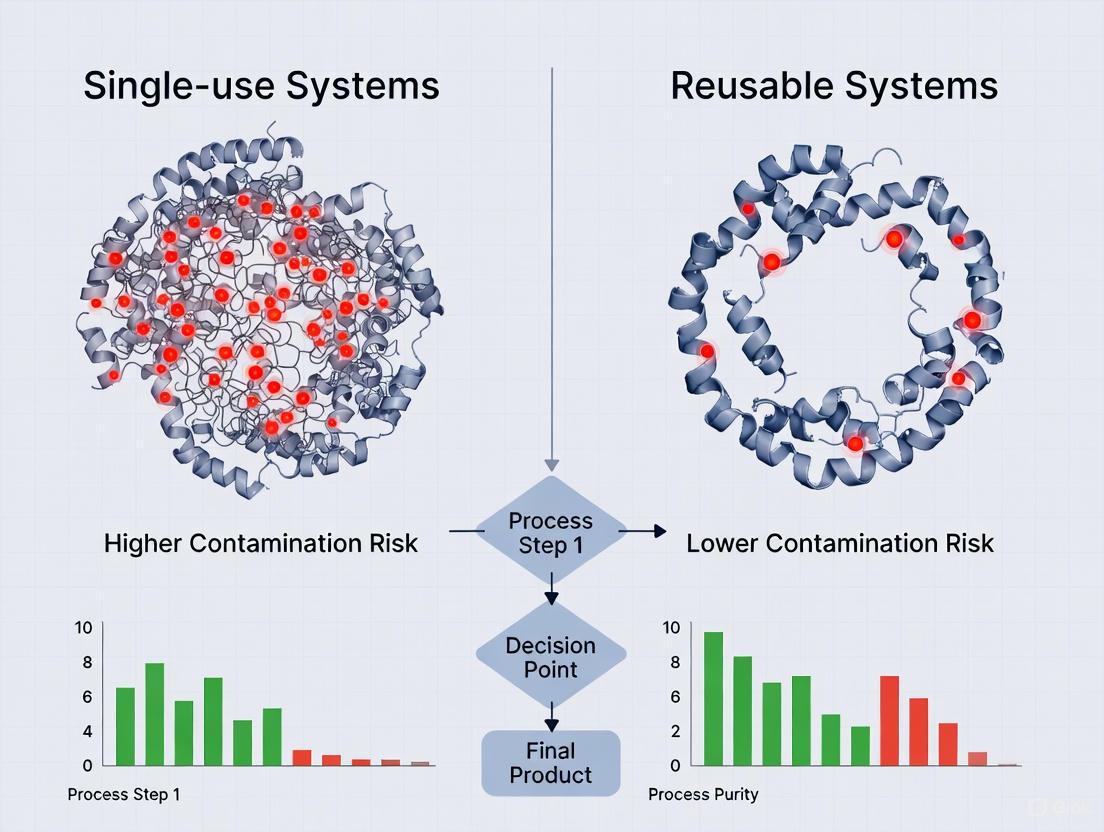
This article provides a systematic comparison of contamination risks associated with single-use and reusable systems in biopharmaceutical manufacturing and clinical settings.
Single-Use vs. Reusable Systems: A Comprehensive Contamination Risk Assessment for Biopharmaceuticals
Abstract
This article provides a systematic comparison of contamination risks associated with single-use and reusable systems in biopharmaceutical manufacturing and clinical settings. It explores the foundational principles of contamination control, including the role of cross-contamination, microbial threats, and leachables. The content details practical methodologies for implementing both systems, troubleshooting common contamination issues, and optimizing processes for quality assurance. Finally, it presents a validated, comparative framework for risk assessment, supported by life-cycle analysis and empirical data, to guide researchers, scientists, and drug development professionals in making informed, risk-based decisions for their specific applications.
Understanding Contamination Vectors: A Deep Dive into Single-Use and Reusable System Risks
In the evolving landscape of biopharmaceutical manufacturing, the choice between single-use and reusable systems represents a critical decision point with significant implications for product quality and patient safety. Contamination control stands as a fundamental pillar in this decision-making process, directly impacting product efficacy, regulatory compliance, and ultimately, patient health. This guide provides an objective comparison of contamination risks between these two technological approaches, synthesizing current research findings and experimental data to offer a clear framework for researchers, scientists, and drug development professionals. By examining specific risk categories—microbial, chemical, and particulate—we aim to delineate the distinct contamination profiles of single-use and reusable bioprocessing systems within the context of modern manufacturing challenges.
Microbial Contamination Risks
Microbial contamination presents a persistent challenge in bioprocessing, with both single-use and reusable systems exhibiting distinct vulnerability profiles. Understanding these differences is essential for developing targeted contamination control strategies.
Comparative Analysis of Microbial Risks
Table 1: Microbial Contamination Profile: Single-Use vs. Reusable Systems
| Risk Factor | Single-Use Systems | Reusable Systems | Supporting Evidence |
|---|---|---|---|
| Cross-Contamination Risk | Inherently lower; components are disposed of after a single batch [1]. | Higher; requires validated cleaning and sterilization between batches to prevent carryover [2] [3]. | |
| Bacterial Contamination | Risk is primarily from initial component sterility breach or integrity failure during processing. | Risk arises from inadequate sterilization or post-sterilization handling. Higher bacterial concentrations observed in reused ventilator circuits [4]. | |
| Viral Contamination | Mitigated through supplier testing of raw materials (e.g., serum, cell lines) [5]. | Risk from contaminated cleaning agents or steam condensate; requires dedicated sanitization. | |
| Mycoplasma Contamination | Relies on pre-use sterility assurance from gamma-irradiated components [5]. | Difficult to eradicate; requires rigorous cleaning agent contact time and sterilization validation. | |
| Primary Risk Source | System integrity (e.g., leakers, improper seals) and aseptic connections [6]. | Efficacy and validation of the cleaning-in-place (CIP) and sterilization-in-place (SIP) processes [3]. | |
| Impact of Human Error | Aseptic assembly errors can introduce microbes [6]. | Errors in cleaning/sterilization protocols can lead to batch-wide contamination [2]. |
Experimental Insights from Clinical and Industrial Studies
A 2018 clinical study provides quantitative data on bacterial contamination, comparing conventional reused ventilator systems to disposable closed systems. After one week of use, the conventional reused system showed a significantly higher bacterial detection rate of 94.8% compared to 81.9% for the disposable system. Furthermore, the bacterial concentration in the heated humidifier of the reused system was substantially higher [4]. This real-world data underscores the challenge of maintaining sterility in multi-use equipment through cleaning protocols alone.
In upstream bioprocessing, a case study using Failure Modes and Effects Analysis (FMEA) to evaluate risks in single-use technology found that while the overall risk levels between perfusion and fed-batch cultures were similar, the specific reasons for risk differed. Fed-batch processes, often employing larger bioreactors, faced risks associated with component installation, while perfusion cultures, with their longer run times, were more susceptible to risks from repeated manual operations like daily sampling [6]. This highlights that the specific process design must inform the contamination control strategy, regardless of the system type.
Chemical and Particulate Contamination
Beyond microbial threats, chemical and particulate contaminants pose significant risks to product quality, particularly in single-use systems where materials directly contact process fluids.
Chemical Contaminants: Leachables and Extractables
Leachables are chemicals that migrate from a single-use component into the process solution under normal process conditions, while extractables are chemicals that can be released under exaggerated conditions (e.g., high temperature, extreme pH) [3]. These can include antioxidants, plasticizers, catalysts, and oligomers from polymer degradation [3] [7].
A robust risk-mitigation strategy for leachables and extractables involves multiple controls [3]:
- Component Selection: Choosing materials with suitable compatibility and low extractable profiles.
- Supplier Qualification: Using information from suppliers on raw materials, manufacturing processes, and extractable testing.
- Product Testing: Assessing leachables in process solutions when they cannot be accurately predicted from extractable studies.
Particulate Contamination
Table 2: Comparison of Particulate and Chemical Contamination Risks
| Contaminant Type | Single-Use Systems | Reusable Systems | Key Challenges |
|---|---|---|---|
| Origin of Particulates | Intrinsic: Generated during fabrication (cutting, welding). Extrinsic: From environment/operators during assembly [7]. | Intrinsic: From equipment wear or corrosion. Extrinsic: Introduced during cleaning or reassembly. | Detection probability is lower in single-use systems due to complex components and translucent materials [7]. |
| Subvisible Particles (<100 µm) | Measured via non-standardized rinsing methods (e.g., light obscuration) [7]. | Controlled and removed by cleaning and rinsing steps prior to sterilization. | Direct application of USP <788> standards for final products is not appropriate for single-use components [7]. |
| Visible Particles (>100 µm) | Relies on human visual inspection, which is less effective than for final drug products [7]. | Relies on visual inspection post-cleaning and during assembly. | |
| Chemical Contaminants | Leachables & Extractables are a primary concern [3] [1]. | Residual Cleaning Agents and Endotoxins from improper cleaning are a major risk [3] [5]. | Toxicity evaluations are required for leachables; validation is required for cleaning efficacy [3]. |
The industry is actively working on standardizing methods for measuring particulate contamination. A promising approach involves developing a standardized liquid extraction method to rinse particles from single-use components for counting and identification, drawing inspiration from standards in other industries like ISO 16232 for automotive parts [7].
Experimental Protocols for Contamination Assessment
Protocol 1: FMEA for Upstream Contamination Risks
Objective: To systematically evaluate and compare contamination risks associated with single-use technology in different upstream process modes (e.g., fed-batch vs. perfusion) [6].
Workflow:
- Process Mapping: Define all upstream operations (media preparation, bioreactor setup, inoculation, daily sampling, harvest) for both fed-batch and perfusion processes.
- Identify Failure Modes: For each operation, identify how single-use components could fail (e.g., seal failure during sampling, leaker from a weld).
- Analyze Effects: Determine the impact of each failure on contamination and other critical outcomes.
- Risk Scoring: Score each failure mode based on Severity (S), Occurrence (O), and Detectability (D). Calculate Risk Priority Number (RPN = S x O x D).
- Compare & Mitigate: Compare RPNs between process types to identify high-risk steps specific to each. Implement additional control measures for high-RPN items.
The following diagram illustrates the logical workflow of this FMEA process:
Protocol 2: Bacterial Contamination Analysis in Ventilator Circuits
Objective: To investigate the bacterial contamination rates of conventional reused versus disposable closed ventilator-suction systems after one week of continuous use [4].
Methodology:
- Study Design: An observational study with intubated patients using a reused system for one week, then switching to a disposable system.
- Sample Collection: After one week, the ventilator circuit is removed. The interior of tubes is washed with sterile distilled water, and water samples are collected from heated humidifiers.
- Microbiological Analysis: Samples are diluted, inoculated on culture plates, and incubated at 35±1°C for 48±2 hours. All bacterial species are identified biochemically.
- Data Analysis: Bacterial detection rates and concentrations are compared between the two systems using statistical tests like the chi-square test and Wilcoxon signed-rank test.
Protocol 3: Assessing Particulate Contamination
Objective: To measure the level of intrinsic and extrinsic particulate contamination on the fluid-contacting surfaces of a single-use component [7].
Methodology (Based on Emerging Standards):
- Extraction: A standardized volume of purified water or a suitable solvent is flushed through the single-use component or used to rinse its inner surfaces. The effluent is collected.
- Particle Collection: The extracted fluid is passed through a calibrated membrane filter with a defined pore size (e.g., 0.2-0.45 µm) to capture particulates.
- Analysis: The membrane is analyzed using either:
- Microscopic Particle Count: The membrane is microscopically examined to count and size the particles.
- Light Obscuration: The extracted fluid is directly analyzed by a light-obscuration particle counter.
- Method Efficiency Validation (per ISO 16232): The same component is extracted multiple times (e.g., 6x). The method is considered efficient when the particle count in a subsequent extraction falls to 10% of the count in the first extraction.
The workflow for this particulate testing protocol, including the validation step, is shown below:
The Scientist's Toolkit: Key Reagents & Materials
Table 3: Essential Research Reagents and Materials for Contamination Analysis
| Item | Function/Brief Explanation | Primary Application |
|---|---|---|
| Sterile Distilled Water | Used as a rinsing agent to collect microbial and particulate contaminants from internal surfaces of components [4]. | Microbial & Particulate Analysis |
| Culture Plates (Agar) | Provides a growth medium for bacteria and fungi collected from samples, allowing for colony formation and counting [4]. | Microbial Contamination |
| PCR Assays | Used for highly sensitive detection of specific contaminants like mycoplasma and viruses, which are difficult to culture [5]. | Mycoplasma/Viral Screening |
| Light Obscuration Particle Counter | Instrument that counts and sizes subvisible particles in a fluid by measuring the blockage of a light beam [7]. | Particulate Analysis |
| Microscope with Membrane Filter | Used for the microscopic identification and counting of particles collected on a filter membrane [7]. | Particulate Analysis |
| Solvents (e.g., Ethanol) | Used in exaggerated extraction studies to identify potential leachable compounds from plastic materials [3]. | Extractables & Leachables |
| Reference Standards | Known quantities of specific chemicals (e.g., model leachables) used to calibrate equipment and validate analytical methods [3]. | Extractables & Leachables |
The landscape of contamination risk in bioprocessing is not a simple binary but a complex trade-off. Single-use systems effectively mitigate certain risks, most notably cross-contamination and failures linked to cleaning validation, but introduce others, primarily extractables/leachables and particulate matter [3] [1] [7]. In contrast, reusable systems, while avoiding the chemical concerns of plastics, carry a persistent and validated burden of ensuring sterility and removing contaminants through rigorous and well-documented cleaning processes [4] [2].
The choice between systems is therefore highly context-dependent. Decision-makers must weigh these risk profiles against factors such as product modality (e.g., vaccine, cell therapy), stage of production (upstream vs. downstream), process duration, and overall facility strategy. A one-size-fits-all approach is inadequate. Instead, a thorough, process-specific risk assessment, informed by the types of experimental data and protocols outlined in this guide, is essential for developing a robust contamination control strategy that ensures the safety, quality, and efficacy of biopharmaceutical products.
In both biomedical research and biopharmaceutical manufacturing, the control of contamination is a fundamental pillar of data integrity, product safety, and regulatory compliance. The choice between single-use (disposable) systems and reusable systems that require Clean-in-Place (CIP) protocols represents a critical decision point with significant implications for contamination risk, operational complexity, and environmental impact. Reusable systems, while reducing solid waste, introduce the challenge of reliably removing contaminants—including microbial, viral, chemical, and cross-product residues—between batches. This guide objectively compares the contamination risks and validation requirements associated with these two paradigms, providing researchers and drug development professionals with a data-driven framework for decision-making.
Quantitative Comparison of Contamination Risks and Environmental Impacts
A systematic review of life-cycle assessments comparing single-use and reusable healthcare products provides a broad perspective on their environmental footprints, while clinical meta-analyses quantify the tangible patient risks.
Table 1: Environmental Impact Profile of Single-Use vs. Reusable Healthcare Products [8]
| Impact Category | Typical Change When Switching from Single-Use to Reusable | Notes and Context |
|---|---|---|
| Global Warming Potential | Reduction | Effect size differs among product categories. |
| Acidification Potential | Reduction | Non-invasive devices show greater mitigation potential. |
| Resource Depletion | Reduction | Due to less raw material per use cycle. |
| Solid Waste Generation | Significant Reduction | Reusable systems reduce solid waste output [9]. |
| Water Consumption | Increase | A key trade-off, as cleaning processes are water-intensive. |
Table 2: Clinical Contamination Risk Profile from Endoscope Meta-Analysis [10]
| Outcome Measure | Risk Ratio (RR) or Mean Difference (MD) | Statistical Significance |
|---|---|---|
| Overall Complication Risk | RR: 1.25 (95% CI: 1.08–1.44) | Significantly higher for reusable endoscopes |
| Fever Incidence | RR: 0.38 (95% CI: 0.20–0.72) | Significantly lower for disposable endoscopes |
| Hospital Stay Duration | MD: –0.14 days (95% CI: –0.39 to 0.11) | No significant difference |
| Urosepsis Rate | RR: 0.45 (95% CI: 0.16–1.27) | No significant difference |
The data indicates that while reusable systems generally offer environmental advantages in several impact categories, this can come with increased water use and, critically, a demonstrated higher risk of certain clinical complications, such as febrile reactions, likely tied to inadequate decontamination [8] [10].
Contamination Vectors: A Detailed Breakdown for Reusable Systems
The effectiveness of a CIP process is measured by its ability to eliminate all potential contamination vectors. The following table details these risks and the corresponding validation focus for reusable systems.
Table 3: Contamination Vectors and Control Challenges in Reusable Systems
| Contamination Vector | Description and Source | Validation Challenge |
|---|---|---|
| Cross-Contamination | Residual proteins, active pharmaceutical ingredients (APIs), or product residues from previous batches [11] [12]. | Demonstrating removal to a predefined "acceptable level" for all potential residues, not just the primary API [11]. |
| Microbial Contamination | Bacteria, yeast, and fungi introduced during use or inadequate cleaning. Can form biofilms in system "dead legs" [5] [13]. | Validating that CIP procedures (T.A.C.T.) achieve and maintain sterility or specified bioburden levels. |
| Viral Contamination | Viruses introduced via contaminated raw materials or cell lines. Particularly challenging for Advanced Therapy Medicinal Products (ATMPs) [14]. | Implementing and validating sensitive, product-specific analytical methods (e.g., ddPCR) for detection [14]. |
| Chemical Contamination | Residual detergents, sterilants (e.g., Ethylene Oxide), or extractables from the cleaning process itself [11] [5]. | Validating the removal of cleaning agents to levels that pose no risk to the subsequent product batch [11]. |
| Particulate Contamination | Particles generated from equipment wear, tubing degradation, or processes like tube welding [14]. | Monitoring and controlling particle loads, especially in GMP manufacturing for injectables [5] [14]. |
| Endotoxin/Pyrogen Contamination | Pyrogenic substances from bacterial cell walls that can cause febrile reactions in patients [12] [10]. | Validating that CIP and sterilization processes effectively remove or inactivate pyrogens. |
Experimental Protocols for Cleaning Validation
Regulatory bodies like the FDA require that cleaning processes be validated to prove they consistently remove residues to an acceptable level [11] [15]. The following workflow and detailed methodologies outline the standard approach.
Protocol Development and Acceptance Criteria
A validation protocol must be established prior to study execution. Key elements include [11] [15]:
- Objective and Scope: Clearly define the equipment, residues targeted, and cleaning process to be validated.
- Acceptance Criteria: Scientifically justified limits for residue carryover. Common approaches include:
- 10 ppm Rule: No more than 10 ppm of any residue may appear in the next product.
- Biological Activity Level: Carryover must not exceed 1/1000 of the normal therapeutic dose [11].
- Visually Clean: A common baseline requirement for equipment surfaces.
- Sampling Methods:
- Direct Surface Sampling (Swab): Preferred for insoluble residues and critical, hard-to-clean surfaces. Swabs are wetted with a solvent and used to wipe a defined area [15].
- Rinse Sampling: Applicable for soluble residues and large/complex systems where direct sampling is impractical. The solvent used for the final rinse is collected and analyzed [15].
- Analytical Methods: Specify validated methods (e.g., HPLC, TLC, conductivity) with demonstrated sensitivity and specificity for the target residues [11].
CIP Validation and the T.A.C.T. Framework
For Clean-in-Place systems, validation focuses on the four critical parameters that determine cleaning efficacy [13]:
- Time: The contact time of each cleaning solution with the equipment surfaces.
- Action: The mechanical force provided by turbulent flow (typically achieving a Reynolds Number >20,000) to scour residues from internal pipes and vessels.
- Chemical: The selection, concentration, and dosing of cleaning agents (e.g., caustic, acidic) tailored to the soil type.
- Temperature: The controlled temperature of cleaning solutions to optimize chemical reaction kinetics without baking on residues.
The validation involves challenging the CIP system under worst-case soil conditions and verifying through sampling that all parameters are met and residues are removed to acceptable levels.
The Scientist's Toolkit: Key Reagents and Materials for Cleaning Validation
Table 4: Essential Research Reagents and Materials for Cleaning Validation Studies
| Item | Function in Validation | Application Notes |
|---|---|---|
| Validation Protocol Template | Provides the master document outlining objectives, methods, and acceptance criteria [15]. | Essential for compliance with FDA and other regulatory standards [11]. |
| Certified Reference Standards | Pure samples of the active ingredient and cleaning agents for analytical method development and calibration. | Critical for ensuring the accuracy and precision of HPLC and other analytical results. |
| Validated Swab Kits | For reproducible sampling of defined surface areas. Kits typically include sterile swabs and vials of appropriate solvent [15]. | Material of swab (e.g., polyester, cotton) must not interfere with analytical methods. |
| HPLC System with UV/MS Detector | High-Performance Liquid Chromatography is the gold standard for quantifying specific organic residues at low concentrations [11]. | Method must be validated for the specific residues being tested. |
| Total Organic Carbon (TOC) Analyzer | A rapid, non-specific method for detecting residual organic carbon from any source in rinse water samples. | Excellent for screening and demonstrating general cleanliness. |
| Conductivity Meter & pH Probe | For real-time monitoring of CIP parameters and verifying the removal of cleaning agents and ions during rinse cycles [13]. | Integrated into automated CIP skids for process control. |
| Microbiological Growth Media & Incubator | Used to detect and enumerate bioburden and validate the effectiveness of sanitization steps [5]. | Contact plates and membrane filtration are common techniques. |
| AAMI ST98 Guideline Document | The definitive standard for reusable medical device cleaning validation, outlining specific requirements for test soil, sample sizes, and endpoints [16]. | Replaced the previous AAMI TIR30 for greater specificity. |
Decision Framework: Navigating Single-Use vs. Reusable Systems
The choice between single-use and reusable systems is multi-factorial, requiring a risk-based assessment. The following diagram and summary can guide this decision.
- Opt for Single-Use Systems When: The primary risk is cross-contamination in multi-product facilities, particularly with high-risk products like ATMPs or potent compounds [12] [14]. They are also advantageous when validation resources are limited, as the supplier provides sterilization validation (e.g., gamma irradiation) [12].
- Consider Reusable Systems When: Production is for a single, dedicated product, allowing for tailored and optimized CIP processes. This path is viable only if the organization has the expertise and resources to conduct and maintain a full cleaning validation program, including rigorous analytical testing [11] [15].
The dilemma of cross-contamination remains the most critical challenge for reusable systems, necessitating a robust and scientifically sound CIP validation framework. While reusable systems can offer sustainability benefits, single-use systems provide a compelling and validated means to eliminate the risk of cross-contamination, particularly in complex, multi-product research and manufacturing environments. The decision is not absolute but must be guided by a thorough risk assessment that weighs product characteristics, regulatory requirements, and environmental impact. As regulatory expectations evolve—emphasizing science-based justification and comprehensive Contamination Control Strategies—the principles of rigorous validation, whether for a CIP cycle or a sterile single-use system, will continue to be the foundation of product quality and patient safety.
The Leachables and Extractables Profile of Single-Use Systems
In the biopharmaceutical industry, the adoption of single-use systems (SUS) has revolutionized manufacturing processes, offering advantages in flexibility, cost-efficiency, and cross-contamination prevention. However, this shift has brought chemical contamination risks from leachables and extractables (E&L) to the forefront of regulatory and safety considerations. Leachables and extractables are chemical compounds that can migrate from the materials of single-use systems into the drug product, potentially compromising patient safety and product efficacy [17] [18]. Understanding the E&L profile is particularly crucial when framing these systems within a broader comparison against reusable alternatives, where the contamination risks differ fundamentally—while reusable systems may pose higher microbiological risks if not properly sterilized, single-use systems present distinct chemical migration challenges that must be thoroughly characterized [19] [9].
The fundamental distinction between these compounds lies in the conditions under which migration occurs. Extractables are chemical entities, both organic and inorganic, that can be extracted from components of a process system when exposed to aggressive solvents under exaggerated conditions of time and temperature—circumstances more extreme than those encountered in normal process operations [17] [20] [21]. These conditions may involve high heat, pressure, strong acids, organic solvents, or multiple sterilization cycles. In contrast, leachables are chemical compounds that migrate into the drug product from product contact materials under normal process conditions or storage [17] [20]. Leachables are typically a subset of extractables that emerge under real-use circumstances rather than laboratory-exaggerated conditions [18] [21]. This relationship means that extractables studies serve as a predictive tool for identifying potential leachables, forming the scientific foundation for risk assessment in pharmaceutical manufacturing.
Comparative Analysis: Single-Use vs. Reusable Systems
Contamination Risk Profiles
The choice between single-use and reusable systems involves balancing different types of contamination risks. Single-use systems eliminate the risk of cross-contamination between batches and remove the need for cleaning validation, significantly reducing microbiological risks associated with inadequate sterilization [19]. However, they introduce chemical migration risks from leachables and extractables, as each new component presents a fresh surface from which chemicals can migrate into the drug product [17] [20]. The polymer-based materials commonly used in single-use systems often contain additives such as antioxidants, lubricants, stabilizers, plasticizers, and colorants that have the potential to migrate under certain conditions [20] [21].
Reusable systems, typically made of stainless steel or other durable materials, present a different risk profile. While they minimize concerns about chemical leachables from plastic components, they carry heightened microbiological risks if reprocessing procedures are inadequate. Research on ventilator systems has demonstrated that both conventional reused and disposable systems show bacterial contamination after one week of use, with different contamination patterns between the systems [19]. The study found that the inspiratory and expiratory limbs of disposable closed ventilator-suction systems had higher bacterial concentrations than conventional reused ventilator systems, though the heated humidifier of reused systems showed significantly higher bacterial contamination [19]. Predominant bacteria identified in both systems included Acinetobacter spp., Bacillus cereus, Elizabethkingia spp., Pseudomonas spp., and Stenotrophomonas maltophilia [19].
Environmental and Economic Considerations
Beyond contamination risks, the choice between single-use and reusable systems involves significant environmental and economic trade-offs. A 2022 systematic review of comparative life-cycle assessments found that switching from single-use to reusable healthcare products generally reduces most environmental impacts, with the notable exception of water use, which typically increases due to cleaning requirements [8]. The analysis revealed that non-invasive medical devices show greater relative mitigation potential than invasive devices when transitioning to reusables [8].
Economic analyses demonstrate that reusable systems often present lower long-term costs despite higher initial investment. For laryngeal mask airways (LMAs), a reusable device costing approximately $200 amounts to $8 per use (including cleaning costs), while disposable LMAs cost about $9.60 per unit—representing a 20% premium for the disposable option [9]. Similarly, transitioning to disposable laryngoscope handles increased costs by $495,000–$604,000 annually at one institution, while disposable blades increased costs by $180,000–$265,000 per year compared to reusable alternatives [9].
Table 1: Comparative Analysis of Single-Use vs. Reusable Systems
| Aspect | Single-Use Systems | Reusable Systems |
|---|---|---|
| Primary Contamination Risk | Chemical (leachables/extractables) | Microbiological (inadequate sterilization) |
| Typical Materials | Polymers, elastomers, plastics | Stainless steel, durable materials |
| Environmental Impact | Higher energy use, waste generation [8] | Lower overall environmental impact (except water use) [8] |
| Economic Considerations | Lower initial cost, higher per-use cost [9] | Higher initial investment, lower per-use cost [9] |
| Regulatory Focus | Extractables and leachables characterization [20] [21] | Cleaning validation, sterilization efficacy [19] |
| Bacterial Contamination Risk | Varies by component and system [19] | Can be significant without proper reprocessing [19] |
Performance and Practical Considerations
Performance differences between single-use and reusable systems extend beyond contamination risks. Reusable metal laryngoscope blades have demonstrated significantly higher success rates with rapid-sequence intubation compared to single-use plastic alternatives, potentially reducing complications associated with multiple intubation attempts [9]. For surgical textiles, research indicates no significant differences in preventing surgical site infections between reusable and disposable gowns and drapes, with both showing similar effectiveness as barriers against bacterial contamination when used properly [9].
The environmental footprint of these systems also differs substantially. Reusable surgical textiles offer significant sustainability advantages, requiring 200-300% less energy, 250-330% less water, and generating 750% less solid waste compared to disposable alternatives [9]. Similarly, reusable LMAs demonstrate fewer negative environmental effects across nearly all categories, including carcinogenesis, global warming potential, acidification, air pollutants, eutrophication, ecotoxicity, smog, water intake, and ozone depletion, typically contributing less than 50% of the environmental impacts of disposable LMAs [9].
Table 2: Environmental Impact Comparison of Select Medical Products
| Product Category | Key Environmental Findings | Reference |
|---|---|---|
| Laryngeal Mask Airways | Reusable LMAs have <50% environmental impact of disposable versions across multiple categories | [9] |
| Surgical Textiles | Reusable options reduce energy use (200-300%), water consumption (250-330%), solid waste (750%) | [9] |
| Healthcare Products (General) | Switching to reusables reduces most environmental impacts except water use | [8] |
| Laryngoscopes | Disposable metal blades have higher greenhouse gas emissions than plastic alternatives | [9] |
Experimental Assessment of Leachables and Extractables
Analytical Methodologies and Protocols
The evaluation of leachables and extractables in single-use systems requires a comprehensive analytical approach utilizing multiple complementary techniques. Extractables studies are conducted under controlled, exaggerated conditions using aggressive solvents, elevated temperatures, and extended exposure times to identify potential migrants from the material composition [17] [20]. These studies aim to generate a complete profile of compounds that could potentially leach into drug products under normal processing conditions. The resulting extractables profile serves as a predictive tool for potential leachables [17].
Leachables studies, in contrast, are performed under actual process conditions or accelerated storage conditions using the drug product formulation or appropriate simulants [20] [21]. These studies identify and quantify the compounds that actually migrate into the product during normal use, providing direct evidence of chemical migration under real-world conditions. The analytical strategy must be comprehensive enough to detect and identify a wide range of potential chemical migrants with varying properties.
Table 3: Standard Analytical Methods for E&L Assessment
| Analytical Technique | Application in E&L Studies | Compounds Detected |
|---|---|---|
| High-Performance Liquid Chromatography (HPLC) | Analysis of organic compounds | Non-volatile and semi-volatile organics |
| Gas Chromatography-Mass Spectrometry (GC-MS) | Analysis of semi-volatile and volatile compounds | Volatile organic compounds (VOCs), semi-volatile organic compounds (SVOCs) |
| Headspace GC-MS | Analysis of volatile compounds | Highly volatile organic compounds |
| Liquid Chromatography-Mass Spectrometry (LC-MS) | Analysis of non-volatile compounds | Non-volatile organic compounds (NVOCs), polar compounds |
| Inductively Coupled Plasma-Mass Spectrometry (ICP-MS) | Analysis of elemental impurities | Metals, inorganic elements |
Risk Assessment Framework
A science- and risk-based approach to evaluating leachables and extractables is recommended by regulatory agencies including the FDA [20]. The risk assessment process begins with a thorough understanding of the manufacturing process and identification of all product contact materials, followed by application of risk criteria specific to each material's use conditions [20] [21]. Key risk factors include:
- Material compatibility with the process stream
- Location in the process (risk generally increases as the process moves downstream)
- Nature of the product being manufactured
- Surface area to volume ratio
- Contact temperature and time
- Pretreatment steps such as sterilization [20] [21]
This risk-based approach allows for efficient allocation of testing resources, with more comprehensive E&L studies focused on higher-risk applications while leveraging existing extractables data for lower-risk situations. The Bio-Process Systems Alliance (BPSA) has developed a standardized risk-based framework that has gained regulatory acceptance for evaluating single-use systems [20].
Experimental Design Considerations
When designing E&L studies, several critical factors must be addressed to ensure scientifically valid results. The study design should consider what specific compounds are being targeted, what concentration levels are acceptable from a toxicological perspective, and what factors might influence the generation of leachables, including the selected sterilization method [21]. For leachables testing, several approaches can be considered depending on the specific application and analytical challenges:
- Testing with the actual drug formulation provides the most direct assessment but may face analytical interference issues
- Removal or replacement of interfering ingredients such as the API when it causes analytical interference
- Use of placebo formulations that maintain similar extraction properties without analytical interference
- Mimic solutions formulated to have similar extraction properties to the actual product when major ingredients cause analytical challenges [20]
The toxicological assessment of identified leachables is a critical component of the overall evaluation. Qualified toxicologists review the chemical nature and concentration of leachables to assess potential patient risks, considering factors such as route of administration (parenteral, topical, inhalation, or oral), dosage, and treatment duration (acute versus chronic) [20] [18]. The safety concern threshold for leachables can vary by as much as 10¹⁰ depending on the process and drug product use, making product-specific assessment essential [20].
Regulatory Landscape and Standardized Approaches
Current Regulatory Framework
The regulatory framework for leachables and extractables assessment continues to evolve as single-use systems become more prevalent in pharmaceutical manufacturing. Current regulations, including EU GMP Annex 1, explicitly state that "the extractable and leachable profiles of the SUS and any impact on the quality of the product especially where the system is made from polymer-based materials should be evaluated" [21]. Both EU and US regulations require that production equipment should not "present any hazards to the product" and should not be "reactive, additive or absorptive" [20].
While there are no specific regulations mandating testing protocols for single-use processing systems, regulatory agencies including the FDA and EMEA have published guidances addressing packaging materials that provide risk assessment strategies applicable to single-use systems [20]. The FDA's Final Report on Pharmaceutical cGMPs for the 21st Century explicitly recommends applying scientifically sound, risk-based approaches to pharmaceutical current Good Manufacturing Practice requirements, including the evaluation of leachables and extractables [20].
Standardized Protocols and Best Practices
Industry organizations have developed standardized protocols to create consistency in E&L assessment approaches. The Bio-Process Systems Alliance (BPSA) has published technical guides outlining best practices for evaluating extractables from single-use systems, providing a framework that has gained regulatory acceptance [20]. Similarly, the BioPhorum (BPOG) has developed a "Best Practices Guide for Extractables Testing" that presents a standardized protocol considering all mandatory regulations [18].
Standardized analytical methods include USP <1663> for extractables testing of pharmaceutical packaging, USP <1664> for leachables testing, and ISO 10993-18 for evaluation of medical devices [21]. These standardized approaches help ensure comprehensive assessment using scientifically sound methodologies while allowing flexibility for application-specific considerations.
The Scientist's Toolkit: Essential Research Reagents and Materials
Successful evaluation of leachables and extractables profiles requires specialized materials and analytical tools. The following toolkit outlines essential components for designing and implementing comprehensive E&L studies:
Table 4: Essential Research Toolkit for E&L Studies
| Tool/Reagent | Function/Application | Key Considerations |
|---|---|---|
| Extraction Solvents | Simulate various process conditions and product types | Include aqueous buffers (various pH), organic solvents (ethanol, acetonitrile), and process-specific solutions |
| Reference Standards | Identify and quantify specific leachables | Include antioxidants, plasticizers, slip agents, oligomers, and degradation products |
| Solid Phase Extraction (SPE) Cartridges | Concentrate analytes and remove matrix interference | Various chemistries (C18, ion exchange, mixed-mode) for different compound classes |
| Headspace Vials | Analyze volatile organic compounds | Proper sealing to prevent loss of volatiles during incubation |
| LC-MS Grade Solvents | Mobile phases for HPLC and LC-MS analysis | High purity to minimize background interference and system contamination |
| Internal Standards | Correct for analytical variability | Stable isotope-labeled analogs of target analytes when available |
| Sample Preparation Kits | Process complex matrices like protein solutions | Precipitation reagents, filtration devices, phospholipid removal plates |
The comprehensive assessment of leachables and extractables profiles in single-use systems represents a critical component of modern biopharmaceutical manufacturing, directly impacting patient safety and product quality. When viewed within the broader context of contamination risk research comparing single-use versus reusable systems, it becomes evident that each approach carries distinct advantages and challenges. Single-use systems minimize microbiological risks but introduce potential chemical migration concerns that must be thoroughly characterized through rigorous E&L studies [19] [9]. Reusable systems, while reducing chemical migration risks, require robust cleaning and sterilization validation to control microbiological hazards [19].
The evolving regulatory landscape and standardized approaches developed by industry organizations provide frameworks for scientifically sound, risk-based E&L assessment [20] [18] [21]. As the industry continues to advance, the collaboration between single-use system manufacturers, suppliers, and drug product manufacturers remains crucial for ensuring patient safety and product efficacy while balancing environmental and economic considerations [18]. The continued refinement of E&L assessment methodologies will further enhance our ability to characterize and mitigate potential contamination risks, supporting the safe and effective implementation of both single-use and reusable technologies across the biopharmaceutical manufacturing landscape.
In pharmaceutical and biotherapeutic manufacturing, controlling microbial and endotoxin contamination is a paramount concern directly impacting product safety and patient health. This guide objectively compares the contamination risks associated with two predominant manufacturing systems: single-use (disposable) and reusable systems. The analysis is framed within the broader research thesis on contamination risk, focusing on the pathways through which contaminants, including bacteria, viruses, fungi, and pyrogenic endotoxins, can compromise processes and products. Endotoxins, fragments of dead Gram-negative bacteria, are particularly hazardous as they can cause fever or fatal reactions in patients [22].
The comparison delves into the inherent vulnerabilities of each system, examining cross-contamination potential, sterilization efficacy, and the role of process validation. It synthesizes findings from life-cycle assessments, functional bacterial challenge tests, and regulatory guidelines to provide a data-driven foundation for researchers, scientists, and drug development professionals to make informed decisions in process design and contamination control strategy.
Comparative Contamination Risk Analysis
The choice between single-use and reusable systems involves a complex trade-off between different contamination risks and control mechanisms. The table below summarizes the key vulnerabilities and control pathways for each system.
Table 1: Contamination Pathways and Control Measures in Single-Use vs. Reusable Systems
| Contamination Aspect | Single-Use Systems | Reusable Systems |
|---|---|---|
| Primary Cross-Contamination Pathway | Introduced via non-sterile raw materials or assembly [12]. | Inadequate cleaning and sterilization between batches [12] [23]. |
| Control Method | Supplier qualification and irradiation sterilization (e.g., Gamma Cobalt-60) [12]. | Validated Clean-in-Place (CIP) and Steam-in-Place (SIP) procedures [12]. |
| Endotoxin Source | Primarily from process water used during component manufacturing [22]. | Biofilm formation in system imperfections or from contaminated CIP/WFI water [12]. |
| Validation Focus | Extractables and Leachables testing; sterilant efficacy validation [22]. | Cleaning process validation; sterilization cycle efficacy [12] [23]. |
| Typical Sterilization Method | Gamma irradiation or E-Beam [12]. | Pressurized steam (Autoclave/SIP) [12]. |
| Operator & Environmental Risk | Lower risk of biologic contamination from process facility [12]. | Higher potential for microbial exposure during cleaning and handling [12]. |
Experimental Data and Protocols
Independent studies and standardized functional tests provide critical data for objectively evaluating the contamination control efficacy of both systems.
Life-Cycle Assessment of Environmental Impact
A systematic review of comparative cradle-to-grave life-cycle assessments (LCAs) evaluated the environmental effects of switching from single-use to reusable healthcare products. While focusing on environmental impact, the scope of these LCAs encompasses the resource use and waste generation associated with contamination control procedures like cleaning and sterilization [8].
Table 2: Environmental Impact Change When Switching from Single-Use to Reusable Products (Mean Effect Size)
| Impact Category | Invasive Medical Devices | Non-Invasive Medical Devices | Protection Equipment | Overall |
|---|---|---|---|---|
| Global Warming Potential | Reduction | Reduction | Reduction | Reduction |
| Acidification | Reduction | Reduction | Reduction | Reduction |
| Resource Depletion | Reduction | Reduction | Reduction | Reduction |
| Solid Waste Production | Significant Reduction | Significant Reduction | Significant Reduction | Up to 750% less waste [9] |
| Water Consumption | Increase | Increase | Increase | Increase |
The data indicates that while reusable products reduce most environmental impacts, this comes at the cost of higher water consumption, which is directly tied to cleaning and rinsing procedures essential for contamination control [8] [9].
Functional Bacterial Challenge Testing
To validate the sterility assurance of single-use aseptic connectors, worst-case bacterial challenge tests are performed. These protocols are designed to simulate extreme failure conditions.
Experimental Protocol: Liquid Bacterial Challenge
- Objective: To assess the integrity of the sterile fluid pathway under extreme soiling conditions [24].
- Methodology:
- Pre-sterilized connector components are immersed in a liquid bacterial spore suspension of Geobacillus stearothermophilus (>10⁶ spores) to coat all external surfaces [24].
- The inoculated connectors are allowed to dry, ensuring high bioburden viability [24].
- The connectors are assembled aseptically according to manufacturer instructions [24].
- Sterile bacterial culture broth (e.g., Trypticase Soy Broth) is flushed through the connected pathway [24].
- The effluent broth is incubated for 7 days at 30-35°C and checked for turbidity. It is then filtered through a 0.2µm membrane, which is plated on agar and incubated for another 7 days to check for viable colonies [24].
- Results: In a validation study, all 29 tested connectors maintained sterility of the fluid pathway. Positive controls (with protective barriers removed) all showed growth, confirming test validity [24].
Experimental Protocol: Aerosol Bacterial Challenge
- Objective: To validate connector performance in a highly contaminated, uncontrolled airborne environment [24].
- Methodology:
- Pre-sterilized connector components are exposed to an aerosol containing >10⁶ CFU/m³ of Serratia marcescens [24].
- Connectors are joined within this contaminated environment [24].
- Sterile TSB is passed through the connection into a collection vessel [24].
- The collected fluid is incubated and assessed for sterility as in the liquid challenge test [24].
- Results: The test created an environment with microbial levels over 10,000 times higher than a Grade D/ISO 8 cleanroom. Despite this, all test connectors maintained a sterile fluid pathway, demonstrating a high safety margin [24].
The following workflow diagrams illustrate the key steps in these validation protocols.
Clinical Evidence: Dialyzer Reuse
Observational studies on dialyzer reuse in hemodialysis provide real-world insights into contamination risks. Reprocessing reusable dialyzers is a multi-step procedure involving rinsing, cleaning with germicidal agents (e.g., peracetic acid), and performance testing [23].
- Risks: The process uses potentially toxic cleaning agents and carries a risk of Gram-negative bacteremia outbreaks if infection-control systems fail. Blood and protein residues have been found in reprocessed dialyzers [23].
- Evidence: A small crossover study found that when reprocessing was performed according to strict standards (Association for the Advancement of Medical Instrumentation), endotoxin levels and inflammatory markers (C-reactive protein) were not significantly different between single-use and reused dialyzers [23]. This highlights that rigorous adherence to validated protocols is critical for the safety of reusable systems.
The Scientist's Toolkit: Key Research Reagents and Materials
Research into contamination pathways and control strategies relies on specific reagents, materials, and methodologies. The following table details essential items for designing related experiments.
Table 3: Essential Research Reagents and Materials for Contamination Studies
| Reagent/Material | Function in Experimental Protocols |
|---|---|
| Geobacillus stearothermophilus Spores | Biological indicator for validating sterilization efficacy and performing worst-case liquid challenge tests due to high heat and desiccation resistance [24]. |
| Serratia marcescens | Model organism for aerosol challenge tests; used for its sedimentation characteristics and visibility in culture [24]. |
| Trypticase Soy Broth (TSB) | General-purpose liquid growth medium used in sterility testing to support the growth of viable microorganisms that may be present in a test sample [24]. |
| Limulus Amebocyte Lysate (LAL) | The standard test reagent for detecting and quantifying bacterial endotoxins, derived from horseshoe crab blood [22]. |
| Peracetic Acid-Based Solutions | Common chemical sterilant used in the reprocessing of reusable medical devices, such as dialyzers [23]. |
| HEPA (High-Efficiency Particulate Air) Filters | Critical engineering control for maintaining air quality in cleanrooms; removes 99.97% of particles ≥0.3 microns [25]. |
The comparison between single-use and reusable systems reveals that neither approach is entirely free from contamination risks; rather, they present different sets of vulnerabilities and control challenges. Single-use systems effectively eliminate the risk of cross-contamination between batches and reduce the validation burden associated with cleaning processes. However, they introduce potential vulnerabilities related to the consistency of raw material quality, extractables and leachables, and the integrity of pre-sterilized barriers. Functional challenge tests demonstrate that well-designed single-use connectors can maintain sterility even under extreme conditions.
Conversely, reusable systems, while offering environmental benefits in solid waste reduction, carry a persistent risk of contamination from inadequate cleaning or sterilization process failure. Their safety is heavily dependent on rigorous adherence to validated, multi-step reprocessing protocols, as evidenced by clinical experience with dialyzers. The higher water consumption of reusables is a direct consequence of these necessary cleaning cycles.
The choice for researchers and drug development professionals is not a binary one but should be guided by a thorough risk assessment that considers the specific process, the nature of the product, and the capability to implement and maintain stringent control measures for the selected system.
The choice between single-use (disposable) and multi-use (reusable) components is critical in scientific and industrial processes where contamination control is paramount. Particulate matter, a key contaminant, can compromise product integrity, interfere with sensitive analyses, and pose significant risks in fields such as biopharmaceutical manufacturing and environmental health. This guide provides an objective comparison of insoluble contaminants generated by disposable and reusable systems, offering experimental data and methodologies to support evidence-based decision-making for researchers, scientists, and drug development professionals. Framed within broader thesis research on single-use versus reusable systems, this analysis focuses on quantitative particulate release, environmental impact, and contamination risk profiles.
Comparative Analysis of Particulate Contamination
Quantitative Comparison of System-Generated Particulates
The following table summarizes key experimental findings and characteristics of particulate matter from disposable and reusable system components, based on current research data.
Table 1: Comparative particulate contamination profiles of disposable and reusable systems
| Parameter | Disposable Systems | Reusable Systems |
|---|---|---|
| Primary Particulate Sources | Fragmentation during use [26], polymer degradation [26] | Inadequate cleaning residue [27], wear debris from repeated use [27] |
| Common Particulate Composition | Polypropylene fragments, carbon nanoparticles [26] | Metal oxides (from stainless steel), residual detergents, biofilm fragments [27] |
| Typical Particle Size Range | Nano-sized fractions (1-400 nm) dominant [26] | Micro-sized particles (>1 µm) more common, but full size spectrum possible [27] |
| Reported Neurotoxicity Potential | Significant decrease in neurotransmitter uptake/accumulation [26] | Limited direct neurological data; primary risk is product contamination [27] |
| Environmental Persistence | High (plastic polymers persist in environment) [26] | Lower (materials often recyclable, but cleaning chemicals may persist) [28] |
| Control Strategies | Material selection, manufacturing quality control [27] | Rigorous cleaning validation, sterilization protocols, preventive maintenance [27] |
Performance Metrics in Industrial Applications
In biopharmaceutical processing, direct comparisons reveal operational advantages and limitations for both systems regarding contamination risk:
Table 2: Industrial application performance metrics for contamination control
| Performance Metric | Disposable Bioprocessing Systems [27] | Reusable Stainless Steel Systems [27] |
|---|---|---|
| Cross-Contamination Risk Between Batches | Virtually eliminated (flow path discarded after use) | Inherent risk unless sterilization is thoroughly performed |
| Water Consumption | 46% reduction | Significant requirements for cleaning/sterilization |
| CO₂ Footprint | 35% more favorable | Higher due to facility emissions from cleaning |
| Initial Investment Cost | 40% lower | Substantially higher |
| Cleaning Validation Requirements | Minimal (single-use components) | Extensive (requires rigorous between-batch protocols) |
Experimental Methodologies for Particulate Characterization
Ultrafine Particulate Matter (PM0.1) Measurement Protocol
Advanced methodologies for continuous chemical characterization of ultrafine particles (diameter < 100nm) have been developed to address measurement challenges associated with their low mass concentration and susceptibility to interference from larger particles [29].
Experimental Workflow:
Methodology Details:
- Aerosol Sampling: Ambient air or process emissions collected with appropriate inlets to maintain particle integrity [29]
- Particle Separation: Aerodynamic Aerosol Classifier (AAC) configured as low-pass separator to isolate PM0.1 from larger particles by directing polydisperse aerosol through rotating cylinder with opposing centrifugal and drag forces [29]
- Chemical Speciation: High-Resolution Time-of-Flight Aerosol Mass Spectrometer (HR-ToF-AMS) quantifies organics, sulfate, nitrate, ammonium, and chloride; Single-Particle Soot Photometer (SP2-XR) measures black carbon; Xact625i analyzes elemental composition [29]
- Physical Characterization: Scanning Mobility Particle Sizer (SMPS) determines particle size distribution and effective density [29]
- Data Analysis: Source apportionment through multivariate analysis of compositional data; temporal resolution of 1-hour achievable [29]
Neurotoxicity Assessment of Plastic-Derived Particulates
Specialized methodologies evaluate neuroactive properties of particulate matter from disposable components, particularly relevant for assessing health impacts of environmental contamination.
Experimental Workflow:
Methodology Details:
- Sample Preparation: Water-suspended smoke particulate matter collected from combustion of disposable medical facemasks (polypropylene fibers); filtration through glass microfiber filter (1.0 µm pore diameter) to eliminate debris and enrich nanoscale fractions [26]
- Physicochemical Characterization: Dynamic light scattering for hydrodynamic diameter and Z-potential; FTIR and Raman spectroscopy for surface groups; UV-Vis absorption for optical properties [26]
- Biological Model: Nerve terminals (synaptosomes) isolated from rat cortex; maintained in oxygenated physiological solution [26]
- Neurotransmitter Transport Assessment: Measurement of initial uptake/accumulation rates of L-[14C]glutamate and [3H]GABA; evaluation of exocytotic release and extracellular neurotransmitter levels [26]
- Cellular Function Assays: Membrane potential measured with rhodamine 6G; mitochondrial potential with JC-1 assay; synaptic vesicle acidification with acridine orange; ROS generation with 2',7'-dichlorofluorescein (DCF) [26]
The Scientist's Toolkit: Essential Research Reagents and Materials
Table 3: Key research reagents and materials for particulate matter characterization
| Reagent/Instrument | Function | Application Context |
|---|---|---|
| Aerodynamic Aerosol Classifier (AAC) | Separates PM0.1 from larger particles based on aerodynamic diameter | Ultrafine particle isolation for compositional analysis [29] |
| HR-ToF-AMS | Provides high-temporal-resolution chemical speciation of non-refractory components | Organic aerosol source apportionment; sulfate, nitrate, ammonium quantification [29] |
| Single-Particle Soot Photometer (SP2-XR) | Measures refractory black carbon concentration and mixing state | Quantification of combustion-derived particulates [29] |
| L-[14C]glutamate / [3H]GABA | Radiolabeled neurotransmitters for uptake and release kinetics | Assessment of neurotoxic effects on synaptic function [26] |
| Rhodamine 6G | Fluorescent potentiometric dye for plasma membrane potential | Evaluation of neuronal membrane integrity after particulate exposure [26] |
| JC-1 Assay | Mitochondrial membrane potential-sensitive fluorescent dye | Assessment of metabolic function and early apoptosis indicators [26] |
| Dynamic Light Scattering Instrument | Determines hydrodynamic size distribution and Z-potential of nanoparticles | Characterization of colloidal properties of particulate suspensions [26] |
This comparison reveals a complex risk profile for both disposable and reusable systems regarding particulate contamination. Disposable components demonstrate significant advantages in eliminating cross-contamination risks between batches and reducing resource consumption for cleaning, but generate neuroactive ultrafine particulate matter with potential health impacts when incinerated [27] [26]. Reusable systems offer reduced environmental waste generation but carry inherent cross-contamination risks unless rigorous cleaning validation is maintained [27]. The optimal system selection depends on application-specific priorities: disposable systems suit high-purity applications where cross-contamination poses unacceptable risks, while reusable systems benefit applications where environmental sustainability and long-term cost efficiency are prioritized. Future research should focus on developing disposable materials with reduced neurotoxic potential and reusable system designs that minimize particulate generation during cleaning and use.
Implementing Contamination Control: Protocols for Single-Use and Reusable Systems
In the manufacturing of biopharmaceuticals, controlling contamination risk is paramount. The industry primarily relies on two distinct sterilization paradigms: gamma irradiation for Single-Use Systems (SUS) and Clean-In-Place/Sterilize-In-Place (CIP/SIP) for reusable systems, typically made of stainless steel. The choice between these methodologies extends beyond mere preference; it fundamentally influences process design, validation strategy, environmental impact, and cost structure. Single-use systems are disposable products intended for one-time use, often made from plastics and supplied pre-sterilized, frequently by gamma irradiation [30]. In contrast, reusable systems are designed for multiple batches and require internal cleaning and sterilization between production runs using automated CIP and SIP procedures [31] [32]. This guide provides an objective comparison of these technologies, framing them within the broader context of contamination risk research for single-use versus reusable systems.
Fundamental Principles and Mechanisms
Gamma Irradiation for Single-Use Systems
Gamma irradiation is a terminal sterilization method that uses electromagnetic radiation (gamma rays) emitted from radionuclides like Cobalt-60 (⁶⁰Co) to inactivate microorganisms [33]. The mechanism of action is the damage to microbial nucleic acids (DNA and RNA) caused by this ionizing radiation, which prevents replication and leads to cell death [33]. A key advantage is that gamma rays penetrate deeply through most single-use system components, including polymeric materials, and leave no residual radioactivity [33]. The process is typically conducted at ambient temperatures without the need for heat, humidity, or pressure changes, making it suitable for heat-sensitive plastics [33]. The dosage is measured in kilogray (kGy), with 25 kGy being a standard minimum dose often used to achieve a Sterility Assurance Level (SAL) of 10⁻⁶, meaning there is a less than one in a million chance of a single viable microorganism remaining on a product [33].
CIP/SIP for Reusable Systems
CIP and SIP are complementary, in-place processes designed for reusable equipment. CIP is an automated cleaning process that removes product residues, such as fats, proteins, and other soils, from the internal surfaces of equipment without disassembly [31] [34]. It employs a controlled sequence of rinsing, detergent washing (often with alkaline or acidic solutions), and final rinsing to reduce residues to validated toxicological and microbiological limits [31] [32]. SIP is an automated sterilization process that follows CIP, using saturated steam to eliminate viable microorganisms [31]. The mechanism is thermal inactivation; by exposing equipment to high-temperature steam (typically 120–135°C or 248–275°F) for a validated duration, SIP achieves microbial inactivation to a defined SAL [31] [32]. It is crucial that CIP always precedes SIP to ensure that sterilization is effective and not hindered by residual soils that could shield microorganisms [31].
Table 1: Core Principles and Mechanisms of Action
| Feature | Gamma Irradiation (for SUS) | CIP/SIP (for Reusables) |
|---|---|---|
| Primary Mechanism | Ionizing radiation damages microbial DNA/RNA [33] | CIP: Chemical soil removal; SIP: Thermal inactivation by steam [31] [34] |
| Process Nature | Terminal sterilization (post-packaging) [33] | In-situ cleaning and sterilization of installed equipment [32] |
| Key Agent | Gamma photons | CIP: Detergents & water; SIP: Saturated steam [31] [32] |
| Typical Cycle | Single exposure to a target dose (e.g., 25 kGy) [33] | Multi-step, sequential process (CIP always precedes SIP) [31] [32] |
| Energy & Utility Demand | Lower during manufacturing operation | High (purified water, steam, electricity for heating) [35] |
Figure 1: Fundamental Workflow Comparison - The diagram contrasts the single-event, terminal sterilization of SUS with the cyclic, multi-step decontamination process for reusables.
Performance Comparison and Experimental Data
Sterilization Efficacy and Validation
Both methodologies are capable of achieving a high sterility assurance level, but their validation approaches differ significantly.
Gamma Irradiation Validation: Validation follows standards from ANSI, AAMI, and ISO. It is based on determining the average bioburden on the product and subsequent sterility testing after exposure to a minimum radiation dose [33]. The verification dose method (VDM) is often used to establish a dose that delivers a specific, low probability of sterility to a sample of product items. This is then correlated to a higher sterilization dose (e.g., 25 kGy) required to achieve an SAL of 10⁻⁶ [33]. Routine audits involve ongoing bioburden and sterility testing to ensure process consistency.
CIP/SIP Validation: CIP validation must provide evidence that chemical and microbial residues are consistently reduced below the maximum allowable carryover (MACO), involving chemical testing, validated sampling, and microbial controls [31]. SIP validation must prove microbial kill efficacy, which involves biological indicator (BI) placement at worst-case locations (e.g., cold spots in pipes or vessels) and temperature mapping to verify uniform heat distribution [31]. A successful validation demonstrates that all BIs (typically Geobacillus stearothermophilus spores for steam) are inactivated when the process parameters are held for the validated time [31].
Material Compatibility and Product Integrity
The interaction between the sterilization method and the system materials is a critical factor for performance and lifetime.
Gamma Irradiation on Plastics (SUS): Gamma irradiation causes ionization and excitation of polymer molecules, which can lead to changes in physical or chemical properties over time, depending on the absorbed dose [33]. While some polymers are more resistant, all are affected to some degree. The cumulative absorbed dose is critical; repeated irradiation of single-use systems should be avoided as it can compromise material integrity [33]. Studies have shown that gamma radiation sterilization of certain materials, like N95 respirators, can lead to decreased performance due to a loss of electrostatic potential in the filtration layer [36].
Steam and Chemicals on Elastomers (Reusables): The combination of high-temperature steam and aggressive cleaning chemicals (alkaline solutions, acids, oxidizers like peracetic acid) can degrade the elastomer seals used in reusable equipment [37] [32]. Factors like cleaning temperature, chemical concentration, and exposure time critically impact seal lifetime [37]. Material compatibility studies are essential. For instance, comprehensive tests show that EPDM performs well in many CIP fluids and steam, while FKM is good for acidic fluids but may have limited steam resistance. Perfluoroelastomers (FFKM) and PTFE-based materials like Turcon offer the best performance in harsh CIP/SIP regimes, with high chemical and temperature resistance [37].
Table 2: Quantitative Performance and Operational Comparison
| Parameter | Gamma Irradiation (for SUS) | CIP/SIP (for Reusables) | Experimental/Validation Basis |
|---|---|---|---|
| Sterilization Efficacy (SAL) | 10⁻⁶ achievable with 25 kGy dose [33] | 10⁻⁶ achievable with validated steam contact time/temperature [31] | BI testing for SIP; Bioburden & sterility testing for Gamma [31] [33] |
| Process Impact on Materials | Polymer degradation (dose-dependent); Can reduce filtration efficiency in non-wovens [36] [33] | Chemical & thermal stress on seals; EPDM, FKM, FFKM offer varying resistance [37] | Material immersion tests; Physical property testing (tensile strength, elongation) [37] |
| Environmental Impact (Carbon Footprint) | Lower operational energy/water use; Higher solid waste [8] [35] | Higher operational energy/water for heating/cleaning; Lower solid waste [8] [35] | Life-Cycle Assessment (LCA) studies; Systematic reviews of comparative LCAs [8] |
| Water Consumption | Low (primarily in component manufacturing) [35] | High (requires large quantities of purified water for each cycle) [35] | LCA studies and utility tracking |
| Process Downtime | Minimal (quick assembly changeover) | Significant (for cleaning, sterilization, and cooling cycles) [34] | Operational efficiency studies and batch record analysis |
Detailed Experimental Protocols
To ensure objectivity, below are the generalized protocols for validating each sterilization method, as derived from industry standards and practices.
Validation Protocol for Gamma Irradiation Sterilization
This protocol outlines the method for validating the sterilization of a single-use bioprocess assembly [33].
- Product Definition and Sample Selection: Define the product(s) to be validated. For a complex system, a Master Test Unit (MTU) representing the worst-case configuration (greatest density, most complex geometry) may be selected.
- Bioburden Determination: Randomly select a minimum of 10 product units from three independent production lots. Aseptically transfer the entire product or soluble components into a sterile rinse solution, then filter the solution. Culture the filter and count the colony-forming units (CFU) to determine the average bioburden per product.
- Verification Dose Experiment: Calculate a verification dose (e.g., using Method VDmaxˢᴰ from AAMI TIR17) expected to yield an SAL of 10⁻² for the established average bioburden. Irradiate 100 product units at this verification dose.
- Sterility Testing of Irradiated Samples: Aseptically transfer all 100 irradiated units into sterile culture media (e.g., Fluid Thioglycollate Medium and Soybean-Casein Digest Medium). Incubate for 14 days at specified temperatures.
- Interpretation and Sterilization Dose Setting: If no more than 2 of the 100 samples test positive for growth, the verification dose is validated. The sterilization dose (e.g., 25 kGy) required for an SAL of 10⁻⁶ is then confirmed. If the test fails, a new, higher verification dose must be calculated and the experiment repeated.
- Auditing and Revalidation: Perform quarterly audits on production samples to monitor bioburden levels. Revalidation is required if the average bioburden increases significantly.
Validation Protocol for a Sterilize-in-Place (SIP) Process
This protocol describes the key steps for validating the sterilization of a fixed vessel via SIP [31].
- System Preparation and Pre-Cleaning: Ensure the equipment has been thoroughly cleaned using a validated CIP procedure to remove all product residues. Confirm that all air vents and drains are properly configured.
- Temperature Sensor Placement (Mapping Study): Place calibrated temperature sensors (thermocouples) at numerous "cold spots" within the system. These are locations determined via risk assessment to be most difficult for steam to penetrate and heat, such as the far ends of piping loops, behind baffles, in drain valves, and at the base of dip tubes.
- Biological Indicator (BI) Placement: Place spore strips or suspensions of Geobacillus stearothermophilus (a minimum of 10⁶ spores per indicator) at a subset of the identified cold spots. These BIs serve as a direct challenge to the sterilization process.
- Execution of SIP Cycles: Run multiple consecutive SIP cycles using the proposed operational parameters (e.g., pure steam at a minimum temperature of 121°C, with defined purge phases and pressure setpoints).
- Data Collection and Analysis: Monitor and record the temperature from all sensors throughout the cycle. The hold time begins only when all monitored points have reached and maintained the target temperature (e.g., ≥121°C). After the cycle, aseptically retrieve the BIs and incubate in culture media for 7 days.
- Acceptance Criteria: The SIP validation is successful if a) all temperature sensors meet or exceed the required temperature for the full validated hold time, and b) all BIs show no growth after incubation, demonstrating a 6-log reduction of the highly resistant spores.
Figure 2: Core Validation Workflows - The validation of Gamma irradiation relies on bioburden and sterility testing of product samples, while SIP validation depends on physical measurements and biological challenges within the equipment itself.
The Scientist's Toolkit: Key Research Reagents & Materials
Table 3: Essential Materials for Sterilization Validation and Implementation
| Item | Primary Function | Application Context |
|---|---|---|
| Biological Indicators (BIs) | Directly challenge the sterilization process with a known population of highly resistant spores (e.g., G. stearothermophilus for SIP, B. pumilus for radiation) [31] [33]. | SIP Validation & Gamma Irradiation Dose Setting |
| Chemical Indicators | Provide a immediate, visual pass/fail signal that a specific process parameter (e.g., temperature, radiation dose) has been met. | Cycle Monitoring & Load Release |
| Dosimetry Systems | Measure the actual absorbed dose of radiation received by a product, crucial for validating and auditing gamma irradiation cycles [33]. | Gamma Irradiation Validation & Routine Monitoring |
| Elastomer Seal Materials (EPDM, FKM, FFKM) | Create critical seals in process equipment; their chemical and thermal resistance is vital for withstanding repeated CIP/SIP cycles [37] [32]. | Reusable System Design & Maintenance |
| Single-Use Polymer Films & Assemblies | Form the fluid-contact path in SUS; must be compatible with gamma irradiation without leaching or significant property degradation [30] [33]. | Single-Use System Design & Biocompatibility |
Sustainability and Environmental Impact
A critical dimension in the single-use versus reusable debate is the environmental footprint, which can be assessed through Life-Cycle Assessments (LCA). A systematic review of comparative cradle-to-grave LCAs revealed that switching from single-use to reusable healthcare products is likely to reduce most environmental impacts except water use [8]. The effect size differs among product categories, with non-invasive medical devices showing greater relative mitigation potential than invasive devices [8].
The environmental trade-offs are clear:
- Reusable (CIP/SIP) Systems: Have high operational consumption of purified water and energy (for heating water and generating steam) but generate less solid waste per batch over their long lifespan [8] [35].
- Single-Use (Gamma-Irradiated) Systems: Eliminate the need for CIP/SIP utilities in the manufacturing plant, significantly reducing on-site water and energy consumption and associated carbon footprint [35]. However, they generate more solid, often non-recyclable biomedical waste and have environmental costs associated with the raw material extraction and manufacturing of the disposables [8] [35].
The choice between gamma-irradiated single-use systems and CIP/SIP-ready reusable systems is not a matter of one being universally superior. Instead, it is a strategic decision based on specific process requirements, scale, and operational constraints.
- Opt for Gamma-Irradiated Single-Use Systems when: The priorities include reducing cross-contamination risk between batches [34], enhancing operational flexibility and speed for multi-product facilities [30], developing processes for smaller batch volumes (e.g., preclinical, clinical, orphan drugs) [30] [35], and lowering capital investment and utility costs at the manufacturing site [35].
- Opt for CIP/SIP Reusable Systems when: The application involves large-scale, high-volume production of a single product over a long period [35], there are concerns about the environmental impact of plastic waste and a commitment to long-term utility savings [8], and the process involves solvents or products that may be incompatible with SUS polymers.
Ultimately, a hybrid approach, leveraging the strengths of both technologies at different stages of the production workflow, is often the most effective strategy for modern biopharmaceutical manufacturing. The decision must be driven by a thorough risk assessment of each unit operation, considering not only contamination control but also overall process economics, scalability, and sustainability goals.
In modern biopharmaceutical manufacturing, closed-system processing has become a cornerstone for maintaining sterility and preventing contamination. As the industry shifts toward single-use systems (SUS) to replace traditional stainless-steel equipment, two primary technologies have emerged for creating sterile connections: aseptic connectors and sterile tube welders. These technologies play a critical role in contamination control strategies, directly addressing the challenges of cross-contamination and batch failure inherent in bioprocessing operations. This guide provides an objective comparison of their performance characteristics, supported by experimental data and operational analysis, framed within the broader context of contamination risk research between single-use and reusable systems.
Aseptic Connectors
Aseptic connectors are engineered devices designed to enable the aseptic transfer of fluids between two single-use components without compromising sterility. They function through a precise mechanism: each connector half contains a sterile membrane that protects the internal fluid path. During connection, an interlocking mechanism ensures proper alignment and sealing before the membranes are either peeled away or pierced simultaneously, exposing a sterile pathway for fluid flow [38]. This barrier-to-barrier contact ensures the process stream remains isolated from the environment throughout the operation, providing a closed system that significantly reduces contamination risk compared to open connections.
Sterile Tube Welders
Sterile tube welding employs thermal energy to fuse two ends of thermoplastic tubing together, creating a continuous, sterile fluid path. The process involves precisely cutting the tube ends with a hot blade and immediately pressing them together under controlled pressure and temperature to form a hermetic seal. This method creates a connection without introducing additional materials into the fluid path, maintaining a consistent internal surface [39]. However, the process requires specialized equipment and specific tubing materials that are compatible with the thermal welding process, with silicone being generally unsuitable as it tends to burn during welding [39].
Comparative Performance Analysis
Operational Efficiency and Workflow Impact
Operational efficiency represents a significant differentiator between aseptic connectors and tube welding systems. The setup and execution time for each technology varies considerably, directly impacting batch turnaround times and labor requirements in bioprocessing facilities.
Table 1: Operational Efficiency Comparison
| Factor | Sterile Tube Welding | Aseptic Connectors |
|---|---|---|
| Set-up/Use Time | 4-7 minutes per connection [39] | Seconds to connect and actuate [39] |
| Equipment Requirements | Capital equipment costing thousands to tens of thousands of dollars per welder [39] | No capital expense [39] |
| Staff Time Investment | 6.67 hours weekly for 100 welds [39] | Minimal operator time required |
| Maintenance Requirements | Regular preventative maintenance; backup welder recommended [39] | No maintenance required [39] |
| System Flexibility | Connection possible anywhere along tubing; requires same-size, same-material tubing [39] | Connect different tubing types/sizes; genderless options available [39] |
| Materials Compatibility | Limited to specific thermoplastics; silicone cannot be welded [39] | Compatible with various materials including silicone [39] |
The data demonstrates that aseptic connectors provide superior operational efficiency, particularly in applications requiring multiple connections or rapid process changeovers. The elimination of capital equipment and reduced operator time significantly lowers the total cost of ownership, despite the higher per-unit cost of disposable connectors compared to welding blades.
Contamination Control and Risk Assessment
Contamination control is paramount in biopharmaceutical manufacturing, particularly for advanced therapies like cell and gene treatments where in-process contamination removal is challenging [14]. Both technologies employ different approaches to maintaining sterility, with varying risk profiles.
Table 2: Contamination Risk Assessment
| Risk Factor | Sterile Tube Welding | Aseptic Connectors |
|---|---|---|
| Primary Mechanism | Thermal fusion creates permanent bond | Mechanical connection with sterile barrier integration |
| Particulate Generation | Potential particle introduction during welding process [14] | Validated to maintain sterile boundary [39] |
| Operator Error Impact | Incorrect tubing placement or settings can cause pinholes or weld failure [39] | Minimal contamination risk when used per manufacturer specifications [39] |
| Validation Requirements | Onsite validation for new equipment; weld validation package [39] | Pre-validated for biocompatibility, extractables, sterility, and leakage [39] |
| Environmental Classification | Can enable operation in lower-grade cleanrooms when part of closed systems [14] | Supports operation in Grade C cleanrooms instead of Grade B [14] |
Both technologies effectively maintain sterility when properly implemented. However, aseptic connectors provide a more robust solution against operator error, while tube welding offers the advantage of not introducing new materials into the fluid path. The choice between technologies should consider the specific contamination control strategy, with both supporting the industry trend toward closed processing in lower-grade cleanrooms as encouraged by Annex 1 (2023) [14].
Validation and Compliance Considerations
Regulatory compliance requires thorough validation of all system components that contact the product stream. The validation approaches for aseptic connectors and tube welders differ significantly due to their distinct operating principles.
Aseptic connectors typically come with comprehensive validation packages including material biocompatibility testing (USP <87>, <88>), extractables and leachables data, bacterial challenge studies, and leakage testing [38] [39]. These pre-validated components simplify regulatory submission but introduce new materials that may require additional compatibility assessment with specific process fluids.
Tube welding systems require initial equipment qualification and process validation to demonstrate consistent weld quality. However, once validated, they don't introduce new product contact materials, potentially simplifying the overall validation strategy [39]. The thermal process may generate extractables not present in standard tubing, requiring evaluation of the impact on the fluid path [39].
Experimental Protocols for Performance Validation
Bacterial Challenge Testing Protocol
Purpose: Validate the sterility assurance of both connection technologies under simulated use conditions.
Methodology:
- Pre-sterilize connection components according to manufacturer specifications (typically gamma irradiation at 25-50 kGy)
- Assemble connections in controlled environment (ISO Class 5 or higher) using standardized protocols
- Subject connected assemblies to bacterial challenge using Bacillus atrophaeus (1x10⁶ spores) or similar biological indicators
- Incubate assemblies with culture media under standard conditions (20-25°C for 7-14 days)
- Monitor for turbidity indicating growth and challenge failure
Acceptance Criteria: No growth in test units, demonstrating the ability to maintain sterility during connection [38] [39].
Extractables and Leachables Assessment
Purpose: Identify and quantify chemical species that may migrate from connection components into process fluids.
Methodology:
- Prepare extracts using appropriate solvents (water, ethanol, hexane) representing process conditions
- Incubate at worst-case conditions (elevated temperature, extended time)
- Analyze extracts via LC-MS, GC-MS, and ICP-MS for organic and inorganic compounds
- Quantify identified compounds against validated standards
- Assess toxicological risk per ICH Q3 and ICH M7 guidelines [40]
Acceptance Criteria: All leachables below threshold of toxicological concern (TTC); extractables profile consistent with manufacturer's data [38] [40].
Physical Integrity and Pressure Testing
Purpose: Verify mechanical integrity and leak-tightness of connections under process conditions.
Methodology:
- Assemble connections per manufacturer instructions
- Subject to pressure hold test at maximum operating pressure (typically 1.5x normal operating pressure)
- Monitor pressure decay over defined period (e.g., 30 minutes)
- Perform burst pressure testing to determine failure point
- Examine connections microscopically for defects or imperfections
Acceptance Criteria: No visible leaks or significant pressure decay (<5% over test period); burst pressure exceeds maximum process requirements [38] [39].
Visualization of Operational Workflows
The following diagrams illustrate the key operational workflows and decision processes for both connection technologies, highlighting their fundamental differences in approach and implementation.
Diagram 1: Sterile Tube Welding Workflow. This process requires multiple manual steps with specialized equipment over 4-7 minutes, culminating in visual inspection of the weld junction [39].
Diagram 2: Aseptic Connector Workflow. This streamlined process uses pre-sterilized components to establish connections in seconds without specialized equipment [39].
The Scientist's Toolkit: Essential Research Reagents and Materials
Table 3: Essential Materials for Connection Technology Validation
| Item | Function | Application Notes |
|---|---|---|
| Biological Indicators (Bacillus atrophaeus) | Sterility assurance validation | Verify sterilization efficacy and connection integrity [38] |
| Culture Media (TSB, SCDM) | Microbial growth promotion | Support growth of challenge organisms for sterility testing |
| Extraction Solvents (Water, Ethanol, Hexane) | Extractables studies | Simulate various process conditions for leachables assessment [40] |
| Analytical Standards (LC-MS, GC-MS qualified) | Compound identification and quantification | Enable precise measurement of extractables and leachables [40] |
| Pressure Testing Equipment (Calibrated gauges, sensors) | Integrity verification | Validate mechanical performance under process conditions [39] |
| Particulate Monitoring Systems | Particle generation assessment | Quantify particulate introduction during connection processes [14] |
The comparison between aseptic connectors and sterile tube welders reveals distinct advantages and limitations for each technology. Aseptic connectors excel in operational efficiency, flexibility, and operator convenience, making them ideal for multi-product facilities, clinical manufacturing, and processes requiring frequent reconfiguration. Sterile tube welding offers advantages in material consistency and avoids introducing new components into the fluid path, potentially benefiting sensitive processes where material compatibility is a primary concern.
Within the broader context of single-use versus reusable systems contamination risk research, both technologies enable the implementation of closed processing strategies that significantly reduce contamination risk compared to traditional open systems. The choice between technologies should be guided by specific process requirements, risk assessment outcomes, and overall contamination control strategy. As regulatory expectations evolve, with emphasis on science-based contamination control strategies per Annex 1, both connection methods provide viable pathways to compliant manufacturing when properly validated and implemented [14].
Designing a Quality Risk Management Plan for Leachables and Particulates
The choice between single-use systems (SUS) and reusable systems in biopharmaceutical manufacturing presents a critical risk-management dilemma, particularly concerning leachables, particulates, and microbial contamination. While reusable systems promise reduced environmental waste, they carry inherent risks of cross-contamination and residual bioburden that require rigorous processing controls. Conversely, single-use systems eliminate cross-contamination risks but introduce potential extractables and leachables (E&L) and particulate generation from polymer materials. Understanding these distinct risk profiles is essential for designing an effective Quality Risk Management (QRM) plan that safeguards product quality and patient safety.
Recent meta-analyses in clinical settings highlight these trade-offs. Disposable endoscopes demonstrate a 25% lower complication risk compared to reusable counterparts, primarily due to reduced microbial contamination, though they introduce different environmental and cost considerations [10]. Similarly, in biomanufacturing, single-use systems face intense regulatory scrutiny over particulate contamination that can compromise drug safety and efficacy [41]. This guide systematically compares contamination risks between these systems, providing experimental data and methodologies to inform risk-based decisions.
Comparative Risk Analysis: Key Contamination Profiles
Microbial Contamination and Bioburden Risks
Reusable systems present significant microbial challenges despite rigorous processing. Studies show that standard sterile processing cycles can effectively eliminate even heavily contaminated bioburden, with recent research finding zero positive cultures from 144 samples of inoculated bone and adjacent instruments after full processing [42]. However, the complex design of reusable medical devices like endoscopes creates persistent contamination risks, with reusable duodenoscopes showing 25% higher complication risks compared to single-use alternatives [10].
Single-use systems inherently eliminate cross-contamination risks between batches but require strict aseptic handling during manufacturing. The primary microbial concern shifts to pre-sterilization bioburden control rather than post-use reprocessing efficacy. Bacterial endotoxin testing becomes particularly critical for single-use systems, as endotoxins from Gram-negative bacteria can persist even after sterilization and cause fever, inflammation, and septic shock in patients [43].
Table 1: Microbial Contamination Risk Profile Comparison
| Risk Parameter | Single-Use Systems | Reusable Systems |
|---|---|---|
| Cross-Contamination Risk | Negligible between batches | Significant without perfect reprocessing |
| Primary Control Method | Aseptic manufacturing & sterilization validation | Reprocessing validation & monitoring |
| Endotoxin Concerns | Raw material control & in-process testing | Water quality & cleaning validation |
| Bioburden Monitoring | Pre-sterilization sampling of representative units | Periodic monitoring of reprocessed items |
| Regulatory Focus | Extractables & leachables | Residual bioburden & cleaning efficacy |
Particulate and Leachables Contamination
Particulate contamination presents different but critical risks for both systems. In single-use systems, particulates can originate from polymer degradation, material incompatibility, or manufacturing processes. Recent studies comparing single-use bags found fluoropolymer bags met USP <788> standards with less than 3 counts of particles/mL >25µm, while ethylene-vinyl acetate (EVA) bags frequently exceeded these limits [41]. These particulates pose significant patient risks, including immune system effects, micro blood vessel obstruction, and compromised drug product quality [41].
For reusable systems, particulate generation occurs through mechanical wear, corrosion, and improper handling during reprocessing. The risk profile differs as reusable systems typically involve metallic and durable polymer components that generate different particulate populations than single-use plastic systems.
Leachables represent a predominantly single-use system concern, where chemicals migrate from plastic components into drug products under process conditions. Risk increases with temperature extremes, pH extremes, and organic solvent exposure. Reusable systems face minimal leachables risk from stainless steel but may introduce detergent residues or sterilant byproducts if reprocessing is inadequate.
Table 2: Particulate and Chemical Contamination Comparison
| Contaminant Type | Single-Use Systems | Reusable Systems |
|---|---|---|
| Particulate Sources | Polymer fabrication, assembly, material degradation | Mechanical wear, corrosion, inadequate rinsing |
| Primary Particulate Composition | Plastic polymers, silicones, additives | Metal ions, mineral deposits, glass particles |
| Chemical Contamination | Leachables from plastic components | Residual disinfectants, detergent residues |
| Process Sensitivity | Temperature, pH, organic solvents | Cleaning agent concentration, rinse volume, cycle count |
| Critical Control Points | Material selection, supplier qualification, storage conditions | Reprocessing parameters, routine maintenance, rinse validation |
Experimental Data and Comparative Performance
Quantitative Particulate Data in Single-Use Systems
Recent comparative studies provide quantitative data on particulate generation across single-use system materials. Fluoropolymer bags (Aramus) demonstrated 2-3 times cleaner performance in submicron particle ranges compared to standard EVA bags when tested according to USP <788> methodology [41]. This study employed liquid particle counters for direct quantification, with fluoropolymer bags consistently meeting USP standards of <3 particles/mL >25µm and <25 particles/mL >10µm [41].
The same research highlighted the importance of manufacturing controls, with bags produced in Class 5 cleanrooms and subjected to 100% visual inspection showing significantly lower particulate counts. This demonstrates how manufacturing environment controls directly correlate with particulate contamination risk in single-use systems.
Microbial Contamination Comparative Studies
Clinical studies comparing disposable and reusable endoscopes provide relevant microbial contamination data for reusable versus single-use systems. A meta-analysis of 15 studies involving 8,178 procedures found disposable endoscopes significantly reduced fever risk (RR: 0.38; 95% CI: 0.20-0.72) compared to reusable counterparts [10]. While urosepsis rates showed no statistically significant difference (RR: 0.45; 95% CI: 0.16-1.27), the trend favored disposable devices [10].
For reusable systems, validation studies demonstrate that robust processing cycles can effectively eliminate even challenging bioburden. Research on heavily contaminated orthopedic instruments processed through standard sequences (soaking, ultrasonic cleaning, rinsing, automated washing, and steam sterilization) showed zero positive cultures from 36 inoculated bone samples and 72 adjacent instrument samples after incubation [42]. This highlights that process rigor, not system type alone, determines contamination risk.
Testing Methodologies and Experimental Protocols
Particulate Testing for Single-Use Systems
Particulate testing for single-use systems requires rigorous methodology to assess contamination risk accurately. The following protocol outlines a comprehensive approach:
Sample Preparation: Select a statistically significant number of units (typically 10+ samples) from multiple manufacturing lots. Maintain chain of custody to prevent introduction of external particulates during transport and handling [41].
Extraction Method: Fill or flush single-use systems with particle-free water or appropriate solution mimicking process conditions. For bags, typically fill to nominal capacity with particle-free water; for tubing and connectors, flush at relevant flow rates [41].
Measurement Technique: Use liquid particle counters (e.g., AccuSizer) with appropriate sensitivity thresholds. Analyze samples across multiple size ranges (typically ≥10µm and ≥25µm) to align with USP <788> requirements. Conduct measurements in ISO Class 5 environment to prevent background contamination [41].
Data Analysis: Calculate mean particle counts per mL for each size range. Compare against established limits (USP <788> specifies <25 particles/mL ≥10µm and <3 particles/mL ≥25µm for large-volume parenterals). Perform statistical analysis to determine significance between different materials or systems [41].
Bioburden and Endotoxin Testing Protocols
Bioburden Testing Methodology: Bioburden testing requires specialized extraction to quantify viable microorganisms without promoting growth or causing microbial lethality. The validated extraction process involves immersing devices in neutral eluent followed by separation techniques (shaking, ultrasonic waves) to remove microorganisms [43]. The eluent is filtered, and the membrane transferred to solid growth media for incubation (typically 7-10 days) under specified conditions to detect aerobic, anaerobic, and yeast/mold populations [43].
Extraction Validation: The method must be validated for recovery efficiency using inoculated sterile devices with known quantities of specific organisms (typically Bacillus atrophaeus or Geobacillus stearothermophilus spores). The recovery percentage determines a correction factor applied to routine testing results [43].
Bacterial Endotoxin Testing: The Limulus Amebocyte Lysate (LAL) assay is the standard method, utilizing horseshoe crab blood that clots in endotoxin presence. Three LAL variants exist: gel-clot (qualitative), turbidimetric (measuring turbidity increase), and chromogenic (measuring color change) [43]. The emerging recombinant Factor C (rFC) assay offers an animal-free alternative with comparable specificity [43]. Testing typically requires 1-3 days and is performed on either sterile or non-sterile samples, as terminal sterilization doesn't eliminate endotoxins [43].
The Scientist's Toolkit: Essential Research Reagents and Materials
Implementing a robust QRM plan for leachables and particulates requires specific reagents and materials designed for contamination detection and control.
Table 3: Essential Research Reagents and Materials for Contamination Testing
| Reagent/Material | Function | Application Context |
|---|---|---|
| Neutral Eluent Solutions | Extracts microorganisms without inhibiting growth or causing lethality | Bioburden testing validation and routine monitoring [43] |
| Limulus Amebocyte Lysate (LAL) | Detects and quantifies bacterial endotoxins via clotting reaction | Endotoxin testing for parenteral products and implantable devices [43] |
| Recombinant Factor C (rFC) | Animal-free alternative for endotoxin detection | Endotoxin testing where animal component avoidance is preferred [43] |
| Reference Standard Endotoxins | Calibrates and validates endotoxin testing methods | Qualification of LAL/rFC assays and establishment of standard curves [43] |
| Particle-Free Water | Serves as blank matrix and extraction fluid | Particulate testing and method validation for background control [41] |
| Culture Media (Various) | Supports growth of diverse microbial populations | Bioburden testing for aerobic, anaerobic, and fungal contaminants [43] |
| Biological Indicators (Spores) | Validates sterilization process efficacy | Geobacillus stearothermophilus for steam sterilization validation [42] [43] |
Risk Mitigation Strategies and Control Measures
Material Selection and Supplier Qualification
Effective risk management begins with strategic material selection and comprehensive supplier qualification. For single-use systems, fluoropolymer materials demonstrate superior particulate profiles compared to EVA alternatives, making them preferable for high-risk applications [41]. Supplier qualification should include audit of manufacturing conditions, with preference for suppliers utilizing Class 5 cleanrooms and implementing 100% visual inspection protocols [41].
For reusable systems, material selection should focus on corrosion resistance, durability, and cleanability. Surface finishes and joint designs significantly impact bioburden retention and cleaning efficacy [42]. Supplier qualification must include verification of material certifications and compatibility with intended reprocessing methods.
Process Design and Control Strategies
Single-use system risk mitigation centers on extractables studies, particulate monitoring, and handling procedures. Conduct exhaustive extractables studies under worst-case conditions, then transition to simulated-use studies for leachables assessment. Implement particulate monitoring throughout the supply chain, with particular attention to shipment and storage conditions that may generate particles [41].
Reusable system controls focus on reprocessing validation using worst-case soil challenges. The validation methodology should demonstrate effective processing even with heavily contaminated bioburden, as proven in studies where inoculated bone samples showed no growth after full processing cycles [42]. Implement continuous monitoring of critical reprocessing parameters including temperature, chemical concentrations, and exposure times.
Environmental Monitoring and Trend Analysis
Both systems require robust environmental monitoring, though with different focus areas. Single-use systems necessitate monitoring of assembly environments, storage conditions, and particulate levels in operational areas. Reusable systems require monitoring of water quality (particularly for endotoxins), air quality in cleaning areas, and surface bioburden in processing environments [43].
Establish comprehensive trend analysis programs tracking particulate counts, bioburden levels, and endotoxin data over time. Statistical process control methods can identify adverse trends before they exceed action limits, enabling proactive risk mitigation. Correlation of environmental data with product quality attributes strengthens the overall control strategy.
Designing an effective Quality Risk Management plan for leachables and particulates requires acknowledging the distinct yet manageable risk profiles of single-use and reusable systems. Single-use systems offer advantages in cross-contamination prevention but require rigorous controls for particulates and leachables. Reusable systems present challenges in reprocessing efficacy but eliminate concerns about polymer-derived contaminants.
The decision framework must consider product-specific risk factors including route of administration, patient population, and product formulation. High-risk parenteral products may justify the environmental cost of single-use systems to mitigate microbial contamination risks, evidenced by disposable endoscopes showing significantly reduced fever risk [10]. Conversely, less critical applications may favor reusable systems when complemented with robust processing controls proven to eliminate even challenged bioburden [42].
Ultimately, a science-based approach incorporating the methodologies, testing protocols, and control strategies outlined in this guide enables informed decision-making regardless of system selection. As both technologies evolve, continuous monitoring of emerging data and regulatory expectations remains essential for maintaining effective contamination control strategies that protect patient safety and product quality.
The choice between single-use and reusable medical systems is a critical operational decision in healthcare and laboratory settings, directly impacting contamination risk, workflow efficiency, and ultimately, personnel and product safety. This guide objectively compares these systems by examining experimental data on a key vulnerability point: human error during donning (putting on), doffing (taking off), and connection procedures. While reusable devices can be more cost-effective for frequent use and reduce medical waste, their reprocessing demands intricate cleaning, disinfection, and sterilization, introducing significant complexity and opportunities for error [44]. Conversely, single-use devices are designed for one application and disposal, eliminating reprocessing needs but generating more waste and incurring recurring costs [44]. By framing this comparison within contamination risk research, this analysis provides drug development professionals and researchers with evidence-based insights to inform their operational policies and material selections.
Experimental Data on Contamination Risk
Controlled simulation studies provide quantitative evidence of the contamination risks inherent in the reuse of personal protective equipment (PPE) and, by extension, reusable systems. The following table summarizes key findings from recent high-fidelity studies.
Table 1: Summary of Experimental Contamination Studies on PPE Reuse
| Study Focus | Participant Profile | Experimental Methodology | Key Quantitative Findings | Primary Contamination Sites |
|---|---|---|---|---|
| PPE Reuse & Storage Methods [45] | 28 experienced clinicians (nurses, advanced practice providers, physicians) | - Fluorescent dye on N95 respirators- Five don/doff cycles- Three storage methods tested (hook, paper bag, tabletop) | - 100% of participants experienced contamination on upper extremities, neck, and face [45].- Hook & paper bag storage showed the highest cumulative fomite transfer risk [45]. | Head, neck, and upper extremities [45]. |
| Doffing Process Errors [46] | 29 physicians and nurses | - Video recording of donning/doffing against CDC Ebola protocol- Coding for errors and contaminations | - 2.2 contamination incidents per person, on average, during doffing [46].- 65 total contamination incidents observed [46]. | - Removing respirators (79.2% of participants) [46].- Removing shoe covers (65.5% of participants) [46].- Removing the hood (41.3% of participants) [46]. |
| General PPE Reuse Contamination [47] | 28 acute care physicians, nurses, and nurse practitioners | - Transparent fluorescent gel on N95 masks- Simulation of five patient evaluations | - 100% of participants had multiple contamination sites after five cycles [47].- 0% were able to don and doff without self-contamination across five cycles [47]. | Predominantly the head and neck [47]. |
The data consistently demonstrates that reusable protocols are highly vulnerable to human error during doffing, leading to frequent self-contamination. The high incidence of contamination, even among trained professionals, underscores the inherent risk of workflows that depend on multiple correct manual operations.
Analysis of Experimental Protocols
The studies cited in Table 1 employed rigorous, high-fidelity simulation methodologies to quantify contamination risks. A detailed breakdown of the core experimental workflow is provided below.
Table 2: Detailed Methodology of Key Contamination Studies
| Protocol Component | Specific Implementation |
|---|---|
| Participant Training | A 50-minute brief training and demonstration based on CDC protocol was provided before simulation [46]. |
| Simulation Environment | High-fidelity simulated emergency department examination rooms with adjacent workstations, equipped with audiovisual recording systems [45]. |
| Contaminant Simulation | Application of a fluorescent material (e.g., a mixture of Glo Germ and petroleum jelly) to the outer surface of N95 respirators to represent infectious contamination [45]. |
| Experimental Workflow | Participants were asked to perform multiple (typically five) focused patient evaluations, involving full donning and doffing sequences between each encounter [45] [47]. |
| Data Acquisition & Measurement | After each doffing sequence, participants were inspected under blacklight. New areas of fluorescence on the body and workstation were measured and documented [45]. |
The following diagram visualizes the logical sequence and relationships of this experimental protocol.
The Scientist's Toolkit: Research Reagent Solutions
The experimental research into contamination risks relies on specific materials and reagents to simulate and measure outcomes accurately. The following table details key items used in the featured studies.
Table 3: Essential Research Materials for Contamination Risk Experiments
| Item | Function in Experiment |
|---|---|
| Fluorescent Tracer (e.g., Glo Germ) | A non-toxic, odourless gel or powder used to simulate pathogenic contamination on PPE surfaces. It is visible only under blacklight, allowing for objective measurement of fomite transfer [45]. |
| Blacklight (Ultraviolet-A Lamp) | A light source used to illuminate the fluorescent tracer, making otherwise invisible contamination events visible for documentation and quantitative analysis [45] [47]. |
| High-Fidelity Patient Simulator | A mannequin capable of replicating patient physiology and symptoms, used to create a realistic clinical environment for healthcare workers during simulation studies [45]. |
| Audiovisual Recording System | High-definition cameras placed at multiple angles to record donning and doffing procedures for subsequent error analysis and behavioral coding [46]. |
| Personal Protective Equipment (PPE) | The system under test, typically including a gown, gloves, respirator (e.g., N95), and eye protection (e.g., face shield), configured according to the protocol being evaluated [45] [46]. |
Comparative Risk Workflow: Single-Use vs. Reusable
The fundamental difference in contamination risk between single-use and reusable systems can be understood by comparing their operational workflows. The following diagram maps the critical risk points in each pathway, highlighting where the potential for human error and contamination is introduced.
As the workflow illustrates, the reusable system introduces two high-risk nodes where contamination can occur: during the complex doffing process and the multi-step reprocessing procedure. Experimental data confirms that doffing is a particularly vulnerable point, with studies showing contamination rates of 100% across participants during repeated cycles [45] [47]. The single-use system, by design, eliminates the reprocessing risk entirely, confining the primary contamination risk to the doffing and disposal steps.
The experimental evidence clearly demonstrates that workflows involving the reuse of PPE and similar devices carry a significant and quantifiable risk of contamination due to human error during doffing and reprocessing. For researchers and drug development professionals, this underscores a critical trade-off. The selection between single-use and reusable systems must balance factors such as cost, environmental impact, and the availability of reprocessing infrastructure against the unambiguous contamination risk data associated with reusable protocols [44]. In contexts where absolute asepsis is paramount, or where rigorous, validated reprocessing cannot be guaranteed, single-use systems offer a definitive method to eliminate the high-risk nodes of doffing and reprocessing from the operational workflow. Mitigation strategies for reusable systems must include enhanced training, workflow redesign, and technological innovation to address the inherent vulnerabilities identified in this research.
In the highly controlled world of biopharmaceutical manufacturing, contamination prevention is a cornerstone of ensuring product safety, efficacy, and quality. The choice between single-use systems (SUS) and traditional reusable stainless-steel equipment represents a critical strategic decision with significant implications for contamination control, operational efficiency, and cost-effectiveness. This guide provides an objective comparison of the contamination prevention performance of single-use versus reusable systems throughout upstream and downstream bioprocessing, supported by experimental data and detailed methodologies.
The evolution of bioprocessing technologies has been significantly influenced by the need to mitigate contamination risks, which can lead to batch failures, financial losses, and patient safety concerns. Single-use technologies have emerged as a powerful alternative to conventional stainless-steel systems, offering distinct advantages in preventing various contamination types while also presenting certain limitations. This analysis systematically examines the evidence to inform researchers, scientists, and drug development professionals in their technology selection process.
Comparative Analysis of Contamination Prevention
Cross-Contamination Prevention
Table 1: Cross-Contamination Prevention Performance
| Aspect | Single-Use Systems | Reusable Stainless-Steel Systems |
|---|---|---|
| Protein Residue Prevention | New, virgin materials for each batch eliminate carryover between processes [12] | Requires validated Clean-in-Place (CIP) procedures with large quantities of caustics, acids, and WFI [12] |
| Validation Requirements | Minimal validation needed; pre-sterilized by manufacturer [12] | Extensive and recurring validation of CIP cycles; changes require revalidation [12] |
| Endotoxin Control | Manufacturers test components to ensure low endotoxin levels [12] | Dependent on cleaning process efficacy and water quality |
| Ideal Application | Multi-product facilities, campaign-based manufacturing | Dedicated product lines, high-volume single-product facilities |
Microbial Contamination Prevention
Table 2: Microbial Contamination Control Comparison
| Aspect | Single-Use Systems | Reusable Stainless-Steel Systems |
|---|---|---|
| Sterilization Method | Gamma irradiation (Cobalt-60), E-beam, or EtO gas by manufacturer [12] | Autoclaving (small scale) or Steam-in-Place (SIP) for large systems [12] |
| Connection Technology | Aseptic connectors, tubing welders, pre-sterilized flow paths [12] | Fixed piping with steam-in-place connections |
| Sterility Assurance | Pre-sterilized, sealed bags; integrity relies on package validation | Dependent on proper SIP cycle execution and validation |
| Environmental Impact | Reduced water for injection (WFI) and clean steam consumption [12] | High WFI and utilities consumption for SIP processes |
Process Facility Contamination
Table 3: Facility-Level Contamination Control
| Aspect | Single-Use Systems | Reusable Stainless-Steel Systems |
|---|---|---|
| Cleanroom Classification | Can operate effectively in ISO 7 (Class 10,000) areas [12] | Often require higher classification areas (ISO 5) for open processing |
| Biologic Hazard Containment | Pre-sterilized components reduce operator exposure to biologic agents [12] | Open handling of contaminated equipment increases exposure risk |
| Disconnection Safety | Sterile disconnection possible with specialized SIP connectors [12] | Potential for environmental exposure during system break-down |
| Facility Design Impact | Reduced water systems, utilities, and floor space | Extensive support systems (WFI, clean steam, CIP) required |
Experimental Data and Performance Metrics
Microbial Contamination Studies
Recent research provides quantitative data on contamination risks in processing environments. A 2023 study analyzing microbial contamination during surgical instrument processing offers relevant insights into reusable equipment challenges. The research found that properly reprocessed reusable surgical instruments showed no microbial load (0 CFU) when sampled in the operating room, demonstrating that effective reprocessing can achieve satisfactory results [48].
However, the same study revealed that the highest average microbial and particle load was measured in the air of processing environments (active air sampling: max. 56 CFU/m³; settle plates: max. 9 CFU; ≥0.3 μm particles: 1,958,403 no./m³) [48]. This highlights the significant contamination risk from environmental exposure during processing operations, which single-use systems mitigate by reducing handling and open transfers.
Economic and Ecological Considerations
A 2025 comparative analysis of single-use versus reusable ureterorenoscopes provides valuable data on the trade-offs between contamination control and sustainability. The study found that single-use devices generated 42 kg more CO₂ per 100 procedures compared to reusable instruments (177.5 kg vs. 135.3 kg per 100 interventions) [49].
Economically, the analysis revealed that single-use devices were only justifiable when repair costs for reusable devices exceeded approximately €346 per case [49]. This highlights the complex decision matrix involving contamination risk, operational costs, and environmental impact that bioprocessing professionals must navigate.
Experimental Protocols for Contamination Assessment
Microbial Load Testing Protocol
Objective: Quantify microbial contamination on processing equipment and in the manufacturing environment.
Methodology:
- Surface Sampling: Use CASO-contact agar plates (tryptic soy agar) pressed directly onto product contact surfaces for reusable equipment [48]
- Active Air Sampling: Utilize an impactor air sampler (e.g., SAS SUPER 100) at a flow rate of 100 L/min for 5 minutes, placed at minimum 1 m away from walls and equipment [48]
- Passive Air Sampling: Deploy settle plates in processing areas for extended exposure times [48]
- Particle Monitoring: Use particle counters to measure ≥0.3 μm particles in critical zones [48]
- Incubation and Enumeration: Incubate samples at appropriate temperatures and durations for mesophilic organisms; report as CFU/m³ (air) or CFU/surface area
Interpretation: Compare results against established cleanroom classification limits and alert/action levels for the processing environment.
Risk Assessment Protocol (FMEA)
Objective: Systematically evaluate contamination risks in bioprocessing operations.
Methodology:
- Process Mapping: Document all unit operations in upstream and downstream processing [6]
- Failure Mode Identification: For each step, identify potential contamination failure modes (microbial, cross-contamination, particulate) [6]
- Risk Analysis: Assign severity, occurrence, and detection ratings for each failure mode [6]
- Risk Prioritization: Calculate Risk Priority Numbers (RPN) and prioritize high-risk items [6]
- Mitigation Planning: Develop control measures for high-priority risks [6]
- Effectiveness Monitoring: Implement and track effectiveness of contamination control strategies [6]
Application: This FMEA approach was successfully applied in a case study comparing single-use technology for traditional fed-batch cell culture with perfusion culture, identifying different risk profiles for each system [6].
Visualization of Contamination Pathways and Control Strategies
Bioprocessing Contamination Risk Assessment
Single-use vs. Reusable System Comparison
The Scientist's Toolkit: Essential Research Reagent Solutions
Table 4: Critical Materials for Contamination Control Research
| Reagent/Equipment | Function | Application in Contamination Studies |
|---|---|---|
| CASO-Contact Agar Plates (Tryptic Soy Agar) | Surface microbial sampling | Direct contact method for quantifying bioburden on equipment surfaces [48] |
| Impactor Air Sampler (e.g., SAS SUPER 100) | Active air monitoring | Quantifies airborne microbial load (CFU/m³) in processing environments [48] |
| Particle Counter | Non-viable particulate measurement | Monitors ≥0.3μm particles as potential contamination vectors [48] |
| HEPA-Filtered Biosafety Cabinets | Aseptic processing environment | Provides ISO 5 air for critical handling operations [5] |
| Aseptic Connectors (e.g., Kleenpak, BioQuate DAC) | Sterile fluid transfer | Maintains sterility during connections in single-use systems [12] |
| PCR Mycoplasma Detection Kits | Microbial contamination screening | Identifies hard-to-detect mycoplasma contamination in cell cultures [5] |
| Vaporized Hydrogen Peroxide Systems | Surface decontamination | Provides sporicidal decontamination for isolators and barrier systems [50] |
| Single-Use Bioreactors and Bags | Sterile culture vessels | Pre-sterilized cell culture containers eliminating cleaning validation [12] |
The selection between single-use and reusable systems for contamination prevention in bioprocessing involves careful consideration of multiple factors, including product characteristics, facility design, operational scale, and sustainability goals. Single-use systems demonstrate clear advantages in preventing cross-contamination, reducing validation complexity, and enhancing operational flexibility, particularly in multi-product facilities. Reusable stainless-steel systems remain viable for dedicated, high-volume production lines where the substantial capital investment can be justified.
Modern bioprocessing facilities increasingly adopt hybrid approaches, leveraging the strengths of both technologies to optimize contamination control while managing costs and environmental impact. The evolution of contamination control strategies continues as technological advancements in both single-use and reusable systems address existing limitations and enhance overall bioprocessing reliability.
Mitigating Contamination Events: Strategies for Troubleshooting and Process Optimization
Failure Mode and Effects Analysis (FMEA) provides a systematic, proactive framework for evaluating contamination risks in bioprocessing systems. This structured approach is particularly valuable for comparing single-use (SU) and reusable (RU) systems, where contamination pathways differ significantly. FMEA methodology enables researchers and drug development professionals to identify, prioritize, and mitigate potential failure modes before they compromise product quality or patient safety.
The application of FMEA is especially relevant in today's manufacturing environment, where single-use technologies have gained substantial traction due to their potential to prevent cross-contamination and reduce cleaning validation requirements. However, both SU and RU systems present unique contamination challenges that must be thoroughly understood and controlled. This guide objectively compares contamination risks between these systems using FMEA principles, supported by experimental data and standardized protocols to inform decision-making for bioprocess development.
FMEA Methodology for Contamination Risk Assessment
Fundamental FMEA Principles
FMEA follows a standardized approach to risk assessment that systematically evaluates potential failure modes, their causes, and effects. The core process involves:
- Identifying potential failure modes for each system component or process step
- Analyzing the effects and underlying causes of each failure
- Quantifying risk through severity, occurrence, and detection ratings
- Prioritizing failures based on Risk Priority Numbers (RPN)
- Implementing corrective and preventive actions for high-risk failures
This methodology creates a documented framework for contamination risk management that supports regulatory compliance and quality assurance initiatives. When applied to SU and RU systems, FMEA enables direct comparison of their respective contamination profiles and control strategies.
Application to Bioprocessing Systems
In bioprocessing applications, FMEA focuses particularly on failures that could introduce microbial contaminants, adventitious agents, or product-quality compromising particles. For SU systems, this includes assessment of extractables/leachables, component integrity, and supply chain controls. For RU systems, the focus shifts to cleaning validation, sterilization efficacy, and equipment maintenance.
A critical aspect of the FMEA process is establishing the critical defect size for each system, which represents the maximum allowable leakage limit (MALL) that poses no risk to product safety. This MALL must be correlated with detection limits of physical testing methods to ensure microbial integrity [51].
Figure 1: FMEA Methodology Workflow for Contamination Risk Management
Comparative FMEA: Single-Use vs. Reusable Systems
Failure Mode Analysis by System Component
The table below summarizes key contamination failure modes for SU and RU systems identified through FMEA, along with their potential effects and detection methods.
Table 1: Comparative FMEA of Contamination Risks in Single-Use vs. Reusable Systems
| System Component | Failure Mode | Potential Effects | Detection Methods | Relative Risk (SU vs RU) |
|---|---|---|---|---|
| Fluid Contact Surface | SU: Extractables/leachablesRU: Residual cleaning agents | Product contamination, cellular toxicity | HPLC, GC-MS, FTIR | SU: Moderate [3]RU: Low |
| Connectors/Seals | SU: Improper assemblyRU: Wear and tear | Microbial ingress, loss of sterility | Visual inspection, pressure decay test | SU: High [51]RU: Moderate |
| Filter Membranes | SU: Integrity breachRU: Fouling/degradation | Microbial contamination, product loss | Bubble point, diffusion test | SU: High [51]RU: High |
| Bioreactor Vessels | SU: Bag rupture/permeationRU: Cleaning failure | Batch loss, microbial contamination | Visual inspection, ATP swabs | SU: Moderate [6]RU: High |
| Tubing/Pumping | SU: Spike puncturesRU: Crack formation | Leaks, airborne contamination | Pressure hold test, visual | SU: Moderate [6]RU: Moderate |
Risk Priority Number Comparison
Quantitative FMEA data enables direct comparison of contamination risks through Risk Priority Numbers (RPN), calculated as Severity × Occurrence × Detection. The following table presents experimental RPN values derived from published case studies comparing SU and RU systems in upstream bioprocessing.
Table 2: Experimental Risk Priority Number (RPN) Comparison for Upstream Processing [6]
| Process Operation | Single-Use RPN | Reusable RPN | Key Risk Factors |
|---|---|---|---|
| Media Preparation | 45 | 56 | SU: Sterile connector failureRU: Cleaning validation lapse |
| Inoculation | 126 | 80 | SU: Bag integrity during transportRU: Sterilization cycle failure |
| Daily Sampling | 210 | 96 | SU: Port contamination, frequency [6]RU: Connection point biofilm |
| Harvest | 90 | 112 | SU: Clarifier seal integrityRU: Cleaning死角, CIP effectiveness |
| Long-duration Perfusion | 180 | 140 | SU: Polymer leachables accumulation [3]RU: Maintenance-related contamination |
The data reveals that risk profiles differ significantly between SU and RU systems, with SU systems presenting higher risks in operations involving frequent manipulations (e.g., daily sampling), while RU systems show elevated risks in operations requiring complex cleaning or sterilization.
Experimental Protocols for Contamination Testing
Integrity Testing Methods
Pressure Decay Test Protocol
- Purpose: Detect gross leaks in single-use bag assemblies and reusable vessel seals
- Equipment: Pressure sensor, air supply, temperature-controlled environment
- Procedure:
- Inflate system to defined test pressure (typically 2-3 psi)
- Isolate air supply and monitor pressure for specified duration
- Calculate pressure decay rate against acceptance criteria
- Detection Limit: ≥10 µm for small 2D bags; ≥100 µm for large 3D systems [51]
- Application: Suitable for both SU and RU systems, though sensitivity varies with system volume
Helium Trace Gas Test Protocol
- Purpose: High-sensitivity integrity testing for critical applications
- Equipment: Helium source, mass spectrometer, vacuum chamber
- Procedure:
- Place test system in vacuum chamber
- Evacuate chamber air and inject helium into system
- Measure helium concentration in chamber with mass spectrometer
- Correlate helium leakage rate with defect size
- Detection Limit: ≥2 µm, providing highest sensitivity for microbial ingress prevention [51]
- Application: Particularly valuable for high-risk SU systems where sterility assurance is critical
Microbial Challenge Testing
Aerosol Challenge Test Protocol
- Purpose: Validate system integrity against airborne microbial ingress
- Test Organisms: Bacillus atrophaeus (0.8-1.2 µm)
- Procedure:
- Expose system to aerosolized bacterial suspension in controlled chamber
- Maintain differential pressure across system boundary
- Flute system with sterile culture media
- Incubate and monitor for microbial growth
- Application: Represents worst-case conditions for single-use systems [51]
Liquid Immersion Test Protocol
- Purpose: Validate integrity against liquid-borne microbial ingress
- Test Organisms: Pseudomonas aeruginosa (0.6-0.8 µm width)
- Procedure:
- Immerse system in bacterial suspension under specified pressure conditions
- Maintain contact for defined duration
- Test internal fluid for microbial penetration
- Correlate results with physical test methods
- Application: Standard method for sterile product containers; adaptable for process equipment [51]
Contamination Control Strategies
Risk Mitigation Approaches
Effective contamination control requires implementing risk-based strategies tailored to each system's failure profile. The diagram below illustrates the integrated approach necessary for both SU and RU systems.
Figure 2: Integrated Contamination Control Strategy Framework
The Scientist's Toolkit: Research Reagent Solutions
Table 3: Essential Materials for Contamination Control Experiments
| Reagent/Equipment | Function | Application Examples |
|---|---|---|
| Helium Gas (99.999%) | Tracer gas for integrity testing | Mass spectrometer leak detection in SU systems [51] |
| Bacillus atrophaeus | Biological indicator for challenge tests | Validation of sterilization cycles for RU systems |
| Tryptic Soy Broth | Microbial growth medium | Microbial ingress testing for both SU and RU systems [51] |
| FTIR Spectroscopy | Chemical structure analysis | Identification of extractables/leachables in SU systems [3] |
| HPLC-MS Systems | Quantitative chemical analysis | Profiling leachables in product contact materials [3] |
| Particle Counters | Subvisible particle quantification | Monitoring particulate matter from SU components [3] |
| Pressure Decay Testers | Integrity test equipment | Gross leak detection in bag assemblies and connectors [51] |
The FMEA approach provides a rigorous methodology for objectively comparing contamination risks in single-use and reusable bioprocessing systems. Experimental data demonstrates that each system presents distinct risk profiles, with SU systems showing higher risks in operations requiring frequent manipulations, while RU systems exhibit greater risks in cleaning-dependent operations.
Implementation of a comprehensive contamination control strategy—incorporating quality-by-design principles, appropriate integrity testing methods, and continuous risk assessment—enables effective mitigation of these risks regardless of system choice. The protocols and data presented here provide researchers and drug development professionals with evidence-based frameworks for selecting, validating, and troubleshooting bioprocessing systems to minimize contamination failures while maintaining product quality and patient safety.
The debate between single-use and reusable systems represents a critical junction for modern laboratories and healthcare facilities, balancing infection control, operational efficiency, and environmental responsibility. For reusable systems, robust reprocessing protocols are not merely recommendations but fundamental requirements to prevent cross-contamination and ensure patient safety. This guide objectively compares the contamination risks and validation methodologies for reusable versus single-use systems, providing researchers and drug development professionals with experimental data and frameworks for implementing effective reprocessing strategies. Evidence indicates that while reusable systems present more complex validation challenges, proper cleaning cycle validation and storage protocols can effectively mitigate contamination risks, though single-use alternatives eliminate reprocessing variables entirely.
Contamination Risk Profile: Single-Use vs. Reusable Systems
The contamination risk profile differs significantly between single-use and reusable systems, with each presenting distinct advantages and challenges.
Direct Contamination Evidence
Recent real-world studies provide quantitative data on contamination risks associated with different usage strategies for personal protective equipment (PPE), serving as a proxy for understanding reusable system risks:
Table 1: Contamination Sites Across PPE Usage Strategies [52]
| Body Area | Single-Use Surgical Mask | Single-Use N95 | Extended Use with Reuse Surgical Mask | Extended Use with Reuse N95 |
|---|---|---|---|---|
| Trunk | 23 sites | 8 sites | 30 sites | 33 sites |
| Face | 19 sites | 19 sites | 23 sites | 28 sites |
| Neck | 19 sites | 18 sites | 30 sites | 35 sites |
| Hands | 15 sites | 17 sites | 40 sites | 62 sites |
This pilot study used surrogate markers (MS2 bacteriophage and GloGerm fluorescent marker) to track contamination across 100 healthcare workers during real-world shifts. The findings demonstrated that "self-contamination occurred less often with single-use personal protective equipment (PPE) than with extended use, particularly extended reuse," with a clear trend showing "the extended use with reuse strategy having more detection of fluorescent marker compared to the single use or the extended use without reuse." [52]
Environmental Impact Considerations
While not directly measuring contamination risk, life-cycle assessments provide crucial context for the single-use versus reusable decision matrix:
Table 2: Environmental Impact Comparison of Single-Use vs. Reusable Healthcare Products [8]
| Impact Category | Average Change When Switching to Reusable | Non-Invasive Medical Devices | Invasive Medical Devices |
|---|---|---|---|
| Global Warming Potential | Reduction | Greater reduction | Lesser reduction |
| Acidification | Reduction | Greater reduction | Lesser reduction |
| Resource Depletion | Reduction | Greater reduction | Lesser reduction |
| Water Use | Increase | Varies | Varies |
A systematic review of comparative life-cycle assessments found that switching to reusable healthcare products "is likely to reduce most impacts on the environment except water use," with non-invasive medical devices showing "greater relative mitigation potential than invasive devices." [8] This environmental benefit must be balanced against contamination concerns in risk assessments.
Validation Methodologies for Reusable System Reprocessing
Cleaning Validation Framework
For reusable medical devices, regulatory agencies require validated cleaning procedures. The U.S. FDA states that "cleaning procedures (processes) be validated" and expects "scientific data shows that the system consistently does as expected and produces a result that consistently meets predetermined specifications." [11] The validation framework encompasses several critical components:
- Equipment Design Considerations: Equipment design significantly impacts cleanability. Sanitary-type piping without ball valves should be used, as "when such nonsanitary ball valves are used, as is common in the bulk drug industry, the cleaning process is more difficult." [11]
- Time Parameters: Documentation must control "the length of time between the end of processing and each cleaning step," as "the drying of residues will directly affect the efficiency of a cleaning process." [11]
- Microbiological Control: "Subsequent to the cleaning process, equipment may be subjected to sterilization or sanitization procedures," and "control of the bioburden through adequate cleaning and storage of equipment is important to ensure that subsequent sterilization or sanitization procedures achieve the necessary assurance of sterility." [11]
Device Feature Validation Approach
Emerging methodologies focus on identifying and testing the most challenging-to-clean device features, known as the device feature approach. This strategy "focuses exclusively on the device feature(s) that poses a known challenge to cleaning, without including the surface area from other exposed parts of the actual device that are not considered a challenge for cleaning." [53]
A 2023 study validated this approach using dead-end lumens as the worst-case scenario, finding that "residual analyte concentrations on soiled devices with multiple features are expected to be equal to or less than concentrations for individual challenging features." [53] This methodology enables more targeted validation while maintaining patient safety.
Figure 1: Device Feature Validation Workflow - This methodology focuses testing on the most difficult-to-clean device features to ensure adequate reprocessing. [53]
Experimental Parameters for Worst-Case Validation
To ensure robust cleaning validation, studies must incorporate worst-case parameters that rigorously challenge the cleaning process:
Table 3: Worst-Case Cleaning Validation Parameters [53]
| Parameter Category | Worst-Case Condition | Rationale |
|---|---|---|
| Device Conditioning | Repetition of processing prior to validation | Accounts for soil accumulation and aged device state |
| Soil Formulation | Representative of clinical soil with validated challenge | Ensures soil mimics actual use conditions |
| Soil Volume | Sufficient to challenge cleaning as in clinical use | Tests adequate removal at clinically relevant concentrations |
| Soiling Location | Most challenging areas of device to clean | Focuses on highest risk locations |
| Detergent Preparation | Weakest recommended concentration | Challenges cleaning effectiveness with minimal detergent |
| Temperature | Extreme of specified range (e.g., 40°C vs. 45°C ± 5°C) | Tests below optimal temperature for performance |
"By stacking the most challenging cleaning validation parameters, a more robust validation of the cleaning process can be developed and inform more reliable IFUs." [53] This approach ensures that even under suboptimal conditions, the cleaning process effectively removes contaminants.
Storage and Handling Considerations
Proper storage following cleaning is critical for maintaining device integrity and preventing recontamination. Regulatory guidance emphasizes that "equipment should be dried before storage, and under no circumstances should stagnant water be allowed to remain in equipment subsequent to cleaning operations." [11] This simple but crucial step prevents microbial proliferation between uses.
For reusable packaging systems, durability metrics directly impact contamination risk and system viability. Research indicates that "containers designed for 50 reuse cycles can significantly outperform single-use options in terms of cost and environmental impact," but these benefits depend on "efficient logistics and high recovery rates to maintain the flow of reusable packaging." [54] Damage to reusable containers during storage or transport can create contamination risks that proper cleaning cannot mitigate.
The Scientist's Toolkit: Research Reagent Solutions
Implementing effective reusable system reprocessing requires specific materials and reagents with defined functions:
Table 4: Essential Research Reagents for Reprocessing Validation [53] [52] [55]
| Reagent/Material | Function in Validation | Application Context |
|---|---|---|
| Artificial Test Soil (ATS) | Simulates clinical soil with relevant markers (proteins, hemoglobin, carbohydrates) | Cleaning validation for medical devices |
| MS2 Bacteriophage | Surrogate for viral transmission studies; allows safe testing of contamination pathways | Contamination risk studies for PPE and reusable devices |
| GloGerm Fluorescent Marker | Visualizes gross contamination transfer during donning/doffing procedures | Self-contamination studies in real-world settings |
| Neutral pH Detergent | Removes organic and inorganic residues without damaging device materials | Manual and automated cleaning processes |
| Protein-Specific Assays | Quantifies residual protein contamination after cleaning | Verification of cleaning effectiveness per AAMI standards |
| Microbiological Media | Supports growth of indicator organisms for disinfection validation | Determination of log reduction for disinfection protocols |
The choice between single-use and reusable systems involves balancing multiple factors, including contamination risk, environmental impact, and operational efficiency. Single-use systems eliminate reprocessing variables and demonstrate lower contamination rates in real-world studies, particularly compared to extended reuse scenarios. However, properly validated reusable systems can provide sustainable alternatives with acceptable risk profiles when comprehensive cleaning, disinfection, and storage protocols are implemented and rigorously maintained.
For researchers and drug development professionals, implementing a risk-based approach that includes worst-case testing parameters, focused validation on challenging device features, and proper storage protocols is essential for ensuring patient safety and product quality. The experimental frameworks and data presented here provide a foundation for developing evidence-based reprocessing protocols that mitigate contamination risks while supporting sustainability goals where appropriate.
Material Compatibility and Selection to Minimize Leachables and Adsorption
In biopharmaceutical manufacturing and medical device applications, the choice between single-use and reusable systems involves a critical evaluation of material compatibility, with a specific focus on the risks of leachables and adsorption. Leachables are chemical compounds that migrate from packaging or processing materials into the drug product under normal conditions, while adsorption refers to the unwanted binding of drug substances to contact surfaces. The material composition and design of a system directly influence these phenomena, creating a complex trade-off between the contamination risks of reusable systems and the extractable potential of single-use systems. This guide provides an objective comparison of these technologies, underpinned by experimental data and standardized testing protocols, to support informed decision-making for drug development professionals.
Comparative Analysis of Single-Use and Reusable Systems
The following analysis compares the performance of single-use and reusable systems across key parameters, including material composition, environmental impact, and economic considerations. The data, synthesized from recent studies, provides a foundation for evaluating system suitability based on specific application needs.
Table 1: Key Performance Indicators for Single-Use vs. Reusable Systems
| Performance Indicator | Single-Use Systems | Reusable Systems | Supporting Data & Context |
|---|---|---|---|
| Primary Material Composition | High plastic content (≈90%), with minimal electronics and metal [49]. | Higher metal (≈60%) and rubber (≈25%) content, with lower plastic (≈10%) [49]. | Material composition directly influences the type and quantity of potential extractables [49]. |
| Typical Leachables Risk Profile | Lower toxicological risk due to limited patient exposure time; requires E&L studies for plastic additives [56]. | Risk from progressive accumulation of contaminants over multiple uses via outgassing and adsorption [56] [57]. | Reusable devices face complex cleaning challenges; device design can hinder contaminant flushing [57]. |
| Carbon Footprint (per 100 procedures) | 177.5 kg CO₂ [49]. | 135.3 kg CO₂ [49]. | Single-use footprint is driven by manufacturing and waste; reusable by sterilization and repair [49]. |
| Economic Consideration | Higher per-unit acquisition cost; can be justifiable with high repair costs for reusables [49] [58]. | Lower per-use cost at high volumes; cost-effectiveness depends on repair frequency and reprocessing costs [49] [58]. | In high-volume centers, reusables are more cost-efficient; single-use may be advantageous in low-volume settings [58]. |
| Key Contamination Control Advantage | Eliminates cross-contamination risk between batches and simplifies sterilization validation [14] [5]. | Reduced particulate generation from single-use connectors and less plastic waste [14]. | Closed single-use processes can operate in lower-grade cleanrooms, reducing bioburden risk [14]. |
Experimental Protocols for Evaluation
A rigorous, data-driven assessment of material compatibility relies on standardized experimental protocols. The following methodologies are critical for quantifying leachables and adsorption.
Extractables and Leachables (E&L) Testing
The evaluation of chemical migrants follows a two-tiered approach: extractables studies under exaggerated conditions to identify potential migrants, and leachables studies under actual process or storage conditions to quantify what migrates into the product [56].
- Sample Preparation: For single-use systems, a representative sample of the plastic material (e.g., from a bioprocess bag or tubing) is cut to a defined surface-area-to-volume ratio. For reusable systems, the protocol tests materials like rubber stoppers from glass vials or the device itself. Samples may be subjected to different simulating solvents (e.g., water, ethanol, hexane) to model the drug product's properties [56].
- Extraction Conditions: Samples are exposed to controlled, aggressive conditions such as elevated temperatures (e.g., 50-70°C) and extended contact times (e.g., 24-72 hours) to exhaustively extract chemical constituents without degrading the polymer itself [56].
- Leachables Study Design: This involves testing the final drug product after contact with the material under normal storage conditions (e.g., recommended temperature and duration). For lyophilized products, this includes testing the reconstituted drug, as the highly absorbent "lyo cake" can accumulate volatile compounds from outgassing [56].
- Analytical Techniques: Analysis employs high-resolution tools like Liquid Chromatography-Mass Spectrometry (LC-MS) and Gas Chromatography-Mass Spectrometry (GC-MS). A major challenge is determining the Analytical Evaluation Threshold (AET), a semi-quantitative benchmark above which unknowns must be identified. Confidence in identification and semi-quantification remains a key analytical hurdle [56].
Quantitative Cleaning Validation for Reusable Devices
This protocol assesses the risk of contamination carryover in reusable medical devices, focusing on soil retention in complex geometries.
- Device Feature Characterization: Identify and catalog all design features (e.g., narrow channels, hinges, irregular surfaces) of the reusable device. The study should focus on features identified as "hardest to clean" [57].
- Soil Challenge Test: Artificially soil the devices using a standardized challenge substance that mimics patient soil (e.g., blood, tissue, protein). Expose the device to the most challenging cleaning conditions to find the point of failure [57].
- Fluid Dynamics & Soil Retention Analysis: Clean the device using a validated protocol. Experimentally measure residual soil in different features. Fluid dynamics are critical, as design features can impede effective flushing of cleaning agents [57].
- Risk Scoring: Assign a quantitative risk score based on experimental results for soil retention and compound risks. The total risk score is calculated from numerical values obtained from addressing 14 questions focusing on variability in geometry, material, cleaning methods, and patient use. Scores ≥40 correspond to maximal risk, informing the need for targeted interventions [57].
The workflow for this quantitative risk assessment is outlined below.
Cleaning Risk Assessment Workflow
The Scientist's Toolkit: Key Research Reagents and Materials
The following table details essential materials and reagents used in the featured experiments for evaluating material compatibility and contamination control.
Table 2: Research Reagent Solutions for Material Compatibility Studies
| Reagent/Material | Function in Experimental Protocol |
|---|---|
| Simulating Solvents | Used in extractables studies to mimic the drug product's properties and exhaustively extract chemical constituents from materials under exaggerated conditions [56]. |
| Standardized Challenge Soil | A substance that mimics patient-derived soil (e.g., blood, protein); used to validate the cleaning efficacy of reusable medical devices by soiling devices before cleaning tests [57]. |
| Droplet Digital PCR (ddPCR) | An advanced, highly sensitive molecular technique used for precise quantification of viral impurities or microbial contaminants in complex samples like ATMPs, as supported by updated pharmacopoeia [14]. |
| Factor C Recombinant Reagent | Used in a BET (Bacterial Endotoxins Test) to replace the traditional LAL test; provides a synthetic, specific, and consistent method for detecting pyrogens without relying on horseshoe crab blood [14]. |
| LC-MS & GC-MS Standards | Certified reference standards used to calibrate instruments and confidently identify and semi-quantify unknown extractable and leachable compounds during analytical testing [56]. |
Regulatory and Testing Frameworks
Adherence to evolving regulatory guidelines is paramount for the successful implementation of both single-use and reusable technologies. The regulatory landscape provides a structured framework for risk assessment and testing.
- United States Pharmacopeia (USP) Guidelines: USP <1663> (Extractables) and <1664> (Leachables) provide the foundational framework for assessing pharmaceutical packaging and delivery systems. The upcoming USP <665> (scheduled for 2026) specifically addresses the assessment of plastic single-use systems used in biomanufacturing, requiring risk assessment and testing of these materials [56].
- International Organization for Standardization (ISO): ISO 10993-18 outlines the requirements for the chemical characterization of medical device materials within a risk management process. This standard is particularly relevant for reusable devices and drug-device combination products [56].
- European Pharmacopoeia (Ph. Eur.) Updates: The 2025 revisions, including General Chapter 5.34, emphasize a risk-based approach to impurity testing. They support the use of advanced, product-specific analytical methods like ddPCR and provide more refined guidance on methodologies such as flow cytometry for cell-based preparations [14].
- Risk-Based Contamination Control Strategy (CCS): As mandated by regulations like EU Annex 1, a CCS is no longer a recommendation but an expectation. It requires identifying, evaluating, and controlling potential risks to product quality and patient safety across the entire product lifecycle, from facility design to process validation [14].
The relationship between the key regulatory documents and their application to single-use and reusable systems can be visualized as follows.
Regulatory Frameworks for System Types
The selection between single-use and reusable systems to minimize leachables and adsorption is a multifaceted decision that lacks a universal solution. Single-use systems offer a distinct advantage by eliminating cross-contamination and complex cleaning validation, though they introduce challenges related to plastic extractables and environmental footprint. Reusable systems, while potentially more sustainable and cost-effective at high volumes, carry inherent risks of carryover contamination and progressive accumulation of leachables from materials like rubber stoppers.
A science-driven, risk-based approach is critical. Decision-making must be guided by robust experimental data from E&L studies and cleaning validations, and must align with the specific context of the application—whether for a simple research reagent or a GMP-grade therapeutic. Furthermore, compliance with the evolving regulatory landscape, including USP, ISO, and Ph. Eur. guidelines, is non-negotiable for ensuring patient safety and product quality. As both technologies advance, the fundamental principles of material compatibility and a holistic contamination control strategy will remain the cornerstones of successful implementation in drug development.
The ongoing scientific comparison between single-use and reusable systems in biopharmaceutical manufacturing and healthcare settings reveals a complex landscape of contamination risks. While single-use systems significantly reduce cross-contamination risks between production batches and eliminate cleaning validation concerns, they introduce potential novel hazards from leachables and extractables [3] [59]. Conversely, reusable systems present familiar but persistent risks of microbial transmission through improper handling and inadequate processing, with fomites (contaminated surfaces) serving as a major transmission pathway [60] [61]. Effective contamination control hinges on managing human factors through evidence-based training protocols that target specific handling behaviors across both system types.
The sequential transmission of pathogens via fomites requires five distinct steps, illustrating the critical intervention points for training protocols [60]. Understanding this pathway is essential for developing targeted strategies to interrupt contamination transfer.
Quantitative Comparison of Contamination Vectors
Microbial Survival on Hands and Surfaces
Pathogen survival on human hands represents a critical window for intervention in fomite transmission. Controlled laboratory studies demonstrate significant variation in how long microorganisms remain viable on hands, directly influencing transmission potential [60].
Table 1: Pathogen Survival on Human Hands
| Microorganism | Survival Duration | Experimental Conditions | Transmission Implications |
|---|---|---|---|
| Acinetobacter calcoaceticus | >60 minutes | 10⁴ CFU/finger inoculum | Better survival than related species, concerning for environmental persistence |
| Escherichia coli & Klebsiella spp. | 50% reduction at 2-6 minutes | Laboratory inoculation | Moderate survival requires rapid intervention |
| Vancomycin-Resistant Enterococci (VRE) | ≥60 minutes | Gloved and ungloved fingertips | Extended survival emphasizes need for prompt glove removal and hand hygiene |
| Pseudomonas aeruginosa & Burkholderia cepacia in sputum | Up to 180 minutes | Handshake transmission model | Respiratory secretions significantly prolong survival |
| Rotavirus | 16.1% survival at 20 minutes, 1.8% at 60 minutes | Controlled inoculation | Rapid decline but maintains transmission potential during critical window |
| Rhinovirus 14 | 37.8% survival at 1 hour | Volunteer studies | Extended survival necessitates frequent hand hygiene during respiratory virus season |
Hand Contamination Levels During Clinical Activities
The degree of hand contamination following patient care activities directly influences fomite transmission risk. Studies quantifying bacterial transfer during routine care inform targeted training priorities [60].
Table 2: Bacterial Hand Contamination During Patient Care
| Clinical Activity | Bacterial Recovery (CFU) | Predominant Organisms | Training Implications |
|---|---|---|---|
| Lifting patients | 100-1,000 CFU of Klebsiella spp. | Gram-negative bacilli | "Clean" activities require same hygiene as direct patient care |
| Touching groin of heavily colonized patients | 10-600 CFU in glove juice samples | Proteus mirabilis | High colonization sites demand heightened awareness |
| Direct patient contact & respiratory care | 0-300 CFU on fingertips | S. aureus (11%), Gram-negative bacilli (15%) | Duration of contact correlates with contamination level |
| Routine neonatal care | Variable increase per minute | Mixed flora | Glove use halved but did not prevent bacterial contamination |
| Contact with MRSA-colonized patients | 17% transmission rate per contact | MRSA | Each contact presents significant transmission risk |
Experimental Protocols for Training Validation
Hand Contamination and Transfer Efficiency Studies
Objective: Quantify pathogen transfer from contaminated surfaces to hands and subsequent transfer to clean surfaces under controlled conditions.
Methodology:
- Surface Inoculation: Prepare controlled concentrations (typically 10⁴-10⁶ CFU/mL) of non-pathogenic surrogate organisms (e.g., E. coli ATCC 11229, Bacillus subtilis spores) in appropriate suspension matrices [60]
- Initial Transfer: Volunteers touch contaminated surfaces (stainless steel, plastic, glass) with predetermined pressure and duration
- Hand Sampling: Use glove juice method or agar fingertip impressions to quantify bacterial load
- Secondary Transfer: Contaminated hands contact sterile surfaces to measure transfer efficiency
- Intervention Testing: Apply different hand hygiene methods (ABHS, soap and water) at varying contamination levels
Key Metrics:
- Transfer efficiency (source to hand, hand to surface)
- Log reduction from hygiene interventions
- Effect of time delay on transfer potential
Glove Contamination and Removal Technique Assessment
Objective: Evaluate glove contamination during clinical tasks and efficacy of glove removal techniques in preventing hand contamination.
Methodology:
- Fluorescent Tracer Application: Apply fluorescent solution to simulate body fluids on patient skin and high-touch surfaces [62]
- Simulated Patient Care: Participants perform standardized patient care tasks (vital signs, device handling, surface contact)
- UV Light Assessment: Document glove contamination patterns and extent under UV light
- Glove Removal Techniques: Compare "beekeeper" technique vs. standard removal for hand contamination prevention
- Hand Hygiene Follow-up: Assess residual contamination post glove removal with different hand hygiene methods
Data Collection:
- Contamination location and surface area on gloves
- Transfer to hands during glove removal
- Efficacy of different removal techniques across experience levels
Training Protocol Implementation Framework
Core Elements for Fomite Transfer Prevention
Based on contamination transfer evidence, effective training protocols must address these critical areas:
- Contextual Hand Hygiene Timing: Emphasize cleaning before touching medical devices, after contact with surfaces in patient rooms, and immediately after glove removal [62] [60]
- Proper Glove Use Protocol: Don immediately before contact, change between dirty and clean procedures, and remove using technique that prevents hand contamination [62]
- Surface Handling Discipline: Establish "clean hand-dirty hand" principles when handling reusable components and single-use system interfaces
- Visual Cue Integration: Implement color-coding for clean vs. contaminated zones and use placement guides for high-risk components
Comparative Effectiveness of Hand Hygiene Methods
The choice between alcohol-based hand sanitizers (ABHS) and soap and water depends on the clinical context and contaminant type, with each method having distinct advantages.
Table 3: Hand Hygiene Method Effectiveness
| Method | Optimal Use Cases | Log Reduction Efficacy | Training Considerations |
|---|---|---|---|
| Alcohol-Based Hand Sanitizer (ABHS) | Most clinical situations, unless visibly soiled [62] | More effective than soap at killing most germs [62] | Preferred for routine use; ensure sufficient volume and coverage |
| Soap and Water | Visibly soiled hands, C. difficile outbreaks, norovirus [62] | Variable; some products show <1-log reduction for C. difficile spores [62] | Technique-critical; 15-20 second scrub, attention to thumbs/fingertips |
| Antimicrobial Soap | Surgical hand antisepsis [62] | Reduces resident flora with persistent activity | Follow manufacturer's recommended scrub time (typically 2-6 minutes) |
| Non-antimicrobial Soap | Before applying ABHS with persistent activity [62] | Removes dirt and organic material | Must completely dry hands before ABHS application for surgical prep |
The Scientist's Toolkit: Essential Research Reagents
Table 4: Key Reagents for Contamination Transfer Studies
| Reagent/Equipment | Function | Application Notes |
|---|---|---|
| Non-pathogenic surrogate organisms (e.g., E. coli ATCC 11229) | Safe testing of transfer dynamics | Mimic pathogen behavior without biosafety concerns |
| Fluorescent tracers (Glo Germ) | Visualize contamination spread | Training tool and transfer study marker |
| Neutralizing broth | Stop antimicrobial action | Essential for accurate microbial recovery after hygiene interventions |
| Agar fingertip impression plates | Quantify hand contamination | Standardized measurement of CFU per hand area |
| Synthetic test soils | Simulate organic load | Mimic real-world conditions for hygiene efficacy testing |
| ATP bioluminescence systems | Rapid hygiene verification | Immediate feedback for training effectiveness |
Managing human factors through evidence-based training protocols provides a critical defense against accidental fomite transfer in both single-use and reusable systems. The experimental data demonstrates that targeted interventions can significantly interrupt the transmission pathway, with proper glove use reducing contamination by nearly half and appropriate hand hygiene methods selected for specific clinical scenarios [62] [60]. As system complexity increases, the human element remains both the primary vulnerability and most powerful control point. Future training approaches must integrate quantitative feedback mechanisms and scenario-based competency assessments to ensure protocol adherence translates to measurable risk reduction across diverse healthcare and manufacturing environments.
Supply Chain Risk Management for Single-Use Components
The biopharmaceutical industry is undergoing a significant transformation with the widespread adoption of single-use systems (SUS), which represent a fundamental shift from traditional stainless-steel infrastructure. Single-use assemblies are pre-assembled, sterile fluid path systems designed for biopharmaceutical and biologics manufacturing processes, integrating components such as tubing, connectors, clamps, filters, and sensors into ready-to-use systems that eliminate the need for cleaning, sterilization, and validation between batches [63]. The global single-use assemblies market, valued at approximately USD 13.25 billion in 2024, is projected to reach USD 58.44 billion by 2034, reflecting a compound annual growth rate (CAGR) of 16.15% during the forecast period [63]. This robust growth is fueled by rising biopharmaceutical and vaccine production, which demand sterile, flexible, and cost-effective processing solutions.
Single-use technologies offer distinct advantages over traditional stainless steel systems, including reduced contamination risks, faster turnaround times, lower capital investments, and enhanced operational flexibility [40]. These systems minimize cross-contamination by eliminating the need for cleaning-in-place (CIP) procedures that require large amounts of caustics, acids, and water-for-injection (WFI) [22]. The disposable nature of SUS components ensures that each batch begins with virgin polymers that meet USP Class VI biocompatibility requirements, significantly reducing the risk of residual contamination from previous production runs [22]. As the industry increasingly focuses on personalized medicine and cell and gene therapies, the flexibility and contamination control offered by single-use systems become particularly valuable for small-batch, high-value production scenarios [63].
Contamination Risks: Single-Use versus Reusable Systems
Microbial Contamination and Cross-Contamination
The risk of microbial contamination represents one of the most significant threats to bioprocessing operations, with potential to destroy product valued at millions of dollars within hours [22]. Single-use systems provide inherent advantages in controlling microbial risks through their pre-sterilized, single-use nature. A comprehensive meta-analysis comparing disposable and reusable endoscopes found that reusable devices had a 25% higher complication risk (Risk Ratio: 1.25; 95% CI: 1.08–1.44) compared to single-use alternatives [10]. The same analysis revealed that fever incidence was substantially lower in the disposable group (RR: 0.38; 95% CI: 0.20–0.72), demonstrating the clinical impact of reduced microbial transmission [10].
Reusable systems face particular challenges with endotoxin contamination, which are fragments of dead Gram-negative bacteria that can cause fever or fatal reactions in patients [22]. These endotoxins can be liberated during sterilization processes, creating a paradoxical situation where the very act of sterilizing equipment may increase contamination risks. Single-use systems avoid this issue entirely by providing sterile, endotoxin-tested components for each production run, significantly reducing the bioburden and endotoxin load throughout the manufacturing process [22].
Cross-Contamination in Multi-Product Facilities
For manufacturers operating multi-product facilities, cross-contamination between different drug products represents a constant concern. Reusable stainless steel systems require extensive cleaning validation between product campaigns to ensure all residual proteins and active ingredients have been removed from the equipment [22]. Even minor equipment modifications, such as adding a new valve, may necessitate partial or complete revalidation of cleaning procedures, consuming significant time and labor resources [22].
Single-use systems effectively eliminate cross-contamination risks between batches by providing completely new fluid paths for each production run [40]. This advantage is particularly valuable for facilities manufacturing high-potency active pharmaceutical ingredients (APIs) or cytotoxic products, where even minute levels of cross-contamination could have serious consequences [64]. The use of single-use bags, single-use isolators, and continuous liners in lieu of rigid containers eliminates cleaning requirements and effectively removes retention as a source of contamination from the process [64].
Table 1: Comparative Contamination Risks: Single-Use vs. Reusable Systems
| Contamination Type | Single-Use Systems | Reusable Systems |
|---|---|---|
| Microbial Contamination | Pre-sterilized components; Reduced bioburden risk [22] | Require validated sterilization processes; Higher complication risk (RR: 1.25) [10] |
| Cross-Contamination | New fluid path for each batch; Eliminates carryover [40] | Extensive cleaning validation required; Residual contamination risk [22] |
| Endotoxin Contamination | Endotoxin-tested components; Controlled manufacturing [22] | Can be liberated during sterilization; Gram-negative bacterial source [22] |
| Chemical Contamination | Extractables and leachables profile established [22] | Cleaning agent residuals; Potential detergent carryover [22] |
| Particulate Contamination | Controlled manufacturing environment; Reduced handling [64] | Potential from equipment wear; Environmental exposure during storage [22] |
Extractables and Leachables: Experimental Assessment Protocols
Risk Assessment Framework
Extractables and leachables (E&L) represent one of the most significant contamination concerns for single-use systems. Extractables are chemical compounds that can migrate from product contact materials into a solvent under worst-case laboratory conditions, while leachables are compounds that actually migrate into the biopharmaceutical under normal conditions of use [22]. A robust risk assessment framework is essential for evaluating E&L concerns throughout the product lifecycle. Leading biologics manufacturers implement a streamlined three-tiered approach to risk assessment: pre-process characterization, assessment before process performance qualification (PPQ), and commercial readiness review [40].
The critical importance of E&L assessment is highlighted by industry surveys, where drug suppliers identified "lack of extractables and leachables data on single-use system components" as their number one concern out of ten potential risk areas [22]. This concern is well-founded, as leachables can adversely affect drug product quality, safety, and efficacy. Documented cases include therapeutic proteins reacting with acrylic acid that leached from prefilled syringes, and cell growth being inhibited by bis (2,4-di terbutylphenyl)phosphate (bDtBPP), a degradation product of a secondary antioxidant generated during gamma irradiation of polyethylene films in bioreactors [22].
Analytical Methodologies for Extractables Profiling
Comprehensive extractables assessment requires sophisticated analytical techniques to identify and quantify potential chemical migrants. Experimental protocols typically involve exposing single-use components to appropriate extraction solvents under exaggerated conditions (e.g., increased temperature, extended time) to generate a complete profile of potentially migrating compounds [22]. The resulting extracts are analyzed using liquid chromatography-mass spectrometry (LC-MS) and gas chromatography-mass spectrometry (GC-MS) to identify and quantify extractable compounds [65].
A systematic study of a typical tubing set consisting of silicone tubing, silicone gaskets, nylon clamps, and polypropylene connectors identified several classes of extractables [22]. Silicone components primarily released cyclosiloxanes, including hexamethylcyclotrisiloxane (D3), octamethylcyclotetrasiloxane (D4), decamethylcyclopentasiloxane (D5), and dodecamethylcyclohexasiloxane (D6). Polypropylene connectors yielded breakdown products of antioxidants used to protect the polymer from oxidative reactions during gamma irradiation, along with isomers of dimethylbenzaldehyde, long-chain alcohols, and C10-based fatty acids. Nylon clamps released caprolactam (the monomeric unit from Nylon 6,6) and 1,4-butanediol, a potential reduction product from diacids used in polymer manufacturing [22].
Table 2: Extractables Testing Protocol for Single-Use Components
| Testing Phase | Experimental Conditions | Analytical Techniques | Key Outputs |
|---|---|---|---|
| Extraction Study | Exaggerated conditions (e.g., 50°C for 72 hours); Multiple solvents (polar, non-polar, acidic) [22] | LC-MS, GC-MS, ICP-MS | Comprehensive extractables profile; Identification of all potential migrants [22] |
| Leachables Study | Actual process conditions (temperature, time, media composition); Simulated or actual product contact [40] | LC-MS/MS, GC-MS/MS | Quantification of actual leachables; Correlation with extractables profile [40] |
| Toxicological Assessment | Calculation of potential patient exposure; Comparison to established thresholds [22] | QSAR analysis, Cramer classification, TTC application [22] | Safety evaluation; Identification of compounds requiring strict controls [22] |
| Comparative Risk Assessment | Evaluation against traditional systems; Process-specific risk analysis [40] | FMEA, risk ranking and filtering | Risk mitigation strategy; Control measures implementation [40] |
Toxicological Risk Assessment Protocols
Once extractables have been identified and quantified, determining whether they present safety concerns requires structured toxicological risk assessment. Several methodologies exist for evaluating the potential mutagenic and genotoxic potential of compounds [22]. The Cramer classification system categorizes compounds into three classes based on toxicity: Class 1 (low or no toxicity), Class 2 (medium toxicity), and Class 3 (high toxicity) [22]. However, this approach has limitations as it was originally developed for the food industry and may over-classify compounds with unknown toxicity data.
Quantitative Structure-Activity Relationship (QSAR) analysis uses computer-based packages (e.g., DEREK, Leadscope, Multicase) to predict compound toxicity based on structural similarities to known toxic compounds [22]. For compounds with known toxicological profiles, established guidelines from ICH and EMEA recommend applying the Threshold of Toxicological Concern (TTC) concept, which sets a threshold value of 1.5 μg/day intake of a genotoxic impurity, considered to represent an acceptable cancer risk of <1 in 100,000 over a lifetime for most pharmaceuticals [22].
Supply Chain Vulnerabilities and Risk Mitigation Strategies
Single-Use System Supply Chain Dependencies
The shift to single-use systems introduces unique supply chain challenges that require specific consideration. Manufacturers become dependent on external suppliers for critical components while maintaining strict quality standards, creating vulnerabilities that must be proactively managed [40]. Supply chain complexities represent one of the significant challenges facing the single-use assemblies market, alongside environmental concerns and the need for specialized expertise [66].
The global nature of single-use component manufacturing introduces additional logistical challenges and potential points of failure. Many single-use instruments are manufactured outside Europe and transported over long distances, creating supply chain vulnerabilities and increasing the carbon footprint associated with transportation [49]. This geographic dispersion became particularly problematic during the COVID-19 pandemic, when global supply chain disruptions threatened the availability of critical single-use components for vaccine and therapeutic manufacturing.
Comprehensive Risk Management Framework
Effective risk management for single-use technologies requires a structured, multi-stage approach that evolves with each stage of product development [40]. Leading contract development and manufacturing organizations (CDMOs) implement comprehensive risk assessment programs that anticipate, evaluate, and mitigate the unique variables inherent to single-use systems throughout every project phase—from initial clinical studies through process qualification and to full commercial production [40].
Key elements of this risk management framework include:
- Process Parameter Risk Assessment: Employing streamlined parameter classification and testing protocols to identify critical control points [40]
- Raw Material Risk Assessment: Utilizing a two-stage process for traceability and criticality scoring to identify high-risk materials while optimizing costs and safeguarding project timelines [40]
- Extractables & Leachables Assessment: Implementing risk-based testing strategies that consider product proximity, exposure times, operating temperatures, and material compatibility factors [40]
- Nitrosamine Risk Assessment: Ensuring proactive compliance with ICH M7 guidelines, mitigating risks associated with potentially carcinogenic impurities [40]
- Shipping Risk Assessment: Applying Failure Mode and Effects Analysis (FMEA) methodologies to evaluate global distribution scenarios, ensuring product integrity is maintained even under worst-case shipping conditions [40]
Supplier Qualification and Quality Agreements
Robust supplier qualification processes form the foundation of effective supply chain risk management for single-use components. Manufacturers must establish comprehensive quality agreements that clearly define responsibilities for extractables testing, change notification procedures, and material traceability [22]. These agreements should specify requirements for:
- Material Consistency: Ensuring consistent polymer formulations and manufacturing processes
- Change Control Management: Requiring advance notification and impact assessment for any process or material changes
- Data Transparency: Providing comprehensive extractables data and supporting analytical information
- Quality Documentation: Maintaining complete traceability of raw materials and manufacturing records
The experimental data generated through supplier qualification provides the foundation for assessing potential contamination risks. For example, studies have demonstrated that silicone components typically contain the highest number of extractables, though often at low concentrations, while fluid path components with larger surface areas (like tubing) show higher average concentrations of extractables [22].
Economic and Operational Considerations
Cost-Benefit Analysis of Contamination Risk Reduction
While single-use systems typically have higher per-component costs compared to reusable alternatives, they offer significant economic advantages through contamination risk reduction and operational efficiency. The economic justification for single-use systems becomes particularly compelling when considering the potential costs of contamination events, which can include lost batches, facility downtime, investigation costs, and potential regulatory impacts [40].
In healthcare applications, economic analyses of single-use versus reusable medical devices provide insightful comparisons. A study of ureterorenoscopy procedures found that single-use devices were economically justifiable only when reusable devices incurred frequent repair costs exceeding approximately €346 per case [49]. However, this calculation did not fully account for the potential costs associated with infection outbreaks or cross-contamination events, which could significantly impact the economic analysis [49].
Environmental Impact Assessment
The environmental implications of single-use systems represent an important consideration in comprehensive risk management. A comparative ecological evaluation of single-use versus reusable ureterorenoscopes found that reusable instruments generated approximately 42 kg less CO2 per 100 procedures [49]. The study calculated CO2 emissions of 177.5 kg per 100 interventions with single-use devices compared to 135.3 kg for reusable instruments, highlighting the environmental trade-offs of single-use strategies [49].
The pharmaceutical industry is responding to these concerns by implementing sustainability initiatives, including designing single-use assemblies with eco-friendly or biodegradable plastics and optimizing systems to reduce energy, water, and chemical usage [63]. Additionally, research into recycling strategies for laboratory plastics demonstrates that a 50-74% reduction in lifetime CO2 emissions could be achieved by switching from incineration to recycling of recyclable plastic products [65].
Emerging Trends and Future Directions
Advanced Contamination Control Strategies
The single-use technology landscape continues to evolve with new innovations aimed at further enhancing contamination control. Recent product launches include advanced features such as integrated sensors, modular plug-and-play systems, and analytics-enabled disposables that improve process monitoring and control [63]. For example, in April 2024, SaniSure launched Fill4Sure, a custom single-use filling assembly designed to improve drug product filling processes' repeatability, safety, and efficiency through features such as high-performance tubing, silicone over-molding, low-particulate 2D surge bags, and custom-designed needles [66].
The integration of artificial intelligence and machine learning technologies shows significant promise for enhancing risk management in single-use systems. AI-enabled solutions can improve process optimization, predictive maintenance, and quality control through real-time monitoring of manufacturing workflows, reducing downtime and minimizing contamination risks [63]. These technologies also support smarter supply chain management and accelerate innovation in design and production, making single-use systems more efficient, reliable, and adaptable to evolving biopharmaceutical manufacturing needs [63].
Standardization and Regulatory Alignment
The future of single-use technology will be shaped by increasing standardization and regulatory alignment. Currently, lack of standardization represents a significant challenge for the single-use assemblies market [66]. Industry consortia such as the Bio-Process Systems Alliance (BPSA) are working to establish standardized testing methodologies and documentation requirements that will enhance consistency across the industry.
Regulatory bodies continue to refine their expectations regarding single-use systems, with particular focus on extractables and leachables assessment [40]. The forthcoming United States Pharmacopeia (USP) chapters on plastic materials and systems will provide additional guidance for standardized testing approaches [22]. Pharmaceutical manufacturers must maintain vigilance regarding evolving regulatory requirements and implement proactive compliance strategies to ensure uninterrupted supply of critical medicines to patients.
Effective supply chain risk management for single-use components requires a comprehensive, science-based approach that balances contamination control with operational practicality and economic feasibility. While single-use systems offer significant advantages in reducing microbial and cross-contamination risks, they introduce new challenges related to extractables and leachables, supply chain dependencies, and environmental impact. The experimental data and assessment protocols detailed in this guide provide a framework for implementing robust risk management strategies that protect product quality and patient safety while maintaining manufacturing efficiency and flexibility.
As the biopharmaceutical industry continues to evolve toward more personalized medicines and advanced therapies, the role of single-use systems will expand accordingly. By adopting structured risk assessment frameworks, maintaining strong supplier relationships, and implementing comprehensive testing protocols, manufacturers can harness the benefits of single-use technologies while effectively managing their associated risks.
Experimental Protocols and Research Toolkit
Key Experimental Methodology: Extractables and Leachables Assessment
Research Reagent Solutions for Contamination Assessment
Table 3: Essential Research Materials for Single-Use Component Testing
| Reagent/Material | Specification | Experimental Function | Application Context |
|---|---|---|---|
| Limulus Amebocyte Lysate (LAL) | USP <85> compliant [22] | Endotoxin detection and quantification | Microbial contamination assessment; Pyrogenicity testing [22] |
| Extraction Solvents | LC-MS grade (MeCN, MeOH, EtOH, IPA) [65] | Simulate process conditions; Extract potential migrants | Extractables profiling; Compatibility testing [22] [65] |
| Mass Spectrometry Reference Standards | Certified reference materials [65] | Compound identification and quantification | Targeted leachables analysis; Method validation [65] |
| Cell Culture Media | Serum-free and complete formulations [22] | Biocompatibility assessment; Cell growth studies | Cytotoxicity evaluation; Leachables impact assessment [22] |
| Polymer Grade Standards | USP Class VI compliant materials [22] | Baseline comparison; Reference materials | Material qualification; Supplier comparison [22] |
| Cleaning Validation Agents | TOC solutions, specific markers [22] | Residual contamination detection | Reusable system comparison; Cleaning verification [22] |
Data-Driven Decisions: Validating and Comparing Contamination Risks Across Systems
The choice between single-use and reusable systems represents a critical decision point in biopharmaceutical manufacturing and clinical practice, with significant implications for contamination control, operational efficiency, and patient safety. While single-use systems eliminate cross-contamination risks between batches through disposal after one application, reusable devices necessitate complex reprocessing protocols whose effectiveness can vary considerably based on device design and cleaning procedures. This guide provides an objective, data-driven comparison of contamination probabilities across both systems, synthesizing current research findings and standardized testing methodologies to support evidence-based decision-making for researchers, scientists, and drug development professionals. By quantifying risk through standardized experimental approaches, we aim to establish a transparent framework for evaluating contamination control in pharmaceutical and medical device applications.
Comparative Contamination Risk Analysis
Quantitative Risk Assessment of Reusable Medical Devices
Reusable medical devices present unique contamination challenges primarily during the reprocessing phase between uses. A 2024 study developed a quantitative method for determining patient contamination risk from inadequately cleaned reusable devices. The methodology evaluated 23 device features under challenging cleaning conditions to identify failure points in fluid dynamics and soil retention [57].
Table 1: Quantitative Risk Scoring for Reusable Medical Device Cleaning
| Risk Category | Risk Score Range | Interpretation | Key Risk Factors |
|---|---|---|---|
| Minimal Risk | <18 points | Low probability of residual contamination | Simple geometries, regular surfaces, easy fluid access |
| Moderate Risk | 18-39 points | Significant contamination probability | Complex features, narrow channels, irregular surfaces |
| Maximal Risk | ≥40 points | High contamination probability | Highly complex geometries, multiple internal lumens, difficult-to-access areas |
The risk assessment methodology incorporated 14 evaluation criteria focusing on variability in device geometry, material composition, cleaning methodologies, and intended patient use. Complex geometries, narrow channels, and irregular surfaces were identified as primary contributors to increased contamination risk, as they impede effective flushing of contaminants and cleaning agent distribution [57]. This quantitative approach enables standardized comparison of contamination probability across different reusable device types.
Particulate Contamination in Single-Use Systems
While single-use systems eliminate cross-contamination between applications, they present distinct contamination risks from particulate matter introduced during manufacturing. A comprehensive 2021 study measured particulate contamination levels across various single-use systems, utilizing rigorous experimental protocols to quantify subvisible particles [67].
Table 2: Particulate Contamination Comparison in Single-Use Bioprocess Bags
| Single-Use Bag Type | Particles/mL (0.5-400 µm) | Particles/mL (10-400 µm) | Particles/mL (25-400 µm) | USP <788> Compliance |
|---|---|---|---|---|
| Aramus Fluoropolymer Bag | 1,455.3 | 1.7 | 0.3 | Full compliance |
| EVA Bag (Brand A) | 6,871.3 | 8.7 | 0.3 | Occasional non-compliance |
| EVA Bag (Brand B) | ~2,900* | ~5* | ~0.5* | Occasional non-compliance |
| EVA Bag (Brand C) | ~4,400* | ~8* | ~0.7* | Occasional non-compliance |
*Estimated from graphical data
The experimental results demonstrated that single-use systems vary significantly in particulate contamination levels, with fluoropolymer bags showing 2-3 times fewer particles in the submicron range compared to ethylene vinyl acetate (EVA) alternatives. All tested Aramus bags complied with USP <788> standards (<25 particles/mL ≥10 µm and <3 particles/mL ≥25 µm), while competing EVA bags occasionally exceeded these limits [67].
Experimental Protocols for Contamination Assessment
Standardized Methodology for Particulate Measurement in Single-Use Systems
The particulate contamination study followed a rigorously controlled experimental protocol [67]:
Sample Preparation:
- Milli-Q water was tested to establish background particulate levels
- 250 mL bag assemblies were filled with Milli-Q water at a surface area-to-volume ratio of 6 cm²/mL following BioProcess Systems Alliance (BPSA) guidance
- Bags were agitated on an orbital shaker at 40 RPM for 2 minutes
- Water was transferred from bags to clean beakers for testing
Instrumentation Parameters:
- Liquid particle counting using AccuSizer SPOS system
- Sensor mode: Summation
- Sample volume: 5 mL
- Number of replicates: 4
- Flow rate: 30 mL/minute
- Measurement range: 0.5-400 µm
Quality Control:
- Manufacturing in ISO Class 5 cleanrooms
- QC testing with liquid particle counters
- Validation against USP <788> standards
This methodology provides a standardized approach for quantifying particulate contamination across single-use systems, enabling direct comparison between different products and manufacturers.
Microbial Contamination Risk Assessment for Starting Materials
Pharmaceutical starting materials represent a potential contamination source affecting both single-use and reusable systems. A 2025 analysis of global regulatory guidelines identified critical control points for microbial contamination in Starting Active Materials for Synthesis (SAMS) [68]:
Supplier Qualification: Regulatory authorities including FDA, EMA, and WHO require rigorous supplier validation and auditing to ensure microbiological quality
Risk-Based Contamination Control Strategies (CCS): Implementation of comprehensive risk management throughout the supply chain
Bioburden Monitoring: Establishment of microbial load thresholds and sterility validation protocols
Documentation Verification: Assessment of Certificates of Analysis and manufacturing documentation
The study revealed significant regulatory disparities, with some authorities (Mexico, India) lacking clear SAMS sterility guidelines, while others (China, EMA, FDA) had implemented robust microbiological controls, particularly for sterile products [68].
Visualizing Contamination Risk Assessment Frameworks
Particulate Testing Workflow for Single-Use Systems
Reusable Device Risk Quantification Methodology
The Scientist's Toolkit: Essential Research Reagents and Equipment
Table 3: Key Research Materials for Contamination Risk Assessment
| Item Name | Category | Function in Contamination Assessment | Application Context |
|---|---|---|---|
| AccuSizer SPOS System | Analytical Instrument | Measures particle size distribution and concentration in liquids | Quantifying particulate contamination in single-use systems |
| USP <788> Standards | Reference Material | Defines acceptable particulate limits for injections | Regulatory compliance testing |
| Milli-Q Water | Reagent | Provides ultrapure, low-particulate background for baseline measurements | Negative control in particulate testing |
| Orbital Shaker | Laboratory Equipment | Standardizes agitation protocol for particle release studies | Simulating processing conditions |
| ISO Class 5 Cleanroom | Facility | Controlled environment for manufacturing and testing | Prevents external contamination during experiments |
| Kremer Cleaning Categories | Classification System | Standardized risk ranges for reusable device contamination | Categorizing device cleaning complexity |
This comparative framework demonstrates that contamination probability must be evaluated through distinct parameters for single-use versus reusable systems. Single-use systems primarily present risks from inherent particulate contamination, which varies significantly by manufacturer and material composition, while reusable systems pose challenges primarily through inadequate reprocessing of complex geometries. The quantitative risk scoring system for reusable devices [57] and standardized particulate measurement protocols for single-use systems [67] provide researchers with validated methodologies for objective contamination probability assessment. Implementation of these frameworks, combined with adherence to evolving global regulatory standards for starting materials [68], enables evidence-based selection between single-use and reusable systems based on specific application requirements and risk tolerance levels.
The transition from traditional stainless-steel equipment to single-use plastic systems has revolutionized biopharmaceutical manufacturing and scientific research, offering significant advantages in sterility assurance, operational flexibility, and reduction in cleaning validation. However, this shift creates a critical tension between contamination control and environmental sustainability. Life-cycle assessment (LCA) provides a scientific framework to quantify the environmental footprints of these competing systems, from raw material extraction to end-of-life disposal. For researchers and drug development professionals, navigating this landscape requires a clear understanding of trade-offs between immediate operational safety and long-term ecological responsibility. This guide objectively compares single-use and reusable systems using recent LCA data and experimental studies, providing a evidence-based resource for sustainable laboratory decision-making.
Comparative LCA Data: Single-Use vs. Reusable Systems
Packaging and Food Service Items
Table 1: LCA Comparison of Single-Use and Reusable Packaging
| Product Category | Single-Use System | Reusable System | Key LCA Findings | Primary Data Sources |
|---|---|---|---|---|
| Beverage Cups | Paper cup with LDPE lining & PS lid | Multiple-use polypropylene (PP) cup | Reusable had lower or tied impact score in 70% of simulations; Single-use performed better only in resource-use categories [69]. | EU Joint Research Centre, 2024 |
| Takeaway Packaging | Cardboard or aluminum tray with LDPE lining | Multiple-use PP clamshell | Impacts were comparable in main analysis; Reusable impacts significantly lower when consumer car trips for returns were eliminated [69]. | EU Joint Research Centre, 2024 |
| 0.5L Beverage Bottles | Single-use aluminum can | Multiple-use PET bottle with PP cap | Reusable bottle had lower or tied impact score in 80% of simulations [69]. | EU Joint Research Centre, 2024 |
| Glass Bottles | Single-use glass bottle | Multiple-use glass bottle (thicker) | Reusable glass had lower impact in 95% of simulations across all categories except land use [69]. | EU Joint Research Centre, 2024 |
| Grocery Bags | Plastic, paper | Cotton bags | Paper bags had the highest environmental impacts; Cotton bags had lowest due to reusability [70]. | University of Guelph, 2024 |
Laboratory and Biopharmaceutical Systems
Table 2: LCA and Impact Assessment in Scientific and Medical Contexts
| Product Category | Single-Use System | Reusable System | Key LCA Findings & Considerations | Primary Data Sources |
|---|---|---|---|---|
| Biopharma Systems | Single-use buffer-media filtration system | Traditional stainless steel (SST) | SUT reduces water/energy use vs. SST; End-of-life disposal remains a major challenge; Recycling complicated by material mixing & contamination [71] [72]. | EMD Millipore LCA; Scoping Review, 2025 |
| Pipette Tips | Conventional single-use plastic tips | Reused tips with solvent washing | Reuse with Ethanol:Water reduced plastic waste with >98% carryover reduction; Acetonitrile effective but had high global warming potential [65]. | Imperial College London, 2025 |
| Duodenoscopes | Single-use endoscopes | Reusable endoscopes with reprocessing | Single-use per-procedure cost higher; Environmental impact rarely considered in evaluations; Reprocessing requires significant resources/chemicals [73]. | Systematic Review, 2025 |
Experimental Protocols for Contamination Risk Assessment
Protocol: Assessing Pipette Tip Reuse and Chemical Carryover
A 2025 study developed a rigorous protocol for evaluating the safety and efficacy of reusing single-use pipette tips in trace chemical analysis [65].
- Objective: To evaluate the feasibility of reusing pipette tips through solvent washing for large-scale environmental monitoring of >100 contaminants of emerging concern (CECs) at ng L⁻¹ concentrations in complex wastewater matrices [65].
- Tip Types and Solvents: Screened 11 cleaning solvents; selected four (acetonitrile, acetone, ethanol:water 50:50 v/v, and 1% nitric acid aqueous) based on analytical performance and environmental impact using AGREEprep scores [65].
- Carryover Assessment: Tips were used to handle standard solutions containing pharmaceuticals, illicit drugs, metabolites, and pesticides. Carryover was measured in subsequent blank injections using liquid chromatography tandem mass spectrometry (LC-MS/MS) [65].
- Cleaning Efficacy: A four-wash protocol (W4) was required to achieve >98% reduction in chemical carryover. Testing extended to 40 reuse cycles (W160) with wastewater to assess matrix effects [65].
- Tip Integrity Monitoring: Scanning Electron Microscopy (SEM) and gravimetric analysis assessed physical degradation. Some solvent-tip combinations (e.g., 1% nitric acid with capillary piston tips) showed material degradation [65].
- Sustainability Assessment: Life cycle assessment of washing protocols calculated Global Warming Potential (GWP), comparing it to the footprint of single-use tips [65].
Protocol: Endoscope Reprocessing and Infection Risk
A systematic review of economic evaluations of single-use versus reusable duodenoscopes outlined the methodology for assessing infection risk, a critical contamination metric [73].
- Intervention Comparison: Compared single-use duodenoscopes with reusable duodenoscopes undergoing various reprocessing methods: high-level disinfection (HLD), double HLD, culture and hold, and ethylene oxide (EtO) sterilization [73].
- Outcome Measures: Primary outcomes were infection risk and quality-adjusted life years (QALYs). Models simulated infection rates based on procedure volume and reprocessing efficacy [73].
- Cost-Effectiveness Analysis: Integrated infection risk data with equipment, reprocessing, and waste disposal costs to perform cost-utility analysis (CUA) [73].
- Environmental Impact Consideration: Noted the lack of environmental impact inclusion in most studies, despite the resource-intensive nature of reprocessing (chemicals, water, energy) and waste generation from single-use devices [73].
Decision Pathways and Experimental Workflows
System Selection Decision Framework
Pipette Tip Reuse Experimental Workflow
The Scientist's Toolkit: Research Reagent Solutions
Table 3: Essential Reagents and Materials for Contamination and LCA Studies
| Reagent/Material | Function in Research | Application Example | Performance & Sustainability Notes |
|---|---|---|---|
| Ethanol:Water (50:50 v/v) | Green solvent for chemical carryover reduction | Pipette tip cleaning; achieves >98% carryover reduction with low GWP [65]. | Recommended balance of cleaning efficacy, low GWP, and minimal tip damage [65]. |
| Acetonitrile (MeCN) | Powerful organic solvent for residue removal | Effective pipette tip cleaning for hydrophobic compounds [65]. | High cleaning efficacy offset by high Global Warming Potential; less sustainable [65]. |
| 1% Nitric Acid (aq) | Aqueous acidic cleaning solution | Removal of inorganic residues and certain organic compounds [65]. | Can cause material degradation in some plasticware (e.g., capillary piston tips) [65]. |
| AGREEprep Software | Analytical greenness metric for sample preparation | Evaluating environmental impact of cleaning protocols [65]. | Provides quantitative score combining multiple environmental and safety criteria [65]. |
| Life Cycle Inventory (LCI) Database | Repository of material/energy flow data | Conducting Life Cycle Assessment of single-use and reusable systems [71] [74]. | Essential for calculating Global Warming Potential, water use, and other impact categories [70] [74]. |
| Scanning Electron Microscope (SEM) | High-resolution surface imaging | Assessing physical degradation of reused plasticware (e.g., tip integrity) [65]. | Critical for validating safety of reuse protocols beyond chemical carryover [65]. |
The conflict between contamination risk and environmental impact requires a nuanced, context-specific approach. Life-cycle assessment data reveals that reusable systems generally offer lower environmental impacts across many categories, but single-use systems provide critical protection where contamination risks are severe or decontamination is impractical. For researchers and drug development professionals, the path forward involves:
- Validated Reuse Protocols: Implementing and rigorously testing cleaning methods for specific applications, as demonstrated with pipette tips [65].
- Comprehensive LCAs: Ensuring environmental assessments include end-of-life impacts, chemical toxicity, and microplastic pollution often omitted from traditional analyses [72] [74].
- Hybrid Approaches: Strategically deploying single-use systems only where absolutely necessary for contamination control while defaulting to reusables where feasible.
By applying the experimental data and decision frameworks presented in this guide, scientific professionals can make informed choices that advance both research integrity and environmental sustainability.
This guide provides an objective comparison of single-use and reusable (stainless steel) systems for biopharmaceutical manufacturing, focusing on contamination control and compliance with the United States Pharmacopeia (USP), European Pharmacopoeia (EP), and Japanese Pharmacopoeia (JP).
Adherence to pharmacopeial standards is a fundamental requirement in the development and manufacturing of pharmaceuticals and biologics. These standards provide the criteria for product quality, purity, and strength.
- USP Reference Standards: Recognized globally, these standards are designed to accelerate pharmaceutical development and increase confidence in analytical results. They are accepted by regulators worldwide and support every stage of drug development and manufacturing [75].
- Ph. Eur. Reference Standards: The EDQM supplies Chemical Reference Substances (CRS), Herbal Reference Standards (HRS), and Biological Reference Preparations (BRP) for tests and assays prescribed in the European Pharmacopoeia [76].
- JP Reference Standards: These are standards specified in the Japanese Pharmacopoeia, prepared by registered entities as stipulated by the Minister of Health, Labour and Welfare [77].
For a robust contamination control strategy, understanding the potential contamination profiles of manufacturing systems and how they align with these standards is critical.
Comparative Contamination Risks: Single-Use vs. Reusable Systems
The choice between single-use systems (SUS) and traditional reusable stainless-steel systems involves a careful assessment of their respective contamination risks. The table below summarizes the key points of comparison.
Table 1: Contamination Risk Profile of Single-Use vs. Reusable Systems
| Contaminant Type | Single-Use Systems (SUS) | Reusable Systems (Stainless Steel) |
|---|---|---|
| Cross-Contamination | Very low risk; virgin polymers used once [22]. | Higher risk; requires validated Clean-in-Place (CIP) procedures between batches [22]. |
| Chemical Contamination | Primarily extractables & leachables from polymer components [22] [3]. | Primarily residual detergents or sanitizing agents from improper cleaning [5]. |
| Microbial Contamination | Risk from damaged components or non-sterile integrity [5]. | Risk from biofilm formation and inadequate sterilization [5]. |
| Particulate Matter | Insoluble particles derived from the components themselves (e.g., tubing, filters) [3]. | Particles from equipment degradation or shedding [5]. |
| Endotoxins | Can be introduced via water used in component manufacturing or sterilization processes [22]. | Often related to biofilm formation or ineffective cleaning [5]. |
Key Risk Deep-Dive: Extractables and Leachables in SUS
A significant compliance focus for SUS is on extractables and leachables (E&L).
- Definitions: Extractables are chemical compounds that migrate from a material under aggressive conditions (e.g., exaggerated temperature, solvent). Leachables are a subset of extractables that migrate under normal process conditions and can be found in the final drug product [3].
- Sources: In a typical SUS (e.g., tubing set), extractables can include cyclosiloxanes from silicone tubing, antioxidant breakdown products from polypropylene connectors, and monomers like caprolactam from nylon clamps [22].
- Impact: Leachables can adversely affect drug product safety, potency, and quality. For instance, they can inhibit cell growth in bioreactors or cause unwanted immune responses in patients [22].
Key Risk Deep-Dive: Cross-Contamination in Reusable Systems
For reusable systems, the primary chemical contamination risk shifts to cross-contamination and cleaning validation.
- Cleaning Burden: Preventing cross-contamination requires developing and validating rigorous Clean-in-Place (CIP) procedures. These cycles consume large amounts of caustics, acids, and Water-for-Injection (WFI) and require constant testing for effectiveness [22].
- Validation Overhead: Even minor equipment changes can trigger a full or partial revalidation of the CIP process, adding significant time and labor costs [22].
Compliance Testing and Experimental Protocols
Meeting USP, EP, and JP requirements involves specific tests to monitor and control the contaminants associated with each system.
Pharmacopeial Testing Requirements
The following table outlines key tests and their relevance to single-use and reusable systems.
Table 2: Key Pharmacopeial Tests for Contamination Control
| Test Parameter | Pharmacopeial Chapter(s) | Relevance to Single-Use Systems | Relevance to Reusable Systems |
|---|---|---|---|
| Particulate Matter (Sub-visible) | USP <788>, EP <2.9.19>, JP <6.07> [3] | High: For inherent particles from components [3]. | High: For particles from equipment wear or cleaning [5]. |
| Visible Particles | USP <790>, EP <2.9.20>, JP <6.06> [3] | High: For visible impurities in/on components [3]. | High: For visible impurities post-cleaning/assembly. |
| Total Organic Carbon (TOC) | USP <643> (for water purity) [78] | Indirect: TOC can be an indicator of organic leachables. | Indirect: TOC can monitor cleaning residue effectiveness. |
| Bacterial Endotoxins | USP <85>, EP <2.6.14>, JP <4.01> | High: Risk from component manufacturing [22]. | High: Risk from biofilms and system design [5]. |
| Sterility / Bioburden | USP <71>, EP <2.6.1>, JP <4.06> | Critical: Pre-use sterility is a key quality attribute. | Critical: Post-sterilization (e.g., steam-in-place) validation is key. |
| Extractables & Leachables | Referenced in USP <1660> (guidance) and EP general chapters | Primary Test: Required for qualification and quality risk assessment [3]. | Minimal: Not a typical test for stainless steel. |
Detailed Experimental Protocol: Extractables and Leachables Testing
A comprehensive E&L study is critical for SUS qualification and regulatory filing. The workflow involves the following stages.
Title: E&L Testing Workflow
Protocol Details:
- Study Plan Definition: Define the scope based on the component's contact conditions (temperature, time, pH, solvent properties) and sterilization method (e.g., gamma irradiation) [3].
- Extractables Study:
- Method: Expose the SUS component to exaggerated conditions (e.g., various solvents like water, ethanol, and low/high pH solutions at elevated temperatures).
- Analysis: Use a combination of analytical techniques to identify and quantify extractables. Common methods include:
- LC-MS (Liquid Chromatography-Mass Spectrometry): For non-volatile and semi-volatile compounds.
- GC-MS (Gas Chromatography-Mass Spectrometry): For volatile and semi-volatile organic compounds.
- FTIR (Fourier-Transform Infrared Spectroscopy): For functional group identification.
- Output: A comprehensive list of extractable compounds and their estimated concentrations [22] [3].
- Analytical Evaluation Threshold (AET) Calculation: The AET is the threshold at which a leachable should be identified and reported. It is typically derived from the Threshold of Toxicological Concern (TTC), often set at 1.5 μg/day intake for a genotoxic impurity, and the maximum daily dose of the drug [22] [3].
- Leachables Study:
- Method: Use the actual drug product or a simulation buffer under normal process conditions. The study can be conducted on a small-scale model of the manufacturing process.
- Analysis: The same analytical techniques (LC-MS, GC-MS) are used to monitor for the leachables predicted by the extractables study, ensuring detection levels are below the AET.
- Toxicological Risk Assessment:
- Each identified leachable above the AET is assessed for patient safety risk.
- Methodologies:
- QSAR (Quantitative Structure-Activity Relationship): Software tools (e.g., DEREK, Leadscope) predict toxicity based on chemical structure [22].
- Cramer Classification: Classifies compounds into low, medium, or high toxicity categories based on structure [22].
- Permitted Daily Exposure (PDE): If data is available, a PDE is established for the compound [3].
- Reporting and Control Strategy: Document all findings and establish a control strategy, which may include supplier qualification, component specifications, and routine monitoring, if necessary [3].
The Scientist's Toolkit: Essential Research Reagents & Materials
Successful compliance testing relies on high-quality, traceable reagents and materials.
Table 3: Essential Research Reagents and Materials for Compliance Testing
| Item | Function & Description | Pharmacopeial Reference |
|---|---|---|
| USP/EP/JP Reference Standards | Highly characterized specimens used to calibrate instruments, validate methods, and ensure the accuracy of analytical results (e.g., for TOC, assay, impurities) [75] [76] [77]. | USP Reference Standards [75], Ph. Eur. CRS/BRP [76], JP Reference Standards [77]. |
| LAL Reagent | Derived from horseshoe crab blood, used in the gel clot or chromogenic test to detect and quantify bacterial endotoxins [22]. | USP <85>, EP <2.6.14>, JP <4.01> |
| TOC Sucrose Standard | A USP reference standard required for the System Suitability Test (SST) in TOC analysis to verify the instrument's response is sensitive enough to detect the 500 ppb carbon limit [78]. | USP <643> |
| Particulate Matter Standards | Standard solutions of known particle size and count (e.g., polystyrene beads) used to calibrate and qualify light obscuration or microscopic particle count test instruments. | USP <788>, EP <2.9.19>, JP <6.07> |
| Compendial Media & Reagents | Culture media and reagents specified in sterility and bioburden test chapters. | USP <71>, EP <2.6.1> |
The decision between single-use and reusable systems is multifaceted, with contamination risk profiles being a central consideration.
- Single-Use Systems offer a clear advantage in eliminating cross-contamination risk and reducing the validation burden associated with cleaning. Their primary compliance challenge is the rigorous and scientifically sound management of extractables and leachables, requiring a well-designed testing program and close collaboration with suppliers [22] [3].
- Reusable Systems, while presenting a lower risk from leachables, carry a higher burden for validating cleaning and sterilization processes to prevent cross-contamination and microbial growth. The initial capital cost and operational costs for CIP/SIP are significant [22].
Ultimately, the compliant system is not just the one that passes a final test, but the one for which a robust, science-based Quality Risk Management program is in place. This program must thoroughly identify, analyze, and control the specific contamination risks inherent to the chosen technology throughout the product lifecycle, in alignment with ICH Q9 guidelines [3].
The decision to implement single-use systems versus reusable systems represents a critical crossroad for modern laboratories and production facilities, impacting everything from contamination control and operational flexibility to long-term financial performance. This guide provides an objective comparison based on current research and quantitative data, specifically framed within contamination risk research. The analysis reveals that while reusable systems offer traditional reliability and reduced physical waste, single-use alternatives provide superior contamination control, enhanced operational efficiency, and often favorable economics in scenarios valuing speed and flexibility. The optimal choice depends heavily on specific operational priorities, throughput requirements, and the stringency of contamination control needs.
Quantitative Data Comparison
Cost and Operational Efficiency Metrics
Table 1: Comparative Cost and Operational Analysis of Single-Use vs. Reusable Systems
| Metric | Single-Use Systems | Reusable Systems | Data Source/Context |
|---|---|---|---|
| Per-Procedure Cost (Cystoscopy) | €188.75 - €220.19 [79] [80] | €180.88 - €332.46 [79] [80] | Highly dependent reprocessing efficiency; reusable cost-effective only in optimized settings [80] |
| Procedure Time (Cystoscopy) | 15 minutes [80] | 30 minutes [80] | Single-use halves procedure time, enabling higher daily throughput [80] |
| Operational Cost Savings | Up to 60% lower operating costs vs. stainless steel [81] | Higher utility, labor, validation costs [81] | Particularly relevant for bioreactors and bioprocessing [81] |
| Daily Throughput Potential | 15 procedures [80] | 10 procedures [80] | Due to faster turnaround, eliminates reprocessing downtime [80] |
| Initial Capital Investment | Lower [81] [82] | Significantly higher [83] [84] | Single-use eliminates need for cleaning equipment, sterilizers [83] [81] |
Contamination Risk and Clinical Outcomes
Table 2: Contamination Risk and Health Outcome Profiles
| Parameter | Single-Use Systems | Reusable Systems | Data Source/Context |
|---|---|---|---|
| Overall Complication Risk | Reference | 25% Higher (RR: 1.25; CI: 1.08-1.44) [10] | Meta-analysis of endoscopic procedures [10] |
| Fever Incidence | Significantly Lower (RR: 0.38; CI: 0.20-0.72) [10] | Higher [10] | Meta-analysis [10] |
| Urosepsis Rate | No significant difference (RR: 0.45; CI: 0.16-1.27) [10] | No significant difference [10] | Meta-analysis [10] |
| Cross-Contamination Risk | Minimized (fresh, sterile components per batch) [81] | Persistent risk despite reprocessing [10] [73] | Endoscope reprocessing failures documented [10] [73] |
| Infection Risk Management | Built-in by design [81] | Dependent on reprocessing protocol efficacy [73] | Reusable systems require validation of cleaning/sterilization [73] |
Experimental Protocols and Methodologies
To ensure the data presented in this guide is actionable and transparent, this section details the core experimental and analytical methodologies used in the cited research, providing a framework for your own validation studies.
Micro-Costing Analysis Protocol
This protocol is used for detailed, component-level cost analysis, as seen in studies comparing cystoscopes [79] [80].
- Objective: To conduct a granular cost comparison between single-use and reusable medical devices from an institutional healthcare perspective.
- Data Collection:
- Capital Costs: Record purchase price of reusable devices and necessary reprocessing equipment (e.g., automated endoscope reprocessors). Apply appropriate depreciation schedules (e.g., 5 years for scopes, 8 years for reprocessors) [79].
- Operational Costs:
- Reprocessing: Factor in labor, disinfectants, utilities (water, electricity), and associated overheads for each cycle [79] [73].
- Repair/Maintenance: Track annual service contracts and costs for unexpected repairs.
- Procedure Time: Measure direct procedure time and associated staff costs.
- Disposal: Include waste management fees for single-use devices.
- Analysis:
- Calculate a per-procedure cost for reusable systems: (Annualized Capital Cost + Annual Operational Cost) / Annual Procedure Volume.
- Compare this directly to the purchase price of a single-use device.
- Conduct deterministic sensitivity analyses to gauge result robustness to variations in key inputs (e.g., procedure volume, reprocessing efficiency, device lifespan) [79].
Contamination Risk Assessment Protocol
This protocol outlines the methodology for systematic reviews and meta-analyses evaluating infection risks, as performed in studies on endoscopes [10].
- Objective: To synthesize evidence on the contamination and complication risks associated with single-use versus reusable endoscopic devices.
- Search Strategy:
- Databases: Query multiple biomedical databases (e.g., PubMed, Web of Science, Scopus) [10].
- Search Terms: Combine controlled vocabulary and keywords related to the device (e.g., "disposable endoscopes," "reusable endoscopes"), procedure, and outcomes ("microbial contamination," "infection," "fever") [73].
- Timeframe: Apply no date limits until the present to ensure comprehensiveness.
- Study Selection:
- Inclusion Criteria: Define population (patients undergoing procedure), intervention (single-use device), comparator (reusable device), and outcomes (specific infection metrics) [10] [73].
- Screening: Two independent reviewers screen titles/abstracts and then full texts against criteria, resolving disagreements by consensus [73].
- Data Synthesis:
- Extract data on pre-defined outcomes (e.g., fever, sepsis, positive cultures).
- Perform a meta-analysis using appropriate statistical models (e.g., random-effects) to calculate pooled Risk Ratios (RR) or Mean Differences (MD) with 95% confidence intervals (CI) [10].
- Assess heterogeneity using I² statistics and publication bias using established methods [10].
Decision Workflow for System Selection
The following diagram synthesizes the key decision factors and their relationships, as identified in the research, into a logical pathway for selecting between single-use and reusable systems.
The Scientist's Toolkit: Research Reagent Solutions
Table 3: Essential Materials and Technologies for Single-Use and Reusable System Evaluation
| Item/Category | Function/Description | Relevance in Comparison Studies |
|---|---|---|
| Single-Use Bioreactor (SUB) | Pre-sterilized, disposable bag within a hardware support structure for cell culture [81]. | Core subject for evaluating operational efficiency, cost, and contamination risk in bioprocessing [81] [82]. |
| Aseptic Connectors & Tubing | Sterile, disposable components for fluid transfer in single-use assemblies [82]. | Critical for maintaining closed, sterile flow paths; eliminates need for cleaning validation [81] [82]. |
| Automated Endoscope Reprocessor (AER) | Device for standardized cleaning and high-level disinfection of reusable endoscopes [79] [73]. | Central to the operational cost and efficacy of reusable systems; performance variability is a key study variable [79] [73]. |
| RFID & Barcode Tracking | Technologies for tracking usage cycles, maintenance, and sterilization history of reusable devices [84] [85]. | Enables precise data collection on device lifespan and reprocessing efficiency for micro-costing analyses [84]. |
| Microbial Culture Media & Test Strains | Used for monitoring sterility and validating cleaning efficacy (e.g., bioburden testing, endotoxin assays). | Essential for conducting contamination risk assessments and verifying the effectiveness of reprocessing protocols [10] [73]. |
| Life Cycle Assessment (LCA) Software | Tools for quantifying environmental impact (carbon footprint, water use, waste generation) across a product's life [73]. | Used to evaluate and compare the total environmental footprint of single-use versus reusable systems [84] [73]. |
Key Findings and Interpretation
The data consistently demonstrates that single-use systems present a compelling case in environments where contamination risk, operational speed, and flexibility are paramount. The significantly lower complication and fever risk associated with single-use endoscopes [10] underscores their inherent safety advantage by design. This is complemented by dramatic improvements in throughput, as the elimination of reprocessing can cut procedure times in half [80].
The economic narrative is nuanced. While reusable systems can be cost-effective in high-volume, optimized settings with efficient reprocessing cycles [80], single-use systems often provide lower per-procedure costs in real-world scenarios where such optimization is challenging [79]. The high initial capital investment for reusable infrastructure and the ongoing costs of reprocessing (labor, chemicals, validation, utilities) are significant financial factors [83] [73].
A critical consideration often missing from economic evaluations is the comprehensive environmental impact. While single-use systems generate more immediate physical waste, reusable systems have a substantial environmental footprint through high water and energy consumption, chemical use for cleaning, and transportation for centralized reprocessing [73]. Future research must more robustly integrate these lifecycle costs to provide a complete picture of sustainability.
The choice between single-use and reusable systems represents a critical decision point in pharmaceutical manufacturing and clinical applications, with significant implications for contamination control, operational efficiency, and environmental impact. This guide provides an objective comparison of these technologies, focusing on their contamination risk profiles supported by current experimental data and emerging innovations. The global push for more sustainable practices has intensified this debate, with regulatory frameworks like the EU's PPWR creating incentives for reusable systems, while simultaneously, advanced therapeutic medicinal products (ATMPs) drive the need for the superior contamination control often offered by single-use technologies [14] [86]. Within this context, innovations in material science and smart monitoring are rapidly evolving to address the inherent limitations of both systems, potentially reshaping future contamination control paradigms.
Performance Comparison: Quantitative Data Analysis
Economic and Ecological Trade-offs
The decision between single-use and reusable systems involves balancing economic, ecological, and contamination control factors. The table below summarizes findings from a 2025 study comparing single-use versus reusable ureterorenoscopes, highlighting these trade-offs.
Table 1: Economic and Ecological Comparison of Single-Use vs. Reusable Ureterorenoscopes [49]
| Parameter | Single-Use Systems | Reusable Systems | Implications |
|---|---|---|---|
| CO2 Emissions (per 100 procedures) | 177.5 kg | 135.3 kg | Reusable systems generate ~25% less CO2 [49] |
| Primary Cost Driver | Acquisition cost per unit | Repair and sterilization costs | Single-use economics sensitive to volume [49] |
| Key Economic Factor | Potential for DRG reimbursement upgrades | Repair cost threshold (approx. €346/case) | Single-use justifiable only with high repair costs [49] |
| Environmental Impact | Higher plastic waste, manufacturing emissions | Lower waste, but requires water/energy for cleaning | Lifecycle assessment crucial for valid comparison [49] |
Contamination Risk and Clinical Outcomes
Contamination risk is a paramount concern in medical and manufacturing applications. A 2024 meta-analysis of 15 studies provides quantitative data on clinical outcomes, particularly relevant for reusable medical devices like endoscopes.
Table 2: Clinical Complication Risks from Endoscope Use [10]
| Complication Type | Risk Ratio (Single-Use vs. Reusable) | 95% Confidence Interval | Clinical Significance |
|---|---|---|---|
| Overall Complications | 1.25 (higher for reusable) | 1.08 - 1.44 | Reusable endoscopes associated with 25% higher complication risk [10] |
| Fever Incidence | 0.38 (lower for single-use) | 0.20 - 0.72 | Single-use endoscopes reduced fever risk by 62% [10] |
| Hospital Stay Duration | -0.14 days | -0.39 to 0.11 | No statistically significant difference [10] |
| Urosepsis Rates | 0.45 | 0.16 - 1.27 | No statistically significant difference [10] |
Experimental Protocols for Contamination Assessment
Microbial Contamination Meta-Analysis Protocol
The data presented in Table 2 was generated through a systematic review and meta-analysis with the following methodology:
- Literature Search: Comprehensive search of PubMed, Web of Science, and Scopus databases up to March 1, 2024.
- Study Selection: Inclusion of cohort, case-control, and randomized controlled trials comparing reusable and disposable endoscopes. The final analysis included 15 studies involving 8,178 participants (2,571 using disposable, 5,607 using reusable scopes).
- Data Extraction: Primary outcomes included complication risks, fever incidence, hospital stay duration, positive urine cultures, and urosepsis rates.
- Statistical Analysis: Calculation of risk ratios (RR) for dichotomous outcomes and mean differences (MD) for continuous outcomes, both with 95% confidence intervals (CI). Heterogeneity was assessed using I² and Cochran's Q test. Publication bias was evaluated with the Luis Furuya-Kanamari (LFK) index [10].
Carbon Footprint Lifecycle Assessment Protocol
The ecological data in Table 1 was derived from a standardized carbon footprint assessment:
- System Boundaries: The analysis included emissions related to manufacturing, waste management, sterilization, transport, reprocessing, and repair.
- Data Inputs: Material inputs (e.g., plastics, metals, electronics) and energy requirements for both single-use and reusable devices were quantified based on literature review and manufacturer data.
- Emissions Calculation: Inputs were converted into CO₂ equivalents using a standardized CO₂ calculator with conversion factors from recognized lifecycle assessment (LCA) databases. For example, manufacturing emissions were calculated based on device weight (0.3 kg for single-use, 4 kg for reusable) and material-specific CO₂ equivalent mass [49].
Emerging Innovations and Research Directions
Advanced Materials for Enhanced Contamination Control
Material science innovations are critical for improving the safety and performance of both single-use and reusable systems:
- Single-Use System Advancements: Beyond conventional plastics, single-use systems are incorporating novel polymer aerogels for improved insulation and durability. These materials are also being explored for biomedical applications such as drug delivery and wound healing [87]. Furthermore, bamboo-fiber composites with polylactic acid and silica aerogel are being developed for sustainable packaging, offering improved mechanical properties and better water vapor/oxygen barrier effects [87].
- Reusable System Enhancements: Metamaterials with engineered nanostructures are being developed to manipulate electromagnetic properties, potentially leading to surfaces that resist microbial adhesion or are easier to sterilize completely [87]. Self-healing materials represent another frontier; for instance, concrete embedded with bacteria (e.g., Bacillus subtilis) that produce limestone upon exposure to oxygen and water when cracks form. This principle is being adapted for polymer coatings and other materials used in reusable system components [87].
- Aseptic Processing Technologies: The adoption of single-use sterile connectors and tube welding is facilitating fully closed processing in Grade C cleanrooms, a strategy explicitly encouraged by the updated Annex 1 (2023) [14]. This reduces the need for higher-grade cleanrooms and enables multi-product manufacturing.
Smart Monitoring and AI-Driven Contamination Control
Intelligent monitoring systems are revolutionizing contamination control by enabling real-time detection and predictive analytics:
- AI and IoT Sensor Networks: Smart sensors using visible and near-infrared (vis-NIR) reflectance spectroscopy can estimate heavy metal concentrations in real-time. When combined with machine learning algorithms like extreme gradient boosting (XGBoost), these systems provide rapid, accurate pollution monitoring in complex environments [88].
- Advanced Spectroscopic Techniques: Surface-enhanced Raman scattering (SERS) utilizing flexible substrates (paper, polymer nanofibers) allows for detection of minute traces of pesticides, explosives, and industrial pollutants, making highly sensitive field-deployable sensors a reality [88].
- Data Integration Platforms: Systems like the EPA's CANARY software use statistical algorithms on water quality sensor data to identify anomalous conditions indicative of contamination in distribution systems. This represents a shift from simple detection to predictive warning [89].
The Scientist's Toolkit: Key Research Reagents and Materials
Table 3: Essential Materials and Technologies for Contamination Control Research
| Tool/Reagent | Primary Function | Research Application |
|---|---|---|
| Droplet Digital PCR (ddPCR) | High-sensitivity nucleic acid detection | An alternative to qPCR for impurity testing, supported by Ph. Eur. Chapter 5.34 (2025) for risk-based approach [14] |
| Recombinant Factor C | Endotoxin detection | Used in BET testing (Ph. Eur. 2.6.14) as a more sustainable and reliable alternative to horseshoe crab-derived reagents [14] |
| Polymer Aerogels | Insulation, drug delivery matrix | Ultra-lightweight, porous materials for thermal insulation in bioprocessing equipment and as scaffolds in tissue engineering [87] |
| Metamaterials | Electromagnetic manipulation | Engineered materials for improving MRI signal-to-noise ratio, energy harvesting, and potentially creating anti-fouling surfaces [87] |
| Electronic Nose (E-nose) | Volatile compound detection | AI-driven sensor arrays that identify toxic compounds by recognizing unique chemical signatures for environmental monitoring [88] |
| Phase-Change Materials | Thermal energy storage | Materials like paraffin wax or salt hydrates used in thermal batteries for temperature control in manufacturing processes [87] |
Visualizing the Future Research Workflow
The following diagram illustrates a proposed integrated research workflow that leverages smart monitoring and advanced materials for next-generation contamination control. This framework connects material selection with real-time sensor data and predictive analytics to create a dynamic control strategy.
The comparison between single-use and reusable systems reveals a complex landscape with no universal solution. Single-use systems demonstrate clear advantages in contamination control, as evidenced by the significantly reduced complication and fever risks in clinical settings [10], and offer operational benefits in flexibility and elimination of cleaning validation. Conversely, reusable systems present a superior ecological profile with lower CO₂ emissions and reduced plastic waste [49] [86].
The future of contamination control lies not in choosing one system exclusively, but in leveraging innovations that enhance the safety and sustainability of both. Advanced materials like self-healing polymers, aerogels, and metamaterials can reduce contamination risks and extend the lifespan of reusable components. Simultaneously, AI-driven smart monitoring provides the data fidelity and predictive capability needed to optimize sterilization protocols, ensure material integrity, and deploy single-use systems with greater precision. For researchers and drug development professionals, this evolving landscape underscores the importance of a holistic, data-driven approach to contamination control that integrates the latest advancements in material science and digital monitoring technologies.
Conclusion
The choice between single-use and reusable systems is not a one-size-fits-all solution but a strategic, risk-based decision. While single-use systems offer a robust, validated barrier against cross-contamination and reduce cleaning validation burdens, they introduce unique challenges such as leachables and supply chain dependencies. Reusable systems, though potentially more environmentally sustainable in some impact categories, carry a persistent risk of cross-contamination if reprocessing protocols are not meticulously validated and followed. The future of contamination control lies in hybrid models, advanced material science to reduce leachables, and smarter, data-driven monitoring technologies. For researchers and drug development professionals, a thorough, application-specific risk assessment that weighs contamination vectors against operational, environmental, and economic factors is paramount for ensuring product quality and patient safety.
References
- 1. Understanding Single-Use Technology in Bioprocessing [https://cobaltcommunications.com/cobalt-60/understanding-single-use-tech/]
- 2. Reusable vs. Disposable Devices: The Pros and Cons [https://www.airtechniques.com/reusable-vs-disposable-devices-the-pros-and-cons/]
- 3. Approaches to Quality Risk Management When Using ... [https://pmc.ncbi.nlm.nih.gov/articles/PMC4674654/]
- 4. Potential risk for bacterial contamination in conventional ... [https://pmc.ncbi.nlm.nih.gov/articles/PMC5856346/]
- 5. Cell culture challenges: Contamination & prevention [https://greenelephantbiotech.com/blog/cell-culture-challenges-contamination-prevention/]
- 6. A case study of upstream continuous processing [https://www.sciencedirect.com/science/article/pii/S1045105623000519]
- 7. Particulate Contamination in Single-Use Systems [https://www.bioprocessintl.com/single-use/particulate-contamination-in-single-use-systems-challenges-of-detection-measurement-and-continuous-improvement]
- 8. The impact of switching from single-use to reusable ... [https://pmc.ncbi.nlm.nih.gov/articles/PMC9898010/]
- 9. Reusable Versus Disposable: Current State of Affairs [https://asra.com/news-publications/asra-updates/blog-landing/asra-news/2020/02/07/reusable-versus-disposable-current-state-of-affairs]
- 10. The Efficacy and Safety of Disposable Endoscopes in ... [https://www.sciencedirect.com/science/article/pii/S0195670125002415]
- 11. Validation of Cleaning Processes (7/93) [https://www.fda.gov/inspections-compliance-enforcement-and-criminal-investigations/inspection-guides/validation-cleaning-processes-793]
- 12. Contamination Prevention: How Single-Use Systems Can ... [https://www.pharmtech.com/view/contamination-prevention-how-single-use-systems-can-ensure-safe-clean-and-efficient-bioprocess-envir]
- 13. CIP Cleaning: How to Ensure Food Safety Standards [https://tractian.com/en/blog/cip-cleaning-how-to-ensure-food-safety-standards]
- 14. Regulatory Landscape and the Evolution of Contamination ... [https://progress-lifesciences.nl/publicaties/regulatory-landscape-and-the-evolution-of-contamination-control-in-2025/]
- 15. The Ultimate Guide to Cleaning Validation [https://www.pritchardindustries.com/cleaning-validation/]
- 16. Reusable Medical Devices: Updated Standards [https://highpowervtls.com/2024/07/reusable-medical-devices-updated-standards/]
- 17. Leachable vs. Extractable- What are they, what's the ... [https://hollandapt.com/leachable-vs-extractable-what-are-they-whats-the-difference-and-why-are-they-a-hot-button-topic-in-single-use-processes-today/]
- 18. Extractables and leachables: definitions, differences & facts [https://www.susupport.com/blogs/knowledge/extractables-and-leachables-definitions-differences-facts]
- 19. Potential risk for bacterial contamination in conventional ... [https://pubmed.ncbi.nlm.nih.gov/29547638/]
- 20. Extractables and Leachables from Single-Use Disposables [https://www.bioprocessintl.com/single-use/extractables-and-leachables-from-single-use-disposables]
- 21. Assessing single-use systems for extractables & leachables [https://www.rssl.com/insights/life-science-pharmaceuticals/evaluating-single-use-systems-for-extractables-and-leachables/]
- 22. Three steps to contamination control when utilising single ... [https://www.a3p.org/en/contamination-control-single-use/]
- 23. Dialyzer reuse: is it safe and worth it? - PMC [https://pmc.ncbi.nlm.nih.gov/articles/PMC6788837/]
- 24. Reducing Microbial Contamination Risk in Biotherapeutic ... [https://www.bioprocessintl.com/bioanalytical-methods/reducing-microbial-contamination-risk-in-biotherapeutic-manufacturing]
- 25. Contamination Control in Drug Development - Filtrex [https://filtrex.co.uk/contamination-control-in-drug-development/]
- 26. Disposable facemask waste combustion emits neuroactive ... [https://www.nature.com/articles/s41598-023-44972-0]
- 27. SINGLE USE SYSTEMS – THE FUTURE OF ... [https://ondrugdelivery.com/single-use-systems-the-future-of-biopharmaceutical-processing/]
- 28. Disposable vs. Reusable Packaging: Sustainability in 2025 [http://www.enpaktw.com/blog/42-Disposable-vs-Reusable-Packaging-Sustainability-in-2025]
- 29. Continuous chemical characterization of ultrafine particulate ... [https://amt.copernicus.org/articles/18/4969/2025/]
- 30. Rise of Single-Use Technologies & Systems in ... [https://drug-dev.com/single-use-market-rise-of-single-use-technologies-systems-in-biopharmaceuticals/]
- 31. CIP vs. SIP: Differences and GMP uses in pharma [https://eupry.com/clean-in-place-cip/cip-vs-sip/]
- 32. What Are CIP and SIP Processes [https://tameson.com/pages/cip-and-sip]
- 33. Guide to Irradiation and Sterilization Validation of Single- ... [https://www.bioprocessintl.com/single-use/guide-to-irradiation-and-sterilization-validation-of-single-use-bioprocess-systems]
- 34. How CIP/SIP Systems Prevent Cross-Contamination [https://www.tsaprocessequipments.com/how-do-cip-sip-systems-avoid-cross-contamination/]
- 35. Single-use vs. reusable equipment: Which is more sustainable? [https://www.pharmalogisticsiq.com/packaging-shipping-systems/articles/single-use-vs-reusable-equipment-which-is-more-sustainable]
- 36. Gamma radiation sterilization of N95 respirators leads to ... [https://pubmed.ncbi.nlm.nih.gov/33831014/]
- 37. Automated CIP & SIP | Cleaning Processing Systems [https://www.trelleborg.com/en/seals/Your-Industry/Food-and-Beverage/CIP-and-SIP]
- 38. How Aseptic Connectors Prevent Contamination in Single- ... [https://cobetter.com/technical/how-aseptic-connectors-prevent-contamination-in-single-use-systems.html]
- 39. Sterile Tube Welding vs. Aseptic Connectors [https://www.cpcworldwide.com/Knowledge-Center/Technical-Toolbox/Sterile-Tube-Welders-vs-Aseptic-Connectors]
- 40. Risk Management Strategies for Single-Use in Biologics ... [https://www.agcbio.com/biopharma-blog/essential-risk-management-strategies-for-single-use-technologies-in-biologics-manufacturing]
- 41. Minimizing Particulates in Single-Use Systems [https://blog.entegris.com/minimizing-particulates-in-single-use-systems]
- 42. Retained bioburden does not pose contamination risk after a ... [https://journaloei.scholasticahq.com/article/133635-retained-bioburden-does-not-pose-contamination-risk-after-a-full-sterile-processing-cycle]
- 43. Bioburden vs. Bacterial Endotoxin Testing [https://namsa.com/resources/blog/bioburden-vs-bacterial-endotoxin-testing-in-medical-devices/]
- 44. Single-Use vs Reusable Medical Devices - Pedistat [https://www.pedistat.com/blog/single-use-vs-reusable-medical-devices]
- 45. The dangers of reused personal protective equipment [https://pmc.ncbi.nlm.nih.gov/articles/PMC9172254/]
- 46. Contamination during doffing of personal protective ... [https://pmc.ncbi.nlm.nih.gov/articles/PMC5052842/]
- 47. Reuse of Personal Protective Equipment: Results of a ... [https://www.sciencedirect.com/science/article/abs/pii/S0736467921010581]
- 48. Analysis of microbial contamination during use and ... [https://pmc.ncbi.nlm.nih.gov/articles/PMC9858816/]
- 49. Economic and ecological evaluation of single‐use versus ... [https://pmc.ncbi.nlm.nih.gov/articles/PMC12504851/]
- 50. Microbial Risk Management in Aseptic Processing - Did Bill ... [https://www.americanpharmaceuticalreview.com/Featured-Articles/621937-Microbial-Risk-Management-in-Aseptic-Processing-Did-Bill-Whyte-Get-it-Right/]
- 51. Recommended Practices for Assuring Integrity of Single- ... [https://www.bioprocessintl.com/single-use/recommended-practices-for-assuring-integrity-of-single-use-systems]
- 52. More Self- Contamination With Extended Use of PPE With Reuse [https://www.medscape.com/viewarticle/extended-use-reuse-ppe-linked-more-self-contamination-real-2025a1000spr]
- 53. Validation of the Device Feature Approach for Reusable ... [https://pmc.ncbi.nlm.nih.gov/articles/PMC10764062/]
- 54. Metrics to Gauge Performance in Reusable Plastic ... [https://www.plasticsindustry.org/articles/examining-metrics-gauge-performance-reusable-plastic-packaging/]
- 55. Reusable Device Cleaning Validation Tests [https://www.nelsonlabs.com/testing/cleaning-validation-reusable-devices/]
- 56. Extractable and Leachable Challenges in Lyophilized Drug ... [https://www.pharmtech.com/view/extractable-leachable-challenges-lyophilized-drug-products]
- 57. A new quantitative method for determining patient risk ... [https://www.sciencedirect.com/science/article/pii/S0195670124003335]
- 58. Micro-cost analysis of reusable compared to affordable ... [https://pubmed.ncbi.nlm.nih.gov/41191833/]
- 59. Control of Single-Use System Supply Chains [https://www.bioprocessintl.com/sponsored-content/control-of-single-use-system-supply-chains]
- 60. Transmission of pathogens by hands - NCBI - NIH [https://www.ncbi.nlm.nih.gov/books/NBK144014/]
- 61. I. Review of Scientific Data Regarding Transmission ... [https://www.cdc.gov/infection-control/hcp/isolation-precautions/scientific-review.html]
- 62. Clinical Safety: Hand Hygiene for Healthcare Workers [https://www.cdc.gov/clean-hands/hcp/clinical-safety/index.html]
- 63. Single-Use Assemblies Market Grows at 16.15% CAGR by ... [https://www.towardshealthcare.com/insights/single-use-assemblies-market-sizing]
- 64. Containment to Mitigate Single ... Use Contamination Risks [https://www.pharmaceuticalprocessingworld.com/single-use-containment-to-mitigate-contamination-risks/]
- 65. Reuse of consumable pipette tips for large-scale trace ... [https://pubs.rsc.org/en/content/articlehtml/2025/su/d5su00644a]
- 66. Single-Use Assemblies Market [https://hackmd.io/@marketsanddata/Single-Use-Assemblies-Market?utm_source=preview-mode&utm_medium=rec]
- 67. Particulate contamination levels in single - use systems [https://www.news-medical.net/whitepaper/20211122/How-to-Measure-Particulate-Contamination-Levels-in-Single-Use-Systems.aspx]
- 68. Preventing Microorganism Contamination in Starting Active ... [https://pmc.ncbi.nlm.nih.gov/articles/PMC12298561/]
- 69. JRC publishes case studies on single-use versus reusable ... [https://foodpackagingforum.org/news/jrc-publishes-case-studies-on-single-use-versus-multiple-use-packaging]
- 70. Life Cycle Assessment of Banned Single-Use Plastic ... [https://www.mdpi.com/2673-8929/3/4/38]
- 71. Reducing the Environmental Impact of Single-Use Systems [https://www.bioprocessintl.com/monoclonal-antibodies/reducing-the-environmental-impact-of-single-use-systems]
- 72. Exploring the sustainability of single use plastics in ... [https://www.frontiersin.org/journals/sustainability/articles/10.3389/frsus.2025.1536382/full]
- 73. Single-use versus reusable endoscopes in gastroenterology [https://pmc.ncbi.nlm.nih.gov/articles/PMC12372419/]
- 74. Life cycle assessments loom large for the outcome of EPR ... [https://www.packagingdive.com/news/life-cycle-assessments-epr-oregon-ecomodulation-plastic/735584/]
- 75. USP Reference Standards [https://www.usp.org/reference-standards]
- 76. Ph. Eur. Reference Standards: Purpose and use [https://www.edqm.eu/en/ph-eur-reference-standards-purpose-and-use]
- 77. JP Reference Standards & Other Reference Standards [https://www.pmrj-rs.jp/en/purchase/]
- 78. FAQs: Water for Pharmaceutical and Analytical Purposes [https://www.usp.org/frequently-asked-questions/water-pharmaceutical-and-analytical-purposes]
- 79. Institutional Micro-Cost Comparative Analysis of Reusable ... [https://www.sciencedirect.com/science/article/pii/S0090429524001651]
- 80. Institutional SINGLE-CENTER COST-OPPORTUNITY ... [https://pubmed.ncbi.nlm.nih.gov/41159580/]
- 81. Why Single-Use Bioreactors Are Revolutionizing Cell ... [https://cellculturecompany.com/why-single-use-bioreactors-are-revolutionizing-cell-culture-in-2025/]
- 82. Strategic Analysis of the Single-use Systems Market 2025 ... [https://www.linkedin.com/pulse/strategic-analysis-single-use-systems-market-2025-2032-m3gie]
- 83. Aseptic Processing Market Analysis Report 2025 [https://sg.finance.yahoo.com/news/aseptic-processing-market-analysis-report-093400463.html]
- 84. Reusable Packaging Solutions: Cut Costs & Environmental ... [https://arenaproducts.com/sustainable-packaging-revolution-how-reusable-solutions-can-cut-costs-and-reduce-environmental-impact/]
- 85. Reusable Packaging Trends Local Businesses Should ... [https://metrobi.com/blog/reusable-packaging-trends-for-local-businesses/]
- 86. How 2025 can be the tipping point for scaled reusable ... [https://www.weforum.org/stories/2025/01/tipping-point-year-for-reusable-packaging-systems/]
- 87. Materials science breakthroughs 2025: Trends to watch [https://www.cas.org/resources/cas-insights/materials-science-trends-2025]
- 88. Smarter Sensors, Cleaner Earth Using AI and IoT for ... [https://www.spectroscopyonline.com/view/smarter-sensors-cleaner-earth-using-ai-and-iot-for-pollution-monitoring]
- 89. Water Sensors Toolbox | US EPA [https://www.epa.gov/water-research/water-sensors-toolbox]