STR Profiling for Cell Line Authentication: A 2025 Guide for Research Integrity and Reproducibility
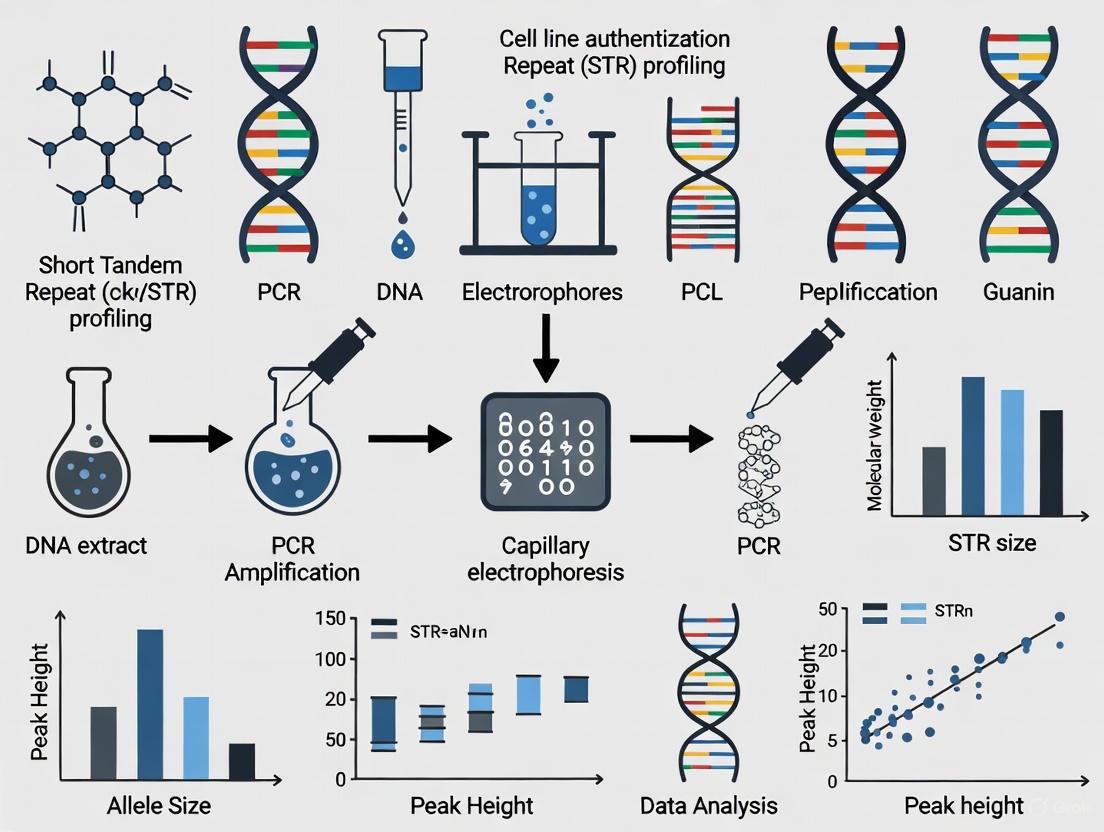
This article provides a comprehensive guide to Short Tandem Repeat (STR) profiling, the gold-standard method for authenticating human cell lines.
STR Profiling for Cell Line Authentication: A 2025 Guide for Research Integrity and Reproducibility
Abstract
This article provides a comprehensive guide to Short Tandem Repeat (STR) profiling, the gold-standard method for authenticating human cell lines. Tailored for researchers, scientists, and drug development professionals, we cover the critical foundation of why authentication is essential to combat misidentification and cross-contamination, which affect an estimated 15-20% of cell lines and can invalidate years of research. The guide details the methodological workflow from DNA extraction to data interpretation, explores advanced troubleshooting for complex profiles and genetic drift, and validates the process through current standards, matching algorithms, and compliance with stringent NIH and journal publication requirements. By demystifying the entire authentication pipeline, this resource aims to empower scientists to ensure the integrity and reproducibility of their cell-based research.
The Critical Why: Understanding the Imperative for Cell Line Authentication
Cell lines serve as indispensable tools in biomedical research and drug development. However, the integrity of this research is critically dependent on the identity and purity of the cell lines used. Misidentification and cross-contamination of cell lines pose a substantial and ongoing threat to scientific validity, leading to irreproducible results, wasted resources, and compromised conclusions [1] [2]. The problem was first identified decades ago, yet it persists as a significant challenge for the research community [3] [4]. This application note quantifies the scale of this issue using the most recent statistical data and provides a detailed protocol for authenticating human cell lines via Short Tandem Repeat (STR) profiling to safeguard research integrity.
Quantifying the Problem: Key Statistics
The following tables summarize comprehensive data on the prevalence and impact of cell line misidentification.
Table 1: Global Prevalence and Impact of Misidentified Cell Lines
| Metric | Statistic | Source / Context |
|---|---|---|
| Misidentified cell lines listed in ICLAC registry | 593 | ICLAC Registry (Version 13, 26 April 2024) [1] |
| Estimated cost of studies using two HeLa-contaminated lines (HEp-2 & Intestine 407) | ~$990 Million | Based on 9,894 manuscripts [2] |
| Manuscripts rejected by a major journal due to severe cell line problems | ~4% | Experience of the International Journal of Cancer [2] |
| Prevalence of misidentified human cell lines from secondary sources | 14-18% | Retrospective analysis of DSMZ (1990-2014) [2] |
| General estimate of cell line misidentification | 15-20% | Historical and cross-institutional estimate [4] |
Table 2: Regional Studies on Cell Line Misidentification Rates
| Region | Misidentification Rate | Study Details |
|---|---|---|
| China (Multiple Studies) | 46.0% | 128 of 278 tumor cell lines from 28 institutes [5] |
| 25% | 380 cell lines from 113 sources (CCTCC, 2015) [2] | |
| 85.5% | Cell lines originally established in China (59 of 69 lines) [2] | |
| Germany (DSMZ) | 14-18% | Cell lines obtained from secondary sources (1990-2014) [2] |
| 6% | Cell lines obtained from primary sources [2] |
Table 3: Common Contaminants and Their Impact
| Contaminant | Example Misidentified Lines | Documented Impact |
|---|---|---|
| HeLa (Cervical Adenocarcinoma) | BEL-7402, L-02, QGY-7703, WRL 68, Chang Liver | Accounts for ~40-50% of cross-contamination incidents; affects lines purported to be from liver, stomach, lung, and other tissues [1] [5]. |
| Other Common Contaminants | T-24 (Bladder), HCT-15 (Colon), U-87MG (Brain) | Contaminated lines including LNCaP and EJ [5]. |
| Inter-species Contamination | HIBEC (Rat), C201441 (Mouse) | 20 of 278 cell lines in one study were of non-human origin [5]. |
Experimental Protocol: STR Profiling for Cell Line Authentication
This protocol is adapted from established standards and recent studies [4] [6].
Principle
Short Tandem Repeat (STR) profiling analyzes the length polymorphisms at specific microsatellite loci scattered throughout the human genome. The combination of alleles across multiple loci generates a unique genetic fingerprint for each cell line, which can be compared to reference profiles to verify identity and detect cross-contamination [4] [6].
Equipment and Materials
Table 4: Research Reagent Solutions for STR Profiling
| Item | Function | Example / Specification |
|---|---|---|
| Cell Culture Vessel | To grow cells to sufficient density for DNA extraction. | T-25 or T-75 flask. |
| DNA Extraction Kit | To isolate high-quality genomic DNA. | QIAamp DNA Blood Mini Kit (Qiagen) [6]. |
| DNA Quantification Instrument | To standardize the amount of DNA used in PCR. | Qubit Fluorometer [6]. |
| STR Multiplex PCR Kit | To simultaneously amplify multiple STR loci. | PowerPlex 1.2, Cell ID System, or SiFaSTR 23-plex system [4] [6]. |
| Thermal Cycler | To perform PCR amplification. | ProFlex PCR System [7]. |
| Genetic Analyzer | For capillary electrophoresis to separate and detect amplified STR fragments. | 3500xL Genetic Analyzer with POP-4 polymer [6] [7]. |
| Allelic Ladder | A reference containing known alleles for accurate genotype calling. | Kit-specific allelic ladder. |
| Analysis Software | To assign allele calls based on fragment size. | GeneMapper ID-X Software [7]. |
Step-by-Step Procedure
Cell Culturing and DNA Extraction
- Culture the cell line under its standard conditions until a confluence of 70-80% is reached.
- Harvest approximately 5 x 10^6 cells and extract genomic DNA using a commercial kit according to the manufacturer's instructions [6].
- Quantify the extracted DNA using a fluorometric method (e.g., Qubit) to ensure accurate concentration measurement. Dilute DNA to a working concentration of 1-2 ng/μL in sterile water or TE buffer.
Multiplex PCR Amplification
- Prepare the PCR master mix on ice. A typical 25 μL reaction may contain:
- 10-12.5 μL of Reaction Mix
- 3.75-5 μL of Primer Mix
- 0.75-1.25 μL of DNA Polymerase
- 1 μL of DNA template (1 ng/μL)
- Nuclease-free water to the final volume.
- Load the reactions into a thermal cycler and run using a protocol similar to the following:
- Prepare the PCR master mix on ice. A typical 25 μL reaction may contain:
Capillary Electrophoresis
- Prepare the PCR products for analysis by mixing 1 μL of the amplification product with 10 μL of deionized HiDi formamide and 0.3 μL of an internal size standard (e.g., AGCU Marker SIZ-500) [7].
- Denature the mixture at 95°C for 3-5 minutes and immediately chill on ice.
- Load the samples onto the genetic analyzer. The instrument parameters should be set according to the manufacturer's guidelines for the polymer and capillary array used.
Data Analysis and Interpretation
- Use the allele-calling software (e.g., GeneMapper ID-X) to analyze the raw data. The software will compare the fragment sizes of the samples against the allelic ladder to assign genotypes.
- The generated STR profile (a list of alleles for each locus) is the genetic fingerprint of the tested cell line.
Data Interpretation and Authentication
- Algorithm Comparison: Compare the test STR profile against a reference profile from a certified cell bank (e.g., ATCC, DSMZ) or a database like Cellosaurus.
- Contamination Detection: Multiple alleles at three or more loci suggest intra-species contamination. A single allele per locus (homozygosity) across all loci is unusual and may indicate the cell line is not of human origin [5].
- Database Search: Use online tools like the CLASTR (Cell Line Authentication using STR) search engine to compare the obtained profile against a large database of known cell lines [2] [6].
The following workflow diagram summarizes the key steps and decision points in the STR profiling protocol.
The scale of cell line misidentification and cross-contamination remains unacceptably high, as evidenced by persistent contamination rates in studies from across the globe. The continued use of misidentified cell lines jeopardizes scientific progress, wastes invaluable research resources, and undermines the development of reliable therapies. The implementation of routine STR profiling, as detailed in this protocol, is a critical and accessible defense. By mandating authentication at key checkpoints—such as before initiating new projects, at the time of publication, and when depositing cell lines—researchers, journals, and institutions can collectively uphold the integrity of biomedical science [1] [2] [4].
The establishment of the HeLa cell line from Henrietta Lacks' cervical adenocarcinoma in 1951 marked a revolutionary advancement for biomedical research, providing the first robust human cell line capable of continuous growth in vitro [8] [9]. However, this breakthrough carried an unforeseen consequence: HeLa cells exhibited an extraordinary capacity to contaminate and overgrow other cell cultures [8]. Their aggressive growth characteristics led to widespread misidentification, whereby scientists believed they were working with unique cell lines—such as those from breast cancer or other tissues—when in fact their cultures had been taken over by HeLa [8] [10]. For over fifteen years, this contamination went largely unrecognized, meaning data collected during this period suffered from compromised reproducibility [9].
The seminal work of Stanley Gartler in 1967-1968 exposed the alarming extent of this problem. By analyzing genetic polymorphisms, particularly in the enzyme glucose-6-phosphate dehydrogenase, Gartler demonstrated that 18 extensively used cell lines were all actually HeLa contaminants [11] [9]. This revelation initiated a decades-long challenge that persists today, with at least 209 cell lines in the Cellosaurus database currently identified as misidentified HeLa lines [11]. The HeLa contamination crisis fundamentally underscored the critical importance of cell line authentication, serving as a historical precedent that continues to shape quality control practices in modern biomedical research [8] [9].
Quantitative Impact Assessment
Literature Contamination Scale
The contamination of scientific literature resulting from misidentified cell lines extends far beyond initial research publications. Conservative estimates indicate that approximately 32,755 articles report research conducted with misidentified cells, with these primary papers subsequently cited by an estimated half a million other publications, creating a significant cascade of potential misinformation [10]. The problem demonstrates persistent continuity, with about two dozen new papers published weekly that utilize problematic cell lines [12]. Analysis of the International Cell Line Authentication Committee (ICLAC) database reveals that among 464 cross-contaminated or misidentified human cell lines, HeLa is the most prevalent contaminant, affecting 115 cell lines [13].
Table 1: Documented Impact of Misidentified Cell Lines in Research
| Impact Category | Documented Evidence | Source |
|---|---|---|
| Contaminated Publications | 32,755 articles based on misidentified cells | [10] |
| Secondary Citation Impact | ~500,000 papers citing contaminated literature | [10] |
| Ongoing Publication Rate | ~24 papers per week using problematic cells | [12] |
| Financial Impact | $3.5 billion potentially spent on research involving two misidentified lines (HEp-2, INT 407) | [13] |
| Cell Line Misidentification Rate | 22.5% average misidentification across 3,630 human cell lines | [11] |
| HeLa-Specific Contamination | 115 cell lines contaminated by HeLa; 209 Cellosaurus entries misidentified as HeLa | [11] [13] |
Tissue Representation Distortion
The widespread contamination of cell lines has significantly distorted tissue representation in biomedical research. The ICLAC database documents that 60 previously claimed leukemia cell lines, 35 lung cancer cell lines, and 29 thyroid cancer cell lines used extensively in research are either cross-contaminated or misidentified [13]. This misrepresentation means that substantial research efforts have been directed toward understanding diseases using cellular models that do not actually represent the intended tissues.
Authentication Protocols: STR Profiling
Core Principles of STR Analysis
Short Tandem Repeat (STR) profiling has emerged as the gold standard method for human cell line authentication [14] [13]. This technique exploits the natural variation in hypervariable genomic regions containing tandemly repeated nucleotide sequences (core units of 1-6 base pairs) [11]. The discrimination power of 16-locus STR profiling is approximately 1 × 10⁻²², meaning the probability of a random match between two cell lines from different individuals is extraordinarily low [13].
STR loci typically consist of tetranucleotide repeats (e.g., GATA), though some kits include pentanucleotide repeats [11]. Alleles are distinguished by the number of repeats, with microvariants (containing partial repeats) designated by decimal numbers (e.g., 8.1, 8.2, 8.3) [11]. The analysis involves multiplex polymerase chain reaction (PCR) amplification of multiple STR loci simultaneously, with one primer from each pair fluorescently labeled. The resulting amplicons are separated by capillary electrophoresis and accurately sized against an internal size standard, enabling precise allele calling [11].
Standardized STR Authentication Methodology
Cell Culture and DNA Extraction
- Culture cells under standard conditions, ensuring they are in logarithmic growth phase and have not exceeded appropriate passage numbers [15]
- Harvest approximately 5 × 10⁶ cells and extract genomic DNA using commercial kits (e.g., QIAamp DNA Blood Mini Kit) following manufacturer protocols [6]
- Quantify DNA concentration using fluorometric methods (e.g., Qubit fluorometer) to ensure adequate quality and quantity for PCR amplification [6]
STR Amplification and Fragment Analysis
- Select appropriate STR multiplex kit targeting core authentication loci. Standard systems include:
- Prepare PCR reactions according to manufacturer specifications, ensuring proper positive and negative controls
- Perform capillary electrophoresis using genetic analyzers (e.g., Applied Biosystems instruments) with internal size standards
- Analyze raw data using specialized software (e.g., GeneMapper, GeneManager) for allele calling [15] [6]
Interpretation and Comparison Algorithms Two primary algorithms are used for STR profile comparison:
Tanabe Algorithm:
- Related: ≥90% similarity
- Ambiguous: 80-90% similarity
- Unrelated: <80% similarity [6]
Masters Algorithm:
- Related: ≥80% similarity
- Ambiguous: 60-80% similarity
- Unrelated: <60% similarity [6]
Essential Research Reagents and Solutions
Table 2: Key Reagents for Cell Line Authentication
| Reagent/Category | Specific Examples | Application and Purpose |
|---|---|---|
| STR Multiplex Kits | Promega PowerPlex 18D, ThermoFisher Scientific kits, SiFaSTR 23-plex | Simultaneous amplification of multiple STR loci for comprehensive profiling [15] [6] |
| DNA Extraction Kits | QIAamp DNA Blood Mini Kit | High-quality genomic DNA isolation from cell cultures [6] |
| Quantification Systems | Qubit fluorometer | Accurate DNA concentration measurement for PCR optimization [6] |
| Capillary Electrophoresis Systems | Applied Biosystems Genetic Analyzers, SUPER YEARS Classic 116 | High-resolution fragment separation and sizing [6] |
| Analysis Software | GeneMapper ID-X, GeneManager | Automated allele calling and STR profile generation [15] [6] |
| Reference Databases | ATCC STR database, DSMZ STR database, Cellosaurus, CLASTR | Benchmark STR profiles for comparison and authentication [13] |
Comprehensive Quality Control Framework
Integrated Authentication Approach
Effective cell line management requires a multifaceted quality control strategy extending beyond STR profiling. The American Type Culture Collection (ATCC) recommends several essential verification tests that can be implemented in any research laboratory [15]:
Morphology Monitoring
- Conduct frequent, brief microscopic observations of cell cultures
- Document cell morphology at both high and low culture densities
- Maintain reference images for comparison across passages
- Note that morphology can vary with plating density, culture media, and differentiation state [15]
Growth Curve Analysis
- Establish baseline proliferation characteristics for each cell line
- Determine population doubling times and optimal subculturing schedules
- Identify deviations from normal growth patterns that may indicate contamination or genetic drift [15]
Species Verification
- Perform isoenzyme analysis to confirm species of origin
- Utilize electrophoretic separation of characteristic enzymes
- Detect interspecies contamination through distinct banding patterns [15]
Mycoplasma Testing
- Implement regular screening for mycoplasma contamination using DNA-binding fluorescent dyes (e.g., Hoechst 33258)
- Recognize characteristic extracellular particulate or filamentous fluorescence patterns indicating contamination [15]
Authentication Frequency and Documentation
Leading institutions including the University of Texas MD Anderson Cancer Center have established policies requiring annual cell line authentication, with testing recommended every six months for actively used lines [13]. The National Institutes of Health now expects that key biological resources will be "regularly authenticated" to ensure identity and validity for proposed studies [13]. Proper documentation should include:
- Species, sex, tissue of origin, and official cell line name
- Research Resource Identifier (RRID) for immortalized cell lines
- Source or supplier and acquisition date
- Authentication method (STR profiling) and results
- Mycoplasma testing status and results [14]
The HeLa contamination crisis represents a pivotal historical precedent that fundamentally shaped modern cell culture practices. This crisis demonstrated how easily cell line misidentification can compromise scientific integrity while highlighting the critical need for robust authentication methods. STR profiling has emerged as the definitive solution, providing the precision and reliability necessary to prevent recurrent contamination events. The research community's ongoing development of standardized protocols, expanded STR databases, and rigorous quality control requirements directly addresses the lessons learned from decades of dealing with HeLa contamination. As cell line-based research continues to advance, maintaining these authentication standards remains essential for ensuring scientific reproducibility, validating experimental results, and upholding the integrity of biomedical research worldwide.
Cell line misidentification and contamination represent one of the most pervasive and costly challenges in modern biomedical research. Studies indicate that between 22-36% of research cell lines are misidentified or contaminated, creating a ripple effect that compromises scientific integrity across the globe [16]. This widespread issue potentially invalidates a substantial portion of published research and wastes critical resources. The problem extends beyond scientific misconduct to encompass fundamental flaws in research practices that undermine the very foundation of biomedical advancement.
The economic implications are staggering. The National Institutes of Health (NIH) estimates that billions of dollars are wasted annually on research that cannot be reproduced, with cell line misidentification being a major contributing factor [16]. For individual laboratories, the costs manifest as wasted reagents and materials, lost researcher time and effort, delayed project timelines, compromised grant applications, and irreparable damage to scientific reputation. This resource drain directly impedes progress toward meaningful clinical applications, as therapeutic development built upon flawed models is destined to fail in translation to patient care.
Quantifying the Impact: Scientific and Economic Consequences
The consequences of using unauthenticated cell lines extend across both scientific and economic domains, creating a multifaceted problem that demands systematic address. The table below summarizes the key areas of impact:
Table 1: Consequences of Using Unauthenticated Cell Lines
| Domain | Impact Category | Specific Consequences |
|---|---|---|
| Scientific | Data Integrity | Invalid results, misleading findings, paper retractions, misunderstanding of biological mechanisms [16] [14] |
| Reproducibility | Failure to replicate experiments, inability to validate findings across laboratories, polluted scientific literature [16] [17] | |
| Research Progression | Misguided future studies based on flawed data, delays in discovery, hindered scientific progress [14] | |
| Economic | Direct Costs | Wasted reagents, materials, and research funding; estimated billions lost annually [16] |
| Resource Utilization | Lost researcher time and effort (months to years); delayed project timelines; compromised grant applications [16] | |
| Clinical Translation | Failed clinical trials based on flawed preclinical data; inefficient use of resources that could be directed toward viable therapeutic pathways [14] |
The scientific impact is profound. Research conducted with misidentified cells leads to a cascade of problems, including invalid results, paper retractions, and a fundamental misunderstanding of biological mechanisms [16]. For instance, a 2005 Cancer Research paper was retracted in 2010 after it was discovered that reported phenomena of spontaneous stem cell transformation were actually due to contaminating immortalized cells [17]. Similarly, a study on adenoid-cystic carcinoma was retracted when the cell line used was found to be derived from cervical cancer instead [17]. Such instances not only invalidate individual studies but also misdirect entire research fields, as other investigators build their work upon flawed foundations.
The downstream effects on clinical translation are particularly concerning. Genomic profiling studies have revealed that cell lines used to model specific cancers are sometimes derived from completely different tissues. For example, a review of cell lines used to study esophageal adenocarcinoma found that many were actually derived from lung or gastric cancers [17]. Data from these misidentified lines have been used to support clinical trials, grant applications, and patents, meaning patients may be recruited to flawed drug trials based on incorrect preclinical models. This misdirection represents an enormous ethical and financial burden on the healthcare system and delays the development of effective therapies.
Current Authentication Standards and Methodologies
STR Profiling: The Gold Standard
Short Tandem Repeat (STR) profiling stands as the internationally recognized gold standard for human cell line authentication [16] [14] [18]. This DNA-based technique provides a genetic fingerprint unique to each cell line by analyzing multiple genetic loci containing short, repeated DNA sequences. The resulting profile allows for definitive identification and detection of cross-contamination through comparison against reference databases.
The methodology has been standardized in the ANSI/ATCC ASN-0002-2022 standard, which specifies the methodology for STR profiling, data analysis, quality control, interpretation of results, and implementation of searchable public databases [19]. This consensus method recommends testing a specific set of core STR loci to ensure consistency and comparability across different laboratories and studies. The standard helps verify human origin, evaluate profile consistency between related cell isolates, compare to database profiles, and detect intraspecies cell-cross contamination [19].
Comprehensive Authentication Workflow
A robust authentication process extends beyond basic STR profiling to include multiple complementary methods that collectively ensure comprehensive verification of cell line identity and purity. The following workflow diagram illustrates a complete authentication process:
Figure 1: Comprehensive cell line authentication workflow incorporating multiple verification methods.
As illustrated, a complete authentication protocol includes several key components:
STR Profiling: Core genetic fingerprinting using multiplex PCR amplification of typically 16-24 STR loci plus sex-determining markers, followed by capillary electrophoresis and data analysis [16] [6] [18]. Modern systems may employ 24-plex STR analysis, providing superior discrimination and lowering the Probability of Identity (POI) compared to the minimum recommended markers [18].
Mycoplasma Testing: Detection of this common contaminant through PCR-based methods, direct culture, or DAPI staining, as mycoplasma infection can alter cellular behavior without visible signs [16].
Species Verification: Confirmation of human origin through species-specific PCR targeting mitochondrial genes or isoenzyme analysis to eliminate cross-species contamination [16].
Morphological Assessment: Visual confirmation of characteristic cell morphology and growth patterns under microscopy [16].
The comprehensive approach ensures that cell lines are not only correctly identified but also free from contaminants that could compromise experimental outcomes.
Experimental Protocol: STR Profiling for Cell Line Authentication
Sample Preparation and DNA Extraction
Proper sample preparation is critical for successful STR profiling. The following protocol outlines the standardized procedure for sample preparation and analysis:
Cell Culture and Harvesting: Grow cells under standard conditions until 70-80% confluent. Harvest approximately 5 × 10⁶ cells using standard trypsinization procedures [6].
DNA Extraction: Extract genomic DNA using a commercial kit such as the QIAamp DNA Blood Mini Kit (Qiagen) or equivalent. Follow manufacturer instructions precisely [6].
DNA Quantification and Quality Assessment: Quantify DNA using fluorometric methods (e.g., Qubit Fluorometer) for accuracy. Assess DNA purity by measuring 260/280 ratio. Acceptable samples should have 260/280 ratios between 1.8-2.0. Dilute DNA samples to working concentration (typically 10 ng/μL) in low TE buffer (0.1 mM EDTA) [20].
STR Amplification and Analysis
PCR Amplification: Perform multiplex PCR using a commercial STR kit such as GlobalFiler (24 loci) or Identifiler Plus (16 loci). Set up reactions according to manufacturer's protocol, using 1-2 ng of DNA template per reaction [18] [20].
Capillary Electrophoresis: Analyze PCR products using a genetic analyzer (e.g., ABI 3730xl or 3500xL). Include appropriate size standards and controls in each run [18] [21].
Data Interpretation: Analyze electrophoregrams using specialized software (e.g., GeneMapper). Call alleles based on comparison with allelic ladders provided in kits. Generate a complete allele table for the sample [18] [20].
Profile Comparison and Authentication
Database Comparison: Compare the resulting STR profile with reference profiles in databases such as ATCC, DSMZ, or Cellosaurus using online search tools like CLASTR [6] [20].
Match Calculation: Calculate percent match using established algorithms. The Tanabe algorithm considers profiles with ≥90% similarity as related, while the Masters algorithm uses ≥80% as the threshold for relatedness [6].
Interpretation: Determine authentication status based on match percentage and visual inspection of allele calls. Document any allelic alterations such as loss of heterozygosity or additional alleles that may indicate genetic drift or contamination [6].
Essential Research Reagent Solutions
Implementing a robust cell line authentication program requires specific reagents and tools. The following table details key solutions and their applications:
Table 2: Essential Research Reagent Solutions for Cell Line Authentication
| Reagent/Tool | Function | Application Example |
|---|---|---|
| STR Profiling Kits (GlobalFiler, Identifiler Plus, SiFaSTR 23-plex) | Multiplex PCR amplification of STR loci for genetic fingerprinting | Human cell line identification and cross-contamination detection [6] [18] [20] |
| DNA Extraction Kits (QIAamp DNA Blood Mini Kit) | High-quality genomic DNA isolation from cell samples | Sample preparation for STR profiling and other molecular analyses [6] |
| Genetic Analyzers (ABI 3730xl, 3500xL) | Capillary electrophoresis for STR fragment separation | High-resolution analysis of amplified STR products [18] [21] |
| Analysis Software (GeneMapper, STRmix) | STR data interpretation and profile comparison | Allele calling, profile generation, and match calculation [18] [21] |
| Reference Databases (ATCC, DSMZ, Cellosaurus) | Repository of authenticated STR profiles | Comparison of test profiles with reference standards [20] |
| Mycoplasma Detection Kits (PCR-based, bioluminescence) | Detection of mycoplasma contamination | Ensuring cell cultures are free from microbial contaminants [14] [22] |
Strategic Implementation and Best Practices
Timing and Frequency of Authentication
To maintain cell line integrity throughout a research project, authentication should be performed at critical points in the cell line lifecycle. The recommended timeline and rationale are presented in the following workflow:
Figure 2: Strategic timeline for cell line authentication at critical research stages.
Implementing authentication at these key points prevents resource waste by identifying problems early. Best practices include:
- Upon Acquisition: Authenticate all new cell lines immediately upon receipt, before initiating experiments [18] [17].
- Cell Banking: Authenticate when creating master and working cell banks to ensure frozen stocks are properly identified [18].
- Passage Monitoring: Authenticate every 10 passages or after 2-3 months of continuous culture to monitor genetic drift [18].
- Pre-Publication: Authenticate before manuscript submission to meet journal requirements [14] [18].
- Problem Investigation: Authenticate when encountering inconsistent or irreproducible results to rule out identity issues [18].
Compliance with Funding and Publication Requirements
Major funding agencies and scientific publishers have implemented stringent cell line authentication requirements. Researchers must be aware of these mandates to ensure compliance and maintain eligibility for funding and publication:
- NIH Guidelines: The NIH requires authentication of all cell lines used in funded research, with authentication details included in grant applications [18] [20].
- Journal Policies: Prominent publishers including Nature Publishing Group, American Association for Cancer Research (AACR), and Society for Endocrinology require cell line authentication for manuscript submission [14] [18]. Some journals report rejecting approximately 4% of submitted manuscripts due to severe cell line issues [18].
- Documentation: Researchers must provide species, sex, tissue origin, official cell line name, Research Resource Identifier (RRID), source/supplier, acquisition date, authentication methods, and mycoplasma testing results [14].
The real-world costs of unauthenticated cell lines—measured in wasted funding, squandered time, and hindered clinical translation—represent an unsustainable burden on the biomedical research ecosystem. With misidentification rates persisting at 22-36% despite decades of awareness, systematic implementation of STR profiling and complementary authentication methods is no longer optional but essential [16].
The protocols and strategic frameworks presented in this document provide researchers with a clear roadmap for integrating robust authentication practices into their workflow. By adopting these standards, the scientific community can protect precious resources, ensure the integrity of published literature, and accelerate the translation of basic research into meaningful clinical applications. Only through consistent authentication can we build a reliable foundation for biomedical discovery and therapeutic development.
Cell line authentication is a critical quality control process in biomedical research and drug development, serving to verify that the biological models used in experiments are correctly identified and free from contamination. The use of misidentified or cross-contaminated cell lines has been a persistent issue, leading to unreliable data, wasted resources, and compromised scientific integrity. Historical analyses indicate that 18-36% of cell lines are misidentified, with HeLa cell contamination alone affecting at least 209 different cell lines [11] [18]. In response, major funding agencies and scientific journals now frequently require authentication, making it an essential practice for ensuring research reproducibility and validity [18].
Multiple techniques are available for cell line authentication, each with different applications, strengths, and limitations. This application note provides a detailed comparison of these methods, with a specific focus on establishing why Short Tandem Repeat (STR) profiling is recognized as the gold standard. We further provide explicit protocols for its implementation to support researchers in maintaining the highest standards of cell line integrity.
Comparative Analysis of Authentication Methods
The choice of authentication method depends on the specific research requirements, including the need for discrimination power, throughput, cost, and the ability to detect specific types of contamination. The most common techniques are summarized in Table 1 and discussed in detail below.
Table 1: Comparison of Major Cell Line Authentication Methods
| Method | Principle | Key Applications | Advantages | Limitations |
|---|---|---|---|---|
| STR Profiling | Amplification and analysis of highly polymorphic short tandem repeat loci [11]. | Human cell line authentication; quality control of cell banks; forensic identification [11] [23]. | High discrimination power; cost-effective; well-standardized (ANSI/ATCC); high reproducibility; extensive reference databases [18] [24] [23]. | Primarily optimized for human cells; reduced effectiveness for non-human cell lines [24]. |
| SNP Analysis | Interrogation of single nucleotide polymorphisms distributed across the genome [24]. | High-resolution genetic fingerprinting; non-human cell line authentication; studies of closely related lines [24]. | High specificity and resolution; suitable for cross-species authentication; scalable via NGS or arrays [24]. | Higher cost; requires sophisticated bioinformatics; less established reference databases [24]. |
| Morphological Analysis | Microscopic examination of physical cell characteristics [22]. | Preliminary, rapid check of cell culture health and identity. | Simple, fast, and inexpensive; requires no specialized equipment [22]. | Subjective and insufficient alone; many cell types appear similar [22]. |
| Karyotyping | Analysis of chromosome number and structure [22]. | Identification of gross chromosomal abnormalities and genetic stability. | Detects major genetic changes and aneuploidy; distinguishes lines with similar morphology [22]. | Low resolution; cannot detect identity at the level of an individual donor. |
| Proteomic Analysis | Examination of protein expression profiles via mass spectrometry [22]. | Functional characterization; distinguishing lines with similar genetics but different phenotypes. | Provides functional insights complementary to genetic methods [22]. | Complex and expensive; profiles can change with culture conditions. |
The Gold Standard: STR Profiling
STR profiling targets specific genomic loci containing short, repetitive DNA sequences (typically 2-6 base pairs) that are highly polymorphic in the number of repeats between individuals [11]. The method involves the co-amplification of multiple STR loci in a single multiplex PCR reaction, followed by fragment size separation using capillary electrophoresis (CE) [11] [23]. The resulting combination of alleles across all loci generates a unique genetic fingerprint for each cell line, which can be compared against reference profiles in databases.
Its status as the gold standard is cemented by several factors. It is a robust, cost-effective, and highly reproducible technique [24]. It is supported by international standards, specifically the ANSI/ATCC ASN-0002-2022, which recommends a core set of 13 autosomal STR loci and one sex-determination marker for human cell line authentication [23]. Furthermore, extensive public STR profile databases, such as those from ATCC and DSMZ, facilitate easy comparison and identification [24]. STR profiling is highly effective at detecting interspecies and intraspecies cross-contamination, a common problem in cell culture [22] [11].
Emerging Methods: SNP Analysis and NGS-Based STR
While STR profiling with CE remains the dominant method, new technologies are emerging. SNP analysis offers higher resolution genotyping and is particularly useful for authenticating non-human cell lines, where STR databases are limited [24]. However, it typically requires more complex and costly platforms like next-generation sequencing (NGS) or SNP arrays [24].
NGS is also being applied to STR profiling itself, in methods like the STRaM (Short Tandem Repeat and Mutation) framework [25]. This approach sequences the STR loci, capturing not only length variations but also single nucleotide changes within the repeats or flanking regions, which are invisible to CE. This provides even greater discriminatory power and can be integrated with the analysis of engineered mutations in advanced cell products [25].
Detailed STR Profiling Protocol
This section provides a standardized workflow for authenticating human cell lines using STR profiling with capillary electrophoresis, in accordance with ANSI/ATCC guidelines [23].
The diagram below illustrates the end-to-end STR profiling workflow.
Step-by-Step Protocol
Sample Preparation and DNA Extraction
- Cell Culture: Grow the cell line under standard conditions to obtain approximately 5 × 10^6 cells [6].
- DNA Extraction: Isolate genomic DNA using a commercial kit, such as the QIAamp DNA Blood Mini Kit, following the manufacturer's instructions [6]. Other validated extraction methods are also acceptable.
- DNA Quantification: Accurately quantify the DNA using a fluorometric method (e.g., Qubit fluorometer). The ideal input for most STR kits is 0.5-2.0 ng/µL of high-quality DNA [6] [23]. Store extracted DNA at -80°C if not used immediately.
Multiplex PCR Amplification
- Kit Selection: Use a commercially available STR multiplex kit. Common choices include the GlobalFiler Kit (24 loci), Identifiler Plus Kit (16 loci), or other kits compliant with ANSI/ATCC recommendations [23].
- PCR Setup: Prepare reactions according to the kit's instructions. A typical 25 µL reaction contains PCR master mix, primer set, and 1-2 ng of template DNA [23].
- Thermal Cycling: Perform amplification on a validated thermal cycler (e.g., GeneAmp PCR System 9700). A typical profile includes an initial denaturation (95-96°C for 1-10 min), followed by 25-30 cycles of denaturation (94°C for 1 min), annealing (59°C for 1 min), and extension (72°C for 1 min), with a final extension (60°C for 10-45 min) [23].
Capillary Electrophoresis and Data Analysis
- Sample Preparation: Dilute the PCR product according to the instrument manufacturer's specifications. Combine with an internal size standard (e.g., LIZ) and deionized formamide for denaturation [23].
- Electrophoresis: Inject the sample into a capillary electrophoresis instrument (e.g., ABI 3500 or 3730xl Genetic Analyzer) using a standard polymer (e.g., POP-4/7) and array (36 cm/50 cm) [6] [23].
- Allele Calling: Analyze the raw data with dedicated software (e.g., GeneMapper). The software compares the sample's fragment sizes to an allelic ladder included in the run to assign allele calls (number of repeats) for each STR locus [11] [23].
Data Interpretation and Authentication
The final STR profile is a string of allele calls for each locus. Authentication is performed by comparing this query profile to a reference profile.
- Algorithms: Two common algorithms are used to calculate a similarity score:
- Tanabe Algorithm:
Percent Match = (2 × number of shared alleles) / (total alleles in query + total alleles in reference) × 100%[6]. A score of ≥90% indicates relatedness (likely the same donor). - Masters Algorithm:
Percent Match = (number of shared alleles / total number of alleles in query profile) × 100%[6]. A score of ≥80% indicates relatedness.
- Tanabe Algorithm:
- Online Tools: Use public search tools like CLASTR to compare the generated profile against cell line databases [6].
- Contamination Detection: Mixed STR profiles (more than two alleles at multiple loci) suggest contamination. The level of contamination can be semi-quantitatively assessed by the peak height ratios in the electropherogram [23].
Essential Research Reagent Solutions
Successful implementation of STR profiling relies on specific reagents and instruments. Key components are listed in the table below.
Table 2: Key Reagents and Tools for STR Profiling
| Item | Function/Description | Example Products/Suppliers |
|---|---|---|
| STR Multiplex Kit | Pre-optimized master mix containing primers for co-amplifying multiple STR loci. | Thermo Fisher GlobalFiler (24 loci) [18] [23]; Promega PowerPlex Fusion 6C [23]. |
| DNA Polymerase | Enzyme for PCR amplification; typically supplied hot-start and in the master mix. | Included in STR kits [23]. |
| Capillary Electrophoresis Instrument | Instrument for separating fluorescently labeled DNA fragments by size. | Applied Biosystems 3500 Series, 3730xl [23]. |
| Analysis Software | Software for automated allele calling and genotyping from CE data. | GeneMapper Software (v5/6) [6] [23]. |
| DNA Size Standard | Internal standard for precise fragment sizing in each sample. | LIZ-labeled size standards (supplied with kits) [23]. |
| Allelic Ladder | A standard containing common alleles for each locus; essential for accurate allele designation. | Included in STR kits [11] [23]. |
| DNA Quantification Kit | Fluorometric assay for precise measurement of double-stranded DNA concentration. | Qubit dsDNA HS Assay Kit [6]. |
Recommended Authentication Schedule
To maintain cell line integrity, STR profiling should be performed:
- Upon acquisition of a new cell line [18].
- Upon creation of a new cell line or working cell bank [18].
- Every 3 months or approximately every 10 passages during continuous culture [18].
- Before starting a new study or before publishing or submitting a grant application [18].
STR profiling remains the most robust, standardized, and widely accepted method for human cell line authentication. Its established protocols, cost-effectiveness, and powerful discriminatory ability make it indispensable for ensuring research reproducibility. While emerging technologies like NGS-based STR and SNP analysis offer enhanced resolution for specific applications, the CE-based STR protocol detailed here provides the foundational practice for quality control in biomedical research and drug development. Adherence to this protocol and a regular authentication schedule is critical for generating reliable and trustworthy scientific data.
The Practical How: A Step-by-Step Guide to the STR Profiling Workflow
Short Tandem Repeat (STR) profiling stands as the internationally recognized gold-standard method for human cell line authentication. This technique is critical for ensuring research integrity, as misidentified or cross-contaminated cell lines have been a persistent problem, with estimates suggesting that 18-36% of all cell lines are either misidentified or cross-contaminated with another cell line [26]. The validity of experimental data often fundamentally depends on the confirmed identity of the cell line under investigation [11]. STR profiling analyzes highly polymorphic regions of the genome consisting of short, repeating DNA sequences (typically 2-6 base pairs in length) that are scattered throughout the human genome. The number of repeats at each locus varies considerably between individuals, creating a unique genetic fingerprint that can definitively identify a specific cell line and its donor [11]. This application note details the core components—STR loci, commercial kits, and the amelogenin sex marker—within the context of standard authentication protocols, providing researchers and drug development professionals with the essential knowledge for implementation.
Core STR Loci and Their Analysis
Standard Loci Panels and Their Significance
A core set of STR loci has been standardized for human cell line authentication to ensure consistency and reproducibility across laboratories worldwide. The most established standard is outlined in the ANSI/ATCC ASN-0002 guidelines, which define the essential loci for comparison against reference databases [26] [27]. These loci are selected for their high degree of polymorphism in human populations, providing exceptional discriminatory power.
The table below summarizes the core and extended STR loci used in common profiling systems:
Table 1: Core and Extended STR Loci in Common Authentication Systems
| Genetic Locus | PowerPlex 16HS [26] | ATCC Service [27] | AmpFLSTR Identifiler Plus [20] | Included in ASN-0002 Core? |
|---|---|---|---|---|
| D8S1179 | Yes | Information Missing | Information Missing | No |
| D21S11 | Yes | Information Missing | Information Missing | No |
| D7S820 | Yes | Information Missing | Information Missing | Yes |
| CSF1PO | Yes | Information Missing | Information Missing | Yes |
| D3S1358 | Yes | Information Missing | Information Missing | No |
| TH01 | Yes | Information Missing | Information Missing | Yes |
| D13S317 | Yes | Information Missing | Information Missing | Yes |
| D16S539 | Yes | Information Missing | Information Missing | Yes |
| vWA | Yes | Information Missing | Information Missing | Yes |
| TPOX | Yes | Information Missing | Information Missing | Yes |
| D18S51 | Yes | Information Missing | Information Missing | No |
| D5S818 | Yes | Information Missing | Information Missing | Yes |
| FGA | Yes | Information Missing | Information Missing | No |
| Penta D | Yes | Information Missing | Information Missing | No |
| Penta E | Yes | Information Missing | Information Missing | No |
| Amelogenin | Yes | Information Missing | Yes | Yes |
| Total Loci | 15 autosomal + Amelogenin | 17 autosomal + Amelogenin | 15 autosomal + Amelogenin | 8 core loci + Amelogenin |
The eight core loci considered essential for database matching (D5S818, D13S317, D7S820, D16S539, vWA, TH01, TPOX, and CSF1PO) provide a sufficient statistical basis for confirming or rejecting a cell line's identity [20]. The expansion to 15-17 loci in commercial kits enhances the power of discrimination, which is particularly useful for distinguishing between closely related cell lines or resolving complex mixtures.
Principles of STR Genotyping and Capillary Electrophoresis
The process of STR genotyping relies on the amplification of these loci via polymerase chain reaction (PCR) using fluorescently labeled primers, followed by fragment size separation using capillary electrophoresis (CE).
- PCR Amplification: Primers are designed to flank the STR region. One primer in each pair is labeled with a fluorescent dye. The PCR process exponentially amplifies the target sequences, resulting in fragments whose sizes are determined by the number of repeats at each locus [11].
- Capillary Electrophoresis: The amplified products are injected into a capillary array filled with a polymer matrix. An applied electric field causes the DNA fragments to migrate through the capillary, with smaller fragments moving faster than larger ones. This separates the DNA fragments by size with single-base-pair resolution [28].
- Detection and Analysis: As DNA fragments pass a detector at the end of the capillary, a laser excites the fluorescent dyes, and the emitted light is captured. The data is compiled into an electropherogram, which displays peaks corresponding to the different alleles present at each locus. The size of each allele is determined by comparison to an internal size standard, and the allele call (e.g., 10, 11) is assigned by comparing the fragment size to an allelic ladder containing common variants for that locus [11] [29].
Figure 1: STR Profiling Workflow. The process involves DNA extraction, multiplex PCR, fragment separation by capillary electrophoresis, fluorescent detection, and bioinformatic analysis to generate a final STR profile.
The Amelogenin Sex Marker
Biological Function and Profiling Utility
The amelogenin gene is a critical component of forensic and cell authentication STR kits, serving as a marker for biological sex determination. Unlike the polymorphic STR loci, amelogenin is a gene that codes for a protein involved in enamel formation. It is located on both the X (AMELX) and Y (AMELY) chromosomes [30]. The utility of amelogenin in profiling arises from a 6-base pair (bp) deletion in the AMELX gene compared to AMELY. PCR primers are designed to flank this region, resulting in amplicons of different sizes—112 bp for the X chromosome and 118 bp for the Y chromosome [30].
When analyzed, a female cell line (XX) will show a single peak at 112 bp, while a male cell line (XY) will show two peaks, one at 112 bp and another at 118 bp [26] [30]. This provides a quick and reliable method to verify the sex of a cell line, which is a fundamental attribute that should match the donor's sex and the historical data for the cell line.
Applications and Privacy Considerations
The primary application of the amelogenin marker in cell line authentication is to provide an additional data point for identity confirmation. For instance, if a cell line purported to be from a female donor shows a Y chromosome signal, this is a clear indicator of misidentification or cross-contamination with a male cell line [26]. Furthermore, the marker is invaluable for:
- Verifying xenograft models: Confirming the human origin of cells grown in mouse models and checking for contamination with mouse cells [26].
- Quality control: Ensuring that no cross-contamination has occurred between cell lines of different sexes in the same laboratory.
It is important to note that while amelogenin is a robust marker, its use touches upon issues of genetic privacy, as biological sex is considered personal data. However, in the context of cell line authentication, its utility for quality control and identity verification is universally regarded as outweighing privacy concerns [31].
Commercial STR Kits and Reagent Solutions
The standardization of STR profiling has been greatly facilitated by the availability of commercial multiplex PCR kits. These kits provide pre-optimized, ready-to-use master mixes containing primers for the core STR loci, ensuring reproducibility and inter-laboratory consistency.
Table 2: Research Reagent Solutions for STR Profiling
| Kit / Solution Name | Primary Application | Key Features & Loci | Function & Utility |
|---|---|---|---|
| PowerPlex 16 HS Kit [26] | Human Cell Line Authentication | 15 autosomal STRs, Amelogenin, 1 mouse marker | High sensitivity, includes species contamination check. |
| AmpFLSTR Identifiler Plus [20] | Human Cell Line Authentication | 15 autosomal STRs, Amelogenin | Used in forensic casework; high discrimination power. |
| GlobalFiler Kit [29] | Forensic & Identity Testing | Expanded set of >20 STRs | Increased discriminative power for complex samples. |
| ATCC FTA Sample Collection Kit [27] | Sample Preparation & Shipping | Chemicals for cell lysis & DNA protection | Simplifies sample transport at ambient temperature. |
| Hi-Di Formamide [28] | Capillary Electrophoresis | Denaturant for DNA samples | Ensures DNA is single-stranded for injection, improving resolution. |
| POP-1 Polymer [28] | Capillary Electrophoresis | Sieving polymer matrix | Separates DNA fragments by size during electrophoresis. |
These kits are designed for use with specific instrumentation, such as the Applied Biosystems 3130 or 3500 Genetic Analyzers, which automate the capillary electrophoresis and detection process [29]. The choice of kit may depend on the specific requirements of the laboratory, the need for compatibility with public database loci (like the ATCC or DSMZ databases), and the required level of discrimination.
Experimental Protocol for Cell Line Authentication
Sample Preparation and Submission
Proper sample preparation is the most critical step for obtaining a high-quality, interpretable STR profile. The following protocol is compiled from standard operating procedures of leading service providers [26] [20].
- Starting Material: Actively growing cells are recommended. Authentication should be performed on cells at a low passage number to establish a baseline identity.
- Cell Pellet Preparation:
- Harvest between 100,000 and 5 million cells (1 million is ideal).
- Wash cells with a buffer (e.g., PBS) to remove all traces of culture media, serum, or trypsin, as these can inhibit PCR.
- For fresh pellets, ship on dry ice. For dried pellets, ensure the pellet is completely dry using a vacuum system like a SpeedVac (low heat) and ship at ambient temperature.
- Genomic DNA Submission:
STR PCR Amplification and Electrophoresis
This section details the laboratory workflow typically performed by core facilities or automated systems.
- PCR Setup:
- Use a commercial STR multiplex kit (e.g., PowerPlex 16HS or Identifiler Plus).
- Follow the manufacturer's instructions for reaction assembly. A standard reaction uses 25 µL volume containing 1-2 ng of template DNA.
- Perform PCR amplification on a thermal cycler using the manufacturer-specified cycling conditions. This usually involves an initial denaturation, followed by 28-30 cycles of denaturation, annealing, and extension [32].
- Capillary Electrophoresis:
- Sample Denaturation: Mix 1 µL of PCR product with 10 µL of Hi-Di Formamide and an internal size standard. Denature at 95°C for 3 minutes and snap-cool on ice [28].
- Instrument Run: Load the samples onto an instrument like the ABI 3500 Genetic Analyzer. The instrument will automatically inject the samples (e.g., 3 kV for 5-10 seconds), run the electrophoresis, and collect the fluorescence data [29].
- Data Collection: The instrument's software (e.g., GeneMapper ID) will generate electropherograms for each sample.
Figure 2: STR Data Analysis Workflow. The process from raw data to final interpretation involves precise allele sizing and calling, followed by comparison to reference profiles to determine authenticity.
Data Interpretation and Analysis
Calculating Percent Match and Authentication Threshold
The final step in cell line authentication is comparing the STR profile of the test sample to a known reference profile (e.g., from ATCC, DSMZ, or an early passage of the cell line). The match is quantified using a Percent Match calculation [20].
Percent Match = (Number of Shared Alleles / Total Number of Alleles in the Test Profile) × 100
The calculation is typically performed using the eight core STR loci plus amelogenin. A homozygous allele is counted as one allele, while a heterozygous allele is counted as two. The generally accepted threshold for authentication is an 80% match or higher across these core markers. Matches below this level suggest the cell lines are unrelated or may have undergone genetic drift, cross-contamination, or misidentification [20].
Table 3: Example STR Profile Comparison and Percent Match Calculation
| Designation | Reference Cell Line U-87 MG | Test Cell Line | Shared Alleles? |
|---|---|---|---|
| D5S818 | 11, 12 | 11, 12 | Yes (2) |
| D13S317 | 8, 11 | 8, 11 | Yes (2) |
| D7S820 | 8, 9 | 8, 9 | Yes (2) |
| D16S539 | 12 | 11 | No (0) |
| vWA | 15, 17 | 15, 17 | Yes (2) |
| TH01 | 9.3 | 9.3 | Yes (1) |
| AMEL | X, Y | X | Yes (1 - X shared) |
| TPOX | 8 | 8 | Yes (1) |
| CSF1PO | 10, 11 | 10, 11 | Yes (2) |
| Total Shared Alleles | 13 | ||
| Total Alleles in Test Profile | 14 | ||
| Percent Match | (13/14) × 100 = 92.8% |
In the example above, the 92.8% match indicates a high likelihood that the test cell line is authentic and related to the reference U-87 MG profile. The single allele mismatch at D16S539 could be due to genetic drift or a minor contamination, but the overall profile is considered a match.
Troubleshooting and Special Considerations
- Low Template DNA: Samples with less than 100 pg of DNA can suffer from stochastic effects, including allele dropout (failure to amplify an allele), locus dropout (failure of an entire locus), and allele drop-in (appearance of spurious alleles) [32]. Concentrating a sample is generally preferred over splitting it for replicate analysis, as splitting can exacerbate these stochastic effects [32].
- Microvariants (Off-Ladder Alleles): Occasionally, an allele may not align perfectly with the allelic ladder due to a sequence variation within the repeat region (e.g., a 10.1 allele instead of a 10). These "off-ladder" peaks must be manually reviewed and can often be confirmed by consulting manufacturer data or sequencing [29].
- Mouse Marker Contamination Check: Many services now include a marker for mouse DNA to detect interspecies contamination, which is a common issue in labs working with xenografts. These tests can detect as low as 0.5% contaminating mouse DNA [26].
The integrity of biomedical research hinges on the quality of its fundamental reagents, with cell lines being among the most critical. STR profiling, with its standardized core components of polymorphic loci, robust commercial kits, and the informative amelogenin marker, provides a powerful, reproducible, and cost-effective method for cell line authentication. Adherence to detailed protocols for sample preparation, amplification, and data interpretation—particularly the calculation of percent match against reference profiles—is essential for generating reliable results. As mandated by major funding agencies and journals, routine STR authentication is no longer optional but a cornerstone of responsible research practice, safeguarding against the propagation of erroneous data and ensuring the reproducibility of scientific findings.
Cell lines are essential tools in biomedical research, serving as models for cell biology, disease mechanisms, and drug discovery [11]. However, intraspecies and interspecies cross-contamination poses a significant threat to research integrity, with misidentification rates historically ranging from 6% to 100% across various cell line collections [11]. Short Tandem Repeat (STR) profiling has emerged as the gold standard method for cell line authentication due to its high discrimination power, reproducibility, and sensitivity [6] [14]. This application note provides detailed protocols for the complete STR analysis workflow—from DNA extraction to capillary electrophoresis—framed within the context of quality assurance for cell line authentication, a critical requirement for research reproducibility and translational success [14].
Principles of STR Genotyping for Cell Line Authentication
Short Tandem Repeats (STRs) are hypervariable genomic regions consisting of tandemly repeated nucleotide sequences of 1-6 base pairs (bp) in length [11]. These loci are distributed throughout the genome and exhibit significant length polymorphism between individuals, making them ideal for genetic identification. In cell line authentication, STR profiling analyzes a panel of these polymorphic loci to create a unique genetic fingerprint that can be compared against reference profiles to verify cell line identity and detect cross-contamination [11] [6].
The analytical process involves three core technical components: (1) extraction of high-quality DNA from cell cultures; (2) multiplex PCR amplification of multiple STR loci using fluorescently-labeled primers; and (3) separation and detection of amplified fragments via capillary electrophoresis to determine allele sizes based on fragment length [11]. The resulting STR profile provides a digital code that can be compared to reference databases using matching algorithms to confirm authenticity or identify misidentification [6].
The diagram below illustrates the complete STR analysis workflow from sample preparation to data interpretation:
Materials and Reagents
Research Reagent Solutions
Table 1: Essential reagents and materials for STR profiling of cell lines
| Item | Function | Examples/Formats |
|---|---|---|
| DNA Extraction Kit | Isolation of high-quality genomic DNA from cell cultures | QIAamp DNA Blood Mini Kit [6], EZ1 DNA Blood Kits [32] |
| Quantification Kit | Precise measurement of DNA concentration and quality | Qubit fluorometer assays [6], Quantifiler Trio DNA Quantification Kit [21] |
| STR Multiplex Kit | Simultaneous amplification of multiple STR loci | PowerPlex Fusion System [21], SiFaSTR 23-plex system [6] |
| PCR Components | Enzymatic amplification of target STR regions | DNA polymerase, dNTPs, reaction buffers, fluorescent primers [11] |
| Size Standard | Accurate fragment sizing during electrophoresis | Internal lane standards (e.g., CC5 ILS) [32] |
| Electrophoresis Matrix | Medium for fragment separation by size | Polymer solution (e.g., POP-4) for capillary systems [21] |
Experimental Protocols
DNA Extraction from Cell Lines
Principle: Efficient extraction of high-quality, high-molecular-weight DNA is critical for successful STR amplification. Silica-based membrane technology provides a robust method for DNA purification while removing PCR inhibitors.
Protocol (Adapted from QIAamp DNA Blood Mini Kit) [6] [32]:
- Cell Lysis: Harvest approximately 5 × 10^6 cells by centrifugation. Resuspend pellet in 200 µL phosphate-buffered saline and mix with 200 µL of lysis buffer (AL) containing Proteinase K. Incubate at 56°C for 10 minutes until complete lysis occurs.
- Ethanol Precipitation: Add 200 µL of 96-100% ethanol to the lysate and mix thoroughly by vortexing to precipitate DNA.
- Column Binding: Apply mixture to QIAamp Mini spin column and centrifuge at 6,000 × g for 1 minute. DNA binds to silica membrane while contaminants pass through.
- Washing: Wash column twice with wash buffers (AW1 and AW2) to remove residual impurities and salts.
- Elution: Elute pure DNA in 50-100 µL of AE buffer or nuclease-free water preheated to 70°C. Incubate at room temperature for 5 minutes before final centrifugation.
Quality Control: Quantitate DNA using fluorometric methods (e.g., Qubit) [6]. Assess purity by measuring A260/A280 ratio (ideal range: 1.8-2.0). Store extracts at -20°C or -80°C for long-term preservation.
DNA Quantitation and Quality Assessment
Principle: Accurate DNA quantitation ensures optimal template input for multiplex PCR, preventing stochastic effects associated with low-template DNA (LTDNA) while avoiding PCR inhibition from excess DNA.
Protocol (Fluorometric Quantitation) [6]:
- Prepare DNA standards according to manufacturer's protocol for calibration curve generation.
- Dilute 2 µL of DNA extract in working solution containing fluorescent dsDNA-binding dye.
- Incubate mixture for 5 minutes at room temperature protected from light.
- Measure fluorescence using Qubit fluorometer or similar instrument.
- Calculate DNA concentration based on standard curve, ensuring values fall within the kit's linear range.
Technical Note: For degraded samples or LTDNA conditions (<100 pg), use qPCR-based quantitation methods that provide information on DNA degradation state and inhibitor presence [32] [33].
Multiplex PCR Amplification of STR Loci
Principle: Multiplex PCR simultaneously co-amplifies multiple STR loci using primer pairs labeled with different fluorescent dyes, enabling efficient genotyping of numerous markers in a single reaction [11].
Protocol (PowerPlex Fusion System) [21]:
- Reaction Setup: Prepare master mix containing PCR buffer, DNA polymerase, dNTPs, and fluorescently-labeled primers for all STR loci. Include positive and negative controls.
- Template Addition: Add 0.5-1.0 ng of genomic DNA (or volume containing this amount) to reaction mix. For low-template samples, increase cycle number to 34 while monitoring stochastic effects [32].
- Thermal Cycling: Amplify using recommended parameters:
- Initial Denaturation: 96°C for 2 minutes
- Cycling (30 cycles): 94°C for 30 seconds (denaturation), 59°C for 2 minutes (annealing), 72°C for 1 minute (extension)
- Final Extension: 60°C for 30 minutes
- Post-PCR Processing: Store amplified products at 4°C if analyzing immediately, or -20°C for long-term storage.
Technical Considerations: For human cell line authentication, target 16-26 STR loci including core CODIS loci and additional discriminatory markers [11] [6]. For specialized applications, forensic-grade kits with 21+ autosomal STRs provide enhanced discrimination power [6].
Capillary Electrophoresis and Fragment Analysis
Principle: Capillary electrophoresis separates fluorescently-labeled PCR fragments by size with single-base-pair resolution using electrokinetic injection and polymer-filled capillaries, with detection by laser-induced fluorescence [11] [21].
Protocol (3500xL Genetic Analyzer) [21]:
- Sample Preparation: Combine 1 µL of PCR product with 10 µL Hi-Di Formamide and 0.5 µL internal size standard. Denature at 95°C for 3 minutes and immediately chill on ice.
- Instrument Setup: Install appropriate array, polymer, and buffer. Perform spatial and spectral calibration using manufacturer's standards.
- Electrophoresis Parameters: Inject samples at 1.2-3.0 kV for 5-24 seconds. Separate at 15 kV for 20-30 minutes with oven temperature of 60°C.
- Data Collection: Collect fluorescence data across all dye channels using data collection software (e.g., GeneMapper, GeneMarker) [21].
Analysis Parameters: Set analytical thresholds at 50-150 RFU to distinguish true alleles from background noise. Apply locus-specific stutter filters based on kit manufacturer recommendations [32].
Data Analysis and Interpretation
STR Profile Analysis and Allele Calling
Principle: STR analysis software converts electrophoretic data into genotype profiles by comparing fragment sizes to allelic ladders and internal size standards, assigning allele designations based on repeat number [11].
Interpretation Guidelines:
- Allele Calling: Bin detected peaks to the nearest whole or microvariant allele using kit-specific allelic ladders [11].
- Peak Height Thresholds: Apply minimum analytical thresholds (typically 50-150 RFU) and heterozygote peak height balance ratios (generally >60%) [32].
- Stutter Filtering: Implement locus-specific stutter percentages (commonly 4-25% depending on locus and repeat motif) to distinguish true alleles from PCR artifacts [32].
- Microvariants: Designate alleles with partial repeats using decimal notation (e.g., 8.1, 8.2, 8.3 for 1, 2, or 3 bp additions respectively) [11].
Cell Line Authentication Algorithms
Principle: Match algorithms quantify similarity between query and reference STR profiles to determine if cell lines originate from the same donor. Two primary algorithms are used with different matching thresholds:
Table 2: Comparison of STR profile matching algorithms for cell line authentication
| Algorithm | Formula | Interpretation Thresholds | Application Context |
|---|---|---|---|
| Tanabe Algorithm | ( \frac{\text{number shared alleles}}{\text{total number of alleles in query profile}} \times 100\% ) | Related: ≥90%Ambiguous: 80-90%Unrelated: <80% | More stringent matching for closely related lines [6] |
| Masters Algorithm | ( \frac{2 \times \text{number shared alleles}}{\text{total alleles in query + total alleles in reference}} \times 100\% ) | Related: ≥80%Ambiguous: 60-80%Unrelated: <60% | More lenient matching for potentially divergent lines [6] |
Low-Template DNA Considerations
Principle: Low-template DNA (<100 pg) exhibits exaggerated stochastic effects including allele drop-out, locus drop-out, and increased stutter. Special interpretation guidelines are required for these challenging samples.
Table 3: Comparison of STR profiling approaches for low-template DNA analysis
| Parameter | Consensus Profiling (Replicate PCR) | Concentrated Single PCR | Interpretation Implications |
|---|---|---|---|
| Template per Reaction | Divided (e.g., 33.3 pg for 100 pg total) | Entire extract (100 pg) | Consensus reduces template below stochastic threshold [32] |
| Allele Drop-out Rate | Increased due to lower template | Reduced with higher template | Concentrated approach preserves more alleles [32] |
| Allele Drop-in Rate | Eliminates non-repeating artifacts | Retains sporadic contaminants | Consensus removes spurious alleles effectively [32] |
| Profile Completeness | Lower due to information loss | Higher percentage of correct loci | Concentrated method provides more complete profiles [32] |
Interpretation Strategy: For limited samples where concentration is not possible, consensus profiling from 2-4 replicates provides reliable data by eliminating sporadic contaminants. When sufficient DNA exists, concentrated single PCR yields more complete profiles with fewer allele drop-out events [32].
Quality Assurance and Validation
Robust quality assurance measures are essential for reliable STR genotyping. Include appropriate controls at each stage: positive controls with known genotypes, negative controls to detect contamination, and internal size standards for accurate fragment sizing [21]. Regular validation of laboratory protocols ensures consistent performance, with participation in proficiency testing programs to maintain analytical standards. For cell line authentication specifically, compare STR profiles to reference databases such as Cellosaurus and CLASTR to verify identity and detect cross-contamination [6] [14]. Implement routine mycoplasma testing and documentation of cell line passage number to ensure genetic stability over time [11] [14].
In the field of cell line authentication, Short Tandem Repeat (STR) profiling stands as the gold standard for ensuring the identity and genetic stability of biological models [6] [22]. The process of translating raw electrophoretic data into a reliable genetic profile is a critical, multi-stage procedure. This protocol details the journey from the initial electropherogram (EPG), the graphical data output, to the final allele calls that constitute a cell line's unique genetic fingerprint. The integrity of biomedical research hinges on the accuracy of this interpretation, as misidentification or cross-contamination of cell lines remains a persistent problem that can compromise experimental results and their reproducibility [11].
The Electropherogram: A Data-Rich Profile
An electropherogram is a multi-channel plot generated by capillary electrophoresis instruments following the PCR amplification of STR loci. Each fluorescent peak in the EPG represents a DNA fragment, with its position on the x-axis corresponding to the fragment's length (in base pairs) and its height on the y-axis reflecting the signal intensity, typically measured in Relative Fluorescence Units (RFU) [11].
Critical information encoded within the EPG includes:
- Allelic Peaks: True alleles originating from the cell line's genome.
- Stutter Peaks: Artifacts typically one repeat unit smaller than true alleles, caused by polymerase slippage during PCR.
- Spectral Overlap (Pull-Up): Peaks resulting from fluorescent dye emission spectra overlapping into adjacent color channels.
- Baseline Noise: Background signal that must be distinguished from true biological data.
The following diagram illustrates the core workflow for interpreting an electropherogram and authenticating a cell line.
The Interpretation Workflow: From Peaks to Profile
Peak Detection and Allele Calling
The first step involves identifying true allelic peaks amidst background noise and artifacts. This process relies on establishing analytical thresholds, which are laboratory-defined RFU values; peaks exceeding this threshold are considered for allele designation [21]. Key considerations during peak detection include:
- Heterozygote Balance: Assessing the peak height ratio between the two alleles at a heterozygous locus. Significant imbalance may indicate genetic anomalies or processing issues.
- Peak Morphology: Evaluating the shape and width of peaks to identify potential spectral artifacts or dye blobs.
Artifact Identification and Filtering
A crucial phase of profile interpretation is the recognition and filtering of common artifacts:
- Stutter Products: These are typically less than 15% of the parent allele's height for tetranucleotide repeats. The analyst or software must discount these from the genuine allele call [11].
- Spectral Pull-Up: Corrected by software algorithms and verified by the analyst, ensuring peaks are present in their true spectral channel.
- Baseline Noise: Peaks falling below the analytical threshold are disregarded as instrumental or chemical noise.
Genotype Generation and Quality Assessment
Following artifact filtering, the confirmed alleles are compiled into a genotype for each STR locus. The complete set of genotypes across all loci forms the STR profile of the cell line. This profile must then be checked for quality, including the presence of expected peaks for positive controls and the absence of signal in negative controls [21].
Advanced Tools and Quantitative Data for Analysis
Software-Assisted and AI-Powered Interpretation
Manual interpretation is increasingly supported or replaced by sophisticated software and artificial intelligence (AI) to enhance speed, consistency, and objectivity. Tools like FaSTR DNA rapidly analyze DNA profiles, call alleles, and can estimate the number of contributors in a sample [34]. Furthermore, deep learning models like DNANet, based on a U-Net architecture, demonstrate how AI can learn complex patterns directly from raw electropherogram data to perform allele calling with performance comparable to human analysts [35]. These systems can be trained to classify electropherogram signals into categories such as alleles, stutter, and baseline noise.
Core STR Markers for Authentication
The following table summarizes key autosomal STR loci commonly used in human cell line authentication kits, which provide the high discriminatory power needed for unique identification [6] [11].
Table 1: Essential Autosomal STR Loci for Cell Line Authentication
| STR Locus | Chromosomal Location | Core Repeat Motif | Key Characteristics |
|---|---|---|---|
| D13S317 | 13q31.1 | TATC | Tetranucleotide repeat, highly polymorphic |
| D16S539 | 16q24.1 | GATA | Tetranucleotide repeat, common in multiplex kits |
| D5S818 | 5q23.2 | AGAT | Tetranucleotide repeat, high heterozygosity |
| vWA | 12p13.31 | [TCTG][TCTA] | Complex repeat, excellent for discrimination |
| TH01 | 11p15.5 | TCAT | Tetranucleotide repeat, simple structure |
| TPOX | 2p25.3 | GAAT | Tetranucleotide repeat, located in an intron |
| CSF1PO | 5q33.1 | AGAT | Tetranucleotide repeat, stable and reliable |
| D7S820 | 7q21.11 | GATA | Tetranucleotide repeat, widely used |
| FGA | 4q28 | CTTT | Tetranucleotide repeat, highly polymorphic |
Algorithms for Profile Comparison and Authentication
Once an STR profile is generated, it must be compared to a reference database to authenticate the cell line. The following table outlines two primary algorithms used for calculating similarity scores and interpreting the results [6].
Table 2: Algorithms for STR Profile Comparison in Cell Line Authentication
| Algorithm | Formula | Interpretation Thresholds | Strengths |
|---|---|---|---|
| Tanabe Algorithm | ( \frac{2 \times \text{number shared alleles}}{\text{total alleles in query} + \text{total alleles in reference}} \times 100\% ) | ≥90%: Related80-90%: Ambiguous<80%: Unrelated | Stricter, penalizes allele imbalances more heavily. |
| Masters Algorithm | ( \frac{\text{number shared alleles}}{\text{total number of alleles in query profile}} \times 100\% ) | ≥80%: Related60-80%: Mixed/Uncertain<60%: Unrelated | More lenient, useful for complex or contaminated lines. |
The Scientist's Toolkit: Research Reagent Solutions
Table 3: Essential Materials and Kits for STR Profiling
| Item/Kit Name | Function/Application | Key Features |
|---|---|---|
| QIAamp DNA Blood Mini Kit | Genomic DNA extraction from cell lines. | Silica-membrane technology for high-purity DNA. |
| SiFaSTR 23-plex System | STR genotyping for authentication. | Amplifies 21 autosomal STRs and 2 sex markers. |
| PowerPlex Fusion 6C System | Amplification of STR loci for forensic & cell authentication. | Multiplexes over 20 loci including SE33. |
| Quantifiler Trio DNA Quantification Kit | Quantitative PCR (qPCR) for assessing DNA quality/quantity. | Measures human DNA concentration and degradation index. |
The precise journey from a complex electropherogram to a definitive set of allele calls is foundational to reliable cell line authentication. By adhering to rigorous protocols for peak interpretation, artifact filtering, and utilizing advanced tools and algorithms for profile comparison, researchers can confidently verify their cellular models. This process is not merely a technical exercise but a critical safeguard for research integrity, ensuring that experimental results are built upon a foundation of authentic and genetically defined biological materials.
In biomedical research, the integrity of experimental models is paramount. Short Tandem Repeat (STR) profiling has emerged as the gold standard for authenticating human cell lines and patient-derived models [6] [36]. This process is critical for preventing erroneous conclusions and massive resource waste, exemplified by studies estimating hundreds of millions of dollars spent on research using misidentified cell lines [36]. The core of STR-based authentication lies in comparing the genetic fingerprint of a test sample against a reference profile to determine if they originate from the same source. For this determination, two algorithmic approaches have become foundational: the Tanabe algorithm and the Masters algorithm. This application note provides a detailed overview of these critical matching methodologies, their implementation in contemporary tools, and standardized protocols for their application in cell line authentication workflows.
Algorithmic Foundations and Mathematical Formulae
The Tanabe and Masters algorithms provide quantitative measures of similarity between two STR profiles by comparing the number of shared alleles. Each employs a distinct formula, leading to differences in sensitivity and application.
The Tanabe Algorithm
The Tanabe algorithm, also referred to as the Sørenson–Dice coefficient, calculates similarity based on the proportion of shared alleles between two profiles, considering the total number of alleles in both the query and reference samples [6] [36].
Formula: [ \text{Tanabe Score} = \frac{2 \times \text{Number of Shared Alleles}}{\text{Total Number of Alleles in Query Profile} + \text{Total Number of Alleles in Reference Profile}} \times 100\% ]
This formula places a strong emphasis on exact allele matches and penalizes imbalances more heavily, making it particularly stringent when comparing profiles with different numbers of alleles, such as in cases of polyploidy or contamination [6].
The Masters Algorithm
The Masters algorithm offers a slightly different approach and can be computed in two variations: one versus the query and one versus the reference [36] [37]. This provides flexibility in interpreting potential contamination events.
Formulae:
- Masters (versus Query): ( \text{Score} = \frac{\text{Number of Shared Alleles}}{\text{Total Number of Alleles in Query Profile}} \times 100\% )
- Masters (versus Reference): ( \text{Score} = \frac{\text{Number of Shared Alleles}}{\text{Total Number of Alleles in Reference Profile}} \times 100\% )
The Masters (vs. Query) score indicates what fraction of the query sample's alleles are found in the reference, which is useful for identifying the query as a potential contaminant in a reference sample. Conversely, the Masters (vs. Reference) score indicates what fraction of the reference sample's alleles are present in the query [36].
Comparative Analysis
The table below summarizes the key characteristics and standard interpretation thresholds for the two algorithms.
Table 1: Comparative Summary of Tanabe and Masters Algorithms
| Feature | Tanabe Algorithm | Masters Algorithm |
|---|---|---|
| Alternative Name | Sørenson–Dice coefficient [36] | N/A |
| Core Calculation | ( \frac{2 \times \text{shared alleles}}{ \text{total query alleles} + \text{total reference alleles}} ) [6] [36] | ( \frac{\text{shared alleles}}{\text{total alleles in profile}} ) [36] [37] |
| Typical Match Threshold | ≥ 90% for "Related" [6] | ≥ 80% for "Related" [6] |
| Ambiguous Range | 80% - 90% [6] | 60% - 80% [6] |
| Unrelated Range | < 80% [6] | < 60% [6] |
| Key Characteristic | More stringent; penalizes allele imbalances heavily [6] | More lenient; useful for identifying contaminant in a mixture [36] |
The stricter "Related" threshold for the Tanabe algorithm (≥90%) compared to the Masters algorithm (≥80%) is a direct result of their underlying mathematics. The Tanabe formula's doubling of shared alleles in the numerator and use of the combined allele total from both profiles makes achieving a high score more challenging [6].
Workflow for STR Profile Comparison
The practical application of these algorithms typically follows a structured process, from data generation to final match interpretation. The following workflow visualizes the standard operating procedure for authenticating a cell line using STR profiling.
Workflow Description: The process begins with DNA extraction and STR profile generation from the cell line in question. The resulting profile is then compared to a reference profile using the Tanabe and/or Masters algorithms. If the similarity score meets or exceeds the established match threshold (e.g., ≥80-90%), the cell line is authenticated. If the score is below the threshold, the sample is flagged for further investigation. A critical next step is to check for sample mixing, typically defined by the presence of three or more alleles at three or more loci [36] [37]. If mixing is detected, contamination is likely. If no mixing is found, other causes such as genetic drift or microsatellite instability should be considered [36].
Essential Research Reagents and Tools
The implementation of the Tanabe and Masters algorithms requires a suite of specific laboratory reagents and bioinformatics tools. The following table details key solutions essential for conducting STR authentication.
Table 2: Research Reagent Solutions for STR Profiling and Authentication
| Reagent / Tool | Function / Description | Example / Specification |
|---|---|---|
| STR Multiplex Kits | Simultaneously amplifies multiple STR loci via PCR for genetic fingerprinting. | SiFaSTR 23-plex system (21 autosomal STRs, Amelogenin, Y-indel) [6] |
| DNA Extraction Kit | Purifies high-quality genomic DNA from cell line samples for downstream STR analysis. | QIAamp DNA Blood Mini Kit [6] |
| Analysis Software | Compares STR profiles using algorithms, detects sample mixing, and manages data. | STRprofiler [36] [37] |
| STR Database | Public knowledge base of cell line STR profiles for reference and comparison. | Cellosaurus / CLASTR tool [6] [36] |
Detailed Experimental Protocol for STR Authentication
This section provides a step-by-step protocol for authenticating a human cell line using STR profiling and the described matching algorithms.
Sample Preparation and DNA Extraction
- Culture Cells: Revive the frozen cell line sample and culture according to vendor instructions or established laboratory protocols for a minimum of two passages to ensure robust growth [6].
- Harvest Cells: Collect approximately 5 × 10⁶ cells during the log phase of growth.
- Extract DNA: Purify genomic DNA using a commercial extraction kit, such as the QIAamp DNA Blood Mini Kit, following the manufacturer's instructions [6].
- Quantify DNA: Accurately measure DNA concentration using a fluorometer (e.g., Qubit). Store DNA at -80°C until use.
STR Genotyping
- Amplify STR Loci: Perform multiplex PCR using a forensic or authentication-grade STR kit (e.g., a 23-plex system). The reaction should include at a minimum the core 13-23 STR markers recommended for cell line authentication [6].
- Fragment Separation: Separate PCR amplicons by capillary electrophoresis on a genetic analyzer (e.g., Classic 116 Genetic Analyzer).
- Allele Calling: Use the instrument's software (e.g., GeneManager) to automatically call alleles at each STR locus. Manually review all peaks for quality and accuracy.
Profile Comparison and Analysis
- Data Input: Compile the STR profile data into a standardized format (either "long" or "wide" format) compatible with analysis tools like STRprofiler [37].
- Run Comparison Analysis: Execute the comparison using STRprofiler or a similar tool.
- Interpret Results:
- Check for Contamination: Inspect the analysis report for flags indicating potential sample mixing. A sample with three or more markers displaying three or more alleles should be considered potentially contaminated and investigated further [36] [37].
- Query Public Database (Optional but Recommended): For novel cell lines or to confirm identity, query the profile against the Cellosaurus database using the CLASTR tool, which can be done directly through STRprofiler.
- Command Example:
strprofiler clastr -o ./clastr_results STR_sample.xlsx[37]
- Command Example:
The Tanabe and Masters algorithms are cornerstones of modern cell line authentication, providing robust, quantitative measures for establishing genetic identity. While the Tanabe algorithm offers greater stringency, the dual-mode Masters algorithm provides valuable insights for diagnosing contamination. The integration of these algorithms into accessible bioinformatics tools like STRprofiler has significantly streamlined the authentication process, enabling researchers to efficiently maintain the integrity of their biological models. As the market for cell line authentication continues to grow, driven by demands for research reproducibility and regulatory compliance [38], the consistent and correct application of these matching algorithms remains a critical practice for ensuring the validity of scientific discoveries in biomedical research and drug development.
Cell line authentication is a critical quality control pillar in biomedical research, ensuring the identity and validity of biological models used in scientific discovery and drug development. Misidentified or cross-contaminated cell lines pose a significant threat to research integrity, leading to irreproducible results, wasted resources, and compromised translational potential [14]. Within the broader thesis on Short Tandem Repeat (STR) profiling methodologies, this application note establishes a comprehensive framework for implementing authentication practices throughout the entire research lifecycle. STR profiling, recognized as the gold standard method for human cell line authentication, provides a DNA fingerprint based on highly polymorphic loci scattered throughout the genome, offering a powerful tool for confirming cell line identity [39] [6]. By integrating authentication checkpoints from acquisition to publication, researchers can safeguard their work against the pervasive challenges of misidentification and genetic drift, thereby strengthening the foundation of biomedical research.
The Critical Need for Authentication
The use of unauthenticated cell lines has far-reaching consequences that undermine research validity. Studies have documented a persistent problem of misidentified and cross-contaminated lines, which can invalidate otherwise carefully designed studies [14]. The consequences extend beyond individual experiments, contributing to irreproducible data that hinders scientific progress and delays the development of clinical applications [14]. This problem is exacerbated by phenomena such as genetic and phenotypic instability over time, where cells undergo changes in gene expression, chromosomal rearrangements, and potential mutations during prolonged cultivation [14]. Furthermore, microbial contamination, particularly from mycoplasma, represents another widespread issue that can alter cell behavior and metabolism without visible signs [39]. The scientific community's response has been decisive, with major journals, funding agencies like the NIH, and organizations such as the International Cell Line Authentication Committee (ICLAC) now mandating or strongly recommending rigorous authentication practices [14] [39]. These initiatives highlight a collective commitment to upholding research integrity across the field.
STR Profiling: The Gold Standard Methodology
Principles and Technical Foundation
Short Tandem Repeat (STR) profiling leverages the natural variation in repetitive DNA sequences to create a unique genetic fingerprint for each cell line. STRs consist of short (typically 2-7 base pair) repeating units that are highly polymorphic between individuals, meaning the number of repeats varies significantly across the human population [39] [40]. This variability makes them ideal markers for discrimination. The authentication process involves several integrated steps: DNA extraction from cell samples, PCR amplification of multiple STR loci using fluorescently labeled primers, capillary electrophoresis to separate amplified fragments by size, and software analysis to generate a distinct STR profile or allelic pattern for each cell line [39] [6]. This profile serves as a referenceable genetic signature.
The discrimination power of STR profiling depends on the number and polymorphism of the loci examined. The original 8-core STR loci recommended by ATCC have been expanded to 13 for improved accuracy, mirroring advancements in forensic science [6]. Recent studies demonstrate that using forensic-grade STR kits with 23 or more markers provides even greater discriminatory power and reliability, enabling precise detection of cross-contamination and genetic changes over time [6]. The high sensitivity of STR analysis allows detection of minor contaminants in mixed samples, while its standardization across platforms facilitates inter-laboratory comparison and database referencing [39] [6].
Workflow and Analysis
The following diagram illustrates the comprehensive STR profiling workflow, from sample preparation to final authentication decision:
Figure 1: STR Profiling Workflow for Cell Line Authentication. The process begins with cell culture and DNA extraction, followed by PCR amplification of multiple STR loci, separation of fragments via capillary electrophoresis, data analysis, comparison with reference databases, and final authentication decision.
Following capillary electrophoresis, the generated STR profiles undergo rigorous analysis using specialized software. Two primary algorithms are employed for similarity assessment:
- Tanabe Algorithm: Calculates similarity as
(2 × number of shared alleles) / (total alleles in query profile + total alleles in reference profile) × 100%. A score of ≥90% indicates relatedness (likely same donor), 80-90% is ambiguous, and <80% suggests unrelated lines [6]. - Masters Algorithm: Calculates similarity as
(number of shared alleles) / (total alleles in query profile) × 100%. A score of ≥80% indicates relatedness, 60-80% is ambiguous, and <60% suggests unrelated lines [6].
The more stringent Tanabe algorithm is particularly effective for detecting contamination in polyploid lines or samples with mixed origins, while the Masters approach provides a slightly more lenient comparison framework. Laboratories should establish and consistently apply their chosen algorithm's threshold for authentication decisions.
Temporal Framework: Authentication Checkpoints
A proactive, timeline-based authentication strategy is essential for maintaining cell line integrity throughout the research lifecycle. The following table outlines critical checkpoints and their specific purposes:
Table 1: Strategic Authentication Checkpoints Throughout the Research Lifecycle
| Research Stage | Authentication Timing | Purpose & Rationale | Recommended Action |
|---|---|---|---|
| Acquisition | Upon receipt of new cell line | Establish baseline identity before experiments begin; verify supplier-provided data [39] | Quarantine cell line; perform STR profiling and mycoplasma testing; create master and working stocks [39] |
| Active Research | Start of each new project | Confirm identity before generating critical data; prevent propagation of errors [39] | Test working stock; compare to baseline profile; document results in project records |
| Long-Term Studies | Every 3 months or 10 passages | Monitor genetic drift; detect early contamination in actively used cultures [14] | Implement scheduled testing regimen; limit subculturing to ≤20 passages [39] |
| Key Transitions | After transfection, drug selection, or cloning | Verify identity remains unchanged following genetic manipulation or selective pressure [39] | Authenticate post-procedure cells; compare to pre-manipulation profile |
| Cryopreservation | Before freezing master stocks | Ensure archived materials are authentic and free from contamination [6] | Test aliquot before bulk freezing; document STR profile with stock records |
| Publication | Prior to manuscript submission | Fulfill journal requirements; ensure published data is based on verified cell lines [14] | Perform final authentication; prepare documentation for peer review |
This comprehensive framework addresses the primary causes of cell line misidentification, including accidental swaps during handling, cross-contamination from aggressive lines, over-passaging leading to genetic drift, and undetected microbial contamination. Implementing these checkpoints creates a robust quality management system that protects research investment and validates experimental findings.
Experimental Protocol: STR Profiling for Authentication
Materials and Reagents
Table 2: Essential Research Reagents and Solutions for STR Profiling
| Category | Specific Examples | Function & Application Notes |
|---|---|---|
| DNA Extraction Kits | QIAamp DNA Blood Mini Kit (Qiagen) [6] | Isolate high-quality genomic DNA from cell pellets; ensure adequate yield and purity for PCR amplification |
| STR Amplification Kits | Applied Biosystems Identifiler Plus, GlobalFiler; SiFaSTR 23-plex [39] [6] | Multiplex PCR amplification of core STR loci; contain optimized primer mixes, buffer, and enzyme for reliable amplification |
| DNA Polymerases | AmpliTaq Gold DNA Polymerase, SpeedSTAR HS [41] | Catalyze DNA amplification; fast polymerases can reduce amplification time to <30 minutes without compromising quality [41] |
| Quantitation Assays | Qubit fluorometer, Quantifiler Trio DNA Quantification Kit [21] [6] | Precisely measure DNA concentration; ensure optimal template input (typically 1.0 ng) for balanced STR amplification |
| Electrophoresis System | Applied Biosystems SeqStudio, Classic 116 Genetic Analyzer [39] [6] | Separate fluorescently labeled STR fragments by size; detect alleles with high resolution and sensitivity |
| Analysis Software | GeneMapper, GeneManager, STRmix [21] [39] | Analyze electrophoretic data; perform allele calling and profile comparison; generate interpretable reports |
Step-by-Step Methodology
The following protocol provides a detailed methodology for STR-based cell line authentication, optimized for reliability and reproducibility:
Cell Culture and DNA Extraction
- Grow cells under standard conditions until 70-80% confluent, harvesting approximately 5 × 10⁶ cells [6].
- Extract genomic DNA using a validated kit (e.g., QIAamp DNA Blood Mini Kit) according to manufacturer's instructions.
- Quantify DNA using a fluorometric method (e.g., Qubit) to ensure accurate measurement. Adjust concentration to working levels with nuclease-free water.
PCR Amplification
- Prepare PCR reactions according to STR kit specifications. A typical 15 μL reaction contains: 1.0 ng genomic DNA, PCR reaction mix, primer set, and DNA polymerase [41].
- Utilize thermal cyclers with rapid temperature transition capabilities (e.g., Veriti, ProFlex) to reduce processing time [39] [41].
- Employ optimized cycling conditions. Fast PCR protocols can significantly reduce amplification time:
- Initial Denaturation: 95°C for 1 minute
- Cycling (28 cycles): Denaturation at 96°C for 5 seconds, Annealing/Extension at 60°C for 30 seconds [41]
- Final Extension: 60°C for 2 minutes
- Total amplification time: approximately 26 minutes [41].
Capillary Electrophoresis
- Prepare samples by adding an aliquot of PCR product to deionized formamide and internal size standard.
- Denature samples at 95°C for 3 minutes, then immediately cool on ice.
- Load samples onto the genetic analyzer and run according to manufacturer's specifications for STR fragment separation.
Data Analysis and Interpretation
- Use analysis software (e.g., GeneMapper) with predefined allelic ladders and bin sets for automated allele calling [39].
- Manually review all peaks for quality indicators and potential artifacts.
- Compare the resulting STR profile to reference databases (e.g., Cellosaurus, ATCC) using standardized algorithms (Tanabe or Masters) [6].
- For laboratory reference, compare against any previously authenticated stocks from the same cell line.
Troubleshooting and Quality Assurance
Even with optimized protocols, challenges may arise during STR profiling. Common issues and solutions include:
- Weak or Partial Profiles: Often results from insufficient DNA quality or quantity. Re-quantify input DNA and ensure proper storage conditions. Verify PCR component viability and thermal cycler calibration.
- Allelic Dropout: Can occur with degraded DNA or primer binding site mutations. Increase DNA input slightly or consider alternative STR kits with different primer designs.
- Elevated Stutter Peaks: Particularly problematic with fast PCR protocols. Optimize cycling conditions and consider slightly longer extension times [41].
- Non-specific Amplification: Ensure reagent purity and proper storage. Verify that magnesium concentration and thermal cycling parameters align with kit recommendations [40].
Quality assurance should include regular testing of positive controls (authenticated cell lines with known profiles) and negative controls (reagent blanks) with each batch of samples. Participation in proficiency testing programs and adherence to standardized interpretation guidelines established by organizations such as ICLAC and ATCC further strengthen methodological rigor [14] [39].
Implementing a systematic authentication strategy with STR profiling at critical checkpoints from cell line acquisition through publication is fundamental to research integrity. This application note provides a comprehensive framework encompassing temporal guidelines, detailed methodologies, and quality assurance measures. As the biomedical research community continues to address reproducibility challenges, rigorous cell line authentication represents a foundational practice that protects research investments, validates experimental findings, and ultimately accelerates the translation of scientific discoveries to clinical applications. By adopting these best practices and utilizing the standardized protocols outlined, researchers can significantly enhance the reliability and credibility of cell-based research.
Beyond the Basics: Navigating Complex Results and Technical Challenges
Recognizing and Interpreting Genetic Drift and Microsatellite Instability
Within the context of cell line authentication, Short Tandem Repeat (STR) profiling stands as the internationally recognized gold standard method for confirming the identity and purity of human cell lines [27] [11] [23]. This technique establishes a unique DNA fingerprint for each cell line, which is critical for verifying that cells are correctly labeled and free from cross-contamination or misidentification [6]. However, the genetic landscape of cell lines is not static. Two distinct phenomena—genetic drift and microsatellite instability (MSI)—can alter the STR profile over time, posing significant challenges for accurate authentication and the interpretation of research results [6] [11].
Genetic drift refers to random, stochastic fluctuations in allele frequencies that occur in small populations over successive generations [42]. In cell culture, this manifests as gradual, minor changes in STR allele lengths or loss of heterozygosity after extensive passaging, a process often termed "genetic shift" in this context [11]. In contrast, microsatellite instability is a directed, molecular fingerprint of a dysfunctional DNA Mismatch Repair (MMR) system [43] [44]. MSI is characterized by elevated mutation rates at microsatellite regions due to the failure of the MMR machinery to correct replication errors, leading to widespread insertions or deletions (indels) within these repetitive sequences [43]. For researchers, scientists, and drug development professionals, distinguishing between these two sources of genetic change is essential for maintaining the integrity of cell-based research, ensuring reproducibility, and making valid therapeutic discoveries.
Theoretical Foundation: Key Concepts and Definitions
Short Tandem Repeats (STRs) and Their Role in Authentication
Short Tandem Repeats (STRs), also known as microsatellites, are hypervariable regions of the genome consisting of repetitive DNA sequences 1 to 6 base pairs in length, scattered throughout the human genome [11] [44]. STR profiling for cell line authentication utilizes multiplex polymerase chain reaction (PCR) to co-amplify a standardized panel of these polymorphic loci. The resulting amplification products are separated by capillary electrophoresis, generating a unique genetic profile based on the fragment lengths (number of repeats) at each locus [11] [23]. The International Cell Line Authentication Committee (ICLAC) and standards such as the ANSI/ATCC ASN-0002-2022 recommend specific STR loci to ensure consistency and reliability across laboratories [23].
Genetic Drift in Cell Cultures
Genetic drift is a fundamental evolutionary process whereby the frequencies of alleles in a population change randomly from one generation to the next [42]. In the context of finite cell populations in culture, this drift occurs because each passage represents a genetic bottleneck. Table 1 outlines the primary characteristics and consequences of genetic drift in cell cultures.
Table 1: Characteristics and Consequences of Genetic Drift in Cell Cultures
| Aspect | Description |
|---|---|
| Fundamental Cause | Random sampling of a subset of cells during subculturing or passaging, leading to fluctuations in allele frequencies [42]. |
| Primary Driver | Finite population size and the bottleneck effect during cell passaging [11]. |
| Nature of Change | Stochastic and gradual; involves minor, stepwise alterations in the STR profile over many passages [11]. |
| Typical Manifestation | Loss of heterozygosity (LOH) at one or a few STR loci, or a slight shift in allele ratios [6]. |
| Impact on Genetic Diversity | Decreases genetic diversity within the cell population over time [42]. |
Microsatellite Instability (MSI) as a Marker of MMR Deficiency
Microsatellite instability is a distinct, biochemical phenomenon that results from deficiencies in the DNA mismatch repair (MMR) system. The MMR system, involving key proteins such as MLH1, MSH2, MSH6, and PMS2, is responsible for correcting base-base mismatches and insertion-deletion loops that occur during DNA replication [44]. When this system is compromised, errors accumulate at a markedly accelerated rate, particularly in repetitive microsatellite regions, which are prone to replication slippage. MSI is therefore a positive indicator of a hypermutated cellular state, in contrast to the neutral, random nature of genetic drift [43] [44].
Distinguishing Genetic Drift from Microsatellite Instability
For researchers, accurately determining whether observed genetic changes are due to drift or instability is critical for appropriate downstream actions. The following workflow diagram outlines the logical decision process for interpreting STR profile changes.
Diagram 1: A diagnostic workflow for distinguishing genetic drift from microsatellite instability based on the nature and extent of changes in the STR profile. LOH: Loss of Heterozygosity; MMR: Mismatch Repair.
Table 2 provides a structured comparison between genetic drift and MSI to aid in their differentiation.
Table 2: Comparative Analysis: Genetic Drift vs. Microsatellite Instability
| Feature | Genetic Drift | Microsatellite Instability (MSI) |
|---|---|---|
| Underlying Cause | Random sampling error in finite populations [42] | Dysfunctional DNA mismatch repair (dMMR) system [43] [44] |
| Biological Mechanism | Population genetics and bottleneck effect | Molecular defect in DNA repair pathways |
| Nature of Genetic Changes | Stochastic, neutral, and gradual [11] | Directed, genome-wide, and accelerated mutagenesis [43] |
| Typical Effect on STRs | Loss of alleles or heterozygosity at a few loci [6] | Widespread emergence of novel alleles (indels) at microsatellite regions [43] |
| Key Assessment | Monitor passage number and compare to baseline profile | Test for MSI status using PCR or NGS panels [43] |
| Implication for Research | Suggests need to re-authenticate or use lower-passage stocks | Indicates a fundamental genomic alteration relevant to cancer biology and therapy [44] |
Research Reagent Solutions and Tools
A range of commercial products and standardized protocols support the execution of STR profiling and MSI testing in the laboratory. Table 3 lists key research reagents and their specific functions in the authentication workflow.
Table 3: Essential Research Reagents and Kits for STR Profiling and MSI Analysis
| Reagent / Kit Name | Primary Function | Key Features and Applications |
|---|---|---|
| SiFaSTR 23-plex System [6] | Forensic STR Genotyping | Amplifies 21 autosomal STRs and 2 sex markers; used for high-precision cell line authentication. |
| ATCC FTA Sample Collection Kit [27] | Sample Collection for STR Service | For easy sample spotting and stabilization; part of ATCC's authenticated STR profiling service. |
| CLA GlobalFiler PCR Amplification Kit [23] | STR Multiplex PCR | 6-dye chemistry for analyzing 24 loci (21 autosomal, 3 sex-determination); provides high discrimination. |
| CLA Identifiler Plus PCR Amplification Kit [23] | STR Multiplex PCR | 5-dye chemistry for analyzing 16 STR loci; optimized for a wide range of purified gDNA preparations. |
| ForenSeq DNA Signature Prep Kit [45] | NGS-based STR Typing | Used with next-generation sequencing for STR profiling; compared against CRISPR-Cas9 methods. |
| QIAamp DNA Blood Mini Kit [6] | Genomic DNA Extraction | For high-quality DNA extraction from cell pellets, a critical first step for reliable STR or MSI testing. |
Experimental Protocols for STR Profiling and MSI Detection
Detailed Protocol: STR Profiling for Cell Line Authentication
This protocol is adapted from standardized methods used in human cell line authentication [6] [27] [23].
I. Sample Preparation and DNA Extraction
- Cell Harvesting: Culture cells and harvest approximately 5 × 10^6 cells at 80-90% confluence.
- DNA Extraction: Use a commercial DNA extraction kit, such as the QIAamp DNA Blood Mini Kit, following the manufacturer's instructions [6].
- DNA Quantification: Precisely quantify the extracted DNA using a fluorometric method (e.g., Qubit fluorometer) to ensure input DNA meets the requirements for subsequent PCR amplification [6].
II. Multiplex PCR Amplification
- Kit Selection: Select a commercially available STR multiplex PCR kit. For example, the CLA GlobalFiler PCR Amplification Kit analyzes 24 loci [23].
- PCR Setup: Prepare reactions according to the kit's specifications. A typical 25 µL reaction may contain 1-2.5 ng of template DNA, PCR master mix, and the primer set [23].
- Thermal Cycling: Perform amplification on a validated thermal cycler (e.g., GeneAmp PCR System 9700). A typical protocol involves an initial denaturation, followed by 28-30 cycles of denaturation, annealing, and extension, lasting approximately 90 minutes to 3 hours [23].
III. Capillary Electrophoresis and Data Analysis
- Sample Preparation: Mix a small aliquot of the PCR product with a proprietary formamide and internal size standard.
- Electrophoresis: Inject the samples into a capillary electrophoresis instrument (e.g., SeqStudio or 3500 series Genetic Analyzer) using the appropriate polymer (e.g., POP-4) [23].
- Genotype Calling: Analyze the raw data using specialized software (e.g., GeneMapper). The software compares the fragment sizes to an allelic ladder to assign allele calls for each STR locus [23].
IV. Authentication Analysis
- Profile Comparison: Compare the test cell line's STR profile against a reference profile from a database (e.g., ATCC STR database or Expasy) [27].
- Algorithm Application: Calculate a similarity score using algorithms like the Tanabe or Masters method. A score of ≥90% (Tanabe) or ≥80% (Masters) typically indicates a match, suggesting the cell lines are related or from the same donor [6].
- Interpretation: Assess for any alterations, such as loss of heterozygosity (indicative of potential genetic drift) or the appearance of multiple new alleles (suggestive of potential MSI or contamination) [6].
Workflow Diagram: STR Profiling for Cell Authentication
The following diagram visualizes the end-to-end workflow for authenticating a human cell line using STR profiling.
Diagram 2: The standard workflow for authenticating human cell lines using Short Tandem Repeat (STR) profiling.
MSI testing shares methodological similarities with STR profiling but is designed to detect novel alleles in tumor DNA compared to matched normal DNA [43] [44].
I. Sample Selection and DNA Extraction
- Tumor and Normal Pairs: Identify tumor regions with high cellularity (>20%) from FFPE tissue sections. Select matched normal tissue (e.g., adjacent normal mucosa or blood) from the same patient [44].
- DNA Extraction: Extract DNA from both tumor and normal samples using FFPE-compatible or standard extraction kits.
II. MSI Analysis using a Reference Panel
- MSI Panel: Amplify a standardized panel of microsatellite markers. The classic Bethesda panel includes 5 markers (BAT-25, BAT-26, D2S123, D5S346, D17S250), though mononucleotide-only panels are now often preferred for higher sensitivity [43] [44].
- Fragment Analysis: Perform PCR and capillary electrophoresis for both tumor and normal DNA samples, similar to the STR profiling protocol.
- Interpretation: Compare the tumor DNA electrophoregram to the normal DNA profile. A sample is classified as MSI-High (MSI-H) if instability (i.e., shifts in allele sizes) is present in ≥30-40% of the markers analyzed. Samples with no instability are MSS, and those with instability in a lower proportion of markers may be classified as MSI-Low, a category of uncertain clinical significance [44].
The rigorous authentication of cell lines through STR profiling is a cornerstone of reproducible biomedical research. A critical aspect of this process is the correct interpretation of genetic changes observed in STR profiles over time. Researchers must be adept at distinguishing the random, passive effects of genetic drift from the targeted, mechanistic signature of microsatellite instability. While genetic drift necessitates improved cell culture management practices, such as using lower-passage stocks, the detection of MSI can reveal a fundamental defect in DNA repair with profound implications for the cell's genomic stability and response to therapies. Adherence to detailed, standardized protocols for STR and MSI testing, combined with a deep understanding of these genetic phenomena, empowers scientists to ensure the validity of their cellular models, thereby strengthening the foundation of drug development and basic biological discovery.
The integrity of Short Tandem Repeat (STR) profiling is paramount for cell line authentication in biomedical research and forensic identification. However, the co-amplification of microbial DNA with targeted human sequences presents a significant challenge, potentially compromising data interpretation and leading to erroneous conclusions. This phenomenon is particularly prevalent when analyzing degraded or environmentally exposed samples, such as skeletal remains in forensic casework, but also poses a risk to cell culture integrity when microbial contamination occurs [46]. The vast diversity of microbial communities, combined with the high sensitivity of modern STR kits, creates a scenario where non-specific priming can generate artifact peaks that mimic true alleles or create complex background noise. This application note details the origins, consequences, and mitigation strategies for microbial DNA co-amplification within the broader context of ensuring reliable STR profiling for cell line authentication.
The Problem of Microbial DNA Co-amplification in STR Profiling
Origins and Mechanisms
Microbial DNA co-amplification occurs when STR primers anneal non-specifically to non-human DNA sequences present in a sample. This mis-priming event leads to the amplification of bacterial or fungal DNA, resulting in non-specific PCR products that manifest as both on-ladder and off-ladder peaks in the final electrophoregram [46]. The primary sources of this microbial DNA are:
- Environmental Exposure: Skeletal remains recovered from mass graves, aquatic environments, or surface sites host diverse microbial communities whose DNA is co-extracted during sample processing [46].
- Laboratory Contaminants: Cell cultures and biological reagents can be contaminated with mycoplasma or other microorganisms, introducing microbial DNA into the sample [11] [14].
- Human-Associated Microbiota: Even pristine tissue samples contain microbial DNA from the host's microbiome, though at lower concentrations than environmentally exposed samples.
The International Commission on Missing Persons (ICMP) has documented this phenomenon extensively during the analysis of tens of thousands of STR profiles from skeletal remains. Their research confirmed through sequencing that artefact bands observed in certain STR profiles, particularly with kits like PowerPlex 16, homologous bacterial sequences [46].
Impact on STR Profile Interpretation
The presence of co-amplified microbial DNA generates analytical challenges that can affect the accuracy of STR profiling:
- Artefact Peaks: Spurious peaks may appear in the profile, some of which reoccur across different samples and can be indistinguishable from true alleles [46].
- Increased Profile Complexity: These non-specific amplification products complicate the interpretation of mixed samples or low-template DNA.
- False Conclusions: In severe cases, artefact peaks may be misinterpreted as genuine alleles, potentially leading to incorrect identification in forensic casework or misauthentication of cell lines.
Table 1: Characteristics of Microbial DNA Co-amplification Artifacts
| Characteristic | Description | Impact on STR Analysis |
|---|---|---|
| Spectral Overlap | Artefact peaks may fall within the size range of human STR alleles | Can be mistaken for genuine alleles, particularly in degraded samples |
| Kit Dependency | Frequency and location vary between STR kits and manufacturers | Complicates inter-laboratory comparisons and data sharing |
| Sample Specificity | More prevalent in samples from certain environmental contexts | Creates inconsistency in data quality across sample types |
| Pattern Recognition | Some artefacts reoccur across different samples | Can be documented and recognized by experienced analysts |
Experimental Evidence and Case Studies
Forensic Analysis of Skeletal Remains
The ICMP reported systematic observation of microbial co-amplification artefacts during large-scale DNA identification efforts involving over 65,000 samples from skeletal remains. These artefacts were detected across various STR kits from multiple manufacturers, indicating this is not a kit-specific issue but rather a fundamental challenge in microbial-rich samples [46]. Key findings from their work include:
- Artefacts were most frequently associated with certain STR loci, with Penta D primers being particularly prone to mis-priming in their early observations [46].
- The same artefacts appeared in samples from diverse geographical locations including Bosnia and Herzegovina, Kosovo, Thailand, Iraq, and Chile, suggesting widespread microbial sequences capable of binding STR primers [46].
- Crucially, these artefact peaks were absent when the same samples were amplified with different STR systems, supporting the mis-priming hypothesis rather than sample contamination [46].
Implications for Cell Line Authentication
While much of the direct evidence comes from forensic anthropology, the implications for cell line authentication are significant. Cell cultures are susceptible to microbial contamination, particularly from mycoplasma species, which can introduce microbial DNA into authentication assays [11] [14]. The consequences include:
- Misidentification: Microbial artefacts could potentially be misinterpreted as genetic abnormalities or unique identifiers in cell lines.
- Quality Control Failures: Undetected microbial co-amplification may lead to false negative or positive results in authentication tests.
- Compromised Research Integrity: The use of misauthenticated cell lines due to STR profile misinterpretation wastes resources and undermines scientific reproducibility, with studies estimating that 18-36% of popular cell lines are misidentified [18].
Protocols for Identification and Mitigation
DNA Extraction Optimization
Effective separation of microbial from human DNA during extraction can significantly reduce co-amplification:
Figure 1: DNA Extraction Workflow with Human DNA Depletion
The modified protocol based on the Ultra-Deep Microbiome Prep kit demonstrates how strategic extraction methods can preferentially remove human DNA:
- Extended Proteinase K Digestion: Increase incubation from 10 to 20 minutes for more complete human cell lysis [47].
- Repeat Human DNA Depletion: Perform the lysis of human cells and degradation of extracellular DNA step twice to enhance human DNA removal [47].
- Differential Centrifugation: Sequential steps to separate microbial cells from lysed human cellular material [47].
- Post-Extraction Purification: Implement polyethylene glycol precipitation and potassium acetate treatment to remove co-extracted contaminants that inhibit PCR [48].
This optimized approach achieved an additional approximately 10-fold reduction of human DNA while preserving microbial DNA, as verified through qPCR of the human β-globin gene (showing Ct value increases of 3.5 to 6.1) and bacterial nuc genes [47].
STR Profiling and Analysis with Microbial Interference
When analyzing samples potentially containing microbial DNA, specific modifications to standard STR protocols are recommended:
- Multi-Kit Verification: Profile samples with at least two different STR systems from separate manufacturers; authentic alleles should appear across systems while artefacts will typically be kit-specific [46].
- Artefact Databases: Maintain laboratory-specific databases of commonly observed artefact peaks to aid analysts in recognizing non-human signals [46].
- Threshold Adjustments: Increase analytical thresholds slightly to minimize the impact of low-level artefacts while maintaining sensitivity to true low-level alleles.
- Reference Comparison: Compare questioned profiles to known reference samples when possible to identify anomalous peaks.
Table 2: Research Reagent Solutions for Microbial DNA Challenges
| Reagent/Kit | Primary Function | Application Context |
|---|---|---|
| Ultra-Deep Microbiome Prep Kit | Selective removal of human DNA during extraction | Sample types with high human:microbial DNA ratio [47] |
| AmpFLSTR Identifiler Plus | Multiplex STR amplification of 15 loci + Amelogenin | Standardized human authentication with documented artefacts [20] |
| GlobalFiler PCR Amplification Kit | Expanded STR multiplex (24 loci) | Enhanced discrimination power for cell authentication [18] |
| Red Hot DNA Polymerase | PCR amplification with high inhibitor resistance | Samples with co-purified PCR inhibitors [48] |
| Genereleaser | Sequesters PCR inhibitors | Enables amplification from inhibitor-rich samples [48] |
Data Interpretation Guidelines
Recognizing Microbial Artefacts
Systematic characterization of artefact peaks enables more accurate STR profile interpretation:
- Peak Morphology: Artefact peaks often demonstrate atypical shapes or stutter patterns compared to true alleles.
- Reproducibility: Genuine artefacts will appear consistently across multiple samples amplified with the same STR kit and conditions.
- Locus Distribution: Some STR loci are more prone to generating artefacts than others; Penta D, for instance, has shown particular susceptibility [46].
Figure 2: Decision Pathway for Suspect Peaks in STR Profiles
Authentication Thresholds and Match Algorithms
For cell line authentication, established algorithms help determine whether two STR profiles originate from the same source:
- Tanabe Algorithm: Percent Match = (2 × number of shared alleles) / (total alleles in query + total alleles in reference) × 100% [6].
- Masters Algorithm: Percent Match = (number of shared alleles) / (total alleles in query profile) × 100% [6].
According to the ANSI/ATCC ASN-0002 standard, cell lines matching at ≥80% of alleles across core STR loci are generally considered related and authenticated [20]. However, laboratories must establish their own validation thresholds based on empirical data and the specific STR kits employed.
Microbial DNA co-amplification presents an ongoing challenge for reliable STR profiling in both forensic identification and cell line authentication. Through optimized DNA extraction methods, multi-kit verification approaches, and systematic artefact recognition, laboratories can significantly mitigate these confounding factors. As STR technology continues to evolve toward massively parallel sequencing, new solutions for distinguishing human from microbial signals will emerge. However, the principles of rigorous validation, comprehensive documentation, and conservative interpretation remain fundamental to maintaining the integrity of STR-based authentication systems. Researchers must remain vigilant to the potential for microbial interference, particularly when working with challenging sample types or establishing new cell lines, to ensure the reproducibility and reliability of their genetic analyses.
Addressing Low-Quality DNA and PCR Inhibition in Challenging Samples
The integrity of cell line authentication and Short Tandem Repeat (STR) profiling is fundamental to research reproducibility, particularly in pharmaceutical development and biomedical research. The analysis, however, is frequently compromised by two interconnected challenges: the inherent low quality and quantity of DNA from suboptimal samples, and the co-purification of PCR inhibitors. These inhibitors, which include polyphenols, polysaccharides, humic acids, and porphyrins, can directly inactivate DNA polymerase or bind to the DNA template, leading to amplification failure, partial profiles, and genotyping errors [49] [50]. Within the context of a thesis on refining STR profiling methods, this application note details targeted protocols to overcome these hurdles, ensuring reliable genetic data for cell line authentication.
Experimental Protocols and Workflows
Direct STR Amplification for Touch DNA Samples
Traditional DNA typing involving extraction, quantitation, and STR amplification can lead to significant DNA loss, which is particularly detrimental for low-template samples like touch DNA [51]. Direct PCR amplification circumvents these steps, maximizing the amount of DNA available for STR analysis.
Detailed Protocol:
- Sample Collection: Collect touch DNA from the object's surface using a sterile cotton swab.
- Sample Processing:
- Place the swab in a spin basket and centrifuge to efficiently recover the lysate.
- Use SwabSolution as a wetting agent to lyse cells without purifying the DNA. This solution is compatible with direct amplification chemistries like the PowerPlex Fusion 6C System [51].
- Direct STR Amplification:
- Use 8 µL of the processed elute directly in a 25 µL STR PCR reaction.
- Amplification conditions should follow the manufacturer's recommendations for the chosen STR kit. This protocol has been demonstrated to significantly increase the number of alleles detected and maintain acceptable peak height ratios compared to methods using water or traditional DNA extraction [51].
The following workflow illustrates the direct amplification process compared to the traditional method:
A Simple Technique for Removal of PCR Inhibitors
The "Repeat Silica Extraction" method is a robust DNA purification technique designed to remove a broad spectrum of PCR inhibitors from difficult samples, such as ancient bones and coprolites, which are analogous to many challenging forensic or archival cell line samples [49].
Detailed Protocol:
- Initial Silica-Based Extraction: Perform an initial DNA extraction using a standard silica-based column (e.g., Qiaquick) according to the manufacturer's instructions. This first step removes a significant portion of contaminants.
- Repeat Binding:
- To the eluted DNA from the first extraction, add 5 volumes of a binding buffer (e.g., commercial chaotropic salt-based buffer or a high-salt CTAB buffer).
- Re-apply the entire volume to a fresh silica column or resin.
- Wash and Elute: Perform the wash steps as recommended by the kit protocol. Elute the DNA in a low-salt elution buffer (e.g., Tris-EDTA or nuclease-free water). This second binding and wash cycle effectively removes residual inhibitors that persist after a single extraction [49].
Isolation of Inhibitor-Free DNA from Polyphenol/Polysaccharide-Rich Samples
Plant tissues are notoriously high in PCR inhibitors like polyphenols and polysaccharides, and the following protocol has been adapted for recalcitrant biological samples [50]. The key is using a high-salt concentration to prevent polysaccharide solubility and PVP to bind polyphenols.
Detailed Protocol:
- Lysis:
- Add 400 µL of Buffer 1 [200 mM Tris-HCl, 1.4 M NaCl, 0.5% (v/v) Triton X-100, 3% (w/v) CTAB, 0.1% (w/v) PVP] to 50 mg of sample.
- Vortex and incubate at 60°C for 30 minutes.
- Organic Extraction: Add 400 µL of chloroform-isoamyl alcohol (24:1), shake vigorously for 2 minutes, and centrifuge at 10,000 rpm for 15 minutes.
- Inhibitor Removal:
- Transfer 300 µL of the supernatant to a new tube. Add 150 µL of Buffer 2 [50 mM Tris-HCl, 2 M guanidine thiocyanate, 0.2% (v/v) mercaptoethanol, 0.2 mg/mL Proteinase K] and incubate at 40°C for 15 minutes.
- Add 1/2 volume of 4 M NaCl, shake, and place on ice for 5 minutes to precipitate polysaccharides.
- DNA Precipitation: Add 2 volumes of cold isopropanol, incubate at room temperature for 2 minutes, and centrifuge at 8,000 rpm for 15 minutes to pellet the DNA.
- Wash and Resuspend: Wash the pellet gently with 75% ethanol, dry, and resuspend in 100 µL TE buffer. Incubate at 70°C for 10 minutes to fully dissolve the DNA [50].
Research Reagent Solutions
The following table details key reagents and their specific functions in the protocols described above, providing a toolkit for researchers to address DNA quality and inhibition issues.
| Reagent / Kit | Function / Application |
|---|---|
| SwabSolution | Cell lysis buffer for direct amplification from swabs; avoids DNA loss from purification [51]. |
| PowerPlex Fusion 6C | STR amplification chemistry compatible with direct amplification from inhibitor-containing lysates [51]. |
| OneStep PCR Inhibitor Removal Kit | Commercial silica column system designed to remove polyphenolics, humic acids, and tannins from DNA/RNA preparations [52]. |
| Polyvinylpyrrolidone (PVP) | Binds to and facilitates the removal of polyphenolic compounds during extraction [50]. |
| Cetyltrimethylammonium Bromide (CTAB) | Surfactant used in extraction buffers to help dissociate nucleoprotein complexes and precipitate polysaccharides [50]. |
| Guanidine Thiocyanate | Chaotropic agent that denatures proteins and nucleases, and aids in the dissociation of nucleic acids from inhibitors [50]. |
The effectiveness of the described protocols is supported by empirical data. The following table summarizes key quantitative findings from the research.
| Study Focus | Key Comparative Metric | Performance of Improved Method | Performance of Control/Traditional Method |
|---|---|---|---|
| Direct STR Amplification [51] | Average % of PowerPlex Fusion 6C loci amplified from touch DNA on plastic tools | ~85% (with SwabSolution) | ~45% (with sterile water) |
| Direct STR Amplification [51] | Average % of loci amplified from touch DNA on metal tools | ~70% (with SwabSolution) | ~25% (with sterile water) |
| Inhibitor Removal [52] | User-reported success rate for PCR from previously non-amplifiable DNA | Successful amplification post-treatment | PCR failure prior to treatment |
| Silica Extraction [49] | Success rate for mtDNA typing of inhibited Aztec remains (~500 years old) | 40% (2 of 5 samples) | 0% (0 of 5 samples) |
Reliable STR profiling for cell line authentication is contingent upon the quality of the starting genetic material. The challenges posed by low-quality DNA and PCR inhibitors are significant but surmountable. The protocols detailed herein—employing strategic methods such as direct amplification to preempt DNA loss, and robust purification techniques like repeat silica extraction or chemical treatment with PVP/CTAB to eliminate inhibitors—provide a comprehensive toolkit for researchers. By integrating these methodologies into standard workflows, scientists can significantly enhance the success rate of genetic analysis, thereby upholding the integrity of data critical to drug development and biomedical research.
The integrity of biomedical research, particularly in fields such as cancer biology and drug development, is fundamentally reliant on the use of authenticated cell lines. Misidentified or cross-contaminated cell lines have been shown to persist in laboratories, leading to spurious research results, retraction of publications, and failed clinical trials [11] [53]. Short Tandem Repeat (STR) profiling has emerged as the international gold standard for human cell line authentication, providing a unique DNA "fingerprint" based on the highly variable lengths of repetitive microsatellite sequences scattered throughout the genome [27] [20]. The utility of this powerful technique, however, is often gated by the speed of its underlying Polymerase Chain Reaction (PCR) process. The drive for faster research cycles and high-throughput screening in drug development has catalyzed the emergence and rigorous validation of rapid PCR protocols. This Application Note details the optimization of fast PCR for STR profiling, providing researchers with validated methodologies to accelerate cell line authentication without compromising the fidelity required for funding compliance and publication rigor [27].
The Critical Need for Cell Line Authentication
The problem of cell line misidentification is not a minor issue; studies have reported that 15% to over 30% of cell lines are cross-contaminated or misidentified [11] [53]. The first human cell line, HeLa, established in 1951, has been a notorious source of contamination, with at least 209 cell lines in the Cellosaurus database being misidentified and subsequently shown to be HeLa [11]. The consequences are severe, having set back research in mesenchymal stem cell transplantation, thyroid cancer, and leukemia, and have even led to unjustified clinical trials that failed to demonstrate patient benefit [53]. In response, major funding bodies like the National Institutes of Health (NIH) and leading scientific journals now mandate cell authentication for grants and publications [27] [20].
STR profiling authenticates cell lines by simultaneously amplifying a standardized panel of 15-17 STR loci plus the amelogenin gene for sex determination using multiplex PCR [27] [20]. The resulting pattern of allele sizes creates a unique profile that can be compared against reference databases maintained by ATCC, DSMZ, JCRB, and RIKEN. A match of 80% or more across eight core STR loci is generally considered evidence that the tested cell line is related to the reference profile [20]. The precision and throughput of this entire process are directly dependent on the efficiency and speed of the PCR amplification step.
Core Principles of PCR Optimization for Speed and Fidelity
Optimizing a PCR protocol for speed requires a meticulous balance between reaction kinetics and the stringent specificity needed for reliable, multiplex applications like STR profiling. The following parameters are most critical and should be systematically evaluated.
Strategic Primer Design and Thermal Cycling Optimization
The foundation of any robust PCR is specific and efficient primer binding.
- Primer Design: Primers for STR profiling are typically 18-24 bases in length with a melting temperature (
Tm) between 55°C and 65°C. TheTmof forward and reverse primers must be closely matched (within 1-2°C) to ensure synchronous binding [54] [55]. The GC content should be 40-60%, and the 3' end should be rich in G/C bases to enhance binding stability and prevent mis-priming [54]. - Annealing Temperature (
Ta): TheTais arguably the most critical parameter. A temperature that is too low causes non-specific amplification, while one that is too high reduces or prevents amplification. The optimalTais typically 3-5°C below the calculatedTmof the primers [55]. Using a thermocycler with a gradient function is the most efficient way to empirically determine the idealTa. - Touchdown PCR: This technique can be highly effective for improving specificity and reducing optimization time. It starts with an initial annealing temperature 1-2°C above the expected
Tm, then decreases the temperature by 1°C every one or two cycles until the optimalTais reached. This ensures that the first, most specific amplifications form the foundation for the rest of the reaction [55]. - Extension Time: The classic rule of 60 seconds per 1 kilobase (kb) is often longer than necessary with modern polymerases and optimized buffers. For short amplicons (e.g., the 100-500 bp fragments common in STR profiling), extension times can be safely reduced to 15-30 seconds without sacrificing yield [55].
Table 1: Key PCR Reaction Components and Their Optimization for Speed
| Component | Standard Recommendation | Optimization for Speed/Fidelity | Impact on Assay |
|---|---|---|---|
| DNA Polymerase | Standard Taq |
Hot-Start Taq; High-Fidelity (e.g., Pfu, KOD) [54] |
Prevents non-specific priming; reduces error rates for reliable genotyping. |
| Mg²⁺ Concentration | 1.5 mM (varies by kit) | Titration between 1.5 - 4.0 mM in 0.5 mM steps [54] [55] | Critical cofactor; fine-tuning maximizes specificity and yield. |
| Primer Concentration | 0.1 - 0.5 µM each | Titrate from 0.1 - 1.0 µM [55] | High concentrations cause dimers/non-specific bands. |
| dNTP Concentration | 50 - 200 µM each | 50 µM (favoring specificity over yield) [55] | High concentrations decrease specificity. |
| Cycle Number | 25-30 | Do not exceed 30-35 [54] | Higher cycles increase background and artifacts. |
| Template DNA | 1-10 ng (varies) | 1 ng plasmid; 10-40 ng genomic DNA [55] | High template concentrations reduce specificity. |
Reaction Buffer and Additives
The chemical environment of the reaction is a powerful lever for optimization.
- Magnesium Ions (Mg²⁺): As an essential polymerase cofactor,
MgCl₂concentration directly affects enzyme activity, specificity, and fidelity. The optimal concentration forTaqpolymerase is typically 1.5 to 2.0 mM, but this must be empirically determined for each new primer set and template combination. SuboptimalMg²⁺is a common cause of PCR failure [54] [55]. - Additives for Complex Templates: PCRs amplifying GC-rich regions or complex genomic DNA can benefit from additives.
Validated Fast PCR Protocol for STR Profiling
The following protocol has been adapted from best practices and validated for use in STR profiling workflows, enabling a significant reduction in thermocycling time.
Research Reagent Solutions
Table 2: Essential Materials for Fast STR Profiling
| Item | Function / Role in Protocol |
|---|---|
| Commercial STR Kit (e.g., AmpFℓSTR Identifiler Plus) | Standardized multiplex assay for 15 STR loci and amelogenin; ensures reproducibility and database compatibility [20]. |
| Hot-Start High-Fidelity DNA Polymerase | Provides superior specificity and low error rates, crucial for accurate allele calling [54]. |
| Low-EDTA TE Buffer (e.g., 0.1 mM EDTA) | For DNA sample dilution; high EDTA chelates Mg²⁺ and inhibits PCR [20]. |
| Nucleic Acid Quantification Instrument (e.g., Nanodrop, Qubit) | Ensures accurate DNA concentration and quality assessment (260/280 ratio) [20]. |
| Capillary Electrophoresis System (e.g., ABI 3730xl) | Standard platform for high-resolution separation and sizing of STR amplicons [53]. |
Fast PCR Workflow and Protocol
The diagram below illustrates the optimized workflow for rapid cell line authentication.
Procedure:
- Sample Preparation: Extract genomic DNA from cell pellets using a commercial kit. Elute or dilute the DNA in low-EDTA TE buffer. Quantify DNA using a spectrophotometer (e.g., Nanodrop) and normalize to a working concentration of 10 ng/µL. A 260/280 ratio of ~1.8 indicates pure DNA [20].
- Fast PCR Reaction Setup:
- Reagent Composition:
- 5-20 ng Genomic DNA (2 µL of 10 ng/µL stock)
- 1X Commercial STR PCR Reaction Mix (or optimized custom buffer with ~2.0 mM Mg²⁺)
- 0.2-0.5 µM each primer (from STR kit)
- 50 µM each dNTP
- 0.5-1.0 U Hot-Start DNA Polymerase
- Nuclease-free water to a final volume of 25 µL.
- Fast Thermocycling Protocol:
- Initial Denaturation: 95°C for 2 minutes (activates hot-start polymerase).
- Cycling (30 cycles):
- Denaturation: 95°C for 5-15 seconds.
- Annealing: Optimized
Ta(e.g., 59°C) for 10-20 seconds. - Extension: 72°C for 20-30 seconds.
- Final Extension: 72°C for 5-10 minutes.
- Hold: 4°C forever. This fast cycle protocol can reduce thermocycling time from ~3 hours to under 1 hour.
- Reagent Composition:
- Post-PCR Analysis: Analyze the PCR products using capillary electrophoresis according to the STR kit manufacturer's instructions and your core facility's guidelines [20].
Experimental Validation and Performance Metrics
Validating a new fast protocol requires demonstrating that its performance is equivalent or superior to the standard protocol. Key validation parameters are listed below. A recently developed multiplex PCR test for respiratory pathogens, which shares the core principles of multiplex STR PCR, demonstrated exceptional performance with a turnaround time of 1.5 hours, showing that rapid protocols are achievable in demanding diagnostic and research applications [56].
Table 3: Key Validation Metrics for a Fast PCR Protocol
| Validation Parameter | Assessment Method | Acceptance Criterion |
|---|---|---|
| Analytical Sensitivity | Profiling serially diluted DNA (e.g., from 10 ng to 0.1 ng). | Full, correct STR profile obtained with ≤ 1.0 ng input DNA. |
| Specificity/Precision | Running replicates (n=5) of the same sample in the same run (intra-assay) and on different days (inter-assay). | 100% allele call concordance; no drop-in/drop-out alleles. |
| Limit of Detection (LOD) | Testing samples at very low template levels (e.g., 0.1-0.5 ng). | The lowest DNA concentration at which a full profile is detected ≥95% of the time. |
| Robustness | Testing the protocol with DNA of varying quality (e.g., different 260/280 ratios) or on different thermocyclers. | Consistent performance across expected variations in normal lab conditions. |
Application in Research and Drug Development
Integrating optimized, fast PCR protocols into the cell authentication pipeline directly accelerates research and development timelines. The standard recommendation is to authenticate cell lines upon receipt, after generating a new working stock (e.g., after 10 passages), and before initiating a new series of experiments [27]. The reduced cycle time of a fast PCR protocol enables higher throughput, allowing core facilities or individual labs to process more samples per instrument per day. This is crucial for the pharmaceutical industry during high-throughput compound screening, where confirming the identity of thousands of engineered cell lines is a bottleneck. Furthermore, the rapid turnaround time of just 1-2 days for the entire STR service [20] facilitates quicker decision-making, getting potential drug candidates into later-stage testing faster. By ensuring that the foundational research tool—the cell line—is authentic, these optimized protocols safeguard the substantial investments made in drug development and clinical trials.
The optimization of PCR for speed is no longer a niche pursuit but a necessary evolution to meet the demands of modern, high-fidelity biomedical research. The protocols and validation frameworks outlined in this Application Note provide a clear roadmap for researchers and drug development professionals to implement fast STR profiling. By meticulously optimizing primer design, thermal cycling conditions, and reaction chemistry, it is possible to drastically reduce authentication turnaround times without sacrificing the rigor required by journals and funding agencies. Adopting these accelerated workflows strengthens the integrity of the scientific record and enhances the efficiency of the entire drug discovery pipeline.
Ensuring Accuracy: Standards, Validation, and Compliance
The ANSI/ATCC ASN-0002-2022 standard establishes the definitive methodology for authenticating human cell lines through Short Tandem Repeat (STR) profiling, providing an essential framework to combat one of the most persistent challenges in biomedical research: cell line misidentification [19] [11]. Cross-contamination and misidentification of cell lines have plagued scientific research for decades, with studies indicating that between 6% to 100% of cell lines in use may be contaminated or misidentified, leading to irreproducible results and millions of wasted research dollars [11]. The problem was first systematically documented by Walter Nelson-Rees in 1967 and later by Stanley Gartler, who demonstrated that 18 extensively used cell lines were actually derived from HeLa cells [6] [11]. Today, at least 209 cell lines in the Cellosaurus database are known to be misidentified HeLa derivatives [11].
This standard addresses this critical issue by providing comprehensive, standardized procedures for STR profiling that enable unambiguous authentication of human cell lines, verification of human origin, evaluation of profile consistency between related cell isolates, comparison to profile databases, and detection of contaminating human DNA through intraspecies cell-cross contamination [19]. The 2022 revision represents a substantial expansion from earlier versions, incorporating clarifications, explanations of complex concepts, improved descriptions of published information, and corrections of grammatical errors, though these changes are classified as editorial rather than substantive [57].
Core Principles of STR Profiling
Genetic Basis of STR Analysis
Short Tandem Repeats (STRs), also known as microsatellites, are hypervariable genomic regions consisting of repeated DNA sequences 1-6 base pairs in length that are distributed throughout the human genome [11]. These loci demonstrate high polymorphism across human populations, making them ideal genetic markers for distinguishing cell lines derived from different individuals [6] [11]. The fundamental principle underlying STR profiling is that each human cell line derived from a single donor possesses a unique combination of STR alleles that can serve as a DNA fingerprint for identification purposes [11].
STR analysis typically examines tetranucleotide repeats (e.g., GATA), though some profiling kits may include pentanucleotide repeats [11]. The number of repeats at each locus varies between individuals, creating distinct alleles that are identified by their amplicon sizes. Microvariants containing partial repeats due to insertions or deletions are designated with decimal extensions (e.g., 8.1, 8.2, 8.3) [11]. The technology leverages multiplex PCR amplification of multiple STR loci followed by capillary electrophoresis to separate and detect the fluorescently labeled amplicons with size accuracy of approximately 0.5 nucleotides [11].
Standardized STR Markers for Authentication
The ANSI/ATCC ASN-0002-2022 standard specifies a core set of STR loci that provide sufficient discriminatory power for reliable cell line authentication. While the standard originally recommended 8 markers, it has expanded to 13 autosomal STR loci as a minimum standard for authentication [58].
Table 1: Core STR Loci Specified in ANSI/ATCC ASN-0002-2022
| STR Locus | Chromosomal Location | Repeat Motif | Key Characteristics |
|---|---|---|---|
| CSF1PO | 5q33.1 | TAGA | Tetranucleotide repeat |
| D3S1358 | 3p21.31 | TGTA | Tetranucleotide repeat |
| D5S818 | 5q23.2 | AGAT | Tetranucleotide repeat |
| D7S820 | 7q21.11 | GATA | Tetranucleotide repeat |
| D8S1179 | 8q24.13 | TCTA | Tetranucleotide repeat |
| D13S317 | 13q31.1 | TATC | Tetranucleotide repeat |
| D16S539 | 16q24.1 | GATA | Tetranucleotide repeat |
| D18S51 | 18q21.33 | AGAA | Tetranucleotide repeat |
| D21S11 | 21q21.1 | TCTA/TCA | Complex tetranucleotide |
| FGA | 4q28 | TTTC | Tetranucleotide repeat |
| TH01 | 11p15.5 | TCAT | Tetranucleotide repeat |
| TPOX | 2p25.3 | GAAT | Tetranucleotide repeat |
| vWA | 12p13.31 | TCTA/TAGA | Tetranucleotide repeat |
Advanced applications may utilize expanded marker sets, with some forensic-grade kits analyzing up to 23 STR markers for enhanced discrimination power [6]. The selection of these specific loci is based on their distribution across different chromosomes, high polymorphism in human populations, and reliable amplification characteristics [58] [11].
Experimental Design and Workflow
Comprehensive STR Profiling Protocol
The STR profiling workflow encompasses sample preparation, DNA extraction, multiplex PCR amplification, fragment separation, and data analysis, with rigorous quality control at each stage to ensure reliable results [57] [11].
Sample Preparation and DNA Extraction
- Cell Culture: Culture cells following established protocols, ensuring optimal viability and minimal contamination [6]
- DNA Extraction: Use commercial kits (e.g., QIAamp DNA Blood Mini Kit) to isolate genomic DNA from approximately 5×10⁶ cells [6]
- DNA Quantification: Precisely measure DNA concentration using fluorometric methods (e.g., Qubit fluorometer) to ensure optimal input for PCR amplification [6]
Multiplex PCR Amplification
- Reaction Setup: Utilize commercial STR amplification kits (e.g., Identifiler Plus, GlobalFiler, SiFaSTR 23-plex) following manufacturer protocols [6] [58]
- Thermal Cycling: Perform PCR with optimized cycling conditions, typically 2.5-3 hours for conventional kits or <90 minutes for rapid protocols [58]
- Quality Assessment: Verify amplification success through gel electrophoresis or similar methods before proceeding to fragment analysis
Capillary Electrophoresis and Data Collection
- Instrumentation: Use genetic analyzers (e.g., Applied Biosystems 3500 series, SUPERYEARS Classic 116) with appropriate polymer matrices (POP-4, POP-7) [6] [58]
- Fragment Separation: Inject PCR products into capillaries with internal size standards for precise fragment sizing
- Data Collection: Employ software (e.g., GeneManager, GeneMapper) to detect fluorescent peaks and assign preliminary allele calls [6] [58]
Research Reagent Solutions
Table 2: Essential Reagents and Kits for STR Profiling
| Product Category | Specific Examples | Key Features | Application Context |
|---|---|---|---|
| DNA Extraction Kits | QIAamp DNA Blood Mini Kit | High-purity genomic DNA | Standardized DNA isolation [6] |
| STR Multiplex Kits | CLA Identifiler Plus PCR Amplification Kit | 16 STR loci (15 autosomal + amelogenin) | Core authentication panel [58] |
| STR Multiplex Kits | CLA GlobalFiler PCR Amplification Kit | 24 loci (21 autosomal + 3 sex determination) | Enhanced discrimination power [58] |
| STR Multiplex Kits | SiFaSTR 23-plex System | 21 autosomal STRs + 2 sex markers | Forensic-grade authentication [6] |
| Capillary Electrophoresis | Applied Biosystems 3500 Series | 8-color detection system | High-resolution fragment analysis [58] |
| Analysis Software | GeneMapper Software 6 | Pre-established allelic ladders | STR profile analysis & allele calling [58] |
| Analysis Software | CLASTR (v1.4.4) | Online STR similarity search | Database comparison & authentication [6] |
Data Analysis and Interpretation
Authentication Algorithms and Match Criteria
The ANSI/ATCC ASN-0002-2022 standard recognizes two primary algorithms for comparing STR profiles and determining relatedness between cell lines, each with distinct calculation methods and interpretation thresholds [6].
Table 3: STR Profile Matching Algorithms and Interpretation Criteria
| Algorithm Parameter | Tanabe Algorithm | Masters Algorithm |
|---|---|---|
| Calculation Formula | (2 × shared alleles) / (total alleles in query + total alleles in reference) × 100% | Shared alleles / total alleles in query profile × 100% |
| Related Threshold | ≥90% | ≥80% |
| Ambiguous Range | 80-90% | 60-80% |
| Unrelated Threshold | <80% | <60% |
| Stringency Level | Higher | More lenient |
| Key Application | Definitive authentication | Preliminary screening |
The Tanabe algorithm's stricter matching criteria (≥90% for relatedness) reflect its emphasis on exact allele matches and greater penalty for allele imbalances, particularly in polyploid or contaminated cell lines [6]. In contrast, the Masters algorithm provides a more lenient approach that may be useful for preliminary assessments or when analyzing cell lines with known genetic instability [6].
STR Profile Interpretation Guidelines
Interpreting STR profiling results requires careful analysis of allele patterns and awareness of potential artifacts or genetic changes that may occur in cell lines over time [57] [6].
Genetic Stability Assessment Cell lines may manifest different types of genetic alterations during long-term culture, which are categorized as follows [6]:
- Stable (S): No alterations detected in STR profile compared to reference
- Loss of Heterozygosity (L): Disappearance of an allele present in the reference profile
- Occurrence of Additional Allele (Aadd): Appearance of extra allele(s) not present in reference (e.g., allele 16,17 → 16,17,19)
- Occurrence of New Allele (Anew): Replacement of original allele with different allele (e.g., allele 16,17 → 16,19)
Microsatellite Instability (MSI) Some cell lines, particularly those with DNA mismatch repair deficiencies, may exhibit microsatellite instability, characterized by shifts in STR allele sizes due to insertion or deletion of repeat units during cell division [57]. This phenomenon requires special consideration during authentication, as it may produce discordant alleles that do not necessarily indicate cross-contamination [57].
Contamination Detection The presence of additional alleles beyond the expected heterozygous or homozygous pattern at multiple loci may indicate cell line cross-contamination [57] [11]. The ANSI/ATCC standard provides guidelines for distinguishing between minor contamination events and completely misidentified cell lines based on the percentage of shared alleles and the consistency of extra alleles across loci [57].
Advanced Applications and Case Studies
Forensic-Grade STR Markers for Long-Term Authentication
Recent research has demonstrated the innovative application of forensic STR markers for authenticating human cell lines preserved over extended periods. A 2025 study analyzed 91 human cell line samples cryopreserved for 34 years using 23 forensic STR markers, representing one of the most extensive single-laboratory investigations into long-term cell line preservation [6]. The findings revealed that:
- All uniquely labeled human cell lines were successfully revived and generated complete STR profiles, confirming the efficacy of long-term cryopreservation methods [6]
- One male cell line showed a Y-indel in the absence of the Y chromosome, suggesting possible chromosomal loss during extended culture [6]
- The application of expanded STR panels (23 markers versus the standard 13) provided enhanced discrimination power for detecting subtle genetic changes over time [6]
This approach demonstrates how forensic-grade STR tools can be successfully applied beyond traditional forensic samples, offering a robust framework for genetic research and laboratory management of biological resources [6].
STR Profiling in Complex Scenarios
While standard STR profiling effectively handles most authentication needs, complex scenarios may require advanced approaches:
- Mixed Cell Cultures: The standard provides guidance for interpreting STR profiles from intentionally or unintentionally mixed cultures, which may display more than two alleles at multiple loci [57]
- Genetic Drift Assessment: Monitoring STR profile changes over serial passages helps quantify the rate of genetic drift in cell lines, informing appropriate re-authentication schedules [6]
- Kinship Analysis: In cases where reference profiles are unavailable, kinship analysis using STR data can help verify putative relationships between cell lines allegedly derived from related donors [59]
Implementation in Research and Quality Control
Integration into Cell Culture Management
Effective implementation of the ANSI/ATCC ASN-0002-2022 standard requires strategic integration into routine cell culture practices:
- Initial Authentication: Profile all new cell lines upon receipt, before commencing experimental work, and upon creating new stock vials [11]
- Periodic Re-authentication: The standard recommends STR profiling more frequently than every three years and whenever phenotypic changes are noted in culture [58]
- Critical Point Testing: Conduct authentication after cell line recovery from cryopreservation, before initiating long-term studies, and before publication or regulatory submission [58] [11]
The ANSI/ATCC standard emphasizes the importance of comparing STR profiles with established databases for proper authentication [57] [19]. Key resources include:
- CLASTR (Cell Line Authentication using STR): Online STR similarity search tool (version 1.4.4) that facilitates comparison of experimental profiles with reference databases [6]
- Cellosaurus: Comprehensive knowledge resource on cell lines containing STR profiles for many commonly used cell lines [11]
- ATCC STR Database: Certified reference profiles for cell lines distributed by the American Type Culture Collection [60]
Routine utilization of these databases enhances the reliability of authentication by providing standardized reference profiles for comparison, helping researchers identify potential misidentifications even before experimental artifacts become apparent.
The ANSI/ATCC ASN-0002-2022 standard provides an essential framework for maintaining research integrity through standardized authentication of human cell lines. By implementing its guidelines for STR profiling, data interpretation, and quality control, researchers can significantly enhance the reproducibility and reliability of cell-based research. The standard's comprehensive approach addresses both technical and interpretive challenges, serving the needs of laboratory personnel who generate STR data and research scientists who must apply the results to ensure the validity of their experimental models [57]. As cell line technologies evolve, the principles and methodologies codified in this standard will continue to provide the foundation for authentic biological research, protecting scientific investments and accelerating meaningful discoveries in biomedical science.
Short Tandem Repeat (STR) profiling has emerged as the international gold standard for human cell line authentication, providing a powerful DNA fingerprinting technique that is crucial for ensuring research reproducibility and validity [13] [18]. This methodology examines specific regions of the genome containing short, repetitive sequences of 2-6 base pairs that exhibit high polymorphism among individuals, creating a unique genetic signature for each cell line [11] [22]. The discrimination power of a standard 16-loci STR profile is approximately 1 in 10²², making it an exceptionally reliable tool for establishing cell line identity [13]. The technique's robustness stems from the abundance of STR markers throughout the genome and their high variability between individuals, which allows researchers to definitively confirm that cell lines are correctly identified and free from cross-contamination [11] [13].
The critical importance of cell line authentication through STR profiling cannot be overstated in biomedical research. Historical data reveals that misidentified or cross-contaminated cell lines have compromised research findings for decades, with estimates suggesting that 18-36% of popular cell lines are misidentified [13] [18]. The magnitude of this problem was highlighted in a 2013 evaluation that found only 43% of cell lines in more than 200 biomedical papers could be uniquely identified [13]. The financial impact is staggering—Dr. Christopher Korch estimated that $3.5 billion may have been spent on research involving just two misidentified cell lines (HEp-2 and INT 407) that were later confirmed to be HeLa cells [13]. In response to these challenges, major funding agencies including the National Institutes of Health (NIH) and scientific journals now require cell line authentication as a prerequisite for grant funding and publication [27] [13] [18]. This mandate has elevated STR profiling from a recommended best practice to an essential component of rigorous scientific research.
Table 1: Major Public STR Databases for Cell Line Authentication
| Database Name | Managing Organization | Key Features | Interrogation Capability |
|---|---|---|---|
| ATCC STR Database | American Type Culture Collection | Quality-controlled STR profiles following ISO standards [27] | Yes [13] |
| DSMZ STR Database | Leibniz Institute DSMZ | Human cell line cross-contamination initiative [61] | Yes [13] |
| CLIMA Database | Cell Line Integrated Molecular Authentication | Integration of certified STR profiles from multiple sources [61] | Yes [13] |
| Cellosaurus | SIB Swiss Institute of Bioinformatics | Extensive knowledge resource on ~120,000 cell lines [61] | Yes (via CLASTR) [61] |
| JCRB STR Database | Japanese Collection of Research Bioresources | STR profiles from Japanese cell bank [13] | Yes [13] |
Database Capabilities and Comparative Analysis
ATCC STR Database
The ATCC STR Database represents a comprehensively quality-controlled resource that follows strict ISO 9001 and ISO/IEC 17025 quality standards for STR profiling [27]. The ATCC service utilizes multiplex PCR to simultaneously amplify the amelogenin gene (for gender determination) and 17 highly informative polymorphic markers throughout the human genome [27] [15]. A key advantage of the ATCC database is its integration with expert analysis—trained STR scientists provide interpretation of complex results including stutter patterns, off-ladder alleles, and various artifacts that may challenge automated interpretation algorithms [27]. The database supports both the 13+1 core STR loci recommended by the ANSI/ATCC ASN-0002 standard and expanded marker sets, offering researchers flexibility depending on their authentication needs [27] [18]. When researchers submit samples to ATCC for authentication, the generated STR profiles are compared against ATCC's internal database, and if no match is found, the search extends to the Expasy database, ensuring comprehensive reference matching [27].
DSMZ STR Database
The DSMZ (Deutsche Sammlung von Mikroorganismen und Zellkulturen) STR database operates as part of an international cross-contamination initiative developed in collaboration with other major cell banks including ATCC, JCRB, and RIKEN [61]. This collaborative approach significantly enhances the database's coverage and utility for identifying cross-contaminated cell lines. The DSMZ database features a user-friendly query interface that allows researchers to compare their STR profiles against a curated collection of reference profiles [61]. The database's strength lies in its international cooperation, which provides diverse representation of cell lines from different geographic regions and collection sources. This is particularly valuable for detecting misidentifications that may occur when cell lines are exchanged between laboratories and institutions across international boundaries [13].
CLIMA Database
The Cell Line Integrated Molecular Authentication (CLIMA) database distinguishes itself through its integration strategy, which aims to consolidate all certified STR profiles of human cell lines into a unified, searchable resource [61]. This comprehensive approach addresses the fragmentation of STR profile data across multiple repositories, providing researchers with a single access point for comparing their authentication results against a wide spectrum of validated reference profiles. The CLIMA database's main feature is its robust cell line identification system, which classifies matches according to established authentication standards and guidelines [61]. By aggregating STR data from multiple certified sources, CLIMA increases the likelihood of detecting matches even for rare or less commonly used cell lines, making it an invaluable resource for laboratories working with diverse cell line collections.
Table 2: Database Interrogation Capabilities and Features
| Feature | ATCC | DSMZ | CLIMA | Cellosaurus |
|---|---|---|---|---|
| Public Access to STR Profiles | Yes [13] | Yes [13] | Yes [61] | Yes [61] |
| Online Query Capability | Yes [13] | Yes [61] | Yes [61] | Yes (via CLASTR) [61] |
| Ability to Generate New STR Data | Yes [13] | Yes [13] | Integrated existing data | Limited [13] |
| Comparison Algorithm | Proprietary | CLASTR [6] | Proprietary | CLASTR [61] |
| Coverage of Cell Lines | ~3,500+ | ~4,000+ | Comprehensive integrated database | ~120,000 cell lines (~7,000 with STR profiles) [61] |
Experimental Protocol for Database-Assisted STR Authentication
Sample Preparation and DNA Extraction
Proper sample preparation is foundational to successful STR authentication. Researchers should begin by culturing cells under standard conditions, ensuring that cultures are in logarithmic growth phase and have viability exceeding 90% at the time of harvest [15]. For DNA extraction, the QIAamp DNA Blood Mini Kit (Qiagen) has demonstrated effectiveness, with protocols recommending the use of approximately 5 × 10⁶ cells for optimal DNA yield [6]. Following extraction, DNA quantification should be performed using fluorometric methods such as Qubit to ensure accurate concentration measurements, with all DNA samples stored at -80°C until analysis [6]. Critical control points include verification of DNA quality through absorbance ratios (A260/A280 between 1.8-2.0) and confirmation of high molecular weight through gel electrophoresis, as degraded DNA can compromise STR amplification efficiency and result interpretation.
STR Multiplex PCR and Capillary Electrophoresis
The core of STR analysis involves multiplex PCR amplification of targeted loci followed by separation and detection through capillary electrophoresis. Commercial STR kits such as the GlobalFiler (24 loci) or PowerPlex 18D (17 loci) provide optimized primer sets for simultaneous amplification of multiple STR regions [27] [18]. The PCR reactions should be performed according to manufacturer specifications, with careful attention to thermal cycling conditions and reaction setup to ensure balanced amplification across all loci [6]. Following amplification, PCR products are separated by capillary electrophoresis instruments such as the ABI 3730xl DNA Analyzer, which enables length determination of STR amplicons with approximately 0.5 nucleotide accuracy through comparison with internal size standards [11] [18]. Data collection software such as GeneMapper ID-X or GeneManager facilitates the initial allele calls by detecting fluorescent peaks corresponding to specific STR alleles at each locus [6] [15].
Database Query and Match Interpretation
Following STR profile generation, researchers must execute systematic queries across multiple reference databases to establish cell line identity. The process begins with formatting the STR profile data according to each database's input requirements, typically as allele calls for specific loci (e.g., D8S1179: 12,14; D21S11: 28,30; etc.) [61]. The CLASTR (Cell Line Authentication using STR) tool, accessible through the Cellosaurus database, provides a unified interface for comparing STR profiles against approximately 7,000 reference profiles using both Tanabe and Masters algorithms [6] [61]. Similarly, the DSMZ and ATCC databases offer proprietary query interfaces that enable direct comparison against their curated reference collections [27] [61]. For comprehensive authentication, researchers should query multiple databases sequentially, as each may contain unique reference profiles not available in others. The interpretation of query results employs standardized matching algorithms that calculate similarity percentages between the test profile and database references. The Tanabe algorithm uses the formula: (2 × number of shared alleles) / (total alleles in query + total alleles in reference) × 100%, with scores ≥90% indicating a match [6]. The Masters algorithm applies a different calculation: (number of shared alleles) / (total alleles in query) × 100%, with scores ≥80% suggesting relatedness [6]. These algorithmic differences underscore the importance of consistent interpretation standards across authentication experiments.
Research Reagent Solutions for STR Authentication
Table 3: Essential Research Reagents for STR Profiling
| Reagent/Kit | Manufacturer | Function | Key Features |
|---|---|---|---|
| QIAamp DNA Blood Mini Kit | Qiagen | Genomic DNA extraction from cell lines | Efficient purification of high-quality DNA for PCR [6] |
| GlobalFiler PCR Amplification Kit | Thermo Fisher Scientific | Multiplex STR amplification | 24 STR loci including 3 sex-determining markers [18] |
| PowerPlex 18D System | Promega | Multiplex STR amplification | 17 STR loci plus amelogenin [15] |
| SiFaSTR 23-plex System | Academy of Forensic Sciences | Forensic-grade STR profiling | 21 autosomal STRs plus 2 sex markers [6] |
| GeneMapper ID-X Software | Thermo Fisher Scientific | STR data analysis | Automated allele calling and size standardization [15] |
Data Interpretation and Quality Control
Match Interpretation Guidelines
The interpretation of STR database matches requires careful application of established guidelines to avoid misclassification of cell line identities. The ANSI/ATCC ASN-0002 standard provides the primary framework for evaluating STR matches, utilizing both similarity percentages and specific allele comparison to determine authentication outcomes [11] [27]. When comparing STR profiles against database references, researchers should apply the following criteria: a match is declared when all allele calls are identical between the test sample and reference profile, or when the similarity percentage exceeds the threshold for the algorithm used (≥90% for Tanabe, ≥80% for Masters) [6]. Discordant results requiring further investigation include mixed profiles indicating potential contamination, where additional alleles appear beyond the expected heterozygous or homozygous pattern for a specific locus [6]. Genetic drift manifests as minor allele shifts at 1-2 loci after extended passaging, typically resulting in similarity percentages of 80-90% (Tanabe) or 60-80% (Masters) [6]. Unrelated profiles demonstrate widespread allele discrepancies with similarity scores below the relatedness thresholds, indicating complete misidentification [6].
Troubleshooting Common Authentication Challenges
Several technical challenges may complicate STR authentication and require specific troubleshooting approaches. Stutter peaks represent the most common artifact in STR profiling, appearing as minor peaks typically one repeat unit smaller than true alleles due to polymerase slippage during PCR amplification [27]. These artifacts are particularly pronounced with tetranucleotide repeats and should be distinguished from true alleles by their characteristic size and reduced peak height (generally <15% of the associated true allele) [27]. Microvariant alleles containing incomplete repeat units (e.g., 9.3 instead of 9 or 10 repeats) require careful sizing and comparison with allelic ladders for accurate designation [11]. Database queries may return partial matches when testing cancer cell lines with genomic instability, where loss of heterozygosity or allelic duplication may alter the STR profile compared to reference standards [6]. In such cases, matching should focus on the shared alleles rather than expecting complete identity. When multiple database queries yield conflicting results, precedence should be given to the database providing the most comprehensive metadata, including information on passage history, culture conditions, and validation methods.
The strategic implementation of database-assisted STR profiling represents a critical safeguard for research integrity in biomedical science. By leveraging the complementary strengths of ATCC, DSMZ, and CLIMA databases, researchers can maximize the probability of accurate cell line identification and contamination detection. The standardized protocols outlined in this application note provide a reproducible framework for implementing robust authentication practices that meet current journal and funding agency requirements. As cell line authentication continues to evolve, emerging technologies including next-generation sequencing-based STR analysis and bioinformatic pipelines like STRaM offer promising enhancements to traditional capillary electrophoresis methods [62]. These advancements may eventually enable simultaneous assessment of identity, genetic stability, and engineered modifications within a unified analytical framework. Regardless of technological improvements, the foundational principle remains unchanged: regular authentication against certified reference databases is not merely an optional quality control measure but an essential component of responsible cell culture practice and scientific rigor.
In biomedical research and drug development, the integrity of biological models is paramount. Cell line misidentification and cross-contamination pose a significant threat to research validity, with studies indicating that 18-36% of popular cell lines are misidentified [18]. The problem persists despite advancing technologies, wasting precious research resources, undermining scientific literature, and impeding clinical translation [14] [11]. In response, major funding agencies, regulatory bodies, and scientific publishers have established stringent mandates requiring systematic cell line authentication. Short Tandem Repeat (STR) profiling has emerged as the gold-standard method for human cell line authentication, providing a reliable, cost-effective, and standardized approach to verify cell line identity [11] [63]. This Application Note delineates how a robust STR profiling strategy fulfills the specific requirements of the National Institutes of Health (NIH), the Food and Drug Administration (FDA), and leading scientific journals, thereby ensuring research rigor, reproducibility, and regulatory compliance.
Mandates from Major Agencies and Publishers
National Institutes of Health (NIH) Requirements
The NIH has formally addressed the critical need for biological resource authentication through Notice NOT-OD-15-103, "Enhancing Reproducibility through Rigor and Transparency" [14] [63]. This notice mandates that grant applications describe authentication plans for key biological resources, including cell lines. Specifically, the NIH expects that such resources will be regularly authenticated to ensure their identity and validity for use in proposed studies [20] [63]. STR profiling directly satisfies this requirement by providing a documented, standardized genotyping method to confirm cell line identity at critical points in a research project.
Food and Drug Administration (FDA) Context
While the FDA has historically regulated Laboratory Developed Tests (LDTs) under the Clinical Laboratory Improvement Amendments (CLIA), a recent federal court ruling has vacated the FDA's Final Rule asserting regulatory authority over LDTs as medical devices [64]. This affirms that LDT oversight, which can include STR profiling services used for clinical purposes, currently falls under CLIA via the Centers for Medicare & Medicaid Services (CMS) [64]. Furthermore, the FDA provides guidelines for cell line authentication in projects it funds and for cell characterization under current Good Manufacturing Practices (cGMP) in biopharmaceutical development [18] [23].
Journal Publication Requirements
Leading scientific publishers now require or strongly recommend cell line authentication prior to manuscript submission. Adherence to STR profiling standards is crucial for publication acceptance.
- American Association for Cancer Research (AACR) Publishers: Require cell line authentication for all cell lines used in submitted studies [18].
- Nature Publishing Group: Strongly recommends authentication and encourages authors to submit certificates of authentication upon submission [18] [20].
- Society for Endocrinology and the Endocrine Society: Mandate authentication for all lines described in a submitted study [18].
- Journal of Cell Communication and Signaling (JCCS): Requires comprehensive cell line details, including species, sex, tissue origin, and STR profiling methodology at the time of manuscript submission [14].
Non-compliance carries significant consequences; for example, the International Journal of Cancer rejects approximately 4% of manuscripts due to severe cell line issues [18].
Table 1: Summary of Major Mandates and STR Profiling Compliance
| Organization | Key Requirement | How STR Profiling Fulfills the Mandate |
|---|---|---|
| NIH | Regular authentication of key biological resources (NOT-OD-15-103) [14] [63] | Provides a standardized, documented method for verifying cell line identity at acquisition, freezing, and during ongoing research. |
| FDA / cGMP | Cell identity records for biologics and drug development [23] | Establishes a definitive genetic fingerprint for cell banks, creating an essential identity record for regulatory compliance. |
| AACR Journals | Authentication required for all cell lines in a study [18] | Supplies the data needed for manuscript certification, often with a specific match percentage score required for publication. |
| Nature Journals | Strong recommendation for authentication; submission of certificates encouraged [18] [20] | Generates a publishable STR profile and electropherogram that can be included as supplementary authentication data. |
STR Profiling: The Gold-Standard Methodology
Principles of STR Analysis
Short Tandem Repeats (STRs) are hypervariable regions of the genome consisting of repeating units of 1-6 base pairs [11]. These loci are highly polymorphic, meaning the number of repeats differs between individuals, providing a powerful discriminatory tool. STR profiling for cell line authentication involves the following core steps, which are graphically summarized in Figure 1:
- DNA Extraction: Genomic DNA is isolated from the cell line sample.
- Multiplex PCR: Fluorescently labeled primers are used to simultaneously amplify multiple, specific STR loci in a single polymerase chain reaction (PCR).
- Capillary Electrophoresis (CE): The amplified PCR products are separated by size via CE.
- Fragment Analysis: The data are analyzed using specialized software (e.g., GeneMapper) that compares the fragment sizes to an allelic ladder, assigning an allele number for each STR locus based on the number of repeats [11] [23].
The resulting collection of alleles across all tested loci forms a unique genetic profile, or DNA fingerprint, for the cell line.
Figure 1: STR Profiling Workflow for Cell Line Authentication. The process begins with DNA extraction from cell samples, followed by simultaneous amplification of multiple STR loci, size separation, and computerized analysis to generate a unique genetic profile [11] [23].
Standards and Recommended STR Markers
The ANSI/ATCC ASN-0002-2022 standard, "Authentication of Human Cell Lines: Standardization of STR Profiling," is the definitive guideline for this field [63] [23]. It recommends a core set of 13 autosomal STR loci (CSF1PO, D3S1358, D5S818, D7S820, D8S1179, D13S317, D16S539, D18S51, D21S11, FGA, TH01, TPOX, and vWA) plus the amelogenin (AMEL) sex-determination marker [23]. However, many core facilities and service providers now use expanded kits analyzing 21-24 markers for enhanced discrimination power and lower Probability of Identity (POI) [6] [18] [65].
Table 2: Research Reagent Solutions for STR Profiling
| Reagent / Kit Name | Key Features | Function in Authentication |
|---|---|---|
| GlobalFiler PCR Amplification Kit [18] [65] | 24-plex (21 autosomal, 3 sex-linked); 6-dye chemistry | Provides high-discrimination power for authenticating human cell lines, covering all 13 ANSI/ATCC-recommended loci. |
| Identifiler Plus PCR Amplification Kit [20] [23] | 16-plex (15 autosomal, amelogenin); 5-dye chemistry | A robust, established kit for STR profiling, suitable for authentication and human identity testing. |
| QIAamp DNA Blood Mini Kit [6] | Silica-membrane technology | For high-quality genomic DNA extraction from cell pellets, a critical first step for reliable PCR. |
| GeneMapper Software [18] [23] | Microsatellite analysis platform | Analyzes capillary electrophoresis data, performs allele calls, and generates electropherograms and data tables for reporting. |
Experimental Protocol for Human Cell Line Authentication
Sample Preparation and DNA Extraction
- Cell Culture: Culture cells under standard conditions and harvest at a sub-confluent density, typically between passages 3-10.
- DNA Extraction: Use a commercial DNA extraction kit, such as the QIAamp DNA Blood Mini Kit, following the manufacturer's protocol for cultured cells [6]. The goal is to obtain high-purity, high-molecular-weight DNA.
- DNA Quantification and Quality Control: Precisely quantify the DNA using a fluorometric method (e.g., Qubit Fluorometer) [6]. Assess purity spectrophotometrically (e.g., Nanodrop); a 260/280 ratio of ~1.8 is ideal [20]. The required DNA concentration for STR analysis is typically 10 ng/μL in a minimum volume of 20 μL, diluted in low-EDTA TE buffer [20].
STR Multiplex PCR and Capillary Electrophoresis
- PCR Setup: Prepare the PCR reaction using a commercial STR kit (e.g., GlobalFiler or Identifiler). A standard 25 μL reaction volume containing 1-2 ng of template DNA is commonly used [23].
- Thermal Cycling: Perform PCR amplification on a validated thermal cycler (e.g., GeneAmp PCR System 9700) using the cycling conditions specified by the kit manufacturer. Amplification time varies by kit, from under 90 minutes to approximately 3 hours [23].
- Capillary Electrophoresis: Combine the PCR product with an internal size standard and formamide, then denature. Perform electrophoresis on an instrument such as the ABI 3730xl DNA Analyzer using the appropriate polymer (e.g., POP-4) and a 36-cm or 50-cm array [18] [23].
Data Analysis and Interpretation
- Allele Calling: Use analysis software (e.g., GeneMapper) with a pre-defined bin set and allelic ladder for the specific STR kit to assign allele numbers for each locus [23].
- Profile Comparison and Match Calculation: Compare the test cell line's STR profile to a reference profile from a database (e.g., ATCC, DSMZ) or a known sample. Calculate the percent match. The most commonly used formula, as per ANSI/ATCC ASN-0002, is: Percent Match = (Number of Shared Alleles / Total Number of Alleles in Test Profile) × 100% [20].
- Interpretation Thresholds: A match of ≥ 80% is generally considered evidence that the test and reference cell lines are related and originate from the same donor [20]. Lower scores indicate potential misidentification, contamination, or genetic drift.
A Strategic Authentication Plan for Compliance
To fully meet NIH, FDA-aligned, and journal mandates, researchers must integrate STR profiling into a comprehensive cell culture management plan. The following strategic timeline, illustrated in Figure 2, outlines critical authentication checkpoints.
Figure 2: Strategic Timeline for Cell Line Authentication. Authentication should be performed at key points in the research lifecycle, including upon acquiring or creating new lines, before freezing stocks, during routine passaging, and definitively before submitting work for publication or funding [18] [65].
Adherence to this plan, utilizing the standardized STR profiling protocols and reagents detailed in this document, provides a defensible and authoritative pathway to fulfilling the rigorous authentication mandates of the NIH, FDA-aligned quality systems, and leading scientific journals.
The integrity of biomedical research and drug development hinges upon the confirmed authenticity of human cell lines. Short Tandem Repeat (STR) profiling stands as the gold-standard method for cell line authentication, yet the choice of genetic markers—between the traditional standard core loci and newer, expanded 24-plex kits—carries significant implications for the long-term viability and global interoperability of genetic data. This application note delineates the critical advantages of adopting expanded 24-plex STR kits, which incorporate both the Combined DNA Index System (CODIS) core loci and the European Standard Set (ESS) loci. We provide a comparative quantitative analysis of commercial kits, detailed experimental protocols for implementation, and a forward-looking perspective on how these expanded panels enhance discrimination power, facilitate international data exchange, and future-proof cell line identity management against evolving scientific and regulatory landscapes.
The use of misidentified or cross-contaminated cell lines remains a pervasive issue in biomedical research, compromising data integrity and contributing to irreproducible results. Studies indicate that over 20% of cell lines are contaminated or misidentified, with the HeLa cell line being a prevalent contaminant [13]. The financial impact is staggering; it is estimated that $3.5 billion may have been spent on research involving just two misidentified cell lines [13].
STR profiling for the intraspecies identification of cell lines has become the definitive method for establishing a human cell line's identity [13]. This technique, which was initially developed for forensic science, leverages the high variability of tandem repetitive sequences in the genome [11]. The consensus standard ANSI/ATCC ASN-0002 provides best practices for STR profiling in human cell line authentication, recommending a set of core loci for this purpose [66]. However, the ongoing expansion of required genetic loci for forensic databases presents both a challenge and an opportunity for the research community to future-proof its authentication practices.
STR Loci: Standard Core vs. Expanded Panels
The Foundation: Standard Core Loci
The original foundation for STR profiling was built upon core sets of loci established for national DNA databases. In the United States, the FBI's Combined DNA Index System (CODIS) originally utilized 13 core loci [67]. Similarly, the European Network of Forensic Science Institutes (ENFSI) and the European DNA Profiling Group (EDNAP) defined the 12-loci European Standard Set (ESS) [67]. The ANSI/ATCC standard for cell line authentication recommends a panel based on these core loci, which provides a high power of discrimination, approximately 1 in 10^22 [13].
The Evolution: Expanded 24-Plex Kits
To facilitate international data exchange and increase discrimination power, the CODIS Core Loci Working Group recommended an expanded set of 20 core loci, which incorporates the original CODIS cores, additional ESS loci, and other markers [67]. In response, commercially available 6-dye STR kits now amplify more than 20 loci.
Table 1: Key Commercial 24-Plex STR Kits and Their Loci Composition
| Kit Name | Manufacturer | Total Loci | Includes 20 Core CODIS/ESS Loci? | Additional Markers | Key Features |
|---|---|---|---|---|---|
| GlobalFiler | Thermo Fisher Scientific | 24 | Yes | SE33, Amelogenin, 2 Y-STRs | 6-dye chemistry; amplicons ≤400 bp [67] [66] |
| Investigator 24plex QS | Qiagen | 24 | Yes | SE33, Amelogenin, 1 Y-STR | Includes Quality Sensors (QS) for PCR monitoring [67] [68] |
| PowerPlex Fusion 6C | Promega | 27 | Yes | SE33, Penta D, Penta E, Amelogenin, 3 Y-STRs | Highest locus count; includes Penta loci [67] |
These next-generation kits offer significant advancements, including an increased number of loci and the use of 6-dye chemistry, which allows for greater multiplexing capacity [67] [69]. The inclusion of quality sensors, as seen in the Investigator kits, provides internal controls to indicate PCR inhibition or DNA template quality [68].
Comparative Experimental Data and Performance Analysis
Independent studies have evaluated the performance of these expanded kits to validate their robustness for genetic profiling.
Sensitivity and Peak Height Balance
A preliminary evaluation study demonstrated that all three major 24-plex kits (GlobalFiler, Investigator 24plex QS, and PowerPlex Fusion 6C) performed robustly, generating nearly full STR profiles with DNA input as low as 250 pg. The study also found that peak height ratios for all kits were well within acceptable limits, indicating reliable amplification [67].
Performance with Low-Copy-Number (LCN) DNA
Analysis of low-template samples (20 pg DNA input) reveals critical differences in kit performance. A study comparing five kits, including 24-plex systems, measured the allelic dropout rate—a key metric for LCN analysis.
Table 2: Performance Metrics of STR Kits with Low-Template DNA (20 pg Input)
| Kit Name | Allelic Dropout Rate (%) | Calculated Likelihood Ratio (LR) | Key Finding |
|---|---|---|---|
| NGM Detect | 10.11 | Not Specified | Least susceptible to dropout [70] |
| Investigator 24plex QS | Data Not Specified | Data Not Specified | Showed low dropout at 50 pg input [70] |
| PowerPlex Fusion 6C | 31.06 | Not Specified | Most susceptible to dropout in this test [70] |
| GlobalFiler | Data Not Specified | Data Not Specified | Outperformed others with decreasing DNA quantities [67] |
This data underscores that kit selection can be optimized based on sample quality. Furthermore, employing a dual-amplification strategy—using two different kits on the same sample—can create a composite profile that maximizes the number of successfully typed loci for challenging LCN samples [70].
Detailed Protocol: STR Profiling with an Expanded 24-Plex Kit
The following protocol is adapted for using the Investigator 24plex GO! Kit for direct amplification from buccal or blood reference samples, ideal for building reference databases [68].
Sample Preparation and PCR Setup
Materials:
- Investigator 24plex GO! Kit (containing Primer Mix, Fast Reaction Mix, and Lysis Buffer)
- Buccal swab samples collected on devices like Bode Buccal DNA Collector
- 96-well PCR plate
- Thermal cycler with 9700 Gold Block (or equivalent)
Procedure:
- Punch & Lysis: Punch a 1.2 mm sample from the buccal card into a well of the PCR plate. Add 2 µL of the provided lysis buffer directly onto the sample punch. Centrifuge the plate briefly.
- Incubation: Incubate the plate at 95°C for 5 minutes to lyse the cells.
- PCR Master Mix: Prepare a master mix for each reaction consisting of:
- 7.5 µL Fast Reaction Mix 2.0
- 12.5 µL Primer Mix
- Plate Setup: Aliquot 20 µL of the master mix into each well containing the lysed sample. Include appropriate positive and negative controls.
- PCR Amplification: Run the PCR on the thermal cycler using the following conditions as optimized in validation studies [68]:
- Final Volume: 20 µL
- Cycles: 25 cycles (was found superior to 24 cycles for peak height balance)
- Follow the manufacturer's detailed cycling parameters for the specific kit.
Capillary Electrophoresis and Data Analysis
Materials:
- Genetic Analyzer (e.g., Applied Biosystems 3500xL)
- Hi-Di Formamide
- DNA Size Standard 550 (BTO)
- GeneMapper ID-X Software (v1.4 or higher)
Procedure:
- Sample Denaturation: Prepare a mixture for each sample containing:
- 12 µL Hi-Di Formamide
- 0.5 µL DNA Size Standard 550
- 1 µL of amplified PCR product
- Denature: Heat the mixtures at 95°C for 3 minutes, then immediately chill on a cold block or ice for 3 minutes.
- Electrophoresis: Load the samples onto the Genetic Analyzer. Use POP-4 polymer and an injection parameter of 1.2 kV for 33 seconds (optimized from validation studies) [68].
- Allele Calling: Analyze the raw data using GeneMapper ID-X software. Use the vendor-provided panels, bins, and stutter files. Set the analytical threshold to 100 RFU for all dye channels except orange, which may be set to 50 RFU [68].
- Sample Denaturation: Prepare a mixture for each sample containing:
The quality sensors (QS 1 and QS 2) in the Investigator kit must be analyzed. A reduction in QS 2 signal relative to QS 1 indicates potential PCR inhibition, while low signals for both may suggest DNA degradation [68].
Data Interpretation and Authentication
- Generate STR Profile: The software will produce an electropherogram and a genotype table for all loci.
- Compare to Database: Upload the final STR profile to a database such as Cellosaurus, ATCC, or DSMZ [13].
- Authenticate: A match to the expected cell line profile confirms authentication. Mismatches indicate misidentification or cross-contamination.
The Scientist's Toolkit: Essential Research Reagents
Table 3: Key Reagents and Materials for STR Profiling
| Item | Function | Example Product(s) |
|---|---|---|
| STR Amplification Kit | Multiplex PCR amplification of STR loci. | Investigator 24plex GO! Kit, GlobalFiler PCR Amplification Kit, PowerPlex Fusion 6C System [67] [66] [68] |
| DNA Size Standard | Internal standard for accurate allele sizing during capillary electrophoresis. | DNA Size Standard 550 (BTO) [68] |
| Capillary Array Polymer | Medium for size-based separation of amplified DNA fragments. | POP-4 Polymer [68] |
| Thermal Cycler | Instrument for performing precise PCR amplification. | Applied Biosystems GeneAmp PCR System 9700 [70] [68] |
| Genetic Analyzer | Capillary electrophoresis instrument for fragment analysis. | Applied Biosystems 3500xL Genetic Analyzer [70] [68] |
| Analysis Software | Software for automated allele calling and profile generation. | GeneMapper ID-X Software [66] [68] |
The adoption of expanded 24-plex STR kits represents a critical step in future-proofing cell line authentication. By incorporating internationally recognized core loci, these panels enhance the power of individual laboratory studies and facilitate data sharing and comparison across global research collaborations. As the field advances, techniques like Next-Generation Sequencing (NGS) are emerging, offering even greater resolution by detecting sequence variation within STR repeats, which is invisible to capillary electrophoresis [62] [69] [71]. However, CE-based STR profiling, particularly with expanded kits, will remain the cornerstone of routine, cost-effective cell line authentication for the foreseeable future. Adherence to updated standards and the routine implementation of these powerful kits are paramount for ensuring the integrity and reproducibility of biomedical research.
Appendix: Experimental Workflow Diagram
Conclusion
STR profiling has evolved from a forensic technique into a non-negotiable pillar of rigorous biomedical research, vital for ensuring data integrity from the lab bench to clinical application. As this guide has detailed, a thorough understanding of its foundational importance, methodological execution, troubleshooting nuances, and validation standards is essential for every researcher. The future of cell line authentication will likely see greater harmonization of global databases, increased adoption of expanded STR loci for superior discrimination, and a stronger emphasis on routine testing as a fundamental component of the scientific method. By fully integrating robust STR authentication protocols, the scientific community can collectively enhance reproducibility, accelerate meaningful discovery, and build a more reliable foundation for drug development and human health advances.
References
- 1. Misidentified cell lines: failures of peer review, varying journal ... [https://pmc.ncbi.nlm.nih.gov/articles/PMC12247328/]
- 2. Cell line authentication: a necessity for reproducible ... [https://pmc.ncbi.nlm.nih.gov/articles/PMC9289526/]
- 3. Cell line issues: historical and future perspectives [https://pubmed.ncbi.nlm.nih.gov/1478355/]
- 4. Doing Good Science: Authenticating Cell Line Identity [https://www.promega.com/resources/pubhub/cell-line-authentication-with-strs-2012-update/]
- 5. Investigation of Cross-Contamination and Misidentification of ... [https://journals.plos.org/plosone/article?id=10.1371/journal.pone.0170384]
- 6. Innovative use of forensic STRs for authentication ... [https://www.oaepublish.com/articles/jtgg.2025.08]
- 7. Developmental Validation of a Rapidly Mutating Y-STR ... [https://www.frontiersin.org/journals/genetics/articles/10.3389/fgene.2022.777440/full]
- 8. Henrietta Lacks, HeLa cells, and cell culture contamination [https://pubmed.ncbi.nlm.nih.gov/19722756/]
- 9. “HeLa Cells 50 Years On: The Good, The Bad, and The Ugly ... [https://embryo.asu.edu/pages/hela-cells-50-years-good-bad-and-ugly-2002-john-r-masters]
- 10. The ghosts of HeLa: How cell line misidentification ... [https://journals.plos.org/plosone/article?id=10.1371/journal.pone.0186281]
- 11. Authentication of Human and Mouse Cell Lines by Short ... [https://www.ncbi.nlm.nih.gov/books/NBK144066/]
- 12. How mixed-up cell lines are contaminating science [https://www.cbc.ca/news/health/second-opinion-171021-1.4365023]
- 13. STR Profiling: Authentication of Human Cell Lines and ... [https://www.biopharminternational.com/view/str-profiling-authentication-human-cell-lines-and-beyond]
- 14. Cell line authentication and validation is a key requirement ... [https://pmc.ncbi.nlm.nih.gov/articles/PMC12181071/]
- 15. Cell Line Authentication Test Recommendations [https://www.atcc.org/resources/technical-documents/cell-line-authentication-test-recommendations]
- 16. Authentication: What Researchers Need to Know About... Cell Line [https://wordpress.morningside.edu/learn/2025/04/27/cell-line-authentication-what-researchers-need-to-know-about-cytions-process/]
- 17. Working together to eradicate cell ... | Drug Discovery News line [https://www.drugdiscoverynews.com/working-together-to-eradicate-cell-line-misidentification-and-contamination-new-practices-and-policy-6521]
- 18. Why the Future of Biological Research Requires Cell Line ... [https://www.psomagen.com/blog/future-of-research-requires-cell-line-authentication]
- 19. Authentication of Human Cell Lines Through STR Profiling [https://blog.ansi.org/ansi/authentication-human-cell-lines-str-atcc-asn-0002/]
- 20. Human Cell Authentication Through STR Profiling Line [https://www.cgm.northwestern.edu/cores/nuseq/services/cell-line-authentication.html]
- 21. Protocols for STR Analysis Manuals - OCME [https://www.nyc.gov/site/ocme/services/fbio-2025-protocols-for-str-analysis-manuals.page]
- 22. Cell Line Authentication Methods: Ensuring Research ... [https://cellculturecompany.com/cell-line-authentication-methods-ensuring-research-integrity/]
- 23. STR analysis in human sample authentication [https://www.thermofisher.com/us/en/home/life-science/sequencing/fragment-analysis/short-tandem-repeat-analysis-human-sample-identification.html]
- 24. Cell Line Authentication Services: STR Profiling vs. SNP ... [https://synapse.patsnap.com/article/cell-line-authentication-services-str-profiling-vs-snp-analysis]
- 25. STRaM: A genetic framework for improved cell product ... [https://www.nature.com/articles/s42003-025-08547-1]
- 26. Human Cell Line Authentication Testing - Labcorp [https://celllineauthentication.labcorp.com/services/human-cell-line-authentication-testing]
- 27. Human Cell STR Profiling Service [https://www.atcc.org/services/cell-authentication/human-cell-str-testing]
- 28. DNA Sequencing with SeqStudio Genetic Analyzer [https://bio.libretexts.org/Courses/Irvine_Valley_College/Lab_manual%3A_Molecular_biology_and_Genetic_Engineering_(Biot_275)/15%3A_Activity_4-4_-_DNA_Sequencing_with_SeqStudio_Genetic_Analyzer]
- 29. Comparison of Different Str Typing for a Special Allele at ... [https://juniperpublishers.com/jfsci/JFSCI.MS.ID.555827.php]
- 30. The significance of amelogenin loci from toothpicks as ... [https://pmc.ncbi.nlm.nih.gov/articles/PMC9643543/]
- 31. Disclosure of biological sex may impact individual privacy [https://www.sciencedirect.com/science/article/pii/S1872497324002096]
- 32. Comparison of STR profiling from low template DNA extracts ... [https://pmc.ncbi.nlm.nih.gov/articles/PMC3424158/]
- 33. A novel approach to combine qPCR and STR amplification ... [https://www.sciencedirect.com/science/article/pii/S1872497325001127]
- 34. FaSTR™ DNA [https://www.strmix.com/fastr]
- 35. Making AI accessible for forensic DNA profile analysis [https://www.sciencedirect.com/science/article/abs/pii/S1872497325001255]
- 36. STRprofiler: efficient comparisons of short tandem repeat profiles for... [https://pmc.ncbi.nlm.nih.gov/articles/PMC11634538/]
- 37. GitHub - j-andrews7/STRprofiler: A python package, command-line tool... [https://github.com/j-andrews7/STRprofiler]
- 38. cell line authentication characterization tests 2025-2033 ... [https://www.datainsightsmarket.com/reports/cell-line-authentication-characterization-tests-1474468]
- 39. Best Practices for Cell Line Authentication [https://cellculturedish.com/best-practices-for-cell-line-authentication/]
- 40. Optimization of short tandem repeats (STR) typing method ... [https://pmc.ncbi.nlm.nih.gov/articles/PMC5319289/]
- 41. Optimization and validation of a fast amplification protocol ... [https://www.sciencedirect.com/science/article/abs/pii/S1872497311000330]
- 42. random genetic drift / genetic drift | Learn Science at Scitable [https://www.nature.com/scitable/definition/genetic-drift-201/]
- 43. Understanding Microsatellite Instability (MSI) Testing [https://www.promega.com/resources/pubhub/2025/understanding-microsatellite-instability-testing/]
- 44. Microsatellite Instability: Diagnosis, Heterogeneity ... [https://pmc.ncbi.nlm.nih.gov/articles/PMC6826728/]
- 45. CRISPR-Cas9-Targeted Nanopore Sequencing for STR ... [https://pubmed.ncbi.nlm.nih.gov/41194485/]
- 46. Challenges with co-amplification of microbial DNA in ... [https://www.sciencedirect.com/science/article/abs/pii/S1872497320302246]
- 47. DNA extraction of microbial DNA directly from infected tissue [https://www.nature.com/articles/s41598-020-59957-6]
- 48. Methods for microbial DNA extraction from soil for PCR ... [https://pmc.ncbi.nlm.nih.gov/articles/PMC140122/]
- 49. a simple technique for the removal of PCR inhibitors from ... [https://www.sciencedirect.com/science/article/abs/pii/S0305440306000550]
- 50. An efficient protocol for isolation of inhibitor-free nucleic ... [https://pmc.ncbi.nlm.nih.gov/articles/PMC4752943/]
- 51. A simple protocol to improve touch DNA analysis using ... [https://www.sciencedirect.com/science/article/abs/pii/S1355030625000930]
- 52. OneStep PCR Inhibitor Removal Kit [https://www.zymoresearch.com/products/onestep-pcr-inhibitor-removal-kit?srsltid=AfmBOoq1YJRhCCgc1_bIRxb_V6yIWVdMt47IN5c_WU42AErEkojFZR99]
- 53. Detection Algorithm for the Validation of Human Cell Lines [https://pmc.ncbi.nlm.nih.gov/articles/PMC3772516/]
- 54. Optimizing PCR Reaction Conditions for High Fidelity and ... [https://www.labx.com/resources/optimizing-pcr-reaction-conditions-for-high-fidelity-and-yield/5579]
- 55. Faster PCR Optimization [https://bitesizebio.com/31937/optimizing-your-pcr-faster/]
- 56. Development and clinical validation of a novel multiplex ... [https://www.nature.com/articles/s41598-025-16434-2]
- 57. / ANSI - ATCC - ASN - Authentication Of Human Cell Lines... 0002 2022 [https://webstore.ansi.org/standards/atcc/ansiatccasn00022022]
- 58. STR analysis in human sample... | Thermo Fisher Scientific - SG [https://www.thermofisher.com/sg/en/home/life-science/sequencing/fragment-analysis/short-tandem-repeat-analysis-human-sample-identification.html]
- 59. Efficiency of STR markers in complex kinship investigations [https://www.sciencedirect.com/science/article/abs/pii/S0379073825003160]
- 60. and Controls | Standards ATCC [https://www.atcc.org/applications/standards-and-controls]
- 61. STR Profiling – ICLAC [https://iclac.org/tag/str-profiling/]
- 62. STRaM: A genetic framework for improved cell product ... [https://pmc.ncbi.nlm.nih.gov/articles/PMC12356873/]
- 63. Cell Line Identification and Authentication: Human ... [https://www.nist.gov/programs-projects/cell-line-authentication/cell-line-id-and-authentication-human-cell-lines]
- 64. FDA LDT Rule [https://www.promega.com/products/molecular-diagnostics/fda-ldt-rule/]
- 65. Human Identity Testing/STR Profiling [https://medschool.cuanschutz.edu/barbara-davis-center-for-diabetes/service-centers/molecular-biology-service-center/human-identity-testing-str-profiling]
- 66. STR analysis in human sample authentication [https://www.thermofisher.com/sa/en/home/life-science/sequencing/fragment-analysis/short-tandem-repeat-analysis-human-sample-identification.html]
- 67. A preliminary evaluation study of new generation multiplex ... [https://www.sciencedirect.com/science/article/abs/pii/S1752928X17301063]
- 68. Assessment of QIAGEN™ Investigator® 24plex GO! kit ... [https://ejfs.springeropen.com/articles/10.1186/s41935-020-00203-5]
- 69. Implementation of NGS and SNP microarrays in routine ... [https://bmcgenomics.biomedcentral.com/articles/10.1186/s12864-025-11723-6]
- 70. Comparative Analysis of Five Forensic PCR Kits in Duplets [https://www.mdpi.com/2673-8856/4/3/14]
- 71. Development and Validation of a 55-Plex X-STR NGS ... [https://www.sciencedirect.com/science/article/abs/pii/S1872497325001656]