Sudden Cell Death in Culture: A Complete Troubleshooting Guide for Researchers
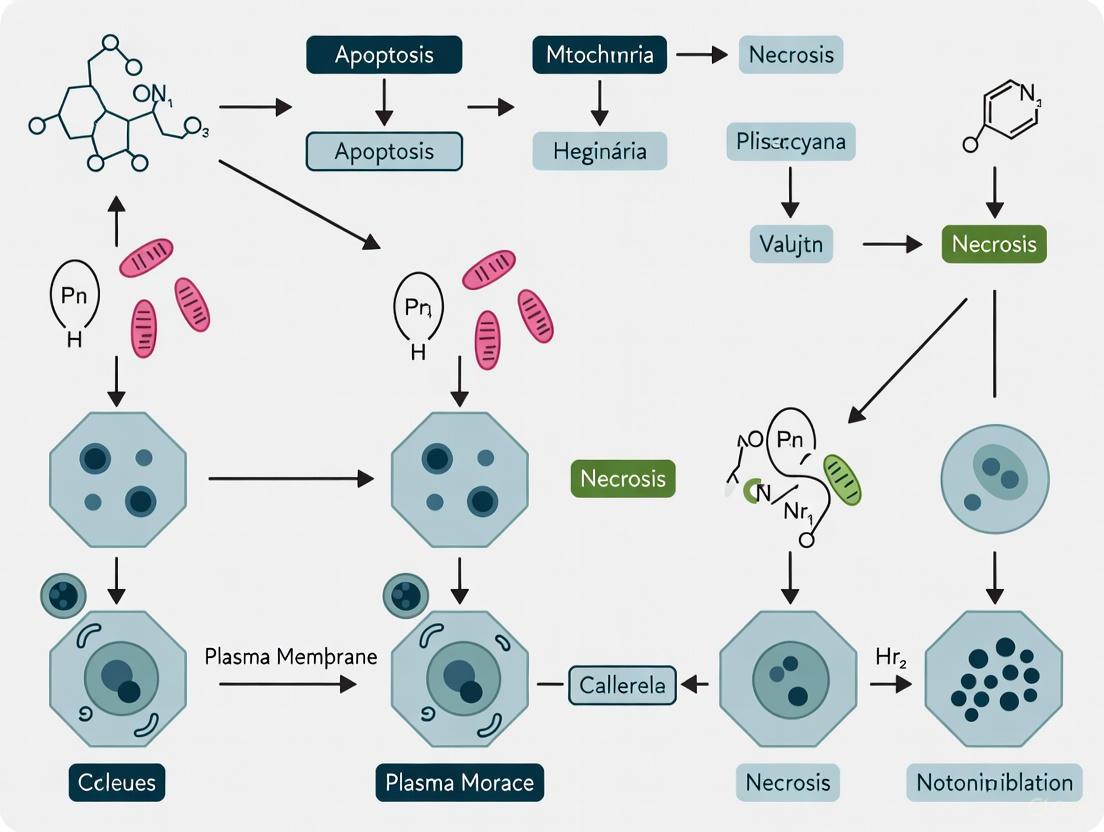
This article provides a comprehensive framework for researchers and drug development professionals to diagnose, correct, and prevent sudden cell death in culture.
Sudden Cell Death in Culture: A Complete Troubleshooting Guide for Researchers
Abstract
This article provides a comprehensive framework for researchers and drug development professionals to diagnose, correct, and prevent sudden cell death in culture. It covers foundational knowledge of cell death mechanisms (apoptosis, necrosis, autophagy), outlines practical methodologies for assessment and intervention, presents systematic troubleshooting for common issues like contamination, and explores advanced validation techniques and their research applications. By integrating established protocols with emerging concepts like programmed cell revival and autophagy-dependent cell death, this guide aims to restore culture health and ensure experimental reproducibility.
Understanding the Enemy: Foundational Mechanisms of Cell Death
Frequently Asked Questions (FAQs)
Q1: What are the main types of cell death I might encounter in cell culture? Cell death in culture primarily occurs as accidental cell death (ACD), such as necrosis from sudden stress, or regulated cell death (RCD), which is a programmed process [1]. The main types of RCD you will observe are:
- Apoptosis: A controlled, caspase-mediated process characterized by cell shrinkage, membrane blebbing, and formation of apoptotic bodies. It is generally immunologically silent [1] [2].
- Autophagy: A process where the cell degrades its own components via lysosomes, often to recycle resources during stress. It can promote survival or lead to cell death under extreme conditions [1] [3].
- Necroptosis: A programmed form of necrosis that is caspase-independent, involving RIPK1, RIPK3, and MLKL, leading to cell swelling and membrane rupture [1].
Q2: How can I quickly tell if my cells are dying? Early signs of cell death can be observed through:
- Microscopic inspection: Look for cell rounding, detachment, shrinkage (apoptosis), swelling (necrosis/necroptosis), or an increase in cytoplasmic vacuoles (autophagy) [1] [3].
- Media color: Unexpected yellowing (acidic shift) of the culture medium can indicate metabolic stress or contamination [4].
- Reduced confluency and increased floating cells are common indicators of ongoing cell death [3].
Q3: What is the difference between apoptosis and necrosis in terms of experimental impact?
- Apoptosis is a clean, programmed process that typically does not damage neighboring cells or cause inflammation, making it less disruptive to the overall culture [1] [2].
- Necrosis/Necroptosis is a disruptive process where the cell spills its contents, causing inflammation and potential damage to adjacent healthy cells, which can compromise your entire experiment [1] [2].
Q4: Can one trigger cause multiple types of cell death? Yes. Different cell death pathways are interconnected. For example, inhibition of caspase-8 can shift a cell's fate from apoptosis to necroptosis. Treatments like TNF-α can induce apoptosis, necroptosis, or a hybrid called RIP1-dependent apoptosis, depending on the cellular context and inhibitors used [5].
Troubleshooting Sudden Cell Death
A sudden, unexpected die-off in your culture requires a systematic approach to identify the cause. The flowchart below outlines a logical diagnostic process.
Confirming the Diagnosis: Key Assays
Once you have a preliminary diagnosis from the flowchart, use the following specific assays to confirm the type of cell death.
Table 1: Key Assays for Cell Death Detection
| Cell Death Type | Detection Assay | Key Readout / Marker | Experimental Notes |
|---|---|---|---|
| Apoptosis | Annexin V/PI Staining [6] | Annexin V+/PI- (early); Annexin V+/PI+ (late) | Use calcium-containing binding buffer. Analyze by flow cytometry. |
| Caspase Activation (FLICA) [6] | Fluorescent signal from caspase-binding probe | Measures early apoptosis. Can be combined with PI for viability. | |
| DNA Fragmentation (Sub-G1 assay) [6] | Reduced DNA content (Sub-G1 peak) | Fixed cells stained with PI; analyzed by flow cytometry. | |
| Necroptosis | Western Blot / Immunophenotyping [5] | Phosphorylation of RIPK3 and MLKL | Requires specific inhibitors (e.g., Necrostatin-1) for confirmation. |
| Autophagy | Western Blot | LC3-I to LC3-II conversion, p62 degradation | Monitor LC3 puncta formation via immunofluorescence microscopy. |
| General Viability | Trypan Blue Exclusion [3] | Dye uptake indicating loss of membrane integrity | Quick and easy; performed with a hemocytometer. |
Detailed Experimental Protocols
Flow Cytometry-Based Apoptosis Detection using Annexin V/PI
This protocol allows for the quantification of early and late apoptotic cells, as well as necrotic cells, in a population [6].
Workflow Overview
Materials & Reagents
- Annexin V Binding Buffer (AVBB): 10 mM HEPES/NaOH (pH 7.4), 140 mM NaCl, 2.5 mM CaCl₂ [6].
- Annexin V-fluorophore conjugate (e.g., FITC, APC).
- Propidium Iodide (PI) Stock Solution: 50 µg/mL in PBS.
- Flow cytometer with appropriate lasers and filters.
Step-by-Step Method
- Harvest and Wash: Collect both adherent and floating cells. Wash cells once with 1x PBS by centrifuging at ~300 x g for 5 minutes. Gently resuspend the cell pellet to avoid inducing mechanical damage [6].
- Resuspend in Buffer: Resuspend the cell pellet (1-5 x 10⁵ cells) in 100 µL of Annexin V Binding Buffer.
- Stain with Annexin V: Add the recommended volume of Annexin V-fluorophore conjugate (e.g., 5 µL). Mix gently and incubate for 15 minutes at room temperature in the dark.
- Stain with PI: Just before analysis, add 5-10 µL of PI stock solution to the tube. For a 500 µL final volume, add 400 µL of additional AVBB.
- Analyze: Analyze the cells by flow cytometry within 1 hour. Use the appropriate excitation/emission settings for your fluorophores (e.g., for FITC: Ex/Em ~494/518 nm; for PI: Ex/Em ~535/617 nm).
Data Interpretation
- Annexin V-/PI-: Viable, healthy cells.
- Annexin V+/PI-: Early apoptotic cells (PS externalized, membrane intact).
- Annexin V+/PI+: Late apoptotic or necrotic cells (membrane integrity lost).
- Annexin V-/PI+: Cells that have undergone primary necrosis (or late-stage necroptosis).
Distinguishing Apoptosis, Necroptosis, and RIP1-Dependent Apoptosis by Multiparametric Flow Cytometry
This advanced protocol uses intracellular staining to differentiate between overlapping cell death pathways simultaneously [5].
Materials & Reagents
- Fixable Viability Dye (FVD): To label dead cells.
- Anti-active Caspase-3 antibody: Marker for apoptosis.
- Anti-RIP3 antibody: Marker for necroptosis.
- Permeabilization Buffer.
- Inducers/Inhibitors: TNF-α (apoptosis/necroptosis inducer), shikonin (necroptosis inducer), zVAD (pan-caspase inhibitor), Necrostatin-1 (RIP1 inhibitor).
Step-by-Step Method
- Induce Cell Death: Treat cells (e.g., Jurkat cells) with your chosen inducer (e.g., 100 ng/mL TNF-α, 0.5 µM shikonin) for 6-24 hours. Include controls with pre-treatment of inhibitors (e.g., 60 µM Necrostatin-1 for 2 hours) to shift death pathways [5].
- Stain for Viability: Harvest cells and stain with a fixable viability dye in PBS.
- Fix and Permeabilize: Fix the cells with a formaldehyde-based fixative, then permeabilize with a suitable buffer (e.g., ice-cold methanol or commercial perm buffer).
- Intracellular Staining: Incubate cells with antibodies against active Caspase-3 and RIP3.
- Acquire and Analyze: Run samples on a flow cytometer capable of detecting multiple fluorophores.
Data Interpretation
- Caspase-3+ / RIP3-: Classic apoptosis.
- Caspase-3- / RIP3+: Necroptosis.
- Caspase-3+ / RIP3+: RIP1-dependent apoptosis.
- FVD+ / Caspase-3+: Died via apoptosis.
- FVD+ / RIP3+: Died via necroptosis.
The Scientist's Toolkit: Key Reagent Solutions
Table 2: Essential Reagents for Cell Death Research
| Reagent / Assay | Function / Target | Key Application |
|---|---|---|
| Annexin V Conjugates [6] | Binds phosphatidylserine (PS) | Detection of early-stage apoptosis by flow cytometry or microscopy. |
| Propidium Iodide (PI) [6] | DNA intercalator (membrane-impermeant) | Discrimination of late apoptotic/necrotic cells; used in Annexin V and sub-G1 assays. |
| FLICA Probes [6] | Irreversibly binds active caspases | Fluorescent detection of caspase activity in live cells. |
| TMRM / JC-1 Dyes [6] | Mitochondrial membrane potential (ΔΨm) sensors | Detection of early apoptosis via loss of ΔΨm. |
| Necrostatin-1 [5] | RIPK1 inhibitor | To chemically inhibit necroptosis and confirm its occurrence. |
| z-VAD-FMK (pan-caspase inhibitor) [5] | Broad-spectrum caspase inhibitor | To inhibit apoptosis and shift cell fate to other pathways like necroptosis. |
| Anti-phospho-MLKL / Anti-phospho-RIP3 [5] | Detect key necroptosis mediators | Confirm necroptosis via Western blot or flow cytometry. |
| Trypan Blue [3] | Viability dye (membrane exclusion) | Quick and easy assessment of cell membrane integrity and viability. |
FAQ: Why is understanding different cell death pathways important for cell culture?
Identifying the specific type of cell death occurring in your cultures is a critical first step in troubleshooting. Unexpected cell death can compromise experimental results and lead to inconsistent data. Understanding the hallmarks of anoikis, ferroptosis, and necroptosis allows you to diagnose the root cause and apply the correct intervention, saving both time and valuable samples.
Quick Identification Guide
The table below summarizes the key characteristics of the three cell death types to help you quickly diagnose issues in your culture.
| Feature | Anoikis | Ferroptosis | Necroptosis |
|---|---|---|---|
| Primary Trigger | Detachment from extracellular matrix (ECM) [7] [8] | Iron overload & lipid peroxidation [9] [10] | Death receptor activation (e.g., TNF-α) with caspase inhibition [11] [12] |
| Key Morphological Signs | Cell rounding and detachment [8] | Small mitochondria with ruptured outer membranes; reduced or absent cristae [9] [10] | Cell and organelle swelling, plasma membrane rupture [11] [12] |
| Core Biochemical Markers | Activation of caspase-8 and -9 [7] | Depletion of GSH; inactivation of GPX4; iron accumulation [9] [10] [13] | Phosphorylation of RIPK1, RIPK3, and MLKL [11] [12] |
| Inflammatory Response | No (immunologically silent) [14] | Yes (release of diffusible factors) [13] | Yes (release of DAMPs and cellular contents) [11] [12] |
| Common Causes in Culture | Over-trypsinization; inadequate or poor-quality ECM coating; shear stress from handling [7] [8] | Culture in high-iron media; serum batches with high PUFA content; antioxidant depletion in media [9] [13] | Use of pan-caspase inhibitors (e.g., Z-VAD-FMK); exposure to inflammatory cytokines (e.g., TNF-α) [11] [12] |
Anoikis
FAQ: My cells are detaching and dying even though the culture surface is properly coated. What could be happening?
This could indicate that your cells have developed anoikis resistance, a hallmark of metastatic cancer cells that allows them to survive without attachment [7] [8]. Alternatively, check that your coating protocol ensures a uniform and complete covering of the culture surface, as inconsistent coating can create "dead zones."
Experimental Protocol: Testing for Anoikis Resistance
Principle: Suspend cells in a non-adherent environment and assess their viability over time. Anoikis-sensitive cells will die, while resistant cells will survive [7].
- Prepare Non-Adherent Conditions: Coat culture plates with a thin layer of poly(2-hydroxyethyl methacrylate) (poly-HEMA) to prevent cell attachment, or use low-attachment plates.
- Seed Cells: Harvest cells and seed them onto the non-adherent surface in complete growth media.
- Incubate and Monitor: Culture cells for 24-72 hours.
- Assess Viability: Quantify cell viability using assays that measure metabolic activity (e.g., MTT, MTS). Confirm apoptosis using a caspase-3/7 activity assay.
The Scientist's Toolkit: Anoikis Research
| Research Reagent | Function |
|---|---|
| Poly-HEMA | Creates a non-adherent surface to culture cells in suspension, inducing anoikis [7]. |
| Caspase-3/7 Activity Assay | Detects the activation of executioner caspases, a key step in the apoptotic cascade of anoikis [14]. |
| Latrunculin A / Cytochalasin B | Actin polymerization inhibitors used to study the role of the cytoskeleton in anoikis signaling [8]. |
Ferroptosis
FAQ: I see cell death, but my caspase inhibitor isn't working. What other pathway could be involved?
This is a classic sign of non-apoptotic cell death. The characteristics you describe—cell shrinkage and mitochondrial changes without caspase activation—strongly point toward ferroptosis [9] [10]. Ferroptosis is morphologically and biochemically distinct from apoptosis and is not inhibited by caspase inhibitors like Z-VAD-FMK [9].
Experimental Protocol: Inducing and Inhibiting Ferroptosis
Principle: Use specific inducers to trigger the ferroptosis pathway and rescue cell death with potent inhibitors [9] [13].
- Induction:
- Inhibition:
- Treatment: Pre-treat cells with Ferrostatin-1 or DFO for 1 hour before adding the inducer (Erastin or RSL3). Incubate for 12-24 hours.
- Analysis: Measure cell viability. Confirm ferroptosis by detecting lipid peroxidation (C11-BODIPY 581/591 probe) and depletion of GSH (GSH/GSSG assay kit).
The Scientist's Toolkit: Ferroptosis Research
| Research Reagent | Function |
|---|---|
| Erastin / RSL3 | Small-molecule inducers that initiate ferroptosis by inhibiting system Xc- and GPX4, respectively [9]. |
| Ferrostatin-1 / Liproxstatin-1 | Potent ferroptosis inhibitors that act as radical trapping antioxidants, blocking lipid peroxidation [13]. |
| C11-BODIPY 581/591 Probe | A fluorescent dye used to detect and quantify lipid peroxidation in live cells [9]. |
| Deferoxamine (DFO) | An iron chelator used to confirm the iron-dependent nature of the cell death [10]. |
Necroptosis
FAQ: My cells are dying and showing a strong inflammatory response, even when I inhibit apoptosis. What is happening?
When apoptosis is inhibited (e.g., with Z-VAD-FMK) in the presence of a death signal like TNF-α, the cell can default to an alternative, inflammatory cell death pathway called necroptosis [11] [12]. The swelling and membrane rupture you observe are key morphological indicators that distinguish it from apoptotic cell death.
Experimental Protocol: Inducing and Blocking Necroptosis
Principle: Induce necroptosis by providing a death signal while simultaneously inhibiting apoptosis, and then block it with a specific RIPK1 inhibitor [11].
- Induction:
- Stimulate cells with Tumor Necrosis Factor-alpha (TNF-α, 20 ng/mL).
- Co-treat with a pan-caspase inhibitor (Z-VAD-FMK, 20 µM) to block apoptosis and divert signaling to necroptosis.
- Optionally, co-treat with a SMAC mimetic to degrade cIAPs and promote necrosome formation.
- Inhibition:
- Include a control group pre-treated with Necrostatin-1 (Nec-1, 30 µM), a specific inhibitor of RIPK1 kinase activity.
- Treatment: Pre-treat with Nec-1 for 1 hour, then add the induction cocktail (TNF-α + Z-VAD-FMK). Incubate for 6-18 hours.
- Analysis: Assess cell death by measuring plasma membrane integrity (e.g., Propidium Iodide uptake). Confirm pathway activation via western blot for phosphorylated MLKL (p-MLKL).
The Scientist's Toolkit: Necroptosis Research
| Research Reagent | Function |
|---|---|
| TNF-α + Z-VAD-FMK | Standard combination to induce necroptosis by providing a death signal while inhibiting apoptosis [11] [12]. |
| Necrostatin-1 (Nec-1) | A specific small-molecule inhibitor of RIPK1 kinase activity, used to confirm necroptosis [11]. |
| Anti-phospho-MLKL Antibody | Used in western blotting or immunofluorescence to detect the activation of the key necroptosis executioner protein, MLKL [11]. |
| Propidium Iodide (PI) | A membrane-impermeant dye that stains DNA in cells with compromised plasma membranes, a hallmark of necroptosis [12]. |
For researchers in drug development and biotechnology, sudden cell death in culture represents a significant setback, compromising experimental integrity and derailing project timelines. Consistent monitoring of cellular morphology and culture indicators serves as a critical early warning system, allowing scientists to identify signs of stress, contamination, or phenotypic drift long before catastrophic cell death occurs. This technical support center provides essential troubleshooting guides and FAQs to help you quickly diagnose and address the underlying causes of morphological changes, enhancing the reliability and reproducibility of your research.
FAQs: Addressing Common Cell Morphology Concerns
1. What are the most common morphological signs that my cell culture is in distress?
Regular morphological examination is your first line of defense. Key indicators of deteriorating cell health include:
- Cytoplasmic granularity: An increase in granular appearance within the cell cytoplasm [15].
- Membrane blebbing: The formation of blebs or bulges on the cell membrane [15].
- Vacuolation: The appearance of clear, membrane-bound vacuoles in the cytoplasm [16] [15].
- Cell Rounding: Adherent cells detaching and becoming round [16]. These signs can indicate a variety of problems, from contamination and culture senescence to the presence of toxic substances in the medium or simply that the culture requires a medium change [16] [15].
2. How can I distinguish between normal morphological variations and serious problems in my human Pluripotent Stem Cells (hPSCs)?
Assessing hPSC quality requires careful observation. Healthy, high-quality hPSC colonies are typically round and consist of tightly packed cells with a high nucleus-to-cytoplasm ratio and prominent nucleoli [17]. Some variations are normal, such as "spiky" colony edges and looser packing in the first few days after passaging, or slightly asymmetrical and merging colonies as they grow denser [17]. However, the following morphological changes indicate decreasing cell quality and potential spontaneous differentiation [17]:
- An increase (>10%) in areas of spontaneous differentiation within colonies.
- A general loss of uniformity and colony border integrity.
- Phase-brightness or multilayering that appears "mottled" and sporadic, rather than dense at the colony center.
- Looely packed cells with visible phase-bright gaps between them.
3. What does a "critical transformation" in a cell population look like, and are there warning signs?
Recent research on red blood cells (RBCs), which lack a nucleus, has revealed a previously unknown programmed cell death pathway termed spectosis [18]. This critical transformation is not instantaneous but follows a distinct, observable morphological sequence. When subjected to complement attack, RBCs undergo a progressive transformation from their normal discoid shape to an echinocyte (spiny) form, then to a spherical shape, and finally to fragmentation [18]. This ordered process is driven by the activation of a specific intracellular death program involving a truncated NLRP3 protein (miniNLRP3) and caspase-8, which cleaves the cytoskeletal protein β-spectrin, leading to the collapse of the membrane skeleton [18]. Monitoring for such staged morphological changes can provide an early warning of activation of specific death pathways.
Troubleshooting Guide: Morphological Changes and Underlying Causes
Table 1: Troubleshooting Common Morphological Issues
| Observed Morphological Change | Potential Causes | Recommended Corrective Actions |
|---|---|---|
| Increased Cytoplasmic Granularity/Vacuolation | Cellular stress, toxin exposure, nutrient deficiency, mycoplasma contamination [16] [15]. | Perform a medium change; test for mycoplasma contamination; review medium composition and supplement concentrations [16] [19]. |
| Membrane Blebbing | Apoptosis onset, chemical or physical stress, serum starvation [15]. | Check culture conditions (CO₂, temperature); assess serum quality and concentration; consider using a caspase inhibitor to confirm. |
| Unexpected Detachment & Rounding (Adherent Cells) | Trypsin over-exposure, contamination, loss of adhesion properties due to phenotypic drift, accumulation of waste products [16]. | Optimize passaging protocol; check for microbial contamination; authenticate cell line. |
| Progressive Shape Change (e.g., Discocyte → Spherocyte) | Activation of specific death pathways (e.g., spectosis in RBCs), cytoskeletal disruption [18]. | Investigate specific pathway inhibitors (e.g., NLRP3 or caspase-8 inhibitors for spectosis); verify integrity of cytoskeletal components [18]. |
| Generalized Deterioration Across Population | Widespread microbial contamination (bacterial, fungal), senescence of the cell line [16] [15]. | Implement routine contamination screening; discard culture and revive a new batch from an early-passage frozen stock. |
Essential Protocols for Monitoring and Validation
Protocol 1: Routine Morphology Monitoring and Documentation
Purpose: To consistently assess cell health, identify early signs of stress, and verify cell identity over long-term culture.
Methodology:
- Daily Inspection: Examine cultures daily using a phase-contrast microscope. Check for standard morphological features of your cell line as well as any signs of distress listed in Table 1 [15] [17].
- Imaging: Capture images at regular intervals (e.g., during each passaging) to establish a visual record of normal morphology and track changes over time.
- Quantitative Analysis (Optional): For advanced monitoring, use image analysis software to quantify metrics like cell roundness, area, and perimeter, providing objective data on morphological changes [15].
Protocol 2: Validating Suspected Contamination
Purpose: To confirm the presence of common contaminants, such as mycoplasma, which can dramatically alter cell morphology and metabolism without causing turbidity in the culture medium [19] [15].
Methodology:
- Mycoplasma Testing: Use a commercially available detection kit. Options include:
- Regular Screening: Test new cell lines upon arrival and establish a routine screening schedule (e.g., monthly) for all actively growing cultures.
Visualizing the Monitoring Workflow and Key Pathways
Cell Health Monitoring Workflow
The following diagram outlines a logical workflow for monitoring cell morphology and responding to observed changes.
Spectosis Pathway in Red Blood Cells
This diagram illustrates the novel programmed cell death pathway discovered in red blood cells, a specific example of a critical morphological transformation [18].
The Scientist's Toolkit: Key Research Reagent Solutions
Table 2: Essential Materials for Monitoring and Maintaining Cell Health
| Reagent / Kit | Primary Function | Application Note |
|---|---|---|
| MycoAlert Detection Kit (Lonza) | Luminescence-based assay for detecting mycoplasma contamination [19]. | Provides rapid results (<1 hour); ideal for routine, high-frequency screening of cell banks and active cultures. |
| Mycoplasma PCR Detection Kit (Sigma-Aldrich) | PCR-based detection of mycoplasma DNA [19]. | Offers high sensitivity and specificity; used for definitive confirmation of contamination. |
| EZ-PCR Mycoplasma Test Kit (Biological Industries) | PCR-based detection of over 200 mycoplasma species [19]. | A robust and reliable option for comprehensive, routine screening programs. |
| NLRP3 Inhibitor (e.g., MCC950) | Small molecule inhibitor of the NLRP3 inflammasome complex [18]. | In research, used to investigate/inhibit the spectosis cell death pathway in RBCs; potential therapeutic agent. |
| Caspase-8 Inhibitor | Inhibits the activity of caspase-8 protease [18]. | A research tool for validating the role of caspase-8 in cell death pathways like spectosis. |
| TrypLE Express / Trypsin | Enzymatic dissociation of adherent cells for passaging [16]. | Essential for routine culture maintenance; over-exposure can induce morphological stress and damage. |
Frequently Asked Questions (FAQs)
Q1: My cells are dying suddenly, and the medium has turned cloudy and yellow. What is happening? This is a classic sign of bacterial contamination [20]. Bacteria proliferate rapidly, consuming nutrients and acidifying the medium, which causes the color change and leads to cell death from nutrient deprivation and toxic byproduct accumulation [21]. You should immediately isolate the culture and inspect all others.
Q2: I see floating, clumped, filamentous structures in my clear culture medium. What is this? You are likely dealing with fungal contamination [22] [20]. These structures are hyphae from mold or, if you see small oval particles, yeast. Fungi compete for space and nutrients, and can secrete toxins, ultimately overwhelming and killing your cells [21].
Q3: My cells are growing slowly and look unhealthy, but the medium is clear. Could it still be contaminated? Yes. Mycoplasma contamination is a common but invisible culprit. These bacteria lack a cell wall, are too small to be seen with a standard microscope, and do not cloud the medium. They chronically infect cultures, altering cell metabolism, causing chromosomal aberrations, and slowly degrading cell health until they die [23] [24].
Q4: What is the most reliable way to detect a mycoplasma contamination? While direct culture is a gold standard, it is slow. Modern methods include:
- DNA Fluorescent Staining (e.g., Hoechst): Reveals extranuclear DNA in infected cultures [23] [20].
- PCR-based assays: Highly sensitive and specific, with results in hours [25] [20].
- Enzyme-linked immunosorbent assay (ELISA) and microbiological assays are also effective [24].
Q5: Are antibiotics the ultimate solution to prevent contamination? No. Routine antibiotic use is not recommended and can be counterproductive. It can mask low-level contamination, promote the development of antibiotic-resistant strains, and may even alter gene expression in your cells, leading to unreliable data [23]. Good aseptic technique is the primary and most effective defense [26].
Troubleshooting Guides
Guide 1: Identifying the Contaminant
Use the table below to perform an initial diagnosis of your contaminated culture.
Table 1: Characteristics of Common Cell Culture Contaminants
| Contaminant | Visible/Microscopic Signs | Effect on Medium | Impact on Cells |
|---|---|---|---|
| Bacteria [22] [20] | Tiny, moving granules; high density obscures cells. | Rapid turbidity; color change to yellow (acidic). | Rapid cell death, often within 24-48 hours. |
| Fungi [22] [20] | Yeast: oval, budding particles. Mold: filamentous hyphae. | May remain clear initially; visible floating colonies. | Slower progression; cells die as fungi overgrow. |
| Mycoplasma [23] [24] [20] | Not visible with standard microscopy. | No turbidity or pH change. | Chronic: slowed growth, abnormal morphology, altered metabolism, eventual death. |
Guide 2: Action Plan Upon Detecting Contamination
Follow this logical workflow to manage a contamination event and prevent its spread.
Guide 3: Decontamination Protocols for Precious Cells
These protocols should only be attempted if the contaminated cell line is unique and irreplaceable.
For Bacterial Contamination [20]:
- Wash cells: For monolayer cells, wash 3x with D-PBS (Dulbecco's Phosphate Buffered Saline). Trypsinize, and wash the cell pellet 2x more with D-PBS via centrifugation. For suspension cells, wash the pellet 5x with D-PBS [20].
- Re-seed: Seed cells at a low density in a new flask.
- High-dose antibiotics: Use a high concentration (5-10x normal) of a relevant antibiotic (e.g., penicillin-streptomycin). Replace the medium every 2 days.
- Repeat: Repeat the washing and high-dose antibiotic cycle for 3 full passages.
- Validate: Culture for at least 2 months without antibiotics and retest for contamination.
For Mycoplasma Contamination [20]:
- Wash cells: Dilute the mycoplasma load by washing the cell culture as described in the bacterial protocol above.
- Treat with specific reagents: Use proven anti-mycoplasma reagents.
- Option A: Use a dedicated mycoplasma removal reagent (e.g., 25 µg/mL) for 2-3 weeks.
- Option B: Treat with BM-Cyclin or Ciprofloxacin (20 µg/mL for 2 passages, then 10 µg/mL for 2 weeks).
- Validate: After treatment, maintain cells in antibiotic-free medium for at least two weeks and confirm eradication using a PCR or DNA staining method.
Table 2: Recommended Reagents for Contamination Management
| Reagent Type | Example Products | Primary Function & Note |
|---|---|---|
| General Antibiotic | Penicillin-Streptomycin (Double-Antibiotic) | Broad-spectrum prophylaxis against bacterial contamination. Use cautiously [22]. |
| Anti-Fungal Agent | Amphotericin B, Nystatin | Targets fungal contaminants like yeast and mold [22] [20]. |
| Mycoplasma Removal | Mycoplasma Removal Reagent, BM-Cyclin | Specifically targets mycoplasma due to its unique biology; used for treatment [22] [20]. |
| Mycoplasma Detection | Hoechst Stain, PCR Detection Kits | Used for periodic screening and validation of mycoplasma-free status [23] [20]. |
| Surface Disinfectant | 70% Ethanol, Isopropanol | Essential for decontaminating surfaces, gloves, and items entering the safety cabinet [26] [23]. |
The Scientist's Toolkit: Essential Reagent Solutions
Table 3: Key Reagents for Contamination Prevention, Detection, and Elimination
| Reagent/Chemical | Function | Key Detail |
|---|---|---|
| 70% Ethanol (v/v) | Surface and glove disinfectant | Optimized concentration for protein denaturation and penetration of microbial cells [26]. |
| Hoechst 33258 Stain | DNA-binding fluorescent dye for mycoplasma detection | Stains extranuclear DNA from mycoplasma adherent to infected cells, visible under fluorescence microscopy [23] [20]. |
| Mycoplasma Removal Reagent | Treats active mycoplasma contamination | Often contains specific antibiotics like pleuromutilins that are effective against cell-wall-less bacteria [22]. |
| Penicillin-Streptomycin | Prophylactic against bacterial contamination | Combination provides broad-spectrum coverage; penicillin inhibits cell wall synthesis, streptomycin inhibits protein synthesis [22]. |
| Amphotericin B | Anti-fungal agent | Binds to ergosterol in fungal cell membranes, forming pores. Can be toxic to some cell types at high doses [20]. |
| 0.1 µm Pore Filter | Sterilizing filters for media/reagents | Critical for removing mycoplasma, which can pass through standard 0.22 µm filters [27] [24]. |
Advanced Topic: Mechanisms of Contamination-Induced Cell Death
Understanding how contaminants kill cells is crucial for diagnosing the crisis.
1. Nutrient Competition: Bacteria and fungi consume glucose, amino acids, and vitamins from the medium faster than your cells can. This leads to cell starvation and energy depletion [21]. 2. Toxic Metabolite Accumulation: Bacterial metabolism produces organic acids (lowering pH) and endotoxins. These can disrupt enzyme activity, damage cell membranes, and induce inflammatory responses and apoptosis [21] [23]. 3. Physical Disruption and Space Competition: Fungal hyphae can mechanically压迫 cells and form physical barriers, preventing gas exchange and nutrient diffusion. Some bacteria, like Listeria, can invade and disrupt the cell's internal structure, leading to lysis [21]. 4. Metabolic Interference (Mycoplasma Specific): Mycoplasma attaches to the cell surface, depleting specific nutrients like arginine and nucleic acid precursors, which are vital for your cells' protein synthesis and metabolism. This parasitic relationship chronically disrupts normal cell function until viability is lost [21] [27].
Action in the Lab: Methodologies for Assessment and Intervention
This technical support guide provides detailed protocols and troubleshooting for two fundamental cell viability assays: Trypan Blue exclusion and metabolic activity tests. These methods are essential for diagnosing and correcting sudden cell death in culture, a critical challenge in biopharmaceutical development and basic research. The Trypan Blue assay assesses cell membrane integrity, while metabolic activity assays measure cellular function, offering complementary data for a comprehensive viability assessment.
Assay Principles and Comparison
Core Principles of Viability Assays
- Trypan Blue Exclusion: This method relies on the principle of membrane integrity. Viable cells with intact plasma membranes exclude the Trypan Blue dye, while non-viable cells with compromised membranes absorb it, staining their cytoplasm blue [28] [29] [30]. It is a direct, dye-based method for identifying dead cells.
- Metabolic Activity Assays: These assays measure the functional capacity of cells, typically by detecting enzymatic activity or ATP production. A common example is the MTT assay, where tetrazolium salts are reduced to colored formazan products by metabolically active cells [31] [32] [33]. They provide an indirect measure of viability based on cellular metabolism.
Choosing the Right Assay
The table below summarizes the key characteristics of these assays to guide your selection.
| Feature | Trypan Blue Exclusion | Metabolic Activity Assays (e.g., MTT) |
|---|---|---|
| What It Measures | Physical membrane integrity [33] | Overall metabolic function and redox capacity [32] [33] |
| Primary Readout | Percentage of unstained (viable) cells [28] | Colorimetric/fluorometric signal proportional to metabolic activity |
| Throughput | Low to medium (manual or automated cell counters) | High (compatible with plate readers) [33] |
| Key Advantage | Direct cell count and visual confirmation | High sensitivity, suitable for high-throughput screening [33] |
| Key Limitation | Can overestimate viability; subjective for manual counting [30] [34] | Measures activity, not death; signal can be influenced by external factors [32] |
| Best Used For | Quick checks, routine cell culture, counting cell concentration [28] | Cytotoxicity screening, drug discovery, detecting early metabolic stress [33] |
Detailed Experimental Protocols
Trypan Blue Exclusion Protocol
Principle: Live cells with intact membranes exclude the blue dye; dead cells with compromised membranes take it up and stain blue [28] [29].
Materials:
- 0.4% Trypan Blue solution
- Phosphate-buffered saline (PBS) or serum-free medium
- Hemocytometer or automated cell counter
- Microscope
Procedure:
- Prepare Cell Suspension: Harvest and centrifuge cells. Resuspend the cell pellet in 1 mL of PBS or serum-free medium. Note: Serum proteins can stain with trypan blue and must be avoided [29].
- Stain Cells: Mix 10 µL of the cell suspension with 10 µL of 0.4% Trypan Blue solution (a 1:1 ratio) [28]. Gently pipette to mix.
- Load and Count: Within 3-5 minutes of mixing, load about 10 µL of the mixture into a hemocytometer [28] [29]. Place it on the microscope stage and focus on the grid.
- Tally Cells: Count the unstained (viable) and stained (non-viable) cells separately in the hemocytometer chambers.
- Calculate Viability:
Metabolic Activity (MTT) Assay Protocol
Principle: Metabolically active cells reduce the yellow tetrazolium salt MTT to insoluble purple formazan crystals [32] [33].
Materials:
- MTT reagent
- Cell culture medium without phenol red
- Dimethyl sulfoxide (DMSO) or isopropanol
- 96-well cell culture plate
- Multi-well plate reader
Procedure:
- Seed and Treat Cells: Seed cells at a density of 5,000–10,000 cells/well in a 96-well plate. Incubate for 24 hours, then treat with your test compounds.
- Add MTT: After the treatment period, add MTT reagent to each well (typical final concentration: 0.5 mg/mL). Return the plate to the incubator for 1-4 hours.
- Solubilize Formazan: Carefully remove the medium containing MTT. Add a solubilization solution (e.g., DMSO) to each well to dissolve the formed formazan crystals.
- Measure Absorbance: Place the plate on a shaker for a few minutes to ensure complete mixing. Read the absorbance at 570 nm using a plate reader, with a reference wavelength of 630-650 nm.
- Analyze Data: Calculate the relative cell viability by normalizing the absorbance of treated wells to that of untreated control wells.
Troubleshooting Common Issues
Trypan Blue Exclusion Troubleshooting
| Problem | Possible Cause | Solution |
|---|---|---|
| Viability Overestimated | Incubation with dye too long, allowing live cells to absorb it [29] [30]. | Count cells within 3-5 minutes of mixing with Trypan Blue [29] [35]. |
| Inconsistent Counts | Inadequate mixing of cell suspension before sampling [35]. | Thoroughly mix the cell suspension by pipetting or vortexing before taking an aliquot and again before adding dye [35]. |
| High Background/Clumping | Cell debris or clumped cells being counted as viable cells [35]. | Gently resuspend clumps via pipetting. Filter sample through a 40 µm mesh. Use size gating in automated counters [35]. |
| Incorrect Concentration | Miscalculation of dilution factor after adding dye [35]. | Remember that a 1:1 mix is a 1:2 dilution. Use the formula: Total cells/mL = Cell count × Dilution Factor × 10⁴ [28] [35]. |
Metabolic Activity Assay Troubleshooting
| Problem | Possible Cause | Solution |
|---|---|---|
| High Background Signal | Precipitation or interference from test compounds [32]. | Include control wells with compound but no cells to subtract background. |
| Low Signal-to-Noise | Incorrect cell seeding density [32]. | Optimize the number of cells per well in a pilot experiment to ensure the signal is in the linear range. |
| Inconsistent Results | Inaccurate pipetting during MTT or solubilization steps. | Use calibrated pipettes and mix thoroughly after adding the solubilization solution. |
| No Formazan Formation | Cells are not metabolically active or the MTT reagent is degraded. | Check positive control (untreated cells). Ensure MTT reagent is fresh and properly stored. |
Frequently Asked Questions (FAQs)
Q1: Why does my Trypan Blue viability result not match the health of my culture, which shows poor growth? A1: Trypan Blue only assesses membrane integrity. Cells can be metabolically compromised and unable to divide (and thus "dead" in a functional sense) long before their membrane ruptures [34]. This leads to an overestimation of true, functional viability. For a more accurate picture, pair Trypan Blue with a metabolic activity assay.
Q2: My metabolic assay shows low activity, but Trypan Blue shows high viability. What does this mean? A2: This discrepancy is a key diagnostic tool. It indicates that your cells are likely undergoing early-stage apoptosis or metabolic stress [33]. Their membranes are still intact (excluding Trypan Blue), but their metabolic function has already declined. You should investigate recent changes in culture conditions, nutrient depletion, or potential apoptotic triggers.
Q3: Are there more accurate alternatives to Trypan Blue for membrane integrity? A3: Yes, fluorescent dyes like propidium iodide (PI) or 7-AAD offer higher sensitivity [29] [33]. These dyes are also membrane-impermeant and bind to DNA in dead cells, but their fluorescence is easier to quantify objectively using automated counters or flow cytometry, reducing user subjectivity [29] [33].
Q4: Can I use Trypan Blue for samples with very low viability (below 70%)? A4: It is not recommended. Studies show that Trypan Blue tends to overestimate viability in low-viability samples compared to more sensitive fluorescent methods [30]. For such samples, switch to a fluorescence-based viability stain.
Research Reagent Solutions
The table below lists essential materials for performing these core viability assays.
| Reagent/Equipment | Function | Example Application |
|---|---|---|
| Trypan Blue (0.4%) | Membrane integrity stain for dye exclusion [28] | Distinguishing live/dead cells during routine cell culture passage. |
| MTT Tetrazolium Salt | Substrate reduced by metabolically active cells to formazan [32] | Colorimetric measurement of cellular metabolic activity in cytotoxicity screens. |
| Hemocytometer | Microscope slide with gridded chamber for manual cell counting. | Manual cell counting and viability assessment with Trypan Blue. |
| Automated Cell Counter | Instrument for automated cell counting and viability analysis. | Fast, consistent, and less subjective cell counts (e.g., Logos Biosystems LUNA series [35]). |
| Multi-well Plate Reader | Instrument for detecting optical signals (absorbance, fluorescence) in microplates. | Reading endpoint signals from metabolic assays (MTT, XTT, etc.) [33]. |
| Propidium Iodide (PI) | Fluorescent, membrane-impermeant DNA dye for dead cells [33]. | More sensitive and objective viability analysis via fluorescence microscopy or flow cytometry. |
This technical support center provides essential guidance for researchers investigating cell death pathways, a critical aspect of correcting sudden cell death in culture research. Here, you will find structured protocols, troubleshooting guides, and FAQs to address common experimental challenges in using microscopy and flow cytometry for detecting and distinguishing regulated cell death (RCD) mechanisms.
Technique Selection Guide
The table below compares the core capabilities of fluorescence microscopy and flow cytometry to help you select the appropriate technique.
Table 1: Technique Comparison for Cell Death Analysis
| Feature | Fluorescence Microscopy | Flow Cytometry |
|---|---|---|
| Spatial Information | Shows subcellular localization and distribution of components [36] | Whole-cell level measurement; limited subcellular detail [36] |
| Throughput & Quantification | Tens to hundreds of cells [36] | High-throughput; thousands to hundreds of thousands of cells [36] |
| Cell Sorting | Not capable | Can distinguish and sort living cells based on fluorescence [36] |
| Sample Preparation | No need for monodispersed suspension; tissues possible [36] | Requires cells to be in a monodispersed suspension [36] |
| Cellular Interactions | Can provide information about cellular interactions [36] | Rarely provides interaction data [36] |
Essential Research Reagent Solutions
Table 2: Key Reagents for Cell Death Analysis
| Reagent | Function/Application |
|---|---|
| Propidium Iodide (PI) | DNA-binding fluorochrome for cell cycle analysis and viability assessment; intercalates into double-stranded DNA/RNA [37]. |
| Ribonuclease (RNase) | Critical for PI staining; degrades RNA to prevent false-positive signals from PI-RNA binding [37]. |
| Annexin V | Binds to phosphatidylserine (PS) exposed on the outer leaflet of the cell membrane during early apoptosis [38]. |
| Caspase Inhibitors/Assays | Functional probes for detecting caspase activity, a hallmark of apoptosis [38]. |
| Antibodies (e.g., anti-Cyt c, anti-pMLKL) | Detect specific biochemical markers of cell death pathways (e.g., cytochrome c release, necroptosis execution) [38]. |
| Viability Dyes (e.g., 7-AAD) | Membrane-impermeant dyes that exclude viable cells, often used with Annexin V [39]. |
| Cell Permeabilization Agents (e.g., Triton X-100) | Allow intracellular staining for targets like nuclear or cytosolic proteins [37]. |
| Fixatives (e.g., Ethanol, Paraformaldehyde) | Preserve cell structure and cross-link proteins; choice impacts compatibility with fluorescent proteins and membrane integrity [37]. |
Core Experimental Protocols
Protocol 1: Propidium Iodide (PI) Staining for Cell Cycle Analysis by Flow Cytometry
This is a foundational method for assessing DNA content and cell cycle distribution [37].
Materials:
- 70% Ethanol (in distilled water, not PBS)
- Propidium Iodide stock solution (50 µg/mL)
- Ribonuclease I stock solution (100 µg/mL)
- Phosphate-Buffered Saline (PBS)
Method:
- Harvest and Wash: Harvest cells (using trypsin for adherent cells) and wash in PBS. Centrifuge gently to form a pellet [37].
- Fixation: Resuspend the cell pellet in cold 70% ethanol by adding it drop-wise while vortexing to minimize clumping. Fix for 30 minutes at 4°C [37].
- Wash: Pellet cells (850 x g) and carefully discard the supernatant. Wash twice in PBS to remove residual ethanol [37].
- Stain: Resuspend the cell pellet in a solution containing 50 µL of RNase (100 µg/mL) and 200 µL of PI (50 µg/mL) [37].
- Analysis: Analyze by flow cytometry. Use forward vs. side scatter to identify cells, and pulse processing (pulse width vs. pulse area) to exclude cell doublets. Measure PI fluorescence, typically with a ~605 nm bandpass filter [37].
Protocol 2: Distinguishing Apoptosis and Necroptosis by Multiparametric Flow Cytometry
This protocol leverages specific biochemical markers to differentiate between two key RCD pathways [38].
Materials:
- Annexin V binding buffer
- Fluorochrome-conjugated Annexin V
- Propidium Iodide (PI)
- Antibodies against phosphorylated MLKL (pMLKL) and RIPK3
- Appropriate fixation and permeabilization buffers
Method:
- Cell Staining: Stain live, unfixed cells with Annexin V and PI in binding buffer. Keep samples on ice.
- Fixation: Fix a portion of the sample (e.g., with paraformaldehyde) to preserve protein epitopes.
- Permeabilization: Permeabilize the fixed cells (e.g., with Triton X-100) to allow intracellular antibody access.
- Intracellular Staining: Stain the permeabilized cells with antibodies against pMLKL and RIPK3 [38].
- Analysis: Analyze by flow cytometry. Use the following gating strategy:
- Viable Cells: Annexin V– / PI–
- Early Apoptosis: Annexin V+ / PI–
- Late Apoptosis/Necrosis: Annexin V+ / PI+
- Necroptosis: pMLKL+ / RIPK3+ (typically within the Annexin V+ / PI+ population)
Frequently Asked Questions (FAQs) & Troubleshooting
Q1: My flow cytometry data shows a high background or poor resolution in the PI channel during cell cycle analysis. What could be wrong?
- Check RNase Treatment: The most common cause is incomplete RNA digestion. PI binds stoichiometrically to both DNA and RNA. Ensure you are using an effective RNase treatment step and that it is functioning correctly [37].
- Verify Fixation: Inadequate fixation can lead to cell clumping and variable dye access. Ensure ethanol is cold and added drop-wise during vortexing [37].
- Assess Sample Quality: Excessive cell debris or dead cells before fixation can increase background. Ensure you are starting with a healthy, single-cell suspension.
- Instrument Calibration: Check that your flow cytometer's lasers and detectors are properly aligned and calibrated. Use calibration beads to ensure optimal performance [39].
Q2: How can I best distinguish between apoptosis and necroptosis in my cell culture?
- Use a Combinatorial Approach: No single assay is sufficient. Combine functional, biochemical, and morphological assessments [38].
- Functional Assays: Use caspase inhibitors (e.g., Z-VAD-FMK). Apoptosis is typically caspase-dependent and will be inhibited, whereas necroptosis is caspase-independent and will proceed [38].
- Biochemical Markers: Employ phospho-specific antibodies for key necroptosis proteins. Detection of phosphorylated MLKL (pMLKL) is a definitive marker for necroptosis. This can be combined with Annexin V/PI staining in a multiparametric flow cytometry panel [38].
- Morphology: Observe cells by fluorescence microscopy. Apoptosis features cell shrinkage, blebbing, and apoptotic bodies, while necroptotic cells swell and rupture [38].
Q3: I am setting up a multicolor flow cytometry panel for cell death. What are the key considerations to avoid spectral overlap?
- Know Your Instrument: Understand the configuration of your flow cytometer—its lasers and the filters for each detector. Choose fluorophores that are excited by your available lasers and whose emission is efficiently captured by the detectors [39].
- Pair Bright Fluorophores with Low-Abundance Markers: Use bright fluorophores (like PE or APC) for detecting low-density antigens or rare cell populations. Use dimmer fluorophores for highly expressed targets [39].
- Minimize Spectral Overlap: Select fluorophores with minimal emission spectrum overlap. Use a spectral viewer tool during panel design. For example, avoid combining FITC and PE without proper compensation, as FITC emission spills significantly into the PE detector [39].
- Implement Proper Compensation: Always run single-stained controls (cells or beads) for every fluorophore in your panel to set compensation correctly and remove false-positive signals caused by spectral overlap [39].
Q4: When should I use microscopy over flow cytometry for my cell death experiments?
- Use Microscopy When:
- You need spatial information about the process, such as the subcellular localization of cytochrome c release or the formation of autophagic vacuoles [36].
- You are working with tissue samples or adherent cultures where a single-cell suspension is difficult to obtain or not representative [36].
- You want to study morphological details in individual cells, like membrane blebbing (apoptosis) or cytoplasmic swelling (necrosis) [38].
- You are investigating cell-cell interactions in the context of death [36].
- Use Flow Cytometry When:
Sudden and widespread cell death is one of the most disruptive problems in cell culture research, potentially compromising weeks or months of experimental work. For researchers and drug development professionals, a systematic approach to diagnosing the cause and implementing corrective actions is essential for project continuity and data integrity. This guide provides a structured framework to identify the source of culture failure, execute decontamination procedures, replace compromised reagents, and review critical protocols to restore healthy cultures and prevent recurrence.
Initial Diagnosis: Identifying the Cause of Cell Death
The first step is to distinguish between different modes of cell death and identify potential contaminants. The table below summarizes common issues and their key diagnostic features.
Table 1: Troubleshooting Common Cell Culture Problems
| Problem Type | Visual/Microscopic Indicators | Culture Medium Appearance | Common Causes |
|---|---|---|---|
| Bacterial Contamination | Tiny, moving particles; "quicksand" appearance [40]. | Yellowish tint, may become cloudy [40]. | Non-sterile technique, contaminated reagents [40]. |
| Yeast Contamination | Round or oval, budding cells [40]. | Clear initially, turns yellow over time [40]. | Environmental exposure, non-sterile techniques [40]. |
| Mold Contamination | Thin, thread-like filamentous hyphae [40]. | Cloudy or with fuzzy floating particles [40]. | Spores in the environment or water baths [40]. |
| Mycoplasma Contamination | Slow cell growth, abnormal morphology; small black dots under microscope [40]. | No obvious color change [40]. | Contaminated serum or cross-contamination from other cell lines [40] [41]. |
| Chemical Contamination | Rapid, widespread cell death. | No typical change. | Endotoxins, detergent residues, or impurities in water, media, or serum [40]. |
| Programmed Cell Death (Apoptosis) | Cell shrinkage, membrane blebbing, apoptotic bodies [42]. | No typical change. | Physiological triggers, serum starvation, or toxic compounds [42]. |
Critical Diagnostic Protocol: Mycoplasma Detection
Mycoplasma contamination is a common but often invisible culprit behind subtle changes in cell health and experimental outcomes. As it does not cause medium turbidity, specific detection methods are required [40]. Regular testing every 1-2 months is recommended, especially in shared laboratory environments [40].
Methodology:
- Sample Collection: Withdraw a sample of cell culture medium from the suspect culture. It is advised to test the cells after they have been passaged without antibiotics for at least 3 days.
- Kit-Based Detection: Use a commercial mycoplasma detection kit. Options include:
- MycAway Plus-Color One-Step Mycoplasma Detection Kit: Provides results in approximately 30 minutes [40].
- PCR-Based Kits: Offer high sensitivity and specificity.
- Follow the manufacturer's instructions precisely for incubation and result interpretation.
Corrective and Preventive Actions
Once the problem is identified, immediate corrective actions are necessary.
Decontamination Protocols
Table 2: Decontamination and Corrective Actions
| Contaminant | Immediate Corrective Action | Laboratory Decontamination | Rescue Attempt (Use with Caution) |
|---|---|---|---|
| Bacteria | Discard heavily contaminated cultures. For mild cases, wash cells with PBS and treat with 10x penicillin/streptomycin [40]. | Disinfect biosafety cabinet and incubator surfaces with 70% ethanol or other appropriate disinfectants [40]. | Antibiotic treatment is often a temporary solution; discarding the culture is frequently safer [40]. |
| Fungi (Yeast/Mold) | Discard contaminated cells immediately [40]. | Wipe incubators with 70% ethanol, then with a strong disinfectant (e.g., benzalkonium chloride). Add copper sulfate to the incubator water pan [40]. | Not generally recommended. If absolutely necessary: wash with PBS, replace media, and add amphotericin B (note: toxic to cells) or fluconazole [40]. |
| Mycoplasma | Treat culture with mycoplasma removal reagents [40]. | Use mycoplasma prevention sprays (e.g., MycAway Spray) for operating tables and cell culture rooms [40]. | Quarantine the treated line and perform rigorous re-testing to confirm eradication. |
| Cross-Cell Line Contamination | Discard the contaminated culture. | N/A | Prevention is the only reliable strategy. Authenticate cell lines regularly using STR profiling [41]. |
Reagent Replacement and Quality Control
Chemical contamination or degraded reagents can be a silent killer. Implement a rigorous reagent management system.
- Aliquot Reagents: Split media, serum, and supplements into smaller working volumes to avoid repeated freeze-thaw cycles and reduce cross-contamination risk [40].
- Use Quality Reagents: Source media, serum, and supplements from trusted suppliers to minimize chemical or microbial contaminants [40].
- Document and Date: Clearly label all reagents with preparation and expiration dates.
- Systematic Replacement: If sudden death occurs without signs of microbial contamination, replace core reagents (media, serum, PBS, trypsin) one at a time to identify the source.
Protocol Review and Aseptic Technique
Human error is a major source of culture loss. Regularly review and reinforce aseptic technique.
- Master Aseptic Technique: Always work in a certified biosafety cabinet with proper airflow. Avoid simultaneous work with different cell lines. Disrupt workflows as little as possible and keep reagent bottles capped when not in use [40] [41].
- Quarantine New Lines: Isolate and test new cell lines for mycoplasma and other contaminants before incorporating them into the main laboratory stock [40].
- Regular Cleaning Schedules: Decontaminate incubators, water pans, and work surfaces weekly. Replace water in CO₂ incubators with sterile distilled water containing a biocide (e.g., copper sulfate) [40].
The Scientist's Toolkit: Essential Reagent Solutions
Table 3: Key Research Reagents for Troubleshooting and Prevention
| Reagent / Kit | Primary Function | Application Note |
|---|---|---|
| Penicillin/Streptomycin | Antibiotic to prevent bacterial growth. | Used routinely in growth media; 10x concentration can be a temporary rescue for mild contamination [40]. |
| Amphotericin B | Antifungal agent. | Can be used to attempt rescue of fungal-contaminated cultures but is toxic to cells [40]. |
| Mycoplasma Removal Reagent | Reagent to eliminate mycoplasma from cultured cells. | Used for treating contaminated cultures; requires follow-up testing to confirm effectiveness [40]. |
| Mycoplasma Detection Kit | Kit for identifying mycoplasma contamination. | Essential for regular screening (every 1-2 months); examples include MycAway kits [40]. |
| Trypan Blue | Dye for distinguishing live from dead cells. | Used in viability counts via dye exclusion; dead cells take up the blue dye [43]. |
| Copper Sulfate | Biocide to inhibit fungal and microbial growth. | Added to the water pan of CO₂ incubators as a preventive measure [40]. |
| STR Profiling Kit | Kit for authenticating cell lines. | Critical for confirming cell line identity and preventing cross-contamination [41]. |
Visual Workflow: Troubleshooting Sudden Cell Death
The following diagram outlines the logical decision-making process for diagnosing and correcting sudden cell death.
Frequently Asked Questions (FAQs)
Q1: My culture is contaminated with bacteria. Should I try to save it with high-dose antibiotics? While a temporary solution for mild contamination exists (washing with PBS and treating with 10x antibiotics), saving a heavily contaminated culture is generally not recommended. The contamination can alter cell physiology, compromising experimental data. The long-term risk of persistent, low-level infection often outweighs the short-term benefit. The safest corrective action is to discard the culture and decontaminate the work area [40].
Q2: How can I be sure my cell line is what I think it is? Cell line misidentification and cross-contamination are widespread problems. To ensure authenticity, perform regular cell authentication using Short Tandem Repeat (STR) profiling. This DNA fingerprinting method should be done upon receiving a new cell line, when initiating a new project, and after a limited number of passages. The International Cell Line Authentication Committee (ICLAC) provides a register of commonly misidentified lines for reference [41].
Q3: I can't see any contamination, but my cells are dying. What should I check next? Begin with a systematic reagent replacement, starting with the culture medium and serum. Test for mycoplasma using a commercial detection kit, as this is a common invisible culprit [40]. Review your protocol for subtle errors, such as incorrect CO₂ concentration, over-confluent passaging, or the use of an improperly balanced dissociation reagent. Also, verify the thawing and subculturing procedures against established protocols [43].
Q4: What is the single most important practice for preventing cell culture contamination? Mastering and consistently applying aseptic technique is paramount. This includes working exclusively within a properly functioning biosafety cabinet, minimizing airflow disruptions, using sterile equipment, and regularly disinfecting all surfaces and incubators. Personal practice, such as wearing gloves and a lab coat and avoiding simultaneous work with multiple cell lines, forms the foundation of clean cell culture [40] [41].
FAQs: Autophagy, Apoptosis, and Experimental Troubleshooting
Q1: What is the functional relationship between autophagy and apoptosis in my cell culture experiments?
The relationship between autophagy (self-eating) and apoptosis (programmed cell death) is complex and context-dependent. You may observe one of several interactions in your experiments:
- Autophagy inhibits apoptosis: Autophagy often functions as a pro-survival mechanism, clearing damaged components to maintain cellular health and help cells endure stress. Inhibiting autophagy in this context can sensitize cells to apoptosis [44] [45] [46].
- Autophagy promotes apoptosis: In certain scenarios, autophagy can act as a direct cell death mechanism (known as autophagy-dependent cell death, or ADCD) or facilitate other death pathways (autophagy-mediated cell death, or AMCD) by excessively degrading cellular contents [46].
- Shared molecular regulation: Proteins like p62 and Beclin-1 sit at the crossroads of both processes. For instance, anti-apoptotic Bcl-2 can bind to and inhibit Beclin-1, thereby suppressing autophagy [44].
Table 1: Key Molecular Interactions Between Autophagy and Apoptosis
| Molecular Player | Role in Autophagy | Role in Apoptosis | Interaction |
|---|---|---|---|
| Beclin-1 | Core autophagy protein; part of Vps34 complex [47]. | Regulated by apoptotic proteins [44]. | Bcl-2 binding inhibits Beclin-1's autophagic function [44]. |
| p62/SQSTM1 | Autophagy receptor; delivers cargo to autophagosomes [47]. | Can promote Caspase-8 activation [44]. | Degraded via autophagy; acts as a platform for death signaling [44]. |
| FOXO3a | Transcription factor regulating autophagy genes [45]. | Can transcriptionally activate pro-apoptotic BBC3/PUMA [45]. | Its stability is regulated by basal autophagy, creating a feedback loop [45]. |
Q2: My cancer cells are not dying after drug treatment. Could autophagy be protecting them?
Yes, this is a common mechanism of therapeutic resistance. Many anti-cancer therapies induce stress, which can trigger protective autophagy as a survival response for cancer cells [46] [48]. You can test this hypothesis in your lab by combining your primary drug with an autophagy inhibitor.
- Key Evidence: Research shows that inhibiting autophagy (genetically or pharmacologically) can sensitize resistant cancer cells to apoptosis. For example, in colorectal cancer cells, autophagy inhibition leads to the stabilization of the transcription factor FOXO3a, which upregulates the pro-apoptotic protein PUMA, thereby priming cells for death [45].
- Experimental Approach: Co-treatment with a late-stage autophagy inhibitor like Chloroquine (CQ) or Bafilomycin A1 can determine if autophagy is conferring resistance. If cell death increases with the combination, it indicates a protective autophagy role [45] [48].
Q3: How can I practically distinguish between apoptotic and autophagic cell death in my samples?
Correctly identifying the primary mode of cell death is crucial for data interpretation. You should use a combination of specific assays targeting distinct hallmarks of each process.
Table 2: Assays for Differentiating Apoptosis and Autophagy
| Cell Death Process | Key Hallmarks | Recommended Detection Assays |
|---|---|---|
| Apoptosis | - Phosphatidylserine externalization- Caspase activation- DNA fragmentation- Membrane blebbing | - Annexin V/PI staining (flow cytometry)- Caspase activity assays (e.g., for Caspase-3/7)- TUNEL assay (detects DNA breaks)- Western blot for cleaved PARP, caspases [49] |
| Autophagic Flux | - Formation of LC3-positive puncta- Conversion of LC3-I to LC3-II- Degradation of autophagy substrates (e.g., p62) | - Microscopy of GFP-LC3 transfected cells- Western blot for LC3-I/II and p62- Use of lysosomal inhibitors (CQ, Baf A1) to block flux and measure accumulation [47] [48] |
Note: The accumulation of autophagic vesicles (autophagosomes) does not necessarily mean autophagic cell death is occurring; it could indicate enhanced autophagy initiation or a block in the final degradation step (autolysosome formation). Always measure autophagic flux—the complete process from vesicle formation to degradation—rather than just snapshot markers [48].
Troubleshooting Guide: Sudden Cell Death in Culture
Problem: Unexplained, Widespread Cell Death in Cultures
This guide helps you systematically diagnose and correct factors leading to sudden cell death.
Step 1: Rule Out Common Cell Culture Errors Before investigating complex death pathways, confirm the health of your culture system [50] [51].
- � Check for Contamination: Look for microscopic signs of bacterial/fungal contamination or medium turbidity.
- � Inspect Handling Techniques:
- � Assess Incubator Environment:
- � Evaluate Culture Media:
Step 2: Investigate the Mode of Cell Death If culture conditions are optimal, the death is likely experimental. Use assays from Table 2 to determine the death modality.
Step 3: Apply Pathway-Specific Modulators Based on your findings from Step 2, use pharmacological tools to confirm the pathway involved.
Table 3: Research Reagent Solutions: Common Modulators
| Reagent | Primary Target/Function | Key Considerations & Experimental Use |
|---|---|---|
| Chloroquine (CQ)/ Hydroxychloroquine (HCQ) | Lysosome function inhibitor; blocks autophagic degradation [45] [48]. | Used to inhibit protective autophagy and sensitize cells to apoptosis. Common clinical application. |
| Bafilomycin A1 | V-ATPase inhibitor; prevents lysosomal acidification and autophagosome-lysosome fusion [45] [48]. | A more potent and specific lysosomal inhibitor than CQ for in vitro studies. |
| 3-Methyladenine (3-MA) | Class I and III PI3K inhibitor; blocks autophagosome formation [52] [48]. | A classic early-stage autophagy inhibitor. Note: Effects can be transient and context-dependent [47]. |
| Z-VAD-FMK | Pan-caspase inhibitor; broadly suppresses apoptosis [52]. | Use to confirm if cell death is occurring via a caspase-dependent apoptotic mechanism. |
| Erlotinib | EGFR tyrosine kinase inhibitor; induces cell death [53]. | Can activate different death pathways (apoptosis, autophagy) depending on context (e.g., 2D vs. 3D culture) [53]. |
| Rhus coriaria Extract (RCE) | Natural compound; induces Beclin-1-independent autophagy and can inhibit mTOR/STAT3 pathways [52]. | An example of a natural product that can induce autophagic cell death, even in chemotherapy-resistant cells [52]. |
Detailed Experimental Protocols
Protocol 1: Assessing the Role of Protective Autophagy in Drug Resistance
This protocol is adapted from studies investigating how autophagy inhibition overcomes resistance to drugs like 5-fluorouracil (5FU) [52] [45].
1. Hypothesis: Co-inhibition of autophagy will enhance the efficacy of Drug X in resistant cancer cells.
2. Materials:
- Cell line of interest (e.g., HCT-116 colorectal cancer cells)
- Primary drug (e.g., Drug X, 5FU, Erlotinib)
- Autophagy inhibitor (e.g., Chloroquine, 50-100 µM; Bafilomycin A1, 10-100 nM)
- DMSO vehicle control
- Cell viability assay kit (e.g., MTT)
- Western blot reagents for LC3, p62, cleaved Caspase-3
3. Methodology:
- Day 1: Seed cells in 96-well plates (for viability) and 6-well plates (for protein analysis) at an appropriate density.
- Day 2: Apply treatments in triplicate/duplicate:
- Group 1: Vehicle control (DMSO)
- Group 2: Autophagy inhibitor (CQ) alone
- Group 3: Primary drug (Drug X) alone
- Group 4: Drug X + CQ (combination)
- Incubation: Incubate cells for 24-72 hours based on your model.
- Day 3/5:
- Viability Assay: Perform MTT assay on 96-well plates according to manufacturer instructions.
- Protein Analysis: Lyse cells from 6-well plates. Perform Western blotting to monitor:
- Autophagic Flux: Increased LC3-II and p62 accumulation in CQ-treated groups confirms autophagy inhibition.
- Apoptosis Induction: Increased cleaved Caspase-3 or PARP in the combination group confirms sensitization to death.
4. Expected Outcome: A significant decrease in cell viability and a corresponding increase in apoptotic markers in the combination group (Drug X + CQ) compared to either agent alone would support the hypothesis that protective autophagy is contributing to drug resistance.
Protocol 2: Monitoring Autophagic Flux via LC3 Turnover
This is a fundamental assay to determine if an intervention activates or inhibits the complete autophagy pathway [47] [48].
1. Principle: Measuring the levels of lipidated LC3 (LC3-II) with and without lysosomal inhibitors. A further increase in LC3-II in the presence of an inhibitor indicates active autophagic flux.
2. Methodology:
- Seed cells and allow them to adhere.
- Apply your experimental treatment (e.g., a potential autophagy inducer like RCE [52] or serum starvation) in the presence or absence of a lysosomal inhibitor like Bafilomycin A1 (100 nM) for the last 4-6 hours of treatment.
- Prepare cell lysates and perform Western blotting for LC3.
- Interpretation:
- If LC3-II levels are higher in "Treatment + Baf A1" than in "Baf A1 alone," this indicates that your treatment is increasing autophagic flux.
- If LC3-II levels do not change, the treatment may be blocking autophagy at a late stage.
Signaling Pathways and Experimental Workflows
Autophagy-Apoptosis Crosstalk Signaling
The following diagram summarizes key molecular pathways connecting autophagy and apoptosis, relevant to FAQs 1 and 2.
Experimental Workflow for Troubleshooting Cell Death
This flowchart outlines a systematic procedure for diagnosing sudden cell death, integrating steps from the troubleshooting guide.
Systematic Troubleshooting: From Source Identification to Prevention
This guide helps researchers systematically identify the root causes of cell culture contamination to address and prevent sudden cell death.
Sudden cell death in culture can derail research and development timelines. Often, the culprit is contamination traceable to three primary sources: reagents, laboratory equipment, and aseptic technique. Correctly identifying the origin is the first step toward implementing an effective corrective and preventive action (CAPA) plan.
Q1: My culture medium has become cloudy and the pH is dropping rapidly. What is the likely source? This is a classic sign of bacterial contamination [54]. The bacteria metabolize nutrients and produce acidic waste products, causing the medium's color to yellow rapidly if it contains phenol red [55]. The source is frequently non-sterile reagents (like media or serum) or a failure in equipment sterilization, such as an improperly autoclaved pipette or a contaminated water bath [54].
Q2: I don't see turbidity, but my cells are dying unexpectedly. What silent contaminant should I suspect? Mycoplasma contamination is a common cause [54]. These bacteria lack cell walls, do not cause cloudiness, and are invisible under standard microscopy [56] [54]. They alter cellular metabolism and gene expression, leading to cell death without obvious visual cues [54]. Detection requires specific methods like PCR, ELISA, or fluorescence staining [54] [55]. Sources include contaminated serum, host cell lines, or lapses in aseptic technique [54].
Q3: My adherent cells are detaching and dying, but I've ruled out common contaminants. What else should I check? Investigate chemical contamination [54]. Residual disinfectants or detergents on improperly rinsed glassware, endotoxins, or extractables from single-use plastic consumables can be toxic to cells [54]. Furthermore, check that dissolved cryoprotectants like DMSO are used at correct concentrations, as they can be harmful to some cell types [57].
Q4: How can I determine if a newly thawed vial or a new lot of serum is the source of contamination? Implement rigorous reagent qualification. For new cell stocks, ensure you performed a quick-thaw process and gradually diluted the cryoprotectant upon revival [57]. For new serum or media lots, test them in parallel with your previous, well-characterized lot using a sensitive but non-critical cell line. Aseptically aliquot reagents to avoid introducing contamination into the main stock [54].
Q5: My incubator's CO2 and temperature are stable, but cells in multiple cultures are dying. What equipment failure could cause this? Check the incubator's humidity pan [55]. Low humidity can lead to excessive evaporation of culture media, increasing osmotic pressure and creating a toxic environment for cells. Additionally, malfunctioning HEPA filters in biosafety cabinets can compromise the sterile environment, allowing airborne contaminants to enter cultures during handling [54]. Regular environmental monitoring is crucial.
Q6: I am confident in my technique, but contamination persists. What is a less obvious source? Consider cross-contamination by other cell lines [54]. In shared spaces, aerosol generation or use of the same reagents across different cell lines can lead to overgrowth by a fast-growing line like HeLa [58] [54]. This can be misdiagnosed as cell death. Use dedicated reagents, and regularly authenticate your cell lines [54].
Contamination Characteristics and Identification
The table below summarizes the common signs and confirmed identification methods for various contamination types.
| Contamination Type | Common Visual & Microscopic Signs | Confirmed Identification Methods |
|---|---|---|
| Bacterial | Cloudy medium; rapid pH shift to acidic (yellowing); possible cell lysis [54] [55] | 16S rRNA sequencing; culture in enrichment broth [54] |
| Fungal/Yeast | Visible filaments (fungi); turbidity and slowed cell growth (yeast) [54] | Microscopy for hyphae/pseudohyphae; culture on agar plates [54] |
| Mycoplasma | No turbidity; subtle changes in cell morphology & growth; altered metabolism [54] | PCR, fluorescence-based assays, or ELISA [54] [55] |
| Viral | Often no visible changes; can alter cellular metabolism or pose safety risks [54] | PCR, immunoassays, or transmission electron microscopy [54] |
| Chemical | Cell detachment; vacuolization; death without signs of microbes [54] | Test reagents on a robust indicator cell line; check for endotoxins [54] |
| Cross-Contamination | Unexpected growth rates or morphological changes in culture [58] [54] | Cell line authentication (e.g., STR profiling) [54] |
The Scientist's Toolkit: Key Reagents & Materials
| Item | Primary Function | Application Notes |
|---|---|---|
| DMSO | Cryoprotective agent | Prevents ice crystal formation during cell freezing; can be toxic to some cells and must be diluted upon thawing [57]. |
| Trypan Blue | Viability stain | Distinguishes live from dead cells for counting; dead cells with compromised membranes take up the blue dye [56]. |
| HEPES Buffer | pH stabilization | Maintains physiological pH outside a CO2 environment, crucial for procedures outside an incubator [55]. |
| Antibiotics/Antimycotics | Prevent microbial growth | Used prophylactically but can mask low-level contamination; not a substitute for aseptic technique [58] [55]. |
| Phenol Red | pH indicator in media | Visual pH monitor: red/pink (normal), yellow (acidic/contamination), purple (basic) [57] [55]. |
| PCR/ELISA Kits | Detect specific contaminants | Essential for identifying invisible contaminants like mycoplasma and viruses [54]. |
Experimental Protocol: Systematic Source Identification Workflow
Follow this step-by-step guide to trace the source of contamination in your lab.
Detailed Procedures for Key Steps
Step 2: Macro & Microscopic Analysis
- Visual Inspection: Examine the culture medium. Cloudiness suggests bacterial growth, while a sudden, sharp yellow color indicates acidic shift from metabolism [54] [55].
- Microscopic Examination (100-400x magnification): Look for signs of apoptosis/necrosis like membrane blebbing and cell debris [56]. At higher magnifications, look for tiny, motile bacteria or fungal hyphae. Remember, mycoplasma will not be visible [54].
Step 3: Identify Contaminant Type
- For suspected mycoplasma or viral contamination, use a commercial PCR or ELISA kit following the manufacturer's protocol. These tests detect specific DNA/RNA or antigens [54].
- For unknown bacterial contamination, 16S rRNA sequencing can identify the genus and species, which can help trace the source (e.g., skin flora vs. water-borne bacteria) [54].
Step 4: Trace Source by Process of Elimination
- Reagents: Thaw a new aliquot of a well-characterized cell line using fresh media and reagents from new lots. If the problem persists, the source is likely not the reagents.
- Equipment: Use contact plates or swabs to sample the interior surfaces of incubators and water baths. Check the incubator's water pan for biofilm and the biosafety cabinet's HEPA filters for integrity and certification [54] [55].
- Technique: Have a senior colleague observe your technique or perform the cell culture routine themselves side-by-side to identify potential lapses.
Future Directions: Novel Detection Methods
Emerging technologies are making contamination detection faster and more automated. Researchers at SMART have developed a method using UV absorbance spectroscopy and machine learning. This technique can provide a definitive, label-free, non-invasive contamination assessment in under 30 minutes, a significant improvement over the 7-14 days required for traditional sterility tests [59]. This allows for continuous safety testing during the manufacturing process, enabling early detection and timely corrective actions [59].
FAQs: Troubleshooting Sudden Cell Death in Culture
Q1: What are the first steps I should take when I discover sudden, widespread cell death in my culture?
A1: Your initial investigation should systematically rule out the most common causes.
- Step 1: Examine Morphology. Carefully observe the culture under a microscope. Look for key indicators:
- Step 2: Perform a Viability Assay. Use a trypan blue exclusion assay to quickly quantify the percentage of dead cells. Live cells with intact membranes will exclude the dye, while dead cells will take it up [60].
- Step 3: Review Aseptic Technique Logs. Check documentation for any recent deviations in sterilization cycles, environmental monitoring data (particle counts), or personnel gowning procedures that could point to contamination [63] [64].
Q2: My cultures show no signs of microbial contamination, but cell death is still occurring. What could be the cause?
A2: In the absence of microbial contamination, the cause is likely environmental stress or intrinsic cell death programming.
- Check Culture Conditions: Verify nutrient depletion, metabolic by-product accumulation (e.g., ammonia, lactate), and shifts in pH or osmolarity. These stresses can trigger intrinsic apoptosis or autophagy [61].
- Analyze for Programmed Cell Death: The cell death may be programmed. Key forms include:
- Audit Equipment Calibration: A faulty incubator causing fluctuations in CO₂, temperature, or humidity can induce severe environmental stress [65] [64].
Q3: How can our lab use an aseptic technique audit to specifically prevent cell death?
A3: An audit proactively identifies and rectifies weaknesses in your sterile workflow that can lead to cell death.
- Validate Aseptic Sampling: Ensure your sampling technique doesn't introduce contamination. Validate the method by testing for sterility after sampling and assessing personnel competency [66].
- Review Contamination Control Strategy (CCS): A robust CCS, as required by EU GMP Annex 1, is a holistic plan covering facility design, cleaning procedures, and environmental monitoring. Auditing your CCS ensures all potential contamination routes are controlled [64].
- Challenge the System with Media Fills: Perform aseptic process simulations (media fills) that mimic your actual cell culture operations. These runs test whether your entire aseptic workflow can maintain sterility under worst-case conditions [64].
Key Cell Death Mechanisms: Signaling Pathways and Identification
Sudden cell death can result from several regulated mechanisms. The diagram below illustrates the core signaling pathways for the most common types of programmed cell death.
Quantitative Assessment of Cell Death Types
The table below summarizes the key characteristics and assays for distinguishing between different cell death mechanisms.
Table 1: Characteristics and Identification of Common Cell Death Types
| Cell Death Type | Primary Triggers | Key Morphological Features | Common Detection Assays |
|---|---|---|---|
| Apoptosis [62] [61] | Death receptor ligation, DNA damage, cellular stress. | Cell shrinkage, chromatin condensation, membrane blebbing, formation of apoptotic bodies. | Caspase activity assays, TUNEL assay (DNA fragmentation), Annexin V/PI staining. |
| Autophagy [62] [61] | Nutrient starvation, oxidative stress, protein aggregation. | Formation of double-membrane autophagosomes, cytoplasmic vacuolization. | Western blot for LC3-I/II conversion, immunofluorescence for autophagosome markers. |
| Necroptosis [60] [62] | TNF signaling when caspases are inhibited. | Cell swelling and rupture, similar to necrosis but regulated. | Western blot for RIPK1/RIPK3/MLKL activation. |
| Ferroptosis [62] | Cysteine deprivation, glutathione depletion, oxidative stress. | Loss of plasma membrane integrity, mitochondrial shrinkage. | Assays for lipid peroxidation (MDA, 4-HNE), depletion of glutathione. |
Experimental Protocol: Validating Aseptic Sampling Technique
Aseptic sampling is a critical control point. A break in technique can introduce contamination, leading to microbial-induced cell death. This protocol ensures the sampling process itself does not compromise culture sterility [66].
Objective: To validate that the aseptic sampling procedure does not introduce microbial contamination into the cell culture system.
Materials:
- Sterile sampling tools (e.g., forceps, syringes)
- 70% Isopropyl Alcohol (IPA)
- Sterile wipes and swabs
- Laminar flow hood (run for 30+ minutes prior)
- Appropriate sterile growth media
- Incubator
Methodology:
- Preparation:
- Disinfect all work surfaces and the laminar flow hood with 70% IPA.
- Personnel must perform proper hand hygiene and don sterile gloves and other appropriate PPE. Check PPE for damage before starting [66].
- Simulated Sampling:
- Using sterile tools, simulate the sampling process from a sealed, sterile container filled with growth media. Do not actually introduce the tool into a production bioreactor for validation purposes.
- Mimic all typical actions: opening ports, handling tools, transferring the simulated "sample" to a sterile container, and resealing.
- Control Setup:
- Negative Control: A container of media that is not opened or manipulated.
- Positive Control: A container of media deliberately exposed to a non-sterile environment.
- Incubation and Analysis:
- Incubate all media containers (test samples and controls) under conditions suitable for microbial growth.
- Monitor the media for turbidity (cloudiness) over several days, which indicates microbial contamination.
- Validation Criteria:
- The test samples and negative control must remain clear.
- The positive control must show turbidity, confirming the media's ability to support growth.
- Multiple successful validation runs (e.g., 3 consecutive) with different operators are required to confirm the technique's robustness [66].
Research Reagent Solutions for Cell Death Investigation
The table below lists essential reagents and their applications for diagnosing the root cause of cell death.
Table 2: Key Reagents for Cell Death Analysis and Troubleshooting
| Reagent / Kit | Primary Function | Application in Troubleshooting |
|---|---|---|
| Trypan Blue Solution [60] | Viability stain that is excluded by live cells. | Quick and accessible quantification of overall cell death percentage using a hemocytometer. |
| Annexin V / Propidium Iodide (PI) Kit | Distinguishes early apoptotic (Annexin V+/PI-) from late apoptotic/necrotic (Annexin V+/PI+) cells. | Confirms the activation of apoptosis and differentiates it from other death mechanisms. |
| Caspase Activity Assays [61] | Fluorometric or colorimetric detection of caspase enzyme activity. | Verifies the execution of apoptotic pathways; can help pinpoint intrinsic vs. extrinsic activation. |
| LC3B Antibody [62] | Marker for autophagosomes via immunofluorescence or Western blot. | Detects the activation of autophagy; conversion from LC3-I to lipidated LC3-II is a key indicator. |
| Bcl-2 Family Protein Antibodies [61] | Detect levels of pro- and anti-apoptotic proteins (e.g., Bcl-2, Bax, Bak). | Investigates the intrinsic apoptosis pathway; an imbalance can predispose cells to death. |
| Sporicidal Disinfectant [64] | Validated cleaning agent for sterile environments. | Used as part of the contamination control strategy to prevent microbial-induced cell death. |
Sudden cell death in culture can derail research and development projects, causing significant delays and resource loss. Often, the root cause lies not with the biological reagents themselves, but with undetected failures in the fundamental equipment that maintains their environment. This guide provides targeted troubleshooting and FAQs for incubators, biosafety cabinets, and water baths—the trio of instruments critical for preventing sudden cell death by ensuring a stable, sterile, and controlled setting for your cells.
Biosafety Cabinet Troubleshooting
Biosafety cabinets (BSCs) are your first line of defense against contamination. Compromised function directly risks your cultures.
Common Issues and Solutions
| Problem | Possible Cause | Solution | Reference |
|---|---|---|---|
| Insufficient or Unbalanced Airflow | Clogged HEPA filters, motor malfunction, improper calibration. | Conduct smoke test, check filter integrity, recalibrate airflow. Replace HEPA filters if necessary. | [67] |
| Contamination | Improper cleaning, compromised HEPA filters, breached cabinet integrity. | Perform thorough decontamination; inspect and replace HEPA filters and gaskets. | [67] [68] |
| HEPA Filter Failure | Decreased airflow, increased noise, visible particles in work area. | Schedule integrity test and professional replacement by trained personnel. | [67] |
| UV Light Ineffectiveness | Dust on bulb, end of lamp life, improper use for decontamination. | Clean lamp regularly, replace according to manufacturer schedule. Never rely solely on UV for decontamination. | [69] [70] |
| Alarm Malfunctions | Sensor failure, wiring issues, control system errors. | Check sensor connections and control settings. Consult a qualified technician. | [67] |
BSC Best Practices to Prevent Cell Death
- Work Slowly and Deliberately: Rapid movement into, out of, or within the cabinet disrupts the protective airflow barrier, compromising containment [71].
- Maintain a Clean-to-Dirty Workflow: Stage clean supplies on one side of the cabinet and place used materials and waste on the other to minimize cross-contamination [71].
- Never Block Airflow: Keep the front intake grille and rear exhaust grilles clear of arms, notes, or equipment to ensure proper airflow [70].
- Certify Annually: BSCs require annual certification by a qualified professional to NSF/ANSI 49 standards to ensure proper containment, airflow, and filter integrity [69] [72] [71].
Incubator Troubleshooting
While specific data on incubator failure modes was limited in the search results, they are critical for maintaining optimal temperature, CO₂, and humidity. Failures in these parameters are a direct cause of sudden cell death.
Key Parameters to Monitor
| Parameter | Risk of Failure | Impact on Cells | Corrective Action |
|---|---|---|---|
| Temperature | High | Protein denaturation, triggering apoptosis or necrosis. | Regularly calibrate thermostat and temperature sensors. |
| Low | Slowed metabolism, cell cycle arrest, eventual death. | Verify heater and incubator door seals are functioning. | |
| CO₂ Level | High | Medium acidosis, metabolic stress, toxic cell environment. | Calibrate CO₂ sensor; check for gas line leaks or blockages. |
| Low | Medium alkalinity, impaired buffer capacity, reduced cell viability. | Ensure CO₂ tank is full and regulator/solenoid valve is working. | |
| Humidity | Low | Medium evaporation and osmotic stress, leading to anoikis. | Refill and regularly clean humidity pan to prevent contamination. |
| Contamination | High | Microbial (e.g., mycoplasma, bacteria) overgrowth, leading to culture loss. | Implement regular decontamination cycles (e.g., copper HEPA). |
Water Bath Troubleshooting
Water baths are a common source of chemical and biological contamination, which can be introduced during thawing of cryopreserved cells.
Common Water Bath Issues
| Problem | Impact on Cell Culture | Solution |
|---|---|---|
| Bacterial/Fungal Growth | Direct contamination of culture vessels, especially when thawing cells. | Use dedicated, disinfectable water bath containers; regularly clean and replace water. |
| Chemical Contamination | Fumes from volatile toxic chemicals can dissolve into culture media, causing chemical toxicity and cell death. | Do not use water baths for warming volatile chemicals. Keep lids on media bottles during warming. |
| Inaccurate Temperature | Slow thawing of cells can lead to the formation of damaging ice crystals. | Regularly calibrate temperature controller. Use a water bath specifically designed for uniform temperature. |
Frequently Asked Questions (FAQs)
Q1: My biosafety cabinet alarm is sounding. Should I immediately stop my experiment? Yes. If your BSC alarms, stop your work immediately. The alarm indicates a potential breach in containment, such as incorrect airflow, which could expose you and your culture to hazards. Secure your samples, safely exit the cabinet, and contact your environmental health and safety officer or a certification technician for assistance [69].
Q2: How often does my biosafety cabinet need to be certified, and what does that involve? BSCs must be certified at least annually, after being moved, and after any repairs or filter changes [69] [72]. The process, performed by a qualified technician, includes:
- Airflow velocity (inflow and downflow) calibration.
- HEPA filter integrity leak testing.
- Smoke pattern visualization to ensure proper airflow.
- A full report documenting the cabinet's performance [69] [72].
Q3: I suspect mycoplasma contamination from an incubator. What are the signs? Mycoplasma contamination is insidious because it does not cause medium turbidity. Signs include [68]:
- Chronic poor cell growth and morphology changes.
- Unexplained reduction in transfection efficiency.
- Chromosomal aberrations. Detection requires specific methods like PCR, luminescence, or rapid microbiological testing kits, as it won't be visible under a standard microscope.
Q4: What is the single most important practice to prevent cross-contamination in the BSC? Working with one cell line at a time and using separate pipettes for each cell type is critical. Working with multiple different cell lines simultaneously greatly increases the risk of transferring cells from one culture to another, leading to invalid and irreproducible experimental results [68].
The Scientist's Toolkit: Essential Reagent Solutions
| Item | Function in Preventing Cell Death |
|---|---|
| HEPA/ULPA Filter | The core of a BSC; provides sterile work environment by removing particulates and microorganisms from the air, protecting both the product and the environment. |
| Validated Disinfectant | Used for decontaminating all interior surfaces of the BSC before and after work to prevent biological contamination. |
| Dimethyl Sulfoxide (DMSO) | A cryoprotectant used in freezing cells to prevent lethal intracellular ice crystal formation. It must be quickly removed after thawing as it is toxic to cells at room temperature. |
| Mycoplasma Detection Kit | Essential for regular screening of cell cultures for this hard-to-detect contaminant, which causes chromosomal aberrations and cell death. |
| Liquid Nitrogen / -150°C Freezer | Provides long-term storage for cell stocks at temperatures below the glass transition point (-123°C to -150°C) to cease all molecular activity and prevent cell death. |
| CO₂ Incubator with Copper Interior & HEPA | The 100% solid copper interior and in-chamber HEPA filtration provide ISO Class 5 cleanroom conditions, actively preventing microbial contamination. |
Experimental Workflow for Sudden Cell Death
The following diagram outlines a systematic approach to diagnose the root cause of sudden cell death, focusing on the critical role of environmental control equipment.
Equipment Maintenance and Monitoring Checklist
Regular preventive maintenance is more effective than troubleshooting after cell death occurs. Use this quick-reference table to establish your routine.
| Equipment | Daily Checks | Weekly/Monthly Tasks | Annual Requirement |
|---|---|---|---|
| Biosafety Cabinet | Surface disinfection; alarm check; clear grilles. | Decontaminate under work surface; UV lamp check (if equipped). | Full certification by accredited professional. |
| Incubator | Confirm temp/CO₂ on display; check water reservoir. | Clean interior; decontaminate shelves and chambers. | Calibration of all sensors and alarms. |
| Water Bath | Visual check for contamination; confirm temperature. | Empty, clean, and refill with fresh distilled water. | Calibrate temperature controller. |
Frequently Asked Questions (FAQs)
Q1: What are the most critical routine tests to prevent sudden cell death? The most critical quality control (QC) tests to prevent sudden cell death include sterility testing (for bacterial and fungal contamination), mycoplasma testing, and post-freeze cell viability assessment [73]. Furthermore, daily microscopic examination of cellular morphology is essential for early detection of stress indicators, such as increased roundness, membrane blebbing, or cytoplasmic vacuolization [74] [75].
Q2: How can I tell if my cell death is due to contamination or poor culture conditions? Sudden cell death triggered by bacterial contamination often causes rapid pH shifts, leading to a color change in the medium and visible turbidity [75]. In contrast, death from poor culture conditions (e.g., over-confluency, nutrient depletion, toxic metabolites) typically occurs after cells reach the stationary phase and is characterized by a more gradual decline in viability [75]. Mycoplasma contamination, a "silent threat," can alter cell growth and gene expression without visible signs, necessitating specific PCR-based testing [73] [41].
Q3: My cells are passing viability checks but my experiments are not reproducible. What hidden issues should I investigate? The most common hidden issues are cell line misidentification and mycoplasma contamination [73] [41]. It is estimated that about 16.1% of published papers use problematic cell lines, and the ICLAC registers hundreds of misidentified lines [41]. Implementing routine cell authentication via Short Tandem Repeat (STR) profiling is crucial to ensure you are working with the correct cell line [73] [41].
Q4: When is the optimal time to subculture cells to prevent death? The optimal time for subculturing adherent cells is when they are in the late log phase, typically at about 80% confluency, before they enter the stationary phase where growth stalls and death begins [75]. Subculturing at this point provides fresh nutrients and removes toxic metabolites.
Troubleshooting Guides
Problem 1: Sudden and Widespread Cell Death After Thawing
Potential Causes and Solutions:
Cause 1: Cryopreservation or Thawing Damage
- Solution: Implement strict pre-banking and post-freeze evaluations. Before freezing, document cell counts and viability. After thawing a reserved vial, reassess viability to ensure the cryopreservation process was not the cause of death [73]. Use controlled-rate freezing and rapid thawing techniques to minimize ice crystal formation.
Cause 2: Incorrect Seeding Density or Growth Conditions Post-Thaw
- Solution: Validate and document all growth conditions, including media composition, serum lot, and seeding densities [73]. Newly thawed cells are often fragile and may require optimized conditions for recovery.
Problem 2: Gradual Decline in Cell Health and Proliferation Over Several Passages
Potential Causes and Solutions:
Cause 1: Microbial Contamination
Cause 2: Genetic Drift or Cell Line Misidentification
Cause 3: Accumulation of Senescent or Stressed Cells
- Solution: Standardize your subculture routine. Avoid letting cells become over-confluent, which can trigger stress-induced death pathways like anoikis (detachment-induced apoptosis) [74] [75]. Use milder dissociation enzymes like Accutase to reduce stress during passaging, especially for sensitive cells [41].
Problem 3: Unexplained Cell Death in a Previously Stable Culture
Potential Causes and Solutions:
Cause 1: Chemical Contamination
- Solution: Meticulously confirm all experimental protocols and reagents. Verify that media, supplements, and any test compounds are not expired and have been prepared correctly [73]. Ensure that equipment like water baths and incubators are cleaned regularly to prevent chemical buildup.
Cause 2: Activation of Specific Cell Death Pathways
- Solution: Investigate the morphology of cell death. Use specific assays to distinguish between apoptosis (cell shrinkage, membrane blebbing, caspase activation) and necrosis (cell swelling, loss of membrane integrity) [74] [76]. Understanding the death pathway can help identify the trigger, such as nutrient deprivation (autophagy) or oxidative stress (ferroptosis) [76].
Routine Quality Control Schedule and Data Presentation
The table below summarizes the core QC checks that should be established as routine protocols in a cell culture laboratory.
Table 1: Essential Routine Quality Control Schedule for Cell Culture
| Quality Control Check | Frequency | Key Parameters & Methods | Acceptance Criteria |
|---|---|---|---|
| Daily Cell Observation [75] | Daily | Macroscopic: Medium color/turbidity. Microscopic: Cell morphology, confluency, signs of contamination (100-200x magnification, phase contrast). | Normal morphology for cell type; no signs of contamination; medium color indicates correct pH. |
| Cell Authentication [73] [41] | Upon receiving a new line and every 3-6 months thereafter | STR Profiling: Analyze 15 STRs and X/Y markers. Cross-check profile against database. | Profile matches reference database for the intended cell line. |
| Mycoplasma Testing [73] | Upon receipt of new lines, and monthly for actively growing cultures | PCR-based assay or other sensitive detection method. | Negative for mycoplasma contamination. |
| Sterility Testing [73] | For all cell banks post-freeze, and periodically for working stocks | Screen for bacterial and fungal contamination. | Negative for microbial growth. |
| Post-Freeze Viability Assessment [73] | For every new cell bank, thaw a reserved vial | Cell Count & Viability Assay (e.g., Trypan Blue exclusion). | Viability meets client/specification requirements (typically >80-90%). |
| Growth Condition Validation [73] | When setting up new experiments or using new reagent lots | Confirm media composition, seeding densities, and surface coatings. | Consistent with established protocol for the specific cell line. |
Table 2: Key Research Reagent Solutions for Cell Culture QC
| Reagent / Material | Function / Application |
|---|---|
| Trypan Blue [74] | A dye exclusion test to assess cell viability; dead cells with compromised membranes take up the blue dye. |
| Mycoplasma Detection Kit [73] | PCR-based kits provide rapid, highly sensitive detection of mycoplasma contamination. |
| STR Profiling Kit [73] | Provides reagents for cell line authentication by analyzing short tandem repeat regions in DNA. |
| Non-Enzymatic Dissociation Reagent (e.g., EDTA/NTA) [41] | A gentler alternative to trypsin for passaging sensitive cells; helps preserve cell surface proteins for assays like flow cytometry. |
| Milder Enzyme Mixtures (e.g., Accutase, Accumax) [41] | Proteolytic enzyme blends less harsh than trypsin, used for detaching delicate cells while maintaining better epitope integrity. |
| Apoptosis/Necrosis Detection Assay [74] [76] | Kits to distinguish between different modes of cell death (e.g., via flow cytometry or fluorescence microscopy). |
Diagnostic Workflow for Sudden Cell Death
The following diagram outlines a systematic approach to troubleshoot sudden cell death in cell culture.
Diagram 1: A logical workflow for diagnosing sudden cell death.
Molecular Pathways of Cell Death
Understanding the molecular mechanisms of different cell death pathways can provide insights into potential causes and preventive strategies.
Diagram 2: Key signaling pathways in cell death.
Beyond the Basics: Validation, Novel Research, and Future Directions
Frequently Asked Questions
- What are the first signs of successful recovery I should look for? The most immediate signs are often a reduction in markers of cell death (like a decrease in Annexin V positivity) and a restoration of basic metabolic activity, observed within 24-48 hours post-intervention using assays like MTT or ATP-based viability tests.
- My viability has improved, but morphology still looks abnormal. What does this mean? This suggests a partial or stalled recovery. The intervention may have halted acute cell death, but full phenotypic restoration requires further investigation. Check for persistent stress pathways (e.g., oxidative stress) and ensure culture conditions are optimal for functional recovery.
- How can I distinguish between a delay in death versus a true recovery? True recovery is demonstrated by sustained, long-term proliferation and function, not just a short-term pause in death. Perform a clonogenic assay to confirm that cells have retained the ability to proliferate over multiple generations.
- Which functional assay is most relevant for my specific cell type? The choice is critical. For immune cells, measure cytokine secretion; for cardiomyocytes, assess contractility; for hepatocytes, evaluate albumin production or detoxification activity. The assay must align with the cell's primary physiological role.
Troubleshooting Guides
Problem: High Viability but Low Proliferation Rate
- Potential Cause: The intervention may have induced cellular senescence or a quiescent state.
- Investigation Protocol:
- Stain for Senescence: Perform a Senescence-Associated Beta-Galactosidase (SA-β-gal) assay.
- Check Proliferation Markers: Analyze expression of Ki-67 or incorporate EdU staining into your flow cytometry panel.
- Analyze Cell Cycle: Use flow cytometry with PI staining to confirm a G0/G1 cell cycle arrest.
Problem: Inconsistent Recovery Across Biological Replicates
- Potential Cause: Variability in the initial "shock" or cell death trigger, or subtle differences in culture conditions.
- Investigation Protocol:
- Standardize the Injury Model: Precisely calibrate the concentration and exposure time of the death-inducing agent.
- Benchmark the Injury: Use a real-time cell analyzer to continuously monitor cell death kinetics in the first few hours post-injury to ensure a consistent starting point.
- Document Culture Conditions: Log passage number, confluency at time of intervention, and media batch for all replicates.
Problem: Recovery is Not Sustained Beyond a Few Days
- Potential Cause: The rescue mechanism is transient, or the underlying cause of cell death is not fully corrected.
- Investigation Protocol:
- Long-term Tracking: Use live-cell imaging to track morphology and division events over 5-7 days.
- Confirm Mechanism: Re-assess key apoptotic (e.g., cleaved caspase-3) and health markers (e.g., mitochondrial membrane potential) at later time points (e.g., day 5) to see if they revert.
- Check for Adaptation: Verify that the intervention itself isn't causing a slow, adaptive stress response.
Experimental Protocols for Validation
A robust validation strategy moves from confirming basic viability to demonstrating complex, tissue-specific functions. The following workflow outlines a multi-layered approach.
Core Viability and Apoptosis Confirmation
This protocol uses Annexin V and Propidium Iodide (PI) staining in a flow cytometry assay to quantify live, early apoptotic, late apoptotic, and necrotic cell populations [77].
- Primary Objective: To accurately distinguish and quantify the proportions of live, apoptotic, and dead cells post-intervention.
- Key Reagents:
- Annexin V Binding Buffer
- Fluorescently-conjugated Annexin V
- Propidium Iodide (PI) solution
- Cell culture media (without phenol red)
- Step-by-Step Methodology:
- Harvest Cells: Gently trypsinize and collect cells, followed by two washes with cold PBS.
- Resuspend in Buffer: Resuspend the cell pellet in Annexin V Binding Buffer at a density of 1-5 x 10^6 cells/mL.
- Stain Cells: Transfer 100 µL of cell suspension to a flow tube. Add 5 µL of Annexin V and 5 µL of PI (or the manufacturer's recommended volumes).
- Incubate: Vortex gently and incubate for 15 minutes at room temperature in the dark.
- Analyze: Add 400 µL of Annexin V Binding Buffer to the tube and analyze by flow cytometry within 1 hour.
- Data Interpretation: Use the following gating strategy to classify cell states:
| Quadrant | Annexin V | Propidium Iodide (PI) | Cell Population |
|---|---|---|---|
| LL | Negative | Negative | Viable: Healthy, recovering cells |
| LR | Positive | Negative | Early Apoptotic: A key target for recovery; cells should shift from here to LL |
| UR | Positive | Positive | Late Apoptotic/Necrotic: Unrecoverable dead cells |
| UL | Negative | Positive | Necrotic/Damaged: Cells that died via an alternative pathway |
Metabolic Health Assessment (ATP Assay)
This protocol measures intracellular ATP levels, a direct indicator of metabolic activity and cell health.
- Primary Objective: To assess the restoration of energetic capacity in cells following intervention.
- Key Reagents:
- Commercially available ATP assay kit (e.g., CellTiter-Glo)
- White-walled, clear-bottom assay plates
- Luminometer or plate reader capable of reading luminescence
- Step-by-Step Methodology:
- Plate Cells: Plate cells in a 96-well plate at an optimal density and allow to adhere overnight.
- Apply Intervention: Apply your recovery intervention according to your experimental design.
- Equilibrate: Equilibrate the plate and the CellTiter-Glo reagent to room temperature for 30 minutes.
- Add Reagent: Add a volume of reagent equal to the volume of cell culture medium present in each well.
- Mix and Measure: Mix on an orbital shaker for 2 minutes to induce cell lysis, then incubate for 10 minutes to stabilize the luminescent signal. Record the luminescence.
- Data Analysis: Normalize luminescence readings of treated wells to the untreated control wells (set to 100%) and the death-induced control wells (set to 0%). A successful recovery is indicated by a statistically significant increase in ATP levels compared to the death-induced control.
Clonogenic Survival Assay
This is the gold-standard functional test to confirm that a single cell has retained the capacity to proliferate indefinitely, demonstrating true recovery rather than a temporary delay in death.
- Primary Objective: To determine the ability of a single cell to proliferate and form a colony after intervention.
- Key Reagents:
- Standard cell culture medium
- Crystal violet stain (0.5% w/v in methanol) or MTT
- Step-by-Step Methodology:
- Seed Cells Sparingly: Seed a low number of cells (e.g., 200-1000, depending on cell line) into a 6-well plate to ensure well-separated, individual colonies can form.
- Incubate: Allow cells to grow for 1-3 weeks, until colonies are clearly visible (typically >50 cells per colony). Do not disturb the plates unnecessarily.
- Fix and Stain: Aspirate the medium, gently wash with PBS, and fix/stain colonies with crystal violet for 30 minutes.
- Count Colonies: Gently rinse with water, let the plate dry, and manually or automatically count the colonies.
- Data Analysis: Calculate the Plating Efficiency (PE) and Surviving Fraction (SF).
- Plating Efficiency (PE) = (Number of colonies formed / Number of cells seeded) for the control group.
- Surviving Fraction (SF) = (Number of colonies formed after treatment / (Number of cells seeded × PE)) for the treatment group.
Data Presentation and Visualization
Effective visualization is key to presenting complex validation data clearly [77] [78]. Below are examples of how to structure and present quantitative results.
Table 1: Example Data Summary for Viability and Apoptosis Assays (48 Hours Post-Intervention)
| Experimental Condition | MTT Viability (% of Control) | ATP Level (% of Control) | Annexin V-/PI- (Live Cells, %) | Annexin V+/PI- (Early Apoptotic, %) |
|---|---|---|---|---|
| Untreated Control | 100.0 ± 3.5 | 100.0 ± 4.1 | 92.5 ± 1.8 | 3.5 ± 0.9 |
| Death-Induced Model | 24.8 ± 2.1 | 18.3 ± 3.0 | 15.2 ± 2.5 | 68.4 ± 4.2 |
| Intervention A | 85.2 ± 4.7 | 78.9 ± 5.2 | 75.1 ± 3.3 | 18.2 ± 2.1 |
| Intervention B | 45.1 ± 3.9 | 40.5 ± 4.8 | 38.8 ± 2.9 | 45.3 ± 3.7 |
Table 2: Example Data Summary for Functional Recovery Assays
| Experimental Condition | Clonogenic Survival (%) | Caspase-3/7 Activity (RLU) | Mitochondrial Membrane Potential (ΔΨm, % of Control) | Cell-type Specific Function (e.g., Albumin Secretion, ng/mL) |
|---|---|---|---|---|
| Untreated Control | 100.0 ± 5.0 | 10,500 ± 1,200 | 100.0 ± 6.5 | 250.5 ± 15.2 |
| Death-Induced Model | 5.5 ± 1.5 | 85,000 ± 8,500 | 25.8 ± 4.1 | 45.3 ± 8.7 |
| Intervention A | 78.3 ± 6.8 | 25,300 ± 3,200 | 88.9 ± 5.7 | 210.8 ± 12.4 |
| Intervention B | 22.4 ± 4.2 | 60,100 ± 5,500 | 52.1 ± 4.9 | 95.6 ± 10.1 |
When creating figures from this data, adhere to these principles for maximum clarity and accessibility [78]:
- Choose the right chart: Use bar plots for group comparisons, line graphs for time courses, and scatter plots for correlations [77].
- Avoid misleading color schemes: Use perceptually uniform colormaps (like Viridis) and ensure sufficient color contrast for color-blind readers [77].
- Label clearly: Use direct, descriptive titles and axis labels. Always include statistical annotations where necessary [77].
The Scientist's Toolkit: Research Reagent Solutions
Table 3: Essential Reagents for Validating Cell Recovery
| Item | Function/Biological Role | Example Application in Validation |
|---|---|---|
| Annexin V-FITC / PI Kit | Distinguishes apoptotic (Annexin V+) from necrotic (PI+) cells. | Quantifying shifts from early apoptosis back to a viable state in flow cytometry. |
| CellTiter-Glo / MTT Reagent | Measures metabolic activity (ATP levels) or mitochondrial reductase activity. | Confirming restoration of basic metabolic health post-intervention. |
| Caspase-3/7 Glo Assay | Quantifies the activity of executioner caspases, key enzymes in apoptosis. | Verifying the downregulation of the apoptotic cascade. |
| JC-1 Dye | Fluorescent probe that indicates mitochondrial health by ΔΨm. A healthy potential shows red fluorescence (J-aggregates), while a depleted potential shows green (monomer). | Assessing the recovery of mitochondrial function, a critical organelle in cell survival and death. |
| EdU (5-ethynyl-2′-deoxyuridine) | A nucleoside analog that incorporates into DNA during synthesis, allowing click-chemistry-based detection of proliferating cells. | A superior alternative to BrdU for accurately labeling and quantifying cells that have re-entered the cell cycle. |
| Crystal Violet | A stain that binds to proteins and DNA. Used to visualize and count fixed cell colonies. | Determining long-term proliferative potential in clonogenic assays. |
| Senescence-Associated Beta-Galactosidase (SA-β-gal) Staining Kit | Detects β-galactosidase activity at pH 6.0, a hallmark of senescent cells. | Ruling out senescence as a cause for viable but non-proliferating cells. |
| Cell-type Specific ELISA Kits (e.g., Albumin, Insulin, Cytokine) | Quantifies secretion of specific functional proteins. | Measuring the restoration of specialized cell function, the ultimate goal of recovery. |
The relationship between these reagents and the biological pathways they interrogate is summarized in the following diagram.
Technical Support Center: Troubleshooting Anastasis Experiments
This technical support center provides guidelines for researchers investigating programmed cell revival, or anastasis—the process by which cells recover from the brink of death. Use these troubleshooting guides and FAQs to address common experimental challenges in this emerging field.
Frequently Asked Questions (FAQs)
Q1: What is the definitive characteristic that distinguishes anastasis from other survival mechanisms? Anastasis is specifically defined as the recovery of cells after they have passed critical checkpoints of apoptosis, including mitochondrial fragmentation, cytochrome c release, caspase activation, DNA damage, chromatin condensation, nuclear fragmentation, and plasma membrane blebbing [79]. Unlike other survival pathways, anastasis involves reversal from these late-stage apoptotic events.
Q2: My revived cells appear morphologically normal. How can I confirm they underwent anastasis? Since revived cells appear healthy, direct observation of the death-reversal process is currently the most reliable confirmation method [79]. Implement live-cell imaging to document the entire process from death induction to recovery. Additionally, using biosensors like CaspaseTracker can help identify cells that have previously experienced caspase activation [79].
Q3: Which cell death inducers are most suitable for studying anastasis? Lysosomotropic agents like LLOMe (L-leucyl-L-leucine methyl ester), GPN (glycyl-L-phenylalanine 2-naphthylamide), and sphingosine have been successfully used to induce reversible cell death [80]. Ethanol (3.6-4.5%) and staurosporine (0.5 μM) have also been effective [79]. Note that some agents like siramesine induce irreversible death [80].
Q4: What molecular pathways should I investigate when studying revival mechanisms? Focus on NF-κB signaling, which has been identified as indispensable for cell revival [80] [81] [82]. Also investigate pathways related to embryonic development, stemness, inflammation, metabolism, organelle biogenesis, and chromatin remodeling [80].
Troubleshooting Guide
| Problem | Potential Cause | Solution |
|---|---|---|
| Low revival rate | Apoptotic stimulus too severe | Titrate death inducers to find sublethal concentrations; reduce exposure time [79]. |
| Irreversible death with LLOMe | Concentration too high | Use LLOMe at 2-8 mM range; optimize for specific cell type [80]. |
| Cells not reattaching | Overly vigorous washing | Handle apoptotic cells gently; centrifuge suspended cells at 160 × g and replate [79]. |
| Inconsistent results | Variable incubator conditions | Use incubators with active air circulation to ensure uniform temperature, CO₂, and humidity [83]. |
| Poor cell health post-revival | Incorrect growth conditions | Use conditioned medium from healthy cells; plate at high density to optimize recovery [79] [84]. |
Experimental Protocols
Protocol 1: Inducing and Reversing LLOMe-Induced Anastasis
This protocol is adapted from Dhar et al.'s study demonstrating programmed cell revival using lysosomotropic agents [80].
Materials Required:
- Mouse Embryonic Fibroblasts (MEFs) or other adherent cell types
- LLOMe (L-leucyl-L-leucine methyl ester) stock solution
- Complete growth medium, pre-warmed to 37°C
- Tissue culture-treated dishes
- Live-cell imaging equipment (optional)
Procedure:
- Cell Preparation: Seed MEFs at appropriate density (80% confluency recommended) and incubate overnight [80].
- Death Induction: Treat cells with 4 mM LLOMe in complete growth medium. Within 5 minutes, cells will round up (C2 stage). Within 30 minutes, most cells detach and show apoptotic blebbing (C3 stage) [80].
- Revival Phase: Do not change medium. Within 2-3 hours, 80-90% of cells will reattach (C4 stage). Within 6 hours, cells begin regaining morphology (C5 stage). By 16 hours, cells appear normal (C6 stage) [80].
- Alternative Method: For washed samples, collect floating cells at C3 stage, wash with PBS, resuspend in fresh medium without LLOMe, and replate [80].
Key Observations:
- Initial high vacuolation decreases by 24 hours [80]
- Mitochondrial membrane potential declines then rebounds within 2-24 hours [82]
- Organelle fragmentation reverses within 2-16 hours [82]
Protocol 2: Detecting Anastasis Using Live-Cell Microscopy
This protocol enables identification and tracking of anastasis in mammalian cells [79].
Materials Required:
- Adherent cells (HeLa, MEFs, or primary cells)
- Glass-bottom culture dishes
- Apoptotic inducer (e.g., 4.5% ethanol, 0.5 μM staurosporine)
- Pre-warmed culture medium
- Caspase biosensor (CaspaseTracker) for fluorescent detection
Procedure:
- Preparation: Seed cells on 35 mm glass-bottom dishes coated if necessary (poly-D-lysine for some cell types). Incubate until 80% confluent [79].
- Baseline Imaging: Image healthy cells before treatment to establish baseline morphologies [79].
- Death Induction: Replace medium with premixed apoptosis-inducing agent. For ethanol, use 3.6-4.5% vol/vol [79].
- Monitoring: Observe cells using DIC or fluorescence microscopy. Document hallmarks of apoptosis: membrane blebbing, cell shrinkage, cytochrome c release [79].
- Stimulus Removal: When apoptotic features appear, gently wash cells once with warm fresh medium. Avoid dislodging loosely attached cells [79].
- Recovery Phase: Incubate with fresh medium at 37°C with 5% CO₂. Consider using conditioned medium from healthy cells to enhance survival [79].
- Confirmation: Monitor reversal of apoptotic features. Use biosensors to confirm previous caspase activity [79].
Table 1: Temporal Progression of LLOMe-Induced Anastasis in MEFs [80]
| Time Point | Morphological Stage | Key Characteristics | Revival Percentage |
|---|---|---|---|
| 5 minutes | C2 | Rounded morphology | - |
| 30 minutes | C3 | Detached, apoptotic blebbing | - |
| 2-3 hours | C4 | Reattachment to surface | 80-90% |
| 6 hours | C5 | Regaining typical morphology | 80-90% |
| 16 hours | C6 | Normal appearance | 80-90% |
| 24 hours | - | Vacuolation disappears | 80-90% |
Table 2: Cell Death Inducers and Their Revival Compatibility [80]
| Inducer | Type | Effective Concentration | Revival Possible |
|---|---|---|---|
| LLOMe | Lysosomotropic agent | 2-8 mM | Yes |
| GPN | Lysosomotropic agent | Varies by cell type | Yes |
| Sphingosine | Lysosomotropic agent | Varies by cell type | Yes |
| Siramesine | Lysosomotropic agent | Varies by cell type | No |
| Ethanol | Apoptosis inducer | 3.6-4.5% | Yes [79] |
| Staurosporine | Protein kinase inhibitor | 0.5 μM | Yes [79] |
The Scientist's Toolkit: Essential Research Reagents
Table 3: Key Reagent Solutions for Anastasis Research
| Reagent | Function/Application | Specific Example |
|---|---|---|
| LLOMe | Induces lysosomal membrane permeabilization; triggers reversible apoptosis [80] | 4 mM in MEFs [80] |
| GPN | Alternative lysosomotropic agent; causes calcium release and apoptosis [80] | Concentration varies by cell type [80] |
| Caspase Biosensors | Detect past caspase activation in revived cells [79] | CaspaseTracker [79] |
| NF-κB Inhibitors | Critical for validating NF-κB's essential role in revival [80] | Both genetic and pharmacological approaches [80] |
| Mitochondrial Dyes | Track mitochondrial fragmentation and recovery [79] | Mitotracker Red CMXRos [85] |
| Viability Stains | Detect apoptotic markers like phosphatidylserine exposure [79] | Annexin V [80] |
Signaling Pathways and Experimental Workflows
Anastasis Signaling Pathway
Experimental Workflow for Anastasis Detection
This technical support center provides the essential framework for investigating anastasis. As research progresses, additional protocols and troubleshooting guidance will emerge to further support this paradigm-shifting field in cell biology and regenerative medicine.
The study of regulated cell death (RCD) pathways represents a cornerstone in modern cancer therapeutics development. As researchers, understanding and leveraging these pathways—including apoptosis, necroptosis, pyroptosis, and ferroptosis—enables the design of innovative strategies to eliminate malignant cells. However, translating basic research into effective therapies presents numerous technical challenges, particularly when working with complex cell culture systems that must accurately mimic the tumor microenvironment (TME). This technical support center addresses common experimental hurdles faced when investigating death mechanisms in cancer research, providing troubleshooting guidance to enhance the reliability and translational potential of your findings.
The Critical Challenge of Culture Systems: Traditional two-dimensional (2D) cell cultures often fail to replicate the natural biomechanical milieu of tumors, significantly limiting their predictive value for therapeutic responses [86]. The spatial organization of cells in three-dimensional (3D) cultures more accurately reflects cell-cell interactions, extracellular matrix (ECM) engagement, and gradients of oxygen and nutrients that influence cell death responses. Research indicates that gene expression studies are particularly susceptible to alterations in their microenvironment, with 3D models preserving tumoral heterogeneity, genetic profiles, and morphology more effectively than monolayer cultures [86].
Table 1: Major Regulated Cell Death Pathways in Cancer Research
| Cell Death Pathway | Key Initiators/Effectors | Morphological Features | Immunogenic Potential |
|---|---|---|---|
| Apoptosis | Caspases, Bcl-2 family, Cytochrome c | Cell shrinkage, membrane blebbing, chromatin condensation | Typically low (immunologically silent) |
| Necroptosis | RIPK1, RIPK3, MLKL | Cellular swelling, plasma membrane rupture, organelle disruption | High (release of DAMPs) |
| Pyroptosis | Inflammatory caspases, Gasdermin family | Pore formation in membrane, cell lysis, IL-1β release | High (pro-inflammatory) |
| Ferroptosis | GPX4 inhibition, Lipid peroxidation | Reduced mitochondrial volume, absent cristae | Context-dependent |
| Immunogenic Cell Death | CALR exposure, ATP release, HMGB1 release | Features vary by inducer | Very High (activates adaptive immunity) |
Frequently Asked Questions: Technical Challenges in Cell Death Research
How can I distinguish between different forms of regulated cell death in my cancer models?
Answer: Accurate discrimination between cell death modalities requires a multi-parameter approach combining morphological assessment, biochemical assays, and pharmacological inhibition. Common challenges arise from overlapping features and compensatory pathways.
Troubleshooting Guide:
- For Apoptosis Detection: Monitor caspase-3/7 activation using fluorescent substrates (e.g., DEVD-AMC) and examine PARP cleavage via western blotting. Use specific caspase inhibitors (Z-VAD-FMK) to confirm dependence, but note that pan-caspase inhibitors may also block other death forms like pyroptosis [76] [87].
- For Necroptosis Confirmation: Assess phosphorylation of MLKL and RIPK3. Utilize necrostatin-1 to inhibit RIPK1 activity. Characteristic swelling and plasma membrane rupture without caspase activation distinguishes it from apoptosis [87].
- For Pyroptosis Identification: Detect cleavage of gasdermin proteins (particularly GSDMD and GSDME) and observe membrane pore formation using propidium iodide uptake assays. IL-1β release measurement provides additional confirmation [87].
- For Ferroptosis Verification: Measure lipid peroxidation products (e.g., MDA, 4-HNE) and demonstrate rescue with iron chelators (deferoxamine) or lipophilic antioxidants (ferrostatin-1). Note the unique mitochondrial morphology with shrunken mitochondria and absent cristae [87].
Critical Consideration: Remember that most inducers trigger multiple death pathways simultaneously. Always use multiple complementary assays and include appropriate positive and negative controls for each death modality.
Why do my 2D culture results fail to predict in vivo therapeutic efficacy when targeting cell death pathways?
Answer: This discrepancy typically stems from the inability of 2D monolayers to recapitulate key features of the tumor microenvironment that significantly influence cell death responses.
Troubleshooting Guide:
- Implement 3D Culture Models: Transition to spheroids, organoids, or organ-on-a-chip systems that better mimic the TME. These models recreate critical factors like:
- Oxygen and nutrient gradients that generate heterogeneous cell populations with varying susceptibility to death inducers [86]
- Cell-ECM interactions that activate survival signaling pathways (e.g., integrin signaling) absent in 2D cultures [86]
- Therapy-resistant cell populations similar to those found in human tumors [88]
- Incorporate Tumor Microenvironment Components: Co-culture cancer cells with cancer-associated fibroblasts, immune cells, and endothelial cells to better model the cellular crosstalk that modulates death responses. Research shows the TME significantly influences how tumor cells respond to death inducers through direct cell contact and paracrine signaling [76] [88].
- Validate with Multiple Lines: Use several cancer cell lines with different genetic backgrounds to account for tumor heterogeneity in death pathway activation.
Table 2: Reagent Solutions for Cell Death Pathway Modulation
| Research Reagent | Primary Function | Application Notes |
|---|---|---|
| Z-VAD-FMK | Pan-caspase inhibitor | Distinguishes apoptosis from caspase-independent death; use at 20-50 μM [76] |
| Necrostatin-1 | RIPK1 inhibitor | Specific for necroptosis inhibition; use at 10-30 μM; verify with MLKL phosphorylation [87] |
| Ferrostatin-1 | Ferroptosis inhibitor | Scavenges lipid radicals; use at 1-10 μM; sensitive to light and oxidation [87] |
| Chloroquine | Autophagy inhibitor | Blocks autophagosome-lysosome fusion; use at 20-100 μM; monitor for off-target effects [76] |
| Erastin | System Xc- inhibitor | Induces ferroptosis via GSH depletion; use at 10-50 μM; cell-type dependent sensitivity [87] |
| TRAIL | Death receptor agonist | Activates extrinsic apoptosis; use at 50-200 ng/mL; variable sensitivity across cancer types [76] |
| Disulfiram | Pyroptosis inducer | Activates gasdermin-mediated pyroptosis; use at 0.5-5 μM; being tested in clinical trials [87] |
How do I balance the dual roles of autophagy in cancer cell survival and death?
Answer: Autophagy exhibits context-dependent functions in cancer, acting as both a pro-survival mechanism during stress and a cell death pathway when excessively activated.
Troubleshooting Guide:
- Determine Autophagy Status: Assess basal autophagy levels in your model system before interventions. Monitor LC3-I/II conversion and p62 degradation as standard autophagy flux markers. The role of autophagy can vary based on cancer type, stage, and genetic background [89].
- For Survival-Promoting Autophagy: When autophagy acts as a resistance mechanism (e.g., in EGFR-TKI treatment), combine therapeutic agents with late-stage autophagy inhibitors like chloroquine or hydroxychloroquine. This approach has been shown to enhance cancer cell killing in resistant models [76] [89].
- For Lethal Autophagy Induction: When excessive autophagy directly contributes to cell death, consider combination therapies that enhance autophagic flux. Monitor for definitive death markers to distinguish from cytoprotective autophagy [89].
- Temporal Considerations: The timing and duration of autophagy inhibition are critical. Develop kinetic studies to identify the optimal window for intervention based on your specific model and therapeutic agent.
How can I overcome resistance to apoptosis-inducing cancer therapies?
Answer: Apoptosis resistance represents a major clinical challenge often mediated by dysregulation of Bcl-2 family proteins, inhibitor of apoptosis proteins (IAPs), or defective death receptor signaling.
Troubleshooting Guide:
- BH3 Mimetics: Implement BH3 profiling to identify dependencies on specific anti-apoptotic Bcl-2 family members (Bcl-2, Bcl-xL, Mcl-1). Use corresponding BH3 mimetics (e.g., venetoclax/ABT-199 for Bcl-2) to sensitize resistant cells [76].
- Combination Strategies: Leverage alternative death pathways when apoptosis is blocked:
- Necroptosis Activation: Use SMAC mimetics in combination with TNFα or caspase inhibitors to engage RIPK1/RIPK3/MLKL-mediated death in apoptosis-resistant cells [87]
- Pyroptosis Induction: Implement chemotherapeutic agents (e.g., cisplatin) or CAR-T therapies that activate caspase-3-mediated cleavage of GSDME to shift death modality [87]
- Ferroptosis Induction: Target GPX4 through RSL3 or deplete glutathione through erastin analogs in resistant populations, particularly in mesenchymal or dedifferentiated cell states [76] [87]
- Address Metabolic Adaptations: Assess redox homeostasis and iron metabolism, as alterations in these pathways can confer cross-resistance to multiple death inducers.
Experimental Protocols for Cell Death Research
Standardized Workflow for Cell Death Modality Discrimination
Protocol Details:
- Morphological Assessment: Use high-content imaging to capture characteristic features - membrane blebbing (apoptosis), cellular swelling (necroptosis), pore formation (pyroptosis), and mitochondrial shrinkage (ferroptosis).
- Viability Measurements: Employ multiple viability assays (ATP content, membrane integrity, metabolic activity) as different death pathways affect these parameters differently.
- Caspase Activation: Measure using fluorescent substrates (e.g., DEVD-AMC for effector caspases) or cleavage-specific antibodies. Include both early (8-12 hours) and late (24-48 hours) time points.
- Pathway-Specific Inhibition: Apply inhibitors in combination with death inducers:
- Z-VAD-FMK (20-50 μM) for caspase dependence
- Necrostatin-1 (10-30 μM) for RIPK1 dependence
- Ferrostatin-1 (1-10 μM) for lipid peroxidation dependence
- Key Molecular Markers:
- MLKL Phosphorylation: Western blot with phospho-specific MLKL antibodies
- Lipid Peroxidation: C11-BODIPY 581/591 flow cytometry or malondialdehyde measurement
- Gasdermin Cleavage: Western blot for GSDMD or GSDME N-terminal fragments
- Classification: Integrate all data to assign death modality, acknowledging potential coexistence of multiple pathways.
3D Spheroid Culture Protocol for Enhanced Predictive Value
Protocol Details:
- Spheroid Formation: Seed cancer cells (500-10,000 cells/well depending on cell type) in ultra-low attachment plates. Allow 3-7 days for compact spheroid formation with appropriate size (typically 200-500 μm diameter).
- Characterization: Assess spheroid morphology, measure diameter, and validate hypoxic core formation using hypoxia probes (e.g., pimonidazole). Confirm proliferative outer layer and quiescent/necrotic core.
- Treatment Considerations: Account for reduced drug penetration in 3D models. Extend treatment durations compared to 2D cultures and include penetration controls. Consider using smaller spheroids for screens requiring uniform compound exposure.
- Analysis Techniques:
- Viability: Use ATP-based 3D assays or acid phosphatase activity rather than standard MTT which requires formazan solubilization
- Cell Death Markers: Process for immunohistochemistry or use whole-mount staining with confocal imaging
- Spatial Heterogeneity: Analyze outer vs. inner regions separately when possible
- Validation: Compare IC50 values and maximal responses between 2D and 3D models. Expect significant differences (often 10-1000 fold) that better predict in vivo efficacy.
Advanced Technical Considerations
Addressing Immunogenic Cell Death in Complex Models
Immunogenic cell death (ICD represents a functionally unique form of RCD that activates antitumor immunity through the release of damage-associated molecular patterns (DAMPs). When studying ICD:
- DAMP Detection: Monitor surface calreticulin exposure, ATP secretion, and HMGB1 release as key ICD markers. These factors facilitate antigen uptake and presentation by dendritic cells, critical for T-cell priming [88].
- Advanced Model Systems: Implement organ-on-a-chip platforms or perfusion bioreactors that enable immune cell recruitment and interaction with dying cancer cells. These systems better model the cascade of immune activation following ICD [88].
- Functional Validation: Co-culture dying cancer cells with dendritic cells and measure subsequent T-cell activation as the definitive test for ICD induction.
Navigating the Challenges of In Vivo Translation
The transition from in vitro findings to in vivo models presents additional technical challenges:
- Pharmacokinetic Considerations: Account for differences in drug exposure times and concentrations between culture systems and living organisms.
- Microenvironmental Factors: Consider the role of stromal cells, immune populations, and vascularization that significantly influence cell death responses in vivo but are absent in most culture systems.
- Combination Therapy Optimization: Use orthogonal in vitro approaches to identify synergistic drug pairs before advancing to costly in vivo studies.
By systematically addressing these technical challenges and implementing the troubleshooting strategies outlined above, researchers can significantly enhance the reliability and translational potential of their investigations into cell death pathways for cancer therapy development.
Cell death in culture can be a significant challenge, but understanding its mechanisms is the first step toward effective troubleshooting. Regulated cell death primarily occurs through several distinct pathways, each with unique characteristics and molecular players.
What are the main types of programmed cell death I might encounter in cell culture? The main programmed cell death (PCD) pathways you may encounter are:
- Apoptosis: Characterized by cell shrinkage, chromatin condensation, and formation of apoptotic bodies. It occurs via intrinsic (mitochondrial) or extrinsic (death receptor) pathways and does not typically trigger inflammation [62].
- Autophagy: A process where cells degrade their own components via lysosomal machinery. While primarily a survival mechanism, excessive autophagy can lead to autophagic cell death [62].
- Necroptosis: A regulated form of necrosis that depends on receptor-interacting protein kinases RIPK1 and RIPK1, and mixed lineage kinase domain-like protein (MLKL). It results in cell swelling and membrane rupture, triggering inflammation [90] [62].
- Ferroptosis: An iron-dependent form of cell death characterized by lipid peroxidation, distinct from apoptosis and necrosis in morphology and biochemistry [90] [62].
- Pyroptosis: A highly inflammatory form of cell death often occurring in response to microbial infection, dependent on caspase-1 activation [62].
Why is there sudden, widespread cell death in my culture? Sudden cell death can result from various factors, including:
- Passive Necrosis: Due to severe environmental stress like extreme pH, temperature shifts, or physical damage to cells [91].
- Experimental Reagents: Small molecules used to induce specific death pathways may be working too effectively or have off-target effects.
- Contamination: Microbial contamination can trigger inflammatory cell death pathways.
- Nutrient Depletion or Metabolic Stress: Can induce autophagy or apoptosis.
Small-Molecule Tools for Cell Death Research
Small molecules are invaluable research tools that allow precise temporal control over cell death pathways. The table below summarizes key inducers and inhibitors for different cell death mechanisms.
Table 1: Small-Molecule Inducers and Inhibitors of Major Cell Death Pathways
| Cell Death Pathway | Small-Molecule Inducers | Small-Molecule Inhibitors | Primary Molecular Targets |
|---|---|---|---|
| Apoptosis | Raptinal [92] [93], Anti-Fas antibodies [92], ABT-737 (BH3 mimetic) [92] | Q-VD-OPh (pan-caspase inhibitor) [92], Z-VAD-FMK (pan-caspase inhibitor) [90] | Raptinal: Mitochondria [93]; Anti-Fas: Death receptors [62]; Q-VD-OPh: Caspases [92] |
| Ferroptosis | Erastin [90], RSL3 [90], Sorafenib [90] | Ferrostatin-1 [90], Liproxstatin-1 [90], Deferoxamine (iron chelator) [90] | Erastin: System Xc- [90]; RSL3: GPX4 [90]; Ferrostatin-1: Lipid ROS scavenger [90] |
| Necroptosis | TNFα + zVAD.fmk (caspase inhibitor) [90] | Necrostatin-1 (Nec-1) [90], Necrostatin-1s (Nec-1s) [90], GSK'872 [90] | Nec-1/Nec-1s: RIPK1 [90]; GSK'872: RIPK3 [90] |
| Autophagy | Rapamycin [62] | Chloroquine [62], Hydroxychloroquine [62] | Rapamycin: mTOR [62]; Chloroquine: Lysosomal function [62] |
| Pyroptosis | NLRP3 inflammasome activators [92] | Disulfiram [62], Trovafloxacin [92] | Disulfiram: Gasdermin D [62]; Trovafloxacin: PANX1 [92] |
How do I select the right small molecule for my experiment? Consider these four key parameters when selecting a small molecule [94]:
- Chemistry: The structure should be defined and synthesis reproducible. Avoid compounds with common toxic moieties or pan-assay interfering structures (PAINS). Ensure sufficient solubility and stability in your culture media.
- Potency: Look for half-maximal inhibitory concentration (IC50) or inhibition constant (Ki) values <100 nM in biochemical assays and <1-10 μM in cell-based assays. Effectiveness only at concentrations >10 μM suggests non-specific targeting [94] [95].
- Selectivity: A selective inhibitor should show >10-100-fold greater potency for your target versus related proteins. Use negative controls (inactive analogs) and positive controls (orthogonal probes) to confirm specificity [94].
- Context of Use: Consider the mechanism of action (reversible/irreversible, competitive/non-competitive), cellular permeability, and whether the molecule is fit for your specific biological context and experimental timeframe.
Troubleshooting Common Experimental Issues
Why are my cells not dying when treated with a known inducer?
- Check Compound Stability: Some compounds degrade in solution. Prepare fresh stocks and ensure proper storage conditions [94].
- Verify Concentration Range: Perform a dose-response curve. The effective concentration may vary between cell lines due to differences in metabolism, expression of target proteins, or permeability.
- Confirm Pathway Activity: Ensure your cells possess the functional pathway you're targeting. For example, some cancer cell lines have defects in apoptotic machinery.
- Assess Solubility: Precipitated compound won't be bioavailable. Use the appropriate solvent and check for precipitation in media.
Why am I seeing unexpected cell death morphology? This often indicates crosstalk between death pathways or off-target effects:
- Apoptosis Inhibitor Triggering Necroptosis: When caspase-8 is inhibited (e.g., with zVAD.fmk), TNFα stimulation can lead to RIPK1/RIPK1/MLKL-dependent necroptosis instead of apoptosis [90].
- Dual-Function Molecules: Some molecules, like Raptinal, can have multiple effects. Raptinal rapidly induces intrinsic apoptosis but simultaneously inhibits Pannexin 1 (PANX1) channel activity, which is unusual as PANX1 is typically activated during apoptosis [92].
- Oxidative Stress Cross-Talk: Compounds inducing oxidative stress can trigger multiple pathways, including apoptosis and ferroptosis.
Table 2: Troubleshooting Guide for Sudden Cell Death in Culture
| Problem Phenomenon | Potential Causes | Recommended Investigations | Possible Solutions |
|---|---|---|---|
| Rapid cell rounding and detachment | Apoptosis induction, anoikis (due to loss of adhesion) | Check for phosphatidylserine exposure (Annexin V staining), caspase activation [91] | Use caspase inhibitors (Q-VD-OPh), optimize adhesion conditions |
| Cell swelling and lysis | Necroptosis, passive necrosis, pyroptosis | Check for MLKL phosphorylation (necroptosis), examine for contamination, assess membrane integrity dyes [91] [62] | Use Nec-1 (necroptosis inhibitor), review aseptic technique, check culture conditions |
| Vacuolization in cytoplasm | Excessive autophagy | Assess LC3-I to LC3-II conversion, examine autophagosome formation [62] | Use autophagy inhibitors (chloroquine), review nutrient conditions in media |
| Loss of cell-cell contacts | Changes in metabolism, onset of EMT, toxic effects | Review recent media changes, check for mycoplasma contamination | Test fresh media batches, perform mycoplasma test |
| Unexpected resistance to cell death inducers | Downregulation of target protein, efflux pump activity, genetic drift | Verify target expression (western blot), use verapamil (P-gp inhibitor), authenticate cell line | Increase compound concentration (within reasonable limits), use younger passage cells |
Pathway Crosstalk and Experimental Design
Understanding the complex interactions between different cell death pathways is crucial for interpreting experimental results, especially when interventions produce unexpected outcomes.
Figure 1: Cell Death Pathway Crosstalk. This diagram illustrates key interactions between major cell death pathways, highlighting how Raptinal uniquely induces apoptosis while inhibiting PANX1, and how caspase inhibition can shift signaling from apoptosis to necroptosis.
How can I confirm that cell death is occurring through my intended pathway?
- Use Multiple Assessment Methods: Combine viability assays with pathway-specific markers:
- Apoptosis: Annexin V/PI staining, caspase activation assays, PARP cleavage [62].
- Necroptosis: Phospho-MLKL staining, protection by Nec-1 but not caspase inhibitors [90].
- Ferroptosis: Lipid peroxidation assays, protection by iron chelators or ferrostatin-1 [90].
- Autophagy: LC3-I to LC3-II conversion, p62 degradation, autophagosome visualization [62].
- Employ Genetic Validation: Where possible, use RNAi or CRISPR to knock down target proteins and confirm the phenotype matches small molecule treatment [96].
- Perform Rescue Experiments: Express a drug-resistant version of the target protein to confirm specificity if the small molecule phenotype is due to on-target effect [96] [95].
Essential Protocols for Cell Death Analysis
Protocol 1: Differentiating Apoptosis and Necroptosis Using Inhibitors This protocol helps distinguish between apoptotic and necroptotic cell death when treating cells with death inducers like TNFα.
- Plate cells in 4 identical wells and pre-treat as follows:
- Well 1: Vehicle control
- Well 2: 20 μM zVAD.fmk (pan-caspase inhibitor)
- Well 3: 10 μM Necrostatin-1 (RIPK1 inhibitor)
- Well 4: Both zVAD.fmk and Necrostatin-1
- Incubate for 1 hour at 37°C.
- Add your cell death inducer (e.g., TNFα at appropriate concentration) to all wells.
- Incubate for the desired timeframe (typically 6-24 hours).
- Analyze cell death using Annexin V/PI staining and flow cytometry:
- Mainly apoptotic death: Death blocked by zVAD but not Nec-1.
- Mainly necroptotic death: Death enhanced by zVAD but blocked by Nec-1.
- Mixed death: Both inhibitors provide partial protection; combination gives full protection.
Protocol 2: Assessing PANX1 Channel Activity During Apoptosis This protocol, adapted from research on Raptinal, evaluates PANX1 channel function by measuring dye uptake and ATP release [92].
- Induce apoptosis in your cell line using your chosen stimulus (e.g., Raptinal, anti-Fas, UV irradiation).
- For dye uptake assay:
- Add membrane-impermeable DNA-binding dye (e.g., TO-PRO-3) to cells at 1-2 hours post-apoptosis induction.
- Incubate for 15-30 minutes at 37°C.
- Analyze by flow cytometry or confocal microscopy.
- Interpretation: Apoptotic cells typically show intermediate TO-PRO-3 uptake through caspase-activated PANX1 channels. Lack of uptake despite caspase activation suggests PANX1 inhibition.
- For ATP release assay:
- Collect culture supernatant at various time points after apoptosis induction.
- Measure ATP concentration using a commercial luciferase-based assay.
- Interpretation: Compare ATP release across different apoptotic stimuli. Reduced ATP release suggests impaired PANX1 function.
Research Reagent Solutions
Table 3: Essential Research Reagents for Cell Death Studies
| Reagent/Category | Specific Examples | Primary Function | Key Considerations |
|---|---|---|---|
| Viability & Death Assays | Trypan blue exclusion [91], Annexin V/PI staining [62], MTT/WST-1 assays [91] | Distinguish live, apoptotic, and necrotic cells | Annexin V detects phosphatidylserine exposure; PI detects membrane integrity |
| Pathway-Specific Chemical Probes | Necrostatin-1 (Nec-1) [90], Ferrostatin-1 [90], Q-VD-OPh [92] | Inhibit specific death pathways | Use Nec-1s for better specificity versus IDO inhibition; Q-VD-OPh is more stable than zVAD |
| Caspase Activity Assays | Fluorogenic substrates (e.g., DEVD-AFC), Western for cleaved caspases [62] | Detect apoptosis execution | Combine with inhibitors to confirm specificity |
| Mitochondrial Function Assays | JC-1 (membrane potential), MitoSOX (ROS), cytochrome c release assays [62] | Assess intrinsic apoptosis pathway | Raptinal directly targets mitochondria [93] |
| Lipid Peroxidation Detection | C11-BODIPY 581/591, MDA assay kits | Confirm ferroptosis execution | Use with iron chelators (e.g., deferoxamine) to validate |
| Lysosomal Function Assays | LysoTracker dyes, cathepsin activity assays | Monitor autophagy and lysosomal involvement | Chloroquine inhibits autophagy by raising lysosomal pH [62] |
Frequently Asked Questions (FAQs)
Q: Why does inhibiting one cell death pathway sometimes cause cells to die through another mechanism? A: This demonstrates the complex crosstalk and backup systems in cell death regulation. For example, when caspases are inhibited, cells that would normally undergo apoptosis may default to necroptosis if the appropriate signals (e.g., TNFα) are present [90] [62]. This functional redundancy ensures that damaged cells can be eliminated through multiple mechanisms.
Q: How can a single small molecule like Raptinal both induce apoptosis and inhibit PANX1, which is typically activated during apoptosis? A: Raptinal appears to have multiple molecular targets. It directly targets mitochondria to induce rapid cytochrome c release and apoptosis [93], while independently interacting with the PANX1 channel through a mechanism distinct from known PANX1 inhibitors like carbenoxolone or trovafloxacin [92]. This dual functionality makes it particularly useful for studying processes that depend on PANX1-mediated metabolite release.
Q: What are the most critical controls for verifying that my small molecule is working specifically? A: Essential controls include [94] [96] [95]:
- Dose-response: Show increasing effect with increasing concentration.
- Negative control compound: An inactive structural analog should not produce the effect.
- Genetic confirmation: RNAi or CRISPR against the target should produce a similar phenotype.
- Rescue experiment: Expressing a drug-resistant version of the target should reverse the effect.
- Orthogonal probes: Using a structurally different molecule with the same target should produce similar effects.
Q: My cell death assays are producing inconsistent results. What could be wrong? A: Inconsistency often stems from:
- Cell passage number: Higher passage cells may respond differently.
- Assay timing: Cell death processes are dynamic; measure at multiple time points.
- Serum batch variations: Growth factors and components in serum can affect death pathways.
- Confluence at treatment: Density-dependent effects can alter responses.
- Compound handling: Improper storage or reconstitution can degrade compounds.
Q: When should I use small-molecule inhibitors versus genetic approaches like RNAi? A: Each approach has distinct advantages [96]:
- Small molecules offer temporal control, can inhibit specific functions of multifunctional proteins, and may be more readily translatable to therapeutic contexts.
- RNAi completely removes the protein, which can reveal its full function but may trigger compensatory mechanisms over time.
- For strongest evidence, use both approaches concordantly when possible. The phenotype of a specific small-molecule inhibitor should resemble that of a catalytically inactive mutant, not necessarily a full knockout [96].
Conclusion
Correcting sudden cell death requires a dual approach: mastering established troubleshooting protocols for immediate crisis management and understanding the underlying biological mechanisms for long-term culture health. The key takeaways are the importance of systematic source identification, rigorous aseptic technique, and the application of appropriate assessment methodologies. Future directions in biomedical research will be shaped by emerging concepts such as programmed cell revival and the complex crosstalk between cell death pathways, offering new strategies to not only correct cell death but potentially harness it for therapeutic applications, particularly in oncology. A proactive, knowledge-driven approach is paramount for ensuring robust, reproducible results in drug development and basic research.
References
- 1. Different types of cell death and their shift in shaping disease [https://www.nature.com/articles/s41420-023-01581-0]
- 2. Cell Death: Causes, Apoptosis, Autophagy & Necrosis [https://my.clevelandclinic.org/health/articles/cell-death]
- 3. Cell Death Troubleshooting in Cell Culture [https://www.sigmaaldrich.com/US/en/technical-documents/technical-article/cell-culture-and-cell-culture-analysis/mammalian-cell-culture/cell-culture-troubleshooting-cell-death?srsltid=AfmBOoqss_UHkjcqzzndh4slU7kBUJMdAI-dL043FT6Iww_to2LawU1J]
- 4. Troubleshooting Common Cell Culture Contamination Issues [https://cellculturecompany.com/troubleshooting-common-cell-culture-contamination-issues/]
- 5. Simultaneous flow cytometric immunophenotyping of ... [https://www.sciencedirect.com/science/article/abs/pii/S1046202317301536]
- 6. Flow cytometry-based apoptosis detection - PMC [https://pmc.ncbi.nlm.nih.gov/articles/PMC3863590/]
- 7. Anoikis resistance in Cancer: Mechanisms, therapeutic ... [https://pubmed.ncbi.nlm.nih.gov/40294841/]
- 8. Anoikis resistance and cancer [https://bmccancer.biomedcentral.com/articles/10.1186/s12885-025-15178-6]
- 9. Ferroptosis: Emerging mechanisms, biological function ... [https://www.nature.com/articles/s41420-024-01825-7]
- 10. Ferroptosis: molecular mechanisms, pathophysiology, and ... [https://pmc.ncbi.nlm.nih.gov/articles/PMC12559158/]
- 11. Exploring necroptosis: mechanistic analysis and antitumor ... [https://pmc.ncbi.nlm.nih.gov/articles/PMC12041361/]
- 12. Necroptosis - an overview [https://www.sciencedirect.com/topics/biochemistry-genetics-and-molecular-biology/necroptosis]
- 13. Mechanisms of ferroptosis sensitization and resistance [https://www.sciencedirect.com/science/article/abs/pii/S1534580725000668]
- 14. Cell Death - an overview [https://www.sciencedirect.com/topics/materials-science/cell-death]
- 15. Why Morphology Monitoring Matters in Mammalian Cell ... [https://cellculturecompany.com/why-morphology-monitoring-matters-in-mammalian-cell-culture/]
- 16. Cell Lines, Culture Types, & Cell Morphology [https://www.thermofisher.com/us/en/home/references/gibco-cell-culture-basics/cell-morphology.html]
- 17. Assessing Morphology of hPSCs Passaged As Aggregates [https://www.stemcell.com/assessing-morphology-of-hpscs.html]
- 18. 我国学者发现新型程序性细胞死亡方式——spectosis,为 ... [https://news.bioon.com/article/99668e2918a5.html]
- 19. Top Cell Culture Contamination Detection Kits You Should ... [https://synapse.patsnap.com/article/top-cell-culture-contamination-detection-kits-you-should-know]
- 20. 实验技术(八):常见细胞污染及解决策略 [https://www.muhn.edu.cn/ecmd/info/1481/15455.htm]
- 21. 为什么细胞莫名其妙就挂了?细胞微生物污染导致细胞死亡 ... [https://health.baidu.com/m/detail/ar_9467188873468625963]
- 22. 攻略一:了解细胞污染 [https://www.yeasen.com/h5/solutiondetail/241]
- 23. 细胞培养污染故障排除 [https://www.sigmaaldrich.com/HK/zh/technical-documents/technical-article/cell-culture-and-cell-culture-analysis/mammalian-cell-culture/cell-culture-troubleshooting-contamination?srsltid=AfmBOor-ElIWGFlkRSYIJq7rs9nJ9B1q9fWKoMToenp7eGnwLSz8tqBh]
- 24. Mycoplasma Contamination | Thermo Fisher Scientific - US [https://www.thermofisher.com/us/en/home/references/gibco-cell-culture-basics/biological-contamination/mycoplasma-contamination.html]
- 25. 细胞培养污染怎么办?支原体、细菌、真菌的快速检测(qPCR ... [https://www.bhkbio.com/show/30664.html]
- 26. 在研究细胞培养实验室中避免真菌和细菌污染的 ... [https://www.jove.com/cn/t/64769/cell-culture-techniques-practices-to-avoid-contamination-fungi]
- 27. Prevention and Detection of Mycoplasma Contamination in ... [https://pmc.ncbi.nlm.nih.gov/articles/PMC3584481/]
- 28. Trypan Blue Exclusion | Thermo Fisher Scientific - US [https://www.thermofisher.com/us/en/home/references/gibco-cell-culture-basics/cell-culture-protocols/trypan-blue-exclusion.html]
- 29. Trypan Blue Exclusion Test of Cell Viability - PMC [https://pmc.ncbi.nlm.nih.gov/articles/PMC6716531/]
- 30. Trypan Blue Cell Viability Staining: Protocol & Applications [https://www.revvity.com/ask/viability-using-trypan-blue]
- 31. An Overview of the Current State of Cell Viability ... [https://pmc.ncbi.nlm.nih.gov/articles/PMC11719996/]
- 32. A Review of Methods to Determine Viability, Vitality, and ... [https://pmc.ncbi.nlm.nih.gov/articles/PMC7705206/]
- 33. From dye exclusion to high-throughput screening: A review ... [https://www.sciencedirect.com/science/article/pii/S0734975025002502]
- 34. Reevaluating Trypan Blue Dye Exclusion [https://www.bioprocessintl.com/cell-line-development/cell-viability-in-bioprocesses-making-a-case-for-reevaluation]
- 35. Accurate Cell Counting : A Practical Guide [https://logosbio.com/accurate-cell-counting-a-practical-guide/]
- 36. vs. Fluorescence Flow Cytometry Microscopy [https://www.news-medical.net/life-sciences/Flow-Cytometry-vs-Fluorescence-Microscopy.aspx]
- 37. with PI staining | Abcam Flow cytometry [https://www.abcam.com/en-us/technical-resources/protocols/flow-cytometry-with-propidium-iodide-staining]
- 38. Guidelines for Regulated Cell Death Assays - PubMed Central [https://pmc.ncbi.nlm.nih.gov/articles/PMC7970050/]
- 39. Designing a multicolor flow cytometry protocol [https://www.abcam.com/en-us/technical-resources/guides/flow-cytometry-guide/designing-a-multicolor-protocol]
- 40. Troubleshooting Cell Culture Contamination: A Practical ... [https://www.yeasenbio.com/blogs/cell/troubleshooting-cell-culture-contamination-a-practical-solution-guide]
- 41. A Beginner's Guide to Cell Culture: Practical Advice for ... [https://pmc.ncbi.nlm.nih.gov/articles/PMC10000895/]
- 42. Different types of cell death and their shift in shaping disease [https://pmc.ncbi.nlm.nih.gov/articles/PMC10403589/]
- 43. Cell Culture Protocols | Thermo Fisher Scientific - US [https://www.thermofisher.com/us/en/home/references/gibco-cell-culture-basics/cell-culture-protocols.html]
- 44. Autophagy and apoptosis- what's the connection? - PMC [https://pmc.ncbi.nlm.nih.gov/articles/PMC3539742/]
- 45. Autophagy inhibition mediates apoptosis sensitization in ... [https://pmc.ncbi.nlm.nih.gov/articles/PMC5866042/]
- 46. Autophagy: Regulator of cell death | Cell Death & Disease [https://www.nature.com/articles/s41419-023-06154-8]
- 47. Pharmaceutical Agents for Targeting Autophagy and Their ... [https://pmc.ncbi.nlm.nih.gov/articles/PMC11510022/]
- 48. Autophagy inhibitors - PMC [https://pmc.ncbi.nlm.nih.gov/articles/PMC11108294/]
- 49. Assays for Apoptosis and Autophagy—Section 15.5 [https://www.thermofisher.com/us/en/home/references/molecular-probes-the-handbook/assays-for-cell-viability-proliferation-and-function/assays-for-apoptosis.html]
- 50. Cell Death Troubleshooting in Cell Culture [https://www.sigmaaldrich.com/US/en/technical-documents/technical-article/cell-culture-and-cell-culture-analysis/mammalian-cell-culture/cell-culture-troubleshooting-cell-death?srsltid=AfmBOorf3nKosPanSDqjFuRzJFqcsrJwB03DW2_pmcD3TgTeWZ3M6Q5o]
- 51. What's Killing My Cell Cultures? Troubleshooting ... [https://www.corning.com/worldwide/en/products/life-sciences/resources/stories/at-the-bench/what-is-killing-my-cell-cultures-troubleshooting-cell-growth-issues.html]
- 52. Frontiers | Rhus coriaria (Sumac) induces and... autophagic cell death [https://www.frontiersin.org/journals/pharmacology/articles/10.3389/fphar.2025.1542204/full]
- 53. Erlotinib Activates Different Cell Pathways in EGFR-mutant... Death [https://pubmed.ncbi.nlm.nih.gov/33788717/]
- 54. Cell culture challenges: Contamination & prevention [https://greenelephantbiotech.com/blog/cell-culture-challenges-contamination-prevention/]
- 55. Mammalian Cell Culture Basics Support—Troubleshooting [https://www.thermofisher.com/za/en/home/technical-resources/technical-reference-library/cell-culture-support-center/mammalian-cell-culture-basics-support/mammalian-cell-culture-basics-support-troubleshooting.html]
- 56. Cell Death Troubleshooting in Cell Culture [https://www.sigmaaldrich.com/US/en/technical-documents/technical-article/cell-culture-and-cell-culture-analysis/mammalian-cell-culture/cell-culture-troubleshooting-cell-death?srsltid=AfmBOoqO1i3jbFMzUpo8hNgbdZqdn0sir3c1aWtfA5-TU3r2QlyPRdh9]
- 57. Cell culture and maintenance protocol [https://www.abcam.com/en-us/technical-resources/protocols/cell-culture-and-maintenance-protocol]
- 58. Cell Culture Troubleshooting [https://www.sigmaaldrich.com/US/en/applications/cell-culture-and-cell-culture-analysis/cell-culture-troubleshooting?srsltid=AfmBOoqdJ-LN4MOudFMLrXPYkUBeK6bye_xOOryyrsFogdobFZoaP8v6]
- 59. Novel method detects microbial contamination in cell cultures [https://news.mit.edu/2025/novel-method-detects-microbial-contamination-smart-0425]
- 60. Cell Death Troubleshooting in Cell Culture [https://www.sigmaaldrich.com/US/en/technical-documents/technical-article/cell-culture-and-cell-culture-analysis/mammalian-cell-culture/cell-culture-troubleshooting-cell-death?srsltid=AfmBOopnHqzgaqOLVz4VyLcxjJ6gaBaO2R05GNZMNP-ciZDmXm5YIeYi]
- 61. Cell death in mammalian cell culture: molecular mechanisms ... [https://pmc.ncbi.nlm.nih.gov/articles/PMC2932912/]
- 62. Insights on the crosstalk among different cell death ... [https://www.nature.com/articles/s41420-025-02328-9]
- 63. Sterile Processing Best Practices for Quality Assurance - [https://pharmuni.com/2025/01/05/sterile-processing-best-practices-for-quality-assurance/]
- 64. Ultimate EU GMP Annex 1 Checklist: Are You Truly Audit- ... [https://pharmuni.com/2025/05/11/ultimate-eu-gmp-annex-1-checklist-are-you-truly-audit-ready/]
- 65. Optimizing Laboratory Workflows: A Practical Guide [https://cellculturecompany.com/optimizing-laboratory-workflows-a-practical-guide/]
- 66. Checklist for Validating Aseptic Sampling Techniques [https://cultivatedmeat.co.uk/blogs/cultivatedmeat/checklist-for-validating-aseptic-sampling-techniques?srsltid=AfmBOooagWiW3BbnGHdm6GmO2i2zwwk5Vy5ljJzTYtgE_DC9p7YPvsM0]
- 67. Common Biosafety Cabinet Issues and Solutions - QUALIA [https://qualia-bio.com/blog/common-biosafety-cabinet-issues-and-solutions/]
- 68. Preventing Cell Culture Contamination [https://www.labmanager.com/preventing-cell-culture-contamination-16284]
- 69. Biological Safety Cabinets | UW Environmental Health & Safety [https://www.ehs.washington.edu/biological/biological-safety-cabinets]
- 70. Using Biological Safety Cabinets: Maximizing Safety [Guide] [https://www.labrepco.com/2024/05/15/a-comprehensive-guide-to-maximizing-safety-while-using-biological-safety-cabinets/?srsltid=AfmBOoryhAx5aWW1fyaSGLxx0mTN5oMB0zuBSi9NXY_aKw1bdiO0O9tt]
- 71. Best Practices for Biosafety Cabinet Operations [https://www.labmanager.com/best-practices-for-biosafety-cabinet-operations-34059]
- 72. Why Biosafety Cabinet Certification is Crucial in 2025 [https://toptec.pk/biosafety-cabinet-certification-2025/]
- 73. Essential Quality Control Considerations for Cell Culture [https://absbio.com/white-papers/essential-quality-control-considerations-for-cell-culture/]
- 74. Cell Death Troubleshooting in Cell Culture [https://www.sigmaaldrich.com/US/en/technical-documents/technical-article/cell-culture-and-cell-culture-analysis/mammalian-cell-culture/cell-culture-troubleshooting-cell-death?srsltid=AfmBOooe8aI2kbQOwZ6jGWHEod9eQeKEvzv82n7_nT2bRLJC1Sb2YG7j]
- 75. How to do a Proper Cell Culture Quick Check [https://www.leica-microsystems.com/science-lab/life-science/how-to-do-a-proper-cell-culture-quick-check/]
- 76. Cell death pathways: molecular mechanisms and therapeutic ... [https://pmc.ncbi.nlm.nih.gov/articles/PMC11374700/]
- 77. Effective Data Visualization in Life Sciences: Tools, charts ... [https://lifesciences.enago.com/blogs/effective-data-visualization-in-life-sciences-tools-charts-and-best-practices]
- 78. Principles of Effective Data Visualization - PMC [https://pmc.ncbi.nlm.nih.gov/articles/PMC7733875/]
- 79. Strategies for Tracking Anastasis, A Cell Survival ... [https://pmc.ncbi.nlm.nih.gov/articles/PMC4354641/]
- 80. Programmed cell revival from imminent cell death enhances ... [https://pmc.ncbi.nlm.nih.gov/articles/PMC12489119/]
- 81. Programmed cell revival from imminent cell death ... [https://pubmed.ncbi.nlm.nih.gov/40841709/]
- 82. Back from the brink: programmed cell revival for regeneration [https://pmc.ncbi.nlm.nih.gov/articles/PMC12488942/]
- 83. Enhance Experimental Success by Ensuring Uniform ... [https://www.thermofisher.com/blog/life-in-the-lab/enhance-experimental-success-by-ensuring-uniform-growth-conditions-for-challenging-cells/]
- 84. Thawing Cells | Thermo Fisher Scientific - US [https://www.thermofisher.com/us/en/home/references/gibco-cell-culture-basics/cell-culture-protocols/thawing-cells.html]
- 85. Transcriptomic study of anastasis for reversal of ethanol ... [https://www.nature.com/articles/s41597-022-01470-8]
- 86. Implications of Three-Dimensional Cell Culture in Cancer ... [https://pmc.ncbi.nlm.nih.gov/articles/PMC9133474/]
- 87. Targeting cell death pathways for cancer therapy [https://jhoonline.biomedcentral.com/articles/10.1186/s13045-022-01392-3]
- 88. In Vitro Veritas: From 2D Cultures to Organ-on-a-Chip ... [https://pubmed.ncbi.nlm.nih.gov/36429133/]
- 89. Advances in the Research of Autophagy in EGFR-TKI ... [https://pmc.ncbi.nlm.nih.gov/articles/PMC5972950/]
- 90. Small molecule probes for cellular death machines - PMC [https://pmc.ncbi.nlm.nih.gov/articles/PMC5581716/]
- 91. Cell Death Troubleshooting in Cell Culture [https://www.sigmaaldrich.com/US/en/technical-documents/technical-article/cell-culture-and-cell-culture-analysis/mammalian-cell-culture/cell-culture-troubleshooting-cell-death?srsltid=AfmBOopLdxzgTPMVR5RZp8g39GDfHQ5mOuRUOgaC2GOHuz9ffV5p1hcF]
- 92. The small molecule raptinal can simultaneously induce ... [https://www.nature.com/articles/s41419-024-06513-z]
- 93. A Small Molecule that Induces Intrinsic Pathway Apoptosis ... [https://www.sciencedirect.com/science/article/pii/S2211124715012127]
- 94. Small Molecule Inhibitors Selection Guide [https://resources.biomol.com/biomol-blog/small-molecule-inhibitors-selection-guide]
- 95. Small-molecule Inhibitors (Inhibitors, Agonists and ... [https://www.bocsci.com/inhibitor-list-84.html?srsltid=AfmBOoow_z-MVusLlpb4CrD_pKYk6W7j2J5Yhg-iTQV9iexcdcA_8Y7H]
- 96. Recognizing and exploiting differences between RNAi and ... [https://pmc.ncbi.nlm.nih.gov/articles/PMC2924165/]