Synergy Over Substitution: Integrating Antibiotic Strategies and Aseptic Technique for Robust Contamination Control in Pharmaceutical Development
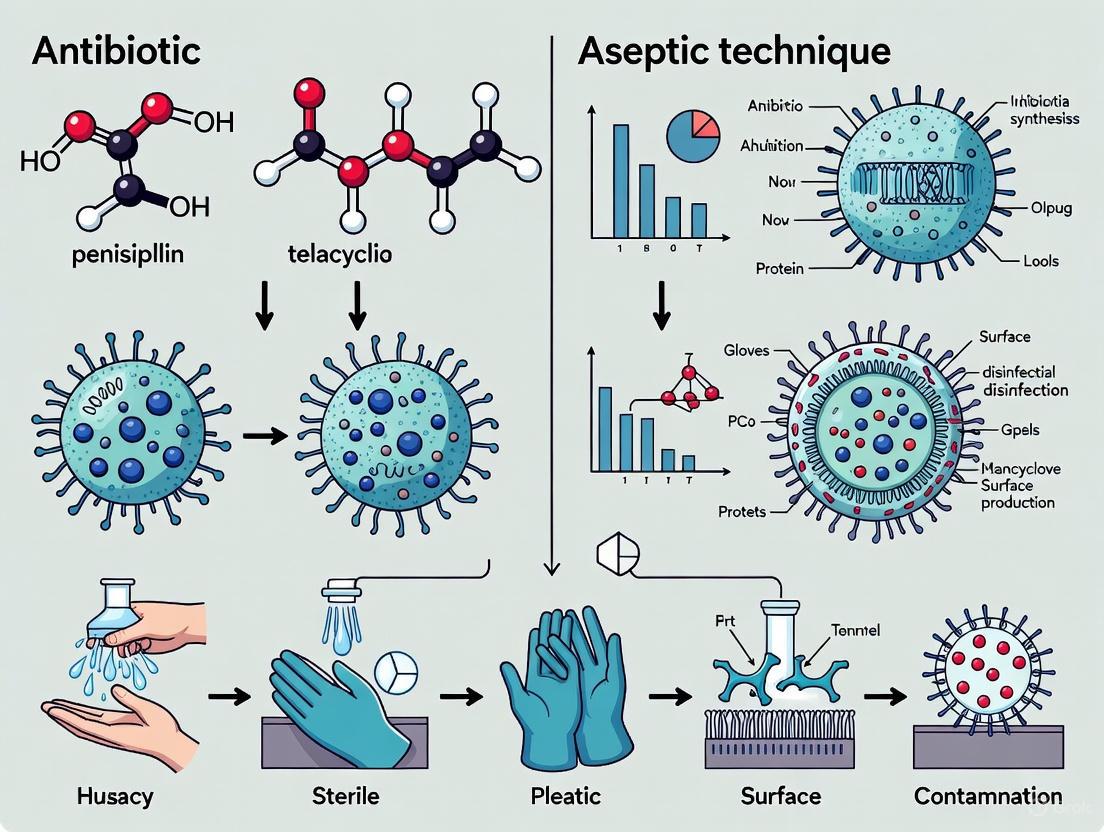
This article examines the complementary roles of antibiotic-based strategies and aseptic techniques in modern pharmaceutical contamination control.
Synergy Over Substitution: Integrating Antibiotic Strategies and Aseptic Technique for Robust Contamination Control in Pharmaceutical Development
Abstract
This article examines the complementary roles of antibiotic-based strategies and aseptic techniques in modern pharmaceutical contamination control. Aimed at researchers, scientists, and drug development professionals, it explores the foundational science of microbial threats—including emerging antimicrobial resistance and biofilm formation—and details current methodological applications from manufacturing to testing. The content provides evidence-based troubleshooting for common challenges like method suitability and human factors, and validates strategies through comparative analysis of decontamination protocols and neutralization techniques. By synthesizing recent findings and industry challenges, this review provides a framework for developing integrated, resilient contamination control systems that leverage the strengths of both chemical and physical barriers to ensure product safety and efficacy.
The Evolving Microbial Threat Landscape: Foundational Principles of Contamination Control
The Rising Challenge of Antimicrobial Resistance (AMR) and Emerging Pathogens
Antimicrobial resistance (AMR) represents one of the most severe global public health threats of the 21st century, undermining the effectiveness of infectious disease treatments and jeopardizing decades of medical progress. The phenomenon occurs when microorganisms, including bacteria, viruses, fungi, and parasites, develop the ability to survive and proliferate despite exposure to antimicrobial drugs designed to eliminate them. This resistance leads to treatments becoming ineffective, infections persisting, and risks of severe illness and death significantly increasing. According to recent data, AMR was directly responsible for 1.27 million deaths globally in 2019, with nearly 5 million deaths associated with drug-resistant infections. Projections suggest this number could rise to 10 million annual deaths by 2050 if left unaddressed, surpassing cancer mortality rates [1] [2].
The discovery of antibiotics in the 20th century revolutionized medicine, saving millions of lives from previously fatal infectious diseases. However, the rapid evolution and dissemination of resistant pathogens have created what the World Health Organization has classified as a "silent pandemic" [1]. The development of AMR is an unavoidable evolutionary phenomenon driven by genetic mutations and selection pressure from antimicrobial use. This crisis is accelerated by interconnected factors including misuse and overuse of antibiotics in human medicine, veterinary practice, and agriculture, as well as inadequate infection control measures and environmental contamination from pharmaceutical waste [1] [2].
The challenge is further compounded by the limited pipeline of new antimicrobial agents. Since the introduction of fluoroquinolones in the 1980s, few new antibiotic classes have reached the market, creating a dangerous imbalance between drug-resistant pathogens and available treatments [1]. This article examines the rising challenge of AMR through the lens of contamination control strategies, comparing the efficacy of antibiotic-based approaches with aseptic techniques, and explores the emerging pathogens that pose the greatest threats to global health.
Comparative Analysis: Antibiotics vs. Aseptic Technique for Contamination Control
Antibiotic-Based Decontamination Protocols
Antibiotic-based approaches utilize antimicrobial agents to eliminate or suppress microbial contamination in clinical and research settings. These protocols typically involve the application of broad-spectrum antibiotic cocktails to target diverse bacterial populations. The effectiveness of this methodology was demonstrated in a study on human amniotic membrane (AM) processing, where antibiotic treatment proved highly efficient at removing bioburden, including contamination introduced at various processing stages [3].
Experimental Protocol: Antibiotic Decontamination of Human Amniotic Membrane
- Objective: To validate the microbial decontamination potential of a vacuum-drying manufacturing technique incorporating antibiotics and assess lasting antimicrobial effects [3].
- Methodology: Fresh amniotic membrane from elective caesarean sections was processed using a series of washing steps in physiological solutions to remove raw contamination and blood. Tissues were subsequently incubated in raffinose solution containing a broad-spectrum antibiotic cocktail (components listed in Table 1), followed by vacuum-drying preservation [3].
- Artificial Bioburden Challenge: The protocol was tested by artificially loading AM with Staphylococcus epidermidis (10⁶ CFU/mL) at different processing stages to evaluate decontamination efficacy [3].
- Assessment Methods: Decontamination efficacy was measured by counting colony-forming units (CFU/mL) after each processing step using spread plate method. Lasting antimicrobial effects were evaluated using minimum inhibitory/biocidal concentration (MIC/MBC) tests and disc diffusion assays against multiple pathogens including Methicillin-resistant Staphylococcus aureus (MRSA) and Escherichia coli [3].
- Results: The antibiotic treatment protocol essentially eliminated bioburden, with no growth detected after raffinose/antibiotic incubation and vacuum drying. Antibiotic-treated vacuum-dried AM demonstrated effective antibacterial capacity against all tested bacteria, while AM without antibiotic treatment showed minimal inherent antibacterial activity [3].
Table 1: Antibiotic Cocktail Composition for Tissue Decontamination
| Antibiotic Component | Concentration | Spectrum of Activity | Primary Mechanism |
|---|---|---|---|
| Penicillin G | 100 U/mL | Gram-positive bacteria | Inhibits cell wall synthesis |
| Streptomycin | 100 μg/mL | Broad-spectrum | Inhibits protein synthesis |
| Amphotericin B | 2.5 μg/mL | Fungi | Binds to ergosterol in fungal cell membranes |
| Vancomycin | 100 μg/mL | Gram-positive bacteria | Inhibits cell wall synthesis |
| Nystatin | 100 U/mL | Fungi | Binds to ergosterol in fungal cell membranes |
Aseptic Technique Protocols
Aseptic technique encompasses procedures and practices that prevent contamination by eliminating microbial contact during processing. These methods are particularly crucial in tissue banking, where terminal sterilization techniques may damage biological materials. Aseptic protocols emphasize environmental control, proper handling, and processing in controlled environments to prevent introduction of contaminants [4].
Experimental Protocol: Microbiological Testing in Cardiovascular Tissue Banking
- Objective: To ensure tissue quality and safety through effective microbiological testing and aseptic processing protocols for cardiovascular allografts [4].
- Environmental Monitoring: Regular assessment of cleanrooms using both passive (agar plates) and active (particulate counts) air sampling, surface monitoring via agar plates and swabs, water quality testing through membrane filtration, and personnel monitoring using agar plates [4].
- Donor Screening: Comprehensive evaluation including postmortem blood cultures, serum tests for HIV, HCV, HTLV, and other pathogens, along with detailed medical history review [4].
- Tissue Processing: Recovery performed in controlled environments (operating rooms preferred over mortuaries due to lower contamination rates). Treated with decontamination solutions followed by cryopreservation or decellularization. Sampling for microbial testing occurs at critical points during processing [4].
- Microbiological Culture Methods: Multiple approaches including immersion in growth media, automated systems measuring changes in impedance or CO₂, fluorescence-based detection (Milliflex Quantum), and qPCR for bacterial DNA detection [4].
- Results: Contamination rates significantly lower in operating room recoveries (12%) compared to mortuary settings (54%). Implementation of comprehensive aseptic protocols reduces but does not eliminate contamination risk, necessitating careful monitoring at all processing stages [4].
Comparative Efficacy Analysis
Table 2: Comparison of Antibiotic vs. Aseptic Contamination Control Methods
| Parameter | Antibiotic-Based Approach | Aseptic Technique Approach |
|---|---|---|
| Primary Mechanism | Chemical inactivation of microorganisms | Physical prevention of microbial contact |
| Effectiveness Against Resident Bioburden | High (up to 100% elimination in validated protocols) [3] | Variable (12-84% contamination rates depending on environment) [4] |
| Residual Antimicrobial Activity | Yes (creates antibiotic reservoir in processed tissues) [3] | No (unless combined with antimicrobial agents) |
| Risk of Resistance Development | Yes (potential selection for resistant strains) | Minimal (no selective pressure applied) |
| Impact on Tissue Integrity | Variable (some antibiotics may affect cell viability) | Generally superior (avoids chemical exposure) |
| Implementation Complexity | Moderate (requires validation of efficacy) | High (demands controlled environments and rigorous training) |
| Cost Considerations | Moderate (antibiotic costs) | High (facility maintenance, monitoring, personnel time) |
| Regulatory Challenges | Requires validation of efficacy and safety | Demands extensive documentation and environmental controls |
The Escalating Threat of Resistant Pathogens
Global Resistance Patterns
Recent WHO reports indicate alarming trends in antibiotic resistance worldwide. In 2023, approximately one in six laboratory-confirmed bacterial infections globally showed resistance to antibiotic treatment. Between 2018 and 2023, more than 40% of monitored pathogen-antibiotic combinations exhibited increasing resistance, with annual growth rates between 5% and 15% [5]. Resistance rates are highest in WHO Southeast Asian and Eastern Mediterranean regions, where one-third of infections demonstrate resistance, while the African region reports resistance in one-fifth of infections [5].
The most concerning trends involve Gram-negative bacteria, particularly Escherichia coli and Klebsiella pneumoniae, which represent the predominant resistant pathogens in bloodstream infections. Globally, over 40% of E. coli and 55% of K. pneumoniae isolates now demonstrate resistance to third-generation cephalosporins, the preferred treatment for these infections. In some regions, particularly Africa, these resistance rates exceed 70% [5]. Even last-resort antibiotics like carbapenems and fluoroquinolones are losing effectiveness against these pathogens, with carbapenem resistance—once rare—becoming increasingly common [5].
ESKAPE Pathogens: Emerging Threats
The ESKAPE pathogens—Enterococcus faecium, Staphylococcus aureus, Klebsiella pneumoniae, Acinetobacter baumannii, Pseudomonas aeruginosa, and Enterobacter species—represent particularly dangerous multidrug-resistant organisms responsible for the majority of nosocomial infections worldwide. Recent research provides concerning data on their resistance profiles:
Experimental Protocol: Comparative Analysis of ESKAPE Pathogens
- Objective: To evaluate biofilm formation and antibiotic resistance properties of five ESKAPE pathogen species comparatively to identify the most significant threats [6].
- Sample Collection: 165 clinical isolates of 5 ESKAPE pathogen species (E. faecium, S. aureus, K. pneumoniae, A. baumannii, and P. aeruginosa) collected from a tertiary hospital in Bangladesh, with isolates predominantly from urine (29.1%), wound swabs (25.45%), and tracheal aspirates (16.97%) [6].
- Identification and Susceptibility Testing: Secondary identification followed by antibiotic susceptibility determination using disc diffusion method and minimum inhibitory concentration testing [6].
- Biofilm Assessment: Biofilm formation determined by microtiter plate biofilm formation assay. Biofilm-forming genes screened by PCR [6].
- Resistance Gene Detection: Carbapenemase and Metallo-β-lactamase detection performed by modified carbapenem inactivation method (mCIM) and EDTA-modified carbapenem inactivation method (eCIM) tests, respectively. MRSA confirmed via mecA gene detection, vancomycin resistance in E. faecium assessed via vanB gene [6].
- Results: Among Gram-positive isolates, E. faecium exhibited higher multi-drug resistance rates (90%) compared to S. aureus (10%). Among Gram-negative isolates, A. baumannii and K. pneumoniae showed elevated resistance to carbapenems (74.29% and 45.71%, respectively). Colistin resistance was highest in K. pneumoniae (42.86%). Biofilm formation was prevalent (88.5% of isolates), with a significant correlation observed between biofilm formation and resistance to carbapenems, cephalosporins, and piperacillin/tazobactam (p < 0.05) [6].
Table 3: Emerging High-Priority AMR Pathogens and Resistance Patterns
| Pathogen | Priority Tier | Key Resistance Mechanisms | Treatment Challenges | Mortality/Morbidity Impact |
|---|---|---|---|---|
| Carbapenem-resistant Enterobacterales (CRE) | Tier 1 (Highest) [7] | Carbapenemase production (KPC, NDM, OXA-48); porin mutations; efflux pumps [2] | Limited to last-line antibiotics (colistin, tigecycline); combination therapies often required | Mortality rates up to 50% in bloodstream infections [2] |
| Candida auris | Tier 1 (Highest) [7] | Antifungal resistance (azole, polyene, echinocandin); biofilm formation; environmental persistence [7] | Limited antifungal options; misidentification by standard labs delays appropriate treatment | Outbreaks in healthcare settings; high mortality in immunocompromised |
| Drug-resistant Neisseria gonorrhoeae | Tier 1 (Highest) [7] | Resistance to ceftriaxone, azithromycin, fluoroquinolones; genetic plasticity facilitating rapid spread [2] [7] | Emerging untreatable cases; few new antibiotics in development | Rising incidence globally; complications including infertility |
| Methicillin-resistant Staphylococcus aureus (MRSA) | Tier 2 (High) [7] | mecA gene encoding PBP2a with low β-lactam affinity; biofilm formation; toxin production [1] [2] | Vancomycin remains primary treatment but with increasing MIC creep; alternatives limited | ~10,000 deaths annually in US alone; common cause of healthcare-associated infections [2] |
| Carbapenem-resistant Acinetobacter baumannii | Tier 2 (High) [7] | Carbapenem-hydrolyzing class D β-lactamases; aminoglycoside-modifying enzymes; efflux pumps [6] | Extremely limited therapeutic options; often pan-resistant | High mortality in ventilator-associated pneumonia and bloodstream infections |
Mechanisms of Antimicrobial Resistance
Understanding the molecular mechanisms underlying AMR is crucial for developing effective countermeasures. Bacteria employ four primary resistance strategies: enzymatic inactivation of antibiotics, modification of drug targets, reduced permeability, and active efflux [2].
Enzymatic Inactivation: Bacteria produce enzymes that chemically modify or destroy antibiotics before they can reach their targets. β-lactamases represent the most prevalent resistance mechanism, with extended-spectrum β-lactamases (ESBLs) and carbapenemases posing particular challenges. These enzymes hydrolyze the β-lactam ring of penicillins, cephalosporins, and carbapenems, rendering them ineffective. The genes encoding these enzymes are often located on mobile genetic elements, facilitating rapid dissemination among bacterial populations [2].
Target Modification: Bacteria alter antibiotic binding sites through mutation or enzymatic modification, reducing drug affinity. Methicillin-resistant Staphylococcus aureus (MRSA) exemplifies this mechanism through acquisition of the mecA gene, which encodes PBP2a—an alternative penicillin-binding protein with low affinity for β-lactam antibiotics. Similarly, vancomycin resistance in enterococci involves remodeling of peptidoglycan precursors from D-Ala-D-Ala to D-Ala-D-Lac, reducing vancomycin binding affinity by 1000-fold [2].
Reduced Permeability: Gram-negative bacteria limit antibiotic penetration by modifying outer membrane porins or lipopolysaccharide structures. Porin deficiencies, particularly loss of OmpF and OmpC in Enterobacteriaceae, significantly reduce intracellular concentrations of β-lactams, fluoroquinolones, and other antibiotics. This mechanism often works synergistically with efflux pumps to create multi-drug resistance [2].
Efflux Pumps: Bacterial membrane transporters actively export antibiotics from the cell, maintaining subtherapeutic intracellular concentrations. These systems often exhibit broad substrate specificity, contributing to multi-drug resistance phenotypes. Notable examples include AcrAB-TolC in Escherichia coli and MexAB-OprM in Pseudomonas aeruginosa, which can extrclude multiple antibiotic classes including β-lactams, fluoroquinolones, tetracyclines, and chloramphenicol [2].
The Researcher's Toolkit: Essential Methods and Reagents
Table 4: Essential Research Reagents and Methods for AMR Studies
| Reagent/Method | Primary Function | Application in AMR Research | Key Considerations |
|---|---|---|---|
| Mueller-Hinton Agar | Culture medium for antibiotic susceptibility testing | Standardized medium for disk diffusion and MIC assays according to CLSI guidelines [8] | Must meet specific calcium and magnesium cation concentrations for accurate results |
| Antibiotic Discs | Diffusion-based susceptibility testing | Kirby-Bauer method for determining resistance profiles [8] | Require proper storage (-20°C), quality control, and regular potency verification |
| PCR Reagents for Resistance Genes | Detection of specific resistance determinants | Amplification of mecA (MRSA), vanA/B (VRE), blaKPC/NDM (carbapenemases) [6] | Primer design critical for specificity; may require multiplexing for efficient screening |
| Microtiter Plates | Biofilm formation assays | Quantification of biofilm production via crystal violet staining [6] | Polystyrene surface properties affect attachment; requires appropriate positive/negative controls |
| Cell Culture Media | Maintenance of eukaryotic cells | Assessment of antibiotic cytotoxicity and tissue models for infection studies | Serum composition may affect antibiotic activity; requires antibiotic-free validation |
| DNA Extraction Kits | Isolation of bacterial genomic DNA | Whole genome sequencing for resistance mechanism elucidation | Must efficiently lyse Gram-positive and -negative bacteria; remove PCR inhibitors |
| Antibiotic Standards | Quality control and reference materials | Preparation of stock solutions for MIC determinations [8] | Purity critical; require proper solubility and storage conditions to maintain stability |
The rising challenge of antimicrobial resistance demands integrated, multifaceted approaches that address both technological and ecological dimensions of the problem. While antibiotic-based decontamination protocols offer potent tools for specific applications like tissue processing, their long-term efficacy is threatened by escalating resistance patterns. Aseptic techniques provide a complementary strategy that minimizes selective pressure but requires substantial infrastructure and rigorous adherence to protocols.
The data presented in this analysis reveals a concerning trajectory: resistance rates are increasing globally for over 40% of monitored pathogen-antibiotic combinations, with particularly alarming trends in Gram-negative bacteria [5]. The emergence of Tier 1 priority pathogens like carbapenem-resistant Enterobacterales, Candida auris, and drug-resistant Neisseria gonorrhoeae signals a critical juncture in our ability to control infectious diseases [7].
Future directions must emphasize antimicrobial stewardship to preserve existing antibiotics, enhanced surveillance systems for early detection of resistance emergence, infection prevention through improved aseptic techniques and hospital hygiene, and innovative therapeutic approaches that target resistance mechanisms rather than simply bacterial viability. The implementation of automated monitoring systems for hand hygiene compliance, potentially linked to reimbursement structures, represents one promising approach to reducing healthcare-associated infections that drive AMR dissemination [9].
Furthermore, the development of rapid diagnostic technologies is crucial for transitioning from empirical to targeted antibiotic therapy, reducing selective pressure from broad-spectrum agents. Artificial intelligence and machine learning applications in resistance prediction and drug discovery show significant promise for accelerating our response to this evolving crisis [10]. Without coordinated global action incorporating these diverse strategies, the post-antibiotic era—once considered an apocalyptic fantasy—risks becoming a 21st-century reality [1].
Biofilm formation represents a fundamental survival strategy for bacterial pathogens, contributing significantly to the persistence of infections and limiting therapeutic efficacy. Acinetobacter baumannii, a Gram-negative opportunistic pathogen, exemplifies the critical challenge of biofilm-mediated therapeutic recalcitrance in clinical settings. This bacterium's capacity to form robust biofilms on both biotic and abiotic surfaces has established it as a formidable nosocomial pathogen, particularly in intensive care units where it causes ventilator-associated pneumonia, bloodstream infections, and wound infections [11] [12]. The World Health Organization has classified carbapenem-resistant A. baumannii as a priority 1 critical pathogen for which new therapeutic agents are urgently needed, underscoring the gravity of the threat posed by this organism [11].
The clinical significance of A. baumannii biofilm formation extends beyond conventional antibiotic resistance mechanisms. When embedded within a biofilm matrix, A. baumannii exhibits enhanced tolerance to environmental stressors, including antibiotic exposure, nutrient limitation, and host immune responses [11] [13]. This resilience facilitates bacterial persistence on medical equipment and host tissues, leading to recurrent infections and treatment failures. Understanding the molecular mechanisms governing biofilm formation and its interplay with antimicrobial resistance is therefore paramount for developing effective countermeasures against this persistent pathogen [11].
Mechanisms of Biofilm Formation and Architecture
Molecular Regulation of Biofilm Development
Biofilm formation in A. baumannii is a highly regulated process involving an orchestrated sequence of genetic determinants and signaling pathways. The development begins with initial attachment to surfaces, followed by microcolony formation, maturation, and eventual dispersal [14]. Key regulatory systems include:
BfmRS two-component system: This system controls the expression of the Csu pilus chaperone-usher assembly system, which is essential for initial attachment and biofilm formation on abiotic surfaces [15]. Disruption of bfmR results in significant defects in biofilm formation and alters cellular morphology in A. baumannii strain 19606 [15].
Quorum sensing systems: The AbaI/AbaR system facilitates cell-to-cell communication, allowing density-dependent coordination of biofilm development and virulence factor expression [11].
Biofilm-associated protein (Bap): This surface protein promotes cell-to-cell interactions and plays a crucial role in biofilm maturation and structural integrity [11].
The extracellular polymeric substance (EPS) matrix constitutes approximately 90% of the biofilm volume, creating a protective barrier that restricts antibiotic penetration and provides structural stability to the biofilm architecture [14]. This matrix is composed primarily of exopolysaccharides, proteins, and extracellular DNA, forming a complex network that encases the bacterial communities [11].
Genetic Determinants of Biofilm Architecture
Table 1: Key Genetic Regulators of A. baumannii Biofilm Formation
| Gene/System | Function | Impact on Biofilm | Reference |
|---|---|---|---|
| BfmRS | Two-component regulatory system | Controls Csu pilus expression; essential for initial attachment | [15] |
| CsuA/BABCDE | Chaperone-usher pilus assembly | Mediates attachment to abiotic surfaces; critical for early biofilm formation | [15] |
| Bap | Biofilm-associated surface protein | Facilitates cell-to-cell adhesion; promotes biofilm maturation | [11] |
| AbaI/AbaR | Quorum sensing system | Regulates density-dependent gene expression in biofilms | [11] |
| OmpA | Outer membrane protein A | Contributes to biofilm formation, epithelial cell invasion, and immune evasion | [12] |
| PER-1 | β-lactamase enzyme | Co-regulates biofilm formation and antibiotic resistance | [11] |
Biofilm-Specific Resistance Mechanisms
Multifaceted Therapeutic Recalcitrance
The resistome of biofilm-associated A. baumannii encompasses both conventional resistance mechanisms and biofilm-specific adaptive responses. The biofilm microenvironment creates gradients of nutrients, oxygen, and metabolic activity, leading to heterogeneous bacterial subpopulations with varying susceptibility profiles [11]. Key mechanisms contributing to therapeutic recalcitrance include:
Restricted antibiotic penetration: The EPS matrix acts as a physical diffusion barrier, limiting antibiotic permeation into the deeper layers of the biofilm [11] [13]. This barrier function is complemented by neutralization mechanisms within the matrix, where antibiotics may bind to matrix components or be enzymatically inactivated [11].
Metabolic heterogeneity: The gradient of metabolic activity from the biofilm surface to the interior results in subpopulations of dormant or persister cells with markedly reduced susceptibility to conventional antibiotics that primarily target actively growing cells [11] [13].
Enhanced horizontal gene transfer: Biofilms provide an ideal environment for genetic exchange, facilitating the dissemination of antibiotic resistance genes through transformation, transduction, and conjugation [16]. The proximity of cells within the biofilm structure, combined with the presence of extracellular DNA in the matrix, significantly increases the frequency of horizontal gene transfer compared to planktonic cultures [16].
Efflux-Mediated Resistance in Biofilms
The resistance-nodulation-division (RND) family of efflux pumps plays a particularly important role in biofilm-mediated resistance. Research has demonstrated that specific RND efflux pumps, including AdeB, AdeFGH, and AdeIJK, contribute significantly to biofilm formation in A. baumannii [17]. Gene knockout studies revealed that disruption of adeB and adeIJK genes resulted in significantly reduced biofilm formation (1.59±0.06 and 1.91±0.02, respectively, compared to 2.31±0.01 in wild-type strains) [17].
Correspondingly, efflux pump inhibitors such as PAβN, omeprazole, verapamil, and CCCP demonstrated dose-dependent inhibition of biofilm formation, with PAβN showing the most potent inhibitory effect [17]. This evidence suggests that efflux systems in A. baumannii serve dual functions in both antimicrobial resistance and biofilm development, representing a convergent mechanism of therapeutic recalcitrance.
Table 2: Experimentally Determined Efficacy of Anti-Biofilm Agents Against A. baumannii
| Therapeutic Agent | Mechanism of Action | Efficacy Against Planktonic Cells (MIC) | Efficacy Against Biofilms | Reference |
|---|---|---|---|---|
| Gallium nitrate | Disrupts iron metabolism | 16 μM (growth reduction) | 64 μM (disrupts preformed biofilms) | [18] |
| Antimicrobial peptide GH12 | Membrane disruption | 8 μg/mL (MIC) | 8 μg/mL (inhibits formation), 16 μg/mL (disperses established) | [19] |
| Antimicrobial peptide SAAP-148 | Membrane disruption | 16 μg/mL (MIC) | 16 μg/mL (inhibits formation), 32 μg/mL (disperses established) | [19] |
| Efflux pump inhibitor PAβN | Inhibits RND efflux pumps | Variable (synergistic) | Significant reduction in biofilm formation | [17] |
Experimental Models and Methodologies for Biofilm Research
Standardized Biofilm Assessment Protocols
The crystall violet staining method represents the most widely employed technique for quantifying biofilm formation. This protocol involves growing bacteria in 96-well polystyrene plates for 24 hours, followed by staining with crystal violet to visualize and quantify adhered biomass [20] [17]. The specific methodology includes:
Biofilm cultivation: Bacterial suspensions are prepared in appropriate media (e.g., LB broth) and incubated in 96-well plates under static conditions for 24 hours at relevant temperatures (typically 30-37°C) [20].
Staining and quantification: Following incubation, planktonic cells are removed by washing, and adherent biofilms are fixed with methanol before staining with 1% crystal violet solution. The bound dye is then solubilized with ethanol or acetic acid, and the optical density is measured at 570 nm to quantify biofilm formation [20] [17].
Data interpretation: Results are typically classified based on the optical density values, with modifications using critical cut-off values (ODc) defined as three standard deviations above the mean OD of the negative control [20].
Advanced Imaging and Molecular Analysis
Confocal laser scanning microscopy (CLSM) has emerged as a powerful tool for visualizing the three-dimensional architecture of biofilms. When combined with vital fluorescent stains such as SYTO9, CLSM enables detailed analysis of biofilm spatial organization and viability [19]. This approach revealed that antimicrobial peptides GH12 and SAAP-148 cause significant disruption to the three-dimensional structure of established biofilms, reducing overall biomass and compromising architectural integrity [19].
Molecular analyses including real-time reverse transcription PCR have been instrumental in elucidating the genetic regulation of biofilm formation. Studies demonstrate that anti-biofilm agents can significantly downregulate the expression of critical adhesion genes such as icaA and icaD, providing mechanistic insights into their mode of action [19].
Non-Antibiotic Therapeutic Approaches
Metal-Based Interventions
Gallium-based therapeutics represent a promising anti-biofilm strategy that capitalizes on disrupting essential bacterial metabolic pathways. Gallium ions (Ga³⁺) function as iron mimetics, integrating into bacterial iron-dependent metabolic processes but failing to undergo redox cycling, thereby disrupting critical cellular functions [18]. Experimental evidence demonstrates that:
16 μM gallium nitrate drastically reduces A. baumannii growth and biofilm formation in human serum [18].
64 μM gallium nitrate causes massive disruption of preformed A. baumannii biofilms, suggesting potential applications for treating established biofilm-associated infections [18].
The efficacy of gallium in human serum is particularly noteworthy, as A. baumannii develops mature biofilms in this medium, which closely mimics the in vivo environment during bloodstream infections [18].
Antimicrobial Peptides and Novel Therapeutic Classes
Synthetic antimicrobial peptides have shown considerable promise in targeting both planktonic and biofilm-associated A. baumannii. Studies with peptides GH12 and SAAP-148 demonstrate multiple mechanisms of action, including:
Membrane disruption: Flow cytometry analyses confirm that these peptides compromise bacterial membrane integrity, leading to cell death [19].
Biofilm inhibition and dispersal: At concentrations of 8 μg/mL (GH12) and 16 μg/mL (SAAP-148), these peptides significantly inhibit biofilm formation, while higher concentrations (16 μg/mL and 32 μg/mL, respectively) effectively disperse established biofilms [19].
Gene regulation downregulation: At 1× MIC concentrations, both peptides significantly suppress the expression of adhesion genes icaA and icaD, providing a molecular basis for their anti-biofilm activity [19].
Additional investigative approaches include quorum sensing inhibition, nanoparticle-based targeting, and phage therapy, all of which aim to disrupt biofilm integrity without applying direct selective pressure for conventional antibiotic resistance mechanisms [11].
Research Reagents and Methodological Toolkit
Table 3: Essential Research Reagents for Studying A. baumannii Biofilms
| Reagent/Category | Specific Examples | Research Application | Function/Mechanism | |
|---|---|---|---|---|
| Biofilm Quantification Stains | Crystal violet, SYTO9, calcium fluorite white | Biofilm quantification and visualization | Stains biofilm biomass; fluorescent tags for microscopic visualization | [14] [19] |
| Gene Expression Analysis | qRT-PCR reagents, RNA extraction kits | Molecular analysis of biofilm genes | Quantifies expression of biofilm-associated genes (e.g., bfmR, ompA, bap) | [20] [19] |
| Efflux Pump Inhibitors | PAβN, omeprazole, verapamil, CCCP | Mechanism studies and combination therapies | Inhibits RND efflux pumps; reduces biofilm formation and antibiotic resistance | [17] |
| Anti-biofilm Agents | Gallium nitrate, antimicrobial peptides (GH12, SAAP-148) | Therapeutic intervention studies | Disrupts iron metabolism; membrane disruption; biofilm inhibition and dispersal | [18] [19] |
| Growth Media | Human serum, LB broth, TSB medium | In vitro biofilm models | Provides growth environment mimicking in vivo conditions | [18] [19] |
Conceptual Framework and Signaling Pathways
The regulatory network controlling biofilm formation in A. baumannii involves complex interactions between environmental signals, genetic regulators, and phenotypic outcomes. The following diagram illustrates the key signaling pathway:
Diagram 1: Regulatory network of A. baumannii biofilm formation. Key signaling pathways integrate environmental stimuli with genetic regulation to coordinate biofilm development and associated antibiotic resistance.
The mechanism of gallium-mediated biofilm disruption represents a promising therapeutic approach, as illustrated below:
Diagram 2: Mechanism of gallium-mediated biofilm disruption. Gallium ions function as iron mimetics, disrupting critical iron-dependent processes essential for biofilm maintenance and bacterial viability.
The therapeutic recalcitrance of A. baumannii biofilms represents a critical challenge in clinical management of nosocomial infections. The complex interplay between genetic regulation, physicochemical factors, and adaptive resistance mechanisms underscores the need for innovative approaches that specifically target the biofilm lifestyle. Future research directions should focus on:
Combination therapies that simultaneously target multiple aspects of biofilm formation and maintenance, such as pairing efflux pump inhibitors with conventional antibiotics [17] or utilizing gallium compounds in conjunction with membrane-targeting antimicrobial peptides [18] [19].
Anti-virulence strategies that disrupt quorum sensing systems or specific adhesion mechanisms without exerting direct lethal pressure that selects for resistance [11].
Advanced delivery systems that enhance penetration of anti-biofilm agents into the depths of mature biofilm structures, potentially utilizing nanoparticle-based carriers or biofilm-degrading enzymes [11].
The continued elucidation of co-regulatory networks linking biofilm formation with antimicrobial resistance will provide new targets for therapeutic intervention, potentially restoring the efficacy of existing antibiotics against this formidable pathogen. As research advances, the integration of biofilm-specific approaches with traditional antimicrobial strategies offers the most promising path forward in addressing the persistent clinical challenge of A. baumannii infections.
Human Factors as the Primary Contamination Vector in Aseptic Processing
In the high-stakes environments of pharmaceutical manufacturing and biotechnology, the control of microbial contamination is paramount for ensuring product safety and efficacy. While the industry heavily invests in advanced equipment and rigorous procedures, a critical vulnerability remains: the human operator. Within the broader research context comparing antibiotics versus aseptic technique for contamination control, this guide examines the undeniable evidence establishing human factors as the primary contamination vector in aseptic processing. Aseptic technique comprises specific practices and procedures designed to minimize contamination by pathogens, serving as a physical barrier to infection in healthcare and manufacturing settings [21] [22]. Despite these protocols, people consistently represent the largest risk vector in contamination events, deviations, and regulatory non-compliance [23]. This analysis objectively compares human-dependent processes against technological alternatives, providing researchers and drug development professionals with experimental data and methodologies to evaluate contamination control strategies systematically.
Comparative Contamination Analysis: Human-Dependent vs. Technology-Enhanced Processes
Quantitative Evidence of Human as a Contamination Vector
Extensive research demonstrates that environments with higher human intervention consistently show elevated contamination rates. The data reveals a stark contrast between human-reliant processes and those utilizing advanced engineering controls.
Table 1: Comparative Contamination Rates Across Processing Environments
| Processing Environment | Average Contamination Rate | Primary Risk Factors | Key Supporting Studies |
|---|---|---|---|
| Clinical/Ward Preparation(High human involvement) | 3.7% - 7% of prepared doses [24] | Multiple use of vials/syringes, inadequate disinfection, workflow interruptions | Systematic review of 26 studies (2007-2015) |
| Pharmaceutical Environment(Controlled human involvement) | 0.5% - 2% of prepared doses [24] | Glove contamination, improper gowning, aseptic technique lapses | Austin & Elia meta-analysis (1950-2014) |
| Robotic/Isolator Systems(Minimal human involvement) | Near-zero rates achievable [25] | System design flaws, maintenance errors, validation gaps | PDA industry survey and regulatory reports |
Classification and Frequency of Human Factor Errors
Understanding the specific types and frequencies of human errors enables targeted interventions in aseptic processing environments.
Table 2: Typology of Human Factor Contamination Errors in Aseptic Processing
| Error Category | Specific Manifestations | Reported Frequency | Typical Consequences |
|---|---|---|---|
| Technical Practice Deviations | Incorrect aseptic technique, touching critical surfaces, multiple use of syringes/vials | 19%-100% of IV drug preparations show ≥1 aseptic deviation [24] | Microbial contamination, product recall |
| Gowning and Hygiene Failures | Improper glove changes, inadequate hand hygiene, contaminated gowns | >50% of glove contamination incidents from poor donning technique [25] | Microbial ingress, environmental excursions |
| Procedural Non-Adherence | Skipping disinfection steps, incorrect component handling, workflow shortcuts | 3% glove contamination rate even among highly trained staff [25] | Batch rejection, regulatory observations |
| Environmental Control Breaches | Excessive movement, reaching over critical areas, improper cleanroom conduct | Leading cause of particulate and microbial excursions [23] | Sterility assurance compromise |
Experimental Framework for Human Factor Analysis
Protocol 1: Glove Integrity and Contamination Transfer Study
Objective: To quantify microbial transfer rates through compromised gloves and assess operator contamination risk during aseptic operations.
Methodology:
- Sample Collection: Use contact plates or swabs to sample gloves at timed intervals during normal aseptic operations [25].
- Integrity Testing: Implement regular glove leak testing using approved industrial methods (e.g., air pressure tests, water fill tests).
- Transfer Simulation: Use non-pathogenic tracer microorganisms (e.g., Bacillus subtilis spores) on glove surfaces to simulate contamination transfer events.
- Microbiological Analysis: Incubate samples using appropriate media (Tryptic Soy Agar for bacteria, Sabouraud Dextrose Agar for fungi) at 30-35°C for 3-5 days (bacteria) and 20-25°C for 5-7 days (fungi) [26].
- Data Correlation: Compare contamination rates with glove integrity metrics and operator activities.
Key Metrics: Colony-forming units (CFU) per glove surface area, percentage of gloves with integrity failures, correlation between activity type and contamination rate.
Protocol 2: Comparative Environmental Contamination Assessment
Objective: To quantitatively compare contamination rates between manual and automated aseptic processing technologies.
Methodology:
- Study Design: Parallel processing of identical media fills (Tryptic Soy Broth) in both manual and automated filling lines.
- Environmental Monitoring: Deploy active air samplers, settle plates, and surface contact plates in both environments per ISO 14644 standards [23].
- Intervention Tracking: Document all human interventions in the manual process and technical interventions in the automated process.
- Media Fill Incubation: Incubate media-filled containers at 20-25°C for 7 days followed by 30-35°C for 7 days, examining for turbidity indicative of microbial growth [25].
- Statistical Analysis: Apply Fisher's exact test to compare contamination rates between the two systems with statistical significance set at p<0.05.
Key Metrics: Contamination rate per units processed, types of microorganisms isolated, intervention-to-contamination correlation.
Technological Alternatives and Performance Data
Comparison of Aseptic Processing Technologies
Advanced technologies offer significant contamination reduction by minimizing human intervention in critical processes.
Table 3: Performance Comparison of Aseptic Processing Technologies
| Technology | Contamination Risk Reduction | Implementation Considerations | Best Application Context |
|---|---|---|---|
| RABS with Gauntlet Gloves | Moderate (vs. open processing) | Glove integrity failures remain primary risk; requires rigorous testing | Multi-product facilities with medium batch sizes |
| Isolators with Remote Manipulators | High (85-95% reduction vs. RABS) [25] | High initial investment; reduced operational costs through fewer media fills | High-potency compounds, new facility designs |
| Fully Robotic Filling Lines | Very High (near-elimination of human vector) | Maximum capital cost; minimal human intervention; highest sterility assurance | Large-volume production of sterile injectables |
| Single-Use Assemblies | High for specific process steps | Reduces cleaning validation; introduces extraneous particulate risk | Biologics, small-batch compounding |
Quantitative Performance Metrics of Advanced Systems
Industry data demonstrates that facilities implementing robotic systems and isolators with remote manipulators show remarkable improvement in sterility assurance:
- Glove-Related Deviations: Traditional isolators using gauntlet gloves report that glove/hole-related issues constitute the number one cause for deviations and investigations [25].
- Remote Manipulator Efficacy: Electronic manipulators with precise positioning and integrated cameras demonstrate task precision equivalent to manual manipulation without contamination risk [25].
- Environmental Monitoring Data: Facilities using advanced robotic systems report 90% reduction in particulate excursions and 95% reduction in viable contamination events compared to traditional manual operations [25].
Visualizing Contamination Pathways and Control Strategies
This diagram illustrates the primary human factor contamination pathways (red) and the technological control strategies (green) that effectively mitigate these risks in aseptic processing environments.
The Researcher's Toolkit: Essential Materials for Contamination Control Studies
Table 4: Essential Research Reagents and Materials for Human Factors Contamination Studies
| Research Tool | Specification/Purpose | Application Context |
|---|---|---|
| Tryptic Soy Agar/Broth | General purpose microbial growth media for environmental isolates | Media fills, environmental monitoring, glove sampling [26] |
| Contact Plates (55mm) | Rodac plates with raised agar surface for direct surface contact | Glove integrity testing, surface monitoring in cleanrooms [25] |
| Non-Pathogenic Tracer Strains | Bacillus atrophaeus spores (USP recommendation) | Challenge studies for aseptic process validation [25] |
| Neutralizing Broth | Contains neutralizers for common disinfectants (e.g., quaternary ammonium) | Recovery studies in disinfected environments [22] |
| Electronic Glove Testers | Automated integrity testing equipment | Quantitative glove leak detection [25] |
| Particle Counters | Real-time monitoring of non-viable particulates | Correlation between particle generation and human activity [23] |
| Pre-sterilized Disposable Loops | For microbiological sampling without cross-contamination | Aseptic technique evaluation studies [26] |
Within the broader research context comparing interventional strategies for contamination control, the evidence unequivocally demonstrates that human factors represent the primary contamination vector in aseptic processing. The experimental data and comparative analysis presented establish that while antibiotics serve as a chemical intervention against established contamination, aseptic technique addresses prevention through physical barriers and procedural control. The quantitative findings reveal that contamination rates in clinical environments with high human involvement (3.7-7%) significantly exceed those in controlled pharmaceutical environments (0.5-2%) [24], highlighting the critical need for technological mitigation.
For researchers and drug development professionals, this analysis underscores that effective contamination control strategies must transition from relying solely on human perfection to implementing engineered systems that inherently reduce contamination risk. The most promising developments integrate remote manipulators, advanced sensors, and robotic systems to minimize direct human intervention in critical processes [25]. Future research should focus on quantifying the relationship between specific human activities and contamination risk, further optimizing the integration of human expertise with technological reliability in aseptic processing.
Limitations of Growth-Based Microbiological Methods in Sterility Assurance
In the pharmaceutical industry, sterility assurance is a critical component of drug safety, particularly for parenteral and ophthalmic products where microbial contamination can cause serious patient harm, including life-threatening systemic infections [27]. The overarching goal of contamination control research often centers on two primary strategies: the use of antibiotics in formulations and the implementation of aseptic processing techniques. While both approaches aim to eliminate microbial contamination, this analysis focuses on the technological frameworks used to verify their efficacy, specifically examining the fundamental limitations of traditional growth-based microbiological methods [27].
For decades, sterility testing has relied heavily on compendial growth-based methods described in pharmacopeial standards such as USP <71> [28] [29]. These methods depend on the ability of microorganisms to proliferate in culture media to detectable levels, typically requiring 14 days of incubation before yielding results [28] [29]. Within the context of antibiotics versus aseptic technique research, this delay presents significant challenges for evaluating the immediate effectiveness of contamination control strategies, particularly for short-life products where shelf life is shorter than the testing timeframe [30].
This guide objectively compares the performance of traditional growth-based methods with emerging rapid microbiological detection technologies, providing researchers with experimental data and protocols to inform their contamination control strategies.
Fundamental Limitations of Growth-Based Methods
Technical and Methodological Constraints
Growth-based methods, including membrane filtration and direct inoculation described in USP <71>, face several scientific limitations that impact their reliability for sterility assurance [27] [31].
Inability to Detect Viable But Non-Culturable (VBNC) Microorganisms: Traditional methods can only detect microorganisms that can proliferate under the specific culture conditions provided. This creates a significant detection gap for stressed, damaged, or adapted microorganisms that remain viable but cannot form visible colonies on standard media [27] [31]. In the context of antibiotic exposure, sub-lethal doses may induce VBNC states that escape detection yet pose contamination risks.
Limited Sampling Accuracy and Statistical Reliability: Microorganisms follow Poisson distribution patterns rather than normal distribution, making representative sampling particularly challenging at low contamination levels [31]. Active air samplers capture approximately 50% of target particles, while contact plates and swabs recover a maximum of 70% of present organisms [31]. This inherent inefficiency means environmental monitoring data may significantly underestimate actual contamination levels.
Inability to Distinguish Between Viable and Non-Viable Microorganisms: Growth-based methods cannot differentiate between living cells capable of replication and dead cellular material, potentially leading to overestimation of contamination risk in processes where microbial inactivation has occurred [27].
Practical and Operational Challenges
From a drug development perspective, growth-based methods present significant logistical hurdles that impact both research efficiency and product development timelines.
Extended Time-to-Result (14 Days): The mandatory 14-day incubation period creates substantial delays in product release decisions, particularly problematic for short shelf-life products like cell and gene therapies [28] [29] [30]. This delay compresses the viable usage window and increases storage costs [30].
High False-Positive Rates: These methods are susceptible to contamination during testing, potentially from the environment or operator, leading to false positives that necessitate costly investigations and may result in unnecessary batch rejection [32]. One study notes that implementing isolators for sterility testing can minimize this risk, highlighting the environmental sensitivity of these methods [32].
Limited Automation Potential: Traditional methods require significant manual operation, increasing variability and the risk of human error [33]. This labor-intensive approach contrasts with modern pharmaceutical quality systems that emphasize automation and data integrity [30].
Table 1: Quantitative Comparison of Sterility Testing Method Performance Characteristics
| Performance Characteristic | Growth-Based Methods (USP <71>) | Rapid Microbial Methods (RMM) |
|---|---|---|
| Time-to-Result | 14 days [28] [29] | 1-7 days [28] [29] [33] |
| Detection Limit | ~1 CFU in sample volume [34] | Potentially higher sensitivity for low-level contamination [27] [33] |
| Ability to Detect VBNC States | No [27] [31] | Yes, for some technologies [33] |
| Degree of Automation | Low [33] | High [33] [30] |
| Sampling Efficiency | 50-70% recovery [31] | Technology-dependent [33] |
Rapid Microbiological Methods as Alternatives
Rapid Microbiological Methods (RMMs) represent a diverse group of technologies designed to detect, identify, and quantify microorganisms faster and often more accurately than traditional growth-based methods [33]. These methods can be categorized into three primary detection approaches:
Growth-Based Detection: These systems detect microorganisms proliferating in media but through accelerated detection of physiological or chemical growth parameters, yielding results in 4-7 days compared to 14 days [33] [30].
Direct Viability Analysis: Technologies like solid-phase cytometry and flow cytometry detect whole cells or cellular components without requiring growth, providing results within hours to 2 days [28] [29] [33].
Cell Component Analysis: These methods target unique microbial biomolecules (nucleic acids, proteins, lipids) for identification and quantification, with processing times ranging from hours to 2 days [33].
Comparative Performance Data
Table 2: Comparison of Specific Rapid Microbiological Detection Technologies
| Technology | Detection Principle | Time-to-Result | Key Advantages |
|---|---|---|---|
| ScanRDI Solid Phase Cytometry [28] [29] | Membrane filtration, fluorescent staining, and laser scanning | 1-2 days | World's fastest sterility test; detects individual cells |
| ATP Bioluminescence (Celsis) [28] [29] [30] | Detection of microbial ATP via bioluminescence | 4-7 days | Well-established; aligns with USP <73> |
| Flow Cytometry [33] | Labels microorganisms with fluorescent markers detected via laser | 1.5-2 hours | High throughput; automated |
| Autofluorescence [33] | Detection of intrinsic fluorescence from oxidized flavins | ~3 hours | Label-free; requires minimal sample preparation |
| FTIR Spectroscopy [33] | Infrared absorption by microbial chemical bonds | 6-8 hours | Provides molecular fingerprint for identification |
The experimental evidence supporting RMM implementation continues to grow. One study analyzing USP <71> sterility test failures found that a significant proportion resulted from extrinsic contamination during testing rather than product non-sterility [32]. This highlights the vulnerability of traditional methods to false positives, a risk mitigated by RMMs through reduced manual manipulation and automated detection systems [33].
Experimental Protocols for Method Evaluation
Method Suitability Testing (MST)
Purpose: To confirm that growth media support microbial growth and that product components do not inhibit microbial detection [28].
Procedure:
- Growth Promotion Testing: Inoculate separate batches of culture media (FTM and TSB) with ≤100 CFU of specified reference strains (S. aureus, P. aeruginosa, B. subtilis, C. sporogenes, C. albicans, A. brasiliensis). Incubate at appropriate temperatures for no more than 3 days for bacteria and 5 days for fungi. Acceptance criterion: clearly visible growth comparable to control cultures without product [28].
- Antimicrobial Inhibition Testing: Add the product to culture media and inoculate with ≤100 CFU of specified microorganisms. Incubate alongside controls without product. Acceptance criterion: comparable growth in test and control cultures, demonstrating no antimicrobial inhibition [28].
Application in Antibiotics Research: This protocol is particularly relevant when evaluating antibiotic-containing formulations, where method suitability must demonstrate the product's antimicrobial properties do not interfere with detection of potential contaminants.
Rapid Method Validation per USP <1223>
Purpose: To demonstrate that alternative microbiological methods are not inferior to compendial methods [29] [30].
Procedure:
- Specificity Assessment: Challenge the system with a panel of representative microorganisms, including stressed organisms, to demonstrate detection capability across diverse microbial states [29].
Limit of Detection (LOD) Determination: Conduct replicate tests with low-level inocula (approximately 10-50 CFU) to establish the minimum detectable level of contamination [29].
Robustness Testing: Deliberately introduce minor variations in testing parameters to determine the method's reliability under normal operational fluctuations [30].
Equivalency Testing: Perform parallel testing of samples using both the rapid method and the traditional compendial method, statistically comparing results to demonstrate non-inferiority [29].
Research Context: This validation framework allows direct comparison between traditional and rapid methods, generating quantitative data on performance characteristics essential for contamination control strategy decisions.
Essential Research Reagents and Materials
Successful evaluation of sterility testing methods requires specific reagents and materials designed to support microbial growth and detection. The following table details essential solutions for implementing both traditional and rapid microbiological methods.
Table 3: Research Reagent Solutions for Sterility Testing Methodologies
| Reagent/Material | Composition/Type | Function in Experimental Protocol |
|---|---|---|
| Culture Media | Fluid Thioglycollate Medium (FTM), Tryptone Soya Broth (TSB) [28] | Supports growth of aerobic and anaerobic microorganisms for traditional growth-based methods |
| Bio-Indicators | Bacterial endospores (e.g., B. subtilis, G. stearothermophilus) [34] | Provides resistant test organisms for sterilization process validation and method qualification |
| Fluorescent Stains | Vital fluorescent dyes (e.g., esterase substrates) [28] [33] | Labels metabolically active cells for detection in cytometric-based rapid methods |
| ATP Reagents | Luciferin/Luciferase enzyme mixture [33] [30] | Generates bioluminescent signal proportional to microbial ATP content |
| Membrane Filters | Polycarbonate or cellulose ester membranes (0.45μm pore size) [28] [32] | Captures microorganisms from liquid samples for concentration and detection |
| Neutralizing Agents | Lecithin, polysorbate, histidine [28] | Inactivates antimicrobial preservatives or residue in samples to prevent false negatives |
Growth-based microbiological methods face significant limitations in modern sterility assurance programs, particularly when evaluating the efficacy of antibiotics versus aseptic techniques for contamination control. The extended incubation requirements, inability to detect VBNC organisms, and susceptibility to false positives present substantial challenges for pharmaceutical researchers and quality control professionals [27] [31].
Rapid microbiological methods offer compelling alternatives with faster detection times, potential for automation, and in some cases, enhanced sensitivity [33]. Technologies such as ATP bioluminescence, solid-phase cytometry, and flow cytometry can reduce sterility testing time from 14 days to as little as 1-2 days, providing critical advantages for products with short shelf lives [28] [29] [30].
The evolution of regulatory frameworks, including updates to USP <73> and <1071>, supports the adoption of these alternative methods through science-based validation approaches [30]. As the pharmaceutical industry continues to advance with novel modalities like cell and gene therapies, the implementation of rapid sterility testing methods will become increasingly essential for balancing patient safety with product availability.
For researchers navigating the complex landscape of contamination control, understanding these methodological limitations and alternatives is crucial for developing robust sterility assurance strategies that effectively evaluate both antibiotic and aseptic approach.
From Theory to Practice: Implementing Aseptic and Antibiotic Protocols in Manufacturing and Testing
In the enduring scientific discourse on antibiotic therapies versus physical contamination control methods, aseptic technique stands as a fundamental non-pharmacological defense against healthcare-associated infections (HAIs). These infections affect over 2 million patients in America annually, resulting in approximately 99,000 deaths [35]. Aseptic technique comprises a set of infection prevention actions aimed at protecting patients from infections during invasive clinical procedures and management of indwelling medical devices [36] [37]. Within modern clinical practice, a structured hierarchy has emerged, consisting of Surgical-ANTT, Standard-ANTT, and the overarching Aseptic Non-Touch Technique (ANTT) framework. This guide objectively compares these techniques, providing experimental data and protocols to inform research and development in contamination control science.
The Aseptic Non-Touch Technique (ANTT) Clinical Practice Framework, originated by Rowley in the mid-1990s, provides a standardized, evidence-based model for aseptic technique [36]. Recognized by the National Institute for Health and Care Excellence (NICE) as "a specific type of aseptic technique with a unique theory and practice framework," ANTT addresses historical ambiguities and variations in practice by establishing universal standards and definitions [36] [37].
Defining the Hierarchical Framework
Aseptic techniques are strict procedures healthcare providers use to prevent the spread of pathogens (germs that can cause infection) [21]. The goal is to achieve asepsis, defined as being "free from pathogenic organisms in sufficient numbers to cause infection" [37]. This differs from sterile technique, which refers to the absence of all microorganisms—a standard difficult to achieve outside controlled environments like manufacturing [37] [38].
The ANTT framework classifies techniques based on procedure complexity, duration, and the number of key parts involved. Key-parts are any sterile parts of equipment used during an aseptic procedure (e.g., needle hubs, syringe tips, needles, dressings), while key-sites are areas of skin penetration that provide a direct route for pathogen transmission into the patient [37].
Table 1: Core Definitions in the Aseptic Technique Hierarchy
| Term | Definition | Application Context |
|---|---|---|
| Aseptic Technique | A set of infection prevention actions aimed at protecting patients from infection during invasive clinical procedures [36]. | Generic term for procedures preventing microbial contamination. |
| ANTT Framework | A standardized model for aseptic technique based on protecting key-parts and key-sites from contamination [36]. | Overall approach to standardizing aseptic practice across clinical settings. |
| Surgical-ANTT | A combination of standard precautions and an approach of protecting key-sites/key-parts using a sterile drape and barrier precautions for complex, lengthy procedures [37]. | Surgery, central vascular access device insertion. |
| Standard-ANTT | Protection of key-parts and key-sites individually using non-touch technique within a general aseptic field for simple, short procedures [37]. | IV medication administration, simple wound care, VAD flushing. |
| Key-Part | Any sterile part of equipment used during an aseptic procedure that could provide a port of entry for pathogens if contaminated [36] [37]. | Needle hubs, syringe tips, dressings. |
| Key-Site | The area of skin penetration that provides a direct route for pathogen transmission into the patient [36] [37]. | Insertion site for IV catheters, surgical incisions. |
Logical Relationship of Aseptic Techniques
The following diagram illustrates the hierarchical relationship between the core concepts of the ANTT framework and its two main types of technique.
Comparative Analysis of Technique Applications
Surgical-ANTT
Surgical-ANTT is demanded when procedures are technically complex, involve extended periods, and involve large open key-sites or large/numerous key-parts [37]. It requires maximal sterile barriers: sterile gloves, gowns, drapes, and large critical aseptic fields [21] [37]. The fundamental principle is that the aseptic field itself is managed as a key-part, meaning key-parts must only contact other aseptic key-parts or key-sites [37]. This technique is applied during all invasive procedures when the skin is not intact or when internal body areas are entered, such as in surgery and central vascular access device insertion [37].
Standard-ANTT
Standard-ANTT is typically used for procedures that are simple, short in duration (approximately <20 minutes), and involve a small number of key-sites and key-parts [37]. In this approach, key-parts and key-sites are protected individually using non-touch technique within a general aseptic field [37]. Unlike Surgical-ANTT, the general aseptic field is not treated as a key-part. If key-parts or key-sites require direct touch, sterile gloves must be used [37]. Common applications include vascular access device (VAD) flushing and locking, administration set preparation, intravenous medication administration, and simple wound care [37].
Table 2: Technique Selection Based on Clinical Procedure
| Clinical Procedure | Recommended Technique | Rationale |
|---|---|---|
| Major Surgery | Surgical-ANTT | Complex, lengthy procedure with large key-sites and numerous key-parts. |
| Central Line Insertion | Surgical-ANTT | Invasive procedure with large key-site; requires maximal sterile barriers. |
| IV Medication Administration | Standard-ANTT | Simple, short procedure with small, manageable key-parts (e.g., syringe tip). |
| VAD Flushing | Standard-ANTT | Simple, brief maintenance procedure with limited key-parts. |
| Simple Wound Dressing | Standard-ANTT | Uncomplicated wound care with small key-site and minimal key-parts. |
Experimental Data and Compliance Outcomes
Key Evidence: ANTT Implementation Study
A pivotal mixed-methods study evaluated the implementation of the ANTT-Clinical Practice Framework for invasive IV procedures [36]. The study measured compliance with aseptic technique competencies before and after ANTT implementation by observing 49 registered healthcare professionals, with post-evaluation occurring 36 months after implementation to assess sustainability [36].
Table 3: Compliance with Aseptic Technique Competencies Before and After ANTT Implementation
| Core Competency | Compliance Improvement | P-Value |
|---|---|---|
| Hand Hygiene | 63% improvement | P ≤ 0.001 |
| Key-Part Protection | 54% improvement | P ≤ 0.001 |
| Aseptic Field Management | 80% improvement | P ≤ 0.001 |
| Non-Touch Technique | 45% improvement | P ≤ 0.001 |
| Key-Part Disinfection | 82% improvement | P ≤ 0.001 |
| Glove Use | 14% improvement | P ≤ 0.037 |
The study demonstrated that mean compliance with all competencies reached 94% after ANTT implementation, with each component showing statistically significant improvement over baseline [36]. These improvements were sustained over four years, indicating that standardizing with ANTT created durable changes in clinical practice [36].
Recent Evidence: Home Parenteral Support Training
A 2025 cohort study compared traditional sterile/aseptic technique versus Standard-ANTT for training patients and caregivers to manage home parenteral support (HPS) [39]. The study involved 20 patients/caregivers: 11 trained with traditional technique and 9 with Standard-ANTT [39].
Methodology: Researchers developed an in-house training program using Standard-ANTT. They compared time to train and episodes of catheter-related bloodstream infection (CRBSI) between two groups discharged between January-December 2024 (January-June trained with traditional technique, July-December with Standard-ANTT) [39]. Training hours and CRBSI episodes were collated for analysis [39].
Results: The Standard-ANTT group showed a 66% reduction in training time (mean 8 hours versus 85 hours with traditional technique, p=0.01) [39]. The traditional technique group experienced three CRBSI episodes, while the Standard-ANTT group had zero episodes (RR 0.21, CI 0.0124 to 3.7163, p=0.29) [39]. This demonstrates that Standard-ANTT is not only more efficient for training but may also reduce infection risks in real-world settings.
Essential Protocols and Methodologies
Core Elements of Aseptic Technique
The ANTT-CPF identifies six core elements essential for safe and effective aseptic technique [36]:
- Hand Hygiene: Strict adherence to effective hand cleaning using a systematic method, performed before, during (if contamination occurs), and after invasive procedures [36].
- Correct Glove Use: Appropriate use of gloves and other personal protective equipment to reduce transmission of harmful microorganisms [36].
- Key-Part and Key-Site Protection: Identifying and strictly avoiding touch contamination of the most critical parts of procedure equipment [36].
- Non-Touch Technique: The skill of not touching any critical part(s) or site(s) of an invasive clinical procedure [36].
- Key-Part Disinfection: Disinfecting the most critical parts of procedure equipment that could provide a port of entry for harmful microorganisms [36].
- Aseptic Field Management: Selecting appropriate aseptic fields to protect Key-Parts of procedure equipment before and during invasive procedures [36].
Educational Protocol for Surgical Aseptic Skills
A 2025 quasi-experimental study compared video-assisted teaching versus traditional skill demonstration for teaching surgical aseptic skills to nursing students [40]. The methodology provides a validated protocol for training and assessment:
Population: 67 first-year nursing students with no prior clinical experience [40].
Intervention Group Protocol (Video-Assisted Teaching):
- Four professionally produced videos (total ~18 minutes):
- Putting on/removing bonnet and mask (2:29 minutes)
- Surgical hand-washing (9:24 minutes)
- Putting on/removing sterile gown and gloves (4:35 minutes)
- Opening sterile packages and equipment (2:05 minutes) [40]
Control Group Protocol (Traditional Skill Demonstration):
- Face-to-face demonstration of the same skills [40]
Assessment Methods:
- Knowledge: 12-item multiple-choice surgical asepsis knowledge assessment [40]
- Psychomotor Skills: Checklists evaluating procedural steps for donning/removing bonnet/mask (8 steps), surgical hand-washing (20 steps), putting on sterile gown/gloves, and opening sterile packages [40]
- Satisfaction: Measurement of satisfaction with teaching method [40]
Results: While satisfaction was higher in the traditional demonstration group, the video-assisted group showed higher psychomotor skill scores for gown/glove application, sterile technique, and surgical hand-washing, with equivalent knowledge scores [40]. This supports video-assisted teaching as an effective method for psychomotor skill acquisition.
The Researcher's Toolkit: Essential Materials and Reagents
Table 4: Essential Research Reagents and Materials for Aseptic Technique Studies
| Item | Function/Application | Research Context |
|---|---|---|
| Alcohol-Based Hand Rub (≥60% alcohol) | Reduces microbial count on hands; preferred unless visible soiling [35]. | Standard hand hygiene method in most clinical situations. |
| Chlorine-Based Disinfectants | Chemical disinfectants for nonliving surfaces like laboratory benches [41]. | Environmental decontamination in lab and clinical settings. |
| Sterile Gloves | Creates barrier against pathogens; used when direct contact with key-parts/key-sites is unavoidable [36] [37]. | Personal protective equipment for invasive procedures. |
| Sterile Surgical Drapes | Creates critical aseptic field for complex procedures [37]. | Essential for Surgical-ANTT protocols. |
| 70% Ethanol Solution | Disinfection of work surfaces, equipment exteriors, and gloved hands in controlled environments [38]. | Standard lab decontaminant for cell culture and microbiology. |
| Autoclave | Sterilizes equipment and media using steam (121-132°C) under pressure [41]. | Essential for preparing sterile materials. |
| Sterile Growth Media (Agar/Broth) | Supports microbial growth; used to test for contamination [41]. | Microbiology studies and contamination control testing. |
| Laminar Flow Hood/Biosafety Cabinet | Provides HEPA-filtered sterile work area for procedures or cell culture [38]. | Critical infrastructure for maintaining aseptic conditions. |
Within the broader thesis of antibiotics versus physical contamination control, the hierarchical framework of aseptic techniques—standardized through the ANTT model—represents a fundamental, non-pharmacological approach to infection prevention. Evidence demonstrates that standardized approaches significantly improve compliance with core competencies including hand hygiene, key-part protection, and aseptic field management [36], with sustainable effects over time. Recent research further indicates that Standard-ANTT substantially reduces training time without compromising patient safety [39]. For researchers and drug development professionals, these findings highlight the critical importance of standardized protocols in both clinical practice and experimental design, offering robust methodologies for contamination control that complement rather than compete with antimicrobial strategies.
A Step-by-Step Guide to Establishing and Maintaining a Sterile Field
In contamination control research, a foundational debate centers on the relative importance of chemical agents versus physical aseptic techniques. While antibiotic prophylaxis plays a crucial role in preventing surgical site infections (SSIs), rigorous aseptic protocols remain the non-negotiable first line of defense against microbial contamination. Establishing and maintaining a sterile field is a critical skill for researchers and clinicians alike, directly impacting the validity of experimental results and patient safety in clinical settings. This guide provides evidence-based protocols for creating sterile fields. The procedures outlined are essential for controlling confounding variables in antimicrobial research and represent a vital physical barrier approach that complements pharmacological strategies.
Step-by-Step Establishment of a Sterile Field
Pre-Procedure Preparation
Personnel and Environmental Considerations:
- Perform hand hygiene using an alcohol-based hand rub (at least 60% alcohol) or by washing with soap and water for 15 seconds to a minute, ensuring all jewelry is removed prior to the procedure [42] [35].
- Arrange all furniture and equipment before opening sterile supplies, positioning furniture approximately 12 to 18 inches from walls or other potential contamination sources to minimize airborne microbes [42].
- Limit personnel movement and keep doors closed to reduce airborne contamination, as increased operating room traffic raises the likelihood of introducing contaminants [43] [44].
Creating the Sterile Field
Opening Sterile Supplies:
- Inspect all package integrity before opening, checking for holes, tears, or moisture. Do not use any packages with compromised integrity [42] [45].
- Open wrapped sterile supplies by first opening the wrapper flap farthest from you, then each side flap, and finally the flap closest to you to prevent reaching over sterile items [42] [45].
- When opening instrument trays, check for sterilization indicators that have changed color, confirming proper sterilization parameters have been met [42] [45].
- Recognize that the edges of the sterile field have an imaginary 1-inch border that is considered unsterile. Avoid tossing items near these edges [42].
Arranging the Field:
- Place the back table first as it serves as the main sterile surface for organizing supplies [42].
- Arrange sterile items to allow for free circulation of sterilants around each item. Place perforated trays parallel to shelves and non-perforated containers on their edge [46].
- Establish the sterile field as close as possible to the time of use and do not leave it unattended, as prolonged exposure increases contamination risk [42] [44].
Surgical Hand Antisepsis
Two Evidence-Based Methods:
The Counted Scrub Method:
- Clean subungual areas of each finger with a nail pick under running water [42].
- Scrub nails and cuticles using a circular motion for 30 strokes [42].
- Scrub each finger (all four sides) with 10 strokes per side [42].
- Scrub palm and dorsal side of hand for 30 strokes each [42].
- Divide the forearm into four planes from wrist to 2 inches above elbow; scrub each plane with 10 circular strokes [42].
- Keep hands higher than elbows throughout the process to allow water to drip from least clean to cleanest area [42].
The Timed Scrub Method:
- Spend 2 minutes on nails and fingers [42].
- Spend 1 minute on palm and dorsal surfaces [42].
- Spend 1 minute on all four planes of the forearm [42].
Both methods require thorough rinsing with water flowing from fingertips to elbows once both hands and arms are scrubbed [42].
Gowning and Gloving
Sterile Attire Protocols:
- Don sterile gowns and gloves from a sterile area away from the main instrument table [45].
- The front of sterile gowns is considered sterile from chest to the level of the sterile field. Sleeves are sterile from 2 inches above the elbow to the cuff [45].
- The neckline, shoulders, underarms, sleeve cuffs, and gown back are not considered effective microbial barriers [45].
- Inspect gloves for integrity immediately after donning and throughout use. Change contaminated gloves immediately using assisted gloving technique where possible [45] [44].
Comparative Analysis: Antibiotics vs. Aseptic Technique in Contamination Control
The following table summarizes key comparative data on infection control approaches:
Table 1: Comparative Effectiveness of Infection Control Measures
| Control Method | Primary Mechanism | Effectiveness Data | Limitations |
|---|---|---|---|
| Sterile Technique | Physical barrier creation | Reduces microbial transfer; Essential for all invasive procedures [45] | Requires continuous vigilance; Personnel-dependent |
| Antibiotic Prophylaxis | Chemical killing of microbes | SSI risk reduction when timed properly (30-60 min pre-incision) [47] | Rising AMR; Does not replace aseptic technique [43] |
| Combined Approach | Physical barrier + chemical control | 11% SSI prevalence reduction with proper implementation [48] | Highest resource utilization |
Table 2: Impact of Antibiotic Timing on Surgical Site Infection Risk
| Timing Factor | Optimal Protocol | Impact on SSI Rates | Supporting Evidence |
|---|---|---|---|
| Preoperative | 30-60 minutes before incision | Significant reduction | Median 0.8h timing showed improved outcomes [47] |
| Intraoperative Re-dosing | 2.5-3 hour intervals during prolonged surgery | p = 0.038 reduction in SSI rates [47] | Smart reminders increased compliance (p = 0.003) [47] |
| Postoperative | Generally discouraged beyond 24 hours | No additional benefit | May increase antibiotic resistance [48] |
Experimental Evidence: Antibiotic Carry-Over as a Confounding Variable
Recent investigations into antimicrobial research methodologies have revealed significant confounding factors that underscore the importance of proper sterile technique. A 2025 study demonstrated that:
Antibiotic Carry-Over Effects:
- Conditioned medium (CM) from cell cultures previously exposed to penicillin-streptomycin solutions demonstrated bacteriostatic effects against penicillin-sensitive S. aureus NCTC 6571, but not against penicillin-resistant strains [49].
- The antimicrobial activity was traced to residual antibiotics retained and released from tissue culture plastic surfaces rather than cell-secreted factors [49].
- Cellular confluency significantly affected antimicrobial activity (P < 0.001), with higher confluency (90-95%) showing reduced activity compared to lower confluency (70-80%), suggesting plastic surface retention of antibiotics [49].
- A single pre-wash of cell cultures effectively removed the antimicrobial activity (P < 0.001), transferring it to the collected PBS wash solutions [49].
Methodological Implications: These findings highlight the critical importance of controlling antibiotic use in tissue culture systems and the potential for misleading conclusions about antimicrobial mechanisms. For researchers evaluating novel antimicrobial strategies, rigorous sterile technique must include protocols to eliminate antibiotic carry-over effects that could confound results.
Research Reagent Solutions for Sterile Technique
Table 3: Essential Materials for Maintaining Sterile Fields in Research Settings
| Item | Function | Research Application |
|---|---|---|
| Sterile Scrub Brush with Nail Pick | Mechanical removal of microbes from skin and subungual areas | Pre-procedure hand antisepsis for sterile manipulations [42] |
| Antiseptic Soap | Chemical reduction of transient and resident flora | Surgical hand scrubbing prior to gowning and gloving [42] |
| Sterile Gowns and Gloves | Barrier protection against microbial transfer | Maintaining asepsis during experimental procedures [45] |
| Sterilization Indicators | Verification of sterilization parameters | Quality control for sterile supplies and equipment [46] |
| Packaging Systems | Maintenance of sterility until point of use | Protecting sterile instruments and supplies from contamination [46] |
| Environmental Monitoring Equipment | Air and surface microbial sampling | Verification of cleanroom conditions and sterile processing areas [50] |
Visualizing Sterile Field Workflows
Diagram 1: Sterile Field Establishment Protocol
Diagram 2: Antibiotics vs Aseptic Technique Relationship
The establishment and maintenance of a sterile field represents a fundamental physical control strategy that works synergistically with, but cannot be replaced by, antibiotic prophylaxis. While antibiotics provide crucial chemical defense against specific pathogens, aseptic technique creates comprehensive physical barriers against broader microbial contamination. For researchers in drug development and contamination control, understanding these protocols is essential not only for experimental integrity but also for properly evaluating antimicrobial strategies without the confounding effects of antibiotic carry-over or breaches in sterile technique. The most effective contamination control paradigm recognizes that pharmacological and physical approaches are complementary rather than competing strategies in the prevention of healthcare-associated infections.
In the field of biological material processing, the control of microbial contamination is paramount for ensuring patient safety and product efficacy. The central thesis in contamination control research often pits two primary strategies against each other: the use of antibiotic-based decontamination versus the implementation of rigorous aseptic techniques. For sensitive biological materials like human amniotic membrane (AM)—valued for its applications in ocular surface reconstruction and wound healing—this debate is particularly relevant. These tissues inherently contain natural bioburden from the birth process, requiring effective decontamination that preserves their biological integrity [51] [3]. Terminal sterilization methods like gamma irradiation can damage structural proteins and growth factors, making gentler antibiotic decontamination an attractive alternative [3]. This guide objectively compares the performance of an antibiotic-based decontamination protocol against the innate antibacterial properties of AM and other control methods, providing researchers with validated experimental data and methodologies to inform their contamination control strategies.
Comparative Performance Analysis of Decontamination Strategies
Quantitative Efficacy Against Common Pathogens
The following table summarizes experimental data comparing the antibacterial efficacy of vacuum-dried amniotic membrane (VDAM) processed with antibiotics against other treatments and controls [3].
Table 1: Antibacterial Efficacy of Different Amniotic Membrane Treatments
| Treatment Type | Zone of Inhibition (mm) Against Various Bacteria | Conclusion on Efficacy |
|---|---|---|
| VDAM with Antibiotics | MRSA: 10.74 mm; MRSE: 15.87 mm; E. coli: 8.82 mm; P. aeruginosa: 2.48 mm; E. faecalis: 1.96 mm | Effective antibacterial capacity against all tested Gram-positive and Gram-negative bacteria. |
| VDAM without Antibiotics | No zone of inhibition observed against any tested bacteria. | Low natural antimicrobial properties; ineffective as a standalone decontamination method. |
| Fresh AM Extract (without antibiotics) | Bacterial growth observed across all tests; MIC/MBC could not be determined. | No consistent intrinsic antimicrobial activity detected under these test conditions. |
| Positive Control (Antibiotics alone) | Zone of inhibition observed against all five bacterial strains. | Serves as a benchmark for maximum achievable effect. |
Protocol Efficacy in Bioburden Reduction
The step-wise efficiency of a full antibiotic-based decontamination protocol for AM was quantitatively validated by artificially loading membranes with Staphylococcus epidermidis and measuring the reduction at each stage [3].
Table 2: Decontamination Efficacy at Each Manufacturing Step
| Processing Step | Log Reduction | Percent Reduction | Cumulative Effect |
|---|---|---|---|
| Initial Bacterial Load | N/A | N/A | 10^6 CFU/mL |
| Post-Washing (3x in NaCl) | ~1 log cycle | 95.65% | Significant reduction through physical removal. |
| Spongy Layer Removal | Additional 60.53% reduction from post-wash level | 60.53% | Further physical decontamination. |
| Antibiotic/Raffinose Incubation | Essentially eliminated | ~100% | Most critical step for microbial elimination. |
| Vacuum-Drying | No growth detected after previous step | ~100% | Final step ensuring no re-introduction of contamination. |
Experimental Protocols for Decontamination Validation
Antibiotic Decontamination and Vacuum-Drying Protocol
The following methodology details the validated protocol for antibiotic decontamination of human amniotic membrane, leading to the production of vacuum-dried AM (VDAM) [3]:
- Source and Initial Processing: Obtain AM from elective caesarean sections after appropriate donor screening and consent. Manually separate the AM from the chorionic layer.
- Washing Steps: Thoroughly wash the AM in a physiological saline solution to remove residual blood and debris. This step alone reduces bioburden by approximately one log cycle (95.65%).
- Spongy Layer Removal: Carefully remove the spongy layer of the AM, which contributes to an additional 60.53% reduction of the remaining bioburden.
- Antibiotic Incubation: Incubate the AM in a raffinose solution containing a broad-spectrum antibiotic cocktail. The studied cocktail included:
- Penicillin (100 IU/mL)
- Streptomycin (100 µg/mL)
- Amphotericin B (2.5 µg/mL)
- Ciprofloxacin (20 µg/mL)
- Lincomycin (10 µg/mL)
- Vancomycin (10 µg/mL)
- Vacuum-Drying: Transfer the antibiotic-treated AM to a vacuum-drying system for low-temperature dehydration and packaging. This step, combined with antibiotic incubation, results in no detectable microbial growth.
Methods for Assessing Antimicrobial Activity
To validate decontamination protocols, researchers employ several standard microbiological assays to quantify antimicrobial efficacy [51] [3]:
Minimum Inhibitory/Biocidal Concentration (MIC/MBC):
- Prepare extracts from the processed biological material (e.g., AM).
- Serially dilute the extracts in a 96-well plate containing a nutrient broth.
- Inoculate each well with a standardized concentration of the test microorganism (e.g., ~5 × 10^5 CFU/mL).
- Incubate the plates at 37°C for 24 hours.
- The MIC is the lowest concentration that prevents visible growth.
- The MBC is determined by subculturing from clear wells onto solid agar; it is the lowest concentration that kills ≥99.9% of the initial inoculum.
Disc Diffusion Assay:
- Inoculate the surface of an agar plate with a standardized suspension of the test bacterium.
- Aseptically place a disc impregnated with the test material (e.g., a piece of VDAM) or a control (e.g., a known antibiotic) onto the agar surface.
- Incubate the plate for 18-24 hours at the bacterium's optimal growth temperature.
- Measure the diameter of the zone of inhibition (ZOI) around the disc, which indicates the material's ability to diffuse and inhibit bacterial growth.
Bioburden Reduction Assay (for Protocol Validation):
- Artificially load (or "spike") the biological material at different stages of processing with a known concentration (e.g., 10^6 CFU/mL) of a challenge organism like Staphylococcus epidermidis.
- After each processing step, sample the material and serially dilute the sample.
- Plate the dilutions onto solid agar media and incubate.
- Count the resulting Colony Forming Units (CFU) to calculate the log reduction and percent reduction in viable bacteria achieved at each step [3].
Visualizing the Experimental Workflow
The diagram below illustrates the logical flow and key decision points in the validation of a decontamination protocol for biological materials.
The Scientist's Toolkit: Essential Research Reagents and Materials
Successful validation of antibiotic decontamination protocols requires specific reagents, materials, and instrumentation. The following table lists key items referenced in the featured studies.
Table 3: Essential Reagents and Materials for Decontamination Research
| Item Name | Function/Application | Specific Example/Usage in Context |
|---|---|---|
| Broad-Spectrum Antibiotic Cocktail | To eliminate or inhibit microbial growth during processing of biological materials. | Used in raffinose solution for incubation; includes Penicillin, Streptomycin, Amphotericin B, Ciprofloxacin, etc. [3] |
| Raffinose Solution | A preservative and stabilizing agent for biological tissues during processing. | Serves as a base solution for antibiotic incubation in the VDAM protocol [3]. |
| Vacuum-Drying Equipment | For low-temperature dehydration of biological materials to preserve structural integrity and create an antibiotic reservoir. | Used as a terminal preservation step in the VDAM protocol, contributing to bioburden reduction [51] [3]. |
| Tryptic Soy Agar (TSA) / Blood Agar | General-purpose culture media for microbial enumeration and cultivation. | Used for colony counting (CFU) in bioburden reduction assays and for subculturing in MBC tests [52] [3]. |
| Staphylococcus epidermidis (ATCC strain) | A model challenge organism for validation studies, representing skin flora contamination. | Artificially loaded onto AM at high concentrations (e.g., 10^6 CFU/mL) to test the robustness of the decontamination protocol [3]. |
| Propidium Monoazide (PMA) | A DNA-binding dye used in viability PCR to differentiate between live and dead cells. | Penetrates only dead cells with compromised membranes, allowing molecular detection of viable organisms only [52]. |
| LIVE/DEAD BacLight Bacterial Viability Kit | A fluorescent staining assay for flow cytometry to rapidly quantify live/dead bacterial populations. | Uses SYTO9 and propidium iodide (PI) to stain cells with intact and damaged membranes, respectively [52]. |
| Crystal Violet (CV) | A dye used for the quantitative analysis of biofilm formation. | Stains adhered cells in microtiter plate wells; dissolved acetic acid is measured spectrophotometrically [53]. |
| Matrix-Assisted Laser Desorption/Ionization Time-of-Flight (MALDI-TOF) Mass Spectrometry | For rapid and accurate identification of microbial isolates from positive cultures. | Used to confirm the identity of bacterial strains recovered during validation studies [54]. |
The experimental data demonstrates that a protocol integrating antibiotic decontamination with vacuum-drying is highly effective for producing sterile amniotic membrane, creating a final product with residual antibacterial activity against a range of Gram-positive and Gram-negative pathogens [51] [3]. This evidence supports the thesis that for complex biological materials, a hybrid approach is superior. Relying solely on the innate antibacterial properties of the tissue is insufficient, while terminal sterilization can degrade product quality. Therefore, the most robust strategy for contamination control in advanced therapies combines a validated antibiotic decontamination step within a strictly controlled aseptic manufacturing environment. This layered approach mitigates the initial bioburden and provides ongoing protection, ensuring the safety and integrity of the final biological product.
Method Suitability and Neutralization Strategies for Microbial Quality Control (QC) Testing
Method suitability testing (also referred to as method validation) is a fundamental requirement in pharmaceutical microbiology to ensure that microbial testing methods produce reliable and accurate results. This process verifies that a product's inherent antimicrobial activity, which may stem from active pharmaceutical ingredients (APIs) or preservatives, has been adequately neutralized during testing. Without proper neutralization, false-negative results may occur, leading to the incorrect assumption that contaminants are absent from products where they may actually be present. This creates significant patient safety risks, as undetected microorganisms can multiply during product storage or use, potentially causing infections or product degradation [55] [56].
The United States Pharmacopeia (USP) outlines specific requirements for method suitability in chapters <61>, <62>, and <71>, mandating that testing laboratories demonstrate their methods can recover low levels of intentionally introduced microorganisms [55] [57]. This guide examines experimental approaches for establishing effective neutralization strategies, particularly for pharmaceutical finished products where method suitability proves challenging. Within the broader context of contamination control research, robust neutralization strategies provide a scientific alternative to over-reliance on antibiotic preservatives, instead emphasizing aseptic technique and process controls throughout manufacturing [58] [59].
Core Principles of Neutralization in Method Suitability
The Purpose of Neutralization Strategies
Neutralization strategies serve a singular critical purpose: to counteract any antimicrobial properties of a test material that might inhibit the growth and detection of contaminating microorganisms during quality control testing. When antimicrobial activity remains unneutralized, the test method cannot accurately determine whether:
- Microorganisms are truly absent from the product
- Their growth is simply being suppressed by the product's antimicrobial properties [55]
According to regulatory standards, if antimicrobial activity cannot be neutralized, it is assumed that the inhibited microorganisms are not present in the product. This assumption creates potential for contaminants to go undetected, multiply during storage, and ultimately pose health risks to consumers [55]. Effective neutralization thus forms the foundation of reliable microbiological quality control.
Common Neutralization Techniques
Three primary approaches are employed to neutralize antimicrobial activity in pharmaceutical products, often used in combination:
- Dilution: Reducing the concentration of antimicrobial substances to sub-inhibitory levels through serial dilution of the product
- Chemical Neutralization: Adding specific neutralizing agents to the test system (e.g., polysorbates, lecithin, histidine, DTT)
- Membrane Filtration: Separating microorganisms from the antimicrobial product through filtration, followed by rinsing to remove residual inhibitory substances [55] [57]
The selection of appropriate neutralization methods depends on the product's specific formulation, physical characteristics, and the source of its antimicrobial properties. For instance, dilution effectively neutralizes many products with mild antimicrobial activity, while products with strong inherent antimicrobial properties (including many antibiotics themselves) typically require more sophisticated approaches combining multiple strategies [55].
Experimental Approaches for Neutralization Strategy Optimization
Method Suitability Testing Protocol
A comprehensive method suitability study follows a systematic approach to identify optimal neutralization conditions. The protocol below is adapted from a recent large-scale investigation of 133 pharmaceutical finished products [55]:
Step 1: Preparation of Test Microorganisms
- Select appropriate compendial strains including Staphylococcus aureus (ATCC 6538), Escherichia coli (ATCC 8739), Pseudomonas aeruginosa (ATCC 9027), Aspergillus brasiliensis (ATCC 16404), and Candida albicans (ATCC 10231)
- Prepare microbial suspensions using either the colony suspension method (suspending isolated colonies from 18-24 hour agar plates in buffered sodium chloride peptone solution) or the growth method (inoculating tryptic soy broth and incubating until achieving desired turbidity)
- Standardize inoculum density to 0.5 McFarland standard, verifying accuracy through plate count of serial dilutions [55]
Step 2: Initial Neutralization Attempt
- Begin with a 1:10 product dilution in appropriate diluent
- Add low inoculum (<100 CFU) of test microorganisms to both the neutralized product and a negative control (diluent only)
- Incubate according to compendial methods and enumerate recovered microorganisms
Step 3: Sequential Optimization (if needed)
- If microbial recovery is insufficient (<70% compared to control), implement additional neutralization strategies:
- Increase dilution factors (up to 1:200)
- Add chemical neutralizers (1-5% polysorbate 80, 0.7% lecithin)
- Incorporate membrane filtration with different membrane types
- Use diluent warming for difficult products [55]
Step 4: Validation of Optimal Method
- Confirm adequate recovery (≥70% for all compendial strains)
- Document the complete optimized protocol for routine QC testing
Quantitative Results from Neutralization Studies
Recent research provides quantitative data on the effectiveness of various neutralization strategies across different product types. The table below summarizes findings from a study of 133 finished pharmaceutical products where method suitability required optimization [55]:
Table 1: Effectiveness of Neutralization Strategies Across Product Types
| Product Category | Number of Products | Primary Neutralization Method | Microbial Recovery Range | Additional Optimization Required |
|---|---|---|---|---|
| Oral Solids | 18 | 1:10 dilution with diluent warming | 84-97% | None |
| Topicals with Emulsifiers | 8 | Dilution + 1-3% polysorbate 80 | 86-95% | Lecithin addition (2 products) |
| Antimicrobial Products | 13 | Membrane filtration + multiple rinsing steps | 84-91% | Various filter types, rinse volumes |
| Injectable Solutions | 1 | 1:100 dilution + filtration | 89% | Warming to 45°C |
The data demonstrates that while many products can be effectively neutralized through relatively simple approaches, a significant proportion (approximately 30% in this study) require multiple optimization steps to achieve adequate microbial recovery [55].
For products with particularly challenging neutralization requirements, such as those containing antimicrobial APIs, more complex strategies are necessary. The following table outlines specific approaches validated for difficult-to-neutralize products:
Table 2: Neutralization Strategies for Products with Antimicrobial Activity
| Product Characteristic | Recommended Neutralization Strategy | Validated Microbial Recovery | Key Considerations |
|---|---|---|---|
| High API Potency | Sequential dilution up to 1:200 + 3-5% polysorbate | 84-90% | May require combination with filtration |
| Preservative Systems | 0.7% lecithin + 1% polysorbate 80 + DTT | 85-92% | Neutralizer toxicity must be verified |
| Oil-based Formulations | 1:20 dilution + 2% polysorbate 80 + 0.5% lecithin | 87-95% | Homogenization critical for uniform sampling |
| Viscous Solutions | Pre-warmed diluent (40-45°C) + increased dilution | 84-88% | Temperature must not harm microorganisms |
The experimental data confirms that through systematic optimization, acceptable microbial recovery (≥84%) can be achieved even for products with significant inherent antimicrobial activity [55].
Visualization of Neutralization Strategy Selection
The following workflow diagram illustrates the decision process for selecting appropriate neutralization strategies based on product characteristics and preliminary testing results:
Diagram Title: Neutralization Strategy Selection Workflow
This decision pathway emphasizes a systematic approach to neutralization strategy selection, beginning with the simplest approach and progressing to more complex methods only when necessary. The workflow highlights how product characteristics dictate appropriate neutralization techniques, with chemical neutralization often sufficient for preservative-containing products, while strongly antimicrobial products typically require physical separation methods like filtration [55].
Essential Research Reagents and Materials
Successful execution of method suitability studies requires specific reagents, equipment, and materials. The following table catalogues essential components of a microbial QC toolkit for neutralization studies:
Table 3: Essential Research Reagents for Neutralization Studies
| Category | Specific Items | Function in Neutralization Studies |
|---|---|---|
| Chemical Neutralizers | Polysorbate 80 (Tween 80), Lecithin, Histidine, Dithiothreitol (DTT) | Neutralize specific antimicrobial agents by binding or inactivating them |
| Culture Media | Soybean-Casein Digest Agar (SCDA), Sabouraud Dextrose Agar (SDA), Fluid Thioglycollate Medium (FTM), Tryptic Soy Broth (TSB) | Support growth and enumeration of challenge microorganisms |
| Membrane Filtration Supplies | 0.45µm membrane filters, sterile filtration units, rinse solutions | Separate microorganisms from antimicrobial products; remove residual inhibitors |
| Reference Microorganisms | S. aureus ATCC 6538, P. aeruginosa ATCC 9027, B. cepacia ATCC 25416, C. albicans ATCC 10231, A. brasiliensis ATCC 16404 | Challenge strains for validating neutralization effectiveness |
| Specialized Equipment | Automated sterility testing systems (e.g., Sterisart), Microbial air monitors (e.g., MD8 Airscan), Laminar flow cabinets, Incubators | Maintain aseptic conditions; standardize testing environment; ensure accurate incubation |
These materials represent the core components necessary for conducting robust method suitability studies. Particularly for chemical neutralizers, selection should be guided by the specific antimicrobial agents present in the test product, with validation of neutralizer effectiveness and absence of intrinsic toxicity [55] [57].
Specialized equipment such as the Microsart system for touch-free membrane transfer or Sterisart for closed-system sterility testing can significantly reduce false positives from secondary contamination while improving reproducibility and compliance with regulatory standards [57].
Implications for Contamination Control Strategies
The rigorous application of method suitability testing has significant implications for the broader context of contamination control in pharmaceutical manufacturing. Within the ongoing discussion of antibiotics versus aseptic techniques, proper neutralization strategies fundamentally support the aseptic technique approach by:
Enabling Accurate Contamination Monitoring Effective neutralization allows for precise detection of contamination events, providing meaningful data for environmental monitoring programs and manufacturing process controls. Without validated neutralization, monitoring data may significantly underestimate contamination levels, creating false assurance about process control [55] [56].
Reducing Reliance on Preservative Systems As method suitability protocols become more sophisticated in neutralizing antimicrobial activity, the pharmaceutical industry can develop products with minimal or no preservative systems, reducing potential side effects and aligning with current regulatory preferences for preservative-free formulations, particularly for injectables and ophthalmics [59].
Supporting Risk-Based Contamination Control Properly validated methods generate reliable data that feeds into risk assessment models, enabling manufacturers to focus resources on critical control points rather than relying on blanket preservation approaches. This aligns with modern quality paradigms like ICH Q9 that emphasize risk-based decision making [58] [56].
The experimental data and methodologies presented in this guide provide a scientific foundation for contamination control strategies that prioritize process understanding and control over simple antimicrobial preservation. As such, they represent an essential component of modern pharmaceutical quality systems that ensure patient safety through robust science rather than chemical preservation alone [59].
Navigating Contamination Control Challenges: Troubleshooting and Process Optimization
Addressing Staffing Shortages and Burnout in Infection Prevention Programs
In the face of growing antimicrobial resistance and healthcare-associated infections (HCAIs), infection prevention programs are under unprecedented strain. Staffing shortages and burnout among healthcare professionals (HCPs) compromise the consistent application of both antibiotic stewardship and aseptic techniques, the twin pillars of contamination control. This guide objectively compares the efficacy of automated decontamination technologies against foundational aseptic protocols, providing data to help overwhelmed teams prioritize interventions and optimize resource allocation.
Experimental Comparison: Antibiotic Cocktails vs. Aseptic NON-TOUCH Technique
The following experiments quantify the performance of two central strategies for maintaining sterility in clinical environments.
Experiment 1: Efficacy of Antibiotic Cocktails in Tissue Decontamination
This study directly compared an in-house prepared antibiotic cocktail (TB cocktail) with a commercial solution, BASE.128, for decontaminating cardiovascular tissues [60].
- Objective: To compare the decontamination efficiency of two antibiotic cocktails through quantitative challenges with microorganisms and retrospective analysis of sterility tests.
- Methodology:
- Tissues: 369 cardiovascular tissues were processed, with 296 decontaminated using the TB cocktail and 73 with BASE.128 [60].
- Decontamination: Tissues were incubated in 500 ml of the respective antibiotic solution at 4°C for 48 hours [60].
- Challenge Test: Heart valve fragments were contaminated with S. aureus or B. cereus, then underwent decontamination. Bacterial load was measured before and after the process [60].
- Sterility Test: Tissue fragments were processed and cultured in BacT/ALERT PF Plus (aerobic) and FN Plus (anaerobic) bottles, incubated in the BacT/Alert Virtuo system for 14 days [60].
- Key Results:
| Metric | TB Cocktail | BASE.128 | Significance |
|---|---|---|---|
| Contamination Rate (Retrospective) | Lower | 10x higher | Primary cause: slow-growing non-tuberculous mycobacteria in BASE.128 group [60] |
| Efficacy vs. Challenge Strains | Significant bacterial load reduction | Significant bacterial load reduction | Comparable efficiency [60] |
| Antibiotic Composition | Vancomycin, Ciprofloxacin, Gentamicin, Cefuroxime, Colistin, Amphotericin B [60] | Not specified in detail | TB cocktail contains a broader spectrum of agents [60] |
Experiment 2: Efficacy of the Aseptic NON-TOUCH Method for Syringe Preparation
This study evaluated a standardized aseptic non-touch technique (ANTT) for preventing microbial contamination of drug-filled syringes, a critical procedure in anesthesia and critical care [61].
- Objective: To develop and assess a procedure to reduce the contamination of drugs in syringes in operating theatres and intensive care units.
- Methodology:
- Preclinical Trial: 450 syringes were prepared using the NON-TOUCH method and tested via membrane-filtration and bacterial culture; a subset of 150 was also tested using BACTEC blood-culture analytics. 50 prefilled saline syringes served as negative controls [61].
- Clinical Trial: 300 preservative-free propofol syringes were prepared by specialist anaesthesiology nurses using the NON-TOUCH method. Holding times of one, two, and six hours prior to culture were tested [61].
- Key Results:
| Metric | Preclinical Trial | Clinical Trial |
|---|---|---|
| Contamination Rate (Culture) | 0.67% (3/450) | 0.67% (2/300) |
| Contamination Rate (BACTEC) | 2.7% (4/150) | Not applicable |
| Effect of Holding Time | Not applicable | No effect on contamination rates for up to six hours |
Visualizing the Contamination Control Workflow
The diagram below illustrates the logical pathways for implementing these two core contamination control strategies, highlighting critical control points.
The Scientist's Toolkit: Key Research Reagents and Materials
For researchers replicating or building upon these studies, the following table details essential reagents and their functions.
| Item | Specific Example / Model | Function in Research Context |
|---|---|---|
| Automated Blood Culture System | BacT/ALERT Virtuo System [60] | Automated microbial detection for sterility testing; provides Time-to-Detection (TTD) data. |
| Culture Bottles | BacT/ALERT FA Plus (aerobic) & FN Plus (anaerobic) [60] | Contains resin to adsorb antibiotic residues, preventing false-negative sterility tests. |
| Challenge Microorganisms | Staphylococcus aureus (e.g., ATCC 25923), Bacillus cereus [60] | Standardized strains for quantitative challenge tests to validate decontamination efficacy. |
| Antibiotic Cocktails | In-house "TB Cocktail" (e.g., Vancomycin, Ciprofloxacin, Amphotericin B) [60] | Used for active decontamination of biological tissues; composition critically impacts spectrum and tissue integrity. |
| Selective Media | Tryptic Soy Agar (TSA), Blood Agar [60] | For quantifying bacterial load (CFU counts) before and after decontamination procedures. |
The experimental data reveals a critical trade-off. While standardized aseptic techniques like the NON-TOUCH method offer a reliable, low-tech, and cost-effective means of preventing contamination with minimal consumable costs [61], their success is highly vulnerable to human factors and staffing levels. In contrast, automated antibiotic decontamination and sterility testing systems provide a technology-driven, consistent approach but require significant capital investment, carry the risk of selecting for resistant pathogens, and their efficacy is dependent on the specific formulation used [60].
For infection prevention programs facing staffing shortages, this analysis suggests a two-pronged approach:
- Invest in Simplification and Standardization: Double down on training and resources for core aseptic techniques like ANTT, which can sustain a very low contamination rate even with high workflow frequency [61].
- Make Strategic Technology Investments: When procuring automated decontamination or sterility testing solutions, prioritize those validated against a broad spectrum of contaminants, including slow-growing mycobacteria, to avoid the hidden costs of treatment failures [60]. The choice is not one or the other, but a strategic integration of both, leveraging the reliability of well-executed aseptic technique and the power of validated antimicrobial technologies to build resilient infection control programs.
Overcoming Inherent Antimicrobial Activity in Finished Product Testing
Within the broader strategy for contamination control, a fundamental tension exists between the use of antibiotics to suppress microbial growth and the application of strict aseptic techniques to prevent microbial introduction. For multi-dose parenteral drug products, antimicrobial preservatives are essential, acting as a chemical line of defense against contamination introduced during repeated withdrawals from the container [62]. However, this very function presents a significant challenge for quality control microbiologists: how to accurately test a finished product for sterility and antimicrobial effectiveness when the product is inherently designed to kill or inhibit microorganisms. This intrinsic antimicrobial activity (IAA) can interfere with standard compendial tests, leading to potential false negatives and an inaccurate assessment of product quality and patient safety. This guide objectively compares the methodologies and technologies available to overcome this interference, providing a framework for selecting the optimal approach based on product-specific characteristics.
Compendial Framework and the Challenge of IAA
Antimicrobial Effectiveness Testing (AET), or preservative effectiveness testing, is a mandatory compendial requirement for multi-dose parenteral formulations in major pharmacopoeias, including the United States Pharmacopeia (USP <51>), European Pharmacopoeia (Ph. Eur. 5.1.3), and Japanese Pharmacopoeia (JP 19) [62]. The test evaluates a product's ability to inhibit or kill a panel of challenge microorganisms—Staphylococcus aureus, Pseudomonas aeruginosa, Escherichia coli, Candida albicans, and Aspergillus brasiliensis—over a defined period [62].
The core of the challenge lies in the test's design: it requires inoculating the product with viable organisms to measure log reduction. If the IAA is not adequately neutralized during subsequent plating steps, it can continue to act in vitro, killing microbes on the recovery plate and artificially inflating the measured log reduction. This results in an overestimation of the product's preservative efficacy and masks potential contamination. Consequently, overcoming IAA is not about defeating the product's formulation but about accurately quantifying its efficacy in a controlled laboratory setting.
Methodological Comparisons for Overcoming IAA
No single method is universally applicable for neutralizing IAA. The optimal strategy depends on the product's specific formulation, the chemical nature of the antimicrobial agent, and the physicochemical characteristics of the drug substance. The following section compares the primary methodological approaches.
Established Compendial and Conventional Methods
These methods form the backbone of IAA neutralization in quality control laboratories.
Table 1: Comparison of Conventional Methods for Overcoming Inherent Antimicrobial Activity
| Method | Principle | Experimental Protocol | Key Advantages | Key Limitations | Suitable For |
|---|---|---|---|---|---|
| Membrane Filtration [63] | Physically separates microbes from the antimicrobial product via a 0.45µm or 0.22µm membrane. | 1. Dilute product in sterile diluent.2. Filter entire volume.3. Wash membrane with sterile buffer 3x to remove residual product.4. Transfer membrane to culture medium and incubate. | Effectively removes soluble antimicrobials; compendial standard for sterility testing. | Not suitable for viscous or particulate-laden solutions; potential for membrane clogging. | Aqueous solutions, small volume parenterals. |
| Chemical Neutralization [62] | Inactivates antimicrobial agents using specific neutralizing chemicals. | 1. Incorporate a neutralizing agent (e.g., Lecithin/Polysorbate for QACs, Sodium Thiosulfate for mercurials) into the recovery medium.2. Validate neutralization efficacy per USP <1227>. | Highly specific and effective when the correct neutralizer is identified. | Risk of toxicity of neutralizer to microbes; requires careful validation for each product. | Products with known preservatives (e.g., benzalkonium chloride, benzyl alcohol). |
| Dilution to Sub-Effective Concentration [64] | Reduces the concentration of the antimicrobial agent below its Minimum Inhibitory Concentration (MIC). | 1. Perform serial dilutions of the inoculated product in growth medium.2. Plate each dilution or use a most probable number (MPN) technique.3. Incubate and calculate microbial load based on growth. | Simple, low-cost, and universally applicable. | Can dilute out low-level contaminations; may require large volumes of media; not quantitative if dilution is excessive. | Robust microorganisms; products with low-to-moderate IAA. |
Advanced and Emerging Techniques
For complex formulations where conventional methods fail, advanced techniques offer viable alternatives.
Table 2: Comparison of Advanced and Emerging Techniques
| Method | Principle | Experimental Protocol | Key Advantages | Key Limitations | Suitable For |
|---|---|---|---|---|---|
| Broth Dilution & Automated Systems [63] | Uses liquid medium in microdilution trays to measure MICs, which can be adapted for neutralization validation. | 1. Inoculate standardized microbial suspension into broth with product/neutralizer combinations.2. Incubate in an automated system that measures growth kinetically.3. System determines MIC and confirms neutralization if growth occurs in test wells. | Rapid results (6-24 hrs); high-throughput; automated and standardized. | High initial equipment cost; limited to tests in the system's menu; may not handle complex matrices well. | High-volume labs; routine screening of product families. |
| Flow Cytometry [64] | Uses fluorescent stains to measure microbial viability and membrane integrity at a single-cell level, bypassing the need for culture. | 1. Stain samples with viability markers (e.g., propidium iodide for dead cells, CFDA for live cells).2. Analyze cells using a flow cytometer.3. Differentiate between live, compromised, and dead cells without culture. | Rapid and culture-independent; provides insight into antimicrobial mechanism of action. | Expensive instrumentation; requires significant expertise; complex data analysis. | Research and development; investigating non-culturable states. |
| AI-Powered Predictive Tools [65] | Employs machine learning on large datasets (genomic, AST, formulation) to predict IAA and optimize neutralization strategies. | 1. Input formulation data (preservative, excipients, pH) into a trained model.2. The model predicts the likely level of IAA and suggests optimal neutralization methods.3. Guides experimental design, reducing trial and error. | Can drastically reduce method development time; leverages existing data for predictions. | Emerging technology; requires vast, high-quality datasets for training; limited direct application in GMP testing currently. | Pre-clinical formulation development; risk assessment. |
Experimental Data and Validation
Case Study: AET Method Development for a Parenteral Product
A direct comparison was performed to evaluate the efficacy of different neutralization techniques for a monoclonal antibody formulation preserved with 0.1% benzyl alcohol.
Table 3: Experimental Recovery Data for Staphylococcus aureus (ATCC 6538) from a Preserved Formulation
| Neutralization Method | Initial Inoculum (Log10 CFU/mL) | Recovered Count at T=0 (Log10 CFU/mL) | % Recovery |
|---|---|---|---|
| No Neutralization (Control) | 6.0 | < 1.0 | < 0.1% |
| Dilution (1:100) | 6.0 | 4.2 | 1.6% |
| Membrane Filtration (3x wash) | 6.0 | 5.8 | 63.1% |
| Chemical Neutralizer (Lecithin/Polysorbate in TSB) | 6.0 | 5.9 | 79.4% |
Protocol: The product was inoculated with ~10^6 CFU/mL of S. aureus. For the dilution method, a 1:100 dilution was made in Letheen Broth and plated. For filtration, the sample was filtered and the membrane washed three times with phosphate-buffered saline with polysorbate 80 (pH 7.2). For chemical neutralization, the sample was directly plated onto Tryptic Soy Agar containing lecithin and polysorbate 80. Plates were incubated at 30-35°C for 3 days.
Interpretation: The data demonstrates that both membrane filtration and chemical neutralization are significantly more effective than simple dilution for this formulation, with chemical neutralization providing the highest recovery rate. The "No Neutralization" control confirms the product's strong IAA, which would otherwise lead to a false conclusion of exceptional antimicrobial efficacy.
Workflow for Selecting a Neutralization Strategy
The following decision pathway provides a logical framework for selecting the appropriate method to overcome IAA, integrating the methods compared above.
The Scientist's Toolkit: Essential Research Reagents
Table 4: Key Reagents for Antimicrobial Effectiveness Testing
| Reagent / Material | Function in Overcoming IAA | Typical Application / Example |
|---|---|---|
| Membrane Filtration Apparatus | Physical separation of microorganisms from the antimicrobial product. | Sterility testing of injectables; AET for aqueous solutions. |
| Chemical Neutralizers | Inactivate specific antimicrobial agents in the recovery medium. | Lecithin & Polysorbate 80 for quats; Sodium Thiosulfate for mercurials & halogens. |
| Compendial Challenge Strains | Standardized panel of microorganisms for AET to ensure reproducible and comparable results. | S. aureus (ATCC 6538), P. aeruginosa (ATCC 9027), C. albicans (ATCC 10231), A. brasiliensis (ATCC 16404) [62]. |
| Culture Media (Solid & Liquid) | Support the growth and recovery of viable microorganisms after neutralization. | Soybean-Casein Digest Agar/Broth for bacteria; Sabouraud Dextrose Agar for yeast & mold [62]. |
| Automated Microbial Detection System | Rapid, sensitive detection of microbial growth, reducing turnaround time. | Kinetic analysis of growth in broth microdilution assays to confirm neutralization. |
The challenge of overcoming inherent antimicrobial activity in finished product testing is a critical nexus in the debate between reliance on antibiotics and the primacy of aseptic technique. While preservatives are a necessary safeguard in multi-dose products, their efficacy must be verified through rigorous, unbiased testing. As demonstrated, a toolkit of methods—from well-established compendial techniques like filtration and chemical neutralization to emerging approaches like flow cytometry and AI—is available to the pharmaceutical scientist. The choice of method is not arbitrary but must be guided by a systematic, validated approach that ensures the product's quality and safety are measured accurately, ultimately protecting patient health in the ongoing battle against microbial contamination.
In cell culture laboratories, the battle against microbial contamination is fought on two primary fronts: the use of chemical antibiotics and the strict application of aseptic technique. While antibiotics like penicillin-streptomycin are routinely added to culture media as a safeguard, a growing body of evidence suggests they may act as a "chemical crutch" that can quietly distort experimental data—often without any visible warning [66]. This guide provides an objective comparison of three fundamental neutralization approaches: dilution methods, chemical inhibitors, and filtration techniques, framing them within the critical debate of antibiotic reliance versus fundamental aseptic practice.
Each method presents distinct advantages and limitations for researchers. The optimal strategy often involves integrating multiple approaches, selecting them based on specific experimental requirements, cell type sensitivity, and the nature of potential contaminants.
Methodologies at a Glance: A Comparative Analysis
The table below summarizes the core characteristics, applications, and limitations of the three primary neutralization techniques.
Table 1: Comparison of Primary Neutralization Techniques
| Method | Core Mechanism | Primary Applications | Key Advantages | Major Limitations |
|---|---|---|---|---|
| Dilution | Physical reduction of contaminant concentration to sub-infectious levels [67]. | Media preparation, sample handling, reagent dilution. | Simple, low-cost, no chemical additives. | Does not eliminate contaminants; limited effectiveness alone. |
| Chemical Inhibitors | Antibiotics (e.g., Pen-Strep) and antimycotics (e.g., Amphotericin B) disrupt microbial growth and viability [66]. | Routine cell culture, primary cell isolation, shared incubator environments. | Broad-spectrum protection; effective against established contaminants. | Can alter gene expression, mask low-grade infections, promote resistance, cytotoxic to sensitive cells [66]. |
| Filtration | Physical removal of microorganisms via size exclusion through microporous membranes (0.22 µm) [67]. | Sterilization of heat-sensitive solutions (sera, antibiotics, enzymes). | Highly reliable; leaves no residue; preserves solution integrity. | Cannot remove contaminants from cells once introduced; requires specialized equipment. |
Performance and Experimental Data
Evaluating the efficacy of these methods requires understanding their practical performance under controlled conditions. The following experimental data highlight the relative strengths and weaknesses of chemical and physical neutralization approaches.
Table 2: Experimental Data on Neutralization Method Efficacy
| Experimental Context | Key Performance Metric | Results and Findings | Implications for Contamination Control |
|---|---|---|---|
| Chemical Inhibitors in Cell Culture [66] | Contamination control vs. cellular impact | A large-scale study found 19% of cell lines were contaminated with mycoplasma, which is unaffected by standard antibiotics. Pen-Strep altered expression of over 200 genes in HepG2 cells. | Antibiotics can suppress bacterial growth but mask persistent issues and directly alter cell biology, compromising data integrity. |
| Antibiotic Adsorption in Blood Culture Bottles [54] | Positive detection rate of bacteria in antibiotic-spiked blood cultures. | BacT/ALERT FA Plus (aerobic): 71.4% detection rate. VersaTREK Aerobic bottle: 34.3% detection rate. | Resin-based adsorption (a filtration-adsorption hybrid) is highly effective at neutralizing antibiotics to enable microbial detection, demonstrating a physical method's superiority over dilution alone. |
| Phytoremediation (Dilution & Degradation) [67] | Antibiotic removal from aqueous environments. | Plants like Lemna minor and Zea mays can uptake and degrade antibiotics via enzymatic pathways (e.g., peroxidases, laccases). | Highlights the potential of biological degradation, though efficiency is variable and highly dependent on the specific antibiotic and plant system. |
Detailed Experimental Protocols
To ensure reproducibility and provide a clear framework for laboratory implementation, this section outlines standardized protocols for key neutralization experiments.
Protocol 1: Evaluating Antibiotic Adsorption Capacity of Culture Media
This protocol is adapted from a comparative study of blood culture bottles [54] and can be applied to test the antibiotic-neutralizing capacity of various media.
- Preparation: Select the culture media or devices to be tested. Prepare standard bacterial suspensions (e.g., E. coli ATCC 25922, S. aureus ATCC 29213) at a concentration of ~100 CFU/mL in saline.
- Antibiotic Solution: Prepare antibiotic stock solutions at clinically relevant peak serum concentrations (e.g., vancomycin, imipenem, penicillin).
- Inoculation: For each test condition, combine 10 mL of sterile blood (or a suitable simulated biological fluid), 0.3 mL of the bacterial suspension, and 0.3 mL of the antibiotic solution in the test vessel (e.g., culture bottle).
- Controls: Set up positive controls (bacteria without antibiotics) and negative controls (sterile fluid only) in parallel.
- Incubation and Monitoring: Incubate all vessels in the appropriate automated system or culture environment. Monitor for signs of microbial growth (e.g., turbidity, CO₂ production) for up to 5 days.
- Data Analysis: Record the Time to Detection (TTD) and the final positive detection rate for each condition. Compare results across different media to assess relative adsorption efficiency.
Protocol 2: Assessing the Impact of Antibiotics on Cellular Phenotype
This protocol is designed to quantify the subtle effects of routine antibiotic use on cell lines [66].
- Cell Culture Setup: Split a sensitive cell line (e.g., primary cells, stem cells, or HepG2) into two parallel cultures.
- Treatment Groups:
- Experimental Group: Culture cells in standard medium supplemented with a common antibiotic-antimycotic (e.g., 1x Pen-Strep).
- Control Group: Culture cells in an otherwise identical medium without antibiotics.
- Maintenance: Culture cells for several passages (e.g., >5 passages) under strict aseptic technique to ensure the control group remains uncontaminated.
- Endpoint Analysis:
- Phenotype: Compare proliferation rates, morphology, and viability between the groups.
- Gene Expression: Perform transcriptomic analysis (e.g., RNA-Seq) to identify differentially expressed genes.
- Function: For specialized cells, assess functional outputs relevant to your research (e.g., metabolic activity, differentiation potential).
- Interpretation: Significant differences in phenotype or gene expression underscore the confounding variables introduced by continuous antibiotic use.
Visualizing the Neutralization Strategy Workflow
The following diagram illustrates the logical decision-making process for selecting and combining neutralization techniques within a cell culture workflow.
Diagram 1: A workflow for integrating neutralization methods, emphasizing aseptic technique as the core defense.
The Scientist's Toolkit: Essential Research Reagents and Materials
Successful implementation of neutralization strategies requires specific laboratory materials. The table below details key reagents and their functions.
Table 3: Essential Research Reagents for Neutralization Techniques
| Item | Primary Function | Specific Examples & Notes |
|---|---|---|
| Penicillin-Streptomycin (Pen-Strep) | Broad-spectrum combination antibiotic targeting Gram-positive and Gram-negative bacteria [66]. | 100x solution; common working concentration: 100 U/mL Penicillin, 100 µg/mL Streptomycin. |
| Antibiotic-Antimycotic Solution | Combined formulation for protection against bacteria and fungi [66]. | Typically contains Pen-Strep and Amphotericin B; convenient but requires monitoring for cytotoxicity. |
| Gentamicin | Broad-spectrum antibiotic, particularly effective against Gram-negative bacteria [66]. | Working concentration: 10–50 µg/mL; can stress sensitive cell lines. |
| Amphotericin B | Antifungal agent targeting yeast and fungal contaminants [66]. | Working concentration: 0.25–2.5 µg/mL; light-sensitive and can be cytotoxic at higher doses. |
| Mycoplasma Removal Reagent | Targeted agent for eliminating mycoplasma contamination [66]. | Not a standard antibiotic; required for treating mycoplasma, which lacks a cell wall and is resistant to typical antibiotics. |
| Resin-Containing Culture Media | Neutralizes antibiotics in samples to improve microbial detection [54]. | Used in BacT/ALERT FA/FN Plus bottles; adsorbs antibiotics to enhance blood culture positivity. |
| Microporous Membrane Filters | Sterilizes heat-sensitive liquids by physically removing bacteria and fungi [67]. | 0.22 µm pore size for sterilization; 0.45 µm for clarification. |
| Activated Charcoal/Resins | Adsorbent material used in filtration systems and culture media to chemically bind and remove inhibitors [67] [54]. | Also used in phytoremediation and environmental cleanup of antibiotics. |
The data presented in this guide underscore a critical principle: there is no single best method for contamination control. Filtration is unparalleled for sterilizing solutions without chemical residue. Chemical inhibitors offer powerful, broad-spectrum protection but come with significant trade-offs, including altered cellular physiology and the potential to mask underlying aseptic failures. Dilution remains a simple supportive tactic but is insufficient as a standalone strategy.
The most robust approach to optimizing neutralization integrates these techniques judiciously, with foundational aseptic technique as the non-negotiable core. Relying on antibiotics as a permanent safety net creates more problems than it solves [66]. Researchers are encouraged to use antibiotics with intent—for short-term, high-risk applications—rather than by default, and to validate their cell cultures in antibiotic-free conditions to ensure both cellular health and data integrity.
Mitigating Sterile Field Breaches and Environmental Control Failures
In the critical endeavor to control microbial contamination, particularly within clinical and research settings, two dominant paradigms exist: chemical-based strategies employing antibiotics and physical-behavioral strategies centered on aseptic technique. While antibiotics are powerful therapeutic agents for treating established infections, their role in preventing contamination is limited and carries significant risks, including the development of antimicrobial resistance (AMR). In contrast, aseptic technique comprises a set of practices designed to prevent the introduction of contamination entirely. This guide objectively compares the performance of these two strategies for contamination control, framing them not as equivalents but as complementary elements of a robust biosafety framework, with a primary focus on preventing breaches in the sterile field and environmental control.
Performance Comparison: Aseptic Technique vs. Antibiotic Prophylaxis
The following table summarizes the core characteristics, efficacy, and applications of these two distinct approaches.
Table 1: Comparative analysis of aseptic technique and antibiotic use for contamination control.
| Feature | Aseptic Technique | Antibiotic-Based Control |
|---|---|---|
| Primary Mechanism | Physical barrier creation, environmental control, and procedural protocols [68] [22] | Chemical inhibition or killing of microorganisms [69] |
| Primary Goal | Prevention of contamination and infection [68] [70] | Treatment of established infections; prophylaxis in specific clinical scenarios |
| Typical Application | Surgical procedures, cell culture, catheter insertion, and sterile field management [71] [72] [22] | Therapy for bacterial infections; not a substitute for sterile practices |
| Efficacy against SSIs | Demonstrated reduction of Surgical Site Infections (SSIs) from 20% to 6% [68] | Ineffective against contamination from breaches in technique; overuse can increase SSI risk |
| Key Limitation | Human-dependent; susceptible to breaches (e.g., OR traffic, poor hand hygiene) [71] [70] | Drives antimicrobial resistance (AMR); does not prevent physical contamination [69] |
| Environmental Impact | Minimal direct environmental impact | Significant contributor to antibiotic contamination in water sources, fostering AMR [69] |
Experimental Insights: Validating Aseptic Protocols
Qualitative Study on Sterile Technique Challenges
A 2023 qualitative descriptive study provides critical data on the real-world challenges of maintaining sterile technique. The research employed the following methodology to investigate systemic and human factors leading to breaches [71].
- Objective: To explore the experiences of Operating Room (OR) nurses in maintaining sterile technique, focusing on challenges, emotional burden, teamwork dynamics, and recommendations for improvement [71].
- Methodology:
- Design: Qualitative descriptive study using semi-structured interviews.
- Data Collection: In-depth, face-to-face interviews with twelve OR nurses from a Turkish university hospital, conducted in May 2023. Interviews lasted approximately 30 minutes and were transcribed verbatim [71].
- Analysis: Thematic content analysis was used to generate codes, which were grouped into sub-themes and main themes [71].
- Key Findings on Breaches and Failures: The analysis produced four main themes that catalog the sources of sterile field breaches [71]:
- General Chaos and Systemic Challenges: Included barriers such as rushed scheduling, excessive OR traffic, technical limitations, and staff shortages.
- Teamwork Challenges and Interpersonal Dynamics: Highlighted protocol non-compliance, inadequate training of novice staff, communication breakdowns, and a lack of respect from some surgeons.
- Emotional Burden: Described nurses' experiences of persistent stress, anxiety, helplessness, and a strong sense of moral responsibility.
- Training and Staff Selection: Captured participants' recommendations for structured training, mentoring, and improved recruitment.
This study's findings underscore that sterile field breaches are often not merely individual errors but the result of complex systemic failures.
Survey Data on Common OR Breaches
A 2011 survey of surgical services and infection prevention professionals quantified the most frequently observed breaches in the operating room, providing quantitative support for the qualitative findings above [70].
- Objective: To identify the most common infection control-related breaches in the OR.
- Methodology: Survey of professionals working in surgical services and perioperative nursing and infection prevention.
- Key Findings: The survey ranked the following as the most critical and commonly observed breaches [70]:
- Lack of or improper hand hygiene (25%)
- Problems relating to surgical attire (18%)
- Breach of the sterile field (17%)
- Inadequate traffic control (13%)
- Break in sterile technique (8%)
- Poor environmental hygiene (6%)
This data provides a clear hierarchy of issues that need to be addressed to mitigate environmental control failures.
Visualizing the Contamination Control Workflow
The following diagram illustrates the logical relationship between the two contamination control paradigms and the consequences of their success or failure, based on the evidence presented.
Diagram 1: Pathways and outcomes of contamination control strategies. Aseptic technique is the primary prevention method, while antibiotics serve as a secondary therapeutic measure. Failure of aseptic technique may necessitate antibiotic use, but antibiotic overuse undermines its own long-term efficacy.
The Scientist's Toolkit: Essential Reagents and Materials
For researchers designing experiments in contamination control or modeling sterile field processes, the following table details key materials and their functions as derived from clinical and laboratory protocols [73] [26] [22].
Table 2: Key research reagents and materials for contamination control studies.
| Item | Primary Function | Application Context |
|---|---|---|
| Sterile Gloves | Creates a sterile barrier between the researcher and the experimental field or sample. | Essential for all aseptic procedures, including surgery, cell culture, and catheter insertion [72] [42]. |
| Antiseptic Solutions (e.g., Chlorhexidine, Iodine) | Reduces microbial load on patient or specimen skin/tissue prior to a procedure. | Standard patient skin preparation in surgical and invasive procedural models [68] [42]. |
| Sterile Drapes | Establishes a defined sterile field around the operative or procedural site. | Used to isolate the surgical site on the patient and create a sterile back table for instruments [72] [42]. |
| Personal Protective Equipment (PPE) - Gowns, Masks | Protects the sterile field from the wearer and the wearer from the experimental materials. | Sterile gowns are used in surgical models; masks and non-sterile gowns are used in clean techniques [68] [72]. |
| Chemical Sterilants/High-Level Disinfectants | Used to achieve sterilization or high-level disinfection of heat-sensitive equipment. | Critical for reprocessing surgical instruments and medical devices that contact sterile tissue [73]. |
| Culture Media | Serves as a growth medium to detect and enumerate microbial contamination. | Used in pour-plating, spread-plating, and streak-plating methods to test for contaminants [26]. |
| Alcohol-Based Hand Rub | Provides effective hand hygiene when hands are not visibly soiled; improves compliance. | Used for hand hygiene before and after patient contact or handling experimental samples [35] [70]. |
The evidence clearly demonstrates that aseptic technique and antibiotic application serve fundamentally different, non-interchangeable roles in contamination control. Aseptic technique is the foundational, proactive strategy for preventing the introduction of pathogens, directly addressing failures in the sterile field and environment. In contrast, antibiotics are a reactive tool for managing established infections. Their misuse as a crutch for poor aseptic practice is a primary driver of antimicrobial resistance, a pressing global health threat. Therefore, the most effective strategy for mitigating sterile field breaches is not to rely on pharmaceutical backups but to invest in robust systemic support, continuous training, and a culture of safety that prioritizes flawless aseptic execution.
Data-Driven Decisions: Validating and Comparing Decontamination Efficacy
Validating Aseptic Manufacturing Protocols with Artificially Loaded Bioburden
In the sterile manufacturing of pharmaceuticals and biological products, the assurance of product sterility stands as an uncompromising requirement. Contaminated parenteral products pose severe health risks to patients, ranging from bloodstream infections to life-threatening septic shock, and can trigger costly product recalls that damage both public trust and corporate viability [27]. The central challenge lies in implementing robust contamination control strategies that effectively mitigate these risks while maintaining product integrity and process efficiency. Currently, two principal approaches dominate this landscape: chemical intervention using antibiotic cocktails and physical- mechanical aseptic techniques. Each methodology presents distinct advantages and limitations that must be carefully balanced against product-specific requirements.
The use of antibiotics in manufacturing processes, particularly for biological products like viral vaccines or tissues, provides a chemical barrier against microbial contamination that may originate from raw materials or environmental exposure during processing. However, this approach faces growing scrutiny due to concerns about potential cytotoxic effects on sensitive biological products, the emergence of antibiotic-resistant strains, and the risk of masking low-level contamination that could proliferate once antibiotic pressure is removed [66]. Conversely, pure aseptic processing relies exclusively on environmental control, sterile filtration, and rigorous technique but offers no residual antimicrobial effect. This article examines the validation framework for aseptic manufacturing protocols using artificially loaded bioburden, objectively comparing the efficacy of antibiotic-based decontamination against alternative aseptic techniques through experimental data and standardized methodologies.
Experimental Design for Protocol Validation
Artificial Bioburden Loading: Principles and Methodologies
Validating aseptic manufacturing protocols requires challenging the system with known concentrations of representative microorganisms to quantitatively demonstrate contamination reduction. The foundational principle involves intentionally introducing standardized microbial inocula at various process stages then measuring the survival rate after intervention. This systematic approach identifies vulnerabilities and quantifies the log-reduction capability of each decontamination step [3].
A critical consideration in experimental design is selecting appropriate challenge microorganisms that represent realistic contamination scenarios. Studies monitoring buffer solutions in vaccine manufacturing have identified common environmental isolates including Bacillus spp., Micrococcus spp., Staphylococcus spp., and Acinetobacter spp. [74]. For protocol validation, Staphylococcus epidermidis serves as an excellent model organism as it represents common skin flora likely to contaminate products during handling or processing [3]. Other frequent challenge organisms include Escherichia coli for Gram-negative bacteria, Pseudomonas aeruginosa for its resilience, and Staphylococcus aureus as a pathogen of concern.
Standardized Preparation of Artificial Bioburden
The preparation of standardized inoculum follows precise microbiological protocols to ensure consistent and reproducible challenge levels:
- Strain Selection and Culture: Obtain reference strains from recognized culture collections (e.g., ATCC). Inoculate onto Columbia blood agar plates and incubate at 32.5°C ± 2.5°C for 24–48 hours [74].
- Suspension Preparation: Select isolated colonies and prepare a saline suspension adjusted to 0.5 McFarland Standard turbidity (approximately 1.5 × 10^8 CFU/mL). Perform serial dilutions in sterile physiological saline to achieve the target challenge concentration, typically 10^6 CFU/mL for validation studies [3] [54].
- Verification and Storage: Verify the actual CFU/mL by plating aliquots onto agar plates and performing colony counts after incubation. Use freshly prepared suspensions within 2 hours to maintain microbial viability [54].
Validation Workflow for Aseptic Processes
The experimental workflow for validating aseptic manufacturing protocols involves multiple stages of controlled challenge and assessment, which can be visualized as follows:
Comparative Experimental Data: Antibiotics vs. Alternative Methods
Antibiotic-Based Decontamination Efficacy
A comprehensive study evaluating an antibiotic-based decontamination protocol for human amniotic membrane provides compelling quantitative data on contamination reduction. When processing was challenged with S. epidermidis at 10^6 CFU/mL, researchers documented successive reduction through each manufacturing step [3]:
Table 1: Bioburden Reduction in Antibiotic-Based Processing
| Processing Stage | Bacterial Load (CFU/mL) | Reduction Percentage | Cumulative Reduction |
|---|---|---|---|
| Initial Load | 1.0 × 10^6 | - | - |
| Post-Washing (NaCl) | 4.35 × 10^4 | 95.65% | 95.65% |
| After Spongy Layer Removal | 1.71 × 10^4 | 60.53% | 98.29% |
| Post Antibiotic/Raffinose Incubation | 0 | 100% | 100% |
| Final Product (After Drying) | 0 | 100% | 100% |
The antibiotic cocktail used in this study demonstrated remarkable efficacy, essentially eliminating the artificial bioburden. The antibacterial potency of the antibiotic-treated material was further confirmed through disc diffusion assays, showing zones of inhibition against methicillin-resistant Staphylococcus aureus (MRSA) (10.74 mm), methicillin-resistant S. epidermidis (MRSE) (15.87 mm), E. coli (8.82 mm), P. aeruginosa (2.48 mm), and Enterococcus faecalis (1.96 mm) [3]. This residual antimicrobial activity provides ongoing protection against contamination but raises questions about potential effects on product biocompatibility.
Non-Antibiotic Aseptic Processing Methods
For comparison, non-antibiotic aseptic methods rely on physical removal or destruction of microorganisms. Filtration represents a cornerstone technology in this approach, particularly for heat-sensitive solutions. Data from buffer solution preparation for viral vaccine production demonstrates the effectiveness of mechanical filtration [74]:
Table 2: Filtration Efficacy in Buffer Solution Preparation
| Filtration Status | Samples Meeting Spec (≤10 CFU/100 mL) | Percentage Compliance | Typical Microbial Profile |
|---|---|---|---|
| Pre-Filtration | 587 out of 743 | 79% | Bacillus spp., Micrococcus spp., Staphylococcus spp. |
| Post-Filtration (0.22 µm PVDF) | 735 out of 743 | 99% | - |
Statistical process control monitoring of this aseptic process revealed that 99% of filtered buffer solutions met the stringent specification of ≤10 CFU/100 mL, demonstrating that mechanical methods alone can achieve high sterility assurance when properly validated and controlled [74].
Alternative sterilization technologies include radiation methods, which offer different advantages:
Table 3: Radiation-Based Sterilization Methods
| Method | Typical Dose Range | Applications | Mechanism | Limitations |
|---|---|---|---|---|
| Gamma Radiation (Cobalt-60) | 15-30 kGy | Medical devices, tissues | DNA disruption via gamma photons | Requires radioactive source, penetration-dependent |
| Electron Beam | 15-30 kGy | Medical devices, packaging | Direct electron impact | Limited penetration depth |
| X-ray Radiation | 15-30 kGy | Medical devices | Similar to gamma | Lower throughput, higher cost |
Radiation sterilization provides a terminal processing option that doesn't introduce chemical residues but may affect sensitive biological materials through oxidative damage or direct molecular disruption [75].
The Researcher's Toolkit: Essential Materials and Reagents
Successful validation of aseptic manufacturing protocols requires specific research reagents and laboratory materials designed to support controlled experimentation and accurate measurement:
- Reference Microbial Strains: Certified strains from recognized collections (e.g., ATCC) including S. epidermidis (skin flora representative), E. coli (Gram-negative model), and Bacillus spp. (environmental spore-former) [3] [74].
- Culture Media: Tryptic Soy Agar (TSA) for heterotrophic bacteria enumeration and Columbia blood agar for strain maintenance and purity verification [74].
- Antibiotic Cocktails: Typically combinations such as Penicillin-Streptomycin (10,000 U/mL - 10 mg/mL) with Amphotericin B (25 µg/mL) for broad-spectrum coverage against bacteria and fungi [66] [3].
- Sterile Filtration Systems: 0.22 µm PVDF filters for bioburden reduction validation, with materials selected for low protein binding [74].
- Automated Identification Systems: VITEK 2 Compact System or MALDI-TOF mass spectrometry for rapid identification of microbial isolates from challenge studies [74] [54].
- Blood Culture Bottles with Adsorbent Media: Resin-containing bottles (e.g., BacT/ALERT FA Plus) for evaluating antibiotic neutralization in test systems [54].
The experimental data presented reveals that both antibiotic-based and non-antibiotic aseptic methods can achieve effective contamination control when properly validated and implemented. Antibiotic decontamination protocols offer the advantage of creating an antibiotic reservoir in the final product that provides ongoing protection against contamination during storage and application [3]. However, this benefit must be weighed against concerns about potential cytotoxic effects on sensitive biological products and the possible contribution to antibiotic resistance patterns [66].
Pure aseptic techniques, including filtration, radiation, and process control, provide effective alternatives without chemical residues but require more stringent environmental controls and offer no residual protection post-processing. The validation methodology using artificially loaded bioburden represents a critical tool for quantitatively comparing these approaches and determining the optimal contamination control strategy for specific products and manufacturing environments.
As regulatory scrutiny intensifies and microbial resistance patterns evolve, the pharmaceutical and biotechnology industries must continue to refine both antibiotic and non-antibiotic approaches through rigorous, data-driven validation protocols. The experimental frameworks and comparative data presented here provide a foundation for these critical manufacturing decisions, ultimately ensuring the safety and efficacy of sterile products through science-based contamination control strategies.
The escalating global health crisis of antimicrobial resistance (AMR) has intensified the need for antibiotic testing models that accurately predict clinical outcomes [76] [77]. Conventional antibiotic susceptibility testing (AST) predominantly relies on bacteriological media, which provides a standardized environment for microbial growth but often fails to replicate the complex biochemical conditions pathogens encounter in the human body [78]. This methodological gap is significant, as environmental factors including pH, nutrient availability, and metabolite composition profoundly influence bacterial metabolic states and, consequently, antibiotic efficacy [79] [80] [81].
Physiological media, designed to mimic host environments like intravacuolar conditions, present a promising alternative for obtaining more clinically relevant data [82]. A comparative analysis of antibiotic performance in these different media is therefore essential for researchers and drug development professionals seeking to bridge the gap between in vitro results and in vivo effectiveness. This guide objectively compares experimental data generated in both systems, providing methodological details and contextualizing findings within the broader scope of contamination control research.
Key Comparative Data on Antibiotic Efficacy
The table below summarizes experimental findings from studies that directly or indirectly compared antibiotic efficacy in physiological and bacteriological media.
Table 1: Comparative Efficacy of Antibiotics in Different Media Conditions
| Antibiotic Class | Specific Antibiotic | Bacteriological Media Results | Physiological Media Results | Pathogen Tested | Key Implication |
|---|---|---|---|---|---|
| Fluoroquinolones | Finafloxacin | Effective at neutral pH [82] | Enhanced bactericidal activity at acidic pH (pH 5.5) [82] | Uropathogenic E. coli (UPEC) | Efficacy is pH-dependent; acidic environment boosts activity. |
| Fluoroquinolones | Gatifloxacin | Active against non-growing cells in standard media [82] | Active in acidic, low-phosphate, low-magnesium medium (LPM) [82] | UPEC, P. aeruginosa | Retains activity against non-growing cells in physiological conditions. |
| Aminoglycosides | Gentamicin, Kanamycin | Reduced efficacy against slow/non-growing cells and biofilms [79] [81] | Efficacy potentiated by specific nutrients (e.g., glucose, alanine) via increased PMF and drug uptake [79] [81] | E. coli, S. aureus, Edwardsiella tarda | Bacterial metabolic state dictated by nutrients defines antibiotic susceptibility. |
| Macrolides | Solithromycin | Limited efficacy against non-growing cells in standard media [82] | Selective targeting of non-growing bacteria in physiological LPM [82] | UPEC, P. aeruginosa | Demonstrates unique ability to target hard-to-treat populations in host-like conditions. |
| General Efficacy | Multiple Classes | MIC values may not predict efficacy at infection sites [78] | Tissue-specific factors (acidity, O₂ levels) and inoculum effect alter MIC [78] | Various pathogens | Static MIC from standard media is a poor predictor of in vivo efficacy. |
Detailed Experimental Protocols
To ensure reproducibility and provide a clear technical framework, this section outlines the key methodologies cited in the comparative analysis.
Protocol 1: Dilution-Regrowth Assay for Non-Growing Bacteria
This protocol is used to identify compounds effective against stationary-phase bacteria, simulating persistent infections [82].
Key Reagents & Equipment:
- Cation-Adjusted Mueller-Hinton Broth (CA-MHB)
- Acidic Low-Phosphate, Low-Magnesium Medium (LPM), pH 5.5
- Sterile 96-well plates
- Automated plate reader for OD₆₀₀ measurement
Procedure:
- Culture Preparation: Grow the target pathogen (e.g., uropathogenic E. coli CFT073) to stationary phase (typically 24 hours) in either diluted CA-MHB (pH 7.4) or LPM (pH 5.5) to simulate different environments.
- Compound Treatment: Add the test antibiotic to the stationary-phase culture at a desired concentration (e.g., 20 µM). Incubate for 24 hours.
- Dilution and Regrowth: After treatment, dilute the culture 2500-fold into fresh, drug-free growth medium. This dilution reduces the antibiotic concentration to a level that should no longer inhibit growth.
- Outgrowth Monitoring: Monitor the optical density (OD₆₀₀) of the diluted culture over time. The time required for the culture to resume growth (reach a threshold OD) is a proxy for the number of bacteria killed during the treatment phase. A longer delay indicates more effective killing of the non-growing population.
Protocol 2: Metabolic Reprogramming for Susceptibility Restoration
This approach tests how exogenous nutrients can resensitize antibiotic-resistant bacteria by altering their metabolic state [79] [81].
Key Reagents & Equipment:
- Specific nutrient metabolites (e.g., D-glucose, L-alanine, fructose)
- Target antibiotic (e.g., kanamycin, gentamicin)
- Standard bacteriological growth media (e.g., MHB)
- Equipment for Metabolome Profiling (e.g., GC-MS)
Procedure:
- Metabolomic Analysis: First, characterize and compare the metabolomes of antibiotic-sensitive and antibiotic-resistant strains of the target pathogen using techniques like GC-MS. This identifies metabolic deficiencies (e.g., low intracellular glucose/alanine) linked to resistance.
- Identification of Metabolites: Select crucial nutrient metabolites that are depleted in the resistant strain as potential "metabolic reprogramming agents."
- Co-treatment Assay: Culture the antibiotic-resistant bacterium in the presence of both the target antibiotic and the identified nutrient metabolite(s).
- Efficacy Assessment: Determine the Minimum Inhibitory Concentration (MIC) or perform time-kill assays to quantify the potentiation of antibiotic efficacy. The expected outcome is a significant reduction in the MIC or enhanced bacterial killing when the antibiotic is combined with the metabolite.
- Mechanism Investigation: Validate the mechanism, often by measuring increases in Proton Motive Force (PMF), NADH production, and intracellular antibiotic accumulation.
Visualization of Pathways and Workflows
The following diagrams illustrate the core concepts and experimental logic discussed in this guide.
The Interplay Between Environment, Metabolism, and Antibiotic Efficacy
Metabolic Reprogramming to Overcome Antibiotic Resistance
The Scientist's Toolkit: Essential Research Reagents
This table catalogs key reagents and their functions for conducting research in this field.
Table 2: Essential Reagents for Antibiotic Efficacy Studies
| Reagent / Material | Function / Application | Example Use Case |
|---|---|---|
| Acidic LPM Medium | Mimics intravacuolar conditions (low pH, low phosphate/magnesium) for culturing intracellular pathogens [82]. | Modeling persistent UPEC infections and testing drug efficacy in host-mimicking environments. |
| Cation-Adjusted MHB (CA-MHB) | Standardized broth for routine antimicrobial susceptibility testing (AST), ensures consistent cation levels [82]. | Performing standard MIC determinations and dilution-regrowth assays as a baseline. |
| Specific Nutrient Metabolites | Act as metabolic reprogramming agents to alter bacterial metabolic state and potentiate antibiotics [79]. | Resensitizing resistant strains of E. tarda or V. alginolyticus to aminoglycosides. |
| Hollow Fiber Infection Model (HFIM) | Advanced in vitro system that simulates human in vivo pharmacokinetics [78]. | Studying bacterial responses to dynamically changing antibiotic concentrations over time. |
| Multipad Agarose Plate (MAP) | High-throughput imaging platform for single-cell analysis of growth and morphology under stress [80]. | Investigating population heterogeneity and morphological changes in response to antibiotics. |
The prevention of biomaterial-associated infections presents a critical challenge in modern medicine, sitting at the crossroads of two primary contamination control strategies: systemic antibiotic prophylaxis and rigorous aseptic technique. While aseptic procedures aim to prevent microbial introduction during implantation, the inherent vulnerability of implanted devices to subsequent bacterial colonization has driven the development of biomaterials with intrinsic, long-lasting antimicrobial properties. These advanced materials create a protective "reservoir" effect, providing localized and sustained antimicrobial activity that extends long after the initial implantation period.
This guide provides a objective comparison of leading antibiotic-treated biomaterials, focusing on their capacity to maintain effective antimicrobial reservoirs against clinically relevant pathogens. We present standardized experimental data and detailed methodologies to enable direct comparison of material performance, offering researchers and product developers a framework for evaluating sustained antimicrobial efficacy within the broader context of infection control strategies. The development of these active biomaterials represents a paradigm shift from merely preventing contamination during surgery to creating implants that actively resist infection throughout their functional lifespan.
Comparative Analysis of Antimicrobial Biomaterial Performance
Table 1: Comparative Antibacterial and Antibiofilm Efficacy of Biomaterials
| Biomaterial Type | Key Antimicrobial Agent | Target Pathogens | Planktonic Bacterial Reduction | Biofilm Mass Reduction | Residual Activity Duration | Key Size/Concentration Factor |
|---|---|---|---|---|---|---|
| Bioactive Glass 45S5 | Ionic dissolution products | S. gordonii, V. parvula, P. aeruginosa, MRSA | Robust growth inhibition [83] | Strong reduction (small particles) [83] | Not specified | Particle size 32-125 µm most effective [83] |
| Bioactive Glass S53P4 | Ionic dissolution products | S. gordonii, V. parvula, P. aeruginosa, MRSA | Robust growth inhibition [83] | Moderate reduction [83] | Not specified | Multiple size ranges tested [83] |
| Triple Antibiotic Paste (TAP) | Ciprofloxacin, Metronidazole, Minocycline | E. faecalis | Not specified | Not specified | 14 days significant residual effect [84] | 1000 mg/mL concentration [84] |
| Dual-Antibiotic CPC | Gentamicin, Vancomycin | Gram-positive and Gram-negative pathogens | Broad-spectrum antibacterial effects [85] | Superior antibiofilm activity vs single-antibiotic [85] | Sustained delivery post-burst release [85] | Co-loaded formulation [85] |
| Polymer-modified (CecA) | Cecropin A (AMP) | S. aureus, S. epidermidis | MIC: 30 µg/mL (staphylococci) [86] | Decreased surface colonization [86] | ~30% release over 30 days [86] | Covalent immobilization [86] |
Table 2: Biomaterial Compositions and Mechanisms of Action
| Biomaterial Category | Composition Features | Primary Antimicrobial Mechanism | Advantages | Limitations |
|---|---|---|---|---|
| Bioactive Glasses | 45S5 (original composition), S53P4 (modified) [83] | Ionic dissolution products (increased pH, osmotic pressure) [83] | Intrinsic activity, no antibiotics required, osteogenic [83] | Activity depends on particle size/surface area [83] |
| Antibiotic-Eluting Ceramics | Calcium phosphate cement with antibiotics [85] | Controlled release of antibiotics [85] | High local concentrations, broad-spectrum [87] [85] | Potential antibiotic resistance, finite drug reservoir [87] |
| Antimicrobial Peptide Coatings | Cecropin A or puromycin covalently immobilized [86] | Membrane disruption (CecA), protein synthesis inhibition (Pur) [86] | Low resistance development, immunomodulatory [86] | Complex fabrication, potential cytotoxicity in soluble form [86] |
| Nanomaterial Composites | Metal ions (Ag+, Cu2+, Zn2+), mesoporous silica [87] [88] | ROS generation, metal ion release, synergistic drug delivery [87] [88] | Multiple mechanisms, tunable properties [87] | Potential cytotoxicity, concentration-dependent effects [87] |
Experimental Protocols for Assessing Antimicrobial Reservoir Effects
Quantitative Assessment of Residual Antibacterial Activity
The evaluation of sustained antimicrobial effects requires specialized methodologies that simulate clinical conditions while providing quantitative data on activity duration. The following protocol, adapted from dentin model studies, provides a standardized approach for assessing residual antibacterial effects:
Sample Preparation:
- Prepare standardized biomaterial specimens (e.g., 2-3 mm discs or 100-200 mg particles)
- For pre-loaded materials: apply antimicrobial agents at clinically relevant concentrations (e.g., 1000 mg/mL for antibiotic pastes) [84]
- Incubate specimens in sterile PBS for predetermined intervals (1, 7, 14, 28 days) to simulate physiological elution
Residual Activity Testing:
- Transfer pre-incubated specimens to fresh culture plates
- Inoculate with standardized microbial suspensions (e.g., 10^6 CFU/mL of E. faecalis for endodontic pathogens) [84]
- Incubate under appropriate conditions (aerobic/anaerobic, 37°C, 24-48 hours)
- Measure bacterial growth inhibition zones or quantify viable counts versus controls
Data Analysis:
- Calculate residual activity as percentage of initial activity maintained over time
- Use mixed linear models to account for treatment type, post-treatment time, and their interaction effects [84]
- Establish duration of statistically significant residual effect compared to untreated controls
This methodology directly quantifies the reservoir effect by measuring antimicrobial activity remaining after controlled elution periods, providing critical data on the functional longevity of the antimicrobial reservoir.
Standardized Biofilm Inhibition Assay
Biofilm formation represents a significant challenge in implant-associated infections, requiring specialized assessment protocols:
Biofilm Formation:
- Prepare microbial suspensions in appropriate growth media (e.g., BHI with 0.6% sodium lactate for V. parvula, TSBYE with 0.5% glucose for MRSA) to OD600 = 1.0 [83]
- Inoculate 200 µL aliquots into sterile 96-well plates containing test biomaterials
- Incubate under appropriate conditions (aerobic/anaerobic, 37°C, 24-48 hours) to establish biofilms
Antibiofilm Assessment:
- Carefully remove planktonic cells by washing with sterile saline
- Apply fresh media containing biomaterial particles or extracts
- Incubate for additional 24 hours to assess biofilm disruption
- Quantify remaining biofilm using crystal violet staining (0.1% solution, 15 minutes) [83]
- Elute bound dye with acetic acid (30%) and measure absorbance at 550-600 nm
Advanced Assessment:
- For metabolic activity assessment: use tetrazolium salt reduction assays (TTC to red formazan) [86]
- For structural analysis: employ SEM to examine biofilm architecture and cellular morphology changes [86]
This protocol enables direct comparison of antibiofilm efficacy across different biomaterial types, with particular relevance to clinical applications where biofilms confer significant resistance to conventional antibiotics.
Visualization of Testing Methodologies and Antimicrobial Mechanisms
Diagram 1: Comprehensive workflow for evaluating the antimicrobial reservoir effect in biomaterials, spanning preparation, testing, and analytical phases.
Diagram 2: Diverse antimicrobial mechanisms employed by biomaterials, showing pathways from material properties to bactericidal outcomes.
The Scientist's Toolkit: Essential Research Reagents and Materials
Table 3: Essential Research Tools for Antimicrobial Biomaterial Development
| Category | Specific Reagents/Materials | Research Function | Key Considerations |
|---|---|---|---|
| Test Microorganisms | S. gordonii DL1, V. parvula PK1910, P. aeruginosa PAO1, MRSA ATCC BAA-2313, E. faecalis ATCC 29212 [83] [84] | Representative Gram-positive and Gram-negative pathogens for infection models | Select strains relevant to intended clinical application; include antibiotic-resistant variants |
| Culture Media | Brain Heart Infusion (BHI), BHI with 0.6% sodium lactate (BHIL), Luria-Broth (LB), Nutrient Broth (NB), anaerobic blood agar [83] [84] | Support optimal growth of test microorganisms under aerobic/anaerobic conditions | Supplement with specific nutrients for fastidious organisms; use reducing agents for anaerobic culture |
| Biomaterial Substrates | Bioactive glass (45S5, S53P4), polypropylene mesh, polytetrafluoroethylene (ePTFE), calcium phosphate cement [83] [86] | Base materials for antimicrobial functionalization | Consider material porosity, surface area, and degradation profile in experimental design |
| Antimicrobial Agents | Cecropin A, puromycin, gentamicin, vancomycin, triple antibiotic paste [84] [85] [86] | Active components for biomaterial functionalization | Evaluate stability during processing and potential cytotoxicity at effective concentrations |
| Analytical Tools | Crystal violet, tetrazolium salts (TTC), SEM preparation reagents, HPLC systems [83] [84] [86] | Quantification of biofilm mass, metabolic activity, morphological changes | Validate methods for specific material types; establish standard curves for quantitative assays |
The development of biomaterials with sustained antimicrobial reservoir effects represents a sophisticated approach to infection control that complements traditional aseptic techniques. As evidenced by the comparative data, material performance varies significantly based on composition, antimicrobial mechanism, and structural properties. Bioactive glasses offer intrinsic activity without contributing to antibiotic resistance, while antibiotic-loaded materials provide broad-spectrum efficacy against established pathogens. Emerging technologies employing antimicrobial peptides and controlled-release nanomaterials show promise for creating long-lasting protective reservoirs with additional immunomodulatory benefits.
Future research directions should focus on optimizing release kinetics to extend functional duration while maintaining biocompatibility, developing combination approaches that target multiple microbial vulnerabilities simultaneously, and establishing standardized testing protocols that enable direct comparison between material platforms. Within the broader thesis of antibiotics versus aseptic technique, these advanced biomaterials offer a synergistic third pathway—creating medical devices that not only resist initial contamination but actively prevent microbial colonization throughout their functional lifespan, potentially reducing dependence on systemic antibiotics and enhancing patient outcomes in implant-based therapies.
Quantifying the Impact of Aseptic Technique on Healthcare-Associated Infection (HAI) Rates
Within the continuous battle against healthcare-associated infections (HAIs), two fundamental strategies for contamination control exist: the chemical approach, utilizing antibiotics and antimicrobials, and the procedural approach, centered on aseptic techniques. This guide objectively compares the performance of these strategies by quantifying the impact of asptic technique against the backdrop of antibiotic efficacy. Framed within a broader thesis on contamination control research, this analysis synthesizes current data and experimental findings to provide researchers, scientists, and drug development professionals with a clear, evidence-based comparison. The following sections present quantitative data on HAI reduction, detail the methodologies for key studies, and provide a visual synthesis of the logical relationships between these infection control strategies.
Quantitative Comparison of Contamination Control Strategies
The effectiveness of infection control strategies is demonstrated through measurable outcomes. The table below summarizes quantitative findings from recent studies on aseptic technique and antibiotic-based approaches.
Table 1: Quantitative Impact of Aseptic and Antibiotic Interventions on Infection Metrics
| Strategy / Intervention | Key Quantitative Outcome | Context / Study Details | Source |
|---|---|---|---|
| Aseptic Non-Touch Technique (ANTT) Knowledge | Mean knowledge score: 12.4 ± 2.4 out of 25 (49.7% correct) | Cross-sectional study of 458 nurses; identifies knowledge gaps impacting HAI prevention [89]. | |
| Structured Educational Programs | Knowledge scores significantly increased post-intervention (p-value = 0.001) [90]. | Pre-post intervention study on nursing staff; improves adherence to IPC protocols [90]. | |
| Hand Hygiene Compliance | Associated with up to 40% reduction in hospital-acquired infections [91]. | Implementation of strict hand hygiene protocols as part of aseptic practice [91]. | |
| Multimodal IPC Strategies | Significantly decreased HAI rates post-intervention [90]. | Staff education, protocol standardisation, and leadership support in dialysis settings [90]. | |
| Antibiotics in Cell Culture (Pen-Strep) | Altered expression of over 200 genes in HepG2 cells [66]. | Study on off-target effects; can skew research data in contamination control models [66]. | |
| Antibiotic-Loaded Blood Culture Bottles | Detection rate with BacT/ALERT system: 64.3% without antibiotics vs. 45/70 with antibiotics [54]. | Simulated bloodstream infection experiment; measures antibiotic interference with pathogen detection [54]. |
Experimental Protocols for Key Studies
Protocol 1: Assessing Aseptic Technique Knowledge Level
This cross-sectional study design is effective for quantifying knowledge gaps and associated factors among healthcare workers [89].
- Objective: To investigate the status of aseptic non-touch technique (ANTT) proficiency among clinical nurses and analyse influencing factors.
- Population & Sampling: Cluster sampling of 458 licensed nurses from a tertiary hospital. Exclusion criteria include nurses on maternity leave or in student/observer roles [89].
- Instrument: A self-designed, 25-item ANTT knowledge questionnaire based on a literature review and standardized audit tools. The questionnaire assesses six core elements: key parts, key sites, no-touch technique, standard protection, critical aseptic fields, and general aseptic fields. Internal consistency (Cronbach’s α) was 0.674 [89].
- Data Collection: Administered via an electronic survey platform ("Wenjuanxing") to ensure anonymity and data quality. Questionnaires filled out in less than one minute were rejected [89].
- Statistical Analysis: Descriptive statistics, univariate analysis (t-tests, ANOVA), and multivariate linear regression to identify factors independently associated with ANTT knowledge scores [89].
Protocol 2: Evaluating Antibiotic Interference in Pathogen Detection
This experimental protocol measures the practical limitation of antibiotics in diagnostic settings, highlighting their potential to mask contamination [54].
- Objective: To compare the antibiotic adsorption capacity and detection efficacy of different commercial blood culture bottles.
- Strains & Preparation: Standard ATCC strains (E. coli ATCC 25922, P. aeruginosa ATCC 27853, etc.) were prepared in saline to a 0.5 McFarland Standard turbidity and sequentially diluted to a final concentration of 100 CFU/mL [54].
- Antibiotics: Four commonly used antibiotics were selected: vancomycin, cefoperazone/sulbactam, imipenem, and penicillin. Solutions were prepared based on peak serum concentrations [54].
- Blood Culture Preparation: For simulated cultures, 10 mL of sterile horse blood, 0.3 mL of bacterial suspension, and 0.3 mL of antibiotic solution were added to each blood culture bottle (BacT/ALERT, BD BACTEC, VersaTREK). Each bacteria-antibiotic combination was tested with five replicates. Positive controls without antibiotics were also run [54].
- Incubation & Analysis: Bottles were incubated in automated blood culture instruments for five days. The positive detection rate and time to detection (TTD) were recorded. Statistical analysis was performed using Fisher's exact test and the Mann-Whitney test [54].
Visualizing the Conceptual Workflow and Strategy Comparison
The following diagrams illustrate the logical relationship between contamination control strategies and the experimental workflow for evaluating aseptic technique.
Diagram 1: Contamination Control Strategies. This diagram contrasts the two primary approaches for managing contamination, highlighting their key components and documented outcomes.
Diagram 2: ANTT Knowledge Assessment Workflow. This chart outlines the experimental methodology for evaluating aseptic technique proficiency and its associated factors among healthcare workers.
The Scientist's Toolkit: Key Research Reagents and Materials
Table 2: Essential Research Materials for Contamination Control Studies
| Item | Primary Function / Application | Example Usage & Notes |
|---|---|---|
| Antibiotic-Antimycotic Solutions (100X) | Prevention of bacterial & fungal contamination in cell cultures. | Often contains Penicillin-Streptomycin & Amphotericin B. Use can mask low-level contamination [66]. |
| Penicillin-Streptomycin (Pen-Strep) | Broad-spectrum antibiotic combo for routine cell culture. | Common working concentration: 1X (100 U/mL Penicillin, 100 µg/mL Streptomycin). Store at -20°C [66]. |
| Gentamicin Sulfate | Broad-spectrum antibiotic, particularly against Gram-negative bacteria. | Working concentration: 10–50 µg/mL. Monitor for cytotoxicity in sensitive cell lines [66]. |
| Amphotericin B | Antifungal agent for preventing yeast and fungal contamination. | Working concentration: 0.25–2.5 µg/mL. Light-sensitive; higher doses can harm mammalian cells [66]. |
| Mycoplasma Removal Reagent | Targeted elimination of mycoplasma contamination. | Required for mycoplasma as it lacks a cell wall and is resistant to standard antibiotics like Pen-Strep [66]. |
| Blood Culture Bottles with Resins | Inactivation of antibiotics in blood samples for improved pathogen detection. | BacT/ALERT FA Plus & BD BACTEC Aerobic/F Plus contain resins; VersaTREK uses hemolysins [54]. |
| ANTT Audit Tool & Competency Assessment | Standardized assessment of aseptic technique proficiency. | Used to create knowledge questionnaires and evaluate compliance in clinical or lab settings [89]. |
The quantitative data and experimental evidence presented demonstrate that aseptic technique and antibiotic application are complementary yet fundamentally different pillars of contamination control. While antibiotics are powerful tools, their efficacy can be compromised by cytotoxic effects, masked contamination, and the promotion of resistance [66]. In contrast, robust aseptic techniques like ANTT provide a physical barrier to pathogen transmission, with studies confirming that educational interventions significantly improve knowledge and adherence, leading to measurable reductions in HAIs [90] [91]. The most effective strategy for ensuring patient safety and research integrity lies not in choosing one over the other, but in understanding their distinct roles, limitations, and synergistic potential within a comprehensive contamination control framework.
Conclusion
The interplay between antibiotic strategies and aseptic technique is not a binary choice but a necessary synergy for effective contamination control. The foundational knowledge of evolving microbial threats, particularly antimicrobial resistance and biofilms, underscores the need for robust, multi-layered defense systems. Methodological applications must be precisely executed and continuously validated, as evidenced by studies on protocol efficacy and method suitability. Troubleshooting common challenges—from human factors in aseptic processing to neutralizing potent APIs in QC—is critical for operational resilience. Validation and comparative studies provide the essential evidence base, demonstrating that while aseptic technique forms the primary physical barrier, integrated antibiotic protocols offer a valuable chemical safeguard and prophylactic reservoir, especially for biomaterials. Future directions should focus on advancing rapid microbiological methods, developing novel non-antibiotic antimicrobials, and enhancing human-factor engineering in cleanroom design to build more adaptive and predictive contamination control paradigms.
References
- 1. Antimicrobial Resistance: A Growing Serious Threat for ... [https://pmc.ncbi.nlm.nih.gov/articles/PMC10340576/]
- 2. The Global Challenge of Antimicrobial Resistance [https://pmc.ncbi.nlm.nih.gov/articles/PMC12284435/]
- 3. Validation and assessment of an antibiotic-based, aseptic ... [https://www.nature.com/articles/s41598-019-49314-7]
- 4. Experimental procedures for decontamination and ... [https://pmc.ncbi.nlm.nih.gov/articles/PMC6348598/]
- 5. 世卫组织警告称全球普遍存在常用抗生素耐药性 [https://www.who.int/zh/news/item/13-10-2025-who-warns-of-widespread-resistance-to-common-antibiotics-worldwide]
- 6. Comparative Analysis of Biofilm Formation and Antibiotic ... [https://www.mdpi.com/2079-6382/14/8/842]
- 7. Canada's 2025 AMR priority pathogens: Evidence-based ... [https://journals.plos.org/plosone/article?id=10.1371/journal.pone.0330128]
- 8. A study of antibiotic resistance pattern of clinical bacterial ... [https://www.frontiersin.org/journals/microbiology/articles/10.3389/fmicb.2024.1383989/full]
- 9. On Patient Safety: Combating Antibiotic Resistance With ... [https://pmc.ncbi.nlm.nih.gov/articles/PMC10482084/]
- 10. 2025-2030抗生素耐药性监测技术与新型抗菌药物研发趋势分析报告 [https://m.renrendoc.com/paper/481337441.html]
- 11. Co-regulation of biofilm and antimicrobial resistance in... formation [https://link.springer.com/article/10.1007/s10096-023-04677-8]
- 12. Frontiers | Biology of Acinetobacter : Pathogenesis... baumannii [https://www.frontiersin.org/journals/cellular-and-infection-microbiology/articles/10.3389/fcimb.2017.00055/full]
- 13. : effects of physicochemical factors Acinetobacter baumannii biofilms [https://www.dovepress.com/acinetobacter-baumannii-biofilms-effects-of-physicochemical-factors-vi-peer-reviewed-fulltext-article-IDR]
- 14. 慢性创面细菌生物膜形成机制及其诊断的研究进展 [https://pmc.ncbi.nlm.nih.gov/articles/PMC11917344/]
- 15. 对鲍曼不动杆菌中一个控制生物膜形成和细胞形态的双组分 ... [https://suppr.wilddata.cn/browses/detail/pubmed/18957593]
- 16. 抗生素抗性基因在生物膜中的水平基因转移 [http://proteinarray.net/view.php?id=4016]
- 17. RND外排泵对多重耐药鲍曼不动杆菌AYE菌株生物被膜形成 ... [http://zggrkzzz.ijournals.cn/html/zggrkzzz/2021/10/2021-10-876.htm]
- 18. in Human Serum and... Acinetobacter baumannii Biofilm Formation [https://pubmed.ncbi.nlm.nih.gov/27799219/]
- 19. Anti-planktonic and anti-biofilm effects of two synthetic anti ... [https://pmc.ncbi.nlm.nih.gov/articles/PMC10930219/]
- 20. Characteristics of drug resistance and biofilm formation in ... [https://pmc.ncbi.nlm.nih.gov/articles/PMC11057303/]
- 21. Aseptic Technique: What It Is & What To Know [https://my.clevelandclinic.org/health/treatments/aseptic-technique]
- 22. Aseptic Technique - an overview | ScienceDirect Topics [https://www.sciencedirect.com/topics/medicine-and-dentistry/aseptic-technique]
- 23. Managing Human Error in Pharma Contamination Control [https://www.pharmanow.live/hr-in-pharma/human-factors-contamination-control]
- 24. Incorrect aseptic techniques in medicine preparation and ... [https://pmc.ncbi.nlm.nih.gov/articles/PMC6451622/]
- 25. Three Sterility-Enhancing Technologies for Aseptic Life- ... [https://www.pda.org/pda-letter-portal/home/full-article/three-sterility-enhancing-technologies-for-aseptic-life-science-processes]
- 26. Aseptic Laboratory Techniques: Plating Methods - PMC [https://pmc.ncbi.nlm.nih.gov/articles/PMC4846335/]
- 27. Challenges of growth-based microbiological methods in ... [https://link.springer.com/article/10.1007/s44395-025-00020-6]
- 28. Sterility testing methods and their comparison. [https://eagleanalytical.com/sterility/]
- 29. Three Sterility Testing Options [https://rxinsider.com/market-buzz/20347-three-sterility-testing-options/]
- 30. The Future of Sterility Testing for Short Shelf Life Products [https://www.criver.com/eureka/future-sterility-testing-short-shelf-life-products]
- 31. Understanding limits of microbial detection methods is key ... [https://www.europeanpharmaceuticalreview.com/news/159625/understanding-limitations-of-microbial-detection-methods-is-key-says-expert/]
- 32. A Comparison of Common Sterility Testing Approaches [https://www.ecolab.com/articles/2024/06/a-comparison-of-common-sterility-testing-approaches]
- 33. Rapid Microbiological Methods in Quality Control of Sterile ... [https://www.mabion.eu/science-hub/articles/rapid-microbiological-methods-in-quality-control-of-sterile-drugs/]
- 34. The limits of sterility assurance - PMC [https://pmc.ncbi.nlm.nih.gov/articles/PMC2831250/]
- 35. Chapter 4 Aseptic Technique - Nursing Skills - NCBI Bookshelf [https://www.ncbi.nlm.nih.gov/books/NBK593203/]
- 36. Implementing the Aseptic Non Touch Technique (ANTT ... [https://pmc.ncbi.nlm.nih.gov/articles/PMC5753945/]
- 37. Aseptic Non-Touch Technique (ANTT) and Defining Key- ... [https://hlic.net/aseptic-non-touch-technique-antt-and-defining-key-parts-and-key-sites/]
- 38. Aseptic Laboratory Techniques and Safety in Cell Culture [https://www.thermofisher.com/us/en/home/references/gibco-cell-culture-basics/aseptic-technique.html]
- 39. Comparison of traditional aseptic technique versus ... [https://pubmed.ncbi.nlm.nih.gov/40345650/]
- 40. An investigation of the effectiveness of two different methods ... [https://bmcsurg.biomedcentral.com/articles/10.1186/s12893-025-02870-4]
- 41. 1.7: Aseptic Technique [https://bio.libretexts.org/Bookshelves/Microbiology/Microbiology_Laboratory_Manual_(Hartline)/01%3A_Labs/1.07%3A_Aseptic_Technique]
- 42. Sterile Technique - StatPearls - NCBI Bookshelf [https://www.ncbi.nlm.nih.gov/books/NBK459175/]
- 43. Surgical site infections: a comprehensive review - PMC [https://pmc.ncbi.nlm.nih.gov/articles/PMC12229807/]
- 44. AORN Guideline in Focus: Sterile Technique in the OR [https://www.aorn.org/article/aorn-guideline-in-focus--sterile-technique-in-the-or]
- 45. AORNs Recommended Practices for Maintaining a Sterile ... [https://www.infectioncontroltoday.com/view/aorns-recommended-practices-maintaining-sterile-field-review-and-public-comment-through]
- 46. Sterilizing Practices | Infection Control [https://www.cdc.gov/infection-control/hcp/disinfection-sterilization/sterilizing-practices.html]
- 47. Impact of a multifaceted intervention including a smart ... [https://www.frontiersin.org/journals/public-health/articles/10.3389/fpubh.2025.1674811/full]
- 48. Tackling Risk Factors for Surgical Site Infections [https://www.mdpi.com/2079-6382/14/1/40]
- 49. Antibiotic carry over is a confounding factor for cell-based ... [https://www.nature.com/articles/s41598-025-14186-7]
- 50. Expectations for Microbial Environmental Monitoring ... [https://www.americanpharmaceuticalreview.com/Featured-Articles/609705-Expectations-for-Microbial-Environmental-Monitoring-Investigations-for-Sterile-Manufacturing-Critical-Areas/]
- 51. Validation and assessment of an antibiotic-based, aseptic ... [https://pubmed.ncbi.nlm.nih.gov/31492886/]
- 52. A comparison of methods to assess the antimicrobial ... [https://pmc.ncbi.nlm.nih.gov/articles/PMC5794139/]
- 53. Comparison of the Efficiency of Selected Disinfectants ... [https://www.mdpi.com/2076-2607/11/6/1593]
- 54. Comparative study of antibiotic adsorption capacity of three ... [https://www.frontiersin.org/journals/cellular-and-infection-microbiology/articles/10.3389/fcimb.2025.1571264/full]
- 55. Optimizing neutralization strategies for microbial testing of non ... [https://pmc.ncbi.nlm.nih.gov/articles/PMC12619157/]
- 56. and Sterility Assurance in Pharma QA/ Microbial Testing QC [https://www.labmanager.com/microbial-testing-and-sterility-assurance-in-pharma-qa-qc-34006]
- 57. Pharmaceutical Microbiology QC | Sartorius [https://www.sartorius.com/en/applications/quality-control-testing/microbiological-quality-control]
- 58. Comprehensive Microbial Control Strategy [https://www.bioprocessintl.com/qa-qc/beyond-traditional-microbiology-testing-developing-a-comprehensive-strategy-for-microbial-control-and-detection]
- 59. Contamination Control Strategies [https://www.ecolab.com/articles/2025/04/contamination-control-strategies]
- 60. Comparing the efficacy of two antibiotic cocktails in ... [https://link.springer.com/article/10.1007/s10561-025-10198-9]
- 61. Prevention of microbiological contamination of drugs ... [https://www.sciencedirect.com/science/article/pii/S0195670125003494]
- 62. Comparison of Compendial Antimicrobial Effectiveness Tests [https://pmc.ncbi.nlm.nih.gov/articles/PMC3066379/]
- 63. Antimicrobial Susceptibility Testing: A Comprehensive Review ... [https://pmc.ncbi.nlm.nih.gov/articles/PMC9024665/]
- 64. Methods for screening and evaluation of antimicrobial activity [https://pmc.ncbi.nlm.nih.gov/articles/PMC11097785/]
- 65. How AI can help us beat AMR | npj Antimicrobials and ... [https://www.nature.com/articles/s44259-025-00085-4]
- 66. Antibiotics in Cell Culture: When and How to Use Them [https://www.capricorn-scientific.com/knowledge-center/antibiotics-in-cell-culture]
- 67. Harnessing Plants for Antibiotic Removal from the Environment [https://pmc.ncbi.nlm.nih.gov/articles/PMC12562217/]
- 68. What Is Aseptic Technique? 2025 Guide to Infection Control [https://learntastic.com/blog/what-is-aseptic-technique]
- 69. A Review of Antibiotic Contamination in Wastewater [https://pubmed.ncbi.nlm.nih.gov/40599047/]
- 70. Breaches in the OR: The Perioperative and Infection ... [https://www.infectioncontroltoday.com/view/breaches-or-perioperative-and-infection-prevention-challenge]
- 71. Operating room nurses' experiences of maintaining sterile ... [https://pmc.ncbi.nlm.nih.gov/articles/PMC12465459/]
- 72. Aseptic Technique: Uses, Benefits, and Complications [https://www.healthline.com/health/aseptic-technique]
- 73. Disinfection and Sterilization in Health Care Facilities [https://pmc.ncbi.nlm.nih.gov/articles/PMC7134755/]
- 74. Comparison of Statistical Process Control Models for ... [https://www.mdpi.com/2227-9717/13/9/2917]
- 75. 灭菌放射源和替代技术 [https://nap.nationalacademies.org/read/26452/chapter/8]
- 76. Antibiotic Resistance: A Genetic and Physiological Perspective [https://pmc.ncbi.nlm.nih.gov/articles/PMC12579171/]
- 77. Antibiotics re-booted—time to kick back against drug ... [https://www.nature.com/articles/s44259-025-00096-1]
- 78. Enhancing antibiotic therapy through comprehensive ... [https://www.frontiersin.org/journals/cellular-and-infection-microbiology/articles/10.3389/fcimb.2025.1521091/full]
- 79. Metabolic state-driven nutrient-based approach to combat ... [https://www.nature.com/articles/s44259-025-00092-5]
- 80. Antibiotics change the population growth rate heterogeneity ... [https://journals.plos.org/plospathogens/article?id=10.1371/journal.ppat.1012924]
- 81. The role of bacterial metabolism in antimicrobial resistance [https://pmc.ncbi.nlm.nih.gov/articles/PMC12173792/]
- 82. Antibacterial compounds against non-growing and ... [https://www.nature.com/articles/s44259-025-00097-0]
- 83. Comparison of antibacterial and antibiofilm activity ... [https://pmc.ncbi.nlm.nih.gov/articles/PMC9438227/]
- 84. Evaluation of Residual Antibacterial Effect of Human ... [https://www.sciencedirect.com/science/article/abs/pii/S0099239915002149]
- 85. J. Funct. Biomater., Volume 16, Issue 9 (September 2025) [https://www.mdpi.com/2079-4983/16/9]
- 86. Modified polymeric biomaterials with antimicrobial and ... [https://www.nature.com/articles/s41598-024-58730-3]
- 87. The application and challenges of antimicrobial drug ... [https://pubs.rsc.org/en/content/articlehtml/2025/nh/d5nh00378d]
- 88. A Review on Antibacterial Biomaterials in Biomedical ... [https://www.mdpi.com/2073-4360/14/11/2238]
- 89. Examining the knowledge level of nurses regarding aseptic ... [https://bmcnurs.biomedcentral.com/articles/10.1186/s12912-024-02154-x]
- 90. Impact of infection prevention and control quality ... [https://pmc.ncbi.nlm.nih.gov/articles/PMC12465211/]
- 91. Effectiveness of Nursing Interventions on Preventing the Risk ... [https://pmc.ncbi.nlm.nih.gov/articles/PMC12195654/]