The Hanging Drop Method for Spheroid Formation: A Complete Guide from Principles to Advanced Applications
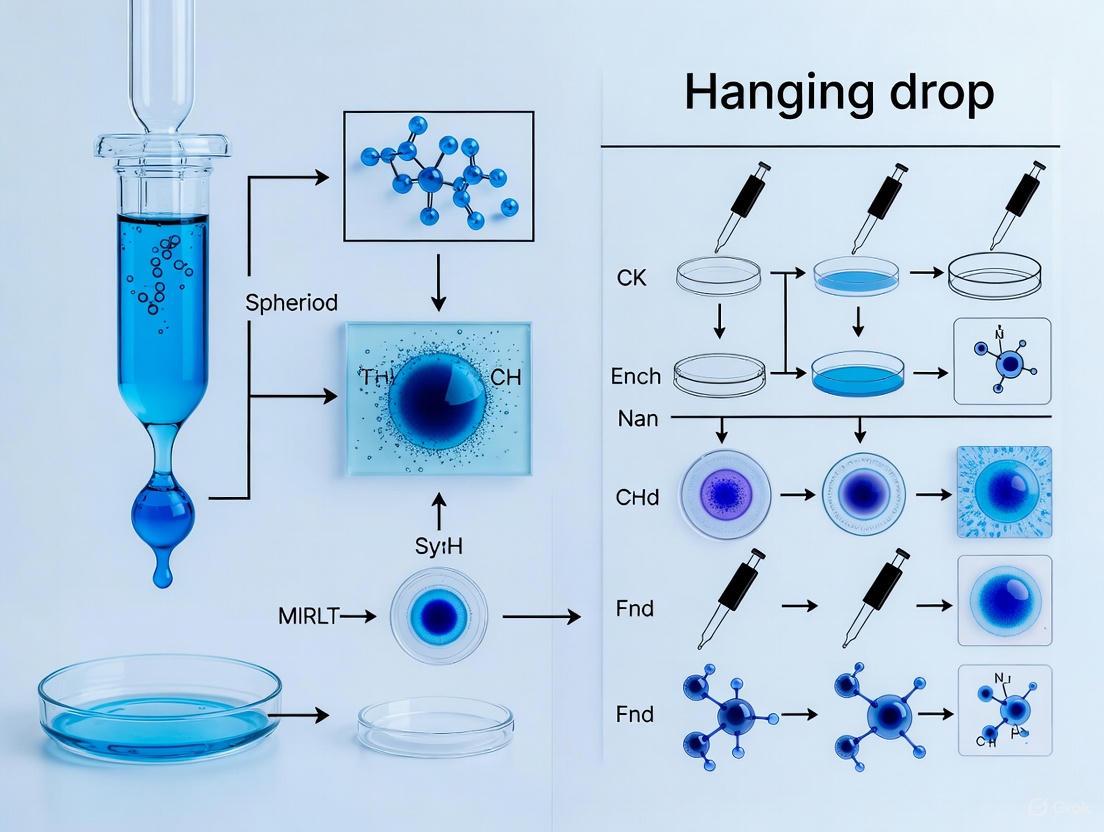
This article provides a comprehensive resource on the hanging drop method, a foundational scaffold-free technique for generating three-dimensional (3D) multicellular spheroids.
The Hanging Drop Method for Spheroid Formation: A Complete Guide from Principles to Advanced Applications
Abstract
This article provides a comprehensive resource on the hanging drop method, a foundational scaffold-free technique for generating three-dimensional (3D) multicellular spheroids. Tailored for researchers and drug development professionals, it covers the core principles of gravity-enforced self-assembly and the resultant physiological tumor microenvironment. The scope extends to detailed, step-by-step protocols, common challenges and their modern solutions, and a critical comparative analysis with other 3D culture techniques. By synthesizing foundational knowledge with advanced applications and validation data, this guide aims to empower scientists to effectively implement and optimize this cost-effective method for more physiologically relevant cancer research, drug screening, and therapeutic development.
Understanding the Hanging Drop Method: Principles, Advantages, and Physiological Relevance
The hanging drop method is a foundational scaffold-free technique for generating three-dimensional (3D) multicellular spheroids. This method leverages gravity to enable cells within a suspended droplet of culture medium to settle, aggregate, and self-assemble into a spheroid—a dense cellular aggregate that mimics key aspects of native tissue architecture. By facilitating intimate direct cell-cell contact and interaction with endogenously produced extracellular matrix (ECM) components, the hanging drop platform creates a more physiologically relevant microenvironment than conventional two-dimensional (2D) monolayer cultures [1]. This protocol is cost-effective, requires no specialized equipment, and is applicable to a wide range of cell types, making it indispensable for research in developmental biology, cancer modeling, drug screening, and tissue engineering [1] [2].
Key Principles and Advantages
The self-assembly process in hanging drop cultures is governed by basic biophysical principles and leads to significant functional advantages.
- Gravity-Driven Sedimentation and Self-Assembly: The technique suspends a droplet of cell suspension from the lid of a culture dish. Gravity causes the cells to settle at the air-liquid interface at the bottom of the droplet. This close proximity promotes spontaneous cell-cell cohesion and compaction, leading to the formation of a single, dense spheroid per droplet [1] [3].
- Enhanced Physiological Relevance: Spheroids generated via this method exhibit complex cell-cell and cell-ECM interactions that more accurately reflect the conditions found in vivo compared to monolayer cultures. This 3D environment profoundly influences cellular morphology, signaling, gene expression, and function [1] [4].
- Functional Benefits for Therapy: When applied to Mesenchymal Stem Cells (MSCs), hanging drop culture reprograms the cellular transcriptome. This reprogramming enhances stemness (evidenced by upregulation of Oct4, Sox2, and Nanog), increases secretory activity, improves chemotaxis (directed migration), and critically, reduces pulmonary entrapment following intravenous injection, thereby boosting cell delivery efficiency for therapeutic applications [4].
The following tables summarize key quantitative data from studies utilizing the hanging drop method, providing benchmarks for spheroid formation and cellular characteristics.
Table 1: Spheroid Formation Parameters in Hanging Drop Culture
| Cell Type | Drop Volume (µL) | Initial Cell Number per Drop | Incubation Time | Key Morphological Outcome | Source |
|---|---|---|---|---|---|
| Human Wharton's Jelly MSCs | 20 | 2.0 x 10⁴ | 24-72 hours | Distinct phenotypic features, smaller cell size | [4] |
| General Cell Types | 10 | Concentration-adjusted* | ~24 hours | Sheet or spheroid formation | [1] |
| U-251 MG Glioblastoma | 35 | 500 / 2000 | Up to 5 days | Successful spheroid formation | [3] |
| Various CRC Cell Lines | Not Specified | Not Specified | Not Specified | Formation of multicellular tumour spheroids (MCTS) | [2] |
*Cell concentration may need adjustment based on cell size to achieve optimal spheroid density [1].
Table 2: Functional Outcomes of 3D vs. 2D Cultured MSCs
| Parameter | 2D-Cultured MSCs | 3D Spheroid-Derived MSCs | Functional Significance | |
|---|---|---|---|---|
| Transcriptome | Conventional profile | Reprogrammed; upregulated cytokine/receptor genes; downregulated adhesion/ECM genes | Enhanced response to signals, reduced adhesion | |
| Stemness Markers | Baseline expression | Enhanced expression of Oct4, Sox2, Nanog | Increased regenerative capacity | |
| Cell Size | Larger | Smaller | Attenuated pulmonary entrapment | |
| In Vivo Delivery | High pulmonary entrapment | Enhanced pulmonary transgression | Improved systemic delivery efficiency | |
| Secretory Profile | Standard | Enhanced proangiogenic, anti-inflammatory factors | Improved therapeutic potential for tissue repair | [4] [5] |
Detailed Experimental Protocol
Preparation of a Single Cell Suspension
- Grow Adherent Cells: Culture adherent cells to approximately 90% confluence [1].
- Rinse and Trypsinize: Aspirate the culture medium and rinse the cell monolayer twice with phosphate-buffered saline (PBS). Drain well and add a sufficient volume of 0.05% trypsin-1 mM EDTA (e.g., 2 mL for a 100 mm plate) to cover the cells. Incubate at 37°C until cells detach [1].
- Neutralize and Suspend: Add an equal volume of complete medium (containing serum) to neutralize the trypsin. Gently triturate the mixture with a pipette to achieve a single-cell suspension. Transfer the suspension to a 15 mL conical tube [1].
- Prevent Clumping: Add DNase (e.g., 40 μL of a 10 mg/mL stock) to the cell suspension and incubate for 5 minutes at room temperature to digest DNA released from damaged cells, which reduces clumping [1].
- Wash and Count: Centrifuge the suspension at 200 x g for 5 minutes. Discard the supernatant, wash the cell pellet with complete medium, and repeat centrifugation. Resuspend the final pellet in 2 mL of complete medium. Perform a cell count using a hemacytometer or automated cell counter and adjust the concentration to 2.5 x 10⁶ cells/mL (or another optimized density) [1].
Formation of Hanging Drops
- Prepare Hydration Chamber: Place 5 mL of PBS in the bottom of a 60 mm tissue culture dish. This reservoir maintains humidity and prevents evaporation of the hanging drops [1].
- Deposit Droplets: Invert the lid of the dish. Using a micropipette, deposit 10-20 μL drops of the cell suspension onto the inner surface of the lid. Space the drops sufficiently apart to prevent them from touching or coalescing during handling. Up to 20 drops can typically be placed on a 60 mm dish lid [1] [4].
- Incubate and Monitor: Carefully invert the lid and place it onto the bottom chamber containing PBS. Incubate the dish at 37°C with 5% CO₂. Monitor the drops daily for spheroid formation using a stereo microscope. Compact spheroids typically form within 24 to 72 hours, depending on the cell type [1] [4].
Modernized Workflow with SpheroMold
Recent innovations have addressed challenges like droplet coalescence and difficult handling. The SpheroMold method uses a 3D-printed polydimethylsiloxane (PDMS) support attached to the Petri dish lid [3].
- Fabricate SpheroMold: Design and 3D-print a negative mold with an array of pegs. Pour and cure a PDMS mixture (e.g., Sylgard 184, 10:1 base to curing agent) at 80°C for 1 hour. Demold the PDMS structure and bond it to a Petri dish lid using uncured PDMS, followed by a final cure. Sterilize the assembly before use [3].
- Load Droplets: Pipette cell suspension droplets (e.g., 35 μL) into each hole of the secured SpheroMold. The physical barriers prevent droplet fusion and allow for a higher density of drops per unit area [3].
- Invert and Culture: Invert the lid onto a base dish containing PBS or medium. The SpheroMold design simplifies this manipulation, minimizing the risk of droplet runoff or coalescence [3].
The Scientist's Toolkit
Table 3: Essential Research Reagent Solutions for Hanging Drop Culture
| Reagent/Material | Function and Importance | Example/Notes |
|---|---|---|
| Cell Culture Medium | Provides essential nutrients for cell survival and aggregation. | DMEM or α-MEM, supplemented with serum (e.g., 20% FBS) and antibiotics [4] [1]. |
| Trypsin/EDTA Solution | Liberates adherent cells from the culture substrate to create a single-cell suspension. | 0.05% trypsin with 1 mM EDTA is commonly used [1]. |
| DNase I | Degrades extracellular DNA, reducing cell clumping and ensuring a monodisperse suspension. | Added during cell suspension preparation [1]. |
| Phosphate-Buffered Saline (PBS) | Serves as a hydration reservoir in the bottom chamber to prevent droplet evaporation. | 5 mL in a 60 mm dish [1]. |
| SpheroMold (PDMS) | A modern tool to compartmentalize droplets, preventing coalescence and simplifying handling. | A 3D-printed PDMS support with cylindrical holes [3]. |
| Anti-Adherence Solution | Treatment for multi-well plates to create a non-adherent surface for spheroid formation in U-bottom plates. | A cost-effective alternative to commercially available cell-repellent plates [2]. |
Workflow and Signaling Visualization
Hanging Drop Spheroid Formation Workflow
Diagram 1: Hanging Drop Spheroid Formation Workflow
Functional Transcriptome Reprogramming in 3D MSCs
Diagram 2: Functional Transcriptome Reprogramming in 3D MSCs
Why Choose Hanging Drop? Key Advantages for 3D Cell Culture
The hanging drop method is a well-established, scaffold-free technique for generating three-dimensional (3D) multicellular spheroids. As a pivotal component of modern 3D cell culture, this method leverages gravity to facilitate the self-assembly of cells into spheroids at the bottom of a suspended droplet of culture medium [6]. Its simplicity and cost-effectiveness have made it a fundamental tool for researchers investigating cancer biology, drug responses, and tissue structure in a more physiologically relevant context than traditional two-dimensional (2D) cultures [6] [7]. This application note details the key advantages, quantitative benefits, and detailed protocols for implementing the hanging drop method in biomedical research.
Core Advantages of the Hanging Drop Method
The hanging drop technique offers several distinct benefits that make it suitable for a wide range of applications, from basic research to high-throughput drug screening.
- Simplicity and Cost-Effectiveness: The method requires minimal specialized equipment, relying on standard Petri dishes or multi-well plates. This makes it an accessible entry point into 3D cell culture without the need for costly bioreactors or sophisticated scaffolds [3] [7].
- Excellent Control over Spheroid Size: The size of the resulting spheroids can be precisely controlled by adjusting the volume of the droplet or the density of the initial cell suspension, enabling the production of highly uniform spheroids [6] [7].
- Facilitation of Direct Cell-Cell Interactions: As a scaffold-free technique, it promotes natural cell-cell contacts and allows cells to self-organize, better mimicking the cellular microenvironment found in vivo [4] [7].
- Minimized Mechanical Stress: Unlike agitation-based methods, the hanging drop technique does not subject cells to external forces such as continuous stirring, supporting a more natural and gentle process of spheroid formation [3].
- Enhanced Biological Relevance for Disease Modeling: Spheroids generated via this method can develop hypoxic cores and exhibit gradients of nutrients and oxygen, making them particularly suitable models for studying tumor biology and therapy resistance [6] [8].
Table 1: Key Advantages and Experimental Evidence for the Hanging Drop Method
| Advantage | Experimental Support | Research Context |
|---|---|---|
| Preservation of Cell Function | Maintained liver-specific transcript markers (HNF4α, ALB, CYP1A1) in primary sheep and buffalo hepatocytes for 6-10 days [9]. | Primary hepatocyte culture for toxicology studies [9]. |
| Enhanced Therapeutic Potential | Reprogrammed Mesenchymal Stem Cell (MSC) transcriptome; enhanced stemness (upregulated Oct4, Sox2, Nanog) and reduced cell size, leading to attenuated pulmonary entrapment after injection [4]. | Stem cell therapy and regenerative medicine [4]. |
| Efficient Spheroid Formation | Successfully formed compact multicellular tumor spheroids (MCTS) across eight different colorectal cancer (CRC) cell lines, including a novel model for SW48 cells [2]. | Cancer research and drug screening [2]. |
| Modeling of Complex Microenvironments | Used to study the effects of MSC secretome on cancer cell growth and viability within a 3D co-culture paradigm [6]. | Cancer cell biology and cell signaling studies [6]. |
The following table consolidates key quantitative findings from recent studies utilizing the hanging drop method, providing a reference for expected outcomes in spheroid formation and function.
Table 2: Consolidated Quantitative Data from Hanging Drop Applications
| Cell Type / System | Key Quantitative Outcome | Experimental Duration | Reference |
|---|---|---|---|
| Primary Sheep Hepatocytes | 3D spheroids formed on day 5 and maintained until day 10. Success rate: 33% (cell viability and integrity) [9]. | 10 days | [9] |
| Primary Buffalo Hepatocytes | 3D-like structures formed on day 3 and maintained until day 6. Success rate: 20% (cell viability and integrity) [9]. | 6 days | [9] |
| Mesenchymal Stem Cells (MSCs) | Transcriptome reprogramming enhanced chemotaxis and reduced pulmonary entrapment post-IV injection. Cell clusters formed from 2x10^4 cells/20 µL drop [4]. | 72 hours (for cell cluster formation) | [4] |
| Glioblastoma U-251 MG Cells | Viable spheroids formed with 500 and 2000 cells per droplet, confirmed via live/dead assay after 5 days in culture [3] [10]. | 5 days | [3] [10] |
| SpheroMold Innovation | Accommodated 37 drops within a 13.52 cm² area, enabling a droplet volume of 35 µL and preventing coalescence during inversion [3] [10]. | N/A | [3] [10] |
Detailed Experimental Protocols
Standard Hanging Drop Protocol for Spheroid Formation
This protocol is adapted from methods used to generate MSC spheroids and multicellular tumor spheroids [4] [2].
Research Reagent Solutions
- Cell Culture Medium: Appropriate medium for your cell type (e.g., William’s E Medium, DMEM) supplemented with serum and antibiotics [9] [4].
- Phosphate Buffered Saline (PBS): Sterile, for hydration of the reservoir.
- Cell Dissociation Agent: Trypsin-EDTA or equivalent for cell harvesting.
- Trypan Blue Solution (0.4%): For cell counting and viability assessment.
Table 3: Essential Materials for the Hanging Drop Protocol
| Item | Function / Explanation | Example |
|---|---|---|
| Cell Line | Self-assembling cells for spheroid formation. | Primary hepatocytes, MSCs, cancer cell lines (e.g., SW48, U-251 MG) [9] [4] [2]. |
| Culture Dish | Platform for hosting hanging drops and a hydration reservoir. | Standard 10 cm Petri dish or multi-well plate [4]. |
| Polydimethylsiloxane (PDMS) | Biocompatible silicone used in modernized devices to create structured arrays for drops. | Sylgard 184 kit [3] [10]. |
Step-by-Step Methodology
Cell Harvest and Suspension:
- Harvest cells from a 2D culture using a standard method (e.g., trypsin-EDTA treatment).
- Centrifuge the cell suspension and resuspend the pellet in complete culture medium to a final concentration suitable for spheroid formation. A common density is 1,000 - 2,000 cells per 20 µL droplet, though this should be optimized for each cell line [4]. For instance, in MSC culture, a density of 2x10^4 cells per 20 µL drop has been used successfully [4].
Plate Preparation and Droplet Dispensing:
- Take the lid of a sterile Petri dish (e.g., 10 cm dish).
- Using a pipette, dispense multiple 20 µL droplets of the cell suspension onto the inner surface of the lid. Space the droplets evenly to prevent coalescence.
- Carefully pour 5-10 mL of sterile PBS into the bottom of the Petri dish base. This reservoir prevents evaporation of the hanging drops during incubation.
- Gently invert the lid and place it over the base, ensuring the droplets are hanging freely and do not touch the PBS reservoir.
Incubation and Spheroid Formation:
- Transfer the assembled Petri dish to a 37°C incubator with 5% CO₂.
- Allow the spheroids to form for 3-5 days. Cells will aggregate at the bottom of the droplet due to gravity and self-assemble into a spheroid.
Spheroid Harvesting:
- Carefully remove the lid from the Petri dish.
- Tilt the lid and gently pipette a larger volume of medium (e.g., 100-200 µL) over the droplet to wash the spheroid into a collection tube or a well plate for further experimentation.
The workflow for this standard protocol is summarized in the diagram below.
Modernized Protocol Using SpheroMold
To address challenges like droplet coalescence and labor-intensive handling, a 3D-printed support called SpheroMold can be used [3] [10]. This method modernizes the classic technique for higher consistency and throughput.
Step-by-Step Methodology
Fabricate SpheroMold:
- Design a negative mold with an array of cylindrical pegs using 3D modeling software.
- Print the mold using stereolithography and a photopolymer resin.
- Pour a mixture of PDMS base and curing agent (e.g., 10:1 ratio for Sylgard 184) into the mold.
- Cure at 80°C for 1 hour, then demold the PDMS structure.
- Attach the resulting SpheroMold to a Petri dish lid using a thin layer of uncured PDMS and cure again to bond permanently. Sterilize before use [3] [10].
Dispense Cells and Culture:
- Pipette 35 µL droplets of cell suspension directly into each hole of the SpheroMold. The physical barriers prevent droplets from merging.
- Invert the lid onto a dish base containing PBS and incubate as in the standard protocol. The SpheroMold allows for more droplets per unit area and simplifies handling.
The advanced workflow incorporating this device is outlined below.
The hanging drop method remains a cornerstone technique for generating 3D spheroids due to its simplicity, cost-effectiveness, and the high biological relevance of the resulting models. Its applications in modeling cancer, maintaining primary cell functions, and enhancing stem cell therapeutics underscore its significant value in preclinical research. Recent innovations, such as the SpheroMold, are modernizing the technique to overcome its traditional limitations, making it more robust and suitable for high-density, high-throughput applications. When selected appropriately for the research question and cell type, the hanging drop method provides a powerful tool for advancing drug discovery and fundamental biological understanding.
The tumor microenvironment (TME) is a complex ecosystem that plays a critical role in cancer progression and treatment response. Key features of the TME include hypoxic regions, metabolic gradients, and the development of a necrotic core, which are challenging to replicate in conventional two-dimensional (2D) cell cultures [11]. The hanging drop method for multicellular spheroid formation provides a robust, scaffold-free platform to model these critical TME components in vitro with high physiological relevance [1] [12].
This application note details protocols for generating spheroids using the hanging drop method, specifically optimized to recapitulate hypoxia, nutrient gradients, and necrotic core development. We also provide methodologies for analyzing these features and their application in therapeutic testing, framed within a broader thesis on advanced 3D cancer models.
Theoretical Foundation: Modeling the TME in Hanging Drop Spheroids
The Pathophysiological Basis of the Spheroid TME
When cells aggregate in a hanging drop, they naturally self-organize into a 3D structure that mimics the avascular stages of early tumors or micro-metastases [1] [12]. The diffusion-limited transport of oxygen and nutrients establishes a physiochemical gradient from the spheroid periphery to its core. This results in the formation of three distinct, histologically recognizable zones:
- Proliferative Zone: An outer layer of actively dividing cells exposed to sufficient oxygen and nutrients.
- Quiescent Zone: An intermediate layer where cells experience cell-cycle arrest due to nutrient and oxygen deprivation.
- Necrotic Core: A central region where severe hypoxia and waste accumulation lead to cell death [12].
This spatial organization closely mirrors the pathophysiological conditions found in many solid tumors and is difficult to achieve in 2D cultures [11].
Hypoxia Signaling and Its Consequences
The hypoxic core of spheroids triggers the stabilization of Hypoxia-Inducible Factor 1-alpha (HIF-1α), a master regulator of the cellular response to low oxygen [13]. HIF-1α drives the expression of genes involved in glycolysis, angiogenesis, and cell survival, profoundly influencing tumor progression and therapy resistance. Research has shown that the HIF-1α-MT2A axis contributes to resistance against novel cell death mechanisms like cuproptosis in hypoxic TME regions, highlighting the critical importance of accurately modeling hypoxia in drug screening [13].
Table: Key Signaling Pathways Activated in Spheroid Sub-regions
| Spheroid Zone | Key Signaling Pathways | Cellular Phenotype | Therapeutic Implications |
|---|---|---|---|
| Proliferative Zone | EGFR, MAPK/ERK, PI3K/Akt/mTOR | Rapid proliferation, high metabolic activity | Sensitive to conventional chemotherapy and targeted therapies |
| Quiescent Zone | p53, p21, autophagy-related pathways | Cell cycle arrest, stress adaptation | Source of tumor repopulation; contributes to drug tolerance |
| Necrotic Core / Hypoxic Zone | HIF-1α, glycolysis (GLUT1, HK2, LDHA), MT2A | Necrosis, metabolic reprogramming, cuproptosis resistance | Drives angiogenesis, invasion, metastasis; confers radio- and chemo-resistance |
Equipment and Reagent Setup
Research Reagent Solutions
The following table details essential materials for establishing the hanging drop method for spheroid generation.
Table: Essential Materials for Hanging Drop Spheroid Culture
| Item | Function/Application | Example Specifications |
|---|---|---|
| Cell Lines | Model system for spheroid formation | Cancer cell lines (e.g., U-251 MG glioblastoma, MAT-LyLu prostate cancer) or primary patient-derived cells [1] [3] |
| Culture Medium | Provides nutrients for cell growth and spheroid formation | DMEM or RPMI-1640, supplemented with 10% FBS, antibiotics (penicillin/streptomycin) [3] |
| Dissociation Reagent | Generates single-cell suspension from adherent cultures | 0.05% Trypsin-1 mM EDTA; consider 0.05% trypsin/2 mM calcium to preserve cadherin function [1] |
| DNAse I | Prevents cell clumping by digesting free DNA released during trypsinization | 10 mg/ml stock, use 40 μl per 2 ml cell suspension [1] |
| Sterile PBS | Hydration chamber to prevent evaporation of hanging drops | 5 ml in bottom of 60 mm dish [1] |
| SpheroMold (Optional) | Modernized platform to prevent droplet coalescence, increase throughput | 3D-printed PDMS matrix with precisely spaced holes for droplet containment [3] |
Core Protocol: Hanging Drop Spheroid Formation
Preparation of Single Cell Suspension
- Culture Cells: Grow adherent cell cultures to 90% confluence.
- Rinse and Trypsinize: Rinse monolayer twice with PBS. Drain well and add 2 ml of 0.05% trypsin-1 mM EDTA for a 100 mm plate. Incubate at 37°C until cells detach.
- Neutralize and Triturate: Add 2 ml complete medium to stop trypsinization. Gently triturate with a 5 ml pipette until cells are in suspension. Transfer to a 15 ml conical tube.
- DNAse Treatment: Add 40 μl of 10 mg/ml DNAse stock and incubate for 5 minutes at room temperature.
- Wash and Count: Centrifuge at 200 × g for 5 minutes. Discard supernatant, wash pellet with 1 ml complete medium, and repeat. Resuspend cells in 2 ml complete medium. Count cells and adjust concentration to 2.5 × 10^6 cells/ml [1].
Hanging Drop Setup and Spheroid Formation
- Prepare Hydration Chamber: Place 5 ml of PBS in the bottom of a 60 mm tissue culture dish.
- Plate Inversion: Remove the lid from the dish and invert it.
- Dispense Droplets: Using a 20 μl pipettor, deposit 10-20 μl drops of cell suspension onto the bottom of the inverted lid. Space drops sufficiently apart to prevent coalescence (approximately 20 drops per 60 mm dish). For higher throughput, consider using a SpheroMold device to guide droplet placement [1] [3].
- Incubate: Carefully invert the lid onto the PBS-filled bottom chamber. Incubate at 37°C with 5% CO₂ and 95% humidity.
- Monitor and Harvest: Monitor drops daily using a stereo microscope. Spheroid formation typically occurs within 24-48 hours, though timing varies by cell type. Once formed, spheroids can be harvested by carefully adding medium to the drop and transferring with a pipette [1].
Protocol Modifications for Enhanced TME Recapitulation
- Co-culture Systems: To model tumor-stromal interactions, mix two different cell types (e.g., cancer cells and fibroblasts) in desired ratios before droplet formation. Differential fluorescent staining enables tracking of spatial organization [1].
- Integrating Hypoxia Studies: For enhanced hypoxic induction, extend the incubation time to allow spheroids to reach larger diameters (>500 μm), which promotes more extensive necrotic core formation [12].
- Drug Testing Applications: Add pharmacological agents directly to the hanging drop in very small quantities (e.g., MEK inhibitors) to study effects on spheroid compaction and viability [1].
Analytical Methods for TME Characterization
Quantifying Spheroid Morphology and Compaction
Spheroid size and structure serve as key indicators of cellular cohesion and response to treatment.
- Image Acquisition: Capture images of spheroids using brightfield or epifluorescence microscopy.
- Size Measurement: Analyze images using ImageJ software:
- Threshold each image to distinguish spheroid from background.
- Convert to Binary Mode.
- Apply particle analysis to determine total area in pixels.
- Convert to square microns using calibration standards [1].
- Statistical Analysis: Compare average size between treatment groups using Student's t-test. MEK inhibitor treatment (25 μm PD98059), for example, has been shown to significantly reduce MLL prostate cancer spheroid size (P<0.0001) [1].
Table: Quantitative Analysis of Spheroid Morphology in Drug Testing
| Treatment Condition | Mean Spheroid Area (μm²) | Standard Deviation | N | P-value | Biological Interpretation |
|---|---|---|---|---|---|
| Untreated Control | Representative value from experiment | Calculated value | 10-20 aggregates | - | Baseline cellular cohesion |
| MEKi-treated (25 μm PD98059) | Significantly smaller than control | Calculated value | 10-20 aggregates | <0.0001 [1] | Increased compaction, altered cell-ECM interactions |
| Hypoxia Mimetic | Variable based on compound | Calculated value | 10-20 aggregates | Variable | Enhanced necrotic core formation |
Assessing Viability and Necrotic Core Development
The live/dead assay is a standard method for visualizing viability gradients within spheroids.
- Stain Spheroids: Incubate spheroids with a mixture of 2 μmol/L ethidium homodimer-1 (labels dead cells) and 1 μmol/L calcein AM (labels live cells) for 15 minutes at 37°C.
- Wash and Image: Wash twice with PBS and acquire confocal images using appropriate laser settings.
- Analyze Distribution: Live cells (green fluorescence) typically localize to the spheroid periphery, while dead cells (red fluorescence) concentrate in the core, confirming the development of a necrotic region [3].
Monitoring Hypoxic Gradients and Metabolic Activity
- Hypoxia Staining: Incubate spheroids with hypoxia probes (e.g., pimonidazole) that form adducts in low-oxygen conditions, followed by immunostaining.
- Metabolic Analysis: Measure extracellular acidification rate (ECAR) and oxygen consumption rate (OCR) using specialized analyzers to assess glycolytic and mitochondrial metabolic profiles [13].
- Gene Expression Profiling: Analyze expression of HIF-1α target genes (e.g., GLUT1, HK2, LDHA) via qRT-PCR or RNA-seq to confirm hypoxic response activation [13].
Troubleshooting and Technical Considerations
Common Challenges and Solutions
- Droplet Coalescence: Minimize handling and increase distance between drops. For high-throughput applications, implement the SpheroMold system to physically separate droplets [3].
- Variable Spheroid Size: Ensure a homogeneous single-cell suspension before plating. Optimize cell concentration for consistent sizing (typically 2.5 × 10^6 cells/ml, but adjust based on cell type) [1].
- Poor Spheroid Formation: Certain cell types may require optimization of trypsinization conditions. Using 0.05% trypsin with 2 mM calcium can help preserve cadherin function and improve cell-cell adhesion [1].
- Necrotic Core Development: The timing for necrotic core formation varies by cell line. Monitor spheroids daily and extend culture time if necessary to achieve desired hypoxic core.
Advanced Applications in Cancer Research
The hanging drop method supports several sophisticated research applications:
- Cell Sorting Studies: Co-culture differentially stained cell populations to investigate sorting behavior and spatial organization patterns driven by differential adhesion [1].
- Drug Penetration Studies: Combine with fluorescently-labeled therapeutics to visualize and quantify drug penetration barriers within the spheroid structure.
- Metabolic Analysis: Investigate metabolic heterogeneity by mapping nutrient consumption and waste product accumulation across the spheroid radius [13].
The hanging drop method provides a technically accessible, cost-effective, and highly reproducible platform for generating 3D spheroids that faithfully recapitulate critical TME features, including hypoxia, metabolic gradients, and necrotic core development. This protocol series enables researchers to model the complex pathophysiology of solid tumors with greater fidelity than 2D systems, offering enhanced predictive value for therapeutic response assessment. When integrated with appropriate analytical techniques, hanging drop spheroids serve as a powerful tool for advancing our understanding of tumor biology and accelerating drug development.
Essential Laboratory Equipment and Materials for Getting Started
The hanging drop method is a cornerstone technique in three-dimensional (3D) cell culture, enabling researchers to generate multicellular spheroids through gravity-enforced self-assembly [6]. This scaffold-free approach provides a unique environment for studying cell behavior dynamics, making it particularly valuable in cancer research, drug development, and tissue engineering [14] [6]. Unlike traditional two-dimensional (2D) cultures, spheroids mimic the complex architecture and microenvironment of in vivo solid tumors, capturing critical cell-cell interactions and exhibiting topography, metabolism, and gene expression levels that more closely resemble those found in native tissues [14]. The method's theoretical foundation relies on allowing cells to aggregate at the lowest point of suspended droplets, forming spheroids with relatively uniform size and shape without requiring sophisticated equipment [3] [9]. This technical note details the essential equipment, materials, and foundational protocols required to establish the hanging drop method in a research setting, providing a comprehensive resource for scientists embarking on spheroid-based research.
Essential Equipment and Materials
Core Equipment and Reagent Solutions
Successful implementation of the hanging drop method requires specific equipment and reagents to ensure consistent spheroid formation and maintenance. The table below categorizes and describes these essential components.
Table 1: Essential Equipment for Hanging Drop Spheroid Culture
| Category | Item | Specification/Function |
|---|---|---|
| Core Culture Vessels | Petri Dishes (Standard) | Provide a humidified chamber; base contains PBS to prevent droplet evaporation [3] [4]. |
| Multi-well Plates (ULA) | Used for subsequent spheroid culture after initial formation in drops [15]. | |
| Specialized Fabrication Equipment | 3D Printer (SLA/DLP) | e.g., ELEGOO Mars 2 Pro; fabricates negative molds for custom PDMS supports like SpheroMold [3]. |
| Curing Oven | Used for PDMS polymerization (e.g., 80°C for 1 hour) [3]. | |
| Microscopy & Analysis | Inverted Microscope (Phase Contrast) | e.g., Olympus IX51; for daily monitoring of spheroid morphology and growth [15]. |
| Confocal Microscope | e.g., Leica SP8; for high-resolution imaging and viability assessment within spheroids [3]. | |
| Cell Counter/Analyzer | e.g., Countess 3; for determining initial cell viability, concentration, and size after spheroid dissociation [4]. | |
| General Lab Equipment | Biological Safety Cabinet | Provides an aseptic environment for all cell culture procedures. |
| CO2 Incubator | Maintains optimal culture conditions (37°C, 5% CO2, controlled humidity) [3] [15]. | |
| Centrifuge | Pellet cells during subculturing and processing. | |
| Micro-pipettes | Accurately handle microliter volumes for droplet creation and medium exchange. |
Table 2: Key Research Reagent Solutions for Hanging Drop Culture
| Reagent Type | Specific Example | Function in Protocol |
|---|---|---|
| Cells & Culture Media | Cell Lines (e.g., U-251 MG, HCT116, MSCs) | The biological model; self-assemble into spheroids [3] [2] [4]. |
| Basal Medium (e.g., DMEM, RPMI-1640) | Provides essential nutrients and salts for cell survival [3] [15]. | |
| Serum (FBS) & Supplements (B27, EGF, bFGF) | Supports cell growth and viability; critical for stemness in serum-free spheroid media [4] [15]. | |
| Spheroid Formation Aids | PDMS (Sylgard 184 Kit) | Creates a non-adhesive, non-toxic support (e.g., SpheroMold) to prevent droplet coalescence [3]. |
| 3D Printing Resin & Varnish | Used to fabricate and seal the negative mold for PDMS casting [3]. | |
| Anti-adherence Solution | Treats standard plates to create ultra-low attachment surfaces at lower cost [2]. | |
| Analysis Kits | Live/Dead Viability Kit (e.g., Calcein AM/ EthD-1) | Fluorescently distinguishes live (green) from dead (red) cells within spheroids [3]. |
| Sterilization Agent (Formaldehyde Gas) | Ensures aseptic conditions for culture vessels and custom supports before use [3]. |
Modernization through the SpheroMold Design
A significant innovation in the traditional method is the SpheroMold, a 3D-printed polydimethylsiloxane (PDMS) support that addresses key limitations. The SpheroMold attaches to the lid of a Petri dish and features symmetrically distributed cylindrical holes that physically separate individual droplets [3]. This design prevents droplet coalescence during dish inversion, simplifies handling, and enables the production of numerous spheroids in a limited area—a proof-of-concept design achieved 37 spheroids within a 13.52 cm² area [3]. Furthermore, the thickness of the PDMS layer allows for larger medium volumes per droplet (e.g., 35 μL), which can decrease the frequency of medium exchanges needed to sustain cellular health over time [3].
Detailed Experimental Protocols
Standard Hanging Drop Protocol for Spheroid Formation
The following workflow outlines the fundamental steps for generating spheroids using the conventional hanging drop technique, which can be adapted for use with or without a SpheroMold.
Title: Standard Hanging Drop Workflow
Step-by-Step Procedure:
Prepare Single-Cell Suspension:
- Harvest adherent cells from 2D culture using a standard trypsin-EDTA (e.g., 0.25%) treatment for 5 minutes at 37°C [15].
- Neutralize trypsin with complete culture medium containing serum.
- Perform a cell count and viability assessment using a cell counter (e.g., Countess 3) and Trypan Blue exclusion [4].
Calculate and Adjust Cell Density:
- Centrifuge the cell suspension and resuspend the pellet in the appropriate spheroid culture medium. The optimal density is cell-line dependent.
- For initial experiments, a density range of 5,000 to 20,000 cells per 20-35 μL droplet is a common starting point [3] [4] [15]. For instance, U-251 MG glioblastoma cells have been used at 500-2000 cells per 35 μL drop [3], while mesenchymal stem cells (MSCs) were cultured at 10,000 cells/mL (approximately 2,000 cells/20 μL drop) [4].
Dispense Droplets:
- Without SpheroMold: Pipette aliquots (e.g., 20-35 μL) of the cell suspension as individual droplets onto the inner surface of a sterile Petri dish lid. Space droplets carefully to prevent merging during inversion [3] [9].
- With SpheroMold: Pipette the cell suspension directly into each hole of the sterilized SpheroMold already attached to the lid [3].
Invert and Incubate:
Monitor Spheroid Formation:
Harvest Spheroids:
- After spheroids have formed, carefully return the dish to its upright position. Use a micropipette to gently wash spheroids out of the droplets or SpheroMold holes with fresh medium.
- Transfer spheroids to ultra-low attachment (ULA) plates for long-term culture or directly to assay plates for experimentation [15].
Protocol for Fabricating and Using SpheroMold
For laboratories seeking enhanced throughput and reproducibility, fabricating a custom SpheroMold is recommended.
Step-by-Step Procedure:
Design and Print the Negative Mold:
Post-Process the Mold:
- Clean the printed mold in isopropyl alcohol to remove uncured resin.
- Expose the mold to UV light until fully cured.
- Apply a spray varnish to the mold's surface and let it dry for 24 hours to facilitate subsequent PDMS demolding [3].
Cast and Cure the PDMS SpheroMold:
Assemble the Culture System:
- Carefully demold the solid PDMS SpheroMold.
- Attach it to the lid of a Petri dish using a thin layer of uncured Sylgard mixture as an adhesive, followed by a final cure (80°C, 1 hour) [3].
- Sterilize the entire assembly using formaldehyde gas or another appropriate method before use in cell culture [3].
Troubleshooting and Best Practices
Addressing Common Challenges
- Droplet Coalescence: This is a major issue in the traditional method. Using a SpheroMold provides a physical barrier that effectively eliminates this problem [3]. Alternatively, ensure ample space between manually pipetted droplets.
- Inconsistent Spheroid Size: This is often due to an uneven cell suspension. Ensure a single-cell suspension is achieved before pipetting droplets by pipetting the suspension vigorously and/or filtering it through a cell strainer [4].
- Poor Spheroid Formation (Loose Aggregates): Some cell lines are inherently less adhesive. Optimizing the initial cell seeding density is crucial. Supplementing the medium with methylcellulose or low percentages of extracellular matrix components can also promote compaction [2].
- High Evaporation Rate: Ensure the base of the dish contains an adequate volume of PBS (e.g., 5 mL) to maintain a humidified environment [3] [4].
Quantitative Data from Method Comparison
The table below summarizes key parameters from various studies utilizing the hanging drop method, providing a reference for expected outcomes.
Table 3: Quantitative Parameters in Hanging Drop Spheroid Culture
| Cell Type | Droplet Volume (μL) | Seeding Density (Cells/Drop) | Formation Time (Days) | Key Findings | Source |
|---|---|---|---|---|---|
| Human Glioblastoma (U-251 MG) | 35 | 500 & 2000 | 5 | Spheroids formed successfully; viability confirmed via Live/Dead assay. | [3] |
| Primary Sheep Hepatocytes | Not Specified | Not Specified | 5 | 3D spheroids formed and maintained until day 10; transcript markers closer to fresh cells. | [9] |
| Mesenchymal Stem Cells (MSCs) | 20 | 2,000 | 2-3 | 3D culture enhanced stemness (Oct4, Sox2, Nanog) and reduced cell size, improving delivery efficiency. | [4] |
| Bladder Cancer (5637, HT-1376) | 25 | 5,000 (as MCS) | 2 (in drop) | Hanging drop used to initiate multicellular spheroids (MCS) before transfer to ULA plates. | [15] |
Ideal Cell Lines and Applications in Cancer Biology and Stem Cell Research
The hanging drop method has emerged as a pivotal scaffold-free technique for generating three-dimensional (3D) multicellular spheroids, serving as a bridge between conventional two-dimensional (2D) cell culture and complex in vivo environments. This method leverages gravity-enforced self-assembly to create spheroids with direct cell-cell contact and enhanced physiological relevance [6] [1]. Its simplicity, cost-effectiveness, and minimal requirement for specialized equipment have established it as an indispensable platform for modulating stem cell function and investigating cancer biology [4] [16]. This article details ideal cell lines, applications, and standardized protocols for employing the hanging drop method within research and therapeutic development contexts.
Ideal Cell Lines for Spheroid Formation
The hanging drop method is applicable to a wide range of cell types. However, certain lines have proven particularly valuable for generating robust spheroids in cancer biology and stem cell research. The table below summarizes key cell lines and their demonstrated applications in hanging drop cultures.
Table 1: Ideal Cell Lines for Hanging Drop Spheroid Formation and Their Research Applications
| Cell Line | Cell Type | Key Applications in Hanging Drop Culture | Notable Findings/Outcomes |
|---|---|---|---|
| Mesenchymal Stem Cells (MSCs) [4] [17] | Human Umbilical Cord (Wharton's Jelly) | Regenerative medicine, immunomodulation, transcriptomic reprogramming | Enhanced stemness (Oct4, Sox2, Nanog), improved cell delivery efficiency, attenuated pulmonary entrapment, increased anti-inflammatory potential [4] [18] [17]. |
| 451-LU Melanoma Cells [19] | Human Melanoma | Cancer biology, intra-tumoral interactions, drug screening | Forms 3D spheroids that mimic in vivo tumor architecture; used for studying cell behavior and drug responses [19]. |
| U-251 MG Glioblastoma Cells [3] [10] | Human Glioblastoma | Tumor model development, drug testing | Forms well-defined spheroids; suitable for viability and efficacy studies in a 3D context [3] [10]. |
| MDA-MB-231 Cells [4] | Human Triple-Negative Breast Cancer | Cancer research, co-culture studies | Used in comparative studies with MSCs to investigate tumor-stromal interactions [4]. |
| MAT-LyLu (MLL) Rat Prostate Cancer Cells [1] | Rat Prostate Cancer | Cell-cell cohesion, signaling studies | Used to study the effects of pharmacological inhibitors (e.g., MEK inhibitor PD98059) on aggregate compaction [1]. |
Key Applications and Quantitative Findings
The hanging drop method provides critical functional and molecular insights. The following table consolidates major quantitative findings from recent studies, highlighting the transformative impact of 3D spheroid culture.
Table 2: Quantitative Functional and Molecular Enhancements in 3D Hanging Drop Cultures
| Application Area | Key Measured Parameters | Findings (3D vs. 2D Culture) | Significance |
|---|---|---|---|
| Stem Cell Therapy Enhancement [4] [17] | Transcriptomic reprogramming (RNA-Seq) | Upregulation of pluripotency genes (Oct4, Sox2, Nanog); downregulation of adhesion and cytoskeletal genes [4]. | Enhances stemness and regenerative capacity; improves homing and retention at injury sites [4] [17]. |
| Stem Cell Therapy Enhancement [4] [18] | Pulmonary entrapment post-IV injection | Significant reduction in lung trapping for 3D MSCs [4] [18]. | Addresses a major clinical limitation of systemic MSC therapy, increasing delivery efficiency to target tissues [4]. |
| Stem Cell Therapy Enhancement [17] | Cartilage regeneration (Mankin score in rabbit OA model) | Improved histological scores and increased Type II collagen secretion in 3D MSC-treated groups [17]. | Demonstrates superior therapeutic efficacy in treating osteoarthritis, promoting functional tissue repair [17]. |
| Stem Cell Therapy Enhancement [17] | Anti-inflammatory factor secretion (ELISA) | Increased levels of TGFβ1 and IL-10 in joint fluid [17]. | Confirms enhanced immunomodulatory function of 3D-cultured MSCs, crucial for treating inflammatory diseases [17]. |
| Cancer Research & Drug Screening [16] | Drug response modeling | Better replication of in vivo drug resistance and physiological effects of therapeutics [16]. | Provides a more predictive model for preclinical drug screening, bridging the gap between 2D cultures and animal models [16]. |
Detailed Experimental Protocols
Protocol 1: Standard Hanging Drop Method for Spheroid Formation
This foundational protocol is adapted for general use with various cell lines, including MSCs and cancer cells [19] [1].
Research Reagent Solutions:
- Cell Culture Medium: Appropriate medium (e.g., DMEM, RPMI, MEM) supplemented with serum (e.g., 10-20% FBS) and antibiotics (e.g., Penicillin/Streptomycin).
- Phosphate Buffered Saline (PBS): Sterile, for hydration and washing.
- Trypsin-EDTA (0.05%-0.25%): For dissociating adherent cell monolayers.
- DNAse I Solution (10 mg/mL): Optional, to prevent cell clumping post-trypsinization [1].
Methodology:
- Preparation of Single Cell Suspension:
- Culture adherent cells to 90% confluence.
- Rinse the cell monolayer twice with PBS.
- Add enough trypsin-EDTA to cover the layer (e.g., 2 mL for a 100 mm dish) and incubate at 37°C until cells detach.
- Neutralize trypsin by adding an equal volume of complete culture medium.
- Transfer the suspension to a centrifuge tube. Optionally, add 40 μL of DNAse I (10 mg/mL) and incubate for 5 minutes to reduce aggregation [1].
- Centrifuge at 200 × g for 5 minutes. Discard the supernatant and resuspend the cell pellet in 1-2 mL of fresh culture medium.
- Count cells and adjust the concentration to a range of 2.5 × 10⁶ cells/mL for high-density spheroids or 1.0 × 10⁵ cells/mL for lower-density spheroids, depending on the experimental needs [19] [1].
Formation of Hanging Drops:
- Place 5-10 mL of sterile PBS in the bottom of a non-adhesive culture dish (e.g., 60 mm or 100 mm) to create a hydration chamber that prevents droplet evaporation [19] [1].
- Invert the lid of the culture dish.
- Using a pipette, deposit multiple droplets of the cell suspension (20-40 μL each) onto the inner surface of the inverted lid. Ensure droplets are spaced sufficiently apart to prevent coalescence during handling [19] [1].
- Carefully invert the lid and place it back onto the base chamber containing PBS.
Incubation and Harvesting:
- Incubate the culture dish at 37°C in a 5% CO₂ incubator for the required duration (typically 24 hours to 14 days, depending on the cell type and desired spheroid size). Spheroid formation can be monitored daily using a stereo microscope [19] [1].
- To harvest, gently rinse the spheroids from the lid with PBS or culture medium into a fresh non-adhesive dish for further experimentation [19].
Protocol 2: Modernized Hanging Drop Using SpheroMold
This protocol utilizes a 3D-printed PDMS SpheroMold to enhance throughput and handling, addressing limitations of the standard method such as droplet fusion [3] [10].
Research Reagent Solutions:
- Sylgard 184 Silicone Elastomer Kit: Base and curing agent for fabricating the non-toxic PDMS SpheroMold.
- 3D Printing Resin & Isopropyl Alcohol: For creating the negative mold.
- Formaldehyde Gas or other sterilants: For sterilizing the assembled SpheroMold.
Methodology:
- SpheroMold Fabrication:
- Design a digital negative mold with an array of cylindrical pegs (e.g., 37 pegs in 13.52 cm²) using 3D modeling software.
- 3D print the mold using a stereolithography printer and photopolymer resin. Clean the printed mold with isopropyl alcohol and post-cure with UV light.
- Mix the Sylgard 184 base and curing agent at a 10:1 ratio, pour into the mold, and cure at 80°C for 1 hour.
- Demold the PDMS SpheroMold and attach it to a Petri dish lid using a thin layer of uncured Sylgard mixture, followed by a final cure (80°C, 1 hour).
- Sterilize the assembled lid with formaldehyde gas or another suitable method [3] [10].
- Spheroid Formation with SpheroMold:
- Prepare a single-cell suspension as described in Protocol 1.
- Pipette the cell suspension (e.g., 35 μL per hole) into each hole of the SpheroMold attached to the lid.
- Invert the lid onto a base containing PBS and incubate under standard conditions (37°C, 5% CO₂).
- The physical barriers of the SpheroMold prevent droplet fusion during inversion and allow for higher density culture with simplified manipulation [3] [10].
Signaling Pathways and Workflow Visualization
The 3D hanging drop culture induces significant molecular reprogramming. The diagram below illustrates the key transcriptomic and functional changes identified in Mesenchymal Stem Cells (MSCs), which underpin their enhanced therapeutic efficacy.
Diagram 1: MSC Transcriptomic Reprogramming in 3D Hanging Drop Culture. This diagram visualizes the molecular mechanisms by which 3D hanging drop culture enhances MSC therapeutic potential, based on RNA-Seq data [4] [17].
The following diagram outlines the general experimental workflow for generating and applying spheroids using the hanging drop method, from cell preparation to final analysis.
Diagram 2: Hanging Drop Spheroid Formation and Application Workflow. This chart outlines the key procedural steps for generating 3D spheroids and their subsequent use in various research applications [4] [19] [1].
Step-by-Step Protocols and Advanced Applications in Co-culture and Drug Screening
The hanging drop method is a cornerstone scaffold-free three-dimensional (3D) cell culture technique that utilizes gravity to facilitate the self-assembly of cells into multicellular spheroids. This method excels in generating spheroids of relatively uniform size and shape with minimal mechanical stress on cells, as it eliminates the need for external forces, allowing for a more natural cellular self-organization process [3]. By suspending cells in a droplet of medium, the method better mimics the in vivo microenvironment through enhanced direct cell-cell contact and interaction with the extracellular matrix (ECM), making it an indispensable tool in cancer research, drug screening, and fundamental cell biology studies [4] [6]. Within the broader context of spheroid research, the hanging drop method provides a cost-effective and accessible platform that requires minimal specialized equipment, establishing itself as a fundamental technique for producing physiologically relevant 3D tissue models [6] [3].
Principle and Theoretical Basis
The theoretical foundation of the hanging drop method relies on gravity-enforced self-assembly. When a cell suspension is deposited as a droplet on a surface and inverted, gravitational force causes the cells to settle and aggregate at the air-liquid interface's lowest point [6] [3]. This process promotes direct cell-cell interactions and initiates the formation of a natural ECM, leading to the creation of a dense, spherical multicellular aggregate over 24-72 hours [4] [20]. The method's versatility allows for the generation of homotypic spheroids from a single cell type or heterotypic spheroids through the co-culturing of different cell lines, enabling the study of intricate cell behavior dynamics and intercellular signaling within a defined 3D microenvironment [6] [21].
The following diagram illustrates the core workflow and underlying principles of spheroid formation in the hanging drop method:
Materials and Equipment
Research Reagent Solutions
Table 1: Essential Reagents and Materials for Hanging Drop Culture
| Item | Function/Application | Example/Specification |
|---|---|---|
| Cell Culture Medium | Provides nutrients for cell viability and spheroid formation. Often supplemented with serum. | DMEM or MEM with 10-20% FBS [4] [3]. |
| Human Mesenchymal Stem Cells (hMSCs) | A common primary cell type used for generating therapeutic spheroids. | Wharton's Jelly MSCs [4]. |
| U-251 MG Cell Line | A human glioblastoma cell line used for cancer research spheroids. | Used in proof-of-concept studies [3]. |
| Dispase Enzyme | Cleaves cell-ECM junctions; used in some protocols for harvesting cell sheets that form spheroids. | For detaching cell sheets without disrupting cell-cell junctions [20]. |
| Sylgard 184 Silicone | Used to create a SpheroMold, a PDMS-based support to prevent droplet coalescence. | Base and curing agent (10:1 ratio) [3]. |
| Trypsin-EDTA / Collagenase / Hyaluronidase | Enzyme mixture for dissociating spheroids into single-cell suspensions for analysis. | Used for cell recovery rate calculation post-harvest [4]. |
| Live/Dead Viability Assay Kit | Distinguishes live and dead cells within spheroids using fluorescent dyes. | Contains calcein AM (live) and ethidium homodimer-1 (dead) [3]. |
Laboratory Equipment
Table 2: Essential Equipment for Hanging Drop Culture
| Item | Function/Application | Specification |
|---|---|---|
| Sterile Petri Dishes | Serves as the main platform for the hanging drop setup. | Standard 10 cm dishes are commonly used [4]. |
| SpheroMold (PDMS) | A support structure with precisely positioned holes to prevent droplet coalescence and simplify handling. | 37 pegs within a 13.52 cm² area; attached to Petri dish lid [3]. |
| Pipettes and Tips | For accurate dispensing of cell suspension droplets. | Capable of dispensing 10-35 µL droplets [4] [3]. |
| CO₂ Incubator | Maintains optimal physiological conditions for cell culture and spheroid formation. | 37°C, 5% CO₂, and controlled humidity [4] [3]. |
| Biosafety Cabinet | Provides an aseptic environment for all procedures to prevent contamination. | N/A |
| Inverted Microscope | For daily monitoring of spheroid formation, morphology, and integrity. | With camera for documentation. |
| Cell Counter/Analyzer | Measures cell size, viability, and count after spheroid dissociation. | e.g., Countess 3 [4]. |
| 40-µm Cell Strainer | Filters out debris and breaks up large clumps after spheroid dissociation. | N/A |
Experimental Protocol
Preparation of SpheroMold (Optional but Recommended)
The SpheroMold modernizes the traditional hanging drop technique by increasing throughput and improving reliability [3].
- Design and 3D Print a Negative Mold: Create an .STL file with symmetrically distributed cylindrical pegs. Print using a stereolithography (SLA) 3D printer and photopolymer resin.
- Fabricate PDMS SpheroMold: Pour a mixture of Sylgard 184 silicone base and curing agent (10:1 ratio) into the negative mold.
- Cure and Demold: Cure at 80°C for 1 hour, then carefully remove the solid PDMS SpheroMold.
- Attach to Dish Lid: Affix the SpheroMold to the lid of a Petri dish using a thin layer of uncured Sylgard mixture, followed by a final cure (80°C, 1 hour).
- Sterilize: Sterilize the entire assembly using formaldehyde gas or another appropriate method before use [3].
Hanging Drop Setup and Spheroid Formation
- Cell Harvest: Begin with a monolayer culture of your chosen cell line (e.g., hMSCs, U-251 MG). Harvest cells using standard trypsinization techniques to create a single-cell suspension. Centrifuge and resuspend the cell pellet in complete culture medium at the desired density.
- Droplet Generation: Pipette droplets of the cell suspension onto the inner surface of the Petri dish lid. If using a SpheroMold, pipette the suspension directly into each confined hole.
- Plate Inversion: Carefully invert the lid and place it securely onto the base of the Petri dish, which contains 5 mL of 1X PBS or culture medium to maintain humidity and prevent droplet evaporation [4] [3].
- Incubation: Transfer the assembled dish to a 37°C, 5% CO₂ incubator for culture.
- Medium Exchange (for long-term culture): If spheroids are cultured for more than 3 days, carefully invert the plate, replace the medium in the reservoir, and refresh the droplets by adding fresh medium to the existing drops or by transferring spheroids to new droplets using a wide-bore pipette tip.
Spheroid Harvest and Analysis
- Harvesting: To harvest spheroids, carefully invert the plate and add a sufficient amount of buffer or medium to the lid. Gently pipette the medium over the droplets to dislodge the spheroids. Collect the spheroid suspension using a wide-bore pipette tip to avoid mechanical damage.
- Size Measurement: Place individual spheroids into a well plate for imaging under a microscope. Use image analysis software (e.g., ImageJ) to quantify spheroid diameter and circularity.
- Cell Recovery and Dissociation (for single-cell analysis):
- Transfer 25 spheroids to a 1.5 mL tube and centrifuge at 1500 rpm for 5 minutes.
- Wash the pellet with 250 µL of 1X PBS.
- Digest the spheroids by adding 250 µL of 0.25% Trypsin-EDTA (or a cocktail of collagenase/hyaluronidase) and incubating for 15 minutes.
- Neutralize the enzyme action by adding 250 µL of 20% FBS-containing medium.
- Pass the cell suspension through a 40-µm cell strainer to remove debris and obtain a single-cell suspension.
- Centrifuge at 3000 rpm for 10 minutes, remove the supernatant, and resuspend the pellet in 100 µL of culture medium.
- Measure cell size, viability, and count using an automated cell counter [4].
Quantitative Data and Quality Control
Key Parameters and Expected Outcomes
Table 3: Quantitative Data from Hanging Drop Spheroid Culture
| Parameter | Typical Result/Measurement | Significance/Impact |
|---|---|---|
| Initial Cell Density | 2x10⁴ cells/20 µL droplet (hMSCs) [4]. | Determines final spheroid size and cellular density. |
| Incubation Period | 24-72 hours for formation [4]; up to 5 days for maturation [3]. | Longer culture increases spheroid compaction and can induce hypoxia/necrosis. |
| Final Spheroid Diameter | Controllable from ~100 µm to over 500 µm [20]. | Size influences diffusion gradients, viability, and drug penetration. |
| Cell Recovery Rate Post-Dissociation | Calculated from cell count after spheroid dissociation [4]. | Indicates spheroid cellularity and dissociation efficiency. |
| Cell Size Post-Dissociation | 3D MSCs are smaller than 2D-cultured MSCs [4]. | Indicates phenotypic changes due to 3D culture. |
| Viability (Live/Dead Staining) | High surface viability; central necrosis in spheroids >500 µm [20]. | Critical for assessing spheroid health and suitability for experiments. |
Transcriptomic and Functional Enhancements (for MSCs)
RNA-Seq analysis of 3D MSCs cultured via the hanging drop method reveals significant transcriptomic reprogramming compared to 2D-cultured MSCs. Key enhancements include [4]:
- Upregulation of Pluripotency Genes: Oct4, Sox2, and Nanog, suggesting enhanced stemness.
- Enhanced Receptivity: Upregulation of receptors and cytokine production.
- Reduced Adhesion: Downregulation of proteolysis-, cytoskeletal-, extracellular matrix-, and adhesion-related genes.
- Improved Therapeutic Potential: These molecular changes translate to functionally enhanced chemotaxis, improved pulmonary transgression post-IV injection (reduced entrapment), and increased stemness and regenerative capacity.
The following diagram summarizes the key molecular and functional changes induced by 3D hanging drop culture in MSCs:
Troubleshooting and Technical Notes
- Droplet Coalescence: This is a common issue during plate handling and inversion. The most effective solution is to use a physical barrier like the SpheroMold [3]. Alternatively, ensure droplets are spaced sufficiently apart on a standard lid and handle the dish with extreme care.
- Variable Spheroid Size: Inconsistent spheroid size can result from uneven cell distribution in the droplet or varying droplet volumes. Ensure the cell suspension is well-mixed before pipetting droplets and use accurate pipetting techniques. Using a SpheroMold ensures consistent droplet volume and placement [3].
- Poor Spheroid Formation: Some cell types may require optimization of cell density or the addition of low concentrations of additives (e.g., methylcellulose) to the medium to promote aggregation.
- Evaporation: Always ensure the reservoir in the base of the dish contains sufficient PBS or medium to maintain a humidified environment and prevent droplet evaporation [4].
- Spheroid Harvesting Difficulty: Harvesting can be challenging if spheroids adhere to the lid. Using a wide-bore pipette tip and gently washing the droplet with buffer can facilitate collection without causing mechanical damage to the spheroids.
Optimizing Initial Seeding Density for Controlled Spheroid Size
Within the broader research on the hanging drop method for spheroid formation, controlling spheroid size is a critical parameter for experimental reproducibility and physiological relevance. The initial seeding density directly determines the final spheroid size and architecture, influencing nutrient diffusion, the emergence of necrotic cores, and the development of proliferative zones. This application note provides a consolidated guide and quantitative framework for researchers to select optimal seeding densities, ensuring the generation of consistent, high-quality spheroids for drug screening and basic biological research.
Quantitative Data on Seeding Density and Spheroid Attributes
The relationship between seeded cell number and the resulting spheroid characteristics is foundational to experimental design. The data below, compiled from recent studies, serves as a guideline for predicting spheroid size and viability.
Table 1: Spheroid Size as a Function of Seeding Density in Hanging Drop and Related Methods
| Cell Type | Initial Seeding Density (cells/drop) | Resulting Spheroid Diameter (μm) | Key Observations | Source |
|---|---|---|---|---|
| MCF-7 (Breast Cancer) | 2000 | ~200 | Reduced density, increased cell detachment | [22] |
| MCF-7 (Breast Cancer) | 6000 | Largest size | Lowest compactness, solidity, and sphericity | [22] |
| HCT 116 (Colon Cancer) | 2000-7000 | Variable, cell-dependent | Structural instability and rupture at 6000-7000 cells | [22] |
| ADSCs (Mesenchymal) | 250 | ~150 | No necrotic core formed | [23] |
| ADSCs (Mesenchymal) | 500 | ~200 | Presence of a necrotic core | [23] |
| ADSCs (Mesenchymal) | 1000 | ~250 | Distinct proliferating, quiescent, and necrotic zones | [23] |
| UCMSCs (Mesenchymal) | 250 | ~150 | No necrotic core formed | [23] |
| UCMSCs (Mesenchymal) | 500 | ~200 | Presence of a necrotic core | [23] |
| UCMSCs (Mesenchymal) | 1000 | ~250 | Distinct proliferating, quiescent, and necrotic zones | [23] |
Table 2: Impact of Seeding Density on Spheroid Viability and Structure
| Experimental Variable | Condition | Impact on Spheroid | Research Implication | Source |
|---|---|---|---|---|
| Seeding Density | Too Low (<2000 for MCF-7) | Small size, reduced density, high cell detachment | Poor model for drug penetration studies | [22] |
| Too High (>5000 for some lines) | Structural instability, rupture, lower viability | Unreliable data due to spheroid disintegration | [22] | |
| Necrotic Core Formation | Low Density (250 cells MSC) | No necrotic core | Suitable for studies requiring uniform viability | [23] |
| High Density (≥500 cells MSC) | Distinct necrotic core | Mimics in vivo tumor zones for advanced therapy testing | [23] |
Detailed Experimental Protocols
Standardized Protocol: Hanging Drop Method with SpheroMold
This protocol utilizes a 3D-printed PDMS support (SpheroMold) to prevent droplet coalescence and simplify handling, enabling the production of numerous spheroids in a limited area [10].
Materials Required:
- SpheroMold: A polydimethylsiloxane (PDMS) matrix with cylindrical holes, attached to a Petri dish lid.
- Cell Culture: Adherent cell line of interest (e.g., U-251 MG, MCF-7).
- Culture Medium: Appropriate medium, e.g., DMEM supplemented with 10% FBS and antibiotics.
- Equipment: Standard cell culture incubator (37°C, 5% CO₂).
Procedure:
- SpheroMold Preparation: Sterilize the SpheroMold-attached lid using formaldehyde gas.
- Cell Suspension Preparation: Harvest and count cells. Prepare a suspension at the desired density (e.g., 50,000 cells/mL for 500 cells/20 μL drop).
- Droplet Generation: Pipette 20-35 μL of cell suspension into each hole of the SpheroMold.
- Inversion and Incubation: Carefully invert the lid and place it onto a Petri dish base containing 5 mL of PBS to maintain humidity. Incubate for 3-5 days.
- Medium Exchange (Optional): If needed, carefully invert the plate, remove the old medium from the droplets, and add fresh medium. The SpheroMold design minimizes the risk of droplet fusion during this process.
- Analysis: After the incubation period, spheroids can be extracted for viability assays, imaging, or drug treatment.
Protocol: Seeding Density Optimization Assay
This protocol is designed to empirically determine the optimal seeding density for a specific cell line.
Materials Required:
- Non-adherent V-bottom 96-well plates or ULA plates.
- Cell Culture: Cell line of interest.
- Staining Reagents: Propidium Iodide (PI) and Hoechst 33342 for viability assessment.
- Imaging Equipment: Inverted microscope, preferably with fluorescence and confocal capabilities.
Procedure:
- Prepare Cell Suspensions: Create a series of cell suspensions covering a range of densities (e.g., 250, 500, 1000, 2000, 5000 cells/100 μL).
- Seed the Plate: Aliquot 100 μL of each suspension into the wells of a non-adherent 96-well plate. Include multiple replicates for each density.
- Centrifuge and Incubate: Centrifuge the plate at low speed (e.g., 500 rpm for 5 minutes) to aggregate cells at the bottom of the V-shaped well. Incubate for 3-5 days.
- Measure Spheroid Size: Using an inverted microscope, measure the diameter of formed spheroids.
- Assess Viability: Add PI and Hoechst 33342 to the wells according to the manufacturer's instructions. Incubate and image using a fluorescence microscope.
- Viable cells will be positive for Hoechst (nuclear stain) and negative for PI.
- Necrotic cores will be positive for PI (red fluorescence).
- Determine Optimal Density: Select the density that produces the desired spheroid size with acceptable viability and structural integrity for your application.
The Scientist's Toolkit: Essential Research Reagents and Materials
Table 3: Key Reagent Solutions for Hanging Drop Spheroid Formation
| Item | Function/Application | Example Product/Catalog Number |
|---|---|---|
| SpheroMold (PDMS-based) | Prevents droplet coalescence, increases throughput in hanging drop | Custom-made via 3D printing [10] |
| Ultra-Low Attachment (ULA) Plates | Scaffold-free spheroid formation via forced aggregation | Corning Costar Ultra-Low Attachment Plates |
| Poly-HEMA | Coats culture surfaces to create non-adherent conditions for spheroid formation | Sigma-Aldrich P3932 |
| CellTiter-Blue Viability Assay | Resazurin-based fluorescent assay to quantify viability in 3D models | Promega G8081 |
| Propidium Iodide (PI) & Hoechst 33342 | Live/dead staining to identify necrotic cores and viable cells | Sigma-Aldrich P4170 & B2261 |
| DMEM/F12 Medium | Common basal medium for spheroid culture; composition affects growth | Gibco 11330032 |
| Fetal Bovine Serum (FBS) | Critical supplement; concentrations (0-20%) dictate spheroid architecture | Various suppliers; quality testing recommended |
Workflow and Decision Pathway for Density Optimization
The following diagram illustrates the logical process for optimizing spheroid seeding density, from initial setup to final analysis.
The tumor microenvironment (TME) is a complex ecosystem where cancer cells interact with stromal components, such as fibroblasts, and immune cells. These interactions play a crucial role in cancer progression, therapeutic resistance, and patient outcomes [24]. Traditional two-dimensional (2D) monoculture models fail to recapitulate this complexity, leading to poor translation of preclinical findings. Advanced three-dimensional (3D) co-culture models, particularly those generated using the hanging drop method, have emerged as powerful tools that better mimic the structural, biochemical, and cellular complexity of in vivo tumors [25] [26].
This application note details protocols and methodologies for establishing advanced 3D co-culture spheroid models that integrate both fibroblasts and immune cells within the context of hanging drop research. These models enable the investigation of cell-cell interactions, extracellular matrix (ECM) deposition, and the development of physiologically relevant drug screening platforms that more accurately predict in vivo responses [24] [27].
Key Advantages of 3D Co-culture Models
Enhanced Physiological Relevance
3D co-culture models replicate critical in vivo features absent in 2D systems, including:
- Three-dimensional cell morphology and cell-cell interactions [24]
- Gradients of oxygen, nutrients, and metabolites that create heterogeneous cell populations (proliferating, quiescent, and necrotic zones) [25]
- Enhanced ECM deposition and remodeling, which influences drug penetration and resistance mechanisms [24]
- More realistic gene expression profiles that closely match in vivo tumors, enabling better study of cancer pathways and drug resistance [24]
Application in Drug Discovery
Co-culture spheroids demonstrate enhanced predictive value for drug efficacy and toxicity assessment. Studies have shown that cancer cells in 3D co-culture exhibit different susceptibility to chemotherapeutic agents compared to 2D monolayers, more closely mimicking in vivo resistance patterns [25] [26]. For instance, cells in 3D spheroids were less susceptible to 5-fluorouracil than in 2D models, attributed to decreased drug penetration to the spheroid core [26].
Hanging Drop Method for Spheroid Formation
Principle and Workflow
The hanging drop method relies on gravity-driven self-assembly of cells into spheroids in suspended droplets of cell suspension. Surface tension maintains droplet integrity, preventing cell adhesion to substrate surfaces and promoting cell-to-cell interactions that result in multicellular aggregate formation [24]. This scaffold-free approach is particularly advantageous for studying cell-cell and cell-ECM interactions without interference from exogenous materials [24].
Experimental Protocol: Basic Hanging Drop Technique
Materials Required:
- Lid of sterile Petri dish or specialized hanging drop plates
- Cell lines: Appropriate cancer cells, fibroblasts, and immune cells
- Complete cell culture medium
- Pipettes and tips
Procedure:
- Prepare single-cell suspensions of each cell type and count using standard hemocytometer or automated cell counter.
- Mix cell types in desired ratios in complete culture medium. Note: A 1:4 ratio of B16F10 melanoma cells to NIH/3T3 fibroblasts (700:3000 cells) has been successfully used due to differences in proliferation rates [24].
- Pipette 20 µL droplets of the cell suspension onto the inner surface of a Petri dish lid [24] [4].
- Carefully invert the lid and place it over the bottom of the dish containing phosphate-buffered saline (PBS) to maintain humidity and prevent evaporation [24] [4].
- Culture cells in a standard humidified incubator at 37°C with 5% CO₂ for 3-7 days to allow spheroid formation.
- Change medium as needed starting from day 5 of culture by carefully removing and replacing a portion of the medium from each droplet [24].
Table 1: Advantages and Limitations of the Hanging Drop Method
| Advantages | Limitations |
|---|---|
| Low cost and technical simplicity [24] | Limited spheroid size due to droplet volume [26] |
| Controlled spheroid size by adjusting cell number [24] | Difficult media changes and risk of spheroid loss [24] |
| Scaffold-free system enables observation of native ECM deposition [24] | Limited culture duration (typically 2-3 weeks) [24] |
| Production of tightly packed, reproducible spheroids [26] | Incompatibility with standard plate-reader assays [26] |
| Suitable for studying initial TME stages and biological mechanisms [24] | Absence of cell-ECM interactions in basic protocol [26] |
Advanced Co-culture Integration Strategies
Fibroblast Incorporation in Tumor Spheroids
Fibroblasts are essential components of the TME, constituting 5-10% of many solid epithelial tumors [24]. They play critical roles in ECM deposition, remodeling, and reciprocal signaling with cancer cells [24].
Protocol: Fibroblast-Cancer Cell Co-culture
- Use commercially available fibroblast lines (e.g., NIH/3T3 for mouse models, MRC-5 for human models) or primary cancer-associated fibroblasts (CAFs) [24] [27].
- Pre-stain fibroblasts with fluorescent membrane markers (e.g., PKH67, PKH26) for visualization within spheroids [24] [27].
- Mix cancer cells and fibroblasts in optimized ratios. Note: Successful ratios reported in literature include 1:1, 1:3, and 1:5 cancer cell to fibroblast ratios [27].
- Follow basic hanging drop protocol with the mixed cell suspension.
Key Findings:
- Co-cultured spheroids exhibit more organized structure and enhanced ECM deposition (e.g., type-VI collagen) compared to monocultures [24].
- RNA sequencing analysis revealed that B16F10-NIH/3T3 spheroids closely matched in vivo tumor gene expression profiles, with 693 genes involved in critical pathways such as "pathways in cancer" and drug resistance [24].
- Fibroblasts in co-culture can differentiate into myofibroblasts, as confirmed by α-SMA staining, particularly upon exposure to external stimuli like TGF-β [27].
Sequential Integration of Immune Cells
The successful incorporation of immune cells requires consideration of their specific culture requirements and potential cytotoxicity.
Protocol: Sequential Immune Cell Addition
- Generate cancer cell-fibroblast spheroids using the hanging drop method as described above.
- After 3-5 days of culture, harvest spheroids by careful pipetting and transfer to ultra-low attachment plates.
- Isolate immune cells (e.g., peripheral blood mononuclear cells, T cells, or macrophages) from appropriate sources.
- Add immune cells in optimized effector to target ratios to the spheroid culture.
- Continue co-culture for additional 24-96 hours depending on experimental endpoints.
Table 2: Quantitative Characterization of Co-culture Spheroids
| Parameter | Monoculture Spheroids | Cancer-Fibroblast Co-culture | Reference |
|---|---|---|---|
| ECM Deposition | Limited or absent | Enhanced, organized ECM (e.g., type-VI collagen) | [24] |
| Spheroid Diameter | 400-420 µm (MCF-7, 1000-2500 cells) | 576-828 µm depending on ratio | [27] |
| Gene Expression Profile | Differed significantly from in vivo | 693 genes matched in vivo tumor expression | [24] |
| Drug Resistance | Variable | Enhanced resistance mimicking in vivo patterns | [24] [25] |
| Fibroblast Distribution | N/A | Ratio-dependent; 1:1 ratio showed uniform distribution | [27] |
Model Characterization and Analysis Techniques
Morphological Analysis
- Imaging: Use confocal laser scanning microscopy to assess 3D morphology and cell distribution within spheroids [24].
- Size Measurement: Quantify spheroid roundness and diameter using image analysis software (e.g., ImageJ) [24].
- Viability Assessment: Employ fluorescent live/dead stains (e.g., calcein-AM/EthD-1) to visualize viability gradients within spheroids [28].
Immunohistochemical Analysis
- Process spheroids for cryosectioning and staining [27].
- Key markers for characterization:
Molecular Analysis
- RNA Sequencing: Transcriptomic analysis to validate physiological relevance and identify activated pathways [24].
- Pathway Analysis: Gene ontology annotations and KEGG pathway mapping to understand functional changes in co-culture systems [24] [4].
Technical Considerations and Optimization
Cell Ratio Optimization
The ratio of different cell types significantly impacts spheroid characteristics and must be empirically determined for each model:
- Cancer cell to fibroblast ratios between 1:1 and 1:3 generally provide balanced distribution without dissociation [27].
- Extreme ratios (e.g., 2:1 or 1:5) can lead to imbalance, with either too few fibroblasts or dissociation of cancer cells from the spheroid surface [27].
- Consider differences in proliferation rates when determining initial seeding ratios [24].
Technical Challenges and Solutions
- Spheroid Handling: The transfer of individual spheroids by manual pipetting can result in well-to-well variation, damage, or loss [28]. Consider using droplet contact-based spheroid transfer techniques with alignment stoppers for more uniform handling [28].
- Medium Exchange: Carefully change medium as needed starting from day 5 of culture to maintain spheroid health without disrupting structure [24].
- Culture Duration: Hanging drop cultures are typically limited to 2-3 weeks due to insufficient nutrient penetration to the spheroid core [24].
Application in Disease Modeling and Drug Screening
Fibrosis Modeling
Advanced co-culture models enable study of fibrosis mechanisms induced by external stimuli:
- Treatment with TGF-β (e.g., 10 ng/mL for 24 hours) can induce fibroblast-to-myofibroblast differentiation and ECM production [27].
- Radiation exposure (e.g., 2 Gy) models radiation-induced fibrosis, a key late radiation toxicity in cancer patients [27].
Drug Screening Applications
- Co-culture spheroids demonstrate more clinically relevant drug response profiles compared to 2D models [25] [26].
- Enable investigation of stroma-mediated drug resistance mechanisms [24] [27].
- Facilitate study of drug penetration through multicellular structures and ECM barriers [26].
Research Reagent Solutions
Table 3: Essential Materials for Hanging Drop Co-culture Models
| Reagent/Cell Line | Function/Application | Examples/Specifications |
|---|---|---|
| B16F10 Mouse Melanoma Cells [24] | Cancer cell component for melanoma models | ATCC CRL-6475, cultured in RPMI-1640 + 10% FBS |
| NIH/3T3 Mouse Fibroblasts [24] | Stromal component for mouse origin models | Cultured in DMEM + 10% FBS |
| MCF-7 Human Breast Cancer Cells [27] | Cancer cell component for breast cancer models | Hormone-positive, HER2-negative line |
| MRC-5 Human Lung Fibroblasts [27] | Stromal component for human origin models | Normal human lung fibroblasts |
| PKH26/PKH67 Cell Linker Kits [24] [27] | Fluorescent cell membrane labeling | For tracking cell distribution within spheroids |
| Collagen Type I [28] | ECM component for hydrogel embedding | Rat tail collagen, for invasion assays |
| Calcein-AM/EthD-1 Viability Kit [28] | Live/dead cell staining | Green/red fluorescence for viability assessment |
| Recombinant TGF-β [27] | Fibrosis induction | Typically 10 ng/mL for 24 hours |
Advanced 3D co-culture models integrating fibroblasts and immune cells using the hanging drop method represent a significant advancement in cancer research technology. These models bridge the gap between traditional 2D cultures and in vivo systems by better recapitulating the complex cellular interactions, gene expression profiles, and drug response patterns of native tumors. The protocols and characterization methods outlined in this application note provide researchers with practical guidance for implementing these physiologically relevant models in their investigation of tumor biology, stromal interactions, and therapeutic development.
As the field progresses, further refinement of these models—including standardized protocols, improved reproducibility, and integration with microfluidic systems—will enhance their application in drug discovery and personalized medicine approaches, potentially reducing the reliance on animal models and improving the predictive value of preclinical studies [24] [25] [26].
Application in Preclinical Drug Sensitivity and Chemoresistance Assays
Three-dimensional (3D) cell culture models, particularly those produced via the hanging drop method, have emerged as indispensable tools in preclinical oncology research. This technique facilitates the formation of multicellular spheroids that closely mimic key characteristics of solid tumors, including cell-cell interactions, hypoxia, and metabolic gradients, which are absent in traditional two-dimensional (2D) cultures [6]. The hanging drop method's theoretical foundation relies on gravity-enforced self-assembly, allowing for cost-effective and reproducible 3D cell cultures with controlled spheroid sizes [6]. These models are revolutionizing drug discovery workflows by providing more physiologically relevant systems for assessing drug sensitivity and chemoresistance mechanisms, ultimately improving the predictive accuracy of preclinical testing and clinical translation potential [29] [30].
The global market expansion for organoids and spheroids, projected to grow from USD 1.8 billion in 2025 to USD 9.6 billion by 2034 at a CAGR of 20.3%, underscores their critical importance in biomedical research [31]. This growth is largely driven by the urgent need for human-relevant models that bridge the gap between conventional 2D cultures and complex in vivo environments, especially in oncology, neurology, and regenerative medicine [31]. Within this context, hanging drop spheroids offer a unique platform for evaluating therapeutic efficacy, identifying resistance mechanisms, and developing personalized treatment strategies.
Quantitative Characterization of Hanging Drop Spheroids
The hanging drop method generates spheroids with distinct physical and biological properties that significantly influence their application in drug sensitivity and chemoresistance assays. The quantitative parameters outlined below provide critical benchmarks for experimental design and data interpretation.
Table 1: Key Quantitative Parameters of Hanging Drop Spheroids in Drug Testing Applications
| Parameter | Typical Range | Experimental Significance | Measurement Methods |
|---|---|---|---|
| Spheroid Size | 300-1000 μm diameter [30] | Influences drug penetration gradients; larger spheroids develop hypoxic cores that mimic in vivo resistance mechanisms | Live-cell imaging (e.g., Incucyte), light sheet microscopy [30] |
| Formation Time | 2-5 days [3] | Determines experimental timeline; varies by cell type and initial seeding density | Microscopic monitoring of aggregation |
| Initial Seeding Density | 500-2000 cells/drop [3] | Controls final spheroid size and uniformity | Cell counting prior to droplet preparation |
| Drug Sensitivity (IC₅₀) | Varies 10-1000x vs 2D [30] | Reveals clinically relevant resistance patterns; more accurately predicts patient responses | CellTiter-Glo 3D viability assays, high-content imaging [32] [33] |
| Cell Recovery Rate | Quantifiable post-digestion [4] | Determines cell viability following spheroid dissociation for downstream analysis | Trypan blue exclusion, automated cell counting [4] |
Table 2: Comparative Analysis of Preclinical Models in Drug Screening
| Model Type | Throughput | Clinical Predictive Value | TME Representation | Cost Considerations | Optimal Use Cases |
|---|---|---|---|---|---|
| 2D Cell Lines | High [29] | Limited (~5% clinical translation) [29] | Minimal | Low | Initial high-throughput compound screening [29] |
| Hanging Drop Spheroids | Medium [6] | Good (correlates with patient responses) [33] | Moderate (cell-cell interactions, hypoxia) [6] | Low-medium | Mechanism of action studies, resistance modeling [6] |
| Patient-Derived Organoids | Medium [32] | Excellent (R=0.77 for clinical correlation) [33] | High (preserves tumor heterogeneity) [32] | Medium-high | Personalized therapy selection, biomarker discovery [32] |
| PDX Models | Low [29] | Excellent (gold standard) [29] | High (preserves stroma and architecture) [29] | High | Final preclinical validation, co-clinical trials [29] |
The enhanced biological relevance of hanging drop spheroids translates directly to improved predictive capability for drug responses. For instance, in a study on high-grade serous ovarian cancer, a 3D micro-tumor testing platform demonstrated a remarkable correlation (R=0.77) between ex vivo drug sensitivity and clinical CA125 decay rates in patients, enabling stratification of responders versus non-responders to platinum-based therapy [33]. This level of clinical predictability represents a significant advancement over traditional 2D models, which often fail to capture the complex dynamics of therapeutic resistance.
Application Protocols
Protocol 1: Standard Hanging Drop Spheroid Formation for Drug Screening
Principle: Utilizing gravity and surface tension in suspended droplets to promote self-assembly of cells into spheroids with uniform size and morphology [6].
Materials:
- Sterile Petri dishes (60-100 mm)
- Cell suspension in complete medium
- Pipettes and sterile tips
- PBS (for humidity control)
- SpheroMold or similar PDMS-based template (optional) [3]
Procedure:
- Cell Preparation: Harvest and resuspend cells at appropriate density (typically 2.0-2.5×10⁴ cells/mL) in complete medium [4].
- Droplet Generation: Pipette 20-35 μL droplets of cell suspension onto the inner surface of a Petri dish lid [4] [3]. For high-density applications, use a SpheroMold template to prevent droplet coalescence [3].
- Inversion and Incubation: Carefully invert the lid and place it over the bottom portion of the dish containing 5-10 mL PBS to maintain humidity [4].
- Spheroid Formation: Incubate at 37°C with 5% CO₂ for 3-5 days until compact spheroids form. Monitor daily using inverted microscopy.
- Drug Exposure: After spheroid maturation, add test compounds directly to droplets or transfer spheroids to low-attachment plates for treatment [30].
Technical Considerations:
- Optimal cell density is line-dependent and requires empirical determination
- Larger droplets (35-50 μL) enable longer culture periods without medium evaporation [3]
- Spheroid size uniformity is enhanced using template-based systems [3]
Protocol 2: Drug Sensitivity and Chemoresistance Profiling
Principle: Evaluating concentration-dependent effects of therapeutic compounds on spheroid viability and growth to determine efficacy and identify resistance patterns [32].
Materials:
- Mature hanging drop spheroids (4-5 days old)
- Test compounds in DMSO or aqueous solution
- Low-attachment 96-well plates
- CellTiter-Glo 3D reagent
- Luminescence plate reader
- Live/dead viability kit (e.g., calcein AM/ethidium homodimer-1) [3]
Procedure:
- Spheroid Transfer: Carefully transfer individual spheroids to a low-attachment 96-well plate containing 100-200 μL culture medium per well [30].
- Compound Treatment: Add test compounds across a concentration range (typically 0.1 nM-100 μM) with appropriate controls (vehicle and maximum inhibition). Include reference chemotherapeutics for comparison.
- Incubation: Incubate for 72-120 hours, depending on experimental objectives and doubling time of cell type.
- Viability Assessment:
- Data Analysis: Calculate IC₅₀ values using four-parameter logistic regression of normalized viability data.
Technical Considerations:
- Drug exposure periods should reflect clinical scheduling (e.g., continuous vs. pulsatile)
- Include stromal co-cultures to model microenvironment-mediated resistance [30]
- Hypoxia markers (e.g., pimonidazole) can identify regions of treatment resistance within spheroids
Protocol 3: Assessment of Nanocarrier Penetration and Efficacy
Principle: Utilizing spheroids as physiological barriers to evaluate the tissue penetration and therapeutic enhancement of nanocarrier systems [30].
Materials:
- Mature spheroids (>400 μm diameter)
- Fluorescently labeled nanocarriers (e.g., Pluronic F127-polydopamine NCs) [30]
- Light sheet or confocal microscopy system
- Image analysis software (e.g., ImageJ, Imaris)
Procedure:
- Nanocarrier Exposure: Incubate spheroids with fluorescent nanocarriers (loaded with or without therapeutic payload) for 4-24 hours.
- Washing and Fixation: Gently wash spheroids with PBS to remove non-internalized carriers. Fix with 4% PFA if needed.
- Imaging: Mount spheroids in clear chambers and image using light sheet microscopy (preferred) or confocal microscopy with Z-stack acquisition [30].
- Penetration Quantification: Analyze fluorescence intensity profiles from periphery to core using radial analysis algorithms.
- Efficacy Assessment: Compare cytotoxicity between free drug and nanocarrier-loaded drug at equivalent concentrations.
Technical Considerations:
- Light sheet microscopy provides superior penetration depth imaging compared to confocal systems [30]
- Matrix density significantly impacts nanocarrier penetration; consider customizing ECM components [30]
- Correlate penetration metrics with therapeutic enhancement ratios
Research Reagent Solutions
Table 3: Essential Materials for Hanging Drop Spheroid Drug Sensitivity Assays
| Reagent/Category | Specific Examples | Function | Application Notes |
|---|---|---|---|
| Specialized Media | STEMdiff Organoid Culture Kits [31] | Supports stem cell maintenance and differentiation in 3D formats | Essential for patient-derived organoid culture |
| Extracellular Matrices | Corning Matrigel [31] [30] | Provides basement membrane components for complex spheroid formation | Use at 2.5% for PANC-1 spheroids; not required for BxPC-3 [30] |
| Cell Viability Assays | CellTiter-Glo 3D [32] | Quantifies ATP levels as surrogate for viable cell number | Optimized for 3D culture penetration and signal detection |
| Live/Dead Stains | Calcein AM/Ethidium Homodimer-1 [3] | Distinguishes live (green) vs. dead (red) cells by membrane integrity | Confocal imaging required for spatial resolution within spheroids |
| High-Content Screening Systems | Incucyte Live-Cell Analysis [30] | Enables longitudinal monitoring of spheroid growth and death | Non-destructive; allows kinetic response assessment |
| Mechanistic Assay Kits Caspase 3/7 substrates [32] | Detects apoptosis activation in treated spheroids | Complements viability data for mechanism of action studies |
Signaling Pathways and Workflow Diagrams
Spheroid Drug Testing Workflow
Molecular Mechanisms in Spheroids
The hanging drop method for spheroid formation represents a robust and versatile platform for preclinical assessment of drug sensitivity and chemoresistance mechanisms. Its unique ability to recapitulate critical features of the tumor microenvironment, including 3D architecture, cell-cell interactions, and metabolic gradients, enables more accurate prediction of clinical drug responses compared to traditional 2D models. The detailed protocols and analytical frameworks provided in this application note offer researchers standardized methodologies for implementing this technology in diverse drug discovery contexts. As the field advances, integration of hanging drop spheroids with emerging technologies such as organ-on-chip systems, AI-powered image analysis, and multi-omics approaches will further enhance their predictive power and utility in developing more effective cancer therapies.
Within the broader context of thesis research on the hanging drop method for spheroid formation, this case study applies this foundational technique to a critical investigation: probing the complex effects of the mesenchymal stem cell (MSC) secretome on cancer spheroids. The hanging drop method, a gravity-enforced self-assembly technique, is a cost-effective and reproducible scaffold-free approach for generating uniform multicellular spheroids [6]. This established model provides a unique and physiologically relevant microenvironment for studying cell behavior dynamics, making it an ideal platform for investigating the intricate paracrine signaling between MSCs and cancer cells [6] [4].
The MSC secretome, a complex mixture of bioactive molecules including growth factors, cytokines, chemokines, and extracellular vesicles, has emerged as a potent modulator of tumor progression [34]. However, its effects are dichotomous, exhibiting both tumor-suppressive and tumor-promoting activities depending on context [34]. This study leverages the controlled conditions of the hanging drop system to methodically dissect these conflicting influences, providing a detailed application note and protocol for researchers and drug development professionals aiming to explore this pivotal interface in cancer biology.
Experimental Workflow and Design
The following diagram outlines the core experimental workflow, from spheroid generation to quantitative analysis, as detailed in this application note.
Detailed Methodologies
Protocol 1: Generation of MSC Spheroids via Hanging Drop Method
The hanging drop method is utilized for its simplicity and efficacy in producing uniform, scaffold-free spheroids [6] [4].
- Principle: Gravity-enforced cell self-assembly at the bottom of a suspended droplet of culture medium [6].
- Materials:
- Procedure:
- Cell Preparation: Harvest MSCs from conventional 2D culture using trypsin-EDTA. Centrifuge and resuspend the cell pellet in complete growth medium.
- Cell Seeding: Pipette a 20 µL droplet containing 2 x 10⁴ cells onto the inner surface of a Petri dish lid [4]. Repeat to create multiple droplets, ensuring sufficient spacing (~1.5 cm) to prevent coalescence.
- Humidification: Carefully add 5 mL of 1X PBS to the bottom of the Petri dish to maintain humidity and prevent droplet evaporation during incubation [4].
- Inversion and Incubation: Gently invert the lid and place it on top of the dish base. Incubate the assembly at 37°C with 5% CO₂ for 48-72 hours to allow for spheroid self-assembly [4].
- Technical Notes: For higher throughput and improved consistency, consider using a modernized device like the SpheroMold—a 3D-printed PDMS support attached to the lid. This physically separates droplets, preventing fusion during handling and allowing for a higher density of spheroids per unit area [3] [10].
Protocol 2: Collection of MSC Spheroid-Derived Secretome
The conditioned medium (CM) from MSC spheroids contains the secretome of interest.
- Principle: Collection of soluble factors and extracellular vesicles released by MSCs into the culture medium during 3D culture [34] [35].
- Materials:
- Serum-free basal medium (e.g., DMEM or α-MEM).
- Centrifuge tubes (15 mL or 50 mL, sterile).
- 0.22 µm syringe filters or sterile filters.
- Procedure:
- Medium Replacement: After the incubation period (Protocol 1), carefully return the lid to its upright position. Using a pipette, gently aspirate the culture medium from each hanging drop, taking care not to disturb the formed spheroid.
- Serum-Free Conditioning: Wash the spheroids by adding and removing a small volume of serum-free basal medium. Subsequently, add a fresh, defined volume of serum-free medium to each spheroid.
- Secondary Incubation: Incubate the spheroids in the serum-free medium for an additional 16-24 hours to allow for secretome accumulation.
- CM Harvesting: Pool the conditioned medium from all droplets into a sterile centrifuge tube.
- Clarification: Centrifuge the pooled CM at 2000 x g for 10 minutes to remove any cellular debris. Filter the supernatant through a 0.22 µm sterile filter.
- Storage: Aliquot the clarified secretome (CM) and store at -80°C for future use, or use immediately [35].
- Technical Notes: Research indicates that the secretome derived from 3D MSC spheroids is enriched with higher levels of growth factors, neurotrophic molecules, and anti-inflammatory cytokines compared to the secretome from 2D monolayer cultures, enhancing its therapeutic and modulatory potential [35].
Protocol 3: Co-Culture and Treatment of Cancer Spheroids
This protocol tests the biological activity of the MSC secretome on cancer spheroids.
- Principle: Exposing pre-formed cancer spheroids to MSC-conditioned medium to study paracrine effects on cancer cell viability, growth, and invasion [6] [34].
- Materials:
- Procedure:
- Cancer Spheroid Formation: Seed cancer cells (e.g., 5,000 - 15,000 cells per well) in a U-bottom 96-well ultra-low adhesion plate. Centrifuge the plate at low speed (e.g., 500 x g for 5 minutes) to aggregate cells at the well bottom. Incubate for 72 hours to form compact spheroids [36].
- Experimental Setup: After spheroid formation, carefully remove half of the existing culture medium from each well.
- Treatment Application: Gently add an equal volume of either MSC spheroid-derived secretome (CM) or fresh control serum-free medium (untreated control) to the respective wells. Ensure gentle pipetting to avoid disrupting the spheroid integrity.
- Incubation and Monitoring: Return the plate to the incubator. Monitor spheroid morphology and size daily using phase-contrast microscopy over a period of 3-5 days to assess treatment effects.
Quantitative Data and Analysis
Spheroid Characterization and Sizing
The hanging drop method produces spheroids of consistent, controllable size. The table below summarizes key quantitative parameters for spheroid generation and initial characterization.
Table 1: Standardized Parameters for Hanging Drop Spheroid Formation
| Parameter | MSC Spheroids | Cancer Spheroids (e.g., MDA-MB-231) | Measurement Technique |
|---|---|---|---|
| Seeding Density | 2 x 10⁴ cells/20 µL drop [4] | 5,000 - 15,000 cells/well [36] | Cell counter |
| Formation Time | 48 - 72 hours [4] | ~72 hours [36] | Phase-contrast microscopy |
| Typical Diameter | Varies with cell number & time | Controlled by initial seeding density | Brightfield imaging, AI-based analysis [37] |
| Key Morphological Features | Compact, spherical structure [35] | Compact, can show invasive protrusions [36] | Scanning Electron Microscopy (SEM) [36] |
Quantifying Secretome-Induced Phenotypic Changes in Cancer Spheroids
Treatment with the MSC secretome induces measurable phenotypic changes. The following table outlines key metrics for quantification.
Table 2: Key Metrics for Analyzing MSC Secretome Effects on Cancer Spheroids
| Phenotypic Category | Measurable Outputs | Quantification Method |
|---|---|---|
| Spheroid Growth & Viability | Spheroid volume/area over time; Live/Dead cell ratio | Daily brightfield measurement; Calcein-AM/Ethidium homodimer-1 staining & confocal microscopy [3] [10] |
| Invasion & Dissemination | Area of cell dissemination from spheroid core; Number of invasive protrusions | Transfer spheroid to adhesive plate and measure outgrowth; AI-assisted segmentation of time-lapse images [36] [38] |
| Proliferation & Apoptosis | Expression of Ki-67 or phospho-histone H3; Expression of Cleaved Caspase-3 | Immunofluorescence staining of fixed spheroids; 3D confocal imaging and volumetric analysis [39] |
| Gene Expression Changes | mRNA levels of EMT markers (e.g., E-cadherin, Vimentin), matrix regulators (MMPs, Syndecans) [36] | RNA extraction from pools of spheroids, RT-qPCR or RNA-Seq [36] [4] |
Signaling Pathways and Molecular Mechanisms
The MSC secretome influences cancer spheroids through a network of interconnected signaling pathways, which can have dualistic effects on tumor progression. The diagram below synthesizes these core mechanistic insights.
The Scientist's Toolkit: Essential Research Reagents and Materials
A successful investigation requires carefully selected reagents and tools. The following table catalogs the essential components for the experiments described in this application note.
Table 3: Key Research Reagent Solutions for MSC Secretome & Spheroid Studies
| Item Category | Specific Examples / Models | Critical Function in the Protocol |
|---|---|---|
| Cell Lines | Human Umbilical Cord MSCs (e.g., from BCRC) [35] [4]; Cancer lines: MDA-MB-231 (TNBC), MCF-7 (Luminal A) [36] | Source of secretome (MSCs) and target for testing (cancer spheroids). Line choice models disease heterogeneity. |
| Culture Vessels | Standard Petri Dishes; U-bottom 96-well plates with ultra-low attachment surface [36] [4]; Custom SpheroMold [3] [10] | Facilitate scaffold-free spheroid formation via the hanging drop (dish, SpheroMold) or forced aggregation (U-bottom plate) methods. |
| Specialized Media | Serum-free α-MEM or DMEM; MSC Growth Medium (supplemented with 20% FBS, bFGF) [35] [4] | Serum-free medium is essential for clean secretome collection. Supplemented growth media maintain MSC potency during expansion. |
| Analysis Kits & Reagents | Live/Dead Viability/Cytotoxicity Kit (e.g., Calcein AM/Ethidium homodimer-1) [3] [10]; Antibodies for EMT markers (E-cadherin, Vimentin) [36] | Enable quantitative assessment of spheroid health and phenotypic changes (e.g., viability, EMT induction). |
| Advanced Imaging & Analysis | Confocal Microscopy (e.g., Leica SP8); Light-Sheet Fluorescence Microscopy (LSFM); AI-based analysis software (e.g., BIAS) [37] [39] | Provide high-resolution, single-cell level 3D imaging and automated, high-content quantitative analysis of complex spheroid phenotypes. |
Solving Common Challenges: A Troubleshooting Guide for Robust Spheroid Culture
Preventing Droolemt Coalescence and Runoff with Innovative Supports
In the realm of three-dimensional (3D) cell culture, the hanging drop method has emerged as a cornerstone technique for generating multicellular spheroids that closely mimic the physiological architecture and cellular behavior of in vivo tissues [6]. This method, which relies on gravity to aggregate cells suspended in droplets of culture medium, provides a scaffold-free environment conducive to the natural self-assembly of cells [1]. Its significance is particularly pronounced in cancer research, drug screening, and regenerative medicine, where 3D spheroids bridge the critical gap between conventional two-dimensional monolayers and complex living organisms [3] [40].
However, the conventional hanging drop technique is plagued by two persistent operational challenges: droplet coalescence and droplet runoff. Coalescence occurs when adjacent droplets merge during plate handling or inversion, leading to inconsistent spheroid size and failed experiments [3]. Runoff involves the accidental dripping of droplets from the lid, resulting in complete sample loss. These issues are exacerbated when cultivating numerous spheroids in a limited area and during necessary manipulations such as medium exchange, posing a significant bottleneck for reproducibility and high-throughput applications [3] [1].
This application note addresses these challenges by detailing the use of an innovative 3D-printed support device, the SpheroMold, which modernizes the hanging drop method. By providing a physical barrier and structured layout, this support system enhances experimental reliability, increases spheroid yield, and simplifies protocol execution.
The SpheroMold Design and Workflow
The SpheroMold is a polydimethylsiloxane (PDMS)-based support structure fabricated using stereolithography 3D printing. Its design features a circular base with a symmetrical array of cylindrical holes, which function as individual compartments for hanging drops [3]. A proof-of-concept design demonstrated the capacity for 37 drops within a 13.52 cm² area, a significant increase in density over the conventional method without a support structure. The precise spacing between holes is engineered to prevent droplet contact during plate inversion, thereby eliminating coalescence [3].
The following workflow diagram illustrates the complete experimental procedure for spheroid formation using the SpheroMold, from device fabrication to final spheroid culture.
Figure 1. Experimental workflow for spheroid formation using the SpheroMold support system.
The physical barrier presented by the SpheroMold's holes confines the droplets, preventing them from sliding and being lost—a phenomenon known as runoff. Furthermore, the thickness of the PDMS structure allows for the use of larger droplet volumes (e.g., 35 µL as used in proof-of-concept studies) compared to standard protocols. This increases the nutrient reservoir available to cells, thereby reducing the frequency of medium exchanges required to maintain cell viability and decreasing the associated labor and risk of contamination [3].
Key Advantages and Quantitative Performance
The integration of the SpheroMold into the hanging drop protocol confers several measurable advantages over the conventional technique. The primary benefit is the dramatic enhancement of droplet stability during dynamic handling.
Table 1: Quantitative Comparison of Droplet Stability with and without SpheroMold Support
| Parameter | Conventional Hanging Drop | SpheroMold-Supported Method | Citation |
|---|---|---|---|
| Droplet Coalescence | High risk during plate inversion | Effectively prevented | [3] |
| Droplet Runoff | Susceptible to dripping and loss | Confined by physical barriers, preventing loss | [3] |
| Max Droplet Density | Limited by risk of merging | 37 drops/13.52 cm² (demonstrated) | [3] |
| Typical Droplet Volume | Often ≤ 20 µL | 35 µL successfully used | [3] [4] |
| Droplet Contact Angle | Not applicable | ~90° (for 15 µL droplet volume) | [3] |
The stability afforded by the SpheroMold directly translates into more reliable and reproducible spheroid formation. Research using human glioblastoma (U-251 MG) cells has demonstrated that the method successfully produces viable spheroids. Cell viability assays conducted after 5 days of culture confirmed healthy spheroids with minimal central necrosis, underscoring the technique's efficacy in maintaining cellular health [3].
Beyond operational stability, 3D spheroid culture itself confers significant biological advantages. For instance, mesenchymal stem cells (MSCs) cultured as spheroids via the hanging drop method undergo transcriptomic reprogramming. They enhance expression of pluripotency genes (Oct4, Sox2, Nanog) and show reduced expression of adhesion-related genes, which functionally translates to improved cell delivery efficiency and attenuated pulmonary entrapment upon intravenous injection—a critical finding for cell therapy applications [4].
Detailed Experimental Protocol
Fabrication of the SpheroMold
This section provides the methodology for creating the PDMS-based SpheroMold support [3].
- Design and Printing: Design a negative mold (an inverse of the final SpheroMold) using 3D modeling software (e.g., 3DS Max) and save it as an STL file. Print the mold using a stereolithography 3D printer and photopolymer resin.
- Post-Processing: Clean the printed mold with isopropyl alcohol to remove any uncured resin. Subsequently, expose it to UV light until fully cured. To facilitate demolding, apply a spray varnish to the mold surface and allow it to dry for 24 hours.
- PDMS Casting and Curing: Prepare PDMS by thoroughly mixing the Sylgard 184 base and curing agent at a 10:1 ratio (w/w). Pour the mixture into the negative mold, ensuring it fills all cavities. Cure the assembly in an oven at 80°C for 1 hour.
- Demolding and Assembly: Carefully remove the cured PDMS SpheroMold from the negative mold. To attach it to a standard Petri dish lid, apply a thin layer of uncured Sylgard 184 mixture between the SpheroMold and the lid, then cure again at 80°C for 1 hour to create a permanent bond.
- Sterilization: Before use in cell culture, sterilize the entire assembly (lid with attached SpheroMold) using formaldehyde gas sterilization.
Spheroid Formation Protocol
The following protocol is adapted for use with the assembled SpheroMold system [3] [1] [4].
Preparation of Single-Cell Suspension:
- Culture adherent cells (e.g., U-251 MG, MSCs) to 90% confluence.
- Rinse the cell monolayer with phosphate-buffered saline (PBS) and detach using 0.05% trypsin-EDTA.
- Neutralize the trypsin with complete culture medium and centrifuge the suspension.
- Resuspend the cell pellet in complete medium and perform a cell count. Adjust the concentration to the desired density (e.g., 2.5 x 10⁶ cells/mL is a common starting point) [1].
Hanging Drop Setup with SpheroMold:
- Place 5 mL of PBS in the base of a culture dish to act as a hydration chamber and prevent droplet evaporation [1].
- Pipette droplets of the cell suspension (e.g., 20-35 µL containing 500-2000 cells) into each well of the SpheroMold attached to the dish lid.
- Carefully invert the lid and place it onto the base containing PBS. The SpheroMold will hold the droplets securely in place.
- Incubate the culture under standard conditions (37°C, 5% CO₂, and high humidity) for 3 to 5 days to allow for spheroid formation.
Medium Exchange (Optional): Due to the larger droplet volumes possible with the SpheroMold, frequent medium exchange is often unnecessary. If required for extended culture, carefully invert the plate, remove the old medium from the droplet by pipette, and add fresh medium—all without detaching the lid. The SpheroMold simplifies this process by stabilizing droplets.
Spheroid Harvesting: After the spheroids have formed, simply pipette the desired droplet directly from the SpheroMold well to harvest the spheroid for downstream analysis or experimentation.
The Scientist's Toolkit: Essential Research Reagents
Table 2: Key Reagents and Materials for SpheroMold-Supported Hanging Drop Culture
| Item | Function/Description | Example/Catalog |
|---|---|---|
| Sylgard 184 Kit | PDMS elastomer used to create the inert, non-toxic SpheroMold support. | Dow Corning |
| Photopolymer Resin | Material for 3D printing the negative mold. | Varies by printer (e.g., ELEGOO) |
| Cell Culture Medium | Nutrient-rich solution to support cell growth and spheroid formation. | DMEM or α-MEM, supplemented with FBS |
| Trypsin-EDTA | Enzyme solution for detaching adherent cells to create a single-cell suspension. | 0.05% Trypsin-1 mM EDTA |
| Fetal Bovine Serum (FBS) | Essential supplement for cell culture media, providing growth factors and nutrients. | Life Technologies/ThermoFisher |
| Penicillin/Streptomycin | Antibiotic solution to prevent bacterial contamination in culture. | 100 U/mL Penicillin, 100 µg/mL Streptomycin |
| Live/Dead Assay Kit | Viability stain to assess health of spheroids (e.g., calcein AM for live, ethidium homodimer-1 for dead cells). | ThermoFisher Scientific |
The challenges of droplet coalescence and runoff have long been a hindrance to the robust application of the hanging drop method. The SpheroMold support system presents an effective and innovative solution that directly addresses these issues through intelligent design. By integrating this tool, researchers can achieve higher densities of uniform spheroids, reduce manual handling and labor, and enhance the overall reliability of their 3D cell culture models. This advancement not only streamlines protocols for basic research but also paves the way for more consistent and high-throughput applications in drug discovery, toxicology studies, and the development of cell-based therapies.
Strategies for Managing Evaporation and Maintaining Medium Volume
The hanging drop method is a widely used, cost-effective technique for generating three-dimensional (3D) multicellular spheroids, which are crucial for advanced cancer research, drug screening, and tissue engineering [6] [10]. This method relies on gravity to enable cells to self-assemble into spheroids within suspended droplets of culture medium [41]. However, a significant operational challenge inherent to this open-droplet system is the evaporation of medium, which concentrates solutes, alters osmotic pressure, and compromises cell viability and spheroid integrity [42]. Effective management of evaporation is not merely a technical detail but a fundamental prerequisite for obtaining reliable and reproducible experimental results. This application note details actionable strategies and protocols to mitigate evaporation, ensuring the maintenance of a stable culture environment essential for successful spheroid formation.
Core Challenge: Evaporation in Hanging Drop Systems
The hanging drop technique is particularly vulnerable to evaporation due to the large surface-to-volume ratio of the droplets and the constant incubation at 37°C with high humidity but not saturation. Evaporation leads to a progressive reduction in droplet volume, which directly causes:
- Increased Concentration of Nutrients and Metabolic Wastes: This can lead to osmotic stress and toxicity [42].
- Reduction in Droplet Volume: This physically disturbs the spheroid formation process and can lead to droplet collapse [10].
- Compromised Spheroid Viability and Morphology: Nutrient deficiency and physical perturbation prevent the formation of uniform, healthy spheroids [43].
Consequently, uncontrolled evaporation introduces substantial experimental bias, threatening the validity of data generated from drug sensitivity assays, proliferation studies, and other spheroid-based analyses [44] [43].
Table 1: Key Factors Influencing Evaporation and Their Experimental Impact
| Factor | Impact on Evaporation | Consequence for Spheroids |
|---|---|---|
| Incubator Humidity | Lower humidity dramatically increases evaporation rate. | Nutrient concentration, osmotic shock, cell death [43]. |
| Droplet Volume | Smaller volumes (e.g., 10 µL) evaporate proportionally faster. | More frequent medium replenishment required, increasing handling risk [10]. |
| Plate Handling | Frequent removal from incubator for inspection causes temperature/Humidity fluctuations. | Accelerated evaporation and increased risk of droplet fusion or dripping [10]. |
| Culture Duration | Evaporation is cumulative over time. | Long-term cultures (e.g., >3 days) are disproportionately affected [9]. |
Strategic Solutions and Detailed Protocols
A multi-faceted approach is required to effectively manage evaporation. The following strategies can be implemented individually or in combination, depending on the experimental requirements and available resources.
Environmental Control and Standardized Handling
The first line of defense involves optimizing the culture environment to minimize the driving force for evaporation.
- Protocol: Optimized Incubator Setup and Plate Handling
- Hydration Chamber: Always fill the bottom reservoir of the Petri dish with 5-10 mL of sterile phosphate-buffered saline (PBS). For extended cultures, sterile distilled water can be used to minimize salt crystal formation upon minor evaporation from the reservoir [41].
- Humidified Incubation: Ensure the incubator is maintaining a humidified environment (∼95% relative humidity). The PBS reservoir in the dish creates a local humidified microenvironment, but a well-functioning incubator is essential.
- Minimize Handling: Restrict the frequency of removing culture plates from the incubator. Plan imaging and observations to consolidate handling events. When handling is necessary, work quickly and ensure the plate lid remains level to prevent droplet coalescence or runoff [10].
Technological and Methodological Innovations
Beyond basic environmental control, specific devices and method modifications can fundamentally reduce evaporation challenges.
SpheroMold: A 3D-Printed Physical Barrier
The SpheroMold is a polydimethylsiloxane (PDMS) matrix attached to the Petri dish lid, featuring defined holes that physically confine individual droplets [10] [3].
- Function: The physical barriers prevent adjacent droplets from merging during plate inversion and handling. Furthermore, the thickness of the SpheroMold allows for the use of larger droplet volumes (e.g., 35 µL compared to standard 10-20 µL), which reduces the proportional impact of evaporation and decreases the required frequency of medium exchange [10].
- Protocol: SpheroMold-Assisted Hanging Drop Culture
- Fabrication: Design a negative mold and 3D print it using stereolithography. Pour a 10:1 mixture of Sylgard 184 base and curing agent into the mold and cure at 80°C for 1 hour. Demold the PDMS SpheroMold and attach it to a standard Petri dish lid using a thin layer of uncured PDMS, followed by a final cure [10].
- Sterilization: Sterilize the assembled lid containing the SpheroMold using formaldehyde gas or ethylene oxide. UV sterilization is an alternative but may be less effective for shadowed areas.
- Droplet Seeding: Pipette cell suspensions in volumes of 30-40 µL directly into each well of the SpheroMold. This larger volume is more stable than smaller droplets on a flat lid [10].
- Inversion and Culture: Carefully invert the lid and place it onto the bottom chamber containing PBS. The SpheroMold's structure maintains droplet integrity during this process.
Droplet-Based Microfluidics: A Closed-System Alternative
For high-throughput applications where evaporation is a critical bottleneck, droplet-based microfluidic platforms present a superior, albeit more complex, solution.
- Function: These systems generate and maintain picoliter-to-nanoliter volume droplets within a continuous, immiscible oil phase, creating a completely closed environment where evaporation is negligible [42].
- Protocol: Evaporation-Free Culture in Microfluidic Droplets
- Platform Setup: Utilize a modular microfluidic system (e.g., pipe-based bioreactors, pbb). Sterilize modules via plasma treatment and ethanol rinsing before assembly [42].
- Droplet Generation: Pump the aqueous cell suspension and a continuous oil phase (e.g., perfluorodecalin, PFD) into a droplet generation module. This produces monodisperse droplets containing cells.
- Incubation and Monitoring: The droplets are stored in a conditioning module and incubated. The closed system eliminates evaporation, allowing for long-term culture without medium exchange and enabling highly reproducible viability assays and drug testing [42].
The following workflow contrasts the traditional hanging drop method with the modernized SpheroMold and microfluidic approaches, highlighting key steps for evaporation control.
Quantitative Monitoring and Medium Replenishment
For traditional methods where some evaporation is inevitable, a strict regimen of monitoring and replenishment is critical.
- Protocol: Scheduled Medium Exchange and Volume Assessment
- Baseline Imaging: After setting up the hanging drops, take a reference image with a scale to record the initial droplet size and shape.
- Daily Inspection and Replenishment: Check droplets daily under a microscope. A reduction in volume is visible as a change in the droplet's contact angle and meniscus.
- Medium Exchange: Every 2-3 days, carefully invert the plate and place the lid right-side-up. Remove approximately 50% of the spent medium from each drop and replace it with an equal volume of fresh, pre-warmed medium. This replenishes nutrients and compensates for evaporated water [41] [9]. The SpheroMold greatly simplifies this process by preventing droplet fusion during medium exchange [10].
Table 2: Comparison of Evaporation Management Strategies
| Strategy | Mechanism of Action | Advantages | Limitations | Recommended Culture Duration |
|---|---|---|---|---|
| Hydration Chamber | Creates local humidity saturation. | Simple, low-cost, no special equipment. | Does not prevent all evaporation; requires replenishment. | Short-term (< 5 days) [41]. |
| SpheroMold | Physical confinement; enables larger droplet volumes. | Reduces fusion and dripping; decreases feeding frequency. | Requires fabrication and sterilization. | Medium-term (5-10 days) [10] [9]. |
| Microfluidics | Encapsulates aqueous droplets in oil. | Negligible evaporation; high-throughput; superior reproducibility. | High initial cost; technical expertise required. | Long-term (> 10 days) and HTS [42]. |
| Scheduled Replenishment | Manually corrects volume and nutrient loss. | Applicable to all methods; directly addresses issues. | Labor-intensive; increases contamination risk. | Mandatory for all extended cultures. |
The Scientist's Toolkit: Essential Reagents and Materials
Successful implementation of evaporation-controlled hanging drop cultures requires specific reagents and materials. The following table details key solutions for setting up a robust system.
Table 3: Research Reagent Solutions for Hanging Drop Cultures
| Item | Function/Application | Specific Example |
|---|---|---|
| Sylgard 184 Kit | Fabrication of SpheroMold; a biocompatible PDMS elastomer used to create the physical barrier matrix on the dish lid [10]. | Dow Corning Sylgard 184 [10] [3]. |
| Perfluorodecalin (PFD) | Continuous oil phase in droplet-based microfluidics; bioinert and oxygen-permeable, creating a closed, evaporation-free environment for droplet culture [42]. | Alfa Aesar A18288 [42]. |
| CellTiter-Blue Viability Assay | Resazurin-based assay to assess cell viability within spheroids; can be adapted for both well-plate and microfluidic formats, crucial for evaluating culture health despite evaporation stresses [42]. | CellTiter-Blue Cell Viability Assay [42]. |
| Live/Dead Staining Kit | Two-color fluorescence assay using calcein-AM (live) and ethidium homodimer-1 (dead) to directly visualize viability and spheroid morphology in response to culture conditions [10]. | ThermoFisher Scientific Live/Dead Assay Kit [10]. |
| Serum-Free Media Formulations | Defined media (e.g., William's E, Hepatozyme-SFM) used in primary hepatocyte spheroid culture; managing evaporation is critical to prevent concentration of defined components [9]. | William's E Medium, Hepatozyme-SFM [9]. |
Managing evaporation is not an ancillary concern but a central element in the successful application of the hanging drop method for spheroid research. While simple hydration chambers are sufficient for short-term experiments, long-term and high-precision studies benefit greatly from advanced solutions like the SpheroMold or microfluidic systems. The strategies outlined herein—from optimized protocols and physical barriers to closed-system technologies—provide a comprehensive framework for researchers to maintain medium volume and composition, thereby safeguarding spheroid viability and ensuring the generation of physiologically relevant and reproducible data for drug development and basic biological research.
Three-dimensional (3D) multicellular spheroids have emerged as a pivotal in vitro model that more faithfully recapitulates the architecture, physiology, and drug response of human tissues compared to conventional two-dimensional cultures [3] [6]. The hanging drop method, a scaffold-free technique for spheroid formation, leverages gravity-enforced self-assembly to create these critical research tools [6]. Despite its cost-effectiveness and minimal equipment requirements, traditional implementations of the hanging drop method face significant challenges in achieving spheroid uniformity and experimental reproducibility, primarily due to risks of droplet coalescence during plate handling and limitations in producing numerous spheroids in a confined area [3] [10]. This application note details standardized protocols and technological innovations designed to overcome these variability challenges, enabling robust production of highly consistent spheroids for cancer research, drug screening, and therapeutic development.
Technological Innovations for Standardization
SpheroMold: A 3D-Printed Platform for Enhanced Reproducibility
The SpheroMold system addresses the fundamental limitations of traditional hanging drop methods by introducing a precision-engineered, polydimethylsiloxane (PDMS)-based support structure. This innovation physically partitions individual droplets to prevent coalescence during plate inversion and handling—a primary source of variability in conventional protocols [3] [10].
- Design and Fabrication: The system utilizes a 3D-printed negative mold created via stereolithography, into which a mixture of Sylgard 184 silicone base and curing agent (10:1 ratio) is poured and cured at 80°C for one hour. The resulting PDMS SpheroMold, featuring a customizable array of cylindrical holes, is permanently bonded to a Petri dish lid using an additional thin layer of uncured Sylgard mixture and further curing [3] [10].
- Performance Advantages: In validation studies, the SpheroMold maintained integrity for 10-20 μL droplets through ten inversion cycles without fusion. In contrast, conventional plates showed droplet fusion within just two inversions at 20 μL volumes [10]. The design also accommodates larger medium volumes (up to 35 μL demonstrated), reducing the frequency of medium exchange needed to maintain cellular health [3].
3D-Printed Hanging Drop Dripper (3D-phd) for Integrated Analysis
The 3D-phd device represents an alternative approach that combines spheroid production with streamlined downstream analysis. This 3D-printed array mounts directly onto standard multi-well plates, facilitating both long-term culture and subsequent assays without precarious spheroid retrieval steps [45].
- Architecture and Workflow: Each spheroid culture site (SCS) aligns with the projective center of underlying culture wells. The design incorporates "holding ring" structures that significantly enhance hanging drop stability, increasing spheroid yield from 54-63% to 93-97% across 384-well and 96-well formats [45].
- Functional Versatility: This platform supports diverse applications including drug screening, metastasis assays, transendothelial migration studies, and heterotypic spheroid fusion through a double-nozzle SCS design that enables controlled interaction between different spheroid types [45].
Table 1: Comparative Analysis of Hanging Drop Platform Performance
| Platform | Key Innovation | Spheroid Yield | Uniformity Control | Downstream Assay Compatibility | Reference |
|---|---|---|---|---|---|
| SpheroMold | PDMS matrix with defined holes | Prevents droplet fusion during inversion | High (controlled hole spacing) | Standard protocols post-harvest | [3] [10] |
| 3D-phd | Integrated dripper for in-well analysis | 93-97% with holding ring | High (design-dependent) | Direct in-situ analysis without retrieval | [45] |
| Traditional Hanging Drop | Gravity-driven self-assembly | Variable (risk of coalescence) | Moderate (technique-dependent) | Requires spheroid retrieval | [6] |
Quantitative Assessment of Spheroid Uniformity
Rigorous quantification of spheroid properties is essential for evaluating protocol reproducibility. Systematic studies with both platforms provide benchmark data for expected outcomes.
Table 2: Spheroid Size Distribution Based on Seeding Density (3D-phd Platform, 30μL drops)
| Cell Line | Seeding Density (cells/drop) | Resulting Spheroid Diameter (μm) | Culture Duration | Reference |
|---|---|---|---|---|
| MCF-7 (Breast adenocarcinoma) | 250 | ~150 μm | 2 days | [45] |
| 500 | ~200 μm | 2 days | [45] | |
| 1000 | ~300 μm | 2 days | [45] | |
| 1500 | ~400 μm | 2 days | [45] | |
| 3000 | ~500 μm | 2 days | [45] | |
| 6000 | ~600 μm | 2 days | [45] | |
| MDA-MB-231 (Breast cancer) | 1500 | ~400 μm | 2 days | [45] |
| HT1080 (Fibrosarcoma) | 1500 | ~400 μm | 2 days | [45] |
Table 3: Droplet Stability Performance of SpheroMold System
| Droplet Volume | Inversion Cycles | Fusion Events (Traditional Method) | Fusion Events (SpheroMold) | Reference |
|---|---|---|---|---|
| 10 μL | 10 | None | None | [10] |
| 15 μL | 10 | Occasional after 10th inversion | None | [10] |
| 20 μL | 2 | Frequent | None | [10] |
| 20 μL | 10 | Very frequent | None | [10] |
Standardized Protocol for Spheroid Formation Using SpheroMold
Materials and Equipment
SpheroMold Preparation:
Cell Culture:
Step-by-Step Procedure
SpheroMold Fabrication:
- Print the negative mold using a stereolithography 3D printer.
- Clean the printed mold thoroughly with isopropyl alcohol to remove uncured resin.
- Post-cure the cleaned mold by exposure to UV light until fully cured.
- Apply a thin layer of spray varnish to the mold and allow it to dry for 24 hours.
- Mix Sylgard 184 base and curing agent in a 10:1 ratio, degas if necessary.
- Pour the mixture into the mold cavities and cure at 80°C for 1 hour.
- Carefully demold the PDMS SpheroMold.
- Attach the SpheroMold to a Petri dish lid by applying a thin layer of uncured Sylgard mixture between both surfaces and curing at 80°C for an additional hour.
- Sterilize the assembled lid containing SpheroMold using formaldehyde gas [3] [10].
Spheroid Production:
- Prepare a single-cell suspension of your chosen cell line at the desired concentration in complete culture medium.
- Pipette 35 μL droplets of cell suspension into each hole of the SpheroMold attached to the Petri dish lid.
- Carefully invert the lid and place it onto the base of a Petri dish containing 5 mL of PBS to maintain humidity.
- Incubate the plate at 37°C with 5% CO₂ and controlled humidity for the desired duration (typically 3-5 days for initial spheroid formation).
- Monitor spheroid formation regularly using an inverted microscope [3] [10].
Medium Exchange (if required for prolonged culture):
- Carefully return the Petri dish to its upright position.
- Remove approximately ⅔ of the medium from each droplet using a fine pipette tip, taking care not to disrupt the formed spheroid.
- Add fresh, pre-warmed culture medium to restore the original volume.
- Re-invert the plate and continue incubation [3].
The Scientist's Toolkit: Essential Research Reagents and Materials
Table 4: Key Reagent Solutions for Hanging Drop Spheroid Culture
| Item | Function/Application | Example Product/Specification | Critical Notes |
|---|---|---|---|
| Sylgard 184 | PDMS elastomer for SpheroMold fabrication | Dow Corning Sylgard 184 Kit | 10:1 base to curing agent ratio; biocompatible and gas permeable [3] [10] |
| Photopolymer Resin | 3D printing of negative molds | Standard stereolithography resin | Requires thorough cleaning with isopropanol and UV post-curing [3] |
| Cell Culture Medium | Cell growth and maintenance | DMEM with 10% FBS, antibiotics | Composition may vary by cell line; critical for spheroid viability [3] [10] |
| Sterilization Reagent | Aseptic technique maintenance | Formaldehyde gas | Alternative methods: ethylene oxide, autoclaving (pre-molding) [3] |
| Live/Dead Viability Assay | Spheroid health assessment | ThermoFisher Live/Dead kit (calcein AM/ethidium homodimer-1) | Confocal imaging post-staining; validates 3D culture health [3] [10] |
Workflow Visualization for Standardized Spheroid Generation
The following diagram illustrates the integrated workflow for producing uniform spheroids using the advanced hanging drop method, incorporating both SpheroMold and 3D-phd platforms:
The innovative platforms and standardized protocols detailed in this application note directly address the critical challenges of variability in hanging drop spheroid production. By implementing the SpheroMold or 3D-phd systems alongside the rigorously defined operational parameters, researchers can achieve unprecedented levels of spheroid uniformity and experimental reproducibility. These advancements not only enhance the reliability of basic research using 3D models but also strengthen the translational potential of spheroid-based applications in drug discovery and personalized medicine by providing a robust, standardized foundation for in vitro investigation.
The hanging drop method has long been a foundational technique for generating three-dimensional (3D) multicellular spheroids, valued for its simplicity, cost-effectiveness, and ability to produce spheroids with relatively uniform size and shape without imposing significant mechanical stress on cells [3]. This technique is crucial for creating more physiologically relevant in vitro models that better mimic the cellular environment, gradients of nutrients, and cell-cell interactions found in living tissues compared to traditional two-dimensional (2D) cultures [46] [47]. Despite its advantages, the traditional protocol faces significant challenges in scalability, reproducibility, and ease of handling, particularly during plate inversion and medium exchange, where risks of droplet coalescence and loss are high [3] [48].
Innovative approaches are modernizing this classic method. The integration of 3D printing technology allows for the design and fabrication of custom molds and devices that standardize and scale up spheroid production [3] [49] [50]. Concurrently, the emergence of commercial platforms offers automated, high-throughput solutions that enhance reproducibility and facilitate integration into advanced drug screening workflows [51] [48] [47]. This application note details these modern approaches, providing structured protocols and comparisons to empower researchers in leveraging these advancements for more robust and predictive 3D cell culture models.
Quantitative Comparison of Modernized Techniques
The table below summarizes the key performance characteristics and specifications of the modernized hanging drop techniques discussed in this note.
Table 1: Performance Comparison of 3D-Printed and Commercial Platforms
| Technology / Platform Name | Throughput (Spatial Density) | Key Advantages | Reported Spheroid Uniformity / Viability | Relative Cost |
|---|---|---|---|---|
| SpheroMold (3D-Printed PDMS) [3] | 37 spheroids / 13.52 cm² | Prevents droplet coalescence; allows larger medium volume | High uniformity; >95% viability (typical for method) | Low (DIY) |
| 3D-Printed Stamp (Agarose Microwells) [50] | Up to 4,716 spheroids / 6-well plate | Extreme scalability; tunable for different plate sizes | Homogeneous shape & size; >95% viability | Low (DIY) |
| MSLA Spheroid Stamp (DIY) [49] | Highly customizable (e.g., 96-well to T-150 flask) | High detail with low-cost printer; rich customization | Reliable and reproducible | Very Low (DIY) |
| Automated Pipetting Robot [52] | 100 droplets (10x10 array) per plate | Fully automated: seeding, treatment, and analysis | Consistent production enabled by automation | High |
| SFSS Platform [48] | >50 uniform GESs in 30 minutes | Integrated AI imaging & sorting; photo-crosslinking | High consistency in size & circularity; >97% sorting accuracy | High |
| BICO / InSphero Platforms [51] [47] | High-throughput, scalable | Gentle handling; integrated workflows; reproducibility | High, assay-ready plates | High |
Detailed Methodologies and Experimental Protocols
Protocol 1: Fabrication and Use of a 3D-Printed SpheroMold
This protocol describes the creation and use of a reusable PDMS SpheroMold attached to a Petri dish lid to prevent droplet coalescence and simplify handling [3].
Research Reagent Solutions & Essential Materials
- Sylgard 184 Silicone Elastomer Kit (Dow Corning): A two-part PDMS polymer used to create a flexible, biocompatible, and gas-permeable mold.
- SLA Photopolymer Resin: A material for printing the negative master mold, requiring post-curing for biocompatibility.
- Cell Culture Medium: A nutrient solution appropriate for the specific cell line used (e.g., DMEM supplemented with FBS, penicillin, and streptomycin).
- Formaldehyde Gas or 70% Ethanol: Used for sterilizing the final assembled SpheroMold prior to cell culture.
- U-251 MG Cell Line: A human glioblastoma cell line used as a proof-of-concept in the original research.
Table 2: Key Reagents and Their Functions in the SpheroMold Protocol
| Reagent / Material | Function in the Protocol |
|---|---|
| Sylgard 184 (PDMS) | Creates a soft, inert, and gas-permeable matrix that forms the spheroid culture wells. |
| SLA Resin | Forms a rigid, high-resolution negative master mold for casting the PDMS SpheroMold. |
| Isopropyl Alcohol | Cleans uncured resin residues from the printed master mold. |
| Spray Varnish | Applied to the master mold to facilitate demolding of the cured PDMS. |
| Cell Suspension | The source of cells which aggregate into spheroids within the hanging droplets. |
Step-by-Step Procedure
- Design and Print the Negative Mold: Design an .STL file of a mold with a circular base (13.52 cm²) containing 37 symmetrically distributed cylindrical pegs using 3D modeling software (e.g., 3DS Max). Print the mold using a stereolithography (SLA) 3D printer (e.g., ELEGOO Mars 2 Pro) [3].
- Post-Process the Printed Mold: Clean the printed mold with isopropyl alcohol to remove any uncured resin. Post-cure the cleaned mold by exposing it to UV light until fully polymerized. Apply a thin layer of spray varnish to the cured mold and allow it to dry for 24 hours to aid in subsequent PDMS release [3].
- Cast the PDMS SpheroMold: Mix the Sylgard 184 base and curing agent at a 10:1 ratio. Pour the mixture into the negative master mold, ensuring it fills all cavities. Cure the PDMS by heating at 80°C for 1 hour [3].
- Assemble the SpheroMold onto Petri Dish: Carefully demold the cured PDMS SpheroMold. Attach it to the lid of a standard Petri dish by applying a thin layer of uncured Sylgard 184 mixture between the SpheroMold and the lid, followed by a final cure at 80°C for 1 hour to bond the components [3].
- Sterilize the Assembly: Sterilize the entire Petri dish lid with the attached SpheroMold using formaldehyde gas or by wiping with 70% ethanol followed by UV exposure [3].
- Generate Spheroids: Pipette 35 µL droplets of cell suspension (e.g., U-251 MG cells at 500-2000 cells/droplet) into each well of the SpheroMold. Invert the lid onto a Petri dish base containing PBS to maintain humidity. Incubate the plate at 37°C with 5% CO₂ for up to 5 days for spheroid formation [3].
Protocol 2: Large-Scale Spheroid Production Using a 3D-Printed Stamp
This protocol uses a rigid 3D-printed stamp to create non-adherent agarose microwells for the mass production of highly uniform tissue spheroids [50].
Step-by-Step Procedure
- Fabricate the Stamp: Manufacture a stamp-like device with cylindrical micropins (e.g., 650 µm width, 1.3 mm height) using an SLA 3D printer and a biocompatible, photocurable resin [50].
- Prepare Agarose Microwells:
- Create a 2% (w/v) agarose solution in PBS. Heat the solution until it becomes translucent and fully liquid.
- Add ~1 mL of liquid agarose to each well of a 6-well plate and allow it to solidify for about 15 minutes.
- Add an additional 1-2 mL of liquid agarose and gently place the 3D-printed stamp onto the liquid surface, avoiding air bubbles.
- Wait approximately 30 minutes for the agarose to solidify completely, then gently remove the stamp to reveal the microwell array [50].
- Wash and Condition the Microwells: Add 2 mL of culture medium (e.g., DMEM) to each well, wait 10 minutes, then discard. Repeat this washing process three times. Add fresh medium and place the plate in an incubator until cell seeding [50].
- Harvest and Seed Cells:
- Culture adherent cells (e.g., L929 mouse fibroblasts) to 80% confluence in flasks. Wash with PBS and detach using a dissociation enzyme like trypsin-EDTA.
- Neutralize the enzyme with serum-containing medium, centrifuge the cell suspension, and perform a cell count.
- For a 6-well plate setup, take 50 x 10⁵ cells per tube, centrifuge, and resuspend in 1 mL of culture medium.
- Remove the medium from the agarose microwell plate and add the 1 mL cell suspension to the center of the well. Allow the cells to sediment into the microwells for 20-30 minutes.
- Carefully add 1 mL of fresh culture medium to the well by dispensing it slowly against the well wall to avoid disturbing the settled cells [50].
- Incubate for Spheroid Formation: Culture the plate in an incubator (37°C, 5% CO₂) for 24-48 hours to allow spheroid formation. The required time depends on the cell type used [50].
Protocol 3: Automated Spheroid Generation and Drug Testing
This protocol leverages an automated robotic platform for high-throughput spheroid generation, drug application, and analysis via deep learning [52].
Step-by-Step Procedure
- Platform Setup: Configure an automated pipetting robot built on a computerized numerical control (CNC) platform, equipped with a nozzle (200 µm), infusion pump, and a CCD camera for imaging [52].
- Automated Spheroid Seeding:
- Prepare a single-cell suspension at a concentration of 1 x 10⁶ cells/mL.
- Load the cell suspension into the printing device. Program the robot to print 30 µL droplets onto the inverted lid of a 15 cm cell culture plate in a predefined 10 x 10 array.
- Invert the lid onto a base plate filled with PBS and incubate for 24 hours to allow spheroid formation [52].
- Automated Drug Application:
- After 24 hours, return the lid with formed spheroids to the robotic platform.
- Program the robot to add 5 µL of a 7x concentrated drug solution (e.g., Etoposide, Staurosporine) directly into each hanging droplet, resulting in a final 1x drug concentration in a 35 µL total volume [52].
- Incubation and Analysis:
- Invert the lid and incubate for another 24 hours to allow drug treatment.
- Analyze the resulting spheroids. The platform uses the integrated camera to capture images, which are then classified by a pre-trained convolutional neural network (CNN) into categories such as 'unaffected', 'mildly affected', or 'affected' based on morphological changes [52].
The Scientist's Toolkit: Research Reagent Solutions
The table below consolidates key reagents and materials from the featured protocols, providing a quick reference for their critical functions in modernizing spheroid culture.
Table 3: Essential Research Reagents and Materials for Modern Spheroid Generation
| Reagent / Material | Primary Function | Example Protocols / Context |
|---|---|---|
| Polydimethylsiloxane (PDMS) | Fabrication of flexible, gas-permeable, and biocompatible molds or microfluidic devices. | SpheroMold [3], Sorter Chips [48] |
| Agarose | Creation of non-adherent hydrogel microwells that promote cell aggregation into spheroids. | 3D-Printed Stamp [50], MSLA Spheroid Stamp [49] |
| SLA/MSLA Photocurable Resin | High-resolution 3D printing of master molds, stamps, and microfluidic devices. | All 3D-printed devices [3] [49] [50] |
| Gelatin-based Hydrogels | Photo-crosslinkable biomaterial for encapsulating and stabilizing spheroids post-formation. | SFSS Platform (Gelatin-encapsulated spheroids) [48] |
| Specialized Culture Media | Provide nutrients and biochemical cues to support 3D cell growth and maturation. | All cell culture protocols [3] [52] [50] |
| Fluorescent Viability Assays | Enable live/dead staining and high-content analysis of spheroid health and drug response. | Live/Dead assay with Calcein AM & Ethidium Homodimer-1 [3] [53] |
Workflow and Technology Integration Diagrams
The following diagrams illustrate the core workflows for the DIY and automated platforms described in this note.
Diagram 1: Comparison of DIY and Automated Spheroid Workflows.
Diagram 2: Integrated Drug Screening Pipeline Using 3D Spheroids.
Protocol for Long-Term Culture and Frequent Medium Exchange
The hanging drop method is a well-established, scaffold-free technique for generating three-dimensional (3D) multicellular spheroids, which are crucial for modeling tissue physiology and disease mechanisms in a more physiologically relevant context than traditional two-dimensional cultures [3] [6]. This method facilitates gravity-enforced self-assembly of cells into spheroids at the tip of suspended droplets, promoting natural cell-cell interactions and the formation of structures that better mimic the in vivo microenvironment [4] [6].
However, conventional hanging drop protocols present significant challenges for long-term culture. The small volume of culture medium (typically 20–50 µL) per droplet leads to rapid nutrient depletion and requires frequent medium exchange, a process that is labor-intensive and risks droplet coalescence or contamination during plate manipulation [3] [54]. This technical note details a robust protocol leveraging modernized hardware to overcome these limitations, enabling stable, long-term spheroid culture with simplified medium exchange procedures.
Materials and Equipment
Research Reagent Solutions
Table 1: Essential Materials and Reagents
| Item | Function/Application in Protocol |
|---|---|
| Sylgard 184 Silicone (Base & Curing Agent) | Fabrication of the SpheroMold support; provides a biocompatible, non-toxic matrix for housing droplets [3] [10]. |
| Polydimethylsiloxane (PDMS) | Key component of the SpheroMold; ensures a cell-friendly environment for spheroid formation and maintenance [3]. |
| Cell Strainer (40-µm) | Used during spheroid harvesting to dissociate and filter single cells for analysis, removing larger clumps and debris [4]. |
| Fetal Bovine Serum (FBS) and Penicillin/Streptomycin (P/S) | Standard components of cell culture medium to support cell growth and maintain sterility [4] [3]. |
| 0.25% Trypsin-EDTA | Enzyme used to dissociate spheroid clusters into single-cell suspensions for subsequent analysis or sub-culturing [4]. |
| Live/Dead Assay Kit (e.g., calcein AM/ethidium homodimer-1) | Standard reagents for assessing spheroid viability through fluorescent staining of live and dead cells [3] [10]. |
Specialized Equipment
- SpheroMold Support: A 3D-printed PDMS-based matrix attached to a Petri dish lid, featuring a customizable array of cylindrical holes (e.g., 37 holes within a 13.52 cm² area) to confine individual droplets [3] [10].
- 3D Printer (Stereolithography): For fabricating the negative mold used to create the SpheroMold [3].
- Humidified Incubator: Maintained at 37°C with 5% CO₂.
- Cell Counter and Viability Analyzer (e.g., Countess 3): For quantifying cell size, count, and viability during spheroid dissociation [4].
Experimental Protocols
Fabrication of the SpheroMold Support
The SpheroMold modernizes the traditional hanging drop method by providing a physical barrier that prevents droplet coalescence and facilitates handling [3] [10].
- Design and Printing: Design a digital negative mold with the desired array of pegs using 3D modeling software (e.g., 3DS Max). The peg density can be adjusted based on user requirements. Print the mold using a stereolithography 3D printer and photopolymer resin.
- Post-Processing: Clean the printed mold with isopropyl alcohol to remove uncured resin. Cure the mold fully by exposure to UV light. Apply a spray varnish to the mold and allow it to dry for 24 hours to facilitate subsequent PDMS demolding.
- PDMS Casting: Mix the Sylgard 184 silicone base and curing agent at a 10:1 ratio. Pour the mixture into the negative mold cavities.
- Curing and Assembly: Cure the PDMS at 80°C for 1 hour. Carefully remove the solidified SpheroMold from the negative mold. Attach the SpheroMold to the lid of a standard Petri dish using a thin layer of uncured Sylgard mixture as an adhesive, followed by a final cure at 80°C for 1 hour.
- Sterilization: Before use, sterilize the assembled lid containing the SpheroMold using formaldehyde gas or another appropriate sterilization method [3] [10].
Spheroid Formation and Long-Term Maintenance
Table 2: Key Parameters for Spheroid Culture
| Parameter | Typical Range/Value | Protocol Specification / Rationale |
|---|---|---|
| Initial Cell Seeding Density | 50 - 500 cells/µL [54] | 500 - 2000 cells per 35 µL droplet [10] |
| Droplet Volume | Up to 50 µL [54] | 35 µL (SpheroMold enables larger, more stable volumes) [10] |
| Spheroid Formation Time | A few days | 24 - 72 hours [4] [10] |
| Medium Exchange Frequency | Varies with volume | Less frequent replenishment needed due to larger droplet volume confined by SpheroMold [3] |
| Cell Recovery Rate | Calculated post-harvest | (Cell count post-dissociation / Initial seeded cell count) × 100% [4] |
The following workflow outlines the detailed procedure for spheroid culture using the SpheroMold system.
Spheroid Initiation:
- Prepare a single-cell suspension of your chosen cell line (e.g., Mesenchymal Stem Cells - MSCs, or glioblastoma U-251 MG) in complete culture medium [4] [10].
- Pipette a precise volume (e.g., 35 µL) of the cell suspension into each hole of the SpheroMold attached to the Petri dish lid.
- Gently invert the lid and place it onto the base of a Petri dish containing sterile phosphate-buffered saline (PBS, ~5 mL) in the bottom to maintain humidity and prevent droplet evaporation [4] [10].
- Incubate the culture under standard conditions (37°C, 5% CO₂) for 24-72 hours to allow for spheroid self-assembly at the tip of each droplet [4].
Medium Exchange for Long-Term Culture:
- For medium replenishment, carefully invert the entire plate lid to its upright position. The SpheroMold's physical barriers significantly reduce the risk of droplet coalescence or running during this step [3].
- Using a pipette, gently aspirate approximately 50% of the spent medium from each droplet without disturbing the spheroid settled at the bottom.
- Add an equal volume of fresh, pre-warmed culture medium to bring the droplet back to its original volume.
- Re-invert the lid to continue incubation. The need for medium exchange is reduced due to the larger droplet volume accommodated by the SpheroMold design [3].
Spheroid Harvesting and Analysis
- Harvesting: To harvest spheroids, pipette the entire droplet containing the spheroid from the SpheroMold well. Gently wash the spheroid with PBS if needed for downstream applications [3].
- Dissociation (Optional): For generating single-cell suspensions, transfer ~25 spheroids to a 1.5 mL tube. Centrifuge at 1500 rpm for 5 minutes. Wash the pellet with PBS and then incubate with 0.25% Trypsin-EDTA (possibly combined with collagenase/hyaluronidase) for 15 minutes at 37°C. Neutralize the enzyme with serum-containing medium. Pass the cell suspension through a 40-µm cell strainer to remove debris. Centrifuge again to collect the single cells for counting and viability analysis [4].
- Viability Assessment: Use a live/dead assay kit. Incubate intact spheroids or dissociated cells with a mixture of calcein AM (labels live cells) and ethidium homodimer-1 (labels dead cells) for 15 minutes at 37°C. After washing, image the spheroids using a confocal microscope to quantify viability [10].
Anticipated Results and Functional Outcomes
Employing this modernized hanging drop protocol yields highly functional spheroids with distinct advantages over those from conventional 2D culture.
Enhanced Biological Properties: Research on Mesenchymal Stem Cells (MSCs) has demonstrated that 3D spheroid culture reprograms the cellular transcriptome. Key outcomes include:
- Upregulation of Pluripotency Genes: Enhanced expression of Oct4, Sox2, and Nanog, indicating increased stemness and regenerative potential [4] [18].
- Improved Therapeutic Delivery: 3D-cultured MSCs display enhanced chemotaxis and significantly reduced pulmonary entrapment following intravenous injection, addressing a major limitation in systemic cell therapy [4].
- Transcriptomic Reprogramming: RNA-Seq analysis reveals that 3D MSCs upregulate receptors and cytokine production while downregulating genes related to adhesion and the extracellular matrix, priming them for more active responses to environmental signals [4].
Morphological and Technical Outcomes:
The following diagram summarizes the key molecular and functional changes observed in MSCs following 3D hanging drop culture.
Validation and Comparative Analysis: How Hanging Drop Stacks Up Against Other 3D Models
Head-to-Head Comparison with Ultra-Low Attachment (ULA) Plates
Within the broader context of research on the hanging drop method for spheroid formation, this application note provides a critical comparative analysis with the ultra-low attachment (ULA) plate method. Three-dimensional (3D) spheroids have gained prominence in drug discovery for their superior ability to mimic the in vivo tumor microenvironment, including critical cell-cell interactions and the development of physiologically relevant gradients of nutrients, oxygen, and metabolic waste [56] [57]. Among the various scaffold-free techniques available, the hanging drop (HD) method and the use of ULA plates are two of the most widely employed. This document provides a detailed, experimentally-focused comparison of these two platforms, offering standardized protocols and quantitative data to guide researchers and drug development professionals in selecting the most appropriate method for their specific applications. The transition to robust and reliable 3D culture models depends on a thorough understanding of cellular behavior across different platforms, which is essential for achieving the high levels of standardization required for widespread adoption in industrial and academic research [57].
Comparative Experimental Analysis
A direct comparative study using the RT4 human bladder cancer cell line offers valuable insights into the performance characteristics of ULA plates versus hanging drop methods [56] [57]. Key morphological and growth parameters, along with response to chemotherapeutic agents, were systematically evaluated.
Table 1: Morphological and Growth Comparison of HD vs. ULA Methods for RT4 Cells
| Parameter | Hanging Drop (HD) Method | ULA Plate Method |
|---|---|---|
| Optimal Seeding Concentration | 2.5 and 3.75 × 10⁴ cells/mL [57] | 0.5 and 1.25 × 10⁴ cells/mL [57] |
| Spheroidization Time | ~48 hours [56] | ~48 hours [56] |
| Typical Spheroid Diameter | 300-500 µm (at optimal seeding) [57] | 300-500 µm (at optimal seeding) [57] |
| Cell Growth & Metabolism | Reduced compared to 2D cultures [56] | Reduced compared to 2D cultures [56] |
| Handling & Throughput | Lower throughput; manual medium addition required; risk of drop instability [58] [59] | Higher throughput potential; simpler medium exchange; amenable to automation [56] [59] |
Beyond these general characteristics, drug resistance profiles underscore the physiological relevance of 3D models. When treated with doxorubicin, RT4 spheroids cultured in both 3D methods demonstrated significantly higher resistance compared to traditional 2D monolayers. The half-maximal inhibitory concentration (IC₅₀) for doxorubicin was 0.83 μg/mL in HD spheroids and 1.00 μg/mL in ULA spheroids, compared to a range of 0.39 to 0.43 μg/mL in 2D cultures [56] [57]. This increased resistance is a hallmark of more in vivo-like tissue models.
Further evidence from pancreatic cancer cell lines (PANC-1 and SU.86.86) confirms that the choice of 3D platform can distinctly influence spheroid phenotype and drug response. SU.86.86 spheroids grown in ULA plates showed markedly higher resistance to gemcitabine compared to those grown on Poly-HEMA coatings, a alternative low-attachment surface [60]. This indicates that the 3D culture environment can selectively influence cellular behavior in a cell-line dependent manner.
Detailed Experimental Protocols
Hanging Drop Method Protocol
The following protocol describes the well-plate flip (WPF) method, a user-friendly adaptation of the traditional hanging drop technique [58].
Step 1: Plate Preparation
- Use a standard, sterile 96-well plate.
- Fill each well with a culture medium volume of 440 μL. This volume is critical for forming a pendant drop meniscus when the plate is flipped [58].
Step 2: Cell Seeding
- Prepare a single-cell suspension of your chosen cell line (e.g., HCT116 colorectal carcinoma cells).
- Seed cells directly into the wells of the prepared plate. A density of 2 × 10⁴ to 3 × 10² cells per well has been successfully used for spheroid generation [58].
Step 3: Spheroid Formation
- Carefully flip the entire 96-well plate. The surface tension will form a hanging drop meniscus at the bottom of each well.
- Place the flipped plate into a custom 3D-printed humidity control chamber to prevent media evaporation. Maintain the chamber in a humidified incubator at 37°C with 5% CO₂ [58].
- Spheroids will form at the bottom of the hanging drop within several days. For long-term culture (>1 month), culture media must be replenished periodically by either manual pipetting at the top of the meniscus or via a well-to-well transfer technique [58].
ULA Plate Method Protocol
This protocol is optimized for automation compatibility and high-throughput screening on the Biomek FXP Workstation [59].
Step 1: Plate Selection
- Select a 384-well ULA microplate (e.g., Corning Ultra-Low Attachment Spheroid Microplates).
Step 2: Automated Cell Plating
- Prepare a single-cell suspension of HCT116 cells at the desired concentration.
- Using an automated liquid handler, plate 4000 cells per well in a volume of either 40 μL or 80 μL of culture medium. The 40 μL volume is cost-effective, while the 80 μL volume supports longer culture times without medium exchange [59].
- Critical Note: Optimize pipetting parameters to include a mixing step. This eliminates air bubbles at the well bottom, which can prevent consistent spheroid formation [59].
Step 3: Spheroid Culture and Analysis
- Incubate the plate for 3-4 days in a humidified incubator at 37°C with 5% CO₂ to allow for spheroid formation.
- For drug screening, use the automated workstation to perform serial dilutions of compounds and add them to the wells. Pipetting must be performed slowly at the top of the liquid level to avoid aspirating the spheroids [59].
- For viability staining, add reagents like NucBlue Live or the EarlyTox Cell Integrity Kit. Note that adequate stain penetration may require 24-hour exposure due to diffusion gradients within the spheroid [59].
- Image spheroids using a high-content imaging system (e.g., ImageXpress Micro Confocal). Acquire Z-stack images to quantify stained cells throughout the entire spheroid volume [59].
Workflow and Decision Pathway
The following diagram illustrates the key decision points and experimental workflows for selecting and implementing the hanging drop versus ULA plate methods.
The Scientist's Toolkit: Essential Research Reagents and Materials
Table 2: Key Materials and Reagents for HD and ULA Spheroid Culture
| Item | Function / Description | Example Products / Comments |
|---|---|---|
| ULA Plates | Specially coated plates to prevent cell attachment, enabling scaffold-free spheroid formation. | GravityTRAP ULA Plate (InSphero) [61], BIOFLOAT (faCellitate/Mattek) [62], Corning ULA Spheroid Microplates [59]. |
| Standard & Hanging Drop Plates | For traditional HD (e.g., Perfecta3D) or the flipped well-plate (WPF) method. | Any standard 96-well plate can be used for the WPF method [58]. |
| Humidity Chamber | Critical for the WPF HD method to prevent evaporation of the hanging drop media. | Can be prototyped using a 3D printer (e.g., with PLA filament) [58]. |
| Automated Liquid Handler | For high-throughput, consistent plating, dosing, and staining, especially in ULA plates. | Biomek FXP Workstation [59]. |
| High-Content Imager | For high-resolution 3D imaging and analysis of spheroids, including Z-stack acquisition. | ImageXpress Micro Confocal system [59]. |
| Viability/Cytotoxicity Kits | To assess cell health and compound efficacy in 3D models; require long incubation for diffusion. | EarlyTox Cell Integrity Kit, NucBlue Live ReadyProbes Reagent [59]. |
| Extracellular Matrix (ECM) | Hydrogels like Matrigel can be incorporated for matrix-embedded 3D cultures. | Used in specialized scaffold-based models to enhance physiological relevance [58] [63]. |
Both the hanging drop and ULA plate methods are capable of producing robust, physiologically relevant 3D spheroids that recapitulate key aspects of in vivo tumor biology, such as increased drug resistance. The choice between them hinges on the specific research requirements. The hanging drop method, particularly the innovative WPF technique, offers a highly accessible and low-cost entry into 3D cell culture, suitable for lower-throughput studies and certain complex models [58]. In contrast, ULA plates provide a more straightforward path to standardization, easier handling, and, crucially, full integration with automated workflows for high-throughput drug screening campaigns [56] [59]. By leveraging the protocols and data presented herein, researchers can make an informed decision, thereby enhancing the reliability and predictive power of their in vitro models in drug development.
Morphometric and Functional Differences in Spheroid Compaction
Within the context of a broader thesis on the hanging drop method for spheroid formation research, understanding the morphometric and functional consequences of spheroid compaction is paramount. Three-dimensional (3D) multicellular tumor spheroids (MCTSs) have emerged as an essential in vitro model that bridges the gap between traditional two-dimensional (2D) monolayers and in vivo solid tumors [64]. These structures mimic critical tumor characteristics, including heterogeneous architecture, and internal gradients of signaling factors, nutrients, and oxygenation [64]. The hanging drop technique, a scaffold-free method relying on gravity-enforced self-assembly, is a pivotal tool for generating such spheroids, prized for its simplicity, cost-effectiveness, and ability to produce spheroids of relatively uniform size and shape [6] [3] [65].
Compaction—the process by which cells aggregate into a tighter, more dense spheroid—is not merely a morphological change. It fundamentally influences the spheroid's internal structure, cellular microenvironment, and consequent functional responses, such as resistance to chemotherapeutic agents [66]. This application note delves into the quantitative differences in morphometry and function arising from spheroid compaction, provides detailed protocols for assessing these parameters, and visualizes the underlying biological relationships, thereby offering a structured resource for researchers and drug development professionals.
Quantitative Differences in Spheroid Morphometry and Drug Response
The method used to generate spheroids significantly impacts their degree of compaction, which in turn dictates their internal architecture and physiological response. A comparative analysis of spheroid generation techniques reveals critical morphometric and functional differences.
Table 1: Comparative Morphometry of Spheroids Generated by Different Methods (MCF7 Cell Line)
| Spheroid Generation Method | Initial Seeding Density | Projected Area at Day 7 (μm²) | Spheroid Compactness | Cisplatin Treatment Viability (50 cells/drop) |
|---|---|---|---|---|
| Hanging Drop Array | 50 cells/drop | 81,968 | High | ~60% |
| Liquid Overlay (Ultra-Low Attachment Plates with Nutation) | 50 cells/drop | Data not specified | High | ~60% |
| Liquid Overlay (Ultra-Low Attachment Plates) | 50 cells/drop | 272,492 | Low | ~20% |
Table 2: Comparative Morphometry and Drug Response in OVCAR8 Spheroids
| Spheroid Generation Method | Initial Seeding Density | Projected Area at Day 7 (μm²) | Viability after 100μM Cisplatin (500 cells/drop) |
|---|---|---|---|
| Hanging Drop Array | 500 cells/drop | 64,722 ± 4,186 | ~60% |
| Liquid Overlay (Ultra-Low Attachment Plates with Nutation) | 500 cells/drop | 128,085 ± 3,850 | Data not specified |
| Liquid Overlay (Ultra-Low Attachment Plates) | 500 cells/drop | 144,082 ± 2,538 | ~13% |
Data adapted from a comparative study [66]. Spheroids generated via the hanging drop method and liquid overlay with nutation demonstrated increased cellular compaction, as evidenced by significantly smaller projected areas compared to conventional liquid overlay by Day 7 [66]. This heightened compaction directly correlated with enhanced chemoresistance; spheroids from hanging drop and nutator methods showed significantly higher viability post-cisplatin treatment compared to their less compact counterparts from ultra-low attachment plates [66].
The Hanging Drop Protocol for Controlled Spheroid Compaction
Protocol: Hanging Drop Method for Spheroid Formation
The following detailed protocol ensures consistent generation of compact spheroids using the traditional hanging drop technique [1] and modernized adaptations [65].
Principle: Cells are suspended in droplets of medium on the underside of a Petri dish lid. Gravity causes cells to aggregate at the liquid-air interface, forming a single, compact spheroid per droplet [1].
Key Reagent Solutions:
- Ultra-Low Attachment Surface Plates: Alternatively, use plates coated with agar or agarose to prevent cell adhesion [64] [2].
- Methylcellulose: Adding methylcellulose (e.g., Methocel A4M) to the culture medium increases viscosity, stabilizing the droplet morphology and facilitating more stable spheroid formation [65].
- SpheroMold: A 3D-printed PDMS support attached to the Petri dish lid. This modern innovation contains precisely spaced holes that confine droplets, preventing coalescence during handling and allowing for a higher density of spheroids per unit area [3].
Procedure:
- Preparation of a Single Cell Suspension:
- Grow adherent cell cultures to 90% confluence.
- Rinse the monolayer twice with PBS.
- Detach cells using 0.05% trypsin-1 mM EDTA or 0.05% trypsin/2 mM calcium (to preserve cadherin function) and incubate at 37°C until cells detach [1].
- Neutralize trypsin with complete medium and triturate to create a single-cell suspension.
- Centrifuge the suspension, discard the supernatant, and wash the pellet with complete tissue culture medium.
- Resuspend the cell pellet in complete medium and count cells using a hemacytometer or automated cell counter.
- Adjust the cell concentration to the desired density (e.g., 2.5 x 10^6 cells/mL for a standard protocol [1] or 20,000 cells in 28 μL for a 384-hanging drop array plate [65]). For co-culture experiments, mix different cell types at the desired ratio (e.g., 1:1) at this stage [1].
Formation of Hanging Drops:
- For a traditional setup, place 5 mL of PBS in the bottom of a 60 mm tissue culture dish to act as a hydration chamber [1].
- Invert the lid. Using a micropipette, deposit discrete droplets (e.g., 10-20 μL) of the cell suspension onto the inner surface of the lid. Ensure droplets are sufficiently spaced to prevent coalescence [1].
- Carefully invert the lid and place it onto the PBS-filled bottom chamber.
- For a high-throughput setup, use a commercial 384-hanging drop array plate. Pipette a defined volume of cell suspension (e.g., 28 μL) into each well [65].
- For enhanced robustness, use a SpheroMold attached to the lid. Pipette the cell suspension (e.g., 35 μL) into each hole of the mold before inversion [3].
Incubation and Spheroid Formation:
- Incubate the culture at 37°C with 5% CO₂ and controlled humidity.
- Monitor droplets daily. Spheroid formation typically occurs within 24-48 hours, though the timing can vary by cell type [1].
- For long-term culture (several days), partial medium exchange may be necessary. This can be performed by carefully removing a portion of the medium from the droplet and replacing it with fresh medium [3].
Harvesting and Downstream Analysis:
- Spheroids can be harvested by carefully pipetting the droplet and collecting the contents. For sheet-like aggregates, they can be transferred to round-bottom glass shaker flasks with complete medium for further maturation into spheroids [1].
Analysis of Spheroid Structure and Compaction
Quantitative Image Analysis of Spheroid Morphometry
The structure of spheroids can be quantified from phase-contrast or fluorescence images to assess compaction and internal architecture [66] [67].
Workflow:
- Image Acquisition: Capture high-resolution images of spheroids daily using an inverted microscope.
- Image Analysis (Using Software like ImageJ):
Advanced Structural and Viability Analysis
Beyond basic morphometry, advanced techniques provide deeper insights into the functional consequences of compaction.
- Cell Cycle and Viability Staining: Utilizing fluorescent ubiquitination-based cell cycle indicator (FUCCI) systems allows for discriminating between cycling cells (typically in the outer layer) and arrested cells (in the inner layer) [67]. This helps identify the "inhibited region" that forms as spheroids compact and grow.
- Live/Dead Staining: Protocols using kits containing calcein AM (for live cells) and ethidium homodimer-1 (for dead cells) can be used to assess cell viability within the spheroid after drug treatment [3]. Confocal microscopy is then used to visualize the 3D viability distribution.
- Mathematical Modeling: A mathematical framework based on Greenspan’s model can be applied to study spheroid structure as a function of size. This model posits that growth inhibition arises from a balance between proliferation at the periphery and mass loss in the necrotic core, driven by nutrient and metabolite gradients [67]. Analyzing spheroid structure as a function of its overall size, rather than time, can yield results that are less sensitive to initial variability in seeding density [67].
Signaling Pathways and Biological Mechanisms in Spheroid Compaction
Spheroid compaction is not a passive process but is driven by specific biological mechanisms. The accompanying diagram illustrates the key signaling pathways and their functional outcomes.
The hanging drop technique, driven by gravity, promotes enhanced spheroid compaction [6]. This compaction is mediated by biological factors such as increased E-cadherin expression, which strengthens cell-cell adhesion, and remodeling of the extracellular matrix (ECM) with higher collagen deposition [66] [64]. External interventions, like MEK inhibition (MEKi), have also been shown to induce further compaction [1].
As spheroids compact beyond a critical size (typically around 500 μm), they develop pathophysiological gradients of oxygen, nutrients, and metabolites [64]. This leads to the establishment of characteristic zonation: an outer proliferating zone, an intermediate quiescent zone where cells are viable but in cell cycle arrest, and a central necrotic core [67]. This structured microenvironment is a key driver of enhanced chemoresistance, a critical functional outcome [66] [67].
Furthermore, the 3D environment of compact spheroids can reprogram cellular transcriptomes. For instance, in Mesenchymal Stem Cells (MSCs), hanging drop culture leads to upregulated pluripotency genes (Oct4, Sox2, Nanog) and a shift in gene expression that enhances stemness and reduces adhesion molecule expression. This transcriptomic reprogramming functionally enhances stemness and, notably, improves cell delivery efficiency by reducing pulmonary entrapment after systemic administration [4].
Essential Research Reagent Solutions
Successful execution of the hanging drop method and subsequent analysis relies on key reagents and tools. The following table catalogues essential solutions for researchers.
Table 3: Research Reagent Solutions for Hanging Drop Spheroid Culture
| Reagent / Tool | Function / Application | Examples / Notes |
|---|---|---|
| Hanging Drop Plates | High-throughput spheroid formation | 384-hanging drop array plates (#HDP1385, Sigma-Aldrich) enable efficient, reproducible spheroid generation [65]. |
| SpheroMold | Prevents droplet coalescence, increases throughput | A 3D-printed PDMS support attached to a standard Petri dish lid, simplifying manipulation and enabling more drops per unit area [3]. |
| Methylcellulose | Spheroid stabilization agent | Increases medium viscosity to stabilize droplet shape and spheroid morphology (e.g., Methocel A4M) [65]. |
| Ultra-Low Attachment (ULA) Plates | Alternative spheroid formation method | Used for liquid overlay technique; provides a non-adherent surface for spheroid self-assembly. Spheroid compactness and drug response differ from hanging drop [66] [64]. |
| FUCCI System | Live-cell cycle monitoring | Fluorescent Ubiquitination-based Cell Cycle Indicator tags proteins to discriminate between cycling and arrested cell populations in live spheroids [67]. |
| Live/Dead Viability Assays | Assessment of cell viability in 3D | Kits containing calcein AM (labels live cells) and ethidium homodimer-1 (labels dead cells) for confocal microscopy analysis [3]. |
The hanging drop method is a foundational technique for generating compact, physiologically relevant 3D spheroids. As demonstrated, the morphometric state of a spheroid—specifically its level of compaction—is intrinsically linked to its core biological functions, including drug resistance and stem cell potency. The quantitative data, detailed protocols, and mechanistic insights provided in this application note equip researchers with the tools to rigorously apply the hanging drop method. By standardizing the production and analysis of compact spheroids, the scientific community can better leverage this model to enhance the predictive power of preclinical drug screening and deepen our understanding of tumor biology within the framework of advanced 3D culture research.
Within the broader thesis on three-dimensional (3D) cell culture models, the hanging drop method emerges as a pivotal technique for generating multicellular spheroids that recapitulate the physiological complexity of in vivo tissues. This scaffold-free approach leverages gravity-enforced self-assembly to create 3D microtissues that overcome the limitations of conventional two-dimensional (2D) cultures, which fail to mimic crucial cell-cell and cell-extracellular matrix (ECM) interactions [6] [1]. The enhanced biological relevance of hanging drop-derived spheroids is increasingly demonstrated through transcriptomic and functional evidence across diverse cell types, from primary hepatocytes to stem cells and cancer models [4] [9]. This application note details how hanging drop culture fundamentally reprograms cellular phenotype and function, providing researchers with robust protocols and analytical frameworks for implementing this powerful technique in basic research and drug development.
Transcriptomic Reprogramming in 3D Spheroids
Comprehensive Transcriptome Analysis
Comparative RNA-Seq analysis of human mesenchymal stem cells (MSCs) reveals profound transcriptomic reprogramming when transitioning from 2D to hanging drop 3D culture. These changes underlie the enhanced therapeutic potential observed in 3D MSCs, including improved survival and functionality after transplantation [4].
Table 1: Transcriptomic Alterations in 3D-Cultured MSCs
| Transcriptomic Category | Regulation Direction | Key Representative Genes | Functional Implications |
|---|---|---|---|
| Pluripotency Factors | Upregulated | Oct4, Sox2, Nanog | Enhanced stemness and regenerative capacity |
| Receptors & Cytokine Production | Upregulated | CXCR4 | Enhanced homing and response to environmental signals |
| Proteolysis-Related Genes | Downregulated | Multiple protease genes | Reduced extracellular matrix degradation |
| Cytoskeletal & Adhesion Genes | Downregulated | ICAM, VCAM | Altered cell-matrix interactions and reduced adhesion |
| Extracellular Matrix Genes | Downregulated | Multiple collagen and ECM genes | Modified microenvironment remodeling |
Gene ontology (GO) annotations and KEGG pathway mapping demonstrate that 3D MSCs respond more actively to incoming signals compared to their 2D counterparts [4]. The transcriptional shift includes upregulated receptors and cytokine production coupled with downregulated proteolysis-, cytoskeletal-, extracellular matrix-, and adhesion-related genes. This unique gene expression profile enables enhanced cellular responses to immune stimuli while facilitating reduced pulmonary entrapment – a significant limitation of conventional MSC therapy [4].
Pathway Analysis and Functional Networks
The transcriptomic changes observed in hanging drop spheroids translate to functionally enhanced cellular phenotypes through specific signaling networks:
Figure 1: Transcriptomic Reprogramming Network in Hanging Drop Spheroids. This diagram illustrates how hanging drop culture triggers gene expression changes that collectively enhance the functional properties of MSCs for therapeutic applications.
Functional Evidence of Enhanced Biological Relevance
Improved Therapeutic Efficacy
Hanging drop culture functionally enhances MSCs for therapeutic applications. 3D MSCs exhibit a significant reduction in cell size (approximately 30% decrease compared to 2D MSCs) and enhanced chemotaxis, which collectively enable improved transgression through pulmonary vasculature post-intravenous injection [4]. This addresses a critical limitation of MSC therapy – pulmonary entrapment, where up to 80% of intravenously administered 2D MSCs become trapped in lung capillaries [4].
Tissue-Specific Functionality
The hanging drop method maintains tissue-specific functionality across diverse cell types:
- Primary Hepatocytes: Sheep and buffalo hepatocytes in hanging drop culture maintain expression of key liver markers (GAPDH, HNF4α, ALB, CYP1A1, CK8, and CK18) similar to fresh hepatocytes, outperforming other 3D culture methods in preserving hepatocyte-specific functions for up to 10 days in culture [9].
- Cardiac Spheroids: The hanging-heart chip, a microfluidic adaptation of the hanging drop method, generates cardiac spheroids with 90% beating efficiency, significantly higher expression of cardiac markers, and enhanced physiological response to cardiotoxic drugs compared to traditional methods [68].
- Cancer Research: Hanging drop-generated spheroids develop physiological features including hypoxic cores, metabolic gradients, and drug resistance patterns that mirror in vivo tumors, enabling more predictive drug screening [6] [40].
Table 2: Functional Outcomes of Hanging Drop Spheroids Across Cell Types
| Cell Type | Functional Enhancement | Research Application |
|---|---|---|
| Mesenchymal Stem Cells | Reduced size (≈30%), enhanced chemotaxis, reduced pulmonary entrapment | Cell therapy, regenerative medicine |
| Primary Hepatocytes | Maintained liver-specific markers and functions (10 days for sheep, 6 days for buffalo) | Toxicology studies, disease modeling |
| Cardiac Cells | 90% beating efficiency, enhanced cardiac marker expression | Drug safety testing, disease modeling |
| Cancer Cells (MCF-7) | Necrotic core formation, metabolic gradients, drug resistance | Oncology research, drug screening |
| Colorectal Cancer Cells | Consistent spheroid morphology across 8 cell lines, novel SW48 model development | Preclinical studies, drug development |
Experimental Protocols and Methodologies
Standardized Hanging Drop Protocol
The following protocol provides a standardized approach for generating hanging drop spheroids, adaptable to various cell types [1]:
Figure 2: Hanging Drop Spheroid Formation Workflow. This standardized protocol ensures consistent generation of 3D spheroids for various research applications.
Preparation of Single Cell Suspension
- Grow adherent cell cultures to 90% confluence
- Rinse monolayers twice with PBS and drain well
- Add 0.05% trypsin-1 mM EDTA (2 mL for 100 mm plates) and incubate at 37°C until cells detach
- Neutralize trypsinization with complete medium and triturate gently until cells are in suspension
- Transfer to 15 mL conical tube, add 40 μL of 10 mg/mL DNAse stock, and incubate for 5 minutes at RT
- Centrifuge at 200 ×g for 5 minutes, discard supernatant, and wash pellet with complete tissue culture medium
- Resuspend in complete medium and adjust concentration to 2.5 × 10^6 cells/mL [1]
Formation of Hanging Drops
- Remove lid from a 60 mm tissue culture dish and place 5 mL PBS in the bottom as a hydration chamber
- Invert the lid and use a 20 μL pipettor to deposit 10 μL drops onto the bottom of the lid
- Space drops sufficiently apart to prevent touching (approximately 20 drops per dish)
- Invert the lid onto the PBS-filled bottom chamber
- Incubate at 37°C/5% CO₂/95% humidity and monitor drops daily until aggregates form (typically 24-72 hours) [1]
Advanced Modifications
For enhanced spheroid formation in challenging cell types:
- Methylcellulose Enhancement: Add 0.24% (m/v) methylcellulose to culture medium for the initial 24 hours to increase cohesive force between cells [40]
- Centrifugation: Use low-speed centrifugation (500 ×g for 10 minutes) after seeding to accelerate cell aggregation [40]
- Co-culture Systems: Mix different cell types in desired ratios (e.g., 1:1 cancer:stromal cells) to study cell-cell interactions [1]
Modernized Hanging Drop Platforms
Recent innovations address traditional limitations of the hanging drop method:
- SpheroMold: A 3D-printed PDMS support with precisely positioned holes that prevents droplet coalescence during handling, enabling production of 37 spheroids within 13.52 cm² while facilitating medium exchange [10] [3]
- Automated Nanodroplet Dispensing: Non-contact dispensers enable large-scale spheroid production with 99.3% generation efficiency and highly consistent sizes (coefficient of variance below 8% for MCF7 spheroids) [69]
- Microfluidic Hanging-Heart Chip: Portable microfluidic device that generates 50 cardiac spheroids with 90% beating efficiency without requiring external pumps [68]
The Scientist's Toolkit: Essential Research Reagents
Table 3: Essential Research Reagents for Hanging Drop Spheroid Culture
| Reagent/Category | Specific Examples | Function & Application | Protocol Notes |
|---|---|---|---|
| Dissociation Reagents | 0.05% trypsin-1 mM EDTA | Cell detachment from monolayer | Preserve cadherin function with 2 mM calcium [1] |
| Aggregation Enhancers | Methylcellulose, DNase | Promote cell clustering, prevent clumping | 0.24% methylcellulose for initial 24h [40] |
| Specialized Media | William's E Medium, 3D Tumorsphere Medium XF | Cell-type specific optimization | Maintains hepatocyte function [9] |
| Matrix Additives | Collagen, Matrigel | Enhance ECM-mimicking microenvironment | Complicates dispensing; nozzle clogging risk [69] |
| Cell Tracking Reagents | PKH-2, PKH-26 membrane dyes | Visualize cell sorting in co-cultures | Differential staining for spatial analysis [1] |
| Viability Assays | Calcein AM, ethidium homodimer | Live/dead discrimination in 3D structures | Confocal imaging for core penetration [10] |
The hanging drop method for spheroid formation represents a robust platform for generating biologically relevant 3D tissue models that bridge the gap between conventional 2D cultures and in vivo systems. Transcriptomic evidence demonstrates that this approach fundamentally reprograms cellular phenotype, enhancing stemness, altering adhesion profiles, and improving functional capacity. The standardized protocols and modernized platforms detailed herein enable researchers to leverage these advantages across diverse applications from regenerative medicine to drug screening. As the field advances, further integration of automated systems and microfluidic technologies will enhance reproducibility and scalability, solidifying the position of hanging drop spheroids as indispensable tools in preclinical research.
The accurate prediction of chemoresistance represents a critical frontier in the development of effective anticancer therapeutics. Three-dimensional (3D) spheroid cultures, particularly those generated via the hanging drop method, have emerged as indispensable tools that bridge the gap between conventional two-dimensional monolayers and the complex physiology of in vivo tumors [3] [10]. These models recapitulate essential features of solid tumors, including nutrient and oxygen gradients, cell-cell interactions, and the development of microniches that foster resistance. Consequently, data generated from 3D spheroid systems provide a more physiologically relevant context for assessing drug efficacy and resistance mechanisms, directly impacting the accuracy of therapeutic discovery pipelines [3].
This Application Note delineates a standardized protocol for the generation of 3D spheroids using a modernized hanging drop technique and its application in benchmarking chemoresistance. We further integrate computational frameworks that leverage pathway-responsive gene signatures to deconvolute resistance mechanisms, thereby establishing a robust workflow for improving the predictive validity of preclinical drug discovery.
Experimental Protocols
Modernized Hanging Drop Method for High-Throughput Spheroid Formation
The traditional hanging drop method, while cost-effective, is limited by challenges in throughput and reproducibility due to risks of droplet coalescence during plate handling [3] [10]. The following protocol details the use of a 3D-printed SpheroMold support to overcome these limitations.
Key Research Reagent Solutions
Reagent/Material Function in Protocol Specific Example/Note SpheroMold (PDMS) Provides physical barriers for droplet confinement, preventing coalescence and enabling high density. Fabricated from Sylgard 184 silicone; 37 pegs/13.52 cm² [3]. Photopolymer Resin Used to print the negative digital mold for SpheroMold creation. Printed using stereolithography (e.g., ELEGOO Mars 2 Pro) [10]. Cell Culture Medium Supports cell viability and spheroid formation. DMEM supplemented with 10% FBS and antibiotics [10]. Formaldehyde Gas Ensures sterility of the assembled SpheroMold prior to cell culture. Applied for gas sterilization [10]. Step-by-Step Procedure
- SpheroMold Fabrication: Design a digital negative mold (.STL file) with symmetrically distributed cylindrical pegs. Print the mold using a stereolithography 3D printer with photopolymer resin. Clean the printed mold with isopropyl alcohol and post-cure with UV light [10].
- PDMS Casting and Curing: Pour a mixture of Sylgard 184 base and curing agent (10:1 ratio) into the negative mold. Cure the assembly at 80°C for 1 hour. Carefully demold the solidified PDMS SpheroMold [3] [10].
- SpheroMold Attachment: Affix the PDMS SpheroMold to the lid of a standard Petri dish using a thin layer of uncured Sylgard mixture. Cure again at 80°C for 1 hour to create a permanent bond. Sterilize the entire assembly using formaldehyde gas [10].
- Cell Suspension Preparation: Harvest and count cells of interest (e.g., Glioblastoma U-251 MG). Prepare a cell suspension in complete culture medium at a density suitable for spheroid formation (e.g., 500 - 2000 cells in a 35 µL droplet) [10].
- Droplet Seeding: Pipette 35 µL droplets of the cell suspension into each hole of the SpheroMold-attached lid.
- Spheroid Culture: Invert the lid and carefully place it onto a Petri dish base containing 5 mL of PBS to maintain humidity. Incubate the culture at 37°C with 5% CO₂ for 3-5 days to allow for spheroid formation [10].
Assessing Chemoresistance in 3D Spheroids
Once spheroids are formed, they can be used to evaluate the efficacy of chemotherapeutic agents and identify resistant phenotypes.
- Procedure for Drug Treatment and Viability Assessment
- Drug Preparation: Prepare serial dilutions of the chemotherapeutic agent(s) of interest in fresh culture medium.
- Treatment Application: Carefully remove the culture lid. Using a pipette, gently add the drug-containing medium directly to the droplets or perform a medium exchange if necessary. Ensure spheroids remain undisturbed within their droplets.
- Incubation: Return the culture to the incubator for a predetermined treatment period (e.g., 48-72 hours).
- Viability Quantification: After treatment, transfer individual spheroids to a suitable plate for analysis. Assess cell viability using a live/dead assay kit (e.g., calcein AM for live cells and ethidium homodimer-1 for dead cells). Incubate spheroids with the dye mix for 15-30 minutes at 37°C [10].
- Imaging and Analysis: Acquire confocal microscopy images (e.g., using a Leica SP8 microscope). Quantify the ratio of live to dead cells using image analysis software such as ImageJ to determine the percentage of cell death and the IC₅₀ of the drug within the 3D model [10].
Quantitative Benchmarking of Drug Discovery Platforms
The accuracy of computational drug discovery platforms is typically benchmarked using known drug-indication associations from databases like the Comparative Toxicogenomics Database (CTD) and the Therapeutic Targets Database (TTD). Performance is evaluated by the platform's ability to rank known therapeutics highly for their approved indications [70].
Table 1: Benchmarking Metrics for Drug Discovery Platform Accuracy
| Performance Metric | Description | Exemplary Performance from CANDO Platform [70] |
|---|---|---|
| Top 10 Recall (CTD) | Percentage of known drugs ranked in the top 10 candidate compounds for their correct disease/indication. | 7.4% |
| Top 10 Recall (TTD) | Same metric, using a different ground truth database (TTD). | 12.1% |
| Spearman Correlation (Drug Number) | Correlation between performance and the number of known drugs for an indication. | Weak positive (Coefficient >0.3) |
| Spearman Correlation (Chemical Similarity) | Correlation between performance and intra-indication chemical similarity. | Moderate positive (Coefficient >0.5) |
Table 2: Correlation of Performance Across Benchmarking Protocols and Data Sources
| Comparative Analysis | Observed Correlation | Implication for Platform Validation |
|---|---|---|
| Original vs. New Protocols | Moderate correlation between performance on original and new benchmarking protocols. | Suggests robustness of platform performance across methodological refinements [70]. |
| CTD vs. TTD Ground Truth | Better performance observed when using TTD for drug-indication associations appearing in both databases. | Highlights the impact of ground truth data source selection on benchmarking outcomes [70]. |
Computational Analysis of Resistance Mechanisms
To move beyond phenotypic observation and understand the molecular drivers of chemoresistance observed in spheroids, Pathway-Responsive Gene Sets (PRGS) provide a powerful computational framework.
- Protocol for PRGS-Based Resistance Analysis
- Data Acquisition: Obtain drug sensitivity data (e.g., Area Under the Curve - AUC values) and corresponding gene expression profiles for cancer cell lines from public repositories such as the Genomics of Drug Sensitivity in Cancer (GDSC) [71].
- Define Resistance Status: For a chemotherapeutic agent of interest (e.g., Bleomycin, Docetaxel), classify cell lines as resistant or sensitive based on a predefined AUC threshold (e.g., AUC ≥ 0.8 for resistant, AUC < 0.8 for sensitive) [71].
- Identify Differential Expression: Perform differential expression analysis between the resistant and sensitive groups to identify genes significantly associated with the resistance phenotype.
- Pathway Enrichment Analysis: Input the ranked gene list into an enrichment analysis method (GSEA-like, Hypergeometric test-based, or Bates test-based) against a pre-defined PRGS database. The PRGS database is constructed from experimental perturbation datasets that map dynamic transcriptional responses to pathway activation or inhibition [71].
- Identify Targetable Pathways: Statistically significant pathways from the enrichment analysis are implicated in chemoresistance. These pathways represent potential targets for combination therapy to overcome resistance [71].
- Therapeutic Candidate Screening: Screen for agents known to target the identified resistance-associated pathways. The synergistic effect of combining the original chemotherapeutic with these candidate agents can then be validated in the 3D spheroid model [71].
Pathway-Based Resistance Analysis
Implications for Drug Discovery Accuracy
The integration of physiologically relevant 3D spheroid models with advanced computational frameworks like PRGS analysis directly addresses key challenges in drug discovery accuracy.
- Enhanced Predictive Validity: 3D spheroids mimic the tumor microenvironment more accurately than 2D cultures, capturing critical resistance mechanisms such as poor drug penetration, hypoxia, and cell adhesion-mediated drug resistance. Data generated from these models are therefore more predictive of clinical outcomes, reducing the high attrition rates in late-stage drug development [3] [10].
- Mechanistic Deconvolution: The PRGS framework moves beyond static pathway analysis by focusing on genes that dynamically respond to perturbations. This allows for the identification of active, context-specific resistance pathways in tumor spheroids, enabling the rational design of combination therapies that target the functional drivers of resistance, rather than just correlative markers [71].
- Benchmarking for AI/ML Models: The quantitative benchmarking of discovery platforms against curated ground-truth databases is essential for assessing their predictive accuracy. Performance metrics such as top-k recall provide a standardized measure for comparing different algorithms and methodologies, fostering the development of more robust and reliable computational tools for predicting drug efficacy and resistance [70].
Integrated Workflow for Discovery Accuracy
Evaluating Throughput, Cost-Effectiveness, and Suitability for High-Throughput Screening
The hanging drop method represents a foundational scaffold-free technique for generating three-dimensional (3D) cellular spheroids, serving as physiologically relevant models for drug discovery and basic biological research. This method utilizes gravity-enforced self-assembly of cells into spherical clusters within suspended liquid droplets, creating an environment where cell-cell interactions dominate over cell-substrate interactions [72] [6]. Within the context of high-throughput screening (HTS)—a market projected to grow from USD 26.12 billion in 2025 to USD 53.21 billion by 2032—the adoption of physiologically relevant 3D assays is a significant trend driving innovation [73] [74]. The hanging drop technique bridges the critical gap between the physiological relevance of 3D models and the practical requirements of HTS platforms, enabling researchers to obtain biological insights often lost in conventional two-dimensional (2D) platforms [72].
Throughput Evaluation of Hanging Drop Method
Throughput Capacity and Scalability
The traditional hanging drop method, while simple and cost-effective, is inherently limited in throughput when implemented using basic laboratory dishes. However, specialized platforms have been engineered to overcome this limitation. The development of a 384-well format hanging drop culture plate has significantly enhanced the method's throughput, making spheroid formation, culture, and subsequent drug testing as straightforward as conventional 2D cultures [72]. This format aligns with standard HTS instruments and liquid handling robots, enabling efficient processing of hundreds to thousands of spheroids simultaneously.
Table 1: Throughput Comparison of Spheroid Formation Methods
| Method | Throughput Capacity | Scalability | Compatibility with HTS Instruments |
|---|---|---|---|
| Traditional Hanging Drop (using dish lids) | Low (typically 20-50 drops per dish) | Manual, low scalability | Not compatible |
| 384-Well Hanging Drop Plate | High (384 spheroids per plate) | High, through plate replication | Fully compatible with standard HTS robots and readers |
| Non-Adherent Surfaces | Medium to High | Good scalability | Varies by format |
| Spinner Flask Cultures | High for spheroid production, lower for individual analysis | Good for bulk production | Not directly compatible |
| Microfluidic (Lab-on-a-Chip) Devices | Variable, often high | Growing, but can be complex | Often requires specialized equipment |
Integration with HTS Workflows
The 384-well hanging drop platform is specifically designed for compatibility with existing HTS infrastructure. Each cell culture site features an access hole (diameter = 1.6 mm) through the substrate, allowing liquid handling robots to pipette directly from the top side without requiring plate inversion [72]. This design overcomes the traditional drawback of liquid handling in conventional hanging drop methods. Furthermore, the plate incorporates a peripheral water reservoir to alleviate evaporation problems common with small volume hanging drops, thus ensuring experimental consistency during prolonged incubations [72]. The integration of such specialized hanging drop plates into automated workcells enables the screening of compound libraries against 3D cellular models at a scale previously reserved for 2D assays.
Cost-Effectiveness Analysis
Direct Cost Considerations
The hanging drop method offers significant cost advantages, particularly in its basic form which requires no specialized equipment or expensive extracellular matrix scaffolds [1]. The method can be implemented using standard tissue culture dishes and reagents, making it highly accessible for research laboratories with limited budgets. Even when upgraded to specialized 384-well hanging drop plates, the approach remains cost-effective compared to many other 3D culture technologies, such as microfluidic devices or scaffold-based systems that require costly materials and fabrication [72] [1].
Table 2: Cost Analysis of Hanging Drop Method vs. Alternative 3D Culture Platforms
| Cost Factor | Traditional Hanging Drop Method | 384-Well Hanging Drop Plate | Scaffold-Based 3D Culture | Microfluidic 3D Culture |
|---|---|---|---|---|
| Initial Equipment/Platform Cost | Very Low | Medium | Medium to High | High |
| Consumable Cost per Experiment | Very Low | Medium | High | High |
| Specialized Reagent Requirements | None | None | Extracellular matrix components, hydrogels | Specialized chips and tubing |
| Labor Costs | High (manual intensive) | Low (automation compatible) | Medium | Medium to High |
| Assay Miniaturization Potential | Limited | High (15-20 µL drops) | Limited | High |
Long-Term Value and Return on Investment
The cost-effectiveness of the hanging drop method extends beyond direct expenses to encompass long-term value generation in drug discovery pipelines. Cell-based assays, which hold 33.4%-45.14% of the HTS technology segment, are increasingly valued for their ability to deliver physiologically relevant data and predictive accuracy in early drug discovery [73] [74]. The enhanced predictive capability of 3D spheroid models generated via hanging drop can significantly reduce late-stage drug attrition rates, which represent a substantial cost in pharmaceutical development. By providing more clinically relevant data earlier in the discovery process, the method helps avoid costly downstream failures, with the HTS market witnessing a shift toward assays that better predict human efficacy and toxicity [74].
Experimental Protocols for HTS Applications
Protocol 1: High-Throughput Spheroid Formation Using 384-Well Hanging Drop Plates
Materials:
- 384-well format hanging drop plate (e.g., commercially available or custom-fabricated polystyrene plates with access holes and peripheral water reservoir)
- Cell suspension of interest (e.g., A431.H9 epithelial carcinoma cells, mesenchymal stem cells, or other relevant cell types)
- Pluronic F108 (0.1%) for hydrophilic coating
- Complete cell culture medium
- Sterile distilled water
- Liquid handling robot or multichannel pipettes
- Parafilm or specialized plate lids
Procedure:
- Plate Preparation: Apply a hydrophilic coating (0.1% Pluronic F108) to the entire plate surface to ensure proper drop formation. UV sterilize the plate before cell seeding [72].
- Cell Suspension Preparation: Harvest cells using standard trypsinization protocols. For adherent cells, grow to 90% confluence, rinse with PBS, and detach with 0.05% trypsin-1 mM EDTA. Stop trypsinization with complete medium, centrifuge at 200 ×g for 5 minutes, and resuspend in growth medium at appropriate density (e.g., 2.5 × 10^6 cells/mL for high-density spheroids) [1] [4].
- Drop Formation: Using a liquid handling robot or multichannel pipette, dispense 15 µL cell suspension into each access hole of the 384-well plate. The liquid will form a hanging drop confined by the diameter of the plateau on the bottom surface [72].
- Evaporation Control: Add 4 µL of distilled water into the peripheral water reservoir. Sandwich the plate between a standard well-plate lid and a 96-well plate filled with distilled water, then wrap with Parafilm to minimize evaporation during incubation [72].
- Spheroid Culture: Incubate the plate at 37°C in a humidified incubator with 5% CO₂ for 24-96 hours, monitoring spheroid formation regularly. Different cell types will form spheroids at varying rates; typically, compact spheroids form within 24-48 hours [72] [4].
- Media Exchange: For long-term culture (e.g., drug testing), exchange media every other day by removing 5 µL from each drop and adding 7 µL fresh growth medium using a liquid handling system with slot pins or fine-tip pipettes [72].
Protocol 2: Drug Sensitivity Testing in Hanging Drop Spheroids
Materials:
- Pre-formed spheroids in 384-well hanging drop plates
- Drug stock solutions at 4× final testing concentrations
- alamarBlue cell viability reagent or other viability indicators
- Fluorescence plate reader compatible with 384-well format
- Liquid handling robot
Procedure:
- Spheroid Preparation: Form spheroids as described in Protocol 1 and culture for 2 days to establish mature spheroids with appropriate cell-cell contacts and hypoxic cores [72].
- Drug Addition: Prepare drug stock solutions at 4× the final desired concentrations in D-PBS or appropriate vehicle. Add 5 µL of drug solution to each 15 µL hanging drop containing spheroids to achieve the final testing concentration in a 20 µL total volume [72].
- Drug Incubation: Incubate spheroids with drugs for 24-96 hours, depending on experimental design. Include vehicle-only controls for normalization.
- Viability Assessment: Add alamarBlue reagent (2 µL, one-tenth of total drop volume) to each hanging drop and incubate for 2 hours. Measure fluorescence using a plate reader (e.g., 525 nm excitation/590 nm emission) [72].
- Data Analysis: Calculate percent cell viability for each drug concentration by normalizing to untreated control spheroids. Compare dose-response curves between 2D and 3D cultures to identify differential drug effects [72].
Diagram 1: High-throughput screening workflow for hanging drop spheroids.
The Scientist's Toolkit: Essential Research Reagent Solutions
Table 3: Key Research Reagent Solutions for Hanging Drop HTS
| Reagent/Material | Function in Hanging Drop HTS | Application Notes |
|---|---|---|
| 384-Well Hanging Drop Plates | Platform for high-throughput spheroid formation and assay | Polystyrene plates with access holes; standard 384-well format enables automation compatibility [72] |
| Pluronic F108 (0.1%) | Hydrophilic coating | Applied to plate surface to ensure proper drop formation and prevent non-specific cell adhesion [72] |
| alamarBlue Cell Viability Reagent | Metabolic activity measurement | Non-toxic, reversible indicator allowing continuous monitoring; compatible with HTS plate readers [72] |
| Live/Dead Viability/Cytotoxicity Kit | Cell viability assessment | Fluorescence-based staining differentiating live (calcein AM) and dead (ethidium homodimer) cells; validation of metabolic assays [72] |
| Trypsin-EDTA (0.05%) with Calcium | Cell detachment preserving cadherin function | Maintains cell-surface proteins important for cell-cell adhesion in spheroids [1] |
| DNAse I Solution | Prevention of cell clumping | Added during cell suspension preparation to eliminate DNA-mediated aggregation [1] |
| PKH Cell Linker Kits | Fluorescent cell membrane labeling | Enables tracking of multiple cell types in co-culture spheroids and visualization of cell sorting [1] |
Suitability for High-Throughput Screening Applications
Advantages for Specific HTS Applications
The hanging drop method offers particular advantages for HTS applications requiring physiological relevance and reproducibility. In cancer drug discovery, the method naturally generates avascular tumor models with inherent metabolic (oxygen) and proliferative (nutrient) gradients that mimic in vivo tumors [72]. This capability is crucial for evaluating compounds like tirapazamine (TPZ), which demonstrates enhanced efficacy against 3D cultures compared to 2D monolayers due to its hypoxia-activated mechanism [72]. The hanging drop platform also enables the formation of uniformly-sized spheroids, a critical factor for reducing variability in HTS data [72] [6].
For stem cell research and regenerative medicine, hanging drop culture reprograms mesenchymal stem cell transcriptomes, enhancing stemness markers (Oct4, Sox2, Nanog) and improving cell delivery efficiency through attenuated pulmonary entrapment [4]. These functional enhancements make the method particularly suitable for HTS campaigns focused on stem cell therapies and regenerative applications. The method's scalability also supports functional genomics and phenotypic screening initiatives that require 3D cellular models to reflect complex cellular responses accurately [73].
Limitations and Bias Considerations
Despite its advantages, researchers must consider several factors that can introduce bias in hanging drop-based screening. Spheroid size represents a significant variable, as diffusion limitations create microenvironments that differentially influence drug penetration and cellular responses [44]. The fabrication method itself can introduce variability, particularly between traditional hanging drop and specialized plate formats [44]. Additionally, cell viability assessment in 3D structures requires validation, as standard assays optimized for 2D cultures may not accurately reflect spheroid viability due to diffusion limitations and microenvironments [72] [44].
Diagram 2: Key factors influencing bias in spheroid-based screening.
The hanging drop method presents a balanced solution for incorporating 3D cell culture models into high-throughput screening environments, offering compelling advantages in physiological relevance while maintaining compatibility with HTS infrastructure. The development of specialized 384-well hanging drop plates has significantly addressed throughput limitations of traditional implementations, enabling reliable production of uniformly-sized spheroids compatible with automated liquid handling and screening systems [72]. The method's cost-effectiveness, particularly in its basic form, provides accessibility across research budgets, while its scalability supports drug discovery campaigns requiring physiologically relevant models [1] [4].
Future developments in hanging drop technology will likely focus on enhanced integration with AI-driven data analysis platforms, further miniaturization to increase throughput, and incorporation of advanced microphysiological system components. As the HTS market continues to prioritize biologically relevant assay systems—with cell-based assays dominating the technology segment—the hanging drop method is well-positioned to serve as a foundational technology for bridging the gap between empirical screening and clinical translation [73] [74]. By following the standardized protocols and considering the critical factors outlined in this application note, researchers can effectively implement hanging drop spheroid models in their high-throughput screening workflows to generate more predictive data for drug development and basic biological research.
Conclusion
The hanging drop method remains a vitally important and cost-effective technique for generating physiologically relevant 3D spheroids, successfully bridging the gap between simple 2D cultures and complex in vivo models. Its unique ability to produce spheroids with high compaction, inherent hypoxia, and strong cell-cell interactions makes it an indispensable tool for accurate drug screening and the study of tumor biology. Future directions point toward the integration of advanced materials and 3D printing for enhanced reproducibility and throughput, the development of more complex multi-cellular systems to better mimic the tumor stroma, and the application of this method in personalized medicine. By mastering both the foundational principles and modern optimizations, researchers can fully leverage the hanging drop method to improve the predictive power of preclinical studies and accelerate the development of novel therapeutics.
References
- 1. A Simple Hanging Drop Cell Culture Protocol for ... [https://pmc.ncbi.nlm.nih.gov/articles/PMC3197119/]
- 2. Comparative analysis of 3D-culture techniques for ... [https://www.nature.com/articles/s41598-025-13588-x]
- 3. modernizing the hanging drop method for spheroid culture [https://www.frontiersin.org/journals/drug-delivery/articles/10.3389/fddev.2024.1397153/full]
- 4. Hanging drop culture reprograms mesenchymal stem cell ... [https://link.springer.com/article/10.1007/s13346-025-01927-4]
- 5. ENGINEERING PRINCIPLES FOR GUIDING SPHEROID ... [https://pmc.ncbi.nlm.nih.gov/articles/PMC5898817/]
- 6. Principles of Hanging Drop Method (Spheroid Formation) ... [https://pubmed.ncbi.nlm.nih.gov/38411887/]
- 7. 3D Cell Culture Methods and Applications [https://elveflow.com/microfluidic-reviews/3d-cell-culture-methods-and-applications-a-short-review/]
- 8. 3D vs 2D Cell Culture: Which Model Suits Your Lab in 2025? [https://www.pharmanow.live/knowledge-hub/research/3d-vs-2d-cell-culture-comparison]
- 9. Hanging Drop, A Best Three-Dimensional (3D) Culture ... [https://www.nature.com/articles/s41598-017-01355-6]
- 10. modernizing the hanging drop method for spheroid culture [https://pmc.ncbi.nlm.nih.gov/articles/PMC12363247/]
- 11. 从“平面战争”到“立体战场”!体外肿瘤模型的百年进化史- ... [https://news.bioon.com/article/b0b788960587.html]
- 12. Three-Dimensional (3D) in vitro cell culture protocols to ... [https://journals.plos.org/plosone/article?id=10.1371/journal.pone.0276248]
- 13. 姚兵/向俊研究团队揭示靶向HIF-1α-MT2A轴可克服肿瘤细胞的 ... [https://bydrug.pharmcube.com/news/detail/925263f567003e3348d488aa0c2bbcc1]
- 14. Mimicking the Complexity of Solid Tumors: How Spheroids ... [https://pmc.ncbi.nlm.nih.gov/articles/PMC11987746/]
- 15. Comparison of cancer stem cell enrichment between ... [https://bmrat.biomedpress.org/index.php/BMRAT/article/view/823]
- 16. 3D tumor cultures for drug resistance and screening ... [https://molecular-cancer.biomedcentral.com/articles/10.1186/s12943-025-02281-2]
- 17. Therapeutic effect of three-dimensional hanging drop cultured ... [https://stemcellres.biomedcentral.com/articles/10.1186/s13287-024-03905-y]
- 18. Hanging drop culture reprograms mesenchymal stem cell ... [https://pubmed.ncbi.nlm.nih.gov/40914787/]
- 19. Video: Hanging Drop Method: A Technique to Generate 3D ... [https://www.jove.com/v/20350/hanging-drop-method-a-technique-to-generate-3d-melanoma-spheroids]
- 20. Facile Tumor Spheroids Formation in Large Quantity with ... [https://www.nature.com/articles/s41598-018-25203-3]
- 21. ECM-integrated hanging drop platform for spatially controlled ... [https://pubs.rsc.org/en/content/articlehtml/2025/lc/d5lc00359h]
- 22. Influence of experimental variables on spheroid attributes [https://pmc.ncbi.nlm.nih.gov/articles/PMC11928536/]
- 23. A simple and scalable method to generate spheroids from ... [https://bmrat.org/index.php/BMRAT/article/view/652]
- 24. An early-stage 3D fibroblast-featured tumor model mimics the ... [https://pmc.ncbi.nlm.nih.gov/articles/PMC12597809/]
- 25. Three-Dimensional Cell Cultures in Drug Discovery and ... [https://pmc.ncbi.nlm.nih.gov/articles/PMC5448717/]
- 26. Recent advances in 3D cell culture models in cancer drug ... [https://link.springer.com/article/10.1007/s40005-025-00740-y]
- 27. Advanced co-culture 3D breast cancer model for ... [https://www.nature.com/articles/s41598-020-78087-7]
- 28. Construction of a Fibroblast-Associated Tumor Spheroid ... [https://pmc.ncbi.nlm.nih.gov/articles/PMC8699288/]
- 29. Transforming Cancer Therapy: Insights from 2025 H1 FDA ... [https://blog.crownbio.com/transforming-cancer-therapy-insights-from-2025-h1-fda-approvals-and-preclinical-drug-discovery]
- 30. A 3D spheroid model for assessing nanocarrier-based ... [https://www.nature.com/articles/s44385-025-00041-x]
- 31. Organoids and Spheroids Market Trends 2025-2034 [https://www.gminsights.com/industry-analysis/organoids-and-spheroids-market]
- 32. Anti-cancer drug sensitivity testing and preclinical ... [https://pubmed.ncbi.nlm.nih.gov/40551232/]
- 33. Ex vivo 3D micro-tumour testing platform for predicting ... [https://www.nature.com/articles/s41698-025-01080-8]
- 34. Exploring the dichotomy of the mesenchymal stem cell ... [https://www.sciencedirect.com/science/article/abs/pii/S1567576924017879]
- 35. Spheroid assembly of mesenchymal stem cells enhances ... [https://pmc.ncbi.nlm.nih.gov/articles/PMC12365436/]
- 36. Spheroid-Based 3D Models to Decode Cell Function and ... [https://pmc.ncbi.nlm.nih.gov/articles/PMC12606745/]
- 37. HCS-3DX, a next-generation AI-driven automated 3D-oid ... [https://www.nature.com/articles/s41467-025-63955-5]
- 38. Protocol for AI-assisted quantitative analysis and setup of ... [https://www.sciencedirect.com/science/article/pii/S2666166725005465]
- 39. An Automated Imaging Method for Quantification of ... [https://pubmed.ncbi.nlm.nih.gov/40511411/]
- 40. How to reliably produce a biomimetic 3D model [https://www.sciencedirect.com/science/article/abs/pii/S0003269716303268]
- 41. A Simple Hanging Cell Culture Protocol for Generation of... Drop [https://www.jove.com/t/2720/a-simple-hanging-drop-cell-culture-protocol-for-generation-3d]
- 42. Droplet-based cell viability assay for analysis of spheroid ... [https://pubs.rsc.org/en/content/articlehtml/2025/lc/d5lc00495k]
- 43. Influence of experimental variables on spheroid attributes [https://www.nature.com/articles/s41598-025-92037-1]
- 44. Factors of bias in spheroid-based drug screening [https://www.sciencedirect.com/science/article/pii/S0753332225007917]
- 45. A 3D Printed Hanging Drop Dripper for Tumor Spheroids ... [https://www.nature.com/articles/s41598-019-56241-0]
- 46. Using Spheroids as Building Blocks Towards 3D Bioprinting of ... [https://pmc.ncbi.nlm.nih.gov/articles/PMC8600307/]
- 47. Spheroids & Organoids - BICO [https://bico.com/applications/spheroids-organoids/]
- 48. Automated Uniform Spheroid Generation Platform for High ... [https://www.mdpi.com/2079-6374/14/8/392]
- 49. MSLASpheroidStamp: 3d cell spheroids for everyone [https://www.sciencedirect.com/science/article/abs/pii/S2405886625000326]
- 50. Generation of Tissue Spheroids via a 3D Printed Stamp ... [https://www.jove.com/t/63814/generation-of-tissue-spheroids-via-a-3d-printed-stamp-like-device]
- 51. InSphero | 3D In Vitro Models for Non-animal Drug Testing [https://insphero.com/]
- 52. Automated spheroid generation, drug application and ... [https://www.nature.com/articles/s41598-020-67960-0]
- 53. A fully 3D-printed versatile tumor-on-a-chip allows multi ... [https://pmc.ncbi.nlm.nih.gov/articles/PMC10643569/]
- 54. 3.1. Hanging‐drop method [https://bio-protocol.org/exchange/minidetail?id=85289&type=30]
- 55. Digital Microfluidics for Automated Hanging Drop Cell ... [https://www.sciencedirect.com/science/article/pii/S247263032201473X]
- 56. Analysis of 3D Bladder Tumor Comparative Obtained by... Spheroids [https://pubmed.ncbi.nlm.nih.gov/28878686/]
- 57. Comparative Analysis of 3D Bladder Tumor Spheroids ... [https://www.frontiersin.org/journals/physiology/articles/10.3389/fphys.2017.00605/full]
- 58. Flipped Well-Plate Hanging-Drop Technique for Growing ... [https://pmc.ncbi.nlm.nih.gov/articles/PMC9289396/]
- 59. Automation 3D Spheroid Cultures in Ultra-Low Attachment ... [https://www.moleculardevices.com/en/assets/app-note/dd/img/automation-of-3d-spheroid-cultures-in-ultra-low-attachment-plates]
- 60. Impact of different 3D culture environments on spheroid ... [https://pmc.ncbi.nlm.nih.gov/articles/PMC12570515/]
- 61. InSphero Launches Enhanced Ultra-low Attachment Plate ... [https://insphero.com/07-05-2015-insphero-launches-enhanced-ultra-low-attachment-spheroid-plate-for-scaffold-free-3d-cell-culture/]
- 62. Mattek Announces New Ultra Low Attachment Spheroid ... [https://www.mattek.com/news-resources/new-ula-spheroid-plates/]
- 63. Optimization of 3D-aggregated spheroid model (3D-ASM) ... [https://www.nature.com/articles/s41598-022-23474-5]
- 64. Challenges of applying multicellular tumor spheroids in ... [https://cancerci.biomedcentral.com/articles/10.1186/s12935-021-01853-8]
- 65. Application of Single Cell Type-Derived Spheroids ... [https://www.mdpi.com/2073-4409/13/18/1549]
- 66. Comparative analysis of tumor spheroid generation ... [https://pmc.ncbi.nlm.nih.gov/articles/PMC4941362/]
- 67. Quantitative analysis of tumour spheroid structure - PMC [https://pmc.ncbi.nlm.nih.gov/articles/PMC8741212/]
- 68. The hanging‐heart chip: A portable microfluidic device for ... [https://pmc.ncbi.nlm.nih.gov/articles/PMC12079401/]
- 69. Automated Nanodroplet Dispensing for Large-Scale ... [https://www.mdpi.com/2072-666X/15/2/231]
- 70. Strategies for robust, accurate, and generalizable ... [https://pmc.ncbi.nlm.nih.gov/articles/PMC12607264/]
- 71. Drug discovery for chemotherapeutic resistance based on ... [https://www.frontiersin.org/journals/bioinformatics/articles/10.3389/fbinf.2025.1661601/full]
- 72. High-throughput 3D spheroid culture and drug testing ... [https://pmc.ncbi.nlm.nih.gov/articles/PMC7454010/]
- 73. High Throughput Screening Market Forecast, 2025-2032 [https://www.coherentmarketinsights.com/industry-reports/high-throughput-screening-market]
- 74. High-throughput Screening Market Size & Share Analysis [https://www.mordorintelligence.com/industry-reports/high-throughput-screening-market]