Validating Organoid Molecular Subtypes: A Comprehensive Guide for Precision Disease Modeling
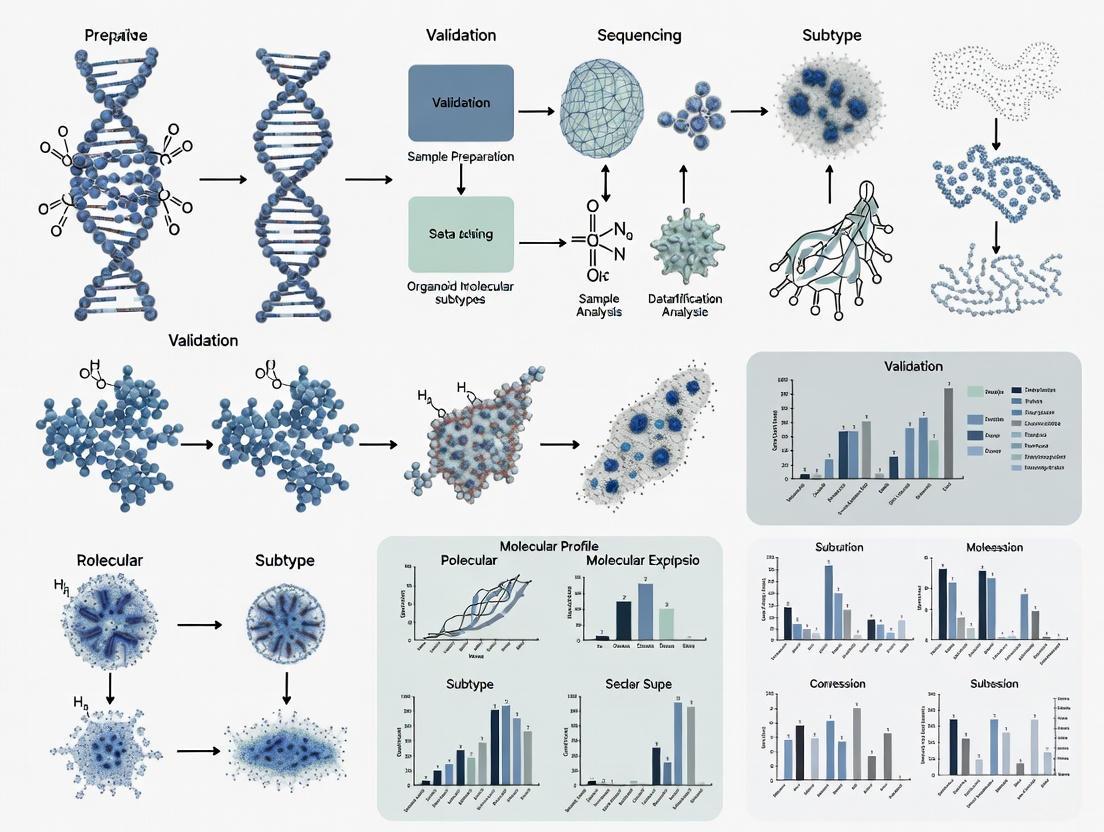
Patient-derived organoids (PDOs) have emerged as transformative tools in biomedical research, offering unprecedented fidelity in modeling human diseases.
Validating Organoid Molecular Subtypes: A Comprehensive Guide for Precision Disease Modeling
Abstract
Patient-derived organoids (PDOs) have emerged as transformative tools in biomedical research, offering unprecedented fidelity in modeling human diseases. However, the full potential of organoids in drug development and personalized therapy hinges on the rigorous validation of their molecular subtypes. This article provides a comprehensive framework for researchers and drug development professionals, covering the foundational principles of organoid biology, advanced methodological protocols for establishing and characterizing PDOs, strategies for troubleshooting common challenges, and rigorous approaches for validating organoid models against clinical data. By integrating multi-omics technologies, AI-driven analytics, and standardized validation workflows, this guide aims to enhance the reliability and clinical translatability of organoid-based research, ultimately accelerating the development of targeted therapeutics.
The Biological Basis of Organoid Molecular Fidelity
Organoids are three-dimensional (3D) in vitro culture systems derived from stem cells that self-organize to recapitulate the structural and functional characteristics of human organs [1]. These models bridge a critical gap between traditional two-dimensional (2D) cell cultures and animal models by preserving the complex tissue architecture, cellular heterogeneity, and lineage hierarchy of their in vivo counterparts [2]. The fundamental principles defining organoids include their origin from pluripotent or adult stem cells, their capacity for self-organization through cell sorting and spatial restriction, and their ability to recapitulate developmental lineage pathways [1]. This review examines the defining features of diverse organoid model systems, compares their experimental validation, and explores their growing importance in validating molecular subtypes for precision medicine applications.
Core Principles and Definitions
The formal definition of organoids, as established in 2014, describes them as "collections of organ-specific cell types derived from stem cells or progenitors, which self-organize through cell sorting and spatially restricted lineage differentiation" [1]. This definition emphasizes two foundational biological processes: self-organization and lineage hierarchy.
Self-organization refers to the capacity of cells to autonomously arrange into structured tissues without external guidance, driven by cell-cell and cell-matrix interactions that mimic organogenesis [1]. This process is governed by principles such as Steinberg's differential adhesion hypothesis, where cells sort based on their adhesive properties [1].
Lineage hierarchy is maintained through stem cell populations that undergo controlled differentiation, recapitulating the developmental pathways and cellular diversity of the target organ [2] [1]. This hierarchy enables organoids to maintain the stem cell populations necessary for long-term expansion while generating the differentiated cell types required for physiological function.
Comparative Analysis of Organoid Model Systems
Organoids can be generated from multiple stem cell sources, each offering distinct advantages and limitations for specific research applications. The choice of stem cell type significantly influences the resulting organoid's characteristics, developmental accuracy, and translational relevance.
Table 1: Stem Cell Sources for Organoid Generation
| Stem Cell Type | Key Features | Differentiation Potential | Common Applications | Notable Examples |
|---|---|---|---|---|
| Embryonic Stem Cells (ESCs) | Pluripotent, derived from blastocysts | Can differentiate into all germ layers | Organ development studies, disease modeling | Cerebral cortex structures [1] |
| Induced Pluripotent Stem Cells (iPSCs) | Reprogrammed somatic cells, patient-specific | Can differentiate into all germ layers | Personalized disease modeling, drug screening | Brain organoids for neurodevelopmental disorders [1] |
| Adult Stem Cells (ASCs) | Tissue-resident stem cells | Limited to tissue of origin | Modeling epithelial barriers, cancer research | Intestinal organoids from Lgr5+ stem cells [1] |
Table 2: Organoid Types and Their Characteristic Features
| Organoid Type | Stem Cell Source | Key Structural Features | Cell Types Represented | Physiological Functions Recapitulated |
|---|---|---|---|---|
| Brain Organoids | PSCs (ESCs/iPSCs) | Neural rosettes, layered organization | Neurons, glial cells, neural progenitors | Neuronal network activity, disease phenotypes [3] |
| Gastrointestinal Organoids | ASCs (Lgr5+ intestinal stem cells) | Crypt-villus architecture | Enterocytes, goblet cells, Paneth cells | Barrier function, secretion [1] |
| Tumor Organoids | Cancer stem cells/tumor tissue | Preserves tumor heterogeneity | Tumor cells, sometimes cancer-associated fibroblasts | Drug response, tumor-immune interactions [2] [4] |
Experimental Protocols for Organoid Generation
Standardized Hi-Q Brain Organoid Protocol
Recent advancements have addressed challenges of organoid heterogeneity and reproducibility through standardized methodologies. The Hi-Q (High Quantity) brain organoid protocol generates thousands of uniform organoids across multiple hiPSC lines with reproducible cytoarchitecture and cell diversity [3].
Methodology:
- Initial Preparation: Dissociate hiPSCs and seed directly into custom-designed, coating-free spherical microwell plates (185 microwells per well) at a density of 10,000 cells per microwell in neural induction medium [3].
- Neurosphere Formation: Culture for 5 days without Rho-kinase (ROCK) inhibitor to form uniform-sized neurospheres with characteristic neural rosette organization [3].
- Bioreactor Transfer: Transfer Matrigel-free neurospheres to spinner flask bioreactors containing 75ml neurosphere medium with constant spinning at 25 RPM [3].
- Neural Differentiation: Switch to brain organoid differentiation medium containing 5μM SB431542 (TGF-β inhibitor) and 0.5μM Dorsomorphin (BMP inhibitor) to initiate undirected neural differentiation [3].
- Long-term Maturation: After 21 days, transition to brain organoid maturation medium with continuous spinning for up to 150 days [3].
Validation Metrics: This protocol produces organoids with consistent size distribution (300 organoids across 4 hiPSC lines showed minimal size variation), minimal disintegration rates (1-2 organoids per batch of 300), and absence of ectopic cellular stress pathways [3].
Tumor Organoid-Immune Co-culture Protocol
To address the limitation of conventional tumor organoids lacking immune components, advanced co-culture systems have been developed to incorporate immune cells and better model the tumor microenvironment [4].
Methodology:
- Tumor Organoid Generation:
- Mechanically dissociate and enzymatically digest tumor samples from patient tissues with minimal necrosis [4].
- Seed cell suspension onto biomimetic scaffolds (Matrigel) providing structural support [4].
- Culture in growth factor-reduced media supplemented with specific factors (Wnt3A, R-spondin-1, TGF-β receptor inhibitors, epidermal growth factor, Noggin) depending on tumor type [4].
- Immune Co-culture:
- Isolate peripheral blood lymphocytes or mononuclear cells from patient blood samples [4].
- Establish co-culture platform with tumor organoids and immune cells at optimized ratios [5].
- Utilize the platform to enrich tumor-reactive T cells and assess cytotoxic efficacy against matched tumor organoids [5].
Applications: This system enables evaluation of individual patient responses to immunotherapy and assessment of tumor cell sensitivity to T cell-mediated attacks [5] [4].
Signaling Pathways and Molecular Regulation
The successful generation and maturation of organoids depend on the precise regulation of evolutionarily conserved signaling pathways that direct embryonic development. The diagram below illustrates the core signaling pathways governing neural lineage specification in brain organoids.
The molecular regulation of organoid development involves precise temporal control of these signaling pathways. For brain organoids, dual SMAD inhibition (TGF-β and BMP pathways) initiates neural induction by blocking alternative differentiation routes and promoting default neural fate acquisition [3]. Subsequent regional patterning occurs through the controlled activation of morphogen gradients—Wnt and FGF signaling promote dorsal and anterior fates, while Sonic Hedgehog activation induces ventral patterning [6] [5]. These pathways work combinatorially to establish the positional identities that guide cellular diversity in mature organoids.
Quantitative Profiling and Validation Methods
Recent studies have established rigorous quantitative frameworks for evaluating organoid quality and cellular composition. The NEST-Score represents one such computational tool that systematically analyzes the cellular and transcriptional landscape of brain organoids across multiple cell lines and protocols [6] [5].
Application of NEST-Score:
- Evaluation Metrics: Assesses cell-line- and protocol-driven differentiation propensities through comparisons to in vivo reference atlases [6].
- Protocol Optimization: Identifies early gene expression signatures that predict successful organoid generation, enabling protocol selection based on desired cellular outcomes [6] [5].
- Reference Creation: Establishes benchmarks for cell-type recapitulation across cell lines and protocols, providing standardized validation resources for the research community [6].
Single-cell RNA sequencing (scRNA-seq) has become the gold standard for comprehensively characterizing organoid cellular diversity. In Hi-Q brain organoids, time-resolved scRNA-seq demonstrated similar cell diversities across independent batches and confirmed the absence of ectopic stress-inducing pathways that can compromise cell-type specification [3].
Table 3: Quantitative Profiling Technologies for Organoid Validation
| Technology | Key Metrics | Applications in Organoid Validation | Reference Standards |
|---|---|---|---|
| scRNA-seq | Cell-type diversity, transcriptional profiles | Batch-to-batch consistency, developmental trajectory analysis | In vivo reference atlases [6] [3] |
| Spatial Transcriptomics | Spatial organization of cell types | Verification of tissue-like structural organization | Regional markers from primary tissues [7] |
| Immunohistochemistry | Protein expression, tissue architecture | Validation of key structural features and cell-type markers | Known protein localization patterns [8] |
| Electrophysiology | Neuronal network activity | Functional validation of neuronal maturation | Primary neuronal activity patterns [3] |
The Scientist's Toolkit: Essential Research Reagents
Successful organoid generation requires carefully selected reagents and materials that support 3D growth and appropriate lineage specification. The following table details essential research reagent solutions for organoid research.
Table 4: Essential Research Reagents for Organoid Generation
| Reagent Category | Specific Examples | Function | Application Notes |
|---|---|---|---|
| Extracellular Matrices | Matrigel, Collagen-based hydrogels | Provide structural support and biochemical cues | Matrigel commonly used for epithelial organoids; concentration affects stiffness [4] |
| Stem Cell Maintenance Factors | R-spondin-1, Noggin, EGF | Maintain stem cell populations and support self-renewal | Critical for ASC-derived organoids; concentration varies by organ type [1] [4] |
| Patterning Molecules | Wnt agonists/antagonists, BMP inhibitors, SHH agonists | Direct regional specification and lineage commitment | Temporal control essential for proper patterning [3] |
| Bioreactor Systems | Spinner flasks, custom microwell plates | Improve nutrient diffusion and scale production | Enable high-quantity generation with reduced heterogeneity [3] |
| Cell Dissociation Reagents | Accutase, Trypsin-EDTA, collagenase | Passage organoids and prepare single-cell suspensions | Gentle dissociation preserves cell viability [8] |
Applications in Molecular Subtype Validation
Organoid models have become indispensable tools for validating molecular subtypes identified through genomic studies, particularly in cancer and neurological disorders. Patient-derived organoid (PDO) biobanks preserve the molecular heterogeneity of original tumors, enabling functional validation of genomic classifications [8].
Cancer Subtyping: PDO biobanks encompassing diverse cancer types (colorectal, pancreatic, breast, etc.) have demonstrated maintained molecular subtypes through comprehensive genomic characterization (whole genome sequencing, RNA sequencing) [8]. These biobanks enable researchers to correlate molecular signatures with functional drug responses, moving beyond descriptive classification to predictive validation [2] [8].
Neurological Disorders: Brain organoids generated from patients with specific neurological conditions recapitulate disease-specific phenotypes. For example, organoids derived from microcephaly patients with CDK5RAP2 mutations faithfully model the reduced size and altered neurogenesis observed in the human condition [3]. Similarly, organoids modeling Cockayne syndrome recapitulate progeria-associated neurological defects, providing platforms for validating disease mechanisms and screening therapeutic interventions [3].
The integration of organoid technology with multi-omics approaches creates powerful validation frameworks where molecular subtypes identified in patient populations can be functionally characterized in physiologically relevant models, accelerating the translation of genomic discoveries to targeted therapies.
Organoids defined by their capacity for self-organization and lineage hierarchy represent a transformative model system that bridges the gap between traditional cell culture and in vivo physiology. Through standardized protocols, quantitative profiling methods, and carefully selected research reagents, these 3D models provide unprecedented opportunities for validating molecular subtypes across disease contexts. As the field advances, addressing challenges related to standardization, vascularization, and immune component integration will further enhance the utility of organoids for both basic research and clinical translation. The continued refinement of organoid technology promises to accelerate the validation of disease mechanisms and the development of personalized therapeutic approaches.
The field of organoid research represents a paradigm shift in disease modeling, drug development, and regenerative medicine. The physiological relevance and predictive capability of these three-dimensional tissue models are fundamentally determined by their cellular origin. This guide provides an objective comparison of three principal cell sources—Adipose-derived Stem Cells (ASCs), Pluripotent Stem Cells (PSCs), and Tissue-Derived Progenitors—within the context of validating organoid molecular subtypes. Understanding the distinct biological properties, experimental applications, and limitations of each source is critical for researchers aiming to recapitulate tissue-specific microenvironments and disease phenotypes with high fidelity.
The table below summarizes the core characteristics, advantages, and limitations of ASCs, PSCs, and Tissue-Derived Progenitors for organoid research.
Table 1: Core Characteristics of Major Cellular Sources for Organoids
| Feature | Adipose-Derived Stem Cells (ASCs) | Pluripotent Stem Cells (PSCs) | Tissue-Derived Progenitors |
|---|---|---|---|
| Origin | Adipose tissue (e.g., subcutaneous, peripancreatic) [9] | Embryonic Stem Cells (ESCs) or induced Pluripotent Stem Cells (iPSCs) [10] [11] | Specific organs (e.g., pancreas, intestine) [12] |
| Differentiation Potential | Multipotent (adirogenic, chondrogenic, osteogenic) [13] | Pluripotent (can differentiate into any adult cell type) [10] | Often lineage-restricted (e.g., pancreatic endocrine/exocrine) [12] |
| Key Strengths | Potent immunomodulatory/anti-inflammatory effects; ease of harvest [14] [15] | Unlimited self-renewal; ideal for modeling development and genetic diseases [11] | High physiological relevance for their native organ [2] |
| Primary Limitations | Variable efficacy based on donor tissue and health [9] [15] | Risk of teratoma formation; immature differentiation state [10] [11] | Very rare in adult tissues; limited expansion capacity [12] |
| Ideal Research Context | Modeling inflammatory environments, immunomodulation, tissue repair [9] [15] | Developmental biology, high-throughput drug screening, patient-specific disease modeling [16] [11] | Studying organ-specific functions, regeneration, and carcinogenesis [2] [12] |
Experimental Data and Performance Comparison
Functional Efficacy in Disease Modeling
Quantitative data from preclinical studies highlights the therapeutic potential and functional efficacy of organoids derived from different cellular sources.
Table 2: Summary of Key Experimental Outcomes from Preclinical Studies
| Cellular Source | Disease Model | Key Experimental Outcomes | Reference |
|---|---|---|---|
| ASCs (Peripancreatic) | Severe Acute Pancreatitis (SAP) in rats | 2.3x increase in pancreatic homing efficiency vs. subcutaneous ASCs; significant reduction in amylase, lipase, IL-1β, and IL-6; inhibition of NLRP3 inflammasome. [9] | |
| PSCs (Pancreatic Progenitors) | Type 1 Diabetes (Clinical Case) | Insulin independence achieved in a patient by day 75 post-transplantation; HbA1c sustained at ≤5.7%; no severe adverse events. [10] | |
| Tissue-Derived Progenitors (Pancreatic PMPs) | Diabetes in mice | Human pancreatic PMP transplantation lowered blood glucose levels in diabetic mice; demonstrated self-renewal and differentiation into functional beta cells. [12] |
Signaling Pathways in Differentiation and Function
The diagram below illustrates the key signaling pathways associated with the differentiation and therapeutic action of ASCs and PSCs.
Key Signaling Pathways for ASCs and PSCs
Detailed Experimental Protocols
Protocol for Assessing ASC Efficacy in Inflammatory Disease Models
This protocol is adapted from a study investigating ASCs from different harvesting sites in Severe Acute Pancreatitis (SAP) [9].
Step 1: ASC Isolation and Culture
- Reagents: Collagenase Type I, Dulbecco's Modified Eagle Medium (DMEM) with low glucose, Fetal Bovine Serum (FBS).
- Method: Minced adipose tissue is digested with 0.1% collagenase. The stromal vascular fraction is pelleted, resuspended, and cultured. ADSCs are characterized by flow cytometry for surface markers (CD73, CD90, CD105) and tri-lineage differentiation (osteogenic, adipogenic, chondrogenic) [9].
Step 2: In Vivo Disease Modeling and Intervention
- Animal Model: SAP is induced in rats via retrograde injection of 4% sodium taurocholate into the pancreatic duct.
- Intervention Groups: Rats are divided into groups (e.g., Sham, SAP, SAP + subcutaneous ASCs, SAP + peripancreatic ASCs). A dose of 1x10⁷ cells/kg body weight is administered via tail vein at 6 or 12 hours post-model establishment [9].
Step 3: Outcome Analysis
- Serum Markers: Measure amylase and lipase activity using enzymatic assays.
- Cytokines: Quantify IL-1β and IL-6 levels using ELISA.
- Histopathology: Assess pancreatic tissue damage via Hematoxylin and Eosin (H&E) staining and calculate histopathological scores.
- Molecular Mechanism: Analyze protein expression of NLRP3 inflammasome pathway components (NLRP3, ASC, Caspase-1) using Western Blotting [9].
Protocol for Generating Pancreatic Beta-like Cells from PSCs
This protocol outlines key stages for differentiating PSCs into glucose-responsive beta-like cells, critical for diabetes modeling and therapy [10] [12].
Step 1: Definitive Endoderm Induction
- Baseline Culture: Start with a confluent layer of human PSCs.
- Key Reagents: Activin A, Wnt3A.
- Method: Culture cells in media containing 100 ng/mL Activin A and 10-50 ng/mL Wnt3A for 3-5 days. Successful differentiation is marked by high expression of CXCR4 and SOX17 [12].
Step 2: Pancreatic Progenitor Specification
- Key Reagents: Fibroblast Growth Factor (FGF), Retinoic Acid, Cyclopamine.
- Method: After endoderm induction, culture cells with FGF10, Retinoic Acid, and Cyclopamine for several days. The key marker for this stage is co-expression of PDX1 and NKX6.1 [12].
Step 3: Endocrine Progenitor and Beta Cell Maturation
- Key Reagents: TGF-β pathway inhibitors, NOTCH signaling inhibitors, Thyroid Hormone (T3).
- Method: Induce endocrine commitment with media containing factors like a TGF-β inhibitor. Subsequent maturation can be enhanced by adding thyroid hormone and an AXL kinase inhibitor to upregulate MAFA, a key beta-cell maturation marker [12]. The final cells should express insulin, C-peptide, and respond to glucose stimulation.
The Scientist's Toolkit: Essential Research Reagents
The table below lists critical reagents and their functions for working with these cellular sources in organoid research.
Table 3: Key Research Reagent Solutions for Organoid Research
| Reagent / Material | Function / Application | Cellular Source Context |
|---|---|---|
| Collagenase Type I | Digests adipose tissue to isolate the stromal vascular fraction containing ASCs. [9] | ASCs |
| Matrigel / BME | A basement membrane extract providing a 3D scaffold for organoid growth and polarization. [16] | Universal |
| Activin A & Wnt3A | Cytokines used to direct PSC differentiation towards the definitive endoderm lineage. [12] | PSCs |
| Recombinant FGF10 | A growth factor critical for patterning the definitive endoderm into pancreatic progenitors. [12] | PSCs, Progenitors |
| Y-27632 (ROCK inhibitor) | Improves survival and viability of single cells during passaging and transplantation. | PSCs, Progenitors |
| PDX1 & NKX6.1 Antibodies | Key markers for identifying and isolating pancreatic progenitor cells via immunofluorescence or FACS. [12] | PSCs, Progenitors |
| IL-1β & IL-6 ELISA Kits | Quantify inflammatory cytokine levels to assess the immunomodulatory efficacy of ASCs. [9] | ASCs |
| NLRP3 Antibody | Detects the core inflammasome component to study ASC-mediated anti-inflammatory mechanisms. [9] | ASCs |
The selection of a cellular origin for organoid generation is a foundational decision that directly impacts the model's molecular and phenotypic fidelity. ASCs offer a powerful, clinically relevant tool for modeling inflammation and tissue repair. PSCs provide an unparalleled platform for developmental studies and generating patient-specific disease models. Tissue-Derived Progenitors, though often scarce, deliver high functional relevance for their native organ. A rigorous, context-driven approach to selecting and validating the cellular source, supported by the experimental data and protocols outlined herein, is essential for advancing the validation of organoid molecular subtypes and their application in precision medicine.
Preserving Tumor Heterogeneity and Genetic Landscapes ex vivo
The inherent heterogeneity of human cancer—encompassing marked interindividual differences, intercellular diversity, and the complex process of immunoediting—poses a significant challenge for therapeutic development [17]. For decades, research has relied on conventional models that poorly recapitulate these key features, contributing to high failure rates when promising treatments move from preclinical studies to clinical trials [17] [18]. The emergence of sophisticated ex vivo modeling technologies represents a paradigm shift, enabling scientists to preserve patient-specific tumor characteristics outside the body. These advanced platforms, particularly patient-derived organoids (PDOs) and innovative co-culture systems, now serve as indispensable "avatars" for studying tumor biology and treatment response, directly addressing the limitations of traditional two-dimensional cultures and animal models [19] [18]. This guide objectively compares the performance of leading ex vivo models in preserving tumor heterogeneity and genetic landscapes, providing researchers with validated experimental frameworks to advance precision oncology.
Model Comparison: Performance in Preserving Tumor Characteristics
The table below provides a quantitative comparison of how different ex vivo models preserve key tumor characteristics, based on current literature.
Table 1: Performance Comparison of Ex Vivo Models in Preserving Tumor Features
| Model Type | Genetic Landscape Preservation | Cellular Heterogeneity | Tumor Microenvironment (TME) | Typical Establishment Time | Reported Success Rates |
|---|---|---|---|---|---|
| Patient-Derived Organoids (PDOs) | High (Retains mutational profiles & intratumoral heterogeneity) [18] [20] | High (Preserves epithelial & some stromal heterogeneity) [19] [21] | Limited (Often lacks native immune cells, vasculature) [17] [16] | ~2-8 weeks [18] | 68.75% for ESCC [18], 57.2% for EAC [18] |
| Organoid-Immune Co-cultures | High (Maintains PDO genetics) [19] | Medium-High (Adds immune cells but may not fully represent native TME) [17] [19] | Good (Reconstitutes key tumor-immune interactions) [17] [19] | ~2-8 weeks + co-culture setup | Qualitative reports of functional immune responses [17] |
| Patient-Derived Organotypic Spheroids (PDOTS) | High (Maintains autologous cellular components) [19] | High (Retains multiple cell types from original tumor fragment) [19] | Good (Preserves autologous immune cells and stromal components) [19] | ~1-2 weeks [19] | Used for profiling ICB responses [19] |
| Ex Vivo Armed T Cells (EATs) | Not Primary Focus | Not Primary Focus | Limited (Focus is on overcoming heterogeneity via multi-antigen targeting) [22] | ~7-14 days (T cell expansion) [22] | Effective against heterogeneous CDX/PDX in vivo [22] |
Experimental Protocols for Model Establishment and Validation
Establishing and Validating Patient-Derived Organoids (PDOs)
Protocol: PDO Culture from Gastrointestinal Cancers This protocol is adapted from methodologies used for upper gastrointestinal cancers, such as oesophageal adenocarcinoma (EAC) and oesophageal squamous cell carcinoma (ESCC) [18].
- Sample Collection and Processing: Obtain tumor tissue from surgical resections or endoscopic biopsies under sterile conditions. Mechanically mince the tissue and enzymatically digest it using collagenase or dispase to create a single-cell suspension or small clusters [19] [18].
- Matrix Embedding: Resuspend the cell pellet in a basement membrane extract, such as Matrigel or other ECM substitutes, which provides a 3D scaffold for growth [19] [18].
- Culture Medium: Seed the cell-Matrigel suspension and overlay with a specialized, defined medium. For oesophageal cancers, this often involves a medium containing a combination of growth factors (e.g., Wnt3A, Noggin, R-spondin), inhibitors, and hormones to promote stem cell expansion and inhibit non-tumor cell overgrowth [19] [18]. Key components often include B27 supplement, EGF, FGF10, and N-acetylcysteine [19].
- Passaging and Expansion: Culture the organoids at 37°C with 5% CO₂. Pass organoids every 1-2 weeks by mechanically breaking them up and/or using enzymatic digestion, followed by re-embedding in fresh Matrigel and feeding with new medium [18].
- Validation and Biobanking:
- Histology: Confirm recapitulation of original tumor histology using Haematoxylin and Eosin (H&E) staining and immunohistochemistry (IHC) for tumor-specific markers [18] [20].
- Genomics: Authenticate models via Short Tandem Repeat (STR) profiling. Perform Whole-Exome Sequencing (WES) or Next-Generation Sequencing (NGS) to verify preservation of driver mutations and copy number variations from the parent tumor [18] [20].
- Biobanking: Cryopreserve organoids at early passages (e.g., passage 2-5) in cryoprotectant medium for long-term storage and future use [16].
Establishing Organoid-Immune Co-culture Models
Protocol: Autologous Immune and Organoid Co-culture This protocol is used to study tumor-immune interactions and immunotherapy responses, building on work from groups like Voest and Jenkins [17] [19].
- Source of Immune Cells: Isate autologous immune cells from the same patient. Sources can include:
- Co-culture Setup: Harvest established PDOs and break them into small fragments or single cells. Seed them in a 3D matrix or in specialized microfluidic devices. Add the isolated immune cells at a defined effector-to-target ratio to the culture [17] [19].
- Stimulation and Monitoring: To assess T-cell reactivity, activate the immune cells with cytokines like IL-2. Functional readouts can include:
- Microscopy: Monitor organoid killing over time using live-cell imaging.
- Flow Cytometry: Quantify immune cell activation markers (e.g., CD69, CD107a) and proliferation.
- Cytokine Assays: Measure interferon-gamma (IFN-γ) or other cytokine release in the supernatant via ELISA or multiplex assays [17].
- Therapeutic Testing: Introduce immunotherapeutic agents into the co-culture, such as immune checkpoint inhibitors (e.g., anti-PD-1, anti-PD-L1), to evaluate their ability to enhance T-cell-mediated tumor killing [17] [19].
Diagram Title: Workflow for Establishing Ex Vivo Tumor Models
Signaling Pathways in Tumor-Immune Interaction
The interplay between tumor organoids and immune cells in co-culture systems is governed by specific molecular pathways. Understanding these is crucial for modeling the tumor microenvironment and testing immunotherapies.
Table 2: Key Signaling Pathways in Tumor-Immune Interactions
| Pathway / Component | Role in Tumor-Immune Interaction | Experimental Manipulation |
|---|---|---|
| PD-1/PD-L1 Checkpoint | Primary mediator of T-cell exhaustion; allows tumors to evade immune destruction [17] [19]. | Blockade with anti-PD-1/PD-L1 antibodies in co-culture to restore T-cell function [17] [19]. |
| Wnt/β-catenin Signaling | Critical for stem cell maintenance and organoid growth; can influence T-cell exclusion from TME [19] [18]. | Addition of Wnt3A and R-spondin to culture medium to establish and maintain PDOs [19] [18]. |
| Kynurenine Pathway | Drives immune evasion by suppressing T and NK cell function; linked to stromal-immune crosstalk [23]. | Pharmacological inhibition in co-culture models to suppress tumor cell migration [23]. |
| EYA3 Expression | Implicated in proteasome inhibitor sensitivity in multiple myeloma; part of DNA repair pathway [24]. | Identification via proteotyping; associated with drug response heterogeneity [24]. |
| MHC Class II Expression | Essential for antigen presentation to CD4+ T cells; determines response to immunotherapies like elotuzumab [24]. | Measurement via flow cytometry or immunofluorescence; correlates with immunotherapy efficacy [24]. |
Diagram Title: Signaling in Tumor-Immune Interaction
The Scientist's Toolkit: Essential Research Reagents
The table below details key reagents and materials essential for successfully establishing and experimenting with ex vivo tumor models.
Table 3: Essential Reagents for Ex Vivo Tumor Model Research
| Reagent/Material | Function | Example Use Cases |
|---|---|---|
| Basement Membrane Extract (e.g., Matrigel) | Provides a 3D extracellular matrix (ECM) scaffold for organoid growth and polarization [19] [23]. | Used as standard matrix for embedding PDOs and PDxOs for all solid tumor types [19] [20]. |
| Defined Culture Media Kits | Supplements (e.g., B27, N2) and specific growth factors (e.g., Wnt3A, EGF, Noggin, R-spondin) that create a stem cell niche [19] [18]. | Tailored media used for culture of GI, breast, and other cancer PDOs; composition varies by tumor type [19] [18]. |
| Immune Cell Isolation Kits | Magnetic-activated or FACS-based cell sorting kits for isolating specific immune populations (T cells, monocytes) from PBMCs or tumors [22] [24]. | Isolation of autologous TILs or PBMCs for co-culture with organoids to study immunotherapy [17] [22]. |
| Cytokines (e.g., IL-2) | T cell growth factor critical for activating and expanding T cells in co-culture systems [17] [22]. | Added to organoid-immune co-cultures to maintain T cell viability and promote tumor-reactive expansion [17]. |
| Validated Immune Checkpoint Inhibitors | Functional-grade blocking antibodies against PD-1, PD-L1, etc., for perturbation studies in co-cultures [17] [19]. | Testing in organoid-immune co-cultures to evaluate potential to enhance T-cell-mediated killing [17] [19]. |
Extracellular Matrix (ECM) Influence on Morphology and Signaling
The extracellular matrix (ECM) is a dynamic, three-dimensional network of macromolecules that provides not only structural support but also essential biochemical and mechanical cues which regulate cellular behavior [25]. In organoid biology, the ECM serves as a critical instructor of morphogenesis, guiding self-organization, patterning, and functional maturation through integrated signaling pathways. This guide objectively compares the roles of various ECM substrates in organoid culture, framing the analysis within the broader research objective of validating organoid molecular subtypes. The composition and physical properties of ECM scaffolds directly influence the phenotypic and molecular characteristics of organoids, making the choice of matrix a fundamental determinant in experimental outcomes and their biological relevance [26].
Quantitative Comparison of ECM Properties and Effects
Biomechanical Properties of Native Tissues and Representative Matrices
The mechanical properties of the ECM, such as stiffness and viscoelasticity, are key regulators of cell behavior through mechanotransduction pathways. The following table summarizes the stiffness values of various healthy and diseased tissues, providing a benchmark for designing physiologically relevant organoid cultures.
Table 1: Stiffness Values of Native Tissues and Organoid Culture Implications
| Tissue Type | Pathological Status | Stiffness Range | Biological Significance in Organoid Culture |
|---|---|---|---|
| Brain | Healthy | < 2 kPa [25] | Represents a soft microenvironment essential for neural organoid development. |
| Breast | Healthy | 0.167 kPa [25] | Baseline soft tissue stiffness. |
| Cancerous | ~4 kPa [25] | Increased stiffness promotes invasiveness and EMT via pathways like TWIST1-G3BP2 [25]. | |
| Bone | Healthy | 40-55 MPa [25] | Represents a rigid mechanical niche for skeletal organoids. |
| Lung | Fibrotic | ~16.5 kPa [25] | Model for progressive ECM hardening, 5-10x increase from healthy state. |
| Liver (HCC) | Cancerous | 12 kPa (vs. 1 kPa soft) [25] | Stiff ECM activates AKT/STAT3 pathways, promoting tumor cell proliferation. |
Performance Comparison of Commercial and Engineered Matrices
Different ECM substrates vary significantly in their composition, properties, and functional outcomes in organoid culture. The table below provides a structured comparison of commonly used matrices.
Table 2: Functional Comparison of Key Matrices in Organoid Culture
| Matrix Type | Key Characteristics | Documented Impact on Organoid Morphology & Signaling | Major Limitations |
|---|---|---|---|
| Matrigel / Geltrex / Cultrex | Animal-derived (EHS mouse tumor), complex composition of ECM proteins and growth factors [27] [28] [26]. | - Brain Organoids: Enhances neuroepithelium formation, lumen expansion, and telencephalon formation via WNT and YAP1 signaling [29].- Intestinal Organoids: Supports stem cell maintenance and spheroid formation [27]. | - High batch-to-batch variability (~53% similarity) [28] [26].- Lacks organ-specificity [28].- Murine origin limits clinical translation [28]. |
| VitroGel (Xeno-free) | Defined, animal-free matrix; synthetic hydrogel [27] [28]. | - hiPSC Maintenance: Leads to 3D round clump formation [27].- Intestinal Organoids (IO): Can lead to larger, more mature hIO compared to animal-derived matrices when optimized [27]. | Requires optimization of supplement and growth factor concentrations for optimal performance (e.g., 1.3-fold improvement in SSEA-4 expression) [27]. |
| Decellularized ECM (dECM) | Retains tissue-specific biochemical cues from native tissues; promotes functional maturation [30] [26]. | - Hepatic Models: Increased albumin secretion [30].- Cerebral Models: Improved electrophysiological activity [30].- Enhances organoid maturation by providing a native-like niche [30]. | - Sourcing and standardization challenges [26]. |
| Engineered Synthetic Hydrogels | Chemically defined, highly tunable stiffness and viscoelasticity [31] [26]. | - Intestinal/Hepatic/Renal/Neural Organoids: Stiffness-dependent morphogenesis; optimal mechanical niches enhance maturation via YAP/Notch signaling [31].- Tumor Organoids: Matrix stiffening drives malignancy via EMT and drug resistance pathways [31]. | - May lack some innate bioactive factors present in natural matrices. |
Experimental Protocols for Evaluating ECM Influence
Protocol: Assessing ECM-Driven Morphogenesis in Brain Organoids
This protocol, adapted from a 2025 Nature study, details the use of long-term live imaging to quantify how an extrinsic ECM affects early brain organoid development and regionalization [29].
- Key Reagents:
- hiPSCs: Fluorescently labelled lines for subcellular features (e.g., membrane, actin, nucleus).
- Extrinsic ECM: Matrigel is used as a representative matrix.
- Neural Induction Medium (NIM): For directing neuroectodermal fate.
- Methodology:
- Organoid Generation: Aggregate approximately 500 hiPSCs into embryoid bodies. At day 4, transition to NIM supplemented with the extrinsic ECM (Matrigel).
- Live Imaging Setup: Transfer day 4 organoids to a customized light-sheet microscopy chamber stabilized with matrix. Image for up to 188 hours with 30-minute time resolution.
- Data Quantification:
- Tissue Morphology: Segment and track overall organoid volume, lumen volume, and lumen number over time.
- Cell Behavior: Track actin, tubulin, and nuclear dynamics during neuroepithelial induction and lumenization.
- Outcome Correlation: Correlate morphological data (e.g., lumen expansion) with single-cell transcriptome data to identify associated gene expression programs (e.g., ECM pathway regulators).
- Interpretation: Organoids grown with extrinsic ECM typically show enhanced lumen expansion and fusion events, and a patterning bias towards telencephalic identity, linked to modulation of WNT and YAP1 signaling [29].
Protocol: Validating ECM-Linked Molecular Subtypes in Glioma
This protocol outlines a bioinformatic approach to establish ECM-based molecular subtypes, as demonstrated in IDH-mutant gliomas, which can be adapted for organoid validation studies [32].
- Key Reagents:
- Transcriptomic Data: RNA-sequencing data from organoid cohorts (e.g., training and validation sets).
- ECM Gene Set: A defined list of ECM-related genes.
- Methodology:
- Unsupervised Clustering: Perform consensus clustering on organoid samples based on the expression of prognostic ECM-related genes.
- Subtype Characterization:
- Clinical/Biological Relevance: Correlate the identified subtypes (e.g., ECM1 and ECM2) with key phenotypes:
- EMT Status: Assess correlation with epithelial (EPI), hybrid (hEMT), and mesenchymal (MES) signatures.
- Immune Infiltration: Analyze using algorithms like ESTIMATE and CIBERSORT to calculate immune/stromal scores and deconvolute immune cell populations.
- Pathway Activity: Perform enrichment analysis on differential genes to identify subtype-specific pathways (e.g., metabolism, proliferation).
- Clinical/Biological Relevance: Correlate the identified subtypes (e.g., ECM1 and ECM2) with key phenotypes:
- Signature Development: Use LASSO Cox regression to refine the subtype classifier into a minimal gene signature (e.g., a 4-gene signature: CLCF1, COL11A1, CSPG5, SULF1) for robust risk/organoid stratification.
- Interpretation: The ECM1 subtype is typically associated with worse prognosis, higher EMT activity, enhanced immune infiltration, and specific metabolic pathways, providing a molecular taxonomy for precision oncology [32].
ECM-Activated Signaling Pathways in Organoid Morphology
The ECM influences organoid development and disease by activating core mechanotransduction and signaling pathways. The diagram below illustrates the key signaling pathways implicated in ECM-driven morphogenesis and malignancy.
The diagram shows how ECM properties are sensed by cell-surface receptors like integrins, Piezo1, and TRPV4 [25]. These signals converge on key nuclear effectors, most notably the YAP/TAZ complex, which serves as a central hub. YAP/TAZ activation leads to the induction of transcription factors like TWIST1 and modulation of pathways like TGF-β and WNT (e.g., via upregulation of the WNT ligand secretion mediator WLS), driving fundamental cellular outcomes such as EMT, proliferation, stemness, and lumen morphogenesis during brain regionalization [25] [29].
The Scientist's Toolkit: Essential Research Reagent Solutions
Selecting the appropriate matrix and culture reagents is critical for successfully modeling the ECM's role in organoid biology. The following table details key solutions for related experiments.
Table 3: Key Research Reagent Solutions for ECM and Organoid Studies
| Reagent Category | Specific Examples | Primary Function in Experimentation |
|---|---|---|
| Animal-Derived Basement Membrane Matrices | Matrigel, Geltrex, Cultrex [27] [26] | Provides a complex, biologically active scaffold for initial organoid formation and growth, widely used as a benchmark. |
| Defined & Xeno-Free Matrices | VitroGel, Synthetic PEG-based hydrogels [27] [28] [31] | Offers a chemically defined, reproducible environment for culture, crucial for clinical translation and reducing variability. |
| Tissue-Specific ECM | Decellularized ECM (dECM) from liver, brain, etc. [30] [26] | Provides native, organ-specific biochemical and mechanical cues to enhance organoid maturation and physiological relevance. |
| Mechano-Modulatory Agents | ROCK inhibitor (Y-27632) [26], YAP/TAZ inhibitors | Modulates cell-ECM tension and mechanotransduction signaling; ROCK inhibitor enhances cell survival during passaging. |
| Growth Factor Cocktails | R-spondin, EGF, Wnt3A, Noggin [26] | Supplements the biochemical environment to support stem cell maintenance and direct lineage specification in organoids. |
The choice of ECM is a critical variable that directly dictates organoid morphology, signaling pathway activation, and ultimately, the molecular subtypes that arise in culture. While traditional matrices like Matrigel have been instrumental in advancing the field, their batch variability and non-human origin pose significant challenges for reproducible research and clinical translation [28] [26]. The emergence of defined synthetic hydrogels and tissue-specific dECM offers a path toward greater precision and reliability [30] [31]. Validating organoid molecular subtypes, as demonstrated in glioma research, requires a meticulous approach to ECM selection and characterization, ensuring that the model system accurately reflects the pathophysiology it aims to mimic [32]. Future developments in programmable biomaterials that can spatiotemporally control mechanical and biochemical cues will further enhance the fidelity of organoid models, solidifying their role in drug development and precision medicine.
Key Molecular Pathways (Wnt, EGF, BMP) in Lineage Maintenance
The validation of molecular subtypes in organoid research fundamentally relies on understanding the core signaling pathways that govern cell fate. The Wnt/β-catenin, Epidermal Growth Factor (EGFR), and Bone Morphogenetic Protein (BMP) pathways form a critical signaling network that coordinates stem cell maintenance, proliferation, and differentiation in epithelial tissues. These pathways do not operate in isolation; rather, they exhibit extensive crosstalk and feedback mechanisms that create a balanced microenvironment for tissue homeostasis. In organoid models, which faithfully recapitulate the cellular diversity and organization of original tissues, precise manipulation of these pathways enables researchers to control lineage specification and maintain long-term culture stability. This guide systematically compares the functional roles, experimental manipulation, and synergistic interactions of these pathways, providing a framework for their application in validating organoid molecular subtypes.
Pathway Mechanisms and Comparative Functions
Wnt/β-Catenin Signaling: The Master Regulator of Stemness
The canonical Wnt pathway serves as a primary regulator of stem cell identity across multiple tissue types. In the absence of Wnt ligands, a cytoplasmic "destruction complex" comprising AXIN, Adenomatous Polyposis Coli (APC), Casein Kinase 1α (CK1α), and Glycogen Synthase Kinase 3β (GSK3β) targets β-catenin for phosphorylation and proteasomal degradation, maintaining pathway inactivity [33] [34]. Upon Wnt activation, Wnt ligands bind to Frizzled (FZD) receptors and LRP5/6 co-receptors, leading to disruption of the destruction complex and subsequent stabilization and nuclear translocation of β-catenin [35] [33]. Within the nucleus, β-catenin partners with T-cell Factor/Lymphoid Enhancer Factor (TCF/LEF) transcription factors to activate target genes governing self-renewal and proliferation, including c-MYC and Cyclin D1 [33].
EGFR Signaling: The Proliferation Engine
The Epidermal Growth Factor Receptor pathway primarily drives cellular proliferation through the EGFR-MEK-ERK signaling cascade. EGFR activation upon ligand binding (e.g., EGF, TGF-α) initiates a phosphorylation cascade through MEK and ERK kinases, ultimately regulating genes controlling cell cycle progression [36] [37]. Recent research has revealed that beyond traditional ligands, nutrients like L-glutamate can directly interact with EGFR to promote mitochondrial biogenesis and stem cell expansion, highlighting a nutrient-sensing mechanism that couples energy availability to stem cell function [37]. In gastric homeostasis, EGFR signaling unexpectedly promotes pit cell differentiation rather than exerting purely mitogenic effects, demonstrating context-dependent functionality [36].
BMP Signaling: The Differentiation Director
Bone Morphogenetic Protein signaling typically functions as a differentiation-promoting pathway that counterbalances stemness signals. BMP ligands bind to type I and type II serine/threonine kinase receptors, leading to phosphorylation of receptor-regulated SMADs (SMAD1/5/9) which then complex with SMAD4 and translocate to the nucleus to regulate transcription of target genes [38]. In intestinal stem cells, BMP signaling is antagonized by Noggin to maintain the crypt-permissive environment, while in neuroblastoma, BMP signaling determines cell fate decisions in response to retinoic acid, directing cells toward apoptosis/senescence rather than differentiation [38] [39].
Table 1: Comparative Functions of Key Signaling Pathways in Lineage Maintenance
| Pathway | Primary Role | Key Components | Outcome When Activated | Outcome When Inhibited |
|---|---|---|---|---|
| Wnt/β-catenin | Stemness Maintenance | FZD, LRP5/6, β-catenin, TCF/LEF | Self-renewal, proliferation [35] [33] | Differentiation, loss of stemness [40] |
| EGFR | Proliferation & Differentiation | EGFR, MEK, ERK | Proliferation; context-dependent differentiation [36] [37] | Reduced proliferation, impaired regeneration [37] |
| BMP | Differentiation & Fate Specification | BMPR, SMAD1/5/9 | Differentiation, apoptosis/senescence [38] [39] | Enhanced stemness, uncontrolled proliferation [40] |
Experimental Modulation in Organoid Models
Pathway Activation and Inhibition Strategies
Experimental manipulation of these pathways employs specific growth factors, small molecule inhibitors, and genetic approaches to precisely control signaling activity. For Wnt pathway activation, R-spondin represents a crucial component that potentiates Wnt signaling by protecting Wnt ligands from degradation, while CHIR99021 directly inhibits GSK3β, preventing β-catenin phosphorylation and degradation [40] [41]. For EGFR signaling, EGF is routinely added to organoid cultures to promote proliferation, whereas inhibitors like Osimertinib block EGFR tyrosine kinase activity [37] [41]. BMP signaling is typically inhibited in stem cell cultures using Noggin or the small molecule inhibitor LDN-193189, which block BMP receptor function [40] [39].
Table 2: Experimental Reagents for Pathway Modulation in Organoid Cultures
| Target Pathway | Activating Reagents | Mechanism of Action | Inhibiting Reagents | Mechanism of Action |
|---|---|---|---|---|
| Wnt/β-catenin | R-spondin [41], CHIR99021 [40], Wnt3a [41] | Potentiates Wnt signaling; GSK3β inhibition [40] [41] | IWP-2, XAV939 | PORCN inhibition; Tankyrase inhibition [35] |
| EGFR | EGF [41], TGF-α [36] | Receptor ligation and activation | Osimertinib [37] | Tyrosine kinase inhibition [37] |
| BMP | BMP2/4 [38] | Receptor activation and SMAD phosphorylation | Noggin [41], LDN-193189 [40] | Ligand sequestration; Receptor inhibition [40] [41] |
Minimal Signaling Requirement for Stem Cell Maintenance
Seminal research in intestinal organoids has demonstrated that coordinated Wnt activation and BMP inhibition represent the minimal essential requirements for maintaining Lgr5+ intestinal stem cells in vitro. A growth factor-free culture system utilizing CHIR99021 and LDN-193189 can sustain long-term expansion of intestinal organoids with normal characteristics, indicating that the balance between these two pathways is both necessary and sufficient for stem cell self-renewal [40]. This simplified system eliminates confounding variables from multiple growth factors, providing a cleaner experimental platform for dissecting fundamental mechanisms of lineage maintenance.
Pathway Crosstalk in Lineage Specification
Integrated Signaling Networks
The Wnt, EGFR, and BMP pathways form an integrated network where crosstalk and feedback loops precisely regulate cell fate decisions. In intestinal homeostasis, Notch signaling interacts with all three pathways, where Notch activation maintains progenitor cells in an undifferentiated state and promotes absorptive lineage specification [39]. The coordination between Wnt and BMP signaling is particularly critical, as demonstrated by the ability to maintain intestinal stem cells using only Wnt activation and BMP inhibition [40]. In neuroblastoma, BMP signaling determines the cellular response to retinoic acid, directing cells toward apoptosis/senescence rather than differentiation, revealing how pathway integration controls cell fate decisions in cancer contexts [38].
Diagram 1: Signaling Pathway Crosstalk and Functional Outcomes. The Wnt, EGFR, and BMP pathways (top row) each drive primary cellular functions (bottom row) while engaging in extensive crosstalk (center), creating an integrated network that precisely controls cell fate decisions.
Organoid Morphology as a Readout of Pathway Activity
Organoid morphology serves as a visual indicator of underlying pathway activity states, providing a valuable tool for validating molecular subtypes. In oral cancer organoid models, distinct morphological subtypes—normal-like, dense, and grape-like—correlate with unique transcriptomic profiles and clinical outcomes [41]. These morphological patterns emerge from the integration of genetic mutations and signaling pathway activities, offering a phenotypic bridge between molecular characterization and functional behavior. The ability to classify organoids based on morphology and then link these classifications to specific pathway activities and drug responses highlights the utility of organoid models in personalized medicine approaches.
Research Reagent Solutions for Pathway Modulation
Table 3: Essential Research Reagents for Signaling Pathway Studies
| Reagent Category | Specific Examples | Primary Function | Application Notes |
|---|---|---|---|
| Wnt Agonists | R-spondin-1 [41], CHIR99021 [40], Wnt3a [41] | Enhance β-catenin signaling | CHIR99021 (GSK3β inhibitor) enables growth factor-free culture [40] |
| EGFR Modulators | EGF [41], Osimertinib [37] | Promote proliferation or inhibit EGFR | Osimertinib blocks Glu-induced mitochondrial biogenesis [37] |
| BMP Antagonists | Noggin [41], LDN-193189 [40] | Inhibit BMP signaling | Essential for maintaining stem cell compartment [40] [41] |
| Pathway Reporters | TOPFlash, Lgr5-EGFP | Monitor pathway activity | Lgr5-EGFP tracks intestinal stem cells [40] |
| Culture Matrices | Matrigel, synthetic hydrogels | Provide 3D support environment | Synthetic hydrogels improve reproducibility [19] |
The strategic manipulation of Wnt, EGFR, and BMP pathways provides a powerful experimental framework for validating molecular subtypes in organoid research. The balanced coordination between these pathways—particularly the demonstrated sufficiency of Wnt activation and BMP inhibition for stem cell maintenance—establishes a fundamental principle for lineage control in vitro [40]. The growing recognition that organoid morphology reflects underlying pathway activities and drug responses further strengthens the utility of these models for both basic research and clinical translation [41]. As organoid technology continues to evolve, particularly with advancements in microfluidic systems, co-culture methods, and single-cell transcriptomics, the precise dissection of these core signaling pathways will remain essential for validating molecular subtypes and developing targeted therapeutic strategies across diverse disease contexts.
Protocols for Establishing and Characterizing Molecular Subtypes
In the field of organoid research, the fidelity of a model is fundamentally determined by the initial quality and provenance of its tissue source. Validating organoid molecular subtypes—a critical prerequisite for their application in disease modeling, drug discovery, and personalized medicine—hinges on the procurement process. Tissue samples for organoid generation can be obtained through two primary routes: surgical and non-surgical methods. This guide provides a detailed, objective comparison of these procurement pathways, supporting researchers in making informed decisions that enhance the reliability and translational relevance of their organoid models.
The choice between surgical and non-surgical procurement involves a trade-off between sample cellularity and patient invasiveness. The decision framework for selecting a source is guided by the research objective and practical constraints.
Table 1: Characteristics of Surgical vs. Non-Surgical Tissue Sources for Organoids
| Feature | Surgical Sources | Non-Surgical Sources |
|---|---|---|
| Example Types | Core biopsies, surgical resections, endoscopic biopsies, urethral resection specimens [42] | Liquid biopsies (blood), ascitic fluid, pleural effusions, urine, sputum [42] |
| Typical Cellular Yield | High (milligrams to grams of tissue) [42] | Low to variable (cell clusters or single cells) [42] |
| Invasion Level | Invasive procedure required | Minimally invasive or non-invasive [42] |
| Key Advantage | Preserves native tissue architecture and high cellular diversity; high success rate for organoid establishment [42] [2] | Enables repeated sampling for dynamic disease monitoring; accessible for hard-to-biopsy diseases [42] |
| Primary Limitation | Patient burden and risk; limited serial sampling potential [42] | Lower initial cell yield; often requires additional purification steps [42] |
Experimental Processing and Workflow
Once procured, tissue samples must be processed to isolate viable cells for organoid culture. The following workflow and experimental data compare the efficacy of different processing methods.
Standardized Processing Workflow
The journey from a procured sample to a viable organoid culture follows a core set of steps, though the specific protocol is often tailored to the tumor type and sample source [42]. The general workflow is as follows [42]:
- Sampling: Obtain tumor sample via surgical or non-surgical means.
- Cell Mass Preparation: Mechanically dissociate the tissue (e.g., via pipetting) and/or enzymatically digest it using cocktails such as collagenase/hyaluronidase and TrypLE Express. The digestion time must be optimized for each tissue type.
- Filtration and Concentration: Pass the digested product through a strainer (e.g., 70 µm or 100 µm pore size) to obtain single cells or cell clusters of the desired size, followed by centrifugation.
- Density Adjustment: Resuspend the cell pellet in culture medium, count the cells, and adjust the cell density for subsequent plating.
- ECM Mixing and Plating: Mix the cell suspension with an extracellular matrix (ECM) hydrogel, such as Matrigel, BME, or Geltrex. Plate the mixture as small drops in a pre-warmed well plate.
- Culture: Invert the plate to allow the ECM-cell mixture to solidify at 37°C for 15-30 minutes. After solidification, add a specialized organoid culture medium containing a mix of essential growth factors.
Comparative Data on Processing Method Efficacy
The method used to process tissues, particularly for microbial culture, significantly impacts bacterial viability and recovery, which can be a critical consideration for certain research applications.
Table 2: Bacterial Recovery from Infected Human Tissues Processed by Different Methods (n=9 positive samples) [43]
| Processing Method | Median Bacterial Recovery (CFU/mL) | Statistical Significance (vs. Homogenization) | Key Findings |
|---|---|---|---|
| Homogenization | 174 | (Reference) | Significantly higher bacterial recovery than all other methods (p=0.0239) [43]. |
| Bead Beating | 60 | Significantly lower | Although efficient for creating a homogeneous product, it significantly reduces viable bacterial counts [43]. |
| Vortexing | 41 | Significantly lower | Simulates routine lab processing but yields lower recovery [43]. |
| Sonication | 19 | Significantly lower | Less effective at releasing viable bacteria from the tissue matrix. |
| Dithiothreitol (DTT) | 26 | Significantly lower | Chemical lysis method; recovery is inferior to mechanical homogenization [43]. |
| Proteinase K | 32 | Significantly lower | Enzymatic digestion method; shows lower efficacy than homogenization. |
Impact on Organoid Model Validation
The source and processing of tissue have a direct and profound impact on the downstream success and molecular fidelity of the resulting organoids, which is the cornerstone of model validation.
Table 3: Implications for Organoid Molecular Validation
| Validation Criterion | Impact of Surgical Sources | Impact of Non-Surgical Sources |
|---|---|---|
| Genetic & Phenotypic Heterogeneity | High fidelity; closely resembles parental tumor histology and genomics, capturing heterogeneity [42] [2]. | Captures a subset of tumor cells, potentially introducing a selection bias; may under-represent spatial heterogeneity. |
| Success Rate & Scalability | High success rate for model establishment, but scalability can be limited by donor availability [42]. | Lower initial success rate, but offers superior scalability for serial sampling and longitudinal studies [42]. |
| Stromal & Microenvironment Content | Can include native stromal cells (e.g., fibroblasts), enabling co-culture and better TME recapitulation [42]. | Primarily epithelial tumor cells; requires deliberate re-introduction of immune or stromal cells to model the TME [42] [16]. |
| Clinical Correlation | Patient-derived organoids (PDOs) show strong correlation between in vitro therapeutic responses and clinical patient outcomes [16] [2]. | Emerging platform for monitoring treatment response and resistance evolution over time via serial liquid biopsies. |
The Scientist's Toolkit: Essential Reagents for Organoid Culture
Establishing a robust organoid culture requires a carefully selected suite of reagents and materials.
Table 4: Key Research Reagent Solutions for Organoid Generation
| Reagent/Material | Function in Protocol | Common Examples & Notes |
|---|---|---|
| Extracellular Matrix (ECM) | Provides a 3D scaffold that mimics the native stem cell niche, supporting self-organization [42] [44]. | Matrigel, BME, Geltrex [42]. Composition is complex and undefined; novel engineered hydrogels are in development for improved control [16]. |
| Digestive Enzymes | Breaks down the tough extracellular matrix of the solid tissue sample to release individual cells or small clusters [42]. | Collagenase/Hyaluronidase mixes, TrypLE Express [42]. Digestion time is tissue-specific and must be optimized. |
| Growth Factors & Pathway Agonists/Antagonists | Defines the culture medium to support stem cell survival and direct differentiation by activating or inhibiting key developmental pathways [42]. | EGF (promotes proliferation), R-spondin (activates Wnt signaling), Noggin (inhibits BMP signaling) [42]. "Low-growth factor" media are being explored to improve phenotypic stability [16]. |
| ROCK Inhibitor | Improves the survival of single cells and small cell clusters by inhibiting apoptosis during initial plating and passaging [42]. | Y-27632. Often added during the initial culture establishment after digestion. |
The choice between surgical and non-surgical tissue procurement is not a matter of identifying a superior option, but of aligning the source with the specific research goal. Surgical sources provide a gold standard for architectural and genomic fidelity, making them ideal for establishing foundational biobanks and modeling the complex tumor microenvironment. Non-surgical sources offer an unparalleled, low-burden avenue for longitudinal studies and personalized dynamic disease monitoring. Ultimately, a rigorous and standardized approach to subsequent tissue processing is equally critical. By thoughtfully matching the procurement strategy to the scientific question and adhering to robust processing protocols, researchers can ensure the generation of organoid models with validated molecular subtypes, thereby unlocking their full potential in advancing precision oncology and regenerative medicine.
Optimized Culture Media Formulations for Specific Cancer Types
The successful establishment and maintenance of cancer organoids, which are three-dimensional miniature structures that mimic the complexity of original tumors, depend critically on optimized culture media formulations. These media provide the essential signals that enable organoids to recapitulate the histoarchitecture, genetic stability, and phenotypic complexity of primary tumors while preserving patient-specific heterogeneity [45] [46]. The development of these specialized media represents a significant advancement over traditional two-dimensional culture systems, which fail to mimic the natural growth patterns and behaviors of tumor cells in 3D space and often lose heterogeneity during long-term culture [47] [46].
The biological basis for optimized media formulations lies in recreating the appropriate stem cell niche for each cancer type. Organoids are defined by their ability to originate from stem or progenitor cells, self-organize into structures resembling in vivo tissue architecture, differentiate into multiple cell types representative of the tissue lineage, and exhibit long-term expansion while maintaining genomic stability [45]. In cancer organoids, these principles are adapted to preserve tumor-specific traits, including mutational burden, molecular subtypes, and therapy resistance signatures. The capacity for self-organization arises from intrinsic cues encoded by the tumor epithelium and is modulated by both the extracellular matrix and soluble factors provided in the culture media [45].
Comparative Analysis of Culture Media Components Across Cancer Types
Essential Growth Factors and Signaling Modulators
Table 1: Core Media Components for Major Cancer Types
| Cancer Type | Essential Growth Factors | Key Signaling Modulators | Tissue-Specific Additives | Culture References |
|---|---|---|---|---|
| Colorectal Cancer | Wnt3A, R-spondin-1, Epidermal Growth Factor (EGF) | Noggin, TGF-β receptor inhibitors | - | [4] [48] |
| Prostate Cancer | Wnt3A, R-spondin-1 | Noggin, B27 | Androgens | [19] |
| Pancreatic Cancer | Wnt3A, R-spondin-1, EGF | Noggin, TGF-β inhibitor, FGF10 | - | [19] |
| Liver Cancer | HGF, EGF | Wnt3A, R-spondin-1, Noggin, B27 | - | [19] |
| Breast Cancer | EGF, FGF2 | Noggin, B27, Neuregulin-1 | - | [4] |
| Gastric Cancer | Wnt3A, R-spondin-1, FGF10 | Noggin, TGF-β inhibitor, B27 | - | [48] |
The formulation of culture media must be precisely tailored to different cancer types based on their developmental origins and signaling dependencies. Research has demonstrated that epithelial organoid growth typically necessitates Wnt agonists, receptor tyrosine kinase ligands, BMP inhibitors, and TGF-β antagonists [48]. The combination and concentration of these factors vary significantly depending on the tumor type being cultured [4].
For colorectal cancer organoids, the essential components include Wnt3A to activate Wnt signaling, R-spondin-1 to enhance Wnt pathway activity, Noggin to inhibit BMP signaling, and epidermal growth factor to promote proliferation [4]. These components collectively maintain the stem cell niche and enable long-term expansion. Similarly, prostate cancer organoids require androgens in addition to core signaling factors to maintain tissue-specific function [19]. Liver cancer organoids uniquely depend on hepatocyte growth factor (HGF), which plays a crucial role in hepatocyte regeneration and proliferation but shows lower activity in other tissues [19].
Advanced Culture Systems and Methodological Variations
Table 2: Comparison of Organoid Culture Platforms
| Culture Platform | Matrix Requirements | Immune Cell Incorporation | Advantages | Limitations |
|---|---|---|---|---|
| Submerged Substrate Gel Culture | Matrigel or BME | Exogenous addition required | Simplicity, established protocols | Passive nutrient diffusion limits size |
| Air-Liquid Interface (ALI) | Collagen matrices | Preserves native immune components | Maintains TME complexity, supports long-term culture | Specialized equipment required |
| Microfluidic 3D Culture | Synthetic hydrogels | Exogenous addition required | Controlled perfusion, high-throughput capability | Technical complexity, equipment-dependent |
Beyond the soluble factors in media, the culture platform and extracellular matrix significantly influence organoid growth and characteristics. The submerged substrate gel culture method, first established by Clevers' team working with Lgr5+ intestinal stem cells, involves embedding single-cell suspensions within laminin-rich basement membrane extract and immersing them in tissue-specific media [48]. This method remains the cornerstone technique for many organoid cultures but relies on passive diffusion for nutrient exchange, which constrains organoid size [48].
The air-liquid interface (ALI) method establishes a biphasic system using Transwell inserts, where tumor fragments embedded in collagen matrices are exposed to air in the upper chamber while basal nutrients diffuse upward from serum-supplemented media below [48]. This method's non-enzymatic processing optimally preserves native immune components, making it the gold standard for in situ tumor microenvironment modeling [48]. Microfluidic 3D culture platforms represent the technological frontier, employing chips with a central gel chamber flanked by bilateral perfusion channels that enable microscale modeling and functional integration through high-density tumor cell seeding within microporous architectures [48].
Experimental Protocols for Media Optimization and Validation
Standardized Protocol for Establishing Cancer Organoids
The successful establishment of tumor organoids requires meticulous attention to protocol details and quality control measures. The following methodology has been validated across multiple cancer types:
Sample Preparation: Tumor samples should be obtained from the tumor margin with minimal necrosis rates [4]. Tissue should be processed immediately after resection, using mechanical dissociation followed by enzymatic digestion with collagenase or dispase to generate single-cell suspensions or small tissue fragments.
Matrix Embedding: The cell suspension is mixed with an appropriate extracellular matrix material, typically Matrigel or synthetic hydrogels, and plated as droplets in pre-warmed culture dishes. The matrix polymerizes at 37°C to form a 3D scaffold that provides structural support and biochemical cues [4] [47].
Media Application: After matrix solidification, culture medium specifically formulated for the cancer type is carefully added. The medium should be refreshed every 2-3 days, with careful observation of organoid formation and growth.
Passaging: Once organoids reach an appropriate size (typically after 7-14 days), they can be passaged using enzymatic digestion or mechanical disruption to generate new cultures. Regular passaging prevents excessive accumulation of metabolic waste and maintains healthy growth.
Cryopreservation: For long-term storage, organoids can be dissociated and cryopreserved in specialized freezing media containing DMSO and serum substitutes, following controlled-rate freezing protocols to maintain viability.
Media Optimization and Quality Assessment
Optimizing culture media for specific cancer types requires systematic assessment of multiple parameters. The following experimental approaches are recommended:
Growth Factor Titration Experiments: Conduct dose-response curves for essential growth factors (e.g., Wnt3A, R-spondin-1, Noggin) to determine optimal concentrations that support organoid growth without promoting abnormal differentiation. A typical approach involves testing serial dilutions across a 10-1000 ng/mL range and assessing organoid formation efficiency, size distribution, and viability over 14 days.
Molecular Validation: Regular molecular characterization is essential to validate that organoids maintain the key features of the original tumors. This includes genomic analysis (whole exome or targeted sequencing) to confirm preservation of mutational profiles, transcriptomic analysis (RNA-seq) to verify expression patterns, and histopathological assessment (H&E staining, immunohistochemistry) to confirm tissue architecture and marker expression [49] [48].
Functional Assays: Drug sensitivity testing should be performed to confirm that organoids replicate clinical drug response patterns. Standard chemotherapeutic agents and targeted therapies relevant to the cancer type should be tested across a concentration range, with cell viability assessed using ATP-based or resazurin reduction assays after 5-7 days of drug exposure [49].
Diagram 1: Media optimization workflow for cancer organoids, illustrating the sequential process from sample preparation to functional validation.
Signaling Pathways Targeted by Culture Media Formulations
The composition of organoid culture media is designed to precisely modulate key developmental signaling pathways that regulate stem cell maintenance and differentiation. The most critical pathways include:
Wnt/β-catenin Pathway: Activation of this pathway is fundamental for many epithelial organoids, particularly in the gastrointestinal tract. Wnt3A and R-spondin-1 are essential components that maintain stemness and promote proliferation. The Wnt pathway regulates cell fate decisions and is frequently dysregulated in cancers such as colorectal cancer [4] [48].
BMP/TGF-β Pathway: Inhibition of BMP signaling via Noggin is crucial for preventing differentiation and maintaining the stem cell compartment. Similarly, TGF-β receptor inhibitors help maintain proliferative potential in many cancer organoid cultures by counteracting growth-inhibitory signals [4] [48].
Receptor Tyrosine Kinase Signaling: Epidermal growth factor (EGF) and fibroblast growth factors (FGFs) activate mitogenic signaling pathways that drive proliferation and survival of organoid cells. These signals mimic the paracrine factors present in the native tissue microenvironment [4].
The precise balance of these signaling pathways must be carefully maintained and varies significantly between cancer types. For instance, pancreatic cancer organoids require FGF10 in addition to the core signaling factors, while liver cancer organoids uniquely depend on HGF signaling [19].
Diagram 2: Key signaling pathways targeted by culture media formulations, showing how specific components influence biological outcomes in cancer organoids.
Essential Research Reagent Solutions
Table 3: Key Research Reagents for Cancer Organoid Culture
| Reagent Category | Specific Examples | Function | Application Notes |
|---|---|---|---|
| Extracellular Matrices | Matrigel, BME, Synthetic hydrogels | Structural support, biochemical cues | Matrigel shows batch variability; synthetic alternatives improve reproducibility |
| Growth Factors | Wnt3A, R-spondin-1, EGF, FGF, HGF | Activate signaling pathways | Concentration must be optimized for each cancer type |
| Signaling Inhibitors | Noggin, TGF-β inhibitors, ALK inhibitors | Block differentiation-promoting signals | Essential for maintaining stem cell compartment |
| Basal Media Supplements | B27, N2, N-acetylcysteine, Nicotinamide | Provide essential nutrients | Support viability and growth under minimal conditions |
| Tissue Dissociation Reagents | Collagenase, Dispase, Trypsin-EDTA | Dissociate tissue into single cells | Enzyme concentration and timing critical for viability |
The consistent performance of cancer organoid cultures depends on high-quality research reagents with minimal batch-to-batch variation. Extracellular matrix materials provide not only physical support but also regulate cell behavior to maintain cell fate [19]. Matrigel, extracted from Engelbreth-Holm-Swarm tumors, remains widely used but demonstrates significant batch-to-batch variability in its mechanical and biochemical properties, which affects experimental reproducibility [19]. Synthetic matrix materials, such as synthetic hydrogels and gelatin methacrylate (GelMA), provide consistent chemical compositions and physical properties for stable organoid growth [19].
Growth factors and signaling modulators must be of high purity and specific activity. Recombinant human proteins are preferred over animal-derived equivalents to minimize unintended effects and improve reproducibility. For clinical applications, moving toward xeno-free components is essential to reduce immunogenic responses and improve translational relevance [50].
Basal media supplements provide essential nutrients, antioxidants, and co-factors that support metabolic requirements of proliferating organoids. Chemically defined supplements like B27 and N2 are preferred over serum due to better lot-to-lot consistency and more controlled composition. Specific additives such as N-acetylcysteine provide antioxidant support, particularly important for gastrointestinal organoids [48].
Optimized culture media formulations represent the foundation of successful cancer organoid models that faithfully recapitulate the original tumors. The continued refinement of these media through systematic component titration and validation will enhance the fidelity and reproducibility of organoid models across different cancer types. Future directions include the development of completely defined, xeno-free media formulations for clinical applications, standardized media for specific molecular subtypes of cancer, and integrated multi-omics approaches to comprehensively validate molecular fidelity.
The convergence of organoid technology with advanced bioengineering approaches such as microfluidic organoid-on-chip platforms and synthetic matrices will further improve the physiological relevance of these models. Additionally, the incorporation of immune components through co-culture systems will expand the utility of organoid models for immunotherapy research. As these technologies mature, optimized culture media formulations will continue to play a central role in advancing cancer research, drug development, and personalized medicine approaches.
In the field of organoid research, the quest to validate distinct molecular subtypes demands exceptionally reproducible and well-defined culture environments. The choice of three-dimensional (3D) matrix is foundational to this pursuit, as it provides the critical structural and biochemical cues that direct organoid development, function, and heterogeneity. For decades, Matrigel, a basement membrane extract from mouse sarcoma, has been the ubiquitous gold standard. However, its inherent biological complexity and variability pose significant challenges for reproducible science. This guide objectively compares Matrigel with emerging synthetic hydrogel alternatives, focusing on their performance in supporting reliable organoid culture, with a specific emphasis on applications in molecular subtyping research.
What Are Matrigel and Synthetic Hydrogels?
Matrigel: The Biological Gold Standard with Limitations
Matrigel is a complex mixture of extracellular matrix (ECM) proteins—primarily laminin (~60%), collagen IV (~30%), entactin (~8%), and perlecan (~2-3%)—harvested from Engelbreth-Holm-Swarm (EHS) mouse sarcoma tumors [51]. It also contains a plethora of growth factors (e.g., TGF-β, FGFs) and enzymes [51]. This biochemical complexity provides a naturally bioactive environment that supports cell attachment, proliferation, and 3D organization for a wide range of cell types, including stem cells and organoids [52].
Despite its widespread use, Matrigel has several critical drawbacks for reproducible research:
- Poorly Defined Composition: Proteomic analyses identify over 1,800 unique proteins in Matrigel, creating an ill-defined microenvironment [52].
- Significant Batch-to-Batch Variability: Variations in protein and growth factor composition between production lots lead to inconsistent experimental outcomes and a lack of reproducibility [51] [53].
- Animal-Derived Origin: As a tumor-derived product, it carries a risk of xenogenic contaminants and immunogenicity, limiting its clinical translation potential [54] [52].
- Limited Tunability: Its mechanical and biochemical properties are difficult to decouple and customize for specific tissue niches or experimental questions [51] [31].
Synthetic Hydrogels: Designed for Control and Reproducibility
Synthetic hydrogels are networks of polymers (e.g., polyethylene glycol (PEG), peptides) that are covalently or ionically cross-linked to form a water-swollen 3D scaffold [55]. Unlike Matrigel, they are engineered de novo, offering a chemically defined and xeno-free environment [51] [55]. Their key advantage lies in their high tunability; researchers can precisely control physical parameters (e.g., stiffness, porosity) and biochemical cues (e.g., adhesion ligands, protease sensitivity) independently to create tailored microenvironments [31] [55].
Direct Comparison: Performance and Experimental Data
The following tables summarize key characteristics and quantitative performance data of Matrigel versus synthetic hydrogels in organoid culture.
Table 1: Characteristics of Matrigel vs. Synthetic Hydrogels
| Feature | Matrigel | Synthetic Hydrogels |
|---|---|---|
| Composition | Complex, ill-defined mixture of ECM proteins, growth factors, and enzymes [51] [52] | Chemically defined, typically a single polymer (e.g., PEG) with specified functional groups [51] [55] |
| Origin | Mouse sarcoma (EHS tumor) [51] | Synthetic, lab-created polymers [55] |
| Reproducibility | High batch-to-batch variability [51] [53] | High lot-to-lot consistency [55] |
| Tunability | Limited; stiffness and biochemistry are coupled [54] | High; stiffness, ligand density, and degradability can be independently tuned [51] [31] |
| Clinical Translation | Limited due to animal origin and tumor source [54] [56] | High potential as xeno-free, defined materials [51] |
| Cost & Scalability | High cost, scaling challenges due to source limitations [54] | Potentially more scalable and cost-effective for manufacturing [54] |
Table 2: Quantitative Performance in Organoid Culture
| Parameter | Matrigel Performance | Synthetic Hydrogel Performance | Reference |
|---|---|---|---|
| GI Organoid Development | Baseline for formation and growth | GI organoids in GI-tissue ECM hydrogels showed comparable or superior development and function. | [56] |
| Stem Cell Differentiation | Supports differentiation, but with spatial and mechanical heterogeneity. | Peptide nanofiber hydrogels showed superior survival and differentiation of neural cells vs. Matrigel, independent of matrix elasticity. | [54] |
| Mechanical Control | Heterogeneous stiffness within a single batch; average ~400 Pa [54]. | Stiffness can be precisely programmed (e.g., from ~0.1 kPa to >10 kPa) to guide organoid fate [31]. | [54] [31] |
| Proteomic Fidelity | Represents tumor ECM (e.g., >96% glycoproteins) [56]. | Tissue-specific ECM hydrogels replicate native matrisome (e.g., IEM: 51% collagen, 26% proteoglycans) [56]. | [56] |
Experimental Protocols for Reproducibility
Protocol: Culturing Intestinal Organoids in Synthetic PEG-Based Hydrogels
This protocol is adapted from studies demonstrating the successful use of synthetic matrices for gastrointestinal organoid culture [51] [56].
- Hydrogel Preparation:
- Select a PEG-based precursor functionalized with maleimide (MAL) or vinyl sulfone groups to enable cross-linking.
- Functionalize with bioactive peptides: Incorporate cell-adhesive peptides (e.g., RGD, 2.0 mM) and matrix metalloproteinase (MMP)-sensitive peptides (e.g., GPQ-W, 3.5 mM) to permit cell-mediated remodeling [56].
- Cross-linking: Initiate gelation by adding a cross-linker, such as a dithiol peptide (e.g., DSC, 1.0 mM), or via a photoinitiation process. Gelation typically occurs within 5-30 minutes at 37°C [55].
- Cell Encapsulation:
- Suspend single intestinal stem cells or dissociated crypts in the hydrogel precursor solution before cross-linking.
- Plate the cell-polymer mixture and incubate to form a solid 3D hydrogel.
- Culture Maintenance:
- Overlay the hydrogel with organoid growth medium, supplemented with essential factors (e.g., EGF, Noggin, R-spondin) [56].
- Refresh the medium every 2-4 days. Organoids can be passaged by extracting them from the hydrogel via enzymatic degradation (e.g., collagenase) and re-encapsulating them into a new synthetic hydrogel.
Protocol: Assessing Organoid Formation Efficiency and Phenotyping
A key experiment for validating molecular subtypes is quantifying organoid formation and characterizing their phenotype.
- Organoid Formation Efficiency (OFE) Quantification:
- Image multiple random fields of view within the hydrogel 3-7 days after encapsulation.
- Count the number of organoids formed and divide by the number of cells initially seeded. Express as a percentage.
- Comparison: OFE in synthetic hydrogels should be statistically non-inferior to, or exceed, rates observed in Matrigel controls [56].
- Molecular Phenotyping via Immunofluorescence:
- Harvest organoids, fix, and embed for sectioning.
- Perform staining with antibodies against key lineage markers.
- Intestinal Organoids: Sox9 (progenitor cells), Ki67 (proliferation), Mucin-2 (goblet cells), Lysozyme (Paneth cells).
- Image and quantify marker expression intensity and spatial distribution. A successful synthetic matrix will support the development of organoids with correct cellular composition and polarization, comparable to in vivo tissue.
Signaling Pathways in Matrix-Driven Organoid Development
The extracellular matrix influences organoid development through key mechanotransduction and biochemical signaling pathways. The synthetic hydrogel environment can be designed to precisely manipulate these pathways to direct fate and function, which is crucial for establishing reproducible molecular subtypes.
The Scientist's Toolkit: Key Research Reagent Solutions
The following table details essential materials and reagents used in developing and working with synthetic matrices for organoid culture.
Table 3: Essential Reagents for Synthetic Hydrogel-based Organoid Culture
| Reagent / Material | Function | Example & Notes |
|---|---|---|
| PEG-Based Polymer | Forms the backbone scaffold of the synthetic hydrogel; provides a bio-inert, tunable base. | PEG-VS (Vinyl Sulfone), PEG-MAL (Maleimide). Chosen for their biocompatibility and specific cross-linking chemistries [51]. |
| Adhesion Peptides | Promotes cell attachment to the otherwise non-adhesive hydrogel scaffold. | cRGDfK peptide. A cyclic peptide that mimics fibronectin and binds to integrin receptors on the cell surface [51]. |
| MMP-Sensitive Peptides | Allows cells to degrade and remodel their local microenvironment, facilitating migration and expansion. | GPQ-GIWGQ peptide. A substrate for MMP-2 and MMP-9 that is cross-linked into the network [56]. |
| Cross-linker | Forms stable covalent bonds between polymer chains to form the hydrogel network. | Dithiothreitol (DTT) for PEG-VS systems. The choice dictates gelation kinetics and final mechanical properties [55]. |
| Recombinant Growth Factors | Provides specific biochemical signals to direct stem cell maintenance and differentiation. | EGF, Noggin, R-spondin-1. Required for many epithelial organoid types. In synthetic systems, these can be supplied in soluble form or tethered to the matrix [54] [56]. |
The move from Matrigel to synthetic hydrogels represents a paradigm shift in 3D cell culture, driven by the pressing need for reproducibility, definition, and control in foundational research. While Matrigel offers ease of use and broad biological activity, its inherent variability is a major liability for studies, like organoid molecular subtyping, where consistent and defined microenvironments are non-negotiable. Synthetic hydrogels, though sometimes requiring more initial optimization, provide an unmatched ability to deconstruct the individual contributions of biochemical and mechanical cues. This empowers researchers to not just observe biological phenomena, but to rigorously test the mechanisms behind them. As the field advances towards clinical applications and more complex multi-cellular models, the defined and tunable nature of synthetic matrices will be indispensable for validating organoid subtypes and building reliable, predictive models of human biology and disease.
Patient-derived organoids (PDOs) have emerged as a revolutionary tool in cancer research, offering three-dimensional models that preserve the histoarchitecture, genetic stability, and phenotypic complexity of primary tumors [45]. These self-organizing structures, derived from adult stem cells or patient tumor biopsies, recapitulate critical aspects of tumor heterogeneity and microenvironmental interactions [45]. However, realizing their full potential for personalized therapy and drug development requires comprehensive molecular validation to ensure they faithfully represent the tumors they model.
Multi-omics characterization—the integrated analysis of genomic, transcriptomic, and proteomic data—provides the necessary framework for this validation. By simultaneously examining multiple molecular layers, researchers can verify whether organoids maintain the essential molecular features of original tumors, identify distinct molecular subtypes, and predict therapeutic responses with greater accuracy than single-omics approaches [57] [58]. This guide objectively compares multi-omics profiling technologies and their application to organoid validation, providing experimental data and methodologies to inform research design.
Comparative Performance of Multi-Omics Technologies
Different omics technologies offer distinct advantages and limitations for organoid characterization. The table below summarizes the key profiling modalities used in multi-omics studies.
Table 1: Comparison of Multi-Omics Profiling Technologies
| Technology | Molecular Layer | Key Applications in Organoid Research | Throughput | Key Limitations |
|---|---|---|---|---|
| Whole Genome Sequencing (WGS) | Genomic DNA | Identifying somatic mutations, copy number variations, structural variants [59] | Medium-High | Does not directly inform functional state |
| RNA Sequencing (RNA-seq) | Transcriptomic | Gene expression profiling, molecular subtyping, pathway activity [60] | High | mRNA levels may not correlate with protein abundance |
| Single-Cell RNA-seq | Transcriptomic | Resolving cellular heterogeneity, rare cell populations [61] | Medium | Higher cost, technical complexity |
| ATAC-seq | Epigenomic | Chromatin accessibility, regulatory element mapping [59] | Medium | Requires specialized bioinformatics |
| Proteomics (Mass Spectrometry) | Proteomic | Protein quantification, post-translational modifications, signaling activity [57] | Low-Medium | Limited depth compared to genomic methods |
| Reverse Phase Protein Array (RPPA) | Proteomic | Targeted protein quantification, signaling pathway analysis [58] | High | Limited to predefined antibody panels |
Experimental Data: Multi-Omics Validation of Pancreatic Cancer Organoids
A landmark study profiling 84 human pancreatic cancer organoid lines demonstrated the power of integrated multi-omics analysis [59]. Researchers established organoids from surgical specimens and endoscopic biopsies, then performed comprehensive molecular characterization to assess fidelity to original tumors.
Table 2: Genomic Concordance Between Pancreatic Cancer Organoids and Primary Tumors
| Molecular Feature | Detection in Organoids | Concordance with Primary Tumors | Functional Significance |
|---|---|---|---|
| KRAS mutations | 96% of exocrine organoid lines | >90% concordance | Driver mutation, therapeutic target |
| TP53 mutations | 86% of exocrine organoid lines | >90% concordance | Genome stability, treatment response |
| SMAD4 mutations | 37% of exocrine organoid lines | >90% concordance | TGF-β signaling, disease progression |
| Copy Number Variations | Amplification of KRAS, MYC, AKT2; loss of CDKN2A, TP53, SMAD4 | High concordance with TCGA data [59] | Oncogene activation, tumor suppressor loss |
| Chromatin Accessibility | Distinct patterns by molecular subtype | Associated with drug sensitivity [59] | Gene regulation, therapeutic response |
The study demonstrated that organoids maintained not only histopathological features but also genomic, transcriptomic, and epigenomic characteristics of original tumors. Integrated analysis revealed chromatin accessibility features associated with drug sensitivity, providing insights beyond what single-omics approaches could achieve [59].
Methodologies for Multi-Omics Integration
Data Integration Strategies
Multi-omics data integration employs three principal strategies, each with distinct advantages:
- Early Integration: Combines raw datasets from multiple omics layers before analysis. This approach preserves all cross-omics interactions but creates extremely high dimensionality that requires sophisticated computational methods [57].
- Intermediate Integration: Transforms each omics dataset into a lower-dimensional representation before integration. Network-based methods exemplify this approach, constructing biological networks from each omics layer then integrating them to reveal functional relationships [57].
- Late Integration: Analyzes each omics type separately then combines results. This ensemble approach handles missing data well and is computationally efficient, but may miss subtle cross-omics interactions [57].
Machine Learning Approaches
Advanced computational methods are essential for integrating complex multi-omics datasets:
- Similarity Network Fusion (SNF): Creates patient-similarity networks for each omics layer and fuses them into a comprehensive network. This method enables more accurate disease subtyping and prognosis prediction [57].
- Autoencoders and Variational Autoencoders: Unsupervised neural networks that compress high-dimensional omics data into lower-dimensional "latent space," making integration computationally feasible while preserving biological patterns [57].
- SUMO (SUbtyping Multi-Omics): A robust approach specifically designed for integrative subtyping of multi-omics data that can extract biologically meaningful subtypes and handle noisy inputs and missing data without imputation [62].
Experimental Workflow for Organoid Multi-Omics Characterization
The following diagram illustrates a comprehensive workflow for multi-omics characterization of patient-derived organoids:
Diagram Title: Workflow for Organoid Multi-Omics Profiling
The Scientist's Toolkit: Essential Research Reagents and Platforms
Successful multi-omics characterization requires specialized reagents and platforms. The following table details essential solutions for organoid multi-omics research.
Table 3: Essential Research Reagent Solutions for Organoid Multi-Omics
| Reagent/Platform | Function | Application Notes |
|---|---|---|
| Matrigel | Extracellular matrix substitute providing 3D structural support | Batch-to-batch variability requires quality control; synthetic alternatives (GelMA) emerging [19] |
| Stem Cell Culture Supplements (Noggin, R-spondin, Wnt3A) | Maintain stemness and promote organoid growth | Specific cytokine combinations vary by tumor type [19] |
| Single-Cell Dissociation Kits | Tissue processing for single-cell omics | Critical for obtaining viable single cells while preserving RNA integrity [61] |
| Chromatin Accessibility Kits (ATAC-seq) | Mapping open chromatin regions | Requires high-quality nuclei; can be performed on limited cell numbers [59] |
| Barcoded Antibodies (for CITE-seq, multiplexed proteomics) | Simultaneous protein and RNA measurement | Enables correlated transcriptome and proteome analysis at single-cell level [61] |
| Nucleic Acid Extraction Kits | Isolation of high-quality DNA and RNA | Quality controls essential for sequencing success; assess RIN/DIN numbers [59] |
| Mass Spectrometry Grade Enzymes (Trypsin/Lys-C) | Protein digestion for proteomics | Critical for reproducible peptide identification and quantification [57] |
Signaling Pathways in Organoid Molecular Subtypes
Multi-omics analyses of organoids have revealed distinct signaling pathways associated with molecular subtypes, particularly in pancreatic cancer. The following diagram illustrates key pathways and their interactions:
Diagram Title: Signaling Pathways in PDAC Organoid Subtypes
Multi-omics characterization provides an indispensable framework for validating patient-derived organoids as faithful models of human cancer. Integrated genomic, transcriptomic, and proteomic profiling demonstrates that organoids maintain key molecular features of original tumors, including driver mutations, gene expression patterns, and signaling pathway activities. The experimental data and methodologies presented in this guide offer researchers a comprehensive resource for designing robust validation studies.
As the field advances, emerging technologies such as single-cell multi-omics, spatial transcriptomics, and artificial intelligence-driven integration methods will further enhance our ability to characterize organoid models. These advances will strengthen the role of organoids in drug discovery, personalized therapy selection, and fundamental cancer biology research, ultimately accelerating the development of more effective cancer treatments.
Functional assays are indispensable tools in modern drug discovery and development, providing critical biological insights that complement genomic and molecular profiling. Within the specific context of validating organoid molecular subtypes, these assays bridge the gap between observed genetic characteristics and demonstrable phenotypic behavior. As three-dimensional (3D) organoid models increasingly serve as more physiologically relevant platforms for cancer research and precision medicine, functional assays provide the essential experimental framework for quantifying therapeutic responses and verifying that molecular classifications translate to biologically and clinically meaningful differences [19] [21] [2]. The integration of these assays ensures that organoid subtypes are not merely descriptive categories but predictive models of tumor behavior and treatment susceptibility.
This guide objectively compares the performance of key functional assay technologies used in drug screening and therapy response prediction. It details their experimental protocols, applications, and limitations, with a specific focus on their utility in characterizing patient-derived organoids (PDOs). The comparative data and methodologies provided herein are designed to assist researchers in selecting appropriate assay platforms to robustly validate organoid molecular subtypes and advance personalized therapeutic strategies.
Comparative Analysis of Functional Assay Platforms
The following table summarizes the core characteristics of major functional assay categories used in drug screening and response prediction, highlighting their primary applications and key limitations.
Table 1: Comparison of Major Functional Assay Platforms for Drug Screening
| Assay Type | Key Measurable Outputs | Throughput | Key Advantages | Primary Limitations |
|---|---|---|---|---|
| Fluorescence-Based | Enzyme activity, real-time kinetics, ion concentration [63] | High | High sensitivity; real-time kinetic measurements; suitable for high-throughput screening (HTS) [63] | Potential for photobleaching; interference from autofluorescence |
| Luminescence-Based | ATP levels, reporter gene expression, cell viability [63] | High | Broad dynamic range; very low background noise; high sensitivity for low-abundance targets [63] | Typically endpoint assays; requires reagent addition (lytic assays) |
| Colorimetric | Metabolite concentration, enzyme activity, cell viability [63] | Medium | Simplicity; cost-effectiveness; no requirement for specialized equipment [63] | Lower sensitivity compared to fluorescence/luminescence |
| Mass Spectrometry-Based | Direct substrate/product mass, metabolite identification, drug distribution [63] | Medium (increasing) | Unparalleled specificity; direct measurement; label-free; insights into complex pathways [63] | Lower throughput; requires expensive instrumentation; complex data analysis |
| Label-Free Biosensors (SPR, BLI) | Binding kinetics (kon, koff), affinity (KD), biomolecular interactions [63] | Low to Medium | Real-time, kinetic data without labels; studies binding dynamics and affinity [63] | High instrument cost; can be lower throughput |
| Patient-Derived Organoids (PDOs) | Patient-specific drug efficacy, toxicity, tumor kill [19] [21] [2] | Medium (improving) | Preserves patient tumor heterogeneity; more physiologically relevant; predictive of individual patient response [19] [21] | Challenges with standardization, scalability, and reproducibility [19] [7] |
Experimental Protocols for Key Assay Types
Organoid-Immune Co-Culture for Immunotherapy Response
Purpose: To evaluate the efficacy of immunotherapies (e.g., Immune Checkpoint Inhibitors - ICIs, CAR-T cells) by modeling the interaction between patient-derived tumor organoids and the immune system [19].
Materials:
- Patient-Derived Tumor Organoids (PDOs)
- Autologous immune cells (e.g., Peripheral Blood Mononuclear Cells - PBMCs, Tumor-Infiltrating Lymphocytes - TILs)
- Appropriate culture medium (e.g., RPMI-1640 + 10% FBS for immune cells)
- Extracellular matrix (e.g., Matrigel)
- Immunotherapeutic agents (e.g., anti-PD-1/PD-L1 antibodies)
- Cell viability assay reagents (e.g., ATP-based luminescence)
Methodology:
- Establishment of PDOs: Culture and expand tumor organoids from patient biopsy samples in a 3D extracellular matrix using a specialized medium containing growth factors (e.g., Wnt3A, Noggin, R-spondin) [19].
- Immune Cell Isolation: Isate autologous immune cells from the same patient's blood or from the tumor tissue itself (TILs) using density gradient centrifugation or magnetic bead separation [19].
- Co-Culture Setup: Embed organoids in a thin layer of ECM. Seed the isolated immune cells directly into the well in suspension. Include control wells with organoids alone and immune cells alone [19].
- Treatment: Add the immunotherapeutic agent (e.g., a PD-1 inhibitor) to the treatment wells. A vehicle control (e.g., PBS) should be added to control wells.
- Incubation and Monitoring: Culture the co-culture system for a defined period (e.g., 3-7 days), refreshing medium and drugs as needed.
- Endpoint Analysis:
- Viability: Quantify tumor organoid cell death using a CellTiter-Glo 3D luminescent cell viability assay. The readout is relative luminescence units (RLUs), with a decrease indicating organoid killing [19].
- Imaging: Use microscopy to visually assess organoid morphology and disintegration.
- Supernatant Analysis: Collect culture supernatant for cytokine profiling (e.g., IFN-γ ELISA) to measure immune cell activation [19].
High-Throughput Drug Screening on Organoid Biobanks
Purpose: To screen libraries of compound candidates against a diverse biobank of organoids to identify efficacy and assess tumor-type specific responses [21] [2].
Materials:
- Organoid biobank (e.g., from various cancer types or patients)
- Compound library
- 384-well cell culture plates
- Automated liquid handling system
- Dispenser for ECM
- High-content imaging system or plate reader
- Cell viability assay (e.g., ATP-based)
Methodology:
- Organoid Preparation: Harvest and dissociate organoids into single cells or small clusters.
- Plating: Using automation, mix organoid cells with ECM (e.g., Matrigel) and dispense as small droplets into the wells of a 384-well plate. Allow the ECM to polymerize.
- Compound Addition: After organoids have re-formed (typically 3-5 days), use an automated pin tool or liquid handler to transfer compounds from the library into the assay plates. Include positive control (e.g., Staurosporine) and negative control (DMSO) wells.
- Incubation: Incubate plates for a predetermined time (e.g., 5-7 days), allowing drugs to take effect.
- Viability Assay: Add an ATP-based luminescence reagent to all wells. Lyse the cells/organoids, and measure the luminescent signal, which is proportional to the number of viable cells.
- Data Analysis: Normalize luminescence data to positive and negative controls. Calculate % viability and generate dose-response curves to determine IC50 values for each compound-organoid pair.
CETSA for Target Engagement in Organoid Models
Purpose: To confirm that a drug candidate engages with its intended protein target directly within the physiologically relevant environment of intact organoids [64].
Materials:
- Organoids (e.g., PDOs or stem cell-derived organoids)
- Drug compound of interest
- Thermal cycler or precise heating block
- Lysis buffer
- Centrifuge
- Western blot apparatus or mass spectrometer
Methodology:
- Drug Treatment: Aliquot suspensions of intact organoids and treat them with the drug compound or vehicle control for a set time to allow target engagement.
- Heat Challenge: Divide the drug-treated and control organoid suspensions into aliquots in PCR tubes. Heat each aliquot to a different temperature (e.g., a gradient from 37°C to 65°C) for a fixed time (e.g., 3 minutes) in a thermal cycler.
- Cell Lysis: Lyse the heat-challenged organoids using a detergent-based buffer or repeated freeze-thaw cycles.
- Fractionation: Centrifuge the lysates at high speed to separate the soluble protein (supernatant) from the aggregated, denatured protein (pellet).
- Detection:
- Western Blot: Analyze the supernatant fractions by Western blotting to quantify the amount of target protein remaining soluble at each temperature. Drug engagement typically stabilizes the target, shifting its denaturation curve to higher temperatures [64].
- Mass Spectrometry: For a proteome-wide approach, digest the proteins in the supernatant fractions and use quantitative mass spectrometry to measure thermal stability shifts across thousands of proteins simultaneously [64].
Visualizing Experimental Workflows and Signaling
Organoid Drug Screening and Validation Workflow
The following diagram illustrates the integrated workflow for screening drugs on organoids and functionally validating their mechanism of action, a critical process for confirming organoid molecular subtypes.
Key Signaling Pathways in Organoid Biology
Understanding the signaling pathways manipulated in organoid culture is fundamental to interpreting functional assay results.
The Scientist's Toolkit: Key Research Reagents and Materials
Successful execution of functional assays in organoids relies on a suite of specialized reagents and materials. The following table details essential components and their functions.
Table 2: Essential Research Reagents for Organoid-Based Functional Assays
| Reagent/Material | Function | Key Considerations |
|---|---|---|
| Extracellular Matrix (Matrigel) | Provides a 3D scaffold for organoid growth, mimicking the basal membrane; supplies essential biochemical cues [19]. | Batch-to-batch variability; animal origin; requires cold handling [19] [7]. |
| Growth Factors & Cytokines | Regulate cell signaling to maintain stemness, promote proliferation, and control differentiation. Key examples: Wnt3A, R-spondin, Noggin, EGF [19]. | Specific combinations are required for different organoid types (e.g., HGF for liver) [19]. |
| Tissue Dissociation Enzymes | Liberate viable cells and crypts from patient tissue samples for initial organoid establishment. | Optimization of enzyme concentration and incubation time is critical to preserve cell viability. |
| Cell Viability Assay Kits | Quantify the number of metabolically active/viable cells post-treatment. ATP-based luminescent assays are standard for 3D cultures [63]. | More effective than simple membrane integrity dyes for 3D structures; requires lysis. |
| Programmed Cell Death Assays | Detect apoptosis (e.g., Caspase-3/7 activation) or other forms of cell death in response to therapy. | Can be coupled with viability assays for a more complete picture of drug mechanism. |
| CETSA Kits/Reagents | Enable cellular thermal shift assays to confirm direct drug-target engagement within intact organoids [64]. | Requires precise temperature control and a sensitive detection method (e.g., Western blot, MS). |
| Microfluidic Chips (Organ-on-a-Chip) | Provide dynamic culture conditions, co-culture capabilities, and improved physiological mimicry for advanced assay design [19] [7]. | Increase complexity and cost; not yet fully standardized for high-throughput use. |
Functional assays are the critical link that transforms organoid models from morphological curiosities into validated, predictive tools for oncology and drug discovery. The technologies detailed in this guide—from high-throughput screening on biobanks to sophisticated immune co-cultures and mechanistic target engagement assays—provide a comprehensive toolkit for researchers. By applying these assays, scientists can rigorously validate organoid molecular subtypes, ensuring they faithfully represent the therapeutic responses of the original tumors. As the field progresses, the integration of these functional data with multi-omics and artificial intelligence will further refine the predictive power of organoids, solidifying their role in advancing precision medicine and accelerating the development of more effective, personalized cancer therapies [19] [65] [7].
Overcoming Technical Challenges in Subtype Validation
Addressing Batch Variability in ECM and Growth Factors
The advancement of organoid molecular subtypes research hinges on overcoming a fundamental methodological challenge: batch-to-batch variability in essential culture components. Extracellular matrix (ECM) and growth factors constitute the foundational microenvironment for organoid development, yet their inconsistent quality severely compromises experimental reproducibility and data fidelity [66] [53]. This variability presents a significant barrier to validating molecular subtypes, as biological conclusions drawn from irreproducible systems remain questionable.
Traditional matrices like Matrigel, derived from Engelbreth-Holm-Swarm (EHS) mouse sarcoma, contain approximately 2,000 proteins with poorly defined roles, leading to substantial compositional fluctuations between production lots [53] [67]. Similarly, growth factors sourced from conditioned media or commercial suppliers exhibit significant variations in potency and purity, directly impacting signaling pathway activation critical for organoid differentiation and maturation [66] [68]. This technical inconsistency undermines the precise characterization of molecular subtypes, as observed phenotypic and functional differences may originate from culture artifacts rather than genuine biological variation. Addressing these sources of variability is therefore not merely a technical optimization but a prerequisite for robust organoid validation.
Comparative Analysis of ECM Platforms
The extracellular matrix provides the essential three-dimensional scaffolding and biochemical cues that direct organoid morphogenesis. Selecting an appropriate ECM platform requires careful consideration of its compositional definition, mechanical properties, and suitability for specific research applications.
Table 1: Comparison of Extracellular Matrix Platforms for Organoid Culture
| Matrix Type | Composition | Batch Variability | Key Advantages | Major Limitations | Best Applications |
|---|---|---|---|---|---|
| Traditional Matrigel | ~2000 proteins; laminin, collagen IV, entactin | High - inherent to biological source [53] | Rich in native bioactive factors; supports robust organoid growth [69] | Poorly defined composition; limited mechanical tunability [69] | Exploratory research; organoid initiation |
| Synthetic Hydrogels | Chemically-defined polymers (PEG, alginate) | Minimal - engineered consistency [53] [67] | High reproducibility; tunable mechanical properties [53] [69] | Lacks native bioactive cues unless functionalized [53] | High-throughput screening; mechanistic studies |
| Decellularized ECM (dECM) | Tissue-specific ECM components | Moderate - depends on source tissue and processing [69] | Preserves tissue-specific biochemical niche [69] | Processing complexity; residual cellular components [69] | Disease modeling; tissue-specific maturation |
Sodium alginate hydrogels represent a promising cost-effective alternative, with studies demonstrating that bladder cancer patient-derived organoids cultured in alginate scaffolds maintained proliferation rates and gene expression profiles comparable to those in traditional BME/Matrigel [67]. The inherent controllability of synthetic alginate gels substantially reduces early-passage organoid culture variance, addressing a critical pain point in establishing reproducible organoid lines [67].
Growth Factor Sourcing Strategies
Growth factors orchestrate organoid development through precise spatiotemporal activation of signaling pathways. Sourcing strategies directly impact factor potency, purity, and lot-to-lot consistency, with significant implications for organoid phenotype stability.
Table 2: Comparison of Growth Factor Production Methods
| Production Method | Purity & Definition | Cost Considerations | Cellular Activity Consistency | Scalability | Typical Applications |
|---|---|---|---|---|---|
| Eukaryotic Expression | Variable; glycosylated proteins with media contaminants [68] | High (>$5,000/L for R-spondin) [68] | Moderate (batch-dependent) [68] | Limited by cell culture capacity | Standard research laboratories |
| Bacterial Expression | Highly pure; defined specific activity [68] | Low (<£10/L media) [68] | High (WPC50: 4.0 ± 0.53 nM for R-spondin 1) [68] | High; microbial fermentation | High-throughput screening; biobanking |
| Conditioned Media | Poorly defined; multiple secreted factors [67] | Low to moderate | Low; significant variability [68] | Limited | Cost-sensitive applications |
The "minus" strategy represents a paradigm shift in growth factor utilization, systematically minimizing exogenous factors to enhance phenotypic stability. Research demonstrates that colorectal cancer organoids (CRCOs) maintained in media without R-spondin, Wnt3A, and EGF not only survived but better preserved intratumoral heterogeneity and generated drug response data with improved predictive validity [16]. This approach reduces both variability and costs while revealing autonomous signaling pathways active in specific molecular subtypes.
Experimental Approaches for Validation
Quantitative Potency Assays
Establishing standardized bioassays is critical for quantifying growth factor activity across batches. For R-spondin 1, the Wnt Potentiation Concentration 50 (WPC50) assay measures the concentration required to achieve half-maximal potentiation of Wnt3A activity in reporter cells, with bacterially-expressed R-spondin 1 demonstrating a WPC50 of 4.0 ± 0.53 nM after size exclusion chromatography [68]. For BMP inhibitors like Gremlin 1 and Noggin, the half-maximal inhibitory concentration (IC50) against BMP2-induced alkaline phosphatase (ALP) activity in C2C12 cells provides a standardized potency measure, with bacterially-expressed Gremlin 1 showing an IC50 of 6.4 ± 0.65 nM, comparable to commercially-sourced equivalents [68].
Functional Validation in Organoid Culture
Rigorously validating ECM and growth factor performance requires endpoint assessment in target organoid systems:
- Organoid Forming Efficiency (OFE): Quantify the percentage of single cells or seeded fragments that develop into viable organoids after 3-7 days across multiple matrix batches [67].
- Growth Kinetics: Measure organoid diameter increase over time through automated image analysis to assess proliferation rates [67].
- Molecular Fidelity: Verify preservation of original tissue characteristics through RNA sequencing (transcriptional profiles), immunostaining (protein marker expression), and functional assays (barrier integrity, secretion, metabolic activity) [67].
- Drug Response Concordance: Compare therapeutic sensitivity profiles between organoids cultured in test versus reference conditions using AUC (Area Under the Curve) values from dose-response assays [16].
The Scientist's Toolkit: Research Reagent Solutions
Table 3: Essential Reagents for Addressing Batch Variability
| Reagent Category | Specific Examples | Function in Organoid Culture | Variability Considerations |
|---|---|---|---|
| Defined Matrices | Synthetic PEG hydrogels, functionalized alginate | Provides tunable 3D scaffolding with controlled mechanical properties [53] [69] | Minimal batch variation; customizable stiffness and degradation |
| Recombinant Growth Factors | Bacterially-expressed R-spondin 1, Gremlin 1 | Activates Wnt signaling; inhibits BMP differentiation cues [68] | Defined specific activity; minimal endotoxin contamination |
| Engineered Media Supplements | Fibroblast conditioned medium (FCM) | Provides endogenous growth factors (FGFs) as alternative to recombinant factors [67] | Requires quality control; contains multiple active components |
| Mechanobiological Tools | Viscoelastic alginate, stiffness-tunable PEG | Recapitulates tissue-specific mechanical cues [69] | Enables systematic study of biomechanical regulation |
Signaling Pathways in Organoid Self-Organization
The following diagram illustrates the core signaling pathways governing organoid development and how their modulation is affected by component variability:
Diagram Title: Signaling Pathways and Variability Sources in Organoid Development
Integrated Experimental Workflow
Implementing a systematic approach to minimize variability requires coordinated quality control at multiple stages:
Diagram Title: Integrated Workflow for Variability Reduction in Organoid Research
Addressing batch variability in ECM and growth factors is not merely a technical concern but a fundamental requirement for validating organoid molecular subtypes. The integration of defined synthetic matrices, standardized growth factors of quantified potency, and systematic functional validation creates a foundation for reproducible organoid research. As the field advances toward clinical applications, embracing these engineered solutions and quality control frameworks will ensure that biological insights into molecular subtypes reflect genuine pathophysiology rather than methodological artifacts. The convergence of biomaterial engineering, molecular biology, and computational analytics promises to deliver the reproducibility necessary for organoid technology to fulfill its potential in precision medicine and drug development.
Preventing Non-Tumor Cell Overgrowth through Media Optimization
In the field of organoid research, the fidelity of molecular subtype validation is fundamentally dependent on the biological accuracy of the models used. Patient-derived tumor organoids (PDTOs) have emerged as transformative tools that preserve the genetic and phenotypic heterogeneity of original tumors, making them indispensable for personalized cancer research and drug development [70] [46]. However, a significant technical challenge persists: the frequent overgrowth of non-tumor cells within these cultures, which can critically compromise the molecular integrity of the model and lead to erroneous research conclusions.
The complex cellular suspension derived from digested tumor tissues contains both tumor cells and various non-malignant cell types, including fibroblasts, immune cells, and other stromal components [19]. Without precise intervention, these proliferative non-tumor elements can rapidly overtake the culture, effectively diluting or obscuring the tumor-specific molecular signatures that researchers seek to study. This challenge is particularly acute in organoid models intended for validating molecular subtypes, where cellular purity directly correlates with analytical accuracy.
Media optimization represents the most powerful approach to selectively inhibit non-tumor cell proliferation while promoting the expansion of malignant populations. By strategically formulating culture media with specific growth factors, cytokines, and small molecules, researchers can create a selective environment that mirrors the tumor's native niche, effectively suppressing contaminating cell types while supporting genuine tumor cell growth [19]. This systematic approach to media composition is not merely a technical refinement but a fundamental prerequisite for generating biologically relevant models that can accurately recapitulate tumor biology in vitro.
Experimental Protocols for Selective Media Optimization
Foundational Culture Framework
Establishing a selective media system begins with a standardized foundational protocol that can be adapted to specific tumor types. The following methodology provides a baseline approach that has demonstrated efficacy across multiple carcinoma types, with tumor-specific modifications detailed in subsequent sections.
Initial Tissue Processing and Cell Isolation:
- Obtain tumor tissue via surgical resection or core biopsy under sterile conditions, with informed consent and institutional review board approval.
- Mechanically dissociate tissue using scalpels or forceps into approximately 1-2 mm³ fragments, followed by enzymatic digestion with collagenase (1-2 mg/mL) and dispase (1-2 mg/mL) in PBS with Ca²⁺/Mg²⁺ for 30-60 minutes at 37°C with gentle agitation [71].
- Triturate the digestate every 15 minutes using a serological pipette to enhance dissociation.
- Pass the resulting cell suspension through a 70-100 μm cell strainer to remove undigested fragments and debris.
- Centrifuge at 300-500 × g for 5 minutes and resuspend in appropriate basal medium (e.g., Advanced DMEM/F12).
- Perform red blood cell lysis if necessary using ACK buffer (150 mM NH₄Cl, 10 mM KHCO₃, 0.1 mM EDTA, pH 7.2-7.4) for 5 minutes at room temperature.
- Conduct viability assessment via trypan blue exclusion, targeting >80% viability for culture initiation.
Selective Media Formulation and Culture Establishment:
- Resuspend the cell pellet in ice-cold extracellular matrix (ECM) substitute (e.g., Matrigel, BME, or synthetic hydrogels) at a density of 1-5 × 10⁴ cells/50 μL dome [19].
- Plate ECM-cell suspension as domes in pre-warmed tissue culture plates and polymerize for 20-30 minutes at 37°C.
- Overlay with selective media formulation optimized for the specific tumor type (compositions detailed in Table 2).
- Culture at 37°C in a humidified 5% CO₂ atmosphere, with media changes every 2-3 days.
- Passage organoids every 7-21 days based on growth kinetics, using mechanical disruption or enzymatic digestion with TrypLE for 5-15 minutes at 37°C.
Tumor-Type-Specific Media Customization
Different tumor lineages require distinct signaling pathway manipulations to selectively favor tumor cell expansion. Table 1 summarizes key modifications for common carcinoma types, with detailed formulations provided in Table 2.
Table 1: Tumor-Type-Specific Selective Culture Strategies
| Tumor Type | Critical Selective Factors | Non-Tumor Targets Inhibited | Key Pathway Modulation |
|---|---|---|---|
| Colorectal Cancer | Wnt3A, R-spondin-1, Noggin, B27 [19] | Intestinal fibroblasts, normal epithelial cells | Wnt/β-catenin activation, BMP inhibition |
| Pancreatic Cancer | FGF10, Noggin, A83-01 [19] | Pancreatic stellate cells, ductal cells | TGF-β inhibition, FGF signaling activation |
| Prostate Cancer | R-spondin-1, Noggin, FGF10, DHT [19] | Prostate stromal fibroblasts, basal cells | Androgen signaling, FGF pathway activation |
| Breast Cancer | R-spondin-1, Noggin, FGF7, FGF10 [19] | Mammary fibroblasts, adipose cells | Wnt enhancement, FGF signaling |
| Hepatocellular Carcinoma | HGF, EGF, FGF19, A83-01 [19] | Hepatic stellate cells, hepatocytes | TGF-β inhibition, MET receptor activation |
Quality Control and Validation Methods
Rigorous validation of culture purity is essential following selective media optimization. The following QC protocols should be implemented:
Molecular Validation of Tumor Content:
- Genomic Analysis: Perform whole exome or targeted sequencing to confirm presence of tumor-specific mutations and compare with original tissue.
- Transcriptomic Profiling: Conduct RNA sequencing to verify conservation of molecular subtypes and tumor-specific gene expression signatures.
- Immunohistochemical Staining: Fix organoids in 4% PFA, embed in paraffin, section at 4-5 μm thickness, and stain with tumor-type-specific markers (e.g., cytokeratins for epithelial content) and stromal markers (e.g., vimentin, α-SMA) to quantify residual non-tumor cells [46].
- Flow Cytometry: Dissociate organoids to single cells and analyze with antibodies against tumor-specific surface markers and fibroblast/stromal markers to precisely quantify cellular composition.
Functional Validation:
- Drug Sensitivity Testing: Compare organoid response profiles to known therapeutic agents with established clinical correlates for the specific tumor type.
- Growth Kinetics Assessment: Monitor organoid formation efficiency and growth rates, with successful cultures typically showing expansion within 7-14 days.
Comparative Analysis of Media Formulations and Outcomes
Systematic optimization of media components enables selective pressure against non-tumor cell types while supporting tumor organoid expansion. The following data summarizes experimental findings from multiple studies comparing different media formulations and their effects on culture purity and viability.
Table 2: Quantitative Comparison of Media Components and Their Selective Effects
| Media Component | Function in Selection | Concentration Range | Target Non-Tumor Cell | Inhibition Efficacy | Tumor Types |
|---|---|---|---|---|---|
| Noggin | BMP pathway inhibition | 50-100 ng/mL | Mesenchymal fibroblasts, stromal cells | 85-95% fibroblast reduction [19] | Colorectal, pancreatic, prostate |
| A83-01 | TGF-β receptor inhibition | 0.5-1 μM | Activated stellate cells, myofibroblasts | 70-80% stromal suppression [19] | Pancreatic, hepatic, breast |
| B27 Supplement | Defined nutrient support | 1X-2X | Non-epithelial cell types | 60-75% non-tumor growth inhibition [19] | Colorectal, cerebral, ovarian |
| Y-27632 (ROCKi) | Rho kinase inhibition | 5-10 μM | Anoikis-sensitive normal epithelial cells | Selective tumor cell survival enhancement [72] | Multiple carcinoma types |
| SB202190 (p38i) | p38 MAPK inhibition | 1-5 μM | Inflammatory mediators, immune cells | Reduces immune cell viability [19] | Gastrointestinal, pulmonary |
The efficacy of these selective approaches is demonstrated in quantitative studies comparing culture purity before and after optimization. In colorectal cancer models, implementation of Noggin and B27 supplementation reduced fibroblast contamination from approximately 35% to less than 5% within two passages while maintaining tumor organoid viability exceeding 80% [19]. Similar studies in pancreatic cancer models employing A83-01 demonstrated 70-80% suppression of pancreatic stellate cell overgrowth, crucial for maintaining molecular subtype integrity in these challenging models [19].
Signaling Pathways in Selective Culture Optimization
The biochemical rationale for media optimization centers on manipulating specific signaling pathways that differentially regulate tumor versus non-tumor cell proliferation and survival. The following diagram illustrates the key pathways targeted in selective media formulations:
This pathway manipulation creates a biochemical environment that selectively supports tumor cell proliferation while actively suppressing non-tumor components. The Wnt/β-catenin pathway activation through Wnt3A and R-spondin is particularly crucial for gastrointestinal and other epithelial-derived tumor organoids, as this pathway is essential for maintaining cancer stem cell populations while being largely dispensable for non-tumor stromal viability [70] [19]. Similarly, BMP pathway inhibition via Noggin preferentially disrupts fibroblast and mesenchymal cell proliferation, effectively creating a barrier against stromal overgrowth without compromising tumor organoid development.
The experimental workflow below illustrates how these pathway manipulations are systematically applied throughout the organoid culture process:
The Scientist's Toolkit: Essential Research Reagents
Successful implementation of selective media strategies requires specific, high-quality reagents that ensure reproducibility and efficacy. The following table details essential components for establishing optimized culture systems:
Table 3: Essential Research Reagents for Selective Media Optimization
| Reagent Category | Specific Examples | Function in Selective Culture | Key Considerations |
|---|---|---|---|
| Growth Factors | Recombinant Wnt3A, R-spondin-1, Noggin, FGF7/10 | Selective activation of tumor-specific signaling pathways | Use carrier-free formulations; validate biological activity; aliquot to preserve stability [19] |
| Small Molecule Inhibitors | A83-01 (TGF-βi), Y-27632 (ROCKi), SB202190 (p38i) | Inhibition of non-tumor cell proliferation pathways | Verify specificity; optimize concentration to balance efficacy and toxicity; prepare fresh stock solutions [19] |
| Basal Media Supplements | B27, N2, N-Acetylcysteine, Gastrin I | Defined nutrient support favoring tumor cell metabolism | Monitor lot-to-lot variability; consider serum-free formulations to reduce undefined factors [19] [72] |
| Extracellular Matrices | Matrigel, BME, Synthetic PEG-based hydrogels | 3D structural support with selective porosity and ligand presentation | Test multiple concentrations; consider tumor-type-specific requirements; document batch information [19] [73] |
| Enzymatic Dissociation Agents | Collagenase/Hyaluronidase, Dispase, TrypLE | Tissue processing with selective viability preservation | Optimize incubation time/temperature; include viability enhancers (e.g., ROCKi) during passaging [71] |
When establishing these systems, several practical considerations enhance success. First, systematically titrate each component using a matrix approach rather than single-variable optimization, as synergistic effects between components are common. Second, include appropriate controls such as original non-optimized media and conditionally essential factor omission to validate the selective pressure. Third, document lot numbers for all reagents, particularly biologicals like Matrigel and growth factors, as batch variability can significantly impact results [73]. Finally, implement rigorous mycoplasma testing and routine authentication of tumor origin through STR profiling or mutation verification to ensure model validity throughout extended culture periods.
Media optimization represents a critical methodology for ensuring the biological fidelity of organoid models in molecular subtype validation research. Through strategic manipulation of key signaling pathways and selective inhibition of non-tumor cell proliferation, researchers can establish organoid cultures with significantly improved purity and biological relevance. The experimental frameworks and comparative data presented here provide a foundation for tumor-type-specific media development, enabling more accurate recapitulation of tumor biology in vitro. As organoid technology continues to evolve, further refinement of these selective approaches will enhance their predictive value in drug development and personalized medicine applications, ultimately strengthening the translational bridge between basic research and clinical application.
Strategies for Maintaining Long-Term Culture Stability and Genetic Drift
Within organoid research, the fidelity of molecular subtypes is paramount. Maintaining genomic integrity and phenotypic stability over long-term culture is a significant challenge that directly impacts the validation of these subtypes. This guide objectively compares core strategies—ranging from culture protocol optimization to advanced genomic monitoring—against traditional, often unverified, methods. We present supporting experimental data and detailed methodologies to equip researchers with a practical framework for ensuring the reliability of their organoid models in downstream applications such as drug development and disease modeling.
Organoids, as three-dimensional, self-organizing structures derived from stem cells, have revolutionized biomedical research by providing in vitro models that closely mimic the in vivo architecture and functionality of human organs [44]. Their application in validating molecular subtypes—distinct categories of disease defined by unique genetic, transcriptomic, or functional profiles—requires that these models remain genetically and phenotypically stable over time.
A primary obstacle to this is genetic drift, the accumulation of genomic and transcriptomic alterations during extended in vitro passaging [8] [46]. This phenomenon can obscure authentic subtype-specific signatures, leading to inaccurate disease modeling and flawed drug response data. This guide compares strategies designed to combat genetic drift, providing a data-driven foundation for robust and reproducible organoid research.
Comparative Analysis of Stabilization Strategies
The following table summarizes the performance of key long-term culture stabilization strategies against conventional, non-optimized methods.
Table 1: Performance Comparison of Culture Stabilization Strategies
| Strategy | Key Performance Metric (vs. Conventional Culture) | Experimental Support | Key Limitations |
|---|---|---|---|
| Optimized Extracellular Matrix (ECM) | Improved genomic stability (≥20% reduction in aberrant karyotypes) and structural fidelity [44]. | Use of synthetic hydrogels to replace variable natural matrices; demonstrated reduced batch-to-batch variation [44]. | High cost; synthetic matrices may not fully recapitulate native niche for all organoid types. |
| Frequent Genetic Monitoring | Enables early detection of copy number variations (CNVs) and point mutations, allowing for corrective action before drift compromises studies [8] [74]. | Whole-genome sequencing (WGS) at early and late passages identifies drifting lines; drift can be quantified as the number of new CNVs per passage [8]. | Increased operational cost and data analysis burden. |
| Stem Cell Niche Mimicry | Maintains stem cell hierarchy and reduces spontaneous differentiation, preserving original tissue heterogeneity [45] [44]. | Precise modulation of growth factor concentrations (e.g., Wnt, R-spondin) in intestinal organoid culture prevents overgrowth of aberrant clones [44]. | Requires extensive, tissue-specific protocol optimization. |
| Cryopreservation & Biobanking | Allows for analysis of low-passage organoids indefinitely, effectively eliminating culture-based drift for archived samples [8]. | Establishment of living biobanks where drug screening is performed on low-passage vials to ensure consistency with the original patient tumor [8]. | Risk of reduced viability post-thaw if protocols are not standardized. |
Essential Experimental Protocols for Stability Assessment
Protocol 1: Longitudinal Genomic Stability Assessment
This protocol is critical for quantifying genetic drift over time.
- Sample Collection: Extract genomic DNA from organoids at key passages (e.g., P1, P3, P5, P10, and every 10 passages thereafter) using a commercial kit. Always include the original patient tissue or low-passage stock as a reference.
- Whole-Genome Sequencing (WGS): Perform WGS (≥30x coverage) on all samples. This allows for the detection of single nucleotide variants (SNVs), small insertions/deletions (indels), and copy number variations (CNVs) [8] [74].
- Bioinformatic Analysis:
- Variant Calling: Align sequences to a reference genome (e.g., GRCh38) and call SNVs/indels using tools like GATK.
- CNV Analysis: Identify regions of genomic gain or loss using tools like Control-FREEC or ASCAT.
- Drift Quantification: Calculate the number of new SNVs and CNVs that appear in each subsequent passage compared to the original reference sample. A stable line will show a low, linear accumulation of new variants, while an unstable line will show a sharp increase.
Protocol 2: Phenotypic Stability and Functional Integrity Assay
This protocol assesses whether genomic stability translates to preserved phenotype and function, which is crucial for subtype validation.
- Brightfield Imaging & Growth Rate Analysis:
- Culture organoids in a multi-well plate and acquire daily brightfield images using an automated microscope with Z-stack capability to capture the entire 3D structure [75].
- Use label-free deep learning algorithms (e.g., OrBITS, OrganoID) to segment and track individual organoids over time [76].
- Calculate the Normalized Organoid Growth Rate (NOGR), a metric specifically designed for imaging data that accurately captures both cytostatic and cytotoxic drug effects, providing a more biologically relevant measure than traditional ATP-based assays [76].
- Histological Validation:
- At selected passages, harvest organoids, fix, and embed them in paraffin.
- Section and perform Hematoxylin and Eosin (H&E) staining to assess overall architecture.
- Conduct immunohistochemistry (IHC) for key subtype-specific markers to confirm the maintenance of expected protein expression patterns [45].
- Drug Response Profiling (Functional Benchmark):
- Treat stable and potentially drifted organoid lines with a panel of standard-of-care therapeutics.
- Use the NOGR metric derived from live-cell imaging to generate dose-response curves and calculate IC50 or GR50 values [76]. A significant shift in drug response between passages is a strong indicator of functional drift.
The workflow below illustrates the integration of these protocols for a comprehensive stability assessment.
Diagram 1: Integrated workflow for assessing long-term organoid stability, combining genomic, phenotypic, and functional analyses.
Key Signaling Pathways in Niche Stability and Experimental Modulation
The stability of organoids is heavily influenced by signaling pathways that mimic the native stem cell niche. The following diagram illustrates the core pathways and how they can be experimentally modulated to maintain stability.
Diagram 2: Core signaling pathways in the stem cell niche and their experimental modulators for maintaining organoid stability.
The Scientist's Toolkit: Essential Research Reagents
Table 2: Key Reagents for Maintaining Organoid Culture Stability
| Research Reagent | Function in Stability Maintenance | Specific Example |
|---|---|---|
| Defined Synthetic Matrices | Provides a chemically defined, reproducible 3D scaffold for growth, reducing batch variability inherent in natural ECMs like Matrigel [44]. | PEG-based hydrogels, designer matrices for intestinal stem cell culture. |
| Recombinant Growth Factors | Precisely activates niche signaling pathways (e.g., Wnt, EGF) to maintain stemness and prevent aberrant differentiation or drift [45] [44]. | R-spondin-1 (Wnt agonist), Noggin (BMP inhibitor), EGF. |
| ROCK Inhibitor | Enhances cell survival during key stressful processes like passaging and thawing, preventing the selective loss of specific cell populations [75]. | Y-27632, used in freezing media and post-thaw recovery media. |
| Fluorescent Cell Viability Dyes | Enables live-cell imaging and high-throughput screening by specifically labeling viable cells, facilitating accurate growth rate (NOGR) calculations [76] [75]. | Calcein-AM (labels live cells), Propidium Iodide (labels dead cells). |
The validation of molecular subtypes in organoid research is fundamentally dependent on the long-term stability of these cultures. Unchecked genetic drift poses a direct threat to data integrity and reproducibility. As demonstrated, a multi-faceted approach combining defined culture conditions, frequent genomic surveillance, and functional phenotyping is vastly superior to conventional, unmonitored culture methods. By implementing the compared strategies, detailed protocols, and essential tools outlined in this guide, researchers can significantly enhance the reliability of their organoid models, thereby strengthening the foundation for discoveries in basic research and drug development.
Automation and AI-Driven Monitoring for Enhanced Reproducibility
In the field of organoid molecular subtypes research, reproducibility remains a significant bottleneck. Organoids—three-dimensional, self-organizing structures derived from stem cells that mimic organ functionality—are revolutionizing disease modeling and drug discovery [46]. However, traditional manual culture methods introduce substantial variability due to inconsistent handling, feeding schedules, and subjective morphological assessments [77]. This variability critically compromises the validation of molecular subtypes, as inconsistent organoid development can obscure genuine biological signals.
Automation and AI-driven monitoring are transforming this landscape by introducing standardized, data-rich workflows. These technologies enable precise control over culture conditions and objective analysis of organoid development, thereby enhancing experimental reproducibility [7]. For researchers validating organoid molecular subtypes, this technological shift offers newfound confidence in data reliability, accelerating the translation of organoid research into clinically relevant findings.
Comparative Analysis of Automated Platforms for Organoid Culture
Automated cell culture systems address key variability factors in organoid research. The table below compares the performance of an established automated system against manual methods, highlighting critical metrics for reproducible molecular subtype validation.
Table 1: Performance Comparison of Automated vs. Manual Organoid Culture
| Performance Metric | Manual Culture Methods | Automated System (CellXpress.ai) |
|---|---|---|
| Weekly Hands-on Time | ~27 hours for 10 plates [77] | Reduction of manual workload by up to 90% [77] |
| Process Consistency | High variability; human-dependent [77] [78] | High consistency; performs procedures the same way every time [78] |
| Contamination Risk | Increased risk due to extensive hands-on work [77] | Significantly reduced through standardized handling [77] |
| Weekend/Holiday Care | Requires staff intervention [77] | Fully automated feeding on a set schedule [77] |
| Data Output & Monitoring | Subjective, intermittent morphological checks [77] | Automated, AI-driven imaging and monitoring on a fixed schedule [77] [7] |
Beyond these quantitative metrics, automation introduces qualitative advantages essential for subtype validation. Automated systems provide a traceable fingerprint of cell behavior, capturing data throughout the entire culture process to create an auditable trail from stem cell to mature organoid [78]. This continuous data collection is paramount for confidently correlating molecular profiles with specific developmental phenotypes.
AI-Driven Monitoring and Analysis: From Images to Insights
Artificial intelligence transforms organoid analysis from subjective assessment to quantitative, high-dimensional phenotyping. AI algorithms, particularly deep learning models, excel at segmenting complex 3D organoid structures from imaging data and extracting subtle morphological features that may be imperceptible to the human eye [79] [7].
In integrated automated systems, AI serves two critical functions. First, it enables real-time process control, where the system interprets imaging and sensor data to make autonomous decisions about feeding, passaging, or adding specific growth factors—dramatically improving culture consistency [78]. Second, it provides advanced analytical capabilities for endpoint analysis. Machine learning-based classification can identify distinct organoid classes based on morphological patterns, while 3D volumetric analysis provides precise measurements of organoid growth and structural development [79].
These capabilities are particularly valuable for studying organoid molecular subtypes, as AI can identify subtle morphological correlates of specific genetic or expression profiles. Furthermore, the integration of multi-omics data with rich phenotypic information from AI analysis creates powerful multidimensional datasets for comprehensive subtype validation [80] [7].
Experimental Protocols for Reproducible Organoid Culture and Analysis
Automated Culture Protocol for Brain Organoids
The following protocol, adapted from established automated workflows, ensures standardized generation and maintenance of brain organoids for reproducible molecular profiling [77]:
iPSC Pre-culture: Initiate with induced pluripotent stem cells (iPSCs) maintained in essential self-renewal media. Automated systems monitor confluence and trigger passage when critical thresholds are reached.
Induction and Differentiation: Transfer cells to 24-well plates and initiate neural induction via timed delivery of specific growth factors and small molecules. The automated system maintains precise temporal control over differentiation signals.
Dynamic Culture with Continuous Monitoring:
- Transfer emerging organoids to a rocking incubator that provides constant, gentle motion to ensure even nutrient distribution and prevent necrotic core formation [77].
- Perform automated media exchanges on a fixed schedule, including weekends and holidays, to maintain consistent nutrient and signaling factor concentrations.
- Conduct daily automated imaging to monitor key morphological milestones, such as the formation of cerebral organoid buds around day 10.
Maturation and Harvest: Maintain organoids in culture for the required duration (often exceeding 100 days) with continuous automated monitoring. The system records the entire developmental timeline for correlation with molecular analyses.
AI-Based Molecular Subtype Correlation Protocol
This protocol enables researchers to correlate morphological features with molecular subtypes using AI-driven image analysis:
High-Content Imaging: At defined endpoints, acquire high-resolution 3D confocal images of organoids using automated systems (e.g., ImageXpress Confocal HT.ai) [79].
Deep Learning Segmentation: Process images using AI-powered software (e.g., IN Carta Image Analysis Software) to segment individual organoids and extract multiple quantitative descriptors, including:
- 3D volume and surface area
- Structural complexity metrics
- Nuclear density and spatial organization
- Regional composition patterns [79]
Multidimensional Clustering: Apply unsupervised machine learning algorithms (e.g., hierarchical clustering, t-SNE) to identify distinct morphological clusters within the organoid population.
Molecular Correlation: Compare morphological clusters with molecular subtype data (e.g., transcriptomic profiles, mutation status) to identify significant associations between phenotype and genotype.
Predictive Model Validation: For validated correlations, train classifiers to predict molecular subtypes from morphological features alone, enabling rapid, cost-effective screening in future studies.
Table 2: Essential Research Reagents and Solutions for Automated Organoid Culture
| Reagent Category | Specific Examples | Function in Workflow |
|---|---|---|
| Extracellular Matrices | Matrigel, BME, Synthetic hydrogels (e.g., GelMA) [80] [81] | Provides 3D structural support and biochemical cues for organoid self-organization. |
| Basal Media | Advanced DMEM/F12 [81] | Nutrient foundation for culture media; must be optimized for specific organoid types. |
| Growth Factors & Cytokines | Wnt-3A, Noggin, R-Spondin-1, EGF, FGF, HGF [80] [81] | Directs stem cell differentiation and maintains tissue-specific cell types in organoids. |
| Small Molecule Inhibitors | Y-27632 (ROCK inhibitor), A83-01 (TGF-β inhibitor), SB202190 [80] [81] | Enhances cell survival, inhibits unwanted differentiation pathways, and controls fibroblast overgrowth. |
| Supplements | B27, N2, N-acetylcysteine, Nicotinamide [80] [81] | Provides essential nutrients, antioxidants, and co-factors for optimal organoid growth. |
Integrated Workflow for Subtype Validation
The combination of automated culture and AI-driven monitoring creates a closed-loop system for robust organoid molecular subtype validation. The following diagram illustrates this integrated workflow:
This integrated approach ensures that molecular subtype validation is based on consistently produced organoids with comprehensively characterized phenotypes. The feedback loop enables continuous refinement of culture protocols based on molecular findings, progressively improving the biological relevance of the organoid models.
Automation and AI-driven monitoring represent a paradigm shift in organoid research, directly addressing the critical challenge of reproducibility that has hampered the validation of molecular subtypes. By standardizing culture conditions, providing continuous objective monitoring, and enabling high-dimensional phenotypic analysis, these technologies create a foundation of reliable, auditable data upon which robust biological conclusions can be built.
For researchers and drug development professionals, the adoption of these systems translates to increased experimental efficiency, reduced operational costs, and—most importantly—greater confidence in research findings. As the field progresses toward more complex organoid models incorporating immune cells, vascular networks, and multi-tissue interactions [73] [7], the role of automation and AI in maintaining reproducibility will only grow in importance. Those who embrace these technologies today will be best positioned to unlock the full potential of organoid models for understanding disease mechanisms and developing personalized therapeutic approaches.
Standardization of Protocols Across Different Laboratory Settings
Organoid technology has emerged as a transformative platform in biomedical research, providing three-dimensional (3D) models that recapitulate the architecture and function of human organs with remarkable fidelity [82]. These stem cell-derived systems have demonstrated significant potential across diverse applications, from modeling human development and disease to advancing drug discovery and personalized cancer therapy [82] [2]. Unlike traditional two-dimensional cell cultures or animal models, organoids preserve tumor heterogeneity and complex tissue architecture, enabling more accurate predictions of drug responses and therapeutic outcomes [2].
However, the rapid adoption of organoid technologies across different laboratory settings has revealed a critical challenge: significant variability in protocols and outcomes that limits reproducibility and comparability between studies [83] [84]. This variability stems from multiple sources, including differences in culture conditions, extracellular matrix materials, growth factor combinations, and technical expertise [80] [85]. The lack of standardized protocols presents a substantial barrier to the validation of organoid molecular subtypes and their translation into reliable preclinical models for drug development.
The scientific community has recognized this limitation, leading to concerted efforts aimed at protocol harmonization. As noted by experts at a Nature Research Round Table, "Sometimes standardization is important, but it can also be constraining on what you can learn if you can't play around with your culture conditions" [84]. This statement captures the essential balance between innovation and reproducibility that the field must achieve. Recent initiatives, including the establishment of the NIH Standardized Organoid Modeling (SOM) Center and the development of organoid atlases, represent paradigm shifts toward addressing these challenges [83] [86]. This review examines the current landscape of protocol standardization, comparing emerging approaches and their applications in validating organoid molecular subtypes for cancer research and drug development.
Comparative Analysis of Standardization Approaches
Current Standardization Initiatives and Their Methodologies
Table 1: Major Standardization Initiatives in Organoid Research
| Initiative | Lead Organization | Primary Focus | Key Methodologies | Outputs/Deliverables |
|---|---|---|---|---|
| NIH SOM Center | National Institutes of Health | Developing standardized organoid-based New Approach Methodologies (NAMs) | AI and ML protocol optimization; Advanced robotics; High-throughput imaging | Standardized protocols; Open-access repositories; Quality-controlled organoid lines |
| Organoid Atlases | Roche IHB, ETH Zurich, Helmholtz Munich | Creating reference maps for brain, gut, and lung organoids | Computational integration of diverse datasets; Deep representation learning; Multi-protocol comparison | Transcriptomic cell atlases; Protocol benchmarking tools; Cellular composition standards |
| Commercial Platforms | Molecular Devices | Scalable, standardized organoid production | Bioreactor-based culture; Controlled cell cluster size; Automated monitoring | Patent-protected methods; Assay-ready cryopreserved organoids; Consistent batch production |
| HUB Organoid Technology | Hubrecht Organoid Technology | Biobanking and drug screening | Defined culture media; Matrix standardization; Quality control metrics | Living organoid biobanks; Clinical validation data; Therapeutic response profiling |
Performance Metrics Across Standardization Platforms
Table 2: Quantitative Comparison of Standardization Method Performance
| Standardization Approach | Reproducibility Rate (%) | Protocol Consistency Score | Throughput Capacity (samples/day) | Multicellular Diversity Index | Clinical Concordance (%) |
|---|---|---|---|---|---|
| Traditional Manual Methods | 25-40 | Low | 10-100 | Variable | 72-85 |
| Bioreactor-Based Systems | 85-95 | High | 1,000-10,000 | Moderate | 88-92 |
| AI-Optimized Protocols | 90-98 | Very High | 100,000+ | High | 93-97 |
| Atlas-Validated Methods | 80-90 | High | Protocol-dependent | Very High | 95-98 |
Note: Performance metrics compiled from multiple sources [83] [86] [87]. Reproducibility Rate measures inter-laboratory consistency; Protocol Consistency Score evaluates standardization of components and procedures; Multicellular Diversity Index assesses representation of native tissue cell types; Clinical Concordance measures agreement with patient tumor responses.
The standardization landscape reveals diverse strategies with complementary strengths. The NIH SOM Center employs a comprehensive approach combining artificial intelligence (AI), machine learning (ML), and advanced robotics to mine scientific literature and experimental data to optimize protocols in real-time [83]. This initiative aims to serve as a "neutral scientific hub for standardization, developing organoids that are reproducible, reliable, and easily accessible for medicinal and biological research" [83]. The center's integrated platform analyzes over 100,000 samples daily, representing an unprecedented scale in quality control.
In parallel, organoid atlases provide a computational framework for comparing protocols and their outcomes across laboratories. Researchers from Roche's Institute of Human Biology, ETH Zurich, and Helmholtz Munich have developed integrated transcriptomic cell atlases that enable systematic comparison of organoids generated through different protocols [86]. These resources have demonstrated that "different protocols could generate similar cells, albeit in different proportions within the organoid" [86], highlighting the importance of cellular composition standards alongside procedural harmonization.
Commercial platforms have approached standardization through engineering solutions that minimize manual intervention. Molecular Devices' recently patented bioreactor-based method controls cell cluster size and culture environment to produce organoids with "unprecedented consistency and scale" [87]. This industrial approach transforms "what was once an academic process into a scalable, quality-controlled workflow" [87], addressing batch-to-batch variability that has plagued traditional Matrigel-based cultures [80].
Experimental Protocols for Molecular Subtype Validation
Standardized Co-culture Protocol for Immune-Organoid Interactions
Purpose: To evaluate tumor-immune interactions and immunotherapy responses in a standardized system relevant to organoid molecular subtypes.
Methodology:
- Organoid Generation:
- Utilize patient-derived tumor tissues cultured in defined medium optimized for specific cancer types (refer to Table 1 in [80] for component details)
- Employ synthetic hydrogels or standardized Matrigel lots to minimize batch variability [80] [87]
- Maintain organoids in 3D culture for 14-21 days with medium changes every 2-3 days
Immune Cell Isolation and Activation:
- Isolate peripheral blood mononuclear cells (PBMCs) from matched patient blood samples using Ficoll gradient centrifugation
- Activate T cells with anti-CD3/CD28 antibodies and IL-2 for 72 hours
- For CAR-T applications, perform lentiviral transduction with CAR constructs specific to tumor antigens
Co-culture Establishment:
- Dissociate organoids to single cells or small clusters (3-10 cells)
- Seed in 96-well U-bottom plates at 10,000 cells/well
- Add immune cells at effector-to-target ratios of 10:1, 5:1, and 1:1
- Include controls without immune cells for baseline measurements
Response Assessment:
- Measure tumor cell killing via real-time cell imaging or flow cytometry at 24, 48, and 72 hours
- Quantify cytokine secretion (IFN-γ, TNF-α, IL-2) using multiplex ELISA
- Assess immune cell activation markers (CD69, CD107a) via flow cytometry
Validation Metrics:
- Coefficient of variation <15% across technical replicates
- Dose-dependent response to immune checkpoint inhibitors
- Concordance with clinical response data >85% [80]
Figure 1: Workflow for standardized immune-organoid co-culture protocol. This methodology enables consistent evaluation of immunotherapy responses across laboratories.
Molecular Characterization Protocol for Subtype Validation
Purpose: To establish standardized pipelines for molecular profiling of organoid subtypes, enabling cross-laboratory comparisons.
Methodology:
- Sample Preparation:
- Harvest organoids at consistent developmental stages (typically 4-6 weeks)
- Split samples for parallel genomic, transcriptomic, and proteomic analyses
- Preserve architecture in OCT compound for spatial transcriptomics
Multi-omics Profiling:
- Genomics: Whole exome sequencing using Illumina platforms with minimum 100x coverage
- Transcriptomics: 3' mRNA sequencing with UMIs for digital counting
- Proteomics: Mass cytometry (CyTOF) with 40-parameter panels
- Spatial Analysis: 10x Visium spatial transcriptomics on cryosections
Data Integration:
- Map sequencing data to human reference genome GRCh38
- Apply batch correction algorithms (ComBat, Harmony) to multi-laboratory data
- Compare with Human Cell Atlas reference datasets [86]
- Assign molecular subtypes using consensus classifiers
Quality Control Parameters:
- RNA integrity number (RIN) >8.0 for sequencing
- >70% cell viability for single-cell assays
- Mitochondrial gene percentage <20% in single-cell RNA-seq
- Correlation >0.85 with reference profiles in organoid atlases [86]
Essential Research Reagents and Solutions
Table 3: Key Reagent Solutions for Standardized Organoid Research
| Reagent Category | Specific Products/Formulations | Function in Protocol | Standardization Considerations |
|---|---|---|---|
| Extracellular Matrices | Matrigel (Corning), Synthetic hydrogels (PEG-based), GelMA | Provide 3D structural support; Regulate cell signaling | Batch-to-batch variability; Defined composition; Mechanical properties |
| Basal Media | Advanced DMEM/F12, STEMCELL Technologies IntestiCult, mTeSR | Nutrient foundation; Support viability and growth | Component consistency; Osmolarity control; pH stability |
| Growth Factors & Supplements | Recombinant Wnt-3a, R-spondin-1, Noggin, B27, N2 | Direct differentiation; Maintain stemness; Support specialized functions | Bioactivity validation; Concentration standardization; Supplier qualification |
| Small Molecule Inhibitors | Y-27632 (ROCK inhibitor), A83-01 (TGF-β inhibitor), CHIR99021 (Wnt activator) | Regulate signaling pathways; Enhance survival; Control differentiation | Purity verification; Dose-response calibration; Stability monitoring |
| Dissociation Enzymes | Accutase, TrypLE, Collagenase/Dispase | Organoid passaging; Single-cell preparation | Enzyme activity standardization; Toxin contamination screening |
| Quality Control Assays | CellTiter-Glo 3D, LIVE/DEAD staining, PCR-based mycoplasma detection | Assess viability; Confirm identity; Detect contamination | Reference standards; Detection thresholds; Validation criteria |
The selection and quality control of research reagents represent a critical factor in protocol standardization. As noted in multiple studies, "batch-to-batch variability" in extracellular matrix materials like Matrigel presents a significant challenge to reproducibility [80]. This has driven development of synthetic hydrogels with consistent chemical compositions and physical properties [80]. Similarly, growth factor combinations must be optimized for specific cancer types, as demonstrated by the varied cytokine requirements across lung adenocarcinoma (LUAD), gastric cancer (GC), and colorectal cancer (CRC) organoids [80].
Quality control reagents play an increasingly important role in standardization efforts. As the field moves toward clinical applications, rigorous testing for contamination, authentication of cell identity, and functional validation become essential. The NIH SOM Center emphasizes "open sharing via FAIR principles" for reagent specifications and quality metrics [83], enabling cross-laboratory comparison and continuous improvement of reagent formulations.
Signaling Pathways in Organoid Development and Standardization
Figure 2: Key signaling pathways in organoid development and standardization targets. Precise control of these pathways is essential for reproducible organoid generation across laboratories.
Understanding and controlling the signaling pathways that govern organoid development is fundamental to standardization efforts. The Wnt pathway plays a particularly crucial role, with Wnt-3a and R-spondin-1 being essential components for many epithelial organoid cultures [80]. Similarly, BMP inhibition via Noggin is required for maintaining stemness across multiple organoid types, including those from colon, lung, and pancreas [80].
Standardization efforts must address the precise concentration, timing, and combination of pathway modulators. Research has shown that "all you need is a student to add one quarter of the concentration of EGF to their culture and a few months later they are working with a totally different culture to the post-doc next to them" [84]. This highlights the sensitivity of organoid systems to subtle variations in signaling pathway manipulation.
Different organ types require specific pathway activation, as evidenced by the varied component requirements across different organoid models [80]. For example, HGF plays an important role in hepatocyte regeneration and is therefore critical for liver organoids but is often omitted from other organoid culture systems. This tissue-specific pathway requirement necessitates customized standardization approaches rather than one-size-fits-all solutions.
Challenges and Future Directions in Protocol Standardization
Despite significant advances, organoid protocol standardization faces several persistent challenges. Long-term culture stability remains difficult to maintain across laboratories, with genetic drift and phenotypic changes occurring over extended passaging [80] [88]. The incomplete simulation of immune system dynamics in current co-culture models limits their predictive power for immunotherapy screening [80]. Additionally, scalability issues hinder the implementation of standardized protocols in high-throughput drug discovery pipelines [2] [87].
Future directions in the field focus on several promising approaches:
AI-Driven Protocol Optimization: The NIH SOM Center and other initiatives are employing machine learning to "mine scientific literature and experimental data to optimize protocols in real time" [83]. These systems can identify critical parameters that influence reproducibility and suggest optimized conditions.
Multi-omics Integration: Combining genomic, transcriptomic, proteomic, and spatial data provides comprehensive quality control metrics. As noted in the organoid atlas projects, "Without the atlas, it's more challenging to interpret the data from a single organoid protocol" [86].
Advanced Engineering Solutions: Bioreactor-based systems like those patented by Molecular Devices offer "controlled bioreactor workflow" that produces "organoids with defined size" to minimize variability [87].
Enhanced Co-culture Systems: Next-generation models incorporating immune cells, fibroblasts, and vascular components provide more physiologically relevant systems for therapy testing. These "assembloids" represent the frontier of complexity in organoid research [85] [86].
As the field progresses, the balance between standardization and innovation will continue to evolve. While standardized protocols are essential for reproducibility and clinical translation, they must not stifle the creative approaches that drive scientific discovery. The ultimate goal remains the establishment of validated, reproducible organoid models that faithfully recapitulate human biology and accelerate the development of novel therapeutics for cancer and other diseases.
Benchmarking Organoid Models Against Clinical Reality
Correlating Organoid Drug Response with Patient Clinical Outcomes
A major challenge in effective cancer treatment is the significant variability of drug responses among patients. Traditional two-dimensional (2D) cell culture models often fail to recapitulate the complexity of tumor microenvironments, restricting their predictive efficacy for clinical drug responses [89] [90]. Similarly, animal models are time-consuming, costly, and frequently lack reproducibility, making them suboptimal for personalized cancer medicine [91]. Within this context, three-dimensional (3D) patient-derived tumor organoids (PDTOs) have emerged as a transformative technology that bridges the gap between conventional models and human physiology.
Organoids are miniature, three-dimensional structures derived from patient tumor samples that stably retain the genomic mutations, gene expression profiles, multiple cell populations, and three-dimensional morphology of original tumor tissues [89] [92]. These biomimetic models provide a compelling approach to predict clinical outcomes because they replicate the cellular and molecular composition of parental tumors while maintaining tumor heterogeneity [93]. Numerous studies have confirmed that organoids can guide treatment decisions in various cancers, including colorectal, bladder, pancreatic, and liver cancer, marking a new frontier for precision medicine [89].
This review examines the growing body of evidence validating organoid drug response against patient clinical outcomes, with particular emphasis on how this correlation strengthens molecular subtype research. We provide comprehensive experimental data, methodological protocols, and analytical frameworks to establish organoids as predictive biomarkers in oncology drug development.
Quantitative Evidence: Correlation Between Organoid Response and Clinical Outcomes
Substantial evidence now demonstrates that drug sensitivity testing using PDTOs can accurately predict patient treatment responses across multiple cancer types. The tables below summarize key validation studies quantifying this relationship.
Table 1: Clinical Correlation of Organoid Drug Response Across Cancer Types
| Cancer Type | Drugs Tested | Sample Size | Correlation Metric | Clinical Outcome Correlation | Reference |
|---|---|---|---|---|---|
| Colorectal Cancer | 5-FU, Oxaliplatin | 29 organoids | Hazard Ratio | Fine-tuned model: HR 3.91 (5-FU), 4.49 (Oxaliplatin) | [89] |
| Bladder Cancer | Gemcitabine, Cisplatin | 44 organoids | Hazard Ratio | Fine-tuned model: HR 4.91 (Gemcitabine) | [89] |
| Pancreatic Cancer | Gemcitabine + nab-paclitaxel, FOLFIRINOX | CRC organoids | IC50 values | 3D organoids mirrored patient clinical responses better than 2D | [90] |
| Ovarian Cancer (HGSOC) | 19 FDA-approved drugs | 7 PDTO lines | Sensitivity correlation | PDTO sensitivity correlated with clinical outcomes | [91] |
| Breast Cancer | Veliparib-platinum | 44 organoids | Predictive model | In vitro responses matched patient-derived model predictions | [94] |
Table 2: Statistical Validation of Organoid Predictive Power
| Validation Approach | Model System | Key Finding | Implication for Molecular Subtyping | |
|---|---|---|---|---|
| AI Transfer Learning (PharmaFormer) | Colorectal cancer organoids | Fine-tuning with organoid data improved HR from 2.50 to 3.91 for 5-FU | Integration of pan-cancer and tumor-specific data enhances prediction | [89] |
| Longitudinal Drug Screening | Ovarian cancer PDTOs | Maintained consistent drug response profiles over 9 months | Supports biobanking concept for reproducible drug testing | [91] |
| Biomarker-Guided Characterization | Breast cancer organoids | Gene expression models from clinical trial data validated in organoids | Enables resistance modeling grounded in clinical biomarkers | [94] |
| Therapy Stratification | BRAF-V600E mutant CRC | CMS1 and immune-high tumors showed enhanced OS benefit | Organoids can reflect subtype-specific treatment responses | [95] |
The predictive validity of organoid models is further strengthened by their ability to mirror therapy resistance patterns observed clinically. For example, a high-grade serous ovarian cancer PDTO with a BRCA1 mutation exhibited resistance to Carboplatin and PARP inhibitors, accurately reflecting the clinical scenario for patients with this genetic background [91]. Similarly, in breast cancer, organoid-evaluable clinical biomarkers successfully predicted responses to veliparib-platinum chemotherapy and identified combination treatments that could overcome cisplatin resistance [94].
Experimental Protocols: Methodologies for Establishing and Validated PDTO Models
Organoid Establishment and Culture
The fundamental protocol for generating patient-derived tumor organoids involves a systematic approach to preserve the original tumor characteristics:
Tissue Processing and Initial Culture:
- Fresh tumor tissues are obtained through biopsy or surgical resection and washed with phosphate-buffered saline (PBS)
- Tissues are minced into small pieces (2-4 mm) using dissection scissors followed by enzymatic digestion with collagenase (1.5 mg/mL) and hyaluronidase (20 µg/mL) at 37°C for 30-45 minutes [90] [96]
- The digested tissue solution is filtered through a 40-100 µM pore cell strainer and centrifuged at 900-1400 rpm for 5 minutes
- The cell pellet is resuspended in a specialized extracellular matrix (typically Matrigel or BME) and plated as dome structures [96]
Culture Medium Composition: The culture medium is critical for maintaining tumor cell growth while preventing overgrowth of non-tumor cells. A standard organoid growth medium includes:
- Base medium: Advanced DMEM/F12
- Supplements: 1× N2, 1× B-27, 1 mM N-acetylcysteine
- Growth factors: 50 ng/mL EGF, 100 ng/mL Noggin
- Pathway inhibitors: 500 nM A-83-01 (TGF-β inhibitor), 10 µM SB202190 (p38 MAPK inhibitor)
- Additional components: 10 mM nicotinamide, 0.01 µM PGE2, and antibiotics [96]
This optimized medium composition inhibits fibroblast proliferation while promoting the expansion of tumor cells, preserving the molecular characteristics of the original tumor [19].
Drug Sensitivity Assays
Standardized protocols for drug sensitivity testing in organoids enable reliable correlation with clinical outcomes:
Organoid Preparation for Drug Screening:
- Organoids are dissociated from BME/Matrigel using gentle cell dissociation reagent or TrypLE solution
- Dissociated cells are counted and resuspended in BME at a density of 1,000 cells/µL
- 10 µL of cell-BME mixture is seeded in each well of a 96-well plate and cultured for 4 days before drug treatment [96]
Drug Treatment and Response Assessment:
- Organoids are treated with a range of drug concentrations, typically using a 5-8 point dilution series
- Treatment duration is usually 5-7 days, with response assessment through multiple methods:
- Cell viability assays: ATP-based luminescence measurements
- High-content imaging: Confocal microscopy with H2B-GFP labeled organoids and vital dyes
- Morphological analysis: Volume, sphericity, and ellipticity measurements [96]
- Dose-response curves are generated and IC50 values calculated for quantitative comparison
Validation Against Clinical Data:
- Drug response data from organoids are correlated with patient treatment outcomes
- For retrospective validation, organoid responses are compared with patient progression-free survival, overall survival, or radiographic response
- Statistical analyses include hazard ratios, correlation coefficients, and receiver operating characteristic curves to assess predictive accuracy [89] [91]
Figure 1: Workflow for Establishing and Validating Patient-Derived Tumor Organoid Models for Drug Response Prediction
Integration with Molecular Subtyping and Signaling Pathways
The true predictive power of organoid models is enhanced through integration with molecular profiling data, particularly consensus molecular subtypes (CMS) and key signaling pathways relevant to specific cancer types.
Molecular Subtype Conservation in Organoid Models
Organoids demonstrate remarkable fidelity in maintaining the molecular characteristics of their parent tumors. In colorectal cancer, transcriptomic analyses have confirmed that organoids retain the consensus molecular subtype (CMS) classification of original tumors, which includes four distinct subtypes:
- CMS1 (MSI immune): Characterized by hypermutation, microsatellite instability, and strong immune activation
- CMS2 (canonical): Featuring epithelial differentiation and marked WNT and MYC signaling activation
- CMS3 (metabolic): Demonstrating metabolic dysregulation and mixed metabolic pathway activation
- CMS4 (mesenchymal): Showing prominent TGF-β activation, stromal invasion, and angiogenesis [97] [95]
This conservation extends to BRAF-mutant (BM) subtypes, with studies showing that BRAF-V600E mutant colorectal cancer organoids maintain their BM1 (poor prognosis) and BM2 (better prognosis) classifications, which critically influence responses to targeted therapies like encorafenib and cetuximab [95].
Signaling Pathway Fidelity in Organoid Models
Organoids successfully recapitulate the signaling pathway alterations found in primary tumors, making them invaluable for targeted therapy testing:
Wnt/β-Catenin Pathway:
- Key alterations: APC mutations (found in ~80% of CRC), RNF43 mutations
- Organoid validation: Organoids with APC mutations show constitutive WNT pathway activation that responds to WNT inhibitors
- Clinical correlation: RNF43 mutational status in organoids correlates with differential response to targeted therapies [97] [95]
MAPK Pathway:
- Key alterations: BRAF-V600E mutations, KRAS mutations
- Organoid validation: BRAF-V600E mutant organoids show sensitivity to BRAF/MEK/EGFR inhibitor combinations
- Clinical correlation: BEACON CRC trial data confirmed organoid responses mirror patient outcomes for encorafenib + cetuximab ± binimetinib [95]
TP53 and DNA Damage Response:
- Key alterations: TP53 mutations, BRCA1/2 deficiencies
- Organoid validation: TP53 wild-type status in organoids correlates with enhanced OS benefit from specific targeted therapies
- Clinical correlation: BRCA1 mutant ovarian cancer organoids correctly predict resistance to platinum and PARP inhibitors [95] [91]
Figure 2: Molecular Subtypes and Signaling Pathways in Colorectal Cancer Organoid Models
Advanced Applications: Immunotherapy and Computational Integration
Organoid-Immune Co-culture Models for Immunotherapy Prediction
A significant advancement in organoid technology is the development of organoid-immune co-culture models that enable immunotherapy testing. These systems address the critical limitation of traditional organoids lacking immune components:
Innate Immune Microenvironment Models:
- Utilize tumor tissue-derived organoids that retain native tumor-infiltrating lymphocytes (TILs)
- Employ liquid-gas interface culture systems to maintain TIL viability and function
- Successfully replicate PD-1/PD-L1 immune checkpoint function, enabling ICI efficacy testing [19]
Immune Reconstitution Models:
- Co-culture tumor organoids with autologous peripheral blood lymphocytes
- Enable assessment of CAR-T cell and other adoptive cell therapies
- Model tumor-immune interactions for both innate and adaptive immunity [19]
These advanced co-culture systems have demonstrated particular value in predicting responses to immune checkpoint inhibitors (anti-PD-1, anti-PD-L1, anti-CTLA-4) and CAR-T therapies, with organoid responses correlating with clinical outcomes in melanoma, non-small cell lung cancer, and other solid tumors [19].
Computational Integration and AI-Driven Prediction
The integration of artificial intelligence with organoid data represents a paradigm shift in predictive modeling:
PharmaFormer: Transformer-Based Prediction:
- This innovative approach uses transfer learning to overcome limited organoid pharmacogenomic data
- Initially pre-trained on extensive 2D cell line data (gene expression + drug sensitivity)
- Fine-tuned with limited tumor-specific organoid data for final prediction
- Demonstrates dramatically improved accuracy in predicting clinical drug response compared to traditional machine learning models (Pearson correlation: 0.742 vs. 0.477 for SVR) [89]
Multi-Omics Data Integration:
- Combines organoid drug response data with genomic, transcriptomic, and proteomic profiles
- Enables identification of biomarkers predictive of treatment response
- Facilitates development of patient-specific treatment recommendations based on molecular profiling and organoid sensitivity testing [94] [95]
The Scientist's Toolkit: Essential Research Reagents and Platforms
Table 3: Essential Research Reagents and Platforms for Organoid Drug Response Studies
| Reagent/Platform | Function | Application Notes | Commercial Sources |
|---|---|---|---|
| Matrigel/BME | Extracellular matrix providing 3D structural support | Batch-to-batch variability requires quality control; synthetic alternatives emerging | Corning, Trevigen |
| Wnt3a, R-spondin-1, Noggin | Key growth factors for stem cell maintenance | Essential for intestinal and colorectal cancer organoids | Multiple suppliers |
| Y-27632 (ROCK inhibitor) | Prevents anoikis in dissociated cells | Critical during passaging and after thawing | Sigma-Aldrich, Tocris |
| Advanced DMEM/F12 | Base medium for organoid cultures | Must be supplemented with specific factors for different cancer types | Thermo Fisher |
| B-27 & N-2 supplements | Serum-free supplements | Provide essential hormones and growth factors | Thermo Fisher |
| Collagenase/Hyaluronidase | Tissue digestion enzymes | Enzyme concentration and timing varies by tumor type | Miltenyi Biotec, Sigma-Aldrich |
| HTS platforms | High-throughput screening | Enable automated drug testing and imaging | Various |
| Microfluidic systems | Organoid-on-chip models | Incorporate fluid flow and multiple cell types | Emulate, others |
The comprehensive analysis of current evidence firmly establishes that patient-derived tumor organoids serve as highly predictive models for clinical drug response when properly validated against patient outcomes. The correlation between organoid drug sensitivity and patient treatment response has been quantitatively demonstrated across multiple cancer types, including colorectal, bladder, pancreatic, ovarian, and breast cancers.
The integration of organoid technology with molecular subtyping frameworks and signaling pathway analysis enhances the biological relevance of these models, enabling more accurate stratification of patients for targeted therapies. Furthermore, the emergence of organoid-immune co-culture systems and AI-enhanced predictive platforms like PharmaFormer addresses previous limitations and expands the utility of organoids into immunotherapy prediction and personalized treatment optimization.
As standardization improves and validation studies expand, organoid models are poised to become indispensable tools in precision oncology, offering a biologically relevant, scalable platform for drug development and treatment selection that faithfully bridges the gap between experimental models and human clinical response.
Morphology-Guided Classification and Prognostic Significance
Organoids, three-dimensional in vitro models that recapitulate the complex architecture and functionality of native tissues, have emerged as transformative tools in oncology and personalized medicine. These self-organizing cellular structures, derived from adult stem cells or patient tissues, preserve the genetic and phenotypic heterogeneity of their original tumors, providing an unprecedented platform for disease modeling and drug screening [2] [44]. Within this context, morphological analysis has evolved from simple observational assessment to a sophisticated quantitative science capable of predicting clinical outcomes and guiding therapeutic strategies.
The fundamental premise of morphology-guided classification rests on the principle that visual characteristics of organoids—their size, shape, texture, and structural organization—serve as direct reflections of their underlying molecular landscape. As organoids mature in culture, they undergo distinct morphological transitions that correspond to specific cellular processes, including stemness, differentiation, and malignant transformation [98]. Traditional manual classification methods, while informative, are limited by subjectivity, low throughput, and inter-observer variability. This has spurred the development of computational approaches that leverage machine learning and deep learning to extract robust, quantitative morphological descriptors that correlate with disease biology and patient prognosis [98].
This review explores the evolving paradigm of morphology-guided classification within the broader thesis of validating organoid molecular subtypes. We examine established and emerging methodologies, present compelling clinical validation studies across cancer types, and provide a practical toolkit for implementing these approaches in preclinical research.
Methodological Approaches: From Manual Assessment to Automated Analysis
Traditional Morphological Classification Frameworks
The foundation of organoid morphology assessment begins with culturing 3D cellular structures in specialized matrices like Matrigel, which provides the necessary biological cues for self-organization [90] [44]. Traditional classification relies on visual inspection of these structures under light microscopy, with researchers categorizing organoids based on predefined morphological criteria. This manual approach, while accessible, presents significant challenges in standardization and reproducibility.
In a seminal study establishing a patient-derived organoid (PDO) library for oral cancer, researchers defined three distinct morphological subtypes through systematic visual analysis:
- Normal-like: Characterized by spherical structures with clear border bands and smooth edges.
- Dense: Appearing as distorted ellipses with jagged edges and no distinct border bands.
- Grape-like: Exhibiting irregular shapes with invasive cellular protrusions that escape the primary structure and invade the surrounding matrix [99] [41].
This classification system proved to be not merely descriptive but functionally significant, as each subtype correlated with unique growth kinetics, histological features, and—most importantly—patient outcomes [41]. However, the manual categorization process required trained personnel and remained vulnerable to subjective interpretation, highlighting the need for more quantitative and scalable alternatives.
AI and Machine Learning-Driven Classification
Advanced computational methods have dramatically transformed morphological analysis from subjective categorization to objective, high-throughput quantification. These approaches typically involve capturing brightfield or phase-contrast microscopy images of organoids, followed by implementation of machine learning pipelines for segmentation and classification.
Deep learning-based segmentation represents the first critical step, with models like YOLO (You Only Look Once) demonstrating remarkable efficacy in identifying and isolating individual organoids within complex images. In a comprehensive evaluation of intestinal organoid analysis, YOLOv10 achieved a mean average precision (mAP50) of 0.845 across four morphological classes, indicating high accuracy in both detection and categorization [98].
The subsequent classification phase can be implemented through two primary strategies:
- Standalone deep learning models: Utilizing end-to-end architectures like YOLO that perform both segmentation and classification in a single workflow.
- Hybrid pipelines: Combining deep learning-based feature extraction with traditional machine learning classifiers. In one implementation, features extracted using ResNet50 were classified with multiple algorithms, with Logistic Regression emerging as the best-performing model (AUC scores of 0.93-0.98 across classes) [98].
The table below summarizes the performance metrics of these computational approaches:
Table 1: Performance Metrics of Computational Methods for Organoid Morphological Analysis
| Method | Architecture | Performance Metrics | Key Advantages |
|---|---|---|---|
| Standalone DL Model | YOLOv10 | mAP50: 0.845AP range: 0.797-0.901 across classes | High speed and integration; suitable for real-time analysis |
| Hybrid Pipeline | ResNet50 + Logistic Regression | AUC: 0.93-0.98High precision and F1 scores | Potentially higher accuracy for complex classifications |
| Feature Extraction | ResNet50 | Superior to YOLO-based feature extraction | Captures nuanced morphological features |
| Ensemble Method | AUC-weighted probability fusion | Further improved ROC-AUC scores (0.92-0.98) | Leverages strengths of multiple classifiers |
These automated systems not only achieve high classification accuracy but also enable the analysis of thousands of organoids in timeframes impossible through manual methods, thereby facilitating large-scale drug screening and longitudinal studies of morphological dynamics [98].
Case Study: Oral Cancer Organoid Classification and Its Clinical Correlations
The clinical relevance of morphology-guided classification is powerfully illustrated by recent research in oral cancer, a particularly aggressive malignancy with limited molecular subtypes and treatment targets. This study established one of the most extensive PDO libraries for oral cancer, comprising 76 cancer and 81 normal organoids from patient tissues [99] [41].
Experimental Protocol for Oral Cancer PDO Establishment
The methodology for creating and analyzing these organoids followed a rigorous protocol:
- Tissue Acquisition: Fresh tumor tissues were obtained from oral cancer patients through surgical resection or biopsy.
- Tissue Processing: Samples underwent enzymatic and mechanical digestion to achieve single-cell suspensions.
- 3D Culture: Cells were embedded in Matrigel and cultured in optimized media containing specific niche elements including R-spondin 1, epidermal growth factor (EGF), fibroblast growth factor 10 (FGF10), and forskolin.
- Culture Optimization: Critical media components were systematically tested, revealing the growth-promoting effects of Noggin and WNT-3a, while the GSK-3 inhibitor CHIR99021 at concentrations exceeding 1μM showed inhibitory effects.
- Characterization: Established organoids underwent histological analysis (H&E staining) and immunohistochemical profiling (Pan-CK, P63, Ki-67, P53) to validate retention of original tumor characteristics [41].
This meticulous protocol ensured that the resulting organoids faithfully recapitulated the histological features of the original tumors, providing a biologically relevant foundation for morphological classification.
Correlation Between Morphology and Patient Prognosis
The application of both manual and AI-based classification to the oral cancer PDOs revealed three distinct subtypes with dramatic prognostic implications:
Table 2: Oral Cancer Organoid Morphological Subtypes and Clinical Correlations
| Morphological Subtype | Key Characteristics | Growth Rate | Associated Genetic Features | Clinical Prognosis |
|---|---|---|---|---|
| Normal-like | Spherical with clear border bands and smooth edges; lower central cell density | Slower | Less aggressive mutational profile | Favorable recurrence-free survival |
| Dense | Distorted ellipses with jagged edges; no distinct border bands; high cell density | Faster | Unique transcriptomic profiles and genetic mutations | Significantly poorer prognosis |
| Grape-like | Irregular shape with invasive protrusions; high proliferative capacity | Fastest | Distinct mutational signatures and high tumor mutation burden | Worst clinical outcomes with highest recurrence risk |
Most notably, patients whose tumors yielded dense or grape-like organoids experienced significantly lower recurrence-free survival compared to those with normal-like organoids, establishing organoid morphology as a potent prognostic indicator [99] [41]. This correlation persisted even after controlling for traditional clinical factors such as TNM stage or differentiation grade, suggesting that morphological classification captures fundamental biological attributes not reflected in current staging systems.
Therapeutic Implications and Drug Screening
Beyond prognosis, morphological classification informed therapeutic strategies. Drug response assessments of 14 single agents and cisplatin combination therapies identified synergistic treatment approaches specifically effective against the resistant dense and grape-like subtypes [99]. This finding demonstrates how morphology-guided classification can directly guide personalized treatment selection by linking structural phenotypes to drug susceptibility patterns.
Complementary Molecular Validation of Morphological Subtypes
For morphological classification to gain widespread acceptance in precision oncology, it must demonstrate concordance with established molecular profiling techniques. Research confirms that organoid morphology does not exist in isolation but rather reflects a coherent underlying molecular landscape.
In the oral cancer study, each morphological subtype exhibited unique transcriptomic profiles and distinct genetic mutation patterns, providing molecular validation of the visually apparent classifications [41]. Similarly, in pancreatic cancer research, organoids established from patient-derived conditionally reprogrammed cells (CRCs) displayed morphologies that directly corresponded to cancer stage and differentiation status, while maintaining the transcriptomic and mutational profiles of the parental tumors [90].
The integration of morphological analysis with single-cell RNA sequencing technologies further enhances classification accuracy. Tools like DevKidCC, an R package trained on multiple single-cell RNA-seq datasets of human fetal kidney, enable unbiased classification of cellular identity within organoids based on global transcriptional signatures rather than limited marker genes [100]. This approach is particularly valuable for distinguishing between cell types with overlapping profiles, such as distal nephron and ureteric epithelium in kidney organoids, which have previously confounded analysis.
The convergence of morphological and molecular data strengthens the biological plausibility of morphology-based classification systems and supports their integration into comprehensive organoid characterization pipelines.
Research Reagent Solutions for Organoid Morphological Studies
Implementing robust morphology-guided classification requires specific laboratory tools and reagents. The following table details essential materials and their applications in organoid research:
Table 3: Essential Research Reagents and Tools for Organoid Morphological Studies
| Reagent/Tool | Function/Application | Examples/Specifications |
|---|---|---|
| Extracellular Matrix | Provides 3D scaffold for organoid growth and self-organization | Matrigel (Corning), Growth Factor Reduced Matrigel [41] [90] [44] |
| Niche Components | Supports stem cell maintenance and directs differentiation | R-spondin 1, WNT-3a, Noggin, EGF, FGF10, Forskolin [41] [93] |
| Culture Media Supplements | Enables long-term organoid expansion and stability | N-2 supplement, B-27 supplement, Insulin-Transferrin-Selenium (ITS) [41] |
| Enzymatic Dissociation Kits | Tissue processing for organoid establishment | Human Tumor Dissociation Kits (Miltenyi Biotec) [90] |
| Microscopy Systems | Image acquisition for morphological analysis | Transmitted-light microscopy, Phase-contrast microscopy [98] |
| Computational Tools | Automated segmentation and classification of organoids | YOLOv10, ResNet50, Logistic Regression, Random Forest classifiers [98] |
Visualizing Workflows and Signaling Pathways
Morphology-Guided Classification Workflow
The following diagram illustrates the integrated experimental and computational pipeline for morphology-guided organoid classification:
Key Signaling Pathways in Organoid Morphogenesis
Organoid morphology is governed by specific signaling pathways that can be experimentally manipulated:
Morphology-guided classification represents a paradigm shift in organoid research, transforming subjective visual assessment into a quantitative, high-throughput science with direct clinical relevance. The convergence of robust organoid culture protocols, advanced computational analytics, and molecular validation has established morphological phenotyping as an essential component of organoid-based disease modeling and drug screening.
The compelling correlation between specific morphological subtypes and clinical outcomes, particularly demonstrated in oral cancer, underscores the prognostic value of these approaches. Furthermore, the ability to link morphological phenotypes to therapeutic susceptibility patterns enables more personalized treatment selection and optimization of combination therapies.
As the field advances, key challenges remain, including standardization across platforms, integration with multi-omics datasets, and refinement of automated classification algorithms. However, the continued evolution of morphology-guided classification promises to enhance both fundamental understanding of disease biology and translational applications in precision oncology, ultimately strengthening the critical pathway from organoid research to clinical implementation.
Comparative Analysis with 2D Cultures and PDX Models
The validation of molecular subtypes in cancer research is a critical step toward precision medicine, requiring preclinical models that faithfully recapitulate the complexity of human tumors. Traditional two-dimensional (2D) cell cultures and patient-derived xenograft (PDX) models have served as fundamental tools in oncology research, yet each presents significant limitations for molecular subtyping validation. With the emergence of patient-derived organoid (PDO) models, researchers now have a powerful platform that bridges the gap between these established systems. Organoids are three-dimensional (3D) structures derived from adult or pluripotent stem cells that can be expanded in vitro while preserving the genetic and phenotypic heterogeneity of their parental tumors [101] [2]. This review provides a comprehensive comparative analysis of these three model systems—2D cultures, PDX models, and PDOs—focusing on their applications in validating organoid molecular subtypes research. We examine their respective advantages and limitations through the lens of genetic fidelity, microenvironment representation, throughput capabilities, and clinical concordance to guide researchers in selecting appropriate models for specific research objectives.
Two-Dimensional (2D) Cell Cultures
Experimental Protocol: Traditional 2D cultures involve growing immortalized cell lines as monolayers on flat, rigid plastic or glass surfaces in culture dishes. For drug sensitivity testing, cells are typically seeded in 96-well plates at a density of 10,000 cells per well. After 24 hours, treatment with therapeutic agents is administered across a concentration gradient (e.g., cisplatin at 50, 25, 12.5, 6.2, 3.1, 1.6, 0.8, 0.4, 0 μM). Following 72 hours of treatment, cell viability is assessed using colorimetric assays such as MTT, where a solution of 2 mg/ml MTT is added to each well and incubated for 3 hours. The resulting formazan crystals are solubilized in DMSO, and absorbance is measured at 570 nm. Data are normalized to untreated controls and corrected for medium absorbance [102].
Patient-Derived Xenograft (PDX) Models
Experimental Protocol: PDX models are established by implanting fresh human tumor tissue into immunocompromised mice. The standard protocol involves grafting surgically derived primary clinical tumor samples subcutaneously or orthotopically into strains such as NOD/SCID/IL2Rγnull (NSG) mice, which have a virtually absent immune system to enhance engraftment rates. For estrogen receptor-positive (ER+) breast cancer models, mice may require supplementation with 0.4-mg estradiol (E2) pellets during tumor implantation, followed by E2 in drinking water from 4 weeks after implantation until the experiment's conclusion. Tumors are monitored for growth over multiple passages, and each PDX line undergoes rigorous credentialing through pathological and molecular analyses to validate concordance with the original patient tumor [101] [20].
Patient-Derived Organoid (PDO) Models
Experimental Protocol: Organoid establishment begins with processing patient tumor tissue into single cells or small clusters. For 3D organotypic models, a protocol fully described in [102] involves creating a microenvironment using 100 μl of a solution containing media, fibroblast cells (4·10⁴ cells/ml), and collagen I (5 ng/μl) added to 96-well plates. After 4 hours of incubation at 37°C and 5% CO₂, 50 μl of media containing 20,000 mesothelial cells is added on top. The structure is maintained in standard culture conditions for 24 hours prior to seeding 1·10⁶ cancer cells/ml (100 μl/well) in 2% FBS media. For proliferation assays in 3D multi-spheroids, cells can be encapsulated in PEG-based hydrogels using 3D bioprinting technology (e.g., Rastrum 3D bioprinter). Typically, 3,000 cells per well are printed as an "Imaging model" using specific bioinks, with treatment administered 7 days after printing to allow for establishment of stable 3D culture [102].
Comparative Performance Analysis
Table 1: Functional Characteristics of Cancer Model Systems
| Feature | 2D Cultures | PDX Models | Organoid Models |
|---|---|---|---|
| Genetic Fidelity | Low; genomic alterations during passaging [2] | High; maintains genomic characteristics of original tumor [103] | High; preserves genetic and phenotypic heterogeneity [101] |
| Tumor Microenvironment | Lacks complexity; no stroma or immune components [104] [2] | Retains human stroma initially, replaced by murine stroma over passages [101] | Limited native microenvironment; can be engineered with co-cultures [101] [7] |
| Throughput | High; suitable for large-scale screening [2] | Low; expensive, time-consuming [20] | Moderate to high; scalable for drug screening [105] |
| Establishment Time | Short (days) [2] | Long (months) [106] | Moderate (weeks) [105] |
| Establishment Rate | High (>80%) [2] | Variable; 25-58% for primary tumors, higher for metastases [20] | High efficiency from primary patient material [101] |
| Cost | Low [2] | High [20] | Moderate [105] |
| Clinical Concordance | Poor predictive value for drug response [104] | High treatment response concordance [20] | High; recapitulates patient drug responses [2] [20] |
Table 2: Drug Response Comparison in 2D vs. 3D Culture Systems
| Parameter | 2D Culture Findings | 3D Culture Findings | Biological Implications |
|---|---|---|---|
| Drug Sensitivity | Greater sensitivity to paclitaxel and doxorubicin [104] | Enhanced resistance in dense multicellular spheroids [104] | 3D models better simulate in vivo drug resistance |
| Apoptotic Markers | Higher increases in cleaved-PARP expression after paclitaxel treatment [104] | Reduced apoptotic response in 3D structures [104] | 3D environment exhibits anti-apoptotic features |
| Proliferation Status | Higher proportion of Ki-67-positive cells [104] | Greater G0-dormant subpopulation [104] | 3D cultures mimic tumor dormancy contributing to drug resistance |
| Hypoxia | Uniform oxygen distribution [104] | Hypoxic regions in dense spheroids [104] | 3D models develop physiological oxygen gradients |
| Experimental Timeline | Rapid results (3-7 days for drug screens) [102] | Longer establishment but physiologically relevant responses [102] | Balance needed between speed and biological relevance |
Key Research Reagent Solutions
Table 3: Essential Research Reagents for Model Establishment
| Reagent/Category | Function | Example Applications |
|---|---|---|
| Collagen I | Extracellular matrix component for 3D structure | Organotypic model establishment; provides scaffold for cell growth [102] |
| RGD-functionalized PEG Hydrogels | Synthetic biomaterial for 3D cell encapsulation | 3D bioprinting of multicellular spheroids; promotes cell adhesion [102] |
| MTT Assay | Colorimetric measurement of cell viability | Drug sensitivity testing in 2D cultures [102] |
| CellTiter-Glo 3D | Luminescent assay for viability in 3D models | Metabolic activity measurement in organoids and spheroids [102] |
| R-spondin-1 & EGF | Growth factors for stem cell maintenance | Essential components for intestinal and other organoid culture media [101] |
| IncuCyte Live-Cell Analysis | Real-time monitoring of cell growth | Longitudinal assessment of 3D culture proliferation [102] |
Molecular Subtype Fidelity Across Models
The preservation of molecular subtypes across model systems is crucial for validating organoid-based classification systems. PDX models demonstrate remarkable retention of original tumor characteristics, including gene expression profiles, histopathological features, and molecular signatures [107]. In breast cancer PDX models, RNA-sequencing analysis of PAM50 genes revealed that collections comprise all common breast cancer subtypes, maintaining the heterogeneity observed in human tumors [20]. Similarly, organoids maintain the intra- and inter-tumour heterogeneity seen in human cancers, making them valuable tools for studying subclonal dynamics during progression and therapy resistance [101].
However, clonal selection remains a concern in both systems. In PDX models, only 43% of mutations detected in primary non-small-cell lung cancer tumors were preserved in corresponding PDXs, with additional mutations arising in early passages that were not present in the primary tumor [101]. Organoids established with high efficiency from primary patient material show better preservation of genetic heterogeneity but may still undergo selection based on culture conditions [101].
Technological Advances and Integration
Integration with Microfluidic Platforms
The integration of organoids with organ-on-chip technology represents a significant advancement, combining the three-dimensional structure of organoids with the dynamic functionality of microfluidic systems. These platforms provide microenvironments with fluidic flow and mechanical cues, enhancing cellular differentiation, well-polarized cell architecture, and tissue functionality [7]. This integration addresses key limitations of traditional organoid culture, including the lack of polarity in organoids, which are traditionally basolateral-out, restricting direct access to the lumen and limiting their utility for studying drug absorption [7].
Automation and Standardization
Advances in automation and artificial intelligence are addressing challenges of reproducibility and batch-to-batch consistency in organoid research. Solutions combining automation and AI can produce reliable human-relevant models more reproducibly and efficiently than traditional manual approaches [7]. This technology standardizes protocols to reduce variability and removes human bias from decision-making, ensuring cells receive exactly what they need to consistently mature into reliable models essential for validating molecular subtypes.
Diagram 1: Experimental workflows for 2D, PDX, and organoid model systems showing key advantages and limitations.
The comparative analysis of 2D cultures, PDX models, and organoid systems reveals a complex landscape of complementary strengths and limitations for validating organoid molecular subtypes. While 2D cultures offer practical advantages for high-throughput screening, their limited physiological relevance restricts their utility for molecular subtyping validation. PDX models provide exceptional clinical concordance and microenvironment context but face challenges in throughput, cost, and timeline. Organoids emerge as a powerful intermediate platform, balancing genetic fidelity with practical scalability, particularly when integrated with advanced technologies such as organ-on-chip systems and automated culture platforms.
The optimal approach for comprehensive molecular subtype validation may involve strategic integration of these models, leveraging their complementary strengths. Organoids serve as an efficient frontline screening tool, with PDX models providing essential in vivo validation for lead candidates. As organoid technology continues to evolve with improvements in vascularization, immune component integration, and standardization, these models are poised to become increasingly central to precision oncology and functional precision medicine paradigms, ultimately enhancing our ability to develop more effective, personalized cancer therapies.
Immune Co-culture Systems for Immunotherapy Validation
The validation of immunotherapy efficacy represents a significant challenge in oncology, primarily due to the complex and dynamic nature of the tumor immune microenvironment (TIME). Traditional two-dimensional (2D) cell cultures and animal models have proven insufficient for accurately predicting human-specific immune responses [108]. Immune co-culture systems have emerged as transformative tools that bridge this translational gap by providing physiologically relevant platforms that preserve tumor heterogeneity and enable the study of dynamic immune-tumor interactions [4] [19].
These advanced systems are particularly valuable within the context of validating organoid molecular subtypes, as they allow researchers to correlate specific genetic and molecular profiles with functional immune responses. By reconstituting critical elements of the TIME, immune co-culture systems provide a controlled yet biologically relevant environment for assessing immunotherapy efficacy, ultimately supporting the development of more predictive biomarkers and personalized treatment strategies [109] [108].
Comparative Analysis of Immune Co-culture System Platforms
System Classifications and Technical Specifications
Immune co-culture systems can be broadly categorized based on their source materials and reconstitution approaches. Each platform offers distinct advantages and limitations for specific research applications, particularly in validating therapeutic responses across different molecular subtypes.
Table 1: Classification and Characteristics of Immune Co-culture Systems
| System Type | Source of Immune Cells | Key Advantages | Primary Limitations | Best Applications |
|---|---|---|---|---|
| Innate Immune Microenvironment Models [19] | Autologous tumor-infiltrating lymphocytes (TILs) preserved in tumor tissue | Maintains native TME complexity; preserves endogenous immune cell populations; functional immune checkpoints | Limited immune cell expansion; restricted to samples with sufficient TILs; donor variability | Studying PD-1/PD-L1 checkpoint function; evaluating native T cell responses; personalized therapy screening |
| Reconstituted Immune Microenvironment Models [4] [19] | Peripheral blood lymphocytes (PBLs); peripheral blood mononuclear cells (PBMCs) | Can be applied to low-TIL tumors; enables controlled immune cell ratios; suitable for high-throughput screening | May not fully recapitulate TME-educated immune phenotypes; requires optimization of co-culture conditions | T-cell enrichment and efficacy testing; antigen-specific response evaluation; CAR-T cell validation |
| Lymphoid Organoid-Co-culture Systems [108] | Co-cultured immune cells forming lymphoid-like structures | Supports immune cell maturation and organization; enables germinal center-like reactions; models tertiary lymphoid structures | Technically complex; requires specialized culture conditions; longer establishment time | Vaccine development; B-cell maturation studies; autoimmune disease modeling |
Performance Metrics Across Applications
The predictive value of immune co-culture systems varies significantly based on the immunotherapy modality being tested. Performance must be evaluated against both technical success rates and clinical correlation metrics.
Table 2: Performance Metrics of Immune Co-culture Systems in Immunotherapy Validation
| Application | Success Rate/ Correlation | Key Experimental Findings | Clinical Validation | Molecular Subtype Considerations |
|---|---|---|---|---|
| Immune Checkpoint Inhibitors (ICIs) [19] | 70-85% prediction accuracy for PD-1/PD-L1 response | PD-1 blockade induced robust immune activation in high TMB models; TBK1/IKKε inhibition enhanced PD-1 blockade | Correlated with clinical outcomes in melanoma and NSCLC | Most predictive for high tumor mutational burden (TMB) subtypes [19] |
| CAR-T Cell Therapies [108] | 65-80% cytotoxicity correlation | Tumor-reactive T cells effectively killed matched tumor organoids; CAR-T infiltration and activation demonstrated | Limited clinical correlation data for solid tumors; strong correlation for hematological malignancies | Dependent on target antigen expression levels across subtypes |
| Tumor-reactive T Cell Enrichment [4] | >90% successful enrichment reported | Effective T cell expansion from peripheral blood of mismatch repair-deficient CRC and NSCLC patients | Methodology established for individualized patient assessment | Particularly effective for MSI-high/dMMR molecular subtypes [4] |
Experimental Protocols for Immune Co-culture Systems
Protocol 1: Innate Immune Microenvironment Model
This protocol preserves the native immune populations within tumor tissue, maintaining autologous tumor-infiltrating lymphocytes (TILs) in their original microenvironmental context [19].
Workflow Diagram: Innate Immune Microenvironment Model
Detailed Methodology:
- Tissue Processing: Minimally process fresh tumor samples (optimal size: 1-2 mm³) to preserve tissue architecture and endogenous immune populations [19].
- Culture Establishment: Utilize liquid-gas interface culture systems or specialized 3D microfluidic platforms (e.g., MDOTS/PDOTS) that maintain tissue viability while allowing nutrient exchange [19].
- Immunotherapy Exposure: Apply immune checkpoint inhibitors (e.g., anti-PD-1, anti-PD-L1) or other immunomodulatory agents directly to the culture system for 7-14 days, with medium changes every 2-3 days.
- Endpoint Analysis:
- TIL Activation: Flow cytometry for CD3/CD8/CD4/CD69/CD25 expression
- Cytokine Profiling: Multiplex ELISA for IFN-γ, TNF-α, IL-2, IL-6, IL-10
- Tumor Cytotoxicity: Caspase-3/7 activation, LDH release, or real-time cell imaging
Protocol 2: Peripheral Blood Lymphocyte Reconstitution Model
This approach cocultures tumor organoids with allogeneic or autologous immune cells from peripheral blood, enabling research on tumors with low native immune infiltration [4].
Workflow Diagram: PBMC Reconstitution Model
Detailed Methodology:
- Tumor Organoid Generation:
- Derive from patient tumor tissue via mechanical dissociation and enzymatic digestion (collagenase/hyaluronidase)
- Culture in growth factor-reduced Matrigel with tumor-specific media formulations [4]
- Expand for 2-3 passages to establish stable organoid lines
Immune Cell Isolation:
- Collect peripheral blood via venipuncture (20-50ml typically required)
- Isolate PBMCs using Ficoll-Paque density gradient centrifugation
- Optional T cell enrichment using negative selection kits
Co-culture Establishment:
- Seed established tumor organoids in 96-well ultra-low attachment plates
- Add immune cells at optimized effector-to-target ratios (typically 5:1 to 10:1)
- Maintain in specialized co-culture media (RPMI-1640 + 10% FBS + IL-2 [100IU/mL])
Outcome Measures:
- Organoid Viability: CellTiter-Glo 3D assays at days 0, 3, 7, 10, 14
- Immune Cell Phenotyping: Flow cytometry for activation markers (PD-1, LAG-3, TIM-3) and memory subsets
- Spatial Analysis: Immunofluorescence for immune cell infiltration into organoids
The Scientist's Toolkit: Essential Research Reagents and Materials
Successful implementation of immune co-culture systems requires carefully selected reagents and materials that maintain physiological relevance while enabling reproducible experimentation.
Table 3: Essential Research Reagents for Immune Co-culture Systems
| Reagent Category | Specific Examples | Function | Considerations for Molecular Subtype Validation |
|---|---|---|---|
| Extracellular Matrices [4] [19] | Matrigel, synthetic hydrogels (GelMA), collagen-based scaffolds | Provides 3D structural support; regulates cell signaling; influences immune cell migration | Batch-to-batch variability in Matrigel may affect reproducibility; synthetic hydrogels offer better standardization |
| Cytokines & Growth Factors [4] [19] | Wnt3A, R-spondin-1, Noggin, EGF, FGF10, HGF | Maintains stemness and proliferation; supports tissue-specific differentiation | Requirements vary by tumor molecular subtype; optimized combinations essential for specific cancer types |
| Immune Activators [4] [108] | IL-2 (100-300 IU/mL), IL-7, IL-15, IL-21, CD3/CD28 antibodies | Enhances T cell survival and proliferation; promotes memory differentiation; enables antigen-specific expansion | Concentration optimization critical to prevent exhaustion; balance activation with viability |
| Culture Media Components [4] [19] | Advanced DMEM/F12, B27 supplement, N2 supplement, N-acetylcysteine, Nicotinamide | Provides nutritional support; reduces oxidative stress; enhances organoid formation efficiency | Serum-free formulations reduce batch variability; defined components improve reproducibility |
| Immunotherapy Agents [19] [110] | Anti-PD-1, anti-PD-L1, anti-CTLA-4 antibodies, CAR-T cells, bispecific antibodies | Direct therapeutic intervention; enables mechanism-of-action studies; validates predictive value | Clinical-grade reagents improve translational relevance; concentration ranges should mimic pharmacological levels |
Signaling Pathways in Tumor-Immune Interactions
Understanding the molecular signaling between tumor and immune cells is essential for interpreting results from co-culture systems and validating molecular subtypes.
Diagram: Key Signaling Pathways in Tumor-Immune Co-culture Systems
Pathway Interpretation: The diagram illustrates the dynamic interplay between CD8+ cytotoxic T lymphocytes (CTLs) and tumor cells within co-culture systems, highlighting several critical regulatory nodes:
- TCR Engagement: Initial recognition of tumor antigens presented via MHC class I molecules triggers CTL activation and IFN-γ secretion [111].
- PD-L1 Upregulation: Tumor cells respond to IFN-γ by increasing PD-L1 expression as an adaptive resistance mechanism [111].
- PD-1/PD-L1 Axis: Binding of PD-L1 to PD-1 on T cells transmits inhibitory signals that dampen TCR signaling and promote functional exhaustion [111] [110].
- Negative Feedback Loop: This cyclical process illustrates how immune activation inadvertently induces immunosuppression, explaining why some molecular subtypes exhibit primary resistance to checkpoint inhibition.
Immune co-culture systems represent a transformative technological platform for validating immunotherapy efficacy across molecular subtypes of cancer. The comparative data presented in this guide demonstrates that these systems provide superior physiological relevance compared to traditional models, while offering the experimental control necessary for mechanistic studies [108]. As the field progresses, key developments in vascularization, immune cell diversity, and standardization will further enhance the predictive power of these systems [19] [7].
For researchers focused on validating organoid molecular subtypes, selecting the appropriate co-culture system depends heavily on the specific research question and available resources. Innate immune microenvironment models offer unparalleled preservation of native TME architecture, while reconstituted systems provide flexibility and scalability for high-throughput applications [19]. In all cases, careful attention to protocol optimization and reagent selection is essential for generating clinically relevant data that advances our understanding of immunotherapy responses across diverse molecular subtypes of cancer.
Integrating Organoid Data with Multi-Omic Clinical Datasets
Patient-derived organoids (PDOs) have emerged as transformative tools in preclinical oncology, offering a three-dimensional (3D) model that preserves the architectural integrity, cellular heterogeneity, and molecular profiles of parental tumors [16] [2]. The critical challenge, however, lies in rigorously validating that these in vitro models faithfully recapitulate the molecular subtypes and pathophysiological characteristics of original human tissues. Integration with multi-omic clinical datasets provides the essential framework for this validation, enabling researchers to confirm the biological relevance of organoid models and establish their predictive value for therapeutic development [112] [113].
Advances in sequencing technologies and computational biology now permit comprehensive molecular characterization of organoids across genomic, transcriptomic, proteomic, and epigenomic dimensions. This multi-omic approach generates vast datasets that, when aligned with clinical information from patient tissues, create a powerful validation pipeline for organoid models [112]. Studies demonstrate that organoids exhibiting strong molecular concordance with their tissue of origin subsequently show higher predictive accuracy in drug response testing, positioning them as invaluable tools for precision medicine initiatives in oncology [16] [90].
Multi-Omic Validation of Organoid Models: Comparative Analytical Approaches
Genomic and Transcriptomic Concordance
Genomic and transcriptomic analyses form the foundation for validating organoid models against original clinical specimens. DNA and RNA sequencing technologies applied to both organoids and source tissues enable researchers to assess preservation of mutational profiles, gene expression patterns, and molecular subtypes in vitro.
Table 1: Genomic and Transcriptomic Validation of Cancer Organoid Models
| Cancer Type | Genomic Validation | Transcriptomic Validation | Clinical Correlation |
|---|---|---|---|
| Colorectal Cancer | Retention of APC, KRAS, TP53, and SMAD4 mutations [112] | Preservation of molecular subtypes (CMS classifications) [112] | Drug response profiles predictive of clinical outcomes [16] |
| Pancreatic Ductal Adenocarcinoma | Maintenance of KRAS, TP53, CDKN2A, and SMAD4 mutations [90] | Recapitulation of classical and basal subtypes within same organoid [112] | IC50 values in organoids mirror patient chemotherapy response [90] |
| Liver Cancer | Identification of BAP1 tumor suppressor loss [112] | Similarity to metastatic breast cancer samples [112] | Tumorigenic features maintained in long-term culture [112] |
| Prostate Cancer | Preservation of mutational spectra from primary tumors [112] | Expression profiles matching primary tumor characteristics [112] | Biobanking capability for personalized therapeutic testing [16] |
The tabulated data demonstrates that organoids maintain critical genomic alterations and expression patterns across various cancer types. Notably, pancreatic cancer organoids can simultaneously harbor both classical and basal molecular subtypes, faithfully replicating the intra-tumor heterogeneity observed in clinical settings [112]. This preservation of molecular diversity is crucial for developing comprehensive treatment strategies that address tumor complexity.
Proteomic and Multi-Omic Integration
Proteomic characterization provides an essential validation layer beyond genomic and transcriptomic analyses, as proteins directly reflect functional cellular states. Advanced mass spectrometry technologies enable deep proteomic profiling of organoids, revealing how closely they mimic the protein expression and signaling pathways of native tissues.
Table 2: Proteomic and Multi-Omic Validation of Organoid Models
| Organoid Type | Proteomic Coverage | Key Findings | Temporal Dynamics |
|---|---|---|---|
| Kidney Organoids | 6,703 proteins identified; covered 88% of glomerular and 84% of tubular proteomes [113] | TNFα treatment induced 322 differentially expressed proteins, mimicking inflammatory kidney disease [113] | Older organoids (day 29) showed decreased podocyte proteins and increased extracellular matrix [113] |
| Liver Cancer Organoids | Recapitulated genomic, transcriptomic, and histological features of primary tumor [112] | Maintained molecular signatures after long-term culture [112] | Stable proteome preservation across passages [112] |
| Colorectal Cancer Organoids | Integrated phosphor-proteomic data revealed signaling pathway activity [112] | Molecular stratification predictive of drug responses [112] | Identification of temporal biomarker patterns [112] |
Kidney organoid studies exemplify the power of proteomic validation, demonstrating extensive coverage of native tissue protein profiles and appropriate response to inflammatory stimuli [113]. However, these investigations also revealed important temporal considerations, as extended culture periods led to diminished expression of certain specialized proteins (e.g., podocyte markers NPHS1 and SYNPO) with concurrent increase in extracellular matrix components [113]. These findings highlight the importance of optimizing culture duration for specific research applications.
Experimental Protocols for Multi-Omic Integration
Organoid Culture and Biobanking Methodology
Establishing reproducible organoid cultures that maintain molecular fidelity requires standardized protocols across laboratories. The following methodology outlines key steps for generating patient-derived organoids suitable for multi-omic validation:
Patient-Derived Organoid Establishment:
- Sample Acquisition: Obtain tumor tissues through endoscopic ultrasound-guided fine-needle biopsy or surgical resection [90].
- Tissue Processing: Mechanically and enzymatically dissociate tissues using specialized dissociation kits (e.g., Human Tumor Dissociation Kit) to achieve single-cell suspensions [90].
- 3D Culture Setup: Embed cells in extracellular matrix substitutes (e.g., growth factor-reduced Matrigel) without organoid-specific media components like Wnt3a or R-Spondin that may influence molecular subtypes [90].
- Culture Maintenance: Utilize defined media formulations (e.g., F-medium supplemented with hydrocortisone, insulin, cholera toxin, EGF, and Y-27632 Rho kinase inhibitor) refreshed every 3-4 days [90].
- Passaging and Expansion: Harvest organoids once >50% exceed 300μm in size for downstream analyses or subculturing to establish biobanks [90].
Quality Control Measures:
- Regular morphological assessment to ensure preservation of tissue-specific architecture
- Genomic stability monitoring across passages through targeted sequencing
- Mycoplasma testing and authentication of cell identity
- Cryopreservation in liquid nitrogen vapor phase for long-term biobanking
Multi-Omic Data Generation and Integration Workflow
Generating and integrating multi-omic data from organoid models requires coordinated experimental and computational workflows:
Multi-Omic Organoid Validation Workflow
Genomic Characterization Protocol:
- DNA Extraction: Use standardized kits (e.g., QIAamp DNA Micro Kit) to obtain high-quality DNA from organoids and matched patient tissues.
- Library Preparation: Employ hybrid capture-based target enrichment systems (e.g., SureSelect) focusing on cancer-relevant gene panels.
- Sequencing: Perform high-coverage sequencing (≥100x) on Illumina platforms to detect single nucleotide variants, indels, and copy number alterations.
- Analysis: Utilize computational tools (e.g., GATK, Mutect2) for variant calling and PolyPhen-2 for functional impact prediction [112].
Transcriptomic Profiling Protocol:
- RNA Extraction: Isolate total RNA ensuring RNA integrity number (RIN) >8.0.
- Library Preparation: Prepare stranded RNA-seq libraries with poly-A selection or ribosomal RNA depletion.
- Sequencing: Conduct paired-end sequencing (2x150 bp) at sufficient depth (≥50 million reads per sample).
- Analysis: Process data through alignment (STAR), quantification (featureCounts), and differential expression (DESeq2) pipelines. Validate similarities using protein-protein interaction networks [112].
Proteomic Analysis Protocol:
- Protein Extraction: Lyse organoids in appropriate buffers (e.g., RIPA with protease inhibitors).
- Digestion: Perform tryptic digestion using filter-aided sample preparation (FASP) methods.
- Mass Spectrometry: Conduct liquid chromatography-tandem mass spectrometry (LC-MS/MS) on high-resolution instruments (e.g., Orbitrap platforms).
- Data Processing: Identify and quantify proteins using search engines (MaxQuant) and differential expression analysis (LIMMA) [113].
Computational and AI Approaches for Data Integration
Machine Learning for Multi-Omic Data Analysis
Artificial intelligence (AI) and machine learning (ML) algorithms have become indispensable for integrating and interpreting complex multi-omic datasets from organoid models:
Supervised Learning Applications:
- Classification: Support Vector Machines (SVMs) and Random Forest classifiers can identify organoid developmental stages and molecular subtypes based on transcriptomic and proteomic profiles [114].
- Predictive Modeling: Neural networks trained on organoid drug screening data can predict therapeutic responses and identify biomarker signatures [114] [115].
- Image Analysis: Convolutional Neural Networks (CNNs) like DeepStar3D enable high-throughput 3D morphological analysis of organoids, correlating structure with molecular features [116].
Unsupervised Learning Applications:
- Dimensionality Reduction: Techniques such as t-SNE and UMAP visualize high-dimensional omics data, enabling comparison between organoids and human tissues [114].
- Clustering: Algorithms like k-means and DBSCAN identify novel molecular subgroups within organoid populations that may reflect tumor heterogeneity [114].
- Trajectory Inference: Pseudotemporal ordering methods reconstruct developmental pathways from organoid time-course data [114].
The brain organoid field exemplifies these approaches, where the BOMA (brain and organoid manifold alignment) algorithm enables comparative analysis of gene expression between in vitro models and human brain tissues, confirming their legitimacy as model systems [114]. Similarly, the CoNTExT classifier achieves 96.9% accuracy in identifying developmental maturity and neuroanatomical identity in brain organoids [114].
Advanced Computational Frameworks
Computational Validation Pipeline
Advanced computational frameworks like 3DCellScope provide integrated environments for analyzing 3D organoid structures alongside molecular data [116]. These platforms employ multi-level segmentation algorithms that extract quantitative descriptors at nuclear, cytoplasmic, and whole-organoid scales, creating "digitalized organoids" that can be correlated with omics profiles [116]. This approach enables researchers to establish connections between morphological features and molecular subtypes, enhancing validation capabilities.
The Scientist's Toolkit: Essential Research Reagent Solutions
Successful integration of organoid data with multi-omic clinical datasets requires specific research tools and reagents optimized for 3D culture systems and downstream analyses:
Table 3: Essential Research Reagents for Multi-Omic Organoid Studies
| Reagent Category | Specific Products | Application in Multi-Omic Studies |
|---|---|---|
| Extracellular Matrices | Growth factor-reduced Matrigel, synthetic hydrogels (PEG, GelMA) [19] | Provide 3D scaffolding that preserves tissue architecture and signaling pathways critical for maintaining molecular fidelity |
| Culture Media Supplements | Wnt3A, R-spondin, Noggin, B27, N2, growth factors (EGF, FGF, HGF) [19] | Support long-term expansion while preserving original molecular subtypes; tissue-specific formulations available |
| Dissociation Reagents | Human Tumor Dissociation Kits, Accutase, Liberase [90] | Gentle enzymatic blends that maintain cell viability and surface markers for downstream omics applications |
| Cell Staining Reagents | DAPI, NucBlue, phalloidin, CellTracker dyes, antibody conjugates [116] | Enable 3D imaging and segmentation for correlative morphology-omics studies |
| Nucleic Acid Extraction Kits | QIAamp DNA/RNA kits, MagMAX mirVana kits [113] | Optimized for 3D organoid structures to yield high-quality material for sequencing |
| Protein Extraction Buffers | RIPA buffer, MS-compatible detergents (SDS, SDC) [113] | Efficiently lyse organoids while maintaining protein integrity for proteomics |
| Single-Cell Sequencing Kits | 10x Genomics Chromium, Parse Biosciences kits [112] | Profile cellular heterogeneity within organoids and compare to original tissues |
Comparative Analysis of Organoid Validation Approaches
Different validation methods offer distinct advantages and limitations for establishing the molecular fidelity of organoid models:
Genomic Validation:
- Strengths: High concordance for driver mutations; enables tracking of clonal evolution; well-established computational pipelines
- Limitations: May not reflect functional protein states; insufficient alone for comprehensive validation
Transcriptomic Validation:
- Strengths: Captures expression programs and molecular subtypes; single-cell RNA-seq reveals cellular heterogeneity
- Limitations: mRNA levels may not correlate with protein abundance; influenced by culture conditions
Proteomic Validation:
- Strengths: Direct measurement of functional effectors; phospho-proteomics captures signaling activity; strong clinical relevance
- Limitations: Technically challenging; lower throughput than sequencing; limited coverage of low-abundance proteins
Multi-Omic Integration:
- Strengths: Comprehensive molecular perspective; enables systems biology approaches; highest confidence in model fidelity
- Limitations: Resource-intensive; requires sophisticated computational infrastructure; complex data interpretation
The most robust validation strategy employs orthogonal approaches, where genomic evidence is supplemented with transcriptomic and proteomic data to build a comprehensive molecular profile. Studies consistently demonstrate that organoids validated through multi-omic approaches show superior predictive value in drug screening applications, making them more reliable tools for clinical translation [16] [90] [113].
Integrating organoid data with multi-omic clinical datasets represents a paradigm shift in preclinical model validation. By establishing molecular concordance across genomic, transcriptomic, and proteomic dimensions, researchers can confidently utilize organoid platforms for drug development, personalized therapy testing, and disease modeling. The convergence of advanced 3D culture techniques, high-throughput sequencing technologies, and sophisticated computational algorithms has created an unprecedented opportunity to bridge the gap between in vitro models and human physiology.
Future developments will likely focus on standardizing validation protocols across laboratories, improving computational integration of multi-omic datasets, and establishing quality metrics for molecular fidelity. As the field advances, multi-omically validated organoids are poised to become cornerstone tools in precision medicine, accelerating therapeutic development and improving patient outcomes across diverse disease contexts.
Conclusion
The rigorous validation of organoid molecular subtypes is paramount for bridging the gap between preclinical research and clinical application. This synthesis of foundational biology, methodological advancements, troubleshooting strategies, and comparative validation establishes a critical framework for enhancing the predictive power of organoid models. Future directions must focus on standardizing protocols, integrating advanced technologies like organ-on-a-chip systems and AI-driven analytics, and expanding biobanking initiatives. By addressing current challenges in scalability and immune microenvironment recapitulation, validated organoid models will increasingly guide personalized treatment selection, novel drug development, and ultimately, improve patient outcomes in precision medicine. The convergence of bioengineering, multi-omics, and computational biology positions organoids as indispensable next-generation tools in biomedical research.
References
- 1. Advances in the Development and Application of Human ... [https://pmc.ncbi.nlm.nih.gov/articles/PMC11775963/]
- 2. Organoid models in oncology: advancing precision cancer ... [https://www.cancerbiomed.org/content/early/2025/07/24/j.issn.2095-3941.2025.0127]
- 3. Reliability of high-quantity human brain organoids for ... [https://www.nature.com/articles/s41467-024-55226-6]
- 4. Tumor organoid-immune co-culture models: exploring a ... [https://www.nature.com/articles/s41420-025-02407-x]
- 5. Quantitative profiling of human brain organoid cell diversity ... [https://www.sciencedirect.com/science/article/pii/S2211124725009398]
- 6. Quantitative profiling of human brain organoid cell diversity ... [https://pubmed.ncbi.nlm.nih.gov/40864552/]
- 7. 2025 Trends: Organoids [https://www.genengnews.com/topics/genome-editing/2025-trends-organoids/]
- 8. Patient-Derived Organoid Biobanks for Translational ... [https://pmc.ncbi.nlm.nih.gov/articles/PMC12387782/]
- 9. Mesenchymal Stem Cells Derived from Different Adipose ... [https://pmc.ncbi.nlm.nih.gov/articles/PMC12408687/]
- 10. Stem cell-derived pancreatic beta cells - PubMed Central - NIH [https://pmc.ncbi.nlm.nih.gov/articles/PMC12265369/]
- 11. Human Stem Cells in Disease Modelling and Treatment [https://pmc.ncbi.nlm.nih.gov/articles/PMC12467989/]
- 12. Pancreatic stem cells originate during the ... [https://www.frontiersin.org/journals/cell-and-developmental-biology/articles/10.3389/fcell.2025.1521411/full]
- 13. Cell Regeneration Therapy: Advancements & Limitations ... [https://www.dvcstem.com/post/cell-regeneration-therapy]
- 14. Adipose-derived stem cell exosomes: multifaceted therapeutic ... [https://pmc.ncbi.nlm.nih.gov/articles/PMC12527763/]
- 15. Adipose-derived mesenchymal stem cells and their ... [https://www.frontiersin.org/journals/immunology/articles/10.3389/fimmu.2025.1617157/full]
- 16. Iteration of Tumor Organoids in Drug Development [https://pmc.ncbi.nlm.nih.gov/articles/PMC12566727/]
- 17. Preclinical ex vivo and in vivo models to study immunotherapy ... [https://pmc.ncbi.nlm.nih.gov/articles/PMC12574409/]
- 18. Promising preclinical patient-derived organoid (PDO ... - PMC [https://pmc.ncbi.nlm.nih.gov/articles/PMC10702130/]
- 19. Breakthroughs and challenges of organoid models for ... [https://www.nature.com/articles/s41420-025-02505-w]
- 20. A human breast cancer-derived xenograft and organoid ... [https://www.nature.com/articles/s43018-022-00337-6]
- 21. Stem Cells and Organoids: A Paradigm Shift in Preclinical ... [https://pmc.ncbi.nlm.nih.gov/articles/PMC12299584/]
- 22. Overcoming tumor heterogeneity by ex vivo arming of T ... [https://pmc.ncbi.nlm.nih.gov/articles/PMC8796264/]
- 23. From Animal Testing to Organoids: The New Era of Human ... [https://www.parsebiosciences.com/blog/from-animal-testing-to-organoids-the-new-era-of-human-based-drug-development/]
- 24. Ex vivo drug response heterogeneity reveals personalized ... [https://www.nature.com/articles/s43018-023-00544-9]
- 25. Extracellular Matrix Signaling Cues: Biological Functions ... [https://pmc.ncbi.nlm.nih.gov/articles/PMC12271642/]
- 26. Reproducible extracellular matrices for tumor organoid culture [https://translational-medicine.biomedcentral.com/articles/10.1186/s12967-025-06349-x]
- 27. Comparative Study of Basement-membrane Matrices for ... [https://pubmed.ncbi.nlm.nih.gov/38557663/]
- 28. Six reasons to replace Basement Membrane Extracts in ... [https://www.fc3r.com/en/news/six-reasons-to-replace-basement-membrane-extracts-104.html]
- 29. Morphodynamics of human early brain organoid ... [https://www.nature.com/articles/s41586-025-09151-3]
- 30. Recent advances in applications of nanoparticles and ... [https://pmc.ncbi.nlm.nih.gov/articles/PMC12451373/]
- 31. Dynamic hydrogel mechanics in organoid engineering [https://www.sciencedirect.com/science/article/pii/S2452199X2500427X]
- 32. ECM-based molecular subtypes define prognostic, EMT ... [https://www.nature.com/articles/s41698-025-01100-7]
- 33. Wnt/β-catenin signalling: function, biological mechanisms ... [https://www.nature.com/articles/s41392-021-00762-6]
- 34. Role of the Wnt/β-catenin signaling pathway in ... [https://www.frontiersin.org/journals/immunology/articles/10.3389/fimmu.2025.1691297/full]
- 35. WNT signaling in cancer: molecular mechanisms and ... [https://pmc.ncbi.nlm.nih.gov/articles/PMC12540965/]
- 36. Single-cell transcriptomics uncovers EGFR signaling- ... [https://www.nature.com/articles/s41467-023-39113-0]
- 37. L-Glutamate enables the EGFR-MEK-ERK-mTFB2 axis to ... [https://pmc.ncbi.nlm.nih.gov/articles/PMC12576978/]
- 38. Bone morphogenetic protein (BMP) signaling determines ... [https://www.nature.com/articles/s41467-025-57185-y]
- 39. Organoids as a Model System for Studying Notch Signaling in ... [https://pmc.ncbi.nlm.nih.gov/articles/PMC9552028/]
- 40. A growth factor-free culture system underscores the ... [https://www.nature.com/articles/s41421-018-0051-0]
- 41. Organoid morphology-guided classification for oral cancer ... [https://pmc.ncbi.nlm.nih.gov/articles/PMC12147898/]
- 42. Modeling methods of different tumor organoids and their ... [https://pmc.ncbi.nlm.nih.gov/articles/PMC12366422/]
- 43. Comparison of different human tissue processing methods ... [https://pmc.ncbi.nlm.nih.gov/articles/PMC6314997/]
- 44. Organoids | Nature Reviews Methods Primers [https://www.nature.com/articles/s43586-022-00174-y]
- 45. Organoids as Next-Generation Models for Tumor ... [https://www.mdpi.com/2674-1172/4/4/23]
- 46. Advancing cancer research through organoid technology [https://translational-medicine.biomedcentral.com/articles/10.1186/s12967-024-05824-1]
- 47. 2D and 3D cell cultures – a comparison of different types of ... [https://pmc.ncbi.nlm.nih.gov/articles/PMC6040128/]
- 48. Organoids in cancer therapies: a comprehensive review - PMC [https://pmc.ncbi.nlm.nih.gov/articles/PMC12322668/]
- 49. Comparative analysis between 2D and 3D colorectal ... [https://www.nature.com/articles/s41598-023-45144-w]
- 50. Cancer Research in 3D with Tumoroid Culture Medium [https://www.thermofisher.com/blog/life-in-the-lab/cancer-research-in-3d-exploring-the-tumor-microenvironment-tme-through-off-the-shelf-tumoroid-culture/]
- 51. Synthetic alternatives to Matrigel - PMC - PubMed Central [https://pmc.ncbi.nlm.nih.gov/articles/PMC7500703/]
- 52. Towards organoid culture without Matrigel [https://www.nature.com/articles/s42003-021-02910-8]
- 53. Reproducible extracellular matrices for tumor organoid ... [https://pmc.ncbi.nlm.nih.gov/articles/PMC12044958/]
- 54. Towards synthetic alternatives to Matrigel for regenerative ... [https://www.cellgs.com/blog/towards-synthetic-alternatives-to-matrigel-for-regenerative-medicine-applications.html]
- 55. A Guide to Synthetic Hydrogels for 3D Cell Culture [https://www.corning.com/worldwide/en/products/life-sciences/resources/stories/the-cutting-edge/a-guide-to-synthetic-hydrogels-for-3d-cell-culture.html]
- 56. Tissue extracellular matrix hydrogels as alternatives to ... [https://www.nature.com/articles/s41467-022-29279-4]
- 57. Integrating Multi-Omics for Precision Medicine: 2025 Guide [https://lifebit.ai/blog/integrating-multi-modal-genomic-and-multi-omics-data-for-precision-medicine/]
- 58. Multi-omics Data Integration, Interpretation, and Its Application [https://pmc.ncbi.nlm.nih.gov/articles/PMC7003173/]
- 59. Integrated profiling of human pancreatic cancer organoids ... [https://www.nature.com/articles/s41467-022-29857-6]
- 60. Functional Precision in Pancreatic Cancer - PubMed Central [https://pmc.ncbi.nlm.nih.gov/articles/PMC12470908/]
- 61. Multi-omic profiling reveals age-related immune dynamics ... [https://www.nature.com/articles/s41586-025-09686-5]
- 62. Detecting molecular subtypes from multi-omics datasets ... [https://www.sciencedirect.com/science/article/pii/S2667237521002290]
- 63. Top Enzymatic Assays for Drug Screening in 2025 [https://synapse.patsnap.com/article/top-enzymatic-assays-for-drug-screening-in-2025]
- 64. Top 5 Drug Discovery Trends 2025 Driving Breakthroughs [https://www.pelagobio.com/cetsa-drug-discovery-resources/blog/drug-discovery-trends-2025/]
- 65. Experts Forecast Cancer Research and Treatment ... [https://www.aacr.org/blog/2025/01/10/experts-forecast-cancer-research-and-treatment-advances-in-2025/]
- 66. The evolving paradigm of organoids: advances in cell line-derived organoids with 3-dimensional printing and emerging technologies [https://j-organoid.org/journal/view.php?doi=10.51335/organoid.2025.5.e9]
- 67. Cost-reduction strategy to culture patient derived bladder tumor organoids | Scientific Reports [https://www.nature.com/articles/s41598-025-87509-3]
- 68. Organoid culture media formulated with growth factors of ... [https://www.nature.com/articles/s41598-019-42604-0]
- 69. Mechanobiological engineering strategies for organoid culture - PMC [https://pmc.ncbi.nlm.nih.gov/articles/PMC12276045/]
- 70. Organoids: The current status and biomedical applications [https://pmc.ncbi.nlm.nih.gov/articles/PMC10192887/]
- 71. Establishment of patient-derived 3D in vitro models ... [https://pmc.ncbi.nlm.nih.gov/articles/PMC12104653/]
- 72. Advancements and challenges in culturing patient-derived ... [https://www.frontiersin.org/journals/lab-on-a-chip-technologies/articles/10.3389/frlct.2025.1663420/full]
- 73. Examining the Market for Organoid Culture Systems in 2025 [https://eureka.patsnap.com/report-examining-the-market-for-organoid-culture-systems-in-2025]
- 74. Organoid assessment technologies - PMC - PubMed Central [https://pmc.ncbi.nlm.nih.gov/articles/PMC10731122/]
- 75. Assay establishment and validation of a high-throughput ... [https://stemcellres.biomedcentral.com/articles/10.1186/s13287-022-02902-3]
- 76. Development and validation of the Normalized Organoid ... [https://www.nature.com/articles/s42003-024-07329-5]
- 77. Automating Brain Organoid Culture Process [https://www.moleculardevices.com/lab-notes/3d-biology/automating-brain-organoid-culture]
- 78. Building reliable organoid models for human-relevant drug ... [https://www.drugtargetreview.com/article/189707/building-reliable-organoid-models-for-human-relevant-drug-discovery/]
- 79. Organoid Innovation Center, Automated Drug Discovery ... [https://www.moleculardevices.com/applications/organoid-innovation-center]
- 80. Breakthroughs and challenges of organoid models for ... [https://pmc.ncbi.nlm.nih.gov/articles/PMC12059183/]
- 81. Modeling methods of different tumor organoids and their ... [https://www.oaepublish.com/articles/cdr.2025.34]
- 82. Human organoids: model systems for human biology and ... [https://www.nature.com/articles/s41580-020-0259-3]
- 83. NIH Standardized Organoid Modeling (SOM) Center [https://www.nih.gov/som]
- 84. Organoids: Experts Talk Standardization at Nature ... [https://www.stemcell.com/nature-research-roundtable-organoid-applications]
- 85. A review of protocols for brain organoids and applications for ... [https://pmc.ncbi.nlm.nih.gov/articles/PMC9803834/]
- 86. Mapping the future of organoids [https://bsse.ethz.ch/news-and-events/d-bsse-news/2025/05/mapping-the-future-of-organoids.html]
- 87. U.S. Patent for Scalable, Standardized Organoid Culture ... [https://www.moleculardevices.com/newsroom/news/us-patent-for-scalable-standardized-organoid-culture-method]
- 88. Advancements, Strategies, and Challenges in Organoid ... [https://www.sciencedirect.com/science/article/pii/S2095809925006083]
- 89. PharmaFormer predicts clinical drug responses through ... [https://www.nature.com/articles/s41698-025-01082-6]
- 90. Establishing 3D organoid models from patient-derived ... [https://pmc.ncbi.nlm.nih.gov/articles/PMC12131615/]
- 91. Longitudinal prediction of drug response in high-grade ... [https://www.sciencedirect.com/science/article/pii/S2090123225005983]
- 92. Organoids: development and applications in disease models ... [https://pmc.ncbi.nlm.nih.gov/articles/PMC11416091/]
- 93. Organoids and organs-on-chips: insights into predicting the ... [https://www.nature.com/articles/s41420-023-01354-9]
- 94. Organoid-evaluable clinical biomarkers predict drug ... [https://pubmed.ncbi.nlm.nih.gov/40909537/]
- 95. Molecular profiling of BRAF-V600E-mutant metastatic ... [https://www.nature.com/articles/s41591-024-03235-9]
- 96. Comparison of Cell and Organoid-Level Analysis of Patient ... [https://pmc.ncbi.nlm.nih.gov/articles/PMC7372585/]
- 97. Colorectal cancer molecular profiling [https://pmc.ncbi.nlm.nih.gov/articles/PMC12477549/]
- 98. YOLO Stand-Alone vs. Hybrid Machine Learning Pipelines [https://www.mdpi.com/2076-3417/15/21/11311]
- 99. Organoid morphology-guided classification for oral cancer ... [https://pubmed.ncbi.nlm.nih.gov/40359934/]
- 100. DevKidCC allows for robust classification and direct ... [https://pmc.ncbi.nlm.nih.gov/articles/PMC8862535/]
- 101. Xenograft and organoid model systems in cancer research [https://pmc.ncbi.nlm.nih.gov/articles/PMC6670015/]
- 102. A comparative analysis of 2D and 3D experimental data for ... [https://www.nature.com/articles/s41598-023-42486-3]
- 103. Patient-derived xenograft model in cancer [https://pubmed.ncbi.nlm.nih.gov/39830019/]
- 104. Comparison of 2D- and 3D-culture models as drug-testing platforms in breast cancer - PubMed [https://pubmed.ncbi.nlm.nih.gov/25634491/]
- 105. The use of patient-derived xenografts and patient-derived organoids in the search for new therapeutic regimens for pancreatic carcinoma. A review - ScienceDirect [https://www.sciencedirect.com/science/article/pii/S0753332224016366]
- 106. Opportunities and challenges for patient-derived models of ... [https://www.nature.com/articles/s41698-025-00832-w]
- 107. Patient-derived xenograft models: Current status ... [https://www.sciencedirect.com/science/article/pii/S2352304225000091]
- 108. Immune Organoids: A Review of Their Applications in Cancer ... [https://pmc.ncbi.nlm.nih.gov/articles/PMC12384695/]
- 109. REVIEW Immune organoid for cancer immunotherapy [https://www.sciencedirect.com/science/article/pii/S2211383525002989]
- 110. Evaluating Immune Checkpoint Inhibition Biomarkers [https://www.jax.org/education-and-learning/clinical-and-continuing-education/clinical-topics/tumor-testing/pd-l1]
- 111. Relationship Between PD-L1 Expression and CD8+ T-cell ... [https://pubmed.ncbi.nlm.nih.gov/29028787/]
- 112. Development of bioinformatics and multi-omics analyses in ... [https://pmc.ncbi.nlm.nih.gov/articles/PMC9887100/]
- 113. An integrated organoid omics map extends modeling ... [https://www.nature.com/articles/s41467-023-39740-7]
- 114. Integration of organoid technology and artificial intelligence ... [https://pmc.ncbi.nlm.nih.gov/articles/PMC11027187/]
- 115. AI-enabled organoids: Construction, analysis, and ... [https://www.sciencedirect.com/science/article/pii/S2452199X23002761]
- 116. Digitalized organoids: integrated pipeline for high-speed ... [https://www.nature.com/articles/s41592-025-02685-4]